
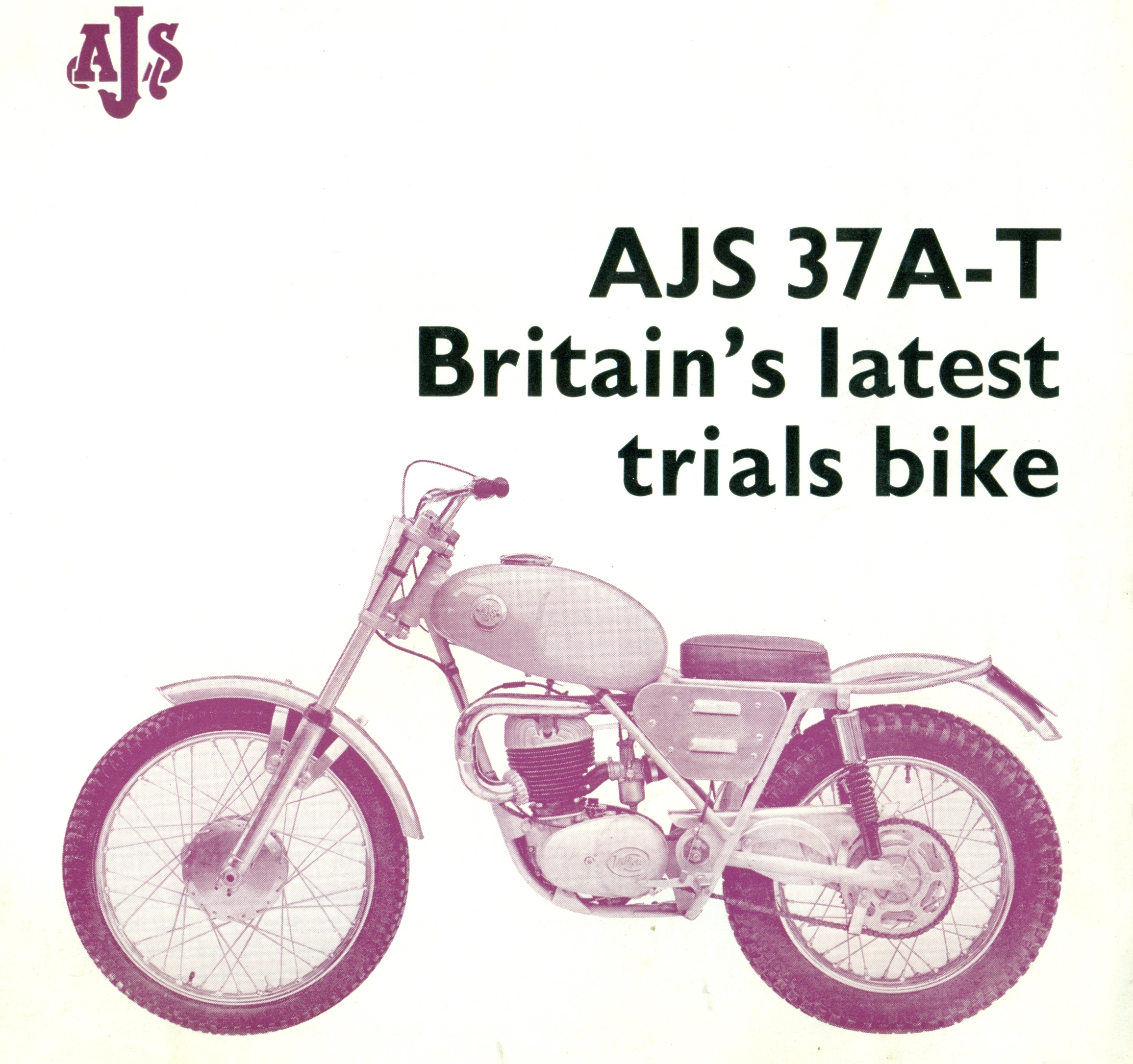
AJS 37A-T
TOO LITTLE, TOO LATE
AJS, the brand purchased by Associated Motor Cycles in 1931, were known for their long-stroke single cylinder trials machines, which partly dominated the competition scene in the late 1940s and throughout the 1950s.
This culminated in Gordon Jackson’s historic Scottish Six Days win on one solitary mark in 1961, achieved with a factory-prepared 16C with a special short-stroke motor.
Associated Motor Cycles (AMC), the group which also owned the Matchless, James and Francis Barnett brands, hit financial difficulties around this time and the writing was firmly on the wall; all these brands had a competition history.
The root of the problem lay with the directors at AMC having taken offence at a critical report published on a road test on one of their machines.
Their response was to refuse permission for the motorcycle press to test their machines and their advertising campaigns in the weekly papers ceased, so not surprisingly they lost valuable sales, year on year, through lack of exposure to the buying public.
It was a case of cutting off one’s nose to spite one’s face.
Words: John Moffat (for Trials Guru); Tony Davis; Norman Edgar; Colin Dommett; Andrew Cooke; John Pye.
Photographs: Don Morley; Bob May; Andrew Cooke; OffRoad Archive; Cycle World; Ken Haydon Collection on Trials Guru.
AJS Two-Strokes:
Two-strokes had been gaining popularity and in late 1964 Sammy Miller announced that he was moving to Bultaco from Ariel, which in itself was to become a game changer for the trials scene and heralded the Spanish invasion by Bultaco, followed by Montesa in 1967 and eventually Ossa. Two-strokes were here to stay.
The AJS brand, along with the others in AMC, had been taken over in 1964 by Manganese Bronze Holdings which had already bought Villiers Engineering.
After the AMC Plumstead factory closed in 1966 with the creation of Norton Villiers, this involved restructuring of the group and AJS moved to Wolverhampton.
Interesting to note that Sammy Miller had been in talks with Norton Villiers at the end of 1966 exploring the possibility of him to ride a Villiers powered machine for them, although John Grace, Bultaco’s export manager was quoted as saying: “We hope Sammy will be staying with us.” History recorded that Miller stayed firmly with Bultaco until 1973. [1]
The plan was to continue in the competition market, producing only off-road AJS machines at a new purpose-built factory at Andover, but due to planning permission delays the new factory only became operational in mid-1969.

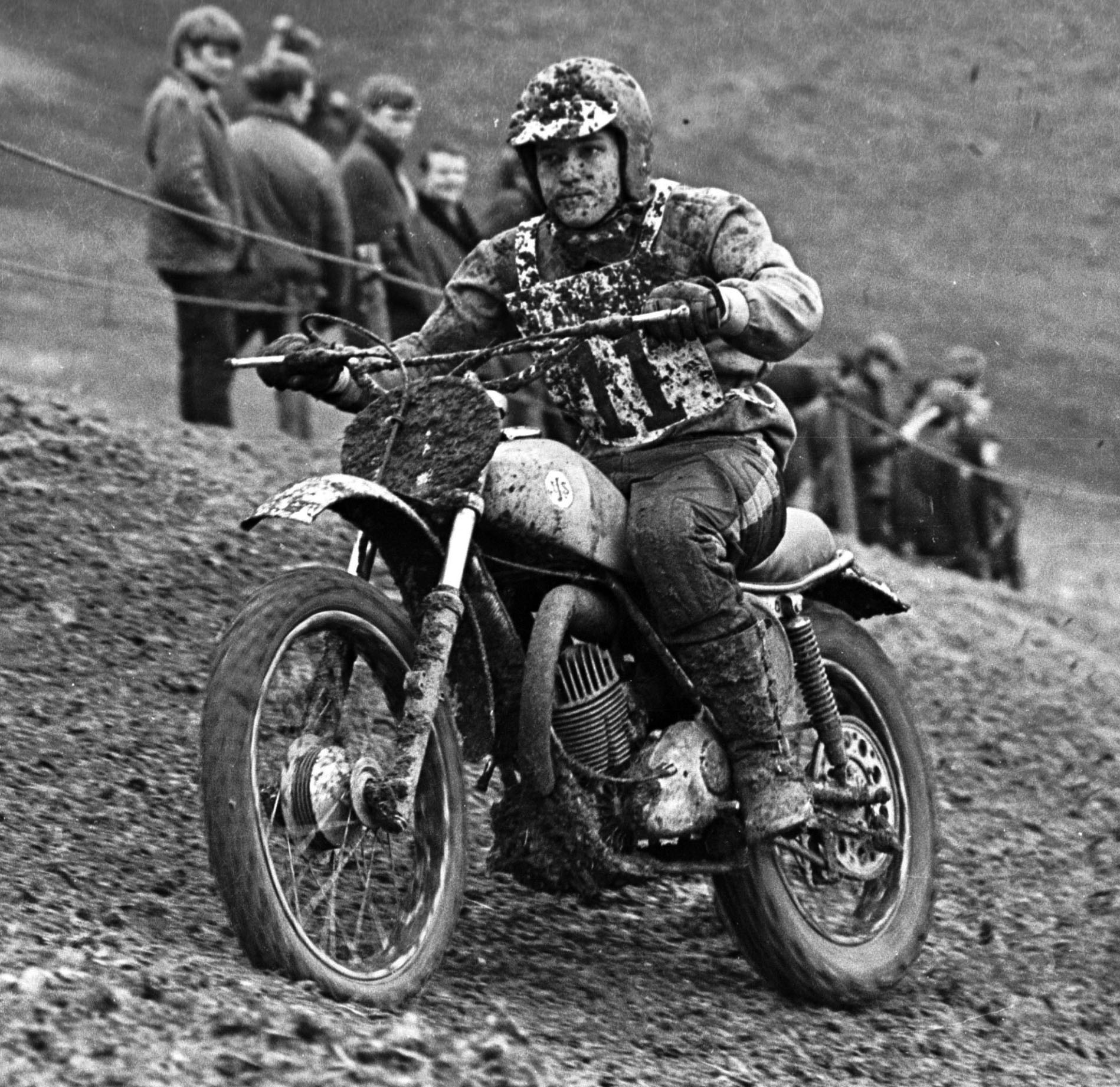
They signed Chris Horsfield, Malcolm Davis, Andy Roberton, Sweden’s Bengt Arne-Bonn and Scotsman Jim Aird to field a strong motocross contingent.
They also had an eye on the trials machine market which was buoyant, and they had access to the Villiers two-stroke motors, being under the same group of companies.
Malcolm Davis was not only an excellent motocross rider but also an exceptionally talented trials rider.
Starmaker Engine:

The Villiers ‘Starmaker’ engine was to be the basis for the new motocross machine. It was developed from Peter Inchley’s 1966 ‘Villiers Starmaker Special’ TT racing machine which came home third in that year’s Lightweight race. Inchley’s prototype for AJS was based on a Bultaco racing chassis.
The Starmaker had previously been developed by Cotton in their Cobra motocross model and subsequently installed in the factory prototype AJS motocross model first raced by Andy Roberton.
Further developed, it carried Malcolm Davis to victory in the 1968 British MX Championship and from this the Y4 ‘Stormer’ was born. The 250cc Y4, launched in 1969, was followed by big-bore Starmakers, the Y5 Stormer at 360cc in 1970 and eventually the ‘410’ Stormer of 410cc in 1972.
Inchley was a former BSA employee who moved to work at Ariel on two-stroke development followed by a move to work with Dr Joe Ehrlich at EMC, joining AMC in 1963.
Reynolds Tubes constructed the new road race frame, constructed by ace welder Ken Sprayson. An AJS was entered for the 1967 TT but while in fifth position his bike was filled with neat petrol instead of two-stroke mixture and Inchley was forced to retire with a seized engine.
Cotton involvement:
A year later AJS commissioned Cottons of Gloucester to make a frame for trials use loosely based on the existing Cotton trials frame but incorporating the large diameter top tube of the Y4 motocross design. For trials they had access to the proven ‘37A’ trials motor.
Cotton had used the trials version of the Starmaker as early as 1964 – more on this later.
John Pye was After-Sales Manager at Malcolm Davis Motorcycles in Gloucester: “I remember Malcolm Davis, ‘Fluff’ Brown of AJS and me travelling to a local farm to test a new AJS trials machine that the factory was experimenting with. It was basically a Cotton but the main difference was the top tube, which made its way into production by late 1968”.
Tony Davis, Malcolm’s brother was an accomplished trials and motocross rider who had ridden the factory BSA B40 and for Greeves, and he was enlisted to ride an AJS supplied by the factory. Issued with a standard 37A-T registered TFH22G it came equipped with Metal Profile telescopic front forks, British Hub Company ‘MotoLoy’ six-inch alloy full-width hubs and, of course, the 37A 246cc Villiers engine with an iron cylinder barrel. It is surprising that AJS did not incorporate an aluminium barrel and cylinder head combination as Greeves had done many years previously, and the now well established Bultaco Sherpa and upcoming Montesa Cota both used all-aluminium engines.
Tony Davis: “I rode exactly what the AJS factory supplied us with in 1968. AJS boss Peter Inchley was a stickler for using only factory products, no other components were allowed”.
John Pye: “I remember when Malcolm was in the shop when Peter Inchley arrived and Malcolm hid from him for quite a while. It transpired that Malcolm had bolted a set of Spanish Betor front forks on his motocross AJS. Inchley took one look at the AJS and asked what all this was about. Malcolm explained that he found the Betors helped the front end, but Inchley would have none of it; he insisted that the AJS forks were re-fitted immediately!”
Heralded as the ‘AJS 37A-T – Britain’s latest trials model’ Malcolm Davis was to be credited with the development work for the new machine, as highlighted in the company sales literature, and it was launched in time for the 1969 trials season.
The retail price of the 37A-T in 1969 in kit form to avoid Purchase Tax was £228 and 10 Shillings.

The Edinburgh Connection:
Up in Scotland the appointed agents for AJS were Edgar Brothers in Leith Walk, Edinburgh. They were already sponsoring Jimmy McRae for the 1969 Scottish Championship season on the new Y4 Stormer.
McRae later went on to become five times British Open Car Rally Champion and, of course, the father of 1995 World Rally Champion, Colin McRae MBE.
Dealer principal Mr Norman Edgar was keen to sell as many AJS models as he could, and both his sons were accomplished trials riders. His son Norman FW Edgar was at that time twice Scottish Trials Champion and had entered the 1969 ISDT to be supplied with a works-prepared AJS Y4 ISDT machine for the event at Garmisch-Partenkirchen. He had been campaigning a 37A-T in Scottish and national trials.

It was registered NFS21G in the October 1968 and competed with it into the spring of 1969.

He and his younger brother Derek J Edgar were also experienced SSDT competitors, and both had entered for the event to be held in early May.
Scottish Six Days 1969:
AJS were keen to push their new trials model 37A-T in the Scottish Six Days, and to field a team of three riders comprising the Edgars plus one other competitor.
Mr Edgar noticed that Yorkshireman Ray Sayer, a coach operator from Bellerby had entered on his four-stroke 500cc Triumph so an approach was made to enlist him on a 37A-T to make up the three-man team.

Sayer saw the sense of riding a lighter two-stroke and agreed. AJS were to pay for the three team member entries but as for the machines themselves, that was a different part of the story.
Edgar contacted the AJS factory and enquired what would be available for the SSDT to be informed that, due to workload, they could not guarantee to build three suitable machines in time. Could the Edgar Brothers build bikes from parts supplied? Mr Edgar agreed to the offer, and boxes of components were despatched to Edinburgh from Wolverhampton and three AJS 37A-T machines were assembled by Derek Edgar in the dealership’s workshop.
Norman FW Edgar: “It is over 50 years since I rode the AJS in the Scottish, so apologies if I can’t remember full details or the sequence of events, but somehow we decided to change the specification. We obtained new front forks and front and rear wheel hubs from the scrambles Y4, which not only looked much more purposeful but were also lighter than the standard full-width items fitted to the production models. We also fitted longer than standard aluminium side panels to protect the air cleaner. As was always the case, if we could get something to work better, we did it. When I rode the ISDT later that year, I changed the motocross piston for a trials component before the event and the machine’s power delivery was much more suited to the ISDT. Derek built the three SSDT machines, and these were registered in Edinburgh and tested just immediately prior to the Scottish”.

SSDT ‘Team AJS’:
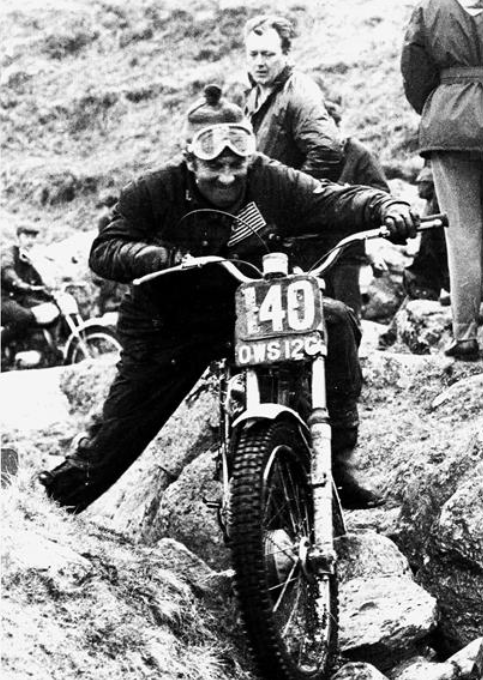
The Edgar-built 37A-Ts were registered OWS 11, 12 and 13G. Derek rode 11G, Norman was given 13G and Ray Sayer rode 12G.
Another AJS, OWS14G, seemed to be registered at the same time, but this was probably a standard 37A-T machine for a customer.
One of the three SSDT machines ended up with the Kingston & District club in Surrey as a loan motorcycle for those wishing to sample the sport, the machine having been traded in to Comerfords at Thames Ditton and failing to sell through the shop around 1974.

Looking at close-ups of Derek Edgar’s SSDT AJS, which he used again in 1970, it would appear that he had fitted a German-made ‘Bing’ carburetor for his attempt at the Scottish for the second time on the 37A-T.

Derek Edgar was an innovator and had also ridden Puch machines in trials and the ISDT for a period prior to building the AJS. He later went to work for Puch in Austria as a development rider and technician.
Norman continued: “I do remember Ray Sayer mentioned something about the steering lock being restricted and, indeed, he took a hacksaw to the front end at Gorgie Market during the SSDT weigh-in on the Sunday. Both Derek and I did not really notice anything untoward, so we just rode the machines as they were built”.
At a wheelbase of 51.5 inches, by utilising the Y4 forks and alloy yokes with the leading axle it would stretch the AJS 37A-T to around 52.5 inches – more in keeping with the Bultaco Sherpa – and assisting stability on straightforward rocky sections, which was a feature of the Scottish Six Days. Fortunately the Y4-style fork sliders were not ‘handed’ and had sufficient lugs to accommodate front mudguard fixtures.
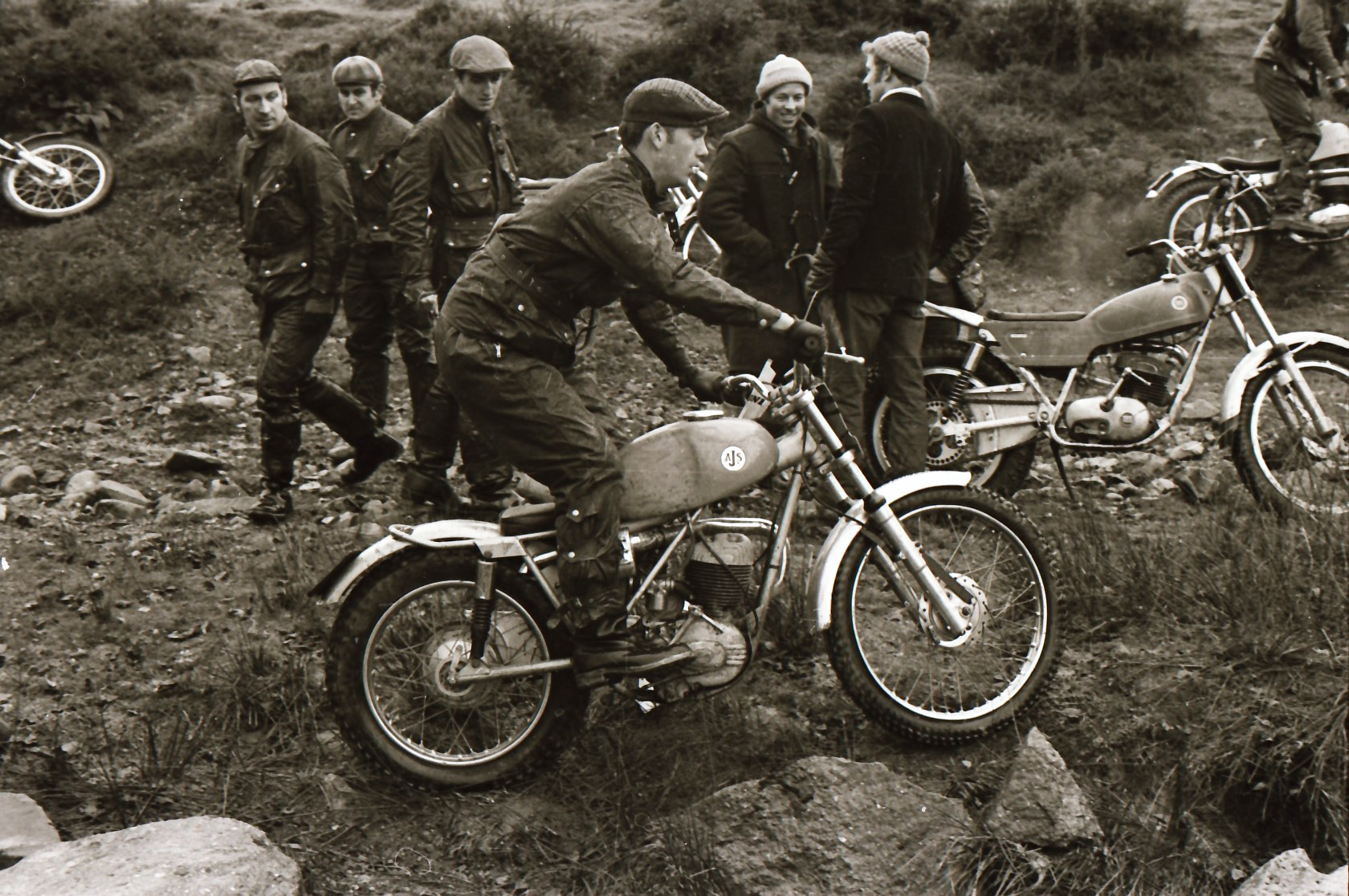
And so AJS fielded a team in the SSDT, the first time since 1965. Too late to be printed in the official programme, and Ray Sayer shown as riding the 500cc Triumph, it was not to be a ‘dream team’ situation, with Sayer dropping out of the trial on the Wednesday with gear selector problems. His machine (OWS12G) was repaired post trial and retained by the Edgars and used again in 1970, this time piloted by American, Bob Ewing from Sepulveda (North Hills), California who flew over from the US. Ewing lasted until the Wednesday when he was excluded on time. Derek Edgar took up employment with Ewing after he left Puch and before he went to work for Montesa USA.
Modifications and Improvements:
Having informed Tony Davis that the Edgar brothers and Sayer had ridden heavily modified 37A-Ts in the Scottish, he commented: “I find this surprising in that Peter Inchley was such a stickler for us riding what we were given, and yet the Edgars changed the machine materially. Perhaps because they used AJS components and the fact the factory could not supply prepared machines meant it was acceptable”.
Photographic evidence confirmed that Malcolm Davis had used the Y4 alloy conical front hub on his AJS, SFH96G, in the Cotswold Cup Trial in 1969 but retained the standard Metal Profile forks with the axle at the bottom of the slider.
It would also appear that he went against Peter Inchley’s instructions by fitting a Greeves aluminium barrel and cylinder head to his 37A-T!
Even though the Edgars changed the geometry of the 37A-T they were not in a position to change the most obvious component, the cylinder barrel; this was still the iron unit.
Greeves achieved it, why not the AJS factory? After all, the owners of AJS, Norton Villiers, intimated in 1969 to Greeves that supply of Villiers power units would cease, which inevitably forced the Thundersley firm to source engines from Puch in Austria.
Why the 37A?

AJS had all the development work done on the all-alloy Starmaker unit, could they not have further developed the trials version of that power plant?
Bultaco for example developed their Sherpa trials and the Pursang motocross motor from older applications, the motocross having different porting and gear clusters, but benefitted from common components and were all-alloy construction.
As already mentioned, the Starmaker trials version had been used in the factory Cottons with one issued to their supported rider, Colin Dommett, in 1964.
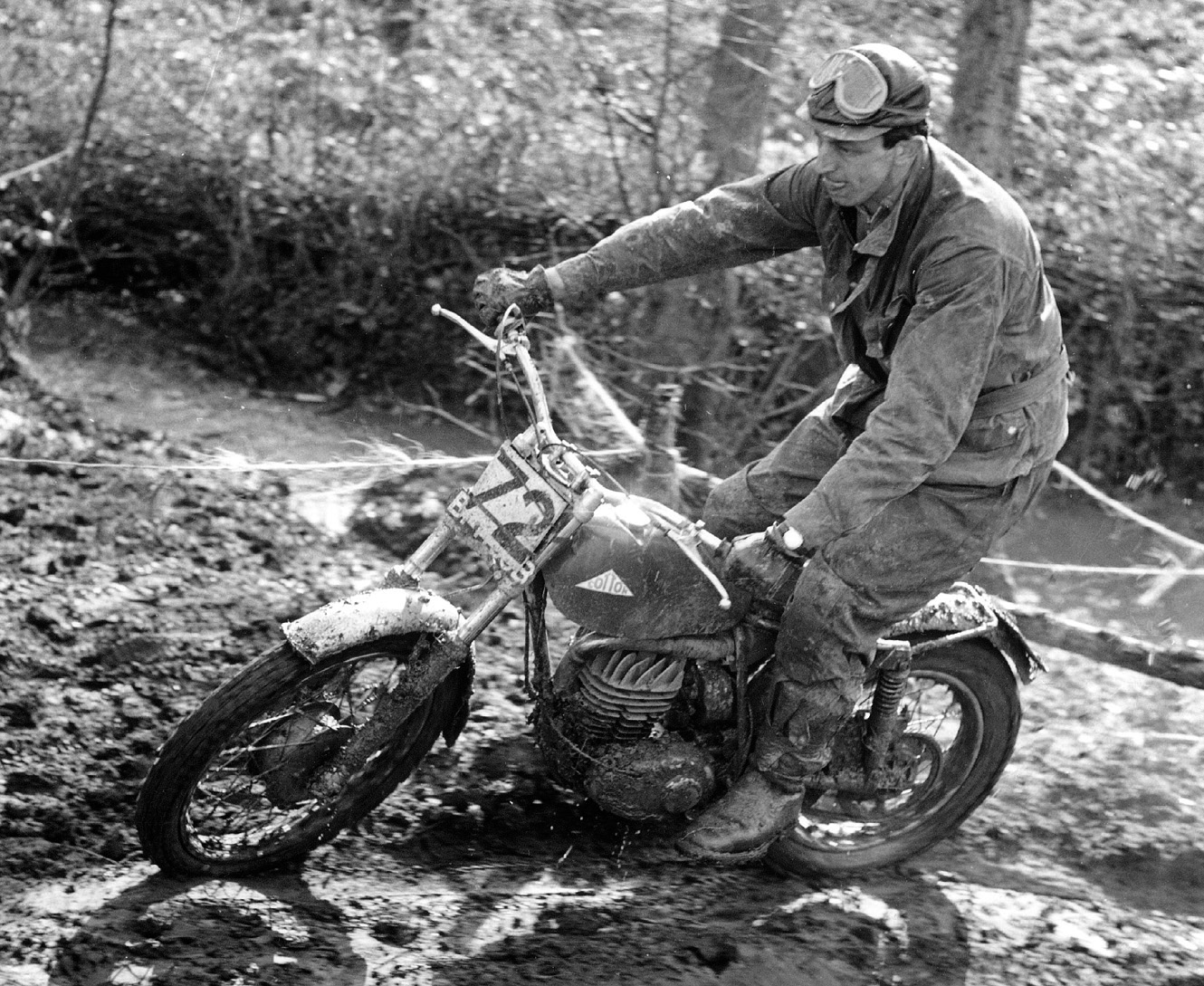
Colin Dommett: “I didn’t like the Starmaker engine, for example the gear ratios were too wide, and it was eventually sent back to Villiers as I think they owned the engines. It was replaced by a 37A engine. They tried all sorts of exhausts, but everything they did just made things worse, not better. I think they even tried a 37A crank in a Starmaker and that was a slight improvement”.

Cottons also fielded a team in that year’s SSDT fitted with Starmaker motors, comprising Arthur and Alan Lampkin and Blackie Holden. All three riders finished with special first-class awards.
The belief was that the 37A, although using appreciably heavier components, was the better engine for trials use even though it looked old fashioned compared to the compact-looking Bultaco and Montesa power plants.
As well as being second best Edinburgh & District club member, receiving the Henderson Challenge Trophy at the SSDT, Norman Edgar Jnr won the 1969 Scottish Trials Championship outright on his 37A-T, making him a three times champion in the process.
Privateers:
It’s all well and good having factory machines entered for major events like the SSDT and British Experts, you still need sales to private owners to make it financially worthwhile.
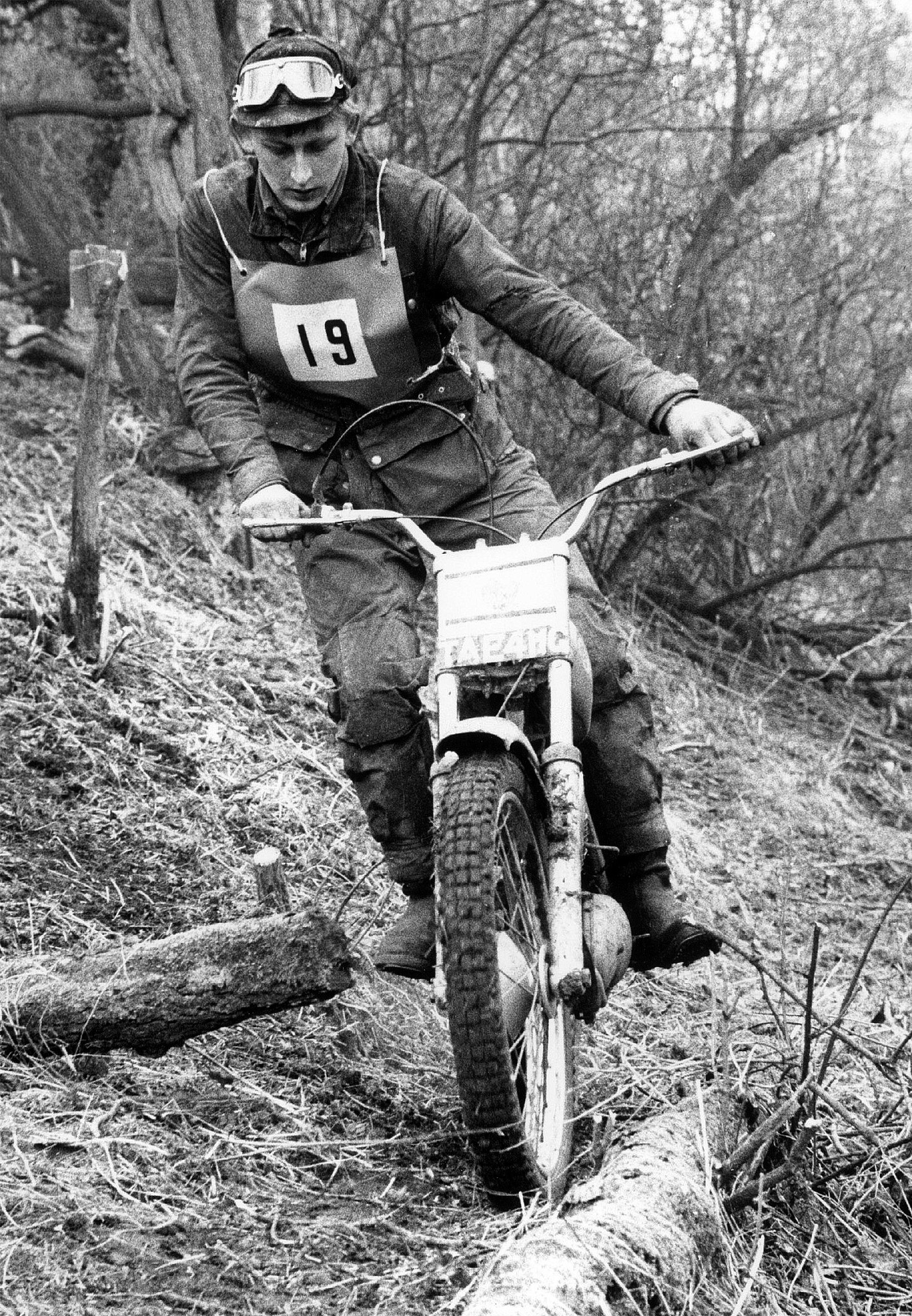
There were six private entrants on AJS 37A-T who rode the 1969 SSDT: M.K. Fulcher, North London; R.E Chapman, North East London; Jack Young, Edinburgh; Roger Davy entered by Comerfords (WPD4G); and Chris Watts of the C.S.M.A. (TAE411G) who also had fitted a Y4 front hub on his 37A-T.
There was one other AJS entered that year, but it was a 350cc four-stroke 16C ridden by JL Smith from Edinburgh, a nephew of Scottish born AJS director Bill Smith.
American Bob Ewing had entered in 1969 but was classed as a non-starter so the best guess is that he would have ridden OWS14G, either that or Jack Young could have obtained it just prior to the event.
The following year there were four AJS mounted riders in the 1970 SSDT: Eddie Henderson from Bangor and member of the Knock MCC Ireland; Bob Ewing, who flew over from California to ride the OWS12G supplied by the Edgar Brothers; Jack Young, from Edinburgh; and Derek Edgar, back on OWS11G. But most of the entry by now consisted of Bultaco and Montesa with a couple of Ossas.

Tony Davis Talks AJS:
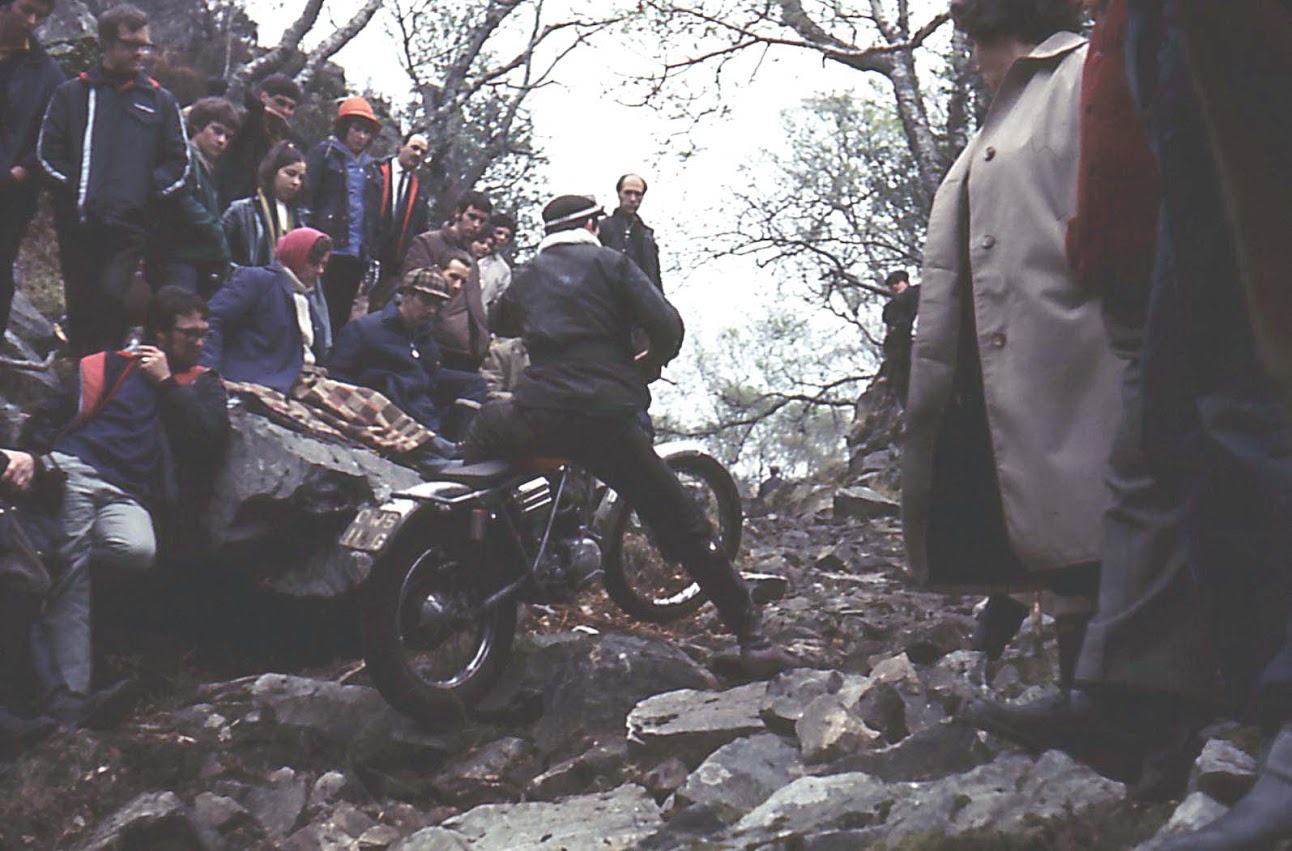
“It was Malcolm who talked me into riding the AJS trials machine; ‘fly the flag’ he said. So I agreed to ride it for a year. We spent many hours practising in the quarry and woods up the hill near the Air Balloon. We both found it ‘gutless’ from plonking in a section, and the carburation was unreliable. After many hours’ tuning we got the carburation more exact. Malcolm did a lot of work on the engine and got it to respond better and rev out more, which suited his style of riding. Peter Inchley wanted my machine to stay as standard as possible. It handled reasonably well; it was better in mud than on rocks but was never going to be a world beater, especially against the Spanish armada. I won some centre trials and the Western Centre Championship was mine once again. The AJS was far too late to win any National trials, and the ‘powers that be’ knew that. Now the Y4 Stormer motocross model was exceptionally good, as Malcolm proved”.
Studying old national trials results, it is evident that Tony Davis’s overall performance improved when he switched to Bultaco in 1970. It was by then a tried and tested product, which had benefited from not only Sammy Miller’s input but that of riders across the globe who enjoyed support from the Barcelona manufacturer. Bultaco and Montesa were taking trials very seriously, and with Mick Andrews developing the Ossa they too were ready to capitalise on the success of their prototype.
Sales and specifcation:
Sales of the production AJS 37A-T were disappointing; trials riders are consistent followers of fashion and the AJS just did not inspire them. Only 98 units were produced in total. This means that the 37A-T AJS is now regarded as a fairly rare beast.
The fuel tank was quite bulbous, holding 1 3/4 gallons and was the bright orange – the factory called it ‘Bushfire Red’ – fibreglass unit taken from the Y4 motocross model. The frame was Sifbronze welded and superbly finished in metallic silver but had an unusual plate which joined the large-diameter top tube to the footrest tubes, and it had a full cradle, single down-tube frame.
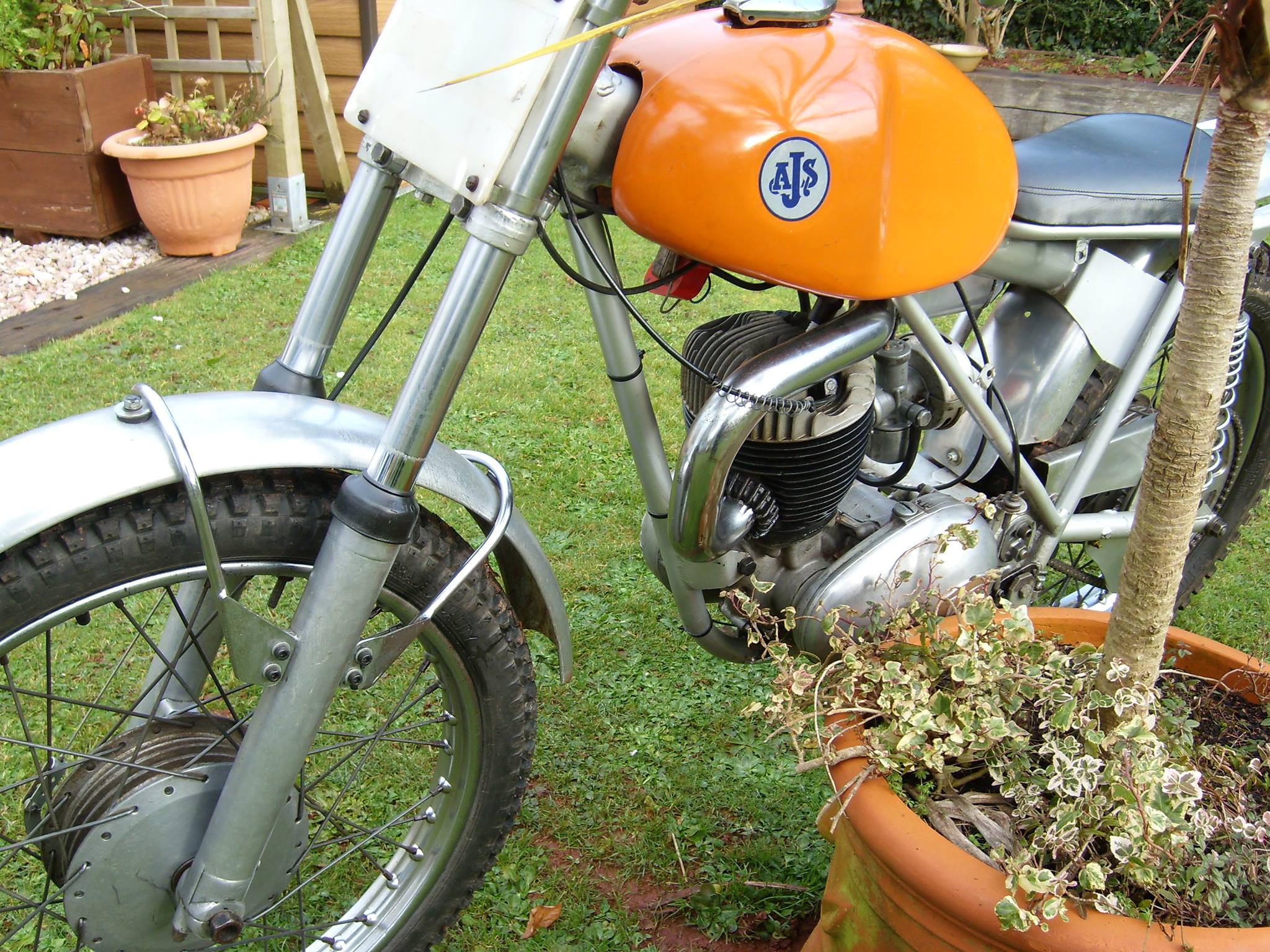
Chain adjustment was not made at the back wheel but at the swinging arm pivot, with an eccentric cam arrangement that was an attempt to keep the chain line as straight as possible.
It was used on the AJS motocross model and also used by Rickman on their motocross Metisse frames, but it was unusual for a trials machine. Carburation was taken care of with a Villiers S.25 instrument, which is the type of carburetor that would become popular with the Pre-65 brigade in the 1990s.
Again this was a departure from the trend, which was to use the modern AMAL MK1 concentric which was fitted by both Bultaco and Montesa at this time, the instrument made in Spain under licence from the UK company.
Remember, the AJS was competing for sales against these two Spanish brands which had already gained a foothold in the UK, North American and European trials markets.
The engine, as stated, was the iron-barrelled Villiers 37A model which had a bore of 66mm and stroke of 72mm, giving a displacement of 246.33cc and a claimed 12.4 BHP at 5,000 RPM. Compression ratio was quoted by AJS as 7.9:1.
In comparison, the 1964 trials version of the Starmaker pumped out 15 BHP at 5,000 RPM. Utilising a 58-tooth rear wheel sprocket, the 37A-T gave a 29:1 bottom gear, with a four-speed gearbox giving ratios as 3.6; 2.4; 1.56 and 1.00.
The wheels were built using Dunlop chrome steel rims, WM1 front and WM3 rear, whereas the Spanish competition were using Akront alloy components at this time. Mudguards were plain polished 18G aluminium alloy, with front mudguard bracketry fabricated from sheet alloy and an alloy chainguard, standard fit for trials machines of the era.
The wheel hubs on the production 37A-T were British Hub polished alloy 6 inch units. The rear hub incorporated a rubber cush-drive.
Wheelbase was 51 1/2 inches similar to the Bultaco Sherpa and the machine weighed in at 212 pounds, lighter than the Greeves Anglian at 225 pounds.
The front suspension consisted of Metal Profile telescopic with alloy sliders, the wheel spindle carried directly below. The Edgar Bros built machines however used the front fork sliders from the Y4 motocross model.
A heel/toe gear lever, chrome plated ‘Peco’ style exhaust and Girling rear dampers finished the package off. List price in 1969 was £228 and ten shillings, in kit form thus avoiding Purchase Tax.
AJS Today:
John Moffat of Trials Guru makes comment:
“Information on the 37A-T is very scarce on the internet, purely because of the short production run and the low numbers produced and sold. However, the model is featured in Gregor J. Grant’s ‘AJS – The History of a Great Motorcycle’ published in 1969, revised in 1974 by Patrick Stevens Ltd, Cambridge (ISBN 0 85059 186 4). It gives a potted history of the marque from its creation and covers the Y4 Stormer and 37A-T models. It does lack, however, any detail of the trials model’s development, undertaken by the late Malcolm Davis, his brother Tony and of course the Edgar brothers in Scotland. Perhaps this article has covered the gaps left by a fellow Scot; his book is well written and researched as he was a professional journalist, but perhaps he did not have the connections to fully research the trials model or perhaps in 1969 thought it wasn’t important enough to save information on the new model for posterity! You simply cannot cram too much information into a book though! On a personal note, when I was 10 years old I started saving up my hard-earned pocket money with the intention to buy an AJS 37A-T. This was probably an idea cultured by my environment, because my Father had ridden an AJS four-stroke twice in the SSDT and then owned an ex-factory Matchless. I saved up the princely sum of £1:10s:6d by the September of 1969, by coincidence the year that Gregor Grant wrote his book on the AJS. However, my Father bought me a Dalesman Puch in the October, so the money went towards buying fuel! I was quite taken by the AJS which looked different from the selection of trials machines on sale, but it was not to be. I did come across OWS11G in November 2019 when I enquired if it was for sale, the owner lived in Carlisle. The owner, realising its history, wanted several thousand pounds as it stood. I found this over-priced; having been laid up for many years it was in poor condition. To its credit, it did look quite complete and still had the Y4 front end, but the cost to restore it would have been excessive. There was no question that it was Derek Edgar’s 1969/70 SSDT machine. I turned the deal down at the time as I felt it was a pointless exercise for me, but deep down I wanted to own the motorcycle, given its SSDT and Edinburgh history. I knew Derek Edgar very well and had a lot of respect for him. I have also subsequently heard that restored versions are being advertised more than that figure, due primarily to their rarity! With the BSA trials competition effort now defunct and Greeves already losing its way, I often wondered what AJS could have achieved had they invested more into the trials project and even recruited Sammy Miller, letting him have the trials version of the Starmaker engine, a clean sheet of paper and a free hand? Even as late as 1970 when Sam was just about over his riding peak, we can only speculate how the brand could have fared. The question must be asked, did the AJS management really take the trials market seriously, as they did not seem to act on the improvements made by the Edgar and the Davis brothers? The Spanish manufacturers were always taking serious note of what their supported riders told them and would make improvements for the next edition of their production models.“
Production of the 37A-T AJS ceased and the model was discontinued in 1970.

Today, the AJS name and famous monogram lives on with the company ‘AJS Motorcycles Ltd’, run by Nick Brown and his family. Nick is the son of ‘Fluff’ (real name David) Brown; they manufacture homologated 125cc road-going scooters and motorcycles primarily aimed at the learner rider market. They operate from Upper Clatford, Andover, and still carry spare parts for the old Stormer motocross models, but not the ill-fated 37A-T.
Maybe the AJS 37A-T was, as Tony Davis said, ‘far too late’?
A current day owner’s perspective:
Current owner, Andrew Cooke from Wessington Derbyshire owns a 1969 AJS 37A-T, here is what he says:
“Developed with works rider Malcolm Davis with many trials wins, Malcolm reported in advertising literature of the time that: “the bike feels right… you have a machine you can win on”. Unfortunately, history shows that the AJS 37A-T was probably not as successful as had been predicted. Though well made and oozing quality, it was, sadly, “old hat” on its release in mid 1969. It’s dated heavy iron barrel and similar full width hubs negated any advantage gained from the super lightweight and rigid “Reynolds” frame.
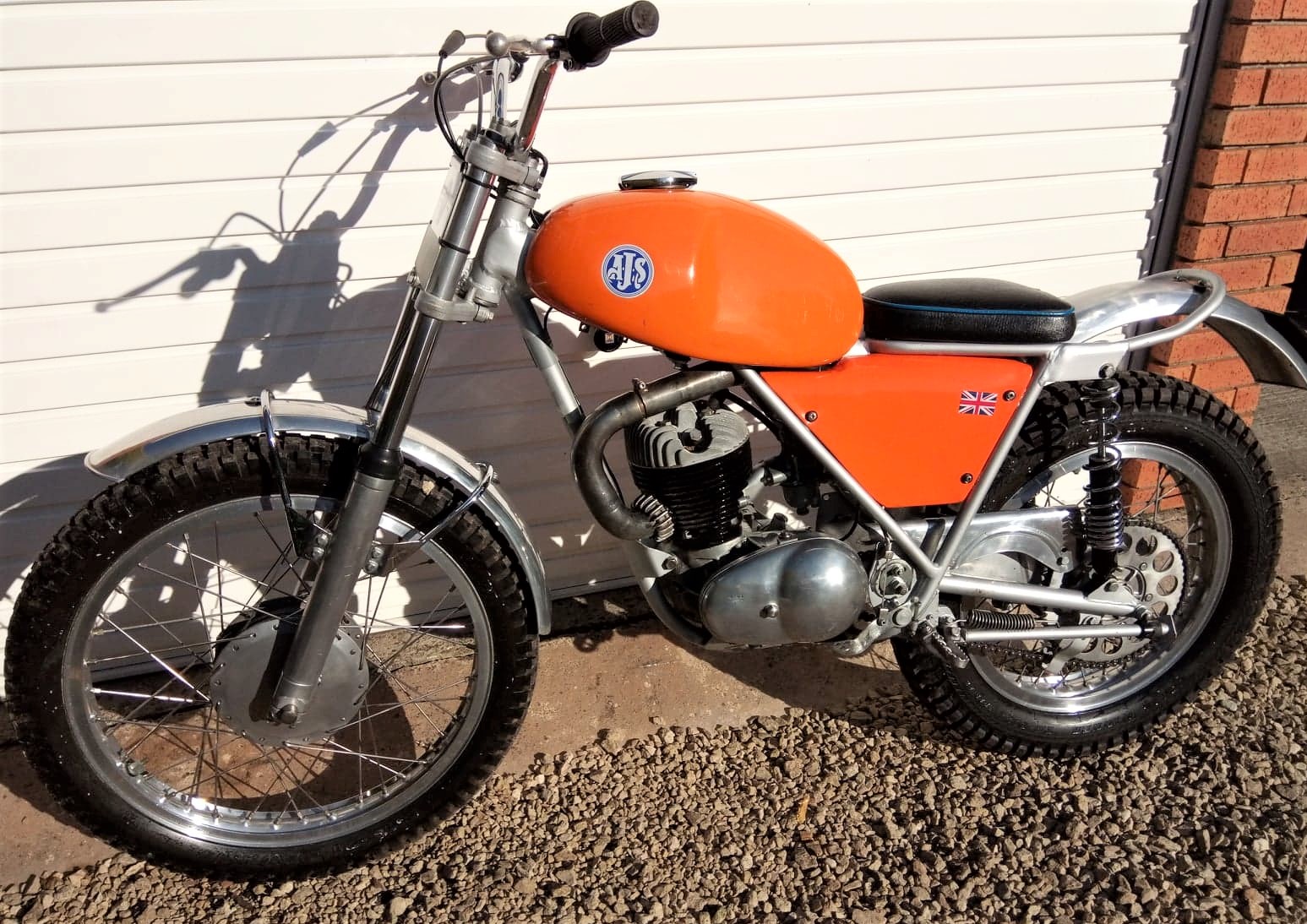
Early reports were favourable though, about a bike that was easy to ride, handled well and with a “torquey” motor making it ideal for both experts and novices alike.
I always had a liking for the AJS but aged just 16 in 1969 I went down the ‘micro’ route with a new 125 Sprite, after finding a big Greeves barrelled Cheetah a bit of a handful in my first year of trialling. And so, it wasn’t until nearly fifty years later I spotted ‘my’ bike on eBay and arranged for its delivery up from Hampshire to my home in Derbyshire.

RCG182G had been owned by Jon in Waterlooville since 2013 who had fitted electronic ignition, a tucked in kickstart and a new Concentric carb. The engine had all new seals and bearings and the frame had new polyurethane swing-arm bushes and new fork seals. The bike also sported new Betor shocks, chain and brake shoes.
I later changed the grey plastic guards it arrived with for more traditional alloys and had the frame and side panels powder-coated. While it was stripped down I fitted new tyres, had the fixings plated and also reinstated the de-compressor.
I have ridden a lot of Villiers engined bikes with an assortment of barrels but was surprised how well the AJS went in comparison. It has a smoothness unusual for a Villiers engine and plenty of low down torque. I’ve not tackled any challenging hills to test its outright pulling power but it revs cleanly and emits quite a bark from the overhead exhaust. Gearing is a bit low and another tooth on the gearbox sprocket would be more to my liking if I’m honest. The MP/REH/Ceriani type forks are supple and work as expected and would probably only be criticized by someone more used to modern twin-shock Marzzochis for instance.
The wheelbase, at 51.5” is a tad short by comparison to it’s contempories but not noticeable by myself when riding as I found the steering and suspension very nice with good grip and no ‘crabbing’ from the front tyre on a tight lock. I believe others have extended the swing-arm but I have no experience of how they perform as such.
In conclusion, the 37A-T rides well, goes well and history shows that it could and should have been a much greater success. If the Starmaker trials engine had been developed and fitted, if the smaller and lighter AJS Stormer hubs had been fitted from the outset, who knows where AJS and Villiers would be today.” – Andrew Cook, Derbyshire
Bibliography/References:
AJS – The History of a Great Motorcycle’ – Gregor Grant – Published 1969, revised in 1974 by Patrick Stevens Ltd, Cambridge (ISBN 0 85059 186 4)
Classic British Two-Stroke Trials Bikes – Don Morley – Osprey – 1987
AJS 37A-T catalogue 1968 – Norton Villiers Triumph Motorcycles
Motor Cycling – December 24 1966 – Report on Sammy Miller. [1]
Article copyright: John Moffat/Trials Guru 2024
Apart from ‘Fair Dealing’ for the purpose of private study, research, criticism or review as permitted under the Copyright, Design and Patents Act, 1988, no part of this article may be copied, reproduced, stored in any form of retrieval system, electronic or otherwise or transmitted in any form or by any means, electronic, electrical, mechanical, optical, chemical, photocopying, recording or otherwise without the prior written permission of the author as stated above. This article is not being published for any monetary reward or monetisation, be that online or in print.
Discover more from TRIALS GURU - DEDICATED TO TRIAL
Subscribe to get the latest posts sent to your email.
 TRIALS GURU - DEDICATED TO TRIAL
John Moffat, thank you for such an excellent article, I included as much as I could find about the AJS 37A-T on my own website on the AJS Stormer, you may enjoy the read, the detail you’ve included from the riders is fascinating, I find the political back story to AJS and NV extremely important to understanding the pace they actually achieved in developing their machines, it was unfortunately slow at a moment when motorcycle development was progressing very quickly, but even so these machines had there moments in the sun. Would you be able to supply an insight into the results achieved by the 37A-T, many thanks Cliff Stevens
https://ajsstormer.wordpress.com/
Thanks for your comments Cliff. I will see what I can do.
Hi John, this is my Facebook group, if you join then we can message, I am Janet Dalton, https://www.facebook.com/groups/329027254430129, cheers Cliff..
Hi John this might interest you, it was posted on my Facebook Group, Malcolm Davis’s Factory 250, Inter Centre Team Scramble, West Stow Heath, Suffolk ,1970. Forks!!
best wishes Cliff.