‘Trials Legends’ is a special ‘section’ on Trials Guru dedicated to those people who have made the headlines, won events, won championships and promoted the sport of observed motorcycle trials the world over. Over the years, the word ‘Legend’ has become meaningless with over-use, perhaps the word ‘Icon’ should be substituted? Already we have special sections dedicated to individual riders such as: Yrjo Vesterinen, Lampkin of Silsden, Sammy Miller and Rob Edwards which will remain on this website as they are.
Over time we will expand ‘Trials Legends’ to include more personalities from the world of trials.
In this section:
Malcolm Rathmell
Diego Bosis
Nigel Birkett
Ray Sayer
…
1. MALCOLM CHARLES RATHMELL:
Words: Sean Lawless – Lawless Media UK
Photos: Jimmy Young; Iain Lawrie; Mike Rapley; Colin Bullock & Barry Robinson
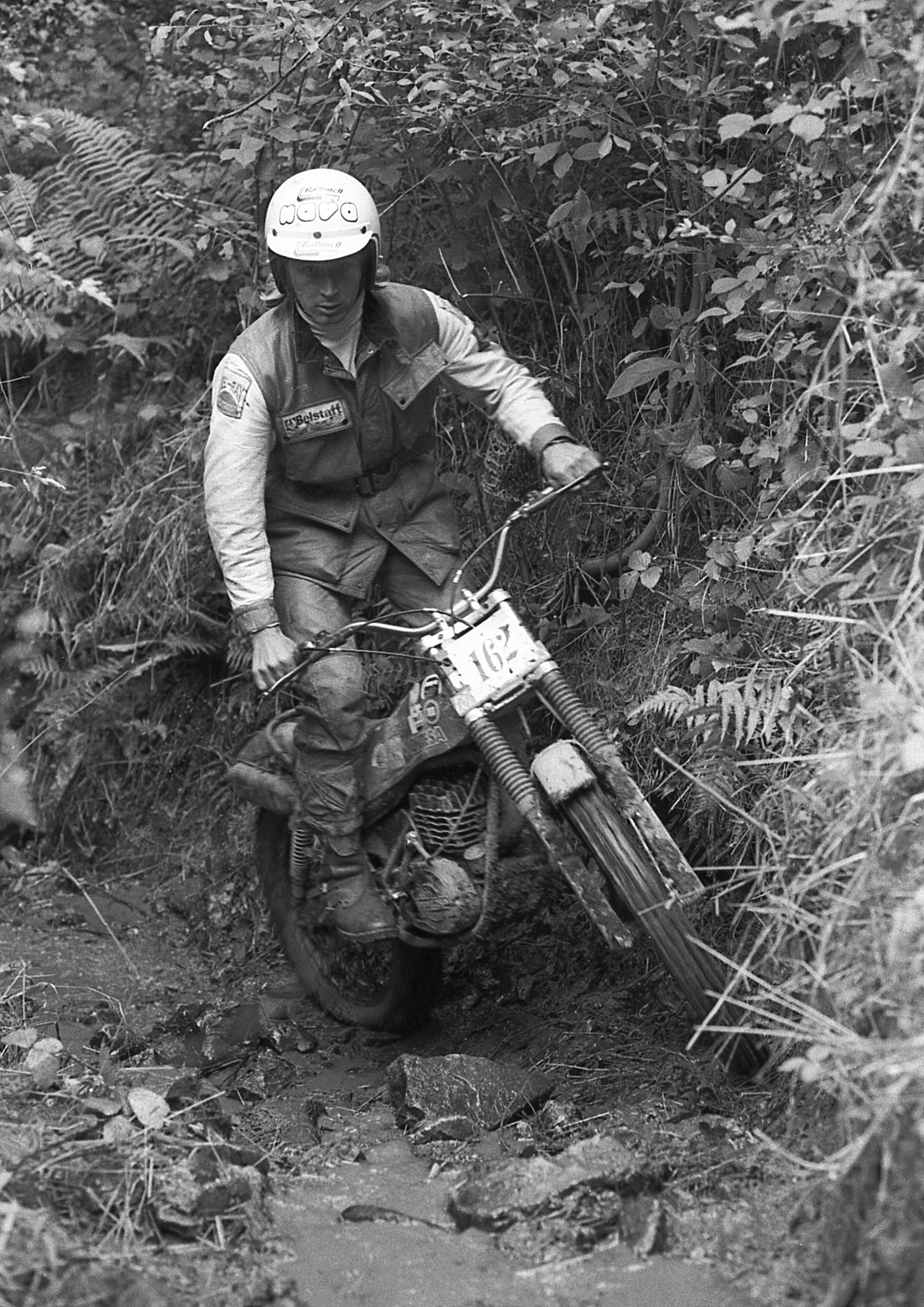
A life less ordinary – Grands Prix motocrosser, world trials contender, successful businessman and mentor to one of extreme enduros biggest names – Malcolm Rathmell’s influence on off-road sport has been huge (although he’d probably say we’re talking bollocks!)…
Here’s a good one for all you off-road fact fans – who’s the only rider to race motocross grands prix and finish top three in the World Trials Championship?
I’d love to leave you feverishly flicking through piles of yellowing magazines or scouring the internet for an answer but – seeing as the next few thousand words are going to be all about him – there’s not much point.
To someone my age who started riding trials in the late ’70s, Malcolm Rathmell – along with his great friend, rival and sparring partner Martin Lampkin – is a legendary figure. To this day I can’t shake the image of a gloveless Malc, blond hair flowing out of his helmet, oozing style as he cleaned another rocky stream section on his Montesa. If Yorkshiremen did glamour then he was the pin-up boy…
Now 67 years of age and boss of UK Sherco importer MRS, his blond locks may be a distant memory, but he still looks in great shape and is as matter-of-fact as only a Yorkshireman can be.
“Morning Seamus,” he says. “You’re getting a gut on you!”
Cheers Malc! Good to see you too…
There’s a stereotype of Yorkshire people being blunt, straight-talkers – that ‘I say what I bloody well like and like what I bloody well say’ sort of thing – and Malc certainly ticks a lot of boxes in that respect. Not that that’s a bad thing. I’d rather hear an honest opinion than have smoke blown up my arse any day of the week.
“I’m Yorkshire born and bred and proud of it,” he says. “I was born in Otley, lived at Timble, went to school at Fewston which is a village near Timble. Otley School of Learning after that until I was 15 and then joined the Forestry Commission where I did a bit of everything for seven years. Fencing, draining, planting, felling – and it was good for practice. That was the best bit of it. You could spend your lunchtimes on your bike.”
We’re sat in Malc’s office in Bishop Thornton which can’t, as the crow flies, be more than 15 miles from his birthplace. Timble and Fewston are even closer and pretty much everywhere you look is prime trials country. Addingham Moorside and Pately Bridge are nearby, the towns of Yeadon and Guiseley are a stone’s throw away and then there’s Silsden – seat of the Lampkin clan – just down the road.
This is the heartland of UK trials and, born into a motorcycle-mad family, Malc was destined to ride although the path he’d take – trials or motocross – wasn’t as clear cut.
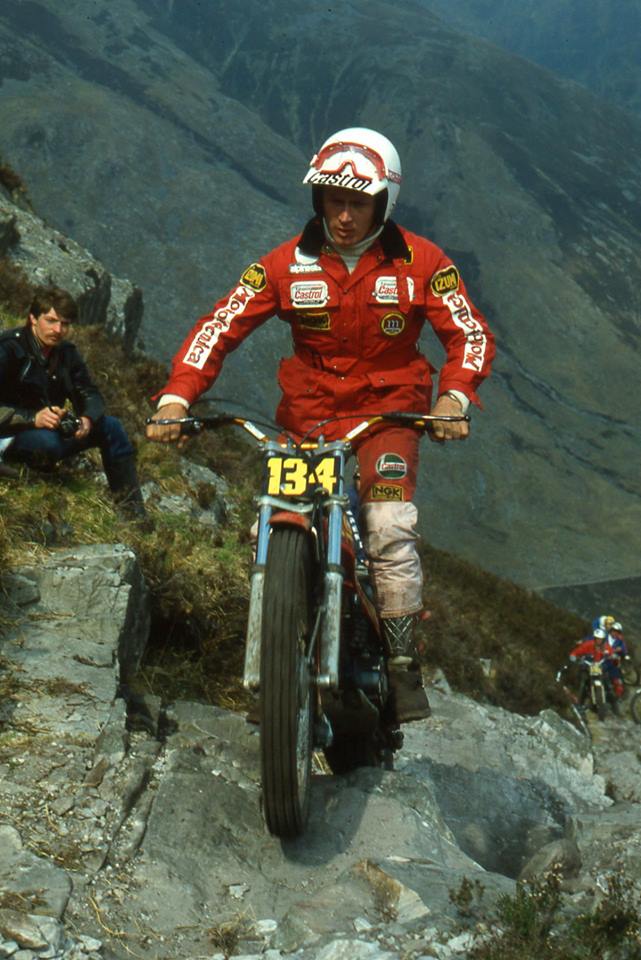
“I’ve not really had a choice – bikes, bikes or bikes! I used to get a bollocking at school because first thing in the morning you had to write about what you did last night and five days a week I wrote ‘I rode my bike last night’. That was it.
“My dad Eric got me a rigid Bantam of my own when I was about nine which I put into scrambles trim and I scrambled that around a field for a couple of years.
“My father started riding local trials after the war and when I was a kid there was always a bike there so I’d siphon petrol out of his car and ride whatever bike was available. He was big mates with [TMX trials correspondent] Barry Robinson and Barry always had a bike or a couple of bikes stood in our spot. We lived in a cottage in the middle of fields and woods so it was ideal for spending time on bikes.
“Half the Ilkley Motor Club used to leave their bikes up at my father’s spot so there was always something there to ride. Whoever was daft enough to leave their bike there with petrol in got it used.”
Eric was heavily involved in the Ilkley club and Malc was roped in at an early age.
“Dad was Clerk of the Course for all the Ilkley events and had a pillion on his Ajay so I spent my younger years doing laps of the Ilkley Grand National course and the Scott course on the back of him carrying a bag of flags. When he stopped I’d run off and stick a flag in.”
I once did say that Graham Jarvis was arguably Britain’s best ever trials rider who doesn’t have the surname Lampkin. However, after running through Malc’s record I reckon I got that wrong!
Malc’s won the British title six times, taken the same number of Scott Trial wins and won the SSDT twice. He was also European champion in 1974 – the year before the series was upgraded to world status – and for seven years, from 1971 to ’77, was never out of the European/world top three. Add to that his 11 world round wins and it’s an impressive tally.
But it was motocross – or scrambling – that a young Malc was most interested in.
“I was more into scrambling and most weekends we went to a local scramble. My dad used to do Tony Cook’s bikes. I think he was Yorkshire Centre champion a couple of years. He used to come up every week and have his bikes done – I think my dad had more interest in scrambles than trials.
“But both my mum and dad insisted that I learned to ride a trials bike because if you can ride a trials bike you can ride any bike. I went from a Bantam to a 150cc Triumph Terrier and then I got a Greeves Hawkstone when I was about 14 or 15. I had my own private scrambles track so I was there every night and Tony Cook used to come up Saturday mornings.”
After a shrewd deal to upgrade his machinery, Malc was then given the chance thanks to Pete Edmondson – father of former world enduro champion Paul – to get his hands on his most competitive bike so far.
“I swapped the two or three bikes I had for a C15 BSA which I rode for about six months and then I got the chance of a Tiger Cub from the brother of a butcher in Otley who helped me a little bit. He’d had a lot of problems with it and it had gone back to the factory because they’d forgot to drill some holes in the crankcases for the oil to return.
“So this came up in Pete Edmondson’s shop in Otley and with it having all these problems it was cheap so I cashed the BSA in for this Tiger Cub. Eddy gave me it on a glad and sorry – glad I bought it, sorry I can’t pay for it – which helped me for six months as I paid for it as we went along.”
Malc made his competition debut in a Bradford centre trial and in his first national – the Clayton Trial – when he was still 16 he beat Sammy Miller, the reigning British champion.
Despite this early success he was still more passionate about scrambling and started racing when he was 17.
“I had some decent rides on the Cub and got a bit of help from Henry Vale at the Triumph factory for a couple of years. In among all this the butcher that I spoke about had a Greeves scrambler which he never hardly rode so he lent me it.”
“At that time you did trials from the Scott to the Scottish and you did scrambles from the Scottish to the Scott. So Eric Atkinson – that was the butcher in Otley – lent me the bike for that summer.”
“You couldn’t ride until you were 16 so I did a full year of trials and then when I was 17 it was half trials and half scrambles and I went all right on this Greeves. Triumph was just finishing then and I needed a trials bike so Pete Eddy said that Bill Brooker down at Greeves was looking for someone up here to ride. We jumped in Eddy’s car, went down to Thundersley and came back with a 250, a 360 and a trials bike. That was a good trip.”
After riding for Greeves in 1968 and ’69, he signed for the Bultaco factory in 1970 for motocross.
“I did my first GP that year in Spain. At that time they only had one bike so they sent it over here for me to use and then for the Spanish Grand Prix I had to fly it back with me as hand baggage to Barcelona. I just wheeled it across the Tarmac. That’s how it was, it was a different world to what it is now. I don’t think I’d even to drain the petrol out of it.
“I didn’t do a full series – some clashed with events like the Scottish – and I did a couple the year after but I was doing mostly trials by then. I rode 250 British championship in 1970 and finished sixth or seventh, I can’t remember.”
Malc didn’t score any GP points but back then they were only paid out to 10th and among his competitors were riders of the calibre of Joel Robert, Sylvain Geboers and Roger De Coster. So while it wasn’t an earth-shattering debut it was a firm foundation to build on – but he was being steered in a different direction.
“It was old man [Francesco] Bulto who got me to change back to trials. Sammy Miller was about to retire and I think Bultaco wanted someone to replace him and because I was riding not bad in trials they picked me.”
What Malc doesn’t mention is that in between racing 250 GPs he also finished that year’s European Trials Championship in fifth, despite only competing in three rounds.
So for 1971 he alternated between motocross and trials – with plenty of success in both disciplines – before returning to trials full-time in 1972.
“My best scrambles results at that time were two thirds at one meeting in the British championship and I’d also won a couple of national trials. I suppose it was 50/50. My results were probably a bit better in trials but scrambling was more enjoyable. I should probably have continued with scrambling. With trials it happens, with scrambling you make it happen. Who knows?”
Malc was second in the 1971 Euro trials series. The same year he won the British Experts with a broken wrist sustained at the Scott Trial – where he’d also broken his ankle – and carried this form into the 1972 season when he was again second in Europe and claimed his first British title.

After taking his first SSDT win he slipped to third in Europe in 1973 and tried to get out of his Bultaco contract in favour of another iconic Spanish marque. Fortunately he failed and went on to win the European Trials Championship – “it was actually the Euro/American championship, the only one ever” – and begin a run of three consecutive British trials titles.
“I nearly changed [in ’74] because I’d been approached by Ossa that year but I did have a three-year deal with Bultaco. It was a very vague sort of deal – more of a handshake. I did have a bit on paper and it was only right that I stayed there in the end. I did try to get out of the contract but, fair enough, luckily it didn’t work because I went on to have a great year with Bultaco and left them to go to Montesa on good terms.”

Malc’s switch to Montesa wasn’t widely regarded as a smart move but his experience, talent and technical knowledge made him an ideal choice for the Spanish factory as it looked to expand its range of machinery.
“I started in ’75 on Montesa with the late Jim Sandiford. The job was to make the Montesa better. I went there as a development rider on the understanding that they didn’t have a bike – they had a 250 but they didn’t have a big one – so my job was to make a bike.
“I spent quite a lot of time down in Spain and we worked with five and six-geared versions. I rode with six gears all year until the last round.”
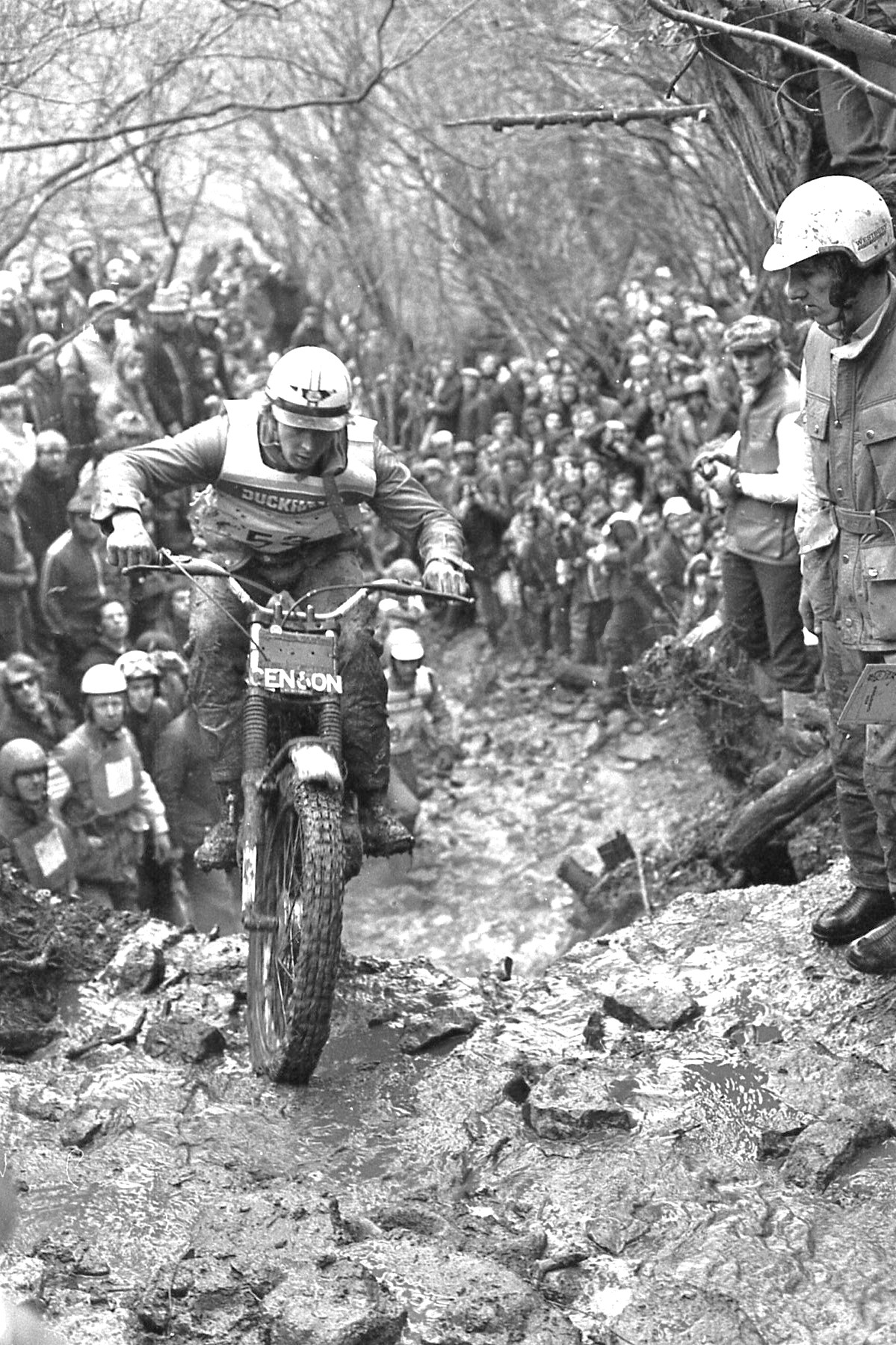
The last round of the first-ever world championship was unbearably tense. For its inaugural year the series had visited 14 different countries but riders could drop their six worst scores and coming into the Czecho finale it was between Malc, Mart Lampkin and Yrjo Vesterinen.
Malc had won three rounds, so had Mart and Vesty had won four. The title was balanced on a knife edge but the Montesa factory had a surprise in store for its star rider.
“Pedro Pi was team manager then. They insisted on taking the bike back after Germany to go through it. I’d ridden the six-speed all year but they brought it back for Czecho and they’d put a five-speed box in it.”
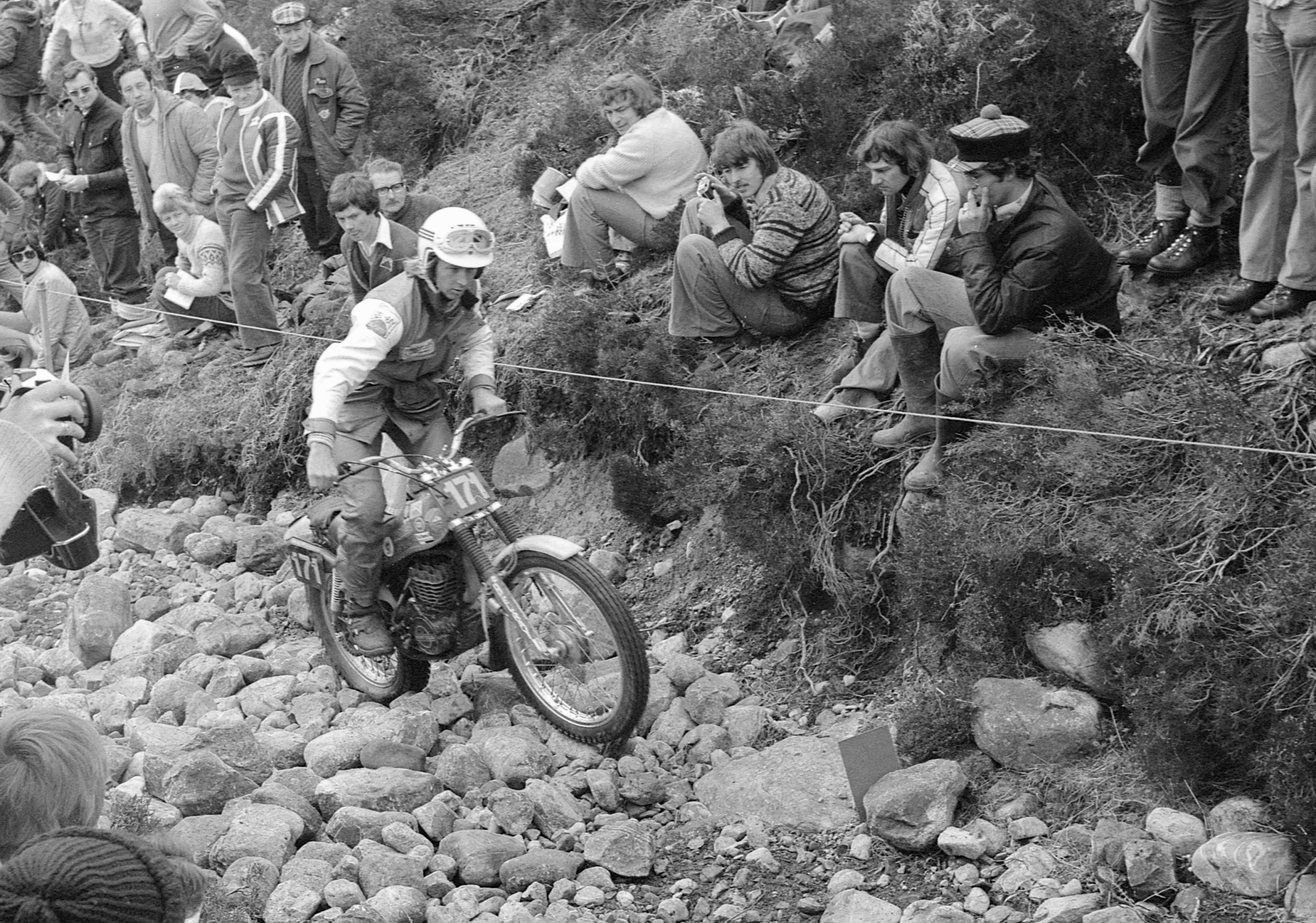
Mick Andrews won the trial with Malc and Mart tied for second. When the number of cleans were counted Mart just edged it which gave him the title.
“I don’t know if they’d brought the normal bike back whether I’d have won it or I wouldn’t have won it – it’s no excuse, it was the same bloody bike anyway. We had the fastest trip back from Czecho ever – we were home for breakfast!”
Malc’s still got four prototypes with different frames, engines and gearboxes that eventually became the production 348. Montesa’s decision to hand him a five-speed version for the final round may or may not have been flawed but its choice of development rider certainly wasn’t and the 348 became the biggest-selling trials bike of all time.
After staying with Montesa in ’76 and ’77 – finishing second and third in the world – he was lured away to join Suzuki and became the highest paid trials rider in the world. Unfortunately, the bike wasn’t nearly as good as the pay cheque…
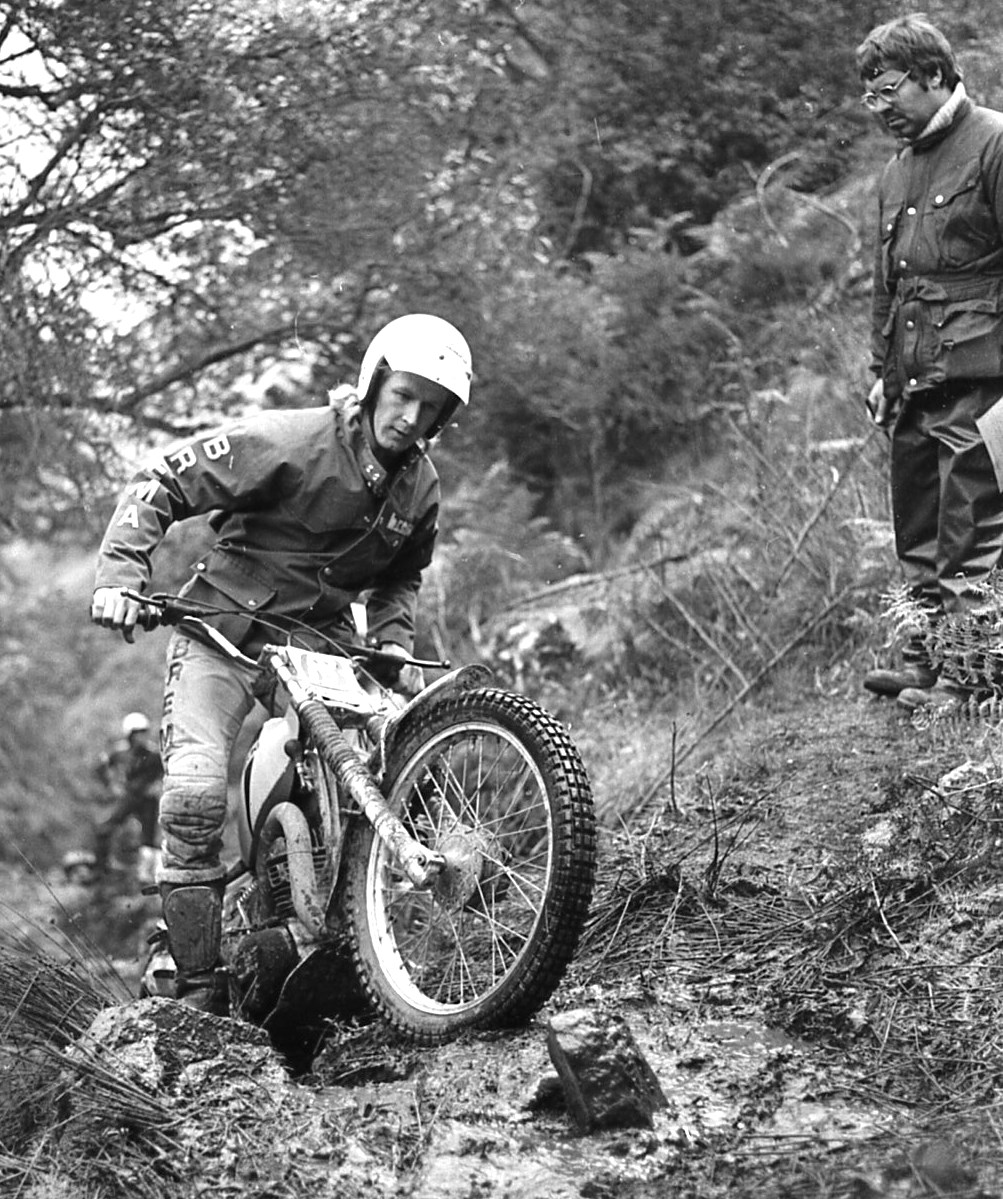
“In 1978 they wanted someone to ride Suzuki and I suppose everyone was hoping the Japanese were going to come in with a trials bike. Kawasaki were trying at the time and Honda so the Japanese were having a go and it was an opportunity to be involved with it.”
Suzuki importer Graham Beamish handled the two-year contract which had a one-year get-out clause on both sides and, after a season that saw Malc slip to 14th in the world, both parties were thankful for it.
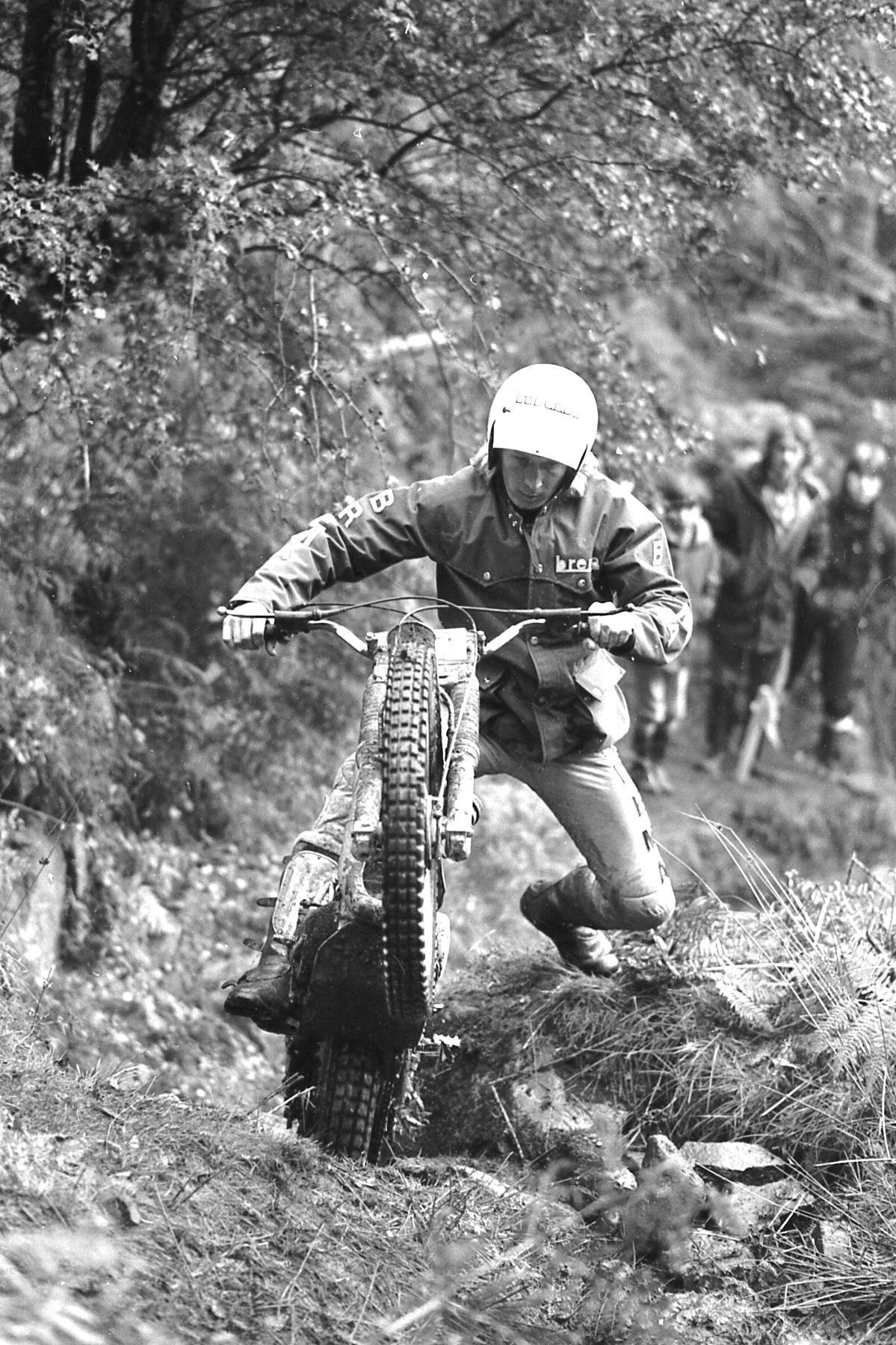
“We worked with Mick Whitlock to try and sort the frame out. Everything was wrong with it to be honest but having worked with Montesa I knew there was nothing that couldn’t be put right if we’d had the gear.
“With Mick we made new swinging arms, new frames – changed all the geometry. We copied a Montesa frame and god knows what else but it just didn’t work together with the engine and to get stuff done for the engine was impossible but Graham was absolutely brilliant and we remained good mates long after that.”
Used to working with a European manufacturer, Malc found himself becoming increasingly frustrated as he struggled to make the Suzuki competitive.
“The biggest problem was I’d been used to slipping over to Barcelona if I needed to do any work on it and with Japan if you wanted something changing it was three months and by then half your championship had gone.
“You went to Barcelona and got the welder out and got the hacksaw out and you did it. The downside was you’d be ready to go training at 9am and the bike wouldn’t be ready. So you’d wait and wait and by 3pm it would be ready – and then everyone would go to lunch! You wouldn’t start your day’s testing until 5pm.
“It’s still the same now – I think that’s just how the Spanish are – but they were great to work with. Just a little bit different from Yorkshire.”
So for 1979 he went from being the world’s highest-earning trials rider to one of the lowest…
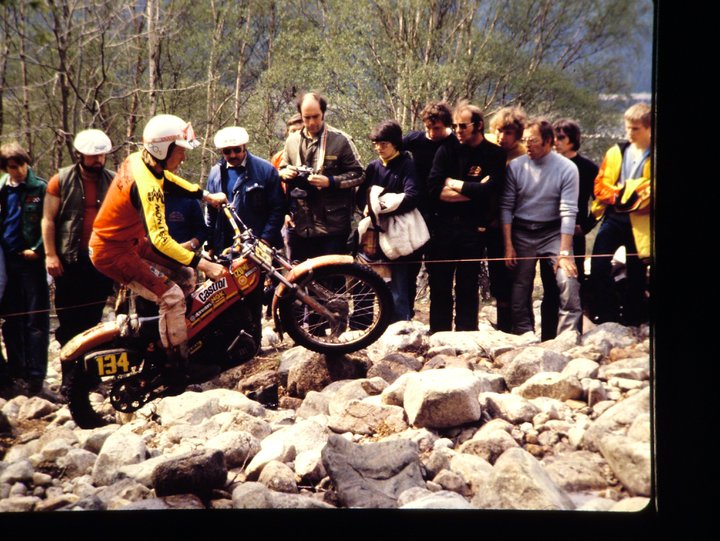
“Montesa had taken someone else on so there wasn’t a place but they’d do me a bike and bits and a bonus system. I won the Scottish and some world rounds so I thought it was a good time to sort things out and got another three-year contract with them.”
Finishing fifth in the world, Malc also won his fifth British title but after a decade at the top his star was waning. He won his final British championship in 1981 but slipped out of the world top 10 and needed a back operation. The following year he called it quits, returning once to ride the Scott in 1983 when he finished fifth.
Together with wife Rhoda he bought a hotel in Grassington and prepared to settle into retirement but even if he thought he’d finished with trials, trials hadn’t finished with him.
“The first weekend we opened it was the world trial at Pately Bridge so we were full of riders. We had 42 people staying. We had Bill Wilkinson behind the bar, Don Smith serving on.
“All the Spanish Federation team would come back to stay between the England and Ireland world rounds. We even had Jordi Tarres staying in the car park. They used to ride their Montys around the square and cause havoc.”
Like all sportsman of his calibre, Malc openly admits that throughout his career his prime motivation was winning but his Yorkshire pragmatism kicks in when I ask him whether he regrets not winning the 1975 world championship.
“Not at all,” he replies without a moment’s though. “It doesn’t bother me. I did what I had to do at the time and that was it. What you win you win and what you don’t is gone. I’ve no regrets about that at all. If you don’t do it you don’t do it. It’s your own bloody fault isn’t it…”
Double act!
Malc on Mart…
Malc and Mart, Mart and Malc. To say the pair were the best of mates doesn’t do justice to a profound friendship that lasted for over half-a-century until Mart’s untimely death in April this year.

“We first met in some beck or puddle in the early ’60s when he used to go with ‘Sid’ [Alan Lampkin] and ‘Ping’ [Arthur Lampkin]. He was too young to ride but he used to go with them to local scrambles and I used to go with Tony Cook so we crossed paths. We didn’t really know each other besides mucking about together.”
Their friendship didn’t really start until they began competing in the mid ’60s but their fierce rivalry (motorbikes, dominoes, cricket, darts – you name it, they wanted to beat each other at it) was rooted in mutual respect and, dare I say it about two Yorkshiremen, deep affection. For a time they even went into business together…
“In 1971 we started a coal round. We needed something to do when we weren’t travelling. Trouble was the customers when we were in Spain didn’t think it was a right good idea when they had no coal for three weeks so we had to take a bloke on.
“We did it through one full winter but it was in the summer when we were away that the trouble started. Daftest thing we did was buy another round – we couldn’t do one properly so we thought we’d have another.”
The pair had a totally different approach to riding with Malc’s finesse contrasting with Mart’s bull-in-a-china-shop style but both were hugely successful.
Naturally, as mates do, they also got into a few scrapes along the way and Mart was always the one to spin out a great yarn from their adventures including Dougie’s favourite story about the time the cream of British trials talent decided to stage a boat race.
“We were in the middle of a lake in Finland – Dave Thorpe [not the motocrosser], Rob Edwards, Mart and myself. I was in with Rob and Mart was with Thorpey in these two boats and we rowed out. Thorpey knew I couldn’t swim and had planned with Rob that he’d pull alongside, Rob would pull the bung out and leap in with them and they’d row off.
“Mart had got a 400-18 inner tube that he was sat on so just as the boat was disappearing he was going to chuck me this tube which he did do but only after I was sat there for five minutes waiting for the boat to sink. He was always telling that story, only he could make it last for three hours.”
Malc’s got a few anecdotes of his own, including the time Mart felt the long arm of the Spanish law.
“Me, Sid and Mart were in Barcelona one night and we’d had a few sherbets and were semi-lost trying to find our way back. Me and Sid found a wheelbarrow so I jumped in and Sid started pushing me – next thing I see Mart’s on this pushbike, riding round us singing ‘rain drops keep falling on my head’.
“All of a sudden this copper comes out of a bar, gets his truncheon out and whacks him hard across the back of his head. Mart had nicked his bike!”
Life after riding:
A brief update…
After six years running the hotel Malc and Rhoda were ready for a change.
Malc had stayed involved in the sport, managing the Yorkshire Inter Centre team and in 1989 he was training the ACU’s under 21 team which included Rob Crawford, Steve Colley, Graham Jarvis, Wayne Braybrook, Adam Norris and Rob Warner. His approach was ahead of its time with regular physical evaluations at Liverpool University and a bonus system for riders.
Then, at the 1990 British world round at Merthyr, he was approached by an Italian with a proposition that would change the course of his life.
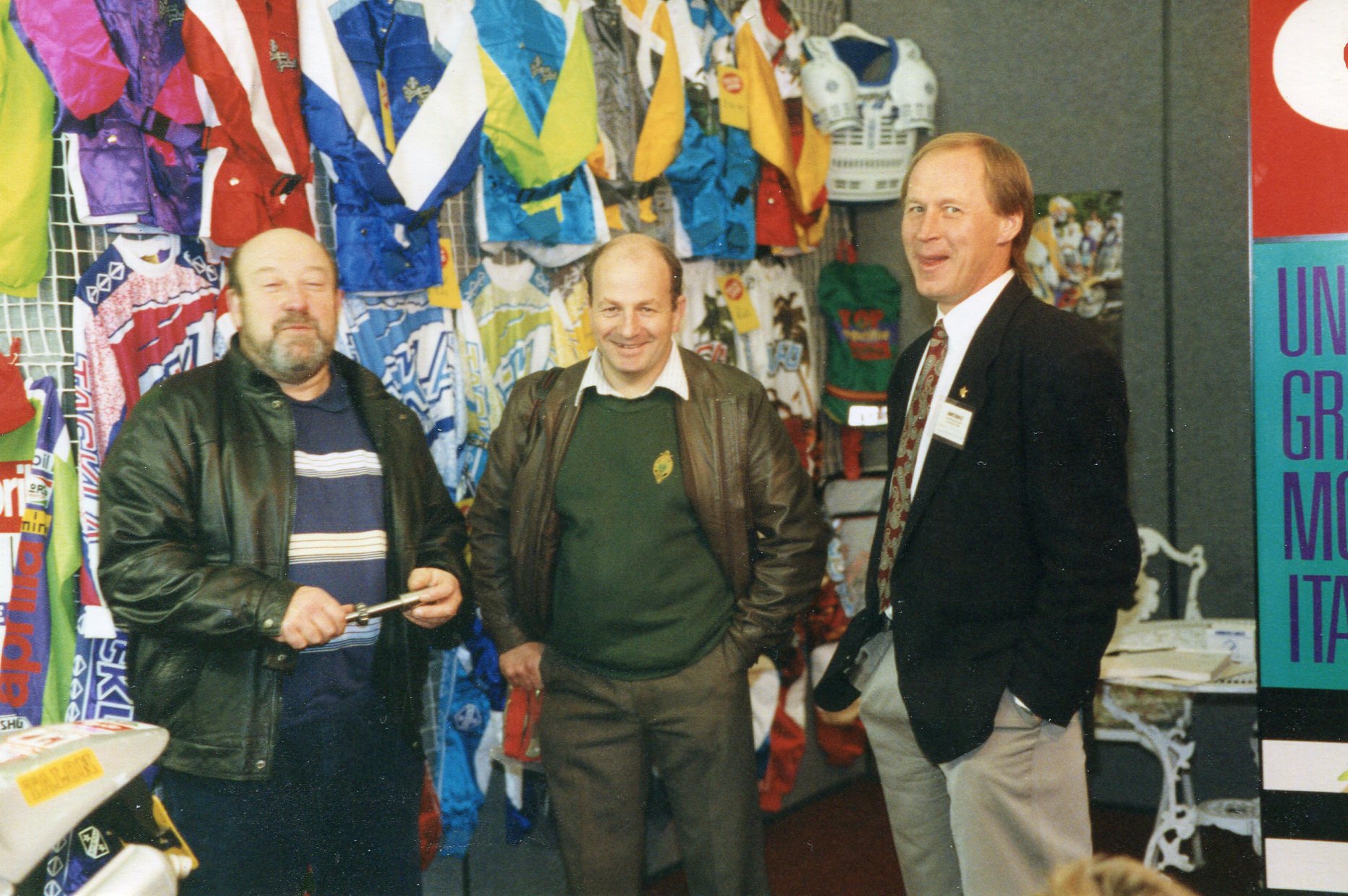
“I came out of the hotel about seven o’clock in the morning and this bloke got hold of me and said ‘are you interested to do Aprilia?’. They were looking for someone to do trials and a little bit of enduro and that’s how we got back into it. We got a few bits of product and then Graham [Jarvis] came to live with us and it all started again.”
Scorpa followed in ’93 and, thanks to this association with Marc Teissier, when the Frenchman revived the famous Bultaco name that quickly evolved into Sherco it was Malc who he wanted on board.
Highlights
The best bits:
The historical importance of the Scott Trial can’t be under-estimated. The time and observation event – the toughest one-day trial in the world – is over 100 years old and Malc has been involved with it for more than half of this period.
From his early days helping his dad mark out the course to winning it six times to helping Graham Jarvis win it a record nine times, the Scott Trial remains close to his heart.
“I think my Scott wins are the highlight of my career. You’ve got to be organised and prepared – if you’re not 100 per cent then forget about it.”
Graham’s trials riding career is briefly documented earlier in this month’s magazine and Malc gets an even briefer mention as his mentor. No insult was intended – the feature is about Graham’s life after trials – but perhaps this is as good a place as any to flesh out their relationship a little.
It’s clear that Malc is very proud of the way his protégé has risen to the top of extreme enduros after moving to Yorkshire to live with the Rathmell family as a teenager.
“Graham stuck it out and there were times that I didn’t think he would. He got some stick but he always came back for more. He was semi-knackered when he left us. He had two knackered knees and a knackered back. I think everything he’s done now he learned from the Scott Trial.”
While Graham undoubtedly benefitted from having Malc in his corner, he also gave Malc the opportunity to once again travel the world with – more often than not – his old mate in tow. He doesn’t mention him by name but I’m guessing Mart’s on his mind as our interview concludes.
“I can honestly say I enjoyed every minute through my riding career and through Graham’s. It was good because I did it all again. It was like we had a second lap of everything.”
Who is Sean Lawless?
Sean spent over a decade editing publications including MXUK, Dirt Bike Rider and Trialsworld magazine.
After moving into event media for, among others, the Red Bull Pro Nationals, Goodwood Action Sports at the Festival of Speed and the Monster Energy Arenacross Tour, Sean turned freelance and is now Motocross Editor for Trials and Motocross News.
A regular contributor to magazines around the world, Sean’s interviewed some of the off-road world’s greats from Dave Thorpe to Ryan Dungey to Yrjo Vesterinen.
Specialising in off-road motorcycle sport, Lawless Media UK is run by Sean Lawless.
This article is the intellectual property and copyright of Sean Lawless/Lawless Media UK
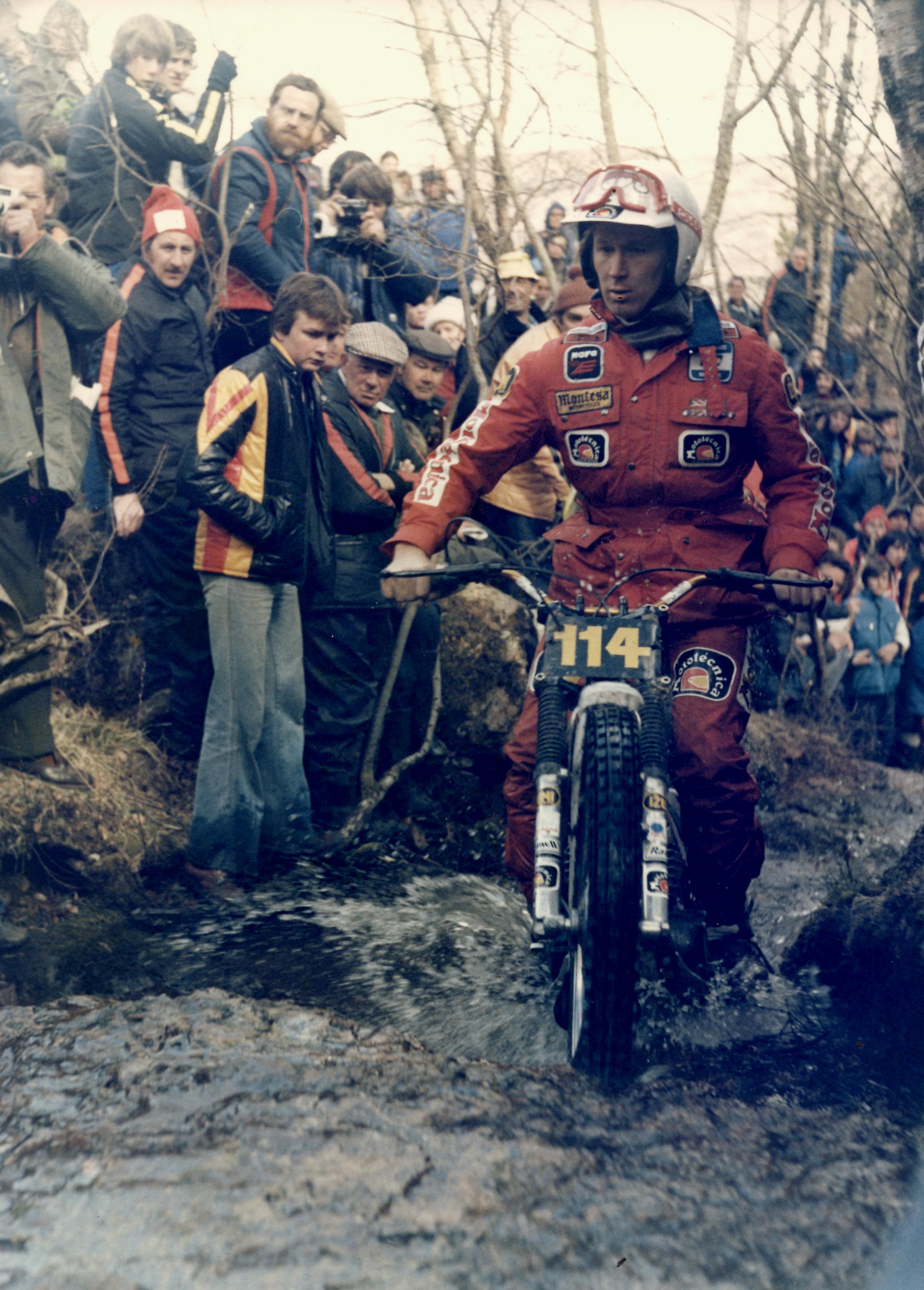
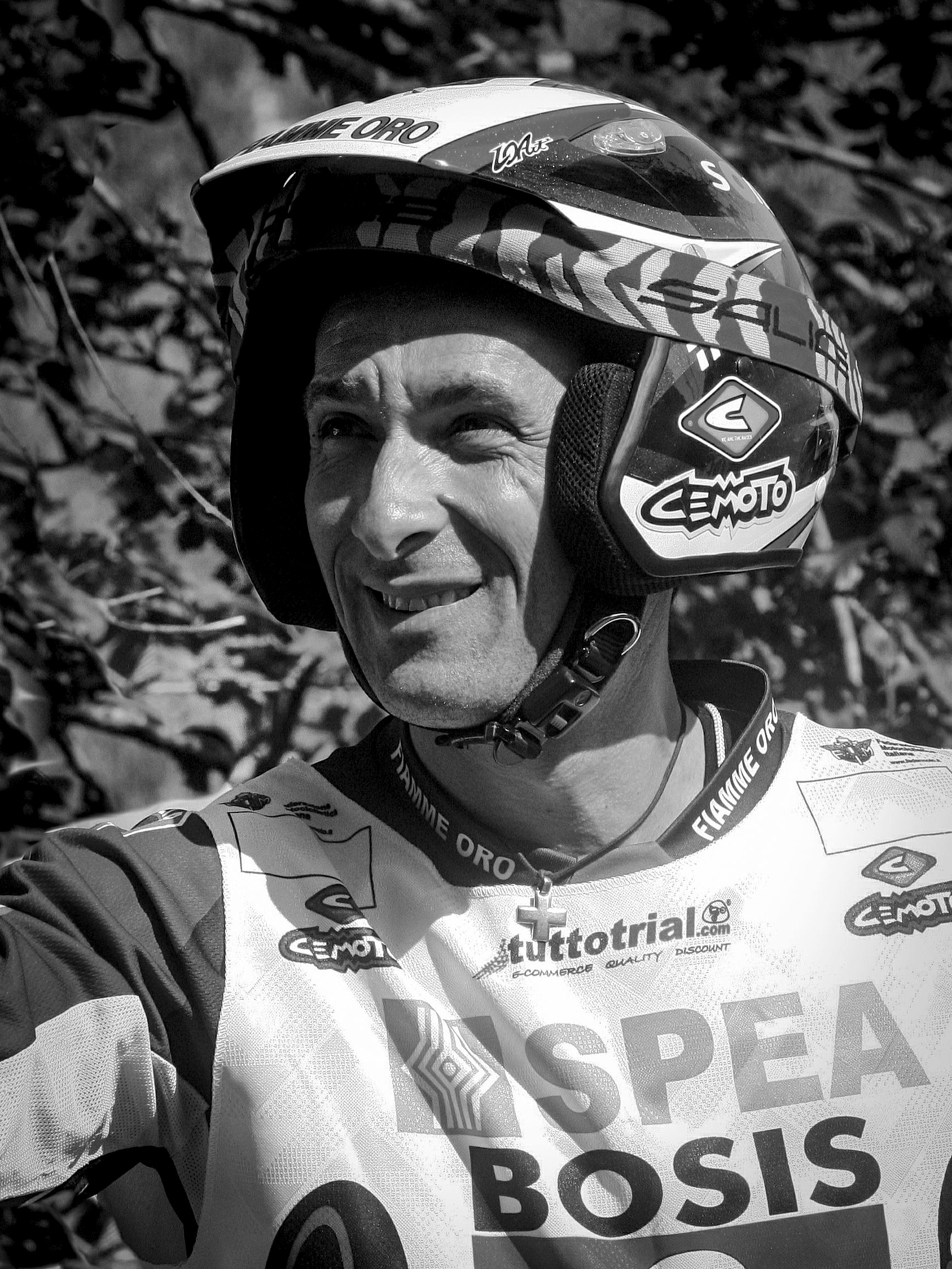
2. ♠ Trials Legend – DIEGO BOSIS (Italy) 1967 – 2012:
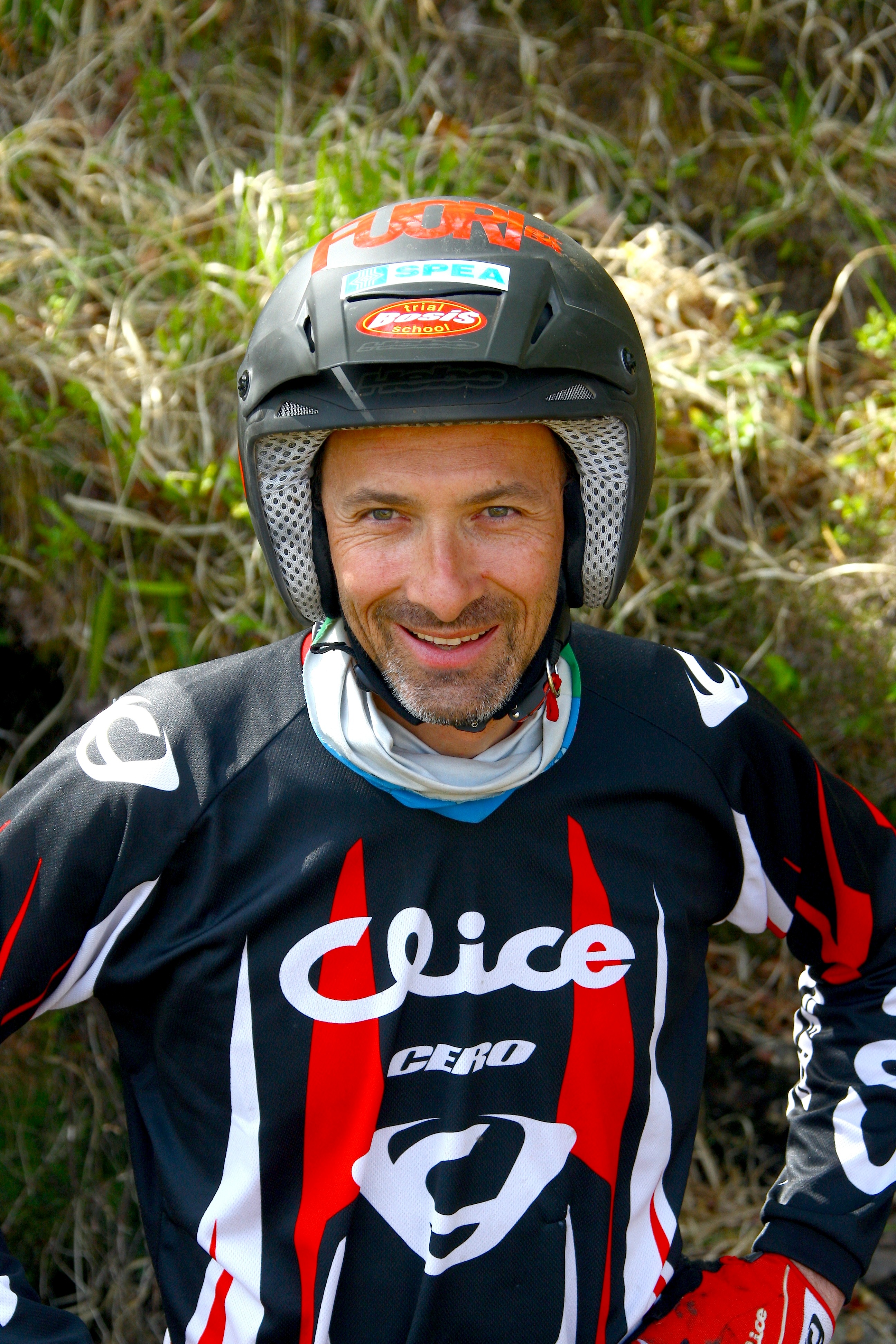
Born on 19th October 1967, Diego Bosis was one of the top flight International trials riders in the 1980’s and 1990’s. He was victorious in the Trial des Nations with the Italian Team consisting of Bosis; Renato Chiaberto; Carlo Franco and Donato Miglio in 1987.
He originated from Bergamo, commencing his riding career at aged 12 in 1979 and won the 50cc Italian (Cadet) Championship at the age of 15 and again at 16. Bosis was encouraged by his father, Giacomo.
His world championship debut was in 1984 when he came in fourteenth position. His best world trials championship season was undoubtedly, at aged nineteen in 1987 winning the USA round, the first Italian to do so. He finished the 1987 season in second place to Spain’s Jordi Tarres (Beta).
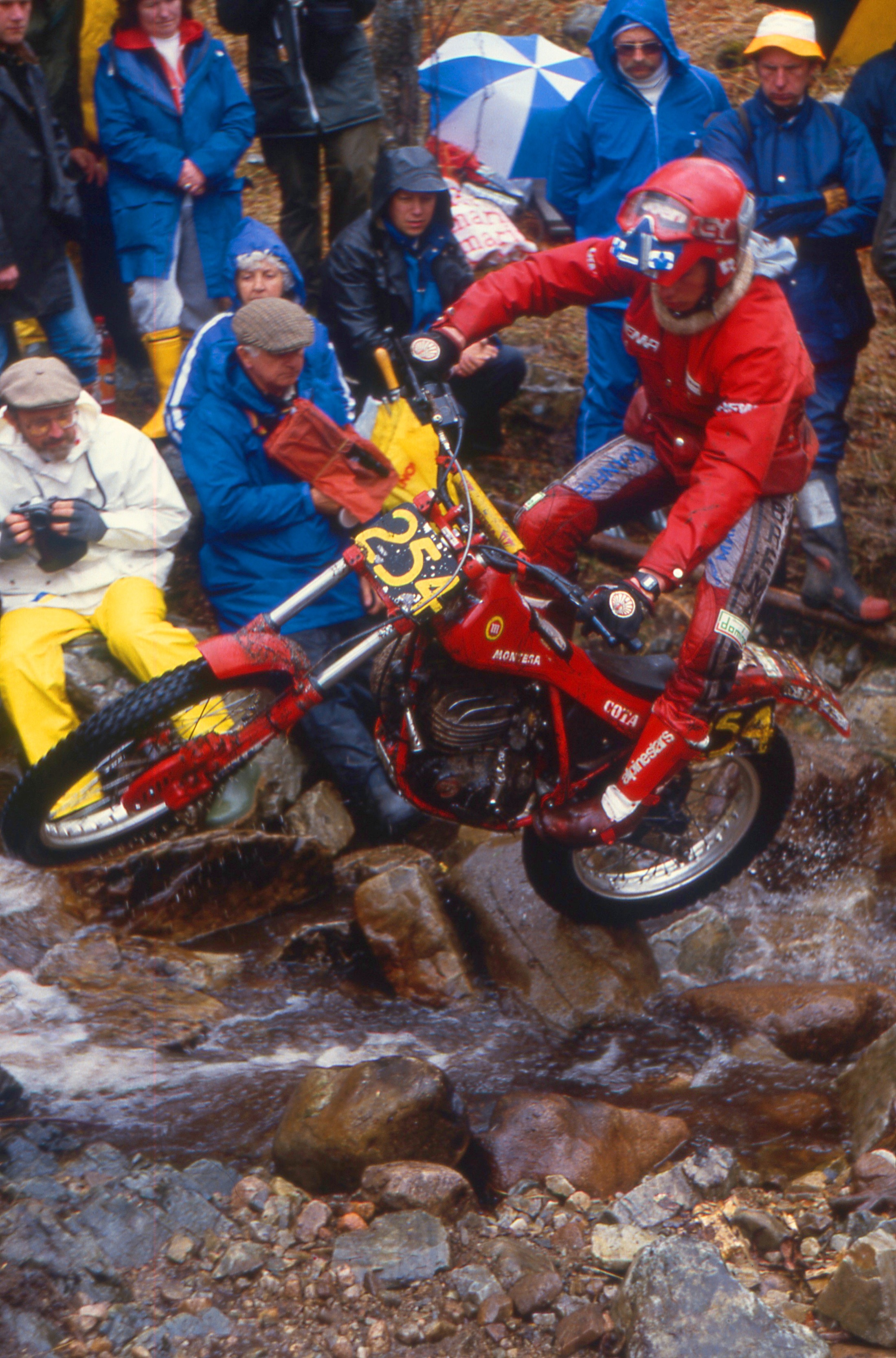
Diego was Italian Trials Champion on ten occasions, he was also runner up in the world championship in 1987 and 1990, he was third placed in 1989, 1991 and 1992. He was probably best known as a Fantic factory rider.
Bosis retired briefly in 2006 and worked with the FIM Trials Commission from 2010 to 2011 assisting with section design for the World Trials Championships.
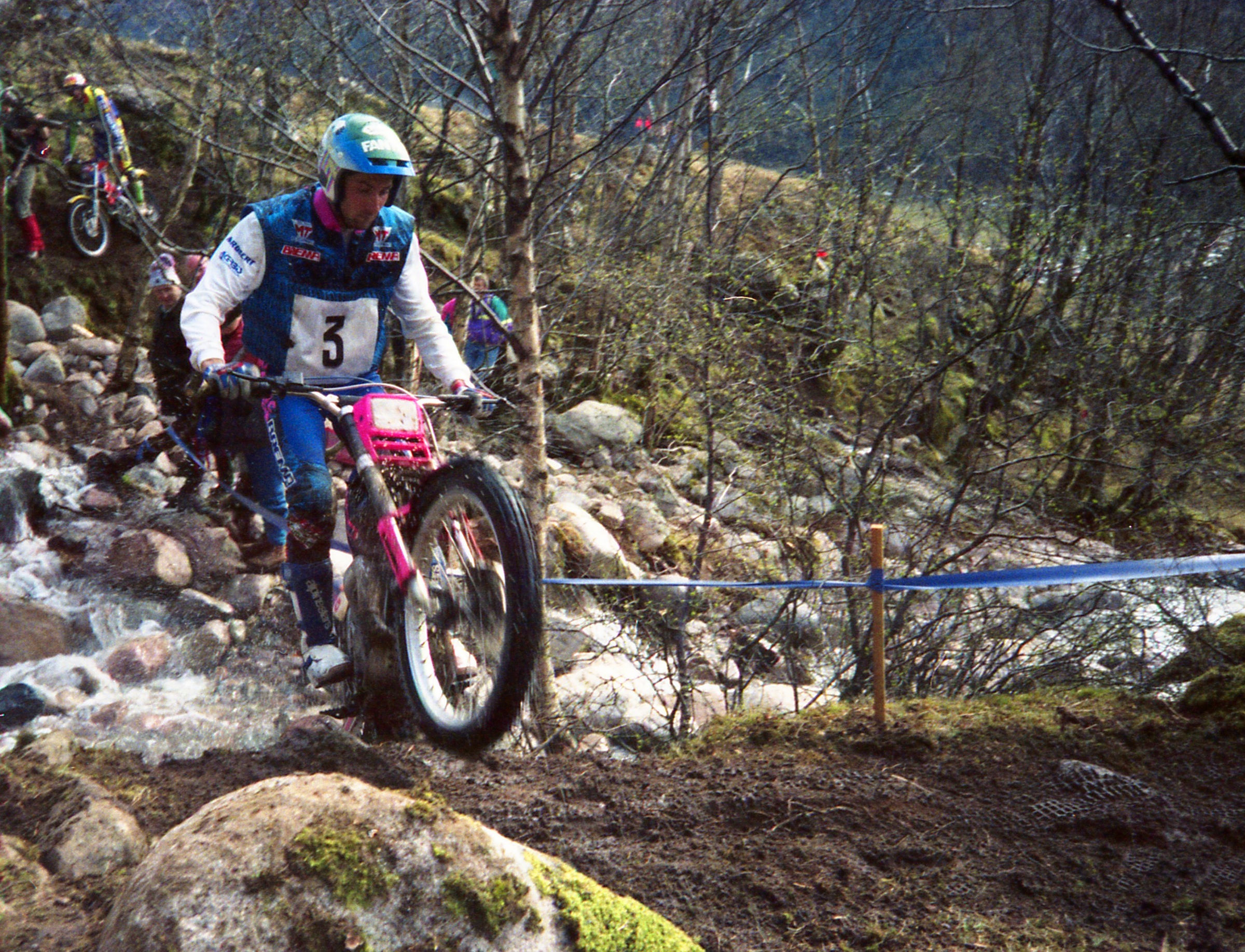
In his career, Diego rode Fantic, Aprilia, Beta, Gas Gas, Sherco and finally Montesa.
Having spoken at length to Trials Guru’s John Moffat at the 2010 World round at Fort William, Bosis was prompted and ultimately delighted, to compete at the centenary celebration edition of the Scottish Six Days Trial in Scotland in May, 2011 just nine months before his untimely death on 14th February 2012, he suffered a cardiac arrest.
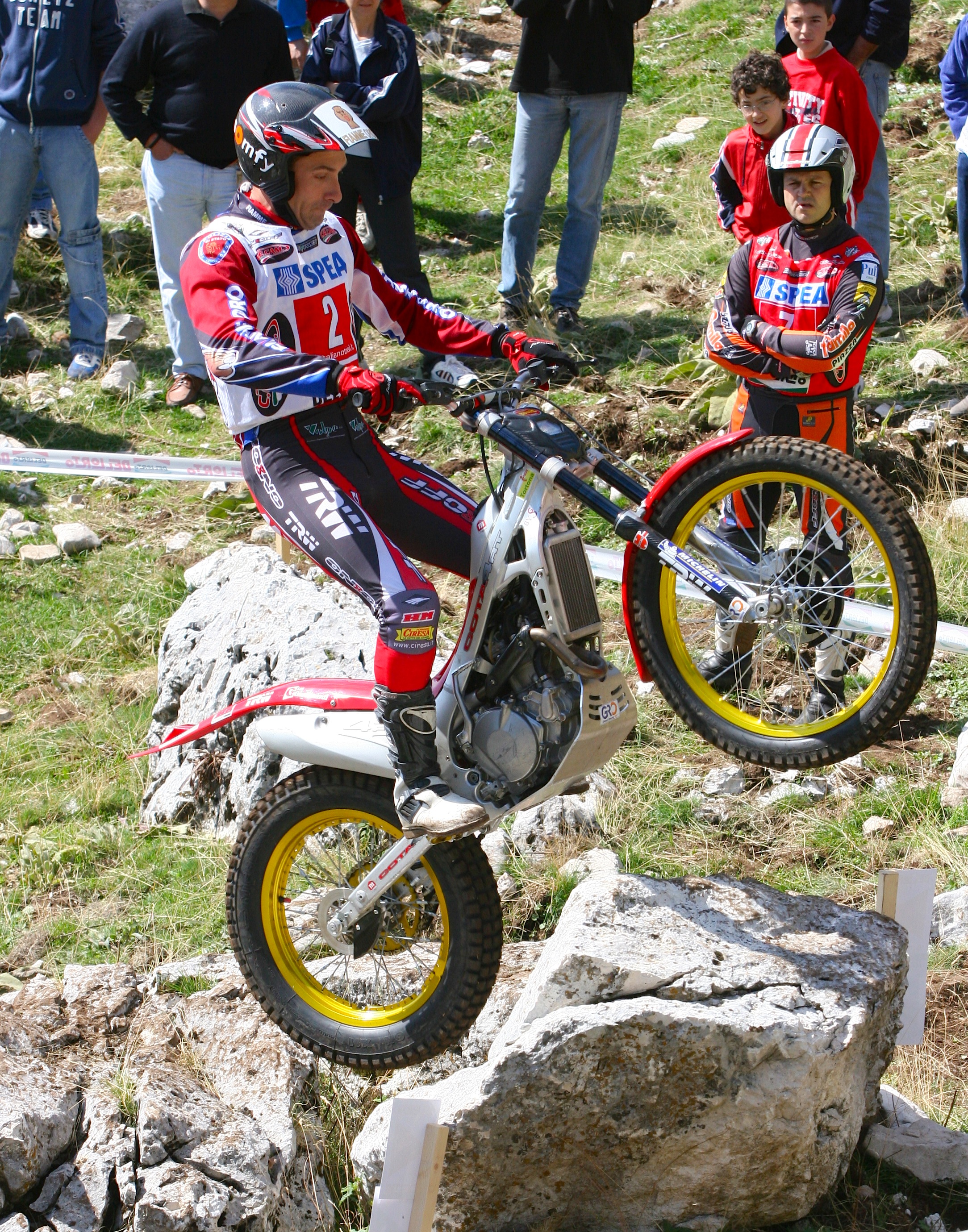
At the pre-trial procession for the 2012 Scottish Six Days, James Dabill (England) read out a very moving tribute to Diego Bosis, which resulted in rapturous applause from the many hundreds of spectators in down-town Fort William, Scotland.
3. ♠ Trials Legend – Nigel Birkett (England)

Nigel Birkett:
Words: Trials Guru
Photos: Toon van de Vliet; John Shirt Snr; Nigel Birkett; Spencer Oliver.
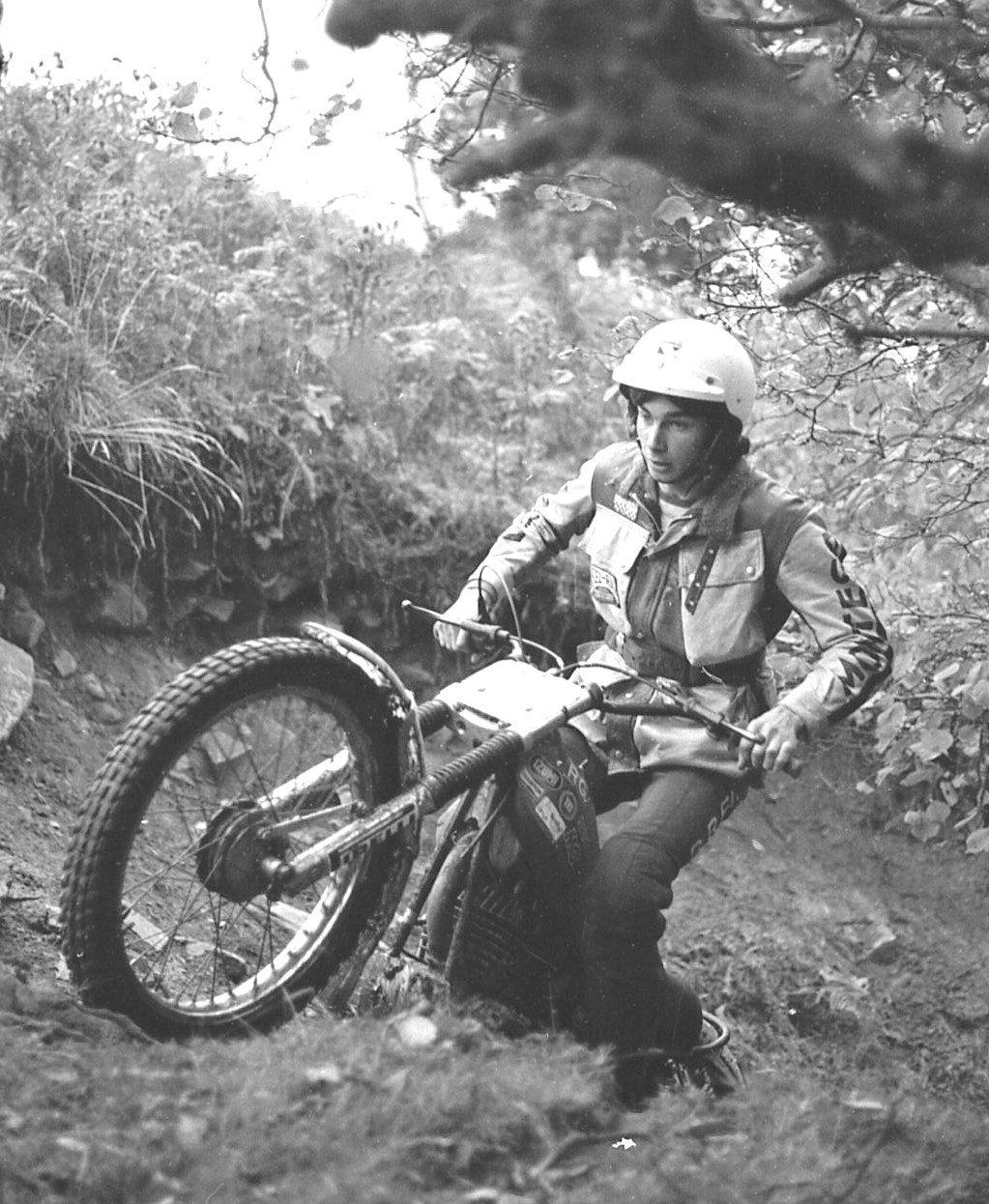
Few people dedicate their lives to a single passion quite like Nigel Birkett. From childhood through to the present day, motorcycle trials has remained at the centre of his life. As a rider, machine developer, importer and respected figure within the sport, Birkett’s influence has extended far beyond competition.
Growing up in Broughton-in-Furness, Nigel developed an interest in anything mechanical while helping around his father Bill’s coal yard. His parents, Bill and Ada, soon recognised his enthusiasm, and at just eight years old he was given an ex-GPO James motorcycle to ride around the yard.
It didn’t take long before simply riding the bike wasn’t enough. Young Nigel was already experimenting with ways to make it faster and more capable off-road. Like many youngsters of the era, he began in scrambling—the discipline that would later become motocross—before discovering motorcycle trials. That introduction sparked a lifelong involvement with the sport, one that continues more than five decades later.
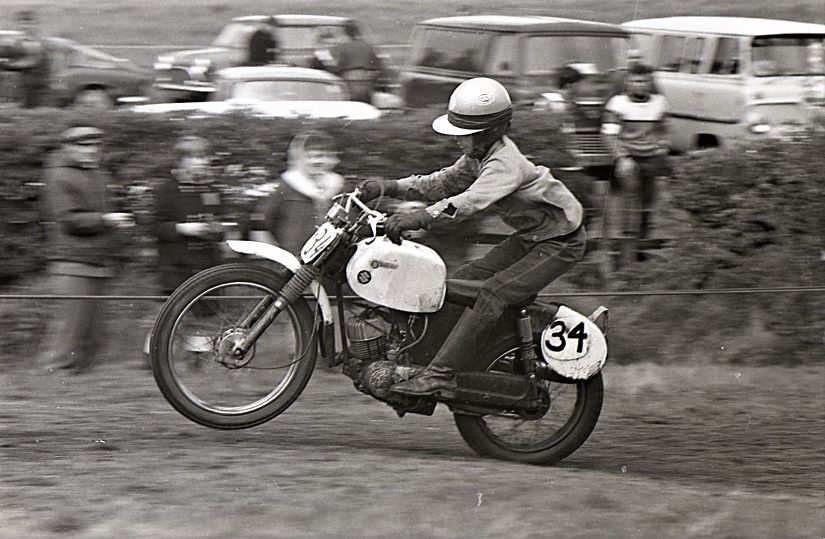
Nigel still recalls the old James with affection. It was quick enough in a straight line, although mastering corners proved rather more challenging. As his confidence grew, a succession of ageing British motorcycles followed, allowing him to develop both his riding skills and his natural mechanical ability.
By the age of thirteen he claimed victory in his first schoolboy scramble aboard a home-built 80cc Suzuki. Although only four riders lined up on the start line, they all had superior machinery. Determined to succeed, Nigel fought his way to the front with typical determination, using every ounce of aggression and commitment to secure the win. The winner’s plaque from that race still has pride of place in his collection today.
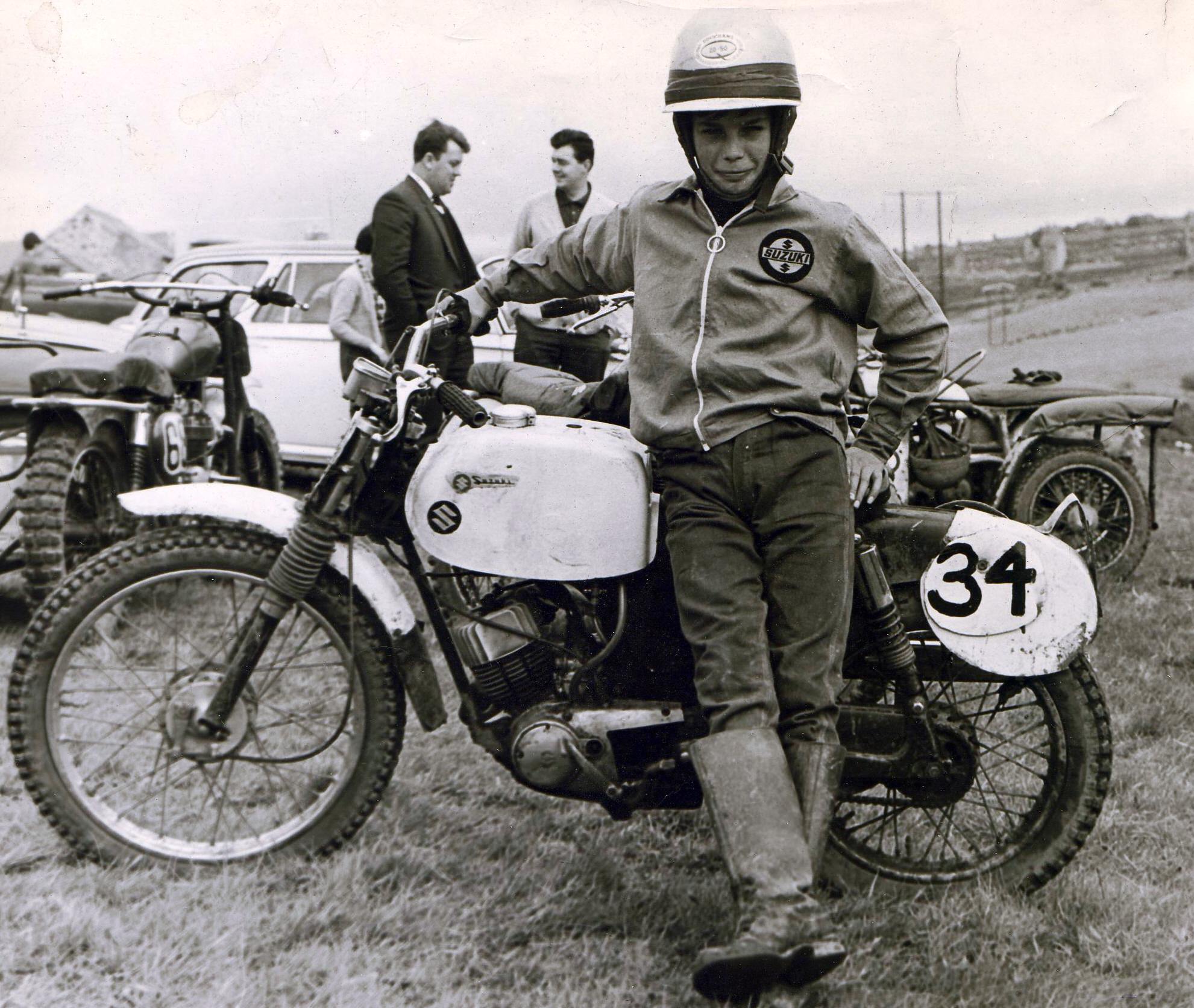
Nigel remembers the race well: there were only four riders, but all on better bikes. It was a hard-fought win, and he had to push aggressively—almost literally—using a lot of physical effort and “elbowing his way” to the front.

That success fuelled an even greater desire to compete. Recognising his son’s dedication, Bill bought him a damaged 125cc Yamaha, which Nigel rebuilt into a competitive scrambles bike. Constant development and countless hours in the workshop transformed the machine into a regular winner over the following seasons.
His father’s support continued with the purchase of a purpose-built 125cc Puch Dalesman motocross bike. Riding the new machine, Nigel finished runner-up in the British Schoolboy Championship, confirming his place among Britain’s most promising young off-road riders.
Looking back, Nigel considers those years travelling and competing alongside his father among the happiest of his life. Together they shared an unwavering passion for motorcycle sport. As he progressed into senior competition, motocross remained his first love, and he believed he possessed the talent to build a successful career in the discipline.
However, when he began riding trials during the winter months simply to maintain his fitness, his natural ability quickly became impossible to ignore. Although motocross remained close to his heart, events were already steering him towards the sport in which he would ultimately make his name.
Eddie Crooks:
Nigel’s trials adventure—the journey that would ultimately bring him success—began in 1969 when, at just fifteen years of age, he was still a schoolboy. On leaving school, and with the blessing of his parents, he entered an apprenticeship with Barrow motorcycle dealer, the late Eddie Crooks.
Crooks was well known for supporting many famous road-racing riders. A regular podium finisher in the Manx Grand Prix for many years, he achieved his greatest success by winning the 1959 Senior race, setting both lap and race records in the process. He had also experienced off-road competition, competing in the International Six Days Trial.
In 1963, Crooks Suzuki became one of the first authorised Suzuki dealerships in the UK. The business remains in the family today, with Eddie’s son Martin taking over the helm following his father’s death in 2010.
Although the high speeds of road racing never appealed to Nigel, working on the many racing motorcycles—and particularly their engines—gave him invaluable mechanical experience. He quickly learned the tricks of the trade and soon began applying that knowledge to his own machines.
Stored in the upstairs stockroom at Crooks Suzuki was a Suzuki B120 that had gradually been stripped of many of its parts over the years. It became the donor machine for Nigel’s first trials project. Fellow Crooks Suzuki employee Frank Whiteway, well known in road-racing circles, recognised the young Birkett’s enthusiasm for motorcycle mechanics and generously shared his knowledge and encouragement throughout the project. Nigel still recalls those early days and Frank’s invaluable support with great affection.
The B120 frame was modified for trials use, fitted with a pair of Metal Profile front forks, and equipped with a fuel tank from a Suzuki AS50. Drawing on his engineering experience, Frank worked alongside Nigel to build a trials version of the Suzuki Trail Cat engine, incorporating a piston from a Suzuki Super Six road bike to improve performance.
The resulting Crooks Suzuki special proved to be a revelation. Nigel stormed through Centre trials, quickly establishing himself as one of the region’s most promising young riders. Then, in 1971, at just seventeen years of age, he rode the Crooks Suzuki special in the Scottish Six Days Trial, beginning a lifelong association with the Scottish Six Days that continues to this day.
Trials Calling:
After receiving an Ossa trials motorcycle from Eddie Crooks, Nigel came close to earning a Special First Class Award in the 1972 Scottish Six Days Trial. He then spent one final season competing in motocross on a 250cc CZ and a 400cc Suzuki, but the results were disappointing. Realising that his strengths were better suited to trials riding, he made the decision at the end of 1973 to leave motocross behind and focus exclusively on trials. The move quickly paid off, as he began achieving strong results, including several top-five finishes in major national trials.
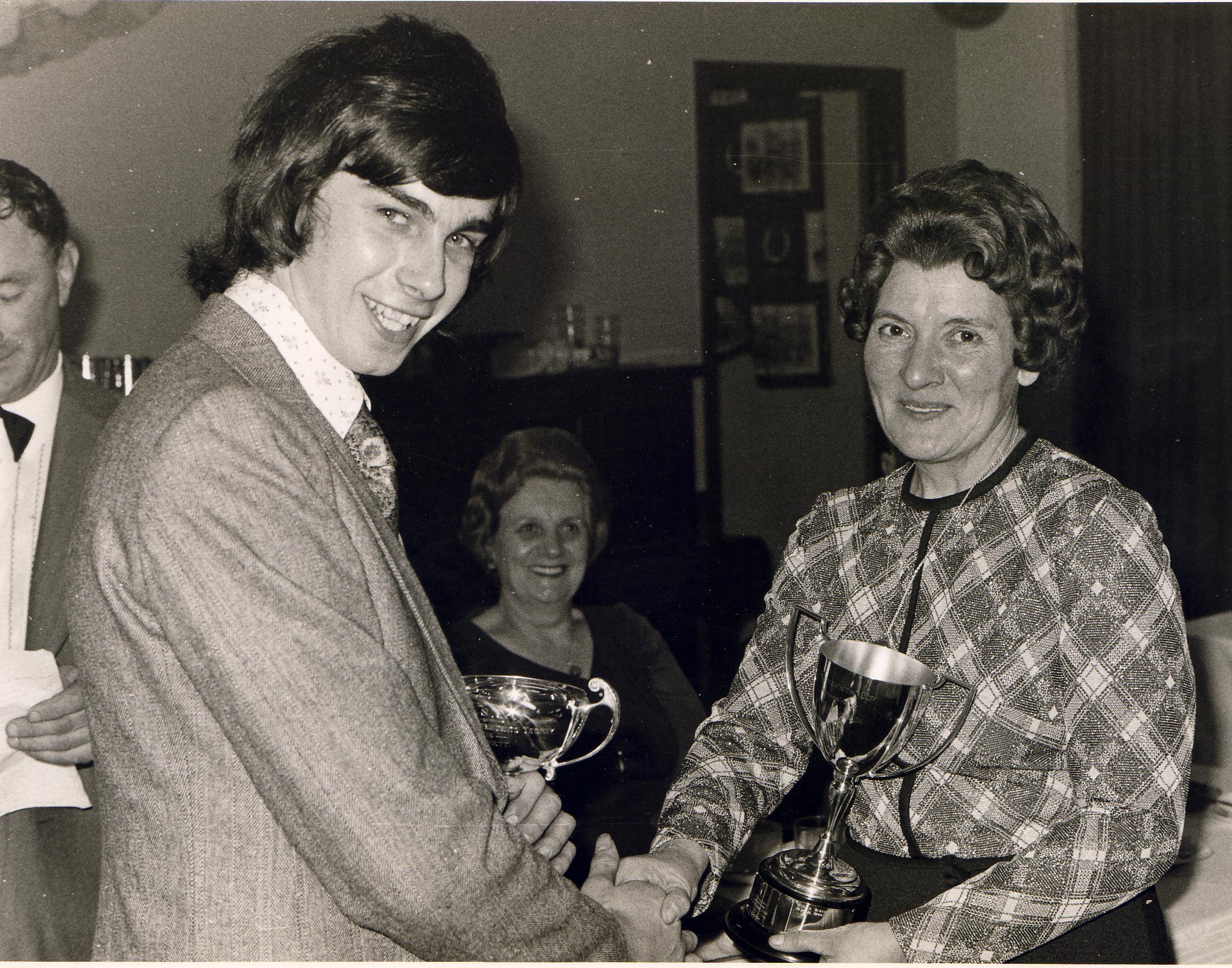
Nigel quickly grew to enjoy riding the Ossa and began applying his newly acquired technical knowledge to improve the machine’s performance. As the 1974 trials season progressed, his results continued to improve, attracting the attention of Kawasaki team manager, Don ‘DR’ Smith. Impressed by Nigel’s talent, Smith offered him a works Kawasaki ride. Working alongside Alec Wright and Kawasaki’s off-road team, Smith was looking for a rider capable of demonstrating the true potential of the company’s trials model.
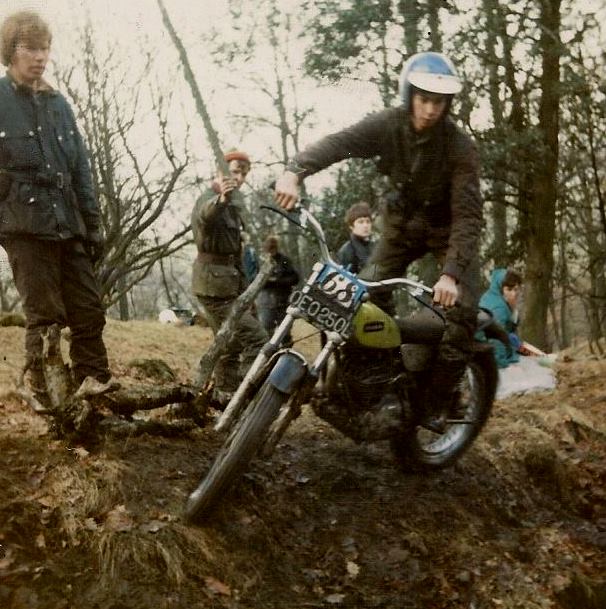
Nigel made his competitive debut on the Kawasaki at the Allen Jefferies Trial in Yorkshire, where an impressive sixth-place finish immediately justified Kawasaki’s faith in him. The performance earned him an invitation to contest four World Championship rounds. He was told that if he could finish in the top ten and score at least one championship point, he would secure a works ride for the 1975 season. At the time, before the official FIM World Trials Championship was introduced in 1975, only the top ten finishers were awarded points.
Although he narrowly missed out in Sweden, Finland and Czechoslovakia, recording respectable top-15 finishes, Nigel produced the ride he needed in Switzerland, finishing tenth to claim the vital championship point. The overseas events were also a milestone in his life, marking the first time he had travelled outside England and giving him a glimpse of what a career as a professional trials rider might look like.
Kawasaki decided to pull out of trials and abandoned their trials effort completely. Kawasaki cut their budget and tried to renegotiate their contract with Nigel and his team-mate, Yorkshireman Richard Sunter, were offered a bike and parts deal but with no World Championship events or financial support, which they both declined.
Nigel was very unhappy with the situation. He had left his job with Eddie Crooks to work at a nearby hovercraft factory in Millom, believing it would help him progress in the sport. However, when he asked for time off to compete in the World rounds, he was told there would be no job waiting for him on his return.
Nigel had been chasing a professional trials career and had reached a point where he rode a factory-level Kawasaki, but that arrangement ended. Now he’s left without a job and without a top-level machine, so he reverted back to riding his older Ossa and reconnects with his earlier sponsor, Eddie Crooks, finding his previous form once again in the process.
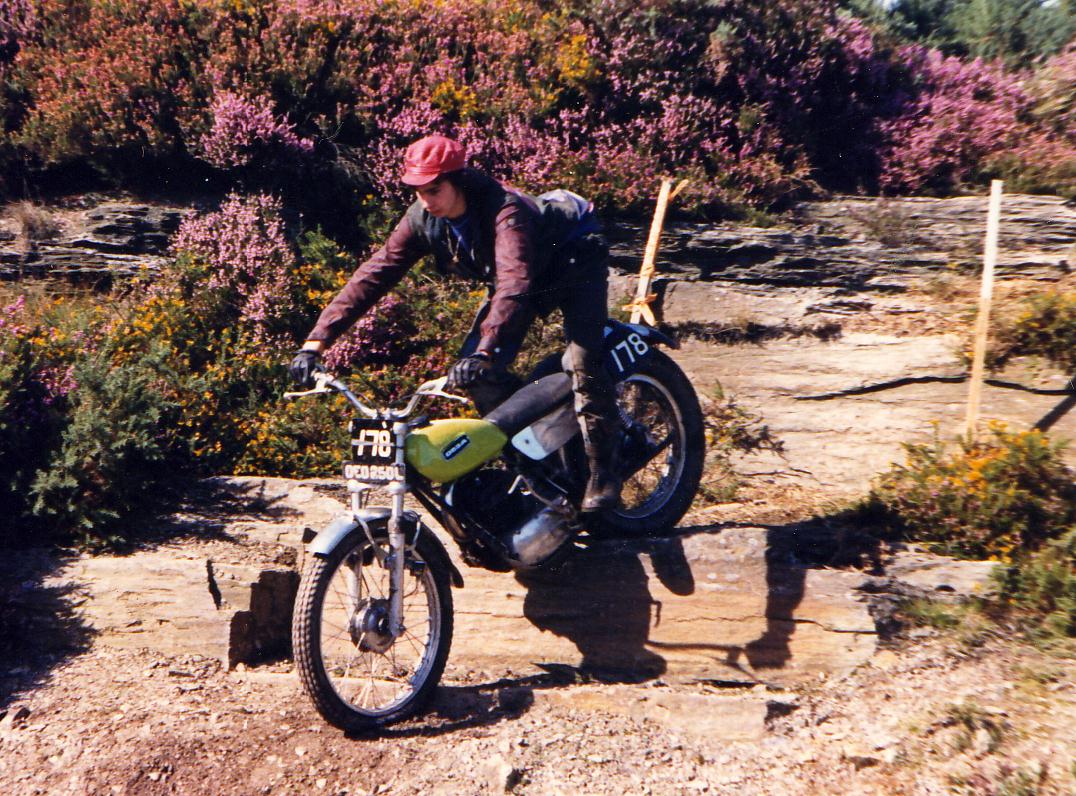
Suzuki Development:
Then came the run-in to the 1975 Scottish with Nigel contesting the BTC and Nationals and wondering whether the Ossa was up to the six days when Graham Beamish phoned Eddie Crooks with the offer of an RL 250 Suzuki for the event. Birkett was not that excited over the prospect of riding another Japanese machine after his Kawasaki experience. He rode the 250cc in one club trial just before the Scottish and was still unimpressed with the Japanese machinery.
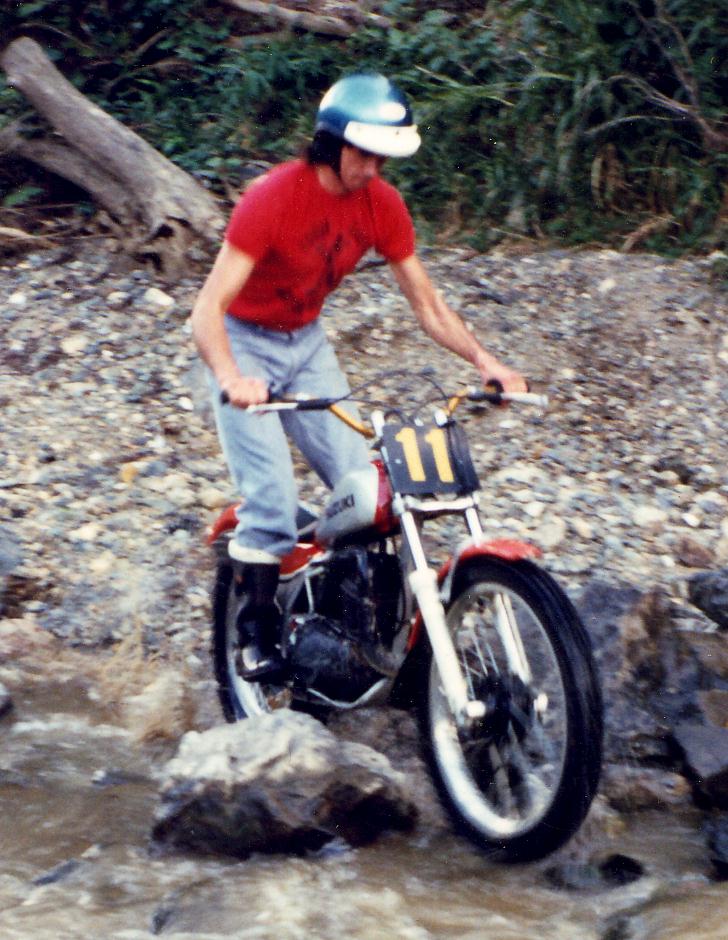
A few days before the event, Graham Beamish offers a switch from the expected 250cc machines to newly arrived 325cc bikes. Nigel agreed without much expectation, and his first impression was negative, they look crude. The real surprise comes when the engine is started. The sound immediately signals something different, they were stronger, deeper sounding and more developed. Once ridden, the bike proves to have far better character than expected. The key change is in the engine’s torque delivery. After only a short practice period, Nigel and teammate John Metcalfe leave for the SSDT in high spirits, because what initially looked like an unpromising machine has turned into a potential competitive advantage right before one of the toughest trials events of the year.
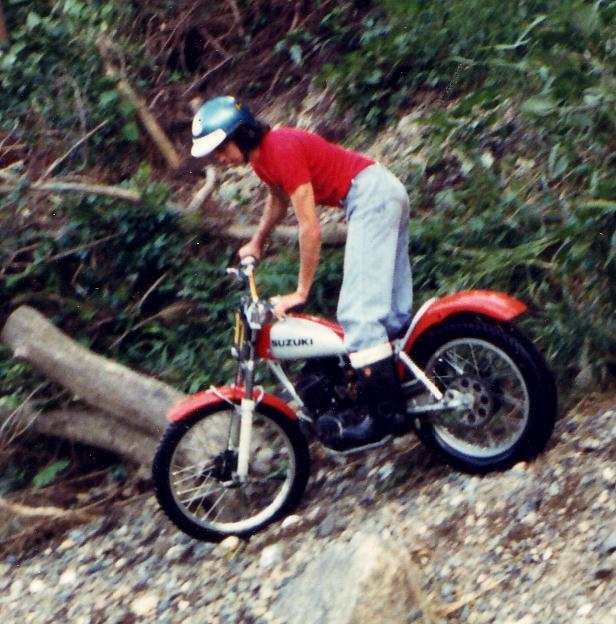
On day one, he had a rough start: the aluminium fuel tank split and he lost time wrestling with repairs and parts coming loose, but the team managed to fix everything overnight in parc fermé, and he still ended up in an impressive sixth place.
Day two was about damage control and clever mechanical problem-solving. He noticed a crankshaft flywheel nut working loose, tightened it, and secured it with a centre punch, an improvised fix that helped him climb into third place.
By the end of day three, Birkett had moved up to second overall, just one mark behind the leader and reigning World Champion Yrjö Vesterinen. The Suzuki was performing strongly, and even a Japanese mechanic overseeing the works bikes was so impressed he jokingly pushed for early nights for Birkett and his teammate John Metcalfe to keep them fresh.
But on day four, things unravelled. Birkett dropped too many marks, and mechanical issues crept in again as the Suzuki’s engine went off song, ending his realistic challenge for victory.
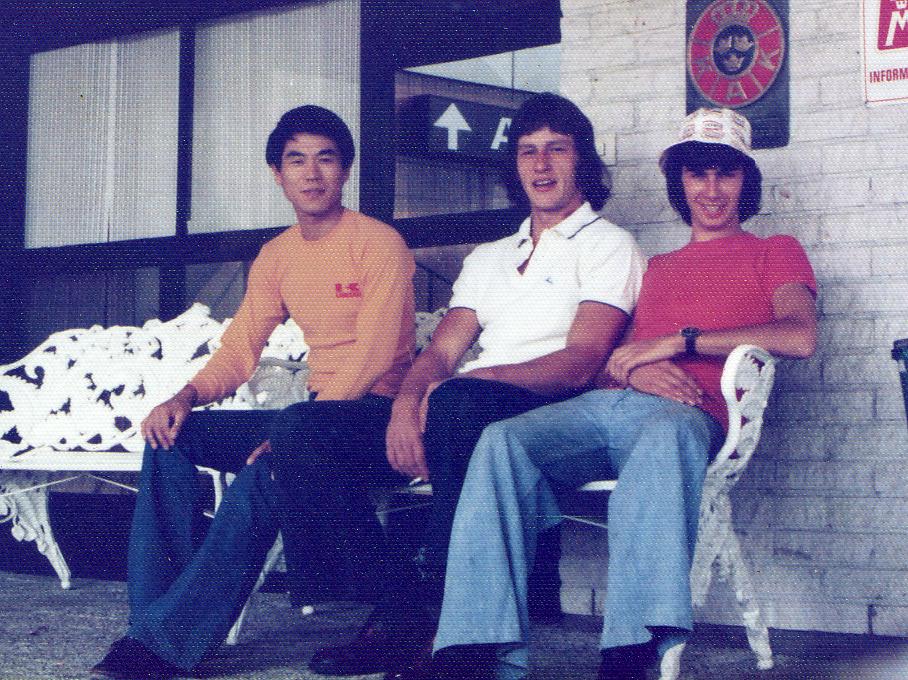
Birkett initially finished an event in 8th place, believing he had an engine issue. It later turned out a reed valve petal had broken off and passed through the engine without damaging anything else. Suzuki investigated, took it seriously, and quickly upgraded the design with stronger reeds. Around the same time, Beamish Suzuki offered him a new two-year contract and supplied an improved 325cc Suzuki.
With better machinery, his results in the World Championships improved immediately. Competing across Europe, he became consistently competitive: 6th in Sweden and Finland, 2nd in Switzerland, 9th in Czechoslovakia, and 11th in Germany. He finished the season 11th overall in the championship standings.
Earning a living at Trials!
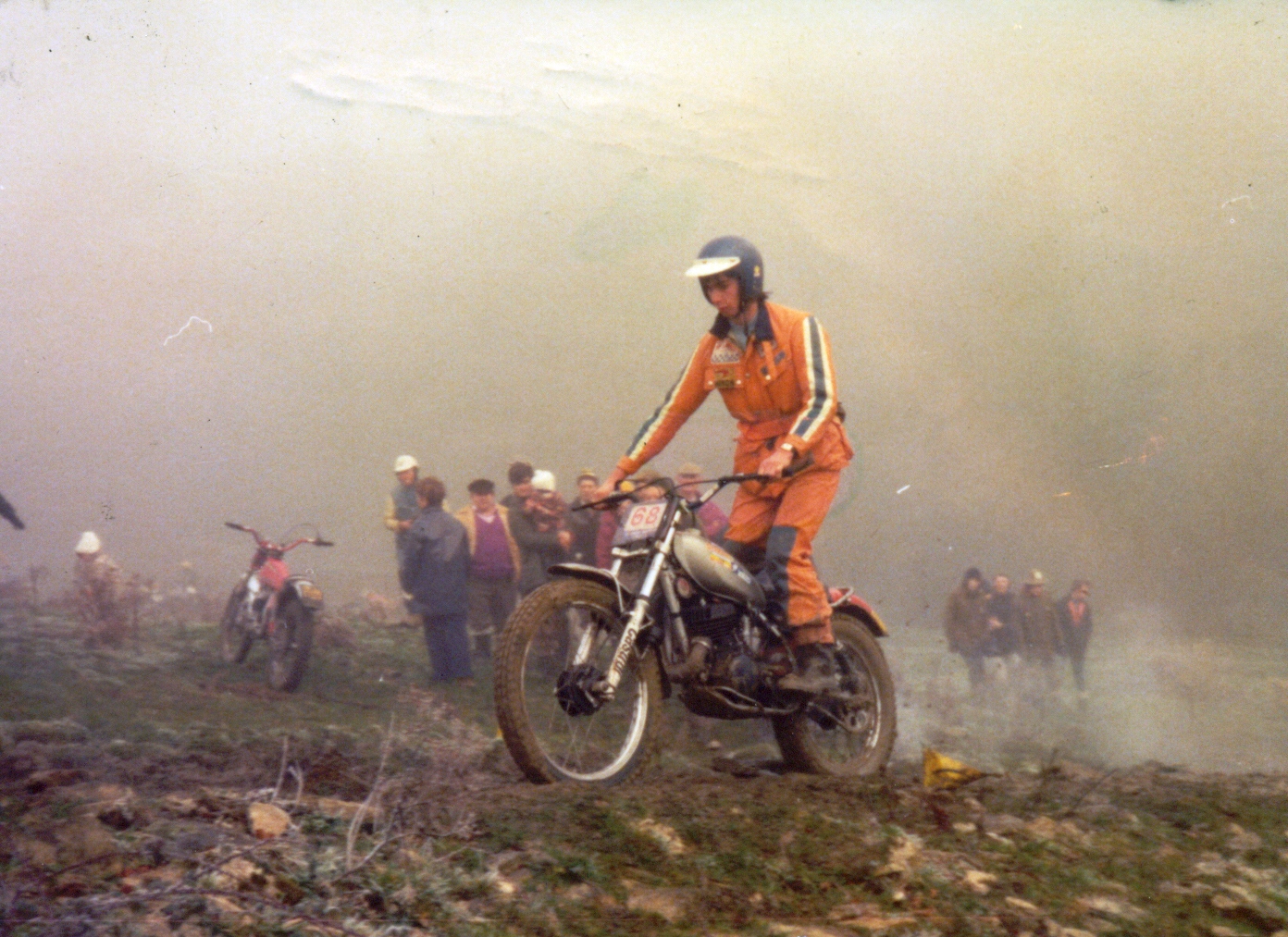
1976 had started strongly for Nigel Birkett with major wins, but a serious crash before the Scottish left him physically compromised. Even so, he still finished 8th. Both he and John Metcalfe were very much development testers as much as riders, constantly trying different rear suspension setups on similar Beamish Suzuki machines.
John Metcalfe’s setup had worked better at the 1976 Scottish on the 325 Suzuki, showing how sensitive these bikes were to suspension changes.
Beamish Suzuki introduced a new 325cc prototype with sharply angled rear shocks, which Birkett disliked, even though he still managed to win the Mitchell Trial on it. Birkett pushed for a hybrid design basically the old-style rear suspension with revised front geometry. That compromise worked extremely well and became the basis for the later Beamish Suzuki RL 250S production bike.
Despite his role in development and strong results, Nigel’s factory contract wasn’t renewed for 1978, as Suzuki shifted focus to Malcolm Rathmell, having been tempted away from Montesa for their next phase of development.
Montesa bound!
In 1978, under importer Jim Sandiford, Birkett moved onto the Montesa Cota 348, a competitive machine that brought him strong results, including multiple National wins and World Trial Championship points. However, his performance at the SSDT was undermined by an electrical fault caused by poorly sized ignition stator screws, which went undiagnosed until late in the event, leaving him disappointed with 14th place overall.
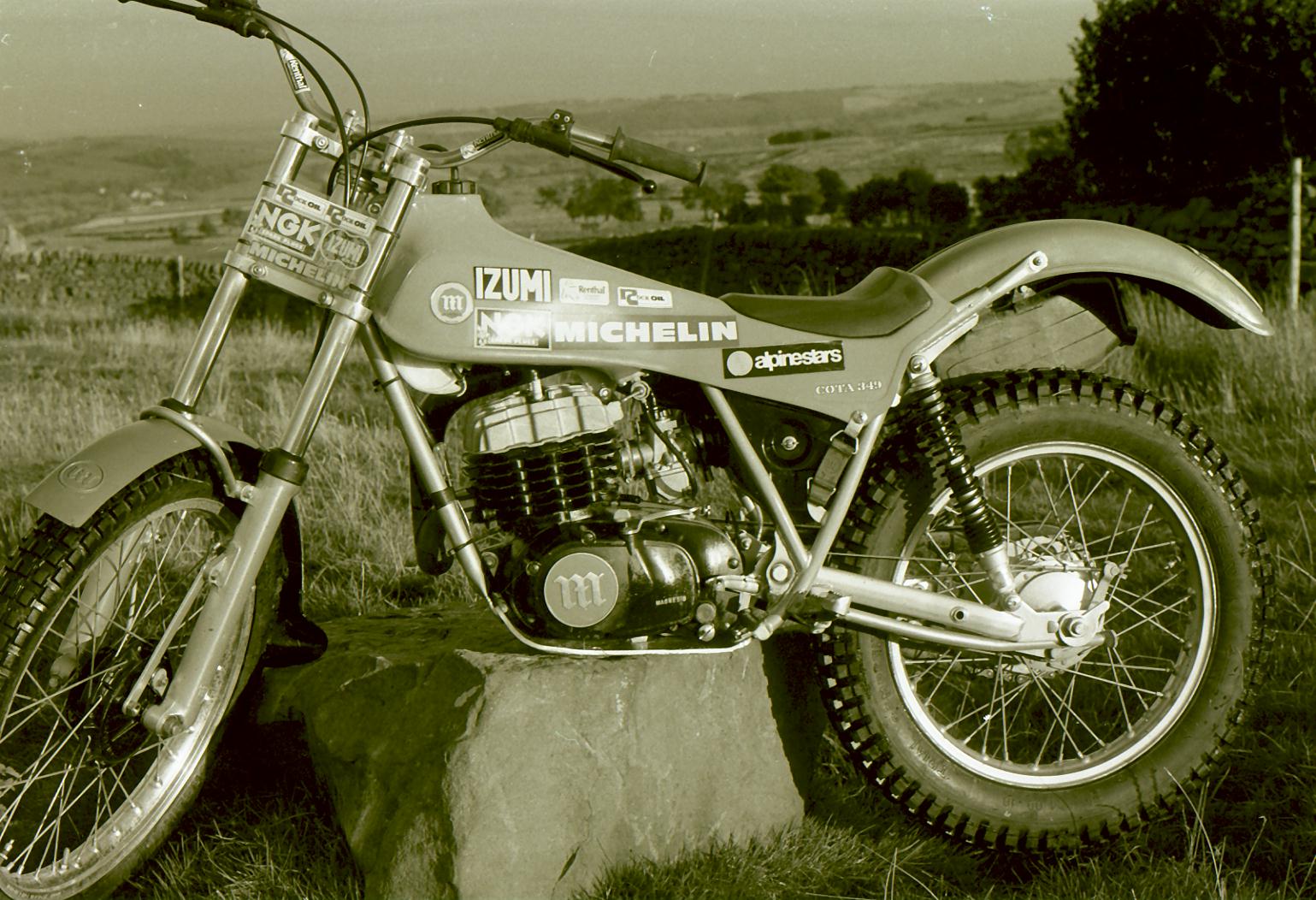
The following year saw the introduction of the production Cota 349, but it didn’t live up to expectations. While it had good traction, its long wheelbase made it difficult to turn, affecting competitiveness. Despite this, he still managed a notable third place in a World round in Holland and scored points in Ireland. However, inconsistent results led to Montesa deciding not to renew his contract for 1980.
Later that year, Sandiford gave Nigel the new 200cc Cota, who immediately impressed with strong wins in British Championship events and a solid performance in the Scott Trial. This success attracted interest from manufacturers like Italjet and Fantic, both recognizing the potential of smaller-capacity machines and skilled riders for them. But it was Fantic, that spotted that Birkett had potential on the smaller capacity machinery and made their approach.
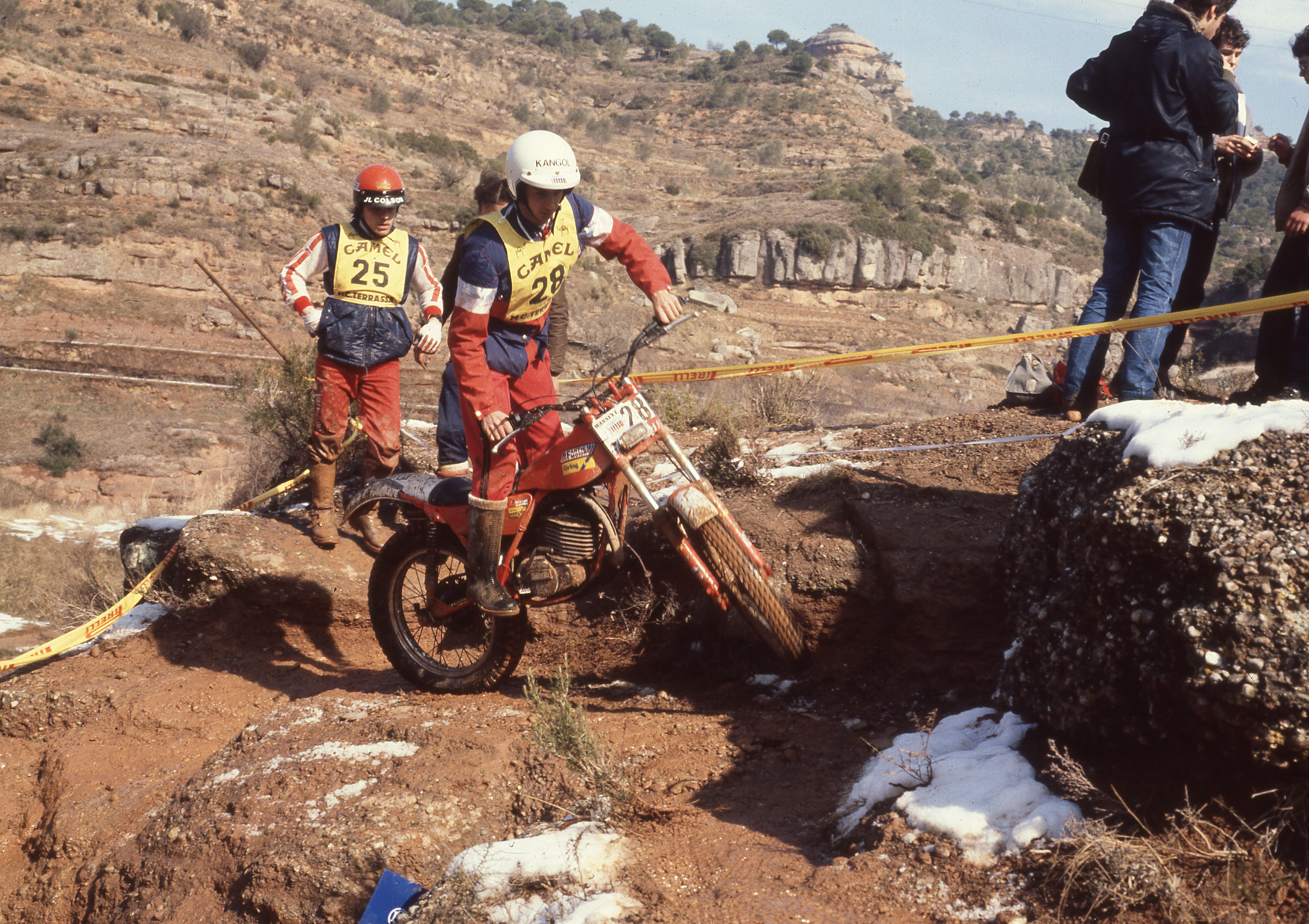
Birkett was impressed with the new Fantic and achieved a series of consistent results, including a sixth place at the SSDT. However, his form in the WTC suffered, as the 156cc engine lacked sufficient power for the more demanding hazards. In August, the new 240cc Fantic model arrived, and later that year he rode it to a superb second place in the Scott Trial, setting the standard time.
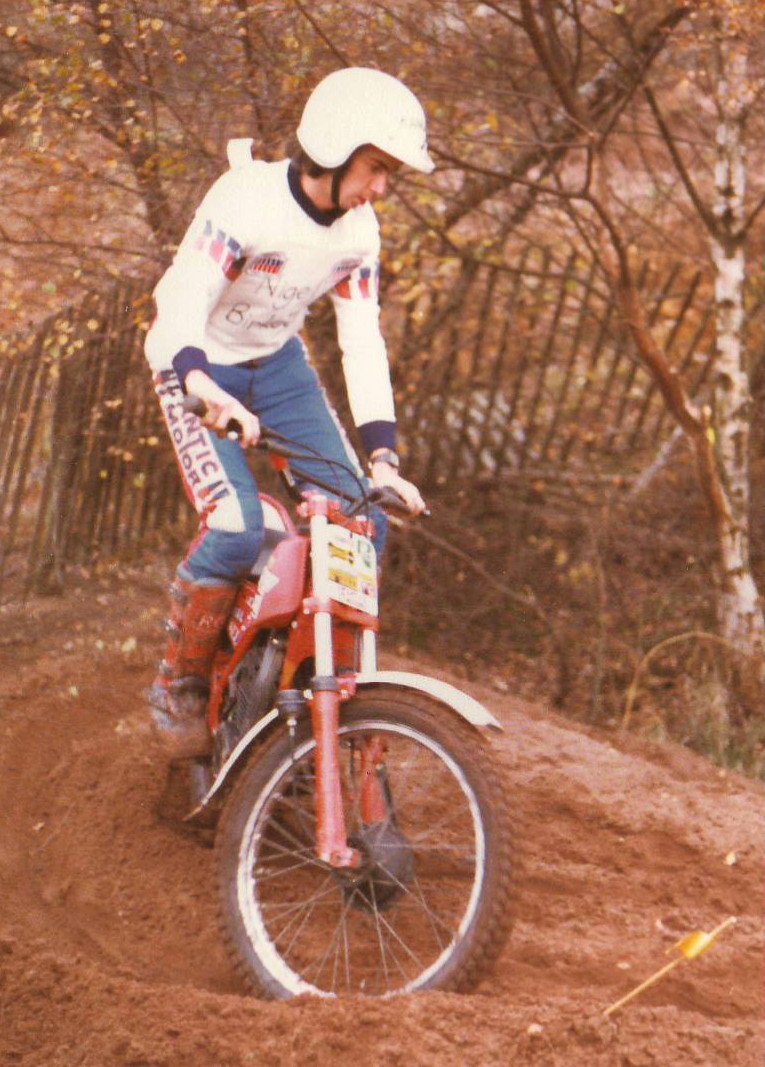
He continued riding the 240 model through 1982, but as his relationship with the Fantic setup worsened, he began to consider moving on. Around this time, John Shirt Senior, aware of his dissatisfaction with Fantic, offered him a 250cc ‘S’ model Majesty to test.
After trying the bike, Nigel concluded that things with Fantic were unlikely to improve, so he chose to leave. For the 1983 season, he joined the Majesty team run by Shirt at Buxton.
Return to Japan
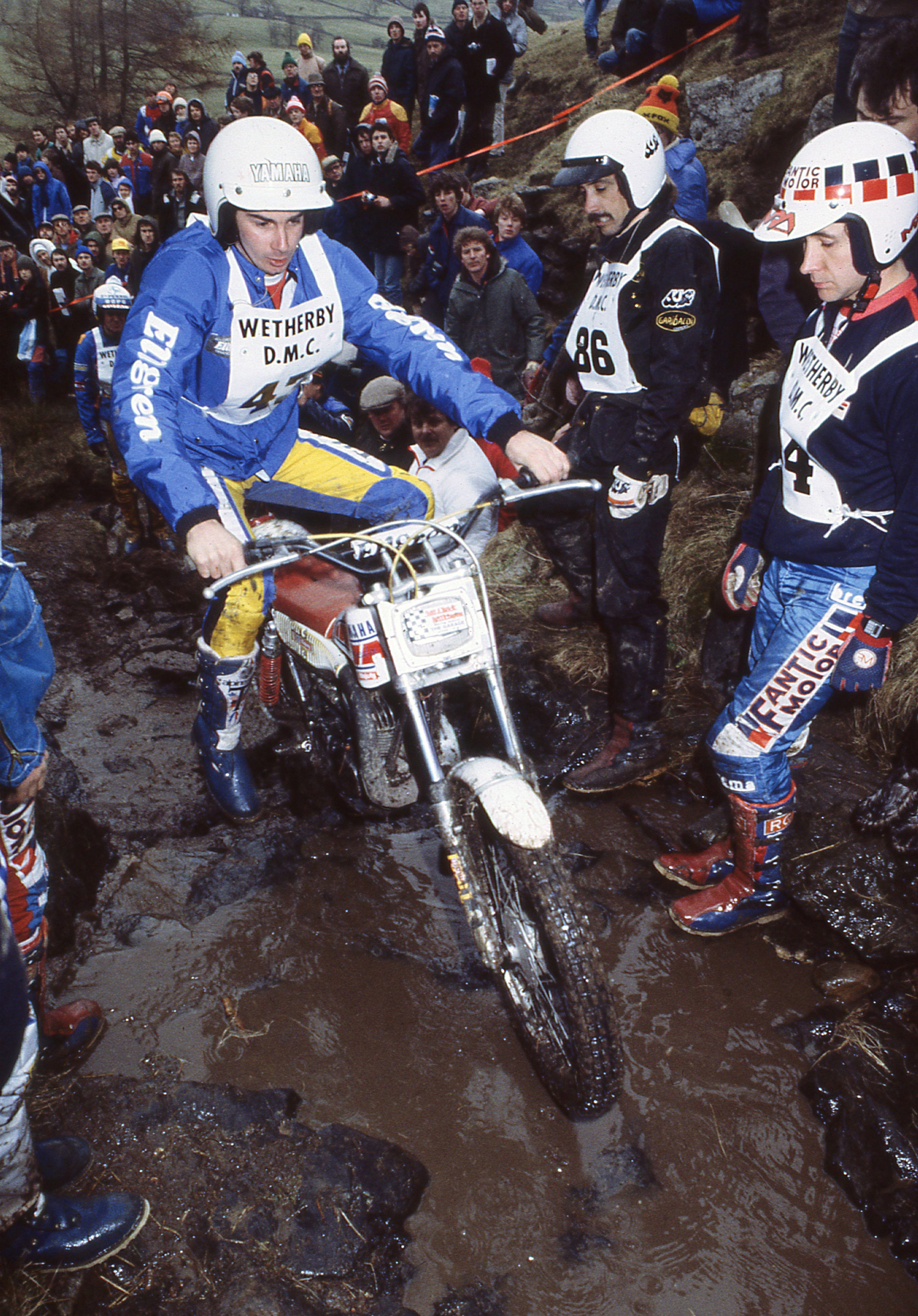
Nigel Birkett had ended up back working with Japanese machinery again, after being tipped off that Yamaha might be developing a new trials motorcycle. John Shirt suggested he could be involved in development work if he was already riding Yamaha-powered Majesty machines. In February, Shirt contacted Birkett and invited him to Japan to test a new prototype for Yamaha. Although he had doubts based on past experience, believing Japanese manufacturers weren’t traditionally strong in trials bikes but those doubts soon disappeared when he saw and rode the new machine. He spent about nine days testing different versions of it.
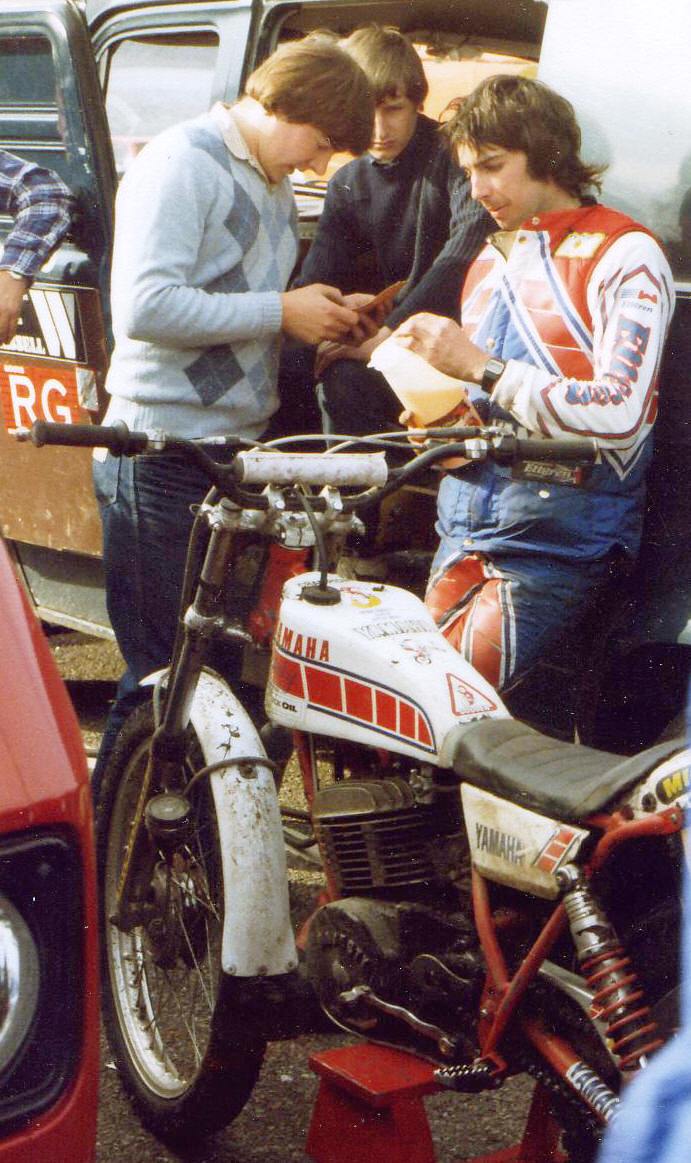
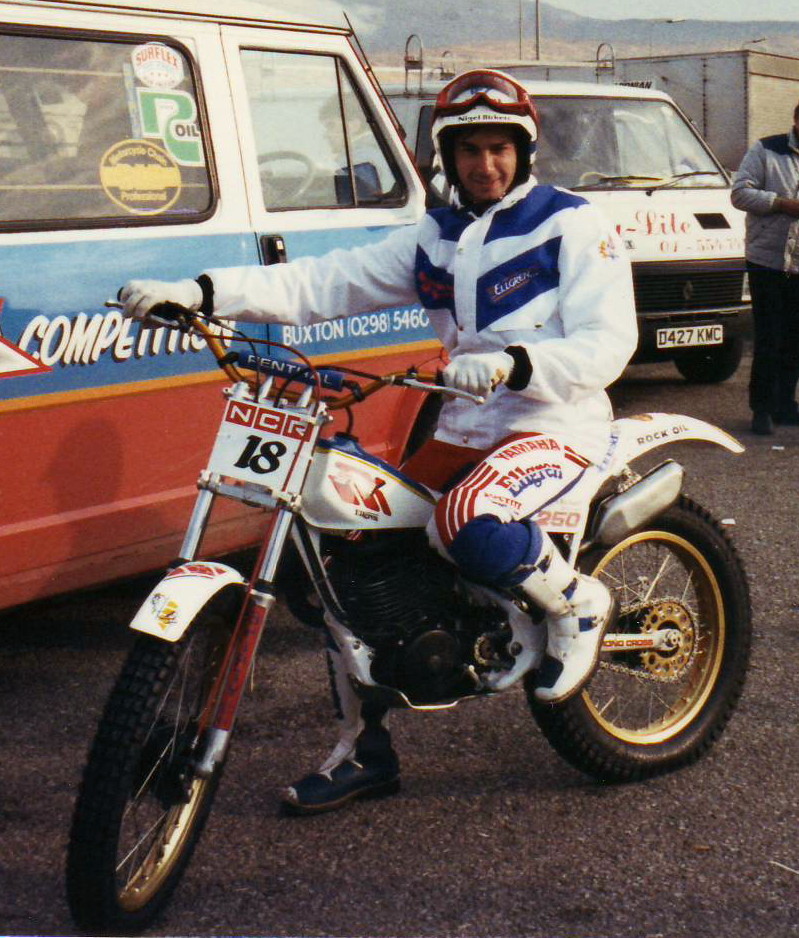
Birkett returned from Japan full of enthusiasm for the new machine, continuing to ride the Yamaha Majesty until he debuted the TY monocross 250S at the Jack Wood National trial near Sheffield. Crowds flocked to see the new bike in action. For much of the day he looked set for victory, but a moment of pilot error in the final section, at the top of the ‘River Kwai’ as it cost him dearly when he attacked the climb in the wrong gear. Despite this setback, the Yamaha single shocker gave Nigel Birkett a new lease of life and marked a clear step forward in his performance.
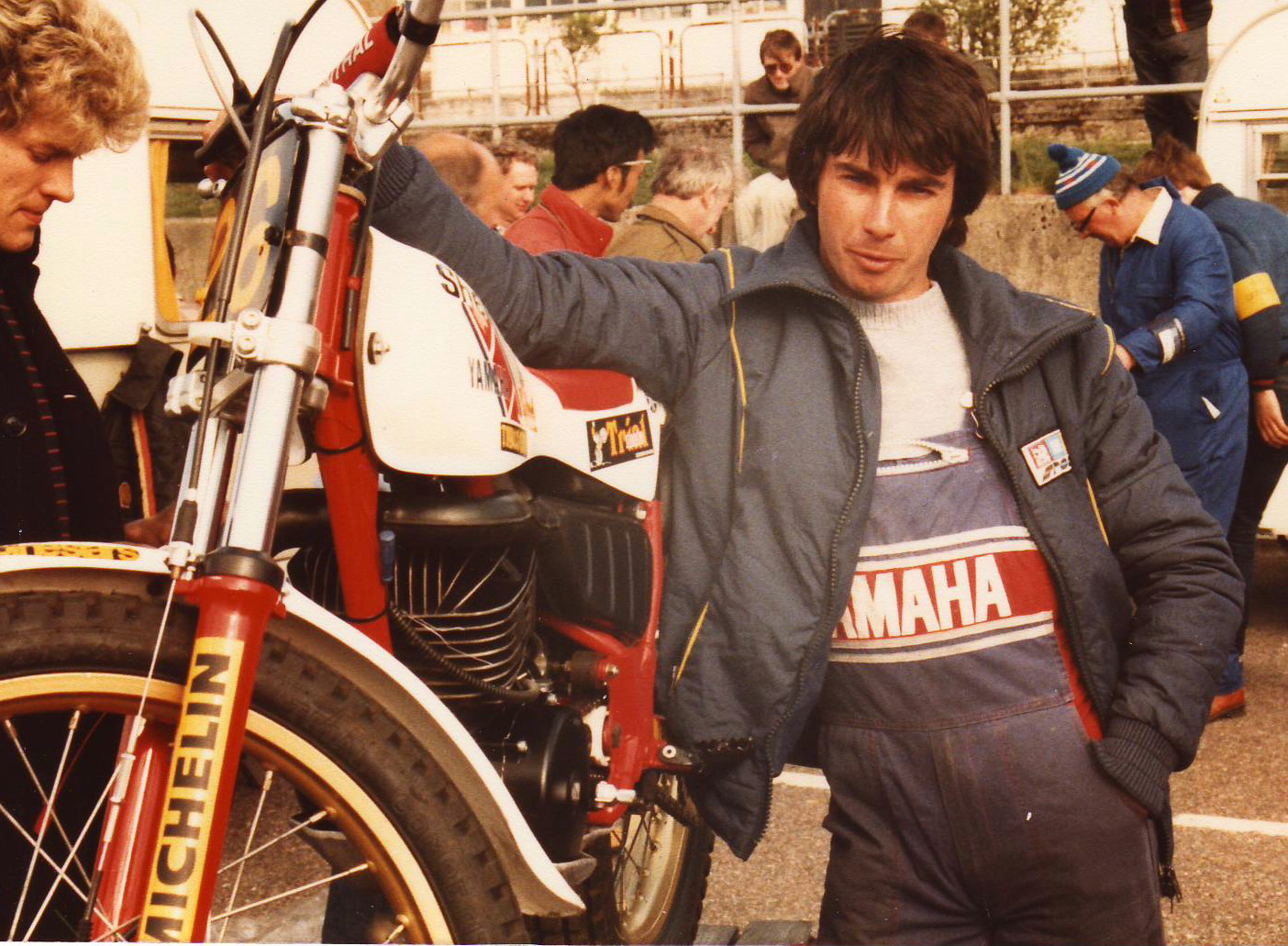
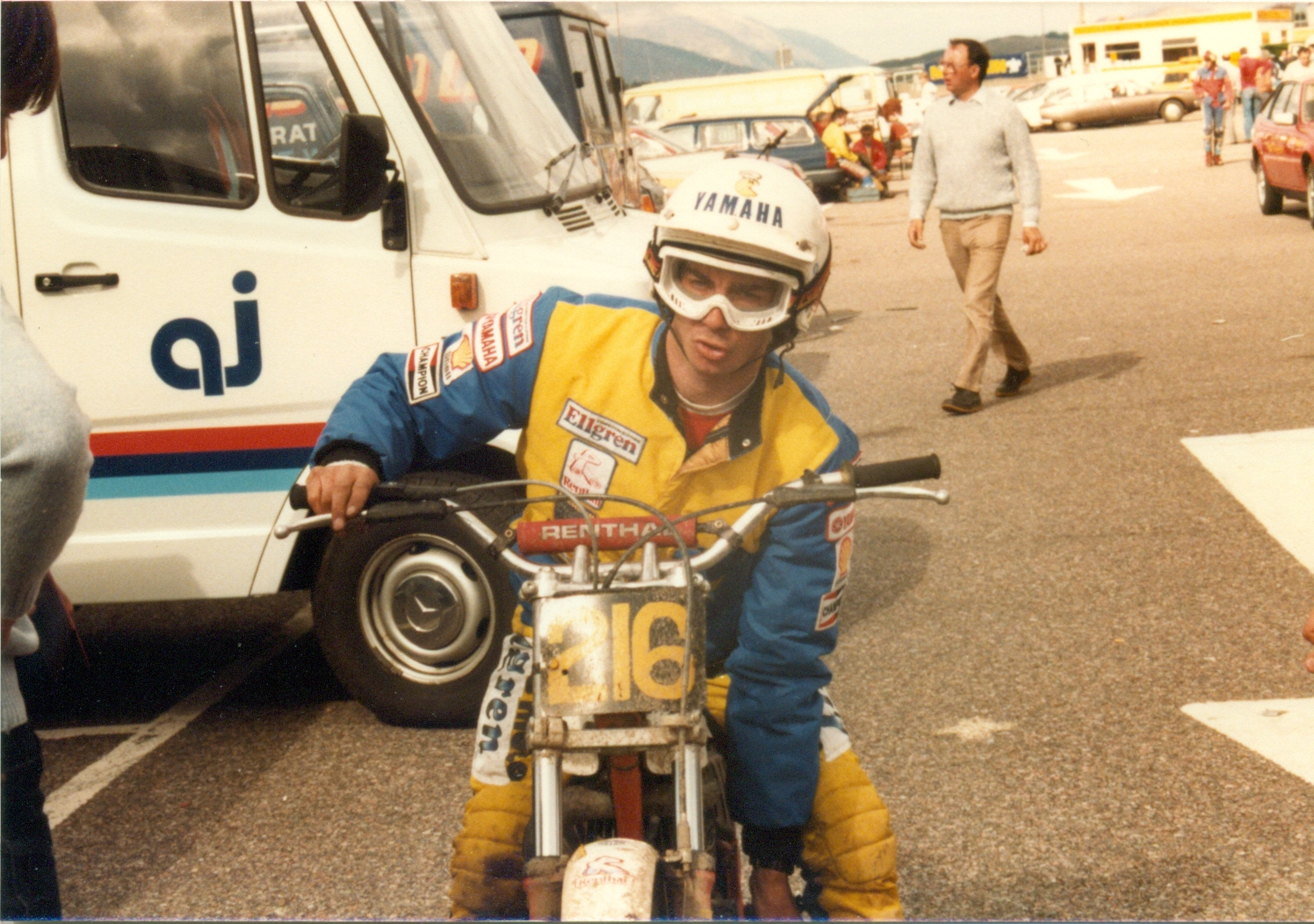
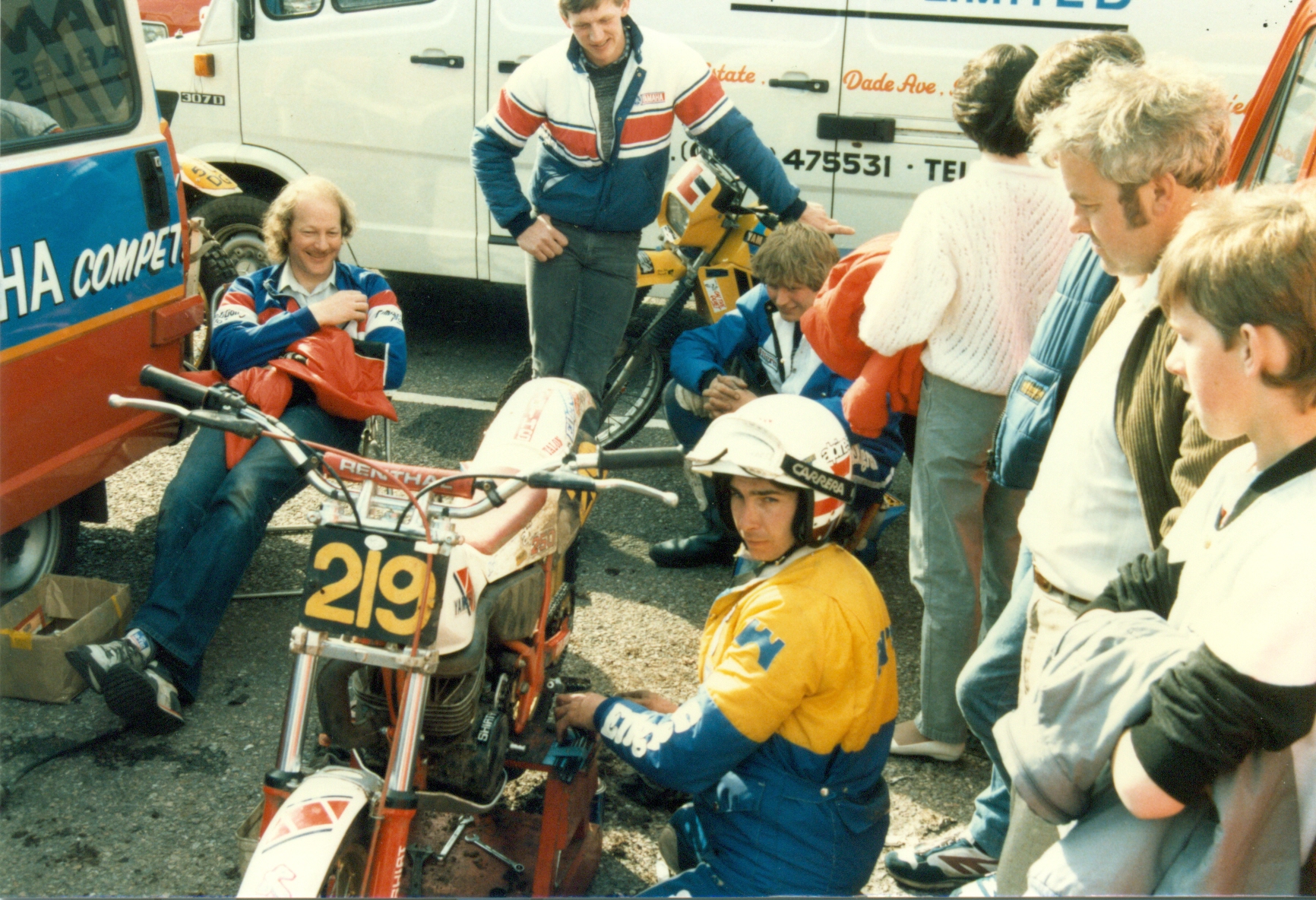
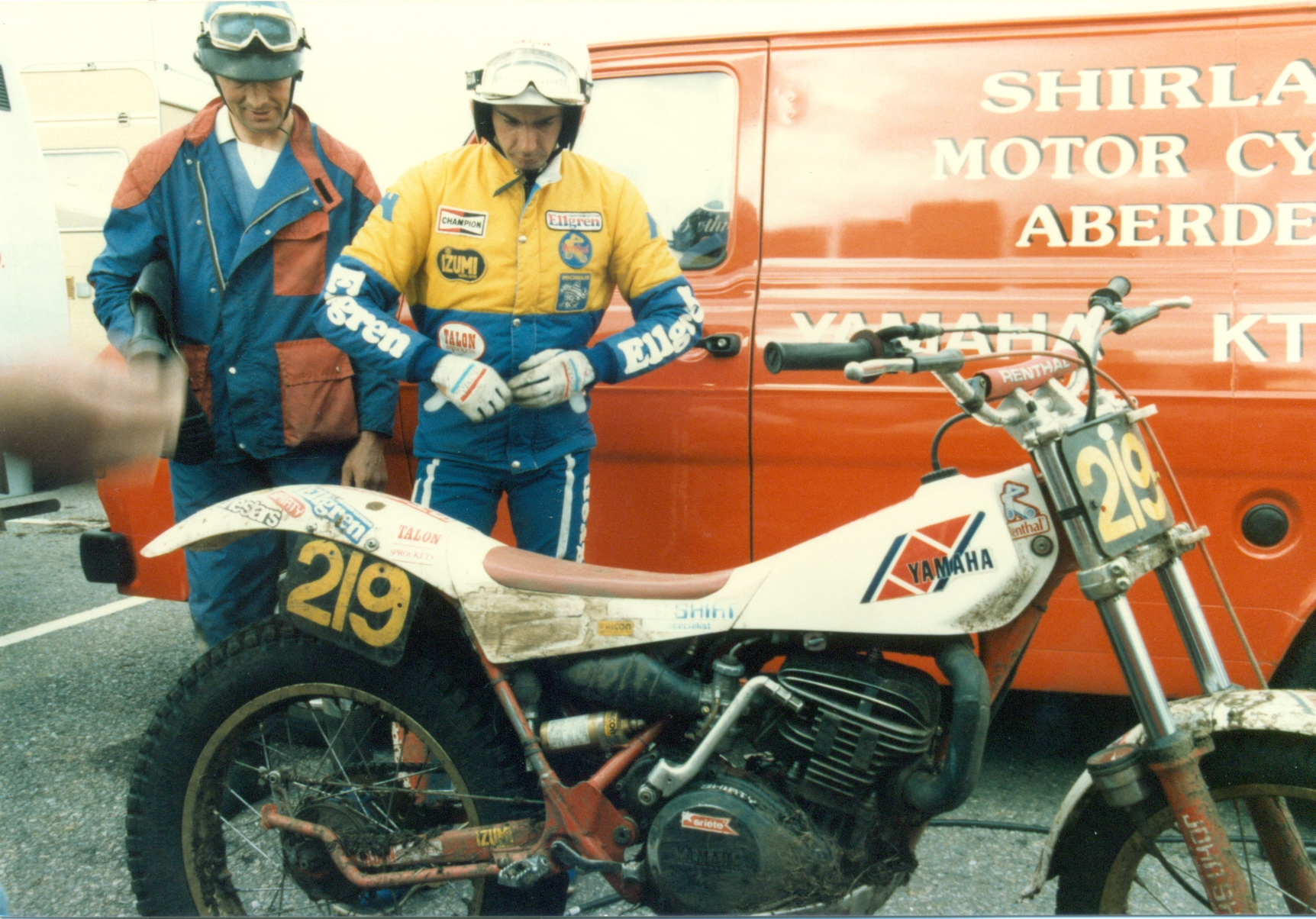
His first victory came at the Travers, but he truly made history when he won the 1984 Scott Trial, setting a new record in the process and securing the first-ever win for a Japanese machine in the demanding Yorkshire event. He remained loyal to that bike for the next decade until the water-cooled Yamaha TYZ was introduced. Many said at the time that the TYZ looked as though a committee had designed it, compared to the much more aesthetically appealing TYR. Even although it was a competent motorcycle, it never matched the appeal of the air-cooled version he had first encountered in 1983. Eventually, he decided to build his own machine using the TYZ engine and components, and the first ‘Birkett’ machine was created.
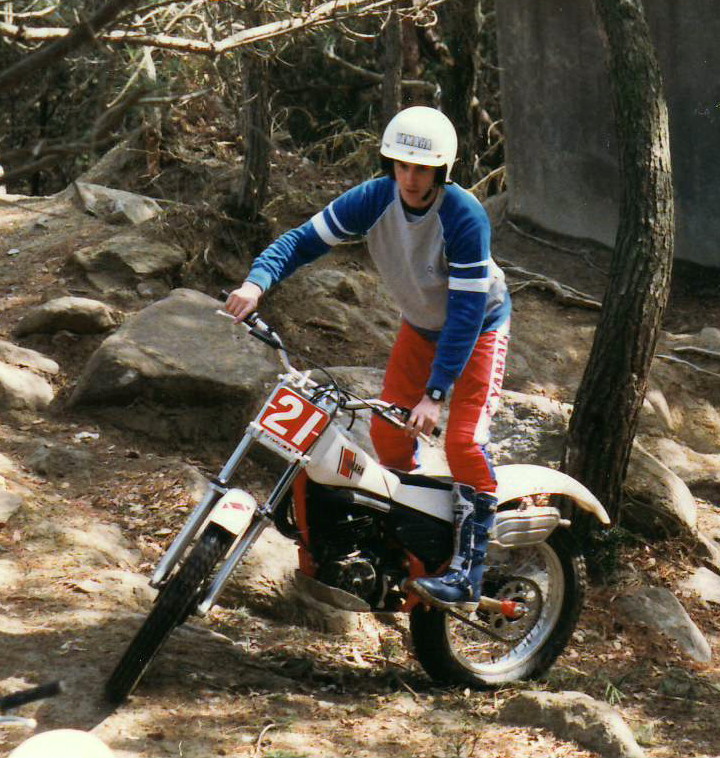
The plan was to create a kit that would allow riders to upgrade older machines, but it ultimately came to nothing, or so Birkett believed at the time. Around 2000, the French motorcycle manufacturer Scorpa showed interest in the ‘Birkett’ machine, and by 2005 Nigel had become the official UK importer for the brand.
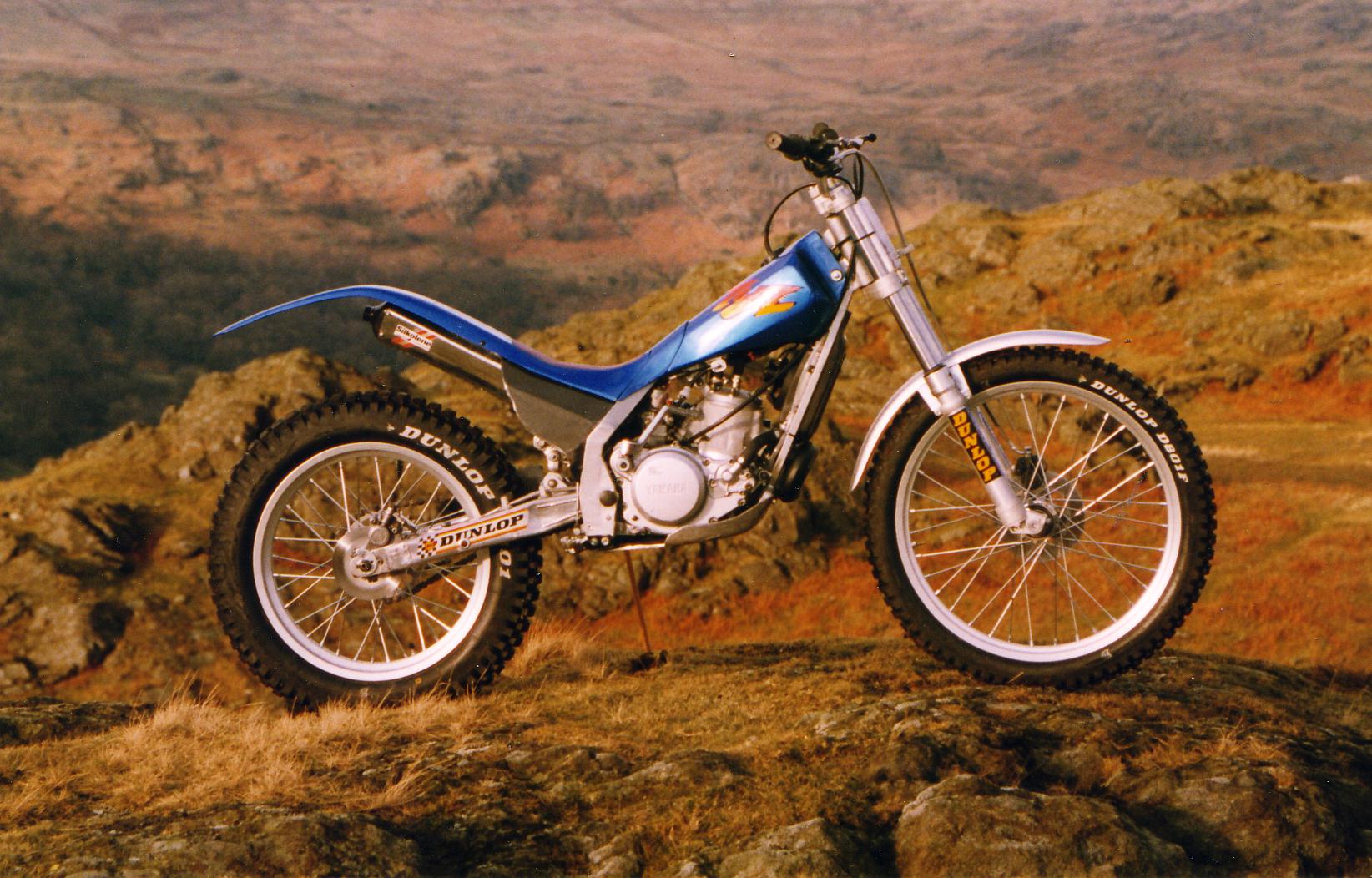
Having added the ill-fated Ossa to his business ‘Birkett Motor-Sport’ this enhanced sales at his Broughton-In-Furness outlet.
Nigel Birkett while doing all this has amassed an incredible innings at the Scottish Six Days Trial with over fifty rides.
It’s hard to label Nigel Birkett as either a Legend or an Icon, probably both fits the bill more than adequately!
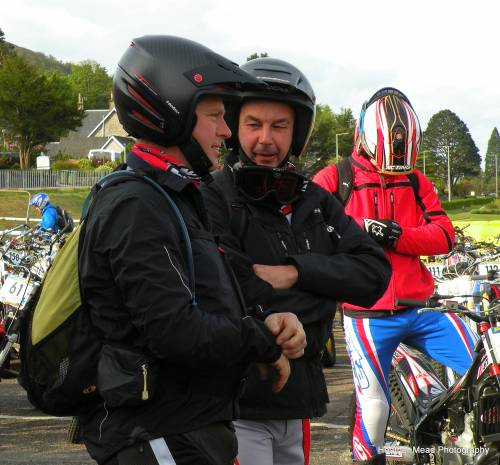
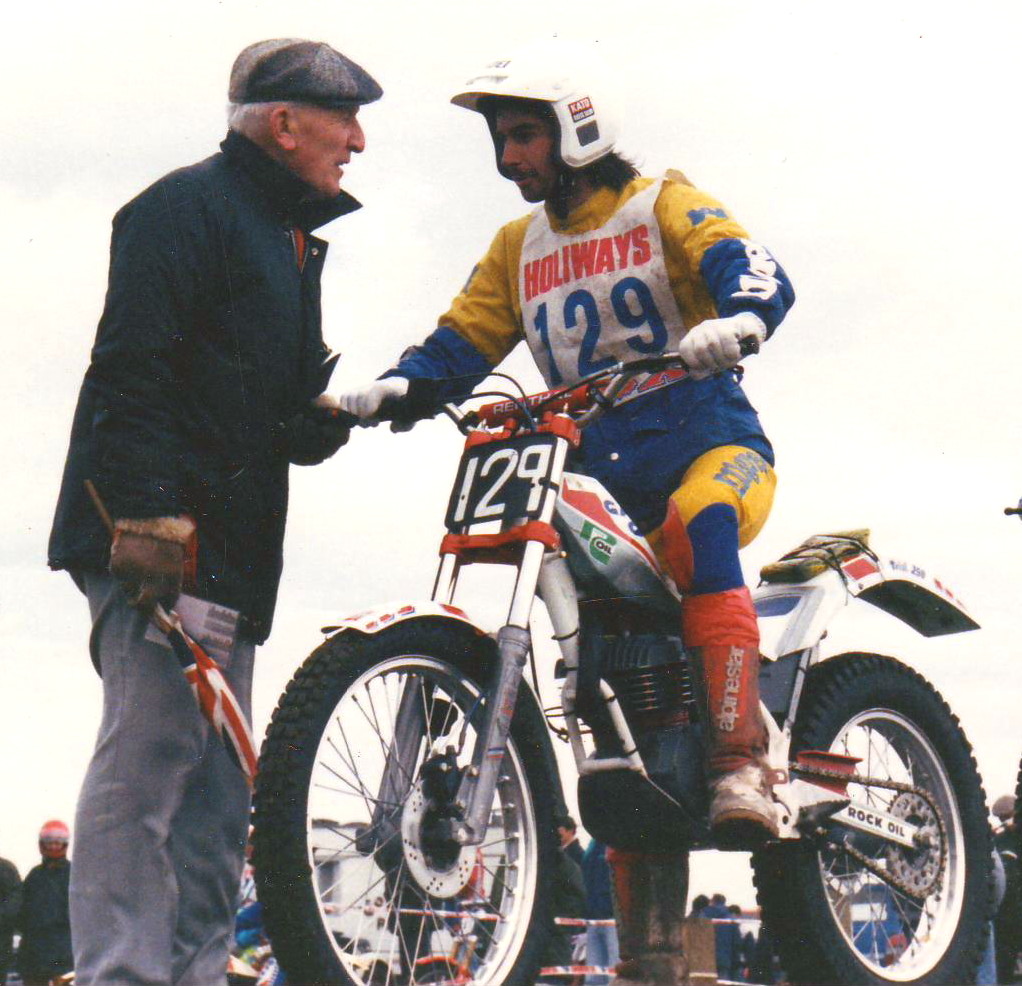
John Moffat, Founder of Trials Guru: “Nigel Birkett has a keen sense of humour and is prone to give people he knows well a nickname. Mine is ‘Moff’ to Nigel and wherever we meet he greets me with that nickname. He never called Martin Lampkin ‘Martin’, preferring to call him by his first initial ‘H’ which of course stood for Harold.”
Nigel Birkett in pictures:
Birkett Motorsport website: HERE
4. ♠ Trials Legend – RAY SAYER:
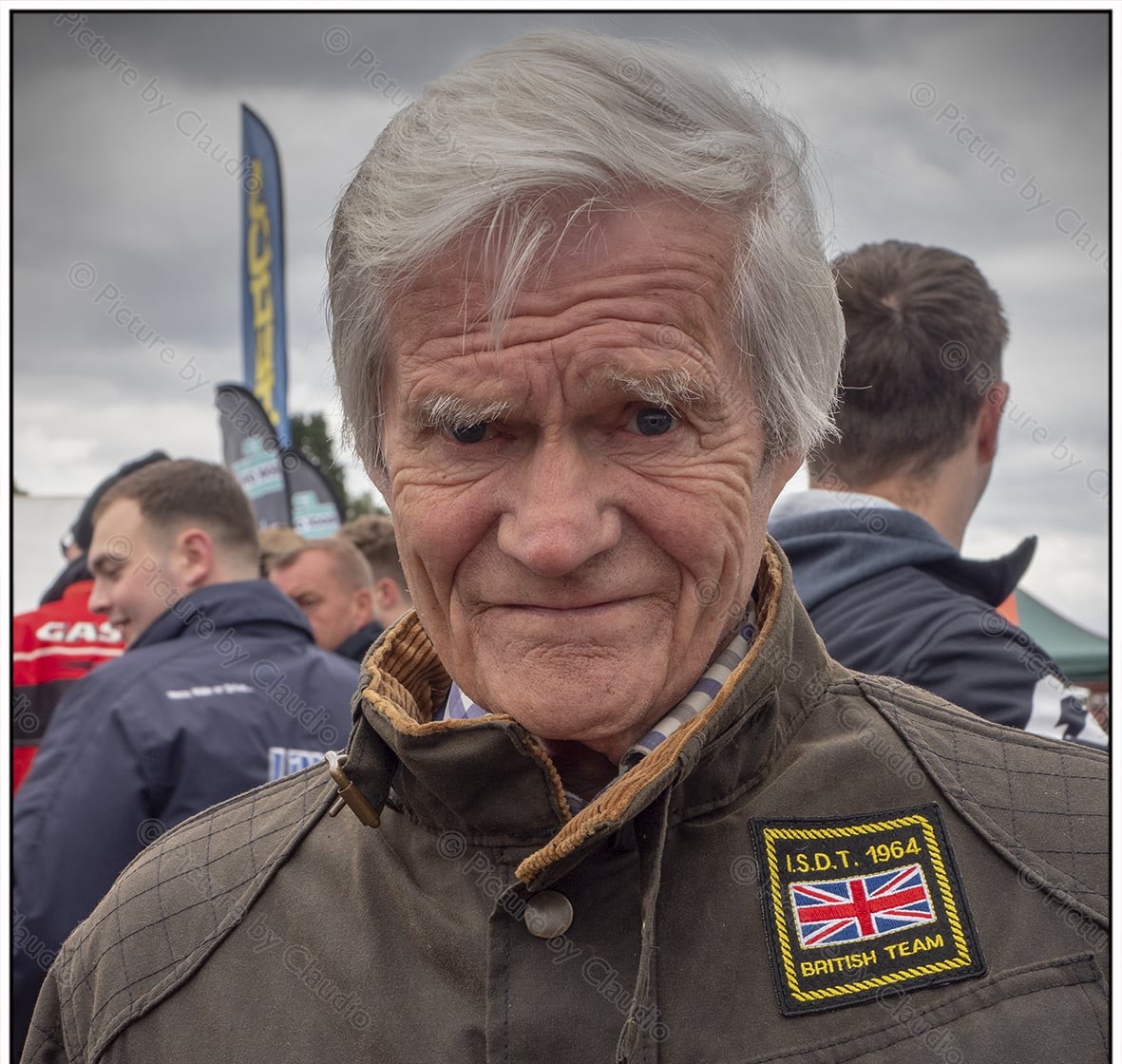
‘TROPHIES, TIGERS, LEOPARDS AND JAGUARS’
Link to full article on Ray Sayer HERE
More ♠ Trials Legends to follow on: Trials Guru – Dedicated To Trial
 TRIALS GURU - DEDICATED TO TRIAL