
Photos: Eric Kitchen; Jean Pierre Quemin; Scott Williams & Fin Yeaman.
“Our potential lies between what is and what could be.”
“Maximizing your potential essentially means getting more out of yourself in every situation. It means doing more in less time and achieving better results. However, to attain higher level results, you need to first upgrade yourself.”
TG1: How can trials riders achieve more of their potential?
BS1: Many instructors foresee great futures for some athletes if they are willing to work and focus on achieving their full potential. Unfortunately, most athletes do not share or see the same vision as their instructors. Further complicating matters, many athletes do not understand how to tap into those inner resources to achieve maximum results.
Some terms used to describe potential are: probable, within the realm of possibility, undeveloped or unrealized. I believe most trials riders regardless of age have growth potential.
To achieve more of your potential is to have a strong belief that you can do what is necessary to succeed. You must be willing to push your limits and know that your efforts will lead to improvement and success.
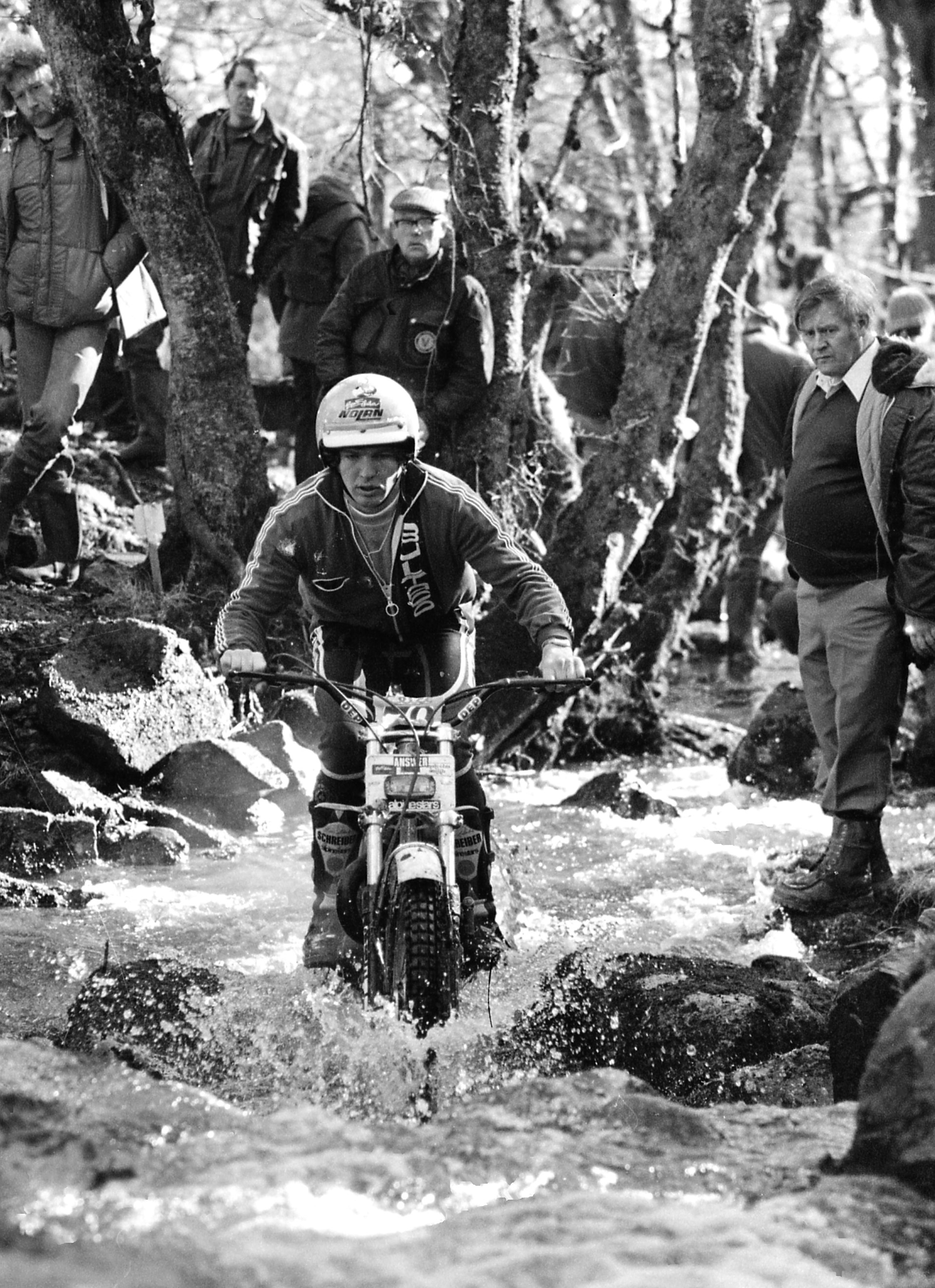
World Round GB – Photo: Eric Kitchen
TG2: Is there a step plan or process to tap into potential?
BS2: The first step to develop your potential is to define your goals or a vision for the future and execute. Reaching your potential requires that you create short-term plan. Accomplishing smaller goals allows you to make incremental steps towards your long-term destination and gives you evidence and confidence that you are progressing. It’s the accumulation of smaller steps that allows you to make bigger ones.
In order to realize your potential, you must develop the mental game plan that allows you to persist and conquer adversity through the ups and downs of training and competing over a period of time.
To grow as a rider, you have to learn how to adjust your training, tweak your techniques and improve your mental and physical skills to keep moving towards your potential.
You must record your progress and evaluate your actions on a day-to-day, week-to-week and section-to-section basis. Change is hard for many riders and bad habits make it even harder to change.
In an attempt to improve, many riders make big changes in their techniques or strategy. This can hurt performance in the short term. Be patient with changes to take place, because often with changes, you take one step back to go two steps forward with your game plan. The potential for greatness lives within each of us, so don’t let others tell you that you can’t do something.

France – Photo: Jean Pierre Quemin
TG3: Don’t you feel that many trials riders are limited in perfection?
BS3: Don’t be crippled by perfection… EVERYONE HAS LIMITS. Nobody is perfect or we would only need score cards with the ZERO column.
Don’t aim for perfection! Yes, you did read that right, don’t aim for perfection! Many athletes do so whether that be to perfect the golf swing, perfect the serve in tennis or perfect a trials technique and so on. They often hear, read and are told that working hard is the key to success. What some athletes then do is work hard, very hard, too hard even, repeating moves, and this leads them to chasing perfection – potentially causing frustration and failure.
Being perfect at trials suggests you’ll always be exactly where you want to be at the right speed, position and time you’d like to. How realistic is that! Seeking perfection at a particular skill may seem achievable in the moment – however, if I were you, I’d consider the last time a trials competition was exactly the same.
Your goal should be to embrace imperfection as a rider. Yes, work hard, work smart, but consider what being adaptable is in your sport. The point being, that most trials events are rarely ever the same conditions, so work from different starting positions and to a range of practice targets, never repeating the same skill twice.
It can be very difficult in sport because athletes are often told they must keep working to get better, which feeds into the perfectionist trap. If these words resonate with you – I’d encourage you to take the emotion out of those words and ask yourself another question instead: “What can I do better?” alongside, “What can I do differently?”. That way you may just avoid the perfectionist trap.

Tulsa, Oklahoma – Photo: Scott Williams
TG4: Does the practice process matter more than competition?
BS4: Absolutely! By training yourself to achieve a present moment mindset, you will become an expert at focusing on the competition process during practice.
You need to identify process goals and direct your attention towards them. Process goals are built around the execution of technical skills, tactical or strategic aspects. These types of goals you have complete control over.
Spend time reflecting on your most recent performance as the pace of life and the number of distractions that people have because of technology today means that the art of reflecting is dying.
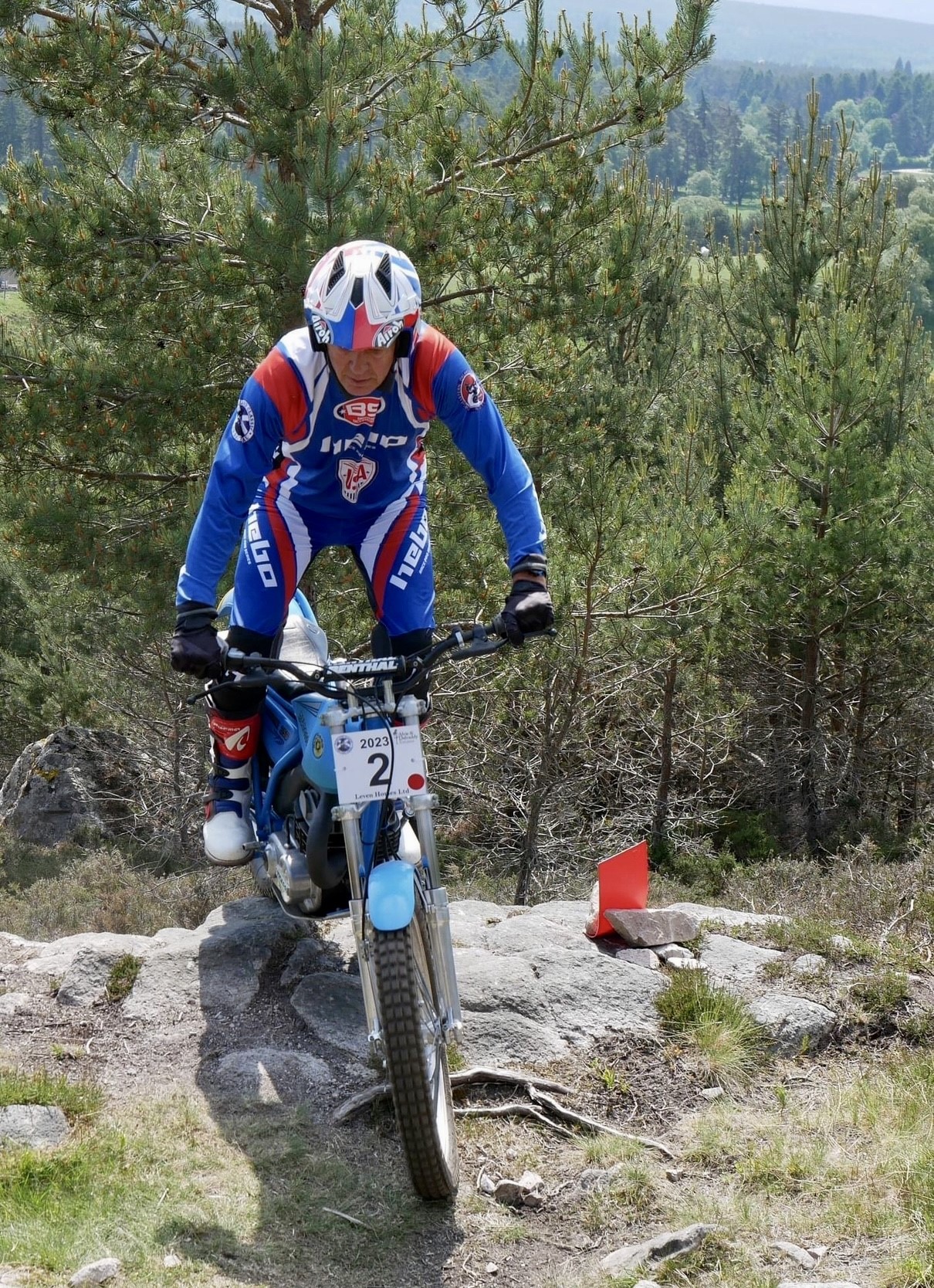
Highland Classic, Alvie Estate, Scotland – Photo: Fin Yeaman
TG5: So, there is reason to practice with purpose goals?
BS5: We need to reflect and practice with two brains. The practice brain and competition brain. You are what you practice and winning is what you do before the season starts which is practice with a purpose to win.
Performing a basic skill is not difficult as it’s a matter of practicing it over and over again. Performing the same skill over six hours consistently under pressure is much more difficult. That’s MENTAL MUSCLES vs SKILLS.
When you practice consistently under competition conditions this becomes performance practice which leads to perfect performance.
The best skill you can ever learn in trials is to… perform well, under fatigue and under pressure consistently in competition conditions. Only a selective number of trials riders have conquered that winning skill over the years.
TG6: Are these skills taught in your trial’s schools?
BS6: My trials schools focus on the fundamentals which are so important to understand and practice for riders at all levels. The tools provided put priorities on where to invest your time to win or improve your results. Every rider needs a blueprint for progress and achieving new goals. You will discover stories about my approach to the World Championship or SSDT victory and what it took to achieve that goal, but many of the fundamentals are still the same.
Everything depends on execution, having just a vision is no solution. It’s important to help riders take action by removing obstacles that stand in their way. Mostly mental and bad habit obstacles. As a result, they are able to use their knowledge more effectively and efficiently.
Many riders buy an expensive new bike and think it will solve their issues and clean sections without doing the work. Unfortunately, all trials riders need to practice hard and smart regardless of the motorcycle.
Your mindset is how you reach your potential. Self confidence is what separates champions from the rest of the competition.
Performance Practice Makes for Perfect Performance.
Discover more from TRIALS GURU - DEDICATED TO TRIAL
Subscribe to get the latest posts sent to your email.
 TRIALS GURU - DEDICATED TO TRIAL