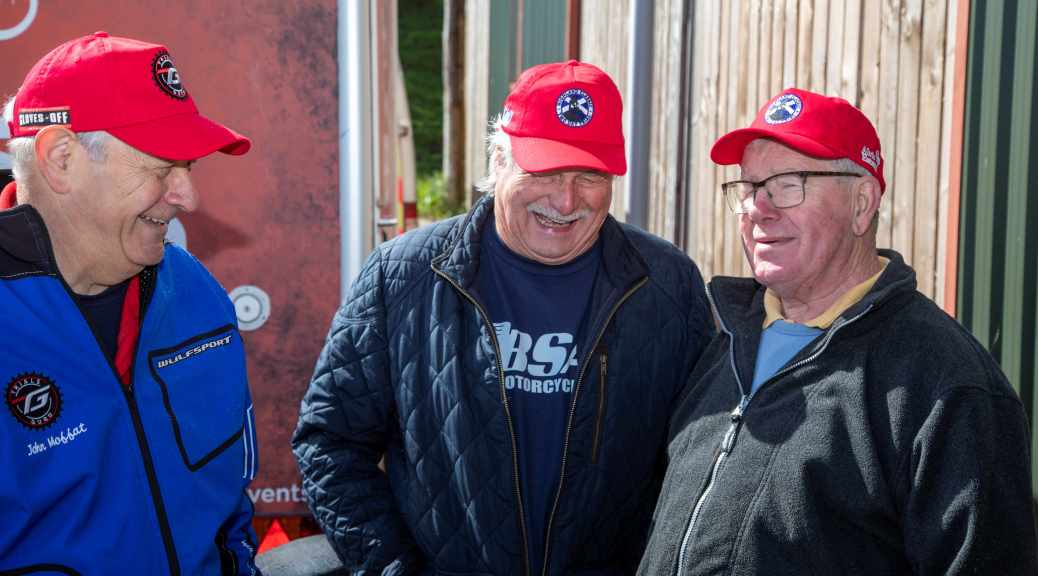
Back in 2011, Trials Guru’s John Moffat was attending the Scott Trial Reunion dinner organised by Alan Lampkin at the Ripon Spa Hotel. He was very fortunate to be sitting at a table which consisted of many great trials riders, one of which was Tony Davis.
During the dinner, Moffat said to Tony Davis: “Believe it or not, my father knew your father through ACU connections”. This started a long conversation about the Davis family and the sport of trials and motocross. It also kindled a new friendship for both these gentlemen!
Fast forward thirteen years to June 2024 and Tony Davis arrived at Aviemore in Scotland as a guest of the Inverness & District MCC for the annual Highland Classic – BSA/Triumph Edition on Alvie Estate along with Mike ‘Bonkey’ Bowers and Alan Lampkin. This was arranged by John Moffat in his capacity as Event Co-ordinator.

Moffat had asked Tony previously if he was happy to do an article on the Davis family for the benefit of Trials Guru readers, Tony was only too happy to oblige and sent Moffat a well written synopsis in note form, which detailed the Davis family involvement in the sport over the years. Tony had put this together himself quite a few years ago.
The following was written by Tony Davis as a record, and we reproduce this with his express permission.
Words and copyright: Tony Davis
Photos: Gordon Bain; Smith Family Collection; OffRoad Archive; Hugh Hunter Collection; Mike Davies; Jimmy Young; Eric Kitchen; Google Maps
“My Father was Les Davis, the landlord of the ‘Air Balloon Inn’ at Birdlip, which became famous for the National Cotswold Cups Trial during the late 1950s. He also went on to become Chairman of the Auto-Cycle Union Trials Committee. It was inevitable that both my brother, Malcolm and I would become heavily involved in trials and scrambling.“

“From the age of six, horses were my love. I had my own pony and rode every day, and by the time I was ten, I was hunting twice a week.
When I was fourteen. the motorcycling bug took over and the horses began to take a back seat. My father bought two cheap motorbikes for us and I remember Malcolm and myself racing around the back paddock on a 197cc Francis Barnett with a hand gear change and also a BSA Bantam. We even dug out a ditch, so that we could jump across it at speed. We also walked the bikes across the main road and into the woods and quarry to practice trials riding. We would ride every section until we cleaned them twice, then we would move on to harder sections. These were fabulous times together and we had formed a very special bond.
I was two years older than Malcolm. so I rode my first trial in 1957 on a 197cc Greeves in the Minety Vale Boxing Day Trial. That was just a few days after my sixteenth birthday. It was a real old fashioned ‘mud plug’ and I recall John Draper, who taught me a lot over the years, on his 500cc works BSA. It was at the bottom of a famous section known as ‘Flithridge’, he turned his cap around, went back as far as he could down the track, selected third gear and hit the section, flat out. It was three long sub-sections, by the time he got to the end, he was nearly stood still, but he just got out of the ends cards to claim the only clean of the day.
Gordon Jackson on his works AJS, footed out the last sub-section straight afterwards. All I had was a 197cc Greeves, needless to say, I selected second gear and footed very hard all the three sub-sections, but I did win the Novice Award for my efforts.
Malcolm was at school in Stroud at this time, his headmaster was a keen scrambles rider and would take Malcolm with him to events on a DOT and that is where the bug really bit my brother.
The last trial of the 1957 season in the Western Centre was at Stroud and I finished up as runner-up to Roger Kearsey on his 350cc BSA. When I got home, I washed off my bike as I was going to ride in a local scramble at Draper’s farm the following day. My father couldn’t take me to the event because he was short of bar staff, but would come along after the pub shut. I rode the bike to Draper’s Farm and my Uncle and Malcolm followed in a car with petrol and spares. When I arrived at the pits, I changed the rear wheel with a well worn scrambles tyre fitted, a short exhaust pipe, number plates and went out to practice. What an experience that was, firstly John Draper came flying passed me on a section of the course that was wide enough for one, or so I thought, then John Avery overtook me in mid-air, but those BSAs sounded so good. I rode in three races and thoroughly enjoyed myself. Malcolm worked feverishly each lap with a board, showing me my position. A job which I did for him so many years later!
At the end of the meeting, I reversed the procedure and rode the bike home. It never missed a beat, but in my mind I was set on getting a four stroke for the next trials season.
I rode the Greeves in a number of scrambles including the Cotswold Scramble, which was about four miles around in those days. I joined the Gloucestershire Constabulary and was very lucky to have a Chief Constable who was very sports minded. He granted me most weekends off. It wasn’t long before the Greeves gave way to a 350cc Ariel, this bike gave me my first open to centre win and a class award in the national Knut Trial. I went on to win many open to centre trials on this bike and even obtained some works parts from Sammy Miller. This included an upswept pipe, small oil tank and a few other mods.“
BSA:
“During 1960, I was offered a 250cc BSA as a semi-works supported rider, my first ride was at the national Colmore Trial and I finished runner-up to Sammy Miller. The following week, the factory had the BSA back and fettled it to a full works standard and I never looked back.
My first Scott Trial was on the BSA and I travelled to the event with John Draper. Half way up the old A1 on a dual carriageway, we found ourselves in thick fog. ‘Drapes’ said: “don’t worry, I know the way blindfolded”. After some time I said to ‘Drapes’ that occasionally I could see headlights to my left, he immediately braked and drove onto the grass centre reservation. There were no centre barriers in those days and slowly joined the correct side of the dual carriageway.
The real breakthrough came when Brian Martin (competitions manager at BSA) rang and offered me the prototype 343cc BSA B40 which Jeff Smith was going to ride in the Scottish Six Days that year, but he had injured his hand in a scramble, so I was offered his entry in the Scottish.“
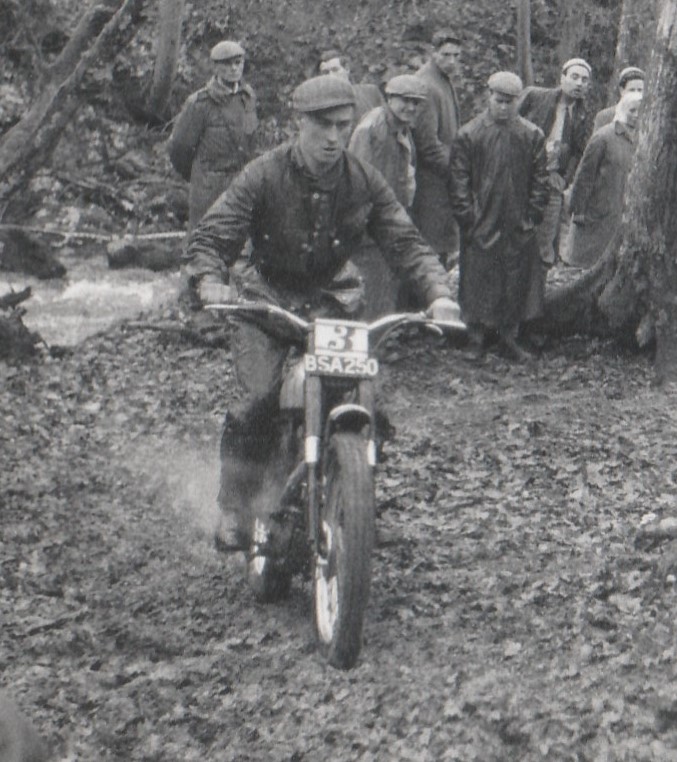
“I took to the bike, like a ‘duck to water’. I remember driving with close neighbour and good friend, John Draper to the BSA factory, picking the bikes up, riding them from the comp shop to New Street railway station.“

“That was my first ride on the bike, then loading them into the rear carriage, getting into the sleeper carriage and arriving in Edinburgh the following morning. Then a ride to the hotel with our kit strapped to the rear mudguard.“

“We completed the week and returned the same way. We had won the manufacturer’s team award that week and I probably had my best Scottish ride ever!“
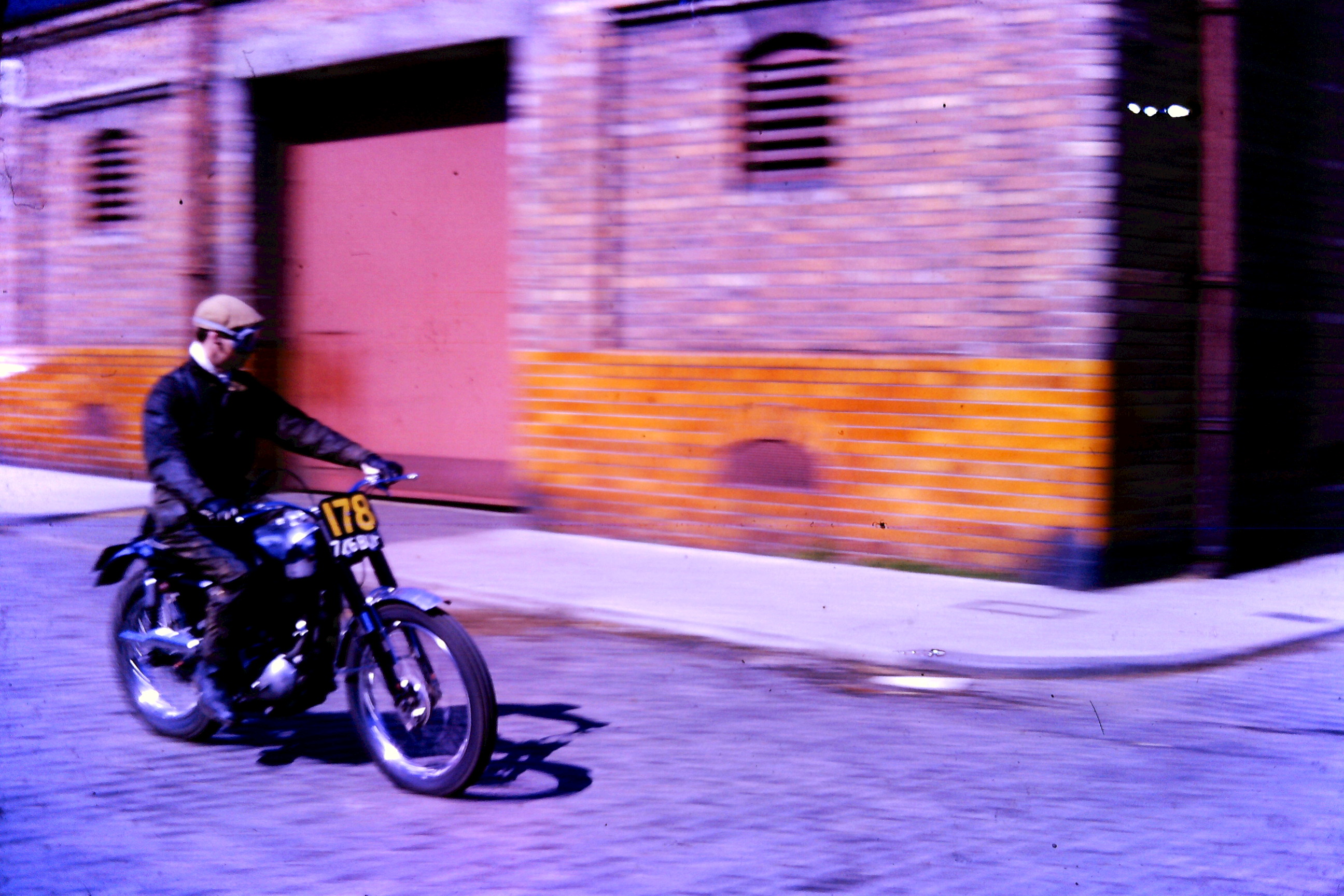
“I won many national and class awards on that machine, 776BOP, including the trade supported national West of England Trial.“

“My “brother Malcolm was now on the scene riding a 250cc Greeves, our father was now running a motorcycle business in the stables behind the pub and was negotiating buying another shop in Gloucester, which he and Malcolm would run. Mother would continue to run the pub during the day. Malcolm would travel with me to all centre trials and also some nationals. Malcolm was a brilliant trials rider, how I remember the times we would disagree on what gear to pull up sections and the times that he proved me wrong, by getting on his bike and cleaning the hazard. But his heart was in scrambling.
Back then, trials were held in the winter months and scrambles in the summer, except for the dreaded television series and I supported Malcolm at most of the scrambles events. Malcolm secured Greeves factory support and the shop became a main Greeves agency for the area and the rest is history.“
Greeves:

“I stayed with BSA until 1964 when I signed to ride for Greeves. My first national ride on the Greeves was in the wettest Scottish Six Days Trial. It was an achievement to finish that year. I remember getting to Rannoch Moor and what was usually a gentle stream crossing was a raging torrent. Sammy Miller rode his Ariel over the wooden bridge which collapsed as he got to the other side. An official appeared and recommended that we take the very long way around the moor on the main road. Malcolm, along with a lot of other riders decided to go the long way around ion the hope that the fuel tanker would meet them with petrol. Four of us including David Clegg, Jim Sandiford and Dave Langston deceided to carry a bike at a time through the ever deeping river. We would start at one point and the current would carry us down river some distance.
Unfortunately my bike was the last to be carried across, we were all pretty tired by now and the current was much stronger. Somebody stumbled and my bike went under with him. Somehow we rescued the bike and fought our way to the other side, some 300 yards further down stream, there was no way back now.
We dried the bikes out the best we could and surprisingly they all eventually started. We took our boots off and the water poured out. We set off across the moor, totally soaked to the skin, but unfortunately a few miles further on, my bike spluttered to a halt. We worked on it for some time but it refused to start. I then noticed a railway line and what looked like a deserted building in the distance. I told the lads to carry on as I would make my way to the railway, but they wouldn’t have any of that. We took our Barbour jacket belts off and made a two rope. They towed and pushed me to the railway line and reluctantly left me there.
Jim Sandiford smiled and took a box of dry matches out of his top pocket and said: “You might be able to light a fire if nobody finds you”. I took the drive chain off and pushed the bike towards the building. After an hour of pushing, I finally reached the building, and low and behold it was Rannoch Railway Station. There was one man on duty and he asked me where in the hell I had come from. I told him, but I wasn’t sure if he believed me! He told me that there would be a train coming along soon and it was heading for Fort William. I purchased a ticket with very wet bank notes and waited for the train to arrive. There was nobody else at the station, just a few parcels and milk churns.
When the train finally arrived, we loaded the bike into the last carriage along with the milk churns and bags of potatoes. I travelled with the bike and it seemed a long time before we reached Fort William. We unloaded the bike and I pushed it to the garage where all the bikes were kept overnight and it was nearly empty! I was met by Bill Brooker, Greeves competitions manager who told me that all the sections after Rannoch Moor had been scrubbed because of the rain and that all competitors were being allowed extra time to fettle their bikes ready for the following day. At that moment, Malcolm and dozens of riders arrived, luckily for them the Shell petrol tanker had heard of the problems and met them half way.
I changed the complete electrical system and she fired into life, I also took the opportunity to drain and refill the gearbox with fresh oil and fitted a new chain. It rained the rest of the week and I gained a first class award. This was slightly spoiled by Malcolm beating me by two marks and taking the class award!“
“There “was always a lot of competition between my brother and I and that drove us on! One season, I travelled with Don Smith, ‘D.R’ as we all called him, on the European trials circuit.“
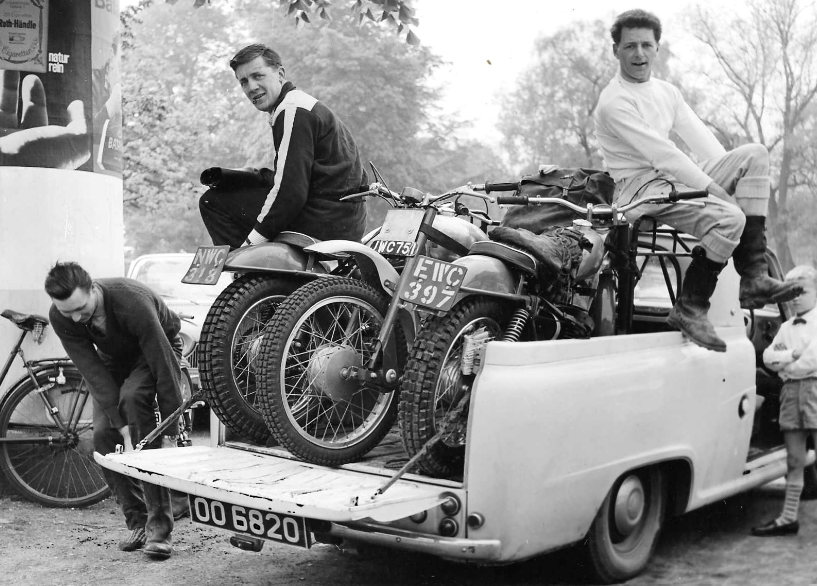
“Don was a character and a brilliant rider, we spent many, many happy hours together. I would always drive down to Don’s shop on the North Circular road and we would load up and drive to Dover for the ferry. Don was the worst time keeper in the world and on one occasion, we were over an hour late leaving the shop. Don only knew one speed and that was ‘fast’. He would take the straightest line through corners and roundabouts, but on this occasion the inevitable happened. We overtook a Police car in Kent on the inside and the Police car wasn’t hanging around either. It took the Police two miles to catch us up and pull us over. I will never forget the look of innocence on Don’s face when the officer asked him if he knew what speed and manouvres he had been doing. Don got out of the car, lit the inevitable cigarette and walked to the back of the trailer with the officers. Five minutes later, one of the officers asked me to step out of the vehicle. He then gave me a good lecture on navigating and time keeping! Finally he told me I should know better as a Police Officer to allow Don to drive so fast, but as this event in Germany was very important to the Greeves factory, they would overlook this incident! Don had told them that he would not listen to me in future and would drive more carefully. That was Don and needless to say, he won the trial and I finished third that weekend!
My best achievement on the Greeves was winning the National Trade supported Hoad Trial on the Saturday and then winning the Perce Simon trial on the Sunday, the same year I won the British Experts Trial, only to be disqualified the following day because I changed bikes and that was after the officials clearing me to ride the spare bike, which I had practised on the previous day. I was within sight of the start area and the engine had never started, only Sammy Miller protested.
Greeves were a very good factory to ride for, more like a big family. They supplied me with bikes to scramble in the summer months, but only if there were no national trials on and Malcolm didn’t need me with him.“
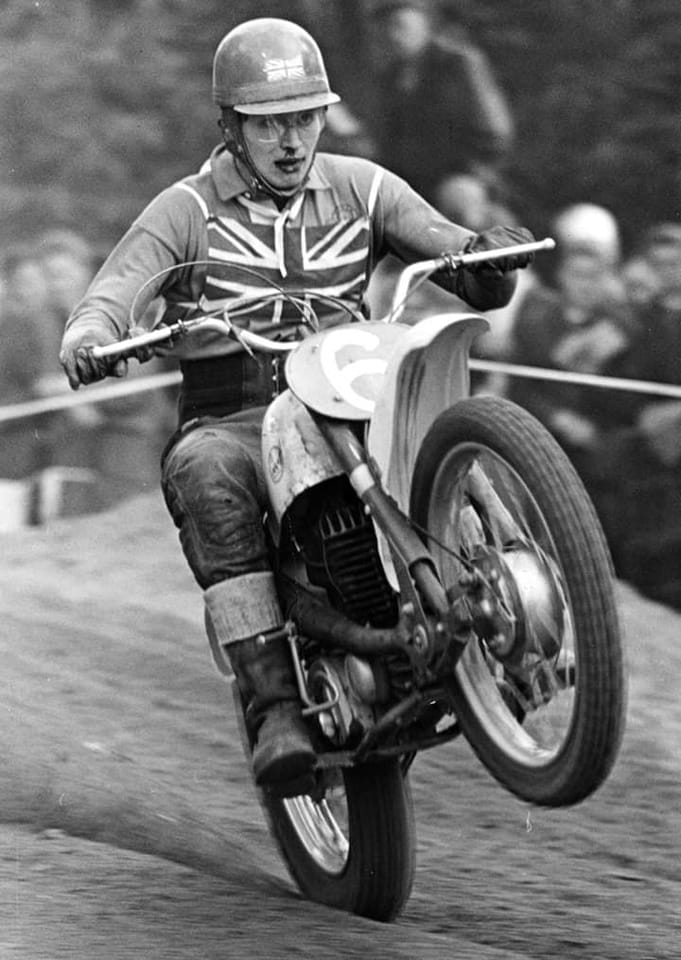
Tony and Malcolm switched to ride for the Andover based AJS concern when it was owned by Manganese Bronze Holdings, in 1968. In short it was a bit of a flag waving exercise for Tony, but Malcolm won the 1968 British 250cc Scrambles Championship on the prototype Y4 Stormer AJS. Tony and Malcolm both rode the two-stroke AJS 37A-T in trials at this time, but as Tony said in an article we wrote on the machine: “It was just too little, too late”. The machine lacked development and AJS concentrated on their motocross range.
“I had stayed loyal to Greeves up until the Villiers engine supply dried up and they started to use the Puch engined ‘Pathfinder’, a bike I never really took too. Comerfords offered me a Bultaco trials bike, on which I spent many happy and successful years on. Malcolm was racing Bultaco Pursangs for the factory and I used to travel with him to the Bultaco factory to pick up bikes for him to ride all over the continent. It was my job to do most of the driving, some of the spanner work and do all the signalling. I think it was at the Spanish world 250cc round when Malcolm had a fabulous ride in the first leg and finished second to Joel Robert. When they went to the line for the second leg, Malcolm’s bike stopped, he put his hand up and pulled back. I ran over to him with a plug and plug spanner and our mechanic followed. I looked over to Joel and pointed at his back wheel, his hand then went up and the starter stepped down. Joel’s mechanic ran over, shook the back wheel and said all was in order. By this time, we had fitted a new plug and the Bultaco fired up. Joel looked at me with a cheecky smile and put his thumb up and away they went. Joel won and Malcolm finished fourth, giving him third overall. Needless to say, I bought Joel a few drinks that night and boy could he drink and ride the following day! Joel once commented that Malcolm was the fastest rider ever going downhill, what a compliment.“
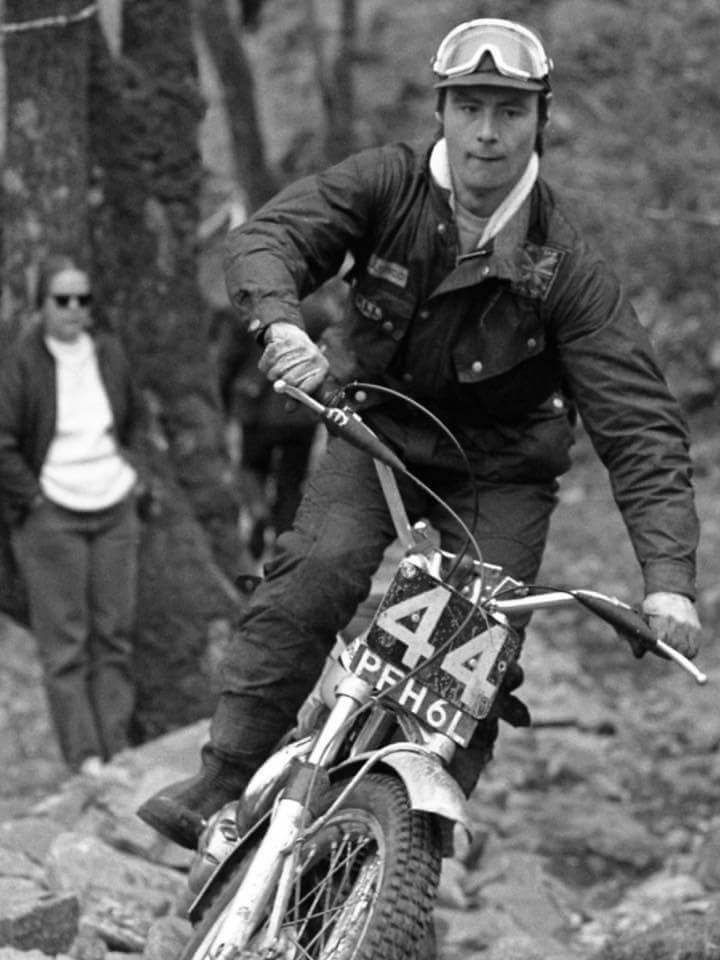
“When we were not abroad, I would ride as many scrambles and support races in the summer as possible and actually beat Malcolm at Farleigh Castle, only because he and Vic Allan collided and took him some time to fire his bike up. Vic had to untangle himself from the chestnut fencing. Malcolm was not a happy bunny on the drive home, he made sure I ended up buying the meal and drinks at our regular pub stop when we were in that part of the country. Just because I had won more money than he did in the main race that day.
I got great satisfaction from travelling on the continent with Malcolm and with so many other brilliant riders who were all incredible characters. It is very difficult to explain to anyone how strong a friendship there was in those days. I was a member of the winning Western Centre scrambles team one year, not surprising as the team consisted of Malcolm, Andy Roberton, Bryan Wade, Randy Owen and myself.“
Montesa and Suzuki:
“I was offered a 250cc Montesa by the importer with semi-works support and had a reasonably successful year, but when the offer of a full works contract came along from Graham Beamish to develop the Suzuki, I jumped at it.
The hours of work that we put into the Suzuki was enormous, but we made the bike into a competitive machine. I achieved two national runner-up awards and national class awards on this bike, then Suzuki brought the 325cc trials bike out, which again needed lots of fettling, but again proved to be a winning machine. I rode my last Scottish on this bike.“
International:
“I always enjoyed the long distance trials like the Welsh Three Day, the International Six Days and especially on a four-stroke bike. In the early sixties, I remember spending many hours with Harry Baughan at ghis factory in Stroud. He was the British Team Manager for the ISDT team. I could ride my bike from the Air Balloon to his factory and practice taking wheels out, changing a tube and putting the wheels back in against the clock. When he was satisfied with my time, he would get me to change a magneto or points. Then and only then, he would send me on my way home.
The Welsh Three Day Trial was very much the event to do well in to get a possible selection for one of the Vase teams for the ISDT. I remember being in some of the remotest parts of Wales and an official would flag you down and tell you to change a tube, take your points out and replace them, change a throttle cable and very often this would be in the thick mist or driving rain and you still had to be at the next check on time!
Looking back at it now, it’s what drove you on to try and be the best. Over the years Malcolm and I played at county level squash for different clubs and I just had the edge on him, but he was also a very good golfer, he played off a two handicap and I played off six, so he had to give me four strokes, but he would never let me pick which holes I could take my strokes at! He would generally win anyhow.
That special bonding we had to succeed was always there and took us through our careers whether we were together or apart.“
Tribute:
“The saddest time in motorcycling for me was when Malcolm was killed, he was waiting to turn into a group of sections in a country lane at the President’s Trial in Devon. I still kick myself today that I didn’t enter and ride in that trial with him as it might have never happened. There are so many stories one could tell, but the final story is dedicated to Malcolm.
We were riding in the West of England trial which in those days was a very long figure of eight event. We were at the notorious section called ‘Diamond Lane’, which was a long rocky section with a big step towards the end. It was my turn to go first as we usually took turns to be first. I had a very good ride and cleaned the section. Ralph Venables said ‘Well done, that was a good ride and how many marks are you on?” This was his normal question. Then Malcolm reached the big step, he hit it just right, but the bike jumped out of gear and he had a five. he was not happy. Malcolm flew by me and vanished in teh distance. I set boff down the lanes in pursuit and after a few miles, there was a very tight corner with a low hedge and a duck pond on the other side. There was a hole in the hedge and there was Malcolm, sat in the pond with the bike. How I laughed as I helped him back to the lane. We fettled the bike and off we went to the next section. He did see the funny side eventually!
So many times, Malcolm found plastic ducks on his bike or in the back of the van at scrambles meetings at home and abroad!
After twenty-five years in the saddle and at a high level, and sadly Malcolm was no longer alive, I felt it was time to call it a day and concentrate on my career at the Home Office. I still had my B40 BSA trials bike and I rode this and a 500cc Ariel in Pre65 trials with great success. Deryk Wylde was running a British Championship series and I won the first series on the BSA and the 500cc championship the following year on the Ariel.
I took over the chairmanship of the Victory Re-Union from John Avery for a number of years and still help organise and observe at local trials today.
I am proud to have spannered and signaled for Malcolm when he won three British 250cc Scrambles Championships.
When I look back over my motorcycling years, I realise how fortunate I have been to be part of a spoirt that has given me so much pleasure. However hard it’s been at times, and to have made so many really true friends through motorcycling. Without any doubt, these were the best years to have been in the sport!” – Tony Davis
Acknowledgement:
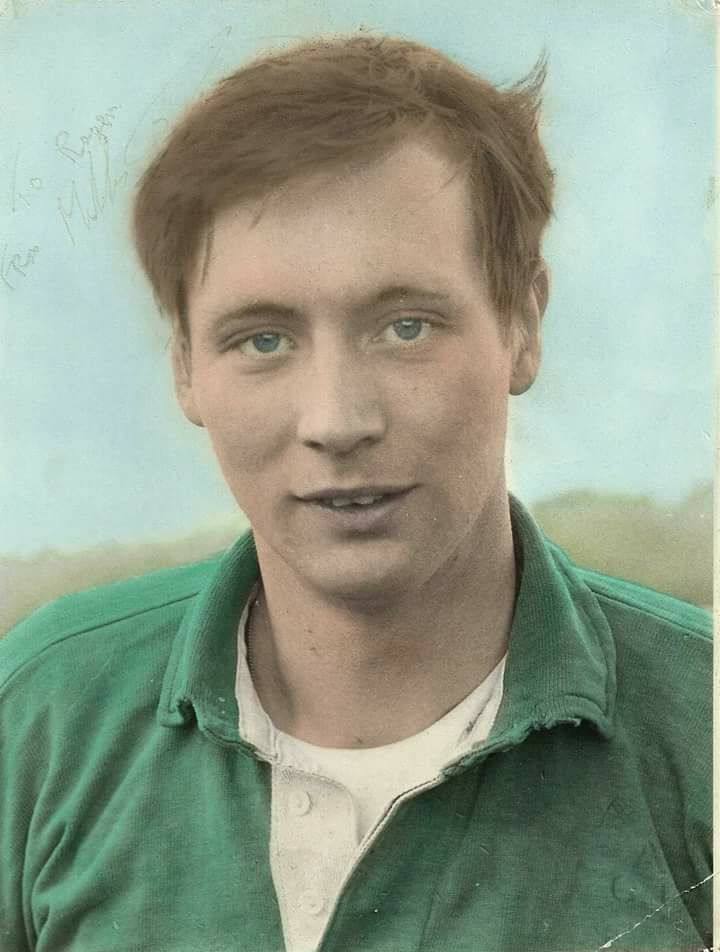
Trials Guru wishes to thank Tony Davis for supplying his own words for this article and for continuing to support the sport of trials to this day. This is not only a fitting tribute to Tony Davis, such a great competitor and gentleman, but also to his late brother Malcolm, a true champion in all senses of the word. Malcolm was British Motocross champion on three occasions, 1968, 1970 and again in 1973. Tragically killed while competing in 5th October 1980 on his Bultaco Sherpa in the President’s Trophy Trial, a British championship event near Honiton, Devon.
Footnote:
Apart from ‘Fair Dealing’ for the purpose of private study, research, criticism or review as permitted under the Copyright, Design and Patents Act, 1988, no part of any article may be copied, reproduced, stored in any form of retrieval system, electronic or otherwise or transmitted in any form or by any means, electronic, electrical, mechanical, optical, chemical, photocopying, recording or otherwise without the prior written permission of the author as stated above and below. All articles are not published for any monetary reward or monetisation, be that online or in print.
Text Copyright: Tony Davis & Trials Guru 2024
Discover more from TRIALS GURU - DEDICATED TO TRIAL
Subscribe to get the latest posts sent to your email.
 TRIALS GURU - DEDICATED TO TRIAL
Two great riders, a lovely story.
what a lovely story of brotherly love and friendship
motorcycle sport is the best.
wonderful account.
Having known Tony again after being a member of the Greeves riders association, he is still a dedicated member of the off road establishment and i was fortunate to buy Malcom’s Bultaco sherpa from his shop in 1967 or thereabouts which was like getting off a cart horse Anglian at the time (but i still ride one when i can at 80 the Bultaco was so easy to ride and forgiving .