

Gloves Off with Bernie Schreiber
Former World Champion, SSDT winner and American Champion Bernie Schreiber shares his opinions with Trials Guru about sports rules and regulations in this ‘Gloves Off’ feature. Schreiber competed himself in local, national and international Trials during his professional career. He also worked with Swiss watch brands, Tissot and Omega for decades within their role as Official Timekeepers for many sports including MotoGP and the Olympic Games. Schreiber spent over a decade in World Championship Trials competition and he knows first hand that rules and regulations aren’t just part of sport, they are the sport. We had the opportunity to explore his opinions about sports regulations, Trials today and his observations going forward, as he looks back on the sport’s history and heritage.

Trials Guru: When did you start competing in sports?
Bernie Schreiber: The beginning was a few American team sports back in Junior high school. My mother had me competing in local tennis competitions since the age of 10, so I had a good taste of getting beat up by bigger kids already. Took a liking to individual sports from a very young age. First motorcycle Trials competition was around 1971 at Saddleback Park in the kids’ class with Jeff Ward who turned to Motocross a few years later. A year later in 1972, I competed in America’s biggest trials event ‘El Trial de Espana’ and that same year Sammy Miller entered and won. There were about 300 participants at the event.
In 1974, I won a trip to Barcelona to watch the Spanish European Championship and visited the Bultaco factory. Two years later in 1976, a group of Americans went to the Scottish Six Days Trial. I was underage to ride, so spectated the entire event, starting in Edinburgh. The following year in 1977 at 18 years old, I entered the FIM Trial World Championship season sponsored by Bultaco and participated in the SSDT. Managed two podiums at the world rounds in Spain and West Germany that year and finished seventh in the world. That was the start of my career in sports.

TG: How important are rules and regulations in sports?
BS: Rules and regulations are very important in sports. Regulations are typically created by governing bodies at various levels such as; national or international and these rules are officially put into effect by a greater weight than standard rules and are legally binding. While some rules can be limited to specific groups, clubs or organizations, regulations apply to all individuals and entities within a jurisdiction. The main purpose of regulations is to ensure standardization, safety and fairness of the sport.
Rules are the invisible force that guides every sport, every athlete, judge and manufacturers, etc. Imagine a baseball game without strikes or a basketball match without fouls or motorsports with no weight or power capacity rules? It wouldn’t just be chaotic; it would be a completely different sport.
Rules create the boundaries that give a sport their identity. They dictate the pace, the intensity, the excitement and fairness. Rules and regulations ensure fair-play and apply to everyone equally, leveling the playing field so that talent and strategy win the day. There should not be special rules for a few, venues for a few, event calendars for a few, support for a few, overwhelming product advantage for a few, or total financial dominance.
Rules are the backbone that keeps the sport fair, safe, exciting, and, frankly, playable. Without fair rules, there would be no structure, no way to determine a real winner, no framework to build upon and eliminate a potential for unfair acts in order to gain an advantage.
TG: Why is fair-play essential in sports?
BS: Fair-play is an essential and central part of successful sport involvement, promotion and development. By adhering to the rules and regulations, athletes compete on a level playing field, where their skills and abilities determine the outcome.
The principles of fair-play include integrity, fairness, and respect for opponents, fellow players, referees, sponsors and fans. With these principles, the spirit of competition thrives, fuelled by honest rivalry, courteous relations and a graceful acceptance of results.
So, when you’re watching your favourite sport or playing the sport yourself, remember those rules are more than just guidelines, they’re what makes the sport great.
Each sport has a unique set of boundaries and rules which brings out the best in athletes and teams, fostering an atmosphere of competition that’s both challenging and rewarding. Remember, it’s within these well-defined lines and well-established rules that the true spirit of sportsmanship thrives. And every time you coach youth, you’re instilling that same respect for rules and boundaries in a new generation of athletes.

TG: What are the benefits of rules and regulations?
BS: Rules set the stage for competition, defining how to score, what’s in bounds, and what’s a foul. They level the playing field so that talent shines over bad actors. The benefits of rules help sports accurately adapt to challenges and support growth. If the rules are good for all involved, it benefits all involved. Rules are meant to enhance, promote good and be optimized over time to match specific goals and best interests for all parties involved.
There are always concerns about modifying sport rules and it has been an increasing issue in the past few decades. Modifying the rules is a common way to change the game conditions. Rules provide the unique, differentiating character to the sport and especially in traditional sports.
There are many reports on the subject of rule changes and time after time the rule modifications are no real benefit, impact or a specific goal achieved. Rule modification involves processes that seek change in the game conditions with a certain goal in mind.
This could be to improve performance, attract more spectators, media, sponsors or cost reductions etc.
Quite a few times it has been identified that one of the primary sources of rule change was purely commercial pressures and personal interests. In some cases, the commercial benefits are related to an increase in TV spectatorship, which in turn affects the public’s interest in the sport and certain sponsors.
Some cases could be demands of the media to change the game time, but these should be tested over time for short and long-term benefits. Media has always played a role in sports, but over the past decades they seem to play along with whatever brings in advertising revenue whether it’s good or bad for the sport.
Sports law plays a pivotal role in shaping the framework within which athletes, teams, sponsors, manufactures and sporting organizations operate by focusing on the intersection of various legal practices with sports-related matters.
TG: Which rules in Trials are you always confused as to why they exists in the first place and you believe the sport would be better without?
BS: Today we can witness two different sports in Trials. One is the traditional participant sport which most Trials riders practice successfully under traditional rules and the other sport is designed to stage a show that entertains crowds. What always confused me is why at the World Championship level they brought the Indoor stage a show rules and obstacle design to outdoor events.
Times have changed and the word reliability has been removed from the sport of outdoor Trials in both World championship and most National Championships. The sport has changed, but so have the rules. The success of participant trials will always take place with traditional rules like the Scottish Six Days or classic events, with non-stop and no assistance (minders) rules in my opinion.
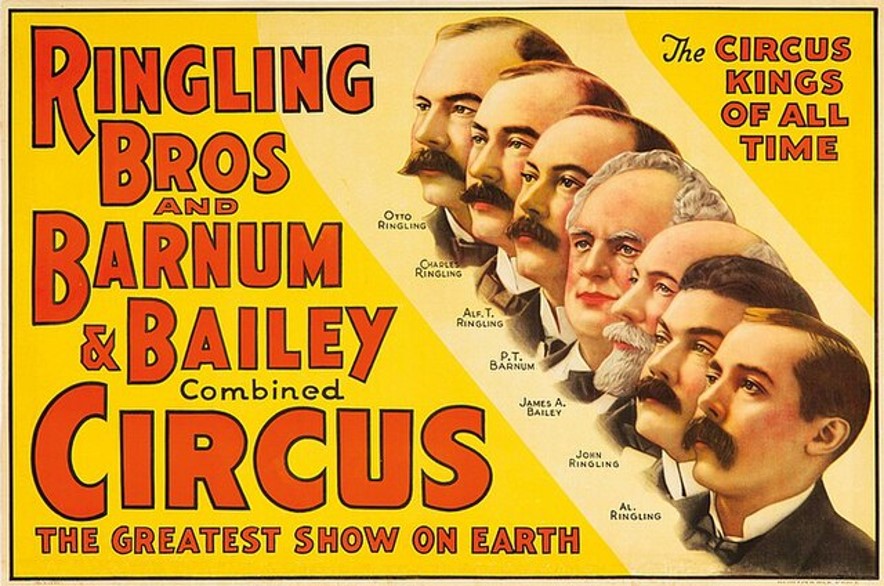
The word ‘circus’ has been used to described these stage shows versus traditional trials, it has not been successful for outdoor trials under the current rules. Outdoor trials have always been a participant sport for riders and remains so today. Nothing has changed except the lack of interest and participation in World and National Championships. Many riders have been forced to depart the sport of trials over the past decade due to no support. The sport has left behind many top riders unable to adapt or get support for the professional entertainment business based on the show and money. The quantity of show riders becomes more and more limited each year as manufacturers’ budgets are reduced due to sales.
This is an excerpt from the official press release earlier in 2024 about new outdoor trials rules “Stop Allowed” that stated:
“Global conditions have changed considerably and the FIM’s approach is different from that of the previous decade. During the previous seasons, the FIM carried out numerous expert appraisals and consultations with a view to improving these conditions and considering solutions for modernising the discipline. A majority of manufacturers and a number of riders expressed their desire for the greatest possible ‘freedom’ in expressing their enormous technical abilities in the sections with the main aim of putting on a show. To this end, the FIM has decided that its TrialGP organisations will focus primarily on visibility and the quality of the show put on. Other measures such as the acceleration of the race pace, the separation of certain classes and other decisions to come – leading to greater dynamism of the Events – will go in this direction.”
Whoever applied the rule “Stop Allowed” or “Rider Assistance” back in the 1990s, had the intent in my view, to make a show and turn the outdoor World Championship into a permanent circus style environment. In my opinion, these two regulations have been the single biggest mistakes over the last few decades for outdoor Trials. The sport would be better without them.
TG: Why are these Two rules so important?
BS: Complicating simplicity is not always progress, but often chaos. Changing one rule can change the sport completely and benefit a group of riders with specific skills coming from other rules in another sport.
These specific rule changes allow for more extreme style sections and the permanent need for (minders) which only a few riders can afford. These rules just add costs in very difficult economic times at every level and provide no real benefits to the sport.
The few (X-Trial) invitational riders obtain a huge advantage over all other World Championship riders at outdoor events, due to nearly identical rules and section designs. Most other riders don’t have the financial means to acquire such advantages during practice or competition. This makes the sport for elitists who can dominate the podium for a longer period of time in such a regime.
I believe that you just can’t transfer indoor (X-Trial) rules to outdoor with the same approach to section design. The Indoor (X-Trial) circus/stage show is an entirely different sport than the outdoor World Championship. The terrain, climate, skills, public perception, rules, access, sections and classes. Trials have always been the individual rider and machine against the natural terrain sport, not a team of acrobats assisted in artificial sections.
Only about ten to fifteen riders actually receive an entry to these winter X-Trial shows and most never qualify for the final. The show must go on with lights, music, ticket sales, spectators, seats, beer and some money for the organisers and top teams.
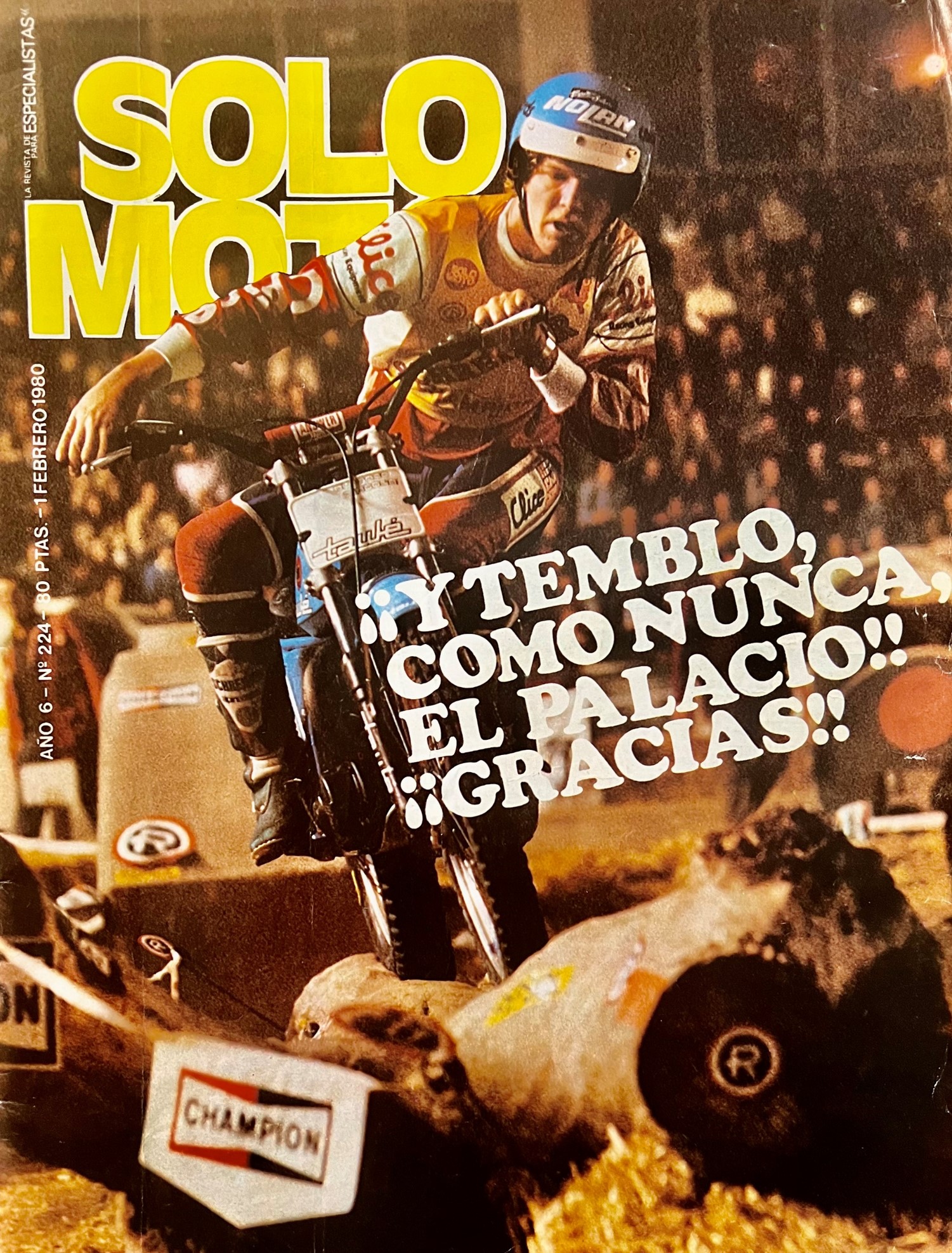
I’ve been there and done that forty-five years ago, I found myself pleasing the crowd in front of ten thousand Trials spectators at the 1979 SoloMoto Indoor Barcelona in the January. The next month in February, was the opening World round of the Hurst Cup in Northern Ireland riding in cold, mud and icy conditions.
The rules, riding techniques, competitors were completely different and that’s what makes a World Championship and Champion in any discipline. My view remains, that two sports need two sets of rules for success.
TG: What’s your thoughts on the modern Trials bikes of today?
BS: Trials bikes today have a massive number of modern technologies like most off-road machines. They are light and provide benefits for expert riders and upwards, but not really the best bike for your average club rider. The products available today are highly specialized and mostly designed for indoor acrobatic riders with the main purpose to hop, stop, pop and repeat on the back wheel which doesn’t really appeal to your average off-road rider or trial enthusiasts. These modern machines are not designed for about 80% of Trials riders skills. The youth struggle to purchase such technology, which offers no other usage than trials riding.
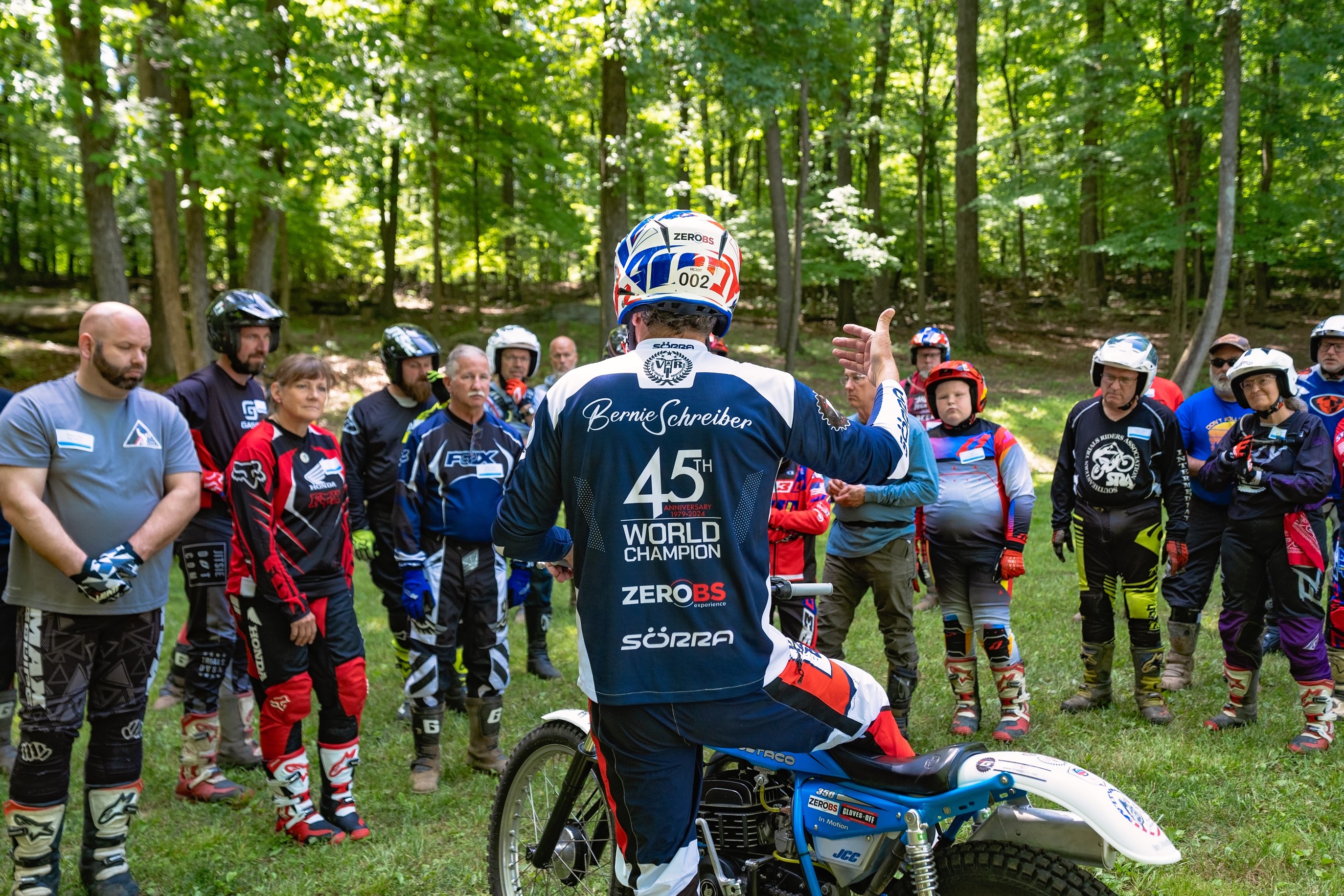
I’ve hosted a few hundred students at my Trial’s schools over the last five years and many students with modern bikes struggle to do a basic turn, as they find themselves unable to control or use the technology properly. Many club riders today seem to enjoy the sport most on a modern 125cc model. The advanced riders who actually use the bike technology and capabilities end up staging a show on a big obstacle, but then they struggle to clean a traditional trials section in competition conditions.
Bikes with no real flywheel, fender seats, quick action throttles, sensitive brakes and clutch are a nightmare for most novice and intermediate riders’ skills. Many just excel at bad habits as they progress and can’t focus on the section lines or truly enjoy sport competition fully without the risk of an accident.
Some riders purchase the high-performance machine to do imaginary tasks. These tasks and skills become unrealistic illusions. Social media posts of top riders are much more than a skill, it’s a staged show of skills.
Whether you have a twin-shock bike or modern bike you still have to do the work to learn skills, then clean sections and win trials. We all have much respect and admiration for top trials riders, but we must be realistic that they represent less than 1% of trials riders. The Ringling Bros and ‘Barnum & Bailey’ effect is not beneficial for the growth of outdoor Trials.
It’s like saying American stunt performer and entertainer, Evel Knievel’s jumps were good for the promotion of MotoGP.
TG: What has been removed from the sport since the 1970s and 80s golden trials years?
BS: Trials has lost its character, beauty, elegance, culture and freedoms from the earlier golden years which included the 1960s as well. On top of that, the World Championship calendar is no longer a real World Championship. It has become a southern European Championship hosted throughout the dry summer months. This fits perfectly to the stage show riders and cost cutting program of most factory teams.
The United Kingdom that invented the sport of trials and has the deepest traditions has not hosted a World Championship since 2018, leaving a six-year void in the sport. That would be like the United Kingdom not hosting Tennis at Wimbledon for six-years. These are huge mistakes in my opinion and have effects on the sport. The U.S. World round is in the same situation. From 1975 to 1987 there was a USA world round every year except 1980. Young riders now migrate to Spain for practice and factory exposure hoping to learn indoor style conditions to get ready for the World Championship season.
Of course, it’s easier and cheaper to migrate from European countries to Spain than from the USA, but many youth riders are isolated in their home country riding the local events without minders, sponsors, budgets or hope. Some local importers try to support and bridge the financial gap, but money is tight, and the gap is growing, while bike sales drop to their lowest levels in decades. The gap for youth riders keeps growing and the culture of the sport has nearly disappeared in some countries.
The rules of the sport are like a puzzle and must be assembled correctly for a successful future.
TG: What do you mean by a cost cutting calendar for riders and factory teams?
BS: Like a business, the easiest thing to do is cut costs before searching for additional revenues or growth. Trials have not been innovative at developing the sport for future generations.
Back in 1979 we had 12 outdoor world rounds in 12 different countries. That same year there were five different winners in the first five rounds of the championship. In 1980 the first 4 world round winners were from 4 countries riding four different bike brands. We used to ride trials with three 18-mile laps of 15 to 20 sections without assistance or section viewing the day before. During my entire trials career, I never had a say in the rules or calendar of the World Championship.
The World Championship formula worked and still works with MXGP and MotoGP calendars. MXGP and MotoGP have long standing promoters who look after the sport and their interests, but always strive for innovative growth in a professional manner.
Once you stop hosting prestigious events in countries, you begin to uproot the grass roots venues on the calendar and start the process to dismantle local organizers, sponsors, media, clubs, history and the development of the sport. The potential sales markets dry up and eventually everything around the sport as well. The youth gap to the top grows and becomes even more difficult and dreams vanish, or they turn to something else.
The manufacturers Teams save costs in the short term, but the long-term vision for growth slowly dies and limits markets to sell products and develop youth programs. Once grass roots are gone, the work is difficult to build back again, and a generation of riders are left behind. Evaluating your success over the years is never easy, but meetings without substance just remain empty seats.

TG: What do you see going forward?
BS: First you need to identify the challenges before solutions are found and changes made. Trials need some common sense back-to-basics rules for the Outdoor World Championship. Smart rules and regulations built from the bottom-up, not top-down approach used for decades with no real proven success or results for the sport. These 106 pages of regulations actually takes away our freedoms and has restricted growth of the sport over the years.
2024_FIM_Trial_World_Championship_Regulations_En_10-05.pdf (fim- moto.com)
Media interest has nearly disappeared, and most publications today are classic magazines with stories from the past. Print coverage is delayed for major news and over 80% of advertisers are industry partners as the numbers are weak and reach is very limited. When a sport becomes very specialized most mainstream media and sponsors have little interest. The promotion of the sport cannot be limited to TrialGP or X-Trial on social media and expect growth and awareness.
The sport has overdosed on new classes in the World Championship, National Championships and local events. In the USA you will discover 20 classes in their National Championship with only 100 riders. This brings the risk of riders dropping down a class to pick up a trophy discouraging others in the process. It also dilutes the overall winner’s value as a National Champion. Organizers producing 60 trophies for 20 podium presentations or a podium with one rider. This doesn’t make sense in any sport.
This might be a way to obtain additional entries in the short term, but that’s not substantial. I’m not convinced this approach provides benefits for outside sponsorship investment unless the company produces awards.
Land usage is becoming a challenge for everything related to two-wheel vehicles, not just trials bikes. Classic event organizers still run successful two-day trials at world class venues with 200 to 400 participants across Europe. Urban Trials and X-Trials attract local spectators and tourists, but don’t really promote bike sales or the traditional sport. Expanding the calendar and cutting the rider assistance with smarter section designs and other rule changes would be a huge benefit for the sport and most know that would level the playing field for growth.
My view is that sections should be non-stop and limited to around 45 seconds keeping the flow of the event for a larger quantity of riders and simple scoring. The sport of Trials has become difficult, complicated and expensive. Maybe the most challenging of all two-wheel off-road sports. Bikes are expensive and too specialized for the average rider. Travel and transport have become expensive, so downsizing on-site infrastructure and rider costs is important and beneficial for everyone. One other point is the need for standardization of rules across the world like most sports.
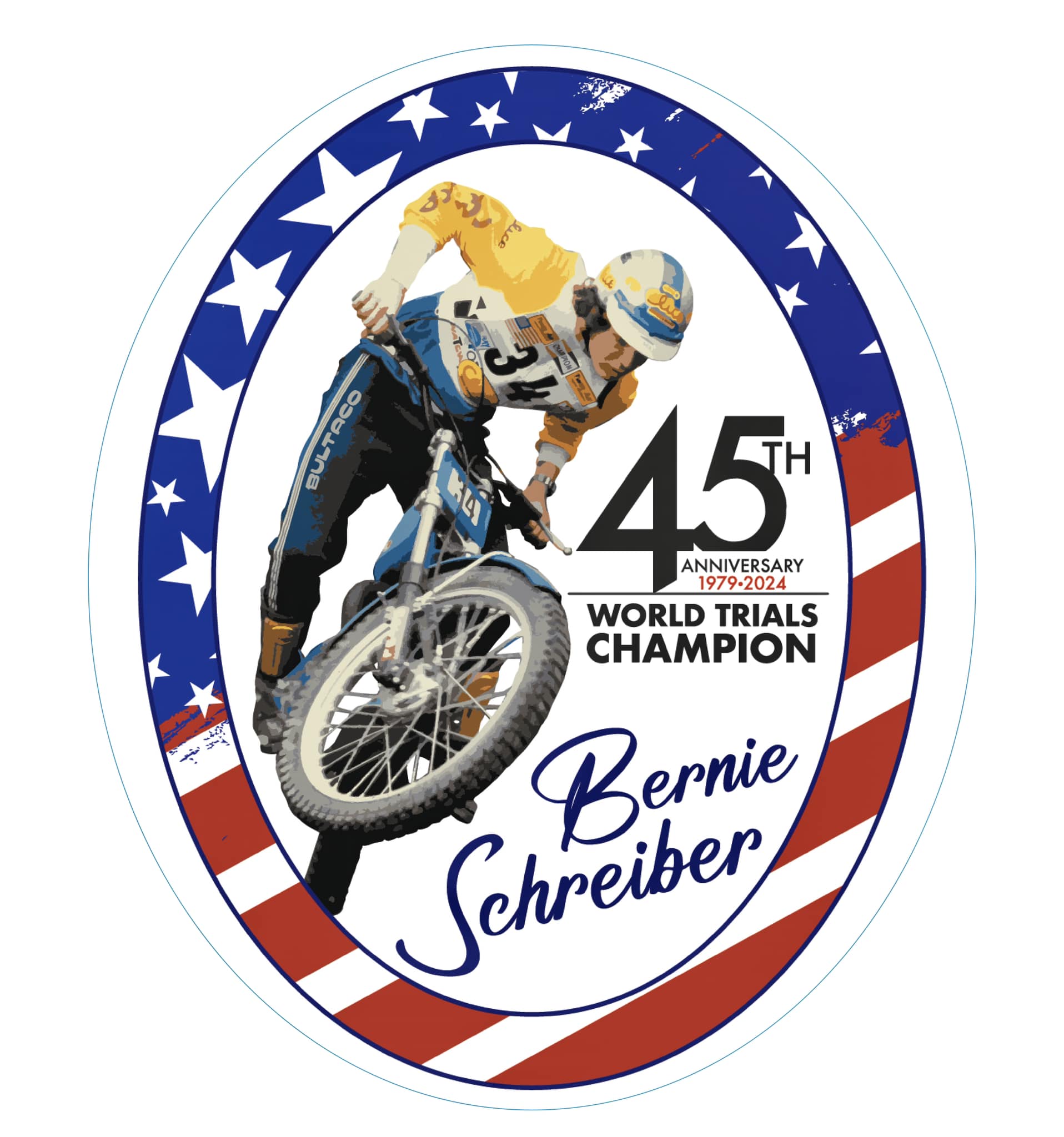
TG: This year marks your 45th anniversary since you became FIM Trial World Champion in 1979 and we wish to thank you for supporting Trials Guru with your ‘Gloves Off’ column.
BS: Yes, September 16th, 1979 marks that historic date when the first and only American won the Trial World Championship. Thank you to Trials Guru website for the dedication to the sport and its history. The sport of Trials will always be greater than its Heroes and Champions.

Copyright: Bernie Schreiber/Trials Guru 2024
More ‘Gloves Off’ articles here: ‘GLOVES OFF’ with Bernie Schreiber
Discover more from TRIALS GURU - DEDICATED TO TRIAL
Subscribe to get the latest posts sent to your email.
 TRIALS GURU - DEDICATED TO TRIAL
Hi. Ich habe mit dem Großem Vergnügen den Artikel gleisen.
Danke und Bitte weiter so.
Gruß Wojtek W.
Bang On BERNIE ..As usual
PreTrial SECTION Inspection …Should Also Go Away..
6Hour TimeLimit – 3 Hours Only Per Lap
And Finally – Ride in NUMERICAL Order – NumeroUNo 1St
Wont that CheerUp the Spanish Flies ..
Cheers hDr – Marooned on VanIsle with the CrustyRusty& Musty