
Words: Trials Guru
Photos: David Lewis; Gavin Shaw; Jonathan Henderson; Speedtracktales (ISDT website); Bonhams Cars; (Main photo: Gavin Shaw)
With assistance from: Jonathan Henderson
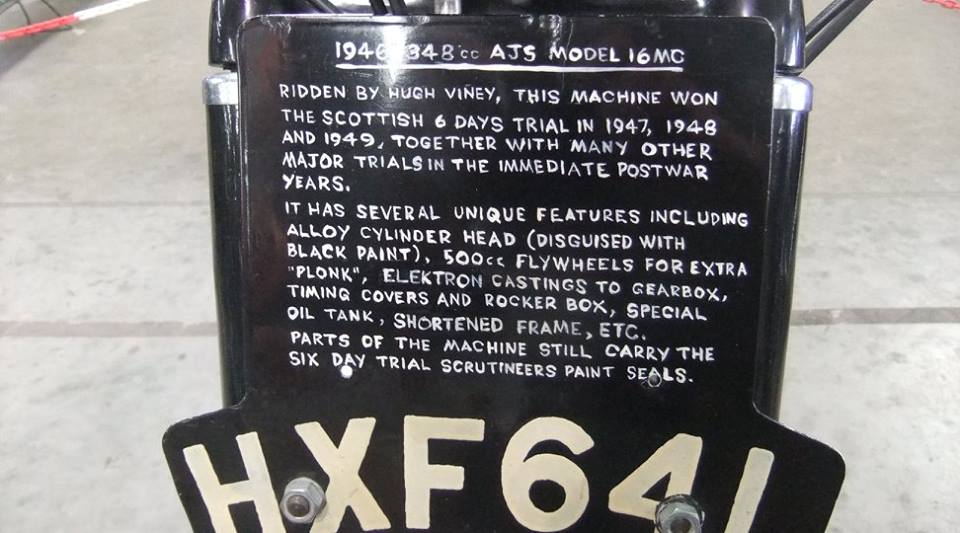
On the tenth of October 1946, Associated Motor Cycles registered a 348cc AJS 16MC rigid framed motorcycle with the London County Council Motor registrations department, the index number issued being HXF641. That in itself may seem innocuous enough, but the machine was to gain fame as one of a handful of machines issued to one ‘B.H.M. Viney’ for the 1947 season.
The first registered owner/keeper was noted as Associated Motor Cycles Ltd, Plumstead SE18 and the signature on the original registration booklet was none other than director, C.R. ‘Charlie’ Collier, a founding father of the Matchless Motorcycle. We have discovered that London CC issued HXF644 to a factory 350 Matchless G3LC at the same time, this machine would be issued in 1947 to Yorkshireman, Artie Ratcliffe who won the British Experts trial on it. Later the same Matchless was issued to Ted Usher for the 1948 Scottish Six Days Trial.

The machine was of course pressed into service as a factory trials bike and would be ridden by its famous rider to many successes over the years. In fact, the machine remained in the ownership of AMC until 19th April 1950 when Rodney Gordon Bainbridge of Shrewsbury became the proud new owner. The machine was then in private owners’ hands until the present day.
Born near Dorking in Surrey in 1914, Hugh Viney joined the competition staff in the spring of 1947, having been a sergeant instructor in the British Army, Royal Corps of Signals, through WW2 and was a motorcycle instructor for the regiment having trained many dispatch riders during his period of service to King and country. Prior to joining AMC, he was employed as a local government surveyor. Viney was a particularly serious-minded character and was described by many journalists of the era, as being of ‘dour’ demeanour. His first trial was at the age of twenty-two in 1936 in the Beggars Roost on a side valve Ariel, winning the event. Viney came fifth in the 1946 British Experts on a borrowed works AJS, the first Experts after the war ended. He certainly was a serious trials rider, having won the Scottish Six Days Trial on his first attempt, a feat he would repeat on no less than three further occasions, which included his famous ‘hat-trick’ of three successive wins 1947-1949.

Viney also represented his country at the International Six Days and was the captain of the victorious Great Britain World Trophy team in 1954 in Wales, riding an AJS twin, registered as AJS6. He was the Competitions manager for the factory, so access to works prepared machinery was never an issue. His factory supplied AJS machines were known to have many alloy components fitted, much of which enamelled black to disguise the lightweight components. The factory also had components made in ‘Elektron’ a magnesium alloy which had a dull grey appearance but again very light weight. ‘Elektron’ was the registered trademark of Magnesium Elektron Ltd. The alloy was originally developed in pre-war Germany and the racing departments of both Auto Union and Mercedes would have used this metal in their Grand Prix cars.

AMC used Elektron for their racing machines and the application to the factory scrambles and trials machines was entirely possible.

HXF641 as stated, was to be campaigned by Hugh Viney over a three-year period in various states of development and tune. One such modification was the short rear mudguard that Viney deployed, this was copied by private owners believing that there must be an advantage by lobbing off a chunk of the mudguard. However, there was a very sound explanation for Viney’s abbreviated mudguard, it was so that he could load the machine into his Croydon built Trojan van, and get the rear doors closed, as the bike was too long if fitted with the standard-length guard!
The trials scene started slowly to resume in 1946, following the Second World conflict, but it was a very controlled resumption, given that fuel and lubricants were in short supply and factories had been on a war footing for the previous eight years. Things were far from easy in fact it was a period of austerity. When the Scottish Six Days resumed a year later in 1947, the trial was centred at Fort William to conserve rationed fuel supplies, an event Viney would dominate for three further years.
Viney was to develop his trials riding style on an army issue side-valve BSA in Yorkshire during the war. This enabled him to perfect his very slow riding style, using the ignition lever to retard and advance the ignition, almost like a second throttle. This enabled him to find grip in muddy conditions where other lesser riders faltered. Viney was a quiet thinker, and it paid dividends. It is said that Viney was a novice trials rider when he joined the army, but was an expert when he was demobbed.
The press initially labelled Hugh Viney as the ‘Doctor of Plonk, Professor of balance’ mirroring his ability to manoeuvre his mount slowly over obstacles with just a whiff of throttle. In later years Viney was referred to in the motorcycle press as ‘The Maestro’ a term used for the very late model Matchless G3C. This ability to plonk a machine, necessitated a well set-up engine with manual advance/retard ignition sparked by Lucas magneto, and no air filter fitted to the AMAL carburettor. Viney felt that an air filter would clog up mid trial, ruining the optimum fuel/air ratio, so he always shielded the carb by the deft use of a cut up car inner tube to fit down the frame and allowing water to escape the bell-mouth and keep mud and dust away.
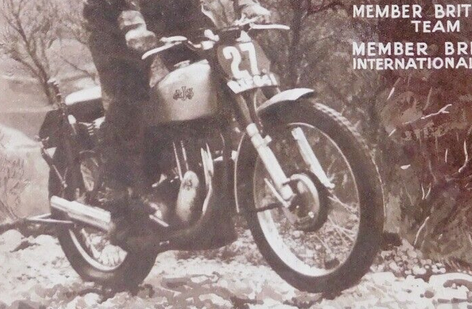
Viney’s bikes always bristled with modifications, but some were not obvious. The most noticeable to the keen eye was the fuel tank, the production machines were made of steel, whereas Viney had his made from aluminium alloy, but the detail was such that when painted, it wasn’t obvious. The factory of course wanted potential customers believe that the model they could buy was what Viney and his teammates were already winning upon.
All engine plates were fabricated from alloy plate in the competition department, initially painted black to disguise these components.

What AMC did was they registered standard machines that were taken from the production line, not road tested as was the norm, the machine being booked out in the factory records as ‘For Competition Department use’ and then stripped down by the comp department staff and the lightweight components so fitted before testing and issue to the chosen factory supported riders. This is how HXF641 would have begun its life as a works trials machine.
Initially, HXF641 would sport its front registration number mounted on the front mudguard as most machines were prepared in this manner. However, it was not an ideal position should a rider dismount unexpectedly over the handlebars. Later, the number plate was fitted across the front forks, fitted by extended pinch bolts of the lower yoke.
What is not generally known was the way that Viney set up the front brake, which is of course the primary brake on a motorcycle. He actually reversed the brake from standard build, so that the brake plate was on the offside and not the nearside, thus giving a ‘servo effect’. The machine as it is now has the standard build set up with brake plate on the kerbside. Viney also preferred the larger 6.5 inch front brake and not the later and much lighter 5.5 inch variety.

At first Viney favoured the BTH ‘TT’ type magneto before the advent of the Lucas ‘Wader’ magneto which was to become standard fitment on the AJS and Matchless trial and scrambles machines. A BTH magneto is fitted to the machine in the present day.
At this time, AMC only produced fifty of AJS and a similar number of their Matchless 350 trials models and that was the quota for the year. This was not a lot, but enough to allocate machines to their official dealers of the day.
The 1947 Scottish Six Days was at that time the equivalent of a racer winning the TT on the Isle of Man. Viney was keen to take the win and he did so in amazing style. He dropped a mere six marks and posted a double clean of the now famous ‘Devil’s Staircase’ on the Moidart peninsula, above Loch Ailort. He also did so at his first attempt.
One interesting modification of HXF641 was the position of the footrests, they are about two inches further to the rear than the standard model 16MC, this allowed Viney a much better standing position for him being six foot in height. Remember, Viney did not have this victory easily, his close rivals were Bill Nicholson of BSA who had ridden pre-war and others such as Fred Rist (also BSA mounted) and Bob Ray (Ariel). Notable absentees in the 1947 SSDT were Allan Jefferies (1939 winner) and George Rowley who by now had retired from top line riding, Jefferies concentrating on his motorcycle business in Shipley.
Trial at this time were very carefully controlled and were classed as ‘Trade Supported’; thus, enabling them to be run with adequate fuel supplies allocated through the petrol companies, such as Esso and Shell-Mex.
In 1948, Viney would be the man to beat in trials, he won the coveted British Experts title another opportunity for the publicity lads at AMC to promote the brand.
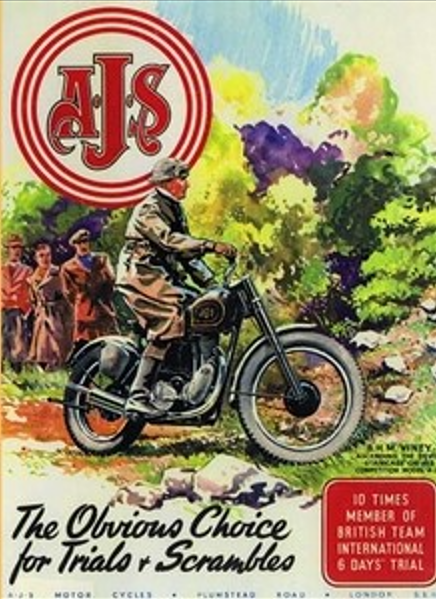
HXF641 being an immediate post-war machine did not benefit from an aluminium alloy cylinder barrel, but an iron component. The cylinder head would be swapped for an alloy component, thus reducing some weight up top.
Let us not forget that factory bikes were under the control of the factory, a test bed for new ideas when appropriate, but there was also the underpinning that the machines should look just like the production models available for sale to the trials buying public. At this time of course trials models did not differ much from their road going counterparts, save for high-level exhausts, wider handlebars and competition tyres. The competition models also came with lights so that owners could use them during the week for daily transport.
So, what did this machine actually win? History records that in 1949, the final season HXF641 was used, it won the Scottish Six Days; John Douglas national; The Colmore Cup national; The Travers Trophy national and the Allan Jefferies trials. Not a bad tally for a season’s work considering the competition it and its rider was up against.
It was at this stage of the development of the AJS bespoke trials machine that Viney experimented with steering head angles. It would be noticeable if the steering head was altered from standard, but modifying fork yokes was perhaps a better option as the factory had a constant supply of them and they could be cut and shut quite easily. This is what Viney experimented with at one stage, and the components looked standard when mounted on a machine. The top yoke was cast in aluminium, but that also was altered to suit modified steel bottom yokes. Steepening the fork angle gave the works bikes quicker steering, most favourable to maintain balance and negotiate tight nadgery sections. It was only later that AMC competition shop technicians altered the angle of the front frame head angle on the works bikes. This was done from around 1954 by heating up the steering head cherry red with a torch and pulling the down tube toward the engine. This necessitated new engine plates and primary chain cases as it pushed the engine closer to the gearbox. The primary chain case would lose around an inch in the middle and the tank would be repositioned accordingly to avoid having to deploy large, scalloped dents in the front of the tank, which would give the game away.
Having said that, it is evident by inspecting HXF641 closely today, that Viney did alter the head angle of the machine and scallop dents were beaten into the steel petrol tank to allow a tighter turning circle for full lock turns.
On examining HXF641, the exhaust is well tucked in to allow a straight kickstart to be used on the Burman CP gearbox.
Another Viney set up, was to mount the handlebar well forward to the point where the tip of the handlebars lined up with the top fork nuts. This reduced the ‘tiller effect’ of the bars being mounted behind the steering stem.
Other equipment featured a Smiths ‘D-shaped’ speedometer head in place of the production circular instrument, in an effort to save weight and to mount it low down and out of harms way while maintaining legality and a shorter and lighter speedo cable set up. A Smiths D-shaped speedometer now resides on the top yoke of HXF641 today.

The wheels maintained their Dunlop chromed steel rims of front, 21 inch and rear, 19 inch as racing alloy rims were not available until the late 1950s.
The kickstart lever was quite novel, it can be seen from photographs of the period and now that the pedal looks to be put on the wrong way, facing rearward. However, that is because it folds 270 degrees, whereas standard pedals swing round only 90 degrees. This ensured that the pedal was always kept well out of harm’s way when the bike was running.
For events like the SSDT, Viney used his ISDT experience when it came to preparing HXF641 for the world’s biggest trial event. Extensive use of quickly detachable components was the order of the day and Viney’s machine preparation was second to none. Tommy bar ended wheel spindles and quick release speedo cabling plus dualling of control cables was utilised throughout. The use of an air bottle with an airline that could reach both wheels was often deployed to inflate tyres after replacing an inner tube during the event.
The issue with factory machines is their provenanace. When frames get broken in competition, the factory simply replaces the frame, because it can. They take a fresh frame and stamp it with the required number to match the log book. If an engine wears out or lets go, they fit a new one, again with suitable numbers stamped on the replacement crankcase halves. So, a factory bike can become a veritable ‘trigger’s broom’, but does that really matter? It is still a recognised factory registration number adorning a machine of that manufacture. Machines were sold off after they reached the end of their usefulness and new models were set up ready for the factory supported riders to compete upon.
We are fortunate that quite a few old ex-works trials bikes survive the ‘crusher’, whereas Honda Motor Company and their subsidiary, HRC have had a policy of crushing their factory machinery. after use. A number of ex-AMC mounts are still out there, including one of the world’s most famous, the 350 AJS of Gordon Jackson, 187BLF, now a resident in Sammy Miller’s wonderful museum at New Milton, Hampshire.

It is believed that HXF641 was not sold on through the AMC sales office, but out the ‘back door’ of Plumstead by Viney himself. This probably explains why the bike retained so many of its factory special components as the works usually removed the exotica for the prevention of failure in private hands. The Elektron items being a prime example due to their fragility after long term exposure to the elements in competition use.
After the disposal of HXF641, Hugh Viney was issued with KYM835 for the 1951 trials season. Viney sadly passed away in July 1991 aged 77 years.

Family connections:
One interesting fact is that HXF641 was owned at one point by Hugh’s son, Michael Hugh Viney and retained by him for but two years before selling on the motorcycle. Mike Viney had purchased HXF641 from a private owner in 1990 with the intention of retaining something tangeable from his father’s achievements in motorcycle sport. However it was assumed that Mike sold the machine on in 1992, due to some financial pressures. A letter dated 2nd May 2000 to the then owner, indicated that Mike Viney wanted to repurchase HXF641 being some eight years after having sold the machine, but the offer wasn’t accepted by the then owner, a Mr. Bob Gardiner of West Sussex. It is also believed that Hugh Viney wasn’t really interested in the machine and wouldn’t even sit on it when in his son’s ownership. Hugh Viney had effectively turned his back on the sport once he left AMC’s employment, having lost interest completely.
HXF641 today:

HXF641 is a multiple SSDT and national trial winning machine which is still working and still being ridden from time to time by its current custodian, Jonathan Henderson in Surrey, particularly in the TALMAG trial. Hopefully this historic motorcycle will be doing so for many years to come as it is part of trials history. Jonathan purchased the machine at auction in April 2019 at Bonham’s Spring Stafford Sale under Lot 310. Advertised for sale as a 1946 motorcycle, in reality AMC always stamped the engines with the model/year from the October onwards for the following year, so this machine although manufactured in early October 1946 would have been stamped and indexed as a 1947 model. HXF641’s engine number stamped on the nearside crankcase begins ’47/16MC’.

Riding HXF641:
Back in the day, the motorcycle press were given the opportunity of running the ruler over this historic machine. However, Viney was always very guarded when it came to discussing his own, and the machinery issued to factory supported riders. One such journalist was Harry Louis, editor of the Motor Cycle who wrote: “… an engine which pulled reliably and powerful at two-hundred revs per minute”. [2] This was due to the way the engine was built in the comp department and fine tuned by Viney himself. It is believed that whilst the engine was a 347cc, internally it sported the heavier flywheels from the 498cc model, thus giving it more momentum, and thus the ability to resist stalling at low revs.
In more recent times, the machine was the subject of an article penned by Roy Pointing for ‘The Classic Motor Cycle’ in their December 2001 edition.
John Moffat of Trials Guru was given the opportunity of having a ride on HXF641 at the annual Highland Classic Two-Day Trial on Alvie Estate, near Aviemore in June 2023.
Moffat: “I was overjoyed, having invited Jonathan Henderson to bring the Viney AJS to Scotland and have it on display at the trial headquarters during the weekend, he then invited me to have a short ride on the historic machine. I can assure you, I didn’t hesitate. The bike had been sitting unused for a while, but there was enough fuel in the steel petrol tank to get her fired up. I only rode HXF641 a relatively short distance along one of the estate roads, thus being on private ground. I wasn’t tempted to try some easy sections near the start for fear of coming adrift and damaging such a historic motorcycle. The bike had exceptional low end power and handled positively. These old AMC machines, even on lower trials gearing, still give the impression that they are moving too quickly in low gears for a successful trials motorcycle, but that is the way they were. I must say I was impressed with the bike, you had to remember it was devoid of rear suspension and was a 77 year old! That said, it was a great experience knowing that one of the all time legends of trials had used this very machine in an assortment of specifications back in the 1940s to win the greatest trial of them all, the Scottish Six Days and would have done so, quite close to where the bike I was riding that day. The time came to hand the motorcycle back to its rightful owner, but not before I had retarded the ignition and performed a couple of very tight turns at almost zero revs. Then I let the bike tick over very slowly, much to the amazement of the assembled spectator gallery that were wondering how anyone could win a trial on such a machine. The sound of a well set-up AJS or Matchless ticking over so slowly on full retard is just music to an enthusiasts’ ears. Only by being present can one understand how slowly these machines could idle without stalling. I then pulled on the valve lifter and silenced the engine. It was an experience that I will cherish for a long time.“
Finally, we share the words of journalist, Peter Fraser when he wrote in Motor Cycle of Viney’s passing in 1991. [1]
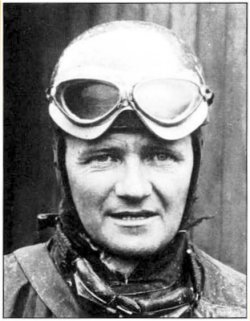
“Viney Dies – Hugh Viney, the world’s top trials rider of the 1940s and 1950s has died at the age of 77. Always associated in the public’s mind with the AJS marque manufactured in London by Associated Motor Cycles, he left his job as AMC’s service and competition manager in October 1964 to sell BMWs. A dedicated perfectionist who prepared his machinery as he picked a line no-one else had spotted through a section. Hugh Viney was a man of few words. Never ‘one of the lads’ he would eat alone in a hotel filled with fellow competitors, always maintaining a distance. His coolness and attention to detail made him a valued and successful member of British Trophy teams in the International Six Days Trial. But it was in Scotland that the Viney legend really took root. His prowess in the Six Days Trial meant That more than a decade after his retirement, the locals in Fort William compared recent efforts with the style of their hero.”
Technical Data:
Engine Type: Over Head Valve, Single Cylinder, Four-stroke
Engine Capacity: 348cc
Ignition: BTH ‘TT’ type magneto
Gearbox: Burman CP – 4 speed
Tyres: 2.75 X 21 Front; 4.00 X 19 Rear
Brakes: 6.5 inch front and rear
Wheelbase: 53 inches
Price new: (Standard Machine) £146
‘HXF641 – Viney’s AJS‘ article is the copyright of Trials Guru.
Bibliography:
References, Information Sources and Quotes:
The Motor Cycle – 1991 [1]
The Motor Cycle – 1948 & The Classic Motor Cycle – December 2001 [2]
Recommended reading:
The Classic Motor Cycle – December 2001 – Page 86 – 89 – ‘The Maestro’s Mount’ By Roy Pointing.
Apart from ‘Fair Dealing’ for the purpose of private study, research, criticism or review as permitted under the Copyright, Design and Patents Act, 1988, no part of this article may be copied, reproduced, stored in any form of retrieval system, electronic or otherwise or transmitted in any form or by any means, electronic, electrical, mechanical, optical, chemical, photocopying, recording or otherwise without the prior written permission of the author as stated above. This article is not being published for any monetary reward or monetisation, be that online or in print.
Discover more from TRIALS GURU - DEDICATED TO TRIAL
Subscribe to get the latest posts sent to your email.
 TRIALS GURU - DEDICATED TO TRIAL
One thought on “HXF641 – Viney’s AJS”
Comments are closed.