
Words: Mike Naish & George Atkins
Photos: Mike Naish
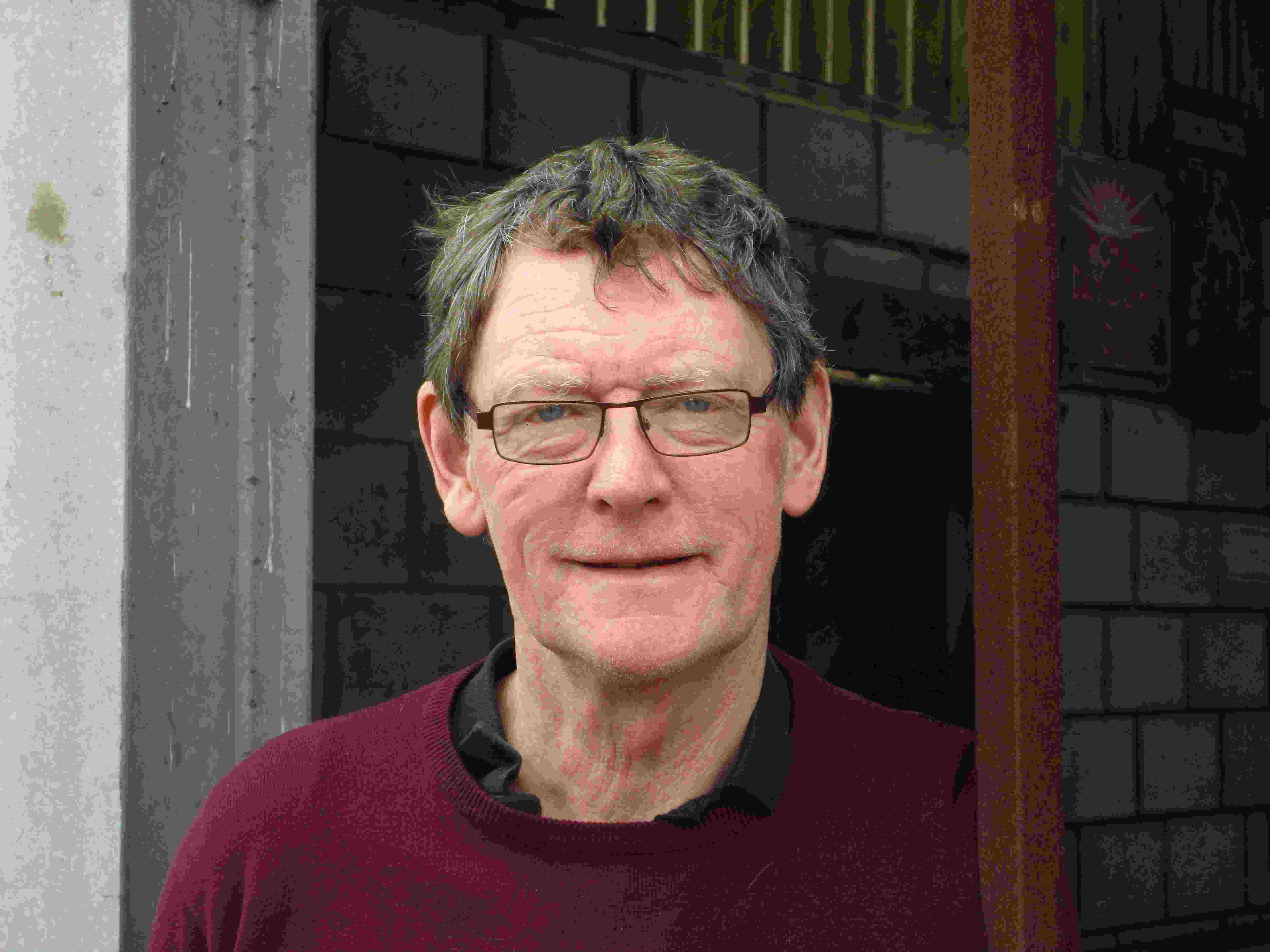
Continuing the series of interviews with some South West Centre trials riders in the UK, this is the story of a man who was never content to let the grass grow under his feet. A person who was driven by a strong sense of adventure, culminating in wide variations throughout his life. Progressing through life as a Scamp, a Rascal, a Scallywag, a Raconteur, a Swagman and Lothario, he was excellent with banter, and Carpenter to boot; and that was just the first thirty years. In later years, an enthusiastic bike builder, courteous when it was needed, friendly, always willing to lend a hand. A trials organiser, coordinator, course plotter. A rider who at sixty plus years is one of the oldest riders in the South West Centre who is still riding modern, Twinshock and Pre-65 championship trials, and well at that. Recently into goat and sheep midwifery. Throughout his life someone with a strong spirit guide becoming a Counsellor with healing groups, and a spiritual healer. Finally finding his Shangri-La described as a harmonious valley within an earthly paradise. But running throughout this life has been a single continuous thread, motorcycle trials. This is the extraordinary colourful life of George Atkins.
Mike Naish: Have you always lived in Devon and how did you become interested in motorcycles?
George Atkins: “I was born and bred in Exeter in 1951, my father was a retired Regimental Sergeant Major in the Devon and Dorset Regiment and went through both the first and second world wars, but he died when I was ten. I went to school in Exeter although I was never very focussed on school work and took a lot of beatings for not doing the work which I took stoically and never made a fuss, and so I couldn’t wait to leave and go out into the wider world, which I did as soon as I was able, at age 15. My best subjects were woodwork and metalwork and I suppose it was logical that I would start work in one of those activities.”
“John Stocker School advised me to go and work with my hands with carpentry and shop fitting. One day whilst I was up in Exeter town I saw Force and Sons so I went in the yard and asked for a shop fitting apprenticeship. After my probationary period I started my 5 year apprenticeship in 1966. Then as soon as I came out of my time I went self-employed working as a site Carpenter until 1974 when I went to Australia.”
MN: What was your first bike and how did you get into trials?
GA: “My first bike was a 150 James, Mike Thyer, my cousin through his father, Lesley, gave me a ride on a Royal Enfield Twin. I jumped on and being in short trousers with a high level pipe, I burnt the inside of both my thighs. He worked for British Railways and he came around one day when I was fifteen and said ‘there is a motorbike for you at the end of the coal yard in the last bunker. I gave a bloke 10 bob (50p) for it. He said there is something wrong with it because it wouldn’t turn over, but I will leave it to you to sort out’. So we pushed it home. The kick start went straight down to the floor without turning anything. The only tools I had was a hammer, a chisel and a flat bicycle spanner. I took the gearbox cover off and all the gearbox parts fell out on the floor. The main shaft was broken. So I went down to the quay where the catacombs were, and saw a dealer called Herbie Plane and said, ‘have you got one of these please? ‘Yep’, he said, ‘Two shillings (10p) to you’. I said ‘but you have a bucket full there!’ ‘All right’, he said, ‘1s-6d to you’. I managed to work out how it all went back together and relined the clutch plates with old cork bottle tops and got it going again. I went to my first trial to watch with Mike Thyer, who had a DOT. There was a guy called Chris Pulman who worked at Warnes cycle shop in Exeter, who helped me build my first trials bike. Chris let me ride his Norman in 1967.”

“We went down to Herbie Plain and swopped the road James for the James Trials bike with some extra money. I was fifteen at the time. I pushed it home from the Quay at Exeter. Chris Pulman said you will need to lower the gearing. I can get you a blank but you will have to find someone to hobble out the teeth. All I had was an egg whisk drill. To lower the gearing I made a larger back sprocket by getting the blank, and then I laid the old sprocket on top and marked it out and then drilled 1/8th diameter holes all the way round at a larger diameter by drilling by hand, then filed them out as well as the centre hole. It took me two nights to do. The chain did go a bit tight then slack as it went around but in principle it worked. Pridham said ‘What the f……! have you got there boy? He was very instrumental in my life as was Chris.“
“I used BR Warne shop a lot to get all the parts I wanted, I was always in there. After it was built I used to go practising up in Stoke woods at the weekend and nearly every lunchtime I would go down to a bomb site at the back of John Born’s shop and practice for ½ hour with John and then roar off back up the main high street past the Guildhall with a Peco exhaust pipe and everyone would look at me, it was great. I was sure it was with admiration.“
“In my first trial I rode the James to an Otter Vale event on other side of Honiton. I won the novice award in my first trial. I belonged to the Otter Vale club and I rode the bike to trials until in 1968 when I got myself a sidecar outfit. It was a 1947 M21 with girder forks. I rode both in the South West centre and sometimes in Cornwall after I got the sidecar going. I later got a Cotton 250. There was one in Ottery, a lovely bike but they wanted £100 for it. I was only an apprentice and couldn’t afford that sort of money. Chris Pulman said why don’t you go to BR (Warne) and ask him if he would sponsor you. So I went and asked him. He said I’ll tell you what, ‘I’ll charge you £10, and I’ll buy it and organise finance for you, and I’ll sell it back to you for £110’. So I did, and it was the first proper trials bike I had.”

“I wasn’t interested in girls at this time I was too busy doing my apprenticeship and riding and maintaining my bikes, but when I was doing some shop fitting at Waltons, which was a big store in Exeter, I met Wendy who worked there in the store. I decided that I needed a car to take her out, and figured it would be useful also to use to take the bike to Trials. Geoff Horrell who sold cider in Stoke Canon and rode an HGH in Trials, had a Standard 10 with a spare 850 engine which he swapped to me for a sidecar body. I used the car with a trailer for the bike although the brakes were not a lot of use. When the 1000cc motor blew up I replaced it with the 850 version.”

“I used to do Pigeon shooting with this bloke out the other side of Dunsford and he said you ought to see the fields in Australia, I’ll show you some pictures when we get home. Well three months later in August 1974 I was in Australia. Wendy and I went out on assisted passage for £45 for the two of us and all our gear.“
MN: Tell me about your time in Australia?
“We went to Brisbane and were met at the airport by the father of Tony Goldsmith, a trials rider who owned the riverside club and whose father was already in Oz. He arranged sponsorship and a flat for us and I was to carry on my profession as a carpenter, but there was absolutely no work for months so I started to train David Goldsmith, his son, to ride trials, and he ended up being the Australian champion. I got a sponsored ride with the Brisbane Yamaha shop riding a brand new TY250 in trials. They asked to see me through another rider, and said they would lend me a bike and pay my entry fee, but I had to get myself to events. I rode in Queensland at weekends, then we bought a caravan and hitched it up to an Australian made Holden car to work our way around Australia. We got north to Bunderburg and went to a sugar cane plantation driving a tractor and other jobs. I helped to build some houses up there, and as it was still in Queensland I could still ride the Yam. Then we heard from an old friend that had come out to Oz for an extended stay down in Victoria. So we about turned 180 degrees around and drove all the way down to Shepparton on the banks of the Goulburn river in Victoria, about 100 miles North east of Melbourne and put the caravan in his front garden. I did some work down there on a sheep station and built some houses as a carpenter for an architect -Stud walls, roofs etc. The Yamaha dealer had said that if I moved to any other state just go to the local Yamaha dealer and they would lend me a bike for trials. So in Victoria I had a TY 175 –used to round up sheep with it. Then I blew the engine up when practising, going over a jump into water it sucked up a cylinder full when I didn’t open up correctly. I told them it must have been a fault with the bike. They said ‘Can you mend it? I said ‘Yes’, so they sent me a new Con rod and piston and I got on with it. It was nothing to travel 200 miles to ride in a trial out there.”
“We decided to carry on around Australia so I decided to go to Western Australia towards Perth. I drove across the Nullarbor Plain towing the caravan but we had a few problems on the way-I had to change the clutch in a thunderstorm with rain running down my neck. The prop shaft univeral joint went so you couldn’t go more than forty miles per hour until we got to Bunbury, a coastal town 175 kilometers south of Perth. We parked in a caravan park and got some work. Then I went to the Yamaha dealer in Perth. The manager at Ken George Yamaha was an American guy who was in in charge, I got a second hand Yamaha until the sections and rocks got bigger and I then changed to a 350 Bultaco. I worked for Caterpillar as a parts and sales representative. It was good job and the first 6 months I turned over three and a half million dollars. I had a 7500 square mile territory and I was away from home all week. We decided to come back in 1979 because my mum had passed away and Wendy’s mum had not seen the two grandchildren. Phillip was just about one and Jennifer was just a baby.”
MN: What did you do back in the UK?
“When I got back I got a job with Stanley West with Alan Dommett with agricultural machinery for twelve months. Then I went working on my own with about 6 customers operating and servicing their equipment, cutting their grass, pruning roses and hedges. I did that for three years. I was back riding trials on a 347 Montesa then a Suzuki. My life has gone in phases throughout whether it was Trials or Australia or in healing.”
“After my marriage to Wendy broke up I was in a dark place for a while but it was like a door opened for me and I found that I was a healer. So I worked for 6 years as a healer by the laying on of hands and counselling. This was around the Ashburton area including past life regression. I ran a meditation group in Buckfast Abbey for a time. It was through this activity I met my second wife Kate. We spent twenty years together, I was working buying houses and doing them up and re-selling both on Dartmoor and the South Hams. It took about five years each and we moved on around the country. We moved to Scotland and bought a house, because Kate wanted to be near a spiritual community at Findhorn eco village near Lossimouth. I worked doing carpentry and kitchens. I didn’t ride hardly at all up there although I did build a BSA B40 just before I returned back south. After about three and a half years we moved back and bought a house in North Tawton where Kate and I parted company. I went to live in Tiverton near my daughter and got a job as a carpenter and maintenance in a Taunton school and Joined the Tivvy club and the South West Classic.“
“Now here with Louise at the farm in North Devon I feel I have arrived at a perfect harmony, physically and spiritually after all my journeys and life experiences. It is as if this was always meant to be. I always felt that I had a very strong sprit guiding and looking after me and I believe they have brought me to this conclusion with spiritual fulfilment. Lou and I have been married for a couple of years now and we just enjoy life and work and trials together with the dogs, sheep, goats and hens. Not long ago I found myself on the Farm with one of the goats went into labour so I just had to get on with it and help-with Lou guidance on the phone.”

MN: And what about the future, and also what are you most proud of in your trials career?
“I just love riding bikes whether it is road or trials so I’ll carry on riding while I can and whilst I am still enjoying it. Trials are like a huge family and it is really good fun, and that it what makes it so enjoyable. There are some really great people and many friends who we love to see at events.”

“What I was really proud of was building up the James from scratch and riding it in the Pre-65 Scottish in 2010.”
MN: It has been a pleasure interviewing you George, long may you continue to enjoy your trials and the comradeship of riders.
‘George Atkins chats to Mike Naish’ is the copyright of Trials Guru and Mike Naish.
More interviews with Mike Naish HERE
Apart from ‘Fair Dealing’ for the purpose of private study, research, criticism or review as permitted under the Copyright, Design and Patents Act, 1988, no part of this article may be copied, reproduced, stored in any form of retrieval system, electronic or otherwise or transmitted in any form or by any means, electronic, electrical, mechanical, optical, chemical, photocopying, recording or otherwise without the prior written permission of the author as stated above. This article is not being published for any monetary reward or monetisation, be that online or in print.
Discover more from TRIALS GURU - DEDICATED TO TRIAL
Subscribe to get the latest posts sent to your email.
 TRIALS GURU - DEDICATED TO TRIAL