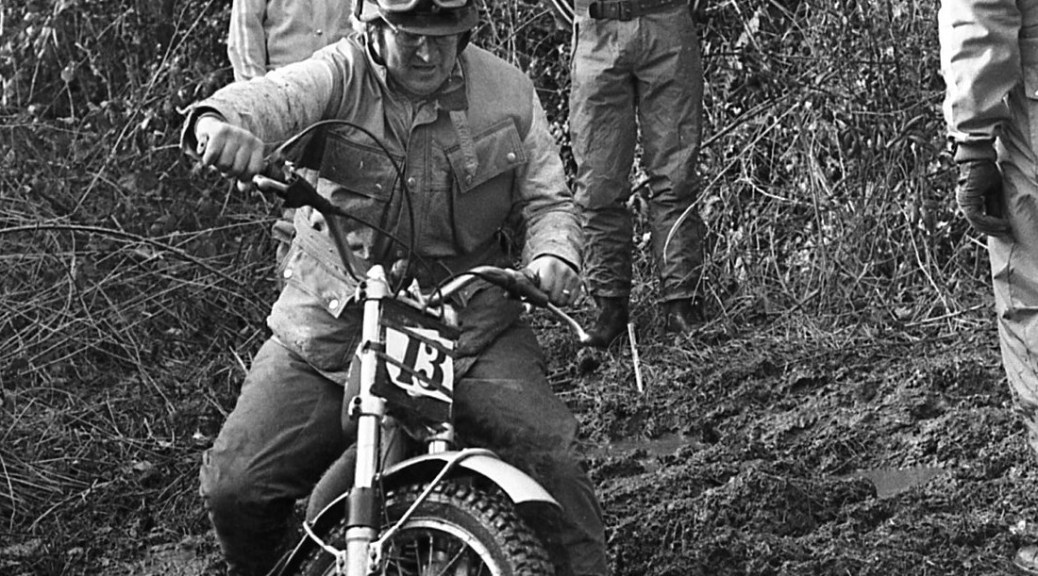
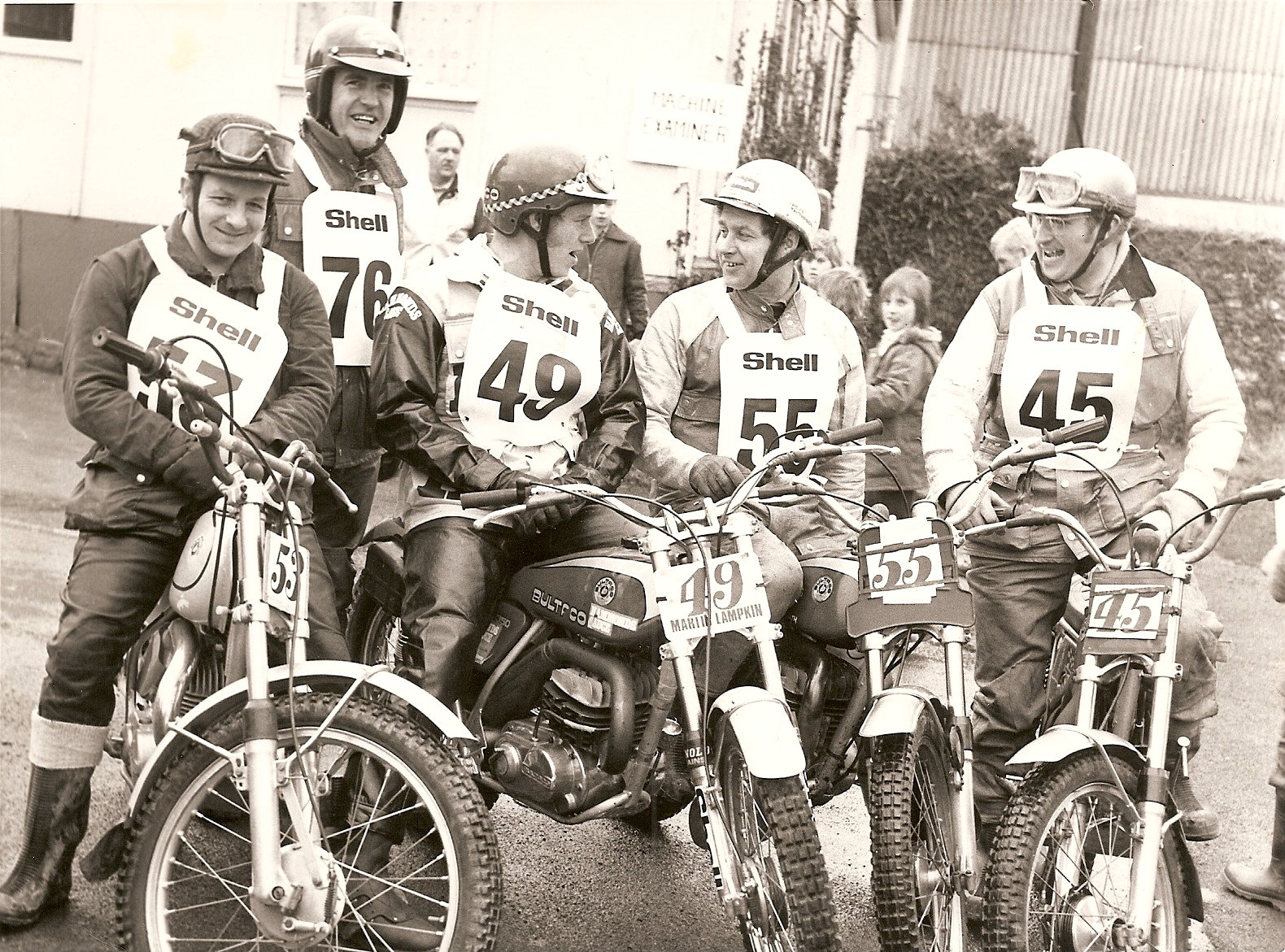
Continuing the articles of what we might consider the everyday enthusiast whose lives were wrapped in and around trials, so that the sport became an integral part of their and their families lives, as it was for so many of us. Many have passed on since these profiles were written to prepare those sections in the sky, for when we eventually arrive. Ivan Pridham passed on in 2017 but he is remembered with great affection. This interview took place in February 2009.
Words: Mike Naish & Ivan Pridham
Photos: Mike Rapley; Ivan Pridham Archive; Fred Browning; Dave Cole; OffRoad Archive and Ken Haydon. (Main Photo: Mike Rapley)

I want to introduce you to a long standing stalwart of the South West Centre. A man who has had much success in trials both locally and nationally, many before some readers were born. A man who has represented his city in international sport and supported a handicap children’s charitable trust. A man who has carried on in his chosen sport for most of his life with humour, enthusiasm and good nature and who was a popular rider to boot, Ivan Pridham.
Mike Naish: Ivan! That’s a strange name for a Devonshire lad?
Ivan Pridham: “Well not Devonshire although I have lived in Plymouth since I was fifteen. I was born at Latchley near Gunnislake in Cornwall in 1931. My father was a farmer but he couldn’t make it pay during the depression of the 1930s, so he went back to his first trade as a carpenter after the war when Plymouth wanted rebuilding, so we moved and he never went back to farming. As regards to my name, I understand there was an argument of sorts when I was born about what I should be called, and Ivan was picked from a book of names, with my two grandfathers names also bring used. So I am Ivan Alfred James Pridham.”
MN: How did you become interested in motorcycles?
IP: “I had taken up an apprenticeship during the war in Plymouth at a small lift company, which later in life I bought and made into my business, although I still used to drive the tractor on the farm at weekends.”
“I first rode a motorcycle during my National Service in the Royal Engineers when I was in the army in Dortmund, Germany in 1952-54. I started my National Service when I was twenty-one, because I had to finish my apprenticeship first. I had done my engineering training with the army in Elgin, Scotland. It used to take me thirty-six hours to get home from Elgin to see my girlfriend, now my wife Pat, but only twenty-four hours from Germany. I had to do motorcycle despatch rider training on a Matchless. There were a couple of BSA M20s, but nobody wanted them. I had done some push-bike trials as a youngster at local fetes but the army taught me to ride properly. I came out of the army in 1954 and wanted to save some money to get married, so I did not ride in trials until 1956.”
MN: What was your first bike?
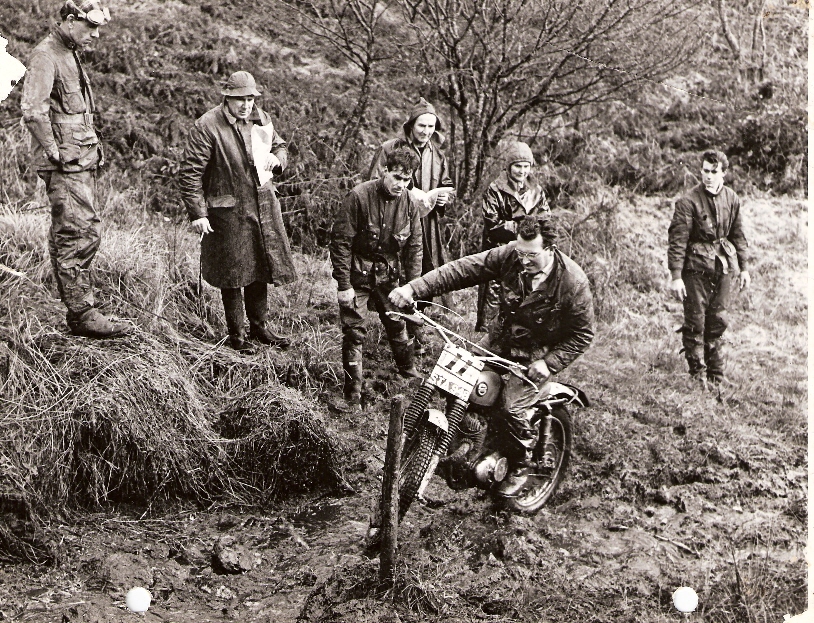
IP: “It was a 500cc rigid frame Matchless, I started on it because I was used to riding them in the Army. It was an ex Basil Male bike from Cornwall. I rode it in a couple of trials and thought ‘This is a lot of hard work’, so I sold it and got a DOT. It had very small spindly telescopic forks which I broke off once, and a 7E Villiers Engine, so I soon modified it.”
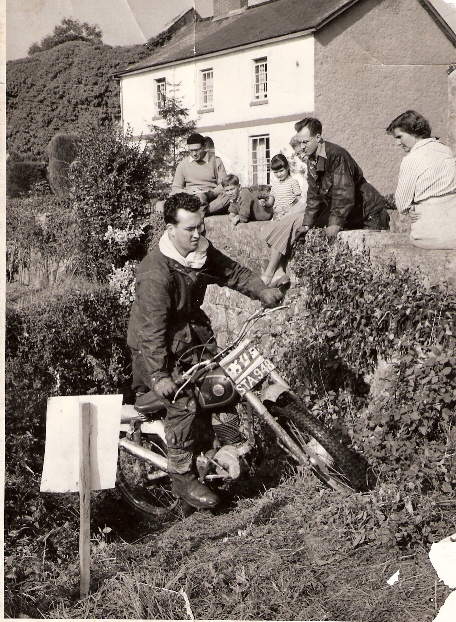
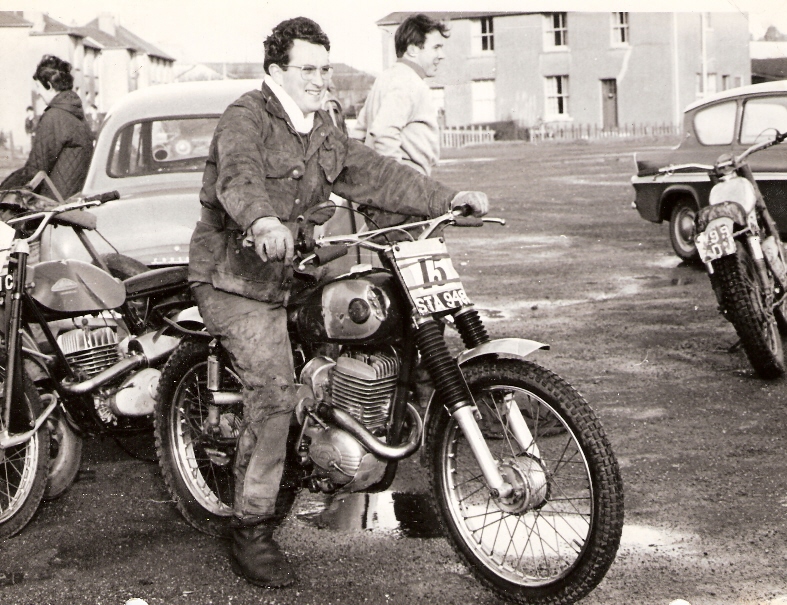
“The next bike was the James, registered STA 948. It had the Villiers 197cc 9E engine when I bought it from Peter Stevens. I eventually modified it and bought a new 250 cc 32A engine, it cost me £29.50, and I changed the forks to Norton Roadholders. I’ve been told that the bike won more awards in the South Western Centre than any other bike. Mind you, it changed colour a few times and some people thought it was another bike. I always repainted it to the latest model colours and some thought it was a works prototype machine I had.”
MN: What was your first event? And how did you progress in Trials?
I started at a Devonport Club trial because they were fairly close to me. I have always been associated with the club and have held positions from Competition Secretary to Chairman and President. In the early days of course I rode to events and then used to ride around to see Pat after the trial. I also used to go to her house after practicing out on the moor. Riding on the moors is something you cannot do nowadays, but then I spent hours and hours practicing up there. After a while I got hold of a sidecar chassis for my road bike, it was a BSA Star twin. I put a couple of runners on it and a big screen and it enabled me to go further afield in the centre. Later on, I had an Austin A40 pick up and then moved on to a Standard Ten pick-up. By this time, I was married and when Wendy, our daughter came along, I had to sell the pick up because when Pat asked me where I had put the baby and the pram, I said in the back of the pick-up with the bike. So then it was a car and trailer.
MN: Do you remember your first award?
IP: “That would have been at a Devonport trial I expect, but I won my novice award to make me up to non-expert at an Otter Vale trial in 1956.”
MN: Did you ride outside the centre much in the early days?
IP: “Not too much, although Bill Martin used to get a team together for the West of England club and we would go up to the Wessex Centre and ride in events called ‘League Trials’, where you entered as a club and rode as a team. They used to have about four a year. The West of England club used to pay the entry fees, Dickie Walford organised that. He used to come along with Bob Frazer and they used to argue and shout at each other it was quite amusing really.”
“I used to go up practicing with Dickie on ‘Diamond Lane’. That used to be a Devonport section before the West of England club used it for their big national trials, which they did for many years. From 1959 to 1964, I represented the South West Centre in the ACU Inter Centre Team Trial. I was team captain in 1963, the year that we won it up in the Yorkshire centre. The centre could not afford a separate team manager so I was made rider-manager that year.”

After the James I had a works supported Triumph Tiger Cub. Well I say works supported but in fact I had all the works Cub spares that were taken over for the ISDT in Italy in the early 60s. I had loads. I managed to build a bike for me and another one for Pete Thompson and still had lots over. I had a couple of Tiger Cubs after that and then the Bultacos started coming in. My first Bultaco was a four-speed 250, not the radial fin early model, I think it must have been the next model along. I had quite a few Bultos after Sammy Miller started supporting Brian Higgins with a Hi-boy frame. Brian kept it for a year, then I had it afterwards. That must have been in 1971.”
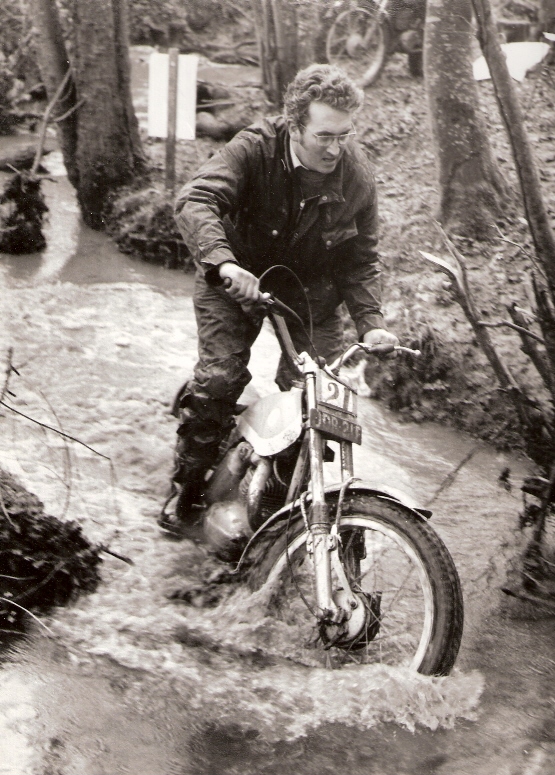
“Actually I had forgotten the Greeves. Pat Wilson who had come down to Plympton from Portsmouth way, rang me and asked me if I would like to ride under his banner. I jumped at the chance. It had a square barrel and all the goodies.”

“After the trial I took it back to the shop clean, but he said he didn’t want it like that, he wanted it all muddy in the shop window with the details of the award I had won. I couldn’t pick it up until the Saturday morning to clean and fettle it. He had a go at me because I forgot to tell him I had won a trial at Broadhembury until three weeks after. Well that was no good to me, so eventually I said he could keep it.”
MN: You won a major award in the SSDT didn’t you?
IP: “That was in 1963. I won the ‘Ben Nevis Trophy’ for the second best newcomer from Dave Rowland. In those days, the works riders were eligible for the newcomer’s award, but they changed that in later years. That was also the year that Devonport won the ‘Mamore Trophy’ for the best team award. The team was Roger Wooldridge, Vic Ashford and me. I had some good rides and was on the day’s leader board when I only lost ten marks on one of the days during the week. Of course in those times we started and finished in Edinburgh, and coming back from Fort William on the last day I noticed many changing engine sprockets after Tyndrum to raise the gearing. They were able to do sixty or seventy mph, whereas I was on thirty to thirty-five mph flat out. Bill Martin blew his new bike up on the way back after Callander that year. Ralph Venables used to ask me every night how many marks I had lost during the day. He used to report that here was a local West Country boy doing good.”
“Ralph used to get on well with Max King, and I worked with Max reporting South West events on BBC South West radio. I would be in Plymouth and Max in the BBC studios in Exeter, and he would interview me. He would try and make me pronounce words in BBC English, and when I kept saying ‘rout’ for route, he would say no Ivan, it is pronounced ‘root’. I remember once at a gathering when he was speaking I shouted out at one point, quoting from his book ‘Trials Riding’, “Page 23 – Flat out in second gear”. I thought it was funny but Max was quite annoyed at the time and didn’t speak to me for a bit. He is still bright as a button at ninety, even though he is a little frail now but we get on just fine.”
MN: Did you ever ride in the Scott Trial and other Nationals?
IP: “I was third in the John Douglas one year and rode other Southern Nationals like the Kickham, Hoad and Beggars Roost. I didn’t ever ride the Scott although I was asked a few times by the organiser. I couldn’t afford to wreck my bike what with a wife and young child to support, because it is a bike wrecking trial. I used to do all my own repairs with the help of others like Pete Thompson who would do a bit of welding at the college he worked at, and Bill the Blacksmith at Yealpton used to turn me up footrests when I wanted them. I remember once in the West of England National the old James was rattling so much I knew there was something wrong. Well the route went near Newton Abbot, so I peeled off and went into Freddy Hawkins shop and asked them if they had a new barrel and piston. They did, so I had it and said I would pay them later. I took the bike around to the workshop took off the head, barrel and piston and fitted the new ones and carried on in the trial. It took me about twenty minutes.”

MN: Did you prefer Rocks or mud in a trial?
IP: “We were more used to rocks in this centre and consequently our gearing tended to be lower whereas riders from muddy centres had higher geared bikes to ride muddy sections. Also in the South Western Centre we were not used to sandy type sections like they had around Bognor. Sand was a different technique and you had to keep going to keep the front wheel light. If you shut off the wheel just dug in, Kingsley Mount was famous for its sandy sections. I suppose I preferred rocks because most of my practising was on that type of going.”
MN: Did you ever get seriously injured at all?
IP: “Not seriously. In the Isle of Man two day trial in 1962 in the special test they sent you off at minute intervals over quite a long route. I rounded a bend and came across Mick Andrews who had tangled with another bloke and both were on the floor. I came off and hurt my wrist, as it turned out, it was broken, but I carried on to the end and finished the trial. Next week I was in a lot of pain so I called in for an x-ray. I couldn’t tell them I had done it the week before on a bike, so I said I just fell on it!”
MN: So what progression of Bikes did you have after the Bultaco era?
IP: “In the early 1980’s I swopped the Bultaco for a Fantic down at Albion Motors at Exmouth. I had a couple of them. After that I had a Pinkie Yamaha for a few seasons. It was a nice bike and my son in law still has it. Then I think I went to pre-65.”
MN: When did you take up Pre-65 Trials?
IP: “It must have been about 1986 or ’87. Brian and Pat Trott kept on to me so I bought a Tiger Cub and we used to go away and ride some weekends. We went to your trials Mike when you ran the Wessex versus the South West riders up in the Mendips at Lambs Lair and of course the Bluebeards and the Greybeards up Stedham. I won the Bluebeards a few times but the Greybeards only once. In 1979 the year that I won them both in the same weekend I lost two more marks than Sammy Miller, but he was peanalized three marks because he was younger than me. I won the Trial but Sam would never accept that I had beaten him. We also won the team award that year with the ‘Devonshire Dumplings’. That was the team of Keith Lee, John Born, Brian Trott and myself.”

“We used to go up on a Friday night, stay in a hotel and ride in the Trials and have a knees-up in the evenings. Pat my wife has always supported me at trials just as Pat Trott supported Brian. We always called the two Pats ‘The terrible twins’ when they were away together. When my back was playing up I had a break for a season or two and then Len Mudge said did I fancy having a go again so I bought a 150 Gas Gas and then I had a 200 Beta. I still have that one.”

MN: Did you win any other major events?
IP: “Well I won the Television ‘It’s a Knockout’ competition in Plymouth, and then we represented Plymouth at a Euro event in Belgium at Spa where the race track is, and we won the event over there for Plymouth.”
MN: Of all the bikes you have had is there any one that you might consider as a favourite?
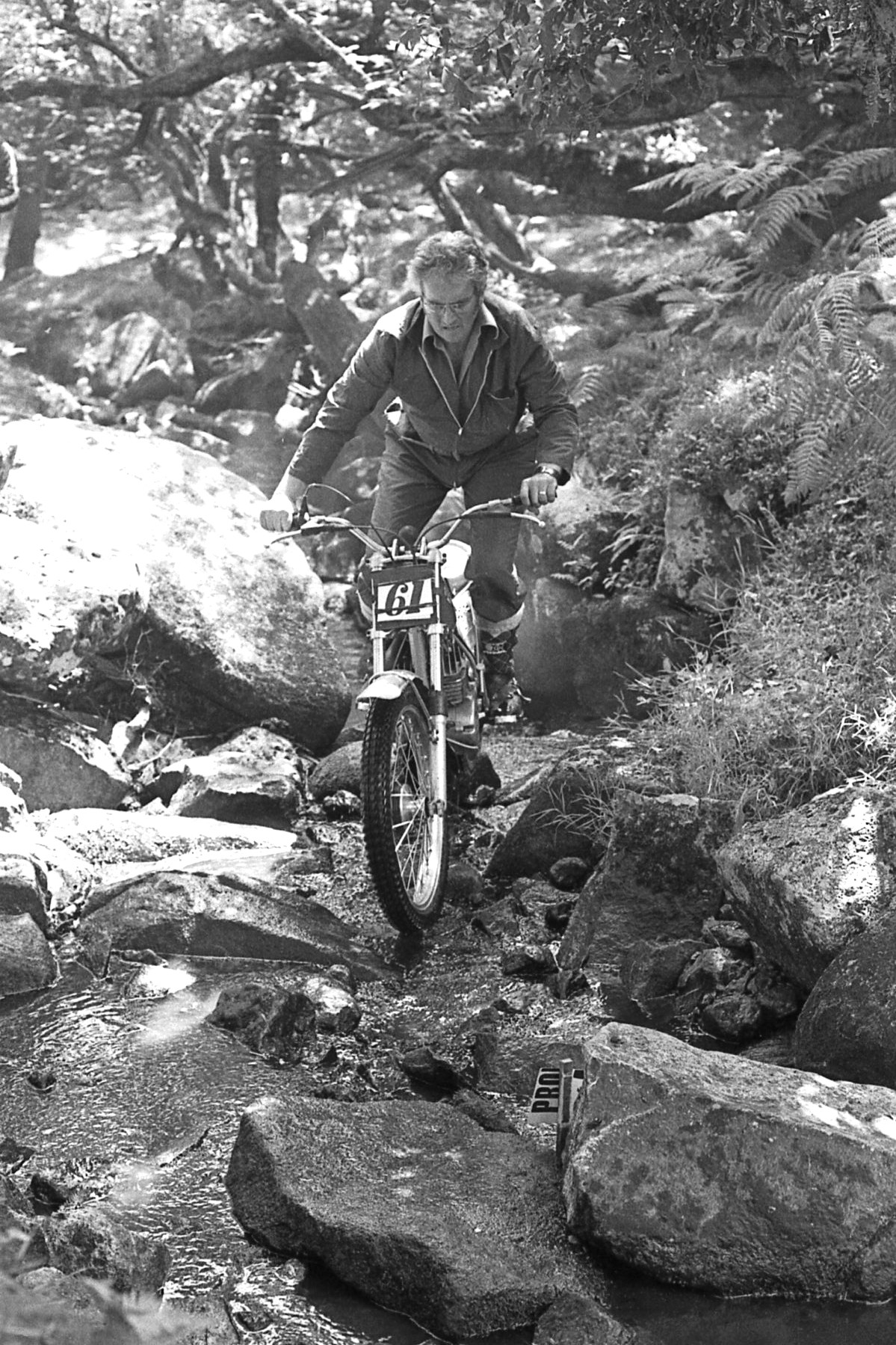
IP: “I liked them all at the time but I suppose the James 250 I built was equal and better than most at the time. I always liked the 325 Bultaco as well.”
MN: Any favourite clubs and venues?
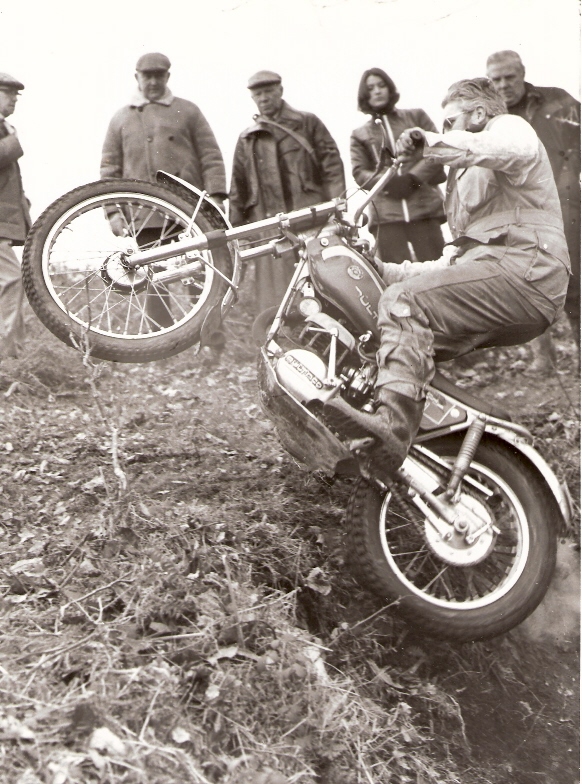
IP: “Devonport trials I liked and Mortonhampsted. I suppose I have won most Morton trials at sometime. We used to go up and support them when they were going through a bad patch. Ted Boult and I gave them a hand to run their trials. We were very friendly with Rowden and Molly Windeat who along with Fred Atkinson and Walter Dodd were stalwarts of the club in the 60s.”
MN: There was some rivalry I understand sometimes when you came back from Trials? And other incidents which gave you a bit of a reputation as a joker?
IP: “There was I have to admit. We were always racing with Brian Trott. I remember once we were coming back from a trial at Otter Vale and we stopped off to have a meal in a Hotel near Honiton with a few other riders. We unhitched the trailer from a car with two lads from Exeter, and when they came out after the meal they didn’t notice, and got all the way back to Exeter before they realized the trailer and bike was not there.”

“There was that time when Mike Rapley came off his Bulto when the brake linings came adrift from the shoes in the front wheel at a Morton trial. His thumb was dislocated and stuck out at right angles from his hand, he was in agony so I caught hold of it and pulled it up and out and back into the socket. I think he was grateful? Another time it was up at John Lee’s farm near Tiverton; he fell and dislocated his leg. We laid him on the ground and I pulled his leg down and back into the socket. He yelled at me and always said afterwards: ‘Keep that bloke away from me’.”
MN: Were you trained in First Aid then?
IP: “No, it just seemed logical to me. There was this time when a Cornish observer fell into a gully and hurt himself. Two of us tried to carry him to the road to call an ambulance but it was too difficult, so I put him across my back in a Fireman’s lift and carried him through the woods to the road. He kept complaining about the pain he said he was dying. I said to him, ‘well don’t die here it’s too far from the road’. It turned out he had broken a couple of ribs in the fall and when I carried him it punctured his lung. No wonder he was in pain. He still thanks me profusely however if I ever see him, he was very grateful despite my injuries to him.”
MN: So what are you doing now?
IP: “I am looking after Pat who is recovering from a successful hip operation and I am going in shortly to have some work done on my back, I fell down a lift shaft whilst I was working some years ago. On Tuesdays some of the old boys meet up at Jennycliffe for a cup of coffee and a natter. Sometimes there can be as many as twenty of us if they all come. Some come up from Cornwall and some down from North Devon. I still enjoy watching especially the Scottish. I think we have been up watching for some eighteen years.”
‘Ivan Pridham by Mike Naish’ article is the copyright of Mike Naish – February 2009.
More interviews with Mike Naish HERE
Apart from ‘Fair Dealing’ for the purpose of private study, research, criticism or review as permitted under the Copyright, Design and Patents Act, 1988, no part of this article may be copied, reproduced, stored in any form of retrieval system, electronic or otherwise or transmitted in any form or by any means, electronic, electrical, mechanical, optical, chemical, photocopying, recording or otherwise without the prior written permission of the author as stated above. This article is not being published for any monetary reward or monetisation, be that online or in print.
Discover more from TRIALS GURU - DEDICATED TO TRIAL
Subscribe to get the latest posts sent to your email.
 TRIALS GURU - DEDICATED TO TRIAL