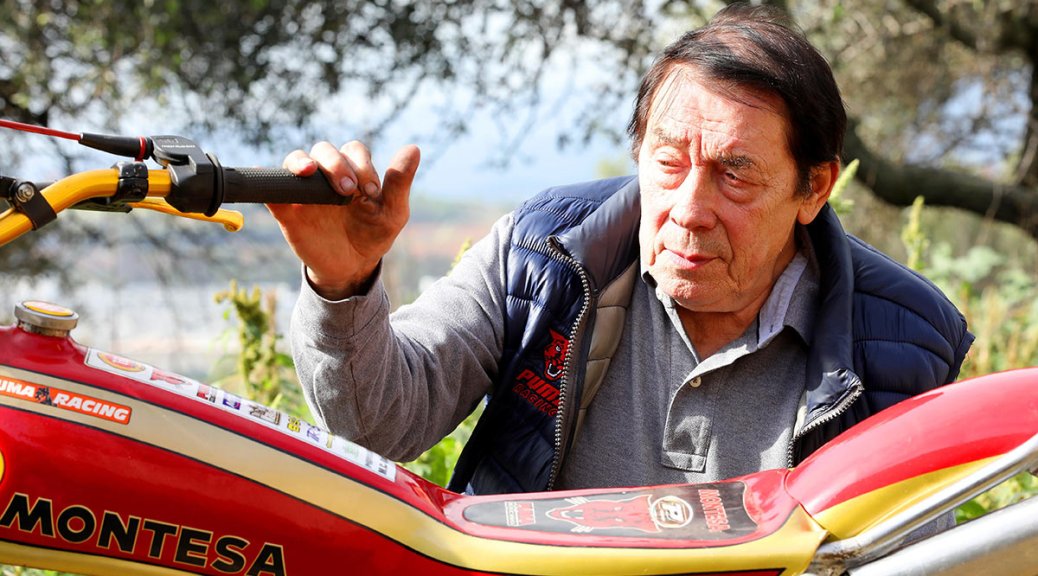
Trials Guru has worked hand in hand with the Spanish trials website ‘Todotrial’ for ten years. We have permission from Horacio San Martin the owner of Todotrial to bring you this article on one of Spain’s most famous trials machine restorer, preparer and modifier, Jose Luis Rodriguez Valcarcel, or as he is known in the trials world as – EL PUMA of PUMA RACING!
Words: Todotrial & Jose Luis Rodriguez Valcarcel.
Photos: Todotrial; Juan Luis Gaillard & Puma Racing.
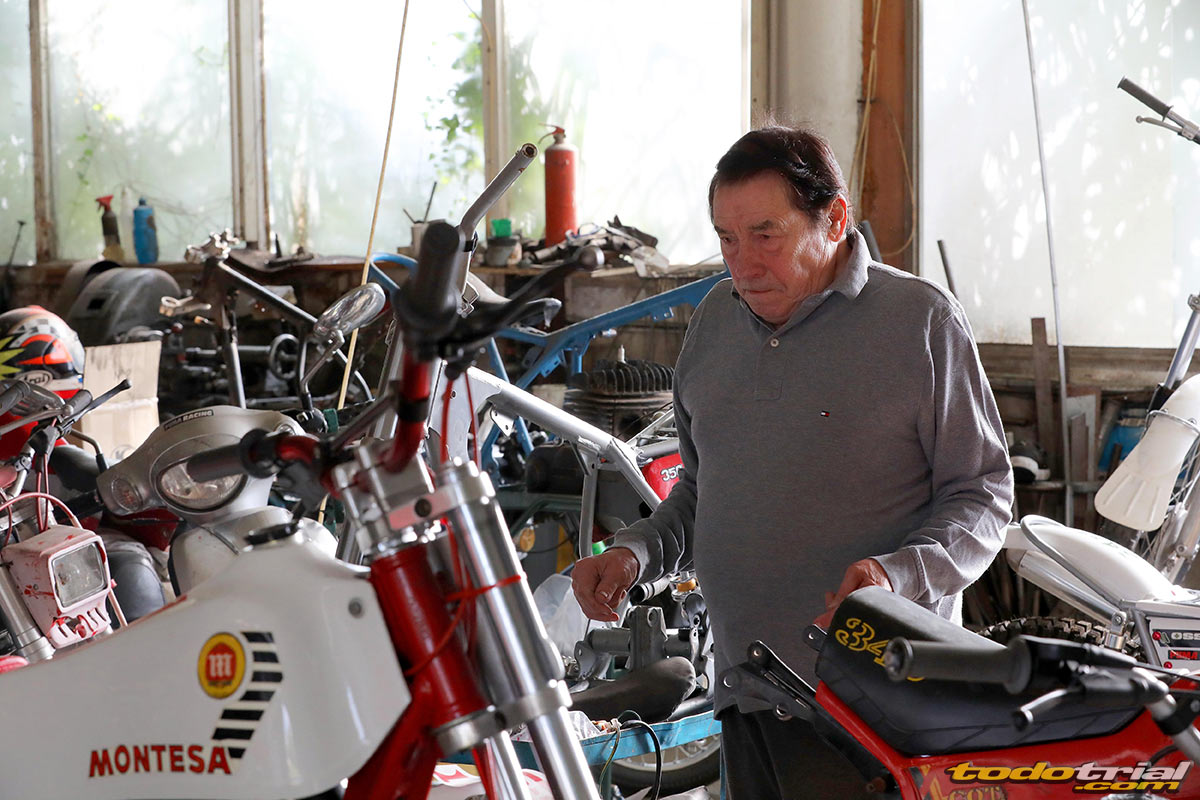
On this occasion we interview someone with a long history in the world of trials, José Luís Rodríguez ‘El Puma’, dominator of the Spanish Cup and the Catalan Cup of Classic Trials in its beginnings and founder of ‘Puma Racing’, specialists in preparations and restorations of classic trial motorcycles.
“Racing was my best testbed for my creations, as well as a great showcase for my work” – El Puma
Unlike the vast majority of mechanics in other workshops or shops, José Luis Rodríguez also competed, and therefore knew first-hand what the problems were with the motorcycles he worked on.
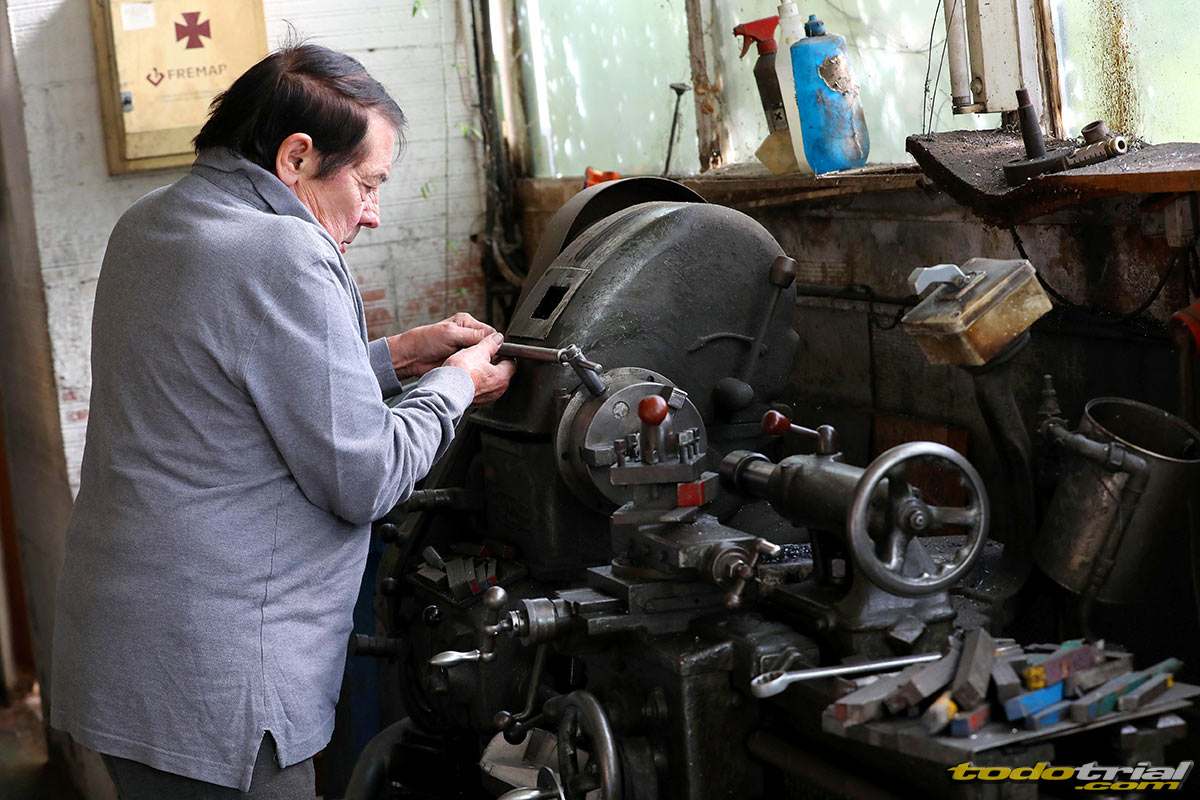
We went to the Barcelona town of Llerona to visit Puma Racing, the workshop where José Luis Rodríguez repairs, restores and tunes up all kinds of classic trial bikes. Although, in all fairness, it must be said that there is nothing that ‘El Puma’, as he is affectionately known, cannot bring back to life.
This is one of those long and drawn-out conversations that we really wanted to share with all of you. And not only because of the undeniable charisma of its protagonist, but because we are before one of the great dream-makers of the dynamic balance sport in our country. From his beginnings with his uncle in A Coruña to his current workshop at Puma Racing, through his years as head mechanic in such emblematic and iconic places as ‘Motos Isern’ and ‘KM-2’.
A man who, for many, continues to change the history of our sport with his personal designs and revolutionary technological solutions.
Todotrial – You are from Sarria, Lugo. Was that where you discovered trial as a sport?
El Puma: “Yes, I am from there. But when I was 12, in 1960, my father sent me to La Coruña. And there I started working in my uncle’s workshop as a mechanic. Vespas, Lambrettas, BMWs, Derbis too. We touched all kinds of brands and motorcycles. But no mountain bikes. In fact, they didn’t exist as such. In fact, I didn’t discover them until I arrived in Catalonia; until I started working at Motos Isern. And well, at that time there weren’t Montesa Cota or Bultaco Sherpa either.
Todotrial – Come on, it would take you a while to get on a trial bike?
EP: “When I lived in Galicia I played football. I was a goalkeeper, and a good one at that! (Laughs). I played for Sporting Coruñés SD and was even an international player. Motorcycles? It never crossed my mind to get on one back then.”
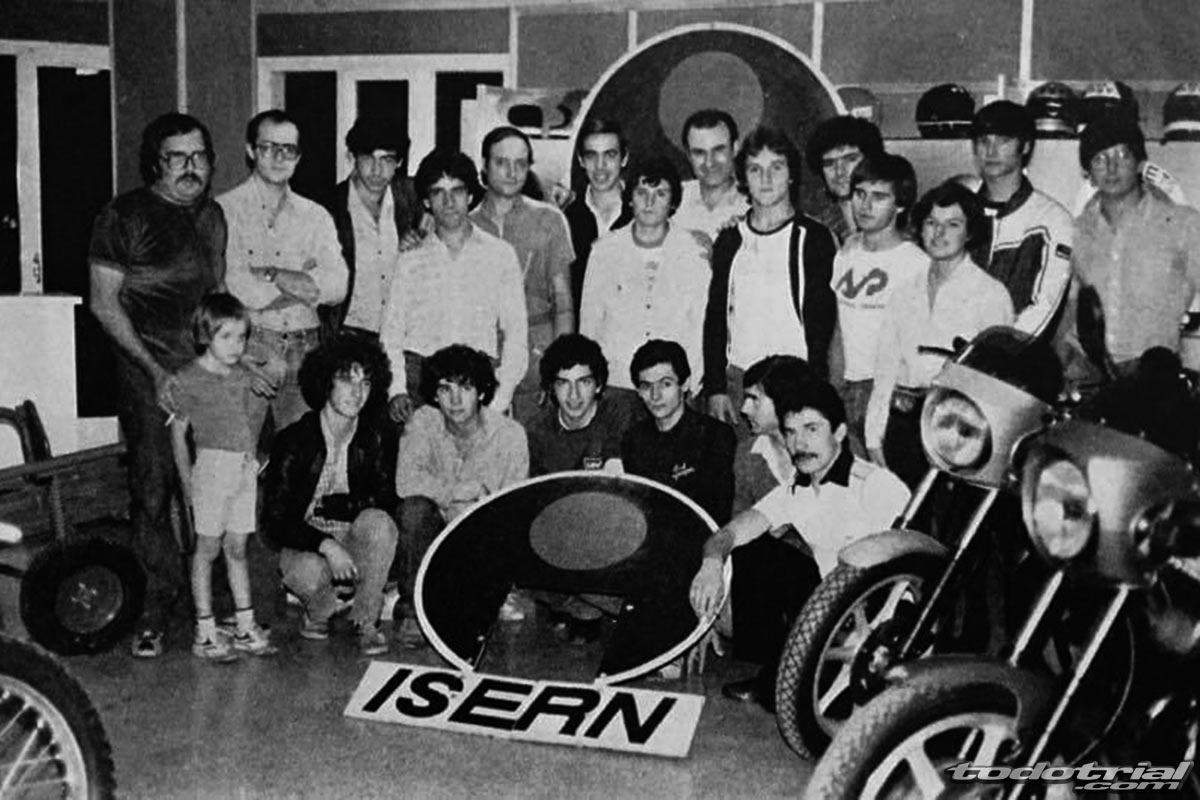
Todotrial – You arrived in Catalonia when you were 17 and, as you recall, you soon started working as a mechanic at the iconic Motos Isern shop in Mollet del Vallès (Barcelona). How did you end up working for Josep Isern and his wife Montse Abril?
EP: “My father’s brothers lived in Barcelona, on Passeig de Maragall. And taking advantage of the fact that my father had to undergo an operation, my brothers, who had also been here for some years, helped my father and mother to come here. The operation was a complete success and they stayed in Catalonia. My father was a construction worker and began to carry out works and constructions. After a year here he settled permanently in Mollet, a town near Barcelona, and told me to come down to Catalonia. And so I did. Also, a cousin of mine had a Montesa Impala that he took to Motos Isern to repair or check every so often and he had a very good relationship with Josep and Montse. He told them about me and one day he took me to his shop and workshop. And that very day they wanted me to start working there.”
Todotrial – Oh really?
EP: “Yes, yes. But I told them that the way I was dressed I couldn’t start work, that maybe I had to go home to change. (Laughs) In the end, no that day, but the next day I did.”
Todotrial – Were you an all-terrain mechanic or did you specialize from the very beginning in fixing and preparing only trial bikes?
EP: “I will only tell you that I already knew more than the other mechanics who were working there. They were more salesmen than mechanics. (He smiles). I came from Galicia already well-seasoned, and with a very good knowledge and basics of mechanics. Just think that, as they say, I dismantled and assembled Vespas and Lambretas almost with my eyes closed. They had no secrets for me. I remember starting out with Impalas, where the crankshaft bearings broke easily. And in four days I became the lord and master of the workshop. (Laughs).”
Todotrial – Did you start riding a motorcycle around that time?
EP: “Yes, that’s right. Josep wanted me to compete in motocross, no matter what. As his brother-in-law is Pere Pi. For this, they brought me a butane-coloured Montesa Cappra from the factory. And the truth is that I took part in quite a few races with it. But when I was preparing for the following season, on a specialised circuit in Santiga, in Santa Perpètua de Mogoda, and with several of the official Montesa riders of the time, such as Francesc Lancho or Manolo Olivencia, another boy who was training there took my foot out with the footrest when he collided head-on. They used to be fixed, they didn’t fold back like they do now. They took me to the Mollet Hospital and from there to Barcelona, to Vall d’Hebron, which at that time was called Francisco Franco. The cut was so deep that they told my father that if they left me with my foot intact I wouldn’t walk properly, they would rather amputate part of it.”
Todotrial – Did they want to cut off a piece of your foot?
EP: “My father told the doctor to do what he thought was best for my health and future. And that’s what he did. It wasn’t like it is now. After the operation and after half a year or so and I was back working at Motos Isern, Pere Pi himself, the late Joan Bordas, a gardener by profession and the architect of the ‘natural’ areas of the first editions of the Solo Moto Indoor Trial in Barcelona, as well as other Montesa factory riders, were already doing trials. I followed them through the mountains on my Impala, but I soon told Josep that I also wanted my Montesa Cota. And without further ado I bought it.”

Todotrial – A Cota 247?
EP: “Correct! Josep sold it to me for 25,000 pesetas at the time. And four days later, as they say, the boss took me to run my first race in Mataró, to the Trial de Les Santes, an event held every year to mark the town’s main festival. The race visited the area around Can Bruguera and the agricultural area of Valldeix, near the Sant Simó stream, and the foothills of the Serra del Corredor, between the Cirera neighbourhood and the neighbouring towns of Argentona and Dosrius. Basically, they were areas of forest, with uneven ground, large roots and rocks. And from then on, every Sunday Josep took me to a different race as if he were my father.”
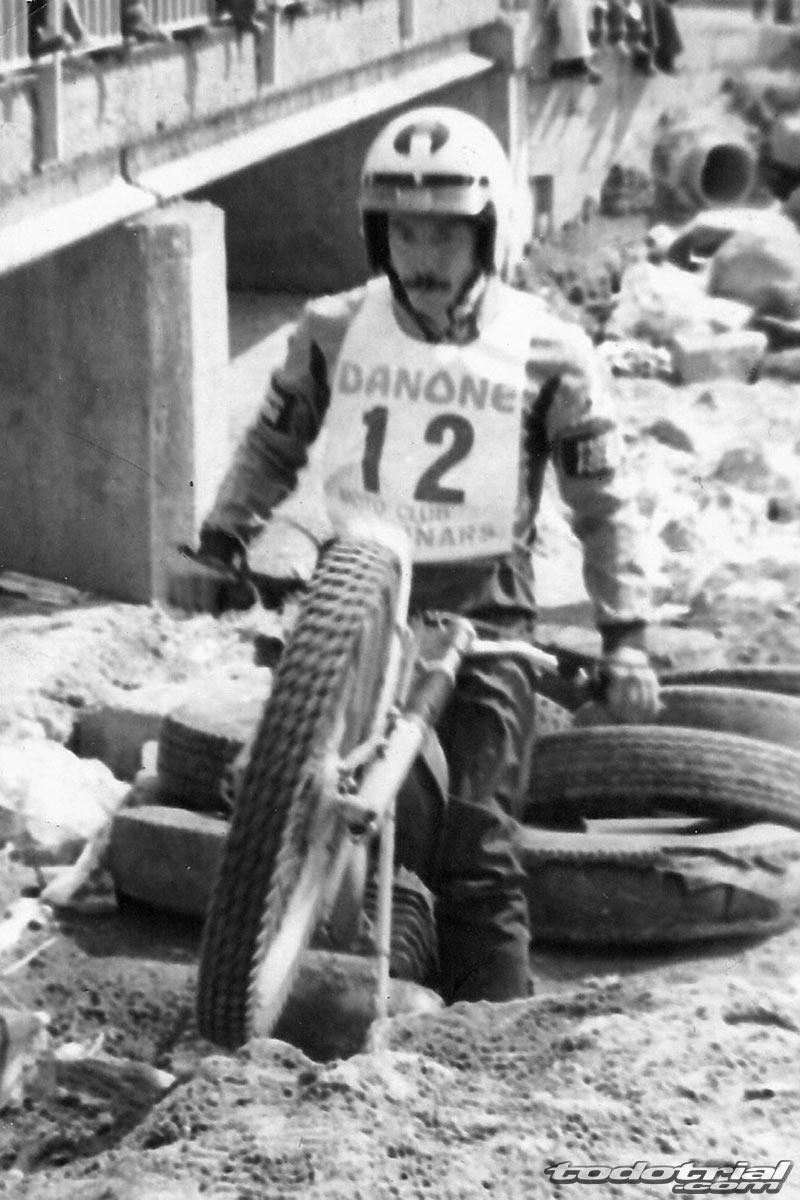
Todotrial – Josep, you and your Cota 247?
EP: “My 247 was the one that still had the big tank and drums, from 69-70, if my memory serves me right. It was the only one I bought, as the next ones were changes. I remember that I paid my monthly installment religiously. Well, I deducted it from my salary. (He smiles). A year or so later I got the 247 with small drums. With it and its various evolutions MK1, MK2, MK3, it was manufactured between 1968 and 1981, I participated in all kinds of trials during those years. I even took part in the Sant Llorenç Trial when it was scoring points for the European Championship in the early 70s, which later became the World Championship. Organised by the Moto Club Terrassa between 1967 and 1994, it was held every year in the area around what is now the Sant Llorenç de Munt Natural Park, between the Barcelona regions of Vallès Occidental, Moianès and Bages.”
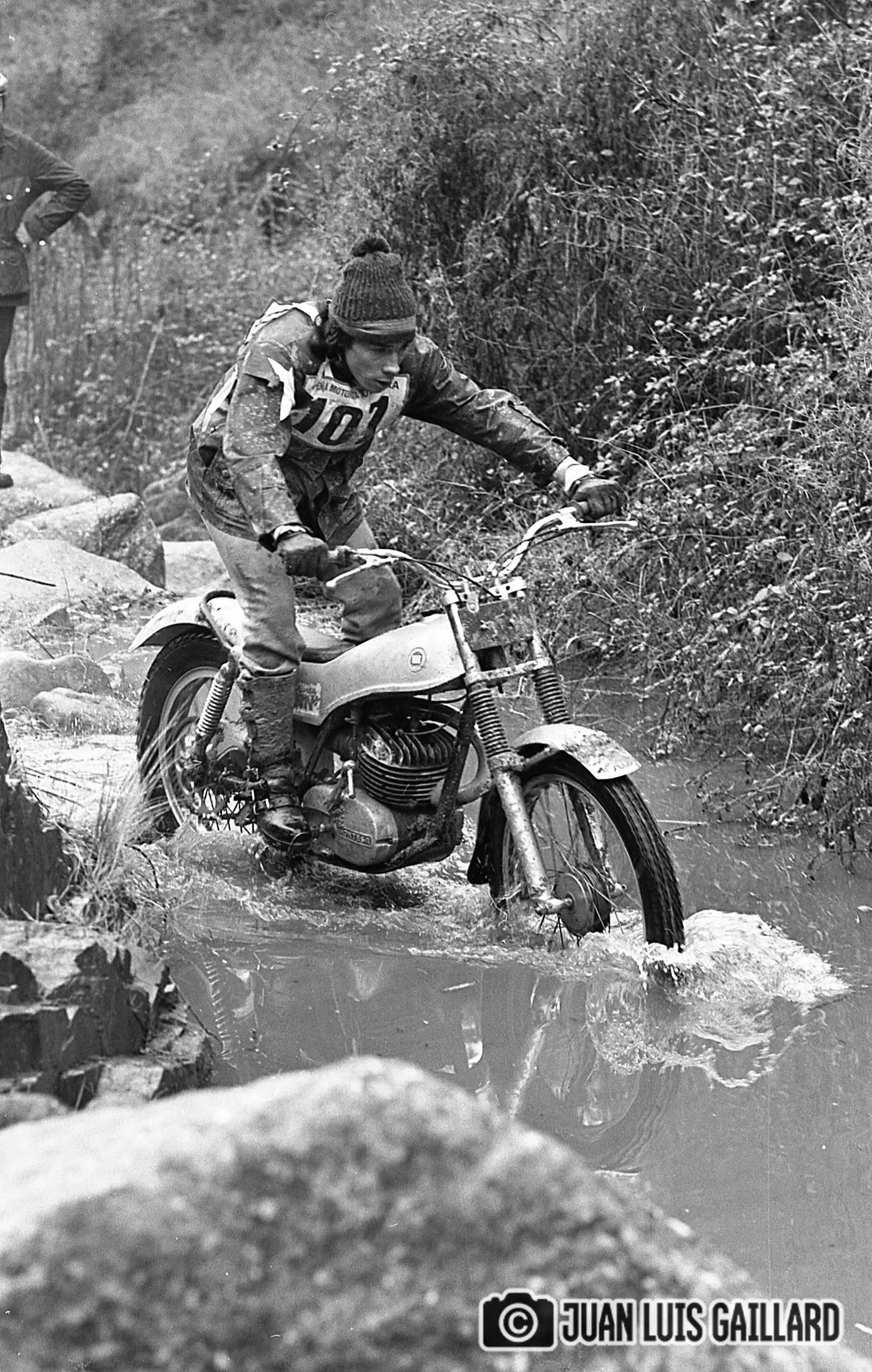
Todotrial – Did you participate in the Sant Llorenç Trial for many years?
EP: “Well, five or six more or less. But I went to many other places. I moved all over Catalonia. (He smiles.)”
Todotrial – We imagine you prepared it yourself. Is that so?
EP “Doubts are offensive!! (Laughs) I changed the air box, I cut the clutch to make it softer. Of course, I left it spotless and clean. When I got to the paddock I was the envy of everyone!! (More laughter). It shone like no other, like a jewel.”
Todotrial – More than Pere Pi’s?
EP: “I had a good relationship with him, but he never said anything to me. Thanks to him, I was able to get my first license to compete, since I was a minor and needed a kind of guardian. Well, Pere Pi and Joan Bordas were the ones who signed on my behalf. Since then and until 2020, I renewed it every year. I had a prosthesis fitted in my knee four years ago and I have not ridden a motorcycle again.”

Todotrial – You worked there from 1967 to 1982. We imagine you learned a lot from your time at Motos Isern?
EP: “Both Josep and Montse treated me like a son. They loved me very much, although it is also true that from time to time Josep and I had our little quarrels. (Smiles). But nothing serious. (Smiles again). I always felt very comfortable at Motos Isern. At that time, I was also in charge of setting up and marking the different races that we organised. Both motocross events and trials. We organised a lot of them.”

Todotrial – But as we were saying, in 1982 Albert Casanovas, current Export Manager/Trial Competition of Sherco, and you became ‘independent’ by creating KM-2, your own motorcycle shop. Casanovas explained to us that it was not a premeditated thing, but that it arose from the fact that Motos Sastre, a Montesa dealer in neighbouring Granollers, wanted you to run a second shop in Mollet and that, given your refusal to work for another company, they finally joined forces with you. Is that correct?
EP: “I was doing very well at Motos Isern and if it were up to them I would never have left, but I wanted to try the option of working on my own. And as they say: ‘the sun rises for everyone’. They couldn’t keep me. However, we remained on very good terms and as friends. In fact, they told me that if our adventure didn’t work out, I would always have a place in their workshop. They would always have the doors open for me.”
Todotrial – Who did they test out first: Albert or you?
EP: “The offer was made to me, and he accompanied me.”
Todotrial – How did you end up buying his share of KM-2 two years after opening it?
EP: “Motos Sastre was our partner for the first five or six years. But after that stage we decided to buy out their share and leave Albert and I alone to run the business.”
Todotrial – You also told us that it was initially going to be called AJS, taking the initial letters of the names of the three partners, Albert, José Luis and Salvador, but that at the last minute you saw a landmark with the inscription KM-2 and you liked it better. Who saw it and suggested it as a name for the store?
EP: “Look. At that time I lived in La Garriga, a town just 15 minutes from Mollet. I didn’t like the idea of naming the shop after our initials because this formula already existed for naming a British motorcycle brand, AJS. But one day, driving along the old road that linked Barcelona with Vic, near Granollers, right where it joins the current C-17, I noticed a milestone that said ‘KM’, I don’t know what number. It really caught my attention. And taking advantage of the next meeting we had, the three of us, I suggested naming the shop that way. Now I don’t remember who proposed the final name. But I can tell you that we approved it because it sounded good in both Spanish and Catalan. And it really went down well with people, to be honest. Anyway, I will also tell you that in the first posters and advertisements we made, the name was in full. That is, Kilometre 2, with two milestones on either side. But it soon became KM-2.”
Todotrial – You focused on off-road and mainly on trial. Was it for convenience or out of unconditional love for our sport?
EP: “The truth is that we covered everything: enduro, motocross, road and, of course, trials too. And all the brands, although it is true that in those early days we were official Suzuki and Kawasaki stores. But we also worked with GasGas, Sherco, Scorpa, Beta, Montesa. We had two workshops. One where I worked and where all the trial bikes that we fixed or prepared came through, and another where we repaired and tuned up the cross and road bikes.”
Todotrial – By the way, green, yellow and white are your identity colours. Is there any particular reason for that?
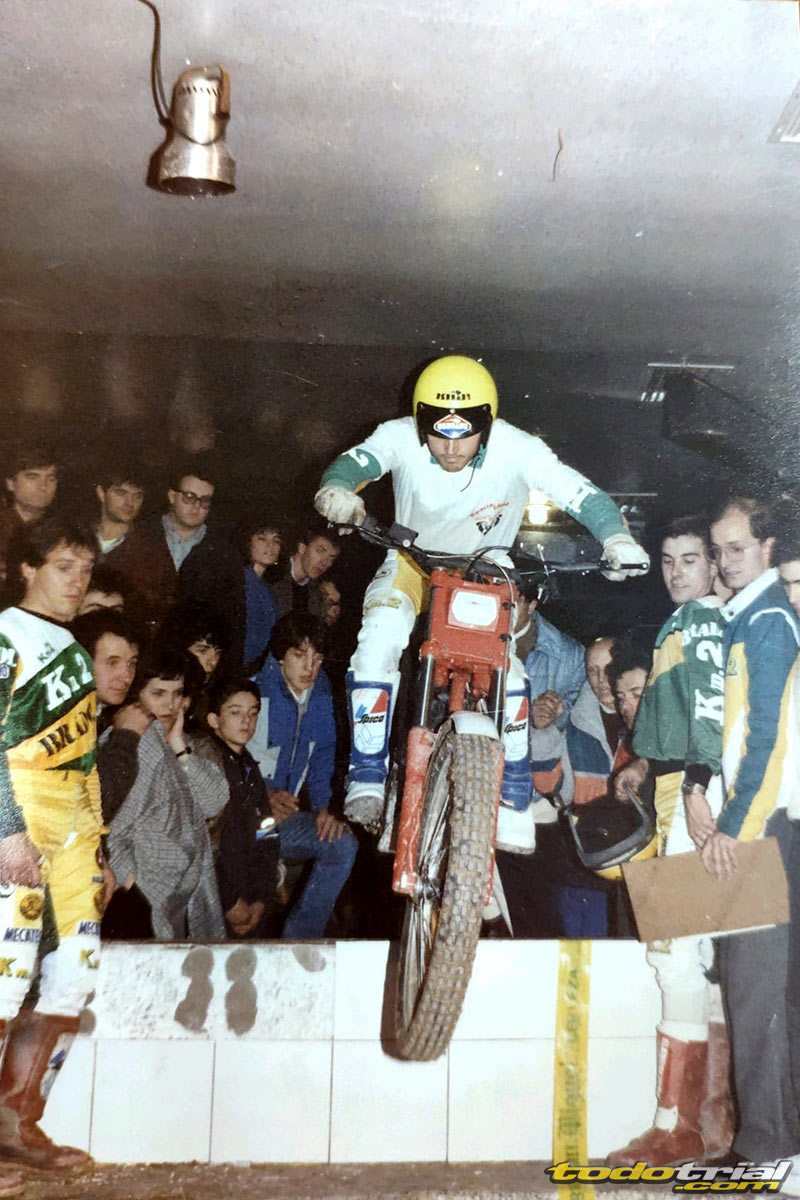
EP: “Green and yellow were the colours we used to paint the shop, two pigments that I personally like a lot. Albert liked them too. And that’s why we decided to make the kits of our sponsored riders with both. You only have to take a look at the magazines of the time to see Marcelino Corchs, Gabino Renales, Salva Garcia, Andreu Codina or Lluís Gallach wearing them. (Smiles). Marc Colomer, who was also with KM-2, also wore them in his early days.”
Todotrial – When you were riding your first Montesas, right?
EP: “Yes. Marc competed in trials on a Derbi Rabassa, and since the factory is next door and he had a very good friend working in the bike department within the factory. I remember that he came to KM-2 telling us wonderful things about Marc and that he wanted to move into motorcycle trials. It didn’t take us long to bet on him. And that’s how we prepared a 125cc Montesa Cota for him. I had made a Cota 172 for Corchs, Renales and Garcia during my final stage at Motos Isern.”
Todotrial – By the way, from that time is the Derbi Trial 183 cc?
EP: “Yes, and I developed it. The bike was made under the direction of Andreu Rabasa, son of Simeó Rabasa, founder of the brand, at a time when Italian brands were beginning to fill the gap left by the defunct Bultaco and Ossa. But I was dealing with Francisco Amaya, a very decisive engineer and workshop manager, who, among other models of the time, created the Derbi Sport Coppa 74 and gave birth to this prototype. And he did it in his spare time, in his spare hours. I had a very good relationship with him. Since I was racing trials and was still a mechanic at Motos Isern, Amaya would call me when they finished a step in its development. For example, they would put an Amal carburettor on it, so I would go over and test it, and give him my opinion and advice. And so on until they delivered it finished and ready to compete to Marcelino Corchs.”
Todotrial – Unfortunately, that collaboration would last just over a year?
EP: “Yes, it didn’t last long, to be honest. But before the trial bikes I had already collaborated with them for many years.”
Todotrial – Would you have liked to work harder on that Derbi Trial to exploit its full potential?
EP: “Yes, yes. Mainly because the factory was very focused on the World Speed Championship with Ángel Nieto and the Spanish Motocross Championship. The Trial was an anecdote for them. Once finished, the Derbi Trial was practically at KM-2 all the time. The only time it returned to the factory was to take the family photo with all the Derbi top brass in front of the factory and on the occasion of the Indoor Trial in Barcelona. I don’t remember if it was in the second or third edition of the event, but they did present it there. Only when Oriol Puig Bultó and César Rojo joined the company did the company show some interest in the specialty, and always on their own initiative.”
Todotrial – Corchs was not involved in that Derbi for long, as he would soon sign for Fantic. Was it his idea?
EP: “Obviously, that Derbi had many flaws from its youth. And on top of that, it had the handicap that the factory didn’t really believe in it or clearly back it. In addition, it was derived from an enduro model and the engine wasn’t easy, to be honest. It wasn’t very reliable either. Some part was always breaking. In short, the bike wasn’t competitive at all. That’s why Marcelino decided to buy a Fantic. The only thing we managed to do was that through Jaume Subirà, winner of the first Indoor Solo Moto and distributor of the Italian brand in our country, the spare part was free, and we, as KM-2, prepared it for him.”
Todotrial – You gave KM-2 gear to all customers who bought a trial bike from you. Whose idea was it? And why that and not a free annual bike check-up?
EP: “Because it was a fantastic marketing strategy, simple and very cheap. You only have to see how most amateur drivers of the time dressed. Almost all of them wore our clothing and colours. Imagine what a similar advertising campaign would cost today. A KM-2 kit did more advertising and much more for business than giving away a free service. The KM-2 shirt and trousers went to the races every Sunday, but the free service did not. (Smiles).”
Todotrial– Many other riders followed Corchs: Andreu Codina, Ronald Garcia, Salvador Garcia, Gabino Renales, Pere Antón Mill, Óscar and Gabriel Giró, Marc Colomer, Jordi Picola, Gabriel Reyes… and in the last period, you also had Lluís Gallach. Of whom do you have the most special memory?
EP: “I have very special memories of Marc. Also of Gabino, Salva and even Ronald. Most of them were friends and lived more or less in the same place. But Marc was very young when he joined us, 15 or 16 years old.”
Todotrial – Did any of them get involved with you when it came to building the bike? In other words: Who of them asked you the most questions about the setup or mechanics of their bike?
EP: “Everyone asked me for things at some point. But Marc, for example, I remember that when we made his first Cota, a 125cc 304, we changed the suspension and made it smaller. More than anything because he hadn’t had his growth spurt yet and that way he was able to adapt and work better with the bike.”
Todotrial – Little by little, the name KM-2 became a regular feature in Catalan and national competitions and even in the World Championship thanks to all these drivers and their sporting successes. This strategy is a bit reminiscent of what Don Paco Bultó used to say: “sales follow the checkered flag”. Do you agree with that?
EP: “Of course!! But I prefer the following slogan as my own: ‘Wherever you look, you will always see KM-2’.
Todotrial– KM-2 has always been characterized by supporting the base and growing with it little by little. Is this strategy still valid today?
EP: “Of course. But nowadays it doesn’t exist. Mainly because of all the problems we encounter when it comes to freely practising our sport in the mountains. Apart from that, nowadays, the main ‘leitmotiv’ of the shops is to sell and that’s it. KM-2, on the other hand, reinvested a large part of its profits in the races because we were lovers and passionate about trial as a sport. But at the time we also supported pilots from other specialties such as a certain Edgar Torronteras, for example.”
Todotrial – KM-2, as well as trial, were going full steam ahead. However, in 1995 a new, very restrictive environmental access law came into force in Catalonia and this had a huge impact on motorcycle sales. Your response was to join forces with Zona Cero and Motos Subirà and create the Open Trial Championship. Whose idea was this imaginative and innovative?
EP: “The truth is that the situation was not good at all and we thought, as the saying goes, that unity is strength. And that is why the three shops converged on the same project. I remember that Montesa lent us three motorcycles, Beta one or two, GasGas too, and after a championship with seven or eight races we held a gala dinner where the motorcycles lent were raffled off, as well as many other and very varied spare parts, accessories and gifts. Look how successful it was that in some races we had up to 250 and 300 participants. An outrage! But we were the only ones who were committed to Trial. Nobody organized anything. The championship started very strongly, but little by little the wear and tear made us gradually abandon the project until in the end only Zona Cero remained. It also had an influence that the town councils and administrations did not help us much. In fact, on many occasions they put obstacles in our way right up to the day of the race.”
Todotrial – What made him so special and loved by fans?
EP: “Fans were interested in participating in trials of this type. They had fun with their classic or modern bikes. And so did the organizers. (Laughs)”
Todotrial– By the way, did you also take part in it?
EP: “Whenever I could. And I did it with a classic Cota 247 when 99% of the participants were riding modern motorcycles. I suppose that by setting an example in those areas, my friends were encouraged to take out their classic motorcycles again and that is where the first vintage races and competitions arose here in Catalonia.”
Todotrial – Many fans of that era wonder if the Open Trial will ever return. Do you think it would be possible for it to return?
EP: “Phew! Nothing is impossible! But given the current situation, I see it as very difficult.”
Todotrial – Why do you think it came to an end?
EP: “Like every project in life, it had its end! Albert (Casanovas), Jaume (Subirá), Jose Manuel (Alcaraz), myself and everyone else slowed down. In my case, I could no longer devote so much time to organizing and marking trials, and the others also gave priority to other life projects.”
Todotrial – With the arrival of the new century, KM-2 closed its doors. Why?
EP: “In the end we were four partners and four, as they say, is a crowd. The first to leave was my good friend Albert Casanovas. And I ended up following in his footsteps two years later.”
Todotrial – Certainly, while Casanovas was leaving for GasGas, you created Puma Racing, your own firm specializing in classic motorcycle preparations. Why classic and not modern bikes?
EP: “Because the traditional customer is a better customer. He is usually older and well-positioned in life in terms of income. Modern motorcycles are usually ridden by young boys and girls, many of whom are not yet financially independent and are focused on their studies.”
Todotrial – Copying the KM-2 model, you started promoting Puma Racing by competing yourself on your own bikes, and with great success, by the way. Were racing your best test bench for your creations?
EP: “As I explained at the beginning, I started working with my uncle when I was 12 and here, at Motos Isern, I was in charge of fixing and fine-tuning all the trial bikes. And the same thing happened at KM-2. My strong point? Unlike the vast majority of mechanics in other workshops or shops, I also raced, and so I knew first-hand what the problems were with the bikes I worked with. That’s why, at the beginning, I prepared them to my liking and some clients, perhaps less experienced, told me that the bikes were going too fast.”
Todotrial – Really?
EP: “Yes, yes. But over time I learned and now I listen more to the client and I make it 100% with the instructions and specifications that they give me. If they want it slower, no problem. Softer suspensions, no problem either. With more chestnut, done! I make them for all tastes. (Smiles). And, of course, as you say, racing was my best test bench for my creations, as well as a great showcase for my work.”
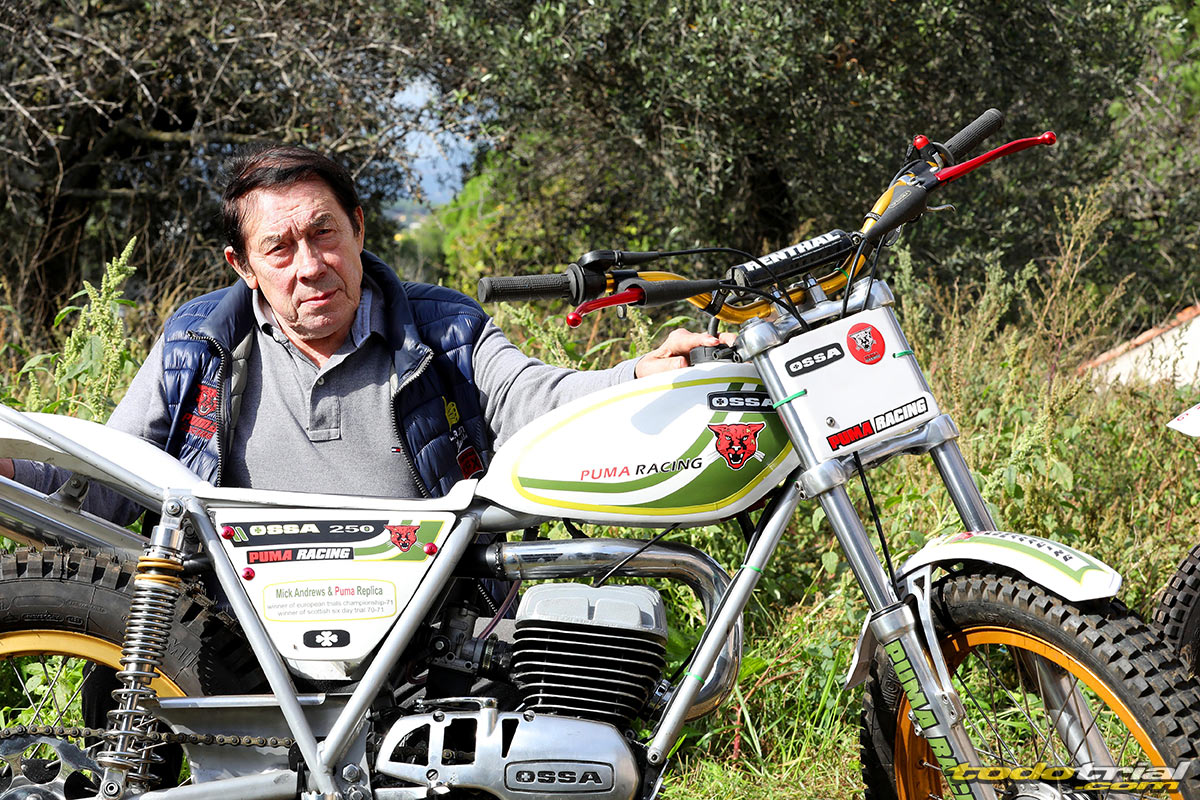
Todotrial – Many of us remember your Montesa Cota 247 Mk 2, the bike with which you dominated the Catalan Classic Trial Cup in its early days in the Expert category, as well as the first two editions of the Spanish Cup. What is your best creation?
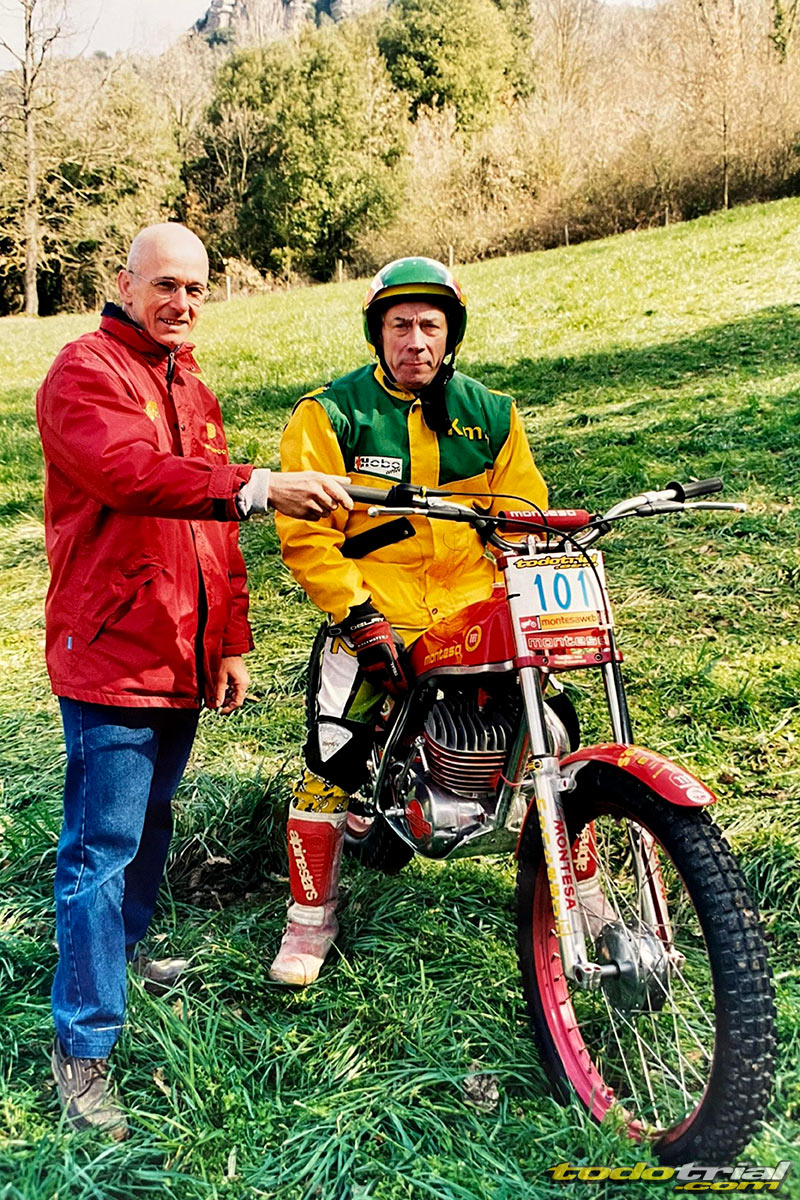
EP: “It was a perfect bike. With a big tank and small drums. This model was the same one I started competing with almost every weekend in 1969. As you will remember, I bought it for 25,000 pesetas and later sold it for 30,000. Years later, already in KM-2, I got it back for the same price I sold it for. Its owner used the money to buy a modern model. And I did it to compete in the races that were held in Catalonia before the regional classics competition existed.”
Todotrial – Recognized by some as “the queen of the classics” or “the ten girl”, what makes her so special?
EP: “Because I always took it to the races in perfect condition. I couldn’t leave it in the sun because it was so shiny and clean that it always looked. But not now, but always. Even when I was racing with Motos Isern, my bike was always perfect.”
Todotrial– As it should be, right?
EP: “Look. An anecdote came to my mind that I want to explain to you. One day, in a classics trial, I arrived at the start and the race director, Ramón Codina, from MC BSC, he didn’t know me yet, said to me: ‘Maybe it would be a good idea for you to take the bike and do the sections on the outside so that the bike doesn’t suffer and neither the mud nor the water gets it dirty’. Maybe he saw that I was a bit old to be riding it. (Laughs). Logically, I didn’t pay attention to him and I competed in the trial as it was, through the doors that were for my category. I finished with one or two points. When I gave him the card, he looked at me and asked if I had paid attention to him. When I told him no, he looked at the bike and me, amazed. (Smiles). And this is one of many anecdotes that I treasure. (Smiles again).”

Todotrial – I’m sure you invested countless hours making it, perfecting small details, trying out new components to make it more competitive and adapt it to your tastes. How much do you think this would be in euros?
EP: “Phew! A fortune! In the past, people used to say that it had a GasGas crankshaft or piston, that the engine was from here or there and, of course, it was modified, and some other nonsense. Well, nothing at all. Original parts, but worked on and perfected by me. To give you an idea. When I make a motorcycle engine, I might spend between 15 and 16 hours working on it. I’m sure there are mechanics who do it in less time. But I can assure you that they will not be anything like the ones I make. Two or three hours won’t work for me. What’s more, I don’t mind working on Saturdays and Sundays. Why? It’s when I can be alone, without visitors, and nobody touches anything, do you understand? (Laughs). Don’t get me wrong, I like people coming to the workshop and visiting me. You talk for a while and such. Sometimes, even hours. About ‘battles’ from the past, above all. But I prefer the solitude and tranquility of the weekend so I can focus 100% on the bikes.”
Todotrial – At Puma Racing do you work with all the classic brands or are you more specialized in some than others?
EP: “We do all the bikes that come through the workshop door. I don’t care what brand it is: an OSSA, a Fantic, a Bultaco, a Montesa, a SWM… It doesn’t matter to me. I do everything. Mechanics has no secrets for me. I have been a mechanic for 60 years now and throughout this time I have handled bikes of all types and brands.”
Todotrial – Which brands or models from before are easier to work with, whether mechanically or with spare parts?
EP: “They are all more or less the same. It’s just that some have one thing and others another. Now, for example, I work a lot with Bultaco after I made one. People think I’m a ‘Montesista’ and ‘anti-Bultaquista’. Nothing could be further from the truth. I’ve always ridden with Montesa, but not out of fanaticism. For me, all trial bikes are the same, and I really enjoy making them. Of course, I prefer classics to modern ones. I don’t enjoy a modern 4T, for example, as much. But I could make one for you just the same. More than anything because I made scooters and road bikes in my younger days at Motos Isern or KM-2.”
Todotrial– What do they ask you more for: restorations or preparations?
EP: “I do both jobs. But, to be honest, it would be easier for me to restore than to prepare. Anyone can make a production bike. Now, very few people are able to prepare a trial bike like we do at Puma Racing, with so much care and attention to detail. Our bikes are beautiful inside and out. You start them up and they purr. I have already told you that I dedicate many hours to my creations. Well, sometimes I don’t even sleep. I rack my brains looking for solutions and ideas so that that job, that bike, looks and runs perfect. And to this day I am still learning things. I don’t make bikes for you to look at in the dining room, I make bikes for you to enjoy riding.”
Todotrial – What has been the most unexpected assignment you have ever been asked to do?
EP: “Look, I’ve done all kinds of commissions. But what really ticks me off, with affection, is when a client comes to me and says: ‘make it the way you like it’. What do you mean, the way I like it? You’re going to take care of it, not me! And that also makes me set the bar even higher. (Laughs).”

Todotrial – Some people see the preparations as the natural evolution of the models of yesteryear. Do you agree with this or are we talking about something else?
EP: “Yes, I agree! What the client wants is to enjoy his classic bike, and for it to be reliable, so that it doesn’t let him down… (Laughs) This is, without a doubt, the aim of the preparations. It’s natural! (Smiles).”
Todotrial – Nowadays, a classic trial bike is considered to be one manufactured between 1965 and 1987. However, air-cooled bikes manufactured between 1985 and 1991 are also allowed in competition in the Post Classic categories. Do you agree with this time limit or, as a mechanic, do you think it should be extended or reduced?
EP: “I prefer not to comment on the matter, if you will allow me.”
Todotrial – By the way, is it possible to participate in classic races or championships with mounts in their authentic “original state” and be competitive?
EP: “Young people, for sure!! But those of us who are already greying… We can’t. We need a trial bike that goes well and brakes even better. A young rider doesn’t need brakes or anything!! (Laughs). They just need to give it gas!”
Todotrial – At the time, there were those who said that the prepared classics ‘adulterated’ the competitions. In other words, they had an advantage. Do you agree with them?
EP: “Everyone has their opinion. But I remember seeing people fall off the first classic races and the clutch starting to leak oil and the bike not starting. As well as getting dirty, it was dangerous because any spark could start a fire. If that happens, you don’t enjoy the race anymore. But if you have a bike with a well-built engine, that runs smoothly, and everything in its place, you’re sure to go back the following Sunday. You can’t forget that it’s still a hobby. You shouldn’t go around getting bitter about things. I think that everyone, within their means, can have a classic bike in good condition and ready to race. I don’t think it’s bad, to be honest. But we don’t all think the same. I admit that I was one of the first to make fine clutches, which everyone does now, or to use DellOrto carburettors. When I was racing in Madrid they criticised me beyond belief for fitting them. Well, now there’s no problem. Everyone equips their bikes with them. For some, more papist than the Pope, we would still have to go with Betor shock absorbers and Pirelli tires with herringbone tread.”
Todotrial – Trials such as the Ventoux or Robregordo show that the passion for classic motorcycles is not a passing fad. Or is it?
EP: “At the moment, they are getting by. There are still a lot of older people! (Laughs). But as I said before, these same people want to do well, not suffer.”
Todotrial– Has classic trials changed much since you started racing them until now?
EP: “Yes, it has changed. But for environmental reasons. Now, for example, we don’t touch the water. And in many places where we used to go, we don’t even go near it now. I remember races in Andorra, Mallorca, Ibiza, for example, in the middle of the village. Nothing happened. There were no problems. Now ask the club in question if they let you organise a race and where. The Environment Department doesn’t give out permits and you have to go 25 times and even then on the day of the race you’re scared that they’ll come and cancel it. Another issue is the licence. To do four or five races a year you pay a lot. Not only the Environment Department, the different federations are also killing off trials.”

Todotrial – Do you like the current level system or would you like a different one?
EP: “At first there was only one colour. But little by little, levels by colour were introduced. And I think that is good, because if your driving level is not very high, if you go home with all fives, you will hardly race another day.”
Todotrial – Recently, young drivers have successfully ventured into competing in the Catalan Cup or the Spanish Cup at the most difficult levels, and some people believe that they have an advantage due to their age and physique. Do you think so too?
EP: “I have never had any problems in that sense. Also, at the time, I was in my 40s and many of my classmates were older than me. But there came a time when I became one of the veterans. My luck is that my level was a bit high and theirs a bit lower. (Smiles)”
Todotrial – Do you think that more people should take part in classic races?
EP: “You know what they say: The more the merrier! (He smiles again).”
Todotrial – However, as far as women are concerned, why do you think there are no female drivers in classics?
EP: “I don’t know. But I can tell you that I have made bikes for girls. Right now, for example, I am preparing a Cota for my daughter, who wants to race trials. It is still in progress, because I have few free hours, but I am looking forward to seeing it finished. Maybe there are not many girls competing in classics because they don’t enjoy it as much, and I am sure that some of those who compete do so because they go with their father, not on their own initiative.”
Todotrial – Toni Bou has 36 world titles between Trial and XTrial. How do you think he would do in a classic?
EP: “Certainly as good or better than he does now with his current Montesa.”
Todotrial – Is there any other rider you would have liked or would like to see riding a classic Puma Racing trial bike?
EP: “Philippe Berlatier, three-time French champion who helped his country win five Trial des Nations titles, three of them consecutively, from 1984 to 1986, or Jordi Tarrés himself, have asked me when I am going to make them a bike. But they are ‘old youngsters’ and ex-riders. There are none of them now, so far. If anyone is interested… you know where I am! (He smiles).”

EL PUMA is the copyright of Todotrial/Horacio San Martin. This article first appeared on Todotrial website.
Trials Guru are indebted to Todotrial for the re-publishing this article in the English language.
Apart from ‘Fair Dealing’ for the purpose of private study, research, criticism or review as permitted under the Copyright, Design and Patents Act, 1988, no part of this article may be copied, reproduced, stored in any form of retrieval system, electronic or otherwise or transmitted in any form or by any means, electronic, electrical, mechanical, optical, chemical, photocopying, recording or otherwise without the prior written permission of the author as stated above. This article is not being published for any monetary reward or monetisation, be that online or in print.
Discover more from TRIALS GURU - DEDICATED TO TRIAL
Subscribe to get the latest posts sent to your email.
 TRIALS GURU - DEDICATED TO TRIAL