

Trials Guru section dedicated to the Lampkin family of Silsden, Yorkshire. Probably the most famous off-road motorcycle sporting family of all time.
Words: As shown on each article
Photos: Jean Caillou; Rainer Heise; David Wood (C.H. Wood Bradford Archive); Barry Robinson; Iain Lawrie; Eric Kitchen; Josh Gibbons; Jason Batsford; Mike Rapley; A.R.C. Lampkin; Rob Edwards Archive; Chris Smith; Fiona Watson; Janet Pawson; Jimmy Young; Colin Bullock/CJB Photographic; Neil Sturgeon; Olivier Barjon.
From the early days of scrambles and trials ace, Arthur John Lampkin who effectively created the Lampkin legend in the 1950s to Doug Lampkin, twelve times World Trials Champion.
“Never in the history of trials and scrambles have three brothers made such a big impact on the sport as Yorkshire’s amazing Lampkin trio” – Peter Howdle, Motor Cycle News, February 21, 1973. [1]
Family friend and former trials competitor, Blackburn ‘Blackie’ Holden, has known the Lampkin family all his life: “The Lampkin family can be summed up in one word – winners. There is something very special about them, from a very early age I remember their tremendous ‘will to win’ it is immense. Whether it be a game of noughts and crosses or a 500 GP, the competitive element with them is incredible. It’s not in a nasty way, they just have to win”.
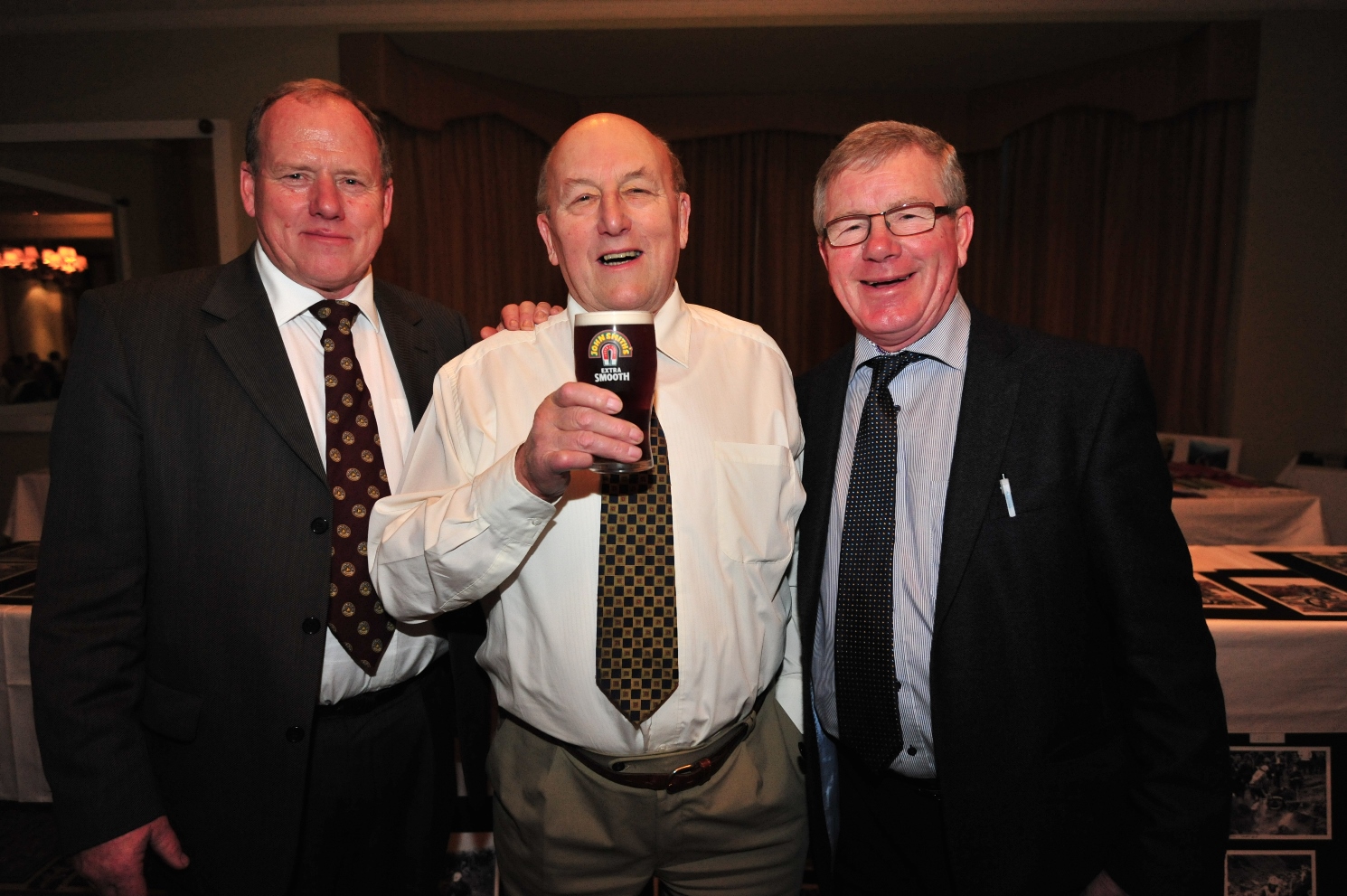
Trials Guru will publish as much information on the Lampkin family as possible, mainly from the sport of trials.
A Lampkin they called ‘Sid’!
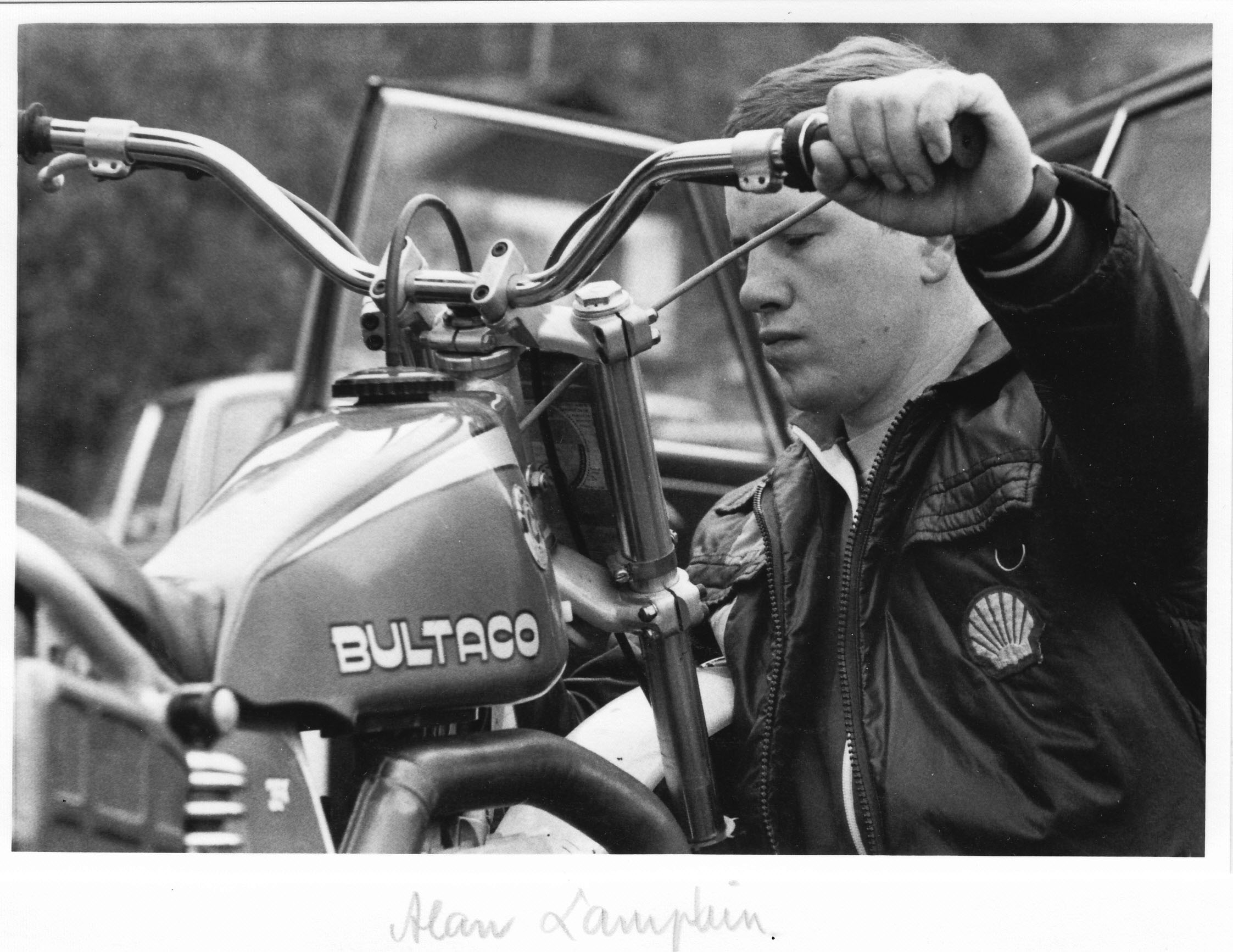
The name Lampkin has for more than sixty years been associated with both trials and scrambles (or motocross if you live in Europe). The three famous brothers being Arthur John, the eldest, then Alan Raymond Charles, the middle one and Harold Martin, the youngest. Alan was to eventually nick-named by his older brother as ‘Sid’ and he was to become universally known as such in the off-road motorcycling world.
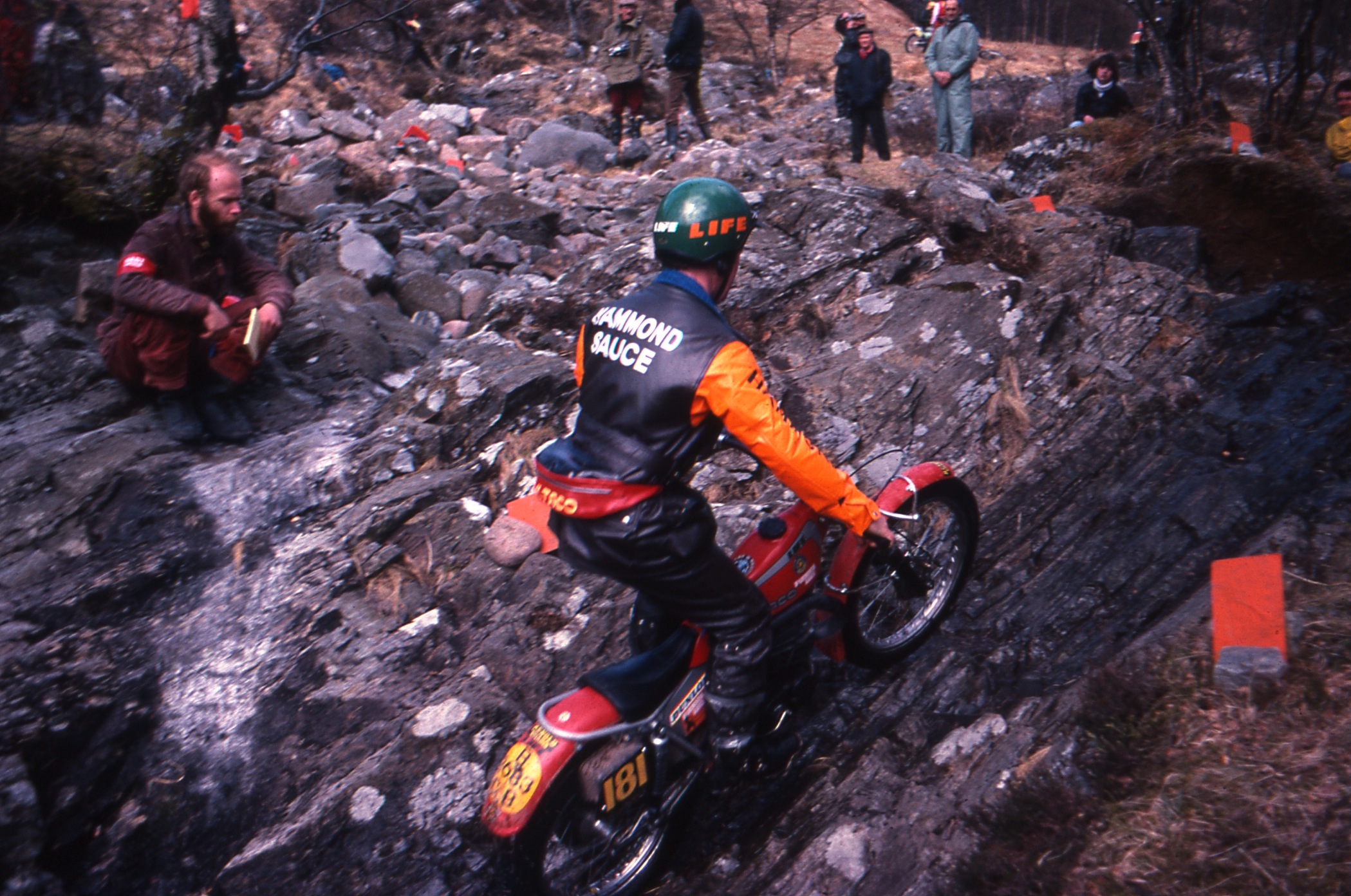
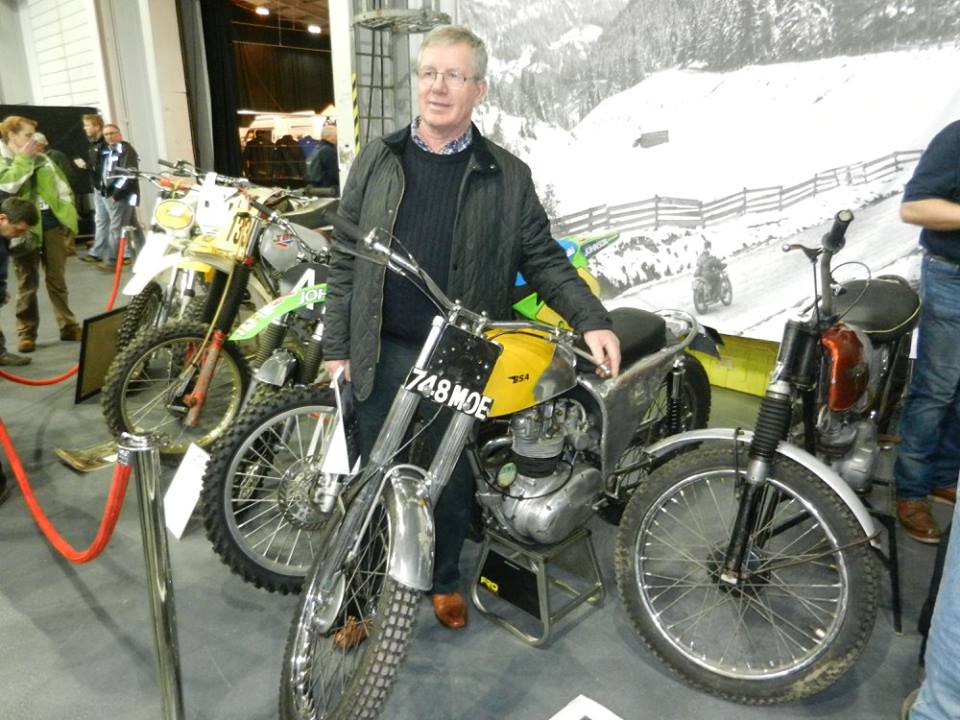
Arthur was a world class scrambles rider who travelled all over Europe when he raced for BSA, usually in the company of good friend, two times World Motocross Champion, Jeff Smith. Arthur also won both the Scottish Six Days in 1963 and the Scott Trials in 1960, 61 and 65 for BSA. Whereas brother Alan won the SSDT in 1966 and the Scott in the very same year on his factory BSA C15T, registered 748MOE. Then he took part in the International Six Days, achieving Gold medal standard on more than one occasion. In 1974 Alan or Sid if you prefer won the first ever Euro-American ‘World’ trials round. Sid was a very approachable and popular individual, he was a factory supported rider through BSA, Cotton, Suzuki and of course Bultaco.

Sid is still a true enthusiast of the sport, he attends the SSDT and Scott Trials annually, along with other classic events.
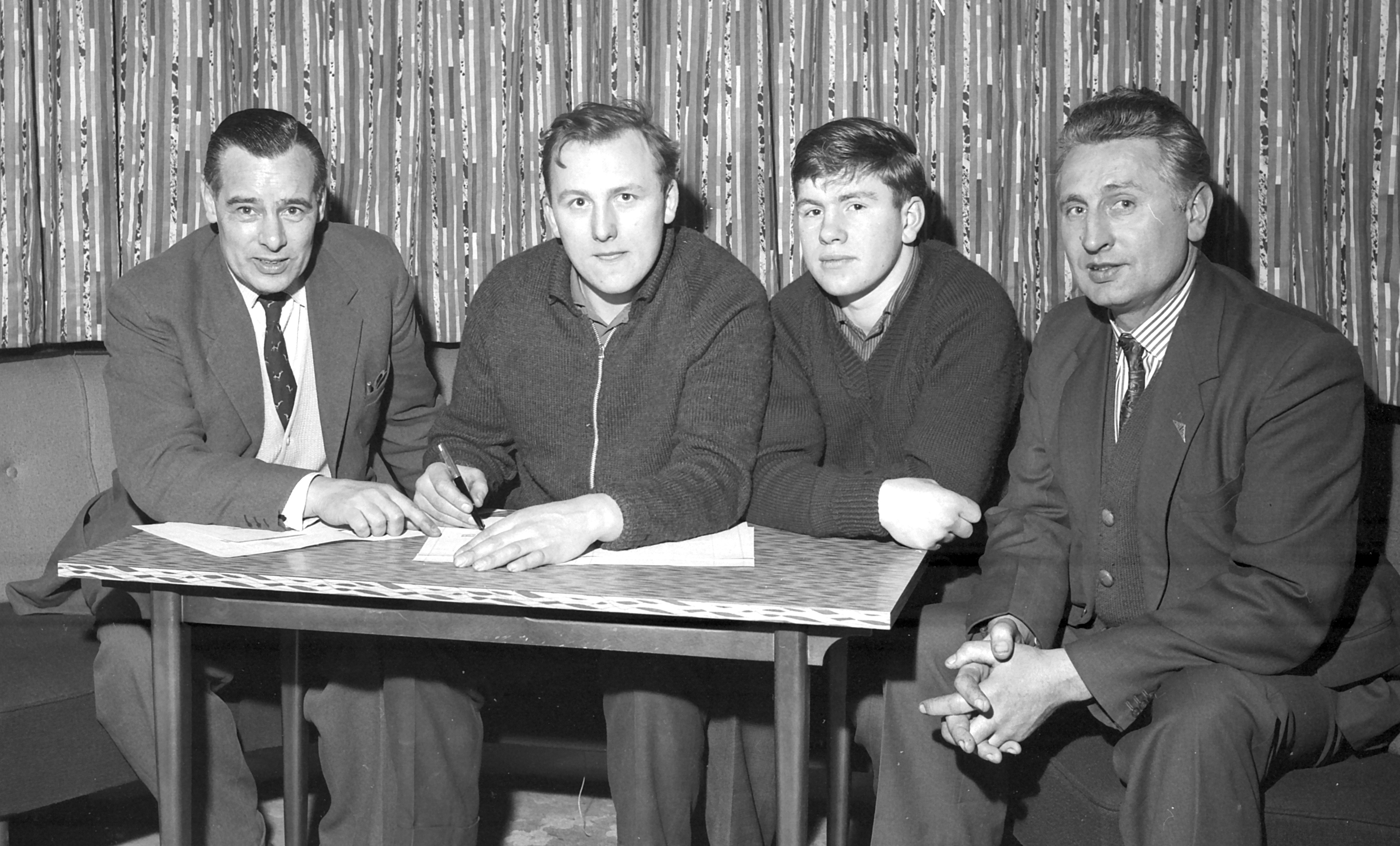
Sid was born on April 7th 1944 in Silsden, Yorkshire, Arthur was born six years earlier in 1938, but in London, not Yorkshire. Martin Lampkin was six years younger born at Christmas in 1950. There were some siblings who interspersed the three brothers Lampkin. The family had moved from Woolwich Arsenal in London in 1940 to escape the London aerial bombings during the Second World War. Arthur Alan, the father of the Lampkin clan was a foreman machine turner, He opened his precision engineering business at Silsden shortly after his arrived in Yorkshire. He used an old side-valve BSA as his transport, therefore his sons were around motorcycles from an early age.

Arthur had begun riding trials on a private Royal Enfield, he had struck up a friendship with Tom Ellis, the Ripon motorcycle dealer who had a BSA agency. So, aged seventeen, Arthur became the youngest ever member of the BSA factory team.
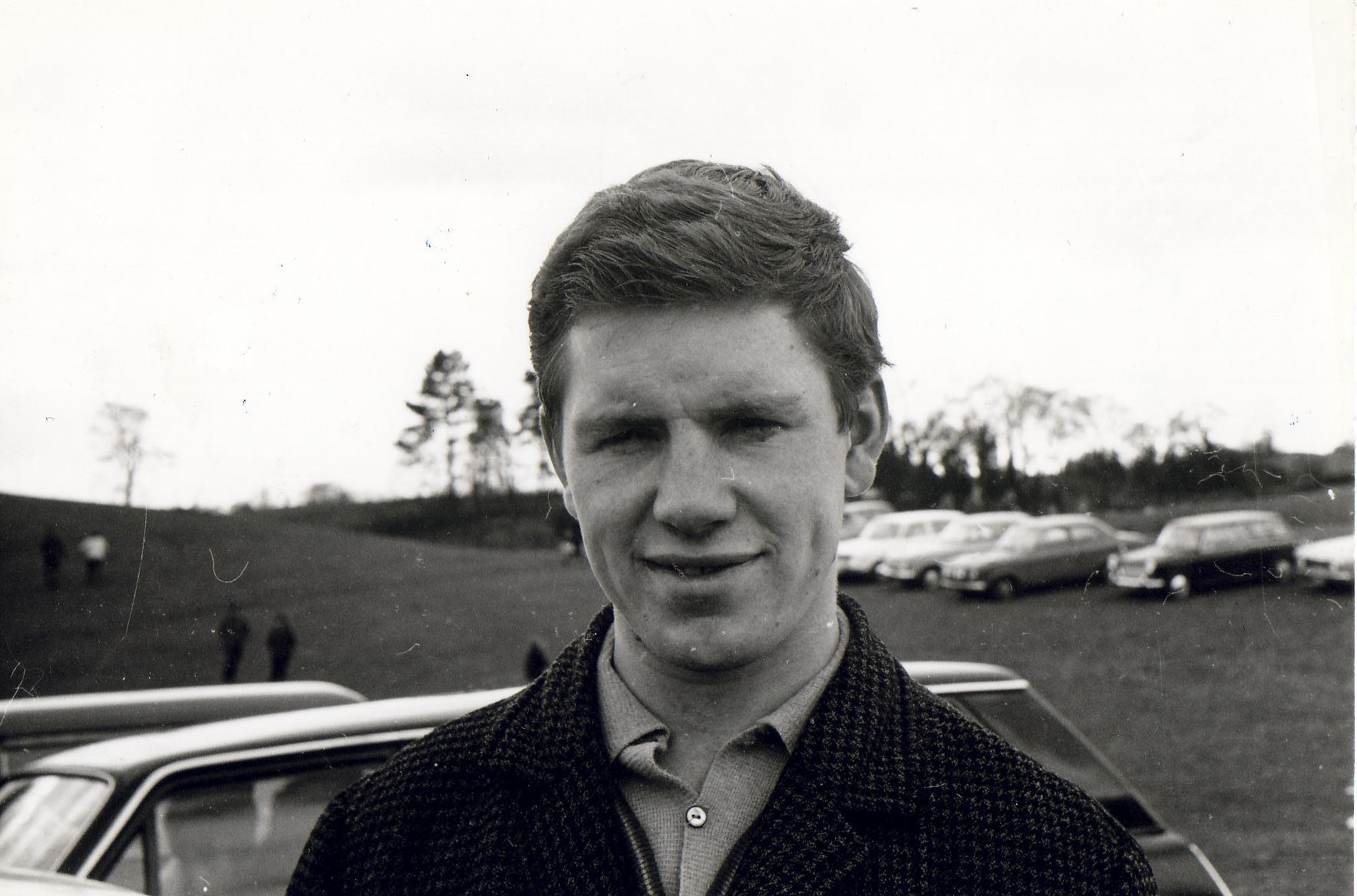
Trials Guru: What spurred you on to compete?
Alan Lampkin: “I soon wanted to watch Arthur ride and I remember watching him at the 1959 Ilkley Grand National, I was allowed to ride without competing, I loved it. We had no television in the early days at home and we used to go round to one of our neighbours house to watch Arthur in the TV scrambles.”

TG: What happened after that?
AL: “I got my chance, so started to compete. It was trials that captivated me at first, I couldn’t wait to take part in the Scott Trial. I joined Arthur in the entry for the 1960 trial, my first Scott. It was a tough day and one which I didn’t finish, in fact Arthur won it that year. A year later, I got a finisher’s certificate and that helped me get noticed by the factory teams and, most importantly, the competition team managers. I was drafted into the factory BSA team alongside Bill Nicholson, Fred Rist, David Tye, Brian Martin, Jeff Smith and John Draper and my brother Arthur. I won my first National trial, the Travers.”
TG: Were you picked for the ISDT, having trials and scrambles experience?
AL: “Yes, the team selectors approached me to represent Great Britain in the International Six Days Trial in Czechoslovakia. In those days the event covered about 1,000 miles during the six days of competition. I was going well but fate intevened on the fifth day, Friday.”
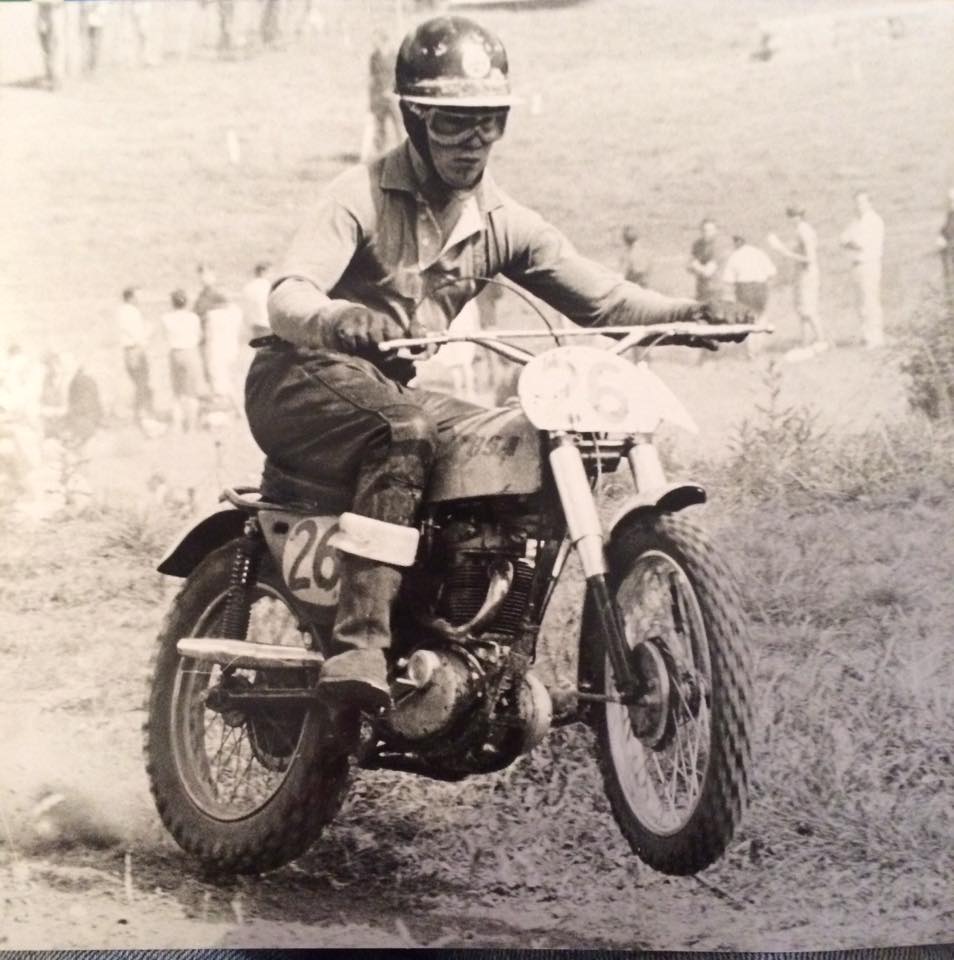
“I was unpenalised and and on course for a Gold Medal when I crashed, I was concussed so I had to retire. BSA though had much faith in me and after recovering I was moved into the number two slot in the BSA team for the Scott, where I won a Scott ‘Spoon’ after finishing in the top twenty-five.”
By the mid-sixties Sid was acknowledged as one of the new young riders going places in the off-road world of motorcycling. Riding for BSA he regularly mixed both trials and scrambling with great success. It was a fantastic season scrambling as he took in many of the established events with some impressive results, including some top-five finishes in the BBC Trophy races at Ripon and Durham on the BSA 440 cc, second in the Lancashire Grand National and a third in the Cleveland Grand National. On the trials scene he was a regular winner and top-five finisher in the British championship events, but 1966 was going to be his memorable year.
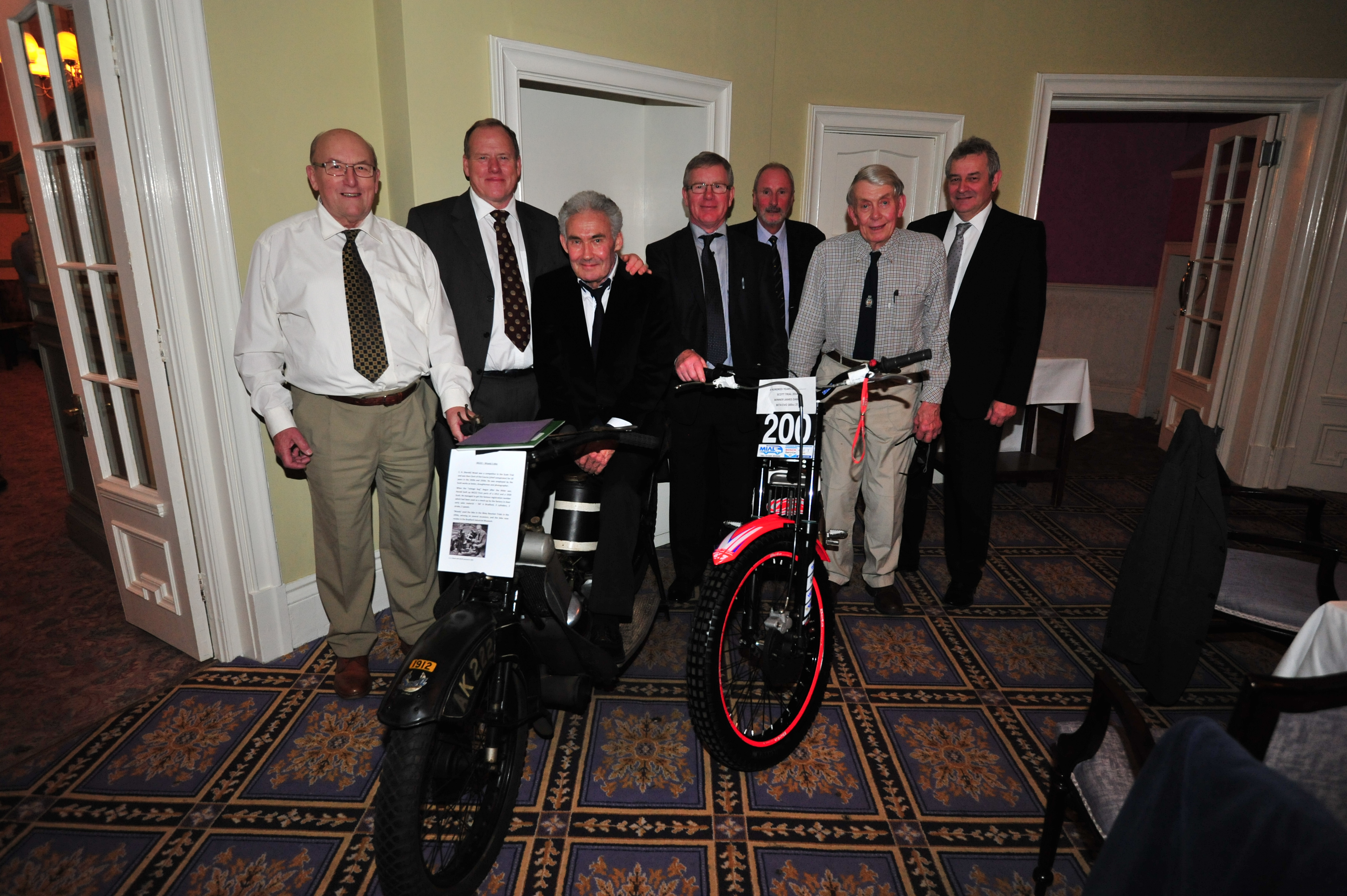
1966 started off with a win at the opening scramble on New Year’s day at a frozen Hatherton Hall in Cheshire in the 500cc BBC Grandstand Trophy race. It was sheet ice everywhere and his trials skills certainly helped and he felt very confident.
AL: “I can still remember the look on Jeff Smith’s face as I passed him on the start-finish straight, it was great day.”
Jeff Smith was 500cc World Motocross Champion in 1964 and 1965. He is a lifelong friend of Arthur and Sid. He then won the prestigious Bemrose Trophy Trial before preparing his 250cc BSA C15T for the Scottish Six Days Trial in the May. Sid was moved into the BSA works team because Derbyshire’s Dave Rowland was asked to stand down in the event that he was called home to attend a court hearing as a witness to a murder enquiry. On the first day Sid lost no marks along with Mick Andrews (Bultaco); Paul England (Triumph); Peter Fletcher (Royal Enfield); Sammy Miller (Bultaco) & Stan Cordingley (Bultaco). Tuesday was a long, tough day taking in 15 sections including ‘Loch Eild Path’ high above the village of Kinlochleven.
Delay built up at the ‘Caillich’ group of six sections and many riders lost marks on time. Wednesday took in eight sections at ‘Laggan Locks’, taking two marks from Sid. He held the lead on Thursday, but nearly lost the trial on the steep rocky hazards at ‘Caolasnacoan’ when the crowd thought he had stopped, but the official observer recorded a three-mark penalty, giving the trials lead to Bultaco’s Sammy Miller. It was on the sections at ‘Leiter Bo Fionn’ above Kinlochleven that Miller parted with a dozen marks whilst Lampkin kept his score down to four to move back into the lead. The final scores were Sid on twenty-three with Miller second on twenty-seven.

Sid’s 1966 victory at the SSDT would be the last win for a machine using a four-stroke engine until James Dabill on the Montesa 4RT in 2007. Later in the year he would take his first ISDT Gold on a TriBSA 504cc in Sweden when he was Britain’s best performer with no penalties and the team finishing third overall.
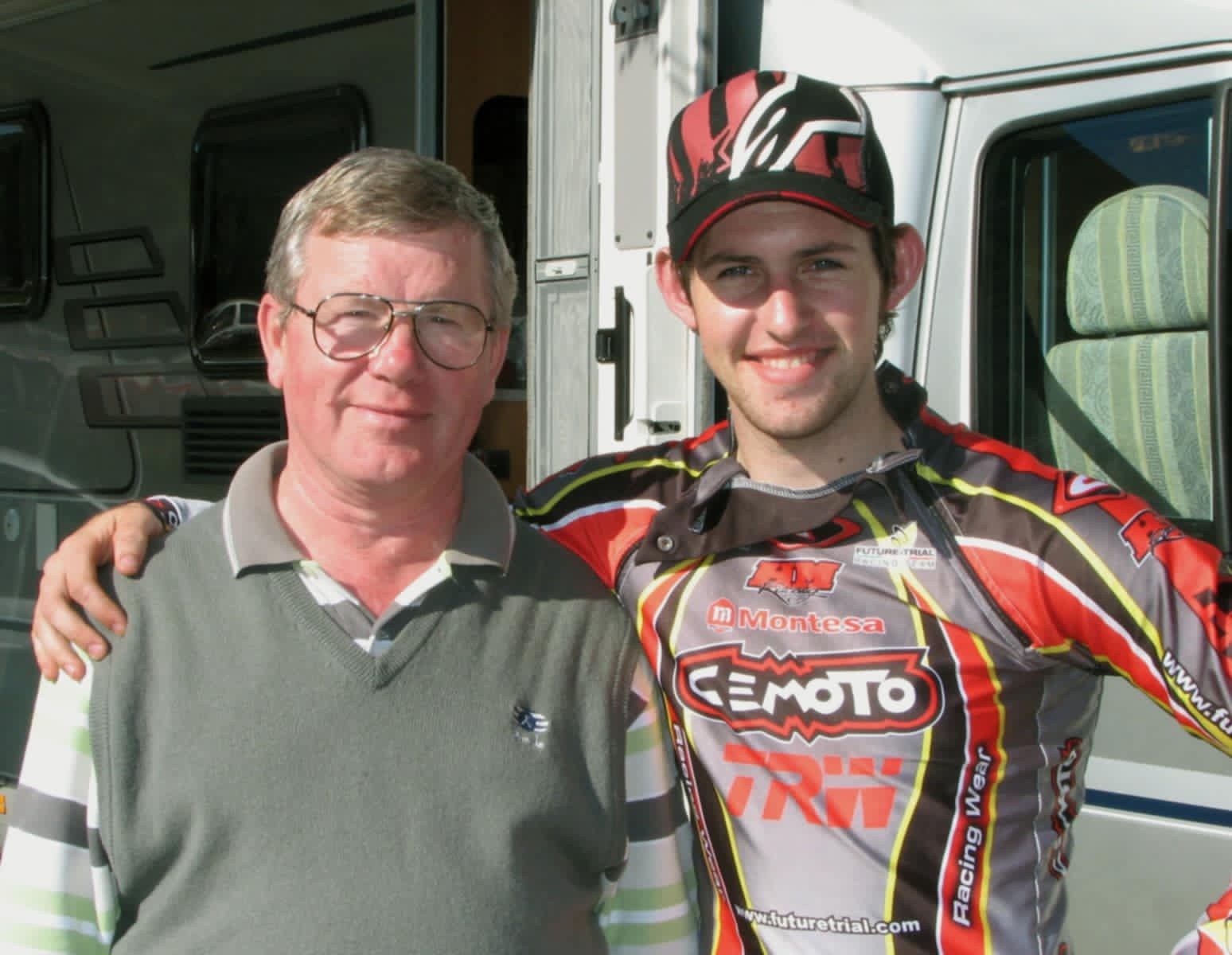
With brother Arthur winning the Scott Trial in 1965, where he set fastest time, both he and Sid went to the 1966 event as members of the BSA team along with Scott Ellis. Alan would win the event with Arthur setting the fastest time in 4 hours, 18 minutes and 55 seconds which was a similar time from his 1965 victory. Sid had won by his observation score which put him in front of Sammy Miller.
TG: So what went wrong with BSA?
AL: “There was politics at BSA, that is why Arthur and I moved to Cotton for a year. The failure of the British motorcycle industry has been written about widely and it forced the better riders to move to foreign manufacturers. I had remained loyal to BSAs but I didn’t ride as well as I had done in 1966.”
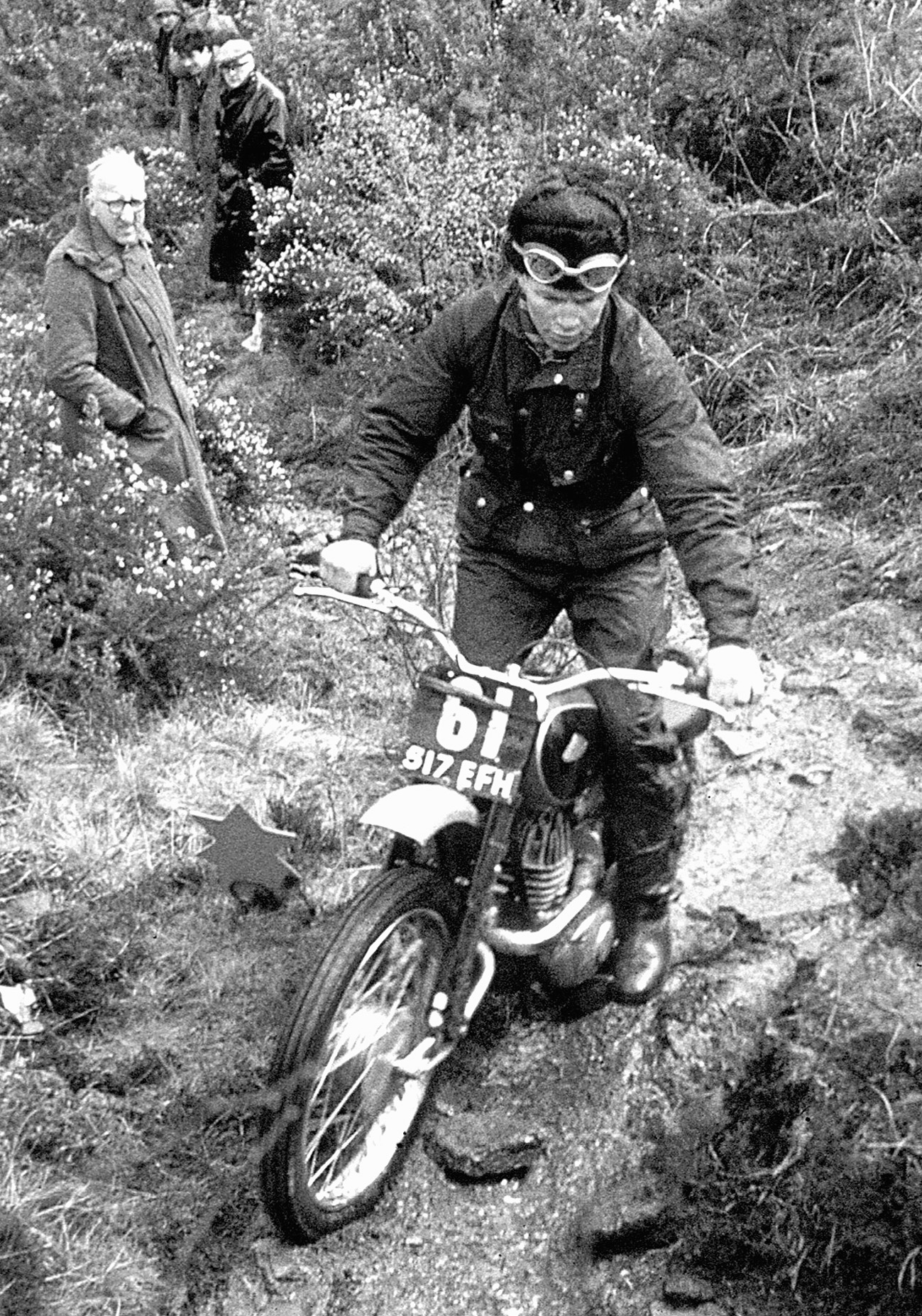
At the 1967 SSDT, using the previous year’s winning BSA C15T, on the Tuesday his rear wheel had collapsed. Sid swapped the wheel for a spare, but in those days that was strictly forbidden and he was excluded from the results when it was discovered by the organisers. Sid was also disappointed at the Scott Trial when a split rear tyre forced his retirement. However he was still getting good results at scrambling. The BSA factory scramblers were quick and reliable, so Sid was able to pick up some handy prize money with the 441cc Victor.
TG: You left BSA to ride for Suzuki?
AL: “Yes, lots of riders were moving from heavy British built bikes to lightweight foreign bikes. Mart and I were offered to ride the 118cc Suzuki for 1969. I got some good results on them.”

“It lasted for two seasons then the Suzuki trials effort fizzled out and Mart and I were left without bikes for the Scott. I gave Reg May at Comerfords a call as I had ridden round the SSDT with him in 1966. He went to John Comerford and he asked who the Lampkins were, as he hadn’t heard of us!”
“Reg came up trumps for us though and Comerfords supplied Mart and I with a 250 Bultaco each, they were used bikes, taken back from their dealers, but it paved the way for us to eventually sign with the factory.”
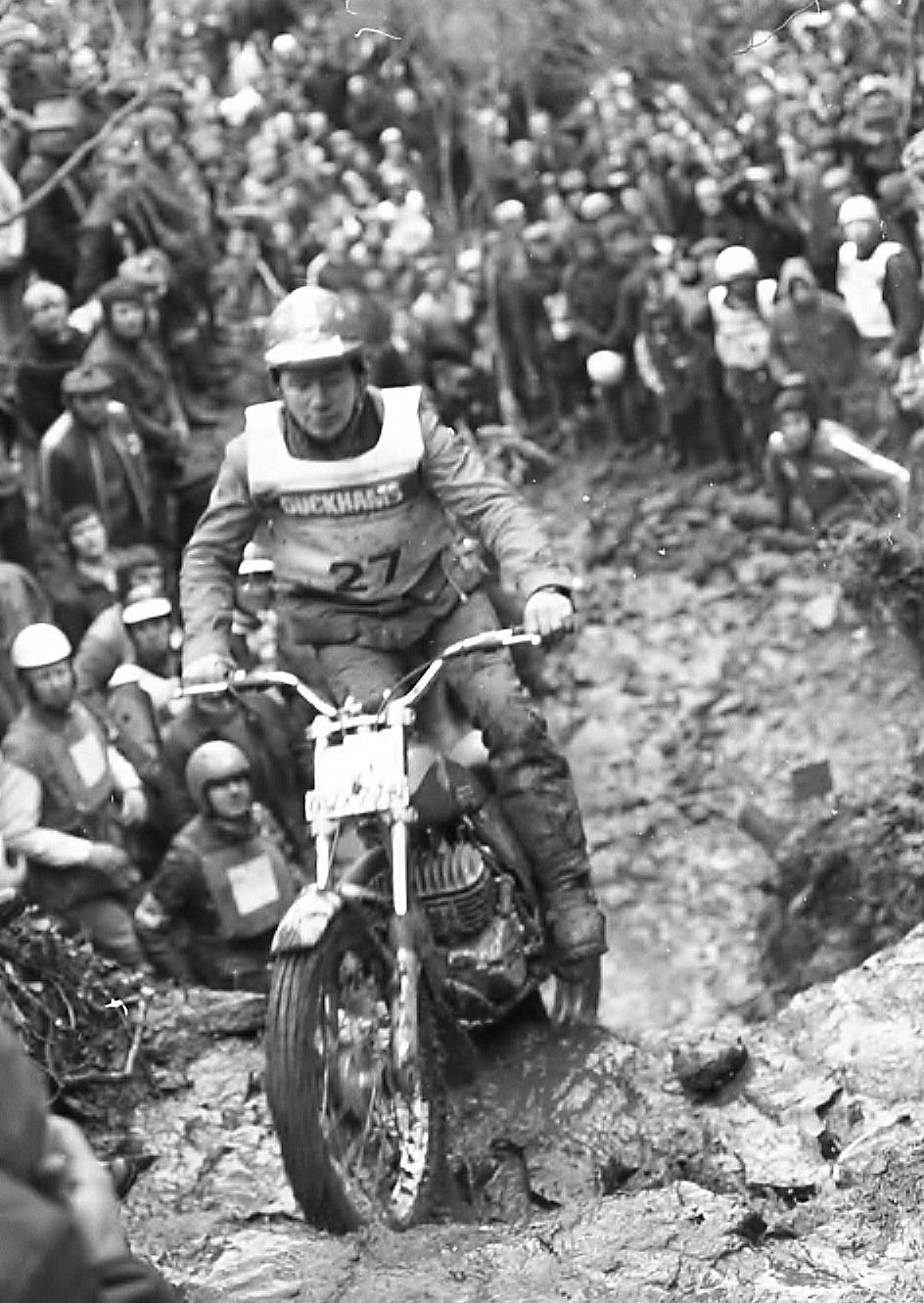
At the 1970 Scott Sid set the fastest time on his way to a top-ten finish on the Bultaco with Sammy Miller taking the last of his seven wins. In 1971 Sid came home in tenth position in the European Trials Championship and was fifth in the British Trials Championship.
Sid began to benefit from full factory support from Bultaco, attending the prestigeous ‘Trial San Antonio’, organised at Senor Bultós ranch in Spain. This was an invitation only event for factory and importer supported riders from all over the world. Sid finished runner up at the 1972 Scottish Six Days with Mick Andrews the winner on his works Ossa.

Younger brother Martin was the ‘coming man’ and in four short years would win the SSDT for Bultaco and the following two years and become the first World Trials champion in 1975.

In 1973 Sid had his last ride at the ISDT mounted on a Triumph which had been modified in the USA by Triumphs, taking yet another Gold medal, with the trophy team taking second place, its best performance for many years.

The UK based Bultaco riders, Malcolm Rathmell, Sid and Martin Lampkin were now feeding information back to the Bultaco factory and were at the forefront of the Sherpa T development strategy.
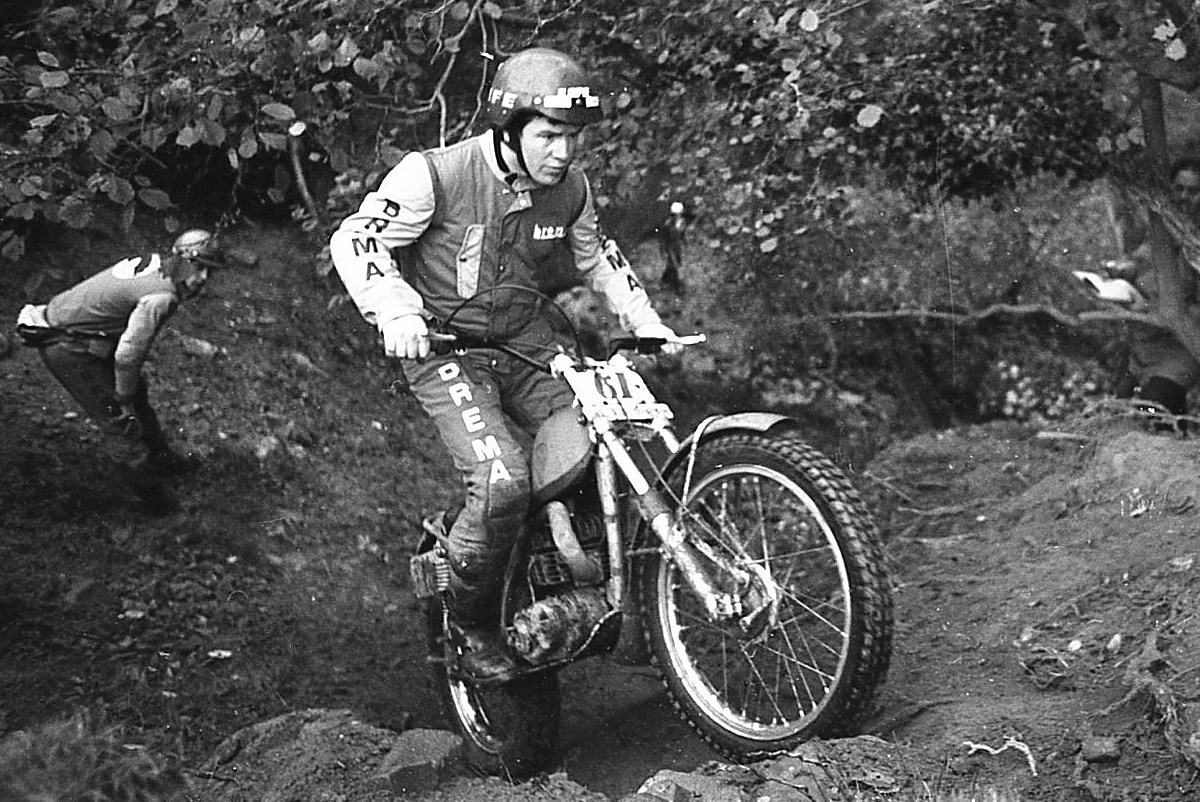
Trials was shifting away from being a European based sport to a world stage. Martin claimed the first World Championship title in 1975, but it was Sid who won the Euro-American championship round in the USA, the precursor of the World series.
TG: Did you tend to support Martin in the World Championships?
AL: “Probably as by then I had been riding 15 years and Martin was Bultaco’s top trials rider in 1975. We travelled Europe in the Comerfords, Shell Sport Transit van with Dave Thorpe as the third man. Malc Rathmell moved on to Montesa and of course Yrjo Vesterinen had moved up the standings.”
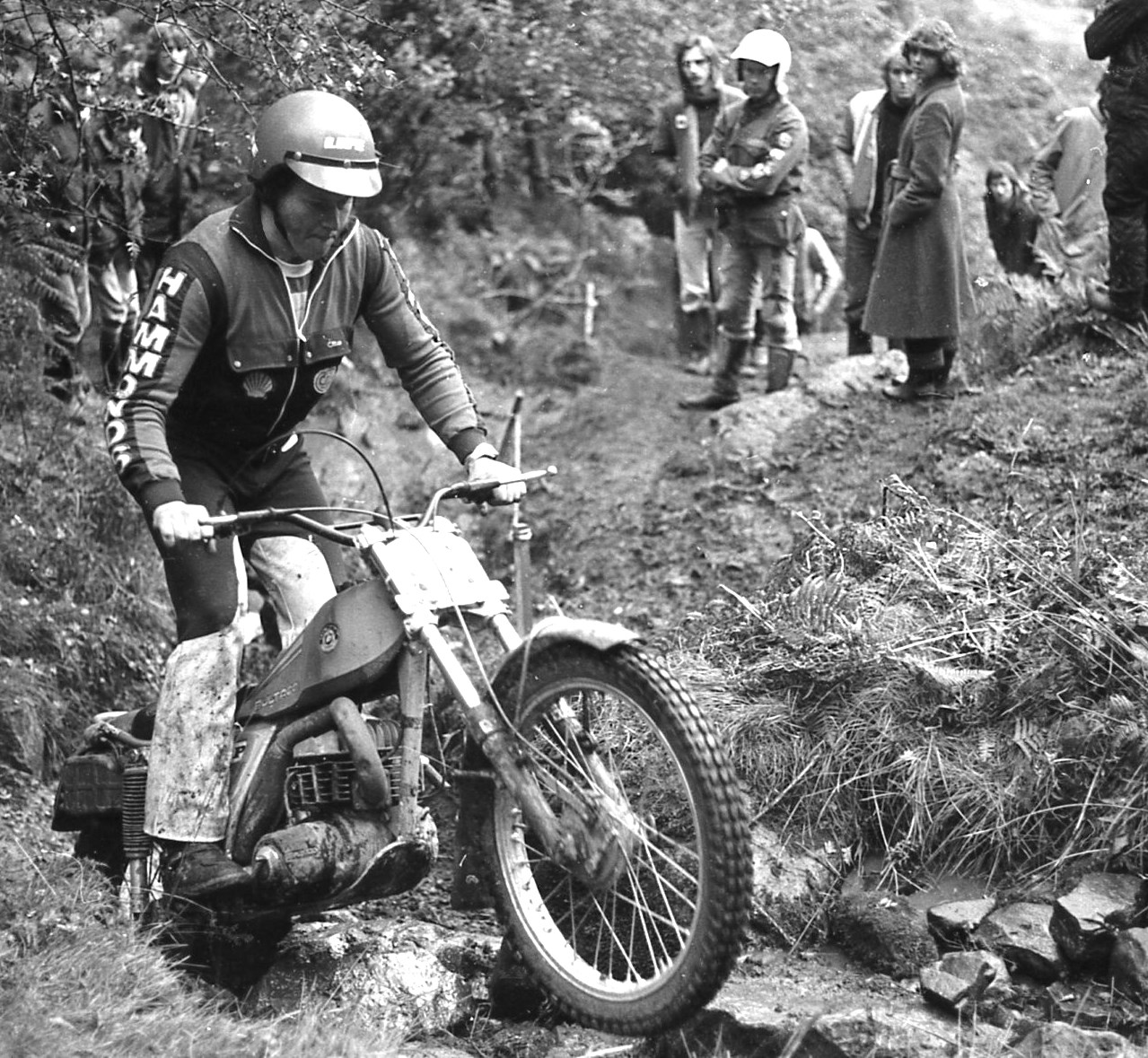
“Bultaco was the machine to have at that time as it was well proven in 325cc trim, Martin also had a slightly bigger engine as that suited his style.”

Sid’s support for Martin paid off, as well as finishing the year in ninth position and with his best result being a third at the British round, Martin Lampkin won the title by one mark from Yrjo Vesterinen. Alan retired from the World Championships in 1980.
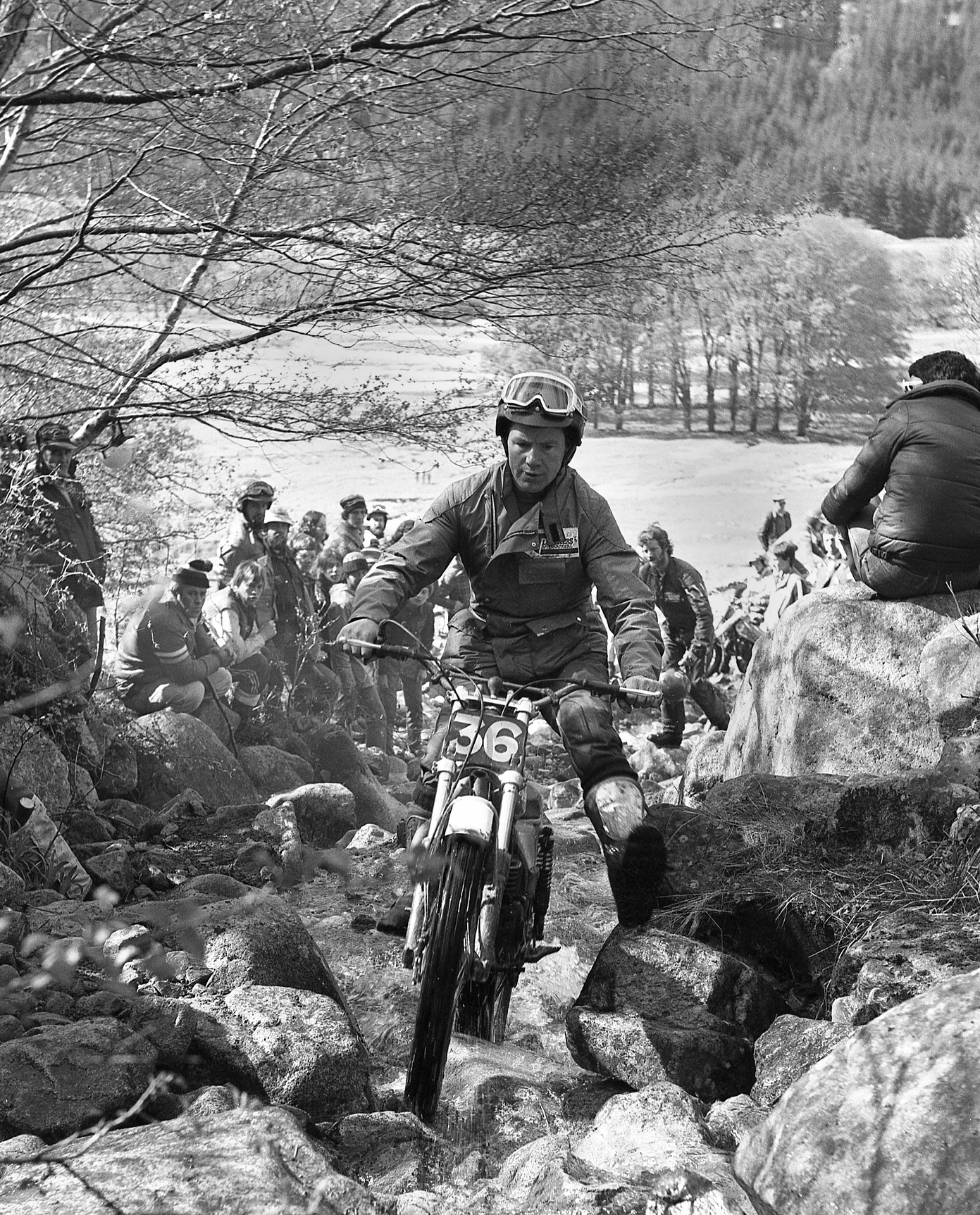
Sid’s last Scott Trial was in 1980 and his last Scottish Six Days Trial in 1982 on an SWM as Martin had left the ailing Bultaco concern to ride for the Italian factory under the management of Pierto Kuciukian. Sid continued to work in the family engineering business started by his father.
TG: Was that the end of your trials riding, 1980?
AL: “Pretty much, although we all had a go at the Pre65 Scottish on our old factory BSAs that we had retained after we stopped riding for them. Arthur rode the Gold Star a few times along with Jeff (Smith) and I rode Arthur’s C15, so did Martin.”
Alan would ride in the Pre65 Scottish a few more times. Then it was another Lampkin generation to come on to the trials scene.
AL: “James took up riding and that rekindled my interest in trials as I had taken to playing Golf, which I still do.”
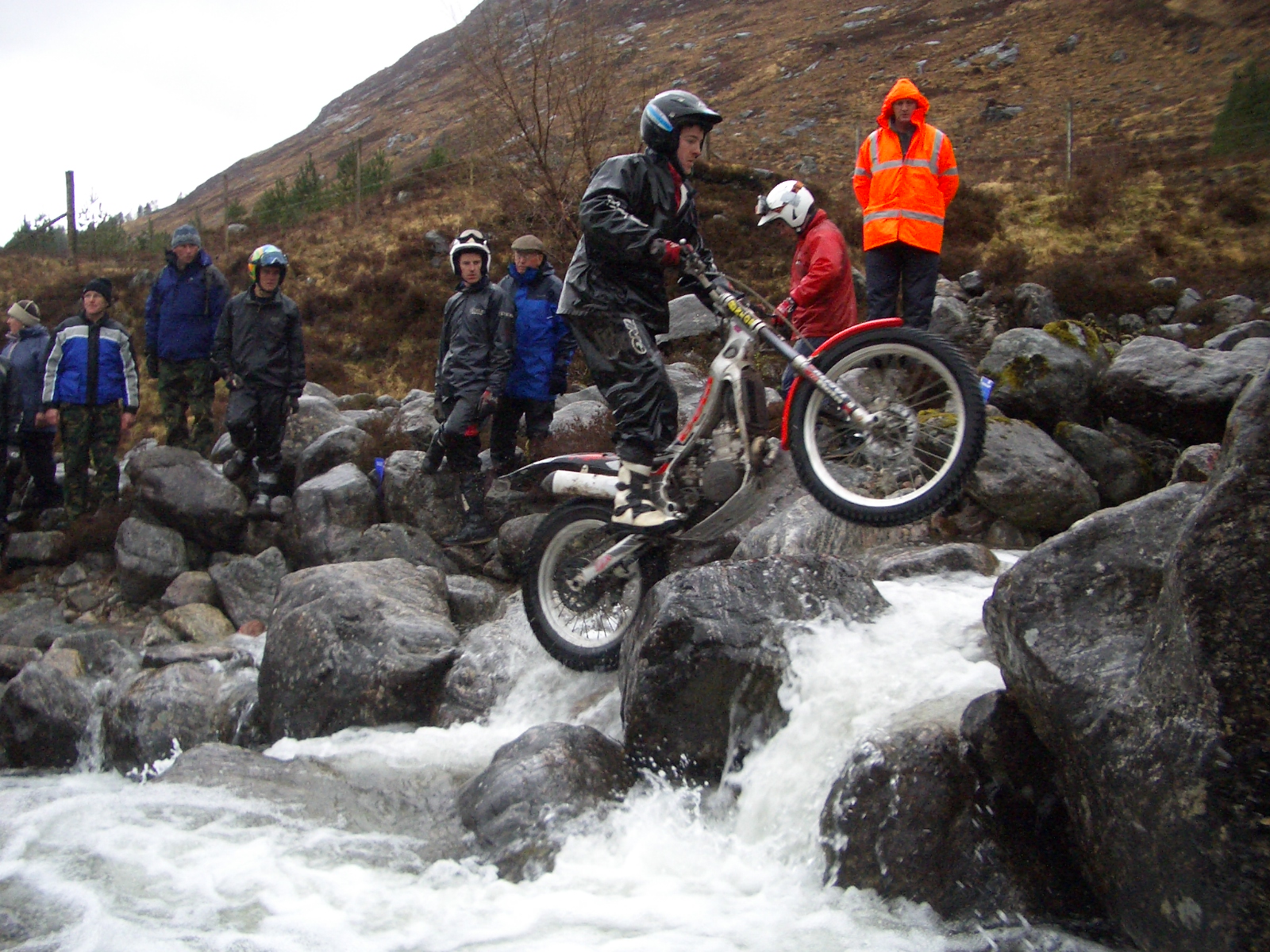
James went on to have his own successful trials career which included an Expert British Championship title and a third position in the 2004 SSDT.

(At a motorcycle show some years ago at Ingliston near Edinburgh, Trials Guru’s John Moffat was charged with the task of interviewing a host of great riders which included: John Giles, John & Pat Brittain, Gordon Blakeway, Alan and Arthur Lampkin, who was rather stage shy, as he always has been).
Trials Guru: How did you come by the name Sid?
Alan Lampkin: “I answer to both my correct and nickname, I’ve never been bothered which you call me.”
TG: “But how does one get ‘Sid’ from ‘Alan Raymond Charles Lampkin’ ?
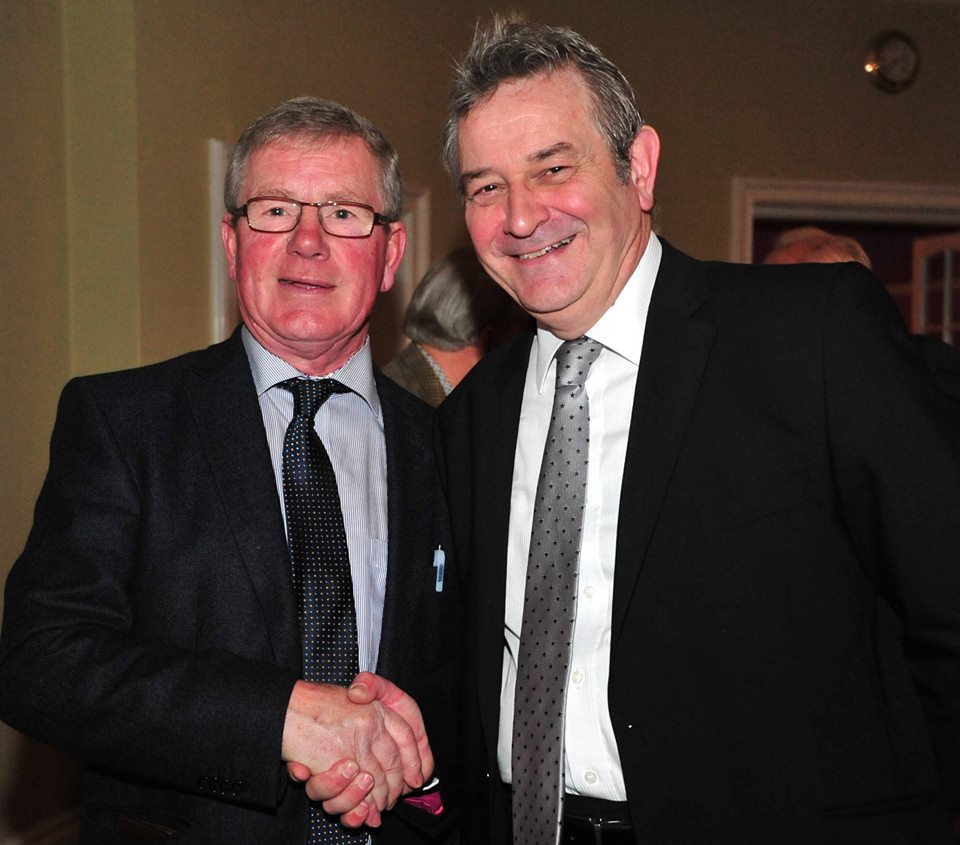
Alan Lampkin: “It was years ago, Arthur had a bike shop in Silsden and left me one Saturday to try and sort out a whole heap of well worn bikes, rubbish ones really that had been difficult to sell. I was quite good at selling stuff, so I made a start to it and some customers called in. I did very well that day and managed to sell quite a few of them. When Arthur returned, he asked how things had got on and I pointed at the empty space where the heap of bikes had been sat and said that I had sold most of them. Arthur then announced that I was ‘Sid the Second-hand Super Salesman’ and from then on the name of ‘Sid’, stuck!”
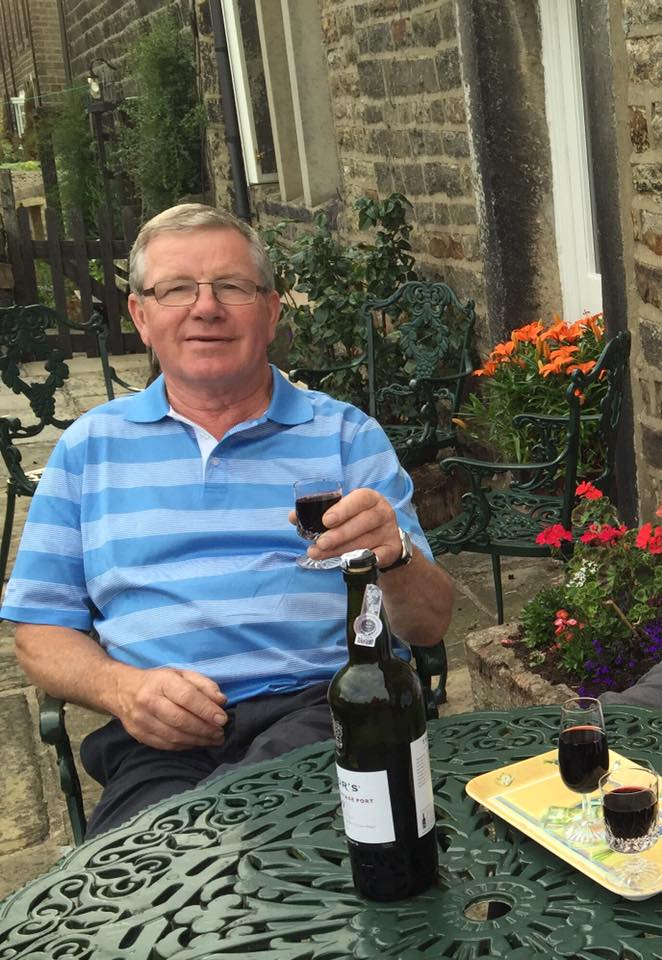
748MOE – The 1966 Scottish & Scott winning BSA C15
After many years of searching, Alan Lampkin finally tracked down and bought back his treasured BSA which won the double in 1966, the SSDT in May and the Scott Trial in October.
The machine was purchased from the son of the last owner, who had began negotiations with Alan shortly before his untimely and sudden death in 2014. Fortunately the son was an honorable man and agreed to continue the sale, following the in-gathering of his father’s estate.
When Alan sold the machine, it was bought and sold by a relatively few set of owners, one of which was Scottish rider, John G.G. Fraser known as ‘Jock’ Fraser from Carrington, Midlothian, who had bought the machine from Lampkin and planned to ride the 1968 Scottish with it. For some unknown reason, he didn’t do this, but rode a Greeves instead.
The BSA, albeit not used for perhaps 30 odd years or more, was in surprisingly original condition, used but not heavily modified from when Alan sold it.
Alan Lampkin was both delighted and proud to have his old BSA back and set about preparing it for the 2016 Pre’65 Scottish to mark the 50th anniversary of his historic win at the SSDT. It was ridden at Kinlochleven in April 2016, by Alan’s son, James Lampkin, who picked up the 250cc cup for his efforts.
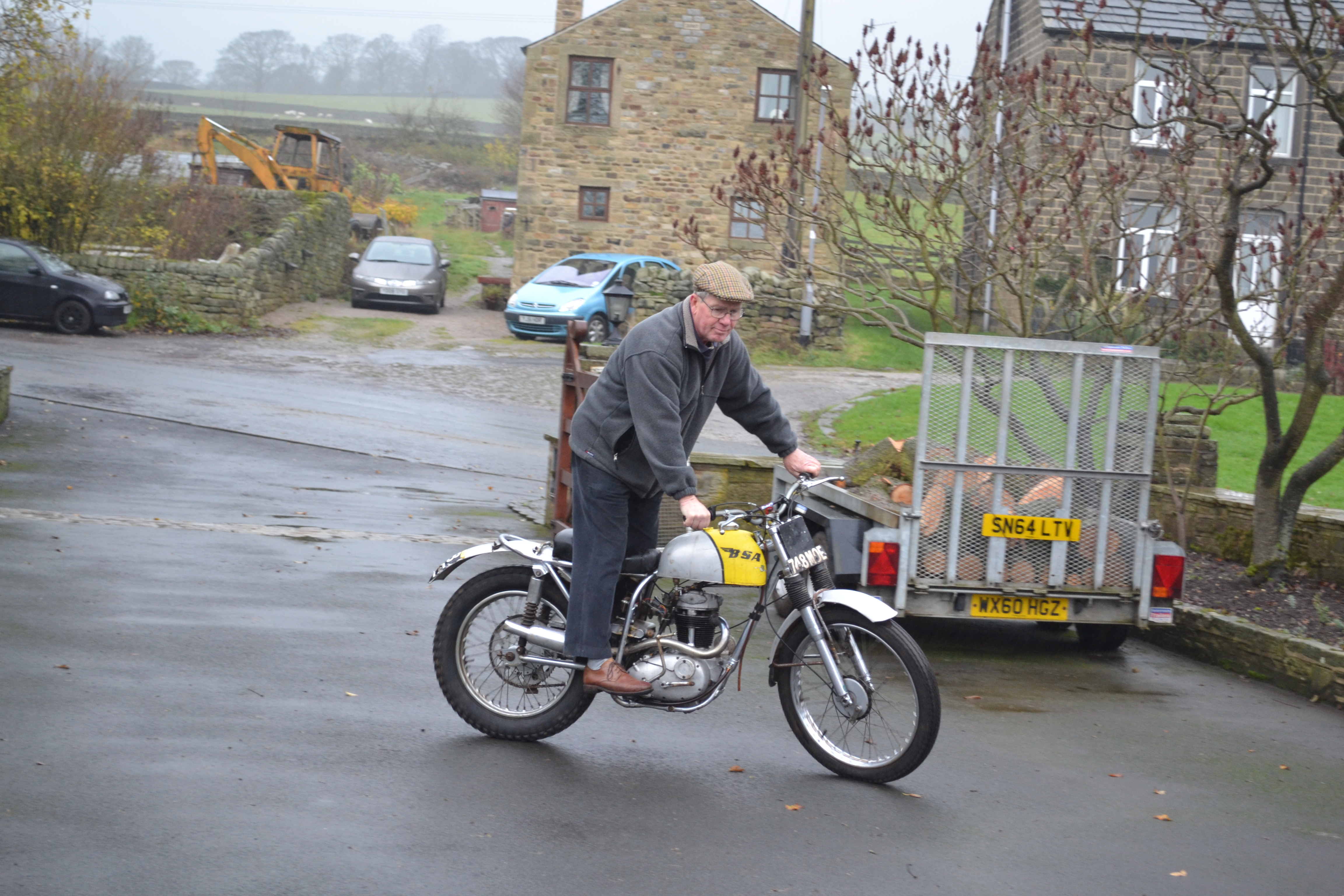
Article is the copyright of Trials Guru and Alan Lampkin.
Bibliography:
[1] – Motor Cycle News, February 21st 1973
It all started with Arthur …

Words: Janet Pawson (nee Lampkin), who is regarded by the Lampkin clan as their family historian.
In 1939, Arthur Alan and Violet Lampkin were living in London with their two young children; myself baby Janet and Arthur junior (A.J. Lampkin) at eighteen months old. Dad worked on munitions at Woolwich Arsenal and when war broke out, Violet and the children were evacuated to Burnley.
Soon afterwards, Dad put in for a transfer to one of the newly started munitions factories. He left a large wider family and travelled to Steeton on his motorcycle. After lodging there for a while, he found a house to rent and went south again to buy a sidecar to bring up Mum on the pillion and the two children in the sidecar.
Mach later, new houses were built for the munition workers and we moved to Windsor Avenue. In 1944 a new arrival came along, called Alan.
After the war, father Arthur worked at Rolls Royce before starting his own engineering business where Mum was often to be found helping out and into which some of his sons and grandsons continue to this day – A.A. Lampkin, Silsden.
The third son, Harold Martin arrived in 1950 followed in 1952 by another daughter, Veronica.
Dad’s interest in motorbikes was always to feature in our lives. There was always one or more about to be mended and tuned by Dad, ably assisted by his three boys, though he made bikes and flat carts for us all.
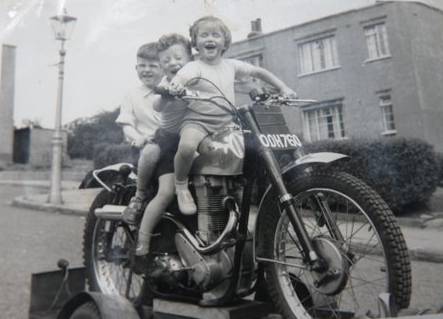
Arthur junior started riding early and I soon had a scooter, the rest progressed from there.
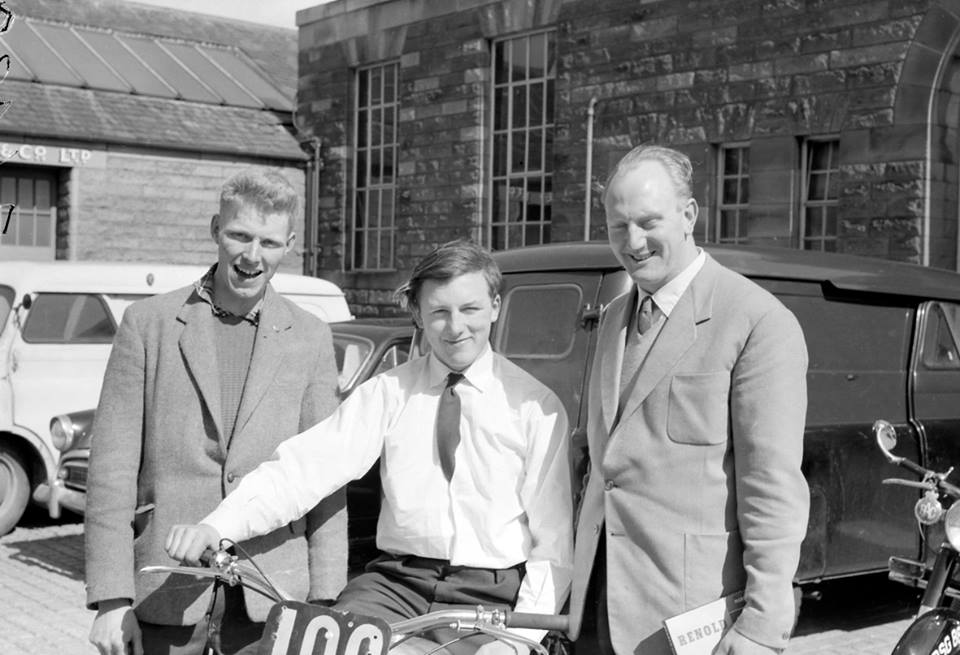
And so the intrepid travellers from London came north from ‘down south’ and started the many years or work and play. – Janet Pawson
Trials Guru is grateful to Lampkin family member, Mrs Janet Pawson, the eldest sister of the Lampkin brothers, for the use of this article and family photographs.
Words & Photographs: Janet Pawson
Photo: David Wood Archive of C.H. Wood (Bradford) Ltd.
_________
In collaboration with author, Ian Berry, we bring you:
Arthur John Lampkin
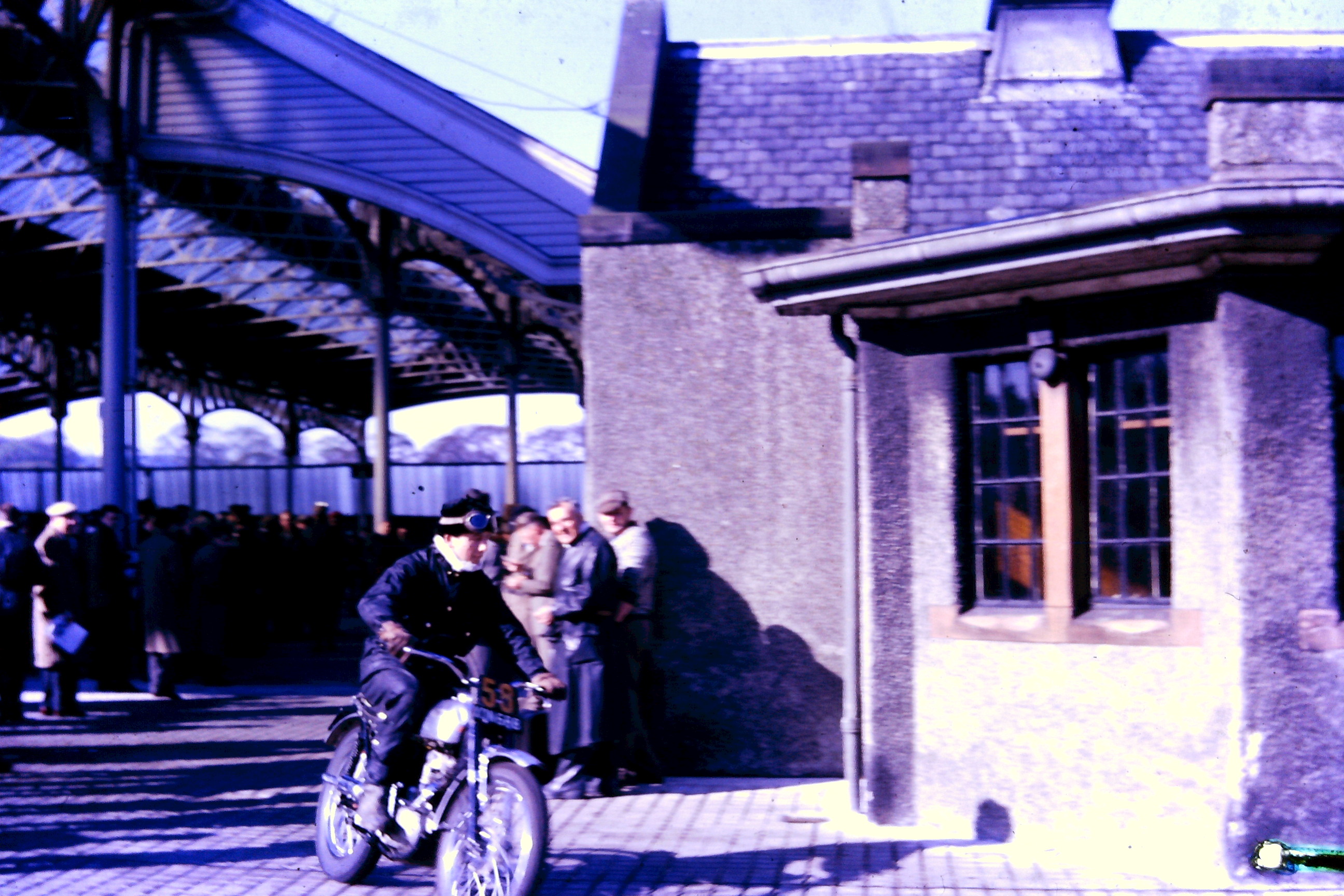
Words: Ian Berry
Photos: Colin Bullock/CJB Photographic – A.R.C. Lampkin – Jimmy Young, Armadale
Extract with permission from: “Out Front! – British Motocross Champions 1960 – 1974” By Ian Berry, 2010 (ISBN: 978-0-9564975-3-6)

There wasn’t much that Arthur Lampkin didn’t win in the world of trials and motocross. He was a 250 and 500 GP winner, a stalwart member of the British teams in the Motocross des Nations and the Trophee des Nations and represented the nation in the International Six Days Trial in Garmisch-Partenkirchen in 1958 and 1962 winning Gold Medals on both occassions. He also capured both the ACU 250 and 500cc Driver’s Stars (the forerunner of the British Championships) and was runner-up in the 1961 250cc European Motocross Championship.

He was a prolific winner of trials events, with victories in the Scottish Six Days Trial in 1963, the Scott Trial (1960/61/65) in his native Yorkshire, and the British Experts Trial. But, despite all of this he is probably best remembered as Mr. Television. a title he earned from his sterling efforts in the televised winter race meetings of the 1960’s.
As the old adage goes, ‘when the going gets tough, the tough get going’ and this was certainly true in Lampkin’s case. though he didn’t just go, he usually disappeared clean out of sight.
Arthur was born in May 1938 to the parents as described in sister Janet Pawson’s piece above.
His first contact with motorcycles came when he was given a 1937 side-valve BSA at the tender age of twelve. It was the beginning of a life-long affection for motorcycles, but it wasn’t all roses for the young Yorkshireman. When still only 15 years old he had a brush with the law; he was caught riding the BSA on the public highway! He was summoned to appear in court in nearby Skipton, where his father told the magistrate, “He was born on wheels and wants to be a trials rider”.
A Triumph Tiger 80 followed by a BSA and this in turn was followed by a 197cc James that Aryhur started riding in trials once he turned 16. In his first season he rode it in the toughest trial of them all, the Scott, complete with L-plates and followed a good ride in the Allan Jefferies trial, he graduated to the expert ranks after just five events.
After several successful outings on the James, he graduated to a 350cc Royal Enfield Bullet, which was converted from a roadster. On the Bullet, Lampkin took part in his first Scottish Six Days Trial in May 1955, taking a Special First Class award at the end of a gruelling week.
The winner of the trial was none other than Jeff Smith, who would soon become Lampkin’s teammate and close friend.
BSA support:
In the early years, Lampkin was also befriended by one of Yorkshire’s trial riding greats, Tom Ellis. Ellis was a factory BSA rider of some standing, used his influence to persuade the company to give Lampkin the use of a bike. So it was that whilst still only 17 years old, Lampkin was entrusted with a 500cc Gold Star trials bike.
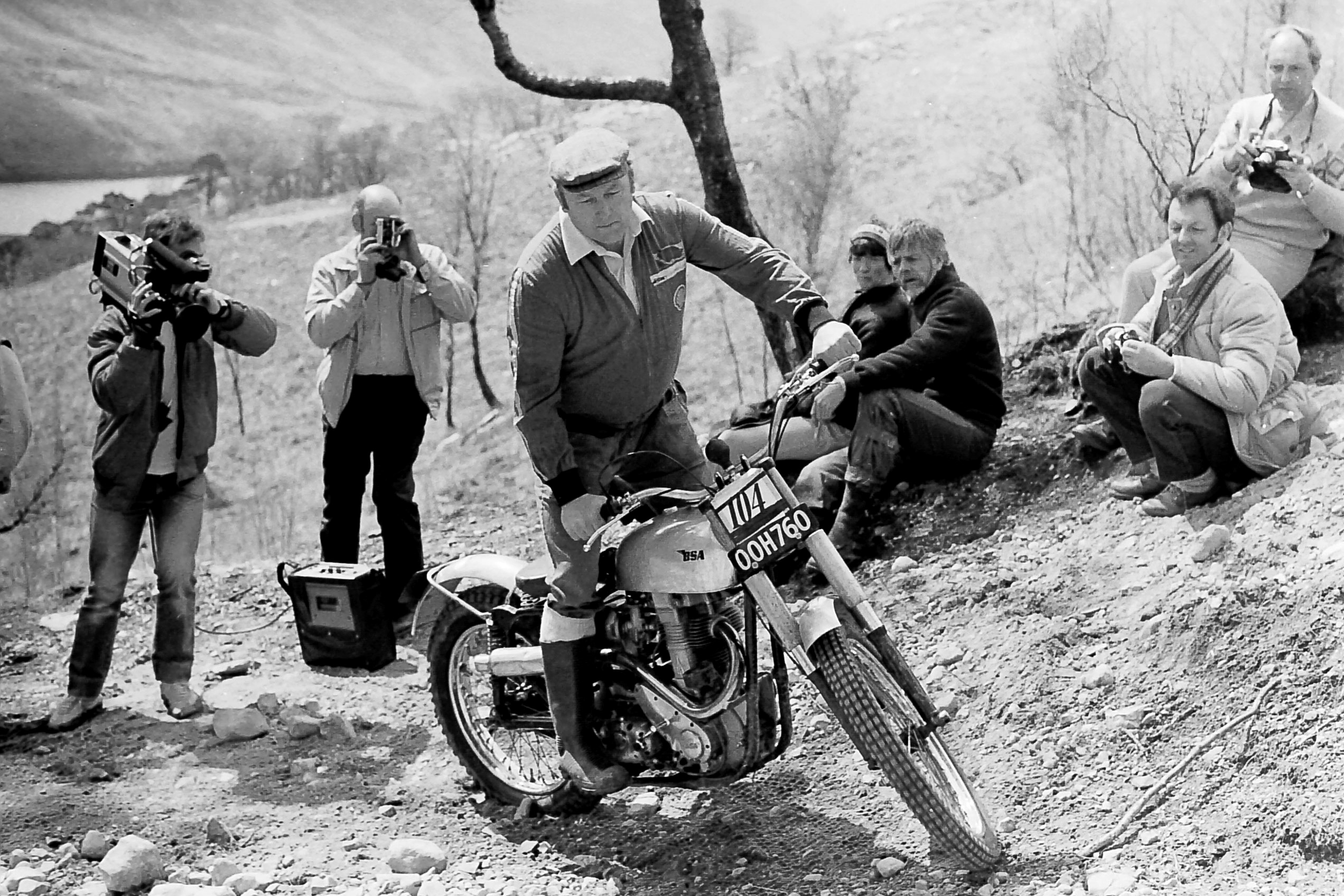
He returned to Scotland in May 1956 and after day one he was one of four riders tied for the lead on a clean sheet. He had an outstanding week eventually finishing 5th overall and taking the over 350 class in just his second Scottish. Lampkin loved the whole experience, telling Peter Howdle of MCN, ‘It felt wonderful to ride a works bike’.
With his trials riding career going from strength to strength, Lampkin decided to try his hand at scrambling. His first event was at Post Hill near Leeds, though it was no fairy tale debut for Arthur. Riding a 350cc BSA Gold Star, he took an excursion into the bushes whilst trying to keep up with another Yorkshire great, Frank Bentham.
However, he rapidly learnt the art of off-road racing and soon found himself on the BSA factory team as their youngest ever rider, following the departures of Brian Stonebridge, to Greeves, and John Avery who had stepped down to devote more time to his motorcycle business.
As a fledgling BSA rider he was on a steep learning curve. By Easter 1957 he already had the measure of local ace Bentham, beating him on the moors at Boltby and going on to win both the Junior and Senior races at that year’s Cumberland Grand National riding the 350 Goldie. Then in May he switched back to his trials bike for the Scottish, improving to 3rd overall, behind winner Johnny Brittain and his BSA teammate John Draper, who beat him on the special test.
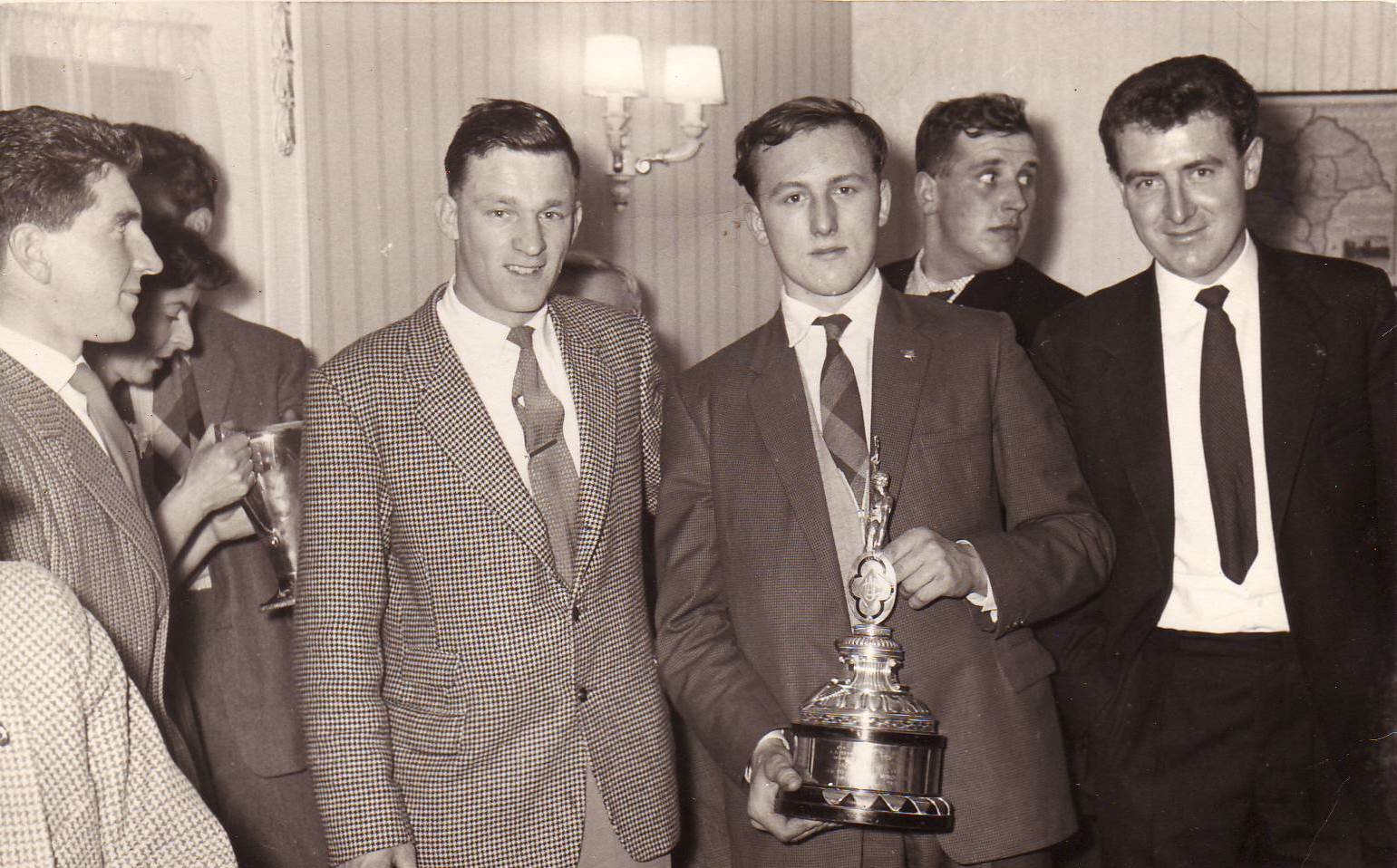
Not surprisingly, the same year he captured the hugely prestigeous Sunbeam MCC ‘Pinhard Prize’ which was awarded to the best performance by an under 21 year old in all areas of competition motorcycling. He was 18 years of age at the time.
1958 found Britain’s most talented young motorcyclist on national service in the army, where he soon became Lance Corporal Lampkin, motorcycle riding instructor. As such, he managed to stay fairly active as a trials rider at least, winning the army championship and taking in his first trip abroad to Germany for the ISDT at Garmisch-Partenkirchen, where he rode a 350cc Gold Star to a gold medal. Then following his demobbing, in January 1959, his motorcycling career really started to take off.
That year he was in inspired form on the 500cc Gold Star scrambler, taking the coveted ACU Scrambles Driver’s Star by a comfortable margin of seven points from Derek Rickman and teammate John Draper, who tied on points with Rickman the younger (Don). The sam season, he won the Cumberland GN again, and the Lancashire GN, and all this before he had reached the age of 20.
Europe beckons:
Given his predilection for the 500cc Gold Star, he might well have welcomed a crack at the 500 world championship, but for 1960 BSA turned their attention to the quarter-litre Coupe d’Europe (European Championship). The previous year Lampkin had ridden an experimental 250 to victory in the 250 race at the prestigeous Experts GN meeting at Rollswood Farm near Redditch. This had obviously made an impression on BSA’s Competition Manager, Brian Martin, who asked Arthur, in company with Jeff Smith, to spearhead their efforts riding the C15.
Despite a very impressive start to the campaign, which saw him score poium finishes in the first and second rounds. It would not be until the eighth round in Finland that Arthur took his maiden GP victory. However when his time came, he did it in style buy winning both races. From there, he went on to finish a hotly disputed season in 5th overall, behind Dave Bickers, Jeff Smith, Miroslav Soucek (Eso) and Stig Rickardsson (Husqvarna).
Although he retained the Cumberland GN trophy, Lampkin was no match for teammate Smith in the season long 500 ACU star contest, where his good friend and rival dominated proceedings, amassing 28 points from a possible 32, to claim his third national title.
It was a similar story in the inaugural 250 ACU Scrambles Driver’s Star, where despite winning at the Lancashire GN at Cuerden Park near Preston. In August, he couldn’t mount a sustained challenge to Dave Bickers, who took the title at the season’s end with a 20 point advantage over DOT’s rising star, Alan Clough.
However, in November he achieved one of his major sporting goals, when he won the Scott Trial in his native Yoprkshire, a success he would go on to repeat the following year and again in 1965.
Consistency is the key:
In 1961 his main objective was to wrest the 250 European Championship from the hands of Dave Bickers and Greeves and after a steady start to the campaign, whilst Bickers blazed the trail, he emerged as a real contender thanks to a run of consistent results. Blighted by bad luck in the opening rounds in France and Belgium, he bounced back to finish 2nd in Holland, 2nd in Czechoslovakia, 2nd in Poland, 4th in Luxembourg and 3rd in Finland. Back-to-back victories in Italy and West Gernmany upped the ante for the championship, and despite finishing 2nd to Bickers in the British round at Schrubland Park, another win in Switzerland, where he beat Smith into 2nd place, kept his championship hopes alive.
Looking at Lampkin’s string of results in the championship, with hindsight one can only sympathise with the Yorkshireman. Such a run would ordinarily have won many a World Championship, but unfortunately for him, he came upagainst Dave Bickers riding at the very top of his form. By the time they set off for the twelfth round in Sweden, the Coddenham man had won five of the rounds. However, he had also retired from four GPs and if he failed to finish at Vannas, Lampkin could, conceivably, outpoint his compatriot. Unfortunately, for Arthur, Bickers was in imperious form for the Swedish round taking the GP by storm and consigning Lampkin to runner-up.
Another Star:
Lampkin may have lost out to Bickers in the European Championship, but he took the 250 ACU Star from his great rival and once again consistency was the cornerstone to his success. Over the five rounds, he never finished outside of the top three, finishing 2nd on two occasions and winning two of the rounds.
However, at Hatherton Hall, Cheshire, for the opening round, try as he might, Lampkin had to play second fiddle to Bickers, who was in tantalising form. In the Star race, Bickers took off like a scolded cat whilst Lampkin found himself trailing Roy Peplow on a very quick Triumph Tiger Cub. Surprisingly, Lampkin could do nothing about catching peplow and Bickers pulled away lap by lap to record a winning margin of 400 yards. Then Lampkin rolled out his trusty 500 Gold Star for the Cheshire Motocross and a great battle ensued. Bickers set the early pace, but Lampkin forced past on the fifth lap with Peplow also getting in on the act. Lampkin and Bickers then eased away from Peplow and swapped places for several laps until Lampkin tired and settled for 2nd place.
But in late July Lampkin, in Bickers’ absence, completely dominated the day’s racing at Belmont near Durham, winning six races from six starts. The only riders to challenge his supremacy were the young Vic Eastwood. all the way up from Kent and racing a 250 AJS, factory DOT runner Pat Lamper and Andy Lee with his 500 Fenman special. Arthur easily took the 250 Star race ahead of Lamper and Eastwood, leading from start to finish and establishing himself as the clear leader in the championship.
However at Schrubland park a fortnight later, Lampkin had no answer for Bickers who, racing on his local track, won the lightweight race for the fourth year in succession and closed to within two points of the Yorkshireman in the general classification.
Lampkin gets a break:
But the East Anglian’s luck ran out at the Gloucestershire GN at Tirley in mid-August. On this occasion the Star was a two-leg motocross style event and Bickers quickly got down to business as he headed the field in race one. But he was soon out of the race and loading up his bike for the long drive back to Suffolk, after the Greeves’ engine had seized up just five laps into the race. With Bickers out, Lampkin turned on the style passing Greeves runners Joe Johnson and Freddie Mayes, as he sped on to victory. In the second race, young Bryan Goss gave the locals something to cheer about, when he raced to his, and Cotton’s first ACU Star race win in front of Lampkin, Mayes and Clough. However, Lampkin was the overall winner ahead of Mayes and Goss, the win guaranteeing him the ACU Star as he extended his lead over the hapless Bickers. It also brought him his second ACU Star in three seasons, as he became the first rider to win Stars in both the 250 and 500 classes.
The final round of the championship was played out on the magnificent Glastonbury Tor circuit in September. Although Lampkin and Bickers had nothing to play for it didn’t stop them putting on a fantastic show for the crowds who came to watch them.
Lampkin got the drop on his rival from the start, but within half a lap Bickers had forged ahead. An enthralling tussle followed, as Europe’s top two 250 riders slugged it out for the opening five laps until Lampkin uncharacteristically slid off. This gave Bickers plenty of breathing space, though fellow Greeves riders Joe Johnson and the Sharp brothers, Triss and Bryan, failed to capitalise on Arthur’s lapse of concentration and he rode in to 2nd at the flag, but Champion in the Star contest eight points clear of Bickers.
With the Star race done and dusted, Lampkin won the Wessex Junior Scramble, but again had to give second best to a rampant Bickers in the lightweight Scratch race.
World Title tilt:
In 1962 BSA gave Arthur a shot at his first World Championship when the 250 class was upgraded and with Bickers missing, Lampkin might well have entertained thoughts of being Champion. Things started very brightly with a win in the season-opener in Spain, which he backed up with another victory in round three in Belgium. But as Jeff Smith began to take control, Lampkin started to fade, eventually slipping back to finish 3rd in the championship, as the super-talented Swedish ace, Torsten Hallman, stormed back to snatch victory from Smith.

In April, the BSA factory star came south to race at the Wessex Scramble at Glastonbury. Fellow British Champion, Bryan Goss, vividly remembers it for his encounter with Lampkin. “He was a brilliant rider. He’d won just about everything in the ITV meetings and I’d just gone on to Greeves. I remember beating him in the 250 and 350 races and Cobby (Derry Preston Cobb) was loving it. Then in the second 250 race with everyone waving me on I got to the top of the hill just in front, but he passed me as he jumped down the other side! He didn’t like it when I beat him, but he was on my stomping ground and I gave him some stick! But I learnt a lot from Arthur.“
Back in Europe for the Motocross des Nations at Wohlen, Switzerland, in late August, Athur suffered more disappointment, when after being selected to represent his country he had a day to forget. It started brightly enough, as the BSA man rode to a comfortable fourth place in his heat, but in the final he crashed on the first lap and lost a lot of time as he attempted to restart the BSA. In a one-sided contest, the Swedish team dominated the final, all five riders crossed the line abreast, ahead of Derek Rickman and Jeff Smith.
However Lampkin, and the British team, took some consolation when they won the Trophee des Nations event at Shrubland Park a month later. Arthur played his part in the British team’s victory recovering brilliantly from thirteenth, after stalling the little BSA half way round the opening lap, to finish 5th in race one, as teammates Bickers and Smith finished 1st and 2nd to set the team up for a win. In the second leg Lampkin was credited with a third place finish, though, as documented elsewhere, the British team crossed the line abreast for a famous victory taking the first five places.
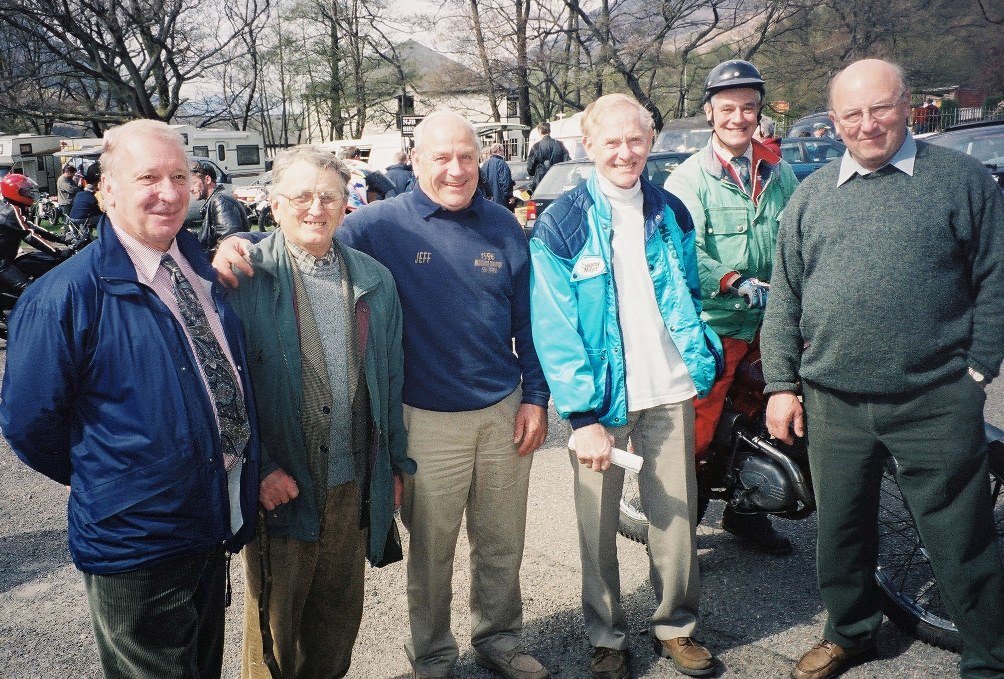
Contesting the ‘blue riband’ series:
In 1963, his loyalty to BSA was rewarded with a crack at the 500 World Championship. Armed with one of the new 420 machines that BSA had developed from the C15 250, and in company with Jeff Smith, Lampkin set out on a gruelling campaign that saw Britain’s likely lads travel to 13 different countries and cover more than 30,000 miles in a long and arduous season.
Incredibly, despite such a hectic schedule, Arthur managed to take time out for a week’s ‘holiday’ in the Scottish Highlands, where he won the Scottish Six Days Trial riding a C15T. Having won the SSDT on Saturday, Lampkin boarded a plane bound for Denmark, to compete in the Danish round of the championship the following day, where he was in inspired form and finished 4th overall to register his first champioship points.
Boosted by his recent upturn in form, he improved to take his first podium place in the 500 class in Italy, with 3rd overall after finishingthird in race two. The circus then moved into the Eastern European leg of the championship and the Czech GP, where a spirited ride in the second leg, when he briefly led the very rapid 263cc CZs of the home riders, Valek and Pilar, saw him finish 6th overall. He improved to 4th in Russia in late May, after finishing 4th and 5th in the two races.
…

To be continued shortly….
…
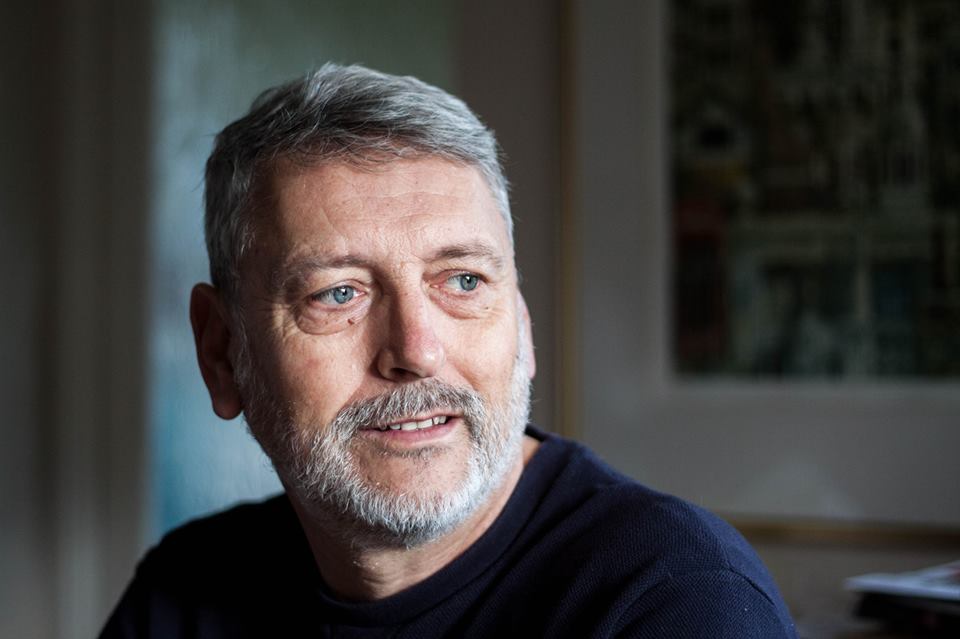
Who is Ian Berry apart from being a friend of Trials Guru? He was introduced to the world of motocross by the family television when he watched the BBC Grandstand televised series in the 1960s. Ian then attended many scrambles events in his native East Anglia, taking in Wakes Colne; Cadders Hill; Lyng and Hadleigh. He now lives in Lisbon, Portugal with his wife and two children where he works as an English teacher.
Ian has written two books on Motocross: “Out Front! – British Motocross Champions 1960 – 1974” in 2010 and “On Air! – The BBC Grandstand Trophy 1963 – 1970” in 2013.
Trials Guru wish to thank Ian most sincerely for allowing us to make use of the above extract on Arthur J. Lampkin with his permission. The text remains the copyright of Ian Berry, Lisbon.
Dougie Lampkin
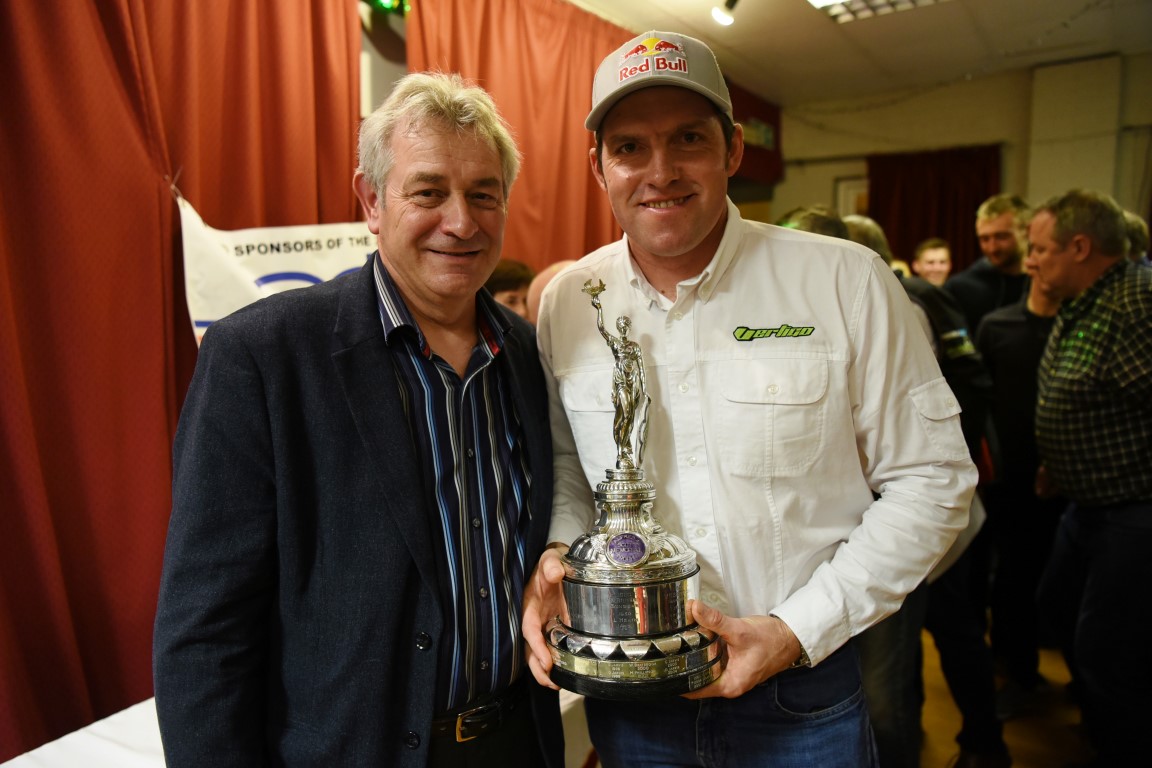
Dougie Lampkin – 12 Times World Trials Champion
Words and copyright: Sean Lawless
Dougie Lampkin MBE has no mementoes from his glittering career on display in his family home – the only clue is an immaculate 1957 Norton 500T that occupies a corner of what he jokingly refers to as his ‘posh’ room.
I’ve been privileged to visit a few top riders in their homes and without exception there is always at the very least an indication of their occupation – the odd helmet here and there, maybe a framed FIM certificate or even a separate trophy room. It’s perfectly natural to want to commemorate your achievements but Dougie is resolute.
“I’ve got a motorcycle in my posh room – which my wife absolutely loves as you can imagine – but if you walked into my home you’d have absolutely no idea of what I do,” he says. “There’s not a picture, not a single trophy. I have a couple of photos of my dad and a few of myself in my office and apart from that if Through the Keyhole came no-one would have a clue.
“I have a great family. I don’t need to walk around and see my world championship-winning bike sat in my front room. In fact, I’m quite glad to get away from it. I certainly don’t take my work home with me.
“In my first house in the Isle of Man I had a trophy on the mantelpiece. It stayed there for a few weeks and then I put it in the garage. I think there are two [versions] of me and the family man is nothing to do with riding bikes. I have to switch off from bikes and I always have done – if someone wants to phone me at seven at night and talk about bikes they can forget it.”
This desire to separate his twin roles as global trials superstar and devoted family man could possibly be the key to his incredible longevity. I’m no psychologist but I’ve been around the block enough times to see the long-term effects of the relentless pursuit of a sport. Sure, if you’ve got a day job to go to then all well and good but when your lifestyle is also your living it can be very different.
And for his whole life he has been intrinsically linked to the sport – initially through his famous family connection and later through his incredible achievements – but at 41 the 12-time FIM Trial World Champion and father of two is showing no sign of burnout.
Instead, he’s still firmly in the media spotlight through a regular series of innovative Red Bull flicks and his role as a development rider and UK importer for the Vertigo factory. He’s also still racking up the wins and last year did the double, taking his 11th SSDT – with the loss of just one mark – and fifth Scott Trial victories.
“Red Bull have been massive for me. I’m going into my 19th year [as a Red Bull athlete] and already we’re starting to talk about projects in 2019 so the longevity is still there and I would credit Red Bull with so much of that.
“They’ve given me opportunities to ride in odd locations and go to countries that I never visited with trials to make a video or do a photoshoot. It’s absolutely brilliant. I’m a lucky boy – there’s no two ways about it – but I do think that I’ve put a hell of a lot of effort in along the way.”
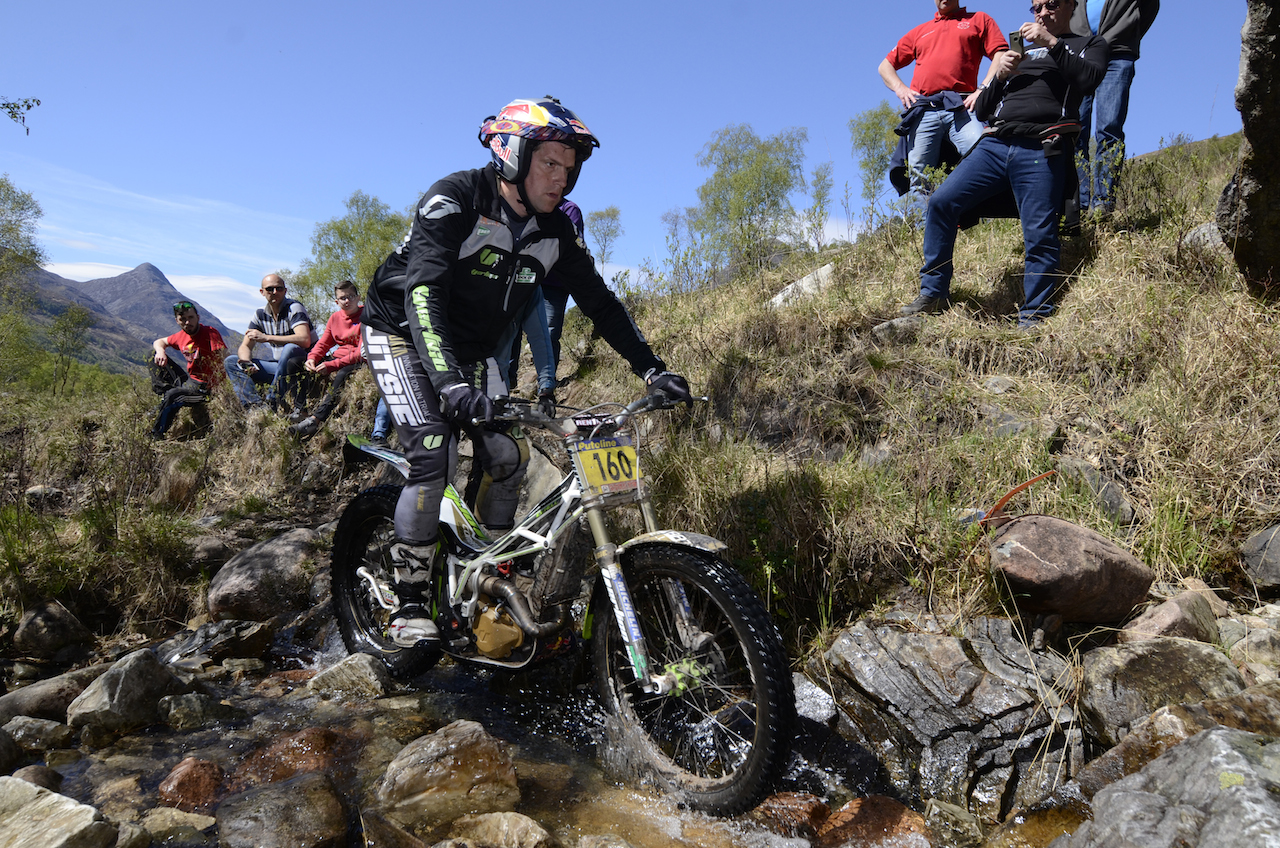
Coming from a pragmatic Yorkshireman like Dougie, ‘hell of a lot’ is a huge understatement. He’s obviously naturally gifted – his late father Martin was the inaugural world champion back in 1975, cousin John was also a world title contender in the early ’80s and uncles Arthur and Sid have both won the Scott and the SSDT so it runs in the family – but during his glory years from 1997 to 2003 when he won seven consecutive outdoor titles and five indoor crowns his work ethic was unparalleled.
“I’ve always worked hard. People say you only get out what you put in. I think there were times I could’ve put a little bit more in when even I thought I was giving 110 per cent but in reality I don’t think you ever are. It’s about how far you can push yourself and through those early years I pushed myself really hard.”
Despite the weight of the Lampkin lineage on his broad shoulders, Dougie says he was entirely self-motivated with little or no pressure coming from his family.
“It was for myself. It’s only ever been about myself. It wasn’t because I was riding for someone else or because my dad was world champion or because my family name’s Lampkin. It was more. People say they hate losing – it was always much more than that for me. I knew that if I was the best then people couldn’t beat me and that’s what I pushed towards.
“I genuinely don’t think there was any pressure from anyone else. Dad stopped riding, they then bought the pub. We were young – that’s when we started to ride our club trials but my dad was busy golfing, he had the darts team at the pub, the doms team. Mum would take us to the trials when she could or a friend would. It wasn’t like everything was being loaded up and we were being dragged off – we were asking to go to the trials.
“Dad was absolutely not a schoolboy dad. He loved it when we got to a national that had a bit of a lap to it because it meant the parents couldn’t chase round.”

Naturally, he was introduced to bikes at an early age although Dougie was a relatively late starter when it came to competing.
“I had my first competition when I was nine but I started riding when I was about three. When my mum was pregnant with me, dad was riding for Bultaco and my mum got gifted a Bultaco Chispa which was a bit big for me at that age so I actually teethed on the seat of that but my first bike to ride was a little Italjet 50 Bambino.
“I rode my first trial on a Whitehawk 80 behind mum and dad’s pub, The Miners Arms at Greenhow. It was the first trial for myself, my brother Harry, my cousins Dan and Ben Hemingway and Malcolm Rathmell’s son Martin. I won on three!
“We always had to clean and mechanic our own bikes and when we’d taken a lot of stuff off and couldn’t put it back together dad would come and help us but that’s how you learned to do it. It wasn’t handed out. But it’s never been about being pushed to ride anything and I simply think that doesn’t work at all. It was just down to me really and that turning point at 14, 15, 16 when I was thinking that I’d quite like to be a trials rider.
“Previously to that I’d played a lot of golf as well and I remember dad saying to me – I must have been about 12 – ‘you’ll have to decide which one you’re doing, it’s either golf or bikes’ and the bikes took over.”
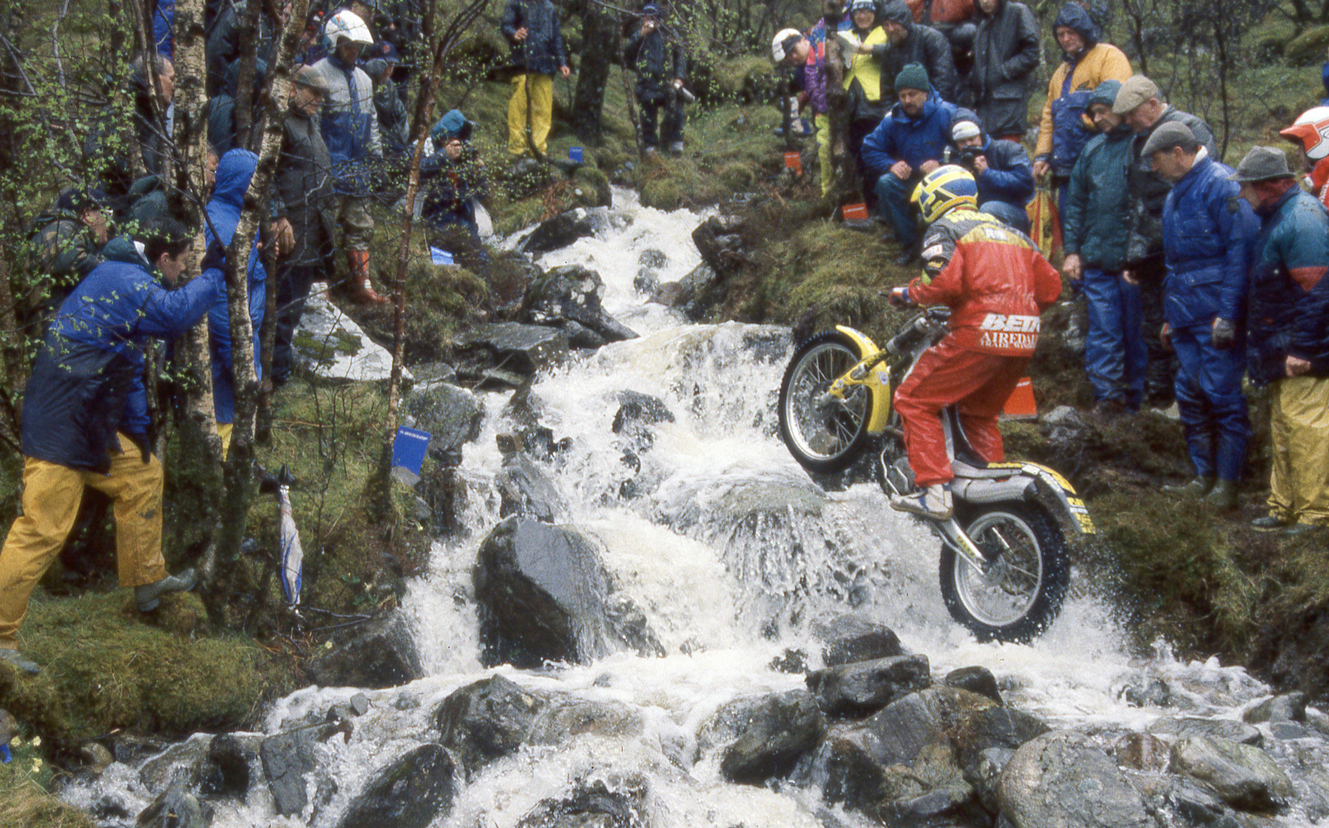
Throughout his youth career he played second fiddle to Graham Jarvis. The current king of extreme enduros is a year older than Dougie – more often than not a big advantage at an early age – and he had to wait until they were both involved in adult competition before gaining the upper hand.
“It was all about Graham. I never beat him in the schoolboys. I never beat him in nationals, I never beat him in Junior Kickstart – I had to wait until he cleared off into the adults. Literally, as soon as he went out I won the A Class British title.
“We then went to the first round [of the European championship] in Belgium in ’93. I’d trained pretty hard for it and ended up finishing sixth in the first round so we decided to go to the next one and I ended up being European champion. It all sort of happened in ’92 and the beginning of ’93 – I made a big step forward with putting more effort in and more training and passed Graham then.”
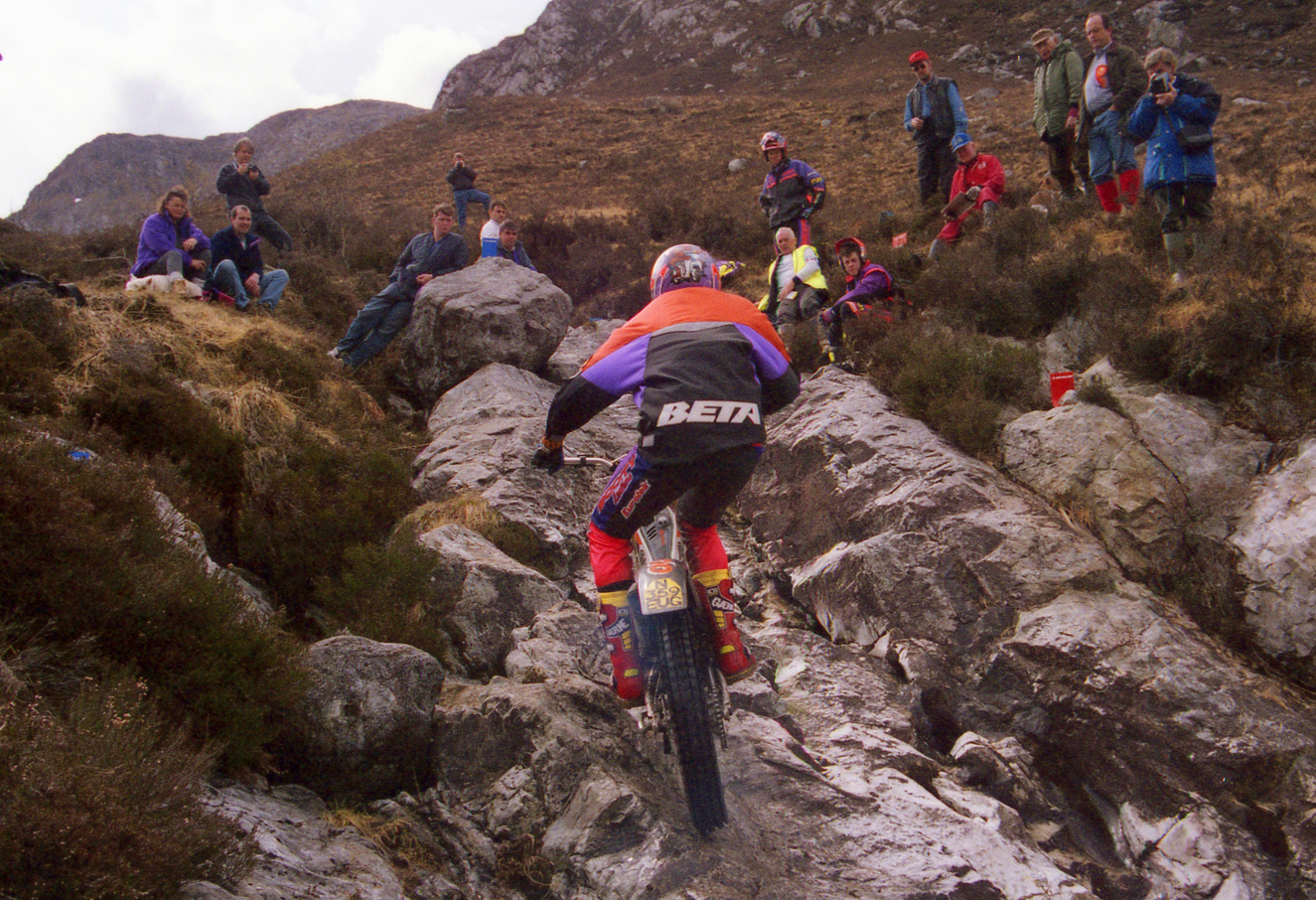
Dougie won two rounds on his way to the 1993 European title and the same year also made his full world championship debut. After an inauspicious start – he was 24th at the opening round in Luxembourg on a total of 120 marks, 106 behind winner Marc Colomer – he finally picked up a point in Andorra at round seven with 15th and then scored two more a fortnight later in Spain.
After missing events in Sweden and Finland he returned for the final round at Pateley Bridge in Yorkshire where he broke the top 10 for the first time.
Throughout the season Dougie had been watching Spanish great Jordi Tarres who was on his way to his fifth world crown and it’s fair to say he liked what he saw.
“I absolutely looked up to Jordi. What Jordi did for our sport – you didn’t realise then but it was massive and that was just the beginning really. In ’93 he had a big truck – I travelled in a van with Graham Jarvis and a friend and we sort of threw everything out when we got there and jumped on our bikes. There was Jordi in his fancy motorhome and there was another truck from the Gas Gas factory at that time and he had mechanics in there.
“He stepped off his bike and everyone did everything. I used to look up into the truck and watch everything and think ‘he doesn’t even have to wash his own bike, that is ace – I’m having a bit of that sometime’!
“I do think back about things like that sometimes. It was definitely a motivating factor. He’d get to a section and someone would hold his bike! How cool is that? He’d probably never touched a tyre pressure gauge for 10 years. Brilliant!”
Dougie turned pro towards the end of the year but only after Martin had made sure he’d taught his son some valuable life lessons.
“In ’93 while I was still doing my exams my dad had a newspaper shop in Silsden and there was a man in there who had workers on the Knaresborough Bypass who was complaining that some hadn’t turned up. So dad put myself forward and at a quarter to seven the following morning I was picked up at the paper shop and taken to work.
“We were doing the kerbing – a nice little lightweight job! That was from half seven to half six or something like that, five-and-a-half days a week for £3 an hour. I earned £2,700 to throw into the pot to go to the trials. I was working a little bit too hard really – I was absolutely destroyed.
“Another friend was a roofer so I left and did a bit of roofing but one day my dad saw how high up I was doing a flat roof in Ilkley and decided that he didn’t quite like it anymore so I got taken off that job and fitted a few plastic windows instead.
“Looking back it was absolutely the right thing to do – at the time I thought it was slavery but it was to learn the value of a pound as dad put it and you quickly realise that if you can make a few quid doing something easy you should probably have a go at it.”
Dougie didn’t have long to wait for his next major milestone. After picking up eighth at the opening round of the 1994 championship in Ireland, he headed to Hoghton Tower in Lancashire where he scored a sensational six-mark victory over Colomer.
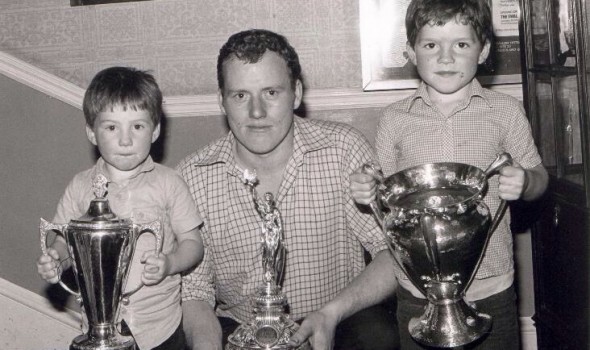
“I remember the whole day. It was a bit of a strange one because there were a lot of hillclimbs and off-cambers and it was quite soft with a lot of ruts. I remember flying through these ruts like I could walk on water – my balance was fine and I was absolutely cruising everywhere. It was amazing, I absolutely loved it. I didn’t think I was that close but someone – who probably shouldn’t have – told me and then I fived the last section and thought I’d blown it.
“I just had one of those days when everything clicked and probably others didn’t get on that well with the terrain. Jordi had an absolute nightmare for example. My first world round win bolted out sooner than anyone expected.”
Although he’d tasted victory at the highest level, Dougie still hadn’t developed the mindset of a champion and wouldn’t beat Tarres at a world round for another year.
“I was still looking up to Jordi as being an absolute legend. I didn’t think I could ever get anywhere near him. I was putting in massive amounts of effort but I would have been dreaming if I thought I could just waltz in and start beating everybody.
“After that year I started getting quite a bit better bikes and spent more time practising in Spain and learning the job a little bit more. I rode for Beta Spain quite a bit and did a couple of Spanish championships, staying in one of the owner’s apartments, mainly with dad. We were having a proper go at it and that’s when the difference came.”
Finishing sixth in ’94 with further podiums in France and Italy, Dougie advanced to fourth in the standings the following year but he had to wait until 1996 for his next victories when he took back-to-back wins at Hawkstone Park and then Red Hall in Ireland.
After a second-placed finish at the following round in the USA he found himself leading the championship before Colomer came on strong with a run of three wins that helped carry him to a 17-point championship victory over Dougie.
Then came that momentous 1997 championship when, with the format changing to two-day events, Dougie claimed 13 wins from a possible 19 to end the season 53 points clear of Colomer.
“I think the first world title will always stand out. While I’d always dreamed of it, dreaming is just dreaming but then during ’96 I led the championship for a couple of weeks after America. I wouldn’t say that was a little bit of a surprise but I don’t think I was prepared to win the championship then.
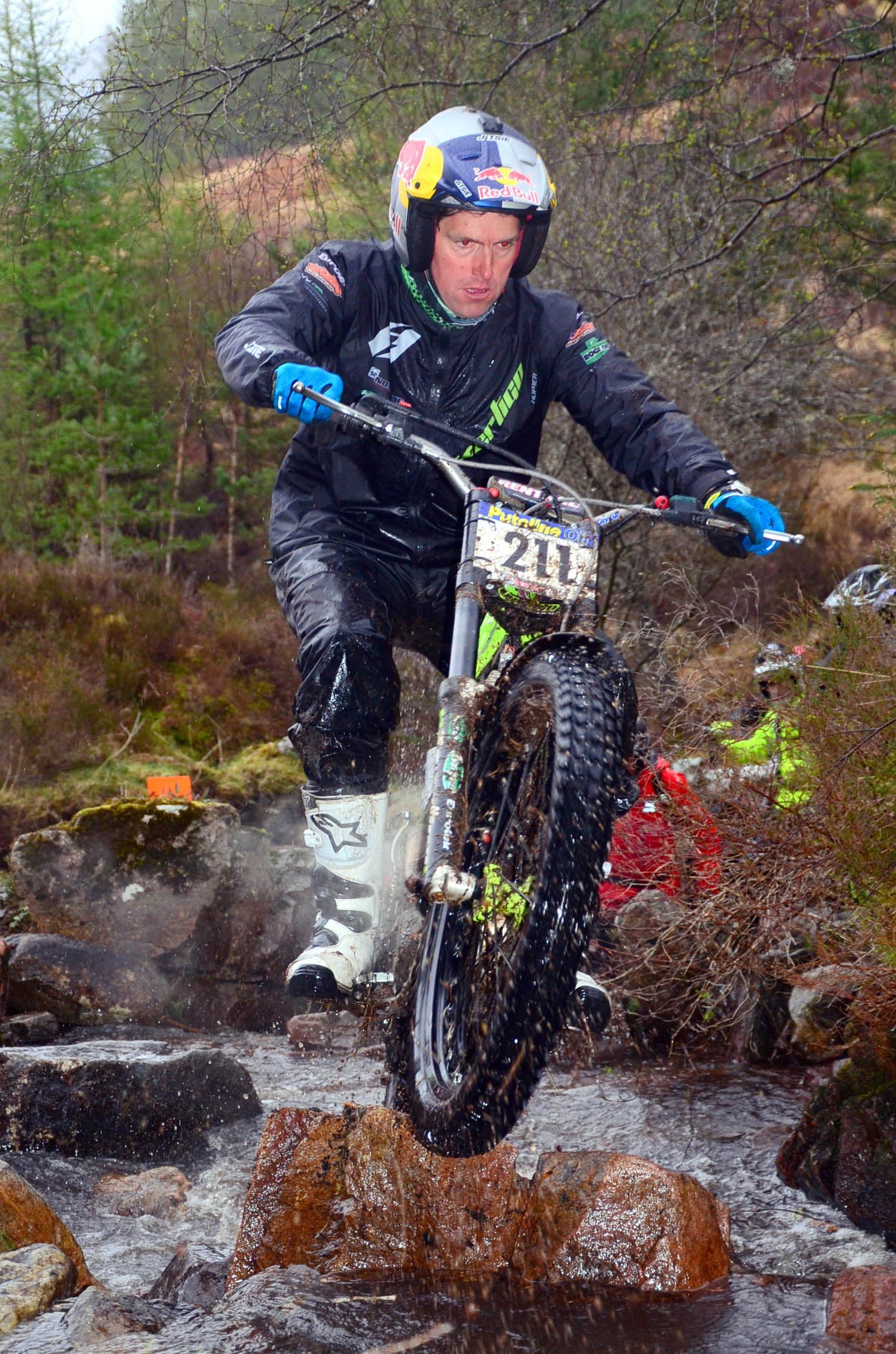
“I do think it gave me a kick up the backside to put a fair bit more effort in. I could just sort of touch Colomer then and I wanted to stand on him a bit. I was mad with myself and I think that helped to get me more prepared. So ’97 was massive for me. Dreams come true and at the time my dream was to be world champion, not a multi-time world champion. Then, when you get there, there’s only one place to go – the big slide down which is inevitable at some stage so you’ve just got to hold on.”
Despite what Dougie says, his star continued to rise and in 1998 he won 15 out of 18 rounds – finishing second on the other three occasions – to crush Colomer and win by 87 points. The following year his record was 18 wins from 20 rounds with his margin of victory – this time over Takahisa Fujinami – a whopping 115 points.
“I think ’98 and ’99 I was cruising. There was a fairly big gap really but I was training massively, just trying to make the gap bigger. I wasn’t thinking about someone beating me – even if I rode pretty average I wanted to be winning.”
Up until then Dougie had been riding for Beta – imported into the UK by his cousin John – but after finally breaking Gas Gas’ stranglehold with Colomer in ’96 through its European subsidiary Montesa, the mighty HRC wanted the crown back.
“All the [Beta] team was great and then the big fax came through from Honda so I did a test in August back in England. Moving to them was a big, big thing and to win the championship straight away with them I think was massive.
“Obviously I knew the deal was going to be great. I was on a good deal at Beta – I was very happy there – but also I’d won for three years and dad was saying it was another motivation to ride on something else. But the bike wasn’t good, it was as simple as that. It needed work. You can’t say it was crap or anything like that but to win that championship for Honda was massive.”
The switch of machinery didn’t do Dougie any harm and he ended the season 85 points clear with 17 out of a possible 20 wins and in 2001 he made it five consecutive world crowns, although this time around he wasn’t as dominant with 11 wins from 18 starts. He still took the title by 73 points but in 2002, after finishing runner-up every year since 1999, Fujinami had reduced the deficit to 32 points.
Dougie’s final world crown came in 2003 when he defeated his Japanese rival by 18 points to make it seven championships in a row before Fujinami finally beat him to the title in 2004.
“My last championship went down to the last round but I only had to finish in the top seven or eight so it wasn’t like who wins, wins – but the last few races of that year took it out of me. When I saw how upset Fuji was at the end, looking back he decided he wasn’t going to be second the following year! I think he stepped his game up and, to be fair, he had a massive first half of the season and took the title off me.”
It was a close-run thing – Fujinami won by 16 points after Dougie staged a strong finish to the season – but there was a new project under way at Honda that would impact on both riders’ hopes of further titles.
“I was so mad when I lost to Fuji that I thought I could snatch him back because he’d had a right flurry in sort of the beginning to middle but towards the end of the season I just walked all over him. So everything was great and then our Japanese friends brought the four-stroke Honda over and that pretty much signed and sealed both of us for the following year.”
It was obvious from the get-go that the four-stroke was going to require a lot of work to make it competitive.
“The first time we tested it towards the end of ’04 we were in trouble. I remember Fuji shedding tears at the end of that first test – I think he realised that if it stayed like that we weren’t winning. That was top and bottom of it really. The effort we put in for the first six months of the first year with the four-stroke was absolute madness. HRC were going backwards and forwards [from Japan] with engines as hand-luggage – we literally tested every day.
“We were flying home from indoor trials on a Sunday morning and going straight out riding and parts were coming every week from Japan. I won the first round [in 2005] which wasn’t down to anyone else apart from me. Simple as that really. The second round the bike stopped on section two and it took us about an hour-and-a-half to get it going and I never looked at a section for the rest of the trial and finished fifth or sixth and the rest of the season seemed to feel like that.
“It wasn’t anybody’s fault – the effort that went in was far beyond what you could expect from any factory or any individual mechanic – but it just wasn’t there to be. We didn’t have the goods coupled with Adam Raga absolutely flying at that moment.
“I think if we’d stayed on a two-stroke one of us would’ve won. Both of us lost so much ground when we stepped on that bike, mentally and in reality of the machinery.”
Dougie still finished third that year with three wins but he slipped to fourth in 2006 and for 2007 the final nail was hammered into the coffin…
“The first sort of 12 to 18 months, together with our test rider Amos Bilbao, I learned so much and we made a fantastic bike. The factory Honda is an absolutely amazing bike and then just as me and Fuji had got it to its sort of pinnacle somebody signed Toni Bou onto our team!
“I remember him coming to the test and he just rode my spare bike and me and Fuji were looking at each other going ‘crikey, he’s pretty handy’! We already knew he was handy – we saw him when he was 16 riding our sections and we were like ‘don’t like him much’!”
The rest is history. In 2007 Bou began his run of world titles which continues to this day while Dougie slipped down the rankings before his last full season in 2010 when he finished seventh.
“What ruins you when you’re riding and what makes you drop off is when you have to go training again on a Monday because you’ve had enough. Then you sort of start thinking that you’re making the numbers up a little bit and then you don’t want to go practising and you’re thinking ‘why’s he better?’ because my level was still going up but it wasn’t going up fast enough by a long way.
“I was riding well but they were riding much better and I couldn’t compete anymore. I wasn’t doing as much training and wasn’t living the dream as much.”
Not many champions go out at the top. The competitive drive needed to win in the first place makes sure of that but his 12 world titles, 99 outdoor wins, 36 indoor wins and four Trial des Nations victories coupled with the honourable way he’s always conducted himself have left Dougie with few, if any, regrets.
“There’s not much I’d change about where I rode and what I rode. Sponsorship wise I don’t think I really sickened anybody off too much along the way. Obviously, I left people for other people for deals but that’s life – my hobby turned into a job. I’ve had a few people that didn’t pay me but that’s the way of the world.
“And I still love riding my motorbike but now if I don’t ride it for a week or two that’s great. I still love doing the testing, I love getting prepared for events like the Scottish or the Scott or a few of the classic ones abroad that I try and do every year.”
“The one thing I miss is race day, literally from waking up in the morning to actually when you set off with your punch card. After that I’m not bothered about riding the sections but there’s no substitute for that preparation bit, mentally getting myself ready.
“People do have a lot of problems with nerves and everyone gets nervous but you have to just turn that into a positive. I loved that moment of not being able to eat your breakfast and everybody panicking and dancing around you trying to get stuff ready. I always had my little team and we always had our little way of doing things. That regimented regime, I’ll always miss that. That part’s forever missing.”
The Lampkin legend…
Loud, larger-than-life but above all incredibly knowledgeable, Martin Lampkin set the benchmark for first riding and then minding and his death in 2016 at the age of just 65 is clearly still very upsetting for Dougie.
“Dad was my minder and I learned so much from him throughout all my career really,” says Dougie. “I had somebody by my side who wanted to win just as much as me. It wasn’t like somebody who worked for me or anything like that – it was like a part of me and I reaped all the rewards of that. During an event I could get away with saying a few things you probably couldn’t get away with saying to your father but when we got to the end of the event I’d get a bollocking and put back straight again.
“Dad loved coming to the world rounds but I think he did it for me, not for himself. If you look back, when he stopped riding he did the Scottish in I think ’88 on an RTL Honda and after that he never rode. He had no interest in riding in any classic events or pre-65 stuff – he only ever rode a motorbike when he came with me.
“But the driving around Europe, first in the van and caravan – mum would come and then we had the big truck – he loved all that side of it. I think he loved being back in the trials world again but it was because of me, I don’t think he was hankering to do it for himself.”
If Dougie had been competing to uphold the family name rather than doing it for himself then being a Lampkin could have been a millstone around his neck. As it was, he was able to draw on his family’s support whenever he needed to.
“Our family is really, really close and always has been. Both [parents] have helped so much in my career – all the family really, especially John. In the early years especially they helped me to miss the pitfalls and gave me a heads-up on things. Picking me back up and pointing me in the right direction. There’s no substitute for experience and I’ve plucked it from all over.”
Despite helping to drive Beta sales with three world titles, when he left at the end of the 1999 season his cousin John – who to this day still is the Italian manufacturer’s UK importer – gave him his full support.
“John was absolutely brilliant when I left Beta. He knew it was coming because we were very close about how everything went and the first day I went to test the Montesa with the whole of the Spanish factory – it seemed like half of Catalonia had come with more tackle than we knew what to do with – John came with us.
“They were a little bit surprised to see him but as far as I was concerned John was the importer of Beta but also he was part of my team. When we started talking about contracts he shook my hand and said good luck. He still helped me throughout all my career whatever I’ve been on.
“Our family is above and beyond anything like what bike we ride and it always has been which is pretty unique. I’ve always said we’ve got the best family in the world and it’s true. I’ve told my wife ever since I’ve met her that we’re special – special’s a good word actually!”
It’s impossible to put enough emphasis on what family means to Dougie. Married to Nicola, an interior designer whose touches are evident throughout the ground floor of his immaculate home, they have two sons, Alfie and Fraiser.
“On the family side I’m a very private person. This is my first ever interview that I’ve done at home. My home is with my family and that’s perfect but then there’s this bloke who got an MBE for riding a motorbike and he’s an absolute pain in the backside, there are no other words for it. Self confessed! When it comes near race day just keep away from me because I just get worse but in my private life everything couldn’t be better. I’m pretty lucky really.”
Both Alfie and Fraiser compete in trials and are showing flashes of the Lampkin magic but, just as Martin was with him, Dougie is happy to sit back and let his boys make up their own minds.
“They love riding their bikes but I do really focus on exactly how I was. They’re asking me to ride their bikes and that’s how it was for me. Alfie keeps telling me he wants to ride more and it’s completely up to him so we’ll just see what happens.
“If they don’t ride for two or three weeks it doesn’t bother me, it’s up to them – they’ve got to make the decision and I’ll be there to support them.”
Second helpings!
Colomer and Fujinami…
When Jordi Tarres was coming to the end of his reign, Marc Colomer was being lined up as the next Spanish superstar but he only managed his solitary 1996 world title before being steamrollered by Dougie.
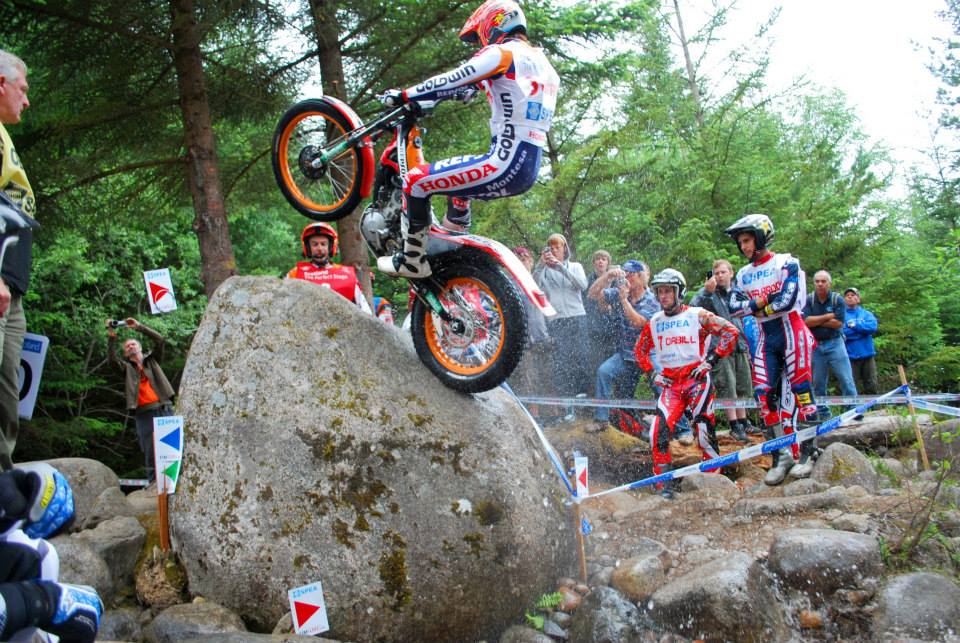
“I don’t feel sorry for Marc,” says Dougie. “We’ve actually spoke about it. We were always quite good friends. When I signed for Montesa he actually had one year left on his contract and he was welcome to leave but he decided to stay.
“To be honest I think it was absolutely horrendous for him because I just pummelled him – stepped into his team and walked all over him really. Now I’m really good friends with Marc and I’m also really good friends with Fuji who pretty much finished second all his career to me as well.
“We do joke about it. Fuji calls me ‘seven times lucky’ and Marc just says I’m the biggest pain in his arse that he’s ever experienced! Looking back I think I broke Marc a little bit and he retired a little bit too early which is a shame but he just wasn’t enjoying his riding anymore.”
The Bou show!
Dougie on Toni…
For the last 11 years the battle at the front of the world championship has been about two men – Toni Bou and Adam Raga. Bou, of course, has maintained the upper hand all this time but Dougie doesn’t feel the gap between them is as large as the record books suggest.
“If you watch Adam ride outside of a race you wouldn’t really put any gap on him and Toni. I think Toni just has that little edge in competition. When I was team manager at Gas Gas, Adam lost two world championships on the last day and one of them on the last half-a-lap of the last day.
“We were at a big dinner in Barcelona to celebrate the 40th anniversary of the indoor trial and Toni credited Adam in his speech about how his level was what it was because Adam has constantly pushed him over the years. And Adam said he would probably have never been the rider he is if it hadn’t been for trying to chase Toni so there’s a lot of mutual respect there.
“I think that runs right through trials, there’s not really any massive problems between people. Obviously, race day is race day and all sorts of things happen but it’s funny how [quickly] things are forgotten.”
While we’re on the subject of Bou, despite the obvious parallels to his own career does Dougie think one man dominating the sport for so long is detrimental?
“I don’t think Toni’s supremacy is bad for trials. I think people see what he’s done as absolutely amazing. I remember when I was winning every Sheffield and dad’s business partner sort of saying ‘we could do with another winner’ and it made me wonder why someone would think that.
“I admire Toni because I know what goes into that and it’s easy to say that it would be nice to have another winner but, actually, there could be another winner but there’s nobody else putting in the same amount of effort and you can’t blame Toni for that.
“When it was me and I was only losing a couple of times a year people would have liked another winner but I wasn’t stopping anyone being another winner – they just couldn’t beat me.”
Nor, it appears, is Dougie too bothered about Bou beating his records…
“He’s on 20-odd championships now and I know what it took to do mine. It was pretty bloody bionic. He’s not won as many world rounds but it’s championships what count at the end.
“I won 99 GPs and people think I’m really sick that I missed 100 but I’m not because the following morning I’d have been wanting number 101. That’s the problem – from the competitive side I’ll never ever be satisfied. That will never drop away and I can’t do anything about it.”
Inside job!
The glory years…
Dougie took over at the top at the height of indoor trials’ popularity which made for a very hectic – and extremely lucrative – schedule.
“The indoor scene was just coming to a pinnacle when Marc was supposed to take over from Jordi,” he says. “We were doing 35 indoors a year – the job was absolutely flying. Jordi had dragged so many sponsors into trials from all your drinks, cars, cigarettes, everything – it was incredible.
“I always preferred the outdoors but I quite liked turning up for the indoors because you got paid for it. I was contracted to ride 35 indoors a year and I did that for three years. Sometimes we were riding two or three on a weekend – it was absolutely amazing – and that was all because of Jordi.
“I’ve always been an outdoor man really, it was always my speciality. Indoors is a completely different sport but I think they’re good for getting recognition for our sport in general.”
New beginnings
Dougie gets extreme…
With his trials career coming to an end, Dougie followed former TWC riders Taddy Blazusiak and Graham Jarvis into the world of extreme enduros.
“The trials was peaking off a little bit so I had a go at some extreme enduros, mainly because of Red Bull who were keen for me to try a few crossovers things. In the early days of extreme enduro there weren’t any specific riders for it so us trials riders did quite well at it and I was very successful at that.
“It was nice to ride completely for fun – no-one had an expectations, including myself. Then you have some results and the pressure comes back on and it’s back to full-time again and I was having to train as an enduro rider and a trials rider during the week. There was absolutely no chance.”
Dougie kicked off his career on a four-stroke Beta which, being polite, weighed almost as much as a bus – something which undoubtedly contributed to him being airlifted from Erzberg with exhaustion. Luckily, a more suitable machine was just around the corner.
“Then I started riding the Gas Gas and I had a second at Erzberg, I won Lagares and various other things but I wasn’t fast enough but I never wanted to be an enduro rider – I was a trials rider, I always will be.
“Towards the end I rode with KTM and I was like full factory really. I was in the truck, I had a mechanic when I went to Erzberg. On one hand it was absolutely brilliant, on the other hand I was like ‘bloody hell, I’m fully pro again’ and I quite liked being parked over the other side of the paddock with Jacko and Eurotek and dragging my bike out and messing about with my friends on the hill.”
Vertigo
The next chapter…
Dougie has played an integral part in the success of the new Vertigo marque.
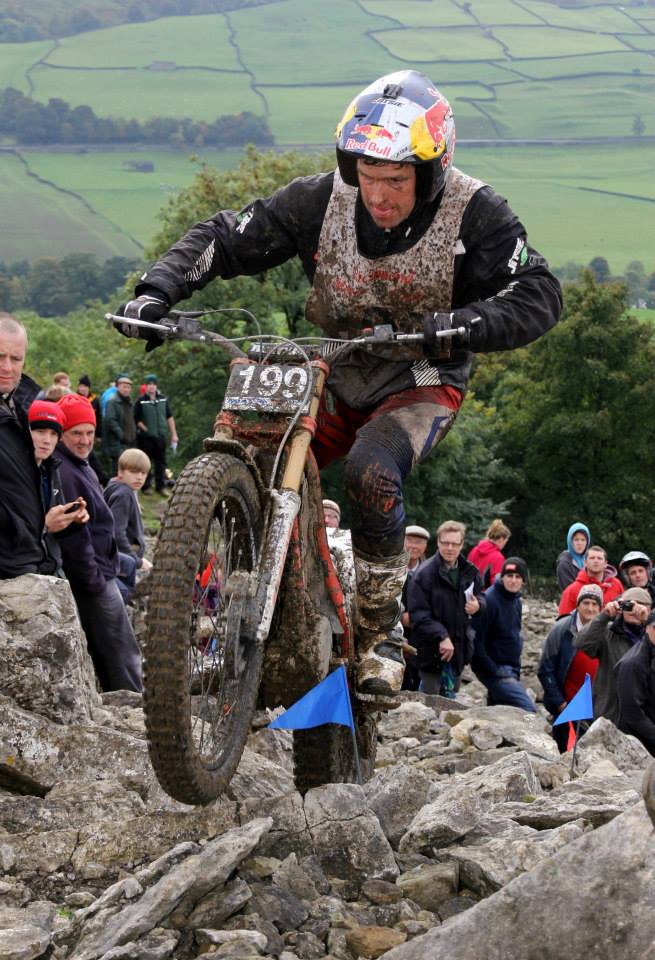
“I’m the UK importer for Vertigo,” he says. “I’ve been there four years but I’ve known the company owner Manel Jane for a long time. He’s ridden the Scottish for the last 25 years. He has always wanted to build a bike and I always managed to talk him out of it and then one day over dinner in Barcelona he announced that he was 55 and if he didn’t build it now he never would.
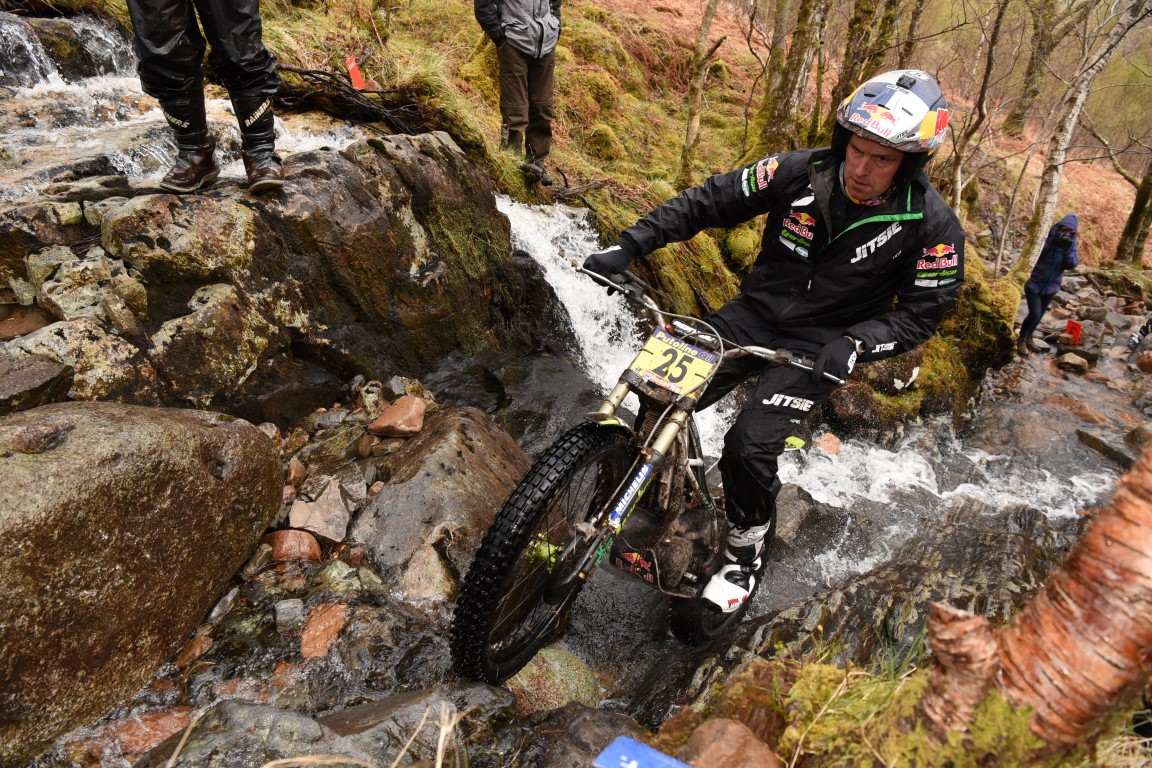
“So we started talking with a few people, put together a small team and rode up at his private land at Camprodon. It was all secret. People knew we were making a bike – they expected it to be a little bit of a copy of everything else but he not only wanted to build the best bike, he wanted to build his own bike.
“The opportunity to take it from a drawing in a restaurant to being in the third year of production and importing the bikes is another very important part of my motorcycling career. It’s something great to be involved in as was developing the four-stroke Montesa.
“I’m still testing the bikes and still at the world championship with the factory team giving my advice here, there and everywhere – whether they like it or not!”
Dougie on…
The new-look TWC…
Headed by Dougie’s long-time associate Jake Miller, Sport7 took over the reins as promoter of the FIM Trial World Championship last year and instigated a series of radical changes.
“Obviously, I’m a little bit biased,” says Dougie. “I’ve worked with Jake since the end of ’98 and if I was starting my career again I’d be working with him again. It’s as simple as that.
“The world championship for probably the last 10 years has been in a bit of decline. We’ve been losing riders, we’ve been losing great events. Trials was the only one not to have a promoter and Jake’s now done that with TrialGP.
“Change ruffles a few feathers but if you don’t try something then you’ll never know. It’s certainly a lot more professional and I think at the end of the day everybody from the promoter to the riders to the manufacturers wants the same thing and it’s certainly going in the right direction.”
Page turner
A life in print…
On sale at the end of April, Dougie’s as yet untitled autobiography promises to be an essential addition to off-road fans’ bookshelves.
“I’ve just read the first draft,” he says. “It’s 84,000 words but it’s still missing the part about my dad – I’ve been trying to write that part for four-and-a-half weeks and have not quite managed it yet – and there’s a little bit of extreme enduro to put in there as well.
“It’s something that I’ve wanted to do for a while. I didn’t want it to be about results because that would be boring, it’s more about from the beginning when my granddad came up to Yorkshire with his family and uncle Arthur in a sidecar.
“There are a lot of stories there that people won’t know and maybe won’t expect. There’s a lot in there and I’m really pleased with the book. I’ve enjoyed doing it and it’s nice to relive some of those moments.”
(Dougie Lampkin MBE was interviewed by journalist Sean Lawless in 2018.)
Trials Guru wishes to thank contributor, Sean Lawless for this article under his copyright on Dougie Lampkin to add to the Lampkin of Silsden Trials Guru page.
More Lampkin history:
‘Family Cycle’ – Short Film featuring the Lampkin Family:
Comments on ‘Lampkin of Silsden’
Rob Edwards – Former Montesa factory rider: “I wish there was a ‘like’ button on here similar to facebook! I spent many happy days back in the seventies, travelling Europe in company of Sid and Mart when they rode for Bultaco. What great times they were and it’s fantastic to read about some of them here on Trials Guru”. – Rob Edwards
Coming soon – More Lampkin articles …
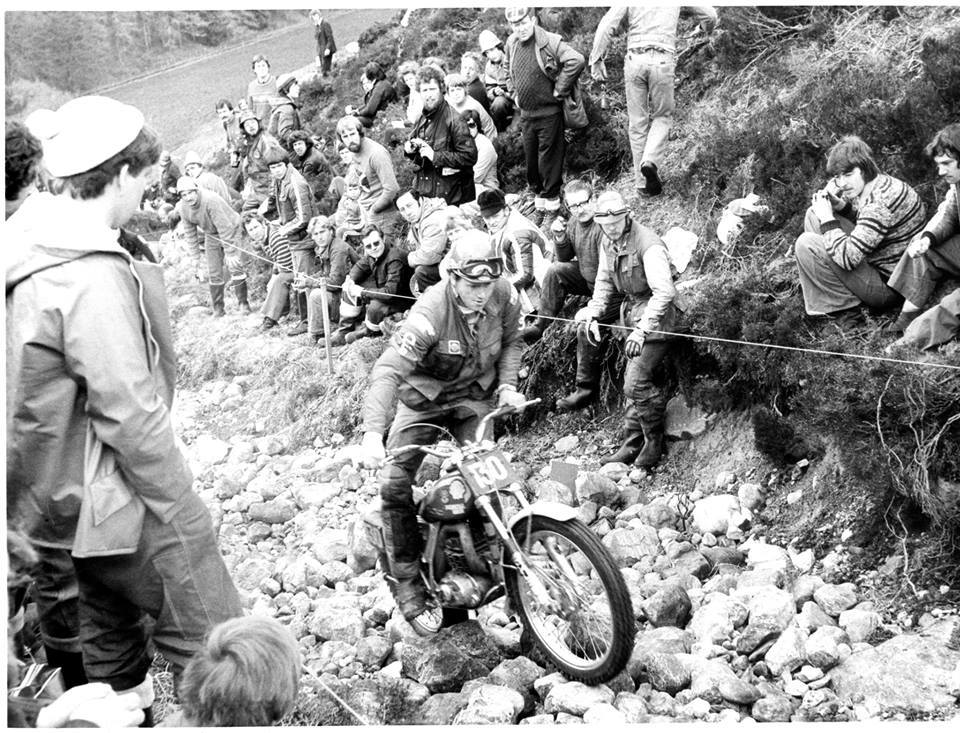
Harold Martin Lampkin – trials’ first World Champion (1950 – 2016)
…

We are currently working with other contributors to enhance the Lampkin of Silsden ‘section’ experience, please check back from time to time to read updates to this section.
Lampkin of Silsden is the copyright of Trials Guru, with sections the copyright of Ian Berry, Sean Lawless and A.R.C. Lampkin.
Apart from ‘Fair Dealing’ for the purpose of private study, research, criticism or review as permitted under the Copyright, Design and Patents Act, 1988, no part of this article may be copied, reproduced, stored in any form of retrieval system, electronic or otherwise or transmitted in any form or by any means, electronic, electrical, mechanical, optical, chemical, photocopying, recording or otherwise without the prior written permission of the author as stated above. This article is not being published for any monetary reward or monetisation, be that online or in print.
Trials Guru – Dedicated To Trial… running free of charge!
Trials Guru Main INDEX

 TRIALS GURU - DEDICATED TO TRIAL