Tag Archives: ACU South West Centre

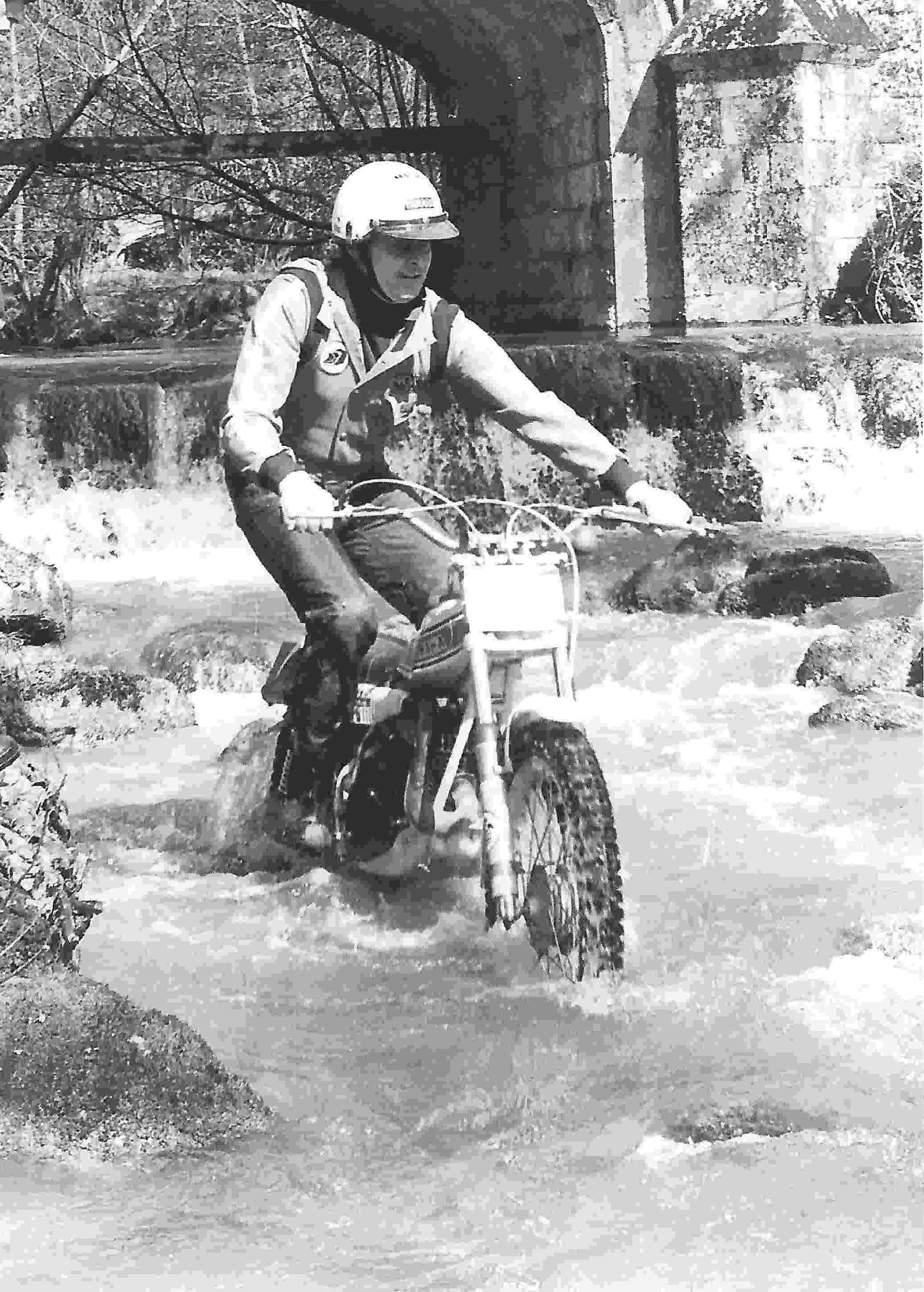
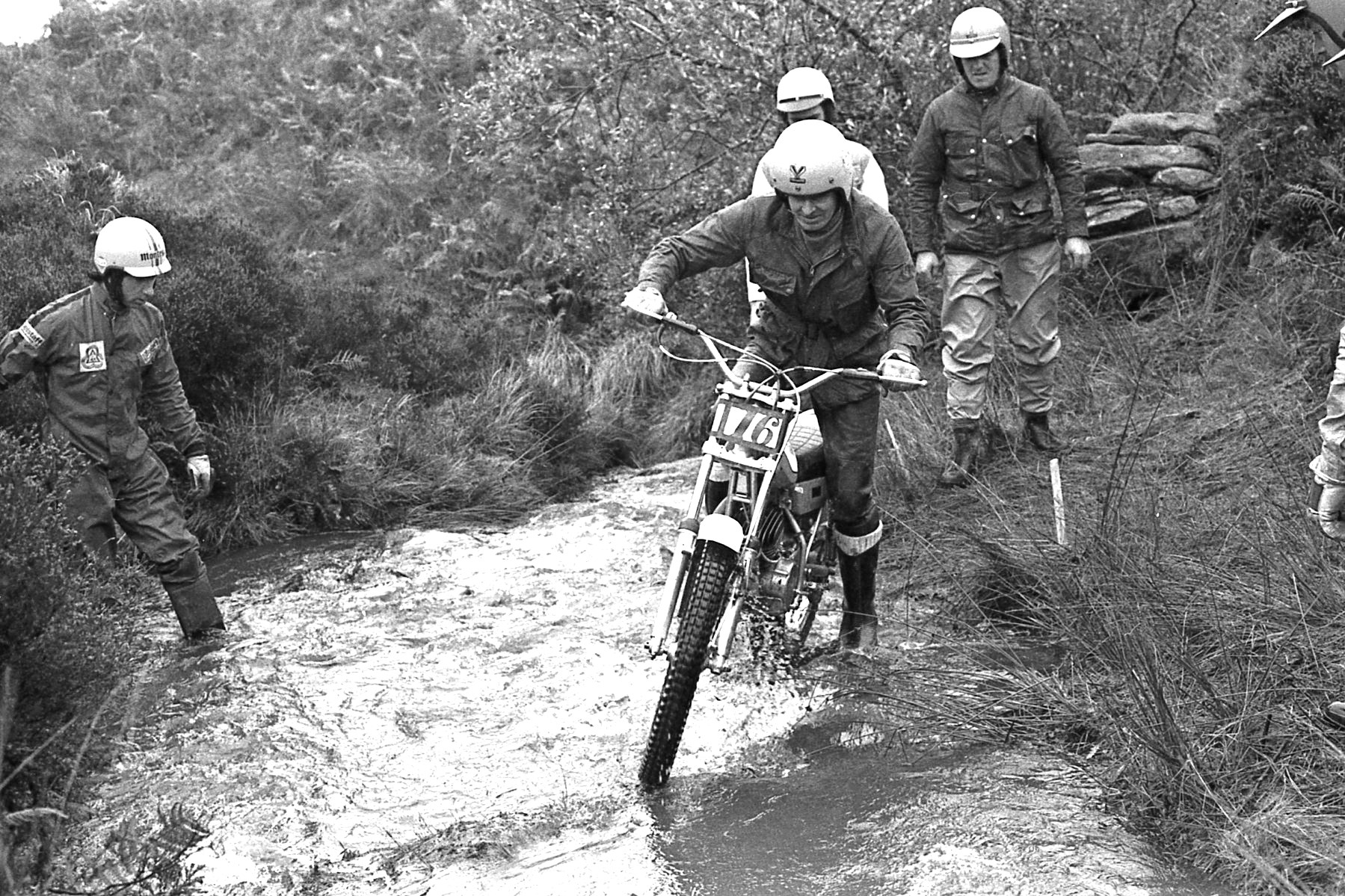
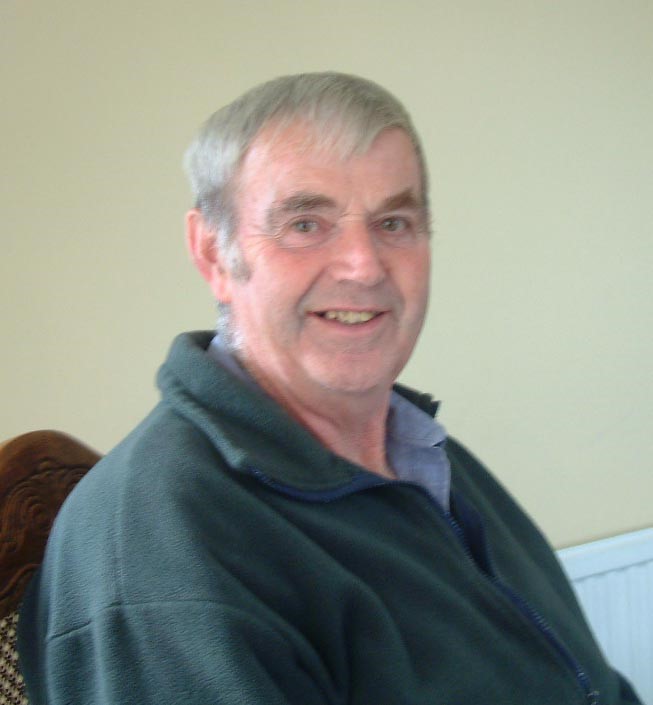
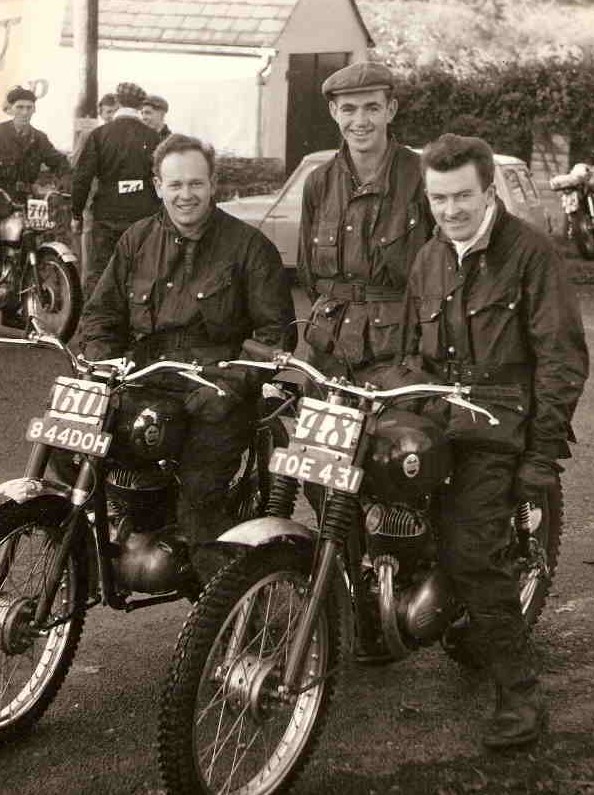
Bill Hartnell with Mike Naish

We introduce you to another stalwart of the South West Centre. A man who was seen by many in local events helping out and observing. In national events as a Steward and the ACU Centre Board as the Finance Officer. A man who has had much experience in trials both locally and nationally, experience gained before many readers were born. A man who carried on in his chosen sport for most of his life with enthusiasm and a good natured approach.

Bill Hartnell – Interviewed by Mike Naish

Bill Hartnell observing at the Knill trial in 2008. Photo: Mike Naish

Words: Bill Hartnell and Mike Naish

Photos: Ken Haydon; Mike Davies; Mike Rapley; Mike Naish (Main Photo: Ken Haydon)

Mike Naish: Are you a West Country lad Bill? and how did you get into motorcycling?

Bill Hartnell: “I was born in 1942 in Taunton and have spent most of my life in Somerset. The only family connection with bikes was an Uncle who was a Despatch Rider in the second wold war. It must have been about 1958 when I regularly saw Vic Vaughan, who lived in the next road- returning home on a Sunday night on his James trials bike covered in mud. I got to learn a bit about trials and thought it looked like a good sport. We used to go and ride our push bikes in push bike trials until I was old enough to get a motorcycle. I went to watch the Taunton Clubs’ Blindmoor Trial on my push bike and I was hooked.”

“I bought my first bike when I was sixteen in the May of 1959, a 125 James which was followed by a James Cotswold scrambler fitted with lights and road tyres, registered as JFX698. I got it from Pankhursts, it was probably the most unreliable bike I’ve ever owned.”

MN: Which was your first Trial?

BH: “My first trial was a Taunton Invitation Trial in the summer of 1960 on the James and I finished, although well down the list. Later on that year I did a deal with a rigid 1953 Francis Barnett Trials, OHO791 which had originally been owned by Bill Martin. I bought it privately and saw Bill’s name in the logbook. It wasn’t an ex factory bike and I often wonder where it is now?”

Bill Hartnell’s Francis Barnett OUO791

“I entered my first trial proper in December 1960, the Quantock Cup Trial run by Bridgwater Motor Club and was amazed to win the novice award. Several riders at that event have become lifelong friends, Joe Oaten, Mike Palfrey, Doug Williams, Richard Partridge and several others. The event was won by John Richards on a 500T Norton, possibly the last rigid win in this centre for an Open to Centre event.”

MN: How did you progress in trials? Was it from instant success to greater things?

 BH: “Well not really. My next event was Taunton’s Edwards Trophy Trial with retirement at the very first section! I often pass the old section now, long overgrown, and have a wry smile. I was footing in a marshy part and my knee caught the petrol pipe and snapped it. My third trial was a Chard Motor Club event on the old Windwhistle scramble course. I came last.”

“However progress was made slowly with the Barnett being changed for a 197 Greeves as rigids were now out and later I had a 250 model. The first Greeves I looked at was a 250 ‘Scottish’ model in Pankhurst’s Motorcycles in Taunton, it was 235BDV, after much thought decided to go for it. Imagine my anguish on arriving at the showroom, chequebook at the ready, to see it being wheeled out of the front door and ridden away. However, as a result Geoff Westcott and myself, he was the lucky purchaser, became good friends.”

“Transport in those early years were either ride to the event, carry the bike on a Sidecar or later on I had a Ford van and later an Austin A40 pick-up. I often shared transport with Joe Oaten or Mike Wyatt who also lived nearby. The trouble with sharing with Joe was he habitually was first to finish and when I got back he was always loaded up, changed and raring to go home.”

“I remember in October 1961 riding the Barnett to a Crediton trial at, I believe, Newton St Cyres. The plan was to ride to the start, remove the lights, change the engine sprocket to lower the gearing and change it all back at the finish to ride home. Tools, spares and extra warm clothing being carried in a back pack. Unfortunately late in the trial the clutch started to slip and the journey home, the last miles in the dark, was both slow and hazardous with every slight incline becoming a mountain to climb. But we made it, but only just.”

MN: Did you venture outside the SW Centre?

BH: “I met with John Pym early on in my career, he had bought a Triumph Tiger Cub trials, and we travelled together on occasions. We even strayed over the South West centre borders from time to time in to the Wessex and Southern centres taking in a few regional restricted and national events. Remember, these were the days of large entries in nationals, all riding the same route. At events like the Kickham, Knut, Perce Simon, West of England and Lyn Traders, it was not unusual to see non-experts, now called clubman, and even novices in the entry list. In fact novice awards were given.  We gained our experience and skills the hard way in those days.”

“Come 1965, further updating of machinery was necessary, but new was out of the question for a poor government employee.  I had joined the Civil Service in 1959 at the Inland Revenue and worked mainly in Somerset but I did have a spell in London for a time.”

However, Pete Turner who used to scramble and lived in Uplyme, was working for Tim Pritchard at Westbury Motorcycles and heard of my dilemma.  He rang me to say they had a 1962 Greeves TES MkII for sale. This was previously a factory supported bike ridden by Peter Valentine and just out of the workshops.  Peter had done a deal to ride semi-factory for Cotton. Enough said, the TES was mine for £129 and of all the bikes I have owned it was definitely my favourite.  First time out at the Beggars Roost at Easter resulted in a first class award. Several others followed including the Lyn Traders.  Dave Chick and I even went to the Scott Trial a couple of times but we never finished even in later years with Montesas.”

Beggar’s Roost action with Bill Hartnell on his Greeves.

1968, a looming marriage forced the Morris 1000 van and Greeves to go and it was not until 1973 that I managed a comeback initially on a 125 Saracen which I purchased from Dave Chick and then a 250 Montesa purchased from John Scott at a Yeo Vale grass track at Easter, 1973.”
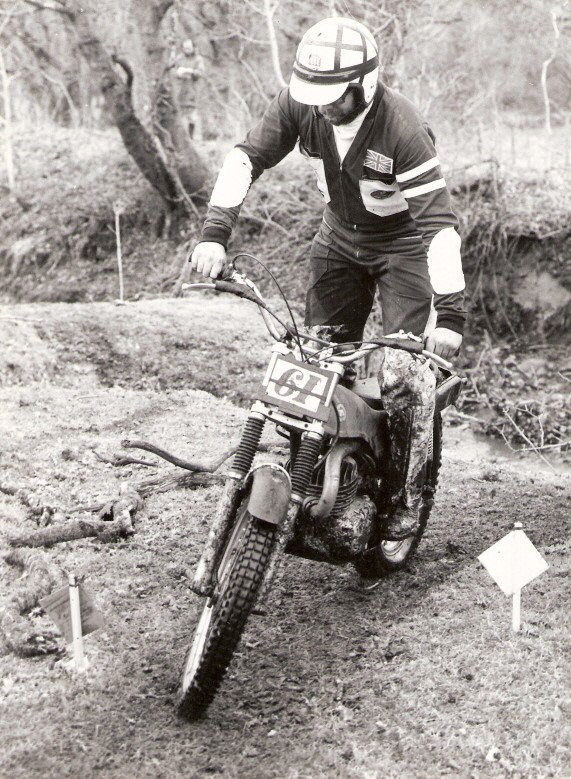
Bill Hartnell, Montesa Cota 247 mounted in 1973.

“A succession of Montesas followed until giving up again in 1983. I did have one ride in 1984 but later that year I sold the bike. My interest in enduros was awakened in 1982 and my first event in the February of that year was the Broadhembury Club’s ‘Brass Monkey’ event which I rode on a Yamaha DT. I stopped riding enduros in 1987 shortly after injuring my hand, which meant I had difficulty with writing whilst it was recovering, much to the annoyance of my bosses at the Inland Revenue.”

On the Otter framed BSA in 2005.

“It was not until 1995 that I returned to Trials, competing on a Bultaco in club events and an Otter framed BSA B40 for long distance events. It was largely due to Dave Chick’s enthusiasm that I took up the long distance and Sammy Miller trials. I found them good events where the emphasis fell mainly on enjoyment, and I made many new friends and renewed some old acquaintances such as you Mike, after many years.  Sadly, they seem to have become more competitive and less fun in recent years.”

Somerton trial in February 2008, Bill Hartnell aboard a 325 Bultaco.

“I now find although semi-retired that time is at a premium mainly due to club and centre administration duties and I find it quite ironical that I have a shed full of bikes and the best riding gear ever, but little opportunity to get the wheels turning.”

MN: How did you get into the organising side of things?

BH: “My brother and I joined Taunton Motor Cycle Club in about 1960 and were soon out to work. I think I joined the committee in 1962 and have been there ever since doing Secretary, Treasurer, Clerk of the Course, and Secretary of the Meeting over the years. My latest spell as Secretary of the Club came about in 1994, following the previous Secretary’s sudden resignation at the AGM. It was only as a short term stop gap of course!”

“Although I had attended centre board meetings at odd times over the years, I had never been really interested or involved. However in about 1993 there were complaints about clubs not sending representatives to board meetings and I rashly said I would attend each one and represent Taunton.  Once there, it was a short step to management committee, Vice Chairman and then the Chairman.  Following the sad and sudden demise of Centre Treasurer, Mike Sanders in October 2000, I took over as Treasurer, on a purely temporary basis you understand.”

MN: What have been your favourite bikes?

BH: “Obviously the Greeves, 277AMW which later passed on through Harry Foster’s hands and had a Triumph engine fitted. It is still out there or so I am led to believe. Anybody know of its whereabouts? Also my first proper trials bike-the rigid Francis Barnett.”
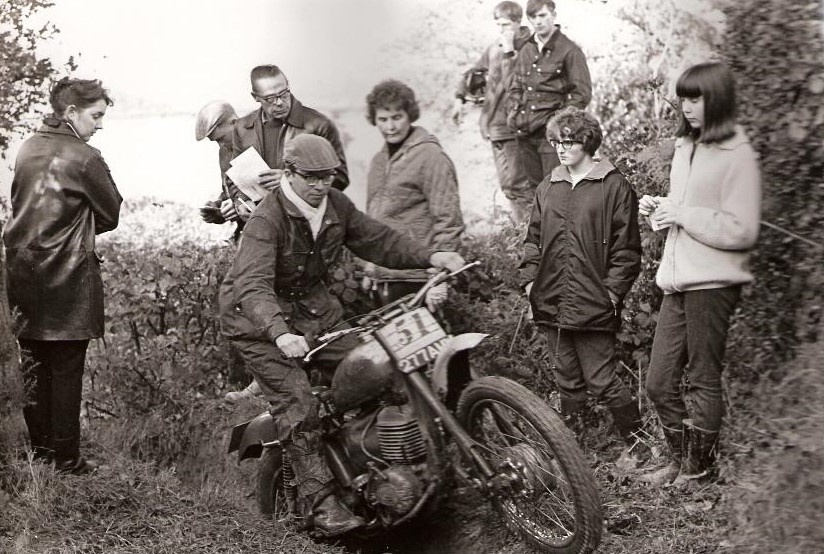
Bill Hartnell on the Greeves, 277AMW – Photo: Ken Haydon

MN: What is your favourite trials and sections?

BH: “In the early days obviously our local big events, the West of England, Lyn Traders and Beggars Roost. There was nothing as great as a warm Whit Sunday up on Exmoor at the Lyn with sections like Shallowford, Farley Water and Big Bank. The Otter Vale ‘Presidents’ sadly was never one of my favourites. In more recent years after my third rebirth so to speak, it was the long distance events.”

Bill Hartnell in a long distance trial on the 350 BSA B40.

“Of course the Neil Westcott, Wyegate, Frank Jones and Tour of Islwyn. Sections like they used to be. Downscombe (Beggars Roost and Exmoor) Pant Glas Steps (Wyegate).”

MN: Who were your most admired riders?

BH: “In the early days Bill Wilkinson, Greeves riding on learner plates and British Experts win is obvious to me.”

Bill Wilkinson who won the British Experts on ‘L’ plates on his 250cc Greeves – Photo: Mike Davies

“Locally, Bill Martin who in the early 60s was certainly our best local South West Centre rider. I never knew Bill in the early days, but in recent years we often have a good natter. Great company.”

MN: How do you see the sport of trials now?

BH: “I am pleased to see at last some riders becoming more involved and putting back into the sport, but sadly although interested in the ground works, nobody seems to relish the paperwork side of the ACU which is becoming ever more complicated and time consuming. As an exercise it would be interesting to work out the average age of the current centre management committee.”

MN: Any targets for the future?

 BH: “Keep on enjoying our wonderful sport and the company of all involved, the friends and characters involved also to try and find time to ride more often.”

MN: What were the best Times?

BH: “1970’s with Montesa’s, at last a reliable low maintenance bike and sections still rideable for Mr. Average.”

Bill Hartnell on his 247 Montesa Cota – Photo by Mike Rapley

MN: What would you like to see?

BH: “A return to sanity in Pre65 Trials. It ‘s probably too late, but as a start limit suspension travel, as AMCA do for Classic Motocross. I cannot remember Ariel’s and Cubs in 1965 with nine inches of fork movement.”

MN: Any interest in other branches of off Road sport?

BH: “Not really, but back in the 60s I used to go up to Thruxton for the 500 mile production race. It was good to see bikes basically as you could buy them being raced like Dominators, Bonneville’s and Venoms. I followed speedway with Exeter Falcons and the occasional grass track mainly because of the spectacle of the sidecars. Motocross has always figured with regular trips to France with Chris Payne for some of the big meetings in the late 90s.  All the local meetings over the years when time allowed. I had a go myself in 1963 on a 350 BSA. It proved unreliable and I ended the season sharing a 500 Tribsa with another neighbour, Mike Wyatt. I quickly realised I lacked the necessary temperament to both compete and enjoy.”

Bill Hartnell – Photo: Mike Naish

Bill Hartnell put a lot of hard work into the sport. Being Secretary of both Taunton MCC and SWCTA as well as Centre Treasurer, running the Classic Three Day Trials, and heavily involved in the Two Day.  Observing and stewarding in many other events as well as working a couple of days a week. It needed a well balanced person to achieve all this. Please read this article as a tribute to a true enthusiast of the sport. – Mike Naish

Footnote by Mike Naish:

Sadly Bill Hartnell passed away in January 2015. Bill’s description of his long ride home from Crediton to Taunton in the dark when his clutch was slipping reminded me of an incident relayed to me by the Francis Barnett works rider George Fisher when I interviewed him many years ago for ‘Off Road Review’ magazine.

George had entered the Llamborelle Trial in Belgium in October, November time.  He set off from Bristol on his 122cc Francis Barnett with his haversack on his back, no works transport in those days, to ride to the trial near Brussels. Having crossed the channel, no roll on – roll off ferries it was winched aboard, he set out from Ostend but the big end started to rattle. By the time he had finished the trial, with a major award, the big end was about to give up the ghost, and George had to entice a tow back to Ostend with a local lorry driver, at the end of a tow rope. Eighty miles with icy roads with darkness falling and no lights with a dead engine. George said it was a nightmare and I could see him visibly shudder at the recollection. This was probably in 1953 or ’54 because I know that in 1956 he had moved to Triumph to ride and promote the new 199cc Tiger Cub and he shared a works van with John Giles and Gordon Jackson. That year he won the Llamborelle.

Another era, but history records that Derek Cheeseborough rode his little James up to Scotland from Torquay, completed the SSDT, and at the end of the Special Test in Edinburgh, after the run from Fort William, he changed his handlebars over, then rode through the night to be home again on Sunday. This was to be ready to be back at work in the Bank on the Monday morning. Not a feat I would care to emulate, in excess of two thousand miles, but then Derek was his own man and still is.

Bill Hartnell with Mike Naish is the copyright of Trials Guru and Mike Naish.

Credits: South West Centre ACU Gazette, where this article first was published by Mike Naish, 2008.

More interviews with Mike Naish HERE

Apart from ‘Fair Dealing’ for the purpose of private study, research, criticism or review as permitted under the Copyright, Design and Patents Act, 1988, no part of this article may be copied, reproduced, stored in any form of retrieval system, electronic or otherwise or transmitted in any form or by any means, electronic, electrical, mechanical, optical, chemical, photocopying, recording or otherwise without the prior written permission of the author as stated above. This article is not being published for any monetary reward or monetisation, be that online or in print.
Brian Trott by Mike Naish

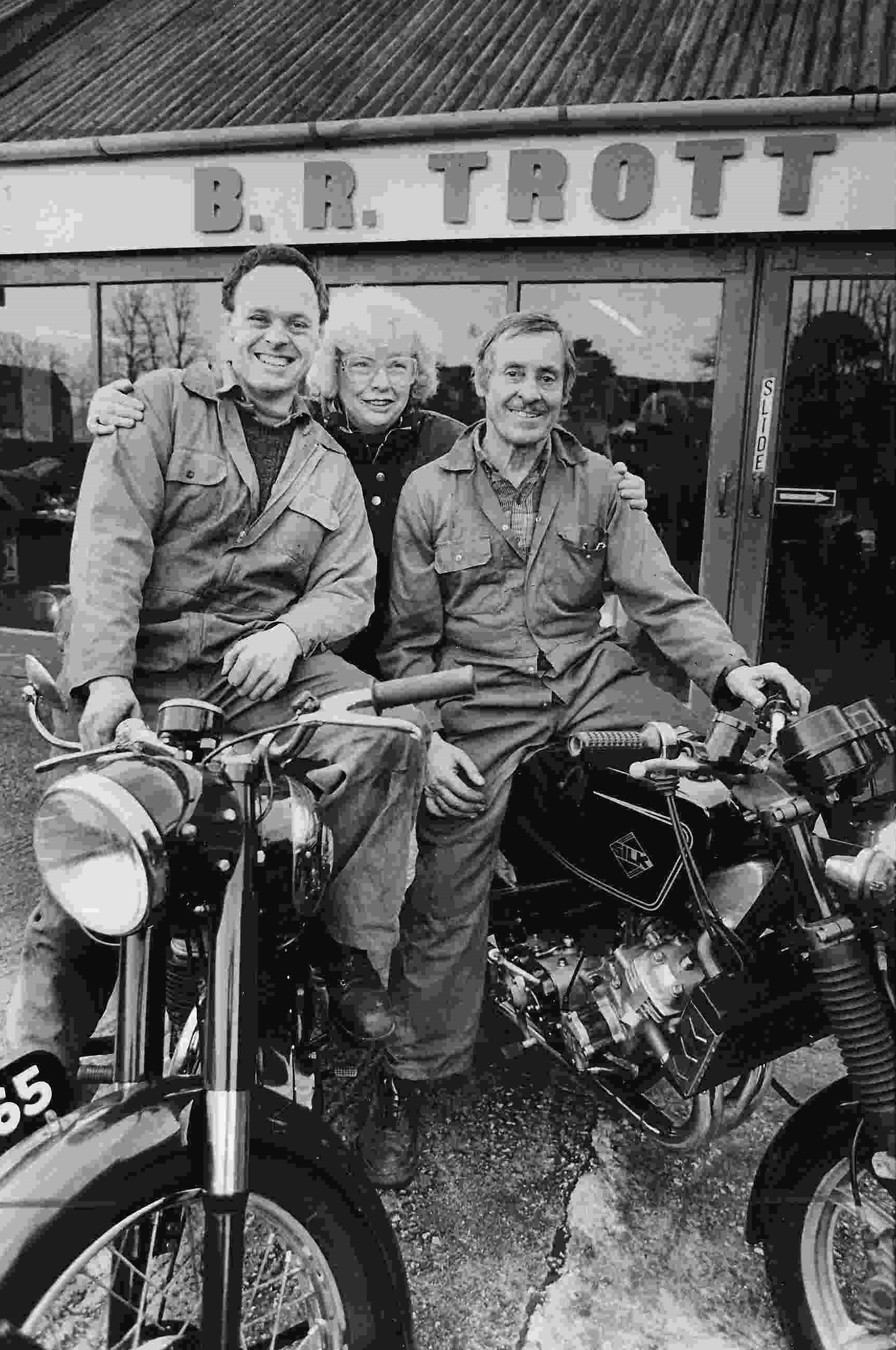
Brian Trott passed away in November 2015 aged 88 years, but he left his mark on trials in the South West corner of the UK and also further afield. He was well-known to all competitors in that area for his enthusiasm and dedication to the sport of trials and to motorcycling in general. It is no exaggeration to say that he lived for the sport of trials riding. This article was the result of an interview in 2007 on the occasion of Brian’s 80th birthday for the South West Centre ACU Gazette. Mike Naish shares the life of a dedicated trials rider by re-publishing this interview.

Words: Mike Naish & Brian Trott

Photos: Mike Rapley; David Cole

Brian Trott on a 247 Montesa Cota – Photo: Mike Rapley

Mike Naish: Where were you born Brian?

Brian Trott: “I was born at Hawkchuch near Axminster on 10th June 1927. The family moved to Harberton near Totnes when I was eight. My Dad was a gamekeeper and he got a job at the Dundridge Estate. No pay, but it was a lovely life. We dined well and enjoyed life. I picked up some of his expertise because I am very close to the countryside. It seems our family have either been in game-keeping or mechanics. I went to school in Harberton Primary and then later in Totnes.”

(Historical note: Dundridge House and estate was built by the Luttrells of Dunster castle in the late 18th century and by the late 1800’s had been acquired by Sir Robert Harvey of Harvey’s Bristol Cream Sherry fame. The property remained in the Harvey family until shortly after the Second World War and was most recently used as a training facility for air traffic controllers)

MN: What was your first interest in motorcycles?

BT: “It was whilst I was doing my apprenticeship here in Totnes. The company was WH Jordan a Morris cars and BSA agent at the top of the town. The motorcycle was in a garden not far from here. The lady had it jacked up with a belt on it fixed to a tool bench, I showed so much interest in it she gave it to me. I took it apart and took it back to Harberton on a pushbike bit by bit. I got it going and ran it for a couple of years.”

“My next encounter with bikes was in the RAF which really started my lifelong passion with motorbikes. It was very strict training which is where I got my machining experience. I had been in the Air Training Corps up at RAF Locking near Weston Super Mare on Ansons, so I was accepted into the RAF and I did three years as a fitter 2e (Engines) working on Harvard’s with Pratt & Witney radial engines in Egypt that was in 1945. That was my first real association with motorbikes. When I got there they asked me what my interests were.  I said motorcycling, so they sent me for some despatch rider training at a camp in Ismailia just outside Cairo. I met a man called Ivan Kessell from Cornwall, he was involved in speedway. They arranged a speedway match between the RAF and the army and they put me on a 350 WD Matchless. In our spare time, and as part of the training, we would get these bikes ready for the next meeting.”

Brian Trott on his early Villiers Specials.

“When I came out in 1948-49 I got a job with a tractor company, Reed & Company, a Ford distributor. I ran the agricultural side. I had a brilliant life with a mobile workshop and travelled all over the South West on the farms, I loved it but I had a bad accident with a tractor. The caterpillar ran over my pelvis and smashed it up it affected my bladder amongst other things. I was in Torbay Hospital for a year. Luckily I met a good surgeon who came to Torbay and he did a good job on me. In the early fifties I was a member of Dartmouth and District Motor Cycle and Light Car Club. I rode a couple of grass tracks on a Velocette GTP with an outside flywheel at St Annes Chapel Bigbury with Dickie Bird Ellis, then I rode a 197 James in scrambles. I bought it off of John Crook Motorcycles. It had been a rigid model but I put a swinging arm on it.”

1960s photo of Brian Trott on his James.

“Pat and I got married in 1954. I carried on in local scrambling riding a 250 BSA then a 500 Triumph converted speed twin. That wouldn’t half go, I had quite a bang with it at an Otter Vale scramble and it came right in half.”

“I had an accident on a Tiger Cub at a Devonport scramble over the border in Cornwall. I injured my knee and was out for the rest of the season. Of course in those days you rarely went to the doctor with these accidents you just waited for them to heal naturally.  I started trials when it was better, to get me fit for the next scramble season, but I liked trials so much I never went back to scrambles. It is a lovely sport and it has a lovely lot of people, that’s what I liked.”

MN: How did you get to events in those days?

BT: “We took the front wheel out and hitched the forks behind the rear bumper of our A30 car and tied it down, took the rear chain off and towed it that way. One day we went to the Isle of Man towing the bike, a Tiger cub, on the back wheel in the usual way. We were flagged down by someone at Tewksbury who said there was a fire coming out of the back of the bike. We looked around and couldn’t see anything wrong so went on our way we thought they must have been seeing things. We were stopped three times by people saying there were sparks coming out of the back of the bike but we could not see any thing. When we got to the IOM and we went to put the chain on, at least ½ inch of the swinging arm was gone, it had been worn away by the side knobbles on the tyre which had been deformed by the speed we had been going.”

“In fact when we got home and had a piece of plate welded in we had more clearance.”

MN: What bike did you start trials with?

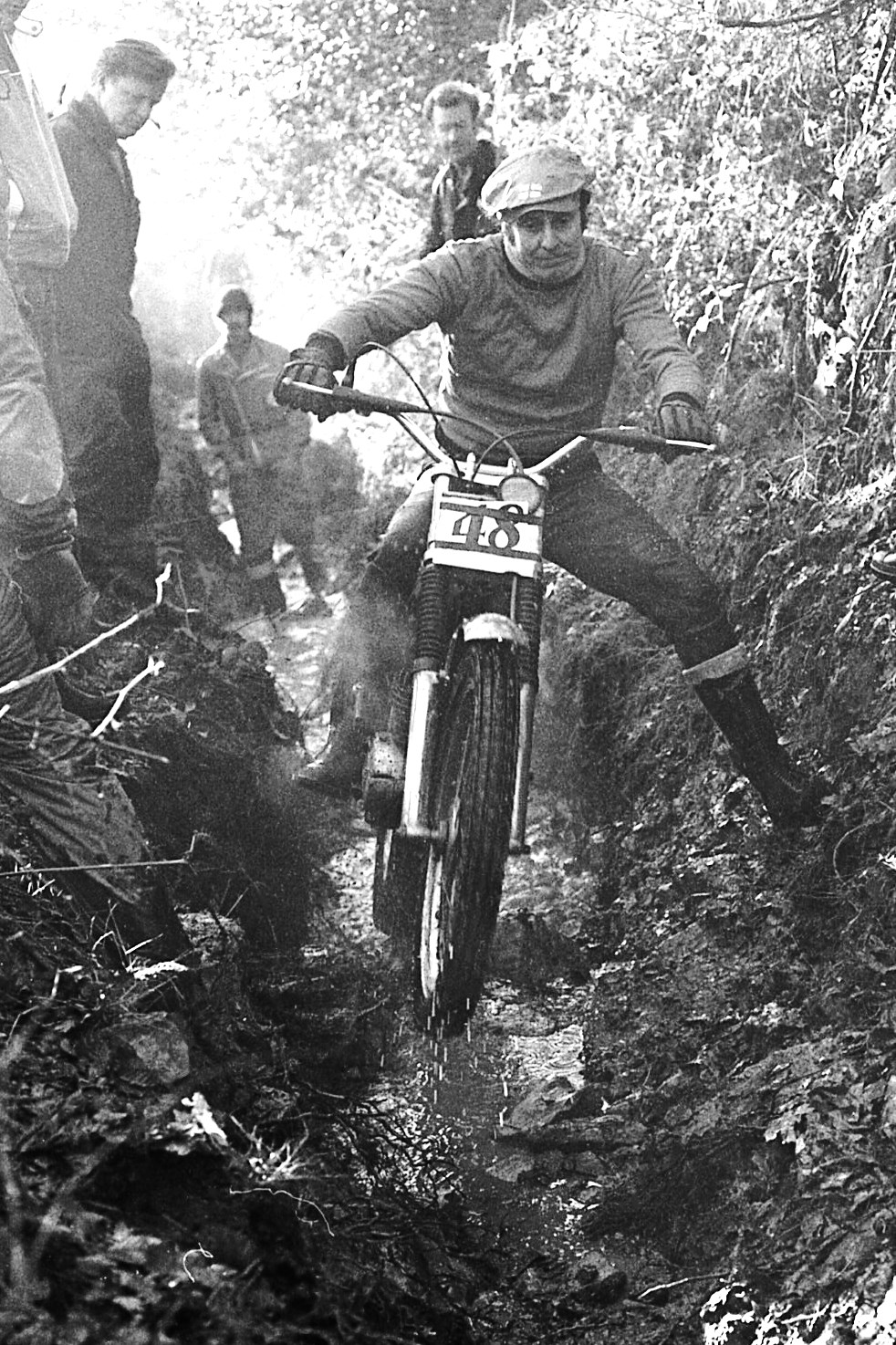
BT: “Well it was nearly always BSA Bantams, it’s the bike I become most associated with and really I was the man who stated the bantam scene for trials. If only I knew then what I know now it would have been even greater. Although when I went to work at John Crook Motorcycles, I had sponsorship from Greeves along with Alan Stevens and Ian Crook through the shop. I probably rode Greeves for ten years. I used to normally get first or second class awards in local trials.”

Brian Trott on his Greeves in a Moretonhampstead trial.

“I always felt I rode well when I went to Hampshire and rode in the Bluebeards and the Greybeards for over twenty years. I feel my best successes were there. I won the event in 1980 and 1981 and then had a bad crash in ’82. The winner Les Crowder, sent me the cup, said I deserved it more than him. There are some brilliant people in the trials world. The accident happened at Pepworth, I was in the lead on the 320 Majesty and I hadn’t lost a mark. Well on the course there was a part where two trees had fallen, they had been there for years and I thought I could jump them both, I was too cocky really. Well this time I just didn’t clear them; the back wheel just caught the end of the tree and sent me off sideways. There was a branch of a tree that had been cut off with a chain saw and it went straight in my mouth. I was in a terrible state with severe facial injuries, it cut an artery in the back of my throat. John Born was my hero who probably saved my life; he got me out of the woods and controlled the bleeding so that I could breathe. Jillian, Johns wife, drove me to Chichester Hospital where luckily they specialised in head injuries. The last thing I remember was going into the scanner then when I came around two or three days later my head was in a frame. I had screws to pull my face and jaw back out because all my jaw had been broken in four places and my teeth had been pushed back into my throat, which had cut the artery, I was in a hell of a state.”

Roger, Pat and Brian Trott.

MN: And did this not put you off riding?

BT: “No not at all, I went back and won the event the next year with ease, I still think that was my biggest achievement. I am sure it was the will to keep riding which helped me recover quickly.”

Brian Trott (247 Montesa) captured by Mike Rapley

“The surgeon who looked at my ankles recently after I had two x-rays, looked at me and said, ‘Brian your ankles are shattered and I’ll put the cards on the table. You have three options. You can keep taking pain killers, you can have then screwed and fused but you will never get a boot on because you will not be able to bend your ankle or I can put you in a mechanical ankle, there is a new on just come in from the USA.’ After we had talked for a while and established that he had a Bantam he said ‘I think we can fix you up Mr Trott. You are almost eighty years old but you have the body of a sixty-five year old and the mind of a twenty-five year old. What do you want to do with a new pair of ankles?’ I said I want to walk down to the pub and I want to ride in motorcycle trials, so he said OK. I said when can you do it and he said next week and eleven days later I had a new ankle, it cost me £10,000. I have been back to work and it gives me no pain. The surgeon said that my positive attitude had helped my recovery no end. Now I have the second ankle done and am waiting to get back on the bike so that I can help Roger mark out the Dartmoor two day trial in September.”

MN: When did you open your shop?

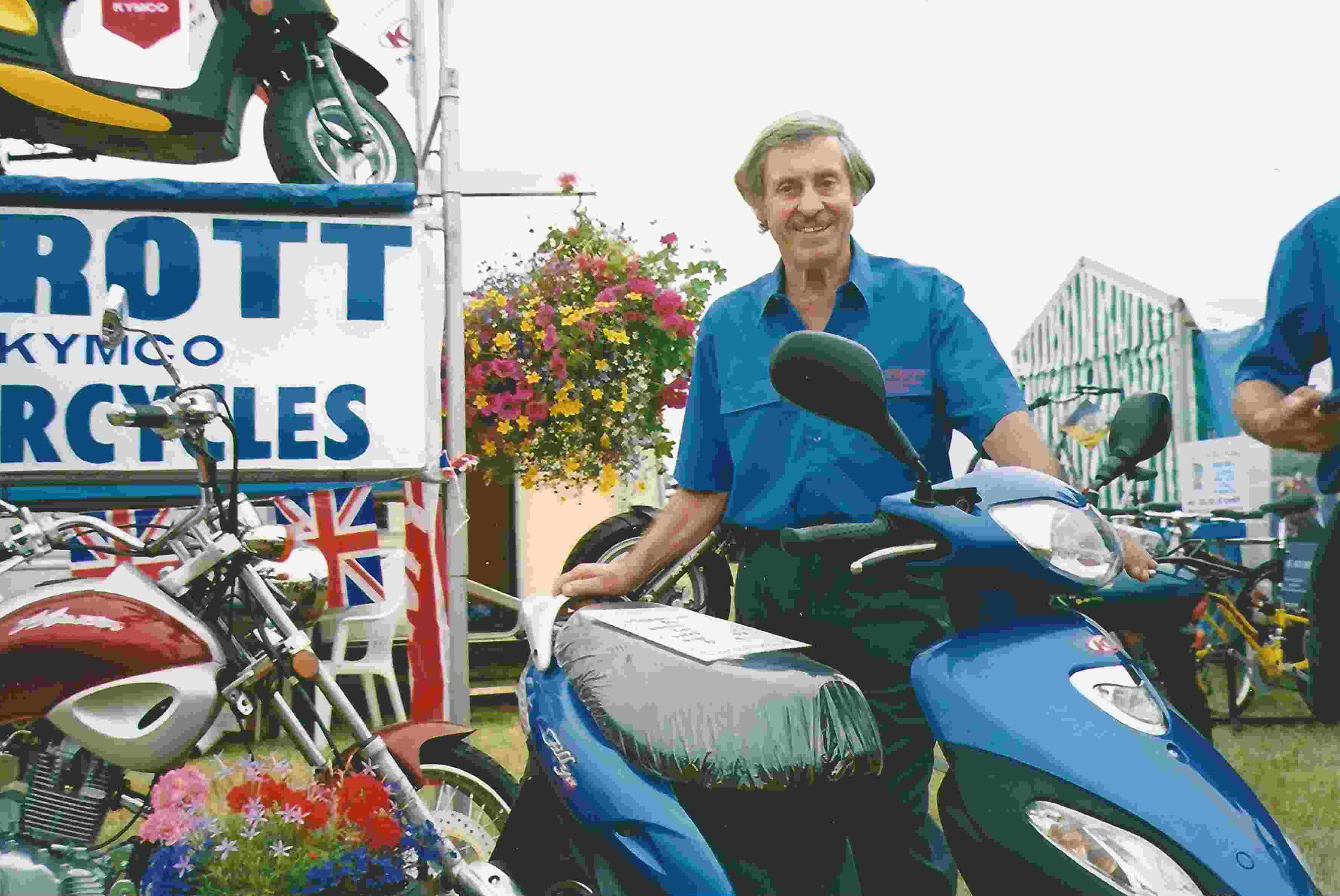
BT: “I was working for John Crook Motorcycles in Totnes, I worked for him for twelve years and he took on a new Ford car agency but they dictated that he had to give up all his other outlets in trials bikes, so I said in that case I’ll take it on. That was in 1979. I eventually became a five star Honda dealer. It was hard work but as a family we all worked together and it worked well.”

Brian Trott in an Exmoor Three Day Trial on his BSA Bantam.

MN: Did you ever ride outwith the South West centre, apart from the Greybeards?

BT: “I used to go to the nationals like the John Douglas and the Kickham and of course our centre nationals at Otter Vale and the West of England. I always went to the two day in Cornwall, the Tristan da Cunha and the Kernow. I also did the Jersey Two Day. One year I ordered a new bike, a 320 Majesty from John Shirt. They were going to bring the bike to the trial for me. Well they arrived late and missed the ferry; we could see John Shirt’s van on the Quay slowly disappearing. We saw the captain and he stopped the ferry and backed up back to the Quay so that they could board. There was no room for the van so they unloaded the bikes and the gear and pushed them in between the cars and left the van on the harbour side at Weymouth. Mick Andrews didn’t half give me some stick over that. I had some good rides on that bike.”

Brian Trott, Yamaha Majesty mounted.

MN: When did you start riding Pre65 trials?

BT: “I cannot quite remember the date but I did ride in the first South West Classic Three Day trial in 1983 and carried on from there. I did feel very guilty because I had built this nice little BSA Bantam and most others were on big bikes like Matchless AJS and Ariel. Trevor Compton was on his Panther Stroud, I remember and I thought to myself what am I doing up here with this lot it is not fair on them, and I mean they were a lovely set of blokes. Pre65 gave me a new lease of life not only riding but making Bantams, I specialised in them. We tooled up and they became quite a large part of the business. We made the frames and sold bikes to Doug Theobold amongst many. I suppose we made about twenty-five. We did the motors up, I would machine flywheels and attach them to pressed steel plates and balance them up to suit trials. We also made some Tiger Cub specials.”

Brian Trott on the Mamore Road, Kinlochleven with his Tandon. Photo: Dave Cole.

MN: You went to the Pre65 Scottish in 2006, did you enjoy that?

BT: “It was a marvellous weekend, I rode the Tandon along the Mamore Road with Dave Cole to see the sections. It was one of the most pleasurable weekends I remember. Scotsman, Jock McComisky arranged it for us.”

Brian with friends at an ‘Up Memory Lane’ gathering in 2005.

MN: And finally?

BT: “I have no regrets in my life I would do the same things again. Even my accidents, they make you realise that life is worth living and it gives you a positive attitude. I hope to ride a little Bantam engined James that I have built in some easier trials when both my ankles have healed. I always felt my best riding was done between the ages of sixty and sixty-two. I was very strong and this helped.”

Brian Trott (Yamaha) – Photo: Mike Rapley

“I have to give a lot of credit to my wife Pat who has supported me through my entire career and my times in hospital both in Cornwall Torbay and Chichester. She has observed and been with me at most of my events and I like to take this opportunity of thanking her publicly for all her support over the Years.”

Acknowledgements:

With thanks to the ACU South West Centre Gazette

‘Brian Trott by Mike Naish’ is the copyright of Trials Guru and Mike Naish.

More interviews with Mike Naish HERE

Apart from ‘Fair Dealing’ for the purpose of private study, research, criticism or review as permitted under the Copyright, Design and Patents Act, 1988, no part of this article may be copied, reproduced, stored in any form of retrieval system, electronic or otherwise or transmitted in any form or by any means, electronic, electrical, mechanical, optical, chemical, photocopying, recording or otherwise without the prior written permission of the author as stated above. This article is not being published for any monetary reward or monetisation, be that online or in print.

Vic Ashford talks with Mike Naish

Vic Ashford was one of the South West Centre Officials. A man who helped to keep the wheels of our sport turning. A man who had dedicated himself not only to organisation and running of events for over fifty years, but who has represented the centre and his club as a works trials rider. He had a riding ability in his day that was equal to the top but he was also renowned for his organising of both trials and motocross. He arranged all the centre permits and was well known for his enthusiasm and good natured approach. He was of course that gentle Giant Vic Ashford. We also republish Vic’s obituary upon his death in 2012.

Words: Mike Naish & Dave Cole.

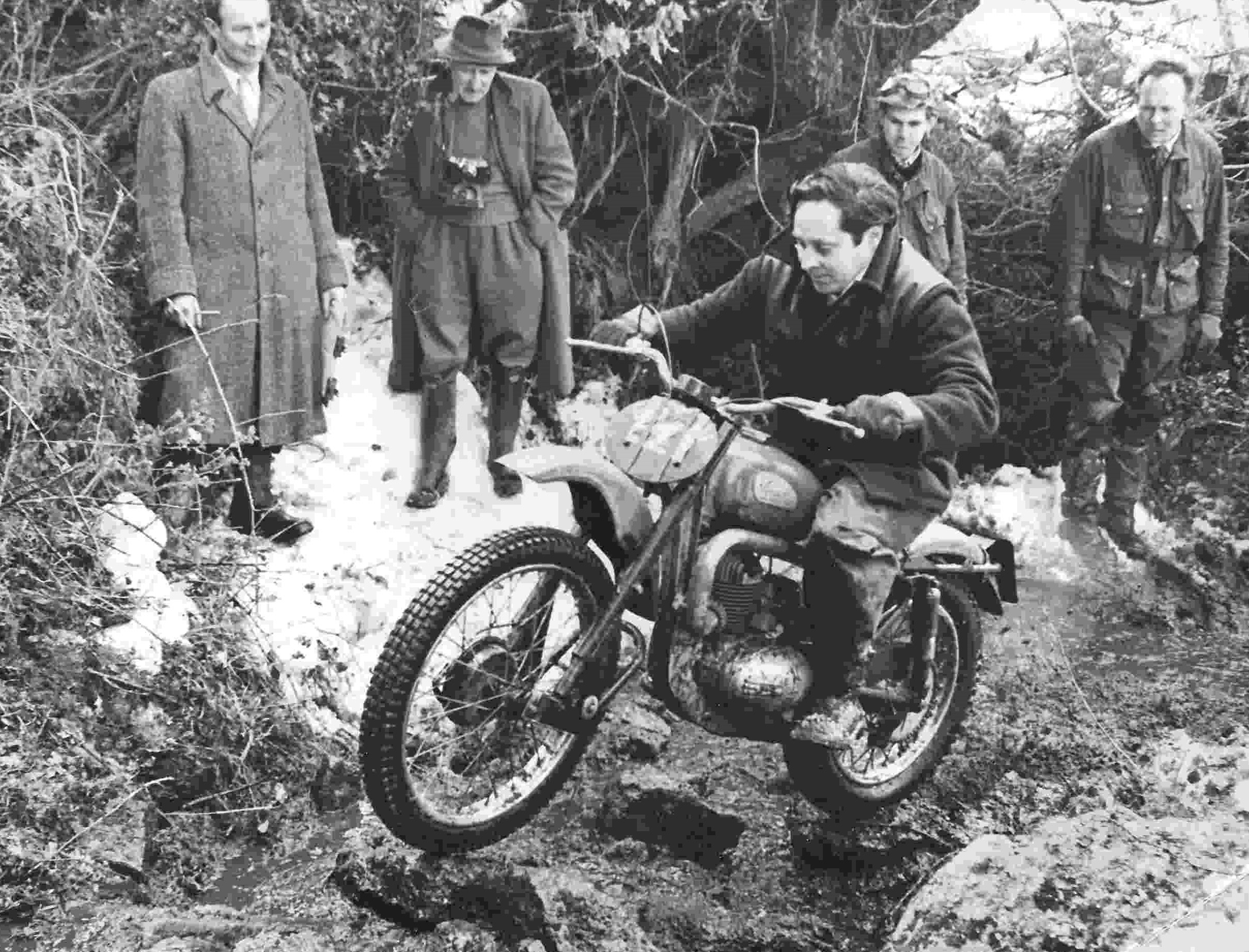
Photos: Dave Cole, Mike Naish, OffRoad Archive; Fred Browning, Mike Rapley. (Main photo Fred Browning)

Mike Naish: How did you become interested in Motorcycles Vic?

Vic Ashford: “I was born 1939 and raised on Wotton Farm near Denbury. We had sections on the farm that were used in the West of England National Trial, ‘Wotton Farm’ and ‘Cape Horn’ so I used to watch trials on the farm from an early age. My parents were not motorcyclists, but they had this mixed farm of one hundred and twenty acres and were content to let the trial come onto the farm land.”

MN: Take me through your early days and your first bikes.

VA: “I went to Denbury Primary School and then father thought it would be more use to me if instead of going to Grammar school in Newton Abbot I went to the Technical school in Torquaywhere I could learn about woodwork and metalwork as well as all the usual subjects.”

“When I was sixteen years old I bought a brand new James ‘Captain’ road bike from Freddie Hawkins. It cost £140 and Bill Martin who worked at the shop was assigned to help me learn to ride it. When I got to seventeen, I got a new James ‘Commando’ trials bike, again from Freddie Hawkins, it cost me £160. I joined the West of England Motor Club and rode about six trials on it, but did not particularly shine. I went to an Okehampton trial held on the firing range riding the bike there as we did in those days, but the bike broke down and Harold Ellis gave me a lift home in his van, which was the beginning of my association with him.”

MN: So did you move on to other competition bikes?

VA: “No not at first, I swapped the James in at John Green’s at Newton Abbot for a 500 AJS twin road bike. I was friends with Alan Dommett and we used to go and watch scrambles together on it. Because both our fathers were churchwardens, we sometimes had to leave the event before the end, so that we could be back in time for church, especially if the scramble was up in Somerset. Later I handed in the AJS and bought a Standard 10 van.”

“In 1959 when I was nineteen or twenty, I borrowed Alan’s 197 Greeves and rode in the Moretonhampstead Christmas trial and won the non-expert award and a week later I won the Pike Award for best novice in the Knill Trial, which upgraded me. I suppose this gave me the enthusiasm to ride again, so in June 1960 I brought a Greeves ‘Scottish’, it cost me £145. In 1961 I rode the Greeves in the Scott trial in Yorkshire with Bill Martin. It was a tough trial very hard going and I was pleased to get a finishers award. I started off and thought I would follow a couple of the works guys but I couldn’t keep up with them. I was going what I thought was quite quick across the moors when this little wiry guy came hurtling past me. When I got to the next section he was just going up it and I could see it was Dave Bickers.  Later on I heard this big four stroke behind me thumping away, then he passed me and it was Sammy Miller in top gear. That year Bill Martin got best newcomer on 150 marks lost on time and observation to Arthur Lampkin’s win on 56 marks lost.”

West of England trial in 1961. Left to right: Bill Martin, Vic Ashford and Ernie Short.

“I started to win regular awards on the Greeves and then I got works support from Francis Barnett.  Max King had talked to Hugh Denton of Francis Barnett and I was given a bike with the new AMC engine in it.

Vic Ashford aboard the factory Francis Barnett with the AMC engine. (Photo: OffRoad Archive)

This replaced the Villiers unit mostly used at the time. Later when Francis Barnett reviewed their list of riders for the Scottish Six Day the support stopped but I was allowed to buy the bike for £60. The first trial I won on it was a Taunton trial in February 1962.”

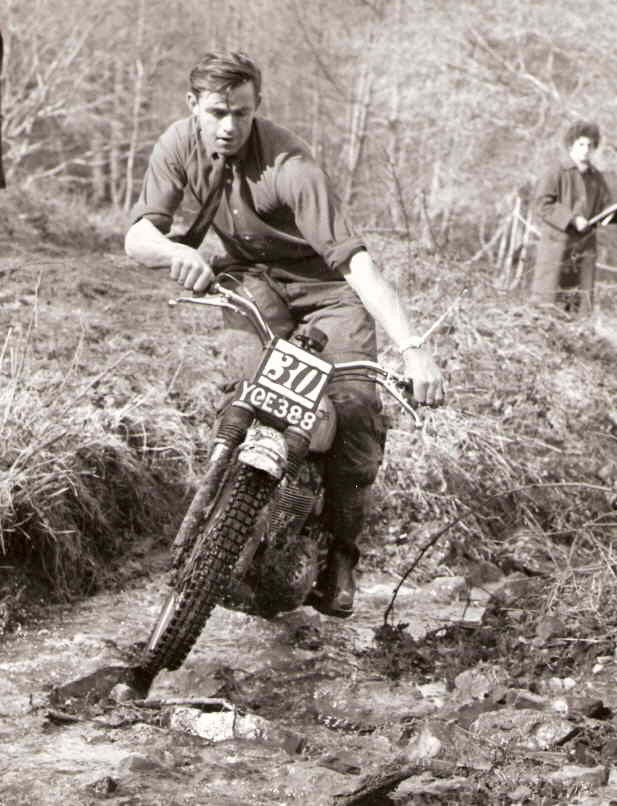
Vic Ashford body leans Max King’s 250cc C15 BSA, YOE388 which was one of the first production C15T models produced at BSA.

“Following the end of Francis Barnett support, Max King had spoken to the BSA competition shop and they had agreed to give me works support. While it was being sorted, Max lent me his own 250 BSA registered as YOE 388, the one that is featured in the second edition of his book Trials Riding.”

‘Trials Riding’ by Max King, Second Edition. YOE388 is on the front cover with Max King on board.

MN: How did you get on with the four stroke after all the lightweights?

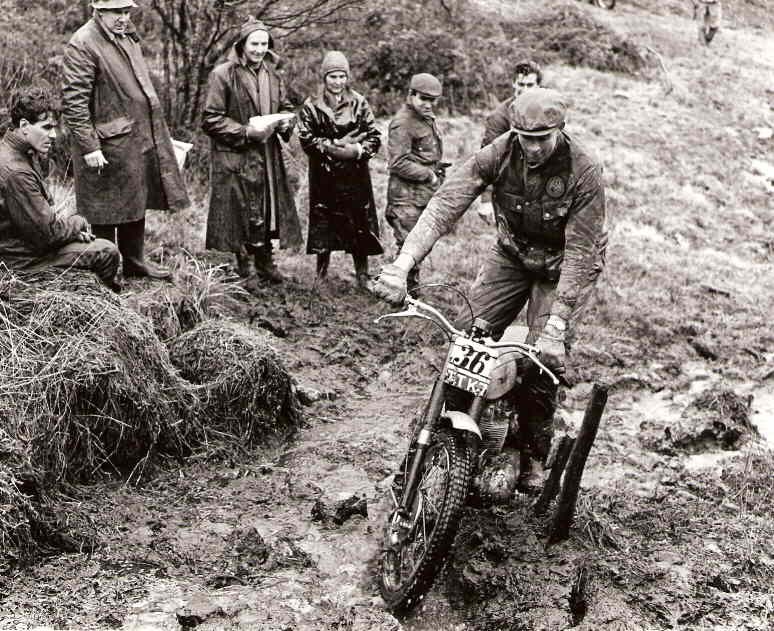
VA: “Quite honestly Mike, changing bikes never ever bothered me, I would have ridden a five barred gate if it had handlebars on it! I had to purchase the bike myself from Benny Crew who, if I remember rightly, was at Wareham in Dorset. It cost £252 and was registered as TTK 7. It went to the competition shop at Small Heath to be fettled for the SSDT in 1963. To run it in I rode in a Dartmouth trial the week before, but I rode to Dartmouth via Launceston to put some miles on it. We went to Scotland in my Morris Oxford van. There was my BSA and John Poate’s Royal Enfield in the back, and a trailer with Roger Wooldridge’s Cub and Brian Slee’s 250 BSA. Roger gave me £10 for the trip I remember. I just missed a special first class award loosing 123 marks. Arthur Lampkin won the trial on 7 marks lost. After the Scottish, the bike went back to be fettled in the comp shop with a load of new bits. From then onwards until my support finished they sent me the parts in the post and I got them fitted down at Freddie Hawkins.”

Vic Ashford on his factory supported BSA.

“I rode in most of the Nationals, John Douglas, The Hoad, St David’s, Victory, Bemrose and of course our local ones, the West of England and the Presidents.”

MN : What did you ride after your BSA Support finished?

VA: “It was in 1967 that I sold the BSA to a guy in Cornwall and bought Roger Wooldridge’s old 250 Bultaco. I think Roger changed back to a Cub or BSA at that time. I rode it in the Knill and was runner up. I liked the bike, it seemed that you could do almost anything with it. I rode it with quite a few successes until 1969.”

Vic Ashford on the ex-Roger Wooldridge Bultaco Sherpa.

“The birth of my son, Jim was due, and my wife was in Torbay Hospital, but there was a West of England closed to club trial on in the morning, so I thought I would ride and then get down for the birth in the afternoon. Unfortunately I dabbed in fresh air, fell off and dislocated my collar bone. So I was in Newton Abbot casualty department whilst my wife was having the baby in Torbay. I went in later all strapped up obviously a bit sheepishly. I did not really ride in trials much after that although I did ride in a few pre65 trials for three or four years on a BSA. I have a Chinese trail bike which I use to mark out the ‘Moor to Sea’ trial. Before that I had a Serrow.”

Vic Ashford with his Yamaha Serrow – Photo: Mike Naish.

MN: Can I ask you firstly how tall you are and also about your riding boots, because I have this abiding picture of you hunched over your bike and always riding in Wellingtons?

VA: “Well I was 6’2½” when I was younger; I’ve probably shrunk a bit now. With regards to the boots I started off riding in fireman’s boots but one day I got the footrest stuck between the sole and the instep of my foot. And of course they were always leaking so I just used a pair of Wellington boots. At least it kept my feet dry.”

MN: Today you are well known for your Organisational activities, when did you start?

VA: “I joined the West of England Club in 1956 but I was most disappointed not to be voted on the committee that year, I had to wait until 1958 when I was nineteen. I have been on the committee ever since, forty-eight years, organising and running trials and scrambles. I have been vice chairman a couple of times, but I never wanted to be the chairman. I became Centre Permit Secretary in the early 1990s when Brian Staddon died and his wife wished to give up the post. I said I would stand in for a while until they got someone, and I am still doing it.”

Vic Ashford on his Bultaco, for many years a stalwart of the West of England club – Photo: Mike Rapley

MN: I know you are heavily involved in the Moto-Cross scene, and yet you have never ridden.

VA: “Not quite true Mike. I have always, from my youth, been interested in scrambles. Wilf Ellis, who was the scrambles secretary for the club, and I, visited all the national events and many on the continent as well. One year I visited eight of the twelve world rounds all over Europe. As for riding in scrambles, yes I did once ride at a meeting run by the Chard club at Windwhistle. As it happened I had trouble with my bike so I was loaned a 350 BSA Gold Star by Jack Williams and rode my three heats. Sad to say I finished last in two of them but in the last heat I made a supreme effort and just overtook a rider to finish last but one. I realised I was not really cut out to be a speed merchant, so that was it.  Today I manage the land at Whiteway Barton on behalf of the farmer and the club so that we can run the correct number of allowable events each year. This involves getting the track graded and maintaining the facilities.”

MN: What have you done career-wise? I believe you have a Fruit and Veg stall at Newton Abbot Market, have you done it for long time?

VA: “I worked on the family farm until 1963 when I bought a small holding of four acres in Denbury. On the farm Dad used to give me £5 a week pocket money so when I got married I said I needed a rise up to £20. We kept a few pigs and chicken and produced vegetables which we sold. Later I rented a couple of acres from Anthony Rew’s father to increase the amount of produce but it was a long hard day. I started the stall at the market in 1967 selling produce from local suppliers so I have been there nigh on forty years. Nowadays I just go out to the wholesalers at 7am to buy the days supply. Also I recently took over the greetings card stall when the owner retired so now I run the two.”

R. Bray (Montesa 348) from Newton Abbot being watched by Vic Ashford, Graham Baker and Keith Lee – Photo: Mike Rapley.

MN: And the future?

VA: “I intend to carry on in the market until I am at least seventy and in the motorcycle world as long as I am able. It has been a big part of my life.”

MN: One final thing. Vic mentioned that he started off by watching the West of England Trial at Wotton Farm so he knew the make up of the sections well. To give a flavour for those who do not know the sections, now no longer used, here is reproduced the words from the ‘Motor Cycling’ magazine for November 2nd 1961 reporting on the West of England Trial.

Vicious opener for the eastern circuit was the Cape Horn-Wotton group, which involved dives into a hub-deep stream and up well-watered, slimy clay banks. Typical and consecutive performances were those of Arthur Lampkin (250 BSA), Gordon Blakeway (200 Triumph) and Jeff Smith (350 BSA). All used feet and throttle without hesitation, and on Wotton they kept going up the steep exit- where even some of the best men who tried other tactics were floundering before the end.”

On Cape Horn, Smith became caught between the head –high banks and handed himself off- and was duly debited with a dab.  Immediately afterwards Brian Martin (250 BSA) footed where team-mate Jeff had lost his point; submerged rocks were the cause. Scott Ellis (200 Triumph) made a neat showing at Cape Horn as did V J Ashford (250 Greeves)”.

Winner that year was Johnny Giles (200 Triumph on 7 marks lost) best South Western Resident was Vic on a creditable 28 marks lost, beating such names as John Draper and Jim Sandiford amongst many others.

‘Vic Ashford talks with Mike Naish’ is the copyright of Trials Guru and Mike Naish.

Bibliography:

Motor Cycling, 2 November 1961.

More interviews with Mike Naish HERE

Apart from ‘Fair Dealing’ for the purpose of private study, research, criticism or review as permitted under the Copyright, Design and Patents Act, 1988, no part of this article may be copied, reproduced, stored in any form of retrieval system, electronic or otherwise or transmitted in any form or by any means, electronic, electrical, mechanical, optical, chemical, photocopying, recording or otherwise without the prior written permission of the author as stated above. This article is not being published for any monetary reward or monetisation, be that online or in print.

Victor (Vic) James Ashford

1939 – 2012

Obituary by Dave Cole in 2012:

It is with much sadness we report the death of Victor Ashford, the President of the West of England Motor Club who passed away on Monday 7th May following an illness, which was borne quietly, and bravely for quite some time.

Vic was an immensely popular man who was well known to sporting motorcyclists all over the country, along with customers who knew him as a Newton Abbot market trader for a great many years. He had two big passions in life one was the West of England Motor Club, the other was his Whist Drive Club, Victor drove around the local villages on Dartmoor picking up many of his whist drive friends before returning them again after a good evening out-all in the aid of charity.

As a Woodland, near Denbury lad, Vic grew up with motorcycle events taking place on his family farm, as soon as he was sixteen he purchased his first bike and a year later his first competition bike, he went on to become one of the finest and most successful motorcycle trials riders from the west country during the 1960s.

On joining the West of England Motor Club in 1956, Vic was very disappointed not to be voted onto the club committee until 1958. He certainly made up for the lost couple of years as his services to his club and the South Western Centre of the A.C.U., are now legend and it is generally accepted that without vast amounts of help from him, in many forms, along with the insatiable enthusiasm of Vic, the club would not have survived through some of the difficult times faced in years gone by.

At the end of last year Victor was presented with the very prestigious Auto -Cycle Union Medal of Honour, an accolade marking his outstanding contribution, and years of service to the A.C.U. and to motorcycle sport in general, an honour that was richly deserved.

Certainly Victor’s energy, commitment, dedication and determination will make him sorely missed by a great many people. Victor was a true ‘gentle giant’, a ‘giant’ in every sense of the word.

Our sincere condolences go to all of Vic’s family, especially sons Jim, Martin and daughter Jackie, along with sisters Sheila, Joan and Jackie plus brother Eric.

Rest in peace Victor and thank you for your friendship and hard work.

Dave Cole – On behalf of the entire committee of the West of England Motor Club.

Trials Guru: We thank Dave Cole for allowing us to republish Vic Ashford’s obituary.

South-West now on Trials Guru

South west trials is now in the spot-light on Trials Guru. With help from trial enthusiast, Sarah Turner, we now bring you photos of Devon and Cornwall area riders in action.

Ben Price
Ben Price – Photo: Sarah Turner

To go straight to West Country Trials click here

So far we have some photos from the Hartland, North Devon Luckett Trials School.

ST - Paul Wilton Photo - Trials Guru
Sarah Turner loves trials.

Trials Guru – Purely for the sport of trial!