Words: Trials Guru & David H. Rhodes
Photographs: Various Photographers; Iain Lawrie
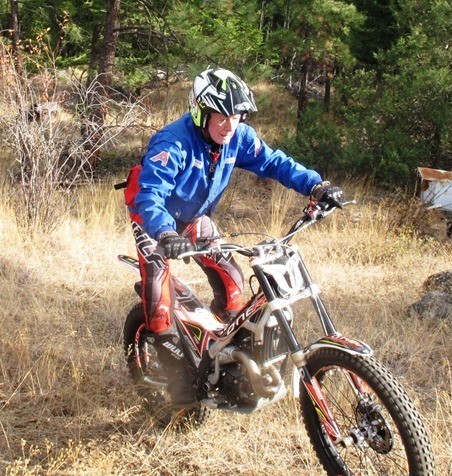
We catch up with a trials super-enthusiast who usually shies away from attention and lives in Okanagan Valley of B.C., Canada. Inducted into Canadian Motorcycle Hall of Fame in 2018, he runs a trials shop and is a frequent blogger covering trials. Now well into his eighties and with no signs of stopping, so here is the story of Dave Rhodes, a Welshman in Canada.

Trials Guru: Dave, are you Welsh or English?
Dave Rhodes: “All Welsh on my Mothers side, but actually born at Heswall near Birkenhead. We moved to live near Oswestry on the Welsh border at the start of World War 2 when Dad went in the Army. Interestingly my Dad’s mother was Scottish and a Fraser, but she died when he was very young, his Father was English. Oswestry has a lot of Welsh heritage and my wife is Welsh. I always think of myself as being mostly Welsh“.
TG: Take us right back to the beginning please?
“It was back in 1953 when late one evening, I answered a knock at the front door of our house in Oswestry. What I saw that night started me on a lifetime of riding Motorcycles. It was an old school chum, who was all decked out in motorcycle gear, and outside, gleaming under the lights, was a beautiful BSA Bantam Trials model.
At age fifteen and just starting a five year apprenticeship as a Photo-Engraver, I was in shock, wondering how could this lad afford such a machine?
Well, that certainly got my mind rolling, and from that point on, I scraped every penny I could from my wages, until I could afford the down payment on a brand new 1955 James Captain. My buddy who lived close by, had also caught the bug, and he now had a 197cc Francis Barnett.
At this time not long after the second World War, there was very little traffic in our area, so my buddy Malcolm and myself, were on our bikes steady, tearing all around the Country roads. We soon found that a bunch of the local Motorcycle club lads, frequented the Milk Bar in town most evenings, and it wasn’t long until we became a part of the group.”

“Everybody was very friendly, but it was when one of the crew came in one evening dressed in his Barbour suit, covered with red and blue dye. He had been out marking the course for an event the following Sunday. The lads explained what a ‘trial’ was and suggested we come out to watch. Well we did more than that, we followed the riders around the course, over the Welsh moors all very slippery and remember we were on road bikes.
After that, there was no holding me back and I part-exchanged my James Captain for a James Cotswold. Soon I was entering in trials all over North Wales and the Midland Centre, gradually managed a few awards. With the club holding a yearly scramble, it was time to have a go at that with the same bike, but with different gears and other minor mods, not that this turned out well, because I had a big crash in practice and bent the frame.
Later in 1957, I got really interested in road racing, as another club guy was into this and let me have a go on his Ducati 175. This was all very exciting, and I ordered a Ducati 125 from Fron Purslow in Shrewsbury. However, soon after my world came crashing down, when my elder sister died at age 27. Our family was devastated and I was persuaded to forget about road racing, my mother thought I would kill myself.

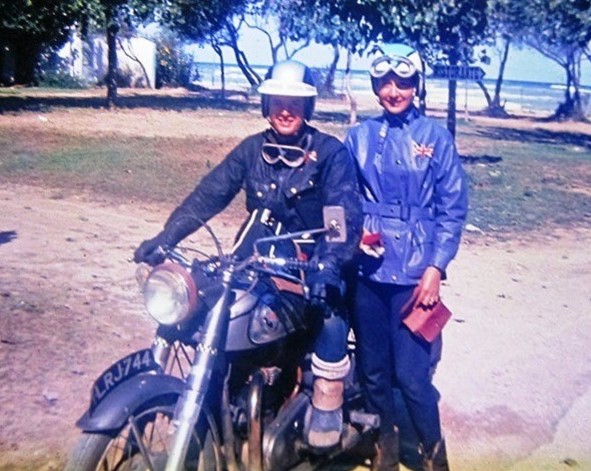
“After that I lost interest in competition as I had also met up with a lovely Welsh girl by the name of Barbara Jones. We were married in 1962, and after spending our honeymoon in Italy, we decided to go back the following year by motorcycle on a Norton Dominator 600. Not many people were doing trips like that in those days.”
TG: So how did you end up in Canada?
“With the arrival of our daughter Helen, my thoughts were all about the future and I was fed up with all the Welsh rain, I longed for pastures afield. Bab’s sister had married a buddy and they had moved to Canada, so I began to check out the possibilities of jobs in my trade, eventually being hired by a Graphic Arts Company in Calgary. Alberta.
We arrived in Calgary on March 3rd 1965 at midnight after travelling for thirteen hours. The temperature was minus twenty degrees and all we could see as we left the aircraft was snow, and a bitter cold wind hitting us in the face. I remember thinking, what have I done?“
TG: So did you take up motorcycling again?
“Although we soon settled into our new home, my interests were more in fishing and the great outdoors. The only motorcycles I saw or heard about were Harleys and the only competition hill climbs on bikes using chains on the rear tires, not for me.
It wasn’t until 1969 that I happened to look into a shop on 10th Street in Calgary, called ‘Walt Healy Motorcycles’, then my world changed again because I saw a bike that looked more like the European brands. It was a Yamaha DT 250. Old Walt seemed like a genuine guy and explained that the Japs were now making bikes that held up pretty good.”
TG: Did this rekindle the desire to ride trials?
“The next step was attending the first big motocross race to be held in Calgary which was even covered by the US TV speed channel. All of a sudden I was keen and joined the local Calgary club.
It was at one of the Calgary club meetings that I met another English guy by the name of Terry Porter, we soon got chatting about trials as he was the top rider at that time and had even ridden in the Scottish Six Days although he failed to finish after knocking a hole in the side case of his Bultaco. Terry explained that everybody was on these Spanish bikes now that had been developed by the great Sammy Miller. This was a name I knew well because I rode the National Lomax Trial in Wales one year and Sammy won it.
It wasn’t long before Terry and myself were plotting English style long distance trials in the rugged forestry terrain near Calgary, and I had now bought his old Sherpa T, ironically beating him at the first two trials we held. We had a good turn out at these events with close to fifty riders on all sorts of machines.
My interest in the graphic arts was at an all time low at this time, having gone from being a darkroom cameraman to a sales job. I was very unsettled, and once again things were about to change. One of my sales calls, had me looking after the printing needs of a large Honda dealer in Calgary called Blackfoot Motorcycle, the owner being a likable Scotsman by the name of Bruce Cameron. Bruce was to sponsor me on a Montesa at one point. It was while we were having coffee one day, that I asked him how do I get into the Motorcycle business? Bruce asked what I thought I would like to do, to which I replied that I sort of like the idea of being a representative of some sort.
Well, Bruce said, ‘I wouldn’t contact Honda, I suggest you call Trevor Deeley in Vancouver, as Yamaha have just opened a Factory outlet there and may be looking for staff.’ Well they say timing is everything, and suffice to say, that after twenty-five years in the printing business, I was soon working for the Japanese, and that old guy Walt Healy became a very good friend.
This was a great time to be joining Yamaha, as Mick Andrews had been hired, and I put on a promotion in Calgary for Mick to show off the new TY 250. Trials seemed to be booming with all the major Japanese factories building bikes and hiring top European riders to promote them. Everything seemed perfect, when the President of the Calgary Motorcycle Club, Ron Mallet, asked me if I would like to put on a World Trial, as the FIM had just changed the European Championship to World Status. OK I said and just like that I jumped in the deep end, spending the best part of a year plotting the first ever 1975 Canadian World Championship Trial.“

“Looking back at that experience I still wonder how we managed to pull it off. Somehow, I plotted a sixty-nine mile loop with forty observed sections. I managed to enlist fifty observers into standing out all day in what turned out to be typical for Alberta, yes we had rain.
Of course I had seen a lot of the riders before having been to the Scottish Six Days in 1972, but because of the conditions, I had to ride ahead of the group, and having heard via a radio that Mart Lampkin said ‘What does Dave think we are, bloody Supermen’, I changed a lot of the sections to ease the difficulty. As it turned out, the scores were pretty much spot on with Yrjo Vesterinen winning on 41 marks.
In the 1970s, we were also riding cross country events on our trials bikes, and as these were notoriously difficult with 170 starters and only 10 finishers. Quite a few trials riders did well, however things began to change and these events became more like Hare Scrambles, so it was time to change machines. Now we had developed a new bike with the help of Walt, a YZ 250 fitted with a DT 360 transmission and other stuff that made it a very competitive.“
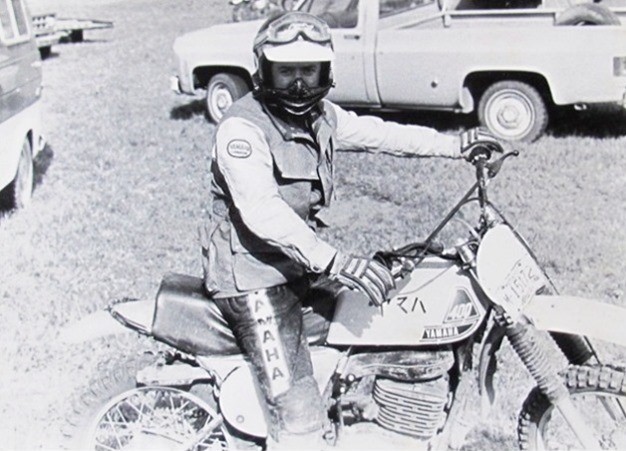
“This got the attention of my Japanese Sales Manager, who sent pictures back to the factory and soon we had the all new IT series. First the 175, then the 400. I think it would be fair to say that we changed the color of the woods blue with those models!
We continued racing cross country through the late 1970s with one memorable race in 1976 on the brand new IT 400. On the start line with 172 other riders, including former world motocross champion, Jeff Smith who was now working for Can Am. After two 100 mile days, I managed to finish third open bike and sixth overall, due a lot by following Smithy off the start line and tagging behind him for a while before he left me in his dust.
Unfortunately these early years of cross country racing in Western Canada were often poorly flagged, resulting in riders both getting lost and also injured. In 1979 I had a serious accident when riding a borrowed Yamaha from the local dealer in Northern Alberta. I crashed badly with the bike landing on top of me, and my hand got caught in the rear sprocket, cutting off my left thumb. I didn’t take my glove off, instead I used the belt off my jacket to act as a tornique. With everybody lost, I found myself all alone and I ended up walking 14 miles out of the bush by myself, before a trip to the Hospital in Edmonton and a seven hour operation to re-attach the thumb. This was in the early days of micro surgery.
In 1981 Yamaha gave me the Okanagan Valley of BC as part of my territory. I was usually driving around 1500 km per week all over Western Canada. Now as most people in Canada know, this is a beautiful area and my thinking was that I was away all the time, so the family might as well live in a nice place.“
ISDE 1983

“The next big event that was looming up, was the ISDE in Wales. Yes I had to go and was soon putting together a Yamaha team to compete. This was with virtually no sponsors, everybody had to buy their bikes and pay their own way. My letters to some companies for support were unanswered, except for Mitsui in the UK. Yes they said they would supply us with a transporter.”

“Everything was going good, except we needed a big bore bike for the Trophy team, so once again I asked Walt for help and yes, we got a new Yamaha TT 600 for Pat Horan. Unfortunately we got zero help from Yamaha Canada except our Accessory manager Keith, managed to supply our team with jerseys and caps.
As the records show, the 1983 ISDE in Wales was tough, in fact very tough. Lots of DNFs in the muddy conditions. I told our guys to practice riding in muskeg before we went, they soon understood why.
Our Silver Vase Team managed to get second spot on the podium, plus won the Watling trophy. What a week, Mitsui were over the moon and faxed the news to Canada. However, Yamaha Canada gave no recognition to this brilliant effort, I was totally both shocked and disappointed and soon decided to hand in my notice.
There is no question that the ten plus years I spent working for Yamaha were the absolute best, in the 1970s they were on top of the World. We had great bikes and great champions like road race champion Stevie Baker and other off road riders. Our Trials team with Stan Bakgaard, were doing great. To me it wasn’t a job, but a way of life.
After a couple of years involved with Yamaha dealerships, I decided to start Outlaw Accessories, selling all kinds of stuff to the dealer network that I knew so well, our hand-built Outlaw toolbelts have been worn by many great riders. We became the importers for Optimol Oil and still sell this fine product which goes in all our bikes.
I still rode the odd cross country race, but again another big event was about to change my focus, the 1986 FIM world round in Vancouver BC. I went out to spectate, and could not believe how the bikes and techniques had changed. This was the time of the Rothmans Honda Team, watching Steve Saunders and Eddie Lejeune was simply amazing.“

“So once again I was back into promoting trials, this time in the Okanagan Valley, which were a huge success. Many national trials and one event called the ‘Outlaw Trial’ that has now been going on for over thirty years.
At this time, we were selling TY Yamahas for Walt, but it was after 1992 that we had the next big change in our operation. We went to the Scottish Six Days once again to spectate and took Walt along with us.”

“Yamaha had a Japanese factory development rider, Hiro Kamura on the long awaited liquid cooled, prototype TYZ and we had a chat to Mick Andrews, who told us this bike would be more streamlined etc when in production.”

“Well, with Walt we ordered five units, but sad to say these were a disappointment. When the bikes arrived in Canada, no changes had been made, and they ran poorly.”
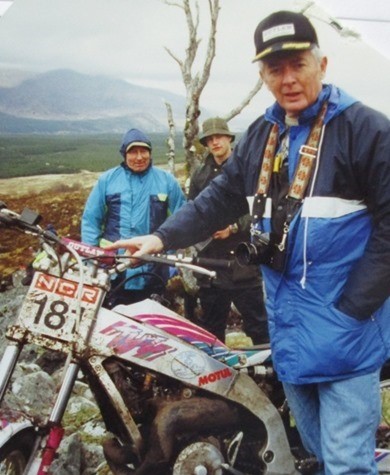
“I phoned Mick Andrews and he said: ‘I know Dave everybody hates them over here’ What a let-down.”

“So that is when we started another venture, we became a dealer for Mountain Motorcycle of Coquitlam near Vancouver. We knew Don Clark from being in the Industry, so when he called me and asked: ‘Dave how are you getting on with that Yamaha?’, I replied: ‘Don you know very well how I’m getting on with the Yamaha’, so he said: ‘How would you like to sell Beta and Gas Gas for us?’ I went to see him the very next day. That was in 1993 and we are still selling bikes for Mountain but now it’s TRRS and also Beta for Beta Canada.”


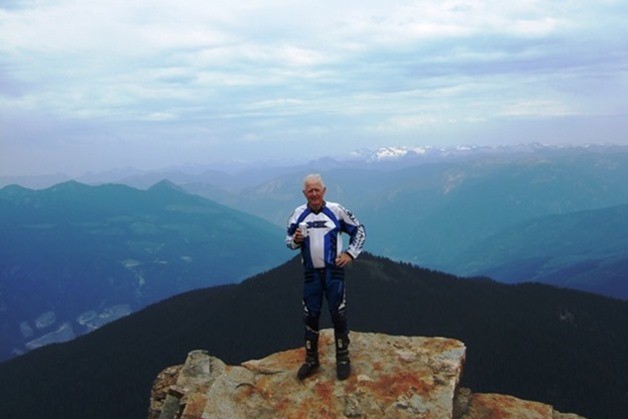
“I’m 87 now, so I leave it to the younger crowd to host trials events these days, but still help out when I can and I still like to get out riding in the woods.”
‘The Outlaw Dave H. Rhodes, A Welshman in Canada’ is the copyright of Trials Guru and David H. Rhodes.
Apart from ‘Fair Dealing’ for the purpose of private study, research, criticism or review as permitted under the Copyright, Design and Patents Act, 1988, no part of this article may be copied, reproduced, stored in any form of retrieval system, electronic or otherwise or transmitted in any form or by any means, electronic, electrical, mechanical, optical, chemical, photocopying, recording or otherwise without the prior written permission of the author as stated above. This article is not being published for any monetary reward or monetisation, be that online or in print.
 TRIALS GURU - DEDICATED TO TRIAL