Words: Mike Naish & Brian Higgins
Photos: Mike Rapley; Eric Kitchen; Rainer Heise; Mike Meadows.
Main Photo: Mike Rapley.
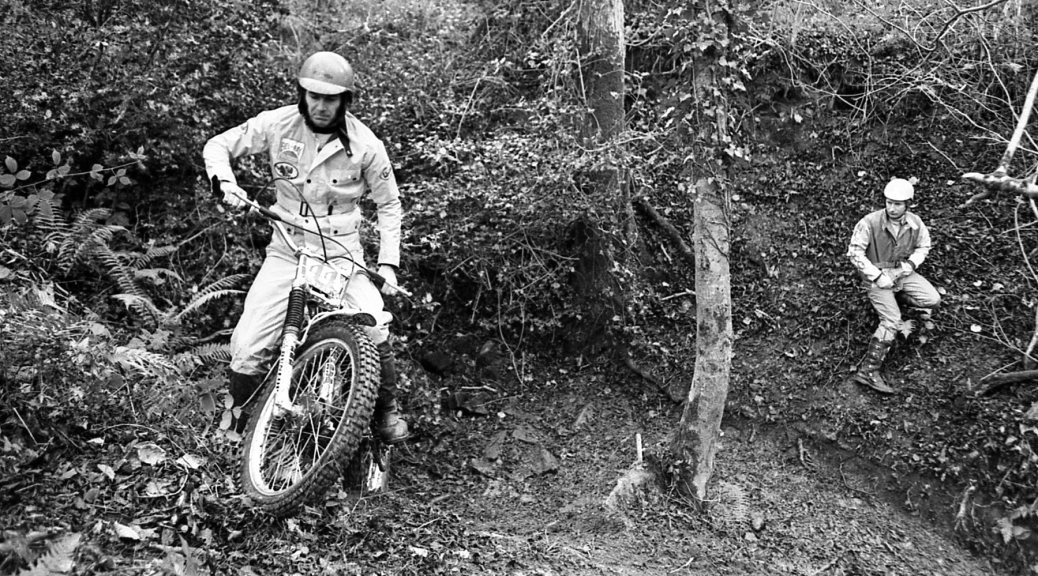
I want to introduce you to perhaps one of the most successful riders the South West Centre has produced. He was a works rider for numerous manufacturers, ACU Centre Trials Champion ten times, British Enduro Champion, all round motocross rider, gold medals in the Trophy Team and Vase Team representing Great Britain in the ISDT now ISDE. Series Manager of the ACU British Motocross Championship and representative of the UK at FIM congress meetings. Throughout his life it is clear that there has been, and still is, real dedication to the sport. This is the difference that makes a champion, from an also-ran. It is of course Brian Higgins.

Mike Naish: Brian, tell me about your early days?
Brian Higgins: “I was born in 1953 about ten miles from Mary Tavy near the sections at Littory Woods. We moved into Tavistock when I had the bike shop and then into Mary Tavy about ten years ago, so I have lived in the same area all my life. I converted my house from three cottages.
Although I was self taught, my father was always interested in bikes and I suppose I got my interest from him. He bought me an old road bike when I was five or six. I spent all my time and all my pocket money on petrol to ride the bike. Both mother and father were used to going and watching motorcycle events, mainly scrambles, from before I was born. I remember being taken to Devonport which was our nearest course in those days. There was a scramble on almost every Sunday from March until September.
My interest was in bikes in general, mother and father held me back from competing in scrambles, but they encouraged me on trials thinking it was a safer form of sport. I always had their support and they took me all around the country with the car and trailer for trials.
I never had a road bike as such. I started off on a 1959 197cc Excelsior off-road bike for riding rough around home but I wrecked that so quickly. When I was eight or nine, I had a 500 Triumph spring hub twin but it was so heavy for me, that if it fell over I had to wait until somebody came to pick it up.”
MN: What was your first competition bike and Trial?
BH: “My father bought me a 197 Greeves in 1967 and I distinctly remember the registration, it was 7LHK. The next bike to that was when father, unknown to me, bought Roger Wooldridge’s 250 Bultaco when he packed up riding in 1967.
My first Trial was the Tiverton Hookway Trial at Farmer Leigh’s place in 1968. I remember that I lost 212 marks. I don’t think I was quite last, but at least I finished. It wasn’t that I wasn’t fit, I just didn’t know what I was doing. I kept falling off and having to pick the bike up. Mum and Dad took me there with a car and trailer but they did not have much knowledge of how to ride sections, I just struggled around on my own and learnt at my own pace through experience. The Bultaco was just about the best bike about then, so I set about practising on the type of sections that I had ridden that day.”
MN: Were you better at or did you prefer rocks or mud type sections?
BH: “I don’t remember particularly preferring any type of section. I was more used to rocks because I set out a group of sections on the moor to practice on, some thing you couldn’t do today. I used to practice on real hard stuff, but the rocks were really grippy type rocks and I would ride the tops of them rather than find a route around them. I had a route of probably fifteen sections, not when I first started practising, but two years later I would never leave one of those sections until I had cleaned it three times consecutively. It was really hard training. I would not come home until I had done it even if it was getting dark. I never had anyone to practice with because there were no other riders living around me at that time.
I remember how nice it was when a group of Japanese riders came over when I was riding for Honda, it was nice to go out with them practising and finding different types of sections to ride.
I was so lucky with the moors out there because as long as you didn’t cause a nuisance you could go out there and ride.”
MN: Did you join a local club?
BH: “Ted Cornish who was friendly with mother and father got us involved with the Torridge club.
I won a Novice award fairly quickly in an Open to Centre which upgraded me to Non-expert and then there was four or five awards which upgraded me to expert, so the practising was paying off.“

“I represented the Centre at the Inter-Centre Team Trial in 1969 as I won a few Centre events, and again in 1970 when the South West won the event at Huddersfield.“
MN: How many times did you win the ACU South West Trials Championships?
BH: “Ten times in eleven years, Martin Strang managed to pip me one year but I had it back off him the next year.”
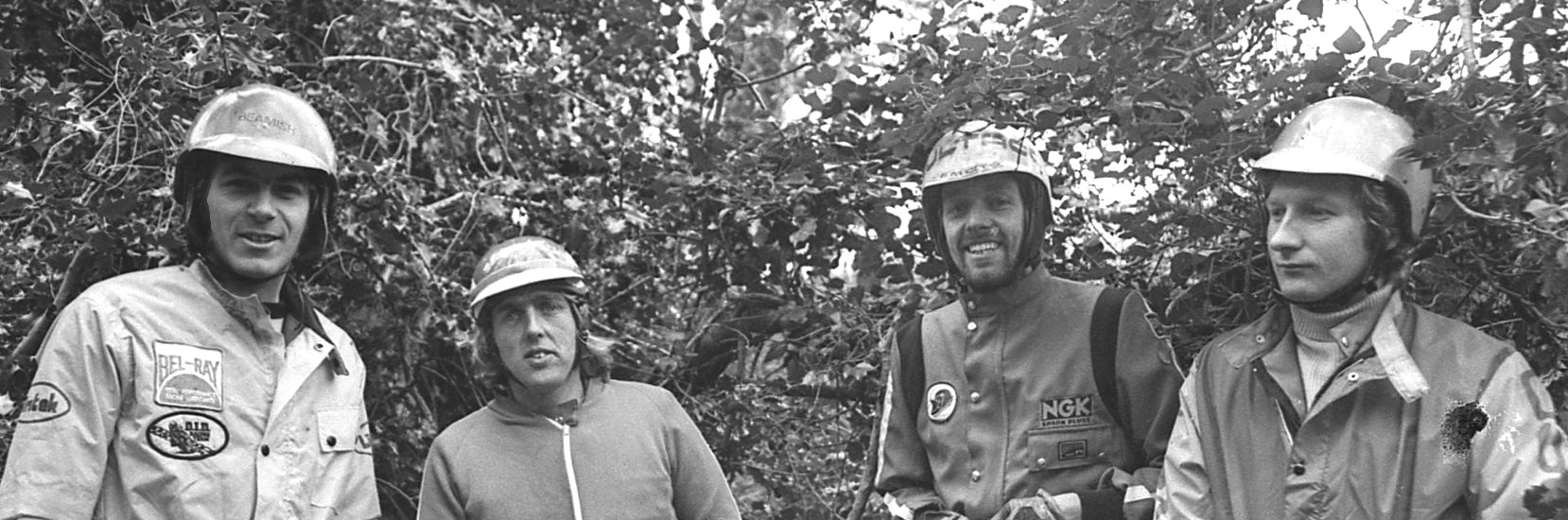
“South West Centre champions went from a period with Roger Wooldridge then Ian Haydon had his years followed by myself. Poor old John Luckett was second to everyone.”

MN: What sponsorships did you receive?
BH: “Well, initially it was my parents, but then I had a Bultaco from Stuart Wiggins in 1970 for about four weeks, but out of the blue then I had a call from Comerfords who organised a deal through Sammy Miller for me to ride Bultacos, which I did until 1973.”

“Then I went on in 1974-5 to one of Sammy’s hi-boy frames, that was to compete in the British Championships, Southern England Nationals and selected World Rounds. The first 325 I rode was Sammy’s old bike EOR2K. When Sam went to Honda and was Honda Team manager I rode the 125 and 250 and then the 305.“
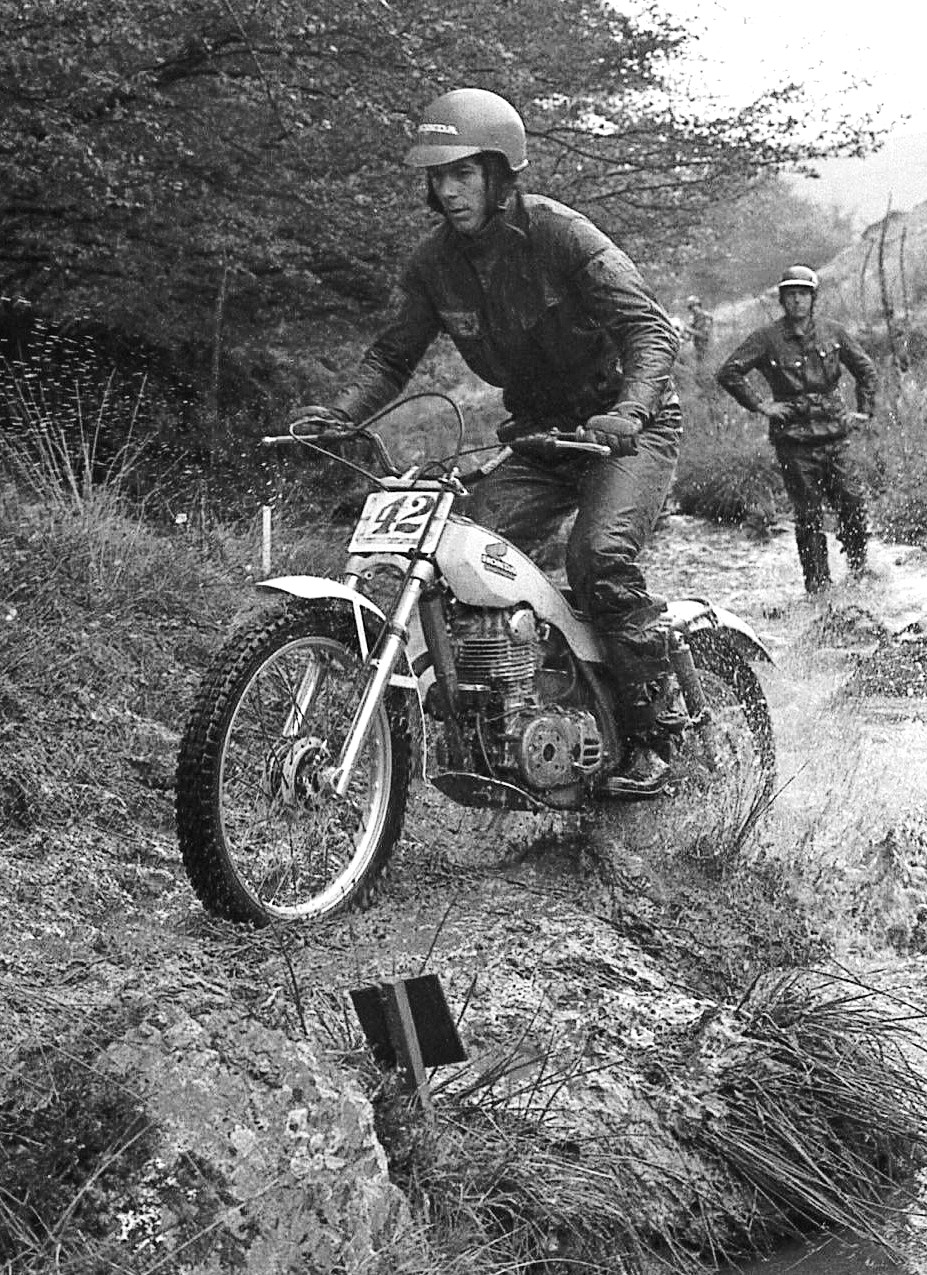
“The 1975 to 1976 305 Honda was the best bike of its day and I really liked it. It suited my riding style although we used to have problems with the carburettor spitting when it was cold. You just couldn’t get over it, you could turn the tick over up until it got really warm but they didn’t cure it for five or six years because Steve Saunders used to have the same problem after me. With all the resources in Honda you would have thought they would have sorted it out sooner.”
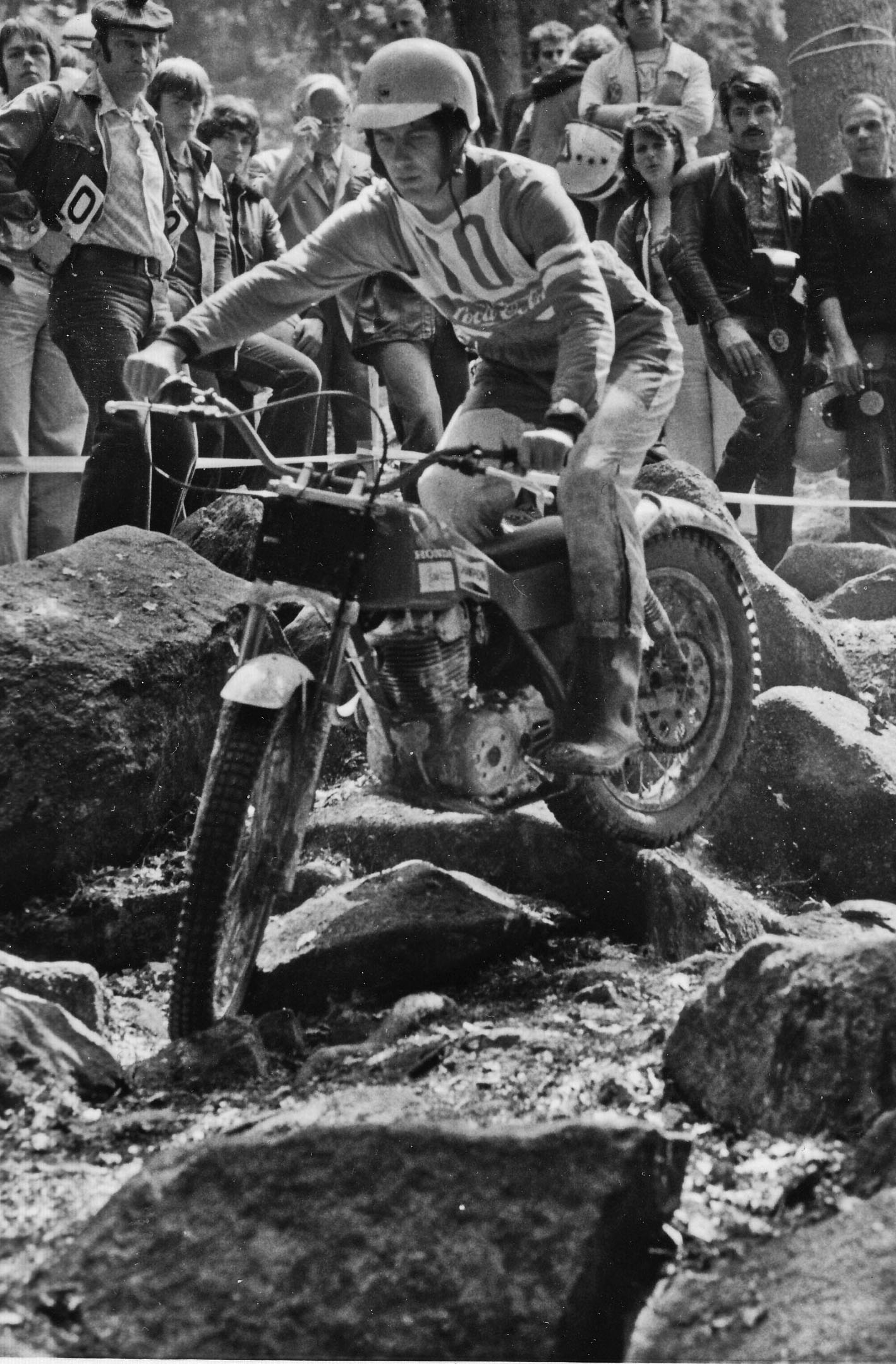
“The situation with Sam was a bit strained at times and Brian Fowler got me involved in Suzuki, of course the Texaco sponsorship money was about so I rode a Suzuki 325 in 1976 to 1979 and that also when I started motocrossing.”
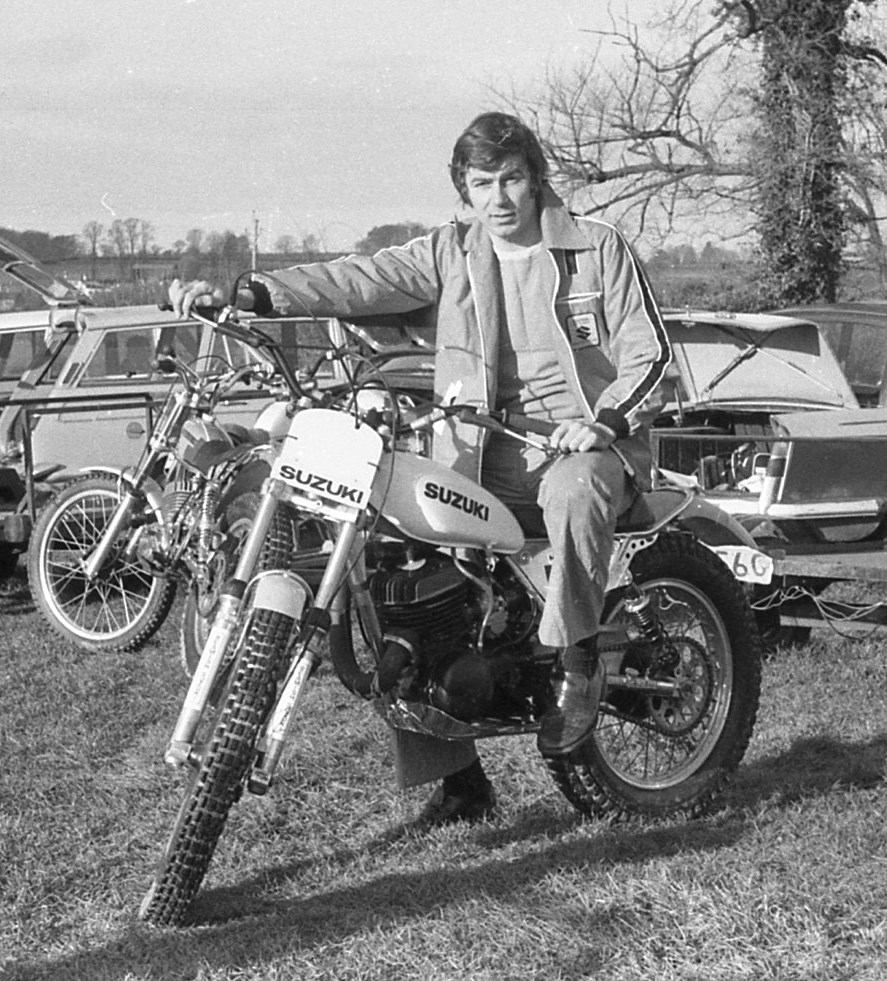
MN: Did you give up trials when you started Motocross?
BH: “I started doing the Enduro championship and then I rode in the ISDT. I had a Suzuki PE250, the first one, but I also managed to get a twelve month old motocrosser out of them by saying it would help my enduros. Of course I didn’t tell them that it probably would not help my trials. I was beginning to get a bit disgruntled with trials as you would get ten marks docked if you got to a section late, which with all the queuing was not difficult in championship events. Then you could get ten marks lost if the bike was considered too noisy. That was why I was quite glad to move into enduros and motocross, of course you could earn a few extra quid in prize money as well.“
MN: So where were you working at this time?
BH: “I was manager of a furniture shop in Launceston. There were a few amusing incidents there. I distinctly remember this area we had for building wardrobes. We had a line of them and we had the back out of one of them and you could open the wardrobe doors and walk through to an area that was my little bike workshop area. I had the bike in there during the week and used to try different things on it. There were some town steps out the back and I used to try it out up and down the steps. Of course I was absolutely dedicated to trials and bikes completely at that time. And success is due in great part to dedication to the task to be done. With all the training I needed to do I packed up work after one year with Suzuki, and I went full time with them for two years.
After that I had two good years for Honda. I paid for my first house outright in those four years it cost me £9,995.”
MN: Did you do many World rounds for Trials?
BH: “I probably did about twenty world rounds in Europe from Austria to Belgium. I found it quite hard because I was not practising the same as the other guys who used to go to the venue and practise for three or four weeks beforehand. I was only picking up the bottom end of the points with two or three points per event. It was very much ‘us and them’ in those days. When you went to Belgium you were on about twenty marks more than Eddy Lejeune just for being English, if you see what I mean.
In 1979 I was British Enduro Champion on the PE Suzuki. I rode in two ISDT’s one in the Isle of Man and one in Austria. I was in the Vase team when we rode in the Isle of Man and in 1976 I was in the Trophy Team in Austria at Zeltweg, when Great Britain finished third. Ernie Page and I were both on PE Suzukis.
Father used to change my tyres on the trials bike, but when I was preparing for the ISDT I used to practice through Littory Woods, find the biggest bog I could then come home and change the tyre whilst it was covered in mud, no security bolts we used to chisel the rims.”
MN: What about SSDTs?
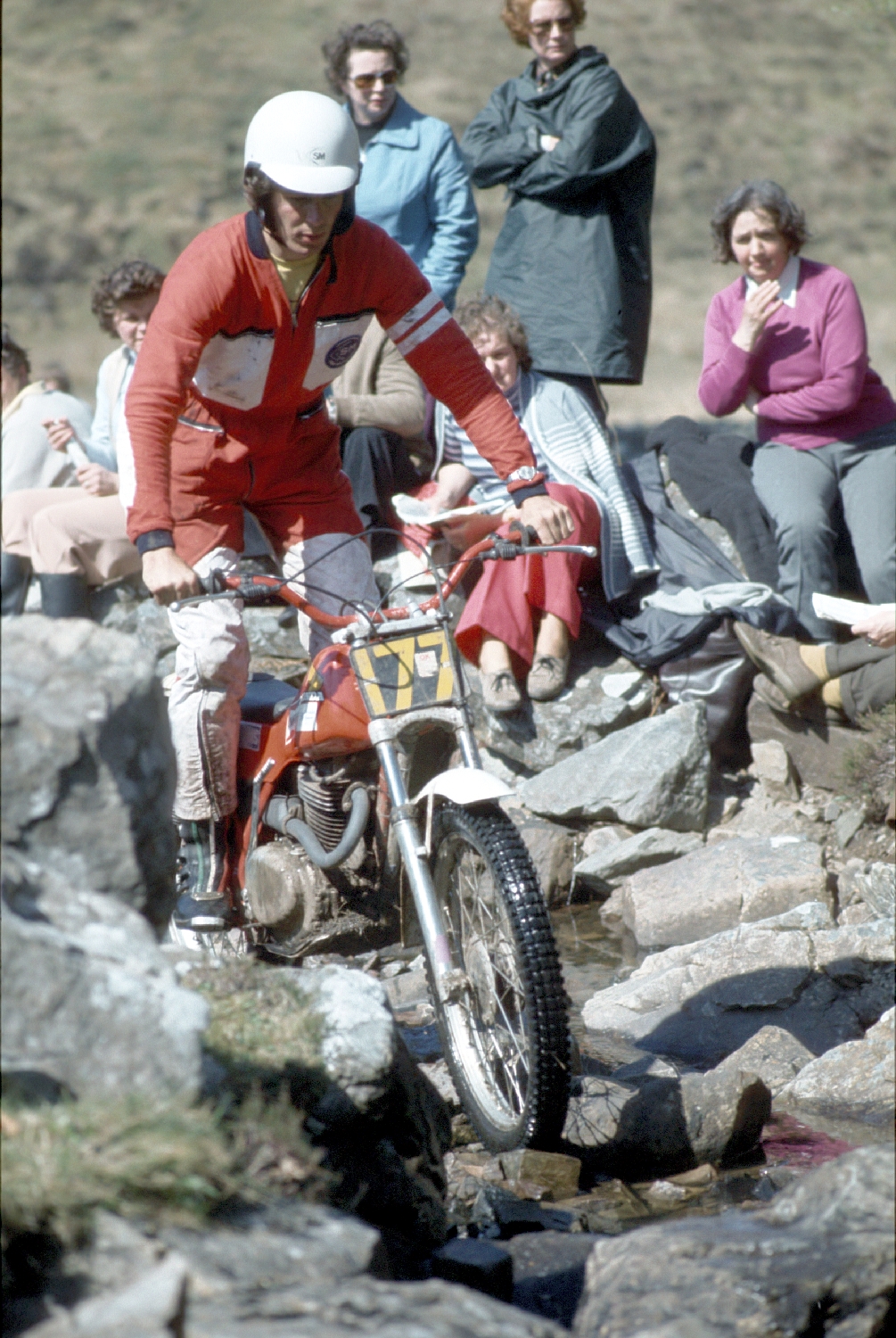
BH: “I did eleven or twelve SSDTs from 1970. Four or five started from Edinburgh. Riding every weekend I soon found that wasn’t enough and I used to go practising nearly every day for four or five hours. My best result in the SSDT was ninth on an Ulf Karlson replica Montesa.”
MN: Did you make many close friends during that time?
BH: “No not really, because it was very competitive and riders were paid on results and were professionals. Mick Andrews was a good example of a professional rider when he was riding for Ossa and Yamaha. Vesty was the ultra professional.”
MN: What happened next in your career?
BH: “In 1980 the money fell out of Suzuki, which followed on with all the Japanese makes. The deals were not about so I picked up a Gori contract which meant I had to do the British championship, Nationals and the British Enduro Championships. Their Enduro bike wasn’t such a bad bike because it had a Rotax engine and I did much better for Enduro’s for them than Trials. Their trials bike was like a dated SWM. One or two years behind the opposition, so I said to them that this bike was not competitive for national trials, and from the day I said that, I literally gave up Trials. I had the deal to carry on doing the enduro championship the following year. They decided that paying me just to do eight rounds of an enduro championship just wasn’t a good proposition, so that came to an end at the end of that year, and basically I just went by myself, doing what I wanted to do after that. I did very little travelling from then on.
From 1982 or 83 onwards I had Tony Gorgot’s 330 Montesa through Jim Sandiford. I kept that for four or five years and did about ten trials on it, that’s all. By this time I was getting involved with the organisational side of motocross and that side of it. I never thought I’d say it, but I lost interest in trials really. I still used to go and watch a few British championship rounds.“

MN: I seem to remember you had a bike shop?
BH: “Yes, I had started the bike shop in Tavistock in 1981, I built the shop up and that was quite time consuming. We were an off-road dealer but did a few road bikes as well, with an agency for Montesa, Maico. We started Husqvarna in 1983 and 1984 when a load of cheap bikes became available, we had the first Water cooled 250 and heavy lumpy 500 Two stroke. I finished with the shop about the same time as John Banks finished with his. I am still renting vehicles and have been for about twenty Years. We have forty vehicles in all.
After Torridge ran their first National scramble I took over the lease of Torridge scramble circuit which also took a bit of time just when I was developing the bike shop, which is really when the riding as such, stopped.”
MN: How did you get involved in ACU organisational activities?
BH: “Torridge started running Nationals and then British championship motocross and our course preparation was probably about as good as anybodies. I was identified as sort of a half decent Clerk of the Course and it snowballed from there. I joined the ACU Motocross committee and attended FIM meetings including the Jury meetings.
I did about thirty hours a week for the ACU which was quite time consuming. I did all the track inspection for the eight round Maxxis British Championship,
I was the secretary for the eight round MMX championships for under 21s, four-strokes, sidecars and quads and seven rounds of the BYMX which is the Youth Motocross. I did the track inspections for all those tracks about a month before the event in the UK including Northern Ireland. For the Maxxis I was also the Series Manager doing all the sponsorship arranging and for each event.”

Mike Naish: Brian Higgins has had a long career in Motorcycle Sport and one which he has obviously worked hard at with dedication throughout his involvement, from rider through to management. I thank Brian for his time to enable this article to be written. My thanks also to Mike Meadows for the use of his photos and information when preparing for this interview.
‘Mike Naish chats with Brian Higgins’ is the copyright of Trials Guru and Mike Naish.
Apart from ‘Fair Dealing’ for the purpose of private study, research, criticism or review as permitted under the Copyright, Design and Patents Act, 1988, no part of this article may be copied, reproduced, stored in any form of retrieval system, electronic or otherwise or transmitted in any form or by any means, electronic, electrical, mechanical, optical, chemical, photocopying, recording or otherwise without the prior written permission of the author as stated above. This article is not being published for any monetary reward or monetisation, be that online or in print.
Discover more from TRIALS GURU - DEDICATED TO TRIAL
Subscribe to get the latest posts sent to your email.
 TRIALS GURU - DEDICATED TO TRIAL