
Words: Mike Hann & Mike Naish.
Photos: Mike Naish; Linda Ashford; Glenn Carney; Mike Rapley.
This is a profile, which dates back to 2007, of one of the most pleasant riders you would ever wish to meet. Enthusiastic, courteous, friendly, always willing to lend a hand. Somebody who encouraged young riders to take up the sport; an organiser, co-ordinator and course plotter. A rider who at sixty-six was the oldest rider in the South West Centre, and performing well at that. Who could have a bad word to say about a real genuine gentleman? Mike Hann.

Mike Naish: Have you always lived in Dorset, and how did you become interested in motorcycles?
Mike Hann: “I was born in the small Dorset village of Leigh near Sherbourne in 1941. My grandparents and parents were very keen motorcycling families and my father was an excellent engineer. He had been in the Royal Signals during the war and was captured by the Japanese in Singapore. During his captivity he was made to work on the Burma railway. I did not see him until he came home after the war when I was seven years old. He was an enthusiastic motorcyclist but all his bikes were road going models.
Every evening all the local bikers would gather at our house, drink tea and coffee, maintain their bikes and of course all the talk was about bikes, so I suppose it was inevitable that I would become interested. I saw in them a great sense of comradeship and I was learning lots from an early age.”
“When I was about thirteen, along with Badger Goss and Tony Chant, we joined the legendary grass tracker, Lew Coffin as trainee assistants at his parent’s place at Pond Farm, Hillfield. We worked five days a week for no money because Lew said it was ‘training’. Lew had a spare stock bike which we used to share at grass track meetings. Badger was useless as a mechanic but as you know he became a world class competitor joining first Cotton and then Greeves. My father and I looked after Badger’s machinery in his early days.”
“Tony was excellent at both grass and scrambles but he used to annoy Lew by going out at ten o’clock at night to see his girlfriend. Lew reckoned that if you were going to be dedicated to bikes there was no time for anything else. I enjoyed my time with Lew, he taught me a lot.”
MN: Apart from the odd grass track, what was your first competition bike?
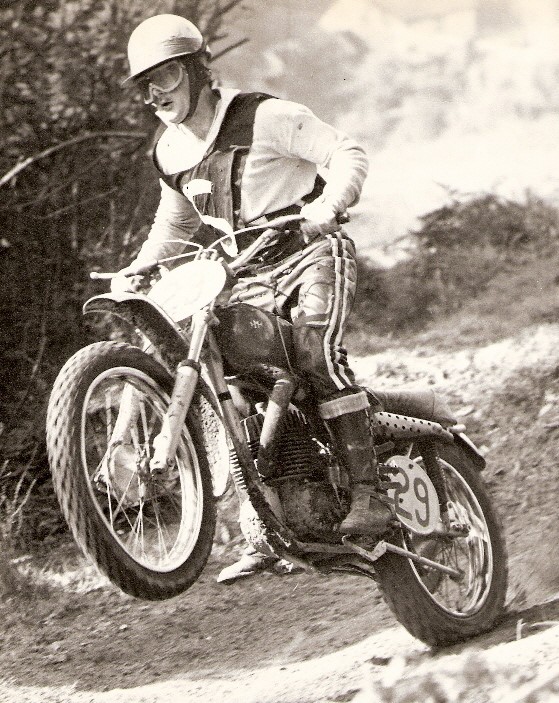
MH: “At fourteen, I joined Yeo Vale and Somerton Clubs and very soon became involved in the running of events which I still am today. In 1957 I purchased my first scrambles bike, a 250 Greeves that was followed through my scrambling period by a succession of Husqvarna and Maicos. In 1958 I started work as an apprentice motor mechanic. This enabled me to afford to start scrambling which I did until the mid 70s when it was motocross.”

MN: Any highlights you want to share?
MH: “Reaching good ‘Expert’ status. Scoring two British Championship points at a South Molton British Championship round and winning a support race at a Farleigh Castle World Grand Prix in the 1960s. After a short engagement of ten Years, I married my wife Evelyn. It cost me seven shillings and six pence, thats thirty-seven and a half new pence. She was a farmer’s daughter, excellent value for money, because we also gained three family farm venues for trials which we still use today. Not bad hey?”
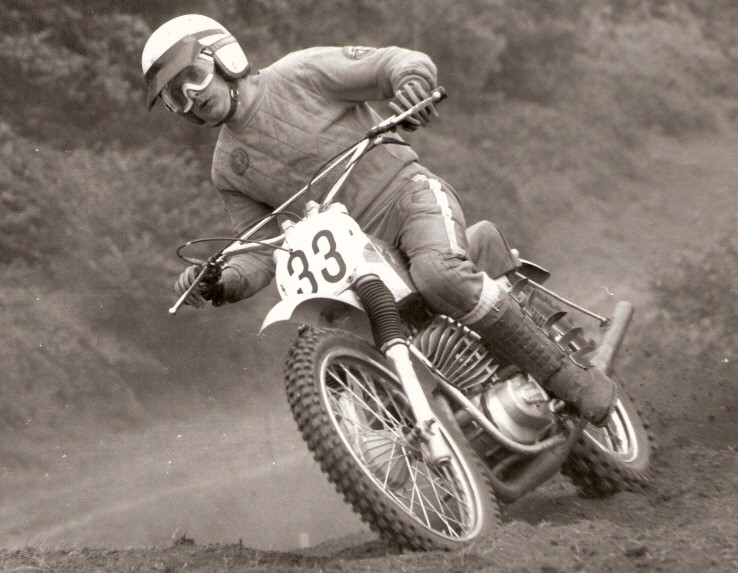
“It was in about 1973 that I had an unfortunate crash in a support race at a winter TV Grandstand meeting. It left me with a nasty broken leg and thigh damage. I missed half of a season being repaired and as much as I tried I could never quite get back into it. It was no longer enjoyable. This coincided with a new daughter and I had started the garage business at Bishops Caundle. Before that I had worked for ten years at Yeovil Technical College teaching motor vehicle maintenance. Common sense and family advice prevailed, motocross ceased and the magical world of trials began.”
MN: So how did you start your trials career?
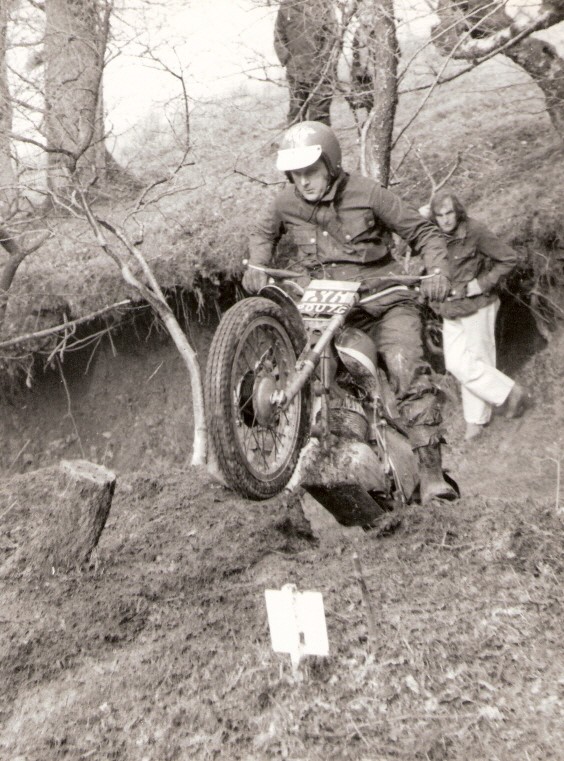
MH: “I met up with my long standing friend Keith ‘Ringo’ Ring and then started the long uphill climb up the trials ladder. Although good riders made it look easy we both found trials a lot harder than we first anticipated. Our local heroes at that time were Martin Strang, Geoff Parken and Hedley Ashford. They seemed to win an event on about ten marks lost and we took simply ages to get under one hundred marks. Remember, no dual routes in those days!”
MN: How did you find trials compared with scrambling?
MH: “Right from the very beginning of my trials it was the sense of help from others and the general friendliness of everyone which was very apparent and different from motocross-which is still very true today. As I have already said we found trials at the start very difficult, but after quite a long time we eventually worked our way to ‘Non Expert’ and then ‘Expert’ status. Because I am living in Sherborne Dorset, I am officially resident in the Southern Centre ACU but right from the very beginning I have always considered myself a South West Centre person. I always loved my scrambling days as much as anyone but the magic of the trials world is absolutely the tops with me which of course includes all the people within it.”

MN: You have competed the SSDT a number of times?
MH: “Yes, our Yeo Vale chairman in the early days was the well known Percy Butler. We all admired his dedication to the club and the South West Centre; he was admired by all who knew him. This was with the exception at some of the South West Centre board meetings because when Percy was there you knew it was going to be a long evening!
I always remember Percy saying to me “Son, thee can’t call thee sell a trials rider till thee have ridden and finished the Scottish Six Days Trial”.
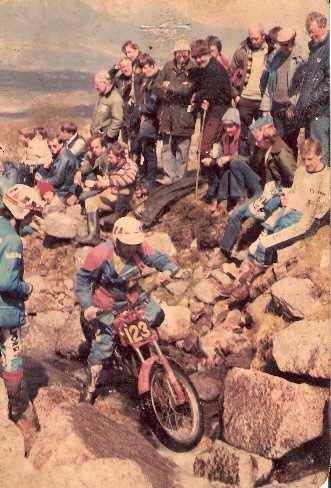
“Yes Percy” I replied, “OK, if that’s what it takes Percy, then that’s what it will be”. Well I tried to make entries in 1976, through to 1979, but all were refused as the event was full up. Then in 1980 that special Edinburgh letter said ‘YES’ riding number 180. What the hell have I done now I thought, as the realisation dawned? There was no backing out and I really did not know what I was letting myself into. That was the start of ten superb Scottish Six Days that I rode in with enough good memories to keep me going for ever. It included two retirements and I can never thank Percy enough for urging me to enter in the first place.”
MN: What about your bike dealership?
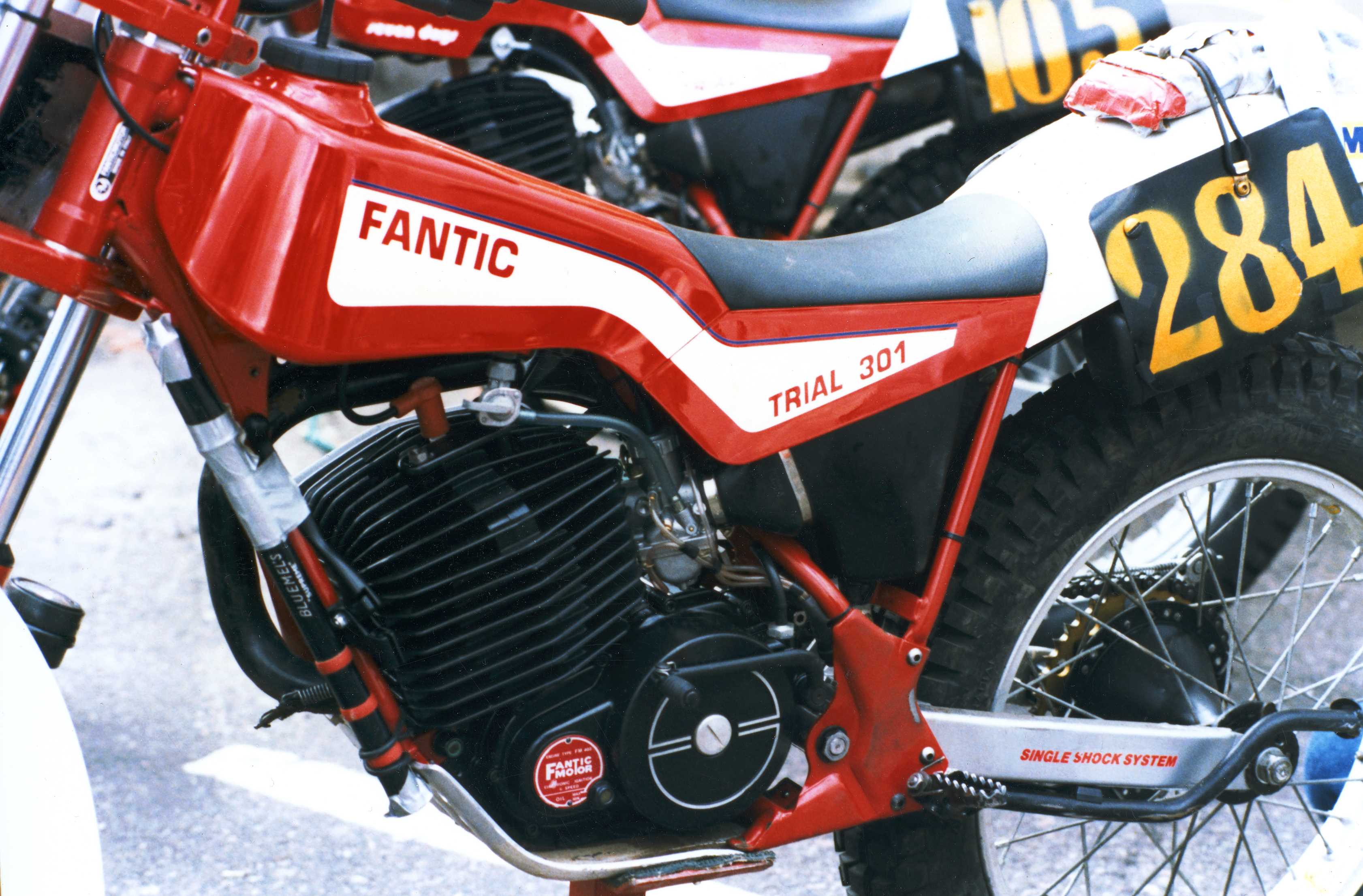
MH: “From 1980 to 1990 I was a Fantic trials main dealer. I loved every second of it but it took up lots of my time and in reality it was difficult to keep going with the main garage. Sadly when my parents passed away a tough decision had to be made, the garage earned my bread and butter and the bikes didn’t, so regrettably the Fantic Agency had to go. I have to say that during those ten years the Fantic importer Roy Cary and his wife Helen were absolutely fantastic. For example in 1981 a spectator stole my riding jacket at the top of Pipeline, having put it at the ‘ends cards’ prior to riding the section. Mrs Cary was there and insisted I use her own coat to continue the event. That was beyond the call of duty. Following this I have been privileged to take part in six Pre65 Scottish events in total, with a variety of machinery, and once again my good friend Jack Coles allowed me to use his beautiful 500 Ariel, a machine which I rated as perhaps the best bike I have ever ridden.”
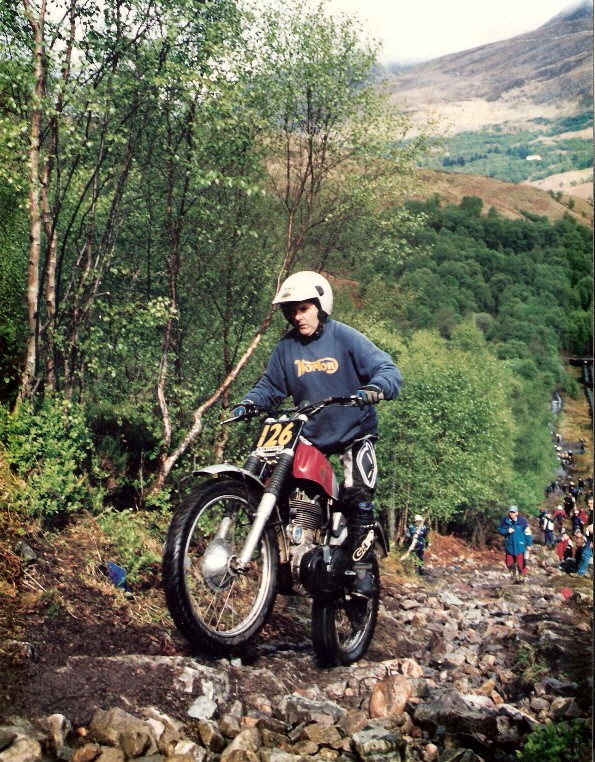
“In fact I did actually own it for a short time but a long standing back injury incurred a few years prior made riding the Ariel continuously a very painful exercise, so Jack had it back.”

MN: Do you run any road bikes?
MH: “I love the older bikes and am a very keen member of the Dorset Vintage Club and sometimes take part in their club runs on my 1929 BSA 350. My brother Rodney, a retired policeman is chairman of the Vintage Club and in my capacity of car and bike MOT testing I get my oily hands on some very exotic machinery which I really enjoy. I consider myself lucky to be able to compete in the South West for fifty two years continuously and above all still very much like to get up early on a Sunday morning to meet the Yeo Vale gang and centre friends and enjoy another good days sport. I am often asked ‘What are the highlights of your trials life?’ and my immediate reply is ‘Every Sunday’. I am not afraid to admit that no one enjoys their sport more than I do.”

MN: What do you think of the Pre65 scene?
MH: “My father was often Clerk of the Course for the Yeo Vale trials and I was helping him one day when he said to his helpers ‘Let’s get the Experts to ride over this part of the fallen tree and the rest of the entry over this lower part’. That was the very beginning of the dual sections and now of course many times a triple route. In the sixties and seventies when single route sections were the norm you very rarely saw competitors over forty years old, but look at us now with multi route sections, we are all catered for which perhaps is the best and most sensible thing to happen to our sport.”
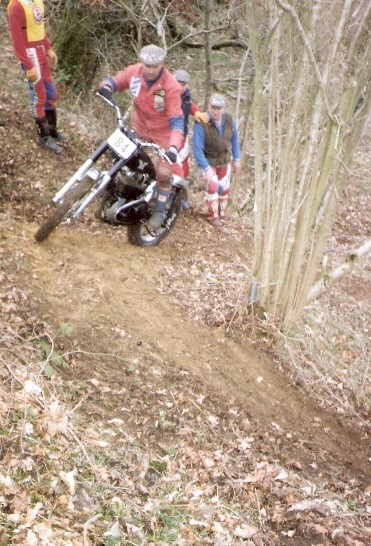
“One side of our sport which really saddens me is the mad mad world of Pre65 British bike trials, you could write a whole book on the subject. But when you have a section of people spending £12,000 building up an exotic engineered super bike and then entering it in a Pre65 event when the original cost was £300 it is a complete sad joke. The premier event is obviously the Scottish Pre-65 Two day and you could correct the situation overnight if you gave the awards to the competitors whose machine is in the correct spirit of the pre-65 movement.”
MN: And what of the future?
MH: “At sixty six and feeling sixteen you certainly appreciate much more all the things we take for granted. We appreciated our fortunate health, also the massive amount of club work, the observers, the help and support from my wife and family. Every Sunday I am riding Evelyn is running the garage forecourt. A customer recently asked me what I am going to do when I retire from the Garage. I said I would like to be a professional Trials rider and to be sponsored by my wife. She said that she had been doing that for years. In all a happy appreciative South West Centre rider whose favourite day of the week is Sunday. All the best to everyone.” – Mike Hann

This interview took place in November 2007, so the dates and ages will have change considerably. – Mike Naish
Trials Guru Post Script: When Mike Hann rode the 1980 Scottish Six Days with riding number 180, an enthusiastic parc ferme marshal when calling out the numbers in the morning, when he came to Mike’s number he called out in a loud voice “One Hundred and Eightyyyyy” in the way they do at darts competitions. This happened every morning with people laughing. Mike had to ask what the joke was!

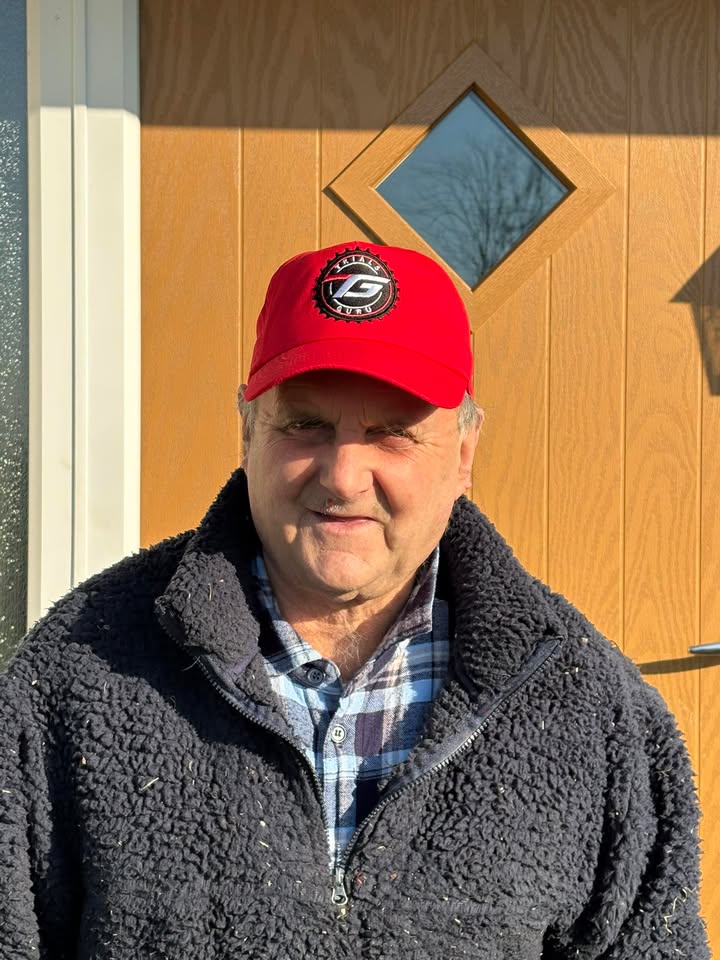
‘Mike Hann chats to Mike Naish’ is the copyright of Trials Guru and Mike Naish.
More interviews with Mike Naish HERE
Apart from ‘Fair Dealing’ for the purpose of private study, research, criticism or review as permitted under the Copyright, Design and Patents Act, 1988, no part of this article may be copied, reproduced, stored in any form of retrieval system, electronic or otherwise or transmitted in any form or by any means, electronic, electrical, mechanical, optical, chemical, photocopying, recording or otherwise without the prior written permission of the author as stated above. This article is not being published for any monetary reward or monetisation, be that online or in print.
Discover more from TRIALS GURU - DEDICATED TO TRIAL
Subscribe to get the latest posts sent to your email.
 TRIALS GURU - DEDICATED TO TRIAL