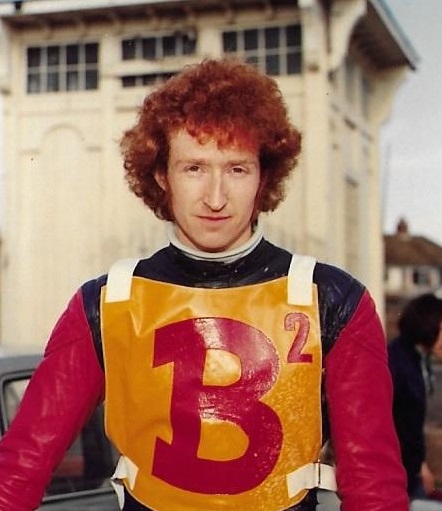
Words: Trials Guru & Steve Wilson
Photographs: Iain Lawrie; Eric Kitchen; Mike Rapley, Colin Bullock; Bob Light; Blackie Holden; John Robertson; Richard Francis; Ian Robertson; Alistair MacMillan Studio, Fort William (permission by Anthony MacMillan); Linden Thorpe; Steve Wilson Archive; Derek Soden; Guy Glasscock; Michael Woods; Keith Walker; Bob Currie/Motor Cycle (1971); Birmingham Evening Mail (1974); OffRoad Archive.
Main photo: Colin Bullock/CJB Photographic
Reading time: 45 minutes approximately.

The name ‘S. D. Wilson’ was mentioned in reports just about every week in Motor Cycle News and Trials & Motocross News, back in the 1970s. To this day, trials enthusiasts still covet Steve Wilson frames made especially for the Bultaco Sherpa (and a few others). Wilson never rode any competition bike as standard, it always had a modification, or two! ACU Midland Centre champion six times, we had a long chat to Steve Wilson about his life in scrambles, speedway, ice racing, frame building, BMX management and of course trials.
Early Days:
Trials Guru: Where did you grow up and went to school?
Steve Wilson: “It was Hall Green, south Birmingham. I attended Pitmaston boys which was a secondary modern, a schoolmate called Keith Leonard went on to play for Aston Villa. A metalwork teacher let me straighten bent forks and braze gussets in my cycle frames. I was mostly rubbish at school and left in 1966 at age fifteen with no exams taken. My standing joke was: the week they came around school with the work ethic, I must have been off sick!
My Dad was David Wilson, but was called ‘Harold’, after the prime minister and he was a keen motorcyclist, but not a competitor, he loved road going bikes. He was a pioneer of automated machine tools and developed punch card controlled production methods during the second world war.
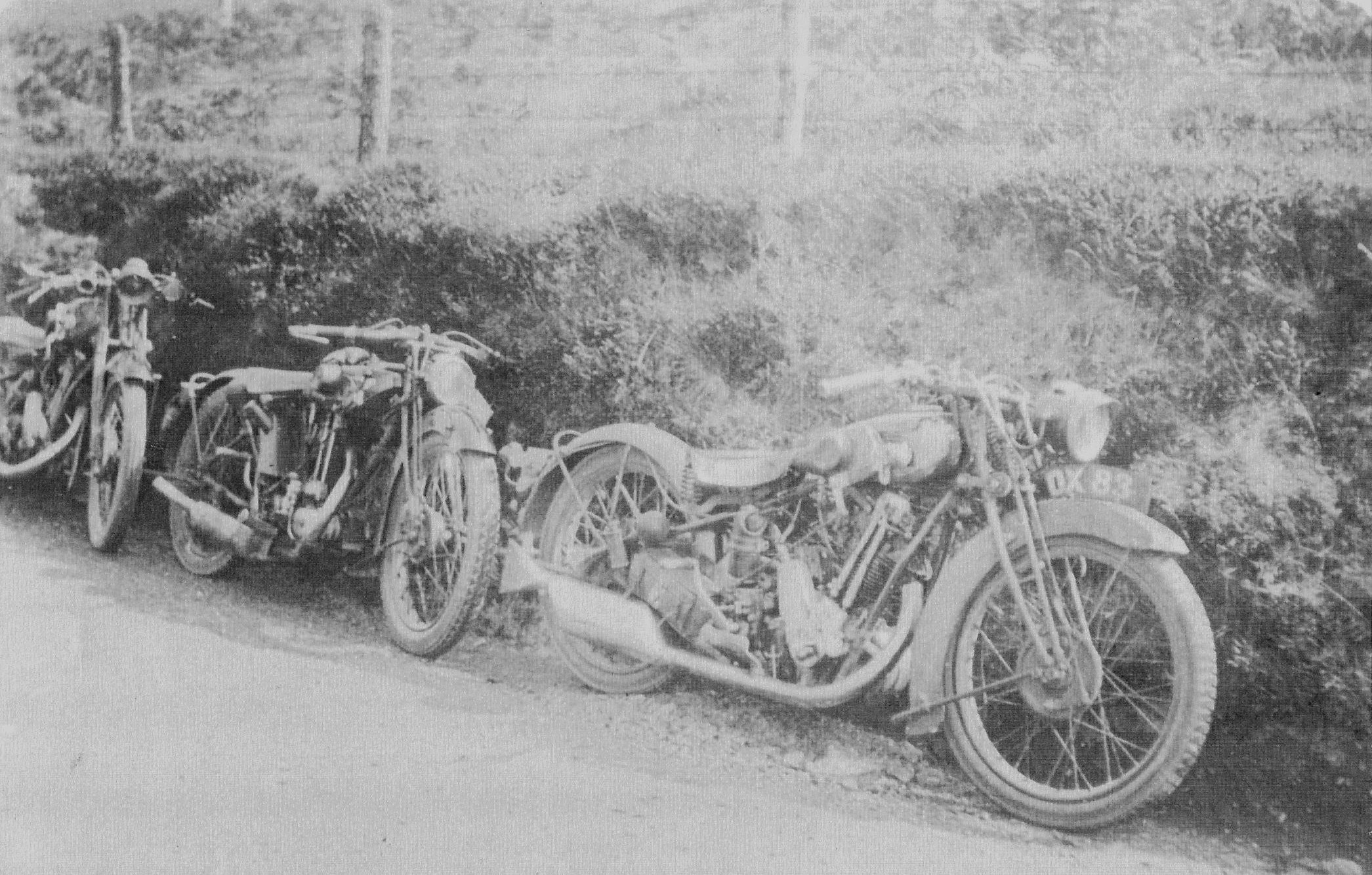
Richard and Bob Crofts lived nearby and I think it was them that convinced my Dad to encourage my brother Bob to go riding trials and scrambles in the early 1960s. They certainly got me obsessed with off road sport.
I had girder forks, then moped tele-forks from Vale-Onslow’s cellar on my pushbikes. My cycling mate back then was a guy called John Biddulph who went on to become AMCA trials champion when I was ACU Midland Centre champion.”
Birmingham Small Arms:
TG: You worked at BSA Motorcycles, what was it like?
SW: “My BSA apprenticeship at Small Heath, taught me all the machining skills. Then working at Elstar motorcycles gave me the frame building skills I needed, but I had no higher education at all. I just asked all the right people lots of questions, and then did it my way.”
“I was a very young apprentice from March 1967 until 1970 with a job offer to start work at BSA small Heath just five days after my sixteenth Birthday.“

“But first, I had to pass my bike driving test in order to make the five-mile journey to work. I did this and had the use of my brother’s road going Triumph Tiger Cub to commute on. I had ridden my first trial at aged 15, it was an Evesham MCC event at Hidcote, the Smith and Cornell Cup on 23rd July 1966. Scott Ellis won it on seven marks and I dropped thirty one to take the Best Novice award, not bad for a first timer.
Obviously, the attraction to work at BSA was bikes, but I was only a craft engineering apprentice, and it was a couple of years before they let me anywhere near a bike.”
TG: Did you meet people at BSA that would be part of your competition life?
SW: “The only people I knew who worked there were Mick Clinch in the competition shop, the Winwoods, Mike and Ross, and Michael ‘Bonkey’ Bowers who was in the experimental department. They all rode in Midland Centre trials and scrambles.”
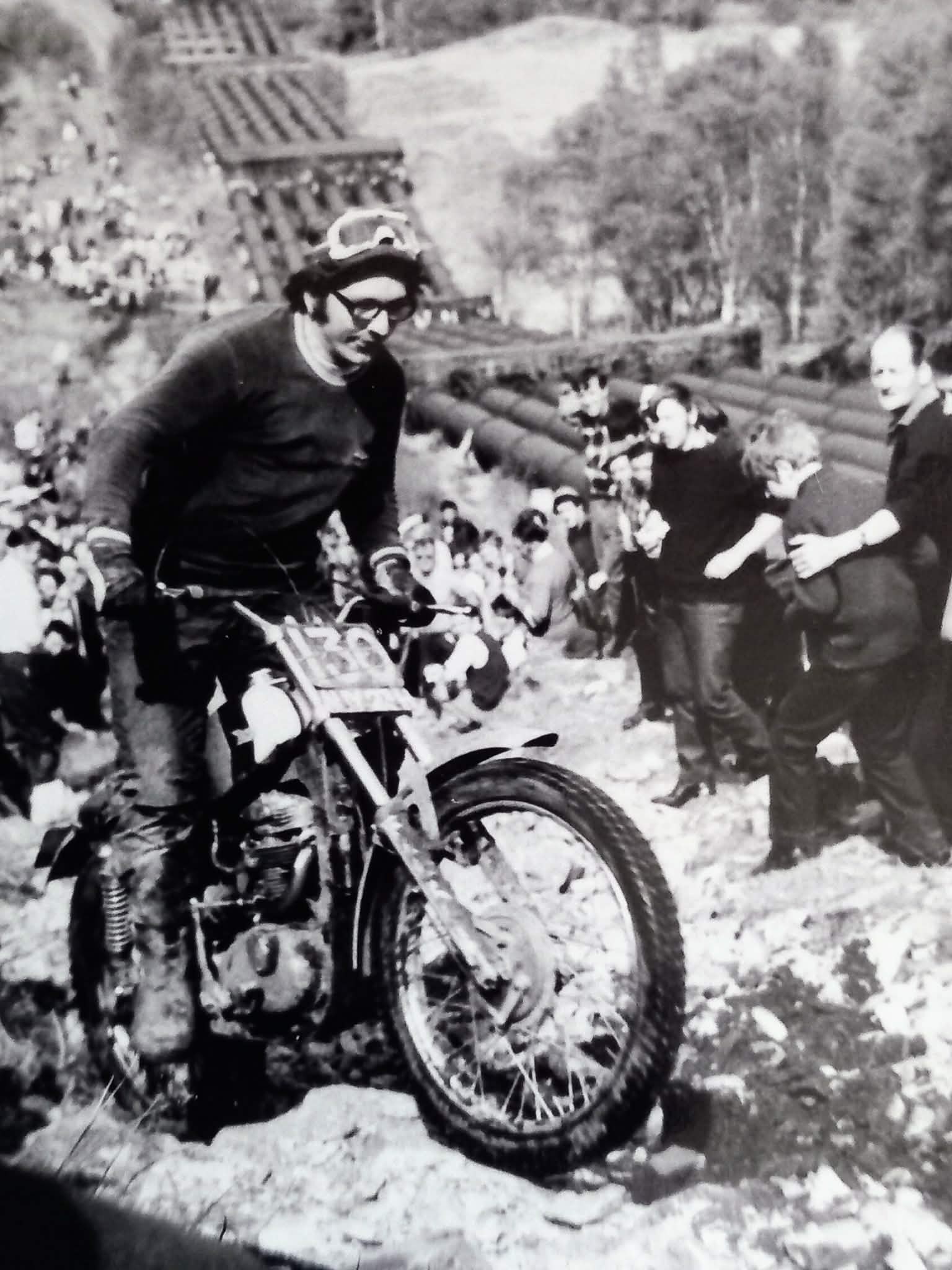
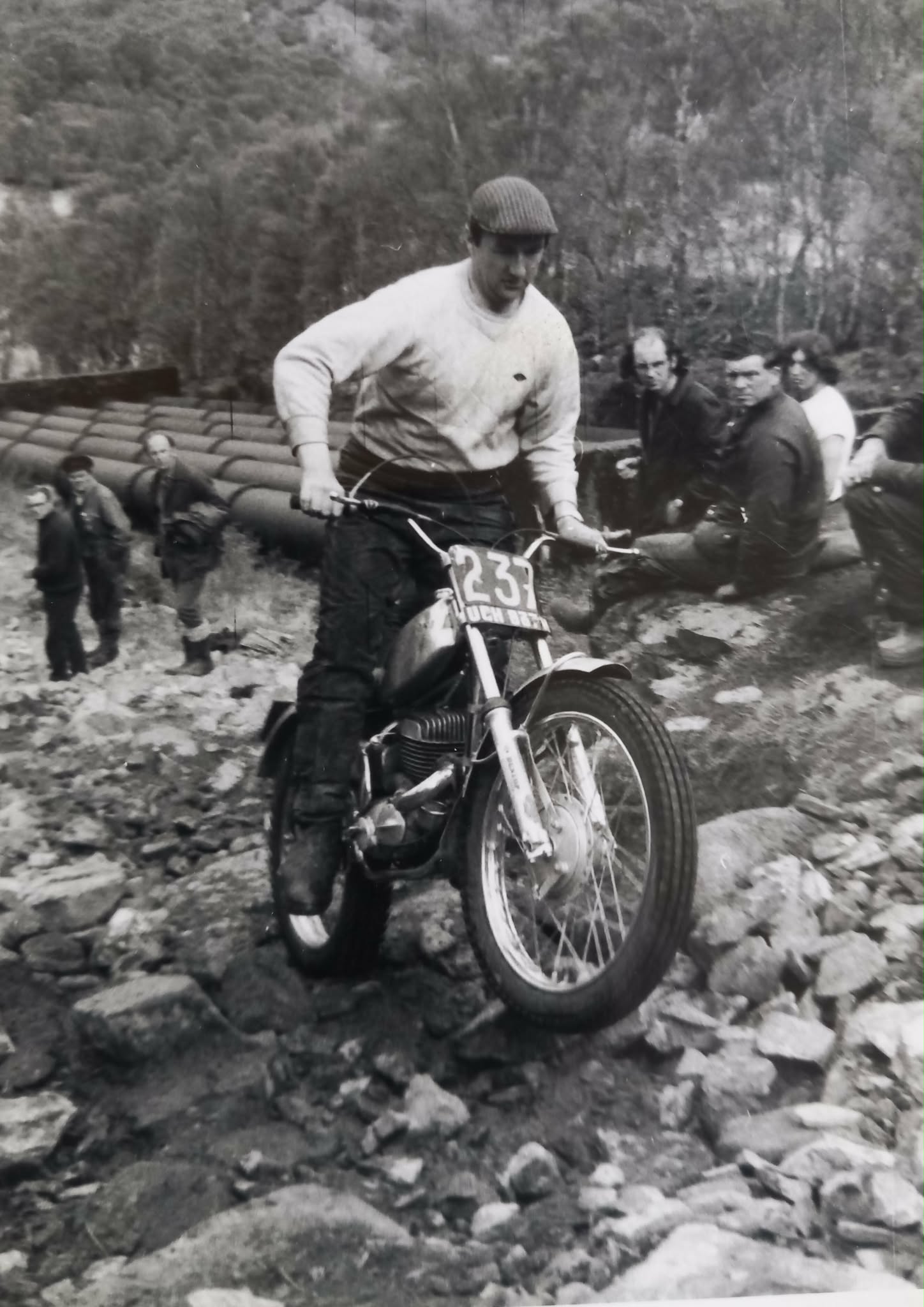
TG: Was it a pleasant environment at BSA?
SW: “The Small Heath factory was old and vast in size, the apprentice training school was open-plan, clean and well laid out, with all kinds of toolroom machinery. It was run by a guy called Bert Currie who rode to work on an old side-valve M20 BSA, his office was elevated like a look-out tower of a P.O.W camp. We called him ‘Grumpy Lumpy’ the factory was big on nicknames.
On exploring the massive factory, much of it was dark, dingey machine shops that stank of suds and other cutting oils, it was extremely hot, and labourers cleared away the mountains of swarf. It had its own forge that stamped out the various heavy lugs used on frames, swinging arms, footrests and brake pedals. It all looked rather heavy and over-engineered even to a sixteen-year-old novice.
A brake pedal was forged and had a bronze bush with oil grooves and a grease nipple, it weighed about as much as a prosthetic limb. The factory manufactured 90% of all motorcycles on site, the only items bought in appeared to be tyres, chains, rims, Lucas electrical equipment, and Girling dampers.
Off to the left of Armoury Road, was a department called ‘Motoplas’, where they made seats, fork gaiters, handlebar grips and other aftermarket accessories. Motoplas was a subsidiary company of BSA formed in the 1960s which supplied the motorcycle and scooter industry with moulded products.
The factory had in-house polishers and nickel and chrome plating, wet spraying, tank lining, cadmium plating for imperial nuts and bolts. Not a metric fixing on site anywhere! Some of this in-house activity were subsidiary companies of BSA.
The bottom road parallel to the canal housed both the competition shop and experimental department, both very much ‘out of bounds’ to a young apprentice.
Brian Martin, ‘the captain’ headed the competition shop and Jeff Smith the big name within. I knew Fred Barlow a little, and knew of Graham Horne and Norman Hanks the sidecar racer. Fred Barlow went on to form his own company FBS.
There were occasional comings and goings of white Mercedes with trailers carrying the works scramblers of John Banks, Dave Nicholl and Keith Hickman. That was a rare treat for me then, although in 1969 when I had a new trials Bultaco, I did get some test track lunchtime practice in with Jeff Smith on his Bantam trials bike. I don’t think we ever spoke, just created a section and rode it until it was mastered.

The training school gave me good all-round skills in fitting, turning, milling, grinding, gas welding, shaping, drilling and making jigs. My time in the factory operating machines like capstans for £3 a week was nothing short of youth slave labour and would never be allowed in today’s world.
After about two years, I finally got to work on bikes in the rectification department. After testers had been out on bikes, and listed any faults, we would change oil, change discoloured front pipes, maybe put a thou oversize piston in a rattling Bantam. One Irish guy used to pour oil down the plug hole when finished, testers had to bump start them, with clouds of blue oil smoke filling the air.”

“I was known as the ‘Sprog’ by fellow workers and A65 road racers, Martin Russell and Steve Brown who worked in that department. Other road race names who worked at small Heath then we’re Les Mason and Bob Heath. Bob was later a visor and goggle lens tycoon.
I had my moments of getting into trouble there, notably, knocking a wheelbarrow into the hopper that fed the forge one drunken lunchtime, that stopped the job for several hours, and led to a major bollocking. Finally, after skipping my Friday college day in favour of practicing and preparing my trials bike for weekend nationals, I got the sack in 1970.
The bikes produced at BSA during this period were not bad bikes, but as 80% of the production was going to the USA in 1969, the market out there was very different! By 1971 BSA had lost three million pounds.”
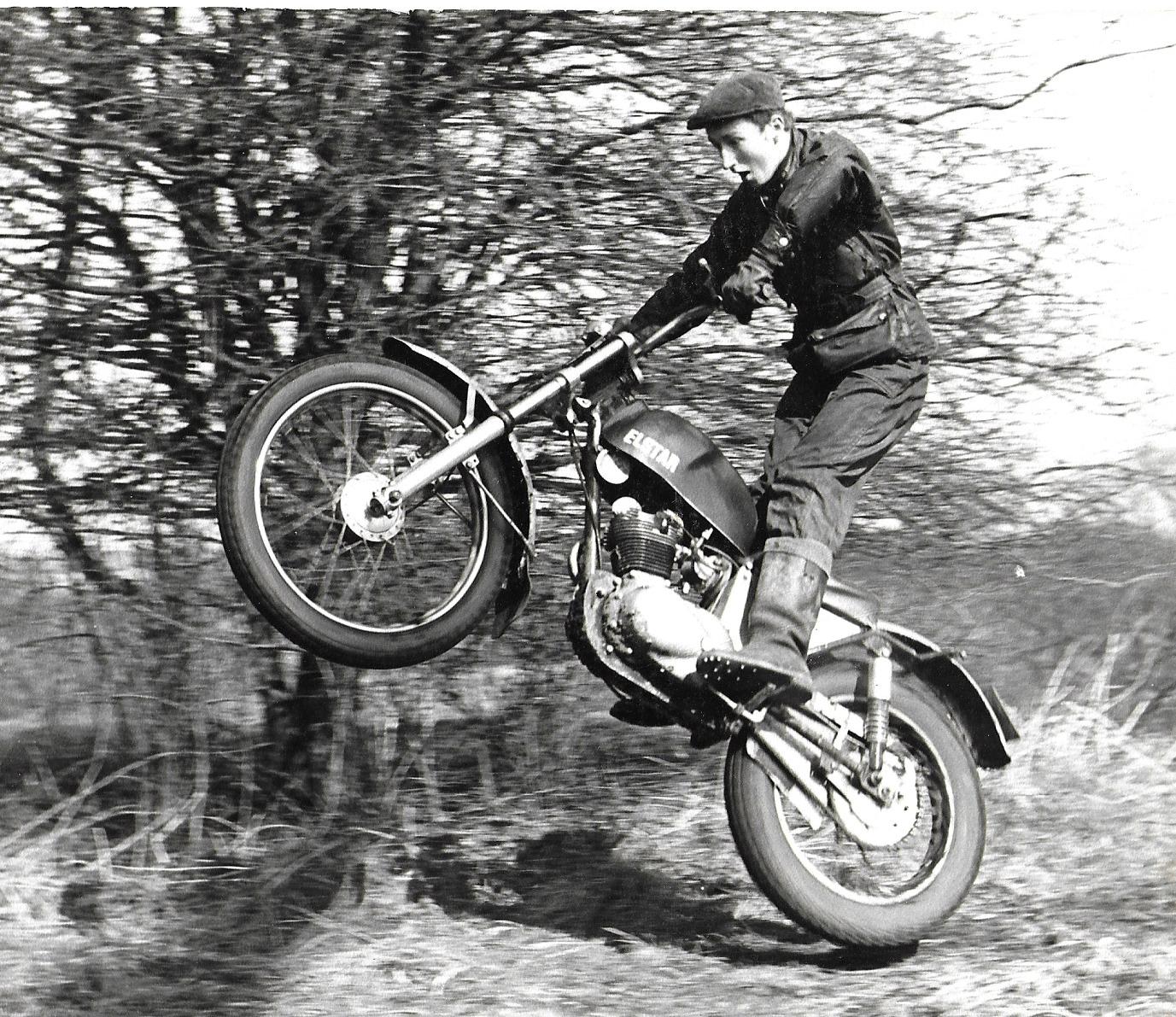
TG: What happened after you left BSA?
SW: “I then went to work for a former BSA man, Alf Ellis and learned to bend tubes and frame build at ‘ELstar Motorcycles’, the grass track specialists. I was a customer of his who had to wait six months for a frame kit for my first real trials bike, an ELstar Triumph Cub in 1967 when I worked at BSA. It was this job that set the scene for my later frame building activities.”
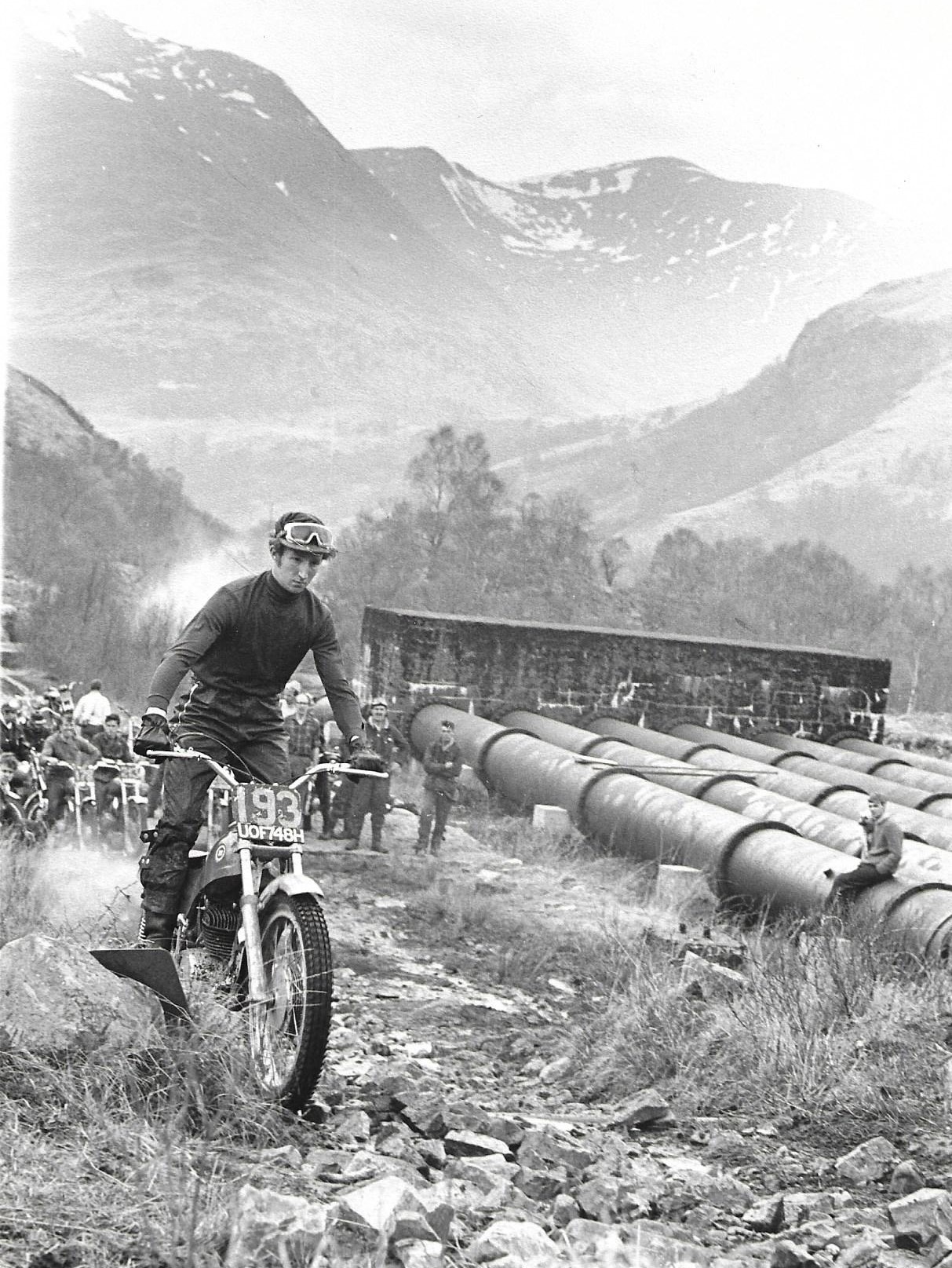
TG: You expanded into scrambling seriously in 1970?
SW: “I had taken part in scrambles as early as 1968, but for sure I got serious in 1970 on a Cheney BSA. In fact I built two similar bikes, one was built for the 1971 Shell Under 21 championship. The engine was BSA B44 based but fitted with a Massey Ferguson tractor barrel liner and slightly altered BSA Gold Star piston which made it 508cc. Brian Clark from St. Ives got that done. From the BSA comp shop came a GP cam and a larger inlet valve via Mick Clinch and a new larger bronze valve seat was made and fitted. Flywheels were skimmed and lightened, the crank was cut off on the primary side and the alloy case cut away and reworked. This was done because a Greeves Steffa magneto was fitted to an extended cam shaft with a new bearing for support, creating a bigger bulge on the timing side. There was no kick start or mechanism. I binned all that! The engine ran on methanol hence the barrel finning was chopped about.“
“Because I had a trials background, I had moved the footrests back an inch or so. I had to modify the gear lever to reach it. The first two events it ran badly as the works cam had the keyway cut a few degrees away from standard. This resulted in a coloured front pipe and a sooty rear wheel. Basically the valve timing was out. All I remember of racing that day was John Banks waving me on from the ropes as it was the only four-stroke in that Under 21 series.”
TG: The following year, you were still determined to succeed at scrambling?
SW: “Had Tina Turner been asked her opinion of Eric Cheney, she would have said, “Simply The Best”.
That was and still is my view of the man. It’s why I chose his frames for my BSA engined scramblers for the 1970 and 1971 seasons.
The group sites on facebook have reunited me with the two bikes I built and raced but had no photographs of them, now I do so thank you for that.
Having left BSA, I was working under the wing of Colin Saunders at ELSTAR motorcycles building the grass track machines. Colin knew Eric Cheney from his days of preparing Peter Hole’s scramblers in the 1960s. So after my first Scottish Six Days, with Colin’s help and advice, I set about building a twin down tube Cheney frame with a BSA B44 based engine.
I chose conical REH hubs, as these were fitted in the grass track bikes. I got hold of some titanium and machined the wheel spindles. A trip or two to Eric Cheney for his forks, air box and other items to finish it off for the 1970 season. The only thing I changed was footrest position. This encouraged me to stand up more and use my legs, which helped prevent the constant buffeting BSA riders in particular got ‘up the spine’ to put it politely. With only six inches of travel and twin tube damper rods turning every colour of the rainbow as a race went on, rear ends back in the day weren’t great. The engine was as before but with a Summerfield grass track cam shaft fitted.
This bike saw me go from Junior to Expert, almost unbeaten by juniors in 1970. The following year Mike Wood rode it to second place in the Eastern Centre four-stroke championship. It was again running on methanol fuel and very fast.
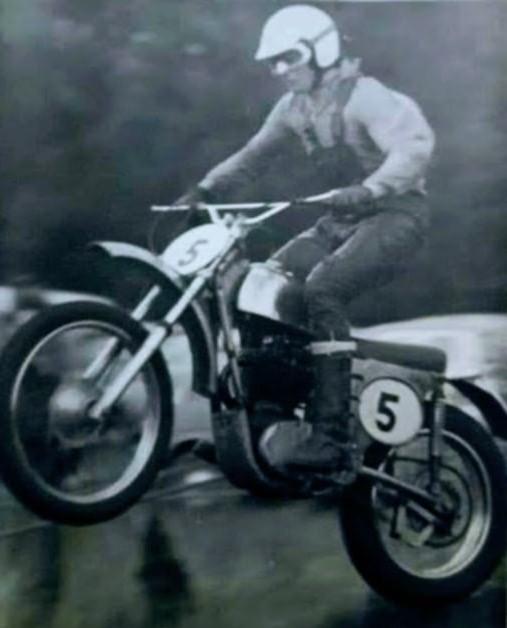
“For the 1971 bike, I did a deal with Peter and Len Vale-Onslow juniour for a ‘choose any parts you want’ rolling chassis, trading in a 250cc Husqvarna which I didn’t get on with at all.“

“I went for Greeves front end Ceriani forks, Greeves front hub and their Steffa magneto. A Cheney rear hub, because I liked the floating brake
plate idea and Koni rear dampers. All the alloy stuff was red anodised Cheney supplied. The end result was a big battle with ‘Bonkey’ Bowers all day at the Red Marley hill climb. He won the silver Helmet on a BSA B50. I won the unlimited final. I think that was perhaps the last ever race on the old hill.
I haven’t ever located the results, but I think I was fifth overall in the Shell Under 21 championship.”
Steve Wilson had a good relationship with dealers Vale-Onslows in Birmingham. In 1999, Len Vale-Onslow was awarded the MBE and recorded as Britain’s oldest working man and was the oldest man to be the subject of the television programme, ‘This Is Your Life‘. It was this firm that sponsored Steve on the Stroud built, 125cc Sachs engined Saracen in February 1971. This resulted in Wilson being part of the three-man manufacturer’s team at the 1971 Scottish Six Days.

The other members were bike dealer, Jon Bliss and paratrooper, Jack Galloway. Steve’s Saracen debut was the Vale of Evesham trial in the February that year, the bike was second-hand and he got it two days prior to the event. In fact he hadn’t entered the trial and was granted a late entry and was allocated a number at the back of the field.
SW: “The late entry actually did me a favour, it had been very wet and as the day progressed, things started to dry out and my late number ensured that I was getting grip where early runners were spinning to a halt.“

Steve did the deal justice by beating many of the established aces such as Scott Ellis (175 Puch/Greeves); Michael Bowers, Paul Dyer and Alan Wright. Wilson dropped seventeen marks to take the win, first time out. A great result for Vale-Onslow and Saracen. His winning ways continued throughout the season.
Saracen contacted Steve through Vale-Onslow to ask if he could make up the three rider team for the SSDT, which he agreed to do, but Wilson was still on the second-hand bike, whereas Galloway and Bliss had factory bikes with a sump plate and other upgrades.

As already mentioned, Wilson had an good association with local motorcycle dealers, L.H. Vale-Onslow who had premises in Stratford Road, Birmingham.
SW: “I used to go to Hyland Crowe and Vale-Onslows on a Monday just to look over some bikes and chat to the dealers, that is how I got my hands on bikes that I didn’t buy.”
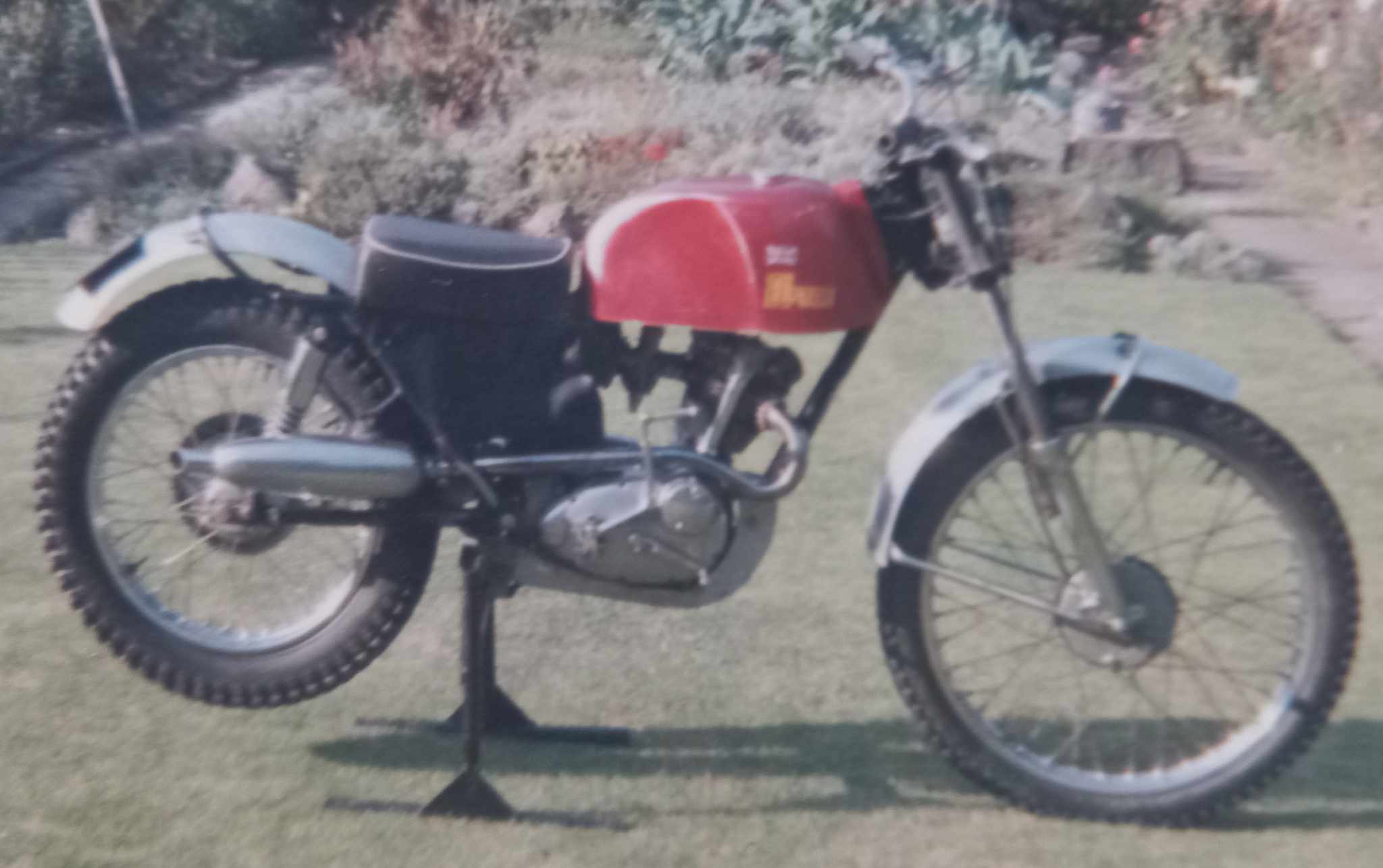
After his successful season riding a Saracen for Vale-Onslows, and still committed to scrambling, Steve built a complete special trials bike in late 1971 called the ‘Valon’, which reflected the VALe-ONslow name, was powered by a BSA Bantam engine with Bosch flywheel ignition in a Saracen frame. Steve had modified the clutch operating mechanism, housed in a reworked casing. It was fitted with Metal Profile front forks, REH rear hub and a Bultaco Sherpa style ‘Kit Campeon’ tank/seat unit which was UK made in Reddich.

It was registered in Birmingham as BOC603K. The exhaust was very much in the style of the Bultaco Sherpa of the time, with an upswept header pipe which ran across the cylinder head on the off side and dipped down towards the footrest and entered a central silencer. Wilson achieved a first class award at the Greensmith Trial in December 1971 on the 175cc machine at it’s first outing. Shortly thereafter, he rode to third place in the Knut Trophy trial, beating established stars like British Champion Gordon Farley and Sammy Miller’s sponsored runner, Paul Dunkley. [1]
By early 1972, Vale-Onslow afforded Steve a new Ossa MAR, developed by Mick Andrews and these were beginning to sell well on the back of Andrews’ Scottish wins the previous two years. Steve got good results with a fourth place at the Lomax, the Cotswold Cup and the Colmore, with a fourth in the British Experts. At the 1972 SSDT, Wilson weighed in his immaculately prepared 250 Ossa, BOK694K now sporting a black instead of green flash on the tank and side panels to compliment the black ‘VF’ plastic mudguards, which were all the rage at that time.

Both he and Bonkey Bowers had similar machines and they were nick-named ‘Team Mint Humbug’ in reference to the black and white confectionery!
Ice Cool!
It also was a time where Steve was racing speedway for Birmingham second division, plus ice racing with the BSA Bantam engine that was used firstly in the 1971 BSA-Valon, but with the trials gears removed as only ten sets were made with a high fourth gear. In Scotland the events were promoted by Graeme P. Chatham and Trevor Hay from Edinburgh who formed a partnership. They used Greeves Pathfinders with the 169cc Puch six speed engines, suitably modified with the front fork springs removed, a speedway style footrest and handlebars and studded trials tyres. The Birmingham teams all used BSA Bantam based bikes.
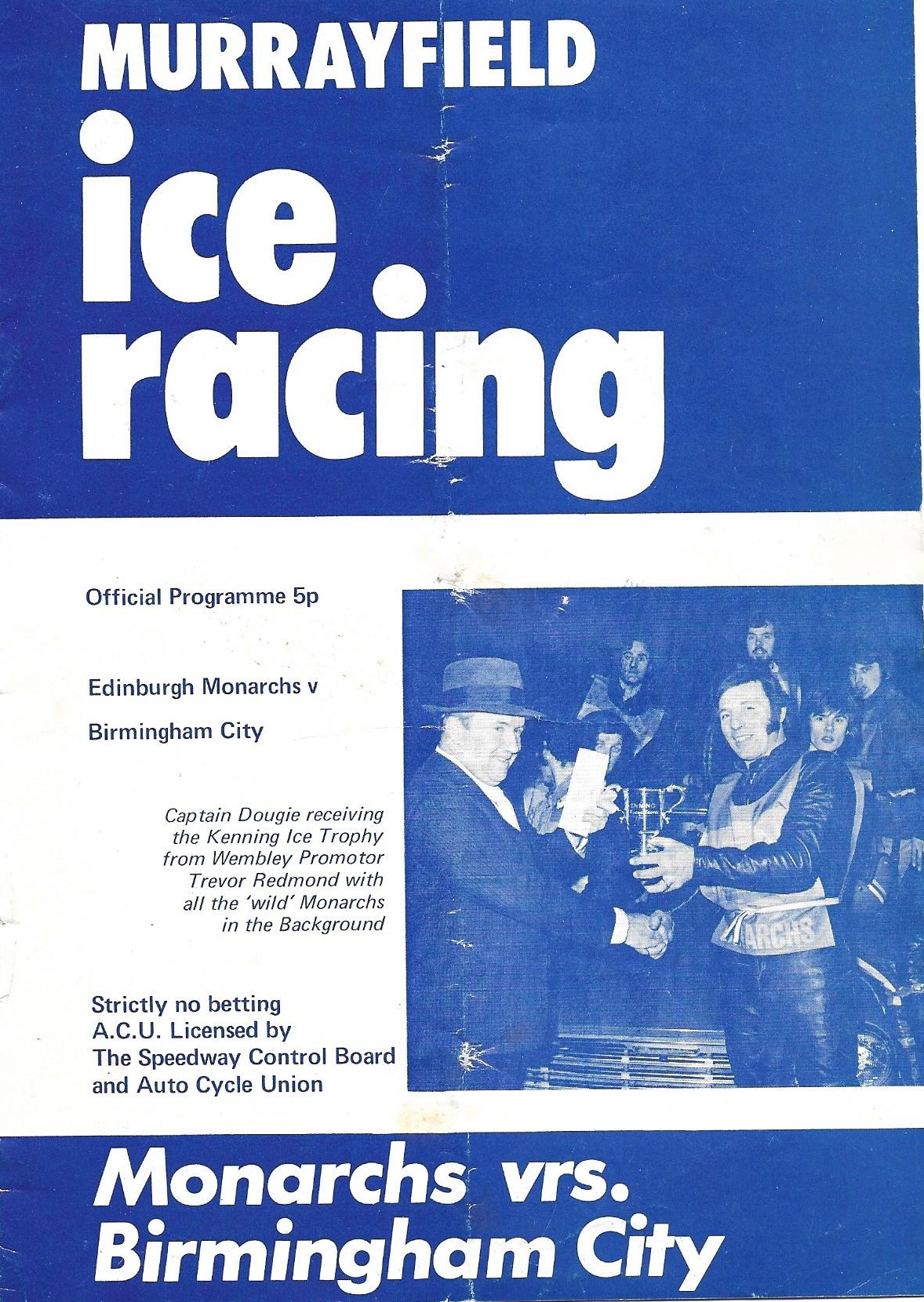
Steve Wilson having used the BSA Bantam engine from the BSA-Valon, this eventually caused a problem. Steve had seven bikes on loan from Vale-Onlows and Len senior wanted return of the trials Bantam engine and the special trials gear cluster to ride in the Greybeards Trial. Steve was busy at the time and kept putting off, until Len Vale-Onslow senior demanded the return of all seven bikes Steve had on loan from them, so he was effectively bikeless by the September that year.

Wilson also had a crack at the Welsh Two Day Trial which was in effect an enduro and ISDT selection event. He was truly an ‘all-rounder’.
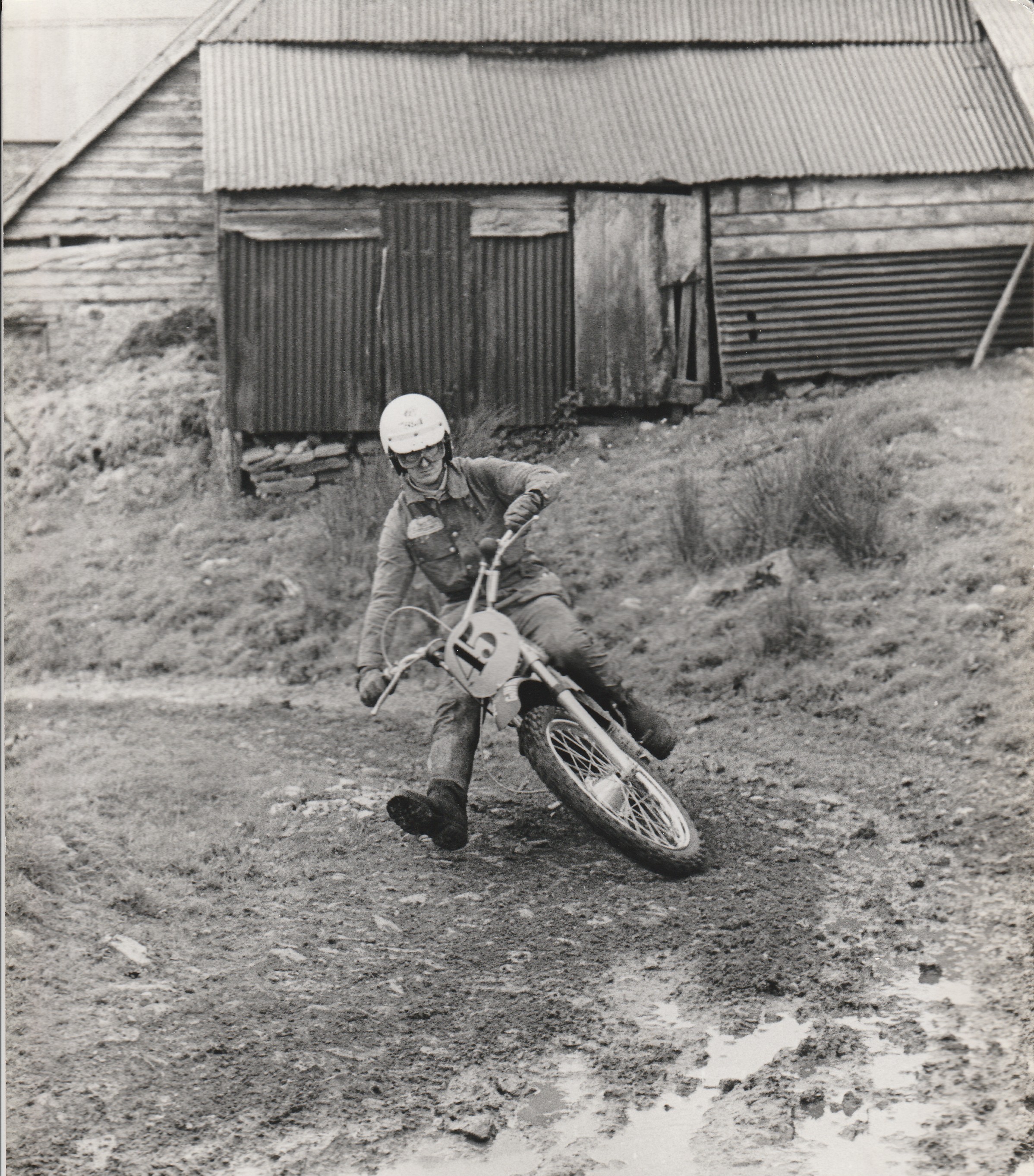
SW: “David Brand of Saracen approached Bonkey and I to see if we would ride in the 1972 Welsh Two-Day as he was building a couple of enduro bikes of which the Sachs engine was well suited to. We agreed and the bikes came with very large speedometers with very long speedo cables and bulb horn and large alloy tanks. We set about preparing them and entered the event. Bonkey managed to lose his chain completely in a deep ditch, he never found the chain, so he retired. I got through day one, so they allowed Bonkey to follow me round on day two. I managed to wipe myself out drifting through a series of bends and managed to crash heavily, hurting my shoulder. Bonkey appeared on the scene and whipped my helmet off. Then Andy Roberton stoopped and asked if I needed an ambulance? I said I was OK, but I had concussion due to a bang on the head. Game over! Bonkey was bitten by the enduro bug and I guess that Saracen ride set him up to ride in those events thereafter.”

Bonkey Bowers had his own shop at Studley by now and came to bikeless Steve’s rescue in early 1973 with another Ossa MAR, registered RAB51L at cost price. Steve decided to build a new frame with a different back wheel, made at Elstar, but finished building the modified Ossa in Bonkeys cellar.
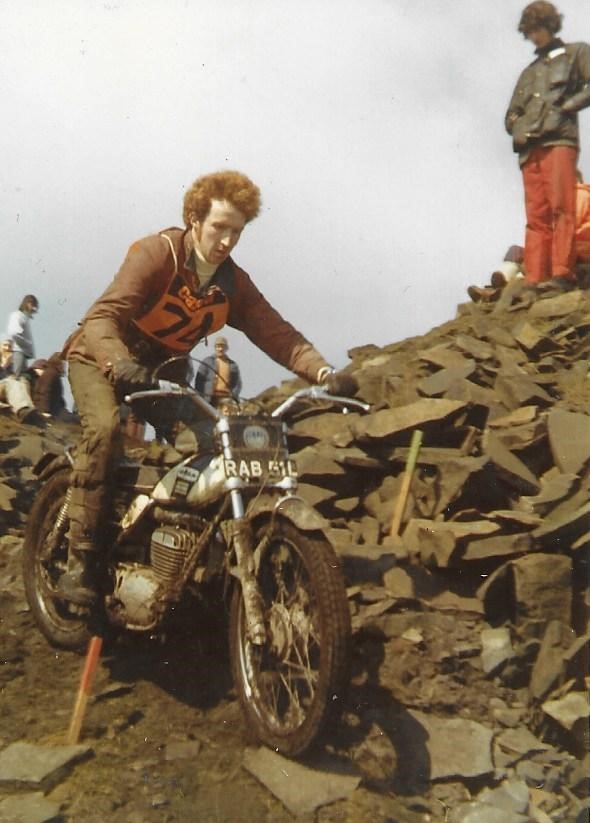
SW: “I recall having and eighth in the Hoad and fourth in the British Experts. I used Bonkeys personal Ossa in the Manx Two-Day, I came third behind Sammy (Miller) and Paul England on the Dalesman Puch.”

Now described in the motorcycle press as an ‘all-rounder’ Steve’s performances came to the notice of Peter ‘Jock’ Wilson at Comerfords Bultaco UK and offered Steve a Bultaco Sherpa to ride through Bonkey Bowers agency.
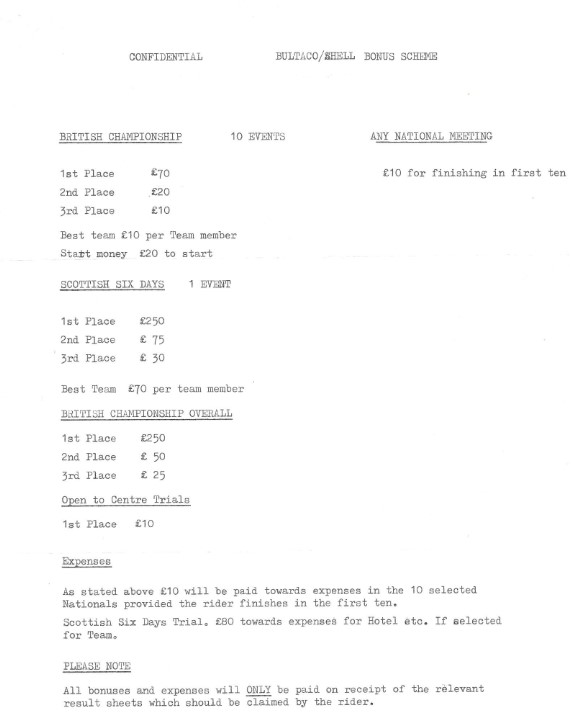
In the February, Steve went down to Thames Ditton and met with Jock and Don Howlett. The deal was a bike with spares, but most of the Comerfords riders were now on the 325 Sherpa and sales were lacklustre for the 250 model. Howlett suggested he was given a 250 in the hope that Wilson would get good results to promote that model.

He actually rode a 250 Bultaco powered Rickman in the 1973 SSDT, it didn’t end well, as the bike packed in during the snow bound first day shortly after riding the Edramucky sections. Because the SSDT was oversubscribed, only a certain amount of entries were available to manufacturers or their agents. The Bultaco team was in effect full, so Comerfords approached the old Bultaco importers, Rickman Brothers. The machine had originally been allocated to Geoff Chandler, but he had moved to ride a Montesa, hence the last minute switch.

Speedway:
SW: “The 250 Bultaco wasn’t as good as the Ossa and I was still concentrating on racing speedway, which was my real focus.”
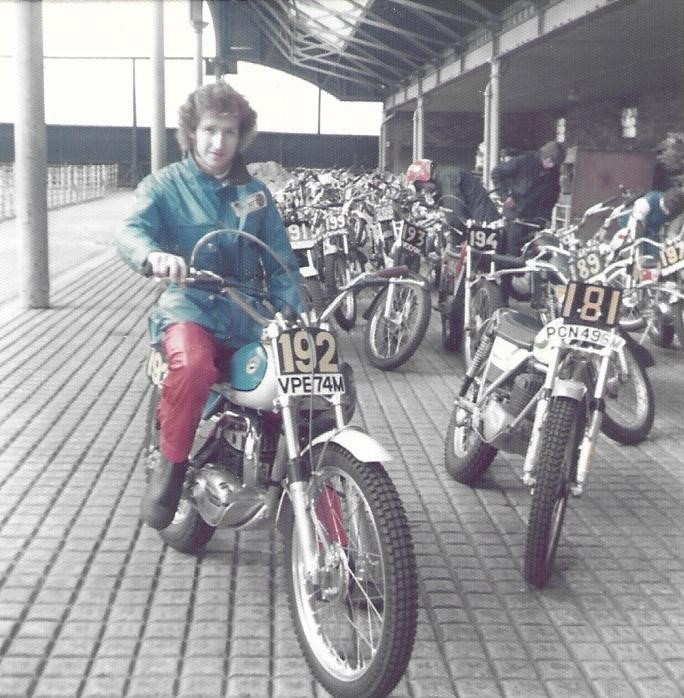
“By 1974, Bultaco had greatly improved their 325 Sherpa, they were more reliable and were fitted with the Homerlite alloy tank seat unit. I had also quit speedway due to an incident.“

“I had got into speedway in 1972 through AKB (Arthur Browning) and reports of the time said that I had emulated his ‘hard riding style’ which is probably true.“
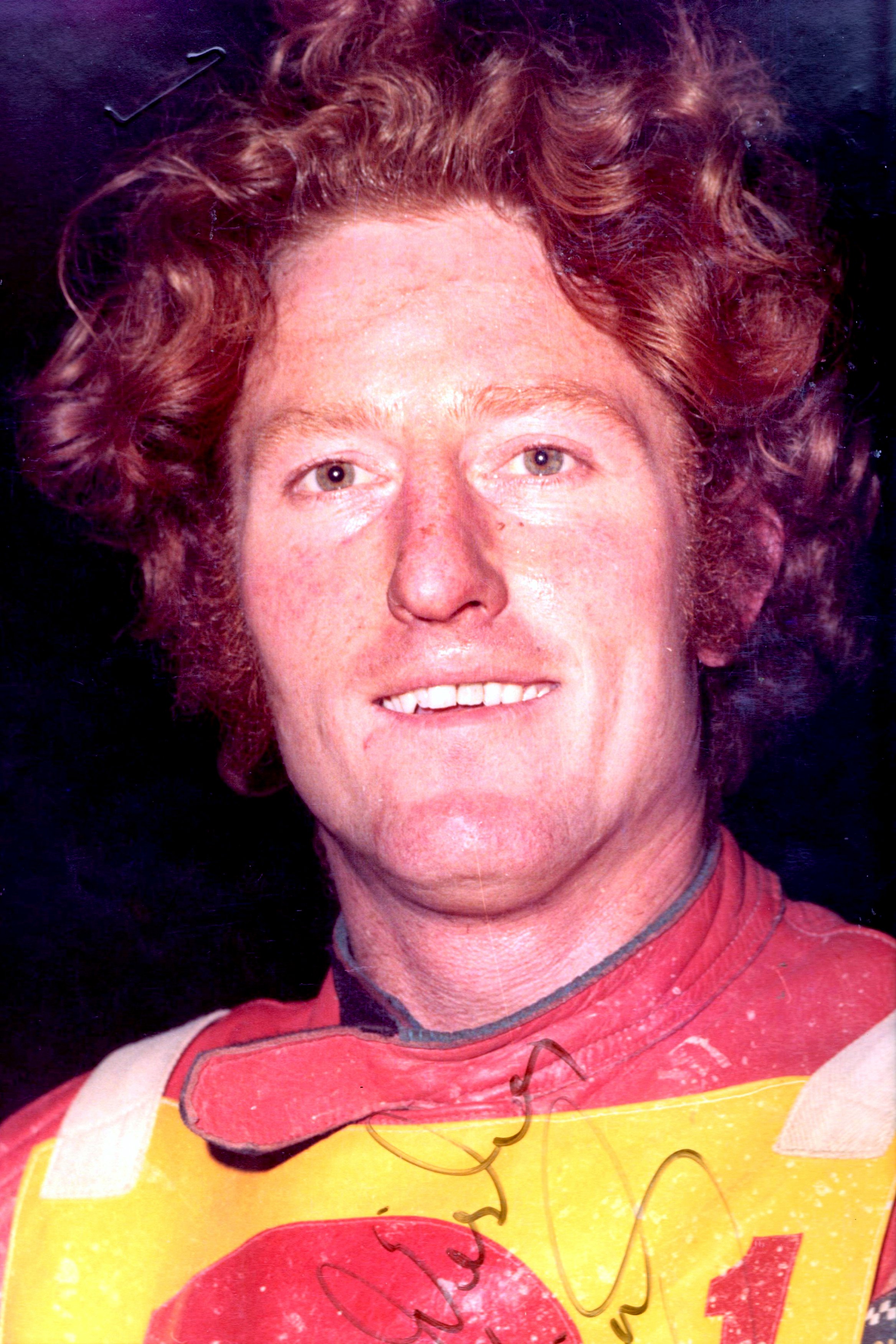
“It was Arthur that took me along to Birmingham for a try out and I was quickly snapped up for their second half team and a place in the reserves.”
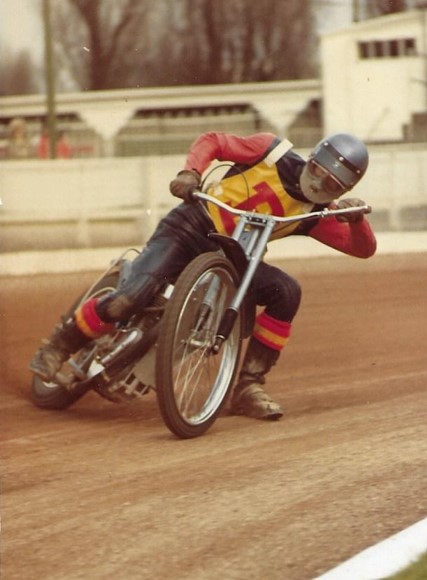
Steve Wilson was trying hard to become proficient at speedway racing, here is an excerpt from the Birmingham Evening Mail of 1974 [3]:
“WILSON EXCELS IN BRUMMIES VICTORY – Birmingham Speedway gave their supporters more positive pointers that they can develop into a championship-winning side when demolishing Peterborough 51-27 in the second leg of a challenge match at Perry Barr. Peterborough went into the match with an impressive 18 point lead from the first leg but Birmingham always looked capable of recovering the deficit from the first heat when Arthur Browning and Steve Wilson took maximum 5-1 points. They eventually won 81-73 on aggregate. The form of Hall Green based Wilson was far superior to anything he had shown in earlier meetings. He rode with power and purpose to take four second places and earn three bonus points for his most productive pay-night of the season.”
SW: “Speedway at Birmingham was a Monday night. There was a England under 23 team taking on Poland on a Friday at Perry Barr, just prior to the start of the SSDT. I was placed as number eight reserve at the meeting, so I agreed to do it. There were so many crashes that I was needed by half time, but I refused to race due to the risk of being injured prior to the SSDT. So off I went to Edinburgh and it was reported in the press that week that I had refused to ride and was suspended for three weeks by Joe Thurley the Birmingham promoter. I simply didn’t go back. I didn’t like all the travelling that speedway required and I didn’t want to ride for a team that was miles distant either.”
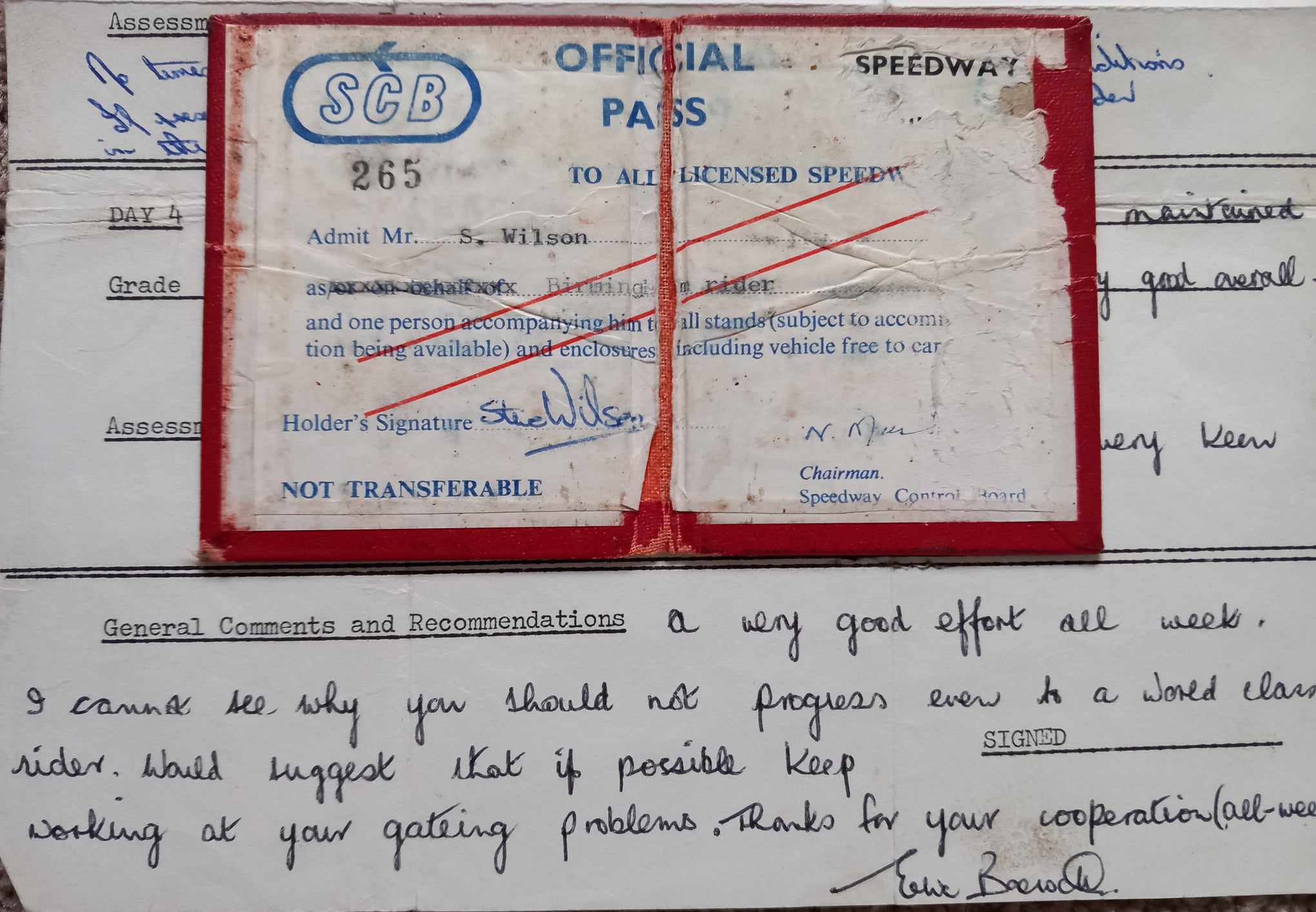
“I had already decided to concentrate on trials, besides speedway carried enormous risks back then, as the safety equipment was minimal.“
Birmingham journalist Richard Frost wrote: “WILSON DECIDES TO CALL IT A DAY – Wilson was due to return next week against Long Eaton after being suspended … The Hall Green based rider should have had a second-half race last night, but declined.” [4]

Having signed with Comerfords, Wilson was now very much part of the Comerfords/Shell Sport team and on the 325 which he preferred to the 250 Sherpa. The bikes were being updated all the time but Steve decided to do much of his own modifications to frame, cycle parts and engine which he eventually took out to 342cc by using a larger piston from the Pursang motocross engine. In 1974, Steve was ninth in the ACU British Trials Championship. In fact he finished in the top ten of the British Trials Championship three times.
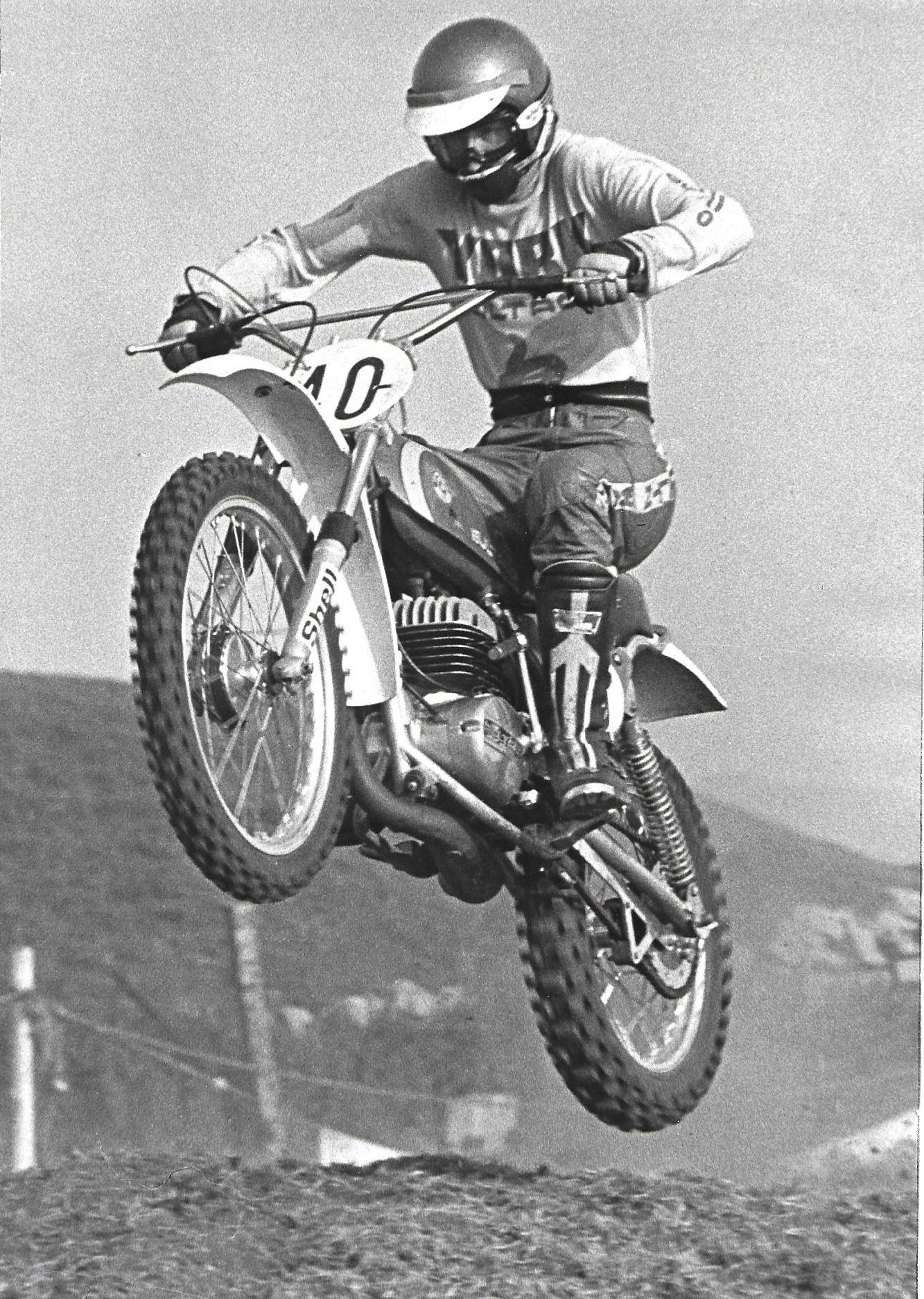
1975 was to be a good year, ninth again in the British Championship and Bultaco had thickened up the cylinder liner of the 325 engine and Wilson exploited this by fitting the bigger piston, which took it out to 342cc actual capacity. He was invincible in the ACU Midland Centre championship at this time.

He also took time out to ride a scramble at Burrington on an XT500 Yamaha four-stroke, a bike loaned by Bunny Ward of Wakelin Ward Motorcycles after the gearbox of Mike Bowers Bultaco broke.

He had a good ride at the Greensmith, runner up behind Rob Shepherd and unlucky not to win, as Rob got a re-run for a baulk on the big step at ‘Crumps Brook’.
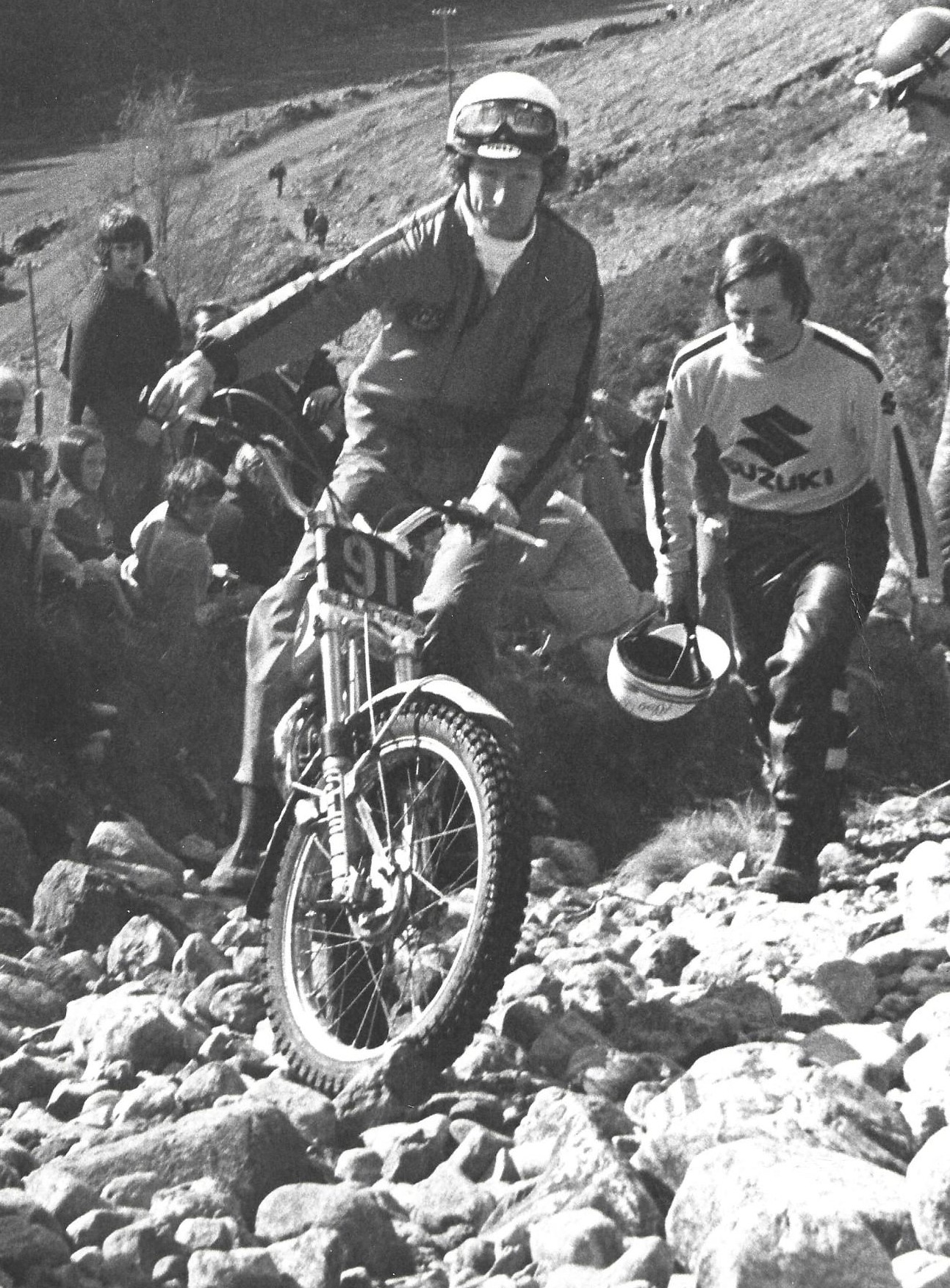
In the summer of 1975 Wilson had competed in a full AMCA scrambles season and finished fifth in their open class behind the dominant CCMs of Mike Eatough and Cliff Barton. He only rode in the Alan Trophy and Allan Jefferies trials.

By the mid 1970s, trials were in their boom years, some say the golden age as far as trials bikes sales were concerned. The UK couldn’t get enough of them and the Spanish three; Bultaco, Montesa and Ossa were all competing in the sales numbers game and all with 250 and 350cc machines. The aftermarket was also booming, coloured riding suits, coloured control cables and plastic mudguards were all the rage.
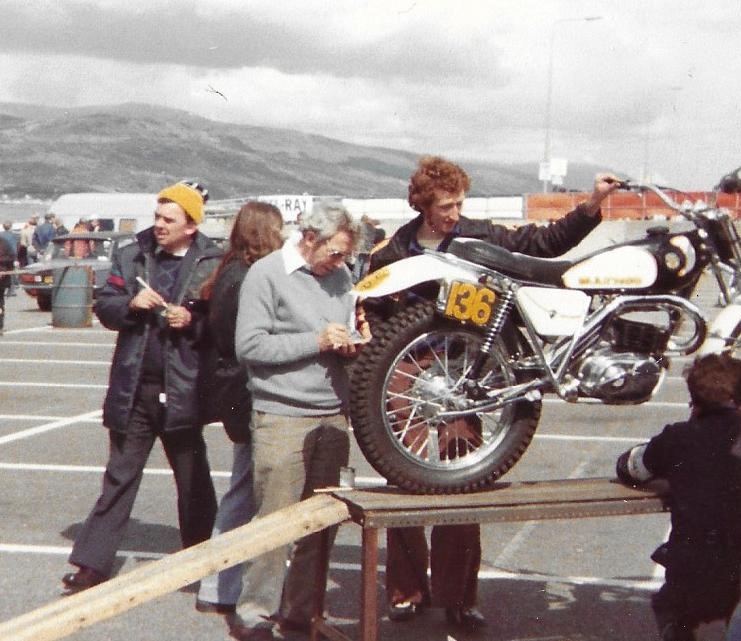
Wilson ‘weighed in’ a rather special looking Bultaco in the 1977 Scottish Six Days, resplendent in an unusual but very smart black and white colour scheme and a chrome plated chassis with some other detailed modifications including the engine being bored out to 342cc.

The 1977 SSDT was quite eventful on the black and white Bultaco, entered as a 348, actual capacity 342cc.

On day one, he had no rear brake. The re-chromed hubs had ripped the brake shoes to shreds. Reg May of Comerfords cut some sheet metal off his tool box lid, so that Wilson could bend packers around the rear brake cam. Wilson finished the event in 37th position.

SW: “I had done quite a bit of work on the 1977 SSDT bike and had made chain tubes in nylon, inspired by the type that Austrian, Walther Luft had on his Puch. I had all the contacts for polishing and electro plating, so it was quite easy for me to get a nice package pulled together.”

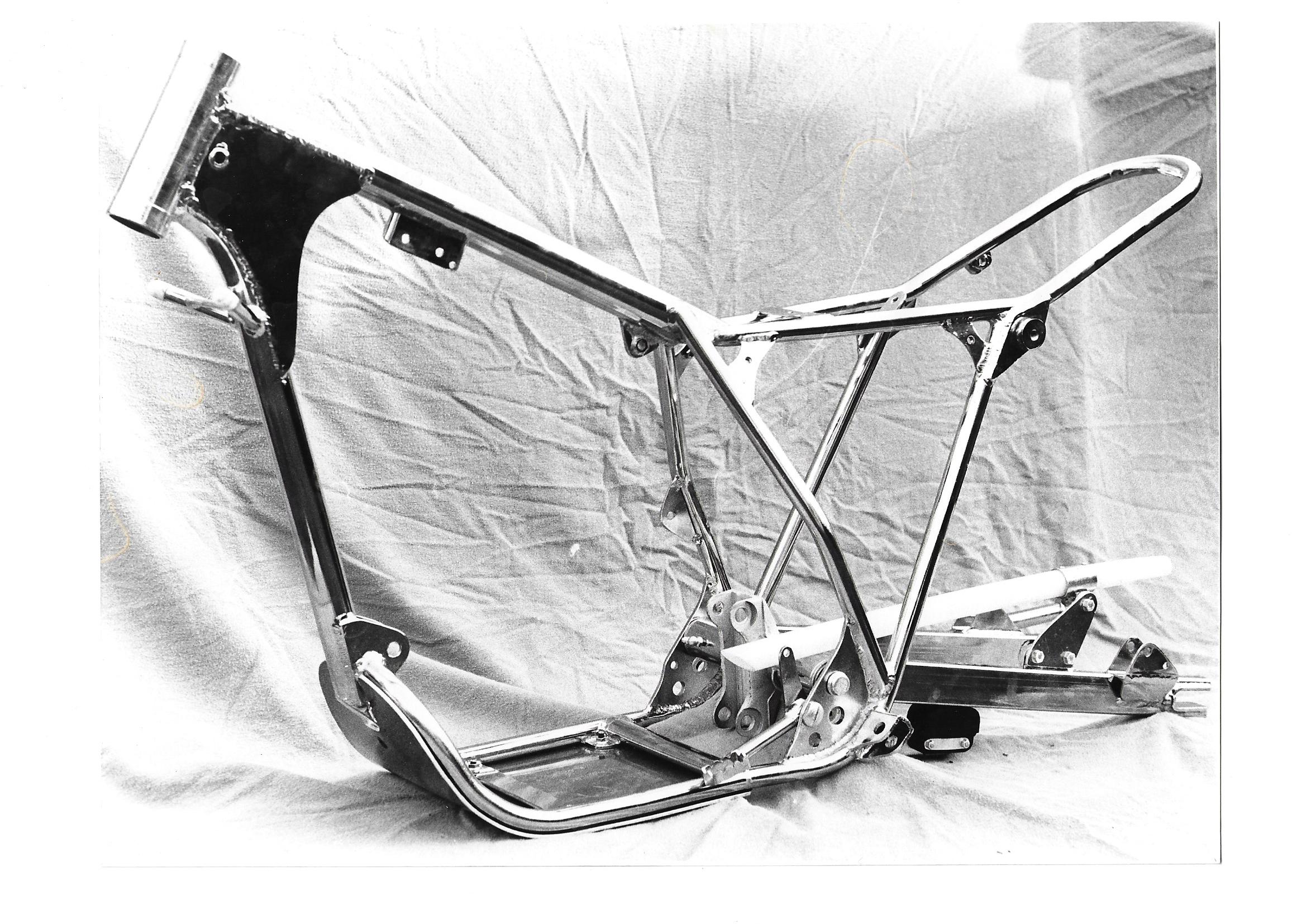
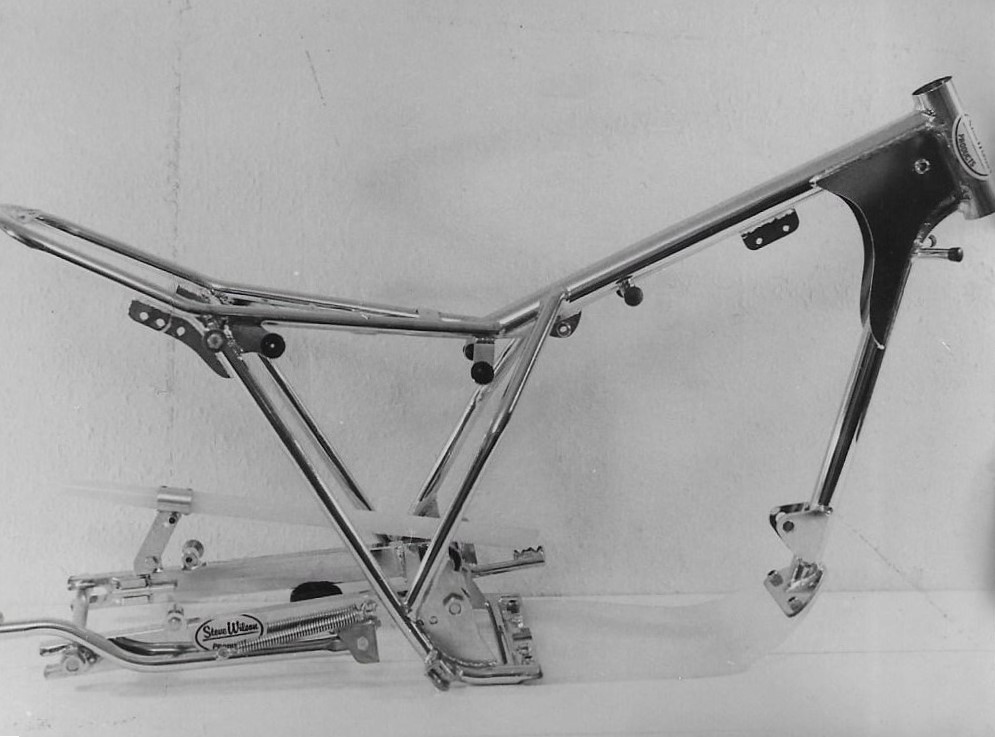
Steve Wilson had seen an opening to exploit the accessory side of the trials market and a gap for bespoke frame kits to improve what the manufacturers were producing in volume. Wilson had become adept at building complete chassis and swinging arms, so he made a jig for the Bultaco Sherpa. He wanted to improve on what was standard and rode Comerfords supplied Sherpas, but rebuilt using his own frame with altered front down tube to avoid the front mudguard stays ‘kissing’ the frame when on full depression of the front suspension. The standard Sherpa at this time still had frame tubes under the engine and these used to get quickly flattened with riders landing on rock steps and tree roots. Sammy Miller had already produced his ‘Hi-Boy’ frame with the alloy bash plate and the engine as a stressed member when installed in the frame, Wilson used the concept but his version was very much different.
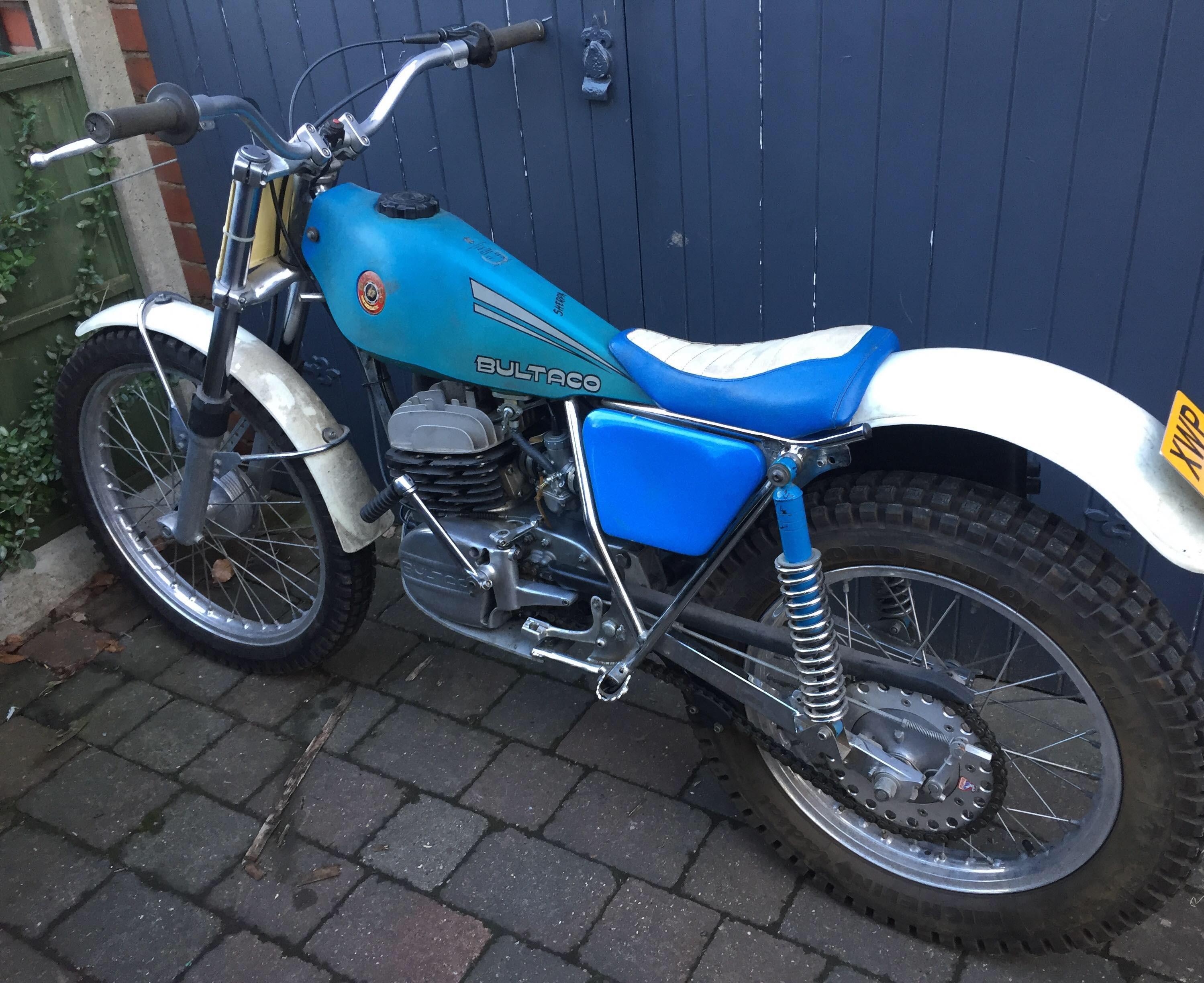
SW: “As for identifying a Wilson Bultaco frame kit, it’s easy for me, they all have a bend in the front down tube that provided proper clearance for the mudguard stays on full compression of the front forks, my first manufactured Bultaco frame kit retailed at £120 in 1978.”

1977 and ‘Steve Wilson Products’ was born. He came up with innovative solutions to problems experienced by riders and thought hard about what would improve a trials machine for the average rider.

Steve began making lots of trials accessories, like front number boards, seats that could carry small air bottles; nylon chain tubes; chain tensioners, side stands and brake pedals, and of course frames and swinging arm kits for Bultaco and Montesa, mainly based on his own experience of modifying and improving his own bikes.

Fraser Honda:
Steve was sharing business premises, a factory unit in Washford Industrial Estate, Redditch with Colin Tipping. He was responsible for David Fraser Products who produced the Fraser Honda trials machines.
SW: “I designed the first ones and built the jigs for him. The downtubeless kits. Pete Edmondson bought at least ten of those. The Miller fibreglass tanks were made just down the road, the yellow and white ones. The TL125 kits were made at the end of 1977, I shared the unit with him until the start of the Wilson BMX bike building in early 1980. I did some work for DMW on their frame jig while I was at David Fraser products and handed it over to Colin to build the odd Villiers engined bike. He then used the jig for the later Fraser Hondas with down tubes.”
The 1977 FIM World Trials Championship round 2 was held in the Elan Valley in Wales, won by Malcolm Rathmell on his 310 Montesa losing twenty-four marks. Steve came home in a creditable eighteenth place on sixty-five marks. In between, the riders results list reads like a historic ‘whos who’ of the worlds best riders at that point in time: Soler; Thorpe; Reynolds; Lampkin; Vesterinen; J-M Lejeune, Karlsson; Coutard; Andrews – just the finest of their era.
TG: When did you start trading as Steve Wilson Products?
SW: “Steve Wilson Products really just evolved from making a few number plates the rear yellow fibreglass ones, and fronts, once the law changed on registration numbers by ceasing to have the number on the front of a bike and I replaced the space with the bike names in around 1975. But in terms of my own stickers with SW products, it was probably 1977 or 1978 when T&MX News began. Working with Colin Tipping gave me the confidence to have a go at making Bulto frames more towards the end of 1978.“
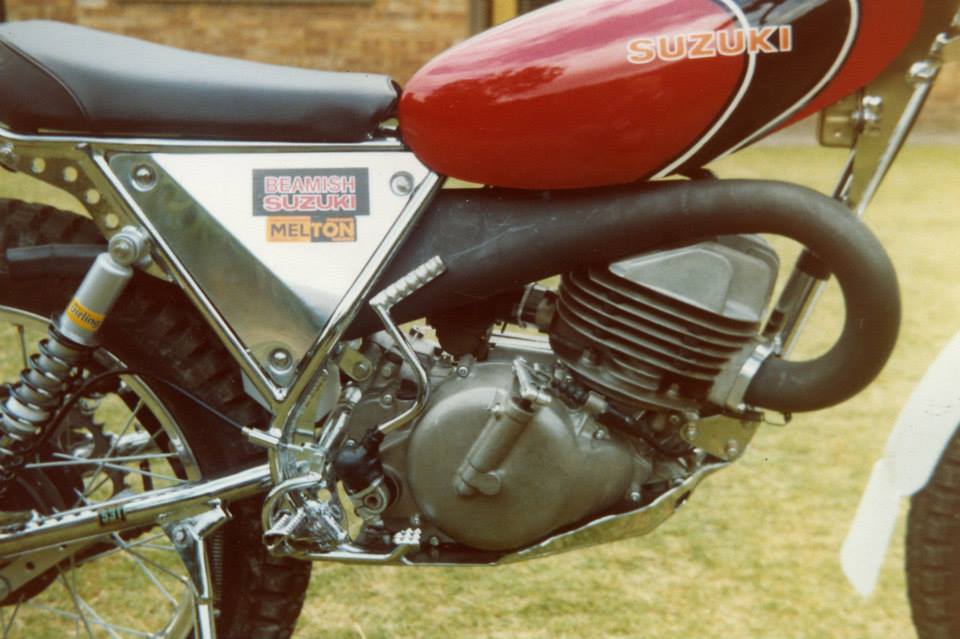
Steve landed a deal to supply one thousand of his number boards and an equal number of seats to Beamish Suzuki. The agreement arranged through the Alan Wright/Brian Fowler connection in around 1977.

In 1979, Bultaco released the new Sherpa T 198/199A a development of the previous 198/199 models. The main difference was the frame now sported a dural sump plate with no frame tubes beneath the engine and a gusseted swinging arm, the 199 had a tendency to bend swinging arms.

Finished in light blue, with matching blue mudguards, black engine and front fork sliders and wheel hubs, Steve decided to market a nickle plated frame kit to improve it further and was prepared to convert new bikes to his specification, retailed through dealers, Wakelin Ward of Witton, Birmingham. It featured his, by now, ‘signature’ rectangular section steel swinging arm, thus doing away with the need for gusset plates. The rear mounting was made ‘open’ to allow speedy rear wheel removal.

Trials and Motocross News photo-journalist, Mike Rapley did a short feature on the machine and noted: “Steve uses his own chrome lightweight frame, dimensionally the same as the standard frame, but it includes a QD rear wheel. In addition the fork damper rods are extended and the rear dampers are 1/2 inch longer with multi-rate springs to give six inch rear wheel travel to match the eight inch front fork movement.“ [2]
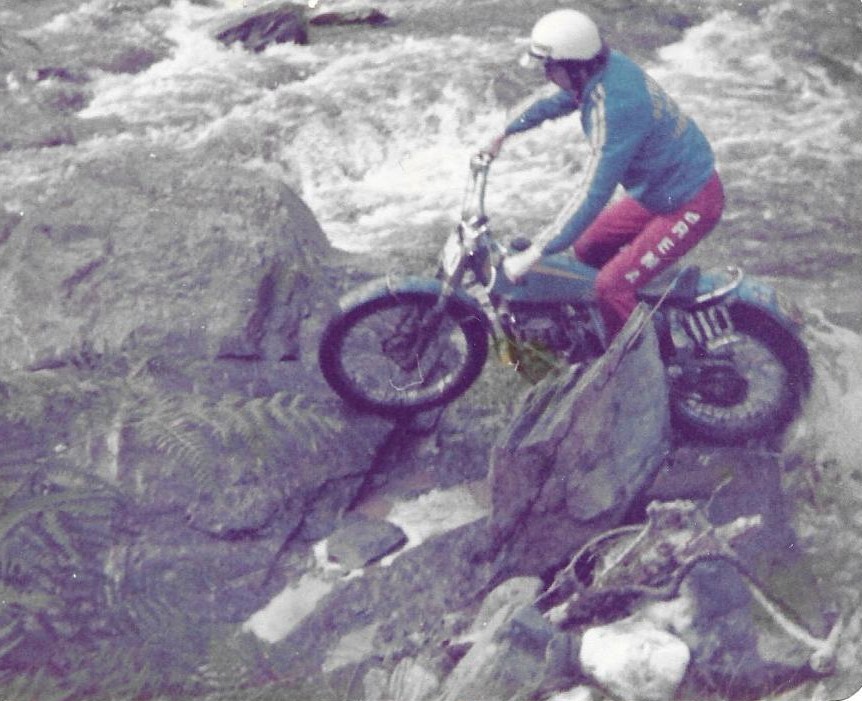
Steve had a brief attempt at riding enduros once more in 1978 on a Comerfords loaned Bultaco Pursang which Steve converted to Frontera spec in the Welsh Two Day, but it ended abruptly when the engine seized solid when on a main road section of the course.

‘The Tanker’:
In 1979, Steve decided to go one better with his special frame design for the Bultaco Sherpa, it was to be nicknamed ‘The Tanker’ and its main feature was the fuel tank under the seat to reduce the centre of gravity. Engine was a stock 325 Sherpa unit but bored to 85mm using a Pursang piston, giving it 342cc as he did with earlier 325 engines.

The bike still exists and has been in the ownership of John Collins in Wales for many years, albeit with some components having been changed over the years. Wilson was to debut the bike at the national Clayton Trial and it caused a great deal of interest.

Steve planned to market the kit for £175 allowing owners to swap over components from their donor Bultaco Sherpa.
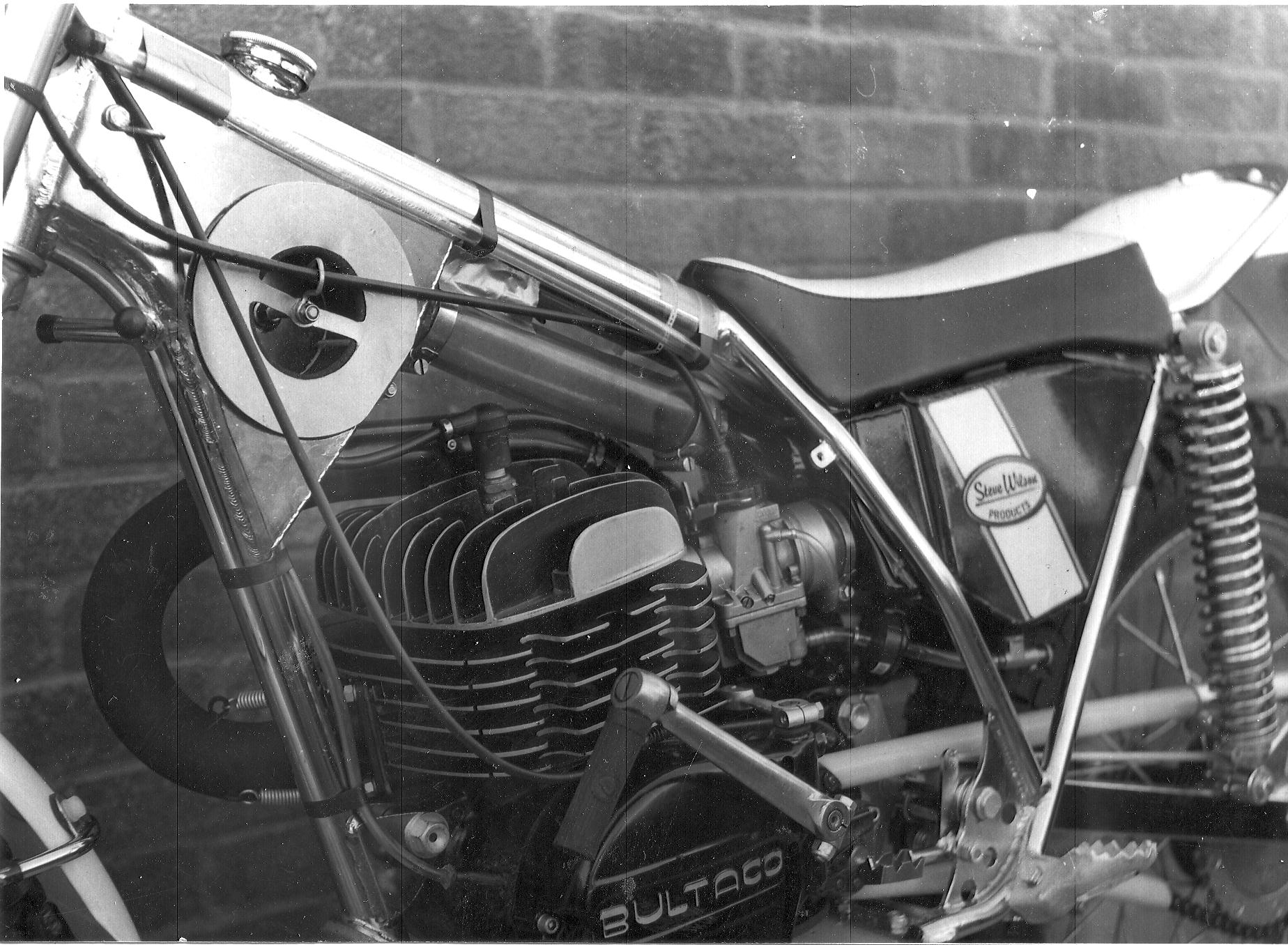
The Tanker featured an airbox up at the steering head, steel under-seat fuel cell and ‘dummy’ fuel tank unit, features that would eventually appear on the Sherco trials bike of 2008.
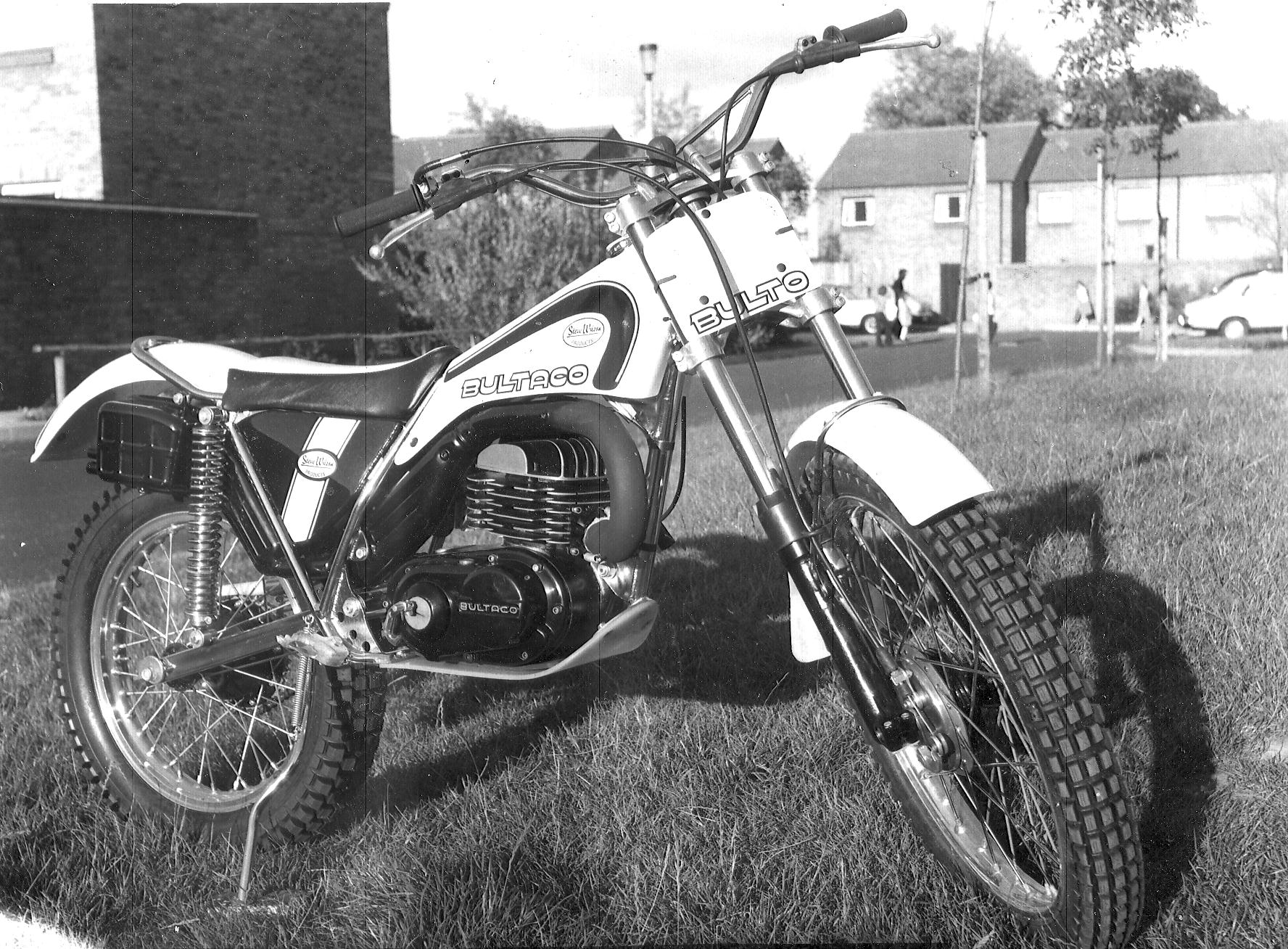
Within a few months, Steve sold the machine asking £850 for it as a complete bike. Things were moving on.
SW: “I really wish that I had made the ‘Tanker’ with an alloy fuel tank, I fabricated it out of steel and didn’t take me long to make. I would have got Dick Walker at WES to make me an ally version. I also wanted an alloy centre box for the exhaust to save a bit more weight. I invited Colin Bullock over to my house to take photos of the finished bike for T&MX News and they appeared in an article written by Mannix Devlin at the time. I was very proud of the ‘Tanker’ and still feel that it is my legacy to trials, I’m glad it has still survived.”

TG: You had in effect a contract breaker episode, tell us about that?
SW: “That would be at the 1980 Cotswold Cup National, involving a photograph of me in breach of contract riding a Montesa. It was captured by Colin Bullock, and it was a story of multiple borrowed bikes that weekend. I was riding SWM by then for the importers who were Jock Wilson and Bonkey Bowers.“

“Dave Thorpe had borrowed my works SWM to evaluate it that week. It was the early yellow one I had put an extra flywheel weight on. I borrowed Derrick Edmondson’s 349 Montesa, so I could try it in the Gloucestershire mud. Nigel Birkett had a big crash on his works Montesa in the Cotswold and bent the forks.
I wasn’t entered in the following days National, the John Douglas I think ot was, so Nigel borrowed Derrick’s bike, unknown to Eddy and swapped the forks over. I had to meet them on the return journey up north on the Sunday evening on the M5 so I could retrieve the Montesa to return it to Derrick Eddy. That story is 100% true and demonstrates how friendly and helpful the travelling circus of National trials contenders were back then.”
Martin Lampkin had left the ailing Bultaco contract behind as the company was in serious financial trouble. He negotiated a contract with SWM UK to ride their bikes and switched camps. At the same time he set up a motorcycle dealership with SWM UK to retail the machines that he was to ride.

SW: “Ironically the Rolling Chassis of the SWM I was using was then ridden by HML (Martin Lampkin) in the 1980 SSDT, as I had moved the footrests into a lower position like the Bultaco, but he didn’t like the softened power of the rotax engine, so they fitted an engine from a new bike that they butchered. Martin obviously wanted an SWM to go like his last Bultaco.”
TG: What caused the rift between you and SWM?
SW: “It was a long time ago, a long story, cut short and I really don’t want to open up old wounds all these years later. I had known Bonkey Bowers for many years and got to know Jock Wilson through the Comerfords connection. Both were nice guys, I did a fair bit of work for Bonkey, with his Bultaco enduro bikes from around 1975 through to 1977, he had become part and parcel of the GB ISDT team. Because I had a lot of the connections, for getting shot blasting, polishing and chroming, alloy welders, powder coating and so on, I was useful to know. However, I then discovered that some riders were on better terms and I was brassed off that they were not doing the same for me. I did get a contract with enhancements added around mid-1980, but they reneged on it after the 1981 Colmore. In the end it all got a bit messy, when we had a bit of a bike ownership dispute related to the contract.”
TG: So how and why did you quit trials?
“By February 1981, I rode the Colmore Cup, I was a year into my SWM agreement and I was leading the trial out of the first two groups of sections, in an effort to win my last trial. It took a turn for the worse after a silly five on ‘Fish Hill’. I blasted around the rest of the groups at the front of the entry, not even bothering to look at most of the sections. By then, I could see the sport tightening up, I wasn’t happy with things at SWM UK. Plus, I had two year old twins and a Sunday lunch at home. Get the picture? Plus, I was also one year into the BMX project and the Halfords connection was looking very promising.”
Wilson BMX arrives:
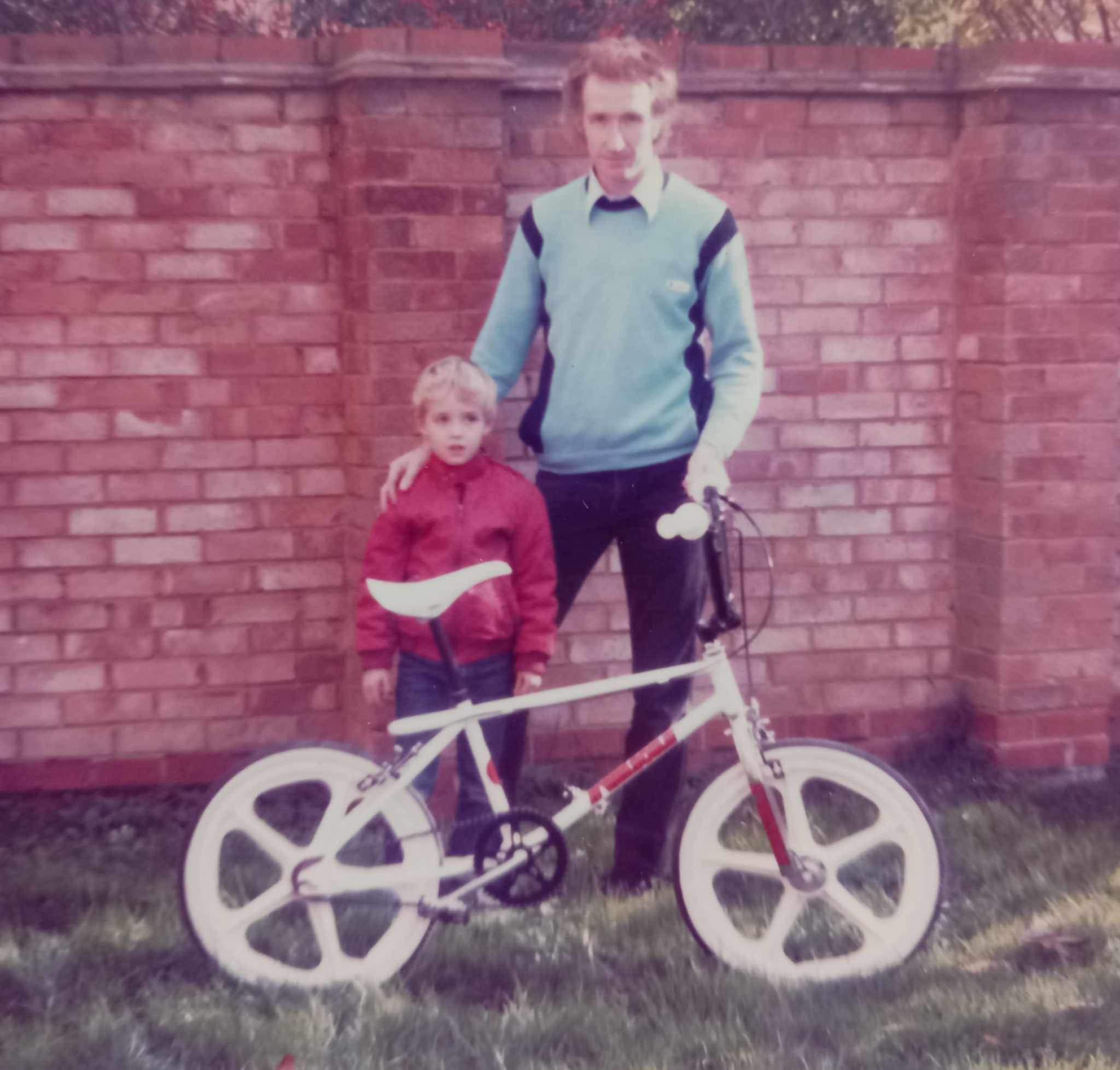
In the July of 1980, the BMX craze, which had started in the early 1970s in California, USA, was now established in the UK and the Wilson BMX bicycle came alive. There was already a governing body formed, UKBMX and they were pushing the sport forward. Inspired by the Mongoose range of BMX bikes, Steve Wilson decided that his future lay in this sport. Trials rider, Don Smith had made the move to BMX some years previously when the Kawasaki trials project came to an abrupt end, Wilson in effect followed a similar path, but in a manufacturing sense, not just sales. He was to make a significant contribution to the expansion and promotion of BMX in the UK. Just speak to an ‘old school’ BMX rider and they don’t need an explanation about Wilson bikes or their creator.

Steve was to form a relationship with the mighty Halfords concern with support from bicycle component manufacturer, Suntour of Osaka and the ‘Wilson’ BMX bikes had arrived!
In 1982, Steve made the cyclo trials bike that took Scott Dommett, son of Devon star Colin, to a British Cyclo-Trials Championship win.
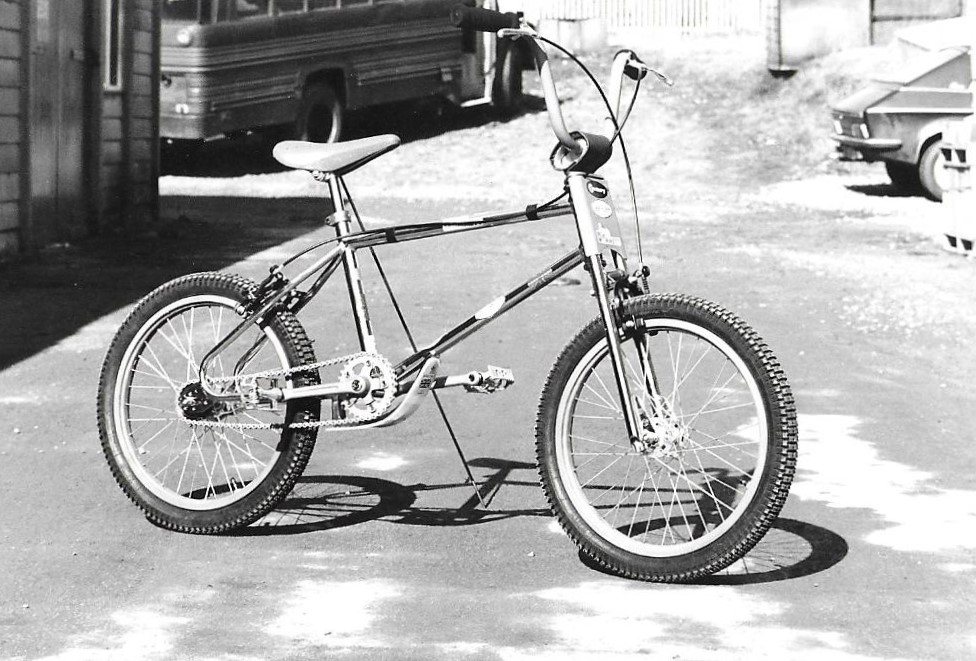
Wilson had all the right skills, he understood frame geometry and could expert weld and fabricate. So a couple of wheels, seat, brakes, pedals and crank, and off he went.

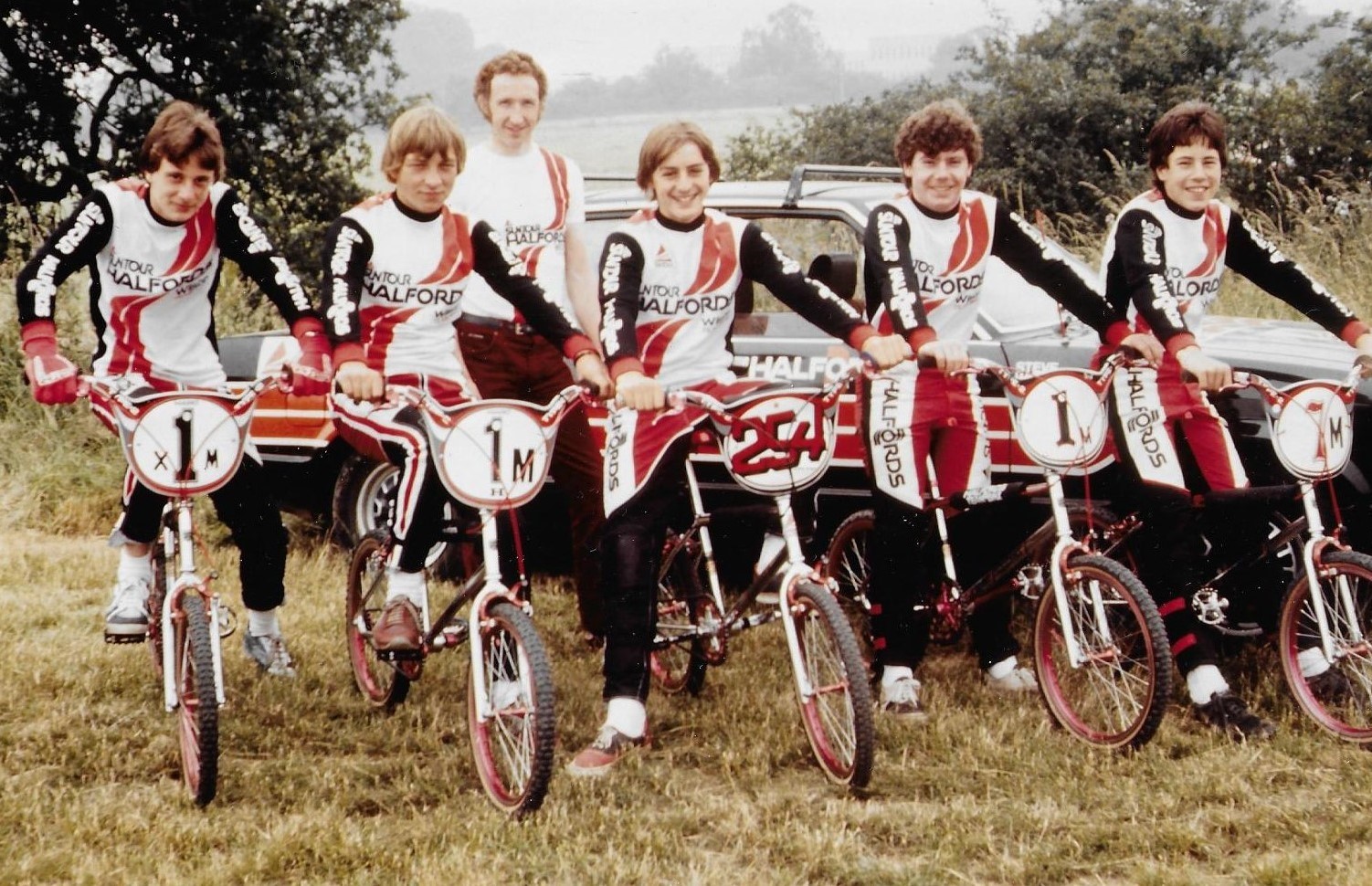
SW: “Looking at the 1980 photo taken by Colin Bullock, Dave Jessop took up motocross, Simon Ryland was a Birmingham lad, Dave Dawson went into classic trials, Dave Westwell was from Wigan, Mark Butler sadly had a serious Schoolboy motocross accident and is now a para-olympian athlete and Adrian Jessop went to motocross. Mark was paralysed from the waist down the year after this photo was taken, he now works in the design department at Aston Martin F1. I think he won a swimming para-olympic medal. Adrian Jessop still races motocross to this day. Not in the photo was Darrin Stock from Kidlington. They called him ‘crash or win’ because that’s all he ever did. He rides a Vertigo in trials nowadays. So they all got the two wheeled off road bug, along with many others who were introduced to BMX.”
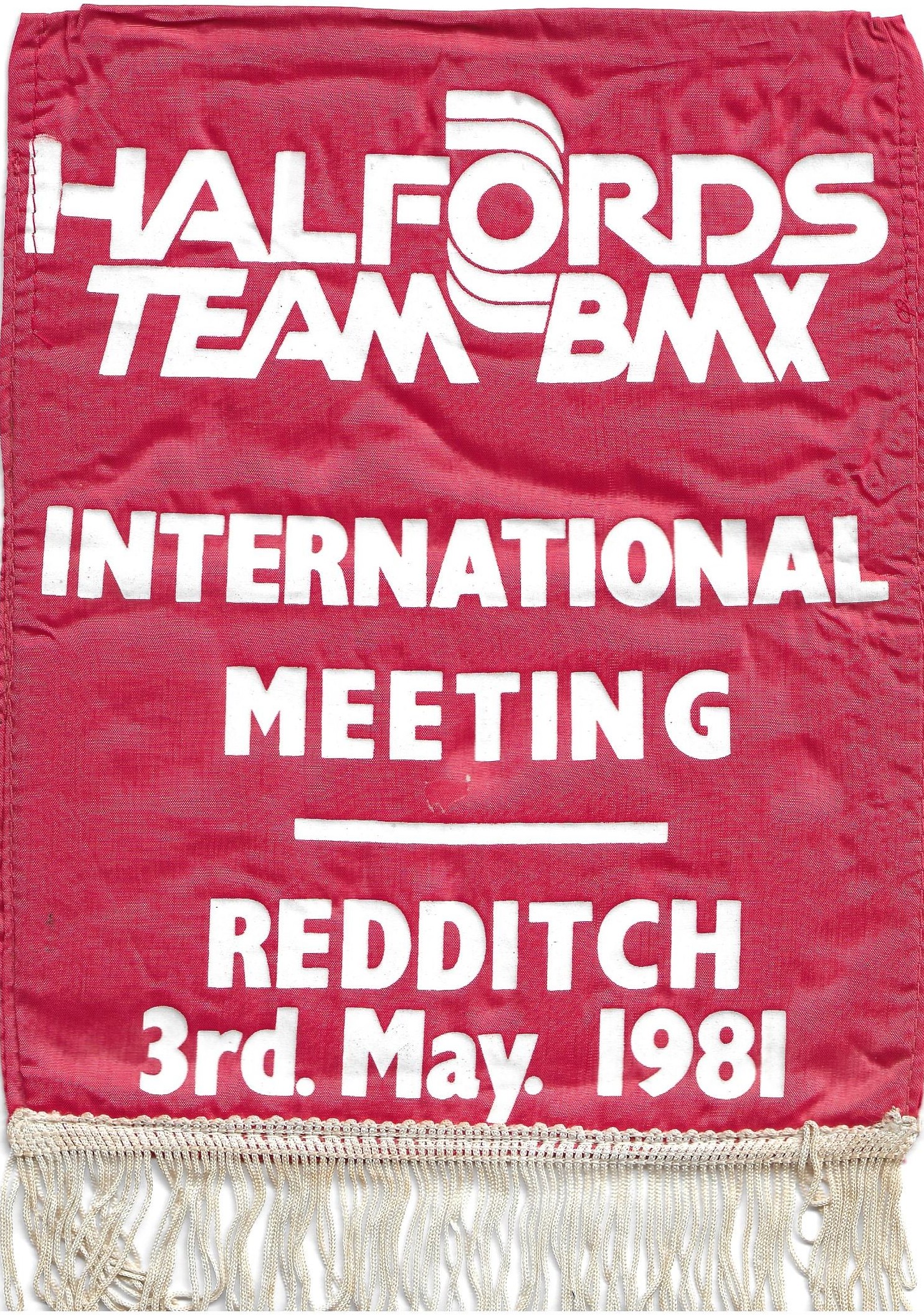
The Halfords built Reddich BMX track opened in the August of 1980 and Wilson’s bikes were tested there, to their limit, by hot shot BMX riders, Dave Jessop and Dave Dawson. The following year, a six member racing team was formed and twelve months later a three man cycle-trick team was created when Steve was now making frames out of Reynolds 531 tubing. The retail price of a complete BMX rigid frame bike was £120 minus the number plate and bar pads. Wilson then took up the secretary’s position at the Reddich Premier BMX club which operated from the track.
Halfords BMX team member Dave Dawson: “Steve was a big presence in the very early days of BMX in the UK. His excellent engineering skills, honed in the development of trials frames leant themselves well to the production of BMX frames. As he was based in Redditch, home to one of the first bespoke BMX tracks and also Halfords, who were instrumental in bringing some of the first bikes to the UK, it was an ideal recipe for his early involvement. I knew Steve as a trials rider as my own Father was involved in Midlands Centre Trials in the 1970s and 80s and Steve at the time he was, I recall, was a SWM contracted rider at the tail end of his career. I had heard that a BMX race was to be held at Redditch early in 1980 and as a fourteen year old, I rode the fifteen miles from home to watch the race with some friends. After speaking to Steve, he leant me one of his early prototype bikes and I rode my first race. Little did I know that for the next four years of my life, I would be consumed with BMX, travelling all over the UK and Europe to race. Although I only rode for Steve and Halfords for the first year, Steve was always present with his Halfords/Wilson Team, even having riders winning British, European and World Championships on Wilson produced machinery. I have kept in touch with Steve since, even bumping into him some twenty years later at mountain bike races and a few years ago, the original Wilson team met up with Steve at the Telford show as a thirty year reunion. Just shows how relationships and memories endure!“
Halfords were a big company and the force behind the BMX drive was undoubtedly David Duffield, their Cycle Marketing Manager. He had flown over to the USA in early 1980 to attend the New York Cycle show. He engaged with established riders, manufacturers and retailers and was convinced that this was the right sport for the UK. He then went about the task of convincing the Halfords board of directors to fund the enterprise. By May 1980 Halfords were on board and every store was able to sell BMX bikes and clothing, much of it made in the UK.

At this time, Steve Wilson was still doing occasional work for people he knew in the trials and enduro community, but BMX was by now his main priority.
SW: “I did some work on a 125 Yamaha for a certain young Paul Edmondson in his early enduro days, fitting centre stands and some frame mods as required. As we know Paul went on to become one of Britain’s most successful enduro riders. I suppose I was a handy bloke to know back then.”
Interestingly, there is a facebook social media group called ‘Steve Wilson BMX Group’ set up by former riders and Wilson bike owners, to celebrate ‘old school’ BMX racing from the 1980s.

TG: When and how did the BMX effort come to an end?
SW: “David Duffield left Halfords to commentate for Eurosport on cycling. It wasn’t the same after that. I suggested we wind up the race team at the end of 1986 as it was past its peak. I anticipated a job at Halfords running the repair department but that fell through, and to be honest, I needed a rest that turned out to be a decade out of work! I got fit though, and threw myself into cyclo-cross and then triathlon.”
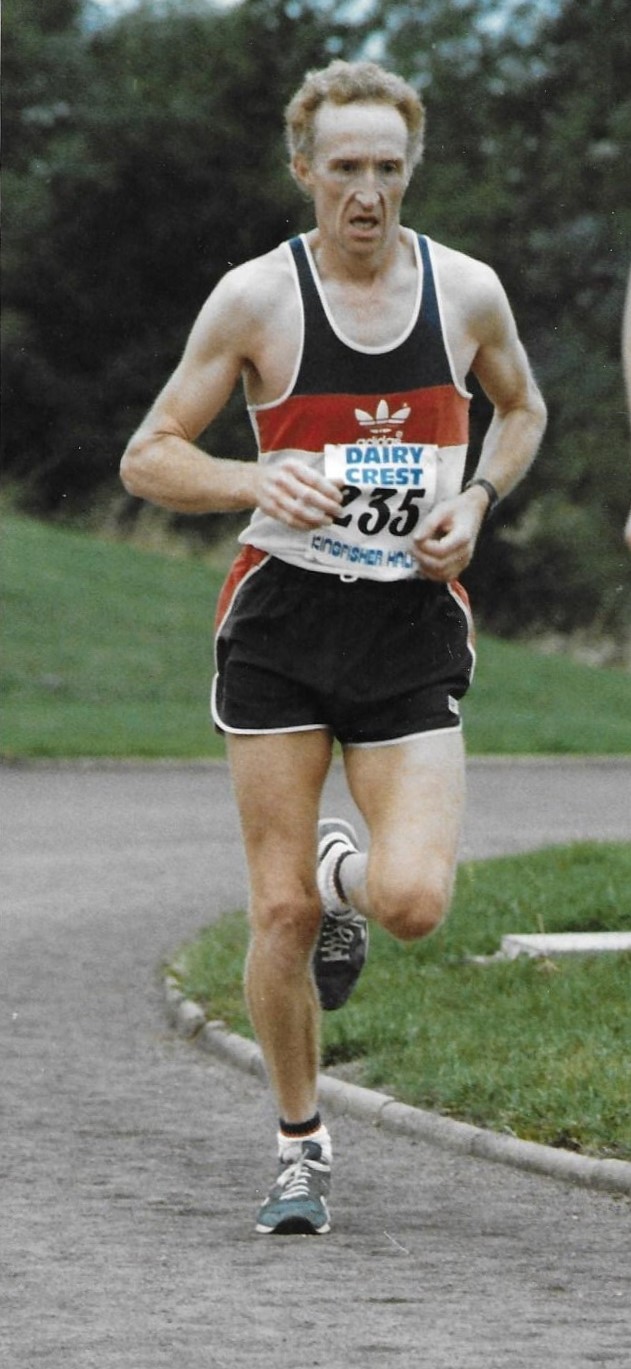
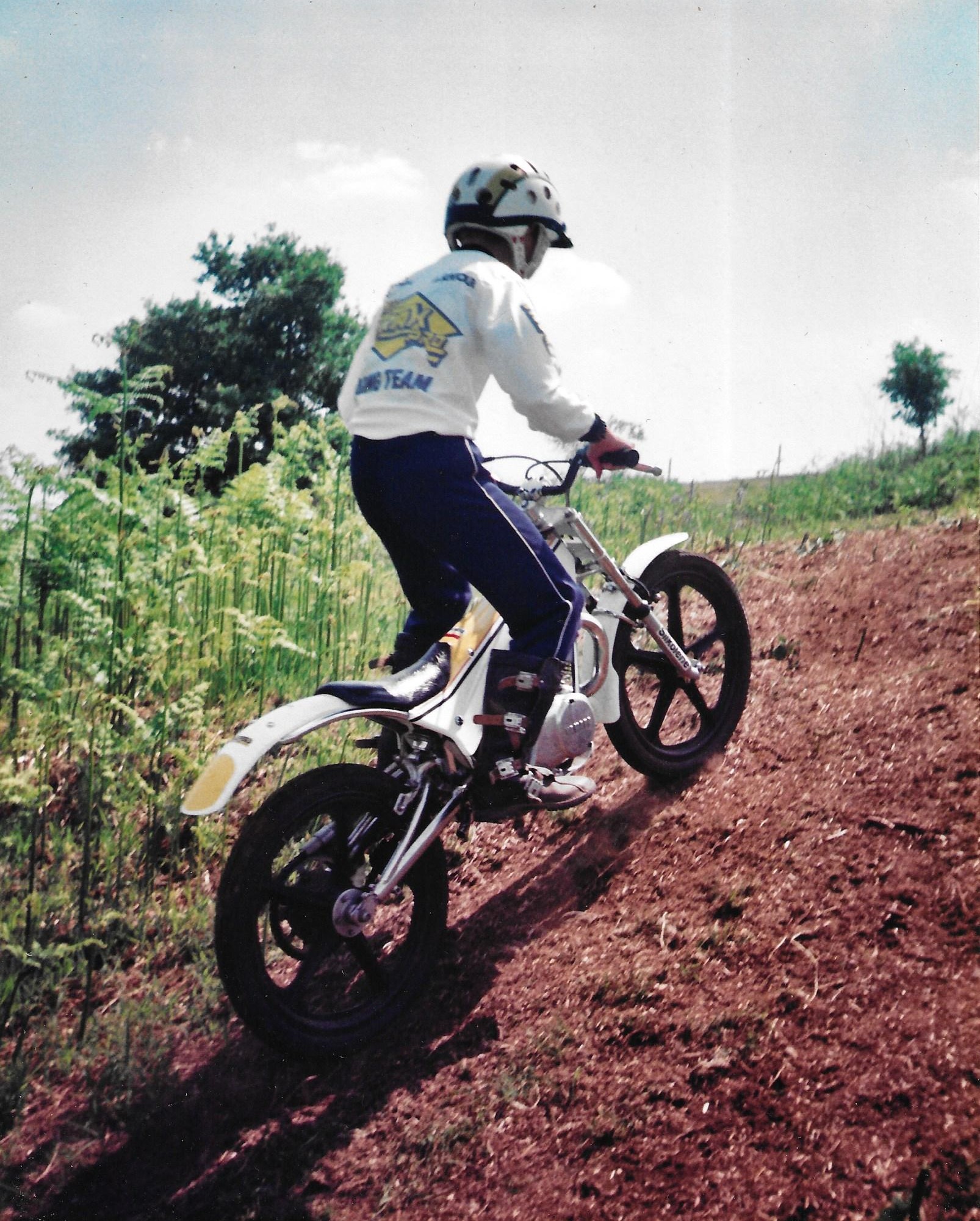
SW: “I then set up a small company called Tough Trail Enduro Rides in Devon and Cornwall for riders to go off road responsibly on their own machines in 2007.”

SW: “I’ve had a varied and at some times exciting life, I was at the cutting edge of most things that I undertook and got a lot of pleasure from just doing my own thing, my way. Of course motorcycles were a huge part of my life and thanks are due to Trials Guru website for allowing me to share with other enthusiasts, an insight into what I did, sometimes for a living.”
December 2025:
From Facebook:
“Congratulations to Steve Wilson – Inducted into the British BMX Hall of Fame – Class of 2025.
Pioneer Influencer
Steve Wilson was a top-level trials, scrambles, and speedway rider in the 1970s, with many national-level successes under his belt, riding for impressive brands such as Bultaco and SWM. Steve was also a top engineer, well known for building innovative frames for trials bikes that were often considered better than the manufacturers’ own products.
In the early 1980s, like Don Smith before him, Steve decided to call it a day in trials — and the BMX journey began. Based near the new Redditch BMX track and Halfords’ head office, he applied his engineering and motorcycle frame-building expertise to start producing BMX frames — some of the first ever made in the UK. These frames were eventually sold in key Halfords stores across the country in significant volume.
Dave Dawson recalls one of the early Redditch races:
“My dad had been involved in motorcycle trials and knew Steve Wilson, who was then a trials star in the Midlands and a skilled frame builder. Steve had made a few BMX bikes, and on that day at the Redditch event, he loaned me one of his bikes. I recall finishing second to a Dutch rider.
Soon after, I got a bike from Steve and helped develop it over the next year or so. The original Wilson team included Dave and Adrian Jessop, Dave Westwell, Simon Ryland, Mark Butler, and myself.”
Steve was heavily involved with the Redditch track. In 1981, at the Anglo American Cup, he organised all the marshals from the local motorcycle club and even introduced the famous bomb hole into the track design — along with new drainage and a fresh shale surface.
In 1982, Steve made a custom bike for Scott Dommett, who went on to win the British Cyclo-Trials Championship. The Halfords/Wilson partnership grew over the next few years, with the brand supporting top riders such as Chris Taylor, Trevor Robinson, Darrin Stock, Sarah-Jane Nichols, Mark Watkins, and Tim Print — all achieving major wins and titles. Their success culminated in both UKBMX and NBMXA championships, as well as The Kellogg’s, European, and World Cruiser titles for Whoppa in 1984, and a European and World Title for Sarah-Jane Nichols in 1986. Pro rider Gary Llewellyn also represented the brand in 1986.
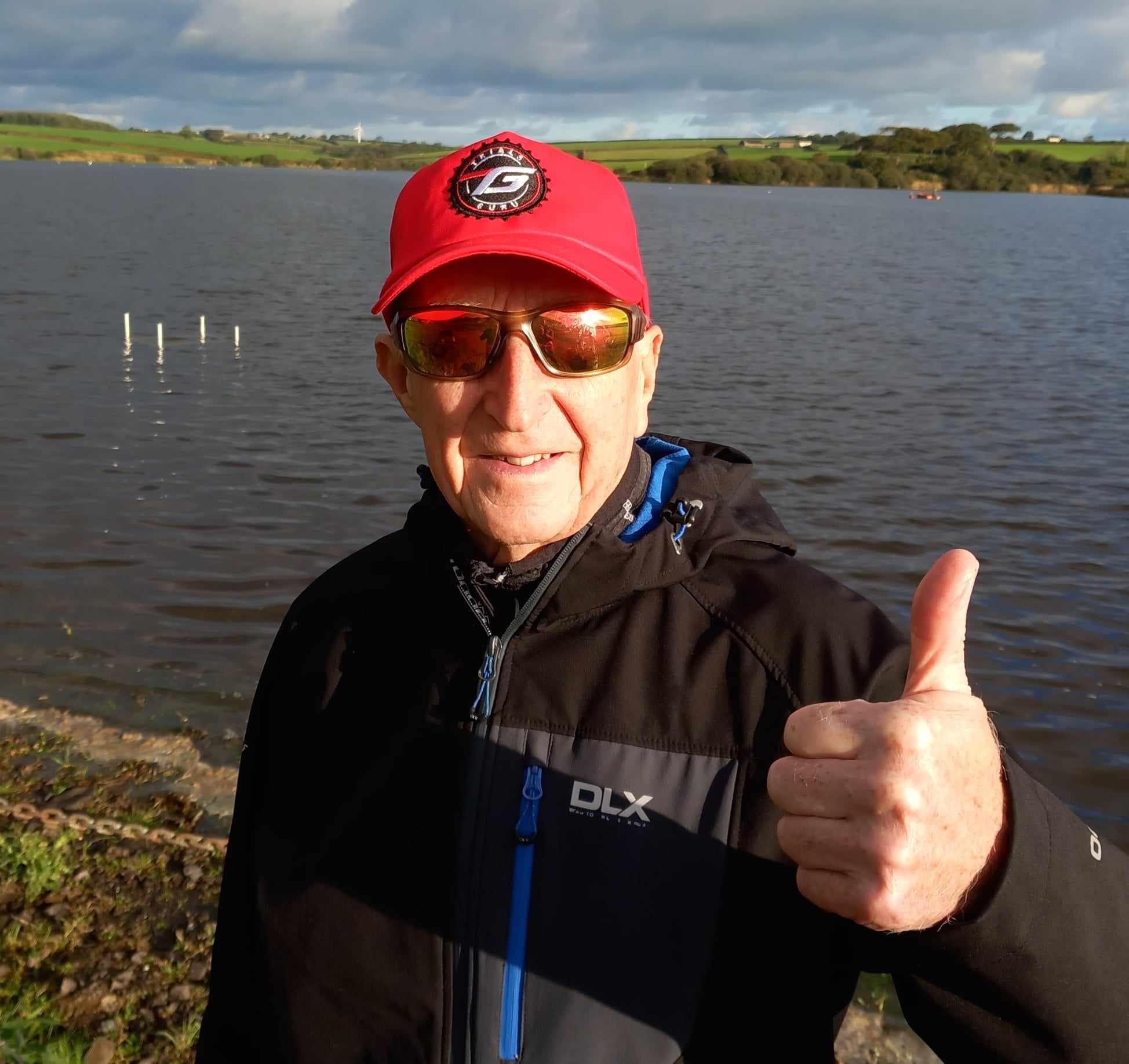
Steve wound things down by the end of 1986, but the Wilson BMX brand remains popular today across old-school BMX social media forums and collector pages. Now 74, Steve still rides bikes and enjoys life in Cornwall.” [5]
References:
[1] Motor Cycle – East Midland Associated Press (1971)
[2] Trials & Motocross News, Morecambe (1978)
[3] Birmingham Evening Mail – Richard Frost (1974)
[4] Birmingham Evening Mail – Richard Frost (1974)
[5] British BMX Hall of Fame – Facebook (December 2025)
‘Steve Wilson – Trials Innovator’ is the copyright of Trials Guru & Stephen D. Wilson 2024.
Apart from ‘Fair Dealing’ for the purpose of private study, research, criticism or review as permitted under the Copyright, Design and Patents Act, 1988, no part of this article may be copied, reproduced, stored in any form of retrieval system, electronic or otherwise or transmitted in any form or by any means, electronic, electrical, mechanical, optical, chemical, photocopying, recording or otherwise without the prior written permission of the author as stated above. This article is not being published for any monetary reward or monetisation, be that online or in print.
 TRIALS GURU - DEDICATED TO TRIAL