Well known motorcycle dealers, Hitchcocks Motorcycles based in Solihull are the new owners and custodians of Don Morley’s photographic archive.
In a statement issued on their social media on Thursday 19th September 2024, they announced that the company are now copyright owners of a substantial collection of some of the world’s best photographic images.
Their statement read: “Hitchcocks Motorcycles are thrilled to announce that they are now owners, copyright holders and custodians of the Don Morley photography archive collection.
This amazing collection covers more than five decades of motorcycle racing including Grand Prix, Isle of Man TT and many off road events such as the ISDT.
The 1950’s and 60’s are often considered the golden years of GP racing, and this collection has a superb selection of images from that era. Names such as Geoff Duke, John Surtees, Mike Hailwood and Bob McIntyre are just some of the riders that feature in the archive. There are also excellent images that depict the many privateers that battled for world championship points.
The 1970’s, a time of great technological change are extremely well represented with images including Jarno Saarinen, Kenny Roberts and Barry Sheene, a fabulous photographic documentation of that 2 stroke era.
The collection contains images that reach into the new millennium, a coverage of over fifty years of racing.
We are implementing plans to digitize the archive, a tall order given an estimated 750,000 images including monochrome film and transparency slides.“
Trials Guru are delighted that Don Morley’s work will be in very safe and responsible hands and we wish Hitchcocks all success with whatever they feel they should put Don’s fantastic photographs to use.
John Moffat of Trials Guru said: “I am pleased to see that a long established and reputable firm has been able to ensure that Don Morley’s images are safe. I have known Don since the late 1980s and have utmost respect for him, he is the ultimate professional. I’m sure Hitchcocks will manage Don’s archive as Don will have wanted.”
Recently Trials Guru released a full article on Don and it can be read HERE.
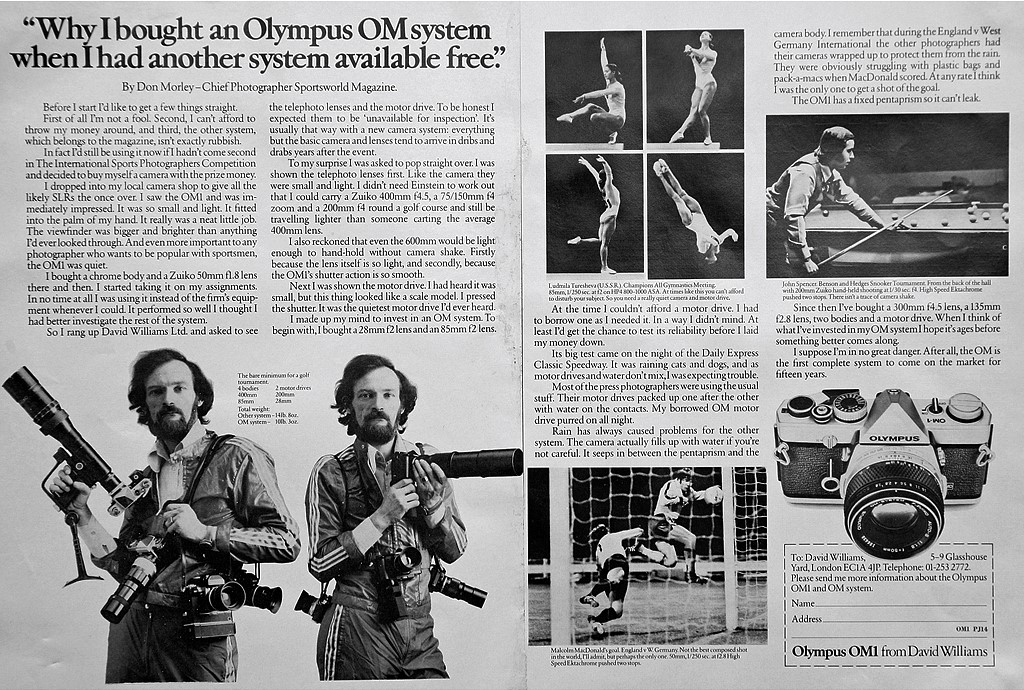
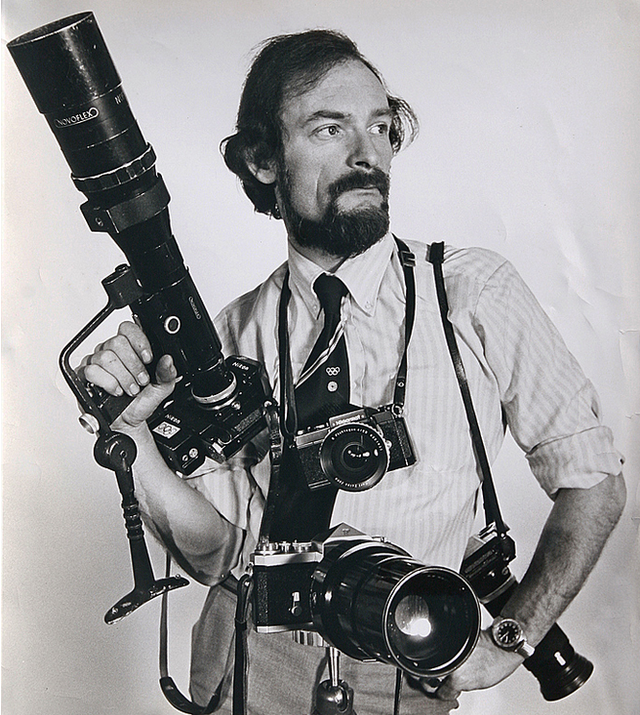
Don Morley featured in an Olympus Camera advert – Photo: Olympus Cameras.
Words: John Moffat & Don Morley
Photographs: Don Morley; Iain Lawrie; OffRoad Archive; Mary Wylde; Olympus Cameras; Motor Cycle News.
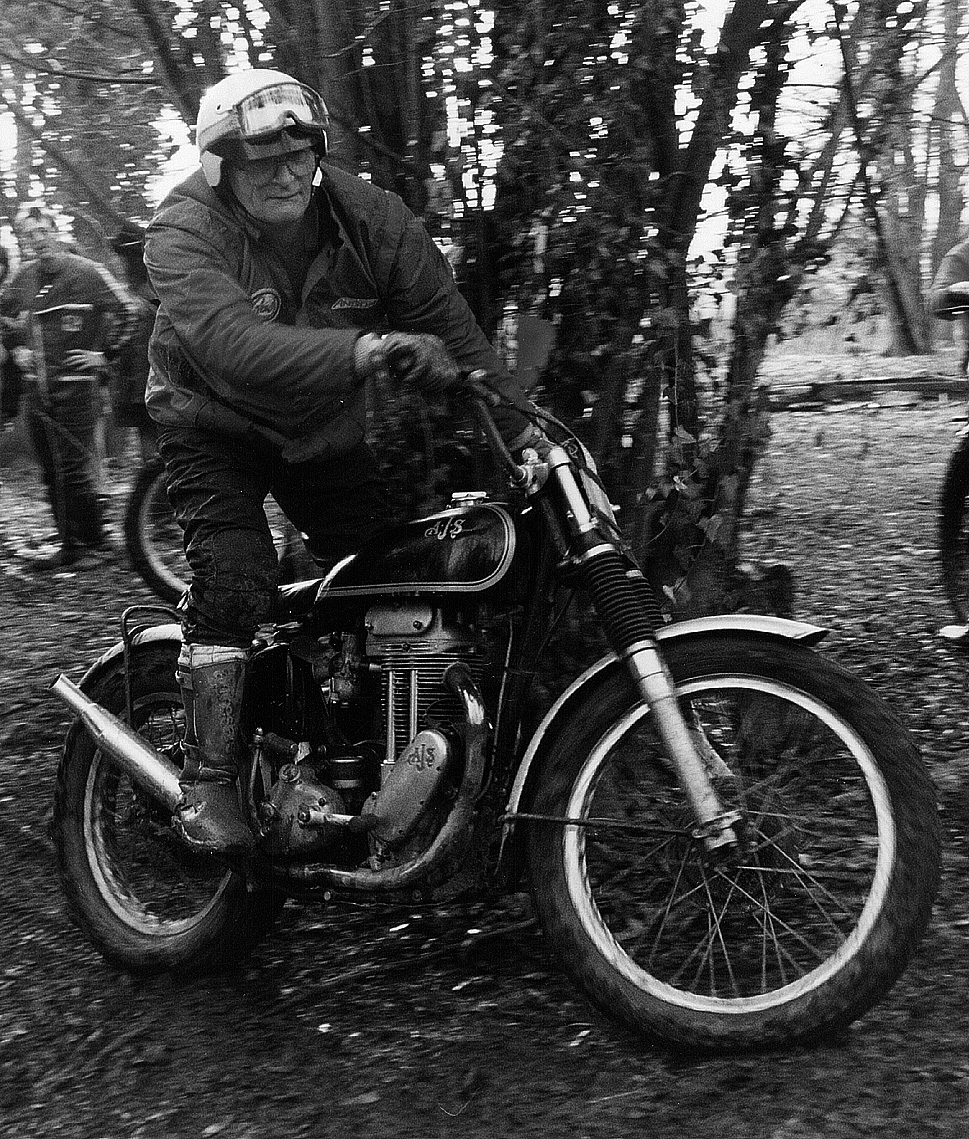
Ace photographer, Don Morley on his rigid 350 AJS – Photo: Mary Wylde
There can be few photographers that can match the talents of motor-sport’s most revered professional ‘snapper’ who has covered not only motorcycle events, but also a whole array of sporting and international incidents world-wide.
The professional photographer to whom I refer is Don Morley, from Reigate in Surrey, a self-confessed motorcycle racing enthusiast who, as a young man, simply didn’t have the funds at his disposal to go racing, so took up riding trials riding as a consolation.
Don Morley originally from Derbyshire, was born in late January 1937. He attended “…a rather expensive private school called Derby Diocesan”.
Don takes up the story – “I was about thirteen but not a good pupil and it was very old-fashioned and strict, so I got disciplined every day. I was running a business at school buying tuck from Woolworths and then selling it on at school for a small profit. They sent for my father and suggested he took me away, so after a good hiding I was sent to a brand new school called Littleover Secondary Modern, still a building site, it would become the first secondary modern in Derbyshire, and it was massive. I wasn’t much into school and, as yet, it only had one classroom. I soon realised I could go in the morning, call out my name for the register, then clear off and play truant for the rest of the day. I did this for the following two years, other than for the art and sport classes.”
Young Morley won the art prize each year until he left school and represented Derbyshire Schools at national level as a high jumper, winning the championship in his final year and as a middle distance runner. Morley left school at fifteen without any qualifications.
Morley – “I think this rather broke my parent’s hearts as both were university educated.”
The attraction to photography came first, then came motorcycling.
“At a friend’s suggestion, we cycled to a road race meeting at Osmaston Manor, up-hill all the bloody way for about eighteen miles and I hated cycling, I still do, but the race meeting and the aroma of the Castrol R and dope just blew me away. In short, I was hooked and would eventually race there myself, whereas the friend who wanted to go was completely unimpressed and never went again!”
Still a youth, Don bought his first motorcycle with a friend, a 1928 BSA 500cc ‘Sloper’, but kept it at the friend’s house knowing his father would disapprove, with thoughts of converting it into a racer. When testing it out on the road, young Morley was charged with riding under age, no insurance, no tax, no horn, you name it. Because he was under age, it was his father, rather than Don that was summonsed to go to court. The BSA was subsequently dispatched to the scrap yard!
Don Morley’s first job was not what his parents had in mind. He had caught the photography bug by the age of eleven and aspired to become a Fleet Street press photographer. This horrified his father who was managing director of a Derby electrical engineering firm. Morley Senior had pulled strings to enrol Don into an electrical engineering apprenticeship with London, Midland and Scottish railways, just when it was all becoming British Railways Board, at the Derby Locomotive Works.
Morley – “I must say I loved it at LMS, but I was supposed to go to night school three nights per week and one full day as part of the apprenticeship, but instead and unknown to father, I signed on for three nights a week studying photography at Derby College of Art, now the University of Derby. By then I was already freelancing on a regular basis for The Motorcycle, Motorcycling, plus local and national newspapers.”
Morley was by now earning much more at photography than as an apprentice engineer, his first commissioned feature for Sports Illustrated in America before he was seventeen. At twenty-one and at the end of his apprenticeship, he thought himself a free agent.
Morley – “I said right Dad, I have done it your way, now I am going to do it mine! I’m chucking the engineering job in so I can be a full-time photographer. This did not quite work out how I expected though for he said, OK son, but get out of my house.”
Displaced, Morley took up residence in a shared dormitory in a lorry-driver’s hostel, which was rough, but was offered a student grant to do a two year full-time degree level course on photography, again at Derby College of Art.
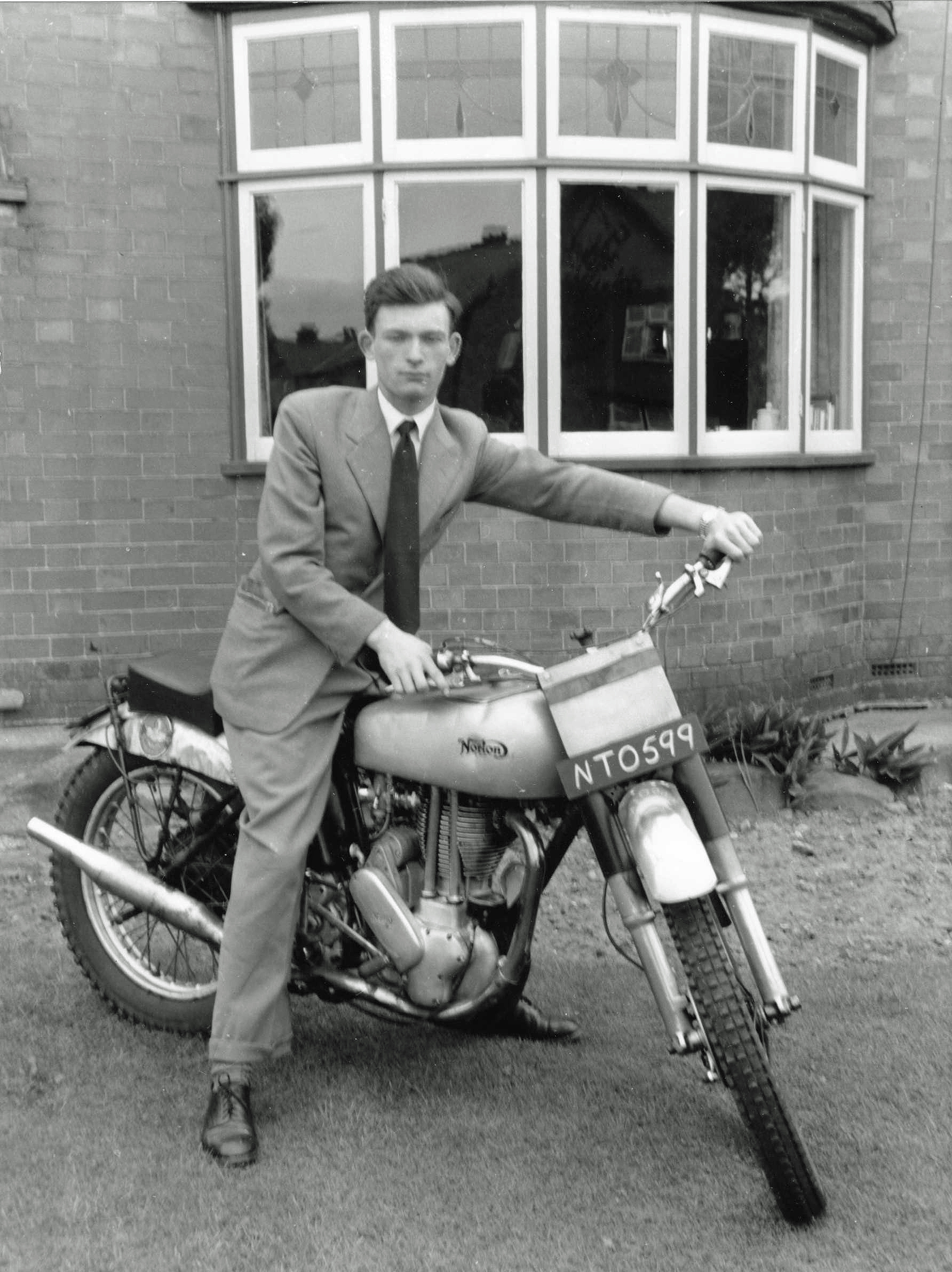
Don Morley poses with his 500T Norton trials machine in 1953 – Photo: Courtesy of Don Morley
Morley – “I joined The Pathfinders and Derby MCC and the Derby Phoenix as a youth and though without a machine, I helped out at trials, scrambles and road-races. I finally did legally get myself another motorcycle in 1953, and subsequently acquired a 500T trials Norton on which I went to work, trialled, scrambled and even road raced and did my courting on. I became close friends with world racing champion Bill Lomas; John ‘moon-eyes’ Cooper; David and Jon Tye; Norman Storrar and Barrie Rodgers, my wife and I became godparents to Barrie’s eldest daughter.”
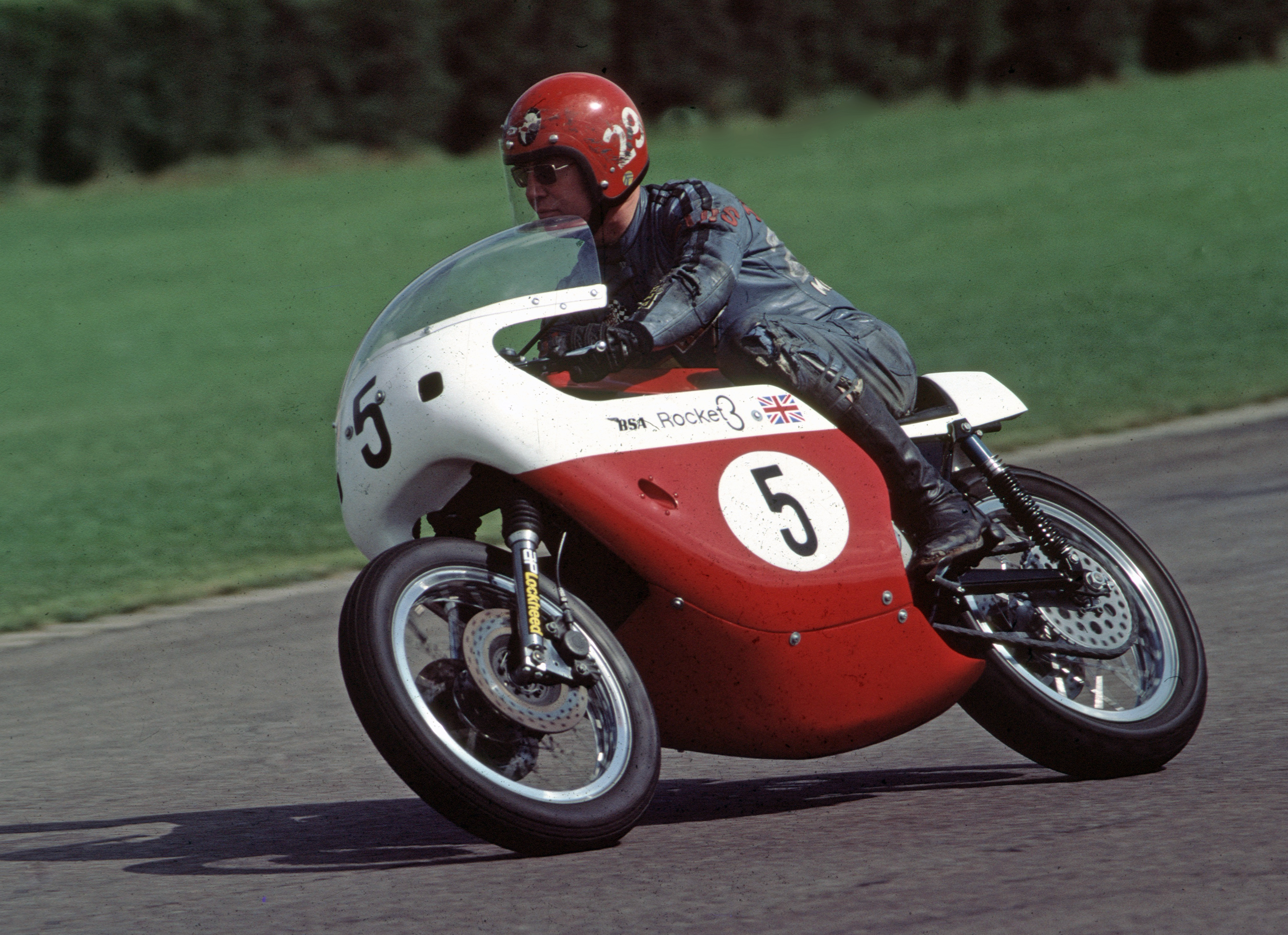
Good friend, John ‘Mooneyes’ Cooper on the BSA 750 Rocket 3 race bike – Photo: Don Morley
Don’s professional sports photography career began back in 1953, prior to being employed to take photographs for the newly established Motor Cycle News in 1957. He got the job almost by accident as their photographer covering the Isle of Man TT races had taken ill and Don took his place.
This was the era of the glass plate photographic format. They were supplied with six double dark slides which meant only twelve images could be taken by staff photographers. These had to be returned for developing to the newspaper. It was a rule that of the number allocated, one plate was to be kept in reserve, just in case the photographer came across an incident on travelling back from the race meeting or event being covered. The penalty for non-compliance was dismissal.
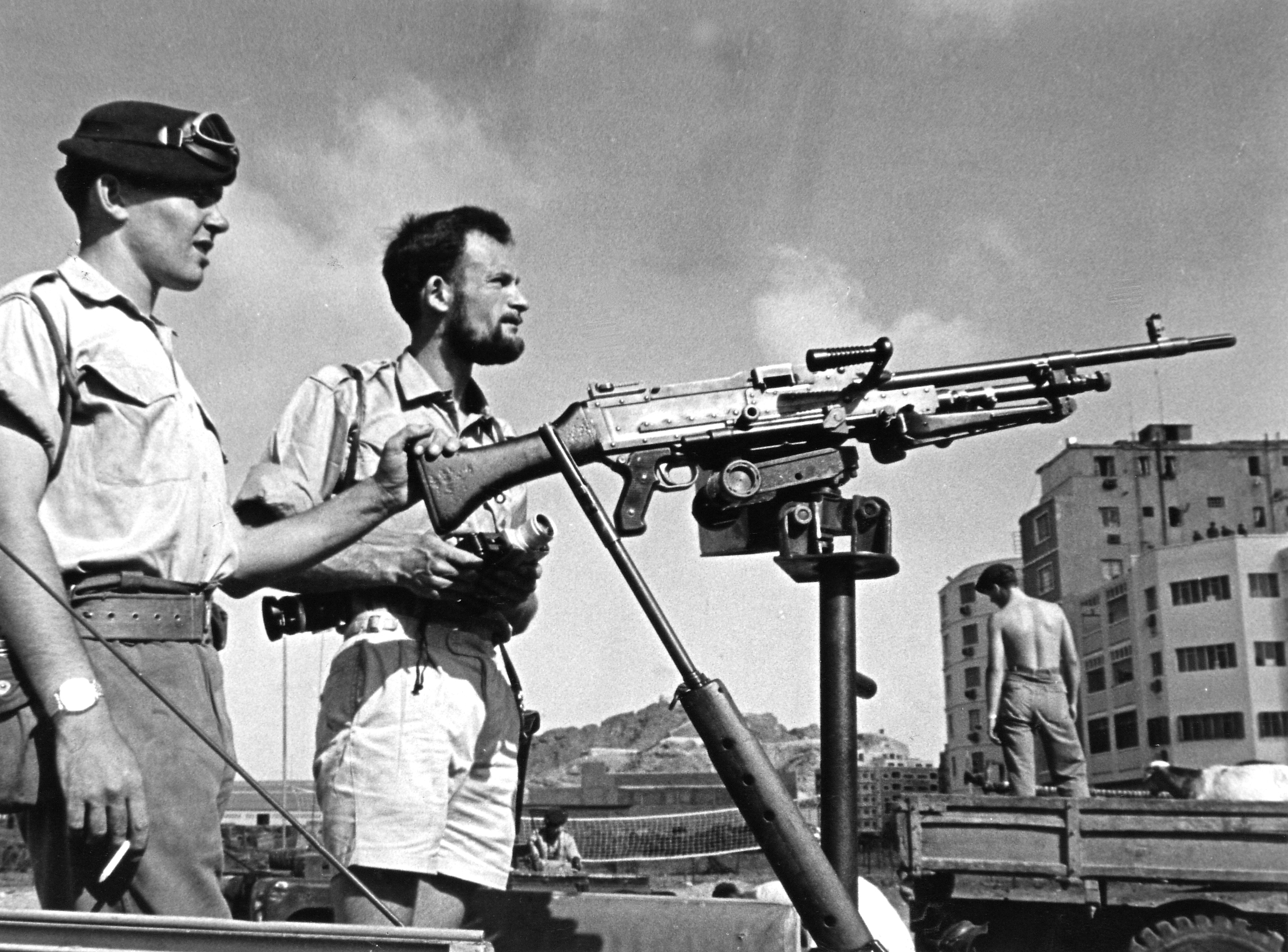
Don in 1967 covering the war in Aden – Photo courtesy of Don Morley
Nowadays, digital camera systems allow the photographer to take a series of shots and simply delete the ones not required in an instant. Not so in the early days of Don Morley’s career; he developed all his own work and coped with glass negatives and then thirty-five millimetre roll film with manual aperture settings. It must be a bit like riding an old four-stroke with manual advance retard and choke levers compared to a modern fuel injected two-stroke, except more complicated.
Morley’s work remains highly sought after, covering so many big events in a career that spanned almost sixty years. Joining forces in October 1975 with Tony Duffy, they founded ‘All Sport Photographic Agency’ which was the ‘go to’ company for sports images and advertising images from the early nineteen-seventies until the middle nineteen-nineties. All Sport was formed out of the demise of ‘Sports World’ magazine, Don being their chief photographer. Sports World had folded and rather than take redundancy, the astute Morley bought their photo archive which dated back to the 1930s. All Sport is now owned by Getty Images and has retained some All Sport staff.
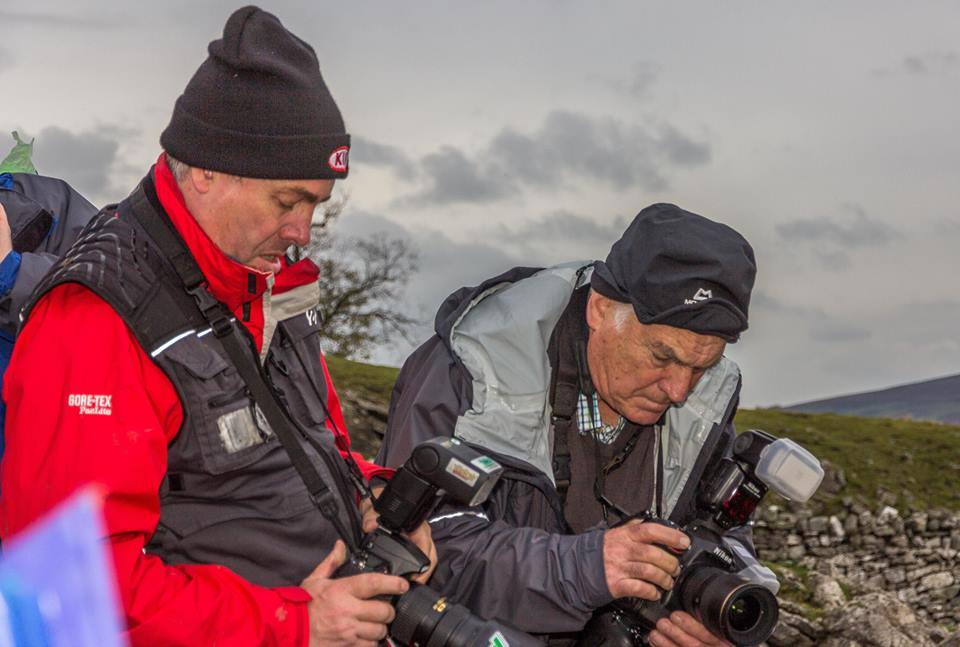
Armed to the teeth with cameras, Don Morley was the ultimate professional photographer – Photo courtesy of Don Morley.
Pick up a back copy of any major sports magazine or periodical and no doubt the accreditation ‘All Sport/Don Morley’ will be seen in small letters at the foot or up the side in some cases, of stunning images.
Over the years, photographers such as Barry Robinson, Brian Holder, Alan Vines, Brian ‘Nick’ Nicholls, Gordon Francis, Len Thorpe and of course Eric Kitchen have taken some absolutely wonderful photos of racing, trials and scrambles riders in action. Morley was just that notch different; he covered more than trials and scrambles. Don covered just about everything else on two and four wheels, plus athletics and armed conflicts. Morley was a true all-round professional photographer.
Morley – “I wasn’t a sports photographer until later in life. I was actually a news photographer covering wars and such-like. I covered the Irish troubles in Belfast for the Guardian and even had the inconvenience of having my hotel blown up.”
Image: Motor Cycle News
Don was never backwards at coming forwards, he was more than capable at pushing himself forward to get to the heart of the action and ultimately to get that single breath-taking image. Morley was an out-and-out rule bender. Sometimes he even broke the rules, to reach his goal, to get that perfect shot. Be that an Isle of Man winner, a pole-vaulter, a sprinter, it didn’t really matter. Don had an uncanny ability, nay gift, to press the button and capture a moment in time that lesser mortals could only dream of.
The anecdotes involving Don Morley are what folk lore is made of. There was the incident when Morley had broken his leg while testing Graham Noyce’s factory Honda motocrosser. This sparked a chain reaction of incidents.
Because his leg failed to heal properly, Don jettisoning his crutches and took a chance and boarded an aircraft after the Spanish GP, hoping that no-one would notice.
Morley – “I covered the whole Spanish GP with help from Kenny Roberts who carried my camera kit around when he wasn’t racing. When I got on the aircraft I discovered that all the emergency seats had been taken and I couldn’t get myself into the seat I had been allocated.”
Kenny Roberts signs Don’s plaster cast. Photo courtesy of Don Morley
The stewardesses saw this, cottoned on and approached Morley and asked him to leave the aircraft. Don refused, as he wanted to go home as quickly as possible. It was a well-known fact among racing circles that Morley and Barry Sheene didn’t always hit it off as individuals. Sheene had seen what was unfolding, stood up into the aisle and announced that if Don wasn’t allowed to stay on board, then all the other passengers, most of them factory riders homeward bound, would leave the aircraft in support.
That action by Barry Sheene and the others on the aircraft showed the respect that Morley had earned amongst the hard-nosed racing community, even from Sheene himself.
Don captures Barry Sheene on his Yamaha in the 1982 Transatlantic Match Races – Photo: Don Morley
Morley – “Barry took something I wrote once to heart, that didn’t help things, but he was a great rider and I actually had a great deal of respect for him. Not long before he died, he came to see me to get an old photo I had taken of him for something and I think that was to draw a line in the sand.”
During his convalescence after the original accident with the Noyce factory Honda, a photo shoot in 1979 caused even more problems. It involved New Zealander, Dennis Ireland, an up and coming rider who at the time raced a Suzuki at GP level. Having just won the Belgian GP, the shoot was set up for publicity purposes prior to the October’s Brands Hatch International event. Ireland had initially planned to run his machine over a few laps to check if a throttle-sticking issue had been resolved by his mechanic, which had occurred at the previous weekend’s race at Oulton Park. The practice session had been cancelled, but Ireland took the bike from his van to do the tests in the pit-lane area. As it transpired, the sticking throttles matter had not been successfully resolved.
Don, still on crutches, positioned himself in the pit-lane with his camera at the ready. Ireland was to ride his RG500 past Don for a series of shots. However, the early version of the RG500 Suzuki was a bit of an animal of a motorcycle, suddenly all four throttles jammed wide open unleashing the full ninety-four brake-horse power and he couldn’t shut the bike down. The Suzuki reared straight up, pitching Ireland off and Morley had nowhere to go; he was the proverbial sitting duck. Thinking quickly, he threw himself to the ground to try to avoid contact, but the wayward Suzuki hammered into Don.
Ireland was catapulted into a concrete post and was much less fortunate; he suffered multiple injuries which confined him to a wheelchair for many weeks and several months of operations and physiotherapy.
The fateful photo of Dennis Ireland when the throttles stuck open on the Suzuki – Photo: Don Morley
Morley: “I literally heard every bone crack in Dennis’s body and I thought I was going to die, my immediate thought was I hope to hell someone gets the film out of the camera and processes it! Unfortunately even although he went on to win the senior TT, Dennis Ireland was never really the same competitor after that photo shoot accident, it’s such a shame, the whole incident was so regrettable, just one of those things. It shortened an extremely promising racing career. He did go on to marry the nurse who looked after him during his recovery.”
“My wife took me to Sidcup hospital where Dennis was a patient. His injuries were so severe, there were pins, rods and brackets through his still open-wounds literally everywhere and of course he was very heavily sedated. But he still managed to ask me if I got the picture. I had a print of it with me but did not think he would want reminding of it. So anyway, I showed it to him and he thought it was wonderful.”
True to form, Don had pressed the shutter button as the wayward Suzuki with Ireland still on board hurtled towards him. The multi award-winning image taken that day is regarded as one of the most iconic from racing. Broken leg, but the image had been captured, now that’s what I call a true professional at work. The award-winning photo was sold world-wide and Morley, rather than profit from it himself, donated the earnings from it directly to Ireland.
What is not generally known is that Don attended the fateful and tragic 1972 Games of the Twentieth Olympiad at Munich, Germany to take photos of the various sports. Subsequently there was the incident which became known as the ‘Munich Massacre’ in which eleven Israeli athletes and coaches plus a German police officer were killed by a Palestinian terrorist group known as Black September.
Tipped off by a British athlete, Don realised that there was something dreadfully amiss given the sudden upsurge in security, which clamped down the Olympic village. Undeterred and keeping his cool, he scaled the security fence to reach an accommodation block, a dangerous and perhaps foolhardy act, given the circumstances. To his surprise, none of the security personnel challenged him, so he just kept on taking photographs for around ten hours, only feet away from the hostages and terrorists until day-break.
Don Morley made a good living out of taking photographs, which is nothing to be ashamed of; it is an occupation like any other. To be very good at it, some would argue he was the best, which in itself is the work of a true professional. He only gives photos without payment in return, usually to the person who is the subject. Rarely are his images used without payment and conditions. Don values his hard work and his copyright and protects it, likened to a mother tiger giving protection to its young.
Scottish amateur photographer, Iain Lawrie from Kinlochleven has been taking photographs of the Scottish trials for nearly forty years and had taken a very good photograph of Don riding an ex-works 250cc Anglian in 1995 at the Pre’65 Scottish. Don had spotted it on the Trials Guru website and enquired if he could buy a copy from the photographer. Iain was suitably delighted to hear of Morley’s request and without hesitation, furnished Don a high resolution copy, free of charge.
Don Morley on Loch Eild Path in the 1995 Pre65 Scottish Trial – Photo: Iain Lawrie
Lawrie – “To have someone of the stature of Don Morley compliment of your work is a great honour indeed, I was more than delighted to furnish him with a copy of the photo I took of him.”
There would be few amongst the racing fraternity that have not heard of Don Morley, they knew who he was and the standard of his work, first class, world class.
The riders would spot Don on a corner or at the infield clicking away, they knew exactly where he would be during a practice session.
Morley has a weighty collection of images taken during qualifying and practice sessions of riders at racing speed giving him more than just a dainty ‘thumbs-up’. Many riders liked playing to the camera, Don’s camera. Morley’s photos enhanced the rider’s public image, something professional riders valued as it opened doors to sponsors.
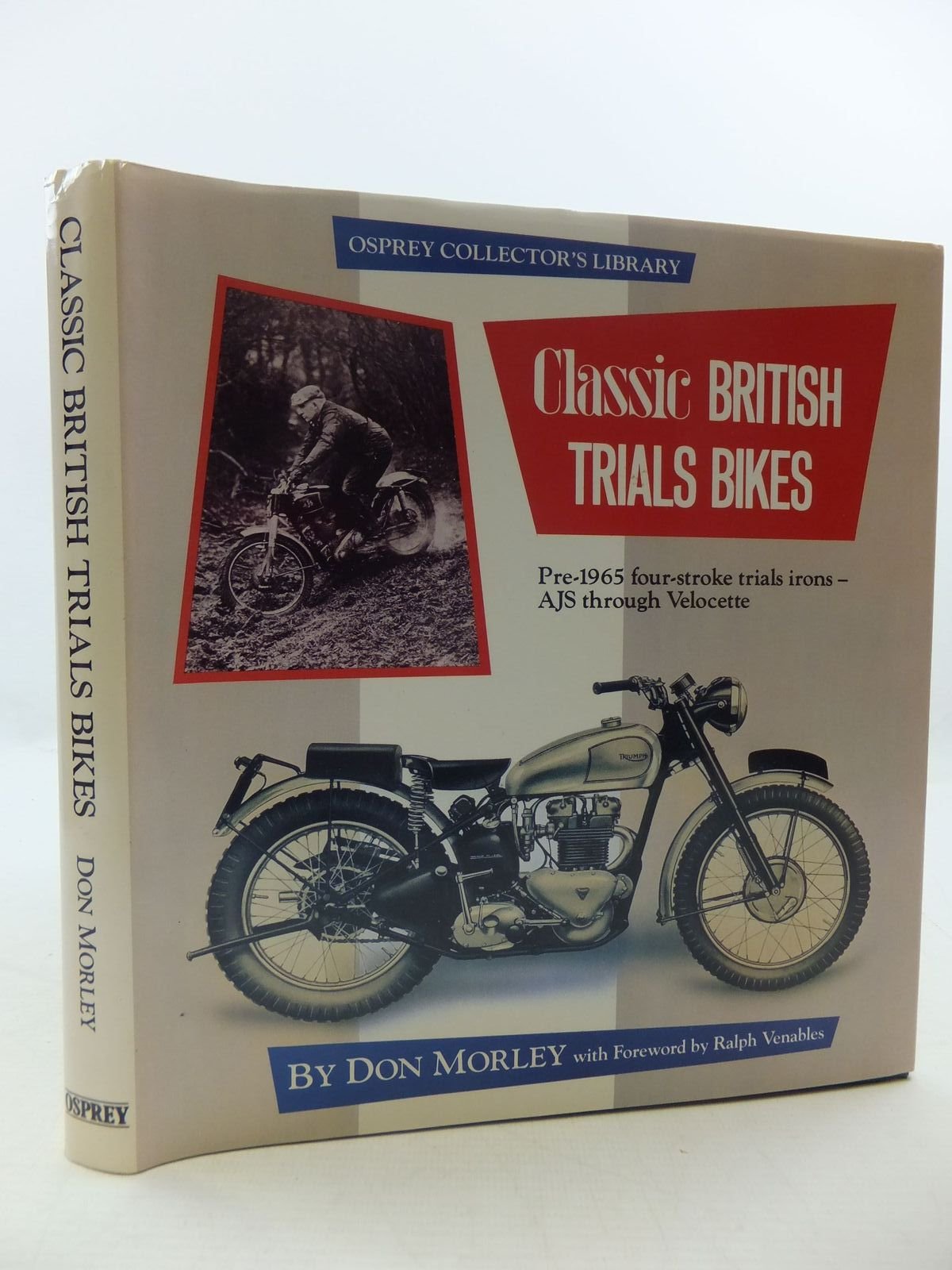
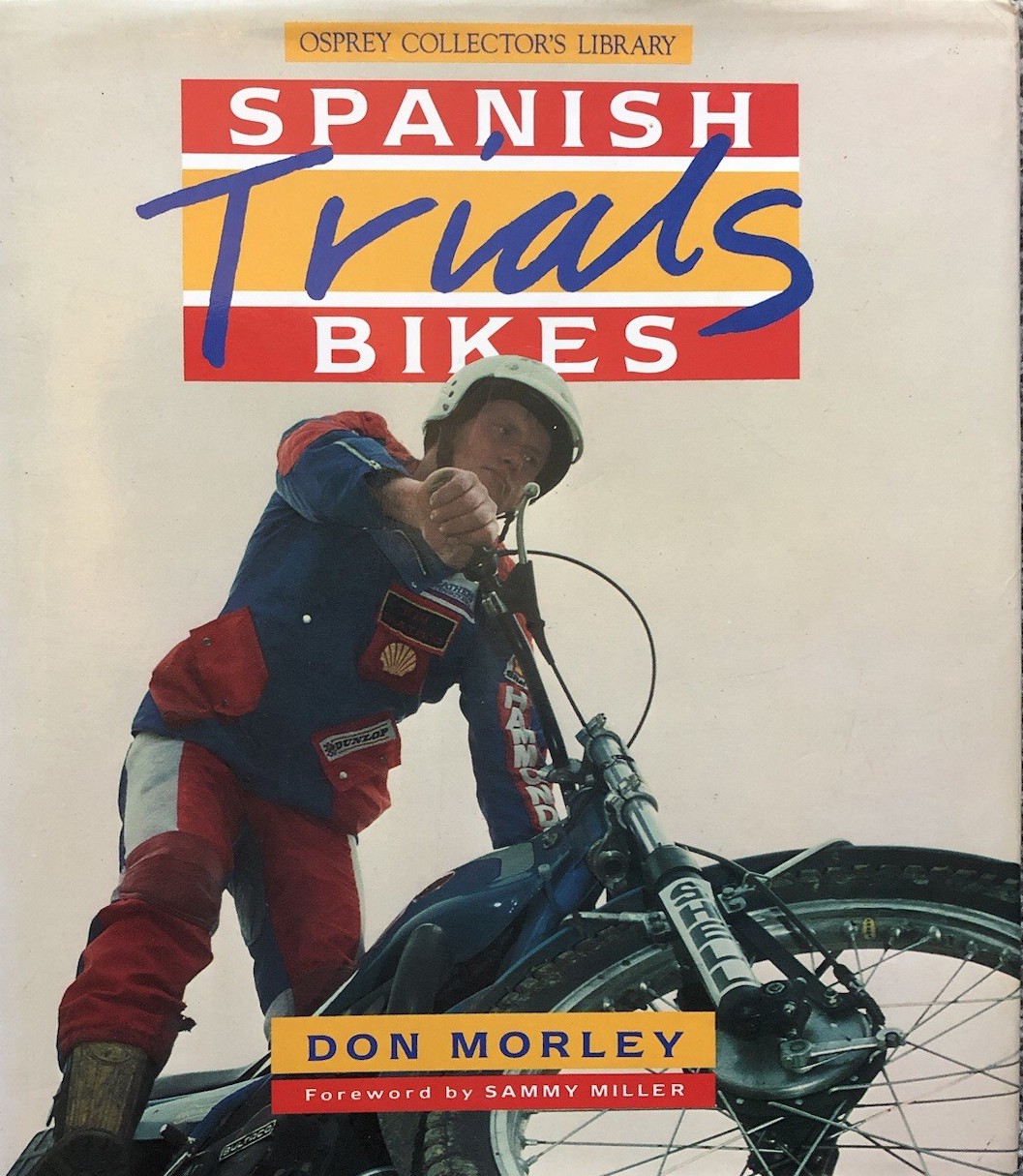
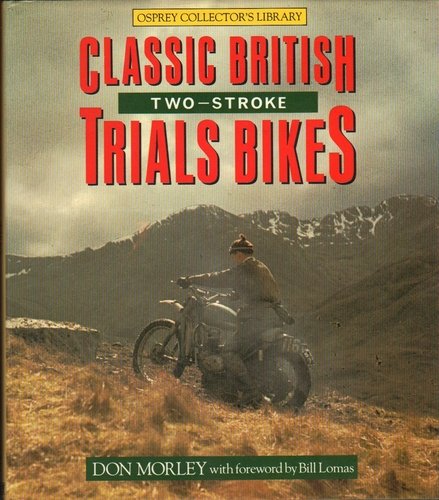
Don Morley is a proficient writer; he set about writing books about individual marques and the sport of trials in general. Three books, to which he owns the copyright, originally published by Osprey for their collector’s series, were ‘Classic British Trials Bikes’; ‘Classic British Two-Stroke Trials Bikes’ and ‘Classic Spanish Trials Bikes’.
These were best sellers and now are highly sought after by collectors and command a high price, if you can find a copy.
Morley also wrote for the Classic motorcycle magazines, Classic Bike and SuperBike magazine of which he was a long term GP columnist. His advantage being that he knew most of the established stars both current and of yesteryear, so the lack of suitable material was never an issue.
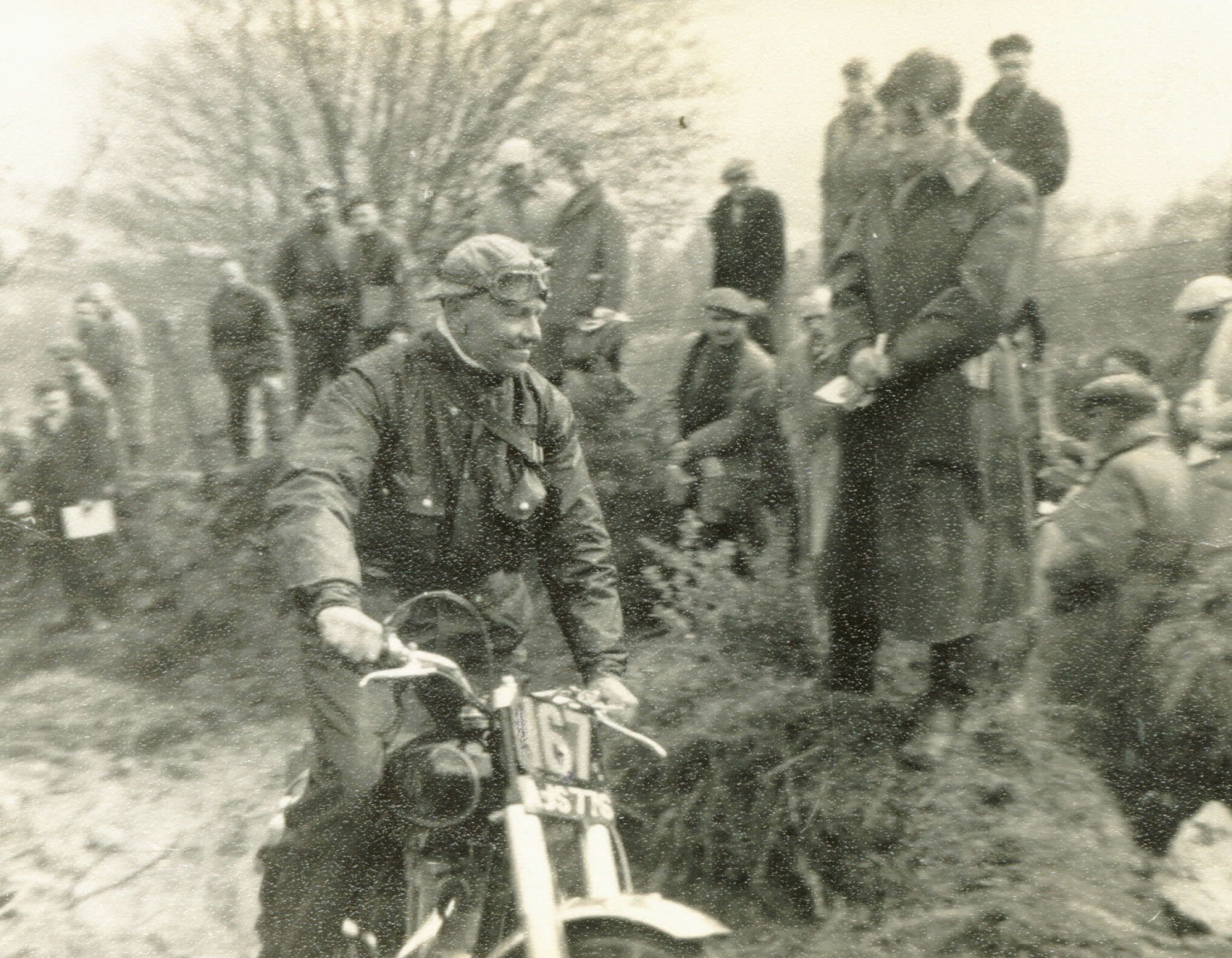
Don Morley competing on a short-stroke 350cc AJS in the Manx Two Day Trial – Photo courtesy of Don Morley.
One such article which Don wrote for Classic Bike, covered a back-to-back test of the ex-Gordon Jackson factory short-stroke 350 AJS, registered VYW659, against a standard 350 Matchless G3C of the same era. He explained the technical differences between the two motorcycles. He spent a considerable time analysing the tweaks that the factory rider’s machines were subjected to. This included the front fork internals and frame geometry as well as the carburation set ups. Secrets were revealed and myths exploded. The reader being further captivated by Morley’s mouth-watering photographs of course.
A Study of the 1979 FIM World Trials Champion, Bernie Schreiber from the USA who was based in Surrey during his championship winning year, gave Don Morley the opportunity to get to know Bernie. Photo: Don Morley
A keen trials rider, Don was at heart a frustrated road racer, but trials being the most affordable of motor-sports he made the best of it. Over the years, he obtained a variety of ex-factory machines and even parts of ex-works bikes. His love of the sport encouraged him to take up writing, after all a picture paints a thousand words and had literally thousands of images to choose from.
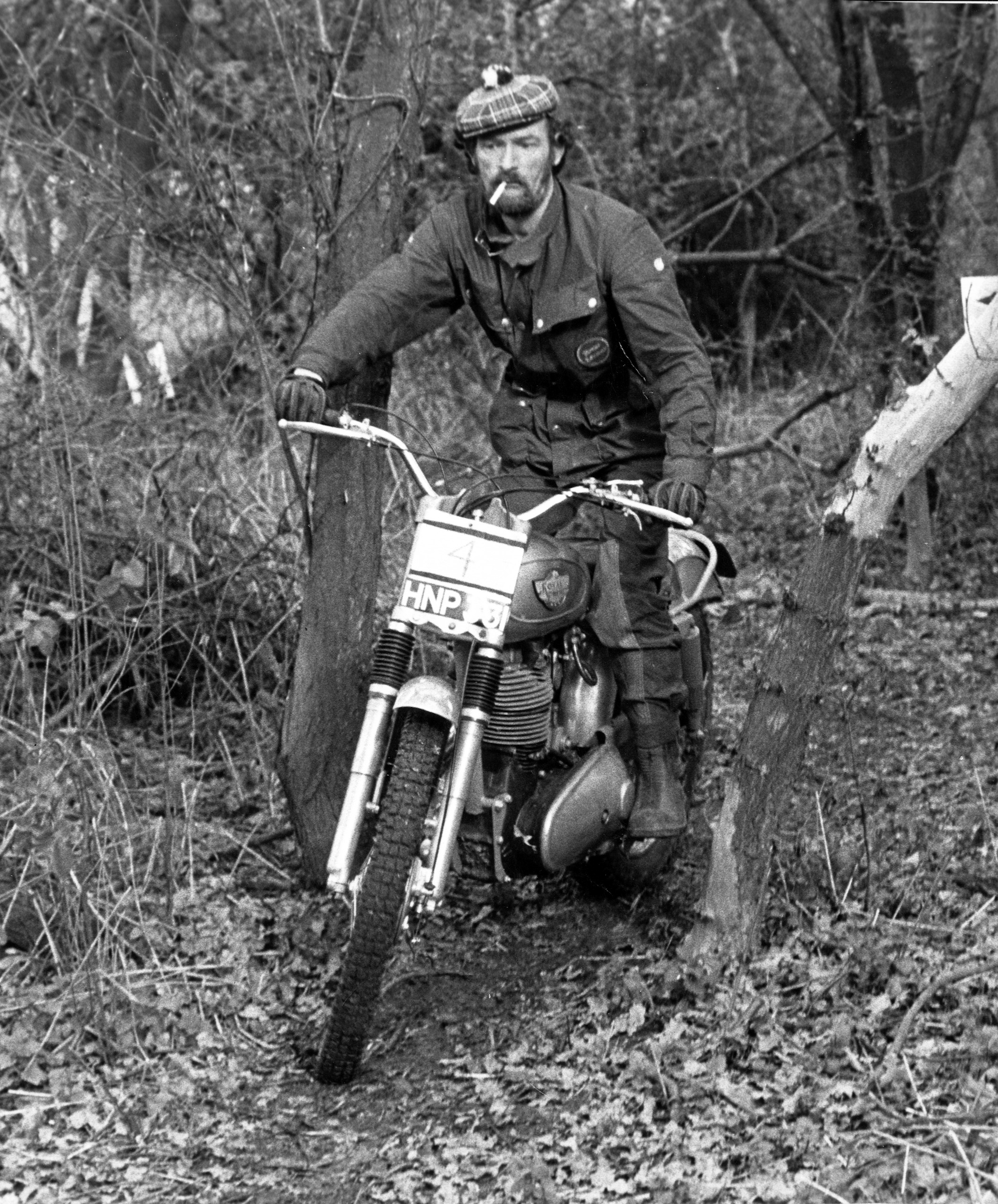
Don in action on the ex-Johnny Brittain, factory Royal Enfield with magnesium engine.
Morley has a soft spot for Royal Enfield motorcycles and the successes of Johnny Brittain on his factory Bullet which carried the registration number HNP331. He even owned the ex-factory 350, followed by one of the last versions, a factory 500cc Bullet with magnesium motor and the final 250 bearing that number. The bike was then stolen, so Don bought the ex-Peter Fletcher 250 which had the 250RE plate, straight after the Scottish, still covered in trial remnants and carrying its competition number plates.
Don Morley with two of his ex-factory Royal Enfields – Photo: Courtesy Don Morley
Don claims that he, along with some others, were the true founders of the Pre’65 movement having ridden HNP331 in the inaugural Talmag Four-Stroke Trial as early as 1973.
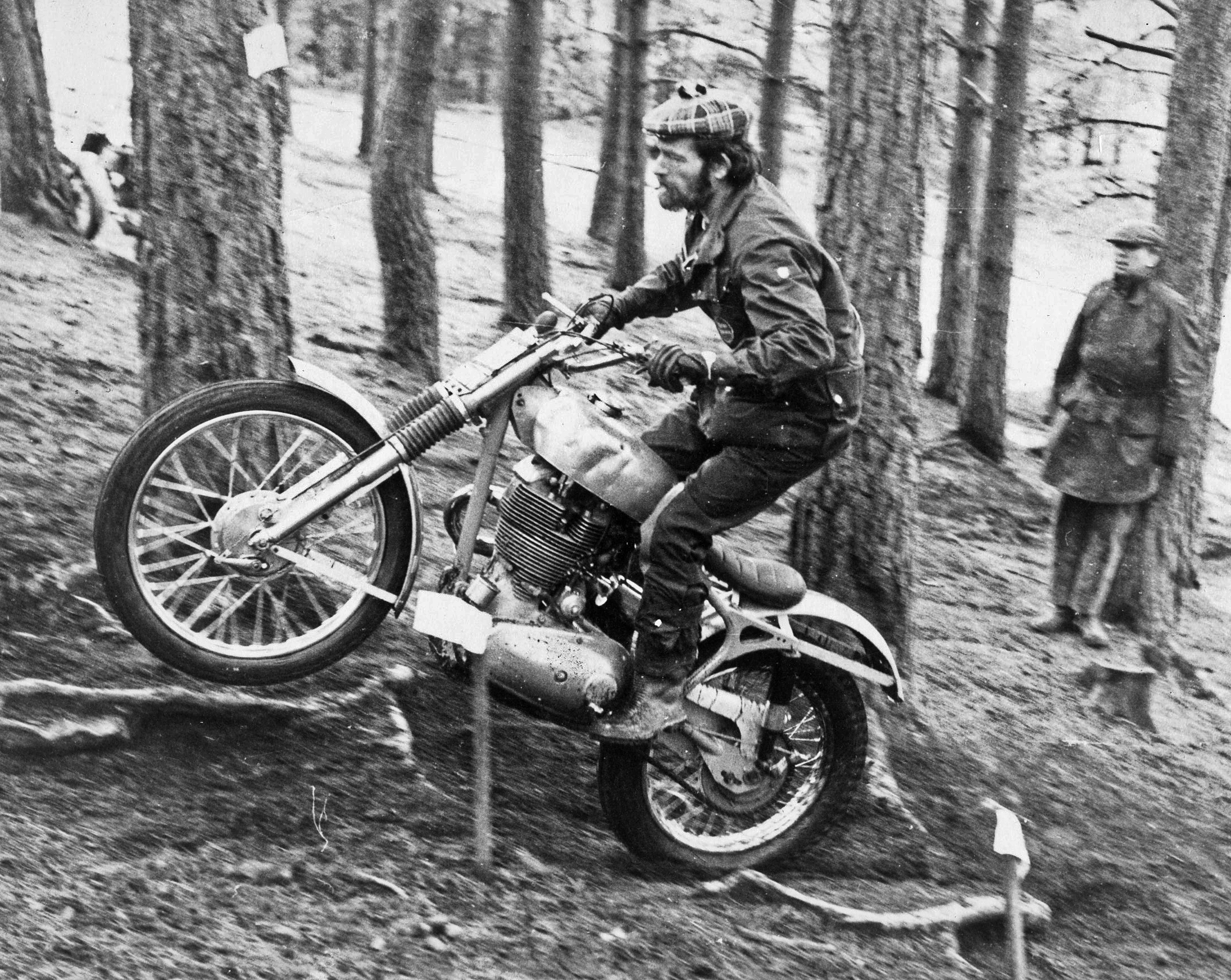
Don Morley skips over tree roots on his ex-factory Royal Enfield – LUY86 – Photo courtesy of Don Morley.
Don appeared in the BBC television documentary, ‘Perpetual Motion’ screened in 1992, narrated by actor Warren Clarke which covered the history of the Royal Enfield from Redditch to Bombay where the motorcycle is still produced by Enfield India Ltd. Controversially, Don’s view was that: “…the Royal Enfield Bullet was the most successful heavyweight trials bike, of all time.” Don’s opinion was based on the many successes of Johnny Brittain in trials events throughout the nineteen-fifties.
When the Sammy Miller developed Bultaco Sherpa became available in early 1965, Don was one of the first converts. Like many riders of that era, his results improved dramatically, put down to the handling and power delivery of the well-sorted Spanish machine.
Don Morley on his Bultaco Sherpa T in 1965 at the Talmag Trial, winning a first class award.
For his own amusement, Don built his own trials machines such as his BSA B40, to try out ideas of his own. He was also quick to embrace the Pre’65 scene when it came on stream in the late nineteen seventies, riding a very nice ex-Brian ‘Tiger’ Payne, AJS 16C, a late model short-stroke AJS, plus of course Royal Enfields. Back then all the machines were genuine old trials motorcycles; there were no replicas to speak of.
Putting Don Morley’s lifetime achievements into context, he wrote twenty-one books of which fourteen were on motorcycling, motorcycles and motorcycle sport; plus six more other books on specialist photography.
Don’s clients ranged from multiple world champion Phil Read, to Rothmans Honda, to Suzuki and the Marlboro Yamaha team as their official photographer. The major factory teams of the world stage.
Don captures three times World Drivers Champion, Sir Jackie Stewart early in his career. Photo: Don Morley
A three times winner of the Motoring Photographer of the Year voted by the Guild of Motoring Writers and winner of the AIPS/Adidas International Sports Photographer of the year.
For eleven years, he was the Chief Photographer of the Grand Prix year-book ‘Motocourse’.
Don was also trials machine technical specialist for the Greeves Rider’s Association and long term Royal Enfield marque specialist for various magazines including Classic Mechanics magazine.
He was also a founder member of the Grand Prix press body, The International Race Press Association.
Morley was a founder member, past-chairman and honorary member of The Professional Sports Photographers Association.
As if that wasn’t enough, he was chief photographer for the British Olympic Association, Sports World and Worldsports magazines; The Football League Review and World Student Games. He was staff photographer of The Guardian newspaper and assistant chief photographer of United Newspapers for ten years.
Don Morley receives another award from the Governor of the Isle of Man.
What is Don’s favourite photo?
Morley – “To be perfectly honest, I don’t know that I have one! Perhaps one from Muhammad Ali’s fights? I’m not sure.”
Morley was covering Ali’s fight named the ‘Thriller in Manilla’ being in the training camp. He went out every morning at five in the morning to accompany Ali on his runs.
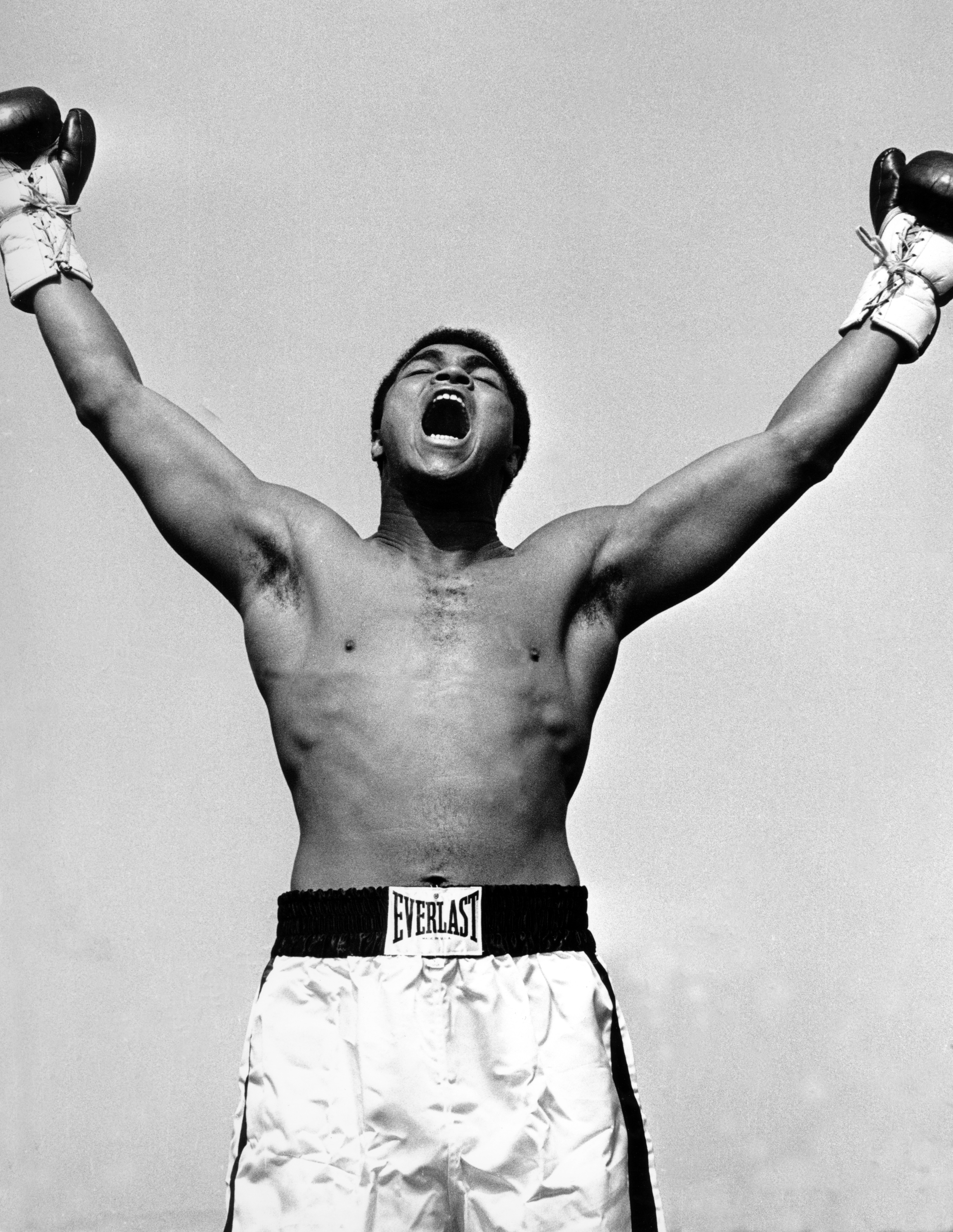
‘Top Of The World’ – The great Muhammad Ali poses for the camera of Don Morley – Photo: Don Morley.
Don – “I was smoking forty fags a day back then, but managed to keep up with him even with my camera bag, but he refused to let me take any photos. Then one morning he stopped and said, OK you’ve earned it, take the pictures, what do you want me to do? I told him that I wanted him posing at the top of a hill with arms high to look like he was on top of the world.”
Quick thinking Morley had run each day with a pair of Ali’s gloves and trunks so that he was prepared for the shots.
Don – “Muhammad stripped off and when he was naked, however he read my mind and with a big fist threatening me, I decided to settle for the pictures I had originally hoped for. I could have made a fortune from such photographs!”
Trials Guru’s John Moffat on Don Morley: “Having known Don Morley for a number of years, I can say this, he has presence; he exudes professionalism, is quick-witted, has an eye for detail, a great sense of humour and is shrewd. But he is also a died-in-the-wool motorcyclist who has not only rubbed shoulders with world-class sportsmen and women, who were at the top of their game when he was at the top of his. It went further than that, he was respected by them, and they knew he made them all look good.“
Special thanks to Don Morley for taking the time to supply photographs and information for this article.
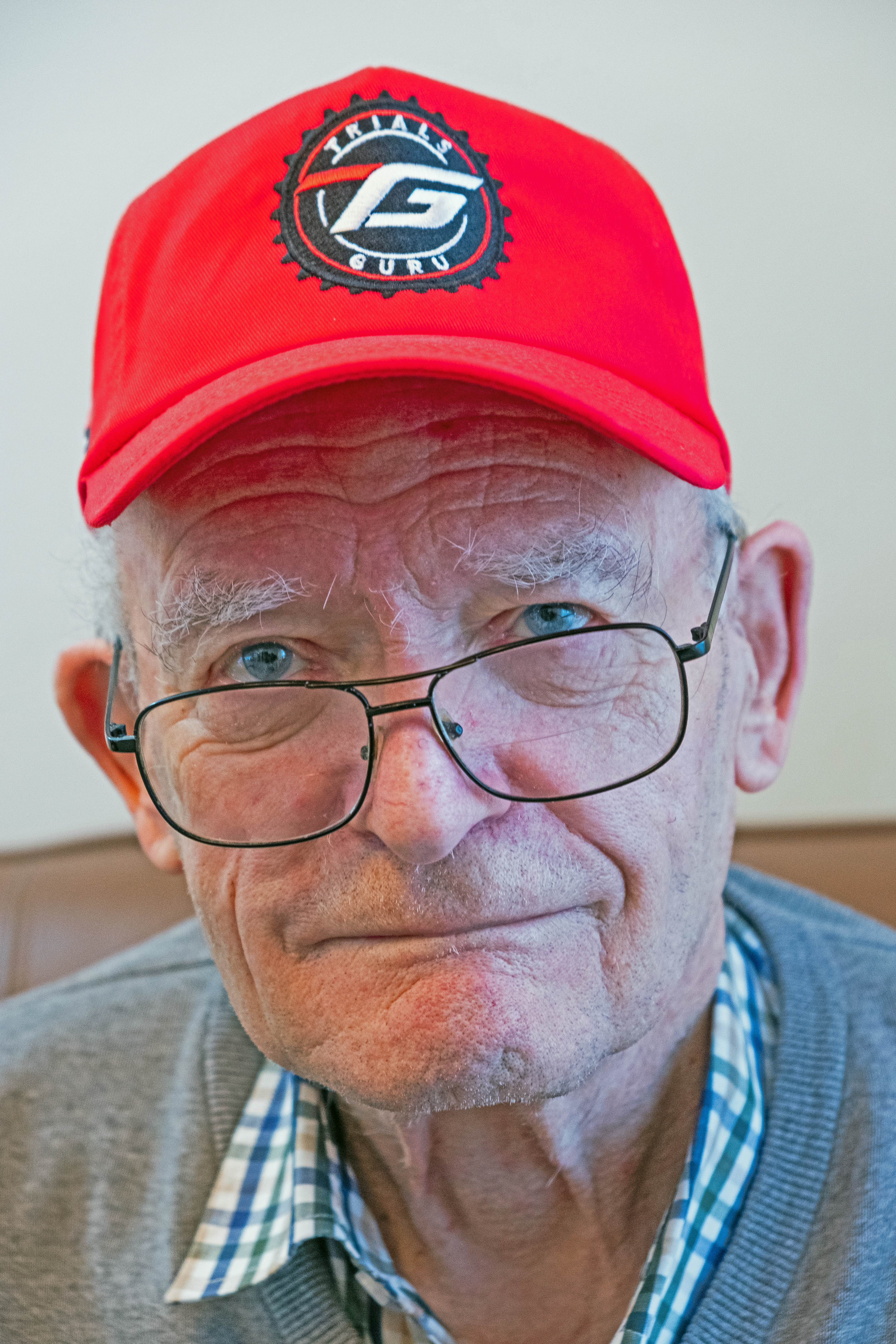
Don Morley was of course presented with a Trials Guru VIP cap in 2024!
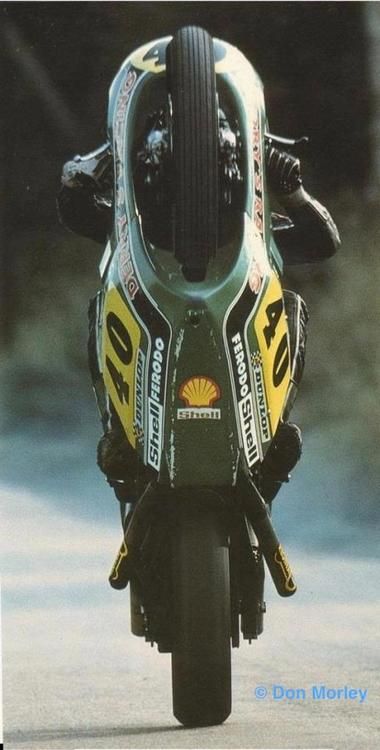

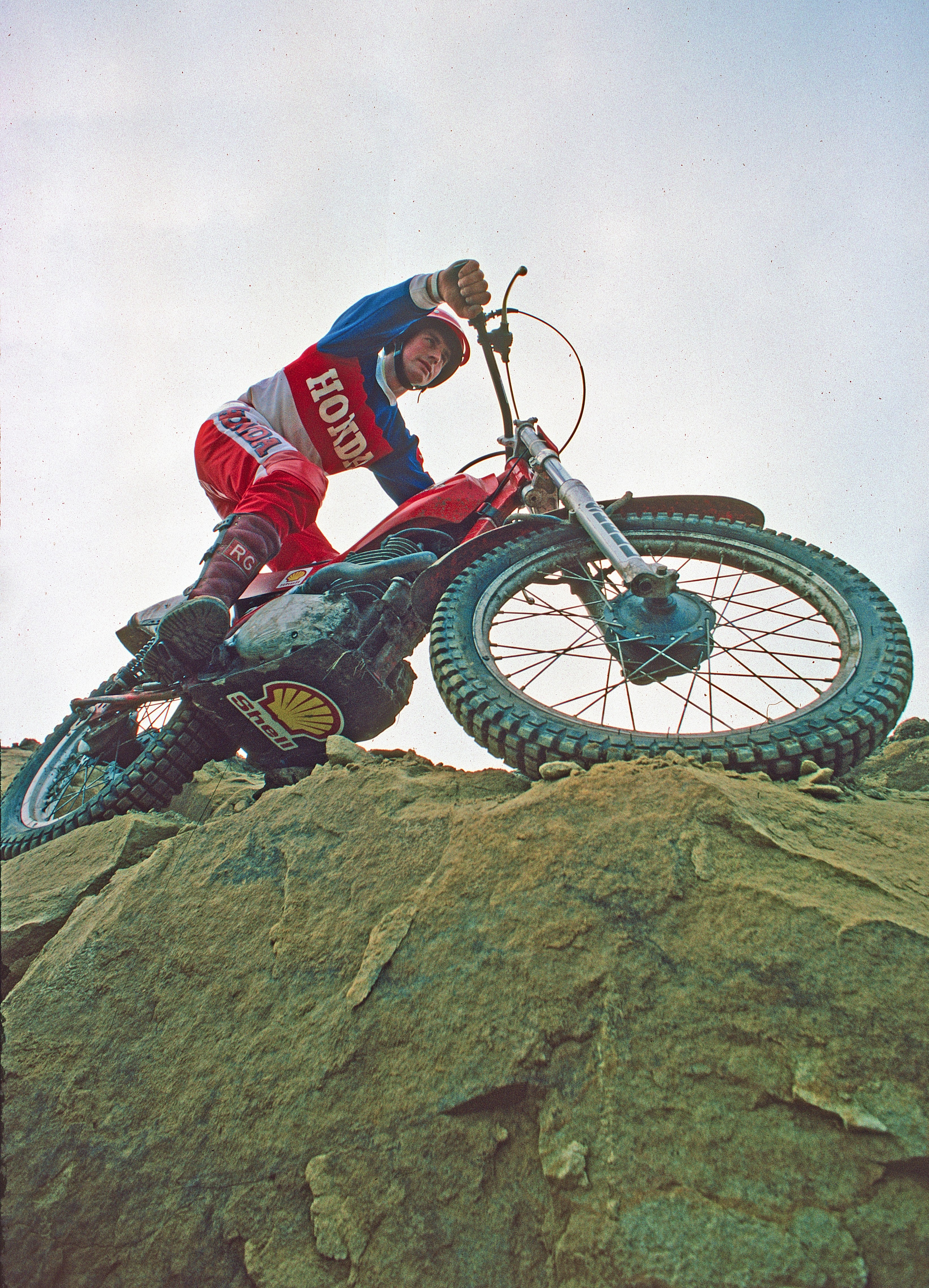
Publicity shot of Rob Shepherd (Honda) 1980 – Don Morley Photo.
‘Don Morley – Action Man’ article Copyright: Trials Guru 2024
A well deserved VIP of Trials Guru, the doyen of worldwide sports photography, DON MORLEY
Photographic Copyright – Don Morley:
Please note that from 19th September 2024, all Don Morley’s photographic collection, ownership, custody and copyright belong to Hitchcock Motorcycles, Rosemary Court, Oldwich Lane West, Chadwick End, Solihull, England. We wish to thank Allan Hitchcock for the continued permission to display Don Morley’s photographs on Trials Guru.
Other Photographic Copyright: Photographers named in this article.
Apart from ‘Fair Dealing’ for the purpose of private study, research, criticism or review as permitted under the Copyright, Design and Patents Act, 1988, no part of this article may be copied, reproduced, stored in any form of retrieval system, electronic or otherwise or transmitted in any form or by any means, electronic, electrical, mechanical, optical, chemical, photocopying, recording or otherwise without the prior written permission of the author as stated above. This article is not being published for any monetary reward or monetisation, be that online or in print.
There has always been a desire by enthusiasts to get their hands on factory machinery. The AJS and Matchless machines were one and the same, except for minor details and were brands that lesser lights sought to own.
Words: Trials Guru – Martyn Adams – Eric Adcock – Gordon Blakeway – Ian Harland – Gordon Jackson – Gordon Mclaughlan – Don Morley
An early AJS that the factory sold into private ownership. B.H.M ‘Hugh’ Viney’s factory 1946 350 16MC with black paint disguising many lightweight alloy components, registered HXF641, Viney won three successive Scottish Six Days Trials post-war, 1947-49 – Photo by permission of: David Lewis, London
A number of AMC trials bikes were released into private ownership after use by the Plumstead competition department, but only a few really ‘escaped’. One such escapee is the 350 Matchless G3LC the father of Trials Guru’s John Moffat purchased, OLH722. This was achieved by a single telephone call to the factory competitions department of AMCs in 1957. It was an ex-Ted Usher/Sid Wicken machine that had been in both long and short-stroke powered format in its four year period of use with the Plumstead factory riders. Similarly, the Matchless OLH723 which Usher also rode, was also released for sale in 1957 but released as an AJS and ridden in that year’s SSDT by Thornaby’s Robin H. Andrew, whereas OLH721 had been Artie Ratcliffe’s factory 1954 SSDT winning mount when in rigid frame form.
OLH722 had past through the capable hands of Fred Hickman, Gordon Mclaughlan, Bill Lomas and Sid Wicken before ending up with Usher as his last factory supplied machine in 1957, just prior to the Matchless team being disbanded. The machine is still in the Moffat family, but that is a different story.
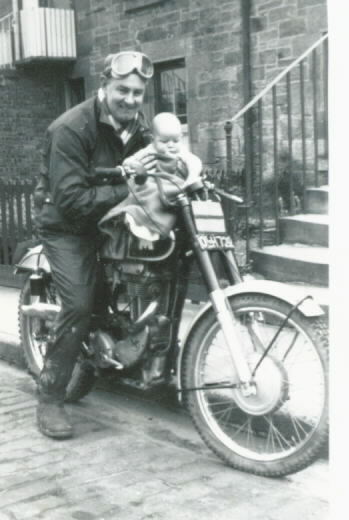
T. Arnott Moffat with son, John Moffat in early 1958 astride Moffat’s ex-factory 350 Matchless (OLH722) in long stroke form as sold by the competition department pictured in Stockbridge, Edinburgh. One of the few factory machines to find its way into private ownership which retained its Burman B52 gearbox casings cast in ‘Elektron’ magnesium alloy – Photo: Moffat Family Archive
…
The late Bill Lomas (former World Motorcycle Racing Champion) with Trials Guru’s John Moffat and the ex-factory Matchless OLH722 he was loaned by the factory in winter 1954-55. The dull grey ‘Elektron’ gearbox can be seen clearly in this image – Photo: Gordon Small
This is the story of another AMC factory machine that got away. A motorcycle that hasn’t been stored away or kept in a museum, but one that has continued to be used in anger as it was designed and built for – competition, and has won in the process.
WJJ580, where are you?
We set about tracking down the story of the 1959 registered AJS 16C with the index number WJJ580, one of a batch of similar machines used by the factory. Built as a long-stroke 350, it eventually became a 410cc variant which the factory wanted to try as a bigger bore machine. These special motors ranged between 401 – 420 capacity.
The discovery of WJJ580 opened a veritable pandoras box of information. With Trials Guru on the case, we find that there were three such machines made available to riders around the same time period.
The competitions department at AMC had been experimenting with competition short-stroke motors as early as 1956, these were issued to their factory supported riders replacing their long stroke units. Production short-stroke trials models would not be available until six years later, and a full year after Comerfords asked for Jackson replicas to be built, following his 1961 SSDT win. The first short-stroke would be the Matchless in 1962 followed by the 1963 AJS ‘Expert’ 348cc models.
The manufacturers of AJS and Matchless (AMC) introduced their trials models with short-stroke motors with Matchless in 1962 (top) and AJS 1963 (lower) now using the Norton style oil pump and a small pad style seat which replaced the ‘Dunlop’ rubber spring saddle. Photos: Associated Motor Cycles (AMC) advertising literature 1962/63
Factory numbers:
The factory registered their team machines in their name ‘Associated Motor Cycles’ with some AJS machines being registered as a Matchless. One such machine was the 1961 AJS used by Mick Andrews from 1962-1964 which was registered as a Matchless 347cc as 644BLB.
Gordon Jackson told Trials Guru: “When the factory disbanded the Matchless trials team in 1957 to concentrate the brand in scrambles and motocross, they asked me to use a Matchless tank on my works bike just to keep the brand name going in trials, but in reality the bike was simply my AJS with the different tank fitted“.
In September 1959, AMC trials models brought with them the bespoke trials frame with a much lighter and slimmer rear subframe, and a swinging arm taken from the lightweight road machines of the era. The previous competition models had the wide set rear subframe accepting firstly the Jampot rear suspension, and then latterly Girling suspension units with bottom clevis mounts.
With the launch of the ‘new’ trials model, the factory had registered a batch of 350cc trials models for their retention by the Competitions department under the watchful eye of former rider, Bob Manns. These were all registered consecutively on 1st January 1959 as WJJ578/579 and the subject of this article, WJJ580.
The ever helpful Don Morley, professional sports and news photographer, and author of many books on motorcycling, looked up his records for Trials Guru and confirmed that Roger Kearsey had been issued with WJJ578 as a Matchless as did Ron Langston in 1960, Cliff Clayton with WJJ579 and Gordon Mclaughlan with WJJ580; the machine we are featuring.
Ariel rider and all-rounder, Ron Langston briefly rode WJJ578 as a short-stroke Matchless in 1960. Note the alloy primary chaincase with detachable clutch cover in this photo. Photo courtesy: Ian Harland’s scrapbook
Don Morley told Trials Guru: “The motorcycle manufacturers worked under the same legislation as private purchasers, in that they had to pay purchase tax which started in 1940 and went on until 1973 when it was replaced by Value Added Tax, when registering any motor vehicle back then. This was the main reason why they simply replaced the machine between the number plates on more than one occassion. Triumph however didn’t seem to do that“.
Cliff Clayton rode the Scottish Six Days Trial in May 1959 on ‘579, but it did not have the complete new style frame at this time, instead it had the factory 1958 ‘prototype’ rear subframe heavily altered at the top damper mount and used a Girling unit with the alloy clevis type lower mount mated to the old style swinging arm. It also utilised the heavy full width alloy rear hub, but the 1959 style 5.5 inch half width front hub which was from the 41′ WD G3L military machine. The fuel tank was blue with gold lining and the AJS monogram. A departure from the traditional black/gold combination. The new rear 5.5 inch trials rear hub would be introduced in the September 1959 and eventually all WJJ registered machines would be retro-fitted with the new style frame and lighter wheel hubs by the competitions department.
Morley: “I do remember having a ride on WJJ580 during a visit to the Isle of Man some years ago“.
AJS, the brand:
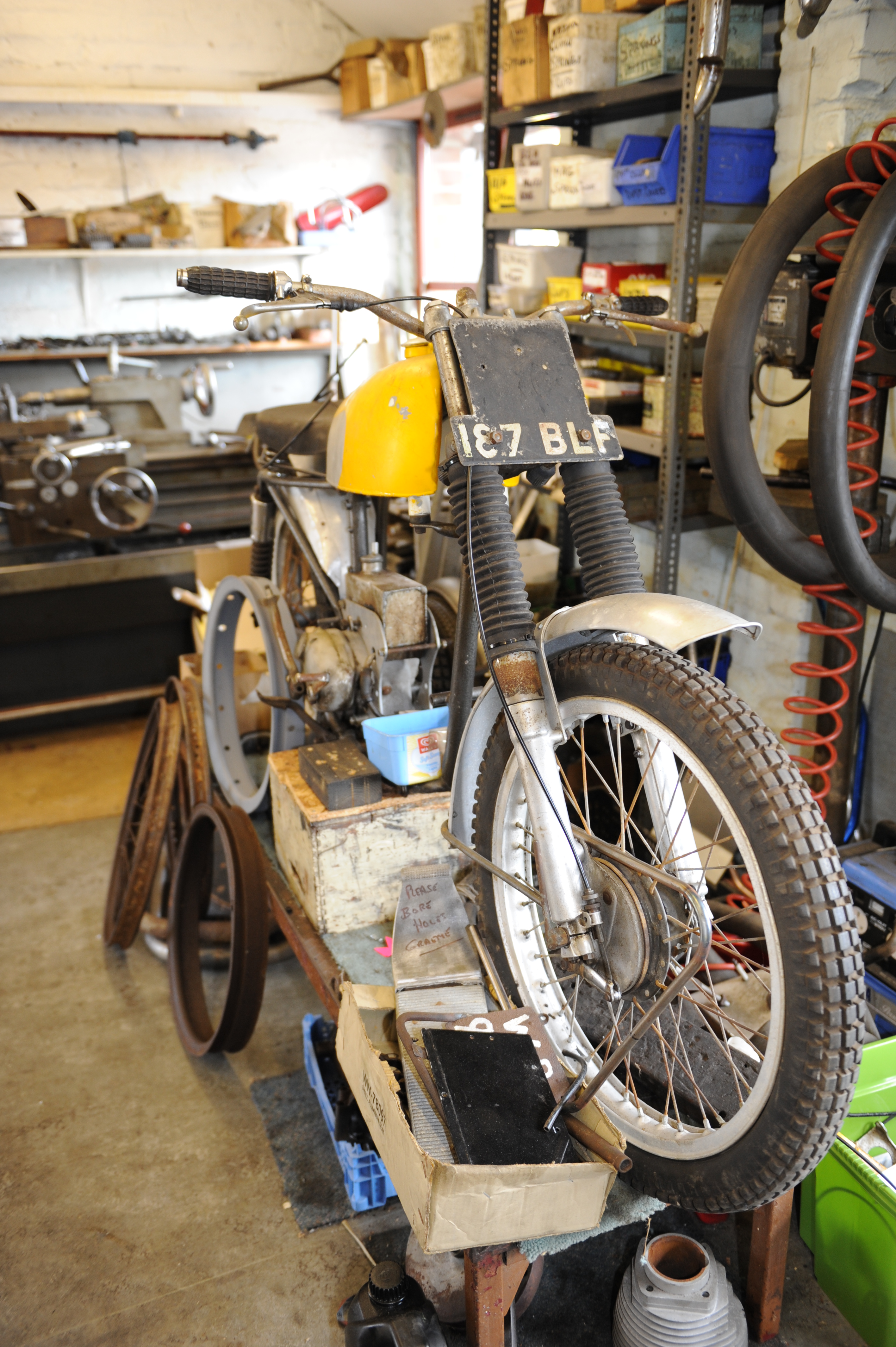
Probably the most famous AJS trials machine of all time is that which was used by Gordon Jackson to win the 1961 Scottish Six Days, losing a solitary one mark, the lowest ever recorded score. It was registered in December 1960 as 187BLF and is now owned by the Sammy Miller Trust, having been re-discovered in 2010 by Miller and positively identified by Jackson. 187BLF had never left the UK, this was contrary to popular belief.
187BLF prior to full restoration by Sammy Miller in 2010 at Sammy’s workshops at New Milton. Note alloy front brake plate of the type only used by factory riders. – Photo: Sammy Miller
…
Gordon S. Blakeway on the world famous 350 AJS – 187BLF which carried Gordon Jackson to victory in the 1961 SSDT, seen here at the Colonial Trial in 1963 – Photo: Charlie Watson, Hull
…
Factory rider, Gordon Blakeway who had ridden for Ariel and Triumph, took over 187BLF when Gordon Jackson retired from trials in late 1962.
Gordon Blakeway told Trials Guru: “I rode 187BLF not as a short-stroke, but as a long-stroke. The bike was changed by the factory before I received it and Hugh Viney reckoned because I had ridden the long-stroke Ariel, then a long-stroke AJS would suit me better. I was slightly disappointed at this because I had been keen to have Gordon Jackson’s sharper short stroke motor“.
Blakeway continued: “When the factory eventually closed its doors in 1965, they asked me what I was due in expenses and I said it was about £55. I asked what they were going to do with 187BLF and they said it was for sale and they wanted £100 for it. I bought it, handing over the balance of £45 and about three weeks later I sold it on for an acceptable profit“.
…
Montesa’s Rob Edwards tries Noel Shipp’s Ex-Mick Andrews 350 AJS 644BLB for size in Australia when he was promoting the Montesa brand ‘down under’ in 1975.
It had been universally believed that 187BLF had been exported to Australia in the 1970s, even Blakeway believed that this was the case. However that was most likely to have been confused with the exportation of 644BLB, the 1961 registered Mick Andrews’ machine (1962-64), which Cliff Clayton also rode in the 1961 SSDT as an AJS, although it was registered as a Matchless.
Taken in 2013, after its full restoration, Gordon L. Jackson stands proudly with his famous factory AJS 16C (187BLF) on which he won the 1961 SSDT on one solitary mark! (Photo: Trials Guru/J. Moffat)
…
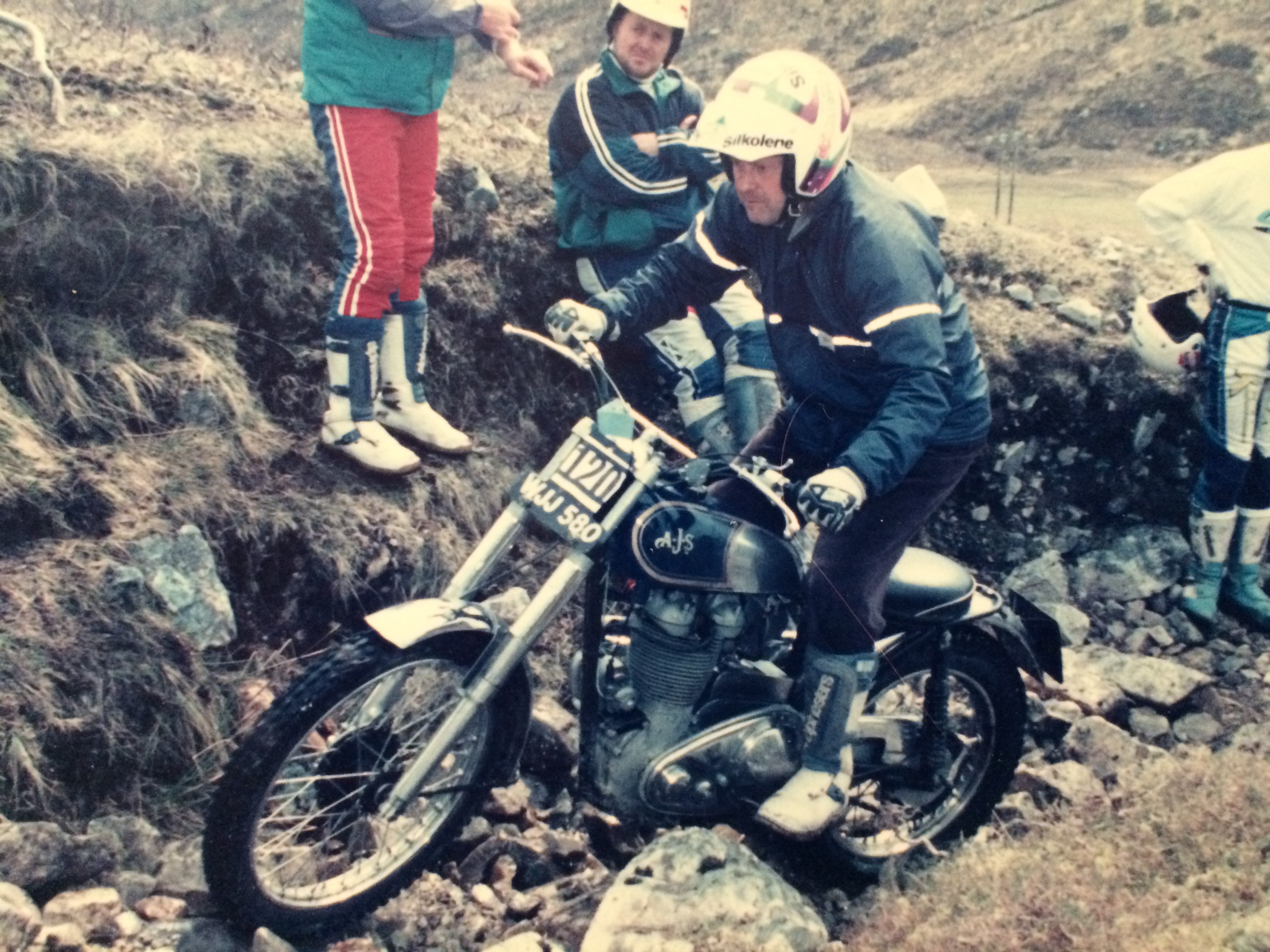
Ian Harland on WJJ580 in the 1990 Red Rose Trial
WJJ580, the beginning…
Looking at the original buff log book, WJJ580 was registered as a 59/16C AJS on 1st. January 1959 to Associated Motor Cycles Ltd at 44 Plumstead Road, London SE18 listed as a ‘350cc’. However, it would not always be ridden as a 350 but as a 410 sometime later. The AJS was retained by the AMC competitions department until 1963 when it was sold into private ownership to a Mr. Stone in Birmingham. After 12 months, he sold it to a Mr. Hopkins of Swansea, Wales.
The machine’s colour scheme was originally recorded as blue/black, being a blue tank and black frame, which was by then a colour option on production trials models.
The original buff log book (registration document) showing WJJ580 when it was registered new to Associated Motor Cycles on 1st January 1959. The ‘JJ’ index mark was used by Greater London until 1974 – Photo: Ian Harland, Isle of Man
Trials Guru tracked WJJ580 down to its’ current owner, Ian Harland who lives in the Isle of Man, he is the father of James Harland, a past winner of the Pre’65 Scottish on a Triumph twin in 2013.
Ian Harland: “I bought the AJS from the rider/dealer Bob Gollner of Denmead, near Waterlooville, Hampshire in 1989, it had been restored for him by Peter Pykett and I think he won the Talmag Trial on the bike“.
Talmag Trial at Hungry Hill, Aldershot organised by the Territorial Army (London) MCC – Left to right: Reg May (Norton 500T); John May (350 AJS) & Bob Gollner on WJJ580 – Photo courtesy of John May, Godalming
Harland: “The AJS has a lot of history in that it had been built within a small batch of similar machines for the factory riders. One of which was Gordon Mclaughlan who rode it in the 1960 Scottish. Unfortunately, it was believed that Gordon didn’t get on with the 410 motor and sent it back asking for a long-stroke 350. He was then allocated 164BLL which he rode until the factory closed its’ doors and the AJS team was finally wound down. Gordon retained the AJS, 164BLL for his own use after that“.
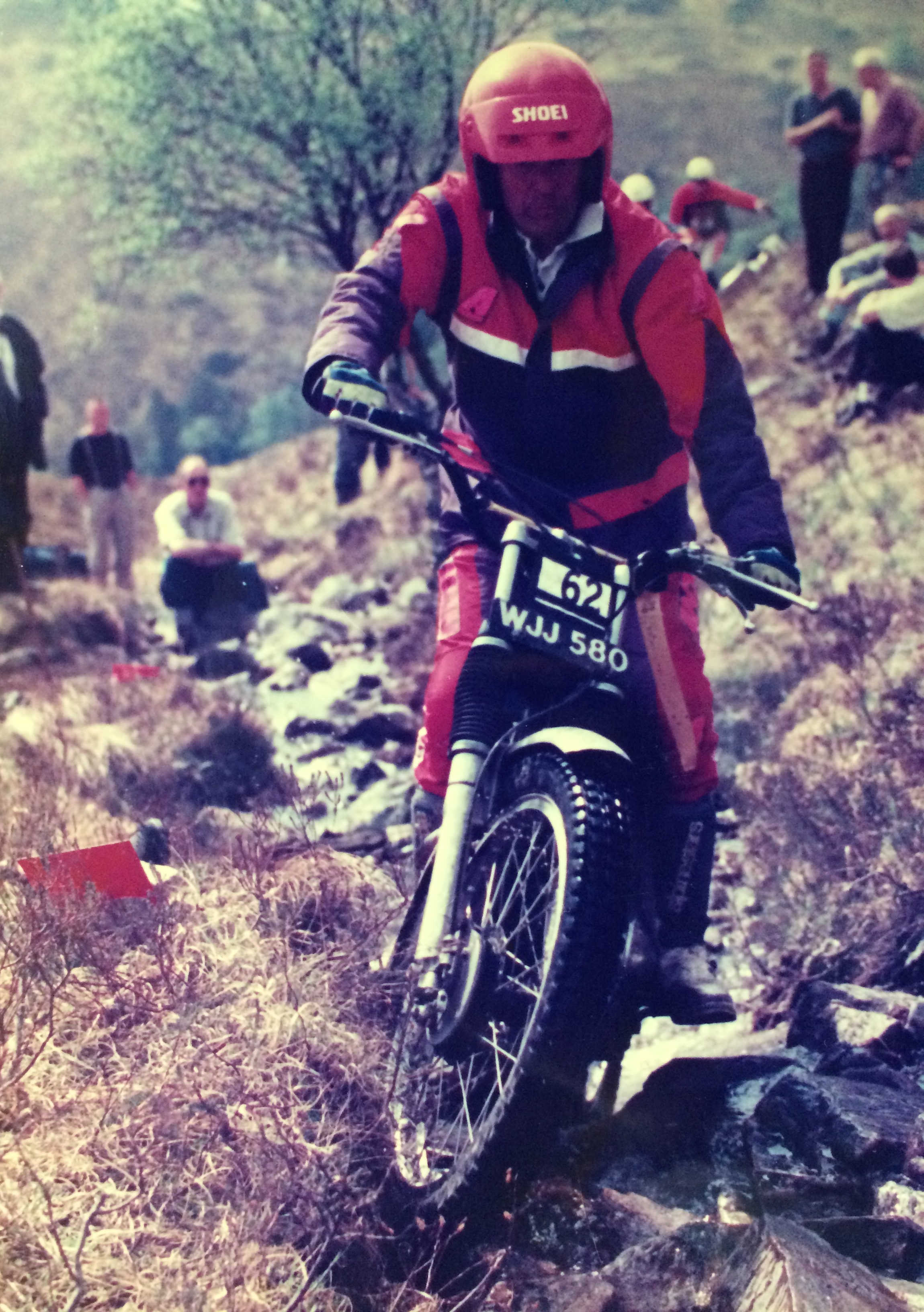
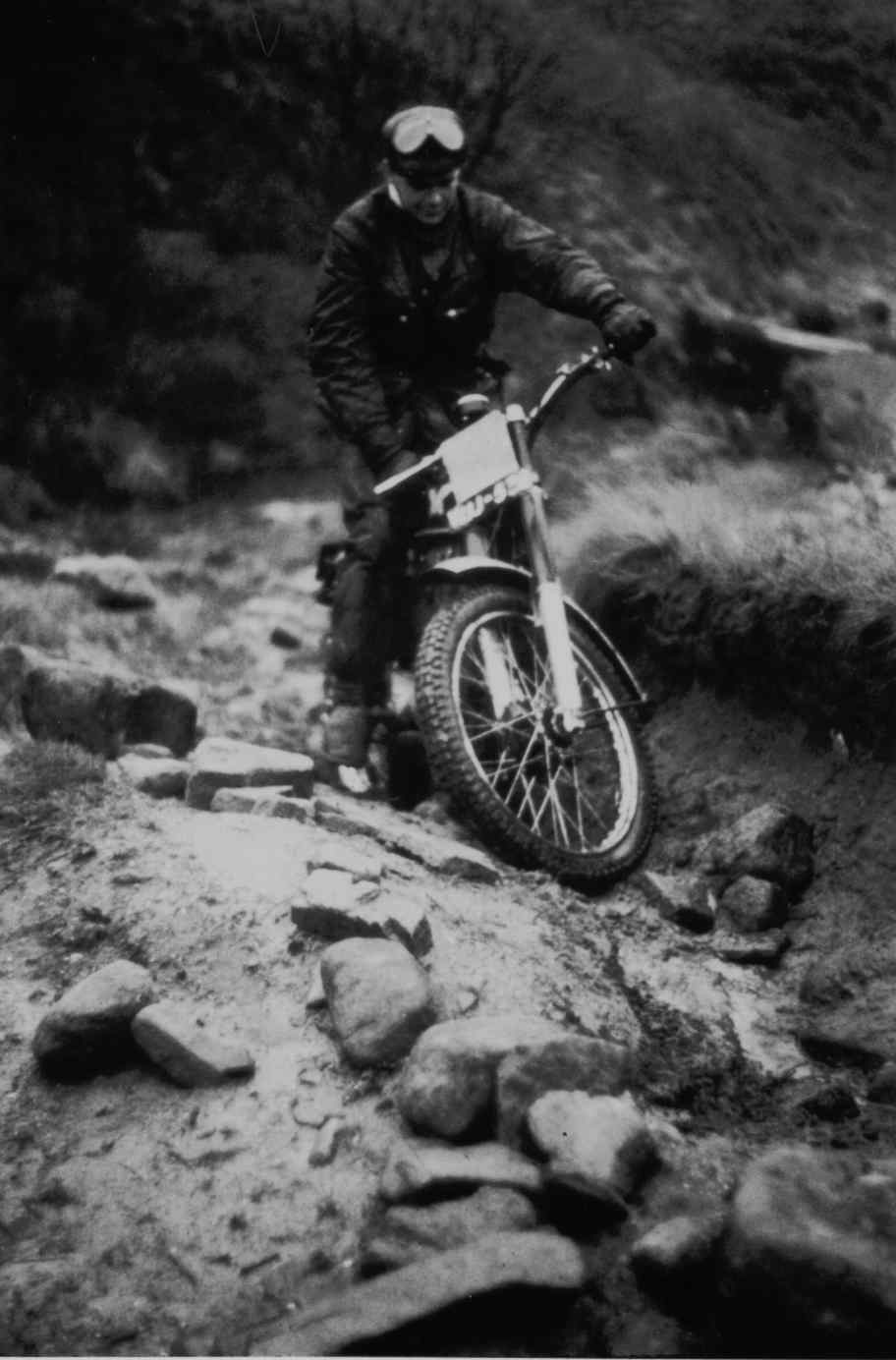
Ian Harland competing in the 1997 Pre’65 Scottish Trial at Mamore on the ex-factory AJS, WJJ580, which he has owned since 1989.
Harland: “According to the original buff log-book WJJ580 was first registered as a 347cc machine. If this dislike of the over-bored mtor is correct it happened around 1960-1961. The reason the crankcases are stamped ’61’ is because a replacement motor would have been fitted. Apparently, the conversion to 410cc involves long stroke 350 crankcases and an 74mm bore. So to change from a short-stroke 350 to 410 involves a complete engine change, not just the barrel and head. Presumably, the change back to a 350 involved the installation of a new engine in 1961 which is still in the bike today. I met an ex-AMC competitions shop employee at the Manx Classic a few years ago who remembered some of this. I understand that Malcolm Adams from Leeds owned the sister machine, WJJ579 the ex- Cliff Clayton bike”.
Ian Harland on the AJS with its original factory frame and cycle parts, but by then with a much shorter rear mudguard loop, at the 1990 Pre’65 Scottish on the top section of Loch Eild Path, high above Kinlochleven.
…
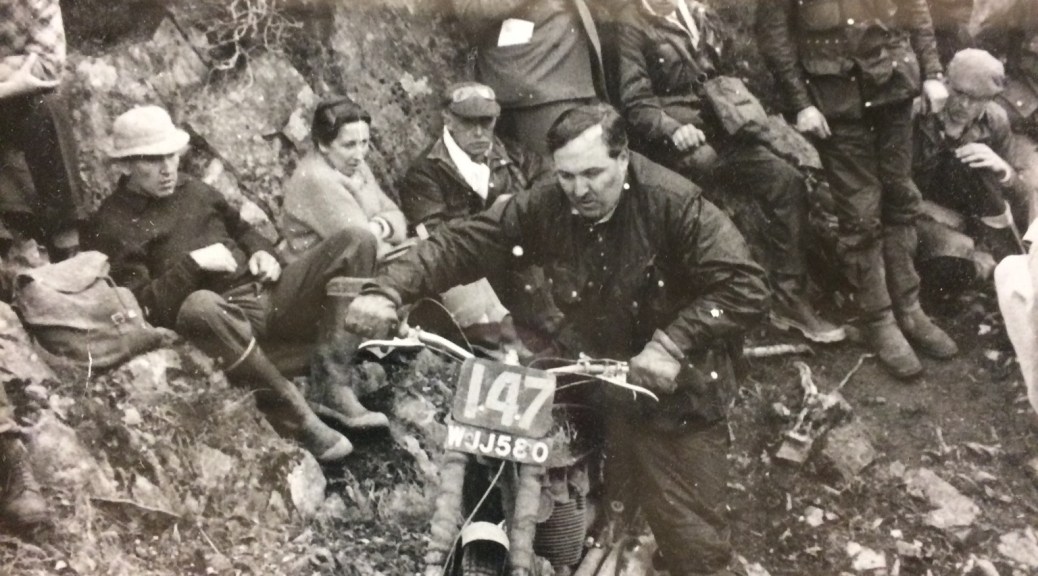
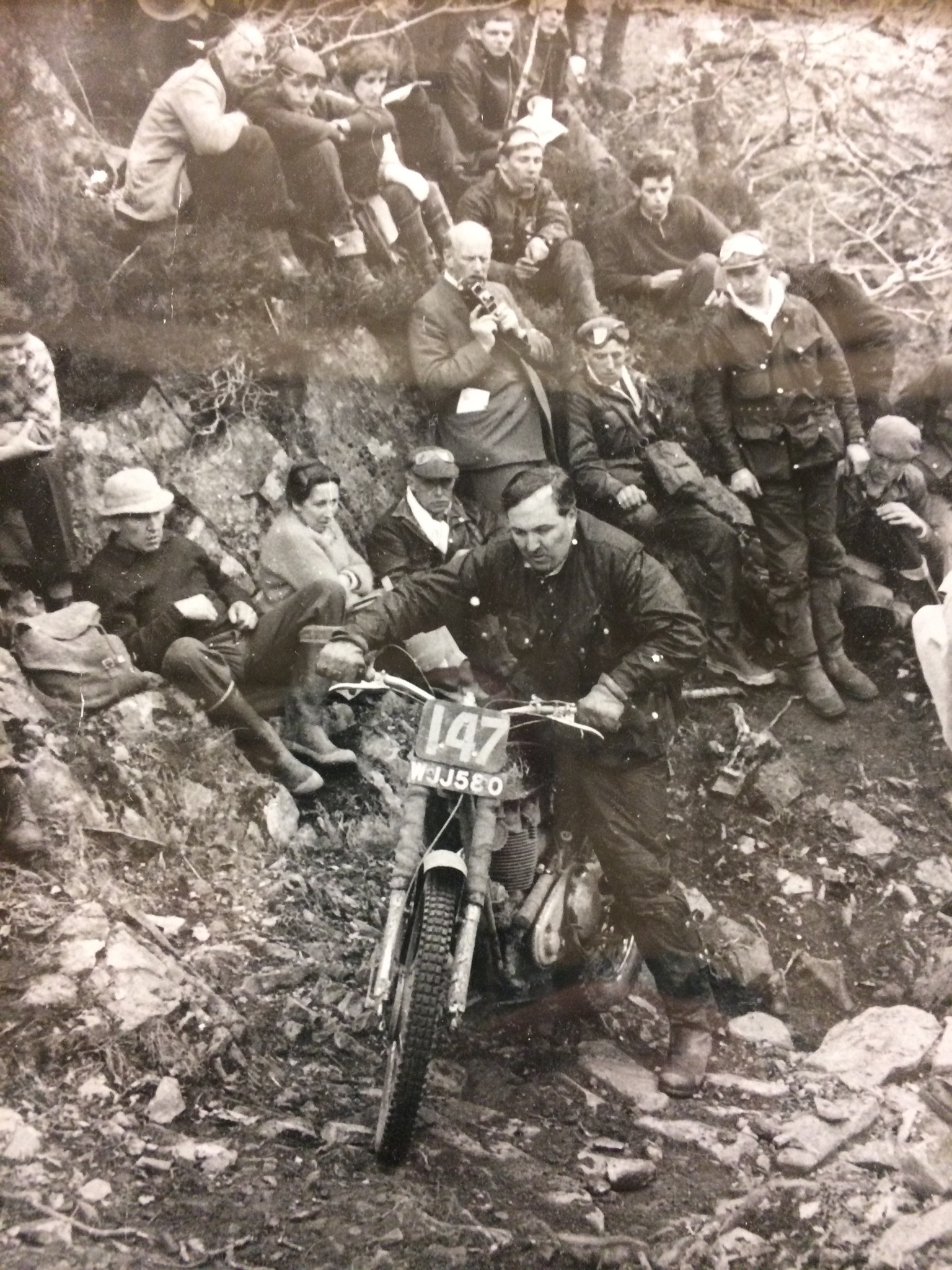
Gordon Mclaughlan was issued with WJJ580 and rode the 1960 SSDT carrying the riding number 147. It was obvious that the short-stroke motor was used at this point, evidenced by the matt black rocker-box which indicated an ‘elektron’ item. Elektron is a magnesium alloy made by the Magnesium Elektron company for AMC, which it used from the early 1950s. These componenst were usually retained by the factory when machines were sold to be used on other machines. It had the integral push rod tunnels. It also sported the long down-swept exhaust system with the short silencer. ‘580 was also fitted with the new style 14 inch Girling rear damper units which bolted on to bosses on the frame and swinging arm. Steel wheel rims were still being used at this time with the standard 21 inch front and 19 inch rear. Dunlop ‘Trials Universal’ tyres were fitted to all the team bikes.
…
Now enjoying a happy retirement, Gordon O. Mclaughlan was an AMC supported rider for 11 years 1954-1965 and ran his own car sales business, Gordon Mclaughlan Motors in Guisborough. – Photo: Ross Mclaughlan
…
Gordon Mclaughlan spoke to Trials Guru, confirming some points raised by Ian Harland: “It’s a long time ago now and I have read a fair bit about my factory bikes over the years and it would appear that people know a lot more about them than I ever did! I suppose I was just too busy riding them to note down all the important facts and figures about them. However what I can remember is this. My bikes were always prepared by the works. I used to take whichever bike I was riding to Thornaby railway station and send it to the factory at Plumstead. They would fettle the bike and send it back, wrapped in cardboard and taped up to protect it in transit and I would go and collect it from the station.
I remember that the factory gave me a spare fuel tank that was a Matchless one, so that I could enter some trials with the AJS as a Matchless and I would cover over the AJS emblem on the timing cover.
I really liked the long-stroke motor as the sharp motor that Gordon Jackson used was just a bit too quick for my liking. I recall that some of the engines in my bike were as high as 420cc or at least that is what the factory told me. It was to try and win the 500cc cup at events on what was an over-bored 350.
I did ride WJJ580 for a year or so, before the factory asked for it back to do some work on it and back came 164BLL, that would be around late 1960, early 1961. It was before Gordon Jackson won the SSDT and we were given similar machines. I used 164BLL until the factory shut down, I was due eighty-five pounds in unpaid expenses and I was given 164BLL as payment. I kept it for quite a few years and then sold it as I was too busy to ride it when I was building my business, Gordon Mclaughlan Motors in Guisborough. We sold AJS motorcycles and Lambrettas to start with then I started selling second-hand cars until we became Morris agents which became BMC and then Austin-Morris, British Leyland and finally Rover until I retired“.
Trials Guru research revealed that Gordon Mclaughlan’s 164BLL was registered on 1st. January 1961 as a Matchless, even although it was built as an AJS and used primarily as such, and as a 350cc. I mattered not that Gordon’s AJS was actually registered as a Matchless, because the MOT test which commenced in 1960 was originally a ten year test, reduced to seven years in 1961. The factory didn’t retain machines much above three years from the date of registration.
Mclaughlan continued: “I did ride one of the first Pre’65 Scottish trials at Kinlochleven on a replica AJS I had built, I think that would have been around 1984. I enjoyed my time riding for the factory from 1954 after a couple of years on my own Norton 500T. The first AJS I received was a rigid, but I can’t recall the registration number of that bike, if anyone has any photos of it I’d be keen to see it. I know it wasn’t an ‘AJS’ private registration number as Gordon Jackson, Hugh Viney and Bob Manns had those.
Hugh Viney was our team manager, he was quite an aloof, reserved character, a rather serious man.
It’s amazing how many ex-works bikes were sold off by the factory after use. Ted Usher’s bike OLH723 ended up near to us, a local lad from Thornaby called Robin Andrew bought it in 1957. He was a fairly good local club rider“.
Sadly the factory machine 164BLL issued to Gordon Mclaughlan, was completely destroyed in the fire that destroyed many historic motorcycles at the National Motorcycle Museum at Bickenhill, Solihull on 16th September 2003.
…
After campaigning WJJ580, Gordon O. McLaughlan was issued with this machine, 164BLL, here we see him taking a hefty dab at the Colonial Trial in 1963 – Photo: Charlie Watson, Hull
…
Ian Harland campaigning the ex-factory AJS (WJJ580) in the 1995 Pre’65 Scottish watched by Scots rider, the late Gordon McMeechan.
Ian Harland continued the story: “When I bought WJJ580 the engine wasn’t the sweetest, it was actually very ‘rattly’. Martyn Adams, then based in Brighouse, West Yorkshire re-sleeved the barrel and found a new 7R piston for it. The motor has run ever since in many trials over the years ridden by myself including a number of Pre’65 Scottish, most Manx Classics, Talmag, Mons in Belgium etc. I’ve retired from trials now so the engine top end is again being rebuilt, the barrel being re-sleeved again by Martyn, now in Adelaide, Australia“.
…
A Brian Holder photo of Gordon Mclaughlan takes a steadying dab on the factory AJS WJJ580 in the 1960 SSDT on Devil’s Staircase. Watched closely by SACU official Jim Birrell (standing with cine-camera) and Ralph Venables (seated, top left) Being factory prepared, it is fitted with the tommy bar front spindle nut and the compressed air bottle mounted on top of the alloy primary chaincase. The front forks have rubber inner tubes to protect the external fork springs. You can just make out the ‘prop stand’ bar strapped to the front frame down tube. This slotted into a tube which was welded to the front engine mount on the near-side. This complied with the SSDT regulation that the machine “must be fitted with a stand or the penalty would be 5 marks per day”. Mclaughlan was subsequently issued with 164BLL – Photo couresy of Ian Harland
…
Works issue:
WJJ580 was used in effect as the works ‘hack’, a machine that would be allocated to various riders who had either expressed a wish to ride for the factory or were chosen, some ‘selected’ by the well-known doyen of trials journalism, Ralph Venables. Venables would effectively ‘scout’ for the factories as he had the ear of the competition managers, two of which were Hugh Viney and Bob Manns of AMC. History records that Dave Rowland was ‘selected’ in 1961, prior to being snapped up by BSA, and was issued with 580 when he had been at Bordon doing his army national service. However it was not a happy arrangement and Rowland sent the machine back as he didn’t get on with it. But in his customary style, Dave sent a polite letter with the returned machine in 1962, thanking Hugh Viney and the factory for allowing him to try it over a period of time.
Taken directly from Ian Harland’s scrapbook on WJJ580, we have an image of the late Dave Rowland on the AJS when he was enlisted to the army during national service in 1961. We can see that the machine has the late type frame and swinging arm and long rear mudguard loop Please note: This image is copyright and was used by the late Ralph Venables in his ‘Ralph Remembers’ column in T&MX News at one stage.
Roger Kearsey from Upwaltham, Sussex who competed with the Matchless WJJ578 for a spell went on to ride for Royal Enfield. Eric Adcock of DOT fame also rode WJJ578, but eventually sent it back, preferring to stick with the two-stroke DOT.
WJJ578:
Eric Adcock spoke with Trials Guru and provided photos of ‘578 that he had taken, plus the letters that he received from Hugh Viney, the competition manager at the AMC factory. Eric is still heavily involved with the sport and is a Director of North Western ACU and is their Permit Secretary and Treasurer.
Eric Adcock: “I received correspondence from Hugh Viney, the competition manager at AMC and I was sent WJJ578 to try out”.
The ‘informal’ letter from AMC’s Hugh Viney to Eric Adcock in October 1959 suggesting that he might try one of the works 350 trials machines. – Copy courtesy of Eric Adcock
Adcock: “I had been demobbed from national service by then and was open to offers of a machine, I was in the Mechanical Transport division at Borden from March 1956 to December 1957“.
…
Hugh Viney’s ‘formal’ letter to Eric Adcock on 15th October 1959, inviting him to visit the AMC factory to discuss the matter of a works machine. – Copy courtesy of Eric Adcock
…
23rd October 1959, AMC’s Hugh Viney offers to send a works 350 to Eric Adcock for testing ‘locally’ – Copy courtesy of Eric Adcock
…
5th February 1960 – AMC’s Viney replies to Eric Adcock’s rejection of the Matchless WJJ578 – Copy courtesy of Eric Adcock
…
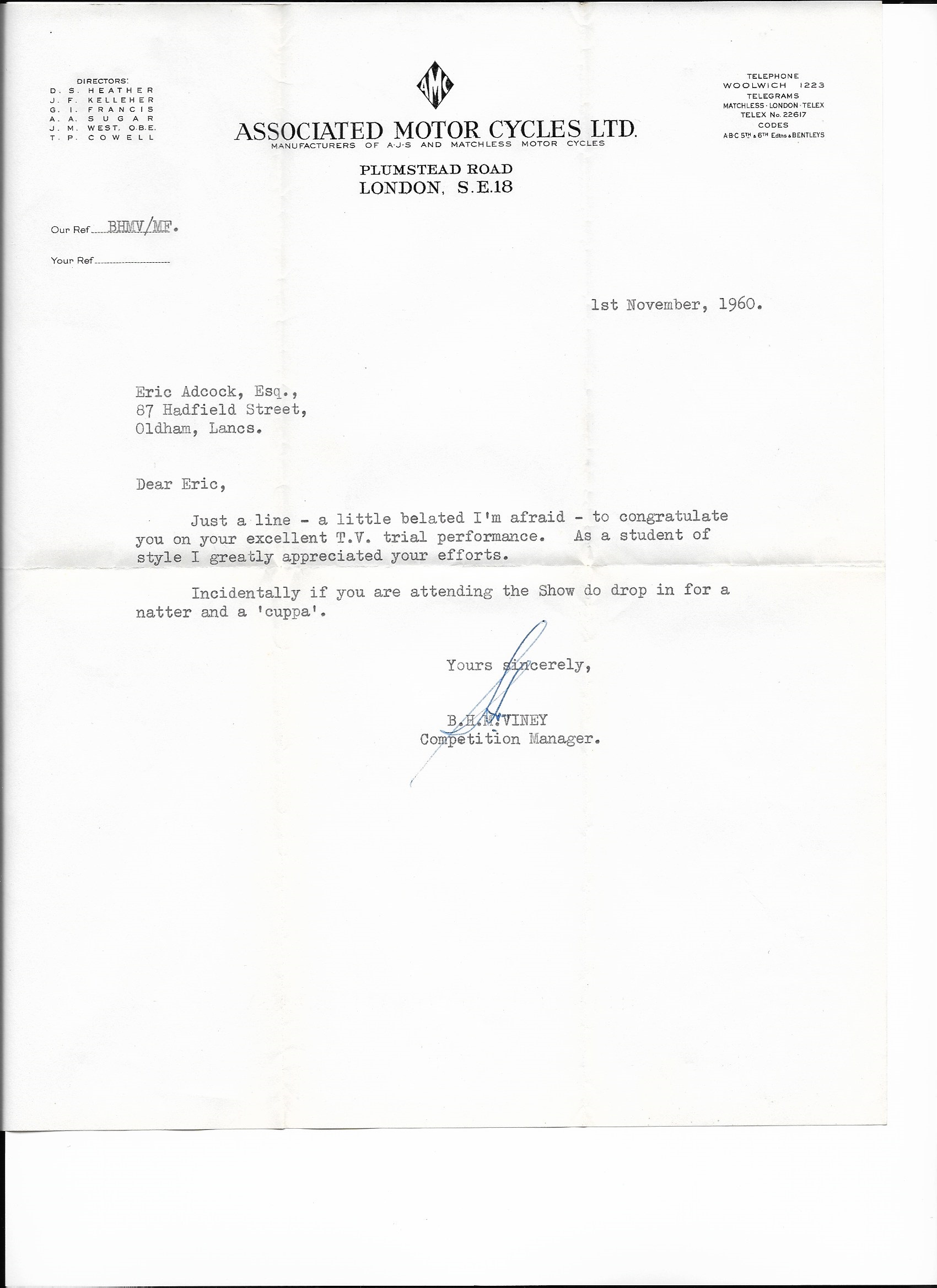
A friendly/congratulatory letter from AMC’s Viney to Eric Adcock on his performance at the televised trial in 1960 – Copy courtesy of Eric Adcock
WJJ578… Adcock’s test
Eric Adcock aboard WJJ578 on ‘Hawks’ Nest’ in Derbyshire in October 1959 where he tested the Matchless against his DOT – Photo courtesy of Eric Adcock
Adcock: “I started in trials on a BSA Bantam in 1951, then on to a Francis Barnett and eventually on a DOT in January 1954, with a short spell on a Triumph Cub in 1958 which I had been sent by Henry Vale at triumphs, but couldn’t get on with it at all, so I sent it back. The Matchless I got on reasonably well with and quite liked it, winning an event in the process, but it was a bit too tall for me. I had the bike about three months before I sent it back to Plumstead, deciding to stick with DOT Motorcycles“.
Eric Adcock’s photo of WJJ578 when it arrived from the AMC competition department at Plumstead in October 1959. These photos were taken at an all electric cotton mill in Oldham where Eric’s father was the mill engineer. Young Adcock kept his bikes in the boiler house. Adcock: “… as it was a warm and pleasant place to clean them and work on them until I got married”
Adcock: “I took some photographs of WJJ578 when I had it and held on to them, along with the correspondence from Hugh Viney, I hope it brings back memories for your readers“.
…
Nearside view of the works Matchless WJJ578 taken by Eric Adcock. Note the rubber cover over the carburettor and the clevis lower mount of the Girling rear dampers. This is the late type trials frame for the 1960 season, retro-fitted by the factory. The alloy primary chaincase, a Plumstead special component shown off to best effect in this photo.
…
Often referred to as the bet side of a heavyweight trials bike, the ‘offside’ of the factory 350 Matchless, WJJ578 taken by Eric Adcock in October 1959
…
And so back to WJJ580 – Harland’s machine that got away:
Ian Harland at ‘Sloc’ in the Manx Classic Two-Day Trial on WJJ580, an event he won in 2004 on this very machine
In 1962 it was the time for the factory to move on the AJS, WJJ580, with new stock having been taken from the production line and retained by the competitions department, headed by Wally Wyatt.
Factory mods…
This was how it was done by the works: The machines would be selected by dispatch staff from the production line and the frame and engine numbers were all noted in the production ledgers as being retained by Comp Dept. These selected machines would be wheeled away to the Competitions department. The machines would be registered in the company name and then stripped down and modified by the competition staff with lighter components replacing standard parts as required. One such item was the primary chain-case, the factory had these fashioned from aluminium alloy instead of the standard steel pressing with a separate, detachable clutch dome also fashioned from aluminum alloy. This practice had been carried on from the immediate post-war years.
Around 1955, the practice was to steepen the steering of the standard trials frame by heating up the frame tubes and forcing down the headstock, this also required new engine plates in dural to be made up as the gearbox became closer to the motor and a shorter primary chaincase was also fabricated out of alloy. The result was a sharpening of the steering which the factory jockeys preferred.
Fuel tanks could be altered to sit on the machine closer to the steering head or otherwise to riders preferrence. Usually the area of the tank where the riders knees would make contact would have the paint polished off and abbreviated lining used.
Inside WJJ580…
The replacement 1961 stamped engine in Harland’s bike is definitely non-standard. The motor uses a 8:1 high compression piston and is a forged item as used in the AJS 7R racing motors. The valves are much bigger than the standard AJS 350 single utilises. It also has much more power than the standard 350 motor produces.
Around the year 2000, the original frame cracked at the headstock. The AMC trials frames were susceptible to this type of occurrence and it’s amazing it lasted so long. An Andy Bamford from Fleet frame kit was obtained which has been used ever since.
Harland: “I still have the original works frame which one day I’ll get repaired. These bikes are like ‘Trigger’s broom’. I rode my son James’s 500 AJS in the Pre’65 Scottish in 1999 and l loaned WJJ580 to my good friend, Giovanni Dughera from Turin who was a works Ossa rider in the 1970’s”.
…
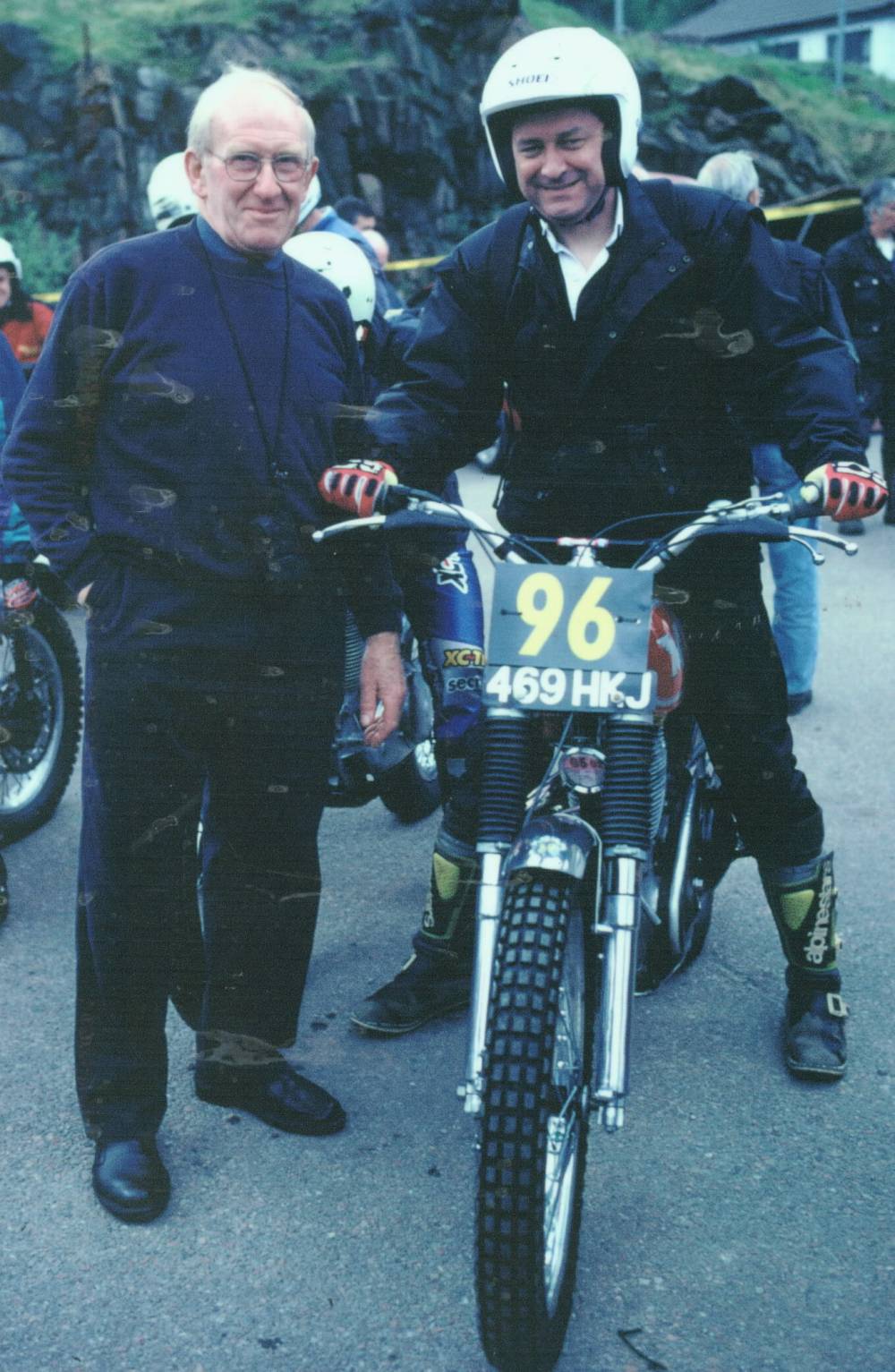
1999 Pre’65 Scottish – Italian, Giovanni Dughera riding WJJ580 on Loch Eild Path. In the background to the left, Trials Guru’s John Moffat waits his turn astride his Matchless 469HKJ. On the right watching is Rochdale competitor, Frank McMullen – Photo: Iain Lawrie, Kinlochleven
…
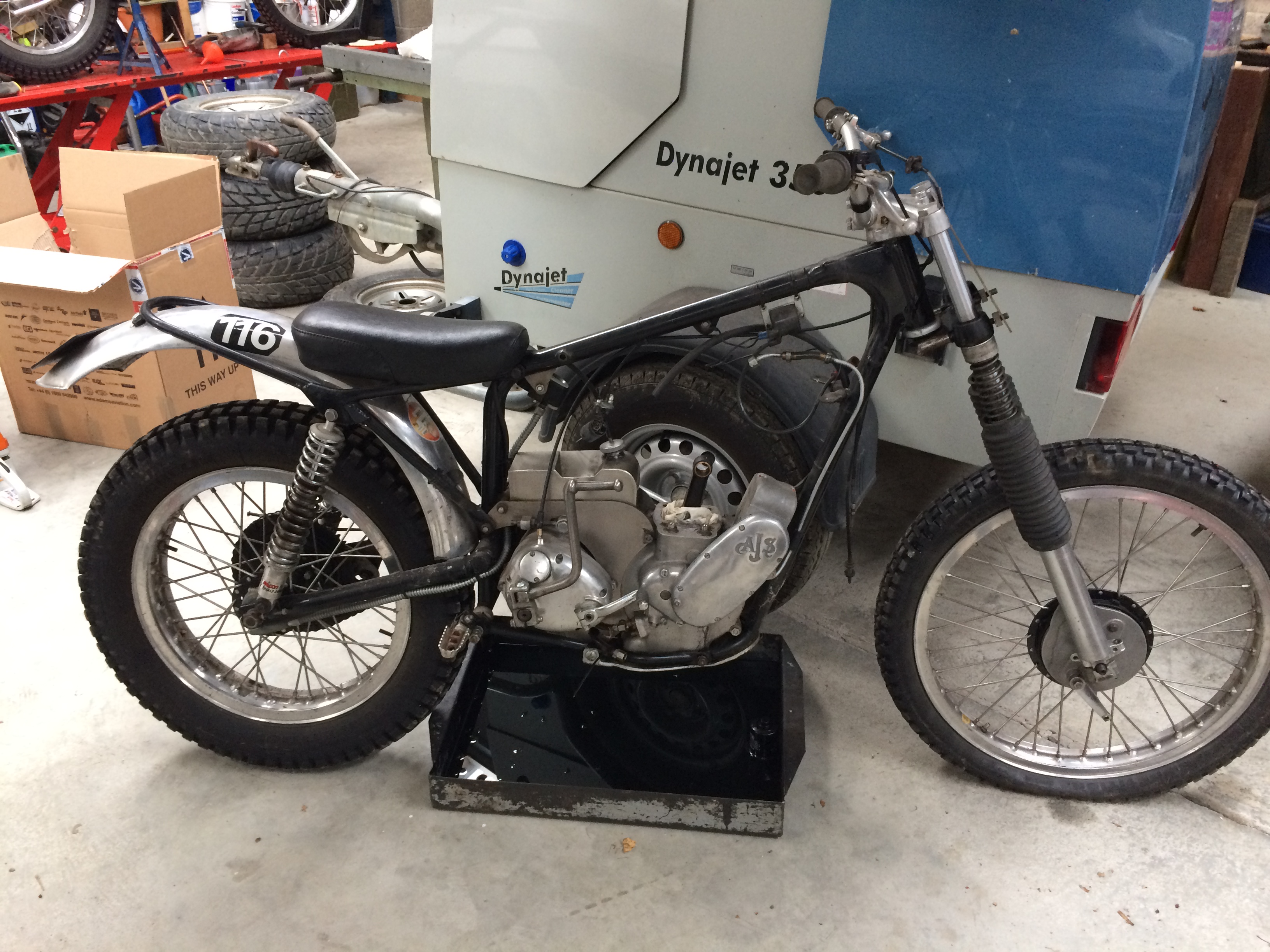
WJJ580 partially disassembled in 2016 to have a new liner fitted to the barrel by Martyn Adams. This frame was made by Andy Bamford in 2000, but Ian Harland still has the original frame set which will be repaired in the future. Note the alloy front brake plate, a special factory item, not the Comerfords version. The central alloy oil tank was a period modification used by the factory and subsequently marketed to private owners by Comerfords of Thames Ditton. All late model AMC trials machines from 1959-on used the bespoke trials frame and lightweight style swinging-arm and the 1 1/8th inch forks with the alloy top yoke.
…
Martyn Adams, formerly of Serco in Brighouse, now living in Australia and trading as MDA Motorcycle Engineering picks up the technical details: “I reconditioned this engine over 25 years ago and don’t think there is too much to say. However finding a piston for the engine 25 years ago was an issue, as the bore size is 74 mm, not the usual 69mm. At first we thought it was an AJS twin piston, but not so, as the piston is a forged type and not the cast type. We then realized the piston is from a 1954 specification AJS 7R, not the readily available short-stroke type of 75.5 mm“.
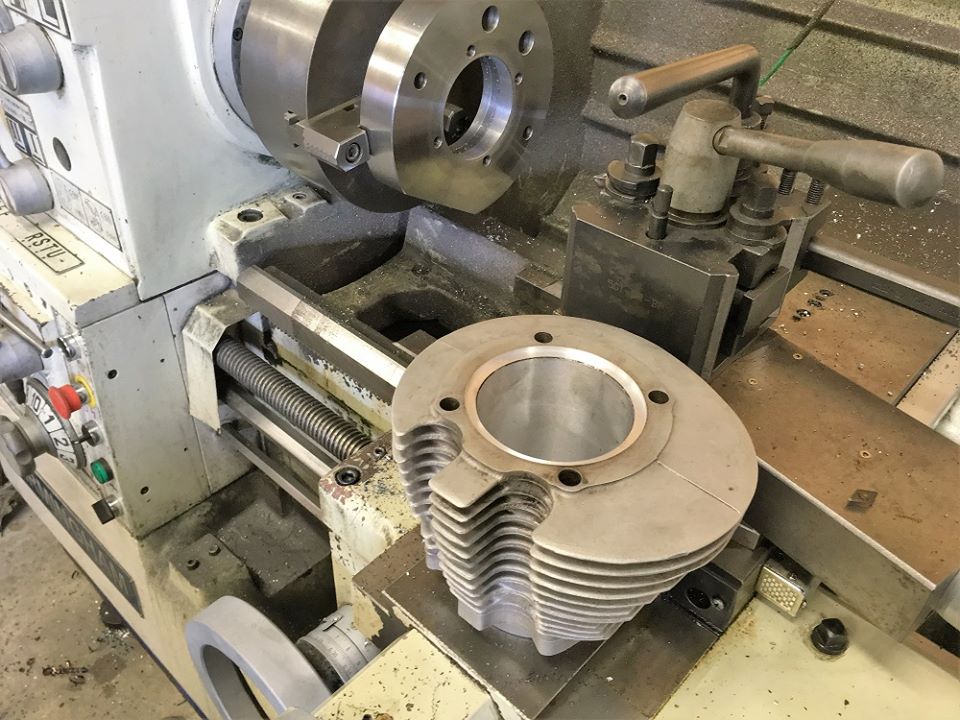
WJJ580’s barrel machined to take a fresh liner – Photo: Martyn Adams/MDA Motorcycle Engineering,
Adams: “This is the reason we recently re-sleeved the cylinder as the piston was still in very good condition but has now been machined to take a modern oil control ring. Ian believed for years that the motor was a 410, but I think the crank is a standard 93mm stroke, which would give a capacity of exactly 400cc“.
WJJ580 treated to a fresh cylinder liner using the existing piston machined to take a 3rd oil control ring – Photo: Martyn Adams/MDA Motorcycle Engineering
Adams continued: “So I suppose the motor is really quite special as it’s a pretty unique mix of factory parts. Ian also has a another bike with a special short-stroke engine that I made a crank for and is very similar to the short stoke Ariels we call her the big bang motor“.
Base of cylinder detail shows the customary lets for the con-rod to clear as it pushes the piston up and down – Photo: Martyn Adams/MDA Motorcycle Engineering
Adams added: “I haven’t checked, but would reckon with the domed piston and 74 mm bore, not 69mm, the compression ratio will be around 9:1. This is quite high for a trials machine. The cylinder head from memory has the later valves from the short stoke head with big inlet with a 5/16 inch stem and small head exhaust valve with a 3/8 inch stem. As I said a real mix of factory parts“.
…
The relined AJS barrel is now back at Ian Harland’s house awaiting to be re-united with WJJ580’s crankcases – Photo: Ian Harland
So at least WJJ580 escaped the fate of many factory machines that were broken up for their parts and it was put to good use. To be ridden and competed on, very much in the spirit in which they were all designed and built.
WJJ580 certainly was – One That Got Away!
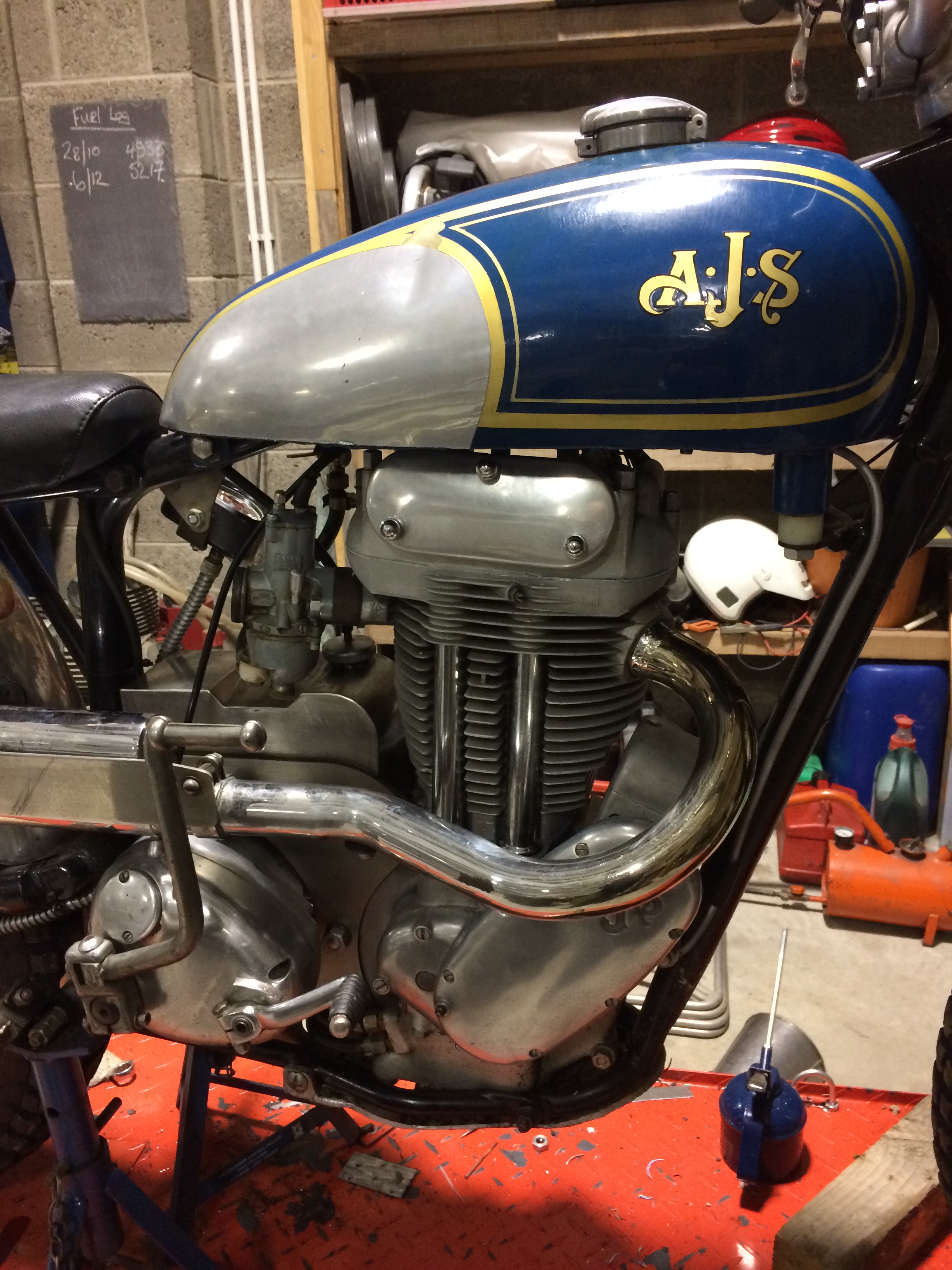
Back together again in December 2016 – WJJ580 and its special motor – Photo: Ian Harland, Isle of Man
…
The numbers game…
The AMC factory road registered all its ‘road test’ and works retained trials machines locally in the Greater London area. The ‘XF’ index mark for example was London County Council, used immediately post second world war. The exception was the ‘GK’ index mark, as it was London South West area, whereas the factory was based in being Plumstead SE18 London. It is safe to say that all AMC factory trials machines were all London registered.
Known AMC Factory Trials Registration Numbers:
(*) Indicates those sold or still in private ownership
AJS:
HXF641 * (Viney); HXF644; AJS775 (Jackson); AJS776 (Viney); AJS777 * (Manns); KYM835 (Viney); OLD865 (Viney); WJJ579 * (C. Clayton) WJJ580 * (Various); 187BLF * (1961-63 Jackson/63-65 Blakeway); 644BLB (registered as a Matchless) * (Location Australia – C. Clayton 1961/Andrews 1962-64); 164BLL (registered as a Matchless – destroyed in the fire that ravaged the National Motorcycle Museum in 2003) * (1961-65 Mclaughlan); UXO194 (Jackson); VYW659 * (Jackson); TLP686 * (Jackson); TUL654 * (Manns); VGK756 (Jackson)
…
A smiling B.H. M. ‘Hugh’ Viney on his works 347cc AJS (AJS776) in the 1955 Scottish – Photo: Jock McComisky, Linlithgow
…
TLP686, the former factory AJS 350 of Gordon Jackson from 1956 on which he won the British Experts, now in private ownership – Photo: Mr. Philip Clarkson
Artie Ratcliffe on his 1954 SSDT winning Matchless OLH721 on Town Hall Brae, Fort William – Photo: Ray Biddle, Birmingham
…
Sid Wicken from Kenardington, Kent on his factory 350 Matchless (OLH722) in the 1956 SSDT. Seen here with the short-stroke motor fitted, the ‘Elektron’ rocker-box can be seen with its matt black finish. Wicken’s frame broke below the headstock but still managed to finish the event with the frame wired together. The machine was sold into private ownership in August 1957 in long-stroke form to Arnott Moffat – Photo: Ray Biddle
…
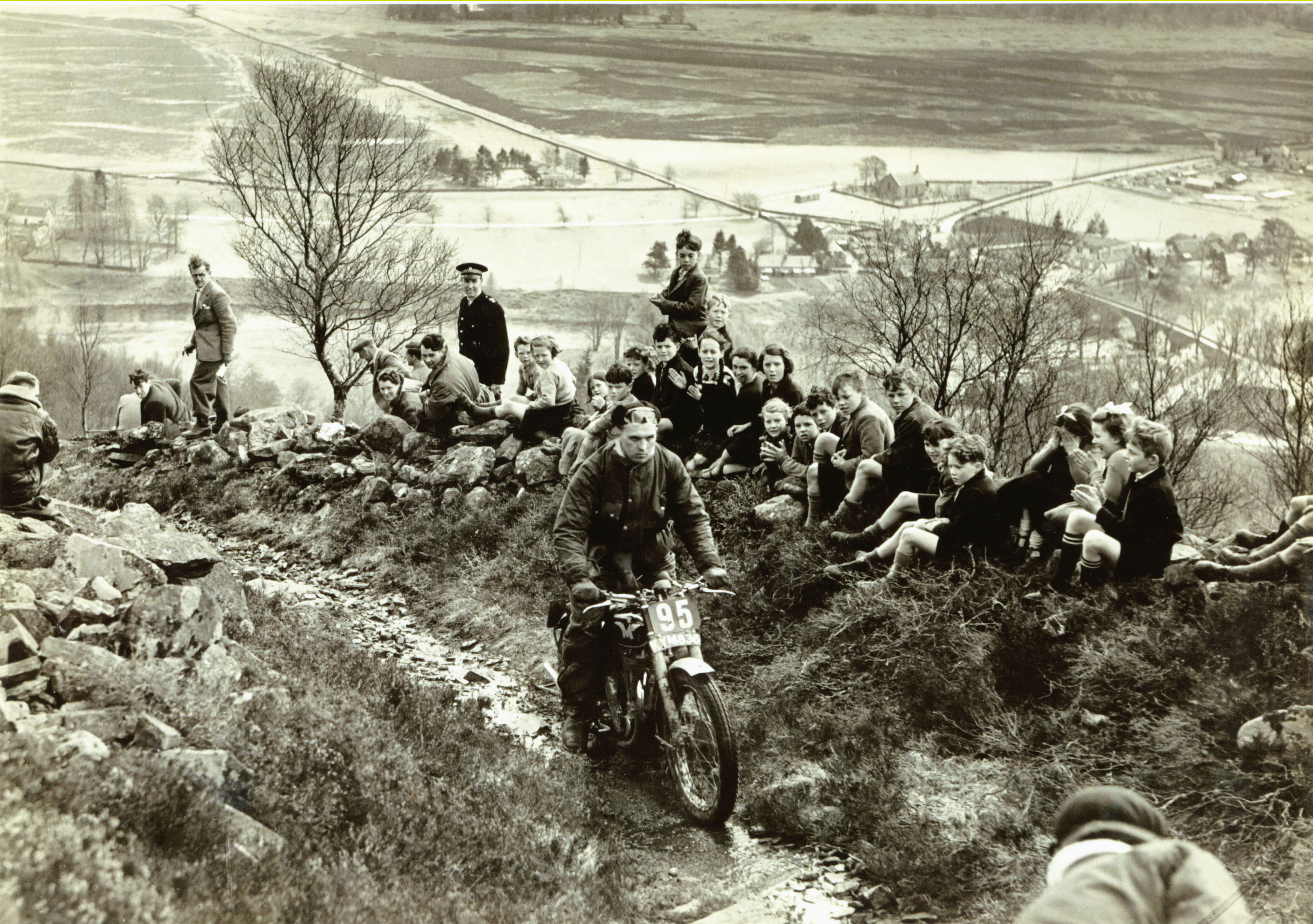
1951 – Derek J. Ratcliffe, brother of Artie on his factory 347cc Matchess (KYM836) on Weem, near Aberfeldy in Perthshire – Photo: Ray Biddle, Birmingham
With Acknowledgement for their assistance in compiling this article to:
Martyn Adams, Australia
Eric Adcock
Gordon S. Blakeway
Ian Harland, Isle of Man
Gordon L. Jackson
Gordon O. Mclaughlan
Sammy Miller, New Milton
Don Morley, Reigate
Trials & Motocross News, Lancaster
Photographic Copyright: is retained by the photographers named in captions above.
Apart from ‘Fair Dealing’ for the purpose of private study, research, criticism or review as permitted under the Copyright, Design and Patents Act, 1988, no part of this article may be copied, reproduced, stored in any form of retrieval system, electronic or otherwise or transmitted in any form or by any means, electronic, electrical, mechanical, optical, chemical, photocopying, recording or otherwise without the prior written permission of the author as stated above. This article is not being published for any monetary reward or monetisation, be that online or in print.
Special thanks are due to our photographers who continue to allow Trials Guru to make use of their images from the sport of trial.
Many thanks to all of you:
John Hulme / Trials Media; Eric Kitchen; Barry Robinson; Neil Sturgeon; Jaxx Lawson of JOATS Imagery; Sarah Turner; Hilary Little; Studio Six Creative; Heather Mead; Justyn Norek; Jimmy Young; Iain Lawrie; Rainer Heise; Jeremy Whittet; Kimages/Kim Ferguson; Iain Lawrie
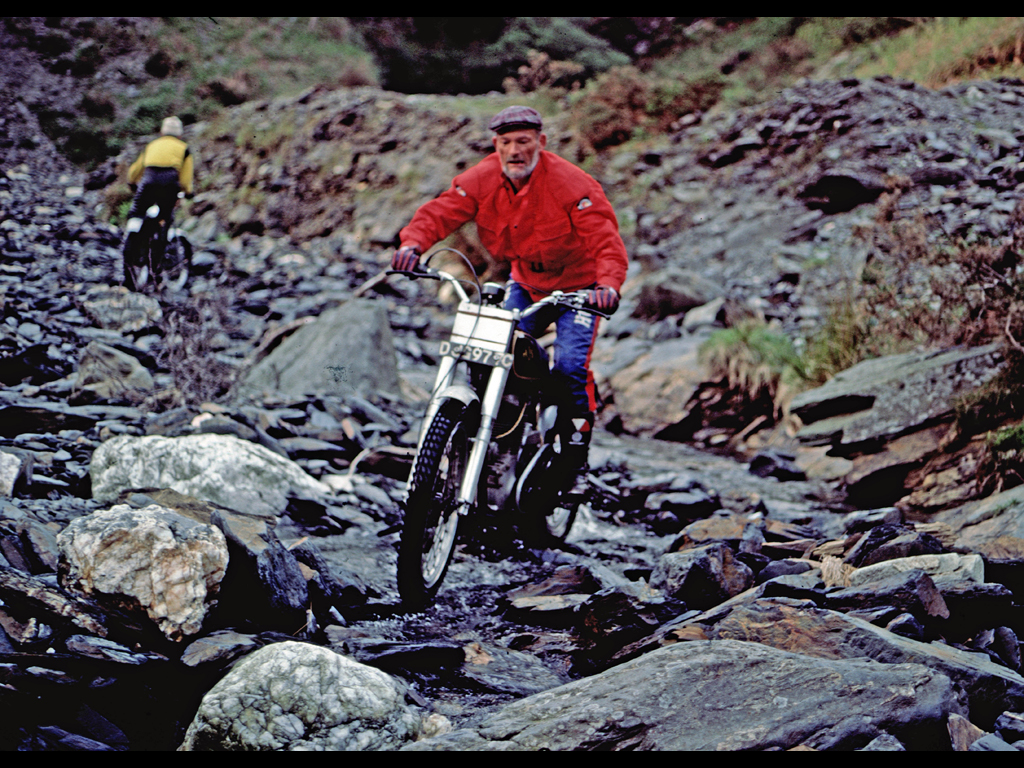
Don Morley riding his ex-works 250cc Greeves Anglian in the 1995 Pre’65 Scottish Trial. Photo Copyright: Iain Lawrie, Kinlochleven, Scotland. When Don Morley was made aware of this very image, he was keen to obtain a copy and willing to pay for it. Iain Lawrie immediately provided Don with a copy with his compliments!
Words: Trials Guru
Photos: Don Morley; Iain Lawrie & John Knight
Trials Guru recognises the talents of a man from Redhill, Reigate in Surrey who has brought literally thousands of wonderful and exciting colour sporting images into magazines, periodicals and books the world over. His name is Don Morleyand what’s more he’s a trials rider! Well actually, Don is a frustrated road racer at heart as he didn’t have the funds available to race when he was a young man, so took up trials riding instead, being the less expensive motorcycle sport option!
Don Morley aboard his 1949 ex-factory Royal Enfield (HWP731) – Morley is an acknowledged expert on the marque. (Photo supplied by Don Morley for this article from his personal collection)
Described as the ‘Godfather’ of sports photography by Fast Bikes Magazinein the article they ran on Don in their September 2010 edition, Morley is respected the world over by riders, athletes and team managers because of his uncanny ability to press the button just at the right moment.
Raised in Derby, Don started taking photographs for a living in the 1950’s when it was all glass negatives, progressing to processed roll film. He began his motorcycle photography as a staff photographer with Motor Cycle News in 1957.
Morley is a 100% professional sports photographer, joining forces with Tony Duffy’s “All-Sport International Photographic Agency/Don Morley” in the 1970’s, his images of sporting events and competitors are highly sought after around the globe.
Puiblished by Osprey, Don Morley’s book on Classic British Two-Stroke Trials Bikes is a much sought after publication. Truly a collectors item now.
Don is also an accomplished author, writing several books which include: Classic British Trials Bikes& Classic British Two-Stroke Trials Bikes; Spanish Trials Bikesand Trials: – A Riders Guide, to name but four!
Published by Osprey in 1984, Don Morley’s Classic British Trials Bikes book was a top seller. Original copies fetch high prices to this day.
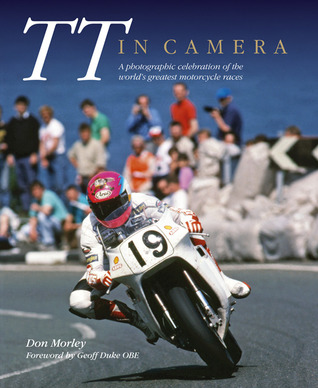
“TT – In Camera”, One of the many titles written by Don Morley over the years, with foreword by Geoff Duke.
Morley has photographed many events, not just sporting events, witnessed the Munich Olympic Games terrorism atrocity to name but one major international incident and much, much more. He has had a varied and interesting life as a sports photographer.
Don has owned several ex-factory trials machines in his time as a rider, including the Johnny Brittain Royal Enfield 500 Bullet HNP331 and another ex-factory Enfield, LUY86. He appeared in the BBC TV series, ‘Perpetual Motion’ in an edition which covered the Royal Enfield and Enfield of India story in 1992. Morley is an acknowledged expert on the Royal Enfield marque. He built a few special trials machines including a BSA B40 and also wrote a series of articles on the development of four-stroke trials machines for the ‘Classic Motor Cycle’.
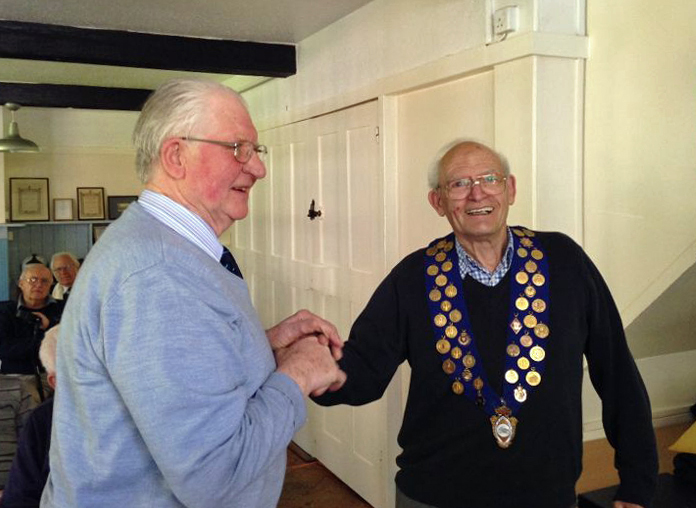
Don Morley (right) recieves his chain of office from Chairman, Ken Brady – Photo: John Knight (former British Trophy team member ISDT)
Don was one of the first to take up Pre’65 trials competition back in the early 1980’s on an ex-Brian ‘Tiger’ Payne AJS.
The one thing you notice about Don is his serious nature, he is a professional after all, he took photographs to make a living, but he does have a good sense of humour as well.
Trials Guru’s John Moffat met Don Morley many years ago at the Pre’65 Scottish at Kinlochleven, initially it was a frosty meeting as ‘The Guru’ intimated that Don had made a “slight mistake with a factory registration number” in one of his books! After a good frank chat, it was all ended very amicably, as this was merely an amateur enthusiast correcting a professional. Let’s face it EVERYONE can make a mistake. Happily, from that day on ‘Trials Guru’ and Don Morley have been good friends, their paths crossing occasionally and they are always happy to meet each other.
Don saw the funny side of the argument and said jokingly: “John, that’s OK, as long as you don’t want Osprey to reprint my book to make a correction!”
Morley once took a photo of ‘The Guru’ on his G3C Matchless with the great Gordon Jackson standing alongside, at Kinlochleven, the machine which was loaned to Jackson for the 2000 parade at the Scottish Six Days. The image has been a prized possession of ‘The Guru’ ever since.
Photo copyright: Don Morley (All Rights Reserved)
So, the next time you see a photo credit as “All-Sport/Don Morley” under an image of a racing bike at speed, you can say that this image was taken by a true enthusiast and … a trials rider!
Don Morley, Reigate, Surrey, England. – Trials Gurusalutes you, because you are an enthusiast as well as a photographic professional. – Thank you also for the kind permission to use one of your wonderful photographs on this website.
Beyond the call of duty! – Don Morley was lying on his side taking this shot of racer Dennis Ireland on his RG500 Suzuki. Unfortunately the throttles stuck wide open, the machine went out of control just a split second after Morley clicked the button. Don suffered a broken leg, Ireland more serious injuries, spending five months in hospital, having eleven operations on leg, ankle foot and tendons. A truly evocative image taken by a true professional. – Photo: strictly not for reproduction without permission of Don Morley – All Rights Reserved. Worldwide copyright.
The intellectual property formerly of ‘All-Sport’ photograph agency is now owned by Getty Images UK.
Please remember, all Don Morley’s photographs and those of his company ‘All-Sport’ are world-wide copyright and must not be used without prior express permission.
The Premier Trial Website – Recording the History of the Sport 'Established 2014'


























 TRIALS GURU - DEDICATED TO TRIAL