Words: Trials Guru; Tony Davis; John Dickinson; Deryk Wylde; Mike Naish and Tommy Sandham.
Photographs: OffRoad Archive; Gordon Francis; Eric Kitchen; Mike Naish; Barry Robinson; Sammy Miller Museum; Gordon Bain Photography.
It is now, in 2025, seventy years since the publication, ‘Trials Riding’ first appeared on book stalls in 1955. It was a significant publication for the sport of motorcycle trials at the time. Copies of that first edition and subsequent editions, are still being traded on online auction platforms. But the question that some may be asking is… Who was Max King?
“The past is a foreign country, they do things differently there“. Not so many years ago, books were regarded as important reference works on most if not all subjects. Since the advent of the world wide web, this has changed with the information superhighway leaving printed matter way behind. Now books are a novelty, they are not bought in their thousands anymore, with many ending up in discount book stalls. We also live in less formal times, we live in ‘instant’ times with information at the touch of a keyboard or mobile device and more recently Artificial Intelligence or ‘AI’ for short. Back in the 1950s it was a different world, people were emerging from a second world conflict and the sport of trials had made a comeback. Weekly motorcycle newspapers flourished and had recommenced presenting reports of national and international events, it was all done by the written word on paper. Books were very definately reference material of significant importance. It was a different time with different methods, no mobile phones, no internet, no videos, no social media, television was in its infancy and radio still ruled the roost. This was the world and the time of Max King.
But who was Max King?
The younger reader of Trials Guru might well ask, ‘Who was Max King?’ and that would be a fair question!

The Trials Rider’s ‘Bible’:
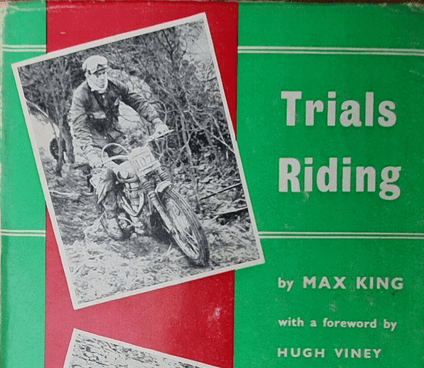
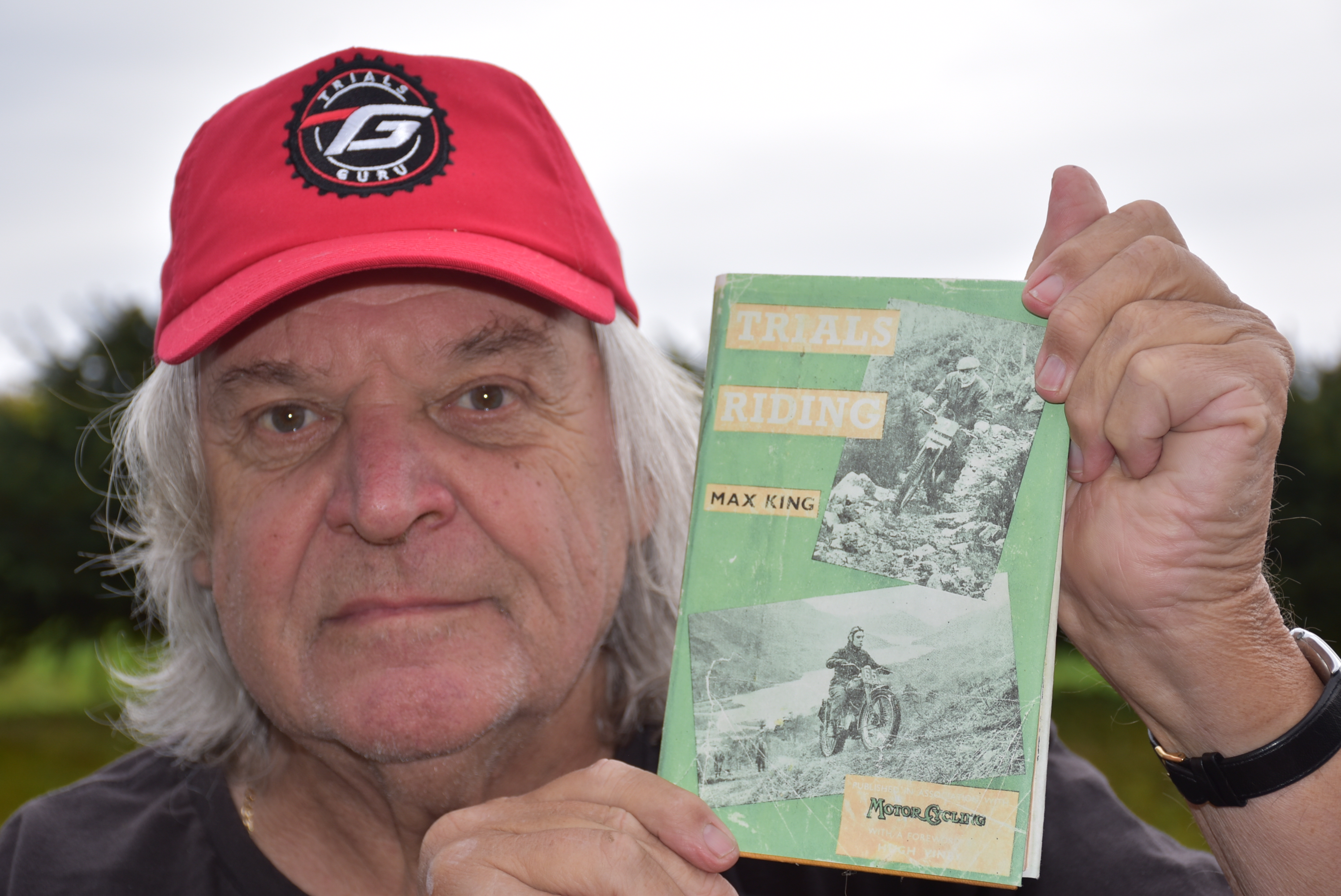
Frederick Maxwell Wright King was born in Devon, England in 1916 and he went on to write one of the first books exclusively published on the sport of motorcycle trials. The book, entitled simply ‘Trials Riding’, was published by Temple Press Ltd., Bowling Green Lane, London E.C.1 in 1955, this was the first edition, priced at seven shillings and sixpence, there would be updates over the next twenty-one years as the sport evolved.
This book was regarded by many as the trials rider’s ‘bible’. The early editions were in association with the motorcycling press, namely Motor Cycling or the ‘green un’ as it was known, this enabled King access to many images taken by the staff photographers and therefore keep on the correct side of copyright which was owned by the publishers and guarded feverishly.
Here was a book that prior to 1955 did not exist. Max King as a young trials rider had searched for such a publication, but to no avail. So, he decided to write one himself. As we will discover later in this article, without a doubt ‘Trials Riding’ inspired novice riders, introduced young people to the sport of trials and was read by all the established aces!

Second Edition: 1960
The second edition was released in 1960, priced at eight shillings and sixpence, five years after the original copy, the second edition was billed as being: ‘revised and updated’. Temple Press was primarily a publishing company who were prolific in automotive publications, transport themed books and magazines, they operated from 1900 until around 1964.

Max had developed a liking for motorcycles as early as 1924 when he was just eight years of age. Like most young men of his era, the Second World War raged from 1939 until 1945, so all trials activity ceased completely, recommencing in 1946, and even then it was very low key due to ongoing fuel rationing right up until King wrote the first edition of his book. King was a member of the local Otter Vale MCC and effectively took up the sport at 30 years of age.
In 1950, Max was so impressed with the performance of Triumph’s Trophy model in the hands of Jim Alves from Somerset, he purchased one the following year. The machine didn’t however live up to his expectations and he found it difficult to ride in muddy conditions, but it was just the tool for long distance trials, such as the MCC Land’s End and Exeter trials. In these events he excelled, always picking up first class awards on the 499cc Triumph.
The first Foreword:
Max King managed to persuade B.H.M. ‘Hugh’ Viney who at that time was at the peak of his trials career, being an ACU ‘Gold Star’ holder, winner of many national trials and four times winner of the Scottish Six Days Trial, to write the Foreword to the book. Viney was at this time the competitions manager of Associated Motor Cycles Ltd in Plumstead, who owned AJS, Matchless, Sunbeam and James, at the time Britain’s largest producers of motorcycles. Viney was known to be a rather reserved, possibly aloof character, so persuading him to write the Foreword must have been a challenge in itself.
By reading Viney’s foreword it becomes evident why the great man agreed to write it. Viney and King apart from trials had something else in common, Hugh Viney had been a local government officer, now referred to as ‘civil servant’ and so of course was Max King. That was probably the ice breaker and of course, Viney wouldn’t put his name to the book until he had read the manuscript!
Viney’s foreword, which no doubt excited Max King no end, was typically very formal with Viney referring to Max as “Mr. King” throughout. This served to reinforce the belief that Viney was a very formal gentleman. Having the Foreword written by Hugh Viney was a smart move, it would help sell more books!
We can do no better than to quote from the last paragraph of Viney’s Foreword: “To sum up, I am full of admiration for the painstaking way in which Mr. King has covered ever facet of the trials game. Whilst catering primarily for the man who is thinking about taking up the sport or who has not long been in it, I feel sure that this book may well become the standard work on his chosen subject.” BHM VINEY [1]
But being a book author or writer wasn’t his profession, albeit he was a trials competitor, writing wasn’t his day job. Max also wrote articles and carried out a variety of machine tests for British and American motorcycling magazines. King was very much ‘old school’ as far as his writing was concerned. It was a case of imperical research, strictly all his own work, he didn’t copy, that was not his way. All his work was original material. Max King whether he knew it or not, was a true pioneer!
The mentor, Ken Haydon:
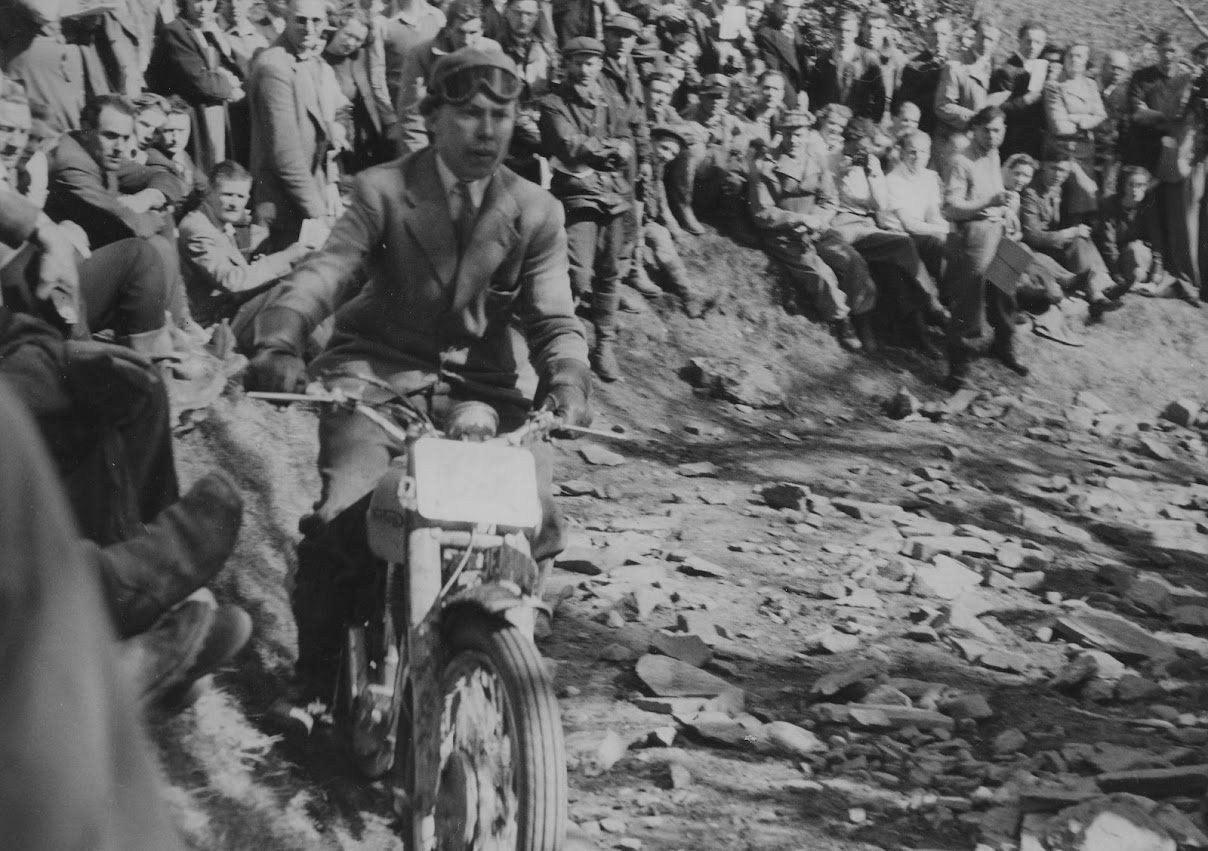
During research for this article, it was evident that Max King refers to his ‘mentor’ in trials as Kenneth Haydon. We were indeed fortunate to secure the permission to use some of Ken’s photographic archive a few years ago.

The reader would also be excused if he/she assumed that King’s occupation was within the media, as he regularly broadcast on radio over a twenty year period for the BBC, both regional and national covering motorsport. This was usually undertaken at the BBC’s unmanned radio station in Exeter. This connection with the BBC was set in motion when the publisher of ‘Trials Riding’, Temple Press had sent out sample copies to the media to court book reviews. A copy was received by the local BBC in Bristol and eventually approached Max to cover motorsport on the regional radio, BBC Radio 4 – South and West.
So what did Mr. King do for a living?
Max King was an ‘Environmental Engineer’, nowadays referred to as a ‘Civil Engineer’, working for Barnstaple Rural District Council, Devon County Council and finally the Dorset County Council, which he took up in 1949 and remained there for twenty-four years. King was an acknowledged expert in water and sewage systems. It is believed that Max enjoyed a good salary from his employment and therefore would have had a good standard of living. In 1954 his personal transport was an MG Magnette saloon locally registered in Dorset as GTK60. New, this model of car would have cost £915 in 1953.
In 1973, he was appointed main drainage manager of the Avon and Dorset Division of Wessex Water and, later in 1975, he was made divisional director, responsible for water supply, main drainage, waste water treatment, fisheries and rivers management. He then became President of the Institution of Public Health Engineers in 1973 until 1974.
In 1978, having served forty-two years in local government and the water industry, Max left Wessex Water to set up his own consultancy practice in north Devon, before his retirement in 2003 at the age of 87.
King was a married man, his wife was called Peggy who died in 1989 and they had an only son, Robert who rode trials for some years, but had to give up due to a serious knee injury caused by playing rugby. Sadly, he predeceased Max, passing away after an illness in 2003. The ‘Trials Riding’ books were all dedicated to his wife, Peggy.
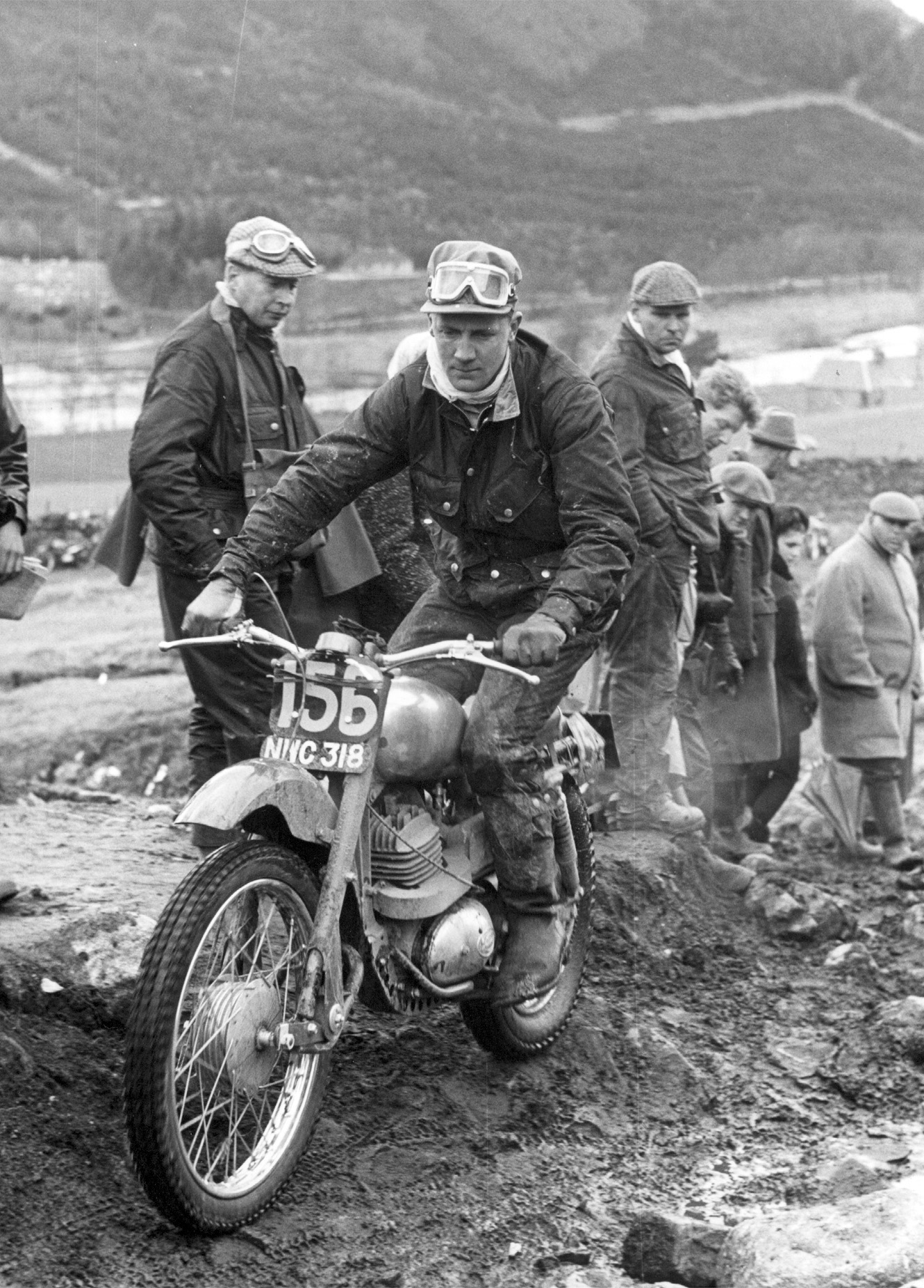
Max King owned or was loaned an array of interesting trials machines over the years. In 1959 he obtained a new BSA C15T, the 249cc single that was seen to be the replacement for the BSA Gold Star in trials. King’s machine was registered YOE388 by BSA, but was a fairly standard model with the heavy steel hubs and chrome plated steel fuel tank.

The machine eventually found it’s way to Vic Ashford, the South Western star, as a stop gap machine while the factory prepared a bike for him to ride as a semi-works rider.
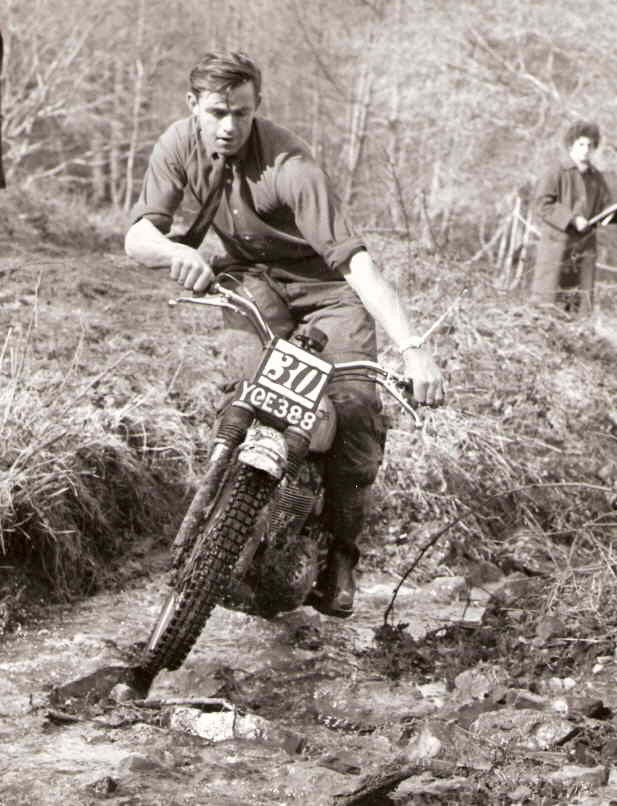
Later, King upgraded the C15T, he had fitted an alloy fuel tank and the wheels replaced with those fitted with Triumph Tiger Cub hubs, which were appreciably lighter. Previous to this machine he campaigned a 1953 Francis Barnett ‘Falcon 62’, locally registered with Devon Council as ODV200. Later, King obtained the ex-factory Francis Barnetts, registered PKV331 and TDU497.
The 776BOP connection:

Later in 1969, King ended up with the 1960 factory BSA B40, registered 776BOP which had been issued to Jeff Smith (1960-62), Tony Davis (1962-64) and Jim Sandiford (1964-1966) in that order.

Jeff Smith rode the machine until just before the 1962 SSDT in May, when the bike was passed over to Tony Davis, Smith having been injured in a motocross event a few weeks before.
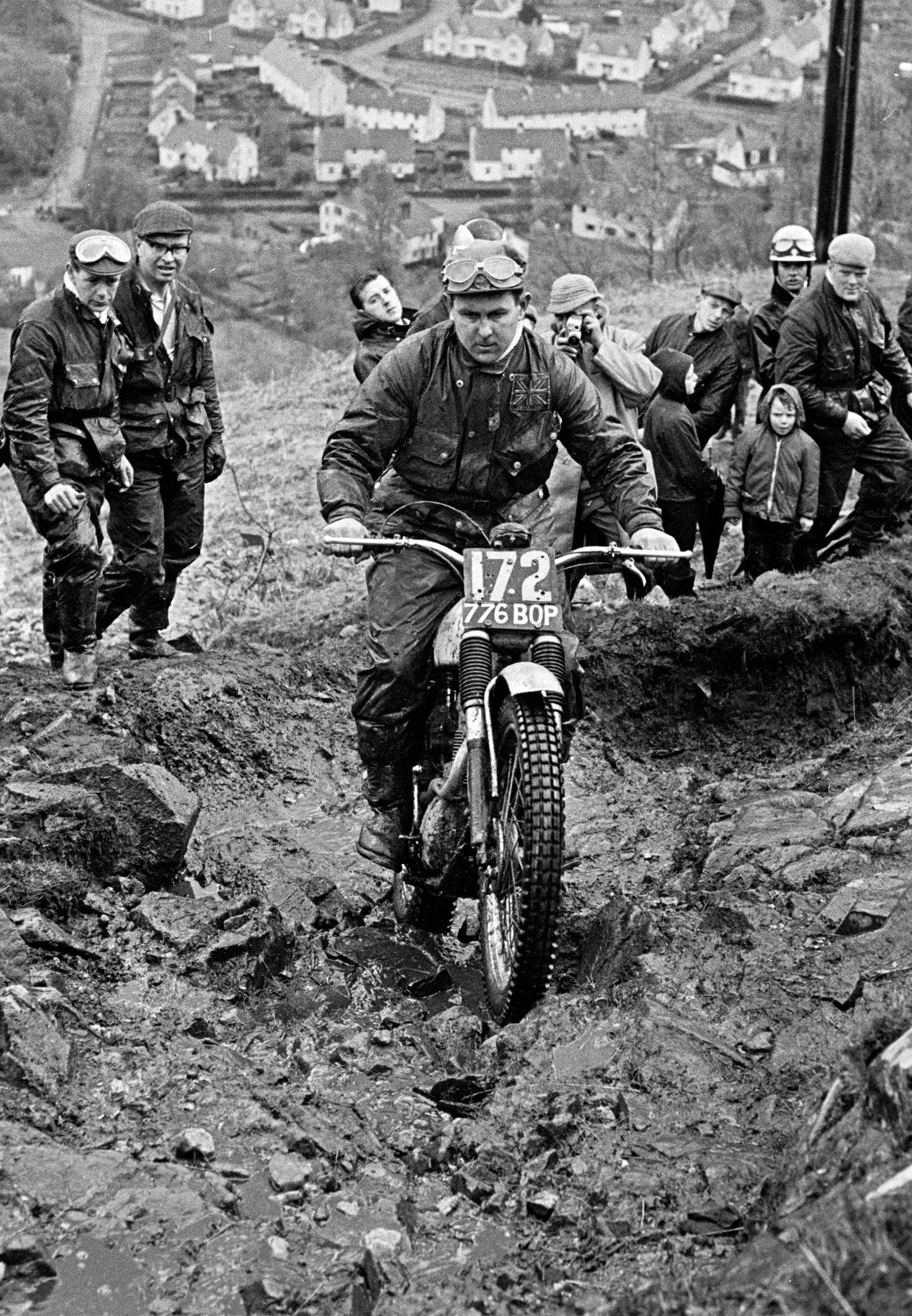
Sandiford rode the BSA for two years, following Tony Davis who defected in 1964, with brother Malcolm, to ride for Greeves. King acquired 776BOP from BSAs and had ownership of the machine from 1966 until 1970, when he traded it in to Ken Heanes at Fleet, Hampshire, in exchange for a 1966 ex-ISDT Triumph 500cc twin which Heanes had himself used. Registered as HUE252D, Max competed in his favourite event, the MCC ‘Edinburgh’ long distance trial. When Max acquired 776BOP it had been fitted with the Victor type frame, similar to the 1963 BSA works bikes of Arthur and Alan Lampkin, and a 250cc cylinder barrel fitted to the B40 bottom end.

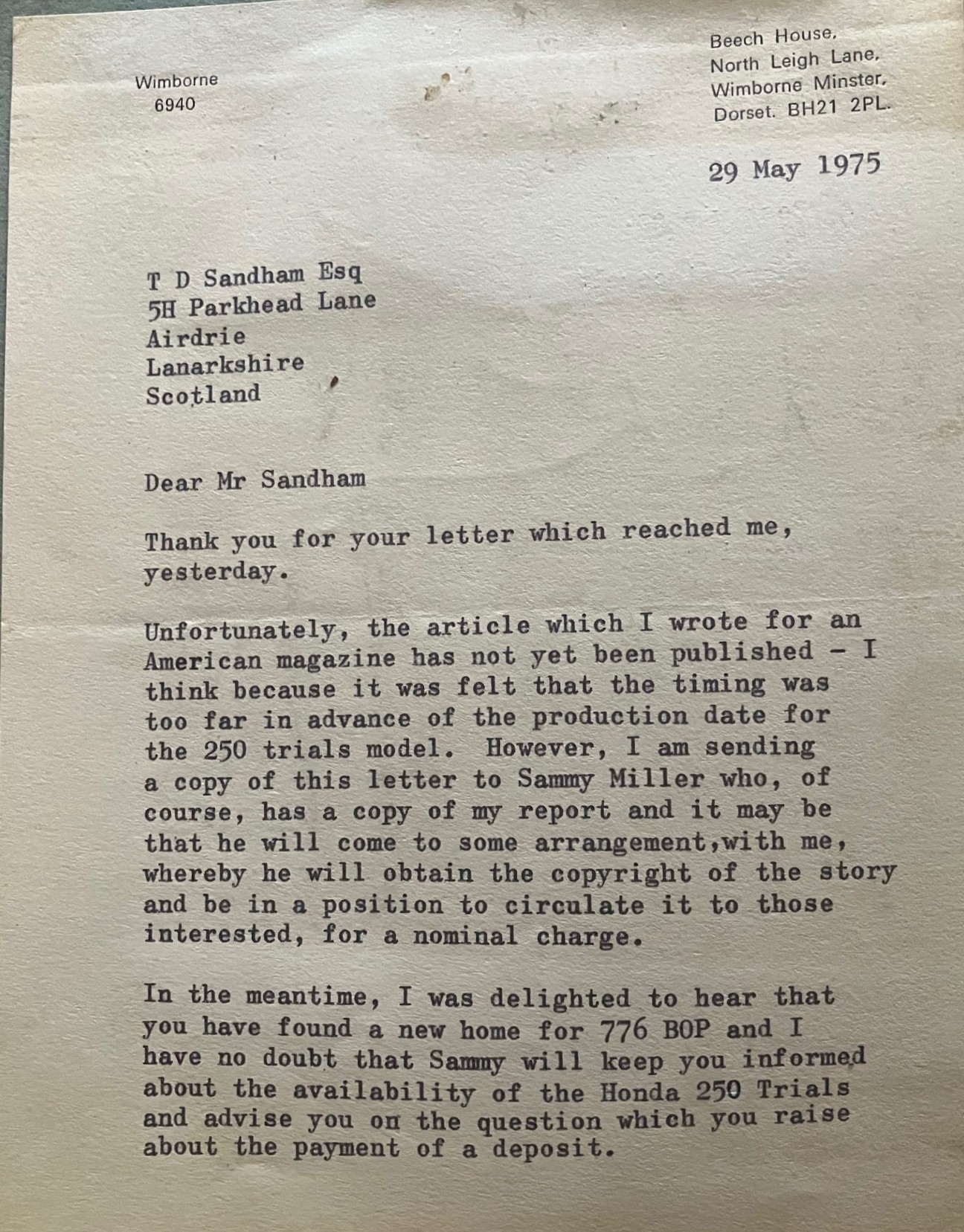
This machine eventually ended up in the custody of Tommy Sandham around 1975, at that time a Post Office telephone engineer in Airdrie, Lanarkshire, Scotland, who later worked for several years at Trials & Motocross News and wrote several books on the Scottish Six Days Trial and Honda Trials machines. It was this machine that brought Sandham to the sport of trials. 776 BOP eventually returned to the private collection of Jim Sandiford, but was sold on, following his death to dairy farmer Bryan Payne from Yorkshire, the current owner.

Tommy Sandham: “I bought 776BOP from Ken Heanes’ shop. It was all mucked about with and its fair to say I never got on with it. It had ‘Triumph’ stickers on the tank and the tappet inspection plate also being a Triumph component. Needless to say I soon sold it, buying a 250 Bultaco Sherpa from Airdie car dealer Dougie Watson. I had put a classified advert in Motor Cycle News and on the Thursday the phone rang at 7am and Mick Bradbrook, a collector of BSAs sent up a van from Purley, Surrey with money. I can’t remember how much I sold it for.“

The BSA B40 ‘776BOP’ was to become quite a machine and connected many people from the sport of trials over the years and still does!


By 1967, King was writing prolifically for Cycle World magazine in the USA, supplying machine tests for the new Cotton and the new Saracen trials machines. He also wrote general articles on the sport, helping to popularise trials across the Big Pond.

Fourth Edition: 1972
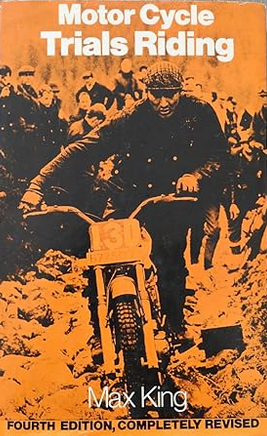
The fourth edition, released on 26th October 1972, now fully titled as ‘Motor Cycle Trials Riding’ was proclaimed as being ‘completely revised’ and now published by Pelham Books Ltd., Bedford Square, London with the dust cover featuring Mick Andrews on the factory Ossa during his winning 1970 Scottish Six Days ride. Andrews actually contributed to the publication, but the Foreword was now written by Gordon Farley, the 1971 and 1972 British Trials Champion on Montesa. The recommended retail price of the fourth edition was £2.50 net. The photographs brought the publication bang up to date with many of the action photographs depicting the popular trials machines of that era, namely Bultaco, Montesa, Greeves Pathfinder, Suzuki and a photo of Dave Thorpe on his Ossa, which was the ‘Pennine’ model as this was just prior to the ‘Mick Andrews Replica’ model which was released later that year. Not only photographs of machines uodated the book, so did photographs of current riders, such as Malcolm Rathmell, John Hemingway, Mark Kemp, Alan Lampkin and of course Gordon Farley and Mick Andrews. Local men, close to King, Colin Legg and John Poate from the west country assisted Max with machine tests by this time.

So what did British Trials Champion, Gordon Farley, the man who dethroned the great Sammy Miller, bring to the book?
Max King had approached Farley to write the Foreword for his revised edition, when he was trying to win his second British Championship in 1971. Again we can do no better but to quote from the Foreword from the fourth edition of ‘Trials Riding’.
Farley: “I knew, at first hand, how indispensible Max’s book had been because the first edition came out when I was a boy at school. Even then, I was keen on motor-bikes and interested in trials. But it was Max King’s enthusiasm – which his book reflected so clearly – that made me determined to have a go myself as soon as I was old enough and could get a bike.” “A thing that had always impressed me was that although Trials Riding was written, primarily, with the novice in mind, I knew for a fact that most of the top men in the trials world had read, enjoyed and benefitted from Max King’s book.” [5]
Gordon Farley’s Foreword was much less formal than Hugh Viney’s version. Mick Andrews special contribution was to bring information to the reader on the European and American trials scene. Remember that the World Trials Championship was still two years away with a ‘Pan-European’ series in 1974.
Having enlisted the assistance of a British Trials Champion, Gordon Farley and a European Champion, Mick Andrews, this gives some idea of Max King’s stature in the sport of trials over a long period of time.
After he retired from trials riding, Max King took up car trials and eventually long distance events by car, driving for Team Hartwell in specially prepared 998cc bored out Hillman Imps by George Hartwell Ltd in Bournemouth.

Fifth Edition: 1976
The fifth and final edition is a copy that doesn’t seem to come up often in auctions, this edition was also published by Pelham Books on 26th January 1976. The front dust cover featured Malcolm Rathmell on the 1975 prototype Montesa Cota 348.

We managed to locate a copy of the elusive Fifth Edition of ‘Motor Cycle Trials Riding’ in Sweden! The retail price in 1976 was £3.95. The Foreword was written by Malcolm Rathmell who featured on the dust cover. Again, Malcolm’s Foreword was much less formal than the original written by Hugh Viney, thus reflecting the change over time in society from 1955 to 1975.

Rathmell said in his 1976 Foreword: “In my opinion, Motor Cycle Trials Riding is in a class of its own. I can only endorse what Hugh Viney predicted and Gordon Farley said in his Foreword to the fourth edition that Max King’s book sets the standard against which all others must be judged.” [7]
Inside the fifth edition is a small ‘Addendum’ pasted inside the first inner leaf page it reads: “ADDENDUM At the time of going to Press, the results of the 1975 FIM World Trials Championship and of the 1975 British Trials Championship were not known. Martin Lampkin, riding a 325 Bultaco, became the first official holder of the World trials title. It was a well-deserved victory and I congratulate him warmly. Malcolm Rathmell (Montesa) won the British Trials Championship for the third time in four years and came very near to success in the World contest. Congratulations to Malcolm, also!” [8]
The Fifth Edition of ‘Trials Riding’ attempted to bring the publication bang up to date for 1976, with reference to the new wave of Japanese built trials bikes, pioneered by Christian Rayer in France and Mick Andrews in the UK with the Yamaha TY series; Sammy Miller MBE with the Honda TL effort and Don Smith with the Kawasaki KT series. Gordon Farley had by this time defected from Montesa to Suzuki, thus making up the main four Japanese challengers to the Spanish stronghold over the sport.
In the Fifth Edition, Max was able to use close up photos of Sammy Miller’s development Honda TL to illustrate the publication. Registered as ‘SAM1N’, King even tested the machine a week after Sammy had competed on the Honda in the 1974 Southern Experts Trial.
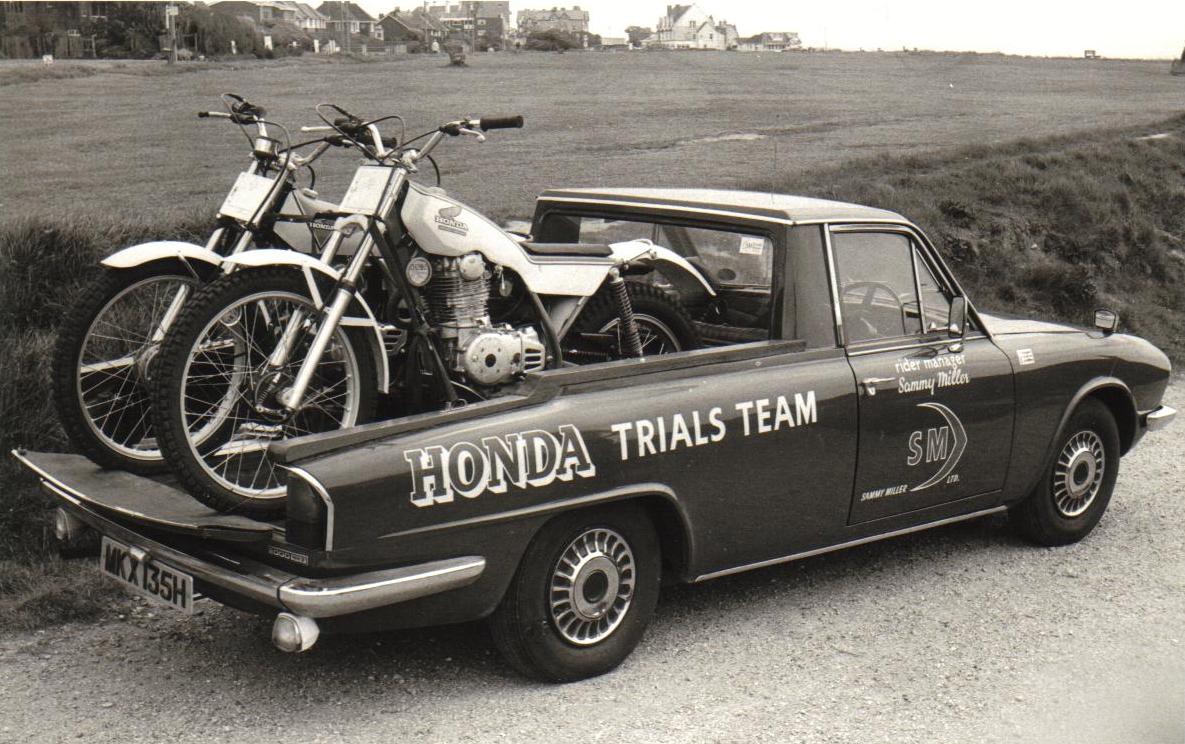
1975 also saw the release of another book on trials, ‘Ride It: The complete book of motorcycle trials’ by Don Smith, albeit partly ghost written by author and journalist Graham Forsdyke. Cheeky Londoner, Smith of course had a reputation for ‘pulling people’s legs’ and he intimated to Max King some years previously that he “kept his well thumbed copy of Trials Riding strapped to the tank of his bike at all times”.
There is no doubt though that Don Smith had read Max King’s books and was more than likely spurred on to write his own books on the sport, as a result.
The publishers of King’s ‘Trials Riding’ in 1972 and 1975, Pelham Books was incorporated in 1959 and are still listed on Companies House, but as a ‘dormant company’ currently.
The photographic content in the Fifth Edition was credited as follows: Brian Holder; Cecil Bailey; Gordon Francis; Alberto Mallofre (Montesa); Central Photographic Unit, Dunlop; K.W. Haydon; Peter Fraser; Pacific Northwest Trials Association Inc.; Peter Howdle; B.R. ‘Nick’ Nicholls.
Trials Riding, the book:
So we have now established who Max King was, where he was brought up, what machines he rode and that his original book was revised five times. What about the book itself?
The ‘Contents’ page from the 1955 edition gives a good insight as to what was covered: [2]
Chapter 1: The Trials Motorcycle – its Characteristics and Points Governing its Selection.
Chapter 2: The Trials Motorcycle – its Specification
Chapter 3: What to Wear
Chapter 4: The Make-up of a Trial and Some Notes on Trials Organisation
Chapter 5: Hints on Machine Control and Tyre Pressures; Typical Trials Sections and Suggestions on how to Ride Them
Chapter 6: The Special Test
Chapter 7: The Beginning!
Chapter 8: The First Trial
Chapter 9: In the Thick of it!
‘Trials Riding’ was effectively the trials rider’s bible, it covered most subjects encountered by a prospective competitor, as Viney stated in his Foreword: “… catering primarily for the man who is thinking about taking up the sport or who has not long been in it, I feel sure that this book may well become the standard work on his chosen subject.”
The book was written in the formal style of the period, immediately post-war, well punctuated with perfect grammar and spelling. The book is well illustrated with black and white photographs of the period, again these are period specific and King used photographs taken near his home to demonstrate a variety of the subjects. Many of these photographs were taken by Gordon Francis, a friend of Max King’s. Factory publicity photographs were used to display the various machines used in trials at that point in time, both four and two-stroke machines aplenty!
The revised editions updated the publication, mirroring the changes in the sport over a period of twenty-one years. The first edition in 1955 through to the final fifth edition in 1976.
Frederick Maxwell Wright King passed away in Tyspane Nursing Home in Braunton, Devon on September 22nd, 2014 aged 98 years, he led a full life and a satisfied one. His funeral was conducted, as set out in his will, to exact requirements in music and readings, with acknowledgements. This was not unusual for Max who had always been most particular and precise in all his business and was his manner, according to family members. We asked some characters of the sport if they had met him back in the day and here are the results.
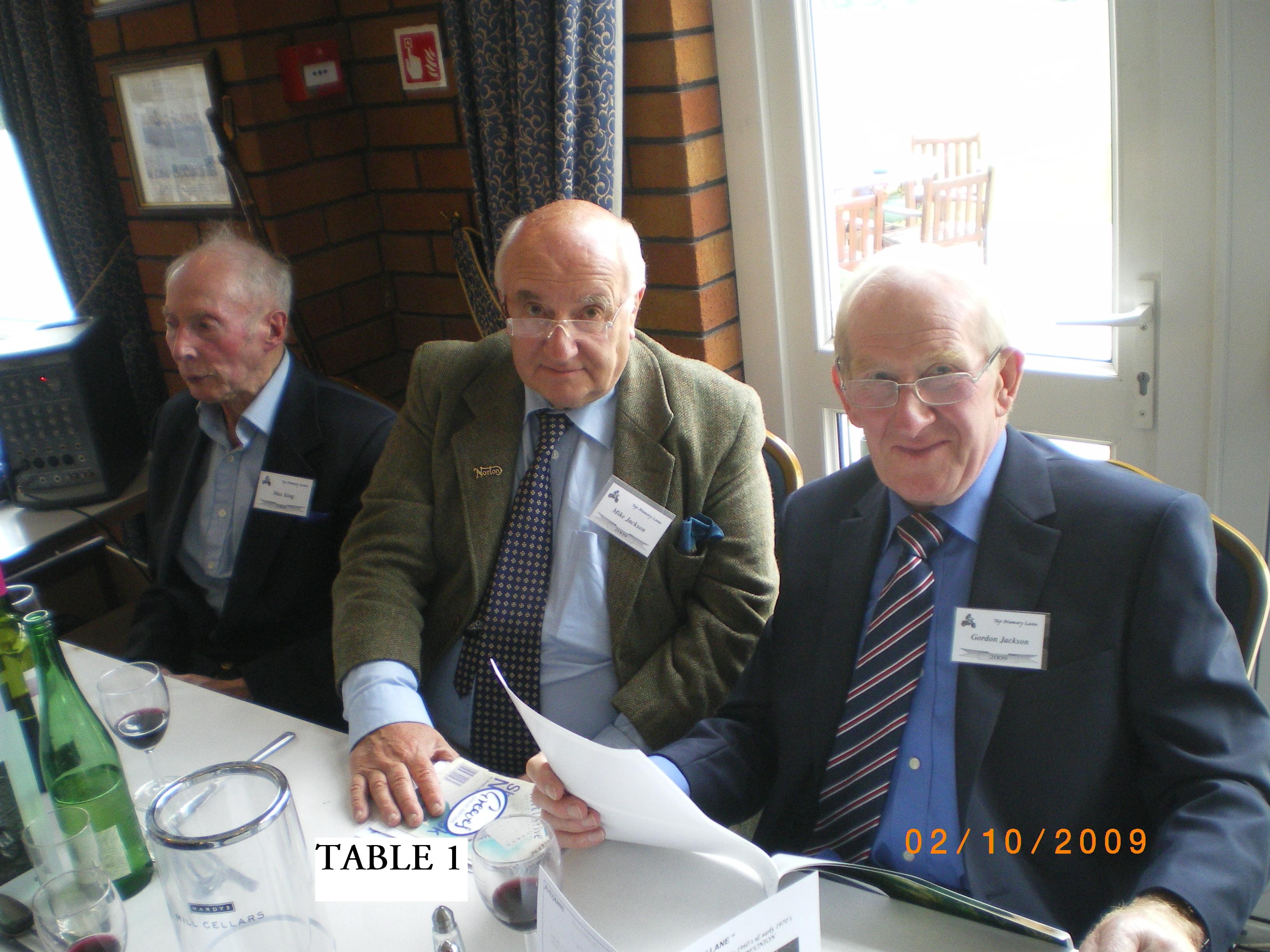
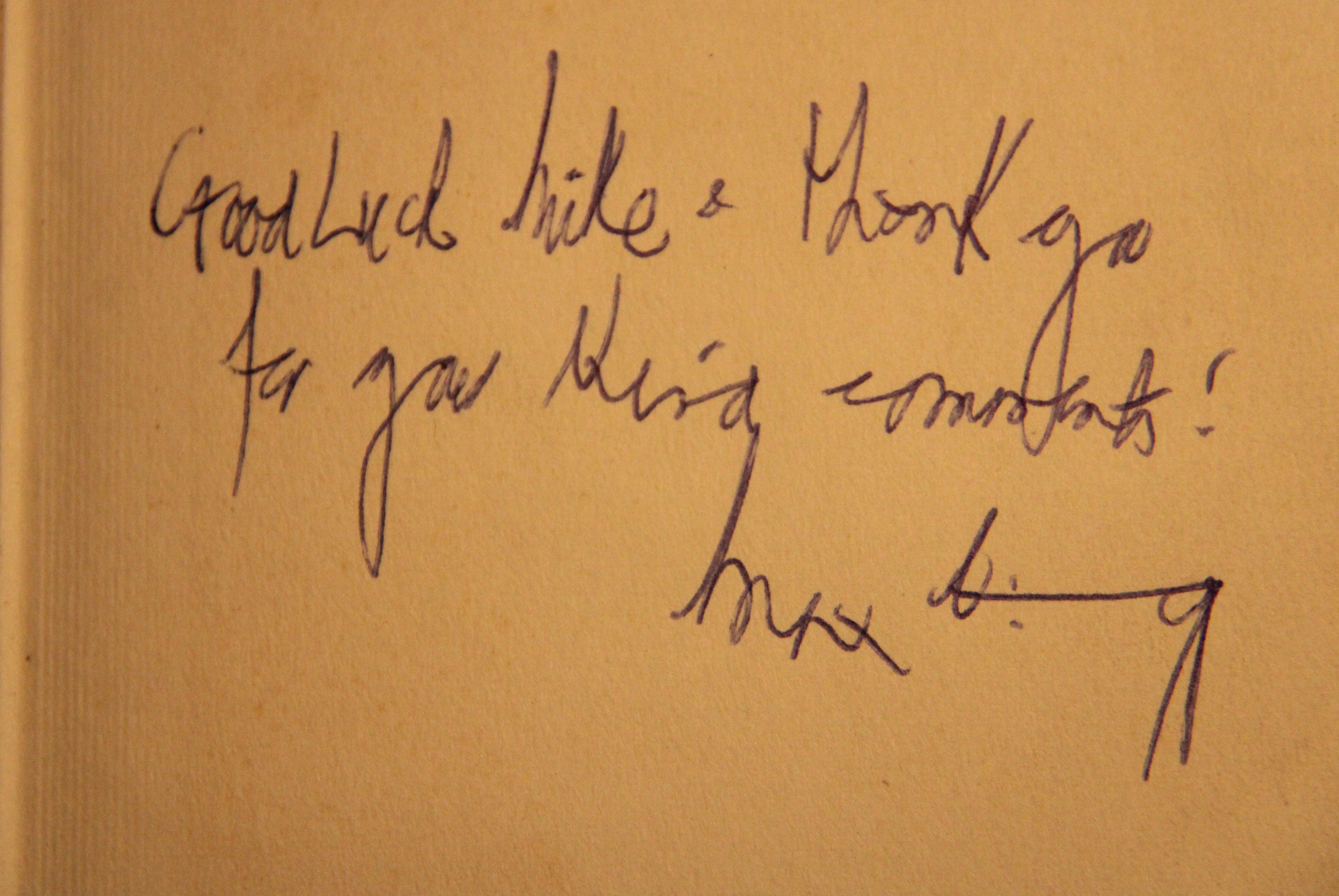
Mike Naish of the West Of England Club: “I met Max King in 2009 when the South West Classic Trials Association ran their ‘Up Memory Lane’ gathering and dinner at the Golf Club in Tedburn St. Mary, Devon just outside Exeter and just over the hill behind my house. I was on the committee and my part was to take all the photos and produce a booklet for those who wanted one. Also as treasurer to pay all the bills. That year our guests included Max King and Gordon Jackson who had recently moved to Devon and was farming. As Max in his early days was working at weekends on local radio reporting on the local trials and interviewing trials personnel, we thought it would be good for Max to interview Gordon Jackson as a feature of two of the guests. This was going to be interesting for all of us such was the charisma of the two gentlemen. All went quiet, there was no preamble and Max went straight in with ‘Why did you have that dab?’ Everybody in the room of one hundred and twenty people all roared with laughter! They all knew what ‘that dab’ was, with the possible exception being my wife. ‘Well, I needed it’ said Gordon. And so the interview went on and was so interesting for us all. Later, I went to talk to Max and obtain his signature on my copy of his book, which happened to be a first edition. Max said he personally did not have one, he only had a second edition.“
Tony Davis, former BSA, Greeves, Montesa, AJS, Bultaco and Suzuki works rider: “Max was very good to both Malcolm and myself in the early years, probably because we were all west country boys (tractor boys). I had some good times with Max over the years and especially at the SSDT.“
John Dickinson, former Editor Trials & Motocross News: “Max King! I only met him once, in the early 1980s when he was staying in what was then The Grand Hotel in Fort William at SSDT time, in the company of Jim Courtney. I thought it odd that such a refined chap, his speech was very ‘posh’ indeed, was involved in trials. If Ralph Venables was ‘the Squire’ then Max King was ‘the Lord’.”
Deryk Wylde, author of several books on motorcycling and trials and editor of Off Road Review magazine: “I knew Max King very well indeed and in his later years I visited him at his home, he was by then very frail. Max’s book, ‘Trials Riding’ was my introduction to our world of trials, whilst I was still at school. Many of the photographs were taken by Gordon Francis another of my good friends.”
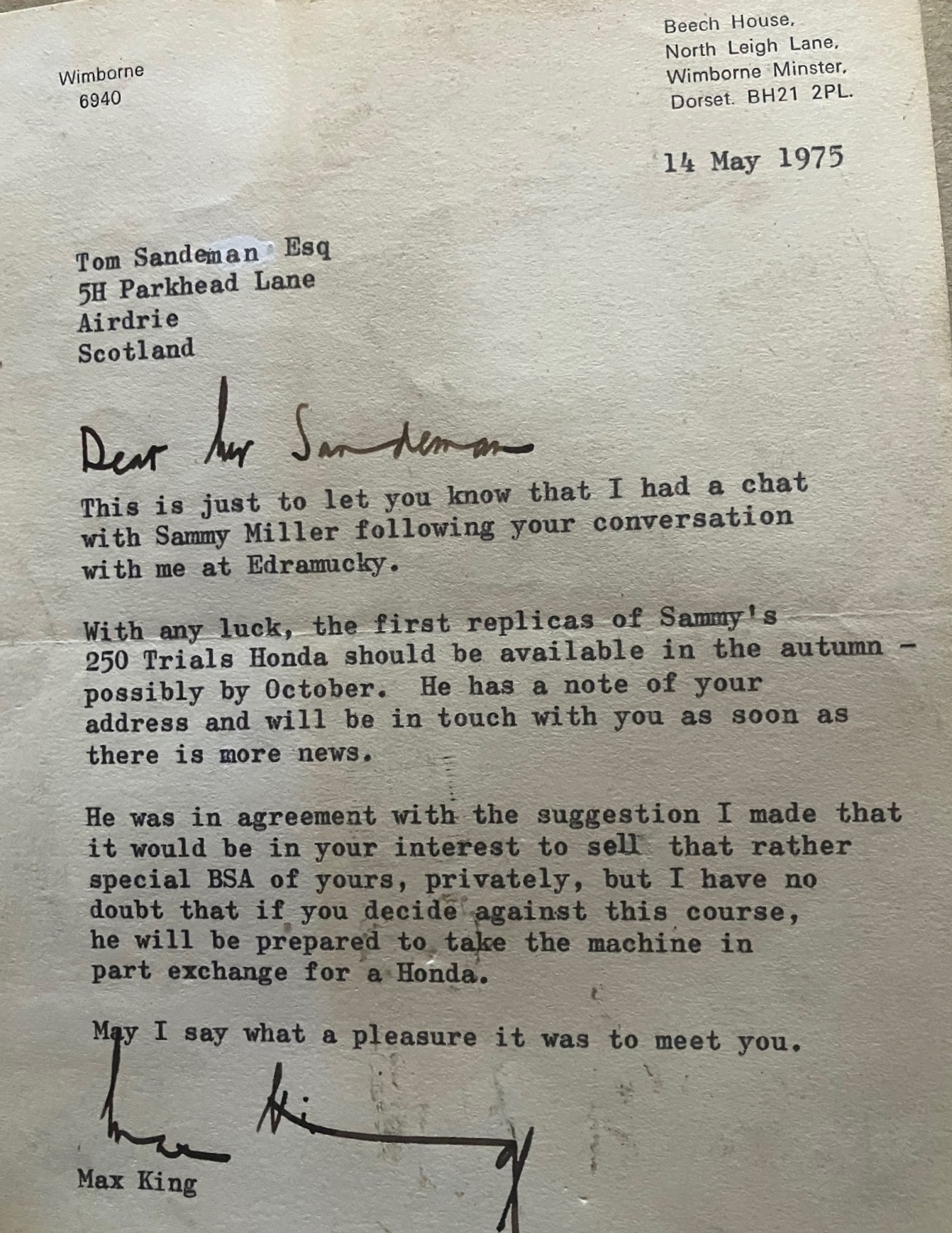
Tommy Sandham, former Production Editor at Trials & Motocross News: “I wrote to Max King back in 1975, having spoken with him at Edramucky, watching the Scottish Six Days Trial there on the Monday. Here are the two replies I received from him. Like many I had a copy of his book, ‘Trials Riding’ which, for a beginner, was a fantastic publication. I later went on to write books which covered the SSDT and the Honda Trials effort, along with other publications on panelcraft.“

John Moffat, owner of Trials Guru website: “When the fourth edition of Max King’s book was released, I was in third year at secondary school in Scotland, my Dad had bought a copy. Two years later I would ride my first trial. I still have his copy complete with a ‘Dymo’ label in red with his full name affixed to the inside front page. I admit that I had read it from cover to cover, over and over again. I have met a lot of people in the sport over the years, but I regret not ever meeting Max King, if only to thank him for bringing so much knowledge and enjoyment to me as a new rider back in 1974.“
Whilst we said at the beginning of this article that books were not popular now, it is interesting to note that people are still buying copies of ‘Trials Riding’ some seventy years after it was first published, albeit when book collections are broken up and sold off or sadly the owner shuffles off this mortal coil and their books are moved on to new custodians.
Copies are frequently offered for sale online across the globe at between ten and twenty times the original sale price of the copy. Higher prices are achieved if the book has retained the coloured dust jacket and in good condition.
We wonder if you, the reader now, reading this article was inspired by Max King’s work?
Max King left a legacy which has survived the test of time, his unique work still exists amongst enthusiasts, he certainly left his presence in the sport of trials.
This article is dedicated to the late Frederick Maxwell Wright King, no breach of his copyright is intended and only minimal excerpts have been taken from his work, ‘Trials Riding’ and referenced in the bibliography below.
Bibliography:
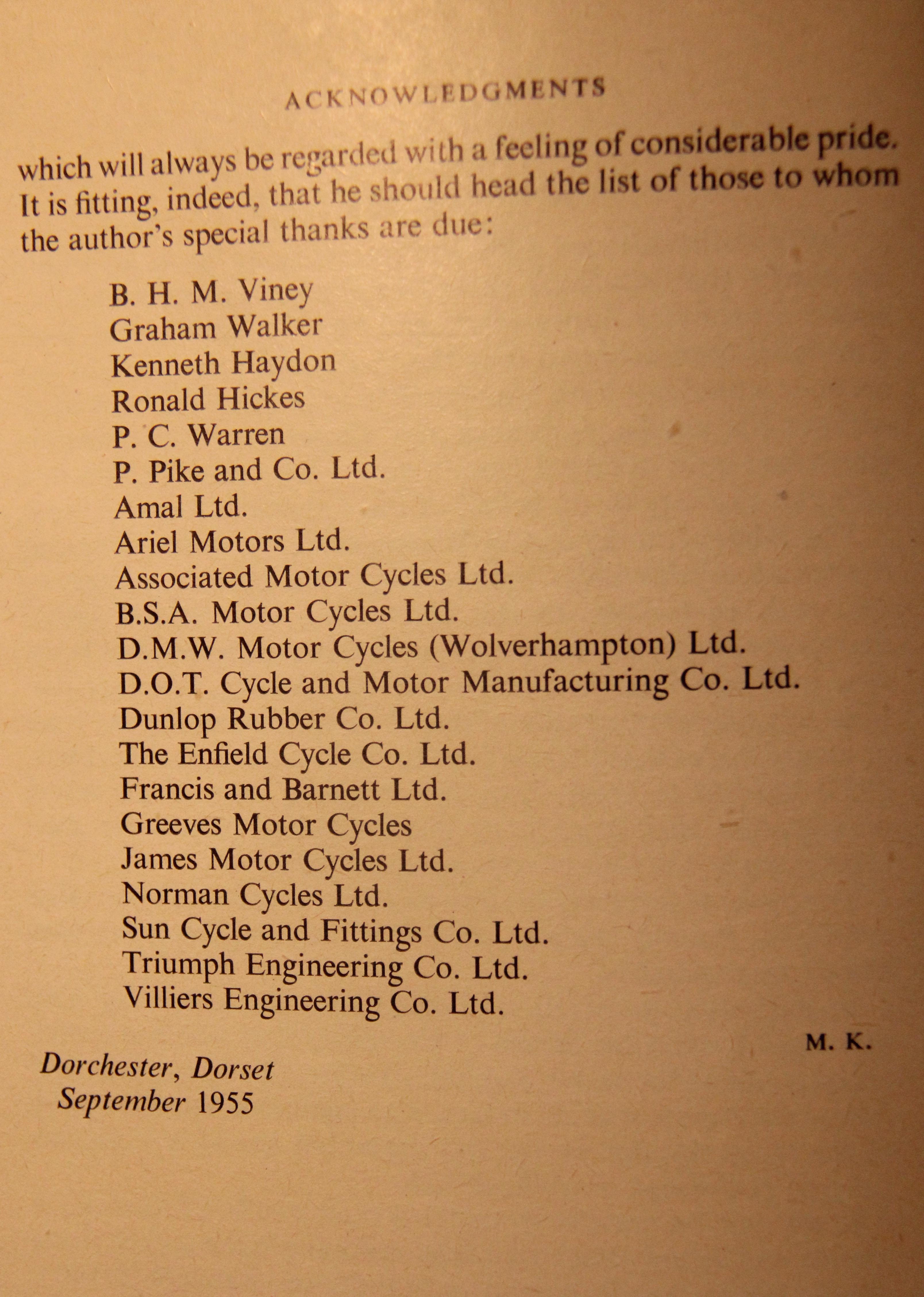
[1], [2], [6] Trials Riding by Max King, 1955 (Temple Press Ltd) – [1] Page X & [2]VII [6] Acknowledgements Page.
Daily Echo Bournemouth – Obituary of Max King, October 2014
[3], [5] Pelham Books – Motor Cycle Trials Riding (Fourth Edition) – ISBN-10 : 0720706009 ISBN-13 : 978-0720706000
[4] [7] [8] Pelham Books – Motor Cycle Trials Riding (Fifth Edition) – ISBN-10 : 0720708753 ISBN-13 : 978-0720708752
With special thanks to: John Dickinson; Tony Davis; Tommy Sandham; Mike Naish and Deryk Wylde for their assistance in the making of this article.
Article copyright: Trials Guru 2025 – DEDICATED TO TRIAL
Apart from ‘Fair Dealing’ for the purpose of private study, research, criticism or review as permitted under the Copyright, Design and Patents Act, 1988, no part of this article may be copied, reproduced, stored in any form of retrieval system, electronic or otherwise or transmitted in any form or by any means, electronic, electrical, mechanical, optical, chemical, photocopying, recording or otherwise without the prior written permission of the author as stated above. This article is not being published for any monetary reward or monetisation, be that online or in print.
 TRIALS GURU - DEDICATED TO TRIAL