Words: Trials Guru
Photos: Tim Bell; Babs Bell & Bell Family Archive; Stig Karlsson; Don Morley; Colin Bullock; Eric Kitchen and Iain Lawrie (Main Photo: Colin Bullock).
With the assistance of: Tim Bell, Northallerton, England
We are always looking out for articles to interest our readers here on Trials Guru and this is such an article. But it is not one for the purist.
Many will remember a Swede called Stig Karlsson who rode a home-brewed Matchless in the Scottish Six Days Trial on three separate occasions. The last time was in 1985, but more recently he competed in the Pre65 Scottish Trial on what appeared to be the same machine and won the event in 2000.

In fact, he won the Pre65 Scottish twice, the first time being on a Triumph in 1999.

Truth is, it was not the same Matchless that Karlsson rode in both the SSDT and Pre65 Scottish. The pre65 entry was a 410cc Matchless, more in keeping with what Associated Motor Cycles produced in the early 1960s. The machine Stig rode in the SSDT was somewhat different.
Karlsson the man:
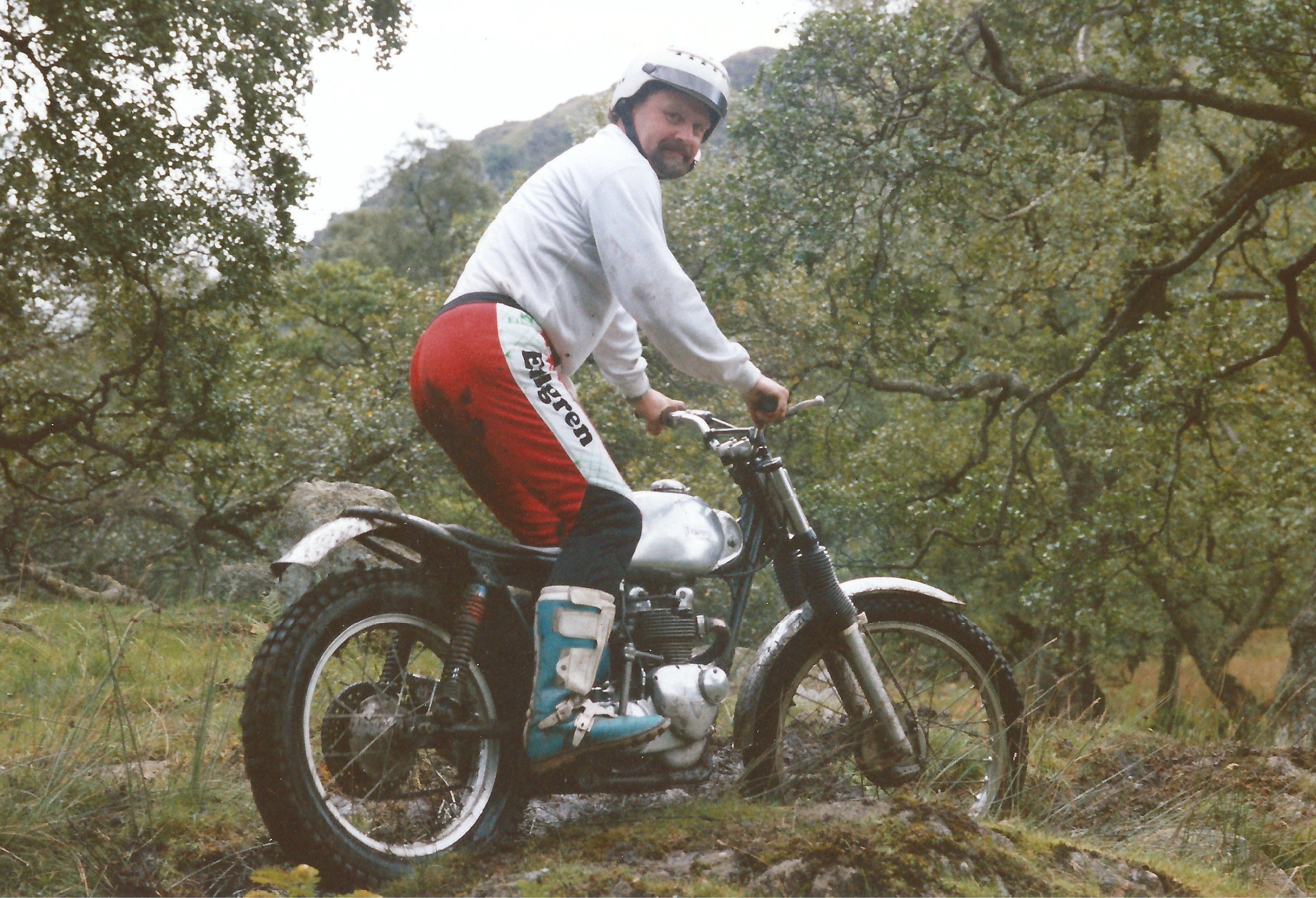
Stig Karlsson was born in Smaland county, southern Sweden in 1946. He was a keen football player and when he attained fourteen years of age, he was playing for a local youth football team when he injured his heel. It was during this time of inactivity he discovered the sport of trials.
Like so many of the period, Stig set about altering a road machine for trials riding, his choice was a machine called a Rex Roadmaster powered by a 198cc Villiers engine. These machines were built at Halmstad on the Swedish west coast and was a 1950 model with four-speed gearbox and rigid frame.
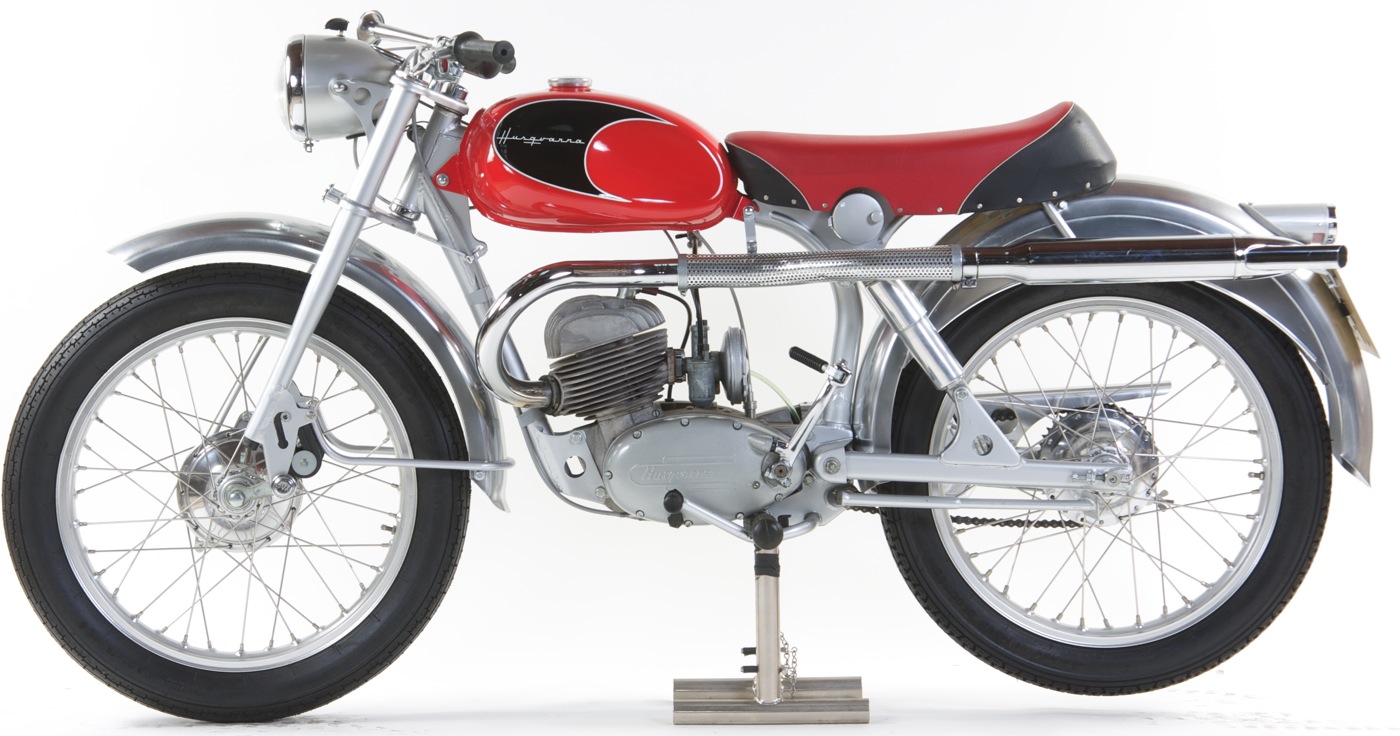
Two years later, Stig took his lightweight motorcycle test and purchased a 175cc Husqvarna ‘Silverpilen’ (Silver Arrow) which was a machine that several Swedish riders adapted for trials use at that time. He called this machine an ‘Antelope’ and ventured to England to ride some events with it and took part in European Championship rounds.
Eventually Karlsson took up employment as a historian, giving lectures at universities, then latterly as a security guard, but in reality, he was a self-taught engineer, many regarded him as a genius given the skills he had accumulated. He lived at Estentorp near Malmback in Smaland county.
It was the Scottish Six Days that got Karlsson noticed, when he entered on his self developed Matchless, a machine that was outdated by around twenty years and viewed as a museum piece rather than a useable trials motorcycle. Many admired the machine at the ‘weigh-in’ at Fort William’s West End Car Park. Stig rode the Scottish three times, Matchless mounted in 1980, 1984 and finally in 1985. But each year he rode, the machine was different, he was continually changing things.
It was during the 1985 SSDT that Northallerton trials rider, Tim Bell first met Stig Karlsson and they became great friends.
Tim Bell: “I was at the sections known then as Kentallen, now called Lagnaha, and I engaged Stig in conversation. We met the following year at the same place and of course that was the year the Chernobyl nuclear disaster which occurred only a few days previously, and he said that we shouldn’t be standing outside in the rain! He came over and rode his Matchless in the Northallerton Three Day Trial and stayed with us. I was riding my 500 Royal Enfield Bullet, narrowly beating Stig after a good battle during the event.”

Tim Bell was lucky enough to obtain Stig Karlsson’s Matchless a couple of years after his death in 2021 having been good friends over the years. In fact, Karlsson entered the Pre65 Scottish as a Northallerton club member, winning the event twice, the first time being 1999 on his 350 Triumph twin and again on the more traditional Matchless the following year.

It is the heavily modified machine that we have obtained photographs of and describe the specification as it is to this day. Obviously, the specification of the machine has varied considerably since Karlsson built it, so don’t be surprised if you read something different or conflicting in a magazine or periodical, which has covered this motorcycle in the past. It would have been nice to interview Stig to get the inside line on the Matchless, being the creator, but sadly this was not to be, and the bike cannot speak for itself.
The current custodian, Tim Bell, has been very co-operative with information about the machine and has taken photographs when he was forced to remove components to service and make repairs recently.

One noticeable change is the front forks which appear now to be Paioli components, possibly of Sherco origin, the Marzocchis possibly having been damaged or simply worn out. A modern style white front mudguard has now been fitted.
Bell: “Stig loaned me his traditional 410cc Matchless to ride the 1990 Pre65 Scottish and was on hand at Pipeline to show me the line. However, some miles previously, the front forks went totally solid and refused to move. I explained this to a bemused Stig who said: ‘Ah, I know what has happened, something has gone wrong with the damping valve which I modified’.”
Scottish Six Days Trial:

In the 1980 SSDT, riding number 193, Stig finished in 171st place. The Matchless he rode was very different to the models that dominated the SSDT in the mid-1950s.

The front forks were of Italian origin, probably Marzocchi married to a Husqvarna front hub laced to a 21-inch alloy rim, but most of the Stig developments were hidden below the tank as this was no standard Matchless. The primary chaincase looked fairly standard, taken from the 1950 G3LC Matchless.

The rest of the motorcycle was clearly a much-modified version of what Plumstead produced. Photographs indicate that Stig used the very reputable American made ‘Preston Petty’ black plastic mudguards, a wise move as they were virtually unbreakable. This particular event was won by Yrjo Vesterinen who had switched camps from Bultaco to Montesa and he was recorded as the first overseas rider to win the Scottish Six Days Trial.
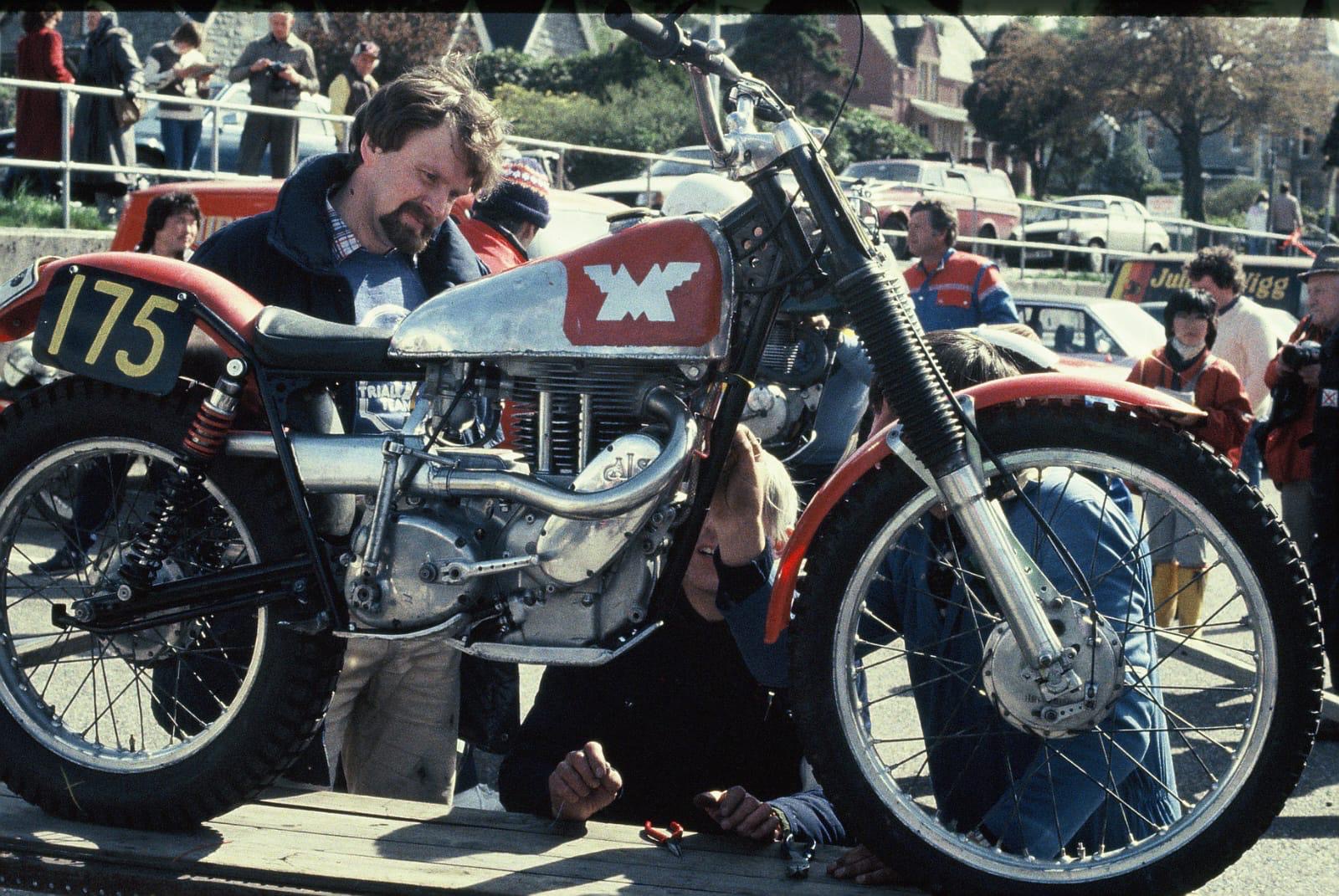
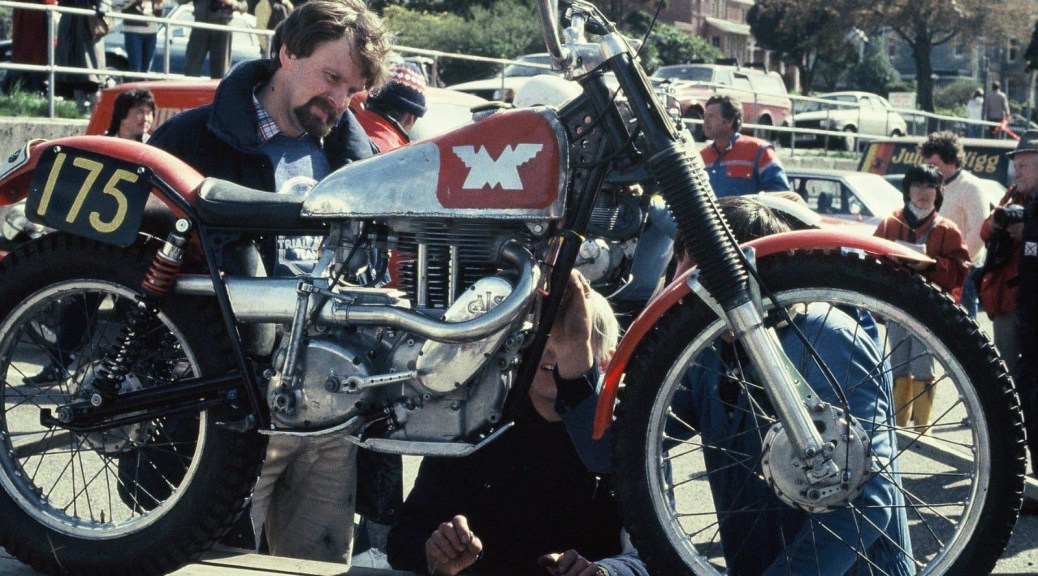
In the 1984 SSDT, Stig rode number 175 and had reverted to using front forks of AMC origin and surprisingly the yokes also looked fairly standard. Front hub was still the Husqvarna component. Without a doubt the AMC internals would have been upgraded, certainly modified by Karlsson to give improved damping.

Karlsson was a firm favourite with the SSDT spectators who marvelled at someone who had the desire to ride such an antique machine, when monoshock bikes had already appeared in trials with the first model Yamaha TY250R. Unfortunately, he failed to finish the event in 1984.

Karlsson’s third attempt at the SSDT was in 1985, he was allocated number 93 and the Matchless was listed as a 400c and once again sported Italian manufactured forks once again and the machine looked very much like it does today. The Husqvarna front and rear hubs still deployed.

Stig finished the event in 182nd position on 563 marks, a sterling effort, given that the sections were pretty much against such a twinshock machine.
Rear wheel:

The rear hub on Stig’s Matchless was always conical and upon closer inspection he deployed an alloy Husqvarna component. With the drive on the kerbside, rear brake within the driven hub and gear shift on the offside, there was no need for a heavier full width hub at any time in his bike’s development. The wheel is built with an 18-inch alloy rim. It could well be that the rear hub came from his Husqvarna Silverpilen.
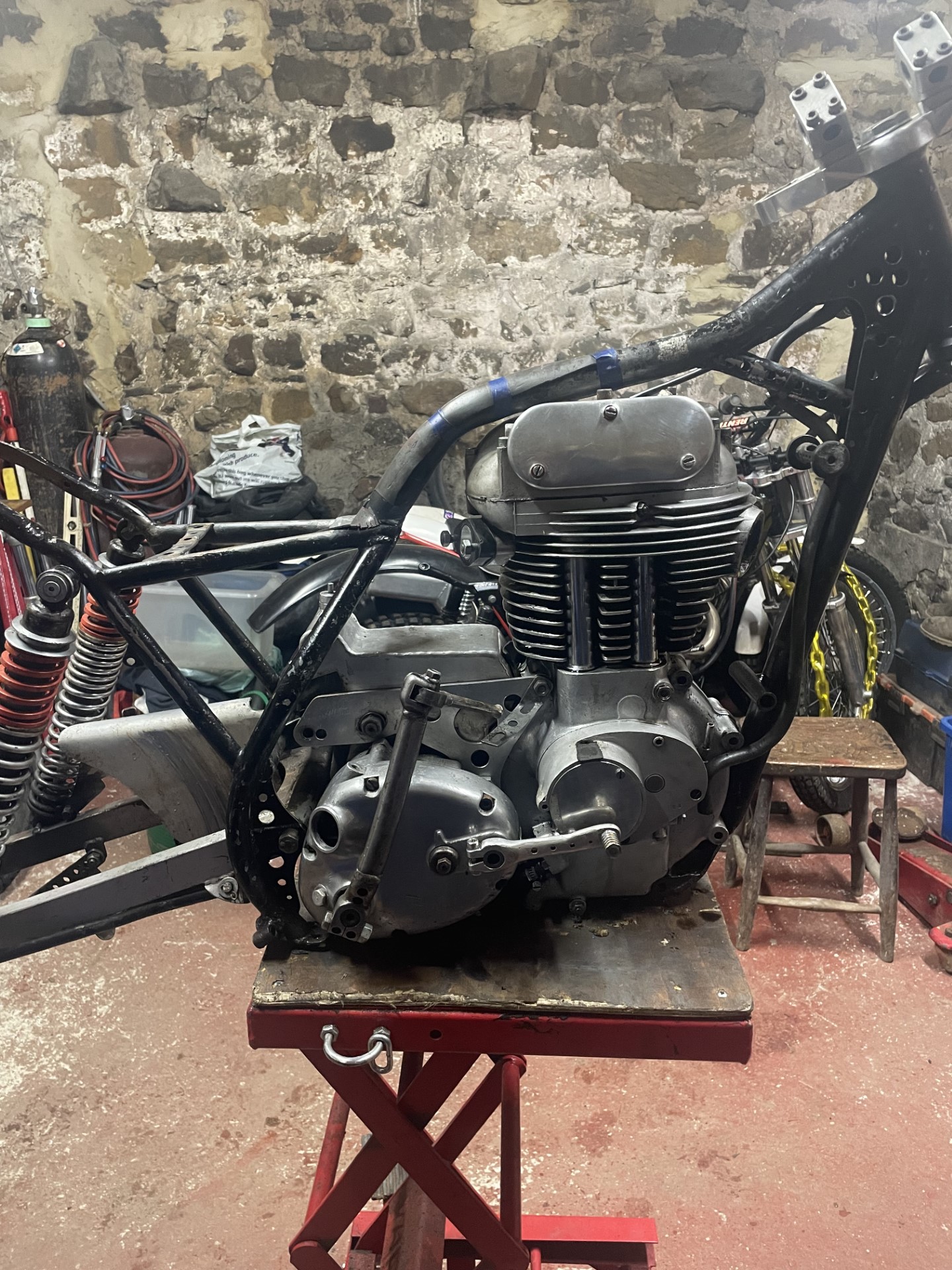
Looking at the Karlsson Matchless, it is evident that it is a very short stroke motor and very compact compared with the original short stroke engines made by AMC. It is believed that Stig Karlsson reworked the frame multiple times for his machine over a twenty-year period.

Front Hub:
At various stages of the machine’s development, it was fitted with an alloy Husqvarna Silverpilen front hub, but this was changed for a Italian Grimeca component as used on SWM. The background information reveals that Karlsson sold the Husqvarna without wheels, so it is reasonable to assume the hubs came from the Silverpilen Husky.
Frame:
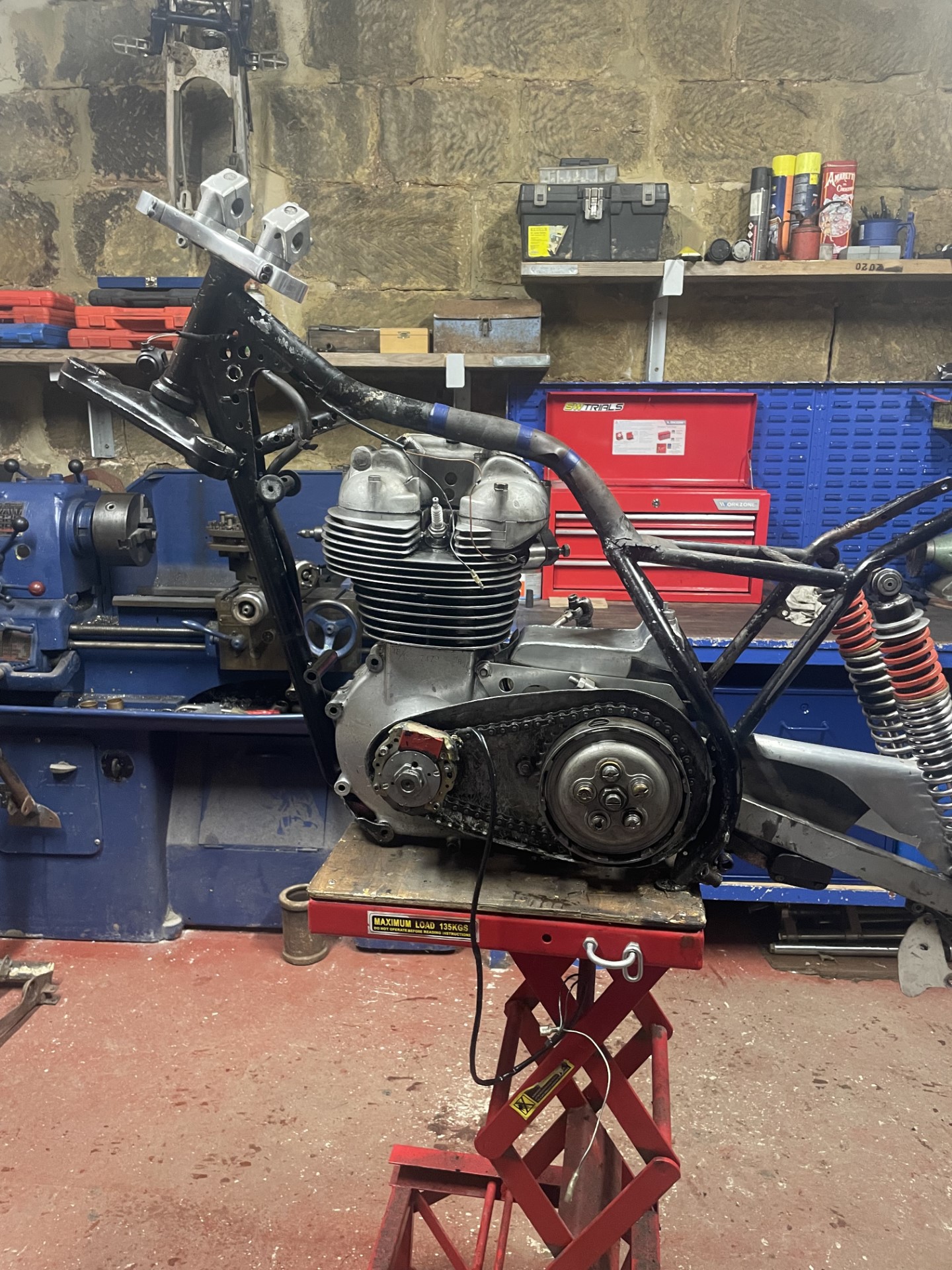
The frame is not as AMC produced, but a home brewed assembly of steel tubing using the Matchless G2 frame as a starting point. It fitted around the engine and in no stretch of the imagination could it be described as original. Stig did things his own way and he constantly altered and improved the chassis as he saw fit. His bikes were an extension of himself, he was an individual and so was his Matchless. Just looking at the photos of the machine today with the tank removed proves this. The engine is a very snug fit in the chassis, but it works well, the weight is low down so benefits from a low centre of gravity, ideal for a trials motorcycle. Each time the engine was changed, the frame was altered accordingly. The DNA of his first Matchless is undoubtedly in the final version.
Rear Suspension:
The rear dampers were Girling Gas Shocks and were probably used as early as his 1980 attempt in the SSDT. Girling started producing the Gas Shock range from 1976 and Stig favoured these units as they had a thicker damper tube that other brands, plus the benefit if progressive springing, using two sets of springs per damper unit.
Gearbox:
Stig used the Burman B52 component which appeared in October 1951, but internally he had made his own gears from scratch, hand filed, trued on a lathe, then heat treated for the job in hand. The result was lower first and second cogs for sections, with a high top gear for any road and fast track work. One can only but marvel at the fact that Karlsson hand-made the gear wheels. This ensured that he got the ratios that he desired.
Crankcase:
Karlsson used the crankcases from a 1948 G3LC and the crankshaft from the 250cc G2 model giving a stroke of 64.4mm. A ‘slipper’ piston of 85mm giving a displacement of approximately 365cc.
Over the years Stig’s Matchless lost the traditional look on the timing side. When he rode it in the early eighties, it had the magneto drive casing not with the familiar ‘M’ symbol, but an ‘AJS’ version. This disappeared some years later when he opted to use a PVL ignition system running on the crankshaft output side. Traditionally Matchless singles up to 1951 had the magneto behind the cylinder and the AJS in front. This changed for the 1952 models when AMC standardised crankcase production and kept the AJS style for both marques, being the forward positioning of the magneto.
Bell: “Stig told me that by using an AJS timing chest rather than the Matchless version, saved a few grammes in weight.”
Cylinder head:
The cylinder head is from the Matchless G80 500cc with very large valves, while he sourced a suitable barrel from a Yamaha XT500, suitably doctored and modified to be married with the crankcases and cylinder head. The engine breathes through an AMAL carburettor.

It is without question that Stig Karlsson was a very good trials rider and a clever engineer who campaigned an outdated machine without making it look so modern that it was not recognisable. He achieved a good balance between a 1950s design and the application in a 1980s world which no one else has attempted. Having said that, we display a Triumph twin which he did create with a perimeter frame and monoshock suspension.
Trials Guru’s John Moffat met Stig Karlsson when he was riding the Pre65 Scottish Trial, the first encounter was in 1994 when Moffat first attempted the event on his 1959 G3C Matchless.
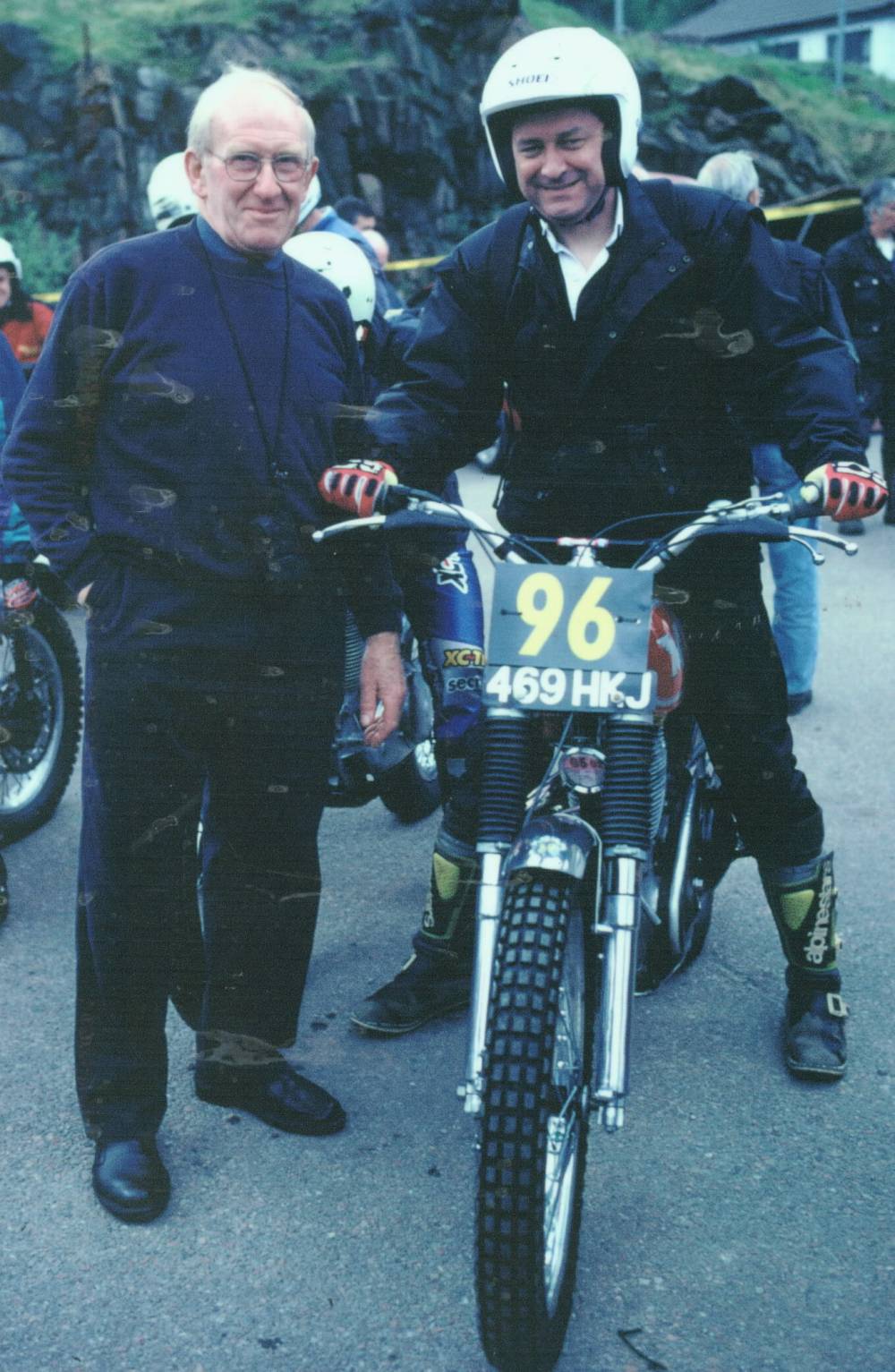
Moffat: “1994 was the first year I entered the Pre65 Scottish at Kinlochleven when it started from the old school and was a one-day affair. I was getting suited up for the day, the bike had been topped up and I was making a few checks before I was to start riding under number two. Someone said ‘hello’ and I looked up and there stood Stig Karlsson, who I had never spoken to previously. He pointed at the footrests of my bike and said: ‘does it handle like a fish with those high footrests?’ making his hand weave like a fish thrashing through water. I thought for a moment and then confessed to Stig that I had no idea, as I had not actually ridden the bike in a section before, I explained that I had no time due to work and family commitments. I had not practiced with the machine as it needed a lot of remedial work when I bought it the year previously. Stig was visibly surprised and said: ‘well good luck, because you will need it!’ I then wondered if I had made the right decision entering with no practice beforehand. However, I was much younger then, in my early thirties and I still had a bit of determination. I got round and on time, lost a pile of marks getting used to my new ‘old’ steed, thoroughly enjoyed the ride, but my arms and back ached as the handlebars were much too low and the footrests set much too high.”

“Needless to say, I rode the next and a further twelve Pre65 Scottish’s on that bike but did some little improvements each time. I will always remember with a smile, what Stig said to me that year and he must have thought I was totally barmy. We did talk a few times after that initial meeting because he realised, I was an AMC enthusiast.”
It is fair to say that Stig Karlsson was very much an individual and certainly did things his way, this was his Matchless and as stated at the beginning of this article, the machine is not one for the purist.
‘Stig’s Matchless’ article was written by and is the copyright of Trials Guru.

Recommended further reading:
Classic Dirtbike – Issue 71 – Summer 2024
Pages 34-41 – ‘An Individual Approach’ by Tim Britton Media Ltd.
Apart from ‘Fair Dealing’ for the purpose of private study, research, criticism or review as permitted under the Copyright, Design and Patents Act, 1988, no part of this article may be copied, reproduced, stored in any form of retrieval system, electronic or otherwise or transmitted in any form or by any means, electronic, electrical, mechanical, optical, chemical, photocopying, recording or otherwise without the prior written permission of the author as stated above. This article is not being published for any monetary reward or monetisation, be that online or in print.
 TRIALS GURU - DEDICATED TO TRIAL