Alison Devine, Secretary of the ACU Trials and Enduro department has decided to hang up her pen and notepad after many years with the sport’s governing body at their Rugby headquarters, she leaves the ACU this Easter.
She has been a well-known voice at the end of the phone to many who use the ACU’s off-road services.
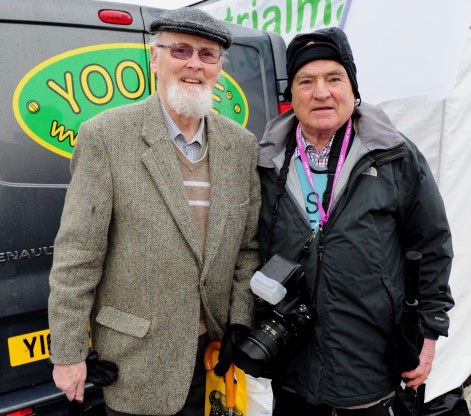
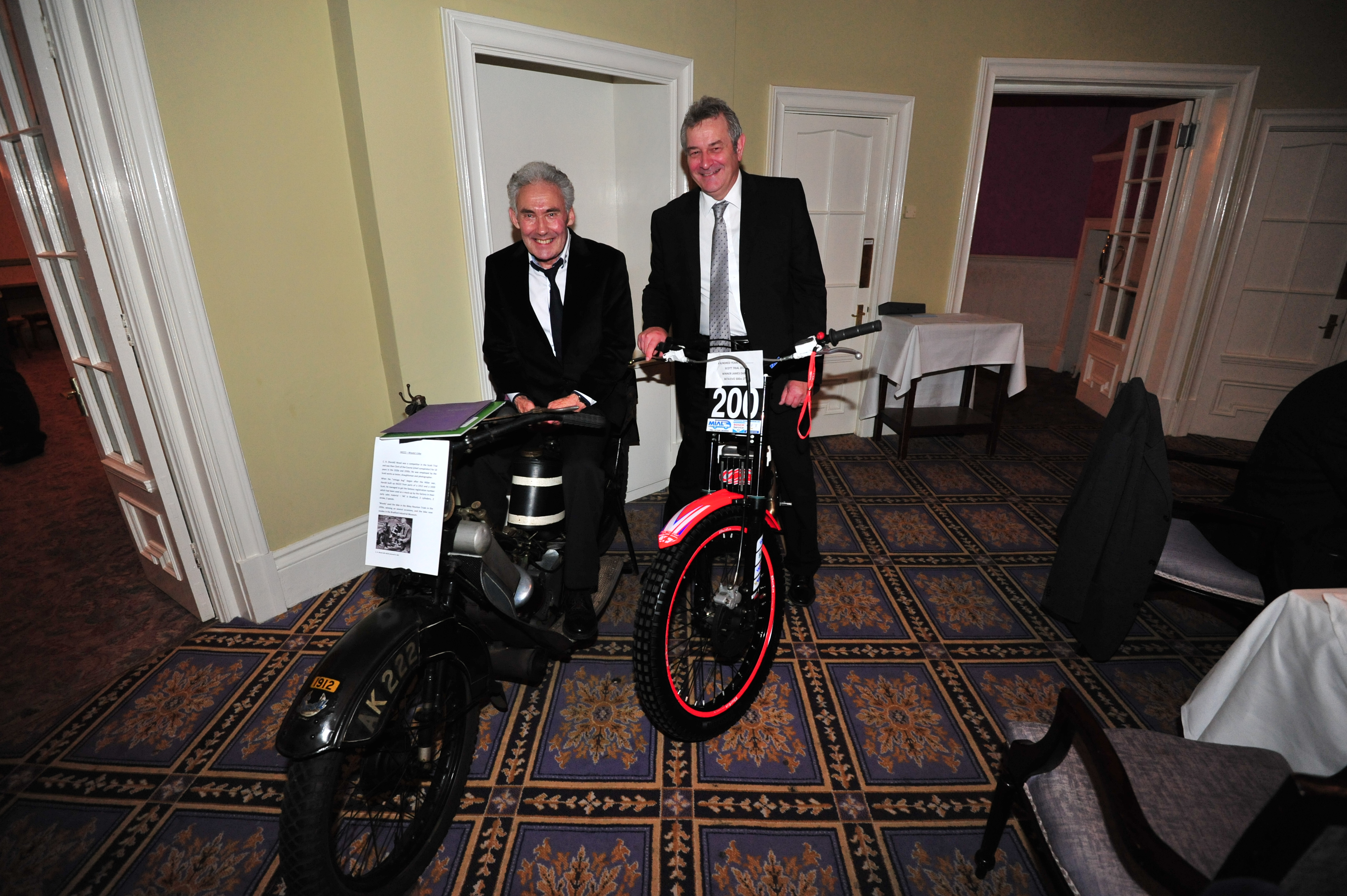
Alison, see photo below with John Collins, Chairman of the Trials & Enduro committee, Director and Vice-Chairman ACU; receiving an advanced gift as recognition for her input to the ACU.
Trials Guru wishes Alison a happy departure from the ACU this Easter.
Alison with John Collins. Photo courtesy: Mick Wren, ACU T&E Committee member.
Release: Mid-March 2015, get yours free of UK postage NOW at £19.99!
Currently on ‘UK pre-order offer’. A donation from the books free proceeds will be made to the ‘ACU Benevolent Fund’ – a registered UK motorcycle sport charity – for the benefit of members and riders who have fallen on hard times. The more copies that are sold… the better!
Help us donate as much as possible to this very worthy cause, for the benefit of our sport, from our sport!
Motorcycle Competition Scotland is definitely a book for the motorcycle sport enthusiast, it covers probably the most exciting era in Scottish motorcycle Racing; Trials; Motocross and Enduro. Over 100 pages, fully illustrated by some wonderful photographs, some never seen before, taken by both professional and amateur photographers of Scottish motorcycle competitors in action.
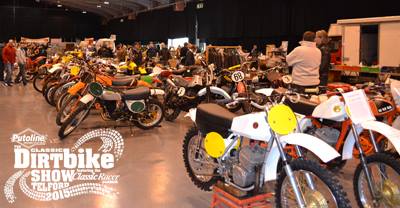
The Putoline – Classic Dirtbike show takes place February 21/22, 2015 at the Telford International Centre, Telford.
Originally the Wrighty Classic Off-Road and Racing Show, organized annually by Alan Wright, the well-known Midlander trials rider who rode for Texaco-Heron Team Suzuki in the seventies, Alan has taken a well-earned retirement and handed over the reigns to Classic Bike Shows, part of the Mortons Motorcycle Media group.
The main sponsor is Putoline Oils UK.
It’s now very much more than just another show with special guests, on-stage interviews and a chance for old friends to meet up annually.
Trials Guru will be there and most likely visiting the Trial Magazine/Classic Trial stand during the weekend.
Advance tickets are now sold, so it’s pay at the door.
Please say ‘Hi’ – See you there!
Three times World Champion meets eleven times British and twice European trials champion! or – Vesty meets Sammy! at last years show with Sammy’s 1966/67 SSDT winning Bultaco, now owned by Vesty! Photo: Mortons Motorcycle Media.
Photos: Iain Lawrie; OffRoad Archive; Bob Dunwoody; Sammy Miller Museum.
Photo: Iain Lawrie
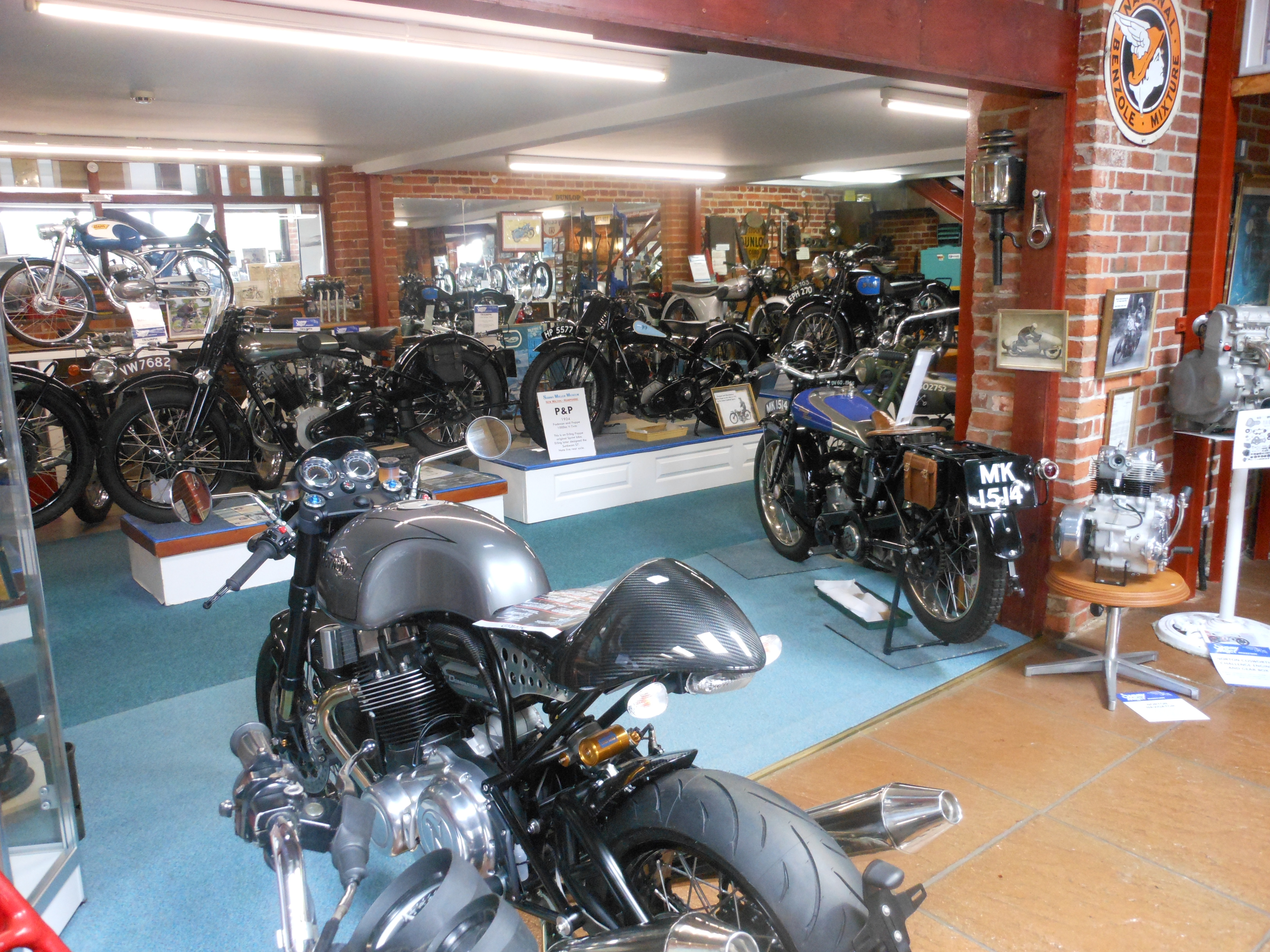
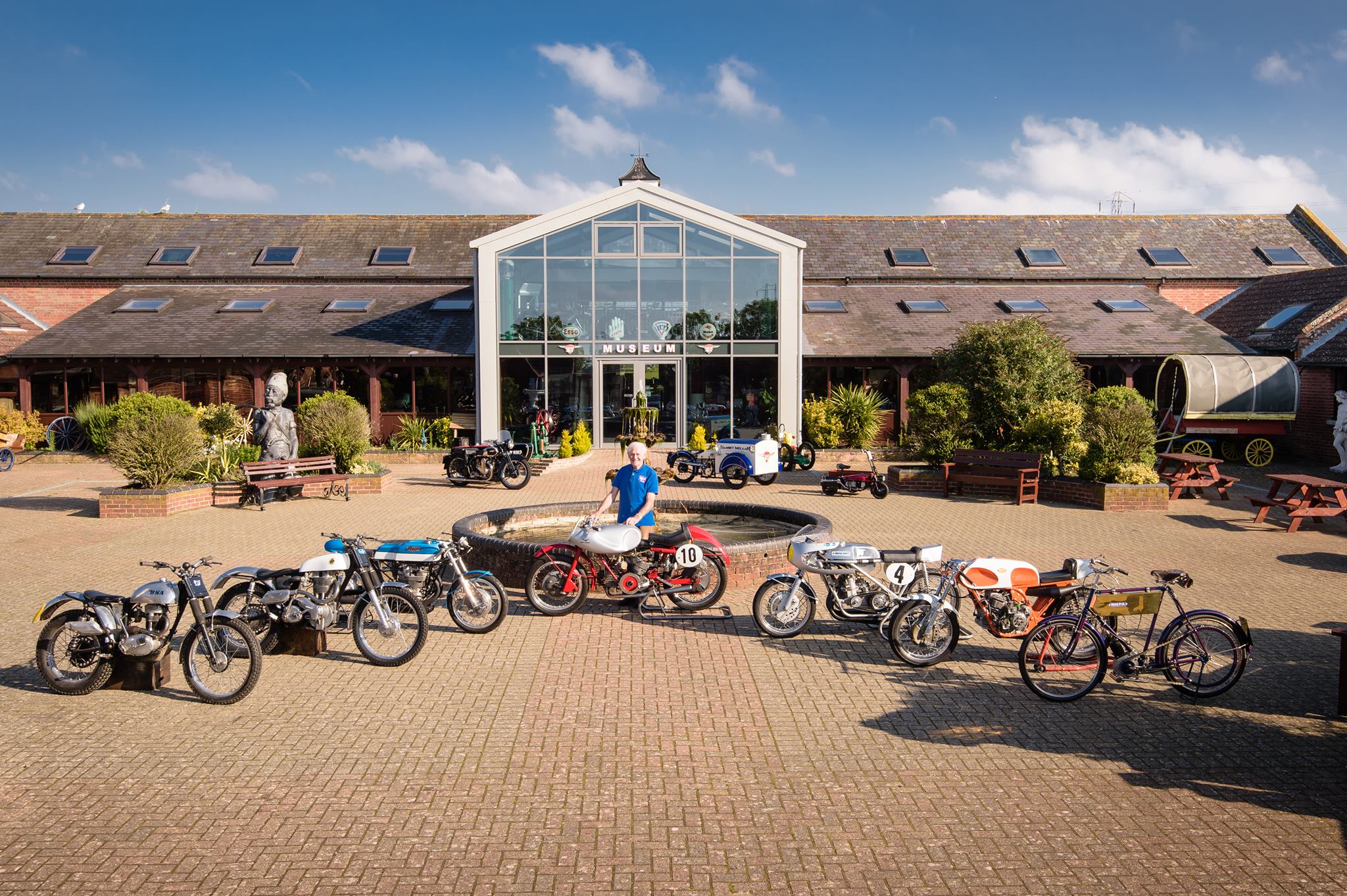
In 1996 Sammy Miller MBE took over the run-down premises of an old farm at the Bashley Cross Roads, New Milton and converted the barns into a modern, prestigious building with picturesque surroundings. It is now accepted as housing one of the finest collections of fully restored motorcycles in the world, including factory racers and exotic prototypes.
At the end of 2004 permission was granted for an extension to the museum which now allows it to house over 500 exhibits. The museum was further expanded in 2021.
Sammy Miller MBE and his wife, Rosemary.
Sammy’s life has always been dedicated to motorcycling. As a young boy he followed motorcycle racing in Ulster and then went on to compete and win his first race meeting in 1953.
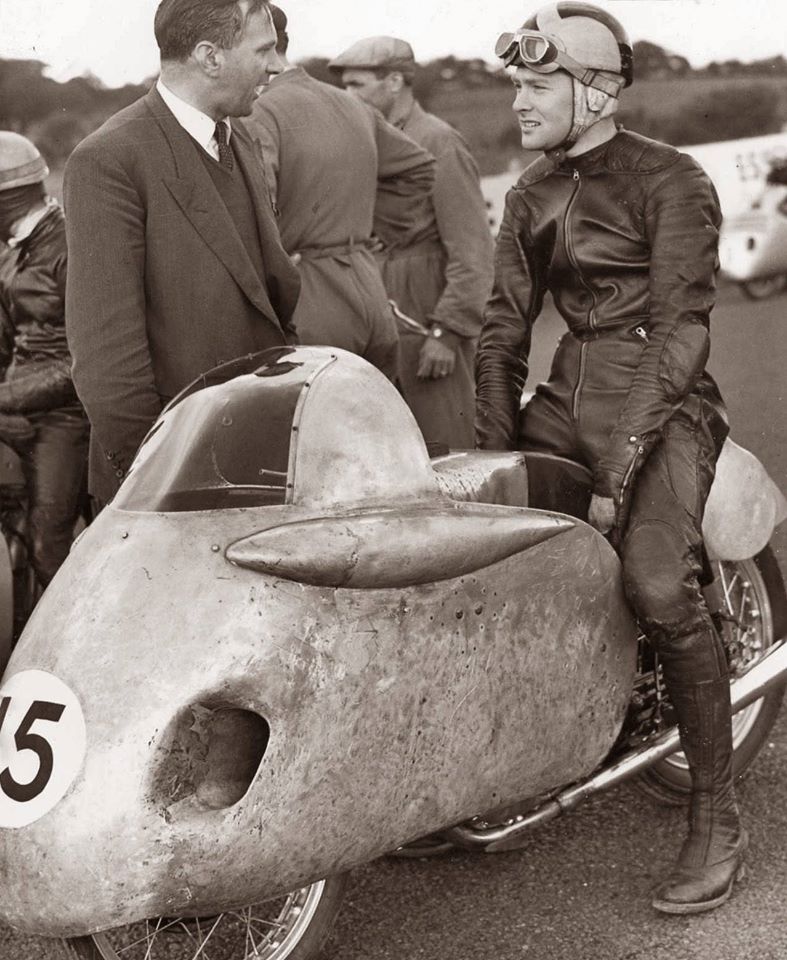
Sammy Miller (NSU) at the Ulster Grands Prix in 1957 chats with sponsor Terry Hill – Photo: Bob Dunwoody
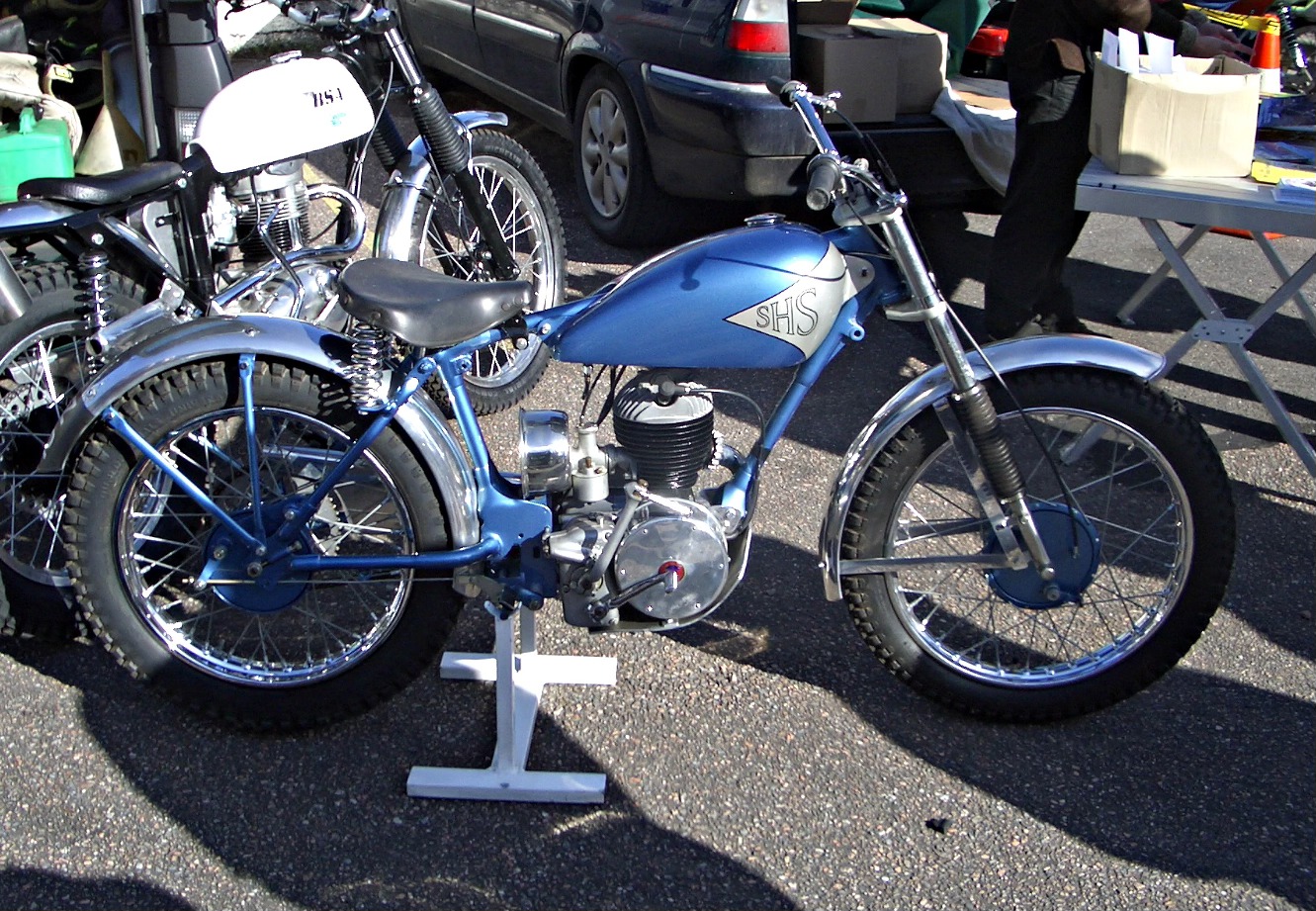
After a well documented period on the Road Racing Grand Prix circuits he switched to trials, at first building his own trials bike, the 197cc SHS (Samuel Hamilton Special) in 1954.
Sammy outside his first shop in New Milton (Photo: Sammy Miller Museum Archive)
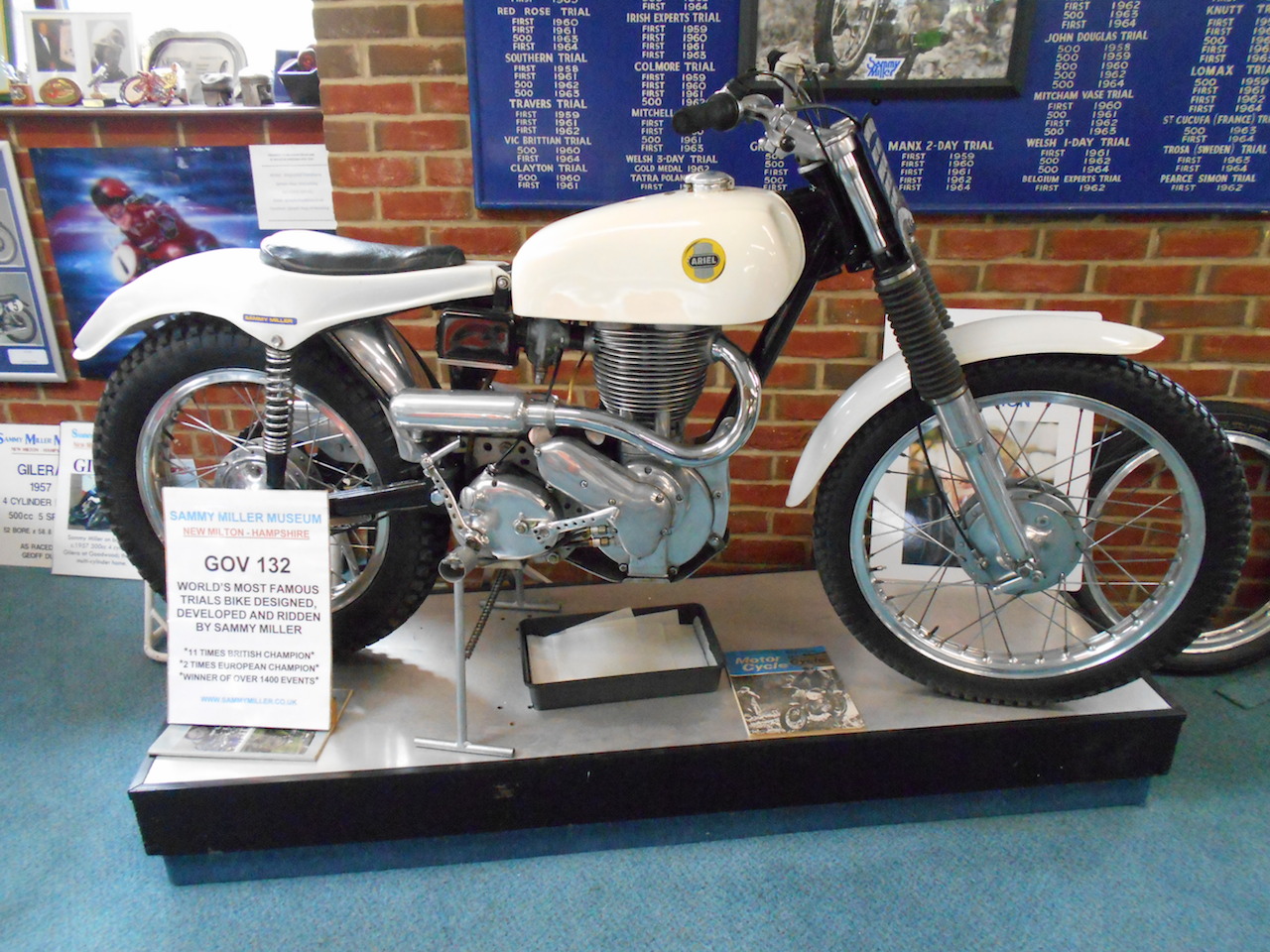
He then went on to develop the world famous Ariel trials machine GOV 132 for the Ariel factory before moving on to Bultaco in 1964 , changing the face of trials in 1965 with the 244cc Bultaco Sherpa T, and then on to work for Honda Motor Company in 1973 to design the world championship winning trials machine. He is still very active today, but in his beloved workshop where the sign above the door reads: ‘Another Day in Paradise’.
Sammy on his ‘GOV Replica’ Ariel HT5 on Grey Mare’s Ridge in the Pre’65 Scottish Trial. Photo: Copyright Iain Lawrie, Kinlochleven.
Unlike most other museums this is more than a static collection to be dusted and polished at regular intervals and displayed like butterflies with pins through them. This is a live museum, for whenever the opportunity presents itself these machines are run in classic bike events of one kind or another. There are many clubs which now organise open days and exhibitions at Sammy’s museum.
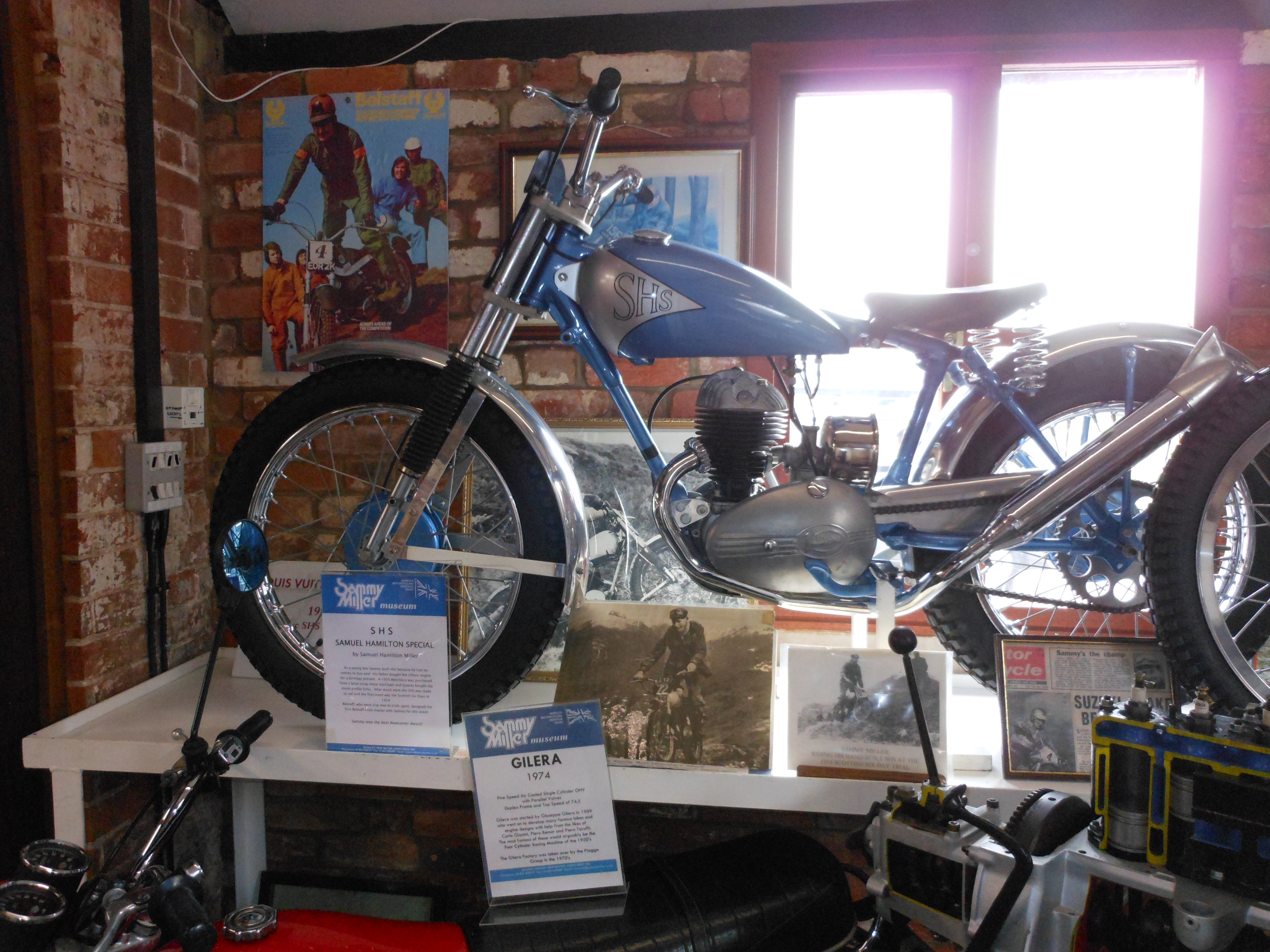
The exact replica SHS of 1953 which Sammy Miller built with a 250cc Matchless rigid frame and 197cc Villiers engine, which he rode in his first SSDT in 1954. Photo: Iain Lawrie.
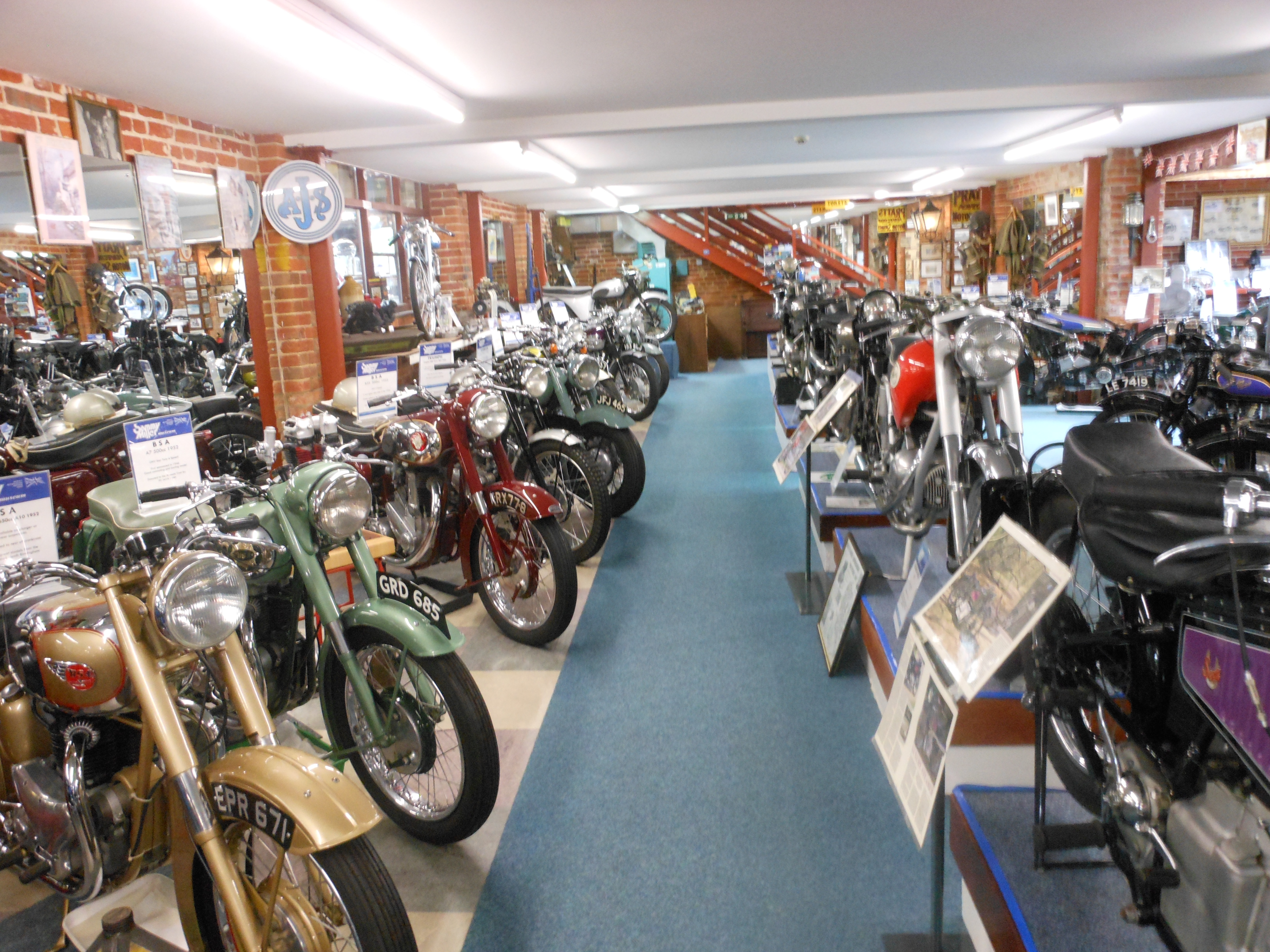
Many of the racing machines are still fully competitive and capable of giving a good account of themselves in high-speed parades. Like any good museum the contents are changing constantly. Virtually every new acquisition represents a full-scale restoration and if parts are not available, then Sammy will have them made to suit the rebuild. Apart from the motorcycles on display you will also see many interesting artefacts, all of which represent a link with motorcycling of a bygone era.
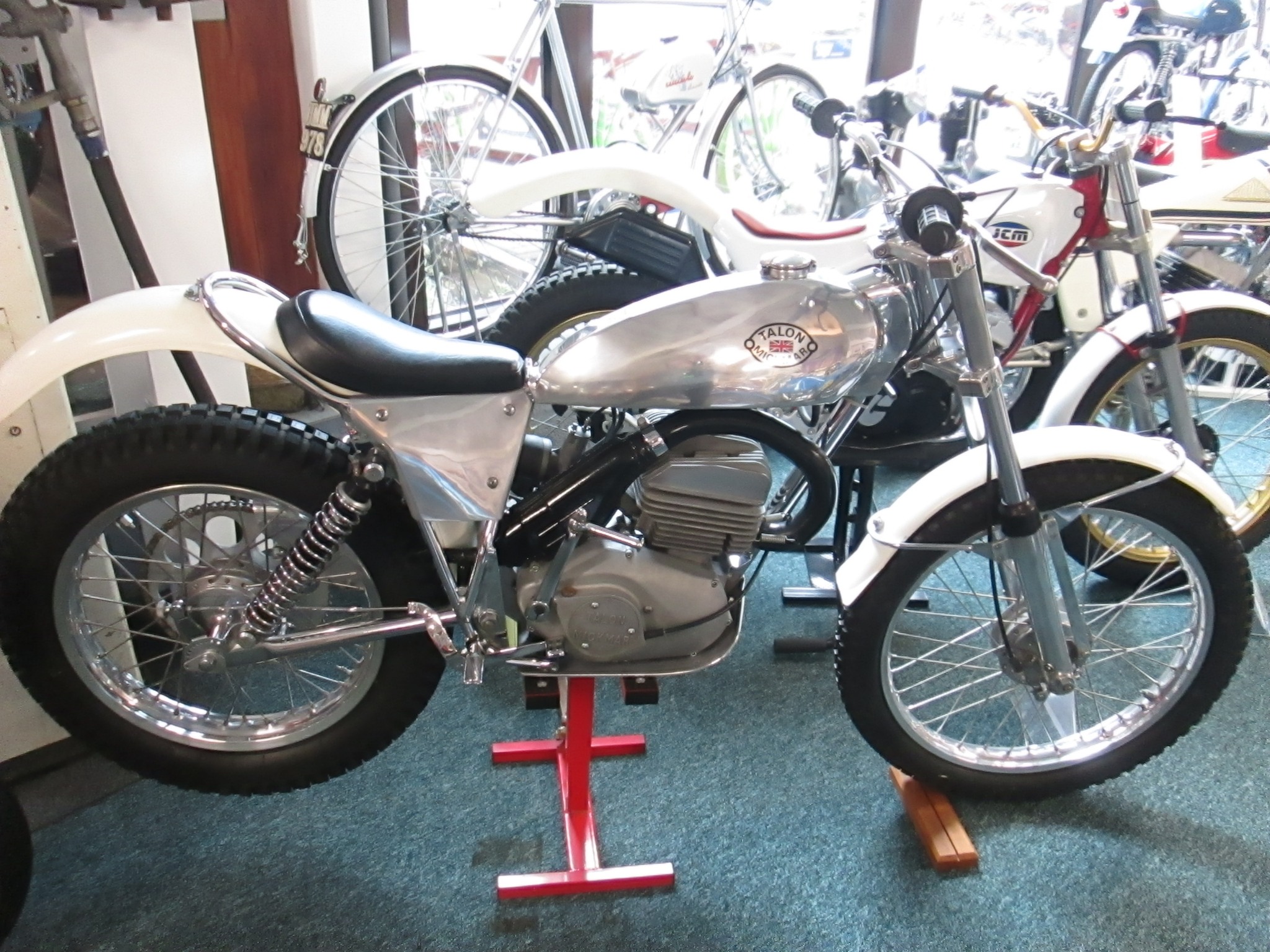
The Off-Road section is extensive and captures the past. There are many unique and rare machines to behold, one of which is the Talon Mickmar trials machine which was a prototype. There are also Jawa ISDT machines from the mid-seventies, and even the long track championship winning machine of the late Simon Wigg.
History Preserved:
The late Gordon Jackson putting the finishing touches to his factory 350cc AJS at the 1962 Scottish Six Days Trial in Gorgie Market, Edinburgh – Photo: OffRoad Archive.
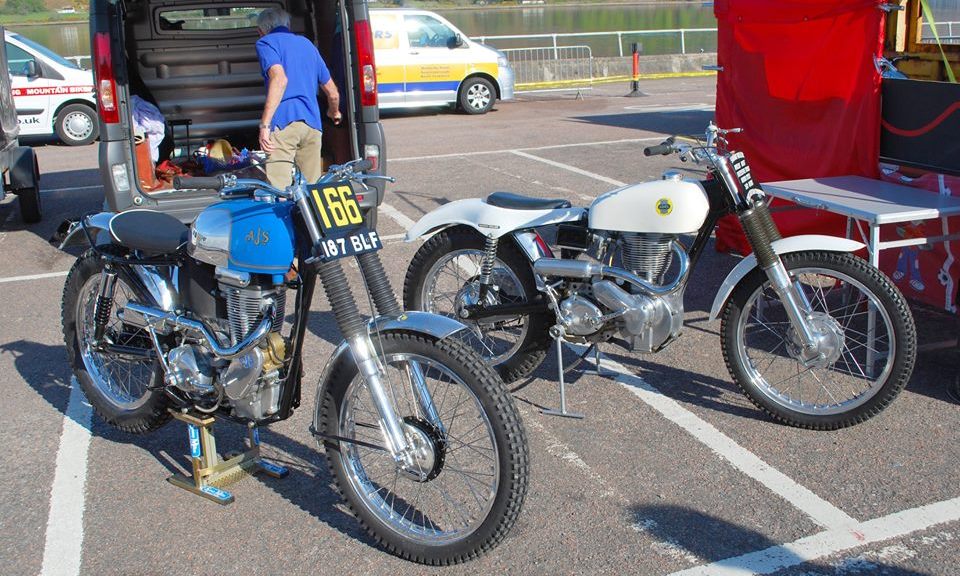
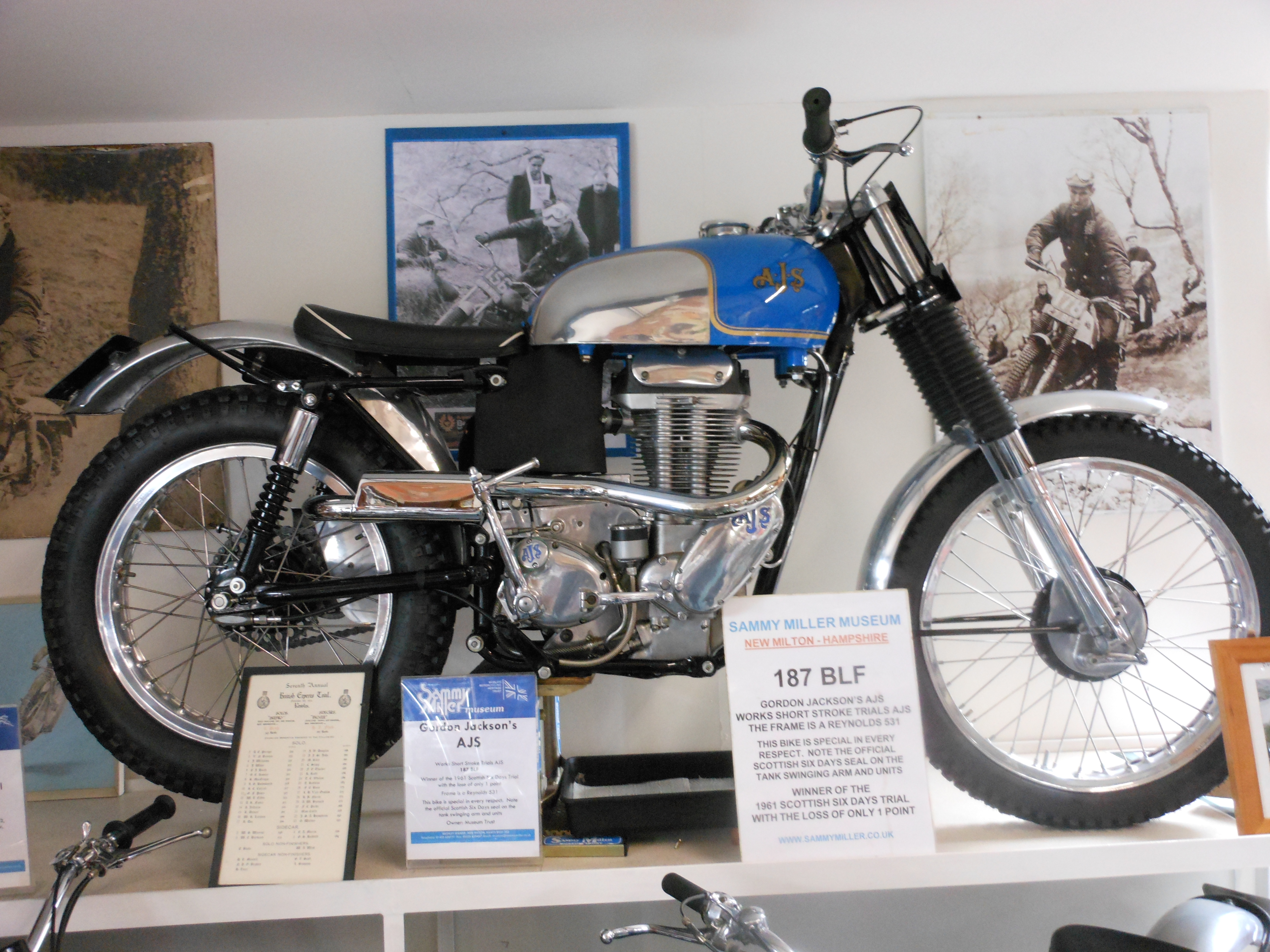
Sammy managed to locate the 1961 SSDT-winning AJS (187BLF) ridden by Gordon Jackson when he recorded the famous one dab victory on the Grey Mare’s Ridge section.
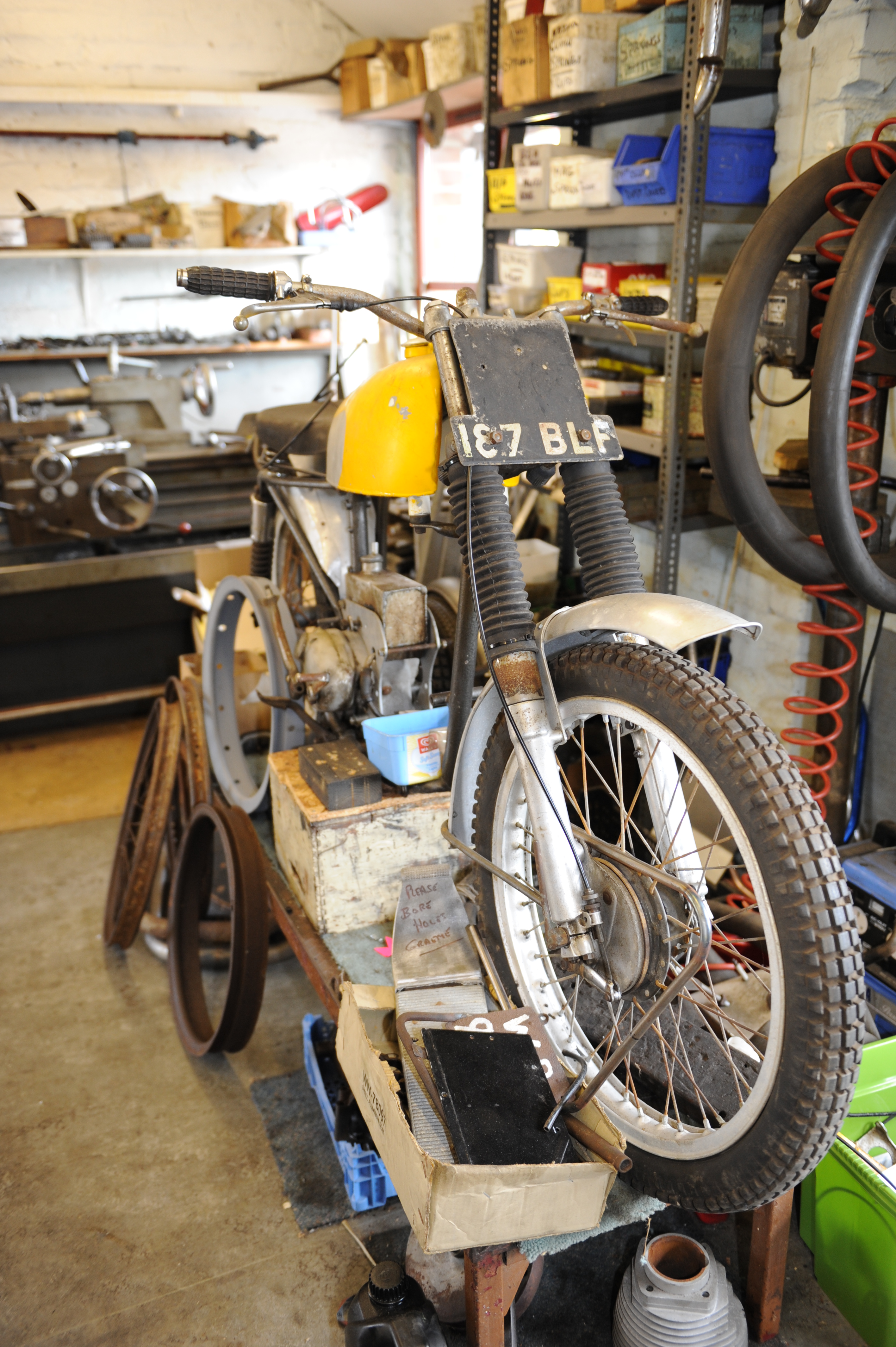
Gordon Jackson’s factory AJS 187BLF in ‘as found’ condition, seen here at Sammy Miller’s ready for restoration.
The machine was in poor condition and in boxes but Sammy restored it back to its original specification, much as it had been ridden by Gordon Jackson in 1961.
The Gordon Jackson AJS 187BLF rebuilt and ready to go with Sammy at his museum.
Sammy was both delighted and proud to exhibit both GOV132 and 187BLF at the Scottish Six Days Trial in 2011 to celebrate the events 100 years.
SSDT Centenary 2011 – Two of the most famous trials machines, of all time – 187BLF (350 AJS) which won the 1961 SSDT ridden by Gordon Jackson losing only one mark. GOV132 (500 Ariel) Sammy Miller’s famous machine that won the SSDT (1962 & 1964) – Photo: Iain Lawrie.
The museum houses the finest collection of fully restored motorcycles in Europe. There are over 400 rare and classic motorcycles on display in four galleries.
Sammy with the AJS Porcupine racer
During all this he has still found the time to restore many rare and exotic machines to concourse condition and perfect working order. These he kept as a private collection until 1980 when he opened up a museum so that the public could have a chance to see and hear them.
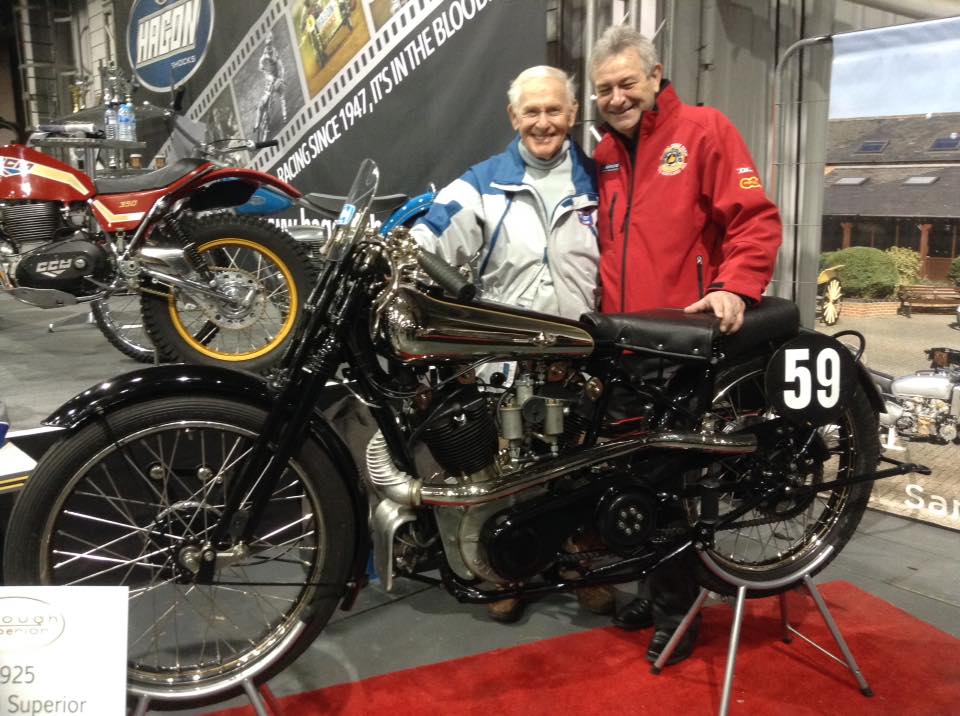
Friendship and mutual respect, Sammy Miller MBE and Bernie Schreiber at Sammy’s workshop at New Milton. (Photo: Bernie Schreiber Collection)
He even took some abroad to many locations, including Australia and New Zealand, so that they could be seen by as many people as possible. One of Sammy’s Museum exhibits is now on loan to the new FIM Museum in Switzerland.
The Talon Mickmar which is on permanent display at Sammy Miller’s Museum at New Milton. (Photo Sammy Miller Museum Trust)
Some years ago now, Sammy placed the entire collection into a ‘Trust’ to enable it to be kept together for future generations to experience and admire. There is no one more dedicated to motorcycling than Sam. He spends ten hours a day seven days a week working, promoting or restoring motorcycles.
And it’s much more than a museum, it houses Craft Shops, the Bashley Manor Tea Rooms, Sammy’s Pit Stop and has Alpacas, Donkeys and Goats for the amusement of children of all ages!
Photo: Sammy Miller Museum Trust.
Sammy’s Museum Photos
Photo: Iain Lawrie.
Iain Lawrie has visited Sammy’s Museum twice, here is a small mouth watering selection of photographs he took and shares them with readers of Trials Guru.
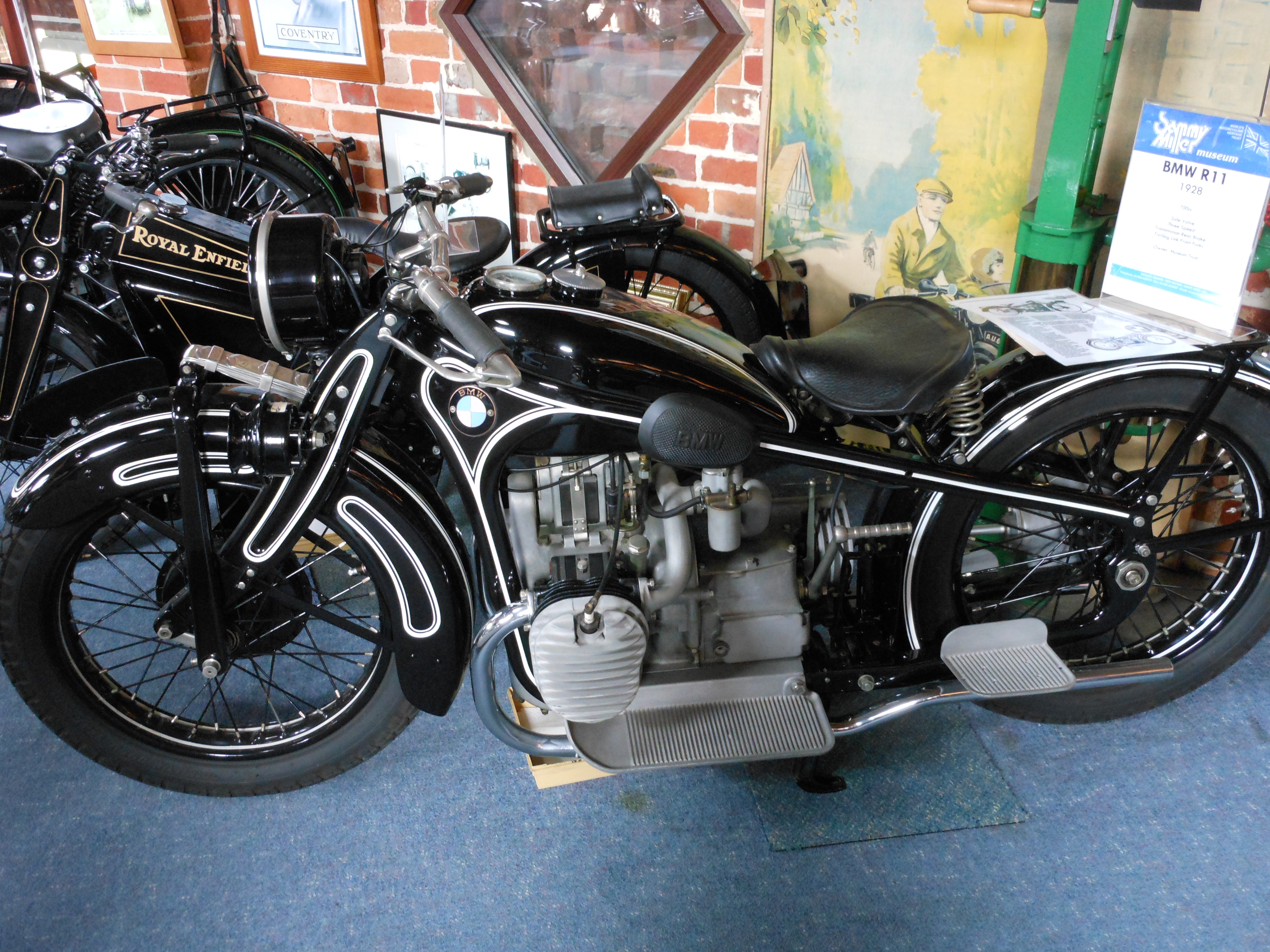
BMW R11 (1928) – Photo: Iain Lawrie.
>
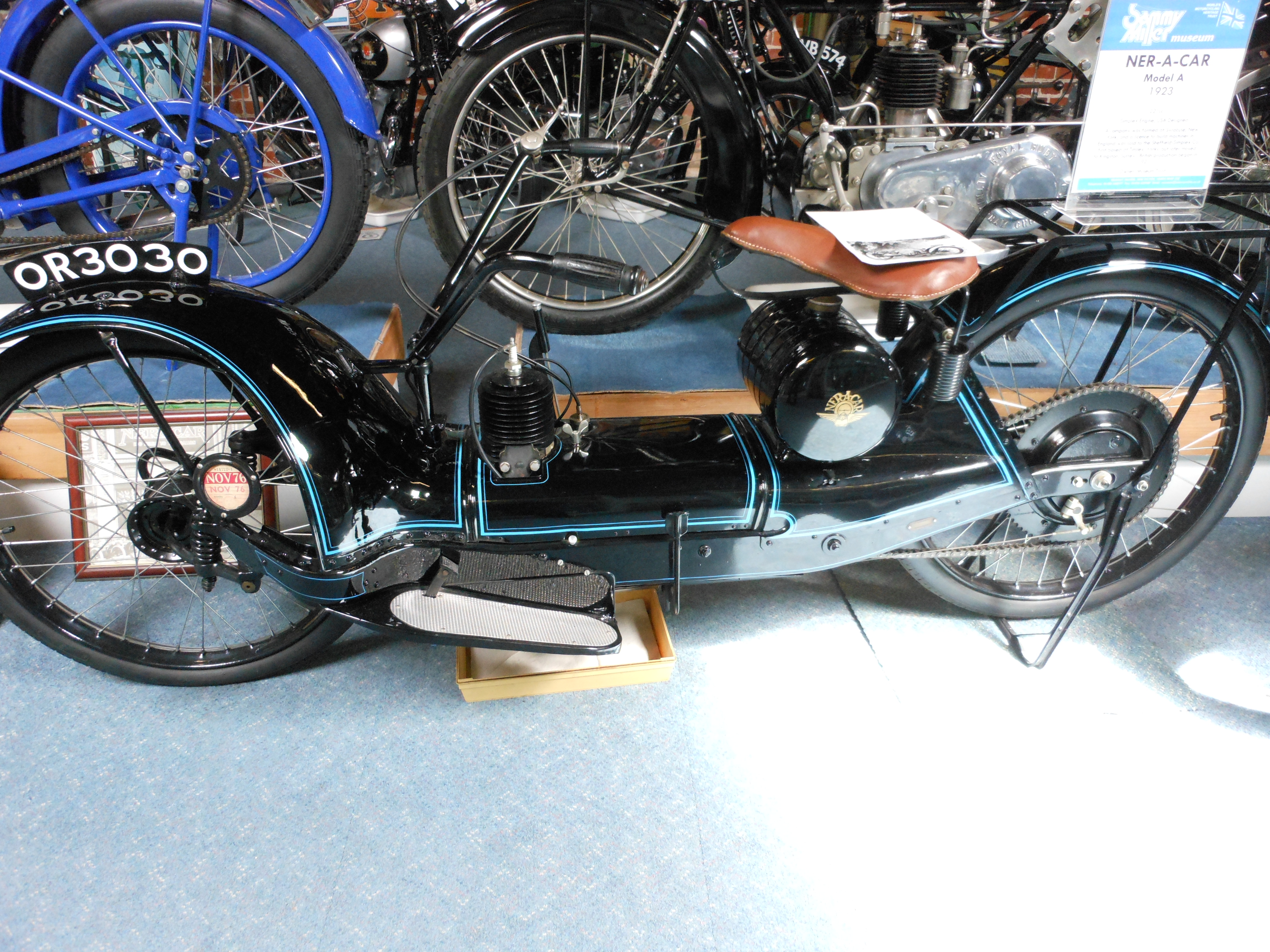
The very unusual ‘Ner-A-Car’ Model A (1923) – Photo: Iain Lawrie.
>
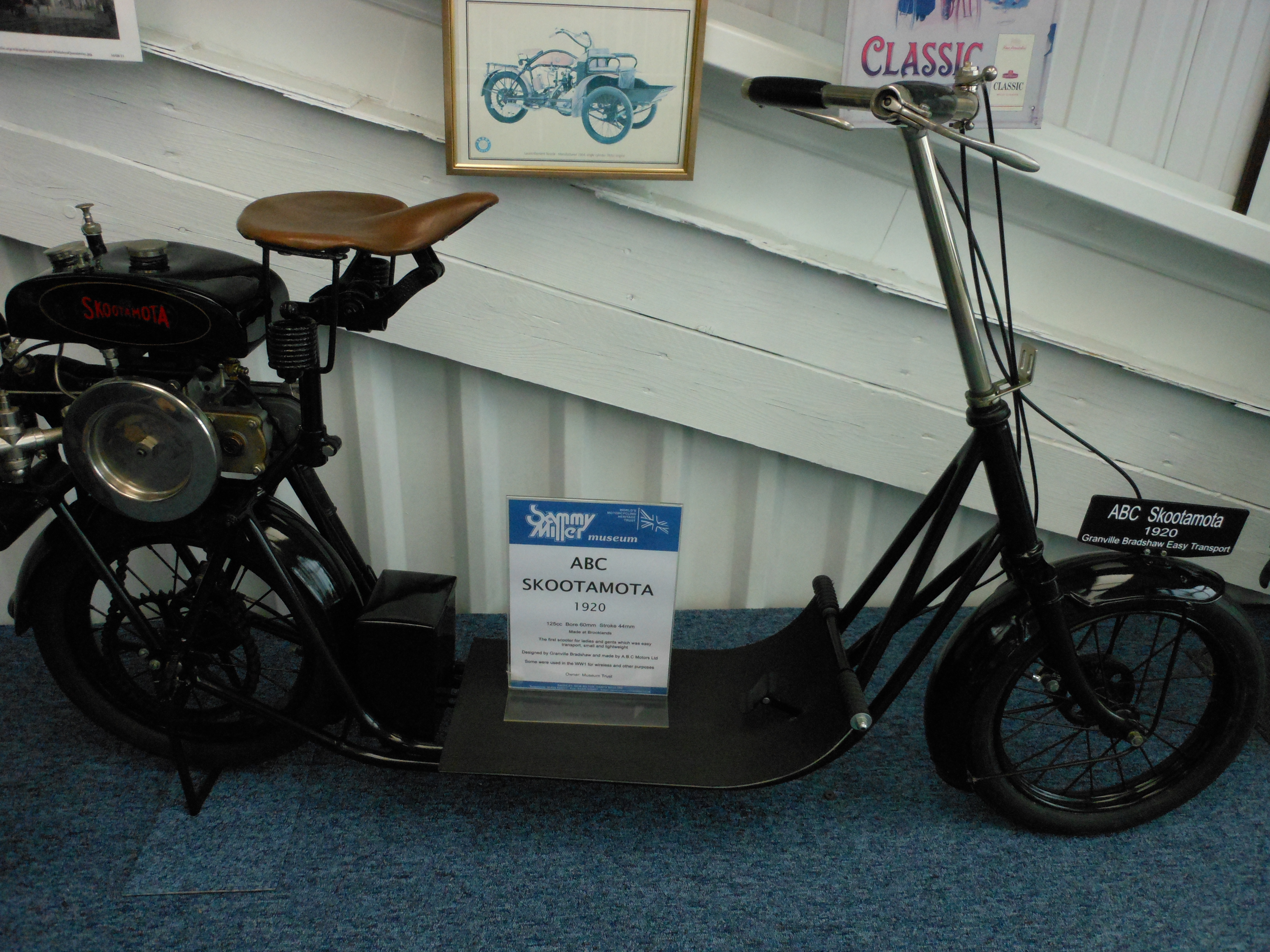
ABS Skootamota (1920) – Photo: Iain Lawrie.
>
Replica of the 1953 SHS (Samuel Hamilton Special) – Photo: Iain Lawrie.
>
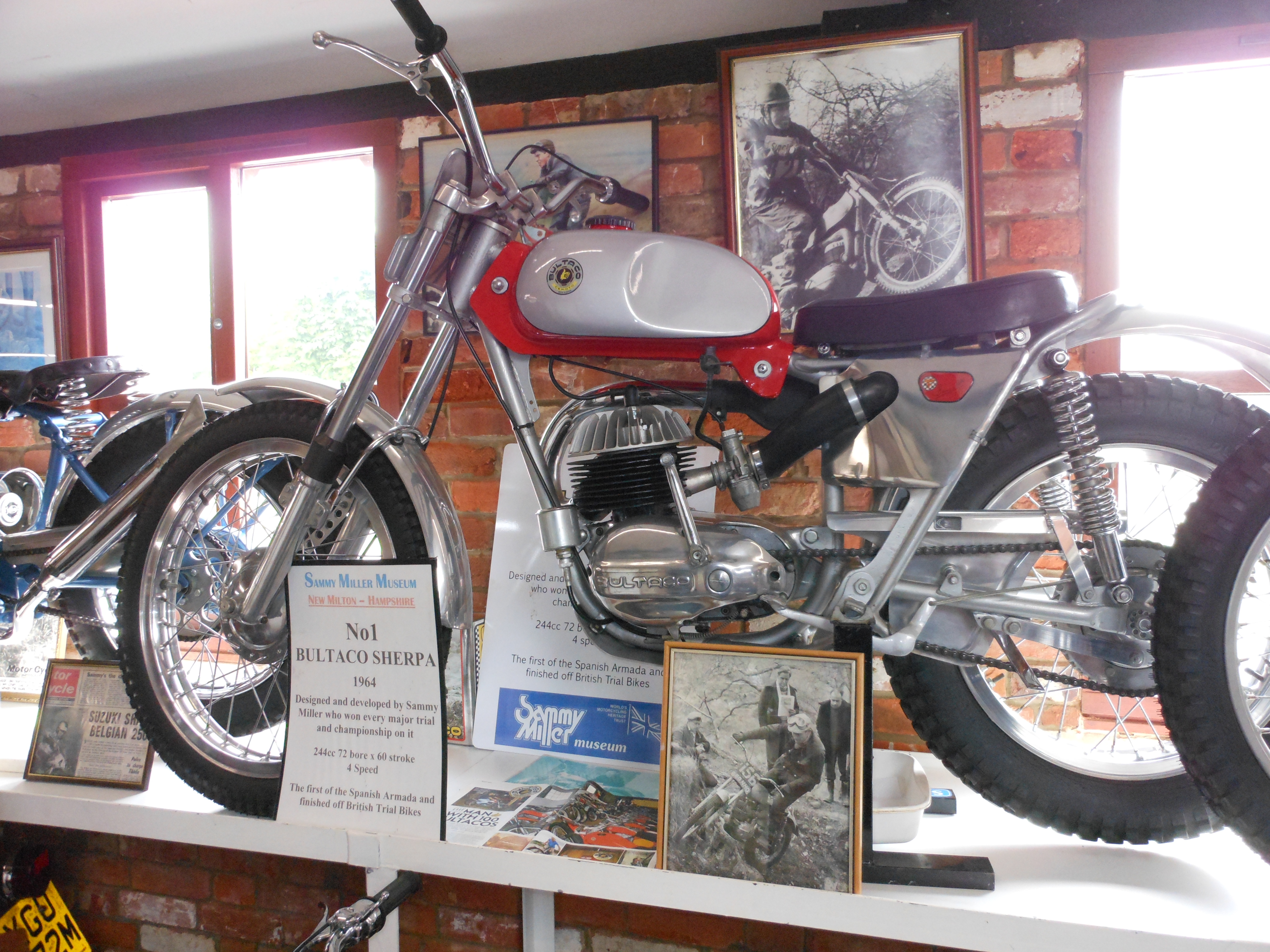
The first Bultaco Sherpa T (1964) 669NHO with which Sammy changed the face of trials – Photo: Iain Lawrie.
>
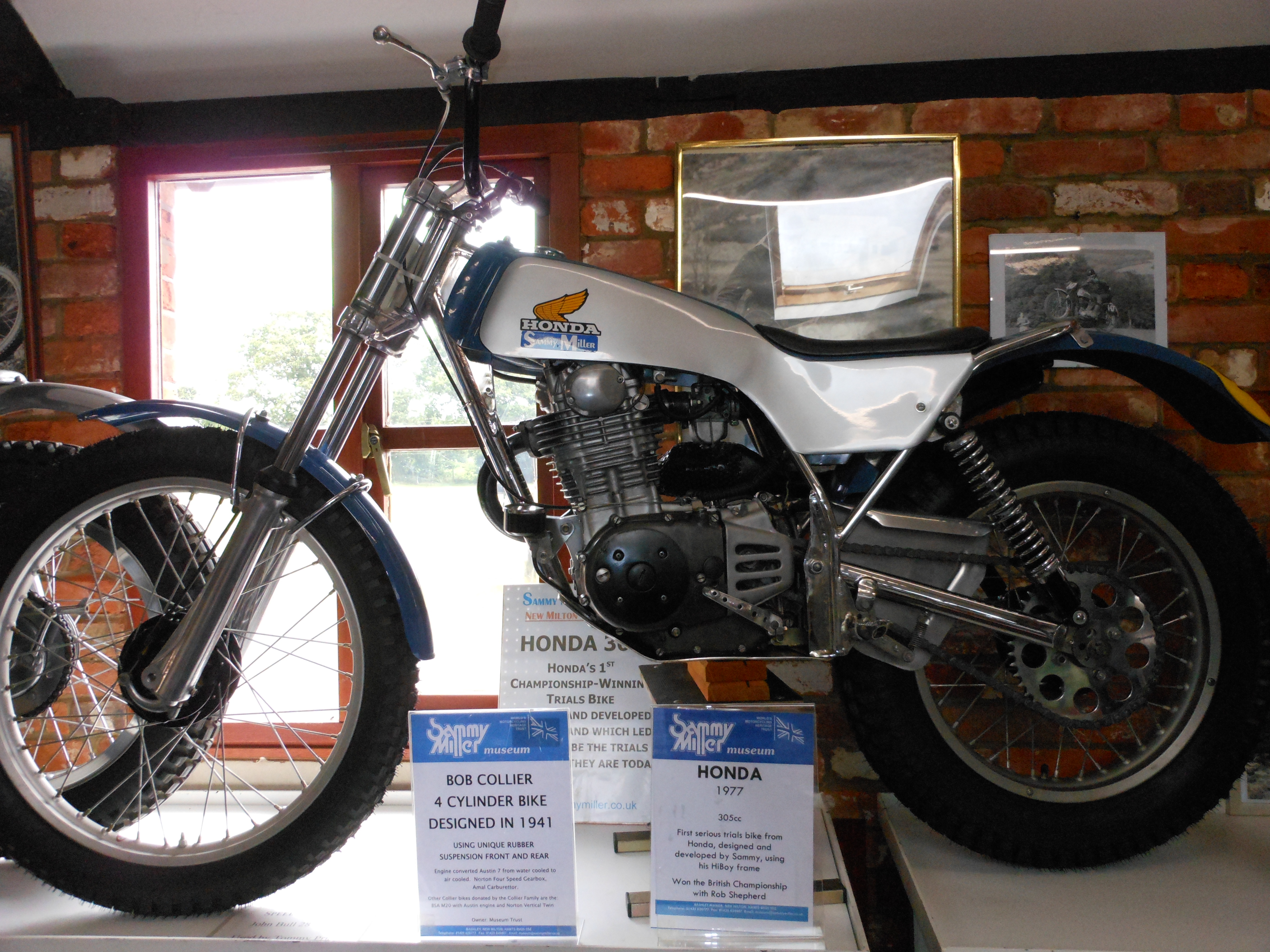
305cc Honda TL from 1977 which Sammy developed for the mighty Honda Motor Co – Photo: Iain Lawrie.
>
The factory AJS 16C which won the 1961 Scottish Six Days Trial in the hands of Gordon L. Jackson (187BLF) – Photo: Iain Lawrie.
>
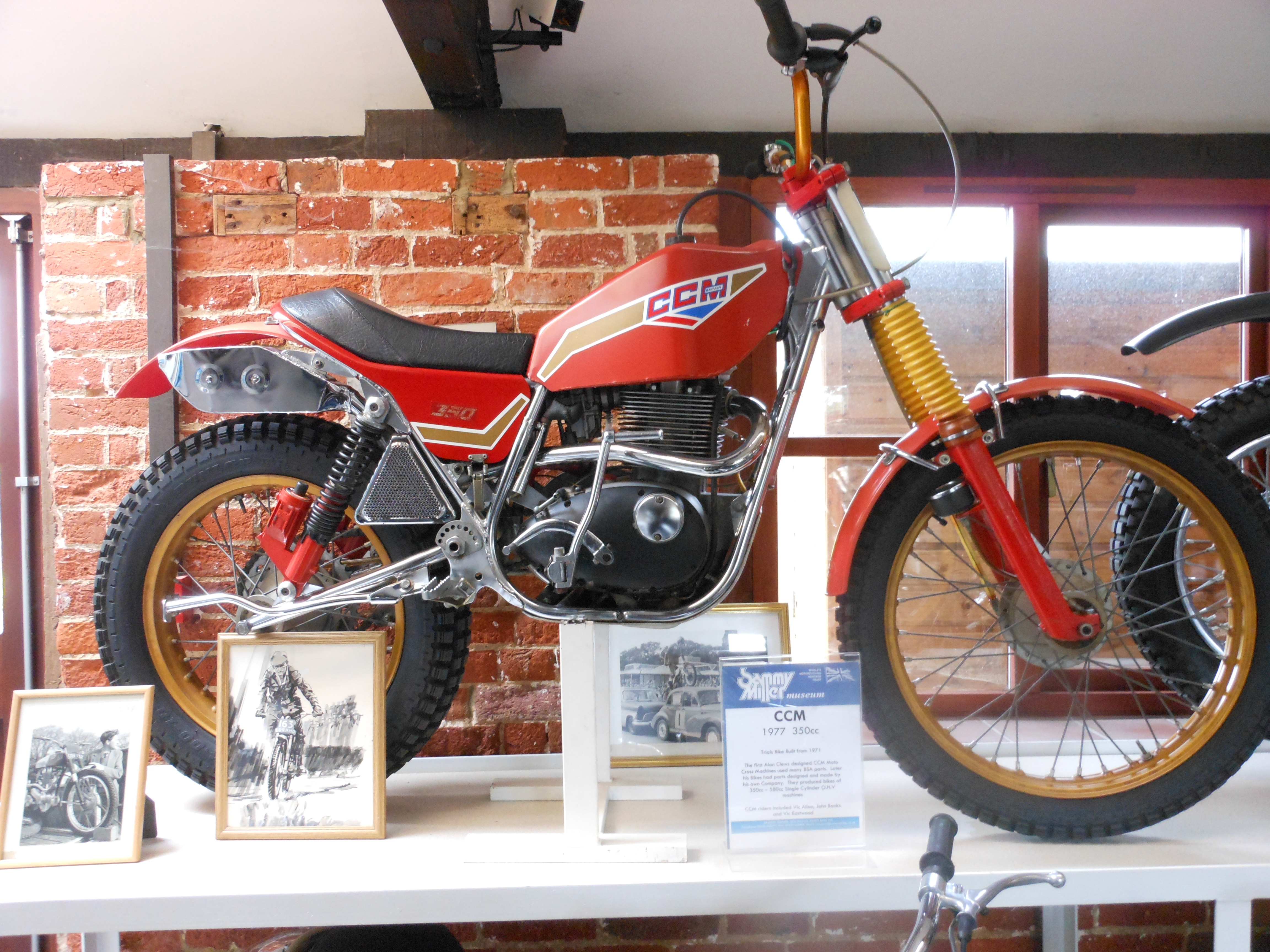
The 1977 CCM 350T only 102 built by CCM at Bolton, Lancs. – Photo: Iain Lawrie
>
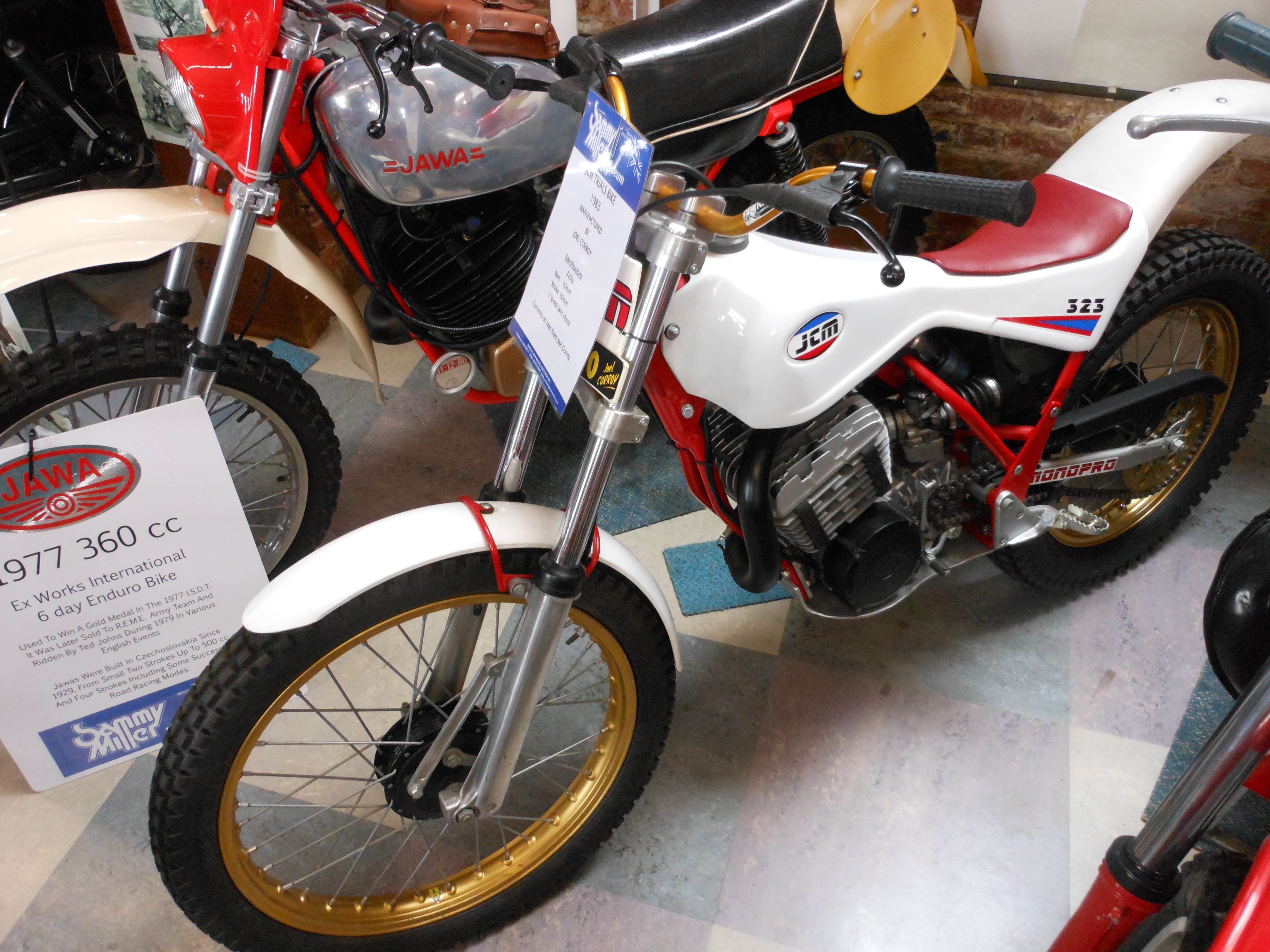
1983 JCM 323cc built in France by Joel Corroy, next to an ISDT Jawa. Photo: Iain Lawrie.
>
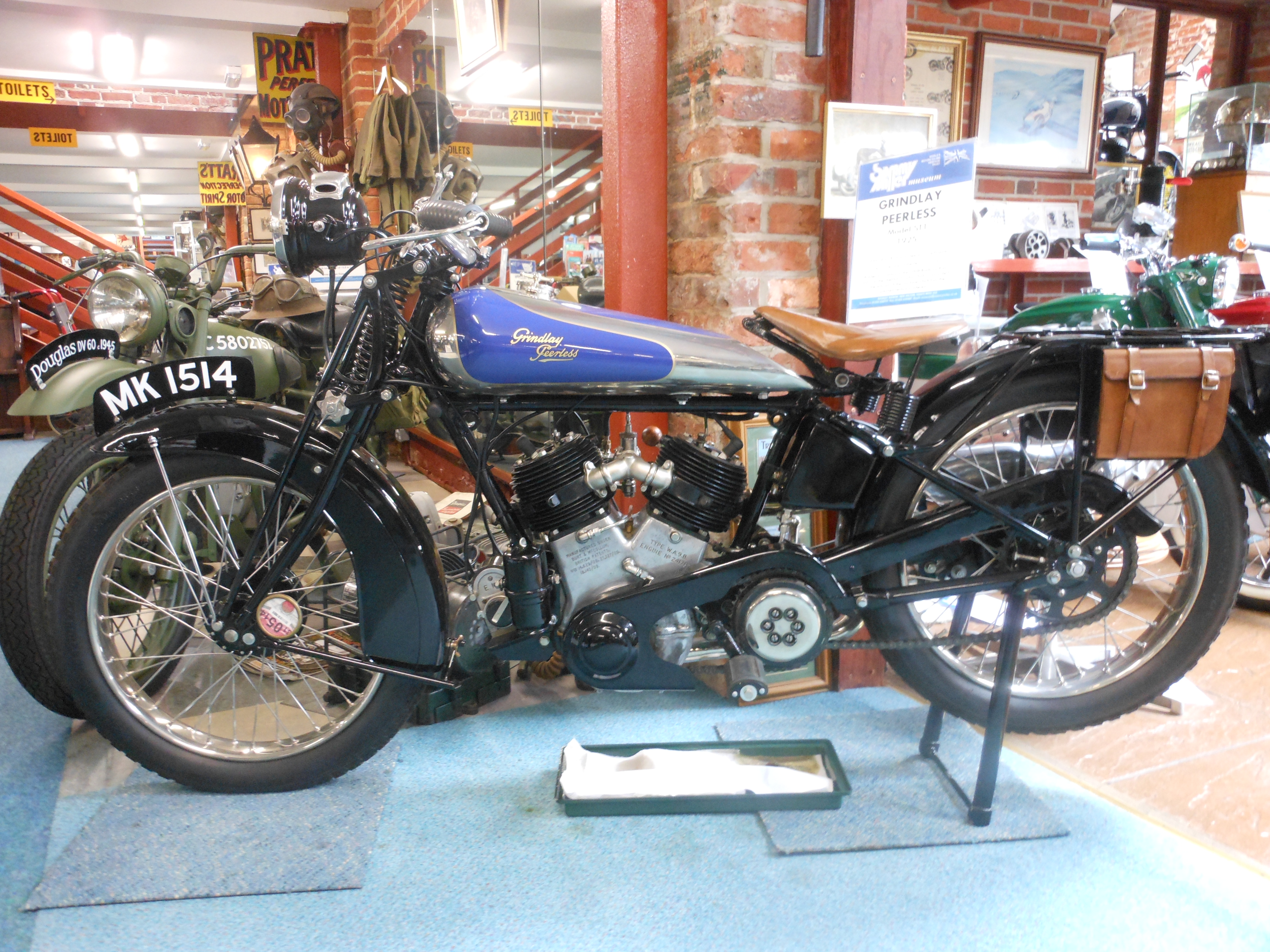
1925 Grindley Peerless Model ST1 – Photo: Iain Lawrie.
While the photos we have showcased are wonderful, there is no substitute to actually viewing these machines at close hand in Sammy’s museum.
The museum is open pretty much all year round and for me is a must to visit if you have not done so already. For more information please visit: Web: www.sammymiller.co.uk – Mail: museum@sammymiller.co.uk – Tel: 01425 620777/ 01425 616644. Sammy Miller Museum Trust, Bashley Cross Roads, New Milton, Hampshire, BH25 5SZ
Sammy Miller MBE outside his world famous museum at Bashley, New Milton, Hampshire with his Trials Guru ‘VIP Winners’ special edition cap. (Photo: Sammy Miller Museum)
Sammy Miller MBE – Motorcycling Achievements
11 times successive British Champion.
Twice European Trials Champion – the forerunner to the World Championship.
13 times successive Hurst Cup winner.
18 times successive Walter Rusk Trial winner.
5 times winner of the famous Scottish Six Day Trial.
7 times winner of the World’s most arduous trial, the Scott Trial on the harsh and unforgiving Yorkshire moors.
Winner of over 1482 Trials events.
9 Gold medals at International Six Day Trials.
Irish Motocross Champion.
Irish Sand Racing Champion.
Winner of most Irish Road races, including winning the North West 200 and the Leinster 200 three years in succession.
Third in the World Grand Prix Championships on a works Mondial
Sponsor of the British Classic Trial Championships.
2007 inducted into the AMA Hall of Fame in the USA.
2009 awarded the MBE for services to motorcycle heritage.
2014 – Named FIM Legend – 2025 inducted into the FIM Hall of Fame in Switzerland.
2025 – RAC Lifetime Achievement Award Winner
2025 – Trials Guru website awards Sam with one of only ten exclusive white Trials Guru VIP Winner caps!
Trials Guru’s, John Moffat has interviewed 11 times British Trials Champion, Sammy Miller on many occasions.
References:
Sammy Miller Motorcycle Museum & Trust Catalogue – Obtainable from the Museum sales office. Sammy Miller Museum Trust.
Sammy Miller and Trials Guru’s John Moffat catch up at the Classic Dirtbike Show at Telford in February 2016 – Photo: Fiona Watson
Apart from ‘Fair Dealing’ for the purpose of private study, research, criticism or review as permitted under the Copyright, Design and Patents Act, 1988, no part of this article may be copied, reproduced, stored in any form of retrieval system, electronic or otherwise or transmitted in any form or by any means, electronic, electrical, mechanical, optical, chemical, photocopying, recording or otherwise without the prior written permission of the author as stated above. This article is not being published for any monetary reward or monetisation, be that online or in print.
MOTORCYCLE COMPETITION SCOTLAND 1975 – 2005 by John Moffat
– Foreword by 8 times TT winner, JIM MOODIE –
Yoomee Ltd is proud to present this superb semi-hardback book which covers the history of Motorcycle Competition in Scotland from 1975 – 2005 by John Moffat. With foreword written by eight times TT winner, Jim Moodie, it is presented with a mixture of exciting, and in many cases un-seen, colour and black and white images, this book is in A4 size format with over 100 pages of informative and interesting text.
This is a book which explores and describes in words and photographs, competitors and enthusiasts from motorcycle sport in Scotland and more! It’s about people, places and events from this era, the endeavours and performances by motorcycle sports most respected riders, who were either born or brought up in Scotland.
A book which will convey you back to a time-period when Scotland produced not only British, but World championship contenders. Riders who endeavoured to create performances, which proved they were serious competitors in racing, trials, enduro, and motocross.
This is a publication aimed at the motorcycle enthusiast.
Payment can be made securely by ‘Paypal’, debit or credit card
Full details of price, how and where to buy Motorcycle Competition Scotland 1975-2005is available … Here
UPDATE: Initial reports indicate that there has been healthy demand for this publication. Many thanks to all in the UK who have ‘pre-ordered’ and therefore saved on UK postage! However there are also a number of readers who have already placed an overseas order, thank you very much for your support!
Team HRC Trial – Repsol Honda Team continues to reinforce its roster of world-class riders with the incorporation of young gun Jaime Busto into the team for the 2015 season.
Repsol Honda Team Trial gets a boost in 2015 with the arrival of Jaime Busto. The Spanish rider will line up alongside Toni Bou and Takahisa Fujinami in all events on the 2015 FIM World Championship calendar in Trial Outdoor, as well as taking part in the 2015 Spanish Trial Championship. Busto will compete in all top-level competitions on the Montesa Cota 4RT.
Jaime Busto is one of the brightest lights in the Trial discipline. In 2014 he scored an impressive win in the FIM World Cup (the former World Junior Championship), winning seven of the thirteen races disputed. In 2012 he had become Youth 125 category champion, a competition in which he had previously debuted in 2011 at thirteen years of age. At a Spanish national level, the Basque rider has clinched just about every possible title in the lower categories, this year even finishing eighth in spite of carrying an injury throughout the latter part of the season.
Jaime: “I’m really pleased to be able to form a part of the HRC Team, the best team in the world. For me, it really is an honour to be in a team with such great champions as Toni Bou and Takahisa Fujinami. I hope to be able to learn a lot from them. The Montesa Cota 4RT has surprised me. I will have to get used to the four-stroke, but I think that I’ll adapt to it quickly.”
Miquel Cirera Lamarca, Team Manager said: “At Repsol Honda Team we have the best riders in the world, and we want to continue that way for many years, to keep on winning races and titles. We had the chance to sign up Jaime Busto, one of the most promising young talents currently around. He will serve as a fine complement to our champions Toni Bou and Takahisa Fujinami.”
Scorpa Motorcycles is very pleased to have reached an agreement with the Spanish Trials rider Sandra Gómez, she will compete for Scorpa in the 2015 sports program and help develop the new Twenty series.
The young Spanish rider is a Grand Prix champion in the women’s division and is an accomplished competitor in the most important races on the trials calendar. Sandra Gomez at age 22 has accumulated an impressive record, with several world team titles to her credit, in addition she has won several national titles and she is credited as one of the world’s best female specialist’s in trials competition.
Scorpa Motorcycles, after developing the new Scorpa Twenty will therefore squarely enter into the sport, betting on the skills of the young Spanish rider the 2015 season. Sandra is considered to be one of the top players in the world of women’s trial.
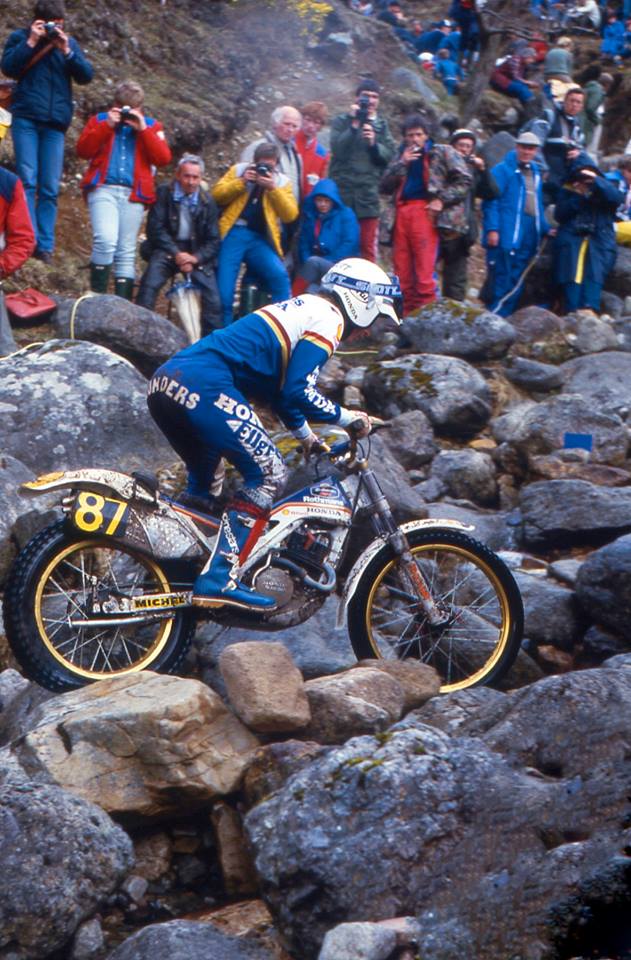
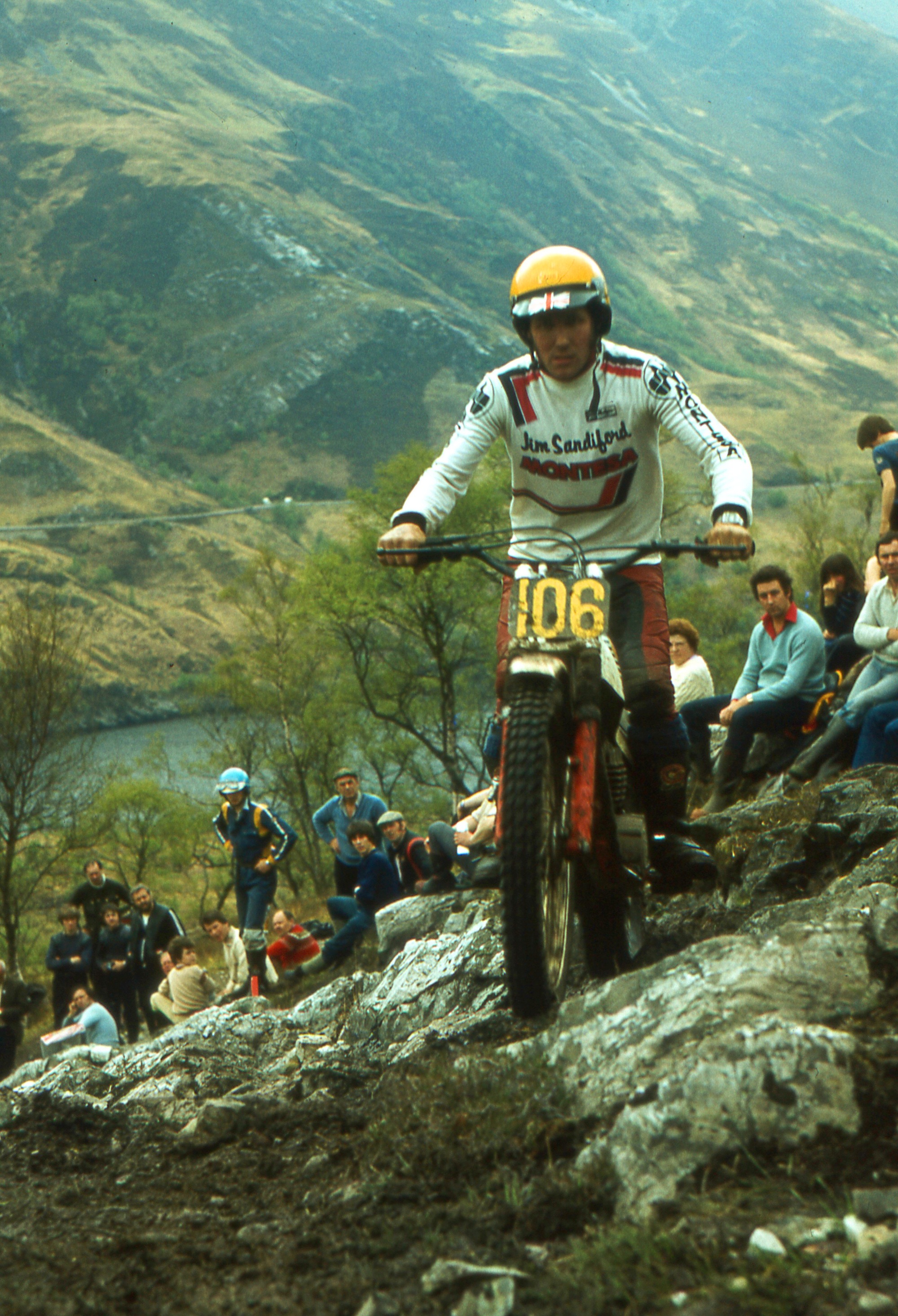
Rob Edwards (Sandiford Montesa) Scottish Six Days Trial 1981 – Mamore Section – Photo ~ Iain Lawrie, Kinlochleven
Hello Everyone,
Thanks once again for your support.
Today is rather a sad one for me. The ‘Gaffer Guru’ John Moffat has told me I can keep going as long as I want, but I feel that I have subjected you to quite enough punishment and its time to go.
Never in my wildest dreams could I have expected the support you have given me. I have had a fantastic time, a really fantastic time believe me. I was kept going by the The Trials Guru’s enthusiasm. That plus your comments and likes were a real tonic to me. Despite my health problems I still consider myself the luckiest person in the world.
I have always been a people person and the spectators who lined the sections were just as important to me as the sections and they have repaid me a thousand times!
Like all of us I had made mistakes but in general I am pretty pleased.
One thing I will miss is checking the comments and likes each day.
I was pleased and a little surprised when Benny Sellman and Thore Evertson contacted me.
Benny was a fellow Montesa rider and Thore a works Ossa rider.
I also received an e-mail from Martin Belair in California.
These plus dozens and dozens from all over Europe have done me more good than any doctor or medicine could hope to do.
The new generation of Thornaby Trials riders have been following my story – Thanks a lot lads.
I hope to get to the Telford Show again this year so please say Hello, tea with milk, no sugar please!
It is impossible to thank everybody who made this possible but Eric Kitchen, Barry Robinson, Iain Lawrie and Luis Munoz who allowed Guru John (my gaffer) to use their pictures.
When readers send in comments like Scottish Heaven you could bet that one of these are responsible.
Keep Clicking and thanks!
Many thanks again to ‘Trials Guru’ – John Moffat and thank you finally to Alberto Mallofre, Pere Pi and Montesa for having faith in me.
A FINAL GOODBYE NOW – ROB EDWARDS
Rob Edwards with John Moffat (Trials Guru) Photo Copyright: John Hulme/Trials Media
Trials Guru comment:
It has been absolutely fantastic receiving Rob’s e-mails over the last few months with details of his life in trials and to be able to share this with you all on Trials Guru.
Rob’s story now explains why he hasn’t been seen as often out and about at events, unlike most of his peers from the time when Montesa, Ossa and Bultaco were trying to out-sell each other from the late sixties, through the seventies and into the eighties.
As we have seen, if you have been following Rob’s adventures since late October 2014, what a warm human being he really is.
Despite his health problems which undoubtedly cut short his riding career, that he is as outwardly cheery as he was when some of you rode with him, worked in Head Wrightons with him or marvelled at his skill as a factory Montesa rider in the Scott and Scottish Six Days as well as countless national trials throughout the UK and the rest of the trials-riding world.
I can only say this, many grateful thanks to Rob for taking the time and effort to satisfy my request in the start field at Marske on the 18th October 2014 when I said: ‘Rob, how about doing your story on Trials Guru?’
To all of you, keep commenting and keep telling people to read this story here on Trials Guru, the “Rob Edwards Story ” button will be here on this website for a very long time to come! – The Guru.
















 TRIALS GURU - DEDICATED TO TRIAL