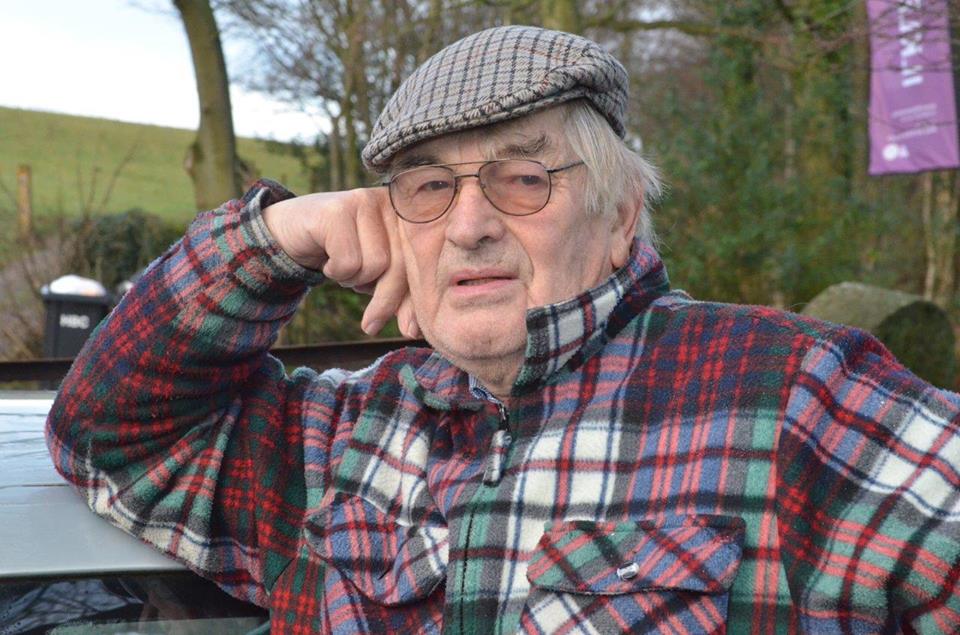
Barry Robinson from Ilkely, West Yorkshire has been taking photographs professionally for over 57 years. He started and has never really stopped! A proper enthusiast of our sport his images of trials, scrambles, quad racing and road racing have graced many periodicals and national newspapers. A member of the National Union of Journalists, Barry was a close friend of Eric Rathmell, Malcolm’s father and their wives were very close friends too. He got to know Eric way back in 1953 when he rented a cottage in Otley at that time.
A very private person, Barry told Trials Guru: “Not a lot of people are aware of my long connection with the Rathmell family or that I actually rode trials, as an expert; scrambles, as an idiot, or was a Yorkshire and Lancashire champion grass track sidecar passenger and rode televised scrambles as a solo and sidecar passenger”.
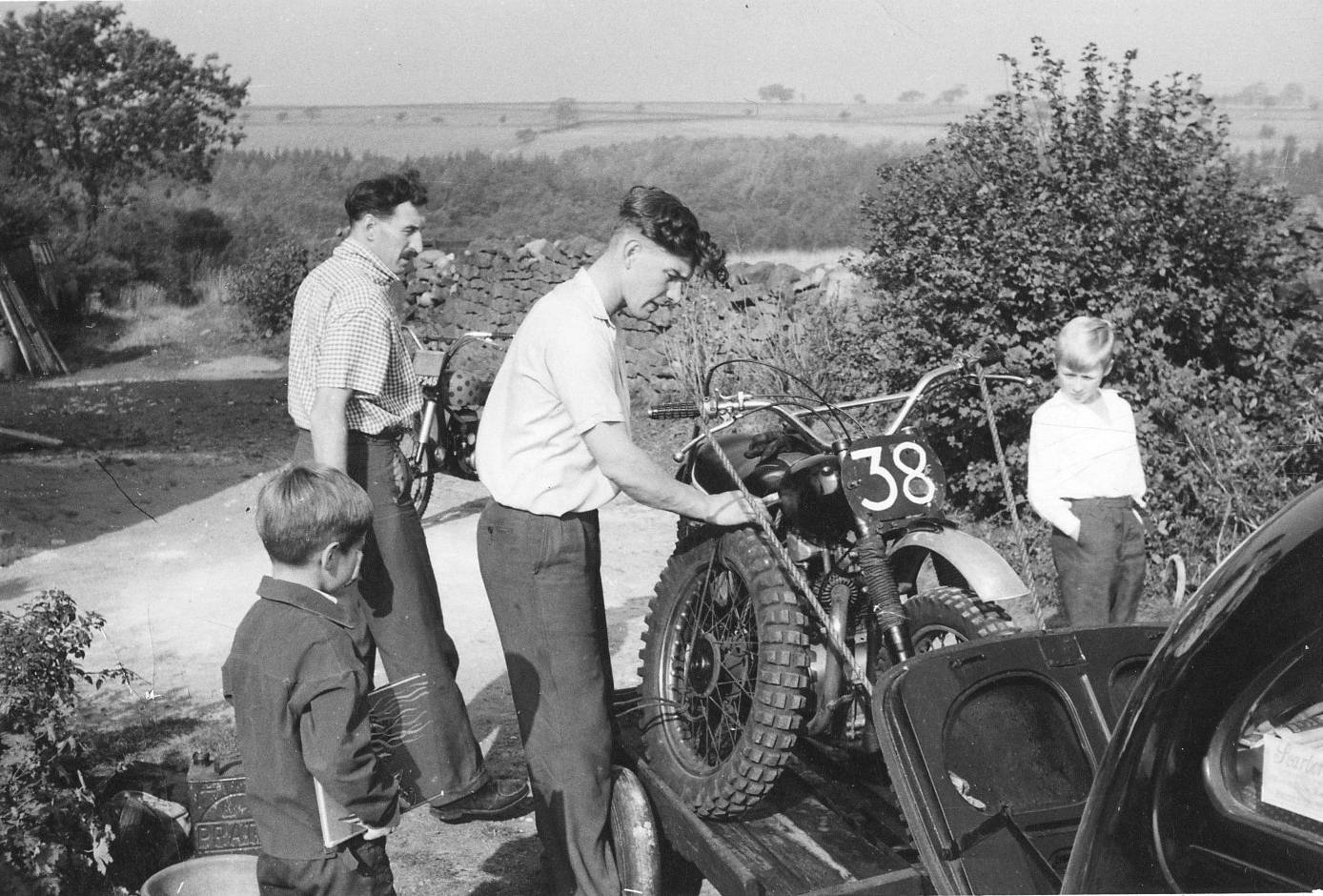
“This Doug Todd picture was taken in 1960 and the blonde boy in the background is one Malcolm Charles Rathmell, now aged sixty, or more. The other is brother Gerald and Eric is ensuring I tie the Velocette on correctly. The haircut, by the way is courtesy, of a ex Royal Air Force barber who never forgot his basic training. The Velo is a 250 MOV with a spring frame built by Eric Rathmell. The engine kept dropping an exhaust valve, probably due to being over revved”.
Barry has also ridden many of the factory trials prototypes over the years, purely because he accompany and take photos of the Yorkshire based factory riders when practicing. We are proud to be able to show you a small selection of Barry’s photographs with his permission on Trials Guru, some of his images have never been seen in public before. Barry was a photographer with weeklies, Motor Cycling and Motor Cycle News. He still covers events and reports regionally for Trials and Motocross News.
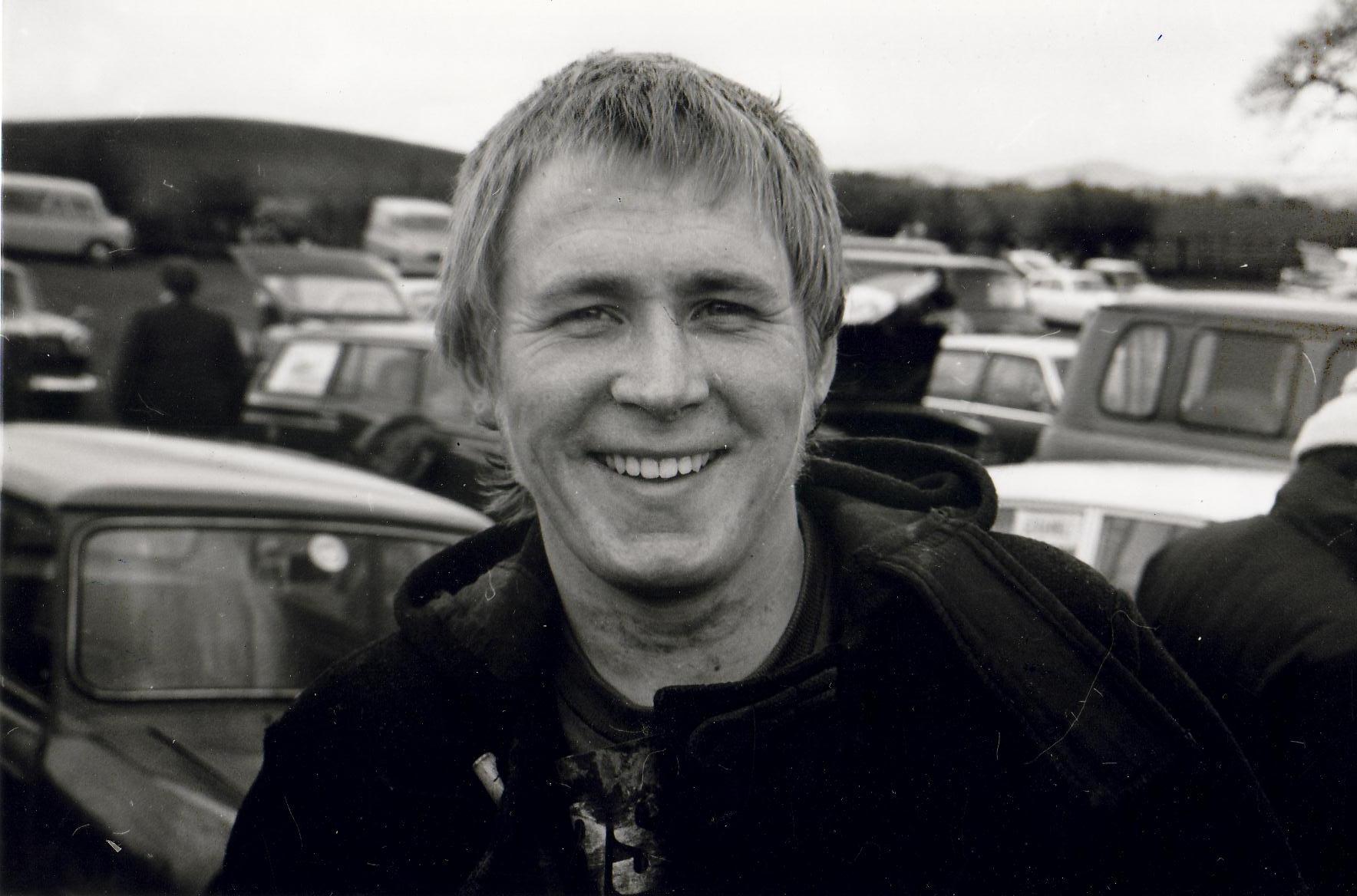
A Barry Robinson photo of Malcolm Rathmell back in the 1970’s. Barry has had a long standing friendship with the Rathmell family since the early 1950’s. Photo Copyright: Barry Robinson, Ilkely.
Robinson knows most if not all the Yorkshire riders in trials and scrambles back to the days when Arthur Lampkin was racing a Gold Star BSA.
Malcolm Rathmell in the 1975 Jack Leslie Ellis Trial on the prototype 348 Montesa. Photo copyright: Barry Robinson.
We hope ‘The Maestro’, will be taking even more photos for years to come.
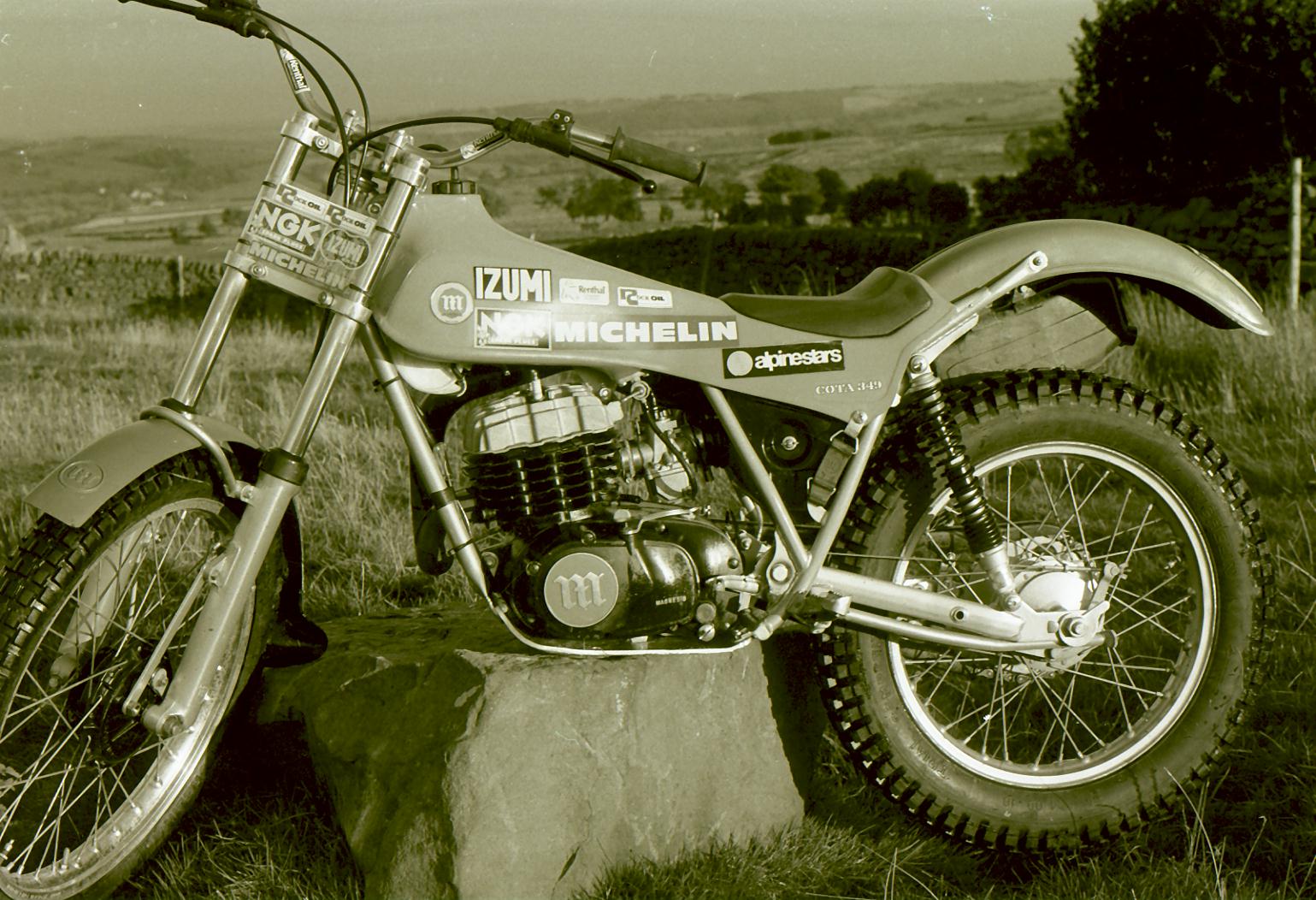
One of the factory special prototypes that Barry has swung his leg over – Malcolm Rathmell’s Montesa 349. (Photo Copyright: Barry Robinson)
Copyright:
Text: Trials Guru / Moffat Racing, John Moffat 2014.
Photos: By kind permission of Barry Robinson, Ilkely, West Yorkshire. (All Rights Reserved)
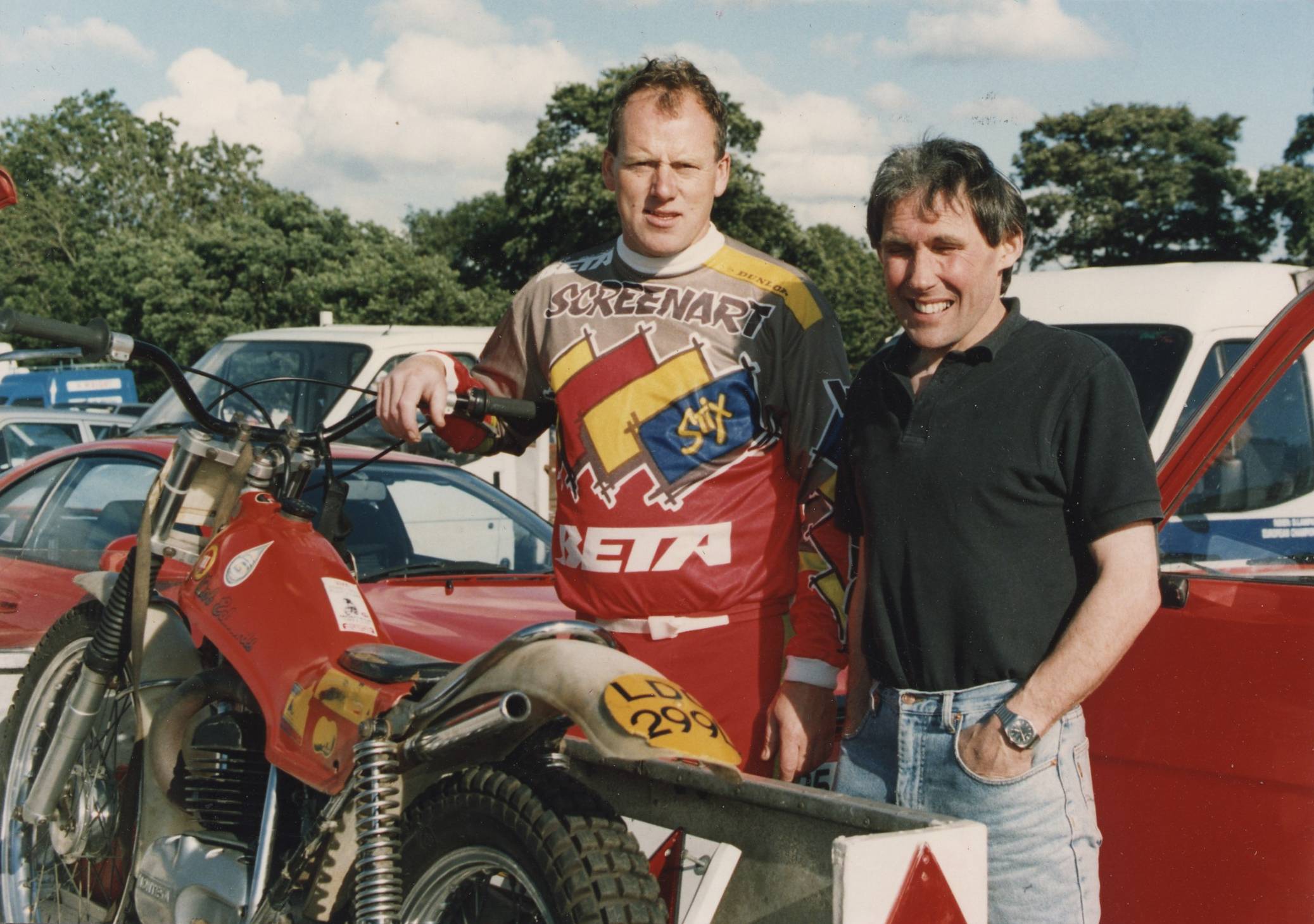
Rob with good friend Martin Lampkin. Photo Copyright: Barry Robinson, Ilkely
Hello Everybody, many thanks again for following my story in trials. I hope you all had a Happy Christmas and I would like to thank you all for making my Christmas so special this year. Wishing you all the best.
I hope you all have a Happy and Healthy New Year.
Thank you for the great comments that you have sent me, they are really appreciated. The part of my story that we have reached now is almost beyond belief.
Many people have asked me over the years, why I suddenly stopped riding and disappeared to? What comes next should answer these questions. After several weeks in hospital following the Subarachnoid haemorrhage, I was allowed home again. I was only home a matter of days when I suddenly got a terrible pain in my left leg. It went from my heel up to my knee. It was a Sunday morning at 4 a.m. but was so bad we had to call the doctor. He wasn’t at all happy and told me I had a pulled muscle. The pain persisted and we eventually called out another doctor and rang straight away for an ambulance. By the time the ambulance arrived, the pain had stopped but that wasn’t the end of it. The pain was the Churg-Strauss doing its’ thing. It had cut off the blood supply in my left leg from the knee downwards destroying everything leaving only the bones. I could spin my foot round like a propeller. I had no feeling in it whatsoever. I couldn’t walk at all. The strange thing was I had no feeling in the leg but I had a toothache type of pain that was to last for years. During this time it was impossible to sleep and I spent the nights watching the TV. I was put onto a pain-killer called Fentanyl which is a lot stronger than morphine but I still had the pain.
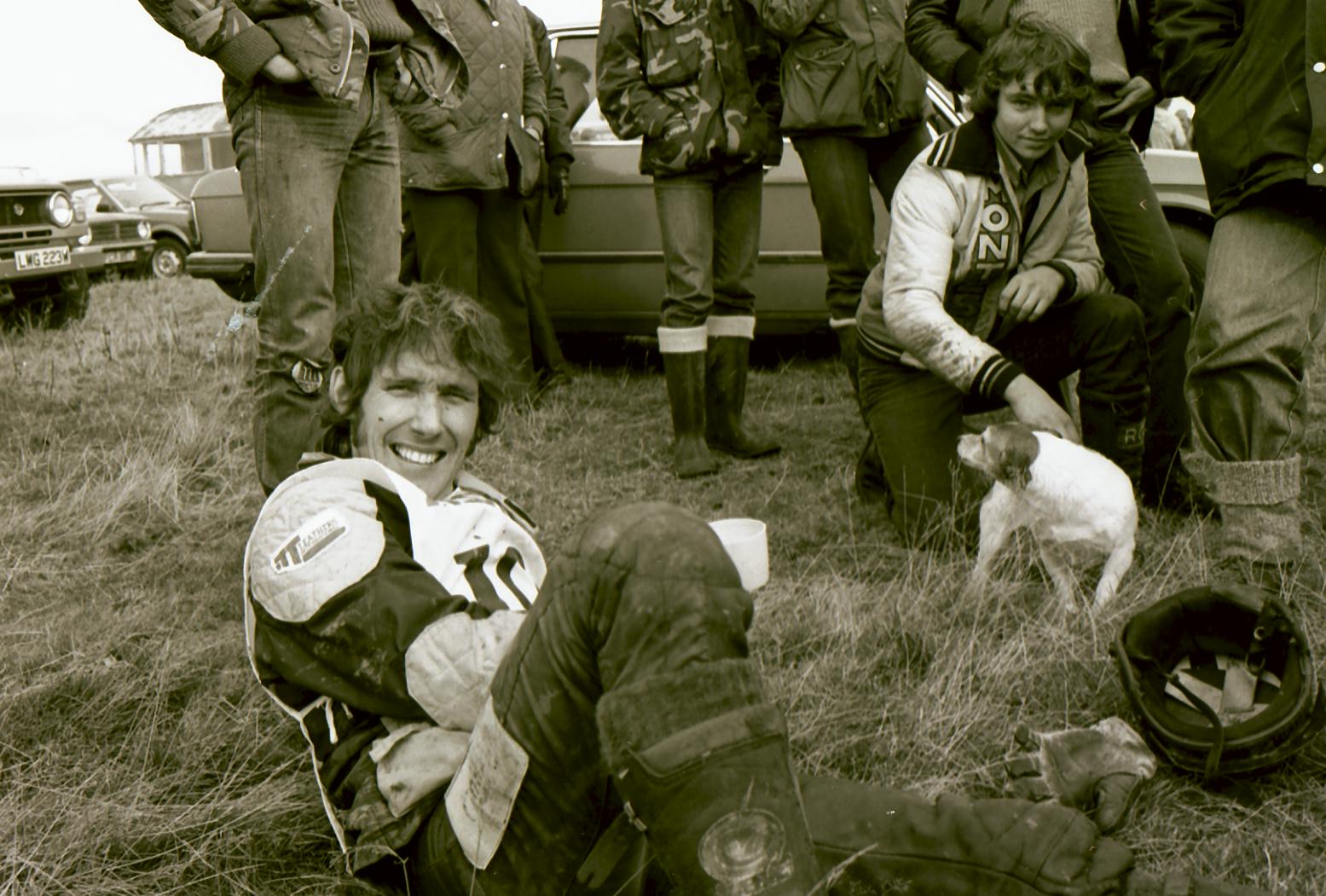
Rob Edwards in 1981 -Photo Copyright: Barry Robinson, Ilkely.
I then developed a different pain this time it was Gallstones. I was back in hospital again to have my gall-bladder removed. I came home from hospital but developed a pain in the small of my back. I went to see my local GP and she wanted to admit me to hospital. I declined the offer as I had had enough of hospitals to last me a lifetime. She did however give me an envelope with instructions that if I needed to go into hospital to give this envelope to the ambulance staff. As usual, it all went wrong! Just after midnight we had to phone for an ambulance. The problem this time was a pulmonary embolism or blood clot on the lung following the gall bladder operation. I caused a bit of panic in the hospital because I couldn’t breath and collapsed on the floor. Instead of using the oxygen mask they pulled it off and pushed the plastic pipe directly into my mouth and turned the supply flat out. I was kept in bed for three weeks and was not allowed out of bed at all. The next thing that happened was I suffered a mini stroke. I woke up and my arms were moving about on their own but this stopped quickly. I was in hospital just overnight. Panic over but not for long. I got a pain in my stomach. I managed to get to the phone to ring my wife, Bev. She came home post haste and finding me laid on the floor she phoned for an ambulance. I don’t remember much about the reception part of the hospital as I was in so much pain but I can remember the consultant telling me that they did not know what was wrong and they would not know until they opened me up. They said something had pushed my diaphragm up into my chest cavity. I was in the operating theater for seven hours. When I eventually woke up,I was told that at the end of my operation they had tried everything possible to keep me alive however this was to no avail and they were prepared with the possibility that I was not going to make it. Suddenly I fired up again, maybe it was just a drop of water in my carb! The problem was a perforated bowel caused by Diverticulitus which was a condition I didn’t know I had. I think we have all suffered enough for now and as crazy as this sounds there are still more serious problems to come before I am out of the woods. Thanks for taking the time to read all this, I know its not about riding sections, but it makes things clearer for those who remember me riding and disappearing from the trials scene. Bye for now! – Rob
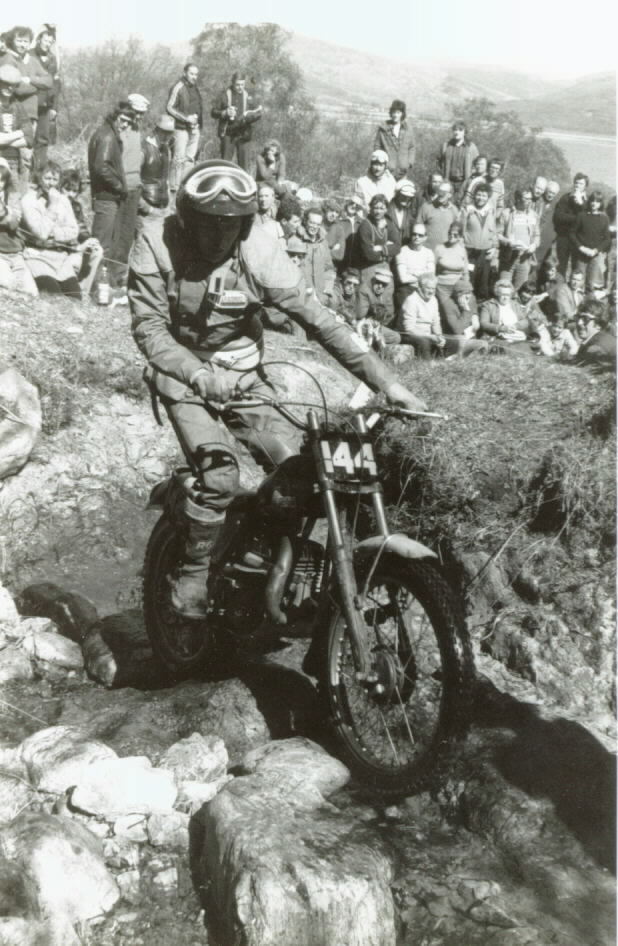
Happier times, a superb photo of Rob Edwards in the 1979 Scottish on his Montesa Cota 349. (Photo Copyright – Eric Kitchen)
We know where and when this photograph was taken, but we would dearly like to find out who took it or who owns the copyright please. If anyone knows can you let us know?
I am getting well on with my story now and thanks for your support, I hope you are still enjoying it.
In September 1980 I set off on what was to be my final promotional trip. It started in Venezuela then Argentina and finally Paraguay. By the time I reached Paraguay I was exhausted and I had no choice other than to go home.
Rob Edwards in the 1979 SSDT on his 349 Montesa at Laggan Locks. Photo copyright: Iain Lawrie, Kinlochleven
I visited my doctor who sent me straight to hospital. X-rays showed that I had practically no air in my lungs at all.
I didn’t need an x ray to tell me this, however it was nice to have my suspicions confirmed.
I was put on oxygen 24 hours a day. With daily visits from physiotherapist I began to make a small amount of progress.
Nobody could put a name to it the nearest they could get was asthma.
I had now been ill for almost twenty years being treated for asthma taking large quantities of steroids called prednisolone. Without these I would not have survived but the side effect is I now have osteoporosis quite badly.
Christmas 1988 I was really ill and after a blood test was admitted straight to hospital.
At first the doctors thought I had Malaria.
After many tests Doctor Amanda Isdale finally diagnosed my problem as a condition called Churg-Strauss Syndrome.
Rob Edwards on an unfamiliar bike, a 250 Ossa in the 1980 SSDT at Rhuba Rhuadh on Day 4. Photo copyright: Jim Young, Armadale.
The illness causes inflammation of the blood vessels called vasculitus and it can stop the flow of blood anywhere in the body with drastic results. So why the asthma?
The answer to this is Churg-Strauss disguises itself as asthma and that’s the reason its so hard to identify.
At the time of diagnosis I was one of only one hundred people in the UK with this problem. Trust me to get something that nobody else wanted!
I had now had the Churg-Strauss for several years so the only treatment open to me was chemotherapy.
I had the treatment every two weeks for nine months. Chemo and me didn’t get along and one morning after my treatment my wife called out our local GP.
When he arrived he told me that after my next infusion I should stop in hospital as I was wasting his time and everybody-elses.
Not exactly what I was expecting but as we know there are good mechanics and bad ones it appears Doctors are the same!
After several weeks in hospital I was allowed home for the weekend.
After the security of the hospital I felt a bit insecure.
I was watching TV when I felt a tremendous pain in the back of my neck at the base of my skull.
The next thing I knew I was in intensive care and I was being told I had suffered a particularly nasty stroke called a Subarachnoid Haemorrage. I am beginning to realise that every illness I get is difficult to spell why cant I get the flu?
Whats happened so far is only the tip of the ice-berg. From now on things get a whole lot worse! – Bye for now – Rob
As we head into the festive period, may we take this opportunity in wishing all readers of Trials Guru a very Merry Festive Season and a Happy New Year. We hope to bring you new articles in 2015 and more photos from the sport of Motorcycle Trials.
We will be continuing the story of Rob Edwards, remember to ‘like’ his page if you are on facebook!
Trials Guru started out in March 2014 and already has a following both here and on facebook.
Also, there will be a press release issued early in 2015, stay tuned for that.
Best wishes,
The Guru
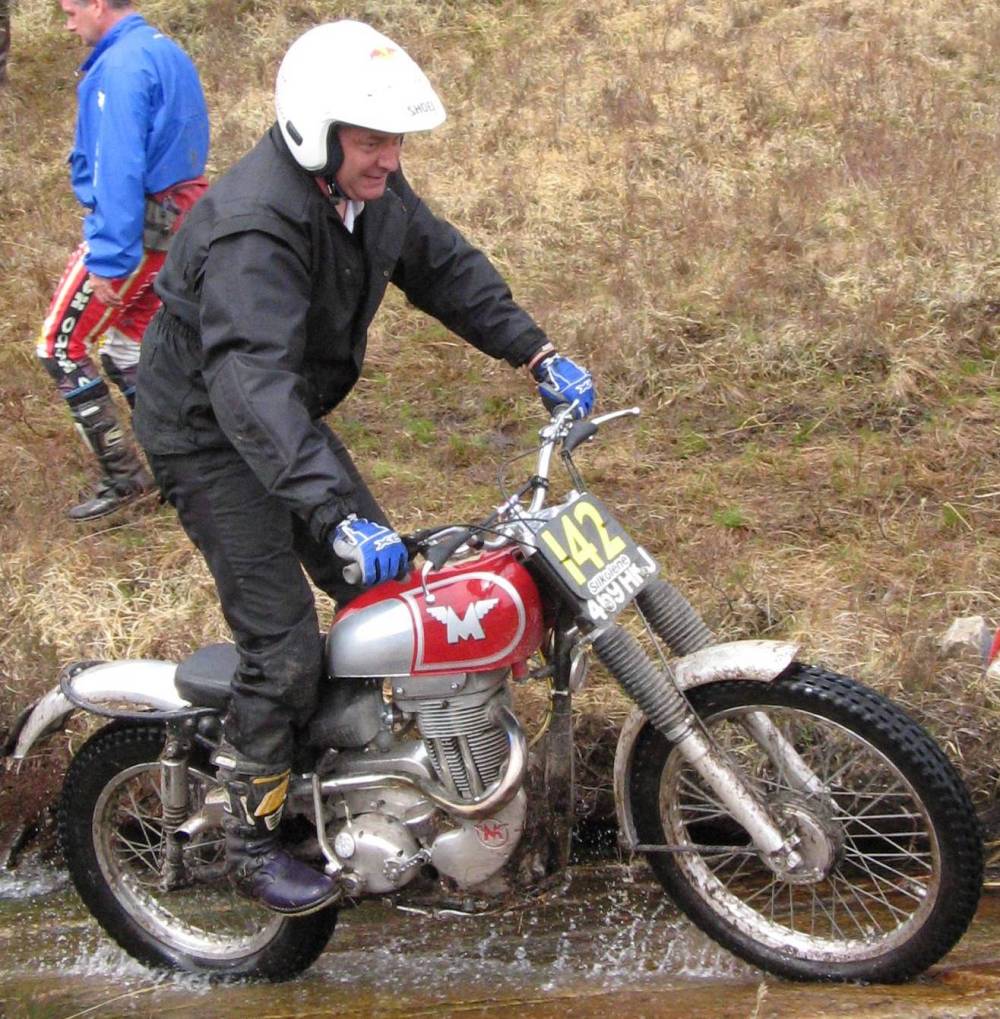
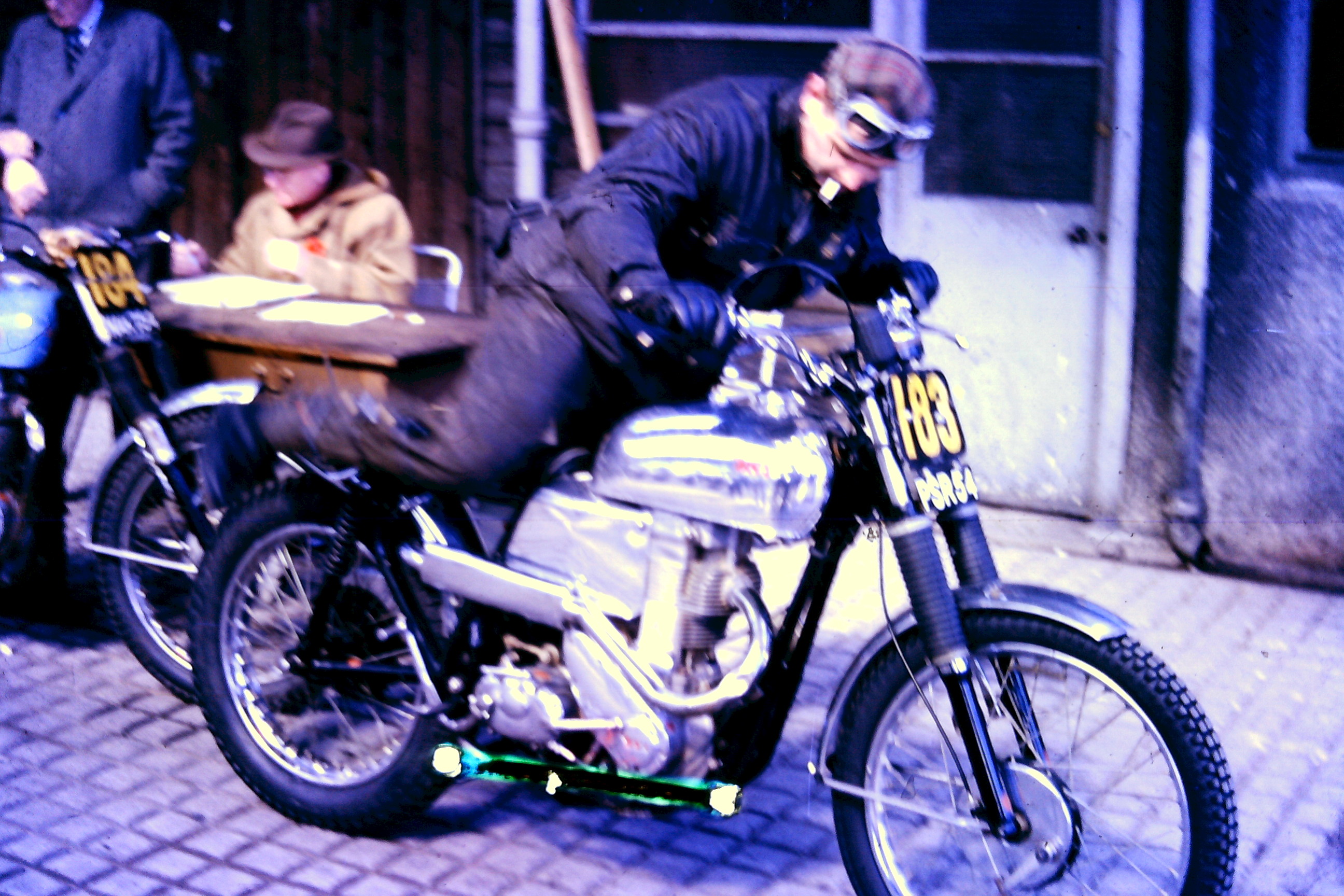
Trials Guru likes to ride occasionally too. 1959 350 Matchless (G3C). Photo courtesy: David Robinson, Mid Calder.
Rob Edwards on his Montesa Cota 349 on Altnafeadh in the 1979. Photo by kind and special permission: ERIC KITCHEN – All Rights Reserved
To compliment our series of articles on Rob Edwards, Mr. Eric Kitchen has kindly allowed Trials Guru permission to show this photo of Rob at the SSDT in 1979. To our knowledge this photo has never been published before. Please be respectful and do not share this photo on any other media.
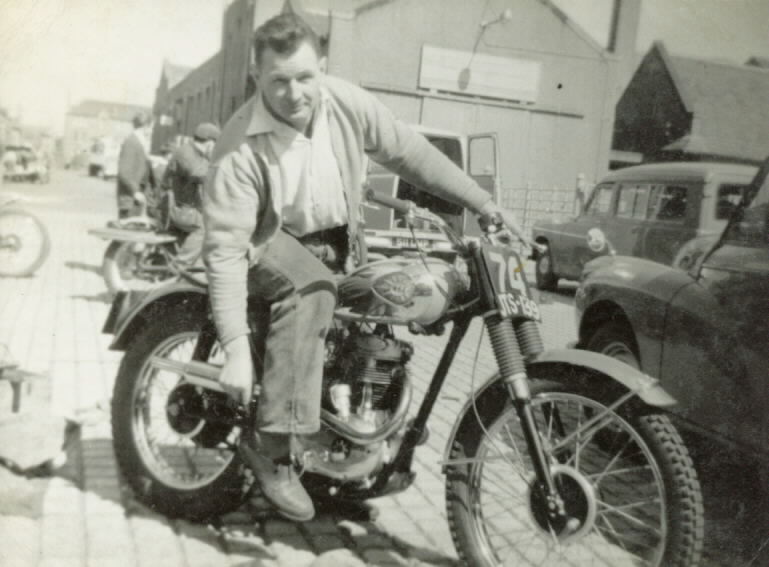
Ron Thomson with his C15 BSA at the ‘weigh-in’ of the 1959 SSDT at Gorgie Market, Edinburgh. Photo Courtesy of Mrs. Helen Thomson
Ron Thomson originally from St Andrews, Fife moved to Fort William in the late 1950’s. Ron was a dispatch rider during national service in Egypt and a member of the services club, the Bar-None MCC. On being de-mobbed, Ron joined the local Kirkcaldy & District club. Ron takes up the story: “In my day trials bikes were measured by the hundredweight, not by the cubic capacity! I had a Gold Star, which was dubbed the ‘Stone-Crusher’. So called because no section was ever the same after we had gone through. As for the Scottish Six Days, we used to gear the bikes up, my Trophy Triumph was good for 90 plus mph on the road, the reason for the hurry was that we used to be more interested in the ‘Seven Nights’ than the Six Days!” says Ron.
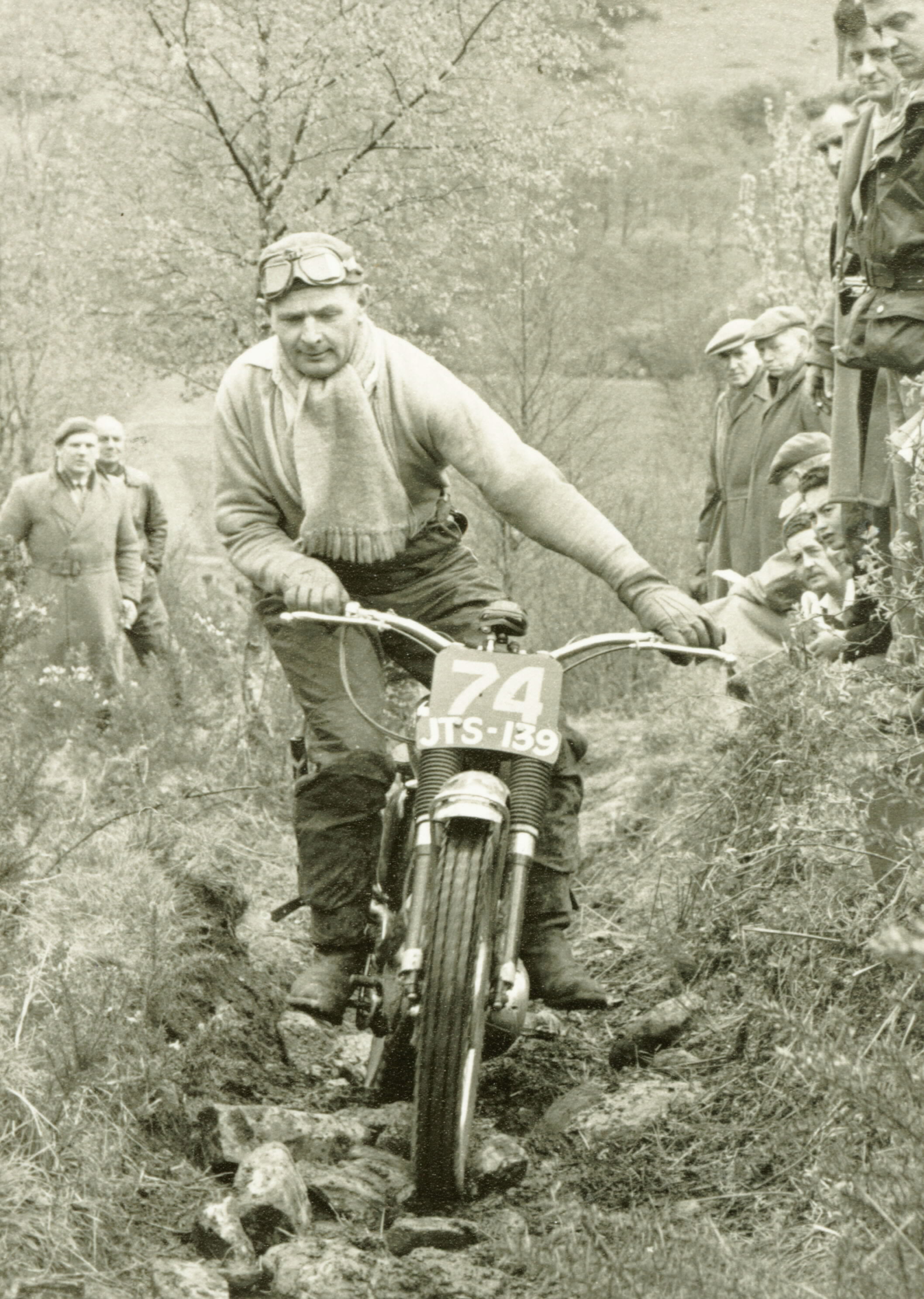
Ron on his BSA C15T in the 1959 Scottish on Glenogle section on May 4th. One of the first day hills as he made his way homeward to Fort William from the Edinburgh start. On the second right is Dunfermline rider the late Maurice Duffin. Photo: Mrs. Peggy Davies.
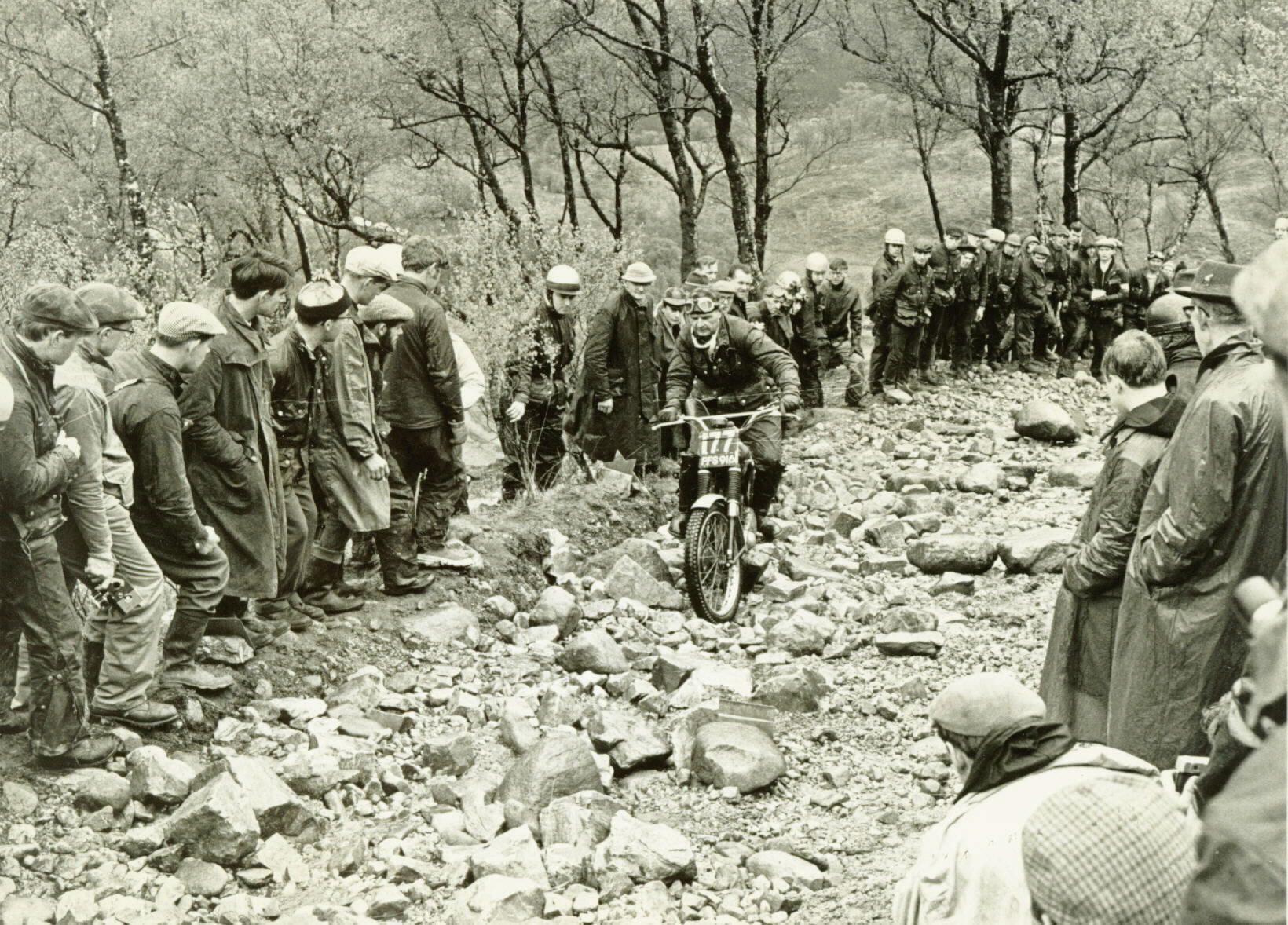
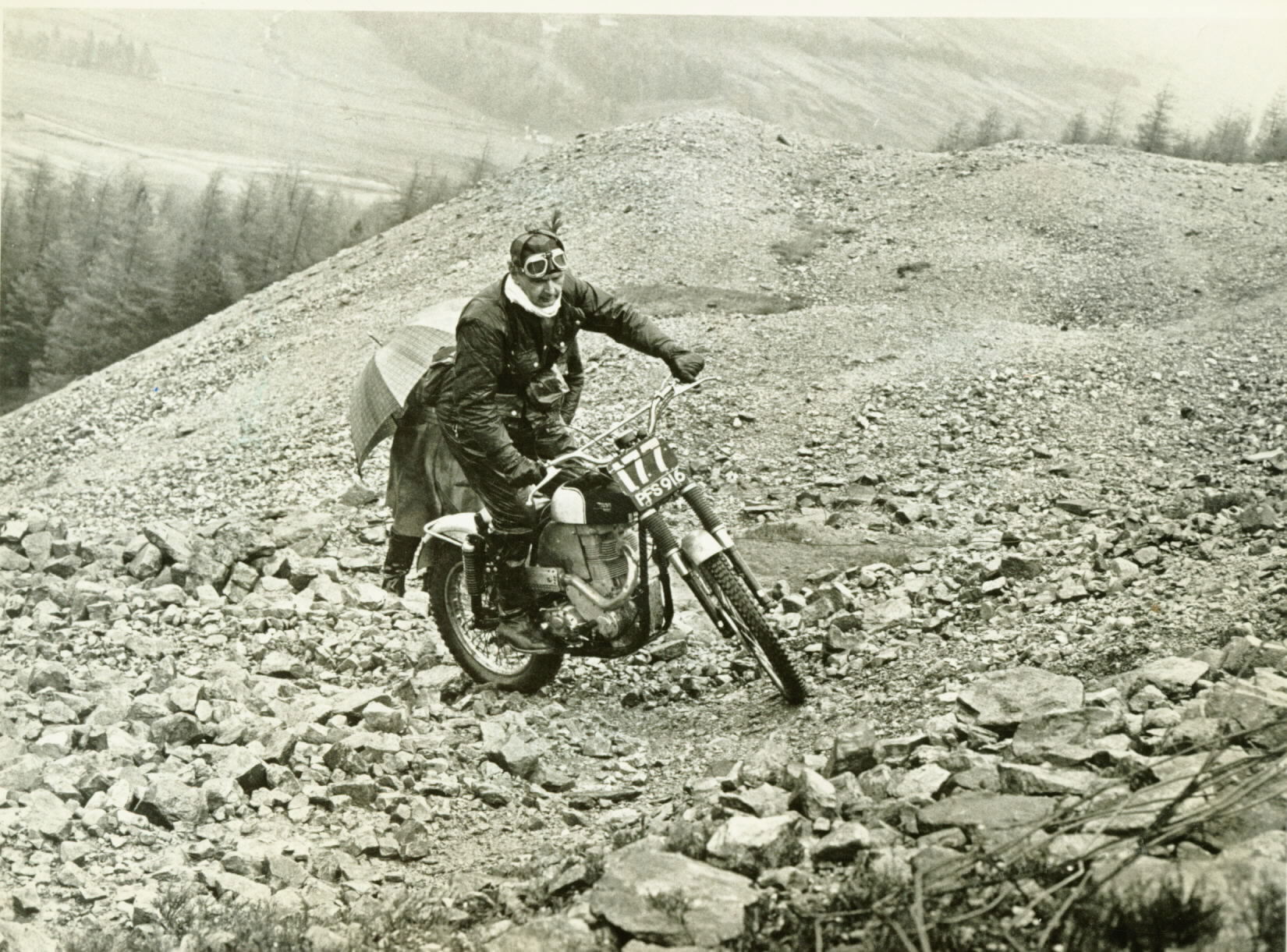
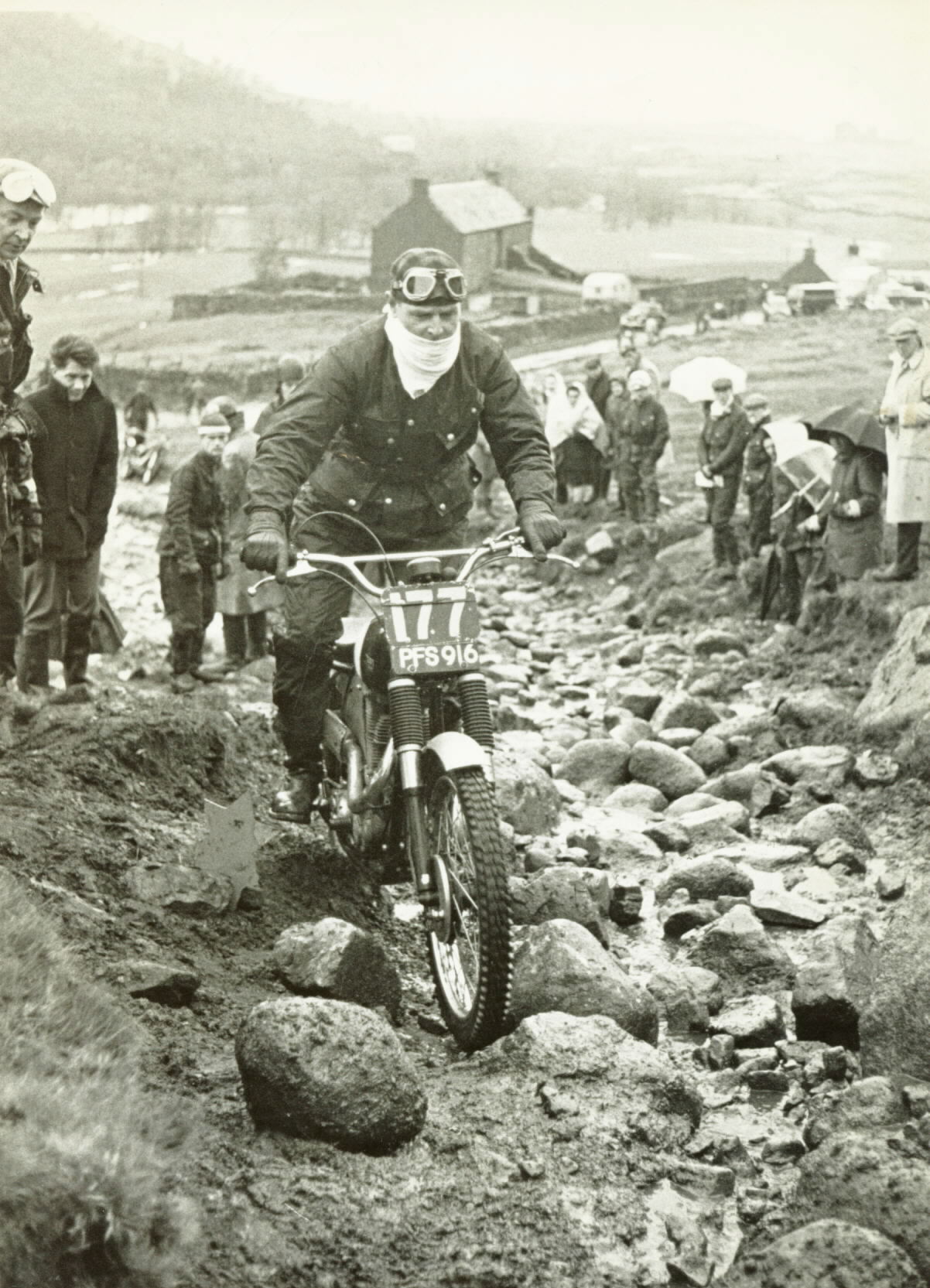
That particular Goldie, as Ron had one or two, registered PFS 916 had a neat conversion, featured in the first 1958 SSDT report in The Motor Cycle. In an attempt to reduce weight, Thomson used the gearbox as an oil reservoir for the motor thus obviating the need for an oil tank. The very machine on which Ron won the over 350 award at the 1969 Scottish which was to be his last ride in the Highland classic. That Gold Star was sold via Ernie Page’s shop in Polwarth Terrace and was passed through many ‘hands’ eventually ending up with Billy Maxwell in Newcastle Upon Tyne.
1964 SSDT on Mamore. Ron Thomson on his BSA Gold Star PFS916 – ‘The Stone-Crusher’. Photo courtesy of Mrs Helen Thomson, Fort William.
Ron loved riding the Scottish Six Days which was in effect a local event for him as he lived in Inverlochy at that time. Ron said: “…well it was more the seven nights I was most interested in to be truthful, we used to get up to all sorts of fun”.
Ron knew an observer called Tommy Millar from Airdrie, a man who never had a complaint registered against him in over 25 years of observing- what was the reason? “I just gie a’ the laddies a clean”, he told Ron.
Ron said: “I’ve no doubt that the kids today on their water cooled pogo sticks in their go faster trendy bin liner suits will enjoy themselves just as much as we did, but still I think had greater fun in the golden years”.
At the end of the 1953 Scottish Six Days, Ray Biddle took this photo of the Kirkcaldy & District riders From left: Peter Victory (197 James); Dave Birrell (490 Norton); Jack Duncan (Montrose, 197 Francis Barnett); Dr. J.G. Stewart (197cc Sun); Johnny Birrell (348cc BSA) & Ron Thomson (343cc Triumph)
Ron had a reputation as the man to approach if you wanted your bike fettled for the Scottish. He worked for a spell at the Brechin dealership, Duncan’s.
Ron prepares to start his BSA Gold Star at the beginning of the 1963 Scottish in Edinburgh’s Gorgie Market. Photo Courtesy of Jimmy Young, Armadale.
At one stage Ron, when still an active rider, prepared about a dozen Lochaber members bikes for the Highland classic.
“I couldn’t concentrate on my own ride for this one or that one coming up and saying, here! Listen to this – do you think it’s all right – will it last the week with this rattle or that rattle?”
Tyndrum, on the final day of the 1964 SSDT. Photo courtesy of Mrs. Helen Thomson, Fort William.
John Moffat has a vivid personal recollection of the 1967 Scottish Experts held at Achallader Farm, Bridge of Orchy: “Ron Thomson was on his Gold Star, having ridden down from Fort William, a distance of some 35 miles in company with the late Ali McDonald on a 500cc Ariel. Post-trial, Ron stopped for a blether with a group of his old chums, I happened to be an interested bystander, listening in to the “banter”. Ali McDonald had decided to get home before dark and left immediately after signing off at the finish. The bold Ron then decided after quarter of an hour had elapsed to set off in pursuit of his pal, McDonald. Ron set sail from the farm, which, is about a mile from the main A82 trunk road. Within a few moments the assembled gathering could see Ron and the Goldie passing over the steel bridge which spans the River Orchy and up the “Black Mount”, overhauling several cars during his ascent, the big Goldie on full song. The exhaust note ever fading, disappearing from view as he crested the summit and onward to the Fort. What a great sight to behold.”
Alister McDonald was a great friend of Ron Thomson. Here we see Ali on his Ariel HT5 on Town Hall Brae (Rocky Brae) in Fort William in the 1964 SSDT. Photo Courtesy of Mrs Helen Thomson, Fort William.
Known as a ‘big bike’ man, Ron also rode the “tiddlers” as well. In 1959 he chose the brand new C15T BSA 250cc unit construction single for the Scottish Six Days. In fact, out of eight C15’s entered, Ron was the only one to get to the finish and that included factory bikes as well!
Watched by Jeff Smith in the duffle-coat, Ron Thomson on the only C15T BSA to finish in the 1959 Scottish. All the works bikes had retired from the event. This section was at Achintee farm on the slopes of Ben Nevis Photo courtesy of Mrs. Helen Thomson, Fort William.
Back in 1955 he rode a Villiers powered 197cc DMW and a year later rode a similarly powered Welsh built 197cc H.J.H.
In the 1953 Scottish, Ron rode a self-built ex-WD 343cc Triumph, the following year he rode a 347cc Matchless G3LC.
Ron Thomson on his new for that year 347cc Matchless G3LC in the 1954 Scottish on Creag An Eilein on the Rothiemurchus Estate, near Aviemore. Photo: Ray Biddle, Birmingham.
Ron S. Thomson passed away on 20th January 2007, never being a regular church attender, there was a humanist service held for him in the Crematorium at Inverness. Ron left the trials community of the Lochaber Club and the towns-people of Fort William with great memories of a true character of the sport of trials.
Ron Thomson in 1964 at Achintee Farm on his 499cc BSA Gold Star. Photo Courtesy Mrs Helen Thomson, Fort William.
Trials Guru on Ron Thomson: Ron Thomson was a well liked individual who moved from his native St. Andrews to work at the British Aluminium works at Fort William. The reason was simple, so that he would live in God’s trials country! He set up business initially in a shed in his back garden fixing motorcycles and lawn-mowers for local people.
His business grew and he obtained premises at the Industrial Estate at Caol a few miles from Fort William on the A830. Many of the younger riders in the town benefited from Ron’s knowledge, which included Hugh and Alister McDonald, Alastair Macgillivray. Gary MacLennan and Rodger Mount.
Friends of Ron Thomson, Hugh McDonald Senior and Junior. Hugh Snr is on Ron Thomson’s BSA Gold Star and Hugh Jnr on the special bike built for him by Ron Thomson. Photo courtesy of Alister McDonald, Fort William.
His business was called R.S. Thomson (Inverlochy) Ltd. He ran a repair shop and MOT test centre for motorcycles. He was agent for chain-saws and garden equipment and employed Cameron ‘Cammy’ Kennedy for many years.
Ron gets his 250cc BSA C15T examined and security marked at Gorgie Market in May 1959. On Ron’s left is Davie Miller, one of the course markers of the SSDT. Photo courtesy of Mrs. Helen Thomson.
It was quite usual to swing in past Ron’s workshop for a great natter about the old days. But as sure as guns you were never there long until another enthusiast also had the same idea! How Ron got any work done heaven knows. He was a good builder of wheels, which itself is a bit of a ‘black-art’.
When Ron passed away after a short illness the business folded and Cammy took up employment with The Hire Centre in Fort William. Ron’s friends were not only Scots riders of his era like Jack Williamson; Arnott Moffat; Tommy Robertson; Johnny Clarkson and Bob Paterson, he also enjoyed the friendship of Gordon Blakeway; Ralph Venables; Peter Stirland and some of the best known riders of his era.
24th June 1962 – From Left: Bobby Neilson; Billy MacLeod: David Stodart; Hugh McDonald; John Noble: Jack Williamson & Ron Thomson. A joint effort of Edinburgh Southern & Lochaber Clubs to ride up Ben Nevis
They all knew Ron Thomson!
This article was put together from notes John Moffat made during an interview he had with Ron at his workshops at Caol some years ago and personal recollections by Moffat himself of Ron Thomson pieced together over many years knowing Ron Thomson.
Ron Thomson in the Scottish Six Days Trial
Year Riding Number Club Make & CC of machine
1953 179 Kirkcaldy Triumph 343
1954 148 Kirkcaldy Matchless 500
1955 20 Kirkcaldy DMW 197
1956 24 Kirkcaldy DMW 197
1957 12 Kirkcaldy DMW 197 (could be HJH)
1958 140 Kirkcaldy Triumph 498 (Twin)
1959 74 Edinburgh & Dist BSA 250
1961 171 Lochaber BSA 350
1962 191 Lochaber BSA 348
1964 177 Lochaber BSA 500
1969 195 (not in prog.) BSA 500
Post Script: Added 01/02/2015:This story was spotted by Ron Thomson’s Grand-nephew, Ron Fisher who lives in Canada. It brought back happy memories of a visit to Scotland back in 1997 and indeed Trials Guru has been able to put Ron Fisher and Mrs. Helen Thomson in contact as a result of the article you see above.
Copyright: Trials Guru / Moffat Racing / John Moffat – 2014
With special thanks to Mrs. Helen Thomson of Inverlochy, Fort William for the photographs which accompany this article.
Post script to Ron Thomson’s story…
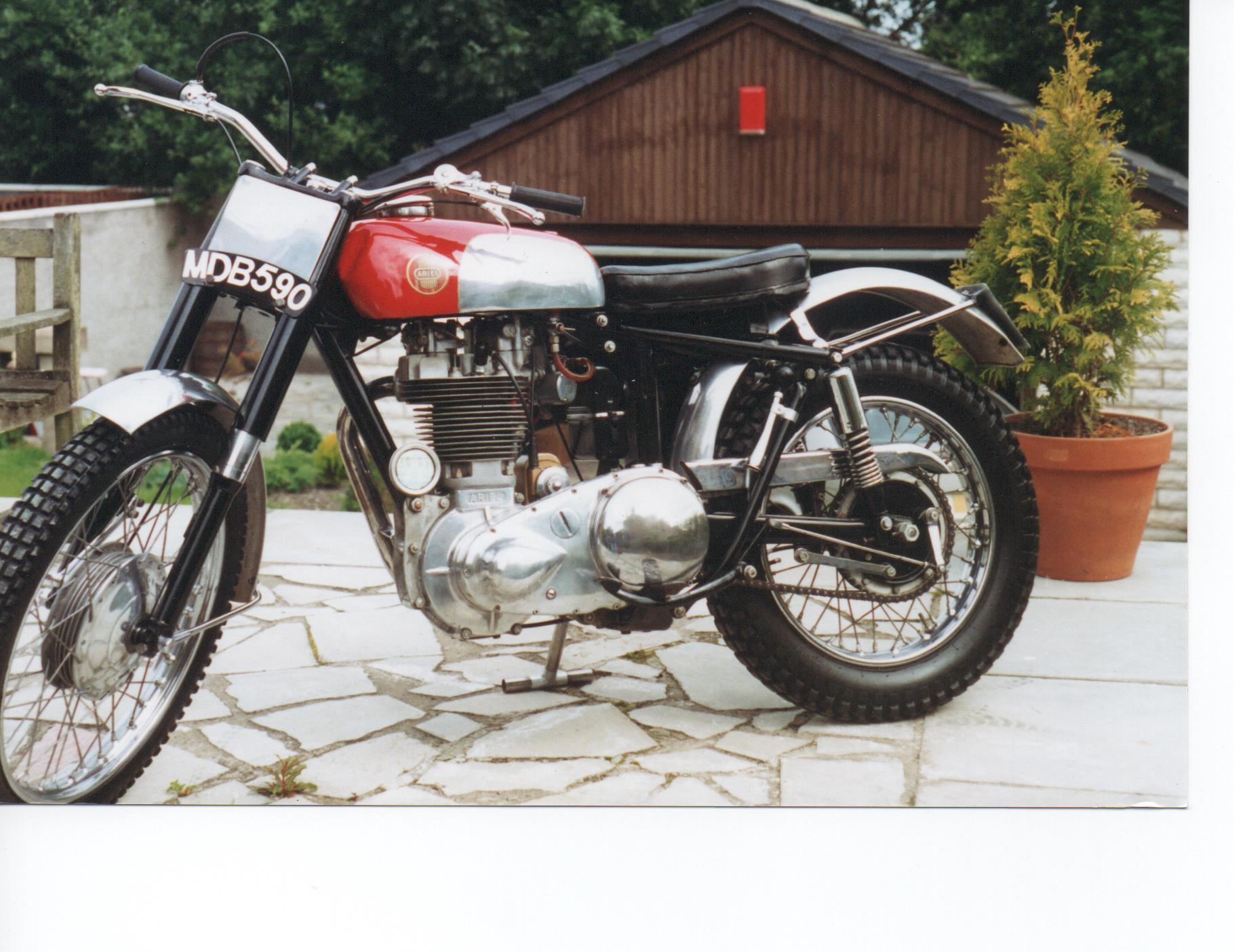
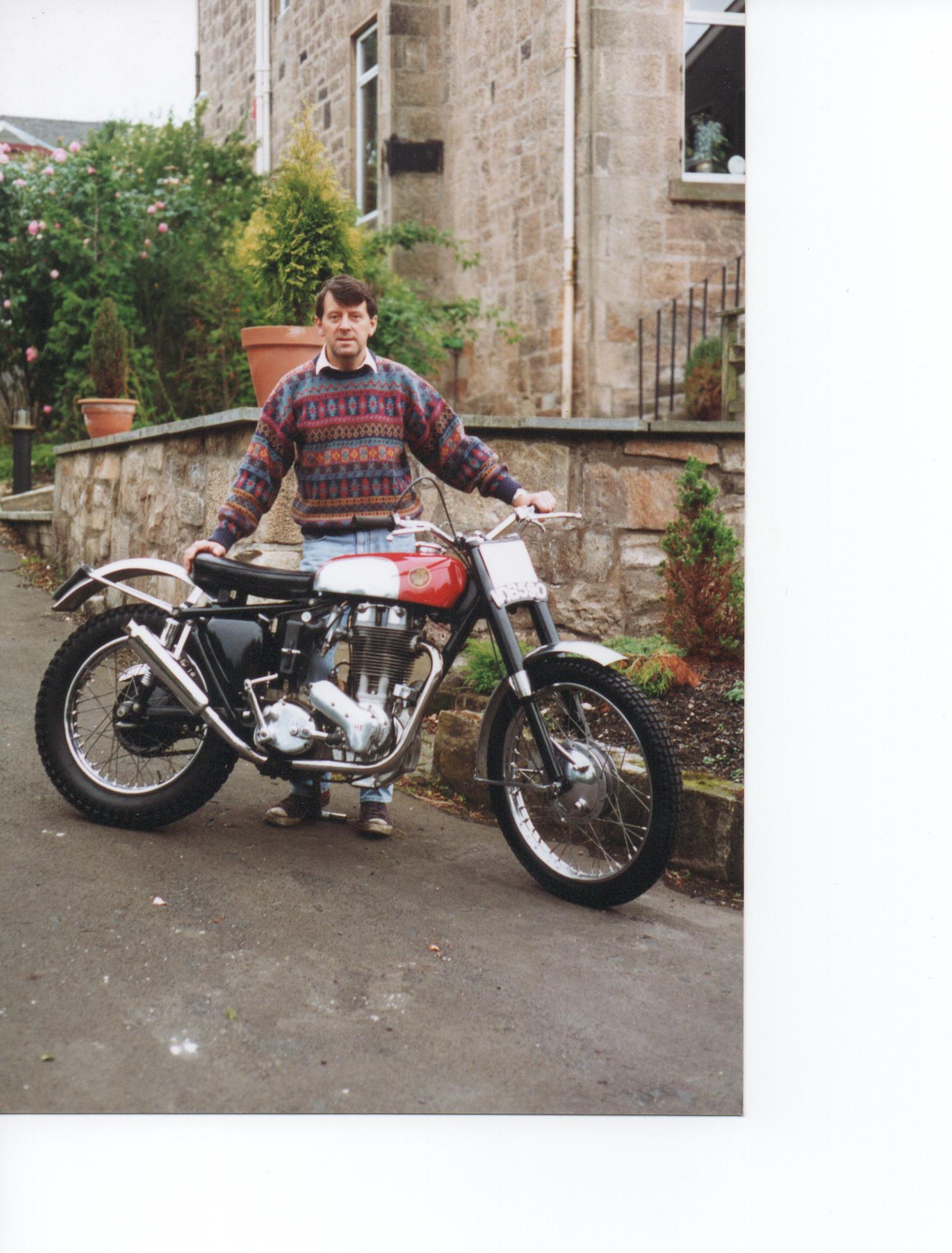
We have been contacted by former Scottish Speedway professional, John Wilson who now lives in Spain. John owned the ex-Ali McDonald Ariel MDB590 and he has kindly let us see photos of the restored machine. He sold it shortly before emigrating to Spain some years ago.
1964 – Ali McDonald on MDB590 on Grey Mare’s Ridge Photo: Holder and Osborn
The ex-Ali McDonald Ariel HT5 (MDB590) nestles inside John Wilson’s den. His speedway memorabilia is in the background. Photo: John Wilson.
A proud John Wilson shows off his Ariel. Photo: Chris Wilson.
West Glos and Forest of Dean enthusiast swaps her Sherco for a Beemer… see where she goes!
Having passed my bike road test just over two years ago this was going to be a big adventure, a trip to Morocco with my boyfriend Ian Thompson. In early October we left Malvern (after an epic tyre changing session) on a dry slightly chilly evening to catch the ferry to Spain.
The English Channel was quite rough but the following morning dawned fine and bright and we crossed the Bay of Biscay arriving in early morning sunshine in Bilbao after two nights on board. We set off to traverse Spain, planning just one night there before crossing over into Morocco. It was cold crossing the Pico’s de Europa with stunning views and our bikes ate up the kilometres.
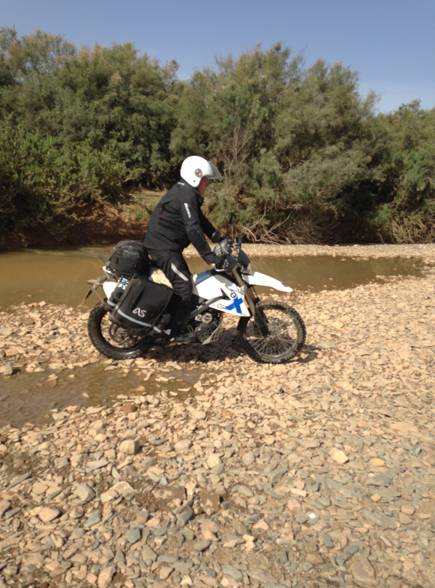
Georgina and her BMW
Due to the inefficiently of my insurance company one of the first jobs was to get bike insurance when we got to Morocco. Are people so badly educated that they think Monaco and Morocco are the same place? Apparently yes, and by the time I had discovered such stupidity it was too late to sort anything else out
The next morning we headed for the port of Algeciras and the temperature was starting to rise. A swift weaving in and out of the touts, return tickets were purchased and we just about made in on to the ferry, the ramp being raised behind us. I removed most of my thermals on board as we sailed past Gibraltar. Before we knew it we were in Ceuta – which although is on the continent of Africa is still Spain and it was a short ride to the Moroccan border. What chaos, people and vehicles of all shapes and sizes, people getting cross, and everyone jostling for position. Lots of signs saying do not use your horn; and yes everyone was!! We pushed through on our bikes, dodged the touts and got the forms to fill in for importing our bikes into Morocco. Ian took them off and came back with them duly completed and we thought we were done and dusted. After a short amount of pushing and dodging we got to the border and were told to get our passports stamped as the official had not done it when he did the bikes. We parked up, Ian went off and I stayed with the bikes.
Ian Thompson
I waited, watching all life pass through the border, bribes taken, people singled out, people waved through – there seemed to be no rhyme or reason to it. Eventually after half an hour Ian returned telling me how he had had trouble as the border official did not believe he was on a motorcycle. But he had his stamp and now it was my turn. I headed to the same booth – ready to do battle, I handed over my passport, my entry paperwork and demanded the stamp was made please (in my best French). It took all of about 15 seconds from start to finish!!! We were away and through the border heading to the coast to spend the first night in Asilah.
The next day dawned fine and we went in search of some insurance. The local insurance broker was definitely not interested and sent us to the next town to AXA International. A chance encounter saw me marched around the corner straight into the office and I purchased the world’s most expensive short term motorcycle insurance. The girls in the office were very impressed we had ridden from England and I was riding a motorbike.
We hit the road again and headed for El Jadida for the night. After breakfast we tried to escape the town. After a futile attempt, we stopped, I took the map and went in search of directions. Entering a public office of some kind I explained where we were trying to get to and what road we wanted. (Speaking French helps so much in these situations). The two gentleman said it was tricky, closed the offices, got in a car and escorted us out of the town to the correct road – an extreme act of kindness. I told them they could just point us in the right direction but they refused, and insisted they guide us!!
One of the scariest parts of the trip was riding around the capital city of Rabat. It was complete chaos, lorries, cars and waggons pulled by donkeys all just pull out in front of you. Ian led the way and I tried to keep up and not get cut off by the traffic – we got out the other side unscathed, but my heart was beating so fast – it was terrifying. Earlier that day we had come across a road accident where a lady had been hit and killed by a truck – which itself was in a very bad way in a ditch. The body was in the middle of the carriageway and covered up. It struck me how little drama there was about it all. A policeman was wandering around, but what a contrast to the flashing lights and road closures of the UK. Death in whatever guise is dealt with in a very “matter of fact” way.
The following morning Ian wanted to search out a piece of sheepskin to go on his seat as it was proving uncomfortable. Wandering around the Medina we eventually found someone sat on a stool covered with sheepskin and expressed an interest. After much debate in Arabic someone rushed off and came back with one. It was too expensive and too big, we further explained what we wanted and again someone appeared with another piece which was perfect. We then had to haggle quite a bit and they drove a very hard bargain. Ian was now the proud owner of the world’s most expensive sheepskin to match my insurance policy. It had obviously been removed from someone’s house!
We set of early the next morning for the long ride down to Tan Tan which was as far south on the Western side as we were heading. We arrived in the dark and it was getting very hot. The recommended hotel had seen better days, but they had a room at £20 for the night and free parking in a barn at the back for the bikes. As grotty as it was the bed was clean. After a shower and washing of our clothes, which would dry overnight easily; we headed out and enjoyed chicken and chips in the main street at a pavement café. Ian could have swapped me for a camel with the local wheeler/dealer, but luckily was too tired to think of that whilst the chap was paying me compliments.
The next morning the big day had arrived, it was time for my first off road experience. To say I was terrified was an understatement. I had read the description of the route and it mentioned that you needed to have been on a spinach diet first – really scary. I was determined to ride like Lois Pryce the adventure bike rider and not Lois Lane!! I turned off the ABS and we set off on the first piste or track. The gravel was a bone shaker and I had to stand up to keep control of Beryl.
After half an hour I was so hot it was unbelievable. My first “off” soon happened – a small patch of loose gravel saw me crash into a bush. It hurt, shocked me and my pride also took a nasty blow. Ian came back, we righted Beryl and it took me a while to get myself sorted and onwards we went. The track came from Chris Scott’s guide book and I was wishing the poor chap all sorts of unmentionable harm. After an hour or so I was starting to get a bit of a handle of things and rode a quite difficult rocky section, various small patches of soft sand, gravel, corrugations, dried up oued(creek) beds and I was actually enjoying a bit of it now. A few more crashes and we then stopped for lunch at a small oasis, stopping at a well to refill our water bottles. Lunch over we had to rejoin the track and getting out of the soft sand was difficult. Too hard for me so Ian rode my bike out and I helped him right his when he lost it too.
The day continued through beautiful scenery and was very varied. I was scared, out of my comfort zone but also enjoying myself. After some calculation with the GPS we decided that we could get to the end of the track and to the town of Assa. We rode part of the old Paris-Dakar rally route on salt flats and that was great going, fourth gear and stood up. It was getting dark by now but we were not far from the tarmac. Riding at night in Africa is not good as you never know when a Donkey or a Camel might wander out into the road. I was exhausted but just kept following Ian’s tail light. We rode up a hill in the pitch dark and I was ecstatic to see the lights of Assa strung out along the horizon. We pulled into the hotel car park and I had to get Ian to put my side stand down as I could not move!! I dragged myself off the bike, a room was secured and we had a very good evening.
The next track was billed as easier but were bumpy and rough and the terrain was not too challenging compared to the day before. Some of the climbs were terrifying though, but I just kept going, yelling at myself to get on with it. Chris Scott mentioned in his guide book “that your radiator will be screaming by the time you get to the top” – he did not mention your girlfriend will be too!! I completed the day without falling off – yeah (thankfully) and we stopped in Tafraoute for the night. Following Ian on the tracks I felt like Wily Coyote chasing the Roadrunner as often all I could see was a ball of dust in the distance.
On the bikes again the next day saw us heading via Tata to Zagora for the long track we were planning to ride. It was a long hot ride, 42 degrees C in one town we went through, with sealed roads that were more like cart tracks – I actually had to stand up they were so rough in places. We got delayed as the road had a lot of deviations onto tracks as it had been washed away and we came across a wedding party which blocked the road too. It was dark when we reached Zagora and secured the last room in a large hotel, after a leisurely breakfast and a morning spent plotting the way points in the GPS we set off for lunch and supplies. About four p.m. we headed off the main road to start the long track we had come to ride. It was hard to get going and find the way, but eventually we were off, every time we hit soft sand I thought I was off too. I rode some hard bits, then fell off again – once as I was coming to a stop through exhaustion!! A shower from a well and a military check point passed. A pep talk from Ian saw me ride a really tricky hill and it became time to stop for the night. It was getting dark and we chose an oued bed as it had some flat rocks. We unpacked, stowed the bikes under the bank below the track and ate our supper. The silence was quite wonderful, all-encompassing and the stars started to come out – layer upon layer upon layer. It was not really dark at all, shooting stars shot across the sky and we started tracking satellites. With no tent and just a sleeping bag, it was not cold as the rocks had held the heat from the day. There were a few mosquitos which were annoying and a small jerboa (nocturnal wild gerbil) tried to steal our bread in the night but we managed to rest and rose at dawn to continue.
Kilometre after kilometre passed, the scenery changed again, and we met more sand. Another well to refill our water bottles and a further military checkpoint. The guard mentioned that they don’t see many women and certainly not many women on motorbikes, it made me feel quite special! He kept apologising for having to record our details and told us that two weeks ago they had had heavy rain and the whole area had flooded and we would not have got through.
On we went and met more sand, I started to come unstuck more often. I managed to get my foot wedged under the fuel cap on one off and Ian had to come back and rescue me. We stopped for coffee at small Auberge in the middle of nowhere and I was not thrilled to be told the route got very difficult from there onwards. I kept telling myself that every metre was another metre nearer the end. I managed to fall off again in some soft sand near to another Auberge where we had lunch. The locals saw and as they all have mobile phones they had a plan for later forming which will become apparent.
The going became very tricky, although the hard packed rock strewn sections were not too bad, I kept telling myself what to do and to “get on with it”. A few more offs saw me really damage my shin (cracked the bone) and although it hurt the adrenaline let me get back on. I thought it was really hard and then it got difficult!!! I could not manage in the deeper soft sand, so Ian had to walk back and ride my bike through the difficult sections. I climbed off once and twisted my knee in the soft sand which really hurt, and then I knew I was not going to be able to continue. We heard a Land Rover approaching, word had got out and their timing was superb. It stopped with two Moroccans in it – their opening words were “Do you speak any French?” “Yes”, I said and so it began. “It is impossible” they said “to ride a bike through here, we’ll take you to the tarmac”. After much haggling they agreed to take my bike, the luggage and me; Ian would follow as he was managing. Beryl was secured I climbed into the middle of the truck cab with Hassan and Mohammed. There was a terrible smell of hot sweaty bodies and feet, oh dear; it was actually me!! They were very entertaining speaking to me in French and then shouting at one another in Arabic, they waited every now and then for Ian to catch up telling me: “il arrive”. Ian kept following us, riding amazingly well, I was so envious of his abilities; I could see him in the rear view mirror. The rest of the route was very hard and I would have really struggled to do it with my current skill level. It would have meant another night in the desert, some parts I could have ridden, other bits – no chance!
Eventually we reached tarmac, unloaded the bike, and scraped all of our cash together, paid the guys and they left. We headed to Merzouga where we arrived in the dark and set about trying to find a cashpoint. There were lots of touts and eventually we discovered there was no cashpoint, so we needed a hotel that accepted credit cards. One chap said he could take us to one, we told him we had no cash and could not pay him, he said “never mind” – rammed his turban on his head, hitched up his robes and set off on his moped with us in pursuit. After ten minutes we arrived at the hotel, confirmed they had a room, took credit cards and thanked our guide, another genuine helpful person who was very kind to us. We had a really good dinner and woke the next morning to amazing views of the dunes and camels. My whole left shin was now quite black and blue in places, I had a lot of other bruises too, but had survived!
Soon it was time to head north towards the Atlas Mountains. Whilst stopping to check tyre pressures one lad tried to help and move my bike; he could not manage it when I could and I expect he is still being ribbed over it. “The woman could do it and you couldn’t” his mates were laughing a lot at his expense. We decided to “go for it” and try and get to the coast by nightfall, it was a relief to get off the bike when we did.
Two days later we headed to the border, this was scary as there were very high winds on the Autoroute and Ian had the bike move out from under him once, which scared him (so it must have been scary then)! We eventually arrived at the border chaos, there was much pushing and shoving, and we got to the front, filled in the forms, had our passports stamped, exported the bikes and were away into Spain. When we had filled up earlier I had not locked my second fuel cap properly and someone had stolen it – annoying, but not the end of the world. We queued for the ferry and without much ado were back on the European mainland. A quick blast north and we stopped for the night when it got dark and also cold. We set off for Bilbao to catch our ferry and made very good progress. Arriving back in Portsmouth it was still warm and sunny, I changed the clothes I was wearing as I did not need all of my cold weather gear and we rode towards Malvern.
Just before six o’clock saw us at the end of the trip, 3801 miles covered in three weeks. No mechanical breakdowns, no punctures, two lost indicator lenses, a DIN accessory plug that fell apart and a stolen fuel cap was the extent of the bike damage. The cartilage in my left knee is another matter, but the bruises soon faded, and a burn healed without incident. I still can’t believe I actually did it, it was awesome, definitely the adventure of a lifetime. – Georgina Mason (SSDT Observer & WG&DF MCC member)
Copyright & Photos: Georgina Mason – Trials Guru 2014.
Interested in Twin-shock Trials? These are ‘must have’ publications in that case!
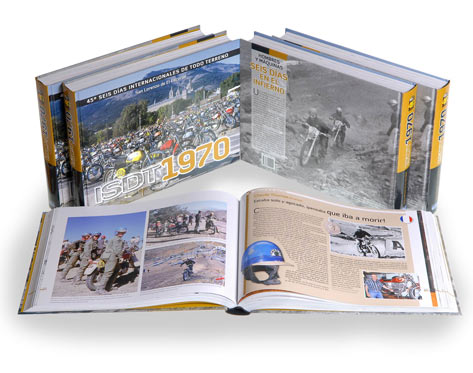
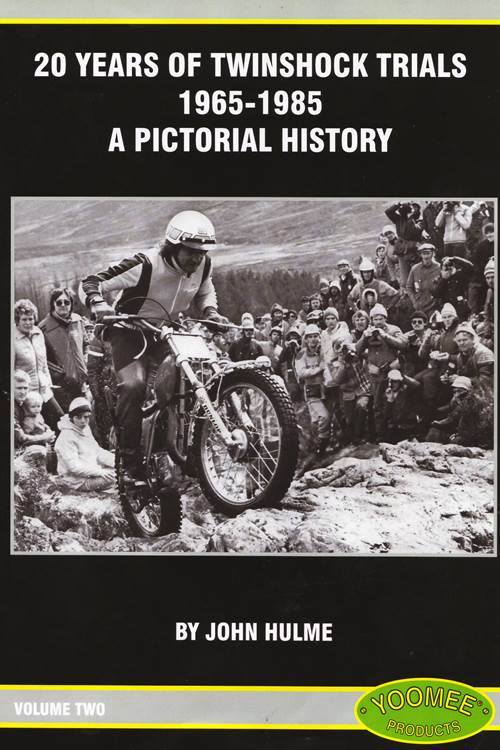
Three volumes of twin-shock trials machines from John Hulme/Yoomee.
Absolutely jam-packed with photographic records from the caliber of Eric Kitchen, Barry Robinson and others these books cover the period 1965 – 1985, the golden era of twin damped rear suspension trials bikes.
Volume 1
Volume 2
Volume 3
Click Here for more information on how to order these books.
The Premier Trial Website – Recording the History of the Sport 'Established 2014'















 TRIALS GURU - DEDICATED TO TRIAL