Richie Collins from Corpach, Fort William has been a superfan of the annual Scottish Six Days Trial. He is also a keen runner with Lochaber AC, so he is a fit lad. Richie has had Cerebral Palsy since birth, but that doesn’t stop him going to see his favourite, local sections every year! His Dad, Alan usually helps to get him to the sections.
Richie Collins is an SSDT Superenthusiast, he never misses the annual event on his Corpach, Fort William doorstep. Richie is a Trials Guru VIP!
Richie is also a keen runner and has taken part in many races with Lochaber Athletics Club as a para-athlete, in fact an athletics career that has covered four decades. He has represented Great Britain at two Paralympic Games and two World Championships, winning five medals, and held the World Record in both the 800m and 1500m for his classification, so he is no slouch.
Richie Collins taking part in a running competition with Lochaber Athletics Club. (Photo courtesy of John O’Neill)
Keep an eye out for Richie at the Scottish Six Days as he is always in the crowd, keeping a watchful eye on the performances, but now he will be proudly wearing his Trials Guru VIP cap!
The South West Classic Trials Association (SWCTA) was set up in 1983 when Pre65 trials were in the ascendancy. Its aim was to promote and assist in providing an ‘umbrella’ of knowledge and support to lay out suitable sections for the older bikes in local club trials. As a result the Classic scene in the South West areas of Devon and Somerset flourished and entries for local trials increased. As reported in the press at the time, the organisation of the Exmoor Classic Trial was the closest thing to a holiday in the highlands available for the older bikes. Centred around the holiday resort of Minehead, it meant the Dad could disappear off to Exmoor with his trials bike whilst the family made the most of a seaside break in an area with plenty to offer. During the three days of the event, there was a full programme of social evenings where riders, friends and organisers could get together for a noggin and a natter. The first SWCTA secretary was Neil Arnold who campaigned on a 250 Royal Enfield with chairman Bob Davis, an AJS enthusiast. Bob owned a restaurant in Minehead and as chairman kept them all in order. With Colin Stoneman and Mike Palfrey and many of the current Pre65 riders they established a flourishing club. Many clubs up and down the country noticed the interest and copied the format and some two or three years later the Dartmoor Classic Trial was born. One of the enthusiasts who also ran the Exmoor for many years was Bill Hewitt from Stoke Canon near Exeter.
Bill Hewitt on his 197cc DOT
Bill was born in Flintshire in 1931 and moved to Exeter when he was four years of age when his father secured a job as employment officer for Exeter City Council. He was educated at the Exeter Technical School and after leaving got a job with Autoparts down by the Haven Banks and the river in Exeter. Bill’s career started back shortly after the war when he rode a 350 MAC Velocette in his first trial late in the 1940s before he was called up in 1952 and served his time in the Airforce with 6th Flight, Y squadron. He did his training at Melksham and then two years as a mechanic at Dunkerswell, in all doing three years in RAF Transport. Bill managed to ride in at least one event at Broadhembury, on a 2H Triumph loaned from Ron Edwards of Cullompton, when in the RAF. Upon his demob it was Bill Boyce, from nearby Rewe, who enthused Bill to take up trials. Bill Boyce scrambled his ‘Mabsa’ in the summer along with Maurie and Reg Squires and kept fit in the winter by riding trials. His enthusiasm rubbed off on the newly married Bill Hewitt and he acquired a 197 DOT, and after a year or two he graduated to a BSA Bantam, a marque that he rode most of his life.
Bill Hewitt with yet another BSA Bantam for trials use.
Bill was ever the enthusiast and spent a lot of his spare time modifying and fettling his bikes during the evenings and weekends, and the logo on his bike reflected some of his thoughts as it read: ‘BSA – Made in England-Ruined in Stoke Canon’.
Bill also keeping fit with line dancing with his wife at the local village halls where he got quite a reputation. In fact Bill, according to a photograph in Derek Wylde’s column in TMX News, was ‘A dab hand on the dance floor and a dab foot in the stream’. The dab in the stream was somewhat of a feature of Bill’s riding as he is the first to admit, although he reflects that many a time he finished up underneath his bike. Never deterred he would always get up and with a friendly curse to the bike and section and then would carry on.
Bill Hewitt negotiates ‘Diamond Lane’ in the West of England Trial on his DOT.
Bill was one of those unsung heroes, the clubman who was never going to be a consistent winner but who enjoyed his trials, and importantly put effort back into the sport by marking out events for his club, the Crediton Motorcycle Club. Later on when the South West Classic Club was formed Bill took over as entries secretary of the Exmoor Classic Three Day Trial at Easter, an event now coming up to its thirtieth Year, whilst also setting out the final days sections at Oakford near Tiverton. Bill represented the South Western Centre in Pre65 trials when teams would be formed to ride against the Wessex Centre. Together with Brian Trott, Ivan Pridham, Paul and Steve Hodder, Mike Palfrey, Dougie Williams, Vic Burgoyne and others, a good weekend’s needle match was always held in the Mendips and Bill very often would shine with a good ride on the limestone outcrops.
Bill Hewitt in an Otter Vale trial.
I first met Bill early in the early 1960’s when he sold me an ex-Brian Slee 250 BSA. If I thought that Brian’s expertise was going to rub off on me I was to be disappointed, but it gave me a lifelong friendship with Bill that lasts to this day. Moving to Bristol where I worked at Rolls Royce, we would always call in to see him wherever he was working with Devon County Council. We might practice at the sewer works at Stoke Canon or call in to the council yard in Exmouth with the kids to renew times. One year on the way to Cornwall for a week the car expired just outside Exeter. I gave Bill a call and immediately he gave me his car to continue our journey and he repaired our car during the week for us to pick up on the way home. It was the nature of the man who would help you without a second thought.
Bill Hewitt riding a Honda in a South West Classic trial in Somerset.
After a few outings in the trail bike class, Bill finally gave up riding about ten years ago saying that ‘he had been cured’. Cured that is of the affliction that affects a great many of us, that is the affliction of being a trials rider. That patently is not true of Bill from the myriad of photos that adorn his walls to the piles of trials magazines that he reads and the avid way he wants to know all about the trials scene and the riders that still come down to ride and enjoy both the classic Exmoor and Dartmoor trials in the Westcountry. Today at 81 unfortunately Bill is mostly confined to his bed and is on oxygen to assist his breathing, but he still has a strong spark for life with a twinkle in his eye, and enjoys a good laugh. Pat his wife of fifty-one years with their three girls still dote on him and administer his every whim, isn’t that right Bill? Of course there are and have been many others that have administered the comings and goings of events within the SWCTA and Bill Hewitt has just been one of them.
Finally during the run up to the millennium, Bill was honoured to be asked to erect a plaque onto the millennium stone donated to the village of Stoke Canon, and that sits on the village green. The plaque marks the importance of the stone and the turn of the century and the millennium and its impact on the village. This he did for his local community, but Bill has his own thoughts on the usefulness of the monument for the village which he expresses in graphic Anglo Saxon terms. Yes Bill had not mellowed through the years but to my mind he was the salt of the earth and I am glad to be able to have called him a friend. – Mike Naish November 2012.
‘Bill Hewitt by Mike Naish’ is the copyright of Trials Guru and Mike Naish.
Apart from ‘Fair Dealing’ for the purpose of private study, research, criticism or review as permitted under the Copyright, Design and Patents Act, 1988, no part of this article may be copied, reproduced, stored in any form of retrieval system, electronic or otherwise or transmitted in any form or by any means, electronic, electrical, mechanical, optical, chemical, photocopying, recording or otherwise without the prior written permission of the author as stated above. This article is not being published for any monetary reward or monetisation, be that online or in print.
Mike Naish: I want to introduce you to a rider from the North East corner of the South Western Centre. A rider, who I believe is only one of two, that has gained expert status in the disciplines of trials, scrambling and grass track racing, Doug Williams.
Dave Cole, Doug Williams and Brian Trott attending a Pre65 Scottish Trial at Kinlochleven.
Mike Naish: Have you always lived in Somerset Doug?
Doug Williams: “Yes I have, I was born in Tiverton but have always lived in the Taunton area. I joined the Taunton MCC when I was sixteen and have been a member most years since then.”
MN: How did you get started in sporting events?
DW: “My parents took me to watch scrambling when I was a nipper and I suppose I caught the bug then, although I did not think that I would ever be able to ride as fast as those boys. I started work when I was fifteen at Edwards Motors of Taunton run by Frank Jarman, I did an apprenticeship and my first job on a Monday morning was washing down Paul and Neil’s scramble bikes from the previous day’s event. I went along to see a couple of trials and I thought ‘I can do this’ so in 1956 or 57 when I was sixteen I bought a 1956 DOT with the 6E Villiers three speed gearbox and the ‘five times a week forks’ thats to be greased, a very early version of Metal Profiles, from Pankhursts of Taunton. My first trial was an invitation event with Taunton MCC held at The Pines, Buncombe Hill. I won the novice award with no marks lost. I was very proud of the headline in the Western Morning News when I turned to the results; ‘Williams Stars in Taunton Trial’. I won another novice award a week later at an Exmoor Open Trial and was promptly upgraded to non-expert, and I was still a green rider so to speak with very little riding experience.”
Doug Williams competing at a Lyn MCC scramble at Linton in July 1965.
MN: What other bikes did you have?
DW: “After the DOT which I had for about a year, I had a 10E James from Edwards. I used the bike to ride to work, then in the evenings for courting when I put a dual seat and footrests on, and then for trials at the weekend when a single seat went on and the lights came off. I used to take the lights to the trial to put them on and ride the bike home afterwards. In 1959 I moved up a class and had a 350 Royal Enfield Bullet. I rode trials for five years, four full seasons, getting up to expert status.”
Doug on 197 DOT at a Crediton Trial in 1957. Section named: ‘By-Gum’
MN: Was that when you moved on to Scrambling?
DW: “Yes, I bought an ex John Churchill Greeves Hawkstone in 1961 which I rode all over the Southwest, Wessex and Southern Centres. In those days riders were known as much by the colours on their jerseys and their helmets(mine was yellow) -as their riding numbers. It was riding on a shoestring with any prize money spent on tuning the bike and also in the pub afterwards event- socialising. Cliff Baker used to tune the bike and I set up a tab with him to pay him back at so much a week. I rode the Hawkstone until 1962 when I bought a brand new MDS Greeves. I was expert status by 1963 and I remember I rode at the Tor clubs Glastonbury circuit which I liked. In the experts supporting race at the International I finished eleventh, which I did not think was very good but others said that given the strong field I had done very well. I remember I got two pounds and ten shillings for that one race which was about half what I got for a complete weekend of riding. The Greeves MDS just couldn’t live with the Huskys and CZs that were just coming in and I could not afford to change so in 1970 I gave it up, and my mate John Long said I should take up an old mans sport, grass track. So I did as I also wanted to succeed in all three sports.”
Doug on a Greeves passes a Cotton rider at Torridge MC Crowbeare Farm June 1965.
MN: What did you think of Grass tracking?
DW: “It was without a doubt my favourite sport. I had a Hagon with Lightweight aircraft tubing frame and a big JAP engine which when you wound up the throttle and fed in the clutch would just take off. When I had built up the Grass bike the rear chain would not run too well along the sprocket line. John Long said “Why don’t I give you a tow with my car down the road to bed it in”. It was a quiet Sunday Morning down a B class road, nobody about, and he towed me about two miles down the road and then did a U turn to go back the other way. As he turned around the law came along on a motorcycle and stopped. John threw the rope in the boot of his car and took of leaving me to explain, and to convince him I lived in the cottages that we had just stooped outside. When the PC had gone John reappeared and connected up the rope and towed me the two miles home.”
Doug Williams No 66 on the inside line at Camal Vale MC, August 1973.
“In racing there is nothing quite like the feeling of having gone into the bend applying a bit of opposite lock pressure on the handlebars with the throttle wide open, just sitting there on the slide sometimes with your left leg up on the casing. It seems as if you could ride all day in that position. I loved it. I won the junior ‘Wimbourne Whoppa and I can tell you that riding four laps of a Grasstrack is like twelve laps of scrambling. But then I had the accident which meant I had to give it up and it changed my life.”
MN: How did it happen?
DW: “It was in September 1973, I was riding near Salisbury and the track was very slick and it was hot and dusty. At the interval I had decided not to continue because of the conditions which at times were suicidal, and I said so. But then in the end I thought I would give it one more squirt. I went off the line and on the third lap I slid off going into a bend. It is thought that a small stone went under the tyre lifting it off the rim. Another rider ran straight over me, split my helmet in two and took my foot almost off as well. I was in agony, my leg was broken and my right foot was hanging by just the back tendon. I was rushed to Oldstock Hospital Salisbury and underwent a four hour operation. A specialist surgeon was called out from his home and worked a miracle putting the foot back together. Part of the bony sponge which supplies blood to the foot had died and they thought they might have to amputate. When I was moved back to Taunton Hospital they said I had been lucky with the specialist because if I had been in Taunton I would have been walking on a block of wood.”
“I had six operations and two skin grafts and spent the next eighteen months in plaster on crutches and could not work for five years because I was at the time driving heavy tipper trucks. It was a difficult time because I had two young children at eight months and eighteen months and Gloria my wife had to look after all of us.”
MN: Did you want to get back to riding or did you feel you had had enough?
DW: “It was very frustrating being home but it was the thought that one day I might be back in the saddle which kept me going. Lew Coffin and Sean Wilmont visited me in hospital and brought me in a collection they had arranged from the riders and public for a meeting I had organised for the Taunton Club but could not attend. I also had a bit of help from the ACU Benevolent Fund and was visited by Freddy Vigers who administered it. I always try and give a bit back to the Ben fund because they were good to me. As I got gradually better I helped Edgar Stangland, the International Norwegian speedway rider, who lived in Taunton. I travelled all over Europe with him visiting Czechoslovakia, Yugoslavia, Germany and all the Nordic countries doing long track and grass track events, something I would not have normally been able to do. I had to drive with a wooden block under my heel to give me more movement. In 1978 I felt confident enough to get back on a bike and bought a 250 Bultaco and then moved on to a Beamish Suzuki for trials and I started work for Gerry Wheeler, doing some driving for them.”
MN: Is there any other incident that sticks in your mind?
DW “There is a couple. One was a crash I had at Bridgwater Grasstrack with the late Gordon Hambridge over the start and Finish line. We had a coming together and whilst I was lying on the track I thought it was all over for me because I could not breathe, I expect I was winded. I ended up with just a broken thumb.”
MN: When did you start in Pre-65 Trials?
DW: “After the Suzuki which passed on to Dave Fisher, I had a 156 Fantic which I just couldn’t get on with and then a 200 Majesty which was a nice little bike. I think it must have been about 1981 or 1982 that Mike Palfrey, Vic Burgoyne and myself decided to ride pre-65 trials and I got myself a Bantam frame with a Tiger Cub Engine. By this time I had gone into a driving rig of my own and was an owner driver with ready-mix concrete.”
“My current bike is an ex John Trowbridge 250 Enfield I entered the Talmag on it in 1984 and won my class. I have been moderately successful in Pre65 trials winning the championship for two years in 1985 and 1986 and being runner up a couple of times.”
MN: What do you enjoy and how do you see your competition future?
DW: “As you have said Mike, motorcycling is a disease for which there is no known cure. I keep coming back to it. I said I would retire when I was 60 but now I am 66 and coming up to my 50th year since I started. I enjoyed our visits to Mons in Belgium, the Scarborough Two Day and the Northallerton Three Day and also my ride in the Scottish Pre65 the first year it became a two day event. I should really like to do the Scottish one more time. I still enjoy my trials and the comradeship that goes with it, and I guess I will carry on while I am still enjoying it for as long as I am able.”
Doug Williams by Mike Naish is the copyright of Trials Guru and Mike Naish.
Apart from ‘Fair Dealing’ for the purpose of private study, research, criticism or review as permitted under the Copyright, Design and Patents Act, 1988, no part of this article may be copied, reproduced, stored in any form of retrieval system, electronic or otherwise or transmitted in any form or by any means, electronic, electrical, mechanical, optical, chemical, photocopying, recording or otherwise without the prior written permission of the author as stated above. This article is not being published for any monetary reward or monetisation, be that online or in print.
(Not strictly an interview undertaken by Mike Naish, but certainly in that vein and from the same part of the world!)
Words: Trials Guru & Hedley Ashford
Photos: Ashford Family; Hugh Hunter Collection, Fort William; Linda Ashford; Mike Rapley and Iain Lawrie.
We chat with a resident of Street in Somerset, a large village which had two famous all-round off-road competitors to its credit. The first being the late P.H. ‘Jim’ Alves who owned the local garage in the 1950s and 60s. He was of course a Triumph factory rider who was ACU Trials Star holder in 1950, the equivalent of British Trials Champion at that time. Alves was the first to compete on a works Triumph ‘Terrier’ 150cc, the forerunner of the Tiger Cub. He was very successful on the factory’s twin cylinder machines, both in national trials and the ISDT.
Triumph works rider, P.H. ‘Jim’ Alves at the 1951 SSDT – Photo: Hugh Hunter Collection
Jim Alves was at his height of his trials career when our subject was just an infant, he was actually born in Ashcott, Somerset, an eleven-minute bus journey from Street, in 1948 the youngest of four boys. His name of course is Hedley Ashford.
Trials Guru: How did you get into motorcycle sport Hedley?
Hedley Ashford: “When I was thirteen, a neighbour and I would ‘borrow a BSA B34 from a man who lived in the village, who only found out about a year after we’d been riding it. Luckily, he was fine about it.”
“I was still at school, weekends would find me riding around in a field, which was good fun, that’s where I got the bug for bikes.”
TG: What was your main source of income?
HA: “I became an apprentice joiner with a builder in Street called Ernie Blake, then I moved to another builder, Bert Steven and finally to my last employment with Chris Edgar, before I retired in 2013.”
TG: What was your first event and what did you ride?
HA: “My first motorcycle event was a Time Trial at High Ham in 1966, not far from where I lived, on a borrowed Triumph Tiger Cub, I was going to buy this bike. Unfortunately, the man who was selling it changed his mind but still let me ride it in the event, I won the Novice award.”
TG: And after that Novice win, what made you carry on?
HA: “In 1967 I went to see Bryan ‘Badger’ Goss and was looking at a 250 Greeves Anglian with the prospect of buying it, having only just started working I didn’t really have the funds, so I asked my older brother, John if he would lend me the money, which he was happy to do but said why not go to Wyverns in Bridgwater and buy a brand new Bultaco Sherpa? I only kept this bike for a few months before trading it in for a motocross Husqvarna 250. I rode against Badger many times when I scrambled and got on well with him.”
Hedley Ashford with the 250 Bultaco M27, before he took up riding scrambles. (Photo: Ashford Family Collection)
TG: What was your first scrambles event?
HA: “My first event was at Witham Friary, Near Frome, in the first race I finished in third place. I then rode for three months in Somerset, Wiltshire, Devon and Cornwall where I had accumulated enough points to move up to Expert Status.”
TG: You are a married man, was there any motorcycling involved?
HA: “Yes there was actually, soon after, I met my wife, Linda at a scrambles meeting at Witham Friary in 1968, she was spectating with a motorcyclist family friend. We got married in November 1972 and have three children, two girls and a boy, Trevor who followed in my footsteps as a trials rider. Both our daughters have dabbled in trials as well, the eldest having a nasty accident at a trial resulting in a damaged knee, one still rides bikes, following me around at events. Linda lived at nearby Compton Dundon and had a Vespa scooter at the time; I bought a Triumph Tiger 110 to do my courting.”
Linda and Hedley Ashford (250 Husqvarna) at a scrambles event at Witham Friary in 1968 – Photo: Ashford Family Collection.
TG: Which was your favourite event when you rode in scrambles?
HA: “I was riding a Bass Charrington sponsored scramble at Sigwells, run by Somerton MCC, I came second to Ross Frazer, I would have loved to have got my name on the Trophy. I competed in scrambles at Wick, Glastonbury, I think there was a British GP of Great Britain at that venue, possibly around 1965.”
TG: Was there any special friends when you were racing?
HA: “I lived across the road from Stan, Barb and their son Roy Frampton who also rode in scrambles, and they would take me to events with them. I rode under number 86 and Roy was 85.”
Hedley Ashford gets the power down on his 250 Husqvarna (Photo Ashford Family Collection)
TG: Which clubs were you a member of?
HA: “I was a member of the Tor Motorcycle Club, it’s now disbanded, Somerton MCC, Mendip Vale, Yeo Vale, plus many more which quite a few are still around today.”
Hedley Ashford aboard his 247 Montesa Cota in 1971 – Photo: Ashford Family Collection)
TG: You moved away from scrambles, when was that?
HA: “I ended my scrambles career in 1970, due to financial reasons, selling my Husqvarna and buying a Montesa Cota, I was riding a local trial and got chatting to another rider on a Bultaco 250 with a Miller Frame, we changed bikes to have a play on, he preferred my Montesa, I liked his Bultaco, so we did a straight swap. Later, in 1973, I bought a BSA B50 from Terry Cox at Keinton Mandeville to give motocross another go, but trials was by now my thing. Terry was one of Somerset’s best motocross riders at the time.”
Number 86 Hedley Ashford on the Terry Cox supplied BSA in 1973 (Photo: Ashford Family Collection)
TG: Did you ever compete in the SSDT?
HA: “I have never ridden the Scottish Six Days in my trials riding career, I was sponsored by Fantic who wanted me to ride in the Fantic Team, but my place was then given to Jaume Subira the Spanish factory rider. In a way I was quite relieved as there would have been a lot of pressure on me to do well.”
Jaume Subira (Fantic) seen here on Muirshearlich in the 1981 SSDT, took Hedley Ashford’s place in the Fantic Team – Photo: Iain Lawrie, Kinlochleven
TG: Which was your favourite bike?
HA: “Out of all the bikes that I’ve ridden over the years, I think at the time the Husqvarna was my favourite machine.”
Hedley Ashford’s favourite machine was this 250 Husqvarna from 1967.
TG: Was there anyone you particularly respected when competing?
HA: “Nobody in particular, that I can think of, I suppose I just wanted to do the best I could against whoever I was riding against. I was particularly friendly with Geoff Parken, Martin Strang, Nibs Kellett Graham Baker and latterly his son, Joe Baker.”
Geoff Parken (325 Bultaco) watched by Alan Wright on the left and Norman Shepherd at the back on the right. – Photo copyright: Mike Rapley
TG: Any particular incident that you recall?
HA: “I used to ride at a place called ‘Combe Hollow’ with Martin, Geoff, Gary Marshman and a few others. One day in late 1984 this guy turned up in a pickup with a mono-shock framed Bultaco called the ‘MonoTaco’ in the back. I think his name was Pete Neale.”
Press Cutting [1]
“I think we all rode it, but I was the only one that jumped over the others for a photo that appeared in TMX News.”
Hedley Ashford aboard a 325 Bultaco in 1978 (Photo: Ashford Family Collection)
TG: Was there anything that helped you be successful as a trials rider?
HA: “As I said earlier, I was sponsored by Fantic, being ACU Wessex Centre Champion three years in succession, 1980 through to 1982. I was given a new bike every six months plus riding kit.”
Dick Comer on a Yamaha TY250 – Photo: Mike Rapley
“Dick Comer who was a motorcycle dealer at Lydford on the Fosse, he put my name forward to Roy Cary at South Essex Leisure who imported the Fantic, he then sponsored me, then Mike Hann took over from Dick Comer.”
With Mike Hann of Bishops Caundle: Geoff Parken; Hedley Ashford; Nibs Kellett and Mike Hann.
TG: Any plans for the future?
HA: “At the moment, I don’t ride so much as I’m waiting for a hip replacement, I’m hoping once it’s done then I’ll get back to riding at a slightly higher level than I am at the moment.”
In the winnings – Hedley Ashford; Steve Bryant and Ian Baker – Photo: Linda Ashford.
A Quick Chat with Hedley Ashford is the copyright of Trials Guru.
Apart from ‘Fair Dealing’ for the purpose of private study, research, criticism or review as permitted under the Copyright, Design and Patents Act, 1988, no part of this article may be copied, reproduced, stored in any form of retrieval system, electronic or otherwise or transmitted in any form or by any means, electronic, electrical, mechanical, optical, chemical, photocopying, recording or otherwise without the prior written permission of the author as stated above. This article is not being published for any monetary reward or monetisation, be that online or in print.
Trials Guru has worked hand in hand with the Spanish trials website ‘Todotrial’ for ten years. We have permission from Horacio San Martin the owner of Todotrial to bring you this article on one of Spain’s most famous trials machine restorer, preparer and modifier, Jose Luis Rodriguez Valcarcel, or as he is known in the trials world as – EL PUMA of PUMA RACING!
Words: Todotrial & Jose Luis Rodriguez Valcarcel.
Photos: Todotrial; Juan Luis Gaillard & Puma Racing.
On this occasion we interview someone with a long history in the world of trials, José Luís Rodríguez ‘El Puma’, dominator of the Spanish Cup and the Catalan Cup of Classic Trials in its beginnings and founder of ‘Puma Racing’, specialists in preparations and restorations of classic trial motorcycles.
“Racing was my best testbed for my creations, as well as a great showcase for my work”– El Puma
Unlike the vast majority of mechanics in other workshops or shops, José Luis Rodríguez also competed, and therefore knew first-hand what the problems were with the motorcycles he worked on.
We went to the Barcelona town of Llerona to visit Puma Racing, the workshop where José Luis Rodríguez repairs, restores and tunes up all kinds of classic trial bikes. Although, in all fairness, it must be said that there is nothing that ‘El Puma’, as he is affectionately known, cannot bring back to life.
This is one of those long and drawn-out conversations that we really wanted to share with all of you. And not only because of the undeniable charisma of its protagonist, but because we are before one of the great dream-makers of the dynamic balance sport in our country. From his beginnings with his uncle in A Coruña to his current workshop at Puma Racing, through his years as head mechanic in such emblematic and iconic places as ‘Motos Isern’ and ‘KM-2’.
A man who, for many, continues to change the history of our sport with his personal designs and revolutionary technological solutions.
Todotrial – You are from Sarria, Lugo. Was that where you discovered trial as a sport?
El Puma: “Yes, I am from there. But when I was 12, in 1960, my father sent me to La Coruña. And there I started working in my uncle’s workshop as a mechanic. Vespas, Lambrettas, BMWs, Derbis too. We touched all kinds of brands and motorcycles. But no mountain bikes. In fact, they didn’t exist as such. In fact, I didn’t discover them until I arrived in Catalonia; until I started working at Motos Isern. And well, at that time there weren’t Montesa Cota or Bultaco Sherpa either.
Todotrial – Come on, it would take you a while to get on a trial bike?
EP: “When I lived in Galicia I played football. I was a goalkeeper, and a good one at that! (Laughs). I played for Sporting Coruñés SD and was even an international player. Motorcycles? It never crossed my mind to get on one back then.”
Todotrial – You arrived in Catalonia when you were 17 and, as you recall, you soon started working as a mechanic at the iconic Motos Isern shop in Mollet del Vallès (Barcelona). How did you end up working for Josep Isern and his wife Montse Abril?
EP: “My father’s brothers lived in Barcelona, on Passeig de Maragall. And taking advantage of the fact that my father had to undergo an operation, my brothers, who had also been here for some years, helped my father and mother to come here. The operation was a complete success and they stayed in Catalonia. My father was a construction worker and began to carry out works and constructions. After a year here he settled permanently in Mollet, a town near Barcelona, and told me to come down to Catalonia. And so I did. Also, a cousin of mine had a Montesa Impala that he took to Motos Isern to repair or check every so often and he had a very good relationship with Josep and Montse. He told them about me and one day he took me to his shop and workshop. And that very day they wanted me to start working there.”
Todotrial – Oh really?
EP: “Yes, yes. But I told them that the way I was dressed I couldn’t start work, that maybe I had to go home to change. (Laughs) In the end, no that day, but the next day I did.”
Todotrial – Were you an all-terrain mechanic or did you specialize from the very beginning in fixing and preparing only trial bikes?
EP: “I will only tell you that I already knew more than the other mechanics who were working there. They were more salesmen than mechanics. (He smiles). I came from Galicia already well-seasoned, and with a very good knowledge and basics of mechanics. Just think that, as they say, I dismantled and assembled Vespas and Lambretas almost with my eyes closed. They had no secrets for me. I remember starting out with Impalas, where the crankshaft bearings broke easily. And in four days I became the lord and master of the workshop. (Laughs).”
Todotrial – Did you start riding a motorcycle around that time?
EP: “Yes, that’s right. Josep wanted me to compete in motocross, no matter what. As his brother-in-law is Pere Pi. For this, they brought me a butane-coloured Montesa Cappra from the factory. And the truth is that I took part in quite a few races with it. But when I was preparing for the following season, on a specialised circuit in Santiga, in Santa Perpètua de Mogoda, and with several of the official Montesa riders of the time, such as Francesc Lancho or Manolo Olivencia, another boy who was training there took my foot out with the footrest when he collided head-on. They used to be fixed, they didn’t fold back like they do now. They took me to the Mollet Hospital and from there to Barcelona, to Vall d’Hebron, which at that time was called Francisco Franco. The cut was so deep that they told my father that if they left me with my foot intact I wouldn’t walk properly, they would rather amputate part of it.”
Todotrial – Did they want to cut off a piece of your foot?
EP: “My father told the doctor to do what he thought was best for my health and future. And that’s what he did. It wasn’t like it is now. After the operation and after half a year or so and I was back working at Motos Isern, Pere Pi himself, the late Joan Bordas, a gardener by profession and the architect of the ‘natural’ areas of the first editions of the Solo Moto Indoor Trial in Barcelona, as well as other Montesa factory riders, were already doing trials. I followed them through the mountains on my Impala, but I soon told Josep that I also wanted my Montesa Cota. And without further ado I bought it.”
Pere Pi of Montesa
Todotrial – A Cota 247?
EP: “Correct! Josep sold it to me for 25,000 pesetas at the time. And four days later, as they say, the boss took me to run my first race in Mataró, to the Trial de Les Santes, an event held every year to mark the town’s main festival. The race visited the area around Can Bruguera and the agricultural area of Valldeix, near the Sant Simó stream, and the foothills of the Serra del Corredor, between the Cirera neighbourhood and the neighbouring towns of Argentona and Dosrius. Basically, they were areas of forest, with uneven ground, large roots and rocks. And from then on, every Sunday Josep took me to a different race as if he were my father.”
Jose Luis Rodriguez aboard the Montesa Cota 247.
Todotrial – Josep, you and your Cota 247?
EP: “My 247 was the one that still had the big tank and drums, from 69-70, if my memory serves me right. It was the only one I bought, as the next ones were changes. I remember that I paid my monthly installment religiously. Well, I deducted it from my salary. (He smiles). A year or so later I got the 247 with small drums. With it and its various evolutions MK1, MK2, MK3, it was manufactured between 1968 and 1981, I participated in all kinds of trials during those years. I even took part in the Sant Llorenç Trial when it was scoring points for the European Championship in the early 70s, which later became the World Championship. Organised by the Moto Club Terrassa between 1967 and 1994, it was held every year in the area around what is now the Sant Llorenç de Munt Natural Park, between the Barcelona regions of Vallès Occidental, Moianès and Bages.”
Jose Luis Rodriguez on his Isern Montesa in 1973 – Photo: Juan Luis Gaillard/Bultaco.Cat
Todotrial – Did you participate in the Sant Llorenç Trial for many years?
EP: “Well, five or six more or less. But I went to many other places. I moved all over Catalonia. (He smiles.)”
Todotrial – We imagine you prepared it yourself. Is that so?
EP “Doubts are offensive!! (Laughs) I changed the air box, I cut the clutch to make it softer. Of course, I left it spotless and clean. When I got to the paddock I was the envy of everyone!! (More laughter). It shone like no other, like a jewel.”
Todotrial – More than Pere Pi’s?
EP: “I had a good relationship with him, but he never said anything to me. Thanks to him, I was able to get my first license to compete, since I was a minor and needed a kind of guardian. Well, Pere Pi and Joan Bordas were the ones who signed on my behalf. Since then and until 2020, I renewed it every year. I had a prosthesis fitted in my knee four years ago and I have not ridden a motorcycle again.”
Jose Luis Rodriguez’s FIM International Trials Licence from 1978.
Todotrial – You worked there from 1967 to 1982. We imagine you learned a lot from your time at Motos Isern?
EP: “Both Josep and Montse treated me like a son. They loved me very much, although it is also true that from time to time Josep and I had our little quarrels. (Smiles). But nothing serious. (Smiles again). I always felt very comfortable at Motos Isern. At that time, I was also in charge of setting up and marking the different races that we organised. Both motocross events and trials. We organised a lot of them.”
Rob Edwards seen here on a 348 Montesa at the Santigosa Three Day Trial in 1977, had a close friendship with ‘Motos Isern’. Photo: Rob Edwards Private Collection
Todotrial – But as we were saying, in 1982 Albert Casanovas, current Export Manager/Trial Competition of Sherco, and you became ‘independent’ by creating KM-2, your own motorcycle shop. Casanovas explained to us that it was not a premeditated thing, but that it arose from the fact that Motos Sastre, a Montesa dealer in neighbouring Granollers, wanted you to run a second shop in Mollet and that, given your refusal to work for another company, they finally joined forces with you. Is that correct?
EP: “I was doing very well at Motos Isern and if it were up to them I would never have left, but I wanted to try the option of working on my own. And as they say: ‘the sun rises for everyone’. They couldn’t keep me. However, we remained on very good terms and as friends. In fact, they told me that if our adventure didn’t work out, I would always have a place in their workshop. They would always have the doors open for me.”
Motos Isern in Barcelona.
Todotrial – Who did they test out first: Albert or you?
EP: “The offer was made to me, and he accompanied me.”
Todotrial – How did you end up buying his share of KM-2 two years after opening it?
EP: “Motos Sastre was our partner for the first five or six years. But after that stage we decided to buy out their share and leave Albert and I alone to run the business.”
Todotrial – You also told us that it was initially going to be called AJS, taking the initial letters of the names of the three partners, Albert, José Luis and Salvador, but that at the last minute you saw a landmark with the inscription KM-2 and you liked it better. Who saw it and suggested it as a name for the store?
EP: “Look. At that time I lived in La Garriga, a town just 15 minutes from Mollet. I didn’t like the idea of naming the shop after our initials because this formula already existed for naming a British motorcycle brand, AJS. But one day, driving along the old road that linked Barcelona with Vic, near Granollers, right where it joins the current C-17, I noticed a milestone that said ‘KM’, I don’t know what number. It really caught my attention. And taking advantage of the next meeting we had, the three of us, I suggested naming the shop that way. Now I don’t remember who proposed the final name. But I can tell you that we approved it because it sounded good in both Spanish and Catalan. And it really went down well with people, to be honest. Anyway, I will also tell you that in the first posters and advertisements we made, the name was in full. That is, Kilometre 2, with two milestones on either side. But it soon became KM-2.”
Todotrial – You focused on off-road and mainly on trial. Was it for convenience or out of unconditional love for our sport?
EP: “The truth is that we covered everything: enduro, motocross, road and, of course, trials too. And all the brands, although it is true that in those early days we were official Suzuki and Kawasaki stores. But we also worked with GasGas, Sherco, Scorpa, Beta, Montesa. We had two workshops. One where I worked and where all the trial bikes that we fixed or prepared came through, and another where we repaired and tuned up the cross and road bikes.”
El Puma specialises in many brands and models of classic trials motorcycles.
Todotrial – By the way, green, yellow and white are your identity colours. Is there any particular reason for that?
EP: “Green and yellow were the colours we used to paint the shop, two pigments that I personally like a lot. Albert liked them too. And that’s why we decided to make the kits of our sponsored riders with both. You only have to take a look at the magazines of the time to see Marcelino Corchs, Gabino Renales, Salva Garcia, Andreu Codina or Lluís Gallach wearing them. (Smiles). Marc Colomer, who was also with KM-2, also wore them in his early days.”
Todotrial – When you were riding your first Montesas, right?
EP: “Yes. Marc competed in trials on a Derbi Rabassa, and since the factory is next door and he had a very good friend working in the bike department within the factory. I remember that he came to KM-2 telling us wonderful things about Marc and that he wanted to move into motorcycle trials. It didn’t take us long to bet on him. And that’s how we prepared a 125cc Montesa Cota for him. I had made a Cota 172 for Corchs, Renales and Garcia during my final stage at Motos Isern.”
Todotrial – By the way, from that time is the Derbi Trial 183 cc?
EP: “Yes, and I developed it. The bike was made under the direction of Andreu Rabasa, son of Simeó Rabasa, founder of the brand, at a time when Italian brands were beginning to fill the gap left by the defunct Bultaco and Ossa. But I was dealing with Francisco Amaya, a very decisive engineer and workshop manager, who, among other models of the time, created the Derbi Sport Coppa 74 and gave birth to this prototype. And he did it in his spare time, in his spare hours. I had a very good relationship with him. Since I was racing trials and was still a mechanic at Motos Isern, Amaya would call me when they finished a step in its development. For example, they would put an Amal carburettor on it, so I would go over and test it, and give him my opinion and advice. And so on until they delivered it finished and ready to compete to Marcelino Corchs.”
Todotrial – Unfortunately, that collaboration would last just over a year?
EP: “Yes, it didn’t last long, to be honest. But before the trial bikes I had already collaborated with them for many years.”
Todotrial – Would you have liked to work harder on that Derbi Trial to exploit its full potential?
EP: “Yes, yes. Mainly because the factory was very focused on the World Speed Championship with Ángel Nieto and the Spanish Motocross Championship. The Trial was an anecdote for them. Once finished, the Derbi Trial was practically at KM-2 all the time. The only time it returned to the factory was to take the family photo with all the Derbi top brass in front of the factory and on the occasion of the Indoor Trial in Barcelona. I don’t remember if it was in the second or third edition of the event, but they did present it there. Only when Oriol Puig Bultó and César Rojo joined the company did the company show some interest in the specialty, and always on their own initiative.”
Todotrial – Corchs was not involved in that Derbi for long, as he would soon sign for Fantic. Was it his idea?
EP: “Obviously, that Derbi had many flaws from its youth. And on top of that, it had the handicap that the factory didn’t really believe in it or clearly back it. In addition, it was derived from an enduro model and the engine wasn’t easy, to be honest. It wasn’t very reliable either. Some part was always breaking. In short, the bike wasn’t competitive at all. That’s why Marcelino decided to buy a Fantic. The only thing we managed to do was that through Jaume Subirà, winner of the first Indoor Solo Moto and distributor of the Italian brand in our country, the spare part was free, and we, as KM-2, prepared it for him.”
Todotrial – You gave KM-2 gear to all customers who bought a trial bike from you. Whose idea was it? And why that and not a free annual bike check-up?
EP: “Because it was a fantastic marketing strategy, simple and very cheap. You only have to see how most amateur drivers of the time dressed. Almost all of them wore our clothing and colours. Imagine what a similar advertising campaign would cost today. A KM-2 kit did more advertising and much more for business than giving away a free service. The KM-2 shirt and trousers went to the races every Sunday, but the free service did not. (Smiles).”
Todotrial– Many other riders followed Corchs: Andreu Codina, Ronald Garcia, Salvador Garcia, Gabino Renales, Pere Antón Mill, Óscar and Gabriel Giró, Marc Colomer, Jordi Picola, Gabriel Reyes… and in the last period, you also had Lluís Gallach. Of whom do you have the most special memory?
EP: “I have very special memories of Marc. Also of Gabino, Salva and even Ronald. Most of them were friends and lived more or less in the same place. But Marc was very young when he joined us, 15 or 16 years old.”
Todotrial – Did any of them get involved with you when it came to building the bike? In other words: Who of them asked you the most questions about the setup or mechanics of their bike?
EP: “Everyone asked me for things at some point. But Marc, for example, I remember that when we made his first Cota, a 125cc 304, we changed the suspension and made it smaller. More than anything because he hadn’t had his growth spurt yet and that way he was able to adapt and work better with the bike.”
Todotrial – Little by little, the name KM-2 became a regular feature in Catalan and national competitions and even in the World Championship thanks to all these drivers and their sporting successes. This strategy is a bit reminiscent of what Don Paco Bultó used to say: “sales follow the checkered flag”. Do you agree with that?
EP: “Of course!! But I prefer the following slogan as my own: ‘Wherever you look, you will always see KM-2’.
Todotrial– KM-2 has always been characterized by supporting the base and growing with it little by little. Is this strategy still valid today?
EP: “Of course. But nowadays it doesn’t exist. Mainly because of all the problems we encounter when it comes to freely practising our sport in the mountains. Apart from that, nowadays, the main ‘leitmotiv’ of the shops is to sell and that’s it. KM-2, on the other hand, reinvested a large part of its profits in the races because we were lovers and passionate about trial as a sport. But at the time we also supported pilots from other specialties such as a certain Edgar Torronteras, for example.”
Todotrial – KM-2, as well as trial, were going full steam ahead. However, in 1995 a new, very restrictive environmental access law came into force in Catalonia and this had a huge impact on motorcycle sales. Your response was to join forces with Zona Cero and Motos Subirà and create the Open Trial Championship. Whose idea was this imaginative and innovative?
EP: “The truth is that the situation was not good at all and we thought, as the saying goes, that unity is strength. And that is why the three shops converged on the same project. I remember that Montesa lent us three motorcycles, Beta one or two, GasGas too, and after a championship with seven or eight races we held a gala dinner where the motorcycles lent were raffled off, as well as many other and very varied spare parts, accessories and gifts. Look how successful it was that in some races we had up to 250 and 300 participants. An outrage! But we were the only ones who were committed to Trial. Nobody organized anything. The championship started very strongly, but little by little the wear and tear made us gradually abandon the project until in the end only Zona Cero remained. It also had an influence that the town councils and administrations did not help us much. In fact, on many occasions they put obstacles in our way right up to the day of the race.”
Todotrial – What made him so special and loved by fans?
EP: “Fans were interested in participating in trials of this type. They had fun with their classic or modern bikes. And so did the organizers. (Laughs)”
Todotrial– By the way, did you also take part in it?
EP: “Whenever I could. And I did it with a classic Cota 247 when 99% of the participants were riding modern motorcycles. I suppose that by setting an example in those areas, my friends were encouraged to take out their classic motorcycles again and that is where the first vintage races and competitions arose here in Catalonia.”
Todotrial – Many fans of that era wonder if the Open Trial will ever return. Do you think it would be possible for it to return?
EP: “Phew! Nothing is impossible! But given the current situation, I see it as very difficult.”
Todotrial – Why do you think it came to an end?
EP: “Like every project in life, it had its end! Albert (Casanovas), Jaume (Subirá), Jose Manuel (Alcaraz), myself and everyone else slowed down. In my case, I could no longer devote so much time to organizing and marking trials, and the others also gave priority to other life projects.”
Todotrial – With the arrival of the new century, KM-2 closed its doors. Why?
EP: “In the end we were four partners and four, as they say, is a crowd. The first to leave was my good friend Albert Casanovas. And I ended up following in his footsteps two years later.”
Todotrial – Certainly, while Casanovas was leaving for GasGas, you created Puma Racing, your own firm specializing in classic motorcycle preparations. Why classic and not modern bikes?
EP: “Because the traditional customer is a better customer. He is usually older and well-positioned in life in terms of income. Modern motorcycles are usually ridden by young boys and girls, many of whom are not yet financially independent and are focused on their studies.”
Todotrial – Copying the KM-2 model, you started promoting Puma Racing by competing yourself on your own bikes, and with great success, by the way. Were racing your best test bench for your creations?
EP: “As I explained at the beginning, I started working with my uncle when I was 12 and here, at Motos Isern, I was in charge of fixing and fine-tuning all the trial bikes. And the same thing happened at KM-2. My strong point? Unlike the vast majority of mechanics in other workshops or shops, I also raced, and so I knew first-hand what the problems were with the bikes I worked with. That’s why, at the beginning, I prepared them to my liking and some clients, perhaps less experienced, told me that the bikes were going too fast.”
Todotrial – Really?
EP: “Yes, yes. But over time I learned and now I listen more to the client and I make it 100% with the instructions and specifications that they give me. If they want it slower, no problem. Softer suspensions, no problem either. With more chestnut, done! I make them for all tastes. (Smiles). And, of course, as you say, racing was my best test bench for my creations, as well as a great showcase for my work.”
Todotrial – Many of us remember your Montesa Cota 247 Mk 2, the bike with which you dominated the Catalan Classic Trial Cup in its early days in the Expert category, as well as the first two editions of the Spanish Cup. What is your best creation?
EP: “It was a perfect bike. With a big tank and small drums. This model was the same one I started competing with almost every weekend in 1969. As you will remember, I bought it for 25,000 pesetas and later sold it for 30,000. Years later, already in KM-2, I got it back for the same price I sold it for. Its owner used the money to buy a modern model. And I did it to compete in the races that were held in Catalonia before the regional classics competition existed.”
Todotrial – Recognized by some as “the queen of the classics” or “the ten girl”, what makes her so special?
EP: “Because I always took it to the races in perfect condition. I couldn’t leave it in the sun because it was so shiny and clean that it always looked. But not now, but always. Even when I was racing with Motos Isern, my bike was always perfect.”
Todotrial– As it should be, right?
EP: “Look. An anecdote came to my mind that I want to explain to you. One day, in a classics trial, I arrived at the start and the race director, Ramón Codina, from MC BSC, he didn’t know me yet, said to me: ‘Maybe it would be a good idea for you to take the bike and do the sections on the outside so that the bike doesn’t suffer and neither the mud nor the water gets it dirty’. Maybe he saw that I was a bit old to be riding it. (Laughs). Logically, I didn’t pay attention to him and I competed in the trial as it was, through the doors that were for my category. I finished with one or two points. When I gave him the card, he looked at me and asked if I had paid attention to him. When I told him no, he looked at the bike and me, amazed. (Smiles). And this is one of many anecdotes that I treasure. (Smiles again).”
Todotrial – I’m sure you invested countless hours making it, perfecting small details, trying out new components to make it more competitive and adapt it to your tastes. How much do you think this would be in euros?
EP: “Phew! A fortune! In the past, people used to say that it had a GasGas crankshaft or piston, that the engine was from here or there and, of course, it was modified, and some other nonsense. Well, nothing at all. Original parts, but worked on and perfected by me. To give you an idea. When I make a motorcycle engine, I might spend between 15 and 16 hours working on it. I’m sure there are mechanics who do it in less time. But I can assure you that they will not be anything like the ones I make. Two or three hours won’t work for me. What’s more, I don’t mind working on Saturdays and Sundays. Why? It’s when I can be alone, without visitors, and nobody touches anything, do you understand? (Laughs). Don’t get me wrong, I like people coming to the workshop and visiting me. You talk for a while and such. Sometimes, even hours. About ‘battles’ from the past, above all. But I prefer the solitude and tranquility of the weekend so I can focus 100% on the bikes.”
Todotrial – At Puma Racing do you work with all the classic brands or are you more specialized in some than others?
EP: “We do all the bikes that come through the workshop door. I don’t care what brand it is: an OSSA, a Fantic, a Bultaco, a Montesa, a SWM… It doesn’t matter to me. I do everything. Mechanics has no secrets for me. I have been a mechanic for 60 years now and throughout this time I have handled bikes of all types and brands.”
Todotrial – Which brands or models from before are easier to work with, whether mechanically or with spare parts?
EP: “They are all more or less the same. It’s just that some have one thing and others another. Now, for example, I work a lot with Bultaco after I made one. People think I’m a ‘Montesista’ and ‘anti-Bultaquista’. Nothing could be further from the truth. I’ve always ridden with Montesa, but not out of fanaticism. For me, all trial bikes are the same, and I really enjoy making them. Of course, I prefer classics to modern ones. I don’t enjoy a modern 4T, for example, as much. But I could make one for you just the same. More than anything because I made scooters and road bikes in my younger days at Motos Isern or KM-2.”
El Puma does a wide range of restorations and trial preparations, here is Jose Luis with a Puma Racing Ossa.
Todotrial– What do they ask you more for: restorations or preparations?
EP: “I do both jobs. But, to be honest, it would be easier for me to restore than to prepare. Anyone can make a production bike. Now, very few people are able to prepare a trial bike like we do at Puma Racing, with so much care and attention to detail. Our bikes are beautiful inside and out. You start them up and they purr. I have already told you that I dedicate many hours to my creations. Well, sometimes I don’t even sleep. I rack my brains looking for solutions and ideas so that that job, that bike, looks and runs perfect. And to this day I am still learning things. I don’t make bikes for you to look at in the dining room, I make bikes for you to enjoy riding.”
Todotrial – What has been the most unexpected assignment you have ever been asked to do?
EP: “Look, I’ve done all kinds of commissions. But what really ticks me off, with affection, is when a client comes to me and says: ‘make it the way you like it’. What do you mean, the way I like it? You’re going to take care of it, not me! And that also makes me set the bar even higher. (Laughs).”
El Puma hard at work making a Bultaco Sherpa ‘new’ again.
Todotrial – Some people see the preparations as the natural evolution of the models of yesteryear. Do you agree with this or are we talking about something else?
EP: “Yes, I agree! What the client wants is to enjoy his classic bike, and for it to be reliable, so that it doesn’t let him down… (Laughs) This is, without a doubt, the aim of the preparations. It’s natural! (Smiles).”
Todotrial – Nowadays, a classic trial bike is considered to be one manufactured between 1965 and 1987. However, air-cooled bikes manufactured between 1985 and 1991 are also allowed in competition in the Post Classic categories. Do you agree with this time limit or, as a mechanic, do you think it should be extended or reduced?
EP: “I prefer not to comment on the matter, if you will allow me.”
Todotrial – By the way, is it possible to participate in classic races or championships with mounts in their authentic “original state” and be competitive?
EP: “Young people, for sure!! But those of us who are already greying… We can’t. We need a trial bike that goes well and brakes even better. A young rider doesn’t need brakes or anything!! (Laughs). They just need to give it gas!”
Todotrial – At the time, there were those who said that the prepared classics ‘adulterated’ the competitions. In other words, they had an advantage. Do you agree with them?
EP: “Everyone has their opinion. But I remember seeing people fall off the first classic races and the clutch starting to leak oil and the bike not starting. As well as getting dirty, it was dangerous because any spark could start a fire. If that happens, you don’t enjoy the race anymore. But if you have a bike with a well-built engine, that runs smoothly, and everything in its place, you’re sure to go back the following Sunday. You can’t forget that it’s still a hobby. You shouldn’t go around getting bitter about things. I think that everyone, within their means, can have a classic bike in good condition and ready to race. I don’t think it’s bad, to be honest. But we don’t all think the same. I admit that I was one of the first to make fine clutches, which everyone does now, or to use DellOrto carburettors. When I was racing in Madrid they criticised me beyond belief for fitting them. Well, now there’s no problem. Everyone equips their bikes with them. For some, more papist than the Pope, we would still have to go with Betor shock absorbers and Pirelli tires with herringbone tread.”
Todotrial – Trials such as the Ventoux or Robregordo show that the passion for classic motorcycles is not a passing fad. Or is it?
EP: “At the moment, they are getting by. There are still a lot of older people! (Laughs). But as I said before, these same people want to do well, not suffer.”
Todotrial– Has classic trials changed much since you started racing them until now?
EP: “Yes, it has changed. But for environmental reasons. Now, for example, we don’t touch the water. And in many places where we used to go, we don’t even go near it now. I remember races in Andorra, Mallorca, Ibiza, for example, in the middle of the village. Nothing happened. There were no problems. Now ask the club in question if they let you organise a race and where. The Environment Department doesn’t give out permits and you have to go 25 times and even then on the day of the race you’re scared that they’ll come and cancel it. Another issue is the licence. To do four or five races a year you pay a lot. Not only the Environment Department, the different federations are also killing off trials.”
The late Manel Soler of Bultaco fame, was a great friend of El Puma, having ridden many of his Puma Bultaco Sherpas.
Todotrial – Do you like the current level system or would you like a different one?
EP: “At first there was only one colour. But little by little, levels by colour were introduced. And I think that is good, because if your driving level is not very high, if you go home with all fives, you will hardly race another day.”
Todotrial – Recently, young drivers have successfully ventured into competing in the Catalan Cup or the Spanish Cup at the most difficult levels, and some people believe that they have an advantage due to their age and physique. Do you think so too?
EP: “I have never had any problems in that sense. Also, at the time, I was in my 40s and many of my classmates were older than me. But there came a time when I became one of the veterans. My luck is that my level was a bit high and theirs a bit lower. (Smiles)”
Todotrial – Do you think that more people should take part in classic races?
EP: “You know what they say: The more the merrier! (He smiles again).”
Todotrial – However, as far as women are concerned, why do you think there are no female drivers in classics?
EP: “I don’t know. But I can tell you that I have made bikes for girls. Right now, for example, I am preparing a Cota for my daughter, who wants to race trials. It is still in progress, because I have few free hours, but I am looking forward to seeing it finished. Maybe there are not many girls competing in classics because they don’t enjoy it as much, and I am sure that some of those who compete do so because they go with their father, not on their own initiative.”
Todotrial – Toni Bou has 36 world titles between Trial and XTrial. How do you think he would do in a classic?
EP: “Certainly as good or better than he does now with his current Montesa.”
Todotrial – Is there any other rider you would have liked or would like to see riding a classic Puma Racing trial bike?
EP: “Philippe Berlatier, three-time French champion who helped his country win five Trial des Nations titles, three of them consecutively, from 1984 to 1986, or Jordi Tarrés himself, have asked me when I am going to make them a bike. But they are ‘old youngsters’ and ex-riders. There are none of them now, so far. If anyone is interested… you know where I am! (He smiles).”
EL PUMA is the copyright of Todotrial/Horacio San Martin. This article first appeared on Todotrial website.
Trials Guru are indebted to Todotrial for the re-publishing this article in the English language.
Apart from ‘Fair Dealing’ for the purpose of private study, research, criticism or review as permitted under the Copyright, Design and Patents Act, 1988, no part of this article may be copied, reproduced, stored in any form of retrieval system, electronic or otherwise or transmitted in any form or by any means, electronic, electrical, mechanical, optical, chemical, photocopying, recording or otherwise without the prior written permission of the author as stated above. This article is not being published for any monetary reward or monetisation, be that online or in print.
Looking back over the year and showcasing some of the articles that first appeared during 2024! Some articles were ‘exclusives’ in so far as the story was never carried by magazines before. That is what Trials Guru is all about, recording the history of the sport and the people and machines in a searchable way. You can read the articles, then come back again if needed and you will find them! The Rider and General Indexes are just spot on – you can find things you are looking for.
The VIP CLUB was created to celebrate 10 years of the TRIALS GURU website which started in March 2014. We had commissioned for us, bright red ‘VIP’ caps to be distributed to enthusiasts of the sport, free of charge, all over the trials world. We also presented 10 white ‘VIP Winners’ caps to a select band of trials riders, famous throughout the world of trials. And most recently, we took delivery of 25 light grey, ‘Trial Legends’ VIP caps which will be distributed throughout the world in the new year!
Don Smith at the final machine examination of the SSDT at Blackford Hill, Edinburgh in 1969 – Photo: Bob May, Edinburgh
We released in late December for the festive season 2023/2024, the Don Smith story, exclusive to Trials Guru, detailing the life and times of the popular southern rider who rode for Greeves, Montesa, Kawasaki and Fantic. This is the first time his story has been told and with the blessing of his family, Amanda, Karen and Paul.
J. Kelly (225 Jerred Honda) on Altnafeadh – Photo: Iain Lawrie
In November, we carried the story of the Jerred Hondas, never before has their story been told to the trials world, another ‘exclusive’ for Trials Guru. Developed by Peter Jerred, with frames developed by the late Mick Mills of BSA fame.
Stig Karlsson with his Matchless poses for the camera of Eric Kitchen at the 1980 SSDT.
We covered the story of the very special Matchless developed and ridden by Swede, Stig Karlsson, assisted by it’s new owner, Tim Bell of Northallerton. Definately worth a read!
1976 at the SSDT on the 350 Ossa, Thore Evertson is captured here on ‘Callart Falls’ by Eric Kitchen.
This year we had another ‘exclusive’ in that Thore Evertson’s story has never been told in any UK media, that was until Trials Guru caught up with him in 2024!
We covered the life and times of evergreen George Greenland, but it’s to be extended in the new year as new stories about his life in motorcycling have emerged, well worth a read this one!
Bike/frame builder, BMX Promoter and builder, trials, scrambles, speedway, enduro rider, ice racer – Steve Wilson is a Trials Guru VIP!
This one was five years in the making, but well worth the wait as Covid got in the way. Trials Guru first discussed doing Steve’s story at the Telford show in 2020, but world events took a hand, but it’s on Trials Guru now. Set aside 45 minutes to read through this fascinating article.
We wrote about the life and times of action photographer, Don Morley. What a great read this is. His archive is now owned by Hitchcocks Motorcycles, some 100,000 photographs which covered his life as a professional photographer, journalist and author. Set aside an hour for this one!
Tony Davis trying hard on the factory BSA B40 – 776BOP
We wrote about Tony Davis, using his own words, so this article was down to the subject and what a fascinating article this is, well worth a read or even a second look.
Photos: Giulio Mauri/Valenti Fontseré; Bernard Schreiber; Jimmy Young; Iain Lawrie; Pietro Kuciukian.
With assistance from: Bernie Schreiber
Pietro Kuciukian
Pietro Kuciukian was a name well known on the world trials scene in the 1970s and 1980s. He was born on 18th January 1940, and is an Italian writer and surgeon. Being of Armenian descent, Pietro is also the president of International Committee for the Righteous of Armenians and Co-Founder of ‘The Gardens of the Righteous Worldwide’ Committee. He collaborates with the Armenian Genocide Museum in Yerevan and is the founder of the ‘Memory is the Future’ Committee, a project to sponsor Armenian cultural projects.
Armenia is officially known as the Republic of Armenia, it is a landlocked country in the Armenian Highlands of West Asia. It is a part of the Caucasus region and is bordered by Turkey to the west, Georgia to the north and Azerbaijan to the east, and Iran and the Azerbaijani exclave of Nakhchivan to the south. [1]
But of course the trials world knew him as the team manager of the SWM world trials effort back in the 1980s. Kuciukian is rated by 1979 World Trials Champion, Bernie Schreiber as ‘the greatest of all time team manager’ and that is praise enough! We bring you this interesting article on Trials Guru, as we believe it is important to preserve, given the contribution Pietro Kuciukian made to the sport of trial at world level.
Yorkshireman, Martin Lampkin had trouble pronouncing Pietro Kuciukian’s family name. (Photo: Giulio Mauri/Valenti Fontseré).
Known to his riders as ‘Piero’, in the UK, readers of the weekly motorcycling newspapers perhaps struggled to pronounce his family name when reading of Piero in the motorcycle press reports, it is pronounced: ‘Koo-choo-kee-an‘. The late Martin Lampkin in particular had great difficulty with the pronunciation and jokingly called him ‘Coo-ca-choo’.
Trials Guru: Piero, where were you born and raised?
Piero Kuciukian: “I was born in a small town in northern Italy called Arco and I lived there until I was twelve years of age. I then moved to Venice, where I studied at the Armenian College there.”
TG: What was your first motorcycle?
PK: “When I was eleven, I drove my first motorcycle, it was a Lambretta 125cc scooter belonging to my mother. No driving license was required to ride it, but when I came back home after a few years in Venice, the Lambretta had disappeared. It turned out it had been literally buried in the backyard. With the help of a friend, I managed to clean it from the rust, and I disassembled it into roughly four thousand, two hundred pieces. When I re-assembled it, a couple of screws and three nuts were left over, but the engine still ran smoothly. It ran even better than before, since I reduced the compression of the cylinder head. The motorcycle became faster than the Piaggio’s Vespa 125cc.“
A young Pietro Kuciukian with his Lambretta scooter which he rebuilt after being buried in his parent’s garden.
TG: How did you get into off-road motorcycling?
PK: “After trying several enduro and cross-country motorcycles, which included Puch 125; Maico 400 and Ossa Explorer, I borrowed from my brother-in-law a Montesa 250 and I participated in my first regional trial competition. That one was the only true trials motorcycle, while the other competitors used modified versions of off-road motorbikes, such as Morini 125-175, Gilera, Garelli and so on. I then went on competing in national and international competitions for several years, until 1982. I cannot recall all the road motorbikes I bought in those years, but I do remember BSA, Honda, Kawasaki, BMW, Suzuki, Yamaha, even a two-stroke Jawa 350cc that I still own and that I keep in Yerevan which is the capital city of Armenia. I also rode a BMW Paris Dakar in a competition with Gaston Rahier who taught me how to drive on the desert sands.”
Pietro Kuciukian had a wide taste in motorcycles.
TG: How did you get on in competition, were you successful?
PK “I hadn’t particularly good results in competitions, and I thought I could win only if I had an exceptionally light trial motorcycle. So, I purchased a 250 Ossa, a certain quantity of titanium metal, which with the help of an engineer, Valentini who worked also for Ferrari, we created a chassis, muffler, titanium footpegs, transparent tank, titanium shock absorber springs and so on. From eighty-two kilos, we reduced it to around seventy.”
Kuciukian on his special OSSA in 1974.
“But I still didn’t win! I tried again with a Bultaco, reaching seventy-four kilos, but that didn’t help either. Even though I had also removed the springs from the front fork and replaced them with rubber tubes, turning it into an oil-pneumatic one; and also, nylon bolts, smaller wolfram flywheel, hardened titanium crankshaft and aluminum footpegs.”
The very special titanium framed Bultaco Sherpa used by Pietro Kuciukian in 1975.
TG: Did you have any unusual motorcycles?
PK: “I had imported a Honda TL250 from Canada in the 1970s, I met with Sammy Miller to lighten it, and on that occasion the president of the Italian Motorcycle Federation was also there, and he asked me if I wanted to help the first Italian factory interested in building a trials motorcycle? Until then, the prerogative of Spanish motorcycle manufacturers. So, I went to the SWM factory in Rivolta d’Adda where I met the owners Sironi and Vergani, to whom I promised to help them if they put me in charge of their Trial project, but I proposed doing that for free, in order to remain free from contracts.”
Pietro Kuciukian signed the world’s best trials riders for the SWM World trials effort. Left to right: Luciano Mangano (SWM mechanic); Bernie Schreiber; Martin Lampkin; Danilo Galeazzi; Dario Seregni (SWM mechanic), photographed at the SSDT in 1982 having won the manufacturer’s Team prize.
“On the first day at the factory when they asked me how a trial motorbike should be designed, I replied to the engineers that it had to be ‘low when seen from the top’ that meant with a low center of mass. and ‘high when seen from the bottom’. That meant high enough to overcome the rocks and obstacles. They thought I was crazy! Together with myself, SWM hired also the Italian champion Giovanni Tosco and my personal mechanic Dario Seregni who always followed me throughout the years.”
TG: How did you go about forming a trials team?
Pietro Kuciukian preparing to start in the 1978 Scottish Six Days Trial at Fort William. The machine is a 125cc SWM.
PK: “I signed contracts with the absolute best riders of that time. This included Giovanni Tosco, Danilo Galeazzi, Gilles Burgat, Christian Desnoyer, Charles Coutard, Bernie Schreiber, Martin Lampkin, Timo Rysy, Thierry Michaud, Bernard Cordonnier, Matteo Romeggialli, Gino Sembenini and John Reynolds.”
Frenchman, Thierry Michaud was one of Pierto Kuciukian’s SWM contracted riders – (Photo: Giulio Mauri/Valenti Fontseré)
“My plan from the very beginning was to win the World Championship, which happened after just five years with Gilles Burgat. I myself tested all the prototype motorcycles.”
SSDT action with Pietro Kuciukian on his special 125cc SWM – Photo: Jimmy Young, Armadale, Scotland.
“The first was a SWM 125 with which I competed in the Scottish Six Days Trial in 1978. This was in order to finish the event; I used a compressed enduro engine and I kept the tyres at around 10 psi to avoid having punctures. I finished the event in 140th position, but I was proud to finish it, while more than two hundred riders dropped out before the end.”
Englishman John Reynolds was one of Kuciukian’s SWM signings, seen here on ‘Grey Mare’s Ridge’ in the 1978 Scottish Six Days Trial – Photo: Iain Lawrie, Kinlochleven.
TG: What happened after the World Championship victory?
PK: “The owners of SWM, after the successful victory of the Trial World Championship in 1981, built a new, larger, and more expensive factory, but also decided to manufacture mopeds, this was at a time when the interest rates reached up to twenty-four percent. SWM then went bankrupt, my team was left without money. I tried to ‘sell’ it to Aprilia, to the Castiglioni brothers, but no one was prepared at that time to support a team that cost around five hundred million lire, or about $500,000 per year. So, I took the job on myself, I founded the new ‘Team KK’ in 1984 with the hope of placing the entire team in another company. This unfortunately didn’t happen, and I had to let go of all my riders, who at the time between seniors and juniors numbered around fifteen. Team KK lasted about a year.“
The KK Team logo, KK being an abbreviation for ‘KuciuKian’
TG: Was there a positive outcome for you running the trials team?
PK: “For me, the SWM experience had been a fantastic opportunity to travel the world, meet new people, have all kinds of experiences. This of course included injured riders to be taken to hospital, others to be freed from police stations, contracts to be signed with importers, settling small disputes, organizing events, sometimes even hypnotizing some riders, treating the injured or sick ones, dealing with legal issues and so on. So, my experience in SWM has overall been a positive one and I am grateful to this day to its owners, Sironi and Vegani who unfortunately passed away a long time ago. Because I am a doctor, rumours spread that I drugged the riders. In an indoor race in Bologna my rider Galeazzi fell and broke his leg, he was taken to hospital and the next day he showed a kind of delirium. Dr. Costa of the Mobile Ambulance accused me of having drugged my pilot Galeazzi. So, I ran to the hospital in Bologna and explained how, after a bone fracture, a ‘fat embolism’ can occur and can reach the brain, affecting it for a brief period. That was the reason for Danilo having this delirium and after a day, Galeazzi recovered and began speaking normally again.”
Danilo Galeazzi was a flamoyant rider, contracted by Piero Kuciukian to ride SWM. (Photo: Giulio Mauri/Valenti Fontseré)
“At the beginning, Charles Coutard didn’t manage to control the front wheel uphill and overturned. He said that the engine was too powerful. So, we ‘softened’ the engine by changing its parameters for the six following months. Charles finally gave up and asked me to do what I wanted on the engine. I had the rear swingarm lengthened by 2.5 centimeters. Charles said: ‘Finally I no longer pull the bike over my head; the engine is now very sweet’.
Old friends from the sport. Left to right: French journalist, Jean Louis Bernardelli; Charles Coutard; Piero Kuciukian; Gilles Burgat and Bernie Schreiber at Ventoux in 2011.
“A rider of mine was, at the time, a very nervous person; I myself had to follow an ‘autogenic training’ course and to become a teacher in this technique. Then I applied it to my rider who managed to calm down within a few months. Immediately afterwards he left my team to join a competitor.”
“The 1979 world champion Bernie Schreiber, winner of the 1982 SSDT, signed up for my team. He had moved from the bankrupt Bultaco to the Italjet brand and then he won three times the second place in the world championships. I have a friendship with Bernie that has lasted for almost forty-five years.”
TG: What was your most disappointing moment?
PK: “My biggest disappointment was during the World Championship in Switzerland when a new motorcycle, the SWM Jumbo 350 was stolen. It had been designed specifically for Martin Lampkin who wanted a more powerful motorcycle. I followed the route to observe the controlled areas.”
The SWM ‘Jumbo’ 350 was specifically developed to suit the riding style of Martin Lampkin.
“The bike didn’t start well, I had to push it to start the engine. Our Jumbo was never found, even after the theft was reported to the police. After six months, I discovered that there were two thousand trial motorbikes in the USA unable to be sold, whose engine couldn’t be started.”
The SWM ‘Jumbo’ was designed specifically for hard riding Martin Lampkin, seen here on the left, with Bernie Schreiber and Pietro Kuciukian (far right)
“In the meantime, Bernie Schreiber and I were invited to organize a trials school in Tokyo by a well-known Japanese motorcycle company to teach local riders some specific riding techniques. The engineers asked us many questions, which we didn’t answer. After the disappointment of the theft I suffered, I had my total understanding.”
TG: What was your main occupation?
PK: “I was a doctor, a dental specialist and I still am. In 1984 I continued to work every day as a dentist. So, I had to dedicate my evenings from 8pm to midnight every day, working with SWM, and several weekends for trials and regional competitions. Moreover, I used to spend twelve weekends a year following the world championship, in which I participated on motorcycles as race team manager, I had a FIM license. But I also worked as an official reporter for the Italian monthly magazine ‘Motociclismo’ for which I published around one hundred and twenty articles.”
“I then published the first book in Italian language on trial riding techniques in 1979. The title was ‘Trial and Moto-Alpinism’ through the publisher Longanesi. It was a real success, thirty thousand copies sold with three editions printed.”
TG: Tell us what you regard was your most memorable achievement?
PK: “My greatest satisfaction as a race team manager was when Gilles Burgat won the World Championship in 1981. At every round of the world championship the Michelin truck was present, the technicians took the temperature of the air, the ground, the tyres and at the next event they tried a new tire compound for the only motorcycle that did not have Pirelli tyres, that of Gilles Burgat of my team who also won the world championship with those tyres. I always wonder if the snow tyres that we use in winter today for cars, might to some extent, have come from Michelin’s trial experience with my team at that time?“
Pierto Kuciukian’s sidecar outfit in 1982.
“As a rider, my greatest personal success occurred in the last round of the Sidecar Trial Championship in Monza, in the parabolic curve track section. No crew managed to pass that section, not even Giulio Mauri, my main competitor, and most capsized. I had modified the front end and the suspension of the outfit. We developed a lever which blocked the suspension at the bottom and top. I won the Sidecar Trial championship in 1982 by ‘tweaking’ the sidecar. It was the only year that a sidecar trial championship took place in Italy. We had also built a trial motorbike with dual traction: front and rear, which I had assigned to the German rider, Felix Krahnstover. I thought of adapting it to my sidecar, but then the idea was abandoned.“
Bernie Schreiber samples the double drive SWM.
TG: What are your thoughts on trials motorcycle construction?
PK: “I had always thought that trial motorcycles should be ‘as simple as possible exercise equipment’ and therefore didn’t need a tank, a saddle, or mudguards. So, I had an exceptionally light ‘special’ model prepared for the indoor competitions and assigned it to Bernie Schreiber. Bernie was the forerunner of the modern trial riding techniques, and he first introduced the ‘aerial curve’. Furthermore, he was one of the very first trials riders to perform on artificial obstacles.“
Bernie Schreiber was one of the first riders to be successful in indoor trials, seen here on the SWM ‘Special Indoor’ machine developed by Pierto Kuciukian.
“It can be said that he was the founder of the indoor trial. By designing the ‘special indoor’ SWM model assigned to Bernie, I think I was to some extent ahead of my time. Today, saddles, large tanks and enveloping mudguards have disappeared.”
The special SWM ‘Indoor’ trials machine instigated by Pierto Kuciukian.
“The project should have continued with a rear mono-lever and front suspension without springs, hydraulically connected and electronically controlled, but SWM no longer existed, and my interest was turning towards Armenia, of which I then became honorary consul, after a stint as a pilot of gliders and motor-gliders which gave me other satisfactions.”
Few trials books have been reprinted, Piero Kuciukian’s book, ‘Trial e motoalpinisimo’ was reissued three times.
Trials Guru: It is without doubt that Piero Kuciukian has been a major influence in the sport of motorcycle trials within what is now referred to as the ‘Golden Era’ of the sport. His contribution to machine development, new ideas, innovation and of course team management is significant.
Cartoon drawing depicting Pietro Kuciukian as a professional dental surgeon, operating on an SWM. Photo supplied by P. Kuciukian. (Artist: Yann Renauld – Moto Verte Magazine) [2]
Testimonials by riders who were contracted to Pietro Kuciukian:
Giovanni Tosco:
Giovanni Tosco on the early SWM.
“Piero Kuciukian and I made friends for the love of the Trial first with the OSSA, and always for the love of the Trial. Kuciu managed to get two hardened regular riders, Sironi and Vergani to build a trial motorbike, which then gave them great satisfaction. At this point he became a great general manager for the racing team. In these few words, I condensed all the greatness of my great friend Pietro Kuciukian.” – Giovanni Tosco, Torino, Italy (Four times Italian National Trials Champion).
Gilles Burgat:
Gilles Burgat, 1981 World Trials Champion (Photo: Giulio Mauri/Valenti Fontseré)
“I met Piero for the first time in the suburb of Milano in the small town call Rivolta d’Adda. This little town was where the SWM factory had the reparto corso, Racing department for SWM trial. Charles Coutard was their pilot for the world championship, this was in 1977. SWM was looking for a young lad to ride there 125 trial, I was sixteen at that time and Piero Kuciukian called me to come to Rivolta to try there motorcycle. I immediately fell in love with the SWM and I signed a contract and rode for them the next four years. Later, I won four French championships, one world championship and the famous Scottish Six Days Trial with them and with Piero as the manager.
Piero shared his time between his job as a dentist in Milano and managing the SWM trial team. At that time, I can say Piero was scaring me a little bit, I was still a teenager! He understood that and he managed me in a discreet fashion, always there for me to give me good advice for my races and my career. He was great for me, always looking at the bigger picture.
Until now, if I go to Milano, I try to meet Piero and I think I can consider him as my friend. Piero and his wife Anna Maria are truly a great couple, very smart and classy and wonderful people. Piero is a man of passion and I am happy he was passionate about trial.
During and after my trial career, Piero came to my house in France many times, for family events or just for a visit. He was always a very good inspiration with his smart comments.
He is a wonderful man.” – Gilles Burgat, France. (1981 World Trials Champion, three times French National Trials Champion and 1981 SSDT winner).
Charles Coutard:
Charles Coutard with Pierto Kuciukian
“For me, Pietro Kuciukian is not only a friend, but also the man who inspired the Swm factory to produce a trials bike! He’s a very learned and intelligent man who has put all his qualities at the service of Swm and Trials.
I don’t think I’d have left the Bultaco factory if it hadn’t been for Pietro’s involvement in the SWM adventure! His confidence and kindness enabled me to endure the difficult period of fine-tuning to become a bike capable of winning a world championship!
I put Pietro on the same level as Don Francisco Bulto in terms of human qualities and passion. Thanks to him, I rediscovered the same feeling of a big family that I had at Bultaco!
Many thanks again to him, whom I hold in the highest esteem.” – Charles Coutard, France (8 times National Trials Champion of France).
Bernie Schreiber:
Pietro Kuciukian and Bernie Schreiber in 1983 – Photo: Giulio Mauri/Valenti Fontserè.
“Piero Kuciukian and his lovely wife, Anna Maria have been dear friends for 45 years. I was very fortunate they took me into their Milan home like a son shortly after joining SWM. At twenty-two years of age and competing all season on Italjet in 1981, I found myself at the lowest point in my trials career that resulted in sixth in the world.”
Anna Maria & Pierto Kuciukian
“I had lost confidence in the product and felt mentally destroyed after my results. Gilles Burgat just won the World Championship title on SWM with a proven machine and excellent team. Shortly after the season ended, several rumours broke that Burgat was moving to Fantic for the 1982 season opening a factory rider position at SWM.”
“That was seen as an opportunity being based in Italy for the past eighteen months. Piero and I spoke, we discussed conditions, a bike test was organised and a deal was agreed to join the factory team with Martin Lampkin and Danilo Galeazzi for the next two years. Piero was not your typical team manager or Italian to be honest and he played many roles at the factory and with his riders. We quickly became close friends and within a short period of time, I was living in Milan with all the support needed to win events and Championships again.”
Bernie Schreiber with Pietro Kuciukian in 2025.
“Piero was like a European father mentor to me and we could talk about everything from trials to philosophy. His experience, approach to issues and way of thinking changed the course of my life in so many ways. I am ever so grateful to this day for our friendship. We travelled the world together throughout Europe, Australia, Japan, Americas and eventually I learned the Italian language.”
Pierto Kuciukian has always maintained meticulous records and reference work – Photo: Bernard Schreiber.
“1982 was the best season of my career under Piero’s SWM leadership. We didn’t repeat the world championship victory of 1979 which was my main focus, but finished second in the world winning two world rounds and ten podium finishes. The SSDT was not in our agreement, but Piero pushed hard for my appearance in 1982 and after unfriendly discussions we finally agreed. Best decision I had ever made and can’t thank him enough. It’s difficult to imagine being a Trials Legend without winning the SSDT. Other victories were accomplished that year by winning indoor trials, BBC Kickstart, American Championship, British world round all the while working on my book ‘Observed Trials’ with Len Weed.”
“1983 was another good year on the new SWM Jumbo. We managed to finish second in the world championship for the third time and also won the American Championship. In 1984, SWM had financial issues, but Piero maintained the team under ‘KK Trials Team’ of which we entered as privateers with an SWM. That was really our last competitive year in the sport and we finished third in the Championship with two World round wins.”
Piero Kuciukian continues to impart knowledge and Bernie Schrieber continues to listen!
“Thank you, Piero, for not only teaching me about trials but also about life. Your wisdom, advice, and mentorship had shaped my character and taught me important life lessons that I carried with me to this day. Your belief in my potential, even when I doubted myself, has been a constant source of motivation through the years. Long live the G.O.A.T. team manager and friend.” – Bernie Schreiber, Zurich, Switzerland. (1979 World Trials Champion, 1982 SSDT winner, Four times American National Trials Champion).
Pietro Kuciukian is a Trials Guru VIP ‘Trial Legend’.
‘Pietro Kuciukian – The Team manager and more’ is copyright of Trials Guru.
Bibliography and source recognition:
Wikipedia [1]
Cartoon artist: Yann Renauld from Moto Verte magazine [2]
Apart from ‘Fair Dealing’ for the purpose of private study, research, criticism or review as permitted under the Copyright, Design and Patents Act, 1988, no part of this article may be copied, reproduced, stored in any form of retrieval system, electronic or otherwise or transmitted in any form or by any means, electronic, electrical, mechanical, optical, chemical, photocopying, recording or otherwise without the prior written permission of the author as stated above. This article is not being published for any monetary reward or monetisation, be that online or in print.
Continuing our ten year celebration of the Trials Guru website, the limited, special edition light grey VIP caps, called ‘Trial Legends’ have been produced.
The very first recipient is in the good ole US of A, he is very well known in trials circles in the States, from Muskogee, Oklahoma – the man who has put so much into motorsport for over half a century – JON STOODLEY
On the smooth but very powerful 370 model JTR (Jordi Tarres Replica) Gas Gas of 1997 at the Frank Raines Trial
Jon’s cap will be shipped to him shortly, he has been a supporter of this website from the very start and allowed publication of his ‘Letter From America‘.
John Moffat, Trials Guru website operator said: “Jon Stoodley has been a huge supporter of Trials Guru website since it started in 2014 and we are always happy to feature his ‘Gearhead Alerts’ articles on here. It is without doubt that Jon is indeed a legend in trials. He is so enthusiastic about the sport and is always so encouraging and positive. I just wish there were more Jon Stoodleys in the world of trial!”
JON STOOLEY, we salute you!
The limited edition and exclusive Trials Guru VIP – ‘TRIAL LEGENDS’ – cap.
Following on from the Trials Guru VIP red caps and the very limited ‘VIP Winners’ white caps, there is to be awarded another limited edition, exclusive light grey cap for ‘Trial Legends’. The big question is: “who might that be?”
The limited edition and exclusive Trials Guru VIP – ‘TRIAL LEGENDS’ – cap.
The VIP promotion was to celebrate ten years of the Trials Guru website, established in March 2014 and it has gone down a storm with those who have been gifted a specially commissioned red cap and of course the exclusive white cap of which only 10 were issued to ‘VIP Winners’.
To celebrate further, those many of those who received caps have supplied photos of them wearing the cap and many with their favourite motorcycle or trophies in the picture!
For more details on who is a Trials Guru VIP, go to the VIP Club page.
Trials enthusiasts the world over have been delighted to open the little box with their special cap inside.
We introduce you to another stalwart of the South West Centre. A man who was seen by many in local events helping out and observing. In national events as a Steward and the ACU Centre Board as the Finance Officer. A man who has had much experience in trials both locally and nationally, experience gained before many readers were born. A man who carried on in his chosen sport for most of his life with enthusiasm and a good natured approach.
Bill Hartnell – Interviewed by Mike Naish
Bill Hartnell observing at the Knill trial in 2008. Photo: Mike Naish
Words: Bill Hartnell and Mike Naish
Photos: Ken Haydon; Mike Davies; Mike Rapley; Mike Naish (Main Photo: Ken Haydon)
Mike Naish: Are you a West Country lad Bill? and how did you get into motorcycling?
Bill Hartnell: “I was born in 1942 in Taunton and have spent most of my life in Somerset. The only family connection with bikes was an Uncle who was a Despatch Rider in the second wold war. It must have been about 1958 when I regularly saw Vic Vaughan, who lived in the next road- returning home on a Sunday night on his James trials bike covered in mud. I got to learn a bit about trials and thought it looked like a good sport. We used to go and ride our push bikes in push bike trials until I was old enough to get a motorcycle. I went to watch the Taunton Clubs’ Blindmoor Trial on my push bike and I was hooked.”
“I bought my first bike when I was sixteen in the May of 1959, a 125 James which was followed by a James Cotswold scrambler fitted with lights and road tyres, registered as JFX698. I got it from Pankhursts, it was probably the most unreliable bike I’ve ever owned.”
MN: Which was your first Trial?
BH: “My first trial was a Taunton Invitation Trial in the summer of 1960 on the James and I finished, although well down the list. Later on that year I did a deal with a rigid 1953 Francis Barnett Trials, OHO791 which had originally been owned by Bill Martin. I bought it privately and saw Bill’s name in the logbook. It wasn’t an ex factory bike and I often wonder where it is now?”
Bill Hartnell’s Francis Barnett OUO791
“I entered my first trial proper in December 1960, the Quantock Cup Trial run by Bridgwater Motor Club and was amazed to win the novice award. Several riders at that event have become lifelong friends, Joe Oaten, Mike Palfrey, Doug Williams, Richard Partridge and several others. The event was won by John Richards on a 500T Norton, possibly the last rigid win in this centre for an Open to Centre event.”
MN: How did you progress in trials? Was it from instant success to greater things?
BH: “Well not really. My next event was Taunton’s Edwards Trophy Trial with retirement at the very first section! I often pass the old section now, long overgrown, and have a wry smile. I was footing in a marshy part and my knee caught the petrol pipe and snapped it. My third trial was a Chard Motor Club event on the old Windwhistle scramble course. I came last.”
“However progress was made slowly with the Barnett being changed for a 197 Greeves as rigids were now out and later I had a 250 model. The first Greeves I looked at was a 250 ‘Scottish’ model in Pankhurst’s Motorcycles in Taunton, it was 235BDV, after much thought decided to go for it. Imagine my anguish on arriving at the showroom, chequebook at the ready, to see it being wheeled out of the front door and ridden away. However, as a result Geoff Westcott and myself, he was the lucky purchaser, became good friends.”
“Transport in those early years were either ride to the event, carry the bike on a Sidecar or later on I had a Ford van and later an Austin A40 pick-up. I often shared transport with Joe Oaten or Mike Wyatt who also lived nearby. The trouble with sharing with Joe was he habitually was first to finish and when I got back he was always loaded up, changed and raring to go home.”
“I remember in October 1961 riding the Barnett to a Crediton trial at, I believe, Newton St Cyres. The plan was to ride to the start, remove the lights, change the engine sprocket to lower the gearing and change it all back at the finish to ride home. Tools, spares and extra warm clothing being carried in a back pack. Unfortunately late in the trial the clutch started to slip and the journey home, the last miles in the dark, was both slow and hazardous with every slight incline becoming a mountain to climb. But we made it, but only just.”
MN: Did you venture outside the SW Centre?
BH: “I met with John Pym early on in my career, he had bought a Triumph Tiger Cub trials, and we travelled together on occasions. We even strayed over the South West centre borders from time to time in to the Wessex and Southern centres taking in a few regional restricted and national events. Remember, these were the days of large entries in nationals, all riding the same route. At events like the Kickham, Knut, Perce Simon, West of England and Lyn Traders, it was not unusual to see non-experts, now called clubman, and even novices in the entry list. In fact novice awards were given. We gained our experience and skills the hard way in those days.”
“Come 1965, further updating of machinery was necessary, but new was out of the question for a poor government employee. I had joined the Civil Service in 1959 at the Inland Revenue and worked mainly in Somerset but I did have a spell in London for a time.”
However, Pete Turner who used to scramble and lived in Uplyme, was working for Tim Pritchard at Westbury Motorcycles and heard of my dilemma. He rang me to say they had a 1962 Greeves TES MkII for sale. This was previously a factory supported bike ridden by Peter Valentine and just out of the workshops. Peter had done a deal to ride semi-factory for Cotton. Enough said, the TES was mine for £129 and of all the bikes I have owned it was definitely my favourite. First time out at the Beggars Roost at Easter resulted in a first class award. Several others followed including the Lyn Traders. Dave Chick and I even went to the Scott Trial a couple of times but we never finished even in later years with Montesas.”
Beggar’s Roost action with Bill Hartnell on his Greeves.
1968, a looming marriage forced the Morris 1000 van and Greeves to go and it was not until 1973 that I managed a comeback initially on a 125 Saracen which I purchased from Dave Chick and then a 250 Montesa purchased from John Scott at a Yeo Vale grass track at Easter, 1973.”
Bill Hartnell, Montesa Cota 247 mounted in 1973.
“A succession of Montesas followed until giving up again in 1983. I did have one ride in 1984 but later that year I sold the bike. My interest in enduros was awakened in 1982 and my first event in the February of that year was the Broadhembury Club’s ‘Brass Monkey’ event which I rode on a Yamaha DT. I stopped riding enduros in 1987 shortly after injuring my hand, which meant I had difficulty with writing whilst it was recovering, much to the annoyance of my bosses at the Inland Revenue.”
On the Otter framed BSA in 2005.
“It was not until 1995 that I returned to Trials, competing on a Bultaco in club events and an Otter framed BSA B40 for long distance events. It was largely due to Dave Chick’s enthusiasm that I took up the long distance and Sammy Miller trials. I found them good events where the emphasis fell mainly on enjoyment, and I made many new friends and renewed some old acquaintances such as you Mike, after many years. Sadly, they seem to have become more competitive and less fun in recent years.”
Somerton trial in February 2008, Bill Hartnell aboard a 325 Bultaco.
“I now find although semi-retired that time is at a premium mainly due to club and centre administration duties and I find it quite ironical that I have a shed full of bikes and the best riding gear ever, but little opportunity to get the wheels turning.”
MN: How did you get into the organising side of things?
BH: “My brother and I joined Taunton Motor Cycle Club in about 1960 and were soon out to work. I think I joined the committee in 1962 and have been there ever since doing Secretary, Treasurer, Clerk of the Course, and Secretary of the Meeting over the years. My latest spell as Secretary of the Club came about in 1994, following the previous Secretary’s sudden resignation at the AGM. It was only as a short term stop gap of course!”
“Although I had attended centre board meetings at odd times over the years, I had never been really interested or involved. However in about 1993 there were complaints about clubs not sending representatives to board meetings and I rashly said I would attend each one and represent Taunton. Once there, it was a short step to management committee, Vice Chairman and then the Chairman. Following the sad and sudden demise of Centre Treasurer, Mike Sanders in October 2000, I took over as Treasurer, on a purely temporary basis you understand.”
MN: What have been your favourite bikes?
BH: “Obviously the Greeves, 277AMW which later passed on through Harry Foster’s hands and had a Triumph engine fitted. It is still out there or so I am led to believe. Anybody know of its whereabouts? Also my first proper trials bike-the rigid Francis Barnett.”
Bill Hartnell on the Greeves, 277AMW – Photo: Ken Haydon
MN: What is your favourite trials and sections?
BH: “In the early days obviously our local big events, the West of England, Lyn Traders and Beggars Roost. There was nothing as great as a warm Whit Sunday up on Exmoor at the Lyn with sections like Shallowford, Farley Water and Big Bank. The Otter Vale ‘Presidents’ sadly was never one of my favourites. In more recent years after my third rebirth so to speak, it was the long distance events.”
Bill Hartnell in a long distance trial on the 350 BSA B40.
“Of course the Neil Westcott, Wyegate, Frank Jones and Tour of Islwyn. Sections like they used to be. Downscombe (Beggars Roost and Exmoor) Pant Glas Steps (Wyegate).”
MN: Who were your most admired riders?
BH: “In the early days Bill Wilkinson, Greeves riding on learner plates and British Experts win is obvious to me.”
Bill Wilkinson who won the British Experts on ‘L’ plates on his 250cc Greeves – Photo: Mike Davies
“Locally, Bill Martin who in the early 60s was certainly our best local South West Centre rider. I never knew Bill in the early days, but in recent years we often have a good natter. Great company.”
MN: How do you see the sport of trials now?
BH: “I am pleased to see at last some riders becoming more involved and putting back into the sport, but sadly although interested in the ground works, nobody seems to relish the paperwork side of the ACU which is becoming ever more complicated and time consuming. As an exercise it would be interesting to work out the average age of the current centre management committee.”
MN: Any targets for the future?
BH: “Keep on enjoying our wonderful sport and the company of all involved, the friends and characters involved also to try and find time to ride more often.”
MN: What were the best Times?
BH: “1970’s with Montesa’s, at last a reliable low maintenance bike and sections still rideable for Mr. Average.”
Bill Hartnell on his 247 Montesa Cota – Photo by Mike Rapley
MN: What would you like to see?
BH: “A return to sanity in Pre65 Trials. It ‘s probably too late, but as a start limit suspension travel, as AMCA do for Classic Motocross. I cannot remember Ariel’s and Cubs in 1965 with nine inches of fork movement.”
MN: Any interest in other branches of off Road sport?
BH: “Not really, but back in the 60s I used to go up to Thruxton for the 500 mile production race. It was good to see bikes basically as you could buy them being raced like Dominators, Bonneville’s and Venoms. I followed speedway with Exeter Falcons and the occasional grass track mainly because of the spectacle of the sidecars. Motocross has always figured with regular trips to France with Chris Payne for some of the big meetings in the late 90s. All the local meetings over the years when time allowed. I had a go myself in 1963 on a 350 BSA. It proved unreliable and I ended the season sharing a 500 Tribsa with another neighbour, Mike Wyatt. I quickly realised I lacked the necessary temperament to both compete and enjoy.”
Bill Hartnell – Photo: Mike Naish
Bill Hartnell put a lot of hard work into the sport. Being Secretary of both Taunton MCC and SWCTA as well as Centre Treasurer, running the Classic Three Day Trials, and heavily involved in the Two Day. Observing and stewarding in many other events as well as working a couple of days a week. It needed a well balanced person to achieve all this. Please read this article as a tribute to a true enthusiast of the sport. – Mike Naish
Footnote by Mike Naish:
Sadly Bill Hartnell passed away in January 2015. Bill’s description of his long ride home from Crediton to Taunton in the dark when his clutch was slipping reminded me of an incident relayed to me by the Francis Barnett works rider George Fisher when I interviewed him many years ago for ‘Off Road Review’ magazine.
George had entered the Llamborelle Trial in Belgium in October, November time. He set off from Bristol on his 122cc Francis Barnett with his haversack on his back, no works transport in those days, to ride to the trial near Brussels. Having crossed the channel, no roll on – roll off ferries it was winched aboard, he set out from Ostend but the big end started to rattle. By the time he had finished the trial, with a major award, the big end was about to give up the ghost, and George had to entice a tow back to Ostend with a local lorry driver, at the end of a tow rope. Eighty miles with icy roads with darkness falling and no lights with a dead engine. George said it was a nightmare and I could see him visibly shudder at the recollection. This was probably in 1953 or ’54 because I know that in 1956 he had moved to Triumph to ride and promote the new 199cc Tiger Cub and he shared a works van with John Giles and Gordon Jackson. That year he won the Llamborelle.
Another era, but history records that Derek Cheeseborough rode his little James up to Scotland from Torquay, completed the SSDT, and at the end of the Special Test in Edinburgh, after the run from Fort William, he changed his handlebars over, then rode through the night to be home again on Sunday. This was to be ready to be back at work in the Bank on the Monday morning. Not a feat I would care to emulate, in excess of two thousand miles, but then Derek was his own man and still is.
Bill Hartnell with Mike Naish is the copyright of Trials Guru and Mike Naish.
Credits: South West Centre ACU Gazette, where this article first was published by Mike Naish, 2008.
Apart from ‘Fair Dealing’ for the purpose of private study, research, criticism or review as permitted under the Copyright, Design and Patents Act, 1988, no part of this article may be copied, reproduced, stored in any form of retrieval system, electronic or otherwise or transmitted in any form or by any means, electronic, electrical, mechanical, optical, chemical, photocopying, recording or otherwise without the prior written permission of the author as stated above. This article is not being published for any monetary reward or monetisation, be that online or in print.
The Premier Trial Website – Recording the History of the Sport 'Established 2014'


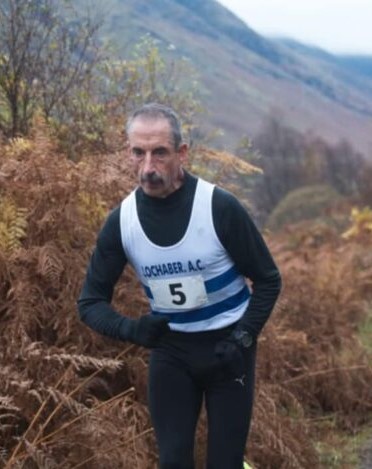


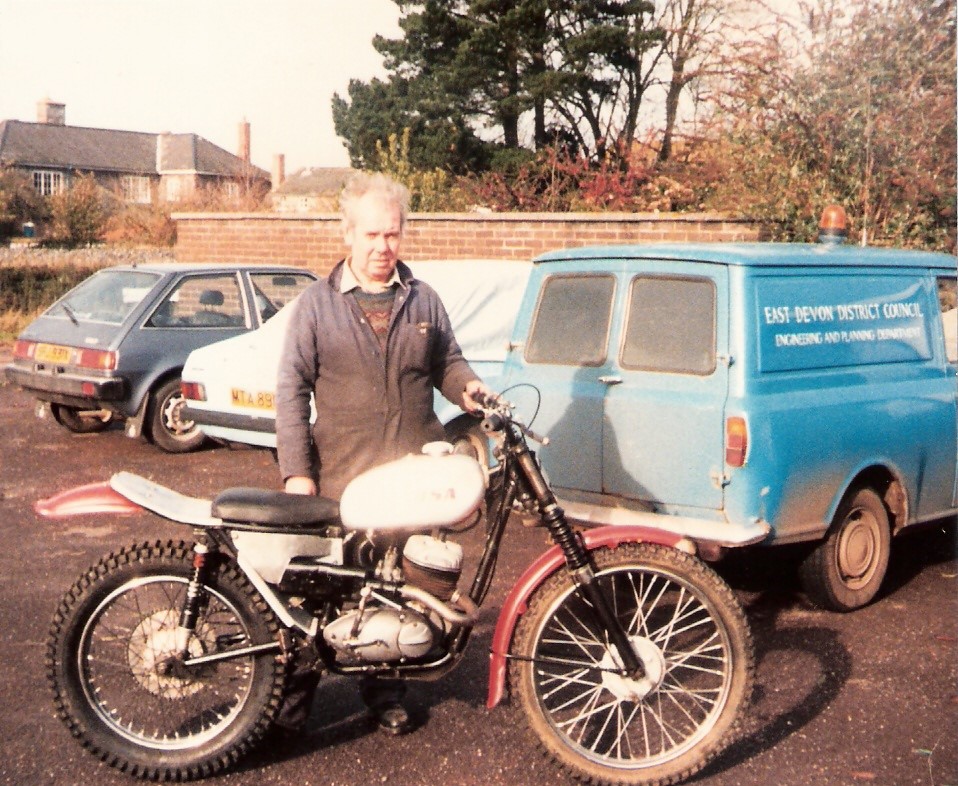
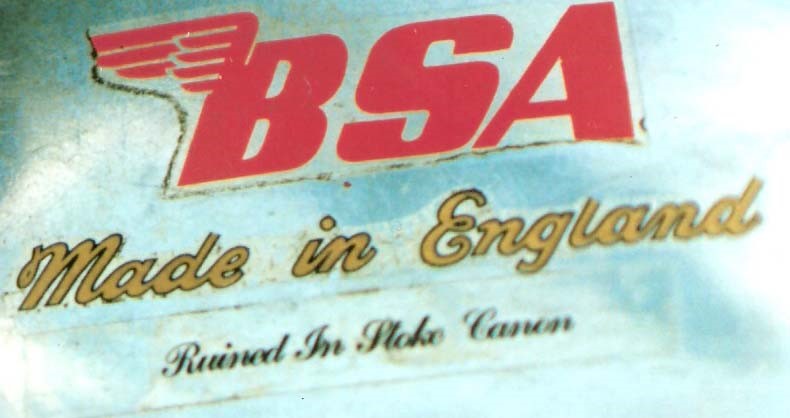


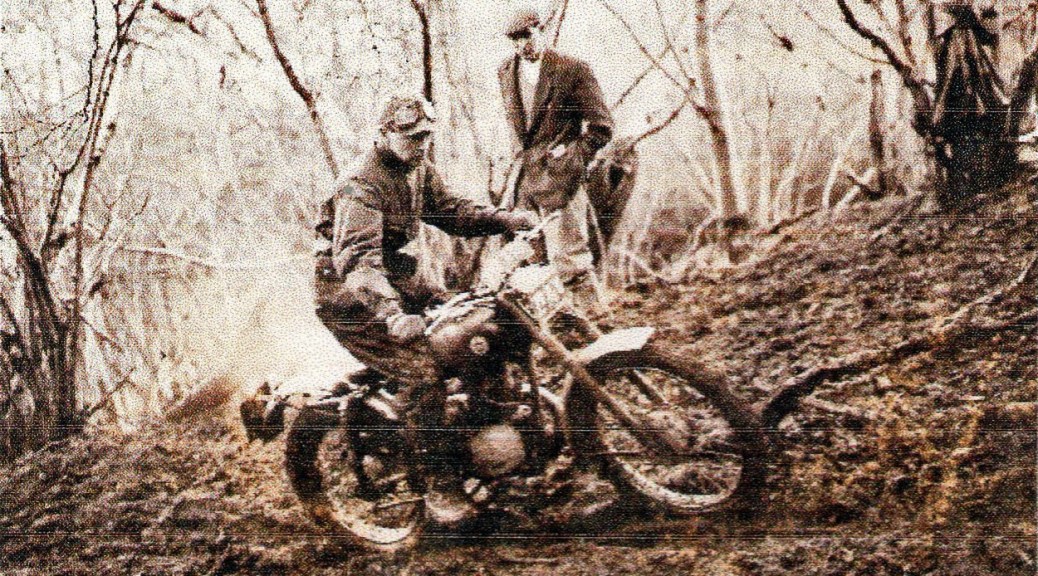


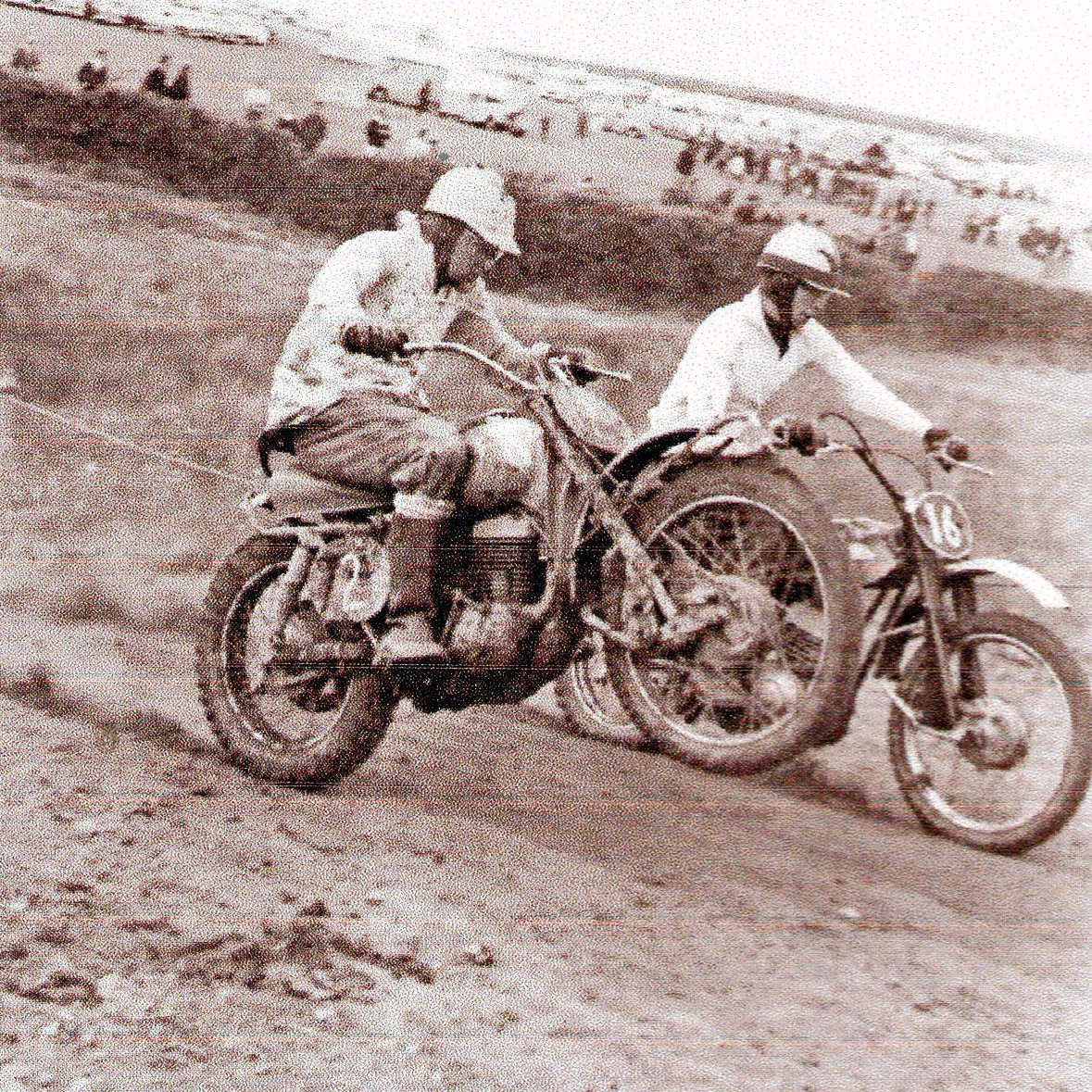




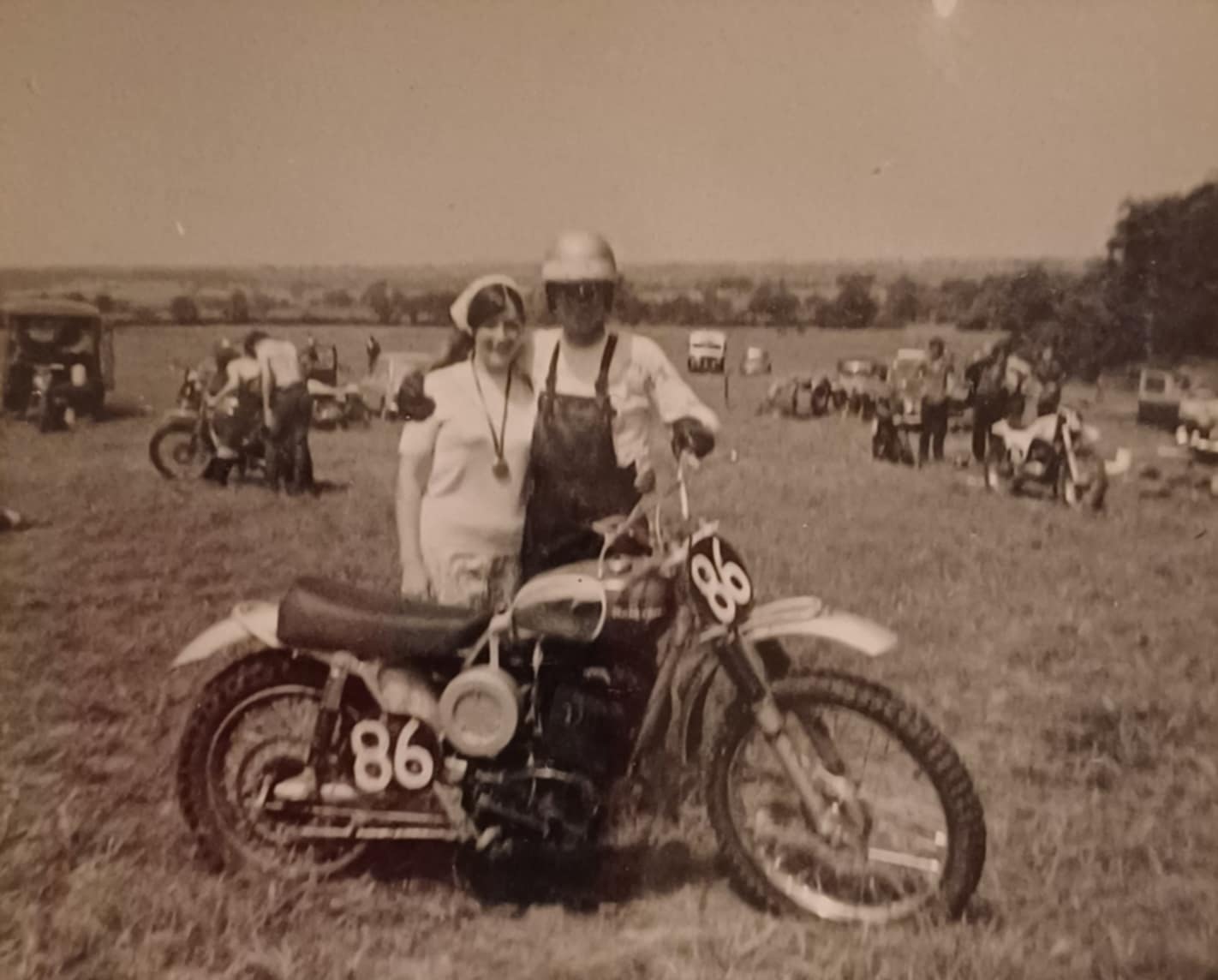
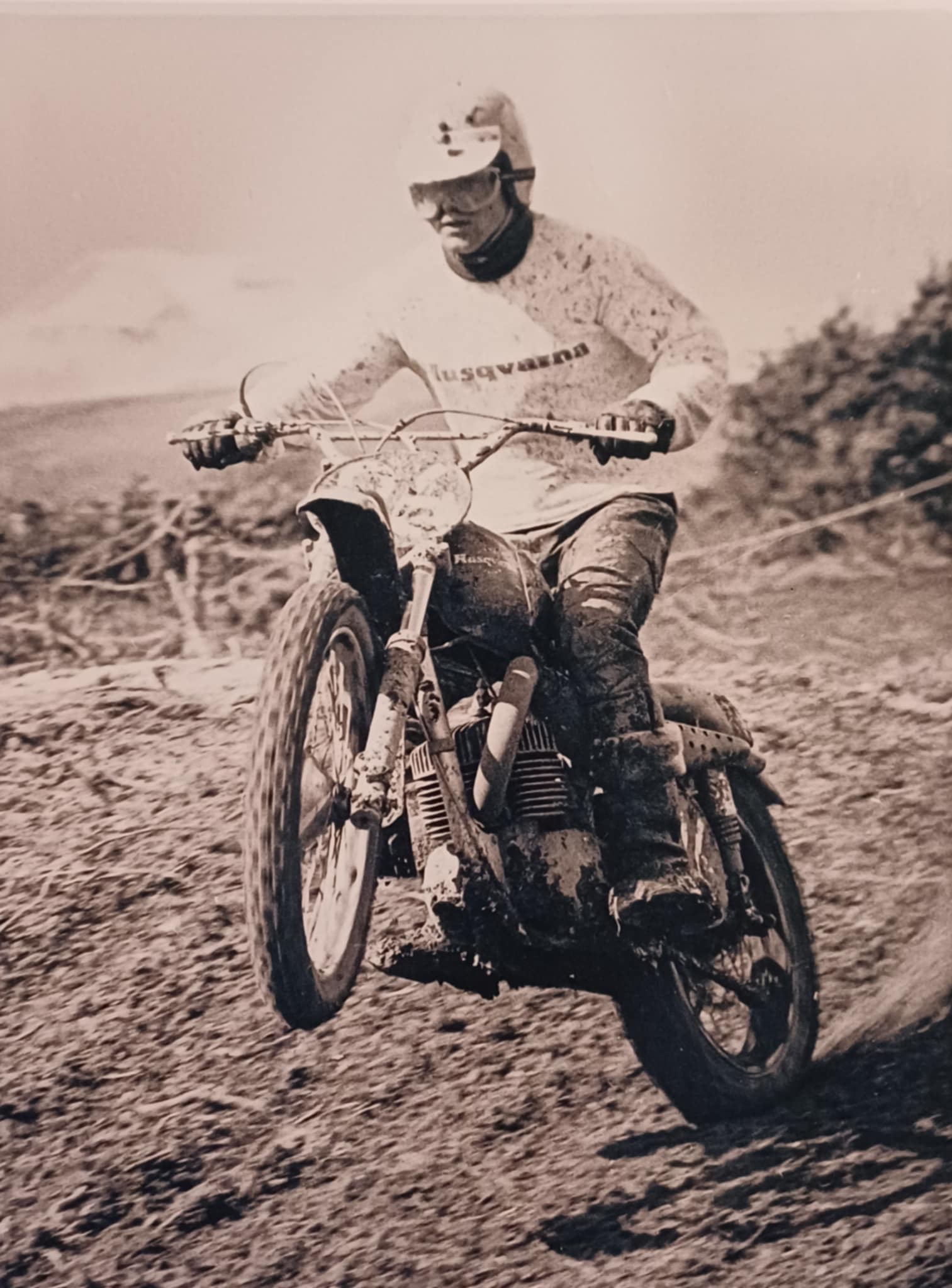

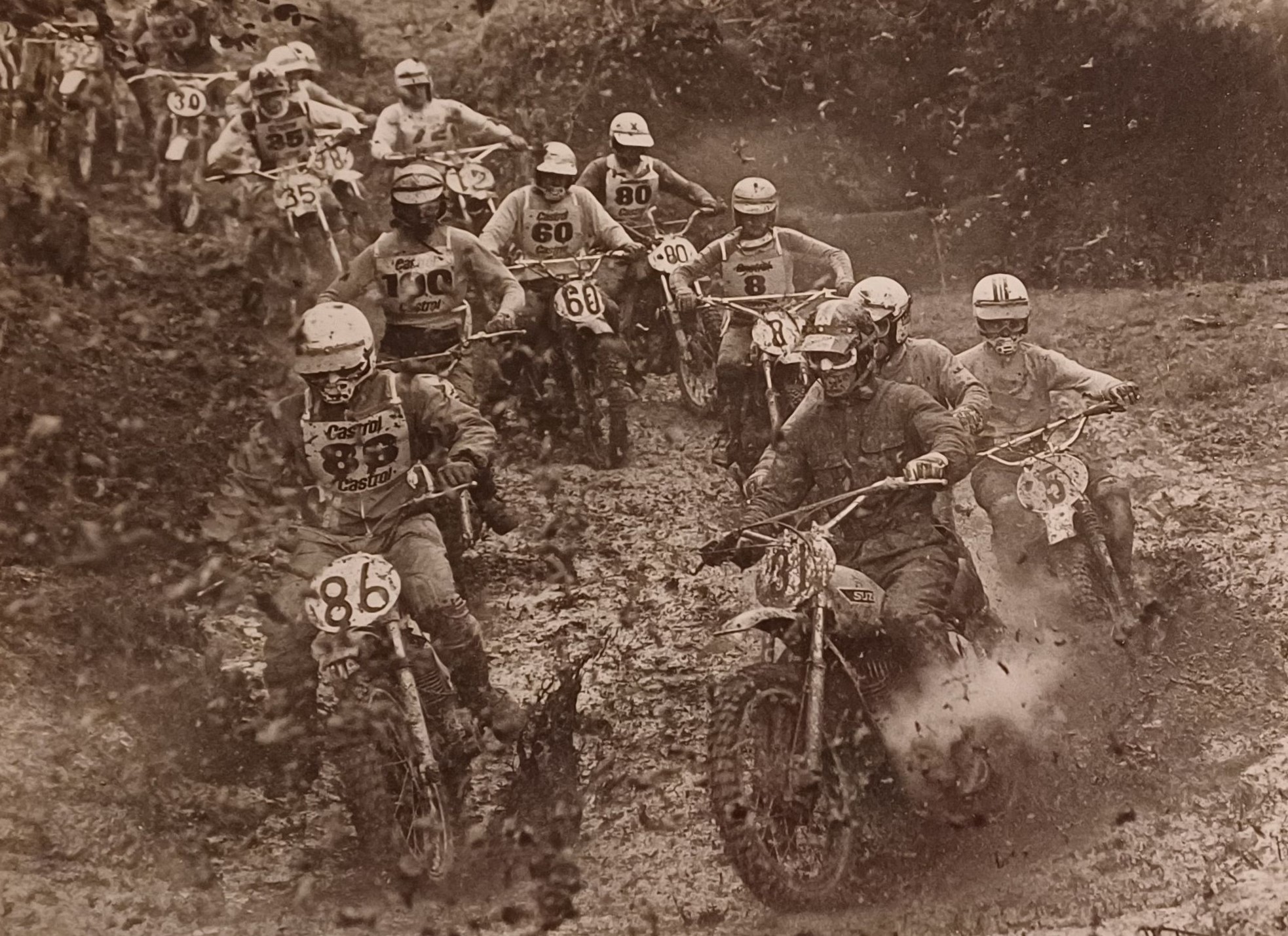


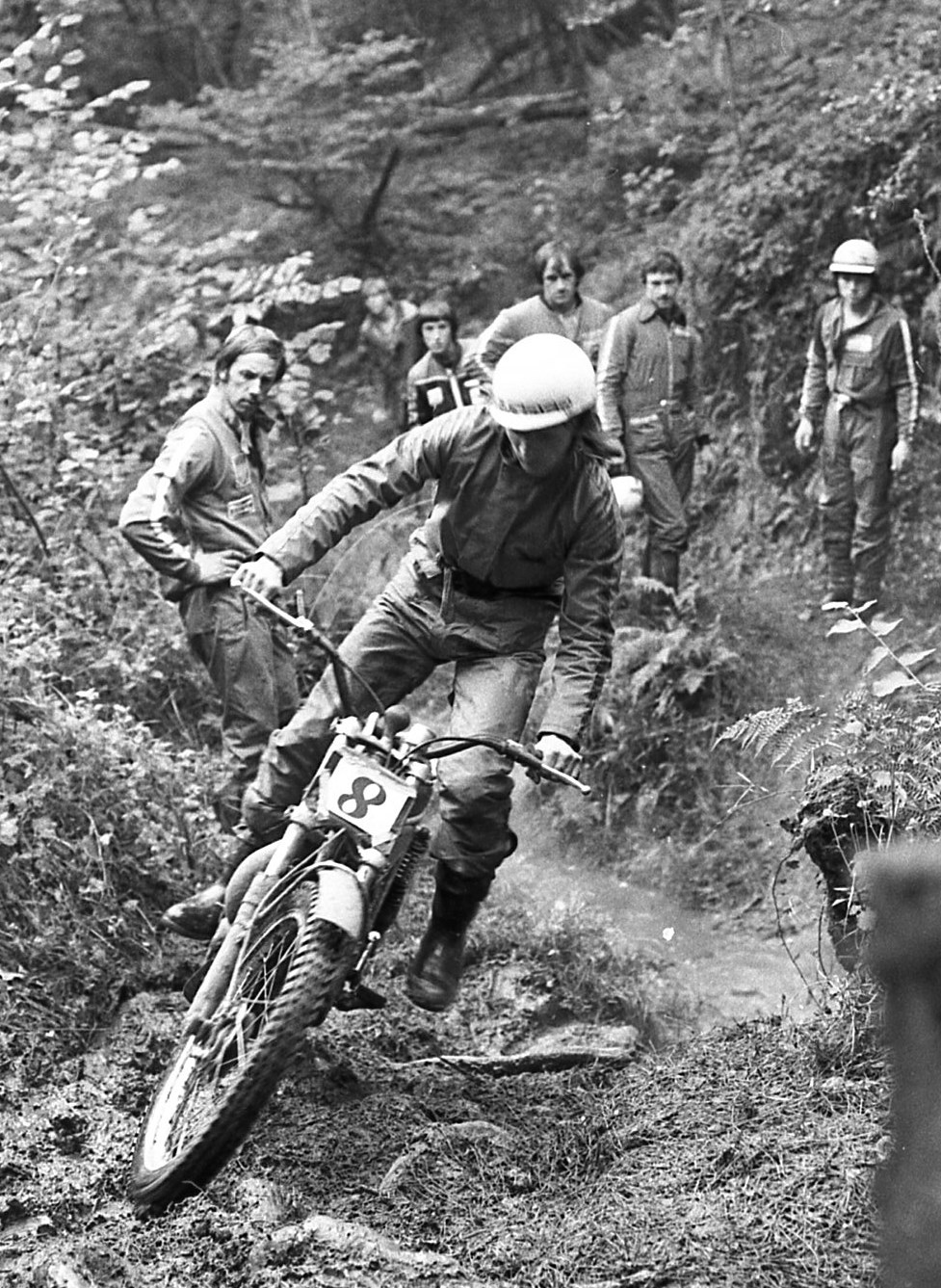
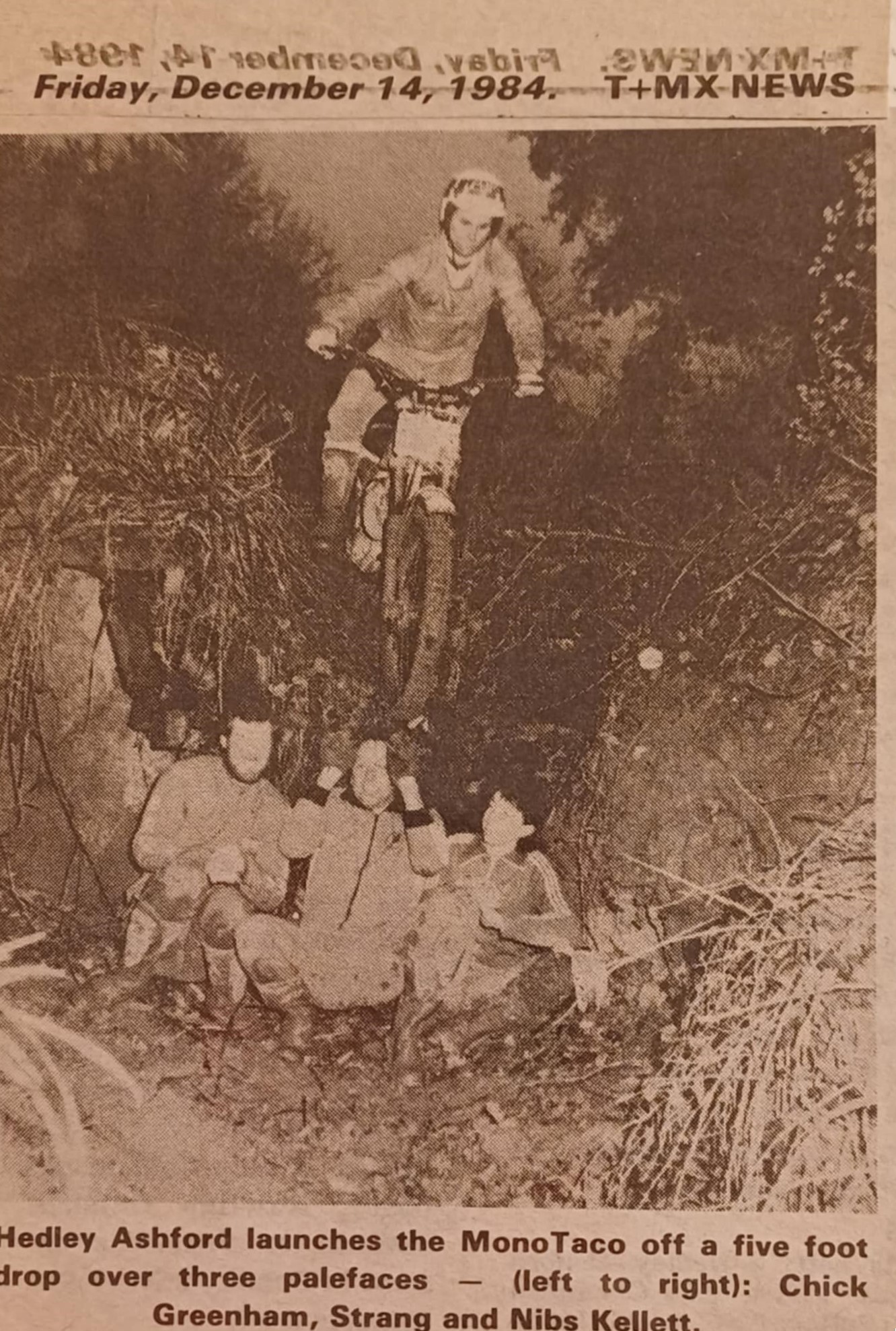


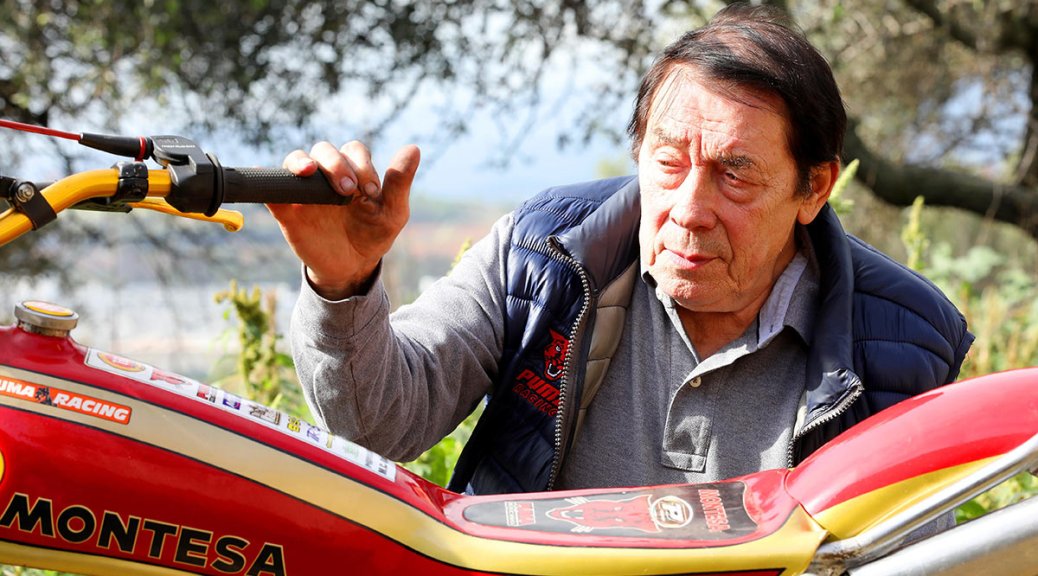

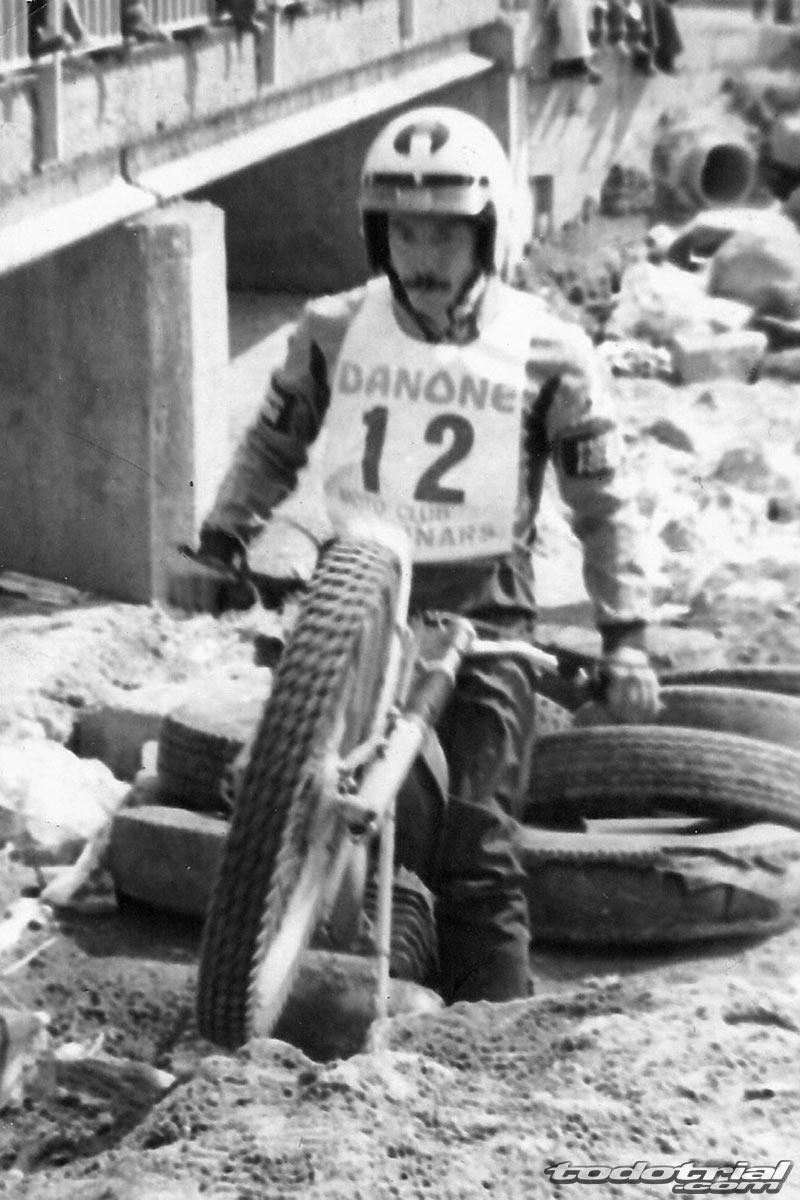
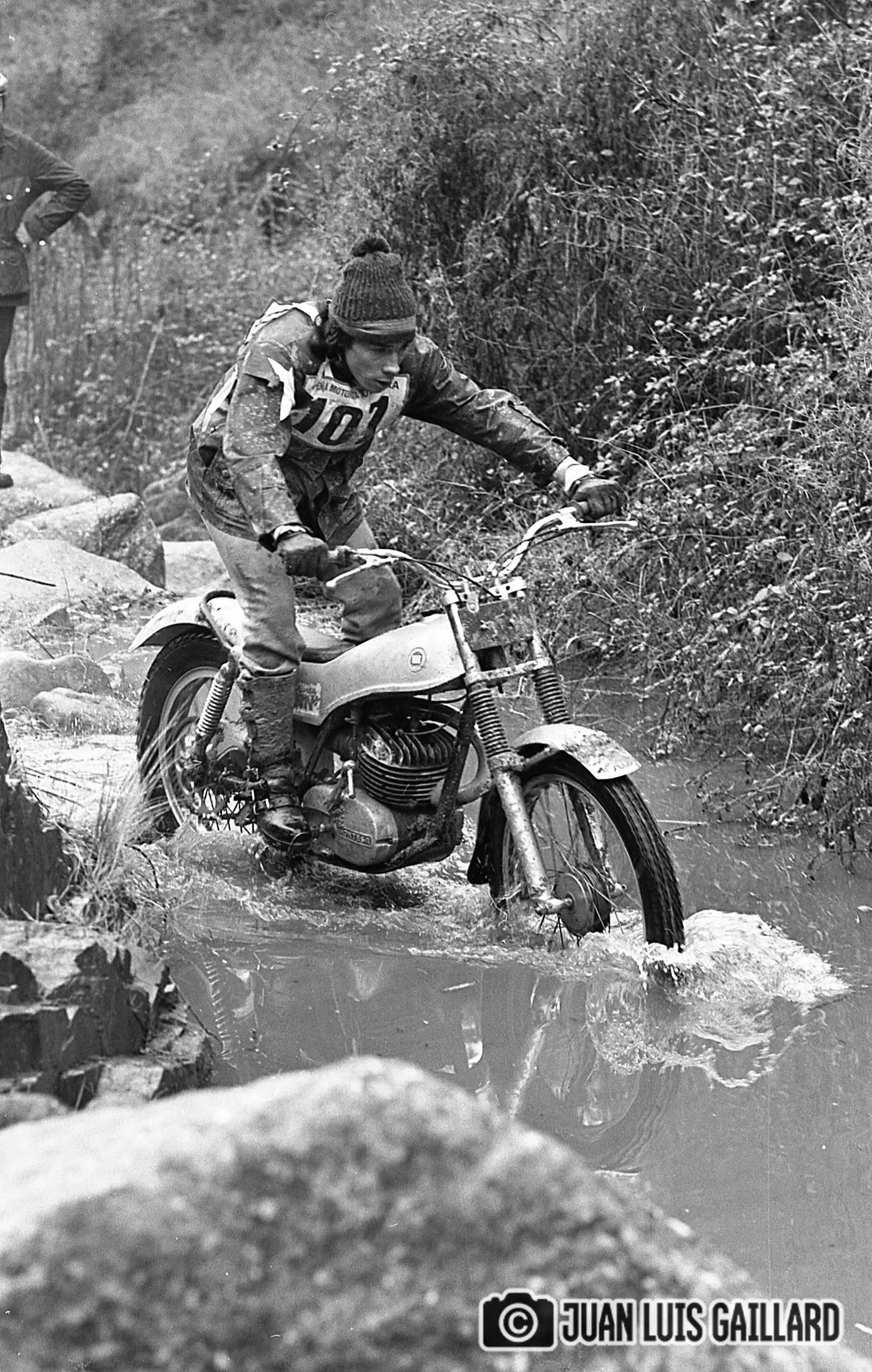


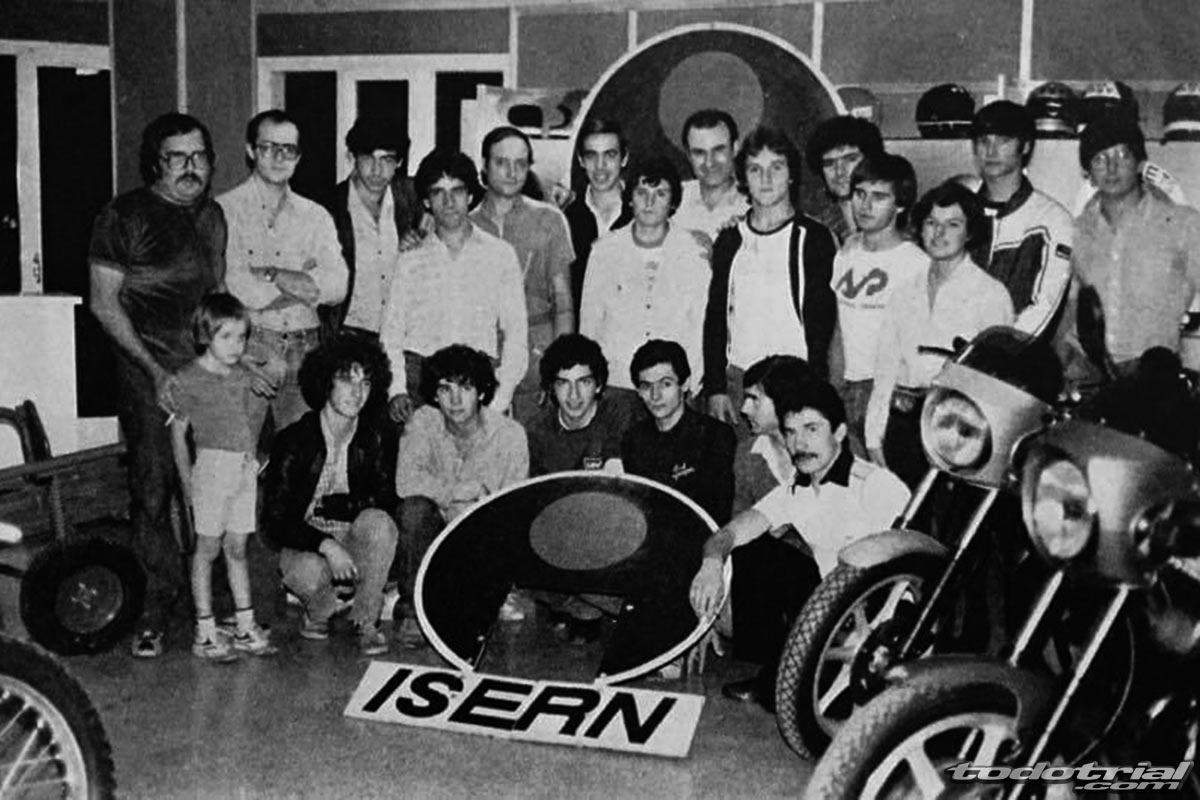
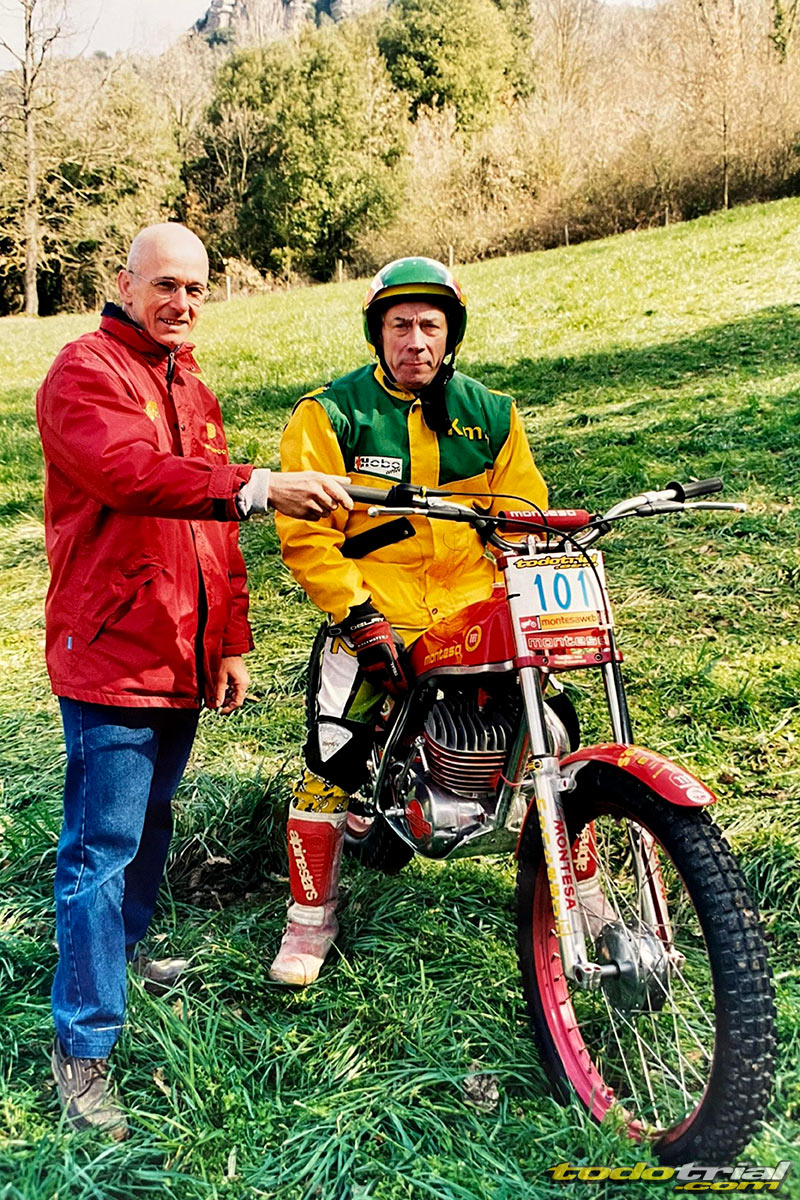
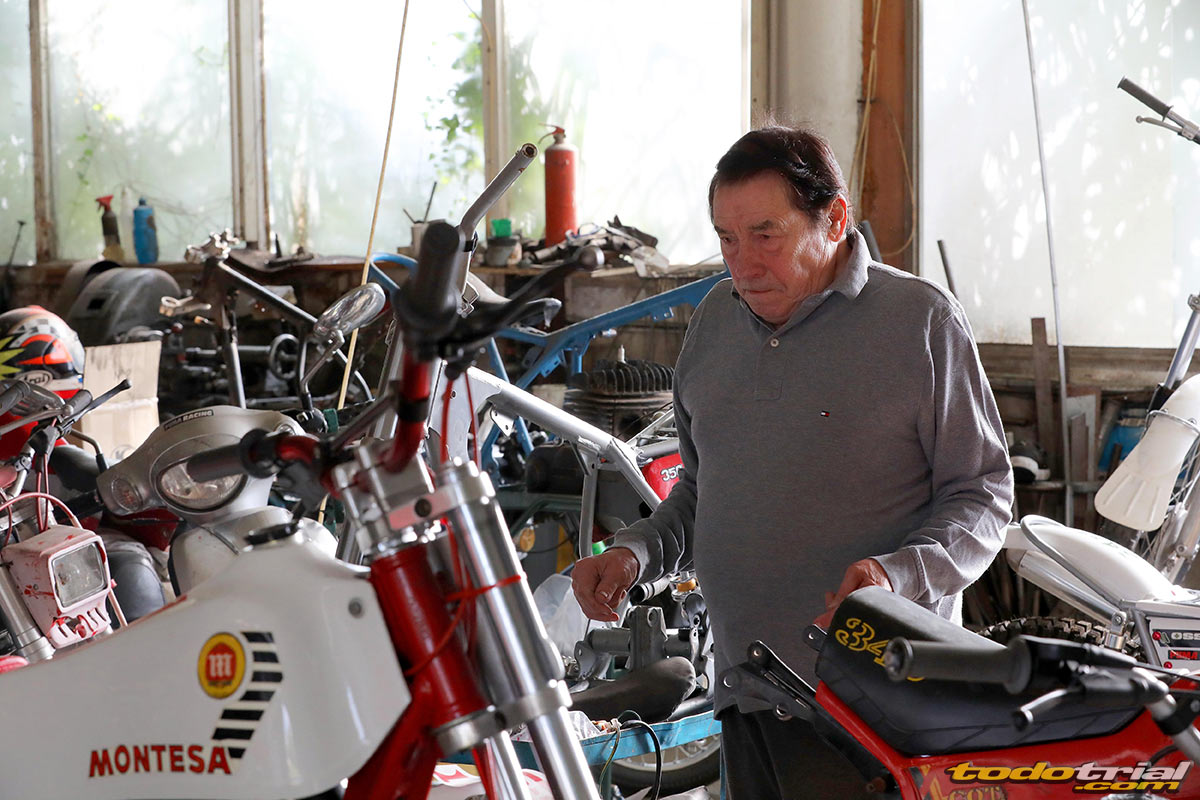
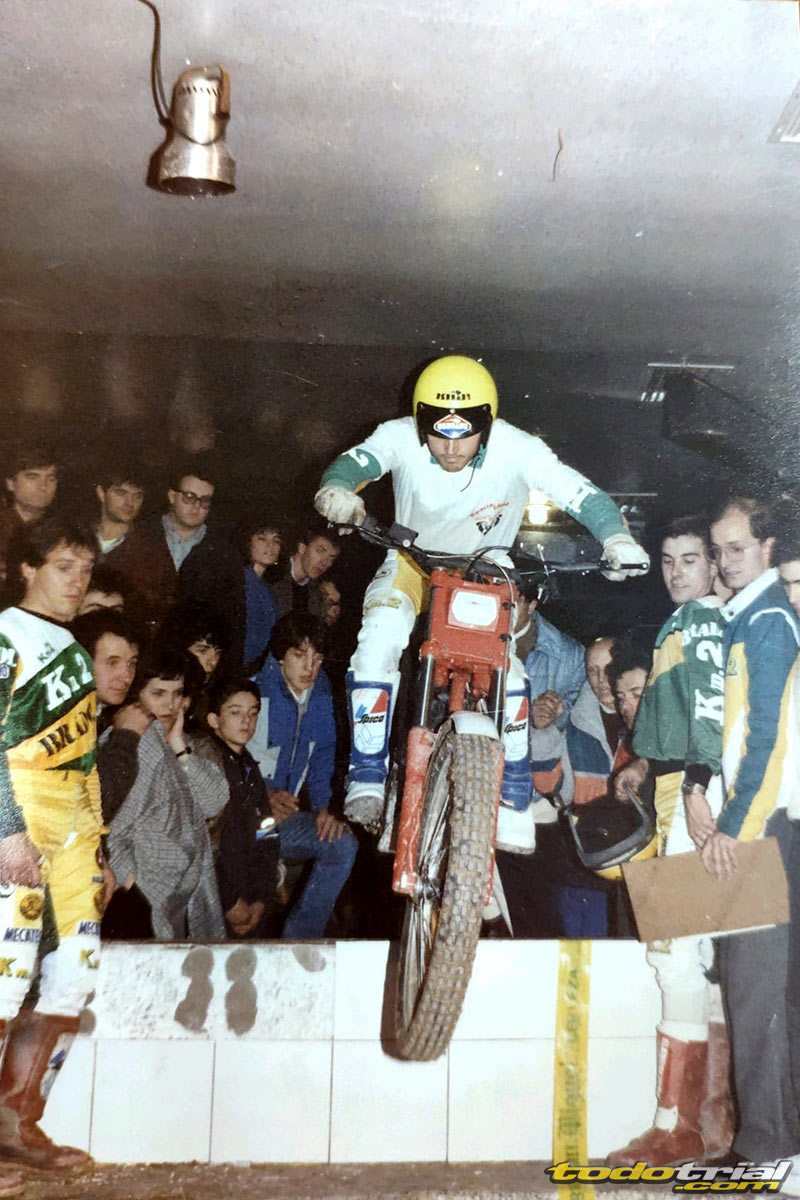
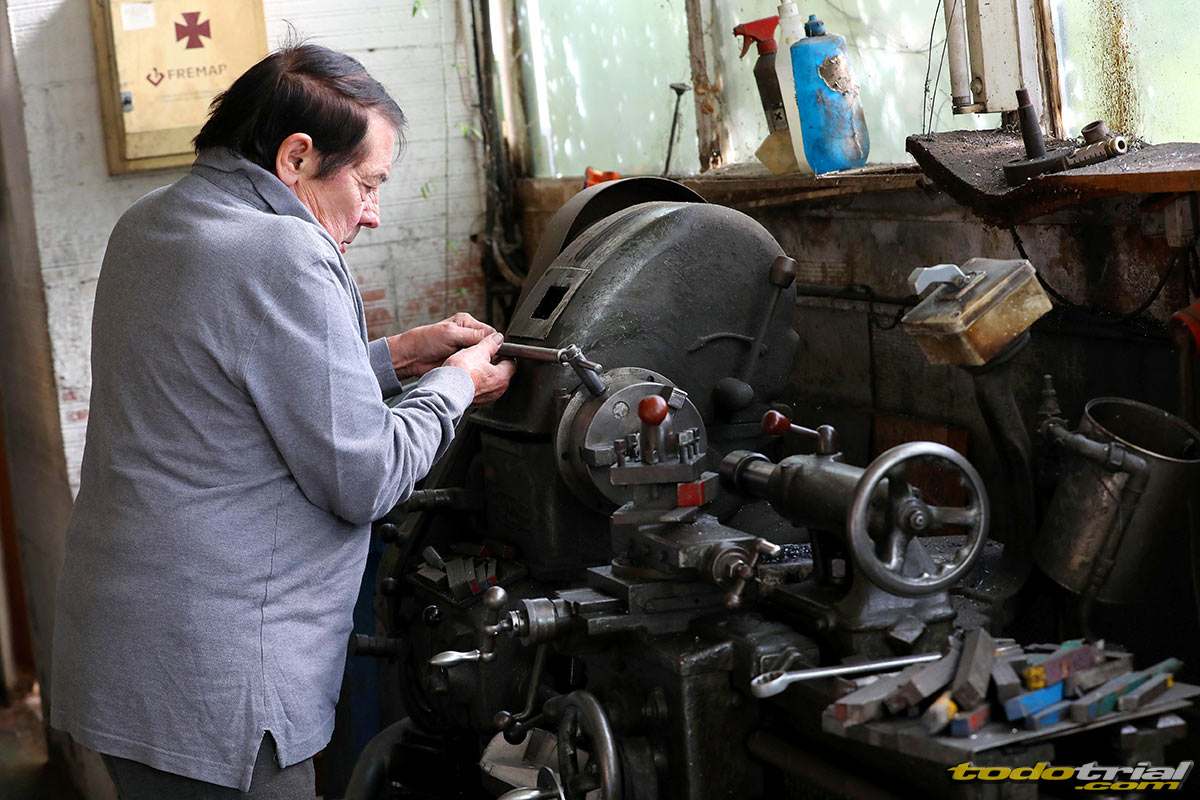

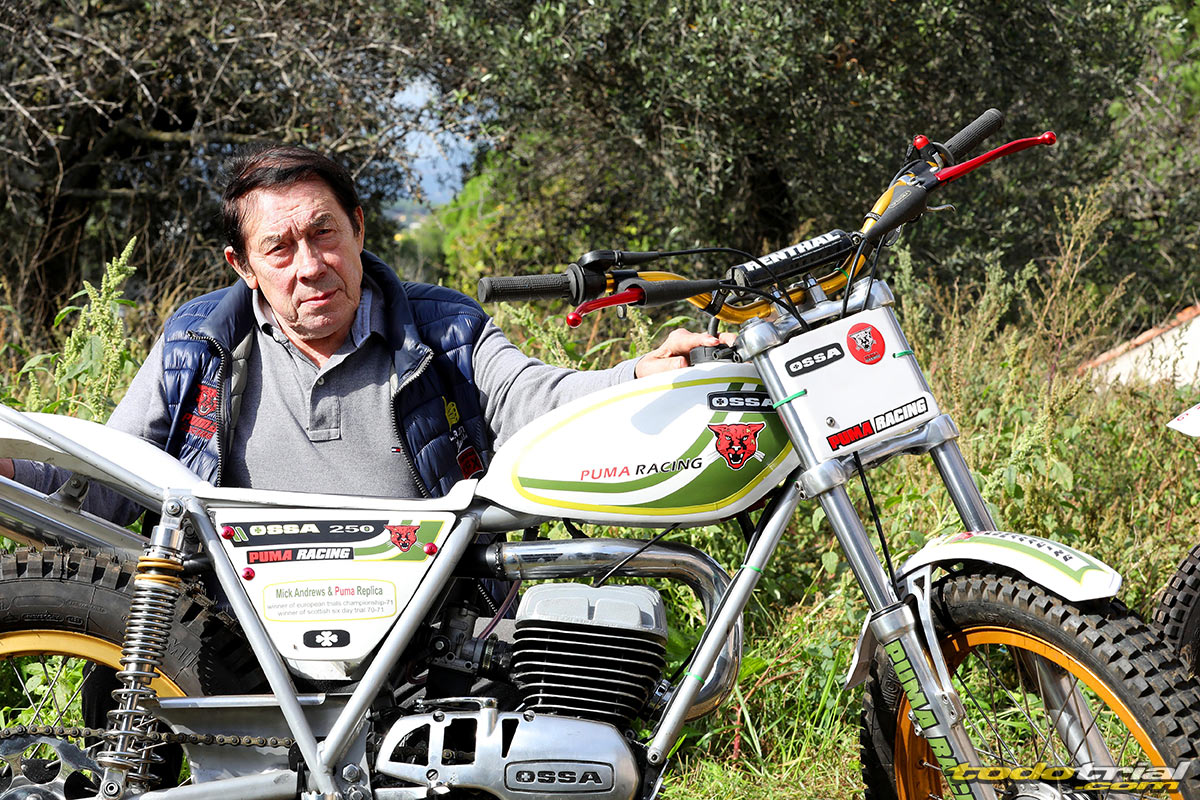






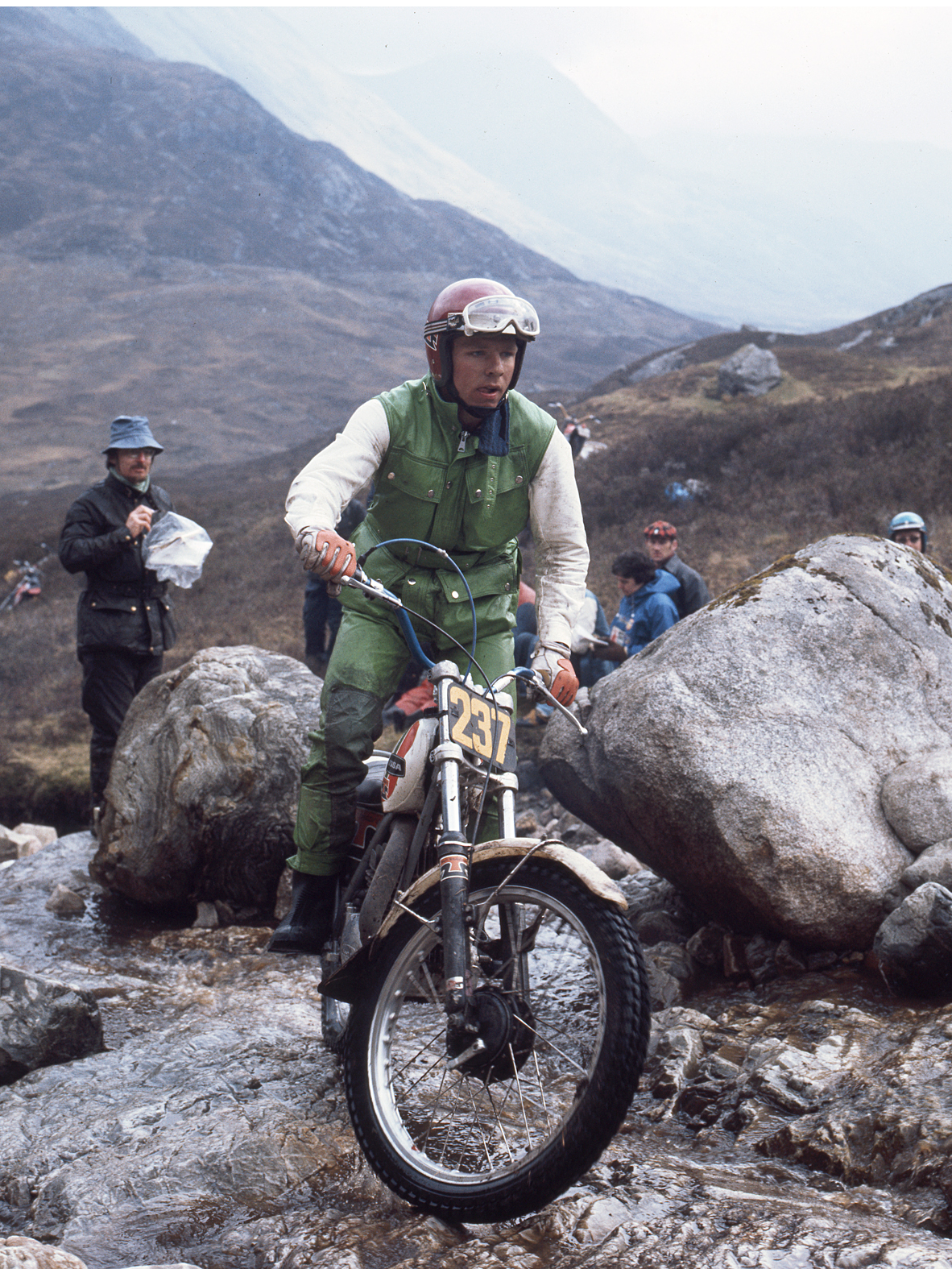

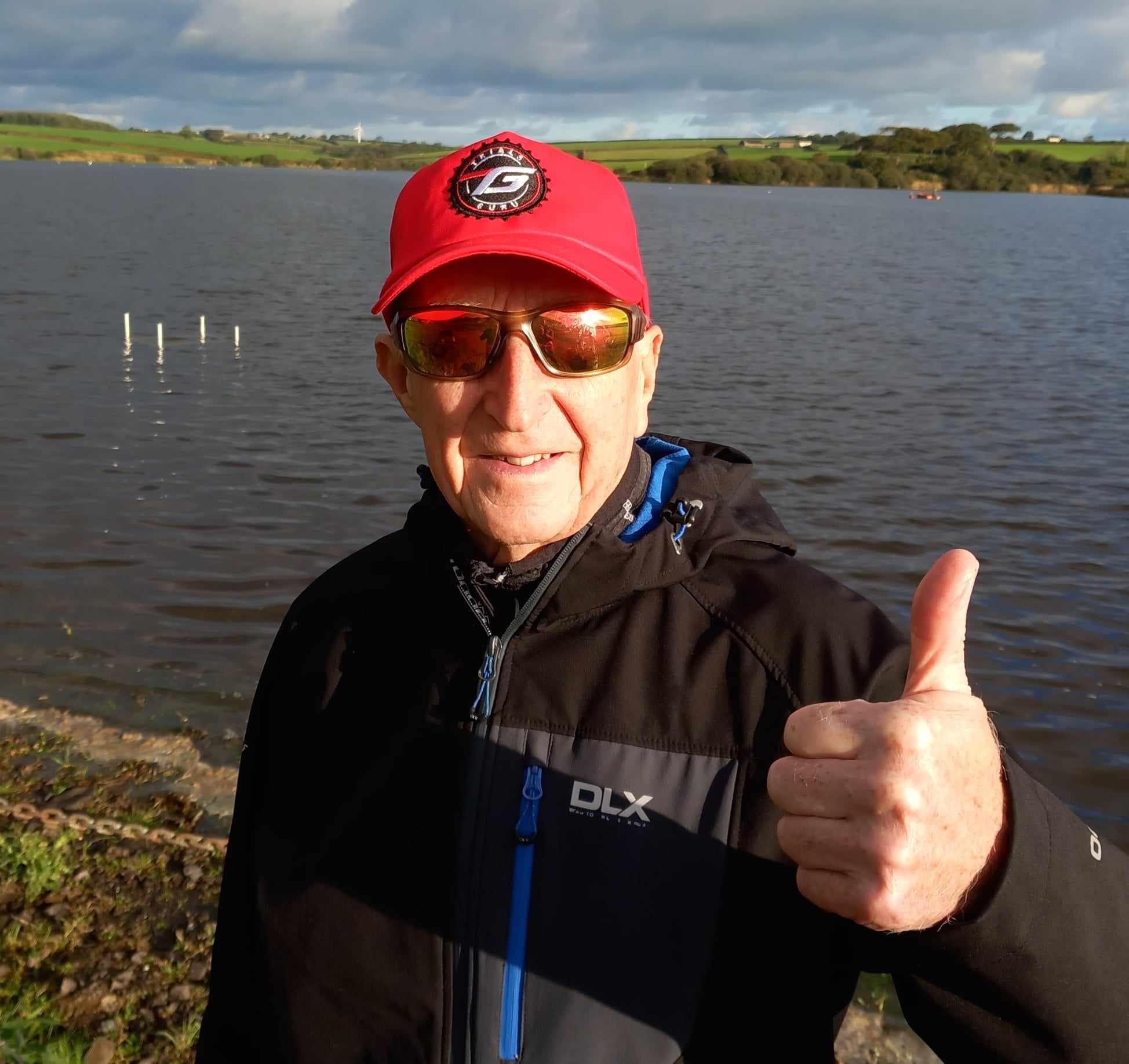
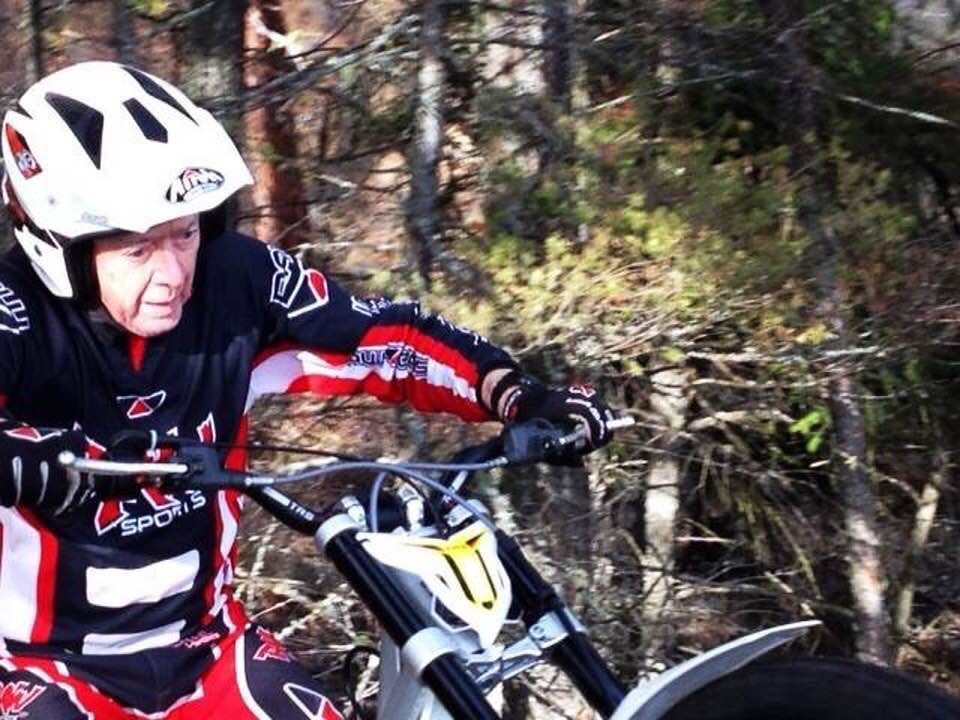
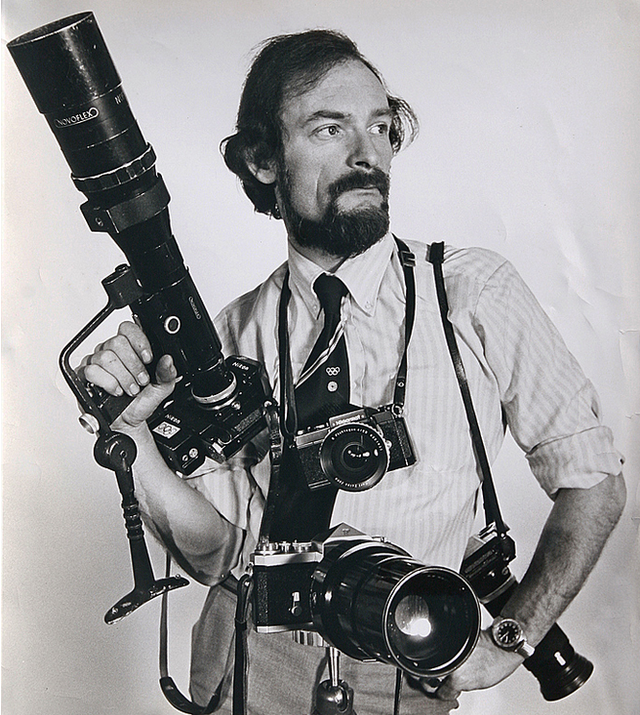


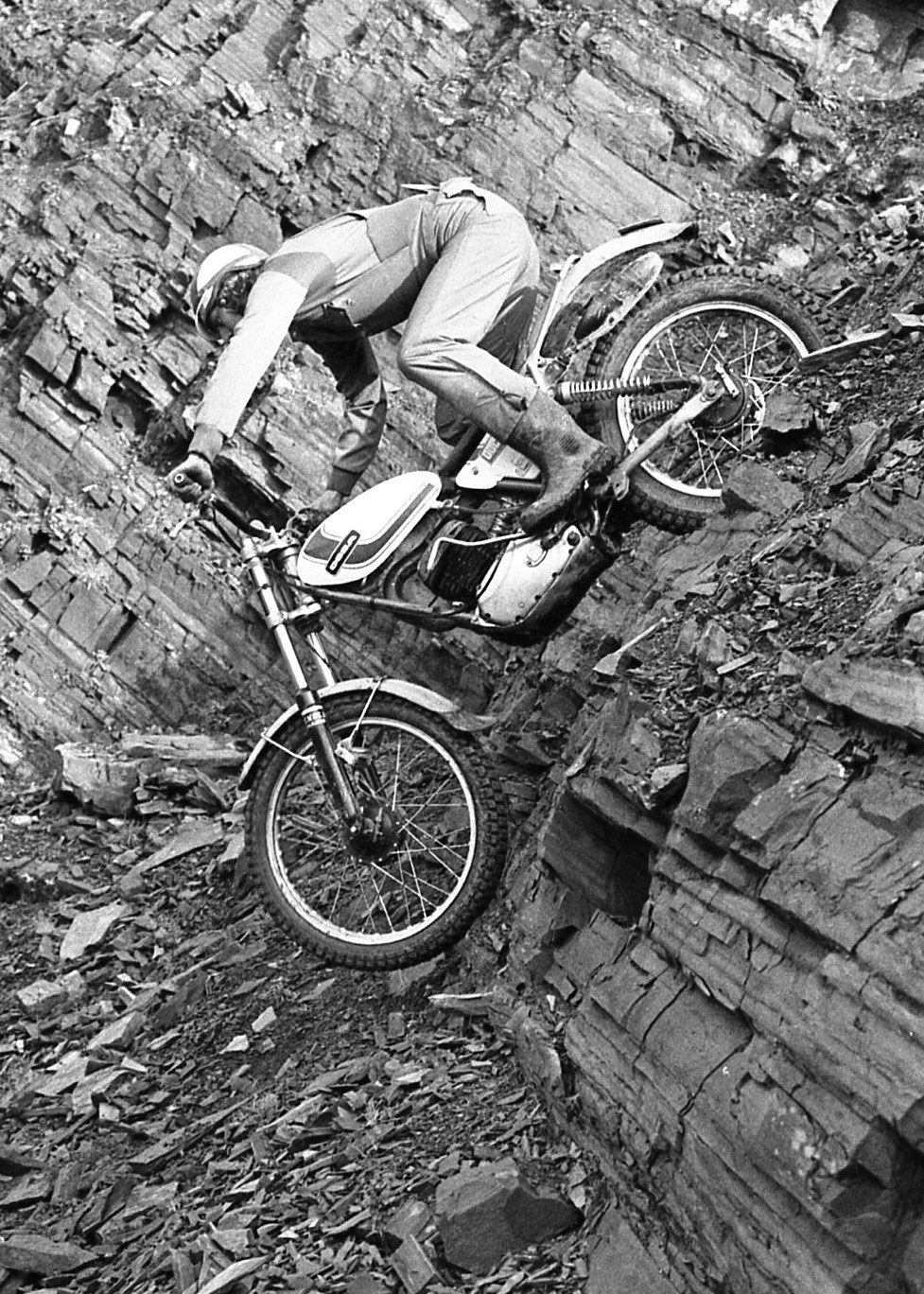
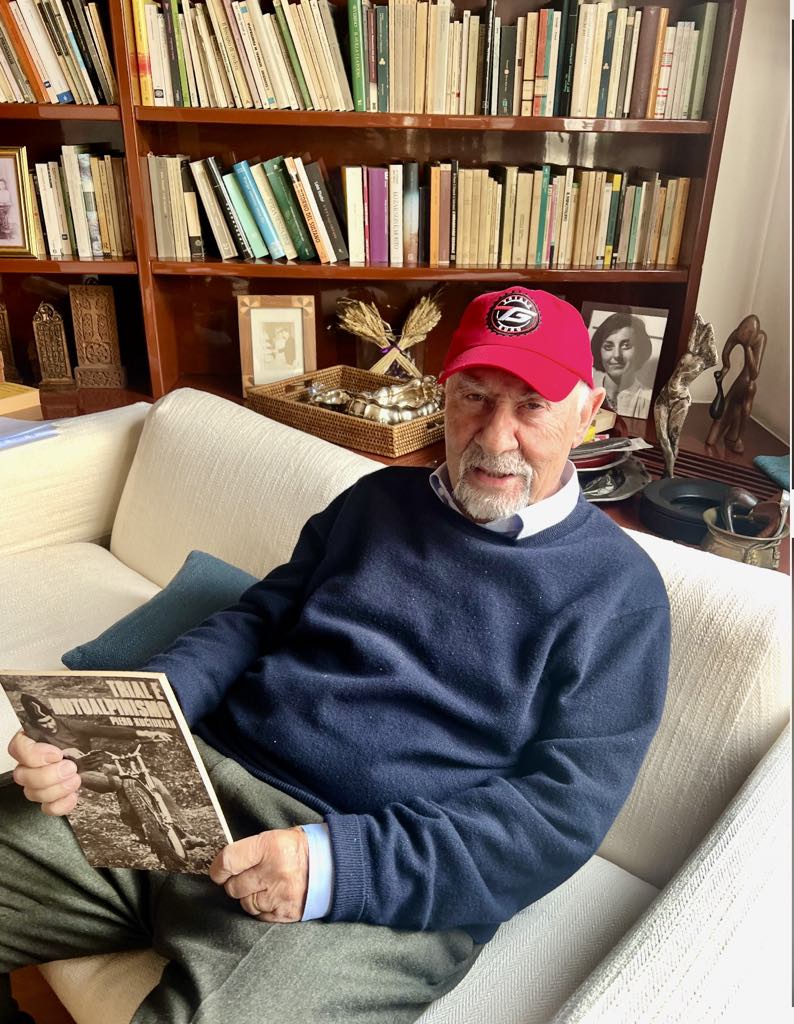
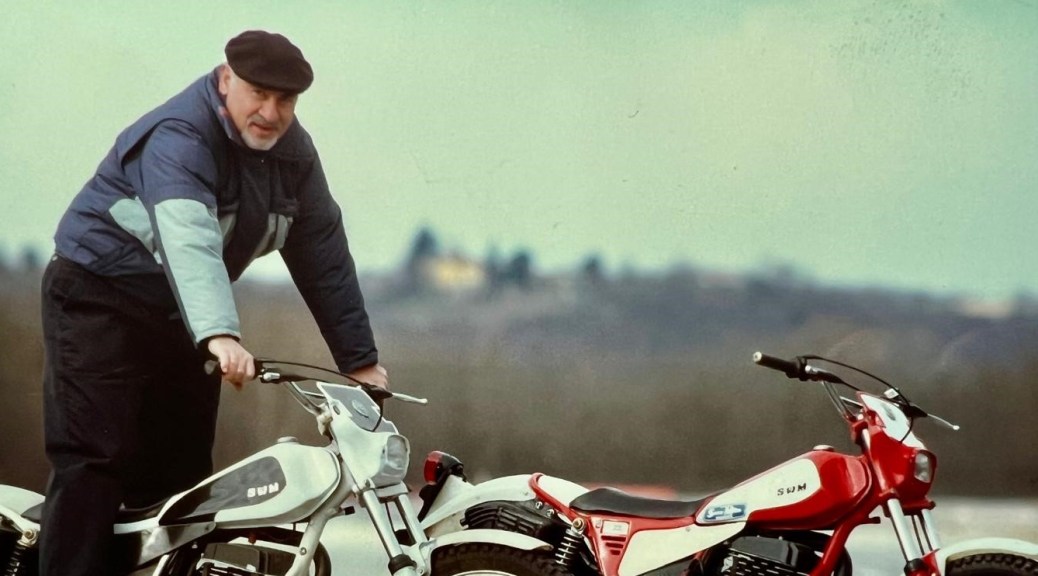


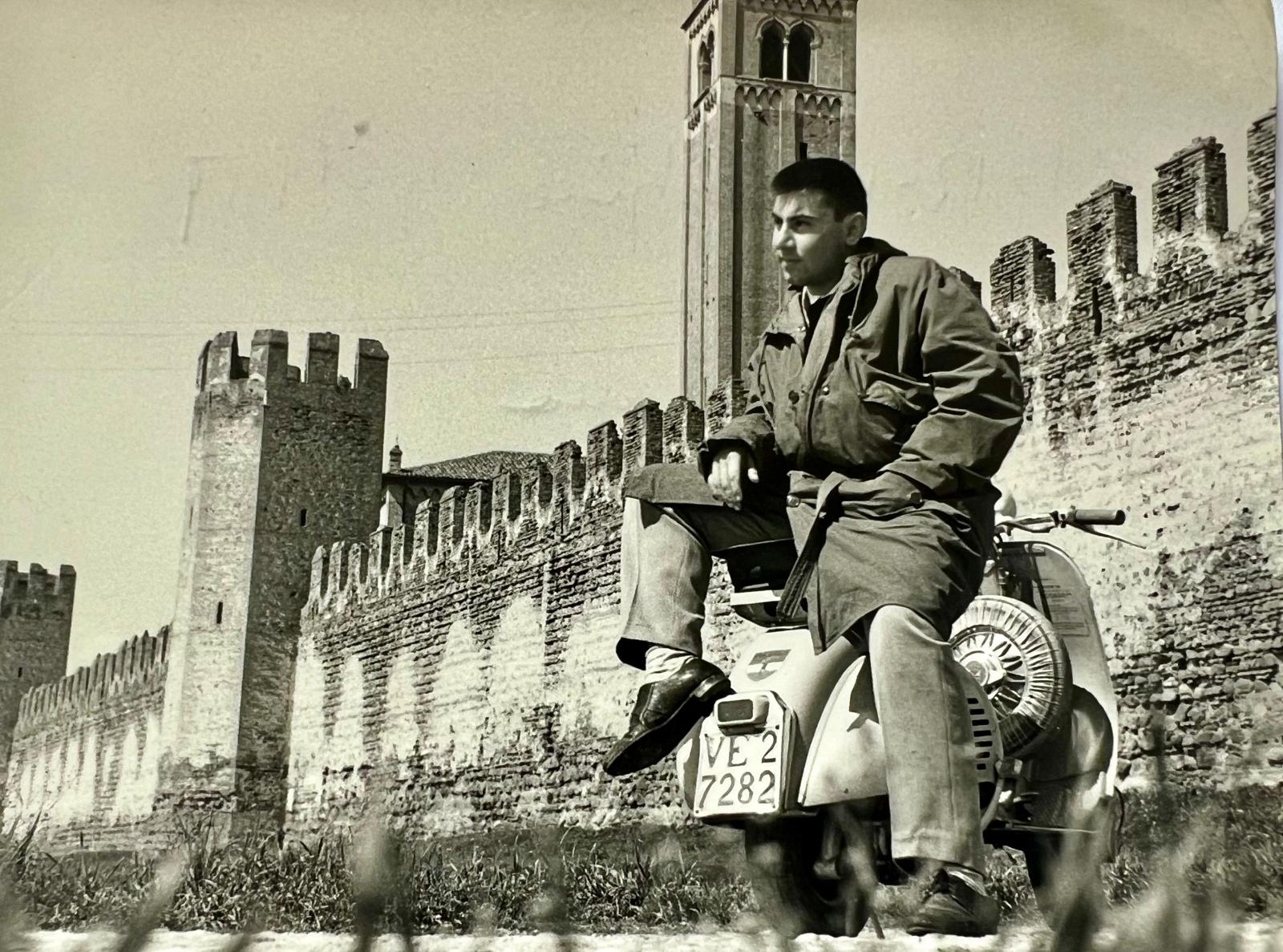

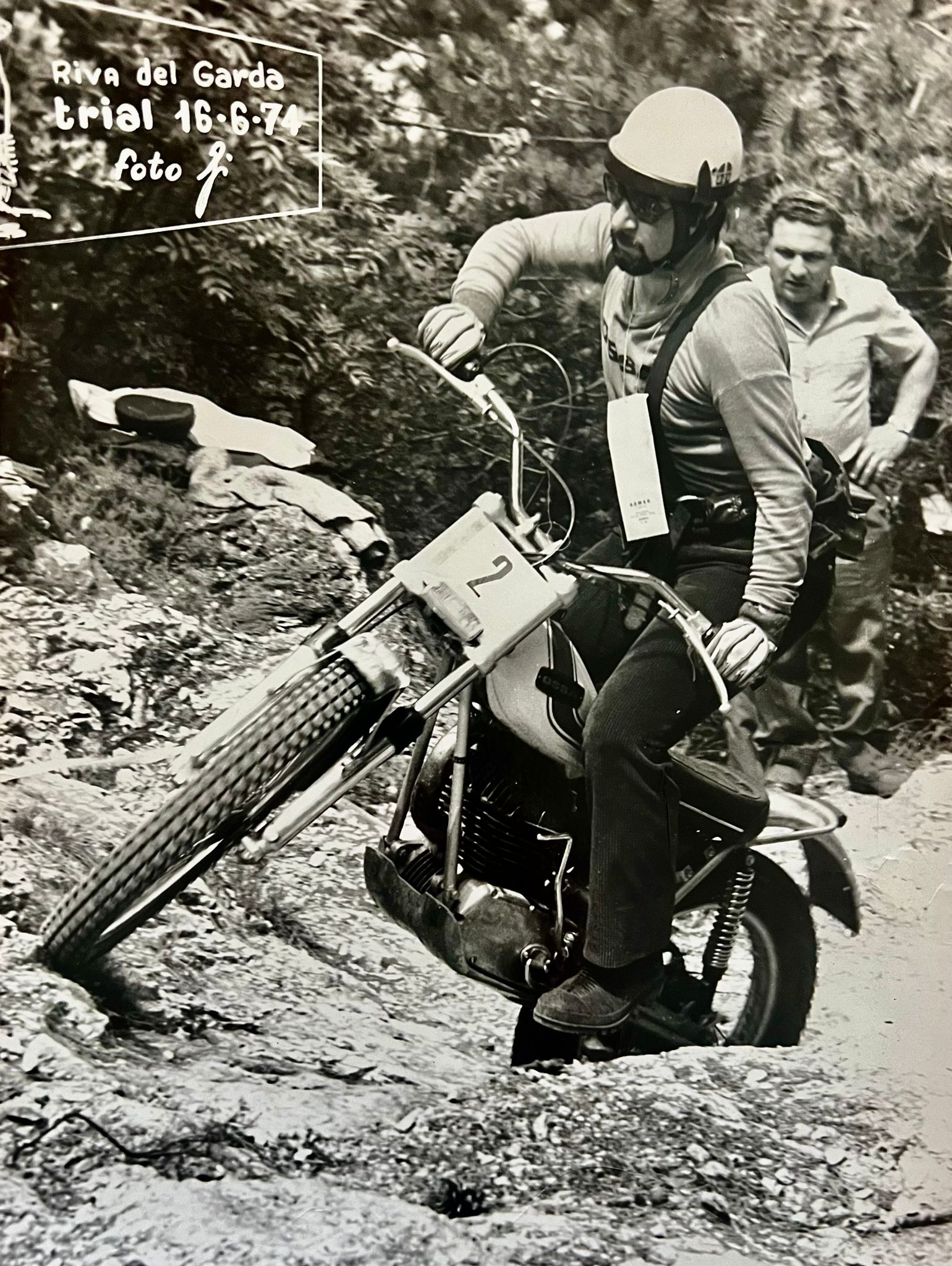
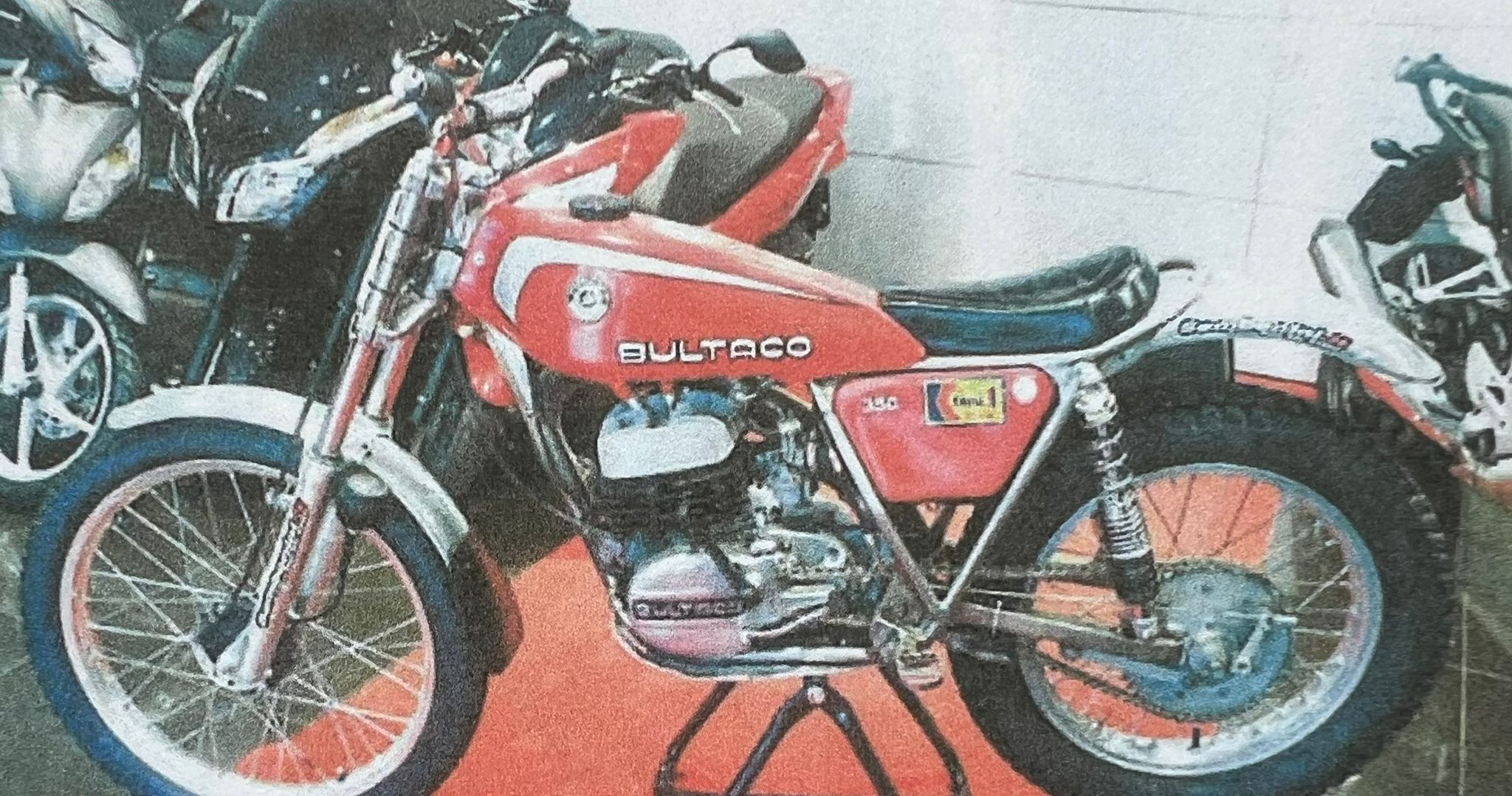

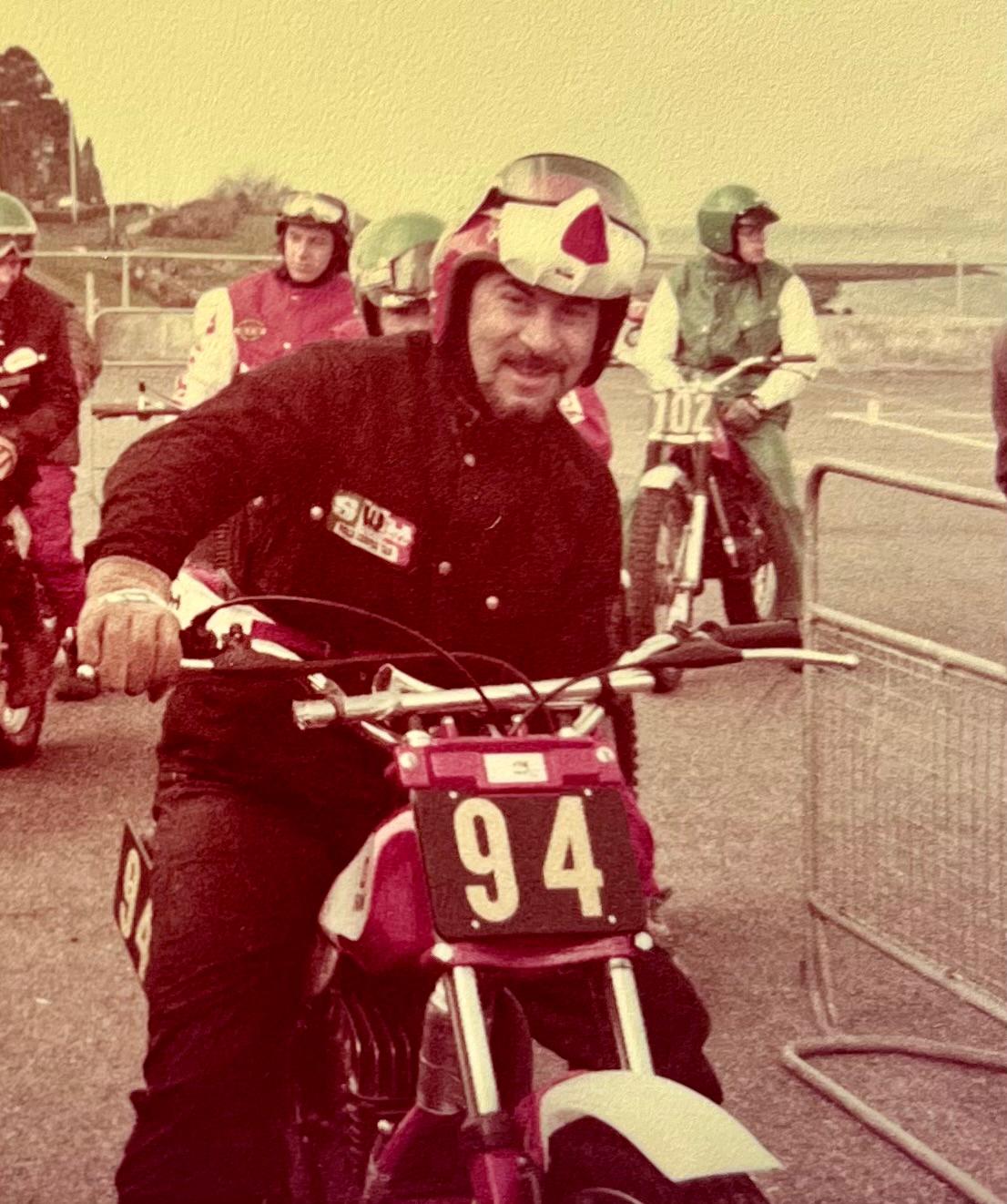

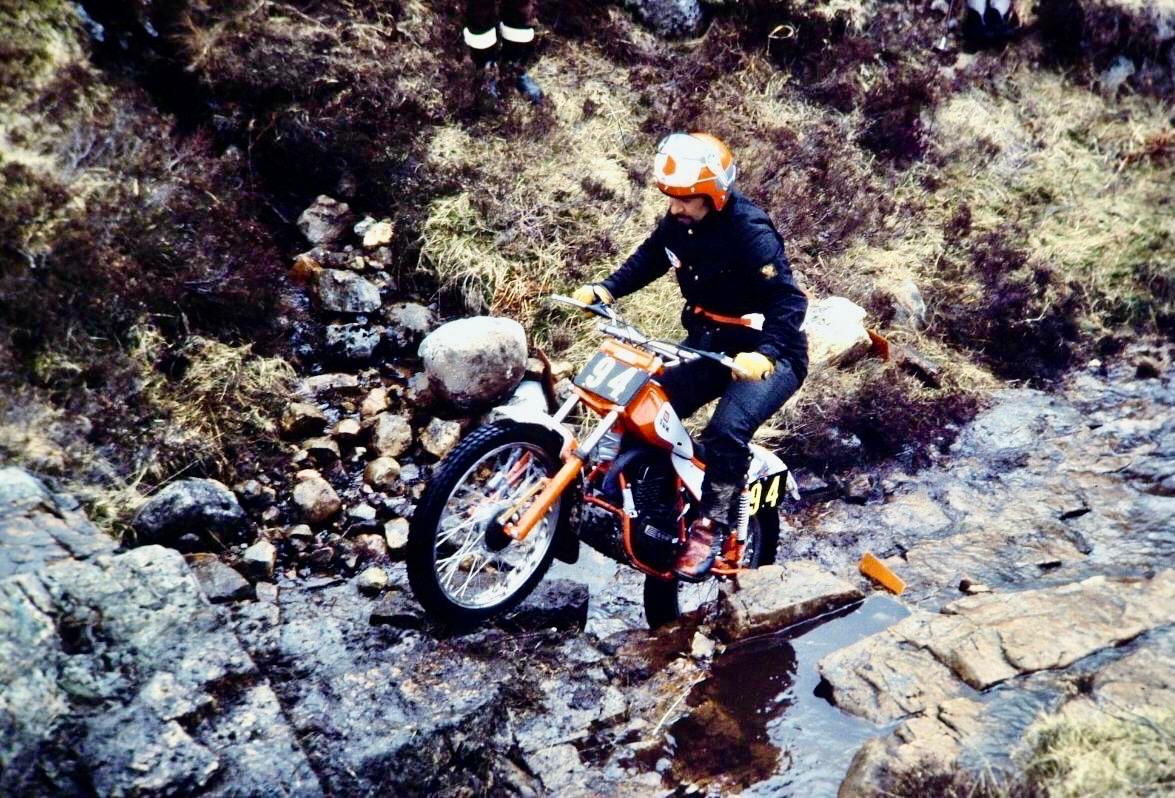
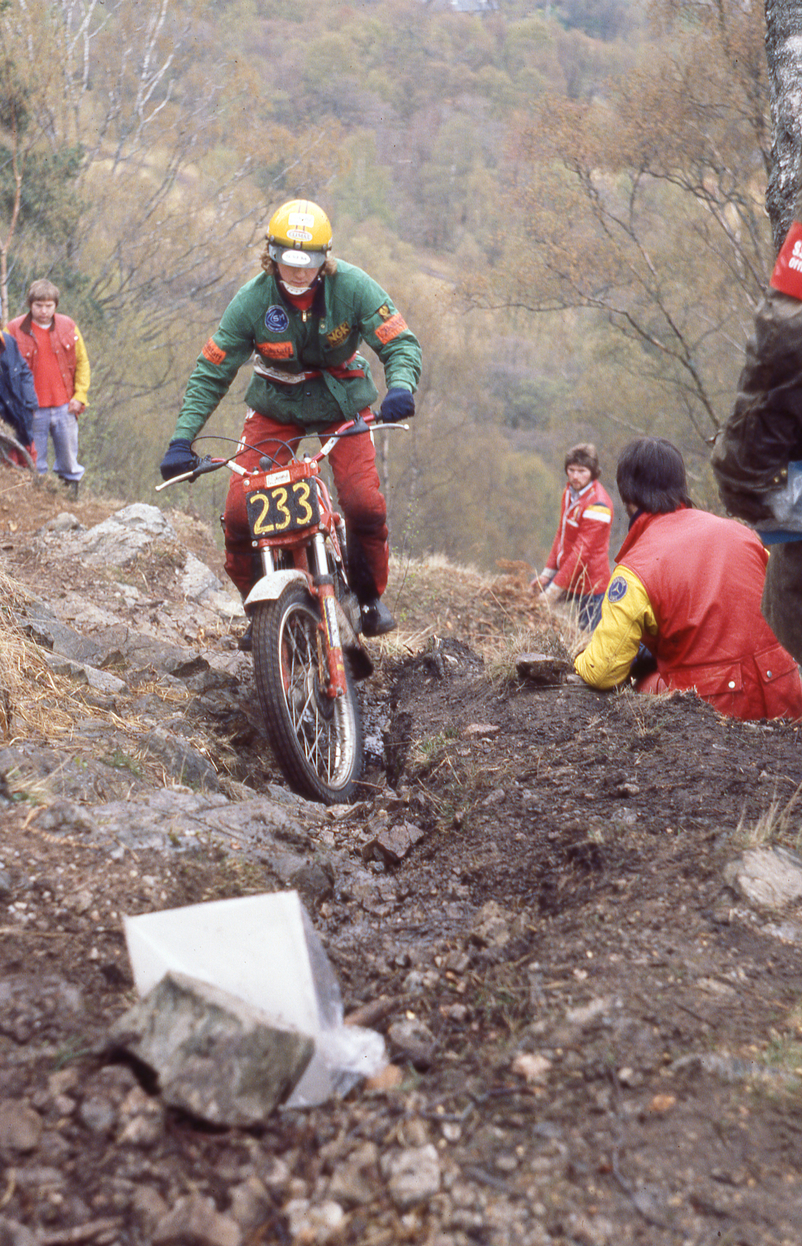


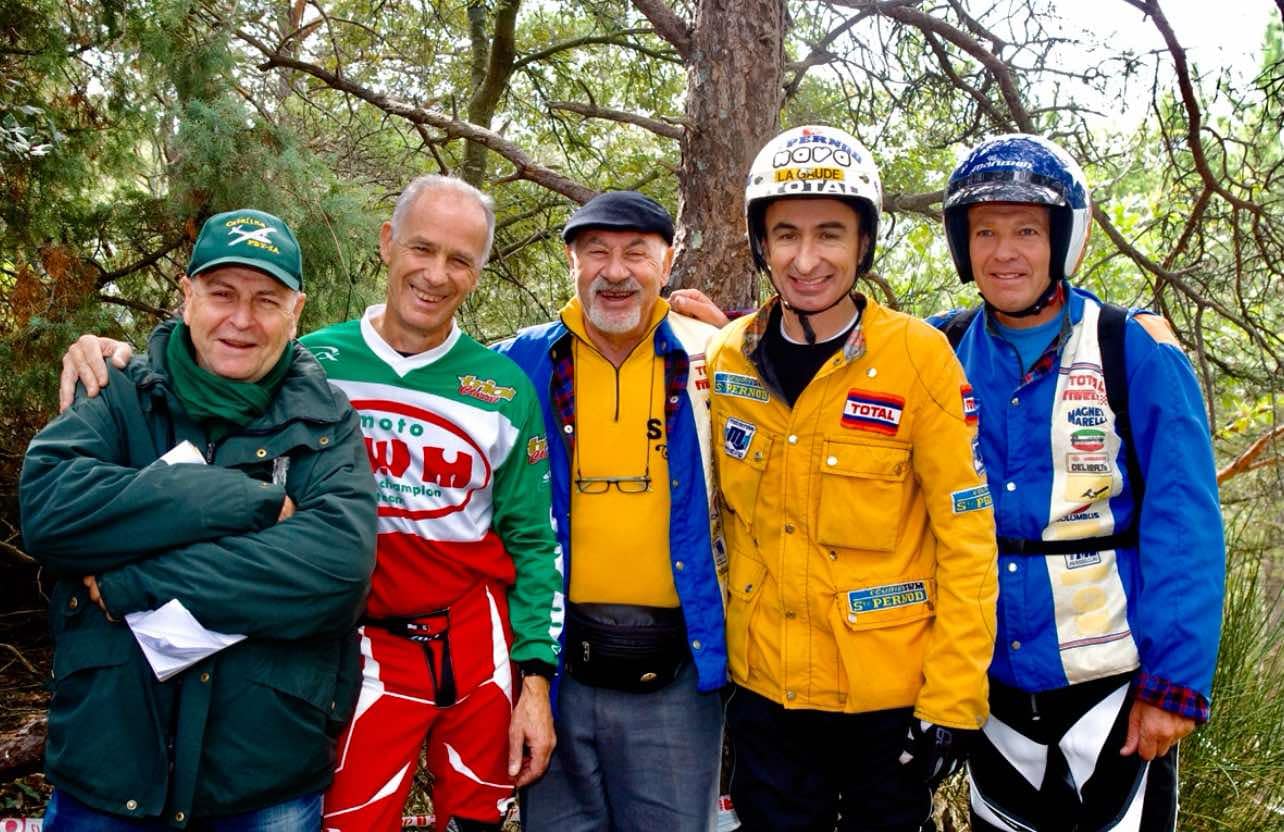


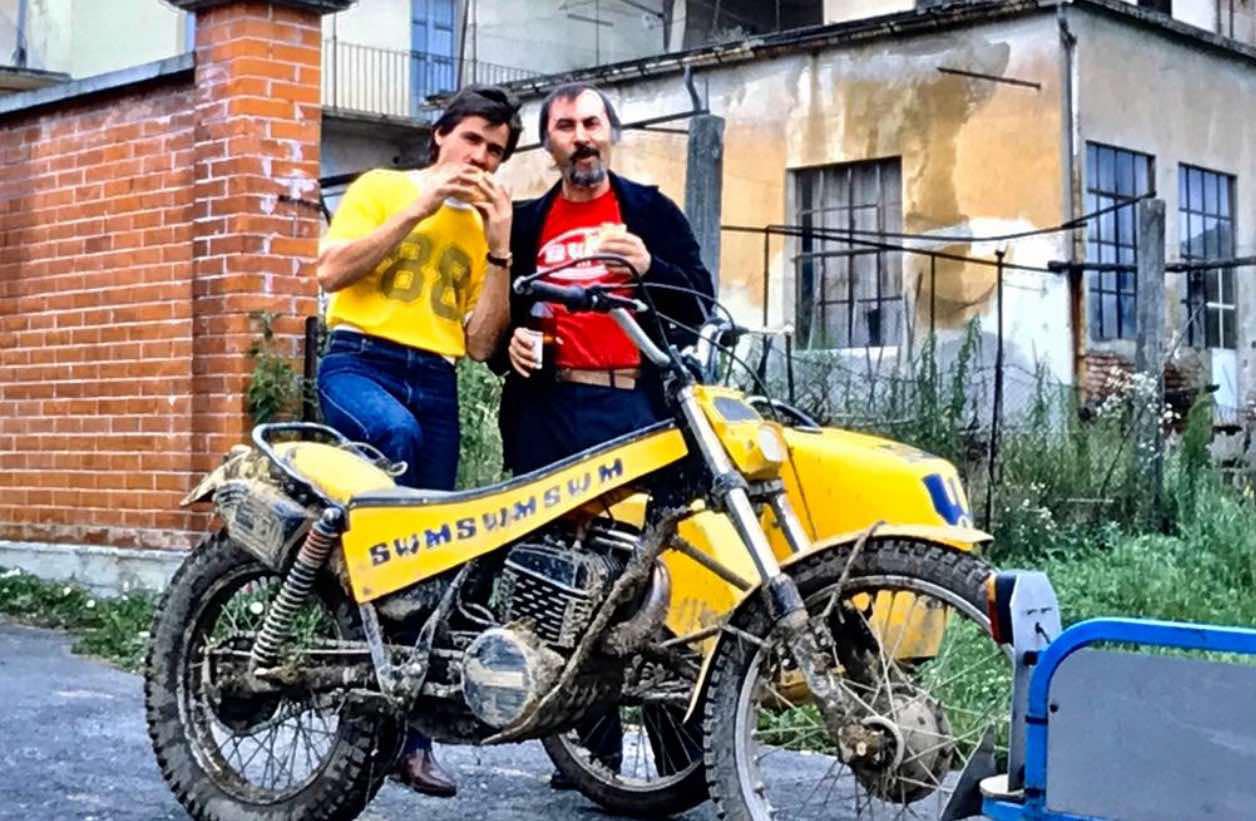
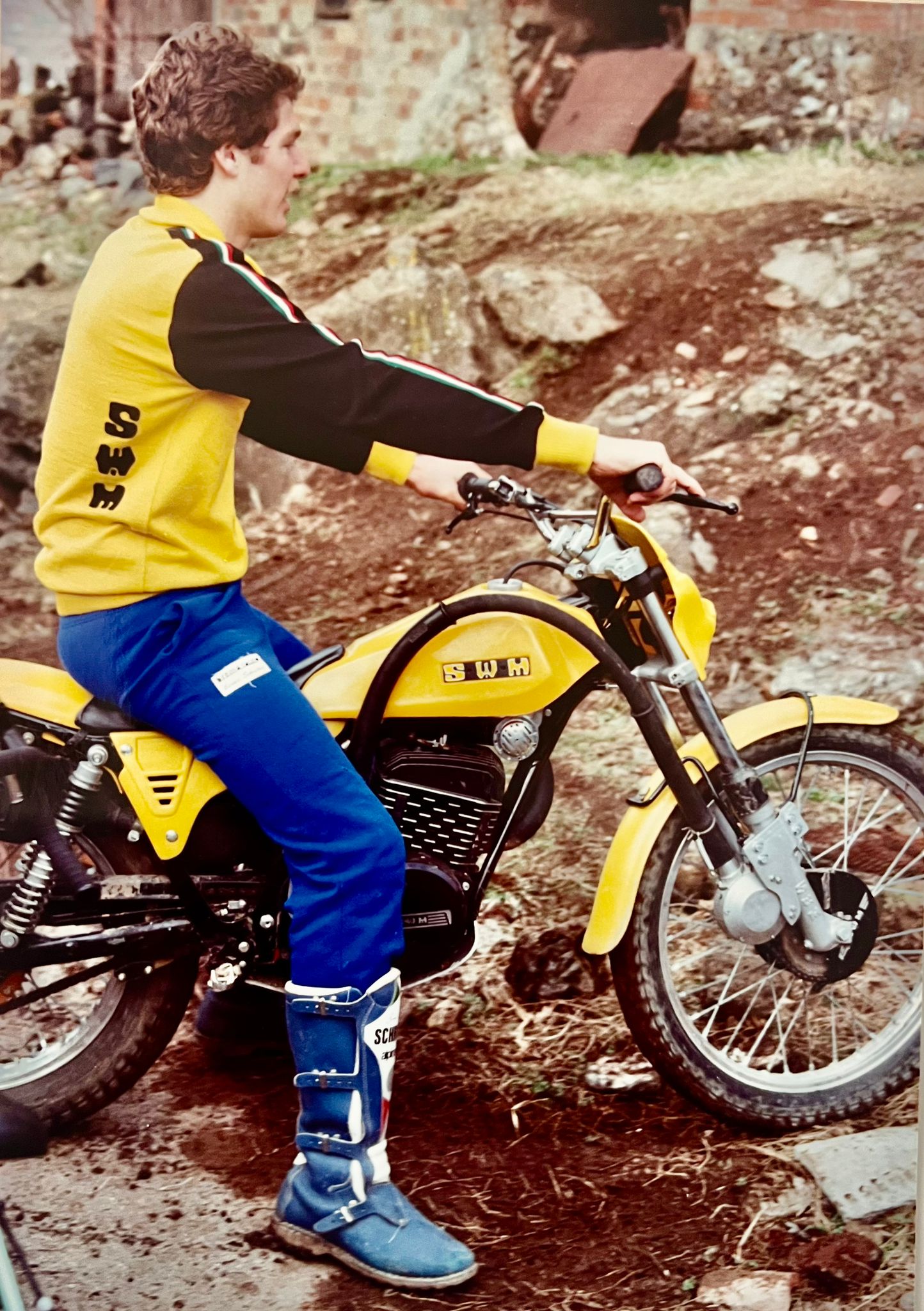


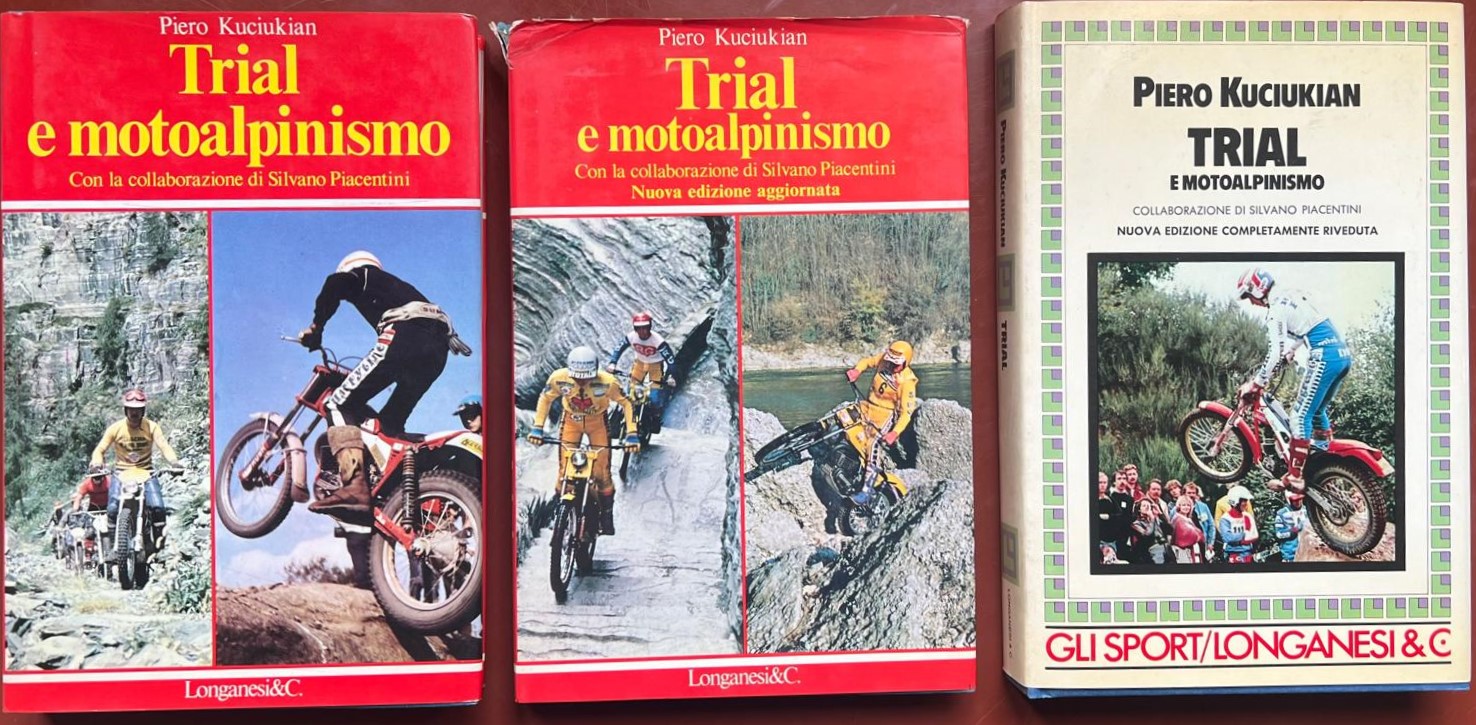
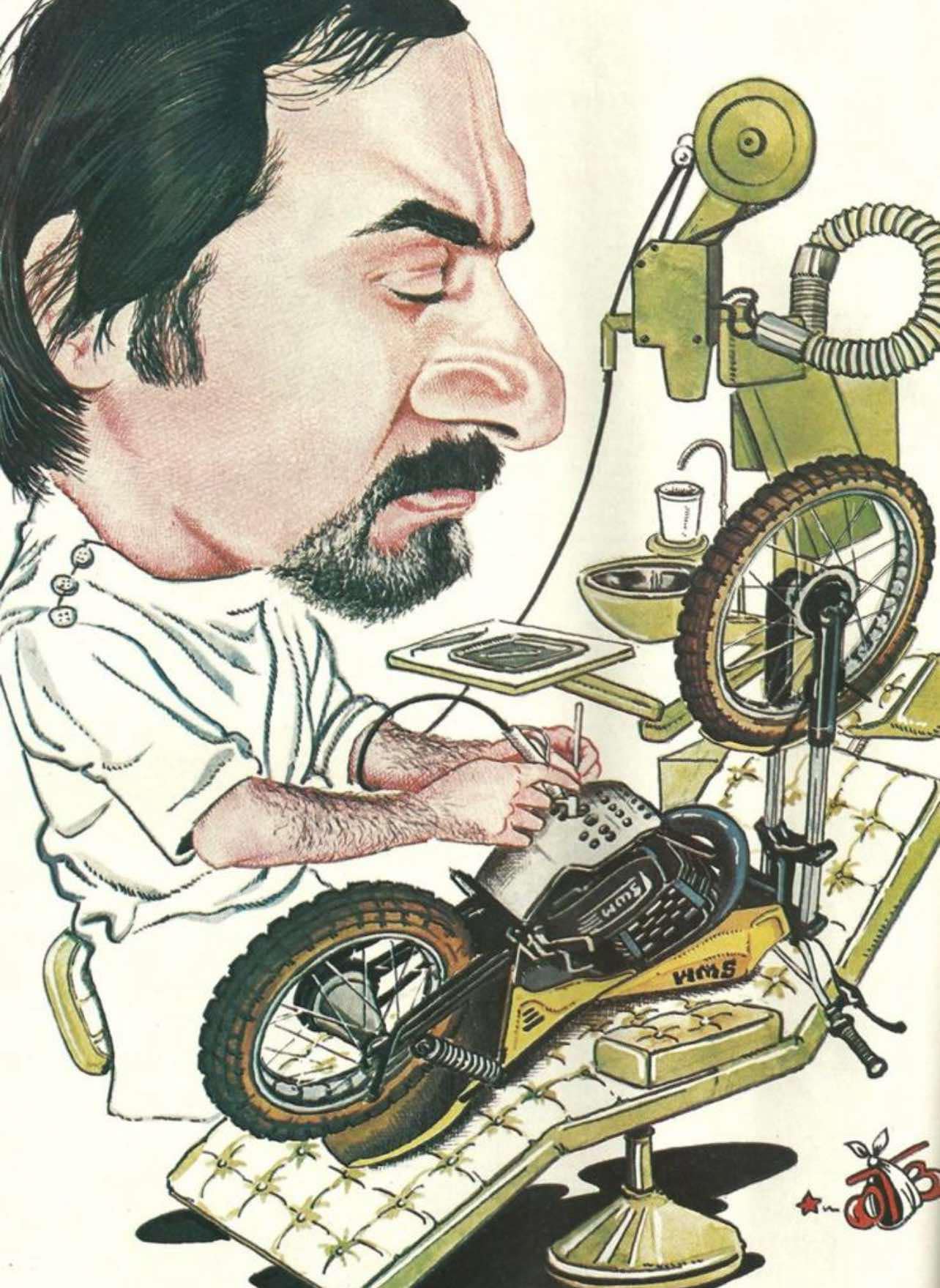

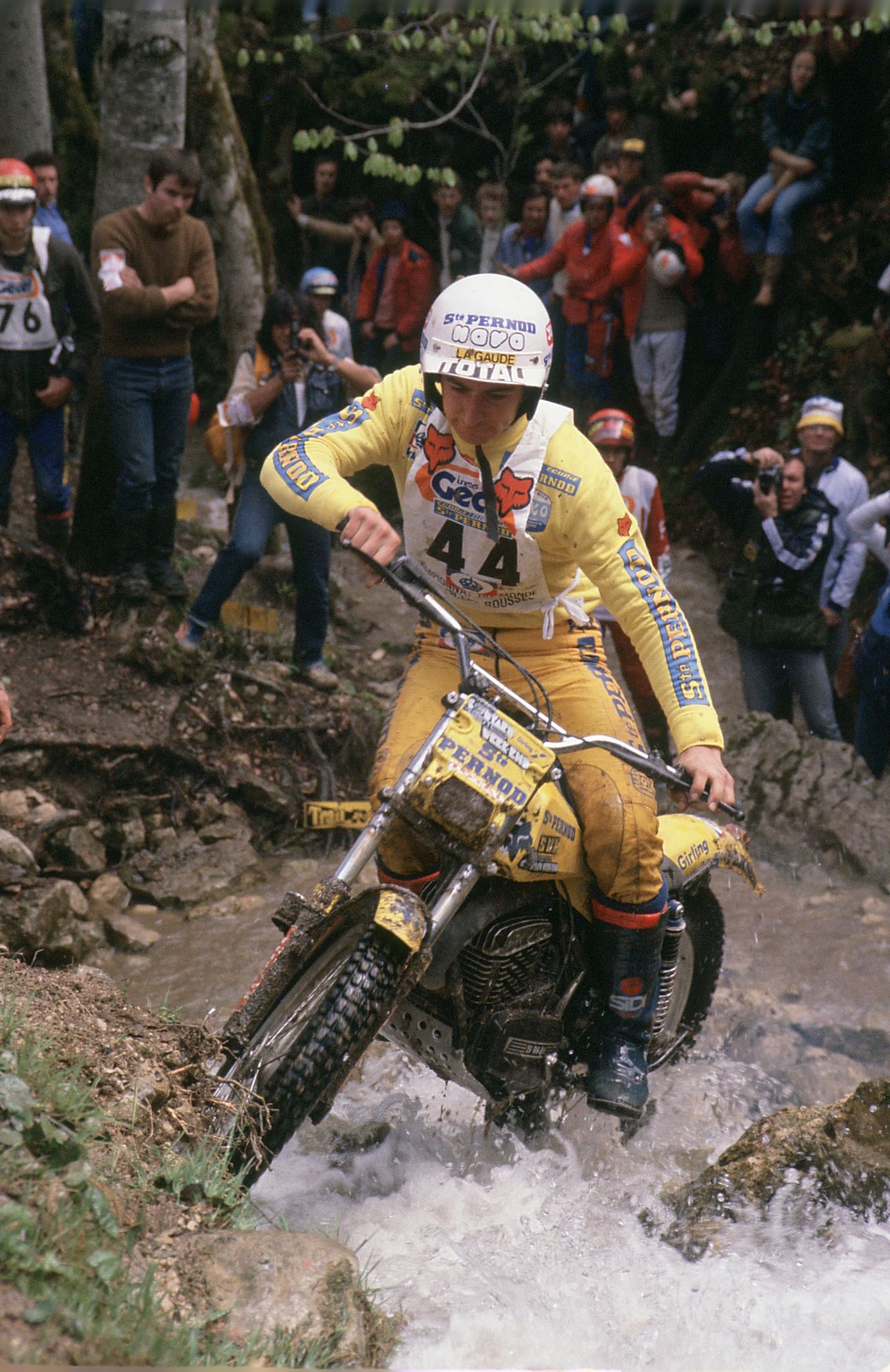
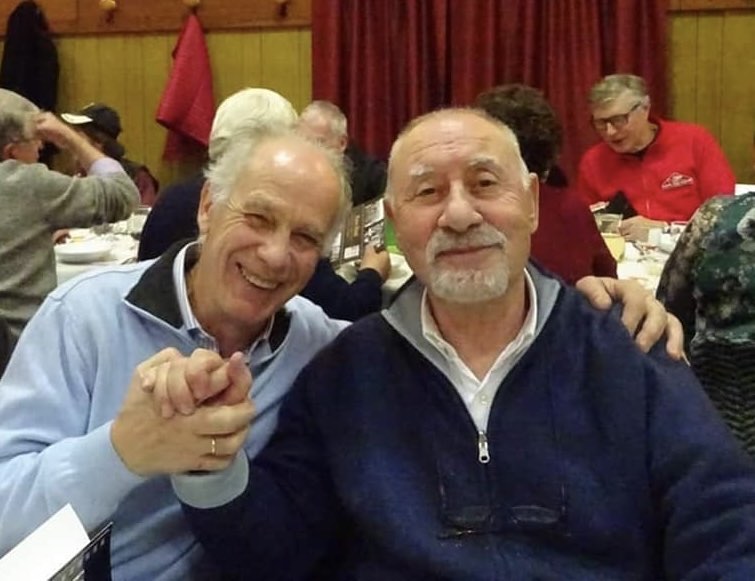


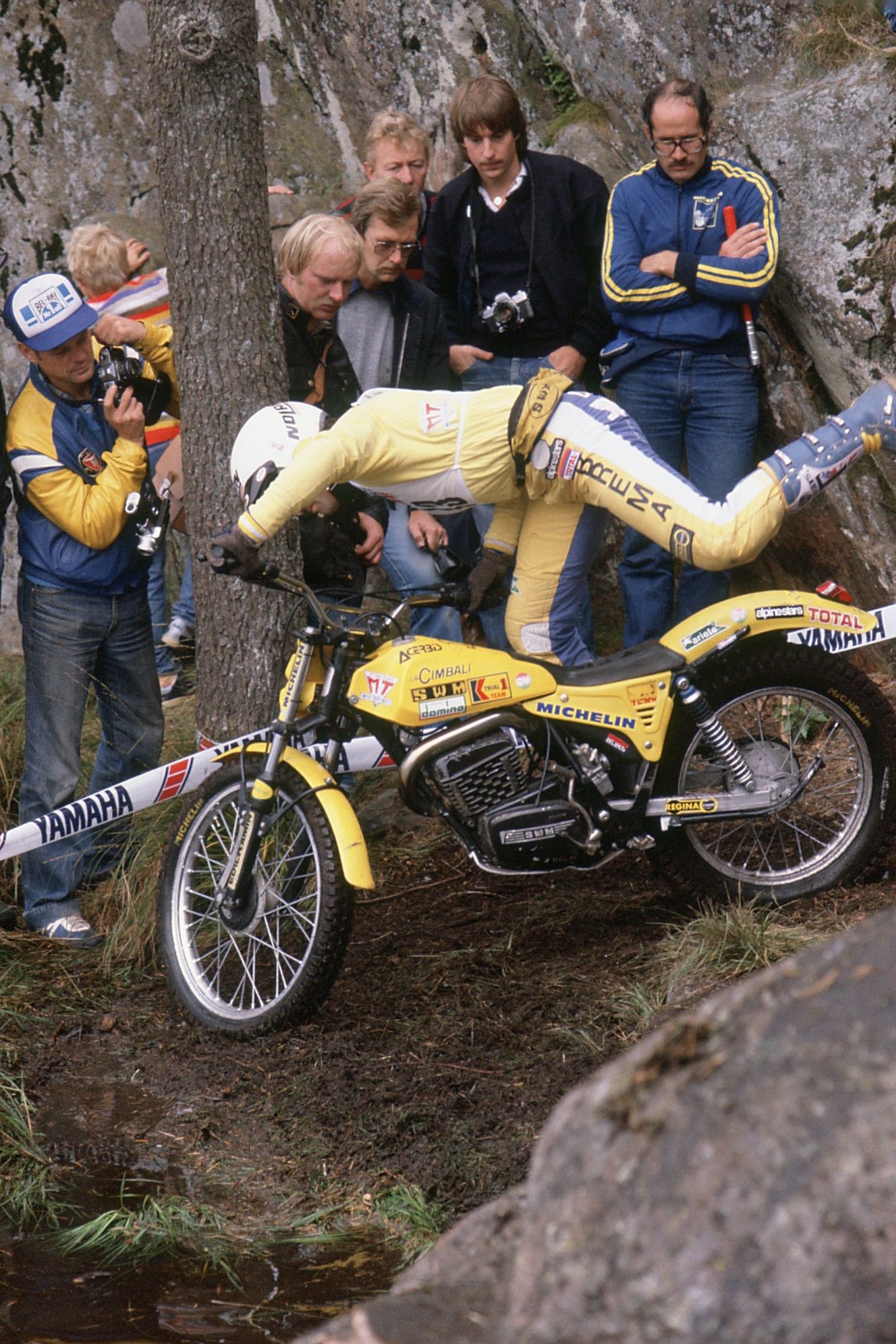
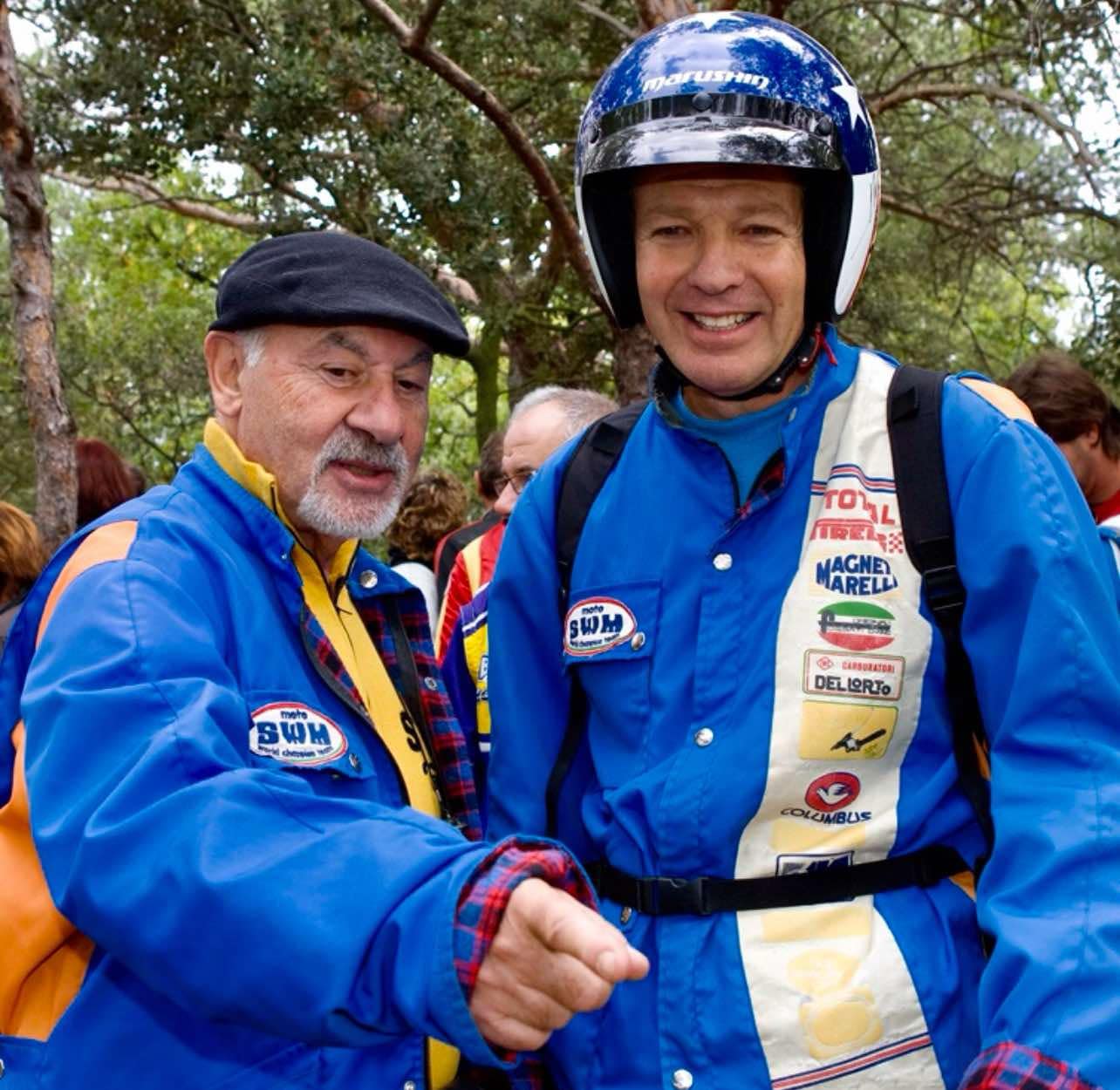
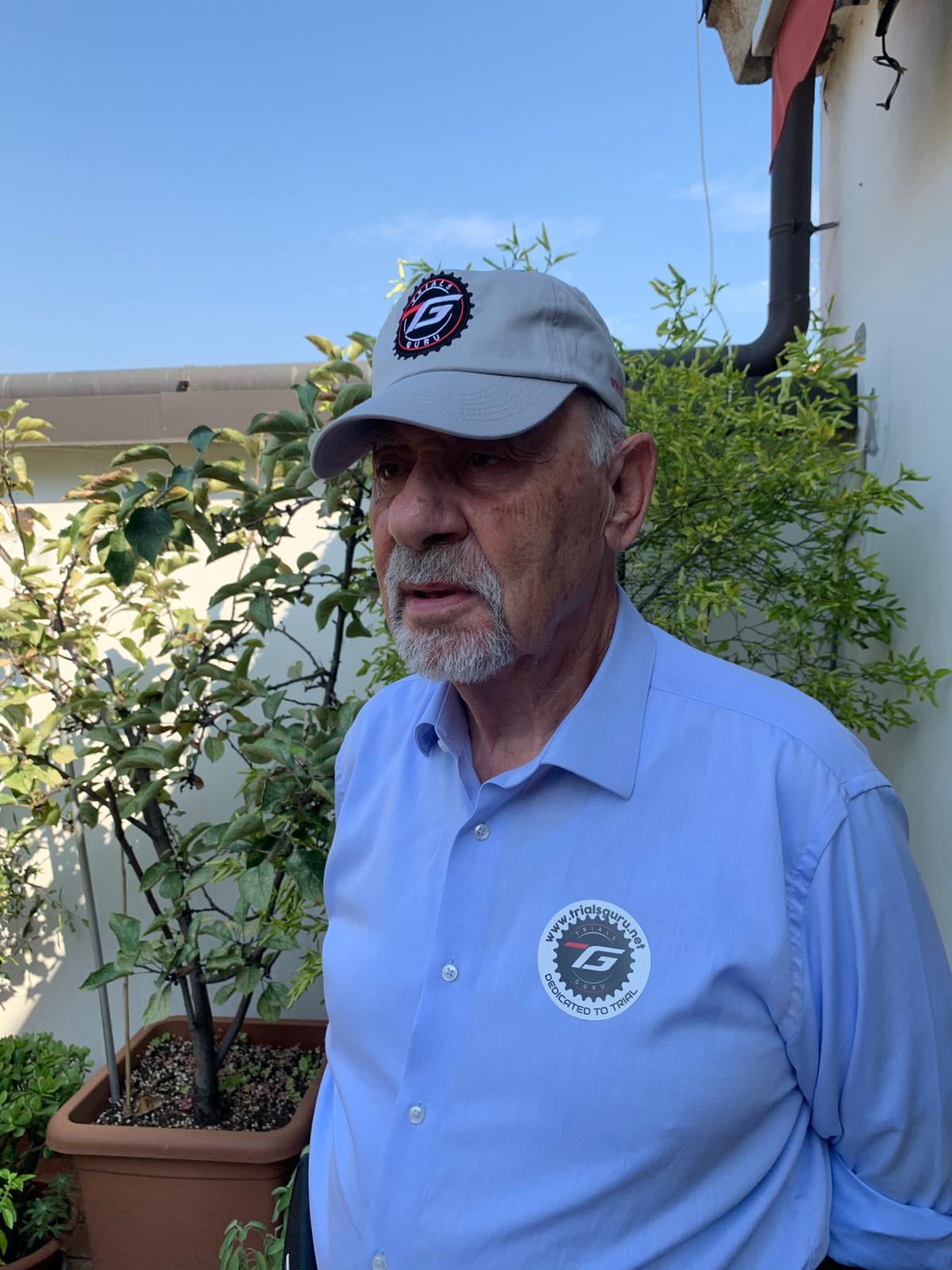

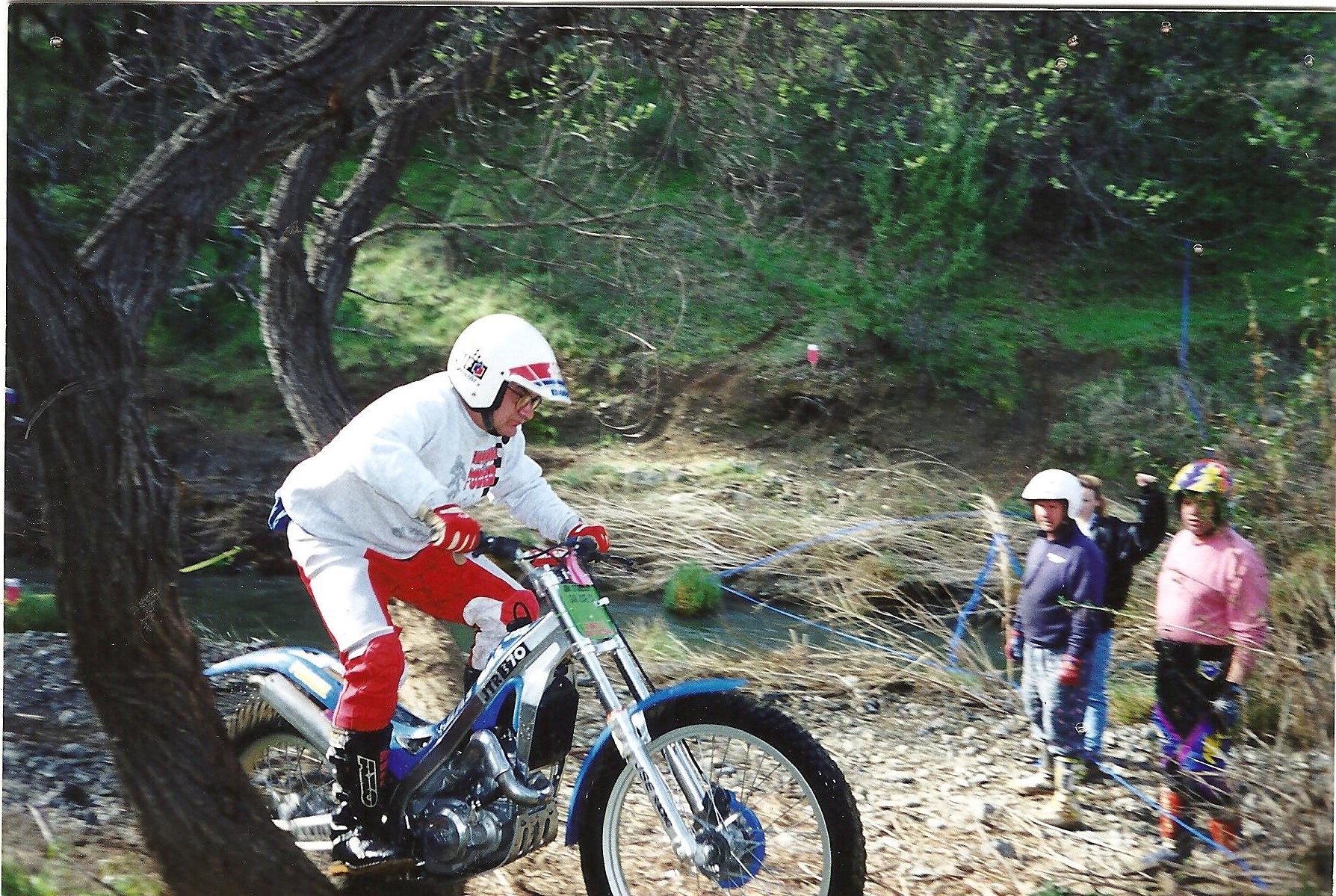



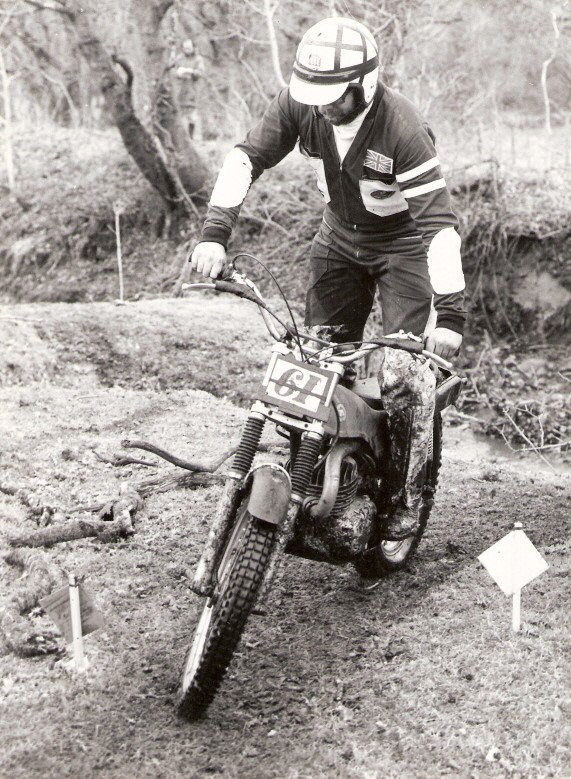


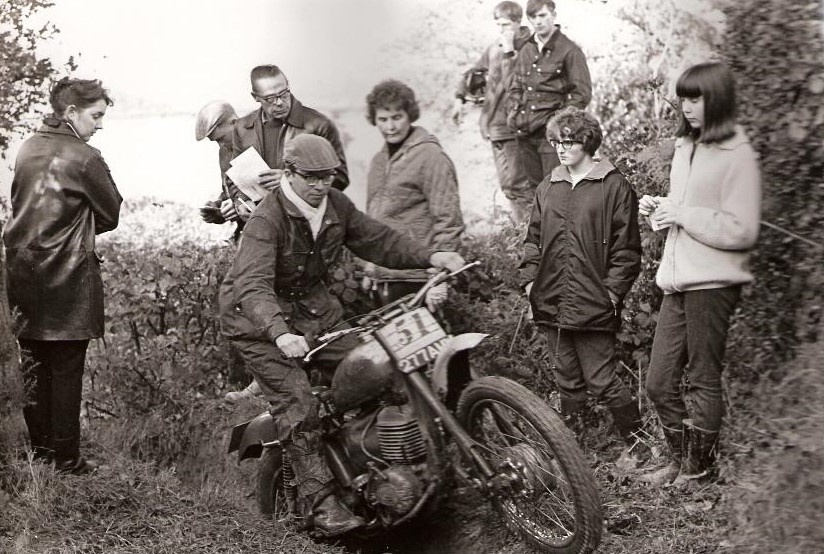


 TRIALS GURU - DEDICATED TO TRIAL