Tag Archives: SWM

GLOVES OFF – Celebrating 55 years

Celebrating 55 years of Trials Competition with Bernie Schreiber

Words: Bernie Schreiber, Zurich, Switzerland – September 1st, 2025

Photos: Bernie Schreiber personal collection; Eric Kitchen; Iain C. Clark; Trials Guru; Len Weed; Jean Claude Commeat.
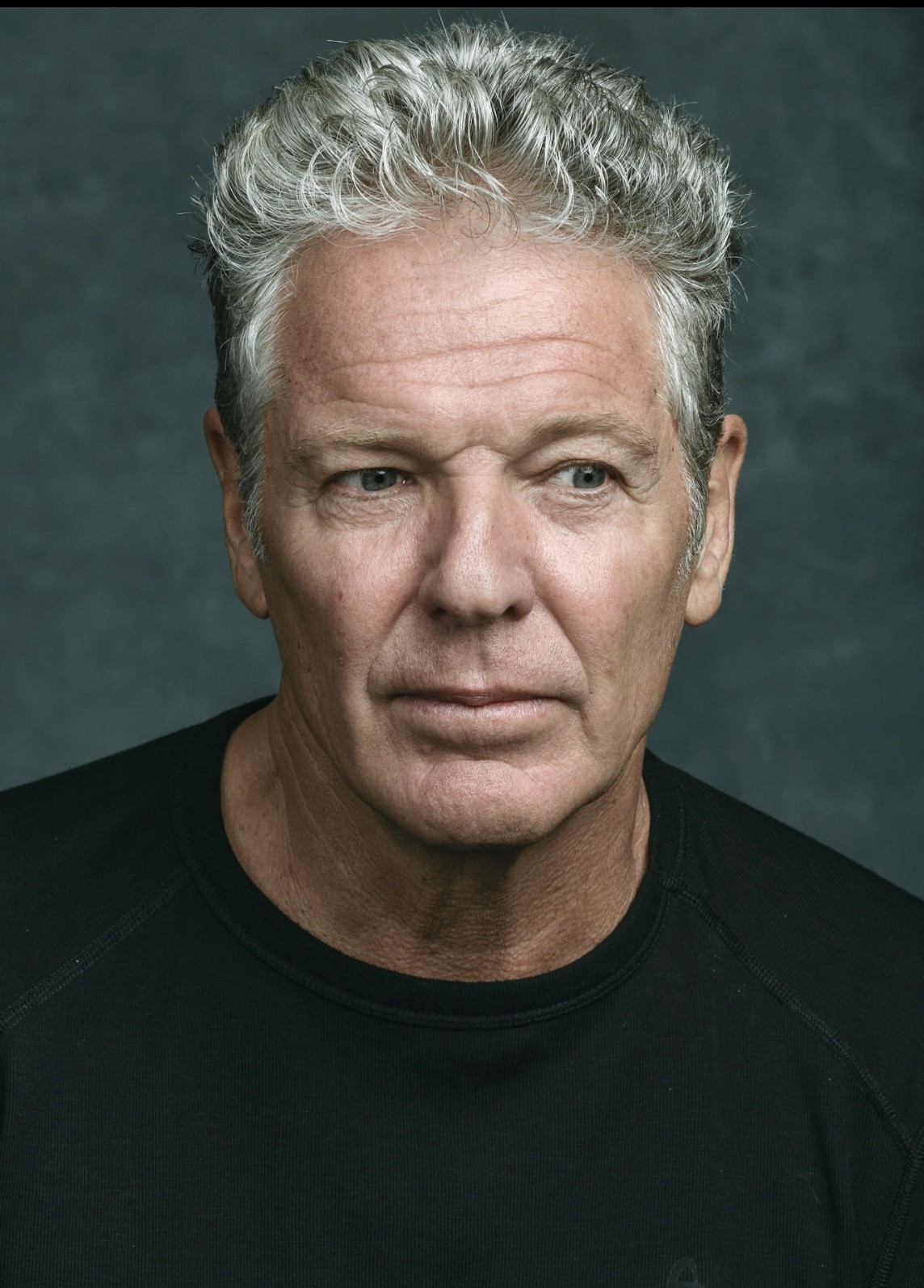
America’s only World Trials Champion and Scottish Six Days Trial winner, Bernie Schreiber is the most successful and iconic trials rider ever from the USA. To this day, he is the only American trials rider to reach the pinnacle of the sport. 2025 marks a special moment for Schreiber who started trials competition fifty-five years ago in California and still competes in vintage events today. 1970 was the beginning of what later became a successful adventure overseas in the late 1970s and 80s. Trials Guru shares Bernie’s journey.

Trials Guru: How did you discover the sport of Observed trials?

Bernie Schreiber: “A friend of my father introduced us to trials in 1970.

One day we all went riding in the Mojave Desert outside Los Angeles. We were climbing hills and riding trails all day on our bikes while the son of our friend spent most of the day in a sandy pit area, riding in circles standing up. We asked, what have you been doing all day on that strange bike called a Bultaco? In fact we thought the motorcycle was made in Mexico until they informed us it was a trials bike made in Spain. We had no idea what trials was and never heard of Bultaco. He said, that we should come out to watch a local trials event in a few weeks.

A few weeks later I found myself riding, not watching the event at a famous off-road venue called Saddleback Park in Southern California. I had a Kawasaki 90cc trail bike and my dad signed me up in the kid’s class. I started section one stood on my passenger foot-pegs to stay balanced going up and down hills. I really enjoyed the challenge and my parents found the sport friendly and safe.”

Mojave Desert with a young Bernie Schreiber on a 90cc Kawasaki trail bike. (Photo: Bernie Schreiber Collection)

“I rode a few more events in the kid’s class that year and eventually got a 125cc Bultaco Lobito and moved up a class. We joined the trials club VOTE ‘Valley Observed Trials Enthusiasts’ that year and the trials adventure began.”

TG: Who inspired you to focus on trials and to go as far as you did?

BS: “That would be hard to pinpoint exactly, there are so many names, but of course my parents were always the main pillar of inspiration and support.”

Bernie was inspired by the film ‘On Any Sunday’ early in his motorcycling career. (Photo: Bernie Schreiber Collection)

“The 1971 Bruce Brown movie ‘On Any Sunday’ with Malcolm Smith and Steve McQueen truly inspired me to be a motorcycle rider in some way, shape or form. That movie touched on every aspect of motorcycling from lifestyle to coolness and the risks of high-speed racing. Best motorcycle film ever for the industry.”

Lane and Debbie Evans-Leavitt. Debbie’s father appeared in the film, ‘On Any Sunday’ doing an endless wheelie on a Bultaco Sherpa. (Photo: Bernie Schreiber Collection)

“As a kid early on, it’s important to have heroes to look up to. Sammy Miller and Mick Andrews were two of mine on the world stage and Lane Leavitt in the USA. I did trials schools with both Sammy and Mick in the early 1970s and practiced with Lane whenever the opportunity presented itself.”
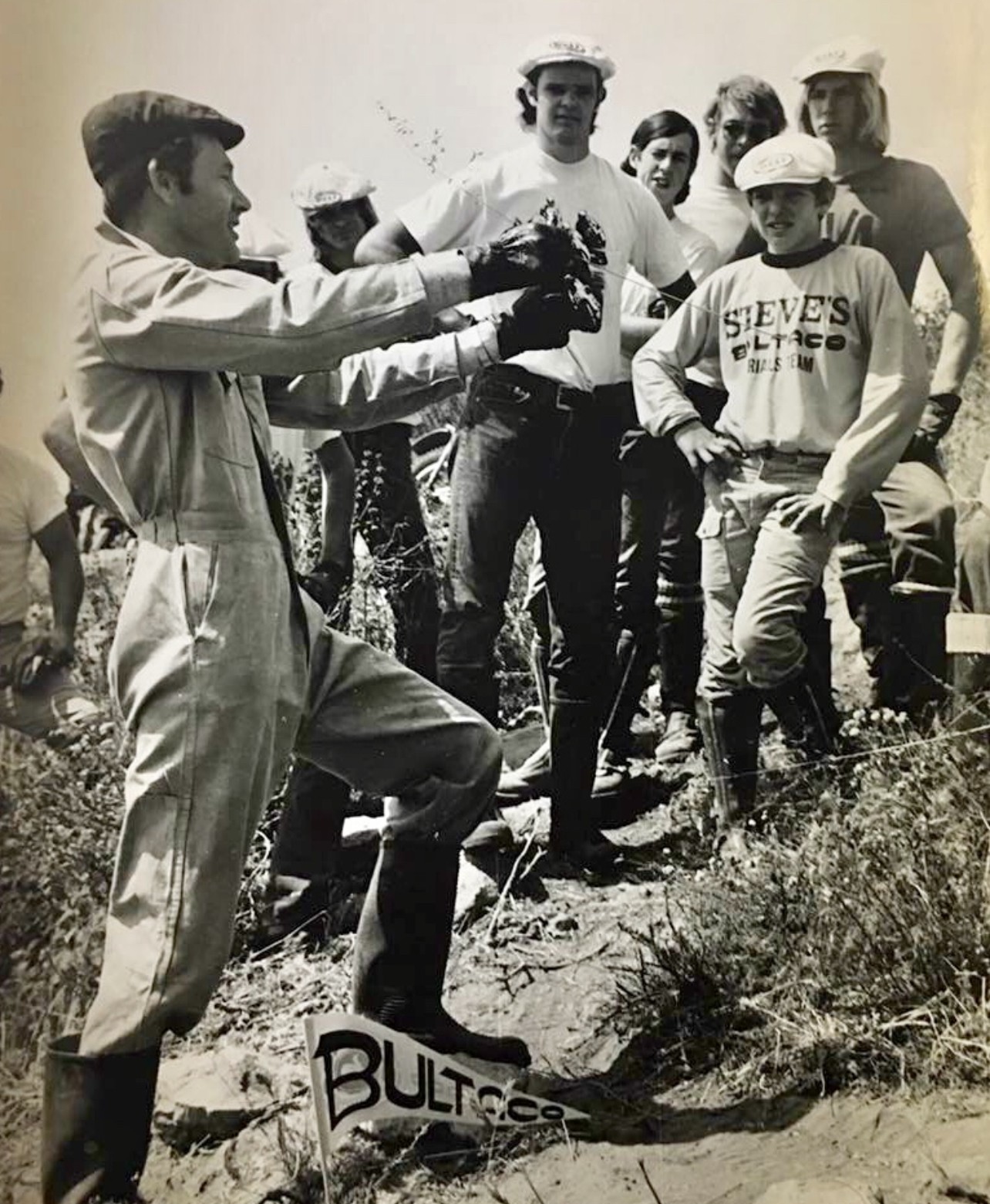
Sammy Miller MBE explains the finer points of trials to an attentive audience including a young Bernie Schreiber at Miller’s 1973 Trials School in the USA (Photo: Bernie Schreiber Collection)

“The local Los Angeles dealer, Steve’s Bultaco supported me at first, until Bultaco International USA stepped up support based on my national results. My local trials club VOTE and all their members were great motivators and supporters as well. Always organizing events and trials training weekends.”

Support from Steve’s Bultaco on the Sherpa in 1971. (Photo: Bernie Schreiber Collection)

TG: So how did a young kid from California end up riding trials in Europe?

BS: “Riding in Europe is one thing, winning is another. Most Americans fifty years ago said winning couldn’t be done in Europe and here we are forty-six years later still trying to figure out how it had been done.

Every life has a story and every story has a lesson. My personal lesson is things are not as easy as they may seem.  At every stage in life, everyone has a story to tell, a lesson to teach, wisdom to share, so learn from them.”
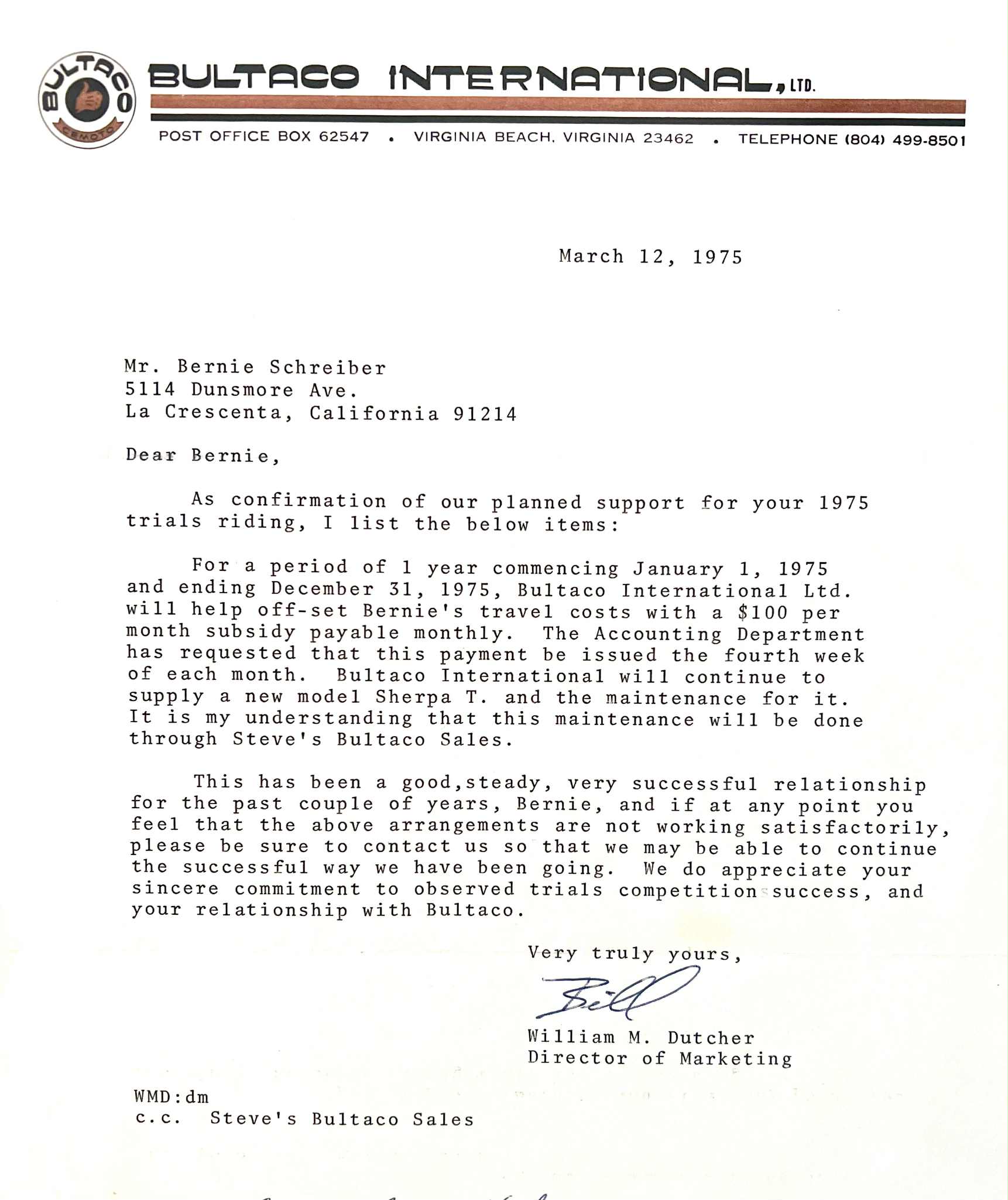
Letter from Bultaco International to Bernie in 1975. (Bernie Schreiber Collection)

“My first trip to Europe was funded by (ATA) American Trials Association, the governing body of all trials clubs in Southern California and managed the annual El Trial de Espana event and the prizes and donations. This event which started in 1970, had a huge fundraiser each year to send a team of talented local riders to Spain. This was mainly to expose local riders to the European Championship and Spanish manufacturers.”

Bernie was the 1974 Southern California Trials champion and Bultaco International sent this cheque for $1,000 to him in recognition of his success on the brand. (Photo: Bernie Schreiber Collection)

“I was part of that delegation in 1974 to visit the Bultaco factory, meet the world riders and observe the Spanish round of the European Championship, before it became a World Championship in 1975.”
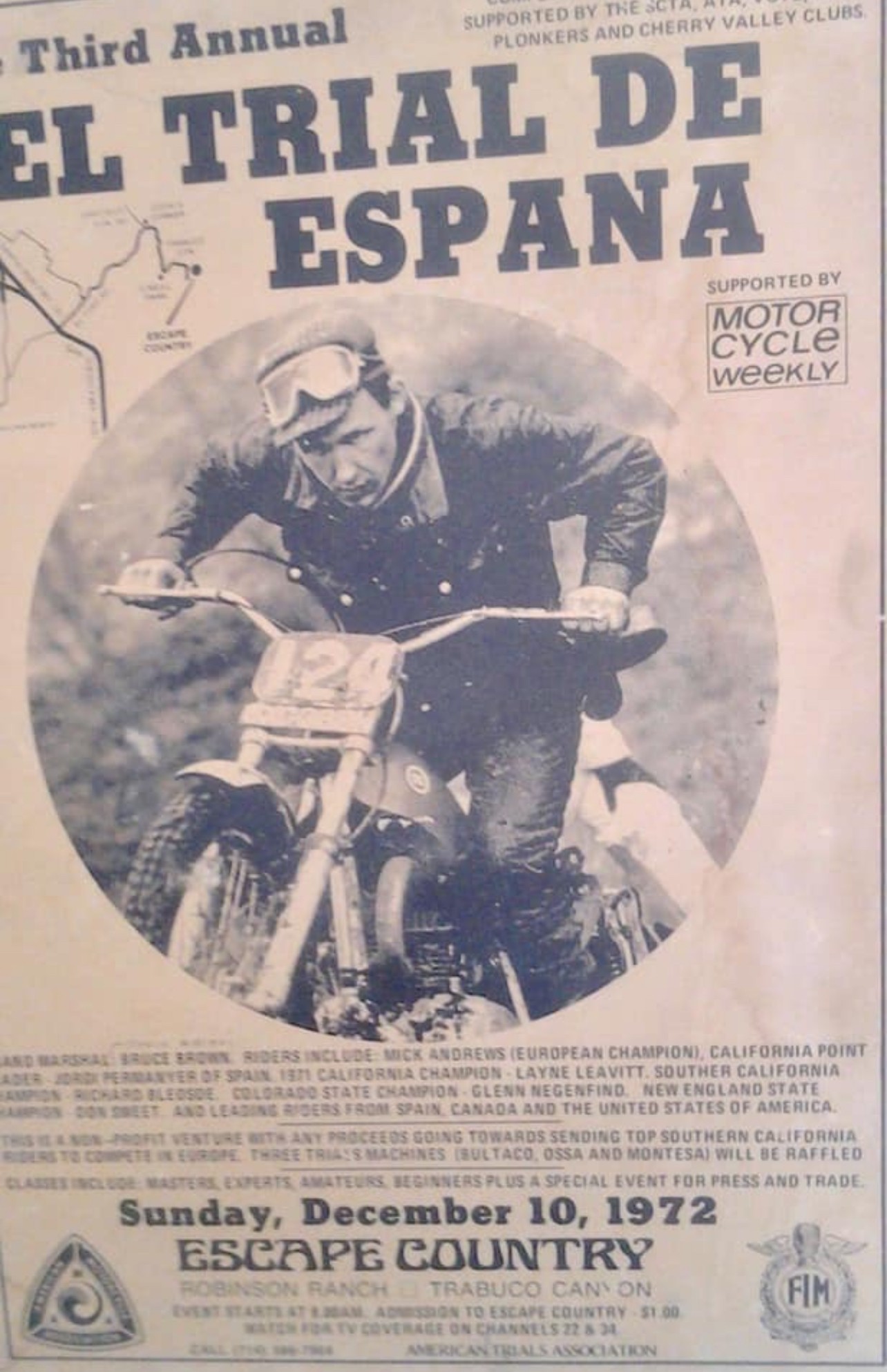
“In 1976, I joined the ETDE team again to Scotland to watch the Scottish Six Days Trial. I was still under eighteen years of age, so couldn’t ride both these events unfortunately.

I’d quickly seen that European sections in Spain were not the same as our American sections, so I immediately changed my practice at home to bigger steps, tighter turns, larger and longer sections with more speed. At the 1976 SSDT, I did learn a lot about the trials culture and history of a sport which was established in 1909.

El Trial de Espana trips were fruitful, and after hard work, winning events locally and nationally, the Bultaco factory and Bultaco International agreed in December 1976 to provide me an opportunity in Europe.

The main purpose was to obtain real trials competition exposure and learn from the world’s best Bultaco riders who were based in Europe. Therefore, I could improve my skills and become the best U.S. trials rider. That would inturn sell more Bultaco’s in a very crowed American market with more and more Japanese bikes entering each year. The Japanese brands were buying market share and acquiring the best talent in many American motorcycle disciplines.”

1977 – Practising hard in California on a stock Bultaco Sherpa M199 in 1977. (Photo: Len Weed)

“So, I departed to Belgium for my first three-month European tour in February 1977 to compete in the world championship and SSDT. I’d just turned eighteen in January and acquired my first FIM license. I landed in Brussels with rubber boots and a helmet, but no real riding gear for sub-zero temperatures, mud and snow.

To remind the younger readers, there was no internet, no fax, no iPhone, no GPS, limited English hard to understand and no money in my pocket. Thankfully, the Belgian Bultaco importer at the time, Marcel Wiertz took care of me on arrival. I had a test ride on a stock Bultaco Sherpa in the Belgium mud, and that was the real beginning of the European journey.”
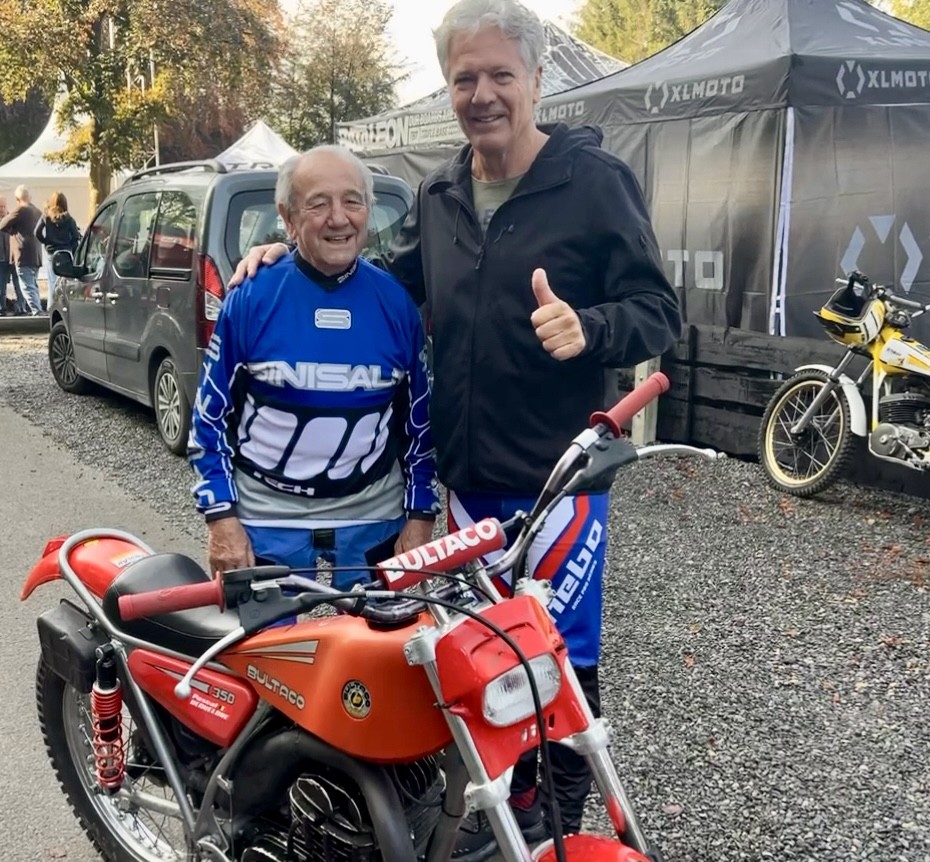
Marcel Weirtz was the official importer for Bultaco in Belgium (Photo: Bernie Schreiber Collection)

“My practice sections in California paid off and I finished in fifth place in Belgium with one hundred and thirty points, just two points behind Yrjo Vesterinen the current World Champion. The next event was dryer and warmer in Spain and clenched my first podium that impressed the Bultaco factory owners.”

The West German round of the 1977 World Championship featured this big drop off (Photo: Bernie Schreiber Collection)

“Then onwards to France for a fifth place finish and another second place podium in West Germany, beating nearly every factory rider once during the two-month tour.”
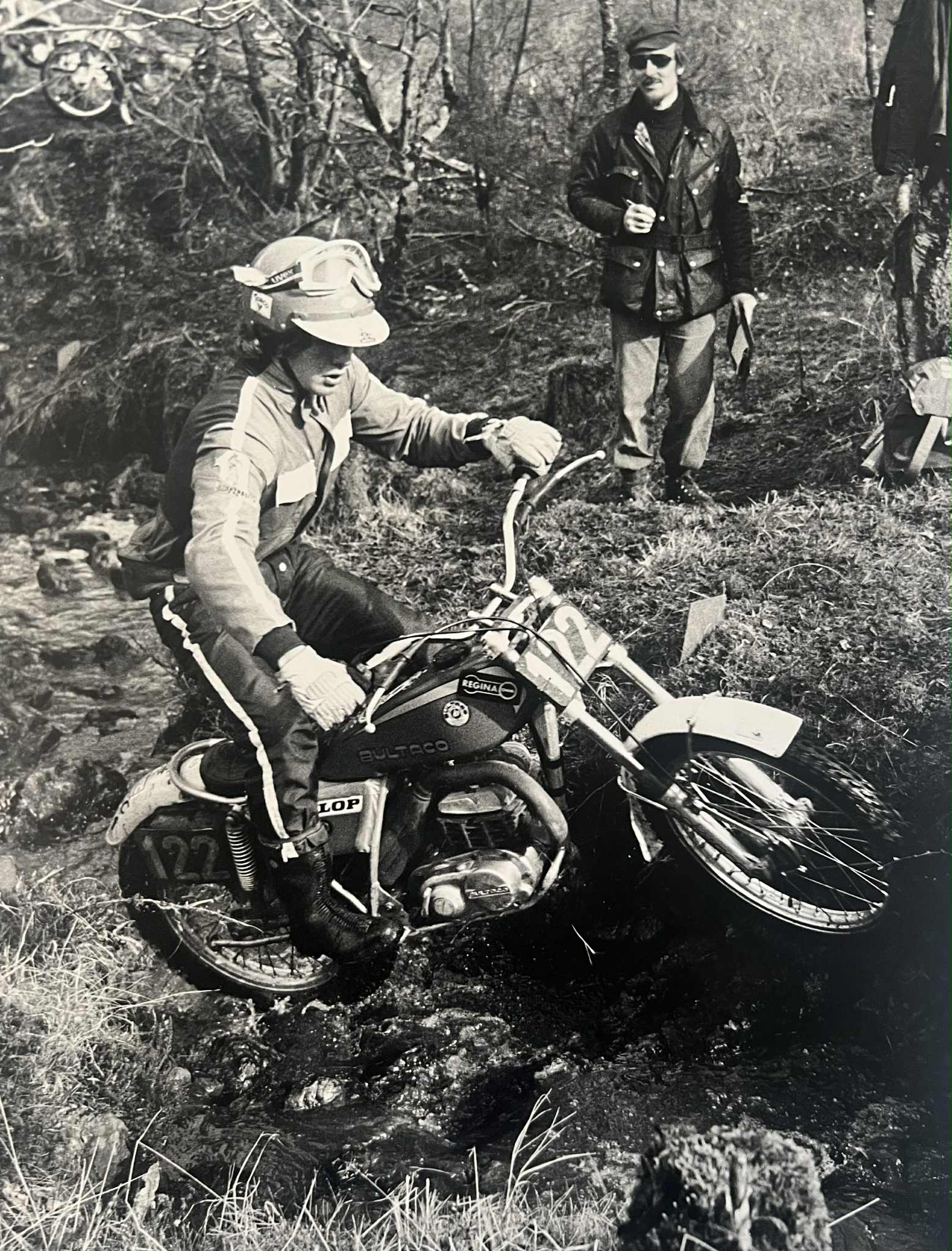
Bernie’s first Scottish Six Days was 1977 on a factory supplied Bultaco 325, where he was Best Newcomer, seen here on ‘Kilmonivaig’. (Photo: Iain C. Clark, Fort William)

“In the May, I competed in my first Scottish Six Days Trial and obtained the Best Newcomer Award with eleventh place out of several hundred riders. Overall, I finished the season seventh in the world and impressed some European media, spectators, sponsors and riders.”

Bernie Schreiber was Best Newcomer at the 1977 Scottish Six Days Trial (Photo: Bernie Schreiber)

“At the time, I wish there would have been other options besides Europe. Life was good at home, but sometimes opportunity only knocks once in life. You’ve got to be where the action is taking place at the highest level or you will most likely be left behind.”

TG: 1977 had been a year of experience for 1978, so how was the following year?

BS: “1978 was by far the toughest year and a turning point in my career. I asked myself many times, do I stay in Europe or stay at home. I learned a lot in 1978 and finally won my first world round in France, becoming the youngest rider ever at age nineteen.

Eventually, I went on to win four world rounds in 1978 – FRANCE, SPAIN, USA and ITALY. I became the first American to win a world round, so the impossible was achieved. The 1978 U.S. Wagner Cup round that year in Roaring Branch, Pennsylvania was a special win, as I hadn’t even won a U.S. American Championship until later that same year.

The biggest take away from 1978 was acknowledging that cleaning sections and winning world rounds from time to time was not enough to win a Championship.  The current world champion Yrjo Vesterinen was a great rider, like all the factory Bultaco team riders, Lampkin, Coutard, Soler and others. I learned a lot from each and every one of them.”

Yrjo Vesterinen was a close rival from the Bultaco days through to SWM (Photo: Bernie Schreiber Collection)

“Vesterinen was the man to beat and he was on his way to a third World championship title in a row. Vesterinen was a talented rider, smart and very consistent. His consistent effort, focus, preparation and mindset were unmatched. He had it all together and a well-planned strategy, and the most professional Championship rider without a doubt. Risk management drives Championship victories and Yrjo was a master with a plan to win Championship titles.”
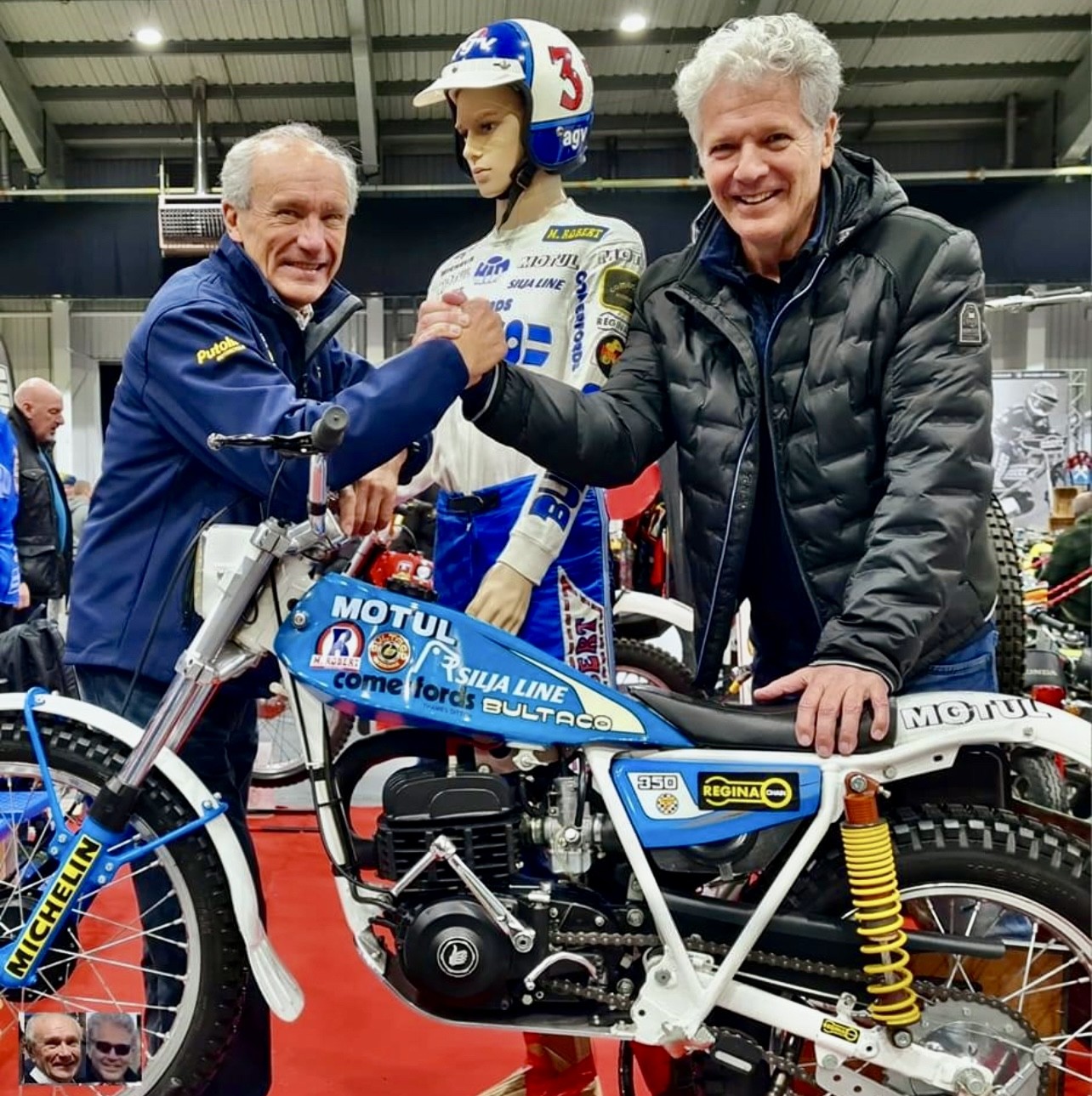
Bernie Schreiber has a high regard for rival and friend, Yrjo Vesterinen (Photo: Bernie Schreiber Collection)

“Consistency became my obvious plan for 1979 after finishing third overall in the 1978 Championship. Numbers matter at the end of the season.”
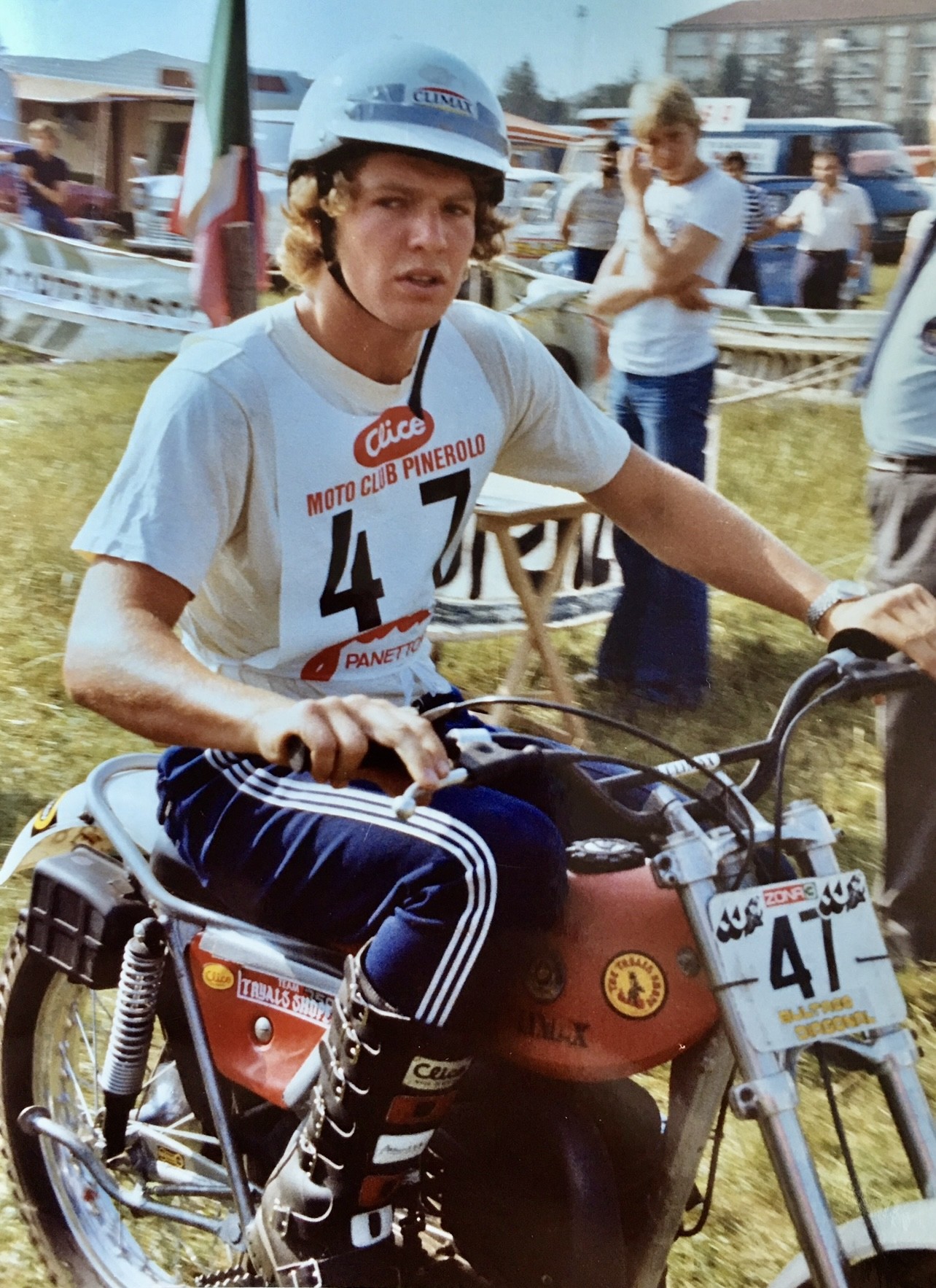
1978, Schreiber in thoughtful mood, eyeing up the FIM World Trials Championship. (Photo: Bernie Schreiber Collection)

TG: Then it all comes together in 1979 and you won the FIM World Trials Championship?

BS: “The start of the 1979 season was extremely difficult and not as planned. It was decided with Bultaco after the 1978 season that London would be my European Base. From there, I could practice more mud riding, communicate in English and stabilize a bit. I moved in with the Hudson family and worked out of Comerford’s at Thames Ditton, Surrey the UK Bultaco importer at that time.”

Deep in conversation, Yrjo Vesterinen, Colin Boniface and Bernie Schreiber at the SSDT – Photo: Eric Kitchen

“I received tremendous support from the entire team in the UK, especially Pete Hudson a trials rider who worked at Comerford’s as competitions manager, he looked after me during the entire season.”

Bernie with Pete Hudson who looked after Bernie when at Comerford’s in 1979. (Photo: Bernie Schreiber Collection)

“The 1979 plan didn’t come together as forecasted. I crashed, bent the fork in the first world round in Northern Ireland and scored zero points. Then seventh in the UK, sixth in Belgium and fourth in the Netherlands. Actually, the 1979 season started worse than 1978 and I was way behind the leader in overall points, not just wins.”

1979 – Schreiber in World Championship mode. (Photo: Bernie Schreiber Collection)

“1979 started as one of those mental moments. It was a Rocky Balboa moment. “It’s not about how hard you get hit, but how hard you can get hit, get up and keep moving forward”. I moved forward to the fifth round in Spain and won. After that, things turned sunny, positive, and more consistent from that point. I won more events and stayed on the podium to the end.”

1979, Schreiber was on top of the world and gave Bultaco their last World Trials Championship victory. (Photo: Bernie Schreiber Collection)

“I had a lot of support from Comerford’s in the UK, but the 1979 season was only decided at the last world round in Czechoslovakia. That’s when history was made and it still stands forty-six years later.”

TG: What do you feel were the main drivers of your success?

BS: “The heart to win is a must, and it often comes with more pain than pleasure. Most of us were riding from the heart, not for the money.  The winning experience provides confidence which adds to your performance, but the most important skill is learning how to transfer your skills to competition and then to winning. The hardest skill is mental and how to transfer winning into Championship titles under pressure all season. Innovations can make the difference between winning and losing. Perfecting bunny hops and floater turns in the 1970s was an innovative advantage. Some called it trick riding, but it was used within the traditional non-stop rules of the sport. A positive attitude, strong motivation and commitment, combined with believing in yourself is the main driver of success.”

Bultaco had a strong factory supported team in the mid to late seventies. Here is Charles Coutard (France); Manel Soler (Spain) and Bernie Schreiber (USA) Photo: Bernie Schreiber Collection.

TG: You finished second in the 1980, 82 and 83 World Championship. Were those frustrating years?

BS: “YES and NO!

It’s always frustrating not to win, especially when you are expected to win.  The best rider always wins regardless of all the excuses we wish to present. People aren’t interested in hearing all the excuses, challenges or reasons for not winning, but they do exist for most of us at the top.   

Here are some facts that don’t change my results.  In 1980 when the Bultaco factory closed, I changed from Bultaco to Italjet in mid-season. For the readers, Italjet was a mini-bike manufacture and the Bultaco importer in Italy in 1980 and well aware of the current situation.

Most Bultaco riders had moved on and changed bikes by the end of the 1979 season. Vesty to Montesa and Lampkin SWM. Only Manel Soler and myself had not changed bikes by year end.”

Bernie Schreiber and Manel Soler were good friends (Photo: Bernie Schreiber Collection)

“I continued with Comerford’s Bultaco until the June of 1980, while Soler was going to develop the Italjet bike. In the end, Manel moved to Montesa and I was pretty much solo on a Green Taco with Spanish engineer Manuel Marques.”

“My first event in 1980 on the new bike was round seven in Switzerland and due to technical issues, no points were scored. Round eight in Germany, I finished late on time and no points again, so only scored points in ten of the twelve rounds that year and finished second.

I set two new world records that year by winning six of twelve world rounds in one season and the last four victories in a row. Won a lot of battles in 1980, but lost the Championship to Ulf Karlson.

1982 was probably the best year of my career with SWM. I had a proven bike, strong factory support and a great team manager with Pietro Kuciukian. For me personally, Kuciukian was the greatest of all time team managers and still a dear friend after forty-five years.”

Pietro Kuciukian was a guiding light for Bernie when at SWM (Photo: Bernie Schreiber Collection)

“The year resulted in two wins and ten podiums out of twelve events. Managed a UK hat trick in 1982, winning the SSDT, British World round and the famous Kick Start TV trial, but still finished second to Eddy Lejeune. We both dominated the season, but he was the best rider and won his first World Championship title.

In 1983, I changed bikes again, not brands. The SWM Jumbo was introduced which was a totally new bike frame and engine.”

The 1983 SWM ‘Jumbo’ 350 was a big bore offering from the innovative Italian factory. (Photo: Bernie Schreiber Collection)

“After just a month of training, I won the opening world round in Spain and managed eight podium finishes during the season, so quite happy with my results after six full championship seasons, but Eddy won again on his factory Honda.”
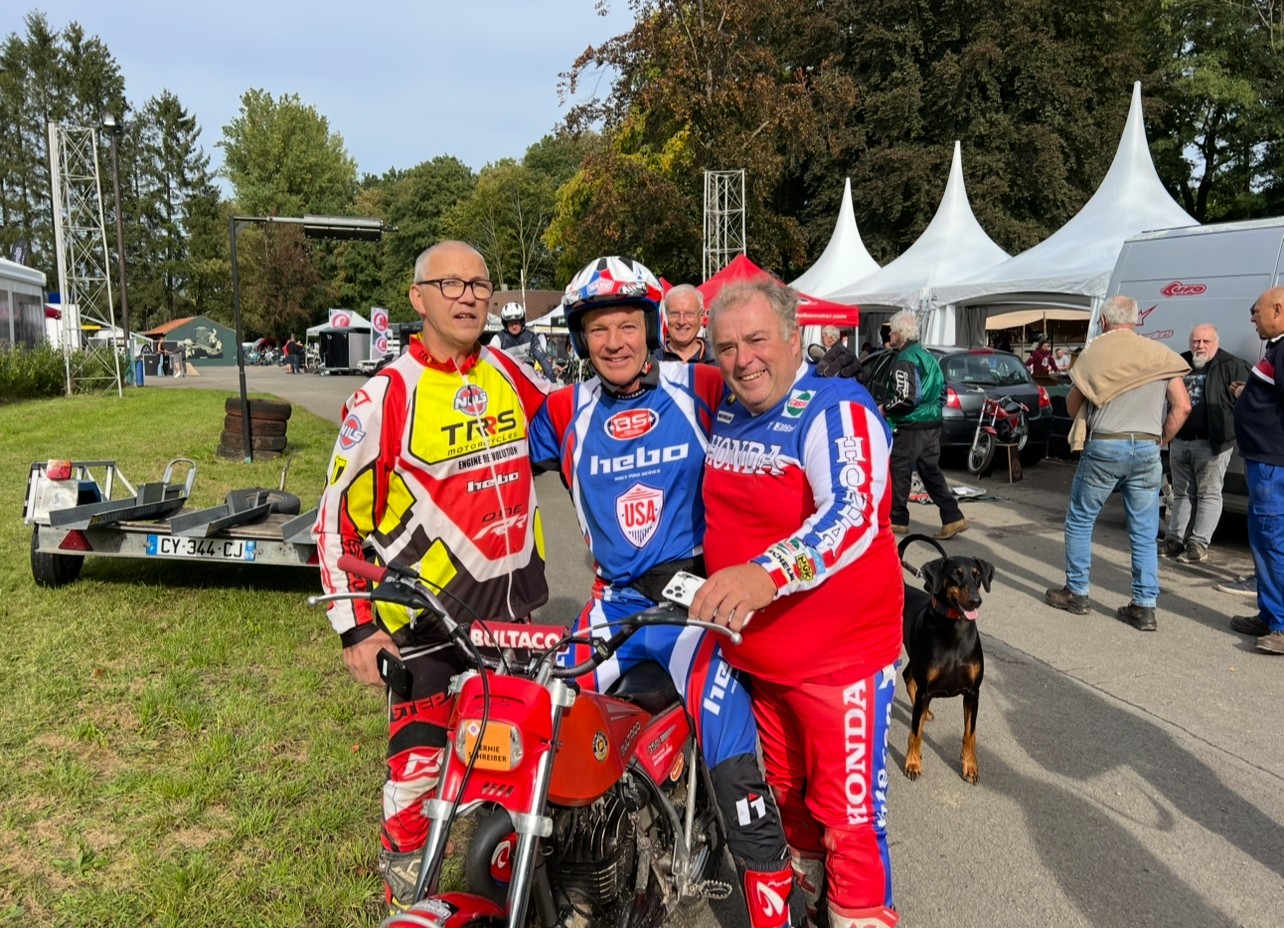
With Eddy and Eric Lejeune at Bilstain, Belgium (Photo: Bernie Schreiber Collection)

“Results and frustrations become less painful if you achieve most of your career goals. In sports, we are only the best during a certain moment in time.” 

The most desirable trials boot of all time. The Alpinestars ‘Schreiber’ (Photo: Bernie Schreiber Collection.

TG: How important was your 1982 historic Scottish Six Days Trial win?

BS: “It remains one of my greatest accomplishments in the sport of trials. I was not a huge fan of the SSDT in the beginning, because my knowledge of the events history and culture was blurred by the World Championships. It’s the only real trial remaining today in the sport.”
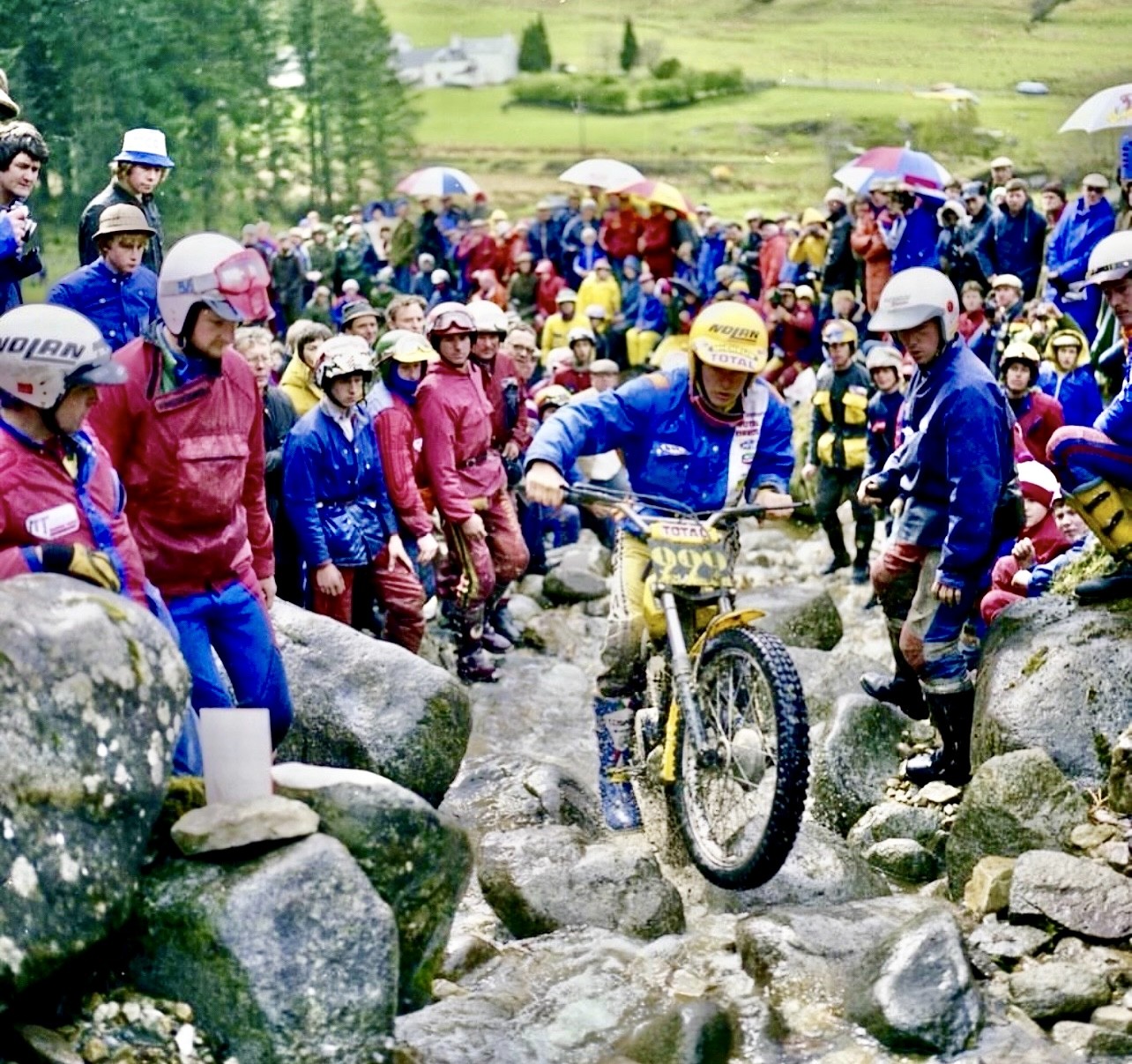
Schreiber’s 1982 Scottish Six Days victory, captured here by Eric Kitchen.

“The SSDT has long distances between sections, river style sections with many uphill rock beds, cold weather, time controls, non-stop rules, no score cards and six tough days over one hundred miles each day. It has always been an important event for manufactures, media and sponsors.

My second attempt was in 1980, I was the current world champion, but after two years of absence from the first attempt in 1977, I was not familiar with the event anymore. After three days, I realised that this event was really unique and one of a kind. I began to understand the true meaning of reliability trials, the history and traditions of the SSDT itself and where the sport all began.

1980 SSDT action on the famous ‘Pipeline’ section. (Photo: Jimmy Young)

If you try to clean every section each day, or try to win each day for six days, you were not going to win. The event is tough and had little margin for errors, not like a world championship, where you could drop more points in a day than the entire six days trial.

The SSDT is comparable to winning the Open Championship of golf at St Andrews in Scotland. It’s the most prestigious, most historic and most traditional event in the sport of Trials.”

TG: 1987 was your final appearance at the World Championships. When did you realize your time was up? Was that an easy decision?

BS: “Honestly, my time was up at the end of 1984, although I won two world rounds that year, including the British and German which were my last wins. Overall, finished third in the World Championship. I rode a few more years for fun and enjoyed it, especially with Gilles Burgat on the 1986 Yamaha team.”
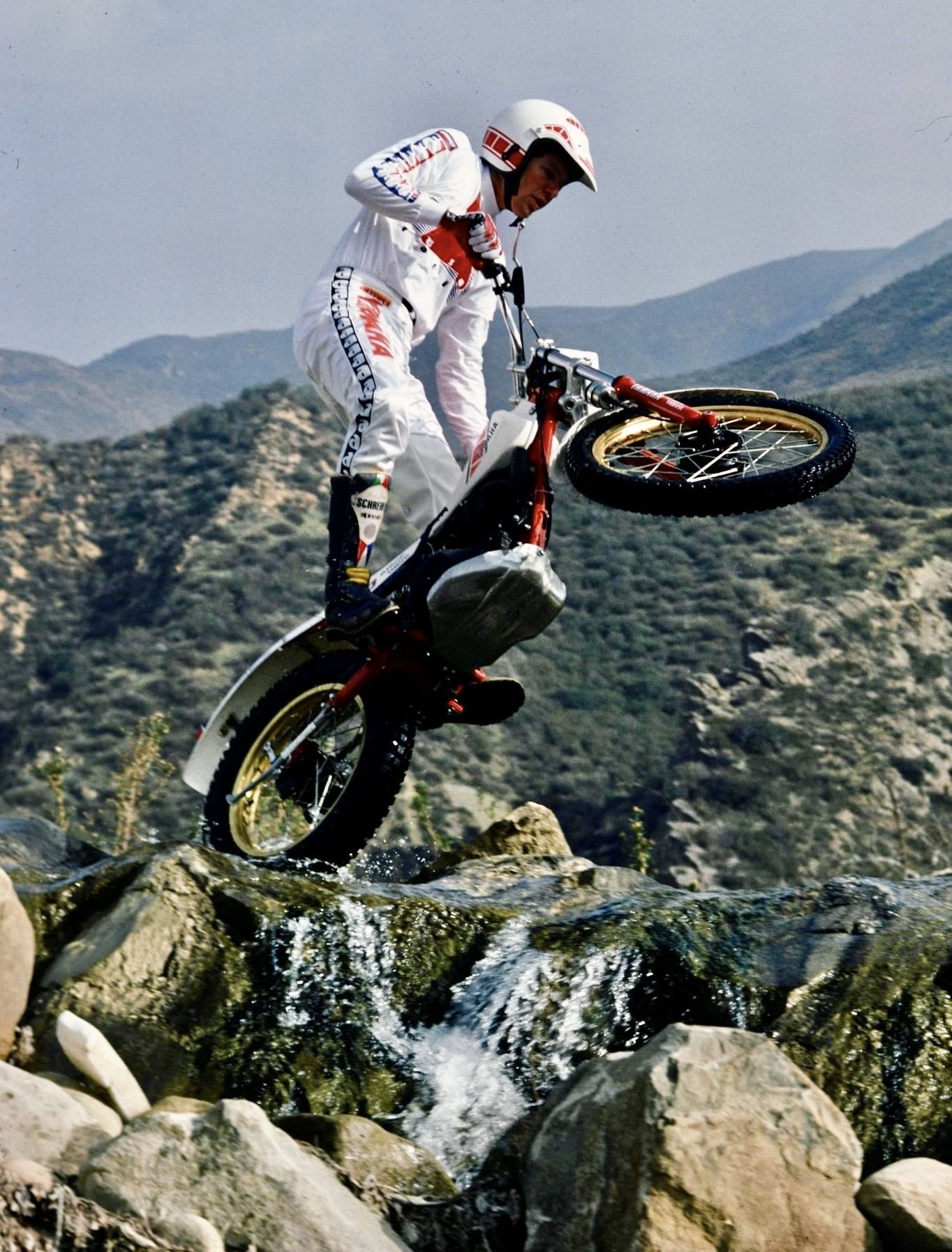
On the Yamaha TY250R, but the time to move on had arrived. (Bernie Schreiber Collection)

“My last year in 1987, had been focused on winning the U.S. National Championship for the fourth time and competed in the Spanish and American World rounds on a Fantic 303. It was nice to win the 1987 American Championship one more time after not competing since 1983.”

Bernie rode for Yamaha at the conclusion of his professional trials career. (Photo: Bernie Schreiber Collection)

“Good decisions are not easy to make, but mine was good for me. After ten years competing in over one hundred world rounds at high-level competitions, most major accomplishments in the sport had been reached except the Scott Trial of which I never competed.

Otherwise, six overall world podium finishes in 1978, 79, 80, 82, 83 and 84. Twenty individual world wins and forty-eight podiums over those six years.  It was time to explore and seek new challenges.”

TG: What happened after you retired in 1988 and stopped competing as a professional Trials rider?

BS: “In 1998, I’d been doing trials schools worldwide for a few years and continued doing them for another year. Many riders had bought my book ‘Observed Trials’ by Len Weed when it was published in 1983 and never seen the techniques in action, so it was an opportunity to share my time and skills with club riders and trials fans.”
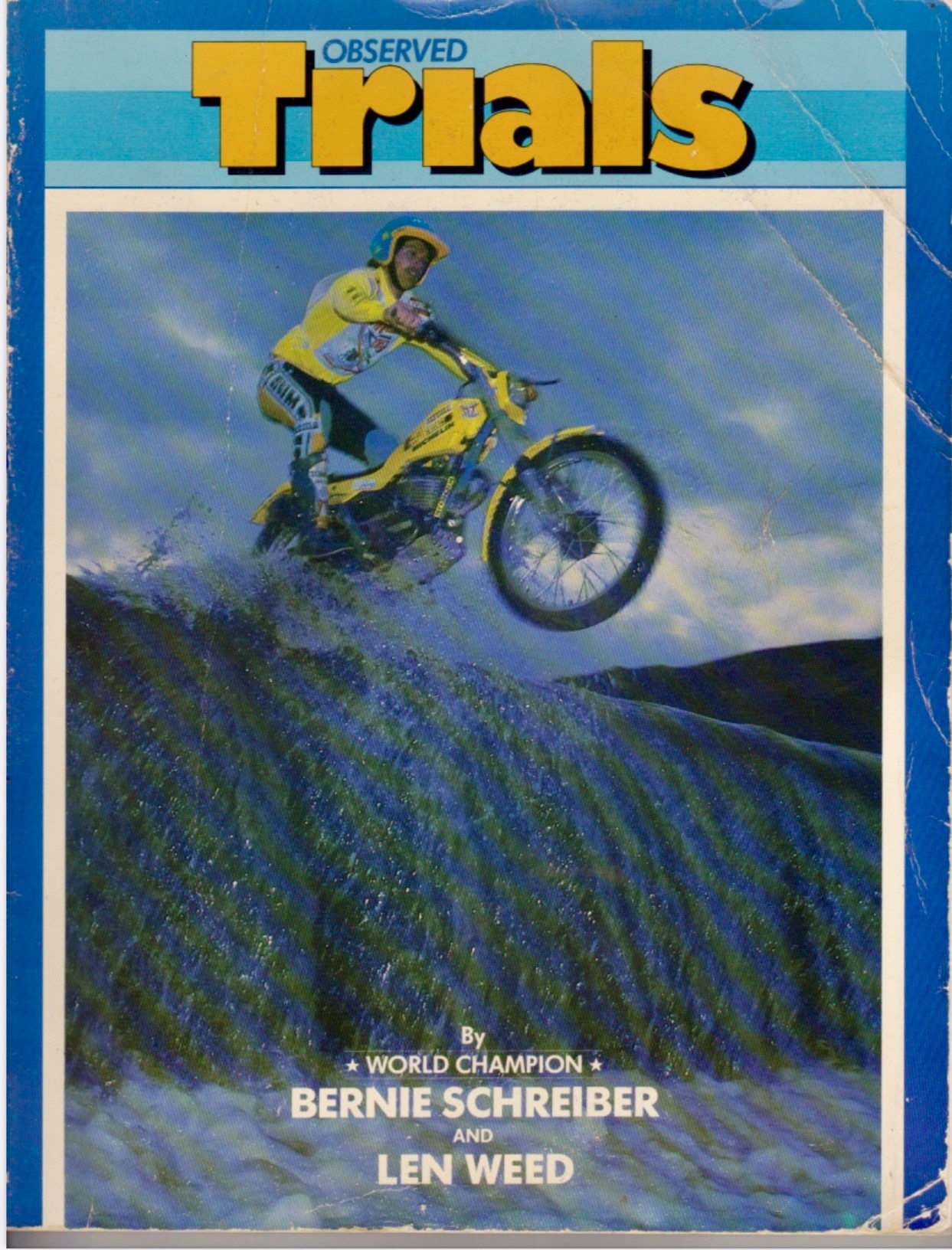
Bernie Schrieber’s 1983 book ‘Observed Trials’ which he wrote with Len Weed.

“In 1989, I started my first real job with the Malcolm Smith Products (MS Racing). The company was expanding to Europe in 1989 and needed boots on the ground to assist them with sales, marketing, and newly appointed European distributors. Great experience and Malcolm had always been one of my heros and a legend in the motorcycle industry.

After two years with MS Racing, I set up a consulting company in Europe and began advising additional clients Alpinestars and Answer Products overseas in the motorcycle and bicycle industry. I had a prior relationship with both, due to my trials boot and handlebar agreements in the early 80s. By the mid 1990s, I was mostly in the cycling industry with a strong focus on mountain bikes and accessories. I managed the consulting company for about six years.”

Bernie had contracts with Answer Products and Alpinestars with whom he developed for them the now famous and highly collectable ‘Schreiber’ trials boot. (Photo: Bernie Schreiber Collection)

“In 1996, the Company was approached by Tissot Watches of Switzerland who signed a long-term agreement as the official timekeeper for all UCI Cycling World Championship disciplines.

Tissot was searching for someone to manage on-site activations and promote their new precision and robust watches in the Mountain Bike space. That was my first big BRAND client. Tissot is one of twenty brands owned by the Swatch Group in Switzerland.  After a year or so of providing services, the Tissot President asked if I’d be interested to work internally at the headquarters in Switzerland and take responsibility of the Sports marketing department globally. The answer was YES just like with Bultaco in 1977. A multinational group with one hundred and fifty-year-old brands and 10,000s employees is when I took a deep dive into the corporate world.

Over the next ten years, Tissot had double digit growth year after year. We signed partnership agreements for timekeeping services and product licensing with several global properties in motorsports like MotoGP and NASCAR, but also the Asian Games, AFL, CBA in China to name a few. We had selective ambassadors like footballer Michael Owen, Danica Patrick in Indy Car and the late Nicky Hayden in MotoGP as well.
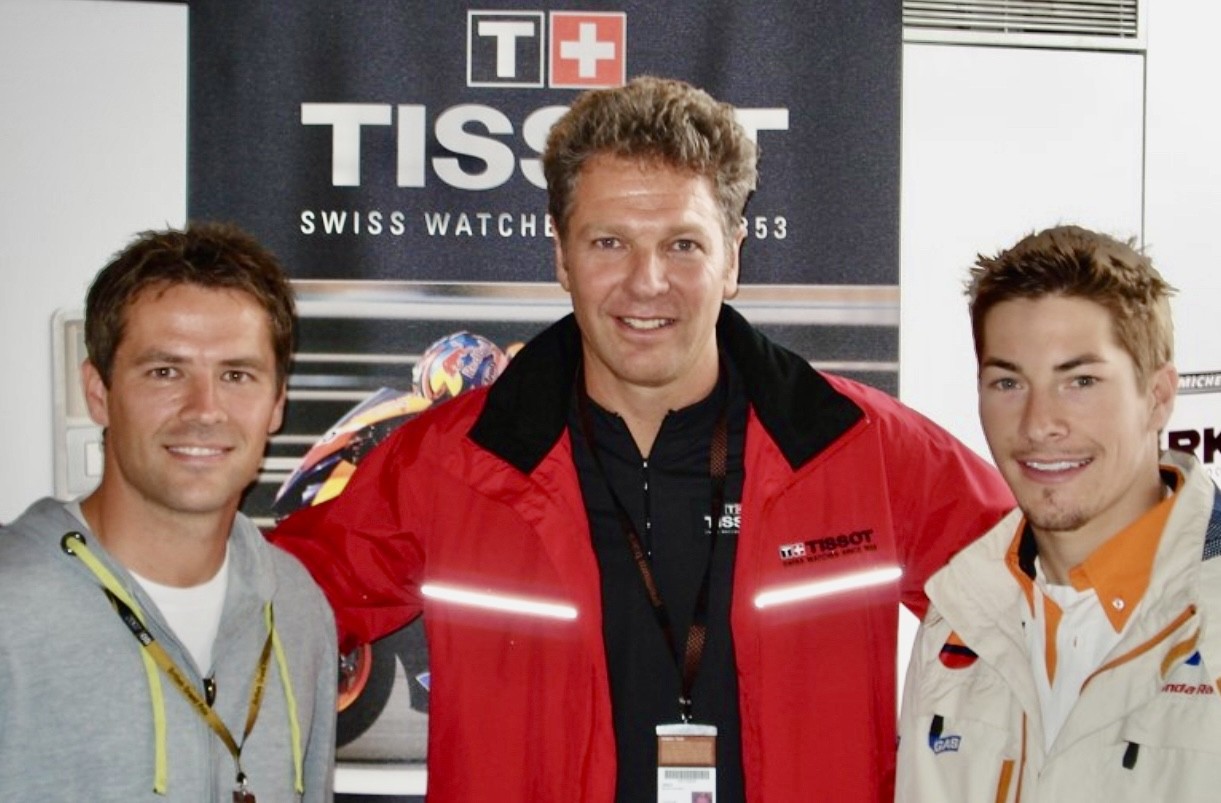
Michael Owen and the late Nicky Hayden were brand ambassadors (Photo: Bernie Schreiber Collection)

“In 2010, I decided to take a career break and stop travelling to events around the world for a while. Wonderful experience, but too much time on the road. It had been over twenty years on the road by now with trials travelling included.

Two years later in 2012, I was presented an opportunity by the Swatch Group CEO to lead the U.S. golf initiatives for the Swiss watch brand OMEGA in the USA. This position was based in Palm Beach Gardens, Florida.  

Omega had just signed a long-term partnership agreement with PGA of America, the governing body of 28,000 golf professionals across America. I spent three years traveling throughout the US, activating the brand in the golf space. My main focus was on golf tournaments, included the US Ryder Cup and other PGA of America Championship events. Omega has been the official timekeeper of the Olympic Games since 1932. They are very active in other sports like sailing, track & field and swimming. Prior to my arrival in the USA, Omega signed Greg Norman – the real Australian Great White Shark to be a brand ambassador, so I was based and worked out of his offices for the next three years before returning to Omega Switzerland.”
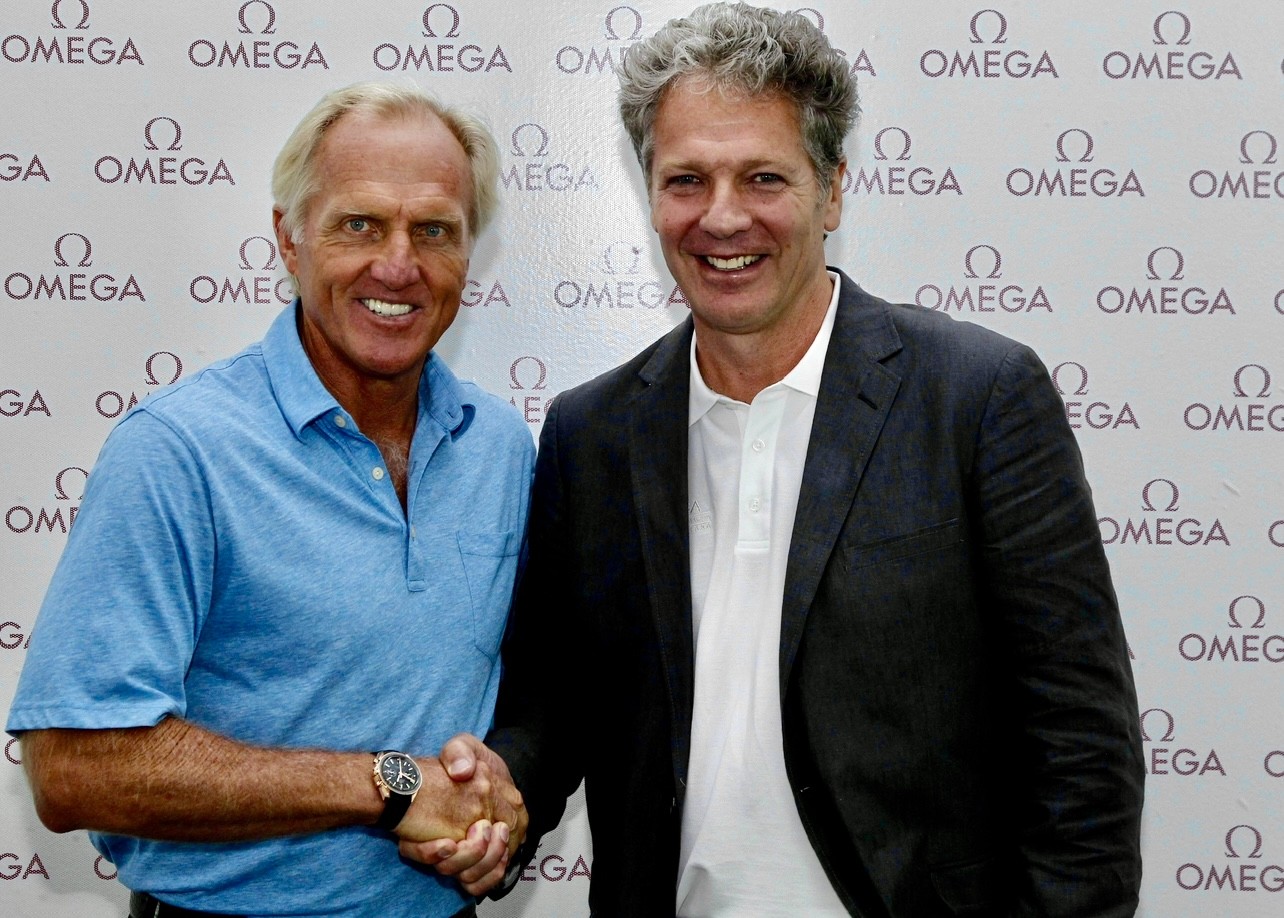
With Greg Norman and Omega. (Photo: Bernie Schreiber Collection)

TG: You remained in sports for a long time with professional athletes, can you tell us more about that?

BS: “Professional sports athletes are easy to work with, but often their agents are NOT. Sports ambassadors that have a Personal brand that fits a corporate brand can be a great association and added value for both parties. The activation plan of the association is key to the success of any co-branding partnerships.

Ambassadors are a product of the brand communication. Example: Michael Phelps the greatest Olympian of all time would talk about the importance of timing/touch pads during his swimming competitions at the Olympics, or golfer Rory McIIroy who would talk about precision and timing of a putt at the Masters. Time is what you make of those moments which can be in the past or present.

Timekeeping is an important tool for sports athletes or race teams. Nearly all sports Federations need a service provider for timekeeping. That’s how they measure performance, set official world records and handle results data for media and TV networks. You can host a major event without sponsors or spectators, but you must have a timekeeper. Try removing timekeeping from a downhill skiing event or many other sports. It would be like removing sound from a movie. All emotions are gone and nothing to measure performances.”

TG: Did you return to Switzerland after your U.S. Golf tour?

BS: “YES, returned to Omega Switzerland in 2015 to lead “Golf returning to Olympics” for the first time in 100 years and assist with other golf projects in Asia.

In 2017, we decided as a family to move permanently to Zurich for my son’s schooling and my partners work opportunities. A wonderful twenty years with Swatch Group. I’m thankful for the opportunity.”

TG: Have you still been doing any local club trials or did you walk away completely?

BS: “By 1989, I had lost interest in trials and found a passion in new adventures which was exciting times. I completely walked away from trials for about twenty years, or 1988 to 2008.  In 2008, I received an invitation to ride the Robregordo classic two-day trials in Madrid, Spain.”
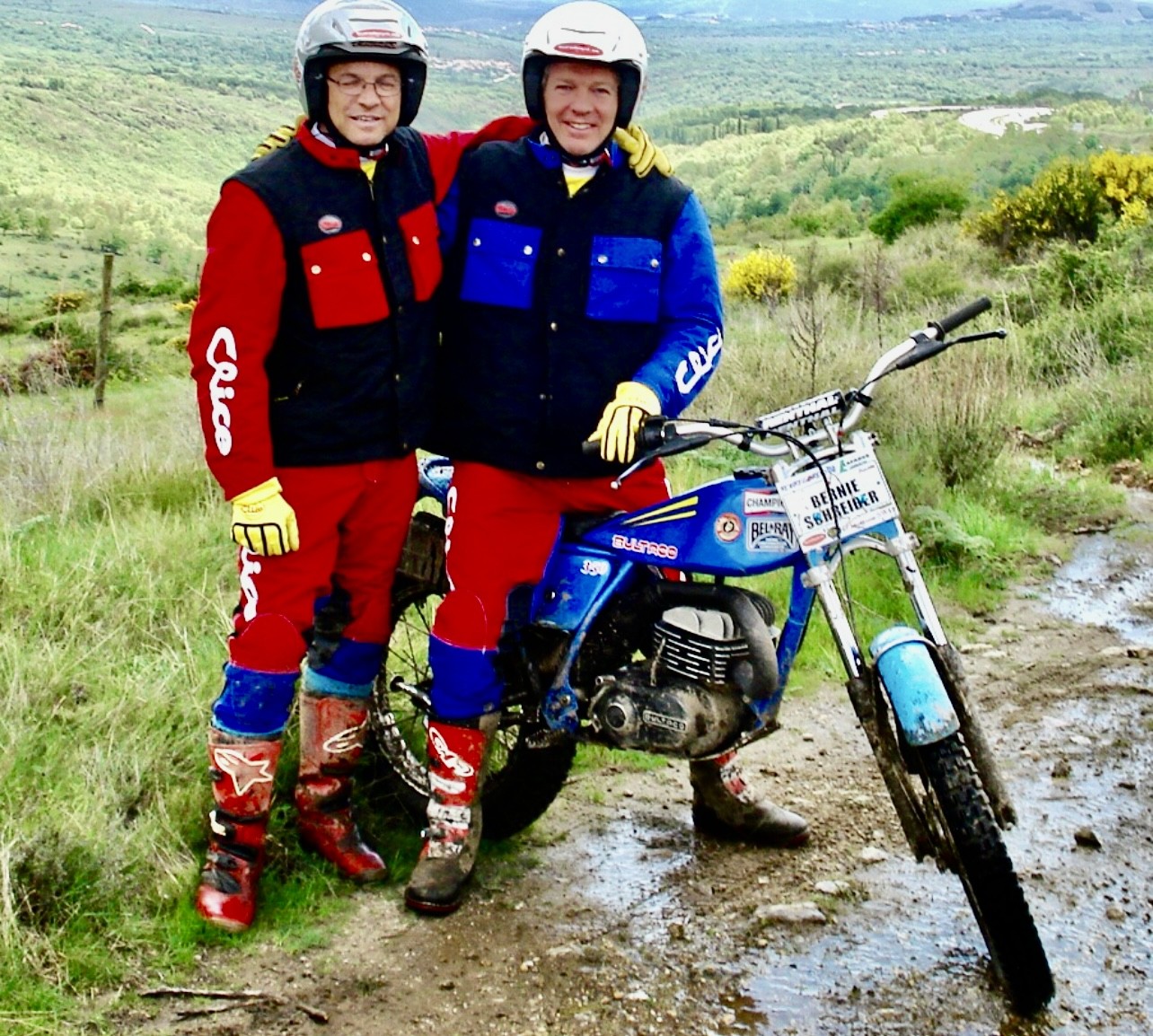
Manel Soler with Bernie Schreiber at Robregordo in 2008 (Photo: Bernie Schreiber Collection)

“A special event to celebrate my thirty years anniversary of my world championship victory. I had so much fun riding with old friends, Manel Soler, Mick Andrews, Andrea Codina, Jamie Subira and many others. At that time, I had no bike, boots, clothes or helmet. Everything was provided. Unfortunately, I was still working and had little time to ride trials.”

Bernie at Robregordo, Madrid in 2008 on a Bultaco supplied by Carlos Bosch. (Photo: Bernie Schreiber Collection)

“In 2011, Gilles Burgat invited me to celebrate his thirtieth anniversary at the Ventoux Classic Two-Day Trial in France. Another fabulous weekend with so many champions and friends. I was hooked to ride again, but soon after in 2012, I departed to the US for three years. During that time in the US, I attended the 2013 U.S. World round in Tennassee. Many old friends and fans attended the event. Great weekend and a lot of autographs.”

TG: When did you become involved in Trials again?

BS: “In 2018, I became more interested and available to ride trials and started receiving invitations to ride Classic events. The 2018 Bultaco Revival in the UK was my first real competition in many years. Riding with Vesty and Soler and staying at his home was the best weekend of trials for quite some time. Maybe because I competed on one of Vesty’s machines, but it was magical and memorable few days.”
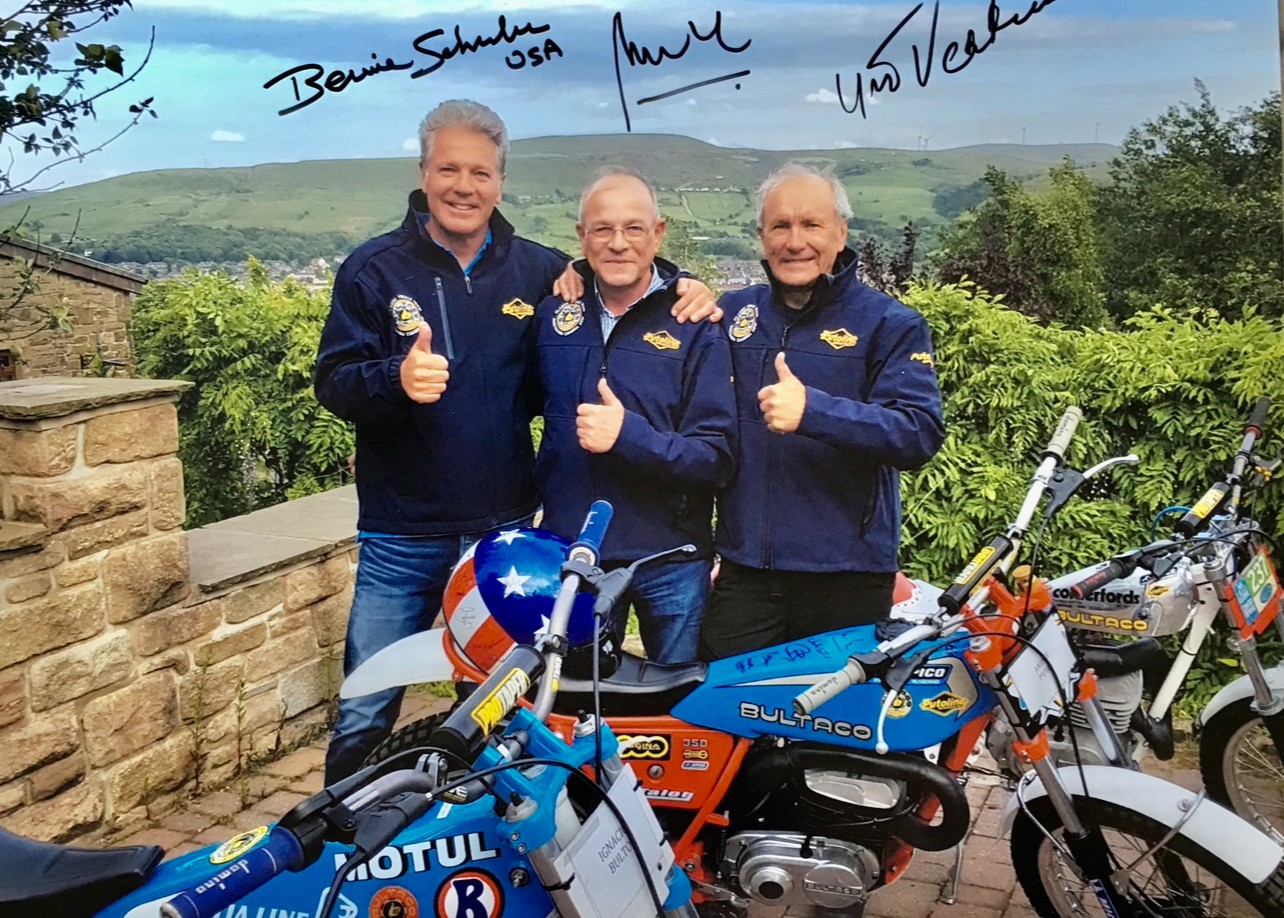
Together again as Team Bultaco at the Revival trial in Cumbria. Bernie, Manel Soler and Vesty (Photo: Bernie Schreiber Collection)

“A few months later there was the big gathering of trials riders in Barcelona, Spain called the ‘Trials Legends’ (1964-1985) that celebrated the golden years of the sport. Most of the past and present Trial Legends were present that day. Memorable moments with many champions.”
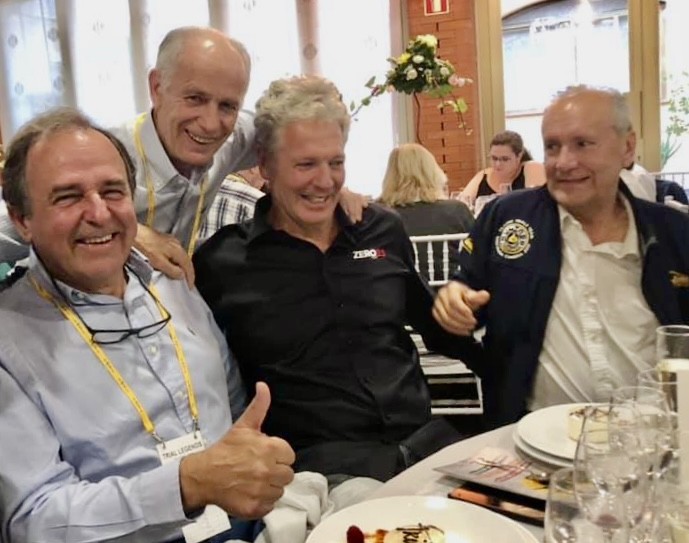
2018 Trial Legends, Barcelona, Spain, with Javier Cucurella; Charles Coutard, Bernie Schreiber and Yrjo Vesterinen. (Photo: Bernie Schreiber Collection)

“Later that year, I was invited to Italy for the Trial of Champions and Danilo Galeazzi’s 60th anniversary. The whole SWM team from the 1980’s was there and it was a celebration to remember with Moto Club Domo 70 in Domodossola.”
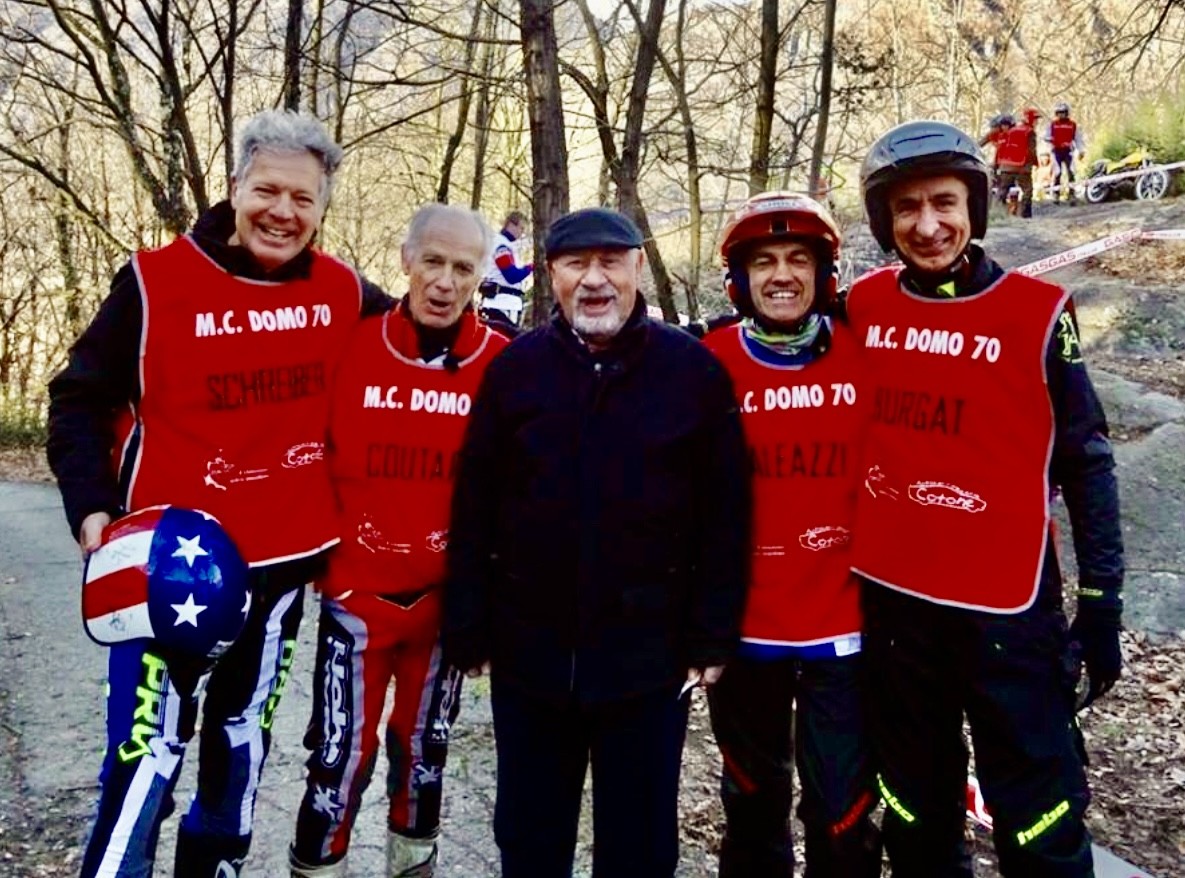
2018 and the SWM team are back together in Italy.

“2019 was the fortieth anniversary of my world championship title, and really the first year of full involvement again in the sport. It started with a lengthy phone call with John Moffat about participating at the Highland Classic Two-Day Trial as their guest of honor at Alvie Estate in Scotland. Its was the first time on the pegs in Scotland since my 1982 SSDT win. The Friendliest Trial in Scotland.”

“After watching riders on Facebook videos, it was clear that many of the classic riders lacked some fundamental skills, so it was decided with John Moffat to launch a Trials school in Scotland the day after the Highland Classic. Riding trials without learning the fundamentals is like building a house with no foundation. It will look good for a while and then it will fall apart.

I’d seen the need for a training plan with basics learning tools. A lot of basic instruction can be found in my book ‘Observed Trials’ with Len Weed, but I wanted to go deeper into the mental approach as well. You can be good at something, but not successful implementing it when needed. The approach and experience of learning has changed, but the basics are still the same.

That was my first school in decades and I repeated the experience in four other locations that year which included England, Canada, USA and Spain.”

TG: Did you compete in more competitions throughout 2019?

BS: “It was a fun year for sure with many invitations as Guest of Honor. Following the Highland Classic, I attended the Bultaco Revival in Yorkshire, then Andorra two-day trial followed by the Leven Valley in Scotland.”

Andorra in 2019 with Yrjo Vesterinen and Horacio San Martin of Todotrial website. (Photo: Bernie Schreiber Collection)

“The year ended with the traditional Robregordo Trial just outside of Madrid with a school organized by Javier Cruz. 2019 was busy with a lot of travel and experiences.”

With Spanish enthusiast, Javier Cruz in Madrid (Photo: Bernie Schreiber Collection)

TG: You stayed active in the sport between 2020 and 2024 considering Covid cancelled many competitions. Tell us about those years?

BS: “The 2020 Covid pandemic changed plans for many people in many sports. I still managed to attend a few events before Covid started and one being the Classic Dirt Bike show in Telford for the first time.”
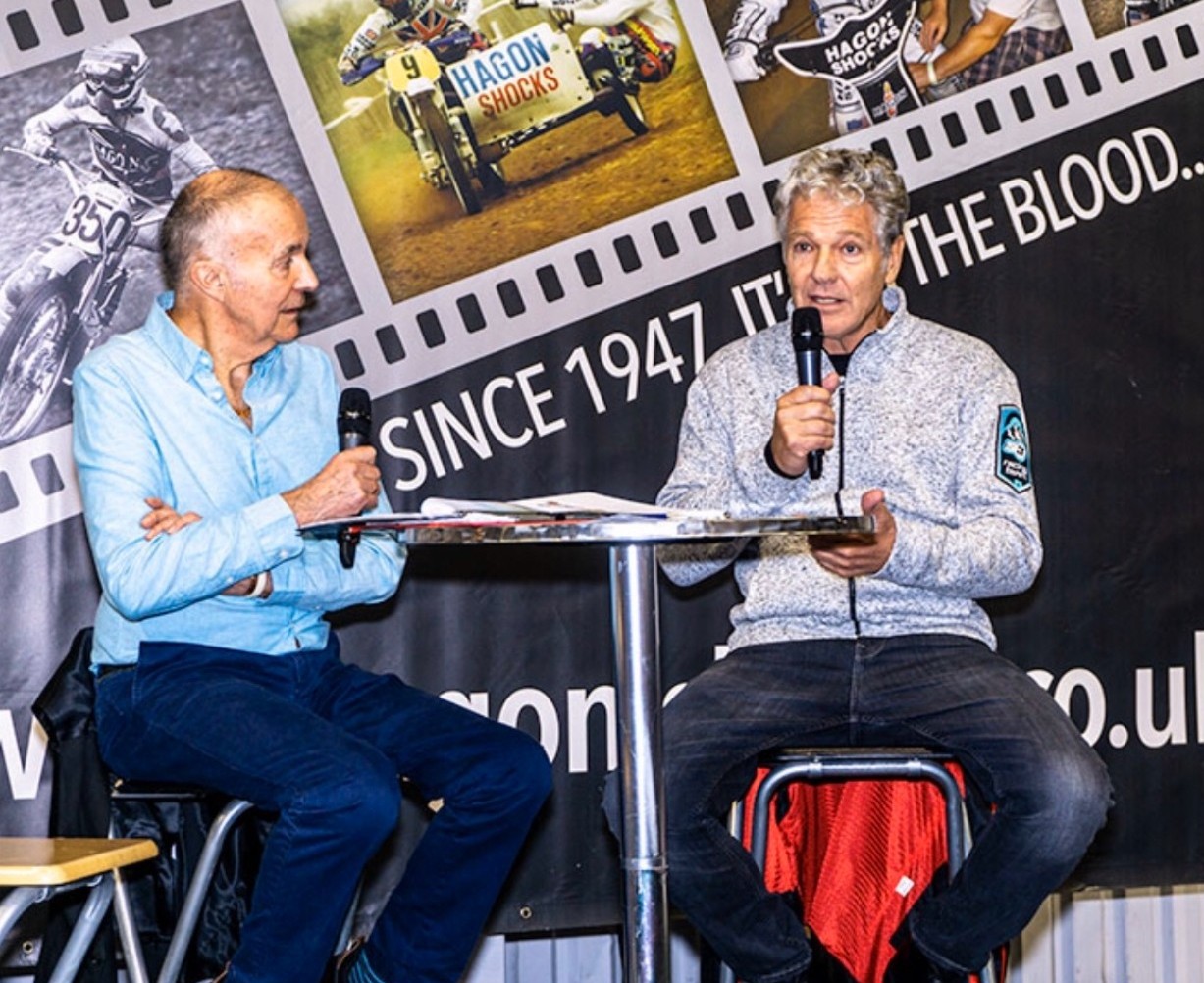
Jack Burnicle interviewed Bernie on stage at the Telford Off Road show in February 2020. (Photo: Bernie Schreiber Collection)

“I also participated at the Jersey Island Classic the day before the UK was closed and flew out on the last flight from London to Zurich.”

Jersey 2020, with Jersey Classic and Modern club President, Graham Du Feu. (Photo: Bernie Schreiber Collection)

“Later in August 2020 I competed at the A-Cup Trial in Austria, where they hosted their riders meeting in masks. It was good fun and nice venue. Overall, the year was good and was able to work on my first website with Heath Brindley who will soon be developing the new updated version soon.  www.bernieschreiber.com

2021 was a quiet year with fewer trials activities which included the Arbecey Invitational in France and the Due Giorni Trial Folgaria in Italy.”

“The one big event in 2021 was the FIM Awards Gala in Monaco and being a recipient of the FIM Trial Legend Award. A beautiful evening and very honored to receive this award by the FIM President, Jorge Viegas in front of the world’s motorcycle champions.

The FIM Congress with President Jorge Viegas in 2021 at Monaco. (Photo: Bernie Schreiber Collection)

2022 was a big year for the good and not so good. First was the loss of my father and best friend who had been the driving force of my trials career from the first day, so not so good.”

Richard and Bernie Schreiber. Richard was Bernie’s guiding light in the early years. (Photo: Bernie Schreiber Collection)

“It was a year of reflection and the fortieth Anniversary of my victory at the 1982 SSDT. I had planned activities, but reduced them due to other family activities.”

GLOVES OFF was launched in February 2022 with TRIALS GURU as a regular and exclusive column in the news feed, and is archived there for trials enthusiasts. https://trialsguru.net/gloves-off-bernie-schreiber/
“In the April, I made a trip to the UK to visit Heath Brindley for a few days to ride in Wales with a modern TRS and friends. That followed by a bucket list visit to the Sammy Miller Museum which is highly recommended. Seen some beautiful machines, motorsports history and luckily seen the man himself for a tour. Sammy was my first trials instructor in California back in 1973, so it was very nice to catch up with the champion and legend.”

Friendship and mutual respect, Sammy Miller MBE and Bernie Schreiber at Sammy’s workshop at New Milton. (Photo: Bernie Schreiber Collection)

“As the year advanced, Rich Hilbun organized a fortieth SSDT celebration in Montana with a trials school and annual event called ‘Whiskey Gulch’ with one hundred and twenty riders attending from the USA and Canada. A fabulous week of trials with American friends and my Spanish friend Yoyi San Martin from www.TodoTrial.com in Spain.”
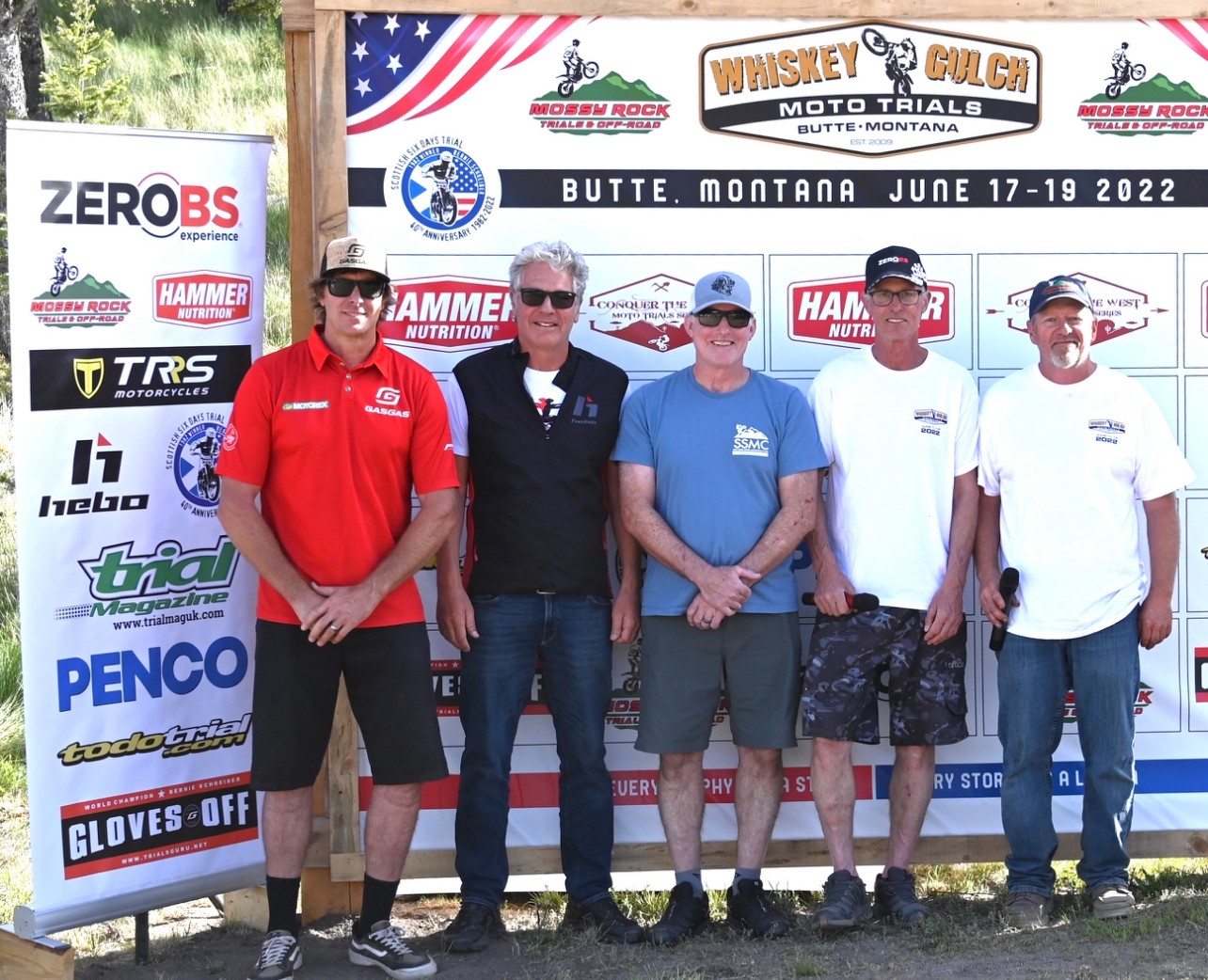
Left to right: Geoff Aaron, Bernie Schreiber, Scott Head, Rich Hilbun and Dan Larson in 2022 at Whiskey Gulch, Montana. 17 U.S. titles in one photo! (Photo: Bernie Schreiber Collection)

“In 2022, I decided that as I bought my first Bultaco in 1971, a 125 Lobito with money I received for my paper round, I would buy my second Bultaco. I only had bought one Bultaco, all the ones I rode were given to me under sponsorships or contracts. I struck out and bought a 325cc model 199A, the type I used to win the 1979 World championship. That was a gap of fifty-one years.”

Bernie’s personal 1979 M199A Bultaco Sherpa, only the second Bultaco he has ever bought. (Photo: Bernie Schreiber Collection)

“Another highlight of the year was the 2022 FIM Trial Vintage Trophy in Monza, Italy. This event was one day before the Trial des Nations. This was the first ever FIM Vintage Trophy event and my role was Ambassador, not competing. The winner was Philippe Berlatier from France.”

Philippe Berlatier was the winner of the 2022 FIM Trial Vintage event. (Photo: Bernie Schreiber Collection)

2023 highlight was a Trials school in Tulsa, Oklahoma, organized by Kirk Mayfield an old trials friend since the early 1970’s. The event was hosted by one of the oldest clubs in the USA, the North Eastern Oklahoma Trials Team, founded in 1969 by one of the legendary names in U.S. trials history Mike McCabe, who became the first American competitor of the Scottish Six Days Trial in 1972.”
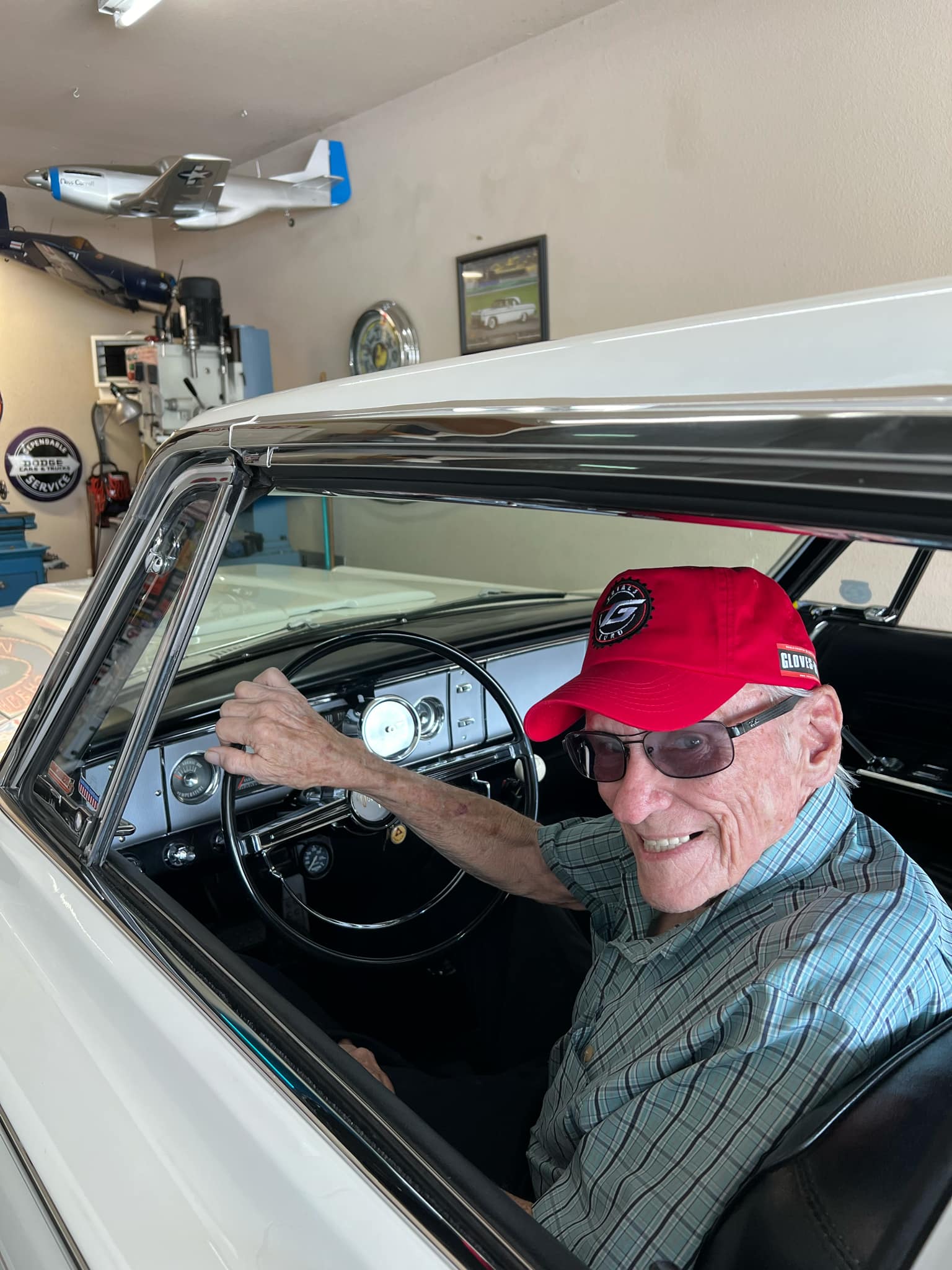
Mike McCabe from Broken Arrow, Oklahoma, the first American to ride the SSDT is a Trials Guru VIP.

“A few weeks after Oklahoma, I returned to the Highland Classic in Scotland for the second time and had a lot of fun riding a special Moffat Bultaco prepared by Vazquez Racing in Madrid.

The final event of 2023 was the fiftieth Anniversary of Domaine Bilstein in Belgium. Probably the best festival trial ever with many historic riders and in the venue where I rode my first World Championship event in 1977. Fantastic event organized by the Crosset family and team.  

2024 started with the Classic Dirt Bike show in Telford, England. The idea to celebrate the 45th anniversary of my World Championship title was mentioned and off we went with a new Sorra limited edition jersey.”

The launch of the Sorra/Schreiber riding gear at Telford with Sandy Plenty, the UK concessionaire of Sorra. (Photo: J. Moffat/Trials Guru)

“The next adventure was in Ohio for my third American Trials school in three years.”

Bernie Schreiber was inducted into the AMA ‘Hall of Fame’ in 2000. (Photo: Bernie Schreiber Collection)

“This time was to visit the AMA Hall of Fame Museum and raise funds for NextGen Mototrial youth in America, which was very successful thanks to Duane Tope and Adam Blumhorst.”

Bernie with Alan ‘Sid’ Lampkin and Tony Davis at the Highland Classic ‘BSA/Triumph Edition’ in 2024. (Photo: Bernie Schreiber Collection)

“Then returned back to the Highland Classic for the ‘BSA-Triumph Edition’. This year, I rode a 250 BSA supplied by John Moffat and truly had blast riding around on the thumper.”

Bernie sampled BSA four-stroke power at the 2024 Highland Classic at Alvie Estate, Aviemore, Scotland, borrowing the machine from friend, John Moffat (Photo: Bernie Schreiber Collection)

TG: That has been a busy schedule of events. How has 2025 been so far?

BS: “2025 has been a fabulous year to date. As always, the planning of events takes time and commitment, but well worth it all. Celebrating 55 years of riding and still on the pegs is a very fortunate person.”
“This year has been celebrating 55 years of riding and it started in Telford again with some good people and laughs.”

Fun at Telford for the 2025 Off-Road Show. Left to right: John Moffat; Jill Andrews; Jean Caillou; Bernie Schreiber; Yrjo Vesterinen; Patrick Pissis; Olivier Barjon; Martin Matthews and seated, Mick Andrews (Photo: Bernie Schreiber Collection)

“The American `Ride Vintage’ weekend training in Indiana organized by Duane Tope and the local club has been a high point of the year for me.”

I was thrilled to ride my late fathers 1972 Bultaco which had been fully restored by Duane Tope for the occasion.”
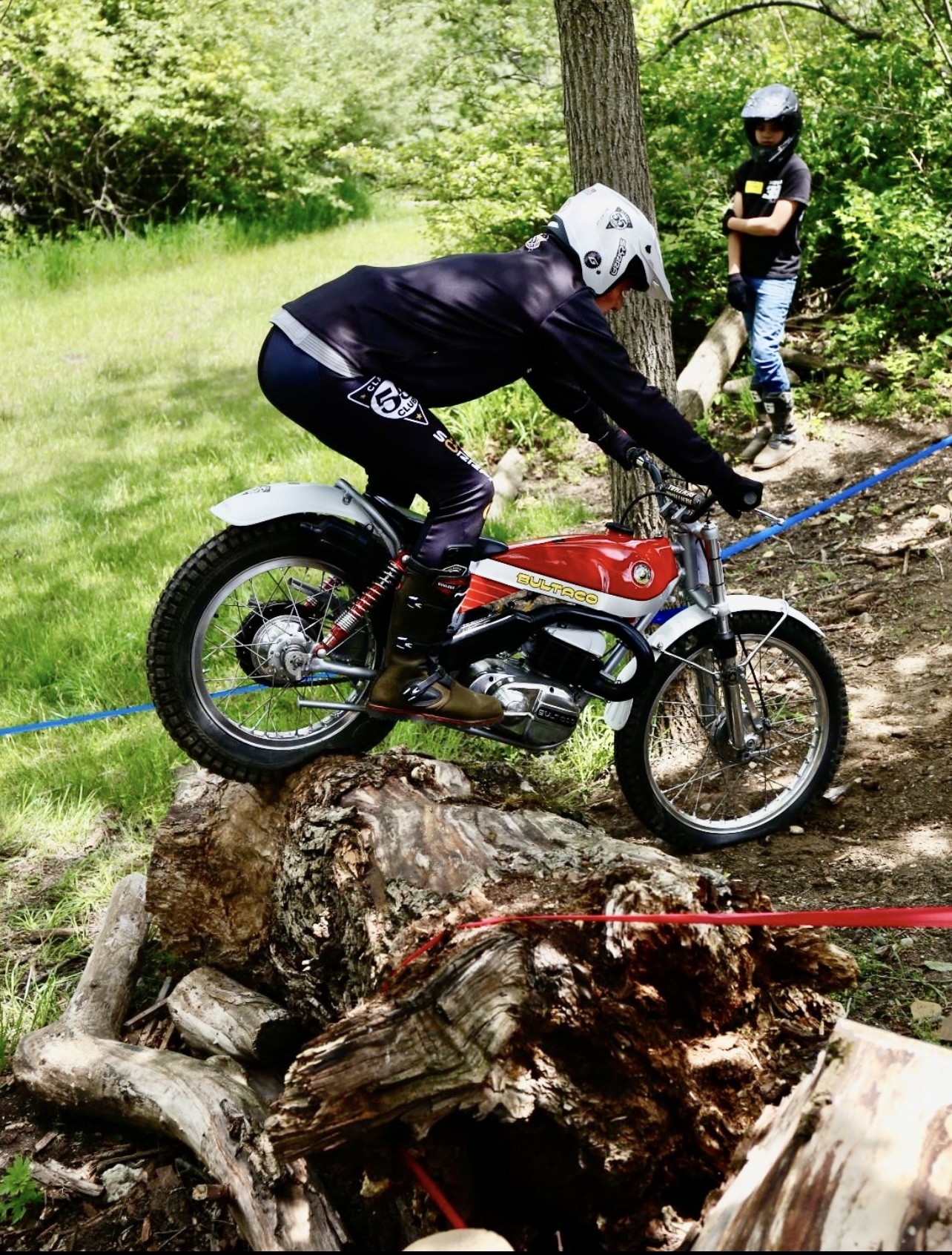
Riding his late father’s 1972 325cc Bultaco Sherpa in 2025.

“Duane Tope has a long history in Vintage Trials bikes restorations and competition, winning the AMA Twin-shock Trials Championship title in 2023.”

Duane Tope did the rebuilding of Bernie’s father’s Bultaco and also prepared this version. (Bernie Schreiber Collection)

“From Indiana, I returned to the friendliest trial in Scotland. The Highland Classic for my fourth experience at the event.”

2025 Highland Classic for the fourth time, riding the Vazquez Bultaco 325 from the John Moffat stable – Photo: Bernie Schreiber Collection

“This has become my favorite trial of the year and I’m already looking forward to June 2026.”
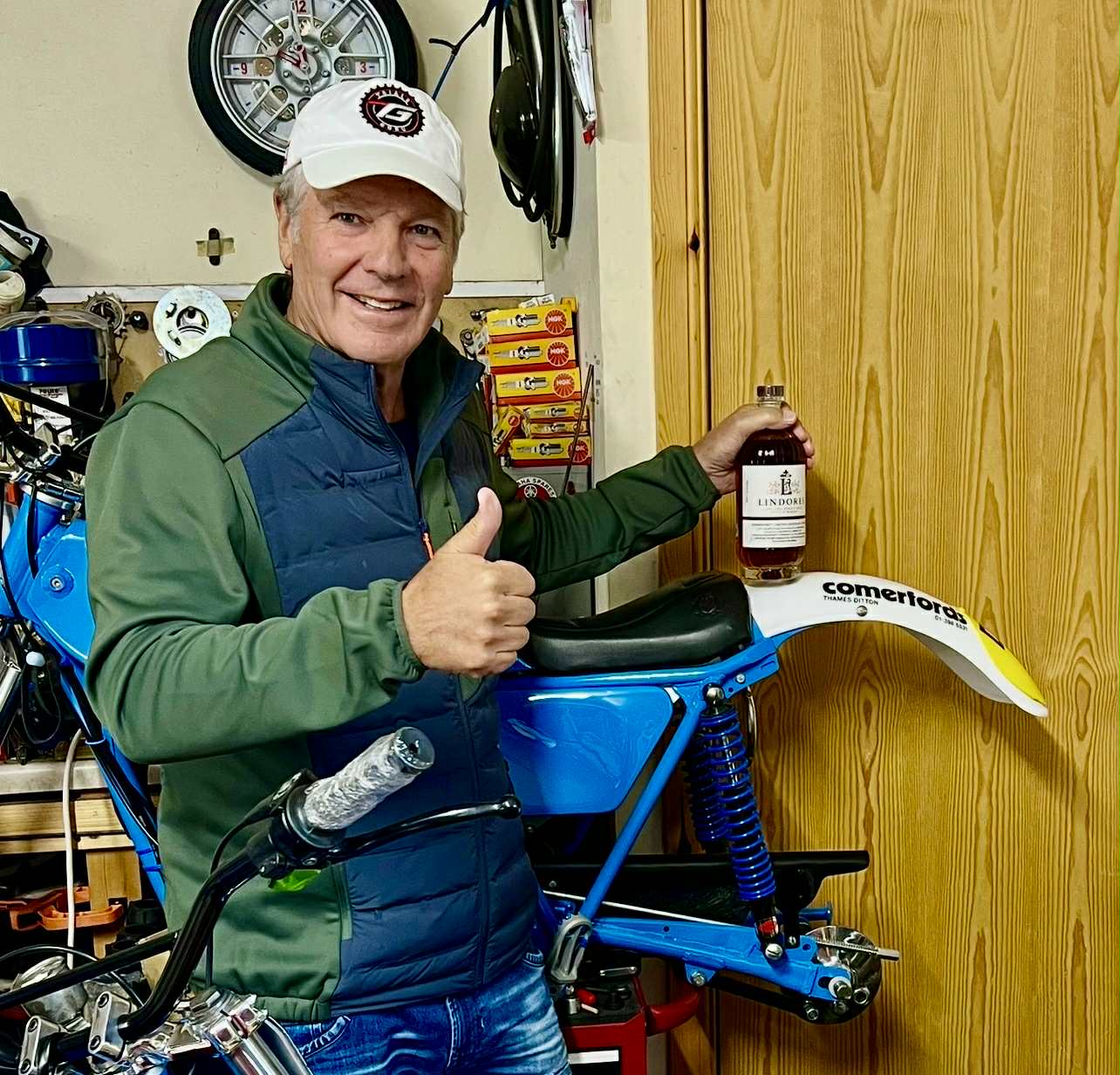
In Scotland for the 2025 Highland Classic, Bernie received his commemorative bottle of special Scotch whisky from Patrick Comerford, to celebrate 100 years of Comerford’s. (Photo: Trials Guru)

“My last competition of 2025 was the annual Arbecey two-day Invitational in France. I finished second overall at this traditional event organized by Joel Corroy and Trial 70 Club. This year ten times French Champion, Charles Coutard competed and we rode side by side for two days. The magic of trials is you can ride with friends who also started riding in the sport 55 years ago.”
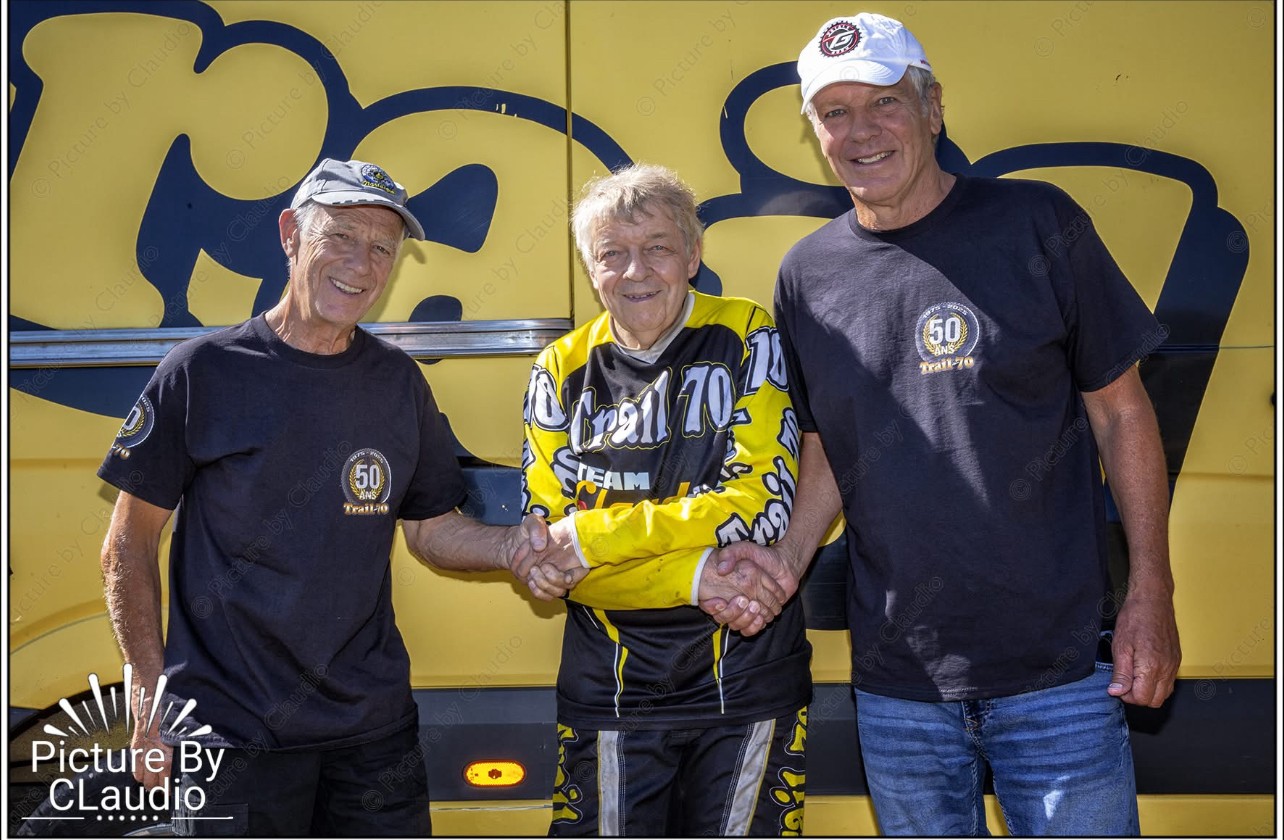
Friends at Abercy in 2025, Charles Coutard, Joel Corroy and Bernie. (Photo: Jean Claude Commeat)

TG: What is Classic 55 Club?

Classic 55 Club Logo

BS: “At Classic 55 Club, everything revolves around the love of off-road classic bikes and passionate motorcycle enthusiasts. Our mission is to continue creating the strong connection between the beautiful historic bikes and those stories riders have to share. Welcome to the club.

For me personally, it’s always the people that make the biggest difference in everything. With that said, I would like to thank all those who continue to support me at events, on social media and the media platforms. Thank you, Trials Guru, for your continued dedication to trials and our partnership.”

“Thank you to Racing Services Spain for all your graphic support, including special logos, number plates, catalogs and stickers. Thanks to all the trials school organizers who made it happen and hopefully learned something along the way. Thanks to everyone who loaned me a bike or worked on one and washed it after the event. Big thanks to Walter Frei in Zurich for taking care of my only Bultaco in Europe and his transportation services for practice and other events. Thanks to all the photographers who capture all the special moments, and observers who keep my score card clean. Thank you to all my sponsors and suppliers over these past years.”
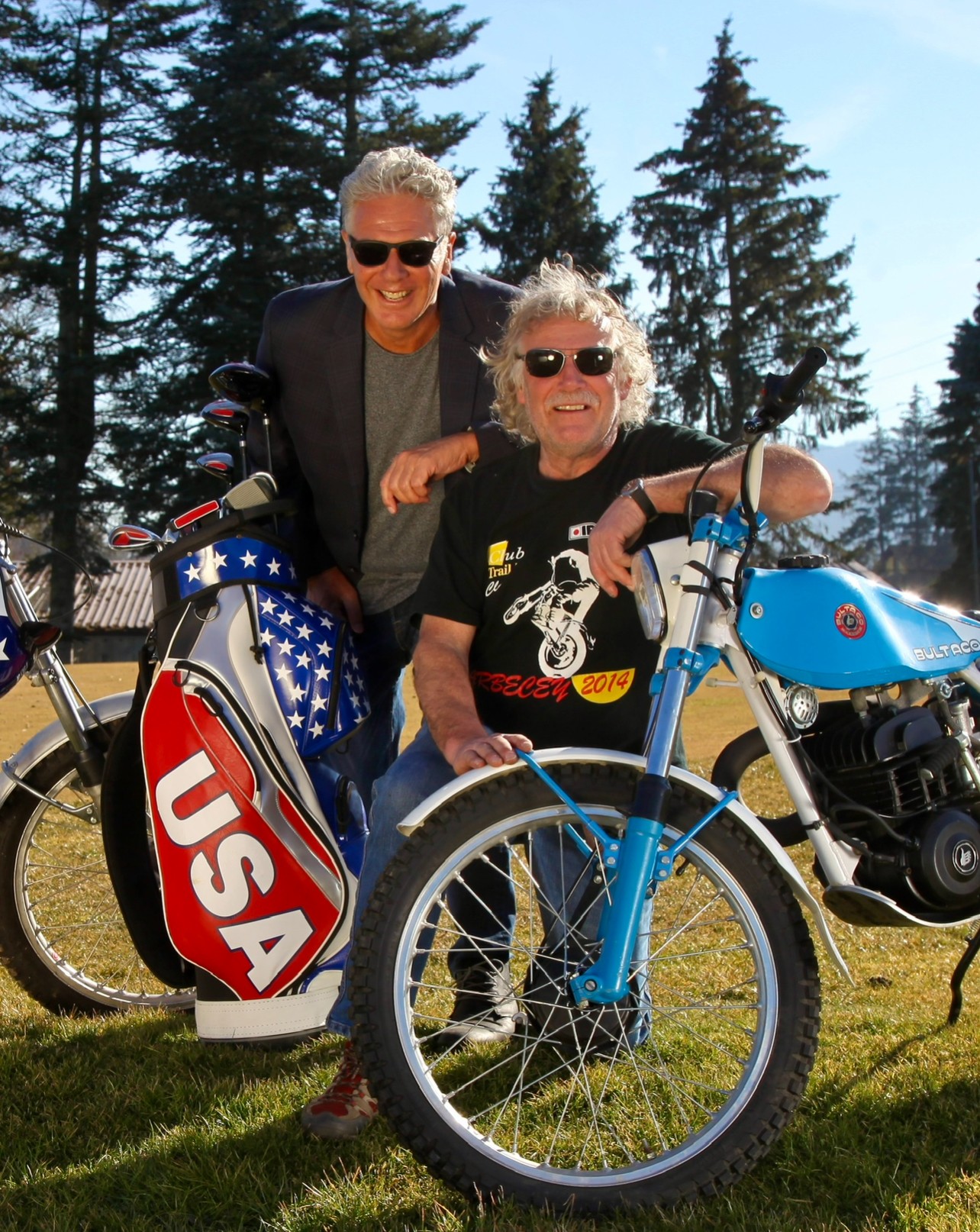
With friend Walther Frei in Switzerland. (Photo: Bernie Schreiber Collection)

“I am grateful for everyone who supported me over the last 55 years in Trials. In the meantime, Keep your feet up!” – Bernie Schreiber

1979 FIM World Trials Champion and 1982 SSDT winner, multiple US NATC National Champion – Bernie Schreiber

Article copyright: Bernard Schreiber/Trials Guru 2025

(The Classic 55 Club logo is the registered trade mark of Bernard Schreiber, Zurich, Switzerland.)

For more articles by Bernie Schreiber on Trials Guru: GLOVES OFF

Apart from ‘Fair Dealing’ for the purpose of private study, research, criticism or review as permitted under the Copyright, Design and Patents Act, 1988, no part of this article may be copied, reproduced, stored in any form of retrieval system, electronic or otherwise or transmitted in any form or by any means, electronic, electrical, mechanical, optical, chemical, photocopying, recording or otherwise without the prior written permission of the author as stated above. This article is not being published for any monetary reward or monetisation, be that online or in print.
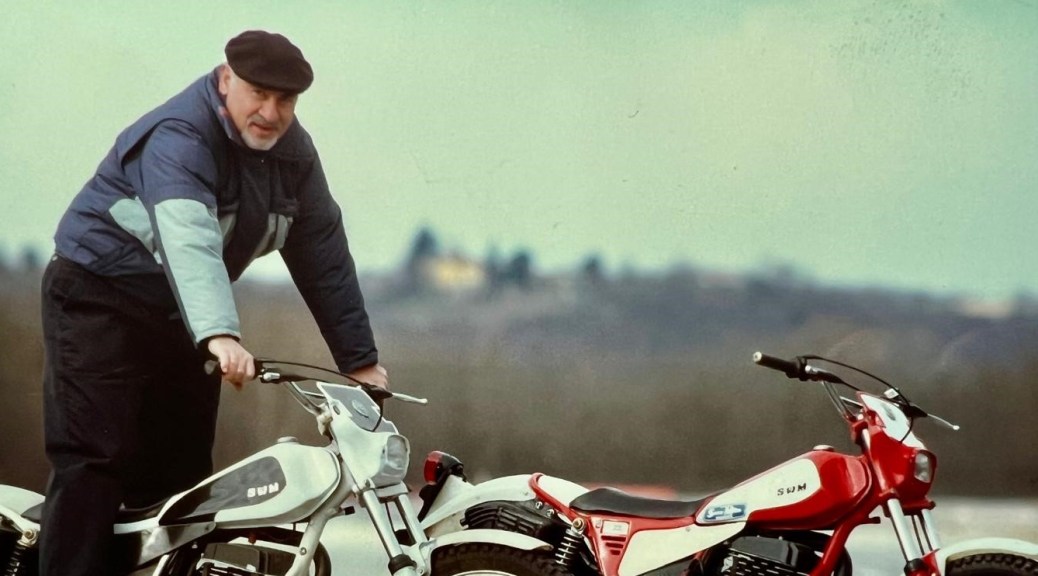
Pietro Kuciukian – The Team Manager and more

Words: Trials Guru & Pietro Kuciukian

Photos: Giulio Mauri/Valenti Fontseré; Bernard Schreiber; Jimmy Young; Iain Lawrie; Pietro Kuciukian.

With assistance from: Bernie Schreiber

Pietro Kuciukian

Pietro Kuciukian was a name well known on the world trials scene in the 1970s and 1980s. He was born on 18th January 1940, and is an Italian writer and surgeon. Being of Armenian descent, Pietro is also the president of International Committee for the Righteous of Armenians and Co-Founder of ‘The Gardens of the Righteous Worldwide’ Committee. He collaborates with the Armenian Genocide Museum in Yerevan and is the founder of the ‘Memory is the Future’ Committee, a project to sponsor Armenian cultural projects.

Armenia is officially known as the Republic of Armenia, it is a landlocked country in the Armenian Highlands of West Asia. It is a part of the Caucasus region and is bordered by Turkey to the west, Georgia to the north and Azerbaijan to the east, and Iran and the Azerbaijani exclave of Nakhchivan to the south. [1]

But of course the trials world knew him as the team manager of the SWM world trials effort back in the 1980s. Kuciukian is rated by 1979 World Trials Champion, Bernie Schreiber as ‘the greatest of all time team manager’ and that is praise enough! We bring you this interesting article on Trials Guru, as we believe it is important to preserve, given the contribution Pietro Kuciukian made to the sport of trial at world level.

Yorkshireman, Martin Lampkin had trouble pronouncing Pietro Kuciukian’s family name. (Photo: Giulio Mauri/Valenti Fontseré).

Known to his riders as ‘Piero’, in the UK, readers of the weekly motorcycling newspapers perhaps struggled to pronounce his family name when reading of Piero in the motorcycle press reports, it is pronounced: ‘Koo-choo-kee-an‘. The late Martin Lampkin in particular had great difficulty with the pronunciation and jokingly called him ‘Coo-ca-choo’.

Trials Guru: Piero, where were you born and raised?

Piero Kuciukian: “I was born in a small town in northern Italy called Arco and I lived there until I was twelve years of age. I then moved to Venice, where I studied at the Armenian College there.”

TG: What was your first motorcycle?

PK: “When I was eleven, I drove my first motorcycle, it was a Lambretta 125cc scooter belonging to my mother. No driving license was required to ride it, but when I came back home after a few years in Venice, the Lambretta had disappeared. It turned out it had been literally buried in the backyard. With the help of a friend, I managed to clean it from the rust, and I disassembled it into roughly four thousand, two hundred pieces. When I re-assembled it, a couple of screws and three nuts were left over, but the engine still ran smoothly. It ran even better than before, since I reduced the compression of the cylinder head. The motorcycle became faster than the Piaggio’s Vespa 125cc.

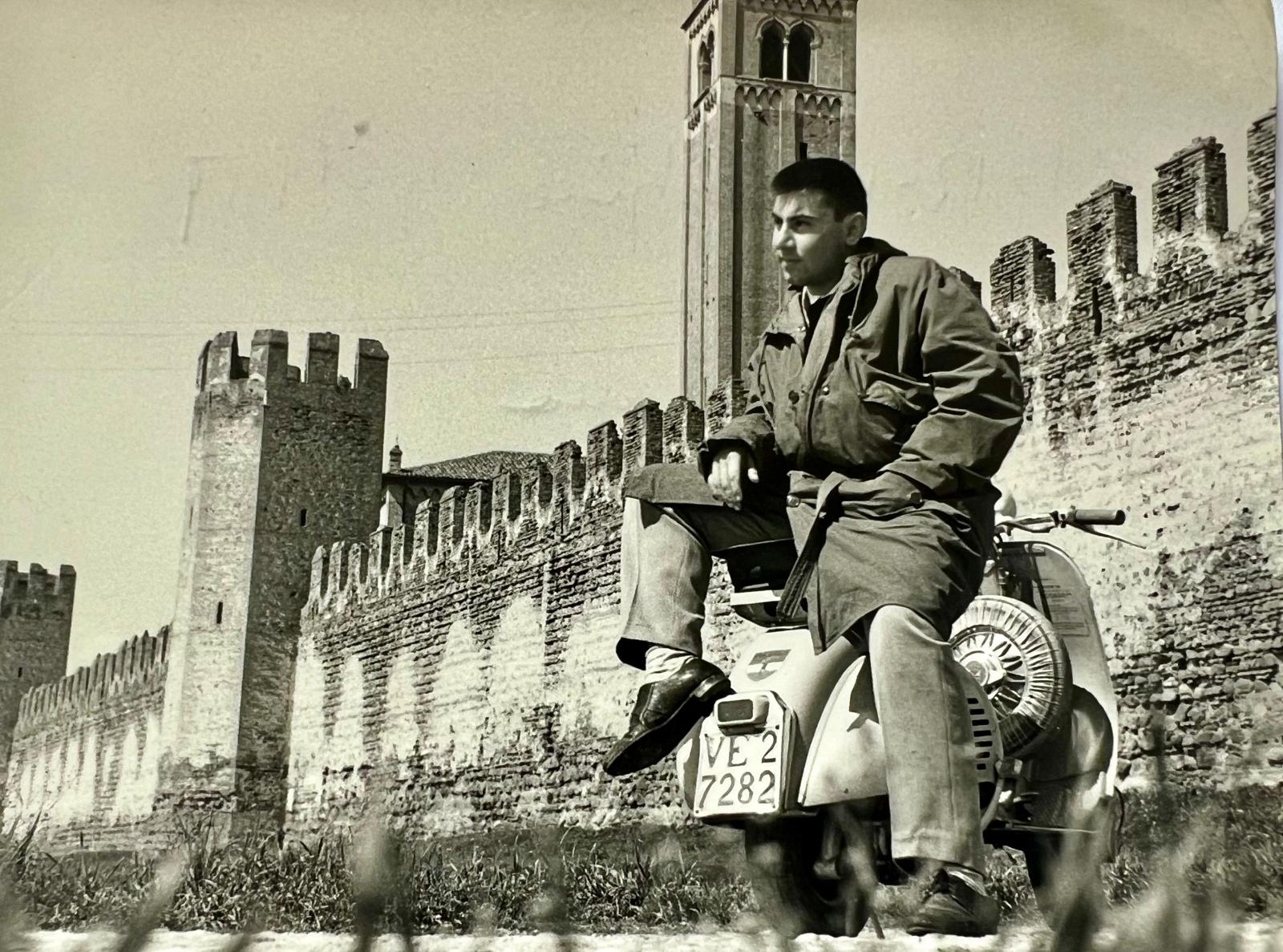
A young Pietro Kuciukian with his Lambretta scooter which he rebuilt after being buried in his parent’s garden.

TG: How did you get into off-road motorcycling?

PK: “After trying several enduro and cross-country motorcycles, which included Puch 125; Maico 400 and Ossa Explorer, I borrowed from my brother-in-law a Montesa 250 and I participated in my first regional trial competition. That one was the only true trials motorcycle, while the other competitors used modified versions of off-road motorbikes, such as Morini 125-175, Gilera, Garelli and so on. I then went on competing in national and international competitions for several years, until 1982. I cannot recall all the road motorbikes I bought in those years, but I do remember BSA, Honda, Kawasaki, BMW, Suzuki, Yamaha, even a two-stroke Jawa 350cc that I still own and that I keep in Yerevan which is the capital city of Armenia. I also rode a BMW Paris Dakar in a competition with Gaston Rahier who taught me how to drive on the desert sands.”

Pietro Kuciukian had a wide taste in motorcycles.

TG: How did you get on in competition, were you successful?

PK “I hadn’t particularly good results in competitions, and I thought I could win only if I had an exceptionally light trial motorcycle. So, I purchased a 250 Ossa, a certain quantity of titanium metal, which with the help of an engineer, Valentini who worked also for Ferrari, we created a chassis, muffler, titanium footpegs, transparent tank, titanium shock absorber springs and so on. From eighty-two kilos, we reduced it to around seventy.”

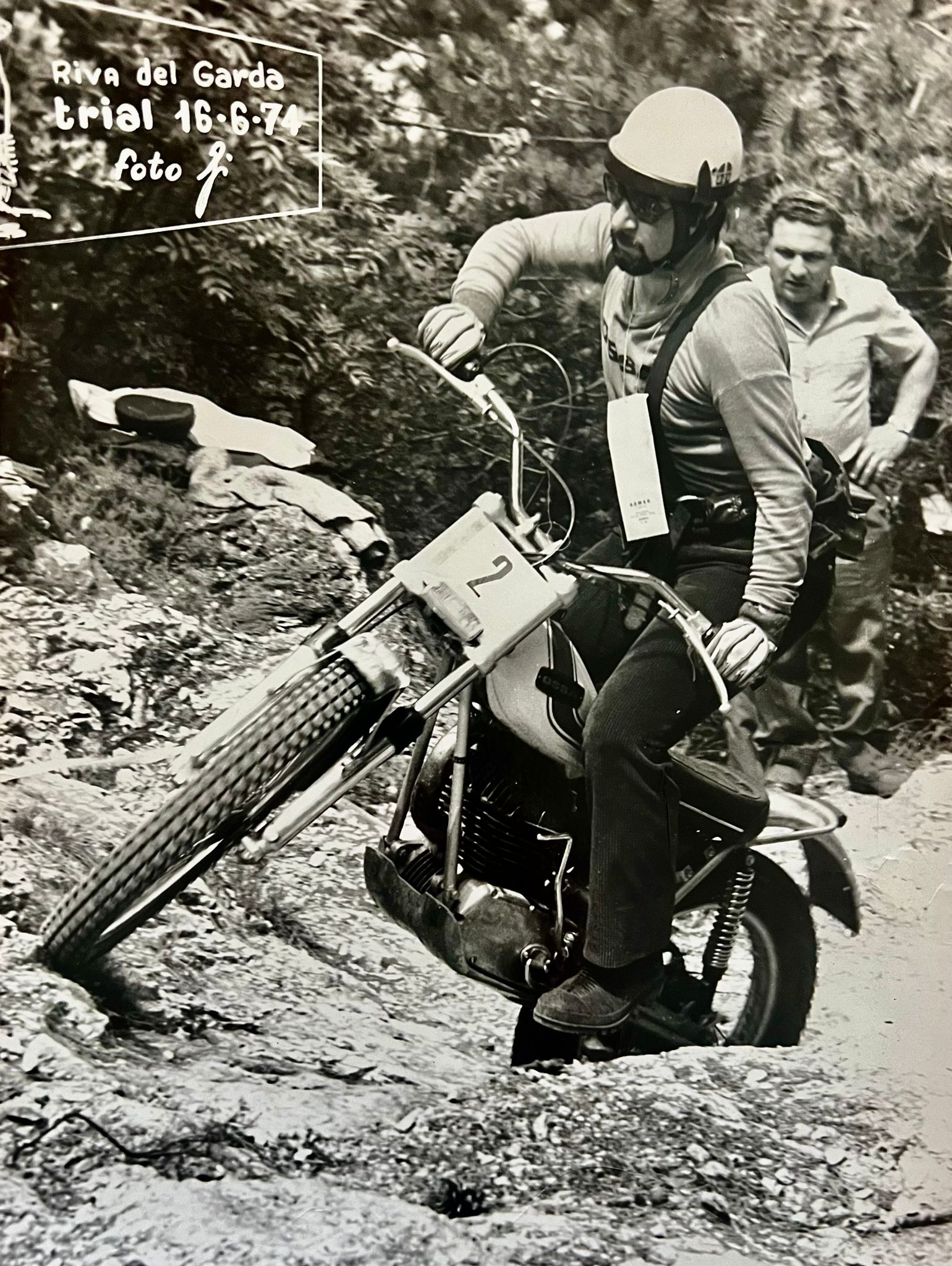
Kuciukian on his special OSSA in 1974.

But I still didn’t win! I tried again with a Bultaco, reaching seventy-four kilos, but that didn’t help either. Even though I had also removed the springs from the front fork and replaced them with rubber tubes, turning it into an oil-pneumatic one; and also, nylon bolts, smaller wolfram flywheel, hardened titanium crankshaft and aluminum footpegs.”

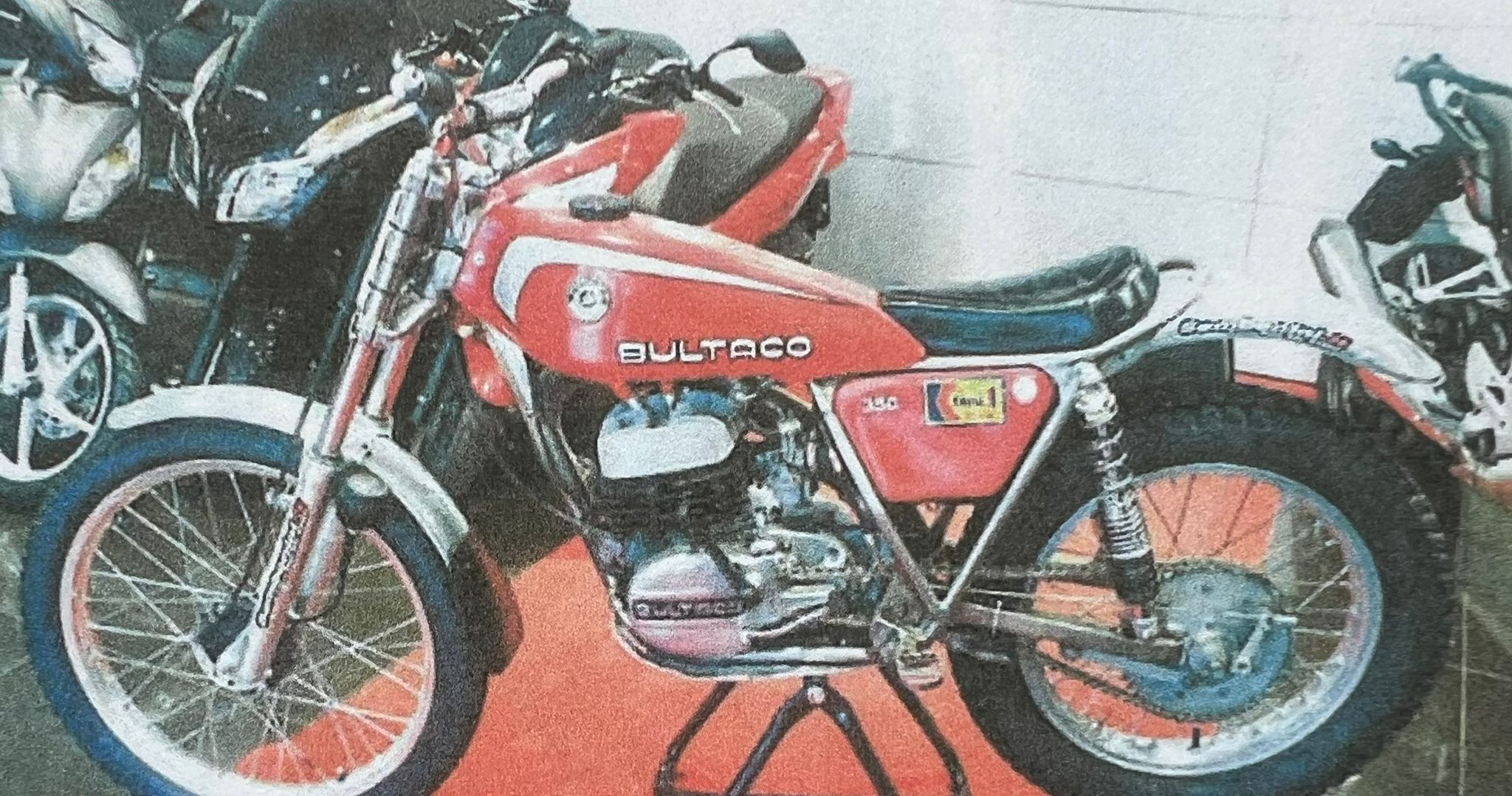
The very special titanium framed Bultaco Sherpa used by Pietro Kuciukian in 1975.

TG: Did you have any unusual motorcycles?

PK: “I had imported a Honda TL250 from Canada in the 1970s, I met with Sammy Miller to lighten it, and on that occasion the president of the Italian Motorcycle Federation was also there, and he asked me if I wanted to help the first Italian factory interested in building a trials motorcycle? Until then, the prerogative of Spanish motorcycle manufacturers. So, I went to the SWM factory in Rivolta d’Adda where I met the owners Sironi and Vergani, to whom I promised to help them if they put me in charge of their Trial project, but I proposed doing that for free, in order to remain free from contracts.”

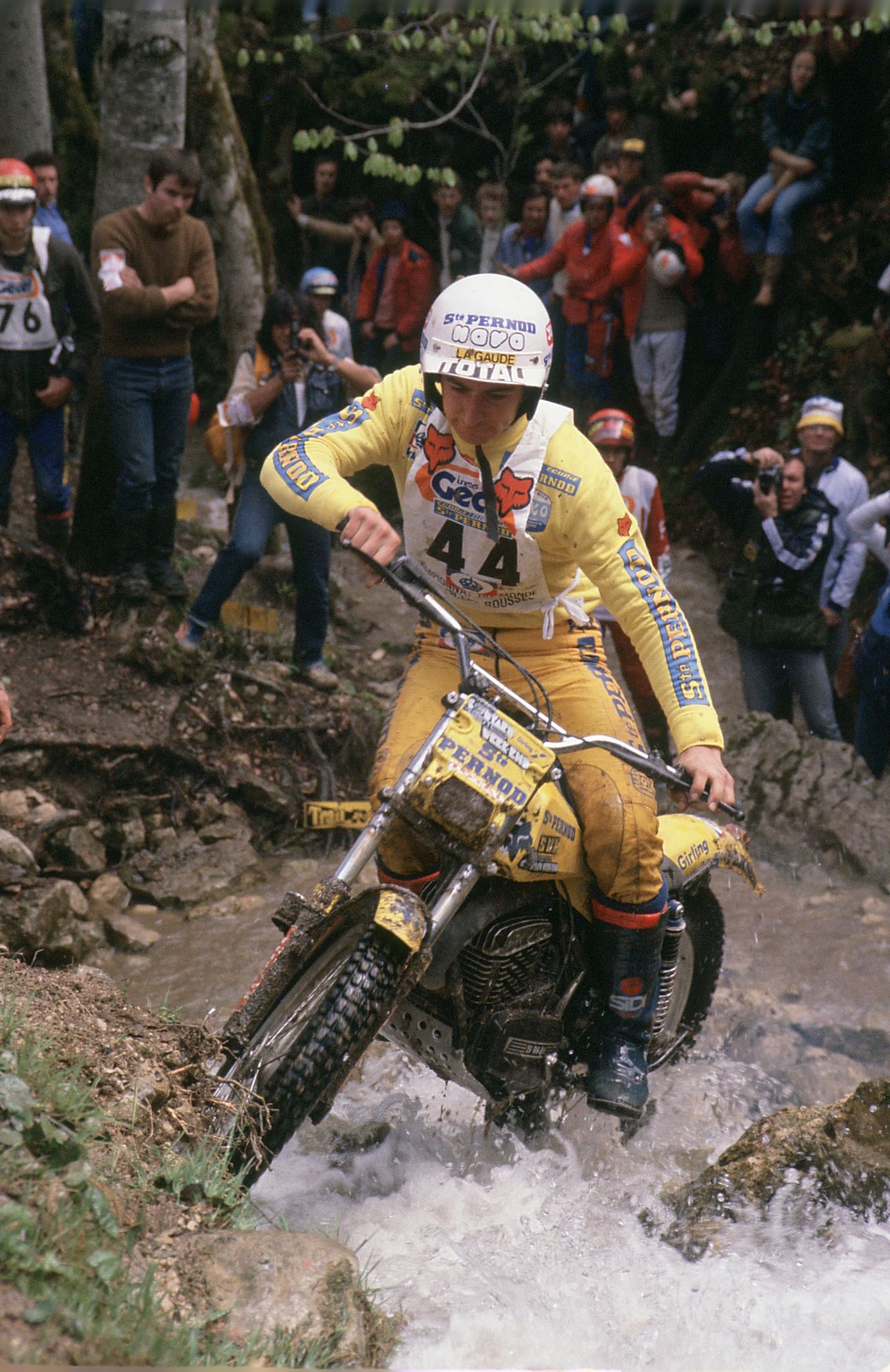
Pietro Kuciukian signed the world’s best trials riders for the SWM World trials effort. Left to right: Luciano Mangano (SWM mechanic); Bernie Schreiber; Martin Lampkin; Danilo Galeazzi; Dario Seregni (SWM mechanic), photographed at the SSDT in 1982 having won the manufacturer’s Team prize.

On the first day at the factory when they asked me how a trial motorbike should be designed, I replied to the engineers that it had to be ‘low when seen from the top’ that meant with a low center of mass. and ‘high when seen from the bottom’. That meant high enough to overcome the rocks and obstacles. They thought I was crazy! Together with myself, SWM hired also the Italian champion Giovanni Tosco and my personal mechanic Dario Seregni who always followed me throughout the years.”

TG: How did you go about forming a trials team?

Pietro Kuciukian preparing to start in the 1978 Scottish Six Days Trial at Fort William. The machine is a 125cc SWM.

PK: “I signed contracts with the absolute best riders of that time. This included Giovanni Tosco, Danilo Galeazzi, Gilles Burgat, Christian Desnoyer, Charles Coutard, Bernie Schreiber, Martin Lampkin, Timo Rysy, Thierry Michaud, Bernard Cordonnier, Matteo Romeggialli, Gino Sembenini and John Reynolds.”

Frenchman, Thierry Michaud was one of Pierto Kuciukian’s SWM contracted riders – (Photo: Giulio Mauri/Valenti Fontseré)

My plan from the very beginning was to win the World Championship, which happened after just five years with Gilles Burgat. I myself tested all the prototype motorcycles.”

SSDT action with Pietro Kuciukian on his special 125cc SWM – Photo: Jimmy Young, Armadale, Scotland.

The first was a SWM 125 with which I competed in the Scottish Six Days Trial in 1978. This was in order to finish the event; I used a compressed enduro engine and I kept the tyres at around 10 psi to avoid having punctures. I finished the event in 140th position, but I was proud to finish it, while more than two hundred riders dropped out before the end.”

Englishman John Reynolds was one of Kuciukian’s SWM signings, seen here on ‘Grey Mare’s Ridge’ in the 1978 Scottish Six Days Trial – Photo: Iain Lawrie, Kinlochleven.

TG: What happened after the World Championship victory?

PK: “The owners of SWM, after the successful victory of the Trial World Championship in 1981, built a new, larger, and more expensive factory, but also decided to manufacture mopeds, this was at a time when the interest rates reached up to twenty-four percent. SWM then went bankrupt, my team was left without money. I tried to ‘sell’ it to Aprilia, to the Castiglioni brothers, but no one was prepared at that time to support a team that cost around five hundred million lire, or about $500,000 per year. So, I took the job on myself, I founded the new ‘Team KK’ in 1984 with the hope of placing the entire team in another company. This unfortunately didn’t happen, and I had to let go of all my riders, who at the time between seniors and juniors numbered around fifteen. Team KK lasted about a year.

The KK Team logo, KK being an abbreviation for ‘KuciuKian’

TG: Was there a positive outcome for you running the trials team?

PK: “For me, the SWM experience had been a fantastic opportunity to travel the world, meet new people, have all kinds of experiences. This of course included injured riders to be taken to hospital, others to be freed from police stations, contracts to be signed with importers, settling small disputes, organizing events, sometimes even hypnotizing some riders, treating the injured or sick ones, dealing with legal issues and so on. So, my experience in SWM has overall been a positive one and I am grateful to this day to its owners, Sironi and Vegani who unfortunately passed away a long time ago. Because I am a doctor, rumours spread that I drugged the riders. In an indoor race in Bologna my rider Galeazzi fell and broke his leg, he was taken to hospital and the next day he showed a kind of delirium. Dr. Costa of the Mobile Ambulance accused me of having drugged my pilot Galeazzi. So, I ran to the hospital in Bologna and explained how, after a bone fracture, a ‘fat embolism’ can occur and can reach the brain, affecting it for a brief period. That was the reason for Danilo having this delirium and after a day, Galeazzi recovered and began speaking normally again.”

Danilo Galeazzi was a flamoyant rider, contracted by Piero Kuciukian to ride SWM. (Photo: Giulio Mauri/Valenti Fontseré)

At the beginning, Charles Coutard didn’t manage to control the front wheel uphill and overturned. He said that the engine was too powerful. So, we ‘softened’ the engine by changing its parameters for the six following months. Charles finally gave up and asked me to do what I wanted on the engine. I had the rear swingarm lengthened by 2.5 centimeters. Charles said: ‘Finally I no longer pull the bike over my head; the engine is now very sweet’.

Old friends from the sport. Left to right: French journalist, Jean Louis Bernardelli; Charles Coutard; Piero Kuciukian; Gilles Burgat and Bernie Schreiber at Ventoux in 2011.

A rider of mine was, at the time, a very nervous person; I myself had to follow an ‘autogenic training’ course and to become a teacher in this technique. Then I applied it to my rider who managed to calm down within a few months. Immediately afterwards he left my team to join a competitor.”

The 1979 world champion Bernie Schreiber, winner of the 1982 SSDT, signed up for my team. He had moved from the bankrupt Bultaco to the Italjet brand and then he won three times the second place in the world championships. I have a friendship with Bernie that has lasted for almost forty-five years.”

TG: What was your most disappointing moment?

PK: “My biggest disappointment was during the World Championship in Switzerland when a new motorcycle, the SWM Jumbo 350 was stolen. It had been designed specifically for Martin Lampkin who wanted a more powerful motorcycle. I followed the route to observe the controlled areas.”

The SWM ‘Jumbo’ 350 was specifically developed to suit the riding style of Martin Lampkin.

The bike didn’t start well, I had to push it to start the engine. Our Jumbo was never found, even after the theft was reported to the police. After six months, I discovered that there were two thousand trial motorbikes in the USA unable to be sold, whose engine couldn’t be started.”

The SWM ‘Jumbo’ was designed specifically for hard riding Martin Lampkin, seen here on the left, with Bernie Schreiber and Pietro Kuciukian (far right)

In the meantime, Bernie Schreiber and I were invited to organize a trials school in Tokyo by a well-known Japanese motorcycle company to teach local riders some specific riding techniques. The engineers asked us many questions, which we didn’t answer. After the disappointment of the theft I suffered, I had my total understanding.”

TG: What was your main occupation?

PK: “I was a doctor, a dental specialist and I still am. In 1984 I continued to work every day as a dentist. So, I had to dedicate my evenings from 8pm to midnight every day, working with SWM, and several weekends for trials and regional competitions. Moreover, I used to spend twelve weekends a year following the world championship, in which I participated on motorcycles as race team manager, I had a FIM license. But I also worked as an official reporter for the Italian monthly magazine ‘Motociclismo’ for which I published around one hundred and twenty articles.”

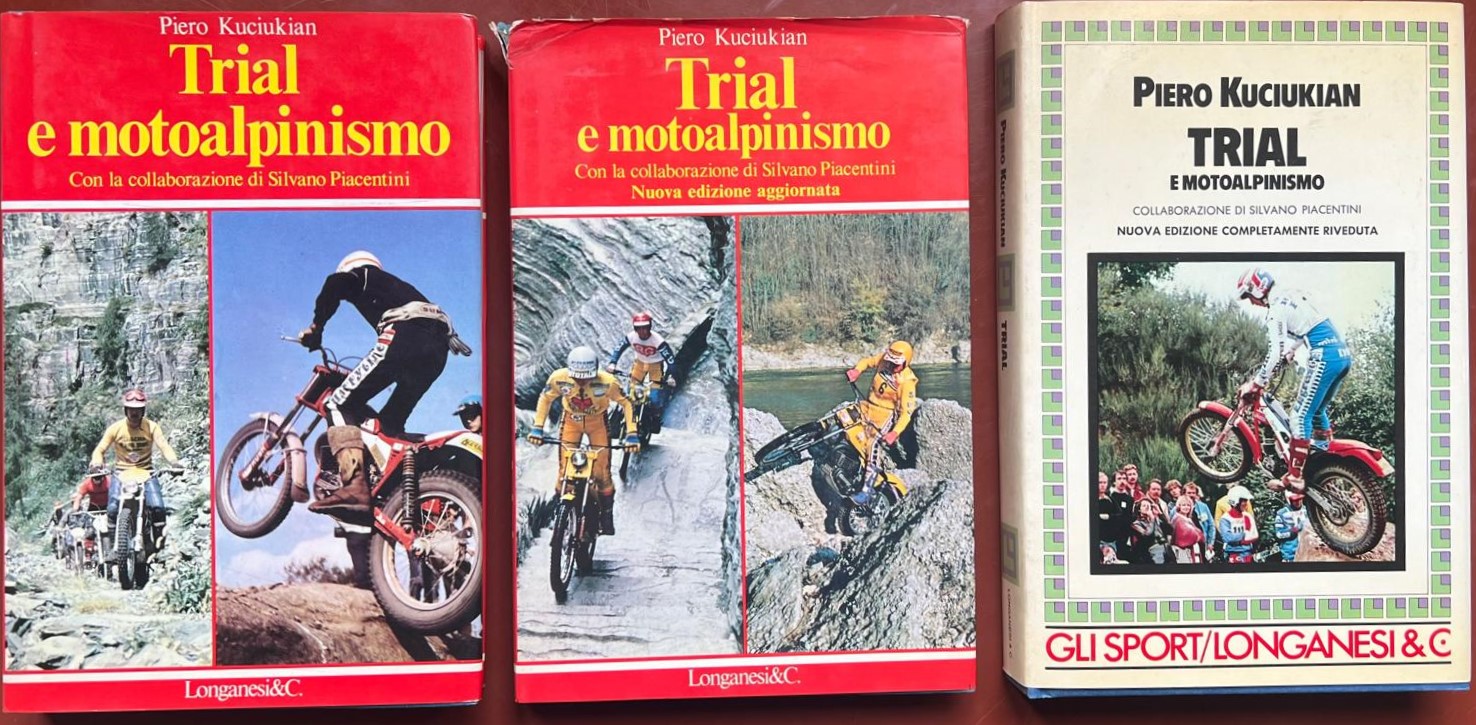
I then published the first book in Italian language on trial riding techniques in 1979. The title was ‘Trial and Moto-Alpinism’ through the publisher Longanesi. It was a real success, thirty thousand copies sold with three editions printed.”

TG: Tell us what you regard was your most memorable achievement?

PK: “My greatest satisfaction as a race team manager was when Gilles Burgat won the World Championship in 1981. At every round of the world championship the Michelin truck was present, the technicians took the temperature of the air, the ground, the tyres and at the next event they tried a new tire compound for the only motorcycle that did not have Pirelli tyres, that of Gilles Burgat of my team who also won the world championship with those tyres. I always wonder if the snow tyres that we use in winter today for cars, might to some extent, have come from Michelin’s trial experience with my team at that time?

Pierto Kuciukian’s sidecar outfit in 1982.

As a rider, my greatest personal success occurred in the last round of the Sidecar Trial Championship in Monza, in the parabolic curve track section. No crew managed to pass that section, not even Giulio Mauri, my main competitor, and most capsized. I had modified the front end and the suspension of the outfit. We developed a lever which blocked the suspension at the bottom and top. I won the Sidecar Trial championship in 1982 by ‘tweaking’ the sidecar. It was the only year that a sidecar trial championship took place in Italy. We had also built a trial motorbike with dual traction: front and rear, which I had assigned to the German rider, Felix Krahnstover. I thought of adapting it to my sidecar, but then the idea was abandoned.

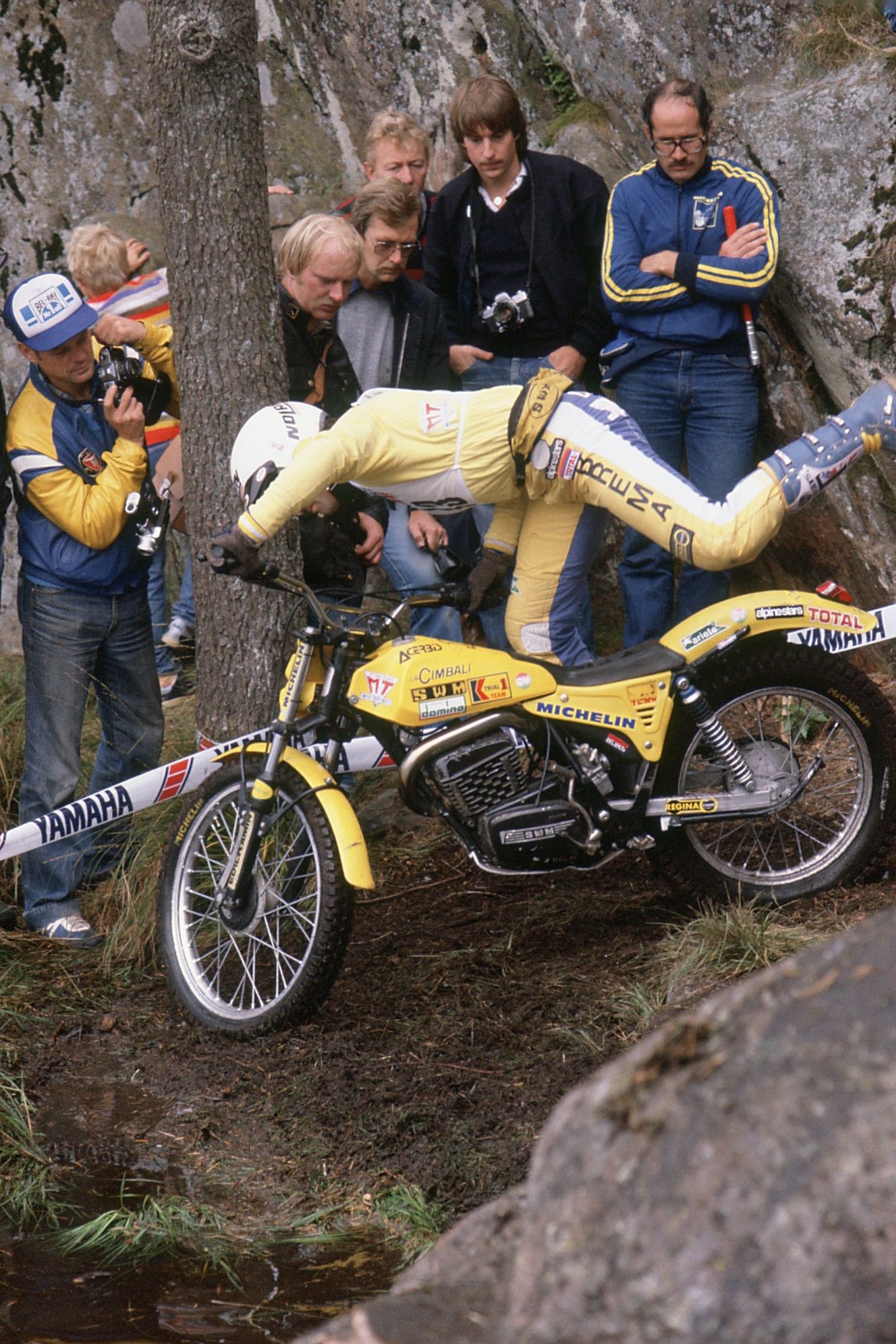
Bernie Schreiber samples the double drive SWM.

TG: What are your thoughts on trials motorcycle construction?

PK: “I had always thought that trial motorcycles should be ‘as simple as possible exercise equipment’ and therefore didn’t need a tank, a saddle, or mudguards. So, I had an exceptionally light ‘special’ model prepared for the indoor competitions and assigned it to Bernie Schreiber. Bernie was the forerunner of the modern trial riding techniques, and he first introduced the ‘aerial curve’. Furthermore, he was one of the very first trials riders to perform on artificial obstacles.

Bernie Schreiber was one of the first riders to be successful in indoor trials, seen here on the SWM ‘Special Indoor’ machine developed by Pierto Kuciukian.

It can be said that he was the founder of the indoor trial. By designing the ‘special indoor’ SWM model assigned to Bernie, I think I was to some extent ahead of my time. Today, saddles, large tanks and enveloping mudguards have disappeared.”

The special SWM ‘Indoor’ trials machine instigated by Pierto Kuciukian.

The project should have continued with a rear mono-lever and front suspension without springs, hydraulically connected and electronically controlled, but SWM no longer existed, and my interest was turning towards Armenia, of which I then became honorary consul, after a stint as a pilot of gliders and motor-gliders which gave me other satisfactions.”

Few trials books have been reprinted, Piero Kuciukian’s book, ‘Trial e motoalpinisimo’ was reissued three times.

Trials Guru: It is without doubt that Piero Kuciukian has been a major influence in the sport of motorcycle trials within what is now referred to as the ‘Golden Era’ of the sport. His contribution to machine development, new ideas, innovation and of course team management is significant.

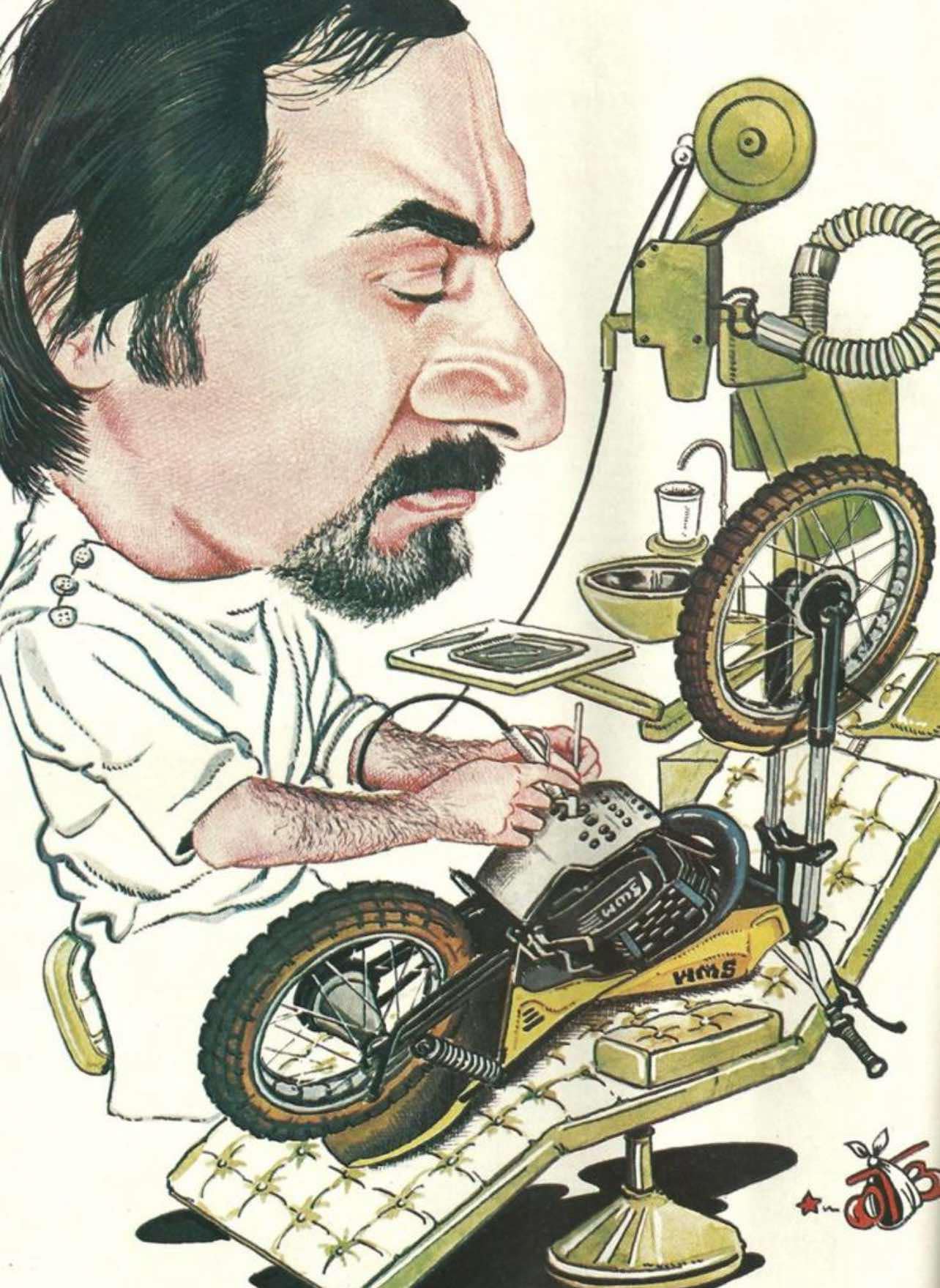
Cartoon drawing depicting Pietro Kuciukian as a professional dental surgeon, operating on an SWM. Photo supplied by P. Kuciukian. (Artist: Yann Renauld – Moto Verte Magazine) [2]

Testimonials by riders who were contracted to Pietro Kuciukian:

Giovanni Tosco:

Giovanni Tosco on the early SWM.

“Piero Kuciukian and I made friends for the love of the Trial first with the OSSA, and always for the love of the Trial. Kuciu managed to get two hardened regular riders, Sironi and Vergani to build a trial motorbike, which then gave them great satisfaction. At this point he became a great general manager for the racing team. In these few words, I condensed all the greatness of my great friend Pietro Kuciukian.” – Giovanni Tosco, Torino, Italy (Four times Italian National Trials Champion).

Gilles Burgat:

Gilles Burgat, 1981 World Trials Champion (Photo: Giulio Mauri/Valenti Fontseré)

“I met Piero for the first time in the suburb of Milano in the small town call Rivolta d’Adda. This little town was where the SWM factory had the reparto corso, Racing department for SWM trial. Charles Coutard was their pilot for the world championship,  this was in 1977. SWM was looking for a young lad to ride there 125 trial, I was sixteen at that time and Piero Kuciukian called me to come to Rivolta to try there motorcycle. I immediately fell in love with the SWM and I signed a contract and rode for them the next four years. Later, I won four French championships, one world championship and the famous Scottish Six Days Trial with them and with Piero as the manager.

Piero shared his time between his job as a dentist in Milano and managing the SWM trial team. At that time, I can say Piero was scaring me a little bit, I was still a teenager! He understood that and he managed me in a discreet fashion, always there for me to give me good advice for my races and my career. He was great for me, always looking at the bigger picture.

Until now, if I go to Milano, I try to meet Piero and I think I can consider him as my friend. Piero and his wife Anna Maria are truly a great couple, very smart and classy and wonderful people. Piero is a man of passion and I am happy he was passionate about trial.

During and after my trial career, Piero came to my house in France many times, for family events or just for a visit.  He was always a very good inspiration with his smart comments.

He is a wonderful man.” – Gilles Burgat, France. (1981 World Trials Champion, three times French National Trials Champion and 1981 SSDT winner).

Charles Coutard:

Charles Coutard with Pierto Kuciukian

“For me, Pietro Kuciukian is not only a friend, but also the man who inspired the Swm factory to produce a trials bike! He’s a very learned and intelligent man who has put all his qualities at the service of Swm and Trials.

I don’t think I’d have left the Bultaco factory if it hadn’t been for Pietro’s involvement in the SWM adventure! His confidence and kindness enabled me to endure the difficult period of fine-tuning to become a bike capable of winning a world championship!

I put Pietro on the same level as Don Francisco Bulto in terms of human qualities and passion. Thanks to him, I rediscovered the same feeling of a big family that I had at Bultaco!

Many thanks again to him, whom I hold in the highest esteem.” – Charles Coutard, France (8 times National Trials Champion of France).

Bernie Schreiber:

Pietro Kuciukian and Bernie Schreiber in 1983 – Photo: Giulio Mauri/Valenti Fontserè.

“Piero Kuciukian and his lovely wife, Anna Maria have been dear friends for 45 years. I was very fortunate they took me into their Milan home like a son shortly after joining SWM. At twenty-two years of age and competing all season on Italjet in 1981, I found myself at the lowest point in my trials career that resulted in sixth in the world.”

Anna Maria & Pierto Kuciukian

“I had lost confidence in the product and felt mentally destroyed after my results. Gilles Burgat just won the World Championship title on SWM with a proven machine and excellent team. Shortly after the season ended, several rumours broke that Burgat was moving to Fantic for the 1982 season opening a factory rider position at SWM.”

“That was seen as an opportunity being based in Italy for the past eighteen months. Piero and I spoke, we discussed conditions, a bike test was organised and a deal was agreed to join the factory team with Martin Lampkin and Danilo Galeazzi for the next two years. Piero was not your typical team manager or Italian to be honest and he played many roles at the factory and with his riders. We quickly became close friends and within a short period of time, I was living in Milan with all the support needed to win events and Championships again.”

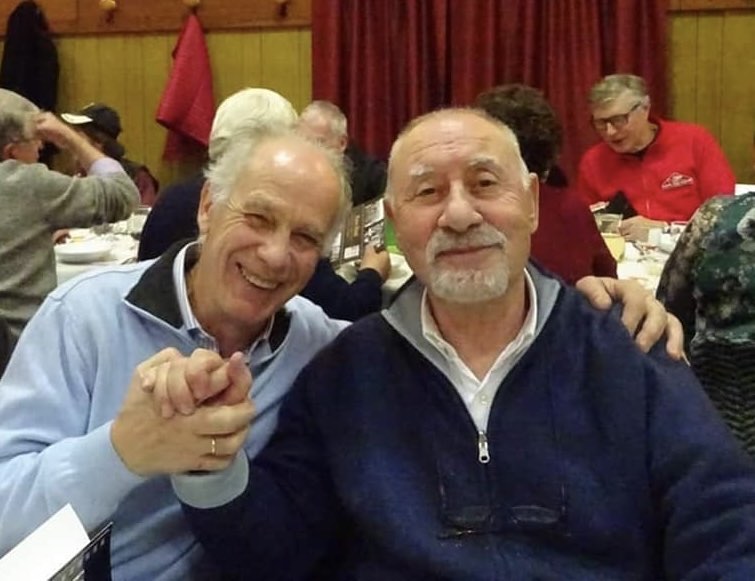
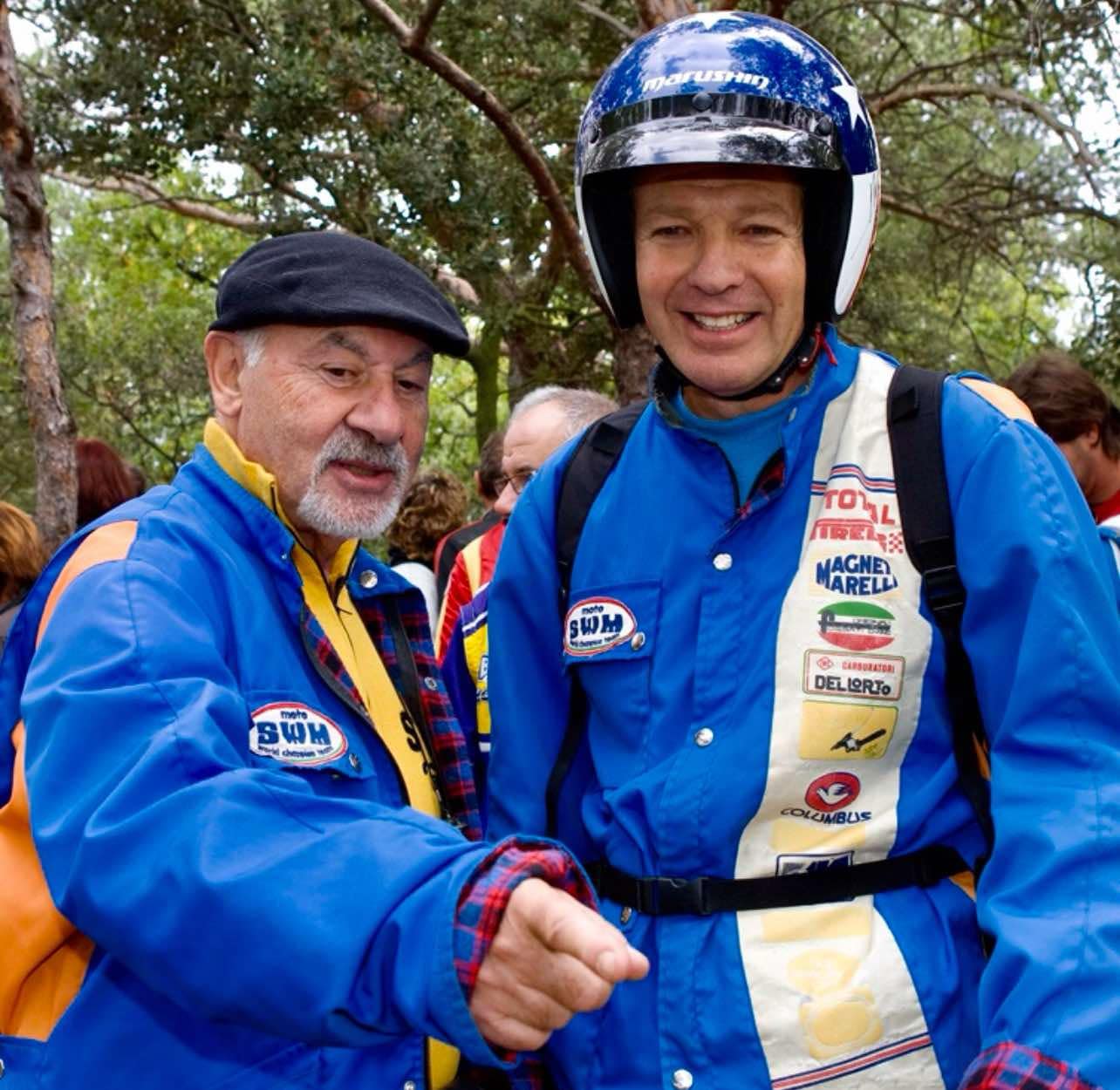
Bernie Schreiber with Pietro Kuciukian in 2025.

“Piero was like a European father mentor to me and we could talk about everything from trials to philosophy. His experience, approach to issues and way of thinking changed the course of my life in so many ways. I am ever so grateful to this day for our friendship. We travelled the world together throughout Europe, Australia, Japan, Americas and eventually I learned the Italian language.”

Pierto Kuciukian has always maintained meticulous records and reference work – Photo: Bernard Schreiber.

“1982 was the best season of my career under Piero’s SWM leadership. We didn’t repeat the world championship victory of 1979 which was my main focus, but finished second in the world winning two world rounds and ten podium finishes. The SSDT was not in our agreement, but Piero pushed hard for my appearance in 1982 and after unfriendly discussions we finally agreed. Best decision I had ever made and can’t thank him enough. It’s difficult to imagine being a Trials Legend without winning the SSDT. Other victories were accomplished that year by winning indoor trials, BBC Kickstart, American Championship, British world round all the while working on my book ‘Observed Trials’ with Len Weed.”

SWM action, ridden by Danilo Galeazzi – Photo: Giulio Mauri/Valenti Fontserè.

“1983 was another good year on the new SWM Jumbo. We managed to finish second in the world championship for the third time and also won the American Championship. In 1984, SWM had financial issues, but Piero maintained the team under ‘KK Trials Team’ of which we entered as privateers with an SWM. That was really our last competitive year in the sport and we finished third in the Championship with two World round wins.”

Piero Kuciukian continues to impart knowledge and Bernie Schrieber continues to listen!

“Thank you, Piero, for not only teaching me about trials but also about life. Your wisdom, advice, and mentorship had shaped my character and taught me important life lessons that I carried with me to this day. Your belief in my potential, even when I doubted myself, has been a constant source of motivation through the years. Long live the G.O.A.T. team manager and friend.” – Bernie Schreiber, Zurich, Switzerland. (1979 World Trials Champion, 1982 SSDT winner, Four times American National Trials Champion).

Pietro Kuciukian is a Trials Guru VIP ‘Trial Legend’.

‘Pietro Kuciukian – The Team manager and more’ is copyright of Trials Guru.

Bibliography and source recognition:

Wikipedia [1]

Cartoon artist: Yann Renauld from Moto Verte magazine [2]

Apart from ‘Fair Dealing’ for the purpose of private study, research, criticism or review as permitted under the Copyright, Design and Patents Act, 1988, no part of this article may be copied, reproduced, stored in any form of retrieval system, electronic or otherwise or transmitted in any form or by any means, electronic, electrical, mechanical, optical, chemical, photocopying, recording or otherwise without the prior written permission of the author as stated above. This article is not being published for any monetary reward or monetisation, be that online or in print.

Colin Bell’s tribute to Martin Lampkin

Tribute to H.M. Lampkin – By Colin Bell (former Irish Trials Champion)

In 1977-78 I found myself living in Silsden, It was not by accident that I wanted to live and compete in Yorkshire with some of the best trials riders in the world.
Martin knew I was coming from Belfast so it was a great relief when I arrived late one evening in the dark that Martin was there to soften the transition and get me settled with digs.
Although we had only met a few times at a couple of events we immediately hit it off, he was so generous to give me the time to show me the ropes . I got to know Ping, Sid and Martin who pointed me in the right direction, I was soon learning the local dialect and was introduced to words I had never heard before like beck, fettle, Buffs, Tetley’s and Geoffrey Boycott – it was a crash course in Yorkshire-isms for an Ulster man.
I was soon trained to say- ‘All right lad’- and I was given the nickname ‘To be sure’.
1977 was an amazing year for Martin he seemed to win everything that year The Scott, The Scottish and The British Experts and more. I remember the morning after the British Experts, I hadn’t heard the results but met Martin outside the engineering workshop in Silsden washing my bike when he came up with a smile on his face and congratulated me on a 6th. That was typical of Martin even though he had won the event he still had time to say well done and offer encouragement. Martin was a larger than life person, a true and proud Yorkshire man for whom I had great respect and admiration. I send my sincere condolences to all the Lampkin Family and the wider Trials Community – He will be sorely missed – Colin Bell
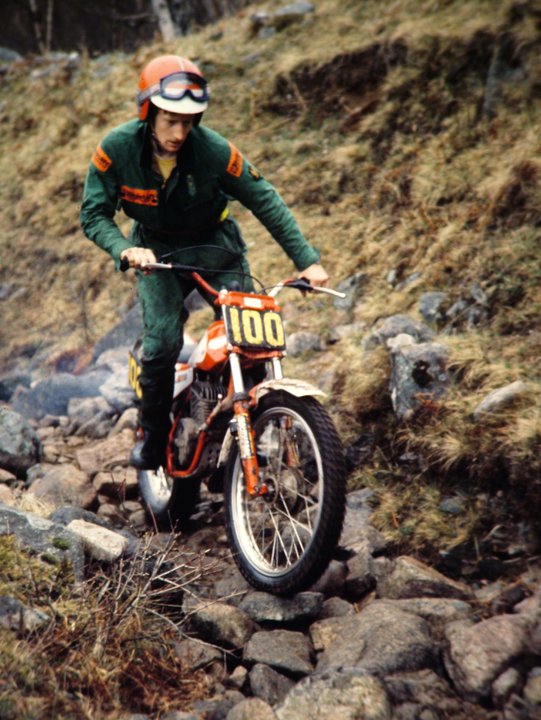
Colin Bell 1978 (SWM)
Colin Bell in 1978 at the SSDT, SWM mounted. – Photo: Jimmy Young, Armadale.

H. Martin Lampkin 1950 – 2016

Lampkin Martin SSDT76 44
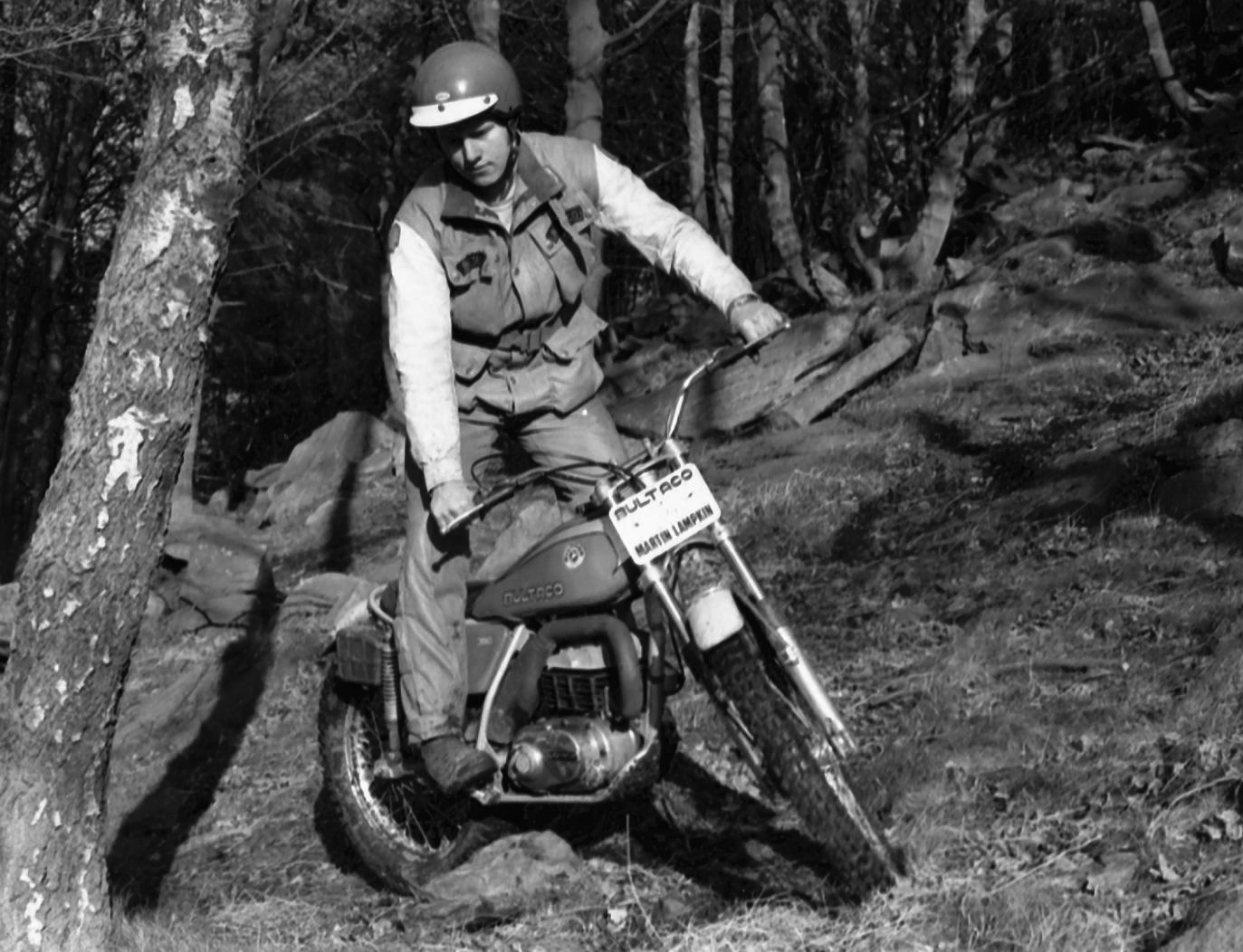
Martin Lampkin (Bultaco) 1976 SSDT – Photo courtesy: Eric Kitchen

On behalf of the Lampkin family, it is with great sadness that Trials Guru website announces that H. Martin Lampkin, the very first World Trials Champion (1975), passed away today, Saturday 2nd April, 2016, aged 65 years.
It goes without saying that the Lampkin family’s loss is also a loss to the world of motorcycle sport.
Our sincere condolences go to Martin’s immediate family, widow Isobel; sons, Dougie and Harry and the extended Lampkin family.
The funeral service for Martin was be held on Monday, 11th April 2016 at 1.30pm at St James Parish Church, Kirkgate, Silsden, West Yorkshire, BD20 0AL.
Donations in Martin’s memory, were made to the Manorlands Hospice, Keighley Road, Oxenhope, Keighley, West Yorkshire, BD22 9HJ.

Martin Lampkin, his life in photographs, a tribute by Trials Guru’s Photographers & contributors:

Group - Janet Pawson Pic
Motorcycles were always a part of Lampkin family life. This is Arthur Lampkin’s factory trials BSA Gold Star being tried out by family friend, Tim Aaron (left), H. Martin Lampkin (middle) & Veronica Lampkin (right) – Photo by kind permission and copyright of Janet (Lampkin) Pawson (Sister of Martin Lampkin)

martin lampkin 1967
1967 – Martin Lampkin (250cc BSA) in his first Scottish Six Days Trial aged 17, aged 26 in 1976 he would win his first SSDT.

Mart Lampkin
1978 – Martin Lampkin (348 Bultaco) – Photo: Mike Rapley

Who else but Mart Lampkin
1978 – Martin Lampkin hoists the Bultaco upwards with a steady dab – Photo: Mike Rapley

Mart Lampkin
1978 – Martin Lampkin on his factory Bultaco – Photo: Mike Rapley

A truly atmospheric shot of Mart
1978 – A truly atmospheric shot of Martin Lampkin – Photo: Mike Rapley

Martin Lampkin'84 Blackwater
Martin Lampkin on Blackwater in the 1984 Pre’65 Scottish, riding brother Arthur’s 1963 SSDT winning BSA C15T – Photo: Iain Lawrie, Kinlochleven

1
Martin on the Honda RTL250S in the 1987 Scottish –  Photo copyright: Graeme Campbell

Martin Lampkin'87 chairlift
Martin Lampkin (World Champion in 1975) smiles at the camera of Iain Lawrie on his way down from Chairlift at the 1988 Scottish Six Days on his Colin Appleyard supported Honda RTL250S – Photo copyright: Iain Lawrie, Kinlochleven

1979 - Martin Lampkin - Reg May - EK Photo
Scottish Six Days Trial 1979 – Martin Lampkin inspects the rear tyre of his Bultaco, with Reg May offering advice. John Metcalfe is watching closely. Martin was narrowly beaten into second place to Malcolm Rathmell (Montesa) – Photo world-wide copyright: Eric Kitchen – all rights reserved.

Mart 1 Reg
Martin Lampkin testing his 325 Bultaco in 1975 – Photo by kind permission and world-wide copyright of Barry Robinson, Ilkley (All-rights reserved)

15
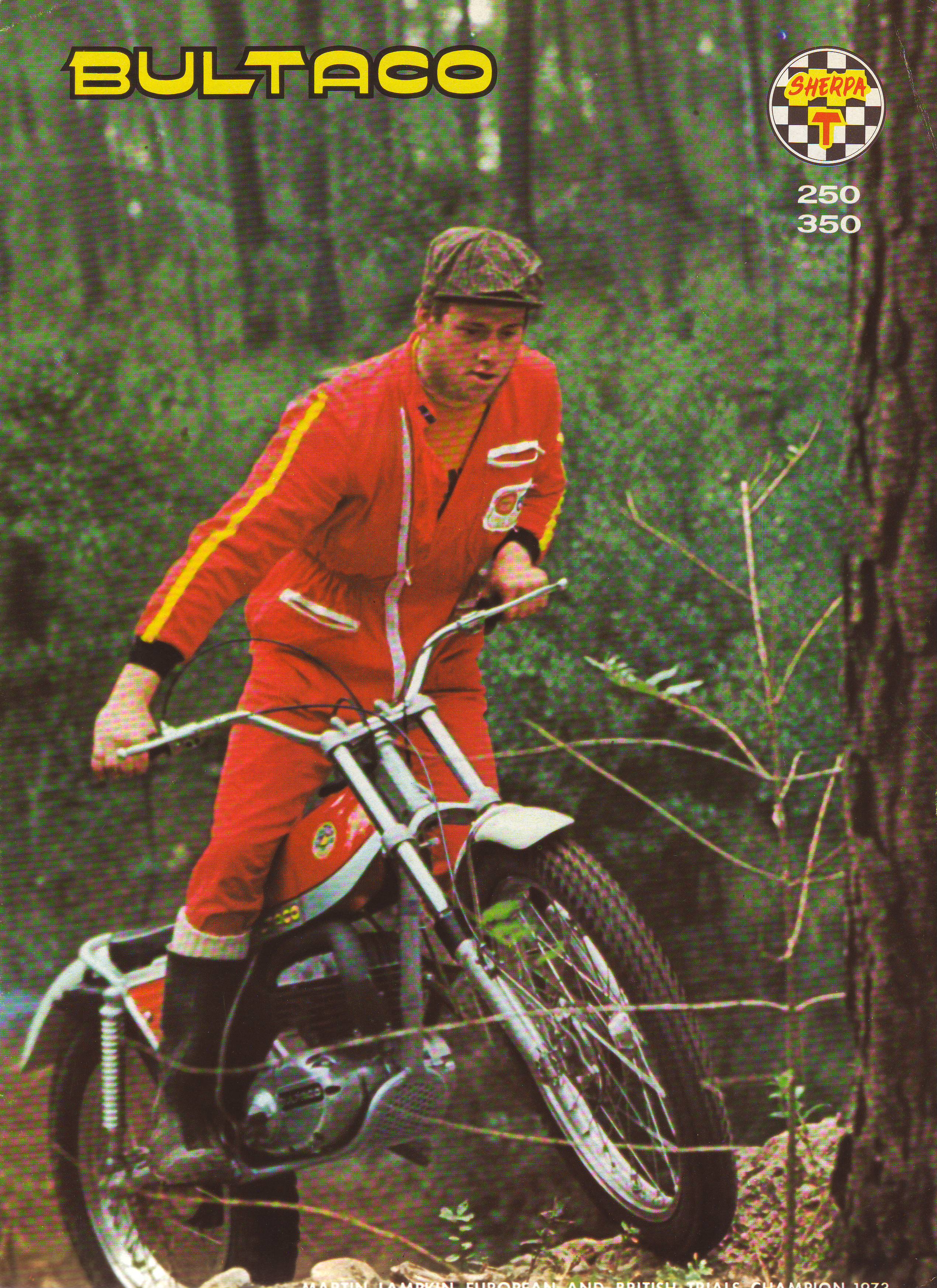
Bultaco publicity photo of Martin Lampkin on his factory Sherpa T model 92 in 1973 – Image courtesy of Bultaco Motorcycles

JY - ML
Martin Lampkin (Bultaco 325) at the Scottish Clubman Trial at Newcastleton in 1978. Photo: Jimmy Young, Armadale

Martin Lampkin Bultaco - GWX78N
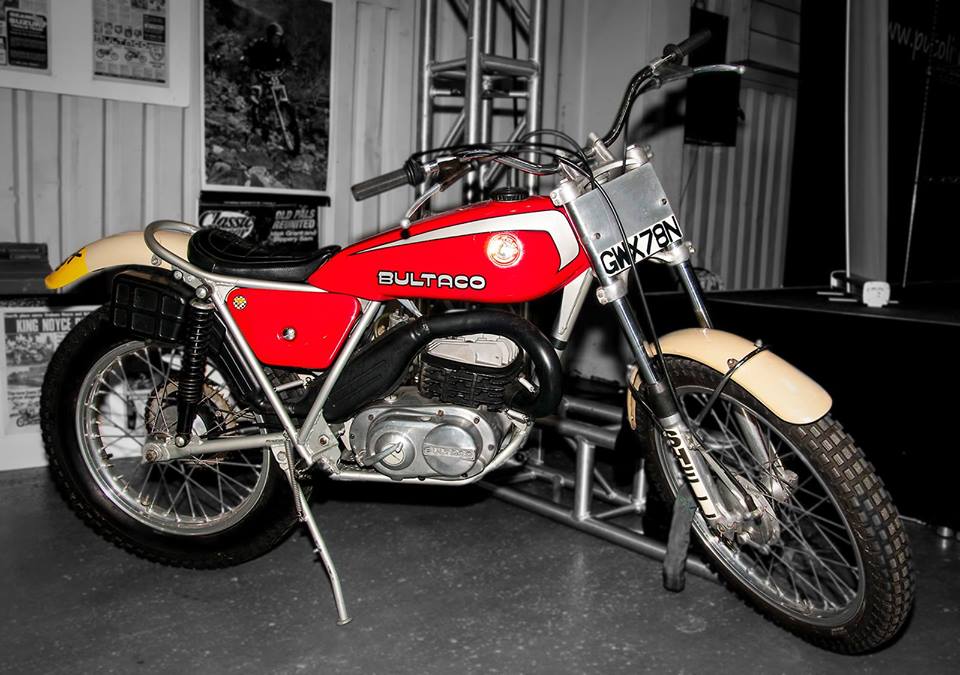
The 1975 World Championship winning Bultaco of Martin Lampkin – Photo courtesy: Heath Brindley, Bristol

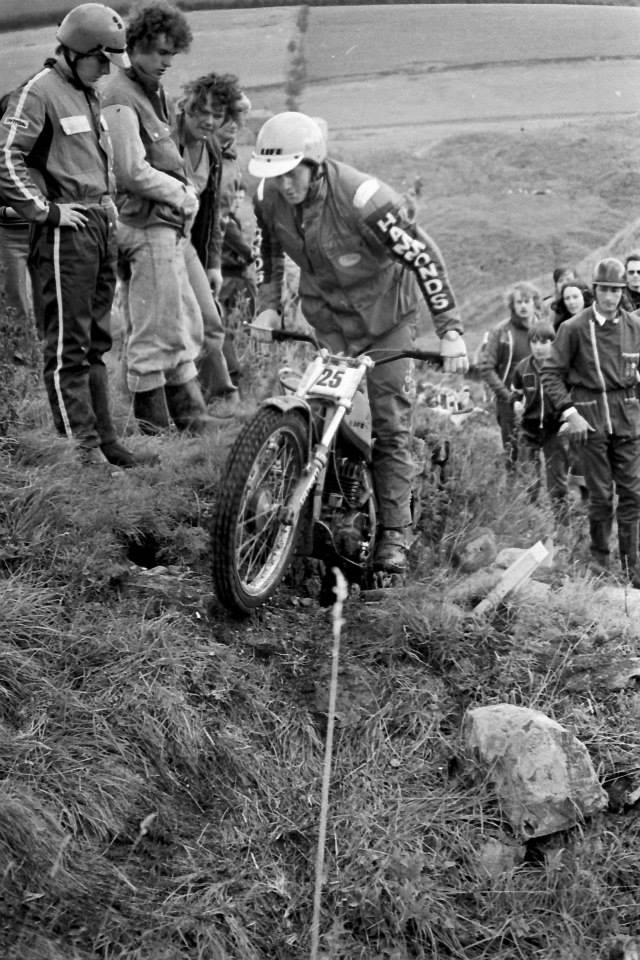
Martin Lampkin in his Hammonds Sauce sponsorship days
1979 – Martin Lampkin in full control of his 348 Bultaco – Photo: Mike Rapley

Martin Lampkin 2
The ‘gritty’ determination of Martin Lampkin (Bultaco) Photo: Mike Rapley

IMG_0003y
Martin Lampkin fettling his Bultaco at the 1975 Scottish Six Days – Photo: Rainer Heise, Germany

IMG_0011c
1975 Scottish Six Days on Laggan Locks – Photo: Rainer Heise, Germany

Martin Lampkin LL 1977
Martin Lampkin (Bultaco) on Laggan Locks 1977 at the Scottish Six Days Trial – Photo: Iain Lawrie, Kinlochleven

M Lampkin SWM Cameron Hill
Martin Lampkin (SWM) on Cameron Hill in the 1981 Scottish Six Days Trial- Photo: Iain Lawrie, Kinlochleven

ClanLampkin
2004, Japan World Round – Martin (right) with son Dougie (left) and nephew James (middle top) – Photo courtesy and copyright, Jean Caillou, France

1994 Belgium round of European championship; the first gp of his new career Dougies’minder
1994 Belgium round of European championship, Martin’s new job of being minder to son Dougie, who went on to win 12 World titles – Photo copyright: Oliver Barjon, France

Martin Lampkin - JOM 2013
John Moffat (left) with H. Martin Lampkin in 2013 – Photo courtesy: Trial Media/John Hulme

As a mark of respect, please feel free to leave your personal message in the comments section below in remembrance of a fine sportsman, a true Yorkshireman and one of the world’s all time great motorcycling competitors, a true ambassador of the sport – HAROLD MARTIN LAMPKIN 1950-2016

Tribute by Rob Edwards

Tribute by Malcolm Rathmell

Lampkin of Silsden