Thore Evertson – Made In Sweden

Words: Trials Guru & Thore Evertson

Photos: Eric Kitchen; Ken Haydon; Jean-Claude Commeat (Claudio) and Rainer Heise.

With assistance from: Stig & Mats Igelström; Yrjö Vesterinen.

With special thanks to Charly Demathieu of Trial Online website for statistical information on FIM European and World Championships.

In Sweden, the surname ‘Thore’ is a variant of the name ‘Thor’, which comes from the old Norse name ‘Thorr’, the Scandinavian god of thunder.

Best remembered in the trials world as an Ossa rider, Thore Evertson was born in Karlskoga, the second-largest city in both Örebro County and the historical province of Värmland, Sweden on 13th December 1949. Thore lives there to this day. Now retired, his main occupation was that of a fireman. Thore married a local girl, Agneta, in May 1979, they had three children.

Thore Evertson sits astride his 175cc Husqvarna in 1967. Swedish press photo courtesy of Stig Igelstrom.

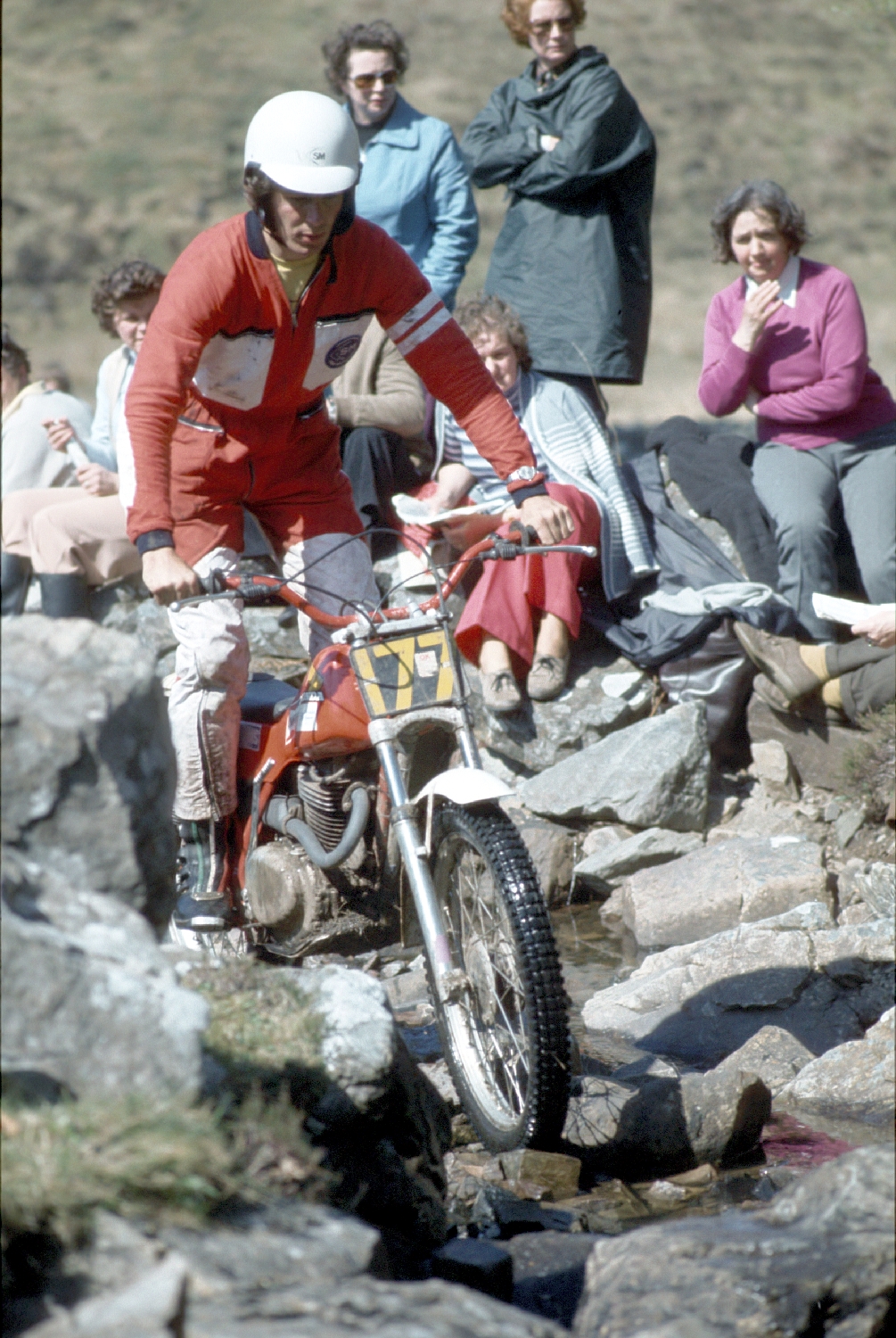
Evertson was active in trials from 1967 until 1980. His first trials machine was a 175cc Husqvarna which he modified to trials specification himself.
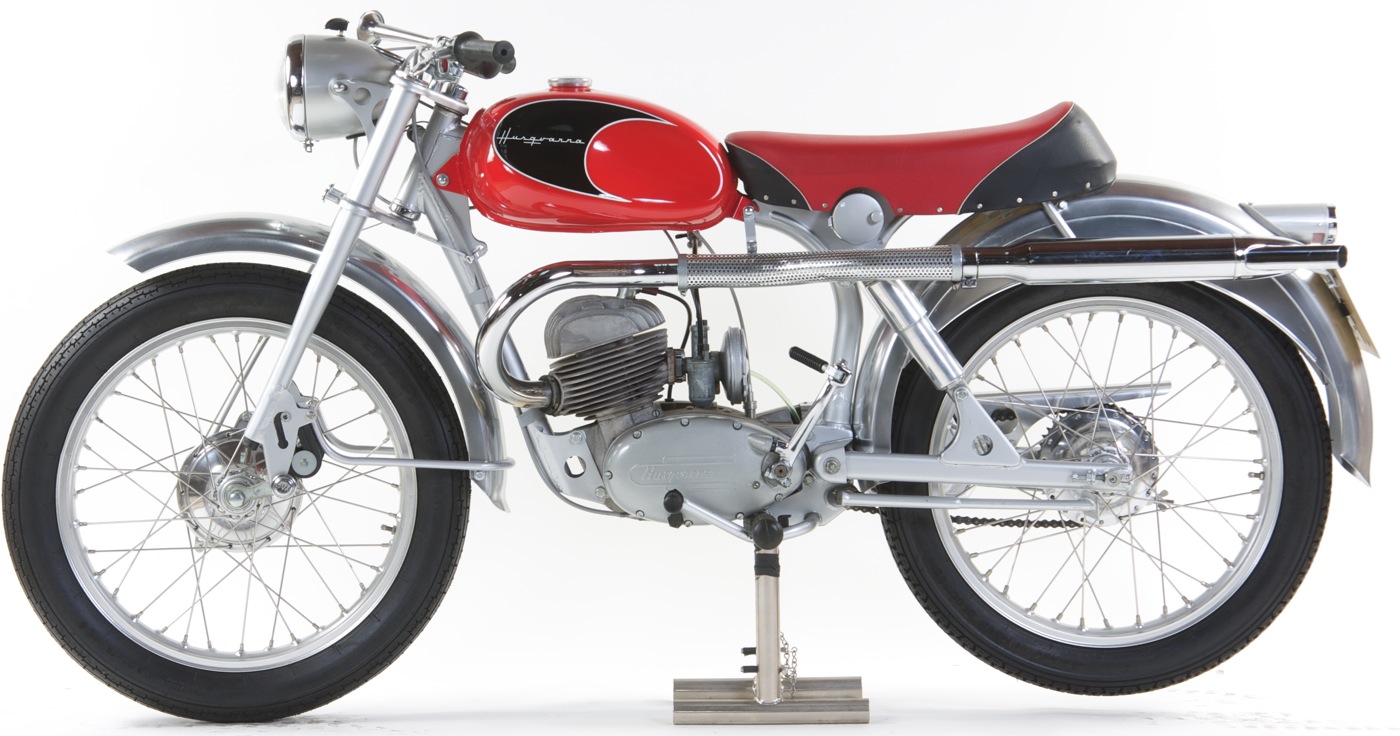
The 175cc Husqvarna ‘Silverpilen’ model (Silver Arrow) similar to the one Thore Evertson modified for trials in 1967. Photo: MXA Motocross Action USA.

Thore Evertson: “The Husky was a ‘Silverpilen’ model which I bought for 100 pounds and drove it around Karlskoga city and many times to the raceway we have here called Gelleråsen. I would have loved to start racing there, but it was too expensive, so I had to start to modify the Husqvarna for trial competition.”
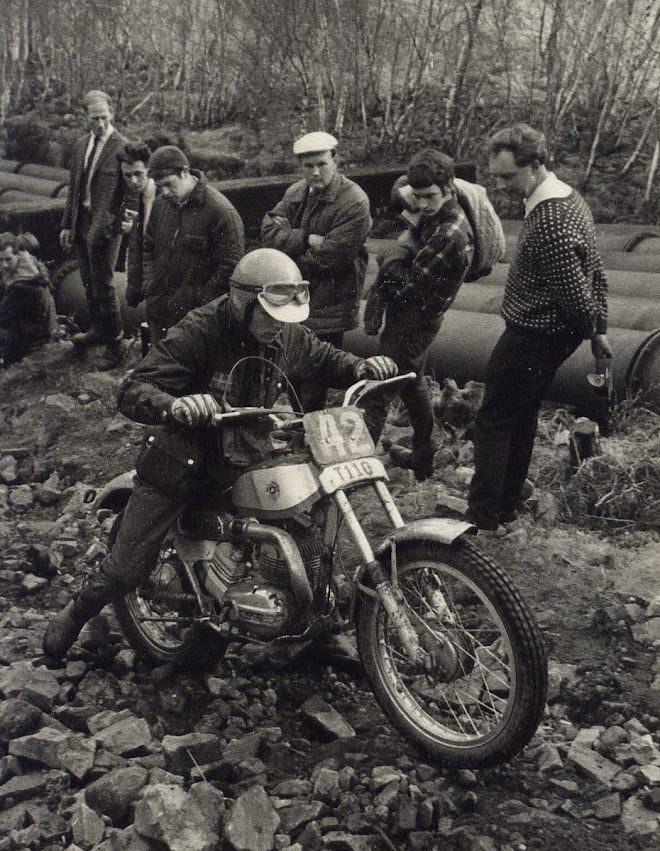
Thore Evertson (250 Bultaco) on ‘Pipeline’ during his first SSDT in 1969. Note the spare fuel tin mounted between engine and frame. Photo: Ken Haydon.

Later, he purchased a 250 Bultaco Sherpa Model 27 on which he entered his first Scottish Six Days in 1969. Thore finished in thirty-eighth position on 129 marks, gaining a well earned ‘Special First Class’ award and was also a member of the best foreign team, Karlskoga MK, which was awarded the Scotia Trophy.

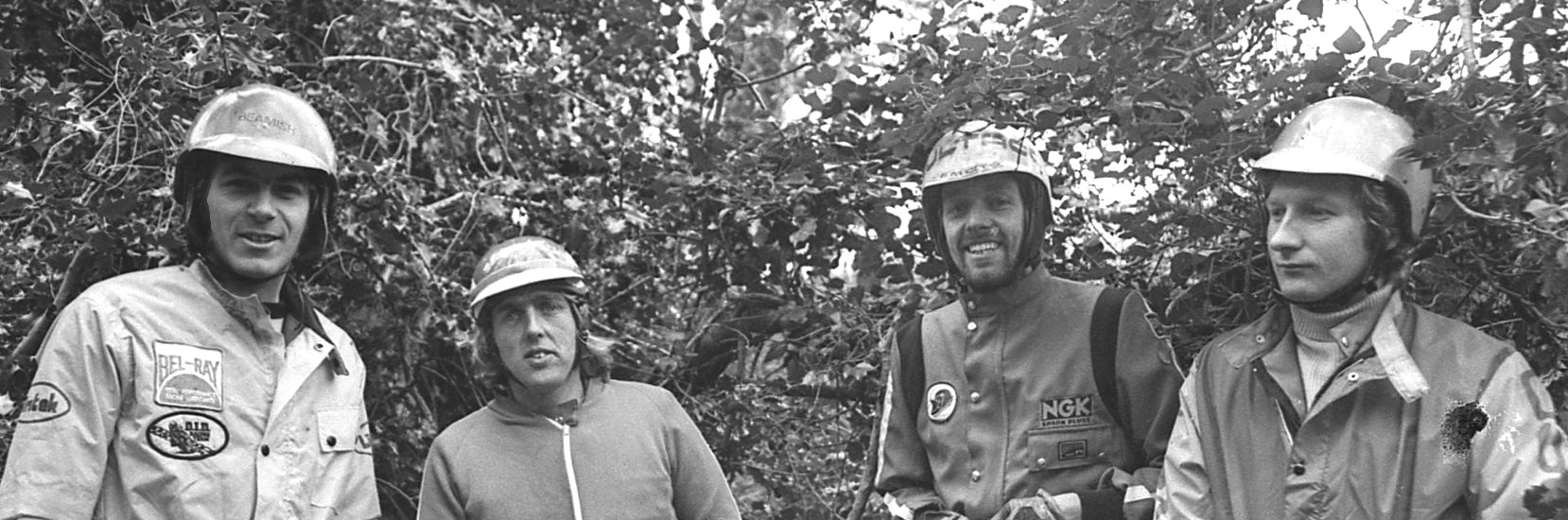
1969 Scottish Six Days, early morning maintenance in Fort William. The 42 bike is the Bultaco of Thore Evertson, who is standing behind. On the left is Stig Igelstrom and middle is Roland Bjork. Photo courtesy: Mats Igelstrom.

The best overseas rider in the SSDT that year was Roland Bjork also from Sweden. The same year, Thore also finished in tenth position in Switzerland at the FIM European Championship at Oberiberg. He followed that the next year in Poland with a second place podium position at Szklarska Poreba.

1969 Scottish Six Days Trial awards in Edinburgh – Front row from left is George F. Simpson, Stig Igelstrom, Mrs Aine Igelstrom, SSDT Secretary Tommy Melville and SSDT Chairman, George K. Baird. Second row: Thore Evertson and Lars Sellman (brother of Benny Sellman) Back row: Roland Bjorck (Best Overseas Rider) and Sven Johansson. The riders were all from Sweden, Karlskoga MK riders.

From 1970 until 1976, Evertson rode only Ossa machines and was supported by the Scandinavian Ossa importer, Tan Trading who also sponsored Håkan Carlqvist on an Ossa when he first started racing motocross. Thore purchased his first Ossa trials machine, the 250cc ‘Pennine’ model, from Tan Trading in 1970.

With the Ossa, Thore competed in a further six Scottish Six Days events. In the 1972 trial he was the best foreign (Overseas) rider on the 250cc Ossa MAR, collecting the Edinburgh Trophy, he was thirteenth in the trial on 104 marks lost.
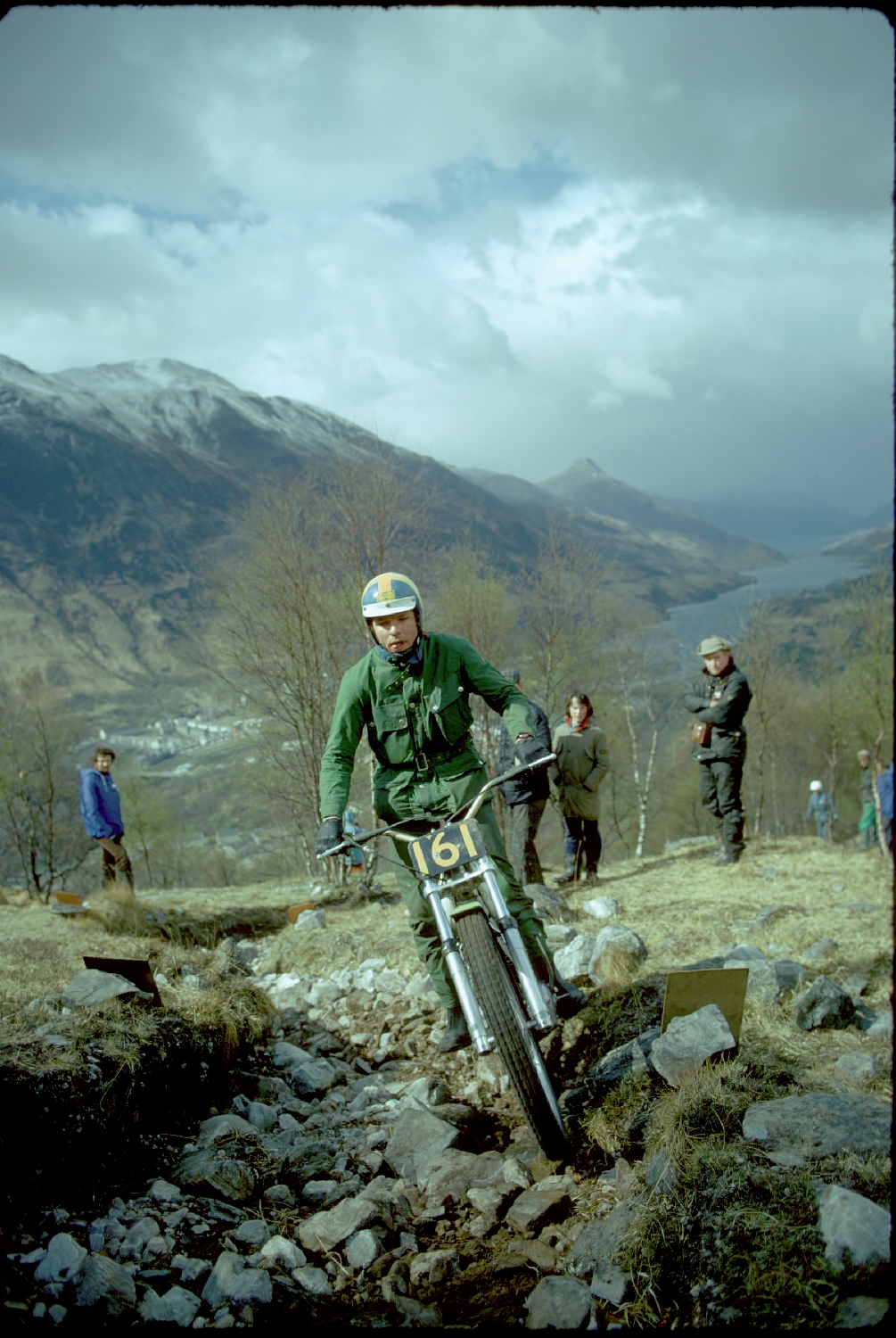
Thore Evertson (250 Ossa) captured in 1972 at the SSDT on Loch Eild Path. Photo: Eric Kitchen.

The following year, Mick Andrews had moved to ride for Yamaha which left Sheffield’s Dave Thorpe as the Ossa factory’s top runner and Evertson was in the top ten in the SSDT, claiming fifth position on 69 marks, just two marks adrift of Thorpe, with the winner, Bultaco mounted Malcolm Rathmell winning the trial on 52 marks. Evertson was also a day leader on the first, and best performer on the last day of the trial winning the Ossa UK award. Thore was then regarded by the organising committee as the first serious overseas contender of the SSDT, again he picked up the Edinburgh Trophy for the second year in succession.

1973 – SSDT Best performances on First Day – Mick Andrews (Second overall, England, Yamaha); Thore Evertson (Fifth overall, Sweden, Ossa) & Fernando Munoz (Fourteenth overall, Spain, Bultaco) Jointly awarded the Montesa Motorcycles Salver.

1974 and Thore was back in Scotland in the month of May with the 250cc Ossa, and this time he claimed a podium position, coming back to the Edinburgh finish line in third position, winning the ‘Nelson Challenge Trophy’, having lost 55 marks with the event winner, Martin Lampkin on 41 marks. He won the Edinburgh Trophy three times in succession, never before achieved by a foreign rider. He also was joint leader on the first day of the event.

The following year, 1975 the Spanish Ossa was now available as a 310cc and Thore had some support from ‘Tor Line’, the Gothenburg shipping company, but Thore’s result was well below his 1974 finish, he was thirteenth on 94 marks, but those who were ahead of him were all now World Championship contenders, including Finland’s Yrjo Vesterinen. Charles Coutard was the best overseas rider on his factory Bultaco. Dave Thorpe had torn up his Ossa contract and was now riding for Bultaco, taking the first round win in the newly created World Trials Championship in Ireland in the February. In the Swedish round in August 1975, Thore could only manage a twenty-first place, with new Swedish kid on the block, Ulf Karlson (Montesa) coming second to eventual champion, Martin Lampkin (Bultaco).

Evertson speaks very highly of Dave Thorpe. Thore Evertson: “Dave Thorpe is a legend.”
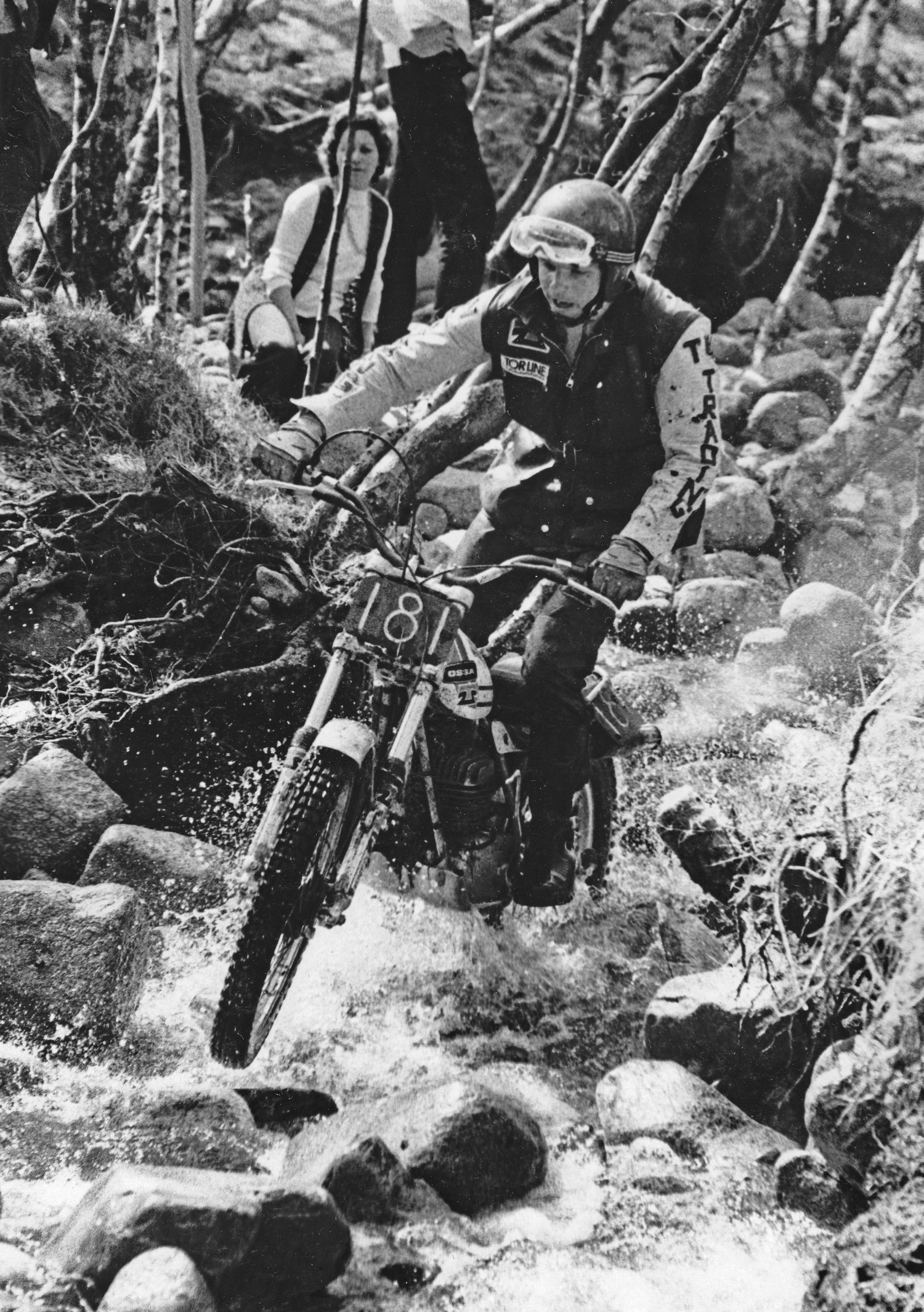
Thore Evertson on the 310cc Ossa in 1975 on ‘Ben Nevis’ at the Scottish Six Days. Photo: Rainer Heise.

Thore’s final attempt at the SSDT was 1976 on the 350 Ossa and he posted a fifth position on 68 marks with eventual winner Martin Lampkin on 37 marks who was the holder of the World Championship at that point in time. By now Thore was up against fellow Swede, Ulf Karlson of Montesa who would of course become World Champion a few years later in 1980.

Evertson’s best FIM World European Championship performance was in 1974 on the 250cc Ossa in Richany, Czechoslovakia, winning the round, he was 24 years of age at the time. He also scored a further four podium positions in the European series. He also was in the top fifteen ten times in the FIM World series from 1975 in the fourteen trials he took part in.

1976 was to be his last season on the Ossa and switched to a privately entered Bultaco for 1977 and until he retired from the sport.

Thore was Swedish Junior Trials champion in 1967 and was 1972 Senior champion.
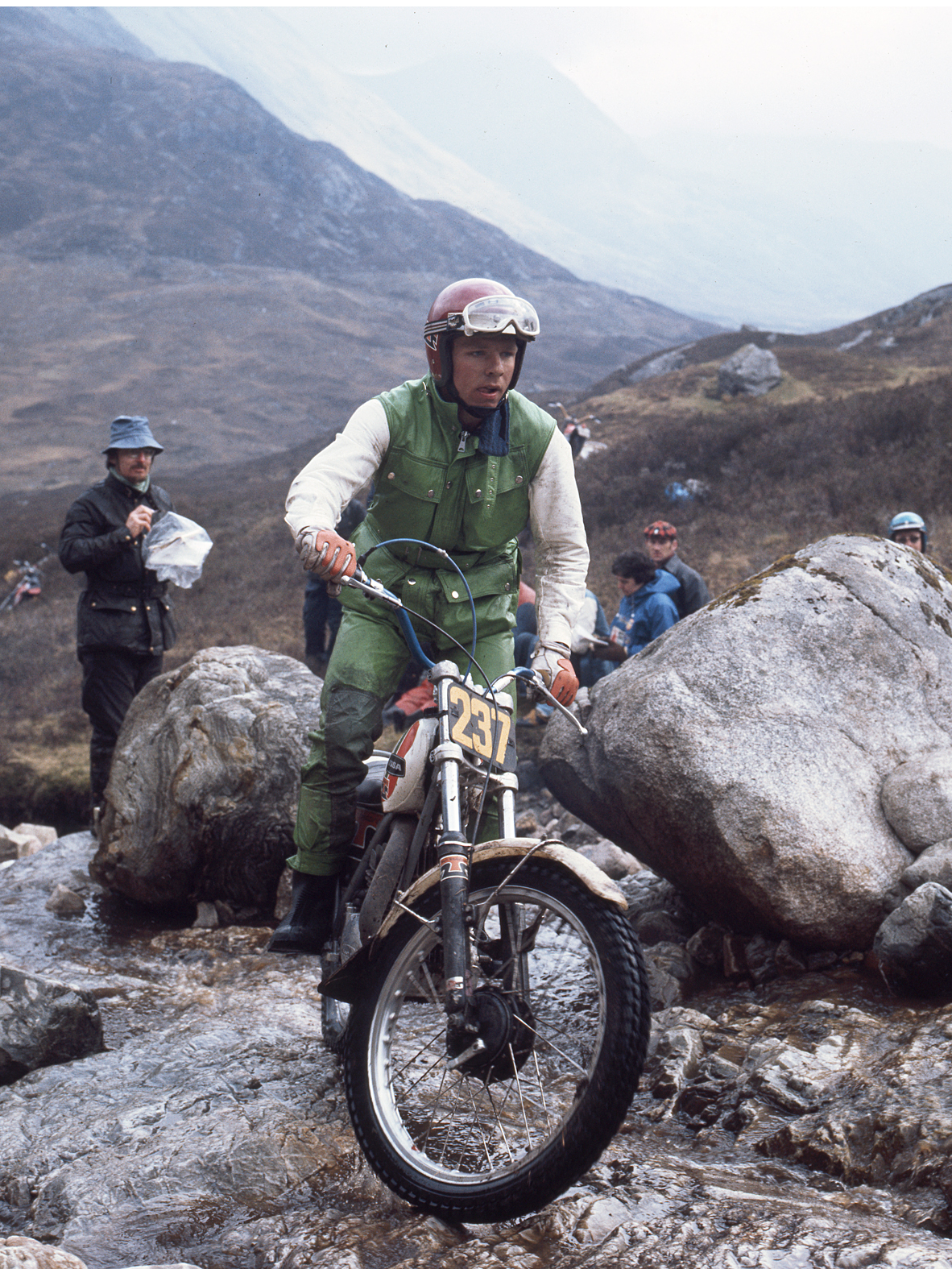
1976 at the SSDT on the 350 Ossa, Thore is captured here on ‘Callart Falls’ by Eric Kitchen. The Tan Trading decal is visible on the front fork leg.

Thore embarked on a short career in speedway from 1977 until 1979. He was the Clerk of the Course for the FIM World Championship trial in Karlskoga in 1980.

For the last twenty years, mountain bike riding has been his main interest. He has a love of the outdoors, becoming three times Swedish masters champion, World Champion for fireman-master class and a silver medalist in the World Championship masters +65 at Lillehammer in Norway in 2014.

Thore Evertson in his home workshop at Karlskoga in 2024 wearing his Trials Guru VIP cap.

Thore: “Trials played a large part in my life, but here are only bikes with pedals in my house now, no motorcycles.”

Thore Evertson: “This is a photo from the first time outside with my Trials Guru VIP cap. The stream you see me standing in was used many times when the Trösa Trial was part of the European Trial Championships. So we are talking the time of mid-sixties to early seventies. So Sammy Miller, Gordon Farley and perhaps Dave Thorpe among other British riders rode in this place.”
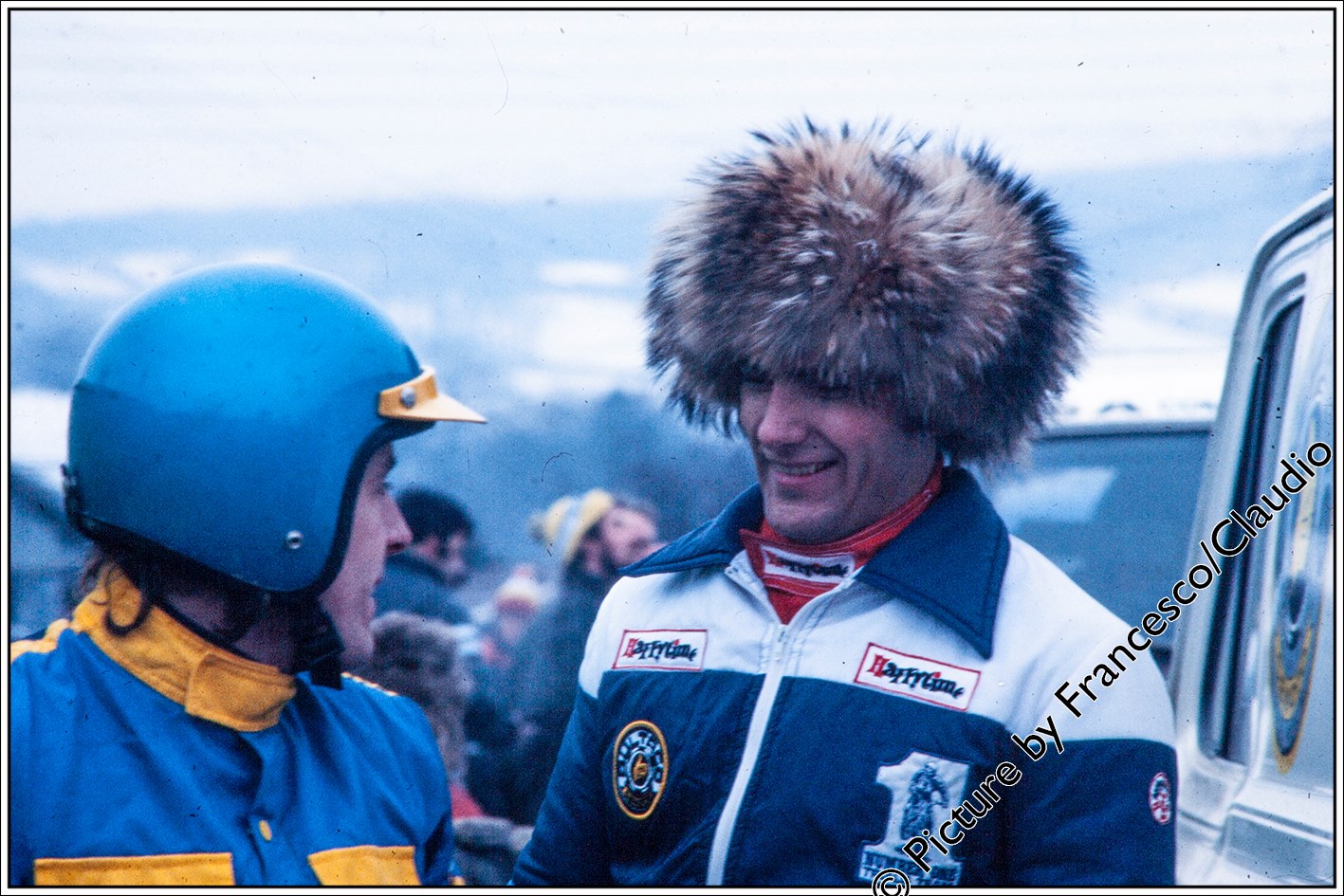
Ulf Karlson and Yrjo Vesterinen – Photo: Claudio Picture.

Yrjö Vesterinen on Thore Evertson: The Viking warrior of Sweden, Thore Evertson, comes from a long line of high calibre Swedish trials riders.  The hey day of Swedish trials riding was in the 1970s.  There were two groups within Sweden.  One was from the Gothenburg area consisting of such famous riders as Ulf Karlson, Benny Sellman and Hans Bengtsson, all winners of European Championship trials, and Karlsson later becoming Sweden’s first and only World Champion in 1980.

The other centre of significance was the Karlskoga area.   For a number of years Karlskoga ran the famous Trösa trial, with sections not dissimilar to the Six Days.  Karlskoga boasted the highest concentration of streams and small rivers that I had ever seen before, when I first rode there in 1969 as a junior.

Karlskoga was the breeding ground for quality riders from the mid 1960s on.  Roland Bjork was the first.  Thore Evertson followed in Roland’s footsteps and became the golden boy of this famous trials area.  Thore shone in Scotland and became the first non Brit to challenge for the victory there.  He also won a European championship round, in Poland in 1970.

I remember Thore travelling mainly alone or with his girlfriend.  The Gothenburg gang travelled mainly together.  From experience I can say it would have been a long and lonely drive from Karlskoga to Barcelona.  Even longer departing from Finland! 

In order to succeed you needed to be some sort of semi professional traveller.  Borders were not open, every country had it’s own currency.  Bikes and cars needed to have international documents and drivers needed an international driving licence.  You needed to know what to eat and more importantly what not to!

Thore and I didn’t speak very much.  He seemed happiest doing his own thing.  He wasn’t unfriendly, just quiet.  Throughout his career, as far as I remember, he rode the Ossa.  Could he have done better on a Bultaco or Montesa?  Would he have done better with more factory support.  I would say inevitably yes.  He chose to stay loyal to Tan Trading, the Ossa importers in Stockholm. 

Nowadays Thore and I are Facebook friends.  Thore cycles a lot and posts nice pictures from around Karlskoga.  We do not speak with one another, but quite often we post thumbs up on the pictures we see.  Recently I saw Thore posting a couple of pictures of him riding in the dark with lights.  He said he likes cycling in the dark.  Funnily enough I like cycling in the dark too! Enjoy your cycling and keep well my warrior friend. – Yrjö Vesterinen

Thore Evertson rode against the very best riders in the world of trials during his career with Ossa, beating many in the process, being a man of few words, his results speak for him.

‘Thore Evertson – Made In Sweden’ article is the copyright of Trials Guru, 2024.

Apart from ‘Fair Dealing’ for the purpose of private study, research, criticism or review as permitted under the Copyright, Design and Patents Act, 1988, no part of this article may be copied, reproduced, stored in any form of retrieval system, electronic or otherwise or transmitted in any form or by any means, electronic, electrical, mechanical, optical, chemical, photocopying, recording or otherwise without the prior written permission of the author as stated above. This article is not being published for any monetary reward or monetisation, be that online or in print.
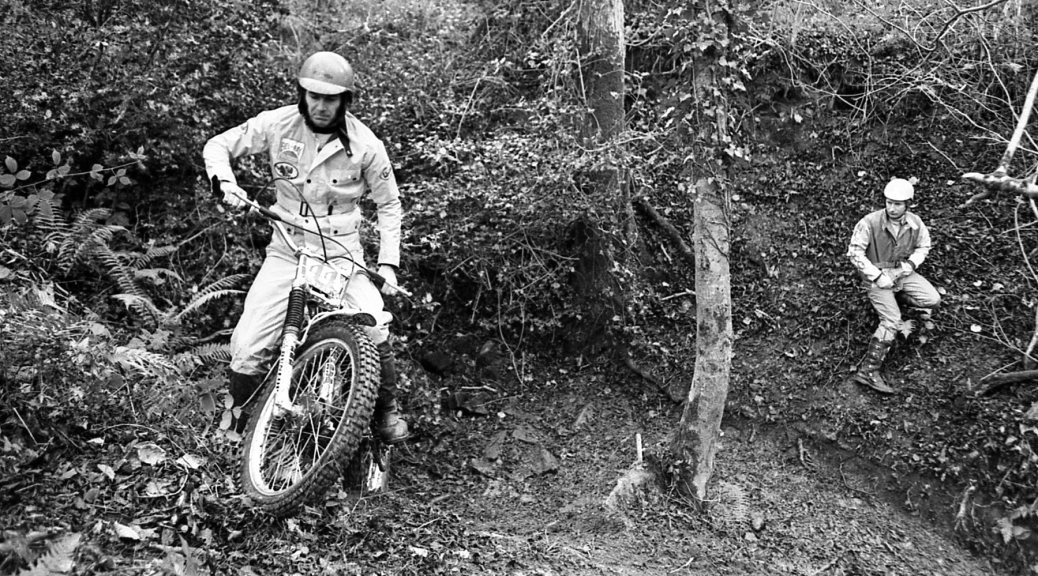
Mike Naish chats with Brian Higgins

Words: Mike Naish & Brian Higgins

Photos: Mike Rapley; Eric Kitchen; Rainer Heise; Mike Meadows.

Main Photo: Mike Rapley.

I want to introduce you to perhaps one of the most successful riders the South West Centre has produced. He was a works rider for numerous manufacturers, ACU Centre Trials Champion ten times, British Enduro Champion, all round motocross rider, gold medals in the Trophy Team and Vase Team representing Great Britain in the ISDT now ISDE. Series Manager of the ACU British Motocross Championship and representative of the UK at FIM congress meetings. Throughout his life it is clear that there has been, and still is, real dedication to the sport. This is the difference that makes a champion, from an also-ran. It is of course Brian Higgins.

Mike Naish: Brian, tell me about your early days?
Brian Higgins: “I was born in 1953 about ten miles from Mary Tavy near the sections at Littory Woods. We moved into Tavistock when I had the bike shop and then into Mary Tavy about ten years ago, so I have lived in the same area all my life. I converted my house from three cottages.
Although I was self taught, my father was always interested in bikes and I suppose I got my interest from him. He bought me an old road bike when I was five or six. I spent all my time and all my pocket money on petrol to ride the bike. Both mother and father were used to going and watching motorcycle events, mainly scrambles, from before I was born. I remember being taken to Devonport which was our nearest course in those days. There was a scramble on almost every Sunday from March until September.
My interest was in bikes in general, mother and father held me back from competing in scrambles, but they encouraged me on trials thinking it was a safer form of sport. I always had their support and they took me all around the country with the car and trailer for trials.
I never had a road bike as such. I started off on a 1959 197cc Excelsior off-road bike for riding rough around home but I wrecked that so quickly. When I was eight or nine, I had a 500 Triumph spring hub twin but it was so heavy for me, that if it fell over I had to wait until somebody came to pick it up
.”

MN: What was your first competition bike and Trial?
BH: “My father bought me a 197 Greeves in 1967 and I distinctly remember the registration, it was 7LHK. The next bike to that was when father, unknown to me, bought Roger Wooldridge’s 250 Bultaco when he packed up riding in 1967.
My first Trial was the Tiverton Hookway Trial at Farmer Leigh’s place in 1968. I remember that I lost 212 marks. I don’t think I was quite last, but at least I finished. It wasn’t that I wasn’t fit, I just didn’t know what I was doing. I kept falling off and having to pick the bike up. Mum and Dad took me there with a car and trailer but they did not have much knowledge of how to ride sections, I just struggled around on my own and learnt at my own pace through experience. The Bultaco was just about the best bike about then, so I set about practising on the type of sections that I had ridden that day
.”

MN: Were you better at or did you prefer rocks or mud type sections?
BH: “I don’t remember particularly preferring any type of section. I was more used to rocks because I set out a group of sections on the moor to practice on, some thing you couldn’t do today. I used to practice on real hard stuff, but the rocks were really grippy type rocks and I would ride the tops of them rather than find a route around them. I had a route of probably fifteen sections, not when I first started practising, but two years later I would never leave one of those sections until I had cleaned it three times consecutively. It was really hard training. I would not come home until I had done it even if it was getting dark. I never had anyone to practice with because there were no other riders living around me at that time.
I remember how nice it was when a group of Japanese riders came over when I was riding for Honda, it was nice to go out with them practising and finding different types of sections to ride.
I was so lucky with the moors out there because as long as you didn’t cause a nuisance you could go out there and ride
.”

MN: Did you join a local club?
BH: “Ted Cornish who was friendly with mother and father got us involved with the Torridge club.
I won a Novice award fairly quickly in an Open to Centre which upgraded me to Non-expert and then there was four or five awards which upgraded me to expert, so the practising was paying off.

I represented the Centre at the Inter-Centre Team Trial in 1969 as I won a few Centre events, and again in 1970 when the South West won the event at Huddersfield.

MN: How many times did you win the ACU South West Trials Championships?
BH: “Ten times in eleven years, Martin Strang managed to pip me one year but I had it back off him the next year.”

Left to Right: Brian Higgins, John Luckett, Martin Strang, Allan Hunt – Photo: Mike Rapley.

“South West Centre champions went from a period with Roger Wooldridge then Ian Haydon had his years followed by myself. Poor old John Luckett was second to everyone.”

Ian Haydon (Montesa Cota 247), was a multiple SW Centre champion – Photo: Mike Rapley.

MN: What sponsorships did you receive?
BH: “Well, initially it was my parents, but then I had a Bultaco from Stuart Wiggins in 1970 for about four weeks, but out of the blue then I had a call from Comerfords who organised a deal through Sammy Miller for me to ride Bultacos, which I did until 1973.”

Brian Higgins with the Sammy Miller supported 250 Bultaco Hi-Boy, BOD2L

“Then I went on in 1974-5 to one of Sammy’s hi-boy frames, that was to compete in the British Championships, Southern England Nationals and selected World Rounds. The first 325 I rode was Sammy’s old bike EOR2K. When Sam went to Honda and was Honda Team manager I rode the 125 and 250 and then the 305.

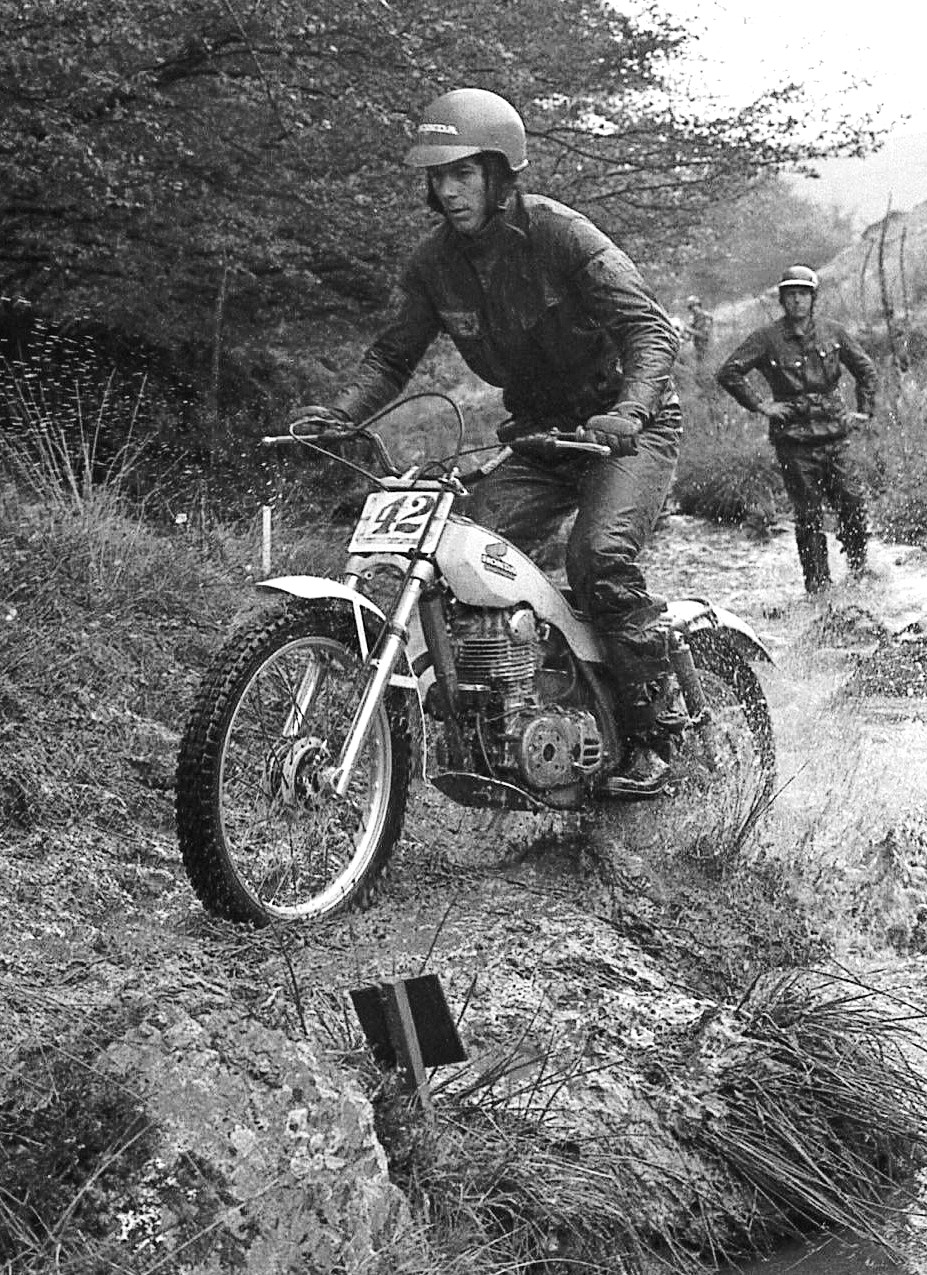
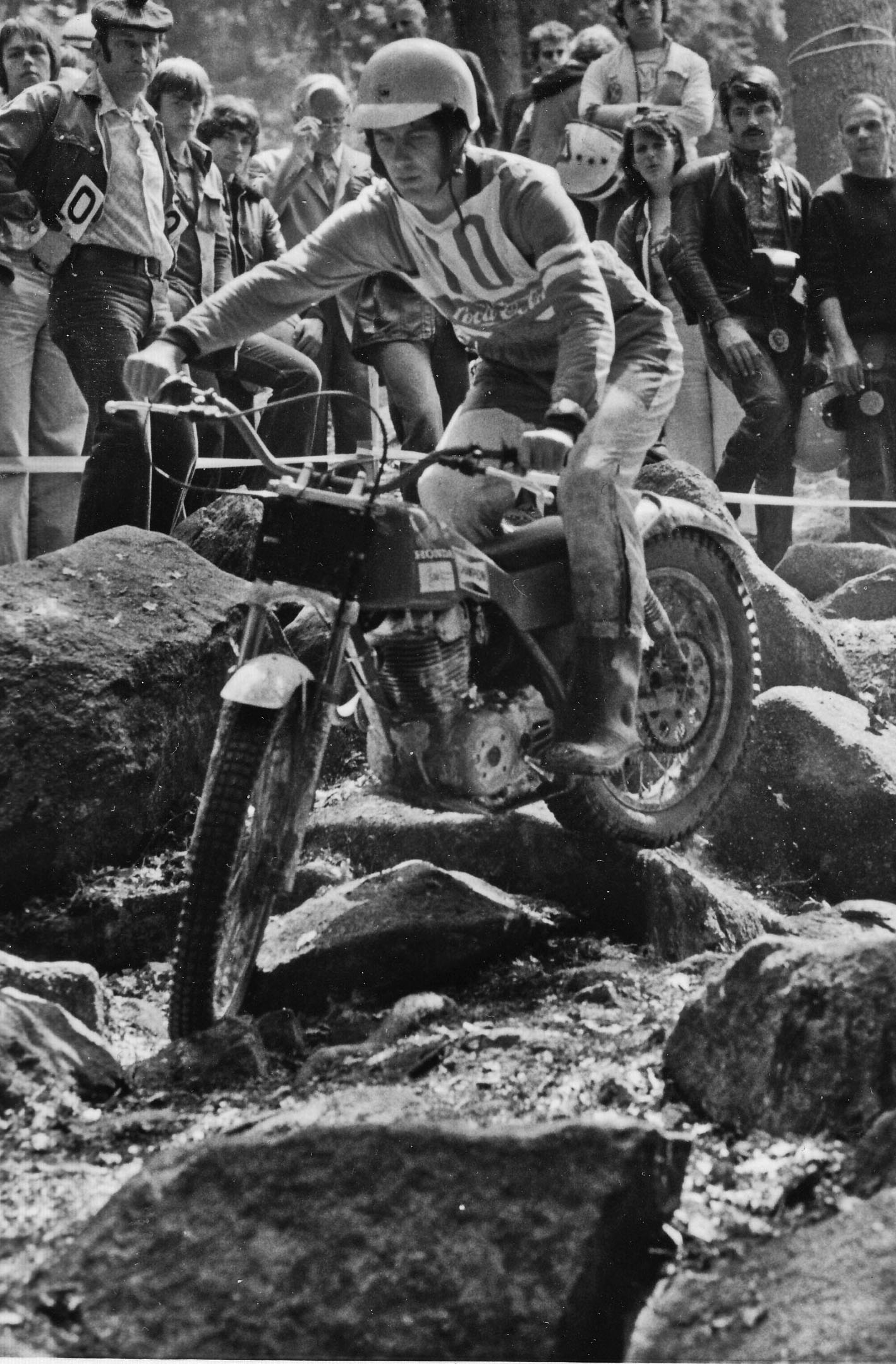
Brian Higgins, seen here on a factory Honda TL300. – Photo: Mike Rapley.

The 1975 to 1976 305 Honda was the best bike of its day and I really liked it. It suited my riding style although we used to have problems with the carburettor spitting when it was cold. You just couldn’t get over it, you could turn the tick over up until it got really warm but they didn’t cure it for five or six years because Steve Saunders used to have the same problem after me. With all the resources in Honda you would have thought they would have sorted it out sooner.”

World Trials action on the Honda at Gefrees in Germany in 1976 – Photo: Rainer Heise.

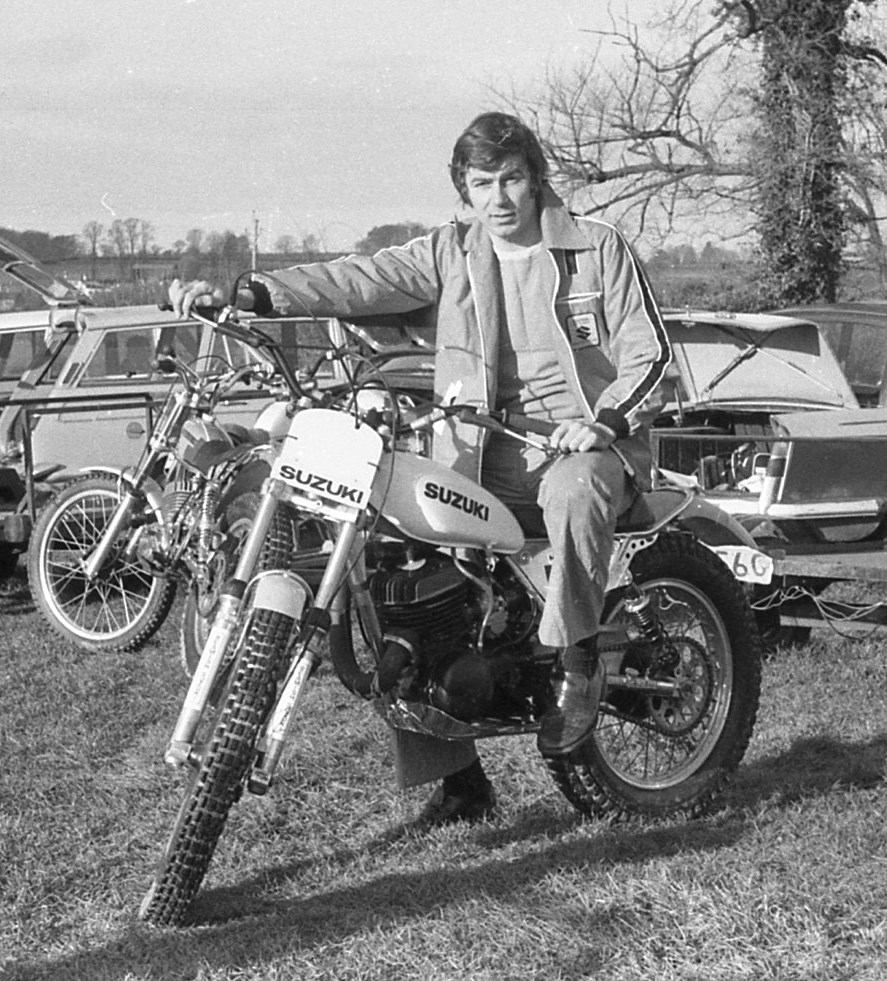
The situation with Sam was a bit strained at times and Brian Fowler got me involved in Suzuki, of course the Texaco sponsorship money was about so I rode a Suzuki 325 in 1976 to 1979 and that also when I started motocrossing.”

On the Beamish Suzuki – Photo: Mike Rapley.

MN: Did you give up trials when you started Motocross?
BH: “I started doing the Enduro championship and then I rode in the ISDT. I had a Suzuki PE250, the first one, but I also managed to get a twelve month old motocrosser out of them by saying it would help my enduros. Of course I didn’t tell them that it probably would not help my trials. I was beginning to get a bit disgruntled with trials as you would get ten marks docked if you got to a section late, which with all the queuing was not difficult in championship events. Then you could get ten marks lost if the bike was considered too noisy. That was why I was quite glad to move into enduros and motocross, of course you could earn a few extra quid in prize money as well.

MN: So where were you working at this time?
BH: “I was manager of a furniture shop in Launceston. There were a few amusing incidents there. I distinctly remember this area we had for building wardrobes. We had a line of them and we had the back out of one of them and you could open the wardrobe doors and walk through to an area that was my little bike workshop area. I had the bike in there during the week and used to try different things on it. There were some town steps out the back and I used to try it out up and down the steps. Of course I was absolutely dedicated to trials and bikes completely at that time. And success is due in great part to dedication to the task to be done. With all the training I needed to do I packed up work after one year with Suzuki, and I went full time with them for two years.
After that I had two good years for Honda. I paid for my first house outright in those four years it cost me £9,995
.”

MN: Did you do many World rounds for Trials?
BH: “I probably did about twenty world rounds in Europe from Austria to Belgium. I found it quite hard because I was not practising the same as the other guys who used to go to the venue and practise for three or four weeks beforehand. I was only picking up the bottom end of the points with two or three points per event. It was very much ‘us and them’ in those days. When you went to Belgium you were on about twenty marks more than Eddy Lejeune just for being English, if you see what I mean.
In 1979 I was British Enduro Champion on the PE Suzuki. I rode in two ISDT’s one in the Isle of Man and one in Austria. I was in the Vase team when we rode in the Isle of Man and in 1976 I was in the Trophy Team in Austria at Zeltweg, when Great Britain finished third. Ernie Page and I were both on PE Suzukis.
Father used to change my tyres on the trials bike, but when I was preparing for the ISDT I used to practice through Littory Woods, find the biggest bog I could then come home and change the tyre whilst it was covered in mud, no security bolts we used to chisel the rims
.”

MN: What about SSDTs?
BH: “I did eleven or twelve SSDTs from 1970. Four or five started from Edinburgh. Riding every weekend I soon found that wasn’t enough and I used to go practising nearly every day for four or five hours. My best result in the SSDT was ninth on an Ulf Karlson replica Montesa.”

Brian Higgins on the 305 Honda in the 1976 SSDT – Photo: Eric Kitchen

MN: Did you make many close friends during that time?
BH: “No not really, because it was very competitive and riders were paid on results and were professionals. Mick Andrews was a good example of a professional rider when he was riding for Ossa and Yamaha. Vesty was the ultra professional.”

MN: What happened next in your career?
BH: “In 1980 the money fell out of Suzuki, which followed on with all the Japanese makes. The deals were not about so I picked up a Gori contract which meant I had to do the British championship, Nationals and the British Enduro Championships. Their Enduro bike wasn’t such a bad bike because it had a Rotax engine and I did much better for Enduro’s for them than Trials. Their trials bike was like a dated SWM. One or two years behind the opposition, so I said to them that this bike was not competitive for national trials, and from the day I said that, I literally gave up Trials. I had the deal to carry on doing the enduro championship the following year. They decided that paying me just to do eight rounds of an enduro championship just wasn’t a good proposition, so that came to an end at the end of that year, and basically I just went by myself, doing what I wanted to do after that. I did very little travelling from then on.
From 1982 or 83 onwards I had Tony Gorgot’s 330 Montesa through Jim Sandiford. I kept that for four or five years and did about ten trials on it, that’s all. By this time I was getting involved with the organisational side of motocross and that side of it. I never thought I’d say it, but I lost interest in trials really. I still used to go and watch a few British championship rounds.

Brian Higgins (Suzuki) – Photo: Mike Rapley

MN: I seem to remember you had a bike shop?
BH: “Yes, I had started the bike shop in Tavistock in 1981, I built the shop up and that was quite time consuming. We were an off-road dealer but did a few road bikes as well, with an agency for Montesa, Maico. We started Husqvarna in 1983 and 1984 when a load of cheap bikes became available, we had the first Water cooled 250 and heavy lumpy 500 Two stroke. I finished with the shop about the same time as John Banks finished with his. I am still renting vehicles and have been for about twenty Years. We have forty vehicles in all.
After Torridge ran their first National scramble I took over the lease of Torridge scramble circuit which also took a bit of time just when I was developing the bike shop, which is really when the riding as such, stopped
.”

MN: How did you get involved in ACU organisational activities?
BH: “Torridge started running Nationals and then British championship motocross and our course preparation was probably about as good as anybodies. I was identified as sort of a half decent Clerk of the Course and it snowballed from there. I joined the ACU Motocross committee and attended FIM meetings including the Jury meetings.
I did about thirty hours a week for the ACU which was quite time consuming. I did all the track inspection for the eight round Maxxis British Championship,
I was the secretary for the eight round MMX championships for under 21s, four-strokes, sidecars and quads and seven rounds of the BYMX which is the Youth Motocross. I did the track inspections for all those tracks about a month before the event in the UK including Northern Ireland. For the Maxxis I was also the Series Manager doing all the sponsorship arranging and for each event
.”

Brian J. Higgins on the Beamish Suzuki – Photo: Mike Rapley.

Mike Naish: Brian Higgins has had a long career in Motorcycle Sport and one which he has obviously worked hard at with dedication throughout his involvement, from rider through to management. I thank Brian for his time to enable this article to be written. My thanks also to Mike Meadows for the use of his photos and information when preparing for this interview.

‘Mike Naish chats with Brian Higgins’ is the copyright of Trials Guru and Mike Naish.

Apart from ‘Fair Dealing’ for the purpose of private study, research, criticism or review as permitted under the Copyright, Design and Patents Act, 1988, no part of this article may be copied, reproduced, stored in any form of retrieval system, electronic or otherwise or transmitted in any form or by any means, electronic, electrical, mechanical, optical, chemical, photocopying, recording or otherwise without the prior written permission of the author as stated above. This article is not being published for any monetary reward or monetisation, be that online or in print.

The Outlaw Dave H. Rhodes, a Welshman in Canada

Words: Trials Guru & David H. Rhodes

Photographs: Various Photographers; Iain Lawrie

We catch up with a trials super-enthusiast who usually shies away from attention and lives in Okanagan Valley of B.C., Canada. Inducted into Canadian Motorcycle Hall of Fame in 2018, he runs a trials shop and is a frequent blogger covering trials. Now well into his eighties and with no signs of stopping, so here is the story of Dave Rhodes, a Welshman in Canada.

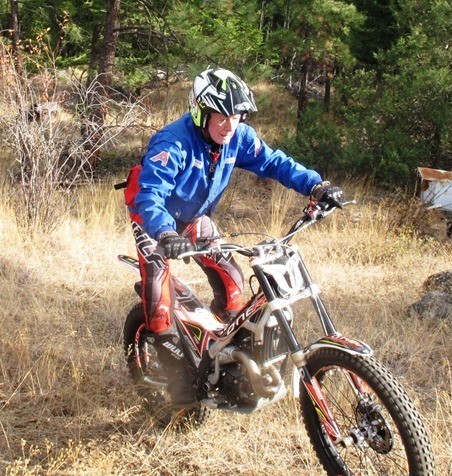
Dave H. Rhodes in Canada is a Trials Guru VIP. Dave runs Outlaw Trialsport in Vernon, BC in Western Canada.

Trials Guru: Dave, are you Welsh or English?

Dave Rhodes: “All Welsh on my Mothers side, but actually born at Heswall near Birkenhead. We moved to live near Oswestry on the Welsh border at the start of World War 2 when Dad went in the Army. Interestingly my Dad’s mother was Scottish and a Fraser, but she died when he was very young, his Father was English. Oswestry has a lot of Welsh heritage and my wife is Welsh. I always think of myself as being mostly Welsh“.

TG: Take us right back to the beginning please?

It was back in 1953 when late one evening, I answered a knock at the front door of our house in Oswestry. What I saw that night started me on a lifetime of riding Motorcycles. It was an old school chum, who was all decked out in motorcycle gear, and outside, gleaming under the lights, was a beautiful BSA Bantam Trials model.

At age fifteen and just starting a five year apprenticeship as a Photo-Engraver, I was in shock, wondering how could this lad afford such a machine?

Well, that certainly got my mind rolling, and from that point on, I scraped every penny I could  from my  wages, until I could afford the down payment on a brand new 1955 James Captain. My buddy who lived close by, had also caught the bug, and he now had a 197cc Francis Barnett.

At this time not long after the second World War, there was very little traffic in our area, so my buddy Malcolm and myself, were on our bikes steady, tearing all around the Country roads. We soon found that a bunch of the local Motorcycle club lads, frequented the Milk Bar in town most evenings, and it wasn’t long until we became a part of the group.”

Dave Rhodes on the James in 1956 in his first trials event.

Everybody was very friendly, but it was when one of the crew came in one evening dressed in his Barbour suit, covered with red and blue dye. He had been out marking the course for an event the following Sunday. The lads explained what a ‘trial’ was and suggested we come out to watch. Well we did more than that, we followed the riders around the course, over the Welsh moors all very slippery and remember we were on road bikes.

After that, there was no holding me back and I part-exchanged my James Captain for a James Cotswold. Soon I was entering in trials all over North Wales and the Midland Centre, gradually managed a few awards. With the club holding a yearly scramble, it was time to have a go at that with the same bike, but with different gears and other minor mods, not that this turned out well, because I had a big crash in practice and bent the frame.

Later in 1957, I got really interested in road racing, as another club guy was into this and let me have a go on his Ducati 175. This was all very exciting, and I ordered a Ducati 125 from Fron Purslow in Shrewsbury. However, soon after my world came crashing down, when my elder sister died at age 27. Our family was devastated and I was persuaded to forget about road racing, my mother thought I would kill myself.

Dave and Babs Rhodes have been together more than half a century.

After that I lost interest in competition as I had also met up with a lovely Welsh girl by the name of Barbara Jones. We were married in 1962, and after spending our honeymoon in Italy, we decided to go back the following year by motorcycle on a Norton Dominator 600. Not many people were doing trips like that in those days.”

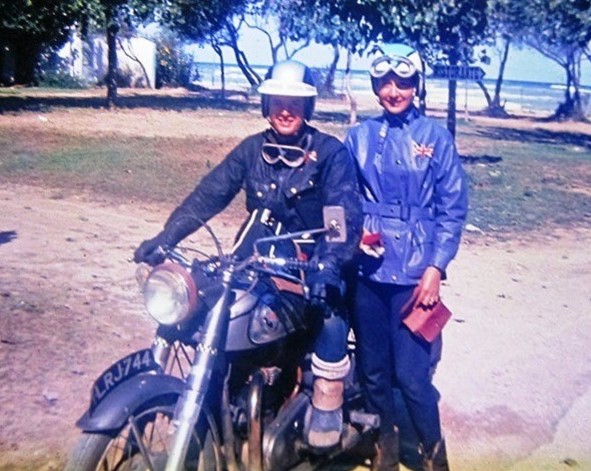
Dave and Barbara Rhodes with the Norton Dominator on the Adriatic Coast in 1963.

TG: So how did you end up in Canada?

With the arrival of our daughter Helen, my thoughts were all about the future and I was fed up with all the Welsh rain, I longed for pastures afield. Bab’s sister had married a buddy and they had moved to Canada,  so I began to check out the possibilities of jobs in my trade, eventually being hired by a Graphic Arts Company in Calgary. Alberta.

We arrived in Calgary on March 3rd 1965 at midnight after travelling for thirteen hours. The temperature was minus twenty degrees and all we could see as we left the aircraft was snow, and a bitter cold wind hitting us in the face. I remember thinking, what have I done?

TG: So did you take up motorcycling again?

Although we soon settled into our new home, my interests were more in fishing and the great outdoors. The only motorcycles I saw or heard about were Harleys and the only competition hill climbs on bikes using chains on the rear tires, not for me.

It wasn’t until 1969 that I happened to look into a shop on 10th Street in Calgary, called ‘Walt Healy Motorcycles’, then my world changed again because I saw a bike that looked more like the European brands. It was a Yamaha DT 250. Old  Walt seemed like a genuine guy and explained that the Japs were now making bikes that held up pretty good.”

TG: Did this rekindle the desire to ride trials?

The next step was attending the first big motocross race to be held in Calgary which was even covered by the US TV speed channel. All of a sudden I was keen and joined the local Calgary club.

It was at one of the Calgary club meetings that I met another English guy by the name of Terry Porter, we soon got chatting about trials as he was the top rider at that time and had even ridden in the Scottish Six Days although he failed to finish after knocking a hole in the side case of his Bultaco. Terry explained that everybody was on these Spanish bikes now that had been developed by the great Sammy Miller. This was a name I knew well because I rode the National Lomax Trial in Wales one year and Sammy won it.

It wasn’t long before Terry and myself were plotting English style long distance trials in the rugged forestry terrain near Calgary, and I had now bought his old Sherpa T, ironically beating him at the first two trials we held. We had a good turn out at these events with close to fifty riders on all sorts of machines.

My interest in the graphic arts was at an all time low at this time, having gone from being a darkroom cameraman to a sales job. I was very unsettled, and once again things were about to change. One of my sales calls, had me looking after the printing needs of a large Honda dealer in Calgary called Blackfoot Motorcycle, the owner being a likable Scotsman by the name of Bruce Cameron. Bruce was to sponsor me on a Montesa at one point. It was while we were having coffee one day, that I asked him how do I get into the Motorcycle business? Bruce asked what I thought I would like to do, to which I replied that I sort of like the idea of being a representative of some sort.

Well, Bruce said, ‘I wouldn’t contact Honda, I suggest you call Trevor Deeley in Vancouver, as Yamaha have just opened a Factory outlet there and may be looking for staff.’ Well they say timing is everything, and suffice to say, that after twenty-five years in the printing business, I was soon working for the Japanese, and that old guy Walt Healy became a very good friend.

This was a great time to be joining Yamaha, as Mick Andrews had been hired, and I put on a promotion in Calgary for Mick to show off the new TY 250. Trials seemed to be booming with all the major Japanese factories building bikes and hiring top European riders to promote them. Everything seemed perfect, when the President of the Calgary Motorcycle Club, Ron Mallet, asked me if I would like to put on a World Trial, as the FIM had just changed the European Championship to World Status. OK I said and just like that I jumped in the deep end, spending the best part of a year plotting the first ever 1975 Canadian World Championship Trial.

Looking back at that experience I still wonder how we managed to pull it off. Somehow, I plotted a sixty-nine mile loop with forty observed sections. I managed to enlist fifty observers into standing out all day in what turned out to be typical for Alberta, yes we had rain.

Of course I had seen a lot of the riders before having been to the Scottish Six Days in 1972, but because of the conditions, I had to ride ahead of the group, and having heard via a radio that Mart Lampkin said ‘What does Dave think we are, bloody Supermen’, I changed a lot of the sections to ease the difficulty. As it turned out, the scores were pretty much spot on with Yrjo Vesterinen winning on 41 marks.

In the 1970s, we were also riding cross country events on our trials bikes, and as these were notoriously difficult with 170 starters and only 10 finishers.  Quite a few trials riders did well, however things began to change and these events became more like Hare Scrambles, so it was time to change machines.  Now we had developed a new bike with the help of Walt, a YZ 250 fitted with a DT 360 transmission and other stuff that made it a very competitive.

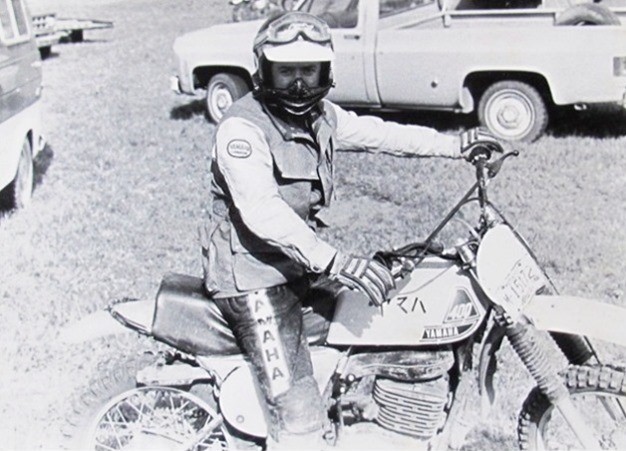
Dave at the Moose Mount 200 mile Cross Country event on the IT400 Yamaha in 1976.

This got the attention of my Japanese Sales Manager, who sent pictures back to the factory and soon we had the all new IT series. First the 175, then the 400. I think it would be fair to say that we changed the color of the woods blue with those models!

We continued racing cross country through the late 1970s with one memorable race in 1976 on the brand new IT 400. On the start line with 172 other riders, including former world motocross champion, Jeff Smith who was now working for Can Am. After two 100 mile days, I managed to finish third open bike and sixth overall, due a lot by following Smithy off the start line and tagging behind him for a while before he left me in his dust.

Unfortunately these early years of cross country racing in Western Canada were often poorly flagged, resulting in riders both getting lost and also injured.  In 1979 I had a serious accident when riding a borrowed Yamaha from the local dealer in Northern Alberta. I crashed badly with the bike landing on top of me, and my hand got caught in the rear sprocket, cutting off my left thumb. I didn’t take my glove off, instead I used the belt off my jacket to act as a tornique.  With everybody lost, I found myself all alone and I ended up walking 14 miles out of the bush by myself, before a trip to the Hospital in Edmonton and a seven hour operation to re-attach the thumb. This was in the early days of micro surgery.

In 1981 Yamaha gave me the Okanagan Valley of BC as part of my territory. I was usually driving  around 1500 km per week all over Western Canada. Now as most people in Canada know, this is a beautiful area and my thinking was that I was away all the time, so the family might as well live in a nice place.

ISDE 1983

The next big event that was looming up, was the ISDE in Wales. Yes I had to go and was soon putting together a Yamaha team to compete. This was with virtually no sponsors, everybody had to buy their bikes and pay their own way. My letters to some companies for support were unanswered, except for Mitsui in the UK. Yes they said they would supply us with a transporter.”

1983 at the ISDE in Wales.

Everything was going good, except we needed a big bore bike for the Trophy team, so once again I asked Walt for help and yes, we got a new Yamaha TT 600 for Pat Horan. Unfortunately we got zero help from Yamaha Canada except our Accessory manager Keith, managed to supply our team with jerseys and caps.

As the records show, the 1983 ISDE in Wales was tough, in fact very tough. Lots of DNFs in the muddy conditions. I told our guys to practice riding in muskeg before we went, they soon understood why.

Our Silver Vase Team managed to get second spot on the podium, plus won the Watling trophy. What a week, Mitsui were over the moon and faxed the news to Canada. However, Yamaha Canada gave no recognition to this brilliant effort, I was totally both shocked and disappointed and soon decided to hand in my notice.

There is no question that the ten plus years I spent working for Yamaha were the absolute best, in the 1970s they were on top of the World. We had great bikes and great champions like road race champion Stevie Baker and other off road riders. Our Trials team with Stan Bakgaard, were doing great. To me it wasn’t a job, but a way of life.

After a couple of years involved with Yamaha dealerships, I decided to start Outlaw Accessories, selling all kinds of stuff to the dealer network that I knew so well, our hand-built Outlaw toolbelts have been worn by many great riders. We became the importers for Optimol Oil and still sell this fine product which goes in all our bikes.

I still rode the odd cross country race, but again another big event was about to change my focus, the 1986 FIM world round in Vancouver BC. I went out to spectate, and could not believe how the bikes and techniques had changed. This was the time of the Rothmans Honda Team, watching Steve Saunders and Eddie Lejeune was simply amazing.

Dave Rhodes with his trophy collection.

So once again I was back into promoting trials, this time in the Okanagan Valley, which were a huge success. Many national trials and one event called the ‘Outlaw Trial’ that has now been going on for over thirty years.

At this time, we were selling TY Yamahas for Walt, but it was after 1992 that we had the next big change in our operation. We went to the Scottish Six Days once again to spectate and took Walt along with us.”

At the Scottish Six Days in 1992. Left to right: Scots rider, Harry McKay; Dave Rhodes and Walt Healy.

Yamaha had a Japanese factory development rider, Hiro Kamura on the long awaited liquid cooled, prototype TYZ and we had a chat to Mick Andrews, who told us this bike would be more streamlined etc when in production.”

Hiro Kamura on the prototype TYZ Yamaha in the 1992 SSDT on ‘Creag Lundie’ – Photo: Iain Lawrie.

Well, with Walt we ordered five units, but sad to say these were a disappointment. When the bikes arrived in Canada, no changes had been made, and they ran poorly.”

1992 – Dave with Hiro Kamura’s factory prototype TYZ Yamaha, complete with ‘Outlaw’ handlebar pad!

I phoned Mick Andrews and he said: ‘I know Dave everybody hates them over here’  What a let-down.”

The 1992 prototype Yamaha TYZ did not differ significally from the production models that arrived in 1993.

So that is when we started another venture, we became a dealer for Mountain Motorcycle of Coquitlam near Vancouver.  We knew Don Clark from being in the Industry, so when he called me and asked: ‘Dave how are you getting on with that Yamaha?’, I replied: ‘Don you know very well how I’m getting on with the Yamaha’, so he said: ‘How would you like to sell Beta and Gas Gas for us?’ I went to see him the very next day. That was in 1993 and we are still selling bikes for Mountain but now it’s TRRS and also Beta for Beta Canada.”

Dave Rhodes in his element, his workshop with a motorcycle.
Canada Motorcycles Hall of Fame induction 2018. From left: Al Perrett, Steve Crevier; Dave Rhodes; former world racing champion, Steve Baker and Bob Work – Photo: Miss Rhodes.

I’m 87 now, so I leave it to the younger crowd to host trials events these days, but still help out when I can and I still like to get out riding in the woods.”

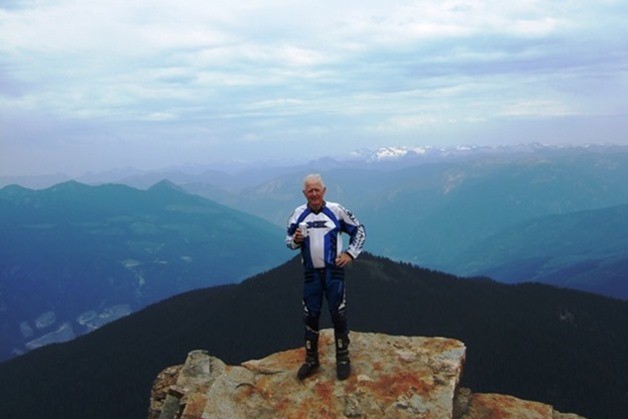
On top of the world at 8,000 feet – ‘Outlaw’ Dave Rhodes

‘The Outlaw Dave H. Rhodes, A Welshman in Canada’ is the copyright of Trials Guru and David H. Rhodes.

Apart from ‘Fair Dealing’ for the purpose of private study, research, criticism or review as permitted under the Copyright, Design and Patents Act, 1988, no part of this article may be copied, reproduced, stored in any form of retrieval system, electronic or otherwise or transmitted in any form or by any means, electronic, electrical, mechanical, optical, chemical, photocopying, recording or otherwise without the prior written permission of the author as stated above. This article is not being published for any monetary reward or monetisation, be that online or in print.