
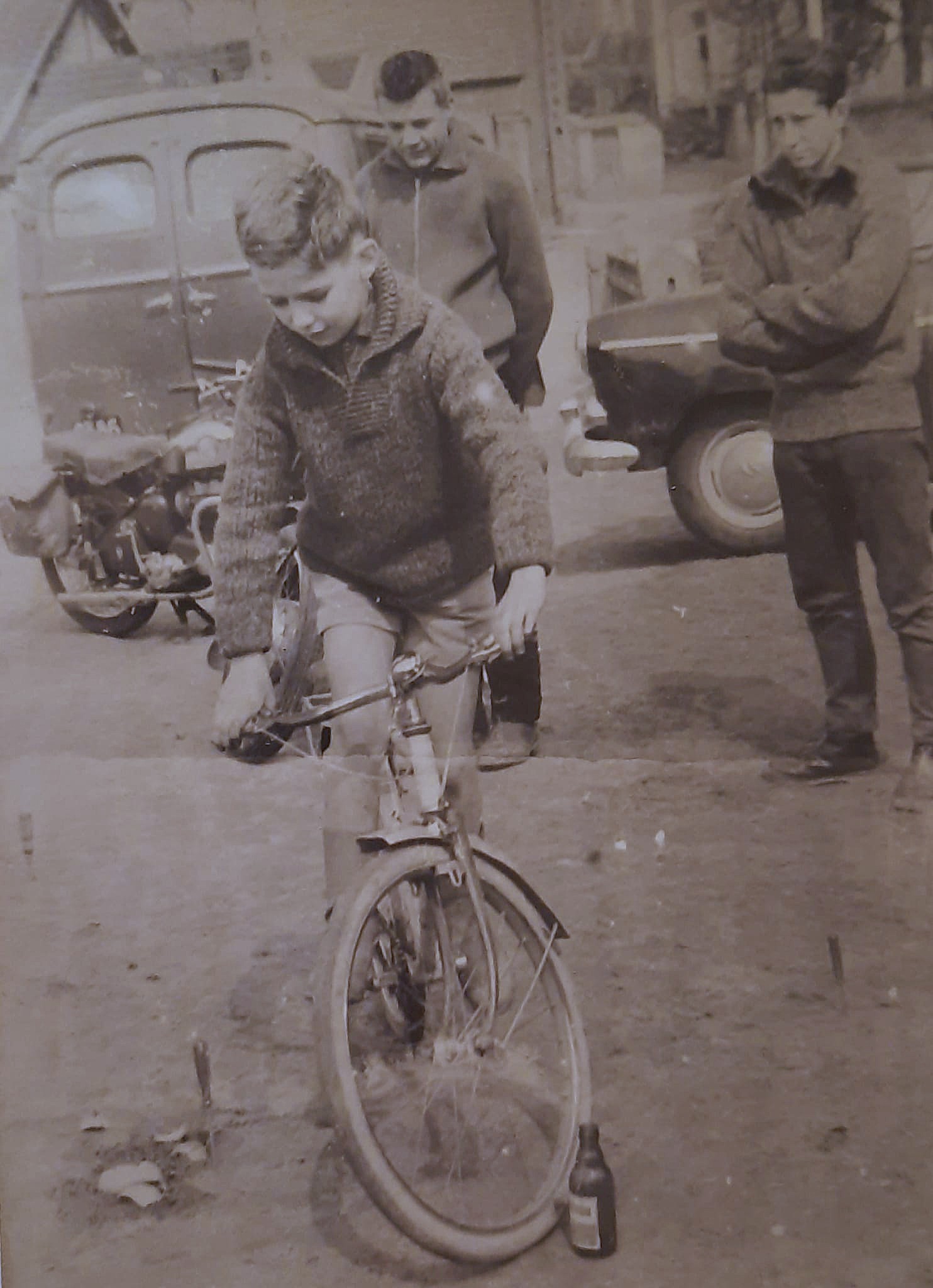
As a youngster, he began his two-wheeled adventures riding a bicycle through the woods before progressing to motorcycle trials, enabling him to follow in the footsteps of his father, Claude, who was regarded as one of France’s finest trials riders and enthusiasts. The youngster in question was, of course, none other than Charles Coutard.

Words: Trials Guru, Charles Coutard; Bernie Schreiber and Yrjö Vesterinen, with contribution by Jean Caillou.
Photos: Coutard Family Archive; Len Weed; Iain C. Clark; John Honeyman; Donald Young; the late Glenn Carney archive on Trials Guru; Jerry Hawker; Fiona Watson; Toon Van De Vliet; Jean Caillou; Olivier Barjon; Iain Lawrie; Juan Luis Gaillard/Bultaco.cat; Claudio Picture/ Jean Claude Commeat; Yrjö Vesterinen; Bernie Schreiber Collection; Walker Brothers Archive on Trials Guru; Didier Coste via Works Trials Bikes Owners Club. (Main Photo: Iain Lawrie)
Motorcycling heritage:

Born at Poissy in the Île-de-France region in November 1952 to Claude and Josette Coutard, he had a liking for two wheels from an early age, which is not surprising, given his family background.

Charles Coutard: “I have two younger sisters, Michèle and Dominique, who did a little bit of motorcycling, but they mainly helped my father a great deal with organising his events.”

Claude Coutard – A Pioneer of French Trials:
Charles’ father, Claude Coutard, who was employed as a social welfare educator with EDF. Claude first became interested in trials after attending an event in 1951, organised by the A.M. St-Cloud, the Trial de Noël at Buc. Keen to see the sport develop in France, he then became an enthusiastic competitor as well as an event promoter and organiser. His own riding career culminated in a runner-up position in the French National Championship, finishing behind Christian Rayer.
Together with Claude Gapin and Claude Peugeot, Claude Coutard formed the Motor Club Sochaux, helping to take trials beyond its traditional heartland around Paris. Until then, the sport had been largely concentrated in the Paris region, and the formation of the club played an important role in encouraging the growth and development of trials elsewhere in France.

His involvement with trials would span some fifty years. Claude eventually established a business near Lyon in 1971, known as Coutard Service, specialising in trials motorcycles.

Claude Coutard also enjoyed sidecar trials and experimented with various outfits, including those powered by Bultaco Sherpas.
The beginning of competition:
When Charles was 12 years of age, his father obtained a small 50cc Peugeot from the factory, which, with the assistance of Peugeot’s competition department, was converted into a proper little trials machine. This bike enabled the young Coutard to become a trials rider.

Charles continued to ride the Peugeot 50 until he was 16, during which time he won two Cadet Beginner Championship titles.

His father had ridden Greeves machines for some years, later switching to the more competitive Bultaco brand.

Charles then moved up from the Peugeot to a 100cc Bultaco Lobito in 1968, this machine was specially prepared for competition by the two Claudes — his father, Claude Coutard, and Claude Peugeot, another prominent French trials rider and enthusiast. It was on this machine that Charles secured his first French title, becoming French National Champion. The Bultaco association would become a very strong one over many years.

The following year, 1969, Charles was given the use of a new 250cc Bultaco Sherpa, the Type 49, loaned to him by the Bultaco factory. If Charles won the Expert Championship, he could keep the Bultaco. History records that he finished second in the International Championship behind Christian Rayer who was supported by Montesa at the time. However, Señor Bultó decreed that Charles could keep the bike. The following year, Charles was offered a factory contract.

Bultaco, the early years:
The year 1963 brought another important meeting, both for Claude Coutard and for French trials. Oriol Puig Bultó arrived to compete at Clamart, bringing with him a machine that immediately attracted considerable curiosity — the Bultaco Sherpa N 200cc.
Following the event, Claude suggested that Oriol try his Greeves, proposing an exchange of motorcycles. The British-built Greeves was regarded as one of the finest trials machines of its day, and the experience proved enlightening for both riders, offering each an opportunity to assess a different approach to trials machine design.
Just over a year later, in February 1965, the two Claudes, Coutard and Peugeot met up again, this time near Barcelona, in the courtyard of the Bultaco factory at Sant Adrià de Besòs . Their task was to select two of the first series of twenty-five, 244cc Bultaco ‘Sherpa T’ motorcycles, which had been developed over the winter of 1964 for the Spanish manufacturer by Sammy Miller, with the intention of importing them into France. Coutard took the machine numbered ‘0004’ and Peugeot the machine ‘0005’ back to France.
Charles Coutard: “My father and Claude Peugeot were invited by Senór Bultó to become the importers of the Bultaco brand, but finally it was given to Franck Lucas.
My father and Senór Bultó had very long discussions about many things, discussions between two friends.”

“My father and Claude Peugeot were very good friends, but they never worked together in business, except when they converted my 100cc Lobito into a proper trials bike.
Franck Lucas was a very nice chap, he spoke Spanish very well and lived in Toulouse, near the Spanish border, where he ran a motorcycle dealership – I think that’s what clinched it for Bultaco.”

“Franck Lucas was a motocross rider, 500cc French champion in 1966 and wasn’t at all interested in trials riding. I gave him a good bit of publicity and the trial models sold easily, but I had very little contact with him, I had direct dealings with the Bultaco factory, that is where I met Vesty.”
Sant Adrià de Besòs:
Charles Coutard: “My father Claude had visited the Bultaco factory long before I did, at the time I was very young and still at school.

“The first time I went to Bultaco on my own, I met F.X. Bultó, who very kindly introduced me to a young Finnish lad and asked if I could take him to a trial in the south of Spain, which was about a five-hour drive.“
“Luckily, I’d gone down to the factory with a friend who spoke good English, which helped me communicate with Yrjö Vesterinen, who was feeling a bit lost in this country. We arrived at the trial venue quite early and decided to give our motorbikes a test.“
“That test session turned into a competition between the two of us. Each of us wanting to do better than the other, of course. This was an extraordinary training session that bonded us for life.“
“The next day, Yrjö won the trial and I finished second behind him, just one point behind, after a great battle all day. That trial brought us closer together and, during our many trips, Yrjo taught me a bit of English.“
“No one from the factory was there during that trial, but on our return, F.X. Bultó took us into his office for a very long meeting, just the three of us, and that’s when he made us realise that we had everything to gain by travelling and training together to beat those devilishly talented Englishmen.”
Given that Charles Coutard and Yrjö Vesterinen were separated in age by just one month and rode for the same factory, which was at the very forefront of trials motorcycle development, it was perhaps inevitable that the two riders would become firm life-long friends.

Coutard: “The day Mr. Bultó said to me: ‘Charles, if we give you a motocross bike, you’ll win; if we give you an enduro bike, you’ll win; and of course you’ll win in trials too’ – now you’ve got to make a choice!’ – I chose trials.”
Manel Soler:
Manel Soler was the son of Juan Soler Bultó, the nephew of F.X. Bultó and was a development rider with the Bultaco factory as well as being a team-mate of Charles Coutard.

Charles Coutard: “Manuel was a real charmer and a very good friend. There may not have been a great deal to tell about Manuel, but one thing always stood out during training. He would watch us tackle a tricky section several times, only for him to come along and clean it first time, without any problems! When it came to the evenings, however, we certainly didn’t all turn in at the same time. Let’s just say that Manuel was rather fond of the nightlife!“
International Trials:
When Charles Coutard appeared on the International stage of the sport, his name became better known through the motorcycle press, not just in France, but further afield including the UK. It did not take long for the British riders and trials commentators to notice the similarity of the name ‘Coutard’ with ‘Custard’. Soon, Charles was being referred to as ‘Charlie Custard‘ – a nickname that would last for many years. It didn’t really bother him at the time, besides his results did the talking.
Charles Coutard smiling said: “To me, ‘Custard’ was just a term for crème anglaise, and I always took it as a friendly nickname.”
In 1973, Charles made his first appearance in the Scottish Six Days Trial, finishing 18th overall on his factory 325cc Bultaco, a fine result for a first timer. He was also awarded the Ben Nevis Challenge Quaich for the second-best newcomer, narrowly missing out to Montesa-mounted Clive Smith, who went on to claim the British Experts title that same year.
In the European Championship, Coutard finished ninth overall on the factory Bultaco, accumulating 27 points. Having secured the French National Championship titles in both 1971 and 1972, Charles retained his national crown in 1973, making it three successive French Trials titles – but there was much more to come!

Now a fully supported ‘works’ rider for Bultaco, Charles was provided with one of thirteen special ‘Sherpa’ machines to ride and develop, the very rare ‘type 133’. A 325cc engined version, but with a prototype frame and cycle parts. The model was never in series production and only selected factory riders were given one, maybe two, to ride. Coutard was ninth in what would be a Trans-World championship series in 1974 with a round in the USA for the first time. The Bultaco machines used by Charles and his team-mates in the USA would be sold off after the event to save on transportation costs.

ISDT 1973:
Having tried his hand at the emerging discipline of enduro, Charles was the winner of the first Brioude Enduro in 1972 and was third in the 1973 French Enduro Championship. Charles was selected to compete in the 48th International Six Days Trial at Dalton, Massachusetts in the USA. Riding the Bultaco factory prototype 250cc ‘Biflecha’ model. An ISDT bike with twin fuel tanks. It was actually the prototype for a new model Matador SD. It proved to be very fragile in the event. The French Trophy team consisted of Bernard Chauvière (Manager), Christian Rayer, Joël Queirel, Nicolas Samofal, Jean-Marie Huguet, Jean-Louis Figureau and Charles Coutard.

Charles recalled: “Yes, it was tough for me with a motorbike that wasn’t up to scratch – everything kept breaking, and I ended up using bits of wire to hold the frame and the silencer, the rear part of the frame, together.”
“I lost my gold medal because I spent a bit too long repairing it before a check – just one minute, and I went from a gold medal to a silver one. That was a blow. My frame ended up breaking during the final cross-country race, but I’d completed one lap and that was enough to secure the silver medal.”
“The funniest bit of the story is that we rushed off to the airport with the British trial riders, Malcolm Rathmell and Alan Lampkin from Bultaco to be at the start of the championship final trial in Switzerland the very next morning. My car was waiting for us at the Swiss airport. We had a cracking week! The Brits were riding Triumphs in the USA.”
Sponsors and Promotion:
Missing from the 1974 SSDT, Charles was back in Scotland for the 1975 event with a vengeance, being the best foreign rider on his ‘Aseptogyl‘ sponsored 325cc Bultaco. The Aseptogyl brand was a medicated toothpaste, created by Bob Neyret, a French dentist and amateur rally driver. He also obtained support from RTL (Radio Télévision Luxembourg). Coutard was placed 4th overall against the world’s best trial riders at that time.
Charles: “I was one of the first to have a non-sporting sponsor – in my case, the toothpaste brand Aseptogyl. They were a major sponsor who provided me with a Peugeot car, insurance and maintenance. After that, I was simply given a car as a gift it was a Mercedes 300 diesel – not bad, eh? I also had Esso, then Total, Motocross Marketing – which imported Happytime suits from Vesty, Segura and Sidi boots – and, of course, the biggest name of all, the ‘Rush Charles Coutard’ helmet, which ran from 1975 to 1995. Another major sponsor and by no means the least important, was Pernod, which partnered with Esso during the Aseptogyl era.”

Bultaco also won the Blackford Challenge Trophy for the Best Manufacturer’s Team comprising of Charles; Yrjö Vesterinen and Spaniard, Javier Cucurella riding under the effective team management of Oriol Puig Bultó.

Coutard also claimed fifth position overall in the first running of the FIM World Trials Championship in 1975 which was won by Martin Lampkin.

The 1976 Scottish was to be a bitter-sweet event for Charles. He was best performer on the Tuesday, winning the Steyr-Daimler Puch trophy, but fate literally took a hand on the penultimate day. Charles came to grief at the first group of sections, fracturing his wrist in the process. But he forced on in great pain until the Ben Nevis group in the early evening and retired. He was ferried off to the local accident and emergency department at Belford Hospital in Fort William. Undaunted, Charles took yet another French national title, his sixth in succession. He was also World number 6 in this year.

Coutard Service, Lyon – and more:

In 1971, Charles’ father, Claude Coutard had set up his retail business in the city of Lyon at 33 Rue Dunoir, maintaining customers machines and specialising in trials machines, sales and service. Named ‘Coutard Service‘ it habitually handled around 300 Bultaco sales in a year through the shop. The firm were also agents for Montesa and the German Zundapp marques.

École du Trial:
Claude also ran trials schools for budding young French trials riders to learn their craft. Coutard was one of the very first to promote trials schools. The first being run on ground owned by the Rivière family at Mars in the Ardèche, south-eastern France. The inaugural school was opened by none other than F.X. Bultó.
Claude Coutard then moved to Haute-Ardèche, settling at Rochepaule, where his off-road centre welcomed countless enthusiasts for trials training and four-wheel-drive activities for almost 25 years.
It was here that he created the famous Vieilles Tiges, a mass-participation trial for riders over 40 years of age, which also welcomed older motorcycles. Claude was a passionate advocate for the development of classic trials and, in recognition of his contribution to the sport, was eventually appointed Honorary President of AFATA, the French Association of Classic Trials Enthusiasts.

Year of change:
1977 was to become a year of great changes. Charles was doing well in the World Championships, he won the round in the USA at Port Huron, Michigan state, beating Americans, Marland Whaley (Honda) and Mike Griffits (Montesa). He also won the very wet and slippery Canadian round at Chicoutimi, Quebec, beating Bultaco team-mate and reigning world champion Yrjö Vesterinen with Malcolm Rathmell (Montesa) third.

But he had sensed that there were ongoing and serious problems at Bultaco.

Coutard: “I left Bultaco at just the right time, because the factory could no longer afford to pay its riders in 1978. The company had major financial problems. I had realised this was a problem back in 1977, and at the same time the SWM factory had approached me to help develop their new motorbike, offering an attractive contract.”
Moving on – SWM – The Emerging Brand from Italy:

Coutard: “It was with a touch of regret – as I’d just won two World Championship rounds on a Bultaco – I decided to move to ride for and develop the SWM. It has to be said that Pietro Kuciukian went to great lengths to persuade me to accept the offer. He’s a wonderful man and you could say he was a key figure in SWM’s success.”

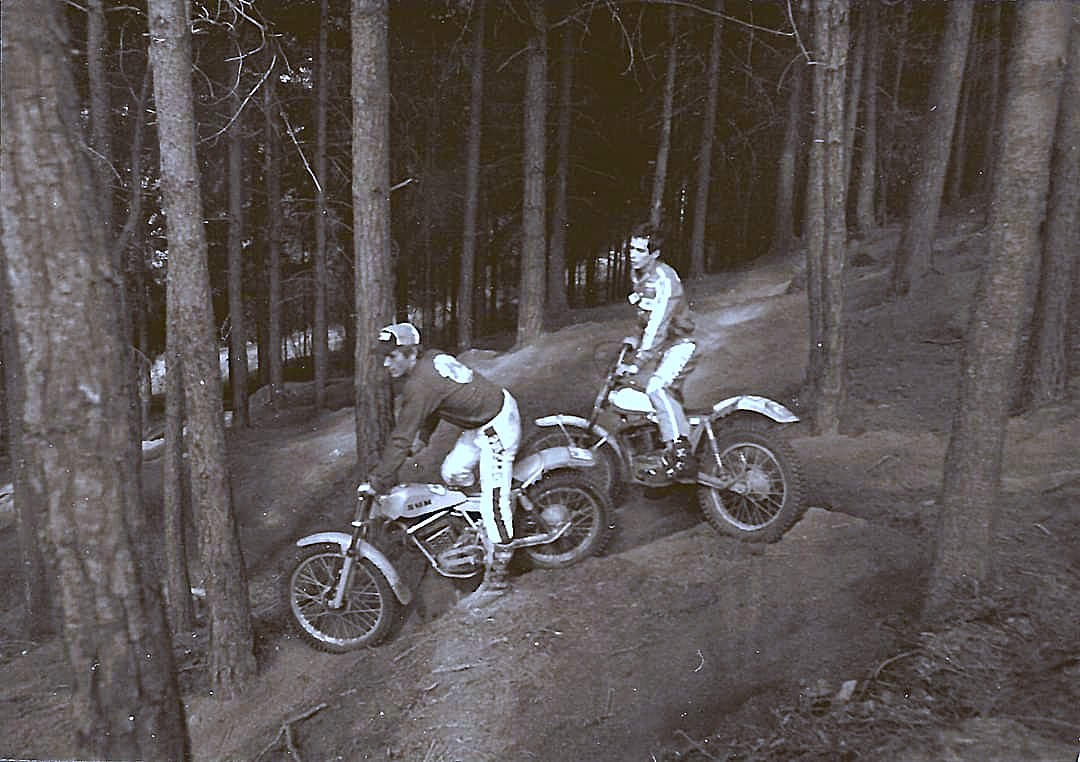
Coutard was presented by SWM with the red and white liveried Guanaco model which, along with the now retired from top level competition Sammy Miller, he was to make improvements to. The engine was the Austrian built Rotax which was already a proven unit, yet it needed more work.

Charles Coutard: “The motorbike was absolutely stunning and beautifully finished – almost too much so. The frame was based on the Montesa 348 design, tall and short, and the engine was far too lively, with very little inertia. The Marzocchi fork wasn’t as good as the Betor, and the clutch was too stiff and didn’t disengage properly.“

“We worked on all that, and the factory really did work quickly and efficiently. Above all, we lowered the centre of gravity and fitted the Betor forks – two very important modifications.“
“Almost too quickly though, rather than modifying a prototype, they were rebuilding the whole bike from scratch with every change that was made.“

“But anyway… the bike was evolving in the right direction to become the world champion ‘Yellow One’. The problem with sales was that the production bike was a far cry from the factory bike.“
“The problem for me was losing a crucial year. After my two world championship round wins in 1977, I was sure I’d be in the top three in 1978, but not if I had a different bike at every race.”

1977 was however a very busy year, apart from switching to ride for SWM, Charles married Catherine Ruget on 10th December, the reception being held at the restaurant of the celebrated chef Paul Bocuse.

Charles: “Yrjö Vesterinen was my best man; the Bultaco factory sent Oriol Puig Bultó to my wedding , even though I had already signed for SWM. Our honeymoon was in Senegal. Melody, our eldest daughter was probably conceived in June 1979 in California – in Bernie Schreiber’s waterbed – hence her American first name. King ‘Arthur’, for his part, was conceived on our return from the six days in Scotland in May 1983. Queen “Victoria”, the youngest, arrived in 1990.”

Developing the SWM:
Charles: “You asked about Sammy Miller’s involvement with the SWM. I don’t think Sammy worked on the SWM much – or if he did, it was before I arrived – but Giovanni Tosco certainly did a lot of work on the red and white SWM.”
Heavily involved in the development of SWM machinery, Coutard’s remarkable run of French national titles came to an end in 1978, when, for the first time in nine years, he was denied the championship. Christian Desnoyers claimed the title riding a Montesa. Charles finished runner-up in 1978 in the French national series and was placed twelfth in the World rankings.

Charles Coutard campaigned the SWM for three years which saw the introduction of the later, much-improved ‘TL’ model, which would make its mark on the World Trials Championship stage. Under the expert guidance of team manager Pietro Kuciukian, the SWM TL320 went on to secure the World Championship title in the hands of Coutard’s team-mate, Gilles Burgat, while both Burgat and Bernie Schreiber also achieved Scottish Six Days Trial victories on SWM machinery.

In the meantime, Charles continued to dominate the French National Championship (Championnat de France de Trial) while remaining a consistent points scorer in the World Championship series. In 1979, he regained the French national title riding the SWM, beating the previous year’s champion, Christian Desnoyers. A highly creditable fifth place in the Scottish Six Days Trial, where he was the highest-placed SWM rider, further underlined the machine’s growing popularity. With seventh place in the World Championship standings, it was a reasonably satisfying season for the Frenchman.
Next Generation:
Charles was, however, having to acknowledge that a younger generation of riders was coming through the ranks. Among them was fellow Frenchman Gilles Burgat, from Albertville, who was also riding for SWM. Meanwhile, his former Bultaco team-mate, twenty-year-old Bernie Schreiber, took the World Championship crown, securing the last title for the Spanish marque. Coutard remained a regular top-ten finisher throughout the twelve-round series, with particularly strong fourth and fifth-place results in Germany and Great Britain. The icing on the cake came on 15 July 1979, when Charles won the Italian round at Mezzo Lago aboard the factory SWM, much to the delight of the Milan factory.

The 1980 season was all change. Gilles Burgat dethroned Charles Coutard by winning the French National Trials championship with Charles runner-up and Christian Desnoyers relegated into third position.

There was more to come. Coutard finished in eighteenth position in the Scottish Six Days on the SWM, the last year he would compete on the Italian machine – Burgat wasn’t old enough to take part and Charles was now twenty-seven years of age. Charles’ former teammate at Bultaco, Yrjö Vesterinen took the win, the first foreign rider to win the Scottish Six Days, but at that time he was now riding for Montesa.

Conversely, it was in 1980 that Coutard decided to leave the Italian marque part-way through the season and switched to ride for Montesa, the Spanish manufacturer he would represent for the following season.

Charles Coutard rode the Montesa 349 in the 1981 Scottish Six Days Trial, finishing in a fine fifth place overall.
The event was won by his former SWM team-mate and fellow countryman, Gilles Burgat, who was enjoying a particularly successful season, having also secured the World Trials Championship, and at nineteen years of age, the youngest ever to win the world title. Coutard was awarded the George F. Simpson Challenge Trophy, presented to the best-performing rider not resident in Scotland who had not won any other trophy during the event.

In the World Trials Championship, the 1981 Montesa factory team who were riding the ‘White Wonder’ 349 models, comprised Charles Coutard, Malcolm Rathmell, Manel Soler who had left Bultaco and the promising young Swedish rider, Ulf Karlsson. Coutard enjoyed a reasonably successful season, highlighted by a fine second-place finish at the round held at Watkins Glen in the USA, where he lost out to Gilles Burgat on a tie-break. He finished the season seventh overall in the World Championship standings.

The Montesa connection was short lived with Charles reverting to Bultaco, the brand that saw his ascendance ten years previously. He was back on the 340 version of the Sherpa, the factory was now in the hands of a co-operative not the Bultó family, so as with friend Vesterinen who was supported by Comerfords in the UK, Charles was supplied a 199B by the French importer.

In France the 199B model was referred to as the Charles Coutard Replica in an attempt to try and lift sales of the Bultaco in France.

Charles: “I was paid a percentage of the sales of this model in France, and I reckon it must have been the same for Vesty.”
So what happened with Montesa?
Charles: “The first red Montesa 349 wasn’t brilliant, but I made do with it; however, the white prototype we got at the start of the following year suited me perfectly – I loved that bike, as I didn’t have to keep changing parts all the time!“
He continued: “Just riding the ‘White Wonder’ without having to update things constantly and the results came back for me, along with the desire to ride again! Despite everything, though, the young new riders were coming through and gently pushing us out of the way.”
Coutard entered and finished the Scottish Six Days in twelfth position on the Bultaco, with former team-mate and friend Bernie Schreiber (SWM) winning the event on a staggering 105 marks, the highest ever recorded. Charles also took the 199B Sherpa to eighth position in the World Championship, his best performance being at the Canadian round at MacLean Creek with a fourth place.
Coutard: “After one season on the 6-speed 340 Bultaco and then one more on the JCM – I decided to call it a day: I have to say, too, that the new technique of standing still, reversing and shifting positions really got on my nerves.“
Climbing to new heights:
Charles Coutard’s final ‘factory’ ride was for the French built JCM – Joël Corroy Motor in 1983. A mono-shock machine which at first was fitted with an Italian TAU engine. It is probably fitting that Charles bowed out of top-line competition on a machine manufactured in his own country.

Charles: “JCM came along late in my trials career, it was a new SWM-style adventure but with fewer resources.”
Charles took the French built 323cc JCM to the Scottish Six Days and rode the machine to fifteen place, a Special First Class award and the Jack Williams Trophy for the best performance by a rider entered by an agent, in this case JCM. A remarkable performance when you discover that most riders who finished higher were much younger than Charles, he was now 31 years of age.

On October 23rd 1983, Charles and Joël Descuns made history by riding a JCM up to the second floor, and back down again, of the famous Eiffel Tower in Paris. They were 378 feet above the ground at that point. This was to publicise the first Trials motorcycle to be manufactured in France.
The continuing story:

After retiring from top-level trials competition, Charles Coutard continued to enjoy the sport, with the added pleasure of sharing his passion with his father, Claude. In 1998, the French father-and-son duo travelled to Scotland to compete together in the Pre’65 Scottish Trial. For Charles, the opportunity to ride in Scotland alongside his father was particularly special, creating a treasured memory that went far beyond the competition itself.

In 2013, Charles Coutard returned to Scotland when his friend, Yrjö Vesterinen, was invited to take part in the Highland Classic Two-Day Trial near Aviemore.

Given a free hand by the organisers, Vesty seized the opportunity to bring together a gathering of former Bultaco greats and invited Charles, Manel Soler, Ignacio Bultó, Javier Cucurella, Juame Puig and Oriol Puig Bultó to join him. Dave Thorpe was also in attendance, completing a memorable gathering of trials enthusiasts, with one common bond — they all rode Bultacos!

Charles: “I have fond memories of the Highland Classic in Scotland with the Bultaco team – it really was a brilliant idea.”
Since retiring from World Championship competition, Charles set up a motorcycle shop called ‘Coutard Moto Week-end’, which he sold twenty years later.
“During that time, I carried on riding in trials and enduros, winning the French Trial Expert 2 Championship and finishing as runner-up in the French Enduro Championship in the Veterans’ category.“
“More recently, I’ve become more involved in old-school trials, where I’ve already clinched a French championship title, and this year – before breaking my arm whilst mountain biking – I was once again well clear at the top of the championship.”
“I’ll certainly be competing in that championship again next year and taking part in several classic events.”

“This year, the joy of discovering my little BSA Bantam and fine-tuning it has really fascinated and entertained me. Some people get bored in retirement – not me.”
Champion’s Tributes to a Champion:

“My first recollection of Charles is from 1972. Finland was hosting a round of the European Trials Championship in August that year. Charles had travelled a long way from his home in France to take part both in Finland and Sweden. In those days it was customary for the trial in Finland to be held the week before Sweden. That arrangement meant that the journey home from Sweden would be shorter for all the foreign riders.
This also meant that many riders stayed in Finland for the week in between.
This talented French rider had caught my attention. We were the same age, both riding Bultaco and keen to learn more. I think it is fair to say that we both enjoyed practising.
That week in Finland formed the basis for practice sessions that followed literally all around the world.
Both of us understood that only through hard work and serious practising could we get closer to the level of the British riders.
After our initial meeting in Finland I spent many a day in France with Charles. Most of the time I was trying to learn as much as I possibly could from him.
The terrain and style of riding in France was a fair bit different from what I was used to.
It is fair to say that we were pushing one another. Trying to reach the top was our shared goal.
Charles was in a fortunate situation as he was born into a family of French trials royalty.
His father, Claude, was a prominent and very enthusiastic trials rider. He was also the owner of the most famous trials shop in France: Coutard Moto.
I couldn’t have been happier to have been allowed to use the workshop there to mend my often broken bike. From memory, I never paid a penny to Claude and will be forever grateful to the Coutard family.
What I would like to also say, with the benefit of a few decades later, is that both Charles and I were very lucky and privileged to have factory contracts with Bultaco.
We led a life that many others could only dream of. We were paid to do something that we loved most: competing in trials and chasing our dreams. Life couldn’t have been better.
Life today is not too bad either. We are still close friends. We meet every now and then, usually trials bringing us together. Charles just spent a few days here in England and competed at our Vesterinen Charity Trial, in which Charles won his class and finished 2nd overall.
Charles is still very competitive and takes great pleasure in beating me, as well as everyone else. Bravo Charles. Together we have grown old, but we are still healthy enough to continue to ride a bit further I hope.” – Yrjö Vesterinen, Three times FIM World Champion and SSDT winner 1980.
Charles Coutard – A Friend and Mentor
“During my early years competing in the World Trials Championship, I was fortunate to meet many wonderful people who helped me find my way in Europe. One of those special people was French trials champion Charles Coutard.
Charles was already an established international rider when I arrived in Europe in 1977. Coming from California as a young American with big dreams, I had plenty to learn, both on and off the motorcycle. Charles became more than just a competitor. He was a friend and mentor whose experience, encouragement and friendship meant a great deal to me.
We competed against each other many times, including the 1977 World Championship rounds in France and Canada, where Charles celebrated a memorable victory at Chicoutimi on his Bultaco.”

“What I remember most, however, isn’t the results. It’s the friendships we developed during those early years, travelling across countries, sharing experiences and enjoying a sport we both loved.
Charles is an Icon and Champion who came from a remarkable trials family. His father, Claude Coutard, was a pioneer of French motorcycle trials, and Charles continued that tradition with great success.
More than forty years later, it was wonderful reconnecting and riding together several times. The years had passed, but the friendship and memories remained.
Looking back on my career, I realize how important certain people were in helping a young American find his place in the international trials world.
Charles was one of those people, and I’ll always appreciate his friendship, guidance and the part he played in my early career.
Championship results become history, but genuine friendships last a lifetime.
There’s a story from the 1976 Scottish Six Days Trial that I’ll never forget. I was just 17 years old, visiting Scotland as a spectator, dreaming of one day competing in this legendary event. Charles had unfortunately fractured his wrist and was forced to abandon the trial. Rather than simply pack up and go home, he generously loaned me his Bultaco, riding suit and helmet so I could experience the famous Ben Nevis section for myself. Imagine being a young American spectator and suddenly having the opportunity to ride one of the most iconic sections in trials history! It was an extraordinary gesture of generosity and friendship, and a memory I’ve treasured ever since.”

“And there’s one thing I’m still jealous of! In 1983, Charles rode his trials motorcycle up the Eiffel Tower in Paris, reaching the second level. Of all the places I’ve ridden a trials motorcycle around the world, that’s one experience I would have loved to have had. Charles, you got that one over on me!” – Bernie Schreiber, 1979 FIM World Trials Champion, SSDT winner 1982.
Coutard – Dedicated To Trial:
Charles Coutard’s father, Claude, was regarded as one of the pioneers of French trials, dedicating much of his life to promoting the sport and organising events to help it flourish in France. It is perhaps no surprise, therefore, that his son Charles would also make a significant contribution to the development of French trials, albeit in a very different way. Where Claude helped build the foundations of the sport in his homeland, Charles took French trials onto the international stage, competing against the world’s best and demonstrating that French riders could compete at the highest level.

Charles rode for four different factories during the golden age of trials, a distinction that speaks volumes about his ability and the results he achieved. Factory contracts were earned through performance, not handed out as a matter of course, and Charles proved himself time and again. In doing so, he followed his father’s example of dedication to the sport, while inspiring a new generation of French riders to pursue their own international ambitions. Among those who followed in his tyre tracks were Gilles Burgat, Christian Desnoyers, Thierry and Fred Michaud, Adrien Prato and Philippe Berlatier. In their different ways, both father and son helped shape the development of French trials: Claude by nurturing the sport at home, and Charles by carrying its reputation far beyond France’s borders, competing with the world’s best riders of the era and beating them in the process.
The name ‘Coutard’ is inextricably linked with the sport of trials, not only in France, but throughout the world.

Bibliography:
- Moto Revue Magazine – Issue 1840; 27 May 1967 (Front cover) [1]
- FIM World Championship positions confirmed with Trialonline.org
- Scottish Six Days Trial results verified by Jim McColm’s SSDT Results Archive on Trials Guru website.
- Additional information provided by Jean Caillou.
- Moto Revue Classic – November/December 2008.
- ** – The Trials Guru ‘VIP Winners’ cap is a select, special edition of only 10 worldwide. Individually numbered 1-10.
Charles Coutard Slideshow:

J.Revere, Charles Coutard and Christian Desnoyers (Photo: Walker Brothers Archive) 
Claude Coutard watches his son, Charles Coutard (Greeves) on Loch Eild Path in 1998 – Photo: Iain Lawrie, Kinlochleven 
Trial Legends: Gilles Burgat (France), Michel Traini (Italy), Bernard Cordonnier (Belgium), Charles Coutard (France), Yrjo Vesterinen (Finland), Bernie Schreiber (USA), Adrien Prato & Pascal Couturier (France) – Photo: Claudio Trial Pictures 
Claudio’s photograph forming an article for the French edition of Classic Trial magazine in 2013. Charles Coutard on the right line at the Alvie Estate, Highland Classic Two-Day Trial, one of the best classic trials in the UK – Claudio Picture 
French Champion of Trials, Charles Coutard with son Arthurus Coutard – Claudio Picture 
Juame Subira (Spain), Fred Michaud and Charles Coutard (France) and Steve Saunders (Great Britain) at the 2015 Ventoix Trial Classic – Claudio Picture 
Manel Soler, Charles Coutard and Yrjo Vesterinen in Andorra on a photo-shoot – Claudio Picture 
Gilles Burgat with Charles Coutard at the USA round at the Donner Ski Ranch for the World Championship in 1982. 
Charles Coutard samples an Ariel powered sidecar outfit
‘Charles Coutard – Le Panache’ article is the copyright of Trials Guru
Apart from ‘Fair Dealing’ for the purpose of private study, research, criticism or review as permitted under the Copyright, Design and Patents Act, 1988, no part of this article may be copied, reproduced, stored in any form of retrieval system, electronic or otherwise or transmitted in any form or by any means, electronic, electrical, mechanical, optical, chemical, photocopying, recording or otherwise without the prior written permission of the author as stated above. This article is not being published for any monetary reward or monetisation, be that online or in print.

Discover more from TRIALS GURU - DEDICATED TO TRIAL
Subscribe to get the latest posts sent to your email.