
This article has been reproduced from the world famous trials website, todotrial in Spain. Permission given by todotrial owner, Horacio San Martin to Trials Guru.
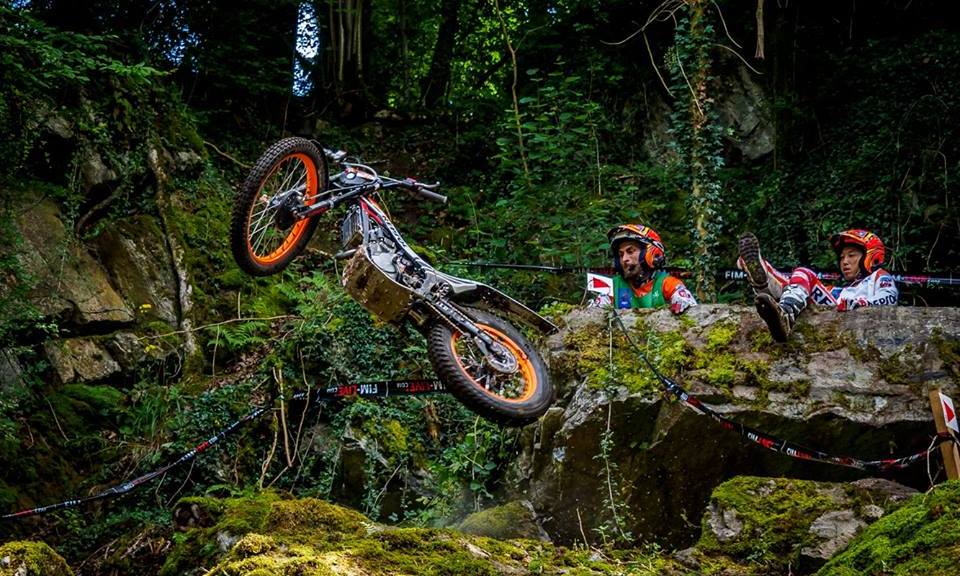
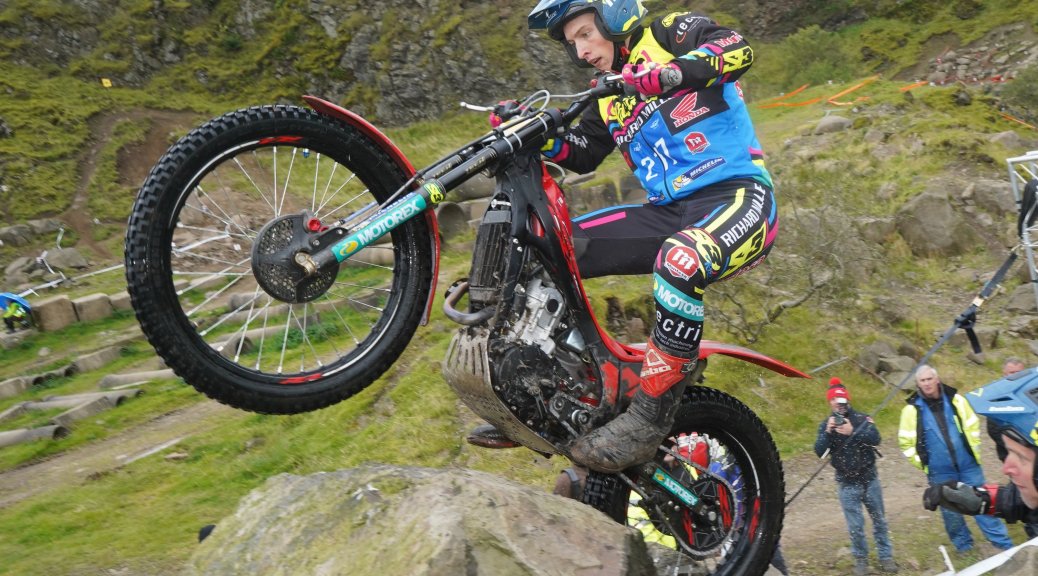
(Main photo: Rene Opstals)
30 points to understand the decline of the sport of Trials
The sport of trial is currently not going through its best of times, but it is not something new, rather it has been declining slowly for no less than two decades. In this article we will try to analyze the causes by giving 30 points to help us understand what is happening.
We have been hearing that the sport of trials has been in crisis for 20 years or more , and although it is true that the trial situation is difficult, it is also true that depending on the places and areas the situation may seem less dramatic . And it is that there are areas and sectors in which the sport enjoys good health or trial competitions with plentiful entries.
However, these bright spots should not distract us or mislead us, the reality is that the trial market has been in decline, little by little, but inexorably, giving rise to concern.
Undoubtedly, this widespread news that shakes the motorcycle press each year does not go unnoticed, especially those in which the decision of prominent young riders, to abandon this discipline is revealed , mainly due to lack of finance. These are not just a few cases in which riders who aimed high have decided to switch to enduro in search, no longer of greater fortune, but simply to earn a minimal living without going bankrupt.
This has been happening for more than a decade, but the problem has been getting worse , since now even pilots who are among the best in the world are seen in this situation , such as the recent case of Toby Martyn , world champion. Trial2 in 2021 and British trials champion in 2021 and 2022, or his compatriot, Jack Dance , who was Trial 125 world champion in 2021. Dan Peace’s move to enduro this year does not go unnoticed either, or that of no less than one of the World Cup top, Miquel Gelabert , although the latter is a more special case due to his personal complications. There are many more cases like those of Jack Price ,Eric Miquel , or Sergio Ribau to name just a few of the most recent.
But let us not fool ourselves, trials has always been and will always be a minority sport, in which there has never been more than 15 or 20 official or semi-official riders, what happens is that as things are, now there is hardly any room for 5 or 6 professional riders and in the highest category of the TrialGP World Championship it continues to decline.
When this type of news is made public, the comments posted on social media are many and varied, logically there are opinions of all kinds, but the reality is that few get close to the real substance of the matter, and that is where we will try to achieve in this article, where we will analyze the situation in the most objective way possible.
1- The volume of trials machines sold has been stagnant for almost two decades and has dropped in the last two years. This factor is critical, since to assess the health of an activity, be it sports or of another type, the main measurement factor to take into account is the market, the volume of business it generates, is ‘sales’, the true measure. This is the base that sustains everything, and if it fails, the rest will follow.
2- The current volume of trial fans is much lower than that existing in the 70s, 80s and 90s. This factor is what determines the stagnation of the previous point, and therefore it is the most important. We can see the causes that cause it in the following points, but it is also essential to analyze what that mass of fans is like today.
3- The average age of most current trial fans is well over 40 years of age. This is because they started trial in the 70s, 80s and 90s, therefore it is a “mature age” hobby. The positive part is that in this age range their disposeable wealth allows them to renew their motorcycle regularly. This also indicates that the trial of that era had more power to create fans.
4- The young riders who entered the sport in the last 30 years, do so mostly by “inheritance”. That is, because they are children, nephews, friends of older people who practice it and who influence them to take part. They come to the sport by external influence, not by their own decision, becoming an “inbred” sport.
5- The current leisure options are endless and the culture of the “online” is significant. Being the “son of a trials rider” does not guarantee that this young man will also be a trials rider, many are not attracted to this sport and adopt other hobbies, also today there are many leisure options and the emergence of video games and other online entertainment captures the youth more effectively. This point together with the two previous ones makes the possible growth factor zero or negative.
6- The pressure of a misunderstood radical environmentalism. The current fashion of environmentalism is actually a big business, so it has gone from being something logical and recommendable to something absolutely disproportionate, radicalized and even harmful to society. The pressure exerted by environmental groups has “brainwashed” the population based on speeches that are often false, aided by politicians and the media that are not very objective, with a background of economic interests. We trial riders know that our sport is completely compatible with sustainability and respect for the environment, but our image has been badly damaged.
7- Environmental laws harm, but not globally. From the previous point derives the creation of very restrictive laws, which on many occasions simply prohibit instead of regulating, making clear the incompetence of a political class at the service of the pressures of environmental and economic power. This has undoubtedly harmed the practice of trial in many places, but its influence is not as important as it might seem, since Enduro has the same problem, and yet the volume of practitioners and motorcycle sales is enormous compared to trial . On the other hand, there are many countries without these problems, where it is clear that there are hardly any trial practitioners, but the enduro market is very broad. This indicates that this is a problem existing only at the local level.
8- Few trial practice areas in certain places. Like the previous point, this is a problem that occurs only at the local level. In those places where there are restrictive laws for the free practice of sport, it is necessary to have places where you can practice legally. In some countries it is very easy to create private areas as you only need the owner’s permission, but in other countries with more intrusive governments, creating an area can be enormously complex in terms of permits, bureaucracy and conditions, as unfortunately happens in Spain.
9- The volume of new potential clients is very low. All economic and business activity is based on attracting new customers, the advertising and promotion of brands is based on that foundation, being the basis of its growth. Currently, potential trial clients are very scarce. Where they could be most popular is among those who are already fans of off-road motorcycles and already practice other more widespread modalities, such as enduro, motocross or trials, but very few of them show interest in trials.
10- The power of attraction of current trials is much less than previously. In the previous point we have said that the volume of potential clients is very low, however we have mentioned enduro, motocross or trail practitioners as such, which are quite numerous, why this contradiction? Well, because today the number of fans of those other off road disciplines who are attracted to trial is very low, despite the undeniable advantages of mastering the trial technique to improve off road driving in general. Because? We see it in the next point.
11- The Image of elitist, static sport and only available to a select few. This is the reason why in the previous point we say that the power of attraction of the trial is much less than before. The evolution towards a more “indoor” and acrobatic trial presents a very elitist image of the sport, that is, extremely technical and difficult, which is only available to a few, distancing it from the potential public. To this are added other keys that we see below.
12- The empowerment of trials as a spectacle, causes a loss of interest as a sport. From the previous point we come to this one, Trials seems to have evolved into a show, in which it seeks to impress the public with bigger and higher obstacles. This can cause a greater attendance of the public who occasionally go to see a high-level event (World or National) with the intention of seeing a show, but at the same time it prevents them from being interested in becoming participants. Like when you go to a circus to see trapeze artists, these can cause the sale of many tickets, but not the interest in becoming a trapeze artist, because it is something extremely difficult, dangerous and elitist.
13- Indoor trials have clearly become a show, whose main objective is to sell tickets. Initially, the objective of indoor trials events was to bring the trial sport, which was conducted in the natural environment, to a larger public, in order to try to increase the number of participants of this sport, increase potential clients and thus increase machine sales. However, now, as has been said in the previous point, the objective is to increase ticket sales and it is difficult to generate interest in trial participation.
14- The Indoor has greatly influenced the natural trial or “outdoor” changing its characteristics. This influence has made outdoor trial areas much more indoor in style, with large steps, very tight turns and very little space, demanding riding techniques from Biketrials, even in regional amateur trials. It has completely changed the layout of the zones making it an even more difficult and demanding sport than it was before.
15- Passage from a sport of dynamic balance to one of static. The previous point has meant that trial has gone from having an image of a dynamic sport of overcoming moving obstacles, to an image of a much more acrobatic and static sport, in which much of the time the pilot is standing in balance or doing lateral movements without advance. We die-hard trial riders may like it, but the number of people that this type of trial attracts is much lower than the dynamic trial that was able to attract. Here we return to the previous points. Many off road fans prefer enduro or hard enduro (very similar to trial) because their preference is to “ride a motorcycle” and not“standing every little while placing and balancing” , which gives an image of a “boring” sport . This point is very important, since it makes many potential clients dismiss their interest in the current trial.
16- The stopwatch in the section does not solve the image of trials as a “static balance” sport. Yes, the time limit in the sections adds dynamism, but it doesn’t change the fact that the current basis of the sport is static balance in which Biketrial techniques must be mastered equally, with the added stress of having to do everything as quickly as possible. In summary, it does not solve the lack of potential clients who are interested in trial, although it may please some of the current fans. However, another large part of current fans reject the inclusion of the stopwatch in trial, since it is something that was never part of this sport. Trials is not strictly a ‘race’.
17- The No-Stop attempts to regain the dynamic image of the sport, but its application is difficult. Aware of all of the above for years, the motorcycle manufacturers and the FIM are trying to recover a less static, less indoor, and more dynamic image of trial “for riding a motorcycle”, which is closer to the origins and essence of the sport of the trials. For this reason, the old No-Stop regulation was re-intriduced, with which it wants to give a closer, less elitist image, which once again attracts potential new participants and followers. Regardless of whether or not the current youngest participants who have grown up in the “indoor” style like this regulation, the objective is to ensure the future of the sport by making it feel closer to the target audience again, and therefore have more ability to attract new participants. The problem is the difficulty of applying equally by all the section observers, which provokes the rejection of many riders and fans. In addition, for many, their personal interest prevails over the general interest in the subsistence of the sport itself, as is logical.
18- The evolution of trials has made the figure of the minder necessary. This did not exist in the early 1980s, but it was gradually introduced and its presence was recognized. As the sport changes with the incorporation of Biketrial techniques, becoming more static and with more indoor, more difficult areas, and with higher steps, it ends up becoming a fundamental safety element. The positive point is that it provides security, but the negative is that it currently represents one of the biggest expenses for each rider, leading to the impossibility of sustainability due to lack of finance. Today there are top riders who earn significantly less money than their minders, or who earn nothing.
19- The expenses for the competitor are increasing. Competing in trials is now much more expensive than previously, since the expenses are numerous: motorcycles, spare parts, tires, travel, accommodation, training, licenses, registrations, coaching, minders. Comparatively, the cost of licenses and registrations has skyrocketed, especially in countries like Spain. The expense increases notably in international events.
20- Motorcycle brands and importers cannot afford several official riders. The current volume of riders contributes sales of around 7,000 new motorcycles per year among all brands , with no growth but stagnation or decrease in recent years (in 1984 only Fantic sold 15,000 trial motorcycles). The figure is ridiculous compared to other off road sports such as enduro or motocross, and even more so if we compare it to mountain biking, for example. Despite everything, brands and importers make a huge effort to have official pilots and be present in world and national championships, and they can hardly afford to have more than one or two official pilots or increase their aid to semi-official pilots.
21- The low volume of sales of trials motorcycles causes the price of motorcycles to rise. To make its manufacture viable in such a reduced market, the only option is to raise the price, which harms us all. That is why it is essential to try to attract new fans to this sport, and try to ensure that its evolution is oriented towards it, making it a more accessible, more practicable sport, with a closer and less extreme image, regardless of the trial that each one we like it.
22- The mistake of comparing Biketrial to Trials. The motorcycle trial has an obvious parallelism with the evolution of the Trialbici or Biketrial. In view of all the points seen in this article, following in the footsteps of an even more minority and declining sport, “practically dead” for some, would be a serious mistake. More and more people maintain that when a top rider publishes videos doing zones on one wheel, they will get many “likes” on their social networks, due to the admiration that this high mastery of the motorcycle causes, but at the same time causes distancing from trial with their potential customers and therefore undermines its growth.
23- More specialized and less versatile motorcycles. Trial bikes have evolved to become extremely competitive and specialized, which has meant that they are only usable for increasingly extreme competition and therefore less valid for use at an amateur level that does not compete. In other times, the same motorcycles with which the professionals competed were used to make excursions through the countryside comfortably. This caused many trials bike buyers to switch to other options. Aware of this, the brands have recently begun to release their ‘Trial Excursion’ models, with larger capacity tanks, seat and even electric start.
24- The mistake of considering World Trials Championship as a show. The main objective of the world championships remains the same as the 70s, 80s and 90s, to show the image of this sport to the public with the aim of promoting it and making it grow, facilitating the sale of motorcycles and the entire related industry. This function cannot be forgotten or transferred to local amateur trials. Motorcycle brands are only interested in being in the World Cup or National Championships if it helps them sell their products. For this, it must be shown as a feasible, accessible, attractive sport, difficult by its nature but not impossible, without ever losing sight of its essence or its origins. It is true that it must continue to be the elite of the sport, but not become something that only 10 people in the world can do, because we would be back to the example of the trapeze artist.
25- It has been late to control the evolution of sport and motorcycles, which must be done by establishing limitations.The two previous points lead to this one, so that the trial does not end up becoming something else, something that for many has already happened. It is necessary that the evolution of the sport and its motorcycles be logical and not free, and for this to establish limits in the sporting and technical regulations. If this were not done, tomorrow the trial could be something like a fusion between the Biketrial and an EBike and it would stop being a motorcycling sport to become completely different. The entities that watch over the subsistence of a sport must try to maintain its essence, its origin. That is why measures arise that may not be understood but are necessary, such as the minimum weight limit on motorcycles, which also help to keep costs from skyrocketing.
26- Little interest from sponsors in a championship without possibilities, with a “fixed winner”. The current maximum level of the world championship is only achievable by no more than 10-15 pilots, of which only 5 have podium options and there is an almost absolute dominance of one pilot, which subtracts emotion and therefore interest. This decreases the chances of other pilots and therefore the interest of possible sponsors in them. Result: it takes away the interest, the emotion, and with it the money from the sponsors.
27- Low economic return of the sponsors in the trial. When a company decides to sponsor a rider, a team or a brand, it usually does not do so for charity, but in exchange for an economic return on their investment. A minority sport has less impact, but also a lower cost for sponsors. Therefore, the companies that can obtain a return that compensates them in the sport will hardly be the large corporations that seek to reach a massive amount of public, but rather those that have a direct interest in trial participants, such as accessory brands, motorcycle stores, insurance, sports or food products. Therefore, to feed this income generation, it is necessary for the volume of the trials market to grow.
28- Competitiveness and emotion, few options to fight for victory.A sport that attracts the public is a sport with uncertainty, with emotion, with an open struggle for victory among the greatest possible number of participants, representing the greatest possible number of countries. A company that decides to sponsor a professional pilot needs to have options to fight for victory, or at least to be in the leading positions. If the difficulty level is so high that only three drivers can fight to win, sponsors lose interest in sponsoring drivers other than those three. Therefore, the chances of fighting for victory should grow and for this the level would have to be lowered, making it more accessible to other pilots, as well as facilitating the incorporation of new young pilots, even if this harms a few.
29- Media and television. In the 80s and 90s the presence of trial on television was much higher, but the media broadcast what the public asks for, and if there is hardly any public interested in trial we cannot expect it to go back to the way it was before. Aware of this, federations such as the Spanish RFME are making a notable effort to broadcast summaries of the Spanish Championship events on television. Also along these lines, the FIM announces that it will broadcast the Trial World Championship via streaming on Youtube, this being a very good decision, as long as it does not become paid content, which would destroy the objective of doing so to spread the sport of trial and generate market.
30- Little support for specialized media and clubs. In line with the above, the work carried out by specialized trial media by fans of this sport, such as Todotrial, is little valued by some federations, brands, shops, since only a few support this dissemination work. Hiring advertising campaigns. In the same way, Motor Clubs often receive little help. This is the reason, together with the lack of a greater number of fans, for which there are so many motocross or enduro magazines, but hardly any for trial. Today, both clubs and magazines (on paper or digital) bring together the few fans who are willing to continue fighting for this sport, investing their work and time, which deserves a little more support and recognition that allows them to continue forward.
To conclude, there is a ‘Rupture’ between classic and modern Trials fans. This is a worrying and increasingly frequent symptom. Many veteran riders, and even some young people, feel less and less identified with the high level competition that is shown in the World Championship or even National events, losing all their interest. Many veterans think that today’s events are no longer trials but a different sport, and prefer to participate exclusively on classic motorcycles. Some young people also say they prefer this type of “classic” trials, whether on a modern or classic bike, and some declare that they are only interested in trials such as the SSDT or Santigosa 3 Days Trial. The case is even more evident when you discover that many trials fans have no interest whatsoever in the results of the World or even National Championships, so they are not even interested in going to see any of these events, and even less so if it is an indoor event. This leads to major opinion differences on issues such as regulations or even the inclusion of minders. This division is undoubtedly detrimental to trials in general.
Many thanks to todotrial for allowing their permission to reproduce their original article, published on 13th April 2023.
























 TRIALS GURU - DEDICATED TO TRIAL