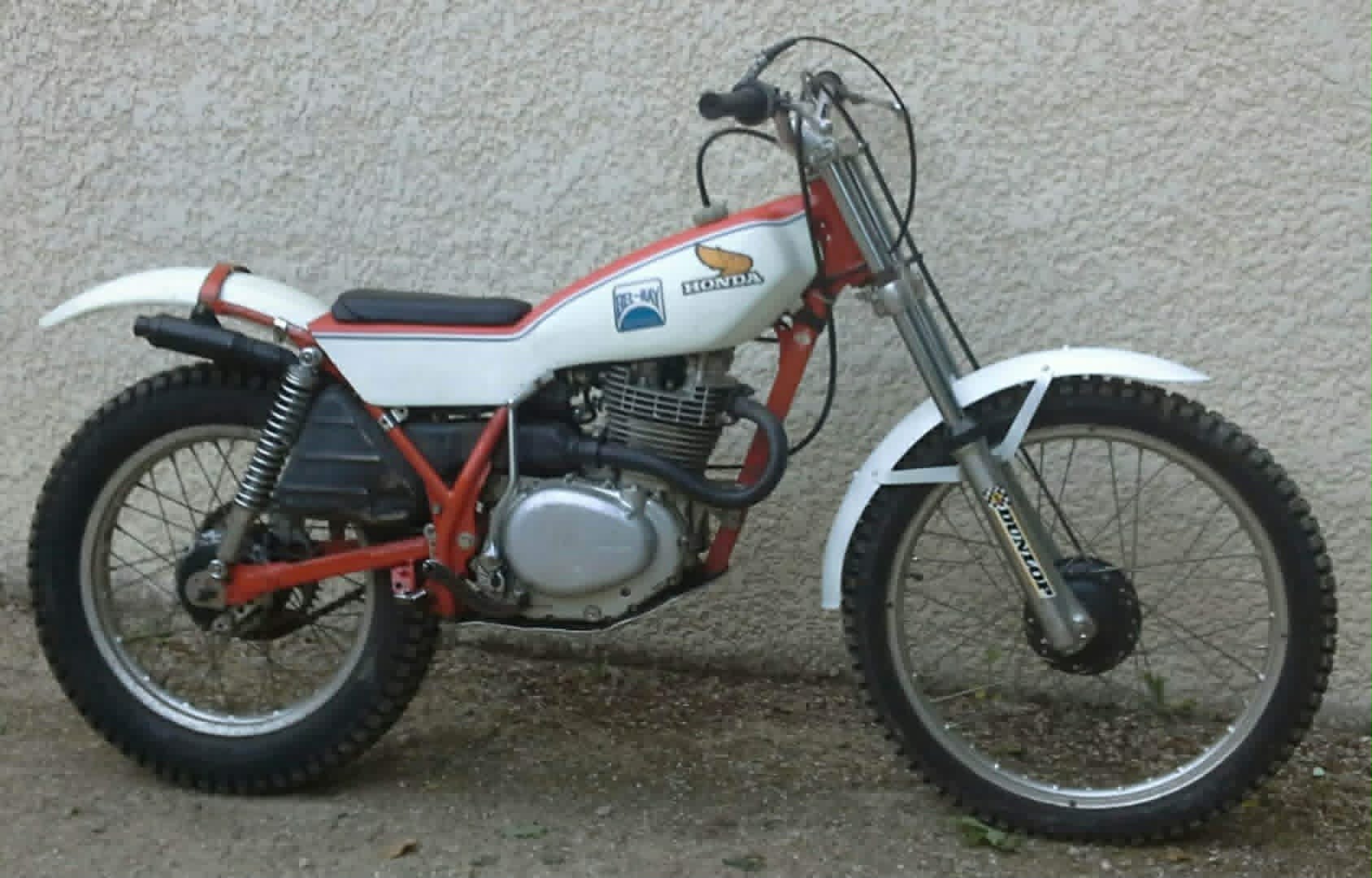
The Honda RTL300 (305)

Most trials riders hold a dream to own a factory trials machine, but of course few are sold on by the factories after use. But sometimes components come your way and it’s just possible with a lot of effort, skill and time you could just construct one very close to what the factories made for selected riders. Here is the story of one man’s passion that turned a dream into a reality – RTL300.
Words: Alan Taylor
Photos: John Moffat; Alan Taylor; Jean Caillou; Heath Brindley; Sammy Miller Museum; Mervyn Smith; Rainer Heise.
Main photo: Heath Brindley
It was late summer 2019. Myself and my son Cameron were watching the comings and goings at our local car and bike Mecca, ‘Caffeine and Machine’. My friend and Cotswold legend Dave Moy arrived. ‘I’ve got something on the back of the pickup that you might want to look at. Shall I drop it off at yours on the way home?’ It was clearly a quite special Honda engine in a slightly strange home made frame. Also present were some ex-works hubs, brake plates and a large capacity aluminium ‘Scottish’ tank from an RTL360. The forks and wheels appeared to be of Motocross origin. ‘It’ll need a frame’ said Dave. ‘I’ll make one’ said I, little knowing what I’d let myself in for!
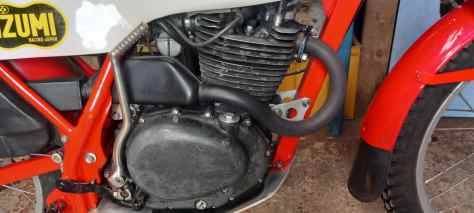
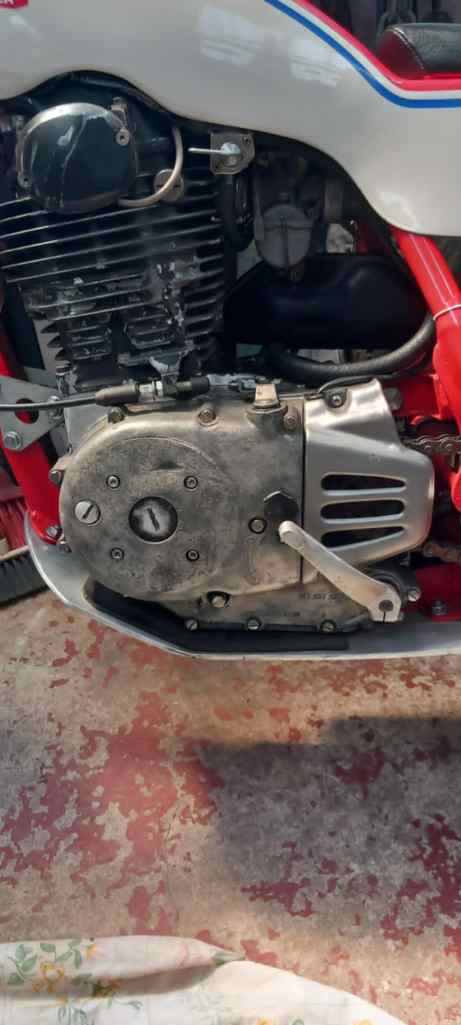
After corresponding with Jean Caillou in France, who is simply a mine of information regarding the Honda trials history. The engine was identified as being one of the works ‘long-stroke’ 305cc engines that were built in a batch of probably less than twenty in December 1974. The engines were sent to both the American Honda trials effort and of course to Sammy Miller MBE, who was running the UK team at that time.
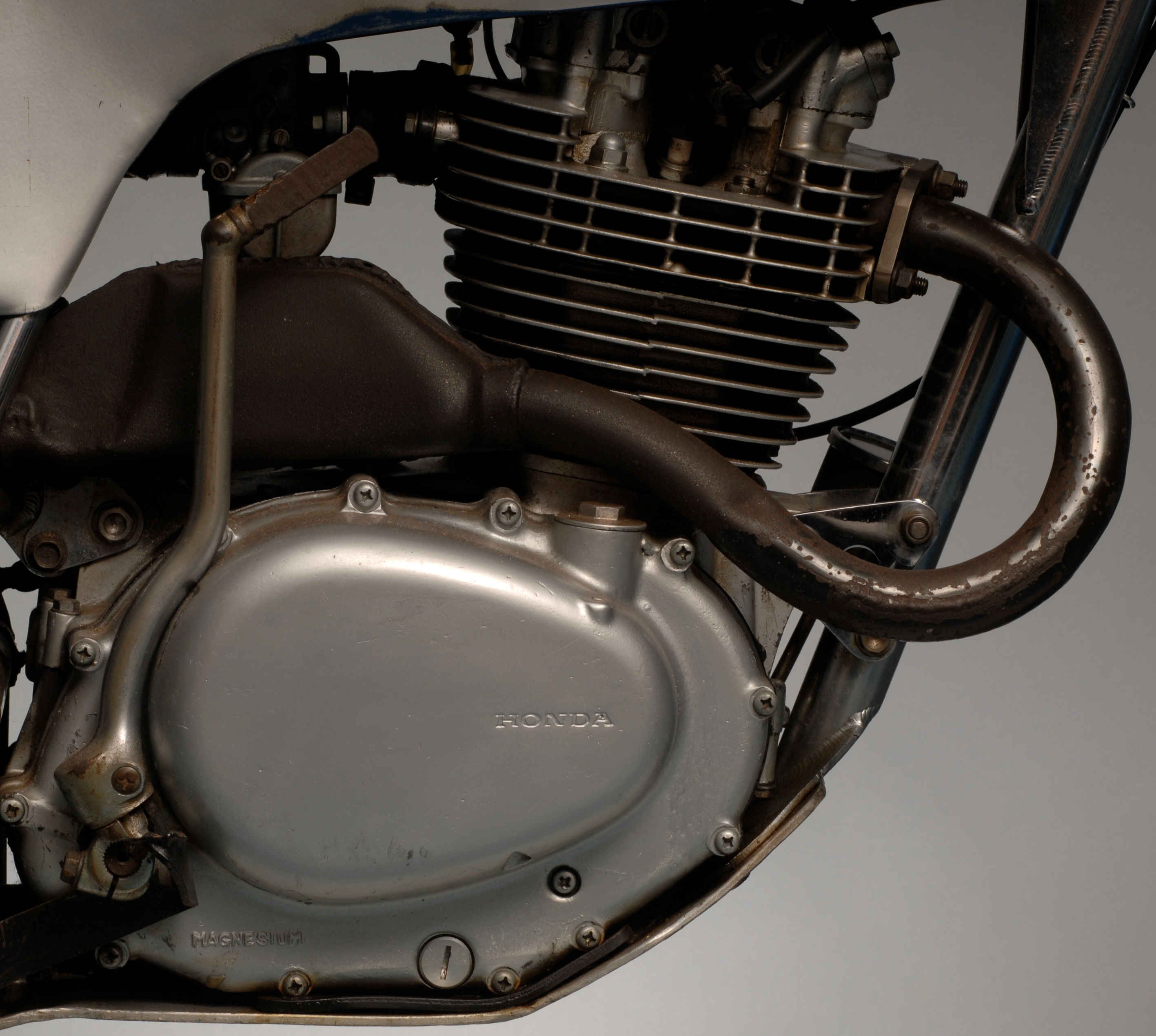
I asked Sammy how many long-stroke engines he was allocated. ‘Five or six’ was the reply. Interestingly, all the engines have the same engine number, which is cast into the top of the crankcase, RTL300E1204. ‘E’ denotes engine. The date configuration is the old Japanese way of doing things. For further identification it appears that the UK engines had a hand engraved number on the rear of each crankcase half. This one is marked ‘3’. The engine in Sammy’s bike at his excellent museum is marked ‘1’.
The first step was to see if the engine would start and run. It would start but not run for any length of time. After some investigation, I concluded that the ignition coil was breaking down when it got hot. An initial big fat spark when cold was reduced to nothing when hot, although just to confuse things, sometimes even when cold there was no spark! The coil was sent away for re-winding but got lost in the post and never reached its destination, turning up nearly a year later having been to the lost parcels office in Belfast! In the meantime I decided to fit an electronic ignition from a well known provider, an XL350 version seemed to fit the bill. This was not the easiest of fitments, new mounting holes had to be drilled in the stator base plate due to the works engine being of different configuration to standard. Once fitted and a healthy spark was confirmed as being present, the engine was started, only to fail again when hot, same symptoms – no spark! A lot of head scratching followed. Could it be that the flywheel needed re-magnetising, what with heat not being a magnets best friend? Interestingly, the flywheel has a welded on ring around its circumference. Villiers Services re-magnetised it with the warning that there was a danger that all magnetism could be lost during the process. Luckily this proved not to be the case. With the flywheel re-fitted the engine was started, frustratingly with the same symptoms! Speaking to the ignition providers technical department, I was given various parameters to check, which all proved to be within tolerance. After walking away from the problem for a week or so, I had a eureka moment, deciding that there could be a dry joint inside the encapsulation on the ignition system. This was proven to be the case! After I repaired and refitted it the engine ran like a sewing machine, very mechanically quiet. A first ride on a factory Honda was taken around the garden and all the gears where there, so a result!
The Susans’ frame jig:
It seemed that the best approach to the frame issue was to gather as much information as possible from as many people as I could think of that may have been associated with the Honda trials effort, social media making things slightly easier than it might have been. It’s surprising how one conversation can provide just a snippet of information that can be very useful down the line. One such conversation led to Jim Susans, of Bikecraft fame, the builder of many Pre65 frames who is sadly no longer with us and whose story can be read on Charlie Prescott’s excellent ‘BSA Otter’ website.
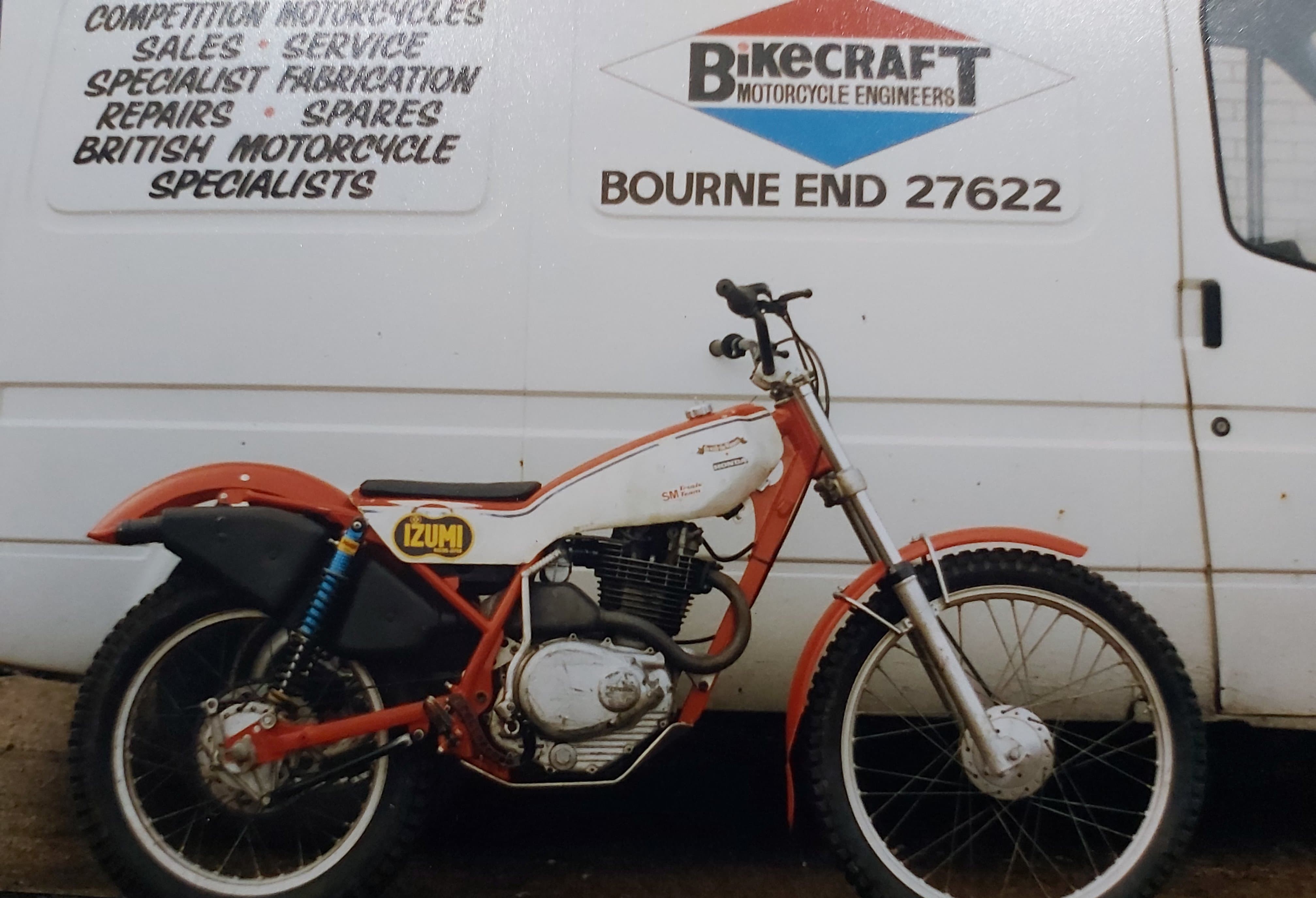
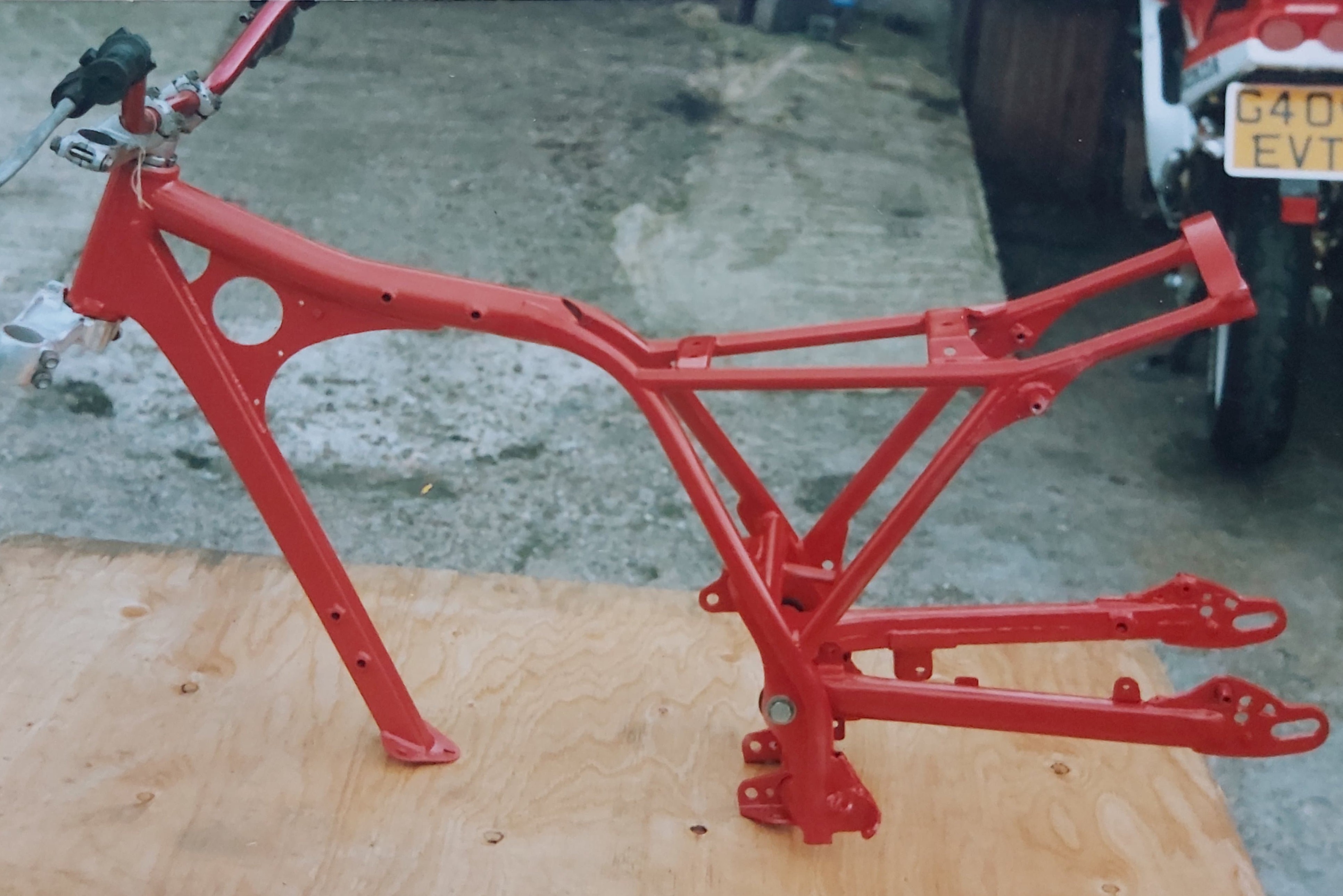
I knew that some years ago a works Honda and parts had passed through his hands and that Jim had taken the opportunity to copy the frame geometry into his rather rudimentary jig. I phoned him, mainly to ask if he still had any works bits left. Luckily he had been friendly with my dad Gilbert when they both rode Pre65 trials, so I wasn’t a complete stranger to him. Unfortunately all the works bits had been moved on. I explained my dilemma with the frame. His reply was that he was unlikely to build another bike on his jig and would I like to come and see it? Yes please! I took a trailer with me down the M40 – just in case! After a long and interesting conversation talking about bikes, his jazz band and his younger days in France working as a war graves mason, he said he’d like me to have his jig, on the strict proviso that I didn’t pass it on to anyone else. We came to a financial agreement and onto the trailer it went! He also supplied some very useful photo’s of a replica works Honda frame plus some T45 tubing. Now work could start in earnest!
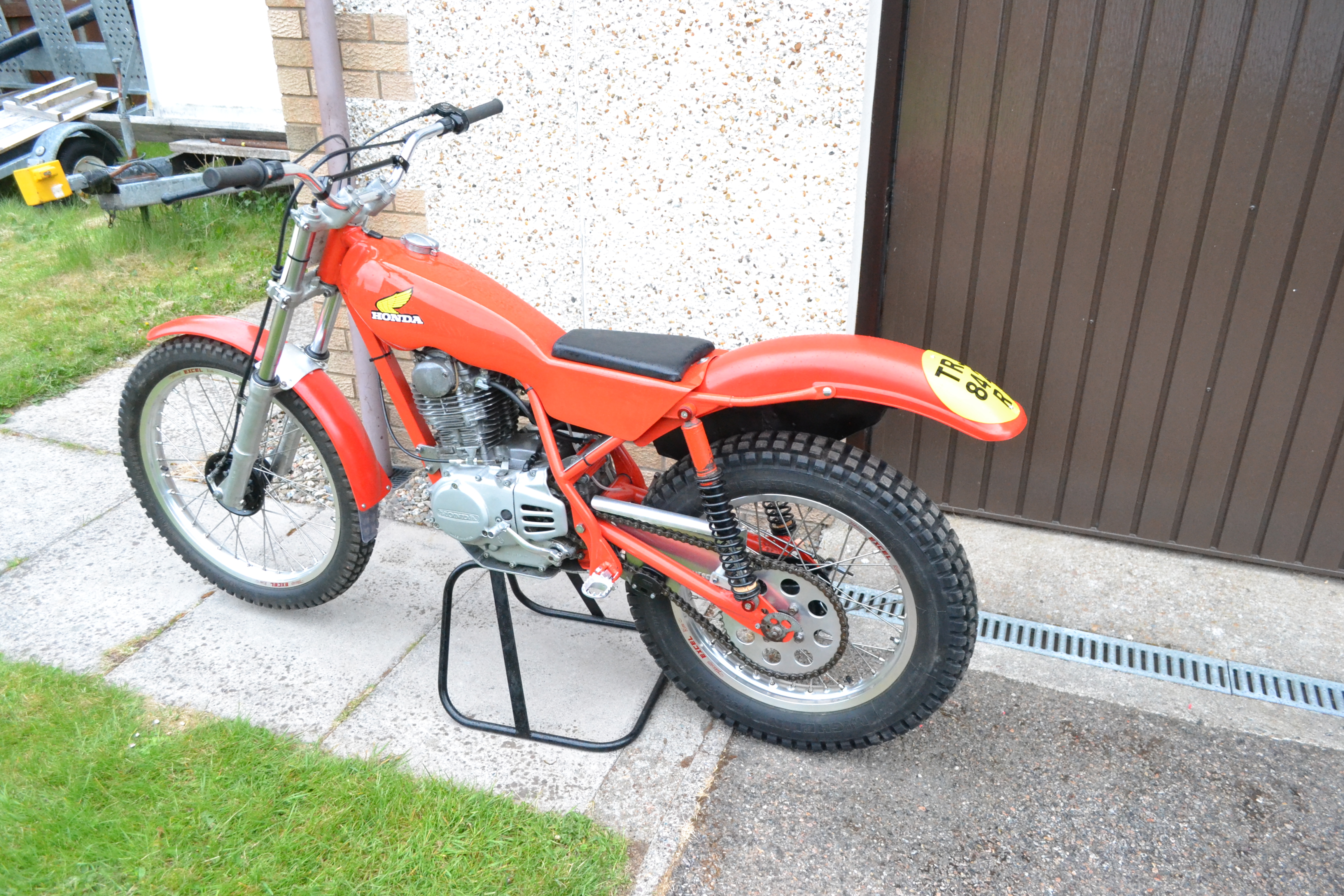
I also made contact with John Moffat of Trials Guru website who also has a Jim Susan’s built Honda ‘Works Replica’ machine and he kindly let me have some photographs as a guide. His machine has a 305cc engine, but that is a TL250 engine bored out.
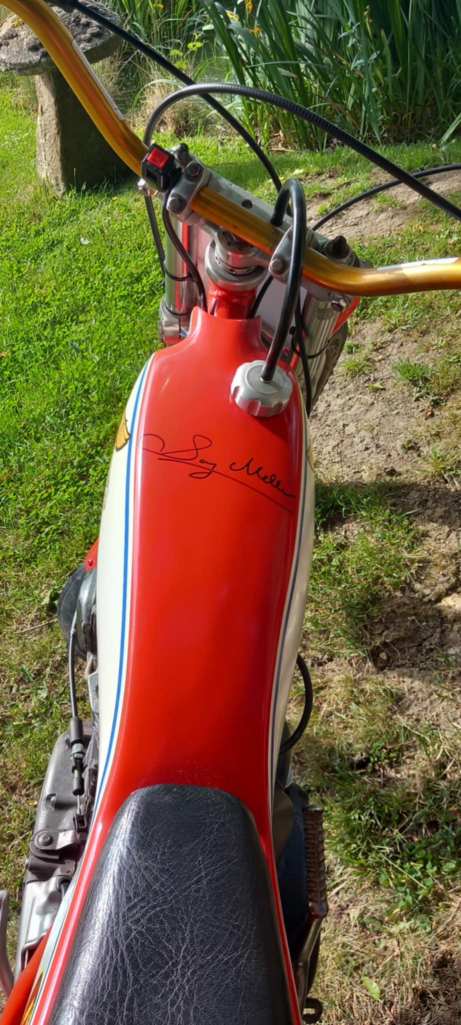
In the background things had been progressing, with the acquisition of a set of ex-works forks, yokes and fibreglass tank/seat unit which were swapped for the big aluminium tank.
After repairing the fibreglass tank, which had split down one of the seams, I lined the interior to protect it from ethanol, although Aspen 4 is the fuel of choice and appears to be safe with fibreglass. The fork stanchions needed a re-chrome and were duly dispatched to a well known company but took far longer than expected, due, I’m told, to the taper in the uppermost part of the tubes. Two or three attempts were made at this with the final result not as good as was hoped. The yokes needed only a clean. The top yoke being magnesium and the lower aluminium, which was missing the steering stem, so I had to turn one up.
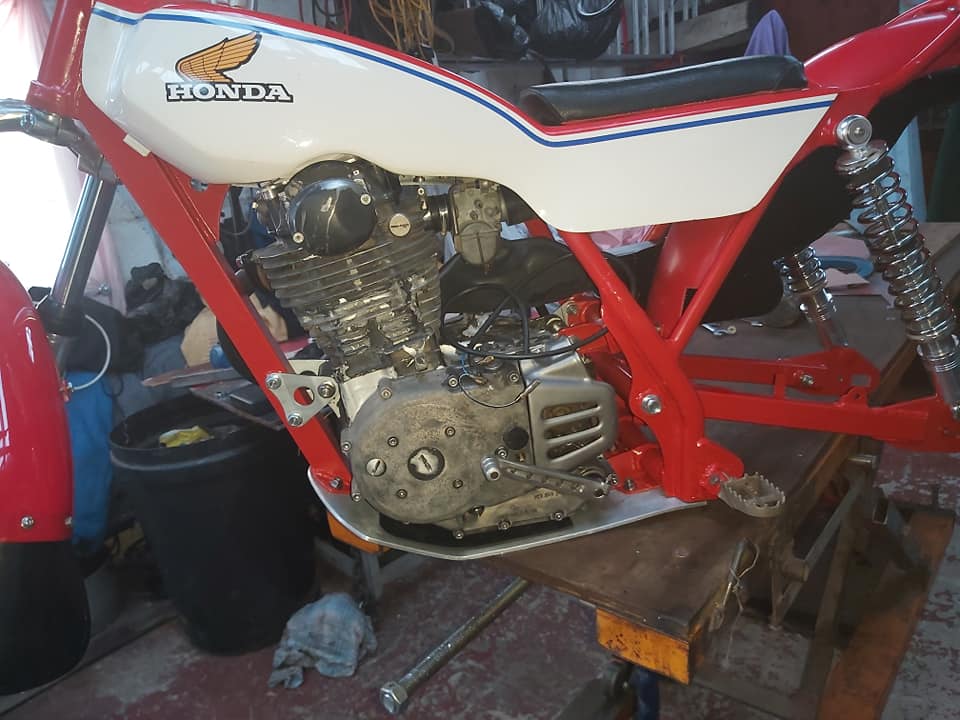
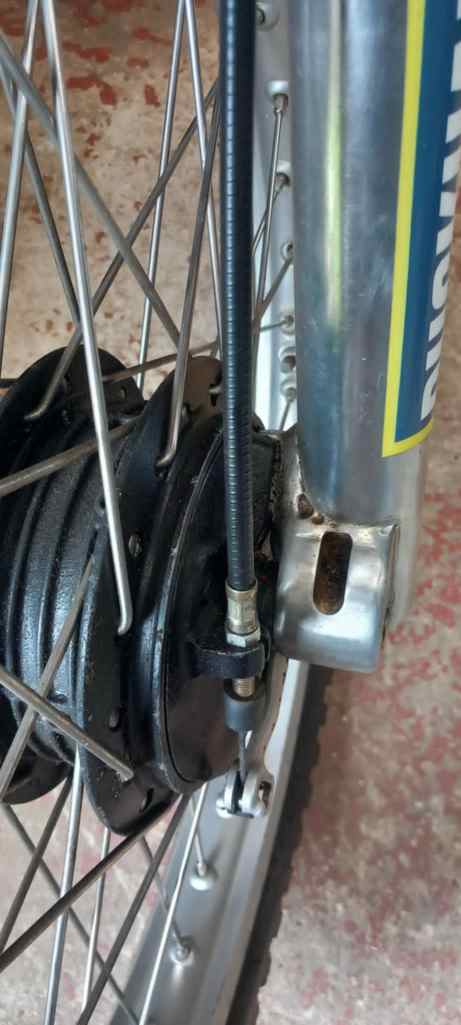
The fork sliders were a different story and needed a fair bit of work because the brake plate retaining lug had been removed and the spindle thread had been bored out to take a through spindle. Also, one of the mudguard mounting lugs had been drilled out to accept a bigger bolt for the mounting of a torque arm. The sliders were originally machined from solid stock.
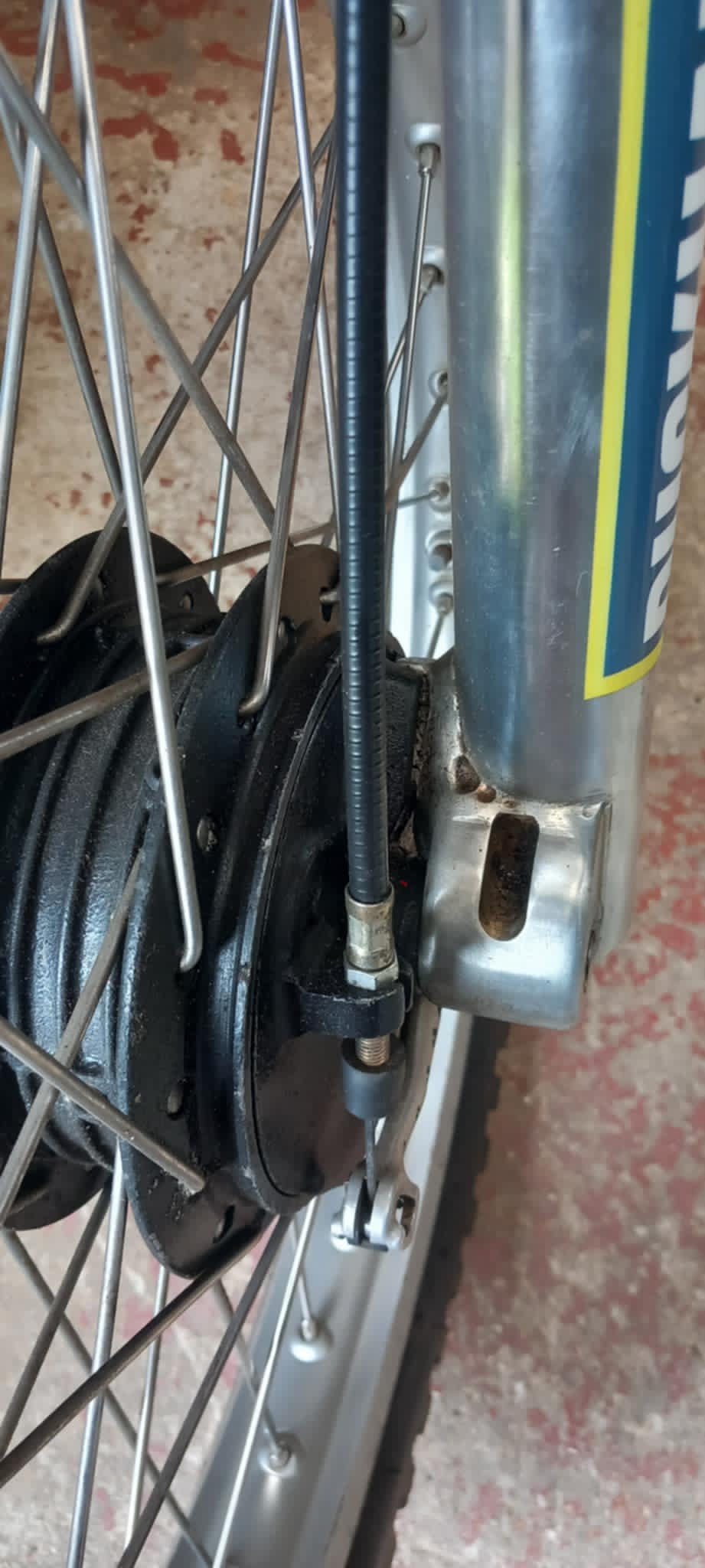
As pointed out by Martin Matthews there’s a pretty good chance that the forks are the ones pictured on page 117 of Don Morley’s Spanish Trials Bikes book, fitted to Sammy’s SWM, having been modified to accept the Grimeca hub. The picture also shows the valves in the fork tops which were a later addition. A new lug was welded on and a threaded bush was fitted to replace the missing thread for the spindle. I made a new spindle.
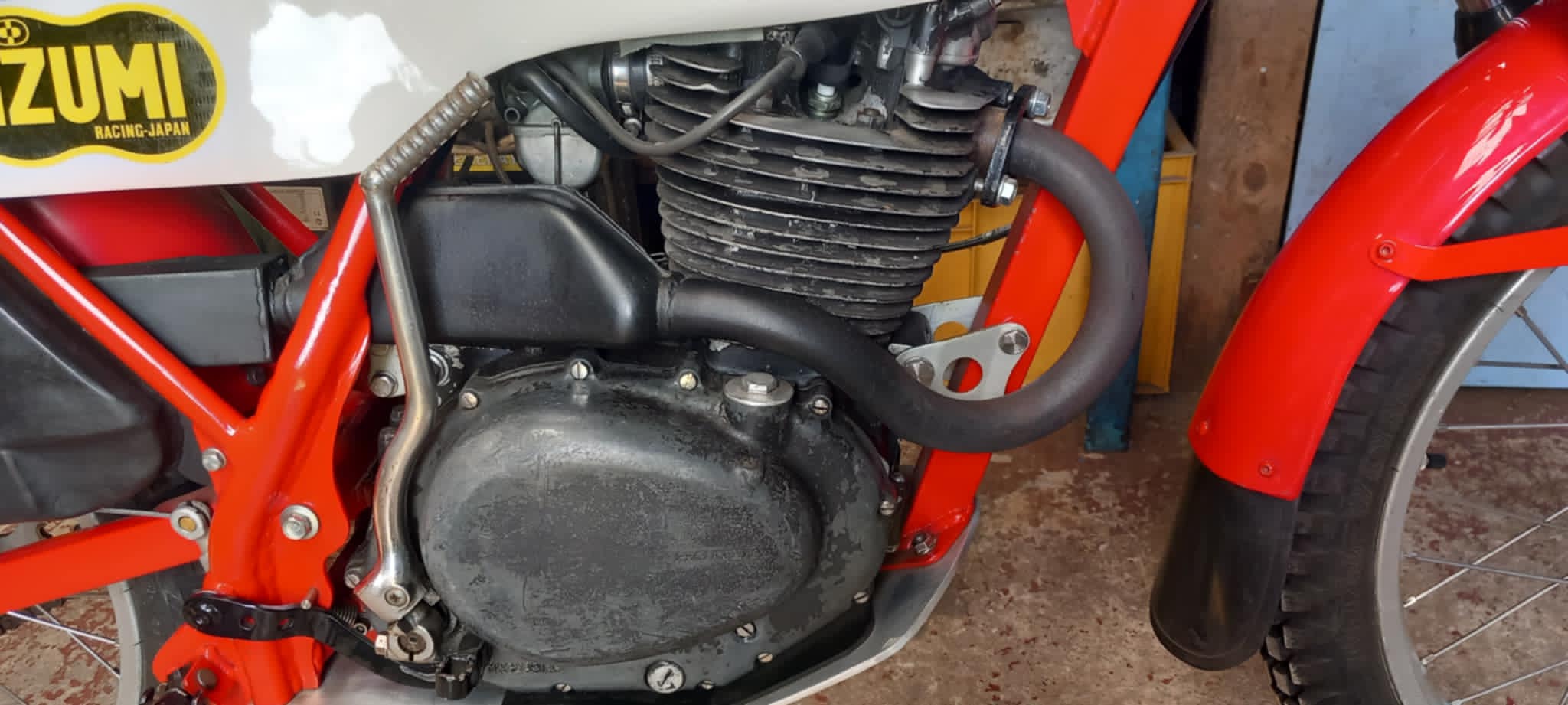
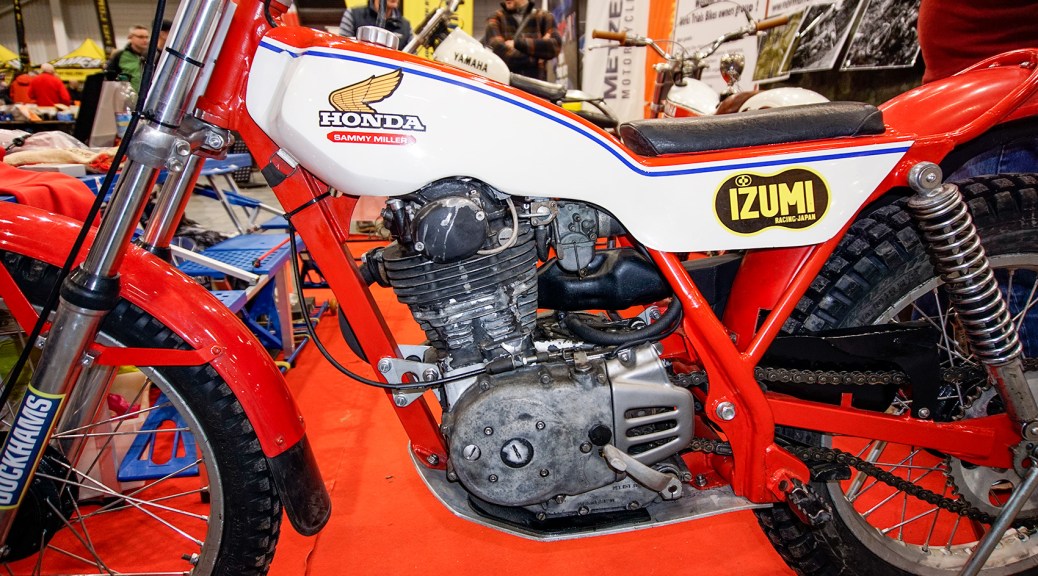
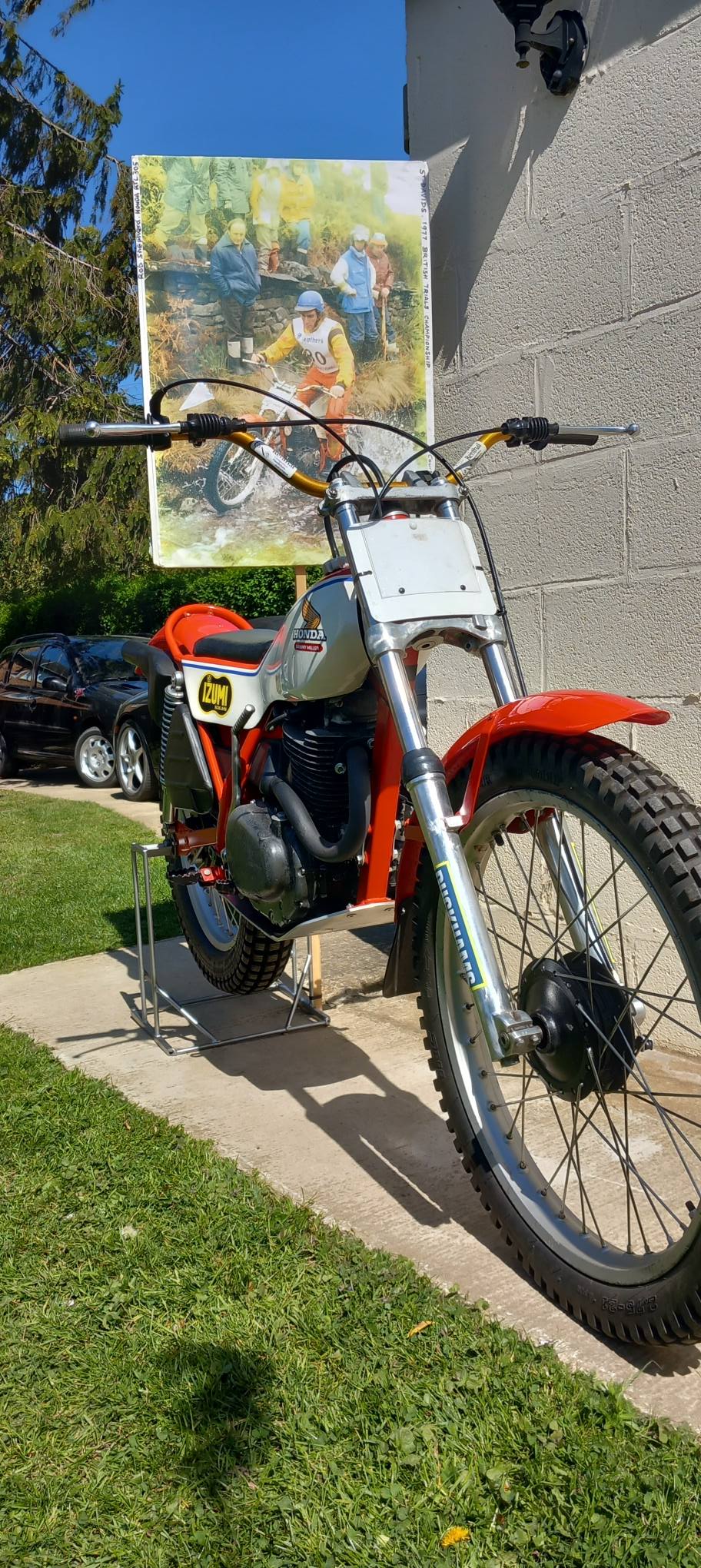
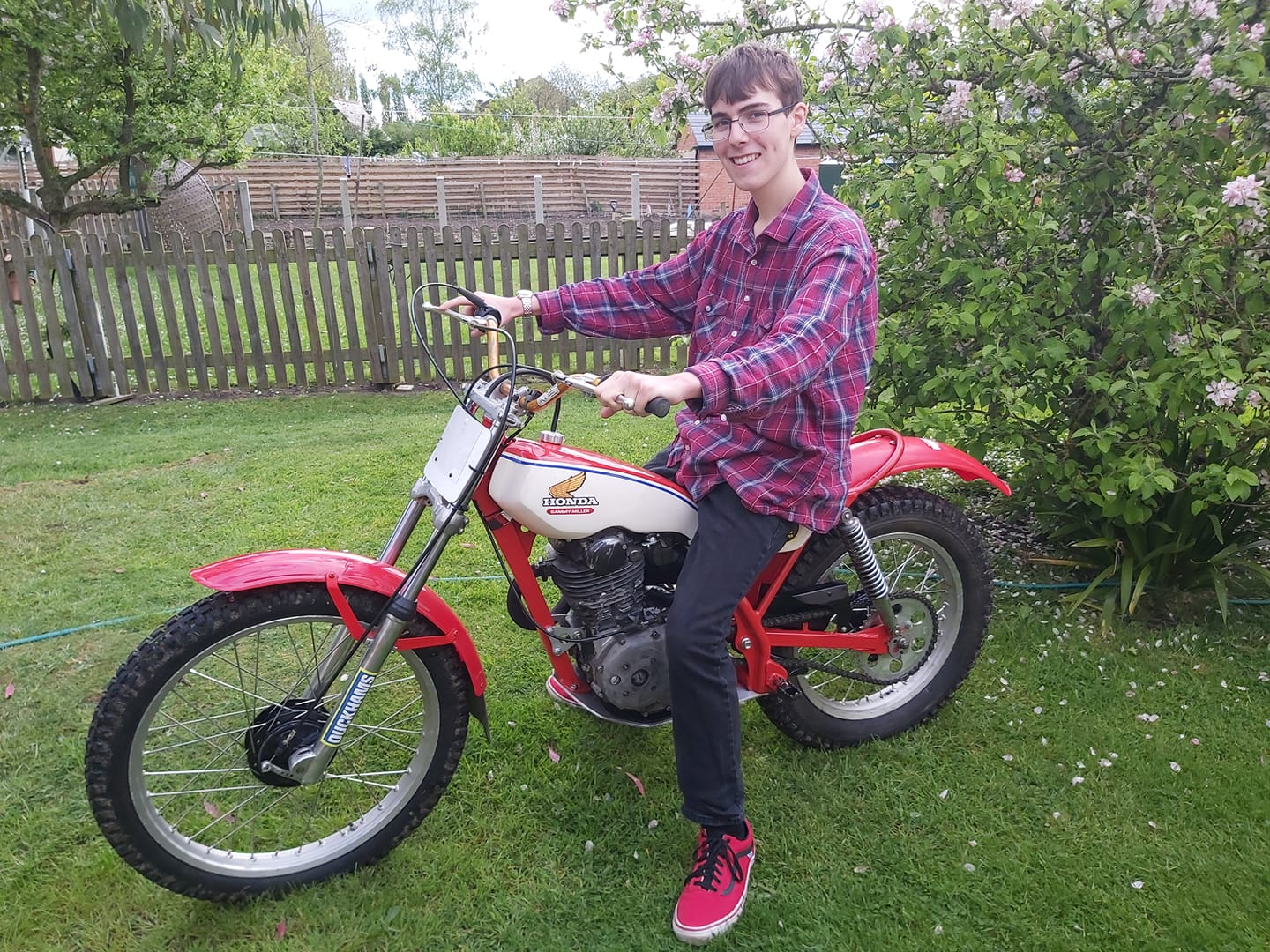
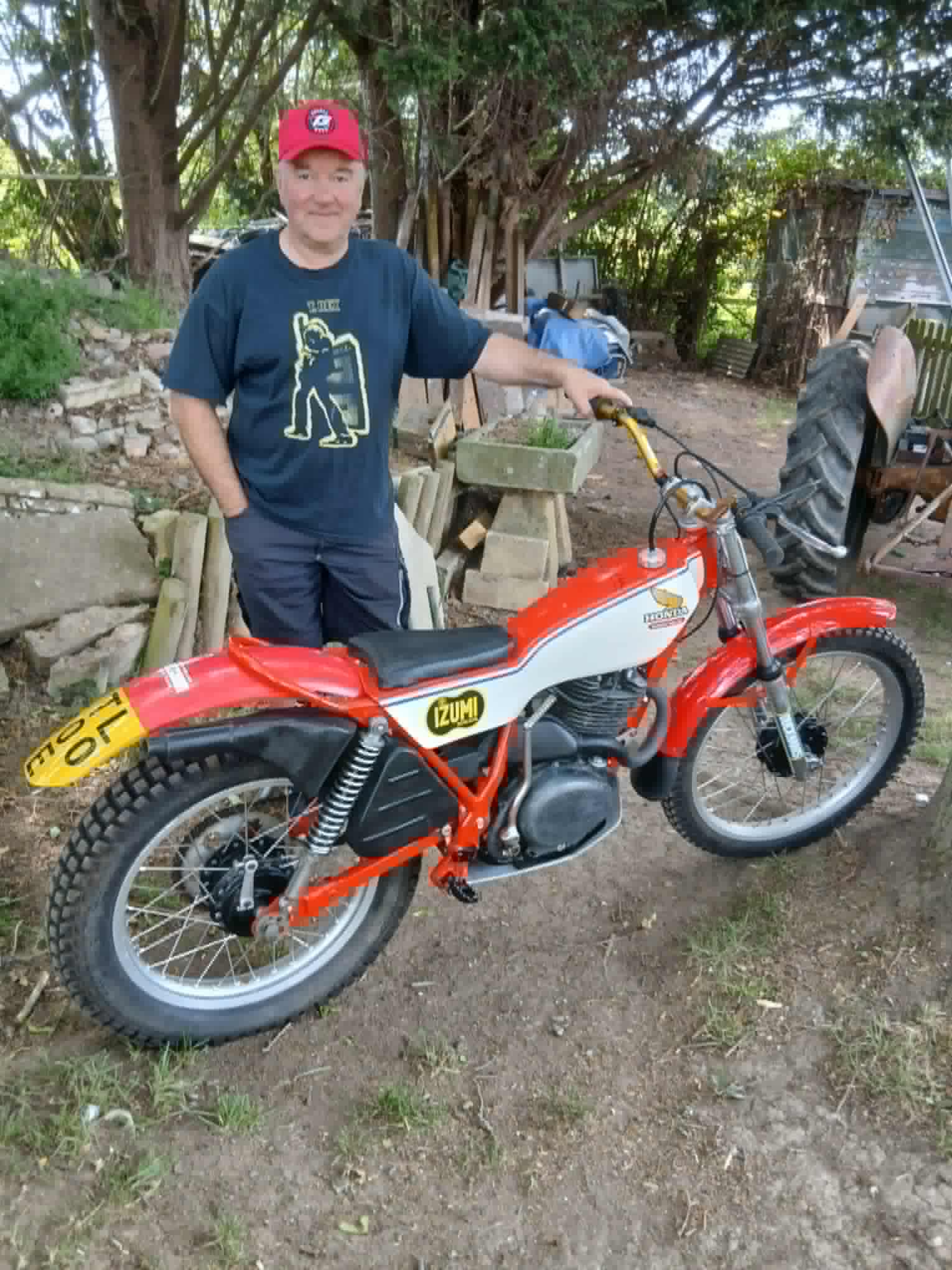
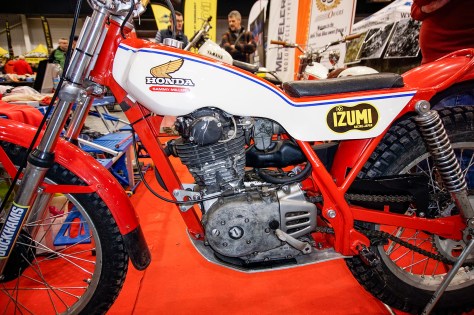
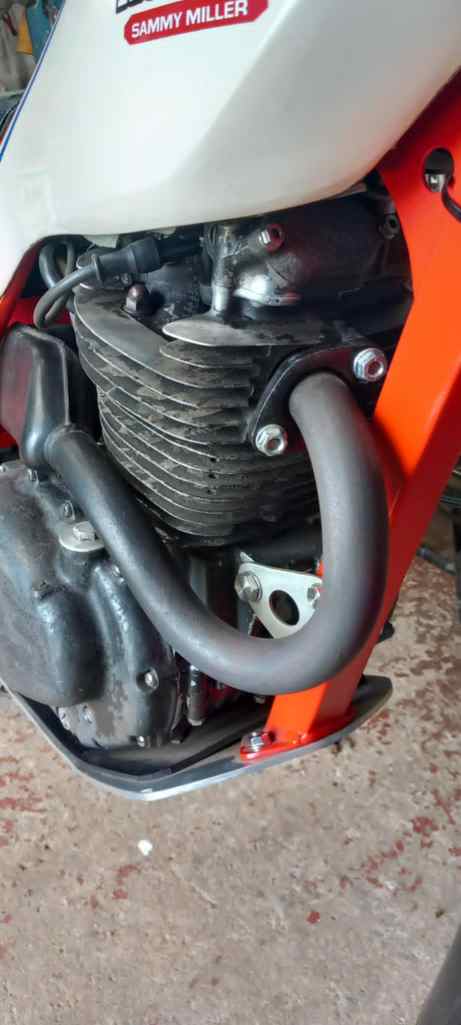
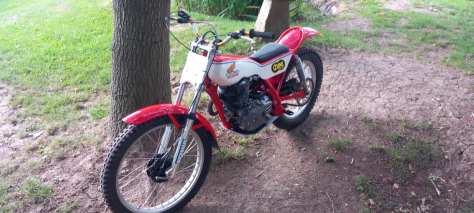
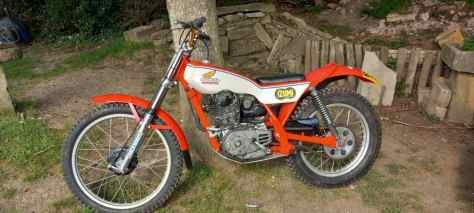
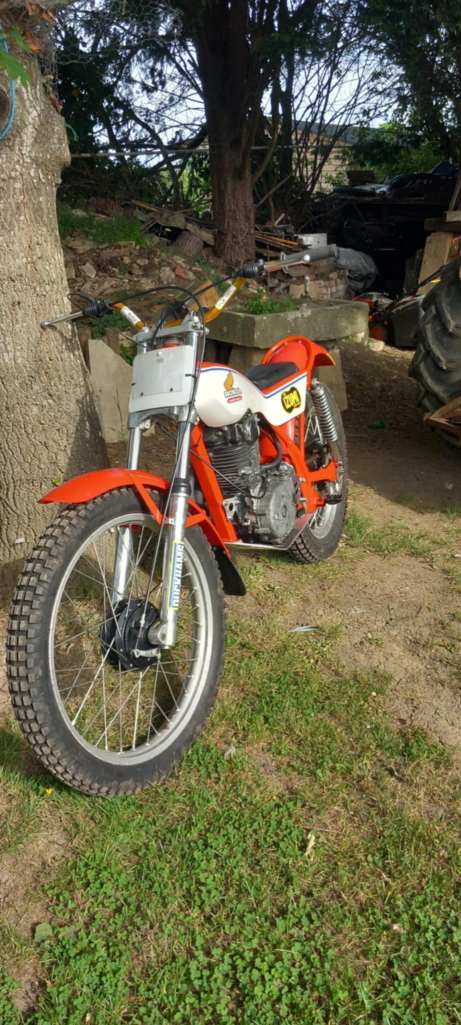
With the forks finally assembled it was time to start the frame. Ultimately, I wanted to re-create a bike that had the appearance of Rob Shepherd’s mid 1977 machine with black engine, red and white tank, unpainted fork sliders, red mudguards and with the big “one off” exhaust tail pipe. The engine was already black and although showing signs of ‘patina’ was left as it was. I’m told that the black finish was applied in the UK, the engines having come from Honda finished in silver. Once you re-paint something you lose the history.
At the 2020 Classic Off Road show, Jean kindly allowed me to take lots of detail photo’s of his ex-Marland Whaley long-stroke machine, so armed with Jim’s jig, lots of photo’s and lots of guesswork, I started frame building, posting progress on the ‘Works Trials Bikes’ facebook group.
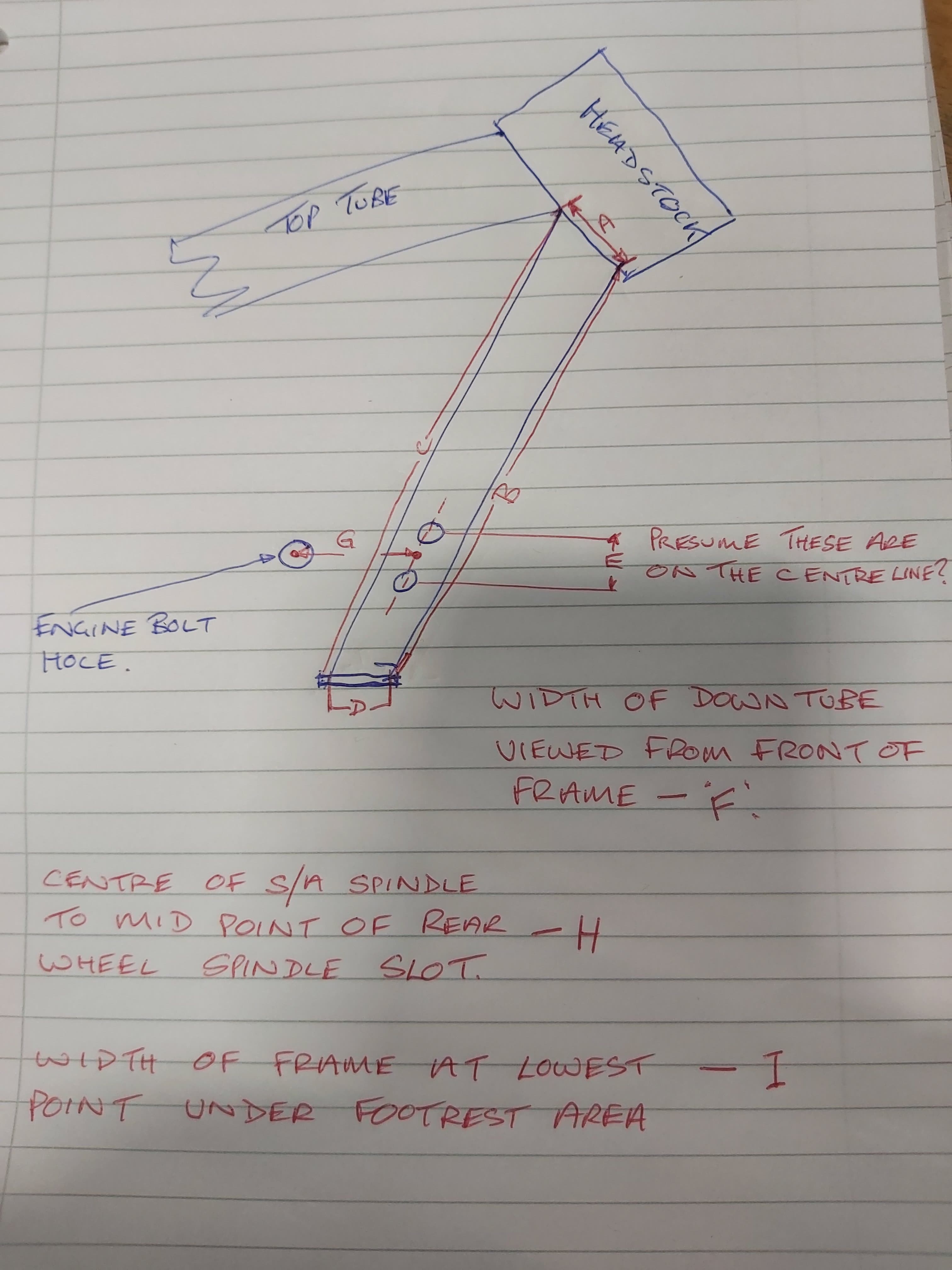
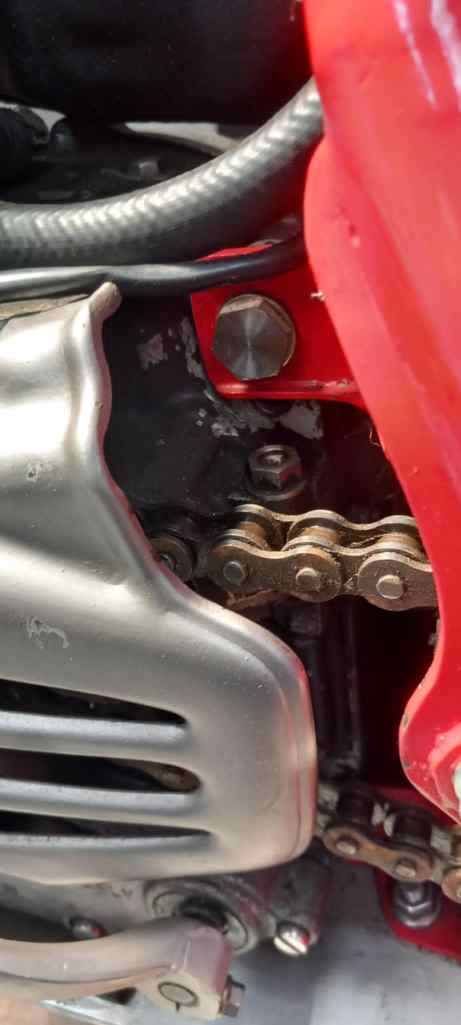
Happily, some of the important dimensions were dictated by the jig and the tank-seat unit, namely the head angle, the top triangle, the swinging arm pivot point and the rear shock absorbers top mount. Using known measurements from the engine and blown up photo’s, it was possible to deduce other critical dimensions but this was difficult. To be as authentic as possible, the frame needed to have the tapered square section front down-tube and the flat side oval side tubes. The down tube wasn’t too difficult to fabricate but the side tubes were tricky, being a size that cannot be bought. I’m told that Honda started with round tube then squashed it, ending up with a non standard size.
After posting lots of facebook photo’s showing my progress or otherwise, Jean started to whole-heartedly support the project. I couldn’t have achieved the final result without this support.

There was a huge amount of fabrication to do, all of which took more than four hundred hours. Apart from the obvious, other items made from scratch were the airbox and exhaust tailpipe.
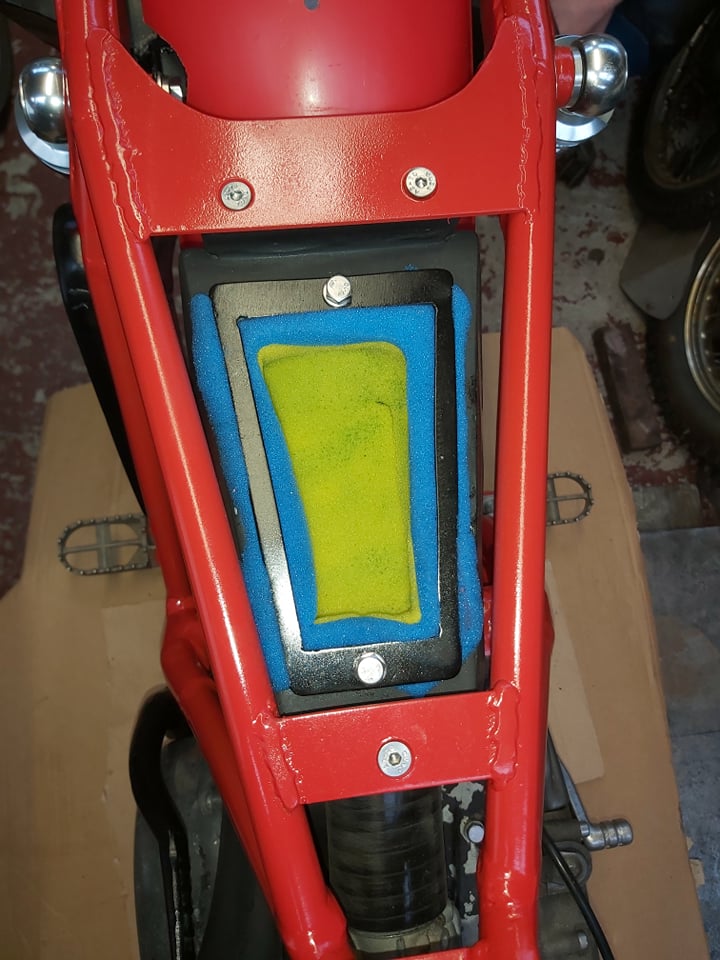
The airbox is pretty much the correct size and shape but I made it to accept a TY mono airfilter. The exhaust system is not entirely correct because the tailpipe should be welded to the exhaust middlebox with a detachable front pipe. Swinging arm bearings and spindle are TLR 250. The works bikes used a few standard TL250 parts, some of which I sourced from the USA. Thanks go to Olivier Barjon for his support also and for providing the correct footrests and a decent TL250 middle box and carburettor.
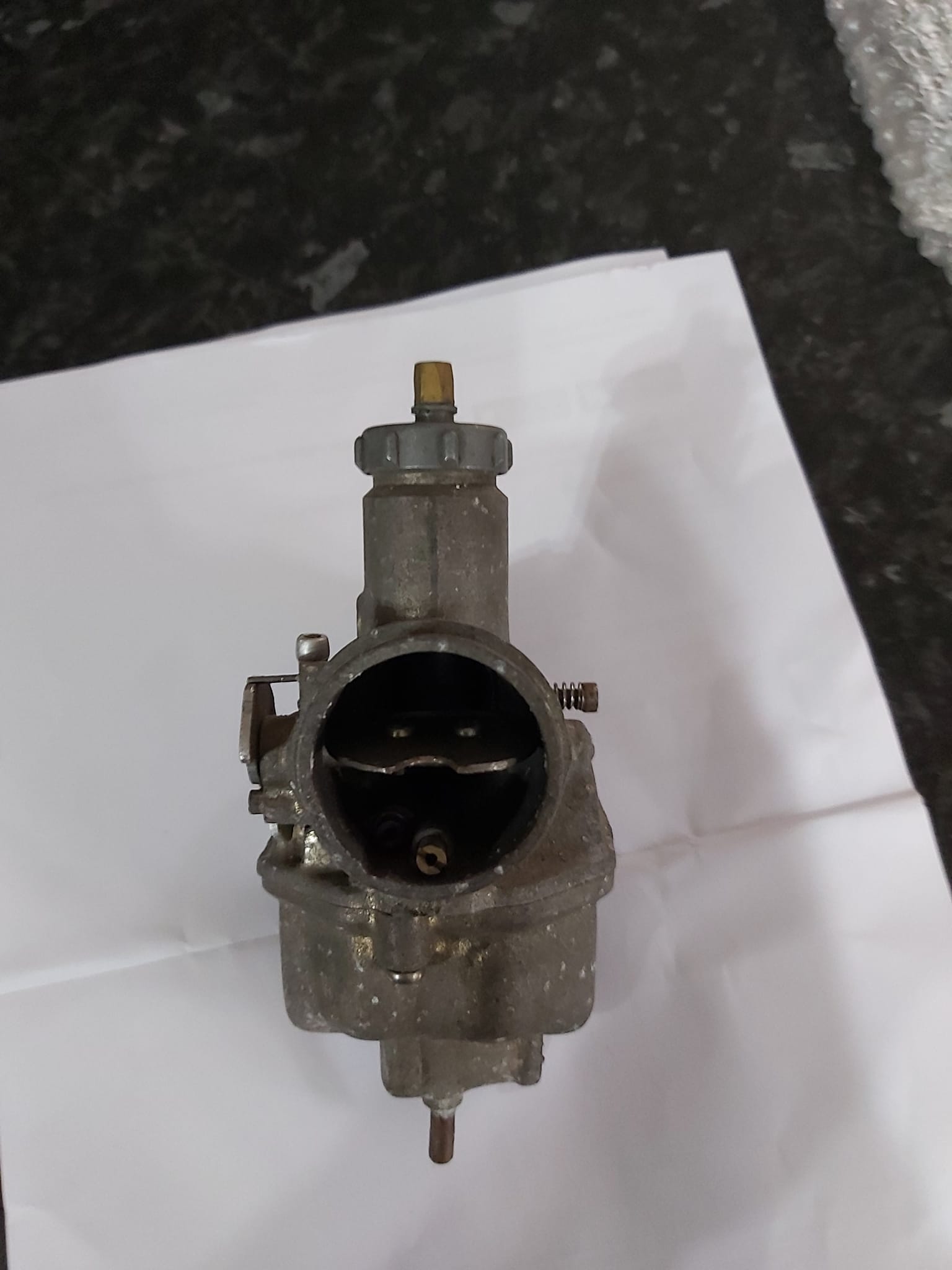
I’ve since obtained an ex works magnesium carburetor. TL250 kick-start levers are hard to find, luckily Jean had a spare.
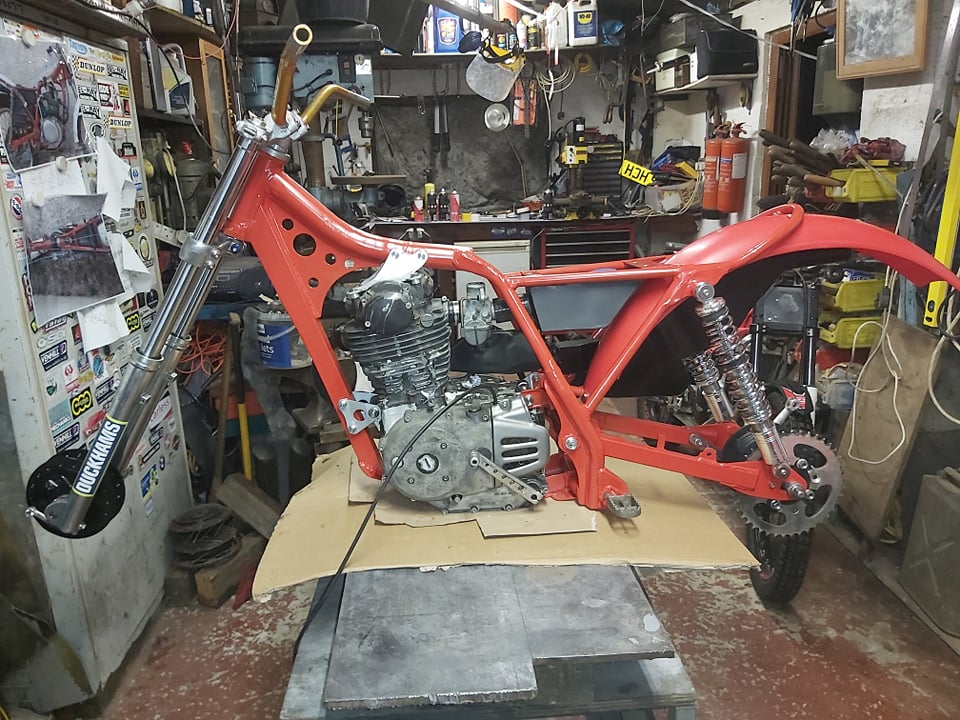
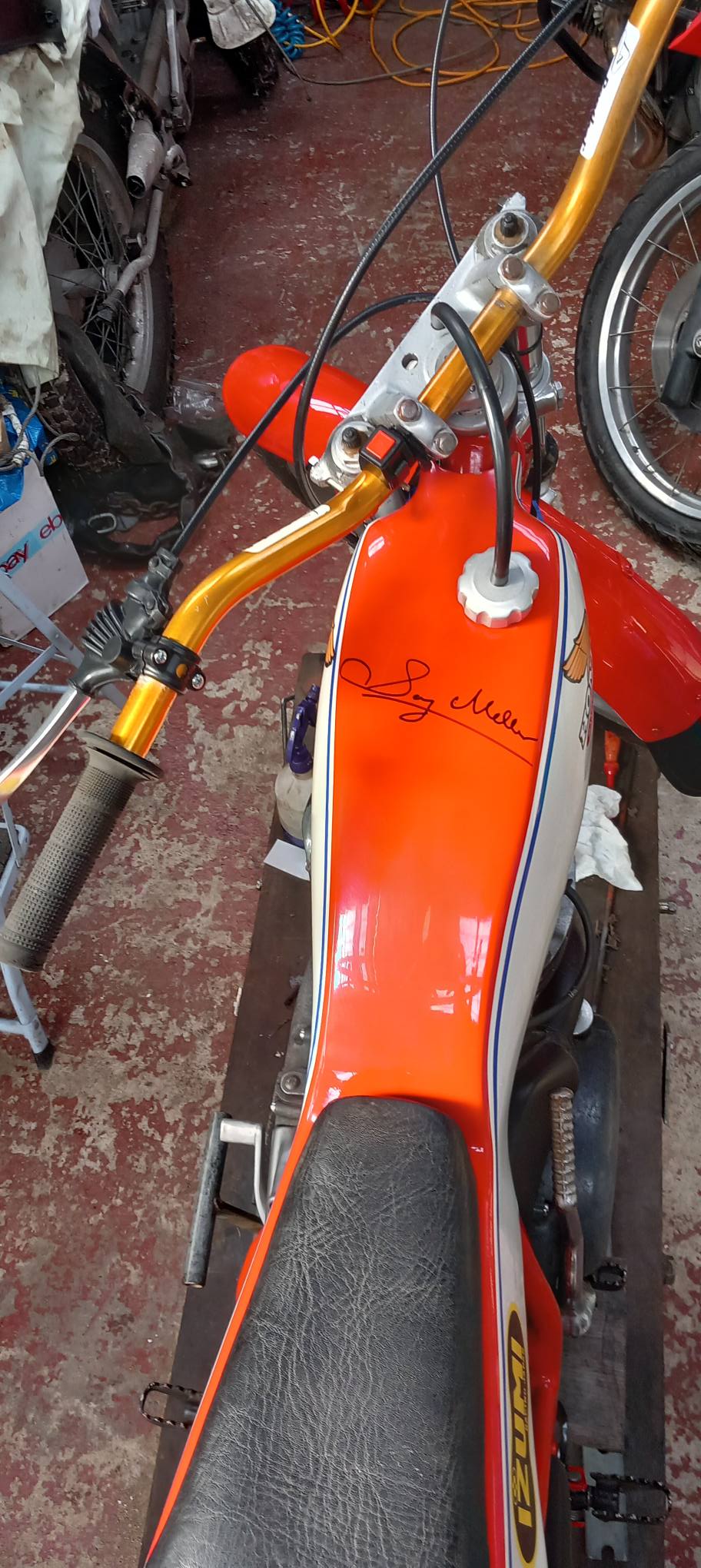
Jean also supplied a set of correctly proportioned period replica Izumi and Duckhams stickers, plus the ‘Sammy Miller’ stickers to fit underneath the Honda wing. The rear shocks were sourced via Facebook, as were a pair of DID rims, which look correct for the period but were originally on a later Seeley Honda.
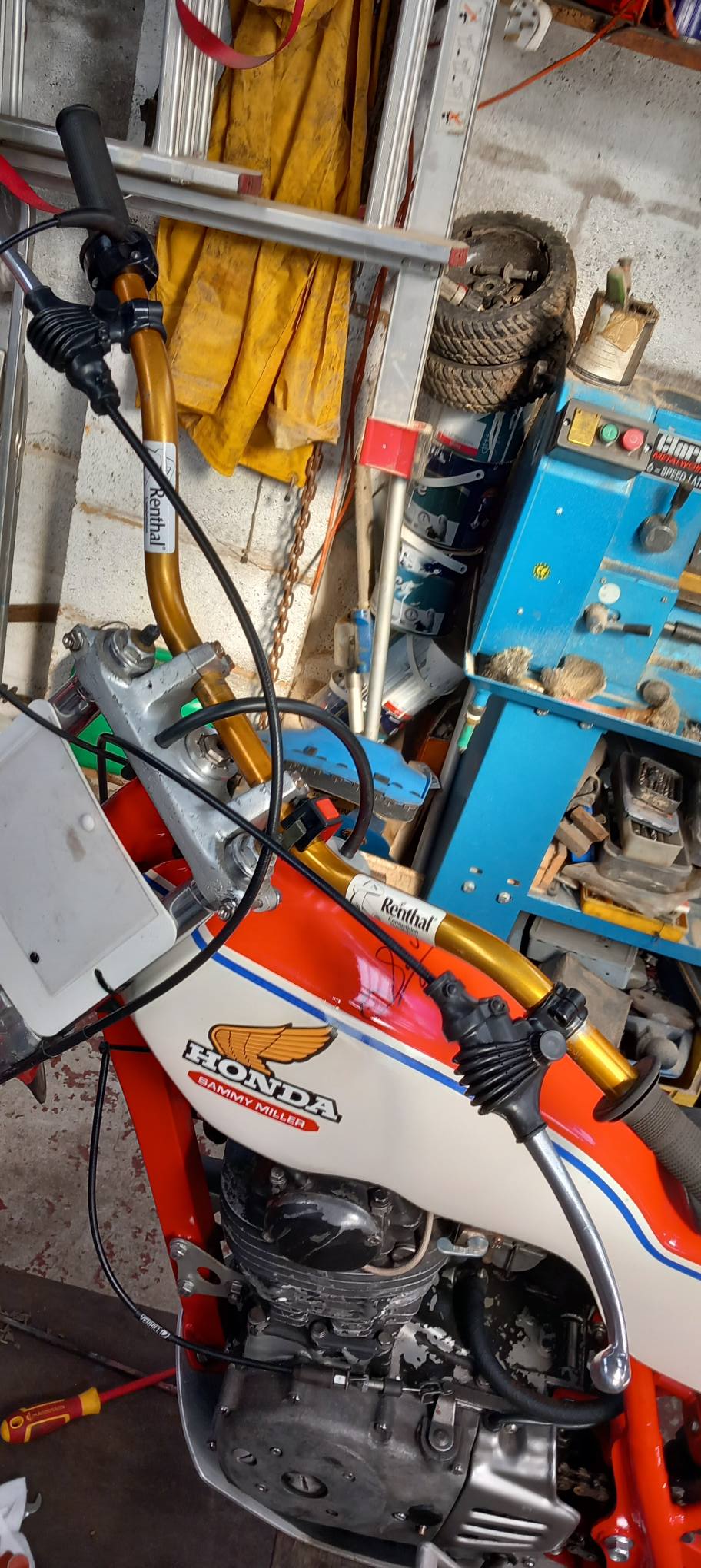
A set of gold Renthals was a lucky find at an autojumble. Shedworks supplied a red front mudguard. The rims and magnesium hubs were sent away to be laced together and on return were re-united with the brake plates.
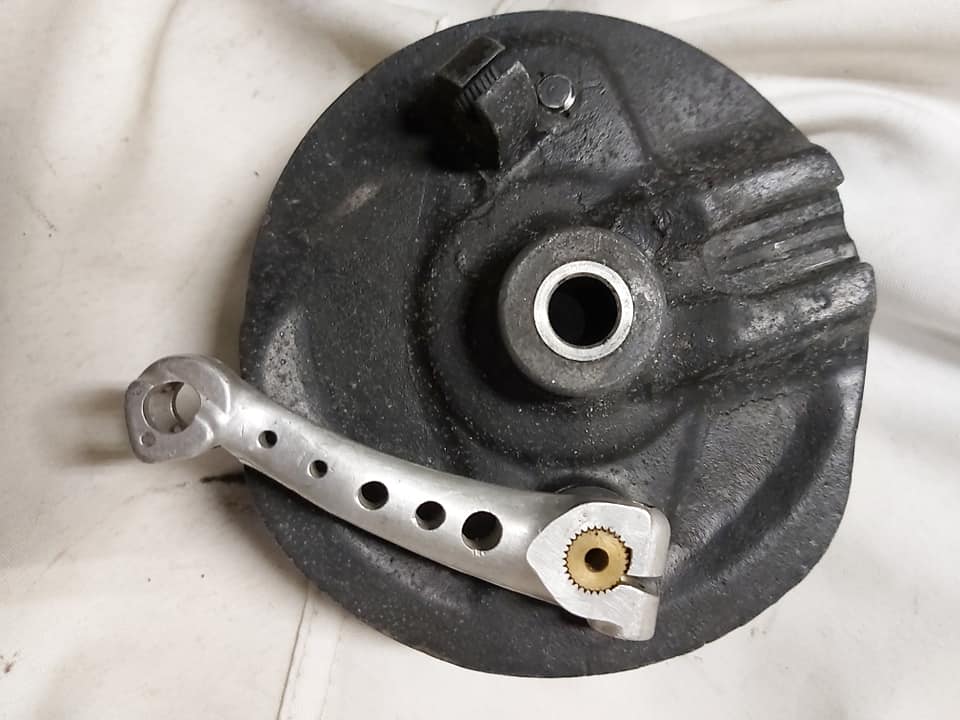
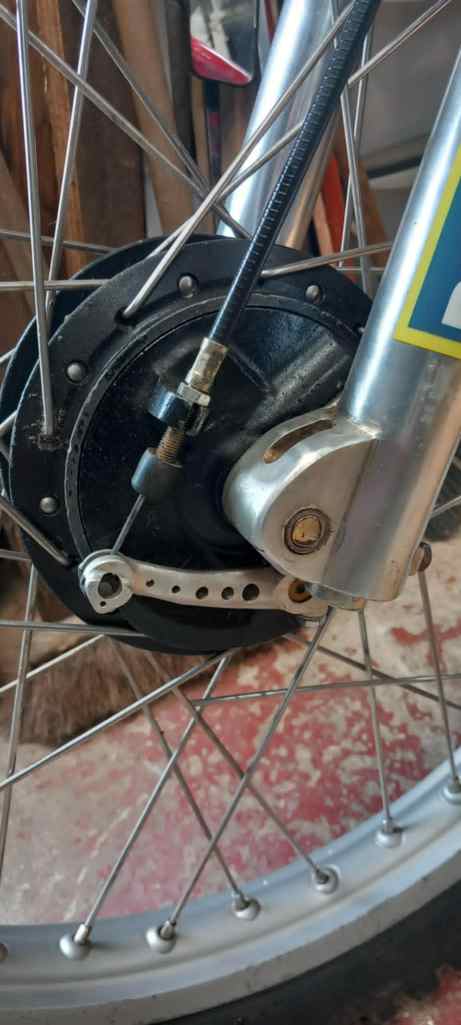
I replaced the magnesium brake shoes with standard TL type. The attention to detail is amazing, with the brake plate bushes being titanium and with a phosphor bronze cam which is mated to a hand made alloy lever. The action is silky smooth. Titanium fasteners are used extensively in the engine.

With the frame fabrication eventually complete, it was time for paint. After undercoat, three or four coats of Citroen Geranium Red were applied, this matches the red on the tank perfectly.
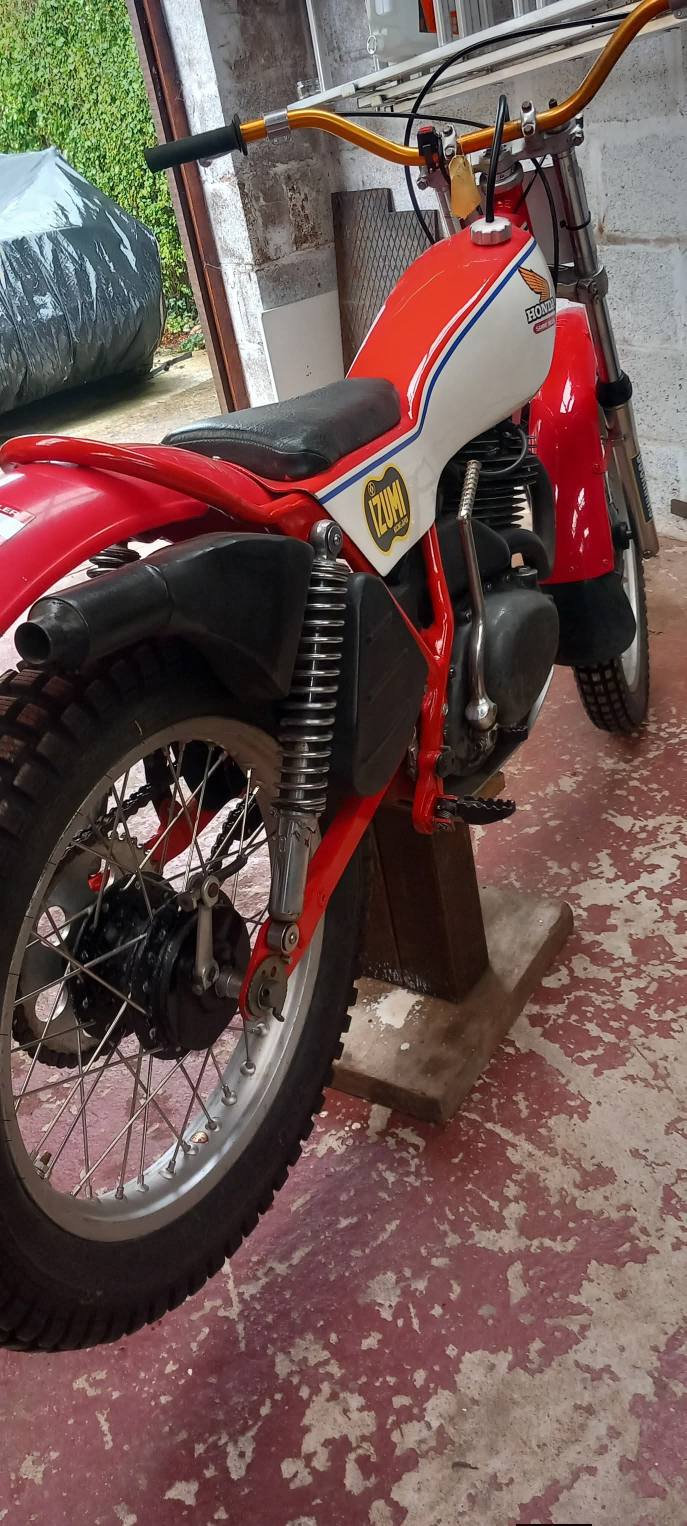
Final assembly could now be pretty much completed, after which I turned my attention to the big rear silencer. I’d managed to buy a rotten TL250 triangular box from ebay which I cut open to examine the internal configuration so that I could replicate it on a slightly smaller scale. The works silencer dimensions were scaled from photo’s. It took a couple of attempts to end up with something that looks pretty close to the one off original and I’m told sounds as it should.
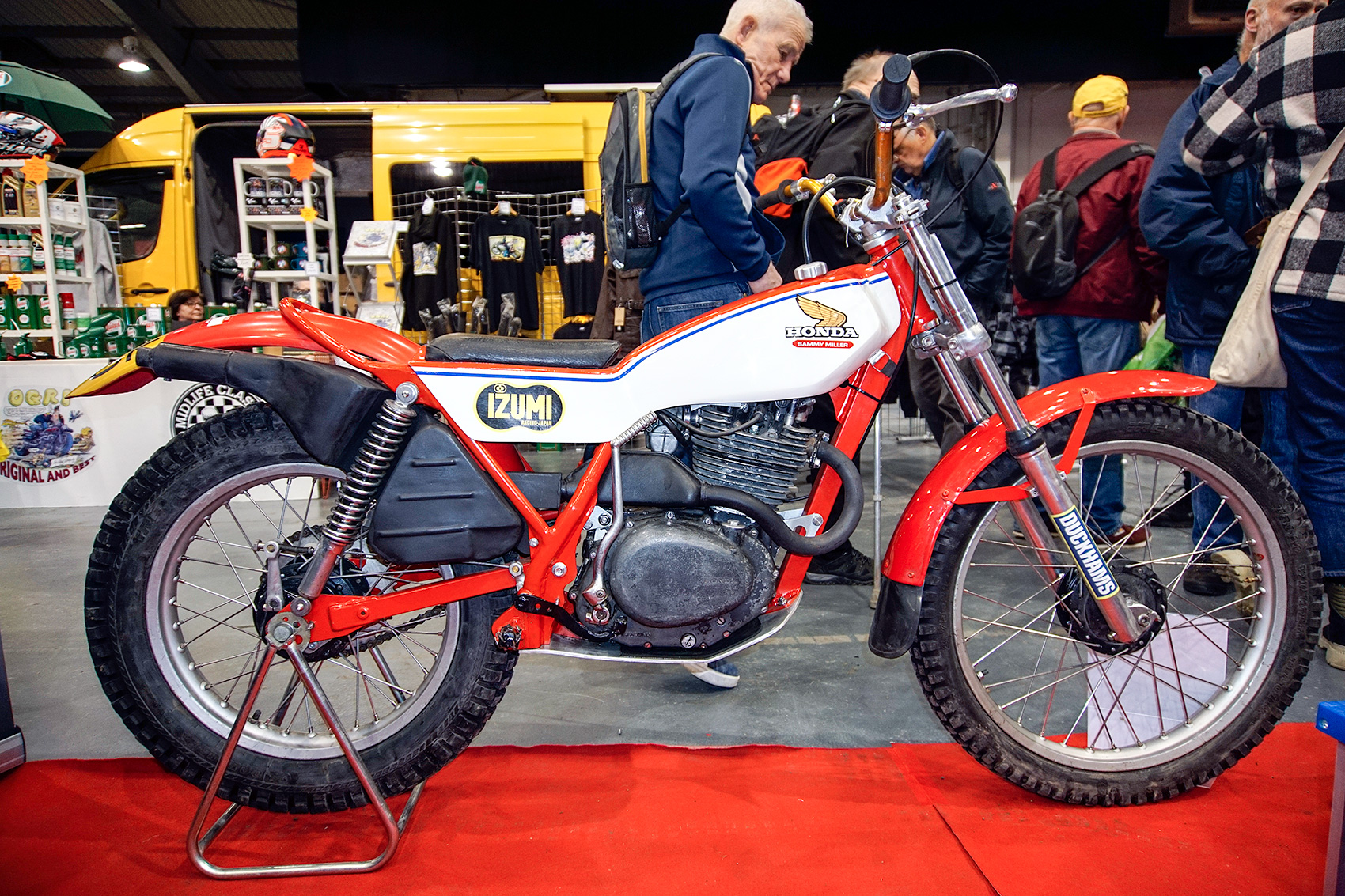
Throughout the project I’ve tried to determine the history of engine number 3 but there is little recollection by the major players as to who used what and when. It would be nice to think that it was used by Rob Shepherd in his British Championship winning year, a year in which he won my local National, the Colmore Cup and also the Finnish round of the World Championship. I was aware that during his racing days at Honda, Mick Grant was loaned Rob’s old championship winning bike by Gerald Davison, with Rob having moved onto the 360. I phoned Mick to ask what he knew and of course whether he had any works parts left over! He told me that during his use the engine developed a cylinder head issue which was rectified by someone local to him and will of course still bear evidence of this repair. Further to this, I phoned Rob and asked what he could recall. During a very interesting conversation one of the things he told me was that one of the 305 engines that he used performed better than the others, it had bigger valves, so, if ever the cylinder head needs to come off!
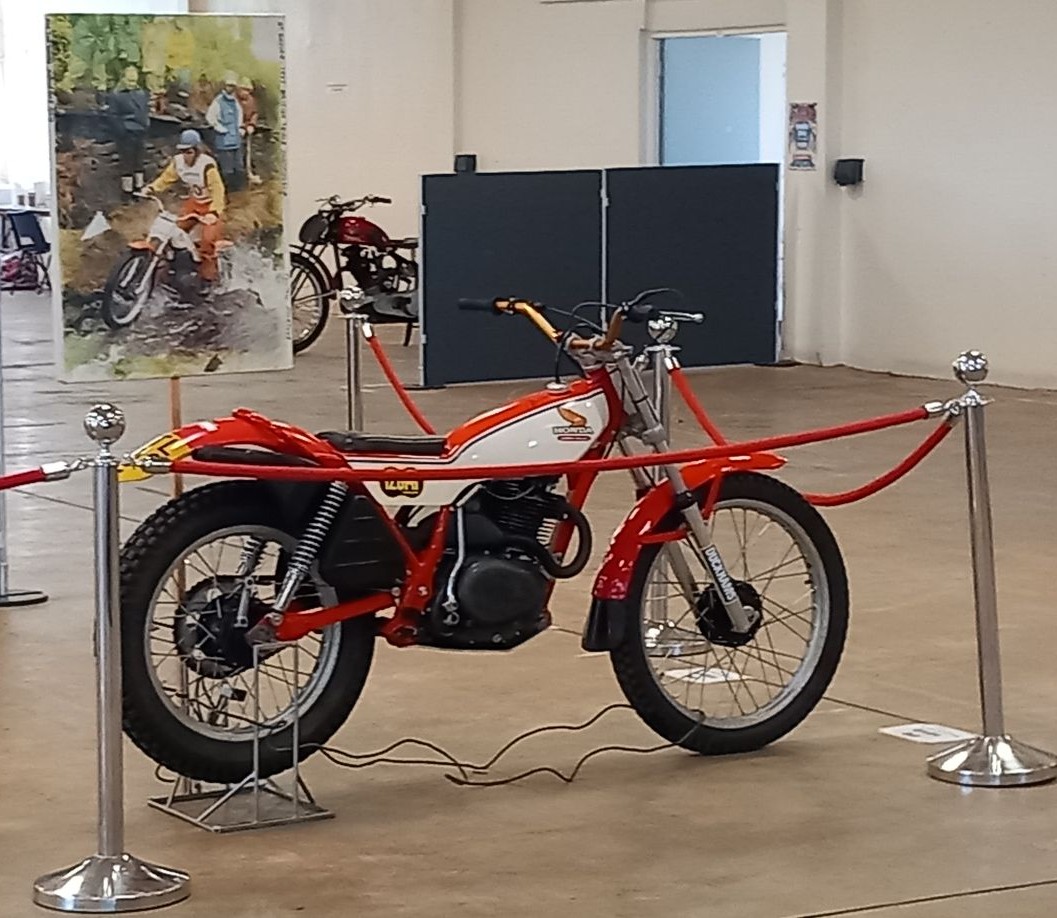
The culmination of the project was displaying the bike on the ‘Works Trials Bike Owners Group’ stand at the Telford Dirt Bike show, where it attracted a lot of attention and positive comments with an invite to join the group ‘Works Trials Bikes’.
Thanks are in order to those who helped out with either information or parts, or both, particularly Jean Caillou, Olivier Barjon, Rob Shepherd, Mick Grant, John Lampkin, Mervyn Smith, John Moffat, the late Jim Susans, Sammy Miller MBE, plus of course Tommy Sandham’s ‘Four Stroke Finale?’

Who is Alan Taylor? “I’m a Midland Centre chap from near to Shipston on Stour, Warwickshire – Colmore country. I actually rode in the Midland Centre team in their Pre65 team trial a couple of times when Wrighty (Alan Wright) was manager. I won the Sammy Miller series unit construction class in 1999. I’ve been riding modern and classic bikes constantly since 1977 apart from nine months after a car accident. I qualified as expert in South Midland Centre in 1980. My Dad competed during National Service in the 1950s so I had an interest that was passed on to me. In the early to mid 1970s we’d spectate at various Open to Centre and National trials, so I got to see the top riders on works machinery and later on ride in the same events. The atmosphere around the Colmore back in the day was amazing with huge numbers of spectators. As a kid I liked Malcolm Rathmell, but my favourite was Rob Shepherd and the Honda – wishing I could have one! He won the first Colmore I witnessed in 1977. The Hondas were almost mystical to me, hence my interest!”
‘Building a Works Replica Honda’ is the copyright of Trials Guru and Alan Taylor.
Photographs are the copyright of the photographers named in the captions.
Slideshow of the RTL300 WR:
Apart from ‘Fair Dealing’ for the purpose of private study, research, criticism or review as permitted under the Copyright, Design and Patents Act, 1988, no part of this article may be copied, reproduced, stored in any form of retrieval system, electronic or otherwise or transmitted in any form or by any means, electronic, electrical, mechanical, optical, chemical, photocopying, recording or otherwise without the prior written permission of the author as stated above. This article is not being published for any monetary reward or monetisation, be that online or in print.
Discover more from TRIALS GURU - DEDICATED TO TRIAL
Subscribe to get the latest posts sent to your email.
 TRIALS GURU - DEDICATED TO TRIAL