Category Archives: Feature

CCM – Built in Britain

Back in 1977, having previously acquired the tooling and stock of the BSA competition shop at Small Heath, Alan Clews decided to create a trials machine. It is believed that Sammy Miller had already approached Clews to supply him with BSA motors to power a trials machine of Millers own design. Clews’ CCM (Clews Competition Machines) brand was by then already well established, having risen from the original ‘Clew-Stroka’ motocross concept from 1971, by using BSA B50 motors as the power-plant, but with the capacity increased from 498cc to 600cc.

CCM MX
CCM had built their motocross brand from the 1971 concept of ‘Clew-Stroka’ which at heart was an uprated 498cc BSA B50 motor – Photo: Justyn Norek, Turin

Clews had built a reputation of making high quality motocross machinery which performed as well as they looked. In the hands of Lancastrian, Bob Wright; Cumbrian Mick Barnes and later Vic Eastwood and Scot, Vic Allan, the CCM was a serious racing motorcycle.

CCM 350T_DSC5721-40
1978 CCM 350T MKII – Photo: Justyn Norek, Turin

Based in Bolton, Lancashire, England the company had grown considerably from modest beginnings. Mike Eatough made the frames, before setting up his own venture called EMC.

There seemed to be a market for a four-stroke trials machine and Clews was eager to fill the void and to produce one, Made in Britain! Honda had already launched their TL125 and for the US market, the TL250 trials models, developed with the help of Sammy Miller and the company’s ‘Bials for Trials’ programme.
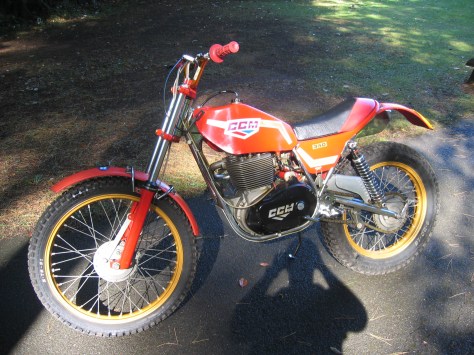
IMG_1084.JPG
Drive side shot of a 1978 MKII CCM 350T

The eventual CCM production run of their 350T machine was very modest, with just over 100 machines ever produced by the factory. It utilised a variant of the BSA B40 – 343cc unit single, which CCM claimed the capacity as 345cc by using a bore of 79.25 mm and stroke of 70 mm, with compression ratio as 6.2:1.

ccm%20spec%20sheet2
Original sales leaflet for the MK1 CCM 350T specification from 1978

Quality components were sourced from European manufacturers, From Italy, Marzocchi supplied both front forks and remote reservoir rear shocks, German ‘Magura’ controls, the Italian, ‘Grimeca’ hubs and brakes and gold anodised Spanish ‘Akront’ wheel rims. With American-made Preston Petty motocross red plastic mudguards also fitted front and rear. This particular combination, with the chromed chassis made for a ‘good looking’ machine, this in itself did not make a 100% competitive trials machine however.

N Jefferies - CCM
Nick Jefferies on his factory CCM 350T in the 1978 SSDT at Altnafeadh on the first day of the event – Photo: Jimmy Young Archive on Trials Guru

The B40 motor was treated to an Amal MK2 concentric carburettor and a revised primary drive alloy casing, finished in black with the CCM motif in relief, with a novel little oil breather/catch bottle fitted to the nearside crankcase. But at heart it was still a BSA B40 which had been developed from the 1959 C15 design.

Given the more modern riding position, the gear pedal was fitted in such a way that it was accessible by the rider standing up on the foot-pegs. The gear pedal passed behind the kick-start lever.

Backed by Castrol Oils UK, riders of the caliber of Dave Thorpe, (who left Bultaco to ride the CCM prototype) and Nick Jefferies were employed to develop the CCM 350T for the factory.

Jefferies entered the 1978 Scottish Six Days Trial riding number 220 on the 400cc CCM prototype, backed by Castrol, but failed to finish the event.

Thorpe entered the 1979 SSDT on the 360cc CCM factory machine with riding number 250, with Thorpe shadowed most of the week by motocross rider, Dick Clayton whose riding gear had been rumoured to be literally stuffed with spare parts.
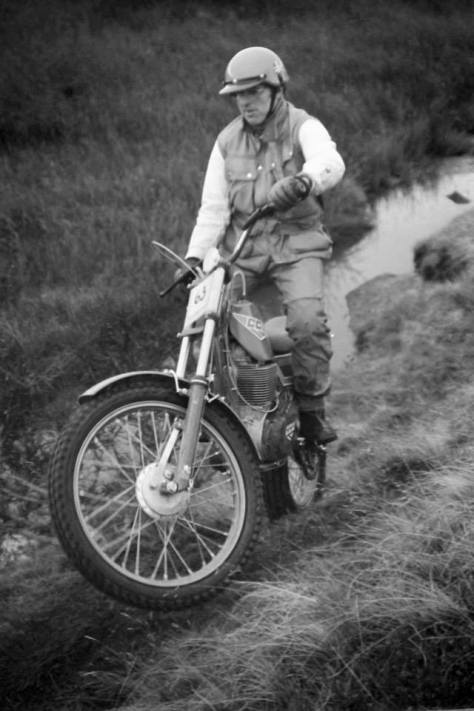
Mel Ross 1978 - JY
Private owner, Mel Ross from Monifieth, Dundee on his CCM 350T at a Dunfermline Trial in Scotland in 1978 – Photo: Jimmy Young Archive on Trials Guru

Dave Thorpe did finished the 1979 SSDT in 95th position on 397 marks lost, which was not a good day at the office for him, having been 11th position the year before on a Bultaco!

V. R. Moyce from Wickham rode a production CCM 350 in the 1979 SSDT and finished in 190th position on 597 marks lost.

WD - JY
The late Willie Dalling, former clerk of Course for the SSDT riding a borrowed CCM 350T in 1978 at the Aberfeldy Two-Day Trial in Scotland – Photo: Jimmy Young Archive on Trials Guru

Many of the Bolton built CCMs were bought by private riders who wanted something different.
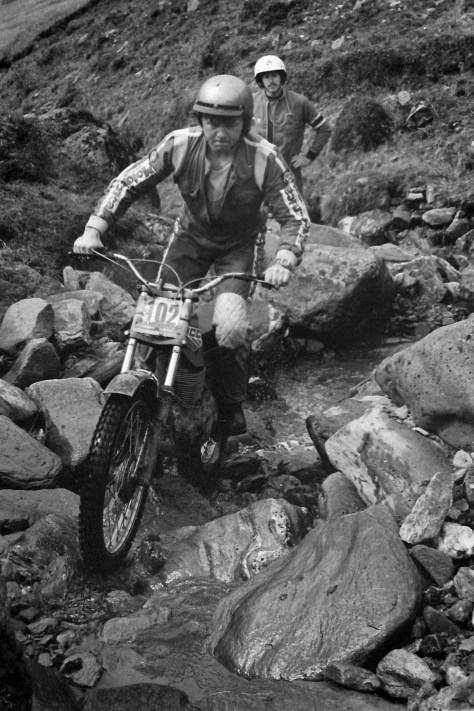
2014-03-27_13
Lancashire’s Eddie Smith on a Sandiford CCM 350T in 1978 at the Aberfeldy Two Day Trial – Photo: Jimmy Young Archive on Trials Guru

In 1979 Honda launched their own British built four-stroke trials machine, the TL200E (the ‘E’ stood for ‘England’) made by Colin Seeley in England, but ‘adopted’ by Honda UK as their own model and marketed through their comprehensive motorcycle dealership network.

CCM_350T_ds800x506.jpg
The production MKII CCM 350T of 1978

The frame was made from Reynolds ‘531’ tubing, argon brazed and finished with chrome plating to both frame and swinging arm.

The wheelbase at 51.5 inches followed almost the same dimensions as the Bultaco Sherpa it was designed to beat in competition.
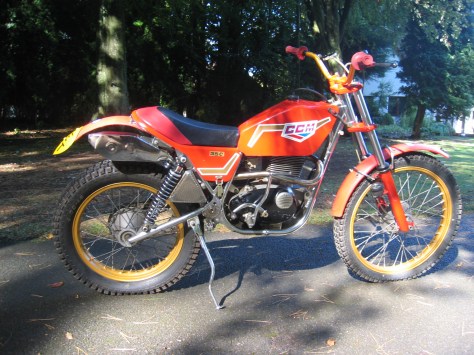
IMG_1086.JPG
A fairly original October 1978 registered CCM 350T MKII, all except for the two-tone coloured seat and red handlebar grips

Whist the CCM 350T was never destined to become a trials ‘world beater’, the machines did sell reasonably quickly. They were not produced in significantly high numbers, hence now they command extremely high prices for their rarity value alone.

CCM later became part of the ‘Armstrong-CCM’ brand, but that is another story!


© – All text copyright: Trials Guru / Moffat Racing, John Moffat – 2016

© – Images: World-wide Copyright Jimmy Young, Armadale, UK (All Rights Reserved) – 2016.

© – Images: World-wide Copyright Justyn Norek, Turin, Italy (All Rights Reserved) – 2016.

For a short test of CCM 350T with photographs in Italy by Justyn Norek click: Here

Trials Guru Main Index

ARIEL HT500 – Sammy Miller – 786GON

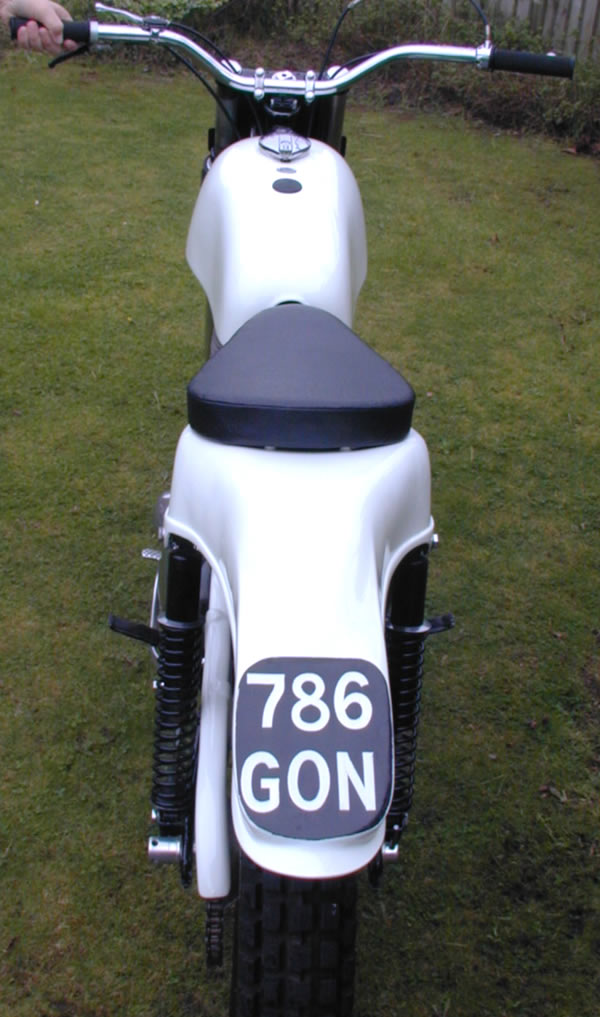
786_back
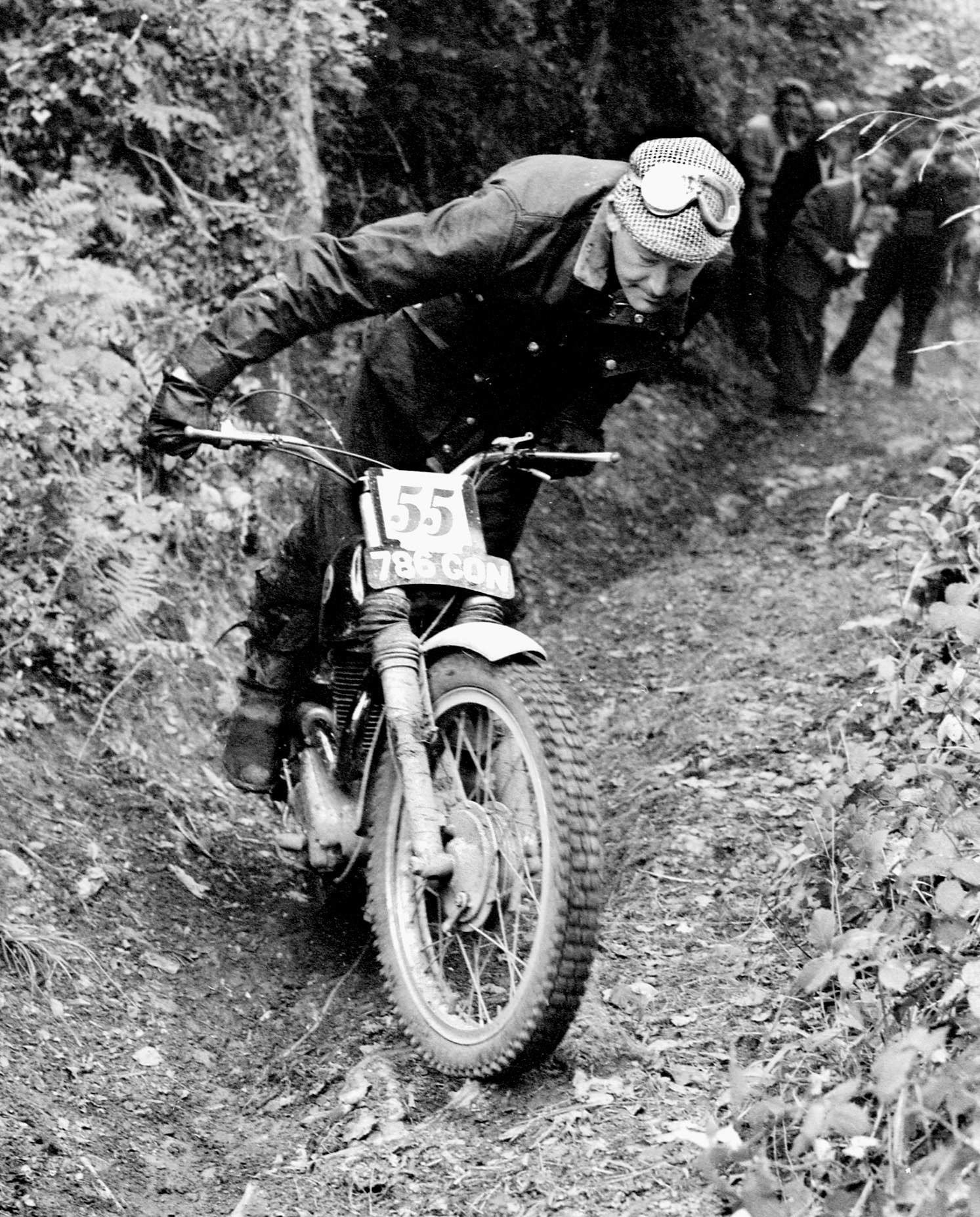
Rear view of 786GON showing the fibreglass mouldings by Butler. The Ariel was not a replica, it was Sammy Miller’s second string Ariel he used as often as GOV132, it is rumoured that Sammy simply changed the numbers over for different events. Photo courtesy of Roy A. Kerr.

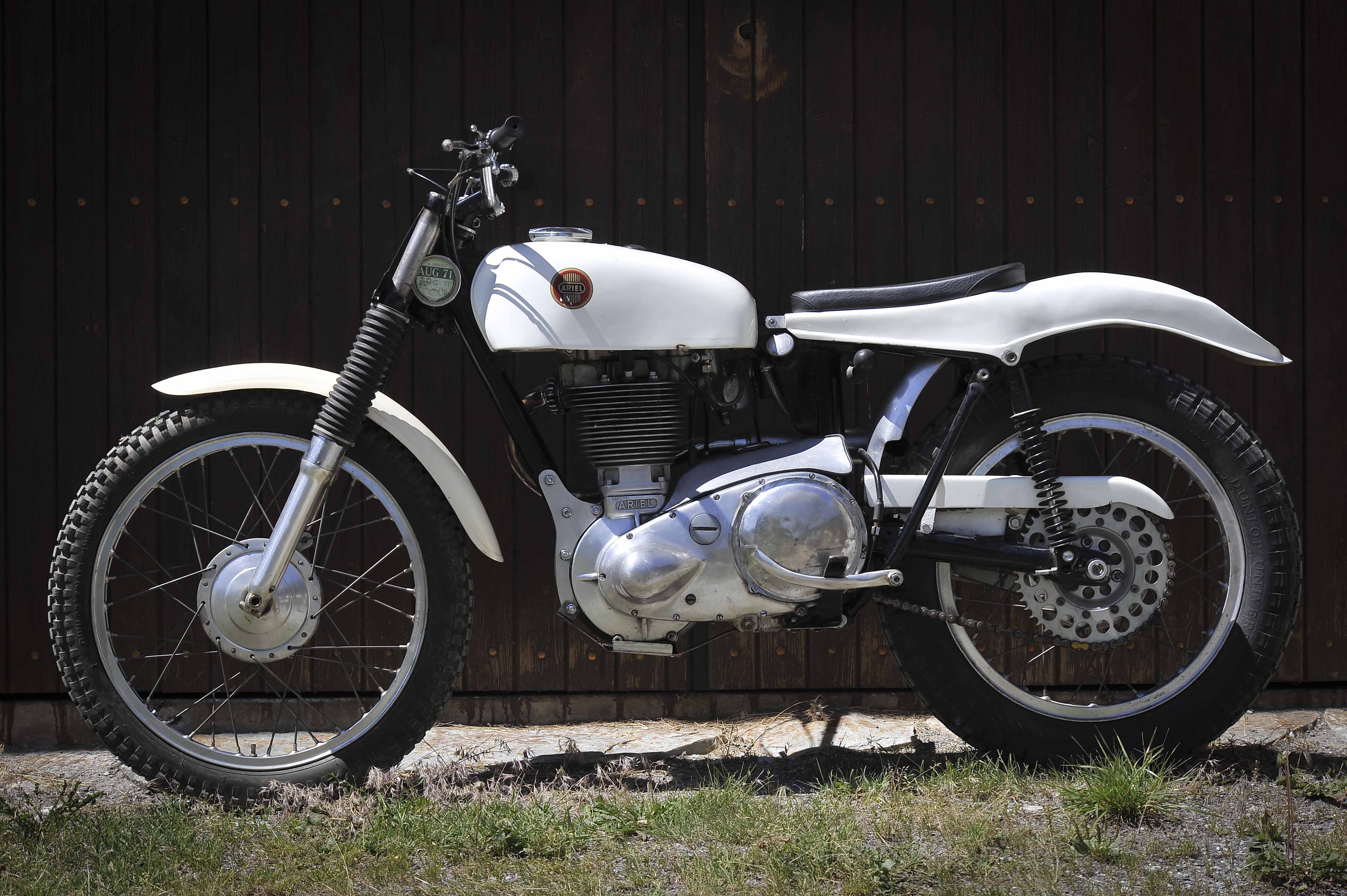
Not generally known, but here we have Ariel HT500 registered as 786GON, known as ‘Sammy’s other Ariel’. During the late 1950’s and 1960’s Sammy Miller had access to two HT500 Ariels, his famous version GOV132 and the machine pictured here. The bike is now in Italy in the possession of a collector, having been owned by Jock Wilson (Comerfords) Ernie Page, Roy Kerr and Tim Beaven, plus some other individuals

786_lhs
Timing side view of 786GON when it was owned by Roy Kerr. The exhaust was made to blow mud off the rear tyre. The machine was fitted with Ariels alloy ‘Leader’ type hubs. Photo courtesy: Roy A. Kerr.

The machine was put on sale in early 1965 by motorcycle dealers, Comerfords Limited in Portsmouth Road, Thames Ditton, Surrey along with GOV132. Comerfords having taken over the support from Ariels to Sammy Miller when the factory had ceased manufacture of trials machines. 786GON was for sale at £350, which was almost £150 more expensive than a brand new Greeves two-stroke at that time.

Arthur Fowler bought 786GON, but returned it for sale at the end of 1965 to Comerfords and Jock Wilson purchased the machine.

The motor shows its pedigree. The engine number indicates that this is no ordinary HT5, but an experimental motor. (Photo copyright: Roy Kerr)
The motor shows its pedigree. The engine number indicates that this is no ordinary HT5, but an experimental motor EXHS 99. (Photo copyright: Roy Kerr)

After selling the bike to Harry Rayner, Wilson bought it back from another owner, John Parry, at which time Jock Wilson slowly restored the machine to its former glory.

Wilson sold 786GON to Scotsman Ernie Page, himself an accomplished trials, scrambles and ISDT competitor, who owned Page Motors in Edinburgh, who at that time had a sizeable motorcycle collection. After a period of time, Page sold the Ariel to former employee, Roy Kerr, himself a former Scottish trials champion.

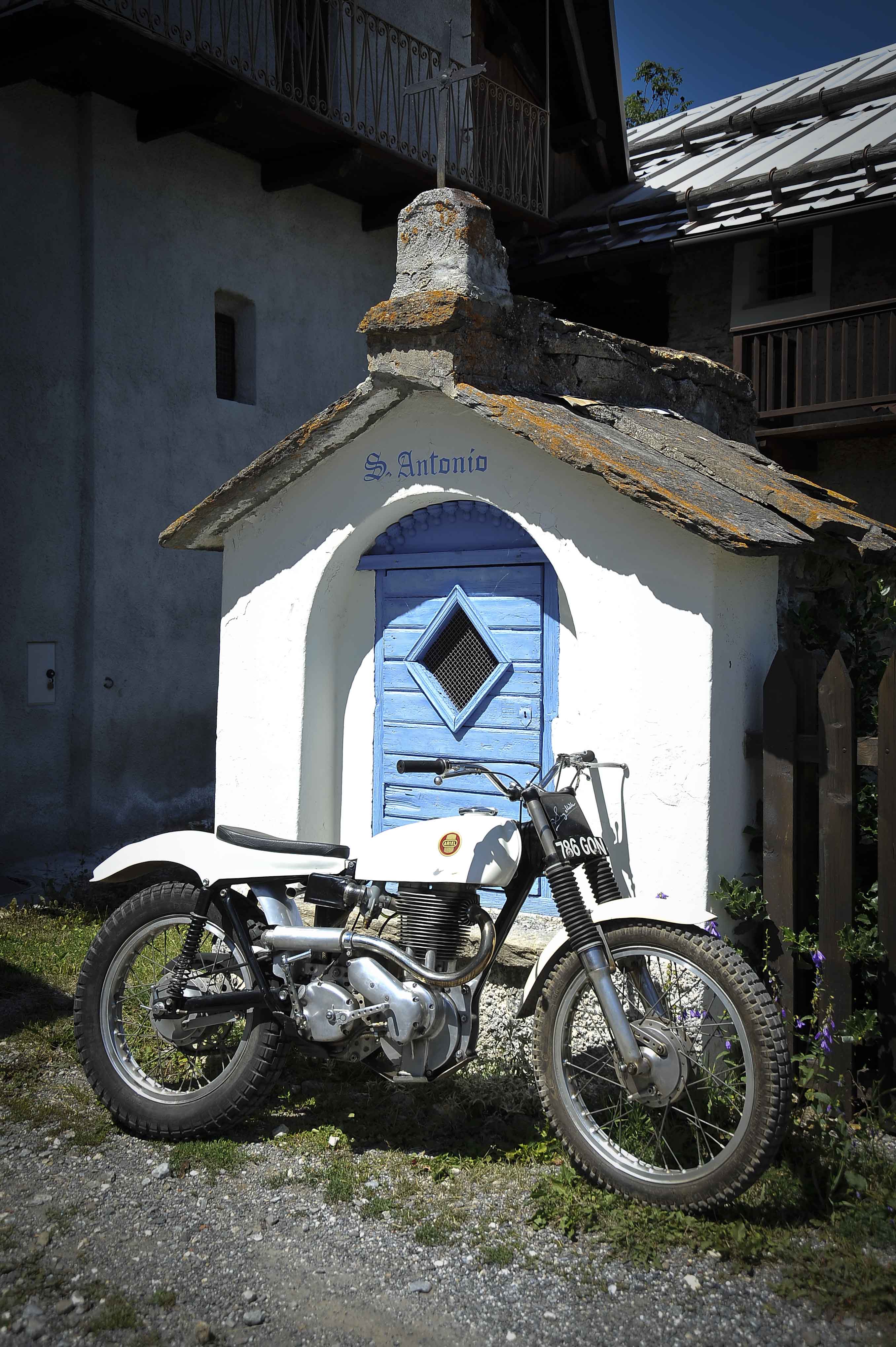
_DSC4707-9

After some years under the ownership of Tim Beaven, the bike was then sold to a private collector in Italy called Carlo Ramella. The Ariel lives on but in its new home in the Italian alps.

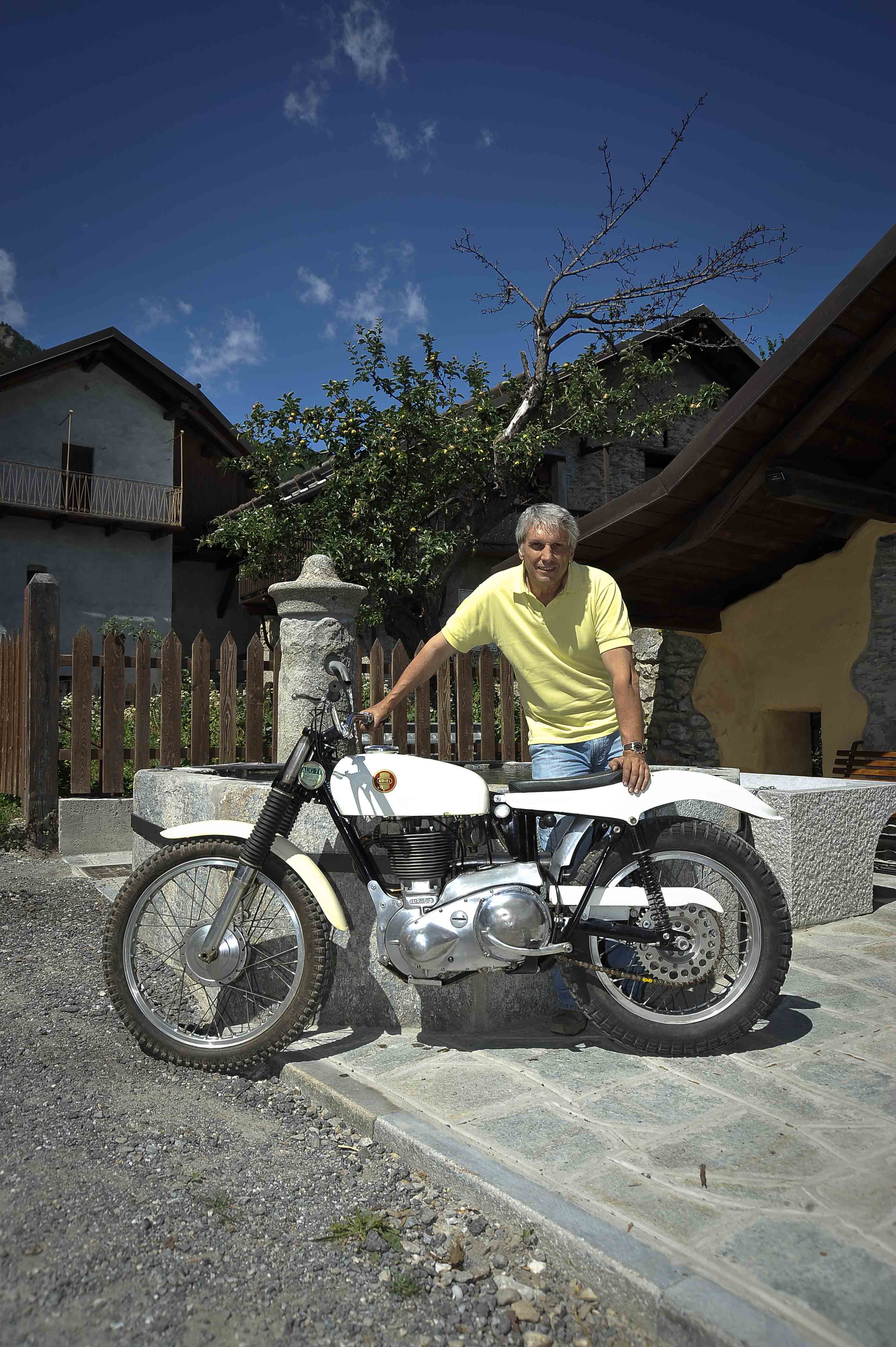
_DSC4343-5
786GON at it’s current home in the Italian Alps with current owner/collector: Carlo Ramella. Photo copyright: Justyn Norek, Turin.

Justyn Norek a design consultant from Turin, made the following observations of 786GON when a test of the machine was undertaken by the German ‘Trialsport’ magazine in March 2014, here they are:

“Frame: In Reynolds 531 tubing, modified with steeper steering angle, oil in frame.

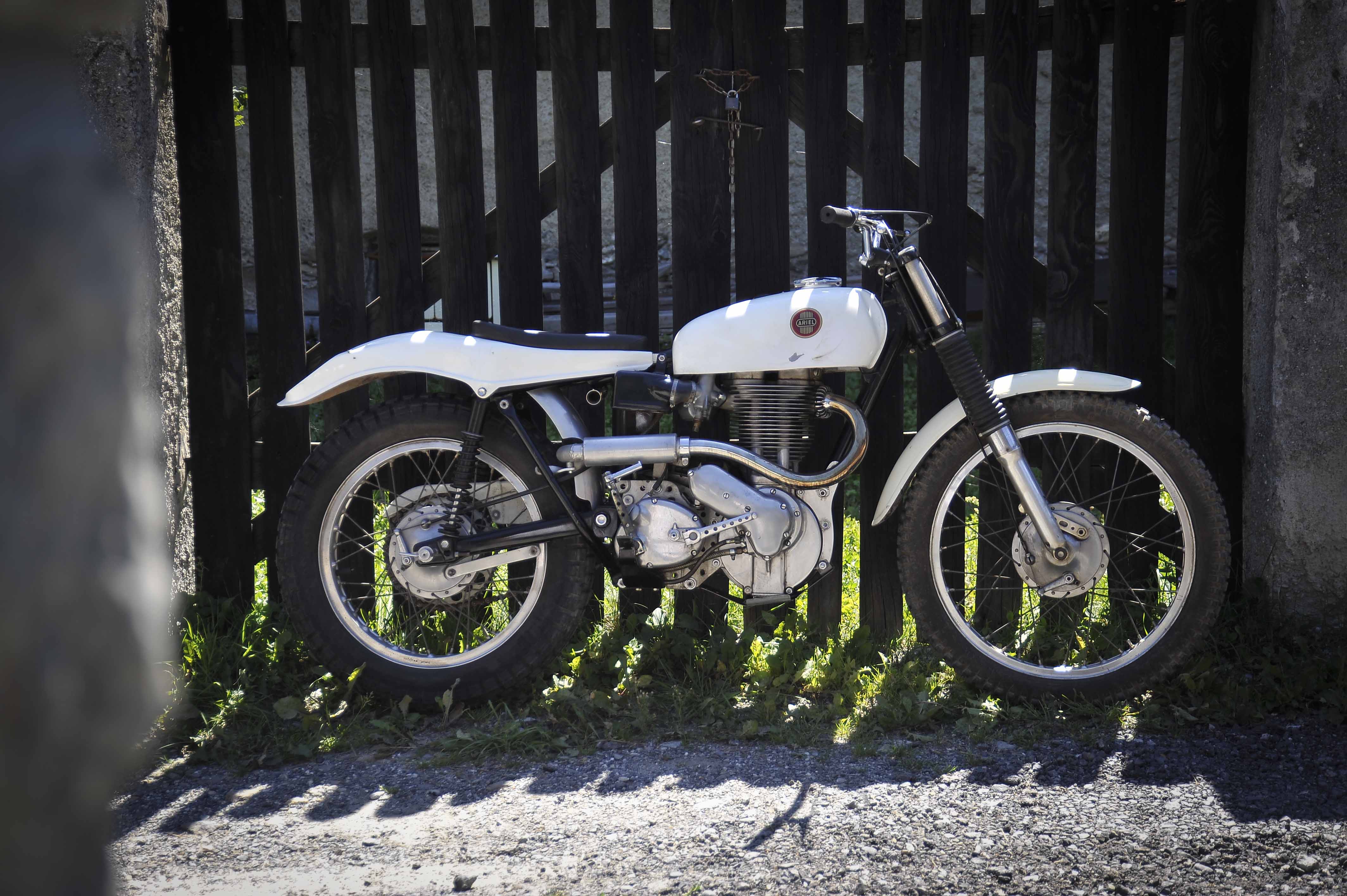
Fuel Tank: Beautifully styled in fibreglass, very light and slim design, one bolt mounting with depression in front part to allow full lock of the steering, with the fork coming close to the tank. Perfectly done by Butler Moulded Laminates, the creation of Chris Butler. Also the builder of the Butler trials machine. It has a metal logo on the top of the tank a real work of art.

Seat Base: Integrated with the rear mudguard, another artwork in fibreglass by Butler. Very slim viewed from the top, in cream white finish, synonymous with Miller’s Ariel. It also had the integration of the rear registration number plate. The seat is perfectly designed to be light and slim, but still comfortable.

Exhaust system: Starting with the beautiful curve, extremely compact and well tucked-in to the motorcycle. It terminates with a small silencer breathing out the hot expelled gasses on to the rear tyre knobs. This ingenious idea allows for cleaning of the rear tyre from any mud and leaf-mould and also warms the tyre rubber for better grip.

engine_1
“… extremely compact and well tucked-in to the motorcycle. It terminates with a small silencer breathing out the hot expelled gasses on to the rear tyre knobs.” – Justyn Norek (Photo copyright: Roy Kerr)

Kick-starter and Gear Shift levers: Bored out to shave more weight from the machine.

Speedometer: Mounted to the engine plate and protected by the aluminium shield from mud etc. It is not the easiest to look at when in operation, but who looks at the speedometer during an event. This was merely an attempt to keep the machine street-legal.
Chain guard in fibreglass, neatly styled with simplicity, weight-saving and functionality.
786_rlh
“…Chain guard in fibreglass, neatly styled with simplicity, weight-saving and functionality.” – Justyn Norek. (Image copyright: Roy Kerr)
Front mudguard: Again in cream white fibreglass by Butler. minimal and beautifully shaped and in perfect aesthetic harmony with the fuel tank, seat base and rear mudguard units. This creates an unforgettable aesthetics of this historic motorcycle.”
 
_DSC4764-10.jpg
 

Technical Specification of 786GON:

ARIEL 786GON – Technical Specifications:

Engine layout: Single cylinder, vertical cylinder in light alloy.

Capacity: 497cc

Bore & Stroke 81.8 X 95 mm

Compression ratio: 8.5: 1

Max power: 24 hp at 5800 rpm

Carburetor: Amal monobloc.

Oil system: Dry sump with double oil pump and separate oil tank.

Primary drive: Chain.

Clutch: multiple discs in oil bath.

Gearbox: Burman – separate, 4 speed ratios: 6:1; 9.5:1; 14.7:1; 19.3:1

gearbox
Gearbox: Burman – separate, 4 speed ratios: 6:1; 9.5:1; 14.7:1; 19.3:1

Frame: single down front tube in Reynolds 531 steel – Weight around 14 kg.

Suspension:

Front: Hydraulic telescopic forks with sliders shortened from Norton road-holder, yokes from BSA shortened to shorten wheelbase.

Rear: Rear swing-arm on silent-block bushes with chain oil system incorporated, Armstrong shock absorbers.

Wheels: steel rims, tyres front: 2.75 x 21, rear 4.00 x 19.

Brakes: Front: drum type 180 mm – Rear: drum side type 180 mm

Main dimensions: wheelbase 1340 mm

Ground clearance 220 mm

Seat high: 810 mm

Steering head angle 63.5 degrees

Weight: 111kg.

_DSC4541-6.jpg

The magazine Trialsport in Germany carried a full report using material from Justyn Norek Snr and his son Justyn Norek Jnr. If you can read German language, here is a link to the article on the internet, (you may need to right click on the link to open it):

Article 786GON – Trialsport ©

PDF version of article from Trialsport Magazine DE: Ariel 786 GON (1)

Photos courtesy: Roy Kerr, Kelso, Scotland, UK.

Photos courtesy: Justyn Norek, Turin, Italy.

For more photos of 786GON – See Justyn Norek Photos

Please be aware that the article on Ariel, 786GON which appeared in Trialsport magazine is copyright – Trialsport March 2014 – © 2013 TRIALSPORT Verlag, Odenwaldstraße 5, 97896 Freudenberg-Ebenheid

Additional information Words and photos copyright – Justyn Norek, Turin, Italy.

Article ‘Ariel HT500 – Sammy Miller – 786GON’ is copyright of Trials Guru – 2015.

Apart from ‘Fair Dealing’ for the purpose of private study, research, criticism or review as permitted under the Copyright, Design and Patents Act, 1988, no part of this article may be copied, reproduced, stored in any form of retrieval system, electronic or otherwise or transmitted in any form or by any means, electronic, electrical, mechanical, optical, chemical, photocopying, recording or otherwise without the prior written permission of the author as stated above. This article is not being published for any monetary reward or monetisation, be that online or in print.

Sammy’s Museum

Words: Trials Guru

Photos: Iain Lawrie; OffRoad Archive; Bob Dunwoody; Sammy Miller Museum.

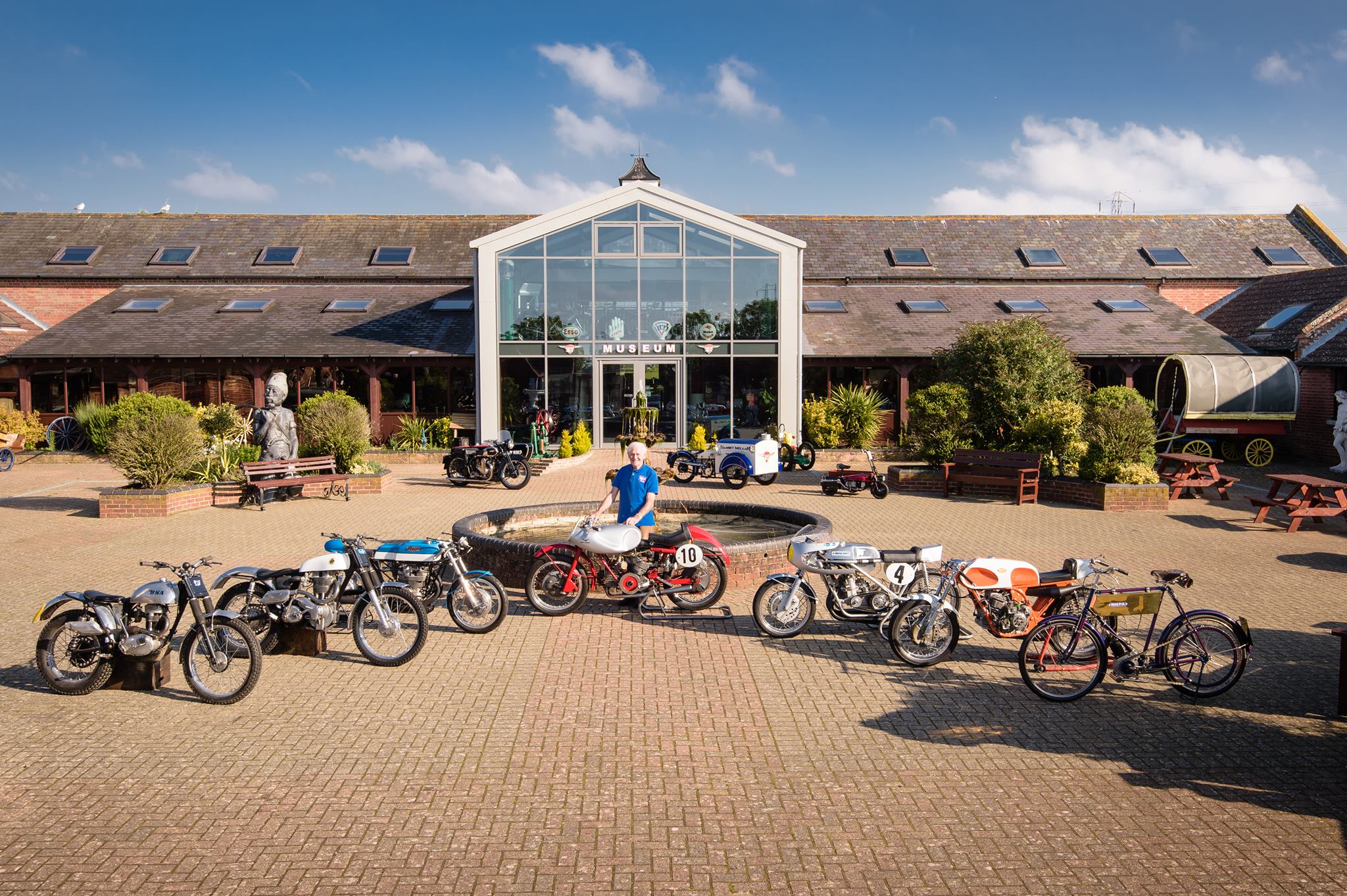
In 1996 Sammy Miller MBE took over the run-down premises of an old farm at the Bashley Cross Roads, New Milton and converted the barns into a modern, prestigious building with picturesque surroundings. It is now accepted as housing one of the finest collections of fully restored motorcycles in the world, including factory racers and exotic prototypes.

At the end of 2004 permission was granted for an extension to the museum which now allows it to house over 500 exhibits. The museum was further expanded in 2021.

Sammy Miller MBE and his wife, Rosemary. Photo
Sammy Miller MBE and his wife, Rosemary.

Sammy’s life has always been dedicated to motorcycling. As a young boy he followed motorcycle racing in Ulster and then went on to compete and win his first race meeting in 1953.

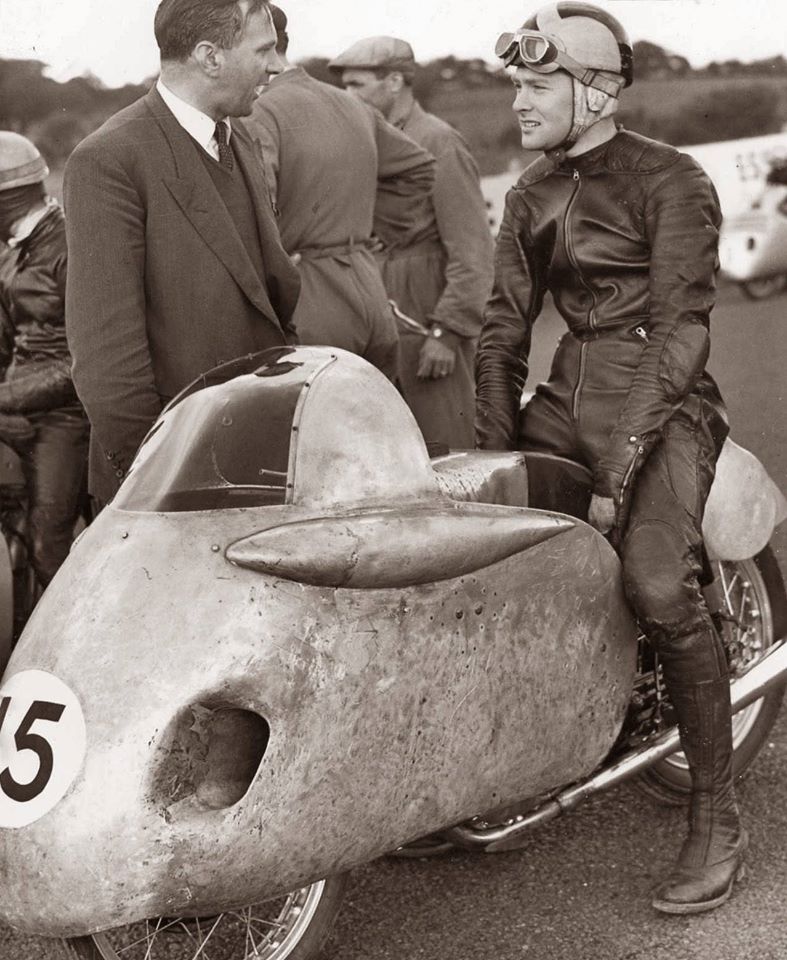
Sammy Miller (NSU) at the Ulster Grands Prix in 1957 chats with sponsor Terry Hill – Photo: Bob Dunwoody

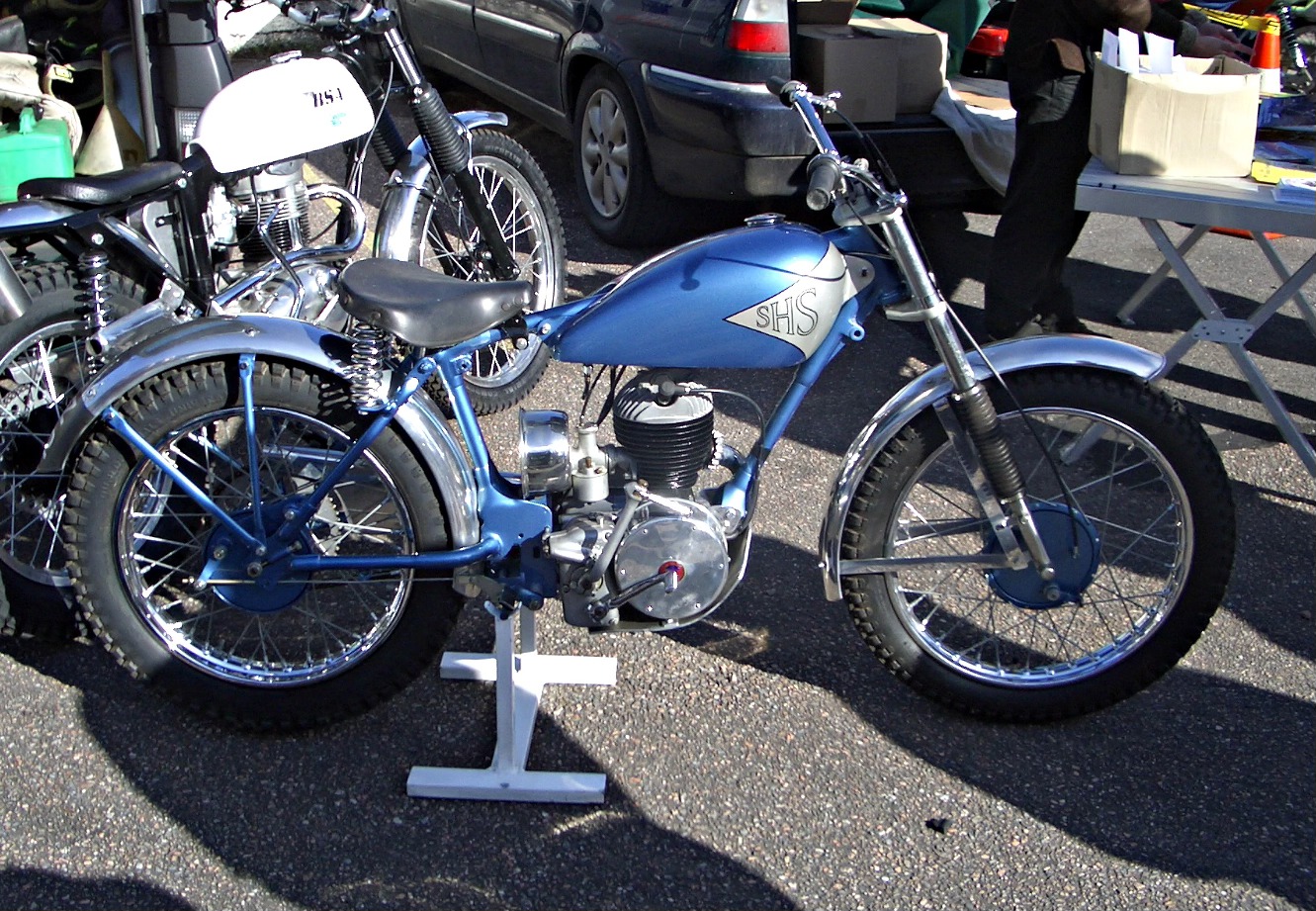
After a well documented period on the Road Racing Grand Prix circuits he switched to trials, at first building his own trials bike, the 197cc SHS (Samuel Hamilton Special) in 1954.

Sammy outside his first shop in New Milton (Photo: Sammy Miller Museum Archive)

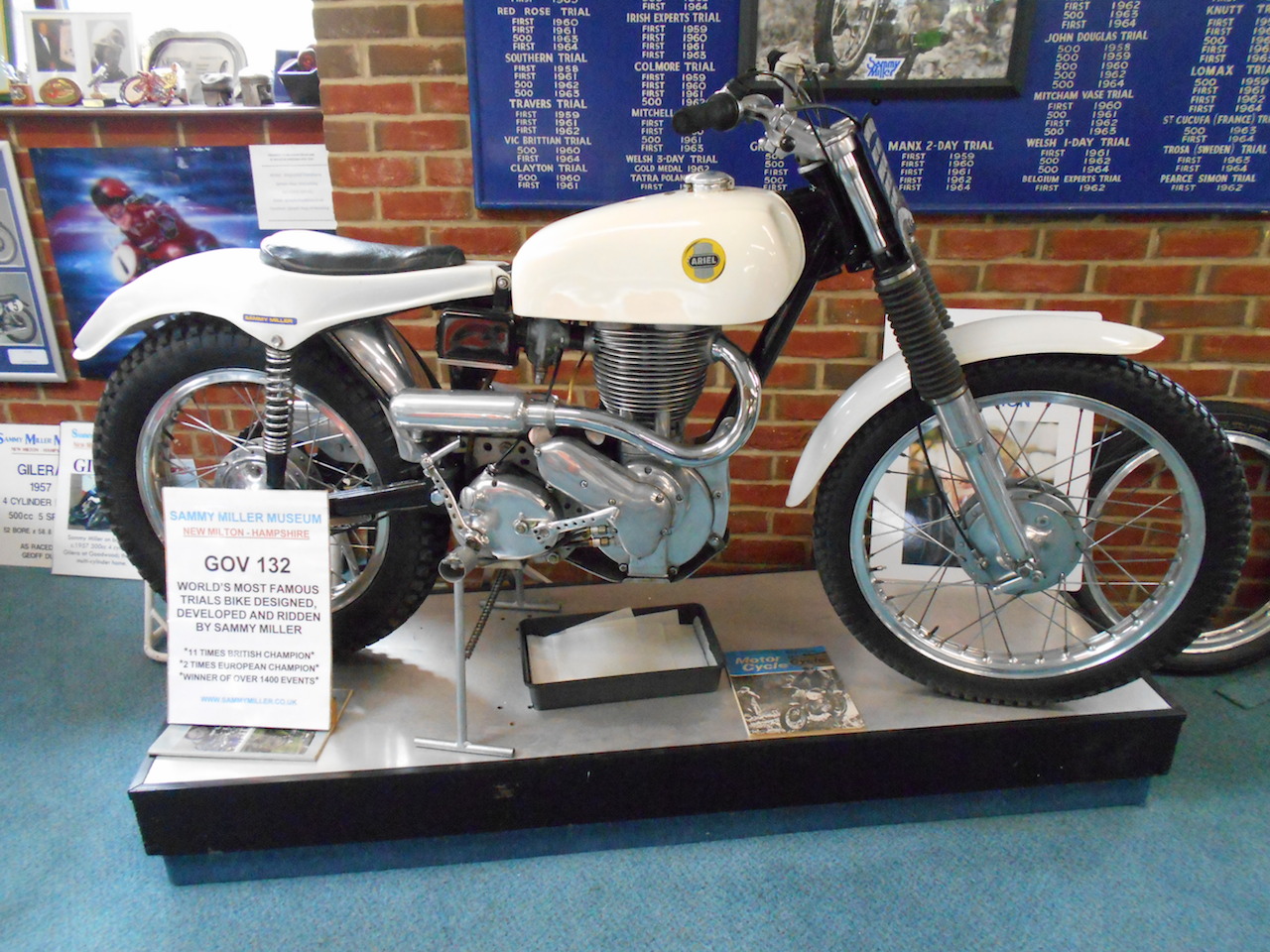
He then went on to develop the world famous Ariel trials machine GOV 132 for the Ariel factory before moving on to Bultaco in 1964 , changing the face of trials in 1965 with the Bultaco Shera T, and then on to work for Honda Motor Company in 1973 to design the world championship winning trials machine. He is still active today, but in his beloved workshop where the sign above the door reads: ‘Another Day in Paradise’.

Sammy on his GOV Replica Ariel HT5 on Loch Eild Path in the Pre'65 Scottish Trial. Photo: Copyright Iain Lawrie, Kinlochleven.
Sammy on his ‘GOV Replica’ Ariel HT5 on Grey Mare’s Ridge in the Pre’65 Scottish Trial. Photo: Copyright Iain Lawrie, Kinlochleven.

Unlike most other museums this is more than a static collection to be dusted and polished at regular intervals and displayed like butterflies with pins through them. This is a live museum, for whenever the opportunity presents itself these machines are run in classic bike events of one kind or another. There are many clubs which now organise open days and exhibitions at Sammy’s museum.

The exact replica SHS of 1953 which Sammy Miller built with a 250cc Matchless rigid frame and 197cc Villiers engine, which he rode in his first SSDT in 1954. Photo: Iain Lawrie.

Many of the racing machines are still fully competitive and capable of giving a good account of themselves in high-speed parades. Like any good museum the contents are changing constantly. Virtually every new acquisition represents a full-scale renovation with the attendant difficulty in finding missing parts or replacements to exchange for those that are badly worn. Apart from the motorcycles on display you will also see many interesting artefacts, all of which represent a link with motorcycling of a bygone era.

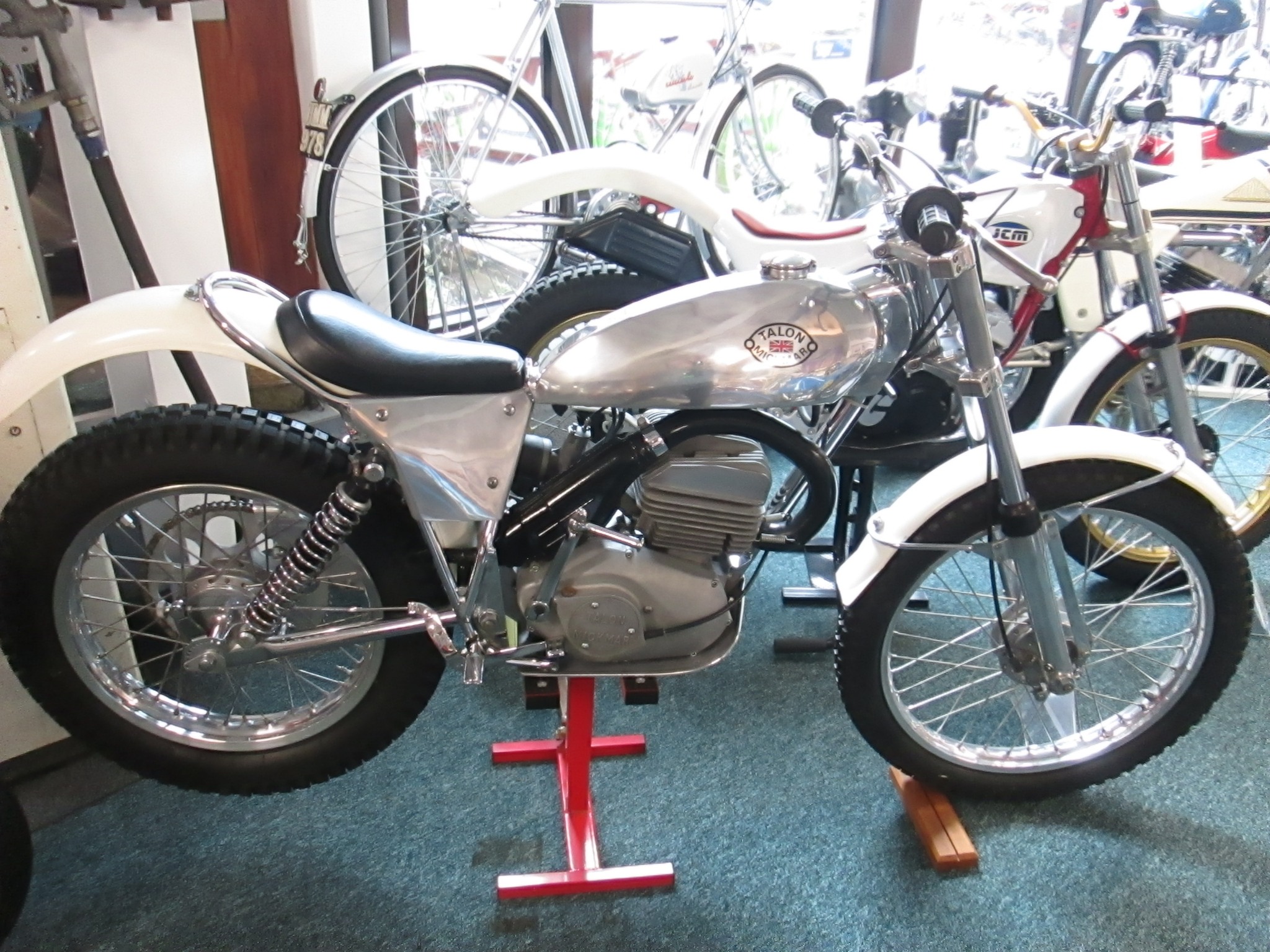
The Off-Road section is extensive and captures the past. There are many unique and rare machines to behold, one of which is the Talon Mickmar trials machine which was a prototype. There are also Jawa ISDT machines from the mid-seventies, and even the long track championship winning machine of the late Simon Wigg.

History Preserved:

The late Gordon Jackson putting the finishing touches to his factory 350cc AJS at the 1962 Scottish Six Days Trial in Gorgie Market, Edinburgh – Photo: OffRoad Archive.

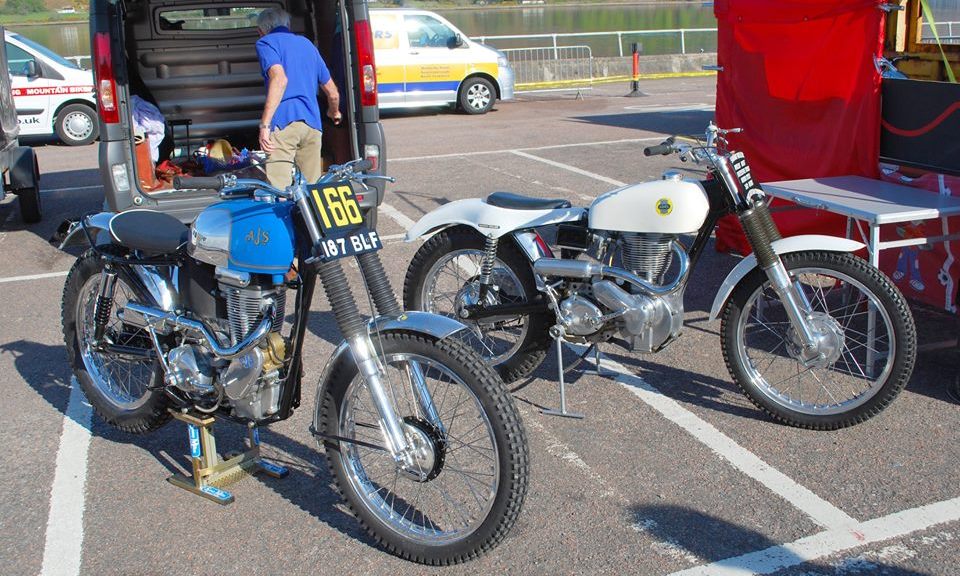
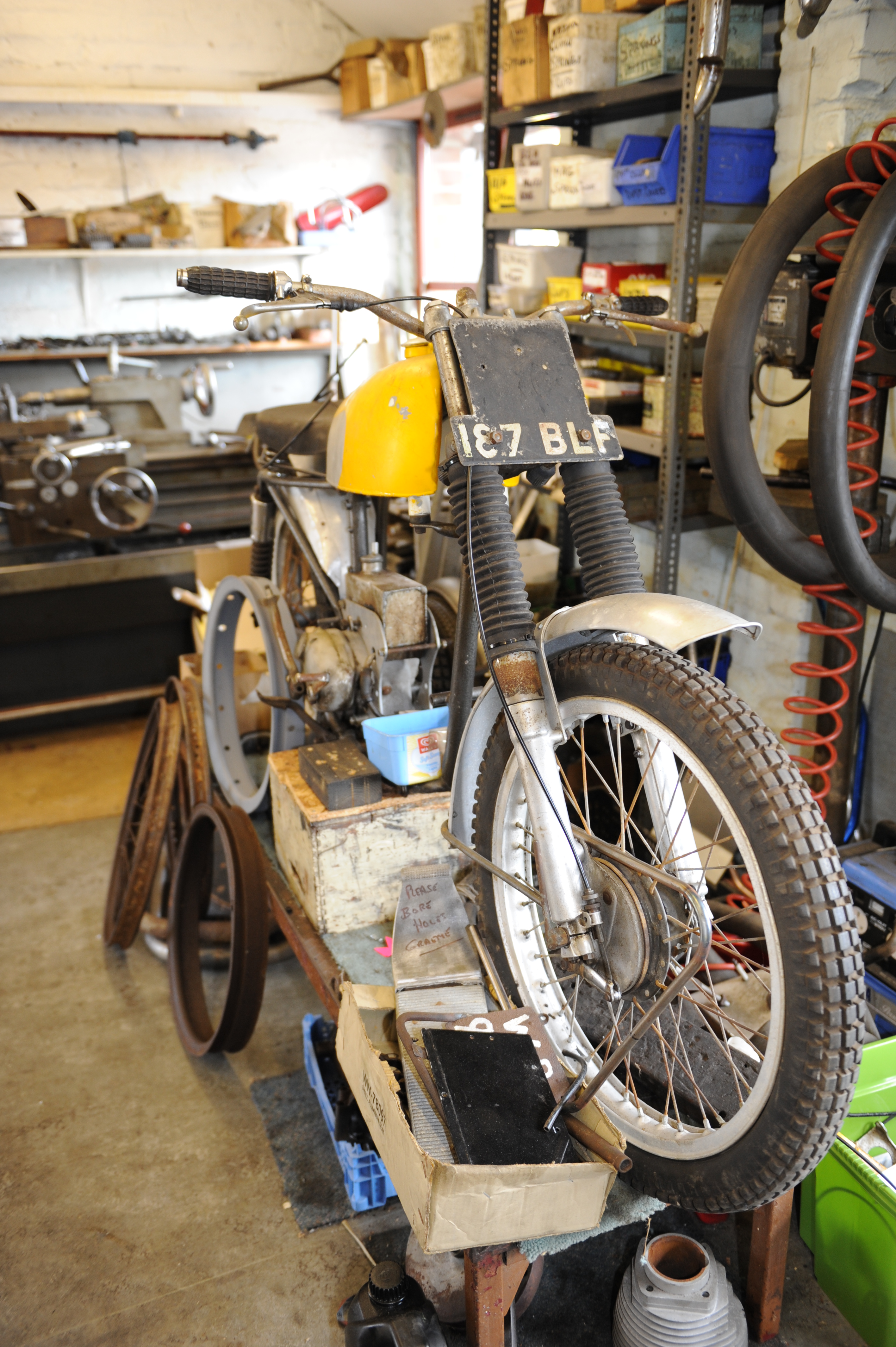
Sammy managed to locate the 1961 SSDT-winning AJS (187BLF) ridden by Gordon Jackson when he recorded the famous one dab victory on the Grey Mare’s Ridge section.

5 The famous Gordon Jackson AJS as it arrived at the museum.
Gordon Jackson’s factory AJS 187BLF in ‘as found’ condition, seen here at Sammy Miller’s ready for restoration.

The machine was in poor condition and in boxes but Sammy restored it back to its original specification, much as it had been ridden by Gordon Jackson in 1961.

OLYMPUS DIGITAL CAMERA
The Gordon Jackson AJS 187BLF rebuilt and ready to go with Sammy at his museum.

Sammy was both delighted and proud to exhibit both GOV132 and 187BLF at the Scottish Six Days Trial in 2011 to celebrate the events 100 years.

SSDT Centenary 2011 – Two of the most famous trials machines, of all time – 187BLF (350 AJS) which won the 1961 SSDT ridden by Gordon Jackson losing only one mark. GOV132 (500 Ariel) Sammy Miller’s famous machine that won the SSDT (1962 & 1964) – Photo: Iain Lawrie.

The museum houses the finest collection of fully restored motorcycles in Europe, including factory racers and exotic prototypes, plus memorabilia spanning seven decades of motorcycling for sport and for pleasure. There are over 400 rare and classic motorcycles on display in four galleries.

7
Sammy with the AJS Porcupine racer

During all this he has still found the time to restore many rare and exotic machines to concourse condition and perfect working order. These he kept as a private collection until 1980 when he opened up a museum so that the public could have a chance to see and hear them.

Friendship and mutual respect, Sammy Miller MBE and Bernie Schreiber at Sammy’s workshop at New Milton. (Photo: Bernie Schreiber Collection)

He even took some abroad to many locations, including Australia and New Zealand, so that they could be seen by as many people as possible. One of Sammy’s Museum exhibits is now on loan to the new FIM Museum in Switzerland.

The Talon Mickmar which is on permanent display at Sammy Miller’s Museum at New Milton. (Photo Sammy Miller Museum Trust)

Some years ago now, Sammy placed the entire collection into a ‘Trust’ to enable it to be kept together for future generations to experience and admire. There is no one more dedicated to motorcycling than Sam. He spends ten hours a day seven days a week working, promoting or restoring motorcycles.

GOV 132 – Sammy’s famous 500cc Ariel – Photo: Iain Lawrie

And it’s much more than a museum, it houses Craft Shops, the Bashley Manor Tea Rooms, Sammy’s Pit Stop and has Alpacas, Donkeys and Goats for the amusement of children of all ages!

The museum is open pretty much all year round and for me is a must to visit if you have not done so already. For more information please visit:  Web: www.sammymiller.co.uk – Mail: museum@sammymiller.co.uk – Tel: 01425 620777/ 01425 616644. Sammy Miller Museum Trust, Bashley Cross Roads, New Milton, Hampshire, BH25 5SZ

Sammy Miller MBE outside his world famous museum at Bashley, New Milton, Hampshire with his Trials Guru ‘VIP Winners’ special edition cap. (Photo: Sammy Miller Museum)

Sammy Miller MBE – Motorcycling Achievements

  • 11 times successive British Champion.
  • Twice European Trials Champion – the forerunner to the World Championship.
  • 13 times successive Hurst Cup winner.
  • 18 times successive Walter Rusk Trial winner.
  • 5 times winner of the famous Scottish Six Day Trial.
  • 7 times winner of the World’s most arduous trial, the Scott Trial on the harsh and unforgiving Yorkshire moors.
  • Winner of over 1482 Trials events.
  • 9 Gold medals at International Six Day Trials.
  • Irish Motocross Champion.
  • Irish Sand Racing Champion.
  • Winner of most Irish Road races, including winning the North West 200 and the Leinster 200 three years in succession.
  • Third in the World Grand Prix Championships on a works Mondial
  • Sponsor of the British Classic Trial Championships.
  • 2007 inducted into the AMA Hall of Fame in the USA.
  • 2009 awarded the MBE for services to motorcycle heritage.
  • 2014 – Named FIM Legend – 2025 inducted into the FIM Hall of Fame in Switzerland.
  • 2025 – RAC Lifetime Achievement Award Winner
  • 2025 – Trials Guru website awards Sam with one of only ten exclusive white Trials Guru VIP Winner caps!

John Moffat has interviewed 10 times British Trials Champion, Sammy Miller on many occasions.
Trials Guru’s, John Moffat has interviewed 11 times British Trials Champion, Sammy Miller on many occasions.

References:

Sammy Miller Motorcycle Museum & Trust Catalogue – Obtainable from the Museum sales office. Sammy Miller Museum Trust.

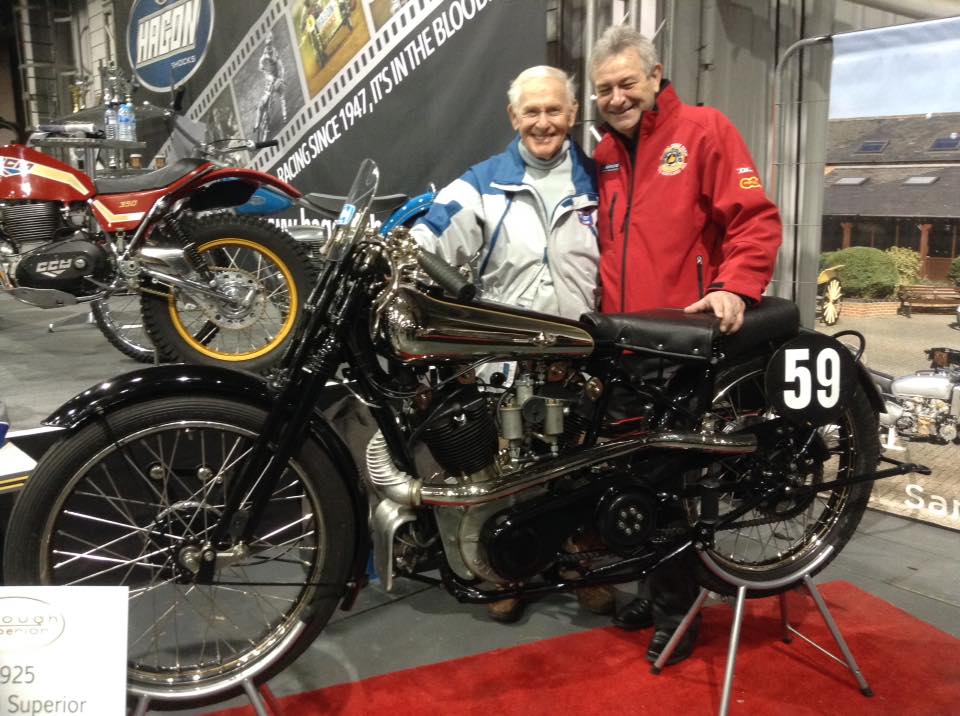
Sammy Miller and Trials Guru’s John Moffat catch up at the Classic Dirtbike Show at Telford in February 2016 – Photo: Fiona Watson

Apart from ‘Fair Dealing’ for the purpose of private study, research, criticism or review as permitted under the Copyright, Design and Patents Act, 1988, no part of this article may be copied, reproduced, stored in any form of retrieval system, electronic or otherwise or transmitted in any form or by any means, electronic, electrical, mechanical, optical, chemical, photocopying, recording or otherwise without the prior written permission of the author as stated above. This article is not being published for any monetary reward or monetisation, be that online or in print.

The Man they call ‘MUNCH’ – MSPORT

When Honda/Montesa launched their new to market 4RT (Four-Stroke Racing Trial) model in 2004, there was one southern English trials dealer who was particularly taken by the new fuel-injected trials machine from Montesa.

Based in Bedfordshire and with a background in the motor trade on the technical side, Mick Gallagher decided that he would find out as much as he could about the seemingly complex machine.

Mick or ‘Munch’ as he is universally known in the trials world, had been in touch with the then Montesa UK importers, Jim Sandiford Imports Ltd in Bury, Lancashire and a dealership was agreed.

The new model was brought into the UK in time for the 2005 trials season and had been rigorously tested in the previous year’s Scott Trial by factory development rider, Amos Bilbao. No apparent problems were encountered even although sceptics wondered how all that electronic wizardry would stand up to inclement UK weather, but it did, and still does!

The Montesa 4RT uses the PGM F1 fuel injected technology taken straight from Honda’s Fireblade, except it manages one cylinder instead of four. Munch began collecting as much data as he possibly could from a variety of sources and soon established himself as the oracle on the 4RT.

Over the period 2005 until 2009 when Sandifords were still importers, many riders purchased their machines from MSPORT, Munch’s dealership. Many had their bikes breathed upon for increased performance or even just detailing.

Munch himself a trials rider, on Montesa 4RT of course and each year has a week’s holiday at Fort William where he is one of the 30 strong observing groups of officials at the annual Scottish Six Days Trial.

In late 2009 the importership of Montesa was transferred to Pidcock Motorcycles, who sold direct to market and did not operate a dealer network. This didn’t upset Munch too much, for by now more and more riders were seeking him out to repair their now ageing machines and saw what improvements were possible over the standard product from Montesa. MSPORT became an independent dealer, but specialising in 4RT models and this is what they do to this day. This is a common feature of the motor trade with franchise official dealers and those who are classed as independent but use genuine parts for repair or if the customer has a restricted budget some aftermarket or non-OEM parts.

Either way, it’s the build up of knowledge over that past 10 years on this particular model of trials bike that sets Munch and MSPORT apart and still keeps the Bedfordshire dealership buzzing.

MSPORT are 100% independent and can upgrade a customers 4RT bike to M-Spec using many innovative parts, sourced from all over Europe.

MSPORT are always keen to hear of someone who is selling a 4RT or is looking to buy a new or newer model. Whether it be a decal set or a complete motor tune or re-map or suspension upgrade, Munch is your man!

Postscript:

This Trials Guru article was written on April, 3rd 2014.

Sadly, Mick ‘Munch’ Gallagher died on the evening of 16th March 2016 having suffered a cardiac arrest while playing five-a-side football. The Trials world is poorer as a result of our good friend’s passing.

Link to Munch Tribute

Munch Tribute Montesa 2018 SSDT