Scottish Six Days – 80 Years!

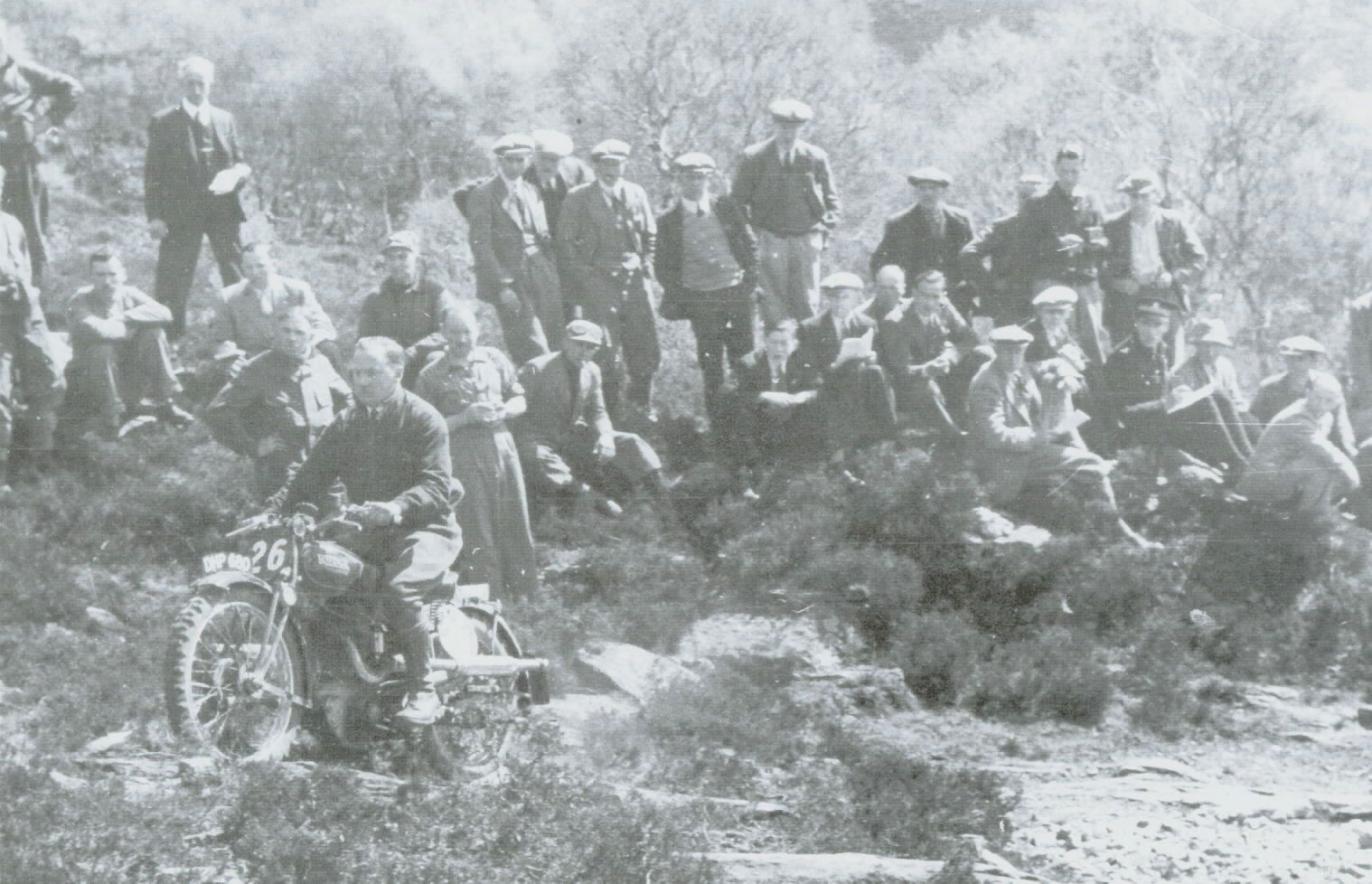
Bob MacGregor 1939
Bob MacGregor in the 1939 SSDT on his Rudge. Photo: Trials Guru Archive

In May 1935, 80 years ago now, Robert ‘Bob’ MacGregor rode his factory Rudge motorcycle to victory in the annual Scottish Six Days Trial, little did he know at the time, that he was to be the only Scotsman to have ever won the event and his ‘record’ would last well into the following century! MacGregor also won the same event three years previously when he became the first individual winner of the event. Bob was Rudge mounted for the 1932 event, although he did also ride for the Raleigh factory in reliability trials on previous occasions.

The 1935 results sheet, showing Bob Macgregor
The 1935 results sheet, showing Bob Macgregor (Rudge) as the overall winner of the trial. Courtesy of Edinburgh & District Motor Club Ltd Archive.

Bob lived in Killin on the shores of Loch Tay and ran a successful greengrocers business in the centre of the Perthshire village. He was well-known locally and respected as a sporting personality of his time.

Killin SSDT
The Perthshire village of Killin is no stranger to the Scottish Six Days. This is the village in which Bob MacGregor ran his greengrocers business. Photo: Trials Guru Archive

MacGregor would regularly ride his machine from his home to the Coventry factory for refurbishment works and ride the machine home again, taking in a national event on the way. There were no works vans or motorhomes in those days so any travelling was done on the machine you competed on.
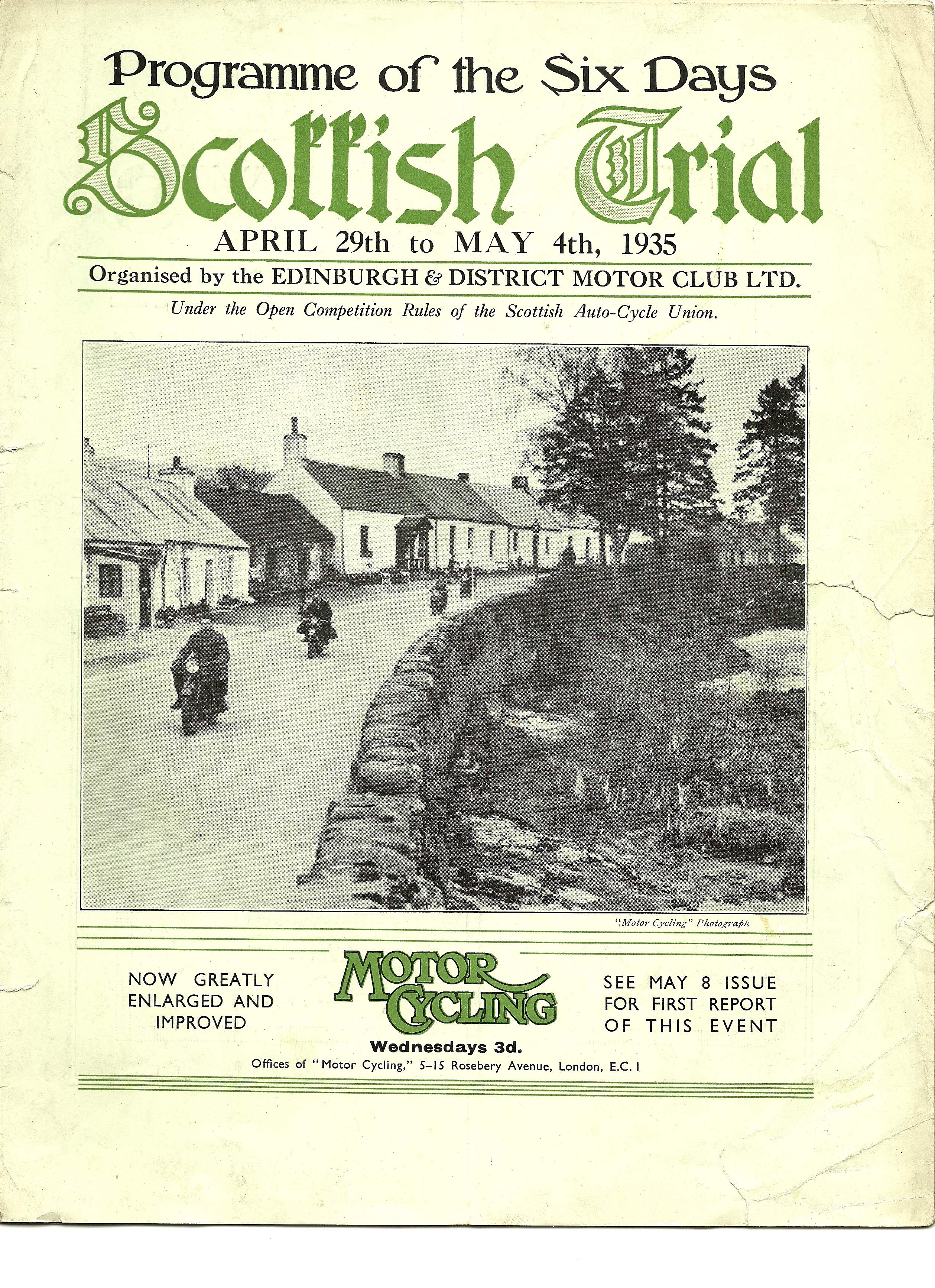
Front cover of the 1935 SSDT programme which was won by Bob MacGregor - Photo Courtesy of Edinburgh & District Motor Club Ltd Archive.
Front cover of the 1935 SSDT programme featuring Killin, which was won by Bob MacGregor – Photo Courtesy of Edinburgh & District Motor Club Ltd Archive.

After his SSDT victory, Bob continued to compete as a national rider until the outbreak of the second world-war in 1939 when he was enlisted into the British Army for a specific purpose, this venture was led by Graham Walker, the father of sports commentator Murray Walker. MacGregor became a motorcycle instructor and trained many hundreds of despatch riders or ‘Don-R’s’ as they were referred to by the military. Bob delivered training for off-road riding, using his trials riding skills to great effect. It was when he was in the army that he met and struck up a friendship with Hugh Viney who was a Sergeant and would become one of the post-war winners of the SSDT when he rode for AJS. MacGregor did ride a few more SSDT’s post-war but a new breed of younger men emerged in the sport such as Artie Ratcliffe, Johnny Brittain, Jeff Smith,  John Draper and of course Hugh Viney, who had won the first post-war SSDT in 1947 at his first attempt. Since 1935, there have been only two Scotsmen to secure ‘podium’ positions, Bob MacGregor and Kinlochleven’s Gary Macdonald, who came third in 2003. Macdonald is the most successful Scottish trials rider of all time, having won ten Scottish titles and a British title.

Gary Macdonald - Scotlands' most successful trials rider of all time! - Photo: Iain Lawrie, Kinlochleven.
Gary Macdonald – Scotlands’ most successful trials rider of all time! – Photo: Iain Lawrie, Kinlochleven.

MacGregor’s name lives on in Killin, firstly as the greengrocers business still bears his name although not now under family ownership. Secondly as an annual trial is held there, run by the enthusiastic Bob MacGregor Motorcycle Club, an event conceived by the local painter, decorator and trials rider, Bobby Lafferty. The event is always over-subscribed and supported by riders from far-afield. Thirdly, there is an annual road run around the area, organised by the Cumbria Classic Club headed up by trials and scrambles rider Peter Remington from Kendal. This year, former SSDT Clerk of Course Mark Whitham will be riding a 1935 Rudge ‘Special Competition’ model in the road run, an almost identical machine to that which MacGregor won the SSDT eighty years previously.
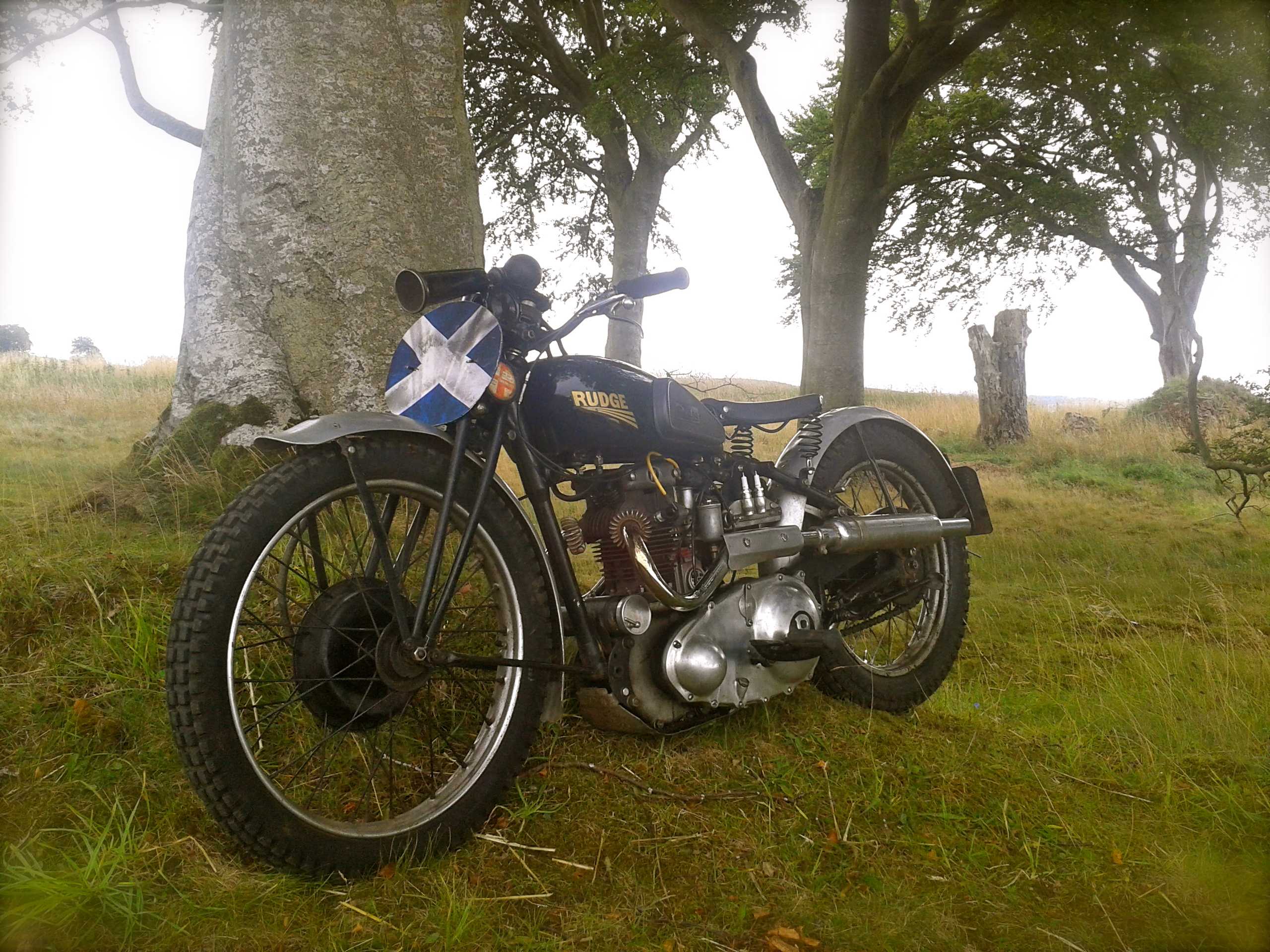
Mark Whitham's 1935 Rudge Special Competition model.
Mark Whitham’s 1935 Rudge Special Competition model.

MacGregor’s daughters regularly attend the main trial event to remember their childhood in the village and of course their father’s achievements in the sport of motorcycle trials. Gary Macdonald’s life-time ambition is to break Bob MacGregor’s SSDT record, now in its eightieth year – will he do it in 2015? We shall have to wait and see! Article Copyright: Trials Guru / Moffat Racing, John Moffat 2015 Photos by kind permission: – Iain Lawrie, Kinlochleven – Trials Guru Archive – Edinburgh & District Motor Club Ltd – Archive – Mark Whitham
Michelin at the 2015 SSDT!

michelin-trial-light-x-light_tyre_360_small

The 2015 Scottish Six Days Trial is nearly upon us and Michelin is pleased to announce its presence and support at this year’s event.

With a long and proud association that goes back to the first Michelin win with French rider, Gilles Burgat, on an SWM in 1981 through to the most recent win in 2014 with Dougie Lampkin – Michelin is pleased to support the 2015 event.

In 2014 Michelin tyres were used by seven of the top ten riders, including the winner Dougie Lampkin, who along with his friend James Dabill, start this year’s event as the favourites. Lampkin has won using Michelin tyres for the last three years and will be looking to add a fourth win in 2015. Ladies World trials champion and Michelin rider, Emma Bristow, will also once again be looking to win the Best Lady rider award.

This year Michelin will be providing a ‘Fill Up with Air’ unit in the start area. It will be situated under two Michelin gazebos to protect the riders from the Scottish weather with 4 compressors available. Michelin staff will be on-hand to offer pressure checks and expert tyre advice to the riders, teams and spectators. There will also be a Michelin tyre display where you can view the latest rubber.
Proud to be associated with this prestigious event you will be able to find the Michelin service area as the large inflatable Michelin man can be seen with the Michelin flags also flying proud.

Bringing you live information on the morning of each of the six days will be Nevis Radio Station. Hosted by David Ogg and John Moffat with rider interviews and general information is presented to you by Michelin in association with Trial Magazine positioned in the start area.

To see the full range of Michelin motorcycle tyres visit: Michelin

Article courtesy of Trials Media/ Trial Magazine UK

Bultaco Sherpa T – 50 Years!

Sammy Miller - Sherpa T
Sammy Miller developed the Sherpa N 200cc into the world beating 244cc Sherpa T in 1965, helped by his win at the Scottish Six Days Trial that year. (Photo: Rickman Brothers, New Milton, Hants.)

You may be forgiven if you haven’t realised that in May this year it will be fifty years since Samuel Hamilton Miller won the Scottish Six Days Open Reliability Trial on his 244cc Bultaco Sherpa registered as 669NHO.

Miller had left Ariels to ride for the Catalunian manufacturer based at San Adrien De Besos, part of Barcelona in late 1964 to develop the Bultaco Sherpa into a machine that was to change the face of motorcycle trials forever.

The defection to the lightweight Bultaco signalled the end of the big four-stroke single as the bike to win at trials.

There is a celebration of the marque in July this year at the Circuit De Barcelona.

Sammy went on to further develop the machine and many British born riders followed him to ride for the Spanish factory, riders such as Malcolm Rathmell and the first winner of the world championship, Martin Lampkin with Frenchman Charles Coutard and Finland’s Yrjo Vesterinen who was to win three world Championships for Bultaco.

50 years Sherpa T

The Bultaco Sherpa was a revelation as it weighed much less than its competitors with a 52 inch wheelbase it handled and steered much better than its rivals and pulled well from low revs. It turned novice riders into award winners.

Well restored examples of the four-speed Model 10 Sherpa still command high prices, if you can find one for sale as these are very much collector’s items.

Miller had written into his contract with Senor Bulto, that if he didn’t win more than 50% of all events he entered, then Bulto was not obliged to pay Miller’s salary! Of course, Sammy did win more than 50% of the events and was so confident of doing so.

Miller told Trials Guru: “If I didn’t win all those events on the Bultaco, it wasn’t worth my time competing in the first place”.

However, Sammy Miller wasn’t the first to compete in the famous Scottish Six Days Trial on a Barcelona-built Bultaco, it was a Lancastrian rider called Tommy Ollerton who rode a 200cc Bultaco Sherpa N in the 1962 event. Ollerton’s machine was registered in the UK as PDV700. Tommy Ollerton rode in company with Oriol Puig Bulto, nephew of Senor Bulto, having travelled all the way from the factory to Edinburgh in a Fiat 500 car with a two bike trailer attached, carrying two Sherpa N models, one for himself and the other for Ollerton, who was supported by Anellays of Blackburn, Lancashire.

Having said that, it was Miller who gave the factory it’s first Scottish Six Days win and that is a major part of both the event and motorcycle trial history.

Great Scots – Ian Pollock

In deepest Argyll, nestling among stunning scenery and mountains, lies the town of Kinlochleven. Many books have been written about the area, one of which is ‘Children of the Dead End – The Autobiography of a Navvy’ – By Patrick McGill – this book is exactly what the title says, it’s the story of an immigrant manual worker or ‘navvy’ as they were called. This book which is rated as one of the best 100 best Scottish books of all time, describes the times when the Aluminium smelter and factory was being constructed at the end of the 1800’s. Kinlochleven flourished as a direct result of the creation of the Aluminium factory which employed around 1,000 workers and produced high quality aluminium for the world. These employees came from far afield and settled in the town, one such settler was Ian Murray Pollock, who was originally from Falkirk, Stirlingshire. Pollock had been through the second world war, having served in the Argyll & Sutherland Highlanders regiment in Palestine. When he was effectively demobbed from the British Army, Pollock was fortunate to secure employment with the British Aluminium Company Ltd at their Kinlochleven smelter. The ‘BA’ as it was universally known, was a major employer both there and at their Fort William operation, which exists to this day.

Pollock started his career as a ‘fitter’ but quickly progressed through the ranks to become a shift foreman at the plant.

1950 - J D Williamson - Mamore - WST
1950 – Jack Williamson from Newtongrange, Midlothian (347 AJS) on Mamore, watched by Ian Pollock (white paper in pocket) – Photo: W.S. Thomson, Fort William

Being an active young man who had forged many friendships in the locality, Pollock took an interest in the annual Scottish Six Days Trial which made use of the hills near to Kinlochleven during the ‘Sporting Holiday in the Highlands’. Pollock had amassed quite a knowledge of the local paths, bridleways and rough country high above the town. This was to eventually forge a strong bond between him and members of the Edinburgh & District Motor Club, who promoted the Scottish Six Days Trial.

Ian also became involved in local events, eventually becoming a central character in the Kinlochleven Motor Cycle Club, which he helped form.

Pollock in association with his good friend, Lithuanian refugee, Paul Kilbauskas discovered there was more land available to the SSDT than perhaps the organisers were aware of!
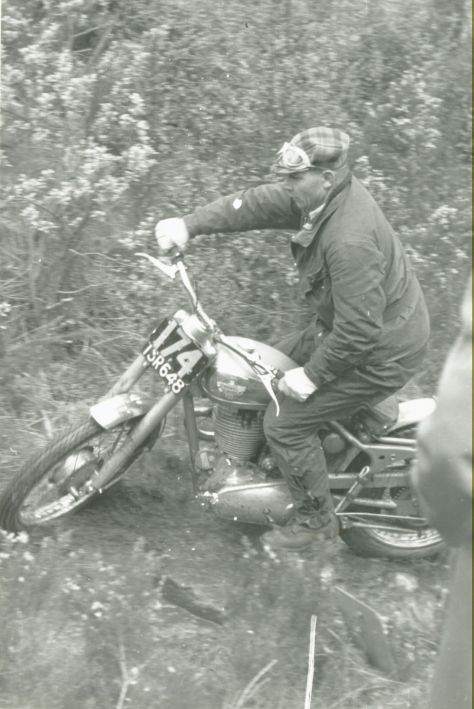
1959 - Paul Kilbauskas - Glenogle - JDavies
1959 Scottish Six Days Trial – Paul Kilbauskas with his 500 Royal Enfield – Photo: John Davies

The SSDT up until the late 1960’s, made extensive use of main and secondary roads, proper foot and bridle paths, sheep paths but very little open moorland. It wasn’t until Jimmy Mulvie became Clerk of Course that the SSDT made use of open moorland stretches.

It was Pollock and Kilbauskas that investigated the possibility of going out over the hills from Kinlochleven back over to the Fort William area other than by the original Mamore Road, which is the water bound surface that is still used by the SSDT and Pre’65 trials to this day. It stretches from Mamore Lodge across to Blarmafoldach, just outside Fort William and links into the Achintore Road.

Pollock and Kilbauskas were both energetic men, they liked the outdoors and they both jointly and severally, explored the many trails, paths and rocky burns and outcrops that littered the hills high above Kinlochleven. They also knew all the local keepers, shepherds and landowners, so permission was never a problem. Many of the hills surrounding the town had been purchased from estates at the end of the 19th century primarily for the water rights. This enabled the factory to operate and ensure plentiful supply of water via the Blackwater area, high above Kinlochleven. Pollock and Kilbauskas were trusted individuals and it helped the SSDT greatly by having reliable people such as Pollock and Kilbauskas on hand.

These explorations bore fruit aplenty, for the Pollock/Kilbauskas venture yielded many new sections in the form of ‘Loch Eild Path’; ‘Mamore’; ‘German Camp’; ‘Leitir Bo Fionn’; ‘Grey Mare’s Ridge’ and of course ‘Brump Brae’, later to be renamed ‘Pollock Hill’.

German Camp
The ‘German Camp’, a first World War prisoner of war encampment on the banking of the River Leven high above Kinlochleven. Photo courtesy of Peter Anderson, Clackmannan

In the period 1955 through to 1959, Ian was listed in the official programmes of the SSDT as an observer, but Pollock was much more than that, he was the journeyman who discovered many of the iconic hills that would eventually unearth the most famous of them all, ‘Pipeline’ probably the most famous motorcycle trial section of all time! Alex Smith, from Bathgate, a former assistant Clerk of Course confirms that ‘Pipeline’ was first used as an observed section in the 1967 SSDT.
jdw - 1963
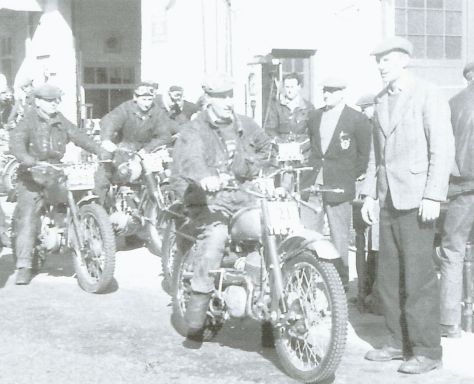
Jack Williamson (250cc Greeves) awaits the signal to start in the 1963 Spring Trial at Kinlochleven. Ian Pollock was a driving force in this event which was re-named in his honour after his death.

‘Pipeline’ is just a couple of miles out of the town and is the subject of many of the most stunning motorcycle trials photos to come from the cameras of Nick Nichols, Eric Kitchen and photographers of their age.

Pipeline - PA
The Pipeline under construction, photo taken from an original glass negative, courtesy of Peter Anderson, Clackmannan

Pollock was an enthusiastic observer at the SSDT and when Johnny Brittain won the 1957 Scottish, his photo adorned the cover of the following year’s programme, the observer in the background watching intently being Ian Pollock. The original photo used on the 1958 SSDT programme front cover was a ‘Motor Cycling’ print which is now the property of Mortons Motorcycle Media, Hornchurch, but a personal copy still hangs in Pollock’s daughter Pamela’s home in Glencoe.

1958 SSDT
The 1958 SSDT Official Programme, with 1957 winner Johnny Brittain (Royal Enfield) being watched by Ian Pollock. The section is at the top of Loch Eild Path, one of the hills discovered by Pollock himself.

By 1962, Pollock was now listed as an Assistant Clerk of the Course and was held in high esteem by his peers and by the ‘Clerk’ himself, the late George Baird who described Ian as ‘our man on the spot’ in the official programme.

Paul Kilbauskas:

Paul Kilbauskas was also a ‘Tunnel Tiger’ who worked on the many hydro-electric schemes in the Scottish Highlands, he was an explosives handler during his time on these massive projects. He concentrated more on riding the Six Days on Matchless, Royal Enfield and BSA machinery, always a 500cc machine. He helped find a sizeable part of the route was in effect a ‘displaced person’ who had to flee his native Lithuania in 1947. His first port of call was Market Harborough in Leicestershire. Paul eventually settled in Kinlochleven, worked at the Aluminium factory for a period where he met and eventually married his sweetheart, Rose who also worked at the BA factory and was originally from the Orkney Islands. They had two daughters, Marina and Rachel. There is now a Paul Kilbauskas award in the SSDT in remembrance of the one-time course plotter and explorer for the event.

Paul Kilbauskas 1
The late Paul Kilbauskas, a native of Lithuania who made the Scottish Highlands his home. A life member of Inverness & District Motorcycle Club.

‘Mambrec’ was yet another of the sections discovered by Ian Pollock, a section that has been used in the Pre’65 Scottish Trial many times. Pollock was fortunate to strike up a good friendship with Johnny Graham who also became Clerk of Course SSDT. Graham would leave a trials motorcycle at Ian’s home to give him something to explore with. One such machine was the ex-works 350cc Matchless registered ‘OLH722’ of Ted Usher and another was the ex-factory BSA of Brian Martin registered ‘BSA350’.

Lochaber April Trial 1959
The Lochaber Spring Trial in 1959. Taken at Kinlochleven near the war memorial. From Left: Bobby Macleod (Francis Barnett); Ali McDonald (Ariel); Hugh McDonald (Royal Enfield); Ian Pollock (standing); Paul Kilbauskas (Royal Enfield); Tommy McNab (BSA – ex-works BSA 350) and Billy MacLeod (Ariel). The trial in modern times is known as The Ian Pollock Memorial Trial.

Pollock would regularly fire these ‘loan bikes’ up and take them up onto the Dam Road and into the hills to see what he could find.

In 1963 the SSDT committee honoured Ian by calling one of the sections ‘Pollock Way’, this was just off one of the many paths near the River Leven, that Ian and Paul Kilbauskas discovered on their explorations.

When the Lochaber and District Club was founded, they enlisted Ian’s help to organise their ‘Spring Trial’. This particular event was eventually re-named as The Ian Pollock Trial in his honour and is regarded as one of the best one-day trials in the Scottish trial calendar to this day.

Ian Pollock is survived by his only daughter, Pamela who married local man and trials rider, John MacGregor, they live in Glencoe and regularly watch the Pre’65 Scottish Two-Day Trial.
POLLOCK SHIELD 2008
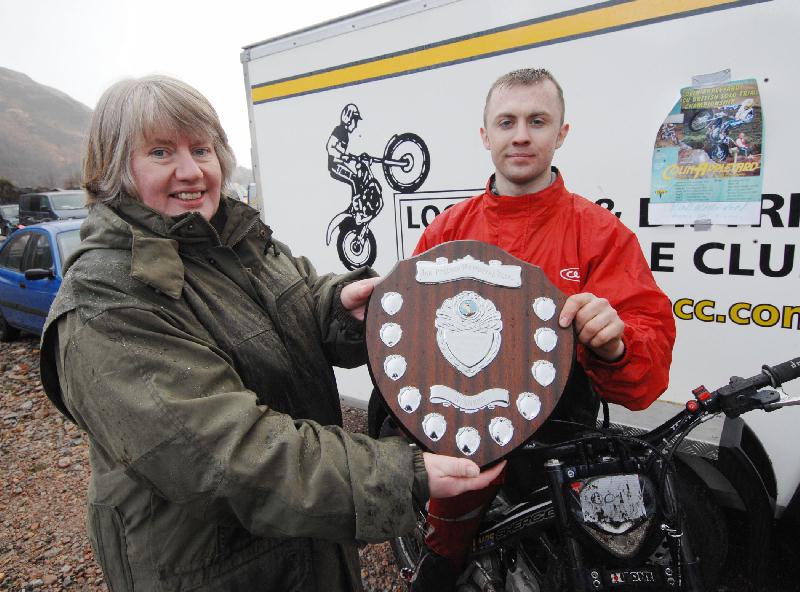
Pamela MacGregor (nee Pollock) presents the Ian Pollock Memorial trophy to local rider, ten times Scottish trials champion, Gary Macdonald in 2008. – Photo copyright and courtesy of: Iain Ferguson, The Write Image, Fort William.

John MacGregor was at one time himself an Assistant Clerk of Course SSDT and Pre’65 Scottish in its formative years.

So next time you climb up the ‘Dam Road’ to watch riders in either the SSDT or Pre’65 Scottish trials, spare a thought for the man who discovered many of these sections – Ian Murray Pollock.

More on Kinlochleven:

Kinlochleven in Scots Gaelic is Ceann Loch Liobhann, it was the first village in Scotland to have electric street lighting because of the electric power generated by the British Aluminium Company smelter. It used hydro or water power which was pioneered at Foyers in 1895 on the south side of Loch Ness, not far from Inverness. Kinlochleven was actually formed from two small villages, Kinlochmore (Large head of the loch) and Kinlochbeg (Small head of the loch). Kinlochmore on the north and Kinlochbeg on the south of the River Leven that runs into Loch Leven of which Kinlochleven sits at the head of.

The British Aluminium Company became part of Alcan, the Canadian based aluminium producer which laterly became Rio Tinto Alcan, part of the multi-national Rio Tinto company, which employs local personnel at their Fort William smelter operation. Rio Tinto (Alcan) is the world’s leading aluminium mining and producer. Rio Tinto Alcan can trace its roots back to Alcoa founded in 1928.

High quality, pure Aluminium was first produced at Kinlochleven at the ‘wee factory’ which was a temporary establishment high up in the hills on the Blackwater path. The ‘wee or temporary factory’ opened in 1907 with the main factory opening in Kinlochleven in 1909. The Blackwater dam or reservoir was formed purely to hold water reserves for the British Aluminium Company by flooding a sparsely populated valley high above the town, effectively trapping many of the River Leven’s tributaries and led down to the power house by six pipes, which are of course visible and beside the famous ‘Pipeline’ SSDT section group.

Trials Guru is indebted to Pamela and John MacGregor of Glencoe, Argyll for information supplied which made this article possible.

Text Copyright: Trials Guru / Moffat Racing, John Moffat – 2015

Photo Copyright: Iain Ferguson – ‘The Write Image’, Fort William – All Rights Reserved.

Photo of Paul Kilbauskas, by kind permission of Ms. Marina Kilbauskas.

Special thanks to: Alex Smith, former SSDT Assistant Clerk of Course and former Chairman, Pre’65 Scottish Trial.

Thanks to the Edinburgh & District Motor Club Ltd – For use of the cover of the 1958 SSDT official programme.
cropped-tg_logoheader-2018.jpg

Coming next on Trials Guru

The next character in our series of ‘Great Scots’ – The story of Ian Pollock, the man who discovered many of the Scottish Six Days hills in and around Kinlochleven.

POLLOCK SHIELD 2008
POLLOCK SHIELD 2008 – Pamela Pollock MacGregor presents Gary Macdonald with the Ian Pollock Memorial shield – Photo copyright and with permission: Iain Ferguson – The Write Image, Fort William.

Book Release – 30 March 2015

Motorcycle Competition: Scotland 1975-2005 is released on Monday 30th March 2015. Be sure to order your copy Here

Cover shot MCS

Great Scots – Tommy Milton or NOTLIM if you prefer!

Wheels from an early age! - Tommy Milton with a tricycle around 1919
Wheels from an early age! – Tommy Milton with a tricycle around 1919

Tommy Milton was born in Leith, Edinburgh, Scotland in March, 1916. Sadly, his mother died a few days later, so he was raised in the home of his mother’s aunt. He attended Yardheads Primary School and Leith Academy, but left when he was fourteen to begin work. From his early teenage years, he had enjoyed cycling and ‘tinkering’ with his bicycle, a necessity since he did not have the means to buy a new one. His circle of friends were into motorcycles and he duly acquired a 1936 New Imperial, on which he competed in a few reliability trials prior to 1939. He joined the recently formed Melville Motor Club around this time.

1947 - Bo'Ness Hillclimb on the Ariel
1947 – Bo’Ness Hillclimb at Snake Bend at Kineill on the Ariel.

With the advent of war, he enlisted early, without waiting for his ‘call-up papers’, so that he had a good chance of becoming a dispatch rider, and this he did.

He was selected to attend a three week course in basic maintenance which, in the confusion of the early war years, turned out to be a three month course to train Army fitters, and he was allowed to remain, passing out with flying colours.

After the war, the trade unions recognised this qualification as equivalent to an apprenticeship, thus enabling Tommy to become a Navy fitter at Port Edgar in South Queensferry, his job for the rest of his working life.

Tommy's faithful Ariel DFS122 used as a scrambles machine.
Tommy’s faithful Ariel DFS122 used here as a hill-climber machine. Harry Darling an Edinburgh Monarchs speedway rider is on the right.

While Tommy was in the Army, he was sent to the Gold Coast (now Ghana) and his particular friend there, also from Leith, had left his new Ariel Red Hunter at home. Sadly, his friend was drowned in an accident and so, after the war, Tommy acquired DFS 122 from his friend’s mother, the bike on which he was to compete in trials, grass tracks and, especially, hill climbs in the forties and fifties. He won the Scottish Hill-Climb Championship (Standard Class) in 1949.

In the early fifties, as his riding career was winding down, he became a committee member of the Melville Motor Club, going on to become Secretary and Treasurer, and generally the main pillar of the Melville for the next fifteen years or so, eventually handing over to the next generation to Trevor Hay (see article: Great Scots – Trevor Hay).

Tommy Milton with his Ariel DFS122 at a Gymkhana event riding the plank!
Tommy Milton with his Ariel DFS122 at a Melville Gymkhana event in 1946 riding the plank!

Tommy married Margaret (Peggy) Wood, also from Leith, in 1942, while on leave. The couple were separated by the war, meeting for a few days over Christmas, 1944 in Sheffield, before Tommy was de-mobbed in mid-1945.

Tommy and Peggy had two children – son, Tommy Junior and daughter Maureen.

Notlim

In addition to his Melville duties, Tommy was also a member of the Scottish Auto-Cycle Union Management Committee, serving as an SACU Steward at many events, especially scrambles. He was also one of the founding group of the popular ‘Scottish Clubman’ magazine, under editor Fred Stephens of Stonehaven. Tommy undertook distribution of the magazine to all the Edinburgh motorcycle shops each month, as well as roping in son Tommy and daughter, Maureen to sell them at each Sunday’s events. He also contributed a regular monthly column on whatever took his fancy, under the pen name ‘NOTLIM’ – simply his surname reversed!

With his outgoing nature and willingness to help others, Tommy had become a mentor to a legion of younger riders. These included Scotland’s celebrated racer, Bob McIntyre who began his illustrious career competing with Tommy in hill climbs. In recognition of his many years of service to the Club and the sport, the Melville made him an honorary life member, an honour the SACU also made him later as an honorary vice-president.

Tommy Milton receives atrophy at an awards night, these were big affairs back in the day!
Tommy Milton receives an award at an presentation night, these were big affairs back in the day! Peggy Milton is the young lady just to the left of the presenter.

In addition to his Melville Club activities and his day job, Tommy also had a dance band, which specialised in ‘old time dance’ music and had regular ‘gigs’ in various clubs in and around Edinburgh and the surrounding townships. Members of Tommy’s band included pianist Tommy Merrilees, the brother of Edinburgh’s celebrated Police Chief Constable Willie Merrilees, and drummer Sammy Marks, whose brother Bob was captain of the Edinburgh Monarchs speedway team. The band would play at the Melville’s frequent social evenings at the Edinburgh Southern Harriers’ sports club at Fernieside in Edinburgh.

Tommy Milton in his band days, he is the musician with the button accordion on the right.
Tommy Milton in his band days with The Harmony Players at a night in Leith, he is the musician with the button accordion third on the right.

With the closure of the Port Edgar in the mid-seventies, Tommy transferred to Rosyth. In the Queen’s 1977 Birthday Honours he was awarded the Imperial Service Medal, recognising his 30 years of meritorious service.

Karting - Tommy Milton leads Bill Landels the well-known speedway rider and Stan Sproat who was to become part of the great Ecurre Ecosse car racing organisation and a director of Lothian Sports Cars in Edinburgh.
The first Karting try out at Meadowbank in 1960 – Tommy Milton leads Bill Landells the well-known speedway rider and Stan Sproat who was to become part of the great Ecuire Ecosse car racing organisation and a director of Lothian Sports Cars in Edinburgh.

Tommy decided to take early retirement in 1978 as he did not enjoy being a regular user of the Forth Road Bridge, having famously led a vigorous campaign against tolls prior to its opening in 1965! He had also started to take a back seat in Melville activities but continued to be involved in motorcycle sport and, especially, the Clubman magazine. In the mid-eighties he suffered a stroke from which he recovered but with some vision impairment which meant he could no longer drive.

Tommy Milton on the right as many of our more mature readers will remember him!
With Scottish Clubman editor, Fred Stevens on the left, Tommy Milton on the right as many of our more mature readers will remember him!

For the first time in his life, he became a regular bus user, still getting around Scotland’s capital city. Although a non-smoker since his mid-thirties, Tommy sadly contracted lung cancer in 1993 and succumbed to this the following year, at 78 years of age.

Trials Guru: Tommy Milton was a 100% died in the wool motorcyclist of the old school. A respected member of the Scottish ACU, Melville MC (Scotland) and the Scottish motorcycle sporting community. He was a true enthusiast who was a stickler for fair play and sticking to the rules.

On one occasion, Tommy decided to prove a point. He inserted a clause to the standard rider’s declaration of the entry form at a Melville scramble which read: “I promise to pay the sum of five-pounds sterling to Thomas Milton on signing on at the start”.

When Tommy was signing the riders into the event he asked them for the five-pounds! Many asked what the extra five-pounds was for? Tommy had proved the point – many riders had simply signed the entry form without reading it!

Tommy Milton decided to encourage his son Tommy junior to stick in at school. He gave Milton junior a challenge, get good results at school and he would be bought a new trials bike of his choice. Young Tommy not only stuck in at school he became ‘dux’ at his school, the top performer. True to his word Tommy senior bought his son a brand new Greeves in 1962 straight from the Thundersley factory.

The article about Tom Milton Junior’s first Greeves TE250 is HERE

Tommy junior was one of only three Scot’s born people to have ever won the Sunbeam MCC Pinhard Prize in 1967 for his services to trials. The other two Scot’s born winners are: Gordon W. Phillip (Enduro) in 1978 and Paul Chatham (Enduro) in 2005.

The Pinhard Prize – Sunbeam MCC

We thank the Milton family, Tom Milton Junior, Maureen McInally (Milton) and Trevor Hay for their assistance during the making of this article.

Copyright: Trials Guru / Moffat Racing, John Moffat and Thomas Milton Jnr.

Photos: Tommy Milton Archive.

GASGAS SSDT Support 2015 – Read on!

Gas Gas Pro SSDT check list. 

ALL GAS GAS RIDERS MUST REGISTER WITH GGUK BEFORE THE EVENT. Please phone Andy Hipwell on 01298 766814 or email him .. andy@gasgasuk.com

Andy will need all your details…..name, address, riding number and credit card details.

1. Check spokes in both front & rear wheels for tightness as they may have worked loose since first being checked.

If you have the normal type rear wheel (pre 2011) with the sealing band make sure the sealing band is sealed properly BEFORE the event. Please don’t come to our mechanics on ‘way-in’ day with a leaking rim-tape. GET IT SORTED beforehand.

The latest type rear wheels fitted to 2010 RAGA, and all 2011-2015 bikes have the new band-less rear wheel which prevents the tyre leaking air. You must make sure that the spokes are also in good condition on these wheels.

2. Fit new MICHELIN tyres on the front and back. The heat generated on the road destroys tyres and only Michelins stand the abuse. It’s probably better to use the ‘normal’ X11 rear tyres because the new X-light is very thin on the carcass (crown) so there’s more risk of a puncture.

You can get the whole week out of one rear tyre but we recommend using two.

We also recommend using a thicker Enduro inner tube in the front.

We also recommend fitting new wheel bearings…..particularly the front.

http://www.trialendurodirect.com/products.php?MICHELIN_X11_Rear_Tubeless_Trials_Tyre_097047__228&manufacturers=14

3. Repack your silencer with some good quality packing wool. (We recommend SILENTSPORT). It’s a messy job but is well worth doing.

Even if your bike is relatively new we still recommend repacking it before the SSDT. Make sure you re-fit the plastic end can with silicone sealer. And use loctite on the 5mm screws.

Try and not sit on the rear mudguard / silencer because this can make the plastic end can come away from the silencer. You can strengthen this by adding rivets…see pic.

Also a GOOD idea is to add a rivet to the very end of the silencer to help strengthen the fixing of the small stainless outlet.

Fit both front pipe & silencer with new o-rings and silicone sealer.

Also check that the middle-box brackets have no cracks….re-weld / repair if necessary.

1. Check suspension linkage for excessive play & damaged seals, replace as necessary.

Check your ‘bump-stop’ rubber is intact.

2. Clean air filter box & make sure it is completely water tight, clean filter & refit after applying some (decent) filter oil.

On the Pros, it’s a good idea to split the two halves of the air box and seat and re-apply some decent silicone sealant before re-fixing the screws. We use WURTH RTV silicone.

3. Also a good idea (but not a must) is to drill a small 4mm drain hole in the bottom of the plastic flywheel cover & put PVC tape around where wires go into casing. Things can be very wet in Scotland and this will help drain any water that may enter your ignition/stator.Whilst the case is off check the flywheel nut.

4. Make sure all wiring connections are free from dirt & fitted together properly with silicone grease. If your thermostat switch is working fine then leave it alone. Its a good idea to make yourself a small link wire to bypass the switch and wire the fan direct if the switch fails. Only do this in an emergency because having the fan running all the time eventually destroys the small bearings in the fan motor.

5. It’s a good idea also to renew your head o-rings, especially on the two piece S3 cylinder heads. Its also a good idea to carry some head orings in case you cook your bike. If u empty the rad the next thing that fries are the head orings so because they weigh and cost very little, it’s a good idea to carry some.

6. Fit new front & rear brake pads.

Tighten ALL the brake banjo bolts especially the rear brake one because they tend to work loose sometimes. Also check the clutch banjo bolt on top of the cover.

7. We have had a few problems with the rear brake hose splitting on the 2011/12’s. We have replacement ‘VENHILL’ hoses that are of better quality. Not essential to change but please check yours thoroughly before the event. If worried, get a Venhill hose. http://www.trialendurodirect.com/products/Venhill_Rear_Brake_Hose_for_GasGas_pro_1243.html

The 2013/14’s brake hoses have been modified by the factory and they are fine.

2015 model are also fine standard.

8. Renew gearbox oil with 400ml of good quality oil. We also recommend you change it after 3 days. ( we recommend Putoline Light Gear Oil 75w)

http://www.trialendurodirect.com/products.php?PUTOLINE_LIGHT_GEAR_OIL_968&manufacturers=12

9. Fit new chain & sprockets and the chain is correctly adjusted & it’s not too low-geared. The standard Pro gearing of 11×41/42 is ok but you may want to gear the bike up a little to help on the road sections. (check those sprocket bolts!)

DO NOT FIT A 12T front sprox on a GG PRO!

Remember —- one tooth on the front is the equivalent to four on the back.

When changing the front sprocket make sure the cir-clip is fitted properly.

10. The standard IRIS chains are no good for Scotland. Spend your money on a good quality heavy duty chain like Regina or Renthal for example. (there’s a lot of road work in Scotland). DO NOT USE AN O-RING CHAIN! Also renew the chain tensioner pad.

http://www.trialendurodirect.com/products/Renthal_R1_Trials_Chain_102___104_Link_70.html

11. Check the coolant is topped up, condition of the hoses & clips are O.K.

12. Remove carburettor & the float bowl, blow all jets out with airline & refit. Usually, the standard jetting is fine for Scotland. A good idea is to change the ‘float jet’ from the std. 200 to say a 300 to allow more fuel when you’re abusing the bike on the road. Sometimes the bigger float jet can affect the performance in the sections running rich and sometimes a smaller pilot jet (33) is needed. Also keep your filter clean and try and stay away from deep water because you’re engine wont like it.

13. If you use a Keihin Carb (standard on Racing models) we recommend using the richer slide #3 to make the jetting richer mid range and safter on the road. The #3.5 makes the bike nice and clean in the sections but makes it very weak on the road.

14. If you want piece of mine regarding fuel tanks then we do the large capacity ones which all the Team use. http://www.trialendurodirect.com/products/BIG_TANKS_FOR_PROS_53.html This is not just so we can make money either! Its peace of mind for you. You may get stuck on the moors, get lost or your bike might fall over whilst viewing a section. If you use a Keihin carb then these use even more petrol on the road.

If you have a 2013 PRO RACING/REPLICA FACTORY/STD or RACING 2014 model then you must ask for the tank that fits that model because the coil is mounted in a different place and so needs a modified tank.

If you can’t afford a tank then Id advise carrying at least half a litre in your rucksack….which is not actually allowed….oops.

The petrol stops are perfectly situated nowadays thanks to the army and many GG riders manage on the standard tanks.

Hebo also make an auxiliary plastic fuel tank that fits where your front number plate is attached. http://www.trialendurodirect.com/products/HEBO_Auxilary_Fuel_tanks_661.html

15. YOU MUST USE THE CHOKE ON THE ROAD. Keep easing off to the ‘rich’ spot is the best technique. Tip; vary your speed and throttle when you are on the road. Holding the throttle in a constant place on any 2 stroke is fatal. The engine will run very weak, detonate and easily seize up.

Always ride a long with a finger hovering the clutch lever. If you feel the engine tighten or if the piston ‘nips’, pull that clutch lever fast ! If you seize the piston, don’t panic. Let the engine cool down a little and try and push the kickstart down. If the kickstart is absolutely solid, you are in trouble ! The cylinder needs to be removed and renewed with a new piston. If the kickstart will push down, you’ve been lucky. Start the bike and carry on, steadily for a while. The engine will rattle but usually quietens down after a few miles.

16. Fit new handlebar grips with glue and also wire them on.

There are many grips on the market and we love both the Renthal and S3 Brands.

I would use either Renthal mediums or the new S3 ‘6 Days’ grips

http://www.trialendurodirect.com/products/Renthal_Trials_Grips_110.html

http://www.trialendurodirect.com/products/S3____6D____6_days_asymmetrical_trial_grips_1001.html

17. Check all nuts & bolts around your bike.

18. It’s a good idea to fit the bigger rubber flaps we can supply…

The bigger tank/airbox rubber flap

http://www.trialendurodirect.com/products/GAS_GAS_Pro_model_airbox_rubber_flap__273.html

The wider rubber flap under the rear mudguard :                http://www.trialendurodirect.com/products/GAS_GAS_PRO_model_rear_mudguard___airbox_rubber_flap_271.html

From 2011 model onwards we fit a larger rubber ring around the rear shock absorber to help stop water entering the airbox, we have these in stock at GGUK.

DON’T forget a front mudguard flap and wider the mudguard with Duct-tape !

19. If you normally use a cylinder head spacer kit, then we recommend you remove it for the Scottish. Sometimes these can leak when the cylinder reaches high temperatures for along time (road/moors)

If you are used to riding with a head spacer and want that nice soft power for the Scottish we HIGHLY recommend the new S3 ‘low compression’ head inserts.

http://www.trialendurodirect.com/products/S3__STARS__Cylinder_head_inserts_for_GAS_GAS_PRO250_280_300_863.html


YOU MUST PREPARE YOUR BIKE FULLY BEFORE YOU GO UP TO THE TRIAL

EACH YEAR WE EXPERIENCE PROBLEMS FROM RIDERS WHO DO NOT BOTHER TO DO THE JOBS LISTED ABOVE.

SOME THINGS MAY SEEM UN-IMPORTANT BUT THEY ARE ALL THERE FOR A REASON.

The SSDT committee are quite strict in the paddock regards to anyone else working on your bike so make sure you are able to carry out the work yourself.

Our SSDT service that you register to enables you to use our facilities, buy spare parts and get advice. It does not get you your own personal mechanic for the week.

GGUK services / shop in the paddock open at 9am on Sunday May 3rd.

Our staff will not be there and no parts/service is available on Saturday May 2nd.

The GGUK squad March 2015 – here to look after you!

Many thanks to John Shirt Jnr and his team at GasGasUK for providing Trials Guru with this information.

Great Scots! – Trevor Hay

Born in Edinburgh in 1943, Trevor Hay attended Leith Academy, thereafter Edinburgh College of Art. He started working in 1958 as a commercial artist in a small advertising agency in Scotland’s capital.

He moved to a larger agency in 1972 as Accounts Executive and formed ‘Hay Smith Advertising’ in 1977. Many motorcycling accounts were handled including Kangol Helmets, J. Barbour and Sons, South Shields; Feridax and Hein Gericke, as well as many automotive accounts. The business ran until 2013.

Motorcycling began for Trevor in the early 50’s when taken by his father to the Old Meadowbank in Edinburgh to watch the Speedway.

Later in the 1950’s, the Edgar family took him to see Road Racing at Errol Airfield in Perthshire. At that time, Norman and Derek Edgar and Tommy Milton Jnr all became friends with Trevor and went scrambling on pedal-cycles before getting to the licence age to ride competition motorcycles. Hay was the last of the four to get a trials machine but Tommy Milton Senior used to drop his son Tommy Junior and Trevor at Standburn scrambles course on Sundays where they shared a 1937 Ariel 350 Trials machine for many happy apprenticeship hours until Tommy Junior got a new Greeves for being best academical at his school.

Hay couldn’t afford his first trials bike until 1963 when he bought an ex Willie Pitblado 250 Greeves (WWS415) and he campaigned that until 1965 when it was replaced with a new TFS Greeves 250. The Pitblado bike is still in existence, now owned by Willie Robertson, Clerk of Course Pre’65 Scottish. Over those years Trevor made progress in the sport and gained a number of respectable results.

He rode only once in the SSDT in 1965 and didn’t enjoy it too much, as he listened to every rattle for the entire week thinking it was going to pack up and lose his investment in the entry fee! Hay did finish with a first class award.

NWS415 - Greeves - Trevor Hay
Trevor Hay on the ex-Willie Pitblado Greeves 250.

Trevor then vowed to enjoy himself as an SSDT back-marker for many years with so many great adventures. In 1968, the E & D organisers gave him an ex-Mick Andrew Suzuki Super Six 250cc twin which was a real flying machine, claiming that Hay was the only one ‘daft enough’ to ride it!

That prompted him to ask Edinburgh dealer Tommy Hughson who was the Suzuki dealer in Edinburgh as he wanted one of those to ride in the ISDT that year.

After a few meetings with dealer Graeme Chatham, who had acquired the four Suzuki team machines from the 1967 Welsh Three Day Trial. They were 125cc rotary valves which were very fast, but wide and heavy so they moved to a switch-gear six speed P100P which turned out to be much slower than needed for climbing the Italian Alps. Hay’s first ISDT in 1968 ended on Wednesday when he collided with an Italian spectator head on on a big Moto Guzzi V-twin on a narrow mountain path. Fortunately, the president of the jury had explicitly forbidden him to ride down that path and Hay was exonerated of the blame.

The liason with Graeme Chatham developed into building JOV198E the Chatham Suzuki 125 trials bike which Trevor competed upon for a number of years until 1971.

Suzuki - Colour - Trevor Hay
JOV198E, the ex-ISDT Suzuki converted to trials use by Graeme Chatham.

The frame and engine came from the ISDT machine with new trials wheels fitted. He did manage a number of respectable wins on the little Suzuki.

Hay was also a director, committee member of the Scottish Clubman magazine.

Dalesman - Atholl Motors - 1971 - Trevor Hay
Trevor Hay samples a 125 Puch-engined Dalesman for the Scottish Clubman magazine in 1972. The bike was suppied by Atholl Motors. Photo by the late Fred Stevens – Scottish Clubman copyright.

In 1971, as Melville secretary, Trevor, in the company of Kenny Birch, negotiated permission with landowner, Tom Pate and opened the East Fortune Circuit near Haddington and Trevor ran the first race meeting as Secretary and Clerk of Course.

Hay rode in several further ISDT events, 1970, 71, 72, each a rather sore retirement, but in 1974 he returned to ride a very standard Suzuki 250 Trail model and managed a bronze finish and was awarded ‘The Arthur Prince trophy’ as the best British privateer. The following year he was given a 250 Beamish Suzuki which split its exhaust, hence another retirement.

For 1976 Hay switched to the popular 250cc KTM GS at Zeltweg in Austria and the 400 KTM for 1979 in Germany, both netted him silver medals. The 1979 ISDT was his final attempt. His last enduro was in 1981 at Newton Stewart, finishing second to Nigel Finnigan, but Hay had fallen heavily and broke six ribs in the process!

1976 ISDT in Austria, Hay on the 250 KTM on his way to win a silver medal.

While all this was going on, Trevor was deeply involved in promoting and organising enduro and other events.

In 1972, he was joint promoter with Graeme Chatham of a four month series of Indoor Ice Racing or as some called it, Ice Speedway. Hay stopped riding trials in 1973.

In the mid 1970s, Hay plus others of the Melville MC ran the Melville Two-Day enduros which gained British Championship status for many years.

Trevor also continued to develop the event into the World Championship Two-Day Enduro in 1998.

From the mid 1960’s to the 2000’s as the Melville MC Secretary and later President, countless scrambles, motocross, trials and one day enduros all helped the years to fly by.

Text Copyright: Trials Guru / Moffat Racing, John Moffat 2015

Photos: Courtesy of Trevor Hay, North Berwick.

The Premier Trial Website – Recording the History of the Sport 'Established 2014'