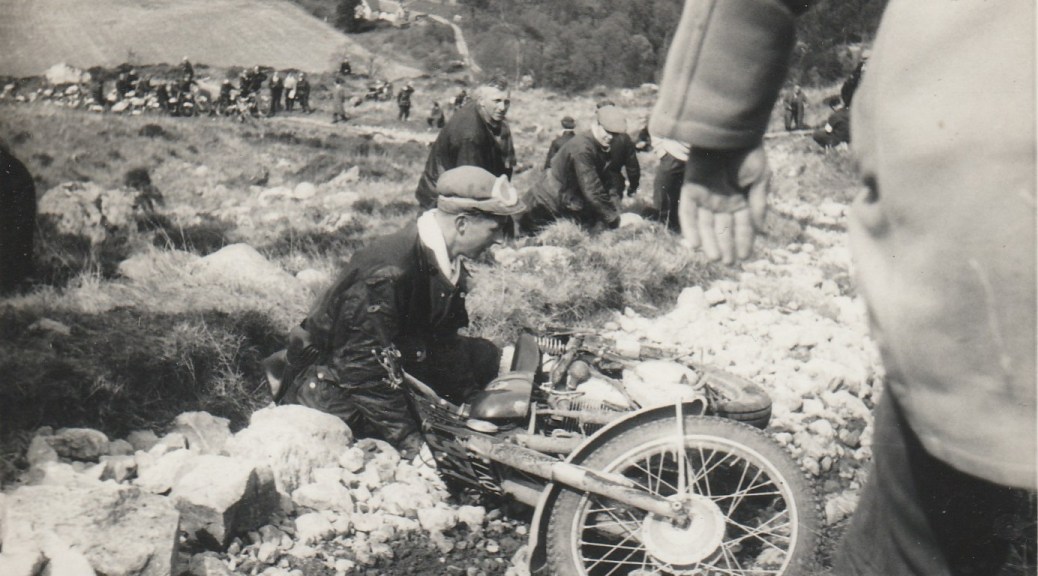
Recently we came across a tranche of old photographs taken at the Scottish Six Days Trial (SSDT) in the early 1950s.
We couldn’t find out who took them, so we used the power of social media to try and find out the source.
During these enquiries, we were contacted by Mayanne Macgregor of the Isle of Skye who thought they may be those taken by her father, Rory Macgregor. However, this turned out not to be the case, but Mayanne and her father, Rory gave us permission to publish the photos they have kept in an album since 1959.
Rory Macgregor worked for the Forestry Commission at Inchnacardoch forest around 1958/59 which allowed him to take some shots of the SSDT, mainly at ‘Foyers’ (South Loch Ness) and ‘Auchterawe’ (Fort Augustus) sections.
We are grateful to the MacGregor family for the exclusive use of their photographs.
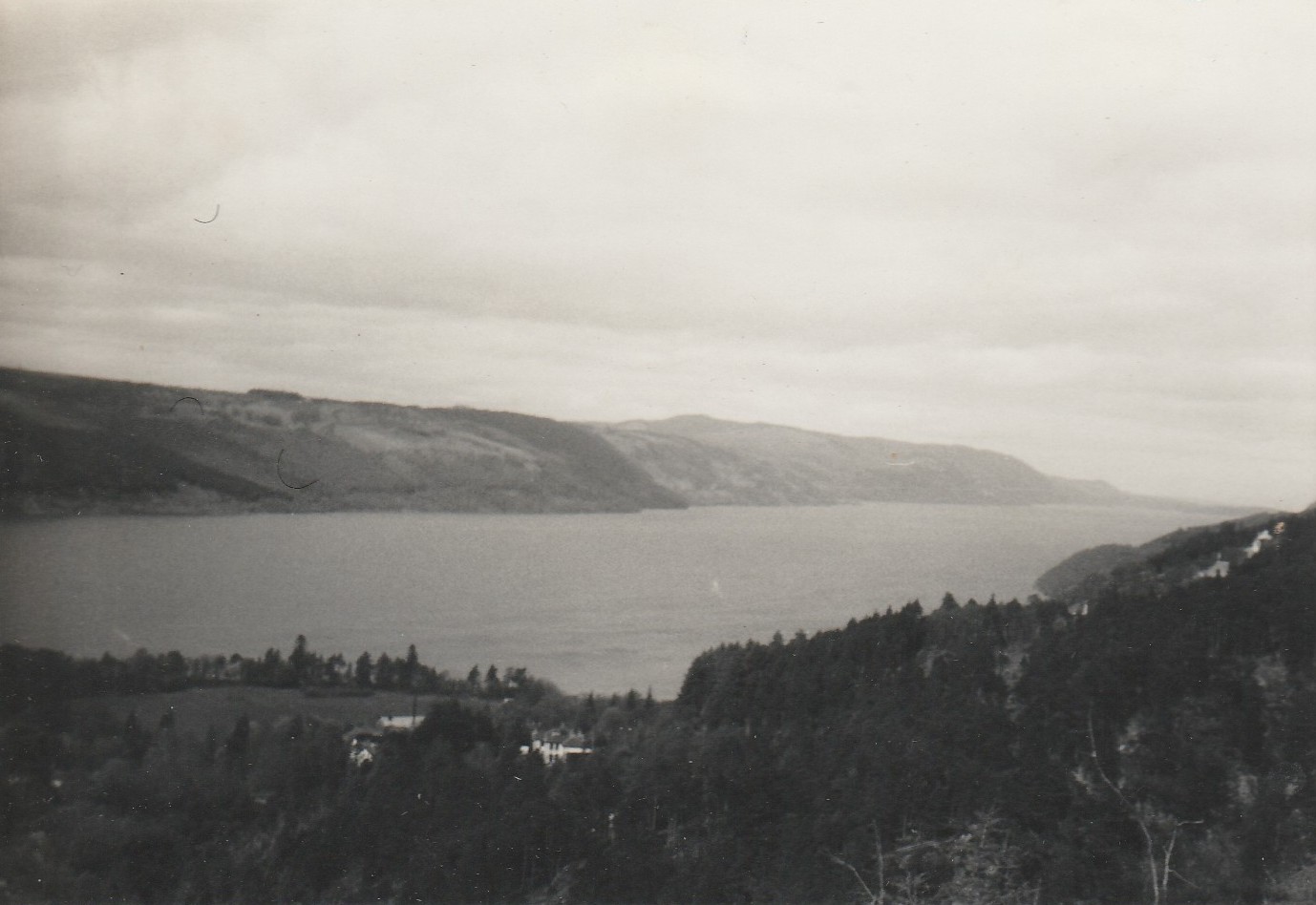
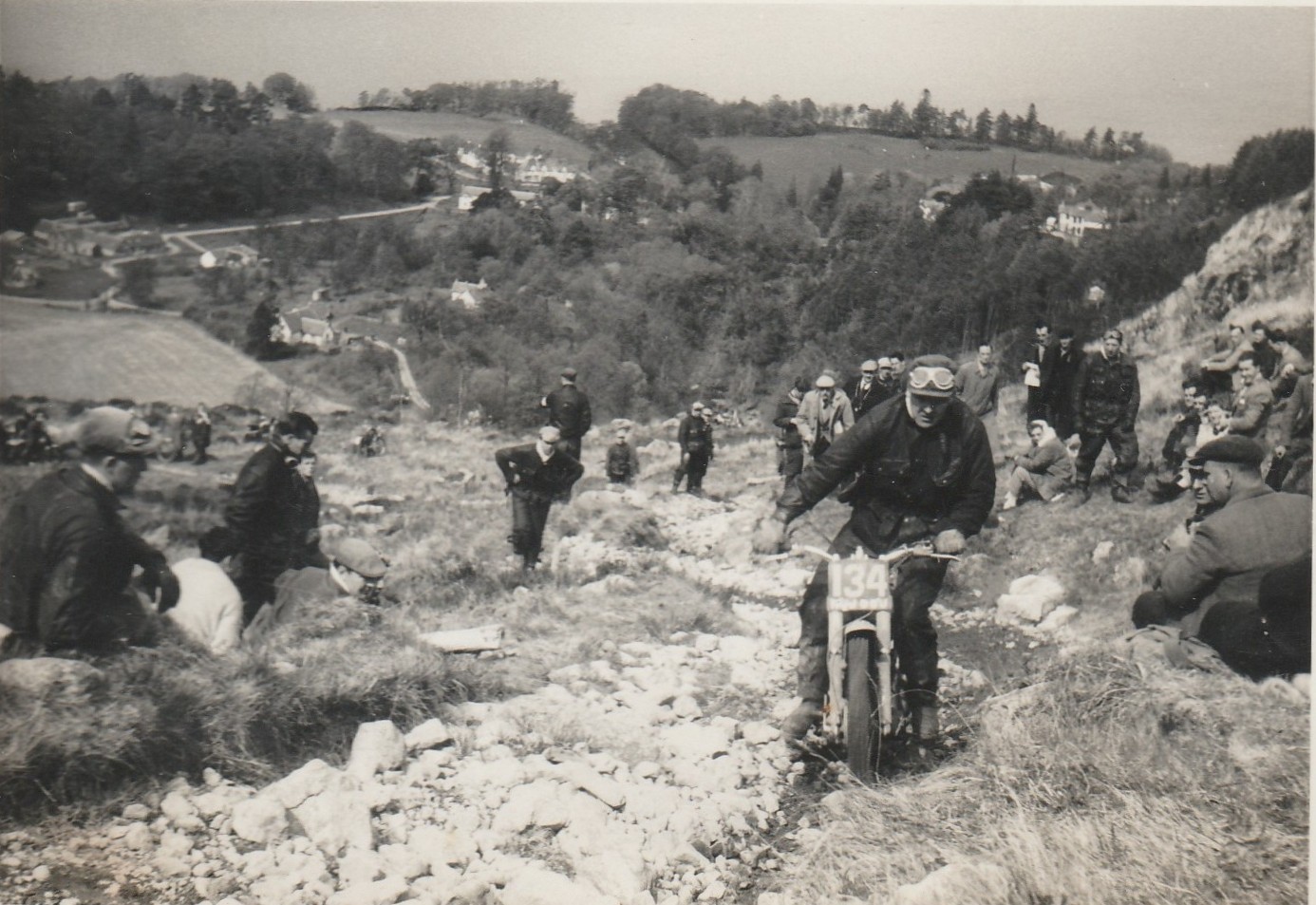
Foyers lies above the south shores of Loch Ness in Inverness-shire. It was used by the Scottish Six Days Trial many times in the 1950s and early 1960s – Photo: Rory MacGregor (Camera 1/30 at f/16)
…
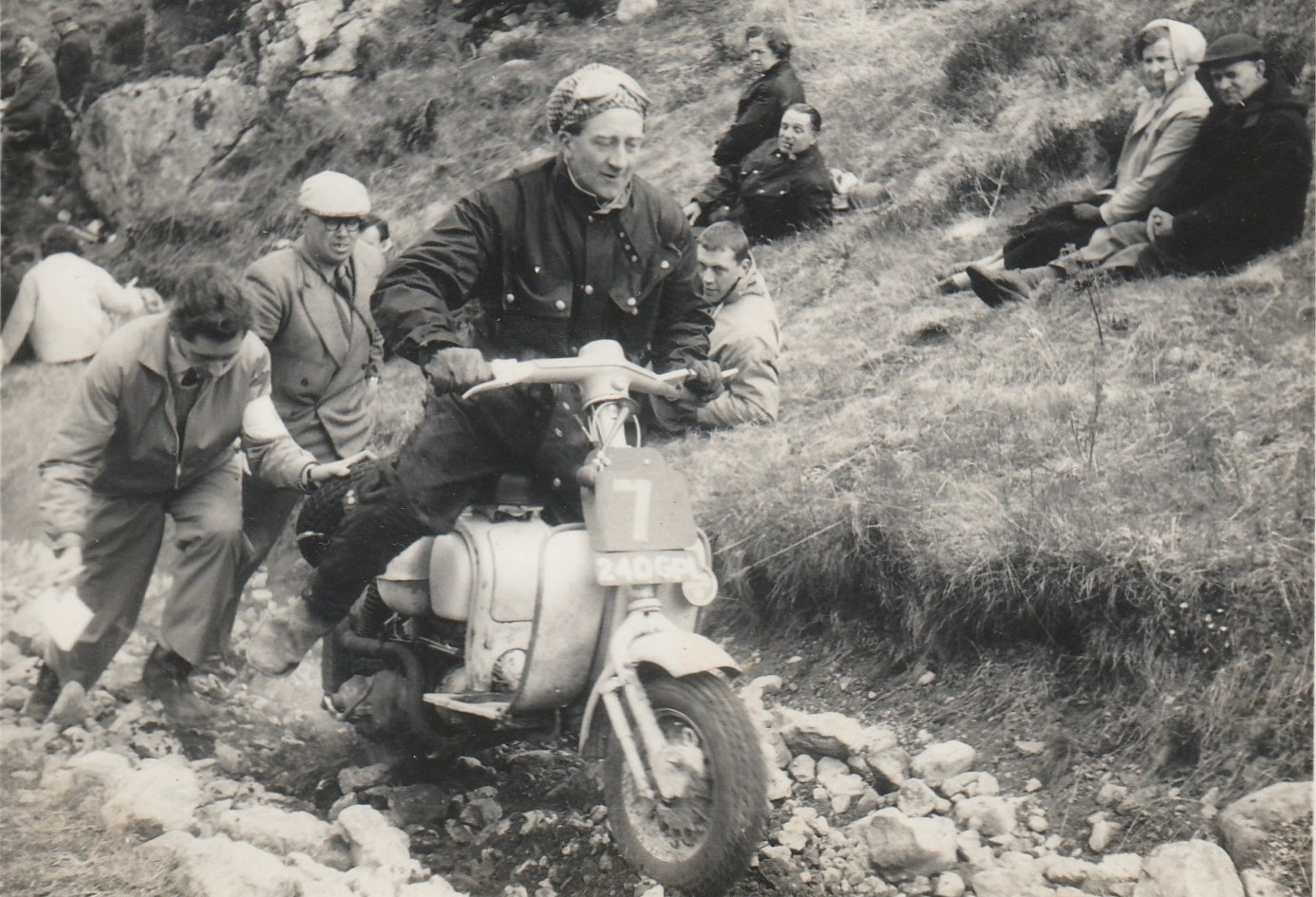
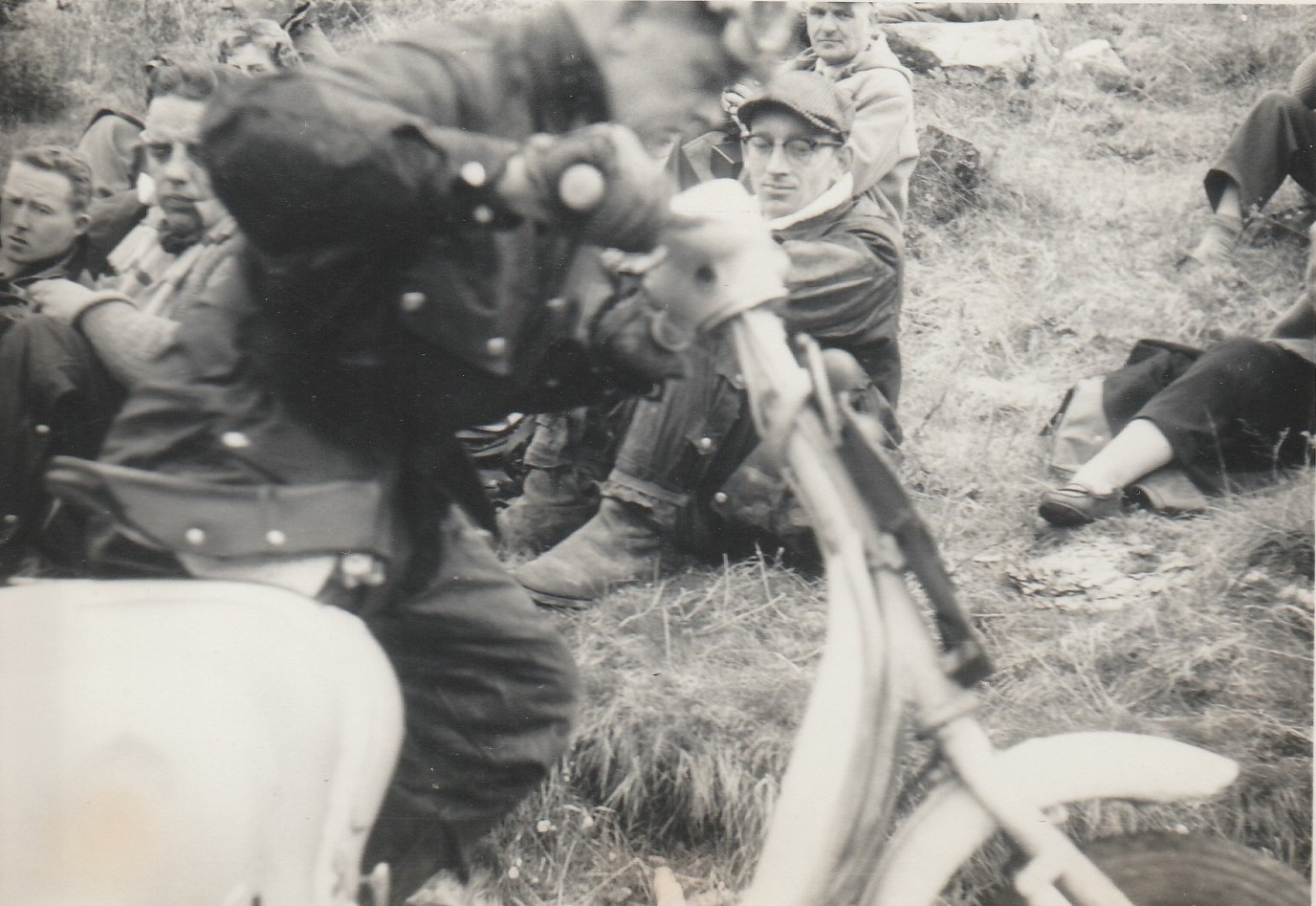
A rare sight, a Lambretta scooter in the Scottish Six Days, ridden by Geoff Parken as part of a three man team in the 1959 event – Photo: Rory MacGregor.
…
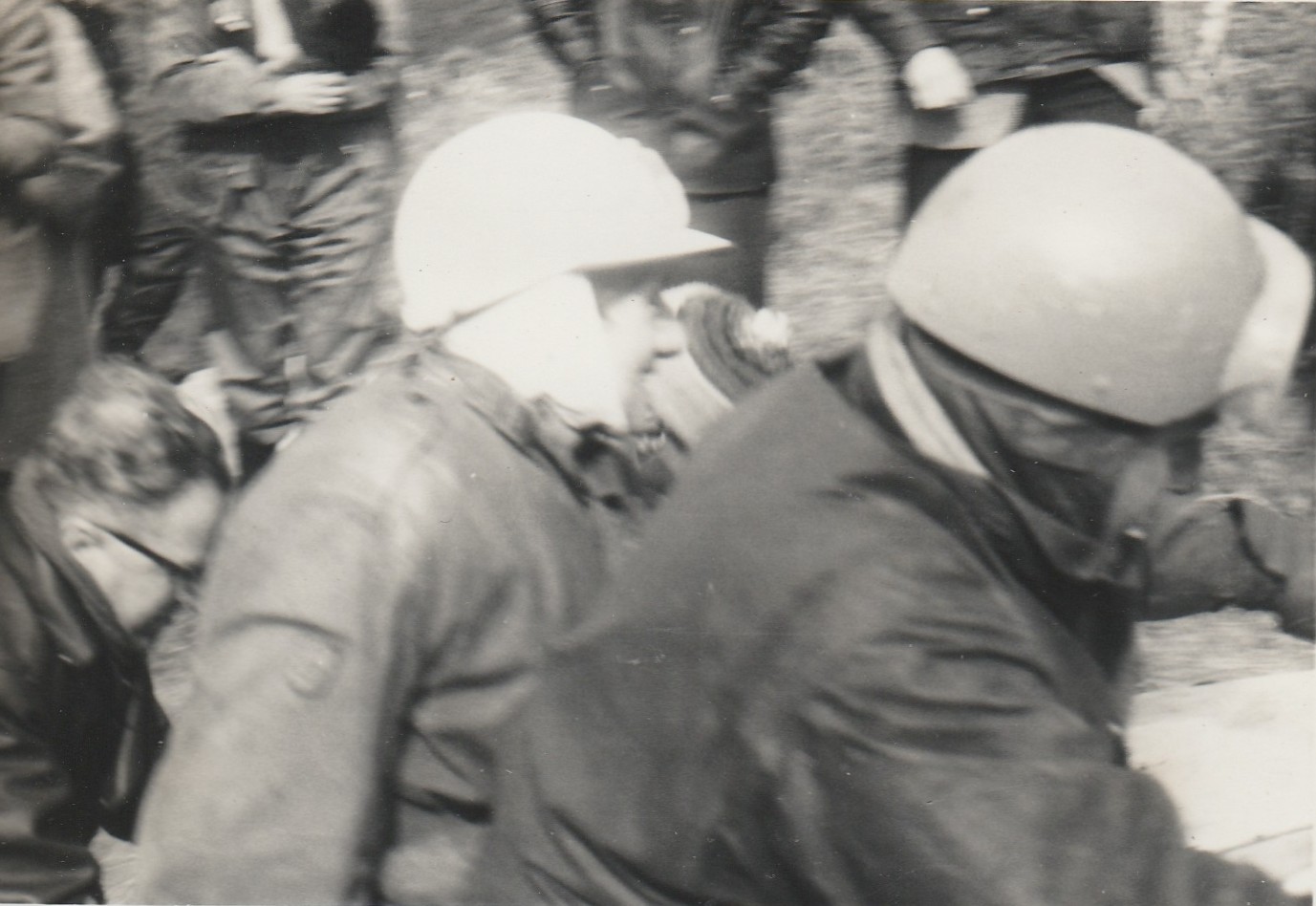
Close up of Lambretta team member, Alan Kimber pushing his mount up the section, on Foyers in the 1959 SSDT – Photo: Rory MacGregor
…
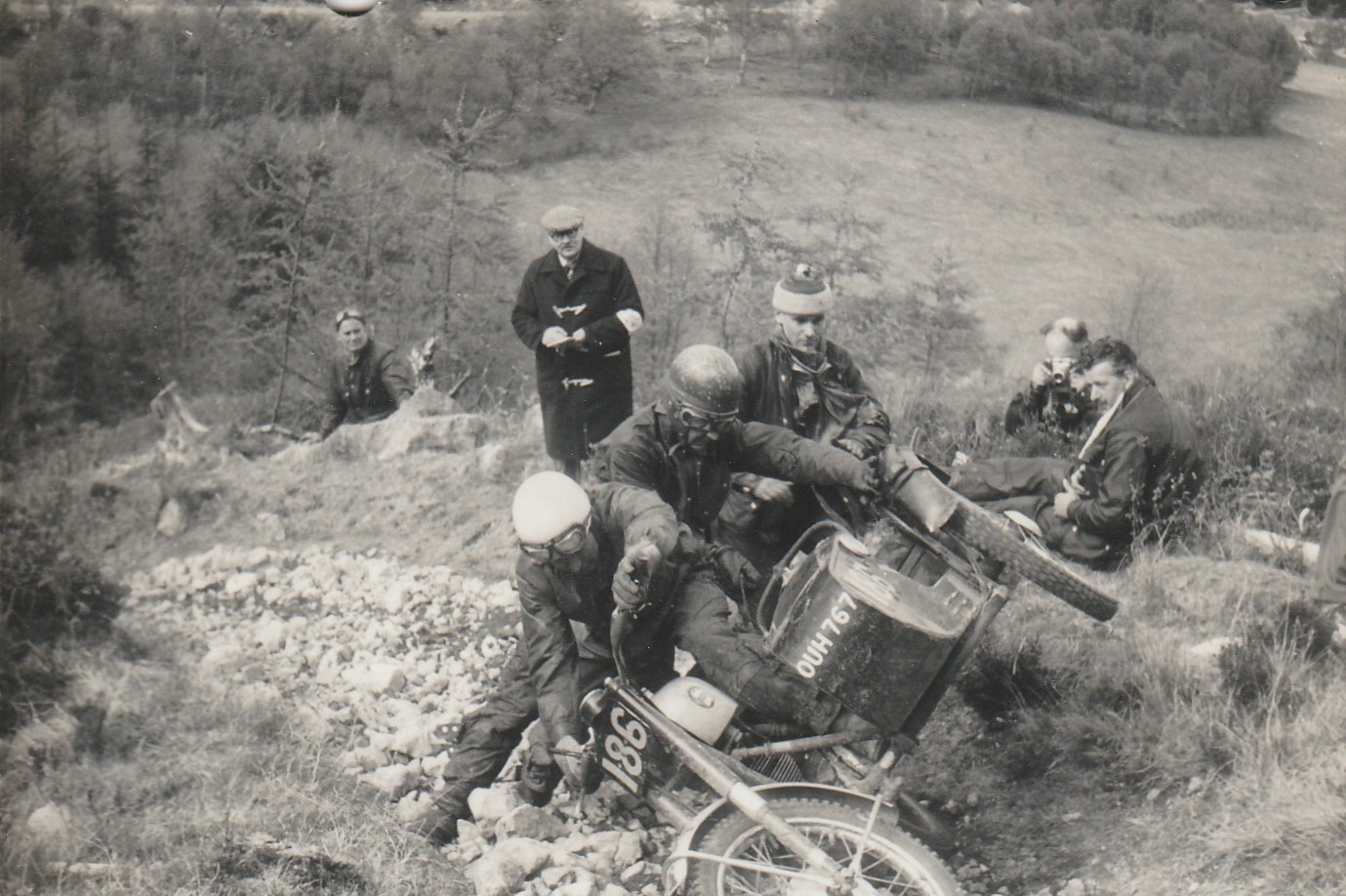
Close up of mother and son pairing on a 499cc BSA outfit for the 1959 SSDT. Mrs. Oliver and son Jackie on ‘Foyers’. Mrs Oliver was 70 years of age at the time. J.S, Oliver was fourth placed in the sidecar class in this event – Photo: Rory MacGregor.
…
Runner-Up in the sidecar class in the 1959 SSDT was R.T. Williams with his 497cc Ariel outfit, seen here on ‘Foyers’ collecting maximum marks – Photo: Rory MacGregor. (Camera 1/60 at f/5.6)
…
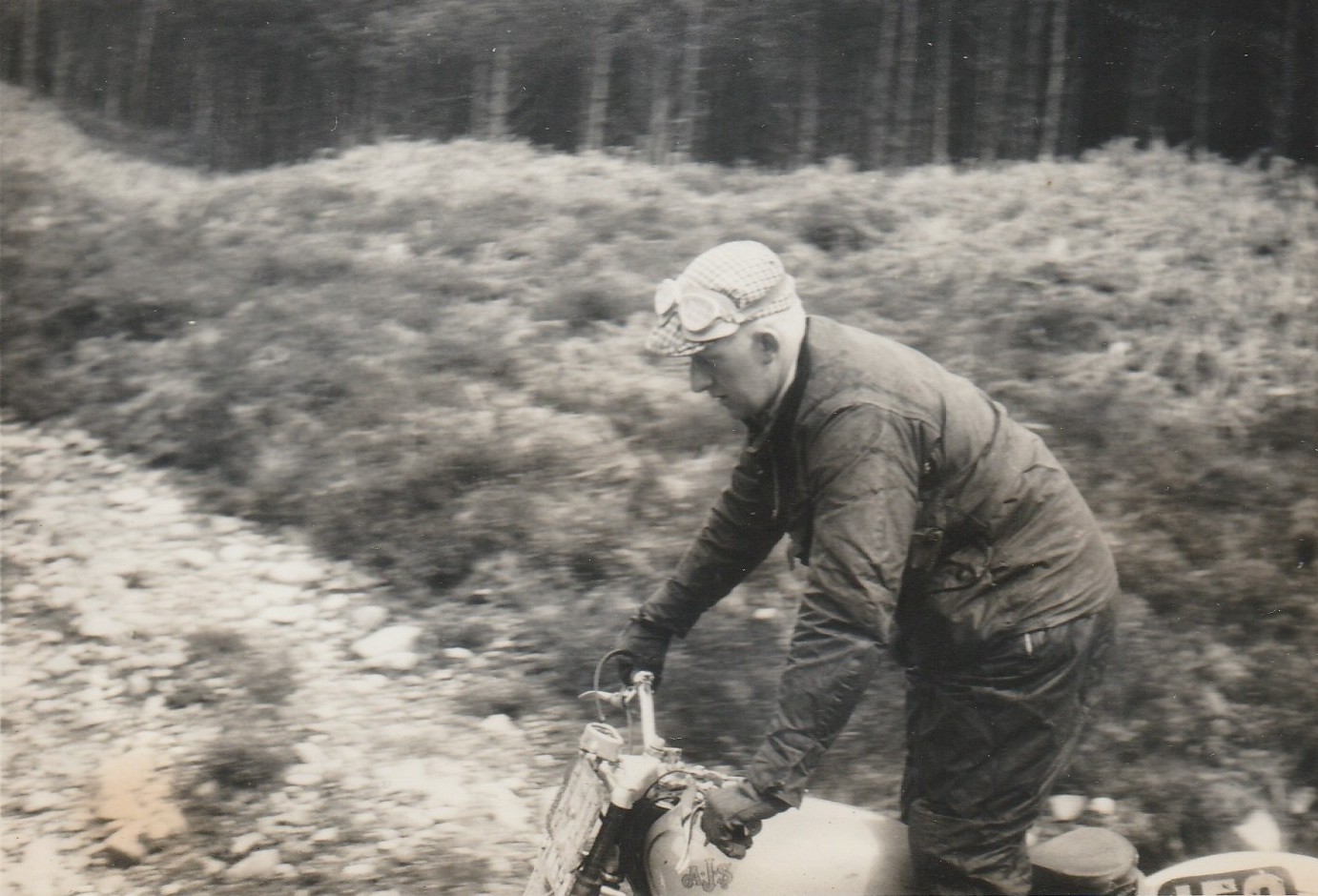
AJS team member, Gordon McLaughlan on his 350 AJS on Foyers on the south side of Loch Ness, which you can see in the background. Gordon was eighth placed on 43 marks and a Special First Class award – Photo: Rory MacGregor. (Camera 1/125 at f/5.6)
…
John Brittain (346cc Royal Enfield) tackles ‘Auchterawe’ in fine form in the 1959 SSDT, he was fifth in the event on 32 marks- Photo: Rory MacGregor
…
John Brittain (346cc Royal Enfield) on ‘Foyers’ 1959 SSDT – Photo: Rory MacGregor.
…
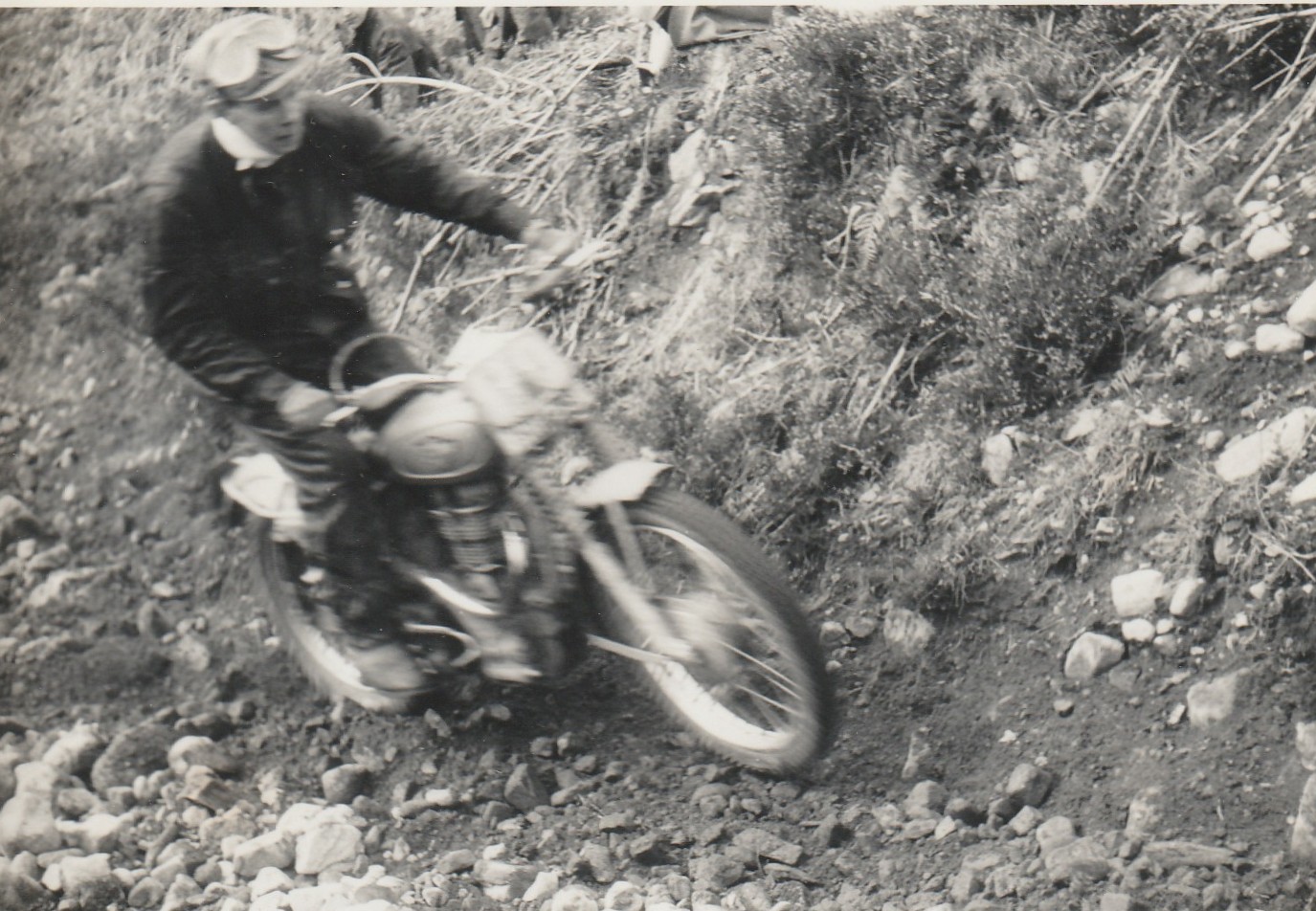
Pat Brittain, the younger brother of John also rode for Royal Enfield, seen here on his 346cc Bullet on ‘Foyers’. Pat came home in tenth position on 48 marks lost and a Special First Class award – Photo: Rory MacGregor.
…
Lochaber man, Hugh McDonald from Fort William on his 346cc Royal Enfield ‘Works Replica’ cuts a fine dash on ‘Foyers’ in the 1959 SSDT. Hugh finished in 120th place on 250 marks – Photo: Rory MacGregor.
…
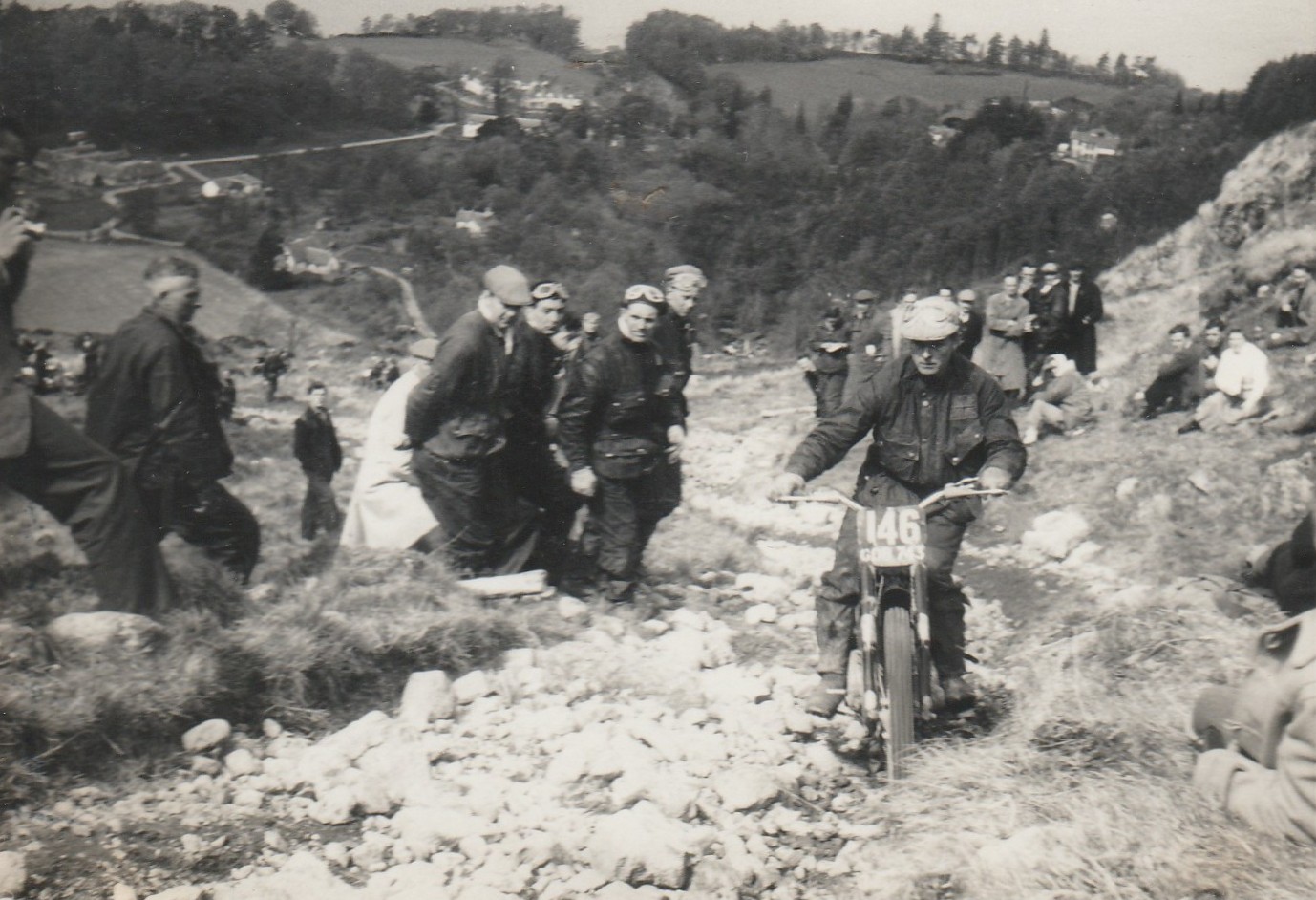
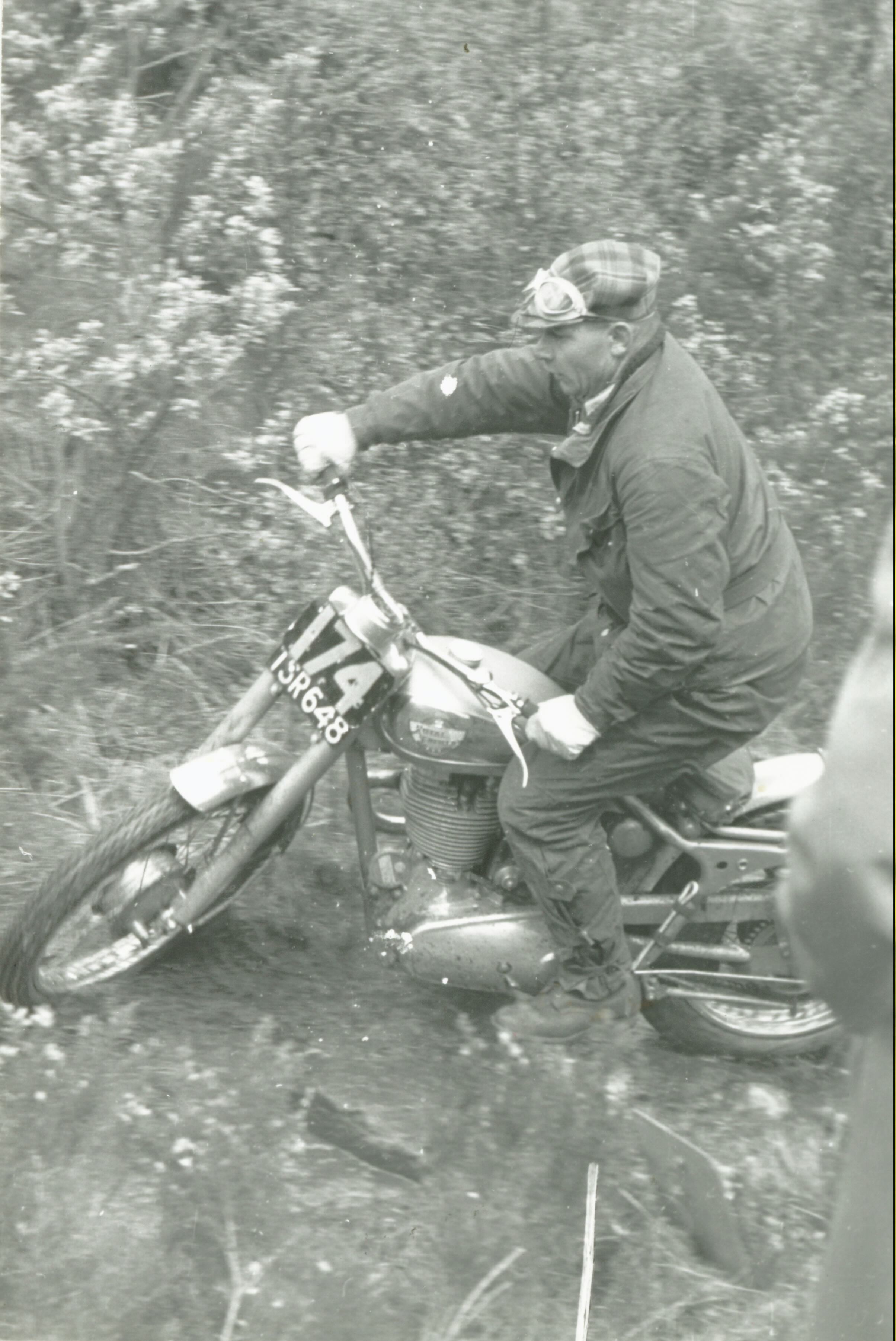
Used as our main photograph, an uncharacteristic position for Ariel factory rider, Gordon S. Blakeway, having collected the maximum five marks of Foyers with his 497cc Ariel. Gordon finished in fifteenth position in the 1959 SSDT – Photo: Rory MacGregor. (Camera: 1/125 at f/4)
…
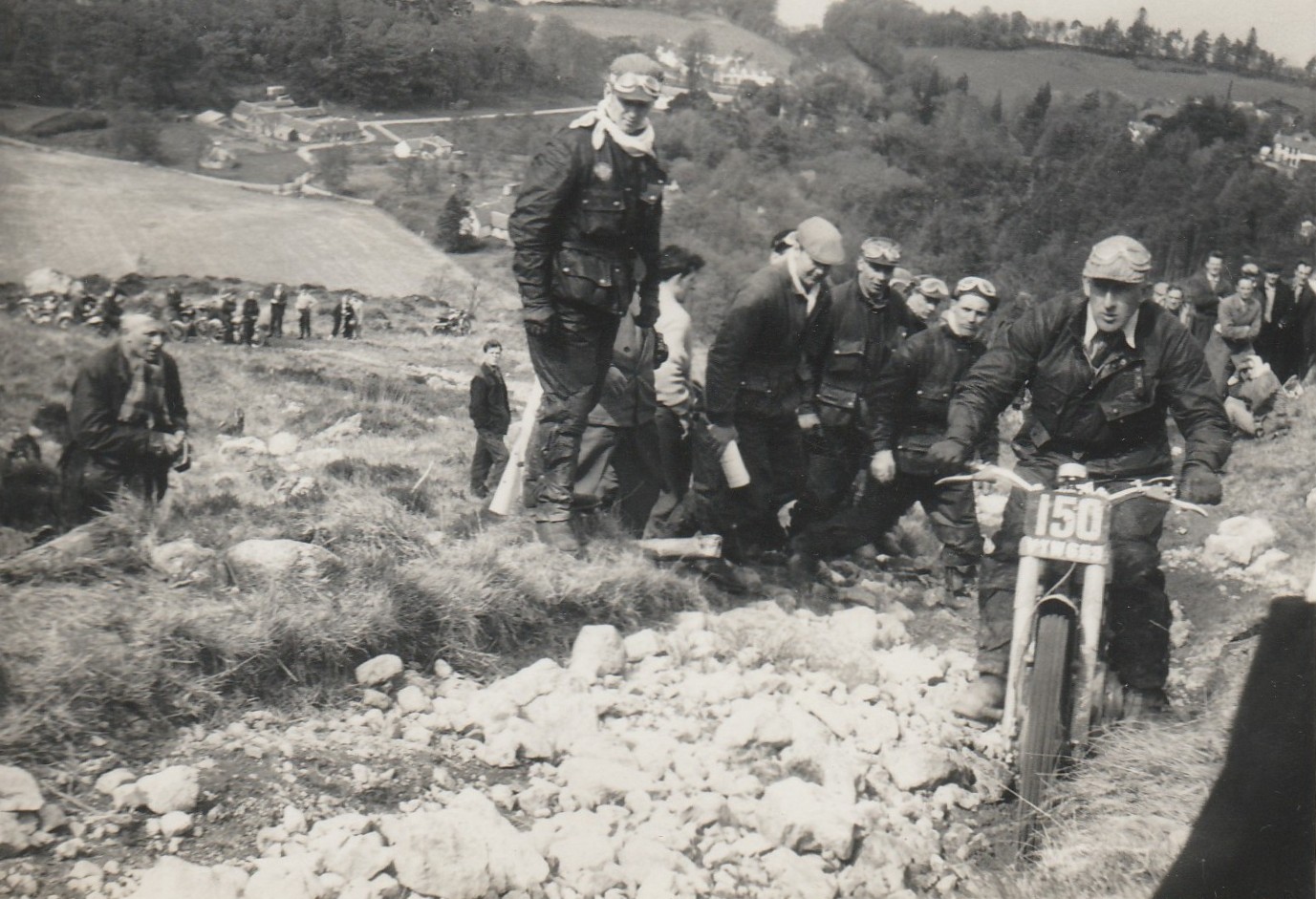
Ron Langston on his 497cc Ariel powers up ‘Foyers’. Ron finished in eleventh position overall on 53 marks – Photo: Rory MacGregor.
…
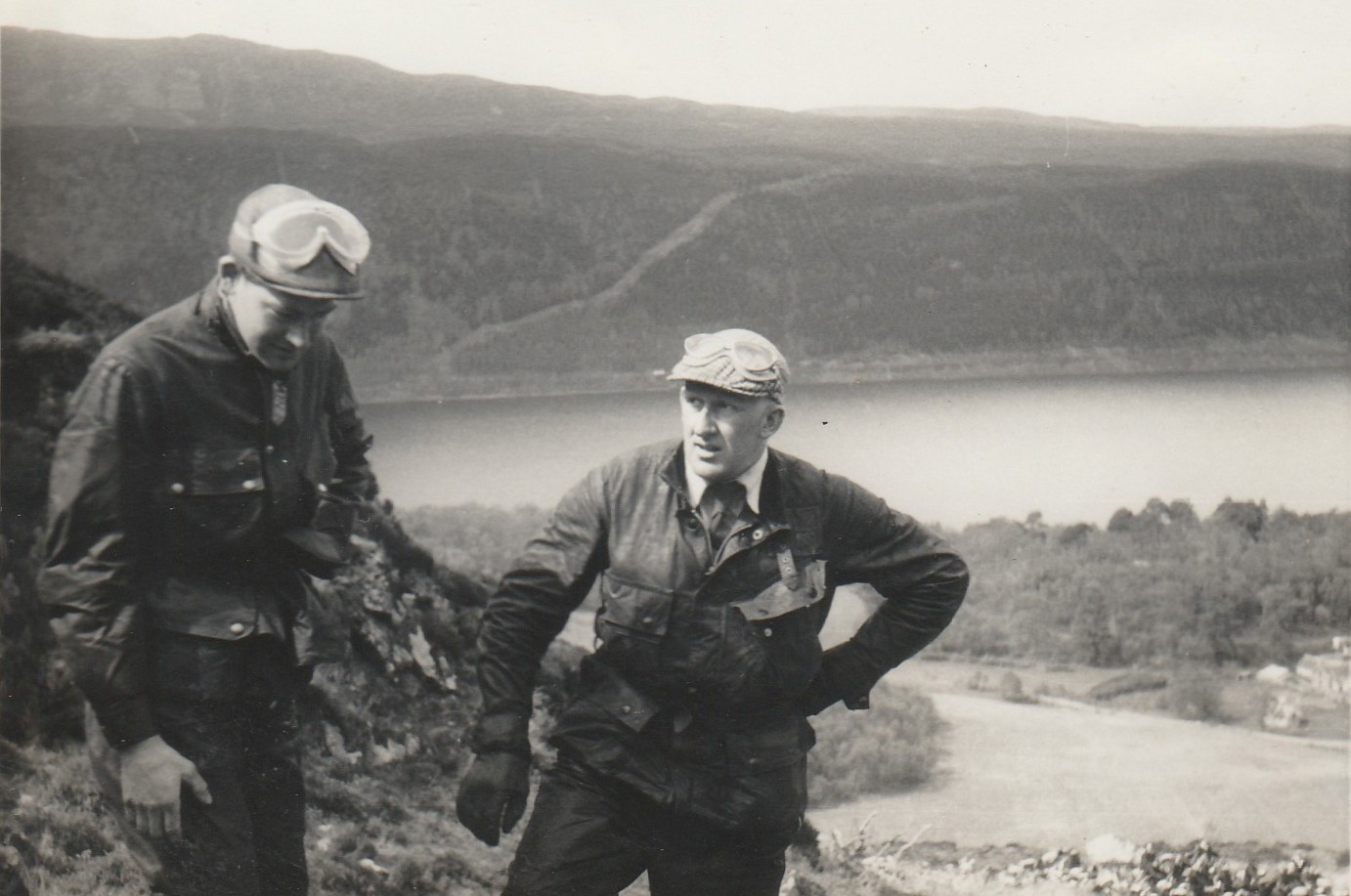
Close friends and rivals, Sammy Miller MBE (Ariel) and Gordon L. Jackson (AJS) weigh up the section at ‘Foyers’ during the 1959 SSDT – Photo: Rory MacGregor.
…
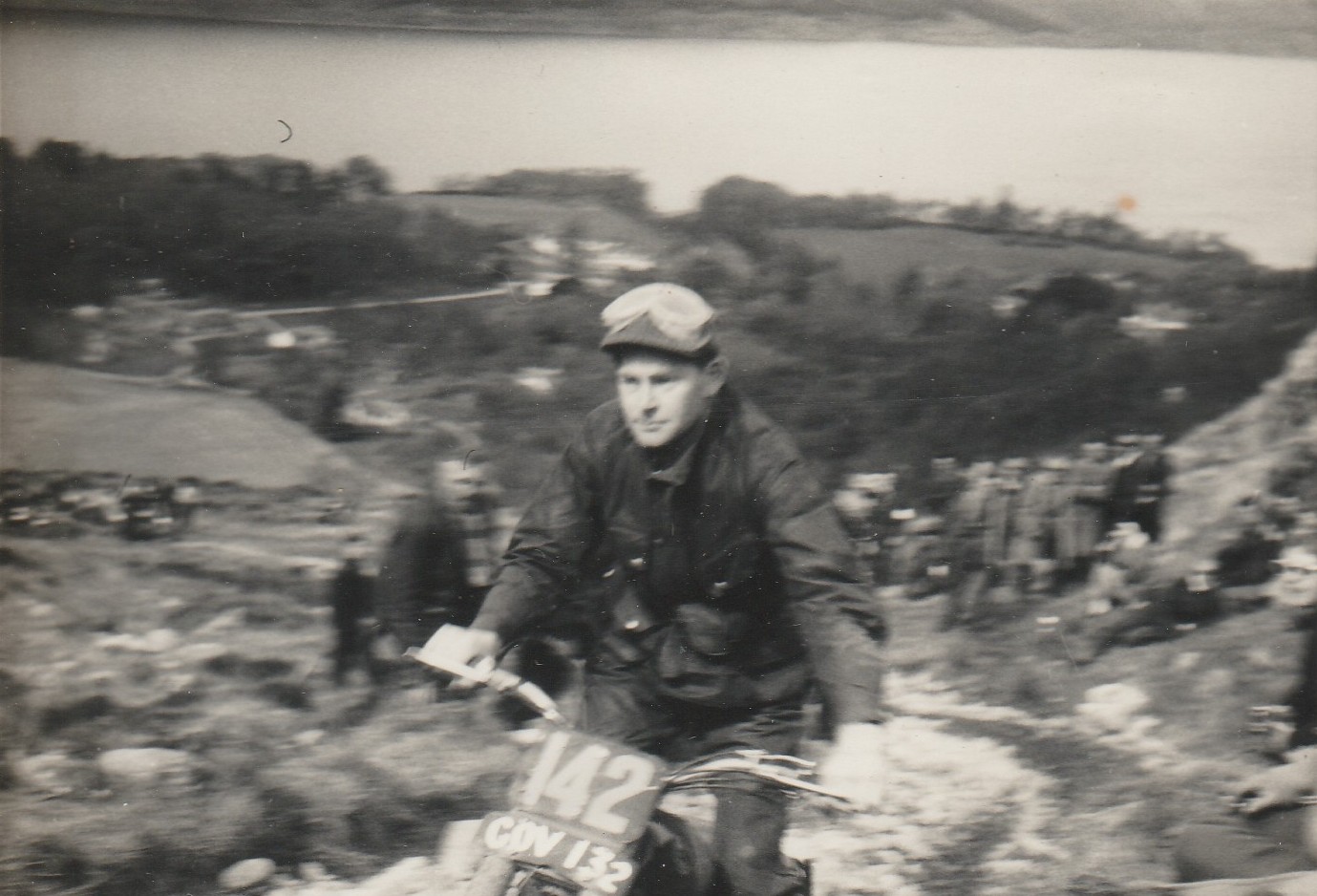
Sammy Miller MBE riding ‘Foyers’ in 1959. Sam came home in third position on the 497cc Ariel (GOV132) losing 22 marks – Photo: Rory MacGregor.
…
Gordon Jackson tackles ‘Foyers’ on the factory AJS, he was runner up in the 1959 SSDT losing 20 marks – Photo: Rory MacGregor.
…
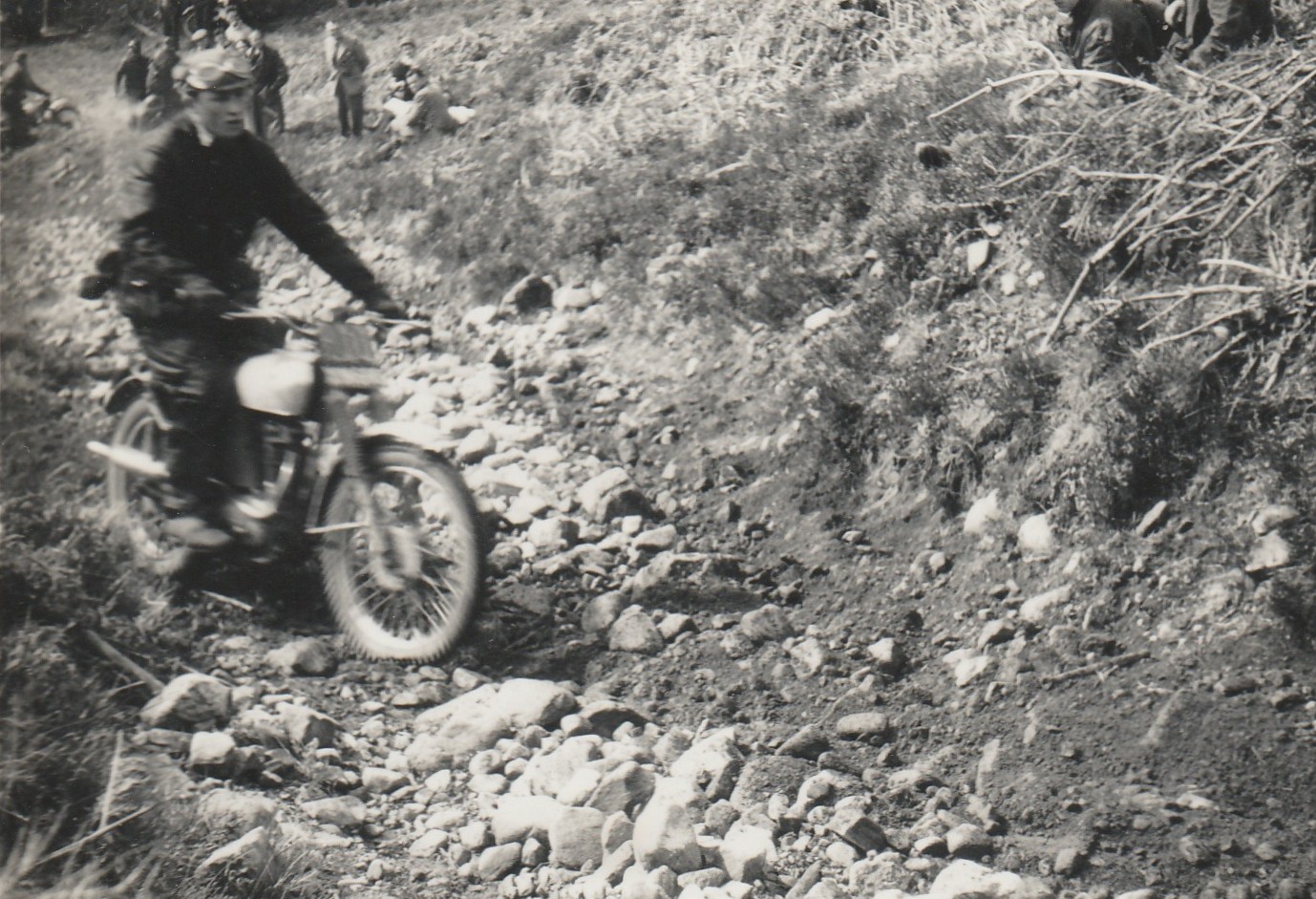
Gordon L. Jackson (347cc AJS) on ‘Auchterawe’ in the 1959 SSDT, Gordon was runner up to Roy Peplow on the 199cc Triumph Cub – Photo: Rory MacGregor.
…
Arthur Lampkin on his 249cc BSA on ‘Auchterawe’ in the 1959 SSDT, he was out of luck along with the BSA works team that year when all the new C15T factory machines went out with engine trouble – Photo: Rory MacGregor.
‘Rory’s SSDT Selection is the copyright of Trials Guru and Mr. Rory MacGregor.
Apart from ‘Fair Dealing’ for the purpose of private study, research, criticism or review as permitted under the Copyright, Design and Patents Act, 1988, no part of this article may be copied, reproduced, stored in any form of retrieval system, electronic or otherwise or transmitted in any form or by any means, electronic, electrical, mechanical, optical, chemical, photocopying, recording or otherwise without the prior written permission of the author as stated above. This article is not being published for any monetary reward or monetisation, be that online or in print.
In deepest Argyll, nestling among stunning scenery and mountains, lies the town of Kinlochleven. Many books have been written about the area, one of which is ‘Children of the Dead End – The Autobiography of a Navvy’ – By Patrick McGill – this book is exactly what the title says, it’s the story of an immigrant manual worker or ‘navvy’ as they were called. This book which is rated as one of the best 100 best Scottish books of all time, describes the times when the Aluminium smelter and factory was being constructed at the end of the 1800’s. Kinlochleven flourished as a direct result of the creation of the Aluminium factory which employed around 1,000 workers and produced high quality aluminium for the world. These employees came from far afield and settled in the town, one such settler was Ian Murray Pollock, who was originally from Falkirk, Stirlingshire. Pollock had been through the second world war, having served in the Argyll & Sutherland Highlanders regiment in Palestine. When he was effectively demobbed from the British Army, Pollock was fortunate to secure employment with the British Aluminium Company Ltd at their Kinlochleven smelter. The ‘BA’ as it was universally known, was a major employer both there and at their Fort William operation, which exists to this day.
Pollock started his career as a ‘fitter’ but quickly progressed through the ranks to become a shift foreman at the plant.
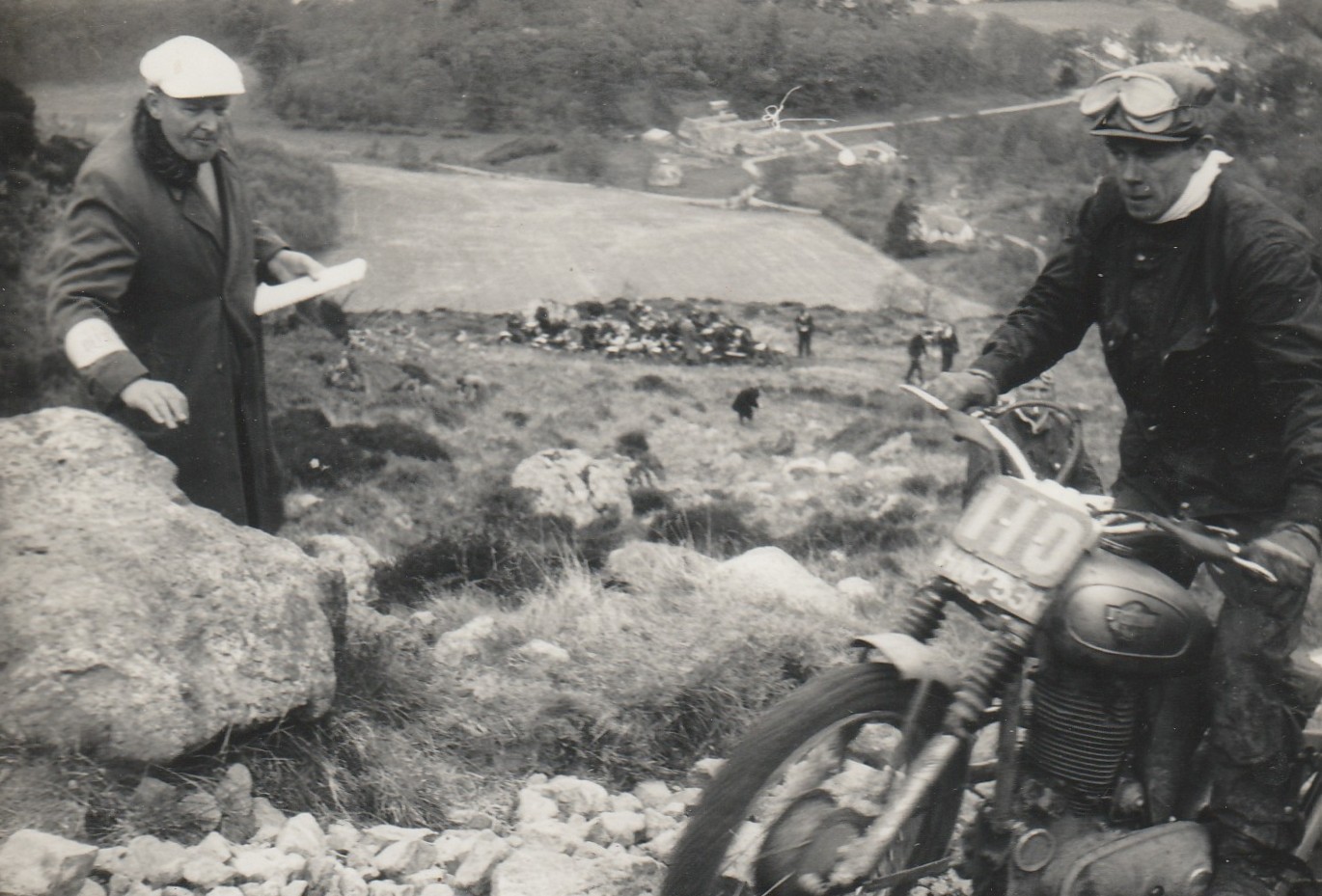
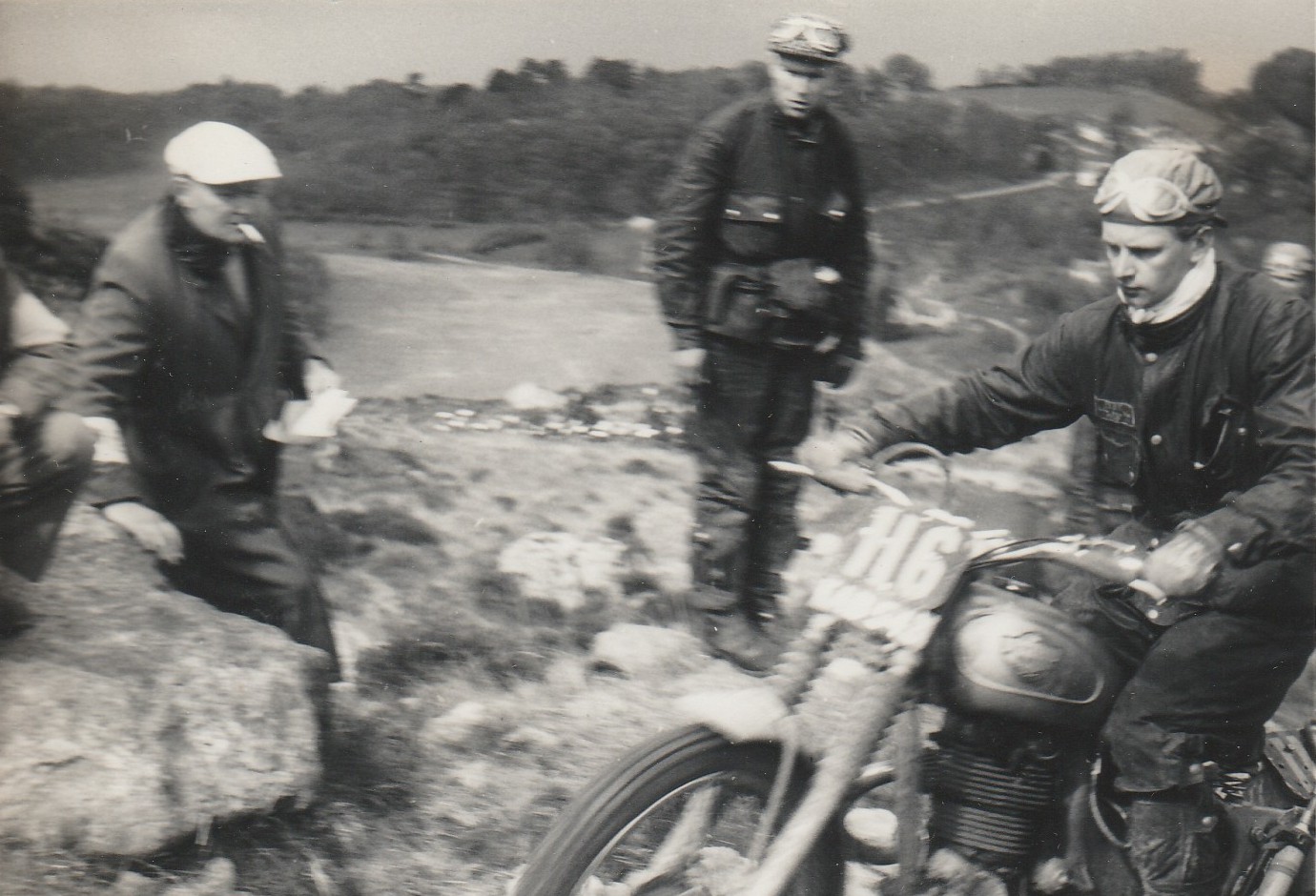
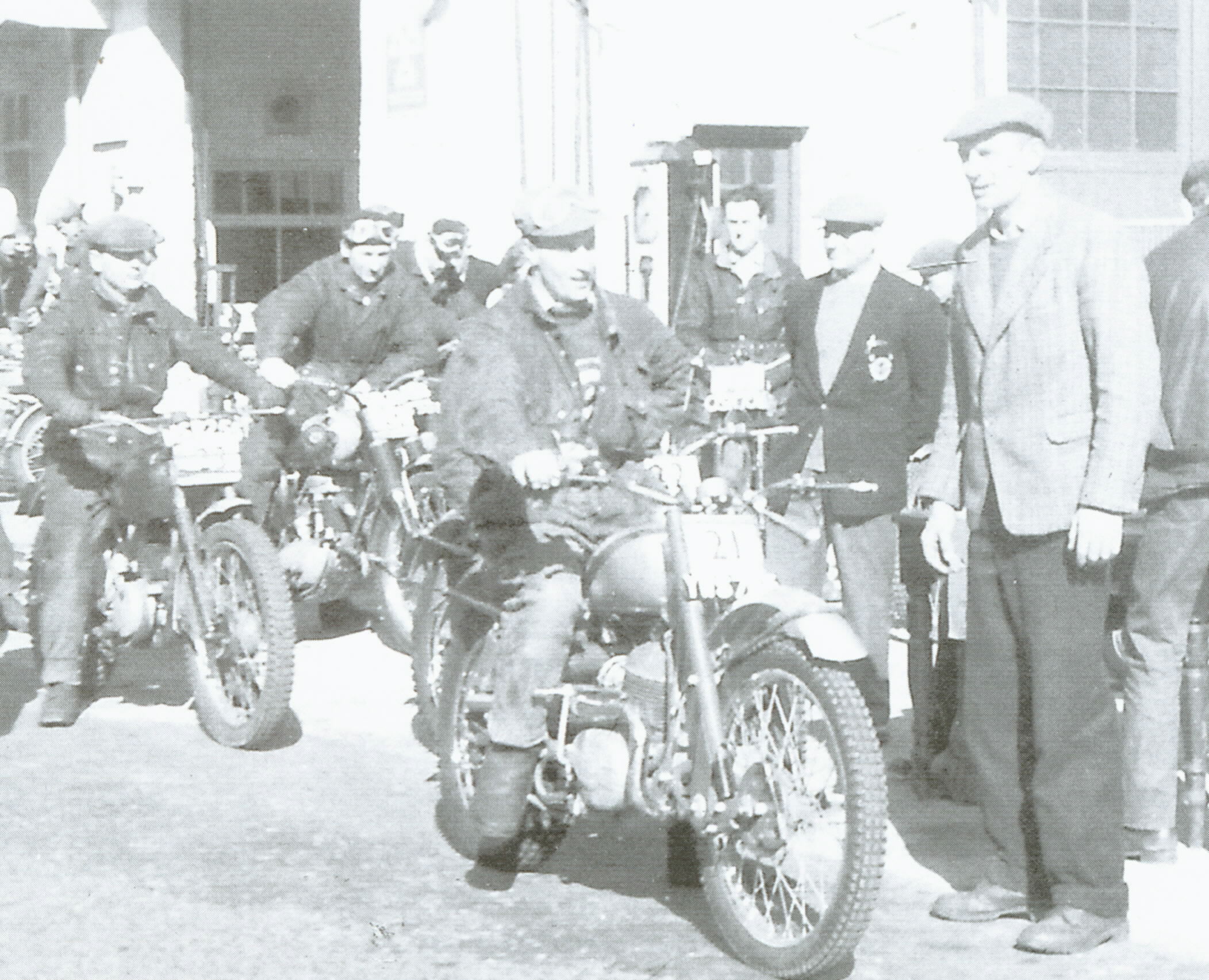
1950 – Jack Williamson from Newtongrange, Midlothian (347 AJS) on Mamore, watched by Ian Pollock (white paper in pocket) – Photo: W.S. Thomson, Fort William
Being an active young man who had forged many friendships in the locality, Pollock took an interest in the annual Scottish Six Days Trial which made use of the hills near to Kinlochleven during the ‘Sporting Holiday in the Highlands’. Pollock had amassed quite a knowledge of the local paths, bridleways and rough country high above the town. This was to eventually forge a strong bond between him and members of the Edinburgh & District Motor Club, who promoted the Scottish Six Days Trial.
Ian also became involved in local events, eventually becoming a central character in the Kinlochleven Motor Cycle Club, which he helped form.
Pollock in association with his good friend, Lithuanian refugee, Paul Kilbauskas discovered there was more land available to the SSDT than perhaps the organisers were aware of!
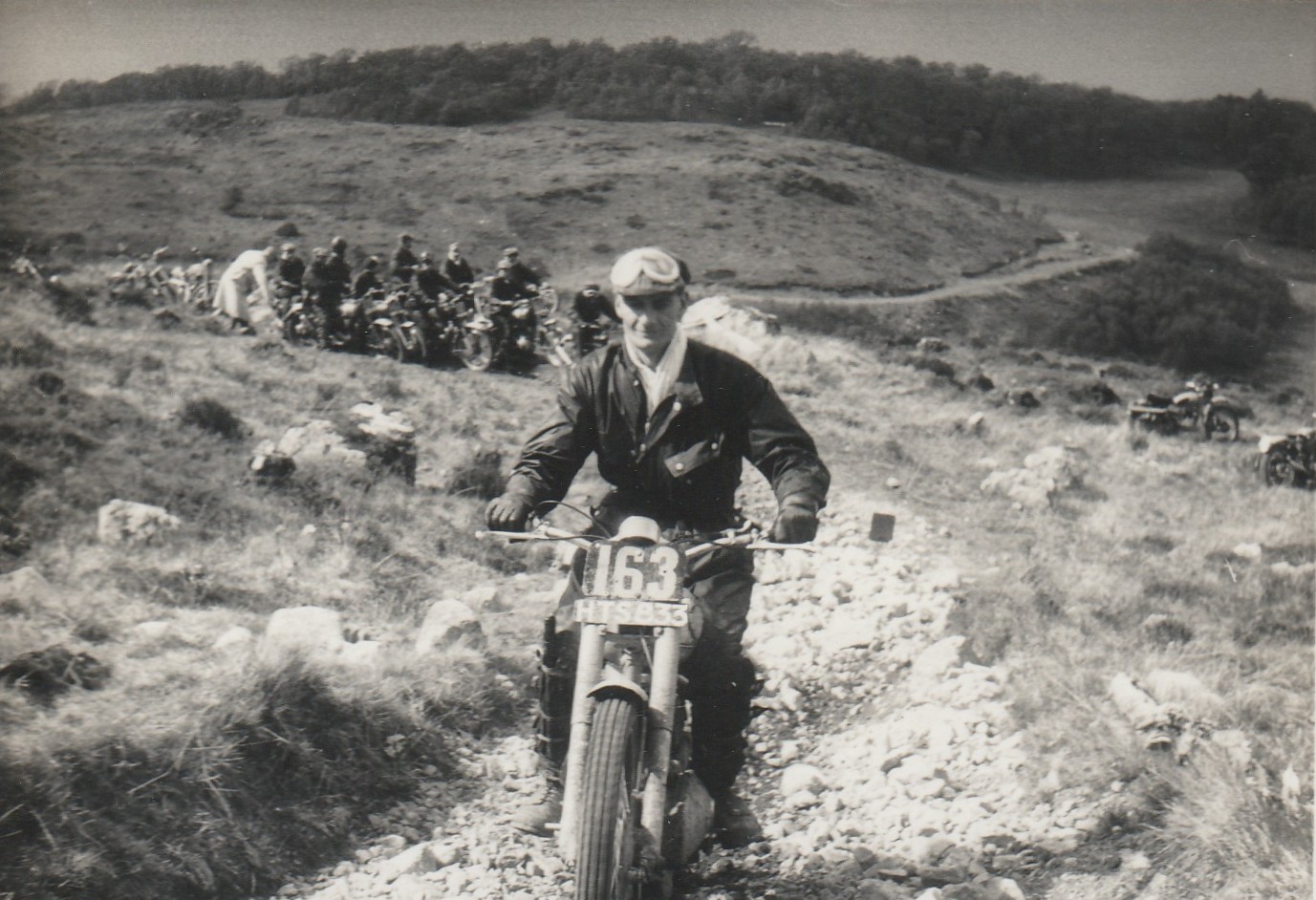
1959 Scottish Six Days Trial – Paul Kilbauskas with his 500 Royal Enfield – Photo: John Davies
The SSDT up until the late 1960’s, made extensive use of main and secondary roads, proper foot and bridle paths, sheep paths but very little open moorland. It wasn’t until Jimmy Mulvie became Clerk of Course that the SSDT made use of open moorland stretches.
It was Pollock and Kilbauskas that investigated the possibility of going out over the hills from Kinlochleven back over to the Fort William area other than by the original Mamore Road, which is the water bound surface that is still used by the SSDT and Pre’65 trials to this day. It stretches from Mamore Lodge across to Blarmafoldach, just outside Fort William and links into the Achintore Road.
Pollock and Kilbauskas were both energetic men, they liked the outdoors and they both jointly and severally, explored the many trails, paths and rocky burns and outcrops that littered the hills high above Kinlochleven. They also knew all the local keepers, shepherds and landowners, so permission was never a problem. Many of the hills surrounding the town had been purchased from estates at the end of the 19th century primarily for the water rights. This enabled the factory to operate and ensure plentiful supply of water via the Blackwater area, high above Kinlochleven. Pollock and Kilbauskas were trusted individuals and it helped the SSDT greatly by having reliable people such as Pollock and Kilbauskas on hand.
These explorations bore fruit aplenty, for the Pollock/Kilbauskas venture yielded many new sections in the form of ‘Loch Eild Path’; ‘Mamore’; ‘German Camp’; ‘Leitir Bo Fionn’; ‘Grey Mare’s Ridge’ and of course ‘Brump Brae’, later to be renamed ‘Pollock Hill’.
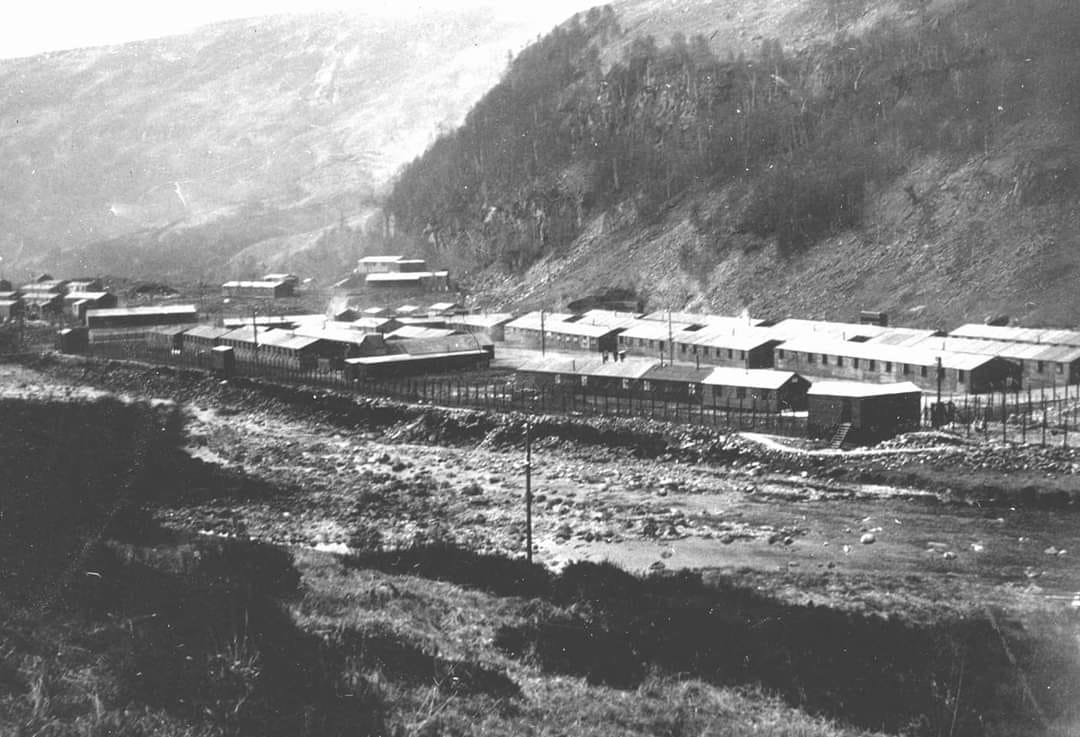
The ‘German Camp’, a first World War prisoner of war encampment on the banking of the River Leven high above Kinlochleven. Photo courtesy of Peter Anderson, Clackmannan
In the period 1955 through to 1959, Ian was listed in the official programmes of the SSDT as an observer, but Pollock was much more than that, he was the journeyman who discovered many of the iconic hills that would eventually unearth the most famous of them all, ‘Pipeline’ probably the most famous motorcycle trial section of all time! Alex Smith, from Bathgate, a former assistant Clerk of Course confirms that ‘Pipeline’ was first used as an observed section in the 1964 SSDT.
Jack Williamson (250cc Greeves) awaits the signal to start in the 1963 Spring Trial at Kinlochleven. Ian Pollock was a driving force in this event which was re-named in his honour after his death.
‘Pipeline’ is just a couple of miles out of the town and is the subject of many of the most stunning motorcycle trials photos to come from the cameras of Nick Nichols, Eric Kitchen and photographers of their age.
The Pipeline under construction, photo taken from an original glass negative, courtesy of Peter Anderson, Clackmannan
Pollock was an enthusiastic observer at the SSDT and when Johnny Brittain won the 1957 Scottish, his photo adorned the cover of the following year’s programme, the observer in the background watching intently being Ian Pollock. The original photo used on the 1958 SSDT programme front cover was a ‘Motor Cycling’ print which is now the property of Mortons Motorcycle Media, Hornchurch, but a personal copy still hangs in Pollock’s daughter Pamela’s home in Glencoe.
The 1958 SSDT Official Programme, with 1957 winner Johnny Brittain (Royal Enfield) being watched by Ian Pollock. The section is at the top of Loch Eild Path, one of the hills discovered by Pollock himself.
By 1962, Pollock was now listed as an Assistant Clerk of the Course and was held in high esteem by his peers and by the ‘Clerk’ himself, the late George Baird who described Ian as ‘our man on the spot’ in the official programme.
Paul Kilbauskas:
Paul Kilbauskas was also a ‘Tunnel Tiger’ who worked on the many hydro-electric schemes in the Scottish Highlands, he was an explosives handler during his time on these massive projects. He concentrated more on riding the Six Days on Matchless, Royal Enfield and BSA machinery, always a 500cc machine. He helped find a sizeable part of the route was in effect a ‘displaced person’ who had to flee his native Lithuania in 1947. His first port of call was Market Harborough in Leicestershire. Paul eventually settled in Kinlochleven, worked at the Aluminium factory for a period where he met and eventually married his sweetheart, Rose who also worked at the BA factory and was originally from the Orkney Islands. They had two daughters, Marina and Rachel. There is now a Paul Kilbauskas award in the SSDT in remembrance of the one-time course plotter and explorer for the event.
The late Paul Kilbauskas, a native of Lithuania who made the Scottish Highlands his home. A life member of Inverness & District Motorcycle Club.
‘Mambrec’ was yet another of the sections discovered by Ian Pollock, a section that has been used in the Pre’65 Scottish Trial many times. Pollock was fortunate to strike up a good friendship with Johnny Graham who also became Clerk of Course SSDT. Graham would leave a trials motorcycle at Ian’s home to give him something to explore with. One such machine was the ex-works 350cc Matchless registered ‘OLH722’ of Ted Usher and another was the ex-factory BSA of Brian Martin registered ‘BSA350’.
The Lochaber Spring Trial in 1959. Taken at Kinlochleven near the war memorial. From Left: Bobby Macleod (Francis Barnett); Ali McDonald (Ariel); Hugh McDonald (Royal Enfield); Ian Pollock (standing); Paul Kilbauskas (Royal Enfield); Tommy McNab (BSA – ex-works BSA 350) and Billy MacLeod (Ariel). The trial in modern times is known as The Ian Pollock Memorial Trial.
Pollock would regularly fire these ‘loan bikes’ up and take them up onto the Dam Road and into the hills to see what he could find.
In 1963 the SSDT committee honoured Ian by calling one of the sections ‘Pollock Way’, this was just off one of the many paths near the River Leven, that Ian and Paul Kilbauskas discovered on their explorations.
When the Lochaber and District Club was founded, they enlisted Ian’s help to organise their ‘Spring Trial’. This particular event was eventually re-named as The Ian Pollock Trial in his honour and is regarded as one of the best one-day trials in the Scottish trial calendar to this day.
Ian Pollock is survived by his only daughter, Pamela who married local man and trials rider, John MacGregor, they live in Glencoe and regularly watch the Pre’65 Scottish Two-Day Trial.
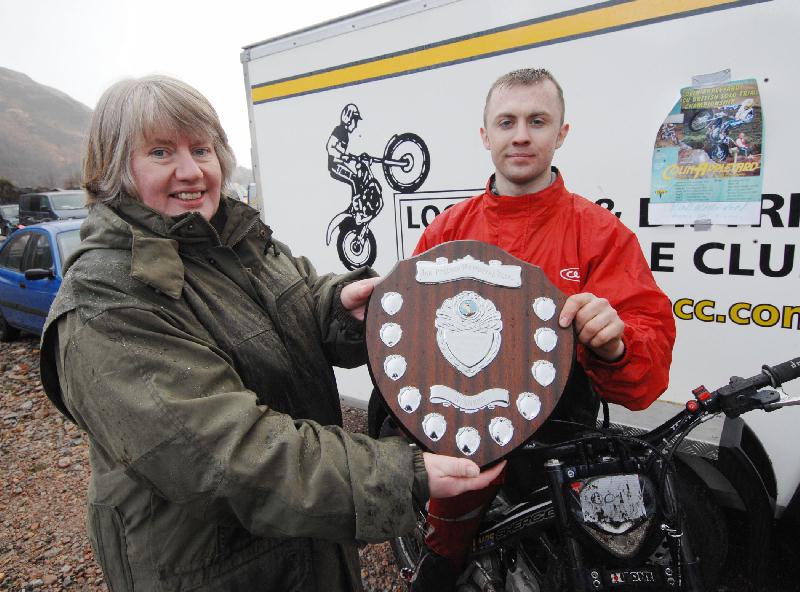
Pamela MacGregor (nee Pollock) presents the Ian Pollock Memorial trophy to local rider, ten times Scottish trials champion, Gary Macdonald in 2008. – Photo copyright and courtesy of: Iain Ferguson, The Write Image, Fort William.
John MacGregor was at one time himself an Assistant Clerk of Course SSDT and Pre’65 Scottish in its formative years.
So next time you climb up the ‘Dam Road’ to watch riders in either the SSDT or Pre’65 Scottish trials, spare a thought for the man who discovered many of these sections – Ian Murray Pollock.
More on Kinlochleven:
Kinlochleven in Scots Gaelic is Ceann Loch Liobhann, it was the first village in Scotland to have electric street lighting because of the electric power generated by the British Aluminium Company smelter. It used hydro or water power which was pioneered at Foyers in 1895 on the south side of Loch Ness, not far from Inverness. Kinlochleven was actually formed from two small villages, Kinlochmore (Large head of the loch) and Kinlochbeg (Small head of the loch). Kinlochmore on the north and Kinlochbeg on the south of the River Leven that runs into Loch Leven of which Kinlochleven sits at the head of.
The British Aluminium Company became part of Alcan, the Canadian based aluminium producer which laterly became Rio Tinto Alcan, part of the multi-national Rio Tinto company, which employs local personnel at their Fort William smelter operation. Rio Tinto (Alcan) is the world’s leading aluminium mining and producer. Rio Tinto Alcan can trace its roots back to Alcoa founded in 1928.
High quality, pure Aluminium was first produced at Kinlochleven at the ‘wee factory’ which was a temporary establishment high up in the hills on the Blackwater path. The ‘wee or temporary factory’ opened in 1907 with the main factory opening in Kinlochleven in 1909. The Blackwater dam or reservoir was formed purely to hold water reserves for the British Aluminium Company by flooding a sparsely populated valley high above the town, effectively trapping many of the River Leven’s tributaries and led down to the power house by six pipes, which are of course visible and beside the famous ‘Pipeline’ SSDT section group.
Trials Guru is indebted to Pamela and John MacGregor of Glencoe, Argyll for information supplied which made this article possible.
Text Copyright: Trials Guru / Moffat Racing, John Moffat – 2015
Photo Copyright: Iain Ferguson – ‘The Write Image’, Fort William – All Rights Reserved.
Photo of Paul Kilbauskas, by kind permission of Ms. Marina Kilbauskas.
Special thanks to: Alex Smith, former SSDT Assistant Clerk of Course and former Chairman, Pre’65 Scottish Trial.
Thanks to the Edinburgh & District Motor Club Ltd – For use of the cover of the 1958 SSDT official programme.
The Premier Trial Website – Recording the History of the Sport 'Established 2014'





 TRIALS GURU - DEDICATED TO TRIAL