The Scottish ACU Scottish Trials Championship, Presentation of Awards will take place on Saturday 6th December 2014 at the Territorial Army Centre, Beveridge Square, Livingston, West Lothian EH54 6QF. – Doors Open: 6.30pm, awards begin 7.00pm.
Scottish riders photographed here at the Richmond Club’s Mintex Trial earlier this year. Photo copyright: Barry Robinson.
Guest of Honour will be Jack Williamson, the oldest surviving Scottish Trials Champion (1962-64).
The evening is open to all SACU trials licence holders and their guests.
Introducing the proceedings will be Trials Guru – John Moffat.
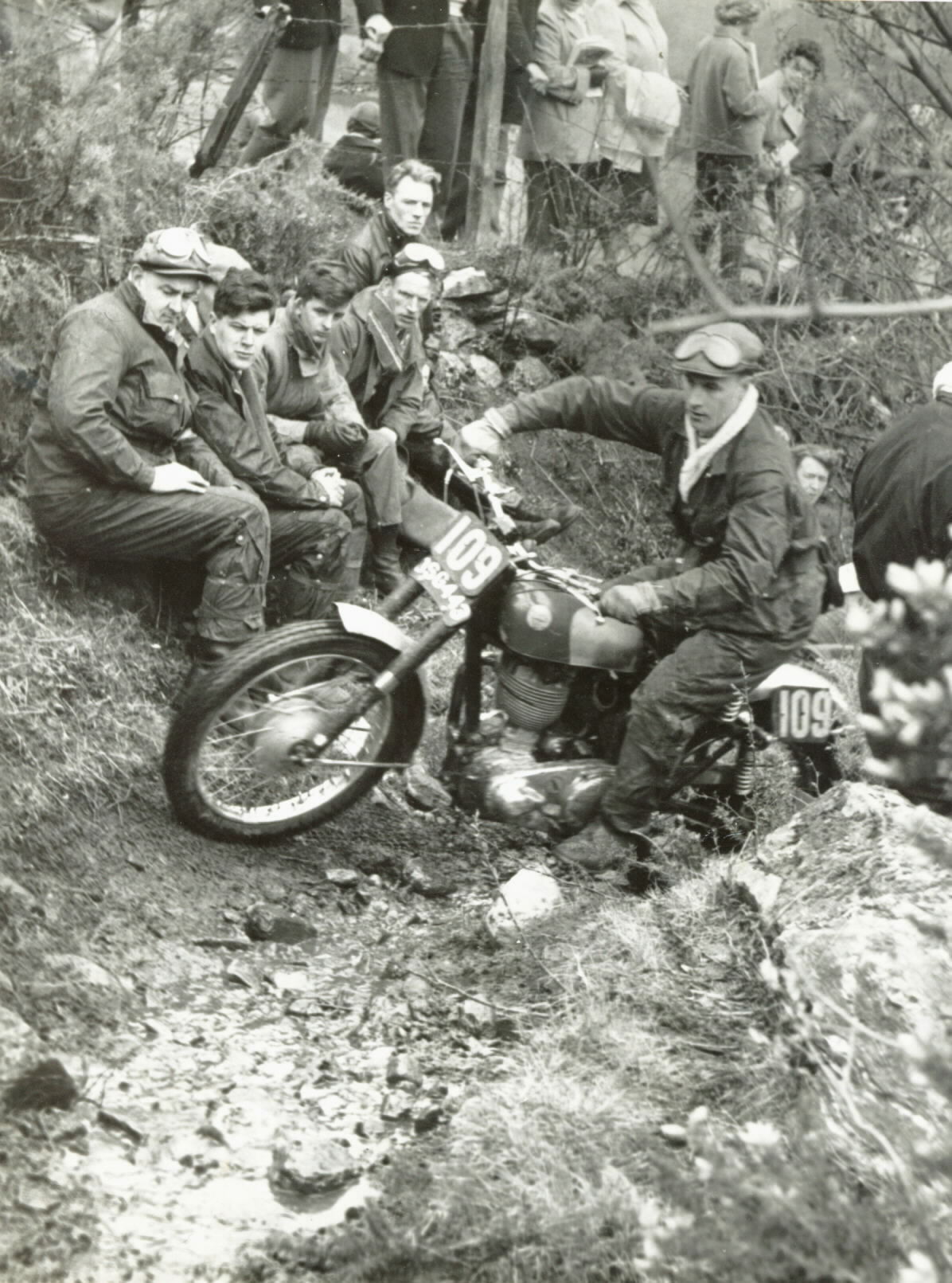
Jack Williamson in 1958 on his Ariel HT5 on Glenogle in the Scottish Six days. Williamson was three times Scottish champion (1962-1964).
The adventure getting to Medellin still wasn’t over. I didn’t know that Medellin was situated in the bottom of what was probably a extinct volcano. It was only a short journey but I didn’t realise how short.
The plane a DC10, took off and immediately went into a very steep climb then I could hear it throttling back. I looked out of the window and we were definitely losing height. Suddenly we dropped like a stone everybody screamed but not as loud as me. The reason for the sudden decent was that there were two white lines on the runway and if the plane hadn’t touched down between them there was a possibility that the pilot might not get the plane stopped before the end of the runway. In which case, his only option would be to try to take off again but there wouldn’t be sufficient runway left.
I am pleased to say that this information was kept from me. I enjoyed doing the schools but its the sort of thing that’s easier to do than write about especially when you are a rider and not a journalist. This was without a doubt the first school I had done with six armed guards to keep us safe. Fortunately we didn’t need them!
Press cutting from 1975 from a Venezuelan motorcycle paper showing Rob in action along with Bultaco development rider Manuel Soler.
Only the Venezuela school to go now and then I’m off home. The ride from the airport to Caracas was at night. It was very picturesque the hillsides were a mass of twinkling lights however in daylight it was a totally different picture.The hillsides were covered with people living in ramshackle wooden shacks and cardboard boxes. The flickering lights were their only form of light candles. Venezuela road racer Johnny Ceccoto had recently won the World 250cc Racing Championship, so the whole country was speed mad. Fortunately, the trials riders were keen to learn although sometimes it was difficult when the section became blocked with four or five motocross bikes whose riders thought they would have a go at the section for themselves. The top rider here was Amando Diaz who a few years later came over to ride the SSDT. Now I am off home and looking forward to some good old fashioned mud! – ROB
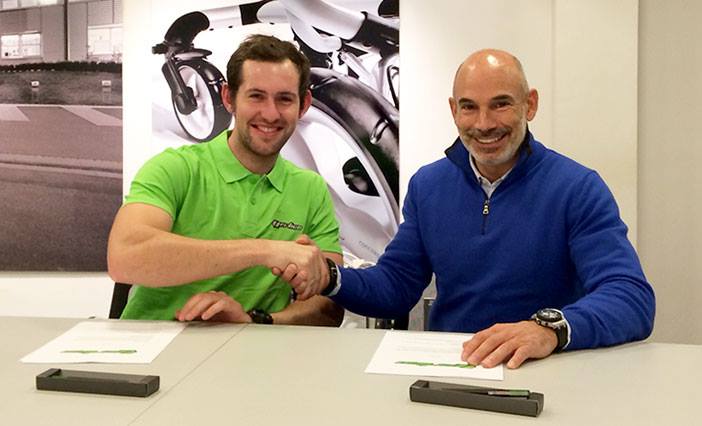
James Dabill (Left) with VERTIGO boss and super trial enthusiast, Manel Jane. Photo : Trial Magazine UK
VERTIGO SIGNS JAMES DABILL FOR 2015 / 2016 –
Vertigo Motors is delighted to announce the signing of James Dabill to ride their newly launched Combat Trial model with immediate effect from 1st December 2014 for a two-year period.
Dabill is the reigning British Champion – five times in total; ranked sixth in the 2014 FIM Trial World Championship and also finished fourth in the 2014 FIM X-Trial World Championship. Once again James will contest all three championships in 2015, plus other selected events including the Scottish Six Days Trial.
The new Vertigo rider will make his debut on the Spanish built bike at Sheffield Arena on Saturday 3rd January, which will mark the opening round of the 2015 FIM X-Trial World Championship. Vertigo Motors feel it is an important part of the on going development process, for their new Combat model to compete at the highest level in order to deliver the ultimate production version in due course. So aside from sporting success, the team will also be focused on further testing, evaluation and refinement of their prototype machines ahead of its general release.
Speaking about the signing, Vertigo Sports Team Manager Dougie Lampkin said. “We are extremely excited to have James (Dabill) joining us ready for next year. Obviously I know James very well and he is a rider who has a great level of talent. We will be looking to give him our full support to ensure that he achieves the results both he and Vertigo are looking for.”
Lampkin closed by saying. “Having James ride the Vertigo for the first time at Sheffield will be a special moment for us all who are involved in the project, and one we are all really looking forward to.” Dabill expressed his equal excitement about this new opportunity. “Firstly I would like to thank Beta for their support over the last four years. I have enjoyed my time with them, but felt now was the right moment for a change.”
‘To have the chance to work with Dougie (Lampkin) and the rest of the Vertigo team was not a chance I wanted to miss. It is a great project to be involved with and has already given me the fresh motivation I perhaps needed at this stage in my career.‘
“As a team we have got a lot of work to do, which is the same with any new bike, but the great news is that we have got a really experienced group of people who are ready to do what ever it takes to make sure we get to the level we are all looking for.”
Mick Andrews seen here on a 244cc Bultaco Sherpa Model 10 from 1966, supplied by Rickman Brothers, New Milton, Hants. Watching every move is Ralph Venables in the flat cap, the ‘doyen’ of trials journalists and reporters.
Words: John Moffat
Photos: Mike Rapley; Iain Lawrie; Iain C. Clark; Jimmy Young; Ferry Brouwer; Barry Robinson Estate; Claudio Pictures; Colin Bullock; Don Morley
Mick Andrews is a name synonymous with the sport of trials since the early 1960’s. He has ridden for AJS; James; Bultaco (Rickman Brothers, 1966); Ossa and Yamaha, in a career that has taken him all over the world both as a competitor and a brand ambassador.
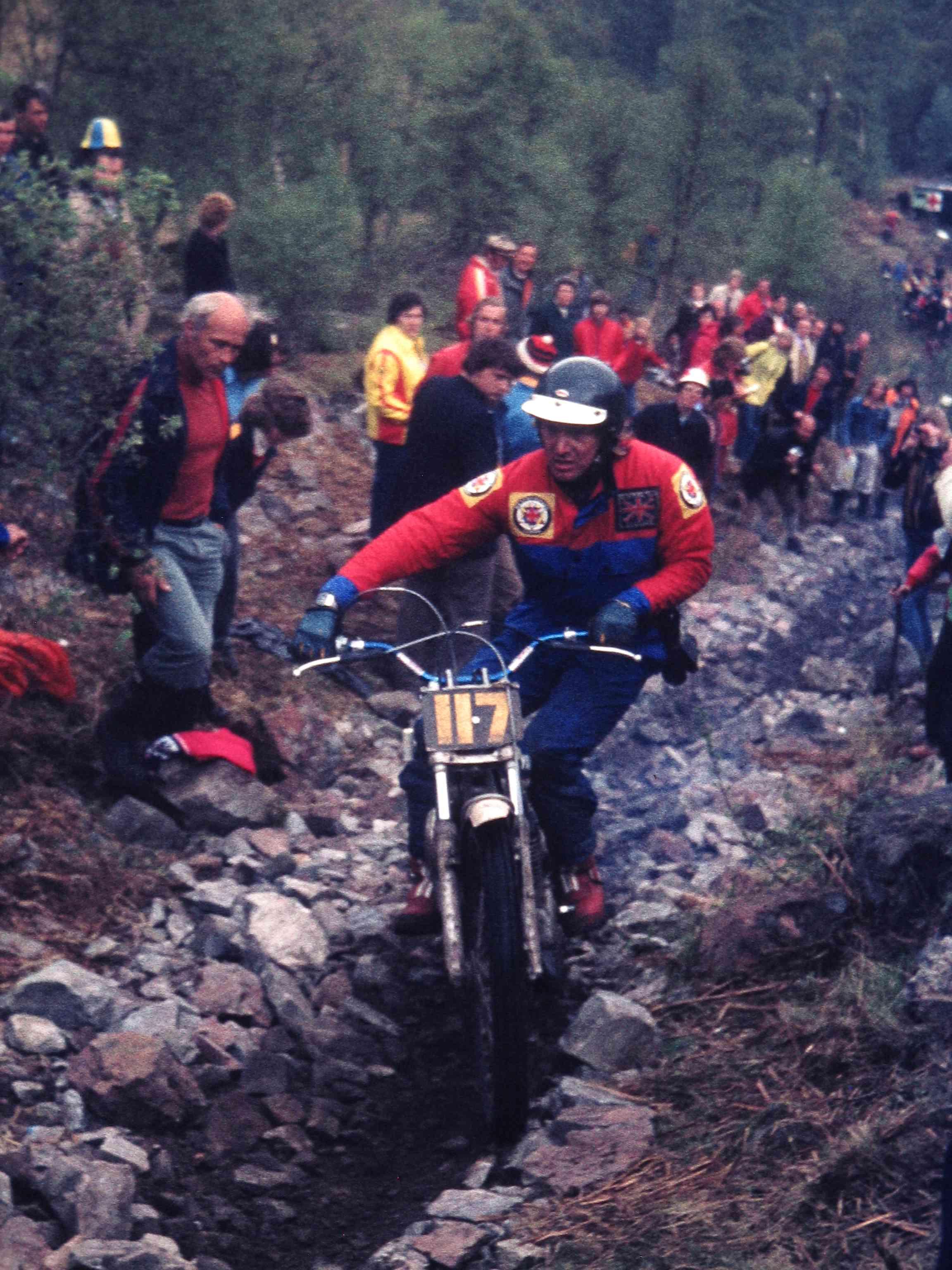
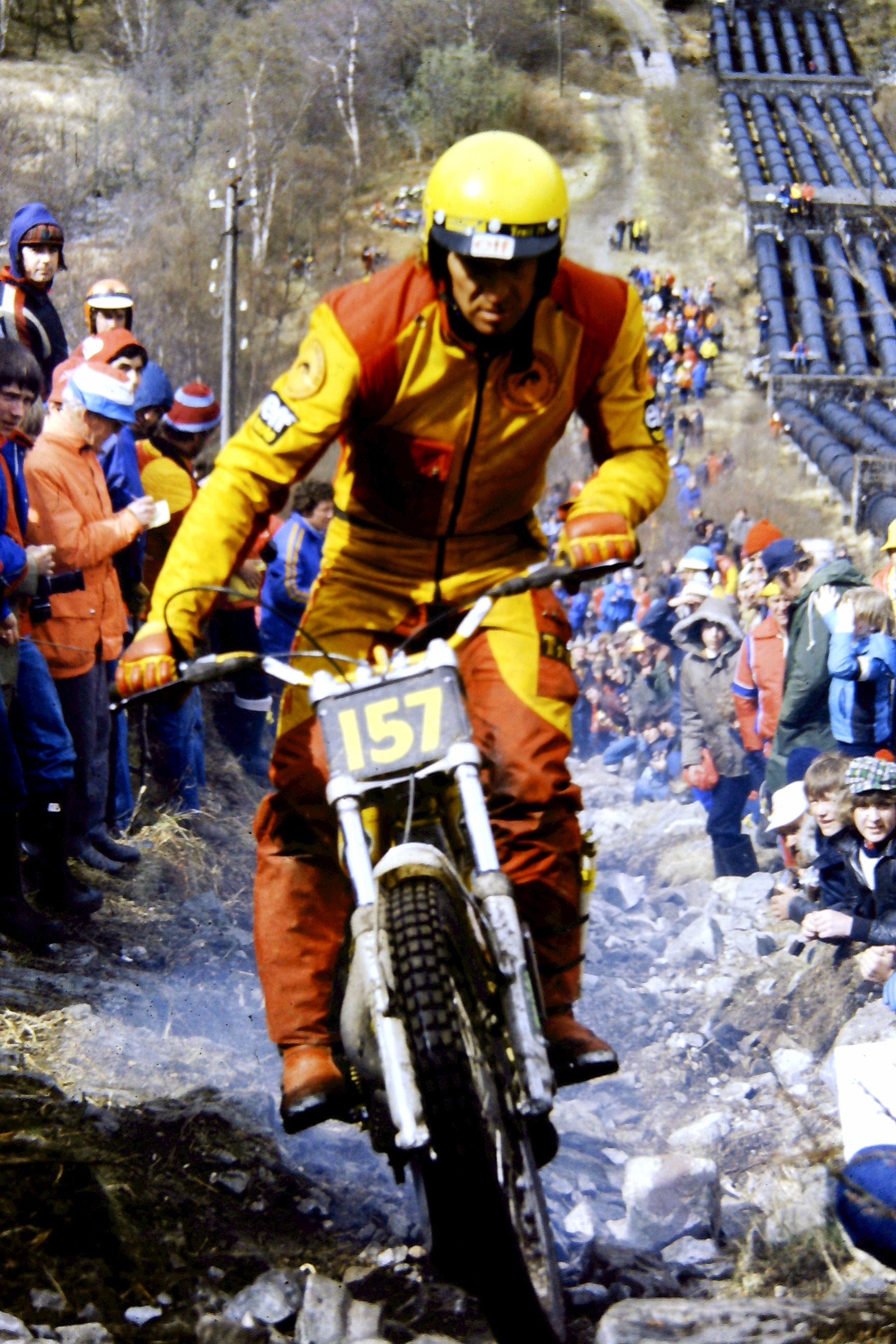
1976 SSDT – Mick Andrews (Yamaha) on ‘Pipeline’ – Photo: Bob Hosie.
Andrews was twice European Trials Champion in 1971 and again in 1972 on Ossa, before the official FIM World Championship commenced in 1975.
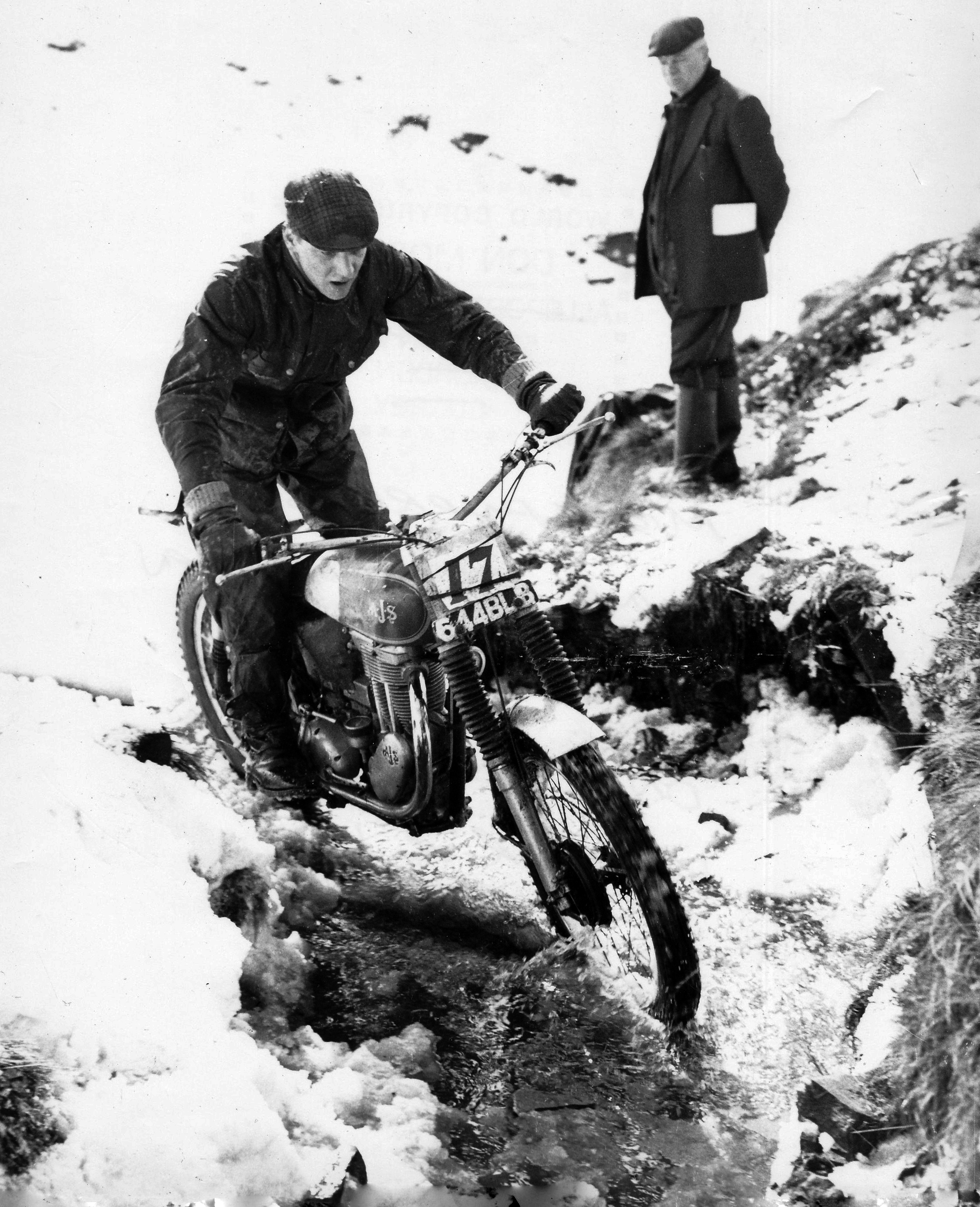
Nick-named ‘Magical Mick’ by the trials press many years ago and it stuck, he has won the famous Scottish Six Days Trial a total of 5 times, in fact he was only the second man in the events’ history to win it three times in succession, the first being B.H.M ‘Hugh’ Viney who was to become instrumental in Andrews riding for the AJS factory team in 1963, his AJS factory machine carried the index number 644BLB, registered as a 350 Matchless. Viney after retiring from active competition became AMC Competitions Manager.
Mick Andrews winning the 1963 Northern Experts on his factory AJS – Photo: DON MORLEY
Due to his SSDT successes, Mick was also dubbed ‘Monarch of the Glen’ after the famous oil painting by Sir Edwin Landseer by the motorcycle press of the day.
Journalist, Ralph Venables (see Trials Guru’s comments below) tipped Viney off about the young Andrews, whom he had been watching the progress of, closely. A phone call to Viney and that was good enough for Hugh!
Andrews began riding for AJS in 1963 and his first SSDT on the heavyweight four-stroke saw him bag a second place finish behind Arthur Lampkin on the factory BSA C15 (XON688). A feat he repeated in 1964, finishing runner-up to Sammy Miller on the 500cc Ariel. The next two years he finished third on the 250cc James (306AKV) and again on the Bultaco (DOT289D). In 1967 on the prototype Ossa Pennine (ORB222E), machine troubles forced him to retire, but he was back the next year and came home in third, and again in 1969, a second place.
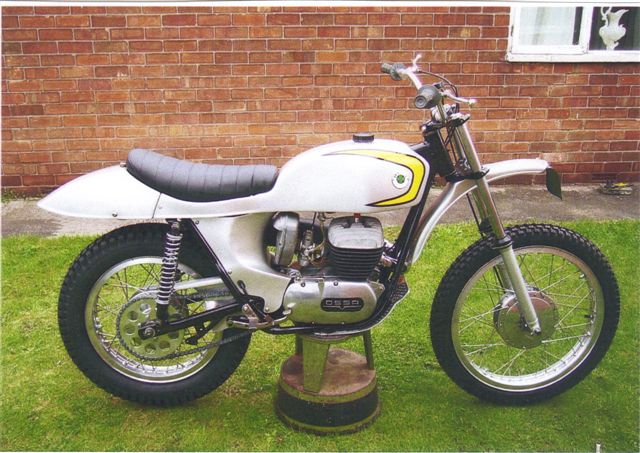
The Ossa Pennine of 1968/69, similar to the one ridden by Mick Andrews. This one is Ted Breffitt’s bike, now completely restored.
His first win in 1970 was on his factory prototype (Barcelona registered: B775073) sporting a much neater tank/seat combination, modified frame and overall a much trimmer package. This particular machine formed the basis for the production ‘Mick Andrews Replica’ (MAR) launched in 1971.
The announcement of the new ‘Mick Andrews Replica’ 250 in 1972 put OSSA on the trials map. Seen here in the SSDT with his prototype (B775073) on his way to win the 1971 SSDT. Brochure: OSSA Motorcycles
Mick also kept his hand in motocross for the Spanish company, racing a 230cc machine when time allowed. Coupled to this his selection for the British ISDT team on several occasions. He rode a factory prepared Ossa in 1970 at El Escorial, Madrid, Spain. For the British team he rode AJS in 1968 in Italy and a 504cc Cheney Triumph in the Isle of Man in 1971.
Repeating his SSDT successes the next two years, Mick wondered if it was time for a change. The Ossa trials machine had been developed only because of the death of Ossa factory road racer Santiago Herrero in the 250cc Lightweight TT in 1970. This saw Ossa pulling out of racing. Ossa, which stands for ‘Orpheo Sincronic Sociedad Anonima’ switched its focus to off-road development and trials in particular and Mick had signed for them in 1967 with the help of UK importer Eric Housely.
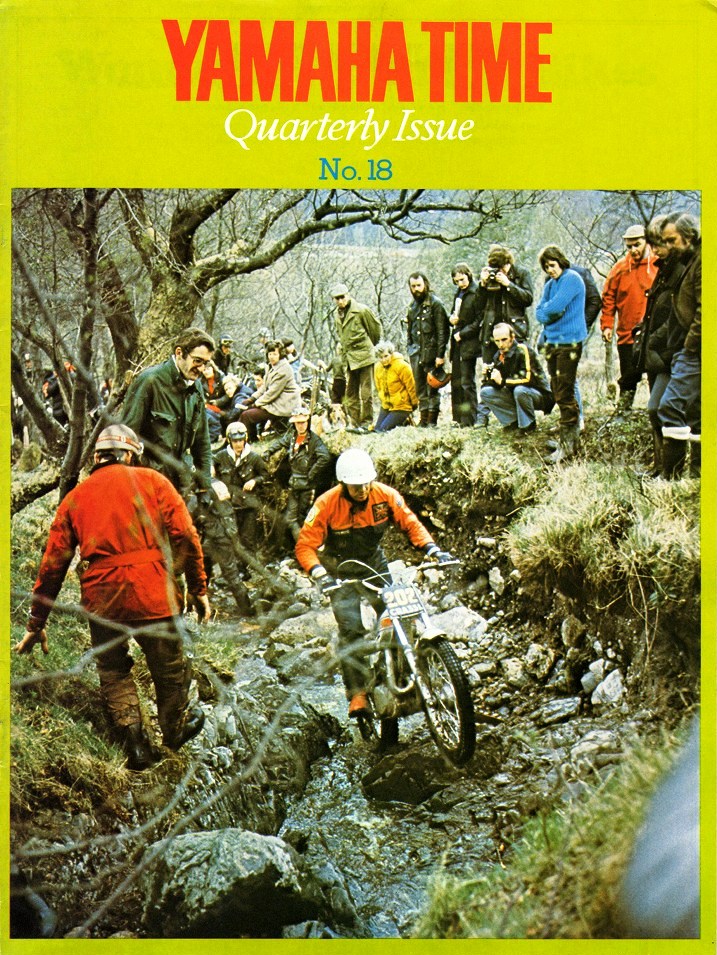
Yamaha announced the defection from Ossa in 1973. Andrews was to further develop the trials Yamaha that had been kicked off by Frenchman Christian Rayer, but it was not to be the TY (Trial Yamaha) style that Mick would be given. Factory ‘pure racing’ Yamahas were designated ‘0W’ and it was the Yamaha 0W series that Mick was to be given full reign of.
Watched by Nigel Birkett (Quinn Ossa); Mick on the factory Yamaha on his way to winning the 1974 Scottish Six Days. This is Loch Eild Path on another variant of the cantilever 0W10. – Photo credit: Yamaha Motor Co.
Yamaha’s European operation was called Yamaha Motor N.V., based in Amsterdam in the Netherlands where their race team was officially headquartered.
1973 – Mick Andrews on the YZT250 0W10 in front of his Dutch registered Ford Transit – Photo: Ferry Brouwer
Mick received full factory support and a contract which furnished him with Japanese technicians and a Ford Transit van, suitably liveried in Yamaha racing colours.
Yamaha mounted in the 1977 Scottish Six Days, seen here on ‘Altnafeadh’. This is one of the ‘0W’ series machines. This particular machine formed the basis for the ‘Majesty’ models (the word MA/JES/TY being: MA = Mick Andrews; JES = John E. Shirt; TY = Trial Yamaha) Photo: Iain C. Clark, Fort William
As confirmed by Ferry Brouwer, then Yamaha race technician to Phil Read and Tepi Lansivoiri, all factory contracted riders were supplied with Ford Transits, all Dutch registered and suitably sign-written with the riders’ name on the driver’s door. The enormity of Yamaha Motor Company was in stark comparison to the Spanish Ossa concern.
Surprisingly, all Andrew’s factory 0W’s were all road registered in the UK, a must for many of the national trials Mick undertook in that time period.
Much of the development work was undertaken at Mick’s home near Buxton, Derbyshire with new prototypes built in Japan and freighted over to Amsterdam for test sessions.
Mick Andrews back on Ossa at the 1979 Scottish Six Days Trial, seen here on Loch Eild Path – Photo copyright: Iain Lawrie, Kinlochleven
In 1979 Andrews once again rode for Ossa in the Scottish Six Days much to the delight of spectators.
Mick on the 350 Ossa at the SSDT in 1979. He came 9th position on 135 marks. Photo Copyright: Jimmy Young, Armadale.
Andrews also took young riders under his wing, including the Oakley brothers Nick and Peter. He also started his own ‘Trials Academy’ with the help of Yamaha, the first of it’s type in the UK. Called the ‘Mick Andrews Trials Association’ or MATA for short.
Mick Andrews on JGF729N in a hurry during the 1975 Scott Trial. Photo: Barry Robinson.
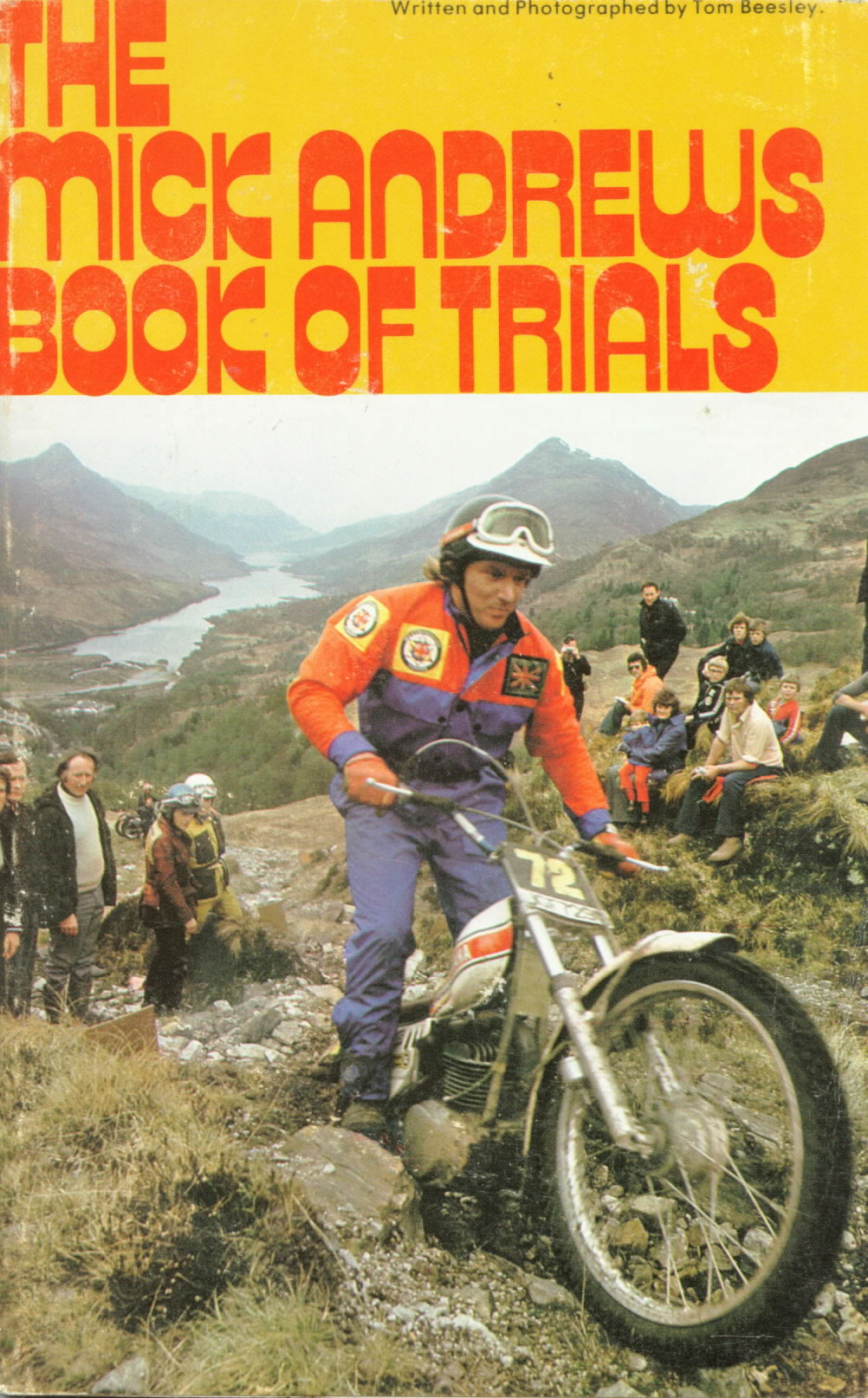
Mick’s bikes were ahead of their time in so far as Yamaha experimented with cantilever/mono shock suspension; fuel injection and reed valve induction systems. Much of the Yamaha development work is described in his 1976 book, ‘Mick Andrews Book of Trials’*, which has become a collector’s item with good copies fetching around £100 per copy.
1975 SSDT, Mick Andrews on his way to another win for Yamaha. The machine was JGF729N. The observer in the background is Scotsman, Simon Valente. Photo: Yamaha Motor Co.
Trials Guru on Andrews: I asked Mick when we were together in Robregordo in Spain 2006; did he ever have a job? He replied with a broad smile: “What, you mean an ordinary or proper job? – yes, I did have an apprenticeship to become a motor mechanic when I was sixteen, but then I received the offer of the AJS works ride and I only really had two employers after that, Ossa and Yamaha”.
Group photo, Spain 2006 – Left to Right: Jenny Tye; Jill Andrews (Mick’s wife); Jonathan Tye; John Moffat; Alejandra Cruz Sotomajor; Jean Moffat. Tye is a good friend and neighbour of Mick Andrews. – Photo: Escobe Baco, Madrid
Trials Guru on Ralph Venables: Before he passed away on 4th February 2003, I spoke to Ralph (pronounced Rafe) at length about his unofficial ‘scouting’ for trials talent. “If I see a rider who has promise, I kept an eye on him for some time, not just results, but his approach and style of riding”. “If I thought a rider had the necessary qualities, I would have an idea which manufacturer was looking for riders and I would simply phone the competitions manager and give them details.”
Ralph Venables had the ‘ears’ of all the factory comp managers and his opinion was highly-valued; such was his stature in the sport.
Venables: “I didn’t quite like Sammy Miller’s riding style; he always appeared to crouching over the handlebars compared to other riders of his era, but there again he amassed quite a substantial amount of wins in his career. It just goes to show that one can be incorrect occasionally!”
Ralph was a blunt individual and was quite cutting with his comments at times. This earned him the reputation in Scotland of being ‘the poison pen’ at times such were his comments on certain Scottish-born riders!
He once told me that I, “…wrote too much” and asked if I was being paid by the word! “John, why use ten words when one will suffice?” he quipped. “Read your scripts over twice and cut them down, time is short!” he informed me. I took his advice, when Ralph spoke, people were wise to listen.
I had the utmost respect for Ralph Venables, his knowledge of the sport and the people in it was endless. It was a privilege to have known him. – Trials Guru.
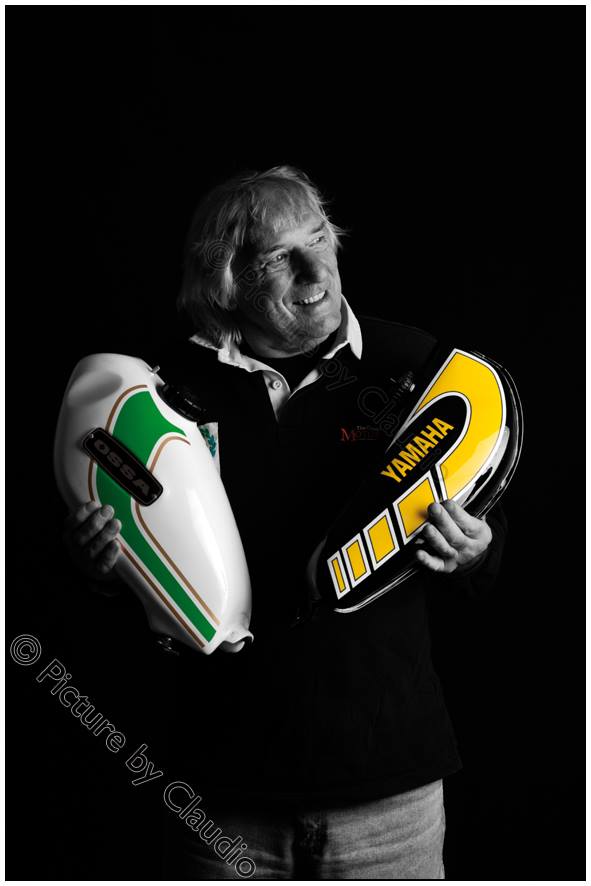
Study of Mick Andrews, former Ossa and Yamaha factory rider – Photo: Claudio Trial Pictures
References:
(*) – Mick Andrews Book of Trials by Tom Beesley & Mick Andrews (ISBN: 9780917856006) Published by: Trippe, Cox. – Now out of print.
front cover of Mick Andrews’ 1976 Book of Trials is now a sought after publication of trials memorabilia.
Rear cover of Mick Andrews’ book.
Mick Andrews on a 250 Gas Gas in the 2000 SSDT. Photo: Colin Bullock CJB Photographic
Mick Andrews (250 Ossa) on Pipeline in the 1978 Scottish Six Days Photo: Iain Lawrie, Kinlochleven.
Photos: Copyright of individual photographers
Mick Andrews Article: John Moffat – 2014 (All Rights reserved)
Apart from ‘Fair Dealing’ for the purpose of private study, research, criticism or review as permitted under the Copyright, Design and Patents Act, 1988, no part of any article may be copied, reproduced, stored in any form of retrieval system, electronic or otherwise or transmitted in any form or by any means, electronic, electrical, mechanical, optical, chemical, photocopying, recording or otherwise without the prior written permission of the author as stated above. All articles are not published for any monetary reward or monetisation, be that online or in print.
More information and reading on MICK ANDREWS:
on the RETROTRIALS website – A full interview with Magical Mick… Here
Video of Mick Andrews: Courtesy of Ferry Brouwer, Netherlands via YouTube
Apart from ‘Fair Dealing’ for the purpose of private study, research, criticism or review as permitted under the Copyright, Design and Patents Act, 1988, no part of this article may be copied, reproduced, stored in any form of retrieval system, electronic or otherwise or transmitted in any form or by any means, electronic, electrical, mechanical, optical, chemical, photocopying, recording or otherwise without the prior written permission of the author as stated above. This article is not being published for any monetary reward or monetisation, be that online or in print.
Hello everybody and once again thank you for the support you have given me since I began writing my account of life as a trials rider with Trials Guru.
I arrived home to find my new contract with Montesa waiting to be signed. No longer was Head Wrightsons my workplace, but the world of trials!
There was also a letter from Modesto Sole. He was the Director for Montesa International Sales, also I suppose, he was my boss.
The only time I could fault him was when he took me to a restaurant and ordered sheeps’ brains for himself. I was sat opposite having to watch him eat them. I politely declined an offer to try them!
After the meal, he told me that I would be doing around fifteen weeks of schools in various parts of the world.
The first was to be in South America. Starting in Chile to Columbia then Venezuela. This was to take six weeks.
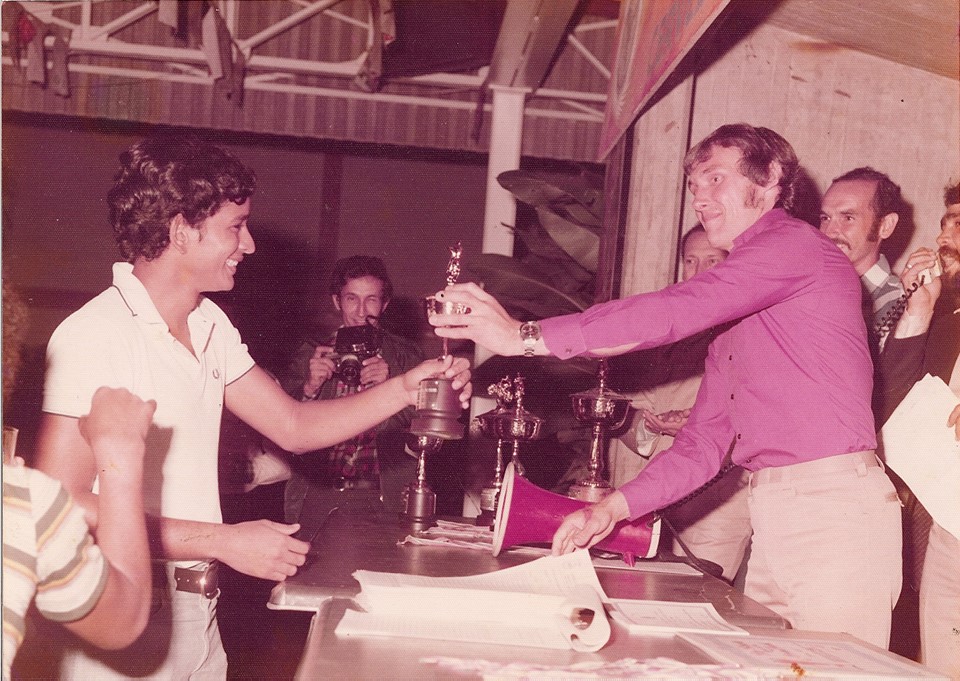
Venezuela. Rob hands out the silverware to happy pupil Guillermo Jesus Meza Hernandez at one of the many trials schools he undertook as part of his Montesa contract.
This was planned for October 1976, just in time to miss the cold weather at home. I arrived in Santiago and was taken to a cocktail party organised by the local motor club.
Everybody was friendly except one person. I was later to find out he was the touring car champ of Chile. He came up to me and said: “…if you are so flippin good come to my garage tomorrow and ride over my car”. His car was a mini, so I thought with low profile tyres lowered suspension etc it would be no problem.
I arrived at his garage to find that the touring cars had to be absolutely standard. Not only that they had hydro-lastic suspension. The driver had invited all his pals and they were doubled up laughing. This made me more determined to do it. Once on top of the car I breathed a big sigh of relief.
My next stop was Columbia. I landed in Bogata and was due to change planes to Medellin. Unfortunately my flight was one hour late. The next flight was in 23 hours time.
My journey had started in Spain so the only currency I had was pesetas because there were no flights from Bogata to Spain they would not change my pesetas. I was sat in the quietest airport I had ever been in and worse than that I was stuck here for the next 23 hours!
There was about four guards with rifles and what may have been National dress. One came up to me he was quite helpful.
“You no go sleep” he quipped. So, laughing I said possibly steal my luggage eh! “No” he said, “first” he said, drawing a line with his fingers across his throat “then steal your luggage”. That really cheered me up! Shortly after the soldier returned with a person who I can best describe as a ‘Jack the lad’ (not the sort of person you would trust usually)
“You want hotel?”, “yes please” I said and explained my predicament. “No problem” he replied “Pesatas? – okay follow me”. We set off out of the airport and the soldier gave me a reassuring thumbs up.
My new ‘friend’ was holding the back doors of a Toyota van open telling me to get in. As the doors were closed I thought oh well what have I got to loose only my life – Help! “I will pick you up at 8.30 tomorrow morning” he shouted as he left. I couldn’t believe it when at 8.30am prompt he was there to pick me up. His fee was 1000 pesetas! You live and learn! – Rob
Trials Guru: Rob Edwards was competing week in week out with Montesa.
Rob on Altnafeadh in the 1973 SSDT on the Cota 247 with the Buachaille Etive Mor in the background. He finished in eighth position on 89 marks. Photo: Brian Nichols – Copyright: Mortons Motorcycle Media.
The Cota model was being constantly developed and in 1975 was increased to 310cc with the in-coming model ‘348 prototype’ first seen in the hands of Spaniard Francisco Paya, which was later to become the production Malcolm Rathmell Replica/348 models.
1974 saw Rob pick up the Alfred Scott trophy when he was victorious in the Scott Trial, more on that later, but here is a photo taken at the Kings’ Head Hotel, Richmond at the presentation of awards.
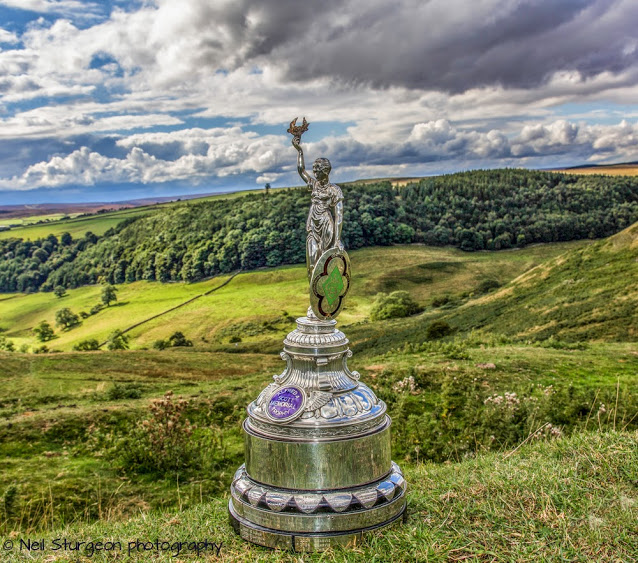
1974 – Rob enjoys a well deserved pint, holding the Alfred A. Scott Memorial Trophy, being given a congratulatory hug from Malcolm Rathmell’s mother, Marjorie.
Rob Shepherd (centre) with his newly acquired Montesa 4RT Repsol 260. With Richard Thorpe (PJ1) and Craig Holmes of Craigs Motorcycles. – Photo Copyright: Barry Robinson.
Former British Trials Champion (1977) and factory Honda rider, Rob Shepherd is making a comeback to trials with a machine that he was associated back in the seventies. Honda powered four-stroke power. ‘Shep’ a Yorkshire farmer has been practising constantly with a Drayton BSA Bantam which he hopes to ride in Pre’65 events next season. He was particularly taken with the Montesa 4RT. Shepherd rode for Montesa back in the early seventies with Rob Edwards, before switching to Honda UK Trials Team with Brian Higgins and Nick Jefferies, managed by Sammy Miller.
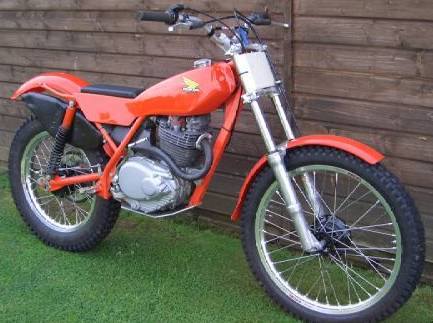
The Honda RTL300 (short-Stroke) similar to the model ridden by Rob Shepherd. This is Nick Jefferies machine, now owned by a French Trial enthusiast. Photo Copyright: Heath Brindley, Bristol.
According to Rob’s younger brother Norman, also a very competent rider on a Bultaco, Rob has worn the rear tyre of the Bantam to ‘slick’ proportions. He told Trials Guru at the recent Scott Re-Union: “He’s never off the thing, he’s worn the knobbles off the rear tyre”.
In the 1990’s enthusiasts began building ‘Shepherd Replica’ Hondas. Here is a Honda trials TL250 motor bored to 305cc installed in a Jim Susans (Bikecraft) frame. Photo: MoffatRacing Archive.
Rob Shepherd has been out of the sport since 1983 when he last rode it was an Appleyard 340 Bultaco in 1982/83 and a Majesty Yamaha in 1981.
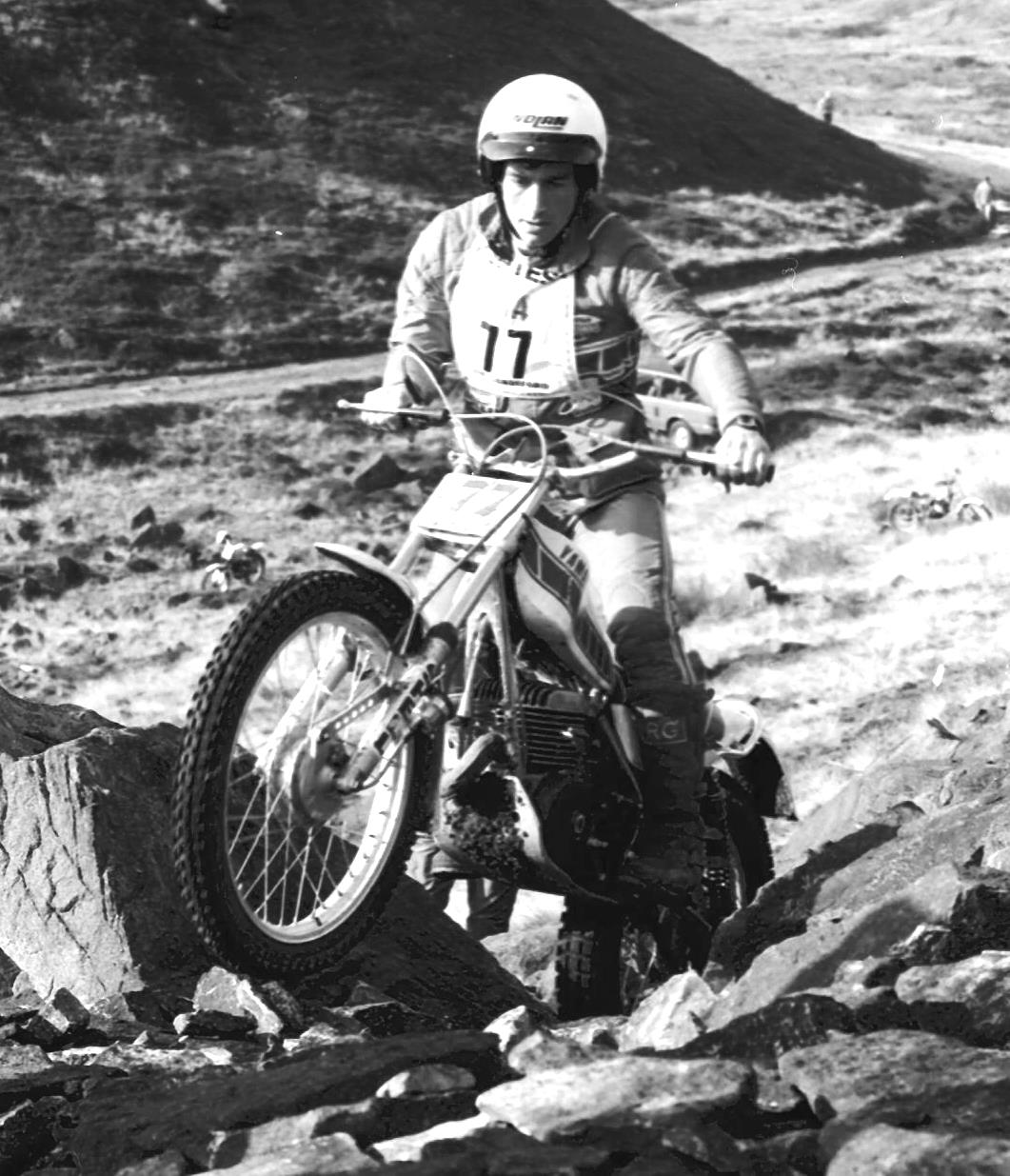
Rob Shepherd in 1981 on a Majesty Yamaha 320 at the Red Rose Trial. Photo: Barry Robinson
Rob Shepherd 1982, Appleyard Bultaco 340 mounted for the Wetherby Bottle Trial. Photo: Barry Robinson.
Our next port of call was in Kansas at the home of ‘Wick’ and Marilyn Wicker. Like everybody we had met along our route, they gave us a fantastic welcome and really made us feel at home. The area where the school and trial was held was a bit on the dangerous side. All the trees were covered in thorns. “So what?” I hear you say.
These thorns were American! Everything is big in the USA, they were about 125mm long. I wondered at the end of the week if the trees would be festooned with trials riders impaled on them? It’s the only place I have been to where the riders use tyre weld as the thorns could pierce a trials tyre with ease.
1972 letter received from Javier Burgos based in Los Angeles, California. This followed the USA tour that Rob undertook for Montesa Motorcycles.
Fortunately, we had no casualties and after saying our goodbyes, we set off towards Michigan. Unfortunately on route, the van developed a ticking noise and soon after the engine blew. We were towed to a garage where we were given a choice wait a couple of days and they would fit a new engine, or swap everything into a Ryder truck rental van and continue in that. We took one look into the rental van and the decision was unanimous, wait two days.
From Michigan we headed for Rhode Island for our final school and trial. The school went very well and so did the trial. The event that was put on by the Rhode Island Motorcycle Club was really good and by winning it, I had won every trial during our trip. More important than that, Jordi and myself had put a lot of effort into the schools. We gave each other a slap on the back for a job well done. After six weeks, we had become really good friends and despite the language barrier we never stopped talking! Thanks Jordi Permanyer for your help and support. – Rob
The late Marilyn & Norval E. ‘Wick’ Wicker – North American Trials Enthusiasts – Photo courtesy of North American Trials Council.
Trials Guru: Ron mentions Norval E. ‘Wick’ Wicker and his wife, Marilyn were trials enthusiasts who made the annual pilgrimage to the Scottish Six Days to be official Observers at the event. Wick, was a commercial airline pilot by profession. The event and school Rob talks about was organised by The ‘Liberty Missouri Chargers MC’.
The Wickers officiated at the Scottish Six Days from 1973 until 1996. The Wickers were the first non -British observers at the annual ‘Sporting Holiday in the Scottish Highlands’.
In 1988, they became the first non-British nationals to be granted Honorary Life Membership of the of the organising Edinburgh & District Motor Club Ltd.
The Wickers were also inducted into the North American Trials Council ‘Hall of Fame’ for their significant contribution to the sport of trials.
Sadly ‘Wick’ left us on 2003, aged 76 years and Marilyn passed away ten years later aged 84.
To be continued …
Acknowledgements:
Mototrials.com – the website of the North American Trials Council.
Hello everybody! I am both amazed and thrilled at the response you have given to my story. John ‘GURU’ Moffat has been working flat out, because I was so busy around this time in my life, I didn’t have time to record what I had achieved or where I had achieved it!
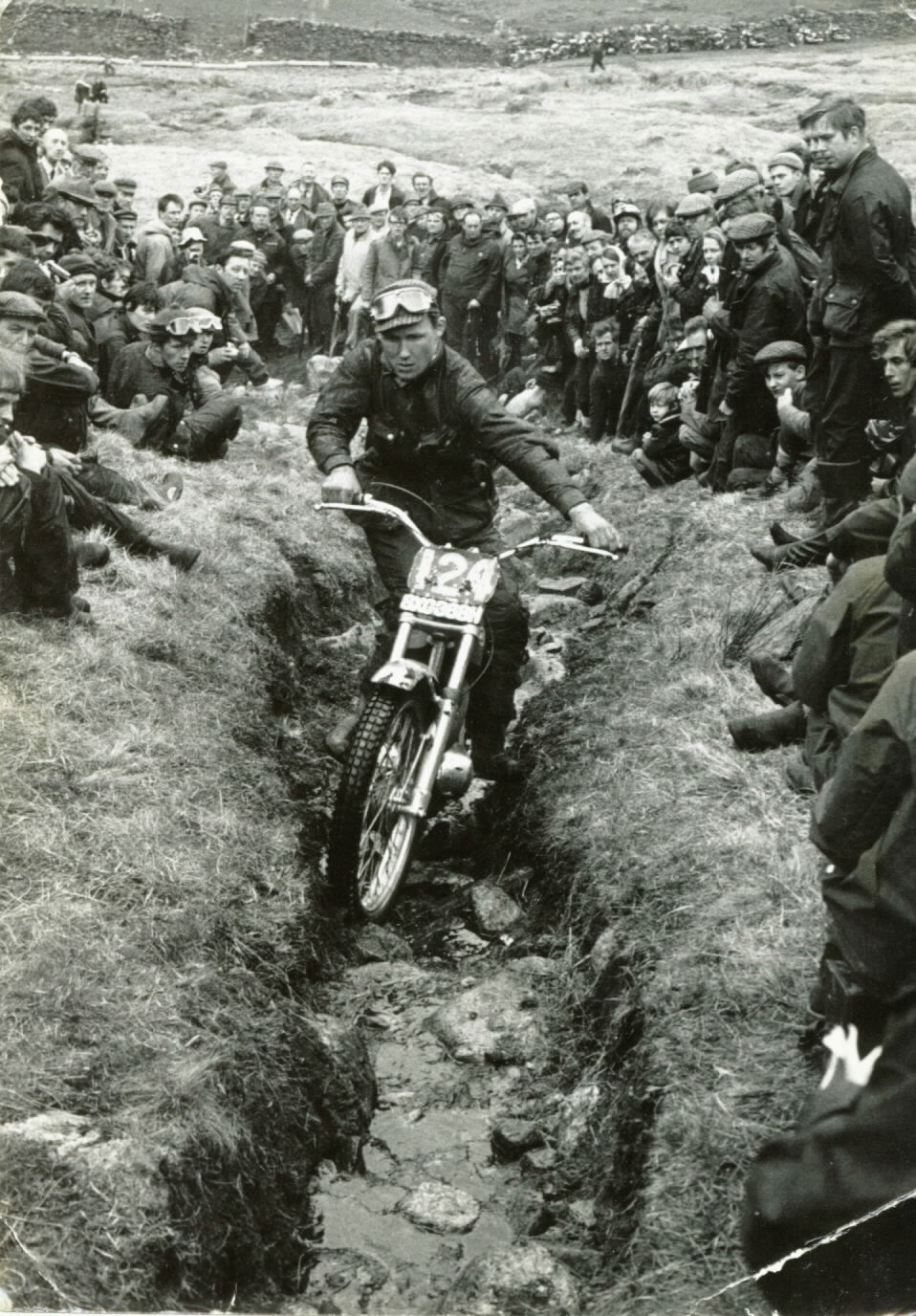
John has been super-busy wading through old magazines, programmes and his knowledge, to match the number on my bike to a particular event. For example in 1970, I was number 124 in the Scottish Six Days etc etc. Well done John and thank you very much! And now I see it’s in Spanish, thanks to co-operation between John Moffat and his friend Horacio San Martin of Todotrial.
Rob in the 1970 Scottish on Ben Nevis, on the Montesa Cota Mk2 near Achintee Farm. We have run the magnifying glass over this and we spot: Jimmy Morton; John Hemingway; Rodger Mount Snr Ralph Venables; Bert Thorn and a young Boyd Webster Snr in the gallery. We wonder if you are in that crowd? Click on the photo to make it a bit bigger to see.
Now on with my story… I teamed up with Jordi Permanyer in Los Angelese at the Montesa distribution depot. It was here I met Javier Burgos who ran this department and whose idea it was to make this trip. He took us to look at our transport for the next few weeks. It was a Dodge van with aircraft seats auto-transmission, air-con and so on and so on. The next day we set off north. Our 1972 trip was finally under way. Everywhere was so different to home. It was warm and pleasant, my life had changed direction in a way I could never have imagined or dreamed of. Our route was pre-planned and at each destination, the people were so pleased to see us. It was a real pleasure to work with them.
1971 Montesa Cota 247 the same model as ridden by Rob for the factory. Photo by Owner: Javier Cruz, Madrid.
On arrival the first thing they wanted to know was “Have you been beaten yet at one of the schools in the Salt Lake City area?”. I said: “no not yet”, “well you will here” they said. We were in an old sand quarry that looked like a great place for a school. All the time, I was bombarded with people telling me how good Donny is. Most of the moveable sand had gone, leaving an apple core shaped column with a telegraph pole in the centre. “See that? Rob Donny can go up there!”. This is the sort of thing you dread.
It was possible but the apple core shape meant if you didn’t get onto the top there was a good chance of the bike falling onto you and causing serious damage. I wasn’t so much worried about that, as if things went wrong the rest of our trip would have to be cancelled. I got onto my bike hoping to get it warmed up and then go for it. I decided “right go for it”.
Big steps were never my speciality. I hit it as hard as I could in second and I got up it. I don’t know who was more surprised, me or the crowd! I inched the bike around the telegraph pole, getting down was trickier than I had thought. It was too high to jump off so I eased the front wheel over the edge but when the sump banged on the edge it kicked the back wheel up. By now I was decending fast and for one moment I thought I was going into a forward roll. I managed to land safely and suddenly I was everybody’s hero. Jordi looked relieved. The next thing to happen was Donny arrived. We will never know what went wrong but he did exactly what I was desperate to avoid his front wheel kicked back. Donny landed first, closely followed by his bike and the end result was a broken leg. Oh well, that was that then! – Rob
1971 – Scottish – Rob finished in sixth position. Seen here on Garbh Bheinn. Notable spectators are Monty Banks on the left with goggles and Dave Rowland on the right. Rob was very friendly with Rowland and held him in high regard as a rider and a person.
Trials Guru: Rob was by 1970 a true ambassador for the Montesa brand. He was traveling the USA and getting a great reception from the trials riders, who had read about Rob in motorcycle newspapers and magazines. Remember, this was in the period before the rise of Lane Leavitt, Martin Belair and of course Bernie Schreiber. But there was raw trials talent in the USA, that was to be proven later.
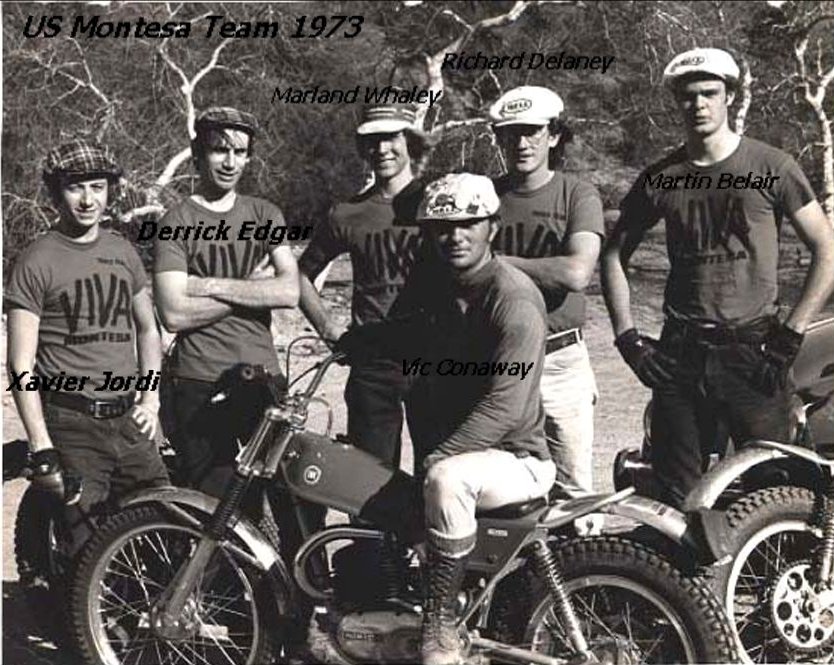
The Montesa USA Team benefited from Rob’s teachings in the early 1970’s – 1973 Montesa Team USA – Left to Right: Xavier Jordi; Derek Edgar (Scotland); Marland Whaley; Richard Delaney; Martin Belair; Vic Conway (Front) – Photo Courtesy: Martin Belair.




















 TRIALS GURU - DEDICATED TO TRIAL