Tag Archives: Greeves

The Mysterious STAG

Researched and written by Trials Guru’s John Moffat in 2021, we discover the story of Don Smith’s contract breaking STAG MK1.

Words: John Moffat/Trials Guru

Photos: Mike Watts; Bob May; OffRoad Archive; Don Smith Family Collection

Additional Information on Don Smith: Amanda Lazenby

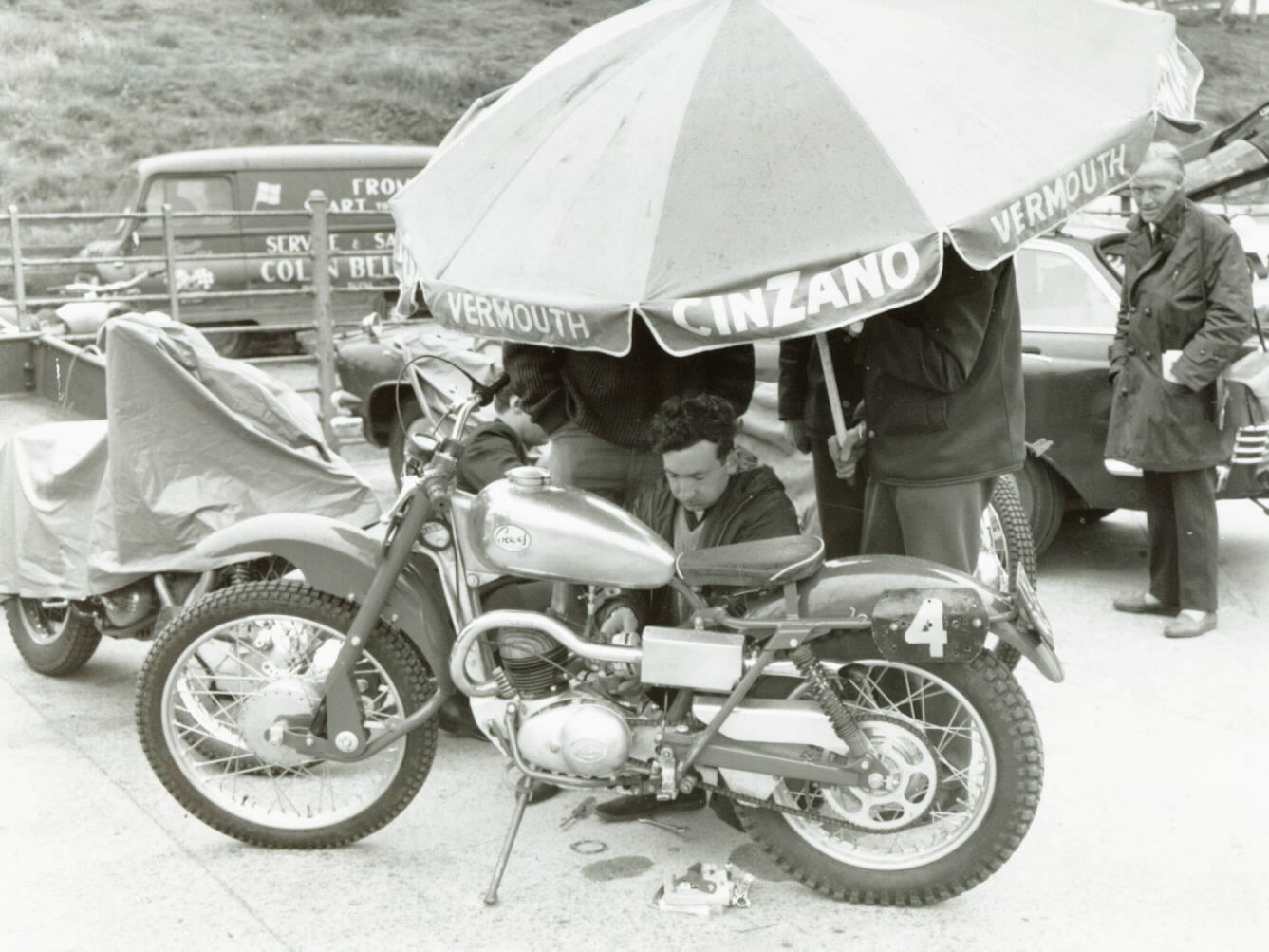
Don Smith with his creation The STAG MK1 at Edinburgh’s Gorgie Market on 3rd May 1970 – Photo courtesy of Don Smith Family Collection.

As an enthusiastic schoolboy, John Moffat attended the Scottish Six Days Trial 1970 for the first time. There was always a buzz of excitement at the opening ‘weigh-in’ at Edinburgh’s Gorgie Market, with the flurry of activity with riders and mechanics making last minute changes and adjustments to their machines. There was one such machine that was unveiled to the trial’s community on 3rd May, it captivated many people that day.

The Monarch of the Glen is an oil-on-canvas painting of a red deer stag completed in 1851 by the English painter, Sir Edwin Landseer.

The stag in the painting is classed as a ‘royal stag’ due to having twelve points or ‘tines’ to its antlers, to be a ‘monarch stag’ it would have had to sport sixteen points, so, in reality, is flawed.

That did not stop copies being sold and advertising budgets spent on the copyright to use the image on shortbread tins, the world over.

The stag we are going to describe is somewhat different to the famous piece of art revered since the 1800s, one which was never copied nor produced in numbers for sale. In fact, only one such example ever existed, the STAG MK1 – and it still does!

Greeves, Great Britain:

Don Smith (252 Greeves) negotiates ‘Glen Ogle’ on the first day of the Scottish Six Days Trial – Photo: OffRoad Archive.

Donald Roland Smith, or ‘D.R.’ to his many friends, was a development rider who came to the notice of Thundersley based Greeves motorcycles in 1960 and who switched camps in late 1967 to join the Spanish Montesa trials effort to front the development of their new Cota trials mount.

Don Smith had an uneasy relationship with Bert Greeves, and it is safe to say he did not agree with the Greeves strategy to remain faithful to the alloy beam frame design that made the Thundersley products unique.

With Greeves, Smith won the European Trials Championship in 1964 and 1967. Smith won ten consecutive internationals and British national trials, which included the Hoad Trophies, Perce Simon, Cotswold Cup, John Douglas, Mitchell, and Beggar’s Roost.

Don had however tried his best to convince the directors at Greeves to create a new and up-to-date machine; he even offered to do it himself.

To his delight they eventually gave him the go ahead, but they pulled their permissions at the very last minute.

Feeling rejected, that was the last straw for Smith, so he handed in his resignation. After leaving Greeves he bought a production 250cc Bultaco in September 1967, registered as SGH4F and rode it privately in ten events.

He gained seven firsts, one second and a hard-fought third.

Permanyer S.A. :

Don Smith at the final machine examination of the SSDT at Blackford Hill, Edinburgh in 1969 – Photo: Bob May, Edinburgh

The motorcycling press had a ‘field day’ reporting on Smith’s solid results on the model 27 Bultaco Sherpa and when they commented that he was not linked to any factory, this probably spurred on the Montesa management to invite him to join them to assist in the design and development of their new Cota model.

Don decided that he would contact the then British Montesa importer, John Brise at Montala Motors Ltd, based at Crayford in Kent, but he was not just going to give the benefit of his fifteen years of challenging work and experience for free, he wanted a proper contract.

It was a case of no fee, no opinion, no advice.

He had a test ride on the machine and Brise asked for Don’s feedback, but before Smith had even finished his first sentence, Brise had his pen and paper ready for notetaking.

Smith told him that he must be kidding and until they had discussed a contract, he was not speaking another word, so a contract was drawn up and signed by both parties.

The Montesa Cota, designed to challenge the well-established Bultaco Sherpa, was to be a more traditional frame design than the Greeves models that Smith had campaigned for years, but had many modern innovative features such as the one-piece tank/seat unit in glass reinforced plastic, a single downtube tubular cradle frame and novel features such as a chain lubricator built into the swinging arm. The Cota engine had a softer power delivery than its main rival, the Sherpa.

Defection beckons:

Don Smith was to campaign the Montesa Cota for three seasons, starting with his UK registered Cota MK1 ‘UMV10F’ from 1968, securing a third place at the Scottish Six Days and winning the European Trials Championship for them in 1969, but he was concerned that he would eventually become frustrated if his ideas were ignored by the Esplugues, Barcelona factory.

Don Smith was known the world over, evidenced by this North American Montesa advert from 1969. The advert refers to World Champion, whereas the title was actually European Champion.

He had also recognised that the mighty Japanese factories were taking a keen interest in trials as a new sales market. Understanding the politics of the sport and the manufacturers, this caused Smith to think carefully about his future in the game, given that a new dawn in trials was emerging.

Smith’s decision to wriggle free of his Montesa factory contract was ensured by Don building his own machine, the STAG MK1 in late 1969. This would enable him to keep riding and develop his own ideas on his own machine without any factory involvement, he was a free agent. Unfortunately, his retail business Don Smith Motorcycles Ltd in Winchester Road, Highams Park, Chingford, North East London which he founded in 1960, was faltering and his fortunes were understandably at a low ebb.

The STAG MK1 is born:
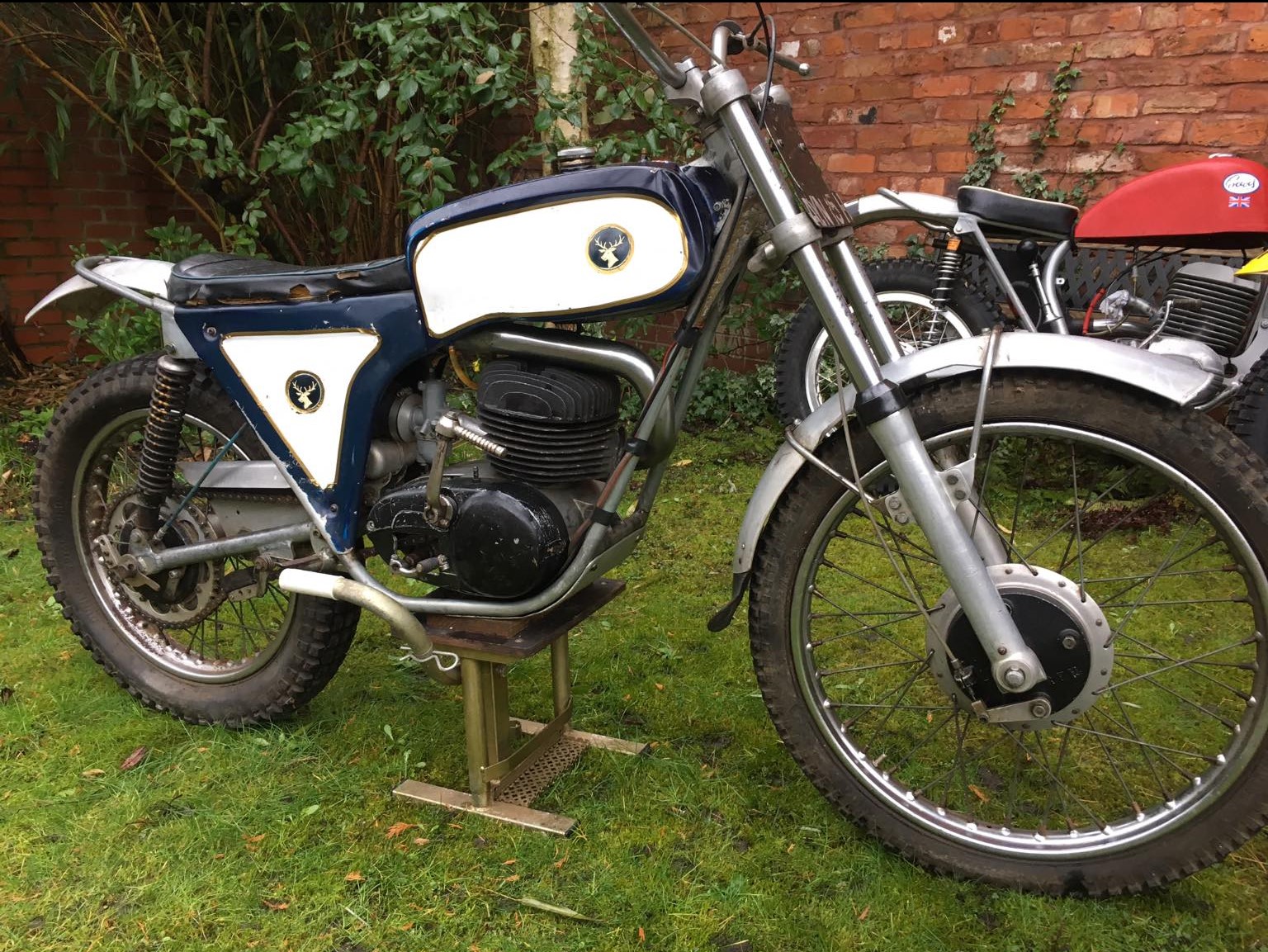
Photo: Mike Watts

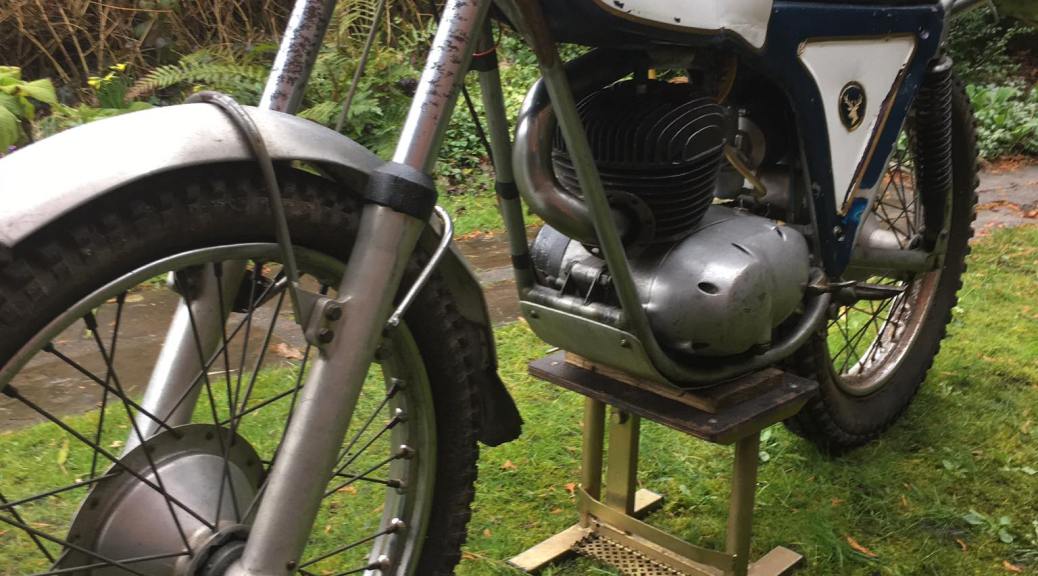
Built as a development machine to evaluate and promote Smith’s ideas on machine design, the STAG MK1 was registered AYN15H, taxed in January 1970 at Greater London licencing office as a ‘STAG’, colour blue, and engine size of 247cc.

The STAG’s wide spaced twin downtube cradle frame, necessary to accommodate the Montesa motor, which had an offset exhaust port, was plated in matt finish nickel for a durable finish and looked resplendent when Smith weighed the machine in for the 1970 Scottish Six Days Trial, which was its first public appearance on the 3rd of May.

The knowledgeable enthusiasts who surrounded Smith’s machine at Edinburgh’s Gorgie Market noted that the engine was in fact a standard Montesa Cota 247cc unit with the large ‘M’ symbol having been machined off the outer clutch and ignition casings.
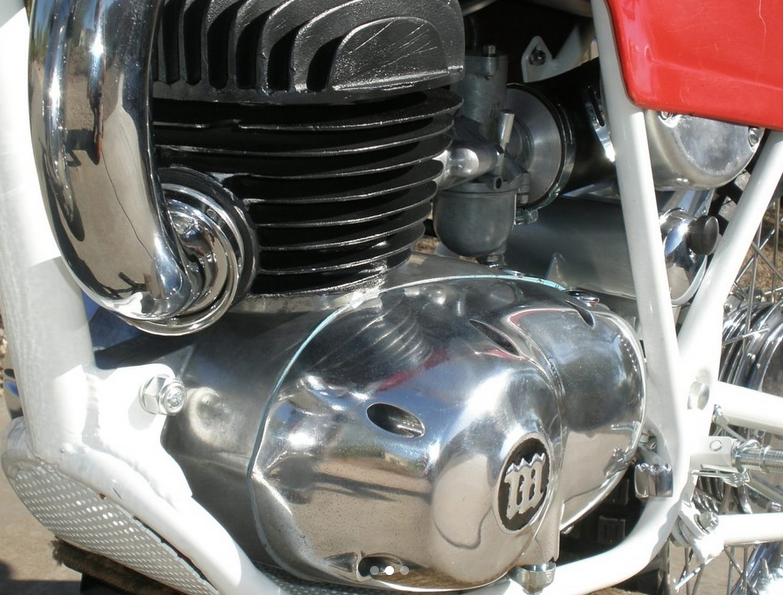
The Montesa Cota 247 engine of the type used to power Don Smith’s STAG MK1.

The talk of Gorgie Market that day was: “Looks like Don Smith has fallen out with Montesa.”

Full Specification:

But it was not a Montesa they were looking at, far from it. The ever extrovert Smith was keen to show off his handiwork.

Front suspension was taken care of by a set of Robin Humphries manufactured REH forks, yokes, and front hub, with a matching rear hub of conical design. The Ron Goodfellow built ‘Saracen’ of the period also used this same set up, as did the motocross version of Pete Edmondson’s ‘Dalesman’ which used the same front-end arrangement but used a Puch rear hub assembly.
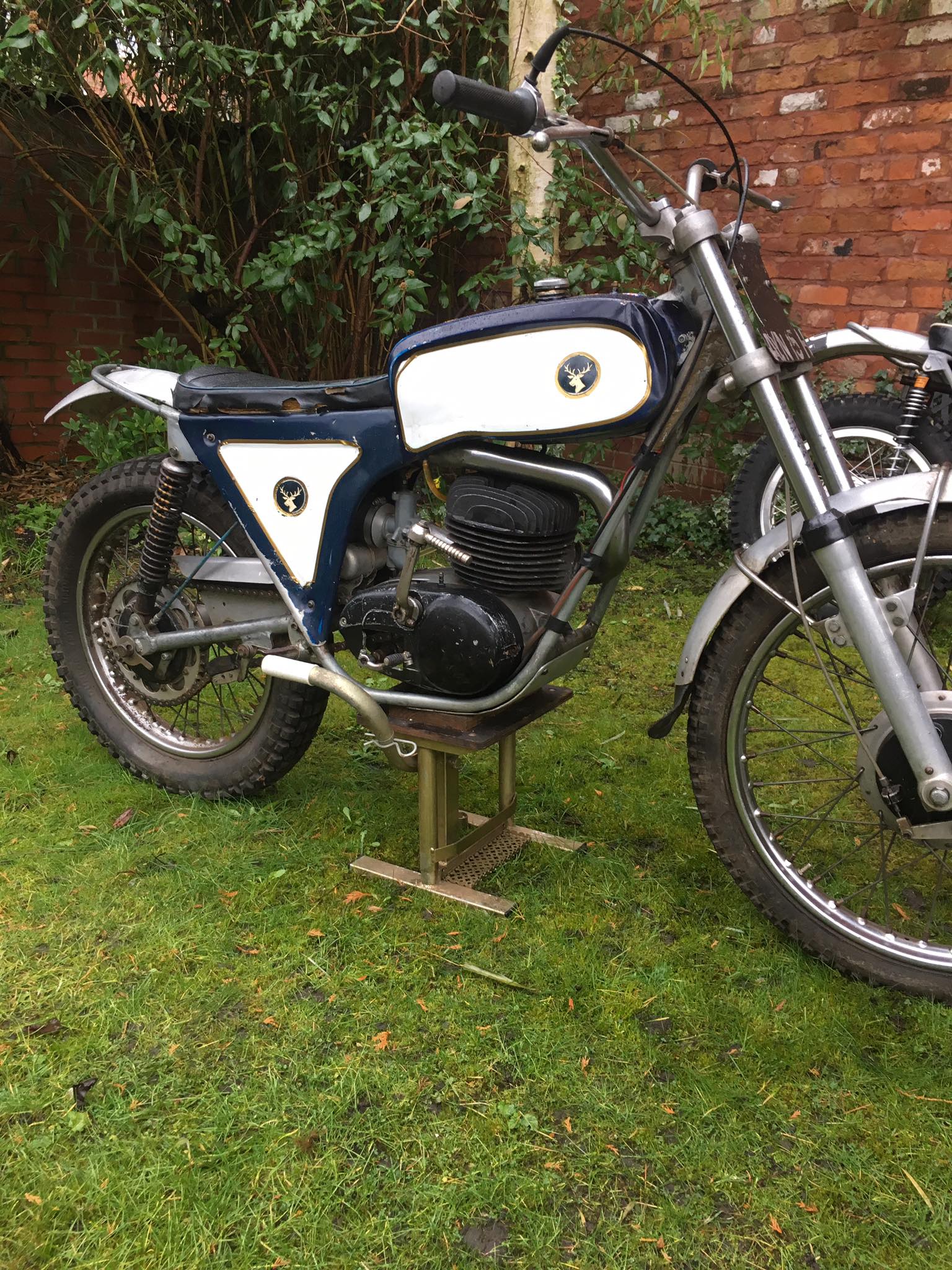
Photo: Mike Watts

Wheel rims were ‘Dunlop’ chrome plated steel components front and rear, shod with Dunlop Trials Universal tyres, 4.00×18 rear and 2.75×21 front, the standard fitment of that time.
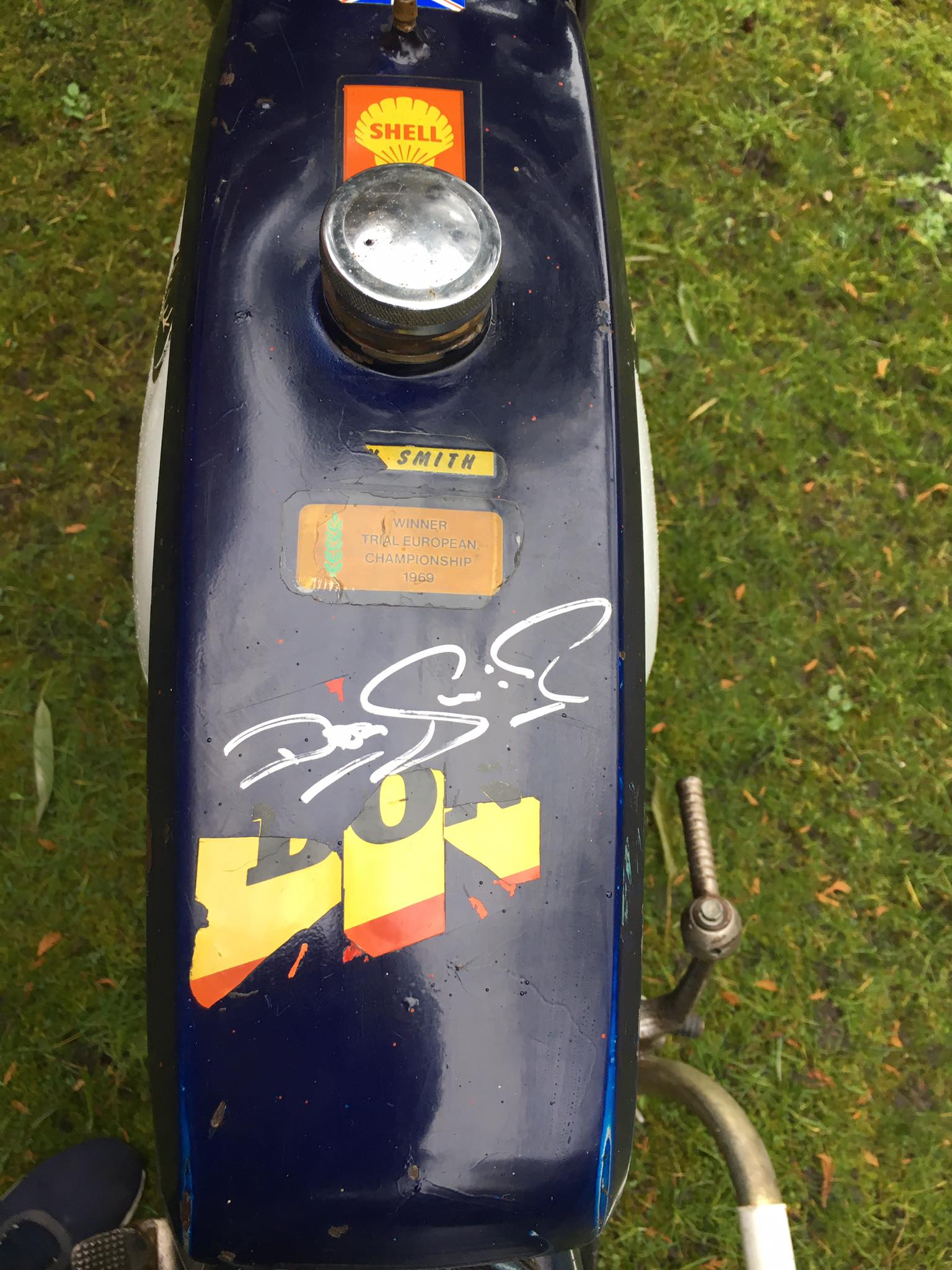
Don Smith’s signature on the tank of the STAG MK1 – Photo: Mike Watts

It is believed that the fuel tank was a heavily modified and disguised steel Japanese component, possibly from a Honda, which was re-shaped at the rear with fibreglass to allow it to match up with the pressed alloy side panels, thus creating a one-piece unit ‘look’ but retaining three separate components, this was complimented by a W.E. Wassell style single padded seat up top and light alloy mudguards finished the machine off.

The tank and side panels were finished in a dark blue with white infill panels and a gold lining using vinyl lining tape, between the blue and the white, it had four tank badges with a gold stag’s head against a dark blue background fixed each side of the tank and both the side panels.
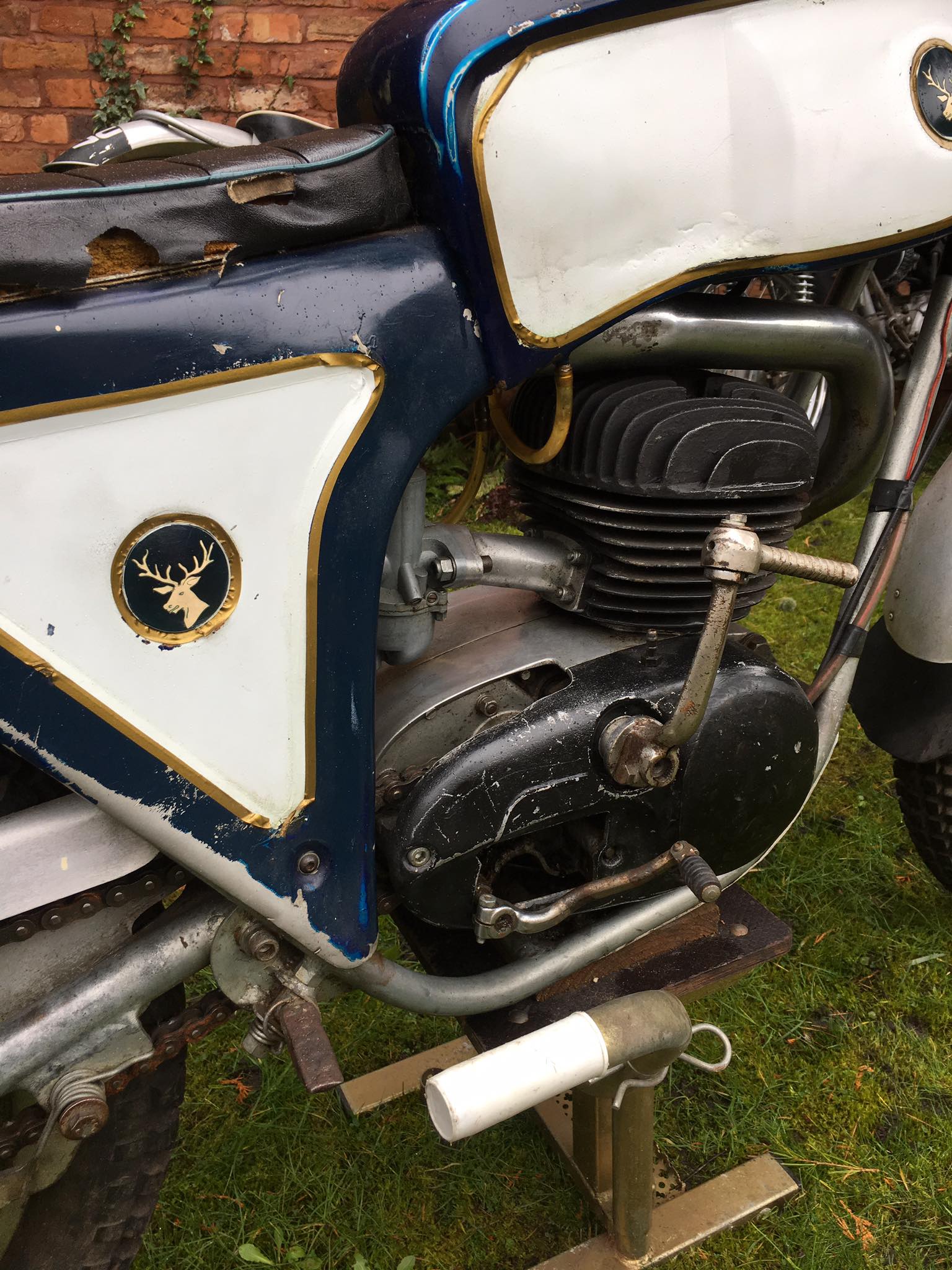
Photo: Mike Watts

On closer inspection, the stag’s head is sporting ten ‘tines’, which is biologically incorrect, as they should have either twelve or sixteen tines as mentioned earlier! This would not have bothered D.R., after all, it was a name and logo used to disassociate him from the Montesa brand.

Drive chain adjustment was taken care of by simple snail cams on the end of the rear spindle and the Girling four-point adjustable shock absorbers were attached to the swinging arm close to the rear wheel spindle.
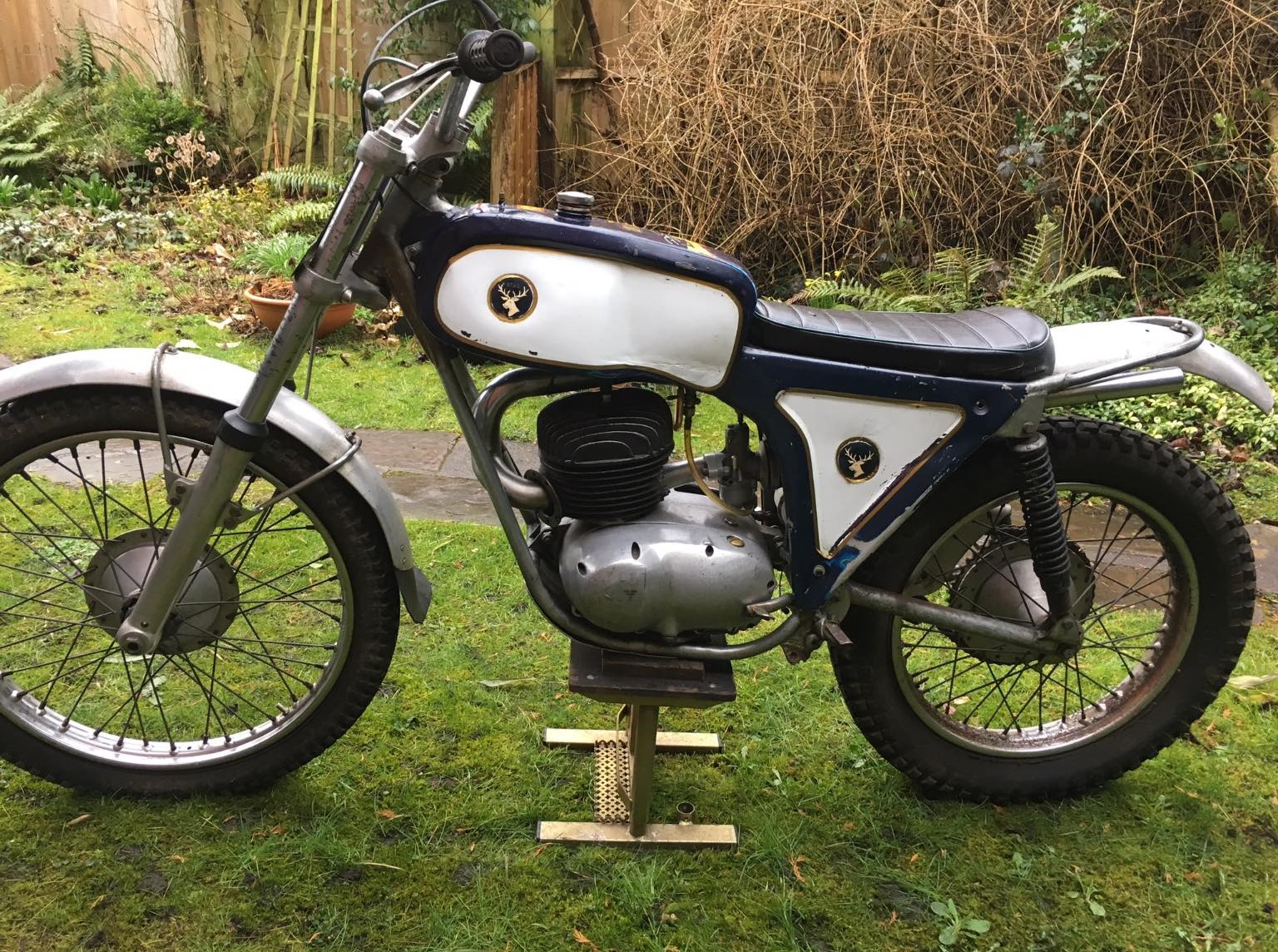
Photo: Mike Watts

Smith had fitted a ‘Sammy Miller’ alloy chain oiler, hidden behind the nearside panel and a trailing slipper chain tensioner took care of chain tension.

The rear brake was cable operated as the Montesa had a right-hand gear change with offside drive. The Montesa Cota 247 of the era had a full width hub which allowed for a rod-operated nearside brake.

A quickly detachable light alloy sump shield was fitted to protect the crankcases, the crafty Smith made use of the cavity between the engine and shield to store a spare drive chain in a sealed polythene bag for the 1970 Scottish. This innovation ensured that the heavy spare chain was carried on the bike in a low position, a sensible idea. A spring-loaded prop stand was fixed onto the nearside of the lower frame, being a requirement of the SSDT regulations. Sadly, the side stand has been lost over the years, but the bracketry remains. The footrests were of the folding type and spring-loaded, a feature Smith claimed was his innovation on the Montesa Cota having ridden for West Ham and Hackney speedway teams where folding footrests had already been in use before they became standard trials equipment. It is believed that Smith was the first to deploy a folding type footrest in speedway racing for safety, and by fitting a spring for trials use ensured that it returned to its original position after flicking up.

The unbraced handlebars had the brake and clutch perches welded to the bars, reminiscent of what Sammy Miller had on his own Bultacos. This saved weight and ensured that the set-up never altered in a fall. Docherty steel ball-ended control levers were fitted.

The whole package was neat and functional.

John Moffat: “I remember standing on the cobbled alleyways of Edinburgh’s Gorgie Market in early May 1970, my eyes were feasting on the machines of my then heroes, men who in my later years would become personal friends and aquantances, although I didn’t know that back then. I walked along to see this white and blue bike standing proud on it’s side stand with it’s rider to be, Don Smith. He moved away towards the Renolds chain van, staffed by Vic Doyle and I stood in wonderment of the bike that people were calling ‘The Stag’. I was captivated with the machine. Then suddenly a man appeared at the other side of the bike, towering over the machine, it was Don Smith in person, he smiled at me, but didn’t speak, and being a twelve-year-old I stood back to let him carry on preparing his machine. I never spoke to him, which I regret now, as I now know he was quite approachable. But the STAG was etched in my mind. I asked my father, T. Arnott Moffat, at that time General Secretary and Treasurer of the Scottish ACU about the bike. He simply informed me that Don Smith wanted to get out of riding for Montesa and he reckoned this was Smith’s method. I never forgot the Don Smith STAG.”

Power source:

The engine was standard 247cc Montesa Cota issue, retaining the exceptionally long inlet manifold and breathed through a type 626 Spanish AMAL carburettor. Having ridden for the factory, Smith would have had access to spare motors during his time with the company, so it made sense to use an already proven power unit for the STAG venture. The engine in the STAG Mk1 has been number stamped when the bike was constructed. It could have been a spare un-numbered engine as factories tended to do that with crankcases that were supplied new to replaced damaged components, certainly the motor does not have the usual Montesa numbering protocol. The original registration book and the current DVLA documents confirm this.
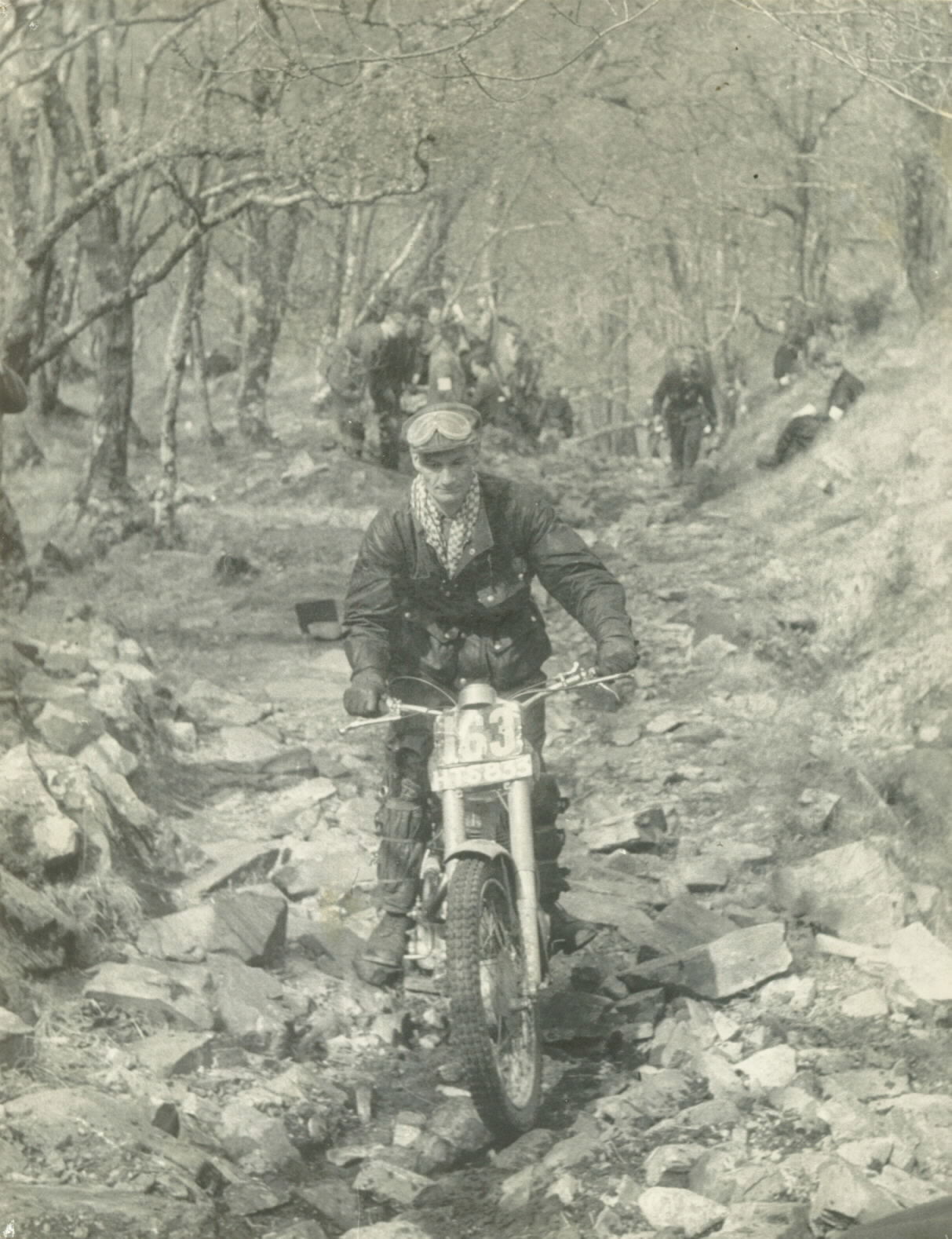
Hugh McDonald of Fort William in the 1959 SSDT on his Royal Enfield.

As mentioned, Don Smith used his STAG MK1 to signal the end of his three-year contract with Montesa, however it is believed that he may have been financially supported with the STAG venture in the 1970 Scottish by Fort William businessman, Hugh McDonald who owned a gents outfitter shop, trading as ‘Alister McDonald’ at 64-66 High Street.

It has been confirmed that Smith stayed at McDonald’s house, ‘Failte’, Achintore Road on many occasions and during the 1970 event in particular, he was also transported to the trial start in Hugh’s car that year. The SSDT started and finished in Edinburgh and was centred in Fort William during the bulk of the week.

To go a stage further, it may be this Scottish highland connection that could have spawned the naming of the STAG itself, but no-one knows for sure, not even the McDonald family who still live in Fort William.

Current owner Mike Watts dispelled that myth: “When I spoke with Don Smith shortly after buying the STAG, he told me that the STAG idea came from the badge of the West Essex MCC of which he was a member.”
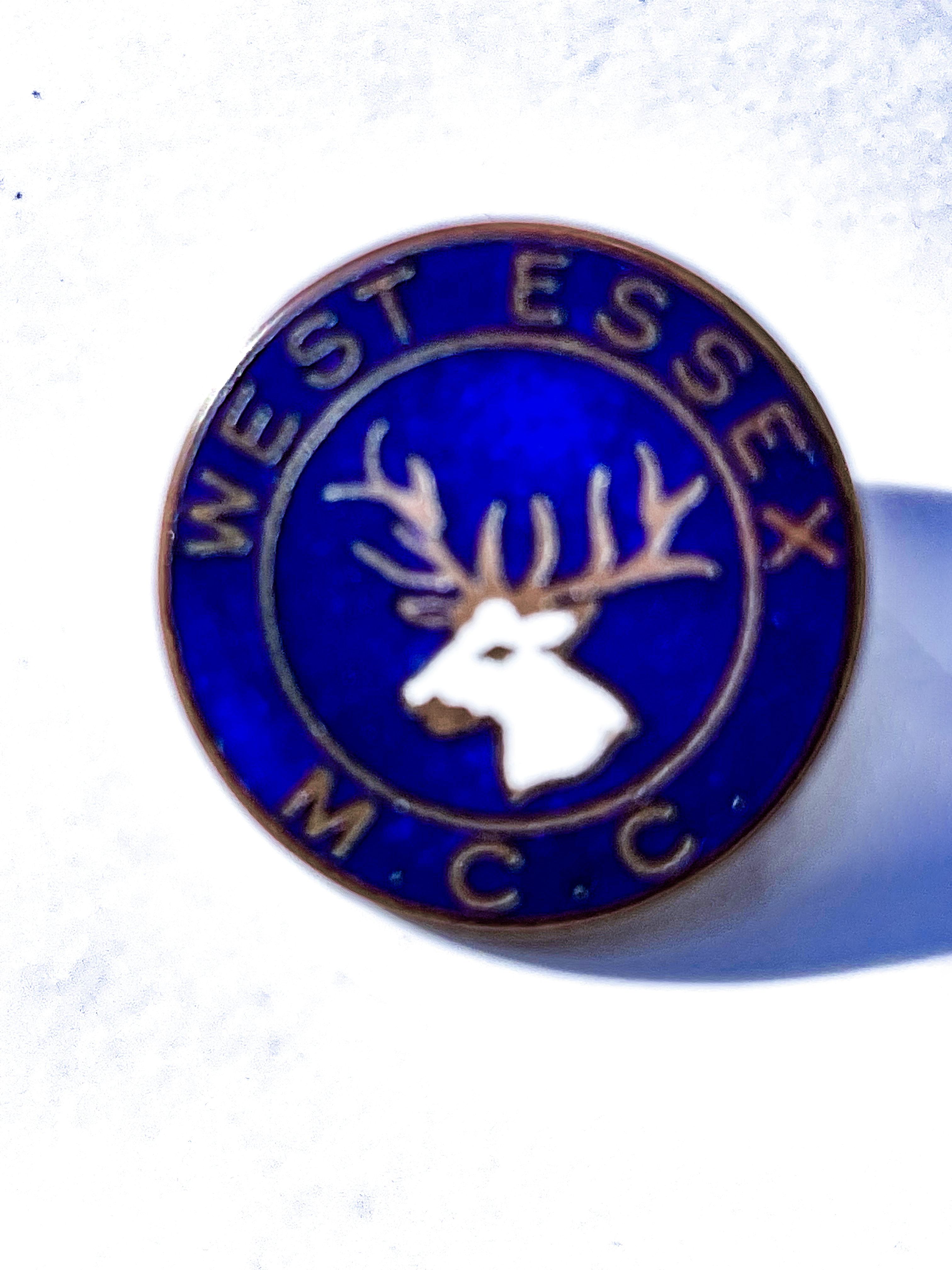
West Essex MCC badge – Photo: Don Smith Family Collection

The 1970 Scottish:

Having been entered by Montesa Motor Cycles on a 247 Cota, Don Smith was allocated riding number 101 for the 1970 Scottish Six Days, which was the trial secretary Jim McColm’s first event in charge. Smith was his usual flamboyant self at both the weigh-in and the start on the Monday morning, 4th May at Gorgie Market. He was no stranger to the Scottish, having ridden in the annual event since 1960. The appearance of the 247 STAG MK1 instead of a Montesa, generated a lot of interest and excitement, but the proof of the pudding would be in the eating, the SSDT being the ultimate test of rider and machine.

Having caused a veritable ‘stir’ at the weigh-in of the event on the Sunday, the tongues were wagging, and trials fans were keen to see how the STAG performed.

Smith was an extrovert and very much a fun-loving rider, he rode to win, but enjoyed winding other riders up. Mid-week, he decided to have a bit of a dice on the road with a fellow competitor and during this high-speed encounter, the STAG’s gearbox cried enough! The Montesa Cota was known for having gearbox issues and the motor used in the STAG MK1 was no different, the gearbox was fragile and that ended Smith’s 1970 Scottish.

Repairs were made post event and Smith campaigned the STAG in national trials for the remainder of the season.

The STAG today:

Happily, the 1970 STAG MK1 has survived intact with very few components being changed over the years.

Middlewich gift shop owner and motorcycle enthusiast, Mike Watts brings the story up to date:

“I spotted a classified advert in Trials & Motocross News in 2004 which offered a 250 Montesa Cota Special for sale, I was intrigued, so went to a village near Norwich to have a look at the bike. The seller rode speedway and his race bike had suffered a major engine failure and he was funding the repairs by selling the old trials bike that had been languishing in a corner.

When I saw it, I knew exactly what it was, and I was keen to have it. The owner clearly did not know that he was selling a unique piece of British trials history, so I did the deal, paid the price, and took the STAG home.

Many of my friends have since told me to do a comprehensive restoration to put the bike back to as new condition, but to be honest I do not want to touch it. The STAG is now fifty-one years old, it is in one piece and apart from a replacement ignition casing, it is pretty much as Don Smith rode it, so I plan to leave it exactly as it is. It maybe did not survive the 1970 Scottish Six Days, but it has survived the test of time. I also have the original registration documents, which is another component of the bike’s history.”

Watts met Essex born Smith, who was guest of honour that same year at the British Bike Bonanza and he was reunited with his STAG. This turned out to be a once only reunion as Don died in the October, having suffered a stroke at home and a fatal one in Addenbrookes Hospital, Cambridge. He died on 6th October 2004 aged 66 years.

Watts: “Don was delighted to see his old STAG and we talked for well over an hour, at which time he pointed out all the features he had designed, including the tank and side panel badges which he made himself.

Don could not remember which tank he modified to fit the STAG, nor why he used a steel tank and not an alloy component.

I was delighted when Don signed the fuel tank as a memento of the reunion.

He told me the most challenging components were the side panels which took ages to fabricate. My only regret is that I wasn’t able to record our conversation that day, he was so forthcoming with information and happy to talk about his creation.”

What it was and what it is:

The STAG MK1 was primarily a prototype machine for Smith, a test bed to evaluate innovative ideas in trials bike design. It was also a statement that Smith was available for hire in the trials job market. The STAG was like a mobile CV, and it was also a stop-gap machine until something else came along. This happened when Don Smith signed with Kawasaki to develop their ‘KT’ machines in 1972, but that is another story.

Whilst it did not win any major events or set the trials world alight, the STAG fulfilled its purpose and fortunately for trials enthusiasts, it has survived in an unmolested form for over half a century.

The bike is in good condition considering that it has been left unused in storage for many years, the REH forks are now badly pitted and would require hard chrome plating before they could be functional, and the whole machine would need to be carefully recommissioned before being used in anger.

Some would say that it is a shame that it is not ridden anymore, but for the current owner of the STAG, Mike Betts, it is an interesting part of British trials history that has been preserved, a machine he is proud to be the custodian of.

The STAG MK1 is a survivor, it is a part of trial history, let us be thankful of that at least.

Resource for private study: Ride It! The Complete Book of Motorcycle Trials – Don Smith 1975; 1976; 1977 & 1978 – Haynes Publishing. ISBN 0854291652 (Out of Print)

With thanks to: Mike Watts, the current owner of Don Smith’s STAG; Amanda Lazenby, Don’s youngest daughter, for information received for the writing of this article.

Article Copyright: John Moffat/Trials Guru 2023

You are reading this for free!

Apart from ‘Fair Dealing’ for the purpose of private study, research, criticism or review as permitted under the Copyright, Design and Patents Act, 1988, no part of this article may be copied, reproduced, stored in any form of retrieval system, electronic or otherwise or transmitted in any form or by any means, electronic, electrical, mechanical, optical, chemical, photocopying, recording or otherwise without the prior written permission of the author as stated above. This article is not being published for any monetary reward or monetisation, be that online or in print.
DON MORLEY – The ‘Godfather’ of Action Sports Photography

Don Morley 1995
Don Morley riding his ex-works 250cc Greeves Anglian in the 1995 Pre’65 Scottish Trial. Photo Copyright: Iain Lawrie, Kinlochleven, Scotland. When Don Morley was made aware of this very image, he was keen to obtain a copy and willing to pay for it. Iain Lawrie immediately provided Don with a copy with his compliments!


Words: Trials Guru

Photos: Don Morley; Iain Lawrie & John Knight

Trials Guru recognises the talents of a man from Redhill, Reigate in Surrey who has brought literally thousands of wonderful and exciting colour sporting images into magazines, periodicals and books the world over. His name is Don Morley and what’s more he’s a trials rider! Well actually, Don is a frustrated road racer at heart as he didn’t have the funds available to race when he was a young man, so took up trials riding instead, being the less expensive motorcycle sport option!

dm on his 1949 ex works 350 re. reg_ hwp 731 - red
Don Morley aboard his 1949 ex-factory Royal Enfield (HWP731) – Morley is an acknowledged expert on the marque. (Photo supplied by Don Morley for this article from his personal collection)

Described as the ‘Godfather’ of sports photography by Fast Bikes Magazine in the article they ran on Don in their September 2010 edition, Morley is respected the world over by riders, athletes and team managers because of his uncanny ability to press the button just at the right moment.

Raised in Derby, Don started taking photographs for a living in the 1950’s when it was all glass negatives, progressing to processed roll film. He began his motorcycle photography as a staff photographer with Motor Cycle News in 1957.

Morley is a 100% professional sports photographer, joining forces with Tony Duffy’s “All-Sport International Photographic Agency/Don Morley” in the 1970’s, his images of sporting events and competitors are highly sought after around the globe.

CBTSTB
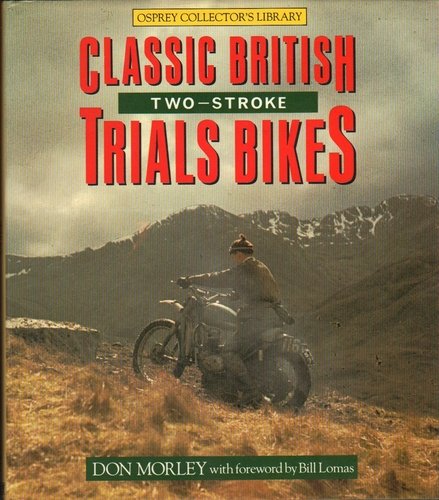
Puiblished by Osprey, Don Morley’s book on Classic British Two-Stroke Trials Bikes is a much sought after publication. Truly a collectors item now.

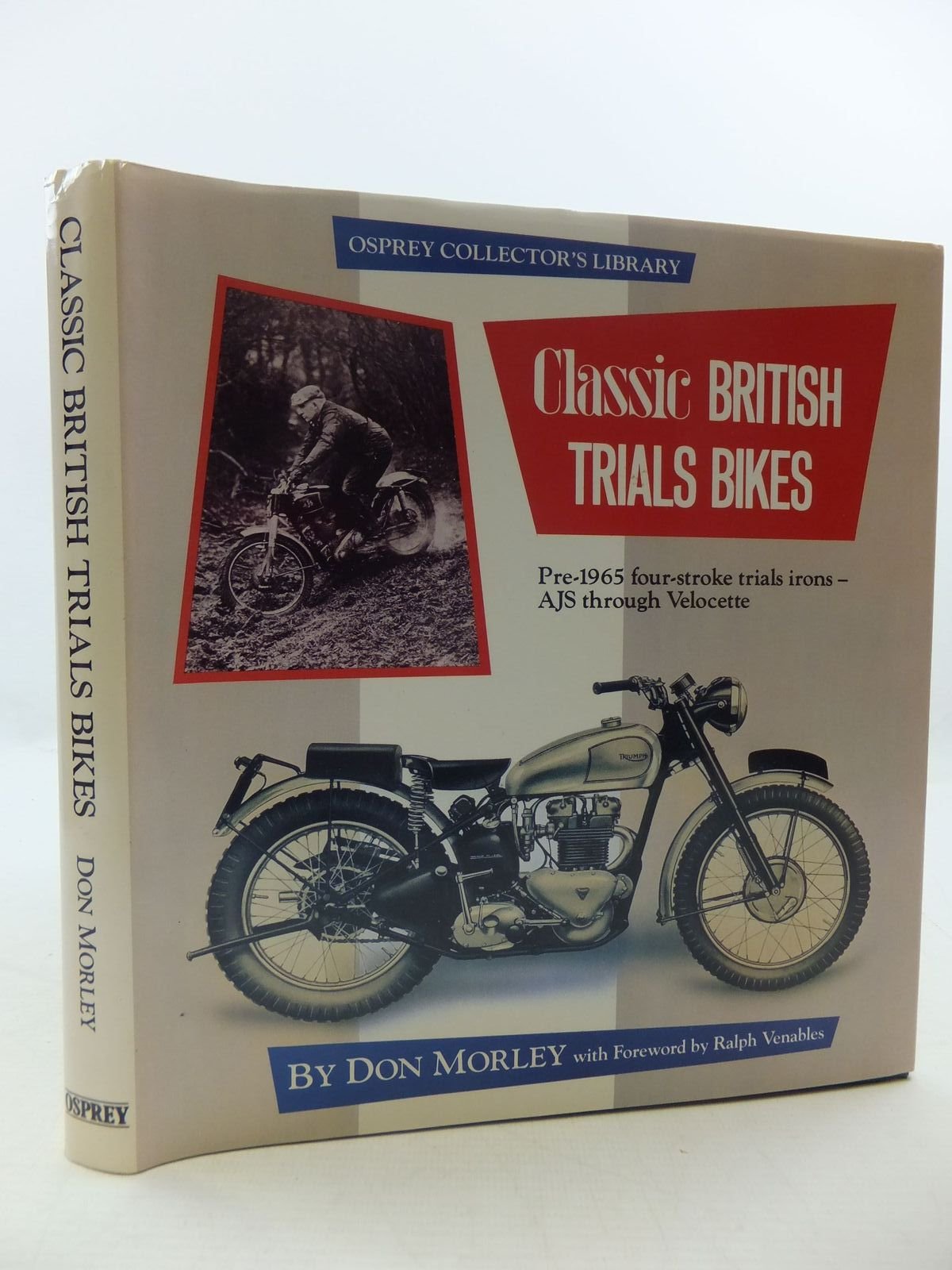
Don is also an accomplished author, writing several books which include: Classic British Trials Bikes & Classic British Two-Stroke Trials Bikes; Spanish Trials Bikes and Trials: – A Riders Guide, to name but four!

CBTB 1984 - Don Morley
Published by Osprey in 1984, Don Morley’s Classic British Trials Bikes book was a top seller. Original copies fetch high prices to this day.

TT In camera
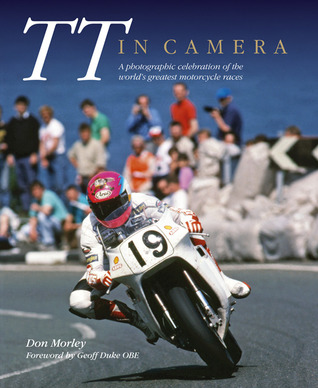
“TT – In Camera”, One of the many titles written by Don Morley over the years, with foreword by Geoff Duke.

Morley has photographed many events, not just sporting events, witnessed the Munich Olympic Games terrorism atrocity to name but one major international incident and much, much more. He has had a varied and interesting life as a sports photographer.

Don has owned several ex-factory trials machines in his time as a rider, including the Johnny Brittain Royal Enfield 500 Bullet HNP331 and another ex-factory Enfield, LUY86. He appeared in the BBC TV series, ‘Perpetual Motion’ in an edition which covered the Royal Enfield and Enfield of India story in 1992. Morley is an acknowledged expert on the Royal Enfield marque. He built a few special trials machines including a BSA B40 and also wrote a series of articles on the development of four-stroke trials machines for the ‘Classic Motor Cycle’.

Don Morley New APMC Hon President. 1402
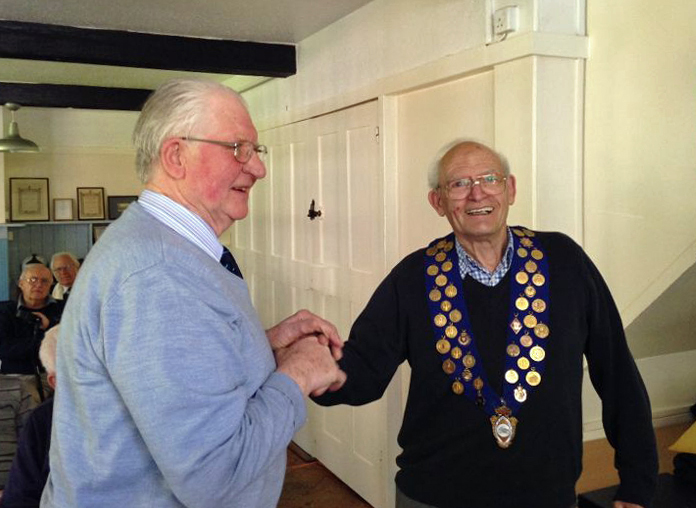
Don Morley (right) recieves his chain of office from Chairman, Ken Brady – Photo: John Knight (former British Trophy team member ISDT)

Don was one of the first to take up Pre’65 trials competition back in the early 1980’s on an ex-Brian ‘Tiger’ Payne AJS.

The one thing you notice about Don is his serious nature, he is a professional after all, he took photographs to make a living, but he does have a good sense of humour as well.

Trials Guru’s John Moffat met Don Morley many years ago at the Pre’65 Scottish at Kinlochleven, initially it was a frosty meeting as ‘The Guru’ intimated that Don had made a “slight mistake with a factory registration number” in one of his books! After a good frank chat, it was all ended very amicably, as this was merely an amateur enthusiast correcting a professional. Let’s face it EVERYONE can make a mistake. Happily, from that day on ‘Trials Guru’ and Don Morley have been good friends, their paths crossing occasionally and they are always happy to meet each other.

Don saw the funny side of the argument and said jokingly: “John, that’s OK, as long as you don’t want Osprey to reprint my book to make a correction!”

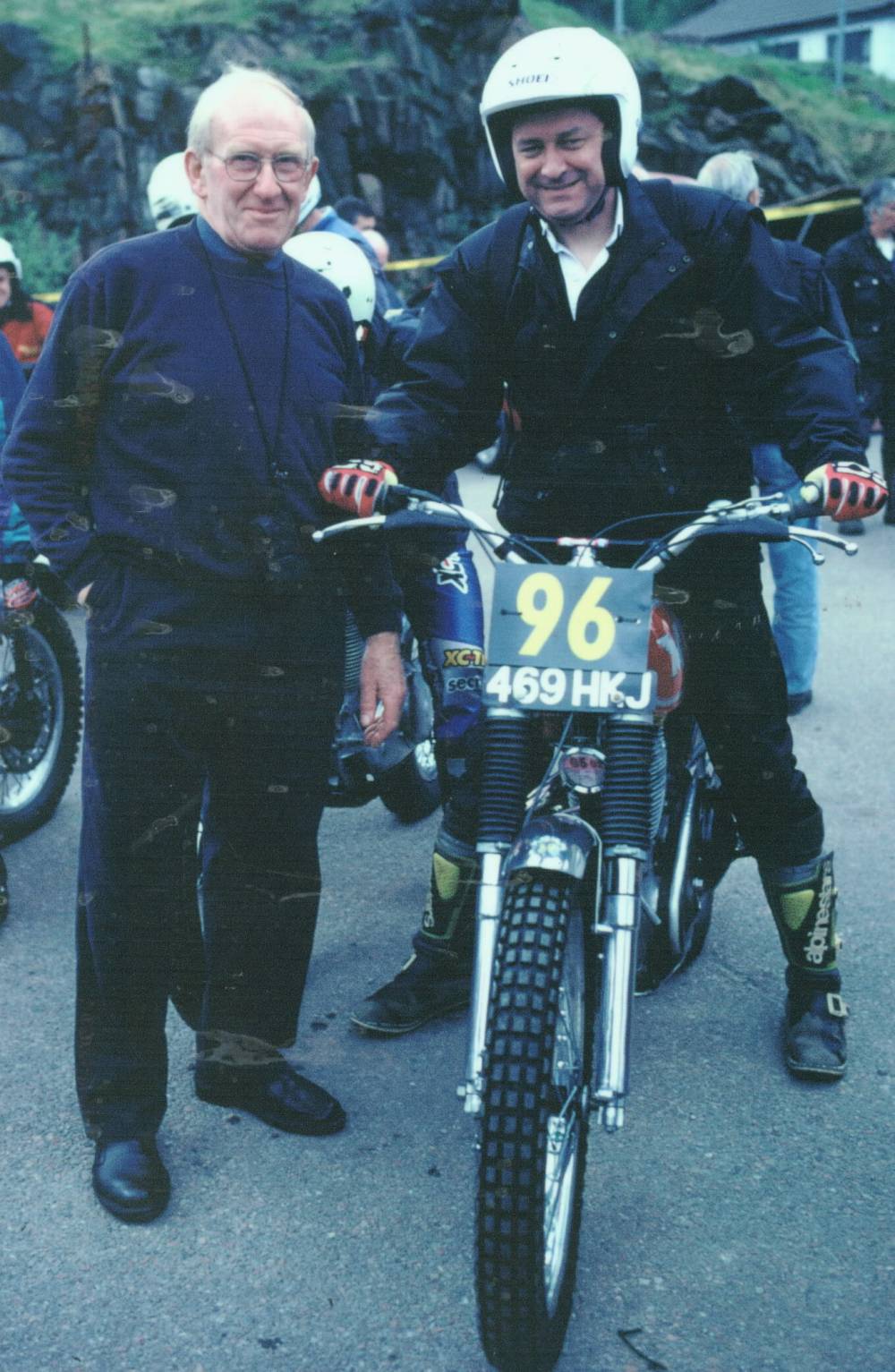
Morley once took a photo of ‘The Guru’ on his G3C Matchless with the great Gordon Jackson standing alongside, at Kinlochleven, the machine which was loaned to Jackson for the 2000 parade at the Scottish Six Days. The image has been a prized possession of ‘The Guru’ ever since.

GL Jackson  & JO Moffat Red
Photo copyright: Don Morley (All Rights Reserved)

So, the next time you see a photo credit as “All-Sport/Don Morley” under an image of a racing bike at speed, you can say that this image was taken by a true enthusiast and … a trials rider!

Don Morley, Reigate, Surrey, England. – Trials Guru salutes you, because you are an enthusiast as well as a photographic professional. – Thank you also for the kind permission to use one of your wonderful photographs on this website.

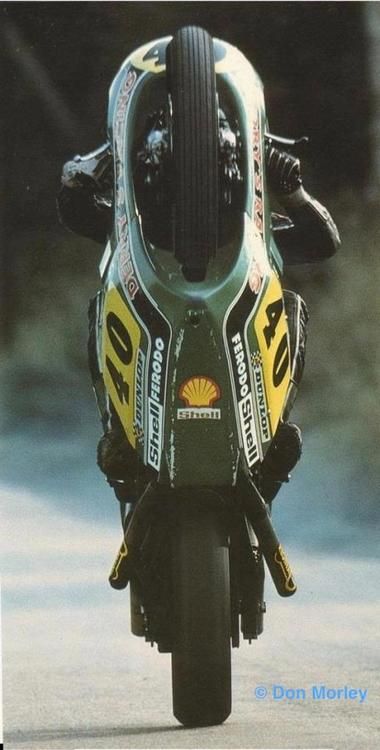
Dennis Ireland RG500 Suzuki
Beyond the call of duty! – Don Morley was lying on his side taking this shot of racer Dennis Ireland on his RG500 Suzuki. Unfortunately the throttles stuck wide open, the machine went out of control just a split second after Morley clicked the button. Don suffered a broken leg, Ireland more serious injuries, spending five months in hospital, having eleven operations on leg, ankle foot and tendons. A truly evocative image taken by a true professional. – Photo: strictly not for reproduction without permission of Don Morley – All Rights Reserved. Worldwide copyright.

© – Trials Guru/Moffat Racing, John Moffat – 2014 (All Rights reserved)

© – Image World-wide copyright: All Sport/Don Morley, Reigate, Surrey UK. All Rights reserved.

© – Image World-wide copyright: Iain Lawrie, Kinlochleven. All Rights reserved.

References:

The Classic Motor Cycle magazine

Fast Bikes Magazine

Motor Cycle News

The intellectual property formerly of ‘All-Sport’ photograph agency is now owned by Getty Images UK.

Please remember, all Don Morley’s photographs and those of his company ‘All-Sport’ are world-wide copyright and must not be used without prior express permission.

Rob Edwards – Part Four – The late 1960’s

Cotton - Rob
Rob testing the Cotton Minarelli 170cc trials machine in 1968. Italian Minarelli motors replaced the 37A Villiers powerplant.

Hi Reader and thanks for your support.
I am enjoying it and I hope you are too?
Having ridden a 250 Bultaco in the 1966 Scottish, I moved on to ride Cottons and rode a 250 Villiers powered bike in the 1967 & 1968 events.

1968 SSDT on Foyers with the 37A Villiers powered Cotton. Rob was fourth in the event.

In the late sixties Cotton changed from the 250cc Villiers 37A motor to the Italian made 170cc Minarelli engine. I was given a large gearbox sprocket to carry in my pocket.
The idea was to fit it when we were due to do long stretches of road work.
The problem was, I was always so late on time I didn’t have the time to swap it!
On the final days’ lunch check, the thought of doing 30 miles an hour back to Edinburgh was very daunting indeed. It wasn’t helped by seeing the works Greeves fitted with minute rear sprockets.
Their cruising speed was around 70mph. Bill Brooker was the Greeves competition manager and he really had his finger on the pulse.
On more than one occasion he went out of his way to help me. My idea of a true sportsman and excellent competition manager.
It was short on ‘flywheel effect’ inertia and dreadfully low geared. Thanks to my pals at Head Wrightsons, a brass band was machined to fit onto the flywheel.
This made a big improvement to the engine characteristics, wheel grip and so on.
Entered by Norman Crooks Motorcycles, I rode with this modification in the 1969 Scottish and won the best up to 200cc class.

Rob Edwards in 1969 on the Cotton at Coalasnacoan in the SSDT on his way to win the 200cc Cup.

To solve the low top speed problem, I had sent Cotton a drawing of my flywheel modification but had heard nothing back. I wasn’t surprised when one week after the SSDT there was a half page advert in the Motor Cycle News, telling riders how good the modification was and how much they would sell you one for. I was gobsmacked!
However, I didn’t receive any thanks for the 200cc cup win or flywheel modification!
After winning the Alan Jefferies Trial, I decided to treat the Minarelli to a set of piston rings. I rang the Cotton factory up and in due course they posted them to me.
Unfortunately you’ve guessed it – I broke one when fitting them.
I rang Cottons for another set. Two weeks later they still hadn’t arrived.
When I phoned them, the top man answered the phone. ‘Mr. D’ said that he wasn’t going to send me anymore rings until I explained exactly what I had done with the others.
It was then I decided it was time to move on.
When Pat Onions was in charge of the competition shop there was never a problem.
Things were changing and it was time to abandon ship.
But where to? – Rob

Rob Cotton - Workshop
1968 – Rob Edwards (centre) discusses the Cotton Minarelli with Cotton’s competition manager, Pat Onions (left) and frame builder Eric Lee. The photo was a factory publicity shot.


Rob Cotton - Wheelie
Rob testing the Cotton Minarelli 170 a bike which he made some modifications to make it more competitive.


To Be continued …


Trials Guru: The factory Cotton Minarelli that Rob Edwards rode was to become the production Cotton ‘Cavalier’ which was produced at around five machines per week. Supplied to customers in ‘kit’ form to avoid purchase tax. The 1969 Scottish – Rob Edwards came home in a creditable tenth position and another Special First Class award on 59 marks on his 170cc Cotton. The eventual winner was Yorkshireman, Bill Wilkinson who was to be the last British rider to win on a British built machine, a 250cc Greeves (WWC169F).

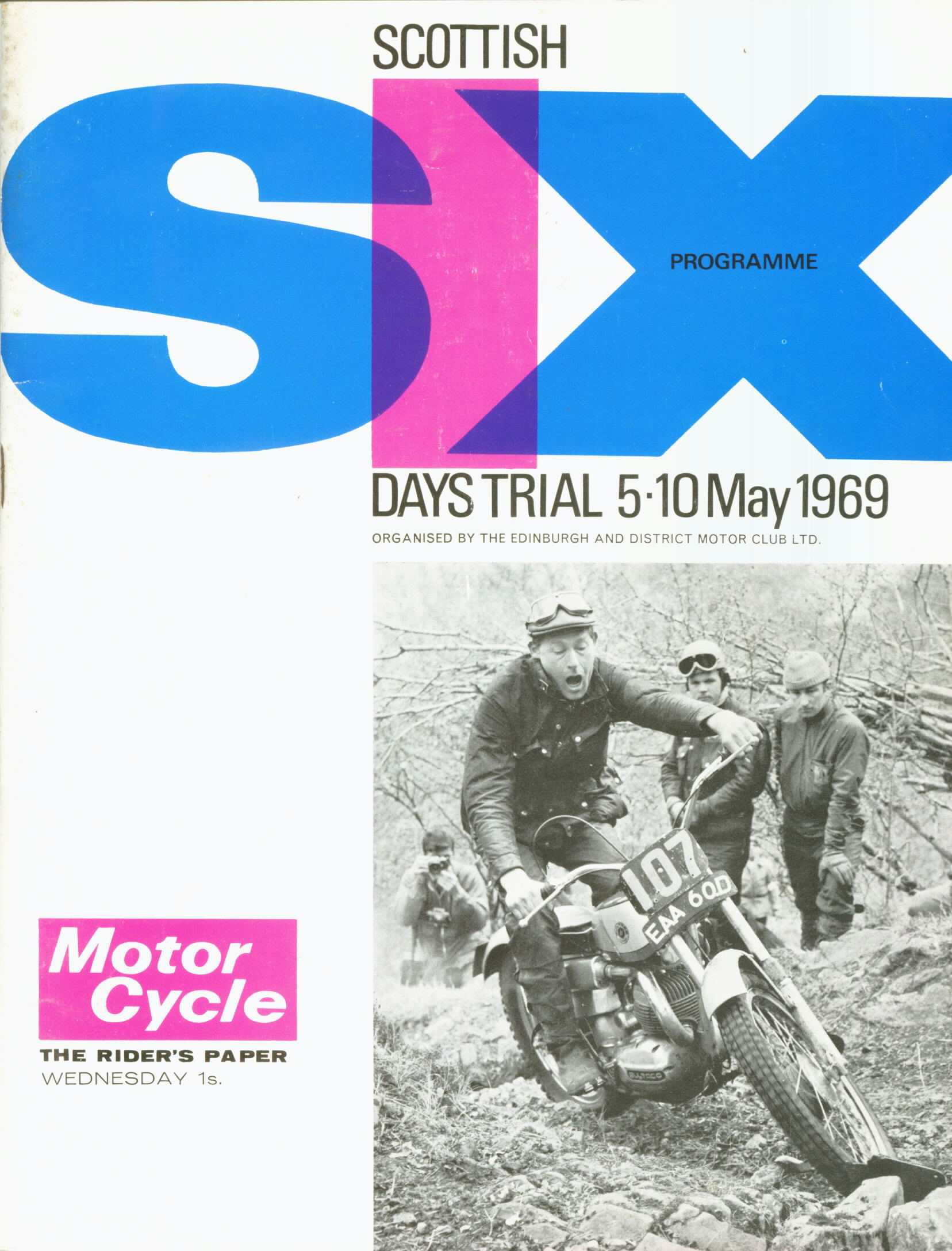
1969 - SSDT - Prog - R Edwards - Cotton
1969 SSDT Programme with a 1968 photo of Rob Edwards on the 250cc Cotton on Glenogle section on the first day.


Rob remembers! : Isn’t it always the way? You start writing about one thing and another one pops into your head! Anyway, here is something I remembered about my Cotton days.

I traveled a lot with Brian Hutchinson. The problem was that Brian worked on the family farm. I would be at the farm at 4.30pm but it would be 6.30 pm before we started our journey.

One time in particular we set off for South Wales with light snow falling.When we reached the M1 motorway, the traffic was almost at a standstill. This didn’t bother ‘Hutch’ – he went straight across into the fast lane that nobody was using because the snow was too deep.

No problem! he had the Austin A55 pick-up to 80mph in no time and we had the fast lane to ourselves all the way to Sheffield!

 We finally arrived at Merthyr Tydfil at 1.30am. No bed and breakfast or anywhere was open. It was freezing cold – you know its cold when your breath freezes on the windscreen. Close to death, we drove to the railway station and as luck would have it there was a gas heater on the wall.
You had to reset it every minute but this was the Ritz compared with the pickup. We took turns pressing the start button.
Unfortunately one time it didn’t ignite. I was woken up by the smell of gas and a hissing sound. The next second, there was a tremendous bang and the heater left the wall it was on and splattered against the opposite one.
We were last seen running flat out along the platform with the station master in hot pursuit shouting: “I’ve rung the police boyo you’ll not get away”.
It was back to the “pickup hotel” after that! – Great memories – Rob

1969 programme front
The 1969 SSDT Official programme front cover, the year Rob Edwards came home 10th and won the up to 200cc cup on the Cotton Minarelli.


Copyright:

Words: Rob Edwards/Trials Guru, John Moffat 2014.

To read all of Rob Edward’s story of his life in trials, click… here

Profile: CHRISTIAN RAYER (France)

Words: Trials Guru

Photos: Jean Caillou; Eduardo Gomez de Salazar; Yamaha Motor Co.

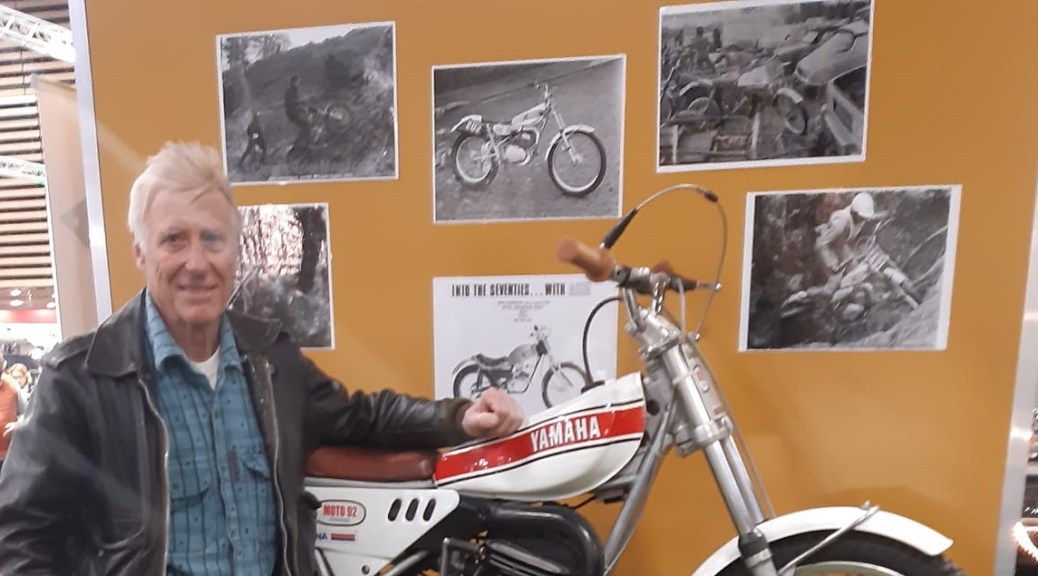
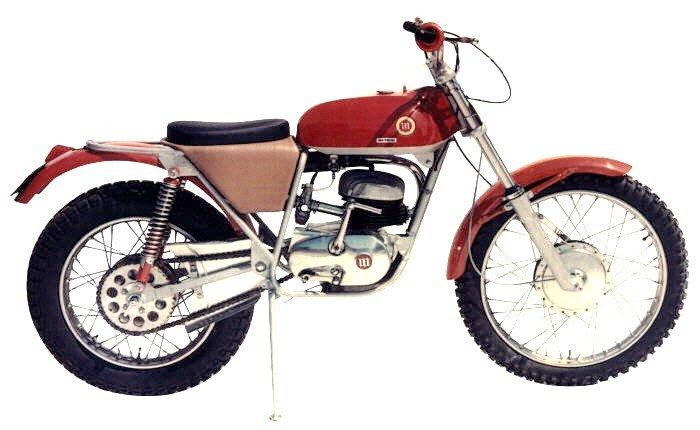
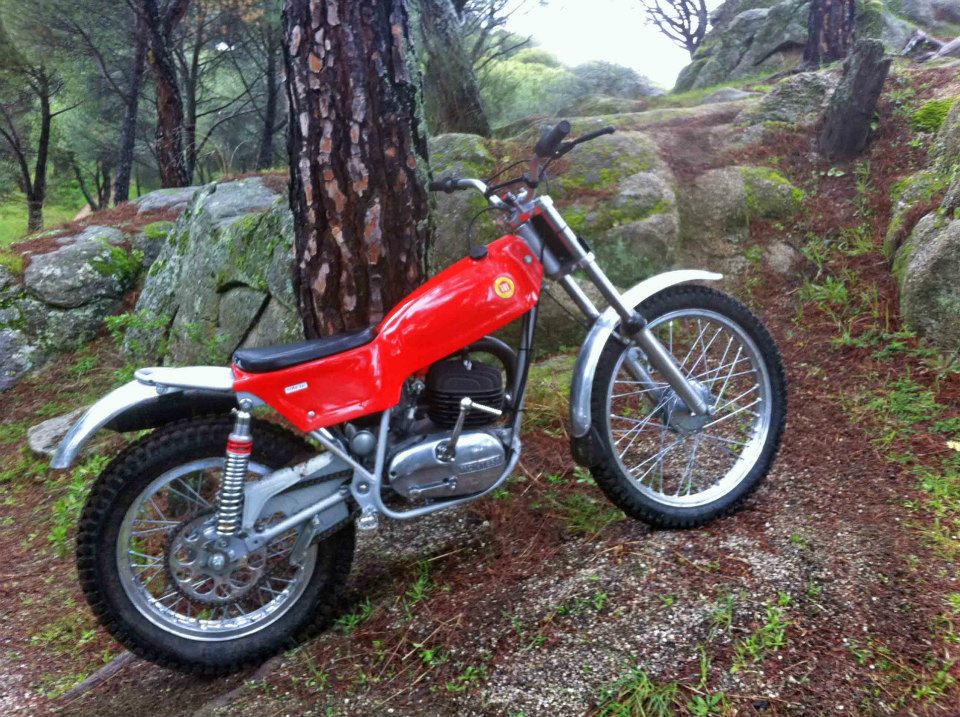
Christian Rayer is a name not universally known in the UK, but is very well-known in his native France. Born in 1945, riding Greeves and Motobecane machinery in his early years as a rider, he was instrumental in the development of the first Montesa Cota 247 series trials machine which emerged in 1967, based and developed from the Spanish factory’s Impala engine design.

Montesa Trial prototype n1( 67)
Prior to the Cota, this was the Montesa Trial 247 (11M), this model was launched at the Barcelona motor show and had a production run of only 44 units. Developed by Rayer/Pi in 1967. (Information provided by: Luis Munoz-Aycuens Ribas).

This was done in association with both Pedro Pi and England’s Don (D.R.) Smith feeding information back to the Barcelona factory, owned by the Catalan Permanyer family, based then at Esplugas de Llobregat.

Pere Pi - Montesa Proto
Pere Pi was one of the Montesa factory development riders with Christian Rayer in 1967, seen here with another Cota Prototype.

Montesa Cota Prototype
One of the few remaining early model Montesa Trial 11M limited series production machines (B-577564). Developed from the prototypes from the Rayer/Pi/Smith era now in a private museum near Madrid, Spain (Photo: Eduardo Gomez de Salazar).

Première MONTESA 1967 -
Christian Rayer on B-576140 the first prototype of the Montesa Cota in 1967

1971 Cota 247
The 1971 production Montesa Cota which was a direct descendant from Rayer’s prototype machinery.

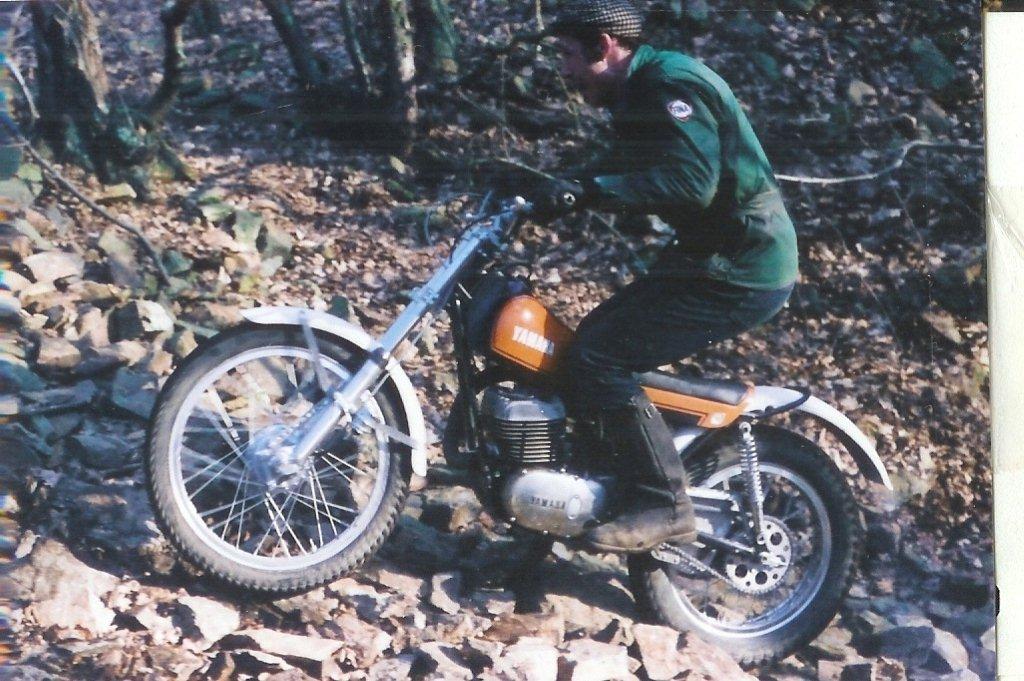
Rayer was six times French trials champion and rode the Scottish Six Days Trial three times on the Spanish marque. His main rivals of that era on the European trials scene were Sammy Miller, Gordon Farley and Don Smith (England) and Gustav Franke (Germany) who were all professional riders. Thereafter, in 1971 he was contracted by Yamaha to develop a trials machine. This he did with a 360cc prototype, using a mix of mainly Yamaha but also Saracen, Montesa and Ossa components.

Presentation essaie prototype TY Yamaha (71)
Rayer with the prototype Yamaha TY (1971) in a company publicity brochure.

The trials model eventually became known as the ‘TY’ which stood for ‘Trial Yamaha’, Rayer again feeding back useful information to the Japanese engineers at the Yamaha factory.

Rayer Yamaha - JC Photo
Christian Rayer’s 1971 prototype built for Sonauto-Yamaha. Front hub is Yamaha 125, rear is Ossa, as is the swinging arm, front forks are modified Montesa. The first frame used was actually built by Saracen. This version used an Ossa frame. Originally had a 360 RT1 stock engine, then in 1972 received this works magnesium engine, also 360. – Photo: Jean Caillou

Rayer’s efforts paved the way for a full-on attack by the Dutch based competition arm of Yamaha Motor Co in trials, but now with Mick Andrews as their main factory rider in 1973. Andrews had been with Spanish rivals, Ossa from 1967, switching to Yamaha in a blaze of publicity.

The first Factory Trial motorcycle in 1972
Progression in 1972 with changes to the TY Yamaha already visible.

Rayer’s business acumen resulted in the creation of his dealership called ‘Moto 92’ at Chaville, a suburb of Paris, where he went on to develop up-rated motors for the Yamaha TY250; XT600 and other trail models. He was also the founder of the first riding school for off road riders near Paris and competed in the first edition of the famous Paris-Dakar Rally on the Japanese marque as an official team member, winning many of the individual stages in the process. Rayer also rode in the Enduro de Touquet, also as part of Team Yamaha and finished second overall from a start field of 1000 riders.

In later life, Christian took up para-gliding, diving, hunting and microlight aircraft piloting.

Nowadays Christian runs a business in Valbonne Cedex called ‘IP Moteurs‘ supplying after-market upgrade kits for Yamaha, Suzuki and Honda.

The Trials Guru salutes – Christian Rayer.

Rayer - JC Photo

Christian Rayer of France is a Trials Guru – ‘Trial Legend’

Apart from ‘Fair Dealing’ for the purpose of private study, research, criticism or review as permitted under the Copyright, Design and Patents Act, 1988, no part of this article may be copied, reproduced, stored in any form of retrieval system, electronic or otherwise or transmitted in any form or by any means, electronic, electrical, mechanical, optical, chemical, photocopying, recording or otherwise without the prior written permission of the author as stated above. This article is not being published for any monetary reward or monetisation, be that online or in print.

TG Decal 2024

Tribute: Allie ‘Beag’ Cameron – the quiet man from Fort William

2014-02-15_26
Allie ‘Beag’ Cameron 1940 – 1998 – Photo: Jimmy Young, Armadale

Alexander John Cameron, known to the townsfolk of his native Fort William as ‘Allie Beag’ or just ‘The Beag’, this Gaelic nickname means ‘Wee Allie’.

At the Parade Garage in Fort William, where he served his apprenticeship as a mechanic, there were two ‘Allies’ so there had to be a distinction and it stuck with him for the rest of his life. Allie was originally inspired by watching the Scottish Six Days and ventured into trials at eighteen years of age, when he could afford a James Commando in 1958. This beginner bike soon made way for a brand new 20TA Greeves, purchased from Duncan’s of Brechin a year later.

Allie progressed to a 250 DOT in 1961, which, he rode for only one year.

A J Cameron - Triumph
Allie Cameron on the 150cc Triumph Cub in the 1962 SSDT on Tyndrum – Photo: Ian T. Robertson

Next season, Allie bought the ex- Jimmy Hutchings Triumph Tiger Cub and had it reduced in capacity by the factory at Meriden, near Coventry with the intention of winning the 150cc cup at the Scottish, which he did. Henry Vale, the competitions manager at Triumphs had a Terrier 150cc barrel fitted to reduce the capacity accordingly. That particular Cub had a twenty-one inch front wheel and a widened swinging arm to accommodate a full four-inch section trials tyre at the rear.

Allie Beag1
A smiling Allie gets ready for an event at Todholes Farm, Fintry in 1963 – Photo: Jack Williamson, Rosewell.

His Scottish 150cc capacity win on the Triumph soon attracted the attention of the Greeves factory at Thundersley, Essex and Allie received factory support in the shape of a 149cc bike (XWC 264) for the 1963 Scottish.

Cameron lifted the cup a second time for the loss of 120 marks with his closest rival being Gordon Farley, on a Triumph supported by Jock Hitchcock, who dropped 174 marks. Greeves were happy with the result and used it to best effect in their adverts in the motorcycle press for many months later.

1963 Allie Cameron Achintee
On his special Greeves 149 (XWC264) winning the 150cc cup at the Scottish for his employers, Greeves Motorcycles of Thundersley, Essex; seen here on Achintee in the 1963 Scottish Six Days Trial. Photo: Mrs Florence Cameron, Fort William.

The same year Allie was runner up in the Scottish Trials championship, two points behind Jackie Williamson. By 1967,  ‘Beag’ had two special firsts, four first class and four capacity class wins to his credit in six rides in the Scottish Six Days Trial.

Allie was offered a job as mechanic in the competitions department at Thundersley, preparing the factory trials and scrambles machinery for the works riders. He also prepared many of the special ISDT machines including those supplied to Thames Ditton dealers Comerfords. Allie worked in company with John Pease on the ISDT bikes.

1965 Allie Cameron
An accomplished mechanic, Allie fettles his 150cc Greeves factory machine at Gorgie Market in May 1965 (NEV5C). He won the 150cc cup on 169 marks. Photo: Mrs Florence Cameron, Fort William.

Pease who as well as working at the factory was selected on many occasions as a British Trophy team member. The duo fabricated the special engine cradles to carry centre stands, rock guards and the various brackets to carry headlamps, number plates and compressed air bottles for tyre inflation.

Allie became friends with Don ‘D.R.’ Smith who came up to the factory once a week for testing and development discussions. ‘Beag’ would go practising at Kelvedon Hatch near Brentwood with Smith who was one of Britain’s top trials riders, by then, European Champion.

1968 LEP Allie Cameron
Allie Cameron on Loch Eild Path in the 1968 Scottish on his factory Greeves (XHK14F). Allie won the Henderson Challenge Trophy for the best performance by a member of the promoting club. – Photo: Alistair MacMillan / West Highland News Agency, Fort William (with permission of current copyright holder: Anthony MacMillan, Fort William – All rights reserved)

‘Beag’ knew all the ‘works boys’ and was highly regarded as not only an excellent spanner-man but as a handy rider in the Wessex Centre ACU. He spannered for Bryan Goss and many of the other factory motocross riders.

In 1971, Allie decided to return home to Fort William and took up a position with the area’s largest employer, The British Aluminium Company (‘BA’ for short). He wasn’t home long when he received a call from Jim Sandiford offering him a job at Sandiford’s Montesa import business. Allie thought long and hard but decided to stay at the BA.

767-red
1971 SSDT – Allie ‘Beag’ Cameron (247 Montesa Cota) on Loch Eild Path. Allie took home the ‘Henderson Challenge Trophy’ for the second best performance by a member of the promoting club, and was 24th position in the trial with a special first class award on 126 marks. – Photo: Ian Robertson, Midlothian

Having been diagnosed as having Hodgkin’s disease, the Beag had to restrict his trials riding but never lost his enthusiasm for motorcycling. He rode up until the late 1970’s and was a willing observer at both the annual Ian Pollock Memorial Trial and Pre-65 Scottish.

Sadly, Allie died in the November of 1998. His funeral at the Duncansburgh Church, Fort William was filled to overflowing, such was the popularity of the little man known affectionately as ‘The Beag’ to the towns-folk.  Many modern day competitors and “old hands” converged on the Fort to pay their last respects.

Allie Beag
Allie Beag at home in Fort William in 1996 with the trophies he won during an accomplished career in trials. Photo: John Moffat

Article: Copyright – John Moffat -2005

Photos:

  • Jimmy Young, Armadale
  • Alistair MacMillan / West Highland News Agency, Fort William (with permission of current copyright holder: Anthony MacMillan, Fort William – All rights reserved)
  • Mrs. Florence Cameron, Fort William
  • John Moffat / Trials Guru
  • Jack Williamson, Rosewell

For more on Scottish Six Days Trial click: Here