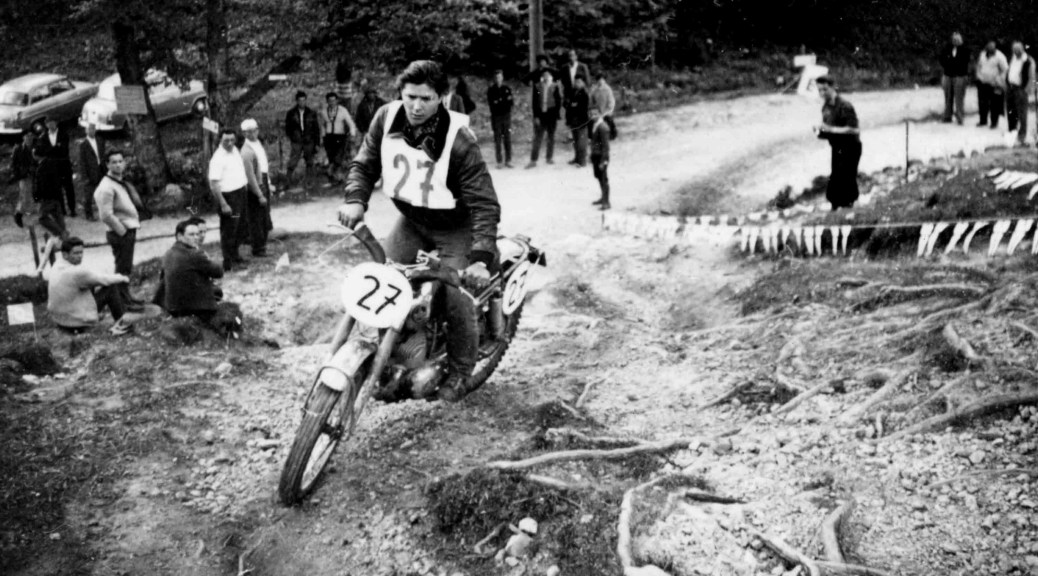
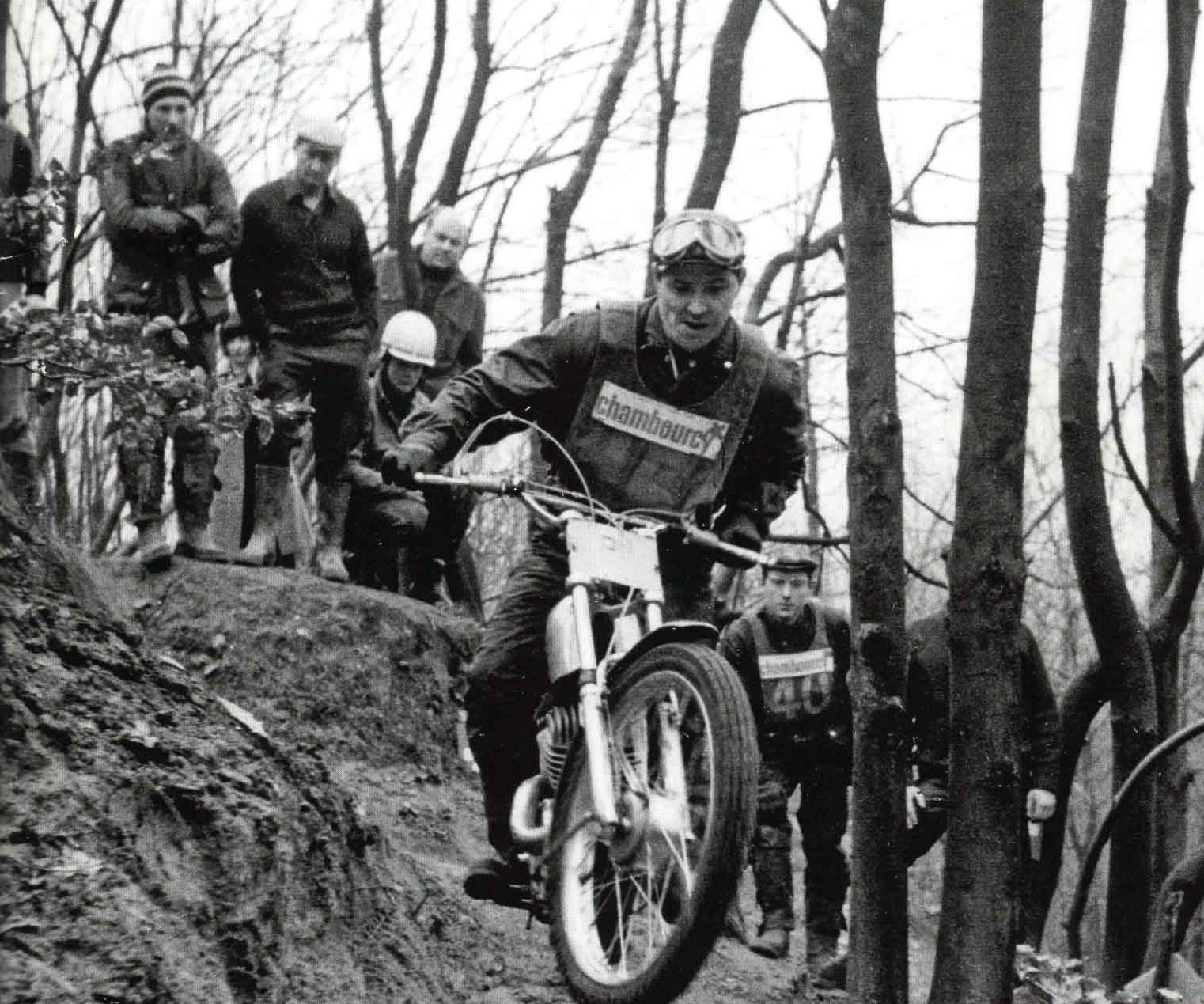
Since Trials Guru was founded in 2014, we have frequently mentioned Gustav Franke when celebrating the achievements of International trials riders. However, we have rarely been able to tell the story of Germany’s most successful trials rider, largely because so little information about him was available—until now.
Words: Steffen Ottinger; Trials Guru & Rainer Heise.
Photos: Gustav Franke Private Collection; Rainer Heise; Günter Sengfelder Archiv; Mike Davies; Phillip Hodges; Jason Batsford; Hartwig Kamarad; Barry Robinson; Jan Müller.
Acknowledgement: Trialsport Magazine, Deutschland.
In collaboration with both the respected motorsport author and enthusiast, Steffen Ottinger and well-known photojournalist Rainer Heise from Germany, we now bring you details of a rider that achieved much in his career, being a factory rider for Zündapp, the Bavarian motorcycle manufacturer that began production in 1917 founded by Fritz Ludwig Neumeyer in the city of Nürnberg.
Gustav Franke was born at Neudorf (Nowa Weis Mala), near Grottkau (now Grodków) in Upper Silesia. The German territorial borders were redrawn after 1945 and Silesia became part of Poland.
Very little was ever written about Franke in the UK motorcycling press of the time when he was actively competing in European trials. Especially events that featured in the Challenge Henri Groutars, from 1964 until 1967, which was to evolve into the European Trials Championship in 1968 and the fore-runner of the World Trials Championship in 1975. English rider, Don Smith on his factory Greeves is recorded as winning the inaugural challenge in 1964, but it was Gustav Franke that took the honours in 1965 and again in 1966 for Zündapp.
We will learn that Franke was a competitor who took his riding seriously, training and even carefully managing his nutrition.
Franke won the ‘Edinburgh Trophy’ in 1966 at the Scottish Six Days Trial for the best performance by a foreign rider. He finished in 42nd position on 114 marks on his 248cc Zündapp and a First Class award.
The other interesting fact is that Gustav Franke won the German Trials Championship no less than nine times in a career that lasted fourteen years.
Franke was runner-up in the Challenge Henri Groutars on three occasions, twice to Don Smith (Greeves and Montesa) and once to Sammy Miller MBE (Bultaco).
Trialsport:
We have been very fortunate indeed to be permitted to republish in English a comprehensive article on Herr Franke which first appeared in the highly respected German language magazine, ‘Trialsport‘ in issue number 501 of December 2017, at this time edited by Hans Greiner.
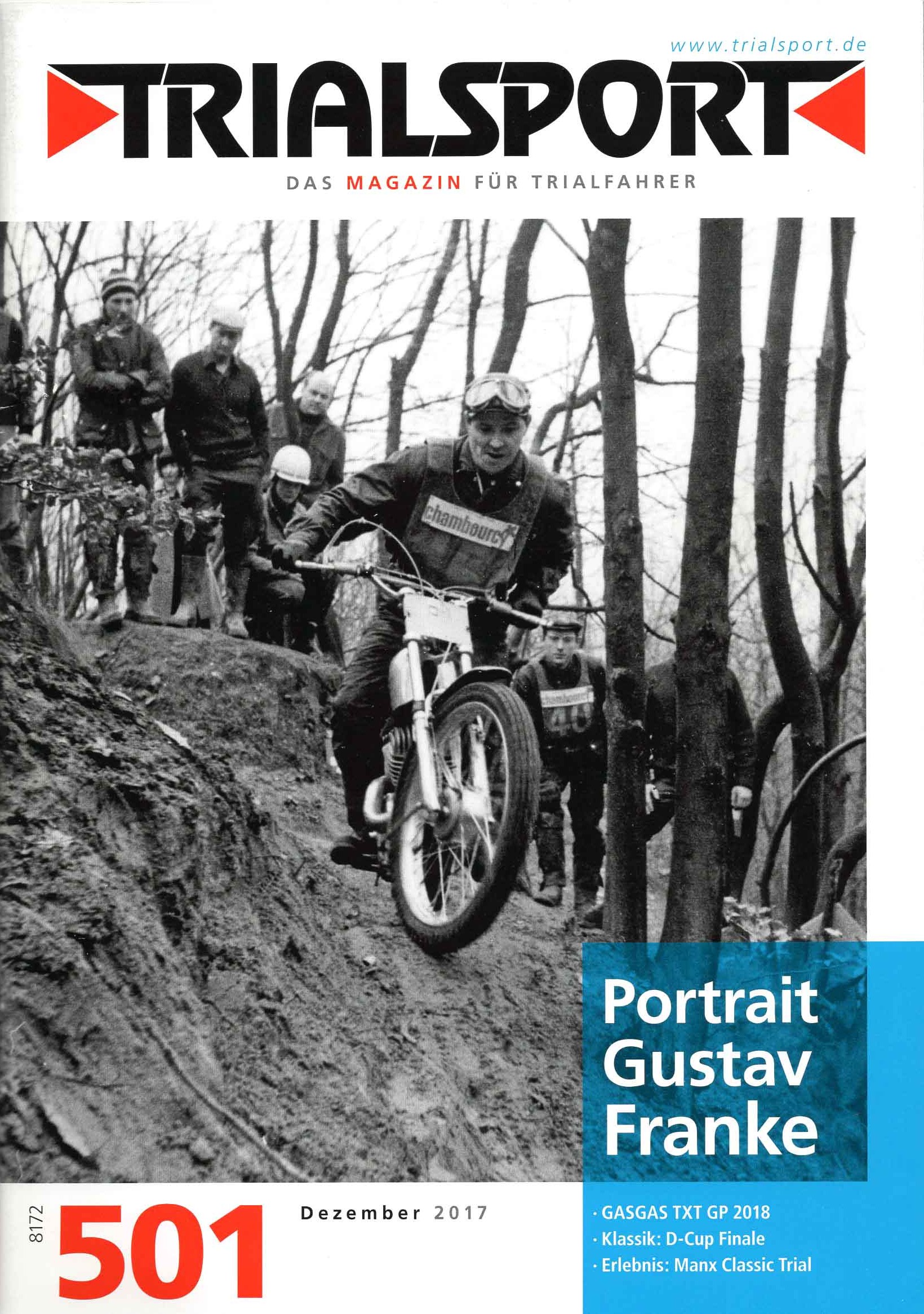
Trialsport magazine had reached a fantastic landmark with its 500th edition in November 2017. Originally the brainchild of ten times German Trials Champion, Felix Krahnstöver from Celle in 1976, the magazine has been the staple publication for trials news in Germany for over 50 years. But we went further – as Trials Guru often does. Using our ‘international friendships’ we have enlisted the help of Rainer Heise who adds extra details to our coverage, that readers will find very informative in both facts and the history of the sport.
Gustav Franke – the first European Trials Champion
– by Steffen Ottinger
World-Class in the Mid-1960s:
Gustav Franke is without doubt Germany’s most successful trials rider of all time.
During the 1960s, alongside the famous British riders Sammy Miller and Don Smith, he was one of the finest trials competitors in the world.
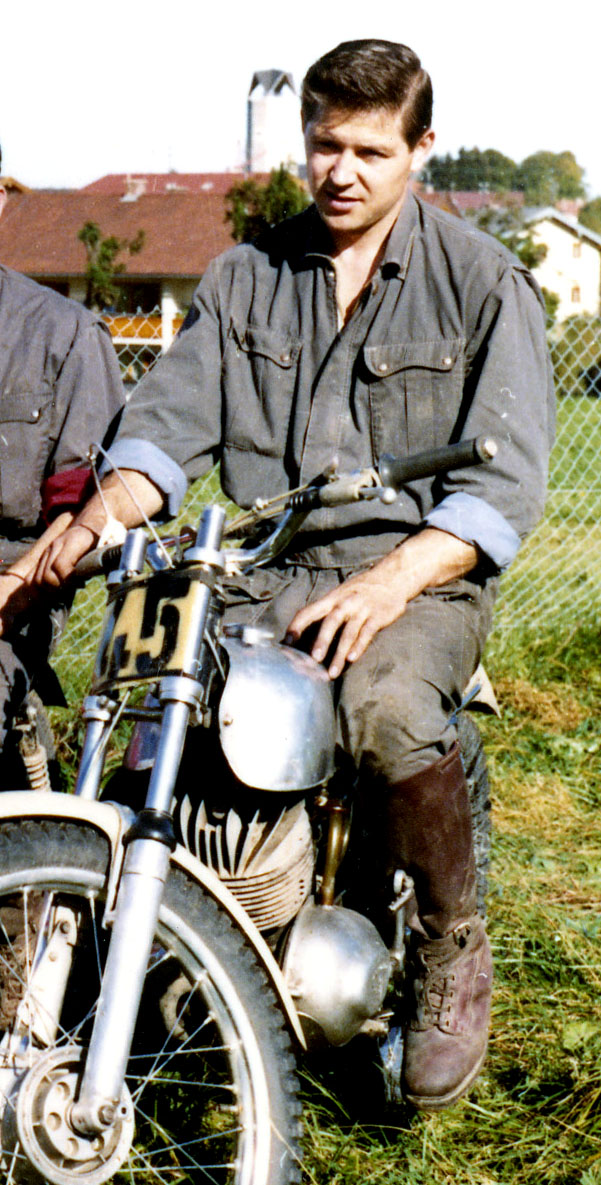
Gustav Franke was born on 4th December 1937 in Neudorf, near Grottkau in Upper Silesia. At the age of six, he, his parents and three siblings were expelled from Silesia following the Second World War. The family eventually settled in Stadeln, near Fürth in Bavaria.
Childhood Dream – Becoming a Boxer:
In his new home, Gustav trained as an automobile mechanic, a profession that led him into the world of motorsport. “Actually, I wanted to become a boxer, but my mother wouldn’t allow it” he recalled years later with a smile.
His next great ambition was to own a motorcycle. He saved diligently and, in 1953, bought a 125cc Hercules powered by an ILO engine.
His first modest trials competition came in 1957 with the Solidarität Motorcycle Club in Vach, riding a 175 cc Puch.
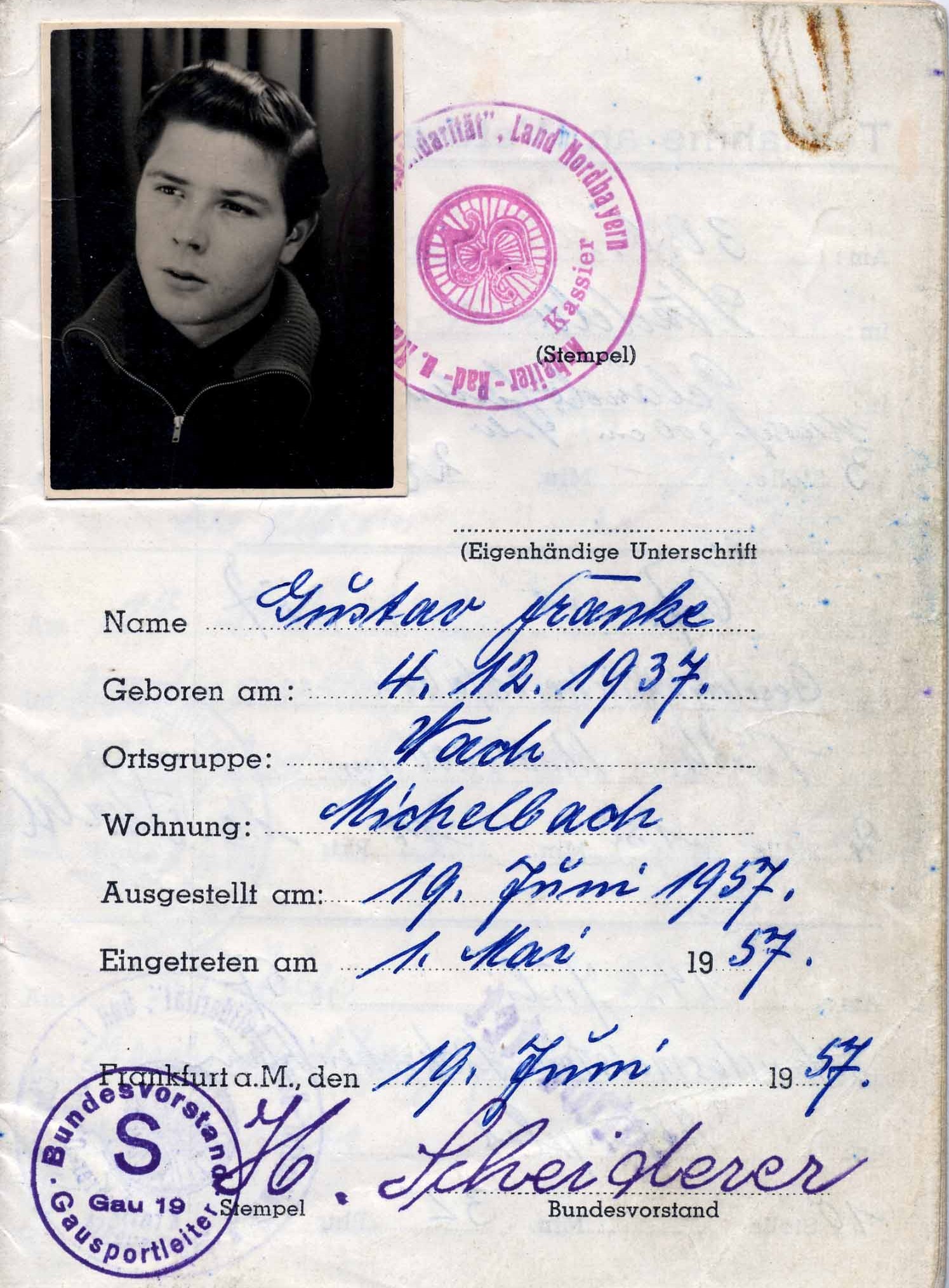
On 1st May 1960, Gustav won a gold medal in the second Aischgrund Reliability Trial. A few days later he competed in the Bayerns Berge Trial.
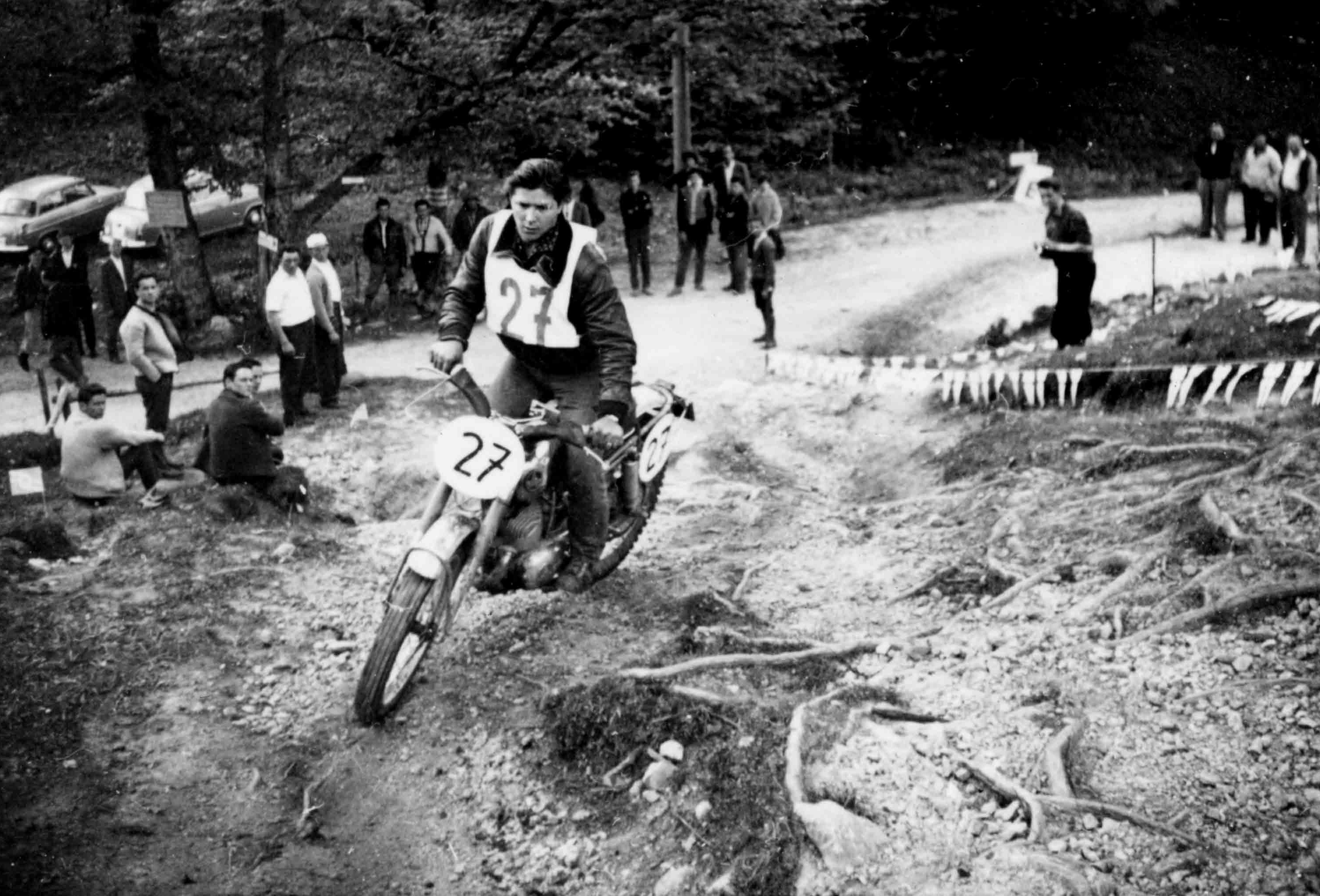
There he lined up against Germany’s leading riders, including Lorenz Specht, Volker Kramer, Günter Sengfelder and Siegfried Gienger, to name but a few.
By mid-June, after the fifth Roth Off-Road Trial, he stood on the podium of a major national event. Riding a 196cc Ardie, he finished third in Class III.
First Major Trial Victory at Bayerns Berge:
Bayrischzell in Upper Bavaria would become a lucky venue for the young rider from Stadeln, who had meanwhile acquired Hans Schlicht’s 250cc Zündapp.
On 22nd April 1961, at the 3rd ‘Bayerns Berge’ Trial, he achieved his first major victory.
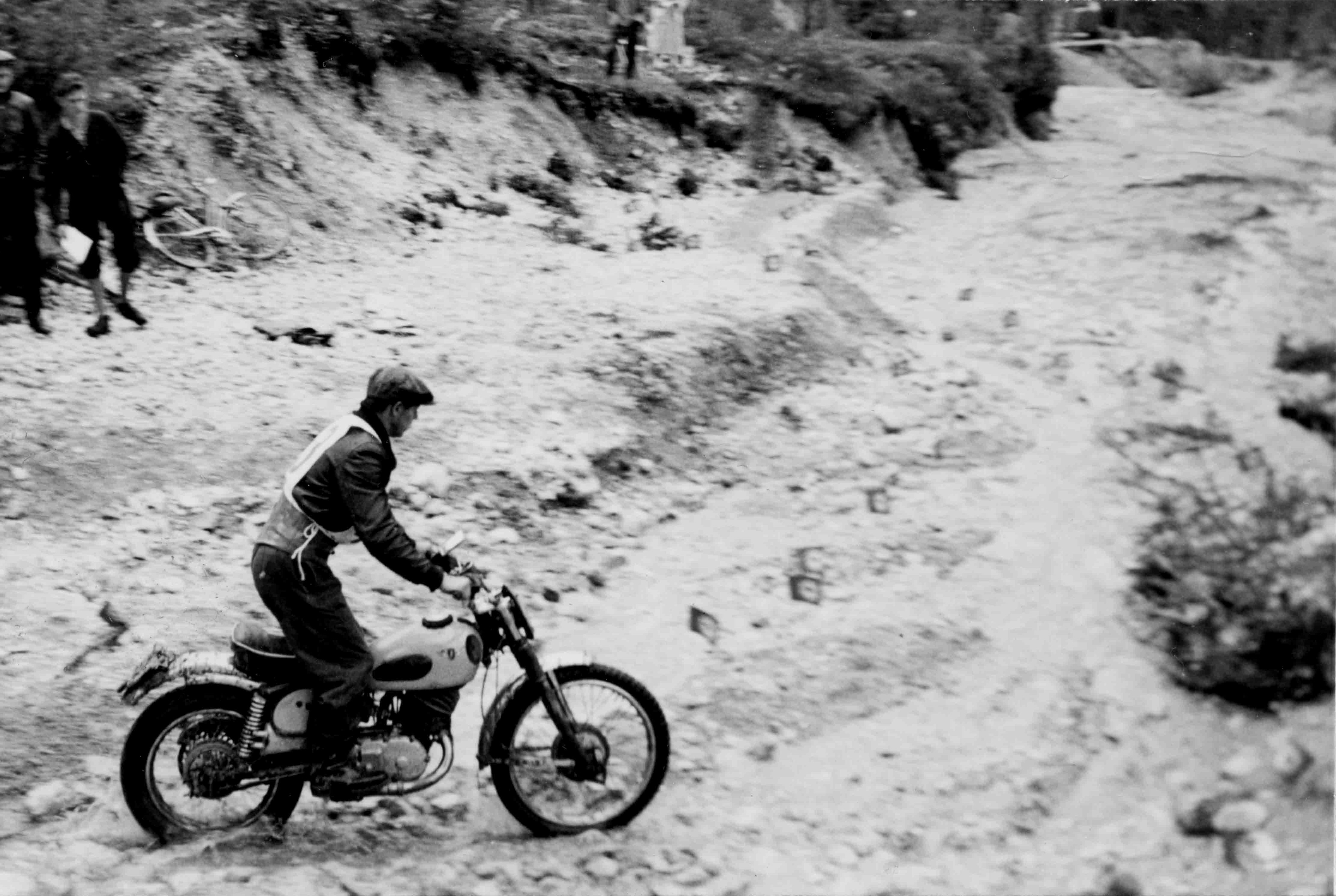
In the event, organised by the Munich Automobile Club under sporting director Wiggerl Kraus, Franke defeated Erwin Schmider, Richard Hessler and Hermann Bitzer—all already well-established names in motorcycle sport.
After the second and final round of the German Trials Championship at the end of July 1961, Gustav Franke ranked third overall in the over-200cc class. More impressive successes followed throughout the year.
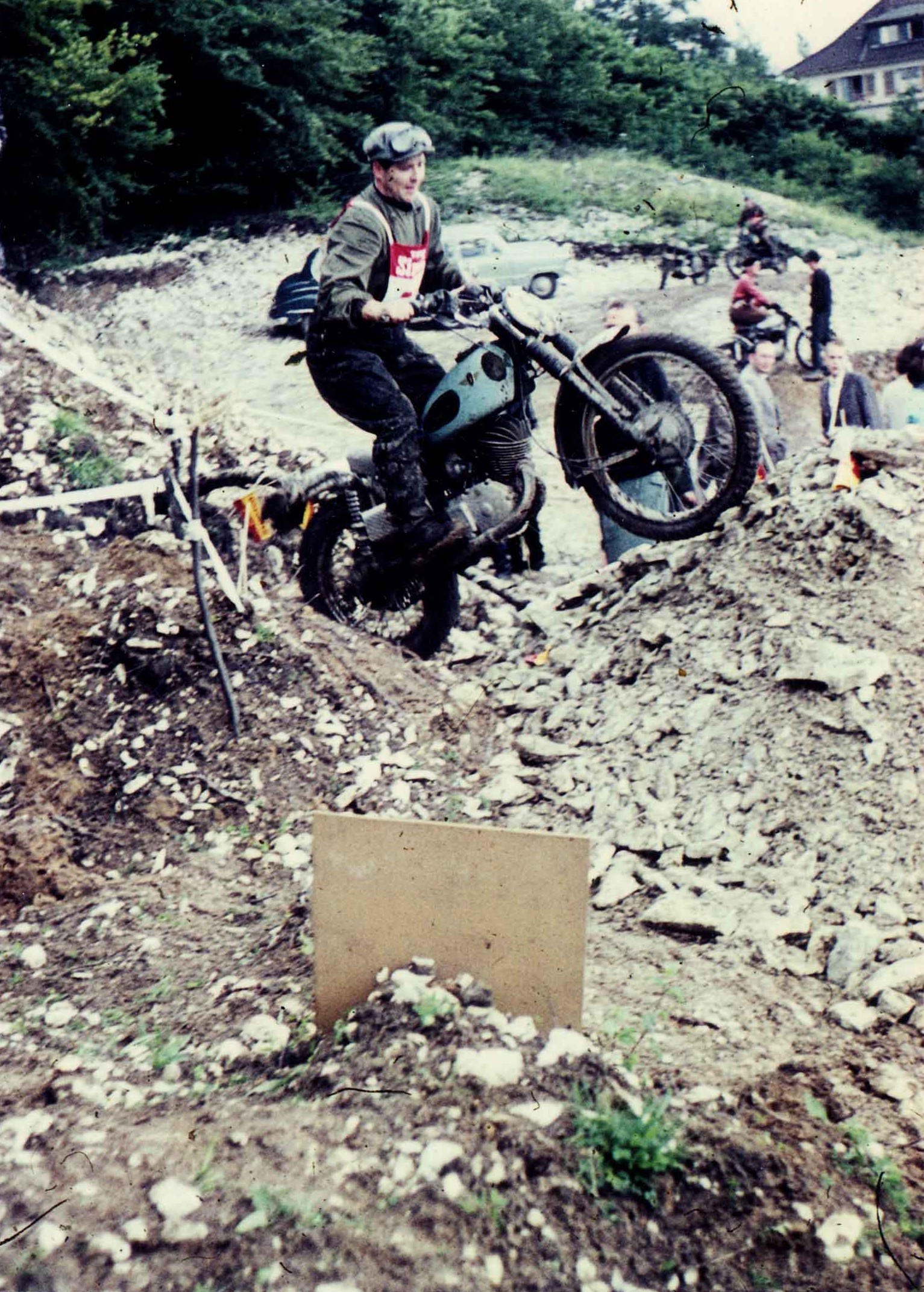
It was therefore only natural that, in March 1962, Gustav competed in Belgium’s traditional Lamborelle Trial, held near Brussels, not far from the historic battlefield of Waterloo. Georg Weiss, Zündapp’s motorsport manager, had taken notice of him. Franke did not disappoint, finishing as the second-best German rider in the Expert Class for smaller-capacity machines.

Three weeks later, he won the International Two-Day Trial at Holzkirchen, defeating reigning German champion Hermann Bitzer as well as the leading Swiss riders headed by Ruedi Wyss.
Further victories followed at Geroldseck, Schatthausen, the Westfalen-Lippe Trial, Altdorf, Garmisch-Partenkirchen, and in both championship finals at Lüneburg and Zirndorf.
On the afternoon of 30th September 1962, Gustav Franke became German Trials Champion for the first time.

Without interruption, he went on to win seven more national titles in the premier class through to 1969. After recovering from a foot injury, he returned once more in 1971 to claim another overall championship aboard a Zündapp.
Internationally, he continued his career in early March 1963 at the Belgian Lamborelle Trial, regarded as the ‘Mecca’ of continental European trials competitions. There he finished among the top ten.
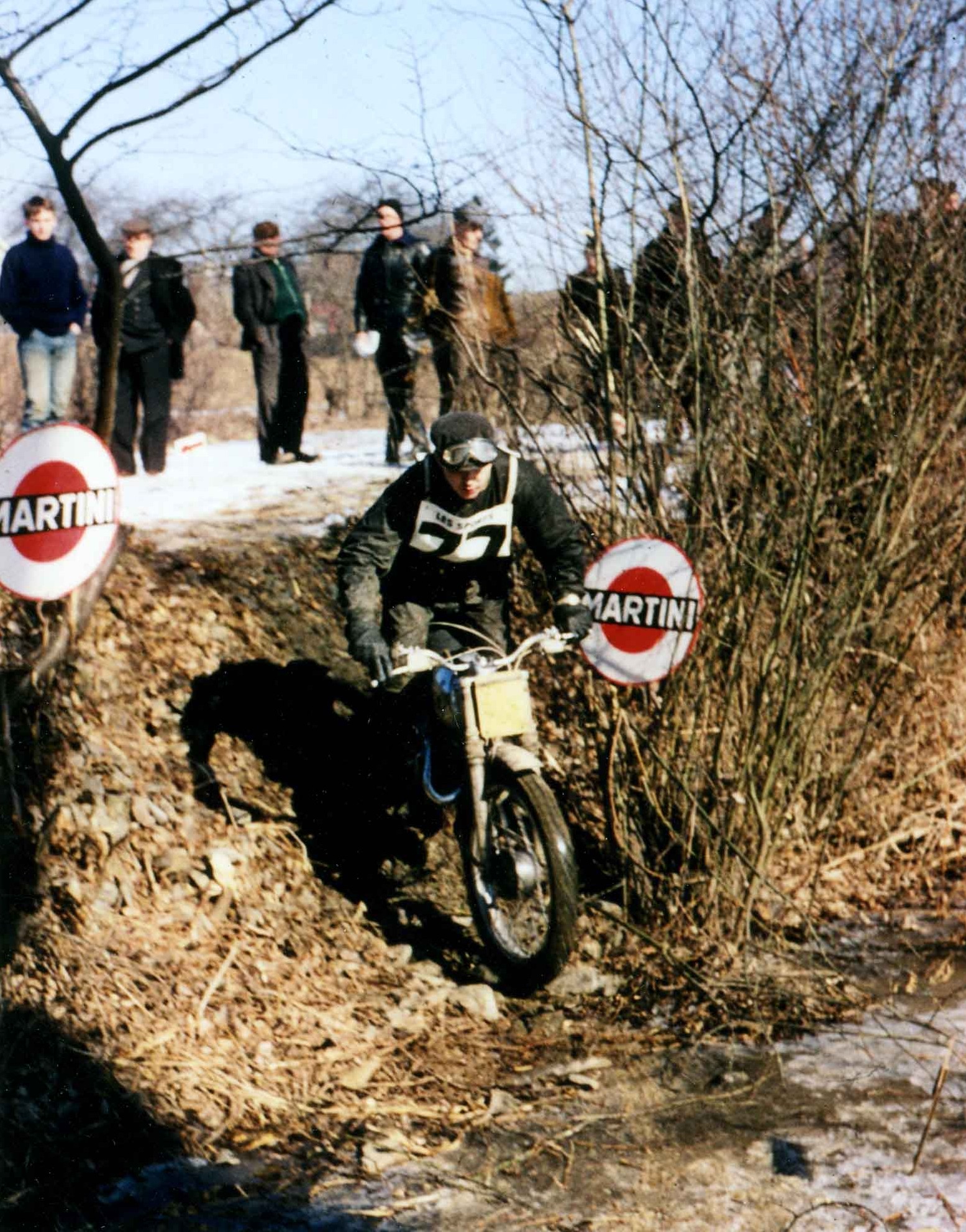
Behind the dominant Sammy Miller, three more British competitors —David Clegg, Bill Wilkinson and Don Smith—filled places among the top six. At that stage, the Ariel and Greeves riders from Britain remained the benchmark, and they were not yet to be beaten.

Private Overseas Entry – Victory at Montbéliard, France:
Gustav also competed in two trials in France. At the beginning of June, he travelled to visit Hermann Bitzer in Grosssachsenheim, near Stuttgart. From there, the two set off privately for Montbéliard. Alongside competitors from Belgium, the Netherlands, Great Britain and France, they were the only two German riders entered in the event organised by MC Sochaux.
More than fifty years later, Gustav recalled one unforgettable detail of that weekend: “Heavy rain in the preceding days had caused the River Doubs to rise by more than half a metre. Yet one of the sections was laid out right through the river. It descended via steps into the water and climbed back out over a series of traverses. I walked the section in my boots, even though I was soaked to the skin. Under the water, I placed a stone about twenty centimetres high in front of the lowest exit step. I asked the eighteen-year-old Belgian, Ickx to stand exactly there, so I wouldn’t miss the hidden stone. It worked perfectly.”
The young Belgian was none other than Jacky Ickx, who would later become a two-time Formula One World Championship runner-up, winner of the 1983 Paris-Dakar Rally, and six-time victor of the 24 Hours of Le Mans. He had begun his motorsport career in trials riding.
Gustav was probably the only competitor to complete this demanding section without a single penalty. Across all thirty-six sections, he accumulated just thirty-one penalty points.
Hermann Bitzer was forced to retire and only learned at the finish that a German had won the event. It was indeed Gustav Franke’s first international victory. He finished ahead of the highly popular local favourite Claude Peugeot and Dutch rider Henk Vink, while Jacky Ickx placed eighth on a 100cc Zündapp.
At the end of the year, Gustav also competed in the now traditional Saint-Cucufa Trial, west of Paris.
1964 – A Sensational Start to the Henri Groutars Challenge:
The 1964 season began in the depths of winter, on 12th February, when the Zündapp factory team travelled to Namur, Belgium, for the opening round of the Henri Groutars Challenge. This prestigious competition was the forerunner of the later European and World Trials Championships.
Gustav Franke produced a sensation. With only fourteen penalty points, he won the event ahead of future motocross legend Roger De Coster and Britain’s Don Smith. For the first time, a German rider had defeated one of Britain’s elite trials competitors.
Two weeks later, the Zündapp team continued to the famous Lamborelle Trial. Around one hundred riders entered once again, including leading British competitors. Although Sammy Miller was absent this time, Don Smith, Bill Wilkinson and M. Taylor all took part.
Gustav Franke won again, finishing ahead of Wilkinson, Andreas Brandl and Smith.
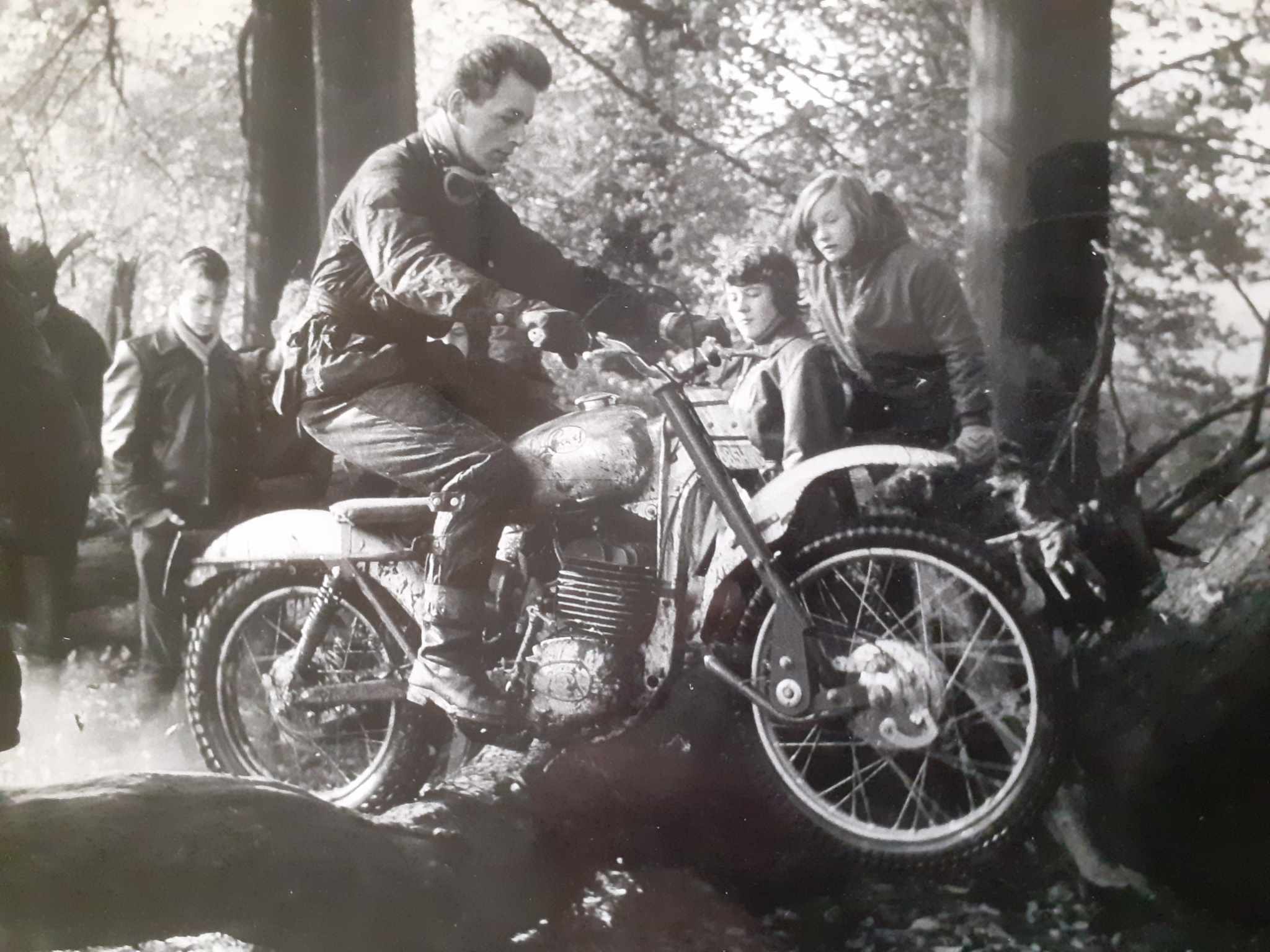
However, Don ‘Cigarette’ Smith—the English chain smoker who was famous for lighting up cigarettes even during the competition, sometimes while riding through a section—struck back in the remaining rounds of the Challenge. On 1st March he won at Clamart in France, and three weeks later at Senne near Bielefeld, he again finished ahead of Andreas Brandl and Gustav Franke.
As a result, Smith won the overall standings of the opening international trials series. Nevertheless, twenty-six-year-old Gustav Franke finished second overall, confirming his place among Europe’s very best riders.
During the remainder of the season, he also competed successfully in numerous reliability trials. By the end of the year, he had finished third in the German Off-Road Championship in the capacity class up to 75cc.
In 1959, the regulations had introduced a special trials classification, with Oberste Motorradsport-Kommission (OMK) Trials Medals awarded in gold, silver and bronze. In 1964, Gustav Franke earned the gold medal in his capacity class.
Preparation—and a Few Clever Tricks:
Anyone who knew the Silesian-born rider understood that his success was not based solely on exceptional natural talent. Gustav approached every competition with determination and meticulous preparation.
He trained hard almost every day—not only on his motorcycle, but also on a bicycle and through intensive gym workouts to improve both fitness and endurance. His diet, too, was carefully tailored to the demands of competition.
By the time he arrived at the start line, Gustav was often already drenched in sweat from warming up. He would quickly change into dry clothing before tackling the opening section fully focused and physically relaxed.
He had also learned a few useful tricks from the British riders. For the extremely slippery rocks and fallen tree trunks—especially during the winter months—as well as the large submerged boulders found in river sections, Gustav fitted hobnails to the soles of his boots, giving him significantly better grip on difficult terrain.
Gustav Franke Defeats ‘The King of Trials’ – Sammy Miller:
The highlight of 1964 was still to come.
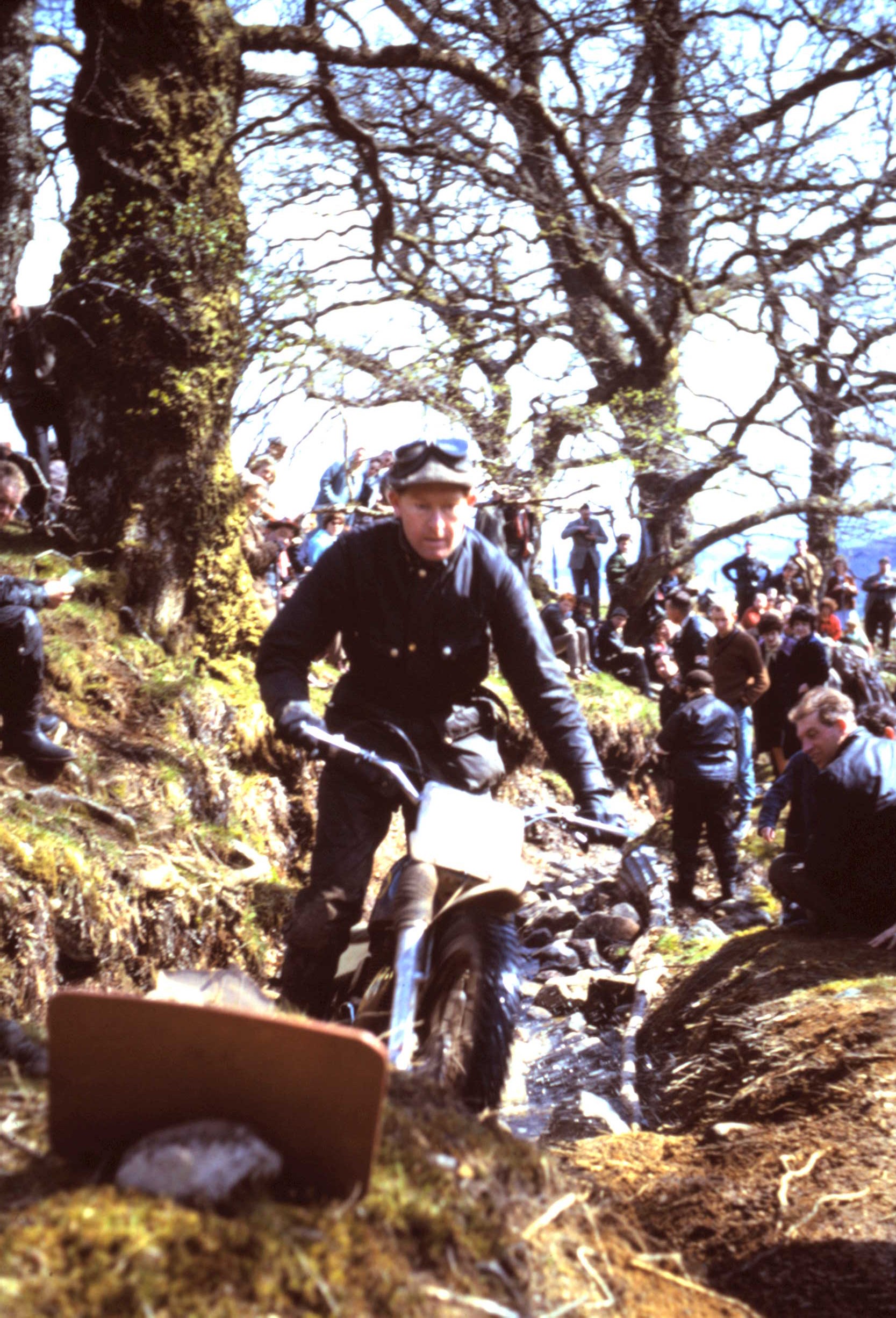
As he had done the previous year, Gustav travelled to Paris together with his Zündapp team-mates Günter Sengfelder and Andreas Brandl. On 15th November they lined up for the thirteenth A.M.S.C. International Trial of Saint-Cloud – Saint-Cucufa. For Gustav Franke, it would become the greatest success of his career to date.
For the first time, he defeated Sammy Miller, who was already regarded as a legend of the sport.
Although Gustav had already established a strong international reputation, Miller—coming from the ‘birthplace’ of trials riding—had by then won the Scottish Six Days Trial three times, claimed the Scott Trial on three occasions, and had dominated Belgium’s prestigious Lamborelle Trial every year from 1959 to 1963.
Franke finished level on points with the British ‘King of Trials,’ but won the event on a tie-break thanks to his superior performance in the final lap. Against a field of one-hundred and sixty riders from nine nations, his victory was nothing short of sensational in the world of trials riding.
Dominating the 1965 Henri Groutars Challenge:
Gustav carried his outstanding form into the following season.
The opening round of the 1965 Henri Groutars Challenge took place on 21st February, once again in the Paris area, this time at Clamart, only ten kilometres from Saint-Cloud.
Franke won convincingly ahead of Bill Wilkinson, Alfred Lehner, Don Smith, Günter Sengfelder, and Andreas Brandl. Around twenty-thousand spectators watched the remarkable performance of the German Zündapp team.
Just one week later, the second round was held at Braine-le-Château, near Brussels. Once again, the winner was Gustav Franke. He was followed by fellow Zündapp riders and compatriots Siegfried Gienger and Andreas Brandl.
When the final standings were calculated, three Germans occupied the top three places. Gustav Franke comfortably secured the Henri Groutars Trophy, followed by Andreas Brandl and Günter Sengfelder. Fourth place went to another Zündapp rider—the Belgian Jacky Ickx.
Later that season, Gustav won the International Trial of Sancerre, held on the Loire River in central France, before returning to Germany to compete successfully in several reliability trials.
Second Henri Groutars Title – Forerunner of the European and World Championships:
The third season of the Henri Groutars Challenge began on the 3rd October 1965 with the International Westfalen-Lippe Trial near Bielefeld.
Following a dispute after the 1964 event, Zündapp had officially decided not to enter a factory team. However, Gustav Franke was determined to defend his title and therefore competed regardless. He fully justified the confidence placed in him, winning convincingly ahead of Hans Cramer on a Maico.
The second round took place in mid-November at the International Saint-Cucufa Trial near Paris. This time, the British riders dominated. Sammy Miller, now riding a Spanish Bultaco, won ahead of Don Smith and Gordon Blakeway.
Franke was still recovering from a torn meniscus. Despite finishing only thirteenth, he earned five championship points, enough to retain the overall championship lead. The decisive final took place on 23rd January 1966 at Dison, near Liège.
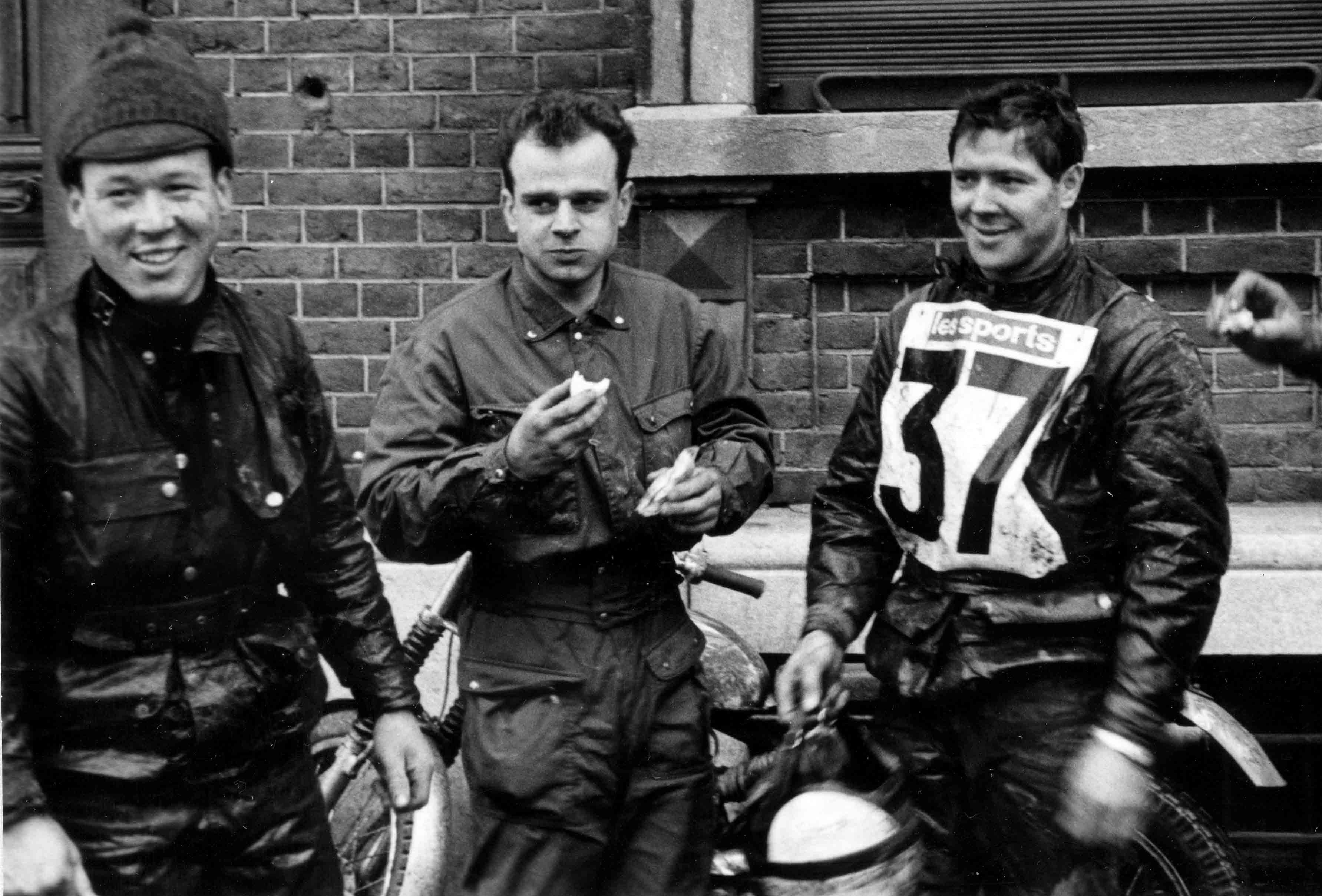
Although Don Smith won the event itself, Gustav Franke once again achieved something remarkable – he finished ahead of Sammy Miller, beating the British champion by four penalty points.
In front of more than ten-thousand spectators, the competition was decided during the second lap. Gustav climbed from sixth place to second after recording just fourteen penalty points, compared with twenty-two for Smith and thirty-one for Miller.
This result enabled Gustav Franke to retain his lead over Don Smith in the overall standings and to win the Henri Groutars Challenge for the second consecutive time—the competition that effectively served as the unofficial European Trials Championship.
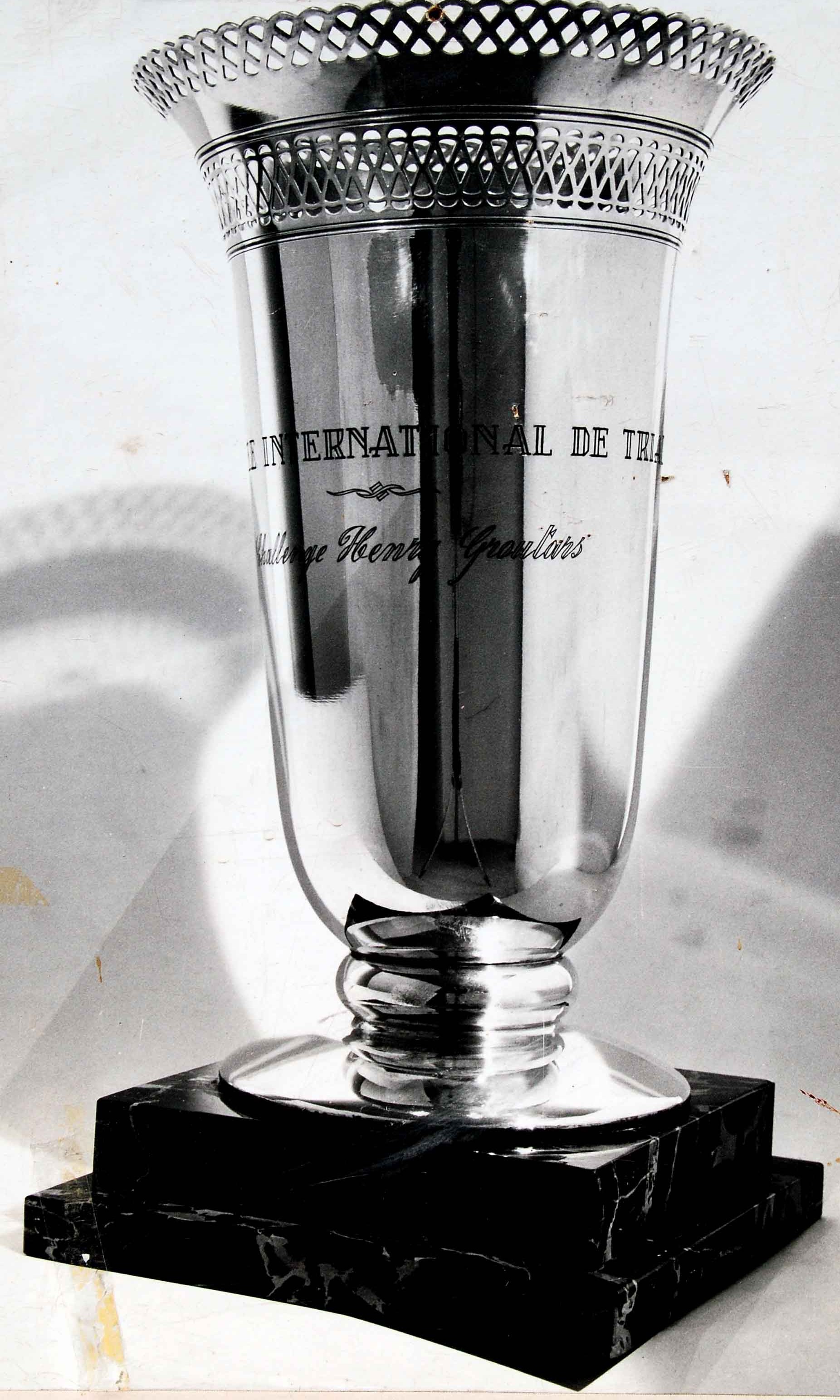
In 1967, the series was formally recognised and elevated to official European Championship status.
Competing in the Legendary Scottish Six Days Trial:
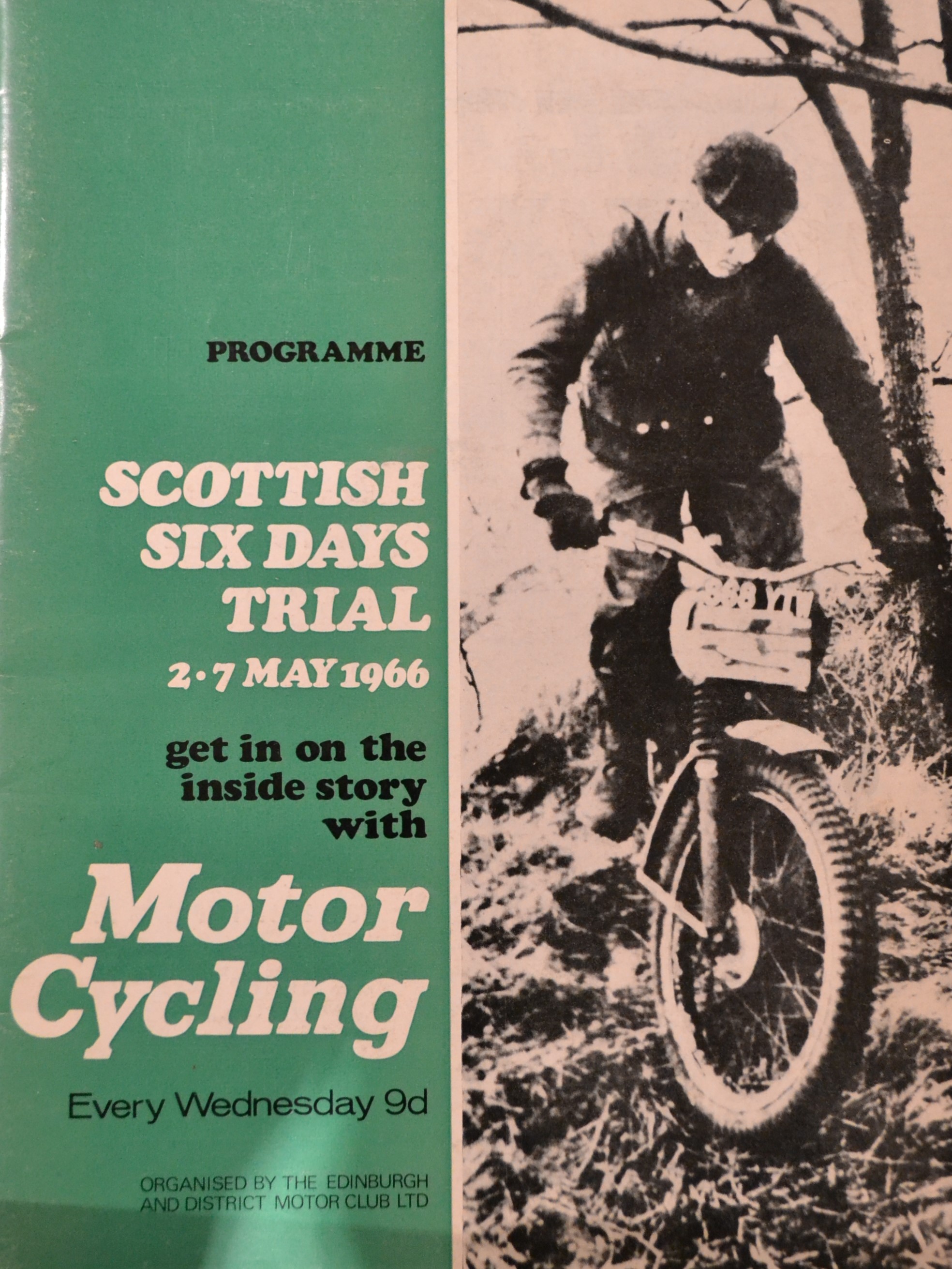
After successfully defending his victory at the Trial of Sancerre in France at the end of March 1966, Gustav Franke was soon drawn to an even greater challenge: the International Scottish Six Days Trial (SSDT). The event, held in the far north of Scotland, was being staged for the 47th time.
Carl Jurisch, the first German ever to compete in this historic trial back in 1937 on a 250cc DKW, supplied Gustav with a pair of suspension units from his own manufacture and asked him to fit them to the Zündapp.
In the days leading up to the event, Franke encountered several technical problems with his machine. He even worked on his motorcycle aboard the ferry to the UK—secretly, as all passengers were actually supposed to remain on deck.
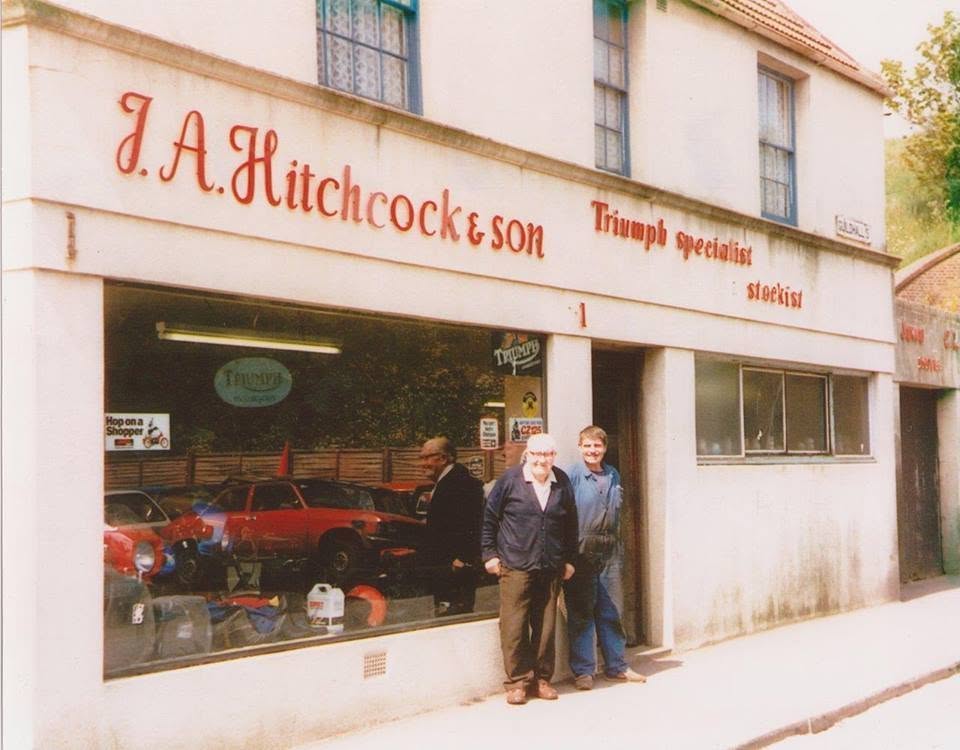
Don Hitchcock, a rider from Folkestone who was one of Gustav’s rivals in the sections, but a remarkably helpful sportsman away from the competition, assisted him in obtaining a replacement flywheel.
Finally, on Monday 2nd May 1966, Gustav took his place on the starting line alongside around two-hundred competitors in Edinburgh.
Unfortunately, he crashed on the second day of the trial. From then on, he rode cautiously, determined above all to complete all six days of the event. He eventually finished in a respectable forty-second place overall.
After covering more than 1,500 kilometres and completing 180 observed sections, he accumulated 114 penalty points, enough to secure the ‘Edinburgh Trophy for the best performance by a foreign rider.
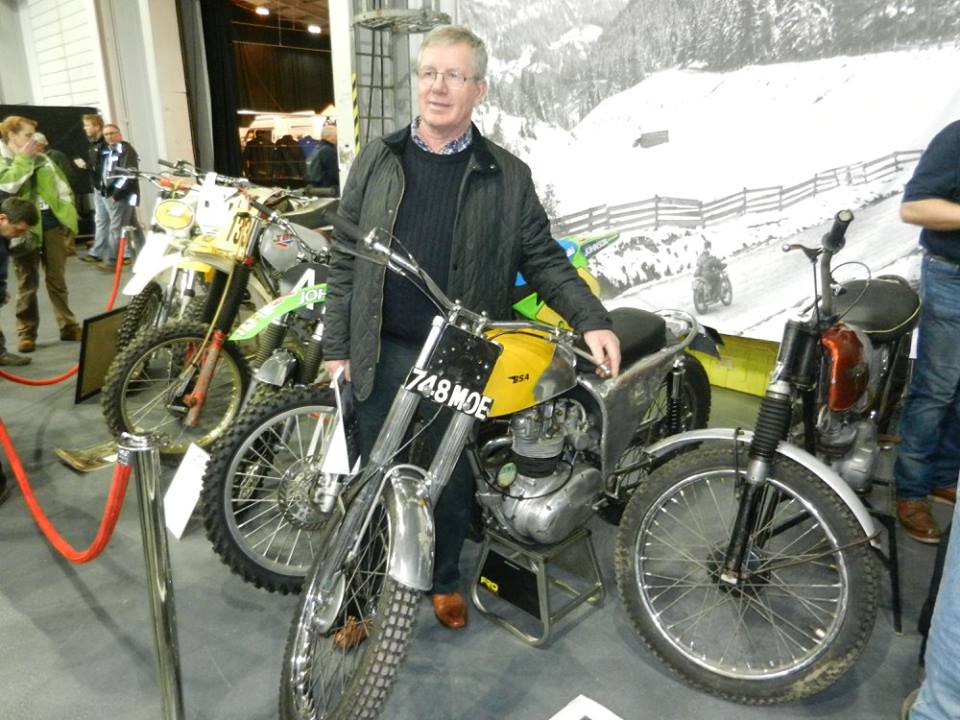
Unusually, the overall winner was not Sammy Miller but Alan Lampkin (BSA), brother of Arthur and Martin Lampkin. Miller finished second after collecting four more penalty points than Lampkin.
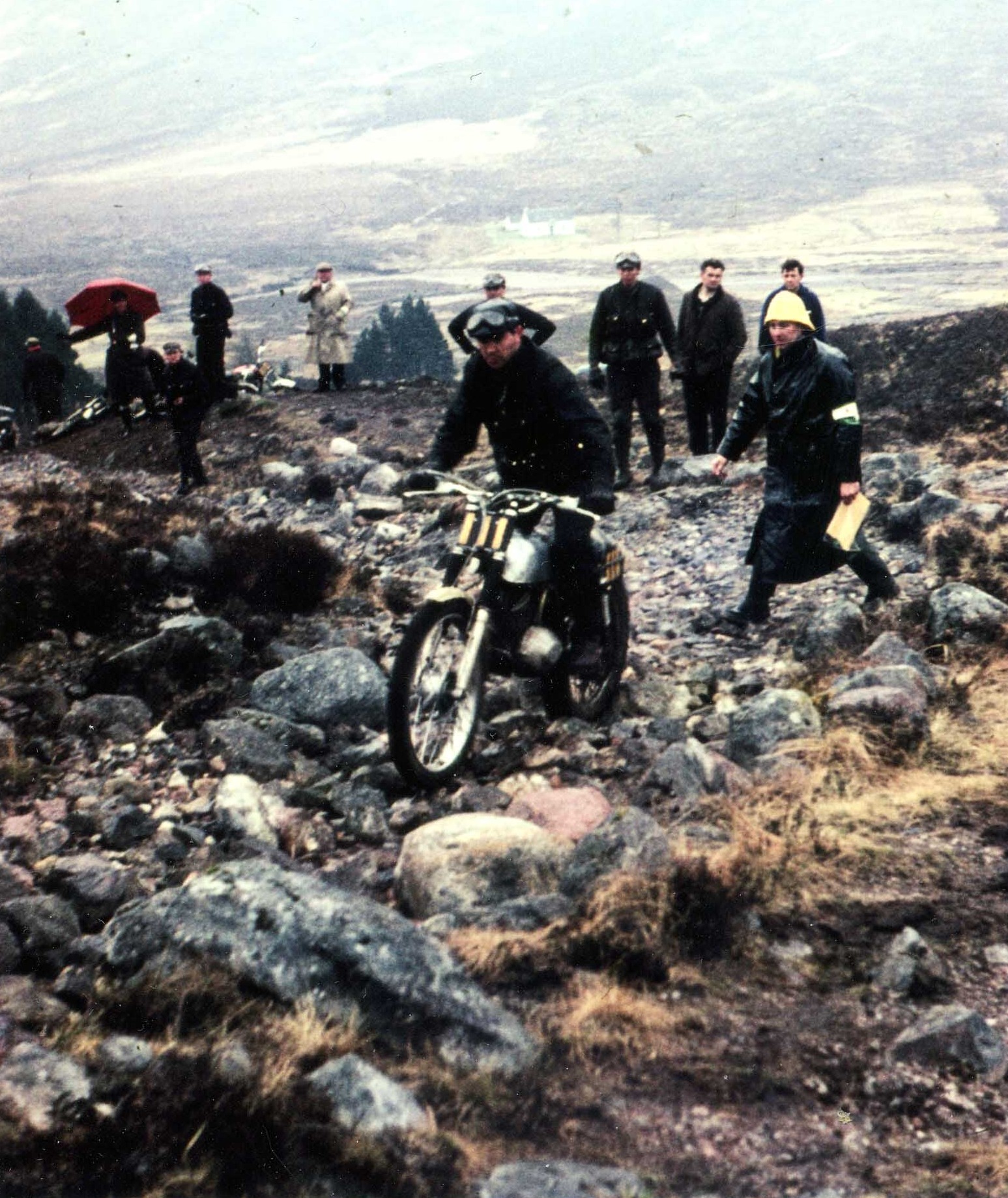
Looking back sixty years later, Gustav Franke reflected: “Despite the dreadful weather in the north of Scotland, it remains one of the finest experiences of my sporting career. For any active rider, the Scottish Six Days Trial has a unique attraction—but it is also an enormous challenge.”
His performance in the ‘homeland’ of trials riding earned Gustav Franke great respect and many admirers.
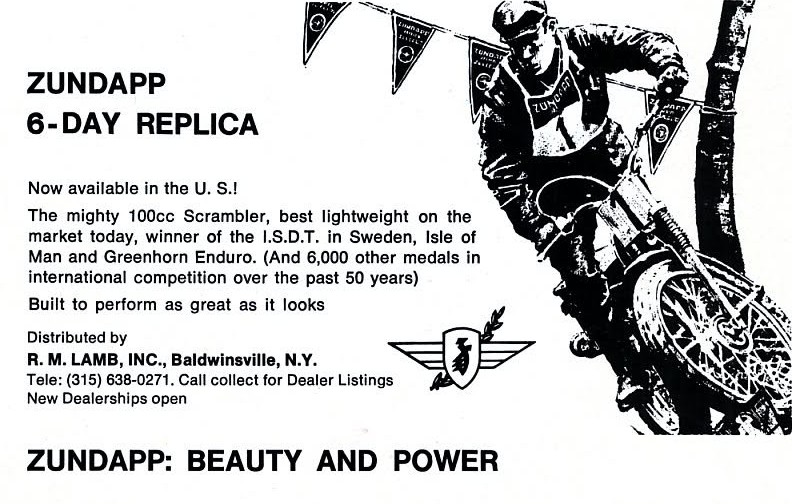
Runner-Up in the First Official European Championship:
Following several domestic competitions, the third International Swiss Alpine Trial at Oberiberg on 2nd October 1966 marked the opening round of the 1966-67 European Championship season.
Franke finished in third place, behind Don Smith and local favourite Ruedi Wyss.
One week later, the second major event of the series was held at Dison, Belgium. Smith won again, while Gustav was edged into third place by just one point by his friend Günter Sengfelder.
After a two-week break, the championship continued with the Westfalen-Lippe Trial near Bielefeld. Only the first day’s results counted towards the European Championship. Andreas Brandl won aboard a 100cc Zündapp, ahead of Smith, Franke and Sengfelder.
The championship finale was not held until 9th April 1967, once again in Sancerre, France. Having won there in each of the previous two years, Gustav appeared to be the favourite. This time, however, he had to concede victory to the young twenty-one year-old British Greeves rider Gordon Farley.
Although Franke comfortably finished ahead of his long-time rival Don Smith, Smith became the first official European Trials Champion in history.
Gustav Franke finished the inaugural European Championship as runner-up, followed by Andreas Brandl and Günter Sengfelder.
Before the championship finale, Gustav had also competed successfully in the prestigious trials at Clamart, near Paris, and the famous Lamborelle Trial in Belgium, even though victory narrowly eluded him.
Speaking about these events, Gustav later recalled: “The atmosphere at those competitions was incredible. Some sections were lined with thousands of spectators. Whenever a rider completed one without a single penalty point—regardless of which country he came from—he was rewarded with applause and deafening cheers.”
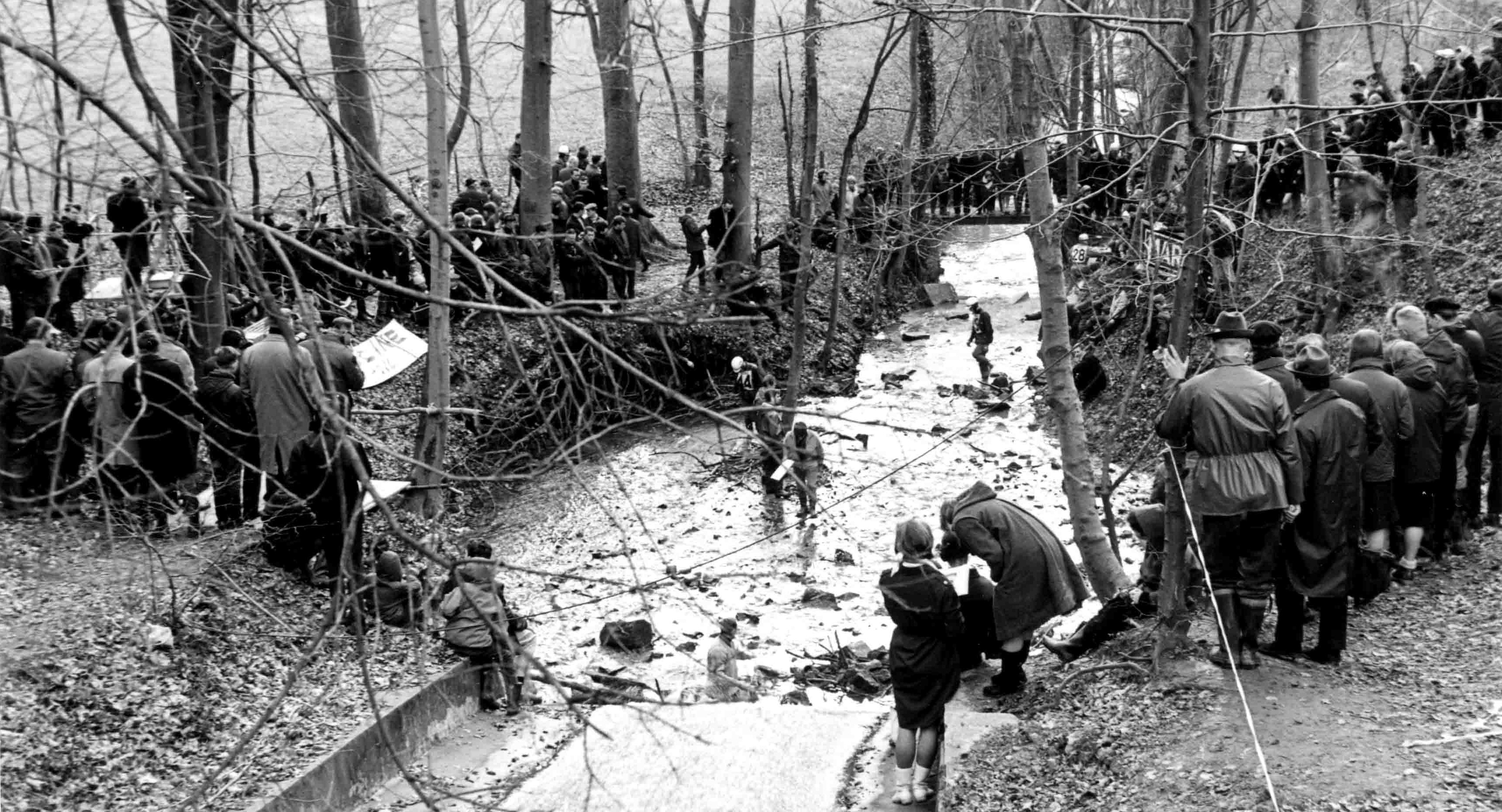
Runner-Up Again Behind Sammy Miller:
The 1967/68 European Championship began on 1st October with the fourth Swiss Alpine Trial at Oberiberg.
The podium was an all-British affair, Sammy Miller won ahead of Bill Wilkinson and Don Smith, while Gustav Franke finished fourth. As events unfolded, Miller contested the entire championship aboard his Bultaco, winning all five rounds.
Three weeks later, at the International Franconian Trial near Kronach, Miller again defeated Franke.
After further rounds at Dison and Clamart—where Gustav finished fourth and fifth respectively—the championship moved to Ashford in Kent, about sixty miles southeast of London, for the final in late April 1968.
Competing in the very birthplace of trials riding, Gustav Franke once again demonstrated his exceptional ability.
Before a crowd of approximately fifteen-thousand spectators, he rode a typically British course and completed thirty-one of the forty sections clean.
Only the seemingly unbeatable Sammy Miller finished ahead of him.
Franke left Gordon Farley, Don Smith, Bill Wilkinson and many other leading riders behind, earning second place and becoming European Vice-Champion for the second time.
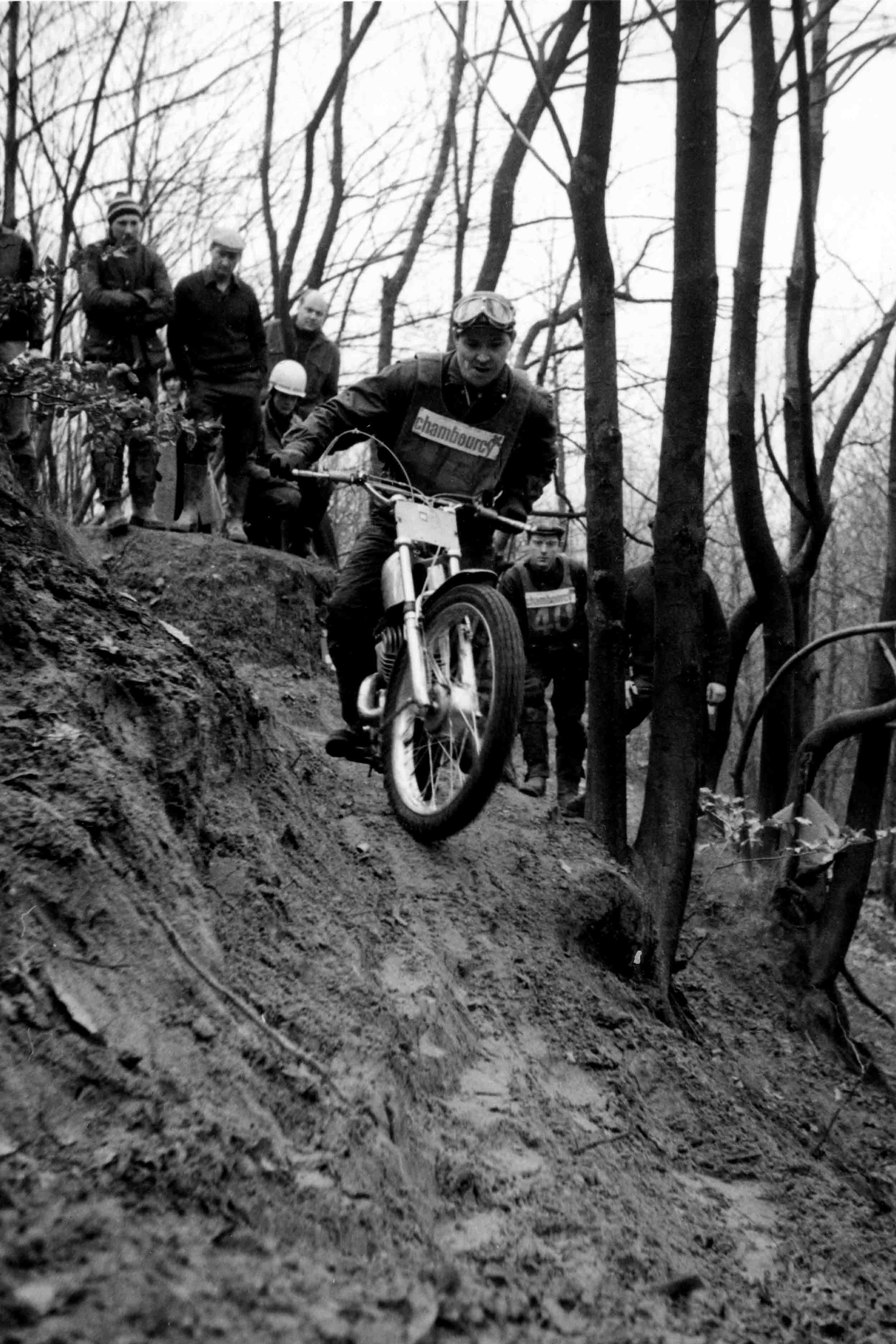
Before the finale, Gustav had once again competed at Lamborelle in Belgium and in two French events. Having already won at Sancerre in 1965 and 1966, he claimed victory there once more.
Victory at the Home European Championship Round:
The fifth Swiss Alpine Trial at Oberiberg, in the Swiss canton of Schwyz, opened the 1968/69 European Championship on 13th October. Gustav finished fifth, two penalty points ahead of Switzerland’s Ruedi Wyss.
After an eleventh-place finish at Montbéliard, France, he arrived highly motivated for his “home Grand Prix” near Bielefeld on 3rd November.
His goal was clear: to defeat the increasingly competitive foreign riders on Spanish Montesa machines and the emerging Japanese Suzuki and Honda motorcycles. He achieved exactly that.
Riding his faithful Zündapp, Gustav narrowly defeated the British riders Don Smith and Dennis Jones, winning the European Championship round. In mid-January 1969, he finished fifth at Dison, Belgium.
In the final European Championship standings, Gustav Franke placed fourth overall, behind the British trio of Don Smith, Dennis Jones and Sammy Miller.
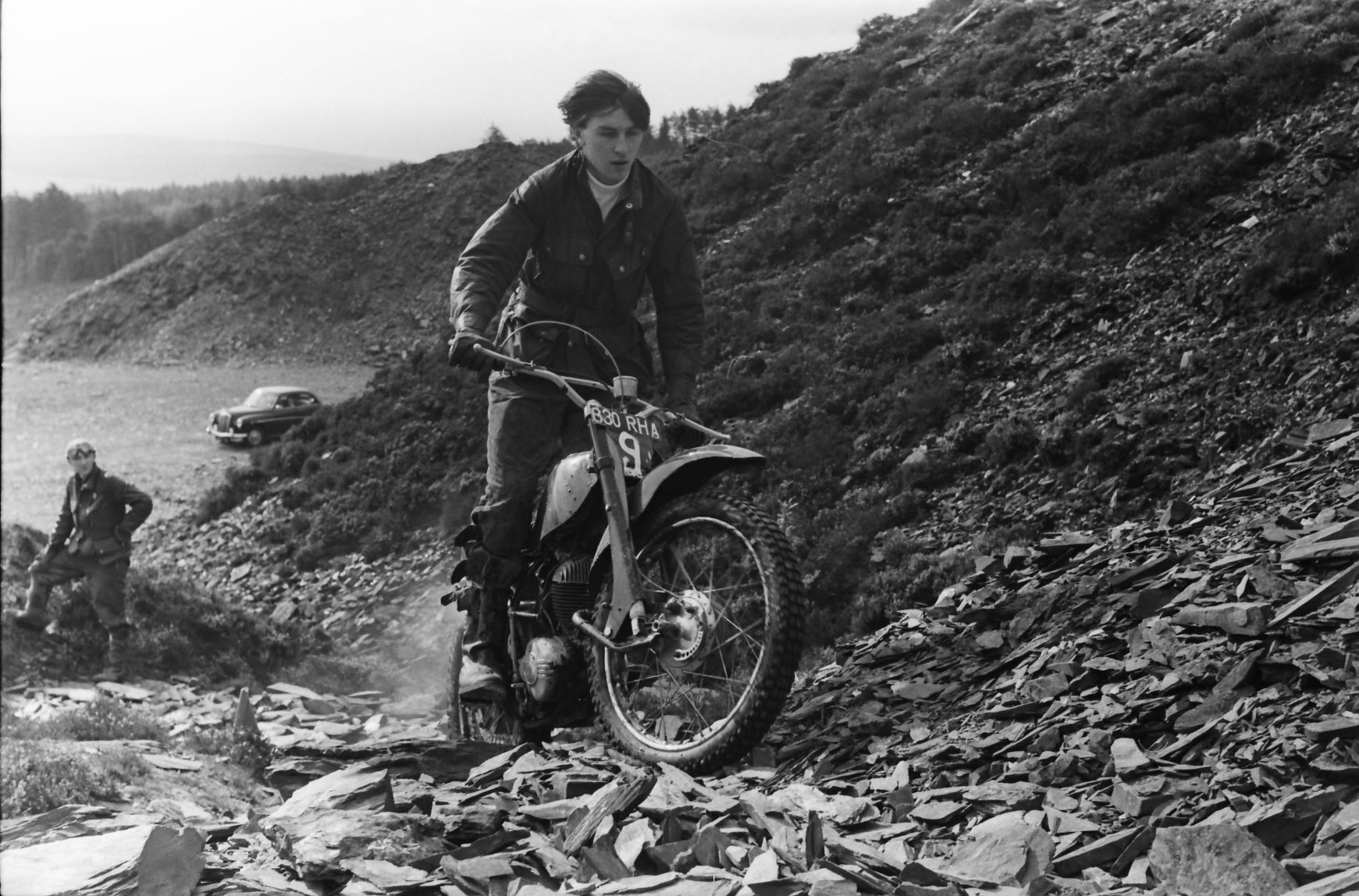
In February 1969, he again recorded excellent results at both the Lamborelle Trial and the International Trial at Clamart.
A Serious Accident Ends an Era:
On 19th October 1969, Gustav competed in the Franconian Trial near Kronach, the opening round of the 1969/70 European Championship. Despite finishing seventh, he was once again the highest-placed German rider.
However, early in the penultimate lap, tragedy struck. While travelling between two sections, his foot caught on a boundary stone, throwing him from the motorcycle.
Sammy Miller—like most British riders fiercely competitive during events but friendly and helpful away from the sections—helped Gustav back onto his Zündapp.
Despite severe pain, Franke fought on and completed the trial. Inevitably, he incurred an unusually high number of penalty points during the remainder of the event.
Immediately after crossing the finish line, he was taken to hospital. Doctors diagnosed an open fracture of three metatarsal bones in his foot. The injury sidelined Gustav for several weeks.
A Strong Return:
Gustav returned to international competition remarkably quickly. On 22nd February 1970, he lined up for the International Trial at Clamart. He immediately demonstrated that he had lost none of his ability.
Finishing fourth, he beat leading riders including Britain’s John Harris and the French competitors Christian Rayer and Claude Coutard, proving that he remained among Europe’s elite despite his serious injury.
Third Consecutive Victory in the International Alpine Cup – August 1970:
Gustav Franke also took part in the opening rounds of the 1970/71 European Championship season.
At the end of October 1970, he lined up on his Zündapp at Ebstorf, near Uelzen in northern Germany, and demonstrated that he had lost none of his remarkable trials ability. Riding two laps of twenty-two observed sections, he incurred only thirty penalty points, earning second place behind Britain’s Mick Andrews, who was riding the Spanish Ossa.
In February 1971, Gustav made his final appearance at Clamart, near Paris. He completed forty-five sections while conceding just eight penalty points. Nevertheless, three British riders and Jean-Marie Lejeune, the elder brother of future three-time World Champion Eddy Lejeune and finished ahead of him.
He bade farewell to Sancerre, the venue of three of his international victories, with an unfortunate second-place finish. Gustav and Lejeune ended the event on identical scores, but the Belgian was declared the winner because he had ridden one more section clean.
On the final day of May, at Oberdiessbach near Bern, Switzerland, Gustav was beaten for the first time in a European Championship event by the emerging younger generation of German riders. Both Felix Krahnstöver and Reinhard Christel finished ahead of him.

That was hardly surprising. After a long and exceptionally successful career, Gustav was now thirty-three years old, while his German teammates were only in their early twenties.
Yet neither Krahnstöver and Christel nor any of the German riders who followed them would ever again reach the front ranks of international trials competition.
For Gustav Franke, his appearance in Switzerland—and his final ninth place in the European Championship standings—marked the end of his international career.
He had earned the respect of the world’s best, challenging and often defeating the leading riders from Belgium, France, the Netherlands, Sweden and Switzerland—and even the seemingly invincible British stars.
By then, many of his greatest rivals, including Sammy Miller, Don Smith, Bill Wilkinson, and his Zündapp teammates Andreas Brandl and Günter Sengfelder, had also disappeared from the European Championship results. Their finest years were behind them, and Zündapp had withdrawn its official factory support from the sport.
In summary, one conclusion is both justified and unavoidable – Gustav Franke was the greatest German trials rider of all time. He also remains the only German rider to have consistently defeated the seemingly unbeatable British elite in international competition during the 1960s, placing him firmly among the very best trials riders in the world.
As mentioned earlier, Gustav added one final title to his remarkable record in 1971, winning the German Trials Championship for the ninth time, once again aboard a Zündapp.
He then brought his competitive trials career to a close.
Success and honours after his competitive Trials career:
Even after retiring from top-level trials, Gustav Franke never lost his passion for motorcycles. In 1979, riding a Bultaco, he competed in the OTP Seniors Cup.
His long-time coach and mentor, Willi Häpp of TMC Noris Nürnberg, pointed out that Gustav needed only a few more points to qualify for the gold motor sports badge with Diamonds, the highest distinction awarded in German motorsport.
Gustav responded by winning six of the eight rounds, securing both the Seniors Cup and the prestigious award.
Several years later, he changed disciplines completely and began racing classic road motorcycles. In 1992, he became German Champion.
Ten years later, at almost sixty-five years of age, he captured another German Championship while riding a 350cc Aermacchi in the Classic Motorcycle Grand Prix at the Hockenheimring. The Italian racing machine reached speeds of almost 200 km/h—a world apart from the slow-speed precision of trials riding, where balance and technical skill are paramount.
Gustav had painstakingly restored these motorcycles himself by hand, making it only natural that he would also want to race them. In 2012, he restored a 1938 Zündapp DS 350 for the Museum of Industrial Culture in Nürnberg.
Even today, he continues to restore historic motorcycles in the workshop behind his home, remaining faithful to the passion that began more than seventy years ago with his first 125cc Hercules.
More on Steffen Ottinger:
The author of this article, Steffen Ottinger, also wrote a comprehensive history of German trials riding, beginning with the very first Scottish Six Days Trial in 1907:
German Trials Riding – World-Class in the 1960s
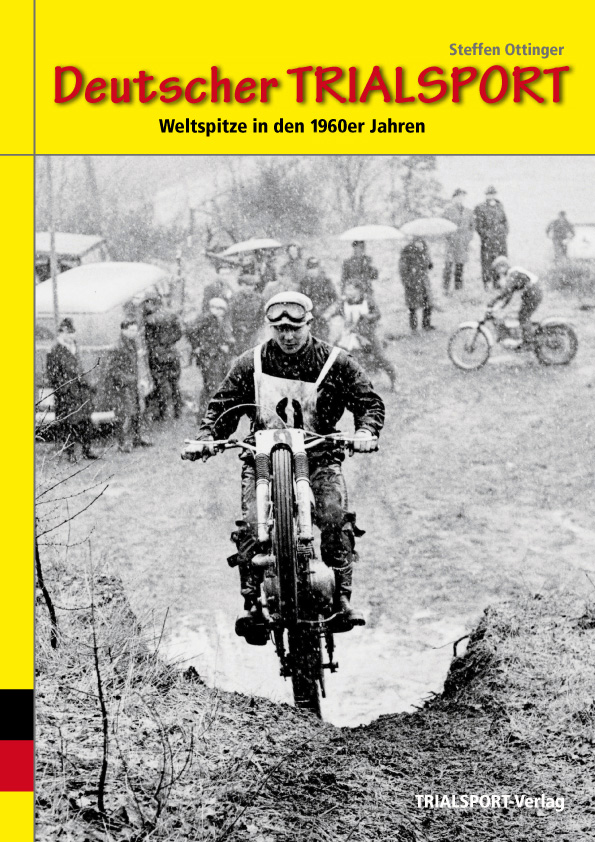
While the book covers the origins and development of trials riding, its principal focus is on the evolution of the sport in Germany and, above all, on the extraordinary international successes achieved during the mid-1960s.
Alongside Gustav Franke, Günter Sengfelder and Andreas Brandl were among the riders who established Germany as one of the world’s leading trials nations during that era.
To produce the book, Ottinger spent several years gathering material, collecting contemporary reports, official results, photographs and other historical documents. As the Gustav Franke story demonstrates, he maintained close contact with many of the leading figures of that remarkable period.
The author has previously published several specialist books on motorcycle sport. Further information is available at: www.motorsport-geschichte.de
Editor’s Note:
It should be noted that almost all of Steffen Ottinger’s books are now out of print, including German Trials Riding – World-Class in the 1960s. (Deutscher Trialsport – Weltspitze in den 1960er Jahren)
Perhaps one day this important work will appear in English—or perhaps even in Spanish or Japanese language.
____________________
Rainer Heise on Gustav Franke and trials in Germany:
We contacted German photojournalist, Rainer Heise to ascertain if he had information on Gustav Franke. This turned out to be fruitful to say the least. Rainer was able to offer additional information which compliments Steffen Ottinger’s work on Gustav Franke.
Rainer Heise wrote: Before I get to Gustav Franke, I should tell you how trials originated in Northern Germany. I wrote an article about this in Trialsport magazine some time ago. I’ll just quote the most important parts and try to keep it as brief as possible. Just to clarify.
Carl Jurisch who was the first German to compete in the Scottish Six Days Trial, first learned about trial competition in 1936, when he competed in the ISDT in England on a water-cooled 500cc two-cylinder Puch. The following year, on orders from the NSKK (Nationalsozialistisches Kraftfahrkorps, the National Socialist Motor Corps), he was required to ride a German motorcycle, a DKW SB 250. The NSKK did not share his enthusiasm for trials riding, it preferred traditional off-road riding like the ISDT and considered trials riding nonsense. After all, it was an English motorsport!
After the second world war in 1945, Germany was divided into four occupation zones. The British zone included the northern part of Germany. After the war ended, the British Army remained in Germany with their motorcycle patrols, with their military G3L Matchless machines, and whatever else they drove, and were then allowed to ride their motorcycles for training or as a sport. So it was no wonder that this imported motorsport did not go unnoticed and caught the interest of German motorcyclists. In Lüneburg, for example, British motorcycle patrols didn’t just ride around the military training area.
The situation was similar in other British garrison towns, whether in the Lüneburg; Verden; Celle; Uelzen area or in Bielefeld. 1953 in the north, the Soltau Motorsport Club was among the first to embrace the concept of trials and organised several trials with great success. Motorcyclists from Lüneburg took part in the 1953 event at Soltau with their bikes for the first time.
In the spring of 1952, the MSC Wörpetal in Wilstedt, near Bremen was founded. They learned about trials from British troops stationed in Verden-Aller, and the MSC organized its first trial event in September 1953. This event was designated as an ‘off-road agility course’ so that it could take place without approval from the OMK (Oberste Motorsport Kommission, the Supreme Motorsports Commission). As a result, the MSC Wörpetal was among the earliest trial organisers in northern Germany and remains active in the sport to this day.
Enthusiasts and commuters alike rode the 350cc Horex ‘Regina’, the twin-piston Triumph ‘Cornet’, or the 250cc model; DKWs of various displacements; NSU models ranging from the 98 cc ‘Fox’ to the ‘Max’ and ‘OSL’; Adler, Zündapp, or just about anything with a Sachs or ILO engine. Of course, there were also tyres that were already useless on the road. Basically, anything with two wheels and an engine was put to good use. Under trial conditions, the motorcycles’ strengths and weaknesses became apparent. Compared to other machines, the Zündapp had the advantage of being robust and able to deliver power even at low RPMs—an invaluable advantage!
Finance:
In the 1950s, an office worker earned an average of 270 DM (Deutsche Mark), a first-year metalworker’s apprentice 25 DM, and a fourth-year apprentice 45 DM per month—not exactly enough to make a big splash. A 250cc Zündapp cost 1,475 DM, a DKW was around 1,700 DM, a NSU Max cost about 1,900 DM, and a BMW R25 cost 2,050 DM—so an English bike like an AJS 16C, priced at 2,600 to 2,800 DM, was far beyond the budget that a trials-riding enthusiast could afford and, for many, had to remain a pipe dream.
In 1955 many motorsports clubs in northern Germany recognized the potential of trials. With minimal effort, a club could captivate riders and spectators alike with a safe form of motorcycle competition. In Nürnberg, Carl Jurisch founded the Nürnberg Motorsports Association and worked tirelessly to organize a major trial event, which took place two years later.
In Lüneburg the local regional newspaper announced a new type of motorsport event originating in England called ‘Trial’ for October 6th, 1957. The day’s top performer, Gerhard Beyer, received a trophy, and the top three riders in each class each received a gold, silver, or bronze medal. Due to the event’s great success, the club planned to possibly hold two trials next year. Trial gradually spread throughout Germany. The schedule listed about twenty trials; they were held in Berlin, Hamburg, Saarbrücken, Mössingen, Butzbach, and Nürnberg—in short, spread across almost the entire country.
1957 – an important year:
1957 was an important year for German trial competition, as the Zündapp factory off-road riders: Best, Hessler, and Leistner were invited by the Belgian importer to compete in the tenth Lamborelle Trial, held on March 17th. The name of the historic Lamborelle Trial can be traced back to Dr. Eudore Lamborelle, the long-time sports president of the Belgian Federation. The event started in Ohain, 20 km south of Brussels.
Although, due to a lack of knowledge, the Zündapp off-road motorcycles had not been prepared for trials riding and were therefore not competitive. Richard Hessler finished 14th, Gernot Leistner 16th, and Hans Best 17th in the class up to 250cc. Nevertheless, the Zündapp team learned a great deal and applied this knowledge at the first trial in Nürnberg.
Because the OMK viewed trials riding as ‘child’s play’ and saw the sole value of off-road sports in completing a specific course within a set time, it did absolutely nothing for years to further the development of trials riding—such as increasing the course length for ‘n-g Trial’ which stands for ‘nicht genehmigungspflichtiges trial’ – which means: trial not subject to approval, license-free trial. clarifying licensing issues in the sport, establishing a championship, and other measures.
It wasn’t until 1958 that the OMK finally decided to organize an OMK Trial Cup—essentially a precursor to a trial championship. This was a mixture of a trial and off-road championship. It would be held in three zones—A (Berlin, Bremen, Hamburg, Lower Saxony, and Schlesweg-Holstein), B (Hessen, Nordhein-Westfalen, Rheinland-Pfalz and Saarland), and C (Baden-Württemberg, Bayern)—with two events in each zone.
The engine displacement categories (named as Wertungsgruppen) were I) up to 100cc, II) up to 200cc, and III) over 200cc.
The MC Nürnberg final trial, held on October 4th, 1959, turned out to be a terrible fiasco. The incompetent organiser sent ninety competitors out on a 5km loop with only four sections, which had to be completed ten times! Everything that could go wrong did go wrong. Some of the sections, laid out on sandy ground, were impassable; section boundaries shifted and were not corrected; the judges proved incompetent, counting incorrectly or even multiple times; the results were altered retrospectively—in short, the final competition was a complete disaster. Finally, the winners of the 1959 Trial Cup were determined.
Results:
1- Friedrich Müller, Nahrendorf, (DKW 250), 20 marks
2- Heinz Meyer, Lüneburg, (AJS 350), 22 marks
3- Horst Zurheide, Wüsten, (Triumph/TWN 250), 25 marks
4- Günter Sengfelder, Stein, (Zündapp 250), 25 marks
5- Hans Schlicht, Lauf, (Zündapp 250), 27 marks
6- Alfred Lehner, Nürnberg, (Zündapp 250), 28 marks
The OMK rules for ‘ng-Trial’ were unacceptable in many respects. As a result, several motorsports clubs joined forces to form a consortium so they could represent their interests to the OMK and founded TSG Nord (Trialsportgemeinschaft Nord), which was renamed to DTSG (Deutsche Trialsport-Gemein-schaft).
1960 – the OMK reconsidered its position and, for the first time and at long last, announced a competition titled ‘1960 German Trial Championship’ for licensed and non-licensed riders in the solo motorcycle category. It divided the course into 4 zones, established 3 competition classes (Wertungsgruppe) (up to 100, up to 200, and over 200cc), and set 2 preliminary heats and 1 championship trial for each zone. Furthermore, the lap length was set at 5 km and the total distance at 50 km; the number of sections was set at 30; the tyre type and scoring system were now standardized across the board as 1, 3, 5, and 20 points. German trials riders without licenses were again denied permission to compete in the thirteenth Lamborelle Trial on March 13th, 1960.
Deutsche Trialmeister 1960 (assessed points)
Wertungsgruppe I: 1- Lorenz Specht, 299; 2- V. Kramer, 294; 3- E. Müller, 294; 4- E. Hörmann, 288.
Wertungsgruppe II: 1- Siegfried Gienger, 298; 2- F. Müller, 297; 3- H. Müller, 291; 4- Günter Sengfelder, 288.
Wertungsgruppe III: 1- Alfred Lehner, 298; 2- H. Schlicht, 297; 3- F. Füg, 296; 4- M. Graf, 291.
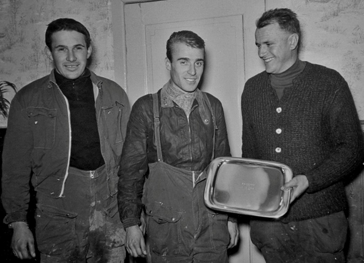
And in 1960, for the first time, the name Gustav Franke appears in the championship standings list, in 21st place.
In 1961, the OMK made some changes to the scoring system, but the issue of the international classification into juniors and experts still had not been satisfactorily resolved. The two final rounds in 1961 met the riders’ expectations in terms of organization and sections. To everyone’s surprise, the participants from the organizing Nürnberg club did NOT inspect the sections — had someone perhaps? In any case, the 1961 German Trial Champions were ultimately determined.
| Wertungsgruppe I |
| 1 – Lorenz Specht |
| 2 – Alfred Lehner |
| 3 – Dieter Weber |
| 4 – Ernst Müller |
| 5 – Volker Kramer |
| Wertungsgruppe II |
| 1 – Günter Sengfelder |
| 2 – Paul Guse |
| 3 – Wilhelm Wolfes |
| 4 – Ralf Kopetzki |
| Wertungsgruppe III |
| 1 – Hermann Bitzer |
| 2 – Hans Schlicht |
| 3 – Gustav Franke |
| 4 – Hans Müller |
| 5 – Horst Andres |
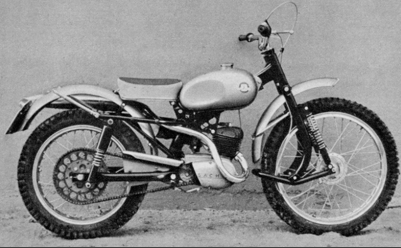
Then came an important announcement, the German manufacturer, Hercules built a trial-specific model for Alfred Lehner, designated the 102 TR. With a wheelbase of 1,190 mm, 3.00×21” and 3.50×18” tyres, 110/100 mm of front/rear suspension travel, and a weight of 75 kg including 3 liters of fuel, it remains a one-of-a-kind model—unfortunately, there were no plans for a production run.
Zündapp built a model for Jacky Ickx of Belgium. Technical Specifications were: Single-cylinder two-stroke engine with 50cm, 4.2 PS/7,000 min, 4-speed transmission, steel tube/die-cast frame. Tyres: 2.50/2.75 x 19“ front, 3.00 x 18” rear; hydraulically damped telescopic fork; long swingarm with hydraulically damped shock absorbers at the rear.
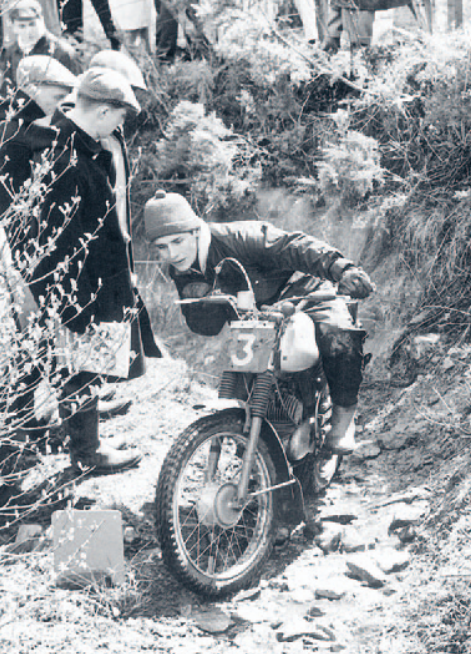
An important event calls for a brief look back. On March 18th, 1962, the fifteenth Lamborelle Trial took place and there was a trend toward smaller engines. Almost all the English bikes were available with smaller displacement. For the first time, there was a class up to 50 cc, which Jacky Ickx won on a Zündapp.
Results 1962 Lamborelle Trial:
Class 50cc: 1 – Jacky Ickx (B – Zündapp)
Class under 250cc: 1 – John Giles (Triumph 32 marks); 2 – R. Vanderbecken (B – Triumph 35 marks); 3 – Bill Wilkinson (GB – Greeves 36 marks); 4 – Alfred Lehner (D – Hercules 81.2 marks); 5 – Gustav Franke (D – Zündapp 91.4 marks); 6 – V. Kramer (D – Zündapp 100.4 marks; 7 – Siegfried Gienger (D – Zündapp 105.1 marks); 8 – W. Wolfes (D – Maico 112.5 marks)
Class over 250cc: 1 – Sammy Miller (GB – Ariel 15 marks); 2 – A. Colin (B – AJS 58.8 marks) 3 – Günter Sengfelder (D – Zündapp 68 marks).
The second, decisive final trial for the German trials championship took place on September 30th, 1962, in Zirndorf, near Nürnberg. The course there was obviously too long, which meant, first, that the required average speed was too high, and second, that a lot of riders racked up time penalty points. Third, a protest regarding this issue could not be filed because other protests still had to be heard and the awards ceremony had already begun. All in all, it was an unpleasant experience and not a nice way to end a championship, even though the riders largely approved of the sections. With that, the title was decided. In group III (>200 cc) it was Gustav Franke again. This year, after the Lamborelle trial, he became a factory rider for Zündapp.
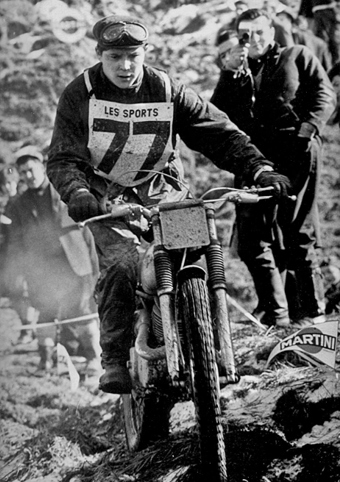
1963 the controversy over the excessive route length, the overly fast lap times, and the time penalty points distributed in Zirndorf was still lingering. Finally, race director Radtke conceeded that the course was 6 km longer. No one could follow the recommendation to purchase a trial gearbox for their bike. Such gearboxes weren’t available for private riders of Hercules or Zündapp models, and certainly not for other brands. And with the higher lap averages, a trial turns into a timed off-road race.
German Championship 1963
| Wertungsgruppe II |
| 1 – Günter Sengfelder, 400 |
| 2 – K. Augustin, 396 |
| 3 – Siegfried Gienger, 393 |
| 4 – H. Mayr, 291 |
| 5 – P. Guse, 192 |
| 6 – H. Graf, 189 |
| Wertungsgruppe III |
| 1 – Gustav Franke, 400 |
| 2 – H. Cramer, 394 |
| 3 – H. Bitzer, 391 |
| 4 – W.Piepho, 383 |
| 5 – R. Lienert, 380 |
| 6 – K.H. Peine, 377 |
But there were also some positive developments. FIM delegates from Belgium, Germany, France; Great Britain and the Netherlands got together and created the European team trial cup, the ‘Henri Groutars International Trial Trophy’.
1964 of the 7 rounds, the best 5 will count, and, for the first time, licensed and non-licensed riders will be scored separately. Licensed riders will compete for the title of ‘German Trial Champion’ – while non-licensed riders will compete for the title of ‘Best Non-Licensed Trial Rider’. Within a very short time, Namur in Belgium was designated as the venue for the Henri Groutars Cup in place of Ohain, where the Lamborelle trial took place; at the urging of the British, the Henri Groutars Cup was changed from a team competition to an individual competition. For the first time, Gustav Franke managed to finish an international trial as the top-scoring rider. The sections—they were top-notch. In terms of attendance, Namur did not set a record.
Results Namur 1964:
| 1 – Gustav Franke, (D – Zündapp -14) |
| 2 – Roger De Coster, (B – Gillet -16) |
| 3 – Don Smith, (GB – Greeves, 18) |
| 4 – Andreas Brandl, (D – Zündapp – 29) |
| 5 – A. Lehner, (D – Zündapp – 41) |
| 6 – Lorenz Specht, (D – Zündapp – 42) |
Results German Championship 1964:
| Wertungsgruppe I |
| 1 – Andreas Brandl, 500 |
| 2 – Lorenz Specht, 496 |
| 3 – L. Holy, 488 |
| 4 – R. Kopetzki, 292 |
| Wertungsgruppe II |
| 1 – Günter Sengfelder, 499 |
| 2 – Siegfried Gienger, 496 |
| 3 – G. Hillmann, 483 |
| 4 – H. Meyer, 196 |
| Wertungsgruppe III |
| 1 – Gustav Franke, 500 |
| 2 – Cramer, 495 |
| 3 – Wolfgang Zahn, 492 |
| 4 – H. Andres, 485 |
Finally – Zündapp – What happened?
We asked Rainer Heise on his views as to why we never saw a production trials model from the company:
Rainer Heise: “Unlike the commercially extremely successful Spanish Bultaco Sherpa T model, to the best of my knowledge, there was not a single Zündapp trial motorcycle that an interested buyer could have purchased during the sixties and seventies.
Of course, there had already been numerous private riders on Zündapp machines. These were either older models, perhaps former factory machines ridden by factory employees. Officially, Zündapp had never again produced such specialty machines.
In the 1960s, you could certainly feast your eyes on the bikes ridden by Andreas and Franz Brandl, Siegfried Gienger, Lorenz Specht, Sepp Wolfgruber, Günter Sengfelder, Gustav Franke, and others—photograph them, make sketches of them, and take home ideas for customizing your own bike. But going to the nearest dealer and buying one was simply impossible. So serious trial riders had only one option left – build it themselves!“
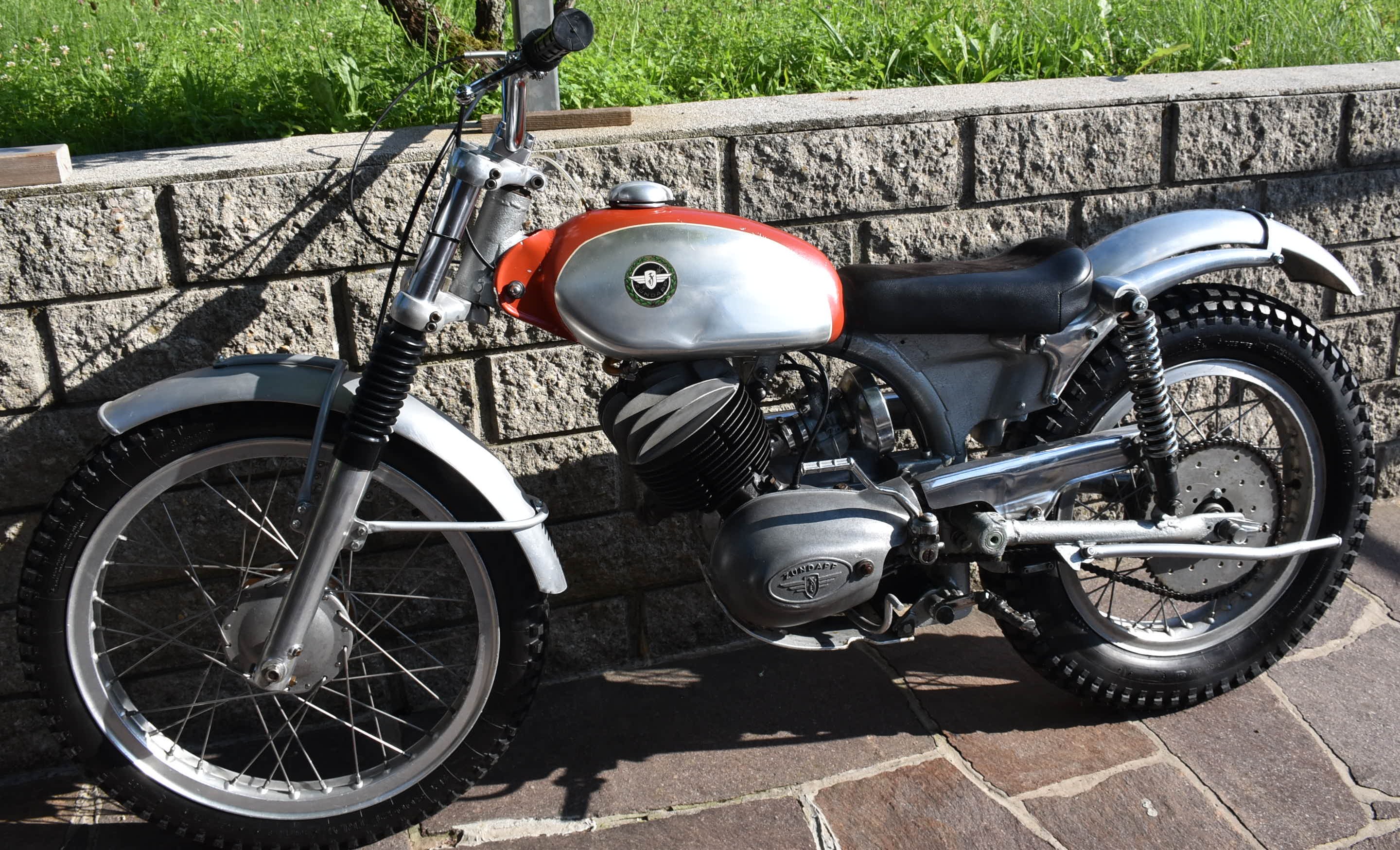
“That’s also why there were so many ingenious and sophisticated custom-built bikes based on Hercules, NSU, Rixe, Zündapp, and others—because an AJS 16C, BSA Goldstar, Francis-Barnett, Greeves, or Triumph Tiger Cub—those were things from another universe and reserved for only a select few.
I could only speculate as to why Zündapp handled it this way. Was management afraid that amateur trial riders would steal the thunder from the factory riders? Was the projected production volume of trial motorcycles simply deemed too small? Was there a lack of production capacity, or were they afraid they wouldn’t be able to sell the motorcycles? Speculating about this today is really pointless.
But now I know the reason why. It was after I found a letter in my archives from Zündapp-Werke dated 1969 in which they pointed out the immense costs associated with each special-edition model. And since the sales volumes for trial models in Germany are extremely low compared to production motorcycles, these costs increase even further. With twenty to fifty participants, low spectator numbers, and little coverage in the press and on television, the special production of trials bikes is not justified. And all this at a time when fewer and fewer motorcycles were being sold.
The 1965 Zündapp Works Trial 250 for example is an absolute rarity in the history of motorcycles. It was not a production model available on the market, but rather a factory prototype developed exclusively for professional trials competitions. Zündapp built these machines in extremely small numbers at its research department exclusively for factory riders such as the legendary Gustav Franke. Zündapp never included a trials bike in its official product lineup, unlike the GS enduro models up to 175cc.
In 1984, with eleven-thousand unsold mopeds and thirty-five million DM in debt, Zündapp finally threw in the towel and sold the production facilities—lock, stock, and barrel—to China!“
Challenge Henri Groutars:
Named after the Belgian Vice-President of the Fédération Internationale de Motocyclisme (FIM), the Challenge Henri Groutars would be the platform for future championships, namely the European Trials Championship in 1968 and then the World Trials Championship in 1975. Henri Groutars served as the Belgian sports president from 1945 to 1954. He died in 1959 but had worked tirelessly to put the ground rules together for a European Trials Championship of which the inaugural series began in 1964. The first winner of the Henri Groutars trophy was the Englishman, Don Smith on his factory Greeves.
The following are the podium placements of the Challenge Henri Groutars from 1964 to 1967:
1964: 1. Don Smith (GB – Greeves); 2. Gustav Franke (D – Zündapp); 3. Andreas Brandl (D – Zündapp).
1965: 1. Gustav Franke (D – Zündapp); 2. Andreas Brandl (D – Zündapp); 3. Günter Sengfelder (D – Zündapp).
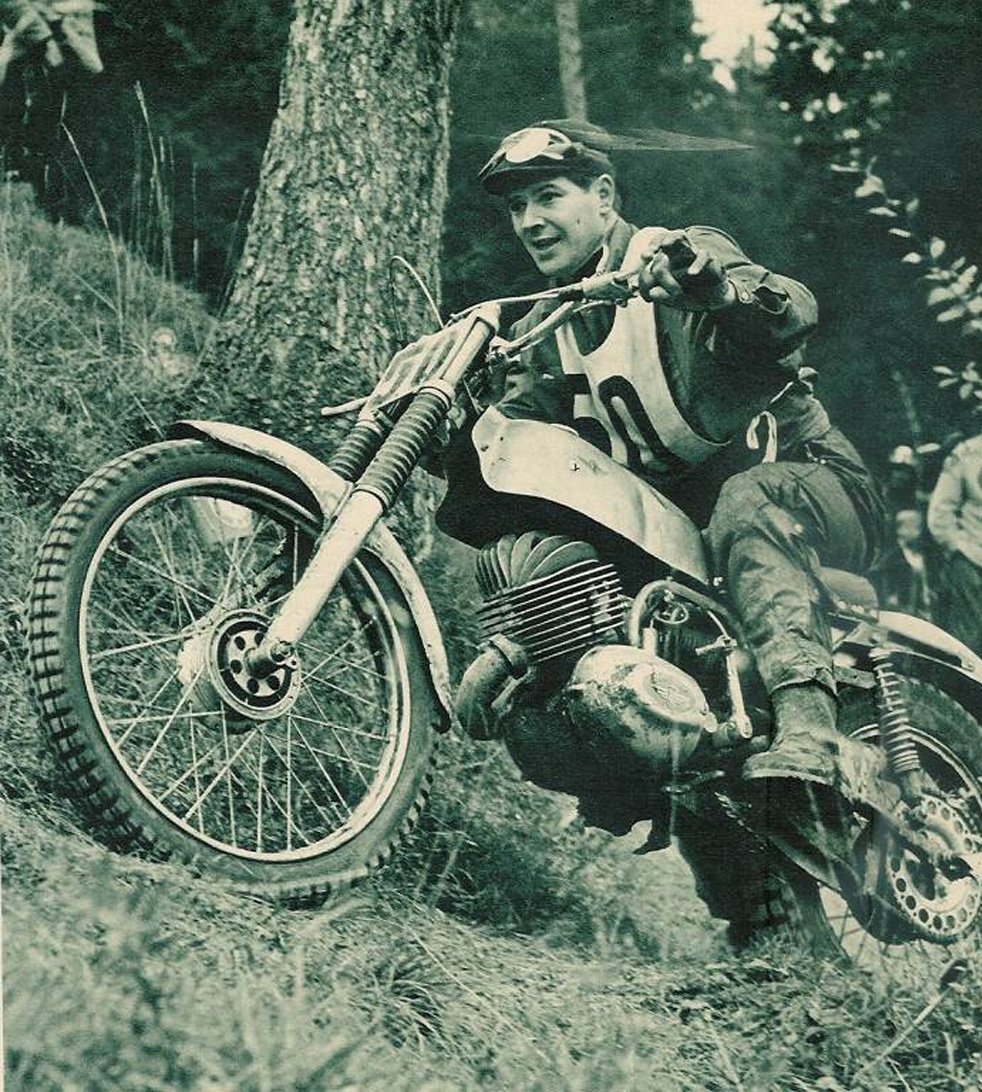
1966: 1. Gustav Franke (D – Zündapp); 2. Don Smith (GB – Greeves); 3. Sammy Miller (GB – Bultaco).
1967: 1. Don Smith (GB – Montesa); 2. Gustav Franke (D – Zündapp); 3. Andreas Brandl (D – Zündapp).
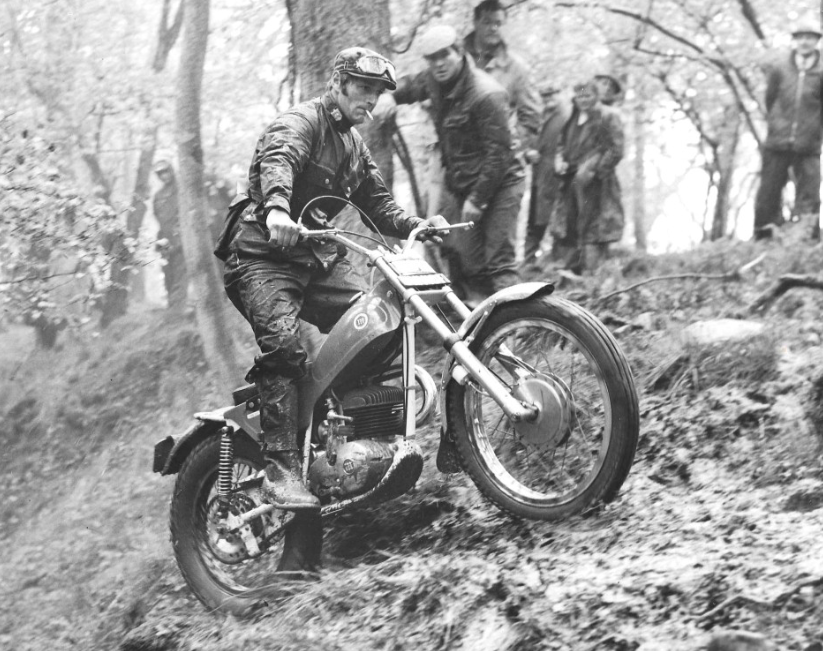
The following are the podium placements of the official FIM European Trials Championship from 1968 to 1974:
1968: 1. Sammy Miller (GB – Bultaco); 2. Gustav Franke (D – Zündapp); Bill Wilkinson (GB – Greeves).
1969: 1. Don Smith (GB – Montesa); 2. Dennis Jones (GB – Suzuki); 3. Sammy Miller (GB – Bultaco).
1970: 1. Sammy Miller (GB – Bultaco); 2. Gordon Farley (GB – Montesa) 3. Lawrence Telling (GB – Montesa).
1971: 1. Mick Andrews (GB – Ossa); 2. Malcolm Rathmell (GB – Bultaco); 3. Gordon Farley (GB – Montesa).
1972: 1. Mick Andrews (GB – Ossa); 2. Malcolm Rathmell (GB – Bultaco); 3. Martin Lampkin (GB – Bultaco).
1973: 1. Martin Lampkin (GB – Bultaco); 2. Mick Andrews (GB – Yamaha); 3. Malcolm Rathmell (GB – Bultaco).
1974: 1. Malcolm Rathmell (GB – Bultaco); 2. Ulf Karlsson (S – Montesa); 3. Mick Andrews (GB – Yamaha).
Bibliography, credits and acknowledgements:
Steffen Ottinger – Author for original work and text – Gustav Franke article.
Cycle World – 1966 – Zündapp advertisement.
Rainer Heise – For additional information and photographs
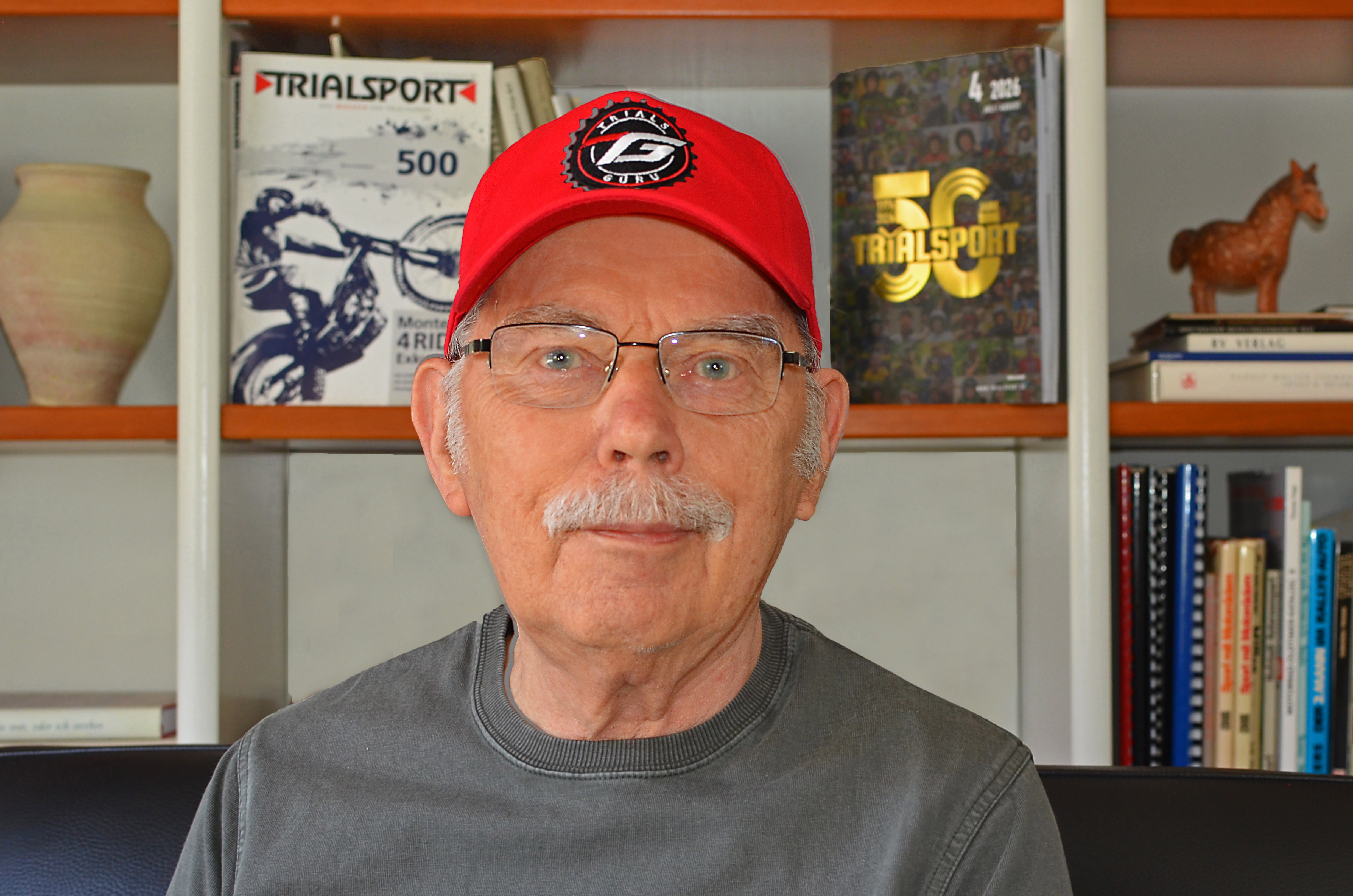
Trialsport –

We are most grateful to Trialsport for their permission to republish Steffen Ottinger’s article from 2017 and other articles by Rainer Heise, first published in Trialsport. From 2024 Trialsport has been edited by Mona Pekarek. With the downturn in demand for magazines world-wide, Trialsport is no longer a paper magazine, but has taken the leap of faith to become totally online. Full details are available on their website: trialsport.de
‘Gustav Franke – Germany’s Champion’ is the copyright of Steffen Ottinger and Trials Guru, with additional information supplied by Rainer Heise.
Apart from ‘Fair Dealing’ for the purpose of private study, research, criticism or review as permitted under the Copyright, Design and Patents Act, 1988, no part of this article may be copied, reproduced, stored in any form of retrieval system, electronic or otherwise or transmitted in any form or by any means, electronic, electrical, mechanical, optical, chemical, photocopying, recording or otherwise without the prior written permission of the author as stated above. This article is not being published for any monetary reward or monetisation, be that online or in print.
 TRIALS GURU - DEDICATED TO TRIAL