Tag Archives: Suzuki

Mike Naish chats with Brian Higgins

Words: Mike Naish & Brian Higgins

Photos: Mike Rapley; Eric Kitchen; Rainer Heise; Mike Meadows.

Main Photo: Mike Rapley.

I want to introduce you to perhaps one of the most successful riders the South West Centre has produced. He was a works rider for numerous manufacturers, ACU Centre Trials Champion ten times, British Enduro Champion, all round motocross rider, gold medals in the Trophy Team and Vase Team representing Great Britain in the ISDT now ISDE. Series Manager of the ACU British Motocross Championship and representative of the UK at FIM congress meetings. Throughout his life it is clear that there has been, and still is, real dedication to the sport. This is the difference that makes a champion, from an also-ran. It is of course Brian Higgins.

Mike Naish: Brian, tell me about your early days?
Brian Higgins: “I was born in 1953 about ten miles from Mary Tavy near the sections at Littory Woods. We moved into Tavistock when I had the bike shop and then into Mary Tavy about ten years ago, so I have lived in the same area all my life. I converted my house from three cottages.
Although I was self taught, my father was always interested in bikes and I suppose I got my interest from him. He bought me an old road bike when I was five or six. I spent all my time and all my pocket money on petrol to ride the bike. Both mother and father were used to going and watching motorcycle events, mainly scrambles, from before I was born. I remember being taken to Devonport which was our nearest course in those days. There was a scramble on almost every Sunday from March until September.
My interest was in bikes in general, mother and father held me back from competing in scrambles, but they encouraged me on trials thinking it was a safer form of sport. I always had their support and they took me all around the country with the car and trailer for trials.
I never had a road bike as such. I started off on a 1959 197cc Excelsior off-road bike for riding rough around home but I wrecked that so quickly. When I was eight or nine, I had a 500 Triumph spring hub twin but it was so heavy for me, that if it fell over I had to wait until somebody came to pick it up
.”

MN: What was your first competition bike and Trial?
BH: “My father bought me a 197 Greeves in 1967 and I distinctly remember the registration, it was 7LHK. The next bike to that was when father, unknown to me, bought Roger Wooldridge’s 250 Bultaco when he packed up riding in 1967.
My first Trial was the Tiverton Hookway Trial at Farmer Leigh’s place in 1968. I remember that I lost 212 marks. I don’t think I was quite last, but at least I finished. It wasn’t that I wasn’t fit, I just didn’t know what I was doing. I kept falling off and having to pick the bike up. Mum and Dad took me there with a car and trailer but they did not have much knowledge of how to ride sections, I just struggled around on my own and learnt at my own pace through experience. The Bultaco was just about the best bike about then, so I set about practising on the type of sections that I had ridden that day
.”

MN: Were you better at or did you prefer rocks or mud type sections?
BH: “I don’t remember particularly preferring any type of section. I was more used to rocks because I set out a group of sections on the moor to practice on, some thing you couldn’t do today. I used to practice on real hard stuff, but the rocks were really grippy type rocks and I would ride the tops of them rather than find a route around them. I had a route of probably fifteen sections, not when I first started practising, but two years later I would never leave one of those sections until I had cleaned it three times consecutively. It was really hard training. I would not come home until I had done it even if it was getting dark. I never had anyone to practice with because there were no other riders living around me at that time.
I remember how nice it was when a group of Japanese riders came over when I was riding for Honda, it was nice to go out with them practising and finding different types of sections to ride.
I was so lucky with the moors out there because as long as you didn’t cause a nuisance you could go out there and ride
.”

MN: Did you join a local club?
BH: “Ted Cornish who was friendly with mother and father got us involved with the Torridge club.
I won a Novice award fairly quickly in an Open to Centre which upgraded me to Non-expert and then there was four or five awards which upgraded me to expert, so the practising was paying off.

I represented the Centre at the Inter-Centre Team Trial in 1969 as I won a few Centre events, and again in 1970 when the South West won the event at Huddersfield.

MN: How many times did you win the ACU South West Trials Championships?
BH: “Ten times in eleven years, Martin Strang managed to pip me one year but I had it back off him the next year.”
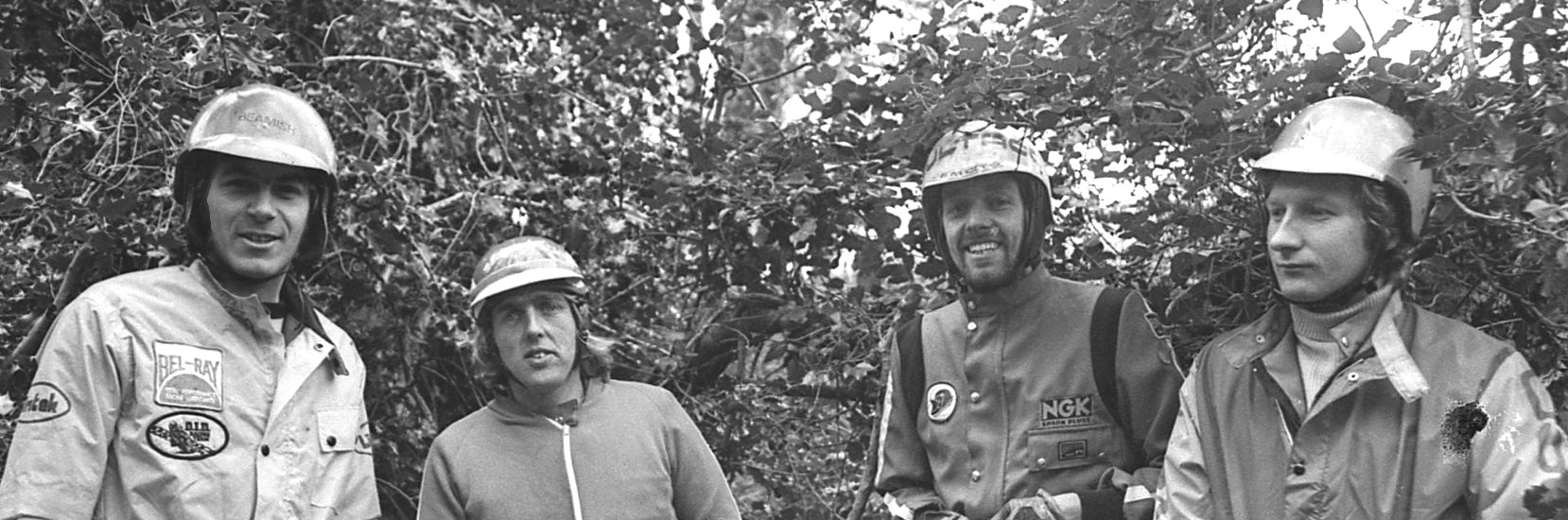
Left to Right: Brian Higgins, John Luckett, Martin Strang, Allan Hunt – Photo: Mike Rapley.

“South West Centre champions went from a period with Roger Wooldridge then Ian Haydon had his years followed by myself. Poor old John Luckett was second to everyone.”

Ian Haydon (Montesa Cota 247), was a multiple SW Centre champion – Photo: Mike Rapley.

MN: What sponsorships did you receive?
BH: “Well, initially it was my parents, but then I had a Bultaco from Stuart Wiggins in 1970 for about four weeks, but out of the blue then I had a call from Comerfords who organised a deal through Sammy Miller for me to ride Bultacos, which I did until 1973.”

Brian Higgins with the Sammy Miller supported 250 Bultaco Hi-Boy, BOD2L

“Then I went on in 1974-5 to one of Sammy’s hi-boy frames, that was to compete in the British Championships, Southern England Nationals and selected World Rounds. The first 325 I rode was Sammy’s old bike EOR2K. When Sam went to Honda and was Honda Team manager I rode the 125 and 250 and then the 305.

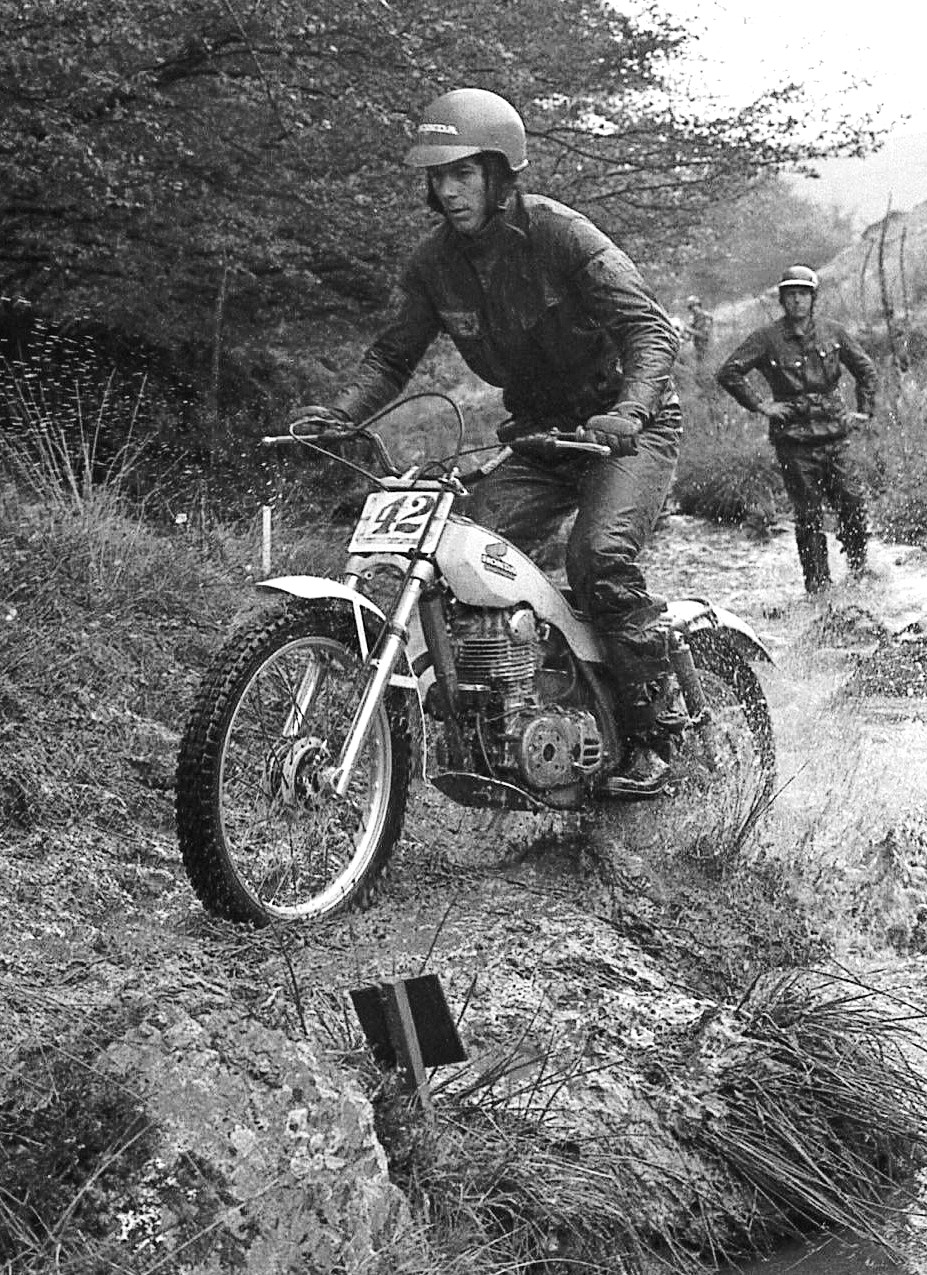
Brian Higgins, seen here on a factory Honda TL300. – Photo: Mike Rapley.

The 1975 to 1976 305 Honda was the best bike of its day and I really liked it. It suited my riding style although we used to have problems with the carburettor spitting when it was cold. You just couldn’t get over it, you could turn the tick over up until it got really warm but they didn’t cure it for five or six years because Steve Saunders used to have the same problem after me. With all the resources in Honda you would have thought they would have sorted it out sooner.”
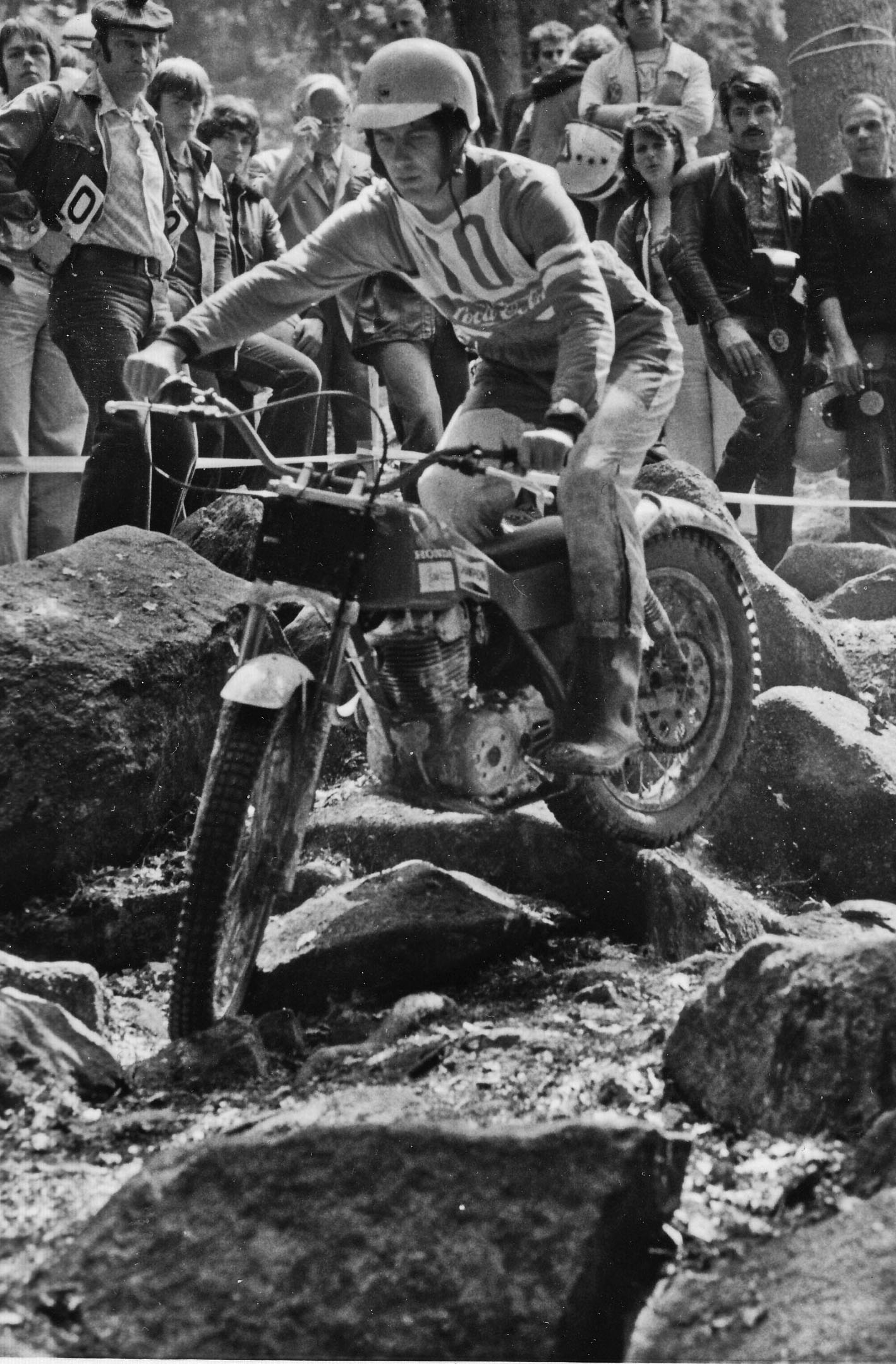
World Trials action on the Honda at Gefrees in Germany in 1976 – Photo: Rainer Heise.

The situation with Sam was a bit strained at times and Brian Fowler got me involved in Suzuki, of course the Texaco sponsorship money was about so I rode a Suzuki 325 in 1976 to 1979 and that also when I started motocrossing.”
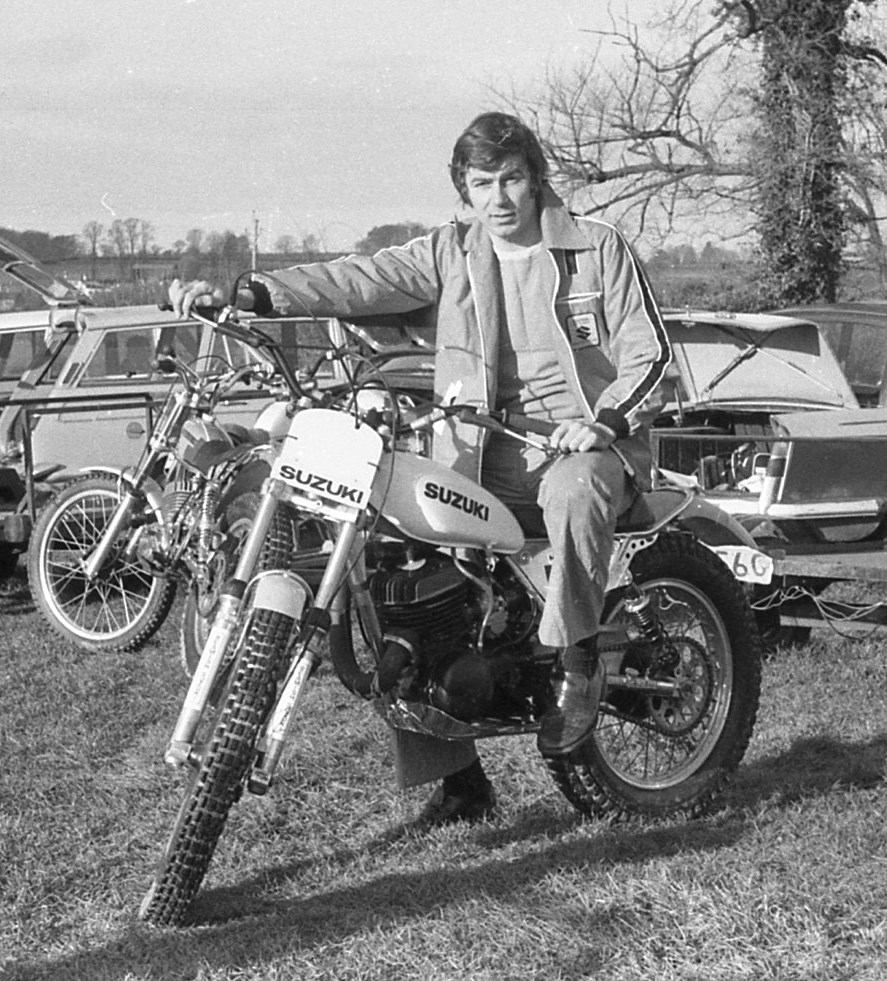
On the Beamish Suzuki – Photo: Mike Rapley.

MN: Did you give up trials when you started Motocross?
BH: “I started doing the Enduro championship and then I rode in the ISDT. I had a Suzuki PE250, the first one, but I also managed to get a twelve month old motocrosser out of them by saying it would help my enduros. Of course I didn’t tell them that it probably would not help my trials. I was beginning to get a bit disgruntled with trials as you would get ten marks docked if you got to a section late, which with all the queuing was not difficult in championship events. Then you could get ten marks lost if the bike was considered too noisy. That was why I was quite glad to move into enduros and motocross, of course you could earn a few extra quid in prize money as well.

MN: So where were you working at this time?
BH: “I was manager of a furniture shop in Launceston. There were a few amusing incidents there. I distinctly remember this area we had for building wardrobes. We had a line of them and we had the back out of one of them and you could open the wardrobe doors and walk through to an area that was my little bike workshop area. I had the bike in there during the week and used to try different things on it. There were some town steps out the back and I used to try it out up and down the steps. Of course I was absolutely dedicated to trials and bikes completely at that time. And success is due in great part to dedication to the task to be done. With all the training I needed to do I packed up work after one year with Suzuki, and I went full time with them for two years.
After that I had two good years for Honda. I paid for my first house outright in those four years it cost me £9,995
.”

MN: Did you do many World rounds for Trials?
BH: “I probably did about twenty world rounds in Europe from Austria to Belgium. I found it quite hard because I was not practising the same as the other guys who used to go to the venue and practise for three or four weeks beforehand. I was only picking up the bottom end of the points with two or three points per event. It was very much ‘us and them’ in those days. When you went to Belgium you were on about twenty marks more than Eddy Lejeune just for being English, if you see what I mean.
In 1979 I was British Enduro Champion on the PE Suzuki. I rode in two ISDT’s one in the Isle of Man and one in Austria. I was in the Vase team when we rode in the Isle of Man and in 1976 I was in the Trophy Team in Austria at Zeltweg, when Great Britain finished third. Ernie Page and I were both on PE Suzukis.
Father used to change my tyres on the trials bike, but when I was preparing for the ISDT I used to practice through Littory Woods, find the biggest bog I could then come home and change the tyre whilst it was covered in mud, no security bolts we used to chisel the rims
.”

MN: What about SSDTs?
BH: “I did eleven or twelve SSDTs from 1970. Four or five started from Edinburgh. Riding every weekend I soon found that wasn’t enough and I used to go practising nearly every day for four or five hours. My best result in the SSDT was ninth on an Ulf Karlson replica Montesa.”
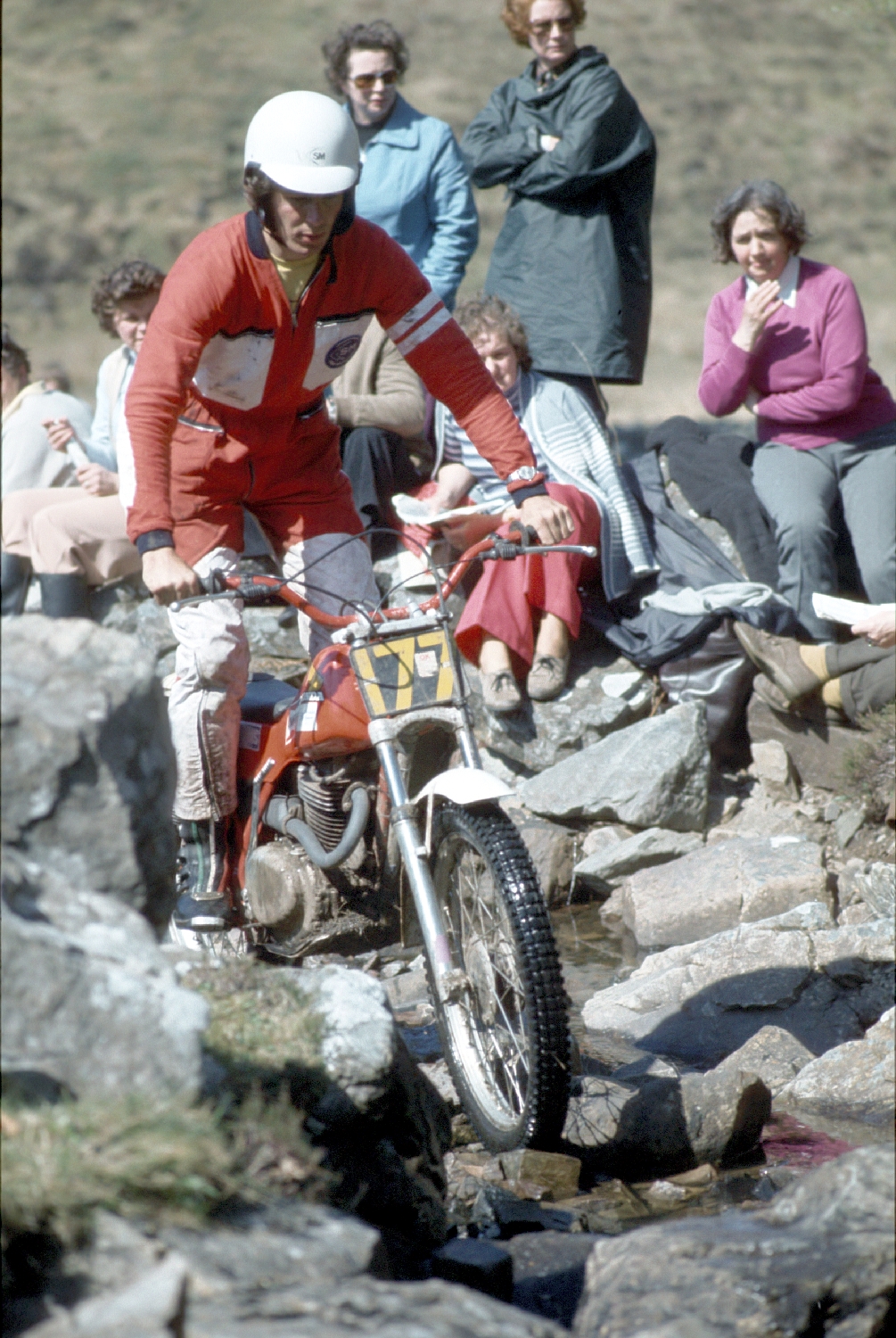
Brian Higgins on the 305 Honda in the 1976 SSDT – Photo: Eric Kitchen

MN: Did you make many close friends during that time?
BH: “No not really, because it was very competitive and riders were paid on results and were professionals. Mick Andrews was a good example of a professional rider when he was riding for Ossa and Yamaha. Vesty was the ultra professional.”

MN: What happened next in your career?
BH: “In 1980 the money fell out of Suzuki, which followed on with all the Japanese makes. The deals were not about so I picked up a Gori contract which meant I had to do the British championship, Nationals and the British Enduro Championships. Their Enduro bike wasn’t such a bad bike because it had a Rotax engine and I did much better for Enduro’s for them than Trials. Their trials bike was like a dated SWM. One or two years behind the opposition, so I said to them that this bike was not competitive for national trials, and from the day I said that, I literally gave up Trials. I had the deal to carry on doing the enduro championship the following year. They decided that paying me just to do eight rounds of an enduro championship just wasn’t a good proposition, so that came to an end at the end of that year, and basically I just went by myself, doing what I wanted to do after that. I did very little travelling from then on.
From 1982 or 83 onwards I had Tony Gorgot’s 330 Montesa through Jim Sandiford. I kept that for four or five years and did about ten trials on it, that’s all. By this time I was getting involved with the organisational side of motocross and that side of it. I never thought I’d say it, but I lost interest in trials really. I still used to go and watch a few British championship rounds.

Brian Higgins (Suzuki) – Photo: Mike Rapley

MN: I seem to remember you had a bike shop?
BH: “Yes, I had started the bike shop in Tavistock in 1981, I built the shop up and that was quite time consuming. We were an off-road dealer but did a few road bikes as well, with an agency for Montesa, Maico. We started Husqvarna in 1983 and 1984 when a load of cheap bikes became available, we had the first Water cooled 250 and heavy lumpy 500 Two stroke. I finished with the shop about the same time as John Banks finished with his. I am still renting vehicles and have been for about twenty Years. We have forty vehicles in all.
After Torridge ran their first National scramble I took over the lease of Torridge scramble circuit which also took a bit of time just when I was developing the bike shop, which is really when the riding as such, stopped
.”

MN: How did you get involved in ACU organisational activities?
BH: “Torridge started running Nationals and then British championship motocross and our course preparation was probably about as good as anybodies. I was identified as sort of a half decent Clerk of the Course and it snowballed from there. I joined the ACU Motocross committee and attended FIM meetings including the Jury meetings.
I did about thirty hours a week for the ACU which was quite time consuming. I did all the track inspection for the eight round Maxxis British Championship,
I was the secretary for the eight round MMX championships for under 21s, four-strokes, sidecars and quads and seven rounds of the BYMX which is the Youth Motocross. I did the track inspections for all those tracks about a month before the event in the UK including Northern Ireland. For the Maxxis I was also the Series Manager doing all the sponsorship arranging and for each event
.”

Brian J. Higgins on the Beamish Suzuki – Photo: Mike Rapley.

Mike Naish: Brian Higgins has had a long career in Motorcycle Sport and one which he has obviously worked hard at with dedication throughout his involvement, from rider through to management. I thank Brian for his time to enable this article to be written. My thanks also to Mike Meadows for the use of his photos and information when preparing for this interview.

‘Mike Naish chats with Brian Higgins’ is the copyright of Trials Guru and Mike Naish.

Apart from ‘Fair Dealing’ for the purpose of private study, research, criticism or review as permitted under the Copyright, Design and Patents Act, 1988, no part of this article may be copied, reproduced, stored in any form of retrieval system, electronic or otherwise or transmitted in any form or by any means, electronic, electrical, mechanical, optical, chemical, photocopying, recording or otherwise without the prior written permission of the author as stated above. This article is not being published for any monetary reward or monetisation, be that online or in print.
H. Martin Lampkin 1950 – 2016

Lampkin Martin SSDT76 44
Martin Lampkin (Bultaco) 1976 SSDT – Photo courtesy: Eric Kitchen

On behalf of the Lampkin family, it is with great sadness that Trials Guru website announces that H. Martin Lampkin, the very first World Trials Champion (1975), passed away today, Saturday 2nd April, 2016, aged 65 years.
It goes without saying that the Lampkin family’s loss is also a loss to the world of motorcycle sport.
Our sincere condolences go to Martin’s immediate family, widow Isobel; sons, Dougie and Harry and the extended Lampkin family.
The funeral service for Martin was be held on Monday, 11th April 2016 at 1.30pm at St James Parish Church, Kirkgate, Silsden, West Yorkshire, BD20 0AL.
Donations in Martin’s memory, were made to the Manorlands Hospice, Keighley Road, Oxenhope, Keighley, West Yorkshire, BD22 9HJ.

Martin Lampkin, his life in photographs, a tribute by Trials Guru’s Photographers & contributors:

Group - Janet Pawson Pic
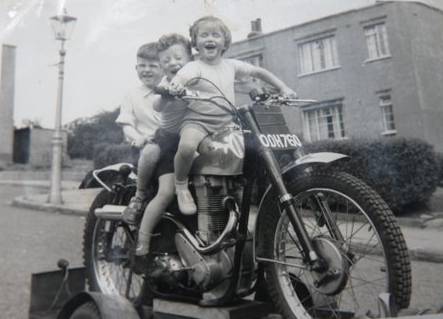
Motorcycles were always a part of Lampkin family life. This is Arthur Lampkin’s factory trials BSA Gold Star being tried out by family friend, Tim Aaron (left), H. Martin Lampkin (middle) & Veronica Lampkin (right) – Photo by kind permission and copyright of Janet (Lampkin) Pawson (Sister of Martin Lampkin)

martin lampkin 1967
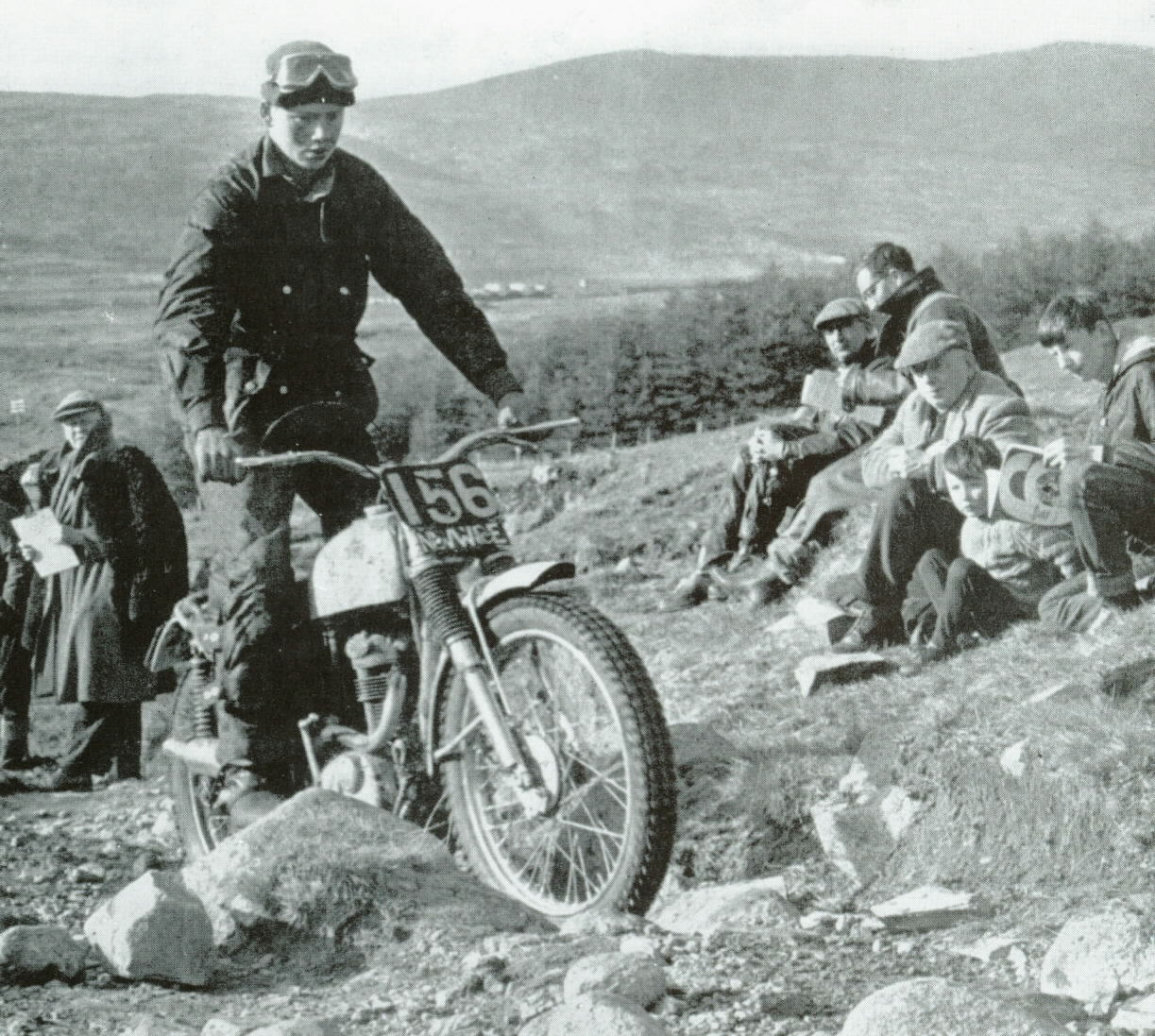
1967 – Martin Lampkin (250cc BSA) in his first Scottish Six Days Trial aged 17, aged 26 in 1976 he would win his first SSDT.

Mart Lampkin
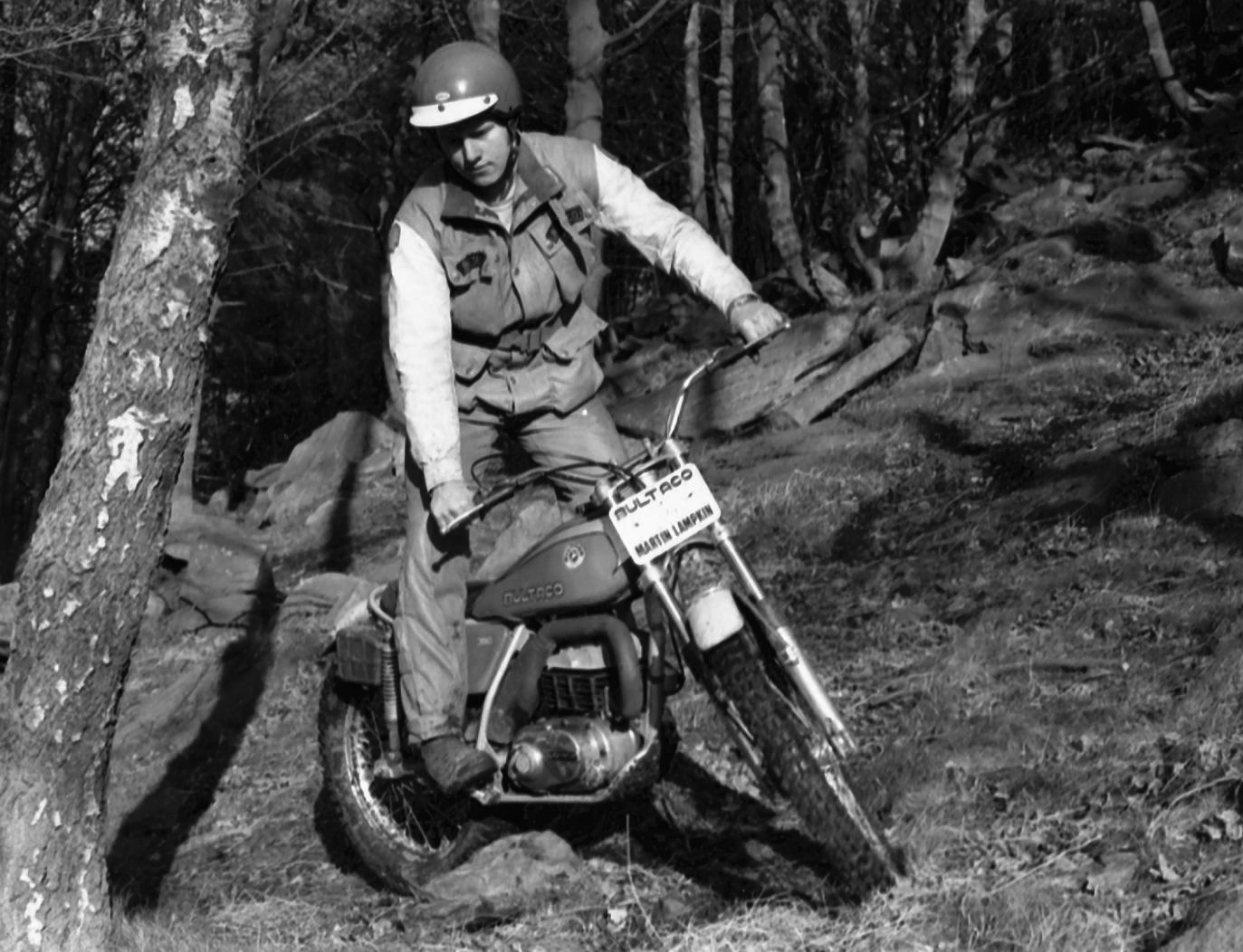
1978 – Martin Lampkin (348 Bultaco) – Photo: Mike Rapley

Who else but Mart Lampkin
1978 – Martin Lampkin hoists the Bultaco upwards with a steady dab – Photo: Mike Rapley

Mart Lampkin
1978 – Martin Lampkin on his factory Bultaco – Photo: Mike Rapley

A truly atmospheric shot of Mart
1978 – A truly atmospheric shot of Martin Lampkin – Photo: Mike Rapley

Martin Lampkin'84 Blackwater
Martin Lampkin on Blackwater in the 1984 Pre’65 Scottish, riding brother Arthur’s 1963 SSDT winning BSA C15T – Photo: Iain Lawrie, Kinlochleven

1
Martin on the Honda RTL250S in the 1987 Scottish –  Photo copyright: Graeme Campbell

Martin Lampkin'87 chairlift
Martin Lampkin (World Champion in 1975) smiles at the camera of Iain Lawrie on his way down from Chairlift at the 1988 Scottish Six Days on his Colin Appleyard supported Honda RTL250S – Photo copyright: Iain Lawrie, Kinlochleven

1979 - Martin Lampkin - Reg May - EK Photo
Scottish Six Days Trial 1979 – Martin Lampkin inspects the rear tyre of his Bultaco, with Reg May offering advice. John Metcalfe is watching closely. Martin was narrowly beaten into second place to Malcolm Rathmell (Montesa) – Photo world-wide copyright: Eric Kitchen – all rights reserved.

Mart 1 Reg
Martin Lampkin testing his 325 Bultaco in 1975 – Photo by kind permission and world-wide copyright of Barry Robinson, Ilkley (All-rights reserved)

15
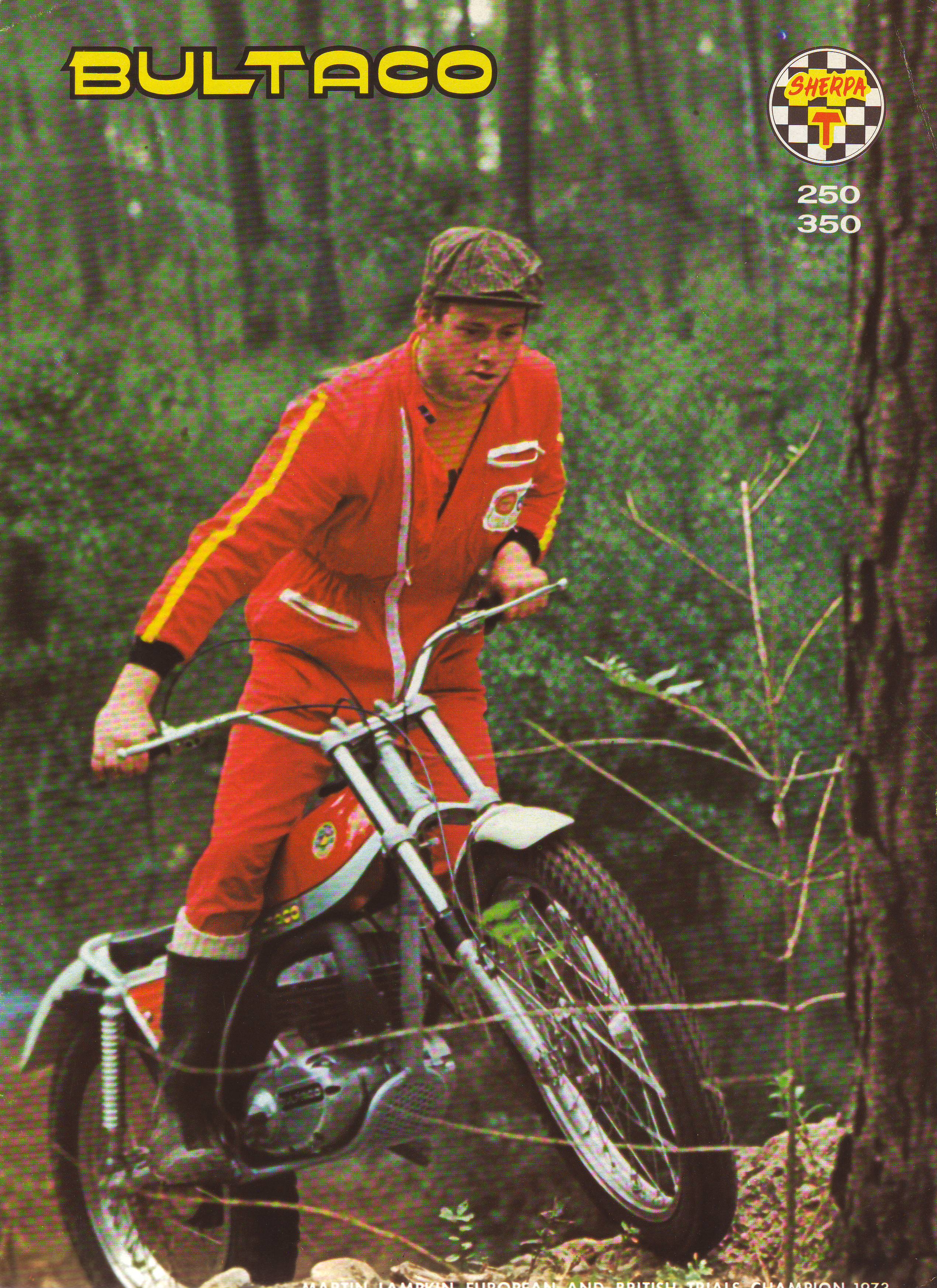
Bultaco publicity photo of Martin Lampkin on his factory Sherpa T model 92 in 1973 – Image courtesy of Bultaco Motorcycles

JY - ML
Martin Lampkin (Bultaco 325) at the Scottish Clubman Trial at Newcastleton in 1978. Photo: Jimmy Young, Armadale

Martin Lampkin Bultaco - GWX78N
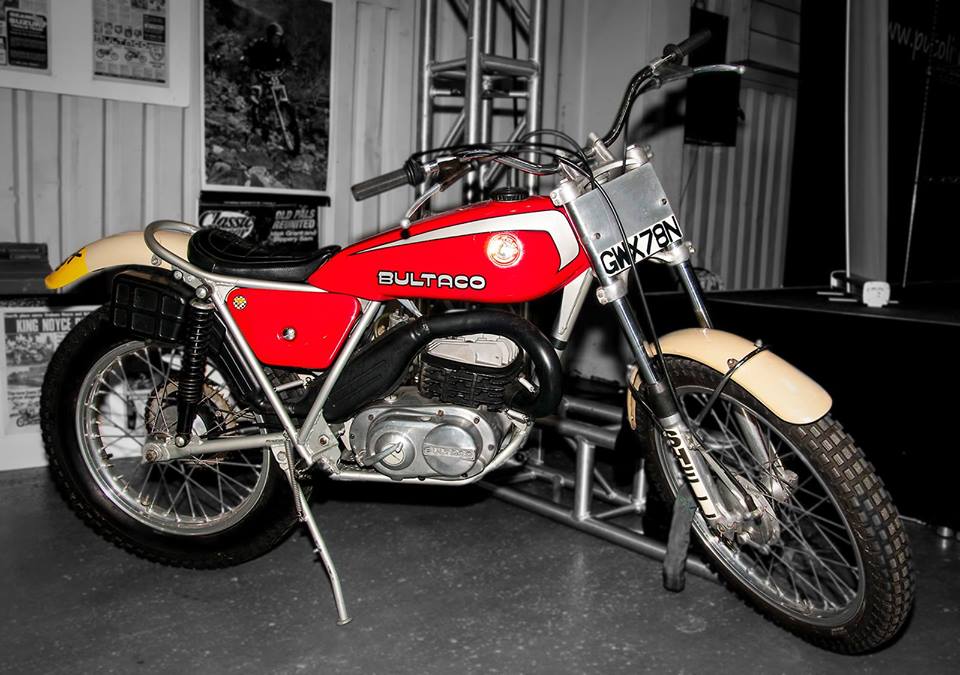
The 1975 World Championship winning Bultaco of Martin Lampkin – Photo courtesy: Heath Brindley, Bristol

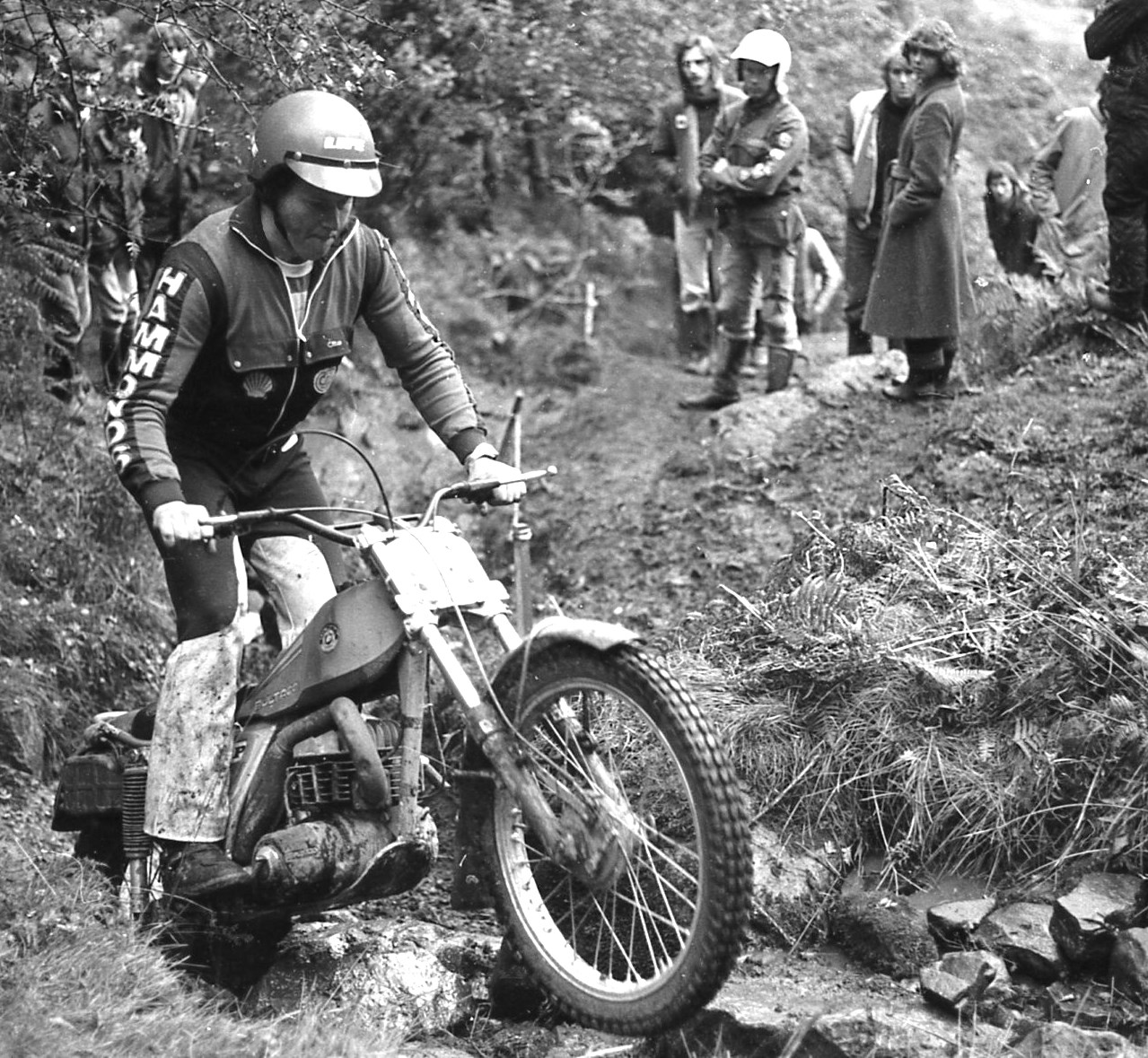
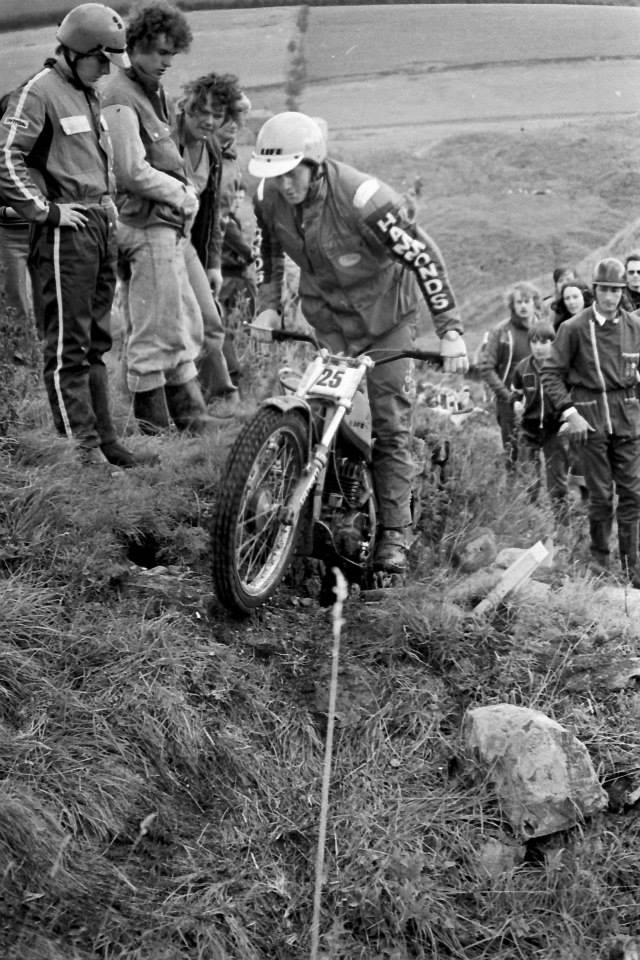
Martin Lampkin in his Hammonds Sauce sponsorship days
1979 – Martin Lampkin in full control of his 348 Bultaco – Photo: Mike Rapley

Martin Lampkin 2
The ‘gritty’ determination of Martin Lampkin (Bultaco) Photo: Mike Rapley

IMG_0003y
Martin Lampkin fettling his Bultaco at the 1975 Scottish Six Days – Photo: Rainer Heise, Germany

IMG_0011c
1975 Scottish Six Days on Laggan Locks – Photo: Rainer Heise, Germany

Martin Lampkin LL 1977
Martin Lampkin (Bultaco) on Laggan Locks 1977 at the Scottish Six Days Trial – Photo: Iain Lawrie, Kinlochleven

M Lampkin SWM Cameron Hill
Martin Lampkin (SWM) on Cameron Hill in the 1981 Scottish Six Days Trial- Photo: Iain Lawrie, Kinlochleven

ClanLampkin
2004, Japan World Round – Martin (right) with son Dougie (left) and nephew James (middle top) – Photo courtesy and copyright, Jean Caillou, France

1994 Belgium round of European championship; the first gp of his new career Dougies’minder
1994 Belgium round of European championship, Martin’s new job of being minder to son Dougie, who went on to win 12 World titles – Photo copyright: Oliver Barjon, France

Martin Lampkin - JOM 2013
John Moffat (left) with H. Martin Lampkin in 2013 – Photo courtesy: Trial Media/John Hulme

As a mark of respect, please feel free to leave your personal message in the comments section below in remembrance of a fine sportsman, a true Yorkshireman and one of the world’s all time great motorcycling competitors, a true ambassador of the sport – HAROLD MARTIN LAMPKIN 1950-2016

Tribute by Rob Edwards

Tribute by Malcolm Rathmell

Lampkin of Silsden

Gordon Farley

Words: John Hulme & Gordon Farley

It is true to say that some trials riders will be remembered for being not just good, but for beating the seemingly unbeatable. One of these riders is Gordon Farley. For eleven years, trials riding in Britain was literally dominated by one person, the great Sammy Miller. Other good riders came, tried and went away unsuccessful but Farley was determined that his name was not going to be added to that long list when he set his sights on Miller’s supremacy. “It was without doubt the most satisfying moment of my career when I knew I had won the British title and had beaten Miller”, Farley commented recently. Miller had won the trials championship eleven times on the trot; it had a psychological effect on the other riders – they got to the stage where they thought he could not be beaten so they did not try. Farley said to himself “I am going to do it!” and that was what he concentrated on. Every trial he rode in was to beat Miller but it was hard to get close to him. Eventually when he did it was unbelievable, but then he retired and the trials scene was never quite the same.

EK Alan Jefferies 1971
1971 Allan Jefferies Trial – Photo copyright: Eric Kitchen (All Rights Reserved)

Farley, like Miller, was attracted to road racing before he found himself in trials. However, he turned to trials because it was “a lot cheaper”. Although he would not call his family a motorcycling one, his father did own a machine and his brother did compete in a few trials, although he never reached the level of Gordon. At thirteen he purchased his first machine, a 197cc Francis Barnett – in trials trim, of course. This was replaced two years later by a Triumph Tiger Cub, a machine that will be remembered as the one Farley got not only his first taste of competition on but also his first taste of success, back in 1961. It was the first trial he had competed in and he came third; the event was the Sunbeam Novice Trial. Shortly after this he entered his second trial, the Wickham Harvest, and taking second place elevated him out of the novice class into the expert class. Farley remembers these early events clearly but when asked which was his most memorable and why, he said “I think that would be the one I rode in France. It was at a place called Nemour, which is about sixty miles south of Paris, and it was the first time I had competed abroad in an international trial. The event, I think, is still run today and I remember the French treated me very well; mainly because in France you were not allowed to ride a motorbike until you were seventeen, you could only ride a moped, and here was a sixteen-year-old riding in a trial along with much older men”. “Do you remember your result?” “Yes, I won!” One may wonder how Farley could afford to go to France when he had previously said he had chosen trials because it is a cheaper form of sport. In short he was being supported by a dealer in Folkestone called Jock Hitchcock. Gordon has always been friendly with Murray Brush, a trials rider well known in the south-east of Britain, and it was through him that Farley was introduced to Hitchcock.

Murray Brush
Murray Brush on a Greeves – Photo copyright: Mike Rapley

He sponsored Gordon from the age of sixteen until he was nineteen, and it would be fair to say that it was Jock pushing all the time that got him his first works contract.

A Works Ride

That was a nice surprise as he got a letter from Henry Vale, who was then the Triumph Competition Manager, on Christmas Eve offering a works machine, and it made a very nice present. He tried out the new machine in January and signed a contract. Farley was to enjoy four works contracts during his career: Triumph, Greeves, Montesa and finally Suzuki. During those first years as a works rider the world of trials was absorbed in an era of radical change, as the domination by the large capacity four-stroke machines such as the AJS, Ariel, BSA Gold Star, Matchless, Royal Enfield and Triumph Trophy (all actually slightly modified road models) was superseded by the Spanish and Italian two-strokes specifically designed and built for trials. Organisers had to rethink most of their sections, usually opting to make the turns tighter and sudden climbs steeper. Gordon Farley never rode one of the big old four-strokes, so he effectively grew up and learned his craft with the new style of riding.

1
Gordon Farley on the 1964 Triumph Tiger Cub developed with Murray Brush

He soon found the Triumph Cub had its limitations, it was after all simply a modified road model that had been developed from the Triumph Terrier, and its greatest handicap was – and remains – the lack of an effective set of trials-suitable gear ratios. Farley worked hard to improve his Cub, mainly by losing unsprung weight. He used alloy petrol tanks, alloy oil tanks, alloy air filter boxes and alloy front brake plates. Many of the items were copied and sold by Comerfords; indeed at one stage they added to his list of sponsors and he rode a ‘Comerfords Cub’.

108_0859
1967 Comerford Cub, which was based on the improvement work carried out by Gordon Farley – Photo: Trials Guru

With the Greeves it was a machine specifically designed for trials but with the bugbear of relying on the Villiers ignition system – for younger readers imagine putting a plug and socket in the ignition wire to the sparkplug and mounting the socket on the front edge of the crankcase cover, just where the front wheel plasters everything with wet mud. Yes, that is the measure of incompetence that prevailed! In 1967 the Montesa importer John Brise approached Gordon Farley to become their number one works rider but he had just signed a twelve-month contract with Greeves to compete for them during the 1968 season, so they would have to wait until the end of the year for him to join. It was a fantastic year for him on the Greeves as he took the runner-up spot in the Scottish Six Days Trial behind Sammy Miller, as well as third place overall in the European championship. In the December of 1967 Montesa had also approached another Greeves works rider, Don Smith, to join them.

Montesa promotional poster
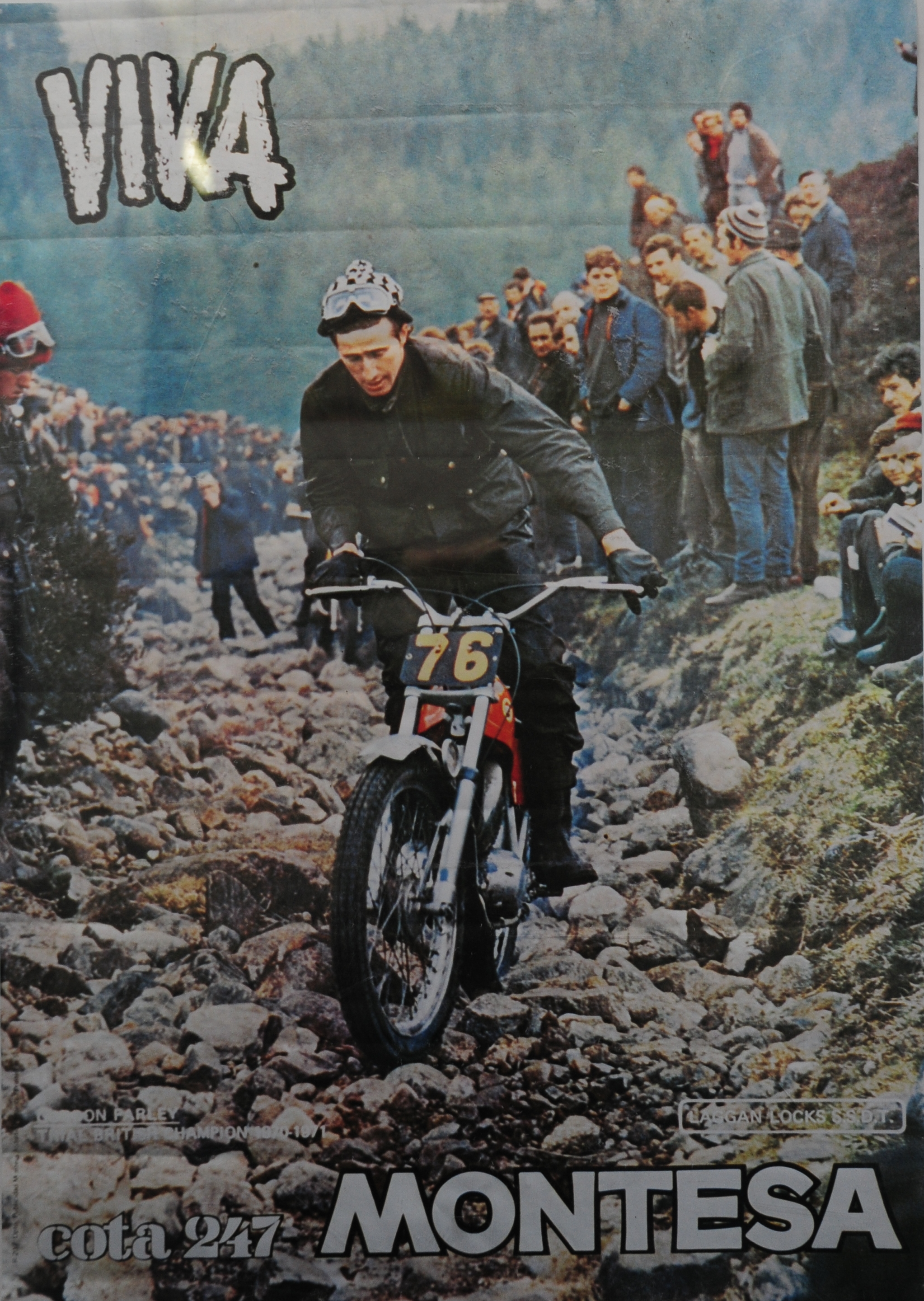
Publicity poster using Gordon Farley on the Montesa Cota 247 in the 1971 Scottish Six Days Trial on ‘Laggan Locks’. The rider in the red hat on the left is John May, son of Comerford’s Reg May – Image credit: Montesa Motorcycles

He tested the new machine and was offered a contract as the company waited for Farley to join them in a new works team. 1969 would see Farley eventually join and he would win the opening trial of the new season, the Vic Brittain, mounted on the new Montesa Coat 247. He took second place in the 1969 European Championship (now World) and followed this by winning the British Trials Championship in 1970 which went all the way to the wire at the final round, the Knut Trial, where he beat Miller; he again took home the title for Montesa in 1971.

Gordon Farley - PB - SSDTcrop
Gordon Farley at the 1969 Scottish Six Days Trial, watched closely by Sammy Miller – Photo copyright: Peter R. Bremner

Rising Sun

Carrying superb credentials and with the Japanese trials invasion about to take off Suzuki opened talks with Farley in 1971 with a view to him helping with the development of a new machine. They thought they had struck gold when they managed to get British Champion Gordon Farley to sign on the dotted line to develop their new trials machine in late 1972. More importantly he came with a good reputation, having previously ridden both Triumph and Greeves works machines. He was also well known for his machine development skills and this would prove vital to Suzuki as they were so new to the trials scene. After many secret trips to Japan and the Suzuki headquarters Farley’s new machine was finally taking shape. Various meetings had taken place in the closed season as they wanted a competitive machine from the outset.

scan0039
Gordon Farley on the production Suzuki RL250 in the 1974 manufacturer’s publicity brochure – Photo credit: Suzuki Motor Co

The prototype machine was very much based on the TS series trail bike range which was a single cylinder two-stroke that they decided would be ideal for the trials project. With Farley under contract to Montesa until June 1973 he could not officially ride in competition for another manufacturer until the July. This gave both himself and the factory plenty of time to develop the new machine. When the two new machines arrived he was full of enthusiasm for the work the Japanese had carried out. The venue Farley chose to debut the new machine was a local centre event, the Horsham Club’s Ray Baldwin Trophy Trial. The debut was not a success and Farley finished second, four marks behind local centre rider John Kendal on a Bultaco. Farley was leading the trial at one stage but he had an unfortunate crash over the handlebars, which resulted in five marks lost and the win was gone. The machine was then ridden in the British and European Trials Championships but with very little success. Farley became disillusioned with this and the lack of support from the factory. With no major success and Farley wanting to concentrate on his booming trials shop it was rumoured at the end of the year he was going to retire from the sport, which he duly did. In 1972 he had opened up a shop in Ash near Aldershot, Hampshire, selling motorcycles with Honda, Suzuki, and Yamaha franchises. He understandably also specialised in trials machines with Bultacos, Montesas and Ossas much in evidence, in addition to the Japanese mounts.

EK 1 British Experts 1971 - not sure the year is correect
1972 British Experts – Photo copyright: Eric Kitchen (all rights reserved)

After his official retirement he opened another shop and just wanted to ride in trials on a very low-key basis, and the UK Bultaco importers, Comerfords loaned him a new 350cc Sherpa to ride whenever he wanted. His last real outing was in 1978 at the SSDT where he finished in a creditable 45th place. He admitted recently it nearly killed him! Gordon is now approaching 67 but is still involved with the shops, which take up most of his time, and can still be seen observing at local events. Farley ended an era in trials when he knocked Sammy Miller of the top spot in the British Championship, a subject still much talked about to the present day.

EK Inter Centre Team Trial 1973
Gordon Farley (Montesa Cota 247) at the Inter Centre Team Trial at Ludlow in 1972 – Photo copyright: Eric Kitchen (all rights reserved)

Article: Gordon Farley, Copyright: Classic Trial Magazine UK

Images:

  • John Hulme/Trials Media
  • Peter Bremner, Inverness
  • Eric Kitchen (all rights reserved)
  • Mike Rapley (all rights reserved)
  • Montesa Motorcycles
  • Trials Guru/John Moffat
Apart from ‘Fair Dealing’ for the purpose of private study, research, criticism or review as permitted under the Copyright, Design and Patents Act, 1988, no part of any article may be copied, reproduced, stored in any form of retrieval system, electronic or otherwise or transmitted in any form or by any means, electronic, electrical, mechanical, optical, chemical, photocopying, recording or otherwise without the prior written permission of the author as stated above and below. All articles are not published for any monetary reward or monetisation, be that online or in print.

Coming up very soon – Chairmen

We are always looking at new features, articles and of course photographs here at Trials Guru … so what about sidecars?

Scott Rowland - Tony Antman King - Tby Eyre
British Experts 1983 at Hawkstone Park – Scott Rowland and Tony ‘Antman’ King on their 156cc Fantic outfit – Photo copyright: Torbjorn Eyre, Macclesfield

So that’s exactly what we are doing, a dedicated page on the three-wheeled brigade for all the sidecar trials enthusiasts out there.

Mike Rapley, himself an accomplished trials sidecar driver, who has been working hard to bring us ‘Recalled by Rappers’ on Trials Guru, has unearthed sidecar photos which we are currently preparing for viewing on Trials Guru – Some never seen before. Already we have had offers from sources throughout the UK with more material, so it’s an exciting venture.

We at Trials Guru are indebted to Mike Rapley for his efforts and co-operation in both these ventures. Mike is truly a life-long, 100% enthusiast of the sport of trials and enduro.

Keep checking on the new page we have created – a space has been cleared on Trials Guru for Chairmans View – Sidecar Trials.