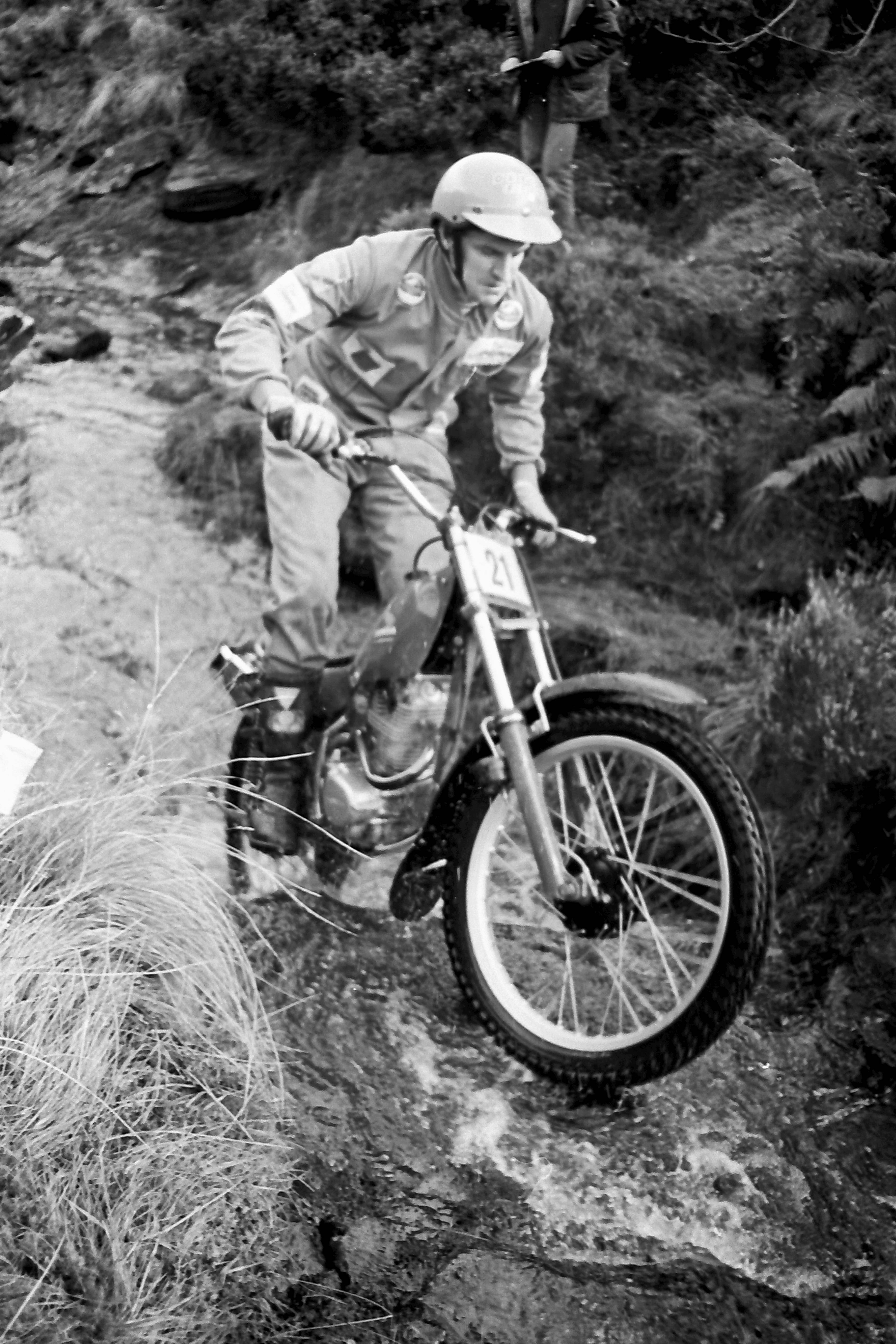
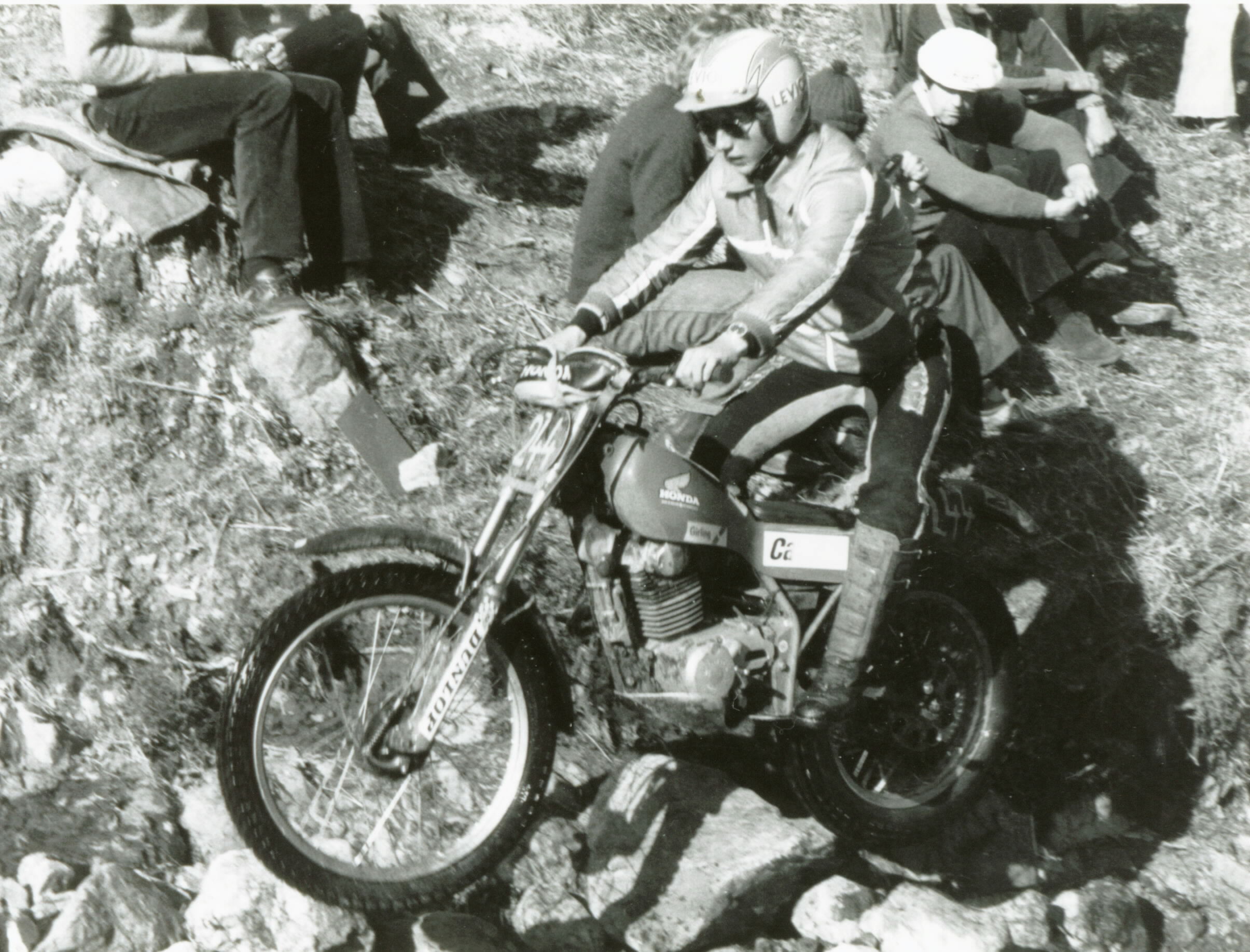
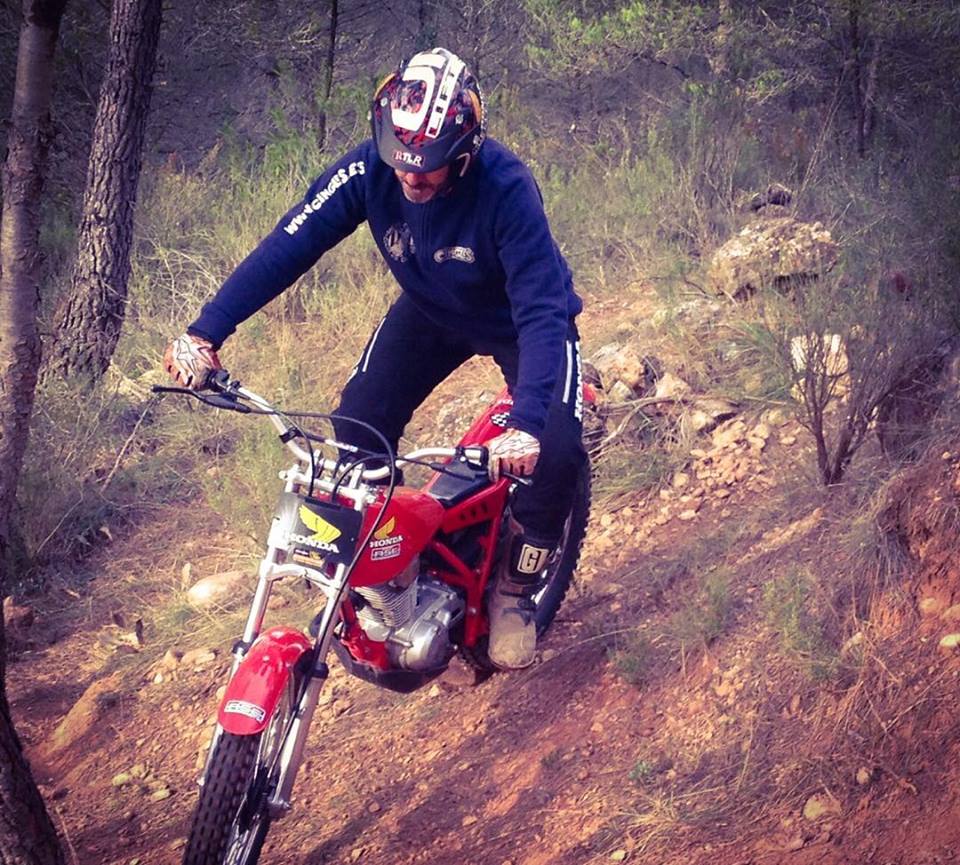
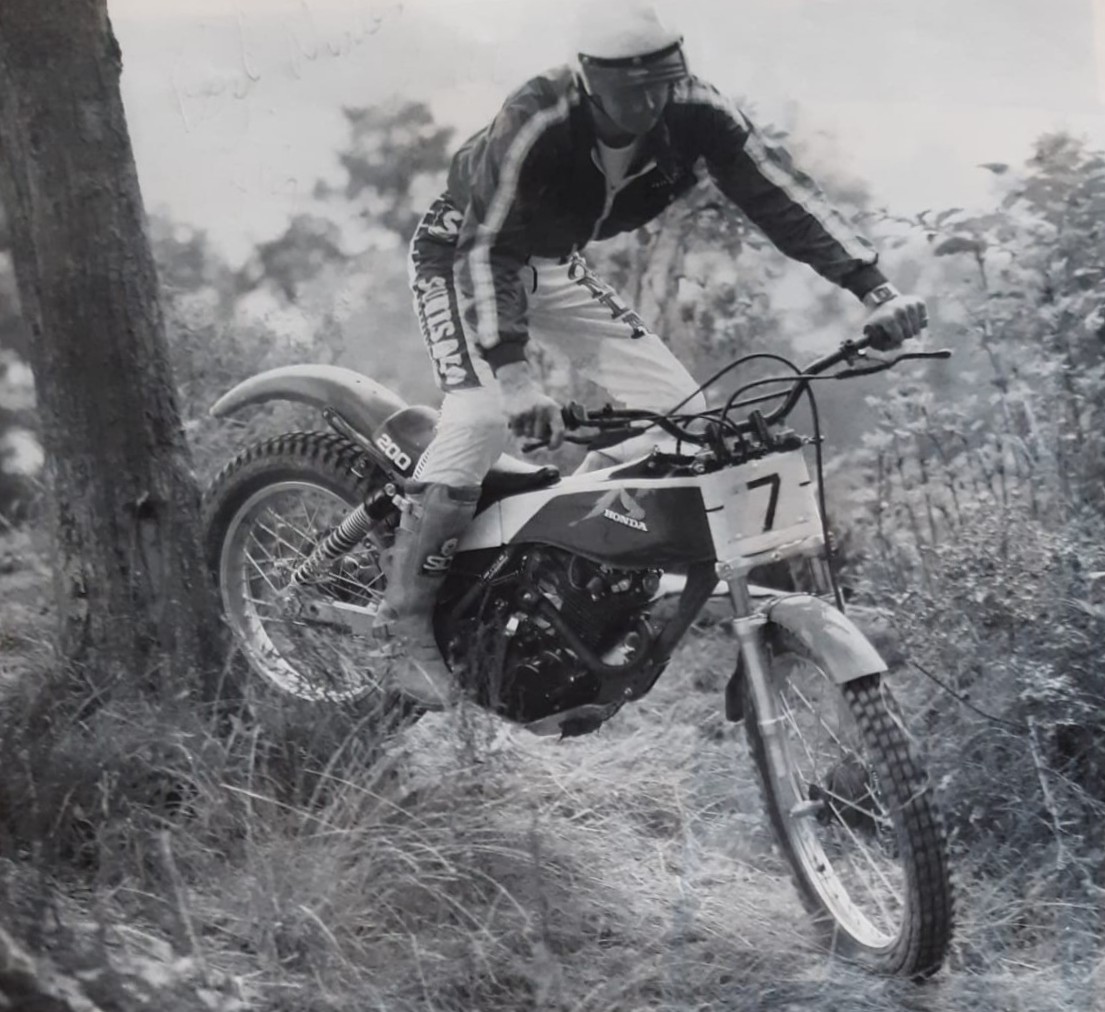
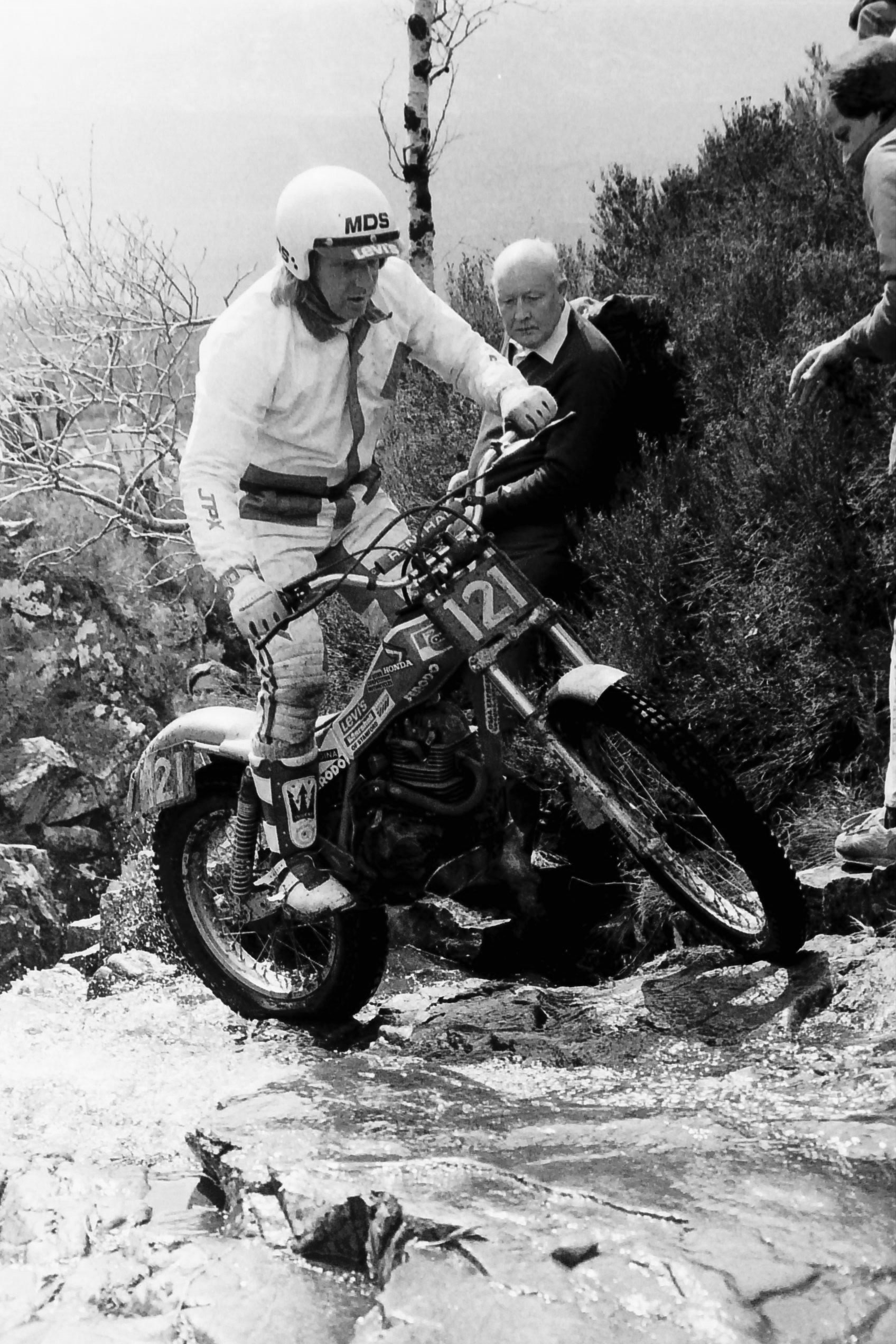
Rob Shepherd on the long-stroke Honda RTL300 – Photo: Rainer Heise
Most trials riders hold a dream to own a factory trials machine, but of course few are sold on by the factories after use. But sometimes components come your way and it’s just possible with a lot of effort, skill and time you could just construct one very close to what the factories made for selected riders. Here is the story of one man’s passion that turned a dream into a reality – RTL300.
Words: Alan Taylor
Photos: John Moffat; Alan Taylor; Jean Caillou; Heath Brindley; Sammy Miller Museum; Mervyn Smith; Rainer Heise.
Main photo: Heath Brindley
It was late summer 2019. Myself and my son Cameron were watching the comings and goings at our local car and bike Mecca, ‘Caffeine and Machine’. My friend and Cotswold legend Dave Moy arrived. ‘I’ve got something on the back of the pickup that you might want to look at. Shall I drop it off at yours on the way home?’ It was clearly a quite special Honda engine in a slightly strange home made frame. Also present were some ex-works hubs, brake plates and a large capacity aluminium ‘Scottish’ tank from an RTL360. The forks and wheels appeared to be of Motocross origin. ‘It’ll need a frame’ said Dave. ‘I’ll make one’ said I, little knowing what I’d let myself in for!
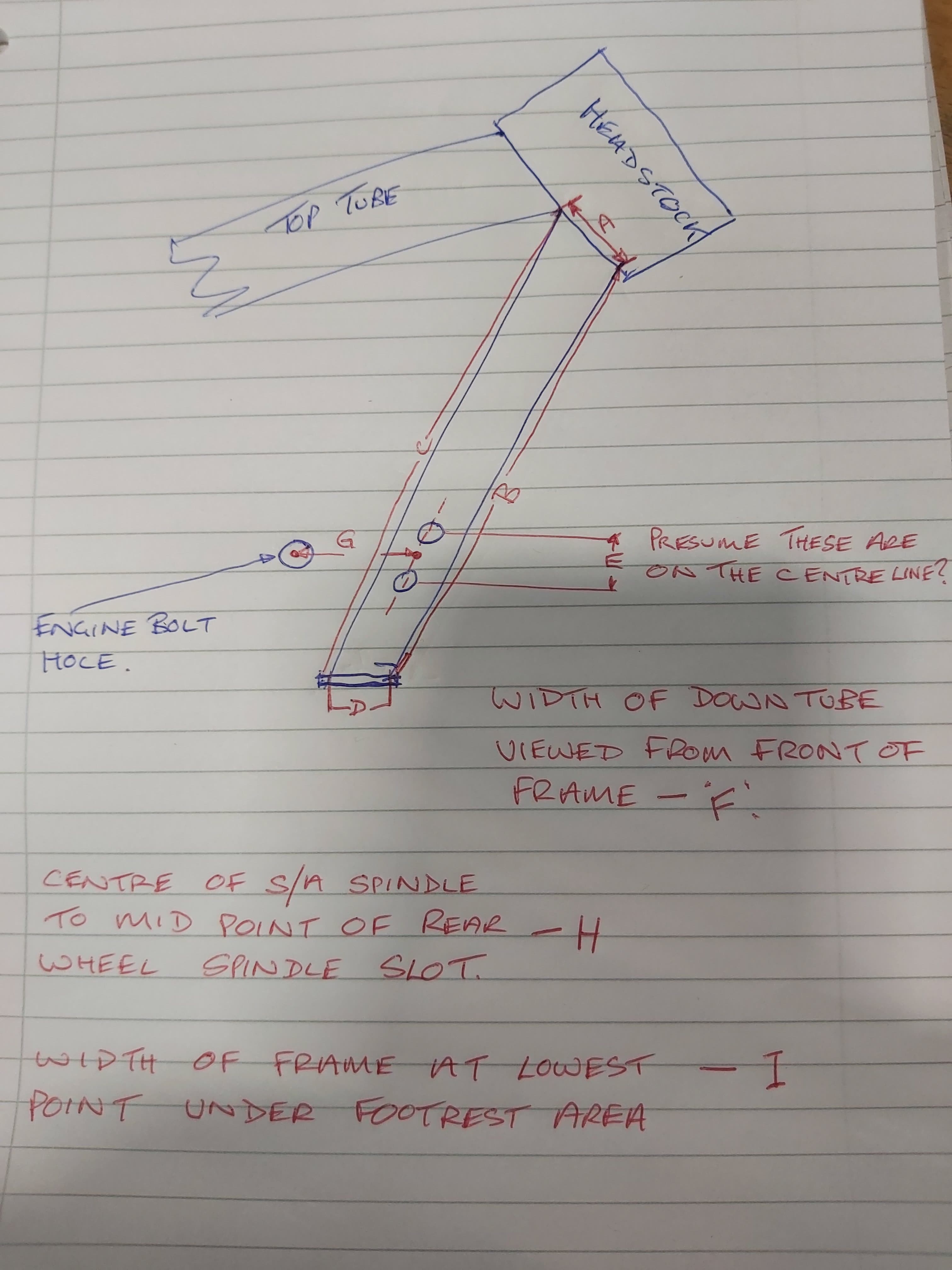
Sketches were made to determine what was required. Photo: Alan Taylor.
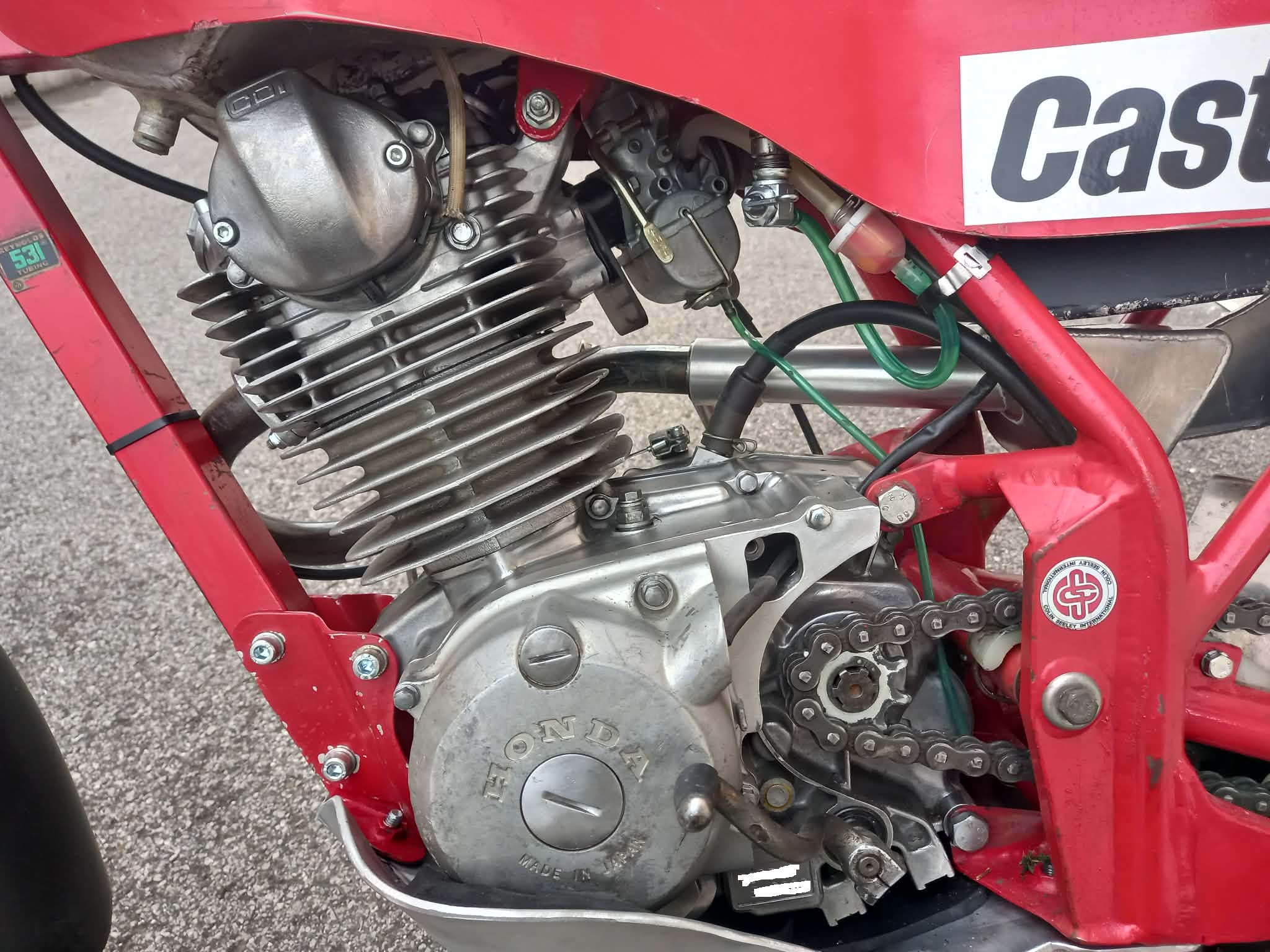
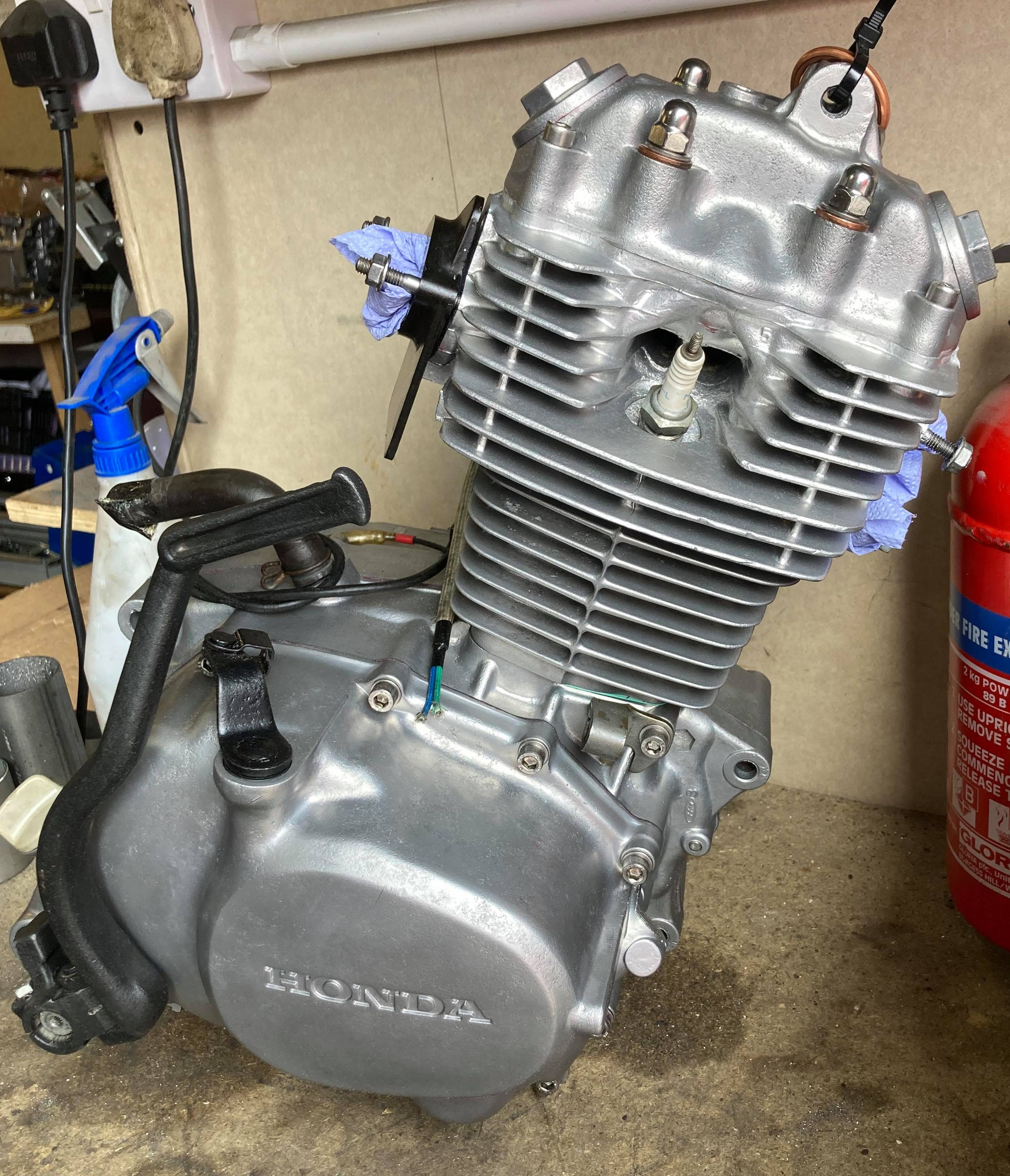
After corresponding with Jean Caillou in France, who is simply a mine of information regarding the Honda trials history. The engine was identified as being one of the works ‘long-stroke’ 305cc engines that were built in a batch of probably less than twenty in December 1974. The engines were sent to both the American Honda trials effort and of course to Sammy Miller MBE, who was running the UK team at that time.
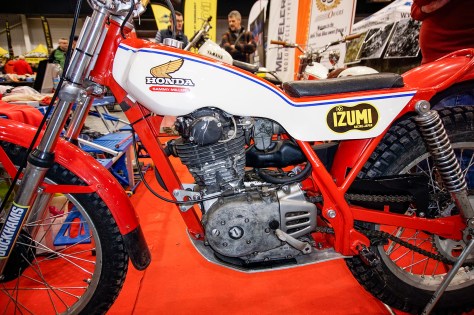
One of the engines used by Sammy Miller during his time with Honda – Image credit: Sammy Miller Museum.
I asked Sammy how many long-stroke engines he was allocated. ‘Five or six’ was the reply. Interestingly, all the engines have the same engine number, which is cast into the top of the crankcase, RTL300E1204. ‘E’ denotes engine. The date configuration is the old Japanese way of doing things. For further identification it appears that the UK engines had a hand engraved number on the rear of each crankcase half. This one is marked ‘3’. The engine in Sammy’s bike at his excellent museum is marked ‘1’.
The first step was to see if the engine would start and run. It would start but not run for any length of time. After some investigation, I concluded that the ignition coil was breaking down when it got hot. An initial big fat spark when cold was reduced to nothing when hot, although just to confuse things, sometimes even when cold there was no spark! The coil was sent away for re-winding but got lost in the post and never reached its destination, turning up nearly a year later having been to the lost parcels office in Belfast! In the meantime I decided to fit an electronic ignition from a well known provider, an XL350 version seemed to fit the bill. This was not the easiest of fitments, new mounting holes had to be drilled in the stator base plate due to the works engine being of different configuration to standard. Once fitted and a healthy spark was confirmed as being present, the engine was started, only to fail again when hot, same symptoms – no spark! A lot of head scratching followed. Could it be that the flywheel needed re-magnetising, what with heat not being a magnets best friend? Interestingly, the flywheel has a welded on ring around its circumference. Villiers Services re-magnetised it with the warning that there was a danger that all magnetism could be lost during the process. Luckily this proved not to be the case. With the flywheel re-fitted the engine was started, frustratingly with the same symptoms! Speaking to the ignition providers technical department, I was given various parameters to check, which all proved to be within tolerance. After walking away from the problem for a week or so, I had a eureka moment, deciding that there could be a dry joint inside the encapsulation on the ignition system. This was proven to be the case! After I repaired and refitted it the engine ran like a sewing machine, very mechanically quiet. A first ride on a factory Honda was taken around the garden and all the gears where there, so a result!
The Susans’ frame jig:
It seemed that the best approach to the frame issue was to gather as much information as possible from as many people as I could think of that may have been associated with the Honda trials effort, social media making things slightly easier than it might have been. It’s surprising how one conversation can provide just a snippet of information that can be very useful down the line. One such conversation led to Jim Susans, of Bikecraft fame, the builder of many Pre65 frames who is sadly no longer with us and whose story can be read on Charlie Prescott’s excellent ‘BSA Otter’ website.
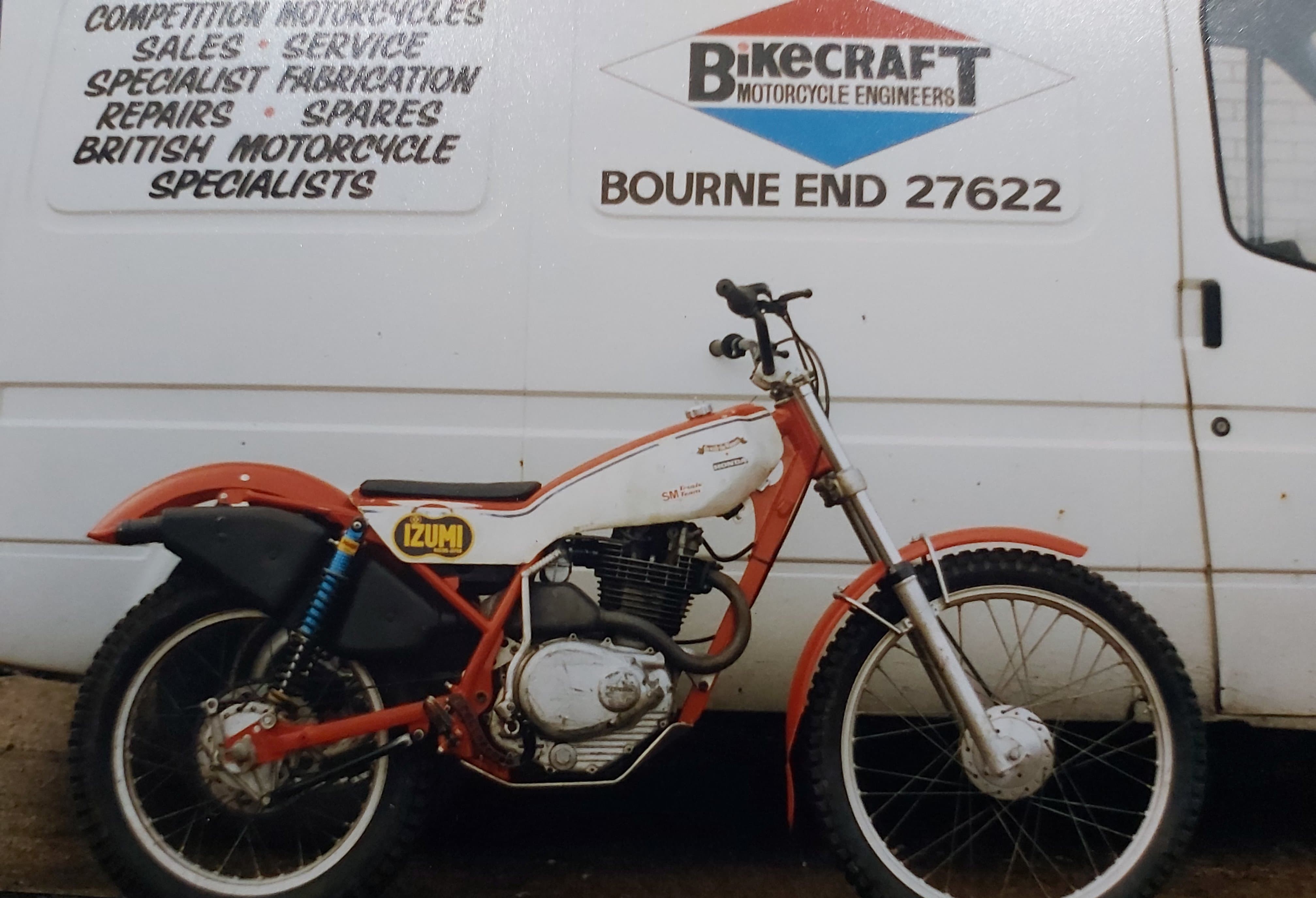
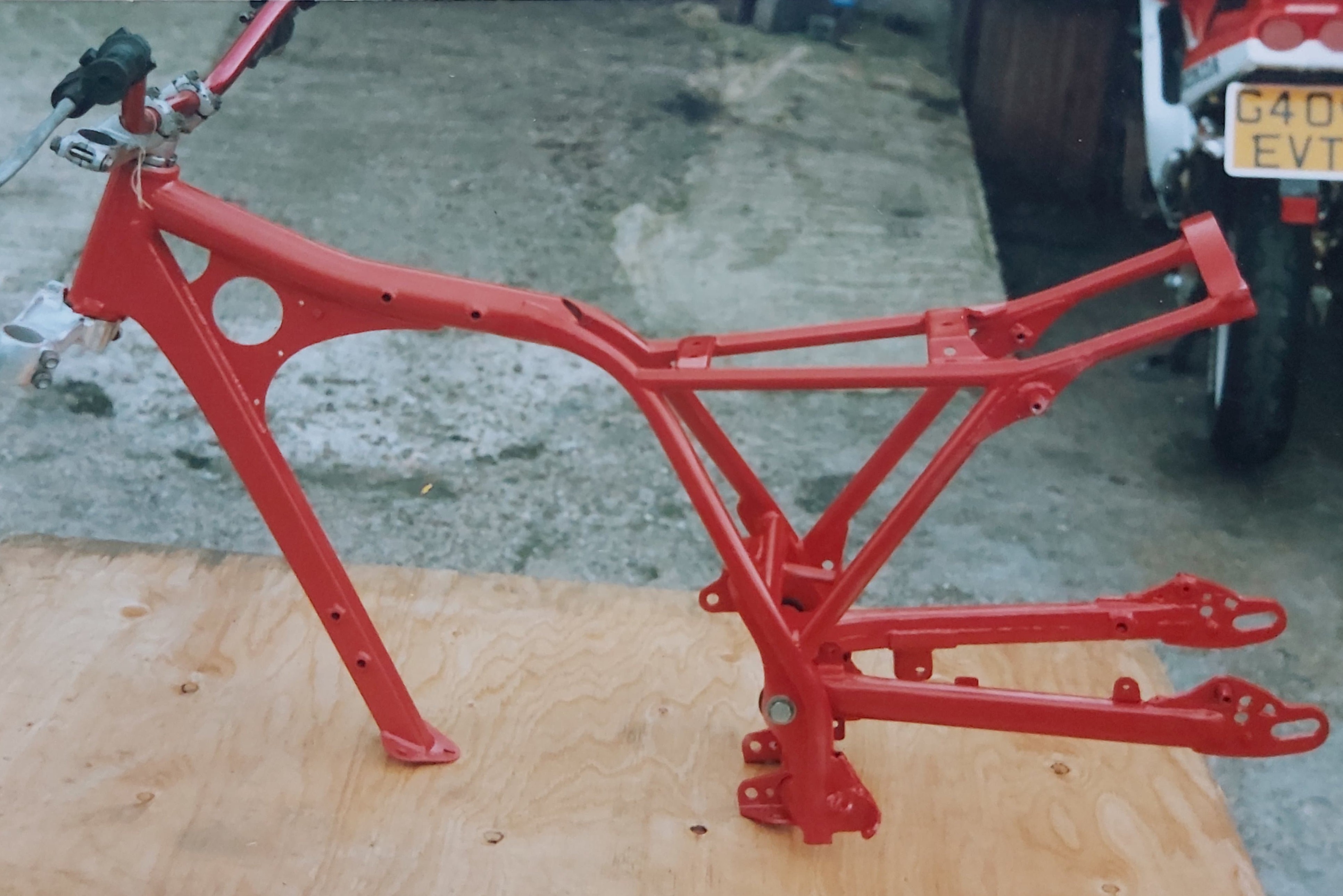
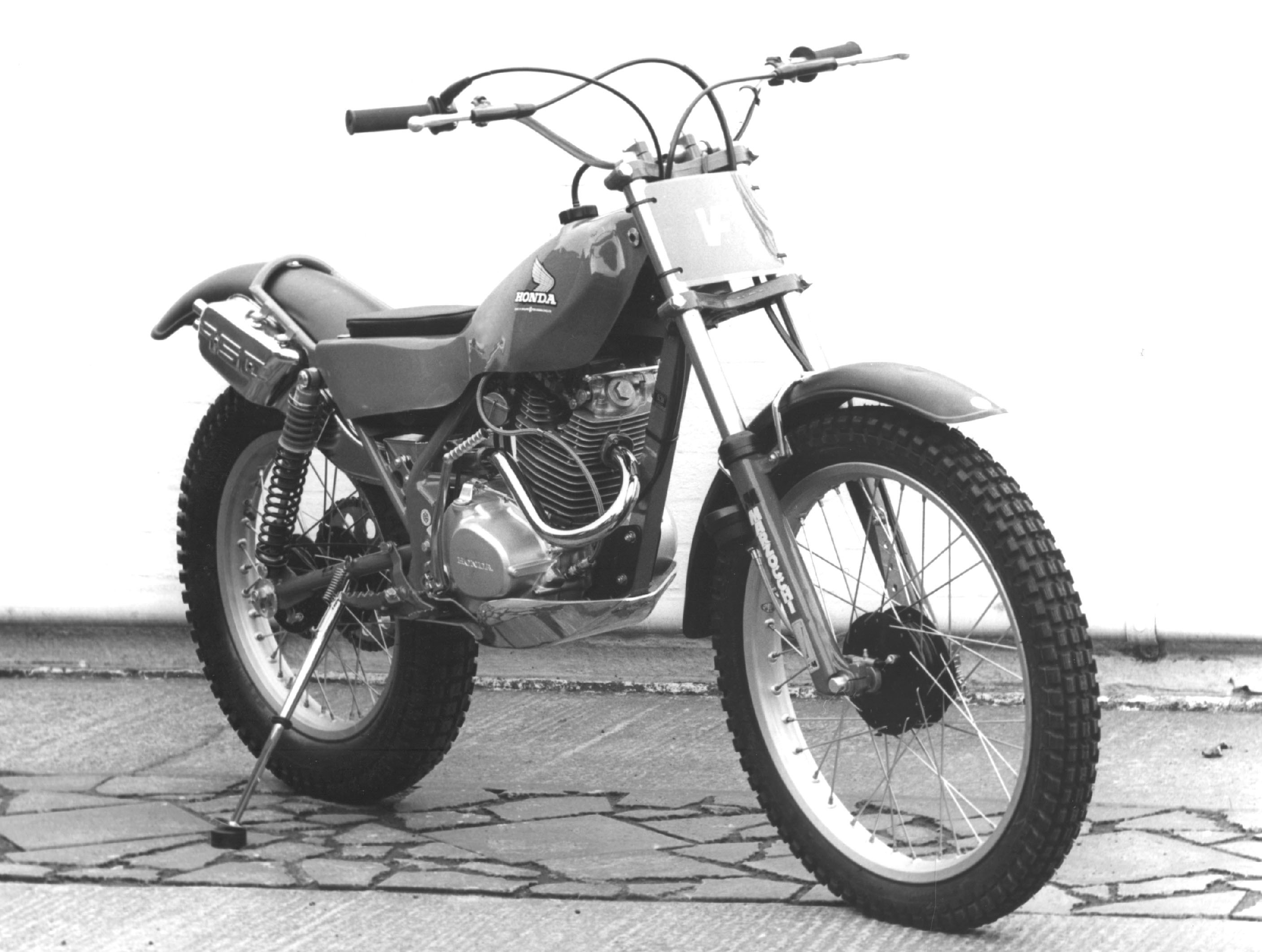
Jim Susans’ Bikecraft company fabricated a small number of frames to house Honda TL250 engines, based on the works frame of Rob Shepherd. There are several ‘Replica’ machines worldwide.
I knew that some years ago a works Honda and parts had passed through his hands and that Jim had taken the opportunity to copy the frame geometry into his rather rudimentary jig. I phoned him, mainly to ask if he still had any works bits left. Luckily he had been friendly with my dad Gilbert when they both rode Pre65 trials, so I wasn’t a complete stranger to him. Unfortunately all the works bits had been moved on. I explained my dilemma with the frame. His reply was that he was unlikely to build another bike on his jig and would I like to come and see it? Yes please! I took a trailer with me down the M40 – just in case! After a long and interesting conversation talking about bikes, his jazz band and his younger days in France working as a war graves mason, he said he’d like me to have his jig, on the strict proviso that I didn’t pass it on to anyone else. We came to a financial agreement and onto the trailer it went! He also supplied some very useful photo’s of a replica works Honda frame plus some T45 tubing. Now work could start in earnest!
The first version of the RTL300 frame which was later modified to have a full loop rear mudguard bridge fitted – Photo: Alan Taylor
I also made contact with John Moffat of Trials Guru website who also has a Jim Susan’s built Honda ‘Works Replica’ machine and he kindly let me have some photographs as a guide. His machine has a 305cc engine, but that is a TL250 engine bored out.
Trials Guru’s John Moffat owns this Jim Susans’ Bikecraft framed RTL replica, bought from England speedway star, Malcolm Simmons, fitted with a bored TL250 Honda engine to 305cc – Photo: John Moffat/Trials Guru
In the background things had been progressing, with the acquisition of a set of ex-works forks, yokes and fibreglass tank/seat unit which were swapped for the big aluminium tank.
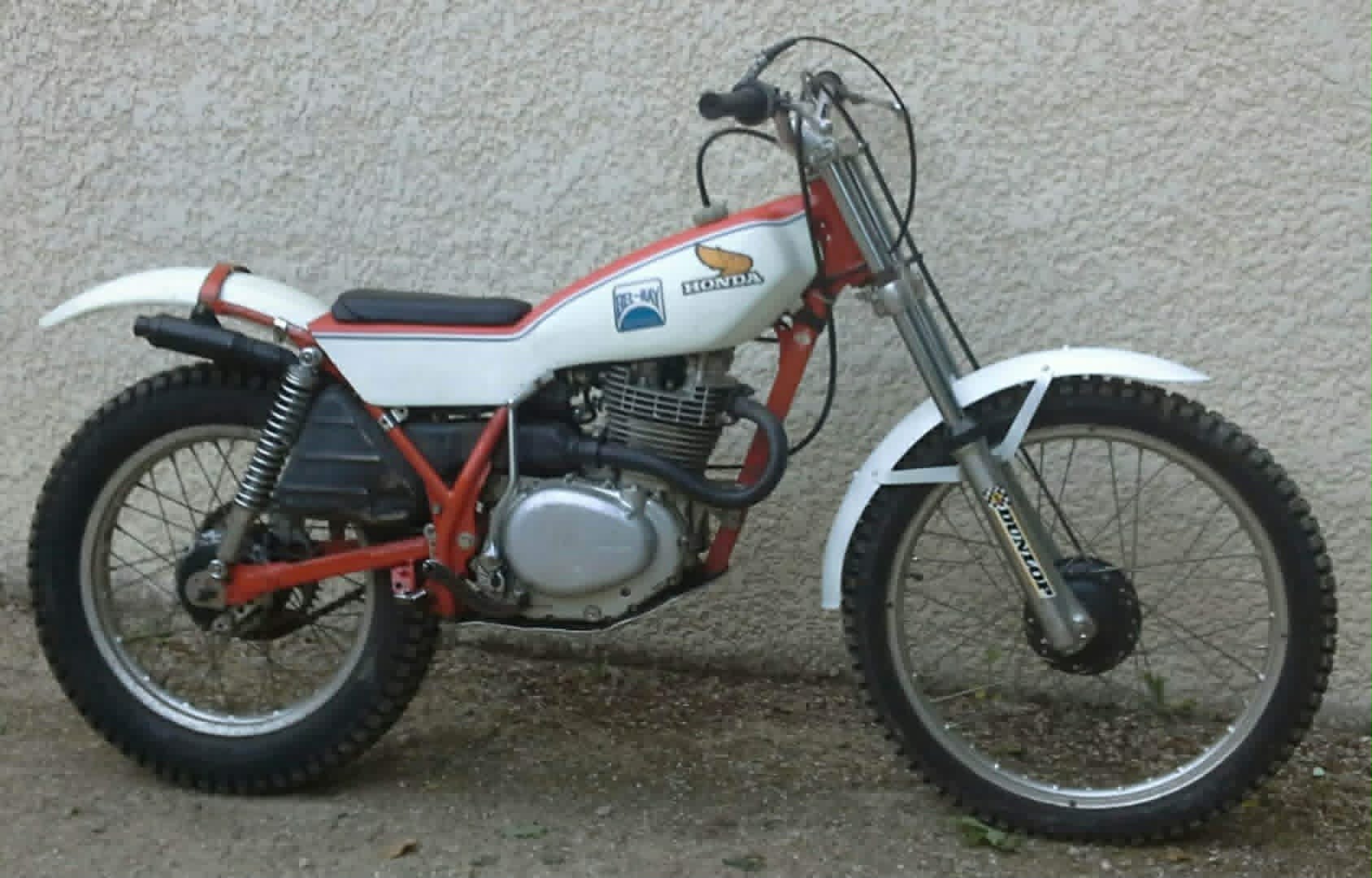
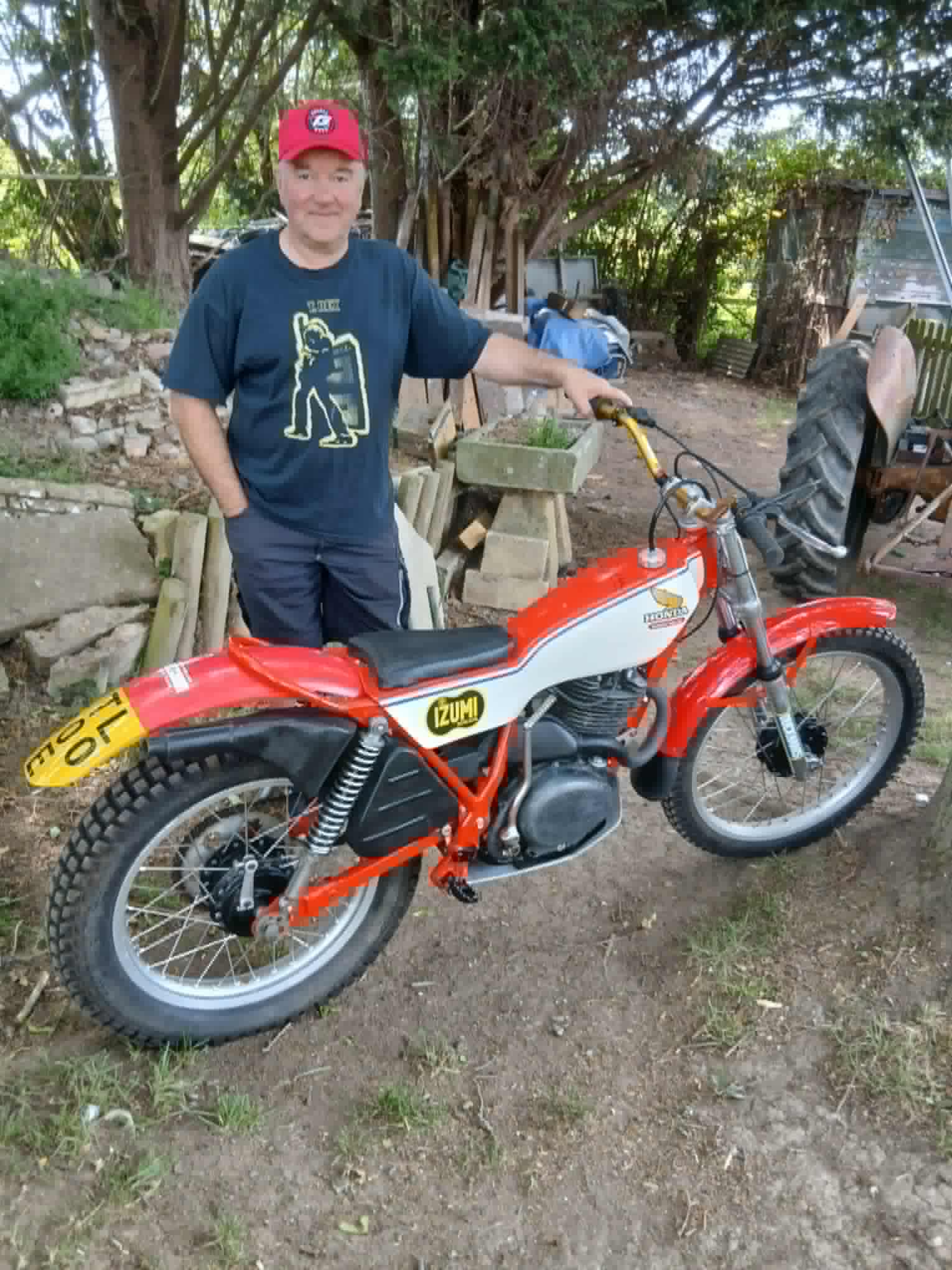
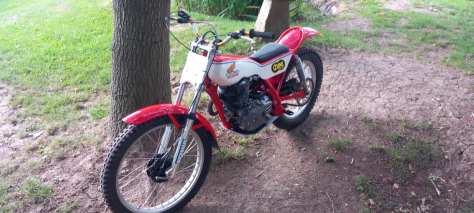
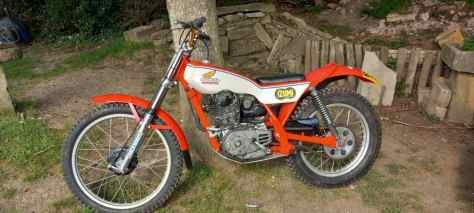
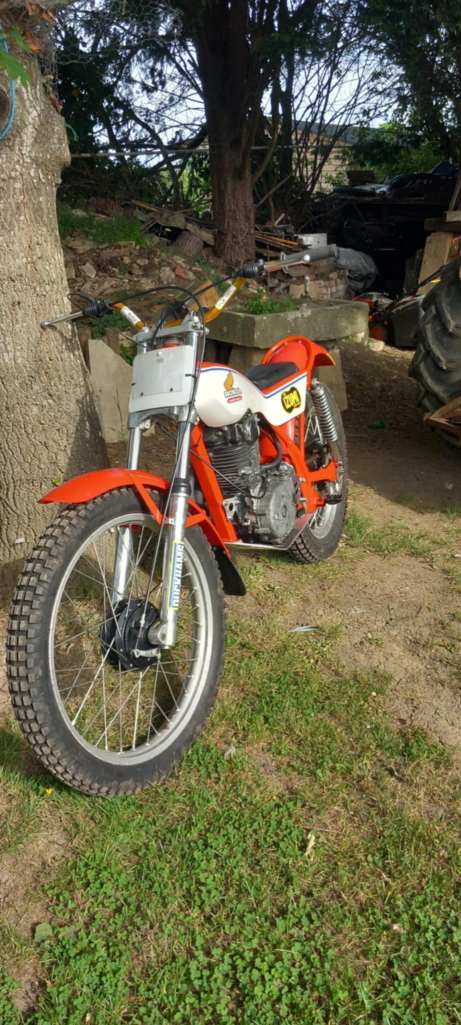
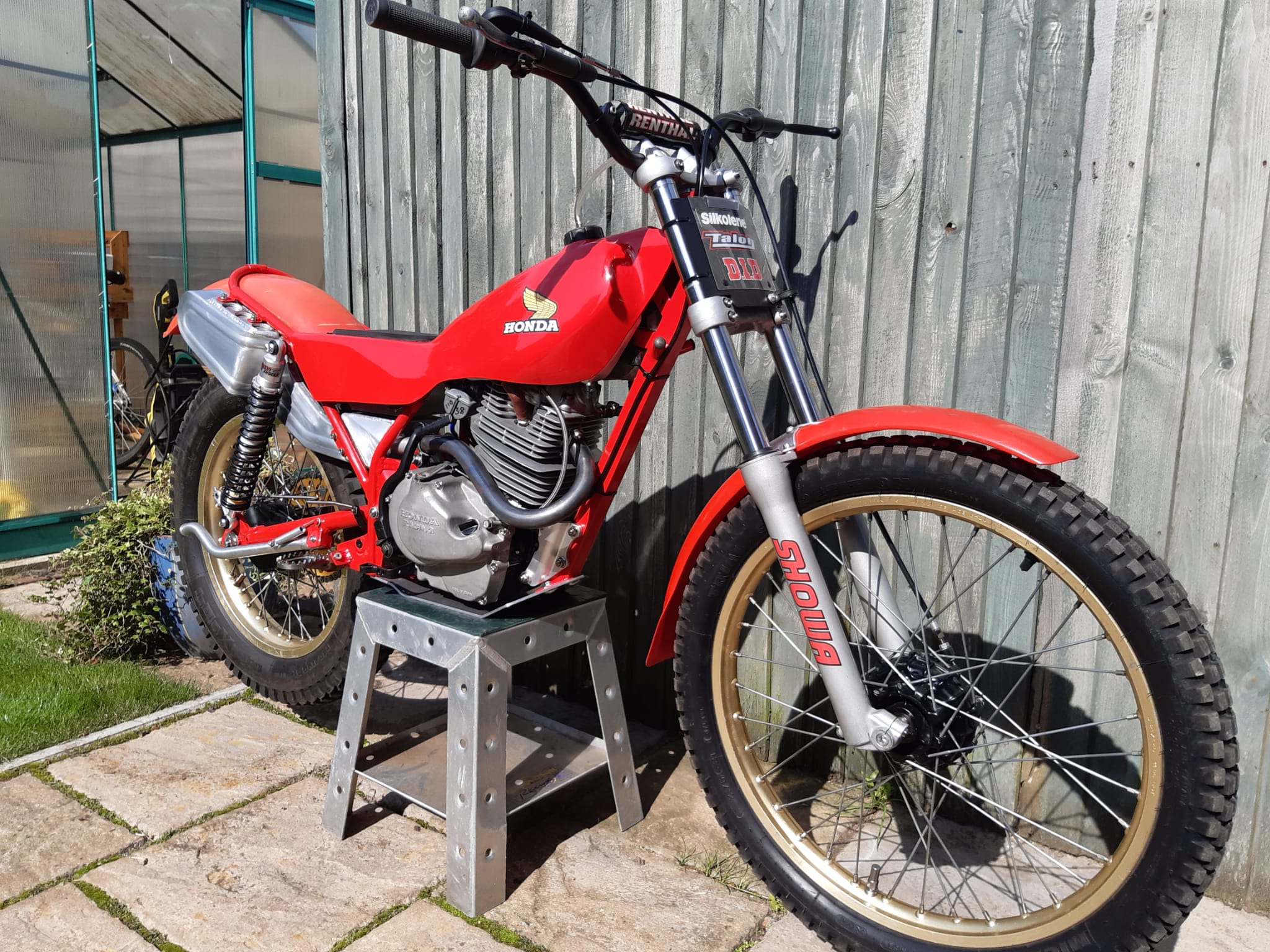
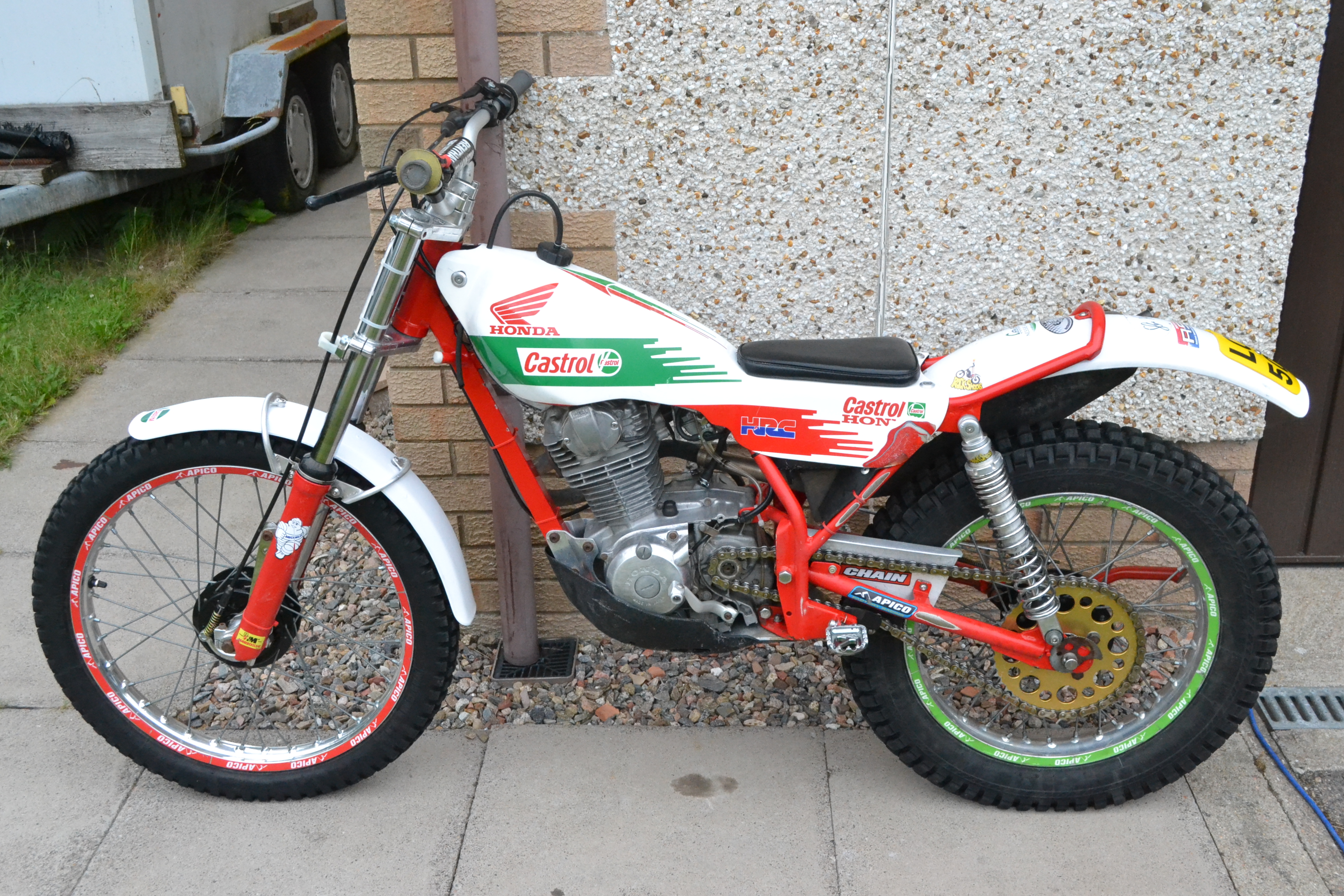
Alan Taylor’s Honda RTL300 WR is a fine looking machine – Photo: Alan Taylor
After repairing the fibreglass tank, which had split down one of the seams, I lined the interior to protect it from ethanol, although Aspen 4 is the fuel of choice and appears to be safe with fibreglass. The fork stanchions needed a re-chrome and were duly dispatched to a well known company but took far longer than expected, due, I’m told, to the taper in the uppermost part of the tubes. Two or three attempts were made at this with the final result not as good as was hoped. The yokes needed only a clean. The top yoke being magnesium and the lower aluminium, which was missing the steering stem, so I had to turn one up.
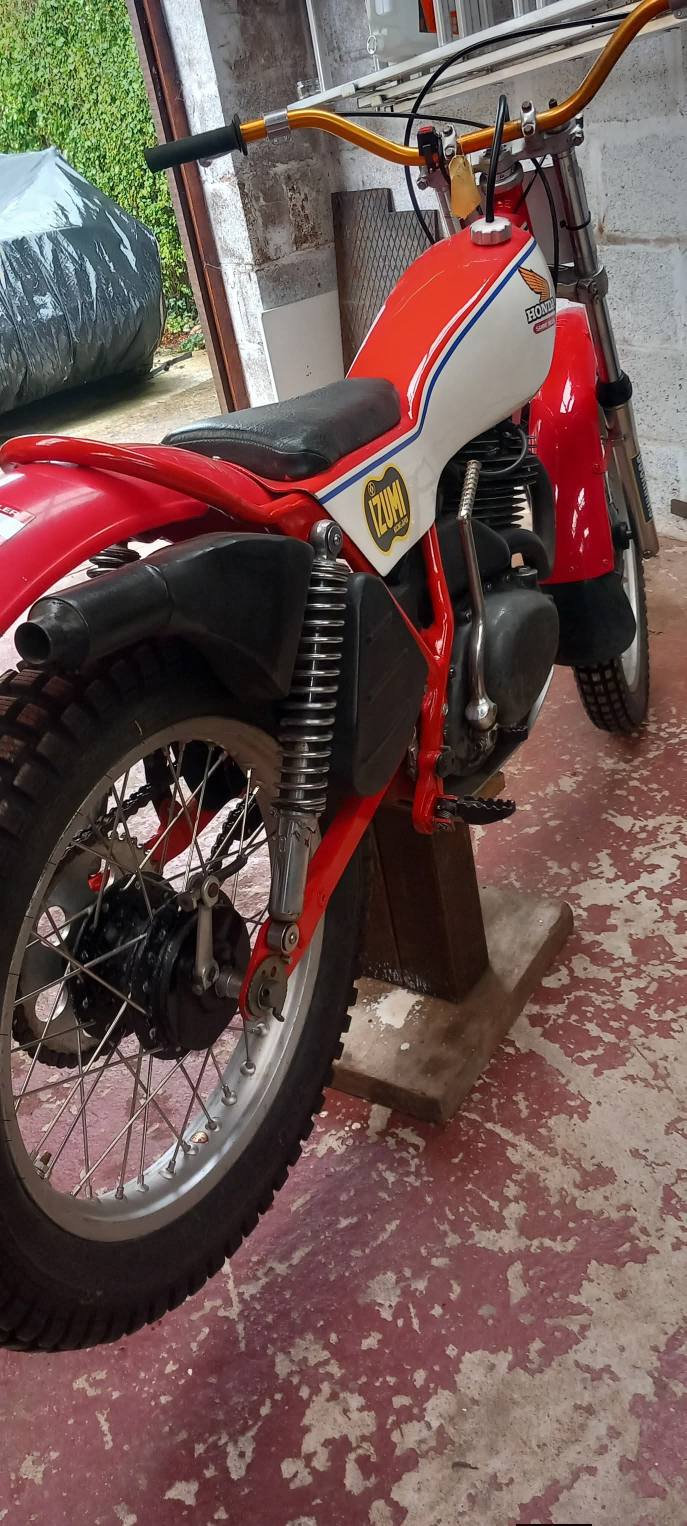
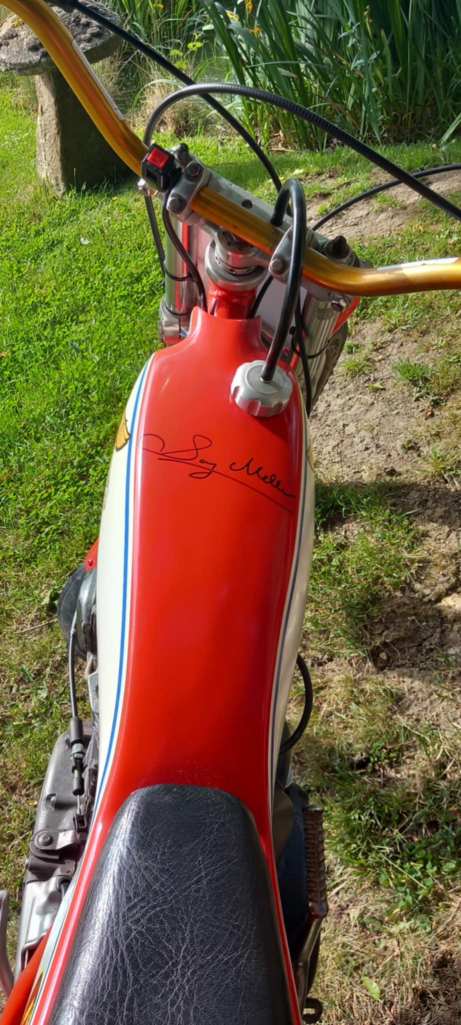
The tank finish was inspired by Marland Whaley and Rob Shepherd’s factory Hondas – Photo: Alan Taylor
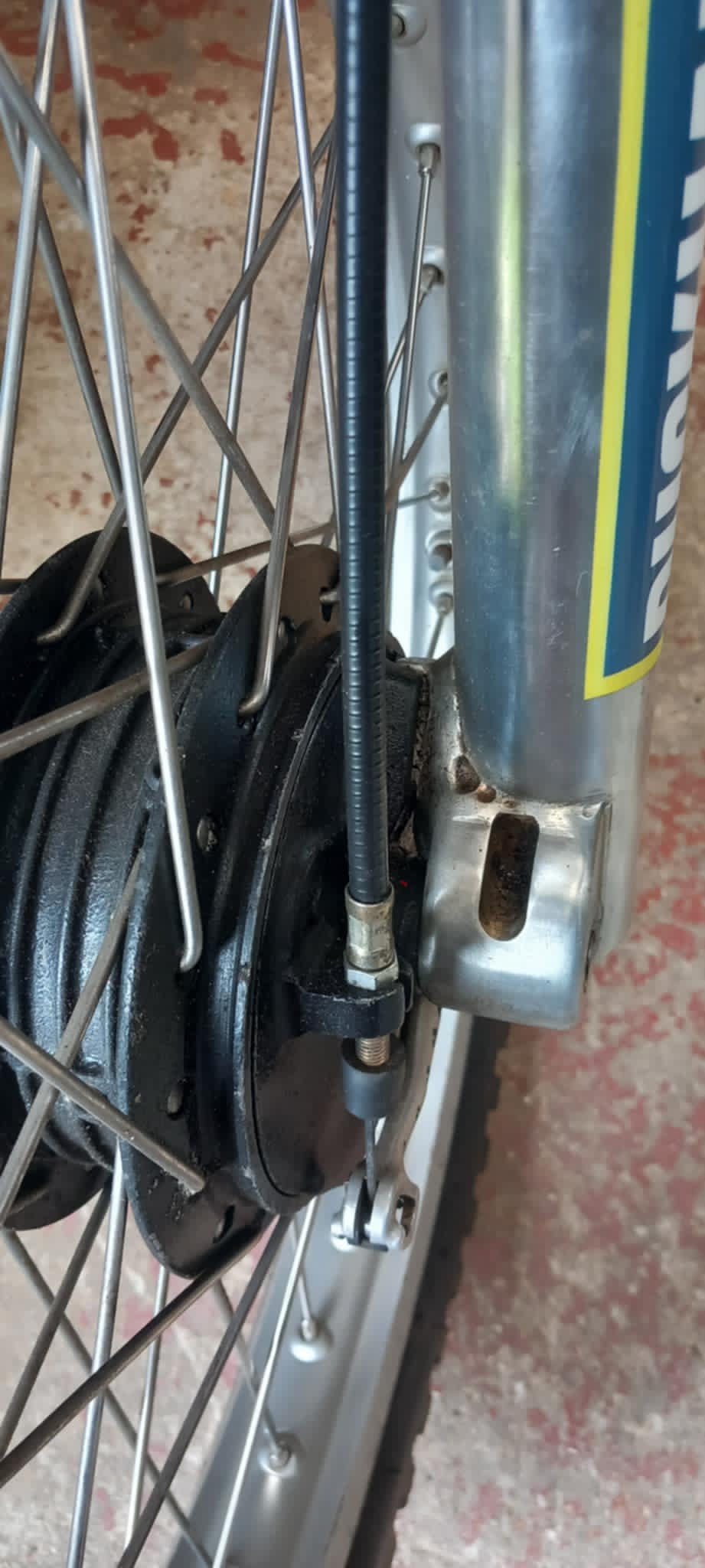
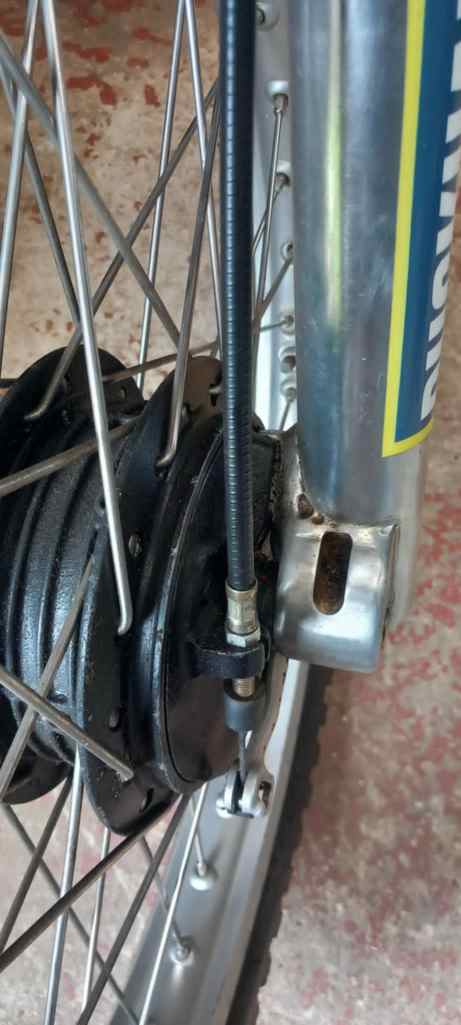
The fork sliders were a different story and needed a fair bit of work because the brake plate retaining lug had been removed and the spindle thread had been bored out to take a through spindle. Also, one of the mudguard mounting lugs had been drilled out to accept a bigger bolt for the mounting of a torque arm. The sliders were originally machined from solid stock.
Detail of the front fork slider, a factory component which had to be re-instated after being modified to fit an SWM front end – Photo: Alan Taylor
As pointed out by Martin Matthews there’s a pretty good chance that the forks are the ones pictured on page 117 of Don Morley’s Spanish Trials Bikes book, fitted to Sammy’s SWM, having been modified to accept the Grimeca hub. The picture also shows the valves in the fork tops which were a later addition. A new lug was welded on and a threaded bush was fitted to replace the missing thread for the spindle. I made a new spindle.
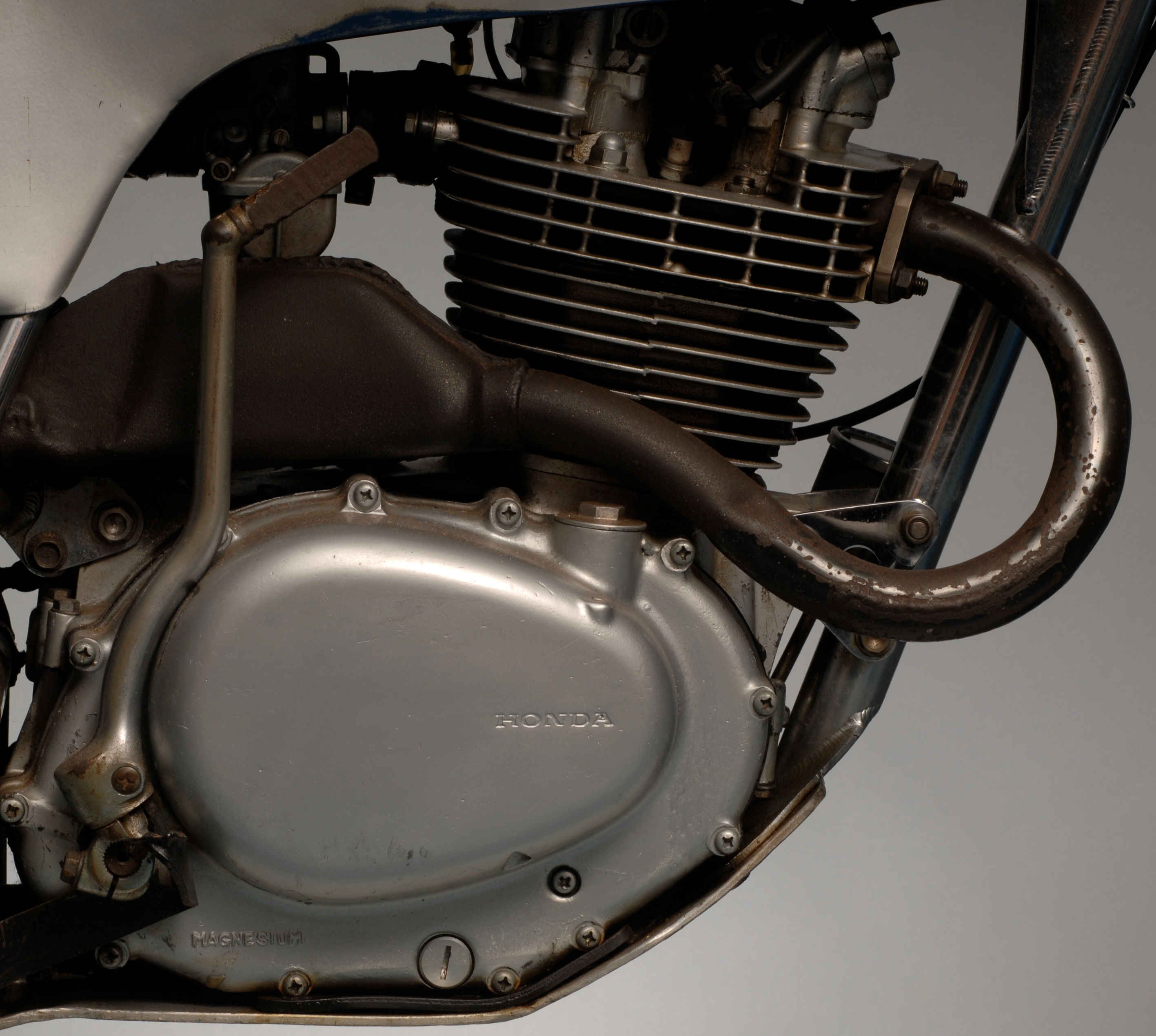
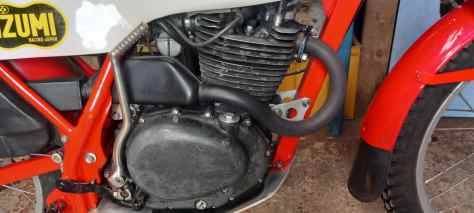
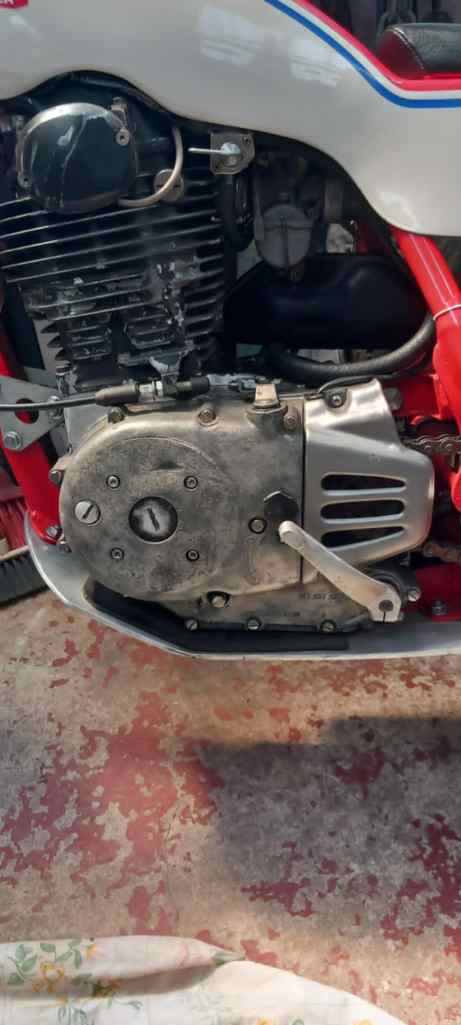
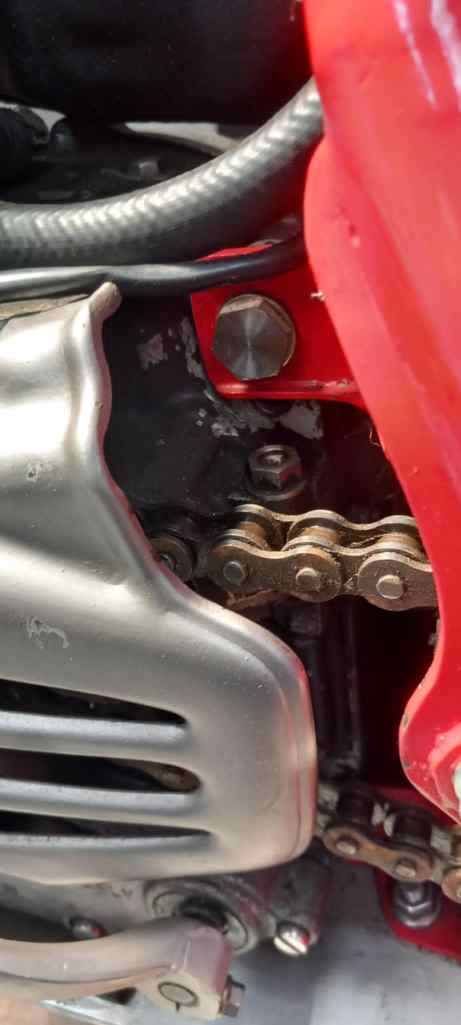
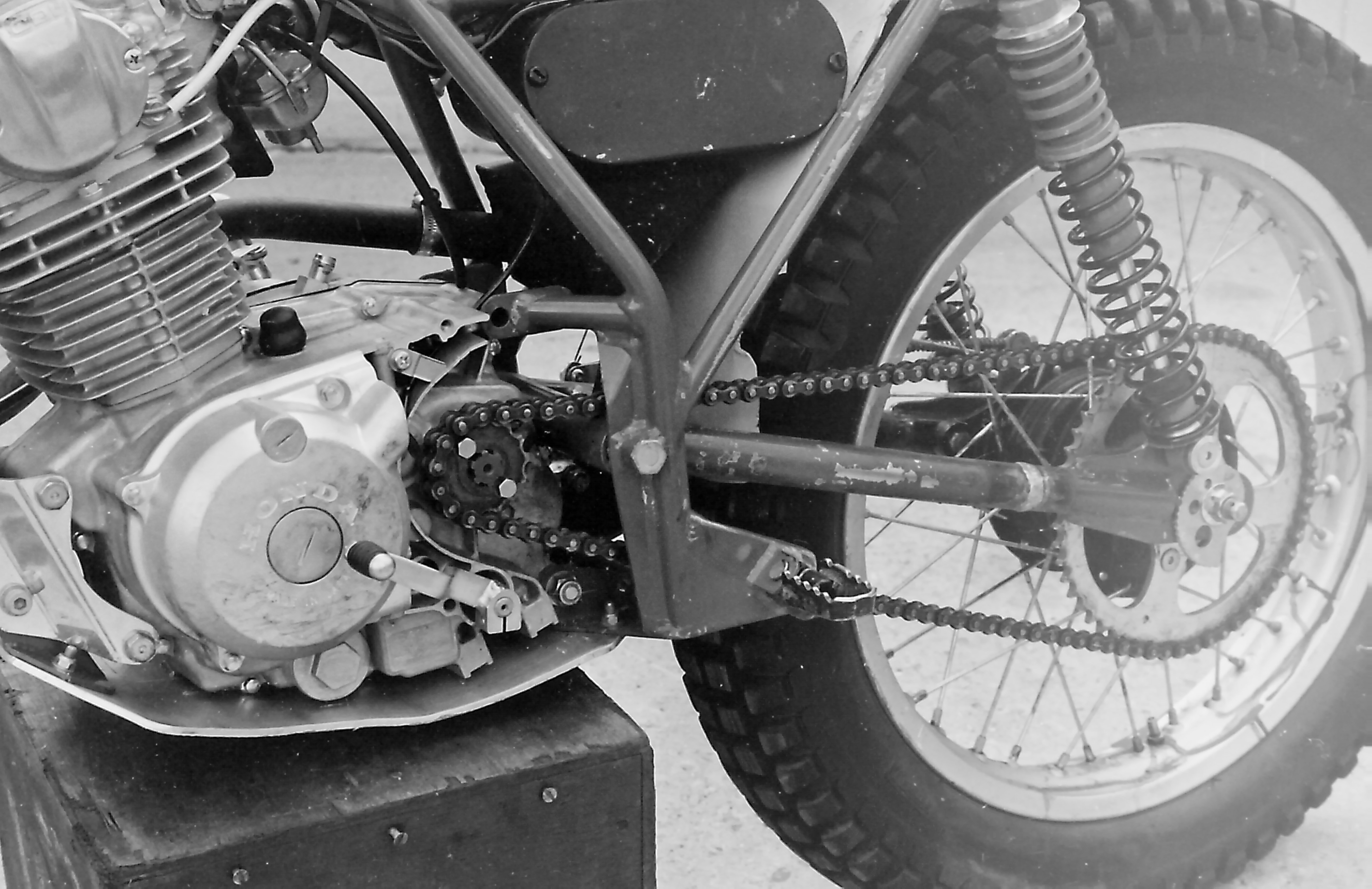
Close up of the clutch side of the RTL300 WR – Photo: Alan Taylor
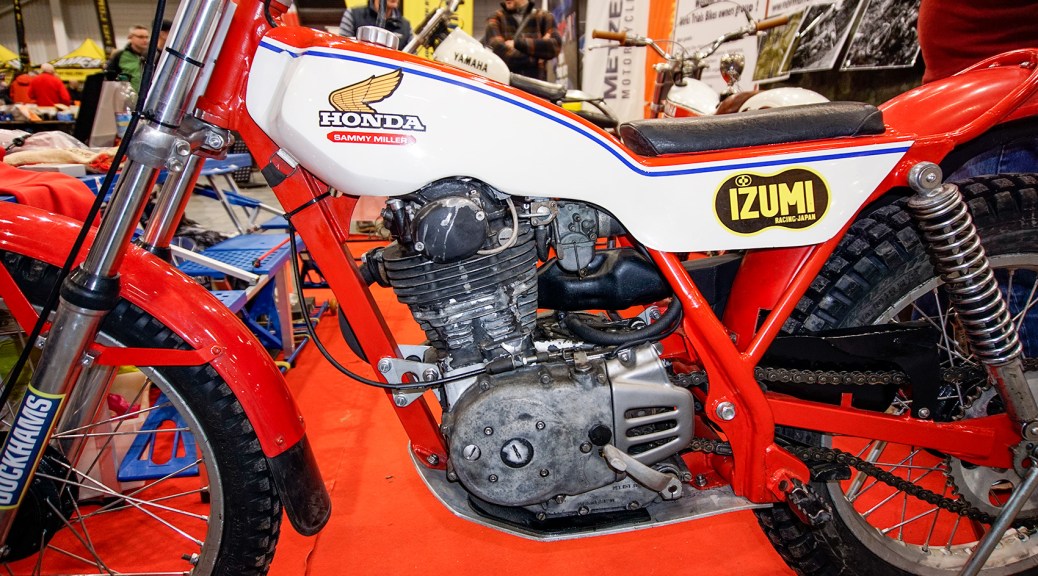
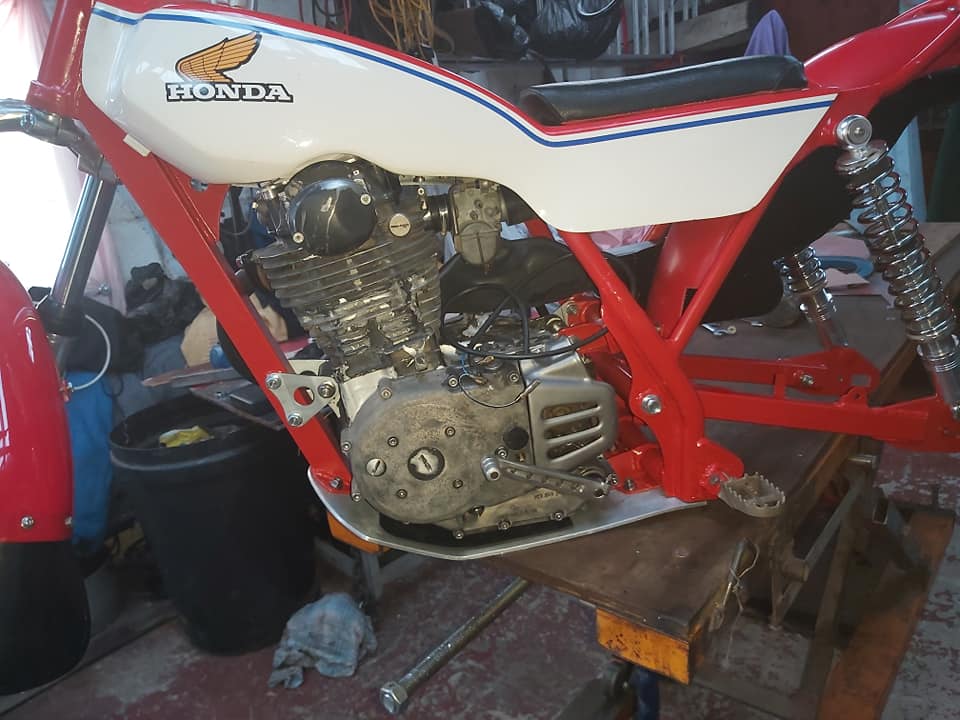
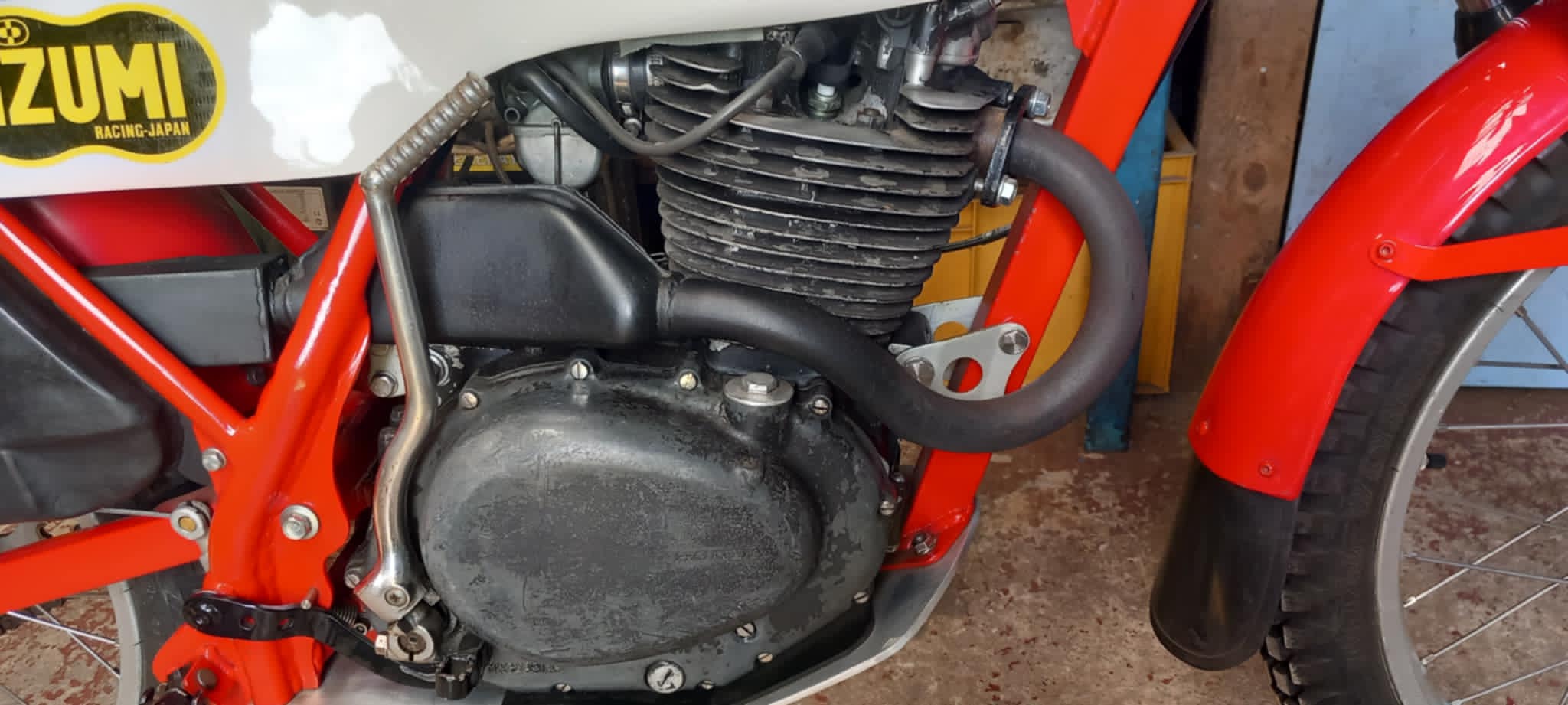
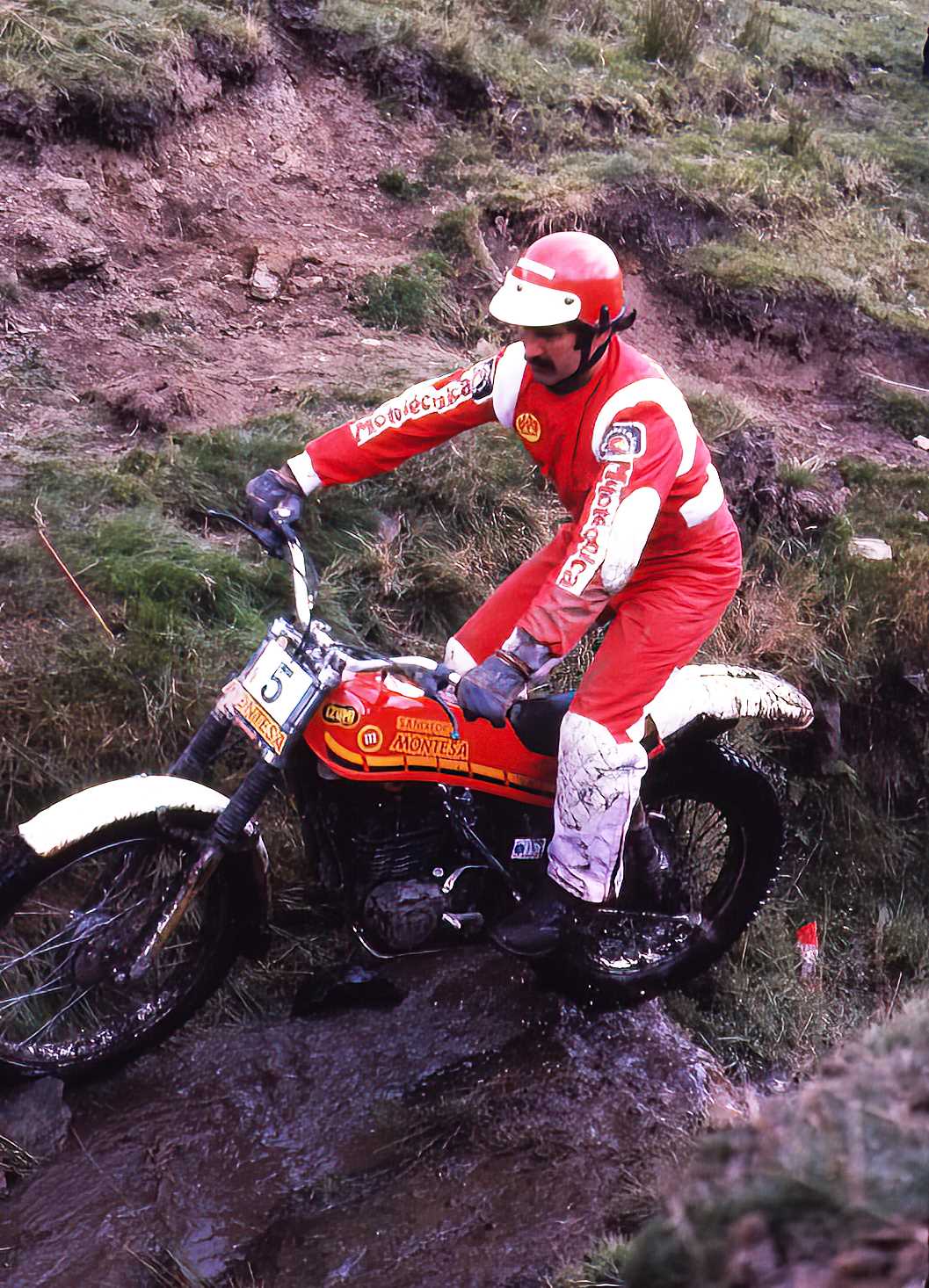
With the forks finally assembled it was time to start the frame. Ultimately, I wanted to re-create a bike that had the appearance of Rob Shepherd’s mid 1977 machine with black engine, red and white tank, unpainted fork sliders, red mudguards and with the big “one off” exhaust tail pipe. The engine was already black and although showing signs of ‘patina’ was left as it was. I’m told that the black finish was applied in the UK, the engines having come from Honda finished in silver. Once you re-paint something you lose the history.
‘Works Trials Bikes’ is now an international club on social media.
At the 2020 Classic Off Road show, Jean kindly allowed me to take lots of detail photo’s of his ex-Marland Whaley long-stroke machine, so armed with Jim’s jig, lots of photo’s and lots of guesswork, I started frame building, posting progress on the ‘Works Trials Bikes’ facebook group.
The inspiration for Alan Taylor’s Works Replica, the long-stroke Honda of the late Marland Whaley. (Photo: Jean Caillou)
Happily, some of the important dimensions were dictated by the jig and the tank-seat unit, namely the head angle, the top triangle, the swinging arm pivot point and the rear shock absorbers top mount. Using known measurements from the engine and blown up photo’s, it was possible to deduce other critical dimensions but this was difficult. To be as authentic as possible, the frame needed to have the tapered square section front down-tube and the flat side oval side tubes. The down tube wasn’t too difficult to fabricate but the side tubes were tricky, being a size that cannot be bought. I’m told that Honda started with round tube then squashed it, ending up with a non standard size.
After posting lots of facebook photo’s showing my progress or otherwise, Jean started to whole-heartedly support the project. I couldn’t have achieved the final result without this support.
French Honda enthusiast, Jean Caillou is a Trials Guru VIP.
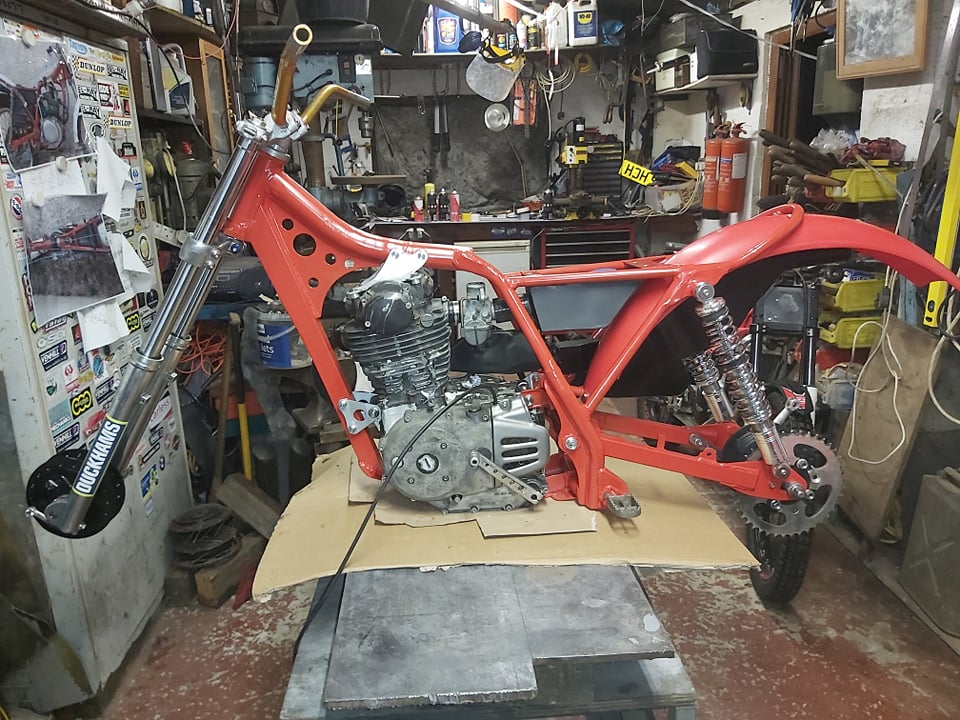
There was a huge amount of fabrication to do, all of which took more than four hundred hours. Apart from the obvious, other items made from scratch were the airbox and exhaust tailpipe.
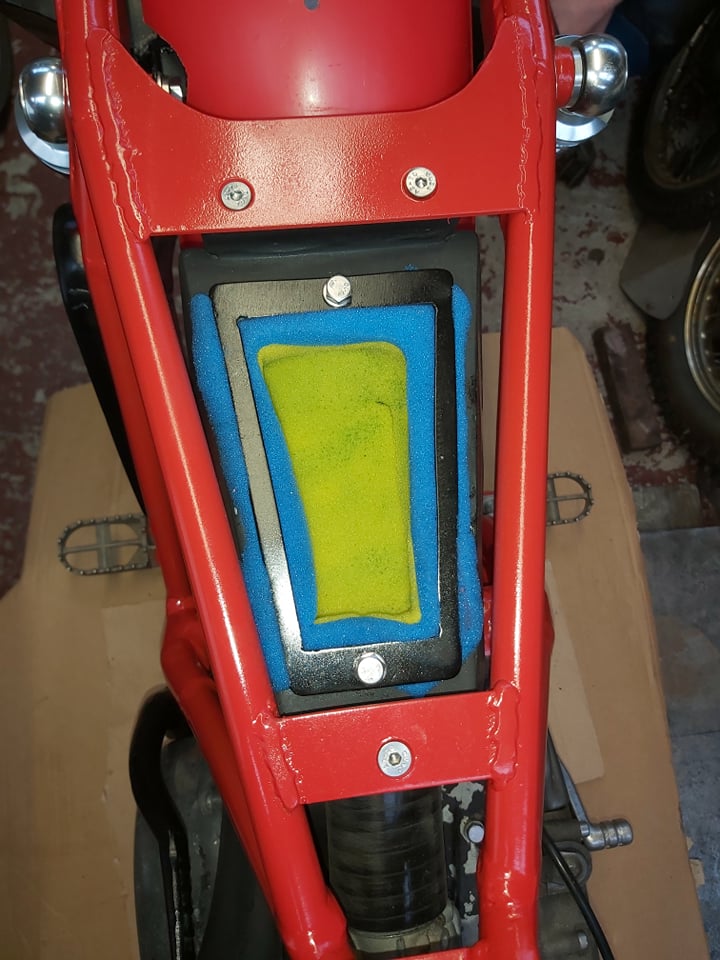
The airbox was made to accept a Yamaha TY air filter – Photo: Alan Taylor
The airbox is pretty much the correct size and shape but I made it to accept a TY mono airfilter. The exhaust system is not entirely correct because the tailpipe should be welded to the exhaust middlebox with a detachable front pipe. Swinging arm bearings and spindle are TLR 250. The works bikes used a few standard TL250 parts, some of which I sourced from the USA. Thanks go to Olivier Barjon for his support also and for providing the correct footrests and a decent TL250 middle box and carburettor.
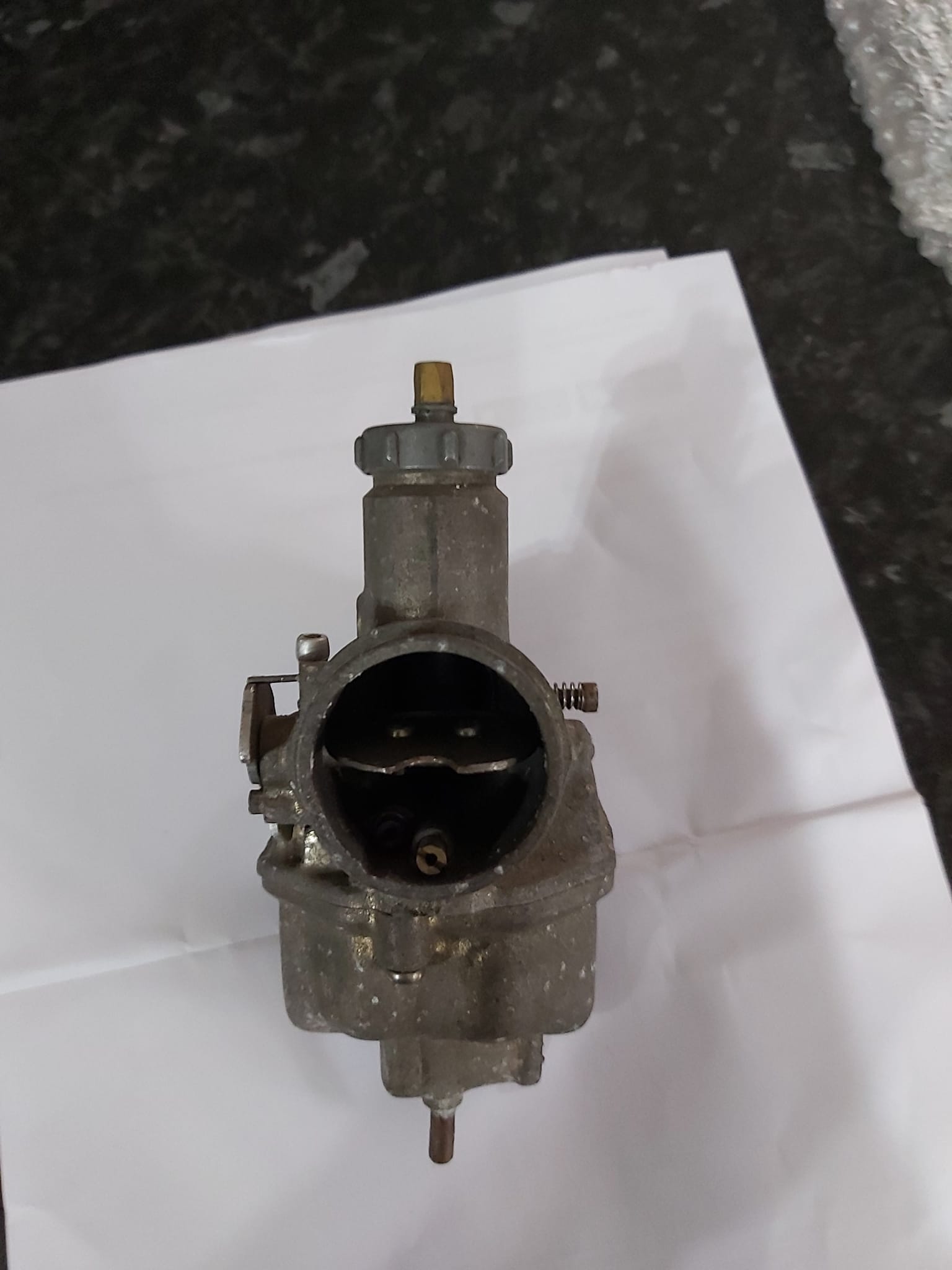
This magnesium carburetor has been located recently – Photo: Alan Taylor
I’ve since obtained an ex works magnesium carburetor. TL250 kick-start levers are hard to find, luckily Jean had a spare.
Progress was being made with attention to detail of primary importance – Photo: Alan Taylor
Jean also supplied a set of correctly proportioned period replica Izumi and Duckhams stickers, plus the ‘Sammy Miller’ stickers to fit underneath the Honda wing. The rear shocks were sourced via Facebook, as were a pair of DID rims, which look correct for the period but were originally on a later Seeley Honda.
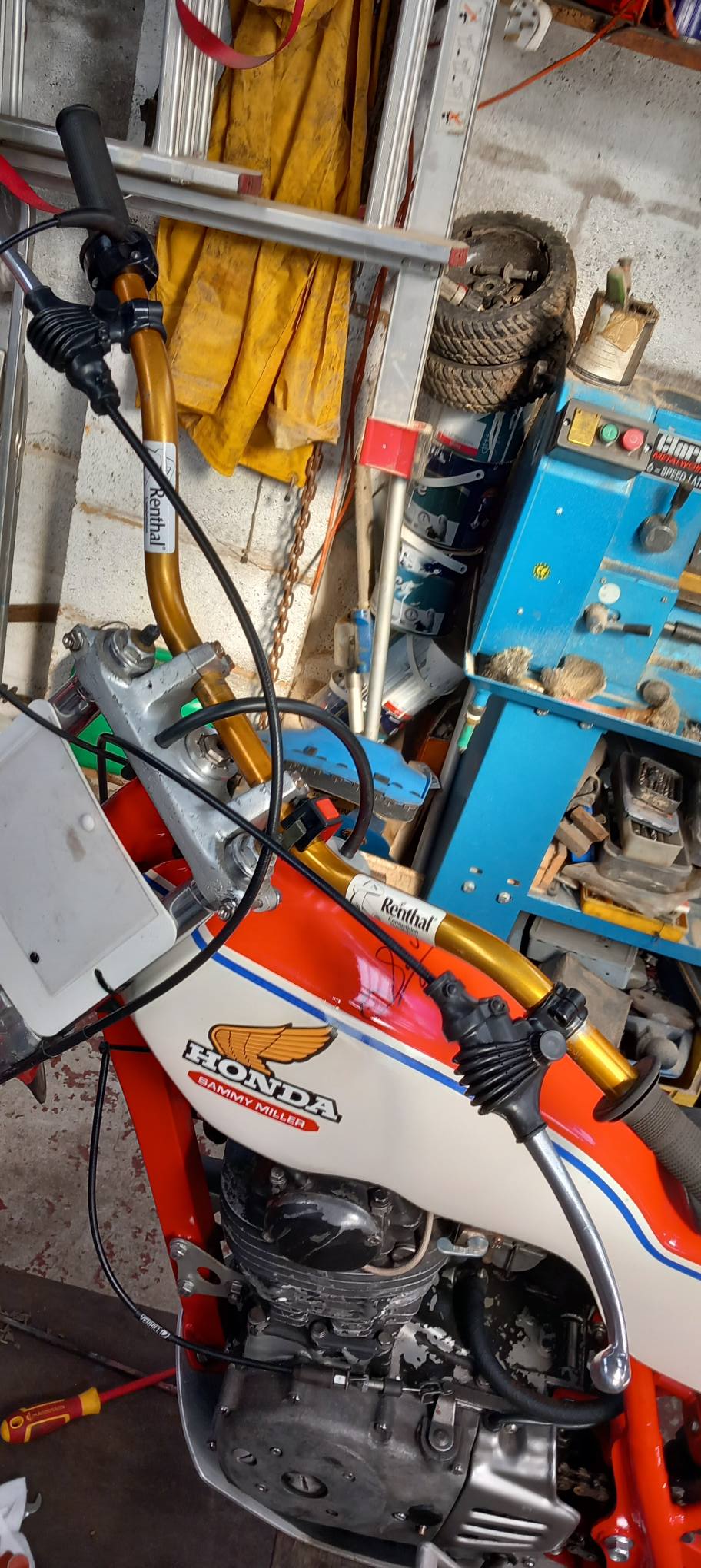
Detail of the magnesium top yoke and the gold anodised Renthal handlebars, two decals indicate a pair issued to a factory rider! – Photo: Alan Taylor
A set of gold Renthals was a lucky find at an autojumble. Shedworks supplied a red front mudguard. The rims and magnesium hubs were sent away to be laced together and on return were re-united with the brake plates.
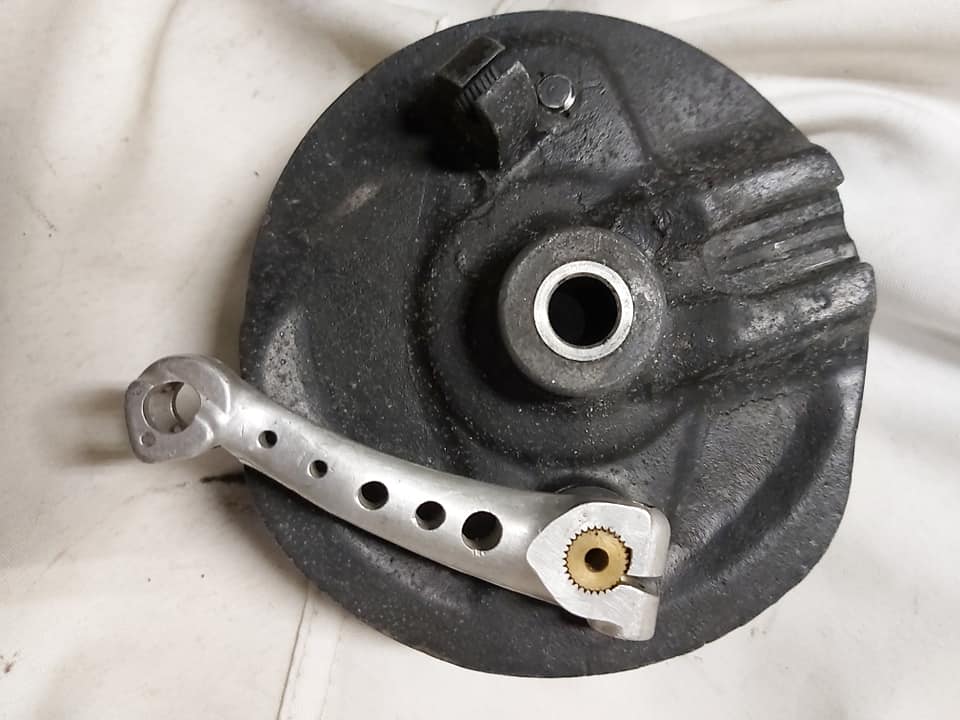
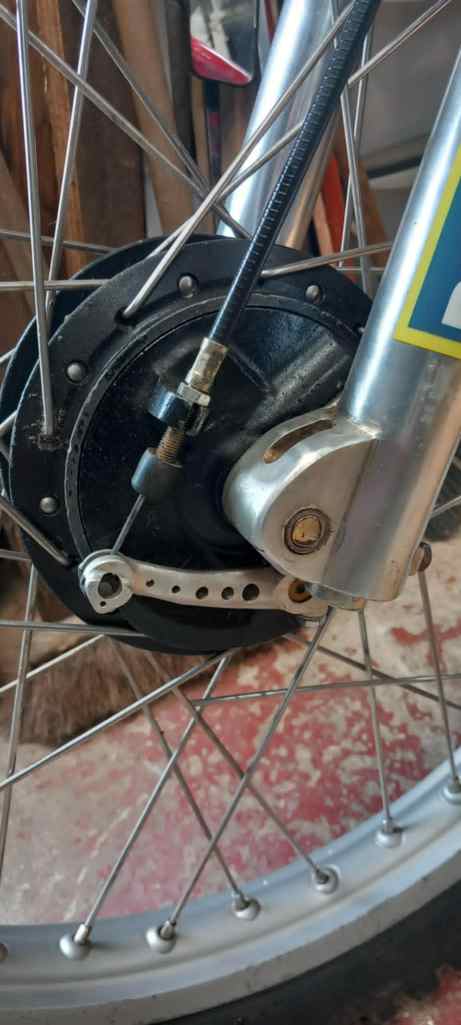
The front brake plate made in Magnesium, a work of art – Photo: Alan Taylor
I replaced the magnesium brake shoes with standard TL type. The attention to detail is amazing, with the brake plate bushes being titanium and with a phosphor bronze cam which is mated to a hand made alloy lever. The action is silky smooth. Titanium fasteners are used extensively in the engine.
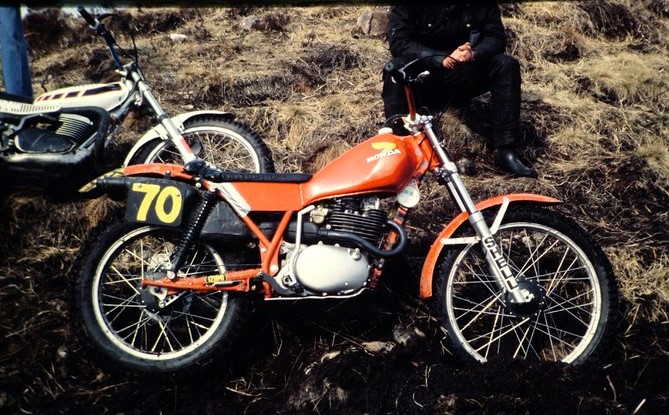
Mervyn Smith of Honda UK discovered this historic Honda RTL305 resting against a wall – Photo: Mervyn Smith Archive.
With the frame fabrication eventually complete, it was time for paint. After undercoat, three or four coats of Citroen Geranium Red were applied, this matches the red on the tank perfectly.
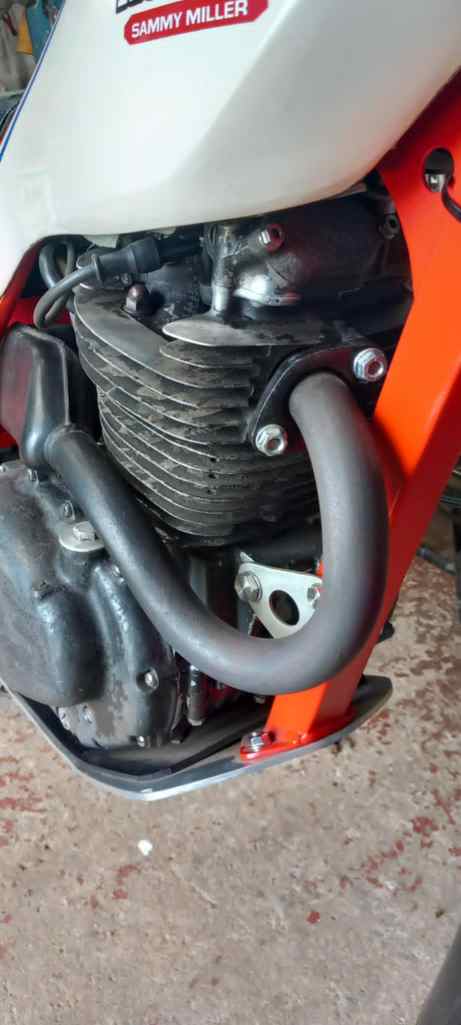
Detail of the exhaust rear section – Photo: Alan Taylor
Final assembly could now be pretty much completed, after which I turned my attention to the big rear silencer. I’d managed to buy a rotten TL250 triangular box from ebay which I cut open to examine the internal configuration so that I could replicate it on a slightly smaller scale. The works silencer dimensions were scaled from photo’s. It took a couple of attempts to end up with something that looks pretty close to the one off original and I’m told sounds as it should.
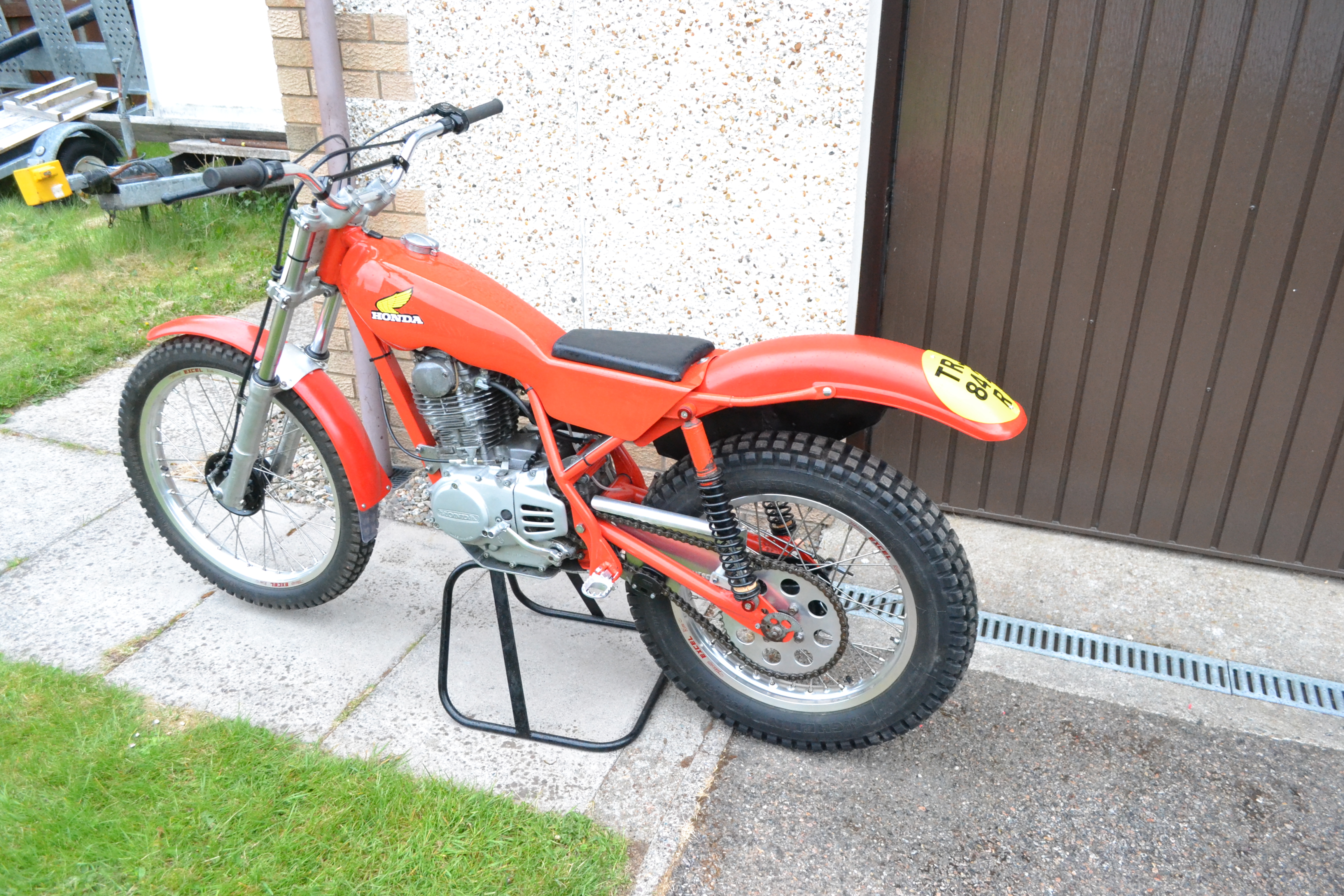
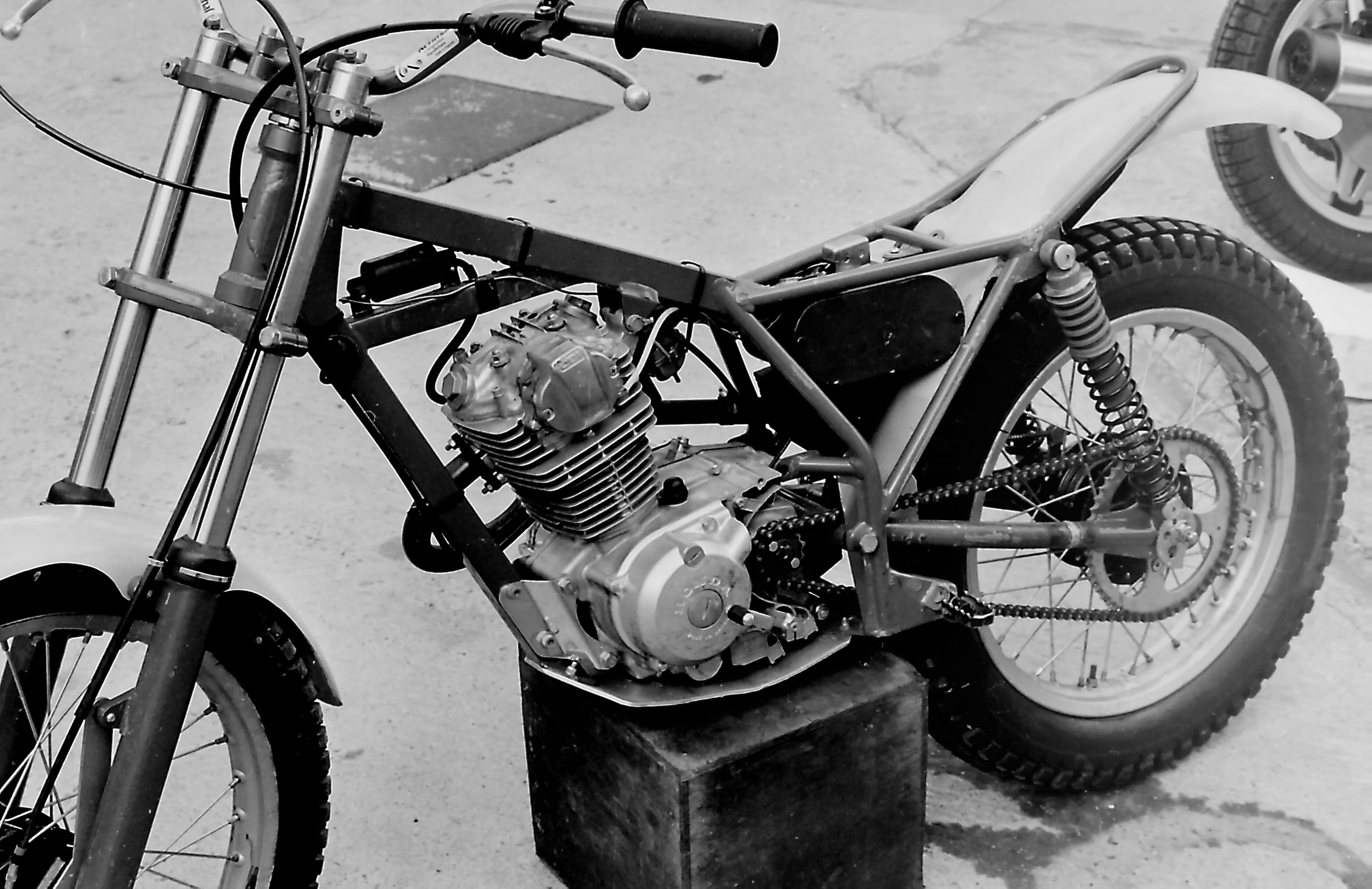
The offside view of the Honda RTL300 Works Replica – Photo: Heath Brindley.
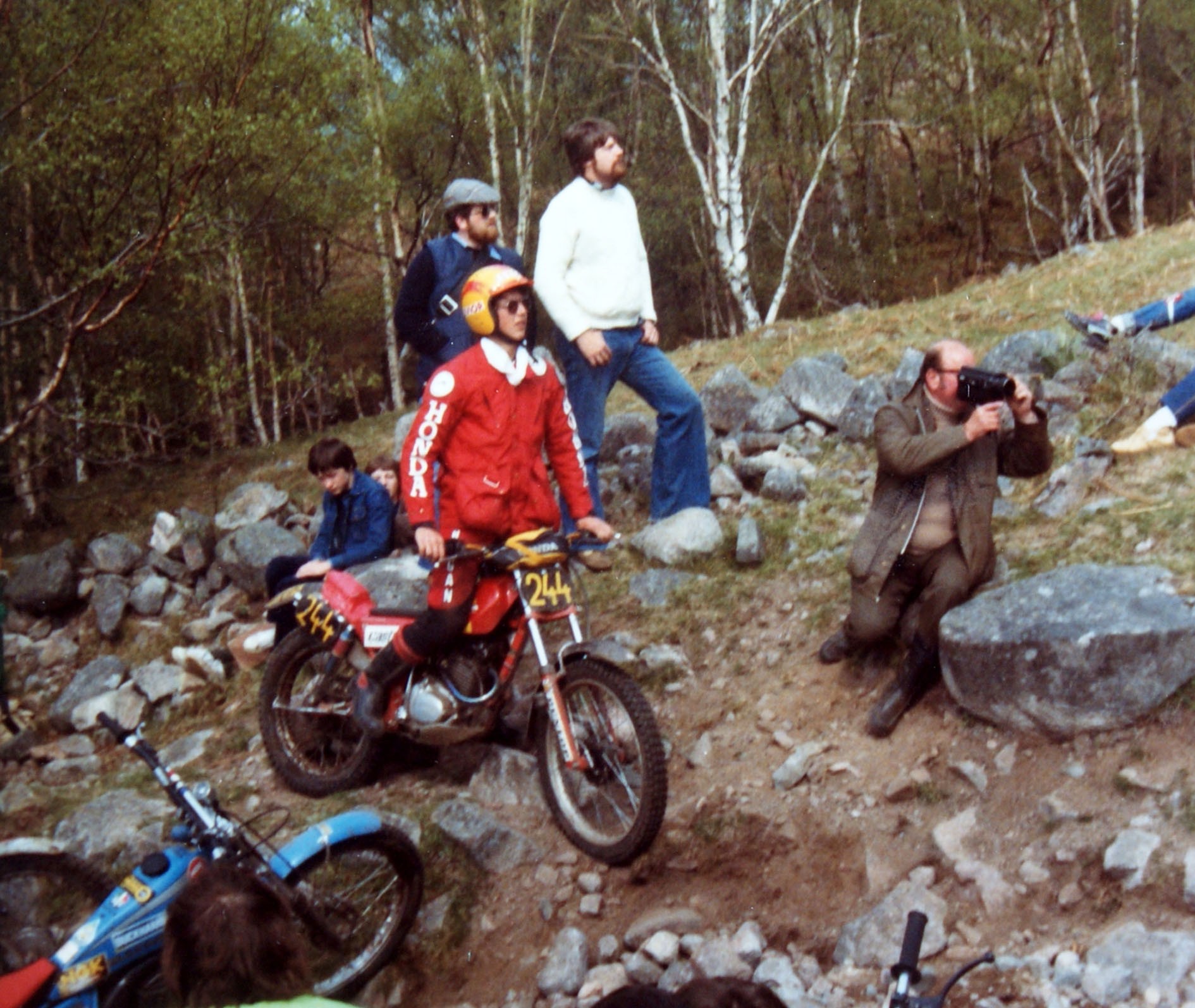
Throughout the project I’ve tried to determine the history of engine number 3 but there is little recollection by the major players as to who used what and when. It would be nice to think that it was used by Rob Shepherd in his British Championship winning year, a year in which he won my local National, the Colmore Cup and also the Finnish round of the World Championship. I was aware that during his racing days at Honda, Mick Grant was loaned Rob’s old championship winning bike by Gerald Davison, with Rob having moved onto the 360. I phoned Mick to ask what he knew and of course whether he had any works parts left over! He told me that during his use the engine developed a cylinder head issue which was rectified by someone local to him and will of course still bear evidence of this repair. Further to this, I phoned Rob and asked what he could recall. During a very interesting conversation one of the things he told me was that one of the 305 engines that he used performed better than the others, it had bigger valves, so, if ever the cylinder head needs to come off!
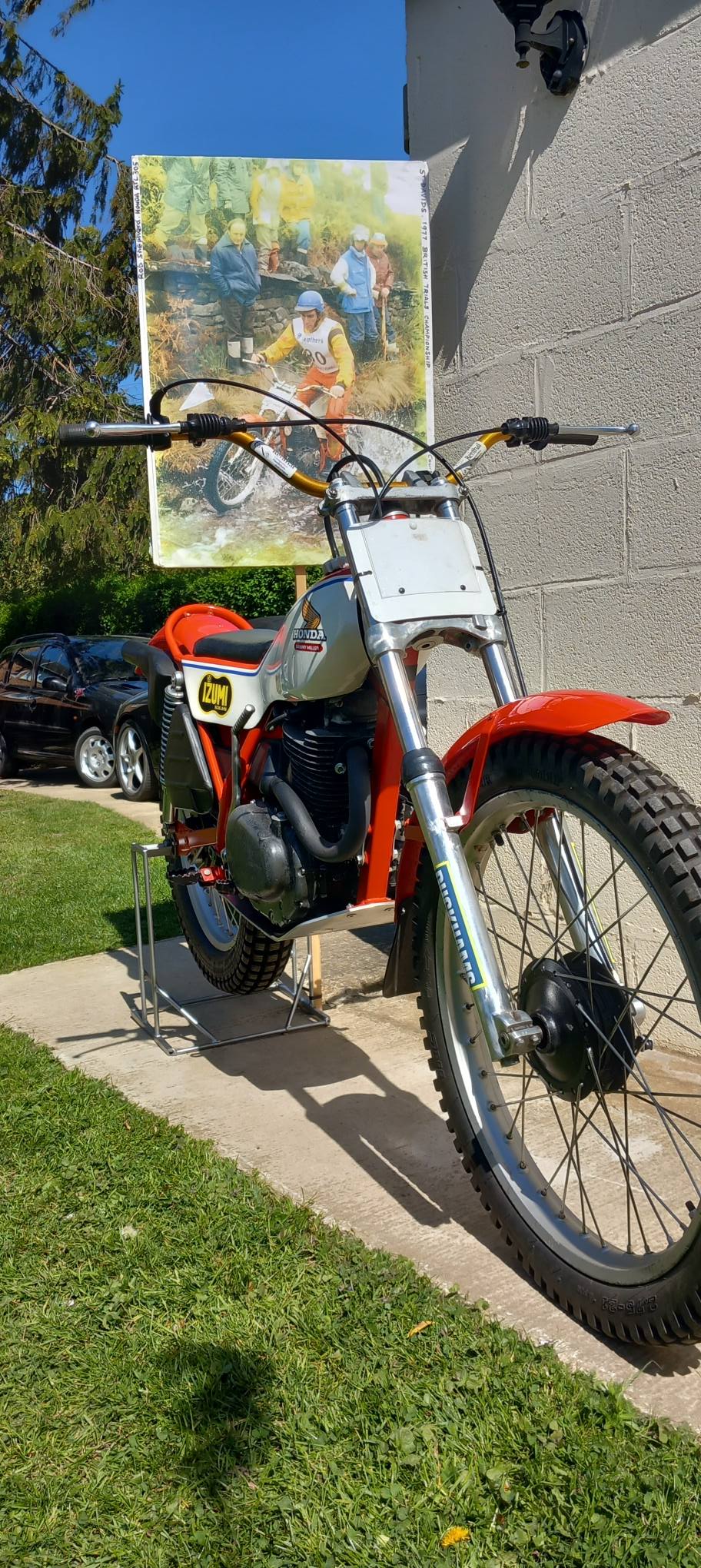
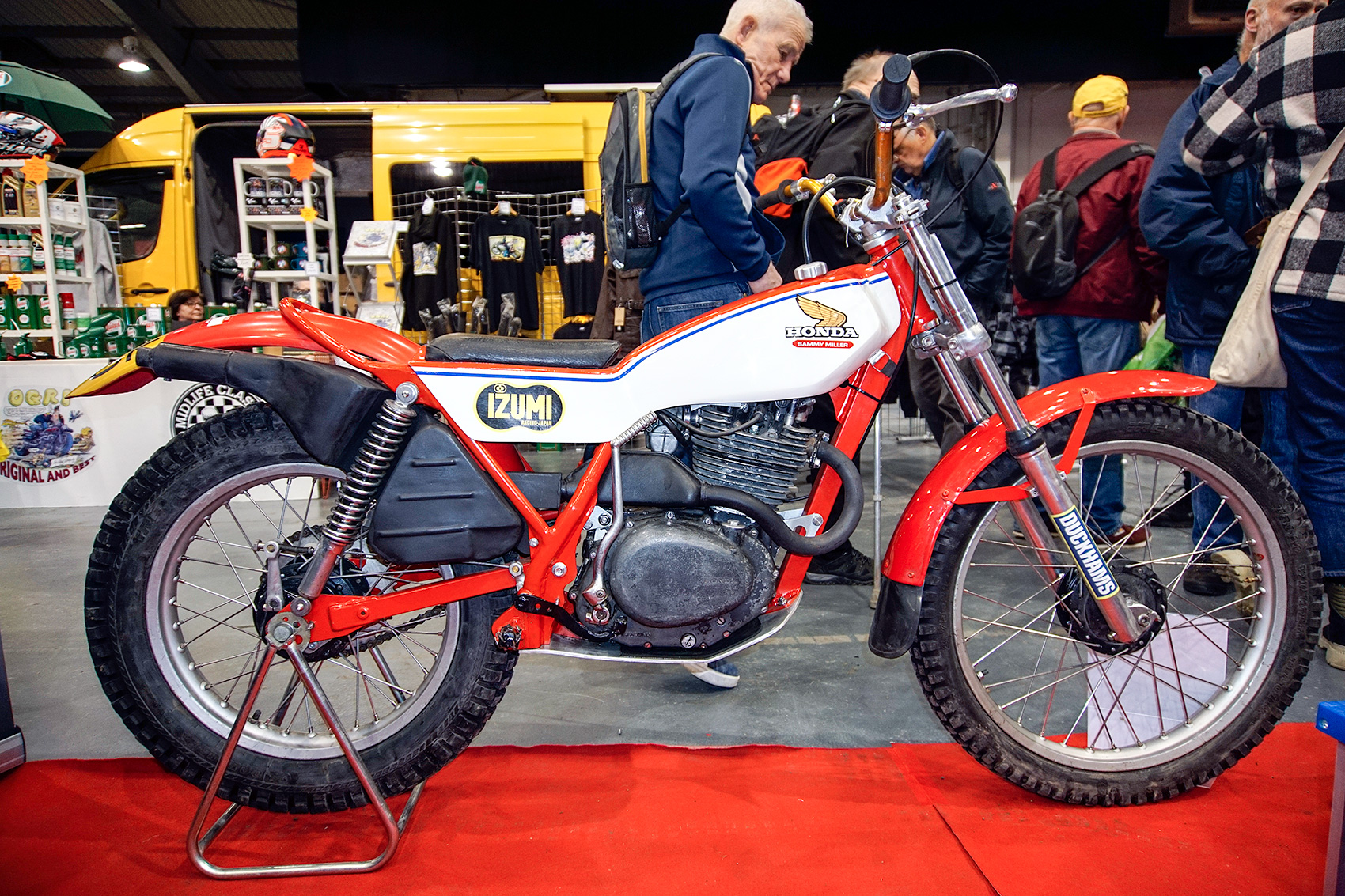
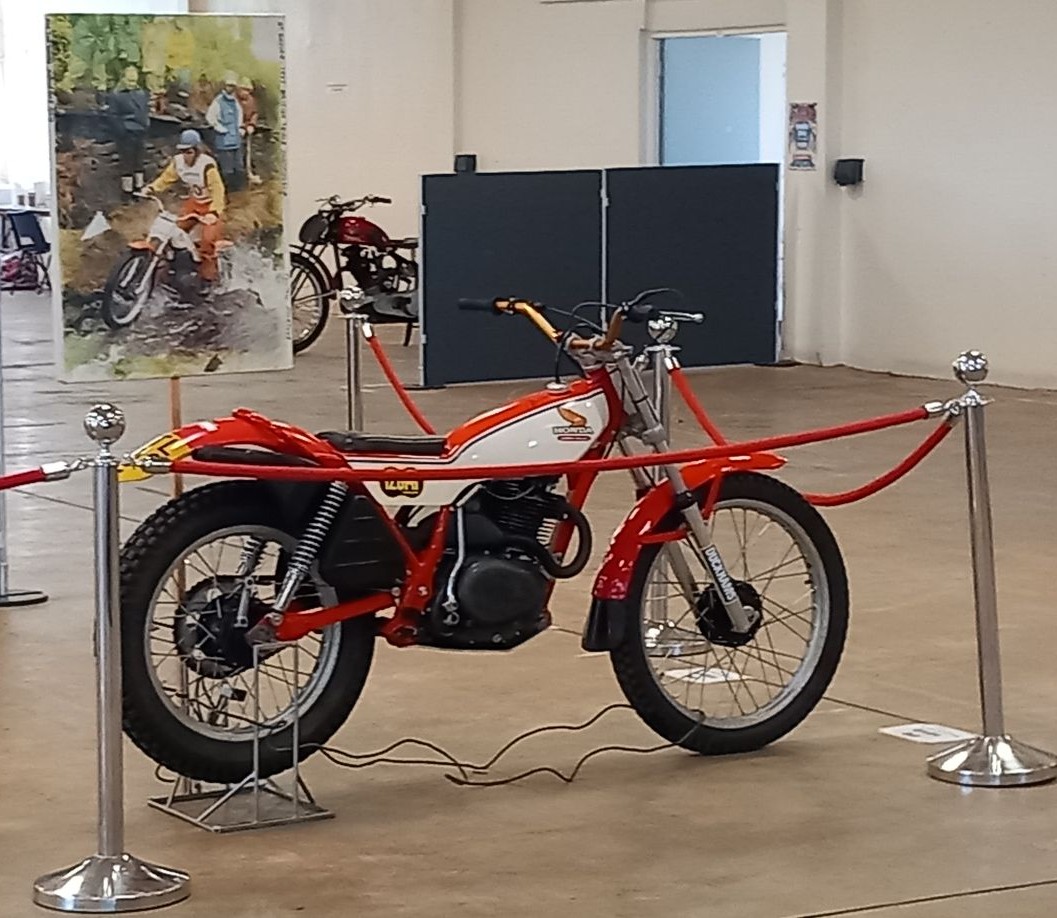
Alan Taylor’s Honda RTL300 Replica at the 2026 Stafford show – Photo: Alan Taylor
The culmination of the project was displaying the bike on the ‘Works Trials Bike Owners Group’ stand at the Telford Dirt Bike show, where it attracted a lot of attention and positive comments with an invite to join the group ‘Works Trials Bikes’.
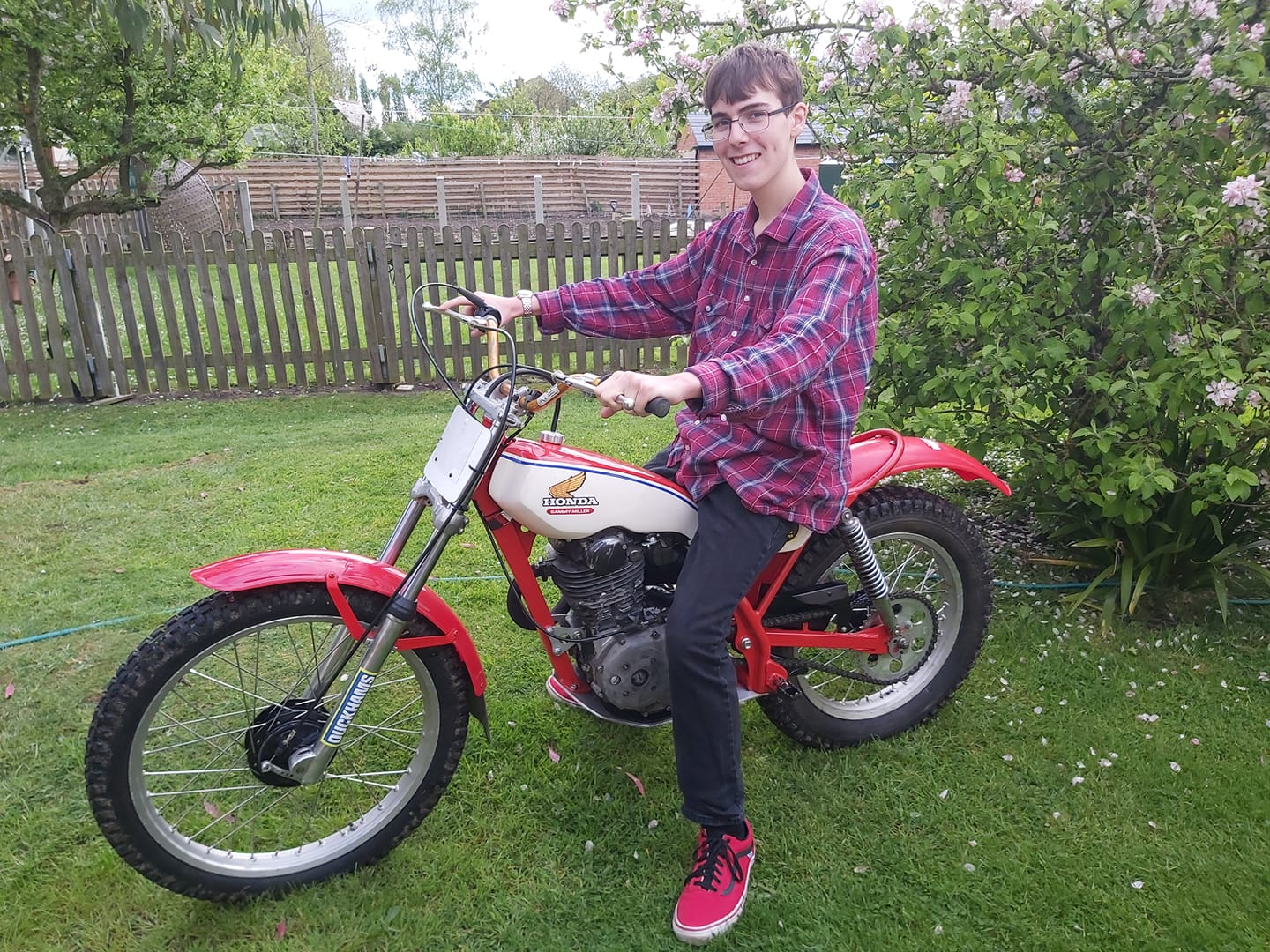
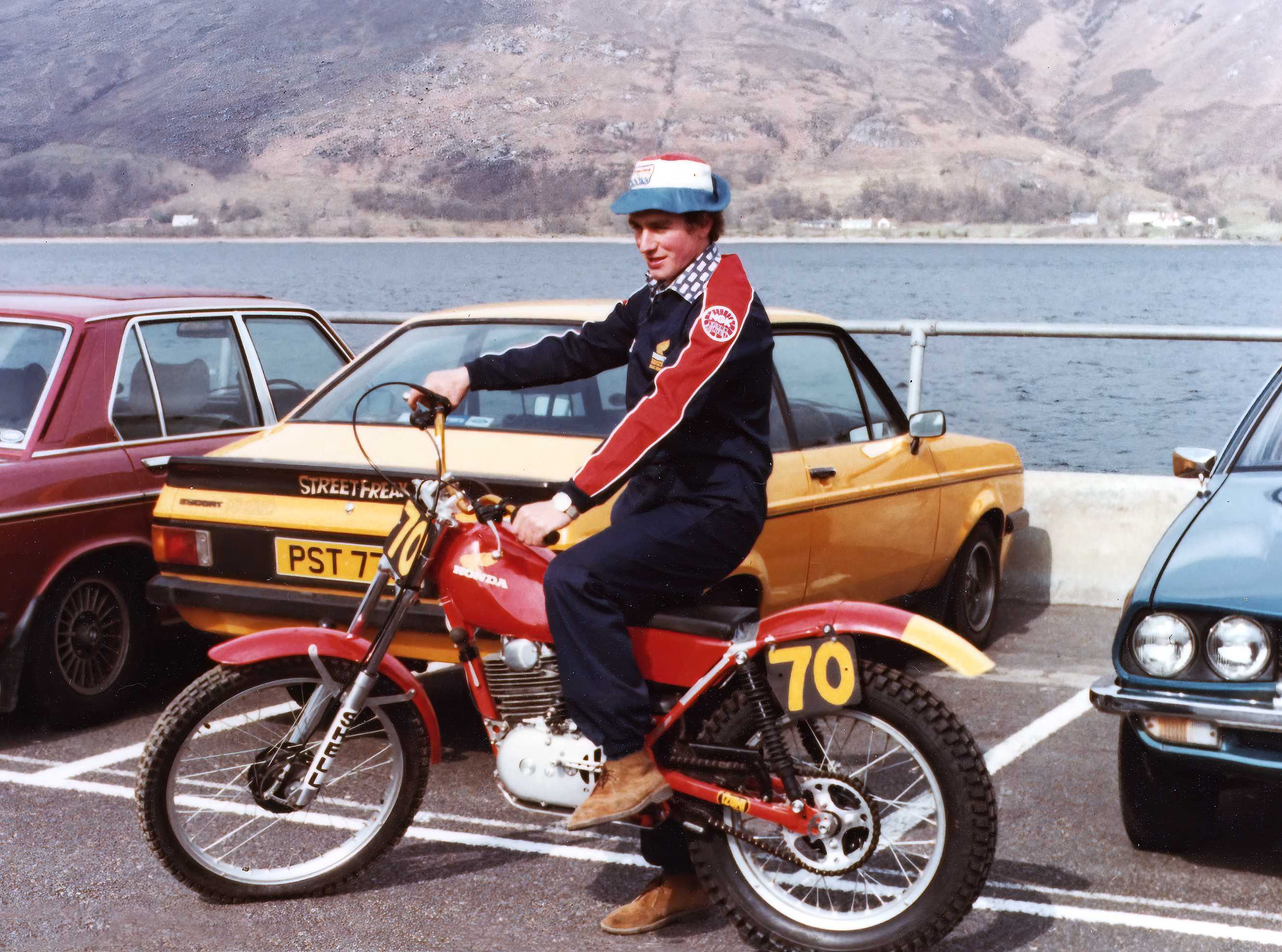
Cameron Taylor sits astride Alan’s Honda RTL300 works replica – Photo: Alan Taylor
Thanks are in order to those who helped out with either information or parts, or both, particularly Jean Caillou, Olivier Barjon, Rob Shepherd, Mick Grant, John Lampkin, Mervyn Smith, John Moffat, the late Jim Susans, Sammy Miller MBE, plus of course Tommy Sandham’s ‘Four Stroke Finale?’
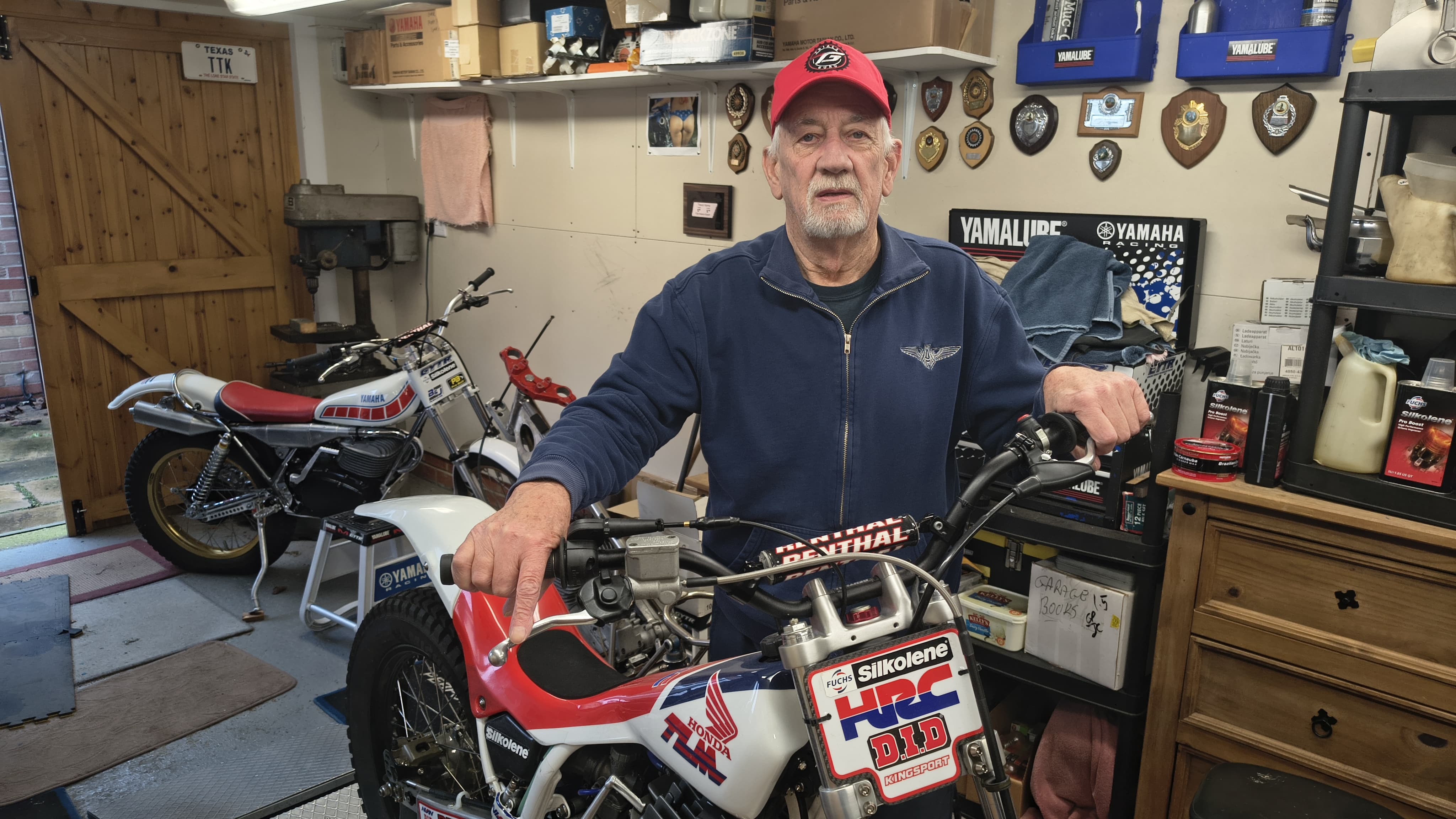
Who is Alan Taylor? “I’m a Midland Centre chap from near to Shipston on Stour, Warwickshire – Colmore country. I actually rode in the Midland Centre team in their Pre65 team trial a couple of times when Wrighty (Alan Wright) was manager. I won the Sammy Miller series unit construction class in 1999. I’ve been riding modern and classic bikes constantly since 1977 apart from nine months after a car accident. I qualified as expert in South Midland Centre in 1980. My Dad competed during National Service in the 1950s so I had an interest that was passed on to me. In the early to mid 1970s we’d spectate at various Open to Centre and National trials, so I got to see the top riders on works machinery and later on ride in the same events. The atmosphere around the Colmore back in the day was amazing with huge numbers of spectators. As a kid I liked Malcolm Rathmell, but my favourite was Rob Shepherd and the Honda – wishing I could have one! He won the first Colmore I witnessed in 1977. The Hondas were almost mystical to me, hence my interest!”
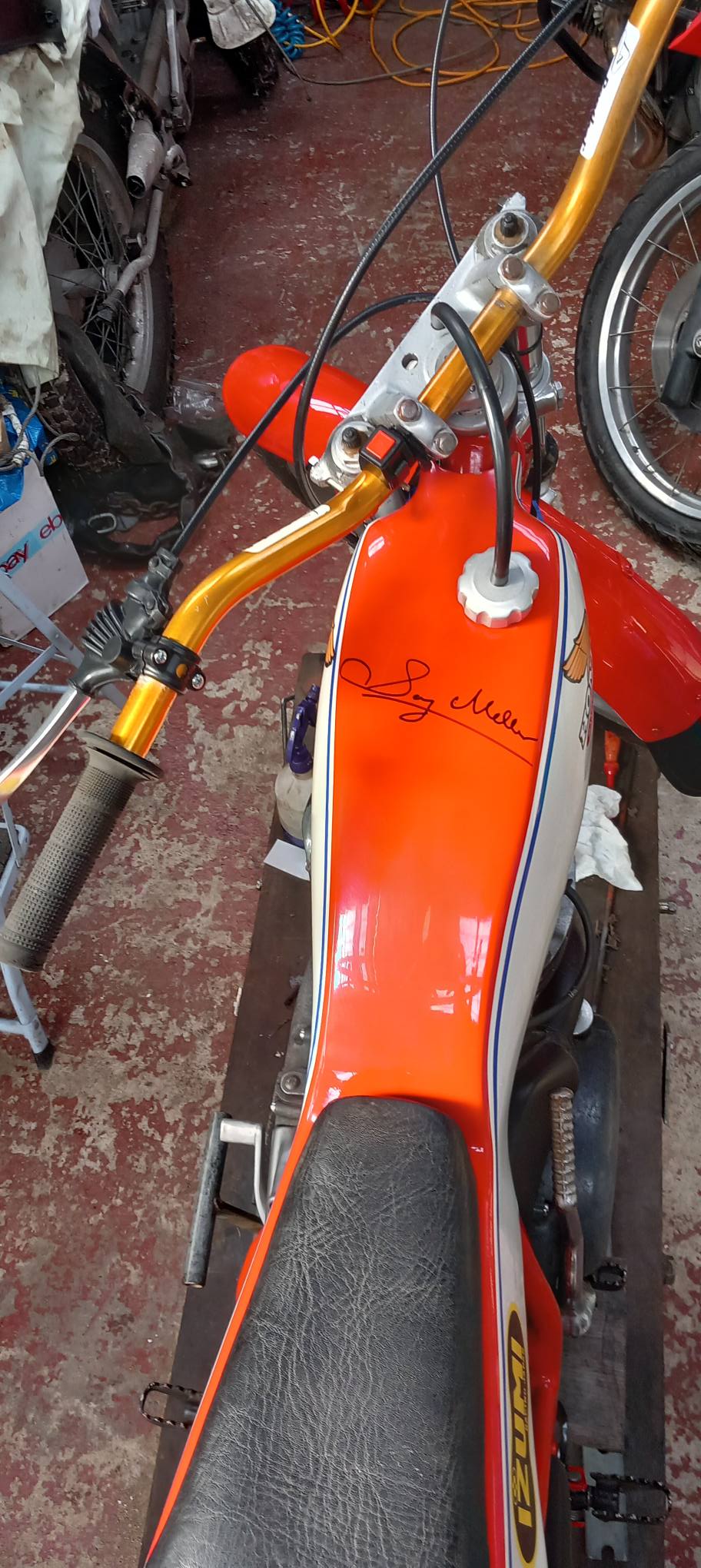
A proper endorsement by 11 times British Champion and Honda Trials Team Manager, Sammy Miller MBE – Photo: Alan Taylor
‘Building a Works Replica Honda’ is the copyright of Trials Guru and Alan Taylor.
Alan Taylor is of course a Trials Guru VIP.
Photographs are the copyright of the photographers named in the captions.
Slideshow of the RTL300 WR:
Close up of the clutch side of the RTL300 WR – Photo: Alan Taylor
Detail of the front fork slider, a factory component – Photo: Alan Taylor
Apart from ‘Fair Dealing’ for the purpose of private study, research, criticism or review as permitted under the Copyright, Design and Patents Act, 1988, no part of this article may be copied, reproduced, stored in any form of retrieval system, electronic or otherwise or transmitted in any form or by any means, electronic, electrical, mechanical, optical, chemical, photocopying, recording or otherwise without the prior written permission of the author as stated above. This article is not being published for any monetary reward or monetisation, be that online or in print.
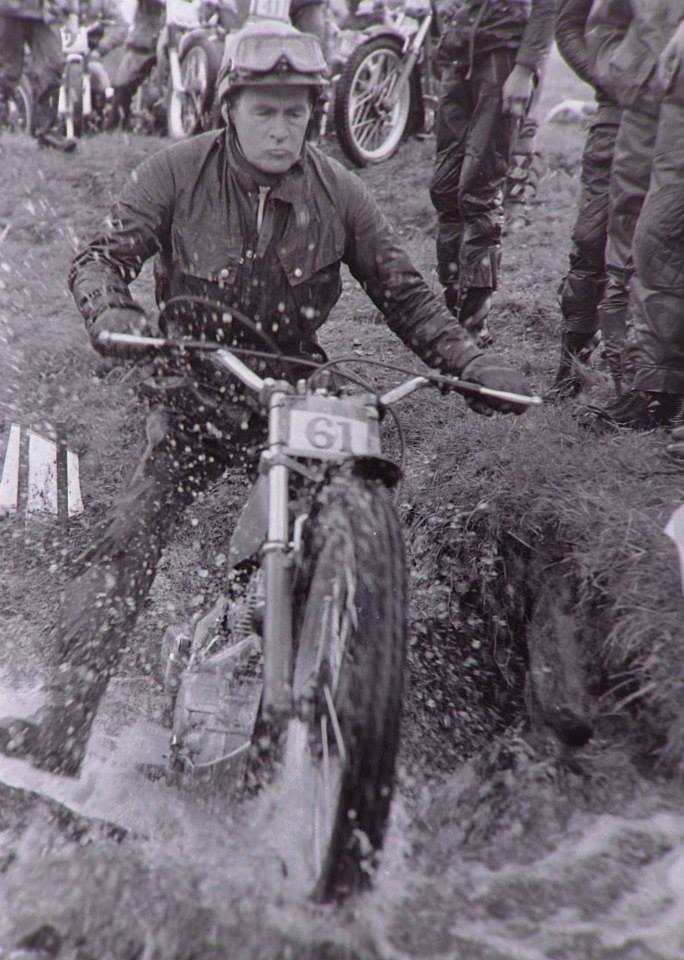
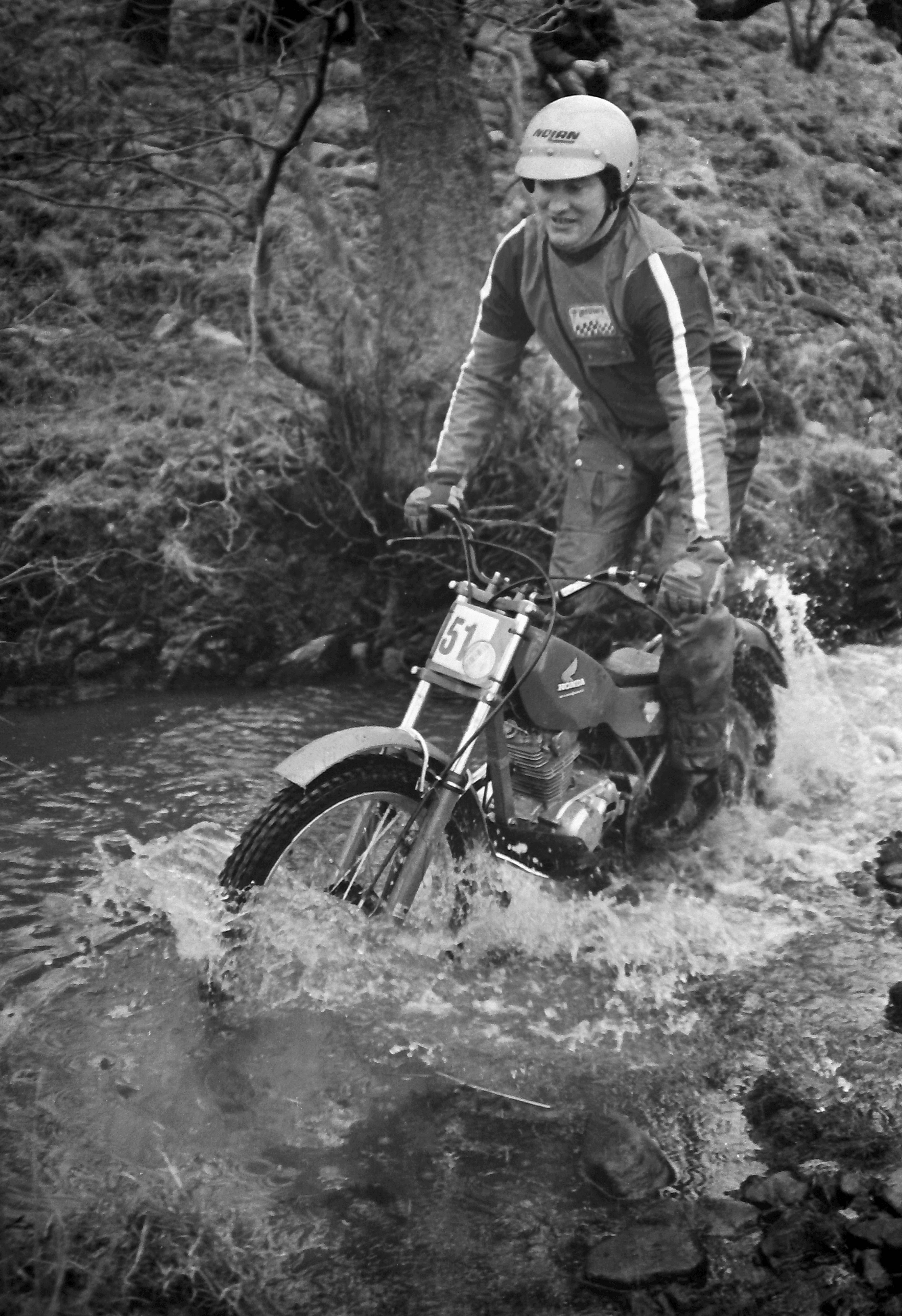
Billy McMaster Junior (Honda TL200E) – Photo: Jimmy Young.
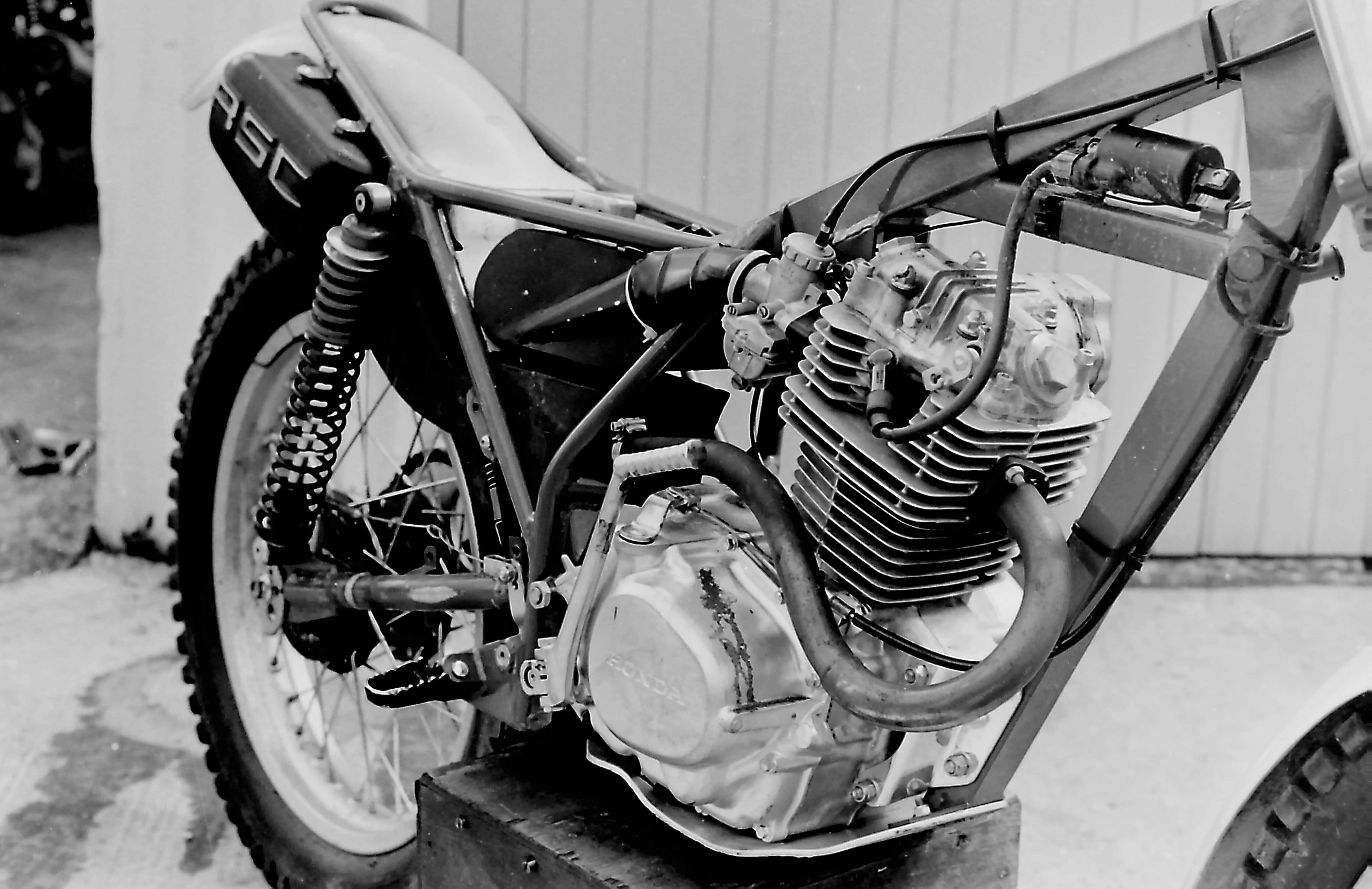
The Seeley Honda TL200E was a trials machine brought to the trials buying public at a time when Racing Service Center (RSC) was developing factory machines for the world’s best riders contracted to ride for Honda Motor Company. In 1973, the RSC was created as a separate company involved directly in motorcycle racing.
RSC was involved in the development and supply of racing motorcycles for the Japanese domestic competitions. In 1976 RSC began participating in the European endurance championship.
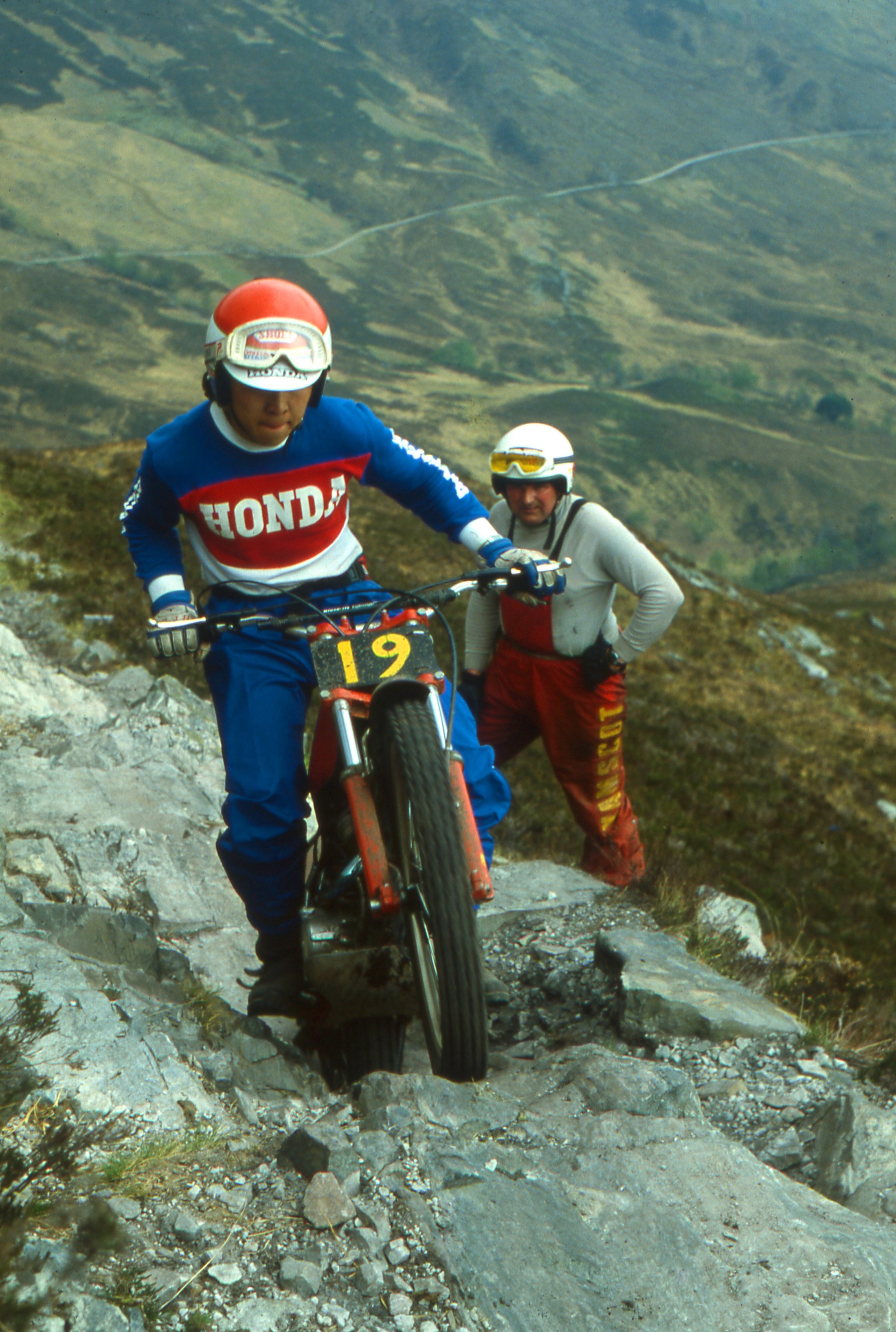
RSC built Honda ridden by Hiroshi Kondo at the 1976 Scottish Six Days Trial.
Later it would evolve into Honda Racing Corporation (HRC). We spoke with Trevor Kemp who was at the sharp end of trials in the late 1970s, he was employed by Honda UK. We bring you his story and his involvement in convincing Honda to produce a trials model in the United Kingdom – and what transpired after that.
Honda Seeley 250 (RTL240) – Photo: Jean Caillou Collection.
Words: Trials Guru; Trevor Kemp
Read Time: 39 minutes
Photos: Colin Seeley; Olivier Barjon; Jean Caillou Collection; Gabriele Milan; Steven Jamieson; Don Morley/Hitchcock Motorcycles; Barry Robinson; Archie Love; Iain Lawrie; David Butler; Grant Taylor; Glenn Carney; Jimmy Young; Colin Bullock/CJB Photographic; Joan Forellad/The Honda Trials Story; HRC/Honda Motor Company; Montesa/Honda; Trials Guru Archive. (Main Photo: Glenn Carney).
Photo: David Butler
Trevor Kemp: “My involvement began a few months after I joined Honda UK as an area field manager. Later on as well I was also involved in the off-road planning committee as a representative for Honda UK with Japan. After I left the John Banks Honda Centre to start work at Honda, I lost my sponsored Bultaco ride that went through the dealership. Jim Sandiford, the Montesa importer had wanted me to ride a Montesa through the shop, but due to the dealership’s commitment to Comerfords, it never worked out, so he kindly lent me a new 348 Montesa Cota that had just been launched. Jim at that time was also a Honda dealer.After winning several Open To Centre trials in the Eastern and South Midland Centres, Sandifords placed a Montesa success advert in the motorcycle press in which I was featured. This came across our Sales and Marketing Director’s desk and he wanted to know why I was not riding a Honda? When I explained that Honda did not manufacture a competitive trials motorcycle, he suggested I spoke with the Racing Department to see if they could sort out a bike for me. With Rob Shepherd having the only Trials support on a factory bike, this was never going to happen. I continued to ride the Montesa trying to keep under the boss’s radar.”
The late Jim Sandiford (349 Montesa) – Photo: Glenn Carney
It began to happen:
“Then Ryuichiro Yoshimi or ‘Yoshi’ as he was known, our Technical Co-ordinator between Honda UK and Japan, approached me that he wanted to start a project to build a production Honda Trials motorcycle and wanted me to be involved. His idea was to build the motorcycle here in the UK, with engines supplied from Japan that would be built and modified by Honda’s Racing Service Centre.”
RSC Honda RTL360 of Rob Shepherd at the 1978 Scottish Six Days Trial, the Seeley Honda TL200E was inspired in part from this machine – Photo: Jimmy Young, Armadale
“The frames would be manufactured here, as chassis technology and cost, particularly for Trials would be the better route. Coupled to that, development and unforeseen problems could be dealt with quicker than relying totally on Japan. The design concept for the motorcycle was to look in essence like the factory RTL 360. Although the engine would look different, the fuel tank, seat unit and frame could be manufactured to mirror the bigger RTL, almost like it’s smaller sibling.”
Rob Shepherd with his factory Honda RTL360 at the 1978 SSDT, the machine that inspired the creation of the Seeley Honda TL200E – Photo: Glenn Carney
“The engine was based on the well proven unit that was fitted to the Honda XL185 trail motorcycle. The capacity was increased to 200cc by a larger bore size and slightly different camshaft. The transmission and gear ratios were also changed from the original XL185 trail ratios and profiles. A heavier flywheel and ignition was also fitted. Honda RSC had some previous experience with modifying single cylinder engines for trials back in the early to mid 1970s when they produced a heavily modified 200cc version of the TL125 engine. When I worked at John Banks Honda Centre, Honda gave us one of these which I rode in a few events. When Eastern Centre Champion, Allen Collier lost his Jack Hubbard sponsored Bultaco ride, we let Allen ride the motorcycle. He had some success on the bike, but the lack of power and the fragile bottom end of the TL125 particularly in the bigger trials events, caused reliability problems. With RSC using the bigger 185cc engine, this gave us more confidence with reliability.”
All systems go:
“With the project getting the go ahead, we then had to decide who would manufacture the chassis. We seriously looked at using some of the established trials chassis manufacturers in the UK, as they had the experience on incorporating design married to trials chassis dimensions such as steering head angles, wheel base, seat height and so on. However, the powers that be at Honda UK wanted us to talk to Colin Seeley who had at that time a relationship with Honda producing racing replicas out of production Honda sports bikes. Also Colin had excellent experience at chassis manufacturing albeit in road racing.”
Framebuilder! The late Colin J. Seeley had an excellent reputation in the world of racing. British Sidecar Racing Champion 1962 1963; I.O.M. T.T. Silver Replica Winner 1961,2,3,4,6,7; Bronze Medal Winner 1964, 1966 World Championships.
“After several meetings with Colin, it was decided that this for us was the way to go. Using square down and top tubing which gave the look of the RTL360, the engine was used as a stress member along with an alloy sump shield.”
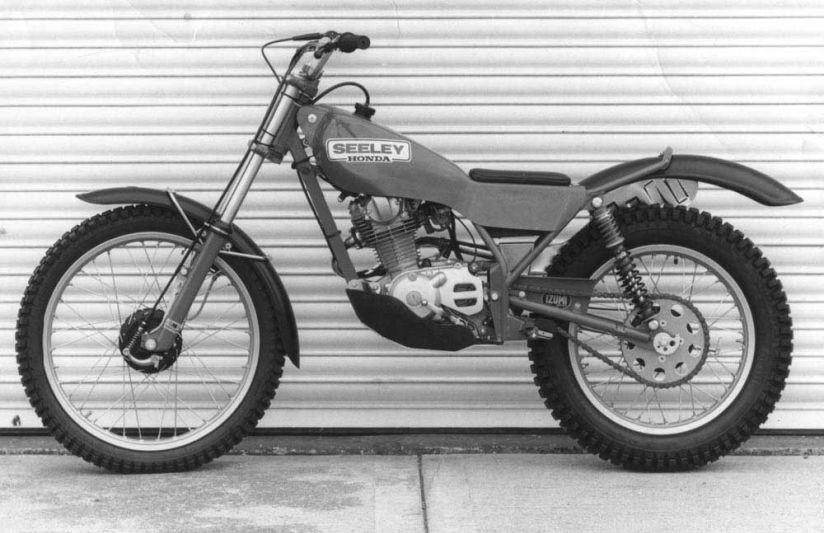
Square section downtube and engine as a stressed member with an alloy sump plate allowed for small diameter tubing for the rear subframe. Girling Gas Shocks were employed with multi-rate springing. Photo: Colin Seeley
“This allowed the use of small diameter tube for the rear sub frame to keep the weight down and also manufactured box section for the footrest hangers instead of thick, heavy plate. With a beautiful looking tank/seat cover that covered an aluminium fuel tank, the chassis not only looked the business but looked right.As there were no production competitive front forks available from Honda, we decided to use the Marzzochi front fork and yokes which were freely available, a good quality unit that worked well. We also looked at several Italian hubs including Grimeca, but decided to use Honda hubs and wheels. This came about when Honda UK decided to break up a number of CR125/Elsinore motocross machines that they had over ordered and were out of date with new models on the way. Also used were the footrests of these machines. Several other components were used from Honda, such as air filter boots and control levers.The chain running block on the top of the swing arm was a modified Honda cam chain tensioner. “
Pre production Seeley Honda TL200E (SHT 001) showing the differences to the standard production machine, the full loop rear mudguard loop; airbox, modified swinging arm and Yamaha type front mudguard without stays. Photo: Colin Seeley.
“We also used the Girling Gas shocks for the rear, and Norman Blackmore who I knew well, got to work on developing a new unit. These shocks were now being used on the RTL 360 so it made sense to go down that route. Along with engine, we also received an RSC exhaust system. When the bike went into production, due to cost and ease of shipping, we just brought in from RSC the outer stamping and Seeley manufactured the centre box and welded on the backing plate to the RSC outer stamping.”
An early prototype TL200E Seeley Honda (SHT 001) at Colin Seeley’s works at Erith in Kent – Photo: Colin Seeley
“I had made several trips down to Colin’s factory in Kent whilst the prototype was being made and had to kerb my excitement as I could not wait to try the motorcycle. At the back of Colin’s factory there was a piece of waste land with a few banks to try the bike on. Straight away the balance felt right and with slight adjustments to the forks and rear shocks I was impressed with how it steered and handled. We had to do some work on carburation and gearing to get that side right or somewhere close. Although it did take me a bit of time to get used to a four-stroke one problem we did have was that the motor would not rev out. We then found out that the seat and tank unit was pushing the air intake rubber flange inwards, thus restricting the air flow to the carburettor.Back to the workshop and a modification on the airbox cured the problem. I have to say it did look pretty, just like the vision we had of the bike. I loaded the bike up and went home to more practise and to ride it in a few trials to make sure everything was OK. The first few trials I rode, the Seeley caused a lot of interest with spectators following from section to section all looking to see how it performed and to hear the sound of the four-stroke which, at that time, was non exsistant in trials as all the other bikes were two-strokes. We also did a test up at Rob Shepherd’s and a young Eddy Lejeune made the trip from Belgium to try the bike. He was impressive on the little 200 and even more so when he tried Rob’s 360. I even got to ride the 360 and could not believe how good it was. I thought it’s sad that Honda could not make this into a production trials bike, but it was not to be.”
1979 – Trevor Kemp at Towerlands arena event on Chassis number ‘002’. pre-production development TL200E – Photo: Trevor Kemp Collection
“I had some good results on the little 200 and won a few Eastern and South Midland Open To Centre trials. I also did a fair number of National Trials including the West of England and the John Douglas.”
Trevor Kemp astride the production TL200E when he worked for Honda UK – Photo: Trevor Kemp Collection
“It was a very good bike for the centre and clubman rider, being a four-stroke it gripped well in the mud and on slippery sections. However being only 200cc the bike struggled on some sections where you needed power and more cubes.”
Eddy Lejeune (250 Honda) in the 1980 Scottish Six Days on Ben Nevis – Photo: Steven Jamieson, Inverness.
“I was then told that one of the young Honda Japanese riders was coming over to the UK to ride and test the Seeley Honda. His name was Kiyoteru ‘Kiyo’ Hattori. I arranged to get him a bike and he came and stayed at my house. We went out testing a lot, locally to me, and he was impressed with the bike. We arranged for us to ride in a South Midland centre trial, I think at Market Harbough, to see how the bike compared to the other manufacturers bikes, which would be a good bench mark. Also one of the RSC Japanese staff came to watch the trial. I think he was on a visit to Honda UK for meetings with the various race departments. All I remember was that he spoke no English, so communication was difficult. Kiyo won the trial and I was second, so they were very happy. We both did another local trial but I can’t remember where being over forty years ago.”
Kiyoteru Hattori on his 250cc RSC Honda prototype in 1980 Scottish Six Days on ‘Cailleach’, the chassis was the British-made Seeley component – Photo copyright: Iain Lawrie, Kinlochleven
“Kiyo then came over and rode in the Scottish Six Days on the Seeley 200. We then had two RSC 250 engines sent to Honda UK. These went down to Colin Seeley’s to be installed into the frames. These fitted without much alteration.”
Kiyoteru Hattori (250 Honda) at the Parc Ferme of the 1980 SSDT was 16th on 170 marks – Photo: Glenn Carney
“They were for Kiyo Hattori and Eddy Lejeune to ride in the Scottish. I had a brief ride on one and the engine was very good. Eddy also rode a Seeley 200 in the Scottish the year before, 1980 his first Scottish, where he finished twelfth and was best newcomer. “
250cc Honda – Close up of the engine area of Eddy Lejeune’s 1980 Scottish Six Days machine – Photo: Gabriele Milan Archive.
“Eddy and Kiyo then went on to ride the mighty Honda 360 to great success.”
Eddy Lejeune rode this 250cc Seeley Honda in the 1980 Scottish Six Days to 12th place – Photo copyright: Jimmy Young, Armadale
“The production of the Seeley Honda began on the initial order of one-hundred machines and to start with, the sales were healthy. The projection of around three-hundred orders from Honda was never met and increased retail pricing slowed sales and stocks of the bikes built up at the Seeley factory. Colin took over distribution from Honda UK but sadly sales failed to pick up.”
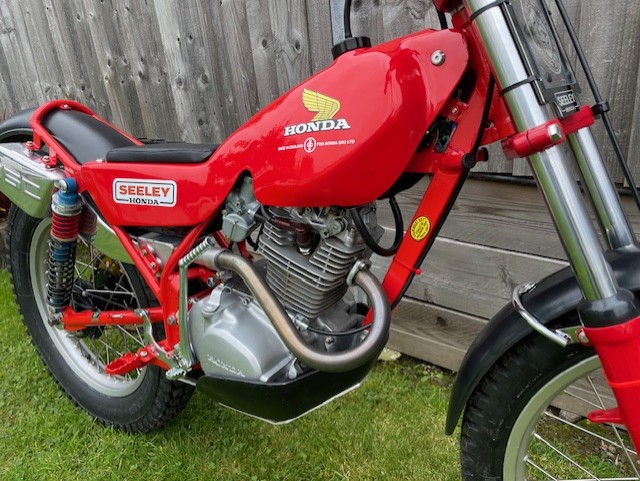
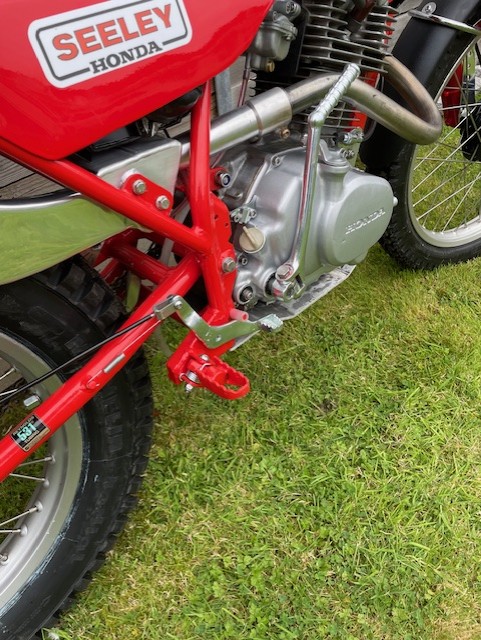
Colin Seeley took over the distribution of the Honda TL200E and re-liveried the machines as ‘Seeley’ – Photo: Olivier Barjon
“About six years ago I saw Colin at a Honda 750 anniversary event held at the David Silver’s Honda Museum where he was a judge. We had a coffee and a chat regarding the times we had together developing the Seeley Honda trials bike. Although sad at how it ended, but at the same time proud of that project. He did say that he sustained a big financial loss.”
Kiyoteru Hattori (250cc Honda/RTL240) riding the 1980 Scott Trial at ‘Blackhills’ – Photo: Barry Robinson.
Where is number 1?
Interestingly, Trevor Kemp told Trials Guru that he still has one of the first Seeley Honda chassis, which was numbered ‘SHT 002’ and was one of two pre-production machines which Colin Seeley had built in his workshops. Chassis number ‘SHT 001’ was used for photographs, testing and for later display at shows and events.
By way of an upgrade, Trevor Kemp was issued with a fresh chassis just as the first batch of Seeley Honda TL200Es were being built, to replace chassis number ‘002’. Trevor swapped the engine, wheels, forks and other parts to the new frame and swinging arm and realised that some elements had changed and not necessarily for the better, as the rear tyre contacted with the inside edge of the rear mudguard. Trevor took some measurements and compared these with the dimensions of frame ‘002’ and discovered that the swinging arm had been lengthened, but the rear subframe remained the same dimensions as ‘002’. This resulted in a change to the specification of the Girling Gas Shocks with a longer bumper stop being fitted.
Trevor Kemp wasn’t asked to return the prototype chassis ‘002’ to Seeley’s and it lay unused for many years at a shed on a relative’s farm. It was unearthed when the family were moving home and came back into Trevor’s possession. He then came across an unfinished Honda RTL250S project that was being sold off at a reasonable cost and that produced a useable engine, plus other components, which slipped straight into the Seeley chassis. ‘002’ was reborn and happily Trevor still owns the complete machine to this day.
Seeley Honda chassis number ‘SHT 002’ still exits, now fitted with a Honda RTL engine and front end. Note the rear mudguard loop is not the same as the production frame – Photo: Trevor Kemp.
Seeley Honda Trials – Colin Seeley:
In 2008, Colin Seeley wrote a comprehensive and well illustrated book on his life entitled ‘Colin Seeley …and the rest‘ in which he talked about the Seeley Honda for trials that was entrusted with his company by Honda UK. It was all going on at a time when his wife, Joan was seriously ill and also his mother was at her end of life. This must have presented an incredibly challenging set of circumstances for Colin and his family. Seeley had been in a business partnership with Bernie Ecclestone who would go on to own the rights to Formula 1 car racing, so Colin, coupled with his engineering knowledge, had learned much about business, managing people and race teams in a long and distinguised career. As described by Trevor Kemp, Honda had a very valid reason for placing the development of the Honda TL200E trials machine with Colin Seeley’s business, as he was already contracted to build sports road bikes, such as the Phil Read Replica for Honda in the UK. These and the trials machines would both be official Honda models, all assembled with many components made in the UK, they were effectively ‘adopted’ by Honda.
An early prototype Seeley Honda TL200E pictured at Colin Seeley’s premises at Erith in Kent, we believe that this is SHT-001 – Photo: Colin Seeley
In his book, Colin Seeley wrote in Chapter 5 entitled ‘1974-91 Just like old times’: “As 1978 proceeded, Joan’s health was not so good… In September we saw the surgeon Ellis Field at the Woolwich Memorial Hospital, I was told confidentially by him after an examination of her condition. that the cancer had returned and she had only six months to live… Then something completely different came up, a trials bike. The idea was brought to me by the Honda UK Japanese technical co-ordinator Ryuichiro Yoshimi. In conjunction with trials rider Trevor Kemp the initial testing and evaluation was carried out.” [1]
Seeley then alluded to the politics that was part and parcel of dealing with a large manufacturer which worked to policy and decisions made by committees, in the case of Honda, across in Japan. The main reason that the Honda TL200E had its chassis made in the UK by Colin Seeley Developments, was primarily that it could be done without waiting on lengthy committee discussions and decisions. Colin Seeley confirmed that the ‘E’ in the model number stood for England.
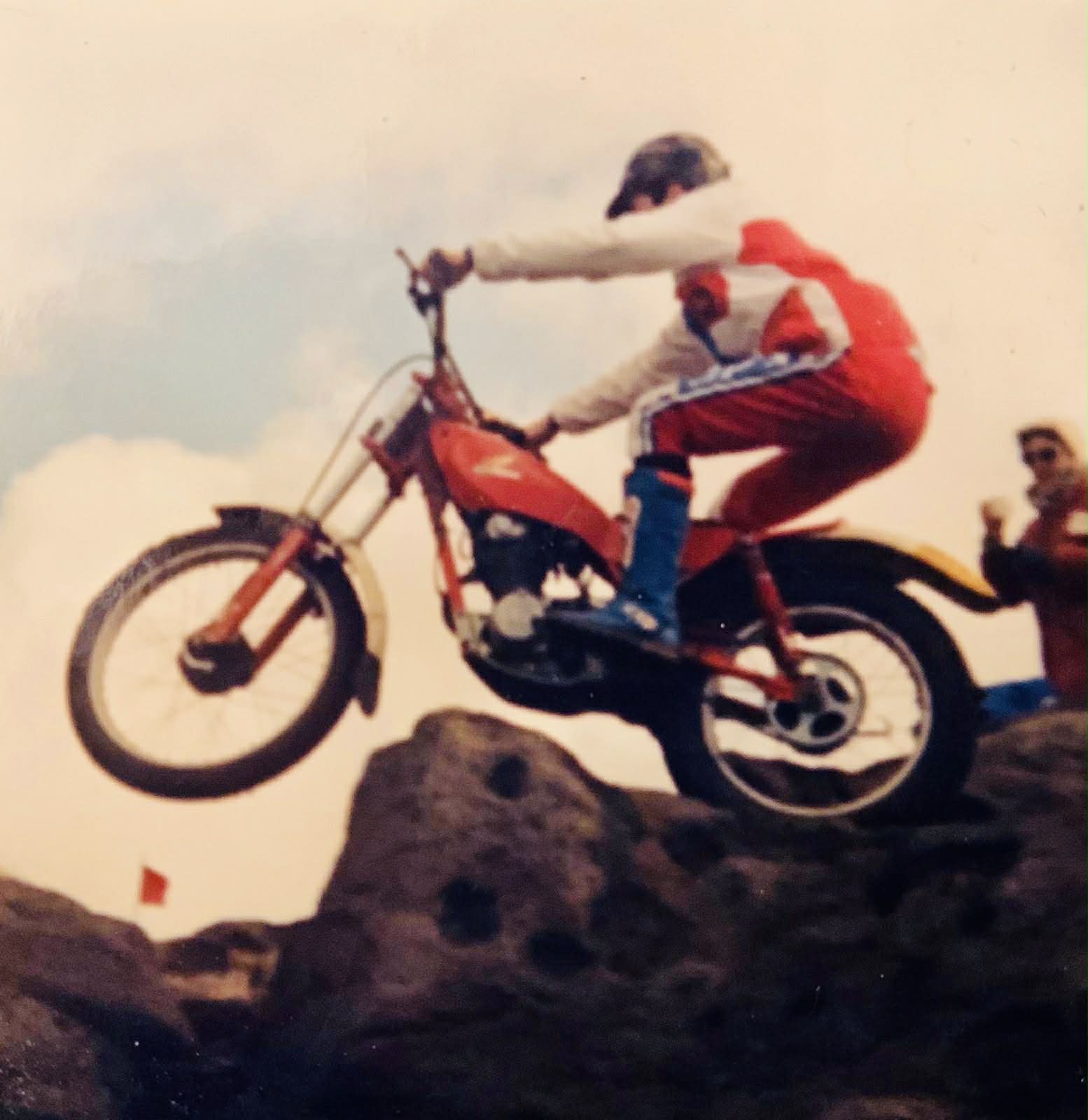
David ‘Rick’ Richardson on his Seeley Honda TL200E at a Forfar trial in Scotland. Photo: Jimmy Young
Sales initially were encouraging as mentioned by Trevor Kemp and this was mirrored in Colin Seeley’s book. He wrote: “Production of the TL200E was underway, then first batch of forty bikes was ready for collection early in December 1979. All orders were processed through Honda UK and collected by J. Spurling Ltd, Honda’s carriers, who then delivered direct to the Honda dealers. In mid-January 1980 a second batch of forty bikes were ready, so at that point we were doing well. We were unaware for some time that the Honda sales department put all of the orders into an alphabetical order for delivery, which upset many of the dealers. For example Arthur Wheeler of Wheelers of Epsom had ordered six bikes at the show and was still waiting delivery six weeks later.” [1]
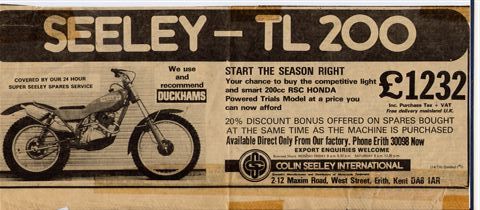
Period advert from the motorcycle press of the Seeley Honda TL200E when Colin Seeley eventually took over the sale of the machines directly in late 1980. – Colin Seeley International.
Colin Seeley: “As 1980 continued, in September we finished the production of 300 TL200E trials bikes, and the project hit the barriers. UK sales had almost come to a halt, thanks to a lack of interest, or committment, by some at Honda UK who did not consider my case serious. By then I had negotiated with Mr. Amemiya, Honda UK’s MD, to work independently and sell the 117 unsold TL200E bikes which were taking up valuable space in our factory unit.” [1]
Born on 2nd January 1936, Colin Jordan Seeley passed away on 7th January 2020 aged 84 years.
Andy Alexander (200 Seeley Honda) – Photo: Jimmy Young, Armadale
Racing Service Center and the TL200E:
As mentioned, Racing Service Center based in Belgium had a direct involvement with the Seeley Honda TL200E project. The engines were custom built, derivatives of the Honda XL185. Apart from boring the cylinders to achieve 199cc displacement, they fitted a bespoke camshaft which was designed to eliminate the known ‘splutter’ that small capacity Honda engines suffered when the throttle was snapped open or at times when the engine was just above tick-over. Some called this the ‘Honda Cough’. This was an annoyance to owners who rode in trials at the time. The gearbox was treated to the RSC attention, replacing standard gears with bespoke items. The Keihin PC20 carburettor had different jets deployed, again specifically for the RSC engines of which the drive-side crankcases were all stamped with engine identification numbers: ‘RS200T-0000 E’. This Honda numbering convention was uniform, but identified these engines as RSC built for the TL200E only.
The engine of an RS200T, almost identical outwardly to the RSC engine used in the TL200E Seeley Honda, but there are differences internally and the rockerbox and cylinder head are different – Photo: Trials Guru Archive.
The RS200T model engines are similar but not exactly the same as the RSC built for the Seeley. The RS200T units are numbered this way: ‘RS200T-0000000’. Outwardly, the rocker box is totally different with the head steady boss at the rear of the component for the RSC engine and the top of the rocker box on the RS200T engines. Gear ratios and camshaft are also different on the bespoke Seeley RSC prepared engines.
Joan Forrellad on a 1980 Honda RS200T – Photo courtesy – Honda Trials Story
RSC had no direct input to the chassis, but did supply other components, being both wheel hubs, control levers and carburettors. The frames were numbered by Colin Seeley International as ‘SHT-0000’ which stood for Seeley Honda Trials and a four digit numbering protocol. Chassis and engines were not number matched in any way. Seeley used Reynolds ‘531’ tubing for the swinging arms.
From Northern Ireland, Billy McMaster Junior on his Lloyd Brothers supplied Seeley Honda TL200E at a wet Forfar trial. Billy’s father also Billy McMaster was a member of the FIM for many years. Billy Jnr worked for Fiat cars at one time as their Scotland & NI sales manager and was based in Scotland for about 4 years. Photo: Jimmy Young
The early Seeley frames had a tendency to crack at the steering head, this was picked up and was resolved in later batches by adding strengthening plates on the lower portion of the steering head. Many early frames were repaired in the same manner.
Seeley Honda TL200E – Today:
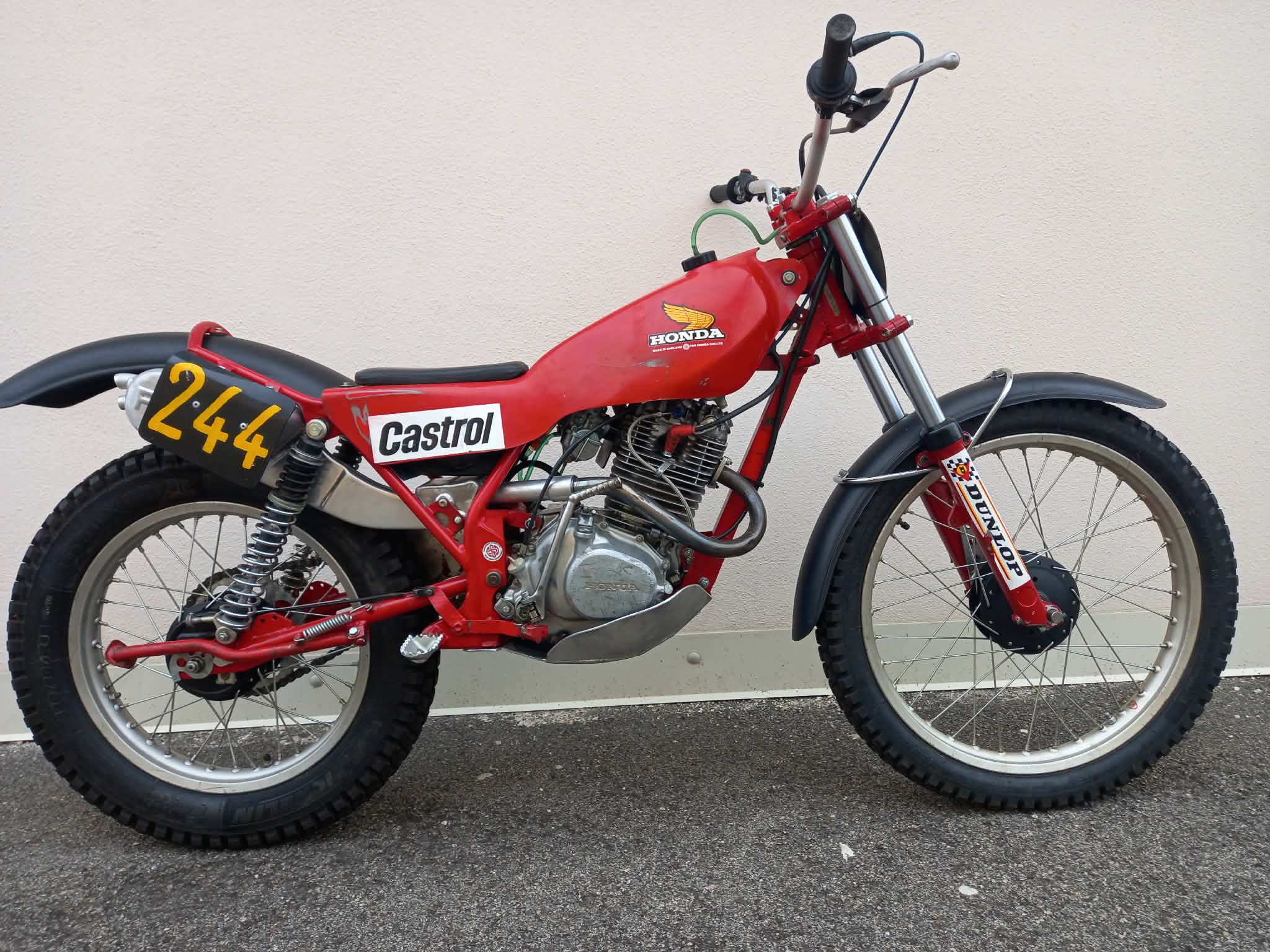
Still being used in competition more than 45 years since it was built. Steven Moffat’s 1980 Seeley Honda TL200E with custom paint in the style of Steve Hislop’s Castrol Honda RC45 – Photo: Trials Guru Archive
There is a strong following for the little 200cc Honda built by Seeley in twinshock and classic trials. Prices have remained firm, due in part to the relatively small number of machines produced by Colin Seeley International. Parts are a problem, such as pistons with owners sourcing other brands components to keep these machines going. There is even a facebook social media group dedicated to the machines where owners trade information on a regular basis.
David Butler’s recently restored TL200E with the correct sump protection shield in place – Photo: David Butler
As far as we know, Colin Seeley International did not preserve archive details of machines built, there is no known register of frame and engine numbers available. Current owners wishing to register a Seeley Honda TL200E with the DVLA, have to contact the Honda Owners Club UK for assistance.
Photo: David Butler
The Eddy Lejeune Seeley Honda 250 from 1980:
Reports indicate that the Seeley Honda 250 that Eddy Lejeune rode in the 1980 Scottish Six Days Trial is still in existence. It is currently housed in a private collection in Italey, having been owned by Carlo Ramella and Gabriele Milan in the past years.
The Seeley Honda 250 that Eddy Lejeune rode in the 1980 Scottish Six Days Trial – Photo: Gabriele Milan Archive.
One interesting machine in private hands was that of the late John Davies, a former Scottish Scrambles champion who built himself many special bikes over the years. Around 1987, John modified a TL200E which had been ridden in trials by Robbie Paterson, the son of Honda UK’s Scotland and Northern Ireland representative, Bob Paterson. Davies decided to modify the Seeley to monoshock rear suspension. To our knowledge, only one photo exists and the machine was eventually restored back to original specification by a subsequent owner.
John Davies on his Honda Seeley TL200E at Callendar around 1988, a bike which he converted to Mono-shock rear suspension. The bike was previously owned by Robbie Paterson of Cumbernauld. Photo: Grant Taylor, Falkirk.
Blackie Holden on the TL200E:
Blackie Holden riding the Seeley Honda TL200E at a Bradford Trial around 1985 – Photo: Balckie Holden Collection.
“My Dad, also Blackie Holden, bought a Seeley Honda, brand new from Len Vale-Onslow Motorcycles in Birmingham. It had been for sale for a couple of years, but sadly there were no takers. The price of these bikes was high in relation to the competition at the time. Anyway, it came to us via Stuart Feeney of Colin Appleyard’s Motorcycles, as he had put the feelers out for my Dad. I rode my first trial on it aged seventeen and was up against lads on Fantic monoshock and Yamaha TY monoshocks, so I was a bit of a laughingstock turning up on the Seeley! Frames were in a word quite ‘poor’ they had been marketed as being made of Reynolds ‘531’ but that referred to only the three pieces of swinging arm tubing. Dad felt the frame stretch the very first time he rode it, it was going at the steering head, annoyingly. He did do a good job of gusseting and plating it up though he did this sometime later.“
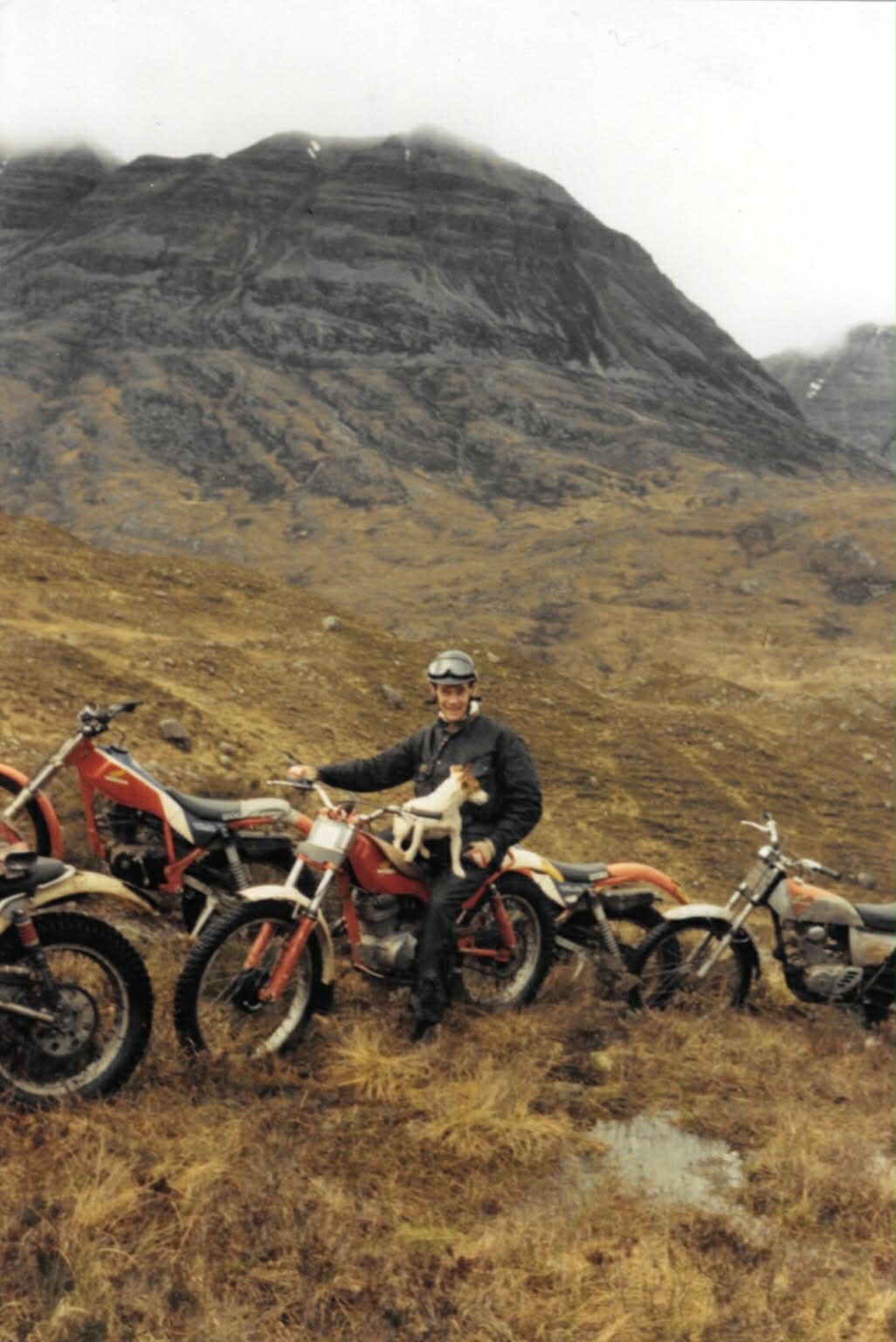
Blackie Holden Snr with ‘Jilly’ the Jack Russell terrier on an outing on the TL200E Seeley. – Photo: Blackie Holden Collection.
“I still have the bike. I think it would have been 1982 or 1983 when Dad got it. It turned out the car tax had already been paid on it, so that saved the dreaded surcharge. I have to say, it’s a lovely little bike, God bless Colin Seeley, but the frame was not the best.“
Few realised, then and now, that the Seeley Honda project would actually encourage Honda to mass-produce trials motorcycles beyond the TL200E, but it did!
Beyond the Seeley Honda – Production Trials Machines:
Trevor Kemp: “There was some big senior management changes at Honda UK with the retirement of the long time Sales and Marketing Director, Eric Sulley. Gerald Davidson took over the helm and my job changed from being a Field Manager to Off-Road Co-ordinator. With new motocross, trials and enduro production motorcycle coming, I was tasked to set up an off-road dealer network, using some of our exsisting dealers and appointing new specialist off-road dealers. I also retained my position on the off-road committee, helping decide what specification off-road machines we would have in our off-road line up.”
Trevor Kemp on the Honda TLR200 in Kent – Photo: Trevor Kemp Collection.
“Honda UK received a pre-production TLR 200, which I tested and rode in a few local trials. The bike caused a lot of interest with the dealers and when launched quickly sold out. There was some aspects of the bike that were better than the Seeley Honda and some that were not. Overall it was the same problem with not enough power for the serious rider, but it was still a good trials motorcycle for the clubman rider and it was a Honda. Later I received a big bore kit consisting of cylinder, piston, crankshaft and revised gear cluster. Also in the kit was an alloy swing arm. Japan must have listened to my comments. This kit improved the engine no end and with more capacity and a longer stroke made it a better bike to ride in the harder sections. We looked at bringing a number of these kits in, but it was expensive and when added to the cost of the TLR 200, around £1,200, at the time it was not feasible.”
Honda Motor Company.
“We later learned that a production TLR 250 was in the pipeline. My riding came to a sudden stop when I tore the ligaments in my knee, I had to have major surgery, so riding was out of the question for twelve months.“
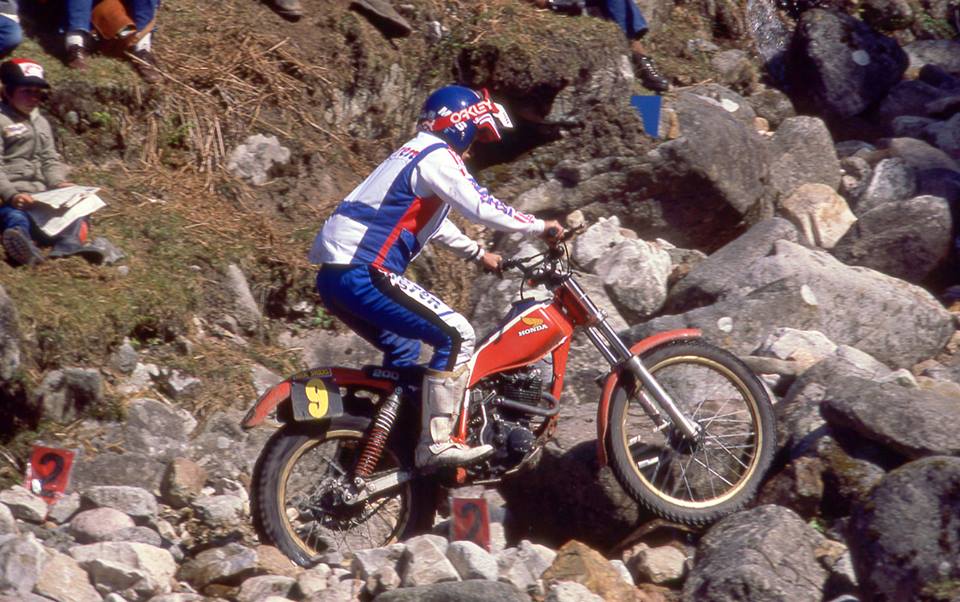
Derrick Edmondson (Honda) in the 1984 Scottish Six Days Trial – Photo: Iain Lawrie
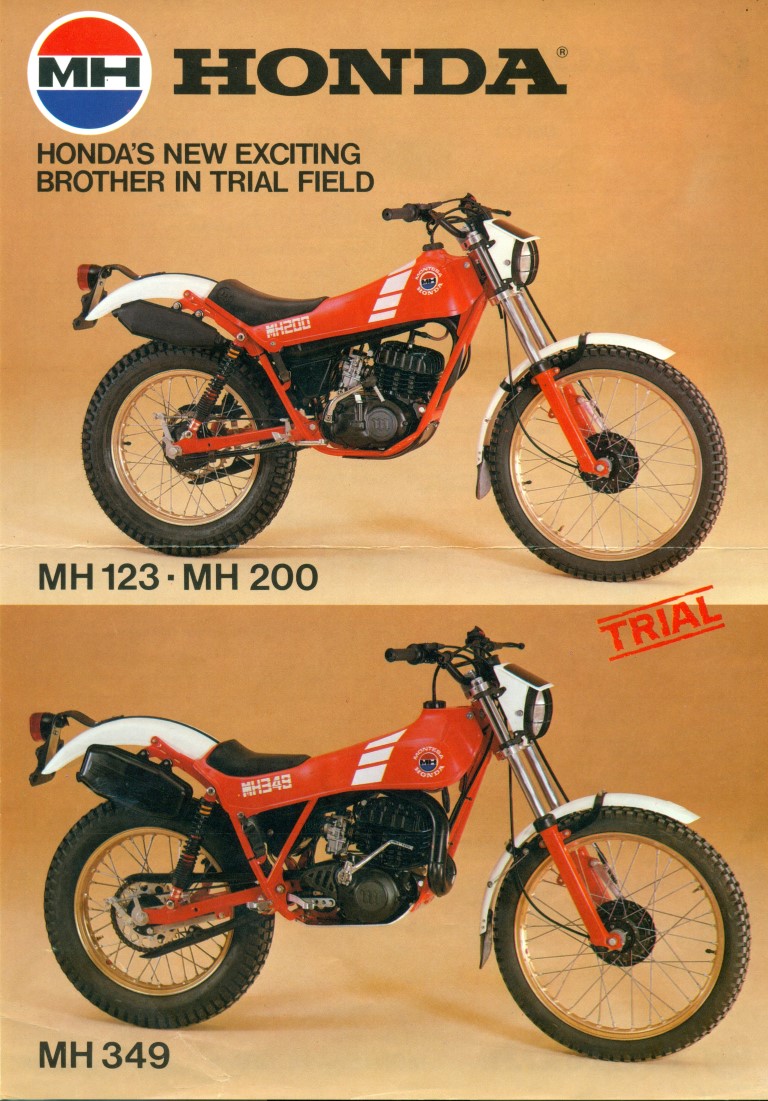
“Derrick Edmondson asked me if he could ride the bike in the SSDT which I agreed. Despite competing in enduros, Derrick was a very good trials rider and at the time was riding for us on a modified Honda CR250 motocross bike competing in the British Enduro Championship. It made sense for the Honda Trials program, as it would give us hopefully some good publicity. Honda then had a financial investment in Montesa. This was mainly to have smaller road motorcycles manufactured in Spain. The next Trials bike to arrive were the Montesa Hondas. Two models, the MH 200 and the MH 349.”
Montesa Honda (MH) 349 and 200 models, the result of collaboration with Honda and the Spanish Montesa factories. Montesa/Honda sales publication. [3]
“These were Montesa models with a badge and graphic change. The same motorcycle you could buy at a Montesa dealer. However it did the Honda off-road dealer network more of a range of trials models to sell.“
“After a few months of setting up the Off-Road Dealer network, there was another management change at Honda UK. I was then made Off-Road Team Manager, taking charge off all off-road racing activities for Honda Britain which included Motocross, Enduros and Trials. Motocross was the priority, so with most weekends taken up at race meetings, my trials riding took a bit of a back seat. As mentioned earlier that a TLR 250 was in the pipeline, a pre production bike arrived at Honda UK. I managed to find some time and rode the bike in a few trials. The bike was pretty good and most noticeable was the increased power the new 250cc motor gave. The power delivery was also nice and smooth. At the events I rode in, it created a lot of interest and had several riders wanting to try it. However by the time the production bikes arrived in the UK the competition had moved to single shock or monoshock rear suspension whereas the TLR 250 was a twin-shock. Despite this, sales were steady as there were trials competitors out there who wanted a four-stroke trials bike to ride and those who had a TLR200 wanted to upgrade to a 250cc.”
Watched closely by Bob Paterson of Honda UK, Mick Andrews rode a TLR250 in the Scottish Six Days in 1985 – Photo: Colin Bullock/CJB Photographic
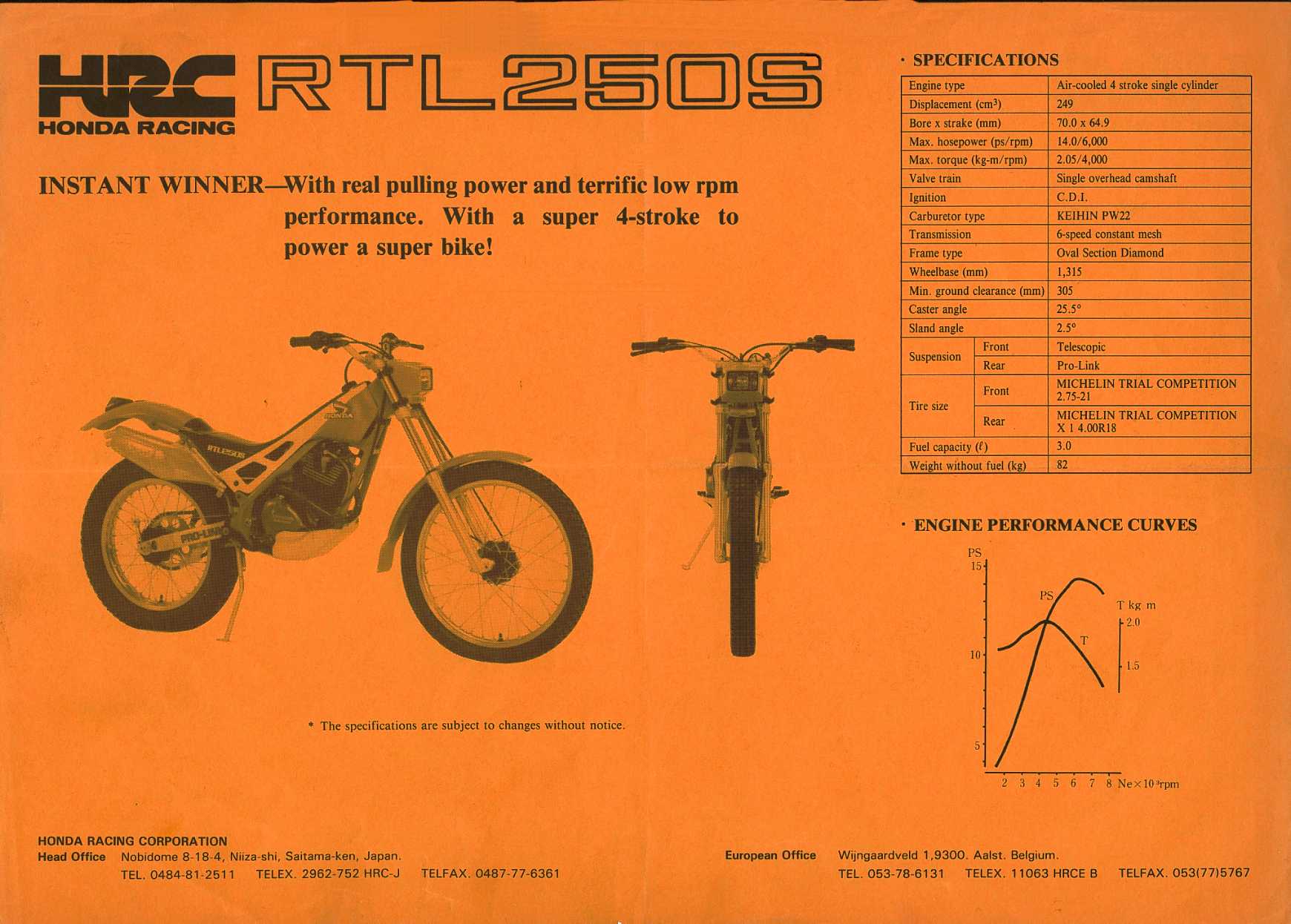
“I had a meeting with my Japanese bosses who informed me that a four-stroke trials works prototype was being developed at HRC. They showed me some pictures and WOW! This bike was radical with a single horizontal shock Pro Link rear suspension system. They said there would not be a production version of this machine, however HRC plan to produce several units for sale and would Honda UK be interested. Of course we said YES! Honda were then embarrassed when a bike was sent to Europe for appraisal and the press got hold of the wrong end of the stick and thought it was a production prototype. I remember fending off calls from the UK motorcycle press and in the end Honda UK had to release a press statement to confirming that it was a works prototype. Then in October 1984, we flew the bike in and unveiled it at the Dirt Bike Show at Olympia. It was only there for the first weekend and was then flown back. That exercise cost Honda around £5,000, but it was worth every penny as certainly grabbed the headlines.
HRC/Honda Motor Company. [4]
Honda UK then had to place an order, which If I remember was around the fifty unit mark but we were only allocated ten. The price tag was £3,500 but they sold straight away. At that time the most expensive Trials bike was around the £1,700 mark. I then got called into a meeting where I was informed that HRC wanted Honda Britain to run a top British trials rider on the new RTL. They would help with bikes, parts but we would fund the rest. The goal was to win the up coming British Trials Championship and to compete in the World Trials Championship with hopefully ending up with a top five finish. I was then tasked with finding that rider and a budget to run it. The rider I wanted was Steve Saunders. At that time I did not know Steve very well and what his situation was with Armstrong. I knew Alan Clews very well from my days working at John Banks. I called Mark Kemp at BVM, who I knew well from riding and sounded him out regarding Steve and his Armstrong situation. I couldn’t tell him everything but asked if he could get Steve to give me a call and keep it very confidential.“
“It was not long before Steve Saunders called and we discussed at length the possibilities of him joining Honda Britain riding the RTL. Budget was a problem which got resolved as Silkolene Lubricants who were our Honda Britain off-road team lubricant sponsor stepped up and increased their budget to us and some more help fom HRC. Then finally Steve agreed to ride for us. How we did it I don’t know but we managed to keep it under wraps until the Bristol Dirt Bike Show where it was announced. It made the headlines in the British motorcycle press. I let Steve have my TLR 250 to get used to riding a four-stroke until his RTL arrived which was in time for the first British round, the Colmore. Steve rode the TLR 250 and won first time out I think in the Vic Brittain. The RTL duly arrived, I took down the RTL the Thursday before the Colmore and Steve rode the bike to its first win in front of a huge crowd. From then on Steve and the RTL became a formidable force. Not long after, both Steve and I went to Belgium for a Honda Trials test along with Eddy Lejeune who was testing his new 360 Pro Link. Steve was impressive at the test and I could see the Japanese staff taking interest, whereas the 360 looked big and a handful to ride. Steve was having a great start to the year finishing second in the opening round in Spain, whilst Eddy was struggling to get to grips with the 360. Then mid-year a new bike arrived for Steve with numerous upgrades to the engine and suspension. The engine had new outer cases, the crankcases had been modified to give around 30mm more ground clearance. Trouble was with the smaller crankcases, the oil capacity was down to only 600ml which caused the engine to slightly over heat especially in hot conditions. A new improved rear shock, with revised linkage, but the front forks were the icing on the cake. Machined sliders, light weight stauntions and revised damping these Showa forks were brilliant. The engine over heating was rectified by fitting an oil cooler when needed. Steve continued his good season with a win in Germany, finishing third in the world, second in the SSDT and taking the British Championship, a first Honda win since Rob Shepherd. Honda UK were over the moon, and for me I was well pleased as it had justified me doing everything in my power to get Steve signed.“
Steve Saunders on the Pro Link HRC RTL250 Honda in 1985 – Photo: Don Morley/Hitchcock Motorcycles.
“After several communications with HRC, Steve and myself were invited to Japan along with Eddy. Steve and Eddy were to ride in an arena trial along with other top manufacture riders. We also had to attend the opening of the new Honda head office, and visit HRC where Steve was to sign his new HRC contract.”
Steve Saunders at the 1985 Colmore Cup Trial on his new RTL250S Honda when signed for Honda Britain – Photo: Don Morley/Hitchcocks Motorcycles.
“The visit to HRC was an eye opener. Seeing all the road racing motorcycles being built along with motorcycles for Steve and Eddy (who had given up on the 360) was an experience you don’t forget and also how clean it was. You could eat your dinner off the floor. At the indoor trial Steve and Eddy riding RTL 250s got through to the final, beating Burgat and Michaud making it an all Honda final. Despite an upset stomach and a painful ankle sustained in his semi Steve and Eddy were level pegging right up to the last section where Steve had to admit defeat to the three times world champion.”
Steve Saunders on the Honda Britain RTL250S at the 1985 Scottish Six Days on ‘Achlain’ section, watched by Honda UK representative Scotland & Northern Ireland, Bob Paterson – Photo copyright: Colin Bullock/CJB Photographic
“Part of my discussion with HRC was that a minder mechanic was needed for Steve. I was doing a lot of work on Steve’s bikes and although I enjoyed doing it, however with my other racing commitments I was struggling to give it the time it deserved. HRC agreed and I then had to find someone to do the job. An opportunity came my way in the form of Derrick Edmondson. Derrick had been riding Honda Britain for three very successful years on modified CR 250 motocross bikes, and his contract was up for renewal. I was under pressure from sales and marketing for him to ride one of the Honda four stroke enduro bikes which I knew he would struggle to carry on winning. I had a meeting Derrick and told him the situation. I knew he would not compete on one, so I said to him however I have an opportunity that has come about where I need a mechanic/minder for Steve Saunders working in conjunction with HRC. I told him he would be the perfect person for the job as he was a very good mechanic, working on his own bikes, a good trials rider and of course a very quick off road rider. Derrick saw the bigger picture of this offer and excepted the position. Derrick worked out of the Honda Britain workshops and the relationship between him and Steve working well. 1986 was another good year for Steve on the Honda winning four world rounds another British Championship and again second place in the SSDT. He was getting more up dated factory parts with the engine increased to 270cc.“
Steve Saunders (RTL270 Rothmans Honda HRC) on ‘Lagnaha’ in the 1986 Scottish Six Days. Photo: Iain Lawrie.
“At the end of 1986 Steve left Honda and joined Fantic. With Rothmans pulling out as the team sponsor, budgets were tight and HRC only wanted one rider. Eddy had another year on his contact, so he got the ride. It was indicative of the times as Honda world wide were cutting back on their racing activities along with Honda Britain racing teams. There is no doubt in my mind that Steve would have won a world title if he had been able to stay with HRC. Derrick went off and worked for Eddy in 1987 based out of Belgium. At the end of 1987 HRC pulled out of trials. It seemed like the RTL four-stroke engine could not be developed any further without major investment into the project.”
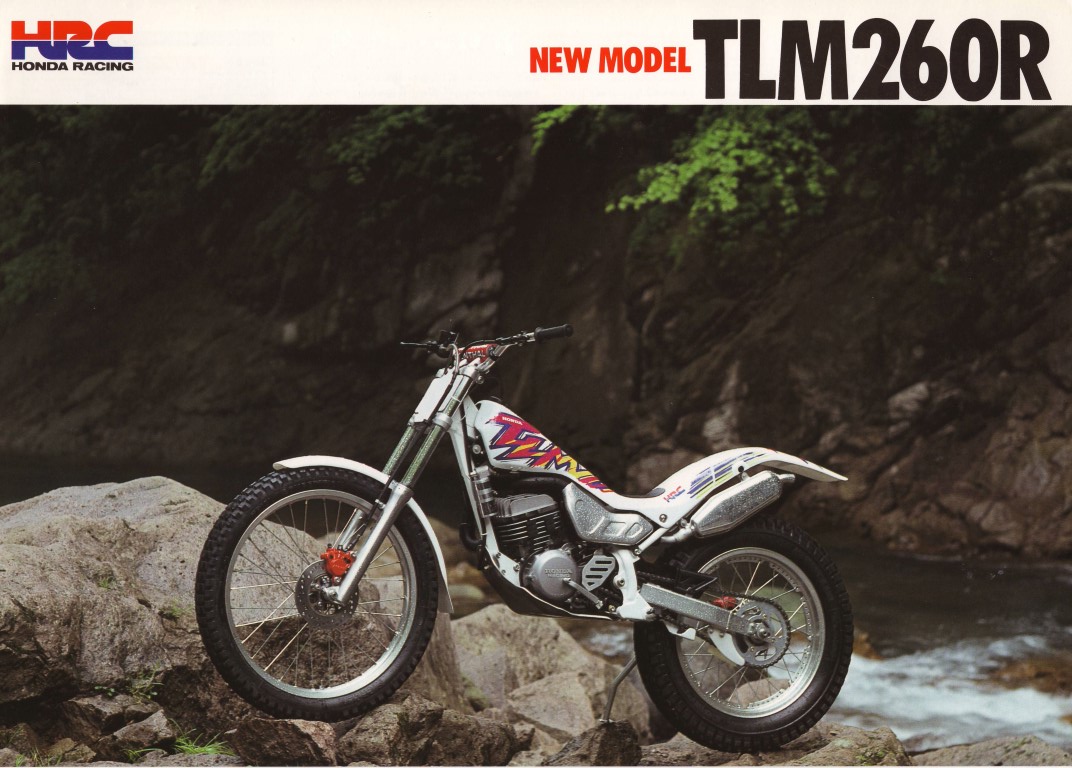
“With the four-stroke engine finished, Honda turned to developing a two-stroke trials bike, the Honda TLM. I had left Honda by then and was working for Silkolene Lubricants. I did ride the TLM 200 and the TLM 250 through a dealer. The bikes were not bad and I did have some success especially on the 250. Honda did have quite good sales as well. The last trials bike they produced in Japan was the TLM 260.“
The Honda TLM260R brochure when launched by HRC. – Honda Racing Corporation/Honda Motor Company. [5]
“Production then went to Montesa Honda where they produced a world-beating trials motorcycle. They then went full circle and produced another world beating four-stroke. So from the initial idea to built the Seeley Honda TL200E came bigger and greater things – Funny how things turn out.”
Technical Data – Seeley Honda TL200E:
Honda UK, Power Road, Chiswick [2]
Seeley Honda TL200E Wiring:
Starting from CDI unit, there are six wires via (m/f) (connecting to >) green (m) > frame (earth) black/red (m) > black + red label (alternator) bleu/yellow (f) > blue + yellow label (cdi rotor) green (f) > green black/white (m) > kill switch black/white (f) > coil Ref: m = Male Connector; f = Female connector
Swinging Arm Bushes: 52147-028-300 (52147028300) Same as XL100 US
Brake Shoes Front & Rear: 06430-GBJ-J10 (Genuine Honda part)
(alternative: EBC Part No. 304G)
Front Wheel Bearings (2): 6301.2RSR.C1
Rear Wheel Bearings (2): 6302.2RSR.C1
Front Hub: 44601-400-000 or 44601-360-000 (Elsinore 1976, same part).
Head Race Bearings (2): 6204.2RSR.C1
Keihin Carb Type: Keihin PC20
Main Jet: (99101-116-1050) = 105 Main
Gasket Set Keihin PC20: 16010-GCR-000
Pilot (Slow) Jet: 99103-149-0380 = K38 Pilot
Front Sprocket: 10T
Rear Sprocket – TR211 Talon: 45T
Chain: 100 plus ½ link
(Readers should satisfy themselves that part numbers are correct when ordering from any supplier of components, be that OEM or substitute.)
Donald Finnie on his Honda TL200E – Photo: Jimmy Young.
Bibliography, copyright and credits:
‘Colin Seeley …and the rest’ By Colin Seeley, 2008 – Redline Books – ISBN: 978-0-95555278-1-4 [1].
Honda UK – Instruction Manual – Honda TL200E (1979) [2].
Montesa/Honda Sales Literature [3].
HRC/Honda Motor Company sales literature. [4] [5].
We are indebted to Trevor Kemp for his first hand account of his time with Honda UK and the Seeley Honda trials enterprise.
Trials Guru’s John Moffat with Colin Seeley in March 2008 during interviews at the Scottish Motorcycle Show at the Royal Highland Centre, Edinburgh – Photo: Archie Love.
‘Seeley Honda TL200E – The Story’ is the copyright of Trials Guru and Trevor Kemp, 2026.
Apart from ‘Fair Dealing’ for the purpose of private study, research, criticism or review as permitted under the Copyright, Design and Patents Act, 1988, no part of this article may be copied, reproduced, stored in any form of retrieval system, electronic or otherwise or transmitted in any form or by any means, electronic, electrical, mechanical, optical, chemical, photocopying, recording or otherwise without the prior written permission of the author as stated above. This article is not being published for any monetary reward or monetisation, be that online or in print.
The Premier Trial Website – Recording the History of the Sport 'Established 2014'

















 TRIALS GURU - DEDICATED TO TRIAL