Category Archives: motorcycles

Dalesman – Built in Yorkshire

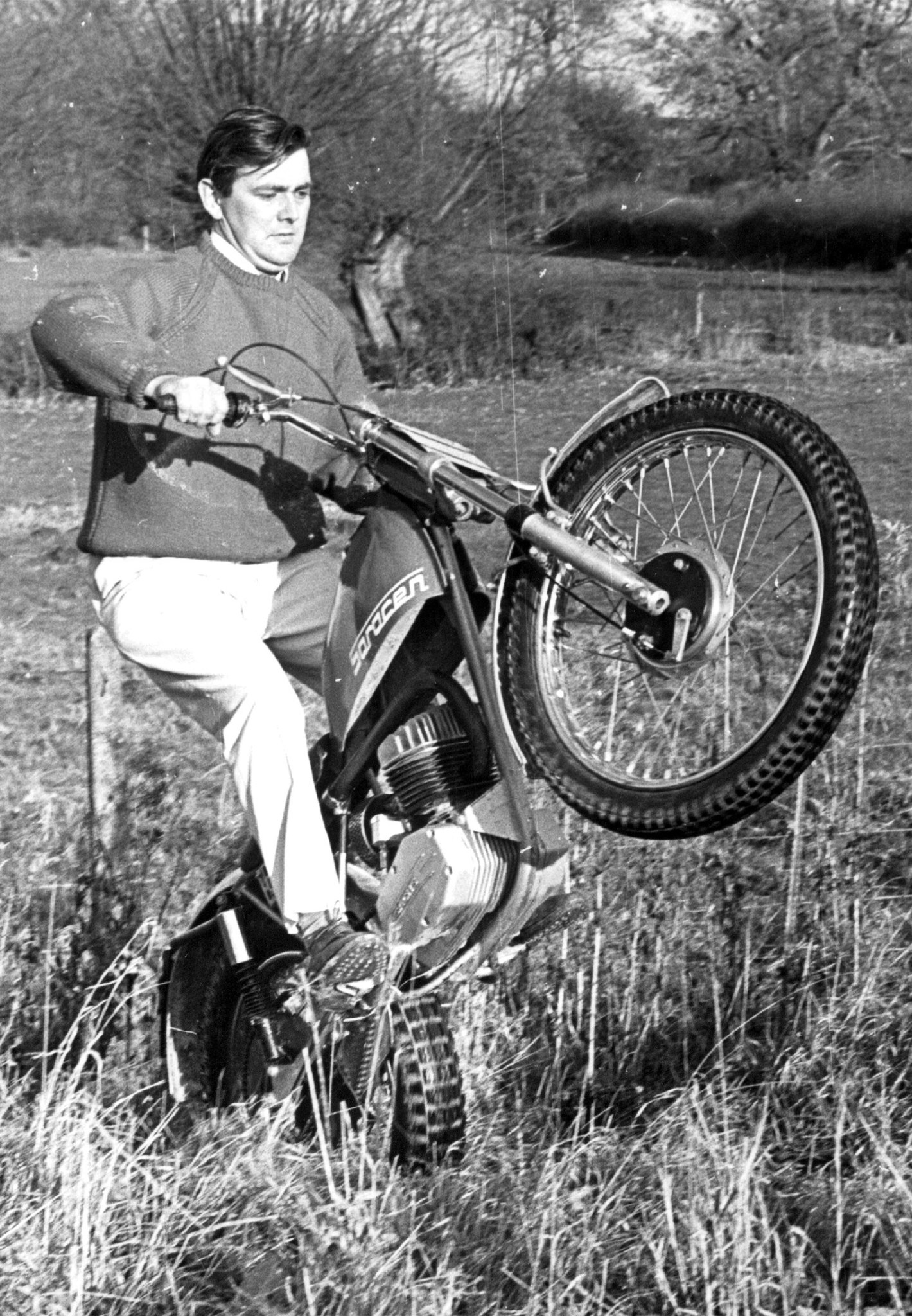
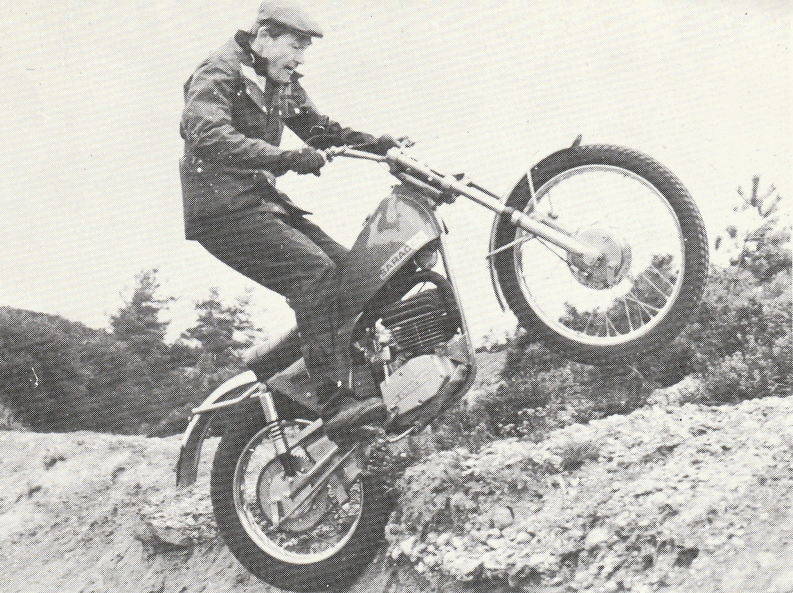
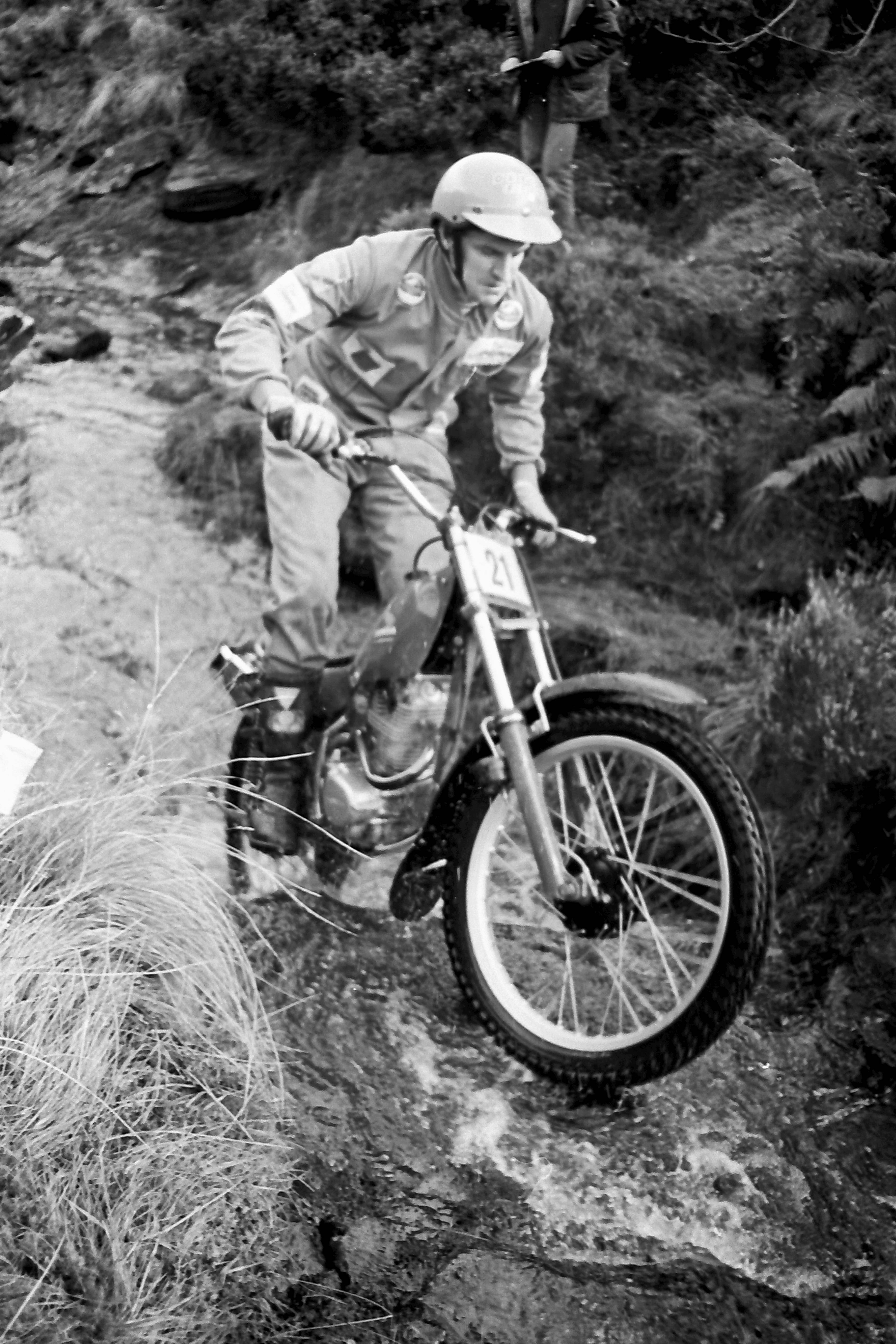
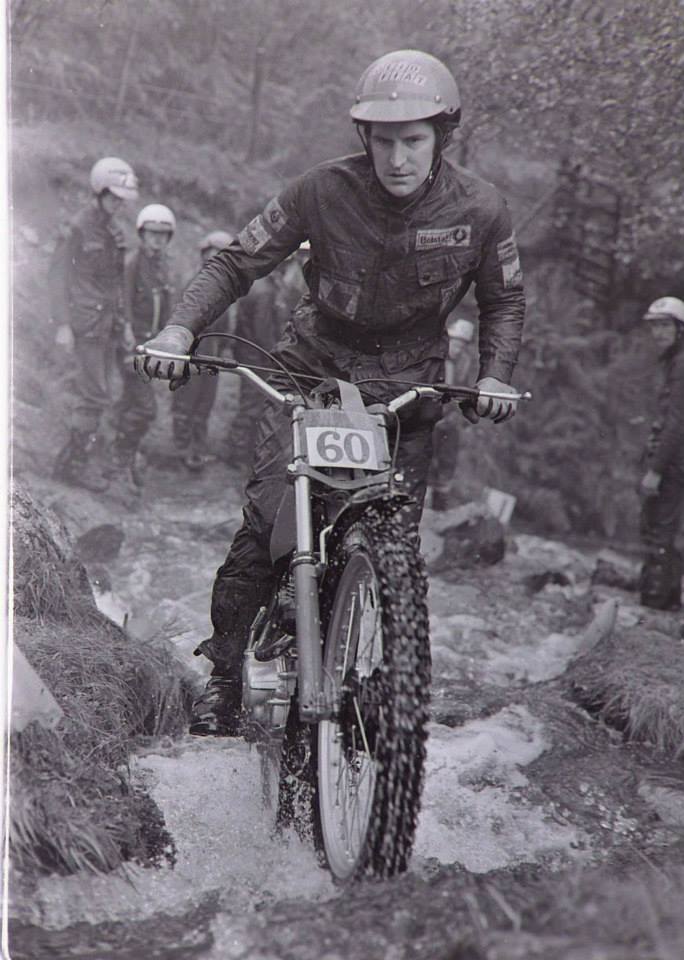
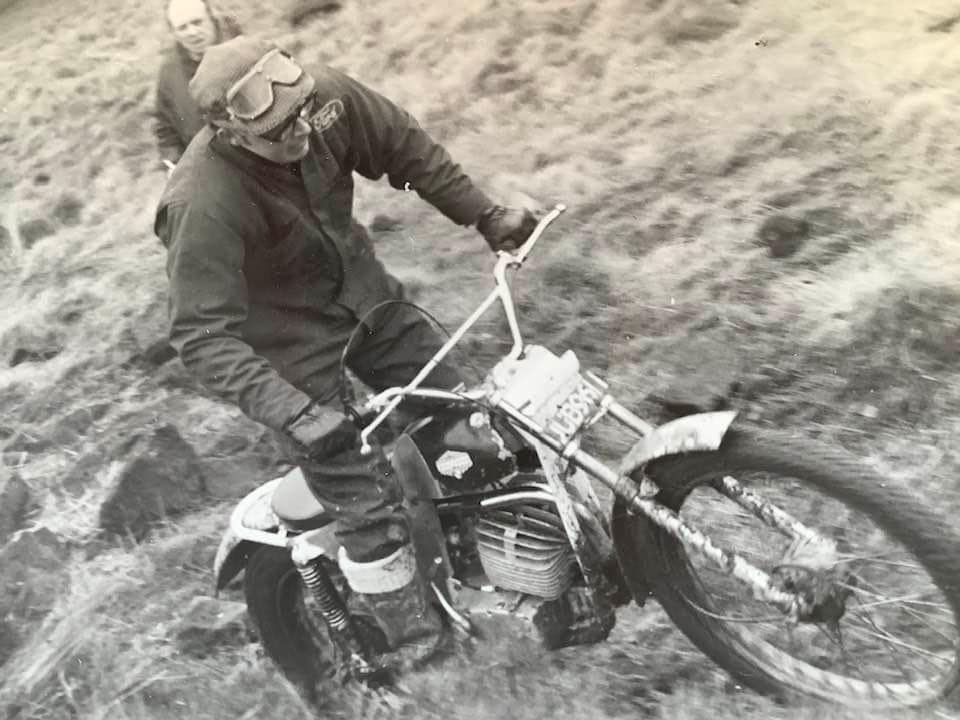
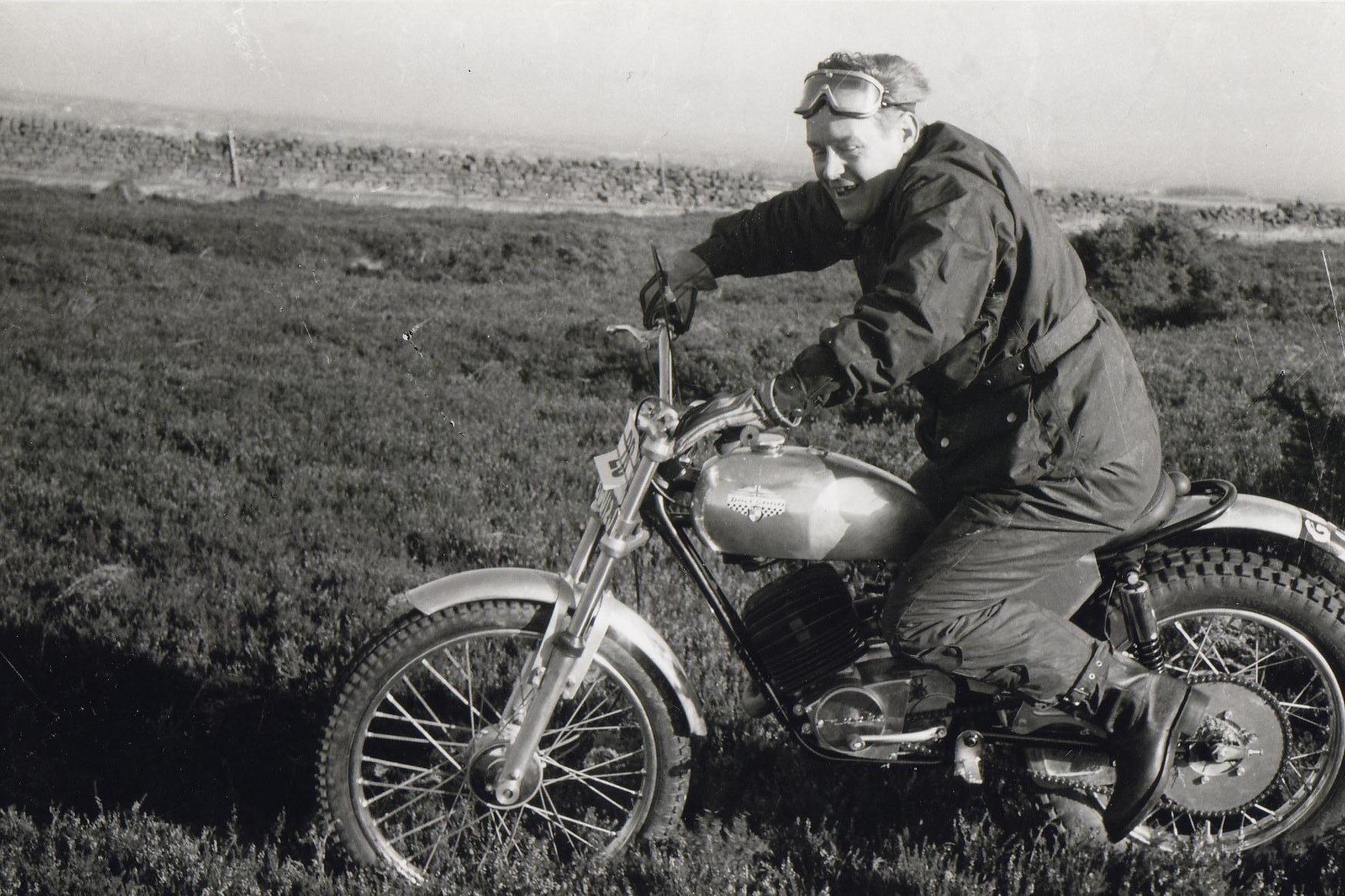
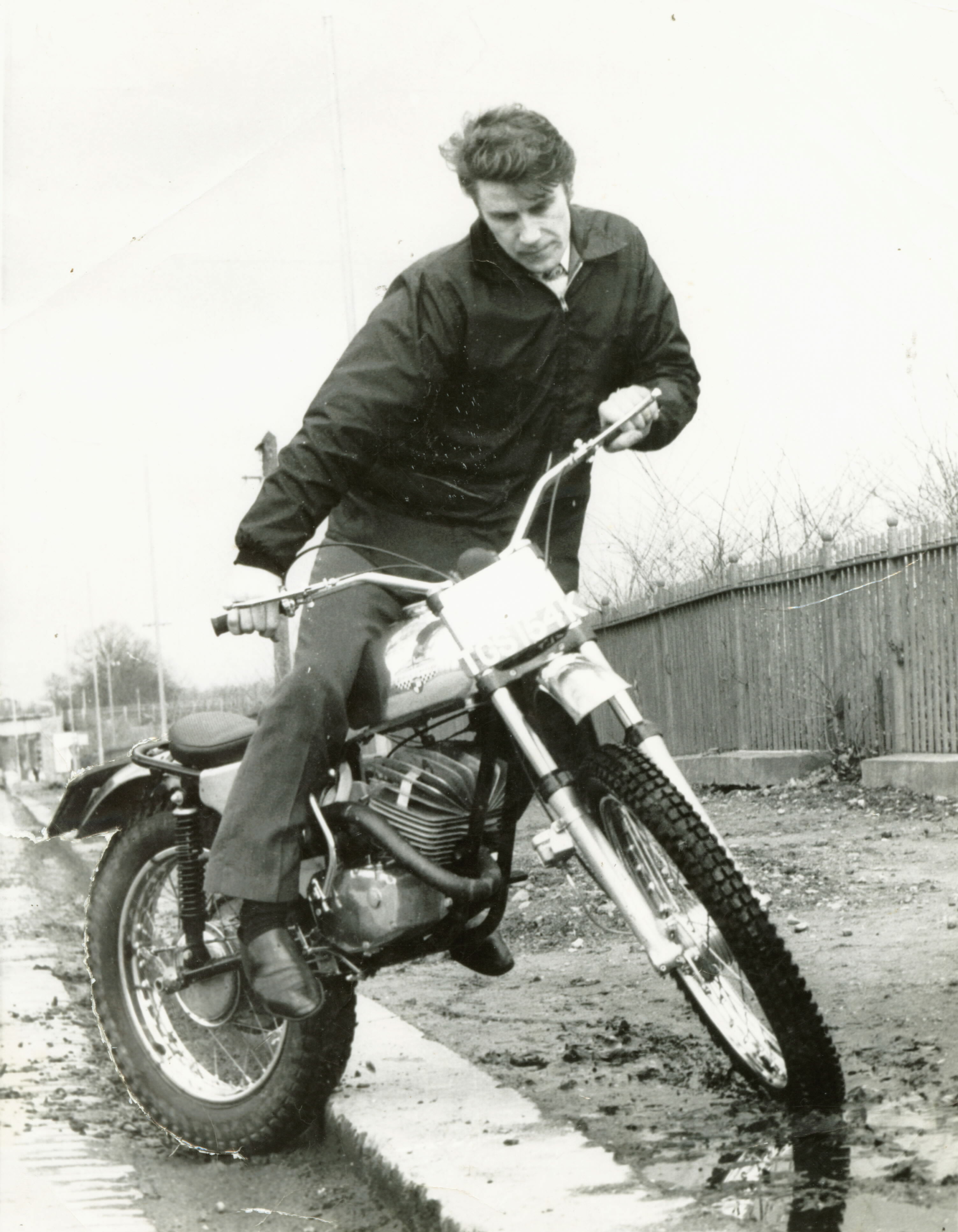
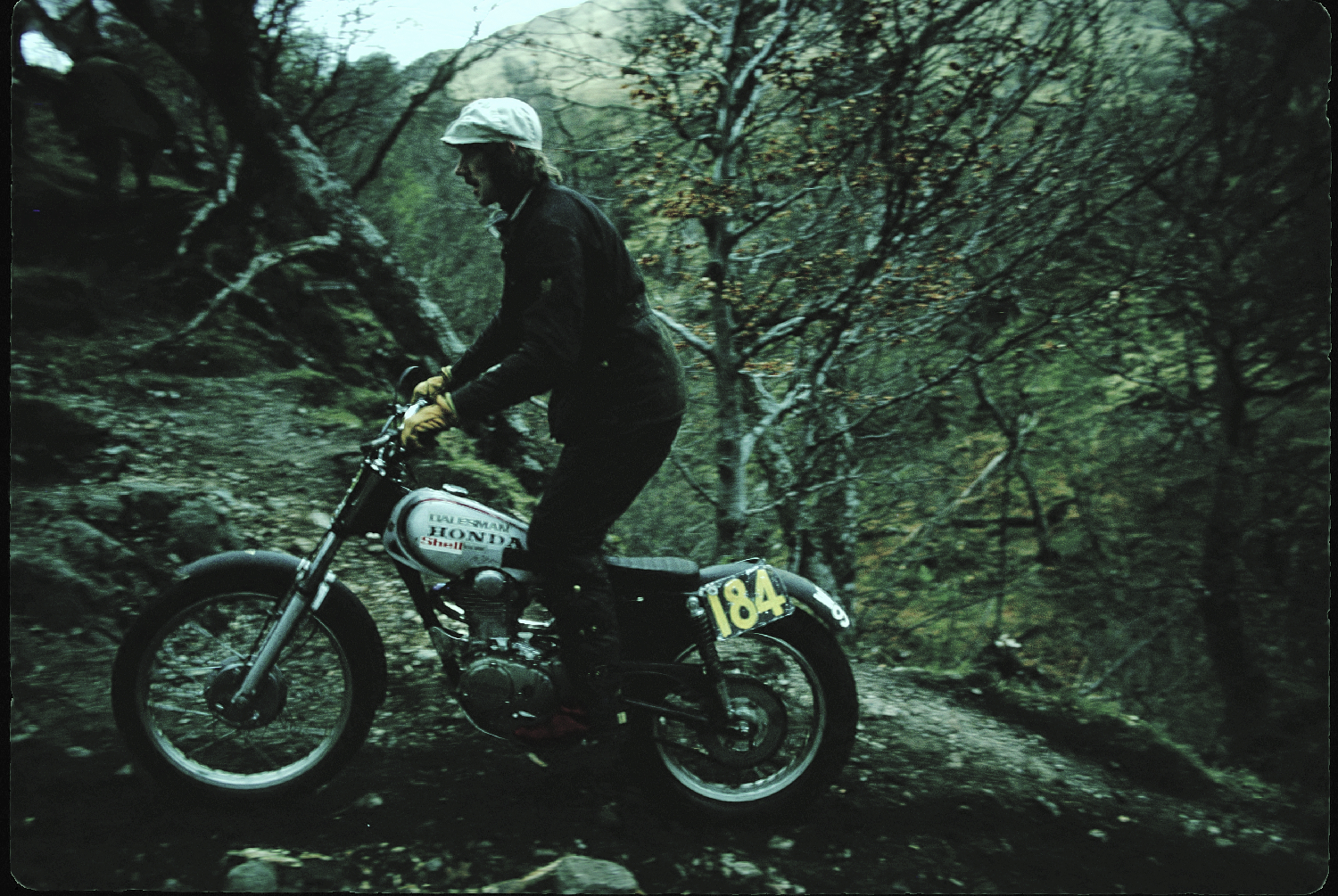
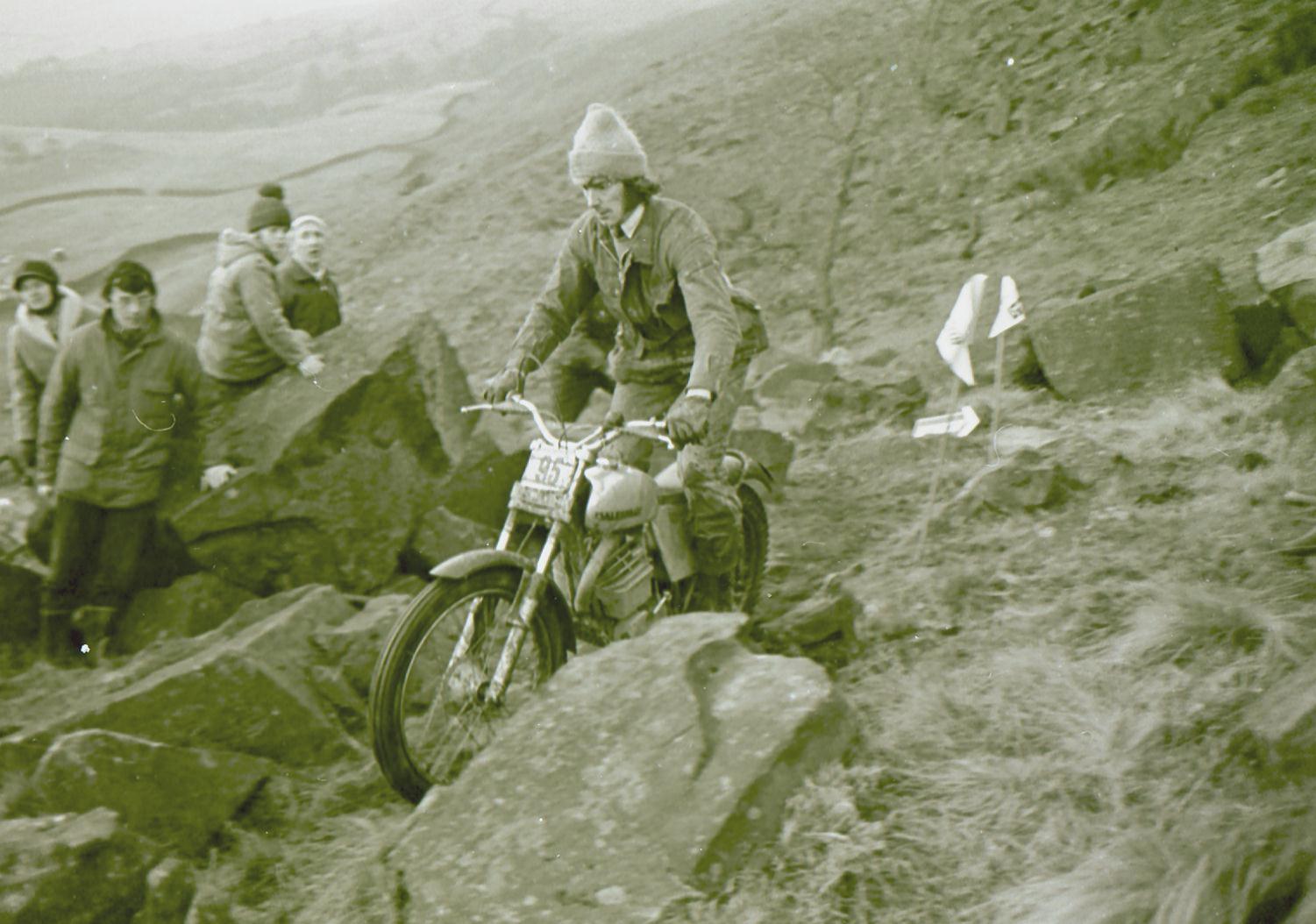
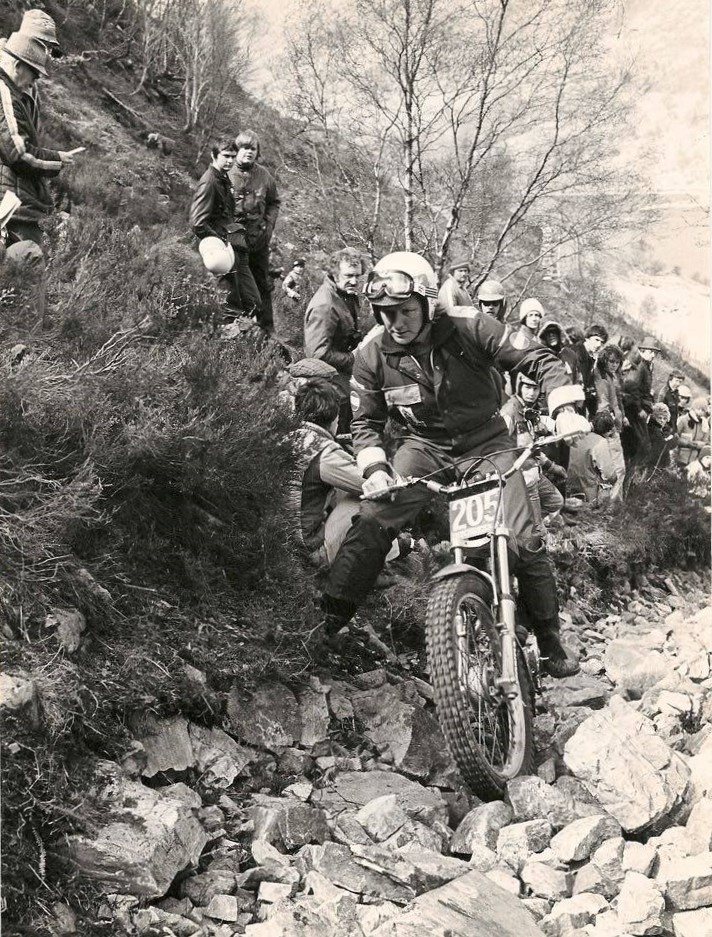
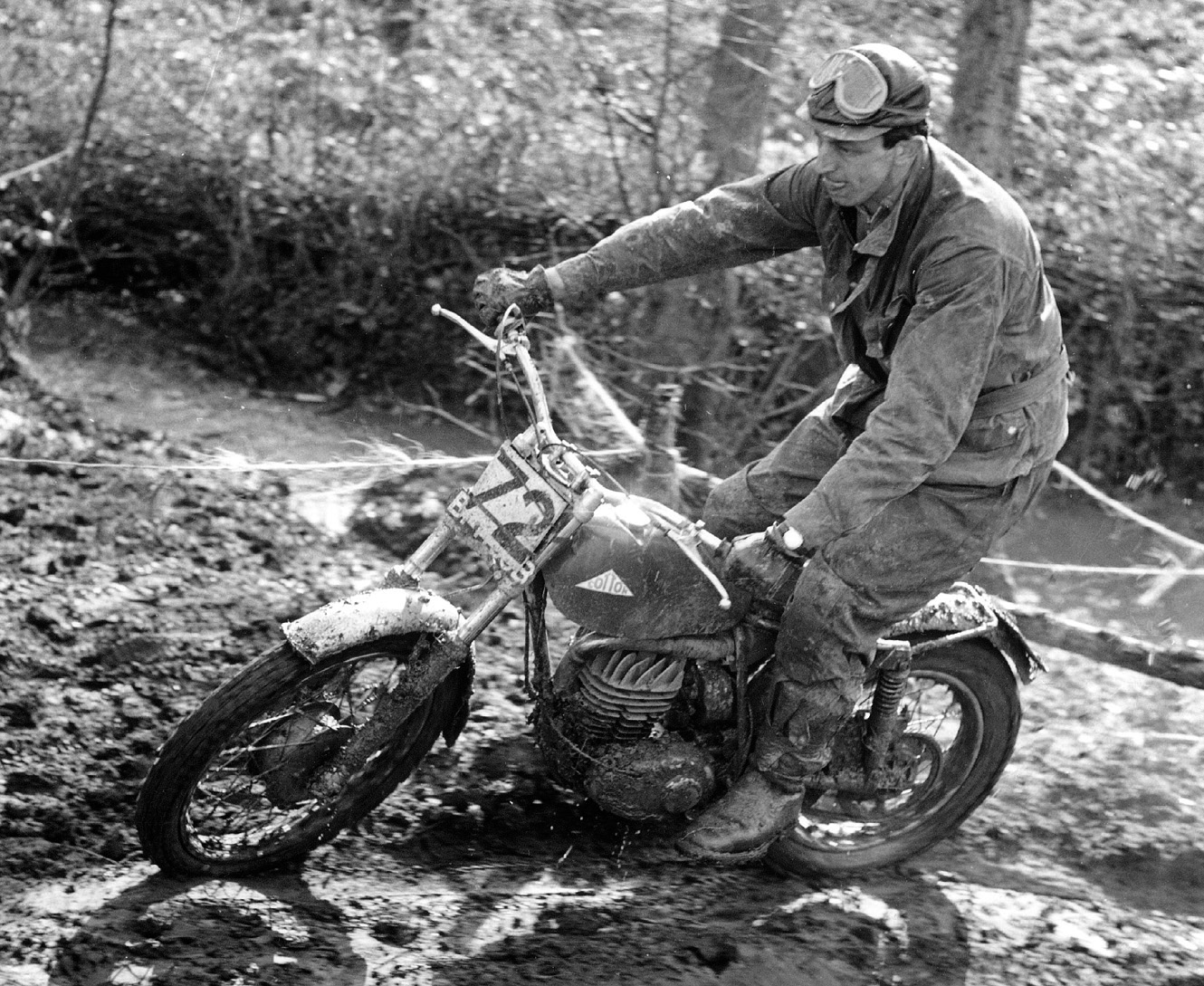
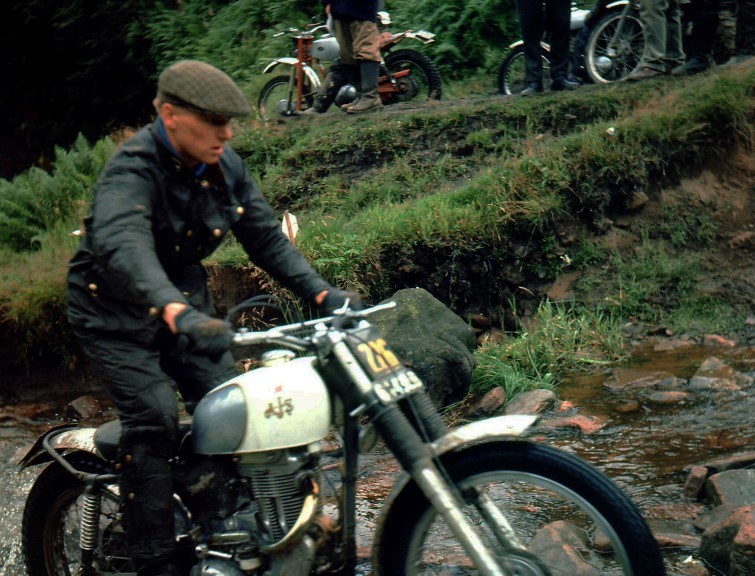
Peter Edmondson competing with his own product, the Dalesman Puch 125T in 1970 – Photo: Barry Robinson, with permission.

Words: Trials Guru with: Scott Ellis; Mick Wilkinson; Richard Sunter; John Moffat; Nick Procter; Chris Griffin; Andrew Tyson; Nigel Megson; John Maxfield; Mick Grant; George Webb; Rodger Mount; Martin Christie and Nick Jefferies. (Guide: Read time 53 Minutes)

Photos: Eric Kitchen; Barry Robinson with permission of his estate; OffRoad Archive; Carol Dabill; Ian Robertson; Bonhams Auctioneers; Nick Procter; Alex Fowlie; John Honeyman; Don Dudley by Mark Weston; Claire Brooker-Milligan; Robert Harting; Ian Preston; Steve Robinson; John Maxfield; Cycle World, USA; Motor Cycle, UK; Mick Mosley; Trial.AT; Malcolm Carling by Nick Haskell; Smith Family Collection; Grant Shotwell; Carlo Orlandi; Andrew Tyson; Nick Jefferies; Derrick Edmondson. (Main Photo: Andrew Tyson).

With the help from riders, enthusiasts, owners and people in the motorcycle trade, Trials Guru continues to bring you articles on not only trial events and riders, but also the motorcycles. We have for you the history of a motorcycle that was built in the West Riding of Yorkshire and sold to riders both in the UK and further afield. It was the brain-child of a true enthusiast and a great character, dare we say legend from the world of trials and scrambles, Peter Edmondson, naturally he named it the ‘Dalesman’.

It all starts somewhere:

The Puch M125 road going motorcycle, the engine of which would eventually power the Dalesman. (Photo: Steyr-Daimler-Puch A.G.)

Without a doubt, Sammy Miller’s smart move from Ariel to the Spanish-made Bultaco marque in late 1964 was indeed a well-documented ‘game changer’, as far as trials was concerned. The Sant Adrià de Besòs built 244cc Sherpa T sounded the final death knell for the established heavyweight four-stroke in trials. This opened the door to smaller capacity machines for trials use. There were opportunities to be had, success to be secured for the taking.

By the late 1950s, several UK motorcycle manufacturers had already started to produce a range of smaller capacity, two-stroke lightweight trials and scrambles machines which took on the established larger capacity engined machines and beat them. Most of these manufacturers weren’t large concerns, some were of a cottage industry set up, or even a modest garden shed. All of them long gone. But by the mid to late 1960s, the doyen of trials commentators, Ralph Venables had named the small capacity machines generically as ‘clockwork mice’.

A rare, but little known, trials machine, built by Bill Juke in Birmingham. The 125cc Sachs five speed engined Diamond, spotted at the 1969 Bemrose Trial by Don Dudley, photo permission of Mark Weston.

Yorkshireman, Peter Gaunt had been experimenting and developing privately since 1967 with trials machines derived from the products of both Japanese and Eastern European manufacturers and was having some noteable success. The Gaunt Suzuki, a conversion using the 120cc Trail Cat (TC120), a USA specification trail bike with a three speed gearbox with high and low ratio facility, gave Suzuki GB the opportunity to have a useable machine in trials and the chance to create teams for national trials and the SSDT. More on the very talented Peter Gaunt later.

Peter Gaunt on one of his creations, the 128cc Suzuki on ‘Achintee’ at the 1969 Scottish Six Days Trial – Photo: OffRoad Archive.

Scottish Puchs!

Norman F. W. Edgar (125cc Puch) on Tyndrum in 1968. Norman was Scottish Trials Champion in 1966/67 & 69. He came 62nd in the 1968 SSDT on 215 marks to take a first class award on the little Puch which was built by his brother, Derek. Photo: Ian Robertson, Midlothian

In Edinburgh Scotland, the Scottish Puch agents were Edgar Brothers, 241 Leith Walk. Derek Edgar, who worked in the family business, had already been developing his own 125cc Puch trials machine with some help from the Puch factory, both for one day and International Six Days use in 1968. His older brother, triple Scottish Trials Champion Norman, would also ride a Puch 125 in the 1968 Scottish Six Days Trial. Both these brothers were having some success with the small capacity machines and others were taking note. Derek Edgar would eventually go to work for Steyr-Daimler-Puch at their Graz factory in 1970.

Derek J. Edgar from Edinburgh on his self developed Puch 125 (NFS1G) in the 1969 British Experts Trial – Photo: Malcolm Carling with permission of Nick Haskell.

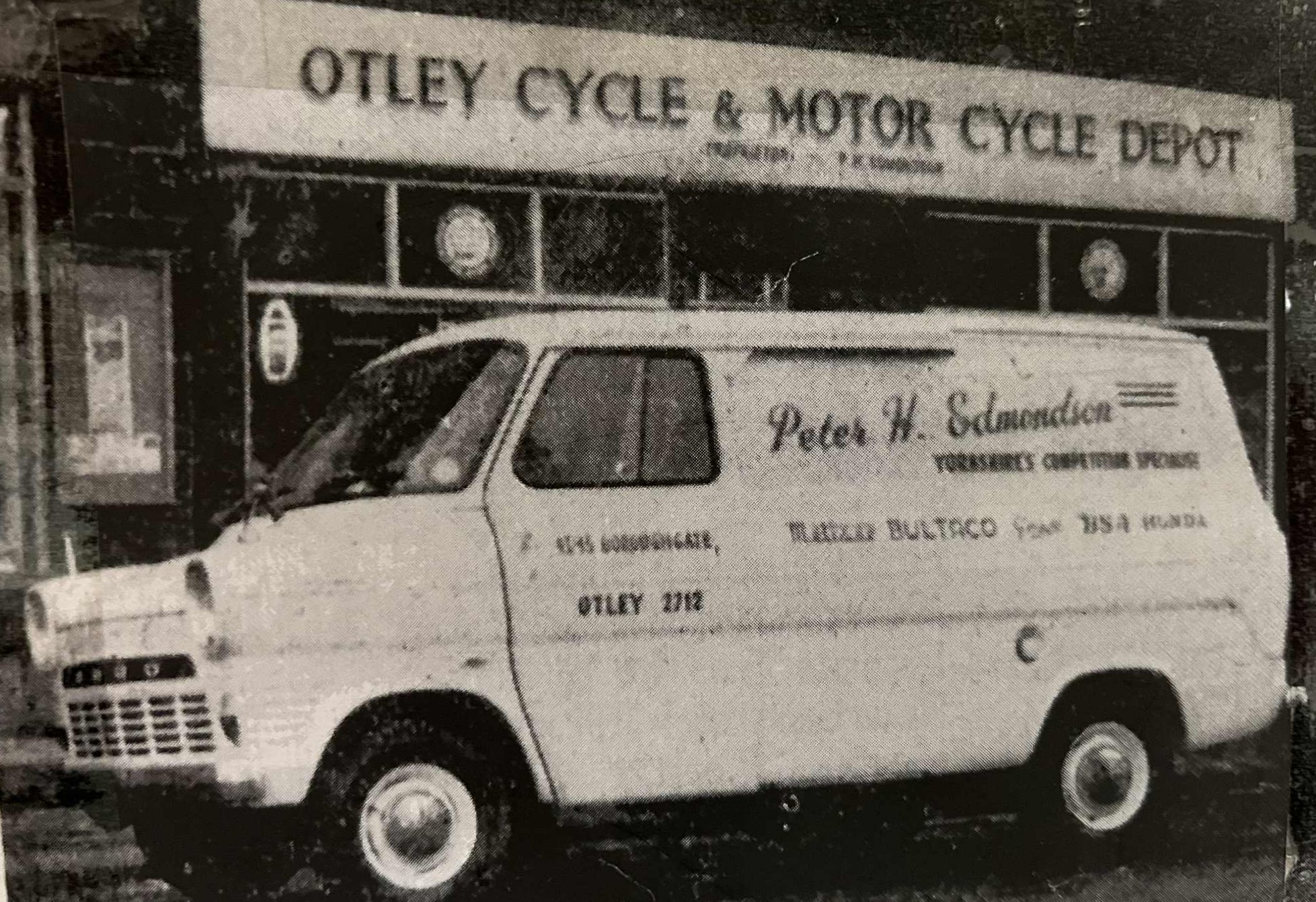
However, down in deepest Yorkshire in Otley, a market town in the West Riding, there came purpose-built trials, scrambles and enduro machines called naturally, ‘Dalesman’. This was the brainchild of entrepreneur, Peter Edmondson from Horsforth, a successful scrambles and trials rider who owned the ‘Otley Cycle and Motor Cycle Depot’ business at 43-45 Boroughgate, Otley. He also held dealerships for Greeves, Bultaco and BSA motorcycles. He proudly proclaimed he was Yorkshire’s 100% competition specialist.

Peter Edmondson’s Ford Transit in the middle to late 1960s. Photo courtesy of Derrick Edmondson

Development of the Dalesman began early in 1968 and consequently at this time, the supply of the proprietary Villiers two-stroke engine was restricted by the brand owner, Norton Villiers and would be supplied exclusively to their AJS marque, now under Manganese Holdings control. It was a time of change in the trials world. This ultimately affected British manufacturers which included Greeves, Sprite, DOT and Cotton. Greeves would eventually buy in the Austrian Puch engine, Sprite went for the German made Sachs, while DOT and Cotton went down the Italian Minarelli route to power their chassis.

The Ashfield Works in Otley property where Dalesman were built as it is today.

Peter Edmondson formed ‘Dalesman Competition Products’, which was based at 6 & 7 Ashfield Works, Beech Hill, Otley in 1968 and had chosen the aluminium alloy, 125cc Puch unit to power the new trials machine.

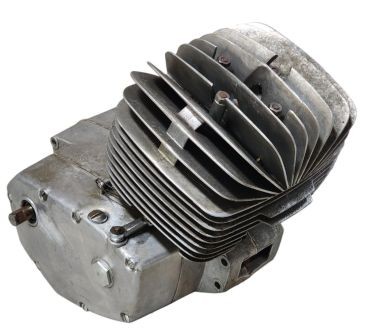
The Austrian Puch 123.5cc engine, manufactured at the Steyr-Daimler-Puch A.G plant at Graz. Lower Austria.

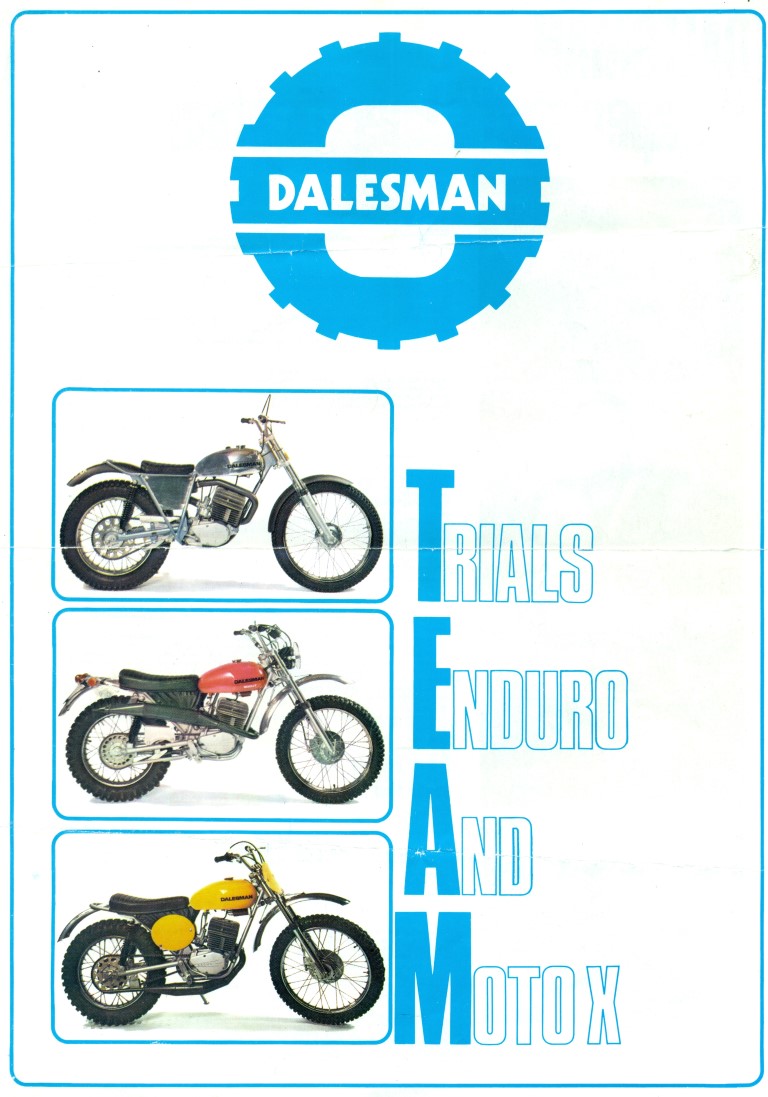
Early model designations of the Dalesman Puch was quite simple, 125T (Trials); 125MX (Motocross/Scrambles) and 125E (Enduro).

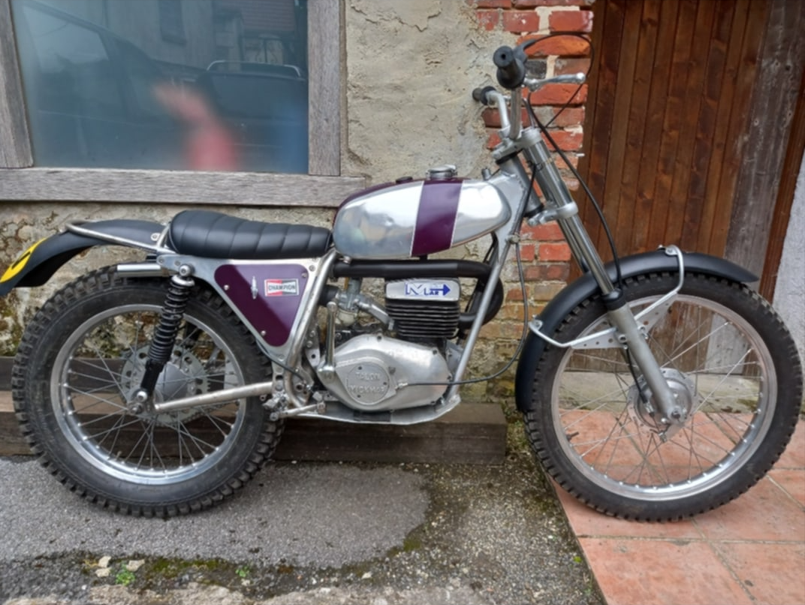
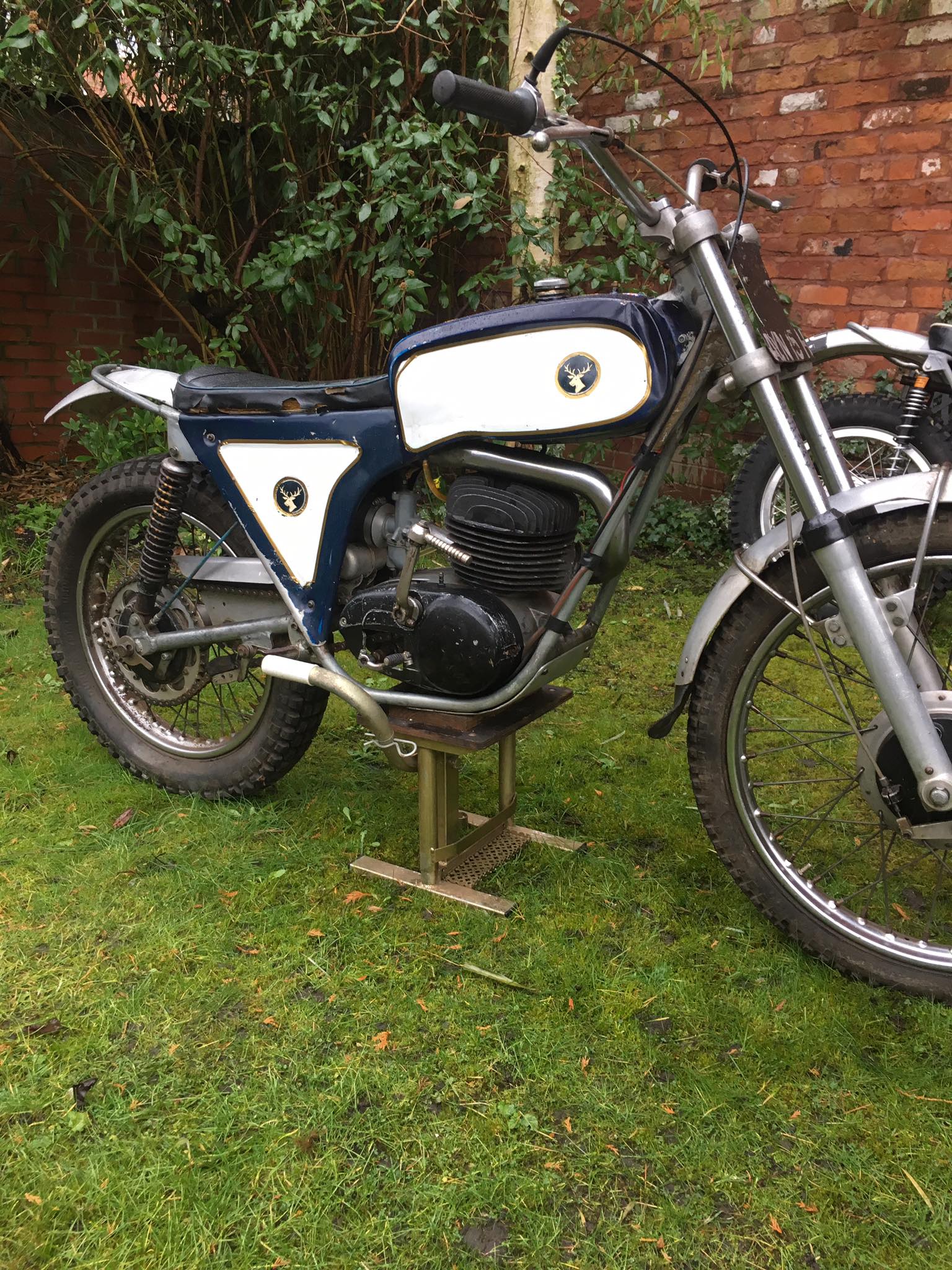
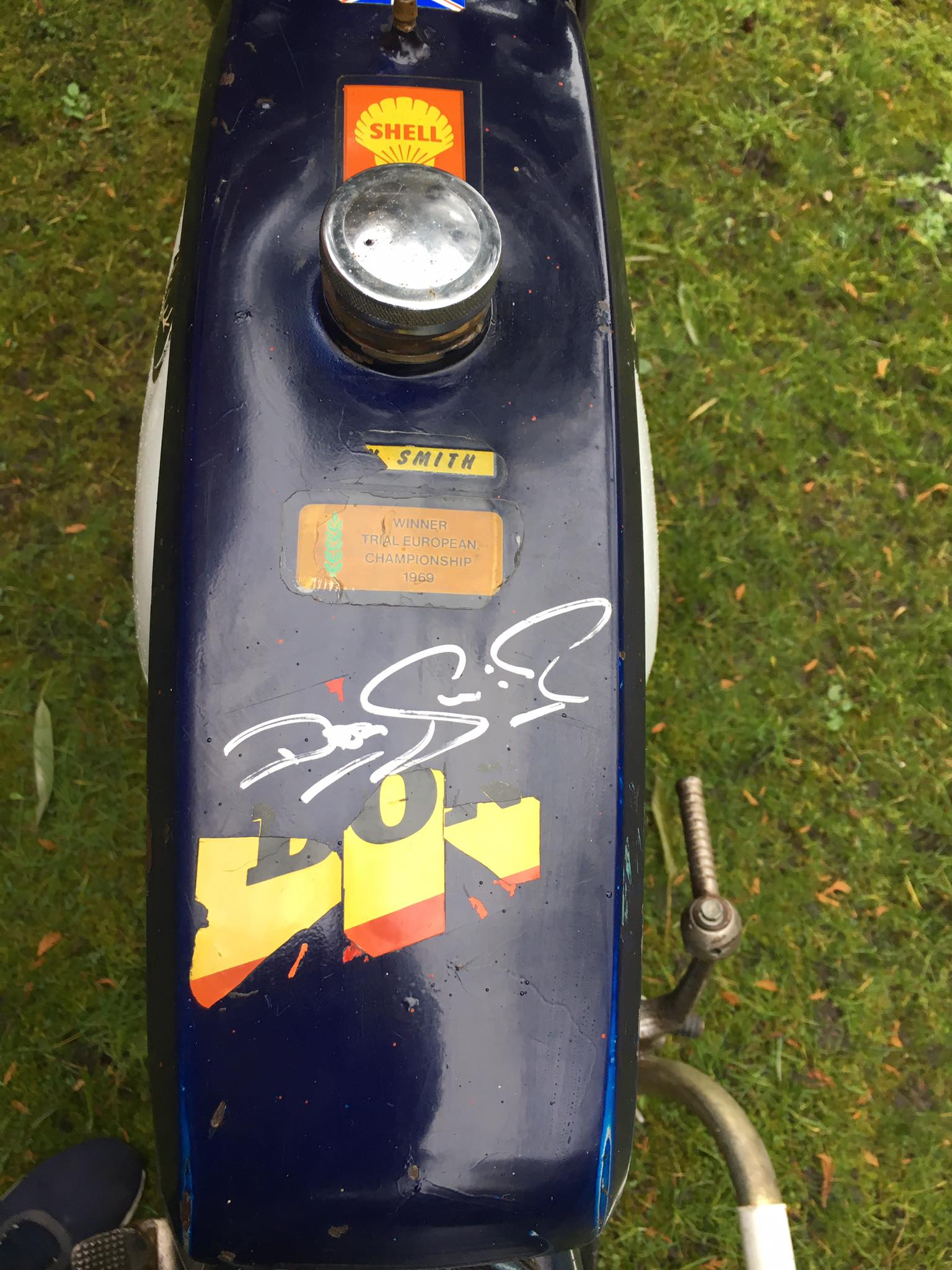
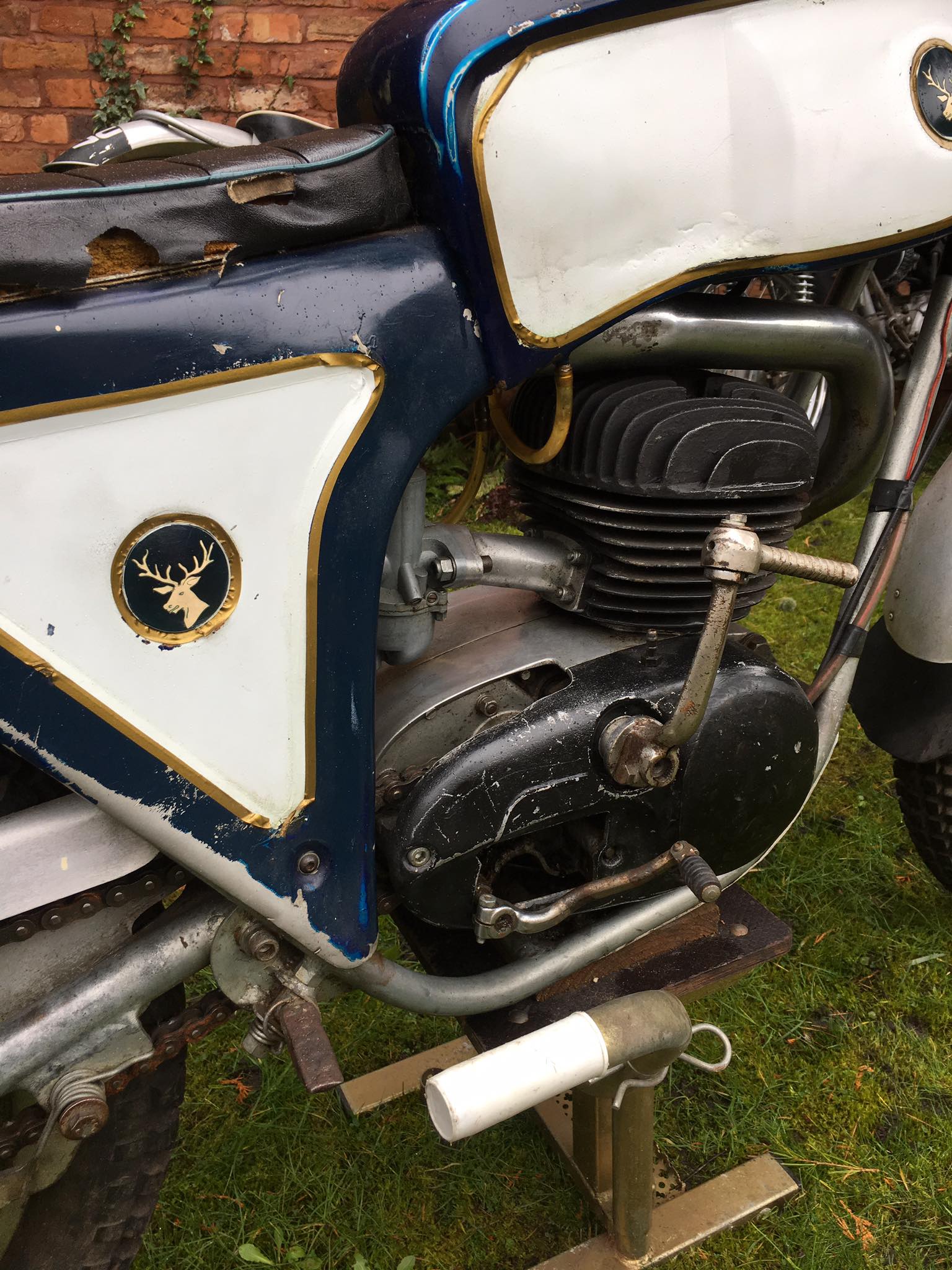
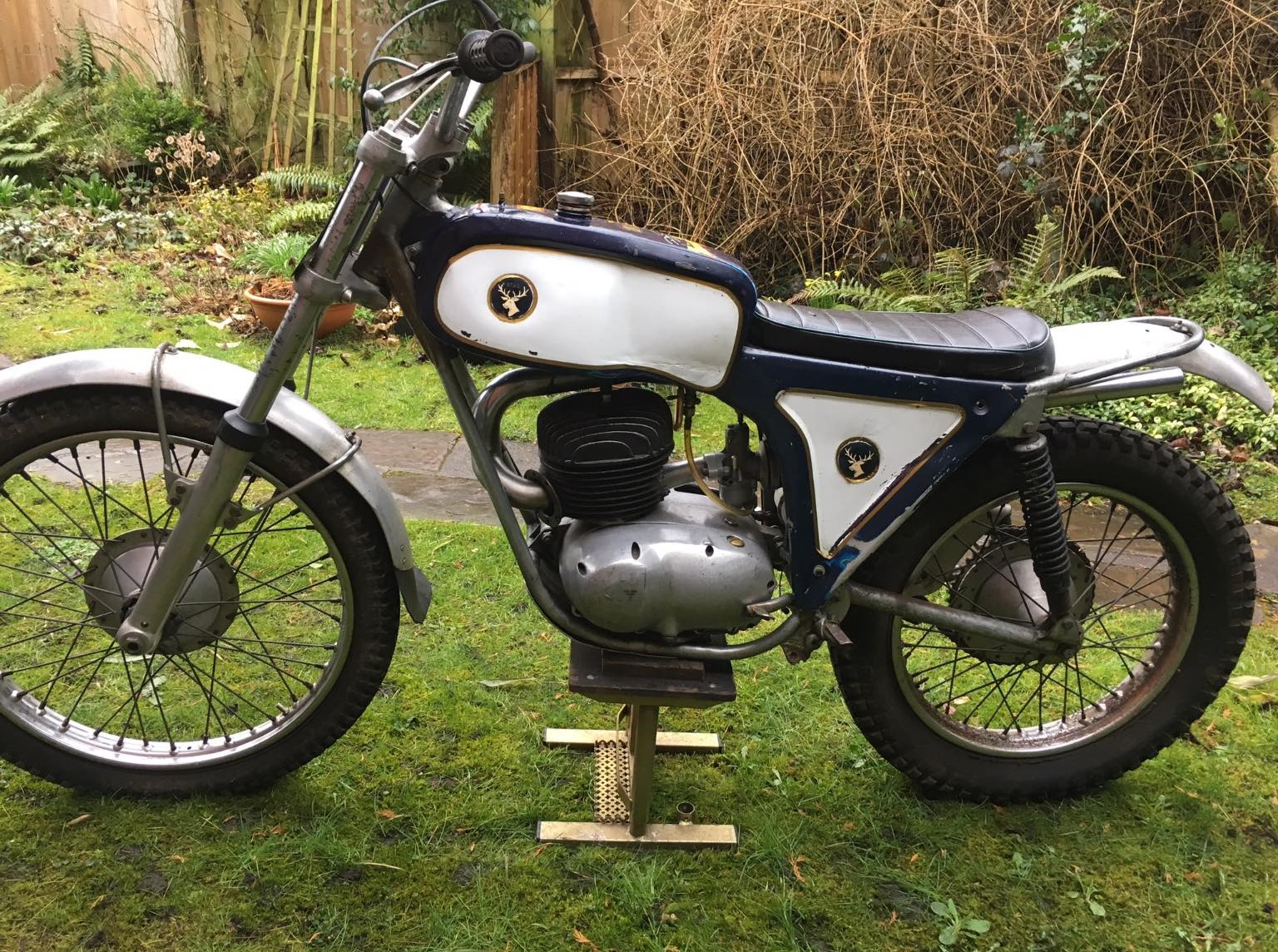
The 1970 Dalesman Puch 125T Trials model fitted with MP front forks and Puch front and rear hubs. (Photo: Bonhams)

Looking to the USA market:

Edmondson was quick to exploit the demand for smaller capacity machines in the United States and was keen to ship complete bikes across the pond, creating an earnings potential for the US dollar. In late 1970 the MX and E models were retailing at $750.

1970 promotion leaflet for the Dalesman Puch range, showing the 125E model offered by the USA importer, Jeckel Industries.

In an article published in Cycle World magazine in November 1970 it stated that the USA market bikes were four speeders and not six: “Unlike the all-Puch 125 featured in our June 1970 issue, the Dalesman’s proprietary Puch engines have only four speeds instead of six. Otherwise, the Dalesman Puch engine is of equal quality, with all-alloy unit construction, chromium bore, and the use of roller and needle bearings for all appropriate engine and transmission parts. Both engines run strong, with little vibration, and start easily, although the basic position of the kick starter is awkward. It rubs on the shins when riding in any position.” [1]

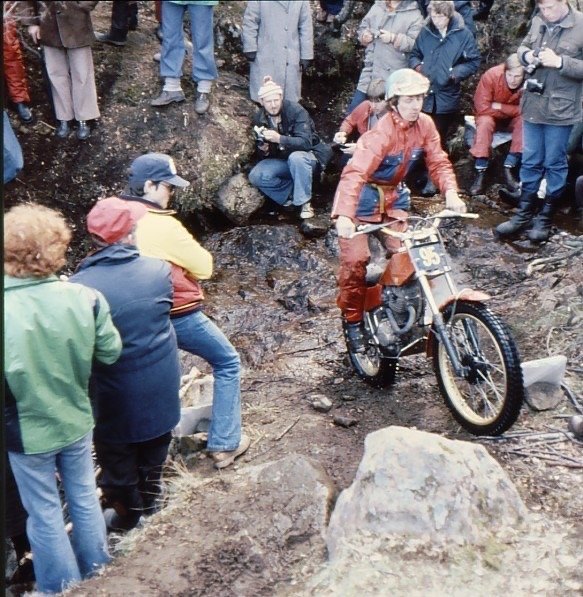
Gordon Jackson from Guisely on a 125 Dalesman Puch 125T at a Yeadon & Guisely trial in 1970.

Edmondson approached Steyr-Daimler-Puch (Great Britain) Ltd, the British subsidiary of the Austrian parent company and UK concessionaires who were based in 211 Lower Parliament Street, Nottingham. It was agreed with their managing director, Peter Bolton to explore further the potential for Edmondson to buy components which included the 124cc, four speed engine used in the M125S model, as well as the rear wheel hub, chain adjusters and for the trials model, front forks, and hub from the lightweight VZ50 moped.

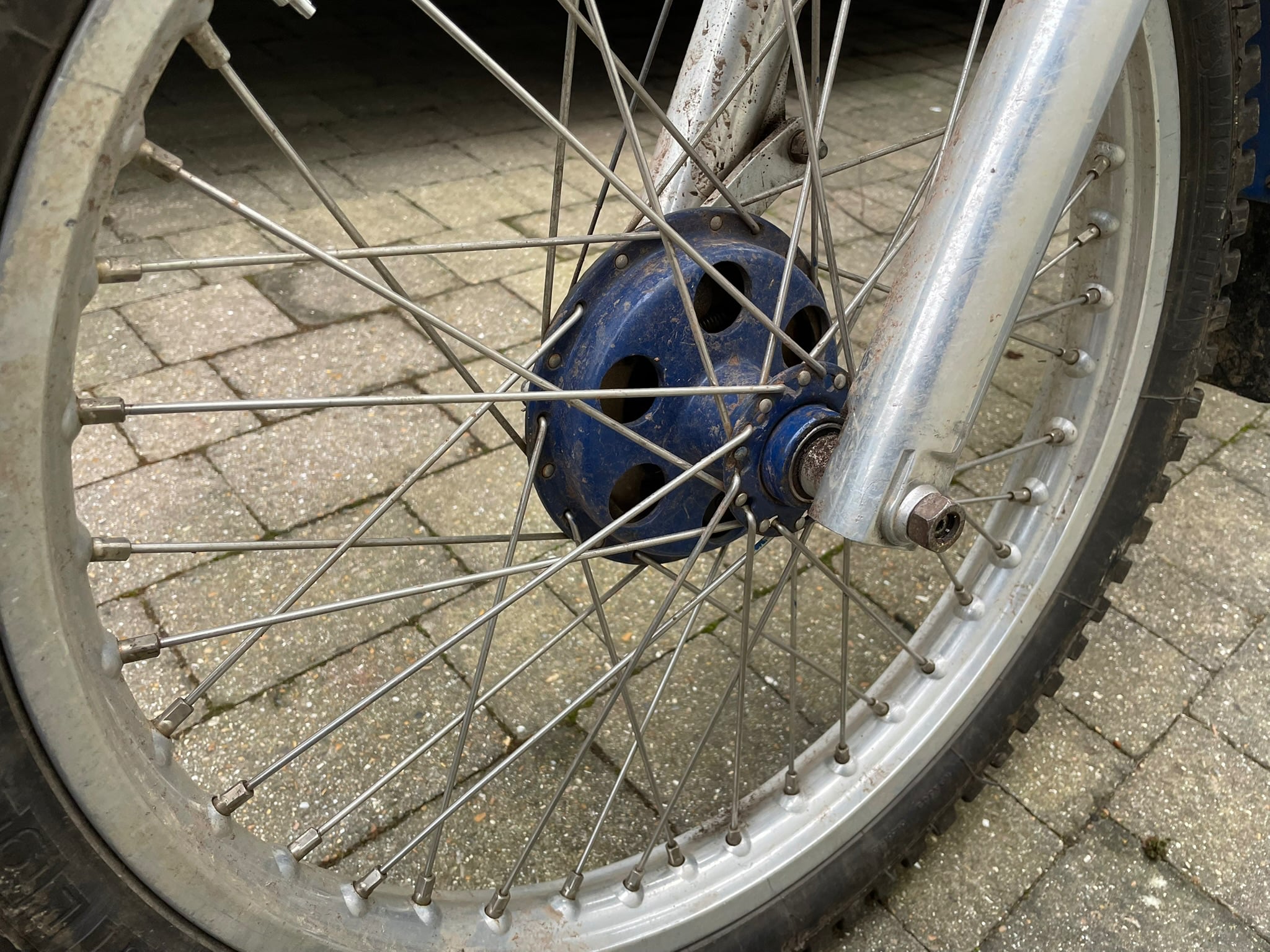
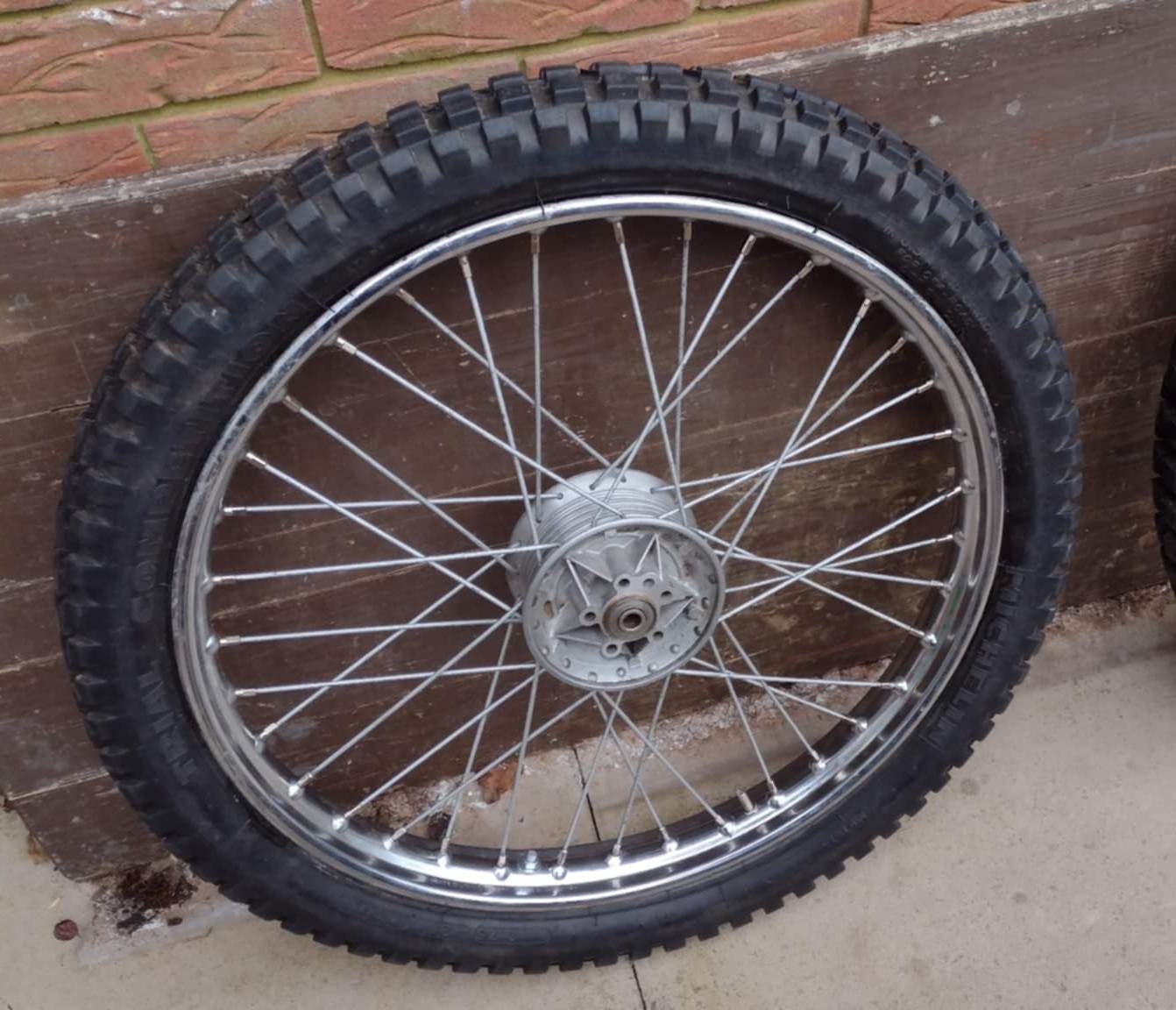
The Dalesman trials model used the front hub assembly from the Puch VZ50 moped, laced to a WM1 Dunlop chromed steel rim, up until 1973. Photo: Alex Fowlie.

Peter Bolton was keen to guide Puch in Edmondson’s direction, as he believed in the potential of the Puch engine in off-road motorcycle sport.

A complete Puch M125S at this time cost £214. Complete engines would be sold direct to Dalesman Competition Products at around £30 per unit.

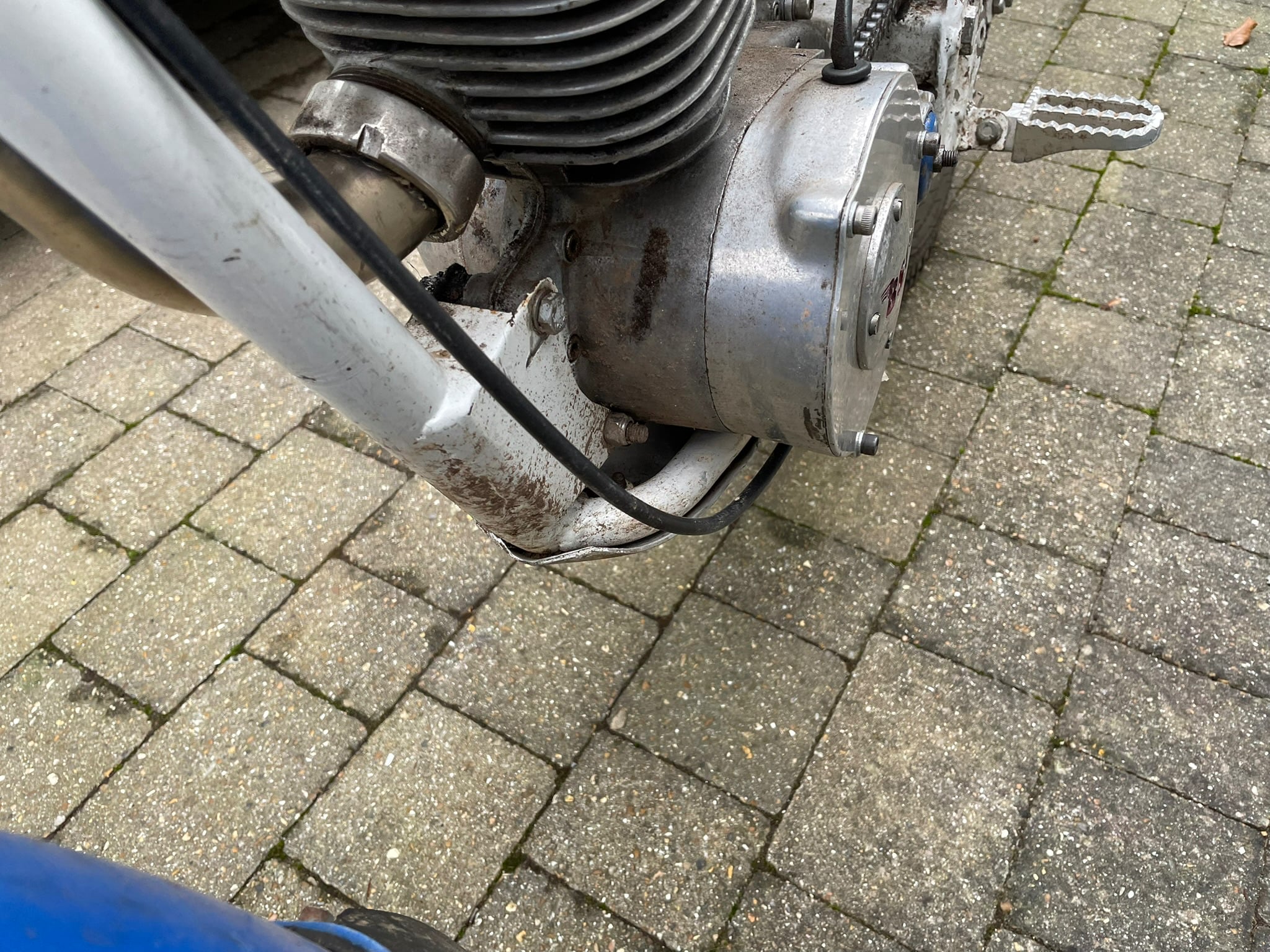
Detail of the 1969/70 four-speed engine showing the Bing carburettor with the offset float as fitted to the early models using the Puch engine.

The Otley machines would be fitted with German BING 24mm carburettors. The finished article would retail for £199 in kit form, to avoid Purchase Tax.

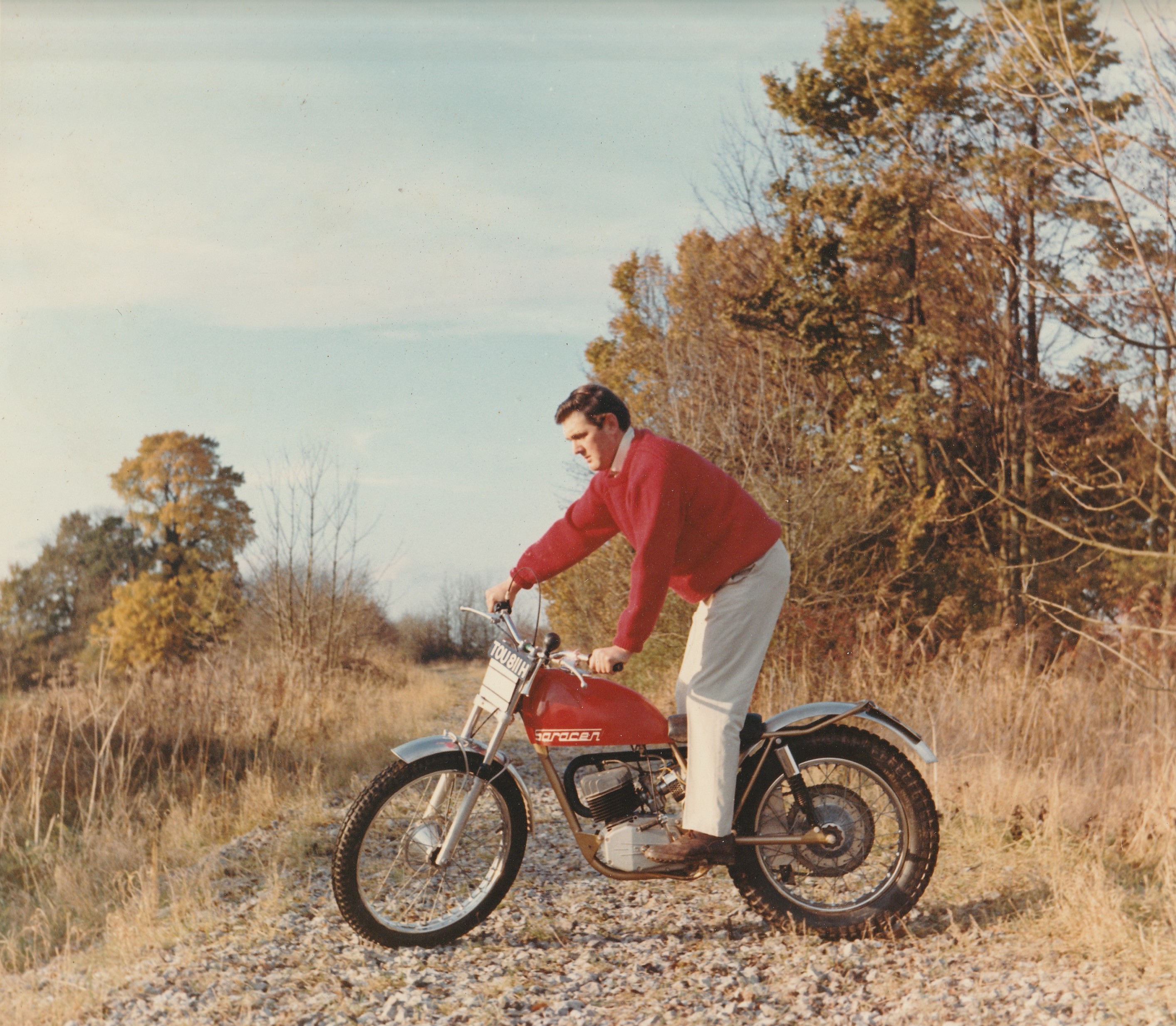
High on the North Yorkshire moors, Peter Edmondson sampling his own work, photographed by Barry Robinson in 1970.

Puch produced higher tuned versions of their 125 engine which were used in the MC125 models, these became popular in European motocross, ISDT and enduros, called the ‘GS’ or Gelande Sport variants.

Puch finer points:

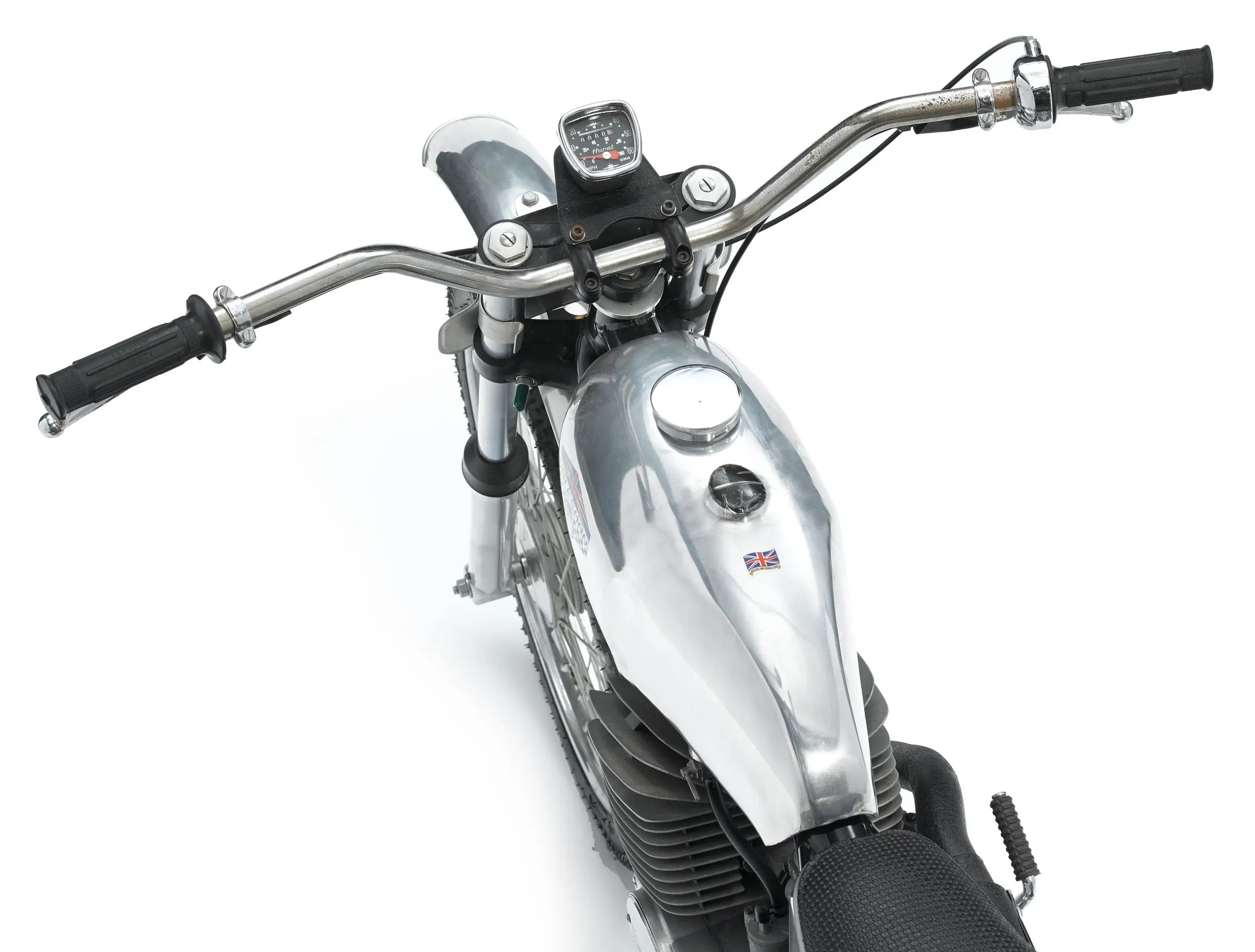
Rider’s eye view of the 1970 Dalesman Puch 125T Trials model. (Photo: Bonhams)

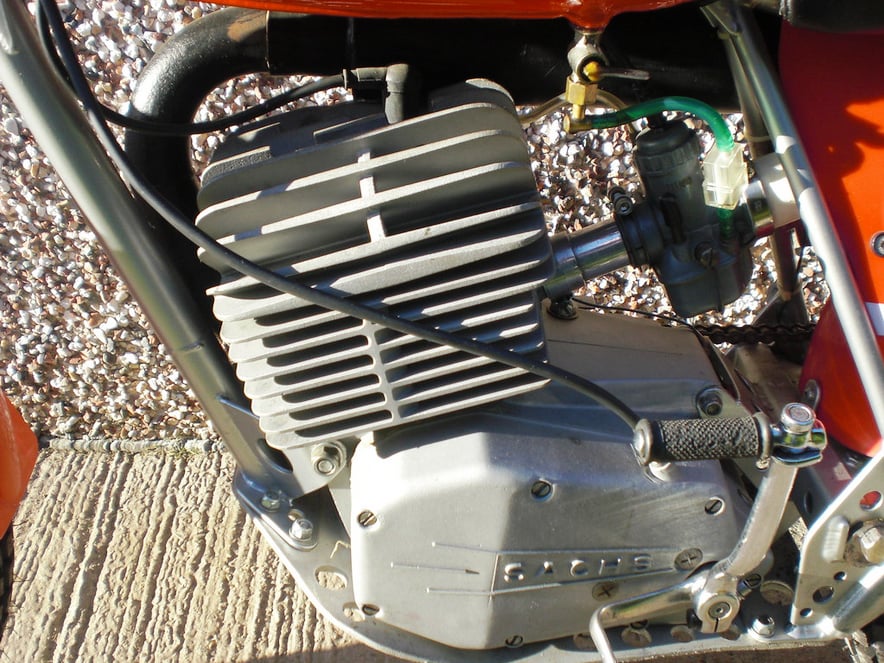
The 125cc Puch crankcases had a small slotted head drain screw located in the centre of the lower surface, so that if the engine became ‘flooded’ by overfuelling, the crankcases could be quickly drained of excess fuel with a screwdriver, to enable a clean re-start. The engine featured an engine speed clutch, mounted on the offside of the crankshaft and used helical gear primary drive, with no primary chain. Ignition was provided by a 6V Bosch AC flywheel generator. Lubrication was by 16:1 two-stroke SAE30 motor oil mixed with the petrol. When the more advanced specialised two-stroke oils became more widely available, the ratio was weakened to 25:1. The sump was heavily finned to aid heat dissipation from both the gearbox and crankcase. The Puch’s generous cylinder head finning was arranged in a sun-burst configuration to assist with heat dissipation.

The 1971 Puch MC125 used a highly tuned six speed version of the Puch engine. Photo: Carlo Orlandi.

In Austria, Viennese trials rider, Walther Luft was dominating the national scene there with his factory supported 169cc Puch which he had been developing himself. He would compete in the 1970 Scottish Six Days Trial taking the ‘Edinburgh Trophy’ for the Best Foreign Rider award. Yet another boost for the Puch power plant. It was in 1969 that Greeves having lost their supply of Villiers engines would agree terms to buy in the 169cc six speed units for their new ‘Pathfinder’ model.

Austrian, Peter Bous helps get his friend, Walther Luft’s 169cc Puch scrutineered at the 1970 Scottish Six Days. The official on the left is David Miller, holding the machine is Peter Bous and on the right the official is Ian Baird, son of the SSDT Clerk of the Course, George Baird. (Photo: Trial.AT)

The Puch M125 and M125S (with more lighting and the model sold in the UK) road models were manufactured by Steyr-Daimler-Puch Aktuelle Gesellschaft at their factory in Graz, Lower Austria from 1966 until 1971 and were marketed in the USA as the ‘Sears 125’ by Sears, Roebuck and Company who ran a mail-order retail business. Total production of all M125 models was 10,769. The whole machine was well built with high quality components. The engine was both robust and the build quality high.

Dalesman chassis:

Photo: Alex Fowlie.

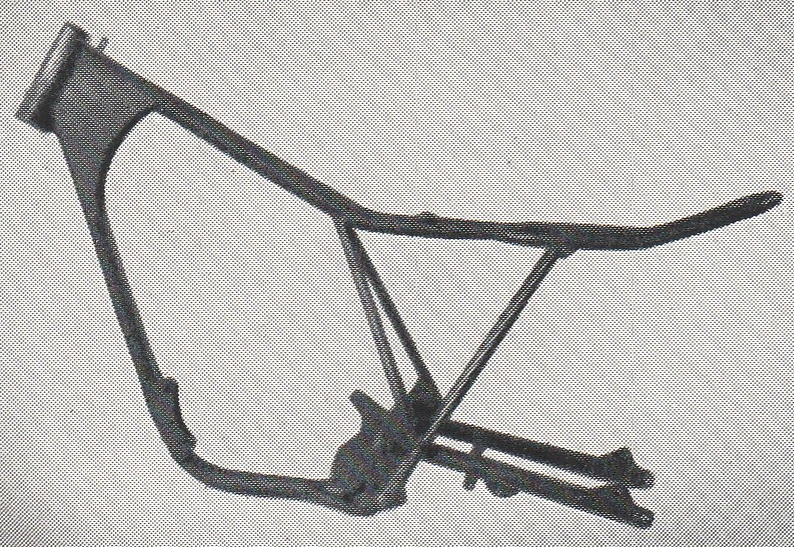
Engines don’t make a competition motorcycle alone, a chassis is required and one that stands up to competition use. Manufacture of the Dalesman frame and swinging arm was farmed out to specialist Jim Lee who was the sponsor of seven times TT winner, Mick Grant.

Seven times TT winner, Mick Grant was sponsored by Jim Lee who made the Dalesman frames. Grant’s helmet design being the initials ‘JL’ seen here on the works Kawasaki at Scarborough races. Photo: Barry Robinson with permission.

Mick Grant had been enrolled in an academic course at a local college, but became frustrated as he wanted funds to go racing. So being a resourceful chap, he took various labouring type jobs, even driving a fork-lift truck to earn some money. Jim Lee approached Mick and offered him a job and also built Mick bikes to race.

Mick Grant:I was employed to help Jim make frames as the Dalesman job had taken off. I am led to believe the early frames were brazed, but the ones I did were all TIG welded. A fair bit of fabrication work was carried out at Armley prison at that time. Jim first built me a BSA Gold Star, then Yamaha and then the Norton Commando to race. I must admit that although I made frames for the Dalesman, I didn’t actually rate them highly as a trials bike, it was up against some serious Spanish competition at the time.”

The frames were a full cradle, duplex design made with Reynolds ‘531’ a manganese–molybdenum, medium-carbon steel tubing. This accomodated the Puch engine’s central exhaust port. Whilst these were fairly well-made frames, there had been several instances of some frames fracturing just below the headstock at stress points created where the two down tubes joined the headstock tube. This was overcome by strengthening the headstock area on later frames.

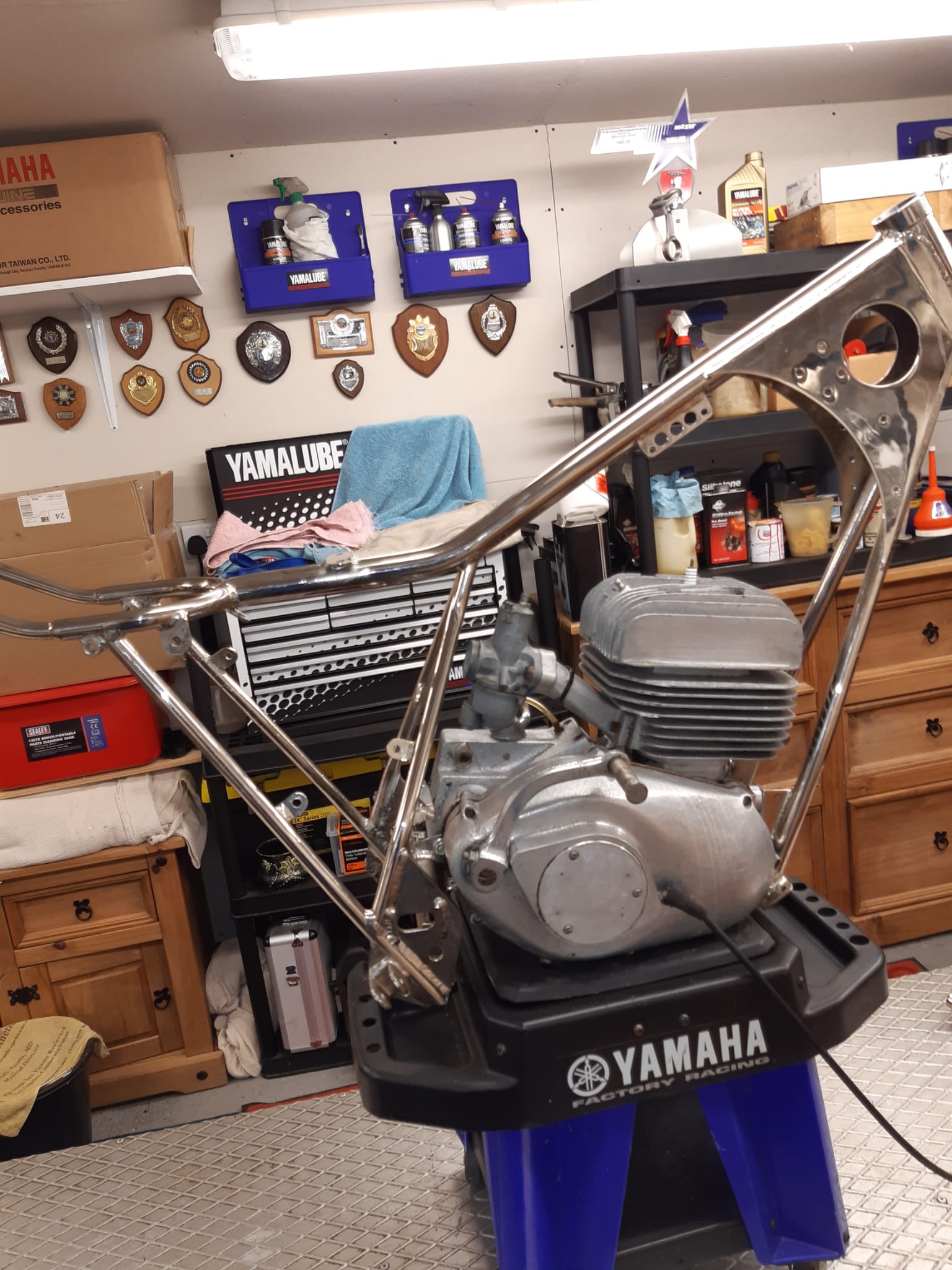
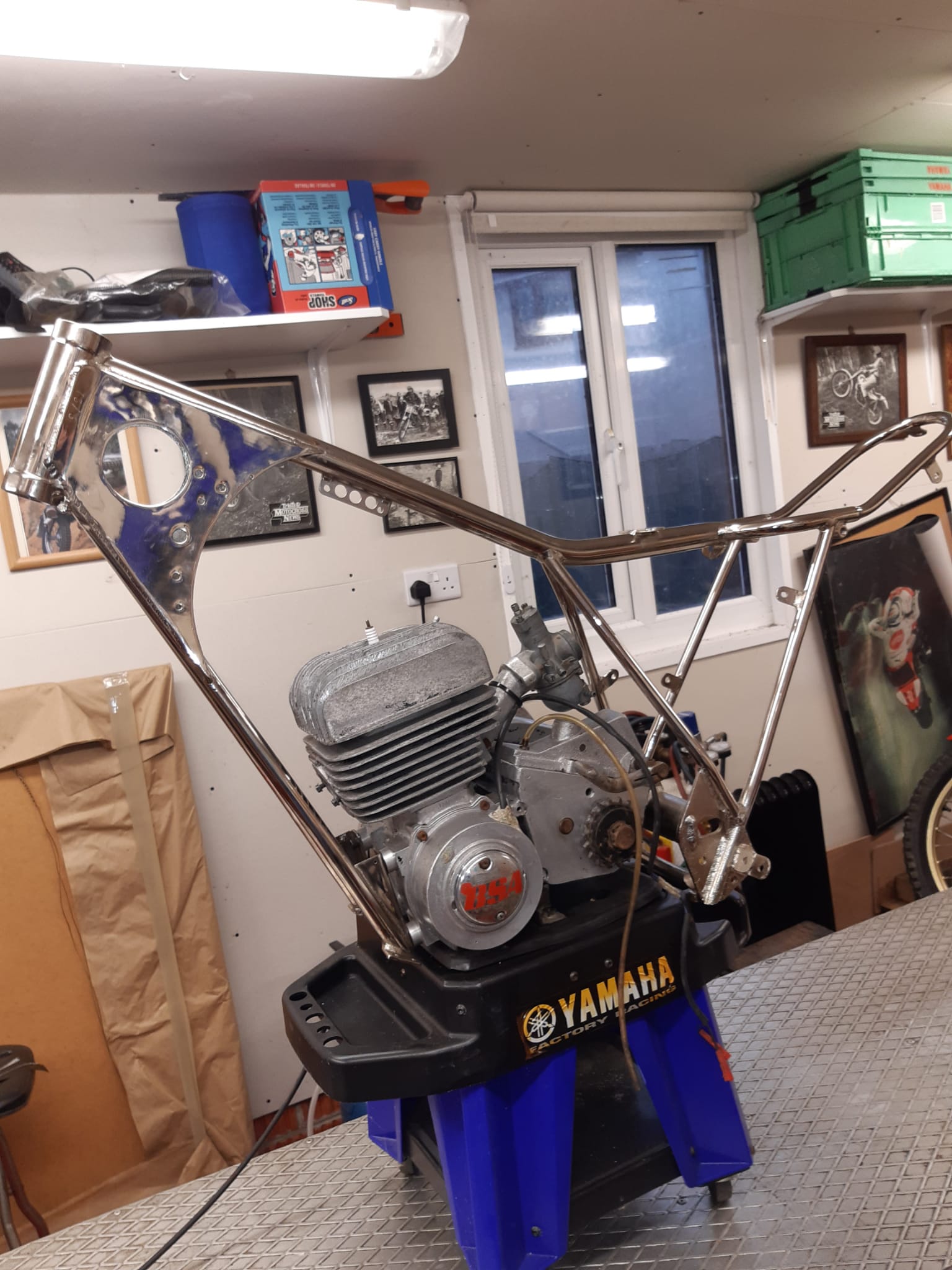
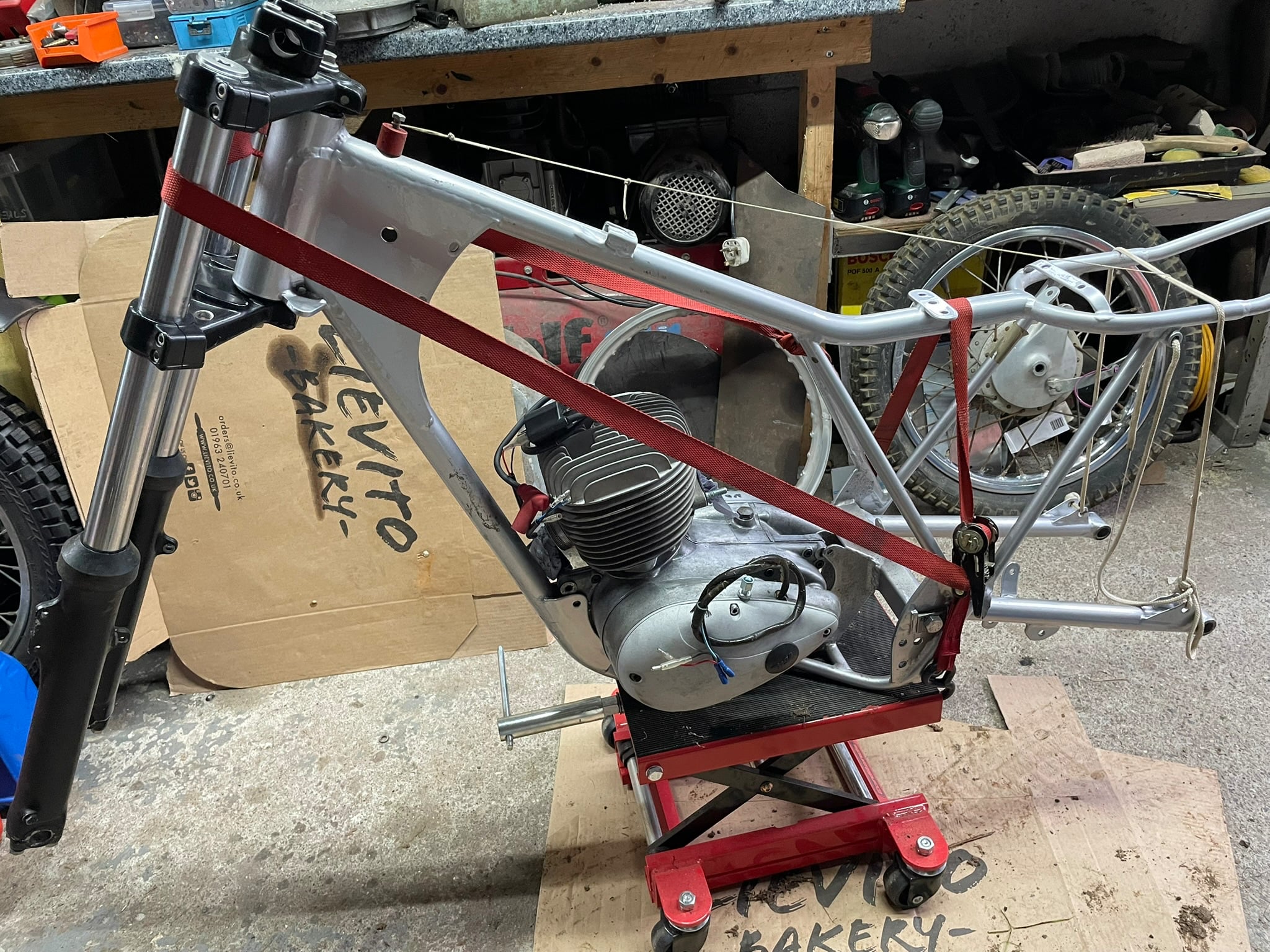
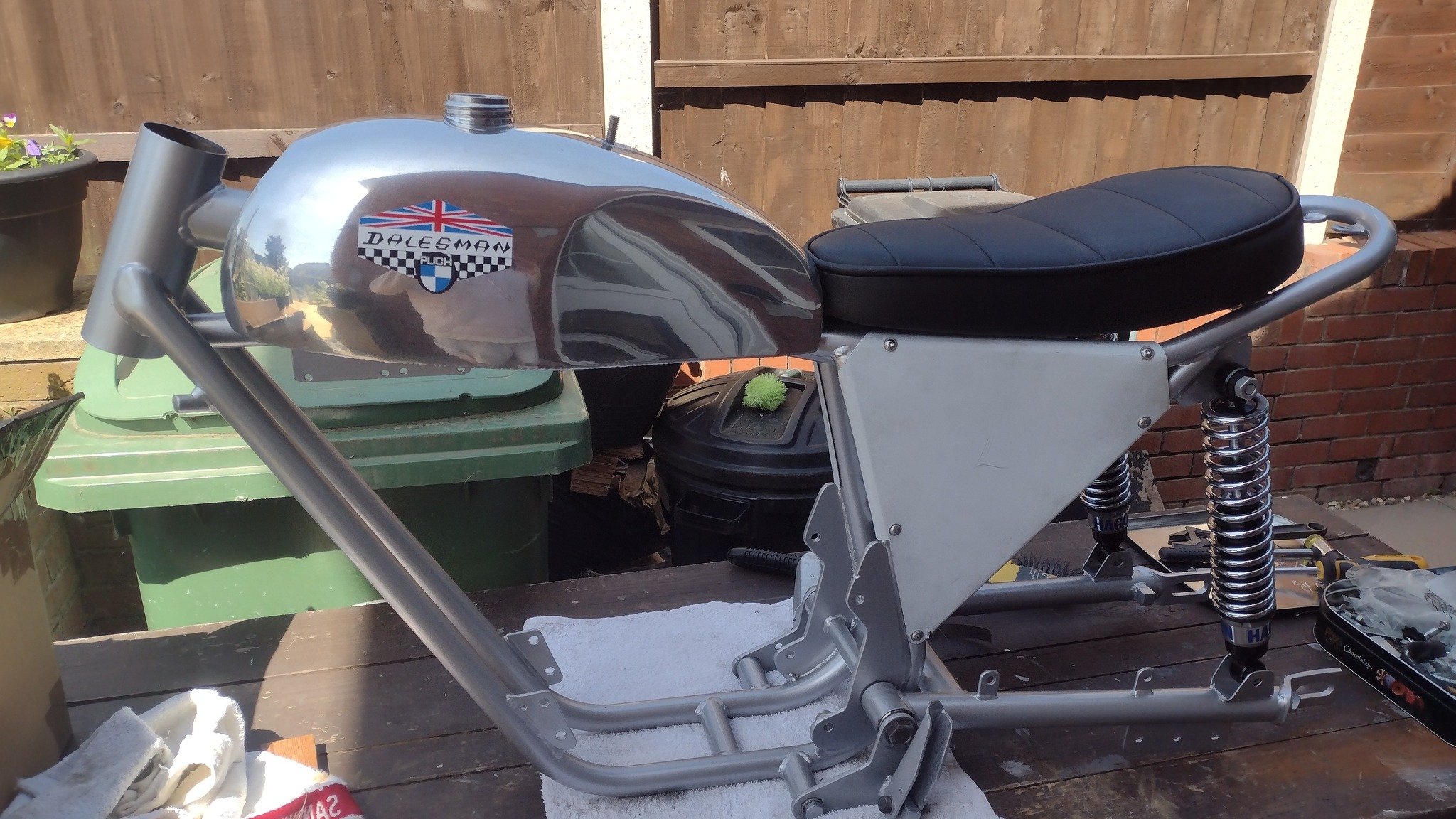
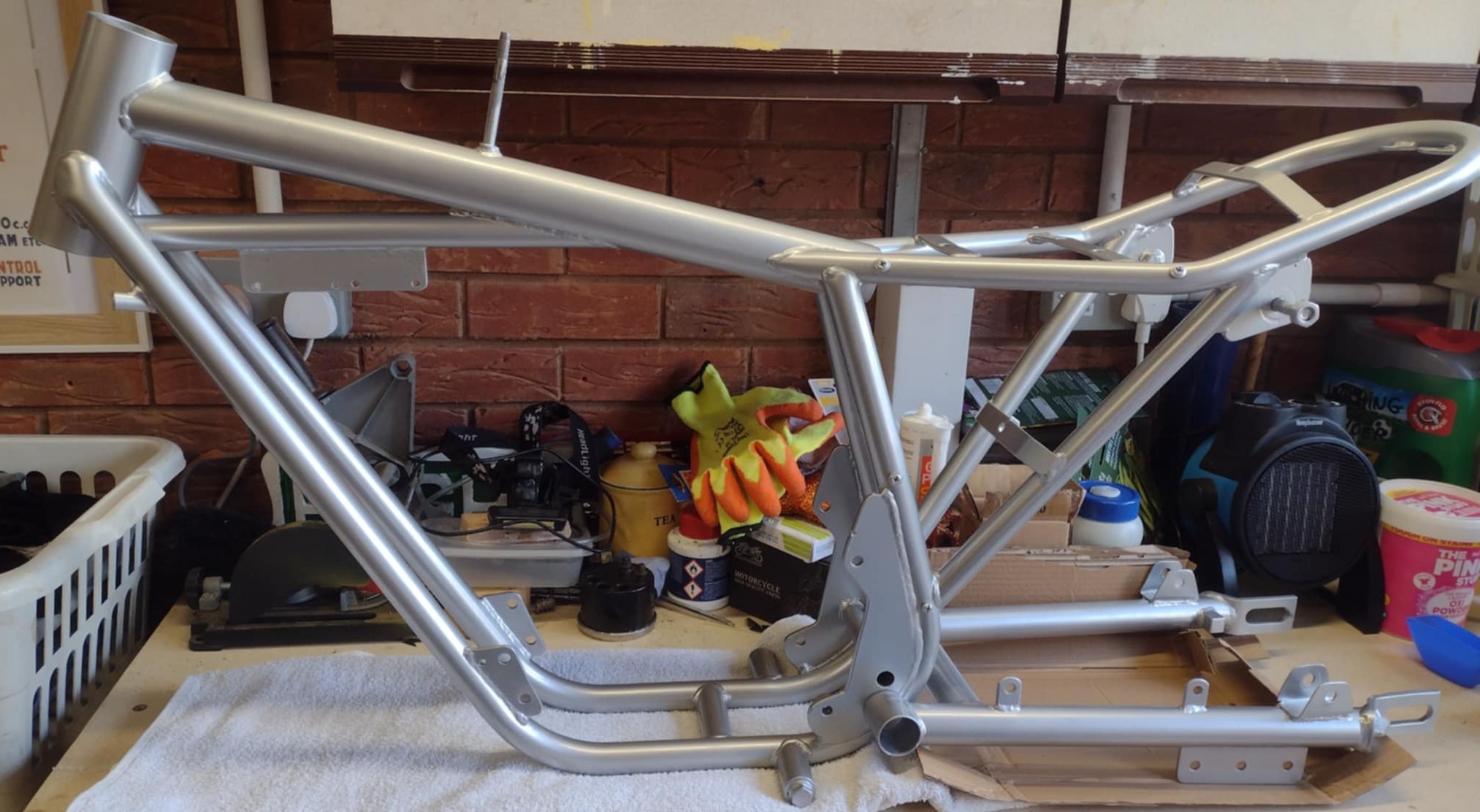
Detail of the second series Dalesman Puch chassis with the straight tube style rear subframe. Note the headstock area which shows part of the large diameter top tube and smaller brace tube, the twin tube full cradle can be seen clearly. This is current owner, Alex Fowlie’s machine undergoing a complete restoration. Photo: Alex Fowlie.

Initially, two different frames were made with some minor differences, the Dalesman Puch trials version took advantage of the growing demand for the smaller capacity machines in trials, while the Dalesman Puch scrambles variant was a good seller in the growing ‘Schoolboy Scrambles’ market which had become popular in Britain. The original trials frame had a rear-end portion with a swan neck shape, compared to the scrambles frame which was much more straight.

John Seward regularly featured in the weekly motorcycle press in 1969 when scrambling his 125cc Dalesman Puch, the REH front forks and hub, underslung exhaust are clearly shown in this photo. Photo credit: Motor Cycle, October 1969 (Paper closed 1983)

The Motor Cycle, October 1969 reported that fourteen year old John Seward from Chertsey in Surrey, on a 125MX Dalesman Puch had won the schoolboy scrambles Senior title at Horley near Banbury, Oxfordshire. This was the first ever national schoolboy scrambles championship. Previously only BSA Bantam powered machines had been used for the fledgling youth motocross in the UK. [4]

Ace trials rider, Nigel Birkett also raced a 125 Dalesman in local scrambles in Cumbria early in his riding career.

Well known trials rider, Cumbrian Nigel Birkett was also a talented scrambles rider in his youth, seen here racing a Dalesman Puch at a Bootle Scrambles Club event.

Former Dalesman employee Nick Procter takes up the story:

My father and I frequently visited Pete Edmondson on a regular basis in the 1960s at his Otley motor cycle premises. Dad used to purchase competition bikes from him and became close friends along with Peter Gaunt. Pete Gaunt was building his little Suzuki trials bikes and Dad purchased two, one for my brother Tim and one for me. Because Peter Gaunt was having success with his Gaunt Suzukis, Pete Edmondson thought, if he can do it, I can. There was always a little rivalry between the two. ‘Eddy’ came across a Puch M125 and found it to be an interesting project and started hacking it about in his home garage in late 1967, early 1968 and built a trials bike there. He was friendly with Paul England who had been a works supported Triumph rider and he convinced Paul to ride it in competition. As he competed on it, the bike got altered for the better. Pete Eddy got more and more convinced he could produce and sell these machines and in late 1968 started to go into small production with them on the upper floor of his shop on Boroughgate, Otley. There was just Pete to start with and his shop assistant John Patterson at that time. Eddy had produced a handful of bikes when I joined him in June 1969, John Patterson had just left Pete’s employment at that time.

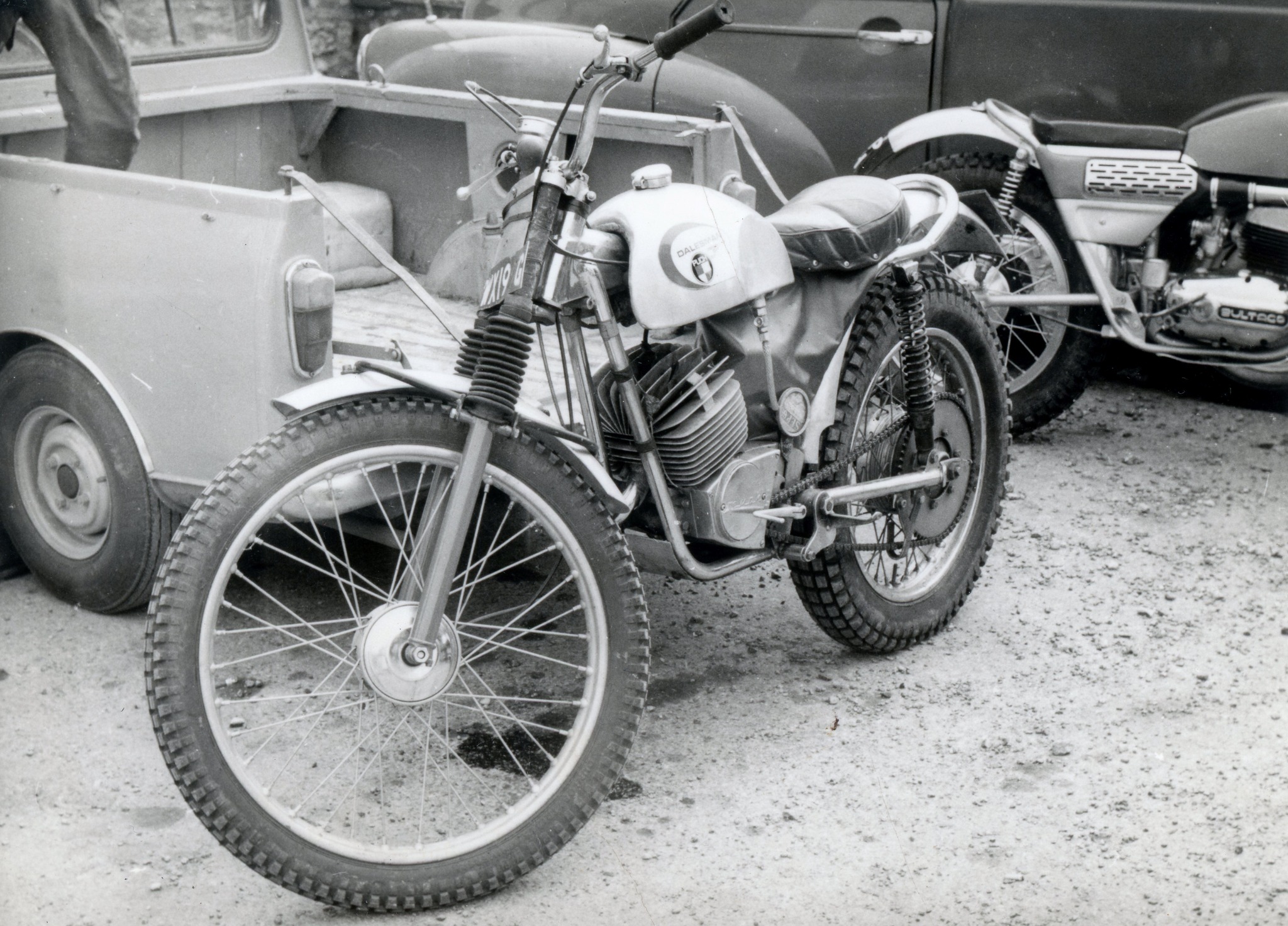
Detail of an early 125 Dalesman Puch, WWX19G which was Scott Ellis’s works bike on loan from the factory to West Yorkshire motorcycle racer, Robin Fitton in 1969. Fitton used the Dalesman over the winter months to keep fit for the racing season. Tragically he was killed the following year while practicing at the Nurburgring for the 1970 West German GP. This photo shows the spindly Puch front forks and small moped derived hub. Photo: Barry Robinson with permission.

My first week working for Pete was quite interesting, as his wife Kath was heavily pregnant with Paul, and Pete told me he was going to Austria to the Steyr-Daimler-Puch factory to meet Count Otto Von Herberstein who lived in a castle near Graz and had a huge collection of off-road bikes and a financial interest in Steyr-Daimler-Puch, to arrange a deal to supply engines, front forks, and hubs. He left me with the shop to run straight from leaving school at fifteen years old. When he got back, he advised me he had secured a deal with Puch.

Dunfermline clubman and club official, Jim Honeyman trying out his son John’s 1970 model Dalesman Puch (NKW248H) in 1975. Photo: John Honeyman, Markinch, Fife.

Soon after, he had Terry Wright riding for him who was great at advising on modifications to the bike. Fabricator, Jim Lee at Birstall Smithies, Batley near Leeds, was building bike frames with Mick Grant who worked for him at that time. R.A. Peatey and Sons in Yeadon were powder coating the frames in a green finish. Early bikes also had the D type air cleaners that were fitted to the Triumph Cub. Later Puch models had alloy air box made by Jim Anderson at Baildon, the same chap also made the fuel tanks for the Gaunt Jawa.”

Ray Sayer from Bellerby in North Yorkshire rode the works Dalesman Puch six-speeder (BWW80H) in the 1970 Scott Trial – Photo: Malcolm Carling by permission of Nick Haskell.

As soon as we got the bikes built, Pete was searching for competitive riders up and down the country and supplied them with bikes to evaluate. Three notable riders were Ray Sayer, Scott Ellis, and the up-and-coming Chris Milner.”

Scott Ellis’s very early works four-speeder Dalesman Puch (WWX19G), which had a nickle plated frame, captured at the 1969 Bemrose Trial by Don Dudley, permission from Mark Weston.

In December 1969, the number of bikes being produced outgrew the current premises and we had to move to the upper floor unit in Ashfield works Otley.”

The former retail business of Peter Edmondson was sold to Ray Dell Motorcycles – Photo Nick Procter.

Pete sold the retail motorcycle business to Ray Dell of Pudsey. On moving to Ashfield, we had to employ more staff and something to assure the bank manager that the business was viable, so Pete in his usual way employed the bank manager’s son, David Brown as company accountant.

A great character from the sport of trials, Stuart ‘Stelvio’ Hyslop was Chief Storeman at Dalesman Products. (Photo courtesy of his grand-daughter)

Pete took on Dave Carr and John Scarry, local trials riders to start putting the bikes together in kit form fashion, so from the two of us we were now five. He then found we needed a stock controller and Stuart ‘Stelvio’ Hyslop joined in parts control. We also had the local Police Sergeant working for us part time, John Hartley who collected parts and generally kept a security eye on us.”

Pete Edmondson with Joel Robert in 1969. (Photo courtesy of Derrick Edmondson)

Now we were also producing scrambles bikes in 125cc form and opportunities were now building. Steyr-Daimler Puch brought in Joel Robert to test the scrambler in Belgium and Pete supplied a few over there.”

Part completed Dalesman trials models at the Otley works in 1971. The machines were offered in ‘Kit’ form to save on Purchase Tax. (Photo: Nick Procter)

Ron Jeckel of Jeckel industries in the USA ordered a batch of fifty, if I remember correctly, I do remember filling a container with trials and scramble bikes ready for dispatch.

Motocross champion, Joel Robert helped develop the 125MX Dalesman. This tank decal was the very first style used on all Dalesman in 1968-69.

How we managed to build all these bikes in these upper floor premises is beyond me. We also produced three bikes for the ISDT in that year too.

Parts were collected and produced from all areas of the country. All the Puch parts, engines, front forks, wheel hubs from Nottingham, Dunlop Tyres from Fort Dunlop Birmingham, the handlebars, levers, air filters, alloy mudguards, seats and the fuel tanks, all came from Wassell’s in Burntwood, Lichfield. The Robin E. Humphries ‘REH’ front forks and Girling rear shocks came from Birmingham. Boy, did we have fun collecting bike parts.”

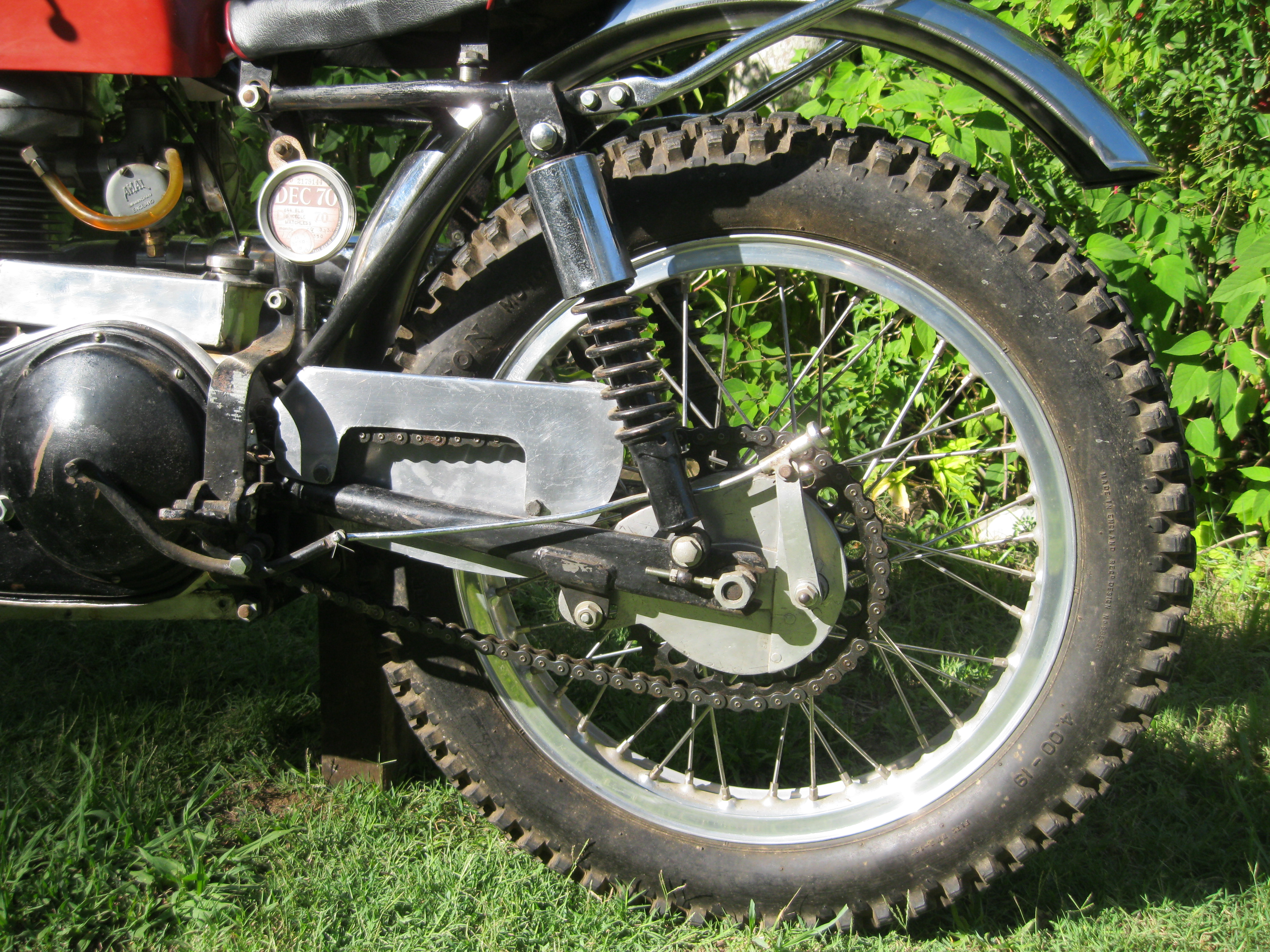
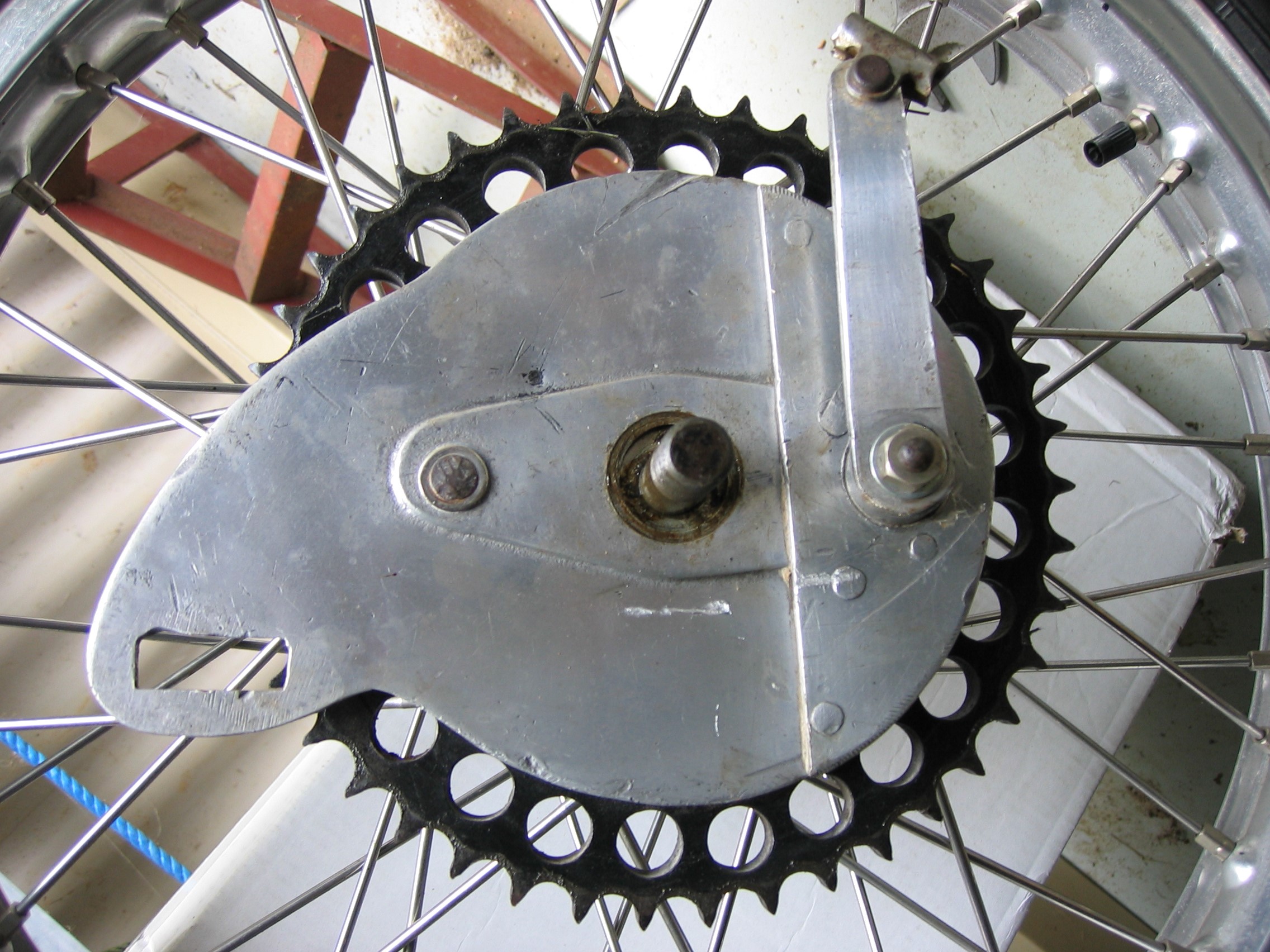
Rear wheel detail showing the Puch hub which was quickly detachable with six drive pegs which mated with the rubber inserted ‘cush drive’. Photo: Alex Fowlie.

One of the most interesting was the exhaust systems which somehow Pete had done a deal with HM Prison Leeds at Armley in Leeds to have them made by the inmates. Pete knew just about everybody and had contacts all over the place. One of the worst days l had was when Pete told David Brown and I to get in the van and go and retrieve the bikes from Scott Ellis and Chris Milner, it wasn’t pleasant as Chris was a friend of mine and I don’t think they were given much notice. One highlight was when Terry Wright finished twenty-second and second best newcomer in the SSDT and followed up by winning the Manx Two Day Trial in 1970, this was Dalesman’s one and only national trials win, however Terry did have some centre wins on the Dalesman as well.

Dave Brown and I left Dalesman in 1971 but have good memories of our time there.”

Terry Wright’s Manx Two Day Trial win in 1970 (Researched by Nigel Megson):

Held on Saturday 29th August and Sunday 30th August 1970, the Manx Two Day trial boasted an entry of two hundred and one starters and was over two circular routes that started at 8.15am from the famous TT Grandstand. The Saturday route traversed the south of the Island and had thirty-four sections  and the Sunday route went over the North of the island and also had the same number of sections.

On paper, the favourite to win was Montesa’s Gordon Farley who had travelled all the way from Kent and who would be riding his works supported 247 Cota. He would be up against experts from West and South Yorkshire, many of whom were riding ‘mini’ 125cc bikes. Riding numbers probably favoured the top runners, who were starting from the middle of the field as the riding order was reversed for the Sunday.

The riders lined up as follows: Dave Thorpe on the 250cc OSSA ‘Pennine’ was riding number 68; Terry Wright on his Dalesman Puch was riding number 92; Gordon Farley with number 126; Gerald Rathmell on the works 125cc Sprite with number 142; Jim Sandiford on a 250 Bultaco 66; Paul England on a 125cc Dalesman Puch was number 160; a young Nick Jefferies was number 75 on the ex-Gordon Farley factory Triumph Tiger Cub, next to the popular Stan Cordingley on a 250cc Bultaco, who finished in 8th place on 24 marks, riding number 76.

On the Saturday, Dave Thorpe had a good steady ride losing three marks, Terry Wright on his Dalesman lost five on the slippery hill at ‘Billown’ and Gordon Farley finished up losing nine including, in what for him, must have been a disastrous day, with a maximum at ‘Poylvaaish’ and several dabs at the Arragon River.

On the Sunday, Dave Thorpe went pretty much to pieces losing thirteen marks whilst Gordon Farley had the best ride of the day losing four marks. Terry Wright suffered a five on the vicious sections at ‘Tholt-Y-Wil’, but he did retain his composure and nerve for the rest of the event including the ultra steep rock climb at Sartfell Park to take the win.

The final results of the 1970 Manx Two-Day Trial were:

1st – Terry Wright (125cc Dalesman) – 10 marks

2nd – Gordon Farley (250cc Montesa) – 13 marks

3rd – Dave Thorpe (250cc Ossa) – 16 marks

4th – Paul England (125cc Dalesman) – 17 marks

5th – Gerald Rathmell (125cc Sprite) – 20 marks

6th – Jim Sandiford (250cc Bultaco) – 22 marks

The team prize went to the Wetherby ‘A’ team which comprised Terry Wright, Gerald Rathmell and John ‘Killer’ Kendrew (Dalesman Puch) who finished in 9th place on 24 marks.

When asked about Dalesman’s Manx win, Pete Edmondson confirmed that he gave Terry Wright £10, being his bonus for winning a national trial.

Scott Ellis on Dalesman:

My day job, in those days, was as an engineer with BMC, having been there since I was sixteen, and I had been riding trials for BSAs and Triumph. Peter Edmondson approached me about a Puch engined bike he had built that he needed some development work on. The first Dalesman I rode didn’t handle too well, so I suggested altering the steering angle and I ended up with WWX19G and we got it handling and riding very well indeed. The frame was strong and mine was nickle plated and it was on this trials bike that I won the Welsh Three Day Trial in 1969. However it was fitted with a special engine sent over from Puch. It was quite quick as I recall. I had a good relationship with SDP at Nottingham and I visited the factory at Graz where Walther Luft had been doing a lot of work with the Puch factory to develop a trials bike. It was however a challenge to convince the Puch engineers as to how a trials engine should perform, they seemed to be more interested and comfortable in developing motocross and enduro engines. I do recall that they came and collected my bike and that of Chris Milner all of a sudden. I went on to further develop the Pathfinder for Greeves which of course used the 169cc six speeder engine by Puch.”

Specification:

The first model Dalesman Puch 125 engine specification was as follows:

Displacement: 123.5cc; Bore and stroke: 55mm x 52mm, with alloy cylinder head and cylinder with a chrome bore; Max output: 12 bhp @ 7000 rpm; Max torque: 9.1 ft/lb @ 6700 rpm; Compression ratio: 10:1; Transmission: 4-speed. Both the trials and scrambles version used a BING 24mm carburettor with a centralised float (some of the works development machines used an offset float chamber). The Dalesman trials version weighed in at 162 pounds.

With an encouraging win at the Welsh Three Day Trial in 1969 by Scott Ellis, a selection event for the ISDT, this spurred on Edmondson to built scrambles and enduro versions.

Dealer network:

Sales through 1969 were brisk and a small network of dealers was built up which included: Allan Jefferies in Shipley; Terry Silvester in Holmfirth; Athol Motor Cycles in Pitlochry, Perthshire the Scottish Distributors; C & M Shutt in Rossendale; Ray Dell in Pudsey; John Ward Garages, Nottingham; R.G. Callow in Newport, Monmouthshire; H. Lee in Cradley Heath; Norman Crooks at Northallerton; Peter Wagstaffe of Wharfe Motorcycles in Whitchurch, Shropshire, to name but a few.

Trevor Hay from Edinburgh, testing a brand new Dalesman Puch, fitted with the MP front forks, for the Scottish Clubman magazine. The machine was supplied for the test by Athol Motor Cycles, Manse Road, Pitlochry in 1971.

Promotion of the brand:

Pete Edmondson supplied a brand new, road registered Dalesman Puch for the SACU President, Jim Birrell who would use the bike to steward the Scottish Six Days Trial in 1969. This gave some publicity for the Otley product as it would be seen daily as transport between sections. The bike had in fact already been pre-sold to a local Yorkshire farmer as a demonstrator.

The trials model and scrambler had slightly different frame configurations, the trials version had 50.5 inches wheelbase with the scrambler two inches longer and 1.5 inches lower, which was extended later by one inch. The scrambles version had a large diameter top tube at this time.

Journalist, Peter Howdle reported in his ‘Feet Up’ column in Motor Cycle News of December 10, 1969 that Peter Edmondson had announced that a Puch six speed 125 version would be made available only for the American market. The specification included a motocross type air filter, shielded by plastic side panels, folding footrests and a high-level exhaust system with a detachable silencer. Edmondson also announced the intention that Dalesman would field two teams at the 1970 ISDT in Spain. [3]

The 1969 ISDT Dalesman Puchs:

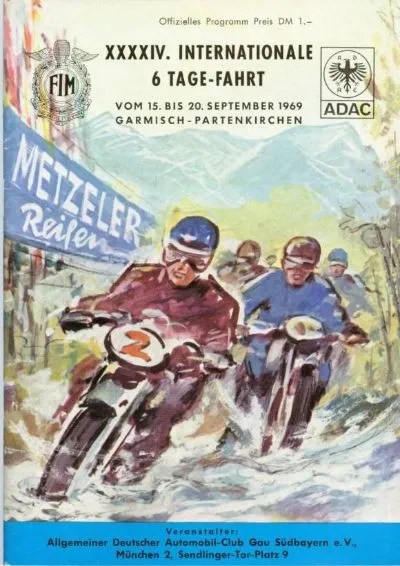
In 1969, the International Six Days Trial would be held at Garmisch-Partenkirchen in Bavaria between the 15 – 20th September. Dalesman had built three special hybrids machines for the event, this would lead to the firm making a bespoke ‘enduro’ model the following year with the model name 125E. The three specials had twenty-inch front wheel rims using ‘satinised’ Dunlop rims, eighteen-inch rear wheels with WM2 chromed steel Dunlop rims, REH front forks and hubs, a motocross style seat, a motocross style still air box with paper element air filter and Wico-Pacy head and tail-lights powered by the flywheel generator system from the M125S Puch road machine. The fuel tank was fixed by two rubber bosses held in place by two frame fixings, these slotted into a channel on each of the inner face of the alloy tank, near the front of the tank and a leather strap holding everything down at the rear, this was to aid speedy removal of the tank to access the coil. Normally the Dalesman tank was secured by a central bolt fixing direct to the top tube. They also had a centre stand so that either wheel could be quickly removed and ‘Tommy-Bars’ could be deployed to both wheel spindles. The Puch rear hub was a quickly detachable type with no requirement to disturb the drive chain when a puncture required repair. The bikes had high level motocross style exhaust systems which were fitted to the nearside of the machines. The frames were those for the scrambles Dalesman finished in a leaf green enamel. The ISDT machines were to be issued to Scott Ellis, although he eventually rode a Puch from the factory as a privateer, the other two were issued to the Scottish ACU for the Great Britain Vase B Team. These two bikes destinged for Scotland were financed by SACU President, haulage contractor, Jim Birrell from Markinch, Fife and ridden in the event by Ernie Page and Ian Millar. Page registered the two SACU bikes as PSG564H (Millar) and PSG565H (Page), through his Edinburgh motorcycle shop, Page Motors Ltd. Bonnyrigg trials rider, Ian Robertson assisted Ernie Page by offering to run the new Dalesman in for him. Robertson rode Page’s machine from Edinburgh, down the A7 to Galashiels in the Borders and back again. However it was soon discovered that the bike’s gearing was way too tall, so larger rear sprockets were called for. The two bikes were sold off after the event.

Enduro:

By 1972, Dalesman had made inroads into the enduro market and had enlisted Mick Wilkinson who had been reasonably successful in trials with the Greeves Pathfinder using the 169cc Puch motor and by now was riding Ossa for Peter Fletcher of Ossa Moto UK in trials.

Mick Wilkinson:I received a very special Dalesman which had been put together by Alec Wright of Competition Developments, it used many high quality parts and it was a real flyer. It was a 125 using the Sachs engine, but there wasn’t another one like it, I can’t remember what the registration number was, but I took it to the ISDT at Czechoslovakia after testing it at home and at Bordon for the selection tests. It was very quick, but I hadn’t ridden it fast on the open roads. In the ISDT on the first day, we came onto a road section and I was travelling quickly, I hit a small pothole with the front wheel and the bike went into a massive tank slapper. I held on trying to ride through it, but it just wouldn’t stop slewing from lock to lock, I couldn’t control it and I hit the deck still holding the handlebars, but it wrecked the bike and that was the end of the Dalesman and my ISDT that year. The following year the ISDT was in America and I stayed with Ron Jeckel who was now fully in charge of Dalesman, that was a more conventional Dalesman I rode still using the Sachs engine, but it was the 1972 bike that I really rated, I came home in second place in the Brecons Enduro that year as well.”

Output:

Production statistics were not recorded, but it is believed that approximately 2000 motorcycles were manufactured over the six-year period that the Dalesman was in production. Three quarters of these were exported to the United States through the importer, Jeckel Industries. The remainder were sold to home and mainland European markets. In the early days, around six were exported to Joel Robert in Belgium as the 125cc European championship was gaining popularity, some were re- branded as ‘JRD’ which stood for Joel Robert Developments.

The JRD branded Dalesman in 1969, as supplied to World Motocross Champion, Joel Robert in Belgium.
The scrambles and trials versions of the 1969 Dalesman, the scrambles version with the underslung expansion chamber type exhaust, REH forks and front hub. The trials version with the lightweight Puch front forks and hub and a smaller, high-level exhaust – Photo: Cycle World USA [2]

In 1970, Dalesman had fielded a team of three Yorkshire riders in the Scottish Six Days, namely Terry Wright, Paul England and John ‘Killer’ Kendrew. Wright was second best newcomer taking the ‘Ben Nevis Challenge Quaich’ and placed in twenty-second position on 125 marks, England came home in twenty-fifth place on 136 marks and John Kendrew in thirty-eight position on 174 marks. This was no mean achievement when you consider that the first twenty or so places were filled by riders who were competing in the European Trials Championship and within five years, would be competing in the World Trials Championship.

Yorkshireman, Paul England switched from riding a Bultaco to ride for Dalesman in 1970 at the Scottish Six Days.

A new frame for the trials version for the 1970 season, tested on Gerald Rathmell’s bike, was announced in late 1969 in the Motor Cycle weekly paper, the rear subframe which had been a swan-necked design was changed to be similar to the scrambles frame, but retained the shorter wheelbase. Rathmell’s works Dalesman had quite a few different components fitted, the most noticeable being an all alloy silencer, tucked well in towards the frame with twin outlets.

Arrival of the Sachs engines:

The Puch engine was supplied in four and six speed variants, but production began to drop off around 1971, when the M125 model was being phased out, so Dalesman switched over exclusively to the 125cc German made Sachs engine which had a six-speed gearbox.

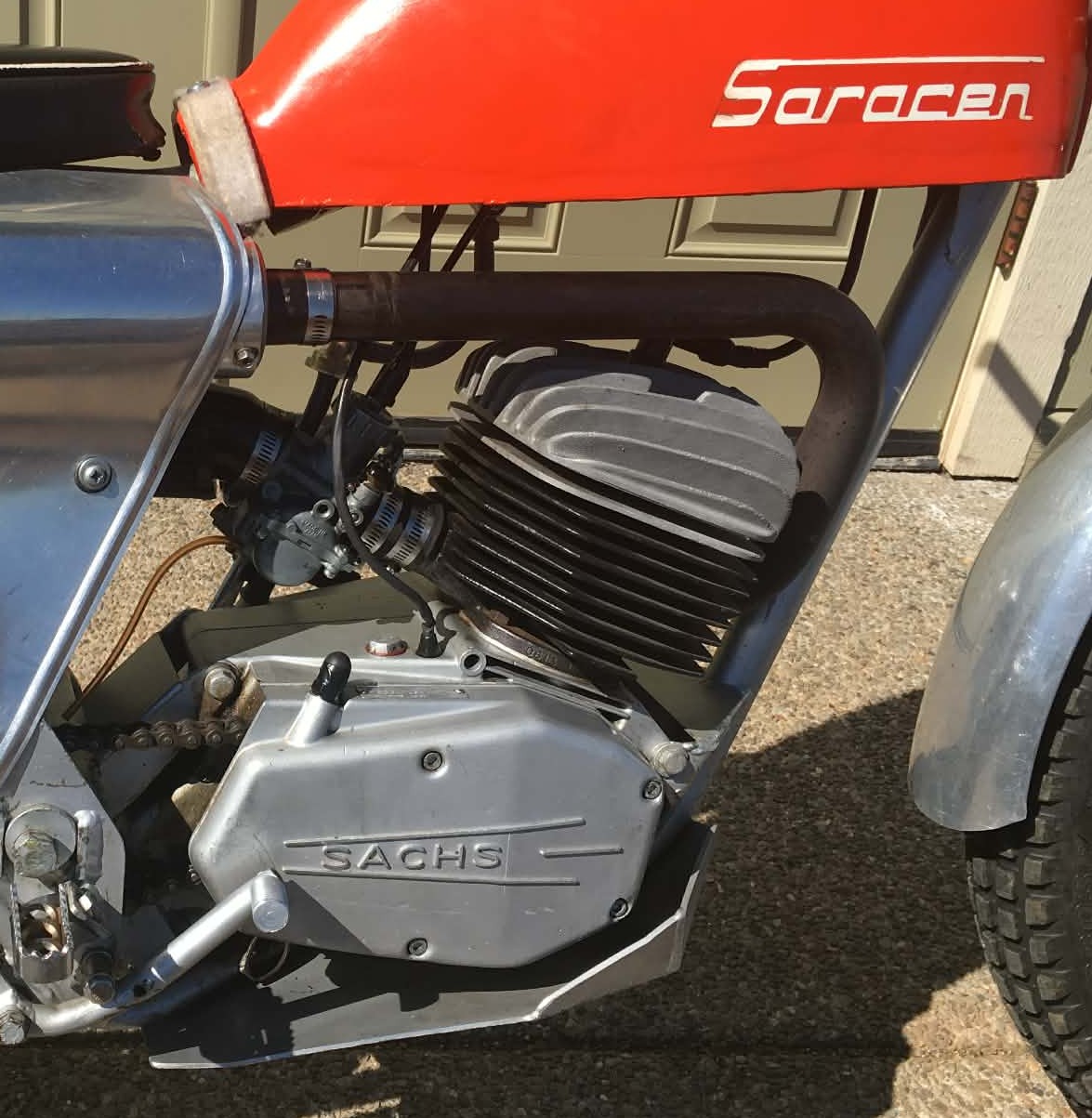
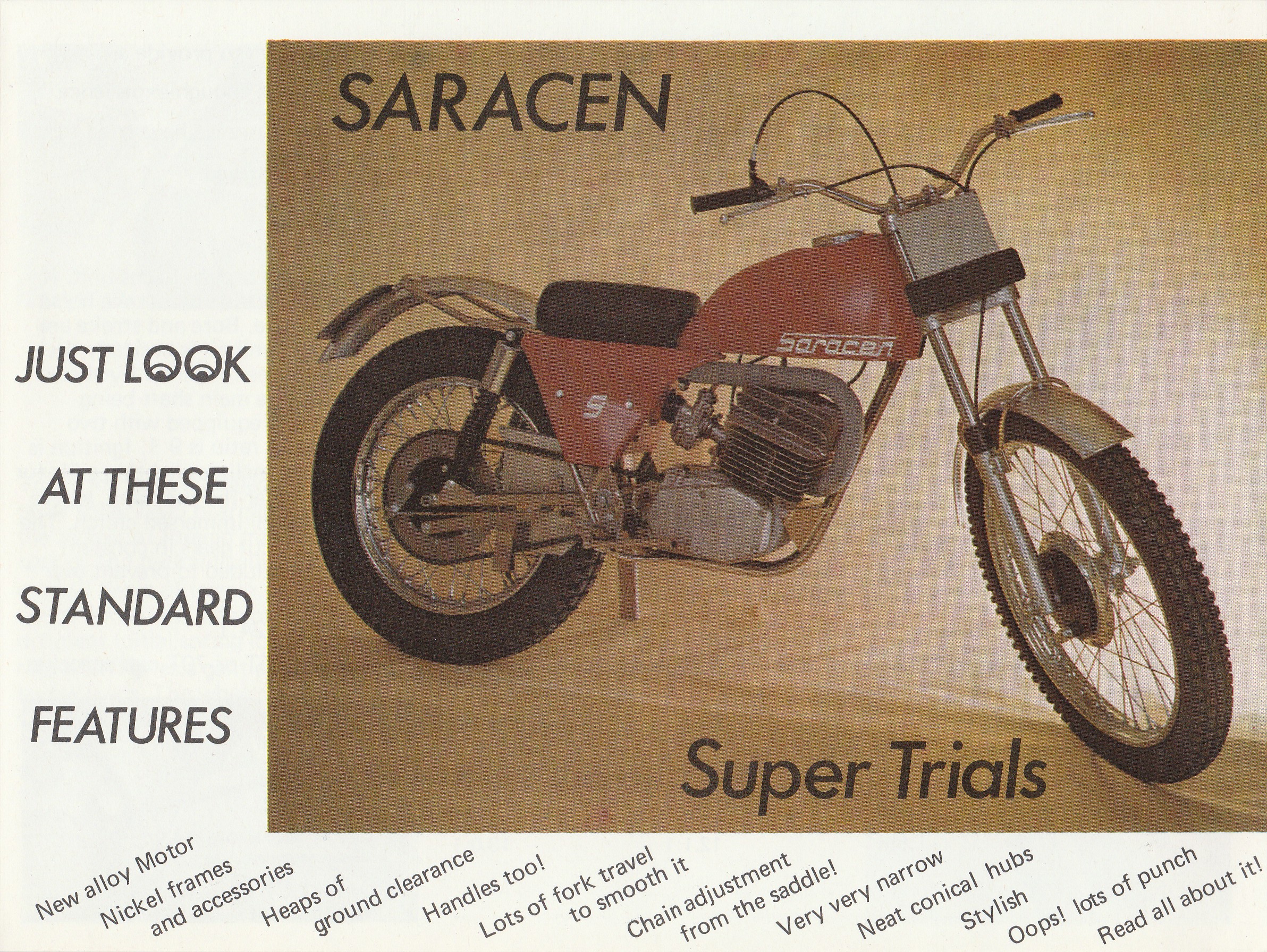
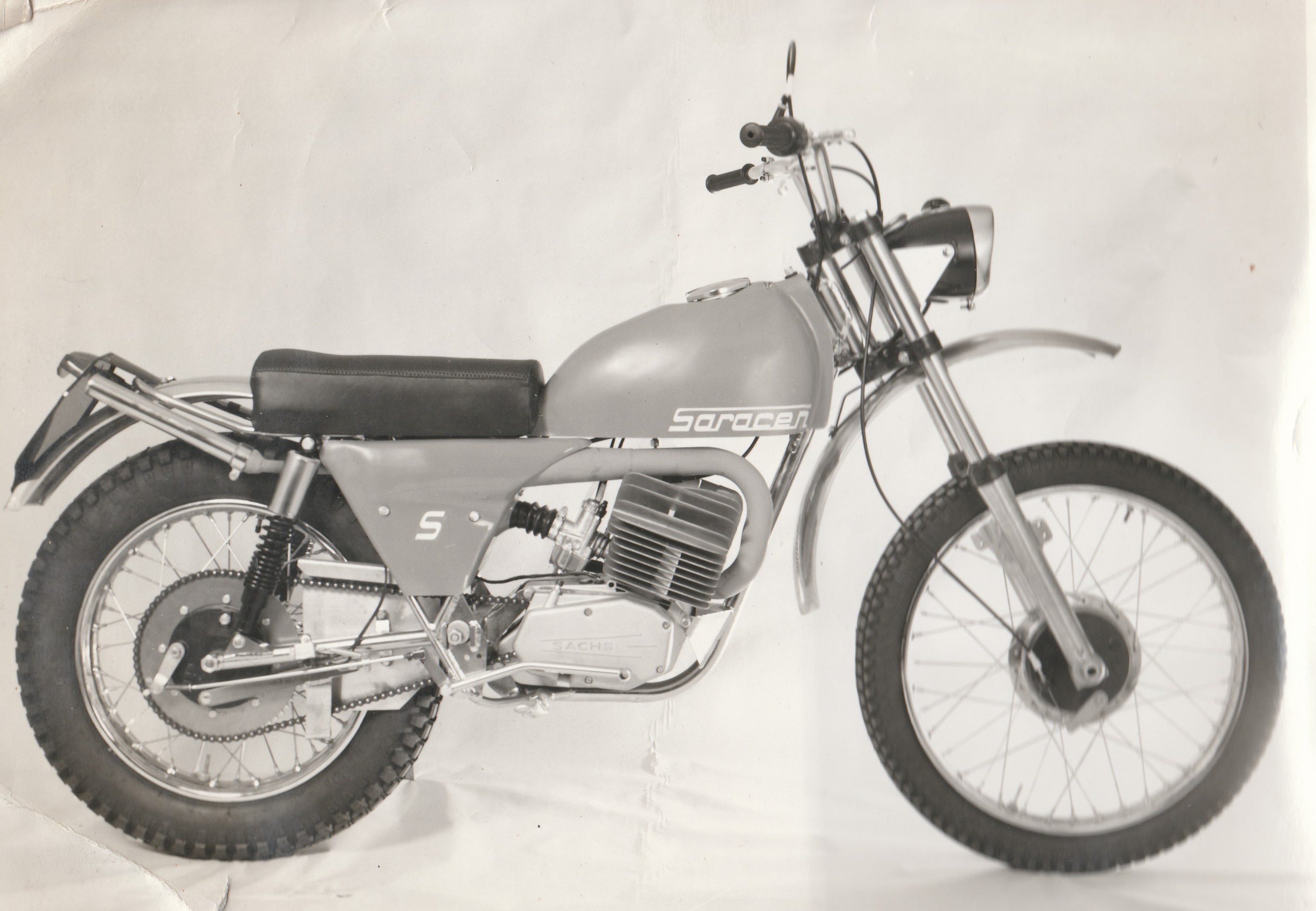
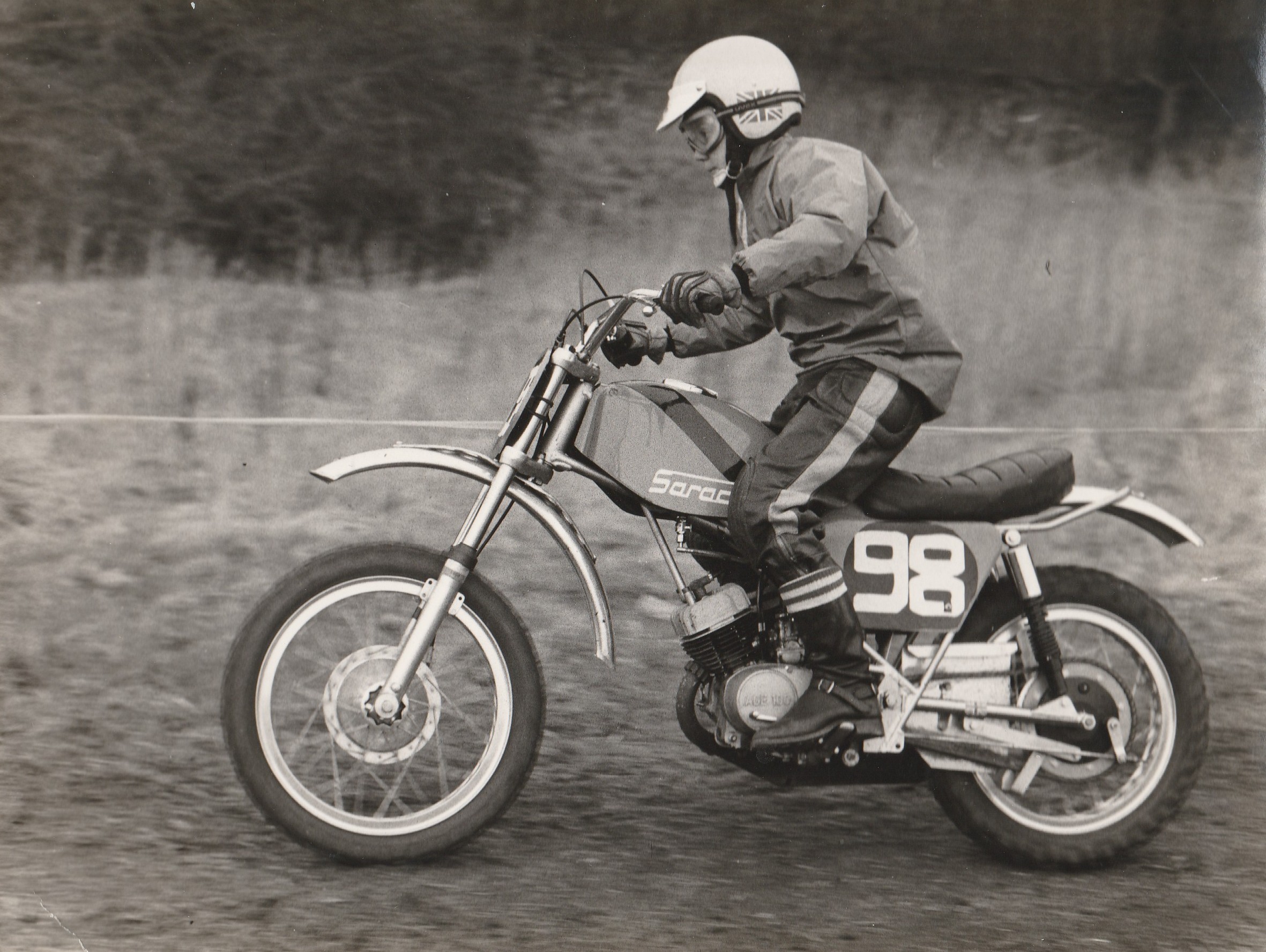
Rival manufacturers, Sprite and Saracen had been using the Sachs power plant for some time. KTM in Austria also relied on Sachs engines up until 1973, for both their KTM and Penton branded models, when they started making their own engines at Mattighofen.

The adoption of the Sachs engine necessitated that the final drive was on the opposite side from the Puch engined machines. Sachs output was on the right (offside) whereas the Puch was on the left (kerbside). As a result, the Puch QD rear hub would not be used, so Dalesman started to use the rear hub assembly from REH, which Saracen and Sprite had also been using. The change over to Sachs engines required a change of tooling at the Dalesman factory and the frame makers.

Press advert for the Dalesman in 1972 when production was switching over to the 125cc Sachs engine.

Dalesman had branched out into the growing ‘enduro’ market which was becoming popular in the USA and of course in Europe where German and Austrian trials were basically enduros more so than observed trials.

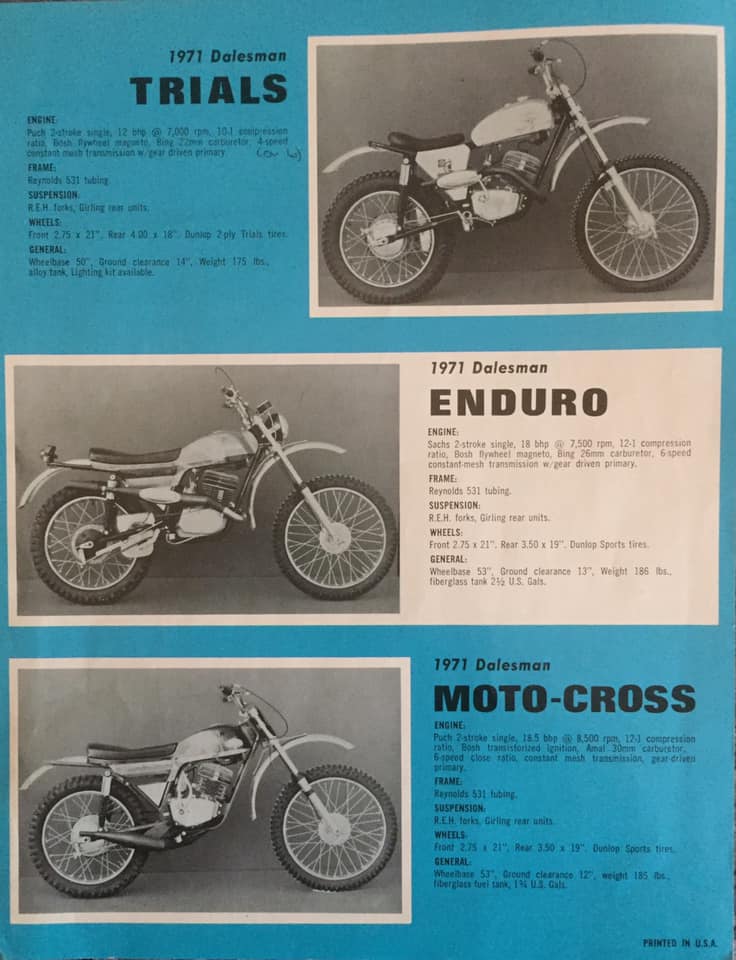
The 1971 Dalesman catalogue showing all three versions with the enduro fitted with the Sachs 125 six speed engine. The catalogue was printed in the USA.

Introduction of model names:

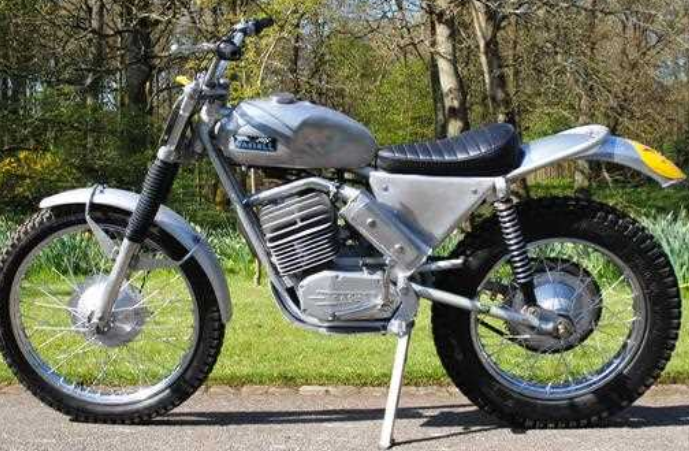
The Dalesman range on display Left to Right: Lynx (Motocross) Blue and yellow tank; Scout (Enduro) Red and white tank and the Belfast (Trials) Polished alloy tank – Photo courtesy Claire Brooker-Milligan.

The Dalesman models were given names for the 1972 season, the trial version was ‘Belfast’, possibly in recognition of Peter Gaunt’s Irish Experts trial win, the motocross was the ‘Lynx’ and the enduro was the ‘Scout’.

Detail of the Dalesman Puch ‘Lynx’ motocross model – Photo: Grant Shotwell

The motocross and enduro bikes were treated to a one-piece tank seat unit made in fibreglass, the trials model retained the alloy tank and separate saddle.

Change of components:

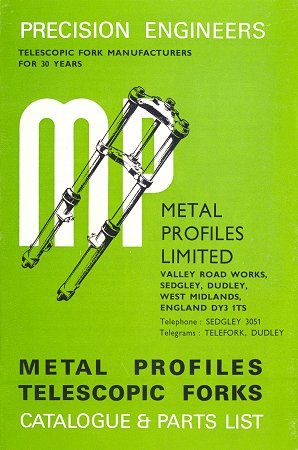
Metal Profiles S600 forks made in Britain.

Following continuous development, the Dalesman trials version by now were fitted with the British made MP S600 (Metal Profiles) front forks, made in Dudley, West Midlands, which were more robust than the spindly Puch components. Metal Profiles was a division of DMW Motorcycles.

When Peter Gaunt joined as a development rider in 1972, he won the Irish Experts and was 6th in the Scott Trial on the Sachs engined model. Immediately after his Irish Experts win, Gaunt added a bit more weight to the flywheel to improve bottom end performance. The Puch motor was phased out completely for the 1973 trials model, replaced by the Sachs unit.

Who rode a Dalesman?

Some noteable centre riders rode a Dalesman in their early years, for many it was their first trials bike. Riders included a sixteen year old Chris Griffin from Knaresborough whose first bike was one of the ex-works Dalesman Puchs; John Maxfield from Keighley; Richard Sunter from Reeth; Malcolm Dennis from Bedale, North Yorks; Ray Sadler who had one of ‘Killer’ Kendrew’s ex-works bikes; Chesterfield’s Chris Milner who was given a factory bike and Nigel Greenwood from Huddersfield.

Malcolm Dennis from Bedale, North Yorkshire with his Dalesman Puch in 1970.

Nigel Megson: Pete Edmondson was a tough talking, no nonsense Yorkshireman, who was in the right place at the right time. Surrounded by a huge flock of quality expert riders and had the expertise of people like Peter Gaunt on his doorstep. The price of the bike was right, the engine was bulletproof and it was lightweight. What could possibly go wrong ? I do think you had to be a half-decent rider to get the best out of it and Peter being persuasive, had every half-decent rider wanting to try one out, this of course led to it being a good beginners bike and at the time you couldn’t move for the damned things. My particular memories were Dixon Metcalfe and his son John, they rode the wheels off those bikes every weekend and John cut his teeth on an early Dalesman before going on to bigger things. His all action style was very impressive. Stuart Oughton came to a Spen Valley club championship trial and promptly won on it, against all expectations. Again, a good rider though, I did know a few blokes that did try one, but within nine months or so, were back on a Spanish 250. Happy days in the early 1970s. For me, Terry Wright trumped the lot when he won the Manx Two Day Trial in 1970.”

Chris Griffin: I bought my Dalesman from G W Johnston Motorcycles in Harrogate when I was sixteen, it was my first trials bike I’m sure it was one of ‘Killer’ Kendrew’s bikes. From memory, it had a orange frame and all the SSDT paint markings still on it. I removed the Bing carburettor and fitted a Honda Keihin carburettor to it. I had to remove some of the fins on the barrel so it would fit.”

Richard Sunter: I had one of the first Dalesman Puch which had a four speed box. I rode it for the Kart House, a bike shop in Darlington. I only rode it a couple of times, it wasn’t very good. I then rode a six speeder that Ray Sayer was riding for Pete Eddy as a one off. I fived the first section and then never went wrong after that and won among some good company,”

Gerald Rathmell, Malcolm’s younger brother, who had defected from riding Frank Hipkin’s Sprite Sachs to ride the for Dalesman in 1969. Yorkshire’s Ossa and Bultaco ace, John Metcalfe’s father Dixon rode a 125 Dalesman in the 1971 Scottish, as did Irishman Eddie Henderson.

John Maxfield (centre) on his Dalesman Puch six-speeder with trials friends, Kevin Laycock (right) also on a Dalesman Puch (Photo: John Maxfield)

John Maxfield bought a brand new six-speed Dalesman Puch from Pete Edmondson in 1971: “Mick Wilkinson took me in his mini pickup to buy it from Pete Eddy’s in Otley, we came home in the snow, Mick did a massive handbrake turn, I was impressed by feared for my new bike in the back!

1970 – Chris Milner on the works supplied 125cc Dalesman Puch on ‘Worsleys Wash’ in the Northern Experts Trial – Photo Courtesy Ann Milner.

Dalesman owner, Andrew Tyson:I bought my Dalesman Puch 125T in 1971, it was registered SET311J. I was fourteen at the time and I only kept it for about twelve months. I swopped it for a 250 Bultaco Sherpa, which was a massive difference.

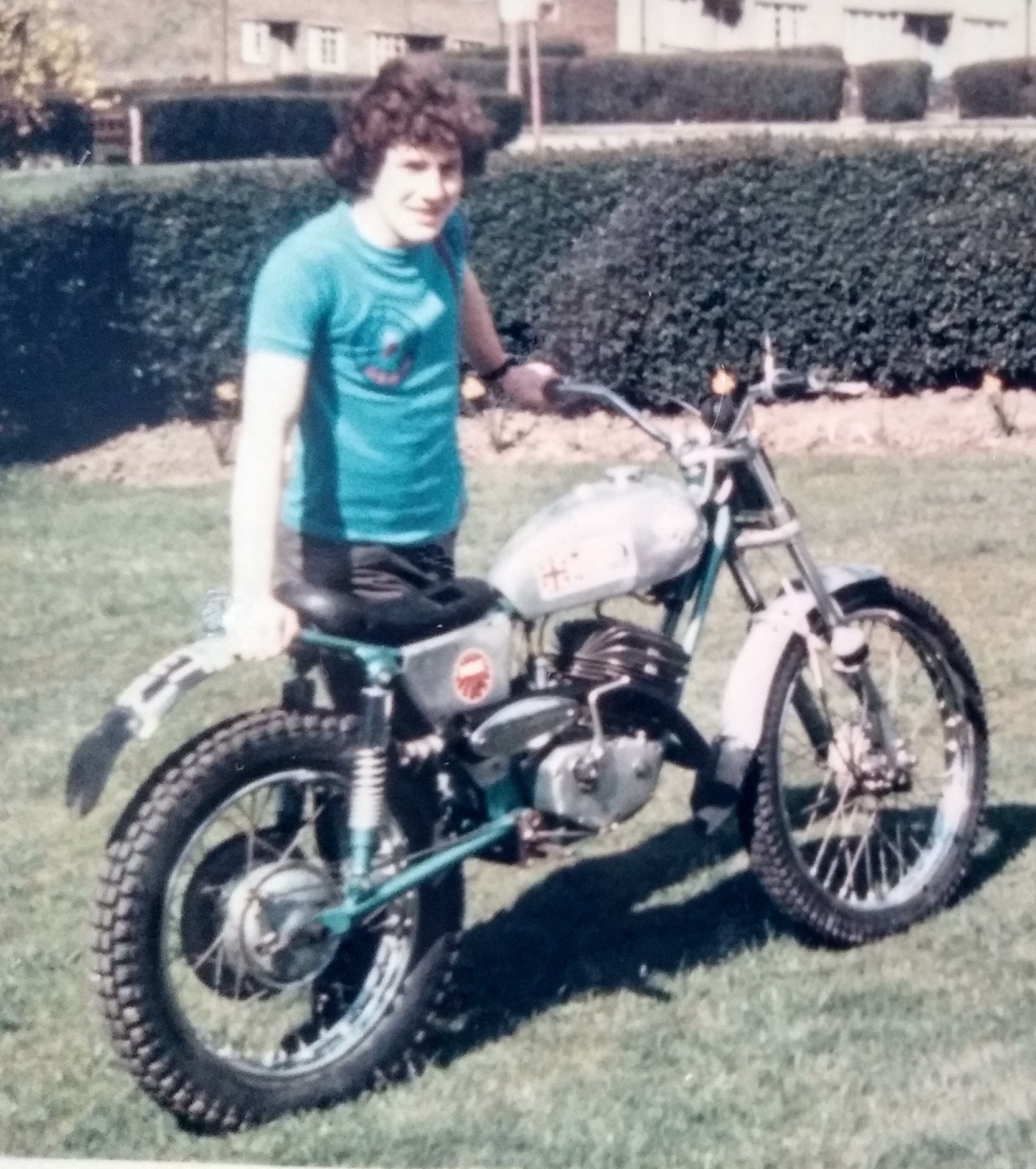
Private owner Andrew Tyson with his 1971 Dalesman Puch showing the green enamelled frame, the Puch rear hub, small Puch front hub and the MP S600 front forks.

I felt the Dalesman was severely underpowered, I suspect it was maybe strangled by the exhaust system. Virtually all sections would be tackled in first gear, steep hills would be flat out in bottom gear. I remember screaming up Post Hill in bottom gear, so it wouldn’t die. It was a reasonably light bike and I rode it in schoolboy trials in the West Leeds MC.”

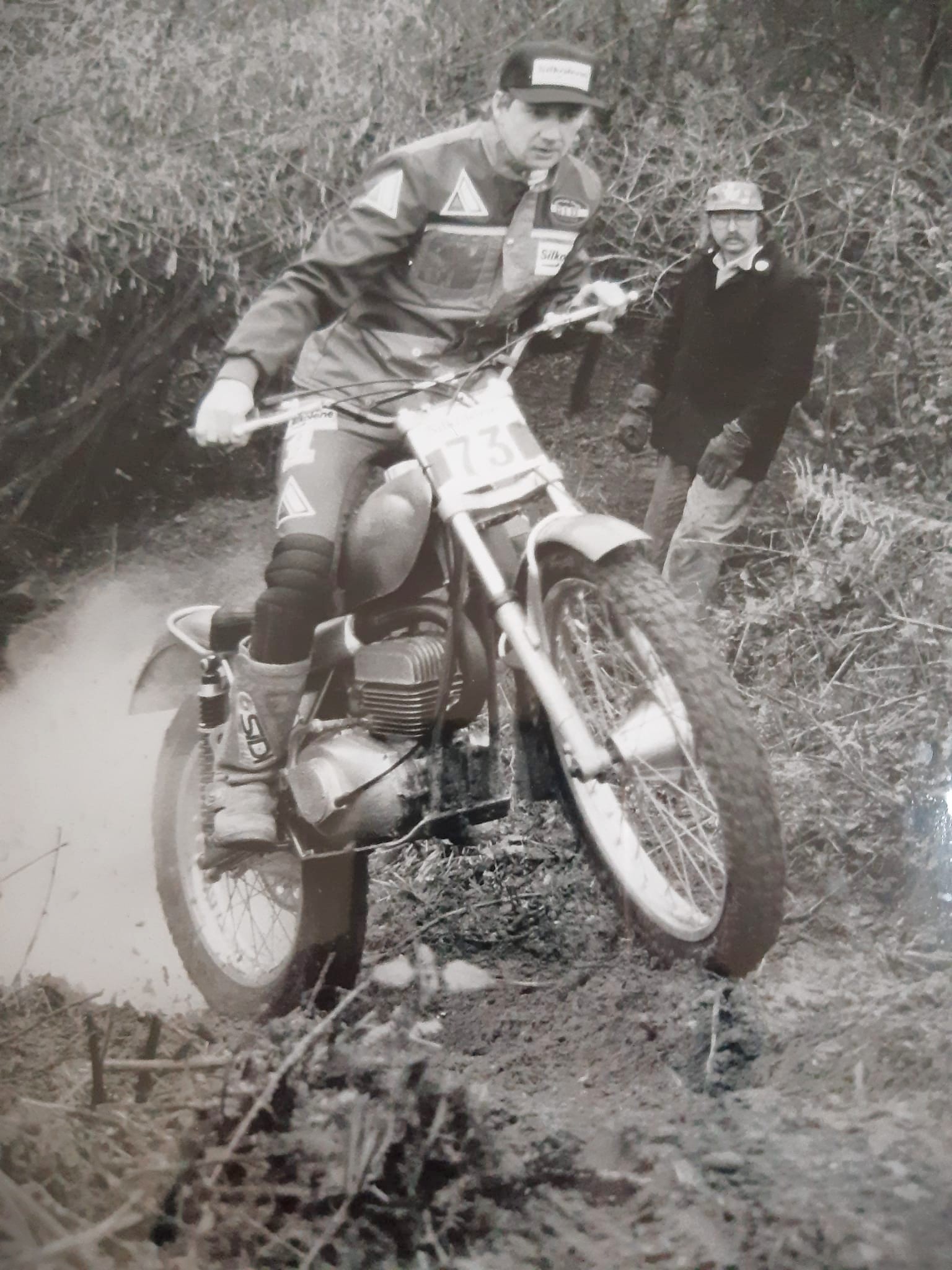
Andrew Tyson competing on his Dalesman 125T in a West Leeds event in 1971.

The Jefferies Connection:

Having ridden a 250cc Bultaco in 1972 with some success and being friends with Peter Gaunt, Yorkshireman, Nick Jefferies joined Dalesman in 1973, signing with Bill Brooker and rode in that year’s Scottish Six Days Trial as a member of the Dalesman works team with Gaunt on the four-stroke XL250 Honda badged as a Dalesman and Scotsman, Rodger Mount issued with Gaunt’s Sachs engined bike. While still under Dalesman contract, Peter Gaunt had approached Tony Jefferies of the family business, Allan Jefferies Ltd who were Dalesman agents and who were also Honda dealers. Gaunt’s idea was to develop a four-stroke trials machine based on the XL250 Motorsport Honda trail bike. Initially it was liveried as a ‘Dalesman’ and Gaunt rode the development/prototype in the 1973 SSDT. Shortly after, Tony Jefferies ordered a batch of twenty XL250 Motorsports through the Allan Jefferies shop in Shipley, Gaunt converted them to trials machines and these were liveried as ‘Jefferies Honda’.

Bradford’s Nick Jefferies on his factory 125cc Dalesman Sachs on ‘Ben Nevis’ during the wet and wintry 1973 Scottish Six Days Trial. Snow fell all the way from Edinburgh to Fort William on the first day.

Nick Jefferies came home in 24th position in the 1973 Scottish Six Days with a Special First Class award on his works Dalesman Sachs (LWW679K) and rated the bike highly. Jefferies left Dalesman later that year as his attention had turned to racing motorcycles of which he excelled.

Nick Jefferies:Back around 1970, it was customary for me to drive from the family business in Shipley to the Dalesman factory in Otley to pick up Dalesman bikes in kit form, as this was pre-VAT when a buyer could avoid paying Purchase Tax. I would take my Reliant van which I could drive on a provisional licence and load a box with the cycle parts and another box with the engine and take the machine back to our shop. It was really my friendship with Peter Gaunt that saw me going to ride for Bill Brooker, Ron Jeckel had a controlling interest in the company by then. I had a good ride at the Scottish Six Days, I came twenty-fourth and a Special First class award, which was bitterly cold as it snowed all of the first day from the start in Edinburgh up to Fort William. I remember seeing a Kawasaki parked against a banking on Rannoch Moor and it was Mark Kemp who was curled up frozen! I left Dalesman around the August, I don’t think I had a full years contract to ride with them, however my elder brother Tony had suffered a life changing accident on the 6th September at Mallory Park, breaking his back. It was all hands to the pumps at the business after that and it was a rather bleak time for the family at that point in time. Around that time I had decided to go racing. The reason I turned to racing, well one reason, was because I had broken my leg, it wasn’t sufficiently strong to ride trials, so I decided to buy a race bike.

Three times Scottish Trials Champion, Rodger Mount from Fort William was balloted out of the 1973 Scottish Six Days and tried to get an entry as a member of a factory or importer’s team. Mount first approached Jim Sandiford as Mount had been riding a Montesa since 1970. Sandiford’s team entries had already been allocated so he tried Dalesman.

Scotsman, Rodger Mount aboard the factory 125cc Dalesman Sachs (LWW677K) in the 1973 Scottish Six Days – Photo: Eric Kitchen.

Rodger Mount:I thought Jim Sandiford might have entered me in the official Montesa team as I had remained loyal to the brand, but his teams were by then full. Jim was a gentleman and couldn’t put someone out when he had already agreed a place. Bill Brooker at Dalesman came to my rescue and gave me a place in their team and a 125cc Sachs-powered Dalesman that had been ridden by Peter Gaunt who was riding the Dalesman Honda by then. It was quite a good machine really, but we couldn’t get it to respond correctly when we got it home to Fort William. I contacted my friend Ron Thompson who was a good engineer and mechanic, he played about with the carburation until he got it running crisper.”

Rodger Mount attacks ‘Laggan Locks’ in the 1973 Scottish Six Days on the factory Dalesman Sachs – Photo Eric Kitchen,

Rodger Mount weighed the little Dalesman into the Gorgie Market sheep pens in Edinburgh on the Sunday and noticed that the rear wheel had only one rim lock/security bolt. He spoke to Bill Brooker, who said it would be fine as it was only a 125 and wouldn’t be a problem. He started off the week with some good rides and was in front of his two team members, Peter Gaunt and Nick Jefferies. On the Friday, however, the security bolt sheared, and it is not an item that riders usually carry or one that support crews carry in vans either. Rodger had three punctures as the wheel kept pulling the valve off and into the rim, and he became two hours over the alloted time and was excluded from the trial.

Mount:When Bill Brooker heard what had happened, he was not only horrified but very apologetic, it had never happened before.”

Although the 1973 SSDT Dalesman team didn’t finish intact, the final outcome was Peter Gaunt on the special 250cc Dalesman Honda finished in twenty-second position on 140 marks, with Nick Jefferies in twenty-fourth place on 143 marks.

1973 Scottish Six Days Trial Dalesman team – Peter Gaunt aboard what had been initially liveried as a ‘Dalesman’ as Gaunt was still under contract, which was in effect a disguised XL250 Honda which Gaunt was developing for Allan Jefferies Motorcycles. (Photo: Eric Kitchen)

1973 ISDT:

As well as Mick Wilkinson, in 1973, the British Army team used Dalesman Sachs machines in the American ISDT held at Dalton in the Berkshire Hills, Massachusetts. The rules of the International Six Days had stated that riders must compete on machines manufactured in their country, although that ruling changed in later years. The Dalesman was a perfect choice for the British Army as the machines were all assembled in Britain, even although they were powered by German made engines.

In March 1973, Staffman and photo journalist, Martin Christie of Motor Cycle tested LWW680K, a Dalesman Sachs enduro that was being evaluated and tested by the British Army who would be fielding the GB Vase A Team at the 1973 ISDT. Christie reported that the Army riders had been having problems with the exhaust systems and found that the glassfibre packing was oiling up badly, removing the end cap increased performance, but removing it completely merely increased the noise output which would have caused problems at the ISDT during noise meter testing. The 1973 ISDT prepared machines had reverted to using the Puch rear hub which afforded the quickly detachable hub, it was deployed the opposite way from when the Puch engines were utilised some years previously. [5]

Martin Christie:1973 was a long time ago now and I was fairly new to off-road motorcycle sport then. I do remember having to come to terms with the high revving two-stroke and it was necessary to keep the Dalesman in the power band at all times.”

Welsh Three Day action in 1973 on the 100cc Dalesman Sachs. British Army teamster, George Webb won his class, was 6th overall and a gold medal to his credit. Flat out the machine topped 55mph!

Army rider George Webb:I rode in the US International Six Days event on the 100cc Dalesman, but unfortunately I retired on the Friday afternoon after some problems and then a front wheel puncture. The rest of the team were on the 125cc machines. I found that my bike was underpowered and maxed out at 55mph on the flat. I believe the exhaust system was to blame, being fitted with the 125cc model system. The American ISDT event was very good, with a good mix of going. In the Welsh Three Day, I rode it flat out all the time.”

1972 Peak Trial action with Peter Gaunt on his works Dalesman with the 125cc Sachs motor. VF black plastic mudguards are fitted which were popular at this time – Photo: Barry Robinson, with permission.

Disc Brakes:

Dalesman was the first trials manufacturer to develop and use front and rear disc brakes on an off-road motorcycle. Manufactured by George Sartin’s Talon Engineering in Yeovil, Somerset, these cable operated prototype disc brakes were first used on the 1972 Dalesman ISDT Works model and later, a refined version of the front disc brake was offered as an optional extra on their production motocross and enduro versions from 1973 onwards.

Peter Gaunt in 1972 on his works Dalesman, this is the Sachs 125cc engined version – Photo: Barry Robinson with permission.

Peter Gaunt also rode a disc-braked Dalesman in one-day trials. At the time many commented that a front disc brake would not be reliable, as it would be damaged significantly if it came into contact with rocks.

Peter Gaunt on his works Dalesman in the 1973 Ilkely Grand National, note the cable operated ‘Talon’ front disc brake. Photo: Barry Robinson with permission.

Jeckel Industries involvement:

By 1972. Ron Jeckel of Jeckel Industries, Glen Falls, New York State, the Dalesman American importer had, by now, already bought into the Dalesman business. It is believed that the American investment was necessary to stop Dalesman Competition from going under.

From originally being sole owner, Pete Edmondson had become the Managing Director. Jeckel wanted to increase production and in early 1972 he had brought in Bill Brooker, the former competition shop manager for Greeves Motorcycles and appointed him joint Managing Director and Competition Manager.

Bill Brooker (left) with Don Smith in 1962. Brooker became Managing Director of Dalesman. Photo: Smith Family Collection.

Edmondson became a Company Director but differences between Ron Jeckel and Edmondson persisted, culminating in Peter being voted off the board and leaving Dalesman Competition Products Ltd. Dalesman production had by then moved to the Pheonix Works in Station Road, Otley.

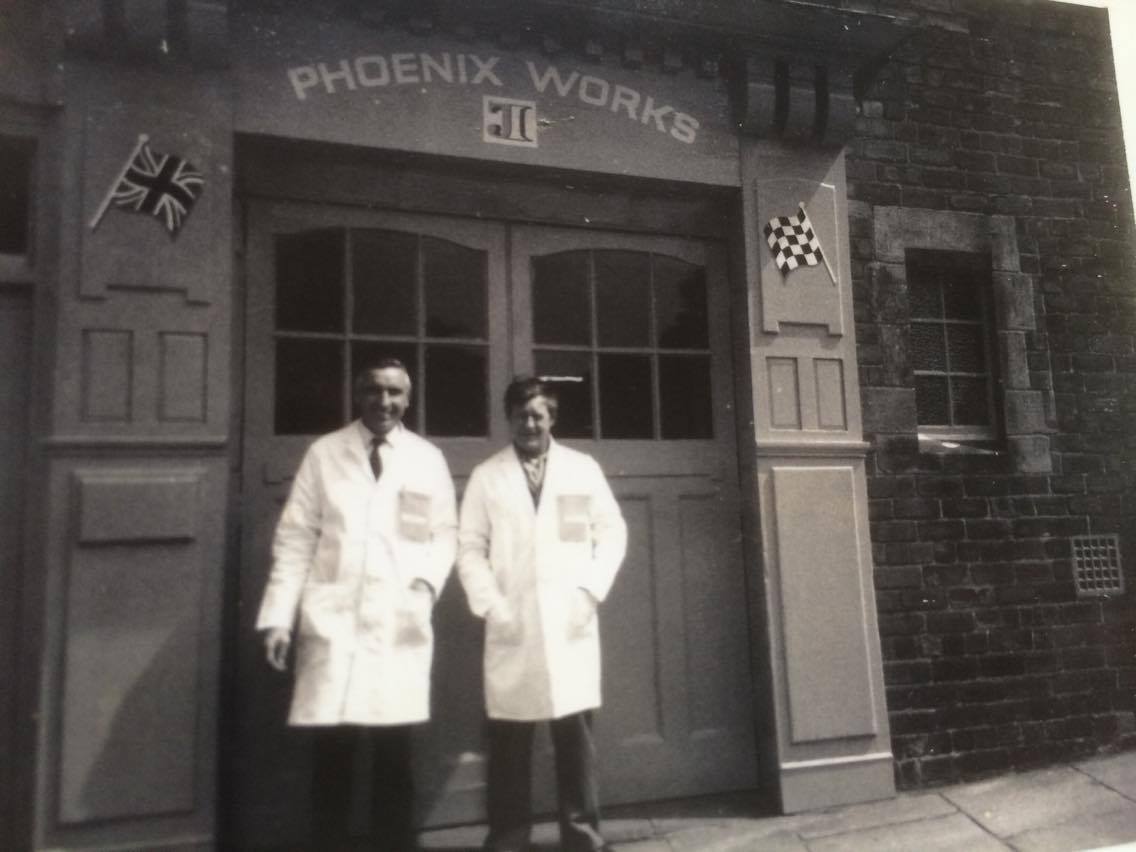
With the Jeckel Industries logo above, Bill Brooker (left) and Pete Edmondson (right) standing at the front door to Dalesman’s Pheonix Works, Station Road, Otley around 1972. (Photo courtesy of Ian Preston).

Peter subsequently moved south to Lichfield, Staffordshire and joined the motorcycle parts manufacturer and trade supplier, W.E. Wassell at Burntwood.

Peter wasn’t slow off the mark in helping to produce a rival to the Dalesman, the Wassell ‘Antelope’ trials machine which did bear an uncanny resemblence to the Dalesman Sachs.

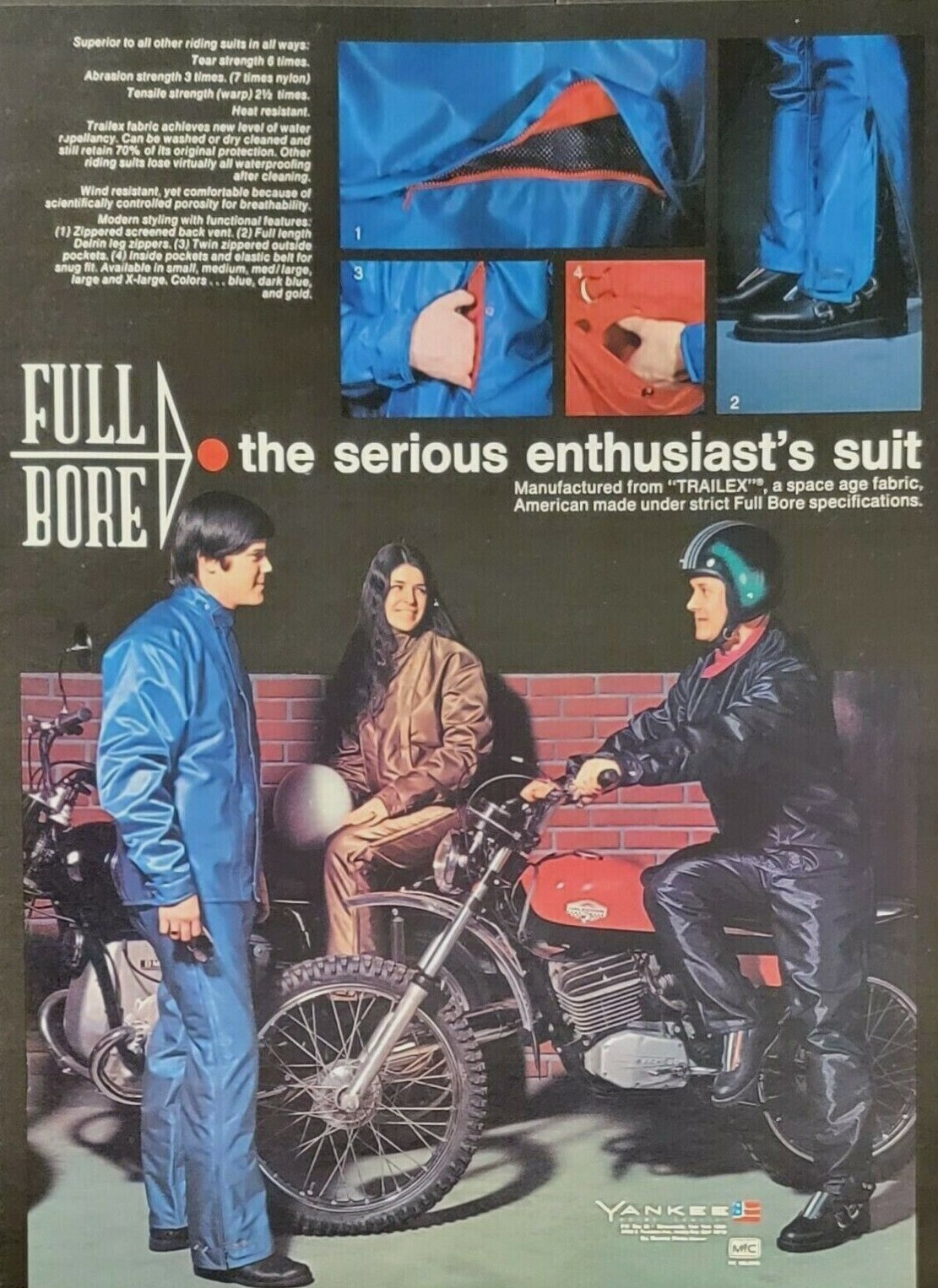
1972 ‘Full Bore’ accessories advertisement from the USA, which featured a Dalesman ‘Scout’ enduro.

Edmondson was appointed as Wassell’s development engineer and production line manager. Wassell also employed Jim Lee, who had been the original frame builder for Dalesman, to manufacture the new Wassell frames. Alec Wright who ran ‘Competition Developments’, later to become involved with Kawasaki, bought into Dalesman in 1974 and became their development engineer, but the firm would only last a further six months.

Wassell’s ‘Antelope’ bore a strong resemblance to Dalesman’s Sachs powered trials machine in 1972, using many similar components.

The new Wassell was launched at the 1972 Manchester Motorcycle show, Wassell’s had been marketing for some time, a frame kit to take BSA Bantam engines, but it led to production of complete motocross, enduro and trials bikes, powered by the 125cc six-speed Sachs engine and using REH forks and hubs. Both the trials and motocross models were retailed in the UK with a list price of £315.

The Dalesman factory at Phoenix Works, Station Road, Otley – Photo: Nick Proctor

By 1974, production of the Dalesman ceased for good, sadly it was the end of the road for the small capacity machine which had its roots in Yorkshire, just six years after it all began.

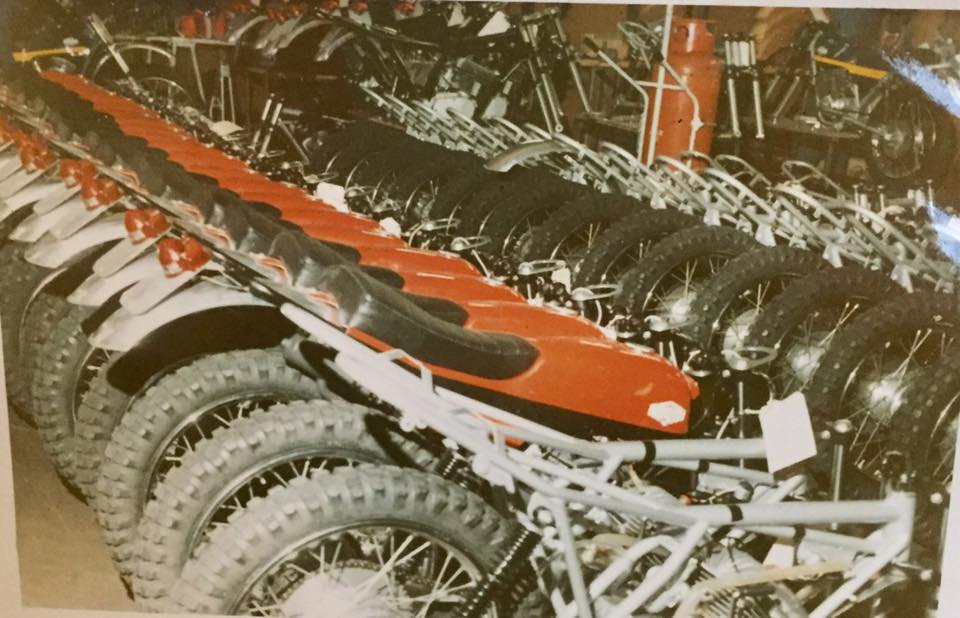
The Dalesman stock of part assembled machines in 1973, the one piece tank seat units clearly visible of the enduro ‘Scout’ models and the ivory painted frames. (Photo: Claire Brooker-Milligan)
The 1972 Dalesman Sachs Enduro of Steve Robinson of Horsforth.
John ‘Killer’ Kendrew on what appears to be the ex-Nick Jefferies and Peter Gaunt works Dalesman Sachs (LWW679K) in the 1973 Allan Jefferies Trial – Photo: Barry Robinson.

Trials Guru’s John Moffat on Dalesman:

My connection with the Dalesman brand was quite simple, like many others it was my first motorcycle. My father had attended the ISDT in 1969, I had already expressed an interest in riding motorcycles to him. My Dad’s friend and colleague at the Scottish ACU was Jim Birrell, who had financed the two ISDT Dalesman bikes for Ernie Page and Ian Millar who were in the GB Vase B Team.

What started it off was when I had slung my leg over the Dalesman Puch 125T that Peter Edmondson supplied to Mr. Birrell in April 1969 for the SSDT stewarding duties. It was delivered to our house in Bathgate and Jim Birrell picked it up from there. My Dad had done a deal through a British Road Services contact at their Guildiehaugh, Bathgate depot, to transport the bike up from Otley. That initial contact made me realise that I wanted to be a motorcyclist and to ride in trials like my Dad, I was 11 years of age. I remember going over to Markinch with my Dad in the October to look at the two ISDT bikes that Jim was selling and my Dad chose PSG565H for me, the machine that Ernie Page had ridden, still with it’s race number ‘V62’ in place. The bike had blobs of light blue and red with that number inscribed and the cylinder head was wired to the cylinder barrel with an ADAC lead seal still intact. I still remember the engine number which was 3690609.

John Moffat with his ex-Ernie Page ISDT Dalesman Puch 125 in 1971. The ISDT paint marking can still be seen on the front brake plate.

A few weeks later and my friend, John Hodge had expressed an interest in riding off-road motorcycles and his father George, being a client of my Dad, secured the purchase of the second Dalesman Puch which had been ridden by Ian Millar at Garmisch-Partenkirchen. John Hodge and I spent many hours on the Hodge farm in South Lanarkshire, riding our Dalesman Puchs and we had the run of the place. Being ISDT bikes, they were not best suited to pure trials work as the frames were of the scrambles version with the REH front end. We lowered the front mudguard and removed the head and tail lights and the centre stands which got in the way of rocks in sections. They were quite high geared and we had huge rear sprockets made by Roger Maughfling at Supersprox in Knighton, Powys with around 60 teeth to reduce the overall gearing.

From memory, there were very few who rode a Dalesman in trials in Scotland, I recall George Shaw from Perth, Simon Valente from Edinburgh and John Honeyman from Dunfermline. Motocross rider, Billy Edwards from Lochmaben who rode for Comerfords on a Bultaco, then onto the adults on CCM and Kawasaki, had cut his teeth on a locally sourced Dalesman Puch in 1971 before moving on to a 125 TM Suzuki.”

I got to know Pete Edmondson about twenty or so years ago, having spoken to him many times at the Scottish Six Days. I tried to engage him to talk about the Dalesman, but he always steered away from the subject. Having latterly researched the enterprise, I can only assume it was probably because of the take-over issues he experienced with Ron Jeckel that left a bitter taste, which is understandable.”

Still, those Dalesman bikes that our Dads bought for us got many riders started in motorcycle off-roading, and it’s all thanks to Pete Edmondson.

When we started researching for this article, it was evident that many people have a bit of a soft spot for the Dalesman marque. Many trials and scrambles riders cut their teeth on the Otley built machines. Perhaps they weren’t the very best trials, enduro or scrambles bikes ever built, competition was stiff in this era, but the Dalesman Puch and Sachs brought a lot of young people into the sport of off-road motorcycling.

There are still a few Dalesman Puch and Sachs machines out there, if you know where to look for them! A very original 1970 125cc Dalesman Puch was sold by Bonhams in the USA on 9th January 2014 at the Las Vegas motorcycle auctiom at the Bally Hotel and Casino for $4,312.50 inclusive of buyer’s premium. [6]

Here and Now:

The Collectors Centre at 5-6 Kirkgate Arcade, Otley has the 1970 Dalesman on display – Photo: Carol Dabill.

Over the past few years, comments have been made on social media of a Dalesman Puch on display in an Otley antique shop window. It is a 1970 125T model with a nickle plated frame. The owner of the shop has been offered a handsome amount for the machine, but so far, has turned all offers down, preferring to keep the Dalesman on display.

The 125cc Dalesman Puch on display in an Otley Antique shop. Notice the very large 60 tooth rear sprocket to reduce the overall gearing. (Photo: Robert Harting)

Dalesman – Built in Yorkshire, sold to the world!

Peter Hugh Edmondson – 27/01/1932 – 1/05/2024

Pete Edmondson’s 90th birthday celebrations in 2022 with a period Dalesman Puch. – Left to Right: Peter Edmondson, Lee Edmondson; Julie Edmondson, Derrick Edmondson and Paul Edmondson – Photo: Edmondson Family Archives.

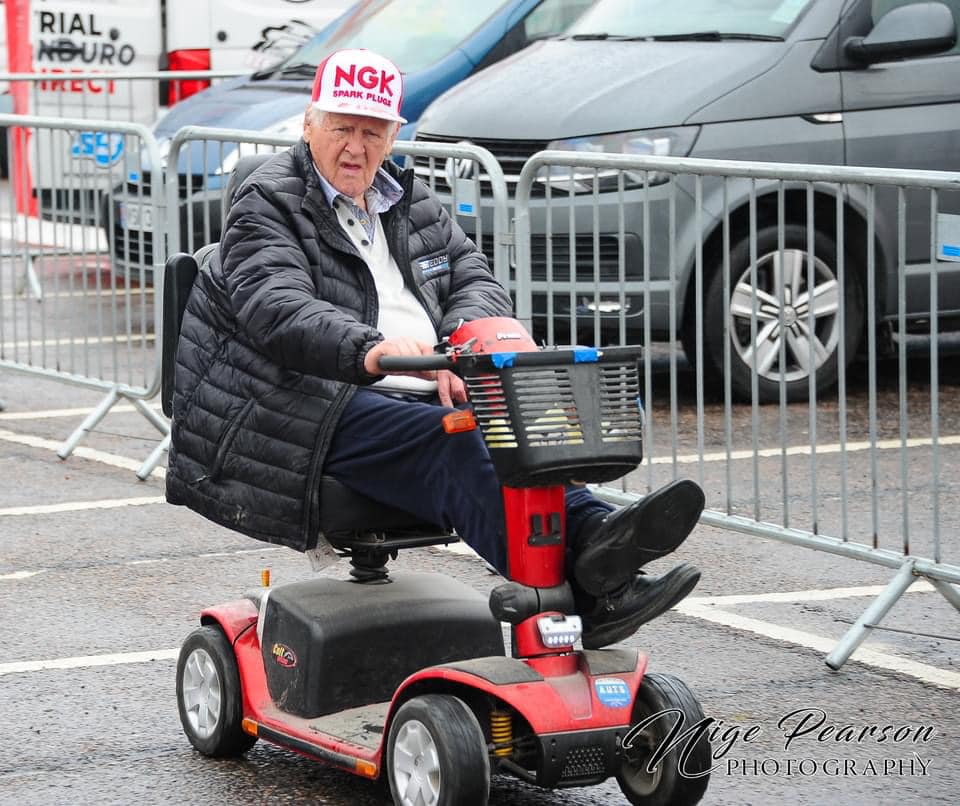
Years after Dalesman’s demise, Pete Edmondson went on to supply trials riders at many major events in his twilight years with clothing, tyres, tools, in fact anything that he could buy and sell with a very modest profit, merely covering his expenses. His favourite event being the Scottish Six Days Trial where he would be found sitting in the Parc Ferme outside his van, surrounded by useful items for sale including Michelin tyres at bargain prices. He enjoyed dealing, but also wanted to help riders in his own unique way. He was a well-loved part of the off-road motorcycle scene across the United Kingdom.

Pete Eddy at the Scottish Six Days Trial – Photo: Nige Pearson Photography

Pete Edmondson was a ‘died in the wool’ off-road motorcycling enthusiast, who simply lived for the sport. He passed away, aged 92 on 1st May 2024 and left his legacy with his family, who are all steeped in the sport of motorcycling. He lived a full and interesting life and will be remembered by all who met and knew him.

Photo courtesy: Derrick Edmondson

Trials Guru is indebted to those who have contributed in the making of this article.

Bibliography & Acknowledgements:

Motor Cycle News: December 10th 1969 – Peter Howdle ‘Feet Up’ column. [3]

Cycle World, USA: September 1st 1969 – Dalesman Article & Photos. [2]

Cycle World, USA: November 1st 1970 – Dalesman MX and Enduro Article. [1]

Motor Cycle, UK (Ceased 1983) – October 1969 – Photo: John Seward [4].

Motor Cycle, UK (Ceased 1983) – March 3, 1973 – Report by Martin Christie [5]

Bonhams Auctioneers. [6]

Steyr-Daimler-Puch Aktuelle Gesellshaft.

Claire Brooker-Milligan, USA; Nigel Megson – Information on the 1970 Manx Two-Day Trial.

George Webb; Scott Ellis; Mick Grant; Mick Wilkinson, Kettlewell; Nick Jefferies; Rodger Mount, Fort William; Derrick Edmondson, Cannock, Staffs.

Andrew Tyson; Simon Valente; Nick Procter.

‘Dalesman – Built In Yorkshire’ article is the copyright of Trials Guru.

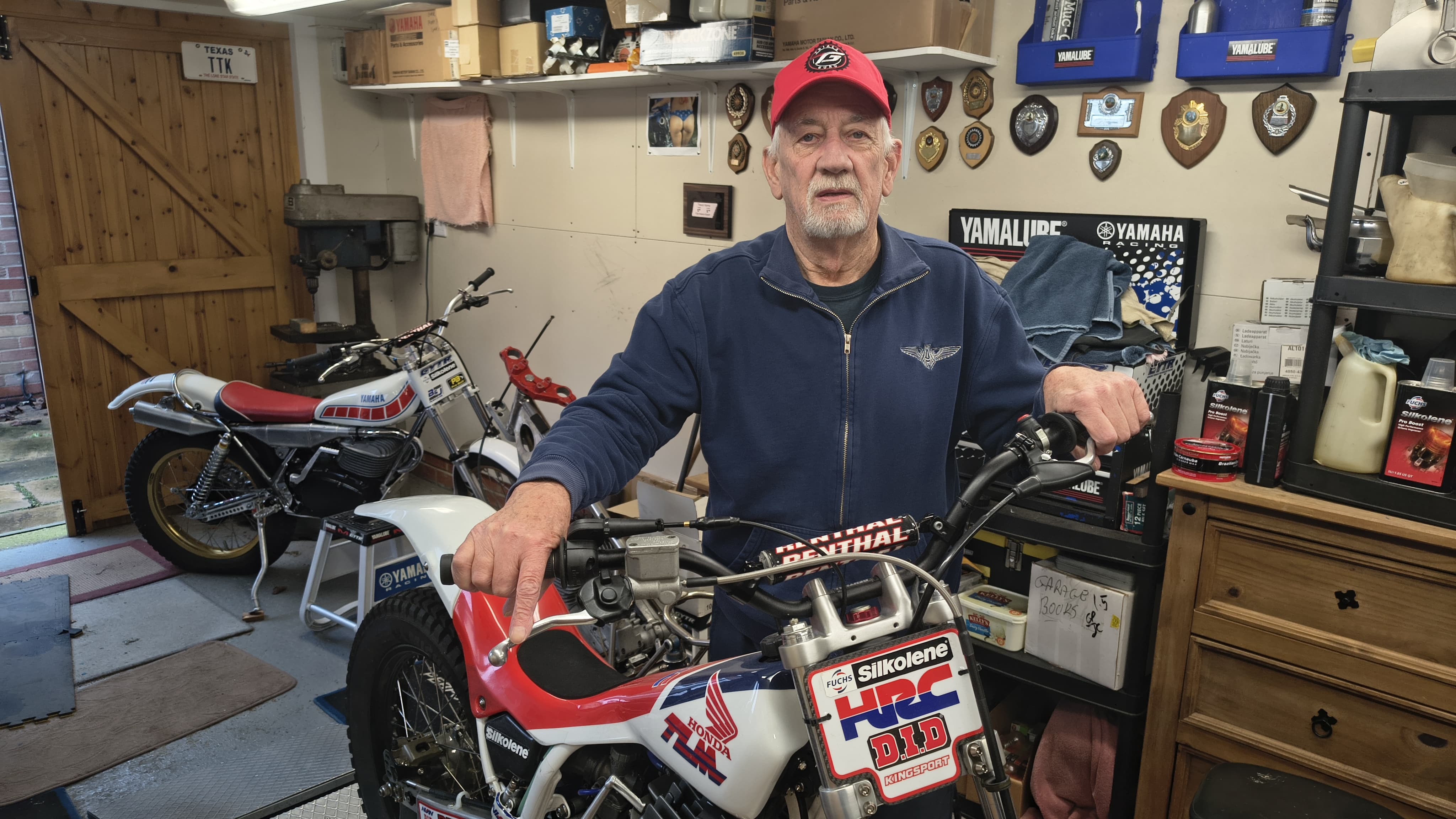
The Dalesman and Pete Edmondson Tribute stand at the 2025 Telford Classic Dirt Bike Show – Photo: Derrick Edmondson

You are reading this article for free:

Apart from ‘Fair Dealing’ for the purpose of private study, research, criticism or review as permitted under the Copyright, Design and Patents Act, 1988, no part of this article may be copied, reproduced, stored in any form of retrieval system, electronic or otherwise or transmitted in any form or by any means, electronic, electrical, mechanical, optical, chemical, photocopying, recording or otherwise without the prior written permission of the author as stated above. This article is not being published for any monetary reward or monetisation, be that online or in print.

It all started with a Renault 4 – The story of the ‘Jerred Hondas’

Words: Trials Guru & Peter Jerred

Photos: Iain Lawrie; Alistair MacMillan Studio, Fort William; Jimmy Young; Peter Jerred; Anthony Hylton.

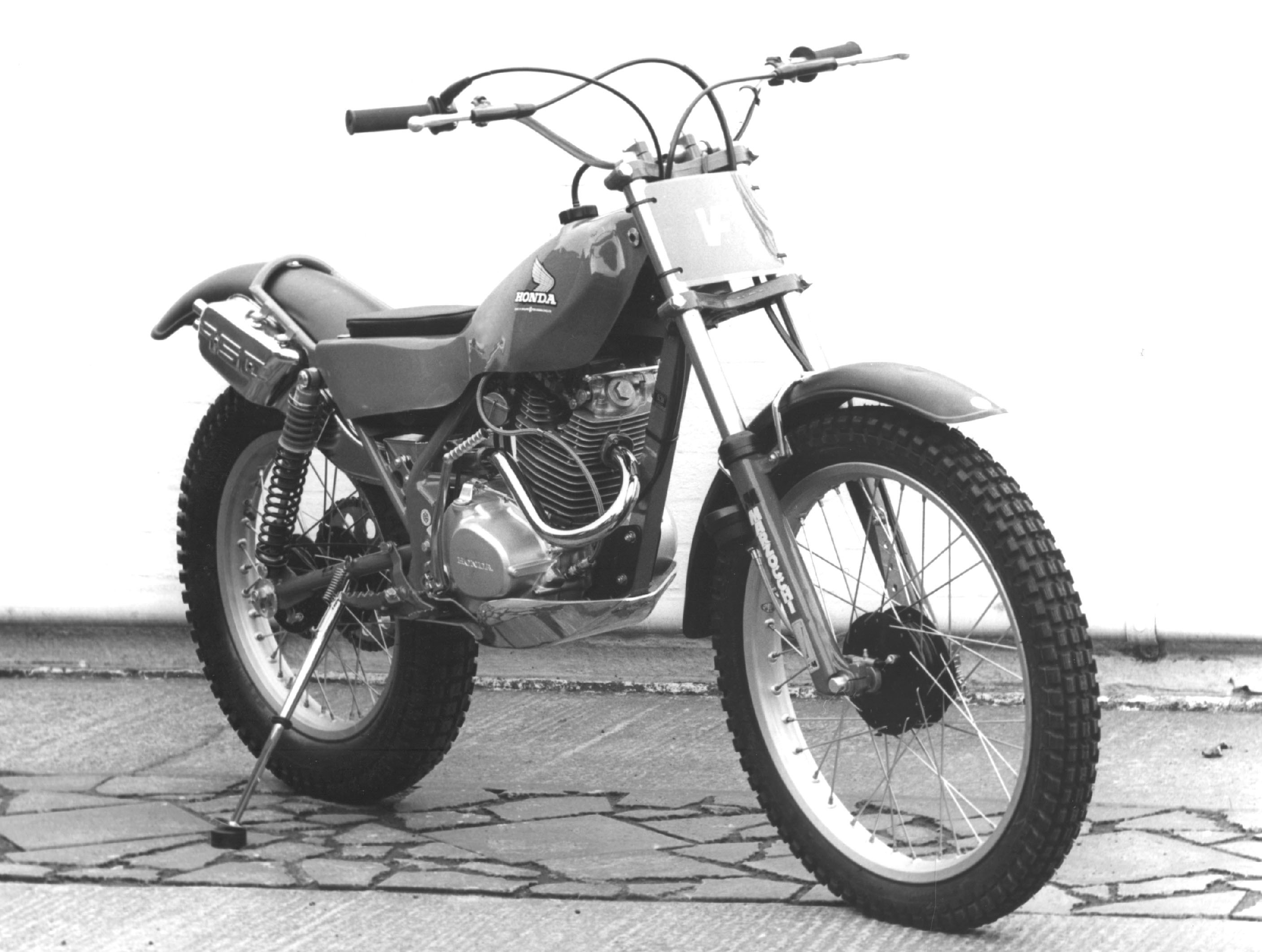
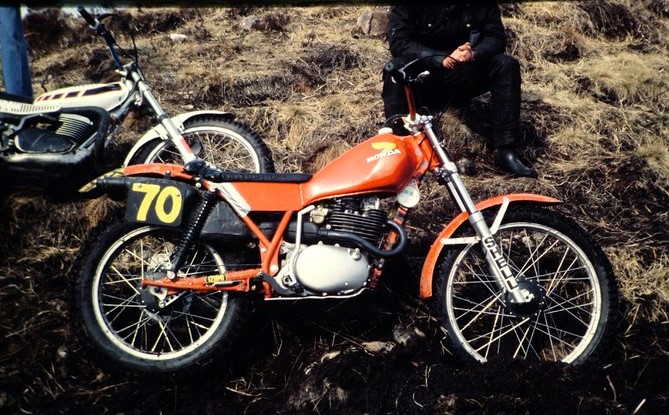
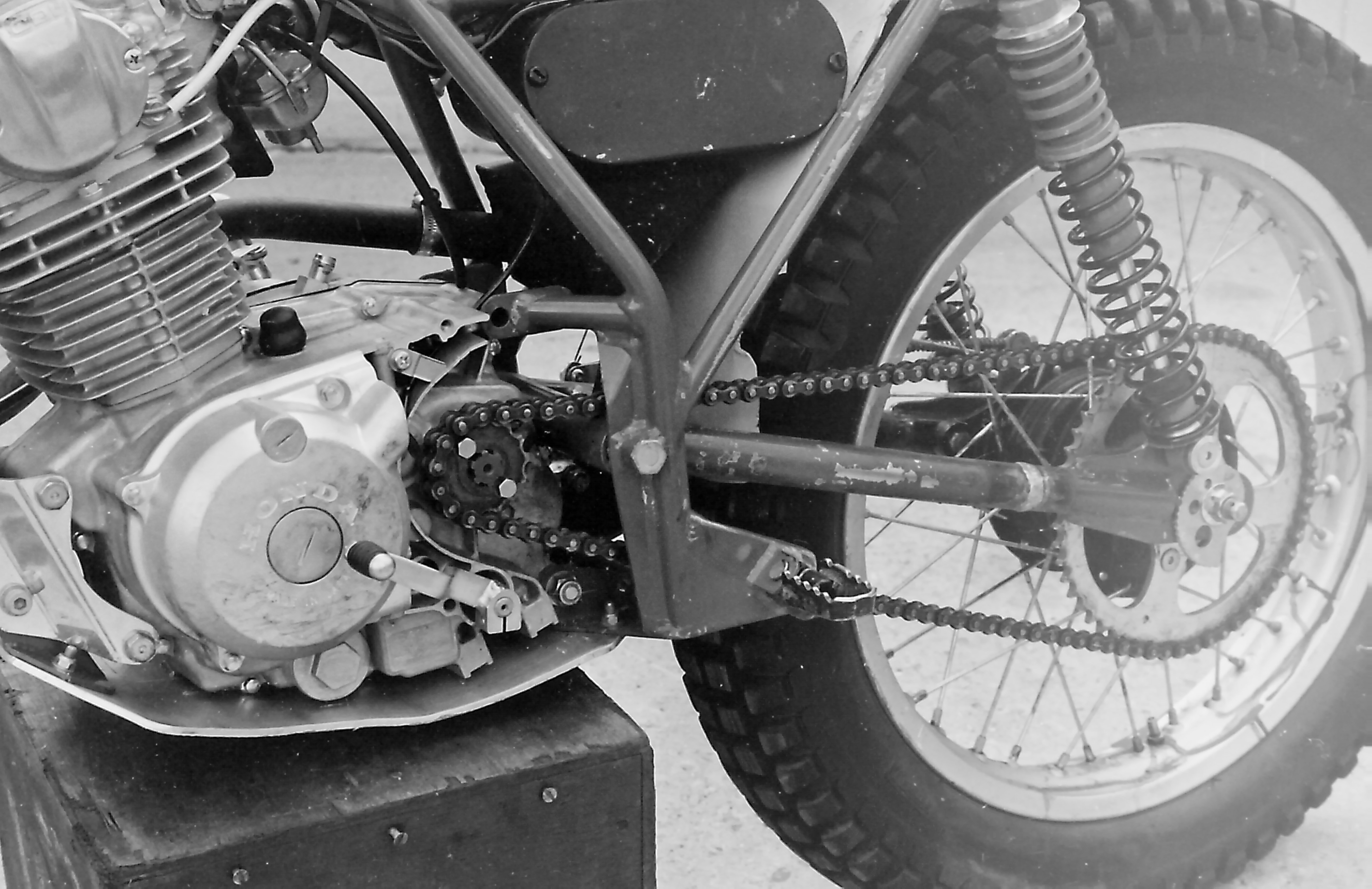
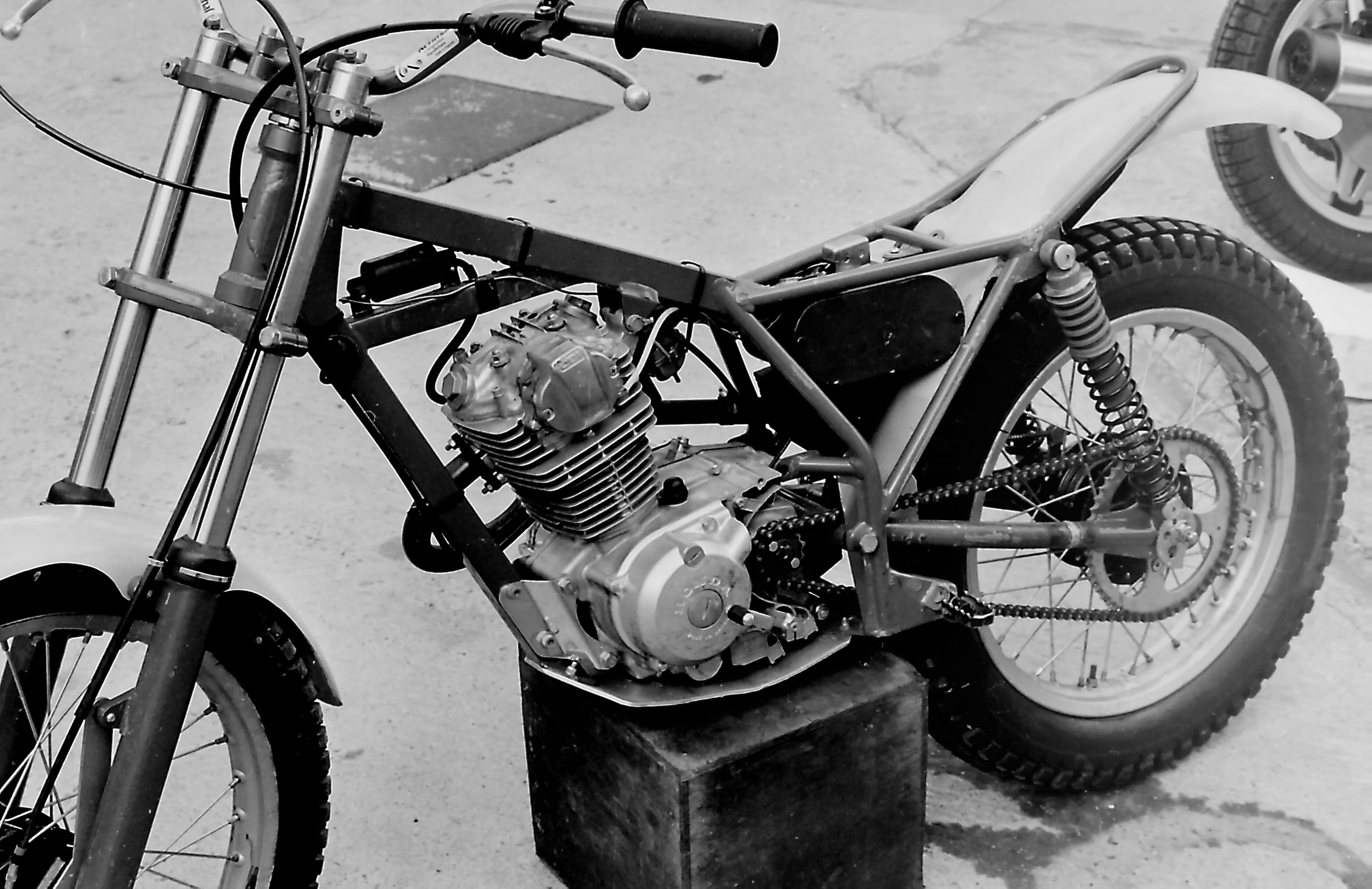
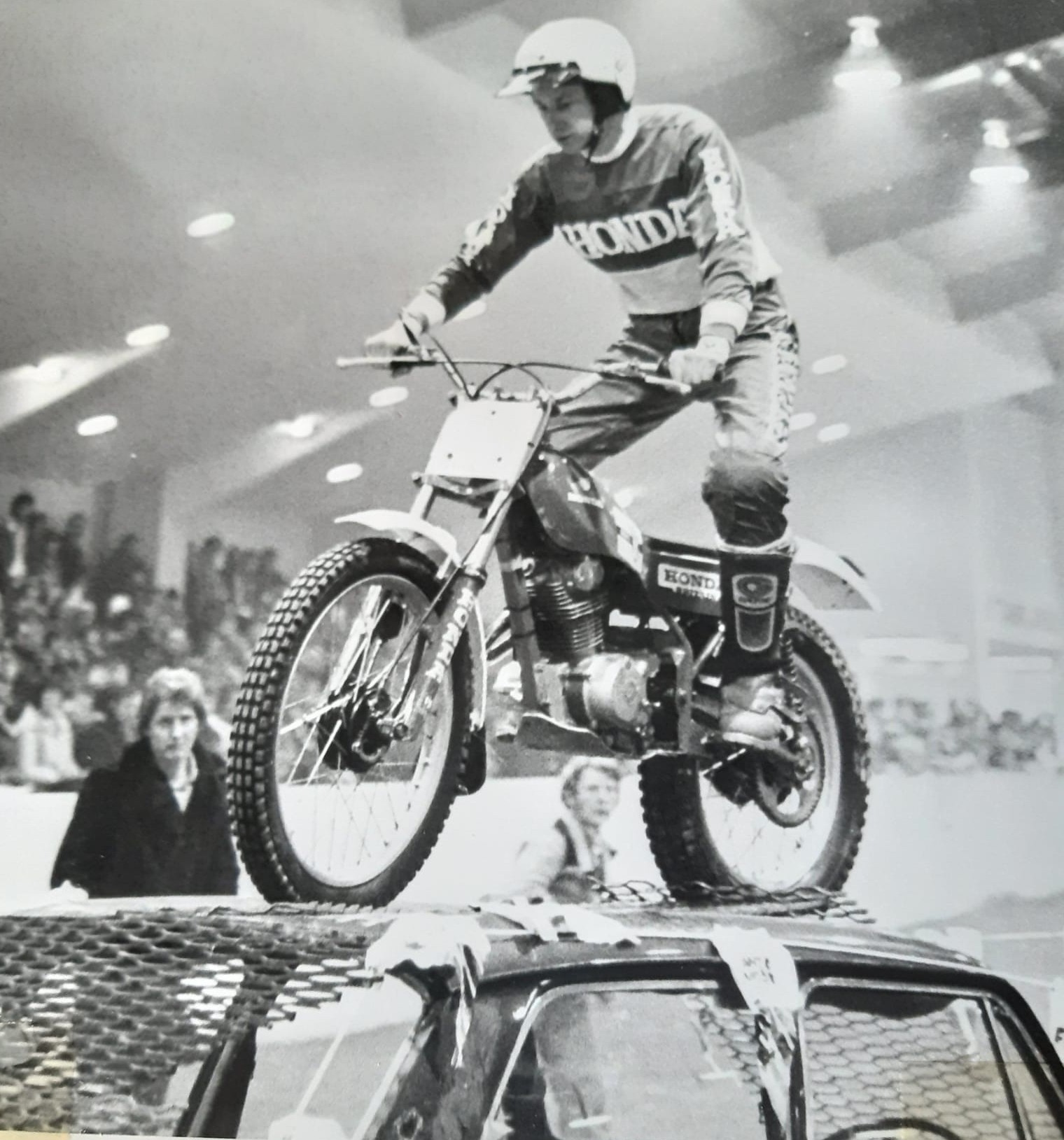
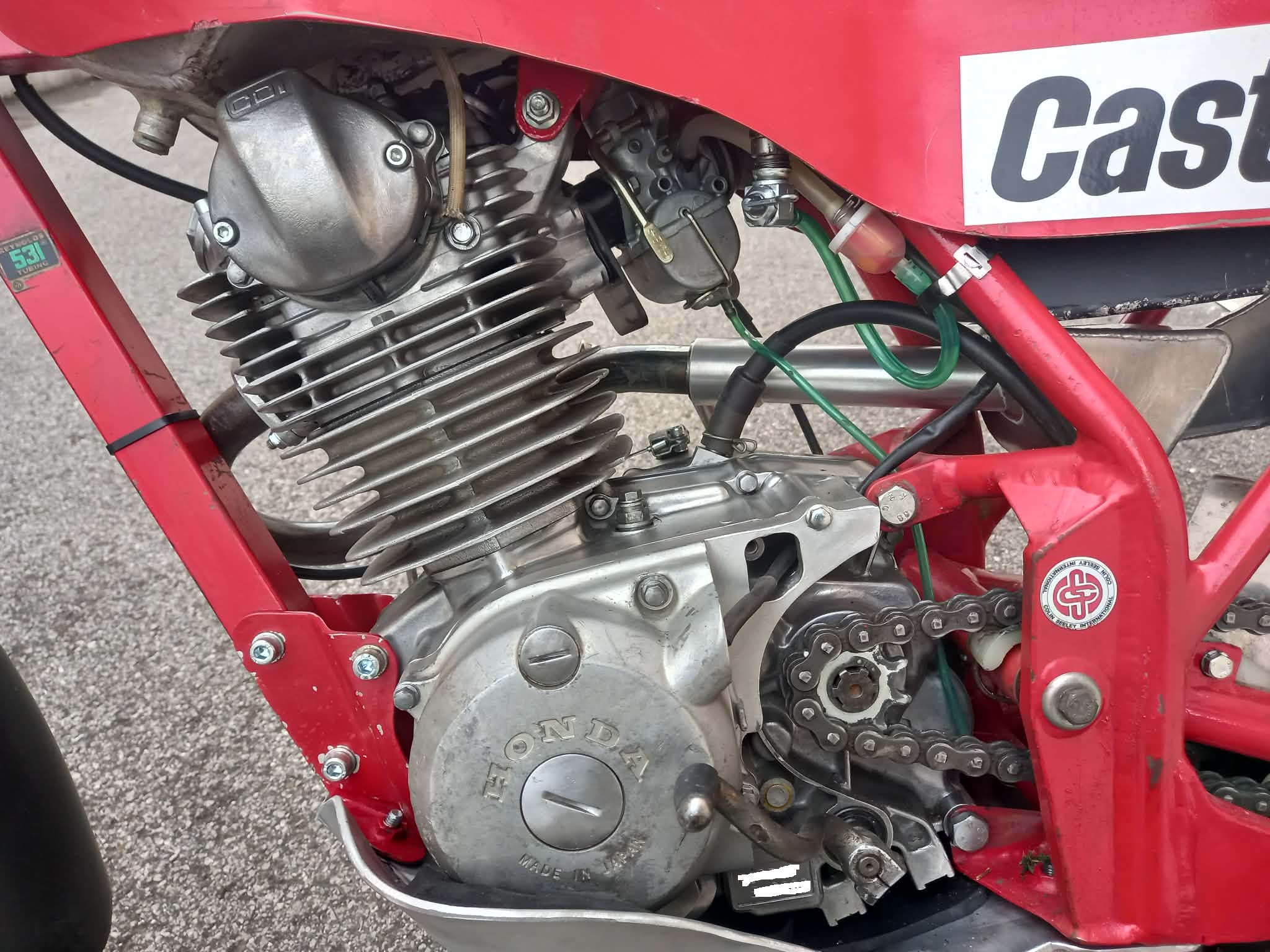
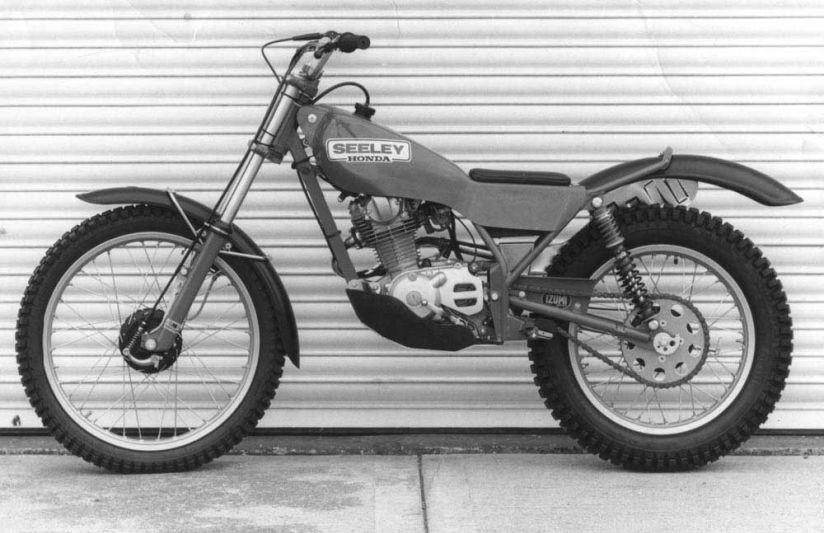
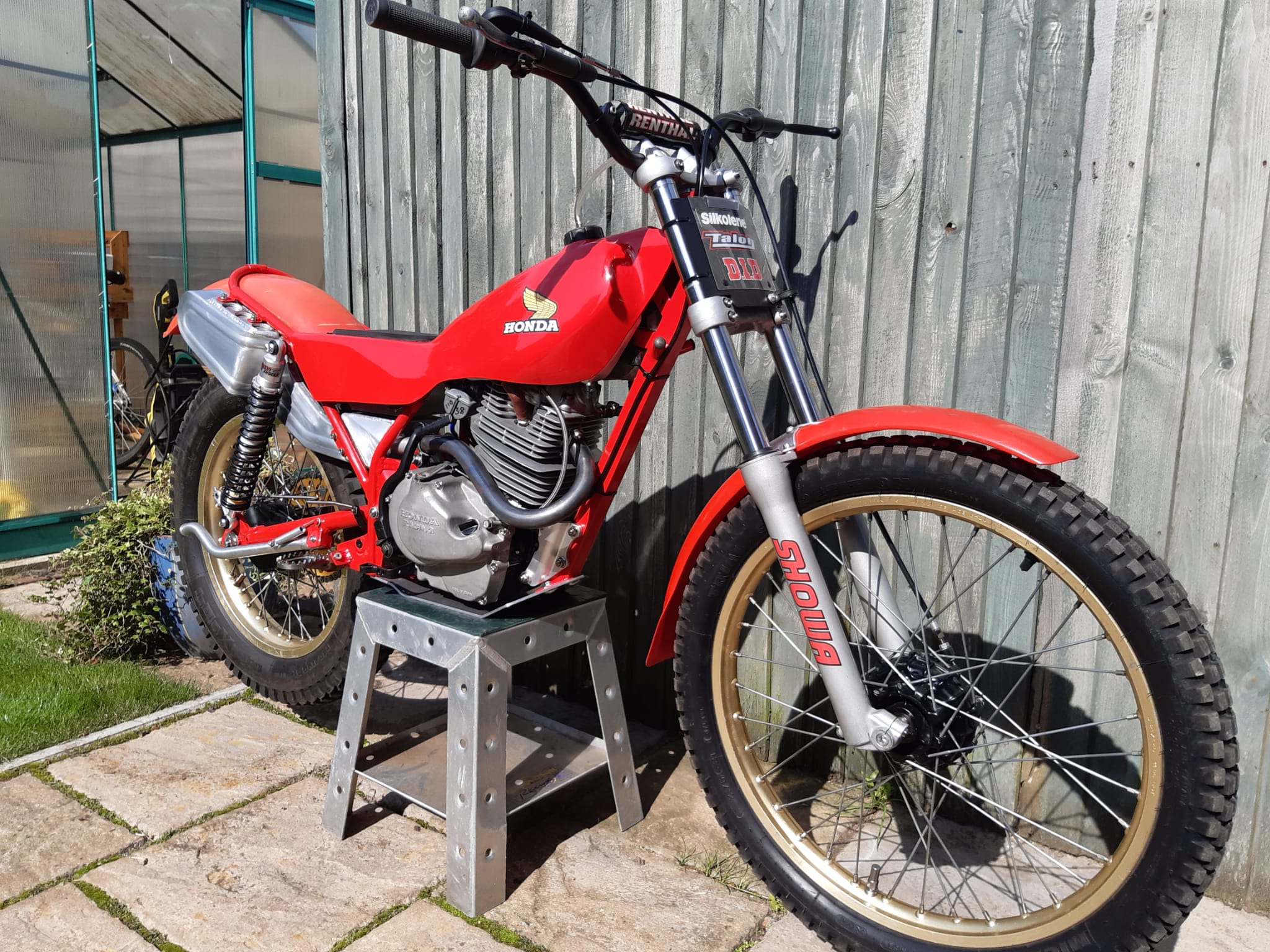
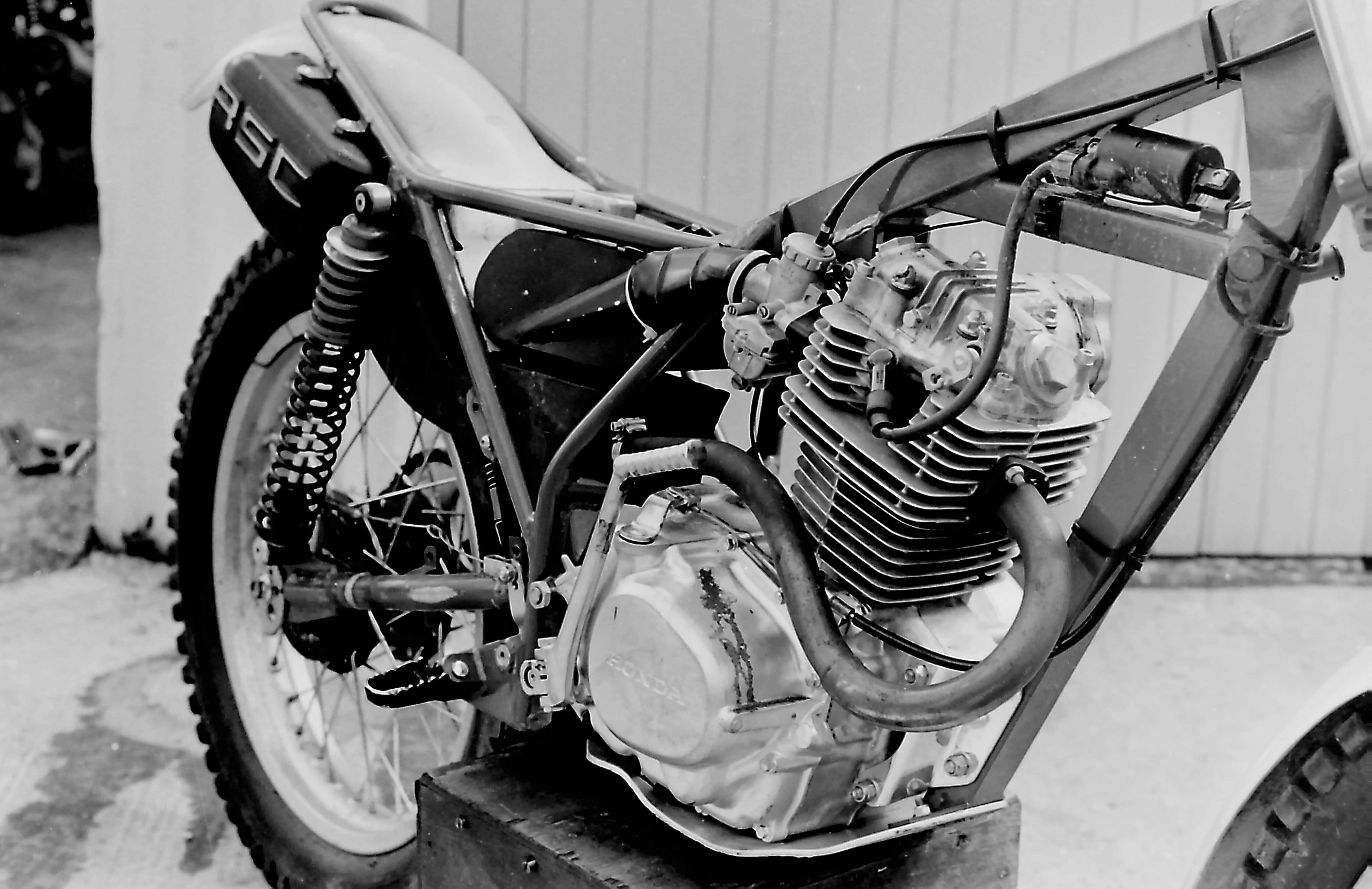
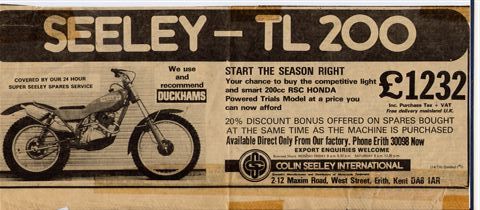
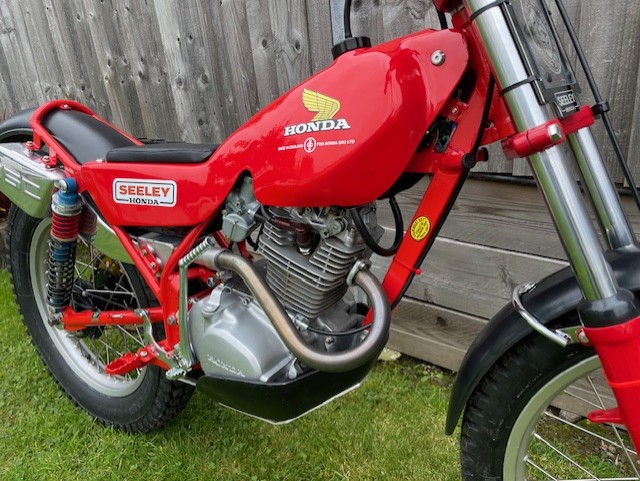
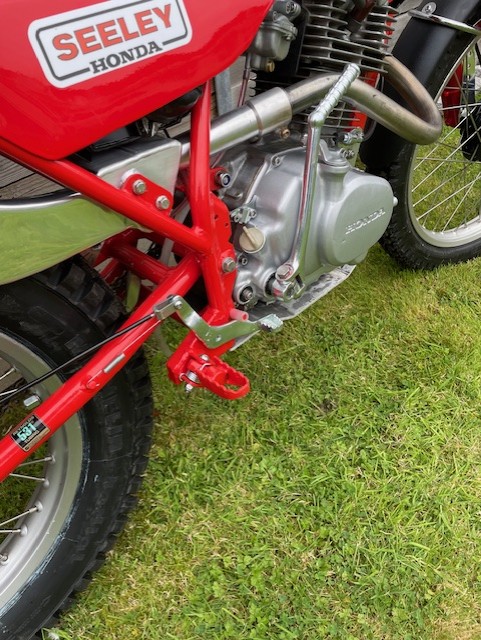
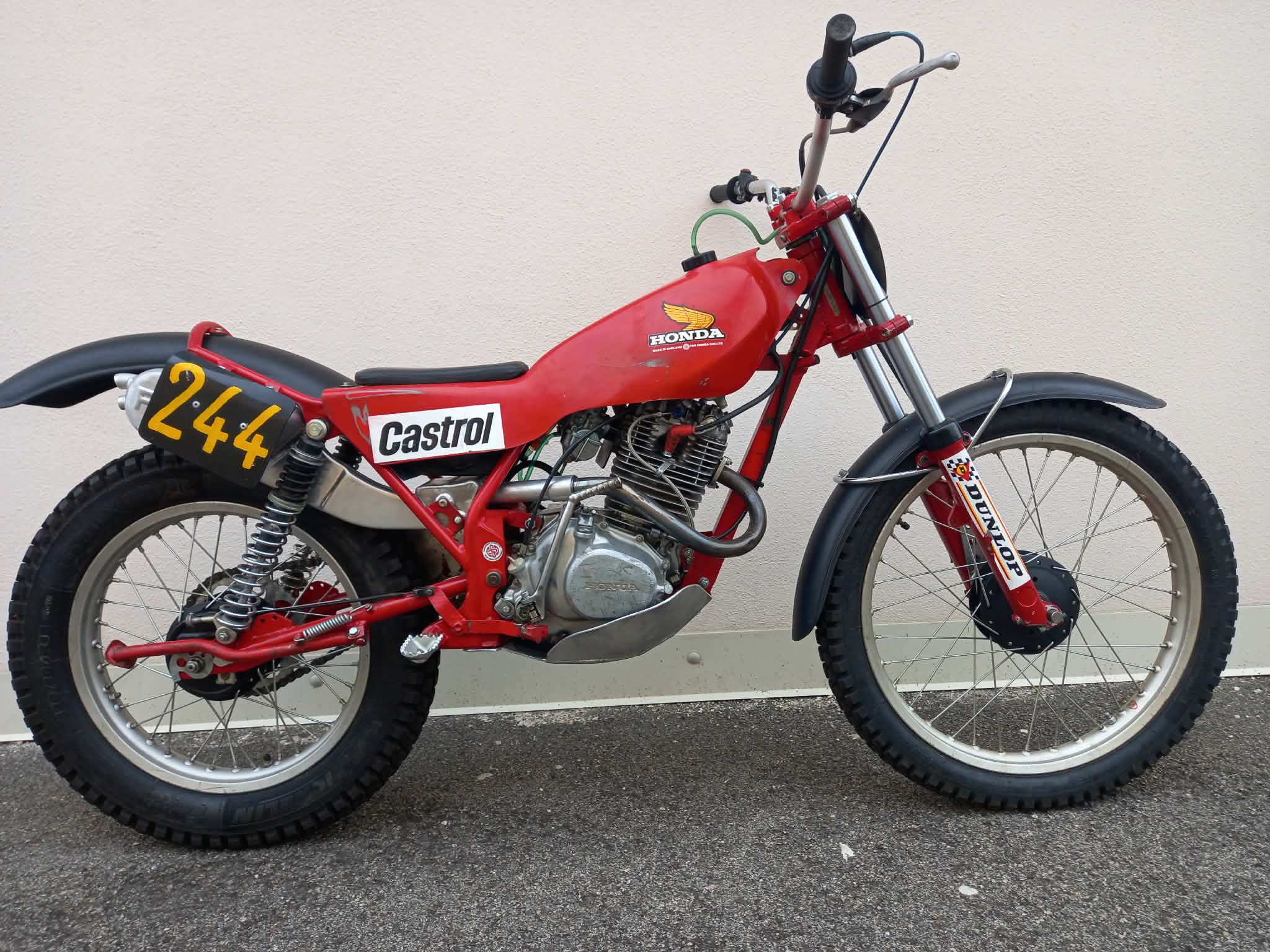
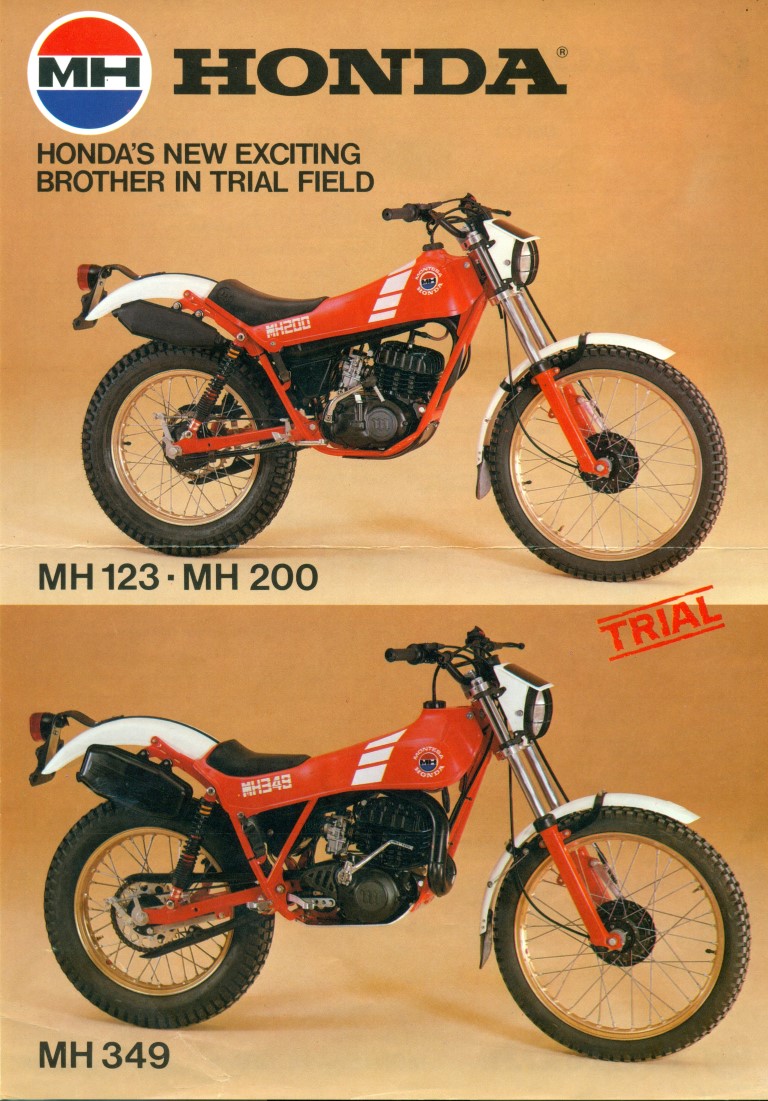
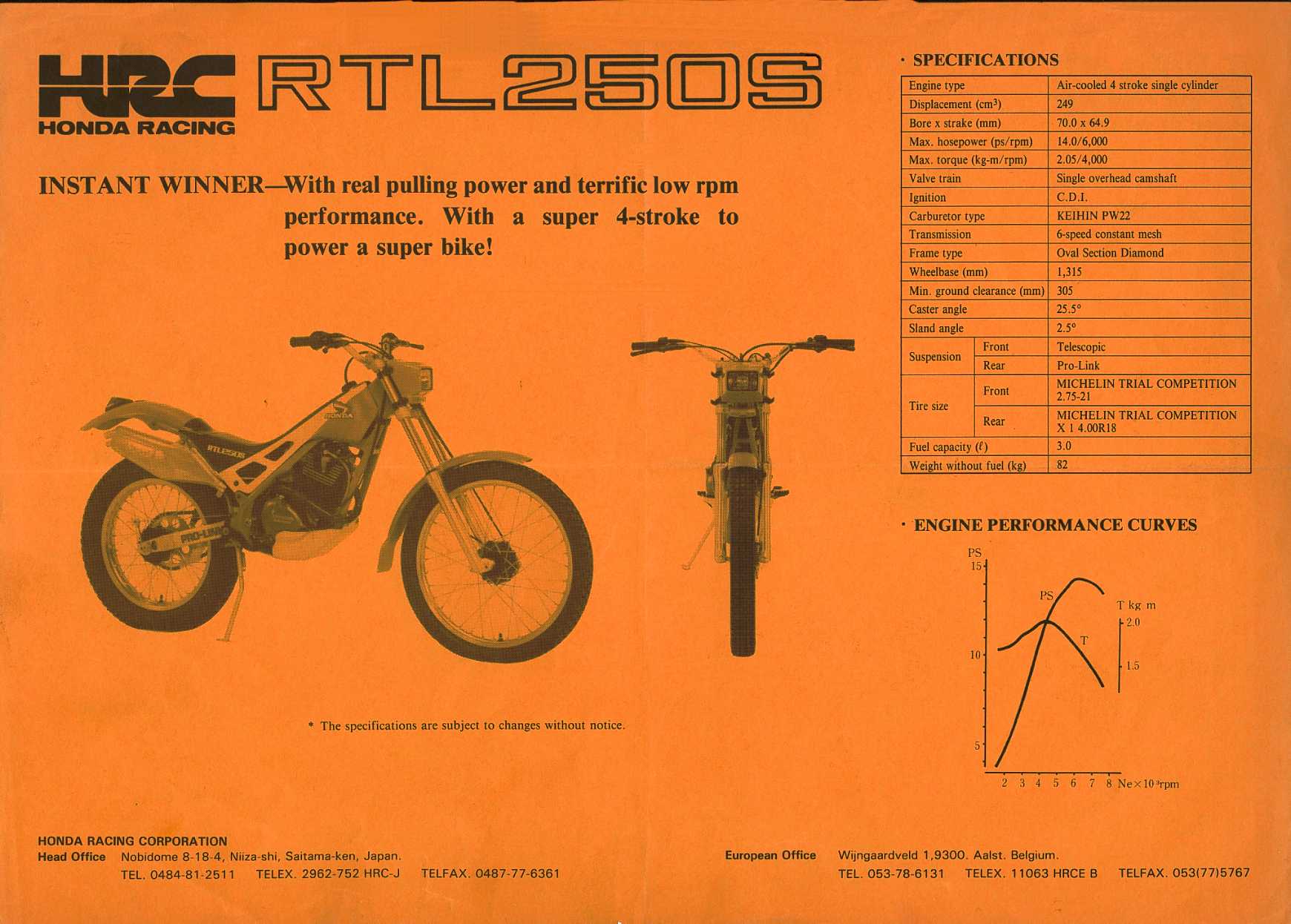
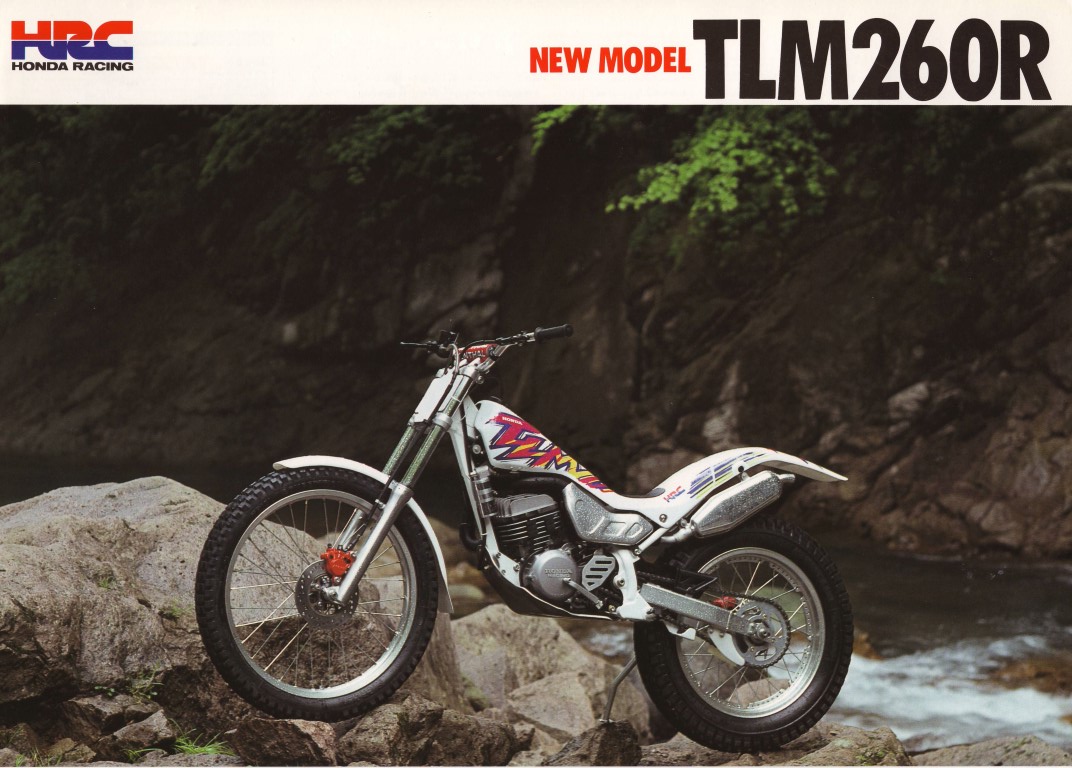
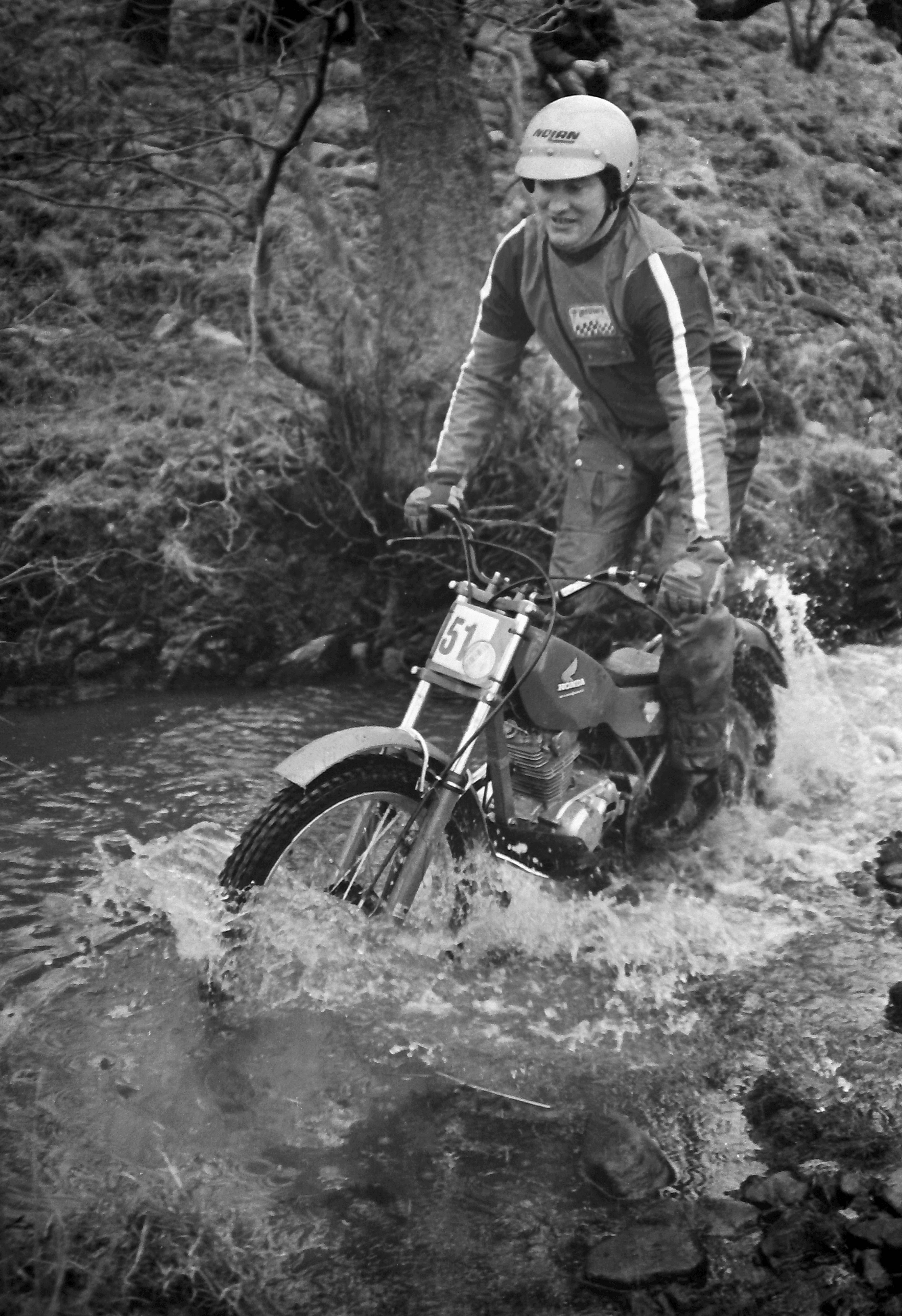
In late 1972, Honda Motor Company launched their trials effort in Japan, code-named quirkily as ‘Bials for Trials’ debuting their small capacity which later became the production TL125 for the UK and Europe and the TL250 specifically for the North American market in 1975. From that time, there were to become official Honda trials models, but mainly the giant Japanese manufacturer created some very good motorcycles for the sport of trials, but few reached series production. This encouraged smaller concerns to build their own, using Honda engines. Honda even adopted a model made in the UK, built by Colin Seeley International, the Seeley Honda TL200E. This was in collaboration with Honda’s Racing Service Centre (RSC). The Seeley frame featured top and down tubing of square section as did some of the factory special Hondas.

The original 124cc TL was to provide an entry level machine for trials sport and with ten times British Champion, Sammy Miller MBE effectively in charge of development, it came as no surprise that he would eventually provide upgrade parts through his New Milton trials emporium. He would later produce a ‘Hi-Boy’ frame kit, as Sammy had produced for the Bultaco Sherpa T which he also developed from 1964 until 1974.

Honda publicity material from 1975 – Photo: Honda Motor Co

Conversely, down in St. Ives, Cambridgeshire, Peter Jerred ran a motorcycle dealership in the mid 1970s, he had taken a shine to the little Honda.

Peter was educated at Ottershaw boarding school at Ottershaw in Surrey and had studied building and land surveying at Guildford College and went on to become a senior engineer on various road projects in the south of England. He was at that time a keen scrambles rider.

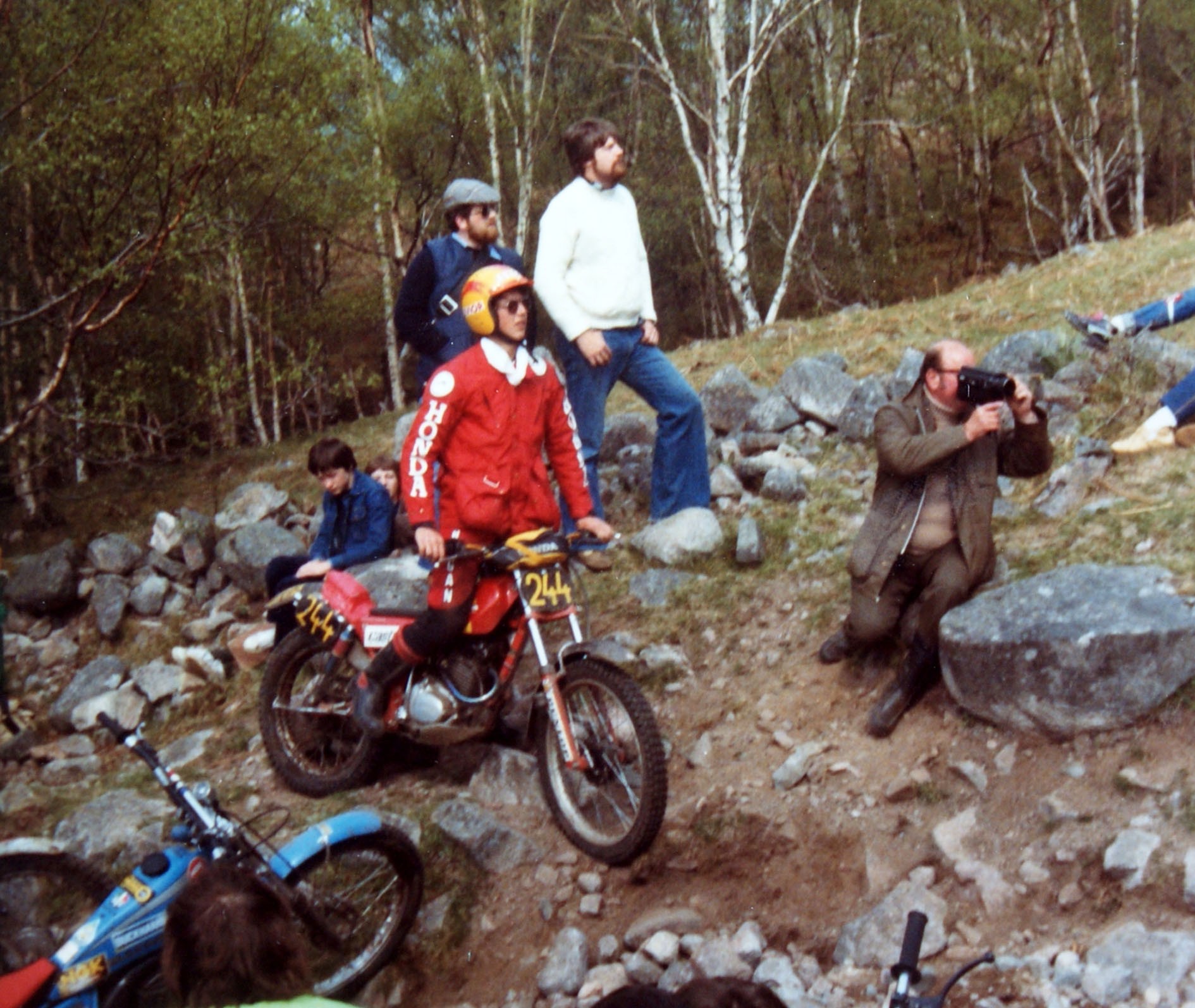
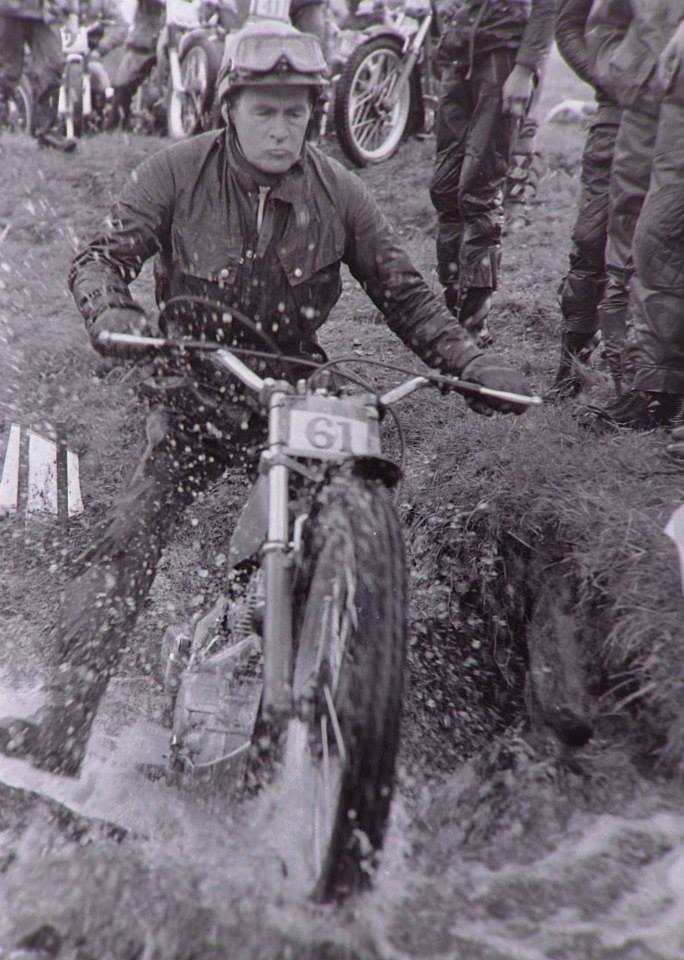
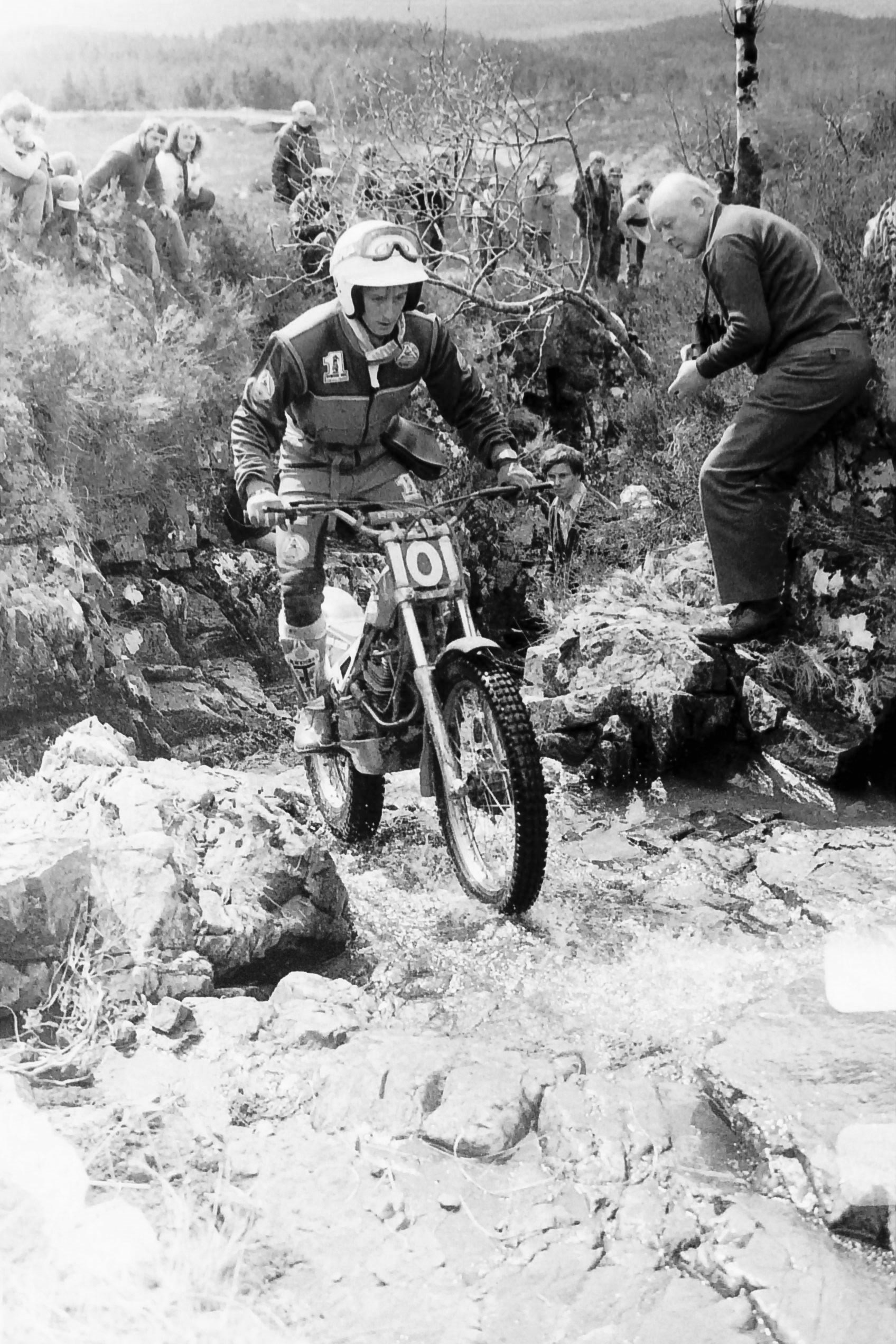
Nick Holt on Ben Nevis during the 1979 SSDT – Photo: Jimmy Young.

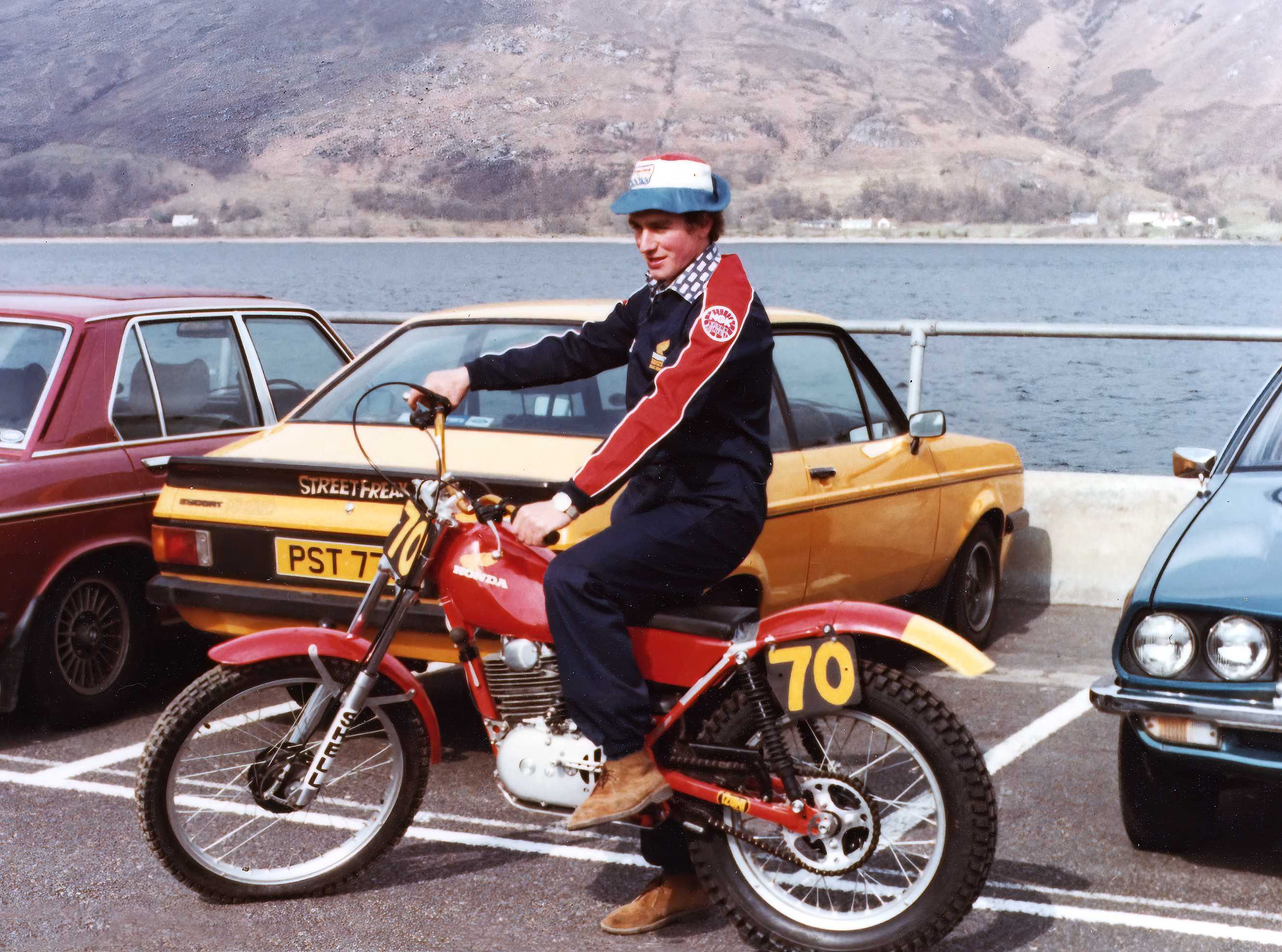
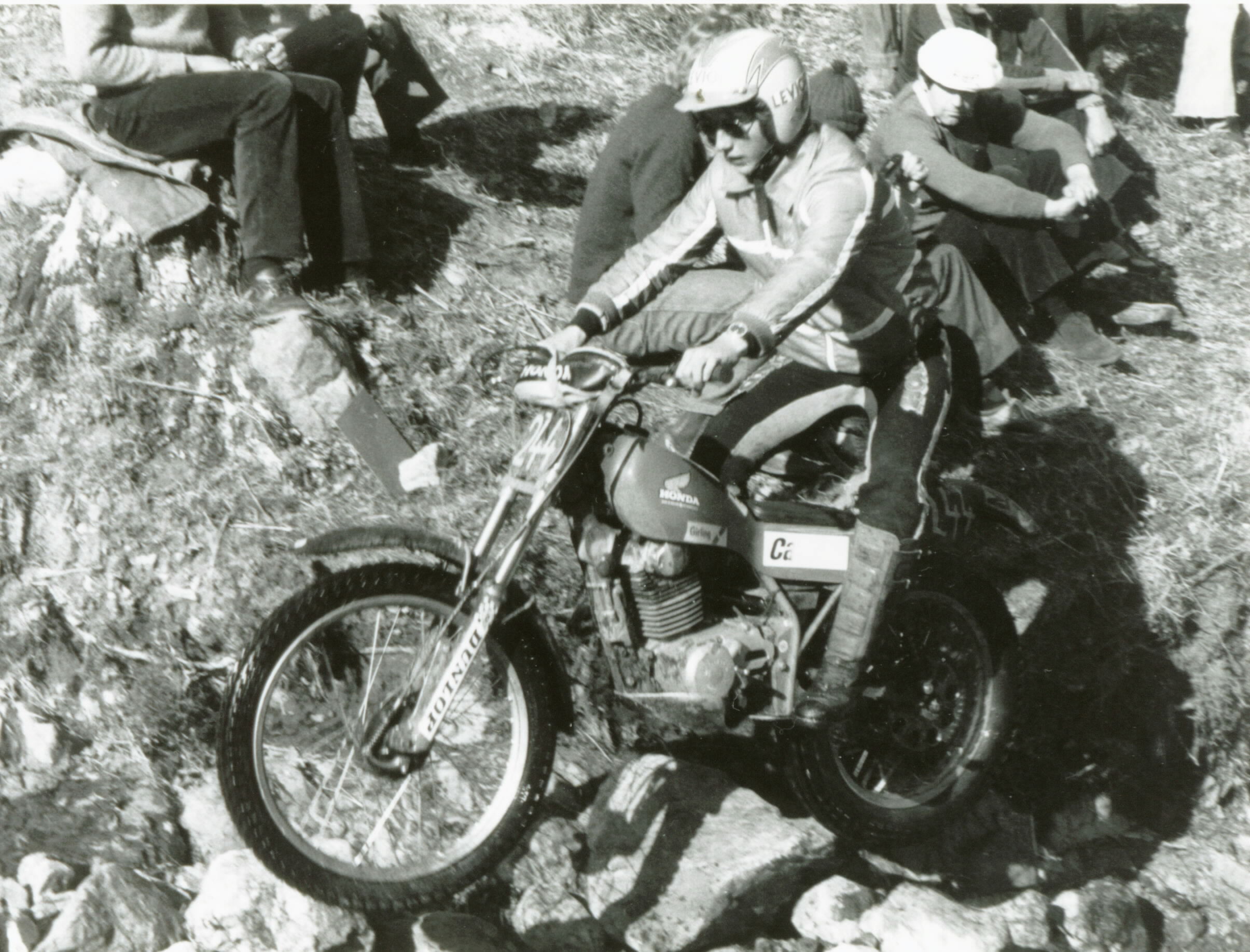
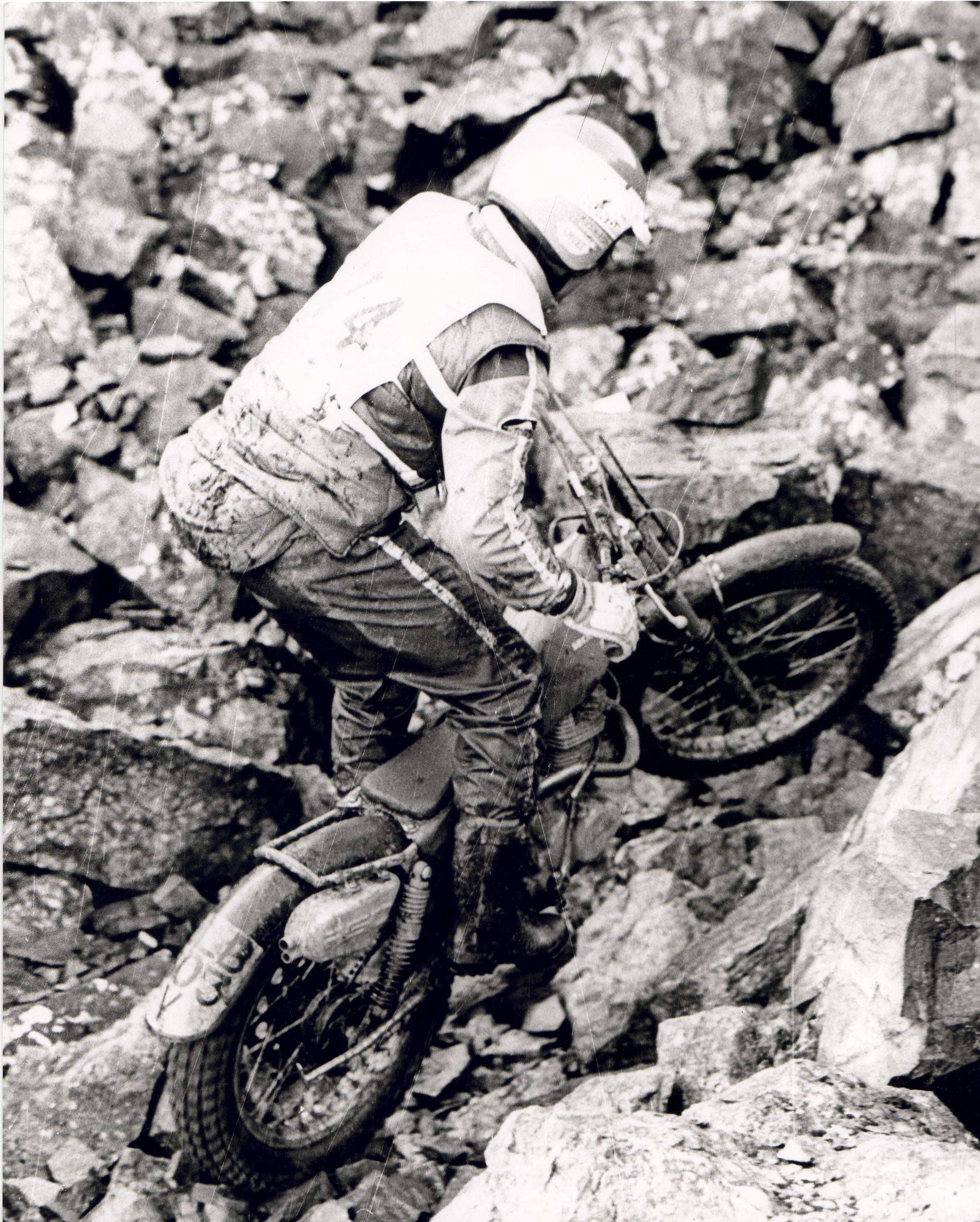
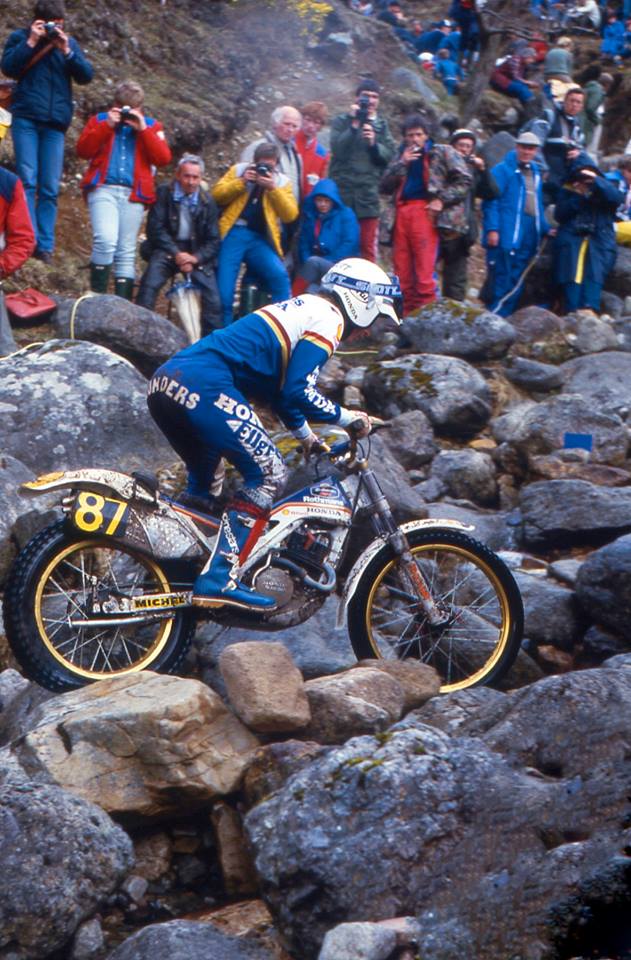
Jerred set about building his own version of the Honda TL125 and pulled a team together for the 1979 Scottish Six Days Trial, which attracted a good bit of interest in Fort William that year, during the weigh-in Sunday. The team comprised of Nick Holt, Nick Fossey and Jim Kelly.

Nick Fossey on his Jerred Honda, tackles ‘Ben Nevis’ section in the 1979 Scottish Six Days Trial – Photo: Jimmy Young.

The previous year, 1978, Nick Holt had ridden his Jerred Honda to 104th position losing 460 marks. He received a first class award and was third best 200 that year on the prototype.

Nick Holt (200 Jerred Honda) on ‘Laggan Locks’ in the 1978 SSDT, watched closely by Austrian, Joe Wallmann. Photo: Alastair MacMillan Studio, Fort William

Peter Jerred tells it in his own words:

“I had a TL125 which was rather short of power and lacked quite a lot more. Sammy Miller began selling piston kits which took them up to 150cc, which was actually a modified standard Honda 750/4 piston with some machining work done on the piston crown. So, using one of those the next thing to do was ‘stroke’ the engine. The obvious amount was six millimeters, as each link of the cam-chain was six millimeters.”

The Jerred chassis in all its glory – Photo: Peter Jerred

It all started with a Renault 4:

“Next on the list was the chassis department, Mike Mills of BSA fame had got involved, having ridden in my Renault 4 across a ploughed field, no real power but long travel soft suspension. This allowed the drive wheels to stay on the ground rather than hop across the ‘undulations’ with thanks to Murray Walker, losing grip every time it was in the air. Mike therefore designed that frame so that all standard TL parts would fit but massively increased rear travel built in to the design. Mike at that time was possibly the best engineer in the field of suspension in Europe if not the World having worked for Ohlins with international racing star, Kenny Roberts.”

The long travel rear end can be seen in this photo, the dampers were inclined and the lower mounts located closer to the engine than the TL125 Honda – Photo: Peter Jerred.

“The TL125 frame was re-designed with only two slightly bent tubes and tig welded, very unusual at the time, by talented fabricator, Bill Wooldridge in his workshop at Weedon, Northamptonshire. The frame numbers begin with the year they were built, for example 1979 begins 79. The frames were finished in bright nickle, just like the Rickman Metisse frames were.”

“Nick Holt rode the prototype which had the rear mudguard loop made from a pair of bicycle front fork legs and it used a standard TL tank and aluminium side panels. The side stand was fitted to the offside, whereas later bikes had it fitted on the nearside.”

The prototype Jerred Honda ridden by Nick Holt in 1978. The standard TL Honda fuel tank and aluminium side panels can be seen here clearly. XL front forks with a forward wheel spindle was used. The name ‘Mills’ is also on the fuel tank. The exhaust was a one-off special item. Holt rode this machine in the 1978 SSDT. Photo: Peter Jerred Archive.

“The exhaust was also very different as it only had the front box with a short tail pipe. The kick start was reworked, which allows the bike to be started without lifting the footrest. I used to offer that modification on the basis that the customer sent me his old kick start that I would modify for the next customer. It was a good little mod.”

Angular Fuel Tank:

“The fuel tank was folded aluminium, in a similar style to a CCM tank which was another Mike Mills project. Fibre glass was used for the air filter and the side-panel and seat unit.”

The ‘Jerred Honda’ of Colin Moyce from Rye at the 1979 SSDT – Photo: Peter Jerred Archive.

“At the time, nothing was written down like professional race teams except the drawings for the frame. As mentioned, the first remit was that standard parts from the TL125 Honda should fit perfectly. Obviously, the tank and air filter and exhaust were special and supplied as part of the kit.”

The alloy fuel tank and Fibre glass components for the Jerred Honda – Photo: Peter Jerred Archive.

Suspension:

“Forks were standard straight exchange including yokes. Rear suspension, now that where the biggest and most significant change was made, by the standards at the time, the late 1960s and early 1970s. As I said previously it was massively long and unbelievably soft, controlled by the blue Girling Gas shocks with the twin spring set up. Many people did not understand that the combination of a long soft spring and the inclusion of the short square section orange spring actually further reduced the rate of the long soft spring.”

Nick Holt (200 Jerred Honda) takes a steadying dab in the 1978 SSDT on ‘Garbh Bheinn’ – Photo: Alastair MacMillan Studio, Fort William.

“Let us say the soft spring was rated at 60lbs per inch, then for every inch the unit moved both springs would compress, therefore the soft spring had not moved an inch, the 60lb/inch rate is reduced. Still with me? The suspension movement was just a little over ten inches! In general, when a rider was sat/stood on the bicycle, approximately half of that was taken up, around five inches, so plenty remaining to absorb impact and the same amount to drop in a hole and still retain grip. The hubs were standard TL125 Honda but on the “works” versions the fins were turned off; rims were re- anodised gold.”

Front End:

“Back to the front forks, although standard forks were okay. We tried several options, Bultaco/Betor, Marzocchi, Honda XL, the ones with the leading axle and the XL forks ran without springs but with air. Mudguards were Bultaco/Gonelli standard on rear, but the front version turned round with the flap trimmed off, which is very popular nowadays.”

Engines:

“There were three variations. 220cc in the bored and stroked version and 175cc with just the over-size bore however that came in the Over Head Cam TL engine and also in the push-rod version based on the CG 125 motor with trials gears added. In a funny sort of way, I liked the CG based engine, it was unusual, quiet and a little lighter. Going back to the 220cc engines, there was a lot of work to produce one. A spacer was required to lift the barrel 6mm, the cam chain had to be two links longer, extra weight was added internally to the crankshaft which also needed the piston to have a little of the skirt removed for clearance.”

“The crank pin had to be moved to account for the barrel being lifted 6mm. We over-bored the flywheels, plugged the hole and bored the new position for the crank pin 6mm offset.”

“There was also additional weight added to the external ignition flywheel. To do this there was a skim taken the external diameter and a stepped sleeve pressed on. To allow for the extra width of the ignition flywheel the near side outer case was spaced out 15mm.”

Lubrication:

“As far as lubrication was concerned, Jim Kelly had a connection with ELF lubricants, hence the large sticker on the tank of his bike. All the others ran on a standard 10/40 oil. They never used a drop between oil changes.”

Carburation:

“Fuel continued to be delivered via the standard TL carburettor but attached to the cylinder head by a purposed made manifold. From memory, surprisingly little was changed in the jetting department.”

Exhaust:

“As far as the exhaust was concerned, the front pipe was retained but married to a large fabricated open chamber and one to a pipe with a quite simple muffler on the end exiting just behind the top of the offside rear unit. The exhaust was relatively quiet, and Mike Mills explained it like this. If you had a motorcycle exhaust pipe going in the front door of the Albert Hall and a pipe coming out of the rear door, there would be little sound to be heard. I know it’s more complicated, but the principle has some logic.”

“Although we made twenty-five Jerred Honda kits, records of who they were sold to are unfortunately long gone! I have two, one of which I have begun to restore, frame number 15 and I hope that perhaps Sammy Miller could find a space at Bashley Manor for it. The complete frame weights in at 14lbs (6.36 kg).”

“Nick Fossey was exceptionally good on one, Nick Holt enjoyed his time on one, Jim Kelly and Mike Butcher also had one. Finally, I think, the bicycle was ridden briefly by both a Honda and a Yamaha test rider at an SSDT and within six months, if my memory serves me correctly, they both had long travel soft suspension.”

“For the 1979 Scottish Six Days, Nick Holt’s bike had Marzocchi forks, Nick Fossey had Bultaco on his. I also used XL125 on one of them and they didn’t use springs, the fork caps were linked together with a valve on one and were pumped up from that valve. Air gives a progressive rate and it worked quite well. The issue for the rider of course is that what is going on in the head, often overrides what is going on with the bike!

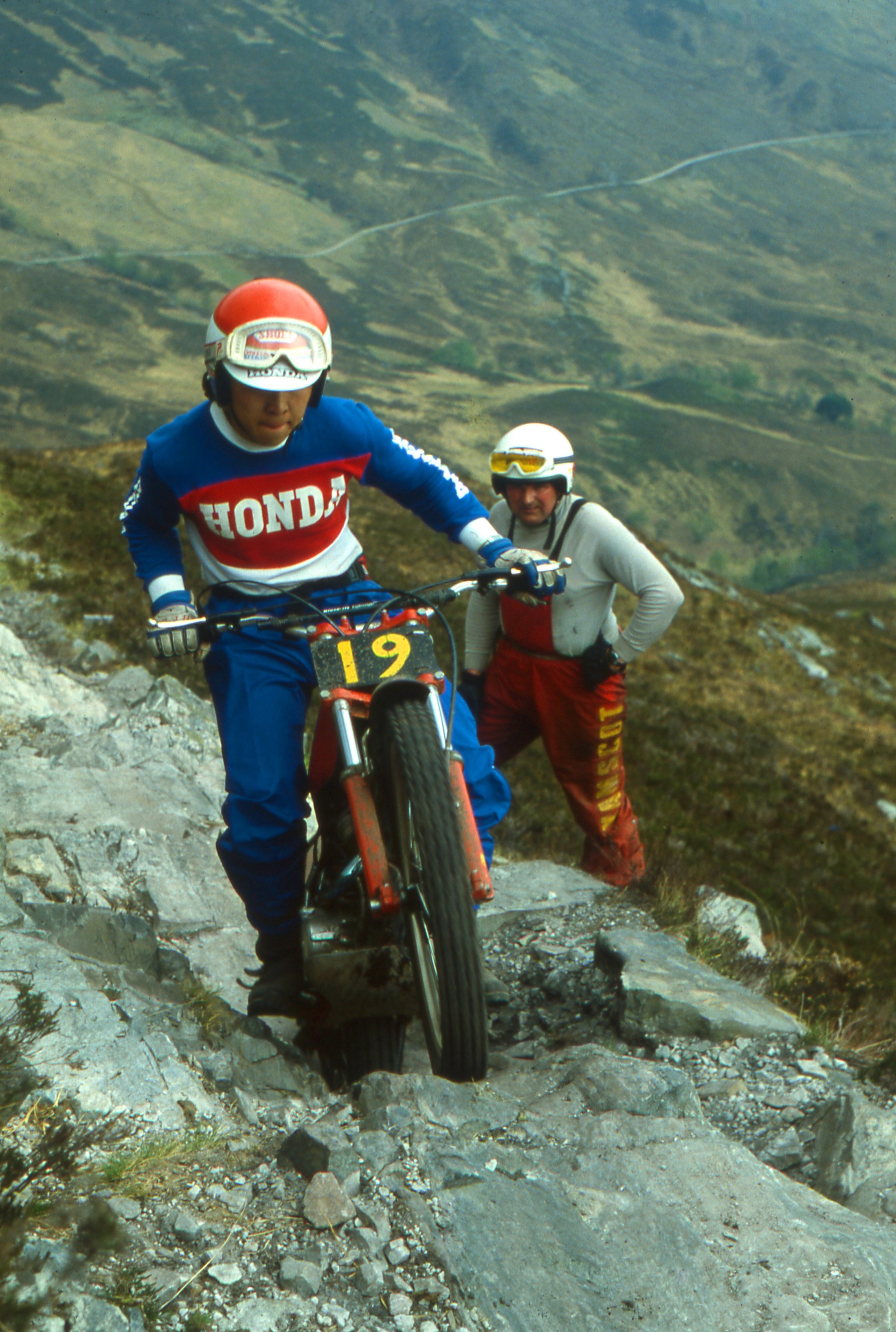
M. Miyashita samples the Jerred Honda of Nick Holt at the Scottish Six Days Trial at Fort William in 1979 – Photo: Peter Jerred Archive.

“I’d like to think that in its own way the bicycle was a little special for its time which must be credited to Mike Mills who was just a talented motorcycle designer/engineer.”

Nick Fossey pilots his Jerred Honda, entered as a ‘Mills honda 200’ in the 1979 Scottish Six Days. The Bultaco front forks are clearly distinguishable in this photo – Peter Jerred Archive.

The Jerred Hondas in the SSDT:

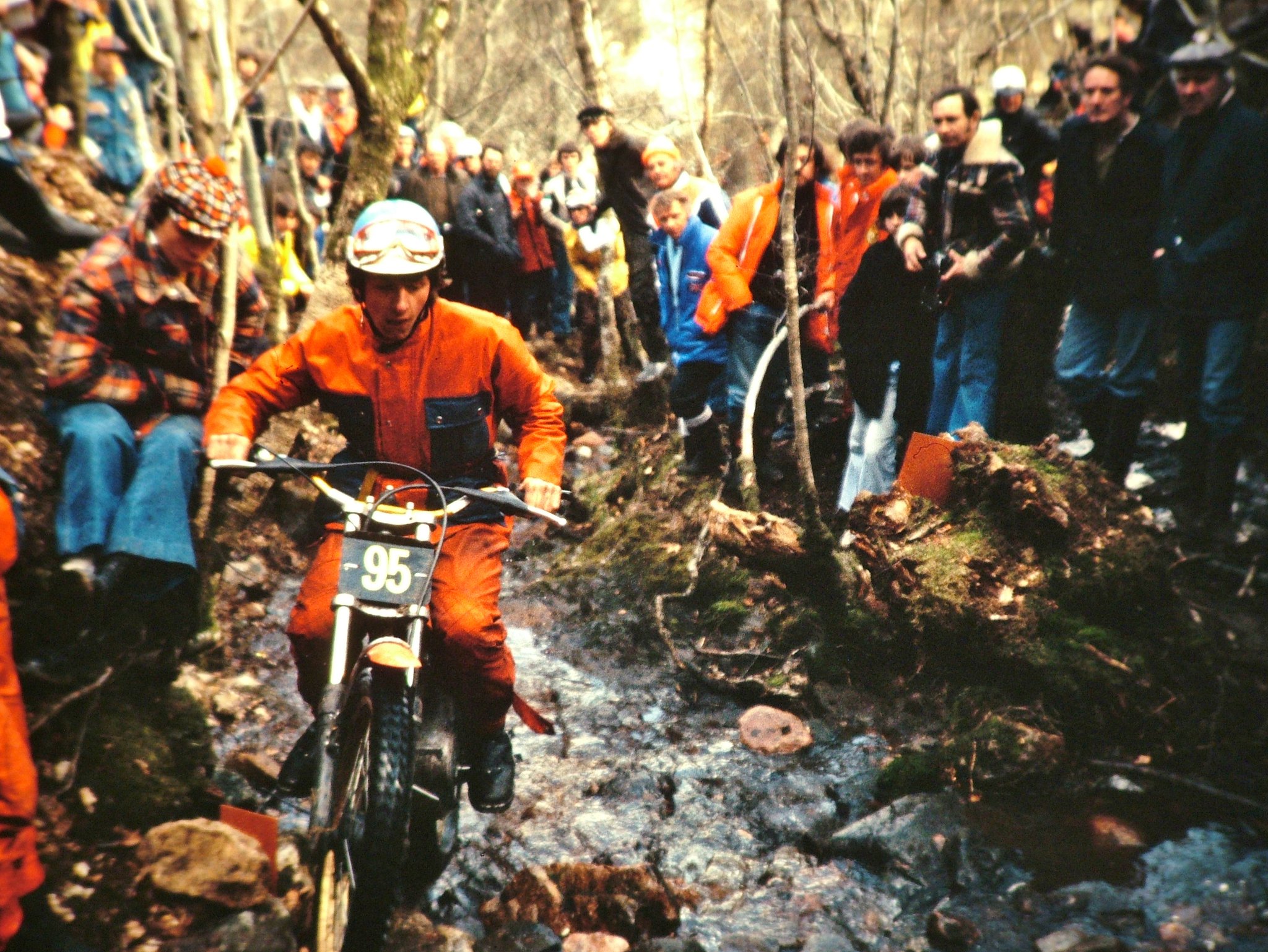
The Jerred Honda enterprise at the 1979 Scottish Six Days. Left to right: Nick Fossey; Jim Kelly and Peter Jerred. Number 59 was Nick Holt’s machine, 95 was Nick Fossey and 90 was Jim Kelly. Not in photo is Nick Holt – Photo: Peter Jerred Archive.

History records that all three of the Jerred Honda team riders competing in the 1979 Scottish Six Days, finished the event. Nick Fossey who was entered on a ‘Mills Honda 200’ riding number 95, was 87th losing 387 marks for the week. Nick Holt (Honda 200) riding number 59 came home in 130th position losing 478 marks.

Watched by a full gallery of spectators, Jim Kelly (Honda 190) on ‘Altnafeadh’ in the 1979 Scottish Six Days – Photo: Iain Lawrie

Third man in the Jerred team was Jim Kelly (Honda 190) whose riding number was 90 and came home in 164th position on 547 marks.

SSDT 1980, Nick Holt on the Jerred Honda 200 on ‘Calliach’ the machine is sporting Marzocchi front forks – Photo: Iain Lawrie

The following year, 1980, Nick Holt was entered under number 18 and finished in 123rd position on 464 marks.

Peter Jerred still has fun with off-road motorcycles. Photo copyright: Anthony Hylton

Peter Jerred: “Mike Mills was not only my brother in law, but also a great friend and talented design engineer who is sorely missed to this day. He really was the man behind this venture and I will always be truly thankful for his help. Mike had an affinity to the sport of motorcycling which we all love.”

Peter Jerred is still involved with motorcycle sport, having become immersed in classic scrambles in recent years, campaigning specially tuned and modified CZs. He also makes gear shift kits for the Czechoslovakian machines.

Trials Guru’s John Moffat got to know Peter Jerred when he purchased a jack-up stand from him in the early 1990s.

Moffat: “I bought one of Peter’s jack-up stands that he was selling at the Scottish Six Days one year. It was a very sturdy and well built item and was finished in red powder coating with a good quality bottle jack and securing bar. The jack has been in my workshop since then and has been used countless times when working on my motorcycles. I always ask Peter when I see him at scrambles if the warranty is still in date and we have a laugh about it. Peter is a great character, very knowledgeable and an enthusiast. He is always willing to help when required.

Colin Moyce’s privately entered Jerred Honda at the SSDT in 1979 – Photo: Peter Jerred Archive.

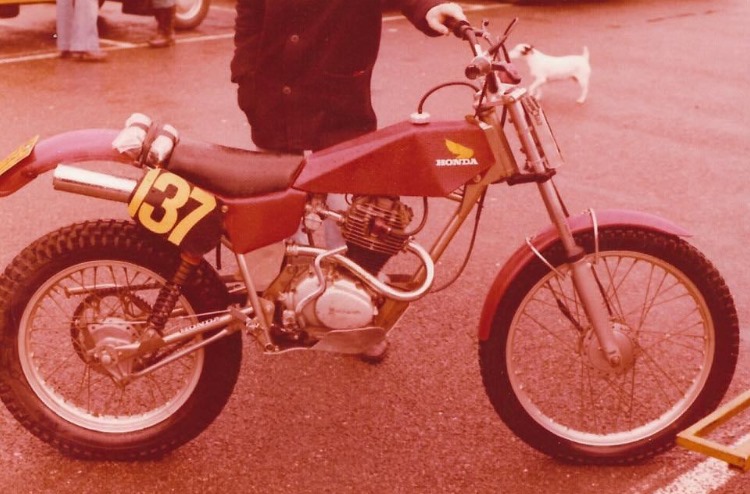
Following the publishing of this article, we discovered that the Jerred Honda bearing the number 137 was the machine owned by Colin Moyce from Rye, East Sussex.

Colin Moyce:Honda number 137 was my bike, you could buy the kit from Peter and build the bike yourself. I loved that little Honda and never went back to a two-stroke trials bike after owning the Honda. The rear suspension was amazing, it found grip like no other bike at the time. This was based on the trials in South East centre, where our conditions consisted of mud, more mud and total mud. The little Honda was in a world of its own, my club mates were just in shock on how much grip it achieved. Currently I’m riding a Triumph Cub or BSA B40 in pre65 events.

I rode the Honda in the 1979 Scottish Six Days, I then won the Scottish raffle for a free entry the following year, Jim McColm was SSDT secretary at the time, unfortunately I did not manage to claim the free ride as I was working in the Middle East for five years. I understand the bike is in Scotland now, I’m trying to get a contact number as would love to have it back. I wonder if Brian Fowlers’ Rapid Araldite is still covering the hole in the casing after hitting a rock on the Tuesday? That Araldite rescued me from retiring.”

It all started with a Renault 4 – The story of the ‘Jerred Hondas’ article is the copyright of Trials Guru and Peter Jerred.

Tribute to Mike Mills

Words: John Dickinson

From Kendal, John Dickinson, former editor of Trials & Motocross News on his Suzuki at the 1980 Aberfeldy Two-Day Trial. Photo: Jimmy Young, Armadale.

John Dickinson remembers time spent with Mick Mills, a man so far ahead in his field, then listens to tales of old at the Crooklands Hotel.

Sad news greeted me, and many other enthusiasts when they learnt the news I imagine, the other day as I arrived at work between Christmas and the New Year when I was told of the death of Mick Mills. Now, to our younger readers, this might not mean anything at all, but whether you have heard of Mick Mills or not, if you ride a modern off-road bike you unknowingly owe a lot to the man.

Mick was a remarkable engineer, whose forte was suspension. Now I am not going to rashly claim that he actually invented’ the modern linkage type of rear suspension, or Upside Down Forks, because as we all know there is nothing new under the sun, but he most definitely led the way in their development and thus to their almost universal adaptation.

Mick was the man behind the Swindon Swing-link, which was the first linkage type rear suspension system most of us had seen or heard of. It was so far ahead of its time in the days of twin-shock and linkless single shock systems that it enjoyed a tremendous run of success in British motocross with riders Paul Hunt and Gary Dunn. T+MX ran out of headlines as the duo relentlessly clocked-up success after success on the National circuit. The major MX manufacturers then ran riot with the idea and suddenly everyone was running a single-shock link system. Kawasaki ‘Uni-Trak’, Suzuki ‘Full-Floater’, Honda ‘Pro-Link’, all different but all basically a four-bar’ system as Mick described it to me one day.

I was fortunate to be invited down to Armstrong Motorcycles, formerly CCM, in the early 1980s by Alan Clews to meet and talk to both his talented designers who just happened to be Mick Mills and Mike Eatough and who were absolutely chalk and cheese in every aspect as I quickly learnt.

I met Mills first and in his drawing office found him to be a quiet, friendly, softly-spoken man who patiently talked myself and fellow T+MX staffman at the time, Mike Sweeney, through the theory of the four-bar rear suspension system, aided by the beautiful technical drawings on his draughtsman’s board, of his latest system due to be fitted to the next generation Armstrong. All the time, Mike Eatough was standing impatiently in the doorway, waiting for Mills to finish his explanations. As we thanked Mick and made our exit, Eatough grabbed us and whisked us off to his workshop saying something along the lines of, All that theory is all very well but THIS is how you really do it, in the workshop. Mike proceeded to show us how he converted his own ideas in hard metal with saws, tools and welders. Two totally different approaches yet each worked for the individual.

Mick Mills then went on to work for Ohlins, one of the most respected of suspension companies, becoming their chief designer where he did pioneering work with USD forks, working with the factory Yamaha MotoGP team and their famous rider, Kenny Roberts.

I occasionally met Mick down the years and he was unbelievably modest regarding his life’s work but was always willing to sit and chat with an interested amateur engineer such as myself and carefully explain why he did this or why such and such works and something else doesn’t. I always enjoyed our encounters and am sure I gained far more from them than Mick did but he was always happy to talk. The USD forks idea came from us looking for the stiffest possible triple-clamp structure… he told me one day when I encountered him in a Gloucestershire pub following one of Mark Kemp’s BVM trials test days.

I even once built a trials bike that Mick had designed, the Jerred Honda. Again, this was the early 1980s and again Mick was years ahead of his time, having come up with a long-travel twin-shock chassis for the TL 125 Honda engine. Out of the blue he rang me up just a couple of years ago and joked: “If you fancy building another I’ve just found my original drawings for the Jerred so we can knock one up if you like!”

I enjoyed an afternoon over the holiday period which was basically a get-together of old gits’ from the northern centre who gathered at the Crooklands Hotel, near Kendal, for a pint of Black Sheep, a plate of chips and a listen to well-known northern character Tony Bingley. ‘Bing’, who has enjoyed an enviably varied life in motorcycle sport, kept us amused for several hours, which just flew by. It wasn’t just entertaining, I learned a few things as well and eventually came away determined as Tony urged us to attend as many similar get-togethers and reunions as possible. There are a lot of characters out there with a tale to tell, so get them to tell it and make sure you listen.

‘Tribute to Mike Mills’ is the copyright of John Dickinson, Kendal.

Acknowlegement of source:

Article first appeared in TMX January 2010, R.I.M. Publishing Ltd.

More Honda Trials articles: HERE

Apart from ‘Fair Dealing’ for the purpose of private study, research, criticism or review as permitted under the Copyright, Design and Patents Act, 1988, no part of this article may be copied, reproduced, stored in any form of retrieval system, electronic or otherwise or transmitted in any form or by any means, electronic, electrical, mechanical, optical, chemical, photocopying, recording or otherwise without the prior written permission of the author as stated above. This article is not being published for any monetary reward or monetisation, be that online or in print.

The Missing Link

– Honda RTL305 Testimony

Words: Trials Guru & Mervyn Smith

Photos: Mervyn Smith; Barry Robinson (by permission of his estate); Andrew Moorhouse/Studio Six Creative; Morio, Japan; Jean Caillou; Rainer Heise; Iain Lawrie.

One of our avid Trials Guru readers is Mervyn Smith from Shropshire who has Honda connections, having worked for Honda UK. He unearthed an old photo of himself holding a very interesting and special motorcycle, here is the story of that photograph and the motorcycle.

Mervyn Smith discovered this historic Honda RTL305 resting against a wall – Photo: Mervyn Smith Archive.

Mervyn Smith: “The photo supplied is a young and serious looking me in 1984. I was working for Honda UK Motorcycles and had found this bike dumped unceremoniously against a dark wall in the soon to be closed race team workshop at Power Road, Chiswick. It was in a very sorry state. With the former Off-Road Coordinator, Trevor Kemp, having left the company, l was possibly the only person in Honda UK who actually knew what it was, being the RTL305, long stroke machine. One of the bikes that Rob Shepherd used to win the 1977 British Trials Championship and a forerunner of later models which were to give Honda their first World Trials title in 1982 under the control of Belgian, Eddy Lejeune. With regard to trials history therefore it was a very important bike, but this motorcycle, I was told, was going to be scrapped, crushed in fact, which is how many of the ex-works bikes ended up as manufacturers, like Honda, did not want any racing technology to fall into the hands of their competitors.”

Rob Shepherd on one of his many factory Hondas in the Scott Trial – Photo: Andrew Moorhouse/Studio Six Creative.

“So, explaining the significance of the machine to the then General Manager (Motorcycles) Bob McMillan, I asked if l could rescue it for restoration and he agreed. I trailered the bike up to John Taylor Motorcycles, Fenton, Stoke on Trent, where John and his brother Jim, good friends, both keen trials riders and both sadly no longer with us, did most of the restoration work. It looked superb when finished and I was going to compete on it at least once, but was advised against it as apparently the magnesium cases on the bike were not robust having become very thin.”    

Rob Shepherd when he rode for Honda Racing Corporation on the factory short-stroke RTL360 tackles a steep hill at full noise in 1978 – Photo copyright: Barry Robinson (with permission by his estate)

Smith continued: “Along with Graham Noyce’s 1979 Motocross World Championship winning CR500, the new race team manager, Neil Tuxworth, shipped the RTL305 back to Japan to be added to the Honda Collection at the Motegi museum and, over time, all knowledge of it just disappeared. Years later out of curiosity I was frustrated that my enquiries about it led to a series of dead-ends and wondered if, after all, it had been destroyed. The answer proved to be somewhat more interesting.”

Honda factory rider, Nick Jefferies on his RTL in the 1977 SSDT on Blackwater – Photo: Iain Lawrie.

“I enlisted the help of recently retired Koji Kawanami the former Honda USA boss, now residing back in Japan, who very kindly said he would make further inquiries for me. For many months I heard nothing and was resigned to the real possibility that the bike was lost. Then suddenly out of the blue a photograph was sent to me by Koji San of a trials bike which had been located in the Motegi Collection, but they, having no idea exactly what it was, had mothballed it. I recognised it immediately of course – the missing RTL305 had been found.”

Jean Caillou, Rob Shepherd, Olivier Barjon, Yrjo Vesterinen and Nick Jefferies soak up the atmosphere at the 2017 ‘Honda Edition’ of the Highland Classic Two-Day Trial in Scotland.

“It seems there had been a fire at Honda Racing Corporation (HRC) and a lot of information had been destroyed, including record of this particular bike. The staff at Motegi, although knowing it was certainly some sort of Honda works trials bike, had no idea exactly what it was or indeed who had ridden it and were therefore unable to display it.”

“With the help of my good friend Jean Caillou, who is the expert in all things regarding the history of Honda trials, we were able to inform them of the exact provenance of the machine.”

Rob Shepherd with ex-factory Hondas at the Highland Classic Two-Day Trial in 2017 – The Honda Edition – Photo: Jean Caillou

Smith: “I am so pleased I made the effort to follow this up for two reasons. Firstly, an important bit of Honda off road history has been preserved and, secondly, as it is now on display in the museum from time to time, it is a fitting tribute to a brilliant trials rider, Rob Shepherd, and to the Taylor brothers who did so much work to restore it.”  

Rob Shepherd (GB, Honda RTL300 Long-stroke) at the Belgian World Round in 1977 – Photo: Rainer Heise Archive.

“My one regret in all this? I should have taken the risk and ridden it in at least one trial before it was shipped. Such is life.”

Mervyn Smith, Bridgnorth, Shropshire.

Mervyn Smith, former Honda UK Area Sales Manager and trials rider is a Trials Guru VIP.

‘The Missing Link – Honda RTL305 Testimony’ is copyright of Trials Guru & Mervyn Smith.

More on Honda Trials HERE

References:

Honda Collection Hall: Mobility Resort, Motegi, 120-1 Hiyama, Motegi, Haga District, Tochigi 321-3533, Japan.

Honda Collection Hall, Motegi – Photo: Morio, Japan

Apart from ‘Fair Dealing’ for the purpose of private study, research, criticism or review as permitted under the Copyright, Design and Patents Act, 1988, no part of this article may be copied, reproduced, stored in any form of retrieval system, electronic or otherwise or transmitted in any form or by any means, electronic, electrical, mechanical, optical, chemical, photocopying, recording or otherwise without the prior written permission of the author as stated above. This article is not being published for any monetary reward or monetisation, be that online or in print.

HXF641 – Viney’s AJS

Words: Trials Guru

Photos: David Lewis; Gavin Shaw; Jonathan Henderson; Speedtracktales (ISDT website); Bonhams Cars; (Main photo: Gavin Shaw)

With assistance from: Jonathan Henderson

Hugh Viney’s AJS with some details painted on the front plate of HXF641 as it is to this day – Photo: David Lewis, London

On the tenth of October 1946, Associated Motor Cycles registered a 348cc AJS 16MC rigid framed motorcycle with the London County Council Motor registrations department, the index number issued being HXF641. That in itself may seem innocuous enough, but the machine was to gain fame as one of a handful of machines issued to one ‘B.H.M. Viney’ for the 1947 season.

The first registered owner/keeper was noted as Associated Motor Cycles Ltd, Plumstead SE18 and the signature on the original registration booklet was none other than director, C.R. ‘Charlie’ Collier, a founding father of the Matchless Motorcycle. We have discovered that London CC issued HXF644 to a factory 350 Matchless G3LC at the same time, this machine would be issued in 1947 to Yorkshireman, Artie Ratcliffe who won the British Experts trial on it. Later the same Matchless was issued to Ted Usher for the 1948 Scottish Six Days Trial.

HXF641 Registration book from 1946, showing Associated Motor Cycles Ltd as the first owners of the AJS 16MC – Photo: Jonathan Henderson.

The machine was of course pressed into service as a factory trials bike and would be ridden by its famous rider to many successes over the years. In fact, the machine remained in the ownership of AMC until 19th April 1950 when Rodney Gordon Bainbridge of Shrewsbury became the proud new owner. The machine was then in private owners’ hands until the present day.

Born near Dorking in Surrey in 1914, Hugh Viney joined the competition staff in the spring of 1947, having been a sergeant instructor in the British Army, Royal Corps of Signals, through WW2 and was a motorcycle instructor for the regiment having trained many dispatch riders during his period of service to King and country. Prior to joining AMC, he was employed as a local government surveyor. Viney was a particularly serious-minded character and was described by many journalists of the era, as being of ‘dour’ demeanour. His first trial was at the age of twenty-two in 1936 in the Beggars Roost on a side valve Ariel, winning the event. Viney came fifth in the 1946 British Experts on a borrowed works AJS, the first Experts after the war ended. He certainly was a serious trials rider, having won the Scottish Six Days Trial on his first attempt, a feat he would repeat on no less than three further occasions, which included his famous ‘hat-trick’ of three successive wins 1947-1949.

The victorious GB Trophy team at the 1954 ISDT in Wales. Left to Right: B.H.M. ‘Hugh’ Viney (AJS); S.B. ‘Bob’ Manns (Matchless); P.H. ‘Jim’ Alves (Triumph); J.V. ‘Johnny’ Brittain (Royal Enfield) & Jack Stocker (Royal Enfield) – Photo: Speedtracktales website.

Viney also represented his country at the International Six Days and was the captain of the victorious Great Britain World Trophy team in 1954 in Wales, riding an AJS twin, registered as AJS6. He was the Competitions manager for the factory, so access to works prepared machinery was never an issue. His factory supplied AJS machines were known to have many alloy components fitted, much of which enamelled black to disguise the lightweight components. The factory also had components made in ‘Elektron’ a magnesium alloy which had a dull grey appearance but again very light weight. ‘Elektron’ was the registered trademark of Magnesium Elektron Ltd. The alloy was originally developed in pre-war Germany and the racing departments of both Auto Union and Mercedes would have used this metal in their Grand Prix cars.

Detail of the powerplant of HXF641 shows the ‘Elektron’ casings in their usual dull grey finish. Production machines were cast in aluminium alloy and had a highly polished finish. Photo: Bonhams Cars.

AMC used Elektron for their racing machines and the application to the factory scrambles and trials machines was entirely possible.

Hugh Viney’s factory AJS HXF641 on which he won three successive SSDTs post-war – Photo: David Lewis, London

HXF641 as stated, was to be campaigned by Hugh Viney over a three-year period in various states of development and tune. One such modification was the short rear mudguard that Viney deployed, this was copied by private owners believing that there must be an advantage by lobbing off a chunk of the mudguard. However, there was a very sound explanation for Viney’s abbreviated mudguard, it was so that he could load the machine into his Croydon built Trojan van, and get the rear doors closed, as the bike was too long if fitted with the standard-length guard!

The trials scene started slowly to resume in 1946, following the Second World conflict, but it was a very controlled resumption, given that fuel and lubricants were in short supply and factories had been on a war footing for the previous eight years. Things were far from easy in fact it was a period of austerity. When the Scottish Six Days resumed a year later in 1947, the trial was centred at Fort William to conserve rationed fuel supplies, an event Viney would dominate for three further years.

Viney was to develop his trials riding style on an army issue side-valve BSA in Yorkshire during the war. This enabled him to perfect his very slow riding style, using the ignition lever to retard and advance the ignition, almost like a second throttle. This enabled him to find grip in muddy conditions where other lesser riders faltered. Viney was a quiet thinker, and it paid dividends. It is said that Viney was a novice trials rider when he joined the army, but was an expert when he was demobbed.

The press initially labelled Hugh Viney as the ‘Doctor of Plonk, Professor of balance’ mirroring his ability to manoeuvre his mount slowly over obstacles with just a whiff of throttle. In later years Viney was referred to in the motorcycle press as ‘The Maestro’ a term used for the very late model Matchless G3C. This ability to plonk a machine, necessitated a well set-up engine with manual advance/retard ignition sparked by Lucas magneto, and no air filter fitted to the AMAL carburettor. Viney felt that an air filter would clog up mid trial, ruining the optimum fuel/air ratio, so he always shielded the carb by the deft use of a cut up car inner tube to fit down the frame and allowing water to escape the bell-mouth and keep mud and dust away.

Viney’s factory AJS HXF641 in an AJS/AMC publicity advert in 1949, clearly shows the tommy bar front spindle, tucked in exhaust system and air bottle with tool box for the SSDT. An aluminium alloy fuel tank is also fitted. The front brake is mounted on the offside, this was regarded as Viney’s preference for a ‘servo’ effect. The front brake is now anchored on the nearside. Photo: Associated Motor Cycles.

Viney’s bikes always bristled with modifications, but some were not obvious. The most noticeable to the keen eye was the fuel tank, the production machines were made of steel, whereas Viney had his made from aluminium alloy, but the detail was such that when painted, it wasn’t obvious. The factory of course wanted potential customers believe that the model they could buy was what Viney and his teammates were already winning upon.

All engine plates were fabricated from alloy plate in the competition department, initially painted black to disguise these components.

Neat rubber sheet protects the carburettor as Viney preferred no air filter on his factory AJS. – Photo: Bonhams Cars.

What AMC did was they registered standard machines that were taken from the production line, not road tested as was the norm, the machine being booked out in the factory records as ‘For Competition Department use’ and then stripped down by the comp department staff and the lightweight components so fitted before testing and issue to the chosen factory supported riders. This is how HXF641 would have begun its life as a works trials machine.

Initially, HXF641 would sport its front registration number mounted on the front mudguard as most machines were prepared in this manner. However, it was not an ideal position should a rider dismount unexpectedly over the handlebars. Later, the number plate was fitted across the front forks, fitted by extended pinch bolts of the lower yoke.

What is not generally known was the way that Viney set up the front brake, which is of course the primary brake on a motorcycle. He actually reversed the brake from standard build, so that the brake plate was on the offside and not the nearside, thus giving a ‘servo effect’. The machine as it is now has the standard build set up with brake plate on the kerbside. Viney also preferred the larger 6.5 inch front brake and not the later and much lighter 5.5 inch variety.

Kerb or nearside of HXF641 shows the 6.5 inch front brake plate mounted in the standard production position with the 1948 two-point type brake anchor on the fork slider. The higher seating position, favoured by Hugh Viney can also be clearly seen. – Photo: Bonhams Cars.

At first Viney favoured the BTH ‘TT’ type magneto before the advent of the Lucas ‘Wader’ magneto which was to become standard fitment on the AJS and Matchless trial and scrambles machines. A BTH magneto is fitted to the machine in the present day.

At this time, AMC only produced fifty of AJS and a similar number of their Matchless 350 trials models and that was the quota for the year. This was not a lot, but enough to allocate machines to their official dealers of the day.

The 1947 Scottish Six Days was at that time the equivalent of a racer winning the TT on the Isle of Man. Viney was keen to take the win and he did so in amazing style. He dropped a mere six marks and posted a double clean of the now famous ‘Devil’s Staircase’ on the Moidart peninsula, above Loch Ailort. He also did so at his first attempt.

One interesting modification of HXF641 was the position of the footrests, they are about two inches further to the rear than the standard model 16MC, this allowed Viney a much better standing position for him being six foot in height. Remember, Viney did not have this victory easily, his close rivals were Bill Nicholson of BSA who had ridden pre-war and others such as Fred Rist (also BSA mounted) and Bob Ray (Ariel). Notable absentees in the 1947 SSDT were Allan Jefferies (1939 winner) and George Rowley who by now had retired from top line riding, Jefferies concentrating on his motorcycle business in Shipley.

Trial at this time were very carefully controlled and were classed as ‘Trade Supported’; thus, enabling them to be run with adequate fuel supplies allocated through the petrol companies, such as Esso and Shell-Mex.

In 1948, Viney would be the man to beat in trials, he won the coveted British Experts title another opportunity for the publicity lads at AMC to promote the brand.

An AJS publicity department press advert of the period showing artwork depiction of Hugh Viney on HXF641 winning the Scottish Six Days Trial.

HXF641 being an immediate post-war machine did not benefit from an aluminium alloy cylinder barrel, but an iron component. The cylinder head would be swapped for an alloy component, thus reducing some weight up top.

Let us not forget that factory bikes were under the control of the factory, a test bed for new ideas when appropriate, but there was also the underpinning that the machines should look just like the production models available for sale to the trials buying public. At this time of course trials models did not differ much from their road going counterparts, save for high-level exhausts, wider handlebars and competition tyres. The competition models also came with lights so that owners could use them during the week for daily transport.

So, what did this machine actually win? History records that in 1949, the final season HXF641 was used, it won the Scottish Six Days; John Douglas national; The Colmore Cup national; The Travers Trophy national and the Allan Jefferies trials. Not a bad tally for a season’s work considering the competition it and its rider was up against.

It was at this stage of the development of the AJS bespoke trials machine that Viney experimented with steering head angles. It would be noticeable if the steering head was altered from standard, but modifying fork yokes was perhaps a better option as the factory had a constant supply of them and they could be cut and shut quite easily. This is what Viney experimented with at one stage, and the components looked standard when mounted on a machine. The top yoke was cast in aluminium, but that also was altered to suit modified steel bottom yokes. Steepening the fork angle gave the works bikes quicker steering, most favourable to maintain balance and negotiate tight nadgery sections. It was only later that AMC competition shop technicians altered the angle of the front frame head angle on the works bikes. This was done from around 1954 by heating up the steering head cherry red with a torch and pulling the down tube toward the engine. This necessitated new engine plates and primary chain cases as it pushed the engine closer to the gearbox. The primary chain case would lose around an inch in the middle and the tank would be repositioned accordingly to avoid having to deploy large, scalloped dents in the front of the tank, which would give the game away.

Having said that, it is evident by inspecting HXF641 closely today, that Viney did alter the head angle of the machine and scallop dents were beaten into the steel petrol tank to allow a tighter turning circle for full lock turns.

On examining HXF641, the exhaust is well tucked in to allow a straight kickstart to be used on the Burman CP gearbox.

Another Viney set up, was to mount the handlebar well forward to the point where the tip of the handlebars lined up with the top fork nuts. This reduced the ‘tiller effect’ of the bars being mounted behind the steering stem.

Other equipment featured a Smiths ‘D-shaped’ speedometer head in place of the production circular instrument, in an effort to save weight and to mount it low down and out of harms way while maintaining legality and a shorter and lighter speedo cable set up. A Smiths D-shaped speedometer now resides on the top yoke of HXF641 today.

The small Smiths D-shaped speedometer now resides on the top fork yoke, note the twin throttle cables for a speedy repair and the neat tucked away exhaust pipe. Photo: Bonhams Cars.

The wheels maintained their Dunlop chromed steel rims of front, 21 inch and rear, 19 inch as racing alloy rims were not available until the late 1950s.

The kickstart lever was quite novel, it can be seen from photographs of the period and now that the pedal looks to be put on the wrong way, facing rearward. However, that is because it folds 270 degrees, whereas standard pedals swing round only 90 degrees. This ensured that the pedal was always kept well out of harm’s way when the bike was running.

For events like the SSDT, Viney used his ISDT experience when it came to preparing HXF641 for the world’s biggest trial event. Extensive use of quickly detachable components was the order of the day and Viney’s machine preparation was second to none. Tommy bar ended wheel spindles and quick release speedo cabling plus dualling of control cables was utilised throughout. The use of an air bottle with an airline that could reach both wheels was often deployed to inflate tyres after replacing an inner tube during the event.

The issue with factory machines is their provenanace. When frames get broken in competition, the factory simply replaces the frame, because it can. They take a fresh frame and stamp it with the required number to match the log book. If an engine wears out or lets go, they fit a new one, again with suitable numbers stamped on the replacement crankcase halves. So, a factory bike can become a veritable ‘trigger’s broom’, but does that really matter? It is still a recognised factory registration number adorning a machine of that manufacture. Machines were sold off after they reached the end of their usefulness and new models were set up ready for the factory supported riders to compete upon.

We are fortunate that quite a few old ex-works trials bikes survive the ‘crusher’, whereas Honda Motor Company and their subsidiary, HRC have had a policy of crushing their factory machinery. after use. A number of ex-AMC mounts are still out there, including one of the world’s most famous, the 350 AJS of Gordon Jackson, 187BLF, now a resident in Sammy Miller’s wonderful museum at New Milton, Hampshire.

HXF641 is a handsome machine now with a steel fuel tank, whereas at one time an aluminum alloy component was used by Viney. Photo: Bonhams Cars.

It is believed that HXF641 was not sold on through the AMC sales office, but out the ‘back door’ of Plumstead by Viney himself. This probably explains why the bike retained so many of its factory special components as the works usually removed the exotica for the prevention of failure in private hands. The Elektron items being a prime example due to their fragility after long term exposure to the elements in competition use.

After the disposal of HXF641, Hugh Viney was issued with KYM835 for the 1951 trials season. Viney sadly passed away in July 1991 aged 77 years.

KYM835 seen here in the hands of Hugh Viney featured in an AJS publicity advertisement was the immediate replacement for HXF641 by the factory.

Family connections:

One interesting fact is that HXF641 was owned at one point by Hugh’s son, Michael Hugh Viney and retained by him for but two years before selling on the motorcycle. Mike Viney had purchased HXF641 from a private owner in 1990 with the intention of retaining something tangeable from his father’s achievements in motorcycle sport. However it was assumed that Mike sold the machine on in 1992, due to some financial pressures. A letter dated 2nd May 2000 to the then owner, indicated that Mike Viney wanted to repurchase HXF641 being some eight years after having sold the machine, but the offer wasn’t accepted by the then owner, a Mr. Bob Gardiner of West Sussex. It is also believed that Hugh Viney wasn’t really interested in the machine and wouldn’t even sit on it when in his son’s ownership. Hugh Viney had effectively turned his back on the sport once he left AMC’s employment, having lost interest completely.

HXF641 today:

HXF641 when advertised for sale by Bonhams in April 2019 – Photo: Bonhams.

HXF641 is a multiple SSDT and national trial winning machine which is still working and still being ridden from time to time by its current custodian, Jonathan Henderson in Surrey, particularly in the TALMAG trial. Hopefully this historic motorcycle will be doing so for many years to come as it is part of trials history. Jonathan purchased the machine at auction in April 2019 at Bonham’s Spring Stafford Sale under Lot 310. Advertised for sale as a 1946 motorcycle, in reality AMC always stamped the engines with the model/year from the October onwards for the following year, so this machine although manufactured in early October 1946 would have been stamped and indexed as a 1947 model. HXF641’s engine number stamped on the nearside crankcase begins ’47/16MC’.

Nearside view of HXF641 – Photo: Jonathan Henderson

Riding HXF641:

Back in the day, the motorcycle press were given the opportunity of running the ruler over this historic machine. However, Viney was always very guarded when it came to discussing his own, and the machinery issued to factory supported riders. One such journalist was Harry Louis, editor of the Motor Cycle who wrote: “… an engine which pulled reliably and powerful at two-hundred revs per minute”. [2] This was due to the way the engine was built in the comp department and fine tuned by Viney himself. It is believed that whilst the engine was a 347cc, internally it sported the heavier flywheels from the 498cc model, thus giving it more momentum, and thus the ability to resist stalling at low revs.

In more recent times, the machine was the subject of an article penned by Roy Pointing for ‘The Classic Motor Cycle’ in their December 2001 edition.

John Moffat of Trials Guru was given the opportunity of having a ride on HXF641 at the annual Highland Classic Two-Day Trial on Alvie Estate, near Aviemore in June 2023.

Moffat: “I was overjoyed, having invited Jonathan Henderson to bring the Viney AJS to Scotland and have it on display at the trial headquarters during the weekend, he then invited me to have a short ride on the historic machine. I can assure you, I didn’t hesitate. The bike had been sitting unused for a while, but there was enough fuel in the steel petrol tank to get her fired up. I only rode HXF641 a relatively short distance along one of the estate roads, thus being on private ground. I wasn’t tempted to try some easy sections near the start for fear of coming adrift and damaging such a historic motorcycle. The bike had exceptional low end power and handled positively. These old AMC machines, even on lower trials gearing, still give the impression that they are moving too quickly in low gears for a successful trials motorcycle, but that is the way they were. I must say I was impressed with the bike, you had to remember it was devoid of rear suspension and was a 77 year old! That said, it was a great experience knowing that one of the all time legends of trials had used this very machine in an assortment of specifications back in the 1940s to win the greatest trial of them all, the Scottish Six Days and would have done so, quite close to where the bike I was riding that day. The time came to hand the motorcycle back to its rightful owner, but not before I had retarded the ignition and performed a couple of very tight turns at almost zero revs. Then I let the bike tick over very slowly, much to the amazement of the assembled spectator gallery that were wondering how anyone could win a trial on such a machine. The sound of a well set-up AJS or Matchless ticking over so slowly on full retard is just music to an enthusiasts’ ears. Only by being present can one understand how slowly these machines could idle without stalling. I then pulled on the valve lifter and silenced the engine. It was an experience that I will cherish for a long time.

Finally, we share the words of journalist, Peter Fraser when he wrote in Motor Cycle of Viney’s passing in 1991. [1]

B.H.M. ‘Hugh’ Viney in 1954

“Viney Dies – Hugh Viney, the world’s top trials rider of the 1940s and 1950s has died at the age of 77. Always associated in the public’s mind with the AJS marque manufactured in London by Associated Motor Cycles, he left his job as AMC’s service and competition manager in October 1964 to sell BMWs. A dedicated perfectionist who prepared his machinery as he picked a line no-one else had spotted through a section. Hugh Viney was a man of few words. Never ‘one of the lads’ he would eat alone in a hotel filled with fellow competitors, always maintaining a distance. His coolness and attention to detail made him a valued and successful member of British Trophy teams in the International Six Days Trial. But it was in Scotland that the Viney legend really took root. His prowess in the Six Days Trial meant That more than a decade after his retirement, the locals in Fort William compared recent efforts with the style of their hero.”

Technical Data:

Engine Type: Over Head Valve, Single Cylinder, Four-stroke

Engine Capacity: 348cc

Ignition: BTH ‘TT’ type magneto

Gearbox: Burman CP – 4 speed

Tyres: 2.75 X 21 Front; 4.00 X 19 Rear

Brakes: 6.5 inch front and rear

Wheelbase: 53 inches

Price new: (Standard Machine) £146

HXF641 – Viney’s AJS‘ article is the copyright of Trials Guru.

Bibliography:

References, Information Sources and Quotes:

The Motor Cycle – 1991 [1]

The Motor Cycle – 1948 & The Classic Motor Cycle – December 2001 [2]

Recommended reading:

The Classic Motor Cycle – December 2001 – Page 86 – 89 – ‘The Maestro’s Mount’ By Roy Pointing.

Apart from ‘Fair Dealing’ for the purpose of private study, research, criticism or review as permitted under the Copyright, Design and Patents Act, 1988, no part of this article may be copied, reproduced, stored in any form of retrieval system, electronic or otherwise or transmitted in any form or by any means, electronic, electrical, mechanical, optical, chemical, photocopying, recording or otherwise without the prior written permission of the author as stated above. This article is not being published for any monetary reward or monetisation, be that online or in print.

The Mysterious STAG

Researched and written by Trials Guru’s John Moffat in 2021, we discover the story of Don Smith’s contract breaking STAG MK1.

Words: John Moffat/Trials Guru

Photos: Mike Watts; Bob May; OffRoad Archive; Don Smith Family Collection

Additional Information on Don Smith: Amanda Lazenby

Don Smith with his creation The STAG MK1 at Edinburgh’s Gorgie Market on 3rd May 1970 – Photo courtesy of Don Smith Family Collection.

As an enthusiastic schoolboy, John Moffat attended the Scottish Six Days Trial 1970 for the first time. There was always a buzz of excitement at the opening ‘weigh-in’ at Edinburgh’s Gorgie Market, with the flurry of activity with riders and mechanics making last minute changes and adjustments to their machines. There was one such machine that was unveiled to the trial’s community on 3rd May, it captivated many people that day.

The Monarch of the Glen is an oil-on-canvas painting of a red deer stag completed in 1851 by the English painter, Sir Edwin Landseer.

The stag in the painting is classed as a ‘royal stag’ due to having twelve points or ‘tines’ to its antlers, to be a ‘monarch stag’ it would have had to sport sixteen points, so, in reality, is flawed.

That did not stop copies being sold and advertising budgets spent on the copyright to use the image on shortbread tins, the world over.

The stag we are going to describe is somewhat different to the famous piece of art revered since the 1800s, one which was never copied nor produced in numbers for sale. In fact, only one such example ever existed, the STAG MK1 – and it still does!

Greeves, Great Britain:

Don Smith (252 Greeves) negotiates ‘Glen Ogle’ on the first day of the Scottish Six Days Trial – Photo: OffRoad Archive.

Donald Roland Smith, or ‘D.R.’ to his many friends, was a development rider who came to the notice of Thundersley based Greeves motorcycles in 1960 and who switched camps in late 1967 to join the Spanish Montesa trials effort to front the development of their new Cota trials mount.

Don Smith had an uneasy relationship with Bert Greeves, and it is safe to say he did not agree with the Greeves strategy to remain faithful to the alloy beam frame design that made the Thundersley products unique.

With Greeves, Smith won the European Trials Championship in 1964 and 1967. Smith won ten consecutive internationals and British national trials, which included the Hoad Trophies, Perce Simon, Cotswold Cup, John Douglas, Mitchell, and Beggar’s Roost.

Don had however tried his best to convince the directors at Greeves to create a new and up-to-date machine; he even offered to do it himself.

To his delight they eventually gave him the go ahead, but they pulled their permissions at the very last minute.

Feeling rejected, that was the last straw for Smith, so he handed in his resignation. After leaving Greeves he bought a production 250cc Bultaco in September 1967, registered as SGH4F and rode it privately in ten events.

He gained seven firsts, one second and a hard-fought third.

Permanyer S.A. :

Don Smith at the final machine examination of the SSDT at Blackford Hill, Edinburgh in 1969 – Photo: Bob May, Edinburgh

The motorcycling press had a ‘field day’ reporting on Smith’s solid results on the model 27 Bultaco Sherpa and when they commented that he was not linked to any factory, this probably spurred on the Montesa management to invite him to join them to assist in the design and development of their new Cota model.

Don decided that he would contact the then British Montesa importer, John Brise at Montala Motors Ltd, based at Crayford in Kent, but he was not just going to give the benefit of his fifteen years of challenging work and experience for free, he wanted a proper contract.

It was a case of no fee, no opinion, no advice.

He had a test ride on the machine and Brise asked for Don’s feedback, but before Smith had even finished his first sentence, Brise had his pen and paper ready for notetaking.

Smith told him that he must be kidding and until they had discussed a contract, he was not speaking another word, so a contract was drawn up and signed by both parties.

The Montesa Cota, designed to challenge the well-established Bultaco Sherpa, was to be a more traditional frame design than the Greeves models that Smith had campaigned for years, but had many modern innovative features such as the one-piece tank/seat unit in glass reinforced plastic, a single downtube tubular cradle frame and novel features such as a chain lubricator built into the swinging arm. The Cota engine had a softer power delivery than its main rival, the Sherpa.

Defection beckons:

Don Smith was to campaign the Montesa Cota for three seasons, starting with his UK registered Cota MK1 ‘UMV10F’ from 1968, securing a third place at the Scottish Six Days and winning the European Trials Championship for them in 1969, but he was concerned that he would eventually become frustrated if his ideas were ignored by the Esplugues, Barcelona factory.

Don Smith was known the world over, evidenced by this North American Montesa advert from 1969. The advert refers to World Champion, whereas the title was actually European Champion.

He had also recognised that the mighty Japanese factories were taking a keen interest in trials as a new sales market. Understanding the politics of the sport and the manufacturers, this caused Smith to think carefully about his future in the game, given that a new dawn in trials was emerging.

Smith’s decision to wriggle free of his Montesa factory contract was ensured by Don building his own machine, the STAG MK1 in late 1969. This would enable him to keep riding and develop his own ideas on his own machine without any factory involvement, he was a free agent. Unfortunately, his retail business Don Smith Motorcycles Ltd in Winchester Road, Highams Park, Chingford, North East London which he founded in 1960, was faltering and his fortunes were understandably at a low ebb.

The STAG MK1 is born:

Photo: Mike Watts

Built as a development machine to evaluate and promote Smith’s ideas on machine design, the STAG MK1 was registered AYN15H, taxed in January 1970 at Greater London licencing office as a ‘STAG’, colour blue, and engine size of 247cc.

The STAG’s wide spaced twin downtube cradle frame, necessary to accommodate the Montesa motor, which had an offset exhaust port, was plated in matt finish nickel for a durable finish and looked resplendent when Smith weighed the machine in for the 1970 Scottish Six Days Trial, which was its first public appearance on the 3rd of May.

The knowledgeable enthusiasts who surrounded Smith’s machine at Edinburgh’s Gorgie Market noted that the engine was in fact a standard Montesa Cota 247cc unit with the large ‘M’ symbol having been machined off the outer clutch and ignition casings.

The Montesa Cota 247 engine of the type used to power Don Smith’s STAG MK1.

The talk of Gorgie Market that day was: “Looks like Don Smith has fallen out with Montesa.”

Full Specification:

But it was not a Montesa they were looking at, far from it. The ever extrovert Smith was keen to show off his handiwork.

Front suspension was taken care of by a set of Robin Humphries manufactured REH forks, yokes, and front hub, with a matching rear hub of conical design. The Ron Goodfellow built ‘Saracen’ of the period also used this same set up, as did the motocross version of Pete Edmondson’s ‘Dalesman’ which used the same front-end arrangement but used a Puch rear hub assembly.

Photo: Mike Watts

Wheel rims were ‘Dunlop’ chrome plated steel components front and rear, shod with Dunlop Trials Universal tyres, 4.00×18 rear and 2.75×21 front, the standard fitment of that time.

Don Smith’s signature on the tank of the STAG MK1 – Photo: Mike Watts

It is believed that the fuel tank was a heavily modified and disguised steel Japanese component, possibly from a Honda, which was re-shaped at the rear with fibreglass to allow it to match up with the pressed alloy side panels, thus creating a one-piece unit ‘look’ but retaining three separate components, this was complimented by a W.E. Wassell style single padded seat up top and light alloy mudguards finished the machine off.

The tank and side panels were finished in a dark blue with white infill panels and a gold lining using vinyl lining tape, between the blue and the white, it had four tank badges with a gold stag’s head against a dark blue background fixed each side of the tank and both the side panels.

Photo: Mike Watts

On closer inspection, the stag’s head is sporting ten ‘tines’, which is biologically incorrect, as they should have either twelve or sixteen tines as mentioned earlier! This would not have bothered D.R., after all, it was a name and logo used to disassociate him from the Montesa brand.

Drive chain adjustment was taken care of by simple snail cams on the end of the rear spindle and the Girling four-point adjustable shock absorbers were attached to the swinging arm close to the rear wheel spindle.

Photo: Mike Watts

Smith had fitted a ‘Sammy Miller’ alloy chain oiler, hidden behind the nearside panel and a trailing slipper chain tensioner took care of chain tension.

The rear brake was cable operated as the Montesa had a right-hand gear change with offside drive. The Montesa Cota 247 of the era had a full width hub which allowed for a rod-operated nearside brake.

A quickly detachable light alloy sump shield was fitted to protect the crankcases, the crafty Smith made use of the cavity between the engine and shield to store a spare drive chain in a sealed polythene bag for the 1970 Scottish. This innovation ensured that the heavy spare chain was carried on the bike in a low position, a sensible idea. A spring-loaded prop stand was fixed onto the nearside of the lower frame, being a requirement of the SSDT regulations. Sadly, the side stand has been lost over the years, but the bracketry remains. The footrests were of the folding type and spring-loaded, a feature Smith claimed was his innovation on the Montesa Cota having ridden for West Ham and Hackney speedway teams where folding footrests had already been in use before they became standard trials equipment. It is believed that Smith was the first to deploy a folding type footrest in speedway racing for safety, and by fitting a spring for trials use ensured that it returned to its original position after flicking up.

The unbraced handlebars had the brake and clutch perches welded to the bars, reminiscent of what Sammy Miller had on his own Bultacos. This saved weight and ensured that the set-up never altered in a fall. Docherty steel ball-ended control levers were fitted.

The whole package was neat and functional.

John Moffat: “I remember standing on the cobbled alleyways of Edinburgh’s Gorgie Market in early May 1970, my eyes were feasting on the machines of my then heroes, men who in my later years would become personal friends and aquantances, although I didn’t know that back then. I walked along to see this white and blue bike standing proud on it’s side stand with it’s rider to be, Don Smith. He moved away towards the Renolds chain van, staffed by Vic Doyle and I stood in wonderment of the bike that people were calling ‘The Stag’. I was captivated with the machine. Then suddenly a man appeared at the other side of the bike, towering over the machine, it was Don Smith in person, he smiled at me, but didn’t speak, and being a twelve-year-old I stood back to let him carry on preparing his machine. I never spoke to him, which I regret now, as I now know he was quite approachable. But the STAG was etched in my mind. I asked my father, T. Arnott Moffat, at that time General Secretary and Treasurer of the Scottish ACU about the bike. He simply informed me that Don Smith wanted to get out of riding for Montesa and he reckoned this was Smith’s method. I never forgot the Don Smith STAG.”

Power source:

The engine was standard 247cc Montesa Cota issue, retaining the exceptionally long inlet manifold and breathed through a type 626 Spanish AMAL carburettor. Having ridden for the factory, Smith would have had access to spare motors during his time with the company, so it made sense to use an already proven power unit for the STAG venture. The engine in the STAG Mk1 has been number stamped when the bike was constructed. It could have been a spare un-numbered engine as factories tended to do that with crankcases that were supplied new to replaced damaged components, certainly the motor does not have the usual Montesa numbering protocol. The original registration book and the current DVLA documents confirm this.

Hugh McDonald of Fort William in the 1959 SSDT on his Royal Enfield.

As mentioned, Don Smith used his STAG MK1 to signal the end of his three-year contract with Montesa, however it is believed that he may have been financially supported with the STAG venture in the 1970 Scottish by Fort William businessman, Hugh McDonald who owned a gents outfitter shop, trading as ‘Alister McDonald’ at 64-66 High Street.

It has been confirmed that Smith stayed at McDonald’s house, ‘Failte’, Achintore Road on many occasions and during the 1970 event in particular, he was also transported to the trial start in Hugh’s car that year. The SSDT started and finished in Edinburgh and was centred in Fort William during the bulk of the week.

To go a stage further, it may be this Scottish highland connection that could have spawned the naming of the STAG itself, but no-one knows for sure, not even the McDonald family who still live in Fort William.

Current owner Mike Watts dispelled that myth: “When I spoke with Don Smith shortly after buying the STAG, he told me that the STAG idea came from the badge of the West Essex MCC of which he was a member.”

West Essex MCC badge – Photo: Don Smith Family Collection

The 1970 Scottish:

Having been entered by Montesa Motor Cycles on a 247 Cota, Don Smith was allocated riding number 101 for the 1970 Scottish Six Days, which was the trial secretary Jim McColm’s first event in charge. Smith was his usual flamboyant self at both the weigh-in and the start on the Monday morning, 4th May at Gorgie Market. He was no stranger to the Scottish, having ridden in the annual event since 1960. The appearance of the 247 STAG MK1 instead of a Montesa, generated a lot of interest and excitement, but the proof of the pudding would be in the eating, the SSDT being the ultimate test of rider and machine.

Having caused a veritable ‘stir’ at the weigh-in of the event on the Sunday, the tongues were wagging, and trials fans were keen to see how the STAG performed.

Smith was an extrovert and very much a fun-loving rider, he rode to win, but enjoyed winding other riders up. Mid-week, he decided to have a bit of a dice on the road with a fellow competitor and during this high-speed encounter, the STAG’s gearbox cried enough! The Montesa Cota was known for having gearbox issues and the motor used in the STAG MK1 was no different, the gearbox was fragile and that ended Smith’s 1970 Scottish.

Repairs were made post event and Smith campaigned the STAG in national trials for the remainder of the season.

The STAG today:

Happily, the 1970 STAG MK1 has survived intact with very few components being changed over the years.

Middlewich gift shop owner and motorcycle enthusiast, Mike Watts brings the story up to date:

“I spotted a classified advert in Trials & Motocross News in 2004 which offered a 250 Montesa Cota Special for sale, I was intrigued, so went to a village near Norwich to have a look at the bike. The seller rode speedway and his race bike had suffered a major engine failure and he was funding the repairs by selling the old trials bike that had been languishing in a corner.

When I saw it, I knew exactly what it was, and I was keen to have it. The owner clearly did not know that he was selling a unique piece of British trials history, so I did the deal, paid the price, and took the STAG home.

Many of my friends have since told me to do a comprehensive restoration to put the bike back to as new condition, but to be honest I do not want to touch it. The STAG is now fifty-one years old, it is in one piece and apart from a replacement ignition casing, it is pretty much as Don Smith rode it, so I plan to leave it exactly as it is. It maybe did not survive the 1970 Scottish Six Days, but it has survived the test of time. I also have the original registration documents, which is another component of the bike’s history.”

Watts met Essex born Smith, who was guest of honour that same year at the British Bike Bonanza and he was reunited with his STAG. This turned out to be a once only reunion as Don died in the October, having suffered a stroke at home and a fatal one in Addenbrookes Hospital, Cambridge. He died on 6th October 2004 aged 66 years.

Watts: “Don was delighted to see his old STAG and we talked for well over an hour, at which time he pointed out all the features he had designed, including the tank and side panel badges which he made himself.

Don could not remember which tank he modified to fit the STAG, nor why he used a steel tank and not an alloy component.

I was delighted when Don signed the fuel tank as a memento of the reunion.

He told me the most challenging components were the side panels which took ages to fabricate. My only regret is that I wasn’t able to record our conversation that day, he was so forthcoming with information and happy to talk about his creation.”

What it was and what it is:

The STAG MK1 was primarily a prototype machine for Smith, a test bed to evaluate innovative ideas in trials bike design. It was also a statement that Smith was available for hire in the trials job market. The STAG was like a mobile CV, and it was also a stop-gap machine until something else came along. This happened when Don Smith signed with Kawasaki to develop their ‘KT’ machines in 1972, but that is another story.

Whilst it did not win any major events or set the trials world alight, the STAG fulfilled its purpose and fortunately for trials enthusiasts, it has survived in an unmolested form for over half a century.

The bike is in good condition considering that it has been left unused in storage for many years, the REH forks are now badly pitted and would require hard chrome plating before they could be functional, and the whole machine would need to be carefully recommissioned before being used in anger.

Some would say that it is a shame that it is not ridden anymore, but for the current owner of the STAG, Mike Betts, it is an interesting part of British trials history that has been preserved, a machine he is proud to be the custodian of.

The STAG MK1 is a survivor, it is a part of trial history, let us be thankful of that at least.

Resource for private study: Ride It! The Complete Book of Motorcycle Trials – Don Smith 1975; 1976; 1977 & 1978 – Haynes Publishing. ISBN 0854291652 (Out of Print)

With thanks to: Mike Watts, the current owner of Don Smith’s STAG; Amanda Lazenby, Don’s youngest daughter, for information received for the writing of this article.

Article Copyright: John Moffat/Trials Guru 2023

You are reading this for free!

Apart from ‘Fair Dealing’ for the purpose of private study, research, criticism or review as permitted under the Copyright, Design and Patents Act, 1988, no part of this article may be copied, reproduced, stored in any form of retrieval system, electronic or otherwise or transmitted in any form or by any means, electronic, electrical, mechanical, optical, chemical, photocopying, recording or otherwise without the prior written permission of the author as stated above. This article is not being published for any monetary reward or monetisation, be that online or in print.

AJS 37A-T Too Little Too Late

AJS 37A-T

TOO LITTLE, TOO LATE

AJS, the brand purchased by Associated Motor Cycles in 1931, were known for their long-stroke single cylinder trials machines, which partly dominated the competition scene in the late 1940s and throughout the 1950s.

This culminated in Gordon Jackson’s historic Scottish Six Days win on one solitary mark in 1961, achieved with a factory-prepared 16C with a special short-stroke motor.

Associated Motor Cycles (AMC), the group which also owned the Matchless, James and Francis Barnett brands, hit financial difficulties around this time and the writing was firmly on the wall; all these brands had a competition history.

The root of the problem lay with the directors at AMC having taken offence at a critical report published on a road test on one of their machines.

Their response was to refuse permission for the motorcycle press to test their machines and their advertising campaigns in the weekly papers ceased, so not surprisingly they lost valuable sales, year on year, through lack of exposure to the buying public.

It was a case of cutting off one’s nose to spite one’s face.

Words: John Moffat (for Trials Guru); Tony Davis; Norman Edgar; Colin Dommett; Andrew Cooke; John Pye.

Photographs: Don Morley; Bob May; Andrew Cooke; OffRoad Archive; Cycle World; Ken Haydon Collection on Trials Guru.

The official catalogue for the AJS 37A-T in 1968 (Norton Villiers Triumph Motorcycles)

AJS Two-Strokes:

Two-strokes had been gaining popularity and in late 1964 Sammy Miller announced that he was moving to Bultaco from Ariel, which in itself was to become a game changer for the trials scene and heralded the Spanish invasion by Bultaco, followed by Montesa in 1967 and eventually Ossa. Two-strokes were here to stay.

The AJS brand, along with the others in AMC, had been taken over in 1964 by Manganese Bronze Holdings which had already bought Villiers Engineering.

After the AMC Plumstead factory closed in 1966 with the creation of Norton Villiers, this involved restructuring of the group and AJS moved to Wolverhampton.

Interesting to note that Sammy Miller had been in talks with Norton Villiers at the end of 1966 exploring the possibility of him to ride a Villiers powered machine for them, although John Grace, Bultaco’s export manager was quoted as saying: “We hope Sammy will be staying with us.” History recorded that Miller stayed firmly with Bultaco until 1973. [1]

The plan was to continue in the competition market, producing only off-road AJS machines at a new purpose-built factory at Andover, but due to planning permission delays the new factory only became operational in mid-1969.

The AJS Y4 ‘Stormer’ motocross machine which was powered by the Villiers ‘Starmaker’ motor and developed over the 1968 season and would take Malcolm Davis to British Championship victory on the works prototype.

They signed Chris Horsfield, Malcolm Davis, Andy Roberton, Sweden’s Bengt Arne-Bonn and Scotsman Jim Aird to field a strong motocross contingent.

Scot, Jimmy Aird on his factory Y4 AJS Stormer – Photo: OffRoad Archive.

They also had an eye on the trials machine market which was buoyant, and they had access to the Villiers two-stroke motors, being under the same group of companies.

Malcolm Davis was not only an excellent motocross rider but also an exceptionally talented trials rider.

Starmaker Engine:

The Villiers 37A powerplant was to be used for the new AJS trials machine in 1969.

The Villiers ‘Starmaker’ engine was to be the basis for the new motocross machine. It was developed from Peter Inchley’s 1966 ‘Villiers Starmaker Special’ TT racing machine which came home third in that year’s Lightweight race. Inchley’s prototype for AJS was based on a Bultaco racing chassis.

The Starmaker had previously been developed by Cotton in their Cobra motocross model and subsequently installed in the factory prototype AJS motocross model first raced by Andy Roberton.

Further developed, it carried Malcolm Davis to victory in the 1968 British MX Championship and from this the Y4 ‘Stormer’ was born. The 250cc Y4, launched in 1969, was followed by big-bore Starmakers, the Y5 Stormer at 360cc in 1970 and eventually the ‘410’ Stormer of 410cc in 1972.

Inchley was a former BSA employee who moved to work at Ariel on two-stroke development followed by a move to work with Dr Joe Ehrlich at EMC, joining AMC in 1963.

Reynolds Tubes constructed the new road race frame, constructed by ace welder Ken Sprayson. An AJS was entered for the 1967 TT but while in fifth position his bike was filled with neat petrol instead of two-stroke mixture and Inchley was forced to retire with a seized engine.

Cotton involvement:

A year later AJS commissioned Cottons of Gloucester to make a frame for trials use loosely based on the existing Cotton trials frame but incorporating the large diameter top tube of the Y4 motocross design. For trials they had access to the proven ‘37A’ trials motor.

Cotton had used the trials version of the Starmaker as early as 1964 – more on this later.

The AJS dealer network in 1969

John Pye was After-Sales Manager at Malcolm Davis Motorcycles in Gloucester: “I remember Malcolm Davis, ‘Fluff’ Brown of AJS and me travelling to a local farm to test a new AJS trials machine that the factory was experimenting with. It was basically a Cotton but the main difference was the top tube, which made its way into production by late 1968”.

Tony Davis, Malcolm’s brother was an accomplished trials and motocross rider who had ridden the factory BSA B40 and for Greeves, and he was enlisted to ride an AJS supplied by the factory. Issued with a standard 37A-T registered TFH22G it came equipped with Metal Profile telescopic front forks, British Hub Company ‘MotoLoy’ six-inch alloy full-width hubs and, of course, the 37A 246cc Villiers engine with an iron cylinder barrel. It is surprising that AJS did not incorporate an aluminium barrel and cylinder head combination as Greeves had done many years previously, and the now well established Bultaco Sherpa and upcoming Montesa Cota both used all-aluminium engines.

Tony Davis: “I rode exactly what the AJS factory supplied us with in 1968. AJS boss Peter Inchley was a stickler for using only factory products, no other components were allowed”.

John Pye: “I remember when Malcolm was in the shop when Peter Inchley arrived and Malcolm hid from him for quite a while. It transpired that Malcolm had bolted a set of Spanish Betor front forks on his motocross AJS. Inchley took one look at the AJS and asked what all this was about. Malcolm explained that he found the Betors helped the front end, but Inchley would have none of it; he insisted that the AJS forks were re-fitted immediately!”

Heralded as the ‘AJS 37A-T – Britain’s latest trials model’ Malcolm Davis was to be credited with the development work for the new machine, as highlighted in the company sales literature, and it was launched in time for the 1969 trials season.

The retail price of the 37A-T in 1969 in kit form to avoid Purchase Tax was £228 and 10 Shillings.

The 1968 AJS 37A-T sales brochure. (Norton Villiers Triumph Motorcycles)

The Edinburgh Connection:

Up in Scotland the appointed agents for AJS were Edgar Brothers in Leith Walk, Edinburgh. They were already sponsoring Jimmy McRae for the 1969 Scottish Championship season on the new Y4 Stormer.

McRae later went on to become five times British Open Car Rally Champion and, of course, the father of 1995 World Rally Champion, Colin McRae MBE.

Dealer principal Mr Norman Edgar was keen to sell as many AJS models as he could, and both his sons were accomplished trials riders. His son Norman FW Edgar was at that time twice Scottish Trials Champion and had entered the 1969 ISDT to be supplied with a works-prepared AJS Y4 ISDT machine for the event at Garmisch-Partenkirchen. He had been campaigning a 37A-T in Scottish and national trials.

Norman Edgar in the 1968 Experts Trial on his 250cc AJS 37A-T (Photo: OffRoad Archive)

It was registered NFS21G in the October 1968 and competed with it into the spring of 1969.

Former Scottish Trials Champion, Norman F.W. Edgar in the 1969 Scottish Six Days on his AJS 37A-T, registered as OWS13G, previously he rode Puch trials machines. Photo: Ken Haydon

He and his younger brother Derek J Edgar were also experienced SSDT competitors, and both had entered for the event to be held in early May.

Scottish Six Days 1969:

AJS were keen to push their new trials model 37A-T in the Scottish Six Days, and to field a team of three riders comprising the Edgars plus one other competitor.

Mr Edgar noticed that Yorkshireman Ray Sayer, a coach operator from Bellerby had entered on his four-stroke 500cc Triumph so an approach was made to enlist him on a 37A-T to make up the three-man team.

Ray Sayer tackles ‘Edramucky’ in the first day of the 1969 Scottish Six Days Trial on OWS12G, one of three AJS 37A-T machines built by Edgar Brothers in Edinburgh on behalf of the factory. Photo: OffRoad Archive.

Sayer saw the sense of riding a lighter two-stroke and agreed. AJS were to pay for the three team member entries but as for the machines themselves, that was a different part of the story.

Edgar contacted the AJS factory and enquired what would be available for the SSDT to be informed that, due to workload, they could not guarantee to build three suitable machines in time. Could the Edgar Brothers build bikes from parts supplied? Mr Edgar agreed to the offer, and boxes of components were despatched to Edinburgh from Wolverhampton and three AJS 37A-T machines were assembled by Derek Edgar in the dealership’s workshop.

Norman FW Edgar:It is over 50 years since I rode the AJS in the Scottish, so apologies if I can’t remember full details or the sequence of events, but somehow we decided to change the specification. We obtained new front forks and front and rear wheel hubs from the scrambles Y4, which not only looked much more purposeful but were also lighter than the standard full-width items fitted to the production models. We also fitted longer than standard aluminium side panels to protect the air cleaner. As was always the case, if we could get something to work better, we did it. When I rode the ISDT later that year, I changed the motocross piston for a trials component before the event and the machine’s power delivery was much more suited to the ISDT. Derek built the three SSDT machines, and these were registered in Edinburgh and tested just immediately prior to the Scottish”.

Norman Edgar (250 AJS) in the 1969 SSDT on Loch Eild Path – Photo: Ken Haydon Collection on Trials Guru.

SSDT ‘Team AJS’:

The Edgar-built 37A-Ts were registered OWS 11, 12 and 13G. Derek rode 11G, Norman was given 13G and Ray Sayer rode 12G.

Another AJS, OWS14G, seemed to be registered at the same time, but this was probably a standard 37A-T machine for a customer.

One of the three SSDT machines ended up with the Kingston & District club in Surrey as a loan motorcycle for those wishing to sample the sport, the machine having been traded in to Comerfords at Thames Ditton and failing to sell through the shop around 1974.

Derek Edgar’s 37A-T AJS in 1970 used a German ‘BING’ carburetor from one of his Puch trials machines. The screw on top can be seen between fuel pipe and cylinder head.

Looking at close-ups of Derek Edgar’s SSDT AJS, which he used again in 1970, it would appear that he had fitted a German-made ‘Bing’ carburetor for his attempt at the Scottish for the second time on the 37A-T.

1969 SSDT – Derek Edgar (250 AJS) tackles first day section ‘Culross’ in Fife – Photo: Bob May, Edinburgh

Derek Edgar was an innovator and had also ridden Puch machines in trials and the ISDT for a period prior to building the AJS. He later went to work for Puch in Austria as a development rider and technician.

Norman continued: “I do remember Ray Sayer mentioned something about the steering lock being restricted and, indeed, he took a hacksaw to the front end at Gorgie Market during the SSDT weigh-in on the Sunday. Both Derek and I did not really notice anything untoward, so we just rode the machines as they were built”.

At a wheelbase of 51.5 inches, by utilising the Y4 forks and alloy yokes with the leading axle it would stretch the AJS 37A-T to around 52.5 inches – more in keeping with the Bultaco Sherpa – and assisting stability on straightforward rocky sections, which was a feature of the Scottish Six Days. Fortunately the Y4-style fork sliders were not ‘handed’ and had sufficient lugs to accommodate front mudguard fixtures.

Norman Edgar in the 1969 British Experts on OWS13G, one of the Edinburgh built AJS factory bikes, note the ‘Stormer’ wheel hubs, front and rear. (Photo: Don Morley.)
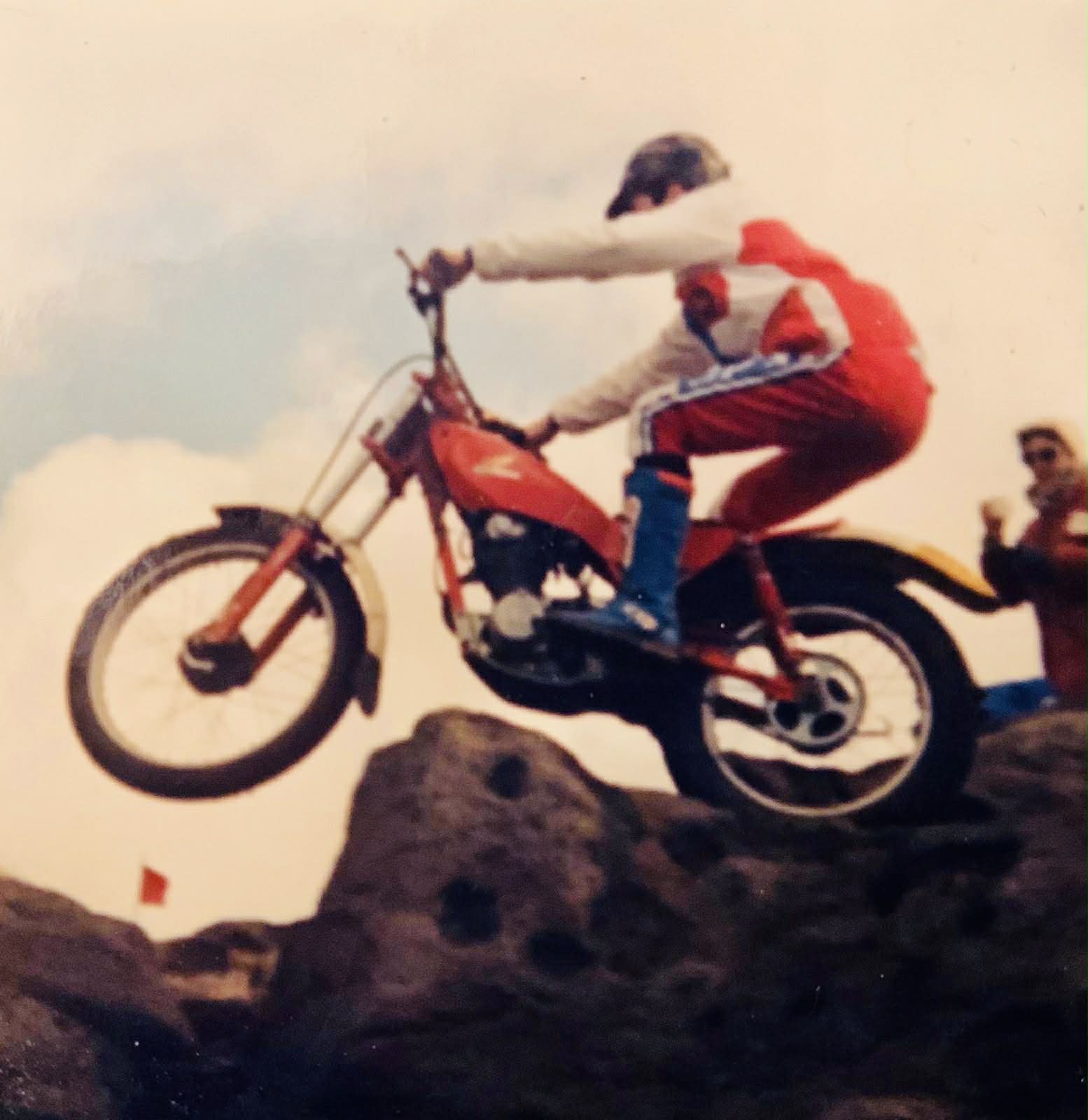
And so AJS fielded a team in the SSDT, the first time since 1965. Too late to be printed in the official programme, and Ray Sayer shown as riding the 500cc Triumph, it was not to be a ‘dream team’ situation, with Sayer dropping out of the trial on the Wednesday with gear selector problems. His machine (OWS12G) was repaired post trial and retained by the Edgars and used again in 1970, this time piloted by American, Bob Ewing from Sepulveda (North Hills), California who flew over from the US. Ewing lasted until the Wednesday when he was excluded on time. Derek Edgar took up employment with Ewing after he left Puch and before he went to work for Montesa USA.
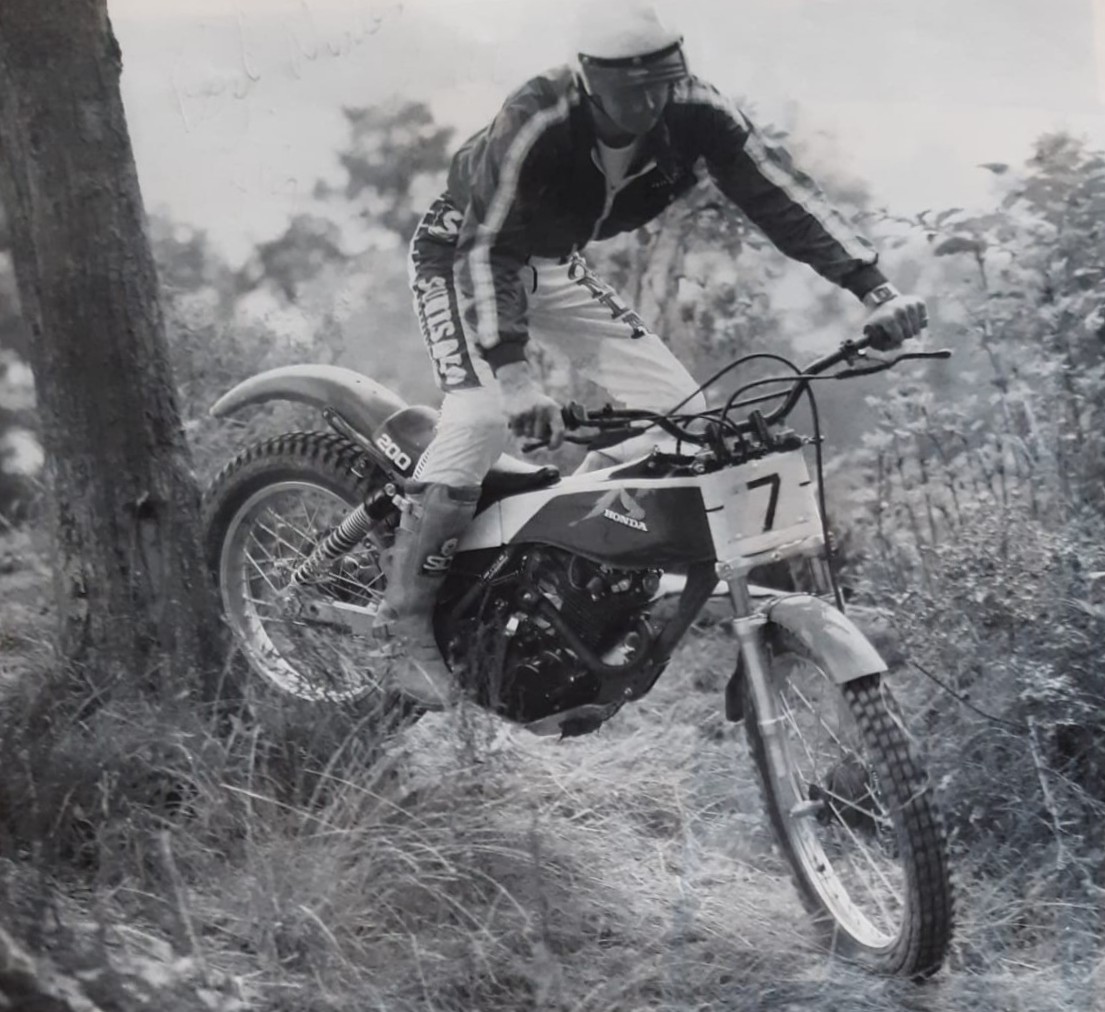
Bob Ewing on 'Edramucky' on day one of the 1970 SSDT - Photo: Cycle World.
Bob Ewing on ‘Edramucky’ on day one of the 1970 SSDT – Photo: Cycle World.

Modifications and Improvements:

Having informed Tony Davis that the Edgar brothers and Sayer had ridden heavily modified 37A-Ts in the Scottish, he commented: “I find this surprising in that Peter Inchley was such a stickler for us riding what we were given, and yet the Edgars changed the machine materially. Perhaps because they used AJS components and the fact the factory could not supply prepared machines meant it was acceptable”.

Photographic evidence confirmed that Malcolm Davis had used the Y4 alloy conical front hub on his AJS, SFH96G, in the Cotswold Cup Trial in 1969 but retained the standard Metal Profile forks with the axle at the bottom of the slider.

It would also appear that he went against Peter Inchley’s instructions by fitting a Greeves aluminium barrel and cylinder head to his 37A-T!

Even though the Edgars changed the geometry of the 37A-T they were not in a position to change the most obvious component, the cylinder barrel; this was still the iron unit.

Greeves achieved it, why not the AJS factory? After all, the owners of AJS, Norton Villiers, intimated in 1969 to Greeves that supply of Villiers power units would cease, which inevitably forced the Thundersley firm to source engines from Puch in Austria.

Why the 37A?

Malcolm Davis supported rider, Chris Watts with his 250cc AJS at the finish of the 1969 SSDT at Blackford Hill Observatory – Photo: Bob May, Edinburgh
Chris Watts on his 37A-T AJS, this photo shows that Watts had switched to the Y4 type conical front hub which was lighter than the full width British Hub that was fitted originally. Photo: Off Road Archive.

AJS had all the development work done on the all-alloy Starmaker unit, could they not have further developed the trials version of that power plant?

Bultaco for example developed their Sherpa trials and the Pursang motocross motor from older applications, the motocross having different porting and gear clusters, but benefitted from common components and were all-alloy construction.

As already mentioned, the Starmaker trials version had been used in the factory Cottons with one issued to their supported rider, Colin Dommett, in 1964.

Colin Dommett on his Cotton with ‘Starmaker’ Villiers engine fitted. Photo: OffRoad Archive

Colin Dommett:I didn’t like the Starmaker engine, for example the gear ratios were too wide, and it was eventually sent back to Villiers as I think they owned the engines. It was replaced by a 37A engine. They tried all sorts of exhausts, but everything they did just made things worse, not better. I think they even tried a 37A crank in a Starmaker and that was a slight improvement”.

The Villiers ‘Starmaker’ all alloy motor which was used by Cotton and also AJS for their ‘Stormer’ motocross machines. Three versions were produced for racing, motocross and trials.

Cottons also fielded a team in that year’s SSDT fitted with Starmaker motors, comprising Arthur and Alan Lampkin and Blackie Holden. All three riders finished with special first-class awards.

The belief was that the 37A, although using appreciably heavier components, was the better engine for trials use even though it looked old fashioned compared to the compact-looking Bultaco and Montesa power plants.

As well as being second best Edinburgh & District club member, receiving the Henderson Challenge Trophy at the SSDT, Norman Edgar Jnr won the 1969 Scottish Trials Championship outright on his 37A-T, making him a three times champion in the process.

Privateers:

It’s all well and good having factory machines entered for major events like the SSDT and British Experts, you still need sales to private owners to make it financially worthwhile.

There were six private entrants on AJS 37A-T who rode the 1969 SSDT: M.K. Fulcher, North London; R.E Chapman, North East London; Jack Young, Edinburgh; Roger Davy entered by Comerfords (WPD4G); and Chris Watts of the C.S.M.A. (TAE411G) who also had fitted a Y4 front hub on his 37A-T.

There was one other AJS entered that year, but it was a 350cc four-stroke 16C ridden by JL Smith from Edinburgh, a nephew of Scottish born AJS director Bill Smith.

American Bob Ewing had entered in 1969 but was classed as a non-starter so the best guess is that he would have ridden OWS14G, either that or Jack Young could have obtained it just prior to the event.

The following year there were four AJS mounted riders in the 1970 SSDT: Eddie Henderson from Bangor and member of the Knock MCC Ireland; Bob Ewing, who flew over from California to ride the OWS12G supplied by the Edgar Brothers; Jack Young, from Edinburgh; and Derek Edgar, back on OWS11G. But most of the entry by now consisted of Bultaco and Montesa with a couple of Ossas.

Former factory trials rider, Tony Davis.

Tony Davis Talks AJS:

It was Malcolm who talked me into riding the AJS trials machine; ‘fly the flag’ he said. So I agreed to ride it for a year. We spent many hours practising in the quarry and woods up the hill near the Air Balloon. We both found it ‘gutless’ from plonking in a section, and the carburation was unreliable. After many hours’ tuning we got the carburation more exact. Malcolm did a lot of work on the engine and got it to respond better and rev out more, which suited his style of riding. Peter Inchley wanted my machine to stay as standard as possible. It handled reasonably well; it was better in mud than on rocks but was never going to be a world beater, especially against the Spanish armada. I won some centre trials and the Western Centre Championship was mine once again. The AJS was far too late to win any National trials, and the ‘powers that be’ knew that. Now the Y4 Stormer motocross model was exceptionally good, as Malcolm proved”.

Studying old national trials results, it is evident that Tony Davis’s overall performance improved when he switched to Bultaco in 1970. It was by then a tried and tested product, which had benefited from not only Sammy Miller’s input but that of riders across the globe who enjoyed support from the Barcelona manufacturer. Bultaco and Montesa were taking trials very seriously, and with Mick Andrews developing the Ossa they too were ready to capitalise on the success of their prototype.

Derek Edgar in the 1969 SSDT on his 37A-T AJS, OWS11G, one of a batch supplied by the factory, but built in Edinburgh by Edgar Bros – Photo: Ken Haydon Collection on Trials Guru.

Sales and specifcation:

Sales of the production AJS 37A-T were disappointing; trials riders are consistent followers of fashion and the AJS just did not inspire them. Only 98 units were produced in total. This means that the 37A-T AJS is now regarded as a fairly rare beast.

The fuel tank was quite bulbous, holding 1 3/4 gallons and was the bright orange – the factory called it ‘Bushfire Red’ – fibreglass unit taken from the Y4 motocross model. The frame was Sifbronze welded and superbly finished in metallic silver but had an unusual plate which joined the large-diameter top tube to the footrest tubes, and it had a full cradle, single down-tube frame.

AJS called the colour ‘Bushfire Red’ wheras most people would say it was orange! A genuine standard 37A-T AJS. This photo clearly shows the unusual plate which joins the large diameter central top tube to the rear subframe.

Chain adjustment was not made at the back wheel but at the swinging arm pivot, with an eccentric cam arrangement that was an attempt to keep the chain line as straight as possible.

It was used on the AJS motocross model and also used by Rickman on their motocross Metisse frames, but it was unusual for a trials machine. Carburation was taken care of with a Villiers S.25 instrument, which is the type of carburetor that would become popular with the Pre-65 brigade in the 1990s.

Again this was a departure from the trend, which was to use the modern AMAL MK1 concentric which was fitted by both Bultaco and Montesa at this time, the instrument made in Spain under licence from the UK company.

Remember, the AJS was competing for sales against these two Spanish brands which had already gained a foothold in the UK, North American and European trials markets.

The engine, as stated, was the iron-barrelled Villiers 37A model which had a bore of 66mm and stroke of 72mm, giving a displacement of 246.33cc and a claimed 12.4 BHP at 5,000 RPM. Compression ratio was quoted by AJS as 7.9:1.

In comparison, the 1964 trials version of the Starmaker pumped out 15 BHP at 5,000 RPM. Utilising a 58-tooth rear wheel sprocket, the 37A-T gave a 29:1 bottom gear, with a four-speed gearbox giving ratios as 3.6; 2.4; 1.56 and 1.00.

The wheels were built using Dunlop chrome steel rims, WM1 front and WM3 rear, whereas the Spanish competition were using Akront alloy components at this time. Mudguards were plain polished 18G aluminium alloy, with front mudguard bracketry fabricated from sheet alloy and an alloy chainguard, standard fit for trials machines of the era.

The wheel hubs on the production 37A-T were British Hub polished alloy 6 inch units. The rear hub incorporated a rubber cush-drive.

Wheelbase was 51 1/2 inches similar to the Bultaco Sherpa and the machine weighed in at 212 pounds, lighter than the Greeves Anglian at 225 pounds.

The front suspension consisted of Metal Profile telescopic with alloy sliders, the wheel spindle carried directly below. The Edgar Bros built machines however used the front fork sliders from the Y4 motocross model.

A heel/toe gear lever, chrome plated ‘Peco’ style exhaust and Girling rear dampers finished the package off. List price in 1969 was £228 and ten shillings, in kit form thus avoiding Purchase Tax.

AJS Today:

John Moffat of Trials Guru makes comment:

Information on the 37A-T is very scarce on the internet, purely because of the short production run and the low numbers produced and sold. However, the model is featured in Gregor J. Grant’s ‘AJS – The History of a Great Motorcycle’ published in 1969, revised in 1974 by Patrick Stevens Ltd, Cambridge (ISBN 0 85059 186 4). It gives a potted history of the marque from its creation and covers the Y4 Stormer and 37A-T models. It does lack, however, any detail of the trials model’s development, undertaken by the late Malcolm Davis, his brother Tony and of course the Edgar brothers in Scotland. Perhaps this article has covered the gaps left by a fellow Scot; his book is well written and researched as he was a professional journalist, but perhaps he did not have the connections to fully research the trials model or perhaps in 1969 thought it wasn’t important enough to save information on the new model for posterity! You simply cannot cram too much information into a book though! On a personal note, when I was 10 years old I started saving up my hard-earned pocket money with the intention to buy an AJS 37A-T. This was probably an idea cultured by my environment, because my Father had ridden an AJS four-stroke twice in the SSDT and then owned an ex-factory Matchless. I saved up the princely sum of £1:10s:6d by the September of 1969, by coincidence the year that Gregor Grant wrote his book on the AJS. However, my Father bought me a Dalesman Puch in the October, so the money went towards buying fuel! I was quite taken by the AJS which looked different from the selection of trials machines on sale, but it was not to be. I did come across OWS11G in November 2019 when I enquired if it was for sale, the owner lived in Carlisle. The owner, realising its history, wanted several thousand pounds as it stood. I found this over-priced; having been laid up for many years it was in poor condition. To its credit, it did look quite complete and still had the Y4 front end, but the cost to restore it would have been excessive. There was no question that it was Derek Edgar’s 1969/70 SSDT machine. I turned the deal down at the time as I felt it was a pointless exercise for me, but deep down I wanted to own the motorcycle, given its SSDT and Edinburgh history. I knew Derek Edgar very well and had a lot of respect for him. I have also subsequently heard that restored versions are being advertised more than that figure, due primarily to their rarity! With the BSA trials competition effort now defunct and Greeves already losing its way, I often wondered what AJS could have achieved had they invested more into the trials project and even recruited Sammy Miller, letting him have the trials version of the Starmaker engine, a clean sheet of paper and a free hand? Even as late as 1970 when Sam was just about over his riding peak, we can only speculate how the brand could have fared. The question must be asked, did the AJS management really take the trials market seriously, as they did not seem to act on the improvements made by the Edgar and the Davis brothers? The Spanish manufacturers were always taking serious note of what their supported riders told them and would make improvements for the next edition of their production models.

Production of the 37A-T AJS ceased and the model was discontinued in 1970.

AJS 37A-T – Photo OffRoad Archive

Today, the AJS name and famous monogram lives on with the company ‘AJS Motorcycles Ltd’, run by Nick Brown and his family. Nick is the son of ‘Fluff’ (real name David) Brown; they manufacture homologated 125cc road-going scooters and motorcycles primarily aimed at the learner rider market. They operate from Upper Clatford, Andover, and still carry spare parts for the old Stormer motocross models, but not the ill-fated 37A-T.

Maybe the AJS 37A-T was, as Tony Davis said, ‘far too late’?

A current day owner’s perspective:

Current owner, Andrew Cooke from Wessington Derbyshire owns a 1969 AJS 37A-T, here is what he says:

Developed with works rider Malcolm Davis with many trials wins, Malcolm reported in advertising literature of the time that: “the bike feels right… you have a machine you can win on”. Unfortunately, history shows that the AJS 37A-T was probably not as successful as had been predicted. Though well made and oozing quality, it was, sadly, “old hat” on its release in mid 1969. It’s dated heavy iron barrel and similar full width hubs negated any advantage gained from the super lightweight and rigid “Reynolds” frame.

Andrew Cooke’s AJS 37A-T.

Early reports were favourable though, about a bike that was easy to ride, handled well and with a “torquey” motor making it ideal for both experts and novices alike.

I always had a liking for the AJS but aged just 16 in 1969 I went down the ‘micro’ route with a new 125 Sprite, after finding a big Greeves barrelled Cheetah a bit of a handful in my first year of trialling. And so, it wasn’t until nearly fifty years later I spotted ‘my’ bike on eBay and arranged for its delivery up from Hampshire to my home in Derbyshire.

RCG182G had been owned by Jon in Waterlooville since 2013 who had fitted electronic ignition, a tucked in kickstart and a new Concentric carb. The engine had all new seals and bearings and the frame had new polyurethane swing-arm bushes and new fork seals. The bike also sported new Betor shocks, chain and brake shoes.

I later changed the grey plastic guards it arrived with for more traditional alloys and had the frame and side panels powder-coated. While it was stripped down I fitted new tyres, had the fixings plated and also reinstated the de-compressor.

I have ridden a lot of Villiers engined bikes with an assortment of barrels but was surprised how well the AJS went in comparison. It has a smoothness unusual for a Villiers engine and plenty of low down torque. I’ve not tackled any challenging hills to test its outright pulling power but it revs cleanly and emits quite a bark from the overhead exhaust. Gearing is a bit low and another tooth on the gearbox sprocket would be more to my liking if I’m honest. The MP/REH/Ceriani type forks are supple and work as expected and would probably only be criticized by someone more used to modern twin-shock Marzzochis for instance.

The wheelbase, at 51.5” is a tad short by comparison to it’s contempories  but not noticeable by myself when riding as I found the steering and suspension very nice with good grip and no ‘crabbing’ from the front tyre on a tight lock. I believe others have extended the swing-arm but I have no experience of how they perform as such.

In conclusion, the 37A-T rides well, goes well and history shows that it could and should have been a much greater success. If the Starmaker trials engine had been developed and fitted, if the smaller and lighter AJS Stormer hubs had been fitted from the outset, who knows where AJS and Villiers would be today.” – Andrew Cook, Derbyshire

Bibliography/References:

AJS – The History of a Great Motorcycle’ – Gregor Grant – Published 1969, revised in 1974 by Patrick Stevens Ltd, Cambridge (ISBN 0 85059 186 4)

Classic British Two-Stroke Trials Bikes – Don Morley – Osprey – 1987

AJS 37A-T catalogue 1968 – Norton Villiers Triumph Motorcycles

Motor Cycling – December 24 1966 – Report on Sammy Miller. [1]

Article copyright: John Moffat/Trials Guru 2024

Apart from ‘Fair Dealing’ for the purpose of private study, research, criticism or review as permitted under the Copyright, Design and Patents Act, 1988, no part of this article may be copied, reproduced, stored in any form of retrieval system, electronic or otherwise or transmitted in any form or by any means, electronic, electrical, mechanical, optical, chemical, photocopying, recording or otherwise without the prior written permission of the author as stated above. This article is not being published for any monetary reward or monetisation, be that online or in print.

644BLB – Rediscovered

Words: Trials Guru; Rob Farnham (Oz); Mick Andrews; Martyn Adams.

Additional comments by: Don Morley, Reigate, Surrey.

Photos: Rob Farnham; Rob Edwards’ personal collection; OffRoad Archive; Mike Rapley; Don Morley; James Holland, Bristol; Martyn Adams.

Mick Andrews - Bemrose - Photo Yoomee
Mick Andrews on 644BLB at the Bemrose Trial

What is 644BLB?

It was the registration number allocated in January 1961 to a 350 Matchless, which was used exclusively as an AJS and owned by the Associated Motor Cycles Ltd competition Department at Plumstead, South East London.

with-red-tank
The 1961 AJS registered as 644BLB was at heart a Matchless used under the AJS name by Cliff Clayton and Mick Andrews 1961-1964 – Photo: Rob Farnham, Queensland

The motorcycle was to be used by factory supported riders and we know that AJS factory rider, Cliff Clayton used it in the 1961 Scottish Six Days Trial. Clayton was a member of the Barham MCC, and lived at Gillingham in Kent.

644BLB however, was to become better known in the trials world as Mick Andrews’ factory AJS, as he competed on it from 1962-1964 when factory supported. It was a machine that took Andrews on two consecutive occasions to the runner-up position in the Scottish Six Days Trial (winners Arthur Lampkin – BSA C15 – 1963 & Sammy Miller – Ariel – 1964).

Don Morley, the well-known photo journalist spent a great deal of time researching the works trials AMC machines when he was preparing his book, Classic British Trials Bikes which was published by Osprey. Don had photographed many, if not all, the factory models over the years.

Morley told Trials Guru when discussing some articles, that some AMC trials machines were registered as one marque but actually used as the badge engineered stablemate. 644BLB was one such machine, an AJS in use, but registered as a Matchless. The same method was employed for the machine registered 164BLL, issued to Gordon McLaughlan. There has never been a definitive reason for this other than perhaps the AJS 16C was a slightly more expensive model than the corresponding Matchless variant G3C and as the factories had to pay the then ‘Purchase Tax’ on a registered machine, perhaps they saw this as a way of saving some money?

Don told Trials Guru: “I should really have paid more attention to the finer details of the works bikes when I had the chance back in the days when they were used week in, week out by the factory supported riders. I have questioned many of the stars of yesteryear about the finer points of the machines they rode some time later, to find that most hardly touched the machines as they usually were repaired, modified and serviced by the relevant competition departments. No disrespect intended, but I take most of the so-called modifications by riders with a pinch of salt.

Where is 644BLB?

Our article begins with a message sent through social media to Rob Edwards, the former factory Cotton, Montesa and, at one time, AJS teamster. Rob had ridden a factory supported but privately bought AJS in the 1964 and 1965 SSDT, it was registered ‘970PL’ and had bought it from Comerfords in 1963.

The enquiry came to Rob Edwards facebook page in December 2016 from Rob Farnham from Queensland, Australia (who we will refer to as ‘Oz’, his shortened internet name, for the rest of the story) who had seen Rob’s story on Trials Guru and a reference to his promotional trip with his employers, Montesa Motorcycles ‘down under’ in 1975. A photo was within Rob’s story sitting on a 350 AJS which Noel Shipp of Wollongong owned at the time and was reputedly Mick Andrews’ AJS factory machine.

Oz picks up the story: “I purchased the bike from Noel Shipp in December 2008, as being a bit of and AMC competition bike nut, it was an opportunity too good to miss. Sadly Noel was unwell then and died in the September of 2012.

Noel had shipped 644BLB out from the UK in 1970. I have a note of who he purchased it from, but he was actually after another trials machine, a Triumph I think, but took the AJS as his second choice.

Obvious changes have been made between 1964 and 1970, mainly the bottom frame rails and footrest hangers.”

img_0010-red
The lower frame rials have been removed by a previous owner and replaced by strip aluminium, this was not a factory modification – Photo: Rob Farnham

Oz: “I have done very little to it as I have too many projects but was only spurred into motion following a request from John Cuff, a member of the bike club I’m a member of, the Historical Motorcycle Club of Queensland as he needed some bikes for club magazine articles for 2017. He had seen my Matchless G80CS but knew nothing of the 350 AJS, 644BLB.  His main interest is trials and competition machines so he was very excited when he saw it.

Most of my previous research had drawn a blank so was quite excited myself on Rob Edwards response to my post on his facebook page.”

Oz had been doing a lot of digging in an attempt to catalogue the machine’s history, but over the years details of ownership had been lost and of course never rely on people’s memories.

Oz had heard that after Mick Andrews had handed the AJS back to Plumstead, Gordon Blakeway had ridden it. This was false as Blakeway had been issued with 187BLF, the ex-Gordon Jackson machine when Andrews was still riding 644BLB for the factory and was subsequently riding the 250 James (306AKV) for AMCs in 1965.

It was likely that after Andrews moved on, 644BLB would have been moved on also as the factory was in financial decline and several machines were sold off to dealers, the most noteable being Comerfords in Thames Ditton, Surrey and it was most likely that 644BLB would have found its way to this dealer given their connections with the factory.

Confusion reigns!

Oz clarifies how he undertood matters initially: “I was actually led to believe that Rob Edwards had made his debut in the Scottish Six Days on 644BLB in 1965. This was caused by the caption in ‘British Trials Motorcycles’ by Bruce Main-Smith on pages 12 and 13 which read: ‘Rob Edwards (opposite bottom) made his Scottish debut on Andrews’ ex-works 350 AJS, with unofficial factory support’. The photo does show Rob Edwards, but I now know through Trials Guru’s Rob Edwards Story and AJS & Matchless Trials articles that this was actually Rob’s own private but factory supported AJS (970PL). The photo in Main-Smith’s book was taken from a rear view and the machine had lost it’s rear registration number plate, making identification difficult. On top of this, Noel Shipp had told me Rob Edwards had been a privateer rider post 1964, which is one of the reasons I contacted Rob Edwards via his Facebook page.”

In reality, Rob Edwards had taken over the berth left in the AJS official team for the 1965 Scottish Six Days, riding his own AJS, suitably modified as Andrews’ mount 644BLB was not available, this occurred due to Andrews moving to ride the James. So why did the AJS competition manager not allocate 644BLB to Rob Edwards? That may remain a mystery, was it by then sold off or did they not have time to prepare it for the arduous SSDT?

taxdisk-no-copy
The 1970 UK tax disc of 644BLB shows it clearly to be a Matchless, not an AJS – Photo: Rob Farnham, Queensland

Oz is keen to find out who purchased and rode 644BLB from around 1964 until it was exported to Australia in the 1970s. He still has the road fund licence tax disc from 1970 with the index ‘644BLB’ and ‘350 Matchless’. This would be the last time the machine was road registered in the UK.

Research indicated that as the machine had left the UK shores, the registration mark had become void due to the mid 1970s ‘amnesty’ that was afforded owners to have their vehicles applied to the DVLA computer at Swansea.

For many years it was thought that the ex-Gordon Jackson AJS (187BLF) had been exported to Australia, even Jackson himself believed it to be so, but it was actually the Clayton/Andrews machine 644BLB that had gone ‘down under’.

The AJS & Matchless Owners Club were contacted in January 2000, but their archivist, Mrs Pat Hughes confirmed that the later competition model records were missing, they had all the road going machine despatch details from 1946 onwards. So another blank was drawn, but the important thing is that the machine still exists half way around the world from where it was built and used. The only confirmation was that the motor number stamped on the crankcases was that of a 1961 model G3C Matchless.

The Mick Andrews connection:

Mick Andrews has been asked many times what he did for a living and simply answers that he commenced a motor mechanic apprenticeship with Kennings when he left school in his home town of Buxton in Derbyshire, but quickly earned a place in the AJS factory trials team riding their works prepared 350cc 16C model, registered as 644BLB at seventeen years of age in late 1961. His name had been put forward to AMC’s Hugh Viney by Ralph Venables. Viney had sent a letter to Andrews, which was the way it was done back then, offering him an AJS.

Mick Andrews told Trials Guru: “I had a Matchless which my Dad Tom bought for me and I had some good rides on that. I came home from work one day and my Dad said that I had better have a look in the garage and there stood a gleaming AJS sent up by Hugh Viney for me to ride. It was 644BLB with a blue tank and gold lining, it looked beautiful.

Don Morley Pic. Mick Andrews AJS 1963 SSDT Finished 2nd
Mick Andrews with his factory AJS at the 1963 SSDT, Gorgie Market, Edinburgh – Photo: DON MORLEY

Andrews first appearance on the factory AJS was at the national St. Davids Trial in Wales when he partnered Gordon Jackson and Gordon McLaughlan. That was in 1962, also Andrews’ first time in the Scottish Six Days Trial. In 1963, Mick was second in the SSDT to Arthur Lampkin. Andrews went on to not only win many national trials on 644BLB, but it also established him as a force to be reckoned with in the sport. His last SSDT on 644BLB was the 1964 event, again finishing runner up to Ariel’s Sammy Miller, riding in the factory team comprising of Gordon Blakeway (187BLF) and Gordon McLaughlan (164BLL) with the fuel tanks refinished in ivory white with simplified lining and gold monogram, the penultimate time an AJS team would compete in the annual classic.

Mick Andrews' factory AJS sporting the ivory tank finish for the 1964 SSDT, seen here at Gorgie Market weigh-in.
Mick Andrews factory AJS 644BLB at the 1964 SSDT weigh-in (Photo: Mike Rapley)

In 1965, the final AJS team comprised of Gordon McLaughlan (164BLL); Gordon Blakeway (187BLF) and new recruit, Rob Edwards (970PL) who took the best 350cc cup.

mick-andrews-tyndrum-1964-ssdt
Mick Andrews on ‘Tyndrum’ in the 1964 Scottish Six Days Trial aboard 644BLB sporting the ivory finished fuel tank. It was Andrews final SSDT using this machine on which he made a name for himself in the sport. Note the spigot fitted on the magneto engine plate with the prop stand pipe strapped to the front downtube. He finished runner up to Sammy Miller – Photo Courtesy of OffRoad Archive

Long-stroke fan!

Mick Andrews: “I did hear many years ago that my old works AJS had been sold to someone in Australia, but I never did see it again. It’s nice to hear that it is still around, OK maybe not exactly as I rode it, but still it’s good that it has survived this long. I was in New Zealand with my wife Jill in 2010 and a bloke came up to me and said, you’re Mick Andrews! I said how do you know me? The chap replied, ‘well I moved out here some years ago, but I did all the work on your AJS, I worked in the comp shop’. I couldn’t believe it, you see Hugh Viney told my Dad and I that we were not allowed to modify or change things on the motorcycle, so my dad sent the AJS back to the factory every Monday morning and they sent it back up to Buxton so I could ride it at the weekend, we never really touched it the whole time I rode for the factory. I never met the guy before, but he made sure the motorcycle was well prepared each week for me to ride.”

Andrews continued: “When I rode for AJS I always rode with the long-stroke motor, never the short-stroke, I didn’t like them. They seemed to suit Gordon Jackson, he liked the sharper power delivery, but it wasn’t my choice. In 1964 we were all offered 250 James to ride, the two Gordons were not happy and handed them back, but I said to the then AMC team manager Ernie Wiffen, that I’ll stick with the James (306AKV) and never looked back.

The long stroke motor looks to have stayed with 644BLB and having examined the engine number it is that of a 1961 G3C Matchless and is in keeping with known serial numbers. The factory did not usually build special factory bikes from scratch, they normally chose one or two from the production line and used these to register them for road use. They were usually tested and them the dispatch clerks booked them out to the ‘Competition Department’.

So what happened to 644BLB after its time as a works machine expired? It is still a bit of a mystery, apart from the obvious, that it was exported from the UK to Australia. Motorcycles change hands and sometimes many hands at that. Without the old style ‘Registration Book’ or buff log book as they were universally referred, it makes it difficult to trace a machines’ history.

ajs-tank-3-red
At the moment this period looking competition tank is fitted which has the makings of the late AJS tank lining – Photo: Rob Farnham

What is known is that this AJS, or Matchless as it was registered with the authorities is concerned, was sold off, through a main dealer is most likely as many ex-factory AMC machines were disposed of in this manner.

mag-platform-cut-out-for-prop-tube-small-cropped
Magneto platform has been cutaway to allow for a prop-stand spigot mounting. Another factory machine detail – Photo: Rob Farnham

At one stage, the registration number re-appeared on a 350 AJS in the annual Pre’65 Scottish trial at Kinlochleven in the hands of Andrew Arden, whose father Maurice was the man behind Big John Products, a one time sponsor of Mick Andrews. However, it wasn’t the original machine, it had been in Australia for 15 years or more and the machine was a replica, the dummy registration number plates used purely as a ‘nod’ to Andrews achievements on his original Plumstead built machine.

It was discovered that Noel Shipp bought 644BLB from a UK sales agent, a Stan ‘Rodwell’ or ‘Phelps’ based in Ilford, Essex, so the motorcycle was shipped over.

Wollongong - Aus - Noel Shipp AJS 644BLB
Rob Edwards tries Noel Shipp’s Ex-Mick Andrews 350 AJS 644BLB for size in Australia in 1975, which shows the G85 style tank in situ. – Photo courtesy: Rob Edwards personal collection

From photos taken in 1975 during Rob Edwards and Mick Andrews trip to Australia, one notices that the bottom frame rails had been removed and replaced by a plated assembly which gave a flush area to mount an alloy sump-shield in an attempt to loose some weight. This was not a factory modification as AMC believed in making the factory machines look exactly like the standard production competition models.

bottom-rail-and-sump-guard-red
A non standard modification to the underside of the frame, this would not have been carried out at Plumstead’s comp shop but by a previous private owner attempting to modernise the machine – Photo: Rob Farnham, Queensland

Having said that, the late model factory trials machines all sported the lowered rear subframe and short, but kicked up rear mudguard fixing loop. This allowed shorter rear suspension units to be deployed while maintaining the same rear wheel movement.

img_0026
Detail photo of the rear subframe assembly of 644BLB and detachable rear mudguard loop, alloy rear brakeplate and Dunlop Racing 19 inch wheel – Photo: Rob Farnham, Queensland

The tank appears to have been changed over the years. Initially it had an alloy competition tank finished in blue and gold lining.

Oz: “As previously mentioned Noel Shipp fitted the black 2 gallon AJS competition tank at some point although when he got the bike it had the red fibreglass Matchless G85 style tank on it. This is actually an interesting tank as its shape and fitting is definitely for a G85 but there is a drip recess around the fuel cap and the bottom of the tank is finished off quite roughly. It has ‘R. E. G Mouldings’ inscribed on the bottom, maybe someone over in the UK knows of them?
I bought a polished alloy Lyta Gordon Jackson style tank from Rickmans for another project which requires a fully painted tank, it seems a shame to rough up such a nice tank and I eventually found the black and silver painted tank on eBay, so my current plan is to use the painted tank for the other project and the nice shiny one could be painted up similar to the one used by Gordon Jackson.”

img_0014-red
Gordon Jackson style Lyta aluminium fuel tank was sourced from the UK – Photo: Rob Farnham, Queensland

History of course records that Andrews rode the 1964 Scottish with a Jackson style tank in off-white/ivory with the gold AJS monogram.
We have recently discovered through Dave Lewis, that all G85CS glassfibre parts were made for AMC by Reg Curley Mouldings, which ties in with what Oz discovered.
Oz confirms that the primary chaincase has an alloy inner case with an outer steel component. Production AMC trials machines were never supplied with alloy chaincases, only the factory ones had them.

img_0035-red
Inner section of the primary drive chaincase is in alloy, a special factory modification – Photo: Rob Farnham

Oz who is a lover of originality added: “Of course there is always the matter of whether the bike should be conserved as it is or perhaps restored back to factory finish circa 1964. While 187BLF looks very nice, any traces of its history will have been wiped away during the extensive restoration, in my opinion it has been somewhat over done.”

drilled-clutch1-red
The clutch pressure plate has been extensively drilled and a fair bit of thought has gone into this modification. Was it done in the AMC competition shop? – Photo: Rob Farnham

At present 644 is neither ‘fish nor fowl’ as the wheels have been restored, the tank isn’t original to any period,  I have the correct style of tank and muffler, and a very good frame repairer who is more than capable of making original pattern bottom rails, however I have several other projects before I even think about what should be done with it, so that may be an interesting area for discussion on your website?

back-brake-and-sprocket-2
Alloy rear brake plate is a factory only item, the rear section has been repaired, rear hub is standard ‘five-stud’ competition issue – Photo: Rob Farnham

So there we have it. It would appear that the former AMC factory AJS, 644BLB has found a new home at the other side of the world, without the factory dispatch records it isn’t possible to identify 100% and without a shadow of a doubt this is the ex-Andrews machine, but the evidence certainly points firmly that it is.
It’s a nice end, because if this is truly 644BLB, then its good news that it survives and hasn’t gone to the AMC factory trials machine graveyard and it’s in a good home.

img_6996-red
644BLB, is now in retirement in Australia, but enjoys a canter every now and then – Photo: Rob Farnham, Queensland

Or is this the end of the story? We will have to wait and see because researching old motorcycles history is something that never really stops.
Trials Guru … 644BLB Post Script!
James Holland founder of JHS Racing Ltd the motorcycle performance centre in Bristol, read this article and came in with additional information.
James Holland:Back in 1998 I made contact with Noel Shipp in Australia as I was keen to establish the whereabouts of Mick Andrews’ ex-works AJS. Noel wrote to me and sent me some photographs of the bike he had bought from England some years previously. He wanted around £5,000 for it, which in 1998 was a lot of money for a machine that was many thousands of miles away. I was very tempted, but I had to be sure that it was the real deal. I spoke to Mick about it when the photos arrived, but it had been many years since he last saw the AJS and of course he didn’t do much work on it as the factory took care of all that.
There were some details that did point to it being a works AJS, but I had a lot of committment going on back then and I decided that I wouldn’t re-import the bike and left it at that.
Noel Shipp sent me a nice letter in the November of 1998 and also detailed separately the frame and engine numbers which I believe are still valid to this day having spoken with John Moffat who was given them in confidence by Rob Farnham.
It’s amazing that this article should be written many years after I walked away from a deal that could have re-united Mick with the first factory machine he ever rode in anger and on which he was propelled to stardom.” – James Holland, Bristol

letter-jholland-n-shipp
The letter sent by Noel Shipp to James Holland in November 1998, when James had the idea of buying Mick Andrews AJS to bring it home to England

ajs-644blb-jh-pic-2
Photo taken by the late Noel Shipp in 1998 showing the engine of 644BLB with the December 1970 UK tax disc – Photo courtesy of James Holland, Bristol

mja-jh-matchless
Mick Andrews astride James Holland’s Matchless/BSA – Photo copyright: James Holland, Bristol.

Even more on 644BLB, the story continues:
The machine has now been sold by Rob Farnham to Yorkshire born enthusiast and engineer, Martyn Adams who now lives in South Australia and intends doing some light restoration back to original trim when Mick Andrews rode the bike for the AJS factory.

TG - VIP - Martyn Adams - 644BLB crop
Martyn Adams with 644 BLB, the ex-Mick Andrews factory AJS at the Macclesfield show, Southern Australia, Martyn is also a Trials Guru VIP!

Far from being the end of this fascinating story, when Martyn has concluded his sympathetic upgrading, he will send us details and photographs of 644BLB.

Mick Andrews and Martyn Adams at Mick’s home in June 2025. Mick is holding the award from 1964 from the Scottish Six Days Trial for Best 350 on 644BLB – Photo: Martyn Adams.

The 1964 tankard for Best 350cc at the 1964 Scottish Six Days, won by Mick Andrews on 644BLB. (Photo: Martyn Adams)

Interactive Trials Guru – Do you have information about 644BLB that you would like to share and perhaps have added to this article? Get in touch using this online form:

Go back

Your message has been sent

Warning
Warning
Warning

Warning.

‘644BLB – Rediscovered’ is the copyright: Trials Guru & Rob Farnham.

Photos: Rob Farnham, Queensland, Australia; James Holland, Bristol, UK; Martyn Adams.

Apart from ‘Fair Dealing’ for the purpose of private study, research, criticism or review as permitted under the Copyright, Design and Patents Act, 1988, no part of this article may be copied, reproduced, stored in any form of retrieval system, electronic or otherwise or transmitted in any form or by any means, electronic, electrical, mechanical, optical, chemical, photocopying, recording or otherwise without the prior written permission of the author as stated above. This article is not being published for any monetary reward or monetisation, be that online or in print.

TG Decal 2024

Six Days Honda

7

1976 HONDA TL 250

Words: Justyn Norek Junior; Carlo Ramella; Tommy Sandham.

Photos: Justyn Norek; Alistair MacMillan; Honda Motor Co.

1-insert-1-red
Sammy Miller with a TL250, a publicity shot for Honda Motor Company in 1975
press-photo-tl250
A Honda definitive photo of the production TL250 Honda

Justyn Norek Jnr was given the opportunity to test ride a 1975 Honda TL250 that had taken part in the 1977 Scottish Six Days Trial ridden by Derek Edgar. Now owned by collector Carlo Ramella in Italy, the machine has survived in remarkably good condition. Registered in Edinburgh, Scotland where Derek’s father and uncles ran a motorcycle dealershiop called Edgar Bros, it was an import from the USA, where Derek worked for Puch and latterly Montesa.

1-red
Left to right: Giuseppe ‘Pippo’ Bartorilla, the creator of the Moto Guzzi Trial Special; Justyn Norek Jnr (Tester) and Carlo Ramella – Photo: Justyn Norek Snr

Carlo Ramella takes up the story as to how he came to be in the position to add this machine to his collection.

A Fascination:

Carlo: “I have always had a fascination for all Honda trials motorcycles, and several variants of the TL models occupy my collection. I have a special place in my heart for the four-stroke machines, and their association with my trials hero Sammy Miller whose prototype caused such a sensation in the sport. When Miller moved to the two-stroke Bultaco from Ariel in 1965 it killed the big British machines forever. Miller can also be held responsible for the significant year, 1965, that would return in more recent times with the new class for Pre-65 machines. Word has it that Miller designed the world-beating Sherpa T trials model in one week, and its modern lighter weight and easy to ride two-stroke attributes changed the course of the trials motorcycle forever“.

1-insert-2-red
Publicity photo of the Honda TL250 when launched in 1975 – Photo: Honda Motor Company

Carlo: “The purchase of the Honda TL 250 came about when I spotted a web advertisement in 2009. My excitement came when I found out it had a competition history with it and the fact that it had been ridden in the Scottish Six Days Trial. I quickly contacted the seller Alan Jones who confirmed that this was the machine belonging to Derek Edgar, who had competed on it in the 1977 SSDT. The details of the email were: ‘Carlo, this machine competed in and finished the 1977 ‘Scottish’ and was ridden by Derek Edgar. The attached photo shows Derek on the machine registration number LFS 5P. Regards, Alan’. I could not believe it, such was my elation at finding a machine with such a sporting heritage!

2
Derek Edgar finished 128th on LFS5P in the 1977 Scottish Six Days Trial seen here on ‘Kilmonivaig’ section – Photo: Alistair MacMillan/West Highland News Agency, Fort William/copyright holder: Anthony MacMillan.

Carlo: “However, Alan didn’t want to sell the machine outside the UK and he wanted to avoid all the hassle with paperwork, customs, packaging etc. I am well accustomed with international goods transportation due to my job and know many truck drivers and haulage companies, so I told him that I would take care of transportation, asking him to provide some protection of delicate parts such as the cylinder head, aluminium fuel tank, carburettor, etc. Eventually I managed to convince him to sell me the machine; we agreed a price and I arranged the shipping. When the Honda arrived I had another ‘dream’ in my garage, and it was exactly as I imagined: still with the ‘Scottish’ markings, all original, including the riding numbers for the event. I started the engine and it was so sweet, despite its age. So it was another dream fulfilled, and I rode it in many classic events before this test with my good friend Justyn Norek Jnr.”

3-red
Fitted with an aftermarket KW front mudguard, Justyn Norek testing the 1975 Honda TL250 – Photo: Justyn Norek Snr

Justyn Norek Jnr:

Justyn: “Like Carlo, I am a keen Honda trials enthusiast and especially four-strokes. When Carlo asked if I wanted to test the Honda it was a very easy ‘yes’. Having ridden many Honda trials models it would be interesting to test this one as it was the model which started the adventure. The venue would be one I am very familiar with, at Puy village in the Italian Alps. Carlo has some accommodation here and I also knew his love of red wine would make for good after-dinner conversation! As with most Hondas it started with a soft use of the kick-start lever. I was surprised that it started first time due to its age but the ‘clockwork’ engine was as sweet as a nut, with a very nice ambient exhaust note. I had a quick warm up and it once again confirmed my love of the four-stroke engine“.

4-red

JN: “The hazards we tested on I have ridden before, such as the river and rocks. I entered the fast flowing river and once again the superb suspension found on most Honda trials models was evident. This machine is over thirty years old and yet the suspension’s action is still very good. Despite its obvious heavy weight it handles pretty well, but you do have to be precise with your movements. Straight-line riding is okay but you have to pre-plan any sharp corners, such is the weight factor that you have to always take into account. The super-soft power delivery makes up for the handling and, as always, the feel good factor is immense“.

6-red
LFS5P has had very little changed to it since its 1977 SSDT adventure – Photo: Justyn Norek Snr

JN: “Out of the river and riding the nearby by river banks is where it’s the happiest as it feels very confident on this type of terrain. The relationship between the fuel tank and seat is very comfortable. Performance wise it could do with around another 100cc as, on very steep climbs, it simply runs out of power. The brakes were once again very good, considering the machine’s age, and as with the majority of Japanese motorcycles the gear selection was very ‘slick’ and positive. As with other machines from this era the clutch is not really for use in the hazards“.

jn-lfs5p-b-w
The Honda TL250 is still in fairly standard condition except from a little scalloping of the side panels and the non-standard front mudguard – Photo: Justyn Norek Snr.

JN: “In conclusion this model is one which needs to lose so much weight to be competitive but that’s maybe why we see so many Honda ‘Special’ trials machines. It’s a pleasure to ride and the quality standard is very high. Sammy Miller worked his magic on the Honda TL 250, producing the Miller Honda which took Rob Shepherd to the British title in 1977. As the rain came down we retired for a lunch of grilled meat and a glass of red wine, and the topic of conversation took us back to the winning years of Sammy and Rob Shepherd“.

_dsc5937-red
Justyn Norek Jnr. puts the 40 year old Honda through its paces in Italy – Photo: Justyn Norek Snr.

Carlo Ramella told Trials Guru that Honda TL250 UK registration LFS5P has now been passed to his good friend and Honda collector, Andrea Merlone and remains in Italy.

Who is Derek J. Edgar?: He is the younger brother of three times Scottish Trials Champion and former Clerk of Course of the Scottish Six Days Trial, Norman F.W. Edgar. Both sons of Norman Edgar senior who had a motorcycle business in Edinburgh (Edgar Brothers) and were DMW, Bultaco, AJS and Honda agents. Derek Edgar worked for Puch Motorcycles and then Montesa Motorcycles in the USA, before returning to live in Scotland to set up his company ‘Derek Edgar Developments’.

He wanted another crack at the SSDT when he was still in the USA and as his father Norman Edgar Snr had imported from the USA under Derek’s direction and assistance, a brace of two TL250s in 1976, a machine was sitting waiting for him to use, registered in Edinburgh as LFS5P.

The other machine from the personal imported batch was LFS4P, purchased at one time by author, Tommy Sandham who had a liking for Honda trials machines.

Sandham described the TL250 as: “… heavy, had low ground clearance but was the most fun you could have with your trousers still on“.

Sandham loaned LFS4P to his friend Kenny MacNamee who rode one of the first motorcycle enduros to be held in Scotland, at Rhins on the Galloway coast in 1978. The TL250 was a fine general purpose off road machine, perhaps heavy and low for trials, but for the early enduros, a handy bike to have!

Derek Edgar retired to Linlithgow with his wife Theresa. Their daughter Kim Edgar is a well known musician. Sadly Derek passed away in 2018. We hope to bring you the full story of the Edgar Brothers on Trials Guru.

_dsc6071-red
LFS5P is still a useable trials machine in the right hands – Photo: Justyn Norek Snr.

Our thanks to Carlo Ramella, Justyn Norek Snr & Jnr., Tommy Sandham.

Apart from ‘Fair Dealing’ for the purpose of private study, research, criticism or review as permitted under the Copyright, Design and Patents Act, 1988, no part of this article may be copied, reproduced, stored in any form of retrieval system, electronic or otherwise or transmitted in any form or by any means, electronic, electrical, mechanical, optical, chemical, photocopying, recording or otherwise without the prior written permission of the author as stated above. This article is not being published for any monetary reward or monetisation, be that online or in print.

Want to read more on Honda Trials machines? Then don’t move, click: HERE