
One of the best-known sporting dealers in the United Kingdom was undoubtedly Comerford’s Limited of Thames Ditton, Surrey. They were very much sporting dealers in the true sense of the word, with employees openly encouraged to compete in a variety of sporting events at the weekend and earn a livelihood during the working week. Many of the former employees were more than happy to recount the days when they worked at the Surrey dealership. It was much more than a motorcycle shop. Comerford’s Ltd also inadvertently spawned a plethora of motorcycle businesses in the Surrey county, set up by former employees. Comerfords have now gone from Oxford House, Portsmouth Road, but not forgotten – well not quite! Read on to discover what really happened from the people that were there.

Author: John Moffat
With the cooperation, contribution and quotes from: Bernie Schreiber; Alan Lampkin; Steve Saunders; Clive Dopson; Dave Renham; Derek Cranfield; Dave Thorpe (Trials); Dave Thorpe (Motocross); the late Colin Boniface; Carly Miller; Vic Allan; Roger Davy; Liz Argent; Steve Wilson; Gary Wright; Yrjo Vesterinen; Maertin Strang; Paul Slark & John May.
Photographs: Mike Rapley; Iain Lawrie; Eric Kitchen; Colin Bullock; Don Morley; Justyn Norek; Barry Robinson Estate; Blackburn Holden; Mike Davies; Kenny MacNamee; Toon Van De Vliet; Norman Hawkins; Andrew Moorhouse/Studio Six Creative; John Neaves; Ian Robertson; Frank Melling; East German Press Agency; Peter Hosking; OffRoad Archive; CI Sport; Main photo, courtesy of the late Dave Campling.
Reference: United Artists (Defunct: 2019)
In the beginning:
Back in 1925, A.E.T. ‘Teddy’ Comerford set up in business at Pease Pottage in West Sussex to sell and service motorcycles. The premises consisted of an old stable, but that did not deter Mr. Comerford who was a bit of a character to say the least. He was a jack of all trades, ranging from freelance salesman to race-horse owner to sporting motorcyclist, having raced a Rudge at Brooklands, pre-war. Teddy Comerford’s ancestors were part Irish, in fact the name from Gaelic Irish is derived from ‘Cumascach’, meaning a ‘mixer’ or ‘confuser’.
Teddy Comerford spotted a butcher’s shop which was closing down in Thames Ditton, so the business moved to ‘new’ premises and Teddy took on his first employee, engineer and enthusiast, Bob Winter who remained at the firm for forty-seven years, finishing up as Managing Director. Over the years, the firm purchased all the adjacent properties and those across the Portsmouth Road, which consisted of shops, houses and a row of cottages, and the long site slowly morphed into the Portsmouth Road empire of Comerfords.
In 1930, Comerford built a batch of three-hundred purpose-built speedway machines for the sport that had started in Australia and was brought to the UK, such was the commitment to all branches of motorcycle sport. Designed by George Wallis, the machine was spawned from local rider, Les Blakeborough’s successful Cotton machine which was supplied by Comerfords. The ‘Comerford-Wallis’ Special retailed for £80 and was fitted with a tuned 500cc J.A.P engine, exactly right for cinder-shifting.
Empire building:
As the firm grew, Teddy Comerford formed the private limited company in April 1936 registered as simply ‘Comerford’s Limited’ and it was to be known as such until the shop closed in 1989.
Well-known trials rider and super-salesman, Bert Thorn joined the firm in 1937 as a fourteen-year-old, straight from school, working his way up to General Manager and latterly Sales Director of the company, retiring at aged sixty-three. His only employer was Comerfords. Thorn was a man who never lost his love of the sport, having ridden in several Scottish Six Days Trials and major national trials many times over. It was Thorn who ensured the company to sponsor so many young riders from the 1960s through to the 1980s, many of whom became British champions in their chosen discipline. Thorn craved publicity for the company. During the Bultaco halcyon days, Bert and his wife Iris could be seen at national trials and the paddocks of major motocross events, supporting the Bultaco riders nearly every weekend of the year.

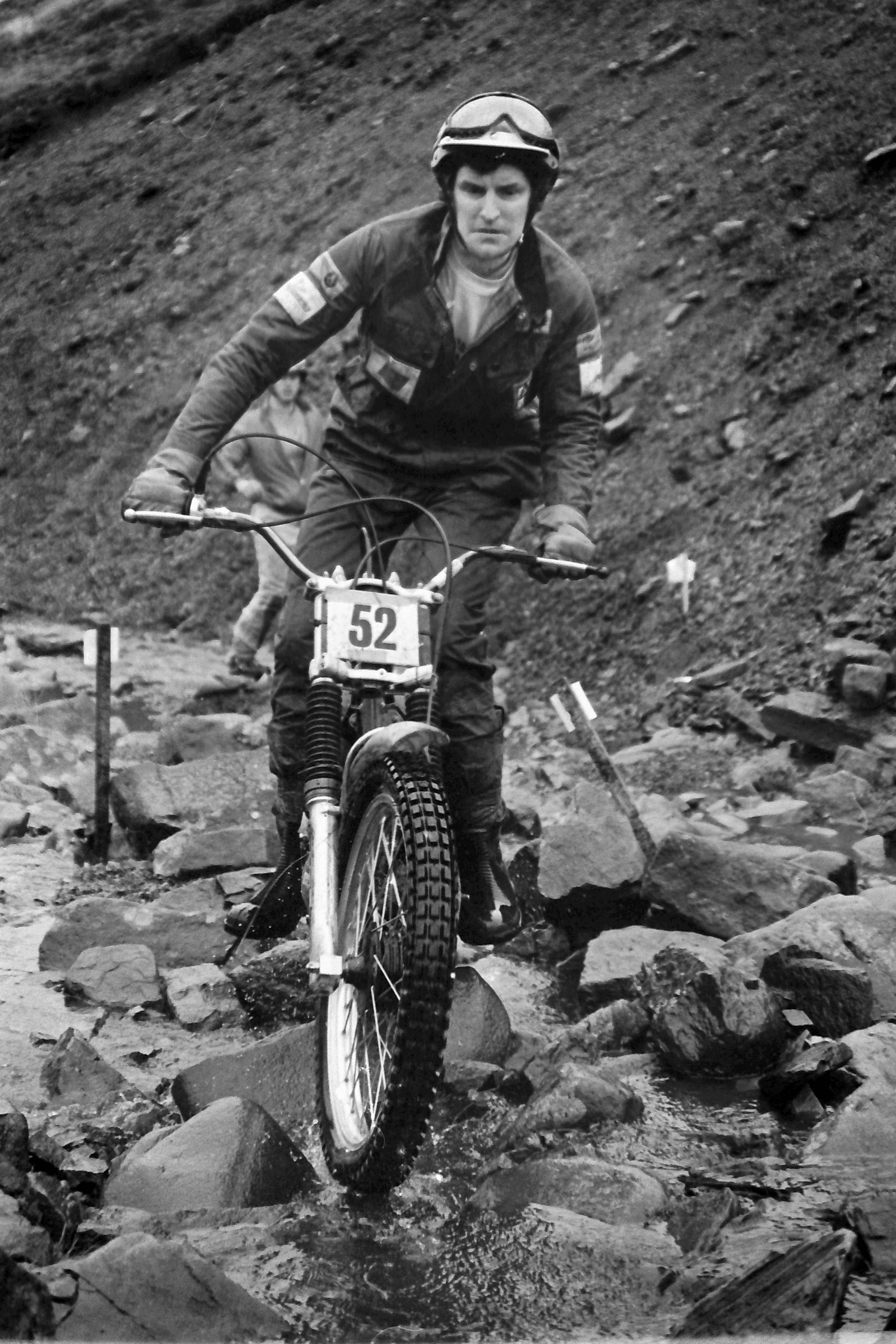
Over the years, the employee role was like a who’s who of competitive motorcyclists, the list was extensive with around twenty percent of the one hundred strong workforce regularly competing in trials, scrambles, grass track and road racing. We will touch on many of these characters in this article, it would be rude not to.
Competition Shop manager Reg May joined Comerfords in 1945 after leaving the Vickers Aircraft company and would become best known in the trials world by having the reputation of making a Bultaco ‘talk’. He was reputed to have the ability to set up a Bultaco machine better than the factory mechanics. Many of his development ideas would become imbedded in the company’s Sherpa and Pursang production machines. Reg was always experimenting with porting and exhaust modifications to produce the utmost from the San Adria de Besos products. Few could match May’s expertise, such was his knowledge and ability, recognised the world over. When Reg May spoke, it was prudent to listen very carefully.

In the mid to late 1960s, there was a group of New Zealanders who worked at Comerford’s. They included Graeme Johnston who came over to ride motocross along with Cliff Batchelor.
The local club, Dittons MCC was literally a Comerford’s employee dominated club and many of the senior employees who were members, had humble beginnings.
Don Howlett, latterly a director of the company, started as a fifteen-year-old apprentice at Comerford’s, he was a successful scrambles rider until an accident relegated him to riding in trials.

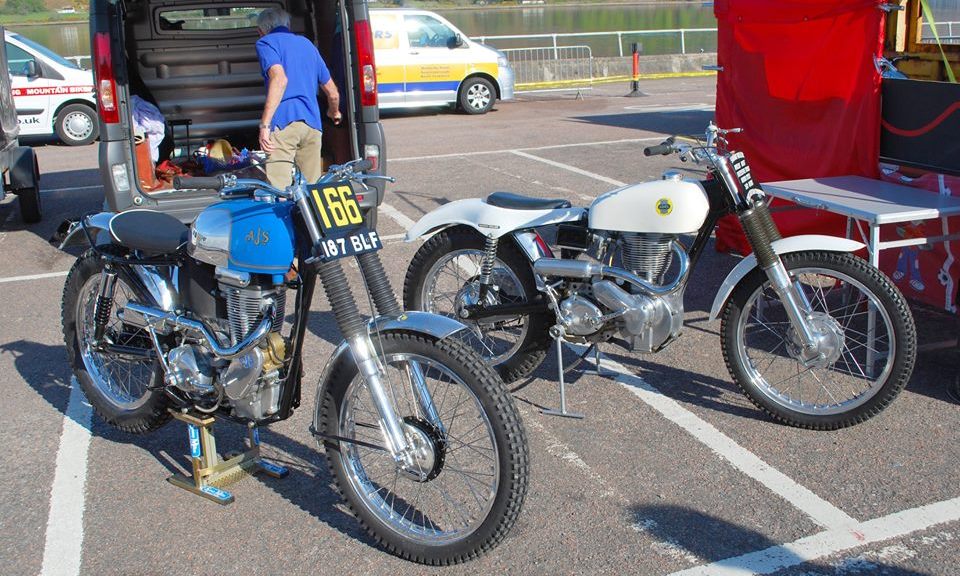
The company held a multiple dealership agreement with most of the British manufacturers and had a close relationship with Associated Motorcycles at Plumstead. In fact, many of the former factory AJS and Matchless team machines found their way into the hands of Comerfords staff and customers. One such machine was the short-stroke factory AJS (VYW659) ridden by Gordon Jackson, which then became the property of Jock Wilson in 1963.
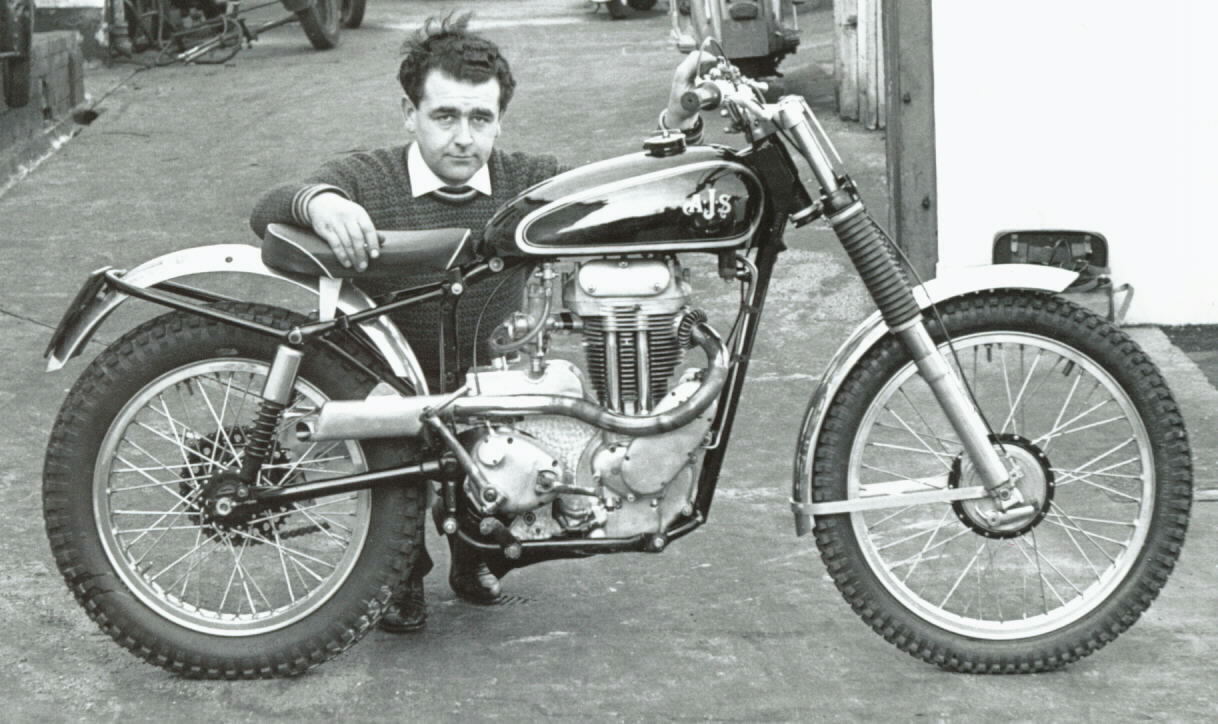
Wilson won a special first-class award at the 1964 SSDT on this very machine. When Gordon Jackson won the 1961 Scottish Six Days losing one solitary mark, Bert Thorn submitted an order for 100 replicas of Jackson’s machine with AMC when he returned from Scotland. The order was never fulfilled by Plumstead.
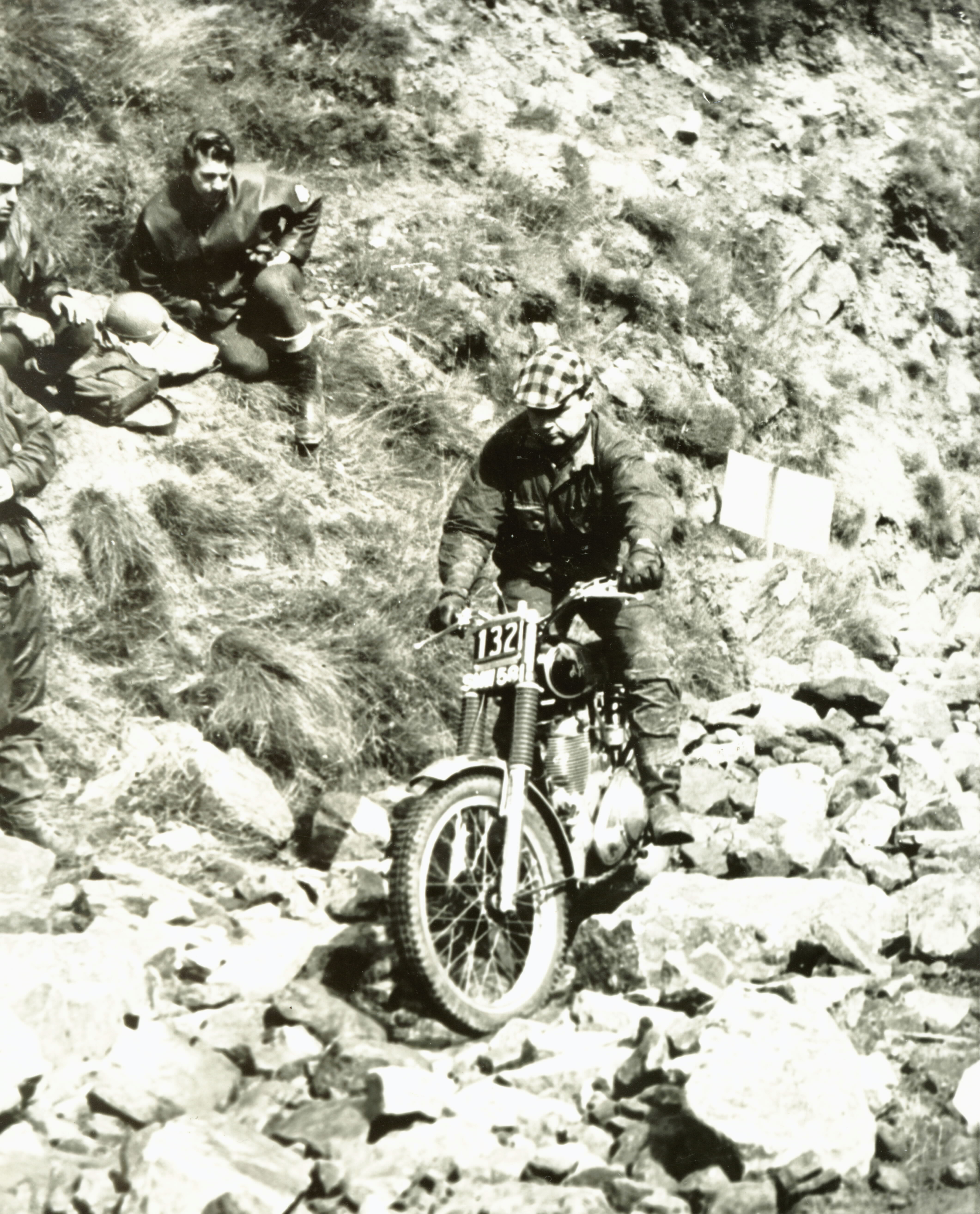
It was also the norm for Comerford’s to support southern centre riders, one example was Sid Wicken from Kenardington in Kent, who had secured a factory ride with Norman Motorcycles in early 1954, followed by several years in the Matchless trials team of Associated Motorcycles. His older brother Jack was a Triumph factory trials rider. When the Matchless team effort was disbanded in late 1957, Wicken moved over to ride Francis Barnett in 1959 with assistance from the Thames Ditton company.
Road going machine sales was of course the bread and butter part of the company with Honda, Lambretta and Suzuki franchises forming the greater part of the business and a Honda car dealership further down Portsmouth Road. Suzuki was added later with Kawasaki being an absentee because of manufacturer politics.
The off-road competition department was however much larger than most off-road dealers at the time. The small adverts in the motorcycle press were always headed up as ‘Look for Comerfords’ ensuring that the firm’s offerings were seen first to ensure an enquiry was forthcoming.
The swinging sixties:
By 1962, BSA had scaled down their Ariel trials effort and it was Comerfords that effectively took Sammy Miller under their wing with some support up until 1964 on his heavily modified and radically developed HT5 trials machines.

In fact, both Sammy’s 500cc Ariels, GOV132 and 786GON, were wheeled into Comerfords’ showroom with price tags tied to their handlebars in early 1965 when Miller was snapped up by Senor Bulto to further develop the Bultaco Sherpa T.

It was employee, Jock Wilson who bought 786GON as it was cheaper than its stablemate and carried many of the lighter alloy components that had been shared between the two machines during their years in Miller’s hands. GOV132, probably the most famous trials machine of all time, was eventually sold to a private buyer and rapidly changed hands thereafter.
In 1964, the showroom in Portsmouth Road had a ‘star’ visitor, when American movie actor, Steve McQueen visited Comerford’s when he was making preparations for that year’s International Six days Trial at Erfurt, East Germany. McQueen was granted access to the workshops at the rear of the retail showroom to do some preparation work on his Triumph.

This coincided with the filming of the John Sturges’ movie, ‘The Great Escape’ which was produced and distributed by United Artists. Filming took place during 1963, but McQueen had been entered as a Silver Vase team member on a 650cc Triumph TR6 supplied by the Meriden, Coventry factory and registered BNX882B.

The following riders were entered by the AMA for the ISDT in 1964, which was held from 7th to 12th September 1964: Steve McQueen (Triumph TR6 750), Cliff Coleman (Triumph TR6 750), Bud Ekins and his brother Dave (both on Triumph TR5 500), all four forming a Silver Vase team for the USA.

Comerford’s fielded a group of riders in the ‘Scottish’ from 1963 to 1965, comprising of company director, Don Howlett; Jock Wilson; Mary Driver; Roger Davy; Sammy Miller, and Reg May on a mixture of Greeves, AJS and Ariel machinery.
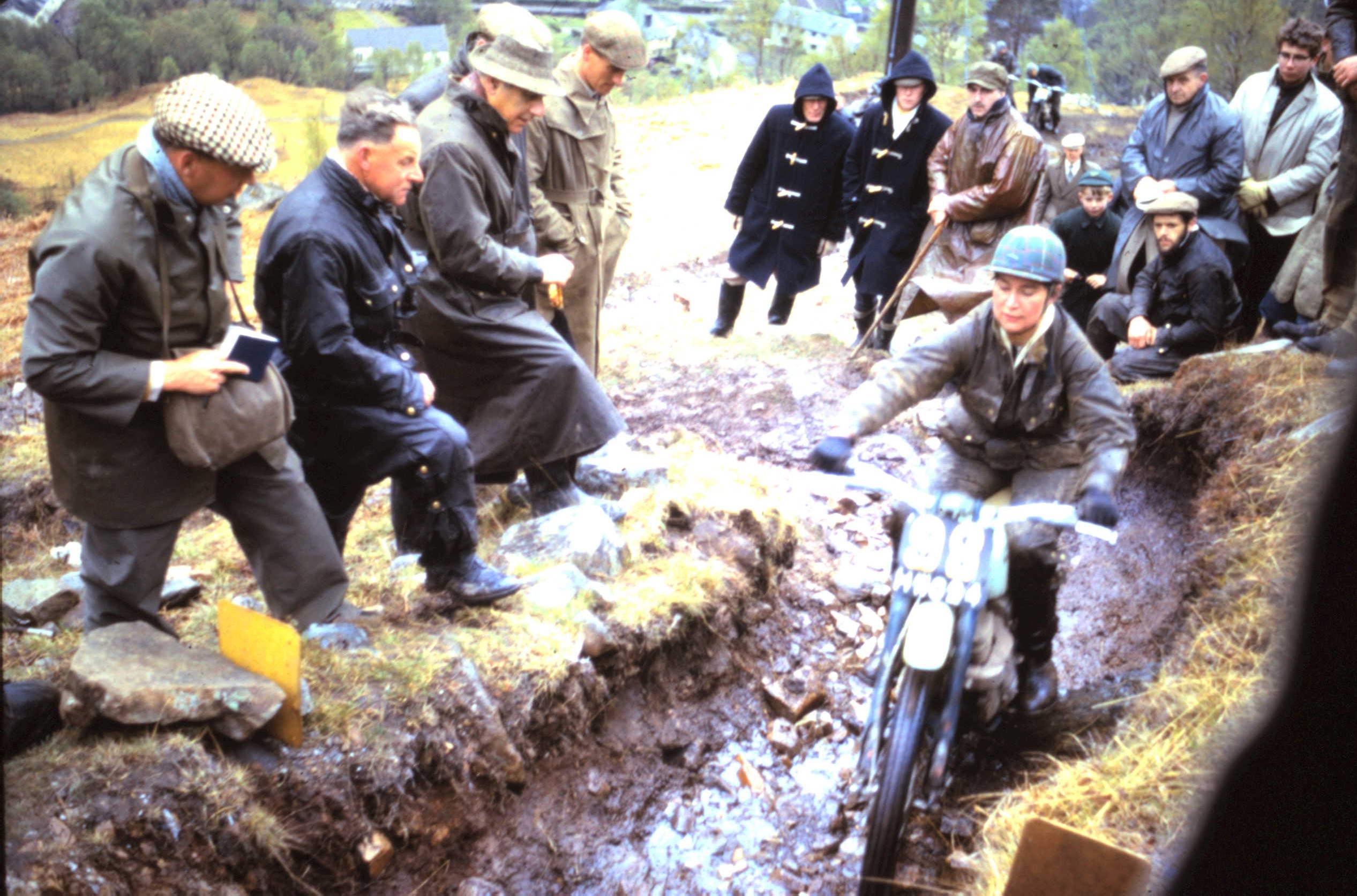
The firm’s Ford Thames van being a familiar sight at the weigh-in at Edinburgh’s Gorgie Market.

The firm also supplied a mixture of loan motorcycles for the route markers and officials at the SSDT for many years.
Roger Davy, married Angela, daughter of director, Bert Thorn and was an accomplished centre trials rider. A time-served builder, had been working on a property within two-hundred yards of Comerfords, Roger used to walk through the showroom as an eighteen-year old looking at the rows of bikes on his lunch break. One of the salesmen suggested that as he spent so much time there, he should get a job with them.
Roger Davy recalls: “I was earning £3 a week as an apprentice and the salesman said he was making double that with his commission. I gave it some thought and about three months later I started with Comerfords, working for my father-in-law to be. This was in 1962 and I stayed for six years before going back to my trade. I actually built the Honda car showroom for the company in Portsmouth Road. I rode many trials under the Comerfords banner and a number of times in the Scottish Six Days and rode whatever the firm were pushing sales of at the time, so it was Greeves for three years and then onto the two-stroke AJS in 1969 with a bit of help from Mike Jackson who had left Greeves for Norton Villiers. Latterly it was always Bultaco, being the main sales drive. Comerfords were so involved in trials that we used to have three van loads of bikes at centre trials.
My father in law, Bert was always the salesman and keen to secure publicity for the company and this is where the story of the ‘Gordon Jackson stone’ evolved. In conversation with a press reporter, Bert let it slip deliberately that he had uprooted the very rock that SSDT winner, Jackson had taken his solitary dab upon and it was on his rockery. They sent a photographer round to his house to take a photo of it.”
The Triumph connection:
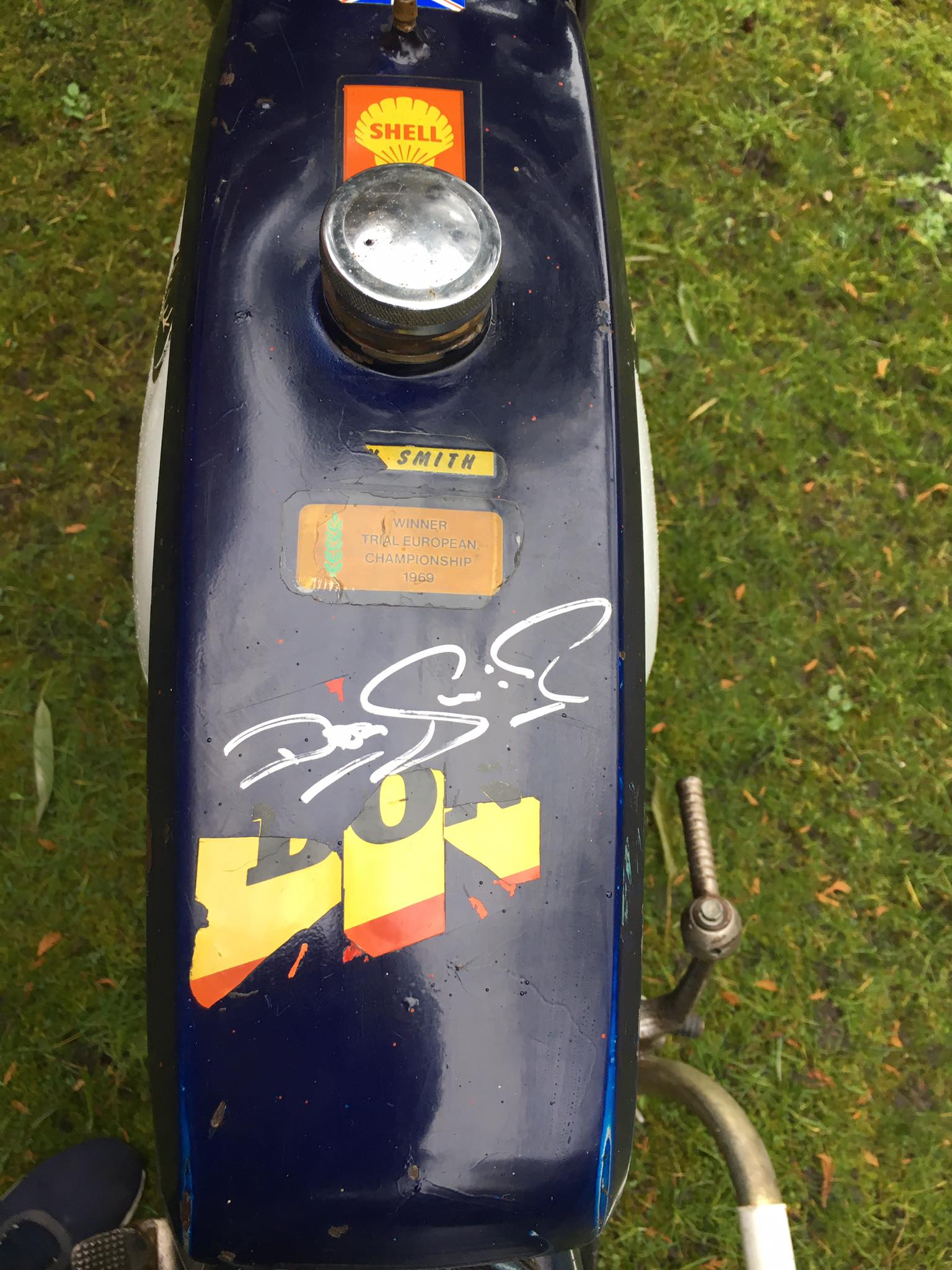
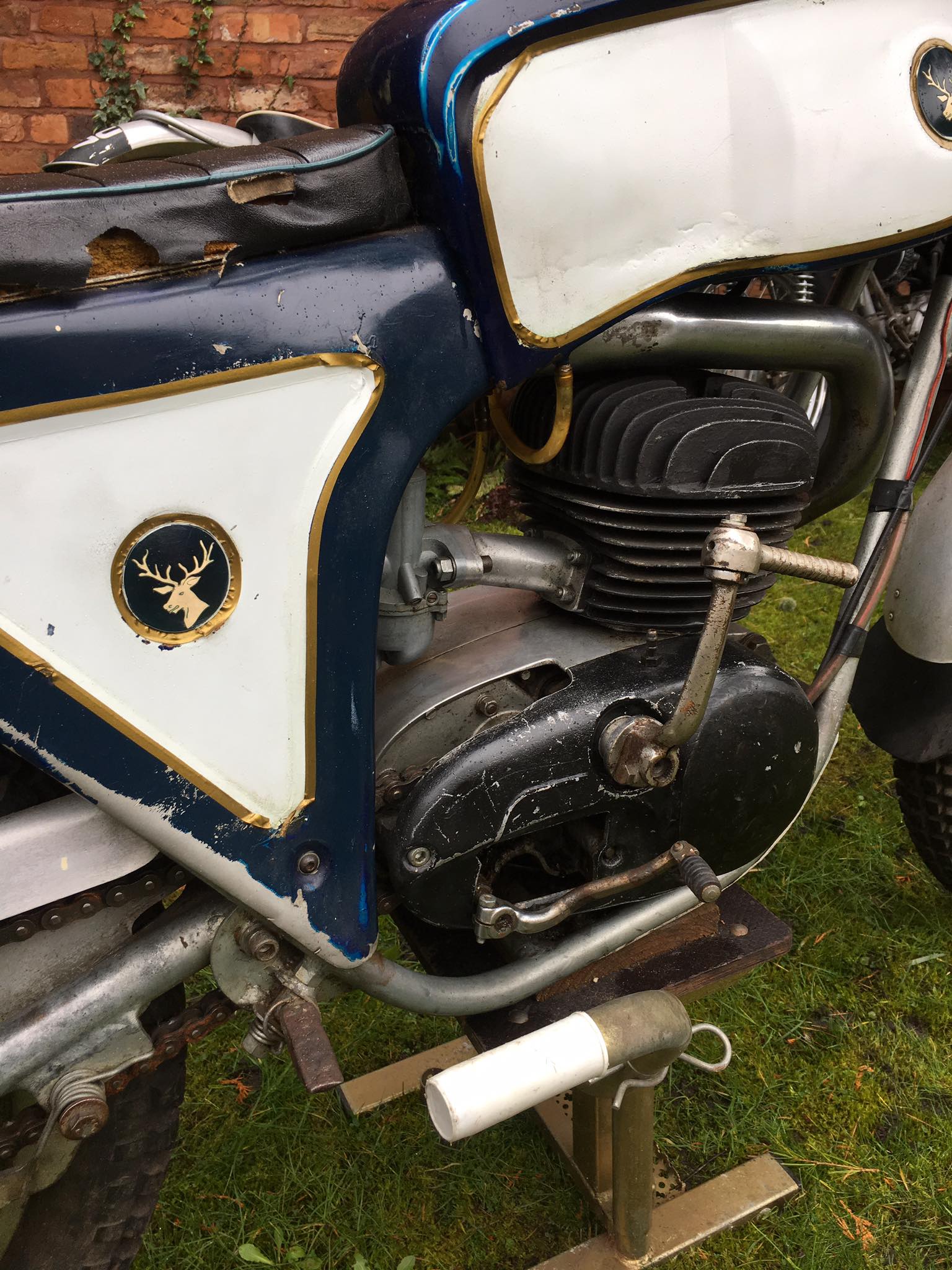
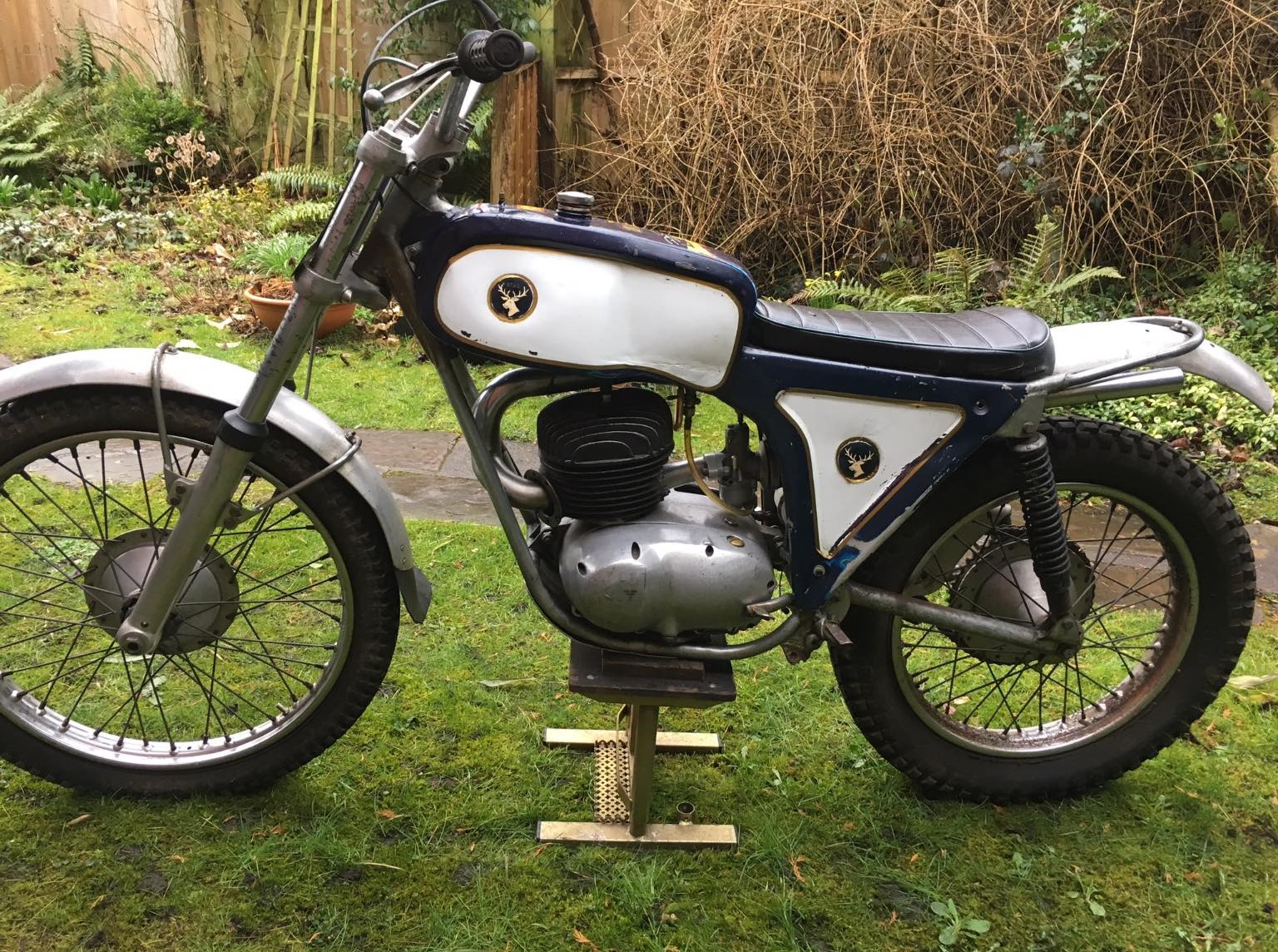
Following the cessation of Triumph’s factory trials effort in 1966, Comerfords decided to produce their own version of the Tiger Cub in trials trim, the 1967 ‘Comerford Cub’, derived from the Mountain Cub model T20M.

The Comerford Cub was a replica of the factory mounts of Gordon Farley and Roy Peplow. Triumphs sold a batch of T20Ms directly to Comerfords. These machines were modified at Thames Ditton by Colin Morgan and supervised by Farley.

Murray Brush fabricated the alloy components and the BSA Victor alloy fuel tank topped off the machine which retailed at £225. Comerfords’ stores also retailed the alloy components, enabling existing Triumph Cub owners to upgrade their own machines.
Production spilled over into the following year with eighty Comerford Cub machines built in total, pre-registered by the company for customers, many have survived to this day, being a sought-after machine, which now commands high prices in original condition and specification. The firm also produced the Comerford Victor 441cc trials machine in 1966 and produced five ‘Comerford Trophy 250’, a Triumph Trophy T25 modified by Reg May in 1968.

In 1967, one such workshop employee came all the way down from Garlogie in deepest Aberdeenshire, John Victor ‘Vic’ Allan who was invited to ride a Comerford Greeves while during the week work as a mechanic in the workshop. He was taken under the mentorship of the then Comerford spares manager and fellow Scot, Peter ‘Jock’ Wilson. The common denominator was George Morrison an Aberdonian friend of Jock’s who met during their Army National Service, Morrison also knew the Allan family well. Vic had become the 1966 Scottish Scrambles champion on a 250cc DOT. Having served his time as an electrician, the twenty-one-year-old moved lock, stock, wife Anne and infant daughter Anne, to Thames Ditton and began a long association with the firm. He rented part of a house from the firm at £3 per week. Then another employee, Gordon Farley moved in to the downstairs room and he paid £3 per week. In fact, Allan never held a direct factory Bultaco contract, it was always a Comerford Bultaco agreement.

The first race meeting for the new Comerford signing was not all plain sailing.
Vic Allan: “I arrived at Comerfords on the Saturday morning and asked to see Jock Wilson but was told it was his day off and no one had been briefed that I was coming. I was to ride at Builth Wells at a televised scramble the next day, so I was directed to a nearly new, bog standard 250cc Greeves Challenger which had little use and had been recently traded in. We started up the bike, checked it over, loaded up on my pick-up and headed back up to Wales to ride the next day. I came sixth, beating the then Greeves factory star, Freddie Mayes, much to the delight of the folk at Comerfords. I suppose I had arrived with a bang.”
Allan went on to become double British Motocross champion in 1974 on Comerford Bultaco 250 and 360 Pursangs. Strangely, Vic only met Bultaco owner, F.X. Bulto once in his life and that was only for five minutes, even although he had great successes on the Spanish marque.
In late 1968, Gordon Farley, still in the employment of Comerfords and riding trials under contract to Greeves, signed an eighteen-month contract with Montala Motors to ride the Spanish Montesa Cota.
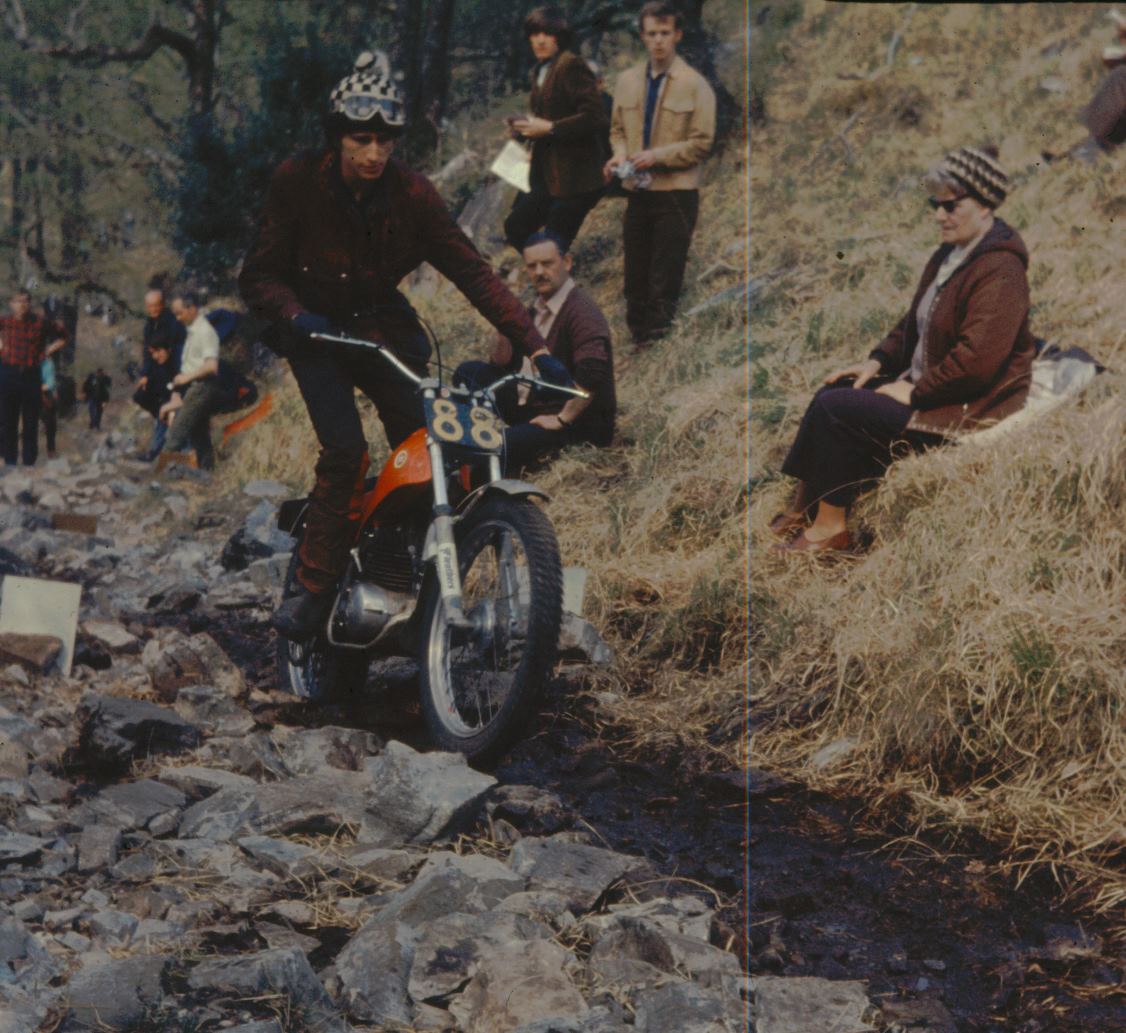
The Thames Ditton relationship did not end completely though, as Reg May continued to tune Gordon’s Montesa in secret. Farley would become 1970 British Trials Champion for Montesa, repeating the feat a year later, effectively ending Sammy Miller’s domination of the series.
John May, son of Reg May said: “It was all done on the quiet, even at the Scottish Six Days, Dad would arrange to meet Gordon in secret to set the bike up for the annual highland holiday. No one at Montesa or Comerfords knew anything about it at the time, but Gordon was incredibly grateful of the help nonetheless.” Farley left Comerfords in 1971 to start his own motorcycle business, Gordon Farley Motorcycles in Ash, Aldershot, subsequently relocating to Guildford where it is operates to this day by his son, Scott.
Connections in the trade:
Trials rider, Gary Wright recounts when his father John Wright had connections with the firm: “My Dad worked there as a teenager on Saturdays and I virtually grew up in the place. He was involved with some Bultaco engine developments in the mid-seventies which resulted in many trips to the factory at Barcelona. He attended a few SSDTs when he did a bit of spannering for Malcolm Rathmell and the Lampkins. He set up his own tuning business, Motorite Comp Shop in nearby Hook Road, Surbiton. We also had the American Bultaco rider, Jim Pomeroy stay with us when he did the British round of the World motocross series. Dad had been passenger to Dick Langstone in sidecar trials and Dick eventually emigrated to Australia, they won the British Experts Trial sidecar class.”
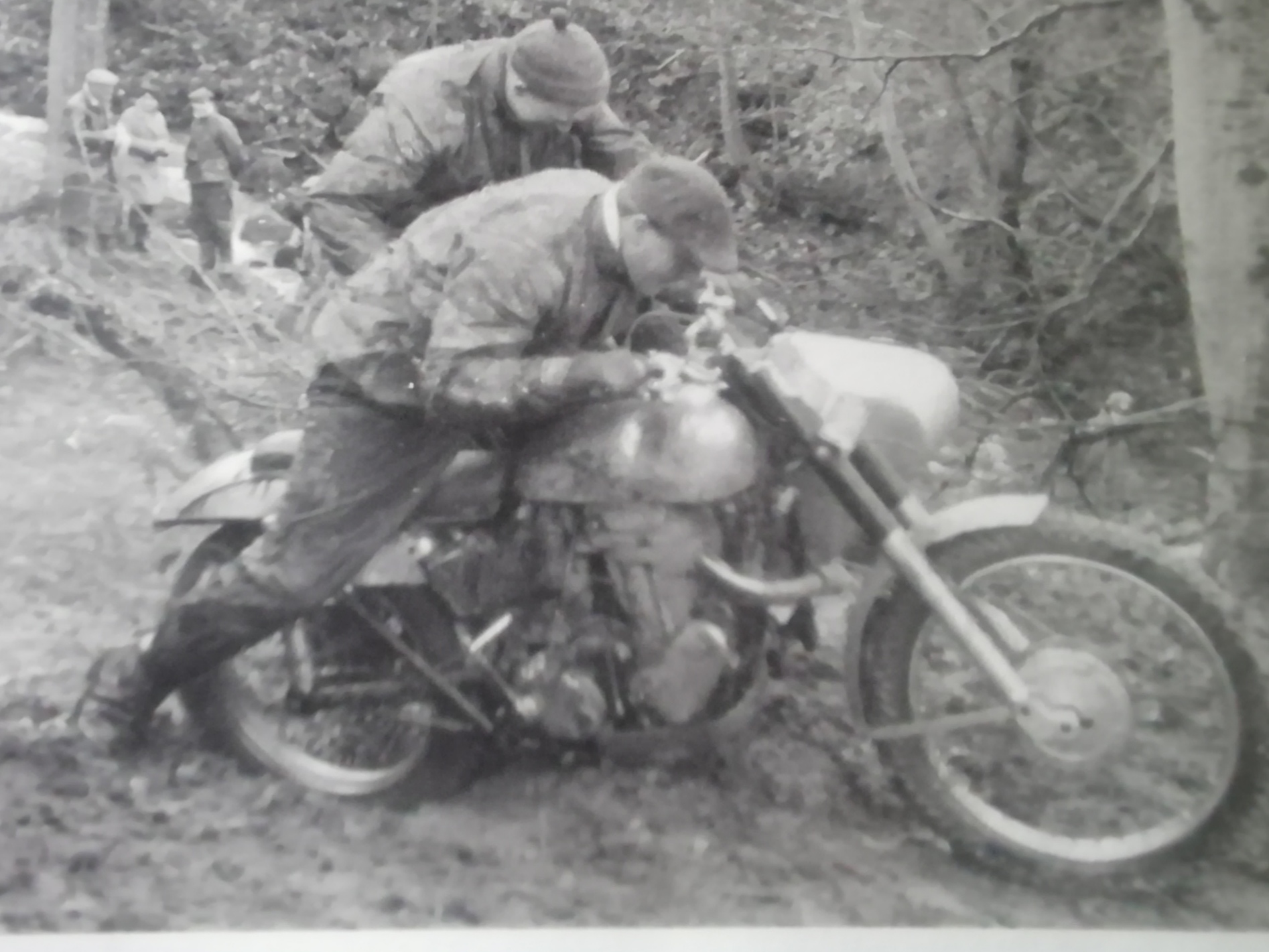
Langstone from Pinner in Middlesex emigrated to Western Australia in 1963 and lived in another of the Comerfords’ employee houses, the Langstones were on the ground floor and Jock Wilson and his wife Patricia were on the upper floor.
Dick Langstone: “I worked at Comerfords when I came out of the Royal Military Police as a salesman, come ‘gopher’ from 1956 until 1960. I remember just after the war, the fields behind the showroom were full of ex-army trucks and mtorcycles. Teddy Comerford was always looking to make a quid. Bert Thorn was a great friend, his daughters used to baby-sit my kids. Comerfords gave me a lot of support in trials with Ariel and Royal Enfield and my AMC sidecar outfit. Bert Thorn was born in a small house on the road behind Comerfords, and apart from being in the RAF for a short period, spent all his working life at the firm.”
What the workers say:
Liz Alder worked at Comerfords from 1976 to 1979 and married motocross rider, Brian Argent who ended up buying Motorite.

Liz Argent: “I first worked as a telephonist answering the phone in reception and then was promoted to doing the invoices and finance paperwork for the motorcycle sales staff. This is where I learned the trade with the help of Bert Thorn, which eventually gave us the confidence to buy the Motorite business when John and Chris Wright and family moved to Devon. At that time my husband, Brian had already been working for John Wright for about five years. My claim to fame was being the fastest girl to change a rear wheel in a Bultaco at the Dirt Bike show, I was coached by the legendary Reg May. For a first prize I received a crash helmet from Phil Read. Unfortunately, there is not many of us left. I’m sure people will enjoy reading about the old firm and the good old days.”

Former employee and trials rider, Derek Cranfield from Guildford who eventually ran his own shop, Len Savage Motorcycles in Farnborough: “I was at Comerfords for ten years, joining as a motorcycle salesman, then assistant stores manager. After that I moved into car sales, then back to motorcycle sales and ended up KTM sales manager when we began importing the KTM mopeds from Austria. This, coupled with the importation of Alpinestars boots and Regina chains, was the beginnings of what eventually became CI Sport.

The company helped me with discounts on the bikes and spares for the national trials and the Scottish Six Days. My favourite co-worker was Reg May, we rode trials together for many years all over the country, I did all the driving. I also took some photos, at the time when Comerfords funded the official program for the Scottish, my photos were on the front and back covers. I recall the time when the USA trophy team with Bud Ekins and Steve McQueen came with their Triumphs in 1964. Steve had a film photographer taking pictures of everything he did, when he picked up a spanner or screwdriver or just bent down to look at his bike, there was a camera in his face. The company had a museum of old bikes, when Toshi Nishiyama first came to this country from Japan, I was one of the first people he met and I took him round the museum, his job then was a reporter/photographer, we are still friends to this day.”
The Bultaco Years:
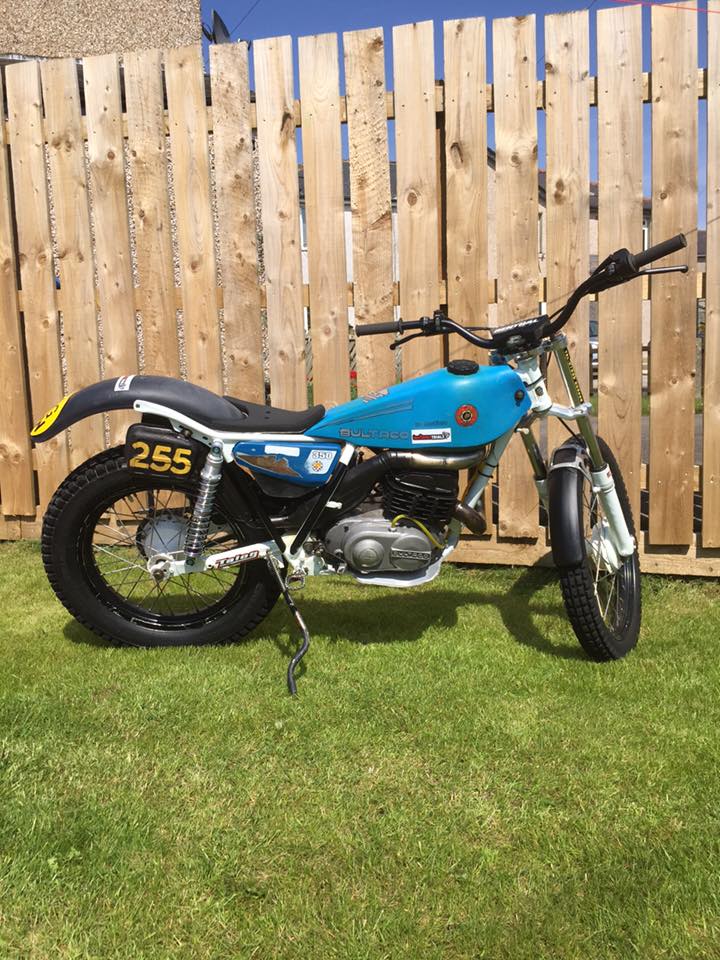
By 1969, the Bultaco concessionaire enterprise for the UK was up for grabs, relinquished by Rickman Brothers based at New Milton who felt it interfered with their Metisse motocross machine manufacturing business. It passed to the main Bultaco dealers Comerfords, whose Reg May was one of the first to own a Sherpa T when they arrived in early 1965.

May of course was already known throughout the land as being the ‘go-to’ man for Bultaco tuning and modifications. He was to be the man behind the Martin Lampkin 1975 World Championship victory, having prepared Lampkin’s Sherpa to perfection. Bultaco UK was born and the name registered by Comerfords.
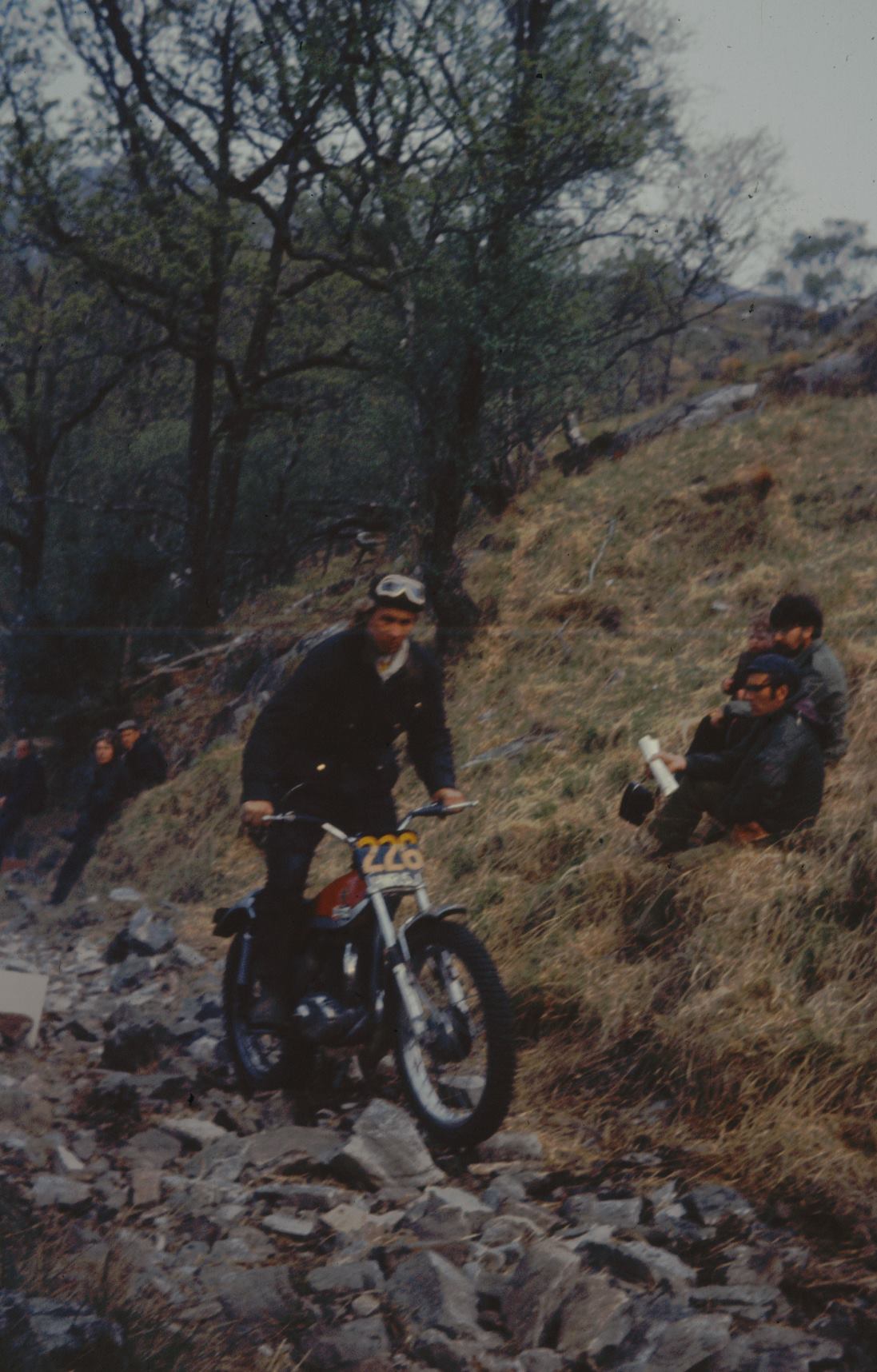
Malcolm Rathmell, who had ridden for Triumph then Greeves, was signed by Bultaco for the 1970 season as a motocross rider and was taken under the supportive Comerford banner.
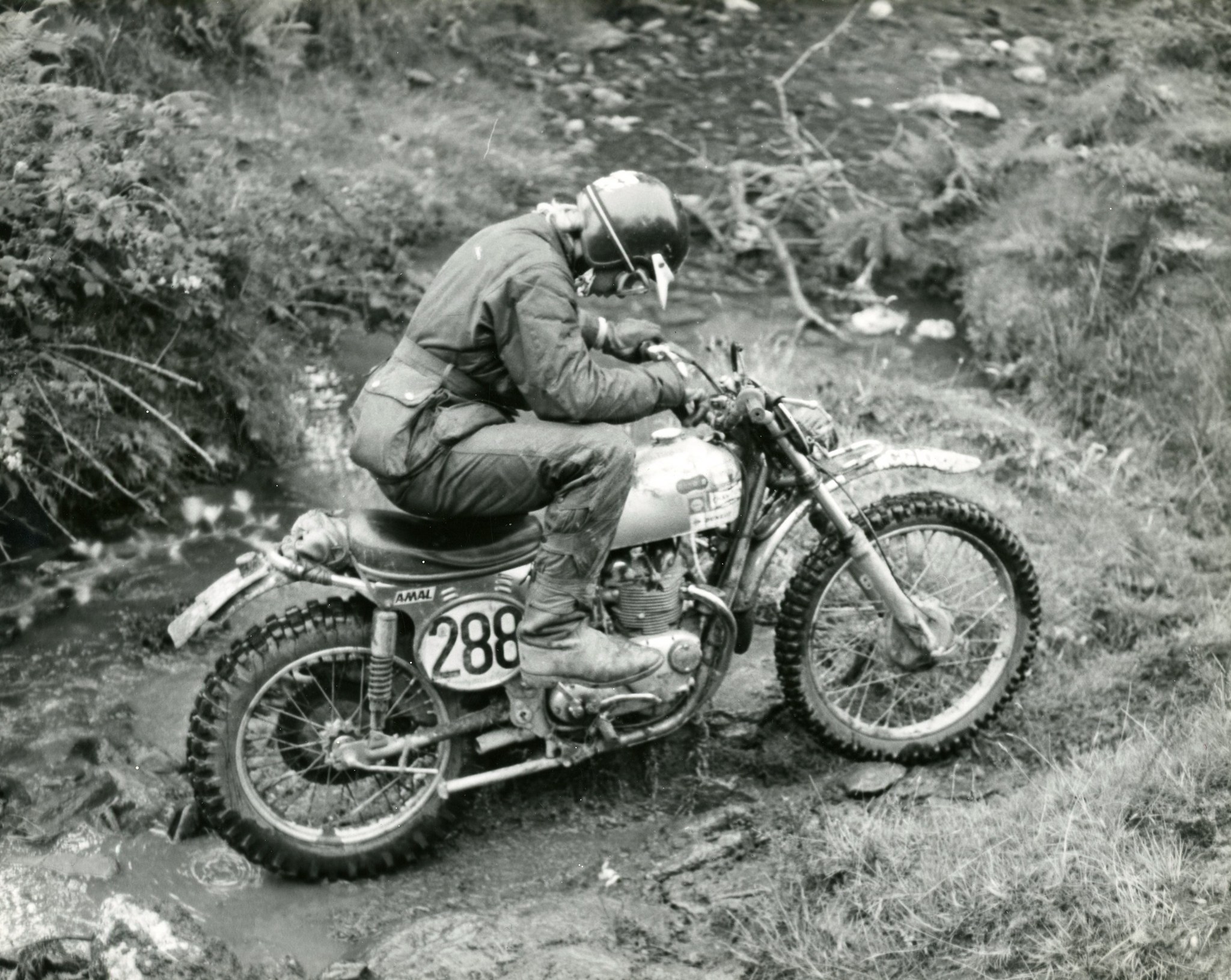
Rathmell was the then holder of the European Trials Championship, but Bultaco viewed him as a top motocrosser at the time. Shortly after, Senor Bulto messaged Comerfords to instruct Malcolm to concentrate on winning trials instead. He remained with Bultaco until late 1974, when he moved to rival Montesa to develop their 348 model.
Record sales:
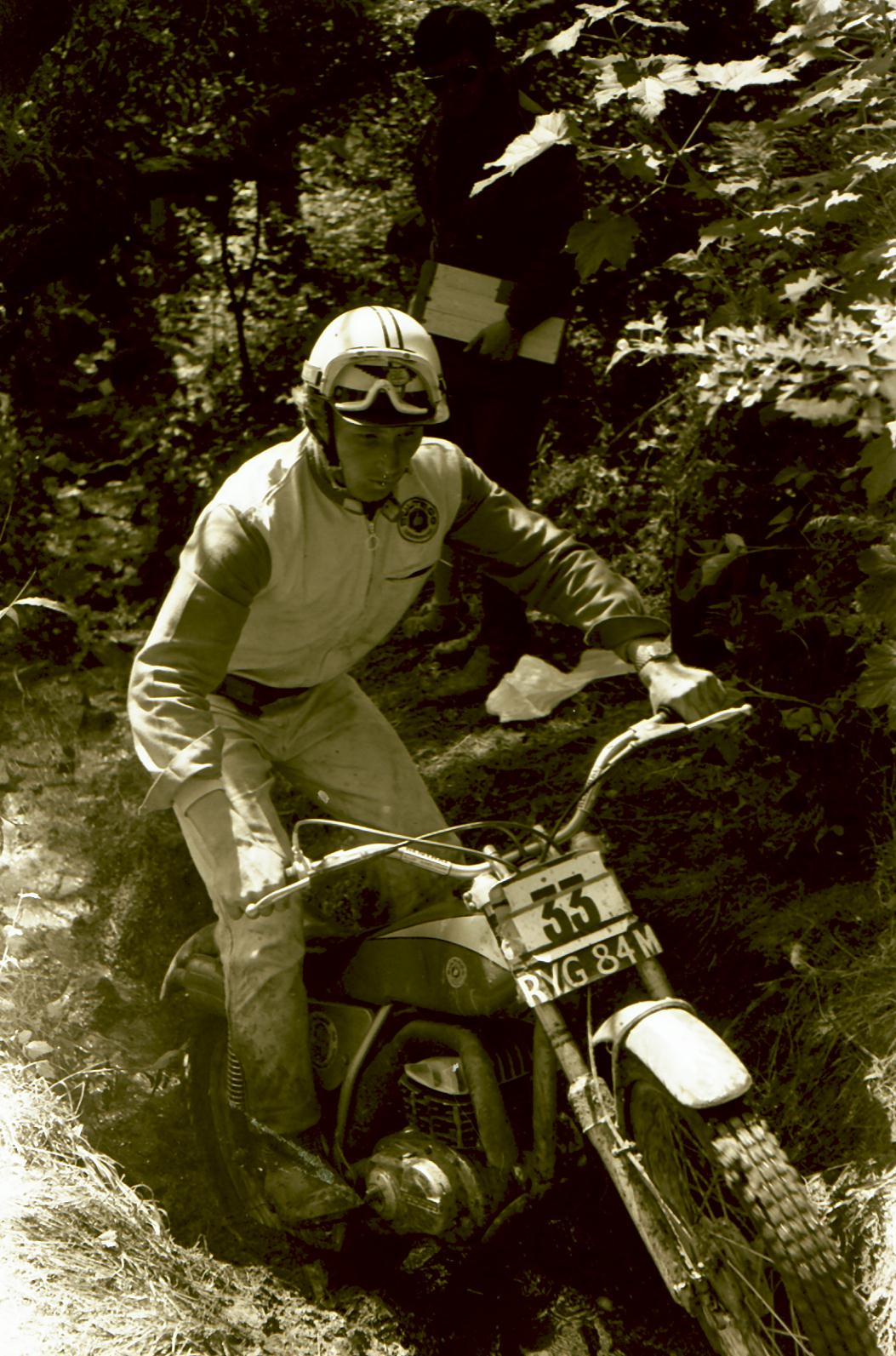
The mid-seventies are recorded as the period in which more trials machines were sold in the UK than at any time before or since. Many of these machines were road registered and Bultaco had a large market share, the brand was at the top of the world, literally, and sales were buoyant.

By 1975, Comerfords celebrated their Golden Jubilee and the Bultaco connection was a highly significant one, with the Portsmouth Road company having supported Vic Allan; New Zealander, Ivan Miller; Birmingham engineer, Vaughn Semmens; John May and Andy Roberton in motocross and young Scot, Billy Edwards in youth motocross on a 125cc Pursang.
With Tony Davis; Martin Strang; Steve Wilson; Chris Milner; Lawrence Bird plus a whole host of others in trials.

The considerable Bultaco UK dealer spares distribution part of the business was at this time handled very ably by Jock Wilson. On Bultaco retail sales was trials rider, Dave Campling, he then went on to work for Motor Cycle News, Manager at Ken Heanes motorcycle dealership in Fleet and Dirt Bike Rider magazine.
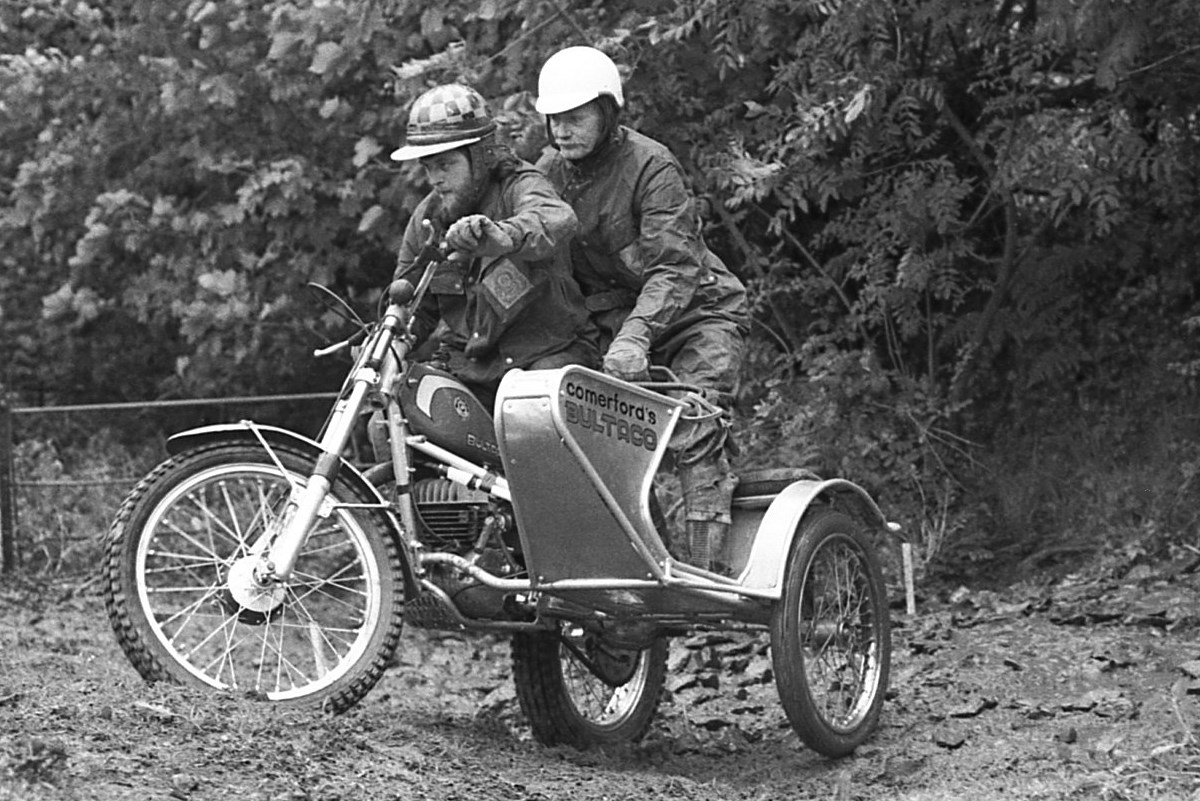
In this year, 1975, Martin Lampkin then picked up the inaugural FIM World Trials Championship for the brand, he did not have a Bultaco factory mechanic, he had Reg May on call.

Scottish Bultaco main dealer, Jimmy Morton based in the Ayrshire village of Sorn, directly assisted by Comerfords, sponsored champions, Norrie Lymburn and Peter Reid who literally dominated Scottish Motocross from 1973 to 1976. Morton also supported Michael Tye, son of BSA works rider David, on a Bultaco in the 1976 trials season.
When Bernie Schreiber came to ride the 1977 Scottish Six Days, he spent the week prior to the event at Sorn, practicing on a brand new standard Sherpa T provided from Morton’s stock of Bultacos. Comerford’s support spread far and wide.
Trials support by Bultaco UK:
Trials riders, Dave Thorpe, Alan, and Martin Lampkin all had Bultaco factory contracts, but their trials machines were looked after by Comerfords in the UK.
The Lampkins came to the notice of the factory following Reg May’s ‘rescue’ of Alan Lampkin when he did not have a bike for the Scott Trial in 1970.

Alan Lampkin: “I had got to know Reg when we rode round together at the 1966 Scottish, which I won. In 1970 the Alta Suzuki project had come to an abrupt halt, so Mart and I had no bikes for the Scott Trial. I rang Reg up at Comerfords and explained our predicament. He spoke to Mr Comerford who asked, ‘who are the Lampkins?’ Shortly after, Reg phoned me back and said we were both sorted out with a pair of 250 Bultaco Sherpas, I rode one that had been Barrie Rodgers bike and Mart rode an ex-Steve Monk Bultaco that he had borrowed for us to ride. This really started our relationship with Comerfords, which led to Bultaco factory support for 1971.”

Reg May had a special relationship with the Lampkins and prepared many Bultacos for the brothers. At any given time, Martin Lampkin had half a dozen Bultaco engines available to him prepared with different power characteristics to suit certain events. The rest as they say is history with Martin rewarding Reg’s attention to detail by going on to win the 1973 European Trials Championship, triple winner of the Scottish Six Days 1976-1978 and of course the 1975 World Championship, all on Bultaco.

Bultaco UK Director, Don Howlett acted as a talent spotter for the Barcelona factory in the UK and any UK Bultaco signings were down to him. In the mid-seventies, Howlett arranged for all the Bultaco dealers and their wives in the UK on a special trip by aircraft to visit the Bultaco factory.
Dave Thorpe from Sheffield tore up his factory Ossa contract having fallen out with the company in early 1975 and was loaned a Comerford Bultaco 325 Sherpa demonstrator for the British round of the new World Championship, the Hurst Cup Trial in Northern Ireland. His win secured him a works contract direct with the Barcelona factory from the beginning of 1975 to the end of 1978. When the factory eventually closed, Dave was taken under Comerfords wing from 1980 until 1984.

Thorpe: “I purchased that bike at a special price and got my spares for no cost. Comerfords were immensely helpful and supportive to me. I unfortunately left Bultaco lured by a lucrative offer from CCM to ride their four-stroke. I was only with them for six months, but it seemed a lot longer.”

The KTM connection:
The Bultaco enterprise was followed three years later by another brand, the Austrian KTM, initially with mopeds, but when the Mattighoven manufacturer commenced full scale production of their motocross and enduro range with their own engines, these came to the UK via Comerford International.
The Milan Show in 1971 set the scene with John Comerford and Don Howlett searching for a quality moped range and the well-built KTM ticked all the boxes. Few firms could match Comerfords for their expertise, experienced staff and know how.
Few outside the company knew that John Patrick Comerford, the only son of founder, Teddy, who was born in November 1932, became an Oxford University graduate and qualified barrister, who initially had no intentions of becoming involved with the family business. John Comerford was to rely heavily on his fellow directors, Bert Thorn and Don Howlett, who knew the fiercely competitive motorcycle trade, inside and out. Mr. Comerford was known universally and affectionately as ‘JPC’ by the Comerford staff.
John May was sponsored by the company first in trials, then motocross and latterly enduros, and was even a part-time employee at Comerfords: “I was actually a Saturday bike cleaner and preparer working for Bert Thorn when I was still at school. I earned a bit of money and worked with bikes.” May became one of Britain’s top-class enduro riders who represented his country at the ISDT and ISDE many times riding for the GB Trophy Team. He raced Bultaco Pursangs and KTM under the Comerford banner. John was employed by trials rider, Clive Dopson’s father at Premier Garage Ltd in Farncombe Surrey and as very much a self-taught mechanic he helped Clive Dopson when he was car rallying.

Going large:
Comerfords at Thames Ditton was far removed from their original Pease Pottage beginnings. By 1975, they were a large Honda five-star dealership with clinically clean workshops and a team of ten mechanics, supported by administration staff, all managed by Keith Thorpe, the father of World Motocross Champion, Dave Thorpe who raced for Kawasaki and Honda/HRC. The workshops were handling a staggering 15,000 road machines per year.
Motocrosser Dave Thorpe: “I have very fond memories of Comerfords as a child. My Dad, Keith used to take me there on some Saturdays. I loved being in the workshop and used to watch the guys working away on the bikes and being around Reg and John May, Vic Allan, and the team at Thames Ditton. Great times!”
Such a go-ahead company, they even ran their own Schoolboy motorcycle show to promote youth trials and motocross, this was to promote the growing market for youth machines across the off-road ranges of major manufacturers.
With the importation of Alpinestars motorcycle boots from Italy, Regina Chain, founded in Italy in 1919, and the distribution of Renthal handlebars, made in Macclesfield, Comerfords were now a large multi-franchise dealership, being part retailers, part wholesalers to the motorcycle trade.

Trials enthusiast Paul Slark from nearby Shepperton recalls his youth: “As a young lad I used to get on the bus with my friends every Saturday and go to Comerfords in Thames Ditton. We spent many hours just looking at the rows of bikes, new and second-hand for sale. Over the years my parents bought bikes for my brother and me from the company. It was a place all my friends went to, that was Comerfords as I remember it, great days.”
The company also were involved in local sporting events and encouraged the fledgling youth side of motocross and trials. Riders in the Surrey Schoolboys Club such as Colin Boniface and Clive Dobson were the lads to beat, with Boniface securing employment at Thames Ditton after leaving school. His father Bill Boniface was a leading light in the Witley MCC, and Colin went to work with ace spanner-man Reg May.

The late Colin Boniface: “I know it was a workplace, a means to earn money and I suppose I didn’t think of it at the time, but Comerfords was actually more than just a place to work. It was such an involved company in the sport of motorcycling, I do not think there was another firm like it. I saw an old photo on social media recently which captured actor Steve McQueen striding through the showroom, dressed in a tee-shirt and jeans. I can say I have not only walked the same steps but ridden plenty bikes up the same piece of floor as McQueen. I rode all the latest bikes, and some special ones too, at local and national trials and became quite successful both during and after youth trials. As far as trials was concerned, Comerfords in the seventies was the place to be.”
Rider support:
Somerset trials rider and Wessex ACU and South West Centre ACU trials champion, Martin Strang recalls the excellent support he received from Comerfords on a Bultaco. “Don Howlett set up the contract and I was supplied with bikes and spare parts. The bikes were all prepared by the legendary Reg May. The company let me have a bike long after the Bultaco company had shut down, eventually asking for the return of the machine in December 1985. My career high was winning the Southern Experts in 1975, but I did also win the Wessex and South West Centre championships a few times. These results would not bring a rider of today any help but back then the market for trials bikes was massive and many others also benefited from this.”

With the increase in spare parts stockholding due to the Bultaco importation side of the business, long-serving staff members such as Brian Green were kept busy supplying franchise and non-franchise Bultaco agencies throughout the country. Brian, now retired and lives in Portugal, specialised in the non-Bultaco parts with Jock Wilson keeping the Bultaco dealers happy with fast postal service. Brian was passenger to local trials sidecar driver, Terry Mussett who was Comerford’s supported with two Bultaco based outfits before sponsorship with a Motorite supported Bultaco 325 outfit. Brian’s brother, Derek Green was employed in the workshops and he too was a sidecar driver who left Comerfords to work for John Wright at Motorite in Surbiton. Bultaco sales representatives included Alan Ketley and Peter Hudson, both regular competitors.
“Promote them on Sunday, sell them on Monday”
Three times FIM World Trials Champion on Bultaco, Yrjo Vesterinen: “Comerfords of Thames Ditton were already a prosperous business before they became the Bultaco importers for the UK. They had already developed into one of the largest motorcycle dealerships in the world. Whilst there were many thriving motorcycle shops in the country, what made Comerfords unique was their interest in the sporting side of selling bikes. That is why many of the staff competed, and in particular trials. Bert Thorn and Don Howlett were directors of the company as well as being very keen trials riders.“

“Promote them on Sunday and sell them on Monday, was their motto and it worked well as a business model, Comerfords became an institution.
They sponsored a significant number of riders in the UK and gave them a chance to test their wings. Pretty much nearly all of the UK top riders, especially in the 1970s, had had an involvement with Comerfords at some point during their careers.
My lucky strike was towards the end of 1980 when Don Howlett contacted me and asked if I would be interested in returning to Bultaco after a season on the Montesa.“

“What I didn’t know at the time was that the factory had already been negotiating with Comerfords behind the scenes about returning to top level competition. The problem the factory had was that they had no money. Comerfords on the other hand had cash in hand, but no bikes to sell. Comerfords gave a substantial order of bikes to the factory.“
Bultaco in return agreed to give some free bikes to Comerfords to sell and turn into cash to fund my return to my beloved marque.”

“John Comerford took a risk in signing me for the 1981 season, against straight forward twelve-monthly payments.
As there was a genuine chance that Bultaco might not make it through the season, Mr Comerford said that he would honour the deal whatever happened. That was more than good enough for me and I was extremely happy to return to ride for Bultaco.
I found Mr Comerford to be a true gentleman and a 100% trustworthy person, who was passionate about loyalty. His loyalty lay with Bultaco and he felt that it was time to pay back some of the monies that Comerfords had earned during the golden years of the brand. This is pretty unbelievable, but that is how he was.“

“I wish I could have given more to Bultaco in terms of results. It was an uphill battle though as Bultaco had already fallen somewhat behind with the opposition. It was also a busy season with a lot of testing and development work to be carried out as well as competing in the World Championship. The season finished with me third in the world, second in the SSDT and victory in the Scandinavian Championship. The highlight of the year was winning the World Round in my native Finland. History tells us now that that was the last victory ever for Bultaco, as well as for me.
Comerfords gave me another chance to stay with them for the 1982 season. The agreement was that I needed to get an ACU licence and compete in the British Championship that year.
I was incredibly happy about this new challenge and was keen to prove to my English girlfriend Diane, that there was still some life in me!
The season ended with Britain being ruled by a Finn. Not everyone was happy about that, but I had achieved something that had become a bit of a talking point through the season.
In hindsight, I have to admit that I was a very lucky man to have had my two years sponsorship from Comerfords. I happened to be at the right place at the right time. Those two seasons were not the best in my career, but they hold some great memories.”
Following Yrjo Vesterinen was Former ten times British Trials Champion, world round winner and four times Scottish Six Days winner and now UK importer of TRS Motorcycles, Steve Saunders from Cheltenham:
“I had ridden a wide range of trials machines for the major factories in my career, but I have to say that my Comerford’s backed Bultaco days, they were absolutely fantastic. I have fond memories of them. I won the ACU British Youth A class championships in 1980 and 1981 for Bultaco UK and had the opportunity to work beside some real heroes, such as Bernie Schreiber whom I learnt a lot from during practise sessions with him. Schreiber was based in Surrey at that time when he rode in Europe under Comerfords.“
“I also learnt a lot about the mechanics of the trials machine as the great Reg May, the Bultaco tuning wizard, was preparing my bikes at Comerfords.“

At this time of course I was competing on the 250 Bultaco Sherpa, as youths could ride 250cc machines, unlike now where they are limited to 125cc.”
Steve Wilson: Speedway and trials star, Steve Wilson from Hall Green, South Birmingham also benefitted from Comerfords support: “My trials contracts ran from the February of 1973 until the end of 1979. I had free bikes and all necessary spares plus Shell Oils funded the Bultaco UK rider bonus scheme, with the lubricants arranged through Keith Callow of Shell. I also had Bultaco Pursangs on loan through Bert Thorne from 1976 to 1979. All the technical information came from Reg May relating to the engines. All my spares were booked out over the telephone with Jock Wilson. Don Howlett was responsible for the original sponsorship offer.”

“My team managers were Charlie Harris, Alan Ketley and Pete Hudson. I nearly always bought the outgoing bikes off them rather than return them to get the latest model. I received a 250cc KTM engine off them for Elstar around 1974 for Chris Baybutt to use in British Grass Track championships, which he won. Colin Saunders and I built the bike for him. Comerfords were always helpful. all great guys, never a cross word or fallout in the seven years I rode for them. They were very accepting and understanding of the machine modifications, considering they were selling standard bikes.”
In 1977 the trials world was to be turned upside down with the arrival of the new kid on the block, an American called Bernie Schreiber. The Bultaco company had a plethora of factory and importer supported riders which included the young American and he was about to take the trials world by storm. However, Bernie Schreiber was not a full factory rider from day one.

Schreiber: “As you know, I rode a Bultaco from a young kid to world champion for the simple reason that the product, riders and team support were proven winners year after year. From 1975 to 1978 I rode under a Bultaco USA contract and for all of 1979 until June 1980, I had a Comerford’s Bultaco UK contract. I did have support from the many Bultaco importers around the world, but the UK was the place to be.

Bultaco USA always wanted me to ride in the US championship, but by the end of 1978, I had won the American Trials Championship, the USA World round and was number three in the world at nineteen years of age. I wanted another shot at the world championship in 1979 and Bultaco USA did not really want to support that adventure any longer. At that stage, Bultaco Spain was forced to find support from another distributor, they already had financial problems and Comerfords stepped up to the plate. Between the English language and the need to learn mud riding I took up the offer. My main contact and support at Comerfords was Pete Hudson, Comerfords Import Manager.”

Bernie Schreiber was the only Bultaco World Trials Champion to have won the title without a 100% factory contract.
So, what happened to Comerfords at Thames Ditton? The firm closed its doors, but it did not actually disappear.
Dave Renham, owner of Inmotion Trials Specialists:
“I started at Comerfords in 1977 in the KTM motocross workshops. My Dad, Eddie knew Keith Thorpe and he gave me the job, but it wasn’t straightforward. My Mum insisted that I go to college after leaving school, but I had a day off on a Wednesday, so worked at Comerfords one day a week for no pay to keep the job open for when I left college. I worked latterly with Reg May in the Bultaco comp shop and I stayed until 1981 when I left to join Derek Cranfield at Len Savage.”
Dave Renham set up Renham Motorcycles at which point, enthusiasts had started looking for parts to rebuild their Sherpas and Pursangs and that provided a business opportunity which Dave grasped.
“I approached John Comerford to obtain the rights to trade under the name Bultaco UK, this was agreed, and I also inherited the Comerford Bultaco dispatch ledgers, which have been invaluable over the years for people restoring and registering their machines. I started buying new old stock parts from the old Bultaco dealers across the country and overseas. When I worked at Comerfords it was simply a job, it is only years later, on a wave of nostalgia that people have looked back at the company with such fond memories. My most fond memory was getting the cakes in when Vic Allan won at a motocross meeting.”
Inmotion Bultaco is now the largest supplier in Europe of genuine Bultaco parts, with many items manufactured by the original suppliers to the Bultaco factory. This business has grown over the years to cover many other marques. Inmotion can trace its creation back to Comerfords and Bultaco UK.
Carly Miller, Director of the company that bought out the part known as Comerford’s International, explains what happened to the company: “In 1972 my Dad, Stuart Miller joined Comerford’s as a Junior Salesman and was looked after by super-salesman Bert Thorn. My Mum, Linda also joined the same year, and this is where they met and married two years later. A Comerfords romance you might say.
In 1989, John Comerford made his decision to retire, my Dad and Don Howlett prepared a management buy-out plan and successfully purchased the business from the Comerford Family.
The terms of the buy-out meant that the Comerford name could no longer be used, so ‘Comerford International’ changed to CI Sport. A nod to the past being the ‘CI’ in CI Sport representing Comerford International.

Dad and Don decided to focus on the selling of parts, clothing, and accessories rather than taking on the motorcycle sales section of the business.
In 1998, Don Howlett decided it was time to retire, so my Dad, who was also an active motocross rider bought him out of the company. CI Sport Limited was formed in the October of 1998 and now operate from Leatherhead in Surrey.
Sadly in 2018, my Dad passed away suddenly, but before he died, he asked me to come in and help Mum run the business. I joined the business in July 2018, just one day before he died.
Both ‘Renthal’ and ‘Alpinestars’ are brands that we still represent to this day that were also retailed and wholesaled by Comerford International in the 1970s. We are enormously proud of our history and can’t wait to celebrate our centenary in 2025.”
Comerford’s at Thames Ditton may not be there anymore physically, the site is now occupied by Dagenham Motors, Ford dealers at Brook House and Thames Ditton Honda car franchise operates on another part of the site which once was the Oxford House headquarters of Comerfords. Part of its heart still beats within CI Sport at Leatherhead, still in the motorcycle trade, still with the passion that Teddy Comerford possessed one hundred years ago.
Believe it or not, the actual company still exists, still called Comerford’s Limited and still controlled by family members as directors and the company secretary. Listed in Companies House as 00317526 with Patrick Comerford, son of the late John Comerford listed as a director.
In 2025, Patrick Comerford decided to celebrate and mark the occasion of the 100 years since Teddy Comerford formed the company. Patrick enlisted the help of Trials Guru’s John Moffat, having read this article and Moffat put Comerford in touch with as many ex-employees, riders and Bultaco family contacts. In appreciation of this assistance, Patrick presented Moffat with a bottle of the lowland whisky, being a Private Cask, single malt, distilled, matured and bottled by Lindores in Perth.


Copyright: John Moffat/Trials Guru 2023
Photographic Copyright: is retained by the photographers named in captions above.
Apart from ‘Fair Dealing’ for the purpose of private study, research, criticism or review as permitted under the Copyright, Design and Patents Act, 1988, no part of this article may be copied, reproduced, stored in any form of retrieval system, electronic or otherwise or transmitted in any form or by any means, electronic, electrical, mechanical, optical, chemical, photocopying, recording or otherwise without the prior written permission of the author as stated above. This article is not being published for any monetary reward or monetisation, be that online or in print.














 TRIALS GURU - DEDICATED TO TRIAL