Following on from an article partly written by Steffen Ottinger and additional information by Rainer Heise about Gustav Franke, it occurred to us that very little had been written and published on the internet about the founding father of what we now know as the World Trials Championships!
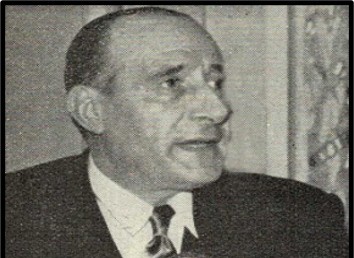
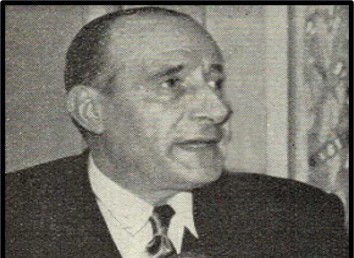
That man was Henri Groutars and you would be excused if you have never heard of him – or heard very little about him.
We are about to change all that!
From the Sheffield Trial to the European Trial Championship
Words: Rainer Heise
Photos: Rory MacGregor, Rainer Heise; Jan Müller; Louis Nassogne, now part of the ‘OB Collection’.
These days, when we read about an European or World Trial Championship round, we don’t give a second thought to how or when the sport actually originated. To find that out, you have to delve into the history of motorcycling in our neighboring country. Liège, Belgium, was the birthplace of continental trials. From there, it spread further.
The seed of Belgian trials was sown in 1926. English riders invited eight riders from the U.M.L. (Union Motocycliste Liègois / Liège Motorcycle Club) to a performance test called the ‘Trial of Sheffield’. Meetings were held once a year until 1929, after which this city rivalry came to an end. Later, there were additional off-road races, which were called ‘trial’ to distinguish them from motocross. They took place in Tilff, Fayembois, and Noblehaie near Liège.
Every advancement is tied to a specific individual, and trial is no exception. And now, for the first time, we encounter the name Henry Groutars. In 1912, at the age of 17½ years old, he volunteered for military service in the Belgian army. Deployed on the front lines near Antwerp and along the Yser River against the German occupation during World War I, he contracted an illness that he overcame only thanks to long and attentive care.
After earning his degree in industrial engineering from the U.L.B. (Université Libre de Bruxelles / Free University of Brussels), this passionate motorcyclist took the helm of the Elan Motor Club in Etterbeek, Brussels, in 1928. He joined the F.M.B. – B.M.B. (Fédération Motocycliste de Belgique – Belgische Motorrijdersbond / Belgian Motorcycle Federation) that same year.
Just one year later, he was appointed to the board of directors. As a dedicated Indian motorcycle rider — he always rode with a sidecar, which suited his height and build — he participated in countless rallies in Belgium and abroad. In the 1930s, he won long-distance endurance races such as Antwerp-Paris-Antwerp (approx. 700 km / 440 miles). Henri Groutars placed third in Liège-Dijon-Liège (approx. 1,000 km / 625 miles), and third in Liège-Lyon-Liège (approx. 1,500 km / 950 miles). He also eagerly participated in sporting events; as a dedicated board member, he was seen competing in events in Herentals, Aywaille, Cahottes near Liège, and Genk, among other places.
Jacques Ickx (Jacky Ickx’s father), a member of the U.M.L., managed to convince the F.M.B. to organize an off-road race. In March 1933, the first Brabant Motocross took place at the “Eaux-douces” racetrack in the Heverlee Forest near Leuven (Louvain). A crowd eager for something new turned out for the event. For the first time, they saw men on machines racing across the terrain over all kinds of obstacles. The crowd was thrilled as the riders sped over bumps and through dips. The spectacle captivated them so much that loud cheers soon erupted whenever their favorites passed by. Until then, such cheering had only been heard at Francorchamps during the Grand Prix de Vitesse (Speed Grand Prix). At this motocross event, Groutars finished second in the junior class. With his characteristic foresight, he immediately recognized that off-road competitions were the future.
In 1936, another trial competition was held — the de Bruyne Trial — though this time under motocross rules. In 1937, the first trial under English rules took place east of Leuven under the auspices of the U.M.L. with about 15 participants. In 1938, another event was held, 35 competitors took part, including four Dutch riders. The competition, initially called the Hageland Trial, was renamed in honor of Lieutenant Pierre van Maldeghem, who fell in battle at Eben-Emael (South of Maastricht, NL) in 1940.
In 1939, all motorsports activities came to a halt, and in May 1940, the German Wehrmacht (Armed Forces) invaded Belgium. Nevertheless, that was not the end of trials in Belgium. On a single motorcycle, several riders secretly competed in the Van Maldeghem Trial on private property near Herentals and judged each other. By 1941 and 1943, there was already one motorcycle for every two riders, and by 1944, one motorcycle for each rider. After all, 24 competitors had gathered. After the five-year occupation, virtually the entire F.M.B. infrastructure had been destroyed; the club organizations were, at best, only partially intact, and club officials had no contact with one another.
In 1945, a trial was held in Tourneppe (south of Brussels) anyway, and two riders shared a motorcycle. Unfortunately, Dr. Eudore Lamborelle, the long-time president of the U.M.B., (Union Motocycliste de Bruxelles / Brussels Motorcyclists’ Union) passed away. The trial, which had initially been dedicated to Pierre van Maldeghem, was renamed the ‘Lamborelle Trial’ in his memory.
The dangerous situation that arose for motorsports following the occupation called for a man of stature to regain lost ground. That’s when Henry Groutars stepped onto the scene. Thanks to his many years with the F.M.B., Groutars had gained sufficient insight into internal processes and experience, and in 1945, at the age of 50, he assumed the presidency of the F.M.B. at the urging of the Belgian club executives.
In doing so, he handled an enormous workload, leading the Federation with diplomatic skills, entrepreneurial spirit, foresight, and a keen sense of psychology, and turned it into a thriving organization. The F.M.B. thus attained remarkable significance within the F.I.M. The position it held on international committees spoke volumes about the standing of the F.M.B. in general and Henry Groutars in particular. It was during this period that the significance of Henry Groutars’ work became most apparent, for in 1947—two years after the end of the war—he became vice president of the F.I.M.
To avoid damaging the motor cycles—which were quite valuable at the time—only one type of motorsport made sense: trials. After the liberation, the Leuven club members lost interest in trials and handed the task over to the U.M.B., which included leading trial enthusiasts. As a result, Belgian trials began anew under new leadership and a new name from 1946 to 1952, initially as a national competition. As early as 1947, 227 participants made their way to Ohain.

Starting in 1953, the Lamborelle Trial became an international event. To “promote a country’s motorsports profile,” foreign riders were admitted to the competition, and to keep travel costs low, the F.I.M. insisted on a team classification consisting of three riders. Manufacturers were allowed to enter a team of three identical motorcycles. In this team classification, both the number of sections completed with zero points lost and the total points were taken into account. The prize for the overall winner across all classes was the Lamborelle Challenge Cup, which the recipient was allowed to keep for one year. If a rider won twice in a row or three times with intervals in between, the cup became the winner’s permanent possession. For four years, Lamborelle was THE premier international competition on the continent.
In 1954, Henry Groutars was no longer able to meet the standards he had set for himself with regard to his professional activities and the duties required by the F.M.B. to a satisfactory degree, and therefore resigned as chairman of the F.M.B.– B.M.B. due to work overload.
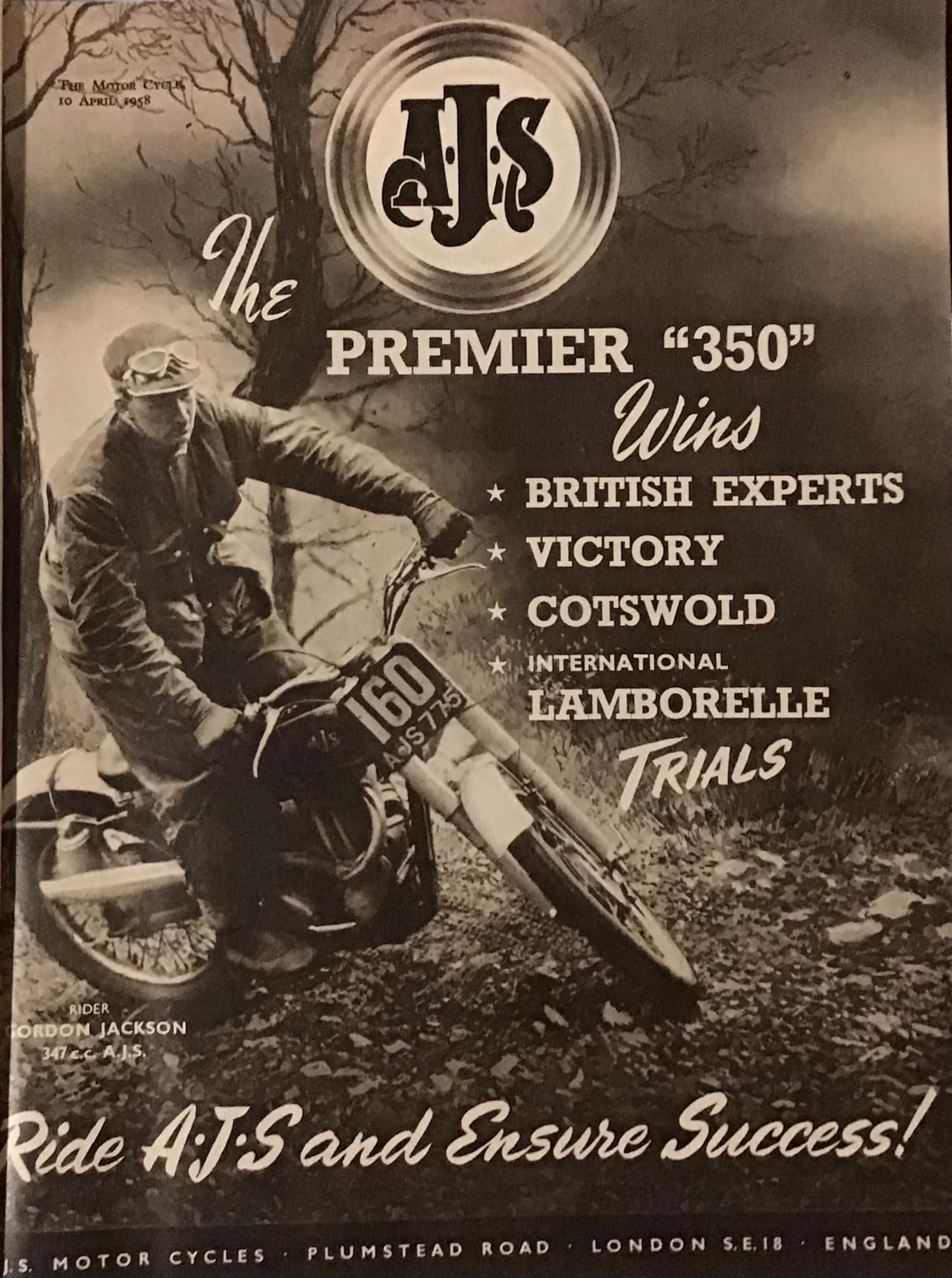
In 1955, the F.M.B.– B.M.B. Board of Directors unanimously elected Groutars as honorary chairman, and Gordon Jackson, riding his factory AJS 350, won the Lamborelle Trial for the first time.
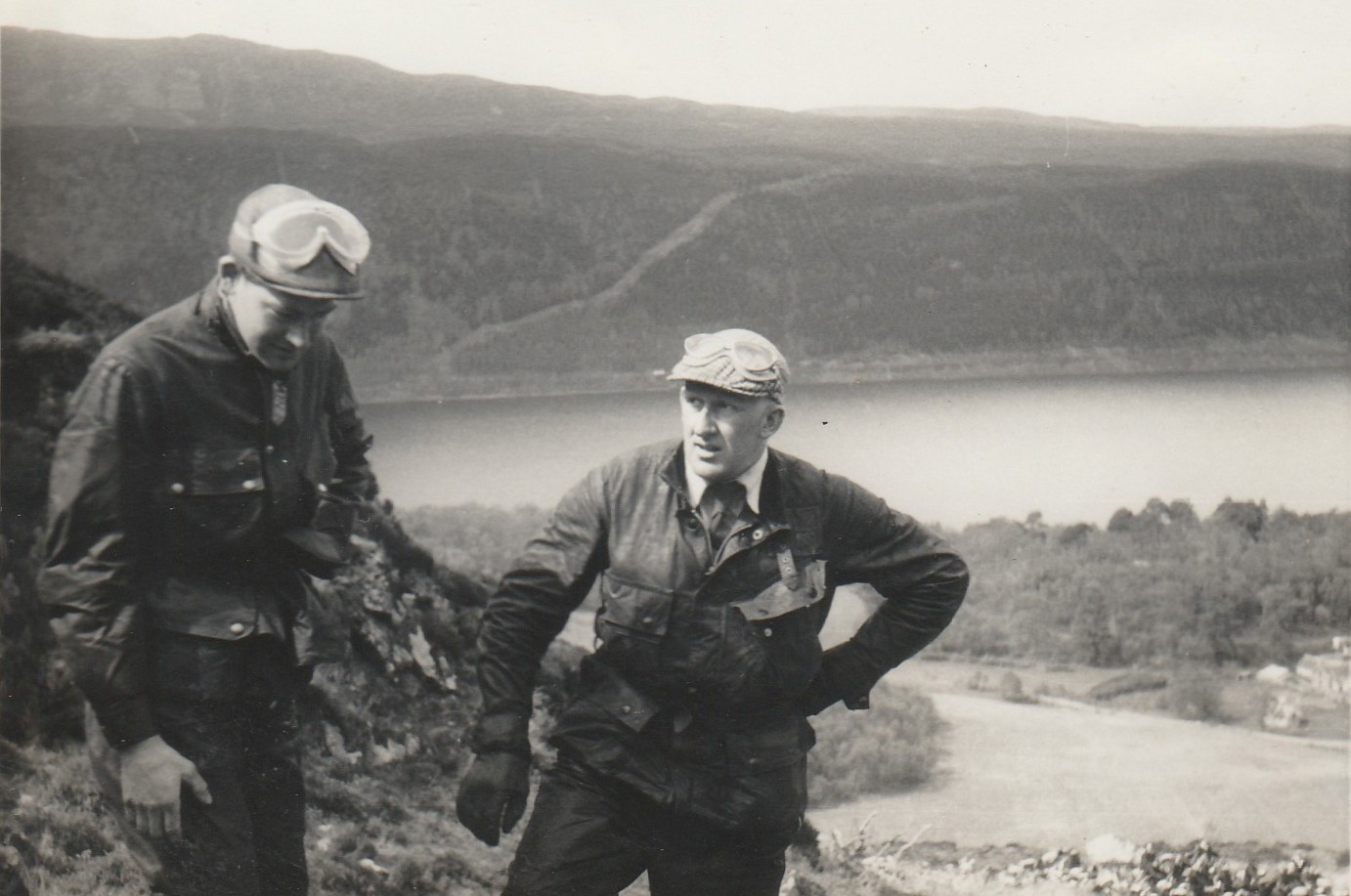
In 1957, on the tenth anniversary of the Lamborelle Trial, German riders participated for the first time; the Belgian importer had invited the Zündapp factory team to the event. Unaware of the circumstances, the German bikes were set up for the ISDT rather than for trials riding, and the result was, as expected, a high-scoring performance. With riders from Belgium, Germany, France, Great Britain, and the Netherlands, this event effectively attained the status of an European Grand Prix. Incidentally, the winner was Gordon Jackson on an AJS 16MC with 30 points. He was also successful in 1955, 1957, and 1958; Sammy Miller began competing in 1958.
In the meantime, additional organizers of international trials had established themselves in Germany, England, France, and the Netherlands.
In 1958, 73 Experts (licensed riders), 35 Belgians, 22 Britons, 9 Frenchmen, 7 Dutchmen, and 54 Juniors (riders with a license) lined up at the start in Ohain. No German riders showed up. The result was as expected: The top six places went to British riders, while the best Belgian, André Piron on Socovel, finished in eighth place. Gordon Jackson had scored 14 points over two 50-km laps and 40 sections, becoming the overall winner and thus the permanent winner of the Lamborelle Challenge Cup.
In 1959, there were about 160 international participants at the starting line, including nearly a dozen Germans, but they didn’t stand a chance! For Henry Groutars, who had served as vice president of the F.I.M. for 12 years, everything pointed to his candidacy for the presidency being the crowning achievement of his career. He had devoted this entirely to the cause of motorsports, which he loved above all else. Fate, however, had other plans. On March 11, 1959, two days after the 12th Trial Lamborelle, Groutars— whose health had been severely compromised by the aftereffects of World War I and the Yser Retreat, which he had experienced firsthand — passed away.
In France, the trials in Clamart, St. Cucufa (both near Paris), and Sancerre became much like what the Lamborelle Trial had already been. Fortunately, the number of participating nations increased; riders from England, Sweden, and Switzerland did not shy away from the long journey.
The 1962 F.I.M. Fall Congress in London commissioned Alfred Lenfranc (F.M.B.) to draft an international set of trials rules and to bring together riders from five nations. This led to the creation of the Henry Groutars Challenge Cup, which, at the instigation of the British delegates, was changed from a team competition to an individual competition starting in 1963. It was the precursor to the European and World Championships.
In 1963, riders from Germany, France, Great Britain, and the Netherlands were eligible to compete in the “Int. Trial Trophy Henry Groutars”. Four events were scheduled in France (Clamart), Belgium (Ohain), Great Britain (Wales), and Germany (Aachen). Scoring system: The winner was determined by the number of sections completed with zero points. In the event of a tie, the number of sections with one point was considered next, followed by those with three points, and so on down to sections with five points. The zero-point sections of the top three riders from each country were added together for each competition; for the overall standings, the results from the individual trials were totalled. The overall winner was the country with the most zero-point sections.
In 1964, events unfolded rapidly. Just a few days before the European Championship round scheduled to take place in Ohain, a decision was made among the competing Belgian organizers (Aywaille, Braine-le-Château, Ohain, and Namur) in favor of the latter. As a result, “Lamborelle” in Ohain was no longer considered a top-tier event and was replaced by the event organized by AMC Namur in Marche-les-Dames. For the first time, individual scoring with 1–3–5 points was used.
From 1964 until 1967, the best European trial riders competed for the Henry Groutars Challenge Cup, until the F.I.M. finally elevated it to the European Trial Championship in 1968. With the renaming of the Henry Groutars Trophy to European Trials Championship, its founder, Henri Groutars, finally received the recognition he deserved. Trial had come of age, and the European Trial Championship has now been in existence for almost 60 years.
In less than 20 years, the sport of trials had earned a unique reputation through events such as Clamart, St. Cucufa, and, above all, Lamborelle — with massive crowds, flawless organization, and excellent public relations. “Lamborelle” had simply become THE international trials event and a model not only for German organizers. None of this would have been possible without the foresight of Henry Groutars, and that is why the Lamborelle Trials and its name remain unforgettable among trials riders. It was therefore only logical that the European Trials Championship laid the foundation for the creation of the World Trials Championship in 1974.
Acknowledgments:
I would like to thank Charly Demathieu, Marnix Vanslembrouck, Stijn Rentmeesters, and Felix Krahnstöver for their assistance with the research. – RAINER HEISE
‘Who was Henri Groutars? – From the Sheffield Trial to the European Trial Championship’ is the copyright of Rainer Heise.
Apart from ‘Fair Dealing’ for the purpose of private study, research, criticism or review as permitted under the Copyright, Design and Patents Act, 1988, no part of this article may be copied, reproduced, stored in any form of retrieval system, electronic or otherwise or transmitted in any form or by any means, electronic, electrical, mechanical, optical, chemical, photocopying, recording or otherwise without the prior written permission of the author as stated above. This article is not being published for any monetary reward or monetisation, be that online or in print.