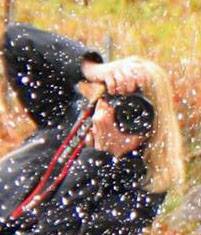
“Buttons” on the left with John Moffat at the 2015 Scottish Six Days Trial during the daily Nevis Radio outside broadcast – Photo courtesy of Tony Jones
It is with great sadness that we announce the passing of a true character of the sport of motorcycle trials, “Buttons” or John Button as he was known.
Buttons attended the Scottish Six Days Trial many times in his capacity as a mechanic, whose training went back to the days of the Bultaco tuning wizard, Reg May of Comerfords.
During the 2015 Scottish, Buttons popped in almost daily to visit the Outside Broadcasts of Nevis Radio where he kept listeners and the radio presenters in stitches with his quick wit and humour during the week.
Buttons had battled with cancer for some years and had planned to spectate at the recent Scott Trial, but illness prevented him from doing so.
Trials Guru conveys sincere condolences to his family at this difficult time.
Funeral Arrangements: The funeral service for Alfred John Button (Buttons) will held on Thursday 12th November 2015 at 12.30pm at Rainsbrook Crematorium. Ash Lawn Road. Rugby. Warwickshire. CV22 5ET. please no flowers, donations to Macmillan nurses are welcome.
Trials Guru tells the story of a trials rider turned movie stunt performer.
Words: John Moffat
Photos: Iain Lawrie; Debbie Evans-Leavitt
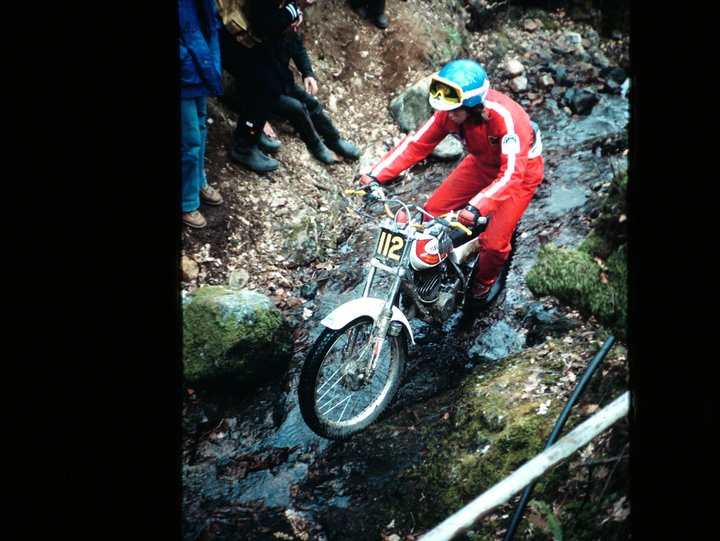
Debbie Evans number 112 (Yamaha 175) at the 1978 Scottish Six Days, this is the final machine inspection in down-town Fort William parc ferme. Number 109 is Mick Wilkinson (Ossa).
Over the years there have been numerous female riders compete in the annual Scottish Six Days Trial, which had traditionally been a male dominated sport. Times have now changed with female competitors very much the norm.
Before the Second World War, there was Louie McLean, Edyth Foley and Marjorie Cottle. Post-war, the 1950’s had Mollie Briggs, Lesley Blackburn, Olga Kevelos and Gwen Wickham; the 1960’s had Jill Savage and Renee Bennett. They had one thing in common, they were all British, but in the late seventies a female rider emerged who inspired even more women to compete in trials and the ‘Scottish’ than ever before, and she was the first female rider from overseas to compete in the SSDT, an American called Debbie Evans.
Trials Guru was fortunate to catch up with Debbie, now Evans-Leavitt having married her trials riding boyfriend Lane Leavitt, during a hectic schedule in Glasgow city centre, Scotland in September 2012 when filming for ‘The Fast & the Furious 6’ an action-packed movie which was released in May 2013.
Debbie refuses to slow down in an amazingly tight schedule which took her to England, twice, Scotland and Tenerife for filming plus a short break to go home to the United States to see her first grandchild born. I still couldn’t believe that I was talking with a stunt-performing grand-mother!
Born in 1958, Debbie, originally from Lakewood, now resident in Santa Clarita, California has been in the movie business for just over thirty-three years. She has stunt-doubled for some of the world’s best known superstars including Carrie-Ann Moss in ‘Matrix Reloaded’ – 2003; Linda Hamilton in ‘The Terminator: Judgement Day’ – 1991 and many more. Have a look at the credits of some of the world’s most famous action-packed films and you will see the name ‘Debbie Evans’ appear in more than just a few. Her speciality is car and motorcycle stunt performance and she has appeared in over two-hundred movies and TV programmes which included ‘CHiPS’ & ‘The Dukes of Hazzard’.
The Scottish connection…
Debbie Evans on Blackwater sections in 1978 on her 175cc TY175 Yamaha. Debbie came 109th position on 473 marks. Photo copyright: Iain Lawrie, Kinlochleven, Scotland.
Having followed the history of the SSDT and watched Lane in action at the Six Days, I got to know Debbie and her three time AMA National Trials Champion husband back in 2007, when I put together an audio-visual presentation of the SSDT in the February of that year for the Fort William Mountain Film Festival.
Permission was sought to use material from Debbie’s website as part of the presentation, just for a bit of extra interest for the audience, which she willingly gave.
Debbie had entered the 1978 Scottish Six Days Trial on a TY175 Yamaha supplied by Gordon Farley Motorcycles, Aldershot, Hmpshire, England and her airline ticket was paid for by Yamaha USA. Lane had also competed in previous Scottish Six Days his first being 1973, as a supported rider for both the Spanish Bultaco and laterly Montesa factories.
Sunday lunch…
Having discovered that she would be in the UK during filming for the forthcoming ‘Fast 6’ movie, Debbie sent me a message via Lane through facebook which read: “Hi John, I’m sending my wife to Scotland in a few days. Maybe you guys can get together? She may have some cool stuff for you!”
On making contact upon her arrival in England, she suggested that we meet up with her one Sunday afternoon, when she was between filming schedules in Glasgow. Part of the car chase footage was shot late at night in city-centre Glasgow, including the famous George Square area.
After a pleasant lunch in Glasgow’s Princes Square, we all go back to Debbie’s hotel and ‘Skype call’ Lane in the USA, who takes us a virtual tour around the couple’s home. Lane picks out their Scottish Six Days trophies and Debbie’s stunt trophies and awards; culminating in a quick tour of their impressive garage.
Debbie was an accomplished trials rider when she began motion picture stunt performing at the age of twenty. I asked her how she entered into the movie business.
She explained: “I wondered why so many stunts involving women were carried out by male performers dressed to look like females? I thought… hey, I could do that… I researched it further and eventually obtained the necessary regulatory permissions and began training for my new chosen career with established professional stunt performers.”
The rest is history, Evans-Leavitt is a multiple award winner obtaining seven Red Bull Stunt ‘Taurus awards’ and was inducted into the American Motorcycle Association – Motorcyclist Hall of Fame in 2003.
Unique…
Debbie is probably the only competitor world-wide who can static balance a trials motorcycle upside down with her head on the seat, the bike is not supported in any way and the only extra piece of equipment is a rubber band on the front brake lever! Eric Kitchen was on hand in 1978 to photograph this very stunt, right in the middle of the traffic roundabout at the West End of Fort William, now an iconic SSDT photo.
Debbie performing her world famous ‘head-stand’ on the roundabout in down-town Fort William, Scotland, prior to the 1978 Scottish Six Days. Photo: Worldwide copyright, Eric Kitchen. All rights reserved.
In movies, she is best known for the 2001 award-winning scene where she doubled for actress Michelle Rodriguez in the Fast & the Furious. Debbie drove a tuned Honda Civic hatch-back under an artic semi-trailer at high speed, ending in a barrel-roll when emerging out the other side.
“…being a stunt-woman is that you get to ride fast motorcycles and drive real cool cars” – Debbie in a classic Jaguar with son Daniel – Photo: Lane Leavitt Archive – All rights reserved.
Debbie says: “I have to keep physically fit and in shape but the real neat part about being a stunt-woman is that you get to ride fast motorcycles and drive real cool cars!”
Dreaming…
Back to that Scottish Six Days ride at Fort William in May 1978, it was for Debbie the event of her lifetime. Debbie takes up the story:
“I had harboured a secret wish to ride in the ‘Scottish’ when I was quite young. I got into trials at the age of six with the help of my father Dave Evans, who was already an established trials and enduro rider in the USA and it was he who taught me all I know about bike control. I then read all about the Scottish Six Days in the American motorcycle press. I never really thought it was possible until an Englishman called Bill Emmison of BERM Specialities, a UK company which imported US off-road products. Bill on a visit to source parts asked me what I really wanted to do and on hearing my crazy wish said he could arrange the trip to Scotland and make it all happen. I was overjoyed at the thought of actually competing in the Six Days, for me it was truly a real dream come true. I hadn’t told anyone previously, because I believed it to be too wild to ever come true!
I packed my heavy bags and took a pair of handlebars, grips, foot-pegs and my Bell helmet and spent a few days sight-seeing in London on my own, before heading north to Fort William.
Bill supplied me with some riding suits, my riding number was one-hundred and twelve and so I rode all week in the company of Mick Wilkinson and Rob Shepherd, two of the best riders in Britain at the time and guys who knew their way around Scotland. The whole experience for a nineteen year old girl was really awesome; the Scottish was a great adventure!”
She continued: “Riding over the tracks and moors with Mick as my guide was great fun, Lane told me to ‘stick to this guy like glue’, which I did! However, I probably stuck to him too well and one day when hauling across a moor, Mick suddenly pulled up, I sat and waited for a little while, then he turned around and said, ‘Debbie! Can you sort of disappear for a minute, the call of nature beckons’ – or words to that effect?”
Wilkinson…
Mick Wilkinson remembers all too well the 1978 event with Debbie Evans in tow!
Mick recounts: “Soon after the trial started, I said to Rob (Shepherd), come on Rob let’s have a bit of fun, let’s leave this American lass on’t moor. We took off at a cracking rate as we knew where we were going and after a few miles we looked round. To our surprise, there she was, slap bang on our back mudguards. We didn’t try to pull that trick again!”
After their marriage Lane and Debbie had planned to ride once more in the 1980 Scottish together, but when they discovered that she was expecting their first child, Steve, this put paid to that idea and she reluctantly but sensibly withdrew her entry. The couple had another son, Daniel born in 1994.
On the left is Alan Wright, former Suzuki team rider and Telford Show organiser. On the right, Debbie Evans-Leavitt, the American trials rider turned movie stunt perfomer. Photographed here at the Scottish Six Days Trial on Pipeline in May 1978 by Iain Lawrie, Kinlochleven, Scotland. (All rights reserved.)
Inspiration…
But by then, Evans had already unwittingly captivated a whole new generation of women trials riders, one of which was Lisa Bayley (then Lisa Jones) from Sutton, Surrey who herself was inspired by reading about Debbie’s 1978 ride to compete herself in the 1981 Scottish at the tender age of eighteen on a 200cc SWM modified from a 125cc by her Father, Derek Jones.
Lisa Jones was so inspired by Debbie’s SSDT ride in 1978 that she trained hard and entered the 1981 event on a 200cc SWM prepared by her father Derek. – Photo: Derek Jones, Surrey, England.
Having read and been inspired by Evans, Lisa never actually met Debbie in person, although she did get to know former US National and World Champion, Bernie Schreiber during his time at Comerfords, Thames Ditton in 1979 and later, when on trips to the US riding Fantic.
Debbie on Town Hall Brae in down-town Fort William in 1978 – Photo: Iain C Clark, Fort William, Scotland (All rights reserved)
Fitness coach Lisa commented: “I was truly inspired by Debbie Evans’ 1978 ride at the Scottish which I did twice. For me it is the most brilliant event in the world. I have run in both the New York & London Marathons in 2005 and 2006; they were far easier by a long shot than the 600 miles and 180 Scottish sections of fantastic challenging and on some-days, impossible terrain. In my lifetime I have risen to the challenge of the hardest marathon and finished New York in three hours forty-eight minutes and London in three hours thirty-eight minutes, well within a veterans’ respectable timeframe, but still the SSDT was the hardest ever human achievement and the most enjoyable I have ever undertaken.”
Debbie in the 1978 Scottish Six Days. Photo copyright: Jimmy Young, Armadale, Scotland. (All rights reserved)
Bloodline…
Motorcycle observed trials is in Debbie’s blood, her father, Dave Evans is the guy who wheelies a Bultaco Sherpa for miles near the beginning of the Bruce Brown film ‘On Any Sunday’ the definitive bike-sport movie of all time. Her sister, Donna Evans is also a stunt performer, having worked with Debbie in a number of motion pictures.
Debbie in 1979. The top right image is Debbie doubling for Lynda Carter in the TV series, Wonder Woman – Photo copyright: Michael Vendrel, USA.
Debbie: “Being a trials rider really helped me throughout my stunt career, because you walk the section and memorise in your head many things, like when to go up or down a gear, where to brake, where to make the turn or change direction, which part is slippery and so on. The same thing applies when performing a motion picture stunt; you walk the set and plan everything, very carefully. It’s technical, just like trials. However, I knew that I would never make a living from just riding trials, at that time there were very few who were professional riders world-wide, whereas I could at movie stunt-performing. I grew up with trials riding ‘no-stop’; stop-allowed was alien to me. We do stunts no-stop too!”
Debbie in a scene from the ‘Dukes of Hazzard’ a CBS network TV series. She doubled for the postmistress and Hazzard Gazette reporter, Miz “Emma” Tisdale who delivered parcels by motorcycle.
Debbie stayed fairly loyal to the Yamaha brand during her riding years, having gained support from the company via their USA importers and promoted the brand wherever she rode.
After a eighteen years away from the sport, Debbie made a brief return to competitive trials in 1998, when she rode in the Women’s World Trials Championships. She was now forty years of age, but came a creditable eighth place overall, riding a 250cc Gas Gas.
Today…
Debbie tries out Lane’s Bultaco for size in his office. Photo: Lane Leavitt.
Lane, now a respected stunt technician in the US movie business still has a collection of interesting Bultaco trials machines and some modern road bikes to hand, as the area in which the Leavitts live is ‘canyon country’ and a Sunday afternoon ride out with the family is very much the order of the day.
Leavitt reckons Debbie would still be riding in trials competitively today had she not suffered a very serious accident when stunt doubling for the 2008 movie “Yes Man” starring Jim Carrey in which she was hit by a car when riding a bike during a sequence which went horribly wrong.
British actress Amanda Holden was trained by Debbie and Lane to do stunts for the UK TV series ‘Amanda Holden – Fantasy Lives’ in 2010 in which Debbie and Lane both appeared.
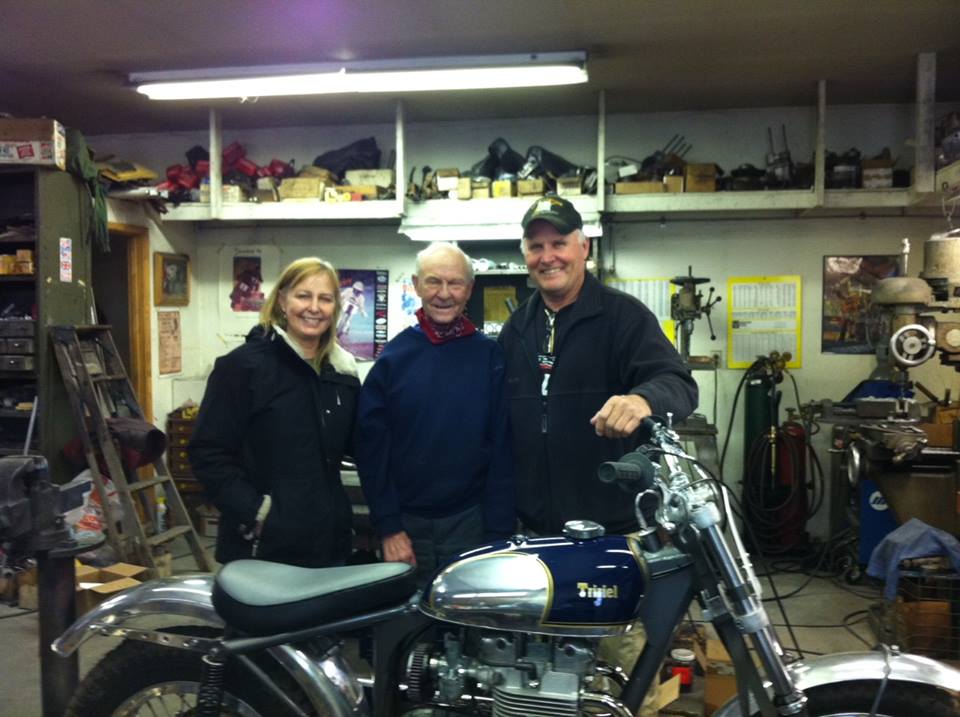
Debbie, Dick Mann and Lane at Dick Mann’s house discussing a Matchless build. Bike is one of Dick’s creations, a Triel (Triumph engined Ariel)
Return…
Debbie really enjoyed her film work in Glasgow; she even cultivated a Scots accent during her stay. Both she and Lane are planning a return trip to spectate at the SSDT in a few years time, once their youngest child, daughter Rebecca, graduates from high-school. It will be really nice to have the couple back at the SSDT where they have so many happy memories of competing many years ago.
Debbie Evans-Leavitt and Trials Guru’s John Moffat taken in Glasgow, during a break from filming ‘Fast 6’ in Glasgow, September 2012. Photo: Trials Guru copyright, all rights reserved.
Both Debbie and Lane felt honoured to be asked to write a few lines each for the one-hundred years celebration book on the SSDT that the Edinburgh Club produced in 2011. Only problem was they didn’t get a copy, as the limited edition book was quickly sold out! However, after a plea, Kinlochleven trials enthusiasts David & Lorna Dougan who had a pristine copy, came to the rescue and gifted their copy to Lane and Debbie. The photo of Debbie in the book was taken by Eric Kitchen on Grey Mare’s Ridge, only half a mile from the Dougan’s home.
Finally…
Oh yes and finally, the ‘cool stuff’ she gave me as a memento of our Glasgow meeting? A commemorative tee-shirt and poster from the ‘On Any Sunday Re-union’, all signed by some of the all-time greats of USA bike-sport – now that’s what I call neat!
Apart from ‘Fair Dealing’ for the purpose of private study, research, criticism or review as permitted under the Copyright, Design and Patents Act, 1988, no part of this article may be copied, reproduced, stored in any form of retrieval system, electronic or otherwise or transmitted in any form or by any means, electronic, electrical, mechanical, optical, chemical, photocopying, recording or otherwise without the prior written permission of the author as stated above. This article is not being published for any monetary reward or monetisation, be that online or in print.
Trials Guru is always looking for something new or old, unseen or forgotten….
‘Kimages’ photographs are copyright: Kimages/Kim Ferguson, Fort William.
We have just added two new ‘selections’ on the front page which link into photo collections of ‘Kimages – Trials Photos‘ and ‘Heather Mead – SSDT Photos‘.
Both are female photographers who have built up a sizeable archive of trials photographs over the last couple of years, particularly at the Scottish Six Days as these are Scottish based photographers.
Kim has lived in the Fort William area most of her life and has a love for motorcycle sport and trials in particular having grown up with the SSDT passing her door-step. Her brother rode in trials too, so there are family connections.
Heather became involved taking photos at the Parc Ferme in Fort William, a place that is usually inaccessible to spectators, so we can see SSDT competitors preparing for their daily battle with the terrain and elements.
SSDT 2013 An official goes over the route card with rider 20, Ian Thompson – Photo Copyright: Heather Mead Photography, Dingwall.
Heather Mead and Kimages (Kim Ferguson) have recently given Trials Guru permission to display their handy-work. Please remember photographs are copywritten and are the property of the photographer, so please be respectful of that. There is no implied permission to post these images anywhere else unless by express permission of the copy-holder. This also applies to our other photographers, Jimmy Young, Armadale; Jeremy Whittet; Neil Sturgeon; John Hulme; Iain Lawrie, Kinlochleven or any other images on this website.
Trials Guru have used some individual photos, which are the property of Mortons Media, Hornchurch this was done with their prior and express permission, for legal reasons, these are not for onward publication.
MOTORCYCLE COMPETITION SCOTLAND 1975 – 2005 by John Moffat
– Foreword by 8 times TT winner, JIM MOODIE –
Yoomee Ltd is proud to present this superb semi-hardback book which covers the history of Motorcycle Competition in Scotland from 1975 – 2005 by John Moffat. With foreword written by eight times TT winner, Jim Moodie, it is presented with a mixture of exciting, and in many cases un-seen, colour and black and white images, this book is in A4 size format with over 100 pages of informative and interesting text.
This is a book which explores and describes in words and photographs, competitors and enthusiasts from motorcycle sport in Scotland and more! It’s about people, places and events from this era, the endeavours and performances by motorcycle sports most respected riders, who were either born or brought up in Scotland.
A book which will convey you back to a time-period when Scotland produced not only British, but World championship contenders. Riders who endeavoured to create performances, which proved they were serious competitors in racing, trials, enduro, and motocross.
This is a publication aimed at the motorcycle enthusiast.
Payment can be made securely by ‘Paypal’, debit or credit card
Full details of price, how and where to buy Motorcycle Competition Scotland 1975-2005is available … Here
UPDATE: Initial reports indicate that there has been healthy demand for this publication. Many thanks to all in the UK who have ‘pre-ordered’ and therefore saved on UK postage! However there are also a number of readers who have already placed an overseas order, thank you very much for your support!
Mick Andrews seen here on a 244cc Bultaco Sherpa Model 10 from 1966, supplied by Rickman Brothers, New Milton, Hants. Watching every move is Ralph Venables in the flat cap, the ‘doyen’ of trials journalists and reporters.
Words: John Moffat
Photos: Mike Rapley; Iain Lawrie; Iain C. Clark; Jimmy Young; Ferry Brouwer; Barry Robinson Estate; Claudio Pictures; Colin Bullock; Don Morley
Mick Andrews is a name synonymous with the sport of trials since the early 1960’s. He has ridden for AJS; James; Bultaco (Rickman Brothers, 1966); Ossa and Yamaha, in a career that has taken him all over the world both as a competitor and a brand ambassador.
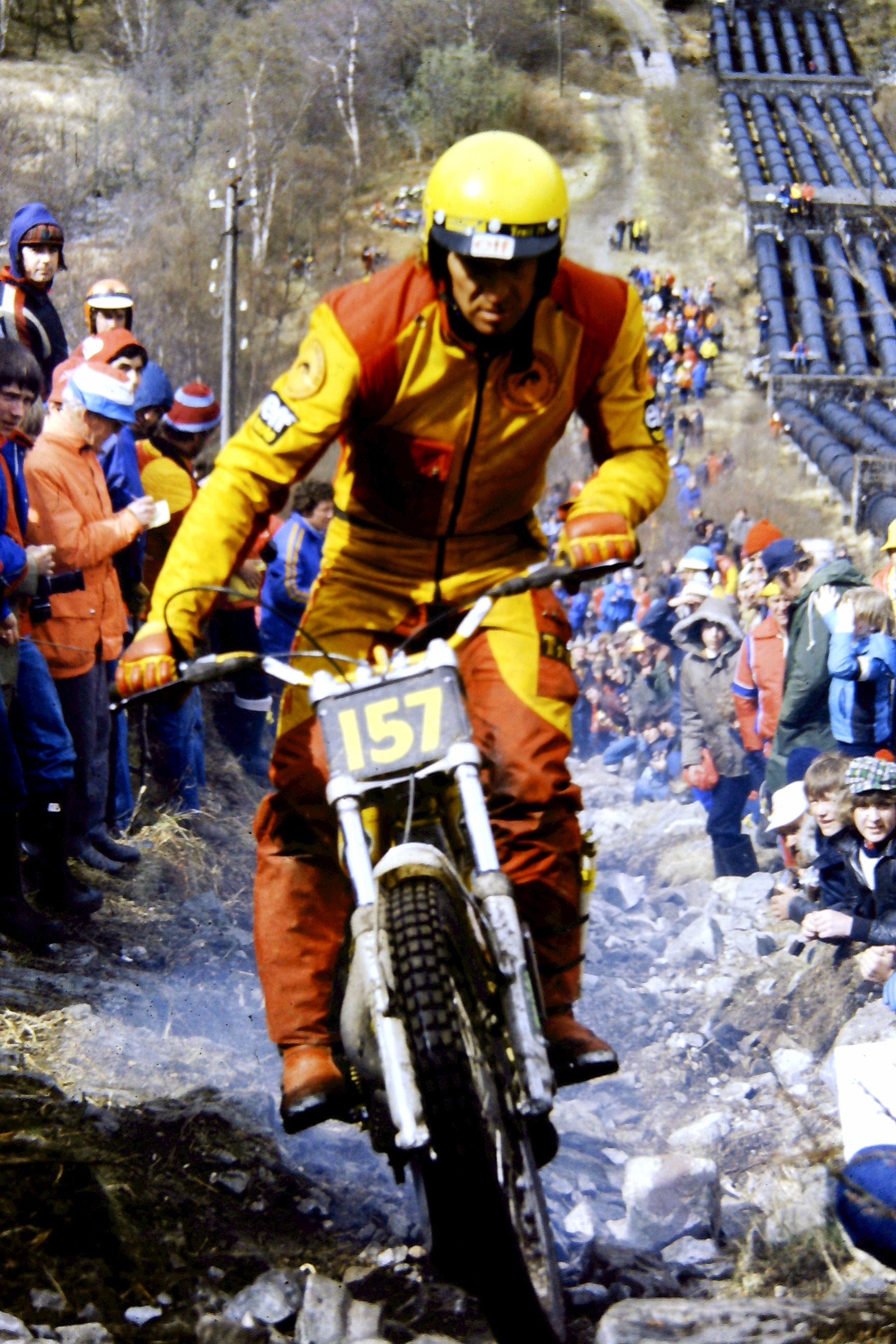
1976 SSDT – Mick Andrews (Yamaha) on ‘Pipeline’ – Photo: Bob Hosie.
Andrews was twice European Trials Champion in 1971 and again in 1972 on Ossa, before the official FIM World Championship commenced in 1975.
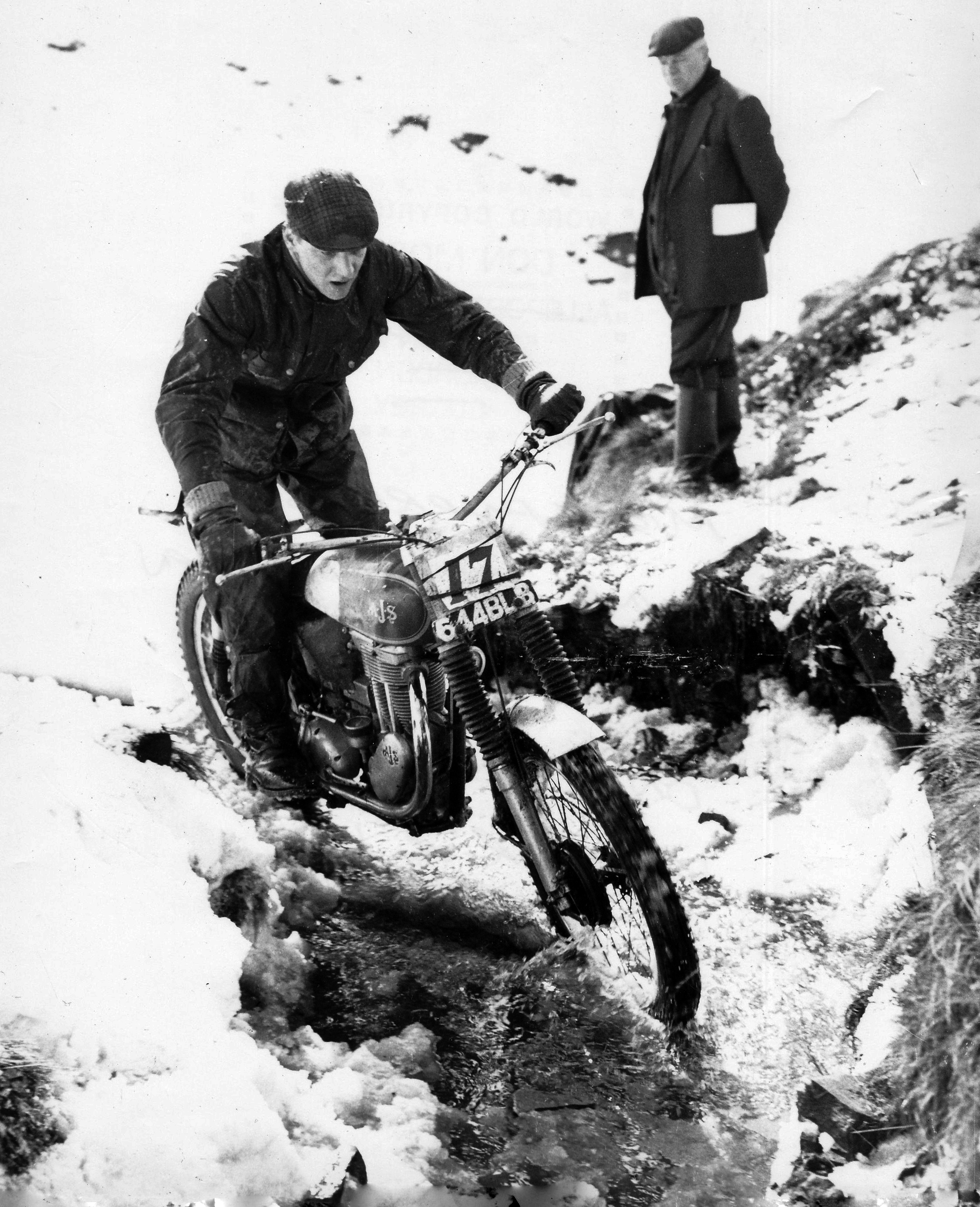
Nick-named ‘Magical Mick’ by the trials press many years ago and it stuck, he has won the famous Scottish Six Days Trial a total of 5 times, in fact he was only the second man in the events’ history to win it three times in succession, the first being B.H.M ‘Hugh’ Viney who was to become instrumental in Andrews riding for the AJS factory team in 1963, his AJS factory machine carried the index number 644BLB, registered as a 350 Matchless. Viney after retiring from active competition became AMC Competitions Manager.
Mick Andrews winning the 1963 Northern Experts on his factory AJS – Photo: DON MORLEY
Due to his SSDT successes, Mick was also dubbed ‘Monarch of the Glen’ after the famous oil painting by Sir Edwin Landseer by the motorcycle press of the day.
Journalist, Ralph Venables (see Trials Guru’s comments below) tipped Viney off about the young Andrews, whom he had been watching the progress of, closely. A phone call to Viney and that was good enough for Hugh!
Andrews began riding for AJS in 1963 and his first SSDT on the heavyweight four-stroke saw him bag a second place finish behind Arthur Lampkin on the factory BSA C15 (XON688). A feat he repeated in 1964, finishing runner-up to Sammy Miller on the 500cc Ariel. The next two years he finished third on the 250cc James (306AKV) and again on the Bultaco (DOT289D). In 1967 on the prototype Ossa Pennine (ORB222E), machine troubles forced him to retire, but he was back the next year and came home in third, and again in 1969, a second place.
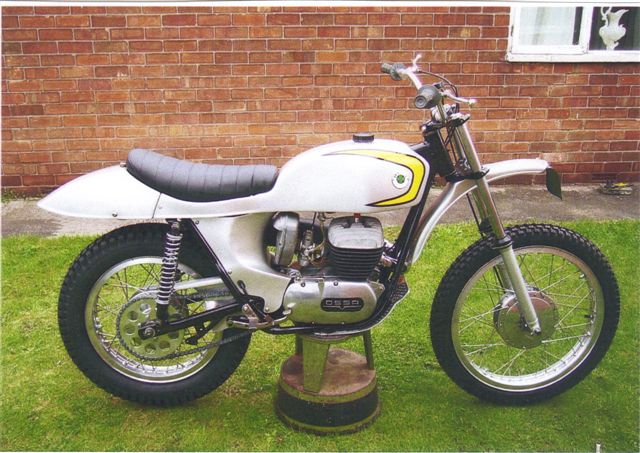
The Ossa Pennine of 1968/69, similar to the one ridden by Mick Andrews. This one is Ted Breffitt’s bike, now completely restored.
His first win in 1970 was on his factory prototype (Barcelona registered: B775073) sporting a much neater tank/seat combination, modified frame and overall a much trimmer package. This particular machine formed the basis for the production ‘Mick Andrews Replica’ (MAR) launched in 1971.
The announcement of the new ‘Mick Andrews Replica’ 250 in 1972 put OSSA on the trials map. Seen here in the SSDT with his prototype (B775073) on his way to win the 1971 SSDT. Brochure: OSSA Motorcycles
Mick also kept his hand in motocross for the Spanish company, racing a 230cc machine when time allowed. Coupled to this his selection for the British ISDT team on several occasions. He rode a factory prepared Ossa in 1970 at El Escorial, Madrid, Spain. For the British team he rode AJS in 1968 in Italy and a 504cc Cheney Triumph in the Isle of Man in 1971.
Repeating his SSDT successes the next two years, Mick wondered if it was time for a change. The Ossa trials machine had been developed only because of the death of Ossa factory road racer Santiago Herrero in the 250cc Lightweight TT in 1970. This saw Ossa pulling out of racing. Ossa, which stands for ‘Orpheo Sincronic Sociedad Anonima’ switched its focus to off-road development and trials in particular and Mick had signed for them in 1967 with the help of UK importer Eric Housely.
Yamaha announced the defection from Ossa in 1973. Andrews was to further develop the trials Yamaha that had been kicked off by Frenchman Christian Rayer, but it was not to be the TY (Trial Yamaha) style that Mick would be given. Factory ‘pure racing’ Yamahas were designated ‘0W’ and it was the Yamaha 0W series that Mick was to be given full reign of.
Watched by Nigel Birkett (Quinn Ossa); Mick on the factory Yamaha on his way to winning the 1974 Scottish Six Days. This is Loch Eild Path on another variant of the cantilever 0W10. – Photo credit: Yamaha Motor Co.
Yamaha’s European operation was called Yamaha Motor N.V., based in Amsterdam in the Netherlands where their race team was officially headquartered.
1973 – Mick Andrews on the YZT250 0W10 in front of his Dutch registered Ford Transit – Photo: Ferry Brouwer
Mick received full factory support and a contract which furnished him with Japanese technicians and a Ford Transit van, suitably liveried in Yamaha racing colours.
Yamaha mounted in the 1977 Scottish Six Days, seen here on ‘Altnafeadh’. This is one of the ‘0W’ series machines. This particular machine formed the basis for the ‘Majesty’ models (the word MA/JES/TY being: MA = Mick Andrews; JES = John E. Shirt; TY = Trial Yamaha) Photo: Iain C. Clark, Fort William
As confirmed by Ferry Brouwer, then Yamaha race technician to Phil Read and Tepi Lansivoiri, all factory contracted riders were supplied with Ford Transits, all Dutch registered and suitably sign-written with the riders’ name on the driver’s door. The enormity of Yamaha Motor Company was in stark comparison to the Spanish Ossa concern.
Surprisingly, all Andrew’s factory 0W’s were all road registered in the UK, a must for many of the national trials Mick undertook in that time period.
Much of the development work was undertaken at Mick’s home near Buxton, Derbyshire with new prototypes built in Japan and freighted over to Amsterdam for test sessions.
Mick Andrews back on Ossa at the 1979 Scottish Six Days Trial, seen here on Loch Eild Path – Photo copyright: Iain Lawrie, Kinlochleven
In 1979 Andrews once again rode for Ossa in the Scottish Six Days much to the delight of spectators.
Mick on the 350 Ossa at the SSDT in 1979. He came 9th position on 135 marks. Photo Copyright: Jimmy Young, Armadale.
Andrews also took young riders under his wing, including the Oakley brothers Nick and Peter. He also started his own ‘Trials Academy’ with the help of Yamaha, the first of it’s type in the UK. Called the ‘Mick Andrews Trials Association’ or MATA for short.
Mick Andrews on JGF729N in a hurry during the 1975 Scott Trial. Photo: Barry Robinson.
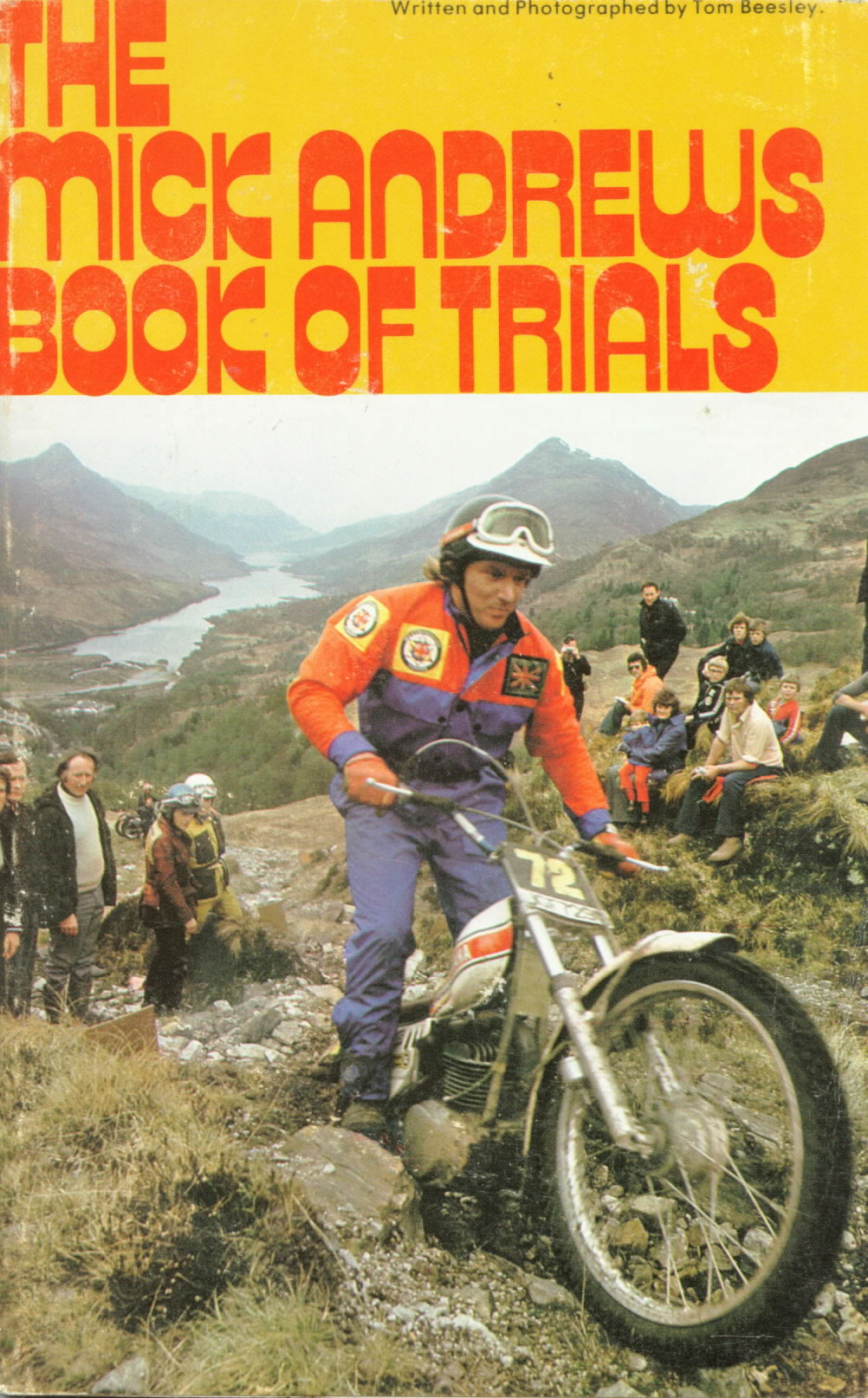
Mick’s bikes were ahead of their time in so far as Yamaha experimented with cantilever/mono shock suspension; fuel injection and reed valve induction systems. Much of the Yamaha development work is described in his 1976 book, ‘Mick Andrews Book of Trials’*, which has become a collector’s item with good copies fetching around £100 per copy.
1975 SSDT, Mick Andrews on his way to another win for Yamaha. The machine was JGF729N. The observer in the background is Scotsman, Simon Valente. Photo: Yamaha Motor Co.
Trials Guru on Andrews: I asked Mick when we were together in Robregordo in Spain 2006; did he ever have a job? He replied with a broad smile: “What, you mean an ordinary or proper job? – yes, I did have an apprenticeship to become a motor mechanic when I was sixteen, but then I received the offer of the AJS works ride and I only really had two employers after that, Ossa and Yamaha”.
Group photo, Spain 2006 – Left to Right: Jenny Tye; Jill Andrews (Mick’s wife); Jonathan Tye; John Moffat; Alejandra Cruz Sotomajor; Jean Moffat. Tye is a good friend and neighbour of Mick Andrews. – Photo: Escobe Baco, Madrid
Trials Guru on Ralph Venables: Before he passed away on 4th February 2003, I spoke to Ralph (pronounced Rafe) at length about his unofficial ‘scouting’ for trials talent. “If I see a rider who has promise, I kept an eye on him for some time, not just results, but his approach and style of riding”. “If I thought a rider had the necessary qualities, I would have an idea which manufacturer was looking for riders and I would simply phone the competitions manager and give them details.”
Ralph Venables had the ‘ears’ of all the factory comp managers and his opinion was highly-valued; such was his stature in the sport.
Venables: “I didn’t quite like Sammy Miller’s riding style; he always appeared to crouching over the handlebars compared to other riders of his era, but there again he amassed quite a substantial amount of wins in his career. It just goes to show that one can be incorrect occasionally!”
Ralph was a blunt individual and was quite cutting with his comments at times. This earned him the reputation in Scotland of being ‘the poison pen’ at times such were his comments on certain Scottish-born riders!
He once told me that I, “…wrote too much” and asked if I was being paid by the word! “John, why use ten words when one will suffice?” he quipped. “Read your scripts over twice and cut them down, time is short!” he informed me. I took his advice, when Ralph spoke, people were wise to listen.
I had the utmost respect for Ralph Venables, his knowledge of the sport and the people in it was endless. It was a privilege to have known him. – Trials Guru.
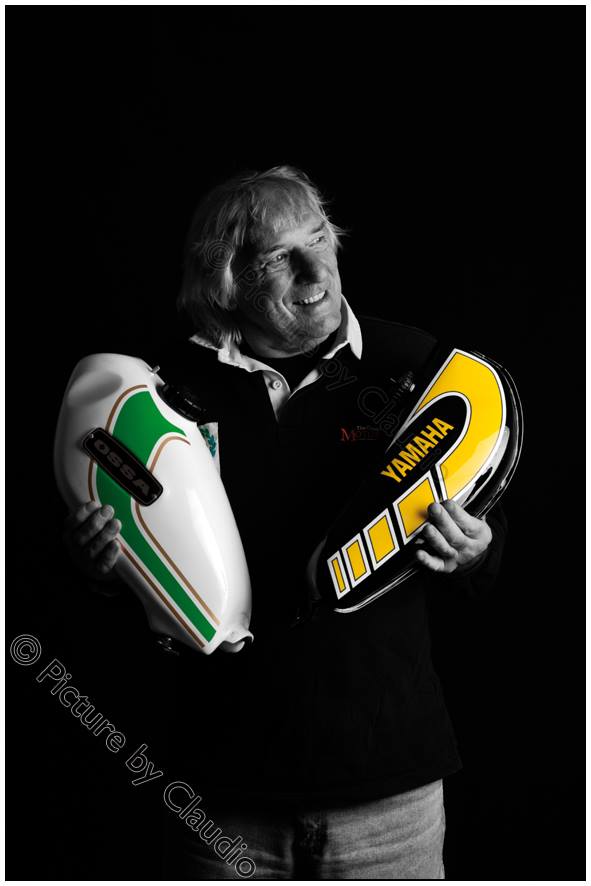
Study of Mick Andrews, former Ossa and Yamaha factory rider – Photo: Claudio Trial Pictures
References:
(*) – Mick Andrews Book of Trials by Tom Beesley & Mick Andrews (ISBN: 9780917856006) Published by: Trippe, Cox. – Now out of print.
front cover of Mick Andrews’ 1976 Book of Trials is now a sought after publication of trials memorabilia.
Rear cover of Mick Andrews’ book.
Mick Andrews on a 250 Gas Gas in the 2000 SSDT. Photo: Colin Bullock CJB Photographic
Mick Andrews (250 Ossa) on Pipeline in the 1978 Scottish Six Days Photo: Iain Lawrie, Kinlochleven.
Photos: Copyright of individual photographers
Mick Andrews Article: John Moffat – 2014 (All Rights reserved)
Apart from ‘Fair Dealing’ for the purpose of private study, research, criticism or review as permitted under the Copyright, Design and Patents Act, 1988, no part of any article may be copied, reproduced, stored in any form of retrieval system, electronic or otherwise or transmitted in any form or by any means, electronic, electrical, mechanical, optical, chemical, photocopying, recording or otherwise without the prior written permission of the author as stated above. All articles are not published for any monetary reward or monetisation, be that online or in print.
More information and reading on MICK ANDREWS:
on the RETROTRIALS website – A full interview with Magical Mick… Here
Video of Mick Andrews: Courtesy of Ferry Brouwer, Netherlands via YouTube
Apart from ‘Fair Dealing’ for the purpose of private study, research, criticism or review as permitted under the Copyright, Design and Patents Act, 1988, no part of this article may be copied, reproduced, stored in any form of retrieval system, electronic or otherwise or transmitted in any form or by any means, electronic, electrical, mechanical, optical, chemical, photocopying, recording or otherwise without the prior written permission of the author as stated above. This article is not being published for any monetary reward or monetisation, be that online or in print.
Rob Shepherd (centre) with his newly acquired Montesa 4RT Repsol 260. With Richard Thorpe (PJ1) and Craig Holmes of Craigs Motorcycles. – Photo Copyright: Barry Robinson.
Former British Trials Champion (1977) and factory Honda rider, Rob Shepherd is making a comeback to trials with a machine that he was associated back in the seventies. Honda powered four-stroke power. ‘Shep’ a Yorkshire farmer has been practising constantly with a Drayton BSA Bantam which he hopes to ride in Pre’65 events next season. He was particularly taken with the Montesa 4RT. Shepherd rode for Montesa back in the early seventies with Rob Edwards, before switching to Honda UK Trials Team with Brian Higgins and Nick Jefferies, managed by Sammy Miller.
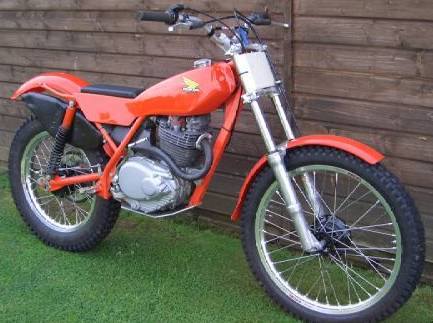
The Honda RTL300 (short-Stroke) similar to the model ridden by Rob Shepherd. This is Nick Jefferies machine, now owned by a French Trial enthusiast. Photo Copyright: Heath Brindley, Bristol.
According to Rob’s younger brother Norman, also a very competent rider on a Bultaco, Rob has worn the rear tyre of the Bantam to ‘slick’ proportions. He told Trials Guru at the recent Scott Re-Union: “He’s never off the thing, he’s worn the knobbles off the rear tyre”.
In the 1990’s enthusiasts began building ‘Shepherd Replica’ Hondas. Here is a Honda trials TL250 motor bored to 305cc installed in a Jim Susans (Bikecraft) frame. Photo: MoffatRacing Archive.
Rob Shepherd has been out of the sport since 1983 when he last rode it was an Appleyard 340 Bultaco in 1982/83 and a Majesty Yamaha in 1981.
Rob Shepherd in 1981 on a Majesty Yamaha 320 at the Red Rose Trial. Photo: Barry Robinson
Rob Shepherd 1982, Appleyard Bultaco 340 mounted for the Wetherby Bottle Trial. Photo: Barry Robinson.
Photos: Jean Caillou; Eduardo Gomez de Salazar; Yamaha Motor Co.
Christian Rayer is a name not universally known in the UK, but is very well-known in his native France. Born in 1945, riding Greeves and Motobecane machinery in his early years as a rider, he was instrumental in the development of the first Montesa Cota 247 series trials machine which emerged in 1967, based and developed from the Spanish factory’s Impala engine design.
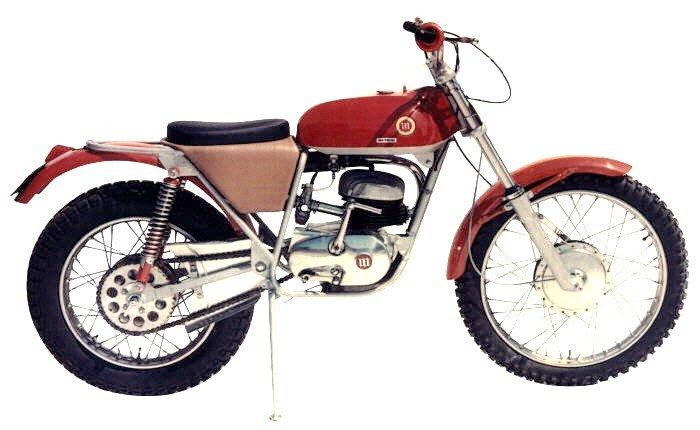
Prior to the Cota, this was the Montesa Trial 247 (11M), this model was launched at the Barcelona motor show and had a production run of only 44 units. Developed by Rayer/Pi in 1967. (Information provided by: Luis Munoz-Aycuens Ribas).
This was done in association with both Pedro Pi and England’s Don (D.R.) Smith feeding information back to the Barcelona factory, owned by the Catalan Permanyer family, based then at Esplugas de Llobregat.
Pere Pi was one of the Montesa factory development riders with Christian Rayer in 1967, seen here with another Cota Prototype.
One of the few remaining early model Montesa Trial 11M limited series production machines (B-577564). Developed from the prototypes from the Rayer/Pi/Smith era now in a private museum near Madrid, Spain (Photo: Eduardo Gomez de Salazar).
Christian Rayer on B-576140 the first prototype of the Montesa Cota in 1967
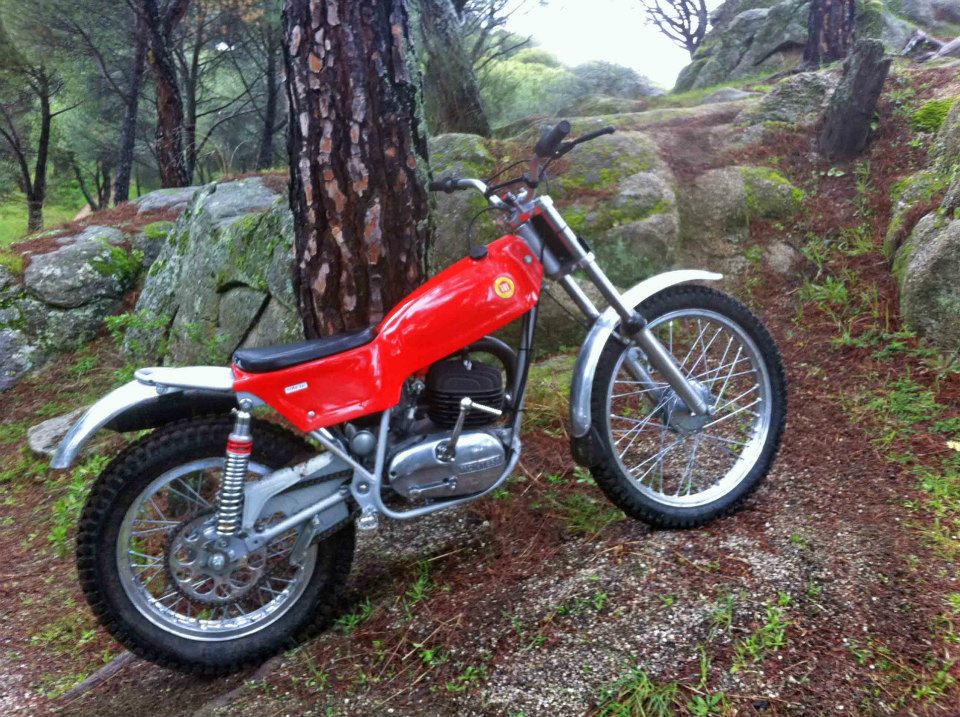
The 1971 production Montesa Cota which was a direct descendant from Rayer’s prototype machinery.
Rayer was six times French trials champion and rode the Scottish Six Days Trial three times on the Spanish marque. His main rivals of that era on the European trials scene were Sammy Miller, Gordon Farley and Don Smith (England) and Gustav Franke (Germany) who were all professional riders. Thereafter, in 1971 he was contracted by Yamaha to develop a trials machine. This he did with a 360cc prototype, using a mix of mainly Yamaha but also Saracen, Montesa and Ossa components.
Rayer with the prototype Yamaha TY (1971) in a company publicity brochure.
The trials model eventually became known as the ‘TY’ which stood for ‘Trial Yamaha’, Rayer again feeding back useful information to the Japanese engineers at the Yamaha factory.
Christian Rayer’s 1971 prototype built for Sonauto-Yamaha. Front hub is Yamaha 125, rear is Ossa, as is the swinging arm, front forks are modified Montesa. The first frame used was actually built by Saracen. This version used an Ossa frame. Originally had a 360 RT1 stock engine, then in 1972 received this works magnesium engine, also 360. – Photo: Jean Caillou
Rayer’s efforts paved the way for a full-on attack by the Dutch based competition arm of Yamaha Motor Co in trials, but now with Mick Andrews as their main factory rider in 1973. Andrews had been with Spanish rivals, Ossa from 1967, switching to Yamaha in a blaze of publicity.
Progression in 1972 with changes to the TY Yamaha already visible.
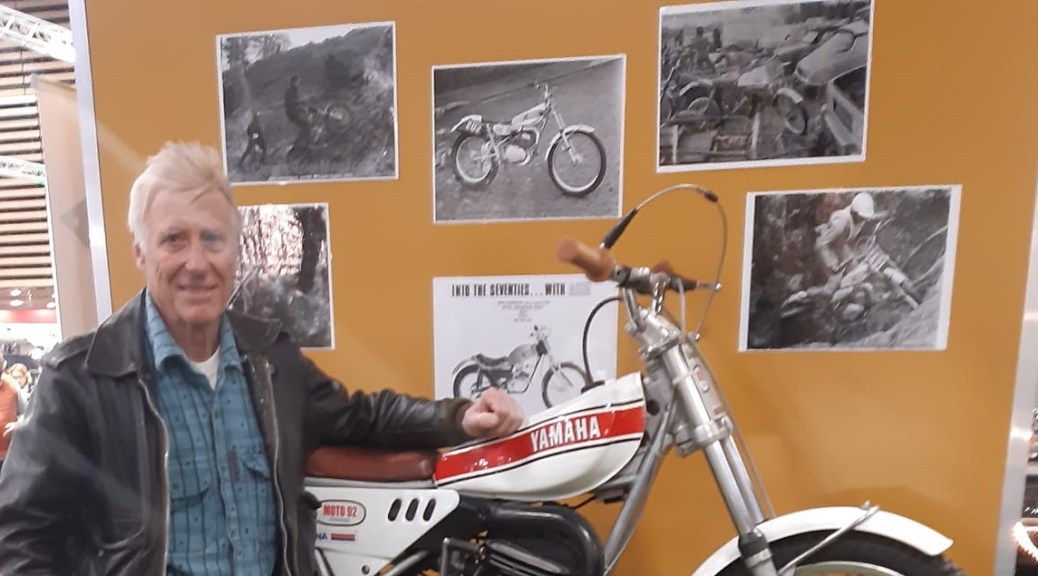
Rayer’s business acumen resulted in the creation of his dealership called ‘Moto 92’ at Chaville, a suburb of Paris, where he went on to develop up-rated motors for the Yamaha TY250; XT600 and other trail models. He was also the founder of the first riding school for off road riders near Paris and competed in the first edition of the famous Paris-Dakar Rally on the Japanese marque as an official team member, winning many of the individual stages in the process. Rayer also rode in the Enduro de Touquet, also as part of Team Yamaha and finished second overall from a start field of 1000 riders.
In later life, Christian took up para-gliding, diving, hunting and microlight aircraft piloting.
Nowadays Christian runs a business in Valbonne Cedex called ‘IP Moteurs‘ supplying after-market upgrade kits for Yamaha, Suzuki and Honda.
The Trials Guru salutes – Christian Rayer.
Christian Rayer of France is a Trials Guru – ‘Trial Legend’
Apart from ‘Fair Dealing’ for the purpose of private study, research, criticism or review as permitted under the Copyright, Design and Patents Act, 1988, no part of this article may be copied, reproduced, stored in any form of retrieval system, electronic or otherwise or transmitted in any form or by any means, electronic, electrical, mechanical, optical, chemical, photocopying, recording or otherwise without the prior written permission of the author as stated above. This article is not being published for any monetary reward or monetisation, be that online or in print.
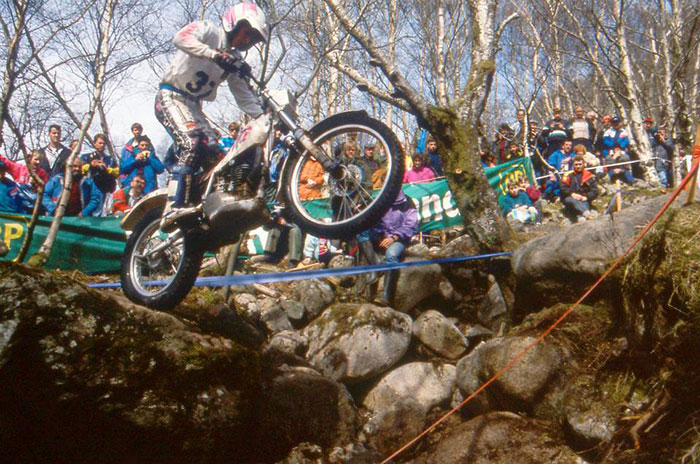
David Page (Yamaha) taking part in the 1992 World Trials Championship UK round at Glen Nevis, Fort William – Photo: Iain Lawrie, Kinlochleven
Remembering DAVID PAGE 1974 – 1993
Words: John Moffat; the late Martin Lampkin.
Photos: Page Family Collection; Iain Lawrie, Kinlochleven; Colin Bullock
It is hard to believe that on August 12th, 2023, marked the thirtieth year since the passing of David Page, eldest son of Ernie and Elizabeth Page.
David Page was undoubtedly the best youth trials rider to emerge from Scotland, regularly beating adult riders at Scottish events and was unbeatable amongst his peers. The closest to his abilities has probably been Gary Macdonald, however Gary was in a different era, but will openly admit to being inspired by David Page’s history.
David Page with his Monyam which was built by his father, Ernie Page – Photo: Page Family Archive
David was quite small for his age as a child, but soon mastered the art of trials riding. He became unbeatable in Scottish Youth events.
His father, Ernie was the 1967 Scottish Scrambles Champion, an ISDT Gold medallist, a successful trials rider and a highly successful motorcycle dealer and businessman from Edinburgh, Scotland.
Ernie Page, Scottish Scrambles Champion in 1967 and multiple ISDT Gold Medalist – Photo: Colin Bullock.
David started out competitive trialling on a Montesa Cota 49 which Ernie had fitted with a Yamaha TY80 motor. The extra power of the Yamaha engine in the small Montesa chassis perfectly suited David stature and ability. Following the ‘Monyam’ as it was labelled, David rode a specially built Yamaha with full size wheels as he was now too big for a TY80 or Montesa Cota 49 chassis, Again the machine was constructed by his father.
Scarborough, 1985 David Page on the Monyam – Photo: Page Family Collection
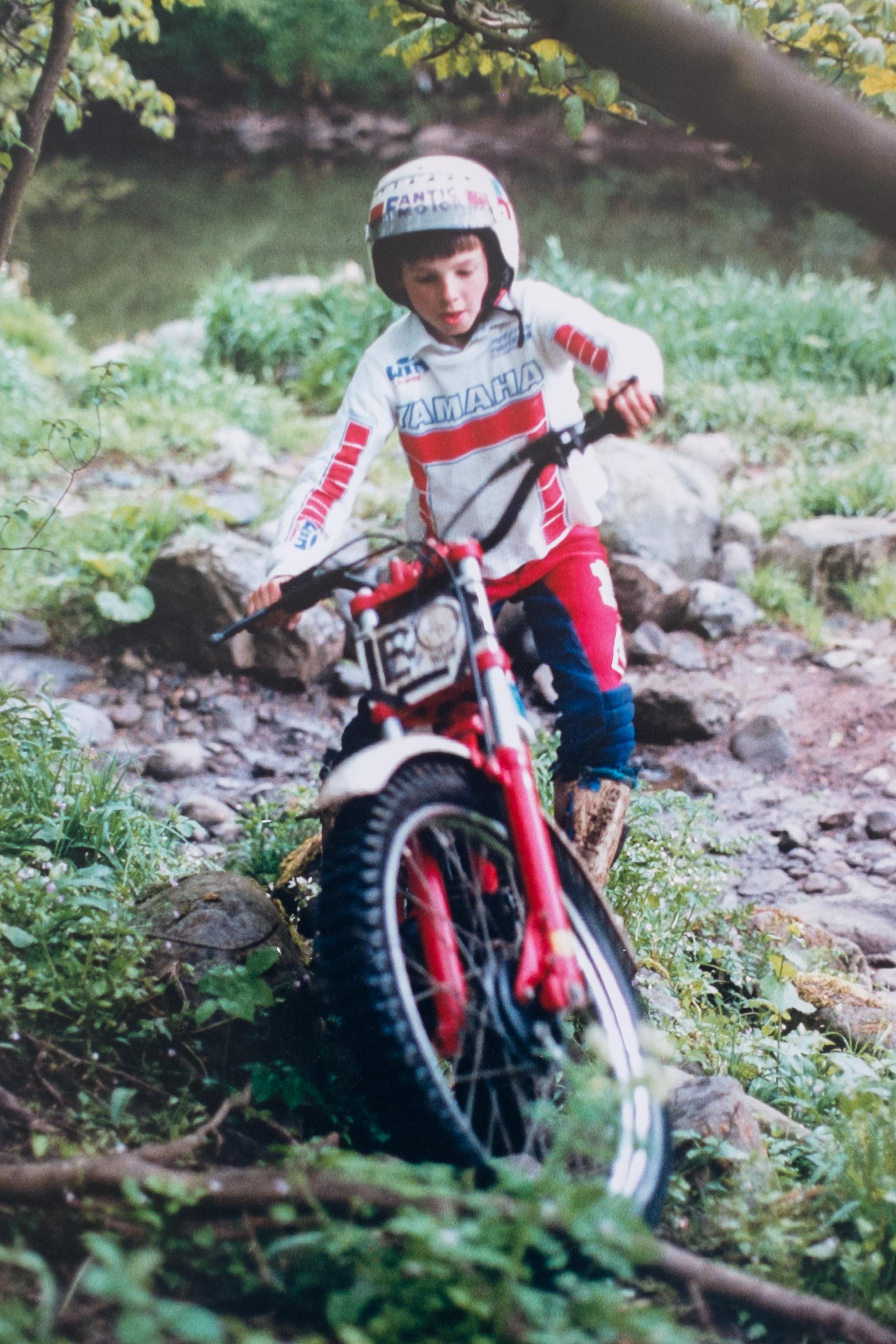
Born in July 1974, David progressed to an experimental 80cc Fantic provided through Roy Carey Of South Essex Leisure, the Fantic importers from the factory in Italy.
David with his display of trophies in Ernie Page’s dealership in Polwarth, Edinburgh. The Yamaha was built by Ernie for David Page – Photo: Page Family Collection
Ernie and David jointly developed the prototype from a bare frame, wheels and engine, it was this machine that went into production as the ‘Junior Trial’ using much of the Page’s feedback to the Fantic factory direct.
David Page on the pre-production Fantic 80 which he developed with his father Ernie – Photo: Page Family Archive
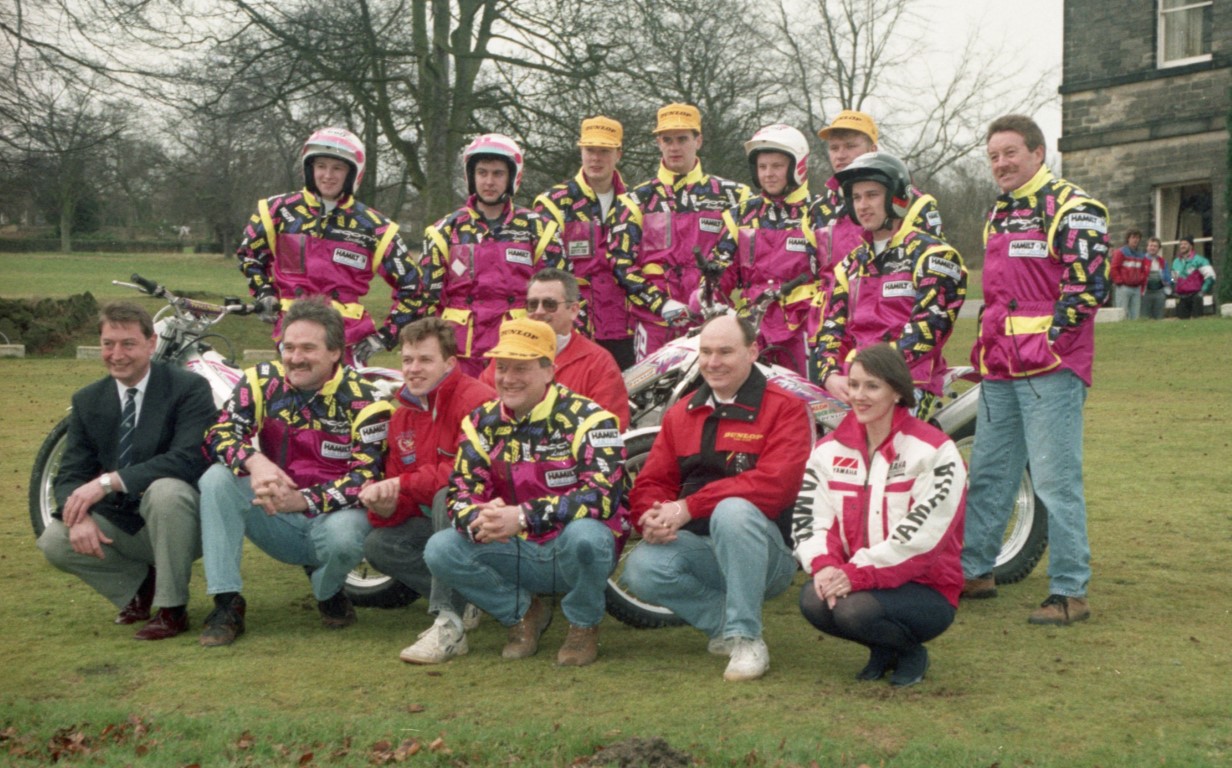
Having had a growing spurt, David then started to ride in adult trials on the Yamaha TY250R on which he made a name for himself, winning the 1992 Scottish Trials Championship at eighteen years of age, one of the youngest riders to do so. He also secured a place in the growing Hamilton Yamaha UK trials team along with Rob Crawford, Phil Alderson, Adam Norris, Paul Rose and Dave Thorpe.
The Hamilton Yamaha Team in 1992 – Photo Page Family Collection
Page was without doubt in the league of Jarvis and Colley and was a young man to watch as he was a natural trials rider.
The Cleveland Trial in 1992 David on the TY250R Yamaha – Photo: Page Family Archive
However, it was the late Martin Lampkin that coined it perfectly in 2015:
“David spent a lot of time riding with my son Dougie in the early years. Many times I would say to Dougie, hold on a minute, watch where David goes here, especially on a section that no-one was getting cleans or even through. David had the right attitude, skill and tenacity, heaps of it in fact, all the ingredients a good trials rider should have. David was always willing to give sections a proper go. I’m sure that he would have been up there with the best of them”.
David Page on the TYZ Yamaha in the British Championships in 1993 – Photo: Page Family Archive
When on a trip to an Italian world round with Ernie in 1992, David started to feel unwell and was rushed home to Edinburgh to be diagnosed with Acute Lymphoblastic Leukaemia to which he eventually succumbed on August 12th, 1993.
April 1992, David Page with World Trials Champion, Jordi Tarres – Photo: Page Family Archive
Having just received the new Yamaha TYZ model, David Page had several outings on the machine when he felt well enough to ride, sadly the trials world and the Page family were then cruelly robbed of a highly talented competitor and an exceptionally polite young man who is missed by all who knew him, to this day.
David’s funeral and subsequent burial at Hillend Cemetery, Dalgety Bay was attended by a veritable ‘who’s who’ of the UK trials community.
The funeral cortege consisted of many trials riders on their machines, escorting the funeral procession all the way from Bathgate, West Lothian to Dalgety Bay in Fife.
To read more about David Page and his father, Ernie, this has been achieved in the book, ‘Motorcycle Competition: Scotland 1975-2005’ by John Moffat
Apart from ‘Fair Dealing’ for the purpose of private study, research, criticism or review as permitted under the Copyright, Design and Patents Act, 1988, no part of this article may be copied, reproduced, stored in any form of retrieval system, electronic or otherwise or transmitted in any form or by any means, electronic, electrical, mechanical, optical, chemical, photocopying, recording or otherwise without the prior written permission of the author as stated above. This article is not being published for any monetary reward or monetisation, be that online or in print.



























 TRIALS GURU - DEDICATED TO TRIAL