Looking for something? Look no further than Trialpedia, the master index of Trials Guru.
You know what it’s like, you recall an article or point of interest in a magazine and which one? Which edition and which page? Impossible without hours of searching.
With Trials Guru’s Trialpedia, you are online and find it fast!
It is with deep sadness that we report the passing of David ‘Rick’ Richardson on Monday 26th January 2026.
David ‘Rick’ Richardson on his 348 Montesa Cota at a Dalmellington trial in 1978 – Photo: Jimmy Young.
Rick was born in Dalkeith, Midlothian on the 20th September 1935, he was married to the late Alma, they had no children, but had lots of cats an dogs throughout their lives.
David Richardson (centre) with Duncan Inglis (far left); Alan Gordon (second left) and Alan Scott (right) – Photo: Ian T. Robertson
Rick was a keen cyclist before graduating to motorcycles. He carried out the obligatory national service in the Royal Navy. After being demobilised from the navy, he went on to work in the motor trade becoming a master coachbuilder. Motorcycles became a means of transport which turned into a life-long passion, then into his love of trials riding all over Scotland including the Scottish Six Days and the Pre65 Scottish Trial where his wife Alma was often an observer.
It was Rick Richardson that encouraged the late Willie Dalling into motorcycle trials – Photo: Jimmy Young, Armadale
It was this cycling connection with Rick that brought the late Willie Dalling into motorcycle trials in the late 1960s. Dalling went on to become Clerk of the Course of the Scottish Six Days Trial.
David ‘Rick’ Richardson on his Suzuki at the Forfar ‘Brankhamhill Trial’ in 1978 – Photo Jimmy Young.
Rick built beautiful trials bikes for himself and for many of his friends. During his retirement he would enjoy trail riding all over the Scottish Borders, long before it became frowned upon.
Rick was also a founder member of the Lothian and Borders Classic Motorcycle Club after being a long standing member and committee member of the Edinburgh St. George Motor Club, which organised many Scottish national trials, where Rick was a course and section plotter.
Rick Richardson on his 200cc Honda Seeley TL200E – Photo: Jimmy Young.
He continued building many classic machines, his favourites were Triumphs and in his last years, still enjoyed working on them and loved nothing more than visiting the local motorcycle shops. I will miss my pal so much. – Dennis Belleville, Innerleithen, Peebleshire.
FUNERAL ARRANGEMENTS
David ‘Rick’ Richardson’s funeral will be held at Borders Crematorium, Next to Wairds Cemetery, Melrose TD6 9HA on Monday, March 2nd at 10am to which everyone is welcome.
David ‘Rick’ Richardson on his 200cc Seeley Honda TL200E at Forfar. Photo: Jimmy Young
Did you know that you can ‘subscribe’ to Trials Guru and not pay a penny – ever?
Unlike other subscriptions that charge a fee!
Trials Guru subscribers get the latests articles and points of interest sent straight to your e-mail inbox. No charge!
It’s very easy to do and just needs your current e-mail address to be submitted, then a check e-mail is sent to you to enable you to confirm or if you want ‘unsubscribe’. Then you are all good to go!
No fuss, no charges, nothing to pay!
Why not do it now? It’s usually a little short message at the bottom right of your screen! Click on it and it brings up this message…
Enter your e-mail address and click on ‘Sign me up’…
Supported by Comerfords, Michael Dismore on the factory James on Grey Mare’s Ridge in the Scottish Six Days Trial.
National trials winner, Michael ‘Mick’ Dismore of Farnham, Surrey has passed away on 12th January 2026, age 92 years at his home. Born in Guildford, Surrey, he is survived by his wife Joan, his children, Carol, Christine and John, five grand-children and three great-grandchildren. Mick was an life-long enthusiastic supporter of the sport.
Mick Dismore on his Comerford’s supported factory James in 1962.
He won the ACU South Eastern Trials Championship three times and was runner up twice. The three wins were all on different makes of machine being a Matchless, Royal Enfield and James. He also won the Thames Valley Trials Combine Championship seven times.
Michael Dismore on a 250cc Bultaco in 1978.
Dismore won the Lynn Traders and the Beggers Roost national trials in the west country, and won three other nationals. Mick won five special first class awards in the Scottish Six Days Trial. He was victorious in the Bert Gaymer Trial, a local event run by the Farnham club.
Mick Dismore on the AMC engined James.
Our sincere condolences are conveyed to his family at this time.
Funeral Arrangements: Monday, 16th February 2026 at 13.30, at Guildford Crematorium, New Pond Road, Godalming, Surrey, GU7 3DB
“Saracen: historically referred to Arab or Muslim peoples in the Middle Ages, originating from a nomadic tribe near Roman Syria, later used by Europeans for any Muslim during the Crusades.“
Saracen founder/director of Saracen (Engineering) Limited, Ron Goodfellow on the 125cc Saracen in 1969. This machine TOU811H was used for publicity photos and press testing – Photo: Saracen Motorcycles.
Words: Trials Guru; the late Deryk Wylde; David Brand; Sammy Miller MBE; Bernie Schreiber; Trevor Kemp; Steve Wilson; Jon Bliss; Don Morley; Peter Salt; Erwan Spiral; Jeff Koskie; John Hart; Jay Lael; Christian Rayer; Nigel D. Green; David McNeil; Jon Griffin; David Pickering; Andrew Cooke.
Read Time: 70 minutes.
Photos: David Brand; Don Morley; Keith Walker; OffRoad Archive; Derek Soden, Wales; Erwan Spiral; Jeff Koskie; Nigel D. Green; David McNeil; Olivier Barjon; Christian Rayer; John Hart; Ian T. Robertson; Trevor Kemp; Rob Smith; Jay Lael; Jon Bliss; Ron Goodfellow; Jon Griffin; David Pickering; Andrew Cooke; Yamaha Motor Company; Saracen Motorcycles.
With special thanks to: David Brand; Olivier Barjon; Jon Bliss and Jean Caillou for additional material and information.
Introduction:
“The Saracen 125 was the first trials bike I had ever seen, It was in Los Angeles, California, Jeff Koskie had one.” – Bernie Schreiber, 1979 FIM World Trials Champion.
There are three stages to this story of Saracen Motorcycles, not so much a ‘beginning, middle and end’ – it is more of a first stage (Saracen Engineering Ltd), second stage (David Brand & Co Ltd) and thereafter. We bring you the story of a modestly successful small capacity trials, scrambles and enduro machine, built in England, exported overseas with some still being used as they were intended.
A significant part of the first stage was researched, written and published by the late Deryk Wylde, suitably updated and corrected as necessary. [1]
The second and third stages have been researched and compiled by Trials Guru with assistance from trials enthusiasts across the globe, including those who were part of the companies that produced the product. We also spoke with dealers, current and past owners of Saracen motorcycles. Some of the photos exhibited have never been seen prevously.
The late Ralph G.V. Venables, the doyen of off-road motorcycle sport journalists, gave the small capacity two-stroke trials machines the generic description ‘Clockwork Mice‘ in the late 1960s. This unfortunate description stuck for many years to come.
The robust Saracen frame and swinging arm.
The first Stage of Saracen, 1967-1971:
In 1967, a couple of neighbours in Meysey Hampton near Cirencester, were experiencing the problems of wanting to buy a new Bultaco trials model, but ‘enjoying’ the asset of a shiney new mortgage ruled that out!
The novel answer for enthusiasts, Ron Goodfellow and Frank Underwood, was to set about building their own bikes. The late Deryk Wylde spent a pleasant visit with Ron Goodfellow at his home in 2001 on the Cambrian coast recalling those heady days.
Ron Goodfellow designed and built the Saracen motorcycles from 1967. The company built about three hundred machines in total in all of various types, the majority being exported to the USA. Other countries included France and Sweden.
Founder of the company, Ron Goodfellow test rides one of his early production models with the iron barreled 123cc German Sachs engine (TOU811H) in 1969. Photo: Saracen Motorcycles.
The original prototype was a BSA Bantam engined version but supply of British made engines was fraught with difficulty at this time, so Saracen opted for the German made Sachs engines, initially with the Iron barrel, but later the all aluminium engine. They also built a small number of Triumph Tiger Cub powered machines. Saracen also designed a spine framed 100cc American Hodaka engined trail bike.
The Bantam Saracen:
Ron Goodfellow on the very first Saracen, the BSA Bantam engined version – Photo: David Brand Collection.
The first prototype Saracen trials model was constructed from T45 aircraft quality tubing, the original intention was to create a quality rolling chassis with excellent handling characteristics to be sold as a kit.
The Saracen sales sheet from 1967-1968 – Courtesy of Olivier Barjon, France.
Alternatively, sold as individual components into which a variety of motors could be fitted such as the BSA Bantam, Triumph Cub or Villiers units. In the case of the Bantam frame, the height of the power unit meant that the fuel tank could be mounted below the frame top tube to lower the centre of gravity. Ready to go, the plot weighed close to 180 pounds, so was a competitive machine.
The first Saracen prototype (MDD98F), fitted with a BSA Bantam engine. This photo was used for the original sales brochure – Photo Ron Goodfellow.
From the outset, the swinging arms were mounted in eccentric adjusters which meant that chain adjustment was made with a single spanner, to loosen the swinging arm spindle nut, which then allowed the whole swinging arm to move forwards and backwards and set the chain tension without affecting wheel alignment. The sales brochures claimed that chain adjustment could be made ‘from the saddle’.
An interesting photograph of former Triumph factory trials rider, Peter Hammond from Cirencester on an early Villiers engined Saracen (PAD3G) in 1968. The gentleman in the background looks intrigued! Peter lived locally and ran his motorcycle dealership in the Gloucestershire town. Photo: OffRoad Archive.
In the case of the slightly longer frame for the Tiger Cub, of which only a few were made, one of which for Dave Chick, the oil was carried in the frame with the tank formed in reinforced gussets for the steering head.
In September 1968, the retail price of the BSA Bantam, ‘reconditioned and tuned’, engined Saracen was £167 10s 6d in ‘kit’ form. Complete machines less engines were available depending on specification at £135. Frame kits which included swinging arm, adjusters, Timpken taper roller head races and finished in bright nickel plating were made available to customers, a kit suitable for a BSA Bantam was offered at £29 and 15 shillings; for the Villiers engine at £32 and 17 shillings and 6 pence and the Triumph Tiger Cub engine at £34 and 15 shillings. [7]
End of ‘Kit Form’:
Changes in the purchase tax regulations hit the kit form market hard and made Saracen eventually take a leap of faith into the complete machine manufacture market.
A close up of the smaller finned iron barrel type 125cc Sachs engine from a 1969 model. The take off for the speedometer, driven directly from the gearbox can be seen as the black knob above the first letter ‘S’ – Photo David McNeil, USA.
Ron and Frank went to the Sachs factory at Schweinfurt, Germany and bought five units on the spot which they brought back in the boot of the car. Five frames were built, the tubes were cut to the drawings and sent to Technical Tubes in Wimbourne to be bent to drawing. Whilst that was going on, a jig was built at South Cerney where Ron had moved into a bungalow. Imagine the situation when the tubes arrived back in Dorset and slotted straight into the jig, ready for the bronze welding. There were no lugs on the frame to save weight.
Olivier Barjon in France has this very original 1970 Saracen, all alloy motor model built by Saracen Engineering – Photo: Olivier Barjon.
When the first bike was complete, literally hand built, Ron who at the time continued in his job as a lecturer at the agricultural college in Cirencester, took a day off to take the bike to Comerfords, where Bert Thorn and the team had a careful look and promptly ordered three on the spot.
On then to Ken Heanes, who ordered two and bingo, the first five were sold. Putting the next five sets of frames into the process saw the team move into a production mode. They hired a room above a tyre fitting centre in Cirencester. Then a stateside visitor, John Olsen of Cycle Trends of Santa Monica, California, saw the models at Ken Heanes and promptly ordered twenty, effectively becoming the US importer.
The Saracen story was underway. Proper production facilities were essential, so a unit was found at Stafford’s Mill, Thrupp near Stroud, where the five staff that included Jack Galloway and Jon Bliss, started making machines in earnest.
Press Release from 1970 issued by Cycle Trends, the importer of Saracen motorcycles in the USA gives details of Saracen rider success. Photo: Jeff Koskie, USA.
Iron or alloy?:
The 1969 pre-production Saracen (TOU811H) with the iron barrel, note the small speedometer which was driven off the gearbox. Photo: Saracen Engineering.
A significant number of the iron barreled Sachs model were sold, mainly to the United States. When Sachs introduced the alloy barrel and head, with a greater power output, an order for forty models for the States was in hand, so the alloy motors were fitted and a container loaded with the forty bikes. Checking delivery details with the stateside customer, Ron gave him the good news that the bikes had the alloy motor, wherupon the customer said that he didn’t want the alloy motor, but the iron barreled model, and it was the cost of that thwarted shipment of forty bikes that proved impossible to fund that would eventually take the company down.
The Sachs alloy motor:
Working through the five-speed gearbox, the output of the Iron top end Sachs was around 15 bhp, which was a cool 35-40% greater than the average Villiers supplied for trials use. So allied with the light weight, the bike was quite pokey, and suited the likes of Jon Bliss. In terms of specification, the wheelbase was 52 inches and the ground clearance a genuine ten and a half inches. The frame, initially cold drawn seamless 17 gauge tubing, which proved to be far more robust in trials use. The fork travel was six and a half inches and the standard rear suspension was Girling. Outwardly, the cylinder finning on the all-alloy engine was appreciably larger that the preceeding iron version.
Production:
Ron Goodfellow remembered one of the aspects of their production efforts: “Everything was very much hand-to-mouth, we bought all sorts of machine tools second-hand. Indeed there wasn’t a new piece of equipment in the place. Typical was the creation of the little ‘D’ shaped lugs that supported the rear mudguards, chainguards, and the like. There were about twenty on each bike and we used to cut them by hand and file them to shape. Then we saw a hydraulic press for sale for £40, so we bought it and got Boughan Engineering, Chris Stagg in those days, to make a cutter that would stamp out the ‘D’ shape. That made it all so simple we made so many we were able to sell them to other manufacturers.”
Rob Smith from Derby on his 1969 Saracen (YRC2H) in 1971 – Photo: Rob Smith.
Press coverage:
Jack Galloway had won the Welsh national St. David’s trial in 1970 which brought the small capacity Saracen to the notice of the trials press and the trials machine buying public at the time.
Cycle World in the USA [5] ran an interesting test on the Saracen in their March 1970 edition, penned by well-known English journalist Max King who did a series of articles for the North American publication on several machines and various articles on the sport.
The test machine was TOU811H, a 125cc Sachs iron barrel model which appeared to be used for publicity purposes. King had enlisted a local friend, John Poate to compare the Saracen with a 1969 250cc Bultaco at an XHG Tigers club event near Bournemouth. Overall, King was very impressed with the performance of the Saracen. It is interesting to note in Max’s article that the engine in the test bike was the oil injection variant (Sachs 1251/5A) which was offered as an option. King also mentions in the report that Saracen Engineering also made agricultural machinery at the same time as producing motorcycles.
The French Connection:
The French Saracen importer was multiple French Trials Champion, Christian Rayer who had ridden for Greeves and Montesa, assisting in the development of their Cota 247 model in 1968. Rayer had a trials shop called ‘Motos 92’ and it was from here that he received machines from Saracen.
Multiple French national trials champion, Christian Rayer was the French importer of Saracen in 1971. Here is Christian trying a Saracen Highlander in France – Photo: Christian Rayer Collection.
Christian Rayer: “I was the importer of Saracen motorcycles in 1971 with my shop in Paris. But there was more to it than just importing the British built Saracen. I was approached by Yamaha to develop a trials motorcycle for them. I had the first frame of my prototype for the first Yamaha Trial, manufactured by Saracen in England.“
Publicity shot of Christian Rayer demonstrating the lightness of the Saracen Highlander in April 1971 for the French press – Photo: Christian Rayer Collection.
“This was also in 1971, which I used to compete in the French and European championships. I quickly developed it further by working directly with the Japanese factory to arrive at the final TY model, which went on sale in 1973. When Mick Andrews arrived at Yamaha to become their factory rider, the machine was already completely finished in its final form for 1974 customers to buy, this was before he transformed it with the cantilever version and gave it a much different look.” – Christian Rayer
It is interesting that Saracen had a hand in the development of a model by the giant Yamaha concern, it gave the Japanese factory an initial platform to start from.
Christian Rayer on the first prototype Yamaha Trial in 1971, with chassis by Saracen – Photo: Yamaha Motor Company
Rayer then made a second Yamaha Trial prototype, this machine was based on the OSSA chassis which had of course been developed by Mick Andrews who then moved to Yamaha.
Jack Galloway on his factory Saracen during the 1971 Scottish Six Days Trial on ‘Achintee’ on the lower slopes of Ben Nevis. A bicycle tyre pump, strapped to the frame downtube clearly visible – Photo: Keith Walker.
Saracen at the 1971 SSDT:
There was a solitary Saracen entered for the 1970 Scottish Six Days Trial, that of David Banks, son of Monty Banks who ran J M Banks Motorcycles of Cambridge Heath, East London, David’s riding number was 160 and was entered under the Grasshopper (Chingford) MCC on a 150cc model, unfortunately David isn’t listed in the results as a finisher.
From August 1970, several improvements were made which included beefing up the swing arm spindle to 17mm with heavy duty nylon bushings, the option of both types of Sachs engine could be specified, the ‘Standard Trials’ with the iron barrel and ‘De-Luxe’ with the all-alloy unit. The fibreglass side panels were introduced and the whole chassis was now nickel plated.
The smartly turned out ‘Team Saracen’, the Saracen manufacturer’s official team at Gorgie Market, Edinburgh prior to the 1971 Scottish Six Days Trial. Left to right: Jack Galloway; Steve Wilson and Jon Bliss – Photo: Saracen Motorcycles.
The following year, Saracen Engineering entered a three rider team for the 1971 Scottish Six Days, consisting of Jack Galloway, born at Yarm-on-Tees, North Yorkshire and a former member of the Parachute Regiment. Galloway had left the British Army in 1970, moved to Cheltenham and began working for Saracen Engineering building machines at the Stroud production unit, he remained there for two years.
Jack Galloway (125 Saracen) on ‘Edramucky’ on Day one of the 1971 Scottish Six Days Trial – Photo: OffRoad Archive.
The other two members were Jon Bliss from Cheltenham, Gloucestershire, also an employee of Saracen and Birmingham’s Steve Wilson who worked at Elstar motorcycles at Oldbury and who had been scrambling a Cheney BSA, having his sights firmly focussed on the Shell Under 21 championship. Wilson was a latecomer to the party in that he had been posting some good results on the Vale-Onslow supplied 125 Saracen which he received in the February of 1971. The Saracen had been acquired as a trade-in and issued to Steve to compete as a dealer supported rider. This included an outright win at the Amman Valley Club, E. J. W trial at Gwynfe, Carmarthen in early 1971. The machines ridden by Galloway and Bliss were factory bikes.
The 1971 Saracen Engineering sales brochure front cover.
Albeit the sales brochure hailed the Saracen 125 as ‘Super Trials’, the company looked to have decided to give the model another name, the ‘Highlander’ this was prior to the 1971 SSDT. The model name was mentioned by tester and staffman, Peter Fraser in the Motor Cycle of 7th April 1971 when testing Galloway’s earlier works mount, registered WAD32J the frame of which had the tubes under the engine. The retail price in kit form in April 1971 was £265. [2]
Jack Galloway on day one of the 1971 Scottish Six Days on ‘Edramucky’ on the slopes of Ben Lawers in Perthshire on the factory Saracen. He finished the event with a very creditable top ten placement. – Photo: Keith Walker
Both Galloway and Bliss being employed at the factory, had bang up to the minute, but tested works machines for the Six Days. Galloway was on XDF9J and Bliss on WDD63J both registered in Gloucester, both the frames on these machines had alloy sump plates and no frame tubes below the engine, similar to what Sammy Miller had done to the Bultaco Sherpa frame to create his ‘Hi-Boy’ version. Wilson’s Vale-Onslow machine had the standard production frame with tubes under the engine and was Birmingham registered as WOF5J.
All three machines were using the 125cc all alloy Sachs engines. The riders were issued with the new style TT Leathers ‘Rufryda’ red trials suits with a ‘Team Saracen’ badge sewn on the right shoulder area. These were the first coloured trials suits to be seen at the SSDT.
Steve Wilson: “Although I was in the official factory team for the 1971 Scottish Six days, the Saracen I rode was supplied second-hand by Vale Onslows in Birmingham. Russel Gough, a great sign writer did the paint stripes on the tank and side panels. I had fitted a Honda 50 front hub, a Montesa front mudguard and my frame had the tubes and not a bash plate under the engine, which was wearing out by the time the Scottish came around. I did put extra tubing under the engine to protect the crankcases from damage. I then built and rode the Saracen framed ‘Valon’ with the special Bonkey Bowers replica Bantam engine in late 1971 and rode it until my Vale-Onslow Ossa arrived in February 1972.I remember that I lost eight marks on the Town Hall Brae, having chosen second gear for the climb, the engine started to gas up, so I started footing to get through the first section, but the engine suddenly died when in the second sub.“
Top ten finish:
The Saracen team members did exceptionally well with Jack Galloway being the top performer of the trio coming back to the finish at Edinburgh’s Blackford Hill with the capacity class win up to 150cc and an eighth position overall, losing 66 marks, a solid performance. Next was Jon Bliss in forty-sixth place with 147 marks lost and Steve Wilson in sixty-seventh position on 190 marks lost. Three riders started and three finished.
Saracen Engineering used a photo of factory employee and works rider, Jack Galloway on their 1971 sales brochure.
As documented elsewhere, Wilson moved on to ride the 250cc Ossa for Vale-Onslows and Bliss continued to ride a Saracen for David Brand. In the 1972 SSDT, Jon Bliss still riding a Saracen (CUR12K) with riding number 206 and finished in sixty-seventh position on 250 marks, with the Saracen company owner David Brand in one-hundreth position on 309 marks riding a 125. Jack Galloway had by this time moved on and was competing on a 247cc Montesa before joining Don Smith’s factory Kawasaki team for 1973.
The second stage of Saracen – Brand Reborn:
The Saracen ‘Invader’ 199cc publicity photograph taken by ace photographer, DON MORLEY for David Brand and Company in 1973. Photo: Don Morley/Hitchcock’s Motorcycles.
The remnants of Saracen (Engineering) Limited were eventually sold by the official receivers to David Brand and Company Limited, who ran a builders supply company in Watford, in 1972. Brand bought the rights to use the name, Saracen and also attended the liquidation auction where he bid for and purchased redundant stock which included complete frames and other items. ‘Saracen Competition’ became a division of Brand’s company.
David Brand campaigning his own product, the 225cc Saracen Invader at the Santigosa Three Day Trial in Spain in 1973 – Photo: David Brand Collection.
David Brand naturally moved the production south to Old’s Approach, Tolpits Lane, Watford, Hertfordshire, but by then the domination of the world’s trials markets by the Spanish Bultaco, Montesa and Ossa brands was considerable. Much has been written implying that this was the fundamental reason why Saracen eventually ceased production. But there was much more to it than just that. By June 1972, the pound to Deutsch Mark exchange became unfavourable with Chancellor Anthony Barber abandoning fixed exchange rates, called the ‘Bretton Woods’ system, allowing the pound sterling to float on the open money markets.
So who is David Brand and what really happened to Saracen?
David Brand: “How did I become interested in motorcycle trials? Good question, I’m not sure, possibly due to competing in cyclo cross events as a teenager. I started riding a DOT in 1959, a James Captain and then a 197cc Norman which had the leading link front forks. These were replaced by BSA forks and the engine was bored out to 225cc. This combination suited my style of riding and resulted in quite a few awards. Then followed a number of Triumph Tiger Cubs, an ex-Ken Streeter AJS, a 250cc Royal Enfield and then a 250cc Bultaco.“
“To sum up my ability, I was not in the league of the top riders of the time, in part there was no opportunity to ride on rocks in the south midland centre. Nevertheless, I won a couple of open to centre and meteor group trials. Time and Observation was my forte, I think I won every one I competed in, notably winning with fastest overall time on a 90cc Honda.”
“I had the desire to compete in the International Six Days Trial and so I rode in the Welsh Two Day on a 125cc Saracen in 1973 and in anticipation of riding in the ISDT the following year, I built a 50cc Saracen with Sachs engine and won the up to 100cc class in the Welsh. Prior to the event, Rond Sachs in Belgium approached me to build their new design frames, so a prototype frame was adapted to the fifty. The bike was going well in the Italian ISDT in 1974, I think I was the only 50cc running at the end of the day, but unfortunately I struck a rock with my left boot which resulted in retirement and many months of inactivity followed. My son Mark campaigned the 50cc Saracen with smaller wheels fitted in schoolboy events with success against much larger engined machines. Having restored the bike, I kept it and is still in my possession.”
David Brand was kind enough to contribute directly to this article, particularly commenting on the ‘Invader’ models and some special machines which he manufactured, which corrects previous articles published elsewhere:
D.E.S. Brand of Leavesden & District MCC on his 244 Bultaco Sherpa in the 1968 SSDT came home in 76th position on 262 marks and a first class award – Photo: Ian Robertson, Midlothian
David Brand: “The Saracen Watford story begins with my interest in ‘Clockwork Mice’, having owned a Gaunt Suzuki, a Honda 90 and a Clive Mills 200cc Honda.“
“My business involved marketing central heating, plumbing equipment and bathrooms. The core business was importing central heating radiators. We offered a curving and angling service, each order being tailor made from a template, which meant it was not possible to pre-make anything. As the trade was seasonal, it sometimes proved difficult to keep my four skilled welders employed. So I was looking for a product which required welding and could be put into stock.”
“I then heard of Saracen’s liquidation sale. I contacted the receiver and purchased the name Saracen and the jigs, then purchased most of the stock in trade at the displenishing sale.”
Getting started:
David Brand: “The finished frames, from memory a dozen or so, that were obtained at the sale were completed and sold. In the meantime, the frame jig was modified to suit the new under shield, the same as the Saracen works bikes. Simultaneously, fibreglass petrol tanks became outlawed. An alloy tank was sourced and air filter redesigned with alloy side panels. The 123cc Sachs engine lacked power, so I had the engine bored out to 199cc, Metal Profiles undertook this task. The original cylinder head was retained which resulted in high compression, this made the engine prone to stall easily. To overcome this, weight was added to the flywheel.Smaller diameter REH alloy hubs and black VF mudguards finished off the Invader model.“
The 1973 Scottish Six Days entry list viewed like a sea of Bultaco, Montesa and Ossa motorcycles, but there were three Saracens entered. Number 42: Billy McMaster Junior, son of W.A. ‘Billy’ McMaster, the Irish Representative to the Fédération Internationale Motocycliste (FIM) and a member of their CSI (International Sporting Commission), was entered by Saracen Motor Cycles and riding under the Farnham Royal club based in Buckinghamshire, albeit Billy was brought up in Belfast. He was entered by Saracen Motor Cycles on the 125cc Saracen ‘Invader’. Billy was twenty-seventh placed on 153 marks for the week. It is possible that Billy McMaster was receiving support from the dealers, Windsor Comp Shop in Slough at this time.
Carrying a Buckinghamshire registration number and entered by the manufacturers, the late Billy McMaster Junior in the 1973 Scottish Six Days Trial on the 125cc Saracen Invader. Note the much smaller REH front hub, available from 1972 on this model compared to earlier Saracens. – Photo: OffRoad Archive.
Number 126: David E.S. Brand, the company owner on a 248cc Saracen riding under the Leavesden club of which he was chairman for many years, he finished in one-hundred and ninth place on 375 marks.
David Brand on the Saracen Invader in the 1973 Scottish Six Days Trial on ‘Ben Nevis’ – Photo: David Brand Collection.
Private entrant, issued number 142 was P. Butler of the Middlesbrough club on a 125 Saracen, who finished in eighty-sixth place on 336 marks.
What’s in a name?
During the research for this article, we found the following names to describe models of the Saracen which ranged from: ‘Super Trials’ to ‘Standard’ and ‘De-Luxe’ to ‘Highlander’ and finally one that stuck, ‘Invader’!
David Brand: “Many people have asked the question why I chose the name ‘Invader’ for the second series Saracen.”
“In the middle ages, Saracens were invaders, renowned for horsemanship, utilising speed and manoeuverability, so the name Invader seemed appropriate.”
How Saracen came to a final closure:
Last ditch effort with the Mickmar 250
David Brand: “Various accounts of the Saracen story, written in books and magazines are not very accurate. To put the record straight, during the years 1972-1975, we had the 1974 miner’s strike and industry was only allowed to work three days a week. The pound was devalued in 1972 and interest rates had soared. Consequently, the cost of the Sachs engines was just not viable. Common sense prevailed and the Saracen trials bike ended.”
The smart and purposeful looking prototype Saracen Mickmar 250 in September 1973 still with REH drum brakes fitted and the twin downtube front frame visible. This was the bike that was supposed to save Saracen, instead it actually finished the marque – Photo: David Brand Collection.
“I did however continue to search for another suitable engine, then I came across the new Mickmar 250cc motordesigned by Michael Martin.”
Detail of the alloy air box arrangement of the Saracen Mickmar from 1973 showing an AMAL Concentric carburetor has been fitted – Photo: David Brand Collection.
“I thought all my Christmases had arrived at once, a British made engine of two-fifty displacement. Build the prototype and incorporate a front disc brake.”
Offside view of the neatly built Saracen Mickmar prototype in 1973 – Photo: David Brand Collection
“Unfortunately the Mickmar was virtually unrideable, the gearbox was full of neutrals and the front disc brake arrangement was not a lot better, both required much more development. It was a great shame as the complete motorcycle looked fantastic.”
Nearside of the 1973 Saracen Mickmar, now in the private ownership of Trevor Kemp – Photo: David Brand Collection
“We also built a CCM 500cc trials bike as a one-off for a customer, but I have no idea what happened to it.”
Special build! Both side views of the one-off Saracen CCM 500 – Photo: David Brand Collection.
“It wasn’t quite the end of Saracen. I continued making a small number of horse drawn carriages unsurprisingly called ‘Saracens’. When I stopped competing with horses, that really was the very end of Saracen at Watford.” – David Brand
Following the final demise of Saracen motorcycles, David Brand still required a hobby as his plumbing and building supplies company went from strength to strength, so he threw his enthusiasm into a new sport for him, Horse Driving trials, four in hand, a class dominated by HRH Prince Philip and David became British Driver’s Champion on multiple occasions. A different kind of trials. The company, Brands of Watford Limited is still very much in business, David Brand having sold the company when he retired aged fifty-seven. He did have a try at Pre65 motorcycle trials with a very well sorted Triumph 500cc twin as well as car racing with a Lotus 22 and taking up Historic Sporting Car Trials using a Cannon.
David Brand racing a Type 22 Lotus – Photo: David Brand Collection.
Saracen specifications:
The Saracen in production form by 1971 was a smart looking trials motorcycle, the frames were single downtube, finished in Nickle plating and adorned with a bright red glassfibre fuel tank and on later versions, the matching side panels.
Early models had the full cradle frame with tubing under the engine, but by early 1971 the works bikes’ frames had the alloy sump plate made popular when Sammy Miller had modified the Bultaco Sherpa frame to create the ‘Hi-Boy’ variant. The frames normally utilised a single downtube to cradle the engine, as the Sachs motor had an offset exhaust port. Subsequent frames made for the Mickmar engine as an example, would require a twin-spar downtube to accommodate centralised exhaust ports.
Irishman, the late Billy McMaster Junior fixing his riding number at the ‘weigh-in’ for the 1973 Scottish Six Days at Edinburgh’s Gorgie Market with his new Saracen Invader, fitted with the then popular Renthal alloy handlebars of six and a half inch rise. Mudguards were state of the art black plastic components made by Vacuum Formers. – Photo: OffRoad Archive.
The polished alloy fork legs and conical polished alloy, six inch diameter REH wheel hubs set the machines apart from the then current offerings from Spain.
The British made REH (Robin E. Humphries) six inch diameter conical rear hub of the type used by Saracen. Smaller diameter versions were available from 1972 onwards.
Dunlop chrome plated steel wheel rims, WM1 front and WM3 rear, were used, later models such as the Invader were shod with aluminium alloy rims front and rear. REH front forks were used initially on some machines with later bikes fitted with the MP Metal Profile ‘S600’ forks. Later models used the smaller five inch diameter REH conical hubs, available from 1972 onwards. All up weight was a miserly 169 pounds according to Peter Fraser’s test of the factory ‘Highlander’ of Jack Galloway. [2] The steering head used one inch taper roller bearings. Later versions were fitted with aluminium alloy fuel tanks given that the UK government in 1972 outlawed non-metal fuel tanks on motorcycles for road use. The speedometer was driven directly from the gearbox, saving a long speedo cable.
The revised ‘Invader’ model eventually utilised the Sachs six-speed 175cc GS engine, also intended as a power plant for military use in the German Hercules motorcycle. This modified engine for the Saracen received a brass ring on the flywheel and a larger counter weight on the clutch side of the crankshaft, this was done to improve the bottom end performance. All Saracens built under David Brand’s ownership were fitted with frames that had no tubing under the engine and employed the alloy sump plate, exactly like the factory machines ridden in the 1971 season by both Galloway and Bliss.
Carburation was taken care of by a German Bing 24mm carburettor, later models, a 26mm version.
The BING 1/24/153 24mm carburettor as used on the Saracen with 125cc Sachs engine.
The 123,5cc engine sported a compression ration of 9:1 with an all square bore of 55mm and stroke of 55mm. The 1970 specification stated 12.5 bhp at 7,300 rpm, this increased to a claimed 18 bhp on 1971 versions. The swinging arm was initially mounted on rubber bonded bearings, later models used nylon bushings. Machines were supplied with Girling oil damped suspension units. 1970 model year machines were devoid of side panels and a mesh air cleaner looked after air filtration. Later models were fitted with side panels fabricated from glassfibre resin and sponge type filtration, accessed by a separate detachable panel. The exhaust system on early models was as a straight pipe to a ‘Peco’ style silencer, later models had a more efficient expansion chamber system fitted.
Diversification:
Saracen had dabbled a fair bit with the emerging Enduro market which started out in the USA and the firm had established connections there. The Sachs engine was suited to enduro work. Even under David Brand’s stewardship, he too looked at this market segment.
The 125cc Saracen Enduro, based on the trials bike – Photo: David Brand Collection.
Jon Bliss on Saracen:
Well-known trials rider, Jon Bliss from Cheltenham had been involved in plumbing and heating as a trade, but jumped at the opportunity to work for and build trials bikes with Saracen in Cirencester, not far from his home in Cheltenham, Gloucestershire. He would ride the Scottish Six Days twice on Saracen, then a third and final time at aged 50 in 1989 on a 250cc GasGas.
Cheltenham’s Jon Bliss on the factory Saracen in 1971 – Photo: Jon Bliss Collection.
Jon Bliss: “I worked at Saracens from 1970 until 1973, I suppose my job title was ‘Works Dog’, actually it was ‘Production Engineer’ – I did all the engineering to produce all the jigs to fabricate the components to make the frames and swingarms. The most difficult was the alloy barrel engines which had a central exhaust port. The factory in Cirencester was on the third floor and no lift system, so everything had to be carried up to the factory floor and all the completed bikes taken down the stairs for despatch. I was involved when the all-alloy engine was being used.“
“It was quite an agricultural process in some ways, there was no hydraulic tube bender, it was a Hilmore tube bender with battens screwed to floor in a circle to obtain purchase and the use of a ten-foot scaffold pole to bend the tubing. When we moved to Thrupp near Stroud, we had a lot more room. I made boxfuls of frame parts that David Brand purchased for probably a fraction of the cost of producing.“
“Ron purchased a fifty-ton press and my job en̈tailed making ǰigs to produce the cams on the spindle ends which allowed for chain adjustment.“
Jon Bliss standing beside his factory Saracen at the Scottish Six Days Trial, this particular bike was fitted with Marzocchi front forks, which were modified road items.
“The factory team bikes ridden in the 1971 Scottish had altered frames with a six millimeter thick alloy sump shield and no tubes under the engine. I did my own and Jack Galloway’s frames. The modifications had to be done in the evening at the factory, as all the equipment was there and I did it in my own time. The six millimeter sump shield I designed followed the shape of the engine which had ribs underneath and eliminated the front down tube bend and the two bends on the side tubes, so consequently didn’t increase manufacturing costs very much. I told Ron Goodfellow that this was the way to go and get the jig altered to start making these frames to raise the ground clearance on the production bikes. Ron just couldn’t be convinced, he didn’t get the idea, he feared that it would put the price of the bike up. I told him to increase the price, they were retailing for around £235, whereas the Greeves Pathfinder was selling around £275 and the Saracen was a much better bike overall. My friend, Scott Ellis tried hard to improve the Greeves, but it was never a patch on the Saracen. You could rev the Sachs engine all day and they would take it, you couldn’t do that with the Puch engine. Ron said that he was under-cutting the Greeves to out-sell them, whereas I knew that by providing a trials rider with a slightly more expensive bike that rode and performed better, was definitely the way to go. He simply couldn’t get his head around that and I knew the Americans would have loved the bike with the modernised frame. I always wished that Sachs had made a full two-fifty engine, that would have made such a difference.“
“The electro plating of the frames and swinging arms was carried out by a local company which was about a mile from the Saracen works at Thrupp.”
“I met Stan Dibben of sidecar road race fame who by then was the new NGK spark plug rep. Jack Galloway and my bikes were gobbling up Champion spark plugs at an alarming rate, he gave us a box of B77HC NGKs, we only used one each ever!“
“Eventually I altered the frame jig to make the frames without under engine tubing and all the later ‘Invader’ bikes were built with these later frames, many from the stock that David Brand had bought at the auction.“
“The Marzocchi forks had parallel clamps, so I made angled bearing holders to move the front wheel spindle forward about twenty millimetres to decrease the trail, a very intricate operation.“
“I worked with Frank Underwood, he was a former scrambles rider. My original Saracen (WDD63J) had a five-speed engine, which had much better torque than my later six-speed model (CUR12K).“
“I left Saracen some time after David Brand had taken over production and I started my own motorcycle shop in Gloucester called Cotswold Motorcycles. It was opened by Don Smith who was quite a character. I liked Don, he was a good rider and a good friend.By the time Don opened my shop, he was employed by Kawasaki as a sales rep and development rider and tried unsuccessfully to get me to take on a Kawasaki agency, but I was happy with Yamaha and Piaggio, and selling and riding the Saracen for David Brand.” – Jon Bliss
Steve Wilson on Saracen:
Steve Wilson on the Vale Onslow 125cc Saracen in the 1971 SSDT, you can see the small Honda 50 front brake, Montesa Cota front mudguard and the frame tubes under the engine. Man with the camera in the background is Nick Nicholls.
Steve Wilson: “There is a saying, ‘if it looks right, it generally is right.’ The Sachs Saracen of the early 1970s, it did look right. A quality tube, T45, neatly fillet brazed and finished in bright nickel plating. Either by luck or great design judgement, it had a steeper than average steering head angle, more like today’s bikes really and the steering was superb. We could easily pivot turn the bike because it was so lightweight overall. Innovative chain adjustment at the swinging arm pivot point by eccentric snail cams, meant you could change the height of the pivot point to aid wheel grip, and they did grip well.
“The big alloy barreled Sachs engine gave good grip. The riding style of the time was rev it in first gear in most sections, as there was no surplus power left to spin the wheel. The bikes were beautifully finished with red fibre glass components, a low engine position by the standards of what was to follow but very comfortable stand up riding position, and competitive in the right hands. In my opinion a step forward by David Brand making a bike better than its 125 mini predecessors like the Sprite, Dalesman, and even the Greeves Pathfinder.Incidentally, a fillet brazed frame was air tight internally, apart from open ends like steering head. A good plating company back in the day would copper dip, nickel plate the thick bit, then Chrome plate the thin bit. All this should be rust and weather resistant. Many frames have survived forty to fifty years because of all the above.“
Steve Wilson coaxes his 125cc Saracen up ‘Pipeline’ in the 1971 Scottish Six Days Trial – Photo: Keith Walker
“I built the Saracen for Len Vale-Onslow senior with a Mickmar engine in 1974 and tested it marking out the British Experts course in Wales with Ross Winwood in November 1974.
Press cutting detailing the Vale-Onslow Saracen Mickmar in 1974. Photo: Steve Wilson Archive.
Len senior who we all referred to as ‘Mister’ he commissioned the Mickmar build, I can even remember I charged them £70 for all the work done. I told them that it’s fragile in the gearbox department and suggested to Vale-Onslows that they get Alan Wright to ride it which they did for the 1974 – 1975 winter season.“
Welsh Two-Day action in 1972, Steve Wilson on the 125 Saracen enduro machine – Photo: Derek Soden.
“David Brand of Saracen approached Bonkey and I to see if we would ride in the 1972 Welsh Two-Day as he was building a couple of enduro bikes of which the Sachs engine was well suited to. We agreed and the bikes came with very large speedometers with very long speedo cables and bulb horn and large alloy tanks. We set about preparing them and entered the event.”
Steve Wilson pressing on with his 125cc Saracen enduro at the 1972 Welsh Two Day Trial – Photo: Derek Soden
“Bonkey managed to lose his chain completely in a deep ditch, he never found the chain, so he retired. I got through day one, so they allowed Bonkey to follow me round on day two. I proceeded to wipe myself out drifting through a series of bends and managed to crash heavily, hurting my shoulder. Bonkey appeared on the scene and whipped my helmet off. Then Andy Roberton stoopped and asked if I needed an ambulance? I said I was OK, but I had concussion due to a bang on the head. Game over! Bonkey was bitten by the enduro bug and I guess that Saracen ride set him up to ride successfully in those events thereafter.” – Steve Wilson
Mike ‘Bonkey’ Bowers on the 125cc Saracen at the 1972 Welsh Two Day Trial – Photo: Derek Soden
Sammy Miller MBE on Saracen:
We have been supplied with a press feature that was used by Saracen to promote their product, a machine test and report by eleven times British and twice European Trials Champion, Sammy Miller. [6]
Sammy Miller MBE testing the Saracen in late 1971. Photo: David Brand Collection.
‘Harassing Saracens’ by Sammy Miller.
“The Saracens had a reputation for harassing more powerful enemies and this is exactly what new manufacturer David Brand plans to do with his Sachs-engined one-two-five. One of the most attractive foreign-powered trials bikes made in Britain, the Saracen now sports a six-speed gearbox which provides usable ratios for the rough stuff and the road. Very wisely, the revivalist of a make which seemed doomed to disappear has made a few changes to the original specifications of a machine on which Jack Galloway finished eighth in the Scottish Six Days. With its orange-red glass fibre and bright nickel frame, the Saracen is a high quality product designed to stand the rigours of an all-weather sport. Price is £252 in kit form.
The 52 inch wheel base is about the best compromise. Shorter machines tend to lift the front wheel without provocation. During the test, on my practice ground, near Christchurch, Hants., the handling could not be faulted.
Thanks to a 10 1/2 inch ground clearance, rock sections presented no problem but, as with all 125s, the small engine was inclined to struggle on steep climbs.
Gear ratios range from a 44.6 bottom to a 11.9 to 1 top. This provides a good spread of available power, first and second being the most usable cogs for observed sections.
Third gear is a shade too high for anything except unusually flat mud but the sheer guts of the motor enabled me to crest severe gradients in second gear. Top gear was good for 60-65 mph on the road.
Though retaining buzzy characteristics of previous Sachs units, the engine packed a lot of top end power. The test bike was fitted with a normal contact breaker but the first batch of production jobs from Watford will have transistorised ignition.
The Saracen breathes through a 26mm Bing carburetter and a well conceived air filter with detachable cover in the glass fibre centre section.
Silencing was well above average for a 125. Exhaust noise was about the same level as that of a 250 trials machine and well within the ACU decibel limit which comes into force in the New Year.
Travel of a rather high geared kickstarter is restricted by a folding footrest. It took me a little time to master the technique but starting was generally a first prod affair requiring little effort.
The combination of alloy folding pegs and five inch lift handlebar gave a good riding position from which I appreciated luxurious Amal light alloy levers and nylon cables. The MP 600 series telescopic forks worked smoothly and Sprite brakes on both wheels were waterproof. If anything, the bike was over-braked, a good point on any machine.
Standard equipment includes steel rims and a prop stand neatly tucked away on the left, which really does its job.
Timpken taper roller bearings are fitted to the steering head while the rear suspension is pivoted on nylon bushes.
Girling rear suspension legs with a rating of 60 to 90 lb proved ideal. The bike was an aggressive little rock bug with no vices on teasing out-crops.
An admirable choice for the beginner to whom a 250 could prove too much of a handful. The Saracen is light, reliable, and well finished job with adequate power.
Not least of its attributes is the sales policy of the man responsible for perpetuating the name. David Brand is acutely aware of the importance of after sales service and he intends to carry a full range of engine and cycle spares.
I am sure this will pay dividends for there is nothing more disappointing to a customer than owning a bike and being unable to enjoy it because of poor service.” – Sammy Miller
Don Morley and the Saracen’s achilles’ heel:
“I am of the opinion they were THE best handling of the Mini Bikes of their time and I did test one at one stage. I also decided to actually buy one, if I could minus engine, with the view to then altering the frame fittings so to take a 200cc Triumph Tiger Cub engine instead.
However I did not do so in the finish because it became obvious the Saracen frame had one particular design fault, being the swinging arm fixing and more especially the swinging arm spindle. To me the swingarm itself was too spindly and weak.
As I recall quite a few who did actually buy these otherwise lovely little early bikes suffered this fate. I can’t remember the full details now but seem to remember the swing arm spindles or swing arm gave problems. And again if I remember correctly it was not possible for most to be able to cure, not least as it would need a new and heftier swing arm assembly which could also allow for the fitting of a much larger diameter and stronger spindle. Other than that, a beautifully finished motorcycle.” – Don Morley
Derek Cranfield, motorcycle dealer on Saracen:
Former Comerford’s man and owner of Len Savage Motorcycles, Derek Cranfield is a Trials Guru VIP
“I had a shop in Farnborough, Hampshire, trading as Len Savage Motorcycles, we were one of the first Saracen dealers in the south and I was one of the first to ride one. It was my first trials bike with the brake on the right and the gear-lever on the left, frightening! When going down a small road in Devon, a car came quite fast the other way, I went to brake, stabbed down on the gear lever instead. Those Saracens could rev!” – Derek Cranfield
Active trials rider in the 1960s and 70s, John A. Davies from Llandrindod Wells, Wales:
John A. Davies setting off on his DMW from Edinburgh’s Gorgie Market at the start of the 1963 SSDT – Photo: Mike Davies
“I received a Saracen issued by the factory for a short period, but I was asked to compete with it at all the National trials, especially the trade supported ones. I politely declined this offer with appreciation of a bike with spares, as I was a newly family man and had started our business in April 1965. I wasn’t financially fit enough to have time off, especially Saturdays which were the best day of the week for us.
I asked to buy a new Saracen which they sold me at a special price and I rode it with a lot of success here in Wales or gave a good account of my little Saracen, where maybe the opposition wasn’t too strong too often although we had a lot of Midland and Western Centre riders frequently which we fought against in Welsh Trials. The late Roger Maughfling of Superprox sold sprockets to Saracen and he was the instigator of my Saracen ‘works’ bike originally. The boss man, Ron Goodfellow was a real gentleman and a proper engineer, he really knew his stuff, but sadly didn’t have, I understand, the business acumen to deal with the running of his factory and in a very short time it closed down. To my mind at the time, they should never have gone as they were a very nicely engineered motorcycle and a good engineer behind them, which should have succeeded but sadly didn’t.” – John A. Davies
Five times ACU Cheshire Centre Trials Champion, Peter Salt:
” Some thirty five years ago, I came across a Sprite and Saracen that had been stored in a cellar of an engineering business in an old cotton mill at Congleton, Cheshire which had flooded when the nearby river burst its banks. The bikes needed completely stripping down to make sure there was no ongoing damaged caused by the water ingress. The frame was well protected by the nickle plating and the bike was quite an easy restoration. I still have both these bikes, but never used them for competition.” – Peter Salt
Trevor Kemp, formerly of Honda UK, Silkolene and Yamaha Factory Racing and the Saracen Mickmar:
Trevor Kemp worked for Honda UK and Silkolene, seen here on his 1973 Saracen Mickmar 250. – Photo: Trevor Kemp Archive.
Trevor Kemp: “I own a Saracen fitted from new with a 250cc Mickmar engine and have done so for many years in fact. A very good and local trials rider friend of mine, Alan Garrett bought it from David Brand via an advert.
The press advert placed by David Brand when the Saracen Mickmar 250 was up for sale. (Photo: Trevor Kemp Collection)
He only rode it once in a trial in which it broke down. He then placed an advert and sold it to a gentleman called Mr. T Knight from Norwich. It was he who sent the engine to Michael Martin, who was by this time at Talon Engineering, to be re-built. This was back in 1976.“
The bare bones of Trevor Kemp’s 1973 250cc Saracen Mickmar – Photo: Trevor Kemp Archive.
“I bumped into Mr. Knight at a Honda dealer opening in Norfolk several years later where he told me he had this bike and was putting it together to ride. I did mention to him that if he ever wanted to sell it I would be interested. I saw him maybe a couple years later and he informed me that he had got no further with the Saracen and would be prepared to sell it to me. This was in early 1988.”
Trevor Kemp on his 250cc Saracen Mickmar – Photo: Trevor Kemp Archive.
“I did strip the engine more out of interest than anything else. Some of the Lucas ignition was missing, so I fitted a different ignition system. Despite a strong spark, I could not get it to start, although it did fire now and again. When checking the timing I noticed the engine looked to be running backwards. I thought this can’t be, so I rang Michael Martin with the information on who I had got the bike from. Michael came back to me later and that particular engine was actually designed to run backwards, with the idea it would give more traction to the back wheel. He did say that that engine was the first one produced and was sold to Saracen with a potential order for more.“
Ignition side of Trevor Kemps 1973 250cc Saracen Mickmar – Photo: Trevor Kemp Archive.
“I rode it several times with great success. I won a couple of Pre65 events until someone rightly pointed out that a machine built in 1973 wasn’t truly Pre65!
1992 report from TMX News mentions Trevor Kemp’s Pre70 machine, having won the two-stroke class – Cutting from TMX News/Morecambe Press 1992. [8]
When I moved across to the USA with my work, Pete Carson bought it off me. He never rode it in a trial but had the engine out and stripped the frame down. Pete never put it back together and I now have it back again to put it back together once more. There are a few bits missing frame wise that I am currently trying to source.” – Trevor Kemp
More on Mickmar:
The Mickmar engine, designed and manufactured by Michael Martin, formerly of BSA under the business name of Mickmar Engines Ltd, which he set up in 1972 with his redundancy severance payment from BSA, had the following specification:
Bore: 72mm x Stroke: 60mm, giving a capacity of 246cc, output of 18 BHP at 5,750 rpm, Torque of 20 ft/lb at 4,800 rpm. The engine in Trevor Kemp’s Saracen, being an early unit, was built at Selly Oak, Birmingham and supplied to Saracen at Watford in 1973.
Michael Martin then joined forces with George Sartin, trading as Talon Mickmar Engineering Ltd. from May 1975 to 31st December 1976.
Not a Saracen, the 1973 ‘Walwin Mickmar’, built by Ross Winwood showing the small REH front hub and dural plate subframe. Photo: Olivier Barjon.
There were other machines built with the 246cc Mickmar engine fitted which included a ‘Walwin’ version, registered GON6L, which was made by Ross Winwood using Reynolds ‘531’ tubing and the Walwin trademark Dural aluminum plate subframe. The machine is now located in France.
The ‘Talon Mickmar’ complete machine, made in Yeovil, Somerset, by Talon Mickmar Engineering Ltd, is now exhibited in Sammy Miller’s most excellent museum in New Milton, Hampshire in the trials section. The prototype chassis was made for Talon Mickmar by George Greenland when he worked with WASP Motorcycles in Wiltshire. After use, the machine was eventually restored by Jock Wilson of Comerfords and SWM fame, before being sent to Sammy Miller’s museum.
Not a Saracen, this is the ‘Talon Mickmar’ which is on permanent display at Sammy Miller’s Museum at New Milton. (Photo Sammy Miller Museum Trust)
Four-stroke Saracen:
Photo: David Pickering
We reported earlier in this article that there had been a Saracen frame kit that would accept a Triumph Tiger Cub T20 engine. So we researched this further and came into contact with trials enthusiast Dave Pickering from Nottingham who had such a machine, still in use.
David Pickering: “The little I know is a friend of mine, Brian Dale bought the bike many years ago and Edwin Wooliscroft was with him. Edwin organised Greeves owners club trials around the late 1980s, early 1990s and a regular competitor was a George Bown from Oxford who trailered his Greeves behind a Wosleley 1500. But one day he turned up with the Saracen cub. Some time later he sold it to Brian. Brian changed the position of the oil tank to between the steering head plates and may have made several modifications over the years whilst campaigning the bike. He sold the bike to Paul Flint who left it in a friend’s shed in Derbyshire for many years where I’d seen it and subsequently acquired it. I love the bike but the only thing that I think that shows its age in today’s trials are the forks which are an inch and quarter.” – David Pickering
The 199cc Saracen Triumph of David Pickering – Photo: David Pickering.
We were able to check a few details, including the location of the engine oil reservoir and frame tubes under the engine, which indicated that this was perhaps one of a small number of Saracen frames built to take the Triumph engine or a converted frame which once held a Sachs engine.
Frames:
The Saracen frames were all fabricated in house, there are no factory records available to indicate the number of kits or complete machines manufactured by either Saracen Engineering or David Brand & Co. The production ran from 1968 until 1974. Frame numbers are usually stamped on the headstock. It is believed they were year dated. For example: 6960111 where the ’69’ refers to ‘1969’.
The Saracen Mickmar of Trevor Kemp is a short number and begins 73 and we have established that the machine was built in 1973.
Andrew Cooke, an owner from the 1970s to the present:
Andrew Cooke in action back in 1973 on his Stroud built Saracen 125 – Photo: Andrew Cooke Collection.
Andrew Cooke: “I stuck with my 1971 125cc Saracen until 1978, strange how l didn’t win much. But then I bought a Yamaha TY175 and John Shirt bored it to 200cc and modified the suspension and suddenly I was in the awards!When l bought both my Saracens to restore in the past few years, both had cracked frames just above the front engine bracket, which I presume was the potential weak spot after years of use.“
Andrew Cooke’s 125 Saracen from 1971 showing the airbox access panel just below the seat. This is a Stroud built machine. Photo: Andrew Cooke Collection.
“The frames are incredibly light you can pick them up with one finger. My original Saracen in 1973 had a nickel-plated finish, but at £500 a time for replating l just had these two powder coated in a silver finish.”
Andrew Cooke’s 1973 Saracen ‘Invader’ is a 200cc Sachs powered machine, the cylinder finning reduced on this model built at Watford. Photo: Andrew Cooke Collection.
“The odd engine spares I’ve needed so far came from Penton in America who still carry Sachs spares.” – Andrew Cooke
Across the pond, Saracens in the USA:
Photo: John Hart
Jeff Koskie in California:
Jeff Koskie: “I started trials riding at age 13 in our California kid’s class. I rode a Yamaha 125 AT1 with modifications such as twenty-one inch front wheel and rearset foot pegs. Kids that were in this class and moved onto bigger things included Debbie Evans-Leavitt, US motocross champion and Indycar racer Jeff Ward, and of course, Bernie Schreiber, my neighbour.”
Jeff Koskie aboard the Jon Olsen supplied 125cc Saracen with the early iron barrel Sachs motor and frame tubes under the engine. Photo: Jeff Koskie, USA.
“At age fifteen, I graduated from the kids class and my parents bought me a new Saracen 125 iron barrel from the US importer, John Olson, founder of Cycle Trends. I competed in amateur and expert class, ultimately promoted to master class, against all the west coast greats.”
The USA sales brochure for the Saracen range, issued by importers, Cycle – Trends now based at Burbank, California.
“I moved to the master class about the same time as the alloy barrel Saracen became available. Both bikes were modified to displace 152cc.“
Jeff Koskie surrounded by his winnings on the later model Stroud built Saracen, fitted with an alloy top end. Photo: Jeff Koskie, USA.
“We arrived at 152cc by utilizing one piston of the Bridgestone 350 twin, and on the other bike using a piston from a Villiers 200. In addition, on one or both, the barrel to bottom end was modified to tame the port timing.“
Jeff Koskie on the 152cc Saracen – Photo: Jeff Koskie, USA.
“One of my memorable highlights was being briefly included in the movie, ‘On Any Sunday’, riding my iron barrel off a ledge.
Jeff Koskie on his Saracen, taken from a screenshot of the Bruce Brown movie, ‘On Any Sunday’, the definitive bikesport movie of all time. [4]
“At age seventeen, I was offered an invitation to join the first US international trials team, being guest of Bultaco who provided a bike for the Spanish and French events we competed in.”
The later model Saracen with the all alloy Sachs engine – Photo: Jeff Koskie, USA.
“Three months before the events I purchased a 250 Sherpa to train for the events, and my Saracen days ended. Probably would have anyway, since I’d sprouted to 6’2” and 180 pounds, still growing.“
Jeff Koskie on the M80 250cc Bultaco Sherpa in the French international trial – Photo: Jeff Koskie, USA.
“In mid 1973 I was approached by Suzuki to test their pre-production RL 250 both here and Japan. I became a Team Suzuki rider with Gordon Farley, primarily competing in US base events.”
Jeff Koskie on the Team USA Suzuki on the front cover of Cycle News in the USA. [3]
“I rode through 1975 with Suzuki when their US team support waned. It would be forty-five years later before I got back onto a trials bike, competing on a 1976 250 Sherpa T.”
Jeff Koskie’s original RL250 Suzuki – Photo: Jeff Koskie
“I still have by original pre-production RL250. I completely restore and placed in a private collection.” – Jeff Koskie
Saracen machines today – Worldwide:
Export Drive:
Saracen BSA Bantam which was built in 2016 by French enthusiast Olivier Barjon. The machine is now owned by a resident of Luxembourg. Photo: Olivier Barjon.
It was mentioned earlier that Saracens were exported to the USA, France and Sweden with some ending up in Germany. We have tracked a number of these machines down in the United States, the UK and a very special one in France. Many of these bikes have changed hands over the years, but continue to be ridden in trial events. Testament to the build quality of these little machines, fifty years after they rolled off the production line so to speak.
David McNeil from California, USA:
David McNeil: “I bought the Saracen from a museum in the Midwest that was changing the bikes on display. I knew the man that had the bike before it went on display and had seen him ride it in trials events in California (John Hart). The bike was a good little trials bike for the Classic division as the motor had to be 175cc and under.“
David McNeil’s early iron barrel model 125cc Saracen which had been built up from abare frame by Oregon enthusiast Jay Lael.
“The bike rode well and it definitely got a lot of looks as the aluminum side panels were custom. I have only seen one other Saracen 125cc on the west coast.“
David McNeil’s Saracen is the early iron barreled version, a smart machine. Photo: David McNeil, USA.
“I rode this Saracen 125cc to the AHMRA classic expert National championship America in 2016. I sold the bike in 2019 as I had seven other Bultaco trials bikes and needed to reduce the collection. Looking back at it now I wish I still had the bike as it was very unique and rare.” – David McNeil
David McNeil at the AHRMA nationals in 2016 on the Saracen – Photo: David McNeil, USA.
John Hart in Las Vegas, Nevada, USA:
John Hart: “I’ve owned two Saracens. My first one was purchased back in the early 2000s, it came from a gentleman out of Arizona (Jay Lael). He competed in AHRMA vintage trials with it. I orginally was going to buy his Triumph Cub but it was a bit expensive, so I purchased the Saracen instead. I won a couple AHRMA National Championships on it. I ended up selling it to a gentleman out of the mid-west (David McNeil).”
The early model Saracen with iron barrel rebuilt by Jay Lael, subsequently owned by John Hart and then David McNeil. – Photo: John Hart, USA.
“I stopped doing trials for a few years, just concentrated on vintage motocross which is my first passion. I just happened to find another Saracen in Southern California back in 2016, go figure!“
The second Saracen which was owned by John Hart. Photo: John Hart, USA.
“In the movie ‘On Any Sunday’, at one hour and twelve minutes there is a brief shot of a rider on a Saracen. I was at an AHRMA event back in 2018, a gentleman came over to look at my bike. It turns out he was a factory rider for Saracen back in the day and he was the rider on the Saracen in the movie (Jeff Koskie). I’ve attached a picture of both Saracens plus a photo of the gentleman I met from On Any Sunday, he’s the one with the helmet on.” – John Hart
John Hart (left) with Jeff Koskie and the Saracen at an AHRMA vintage trials event. – Photo: John Hart, USA.
Erwan Spiral has a very different, special Saracen in France:
Christian Rayer (left) with ErwanSpiral and the Saracen/Montesa 247. Photo: Erwan Spiral.
Erwan Spiral: “It was in 2019 that I met Jean Louis Leguérinel and his Saracen at one of the friendly trials I organised. I saw a motorbike leaning against a wooden post and immediately fell in love with it.”
Jean Louis Leguérinel on his creation, the Saracen/Montesa 247 – Photo: Erwan Spiral.
“Jean Louis very kindly invited me to try it out, and the test ride was conclusive. He told me it was for sale. The deal was done immediately, without hesitation, I was now the owner of a 1969 Saracen.
It was afterwards that Jean Louis told me his story about being a mechanic for Christian Rayer and the creation of his ‘proto’, as he likes to call it (the Saracen). Christian had just imported this very manoeuvrable motorbike, but it had a small engine. Jean-Louis then had the idea of fitting a bigger engine and, as Christian was finishing his contract as a rider with Montesa, he had a spare Cota 247 engine on the shelf.”
Erwan Spiral’s Saracen/Montesa 247 when in green livery – Photo: Erwan Spiral.
“Christian sold five Saracens in France, three of which were modified. Two Saracens had Montesa 247 engines; Jean Louis’s and Olivier Favereau’s. Bernard Joquel’s Saracen had a Bultaco 325 engine.
The Saracens and their riders can be found in old Moto Journal and Moto Revue magazines, along with the results of French competitions. It also took part in the 3 Days of Corsica organised by Christian Rayer.
Unfortunately, all of them have disappeared except for Jean Louis’s, now mine, I have restored it to bring it closer to its original orange livery with its original fuel tank.
Jean Louis had fitted an identical tank in green, and I kept this colour too, as I like it. I still ride in a few competitions in Brittany, which I really enjoy, and I have a lot of fun riding it; we even finished first ahead of modern 125 motorcycles.” – Erwan Spiral
Jay Lael in Canby, Oregon, USA created a 125cc Hodaka powered Saracen:
Jay Lael’s Hodaka engined Saracen. (Photo: Jay Lael, USA)
Jay Lael: “My apologies to the original creators of the Saracen for this sacrelige, which I can’t help myself for doing. I put together this great bike some years ago.
I adjusted the steering head angle somewhat steeper from about 28 degrees, to exactly 24.5 degrees. I redesigned the lower frame cradle, to convert it to a flat bottom, so it will sit on a box without tipping over, and obviously got rid of the Sachs engine, so it required some changes to get the Hodaka engine to fit.
Jay Lael on the 125cc Hodaka powered Saracen shortly after it was completed – Photo: Jay Lael, USA.
The wheels are Rickman Hodaka. The micro Metisse had a smaller rear hub than the Saracen came with originally, so it required some custom spacers. Mounting the Penton forks to the Saracen frame also required some custom machine work to get things to fit together. It has loose balls and races lifted from the Penton, and machined adapters that permit the Penton races to press into the Saracen frame. The swingarm bushings had to be fabricated from bronze material. I was able to mostly evict the whitworth bolts from the machine, using metric fasteners almost everywhere. The exception is the swingarm bolt, which is an amazing piece of work. The chain adjustment on this bike is easier to do than any bike I’ve ever seen. Just takes a minute and there’s no messing around with alignment as it stays spot on.”
Opposite view of Jay Lael’s 125cc Hodaka engined Saracen after completion in 2013 – Photo: Jay Lael, USA.
“This was a very special piston ported two-stroke American Hodaka trials engine, which began life as a 125 cc ‘Wombat’, but this one has a heavier flywheel, lower internal gearing via primary gear from an ‘Ace 90’. Porting was done by the porting guru, Rich Gagnon from Utah.
Porting of the 125cc Hodaka was entrusted to Rich Gagnon in Utah. Photo: Jay Lael, USA.
This engine required a hybrid crankshaft, comprised of 125 Wombat left hand crank half, and early ‘Ace 100’ type right hand crank half, which has been welded to prevent the crank from slipping out of alignment.
The Hodaka casings before the special crankshaft and gear set was installed. Photo: Jay Lael, USA.
The genuine ‘Sammy Miller’ muffler was a rare thing to find in the USA, and really sets the look of the machine. In the late sixties to early seventies. It has new old stock Girling dampers, Ceriani forks from a 1972 Penton motocross bike, which is fitted with only one spring, to make the front end soft enough for trials. I loved this bike. I eventually sold it to Vance Walker in 2023, a former SWM USA teenage champion who then sold it on to Tom Young, who sponsors a Canadian guy every year on it at Hodaka Days.” – Jay Lael
Vance Walker in 2023 with the 125 Hodaka Saracen, a fine looking creation by Jay Lael – Photo: Jay Lael, USA.
Jon Griffin from the UK:
Jon Griffin: “Here are my two Saracens, the complete one is ex-Brian Hyatt, who sadly is no longer with us.”
Jon Griffin’s Saracen with BSA Bantam engine fitted and Ossa fuel tank. (Photo: Jon Griffin)
“It has for years been used by Brian in the Cotswold trials and still is by myself, I use it regularly. The frame has been modified before my ownership with two tubes under the engine instead of one.“
Jon Griffin’s Saracen, the frame has been modified under the engine. (Photo: Jon Griffin)
“It has an Ossa fuel tank and lightened Triumph Cub wheels. Like many others, it has a BSA Bantam engine fitted.”
Leightened Triumph Cub hubs are used on Jon Griffin’s Saracen/BSA (Photo: Jon Griffin)
“It’s a very nice bike to ride. The second frame is recently acquired from Marketplace and I am currently building it up.”
Becoming sought after are Saracen chassis, here is Jon Griffin’s early version awaiting restoration and a rebuild (Photo: Jon Griffin)
“The frame looks more original but it has been powder coated, so it’s difficult to tell what has been done.” – Jon Griffin
Motocross Saracens:
Nigel D. Green from Gloucestershire:
Nigel Green: “My personal affinity to the Saracen brand goes way back to my childhood. It was about 1968 when schoolboy scrambling was changing from homemade bikes being the BSA Bantams and so on to purpose built production bikes. My father was adamant I was to have a new British built bike, so he looked around and found a new local company, Saracen (Engineering) Ltd. He made contact and we were invited to Ron Goodfellow’s house in South Cerney near Cirencester, Gloucestershire, this was to try the iron barrel 125cc Sachs engined Saracen, on a disused railway line. After which it was agreed they would build a new scrambles bike for me with the all new Sachs alloy barrel engine. Production was then moved from Ron’s house to a workshop above a tyre company in Cirencester and the bikes had to come down several flights of stairs to get to ground level, from where we collected my first brand new bike, a Saracen scrambles bike at that.”
Nigel Green aviates his specially built 125cc Saracen motocross machine in 1969 – Photo: Nigel D. Green.
“Jack Galloway and John Bliss both worked there building the bikes and being factory riders at the same time. Both had a great input into the bike they built for me and helped me so much over the next few years. The company then expanded and moved to a much bigger factory in Stroud, Gloucestershire, from where they continued to improve and develop the bike with help from Sachs and Mr. George Todd who designed the exhaust and engine porting.“
Nigel Green pressing on at a youth scramble on the special 125cc Saracen – Photo: Nigel D. Green.
“They also built a small scrambles bike for a young Keith Ree which had a 100cc Hodaka engine fitted in it. As far I know, these were the only two scrambles bikes they produced before the unfortunate demise of the company, before Saracen was bought by David Brand and moved production to Watford.”
Probably the only photo of Keith Ree on the 100cc Hodaka engined Saracen motocross machine in 1971. Ree became a supported rider for the German Maico and then a factory ride with Kramer. – Photo: David Brand Collection
“About twelve years ago I heard of a Saracen for sale, so I went to take a look at it and, hey ho, I duly bought it and put it in the corner of the shed and forgot about it until I moved house about two years ago when it came back to light. I thought that I must get to and restore that bike and whilst restoring it, I found a lot of unusual things with the engine, so I start to do some research on the bike, only to find it was a special bike with alloy barrel Sachs engine bored and stroked to 205cc and built for the 1973 SSDT.“
The bored out 205cc Saracen – Photo: Nigel D. Green.
“It was this Saracen that was ridden by David Brand I believe. Then I came across another 1973 Saracen 125cc Sachs alloy barrel at a local auction sale, needing a complete restoration. So I purchased it and restored it, so now I have two David Brand built Saracens. Then someone offered me an early Saracen in boxes of bits so I took a look and agreed to buy it, a 125 cc iron barrel 1969 Stroud built Ron Goodfellow’s bike. This is now under restoration to be completed real soon, I hope. So I now have three Saracen Trials machines. So I guess the search goes on for the elusive scrambles bike that I once had, you never know?” – Nigel Green
Saracen:
Photo: Andrew Cooke.
So, there we have it, probably the most in-depth article on Saracen motorcycles ever written, with first hand accounts from people who were involved with the marque.
A machine that was developed by trials enthusiasts to create their own trials bike from scratch, fraught with difficulties that were out with their control. Reborn and again thwarted with a different set of issues.
There were successful downhill mountain cycles named ‘Saracen Bikes’ thereafter, but there was no connection with Saracen motorcycles.
Bibliography, Source, Copyrights and Credits:
Parts of this article were researched and written by the late Deryk Wylde and published by his company Ariel Publishing. The Swan, St. Harmon, Powys in 2001.
Original text from Motorcycle Competition – Reference Library Volume 2 (Published 2001) – Deryk Wylde/Ariel Publishing – ISSN: 1368-5155 [1]
Cycle World (USA) – March 1970 – ‘Guest Test, Saracen Trials’ by Max King [5]
The Motor Cycle, 7th April 1971 – Article: ‘Saracen’s Highlander’ by Peter Fraser (1971) [2]
Cycle News, USA – January 15, 1974 (Front Cover) [3]
Bruce Brown Films & Solar Productions, USA – Screenshot from ‘On Any Sunday’ (1971) [4]
Article: ‘Harassing Saracens’ – by Sammy Miller MBE (1972) [6]
Saracen (Engineering) Ltd – 1968 Price List – Supplied by Olivier Barjon [7]
Trials and Motocross News – 10 January 1992 – Morecambe Press [8]
Trials Guru is indebted to Mr. David Brand, former owner of Saracen Competition and to Jon Bliss, former employee and works rider of Saracen Engineering Ltd for their assistance in the production of this article.
‘Saracen Motorcycles Story’ is the copyright of Trials Guru (2026) and the late Deryk Wylde (2001)
This article was compiled from information obtained by discussing matters from up to sixty years ago, with people who were involved with or competed on, Saracen motorcycles at the time. Apart from ‘Fair Dealing’ for the purpose of private study, research, criticism or review as permitted under the Copyright, Design and Patents Act, 1988, no part of this article may be copied, reproduced, stored in any form of retrieval system, electronic or otherwise or transmitted in any form or by any means, electronic, electrical, mechanical, optical, chemical, photocopying, recording or otherwise without the prior written permission of the author as stated above. This article is not being published for any monetary reward or monetisation, be that online or in print. (If any photograph is found to be subject of any current copyright restrictions that we were unaware of, please contact this website and it will be removed accordingly.)
Billy McMaster Junior (Honda TL200E) – Photo: Jimmy Young.
The Seeley Honda TL200E was a trials machine brought to the trials buying public at a time when Racing Service Center (RSC) was developing factory machines for the world’s best riders contracted to ride for Honda Motor Company. In 1973, the RSC was created as a separate company involved directly in motorcycle racing.
RSC was involved in the development and supply of racing motorcycles for the Japanese domestic competitions. In 1976 RSC began participating in the European endurance championship.
RSC built Honda ridden by Hiroshi Kondo at the 1976 Scottish Six Days Trial.
Later it would evolve into Honda Racing Corporation (HRC). We spoke with Trevor Kemp who was at the sharp end of trials in the late 1970s, he was employed by Honda UK. We bring you his story and his involvement in convincing Honda to produce a trials model in the United Kingdom – and what transpired after that.
Honda Seeley 250 (RTL240) – Photo: Jean Caillou Collection.
Words: Trials Guru; Trevor Kemp
Read Time: 39 minutes
Photos: Colin Seeley; Olivier Barjon; Jean Caillou Collection; Gabriele Milan; Steven Jamieson; Don Morley/Hitchcock Motorcycles; Barry Robinson; Archie Love; Iain Lawrie; David Butler; Grant Taylor; Glenn Carney; Jimmy Young; Colin Bullock/CJB Photographic; Joan Forellad/The Honda Trials Story; HRC/Honda Motor Company; Montesa/Honda; Trials Guru Archive. (Main Photo: Glenn Carney).
Photo: David Butler
Trevor Kemp: “My involvement began a few months after I joined Honda UK as an area field manager. Later on as well I was also involved in the off-road planning committee as a representative for Honda UK with Japan. After I left the John Banks Honda Centre to start work at Honda, I lost my sponsored Bultaco ride that went through the dealership. Jim Sandiford, the Montesa importer had wanted me to ride a Montesa through the shop, but due to the dealership’s commitment to Comerfords, it never worked out, so he kindly lent me a new 348 Montesa Cota that had just been launched. Jim at that time was also a Honda dealer.After winning several Open To Centre trials in the Eastern and South Midland Centres, Sandifords placed a Montesa success advert in the motorcycle press in which I was featured. This came across our Sales and Marketing Director’s desk and he wanted to know why I was not riding a Honda? When I explained that Honda did not manufacture a competitive trials motorcycle, he suggested I spoke with the Racing Department to see if they could sort out a bike for me. With Rob Shepherd having the only Trials support on a factory bike, this was never going to happen. I continued to ride the Montesa trying to keep under the boss’s radar.”
The late Jim Sandiford (349 Montesa) – Photo: Glenn Carney
It began to happen:
“Then Ryuichiro Yoshimi or ‘Yoshi’ as he was known, our Technical Co-ordinator between Honda UK and Japan, approached me that he wanted to start a project to build a production Honda Trials motorcycle and wanted me to be involved. His idea was to build the motorcycle here in the UK, with engines supplied from Japan that would be built and modified by Honda’s Racing Service Centre.”
RSC Honda RTL360 of Rob Shepherd at the 1978 Scottish Six Days Trial, the Seeley Honda TL200E was inspired in part from this machine – Photo: Jimmy Young, Armadale
“The frames would be manufactured here, as chassis technology and cost, particularly for Trials would be the better route. Coupled to that, development and unforeseen problems could be dealt with quicker than relying totally on Japan. The design concept for the motorcycle was to look in essence like the factory RTL 360. Although the engine would look different, the fuel tank, seat unit and frame could be manufactured to mirror the bigger RTL, almost like it’s smaller sibling.”
Rob Shepherd with his factory Honda RTL360 at the 1978 SSDT, the machine that inspired the creation of the Seeley Honda TL200E – Photo: Glenn Carney
“The engine was based on the well proven unit that was fitted to the Honda XL185 trail motorcycle. The capacity was increased to 200cc by a larger bore size and slightly different camshaft. The transmission and gear ratios were also changed from the original XL185 trail ratios and profiles. A heavier flywheel and ignition was also fitted. Honda RSC had some previous experience with modifying single cylinder engines for trials back in the early to mid 1970s when they produced a heavily modified 200cc version of the TL125 engine. When I worked at John Banks Honda Centre, Honda gave us one of these which I rode in a few events. When Eastern Centre Champion, Allen Collier lost his Jack Hubbard sponsored Bultaco ride, we let Allen ride the motorcycle. He had some success on the bike, but the lack of power and the fragile bottom end of the TL125 particularly in the bigger trials events, caused reliability problems. With RSC using the bigger 185cc engine, this gave us more confidence with reliability.”
All systems go:
“With the project getting the go ahead, we then had to decide who would manufacture the chassis. We seriously looked at using some of the established trials chassis manufacturers in the UK, as they had the experience on incorporating design married to trials chassis dimensions such as steering head angles, wheel base, seat height and so on. However, the powers that be at Honda UK wanted us to talk to Colin Seeley who had at that time a relationship with Honda producing racing replicas out of production Honda sports bikes. Also Colin had excellent experience at chassis manufacturing albeit in road racing.”
Framebuilder! The late Colin J. Seeley had an excellent reputation in the world of racing. British Sidecar Racing Champion 1962 1963; I.O.M. T.T. Silver Replica Winner 1961,2,3,4,6,7; Bronze Medal Winner 1964, 1966 World Championships.
“After several meetings with Colin, it was decided that this for us was the way to go. Using square down and top tubing which gave the look of the RTL360, the engine was used as a stress member along with an alloy sump shield.”
Square section downtube and engine as a stressed member with an alloy sump plate allowed for small diameter tubing for the rear subframe. Girling Gas Shocks were employed with multi-rate springing. Photo: Colin Seeley
“This allowed the use of small diameter tube for the rear sub frame to keep the weight down and also manufactured box section for the footrest hangers instead of thick, heavy plate. With a beautiful looking tank/seat cover that covered an aluminium fuel tank, the chassis not only looked the business but looked right.As there were no production competitive front forks available from Honda, we decided to use the Marzzochi front fork and yokes which were freely available, a good quality unit that worked well. We also looked at several Italian hubs including Grimeca, but decided to use Honda hubs and wheels. This came about when Honda UK decided to break up a number of CR125/Elsinore motocross machines that they had over ordered and were out of date with new models on the way. Also used were the footrests of these machines. Several other components were used from Honda, such as air filter boots and control levers.The chain running block on the top of the swing arm was a modified Honda cam chain tensioner. “
Pre production Seeley Honda TL200E (SHT 001) showing the differences to the standard production machine, the full loop rear mudguard loop; airbox, modified swinging arm and Yamaha type front mudguard without stays. Photo: Colin Seeley.
“We also used the Girling Gas shocks for the rear, and Norman Blackmore who I knew well, got to work on developing a new unit. These shocks were now being used on the RTL 360 so it made sense to go down that route. Along with engine, we also received an RSC exhaust system. When the bike went into production, due to cost and ease of shipping, we just brought in from RSC the outer stamping and Seeley manufactured the centre box and welded on the backing plate to the RSC outer stamping.”
An early prototype TL200E Seeley Honda (SHT 001) at Colin Seeley’s works at Erith in Kent – Photo: Colin Seeley
“I had made several trips down to Colin’s factory in Kent whilst the prototype was being made and had to kerb my excitement as I could not wait to try the motorcycle. At the back of Colin’s factory there was a piece of waste land with a few banks to try the bike on. Straight away the balance felt right and with slight adjustments to the forks and rear shocks I was impressed with how it steered and handled. We had to do some work on carburation and gearing to get that side right or somewhere close. Although it did take me a bit of time to get used to a four-stroke one problem we did have was that the motor would not rev out. We then found out that the seat and tank unit was pushing the air intake rubber flange inwards, thus restricting the air flow to the carburettor.Back to the workshop and a modification on the airbox cured the problem. I have to say it did look pretty, just like the vision we had of the bike. I loaded the bike up and went home to more practise and to ride it in a few trials to make sure everything was OK. The first few trials I rode, the Seeley caused a lot of interest with spectators following from section to section all looking to see how it performed and to hear the sound of the four-stroke which, at that time, was non exsistant in trials as all the other bikes were two-strokes. We also did a test up at Rob Shepherd’s and a young Eddy Lejeune made the trip from Belgium to try the bike. He was impressive on the little 200 and even more so when he tried Rob’s 360. I even got to ride the 360 and could not believe how good it was. I thought it’s sad that Honda could not make this into a production trials bike, but it was not to be.”
1979 – Trevor Kemp at Towerlands arena event on Chassis number ‘002’. pre-production development TL200E – Photo: Trevor Kemp Collection
“I had some good results on the little 200 and won a few Eastern and South Midland Open To Centre trials. I also did a fair number of National Trials including the West of England and the John Douglas.”
Trevor Kemp astride the production TL200E when he worked for Honda UK – Photo: Trevor Kemp Collection
“It was a very good bike for the centre and clubman rider, being a four-stroke it gripped well in the mud and on slippery sections. However being only 200cc the bike struggled on some sections where you needed power and more cubes.”
Eddy Lejeune (250 Honda) in the 1980 Scottish Six Days on Ben Nevis – Photo: Steven Jamieson, Inverness.
“I was then told that one of the young Honda Japanese riders was coming over to the UK to ride and test the Seeley Honda. His name was Kiyoteru ‘Kiyo’ Hattori. I arranged to get him a bike and he came and stayed at my house. We went out testing a lot, locally to me, and he was impressed with the bike. We arranged for us to ride in a South Midland centre trial, I think at Market Harbough, to see how the bike compared to the other manufacturers bikes, which would be a good bench mark. Also one of the RSC Japanese staff came to watch the trial. I think he was on a visit to Honda UK for meetings with the various race departments. All I remember was that he spoke no English, so communication was difficult. Kiyo won the trial and I was second, so they were very happy. We both did another local trial but I can’t remember where being over forty years ago.”
Kiyoteru Hattori on his 250cc RSC Honda prototype in 1980 Scottish Six Days on ‘Cailleach’, the chassis was the British-made Seeley component – Photo copyright: Iain Lawrie, Kinlochleven
“Kiyo then came over and rode in the Scottish Six Days on the Seeley 200. We then had two RSC 250 engines sent to Honda UK. These went down to Colin Seeley’s to be installed into the frames. These fitted without much alteration.”
Kiyoteru Hattori (250 Honda) at the Parc Ferme of the 1980 SSDT was 16th on 170 marks – Photo: Glenn Carney
“They were for Kiyo Hattori and Eddy Lejeune to ride in the Scottish. I had a brief ride on one and the engine was very good. Eddy also rode a Seeley 200 in the Scottish the year before, 1980 his first Scottish, where he finished twelfth and was best newcomer. “
250cc Honda – Close up of the engine area of Eddy Lejeune’s 1980 Scottish Six Days machine – Photo: Gabriele Milan Archive.
“Eddy and Kiyo then went on to ride the mighty Honda 360 to great success.”
Eddy Lejeune rode this 250cc Seeley Honda in the 1980 Scottish Six Days to 12th place – Photo copyright: Jimmy Young, Armadale
“The production of the Seeley Honda began on the initial order of one-hundred machines and to start with, the sales were healthy. The projection of around three-hundred orders from Honda was never met and increased retail pricing slowed sales and stocks of the bikes built up at the Seeley factory. Colin took over distribution from Honda UK but sadly sales failed to pick up.”
Colin Seeley took over the distribution of the Honda TL200E and re-liveried the machines as ‘Seeley’ – Photo: Olivier Barjon
“About six years ago I saw Colin at a Honda 750 anniversary event held at the David Silver’s Honda Museum where he was a judge. We had a coffee and a chat regarding the times we had together developing the Seeley Honda trials bike. Although sad at how it ended, but at the same time proud of that project. He did say that he sustained a big financial loss.”
Kiyoteru Hattori (250cc Honda/RTL240) riding the 1980 Scott Trial at ‘Blackhills’ – Photo: Barry Robinson.
Where is number 1?
Interestingly, Trevor Kemp told Trials Guru that he still has one of the first Seeley Honda chassis, which was numbered ‘SHT 002’ and was one of two pre-production machines which Colin Seeley had built in his workshops. Chassis number ‘SHT 001’ was used for photographs, testing and for later display at shows and events.
By way of an upgrade, Trevor Kemp was issued with a fresh chassis just as the first batch of Seeley Honda TL200Es were being built, to replace chassis number ‘002’. Trevor swapped the engine, wheels, forks and other parts to the new frame and swinging arm and realised that some elements had changed and not necessarily for the better, as the rear tyre contacted with the inside edge of the rear mudguard. Trevor took some measurements and compared these with the dimensions of frame ‘002’ and discovered that the swinging arm had been lengthened, but the rear subframe remained the same dimensions as ‘002’. This resulted in a change to the specification of the Girling Gas Shocks with a longer bumper stop being fitted.
Trevor Kemp wasn’t asked to return the prototype chassis ‘002’ to Seeley’s and it lay unused for many years at a shed on a relative’s farm. It was unearthed when the family were moving home and came back into Trevor’s possession. He then came across an unfinished Honda RTL250S project that was being sold off at a reasonable cost and that produced a useable engine, plus other components, which slipped straight into the Seeley chassis. ‘002’ was reborn and happily Trevor still owns the complete machine to this day.
Seeley Honda chassis number ‘SHT 002’ still exits, now fitted with a Honda RTL engine and front end. Note the rear mudguard loop is not the same as the production frame – Photo: Trevor Kemp.
Seeley Honda Trials – Colin Seeley:
In 2008, Colin Seeley wrote a comprehensive and well illustrated book on his life entitled ‘Colin Seeley …and the rest‘ in which he talked about the Seeley Honda for trials that was entrusted with his company by Honda UK. It was all going on at a time when his wife, Joan was seriously ill and also his mother was at her end of life. This must have presented an incredibly challenging set of circumstances for Colin and his family. Seeley had been in a business partnership with Bernie Ecclestone who would go on to own the rights to Formula 1 car racing, so Colin, coupled with his engineering knowledge, had learned much about business, managing people and race teams in a long and distinguised career. As described by Trevor Kemp, Honda had a very valid reason for placing the development of the Honda TL200E trials machine with Colin Seeley’s business, as he was already contracted to build sports road bikes, such as the Phil Read Replica for Honda in the UK. These and the trials machines would both be official Honda models, all assembled with many components made in the UK, they were effectively ‘adopted’ by Honda.
An early prototype Seeley Honda TL200E pictured at Colin Seeley’s premises at Erith in Kent, we believe that this is SHT-001 – Photo: Colin Seeley
In his book, Colin Seeley wrote in Chapter 5 entitled ‘1974-91 Just like old times’: “As 1978 proceeded, Joan’s health was not so good… In September we saw the surgeon Ellis Field at the Woolwich Memorial Hospital, I was told confidentially by him after an examination of her condition. that the cancer had returned and she had only six months to live… Then something completely different came up, a trials bike. The idea was brought to me by the Honda UK Japanese technical co-ordinator Ryuichiro Yoshimi. In conjunction with trials rider Trevor Kemp the initial testing and evaluation was carried out.” [1]
Seeley then alluded to the politics that was part and parcel of dealing with a large manufacturer which worked to policy and decisions made by committees, in the case of Honda, across in Japan. The main reason that the Honda TL200E had its chassis made in the UK by Colin Seeley Developments, was primarily that it could be done without waiting on lengthy committee discussions and decisions. Colin Seeley confirmed that the ‘E’ in the model number stood for England.
David ‘Rick’ Richardson on his Seeley Honda TL200E at a Forfar trial in Scotland. Photo: Jimmy Young
Sales initially were encouraging as mentioned by Trevor Kemp and this was mirrored in Colin Seeley’s book. He wrote: “Production of the TL200E was underway, then first batch of forty bikes was ready for collection early in December 1979. All orders were processed through Honda UK and collected by J. Spurling Ltd, Honda’s carriers, who then delivered direct to the Honda dealers. In mid-January 1980 a second batch of forty bikes were ready, so at that point we were doing well. We were unaware for some time that the Honda sales department put all of the orders into an alphabetical order for delivery, which upset many of the dealers. For example Arthur Wheeler of Wheelers of Epsom had ordered six bikes at the show and was still waiting delivery six weeks later.” [1]
Period advert from the motorcycle press of the Seeley Honda TL200E when Colin Seeley eventually took over the sale of the machines directly in late 1980. – Colin Seeley International.
Colin Seeley: “As 1980 continued, in September we finished the production of 300 TL200E trials bikes, and the project hit the barriers. UK sales had almost come to a halt, thanks to a lack of interest, or committment, by some at Honda UK who did not consider my case serious. By then I had negotiated with Mr. Amemiya, Honda UK’s MD, to work independently and sell the 117 unsold TL200E bikes which were taking up valuable space in our factory unit.” [1]
Born on 2nd January 1936, Colin Jordan Seeley passed away on 7th January 2020 aged 84 years.
Andy Alexander (200 Seeley Honda) – Photo: Jimmy Young, Armadale
Racing Service Center and the TL200E:
As mentioned, Racing Service Center based in Belgium had a direct involvement with the Seeley Honda TL200E project. The engines were custom built, derivatives of the Honda XL185. Apart from boring the cylinders to achieve 199cc displacement, they fitted a bespoke camshaft which was designed to eliminate the known ‘splutter’ that small capacity Honda engines suffered when the throttle was snapped open or at times when the engine was just above tick-over. Some called this the ‘Honda Cough’. This was an annoyance to owners who rode in trials at the time. The gearbox was treated to the RSC attention, replacing standard gears with bespoke items. The Keihin PC20 carburettor had different jets deployed, again specifically for the RSC engines of which the drive-side crankcases were all stamped with engine identification numbers: ‘RS200T-0000 E’. This Honda numbering convention was uniform, but identified these engines as RSC built for the TL200E only.
The engine of an RS200T, almost identical outwardly to the RSC engine used in the TL200E Seeley Honda, but there are differences internally and the rockerbox and cylinder head are different – Photo: Trials Guru Archive.
The RS200T model engines are similar but not exactly the same as the RSC built for the Seeley. The RS200T units are numbered this way: ‘RS200T-0000000’. Outwardly, the rocker box is totally different with the head steady boss at the rear of the component for the RSC engine and the top of the rocker box on the RS200T engines. Gear ratios and camshaft are also different on the bespoke Seeley RSC prepared engines.
Joan Forrellad on a 1980 Honda RS200T – Photo courtesy – Honda Trials Story
RSC had no direct input to the chassis, but did supply other components, being both wheel hubs, control levers and carburettors. The frames were numbered by Colin Seeley International as ‘SHT-0000’ which stood for Seeley Honda Trials and a four digit numbering protocol. Chassis and engines were not number matched in any way. Seeley used Reynolds ‘531’ tubing for the swinging arms.
From Northern Ireland, Billy McMaster Junior on his Lloyd Brothers supplied Seeley Honda TL200E at a wet Forfar trial. Billy’s father also Billy McMaster was a member of the FIM for many years. Billy Jnr worked for Fiat cars at one time as their Scotland & NI sales manager and was based in Scotland for about 4 years. Photo: Jimmy Young
The early Seeley frames had a tendency to crack at the steering head, this was picked up and was resolved in later batches by adding strengthening plates on the lower portion of the steering head. Many early frames were repaired in the same manner.
Seeley Honda TL200E – Today:
Still being used in competition more than 45 years since it was built. Steven Moffat’s 1980 Seeley Honda TL200E with custom paint in the style of Steve Hislop’s Castrol Honda RC45 – Photo: Trials Guru Archive
There is a strong following for the little 200cc Honda built by Seeley in twinshock and classic trials. Prices have remained firm, due in part to the relatively small number of machines produced by Colin Seeley International. Parts are a problem, such as pistons with owners sourcing other brands components to keep these machines going. There is even a facebook social media group dedicated to the machines where owners trade information on a regular basis.
David Butler’s recently restored TL200E with the correct sump protection shield in place – Photo: David Butler
As far as we know, Colin Seeley International did not preserve archive details of machines built, there is no known register of frame and engine numbers available. Current owners wishing to register a Seeley Honda TL200E with the DVLA, have to contact the Honda Owners Club UK for assistance.
Photo: David Butler
The Eddy Lejeune Seeley Honda 250 from 1980:
Reports indicate that the Seeley Honda 250 that Eddy Lejeune rode in the 1980 Scottish Six Days Trial is still in existence. It is currently housed in a private collection in Italey, having been owned by Carlo Ramella and Gabriele Milan in the past years.
The Seeley Honda 250 that Eddy Lejeune rode in the 1980 Scottish Six Days Trial – Photo: Gabriele Milan Archive.
One interesting machine in private hands was that of the late John Davies, a former Scottish Scrambles champion who built himself many special bikes over the years. Around 1987, John modified a TL200E which had been ridden in trials by Robbie Paterson, the son of Honda UK’s Scotland and Northern Ireland representative, Bob Paterson. Davies decided to modify the Seeley to monoshock rear suspension. To our knowledge, only one photo exists and the machine was eventually restored back to original specification by a subsequent owner.
John Davies on his Honda Seeley TL200E at Callendar around 1988, a bike which he converted to Mono-shock rear suspension. The bike was previously owned by Robbie Paterson of Cumbernauld. Photo: Grant Taylor, Falkirk.
Blackie Holden on the TL200E:
Blackie Holden riding the Seeley Honda TL200E at a Bradford Trial around 1985 – Photo: Balckie Holden Collection.
“My Dad, also Blackie Holden, bought a Seeley Honda, brand new from Len Vale-Onslow Motorcycles in Birmingham. It had been for sale for a couple of years, but sadly there were no takers. The price of these bikes was high in relation to the competition at the time. Anyway, it came to us via Stuart Feeney of Colin Appleyard’s Motorcycles, as he had put the feelers out for my Dad. I rode my first trial on it aged seventeen and was up against lads on Fantic monoshock and Yamaha TY monoshocks, so I was a bit of a laughingstock turning up on the Seeley! Frames were in a word quite ‘poor’ they had been marketed as being made of Reynolds ‘531’ but that referred to only the three pieces of swinging arm tubing. Dad felt the frame stretch the very first time he rode it, it was going at the steering head, annoyingly. He did do a good job of gusseting and plating it up though he did this sometime later.“
Blackie Holden Snr with ‘Jilly’ the Jack Russell terrier on an outing on the TL200E Seeley. – Photo: Blackie Holden Collection.
“I still have the bike. I think it would have been 1982 or 1983 when Dad got it. It turned out the car tax had already been paid on it, so that saved the dreaded surcharge. I have to say, it’s a lovely little bike, God bless Colin Seeley, but the frame was not the best.“
Few realised, then and now, that the Seeley Honda project would actually encourage Honda to mass-produce trials motorcycles beyond the TL200E, but it did!
Beyond the Seeley Honda – Production Trials Machines:
Trevor Kemp: “There was some big senior management changes at Honda UK with the retirement of the long time Sales and Marketing Director, Eric Sulley. Gerald Davidson took over the helm and my job changed from being a Field Manager to Off-Road Co-ordinator. With new motocross, trials and enduro production motorcycle coming, I was tasked to set up an off-road dealer network, using some of our exsisting dealers and appointing new specialist off-road dealers. I also retained my position on the off-road committee, helping decide what specification off-road machines we would have in our off-road line up.”
Trevor Kemp on the Honda TLR200 in Kent – Photo: Trevor Kemp Collection.
“Honda UK received a pre-production TLR 200, which I tested and rode in a few local trials. The bike caused a lot of interest with the dealers and when launched quickly sold out. There was some aspects of the bike that were better than the Seeley Honda and some that were not. Overall it was the same problem with not enough power for the serious rider, but it was still a good trials motorcycle for the clubman rider and it was a Honda. Later I received a big bore kit consisting of cylinder, piston, crankshaft and revised gear cluster. Also in the kit was an alloy swing arm. Japan must have listened to my comments. This kit improved the engine no end and with more capacity and a longer stroke made it a better bike to ride in the harder sections. We looked at bringing a number of these kits in, but it was expensive and when added to the cost of the TLR 200, around £1,200, at the time it was not feasible.”
Honda Motor Company.
“We later learned that a production TLR 250 was in the pipeline. My riding came to a sudden stop when I tore the ligaments in my knee, I had to have major surgery, so riding was out of the question for twelve months.“
Derrick Edmondson (Honda) in the 1984 Scottish Six Days Trial – Photo: Iain Lawrie
“Derrick Edmondson asked me if he could ride the bike in the SSDT which I agreed. Despite competing in enduros, Derrick was a very good trials rider and at the time was riding for us on a modified Honda CR250 motocross bike competing in the British Enduro Championship. It made sense for the Honda Trials program, as it would give us hopefully some good publicity. Honda then had a financial investment in Montesa. This was mainly to have smaller road motorcycles manufactured in Spain. The next Trials bike to arrive were the Montesa Hondas. Two models, the MH 200 and the MH 349.”
Montesa Honda (MH) 349 and 200 models, the result of collaboration with Honda and the Spanish Montesa factories. Montesa/Honda sales publication. [3]
“These were Montesa models with a badge and graphic change. The same motorcycle you could buy at a Montesa dealer. However it did the Honda off-road dealer network more of a range of trials models to sell.“
“After a few months of setting up the Off-Road Dealer network, there was another management change at Honda UK. I was then made Off-Road Team Manager, taking charge off all off-road racing activities for Honda Britain which included Motocross, Enduros and Trials. Motocross was the priority, so with most weekends taken up at race meetings, my trials riding took a bit of a back seat. As mentioned earlier that a TLR 250 was in the pipeline, a pre production bike arrived at Honda UK. I managed to find some time and rode the bike in a few trials. The bike was pretty good and most noticeable was the increased power the new 250cc motor gave. The power delivery was also nice and smooth. At the events I rode in, it created a lot of interest and had several riders wanting to try it. However by the time the production bikes arrived in the UK the competition had moved to single shock or monoshock rear suspension whereas the TLR 250 was a twin-shock. Despite this, sales were steady as there were trials competitors out there who wanted a four-stroke trials bike to ride and those who had a TLR200 wanted to upgrade to a 250cc.”
Watched closely by Bob Paterson of Honda UK, Mick Andrews rode a TLR250 in the Scottish Six Days in 1985 – Photo: Colin Bullock/CJB Photographic
“I had a meeting with my Japanese bosses who informed me that a four-stroke trials works prototype was being developed at HRC. They showed me some pictures and WOW! This bike was radical with a single horizontal shock Pro Link rear suspension system. They said there would not be a production version of this machine, however HRC plan to produce several units for sale and would Honda UK be interested. Of course we said YES! Honda were then embarrassed when a bike was sent to Europe for appraisal and the press got hold of the wrong end of the stick and thought it was a production prototype. I remember fending off calls from the UK motorcycle press and in the end Honda UK had to release a press statement to confirming that it was a works prototype. Then in October 1984, we flew the bike in and unveiled it at the Dirt Bike Show at Olympia. It was only there for the first weekend and was then flown back. That exercise cost Honda around £5,000, but it was worth every penny as certainly grabbed the headlines.
HRC/Honda Motor Company. [4]
Honda UK then had to place an order, which If I remember was around the fifty unit mark but we were only allocated ten. The price tag was £3,500 but they sold straight away. At that time the most expensive Trials bike was around the £1,700 mark. I then got called into a meeting where I was informed that HRC wanted Honda Britain to run a top British trials rider on the new RTL. They would help with bikes, parts but we would fund the rest. The goal was to win the up coming British Trials Championship and to compete in the World Trials Championship with hopefully ending up with a top five finish. I was then tasked with finding that rider and a budget to run it. The rider I wanted was Steve Saunders. At that time I did not know Steve very well and what his situation was with Armstrong. I knew Alan Clews very well from my days working at John Banks. I called Mark Kemp at BVM, who I knew well from riding and sounded him out regarding Steve and his Armstrong situation. I couldn’t tell him everything but asked if he could get Steve to give me a call and keep it very confidential.“
“It was not long before Steve Saunders called and we discussed at length the possibilities of him joining Honda Britain riding the RTL. Budget was a problem which got resolved as Silkolene Lubricants who were our Honda Britain off-road team lubricant sponsor stepped up and increased their budget to us and some more help fom HRC. Then finally Steve agreed to ride for us. How we did it I don’t know but we managed to keep it under wraps until the Bristol Dirt Bike Show where it was announced. It made the headlines in the British motorcycle press. I let Steve have my TLR 250 to get used to riding a four-stroke until his RTL arrived which was in time for the first British round, the Colmore. Steve rode the TLR 250 and won first time out I think in the Vic Brittain. The RTL duly arrived, I took down the RTL the Thursday before the Colmore and Steve rode the bike to its first win in front of a huge crowd. From then on Steve and the RTL became a formidable force. Not long after, both Steve and I went to Belgium for a Honda Trials test along with Eddy Lejeune who was testing his new 360 Pro Link. Steve was impressive at the test and I could see the Japanese staff taking interest, whereas the 360 looked big and a handful to ride. Steve was having a great start to the year finishing second in the opening round in Spain, whilst Eddy was struggling to get to grips with the 360. Then mid-year a new bike arrived for Steve with numerous upgrades to the engine and suspension. The engine had new outer cases, the crankcases had been modified to give around 30mm more ground clearance. Trouble was with the smaller crankcases, the oil capacity was down to only 600ml which caused the engine to slightly over heat especially in hot conditions. A new improved rear shock, with revised linkage, but the front forks were the icing on the cake. Machined sliders, light weight stauntions and revised damping these Showa forks were brilliant. The engine over heating was rectified by fitting an oil cooler when needed. Steve continued his good season with a win in Germany, finishing third in the world, second in the SSDT and taking the British Championship, a first Honda win since Rob Shepherd. Honda UK were over the moon, and for me I was well pleased as it had justified me doing everything in my power to get Steve signed.“
Steve Saunders on the Pro Link HRC RTL250 Honda in 1985 – Photo: Don Morley/Hitchcock Motorcycles.
“After several communications with HRC, Steve and myself were invited to Japan along with Eddy. Steve and Eddy were to ride in an arena trial along with other top manufacture riders. We also had to attend the opening of the new Honda head office, and visit HRC where Steve was to sign his new HRC contract.”
Steve Saunders at the 1985 Colmore Cup Trial on his new RTL250S Honda when signed for Honda Britain – Photo: Don Morley/Hitchcocks Motorcycles.
“The visit to HRC was an eye opener. Seeing all the road racing motorcycles being built along with motorcycles for Steve and Eddy (who had given up on the 360) was an experience you don’t forget and also how clean it was. You could eat your dinner off the floor. At the indoor trial Steve and Eddy riding RTL 250s got through to the final, beating Burgat and Michaud making it an all Honda final. Despite an upset stomach and a painful ankle sustained in his semi Steve and Eddy were level pegging right up to the last section where Steve had to admit defeat to the three times world champion.”
Steve Saunders on the Honda Britain RTL250S at the 1985 Scottish Six Days on ‘Achlain’ section, watched by Honda UK representative Scotland & Northern Ireland, Bob Paterson – Photo copyright: Colin Bullock/CJB Photographic
“Part of my discussion with HRC was that a minder mechanic was needed for Steve. I was doing a lot of work on Steve’s bikes and although I enjoyed doing it, however with my other racing commitments I was struggling to give it the time it deserved. HRC agreed and I then had to find someone to do the job. An opportunity came my way in the form of Derrick Edmondson. Derrick had been riding Honda Britain for three very successful years on modified CR 250 motocross bikes, and his contract was up for renewal. I was under pressure from sales and marketing for him to ride one of the Honda four stroke enduro bikes which I knew he would struggle to carry on winning. I had a meeting Derrick and told him the situation. I knew he would not compete on one, so I said to him however I have an opportunity that has come about where I need a mechanic/minder for Steve Saunders working in conjunction with HRC. I told him he would be the perfect person for the job as he was a very good mechanic, working on his own bikes, a good trials rider and of course a very quick off road rider. Derrick saw the bigger picture of this offer and excepted the position. Derrick worked out of the Honda Britain workshops and the relationship between him and Steve working well. 1986 was another good year for Steve on the Honda winning four world rounds another British Championship and again second place in the SSDT. He was getting more up dated factory parts with the engine increased to 270cc.“
Steve Saunders (RTL270 Rothmans Honda HRC) on ‘Lagnaha’ in the 1986 Scottish Six Days. Photo: Iain Lawrie.
“At the end of 1986 Steve left Honda and joined Fantic. With Rothmans pulling out as the team sponsor, budgets were tight and HRC only wanted one rider. Eddy had another year on his contact, so he got the ride. It was indicative of the times as Honda world wide were cutting back on their racing activities along with Honda Britain racing teams. There is no doubt in my mind that Steve would have won a world title if he had been able to stay with HRC. Derrick went off and worked for Eddy in 1987 based out of Belgium. At the end of 1987 HRC pulled out of trials. It seemed like the RTL four-stroke engine could not be developed any further without major investment into the project.”
“With the four-stroke engine finished, Honda turned to developing a two-stroke trials bike, the Honda TLM. I had left Honda by then and was working for Silkolene Lubricants. I did ride the TLM 200 and the TLM 250 through a dealer. The bikes were not bad and I did have some success especially on the 250. Honda did have quite good sales as well. The last trials bike they produced in Japan was the TLM 260.“
The Honda TLM260R brochure when launched by HRC. – Honda Racing Corporation/Honda Motor Company. [5]
“Production then went to Montesa Honda where they produced a world-beating trials motorcycle. They then went full circle and produced another world beating four-stroke. So from the initial idea to built the Seeley Honda TL200E came bigger and greater things – Funny how things turn out.”
Technical Data – Seeley Honda TL200E:
Honda UK, Power Road, Chiswick [2]
Seeley Honda TL200E Wiring:
Starting from CDI unit, there are six wires via (m/f) (connecting to >) green (m) > frame (earth) black/red (m) > black + red label (alternator) bleu/yellow (f) > blue + yellow label (cdi rotor) green (f) > green black/white (m) > kill switch black/white (f) > coil Ref: m = Male Connector; f = Female connector
Swinging Arm Bushes: 52147-028-300 (52147028300) Same as XL100 US
Brake Shoes Front & Rear: 06430-GBJ-J10 (Genuine Honda part)
(alternative: EBC Part No. 304G)
Front Wheel Bearings (2): 6301.2RSR.C1
Rear Wheel Bearings (2): 6302.2RSR.C1
Front Hub: 44601-400-000 or 44601-360-000 (Elsinore 1976, same part).
Head Race Bearings (2): 6204.2RSR.C1
Keihin Carb Type: Keihin PC20
Main Jet: (99101-116-1050) = 105 Main
Gasket Set Keihin PC20: 16010-GCR-000
Pilot (Slow) Jet: 99103-149-0380 = K38 Pilot
Front Sprocket: 10T
Rear Sprocket – TR211 Talon: 45T
Chain: 100 plus ½ link
(Readers should satisfy themselves that part numbers are correct when ordering from any supplier of components, be that OEM or substitute.)
Donald Finnie on his Honda TL200E – Photo: Jimmy Young.
Bibliography, copyright and credits:
‘Colin Seeley …and the rest’ By Colin Seeley, 2008 – Redline Books – ISBN: 978-0-95555278-1-4 [1].
Honda UK – Instruction Manual – Honda TL200E (1979) [2].
Montesa/Honda Sales Literature [3].
HRC/Honda Motor Company sales literature. [4] [5].
We are indebted to Trevor Kemp for his first hand account of his time with Honda UK and the Seeley Honda trials enterprise.
Trials Guru’s John Moffat with Colin Seeley in March 2008 during interviews at the Scottish Motorcycle Show at the Royal Highland Centre, Edinburgh – Photo: Archie Love.
‘Seeley Honda TL200E – The Story’ is the copyright of Trials Guru and Trevor Kemp, 2026.
Apart from ‘Fair Dealing’ for the purpose of private study, research, criticism or review as permitted under the Copyright, Design and Patents Act, 1988, no part of this article may be copied, reproduced, stored in any form of retrieval system, electronic or otherwise or transmitted in any form or by any means, electronic, electrical, mechanical, optical, chemical, photocopying, recording or otherwise without the prior written permission of the author as stated above. This article is not being published for any monetary reward or monetisation, be that online or in print.
Words: Trials Guru; with assistance from: Stephen Wicken; Dr. Carol Arnold.
Read Time: 24 Minutes.
Photos: Off Road Archive; Speedtracktales website; Ian Robertson; Ray Biddle; Wicken Family Collection [3].
Factory-Supported:
A factory-supported competitor in motorsports is a professional competitor who receives direct funding, top tier equipment, technical help, and logistics from a vehicle manufacturer or official team, allowing them to focus solely on competing at the highest level, unlike privateers who rely on personal funds or smaller sponsorships.
Matchless:
There is a publication well known in motorcycling circles written by Peter Hartley many years ago entitled ‘Matchless – Once the largest British motorcycle manufacturer’. That was when Associated Motor Cycles or A.M.C as it was usually referred, made AJS, Matchless, James, Sunbeam and Francis Barnett. AMC was not a manufacturer in its own right, but rather the controlling, parent company of the individual manufacturers. Their main factory was situated in Plumstead, South East London and with their AJS and Matchless brands, virtually dominated British trials in the early to mid-1950s, at a time when competition was rife.
[1]
Norman motorcycles were produced by Norman Cycles Ltd, who manufactured bicycles, autocycles, mopeds, and motorcycles from 1938 through to 1961 in Ashford, Kent. Founded by Charles and Fred Norman in a garden shed after World War I, the company evolved from making cycles to producing lightweight motorcycles and autocycles, this continued until 1961.
Triumph Engineering:
In 1898 Triumph decided to extend production at Coventry to include motorcycles, and by 1902 the company had produced its first motorcycle, a bicycle fitted with a Belgian Minerva engine. In 1903, after selling more than 500 motorcycles, Triumph began motorcycle production at the Nuremberg factory in Germany. During the first few years the company based its designs on those of other manufacturers, but in 1904 Triumph began building motorcycles based on its own designs, and 1905 saw the first entirely in-house designed motorcycle. The company went in for competition in all forms of the sport including racing, trials and scrambles as well as record braking.
Triumph Engineering factory rider, Bert Gaymer (500cc Triumph) on ‘Town Hall Brae in the 1947 SSDT. The locals call this ‘Rocky Brae’ – Photo: OffRoad Archive
We go back to a time when winners of motorcycle events would attend very formal end of season dinners and dances, the men dressed in dinner suits and bow ties with sharp white shirts and polished shoes, the ladies wore long dresses. A different time, immediate post war, we are about to revisit trials history.
Occasionally, the sport of trials witnesses family members and relatives taking up competitive riding, which usually results in much sibling rivalry, as trials is very much a sport for individuals and the competitors compete to win. This is the story of two extremely competitive brothers, both rode for British motorcycle manufacturers, Jack with Triumph and Sid with Associated Motorcycles and Norman, they were the Wicken Brothers.
Jack Wicken (left) and Sid Wicken (right) in 1941 – Wicken Family Collection.
The Wicken brother’s parents were Sidney Edward and Beatrice, who set goals for both Jack and Sid to achieve and this set the tone for many competitions in life between the two brothers, Sid always striving to match his older brother Jack, or better him, which in later life, including the desire to live longer than him and reach the golden age of 85 years.
S.R. Wicken:
Sidney Ronald Wicken, known as ‘Sid’ was born in Woolwich, South East London on 17th July 1929, just a stone’s throw from the AMC factory at Plumstead, and grew up there with his brother Jack. He was to ride trials on factory prepared machines, first the Norman and secondly Matchless, in national and International trials events. His brother would eventually ride for the Meriden Triumph factory in national trials and the ISDT.
Sid Wicken in Bavaria during the 1956 International Six Days Trial at Garmisch-Partenkirchen on the factory prepared 500cc AJS. – Photo: Wicken Family Collection.
During the second World War, Sid was evacuated to Teston/Malling near Maidstone in Kent, a place where he learnt to fish, he loved to tell stories of his time there to his children, unfortunately he contracted Cerebral Meningitis. When born, Sid had what is known as a ‘cleft palate’ which required specialist surgery and this resulted in a scar on his top lip.
After his school days, Sid started a five-year apprenticeship as a carpenter with Thomas Edge, builders and joiners in Woolwich, where he was well trained.
Sid could build furniture to the standard of a cabinet maker, and could also cut and pitch a roof.
During this time Sid’s attention was captured by motorcycle trials and his first event was in 1947 on an AJS with girder forks, winning the Best Novice award in the Beggar’s Roost national trial.
Sid Wicken (AJS) in the 1947 Beggar’s Roost Trial where he was Best Novice. Photo: Wicken Family Collection.
National Service was mandatory post war and Sid was enlisted from 1948-1950 in the British Army where he was head hunted to ride for the Royal Signals.
On the AJS in the 1948 Whickham Harvest Trial organised by the North Kent Trials Combine – Photo: Wicken Family Collection.
During his National Service, Sid married Edna Yvonne Ross in 1950 and started their family with Stephen born in April 1951; followed by Linda in July 1952; Christine in January 1957; Yvonne in December 1958 and finally David in August 1960. Initially living with Edna’s parents in Elibank Road in New Eltham, London.
Edna Wicken in 1950 sat on Sid’s father’s Matchless outfit – Photo: Wicken Family Collection.
In 1954 Sid and wife Edna moved into a multi-storey flat in Putney. He joined Chelsea and Kensington as a clerk of works, later moving into Building Control as a Building Surveyor when he joined the Orpington Council around 1955.
1954 St. David’s Trial action with Sid Wicken competing on a factory Triumph Trophy twin – Photo: Wicken Family Collection.
It is believed that Sid had been loaned an AJS from the factory from time to time, as well as outings on a factory Triumph, but he accepted Karl Pugh’s offer to ride for Norman in April 1954. Sid had also struck up a friendship with the doyen of trials commentating, Ralph G.V. Venables.
Sid managed to convince the local Norman factory to support him for the forthcoming 1954 Scottish Six Days Trial. The factory fielded an eight man and machine team effort that year and provided Sid with a used machine, registered SKK59, it required a comprehensive rebuild and he only received the machine the week before the Scottish. This resulted in taking the bike up without its wheels in the lift in Putney and making it ready and reliable for the 1954 Scottish in the kitchen. The factory supported Norman riders for 1954 were: Karl Pugh, Brian Butt, Gerry Mills, Clive Mills, Don Barrett, G. Russel, Ray Peacock and Sid Wicken.
The Norman Cycles team riders for the 1954 Scottish Six Days Trial seen here at the SMT Garage at Roseburn, Edinburgh – Photo: Ray Biddle. Left to Right: 14 – S.R. Wicken; 16 – W. Fruin; 20 – G.F. Mills; 25 – K. Pugh; 35 – D.H. Barrett; 52 – D.G. Russell; 56 – B. Butt; 70 – R.W. Peacock.
Sid’s efforts were rewarded by not only a finish, but winning the Peter S. Chamberlain Trophy, for the best performance by a newcomer.
Sid Wicken on the Norman in the 1954 Scottish Six Days on ‘Devil’s Staircase’ at Lochailort – Photo: Ray Biddle, Birmingham.
The second best newcomer in 1954 was Sammy Miller on his home built SHS (Samuel Hamilton Special) who was awarded the Ben Nevis Challenge Quaich.
The magnificent Peter S. Chamberlain Trophy was awarded to the Best SSDT Newcomer, a silver Rudge motorcycle scale model. Jack Wicken won this trophy in 1953, Sid would win it a year later in 1954. Photo: Trials Guru Archive.
1955 was however to be the Norman factory’s final year at the Scottish Six Days, the model was the B2/C with the Armstrong leading link front suspension.
Pictured at Roseburn in Edinburgh. The 1955 SSDT Norman ‘A’ team with Ray Peacock, Sid Wicken, Team manager Karl Pugh and Jack Rees. (Photo: Ray Biddle, Birmingham)
Two teams were entered, the Norman Cycles Ltd ‘A’ team comprised of Sid Wicken, Ray Peacock and Jack Rees, team ‘B’ was Don Barrett, Gerry Mills and Clive Mills. Team manager was Karl Pugh.
Norman team manager Karl Pugh (left) seen here with George Greenland – Photo: OffRoad Archive.
Sid managed to finish with a Special First Class award on the Norman with the loss of 55 marks. The winner was Jeff Smith on the factory BSA Gold Star who lost 20 marks.
AMC Competitions Manager, B.H.M. ‘Hugh’ Viney (350 AJS) in the 1955 SSDT on Devil’s Staircase. (Photo: Ian Robertson)
It was time for Sid to find another mount and living fairly local to the AMC factory, he had caught the eye of Competitions Manager B.H.M. ‘Hugh’ Viney. They had two things in common, both were good trials riders and both were pretty handy at golf with Sid regularly playing off a 4-6 handicap!
Viney supplied Wicken with a competition department prepared 350cc Matchless G3LC, registered as OLH722, which had been under the previous custodianship of Fred Hickman (in rigid frame specification), Gordon McLaughlan and latterly racing’s Bill Lomas who had the machine on loan, over the winter of 1954/55. Lomas handed the Matchless back when he parted company with AMC’s racing department. Wicken was to campaign OLH722 with the short-stroke engine fitted, until early 1957.
Sid Wicken preparing his newly supplied works Matchless OLH722 in 1955 with son Stephen helping. (Photo: Wicken Family Collection)
Sid’s works Matchless had a couple of modifications carried out by previous custodian Bill Lomas who had developed a trials machine for James. Lomas had footrests specially forged to be slightly further back than the standard fit items and Wicken liked this revised riding position so left them as they were. The front end had been steepened by the factory to give quicker steering achieved by heating the front frame up and pulling the down tube in towards the engine, resulting in a slightly steeper fork angle and removing about an inch from the centre of the primary chaincase and revised engine plates in aluminium alloy.
Sid Wicken on the factory 350 Matchless OLH722 in the 1956 SSDT. The frame broke below the headstock, but he managed to finish the event with the frame wired together and claim a Special First Class award – Photo: OffRoad Archive
For the 1956 Scottish, Sid had the front frame break below the headstock near to Spean Bridge, so he drew out his pliers and set about cutting a length of wire from a farm fence to tie the Matchless back together again. That year elder brother Jack was riding number 121 on the factory Triumph and Sid was right behind with number 122 on the works Matchless, both finished with Special First Class awards, Jack managing to keep ahead of Sid by ten marks, the competition would have been intense.
Sid Wicken in the Cotswold Cup Trial in 1956 on Matchless OLH722 now fitted with the lighter steel wheel hubs – Photo Wicken Family Collection.
The AMC competition department recalled OLH722 which was replaced with a fresh Matchless in April 1957, registered TXX515.
1958 Red Rose Trophy Trial, Best 350 cup on TXX515 – Photo: Wicken Family Collection.
OLH722 was passed on to friend and team-mate Ted Usher for his last year riding for the factory. Sid’s works supplied Matchless machines were more than competition bikes, they were also his mode of transport to and from his workplace. He made full use of the motorcycles he was entrusted with.
Sid Wicken on his last works Matchless (TXX515) on ‘Foyers’ South Loch Ness, during the 1967 Scottish Six Days Trial – Photo: Wicken Family Collection.
Sid not only rode national trials but was also selected for the Great Britain International Six Days Trial twice, in 1956 at Garmisch-Partenkirchen in Bavaria and again in 1958 at the same venue riding for the GB Vase ‘A’ Team. Sid rode a factory prepared 500cc AJS (TGF706), issued with riding number V149 in 1956 riding in the GB Vase B Team, taking home a Gold Medal and a 350cc Matchless (VLF403) with riding number V226 in 1958, again a gold medalist. Both these machines were prepared specially in the AMC competition department at Plumstead.
Sid Wicken (500cc AJS) in the 1956 ISDT during the speed test. (Photo: Speedtracktales)
As a prelude to the 1956 ISDT event, Sid and his team mates at AMC including scrambles rider Dave Curtis had been entered for a Austrian three day trial for practice, but it included a ‘night run’. Unfortunately, this information had not made its way to Plumstead and although the AJS and Matchless bikes were fitted with batteries to power the lights, they were not fitted with alternators to charge the batteries! The British riders spotted a fast German rider just before their lights dimmed completely and tailed him at close quarters.
Great Britain Vase A team member, Sid Wicken (350cc Matchless) in the 1958 ISDT in Bavaria. (Photo: Speedtracktales)
Sid reckoned that his 1958 ISDT Matchless was the very best bike he had been issued with, he won another ISDT Gold Medal.
Sid Wicken on his factory 350cc Matchless (TXX515) collects a fellow competitor when competing in the 1958 St. David’s Trial in Wales. Photo: Wicken Family Collection.
Sid Wicken continued to ride for AMC on the 350cc Matchless throughout 1958, albeit the Matchless trials team had been disbanded by the factory in late 1957 primarily to concentrate in trials with the AJS brand, headed up by Gordon Jackson. Matchless would still be represented in scrambles events headed by Dave Curtis.
Hugh Viney, Sid Wicken and S.B. ‘Bob’ Manns with the AJS/Matchless racing department van at the Plumstead factory around 1958. Photo: Wicken Family Collection.
Ted Usher had by this time retired from competition, handing back OLH722 to the factory and Wicken was offered a berth with Francis Barnett, as it was of course one of the AMC group brands.
The works Matchless, OLH722 in the capable hands of Ted Usher in his last Scottish Six Days Trial in 1957 – Photo: OffRoad Archive.
The Francis-Barnett featured the unpopular, French designed, 246cc AMC two-stroke engine which was wider and more bulbous than the previous Villiers power plant it replaced and was not a popular machine which did not sell in large numbers.
Sid was entered number 93 for his last, the 1959 Scottish Six Days Golden Jubilee event with the Barnett, which had been prepared by Reg May at Comerfords, Thames Ditton. With six entries resulting in six Special First Class awards, it was an unblemished record for Sid Wicken in the Scottish Six Days.
Sid Wicken’s SSDT tally was as follows:
Year – Riding No. – Machine – Result
1954 – 14 – 197cc Norman – 51 marks – Special First
1955 – 75 – 197cc Norman – 55 marks – Special First
1956 – 122 – 347cc Matchless – 83 marks – Special First
1957 – 153 – 347cc Matchless – Special First
1958 – 156 – 347cc Matchless – 31 marks – Special First
1959 – 93 – 250cc Francis Barnett – 45 marks – Special First
Sid was no stranger to two-strokes, having campaigned the Norman machines in 1954-1955, but the Francis Barnett frame broke on the Friday, so it was a coat hanger wire that came to the rescue this time to get through the Saturday’s run back to the finish in Edinburgh. In fact Sid was plagued with frame failures when on the Francis Barnett, he had it happen three times on three different machines supplied by the factory.
Sid Wicken spectating at the 2014 Scottish Six Days with daughter Christine. (Photo: Wicken Family Collection)
Having given up top flight trials riding in 1959, returning the 250cc Francis Barnett to the factory, Sid had a short lived return, when he ended up with a 250cc Greeves in the mid 1960s. The machine was taken as part payment for a submission of drawings Sid did privately for a gentleman’s planning application. In his later years, Sid maintained an interest in trials through his son’s Stephen and David and also made the annual pilgrimage to Fort William to spectate at the Scottish Six Days Trial, right up to his death, having watched for the last time in the May that year. He was 85 years old and passed away on 24th July 2014.
The results of the 1953 Southern Experts, organised by the Sunbeam Club. Jack came tenth and brother Sid twelfth, both entered on 498cc Triumph twins.
J. E. Wicken:
Front cover of the 1954 Welsh Two Day Trial featuring the 1953 winner, Jack Wicken (500cc Triumph)
John Edward Wicken, known as ‘Jack’ was born on 3rd September 1927 in Woolwich with brother Sid, born two years later. As mentioned earlier, Sid senior had the motorcycle and sidecar combination and as kids, Jack would sit on the back of the bike and brother Sid would be in the sidecar with their mother, Beatrice or ‘Beat’ as she was known. Both were introduced to bikes at a young age. Jack always maintained that his driven nature came from his mother, Beat was a force of nature, a serious character and massively proud of her two boys. The brothers were very close, life-long friends and very competitive. The second world war was declared on Jack’s twelfth birthday.
A pre-trial photograph of Triumph Engineering factory team riders taken at Roseburn, Edinburgh at the Scottish Six Days Trial in 1953 with Jim Alves; Peter Hammond and Jack Wicken – Photo: Ray Biddle, Birmingham.
Jack Wicken was called up for national service in 1946 and spent twenty-two months in the Royal Navy, he became an Ordnance Artificer fourth class. He served on HMS Norfolk which had been involved in the sinking of the German battleship ‘Bismarck’ during the war and the post-war ‘cruise’ he was on took him out to Africa.
HMS Norfolk, the ship that Jack Wicken served on.
Jack had said that when they fired her big guns, the ship shook. However the highlight of Jack’s navy service was not looking after those guns, it was that the Norfolk’s football team, of which he was a striker, winning all twenty matches while he was on board. He couldn’t wait to get back home to become a footballer. Jack was released from the navy in April 1948 but instead of football, Jack became a trials rider. It is thought brother Sid had got the trials bug while he was overseas which was why Jack decided to give it a go. Sid soon after went into the army for his national service.
Jack Wicken (500cc Triumph) negotiates the ‘Devil’s Staircase’ third sub-section at Lochailort in the 1953 Scottish Six Days Trial in front of a huge assembly of spectators – Photo: OffRoad Archive.
Jack Wicken was training as a toolmaker in Woolwich at Pitter Gauge and Precision Tool Company, and had a pickup to transport the bike to trials. Jack would finish work at 5pm on a Friday and that night drive up to Scotch Corner in North Yorkshire, sleep the night in the cab, and then ride in a trial the next day. Then be back at work on Monday morning.
Jack and Marjorie Wicken display Jack’s trophies in 1953. The Scottish Six Days Trial ‘P.S. Chamberlain’ trophy can be seen in the centre rear of this shot. Photo: Wicken Family Collection.
As far as riding for Triumph, Jack’s wife, Marjorie who was a secretary, wrote the letter which got him a works supported ride. The most remarkable thing about the Wicken brothers trials success was that they were born and brought up in South East London surrounded by houses, not countryside and hills. The only rocks would be found in garden rockeries! Jack and Marjorie had two children, Carol born in 1957 and Trevor in 1960.
Jack Wicken (498cc Triumph Trophy) winning the 1953 Welsh Two Day Trial – Photo: Wicken Family Collection.
There are many reports of Jack’s successes, the most notable being the Welsh Two Day in 1953.
Welsh Two Day Trial results from 1953.
Triumph Engineering made full use of the publicity surrounding Jack’s Welsh victory. Also the two international Six Days Trials at Garmisch-Partenkirchen in Bavaria, Germany in 1953 and Czechoslovakia in 1955.
The Triumph manufacturer’s team riders at the 1955 ISDT at Gottwaldov, Czechoslovakia, Left to right: John Giles, Jim Alves and Jack Wicken were all on 500cc twin cylinder Triumphs. (Photo: Wicken Family Collection)
At the Bavarian ISDT, Jack’s 500cc Triumph twin was suffering from a sticking throttle slide, to attempt to control his machine, he used the ‘kill button’ on the end of the Lucas magneto, otherwise it was almost flat out all the way, such was Jack Wicken’s determination to succeed being paramount against all odds.
Bernal Osborne’s report in the Motor Cycling of 22 September 1955:
“Despite weatherproofing equipment, it jammed quite a few rider’s throttle slides and both Wicken and Alves were beaten. Fearful of stopping, Wicken continued as best he could with the carburettor slide half open, using the ignition cut-out to control speed, but nevertheless he lost much time.” [2]
Jack Wicken overcame the challenges of that very wet ISDT in Czechoslovakia to bring home a Gold Medal for his efforts in 1955.
Jack also won several special first class awards at the Scottish Six Days Trial. Jack’s first Scottish was in 1953 and was rewarded by winning the P.S. Chamberlain Trophy, for the best performance by a newcomer, a year later brother Sid would win the very same trophy.
Presented to the Edinburgh & District club by the directors of Rudge Motor Cycles, the P.S. Chamberlain trophy for the Scottish Six Days was a scale model silver Rudge ‘Ulster’ four-valve head port motorcycle on a wooden plinth, which had real rubber tyres, control cables and a drive chain with individual links which worked. It was in itself a work of art.
Jack Wicken tackles ‘Auchterawe’ near Fort Augustus in the 1957 Scottish Six Days Trial – Photo Ray Biddle, Birmingham.
Jack Wicken retired from trials riding in the latter half of 1957 when Triumph took back his 498cc twin PNX661, and wanted him to ride the much smaller 199cc Tiger Cub, which was not to his liking.
Jack was never defined by trials riding alone, he was very proud of what he achieved, but he lived in the moment but there were other sports which he came to love. Although there was a brief return to trials in the 1970s when he and Sid had one last fling at the Greybeards Trial, they were more likely to be found on the golf course together.
Jack had taken up golf when he stopped trials riding and got his handicap down to two. In the 1970s he captaining one of the Kent teams. He also skied, rode horses and also sailed. He and brother Sid played a lot of golf in their latter years, but during the winter Jack would be found on the ski slopes of Westendorf in the Austrian Tyrol, whenever the opportunity presented itself.
Jack Wicken owned and ran his own light engineering companies for forty years. Starting with All Type Tools Ltd in Woolwich which he started as a worker’s cooperative with twenty other men in the early 1960s. In the 1970s, he left All Type Tools when he bought Wheeler and Clinch Limited, a tool makers business and Glyndon Plastics Limited, which was a plastic injection moulding business, which was also based on the Woolwich Industrial Estate. At one time he had forty people in his employment. Jack retired when he sold the companies upon attaining 70 years of age, but for the last five years before stopping work, he would head off skiing at the drop of a hat. He always stayed at the same hotel and just before getting in the car to drive to the ferry, he would call the owners and tell them he was on his way. He was such a good customer and friend they always found him somewhere to stay, in the staff flat on one occassion and his photo hung above the bar where he enjoyed the apres ski.
Jack Wicken passed away in the November of 2012, aged 85 years. Once he couldn’t play sports, he didn’t see a lot of point to life, he needed the competition.
So there we have it, two very different brothers who took up the very same sport, both receiving factory support and machinery, both competed at high level observed trials and speed events. Both equally determined to win and to beat each other in the process. Never giving the other any quarter, but still brothers until the end. The sort of rivalry that we don’t see anymore in our society. The Wicken brothers brought home the spoils of competition and their results did the talking.
Trials Guru’s John Moffat: “I never had the pleasure of meeting Jack Wicken as the opportunity didn’t arise, however I had the great pleasure of meeting his younger brother, Sid on more than one occasion. The first time was at the Ben Nevis sections during the 1986 Scottish Six Days. I was spectating and I happened to notice the gentleman to my left was wearing a Barbour jacket with a Union Jack embroidered badge on his left shoulder. I asked him if he rode in the ISDT at some point. He replied, “Yes I did on more than one occasion and I rode this trial many times.” I recognised him from some old SSDT programmes I had collected, looked at him and said: “Are you S.R. Wicken by any chance?” to which he smiled and replied positively, “Yes I am S.R. Wicken!“
“We conversed for a while and then I said to him that my family owned an ex-works Matchless. He then asked me what the number was, as I had told him it was Ted Usher’s former steed. When I told him that the registration number was OLH722, he quickly and abruptly said: “That was my bike!“
“From that moment on, we had something in common and we communicated many times, the following year he even brought up some old photos of him on OLH722 for me, which I had copies made and still have. Sid also told me how his works Matchless was prepared and about the various modifications from standard.“
“Sid Wicken came across as a very knowledgeable and positive thinking gentleman, someone that didn’t let too many things bother him. The type of man that looked for solutions and implemented them. Probably that is why he was so successful in the sport and warranted factory support for so many years.”
Bibliography:
Matchless – Once the largest British motorcycle manufacturer – Peter Hartley, 1981 ISBN: 0850454042 (Osprey). (Front of dust cover) [1]
The Motor Cycling – 1955, 22 September – International Six Days Trial Report by Bernal Osborne. [2]
Various photographs supplied from the extended Wicken Family Collection of prints obtained by Jack and Sid Wicken during their active years in motorcycle trials. [3]
‘The Wicken Brothers’ is the copyright of Trials Guru 2026.
Apart from ‘Fair Dealing’ for the purpose of private study, research, criticism or review as permitted under the Copyright, Design and Patents Act, 1988, no part of this article may be copied, reproduced, stored in any form of retrieval system, electronic or otherwise or transmitted in any form or by any means, electronic, electrical, mechanical, optical, chemical, photocopying, recording or otherwise without the prior written permission of the author as stated above. This article is not being published for any monetary reward or monetisation, be that online or in print.
Have a very merry Christmas and look forward to 2026!
We have some good articles planned over the next few months, the first being the Saracen Motorcycles Story with help from people who rode them for the manufacturer and worked at the factory. Plus comments and anecdotes from the second owner of Saracen, David Brand no less!
Founder of the company, Ron Goodfellow tests one of his creations with the German Sachs engine. Photo: Saracen Motorcycles
We have had a great year bring you as much trial history, online and for free! Articles like the Dalesman Story for example:
We don’t charge a penny for what we do, all you do is look in and search our comprehensive indexes. It’s simple, easy to use and is all catalogued so you can find it easily. People, events and history at the touch of your mobile screen!
The VIP awards will continue for a while longer! Originally to celebrate the 10 years of the website in 2024, it has been so popular and well received we decided to do a few more for people that have contributed to our sport of trial!
Dave Thorpe (325 Bultaco), in the ‘West of England’ national trial of 1977 – Photo: Mike Rapley
18 December 2025 – Trials Guru and all it’s readers, supporters, contributers and photographers would like to wish Dave Thorpe, former Ossa, Bultaco and CCM works rider all the very best on his eightieth birthday!
Happy Birthday, Dave Thorpe!
Dave Thorpe (Triumph) 2002 Pre’65 Scottish on Loch Eild Path – Photo: Iain Lawrie, Kinlochleven
Dick Langstone originally from Pinner, Middlesex, former salesman at Comerford’s, Thames Ditton has passed away on 4th December 2025, aged 89 years.
Langstone was a well-known solo and sidecar trials competitor who was passengered by John Wright who ran Motorite Comp Shop in Surbiton.
Dick Langstone,cigarette in mouth, tackles a tight turn at the top of a roadside section with his Matchless outfit, while passenger John Wright keeps a watching brief. Event was the 1959 Southern Experts Trial. (Photo: Off Road Archive)
Dick and his wife emigrated to Pinjarra, Western Australia in 1972. His sister Sue was married to fellow trials rider Roger Kearsey. Dick and his wife Pam married in 1958. He was active throughout the mid 1950s until he moved to Australia, having served as a military policeman in the army along with his future brother-in-law, Roger Kearsey.
Dick Langstone (left) with his brother-in-law, Roger Kearsey (middle) when in the military police in 1955.
Dick joined Comerford’s under Bert Thorne in 1956 and remained in their employment until he left for a new life in Australia.
Dick Langstone and John Wright on their Matchless outfit put the effort in to keep the plot moving – British Experts Trial 1960 – Photo: Mike Davies
Main photo: Dick Langstone on the factory BSA Gold Star on loan from the BSA through Comerfords.
The Premier Trial Website – Recording the History of the Sport 'Established 2014'
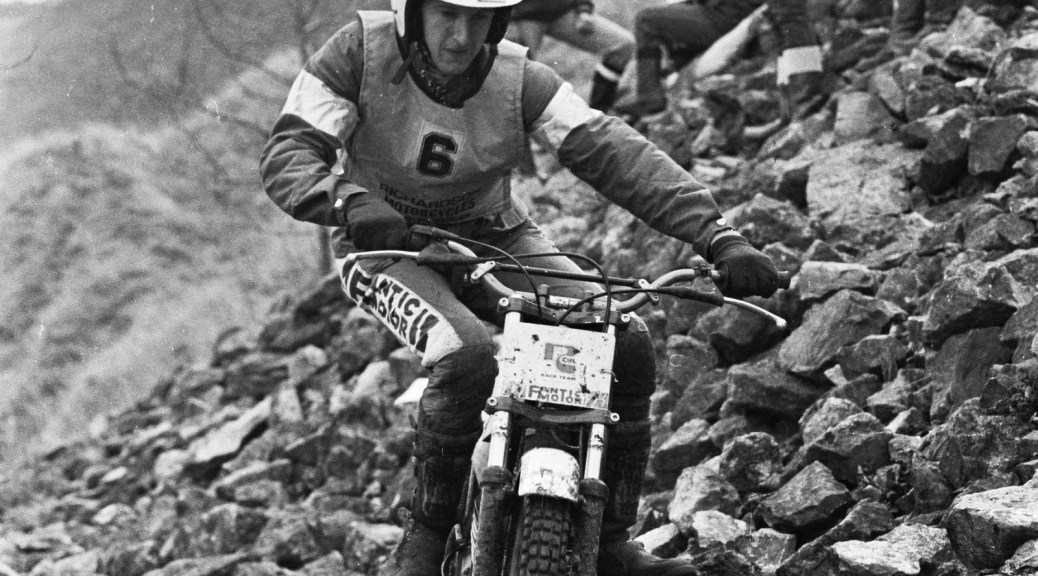
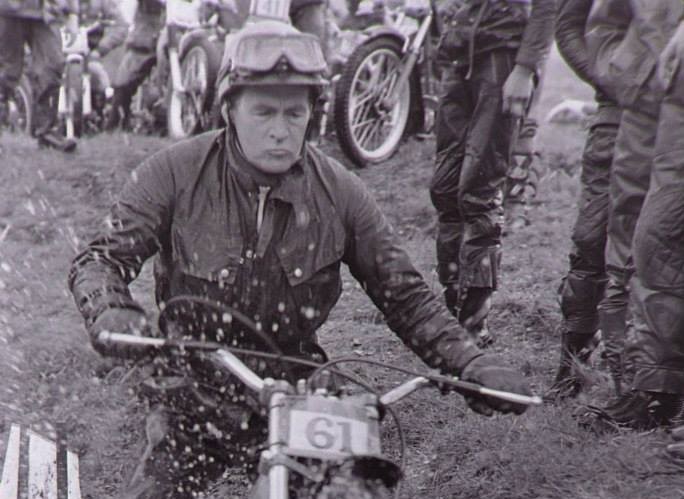
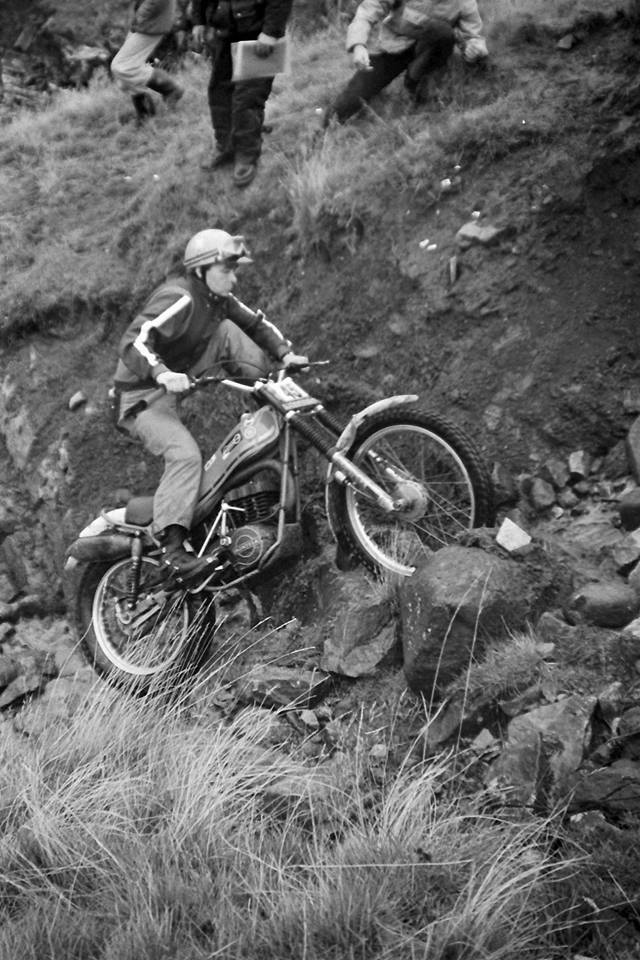
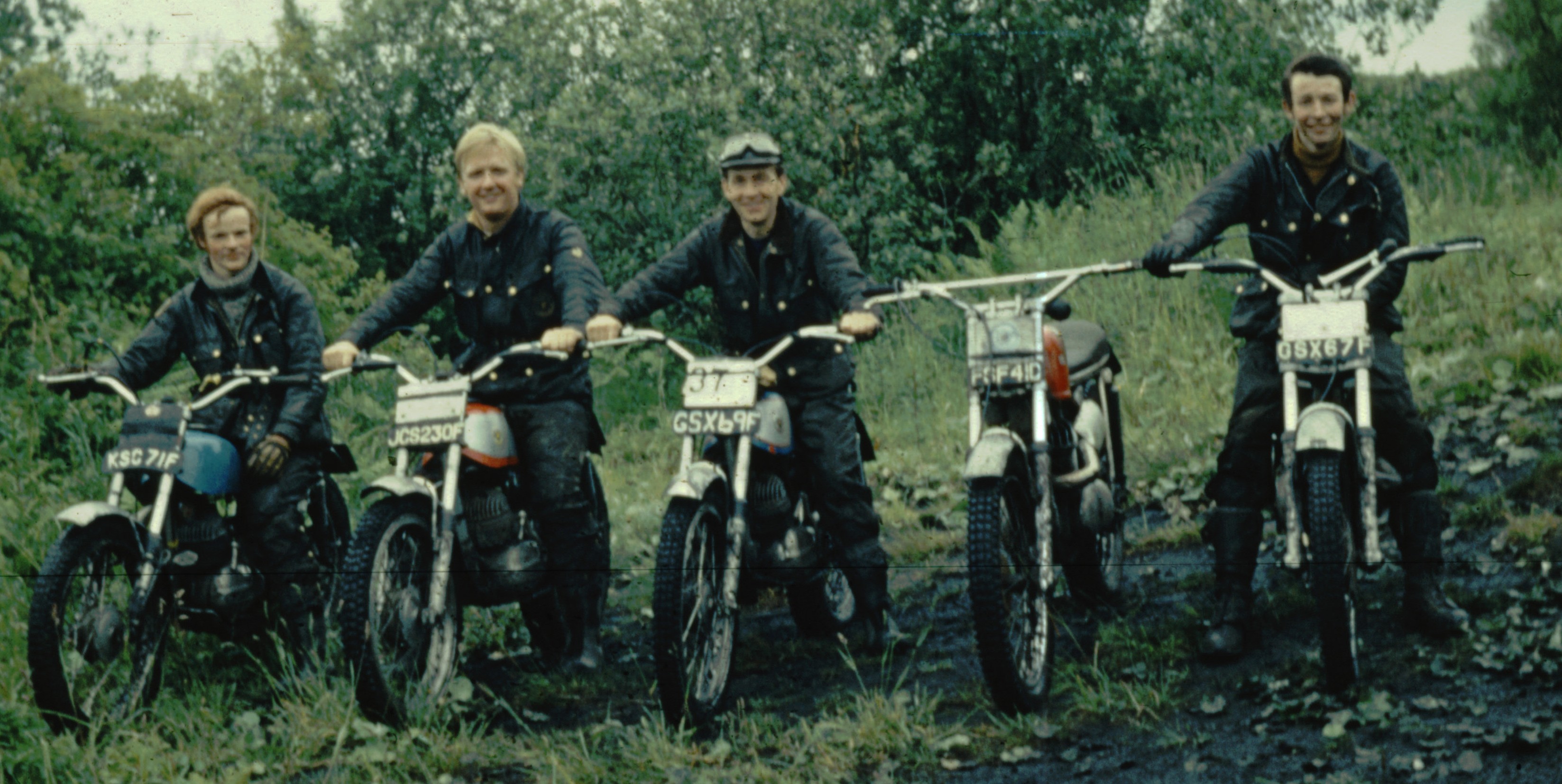
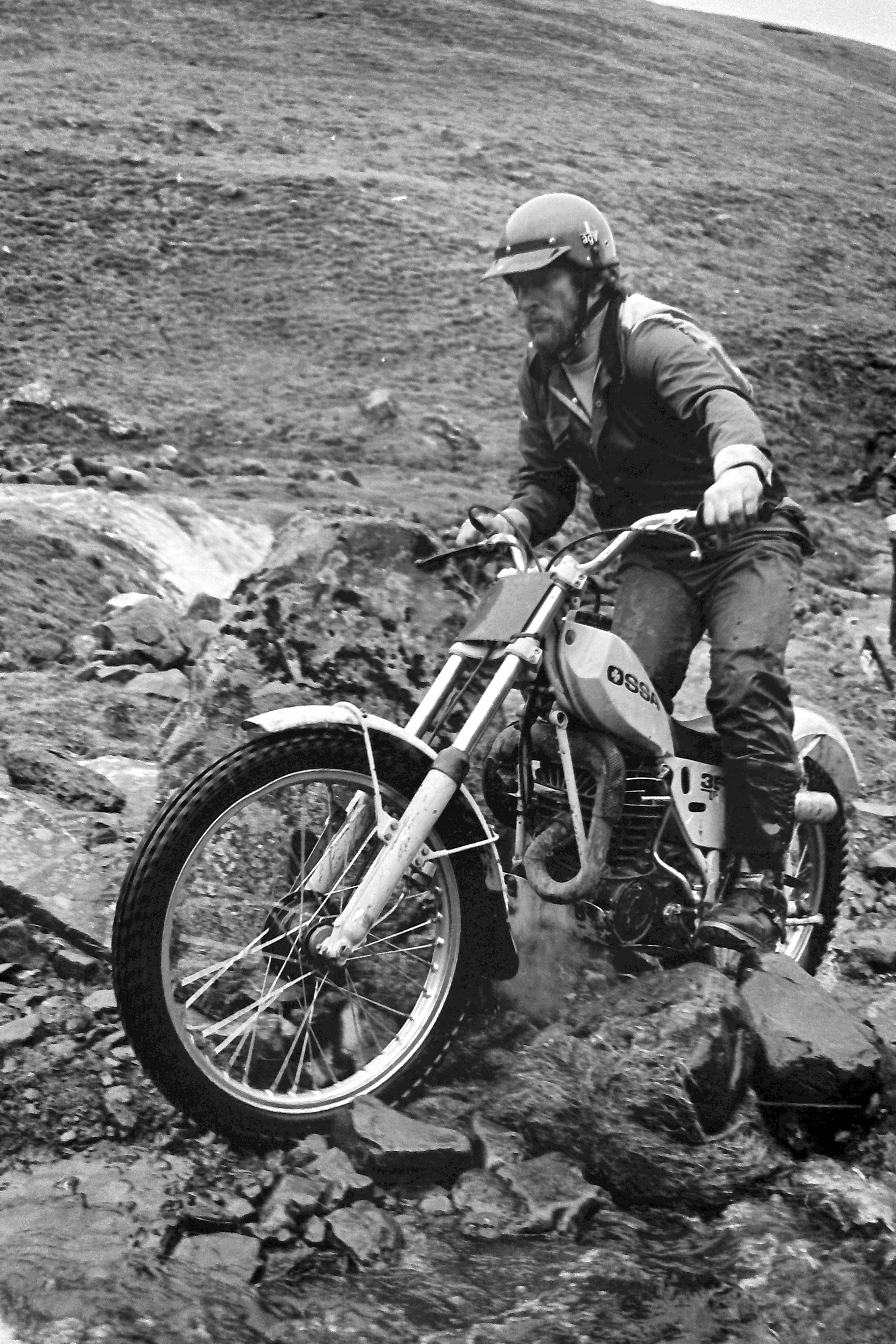
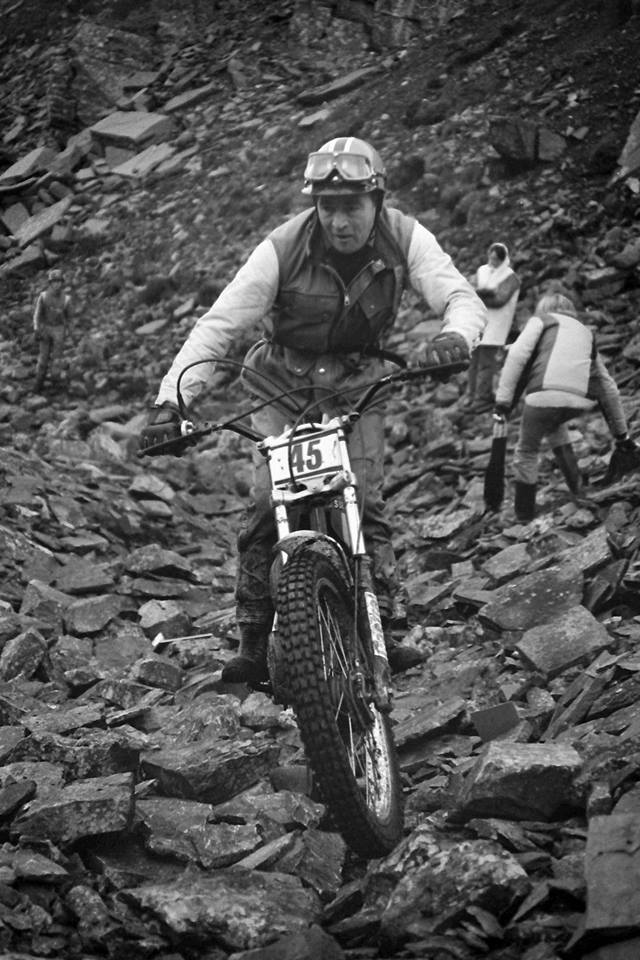
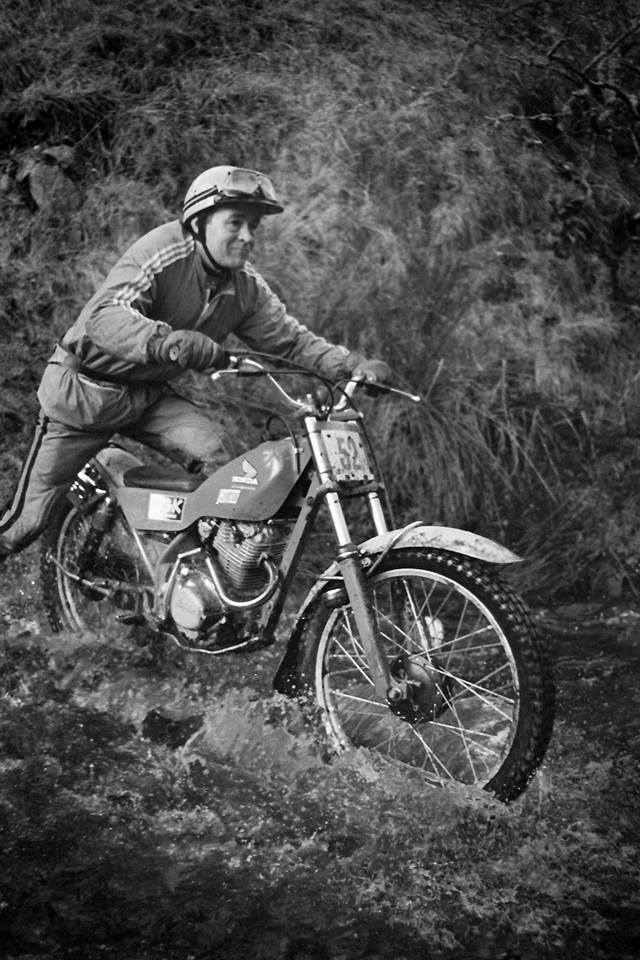
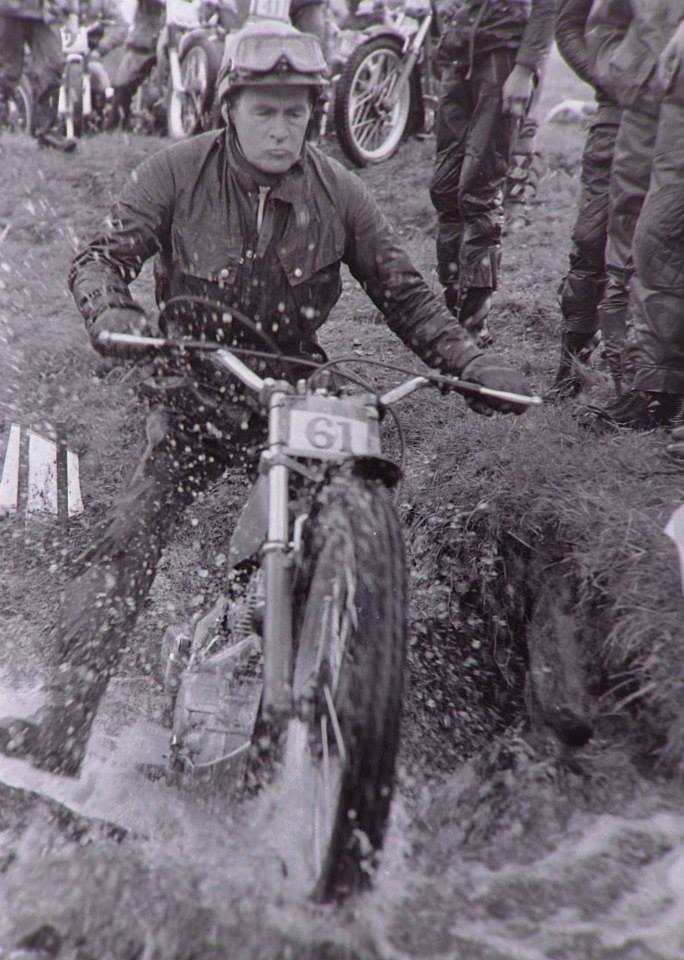

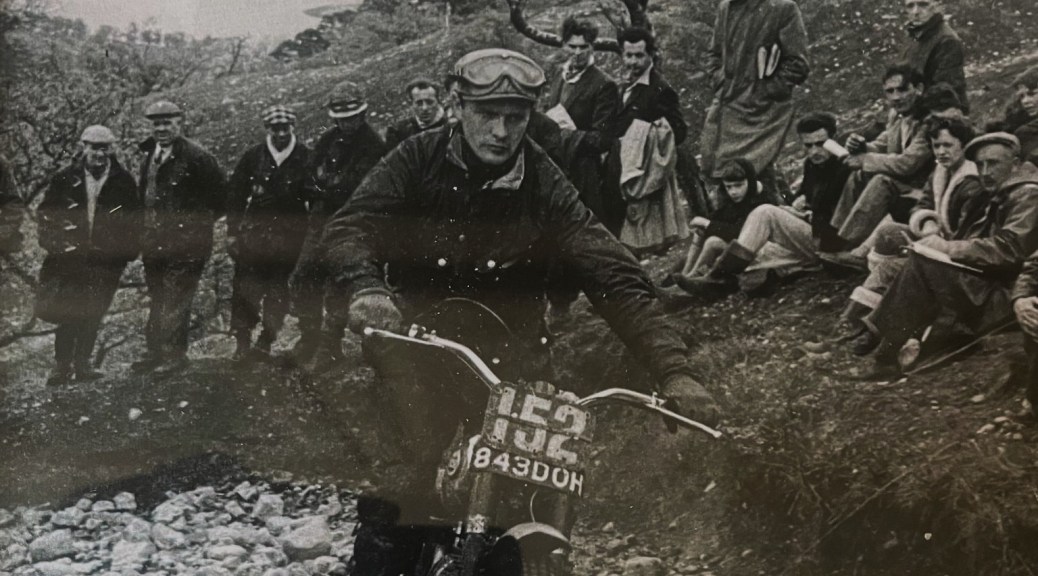
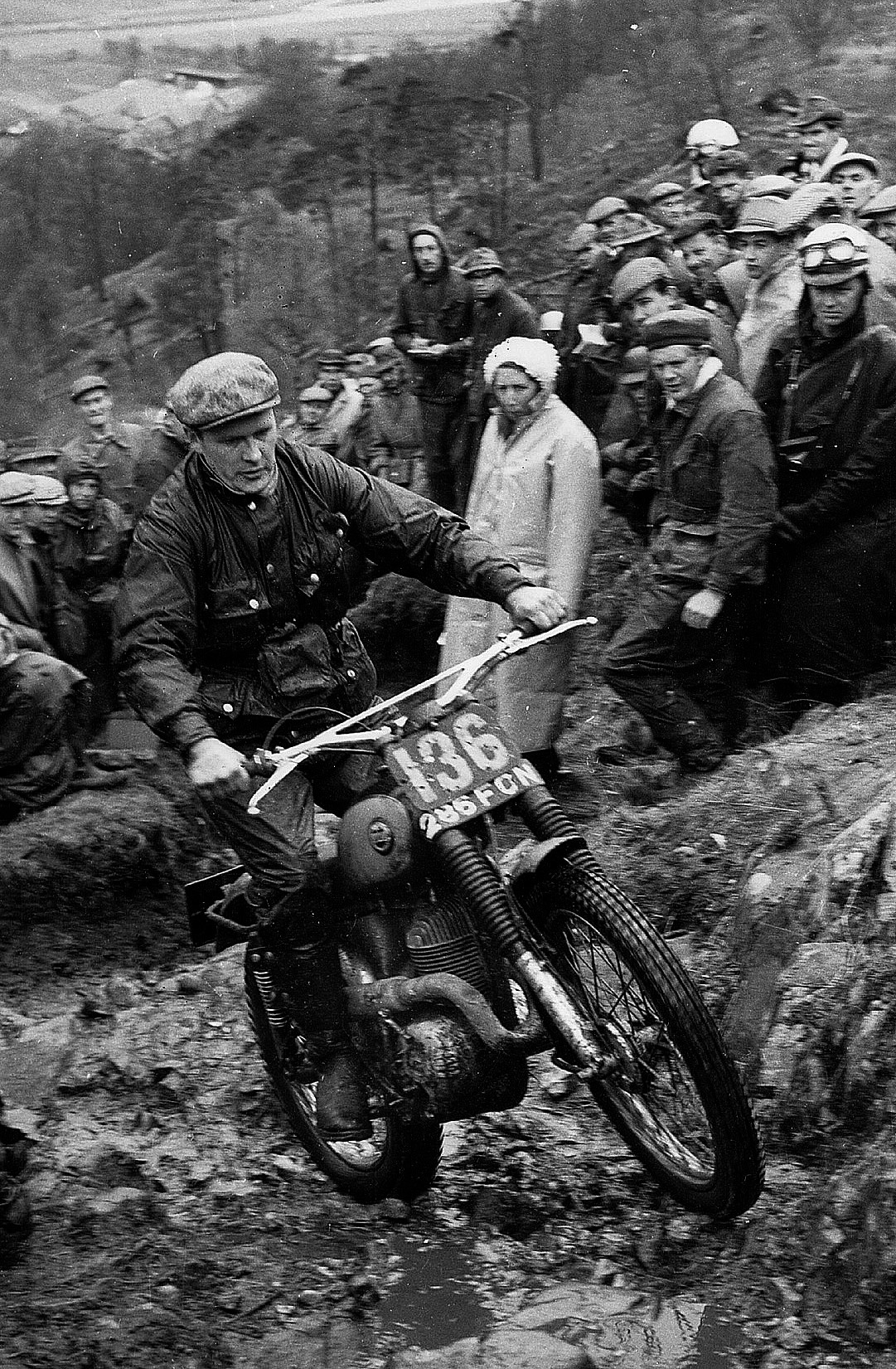
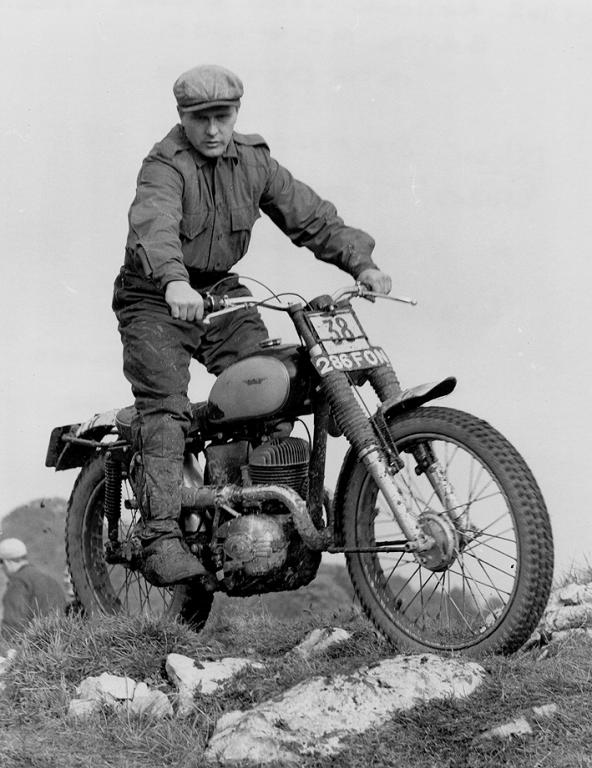
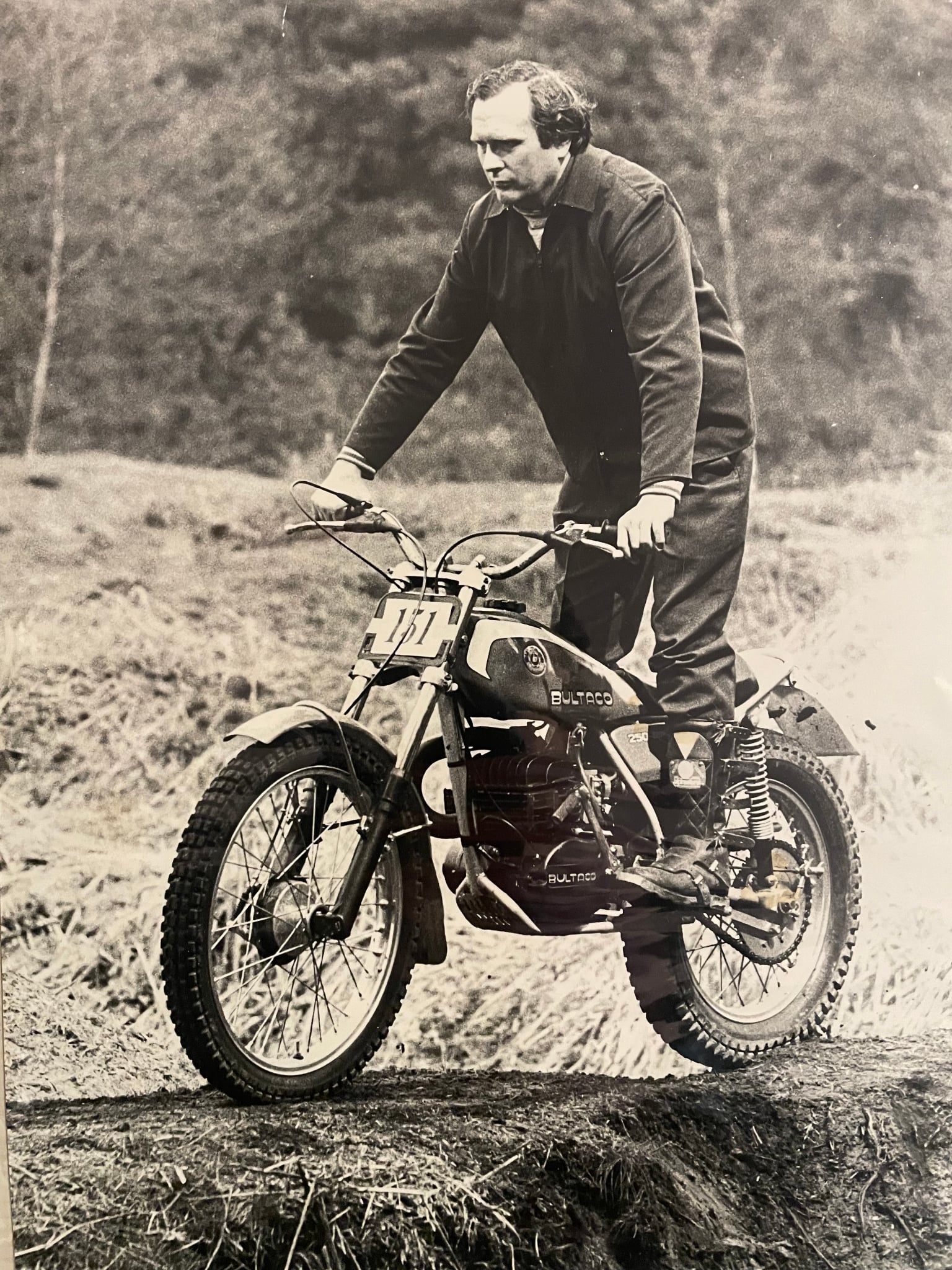
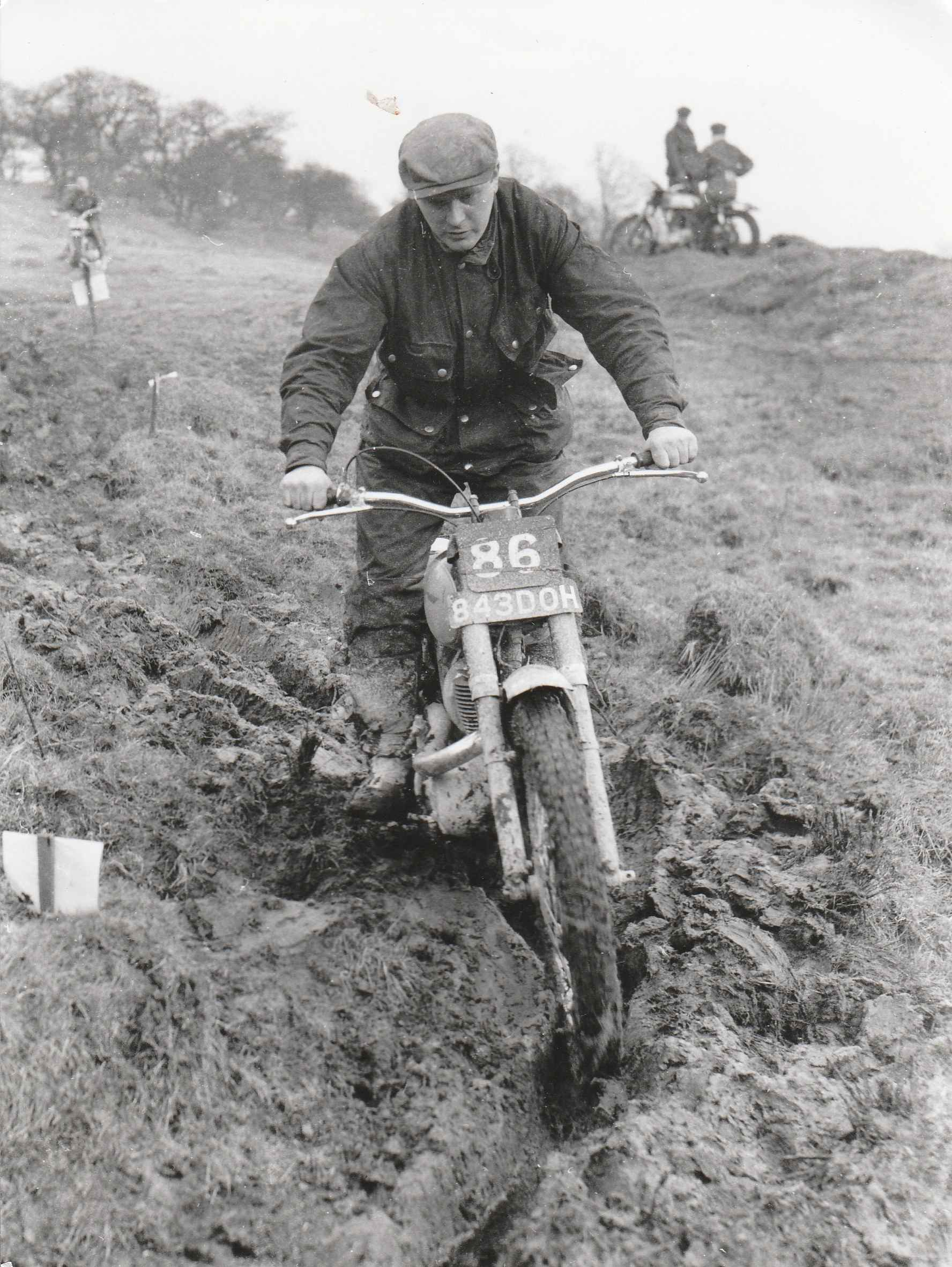

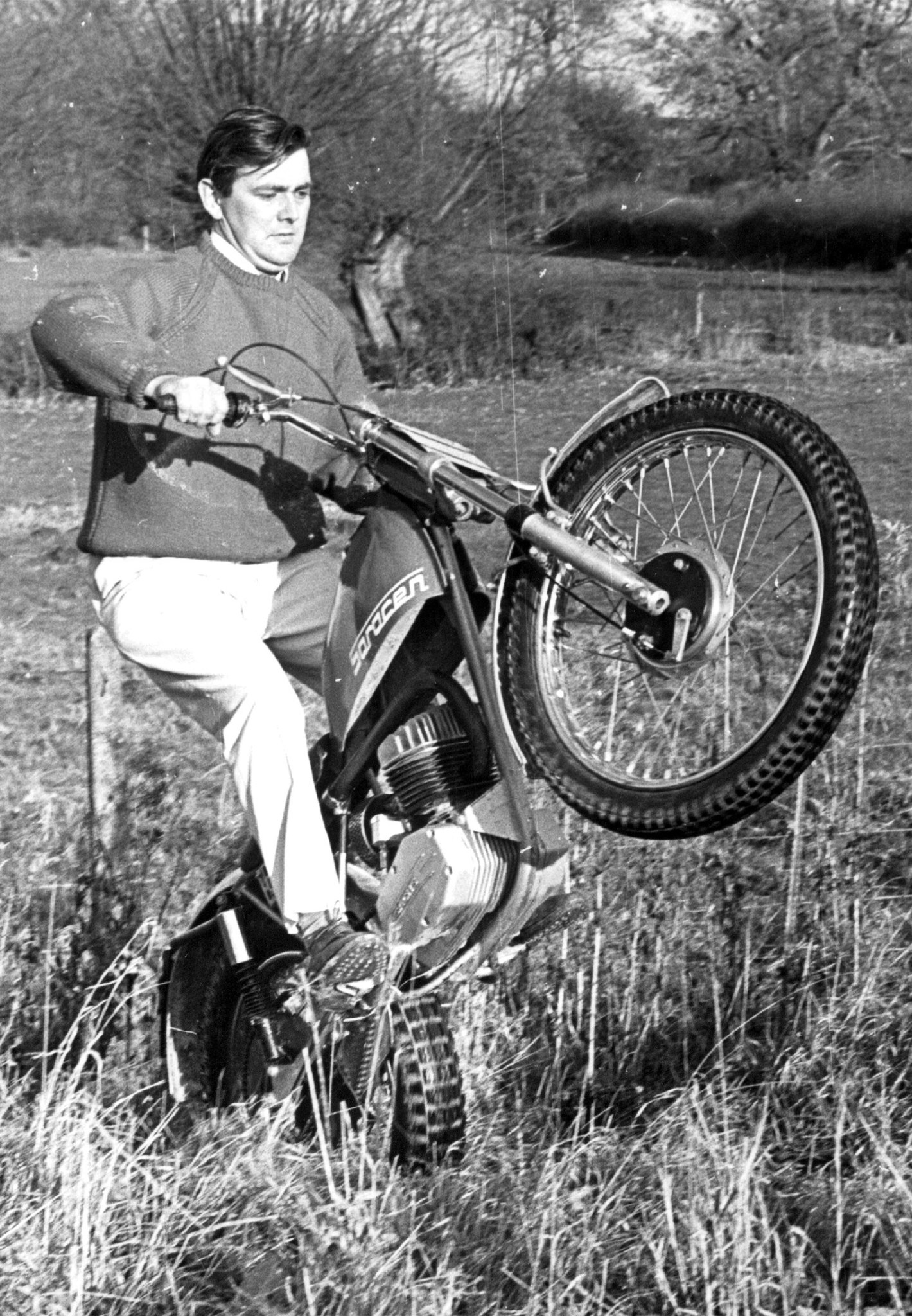
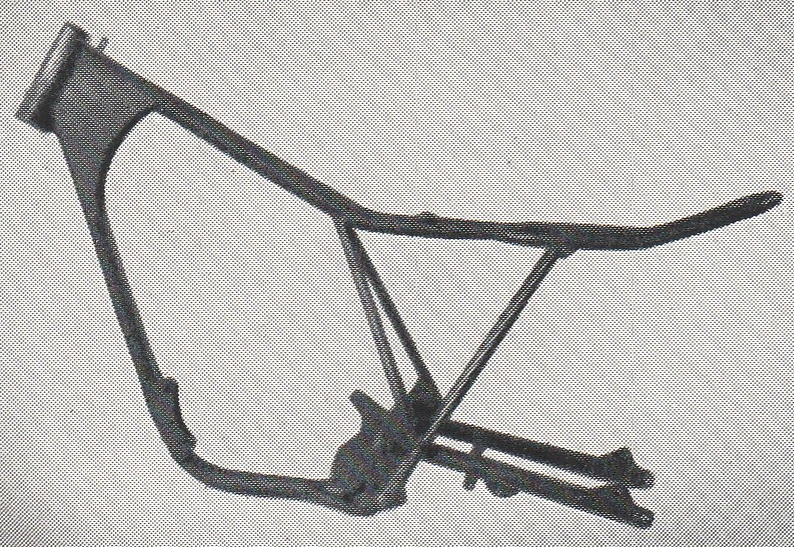
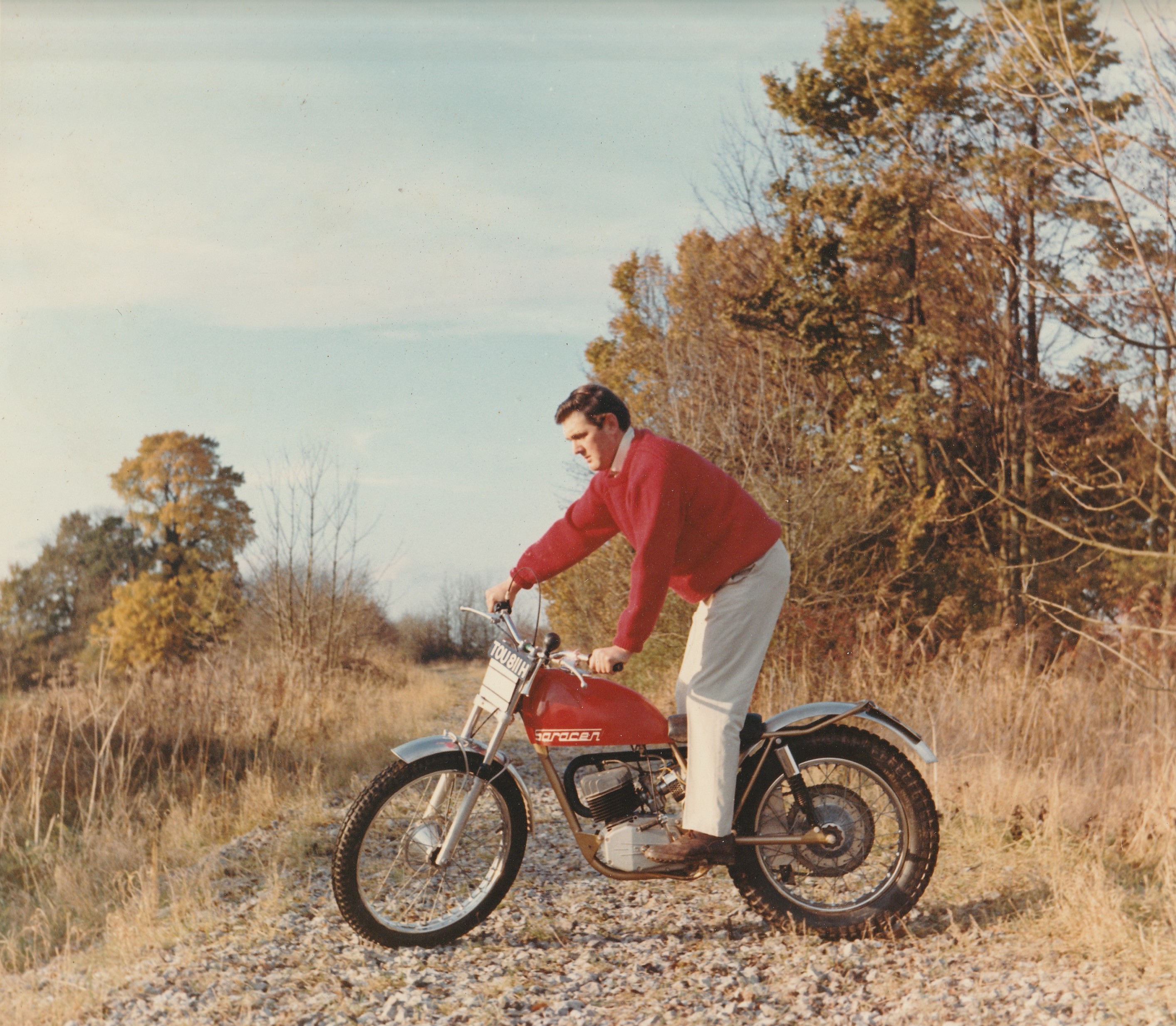
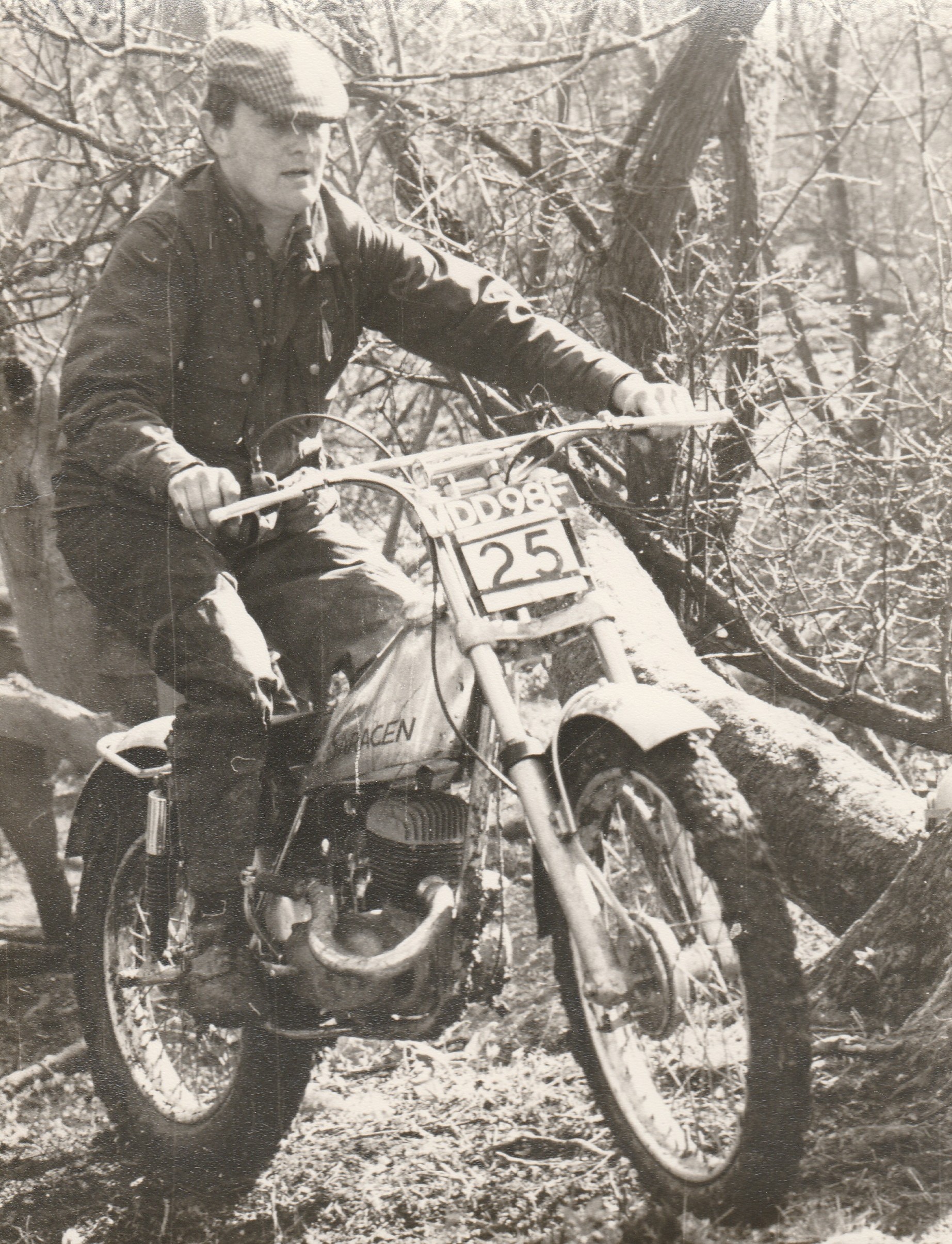

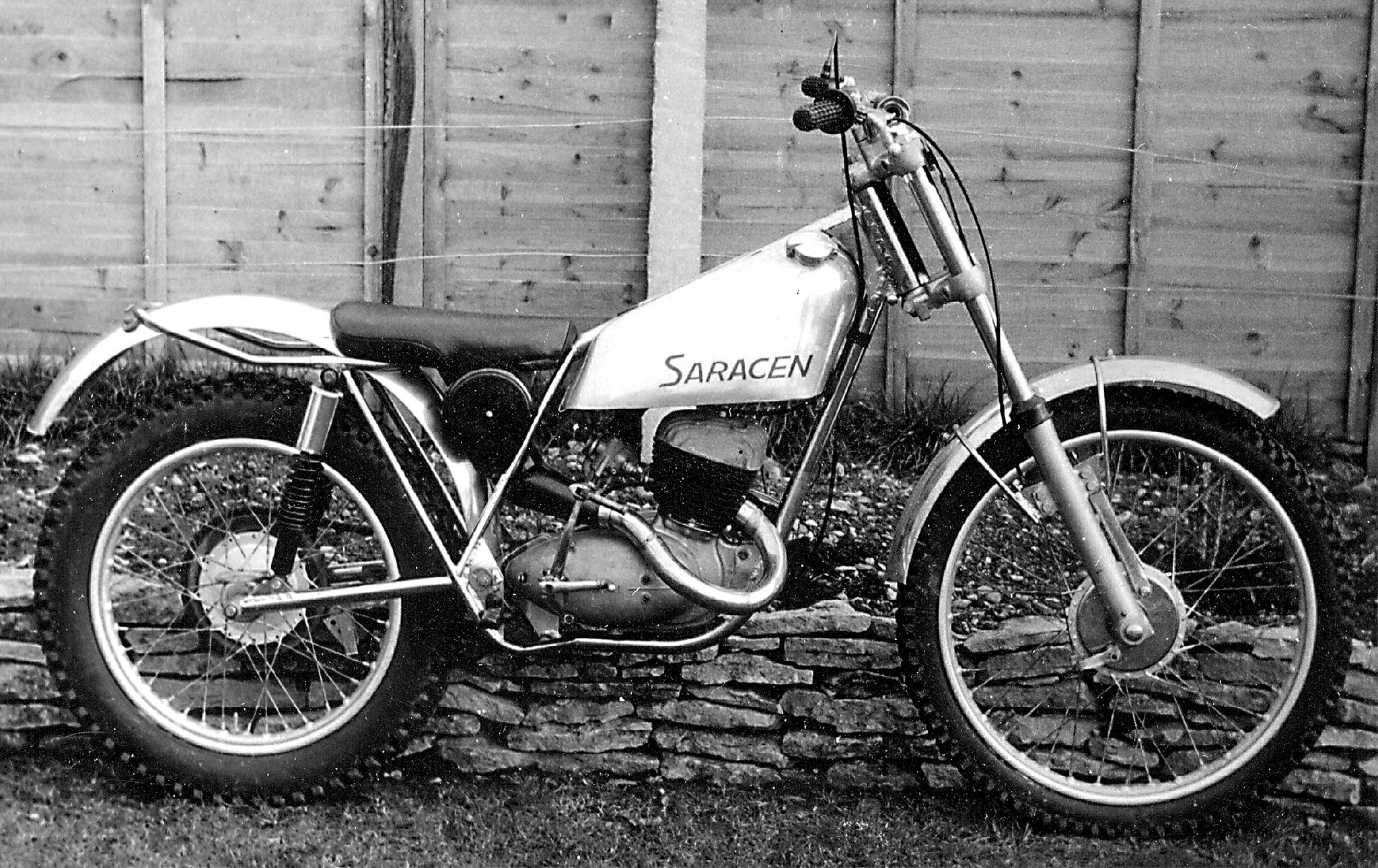
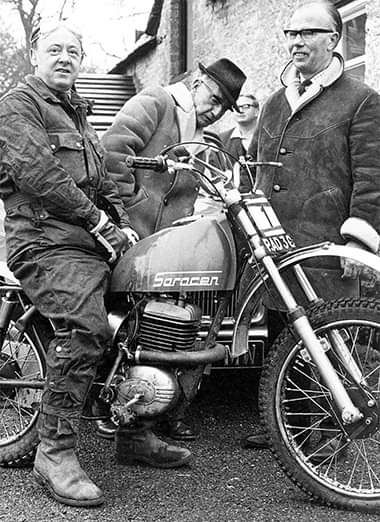
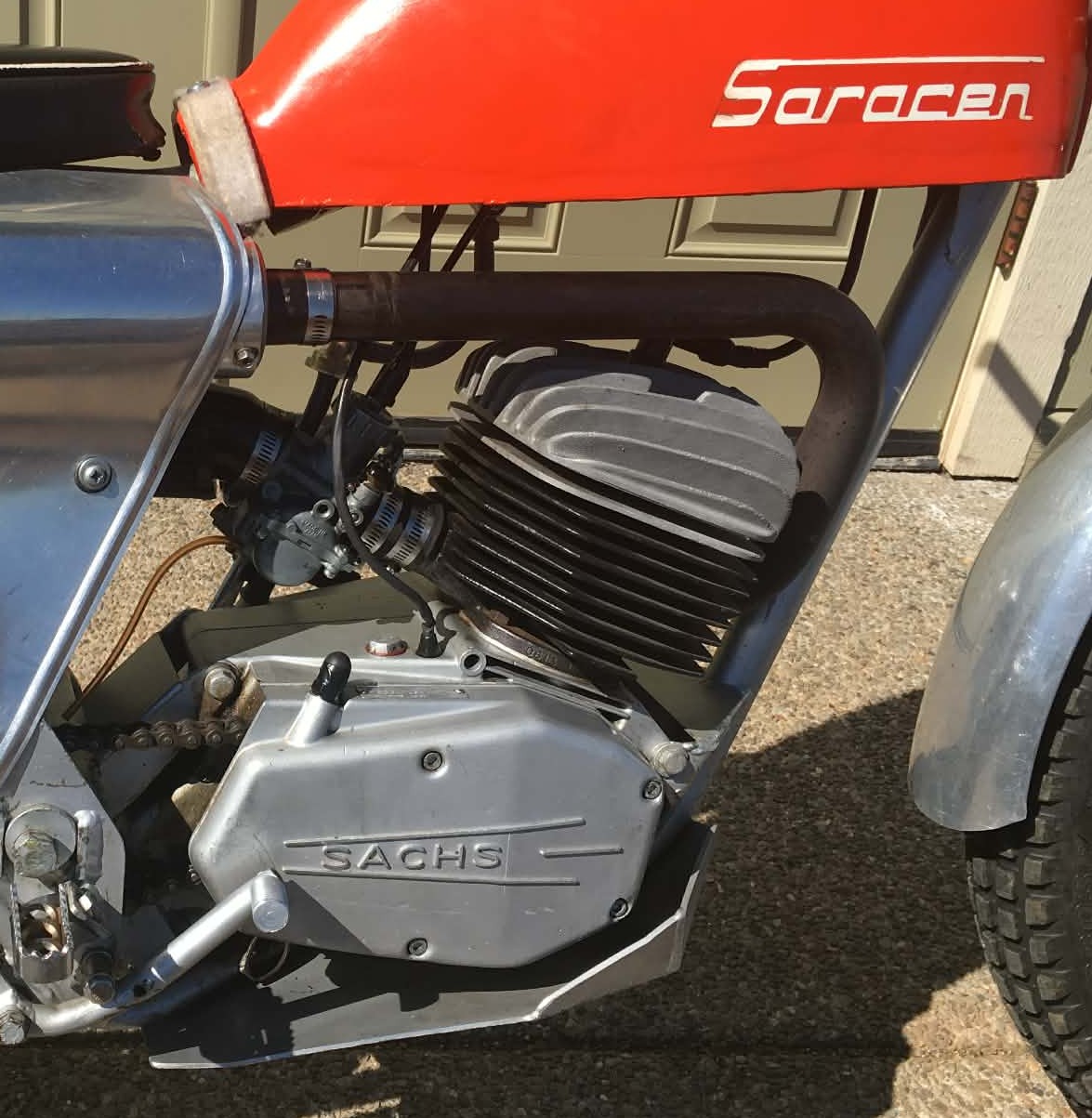
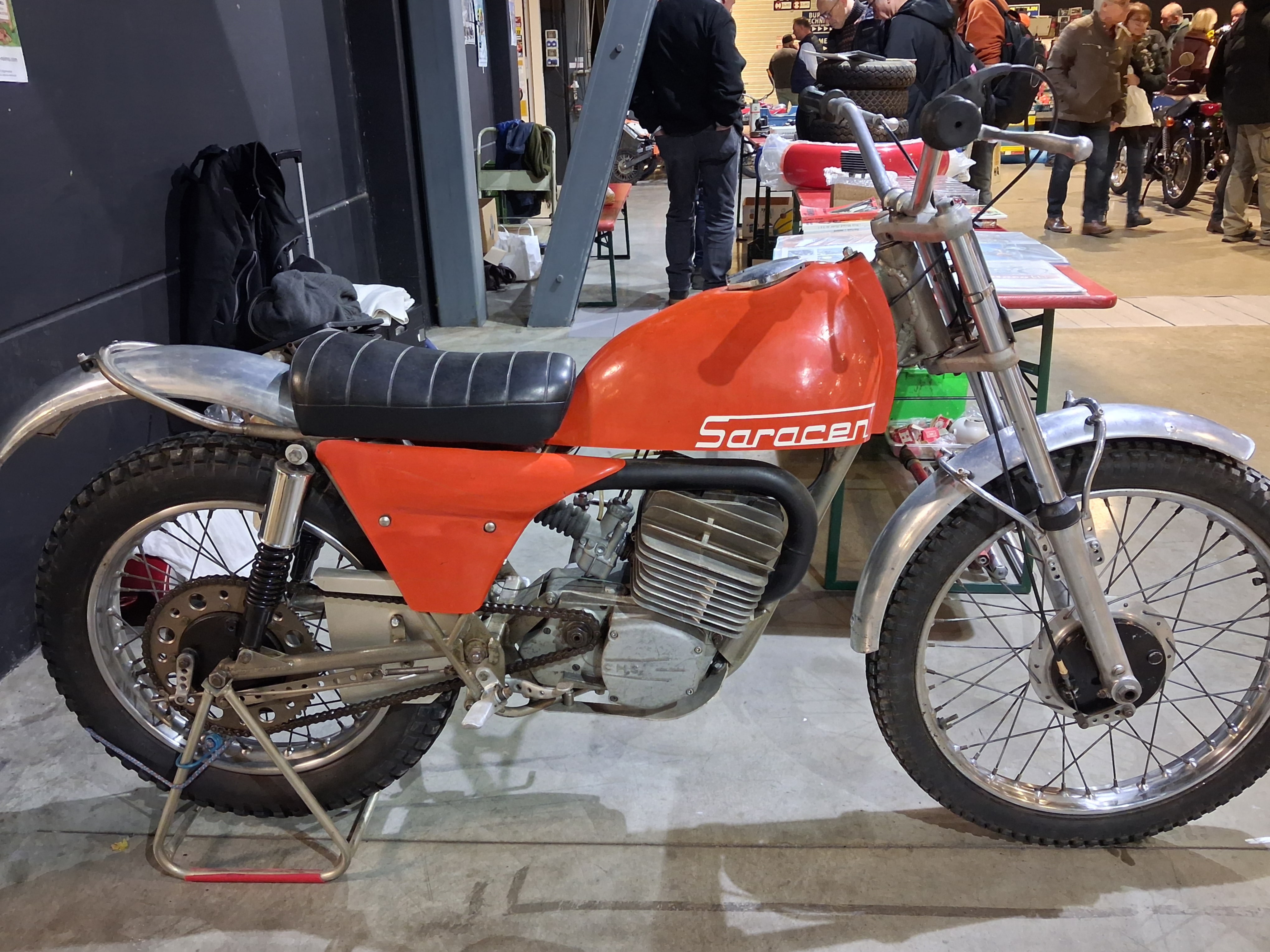
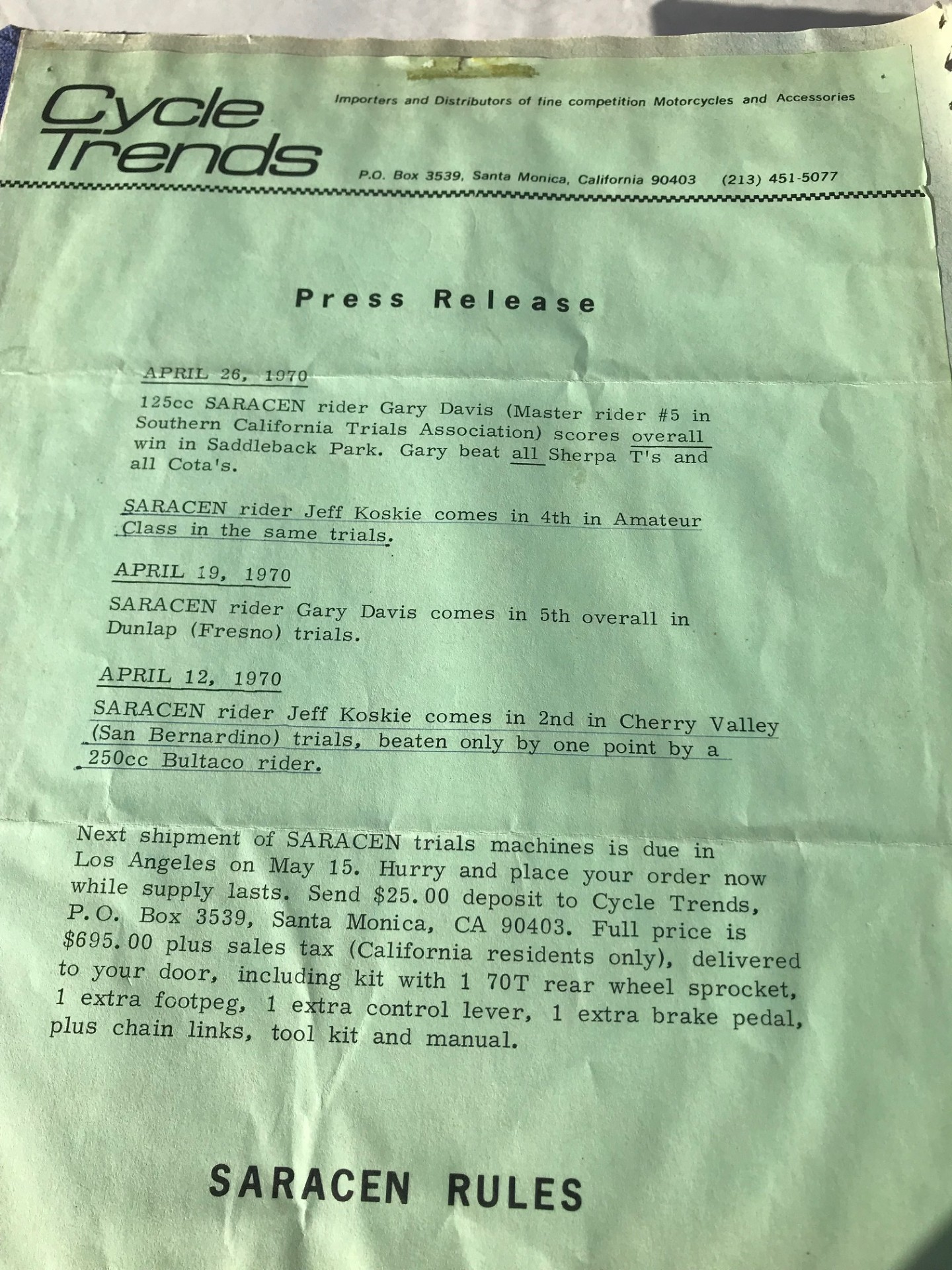

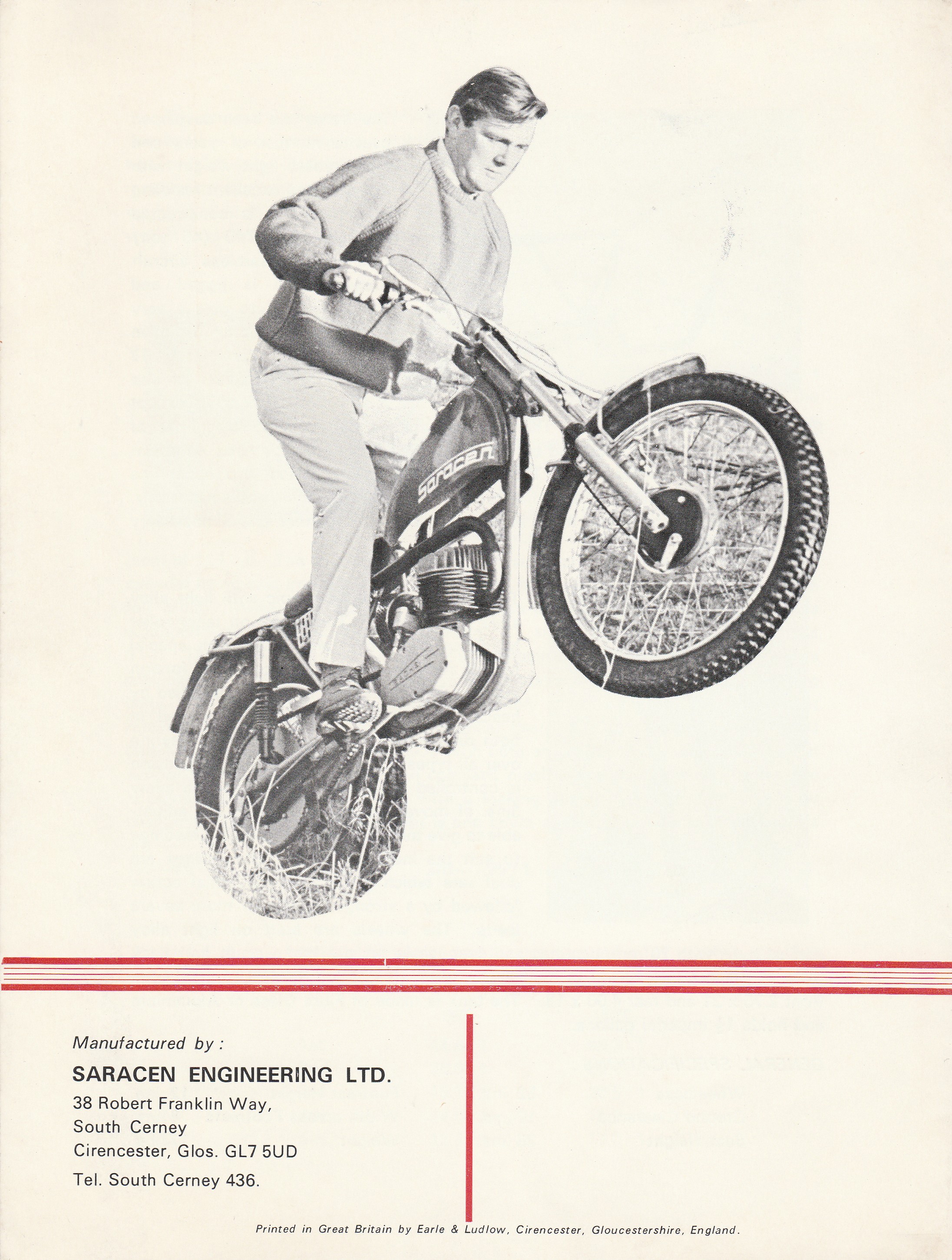
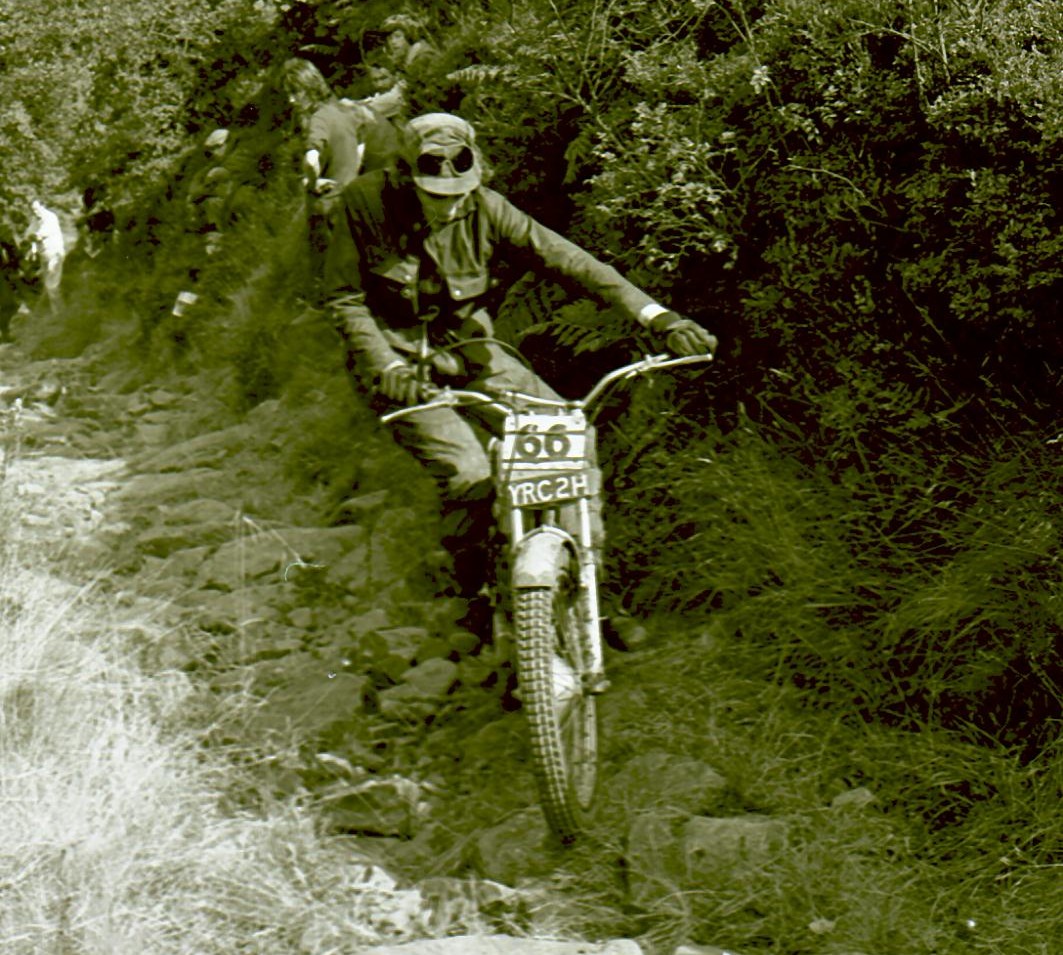
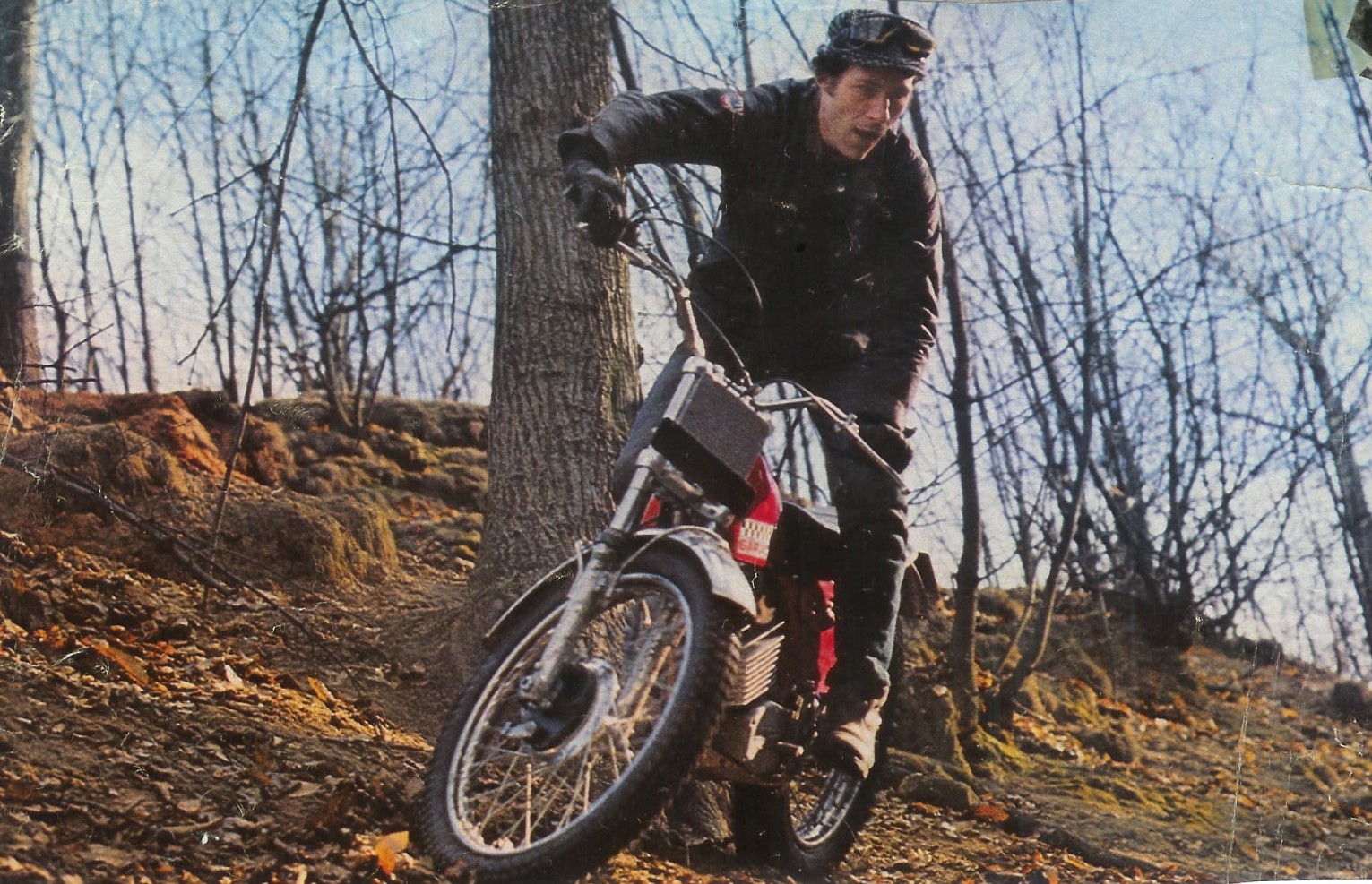
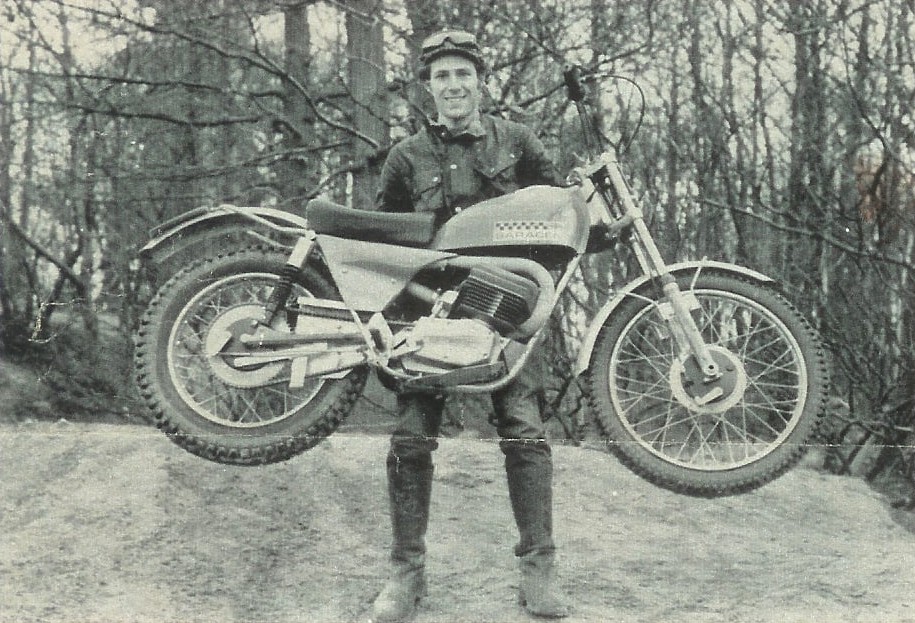
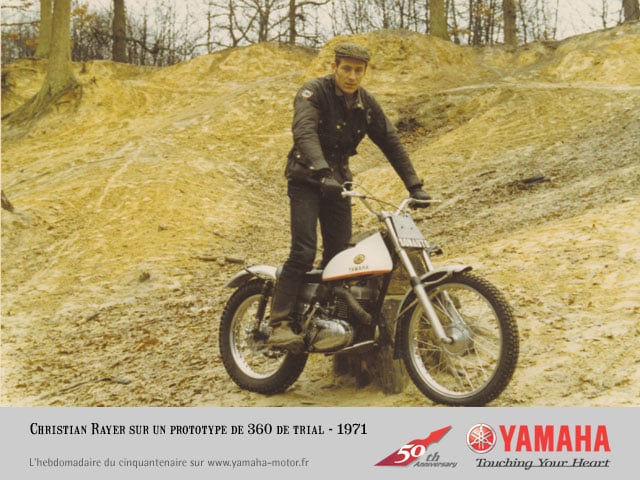
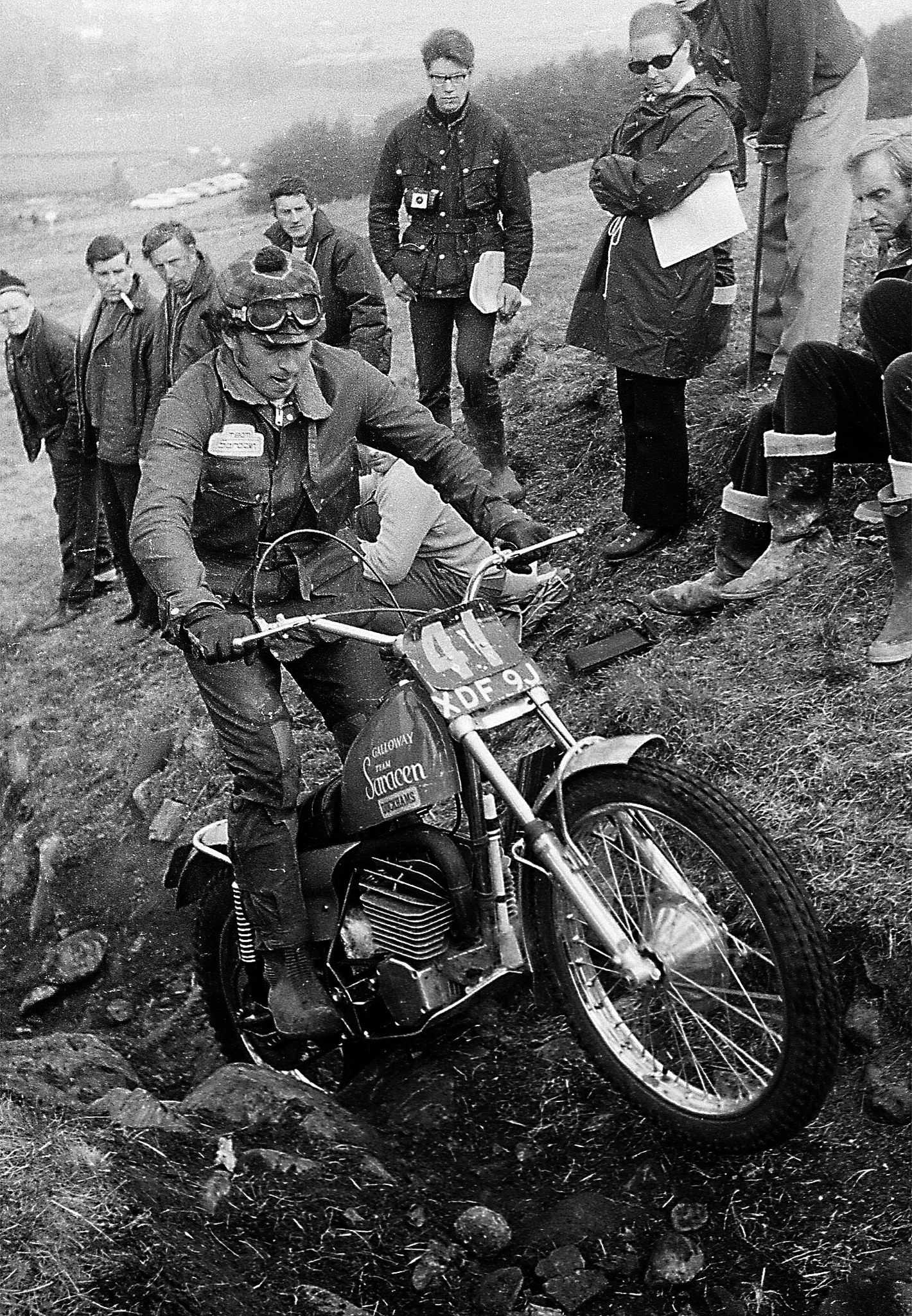


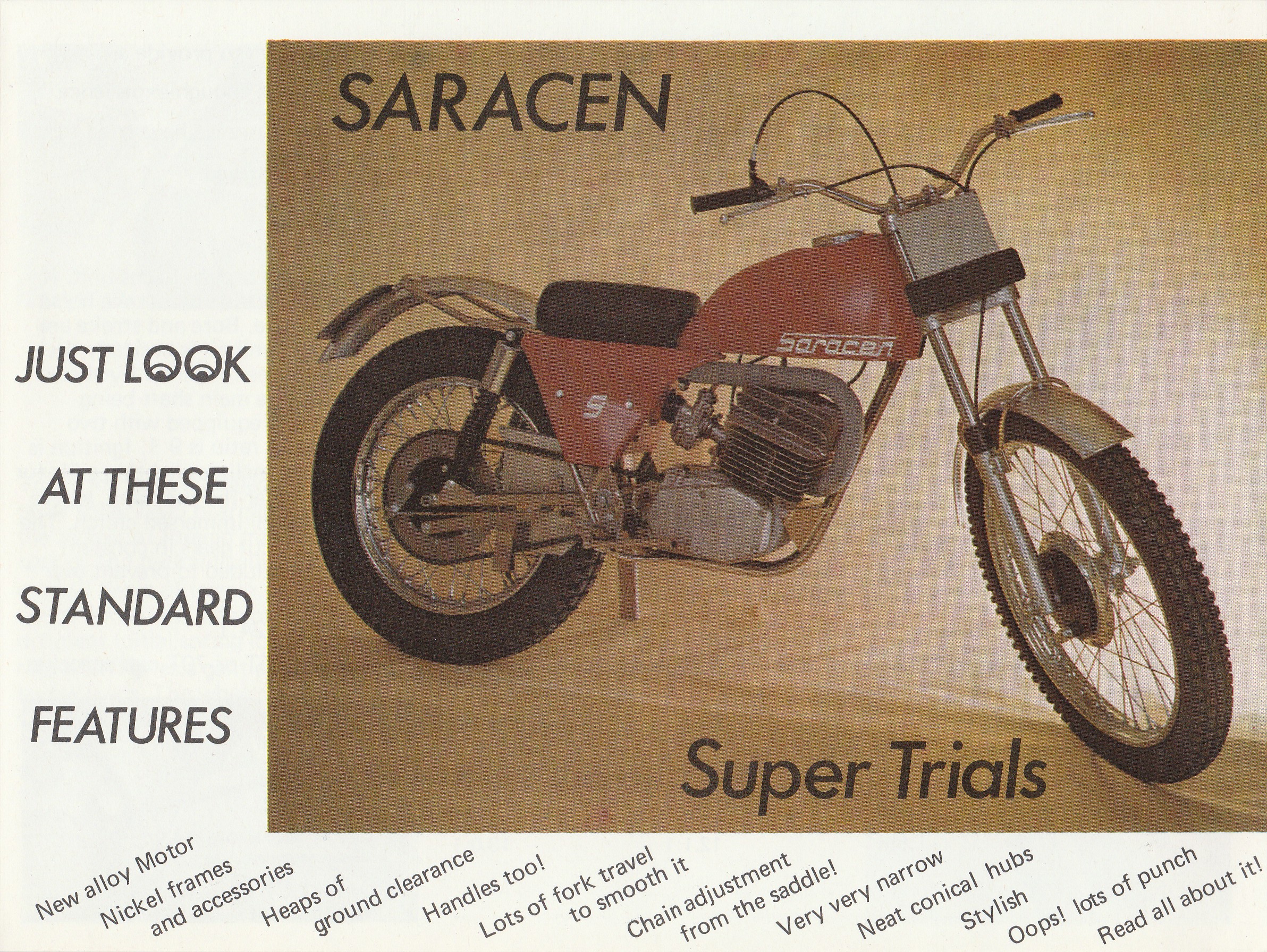

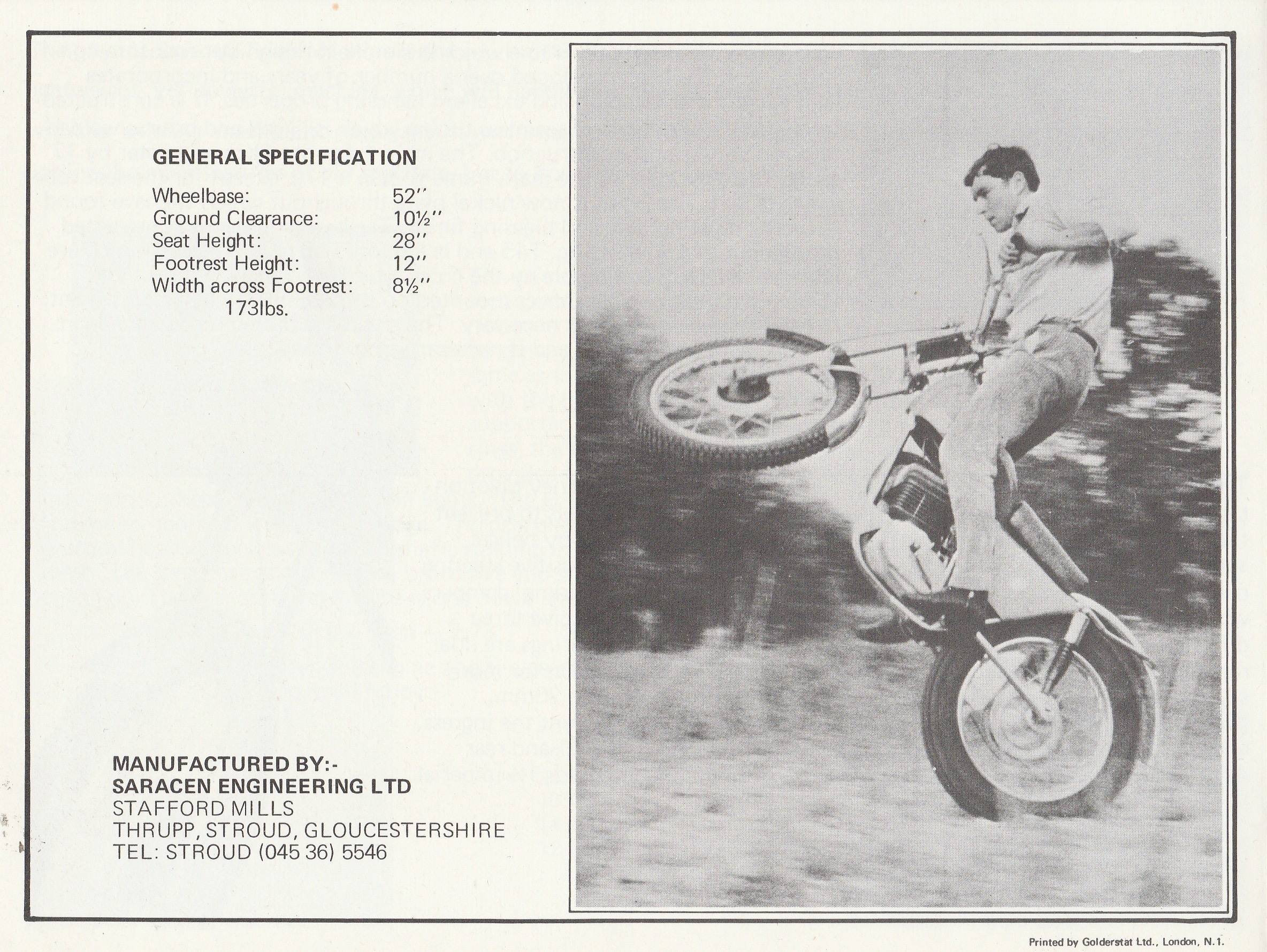

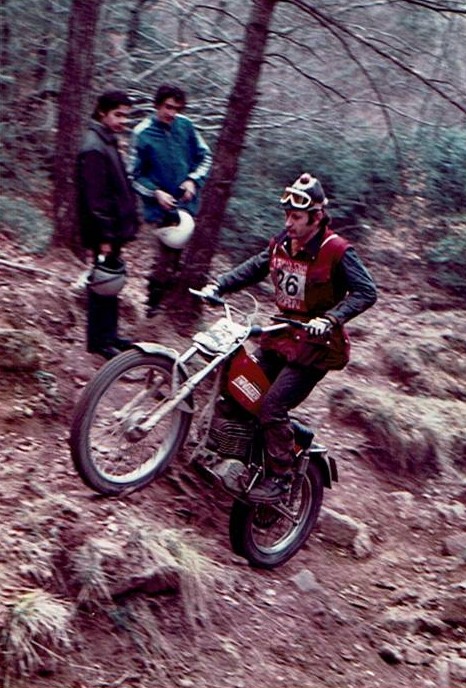
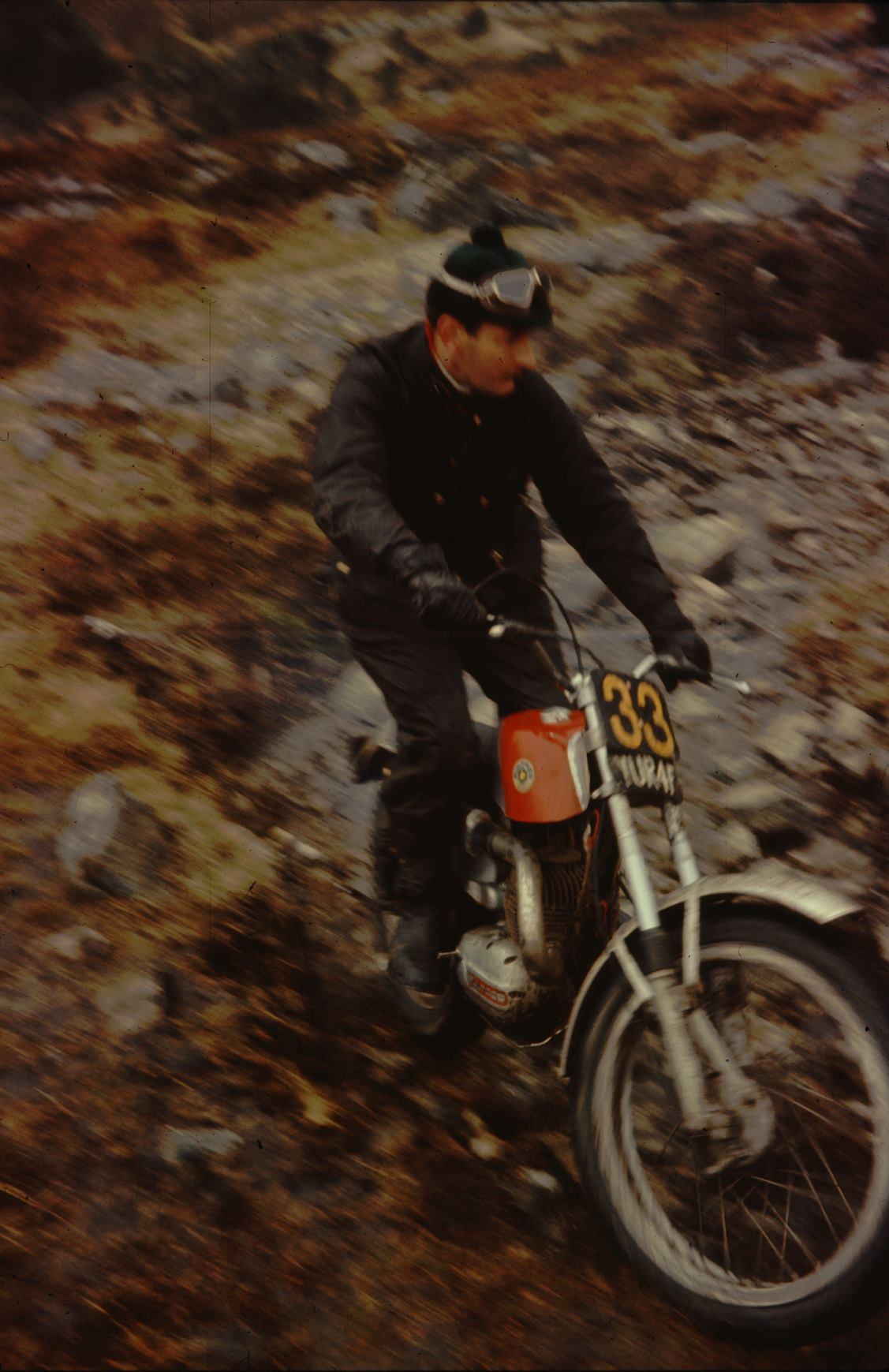

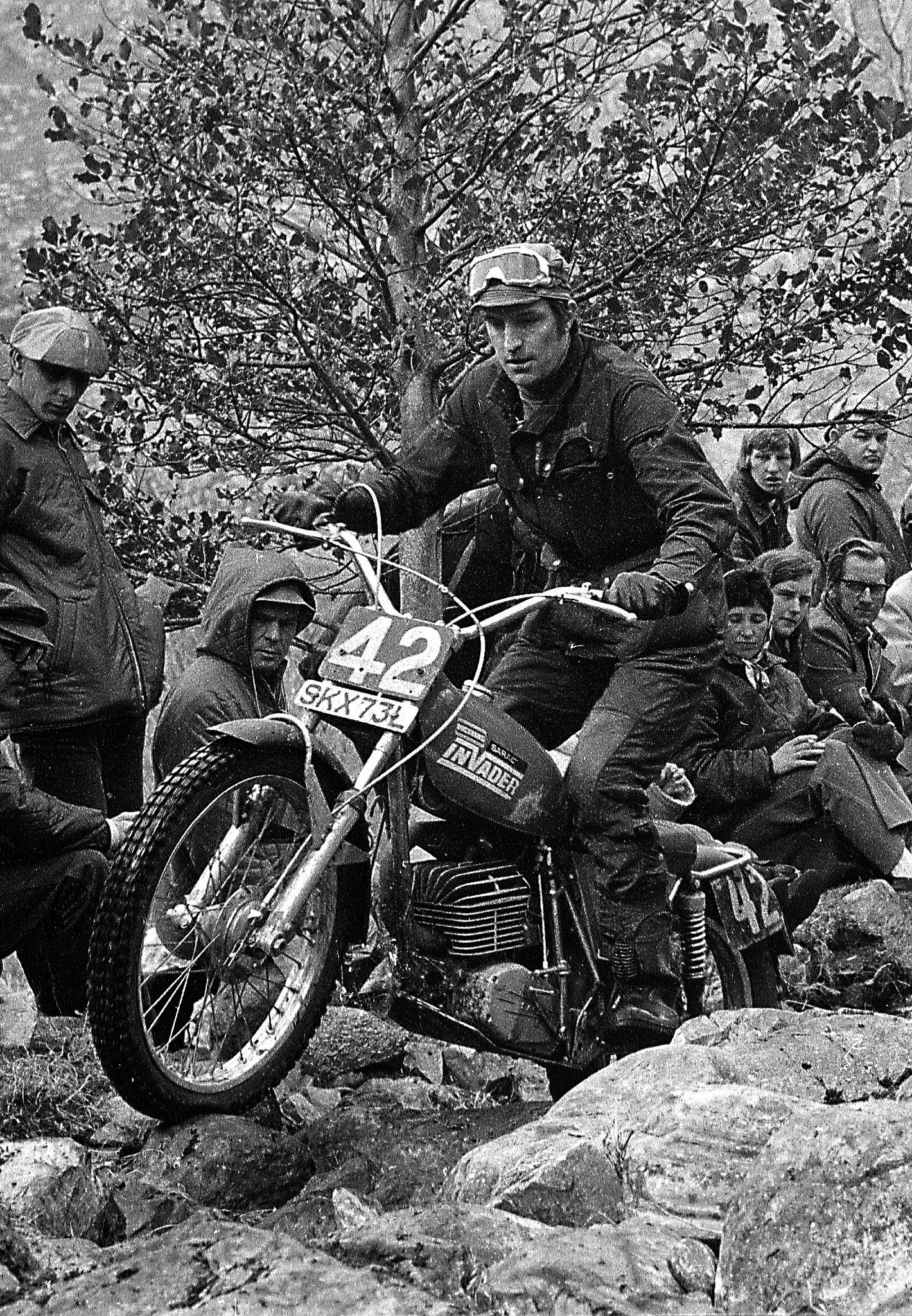
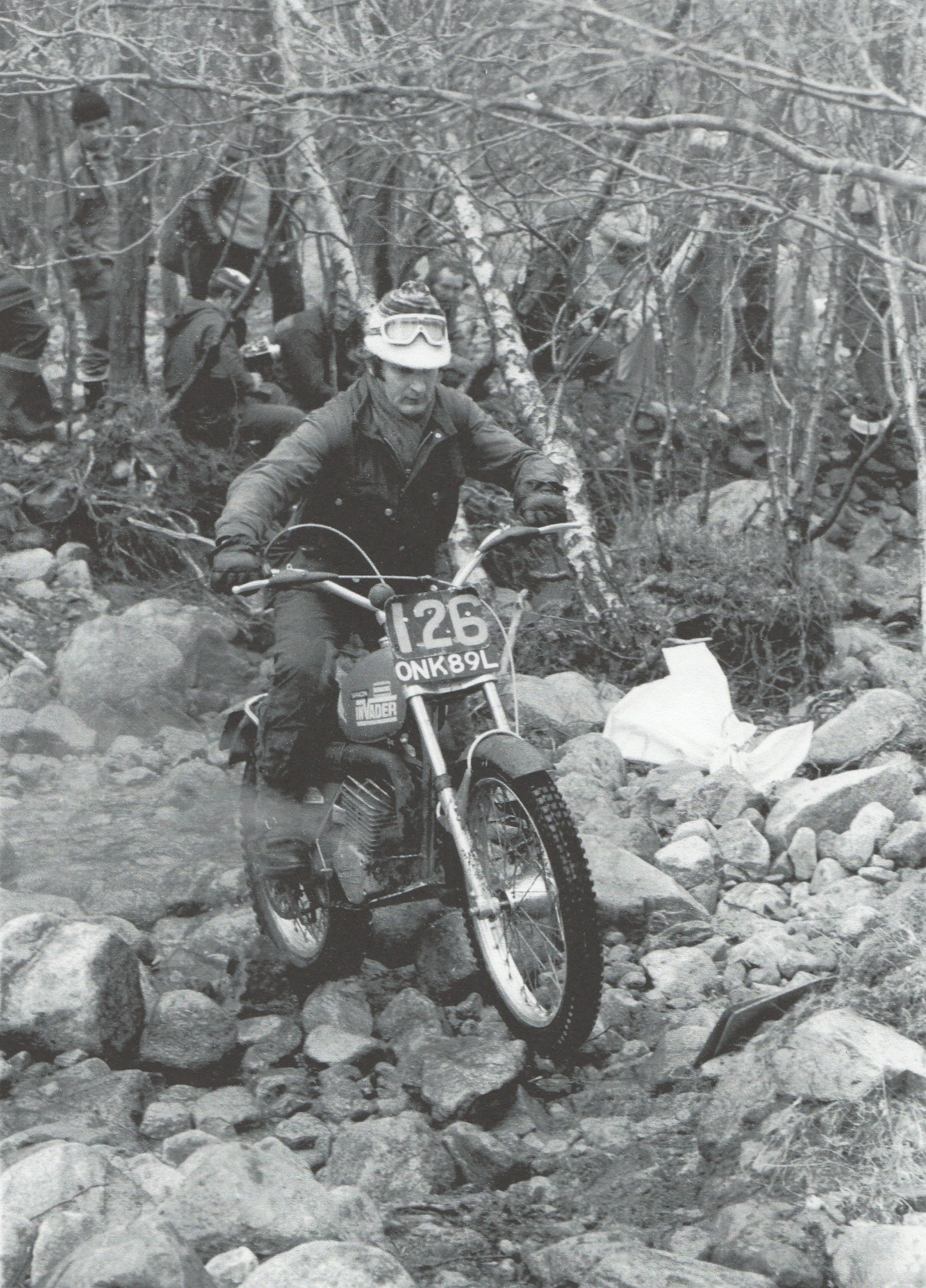
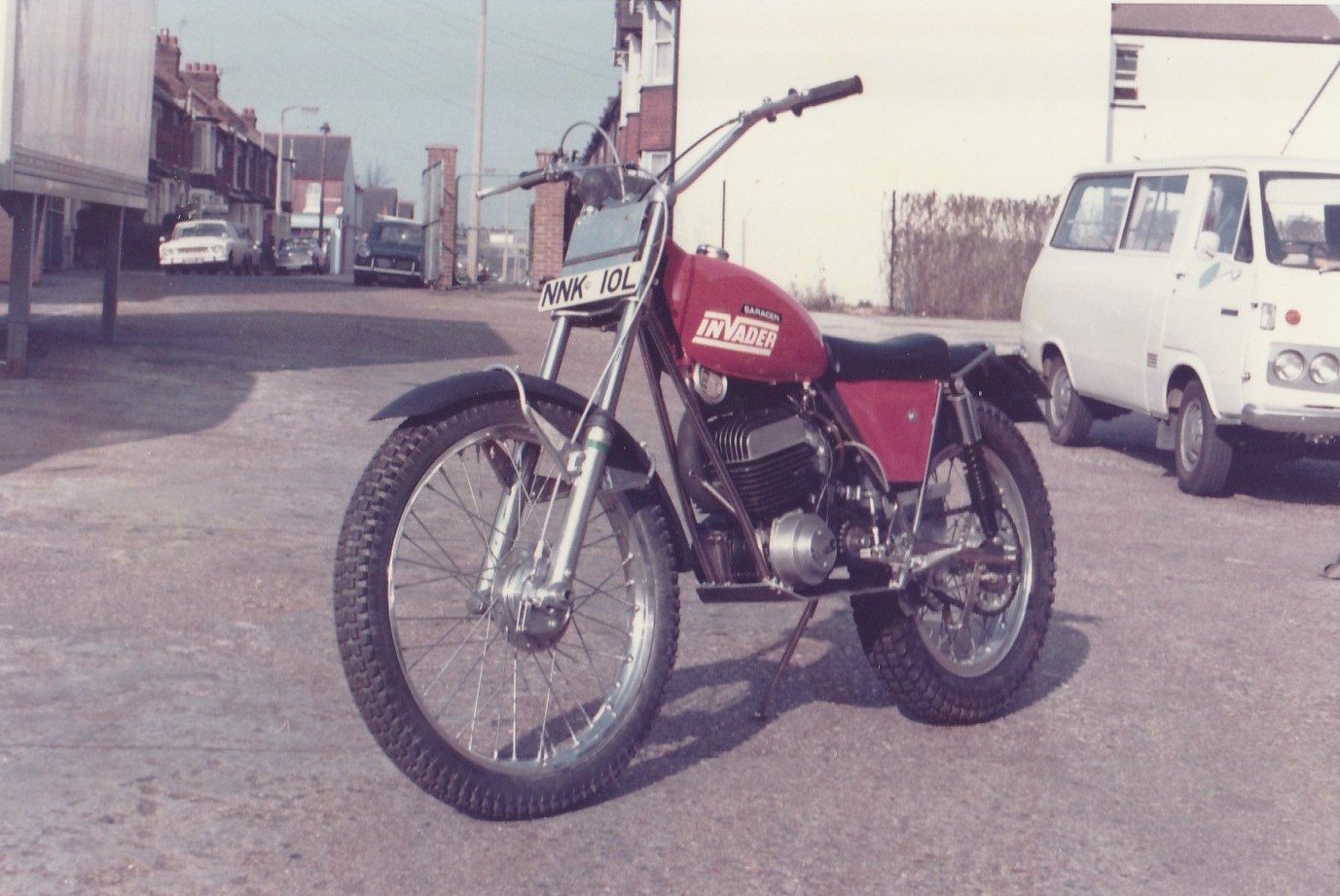
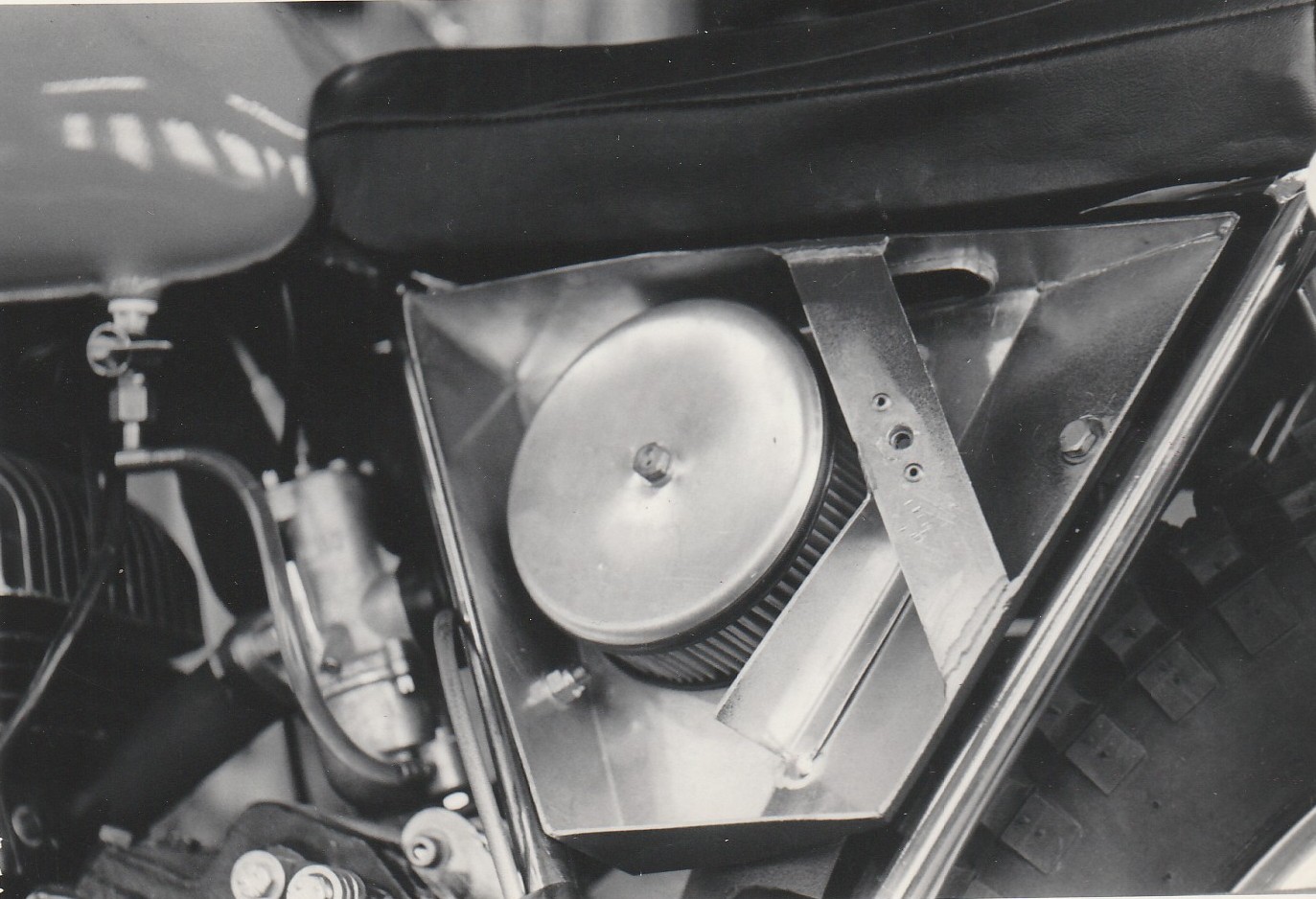
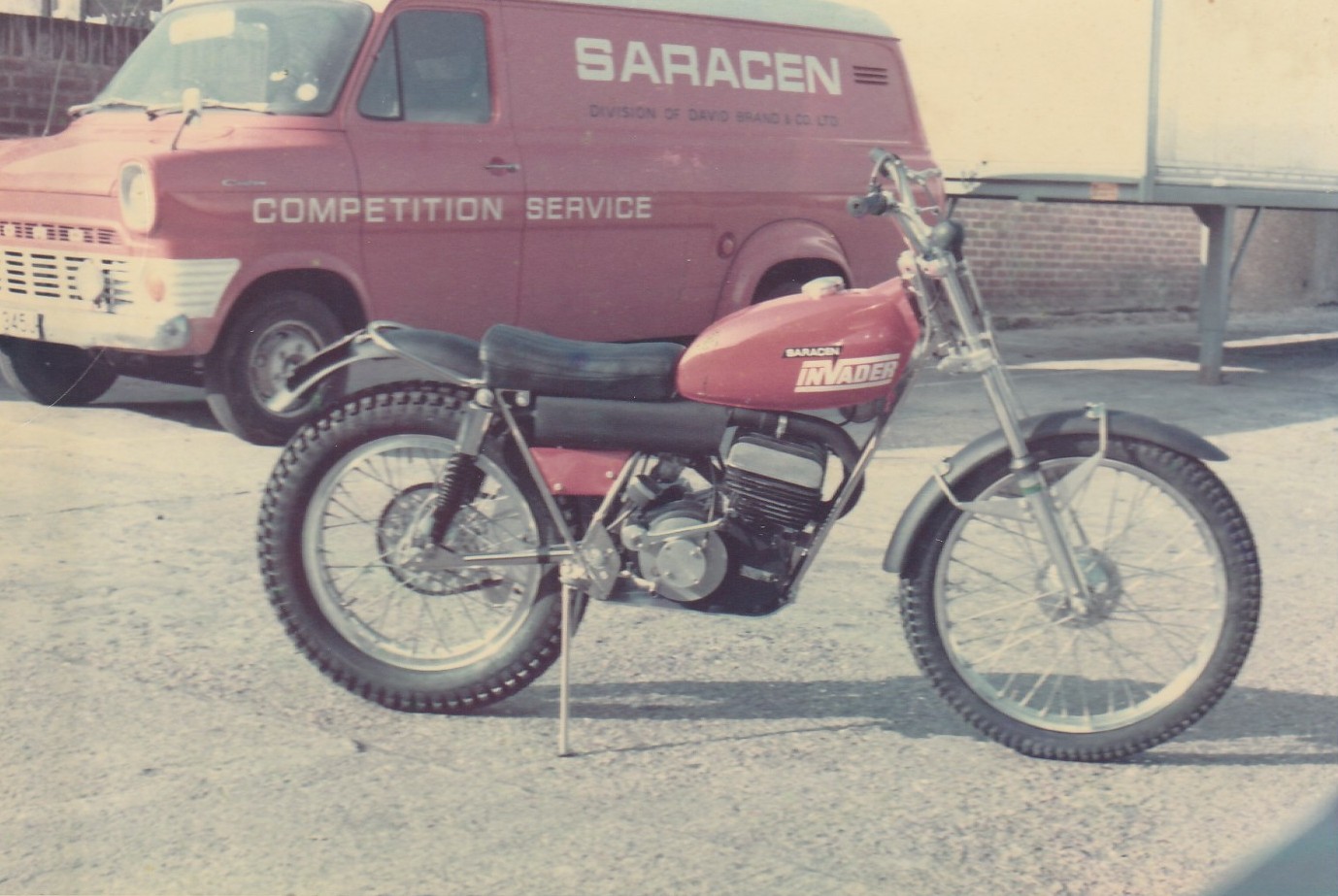
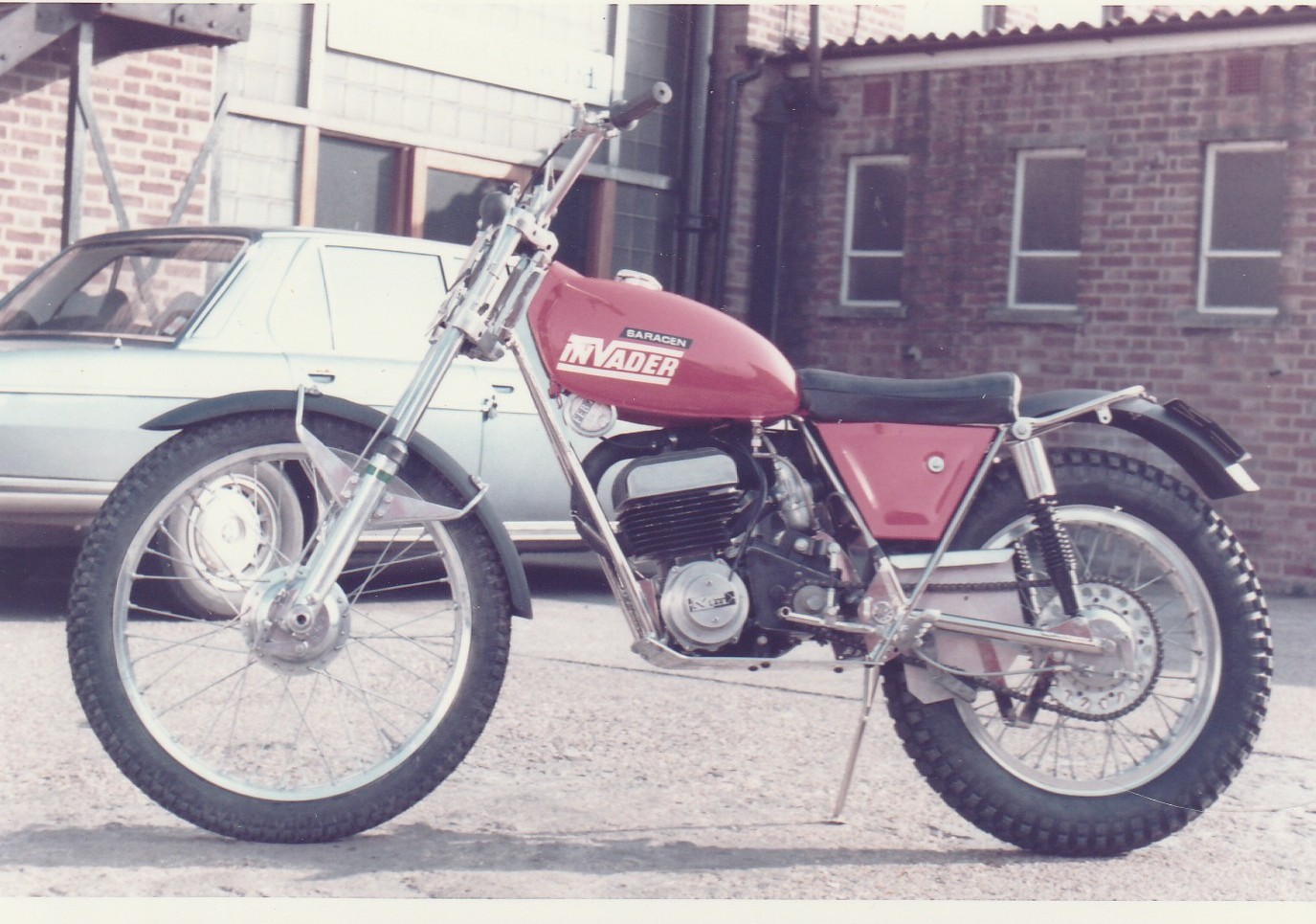
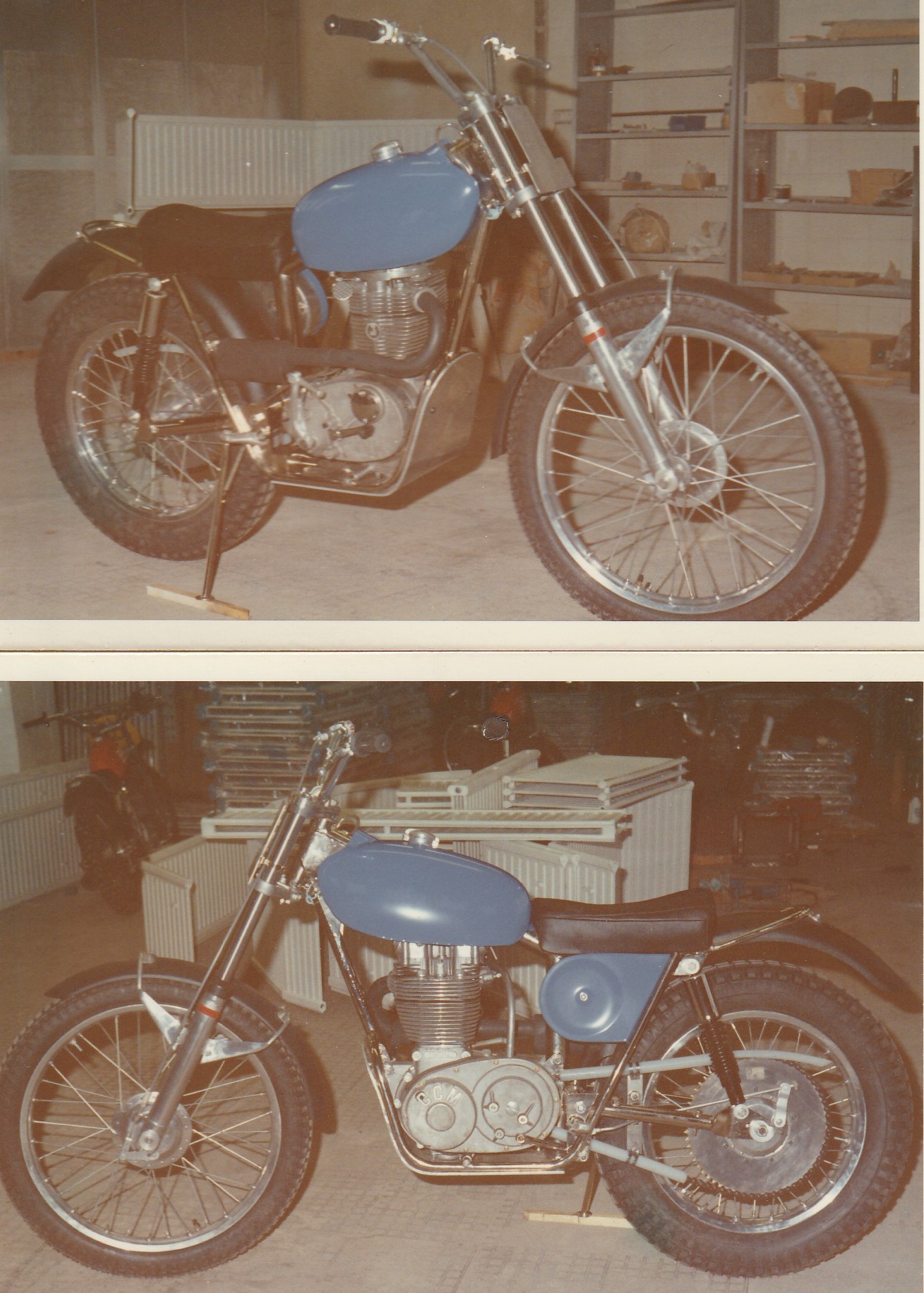
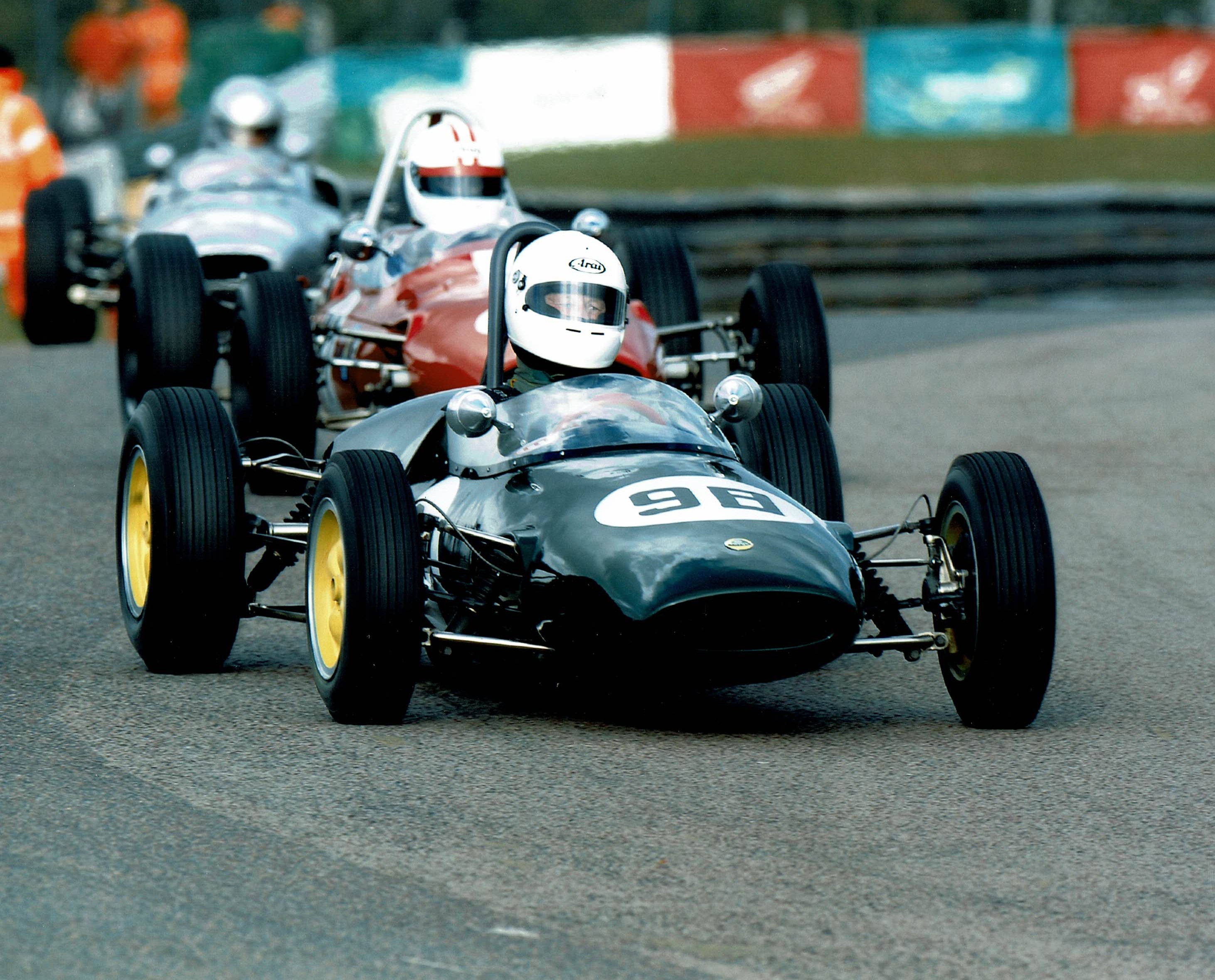

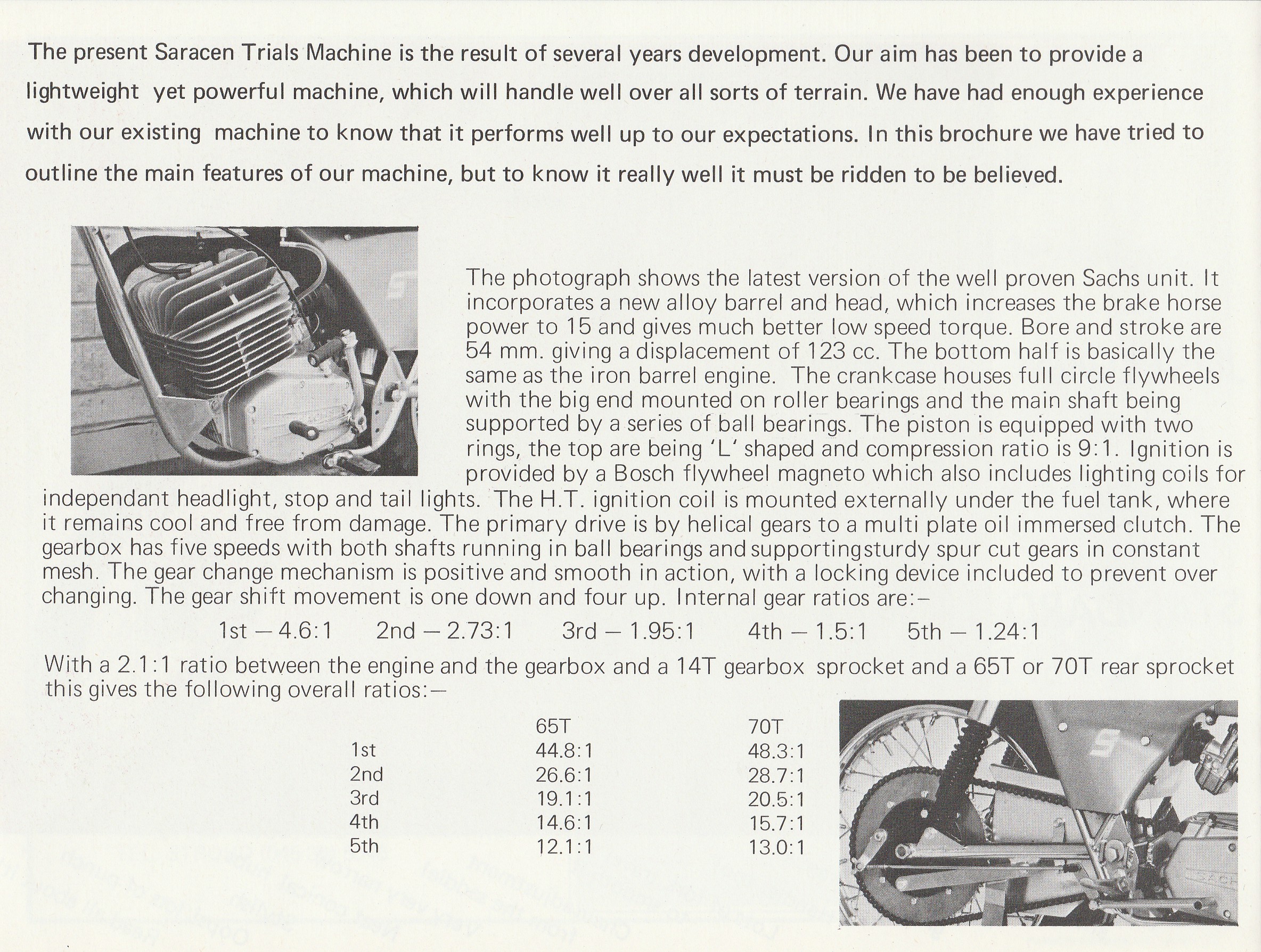
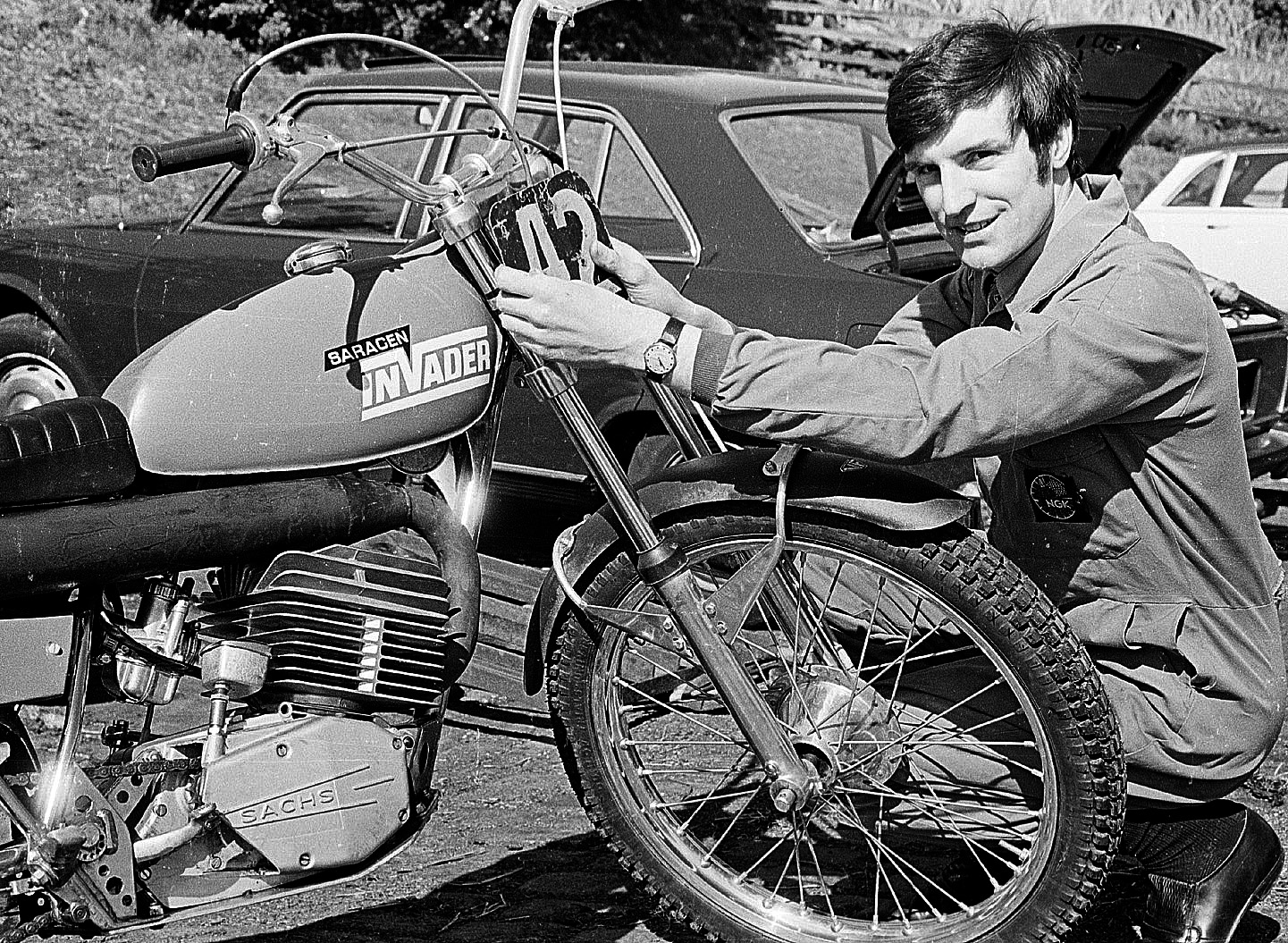
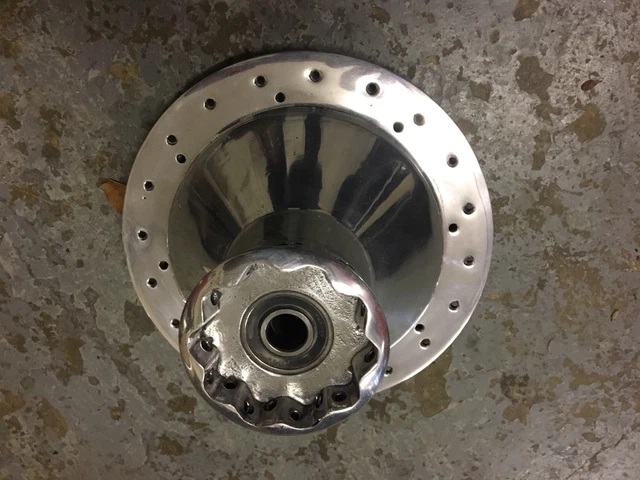
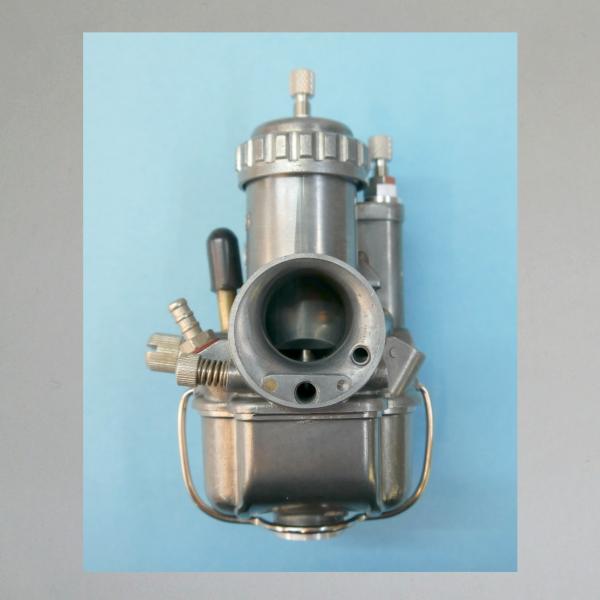
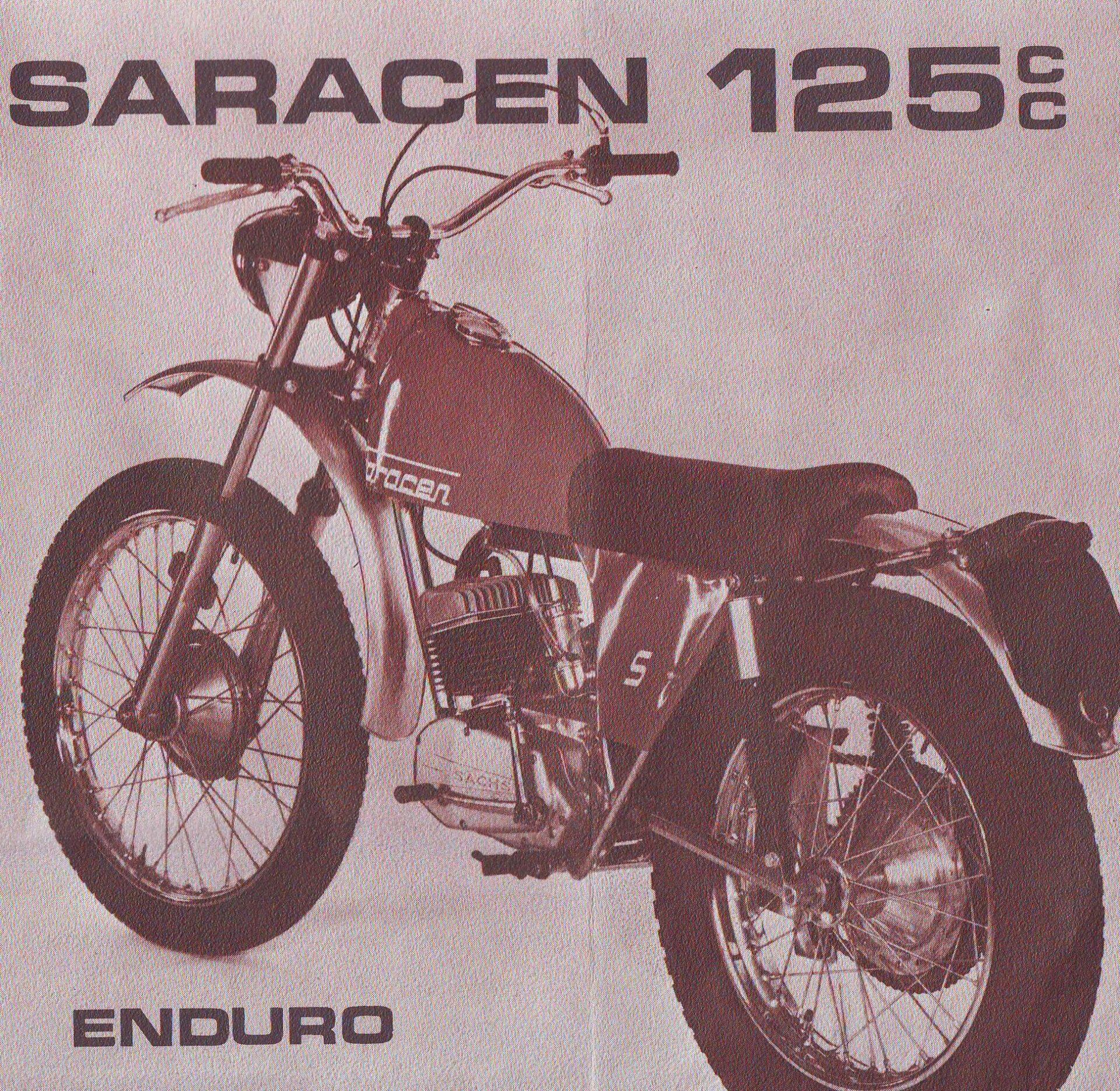
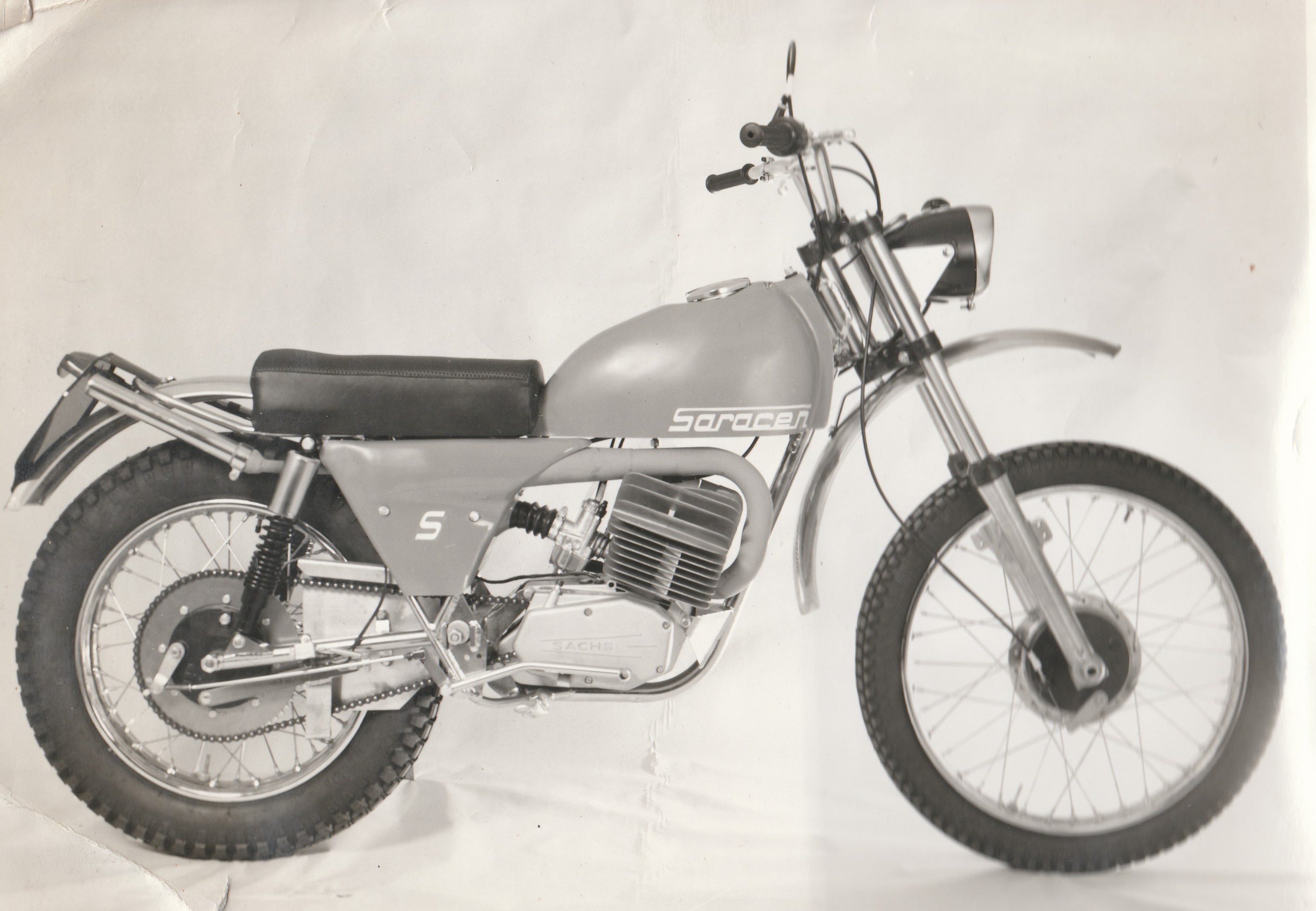
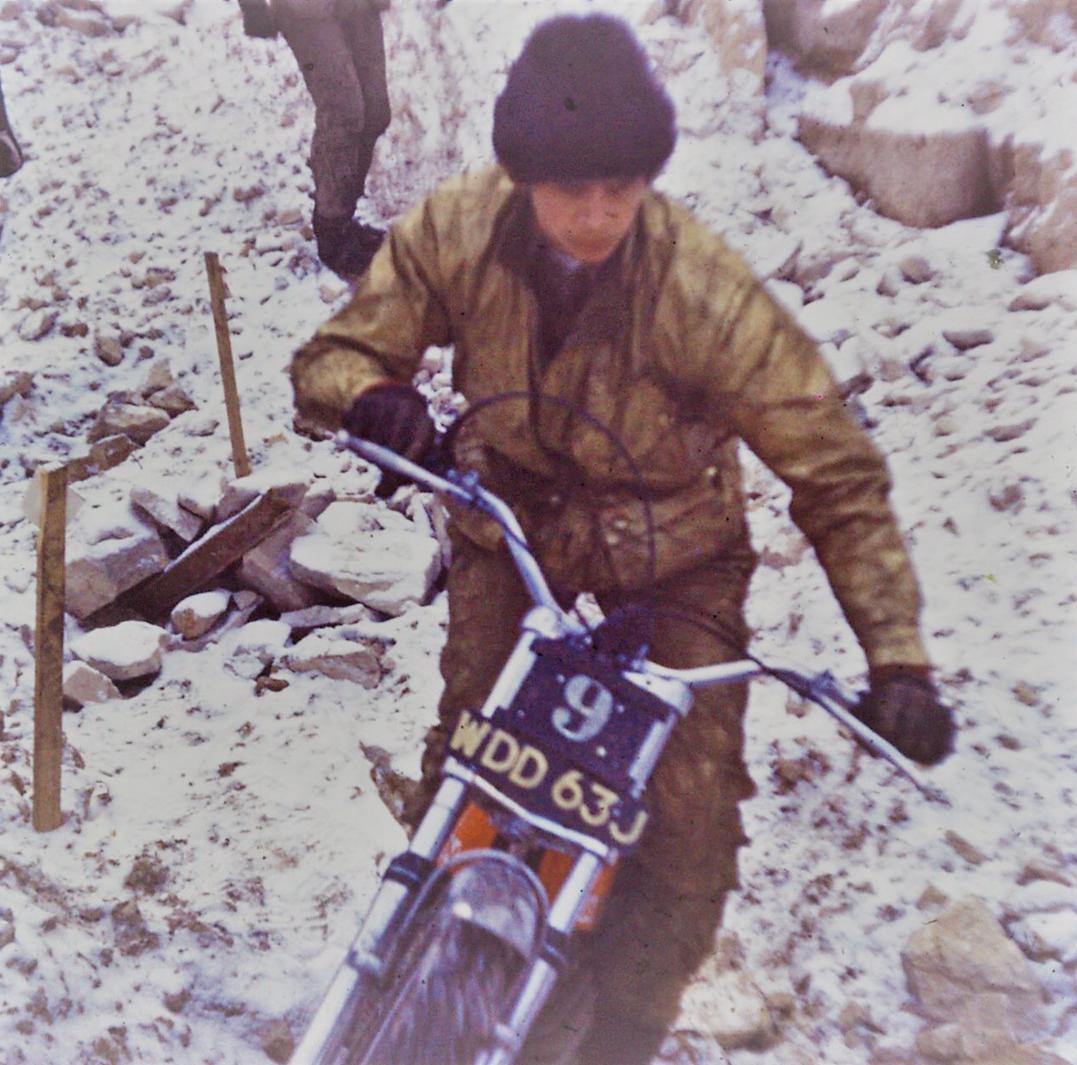
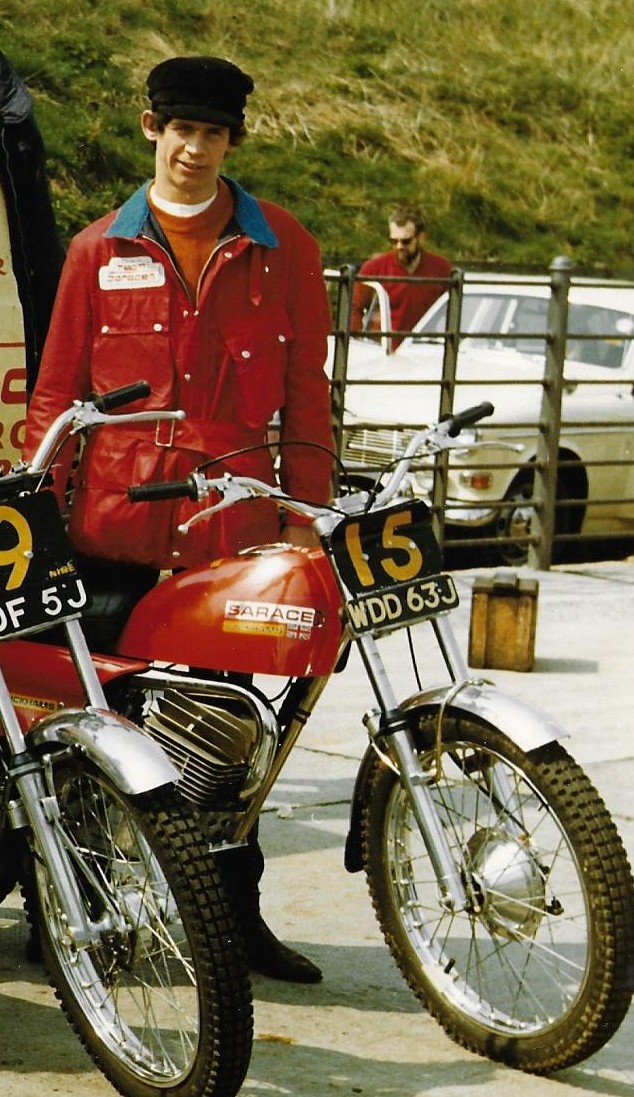


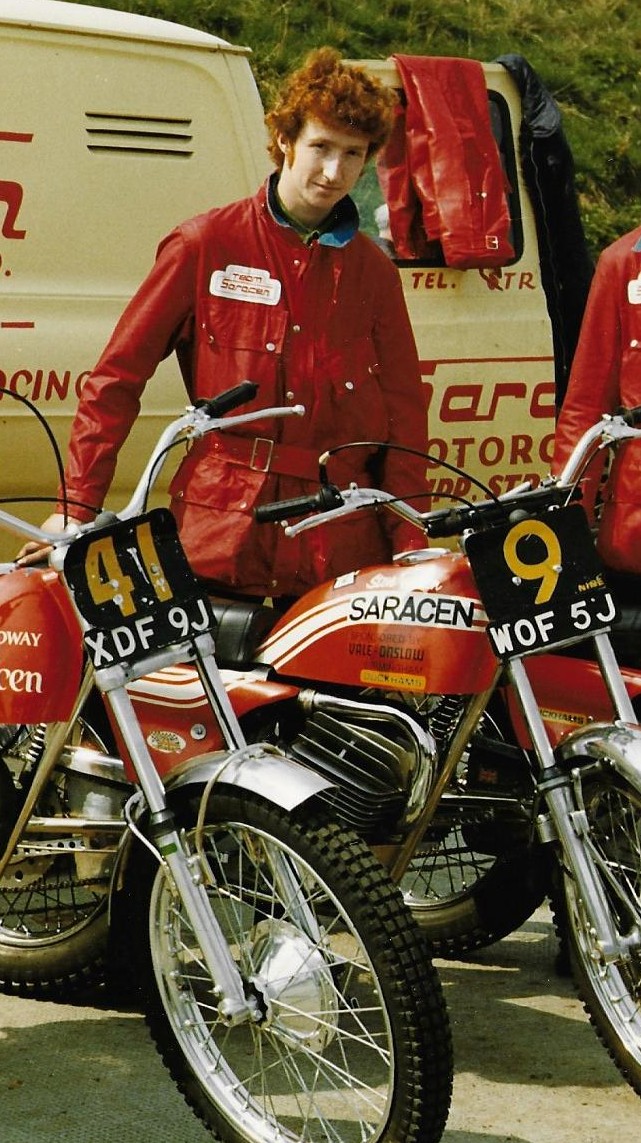
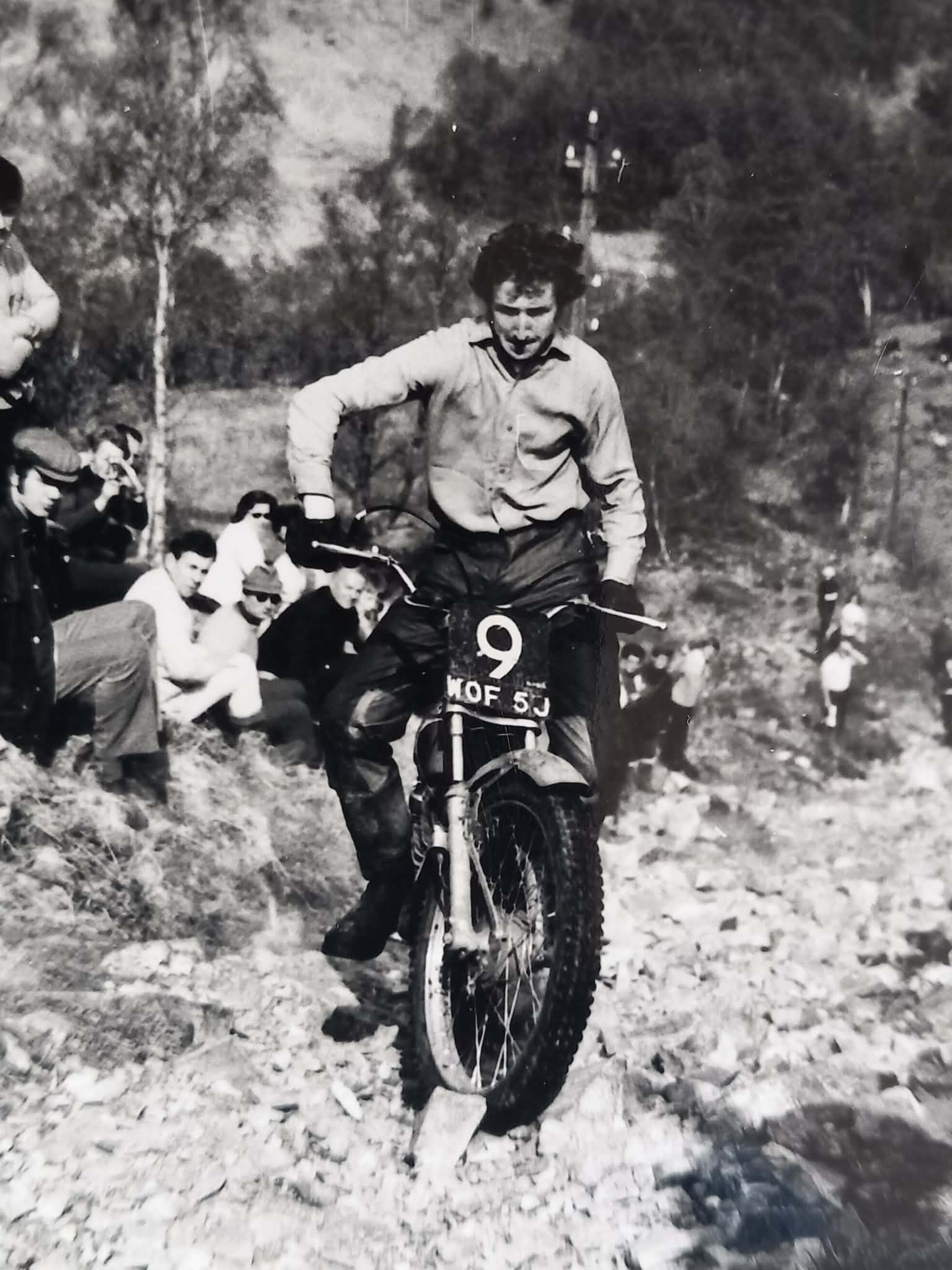
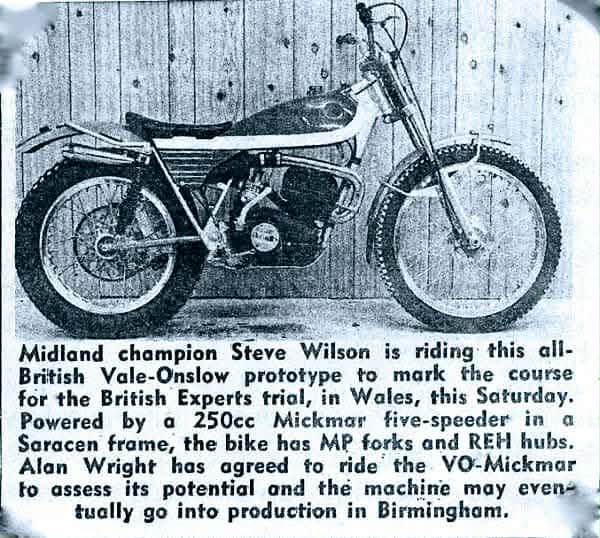

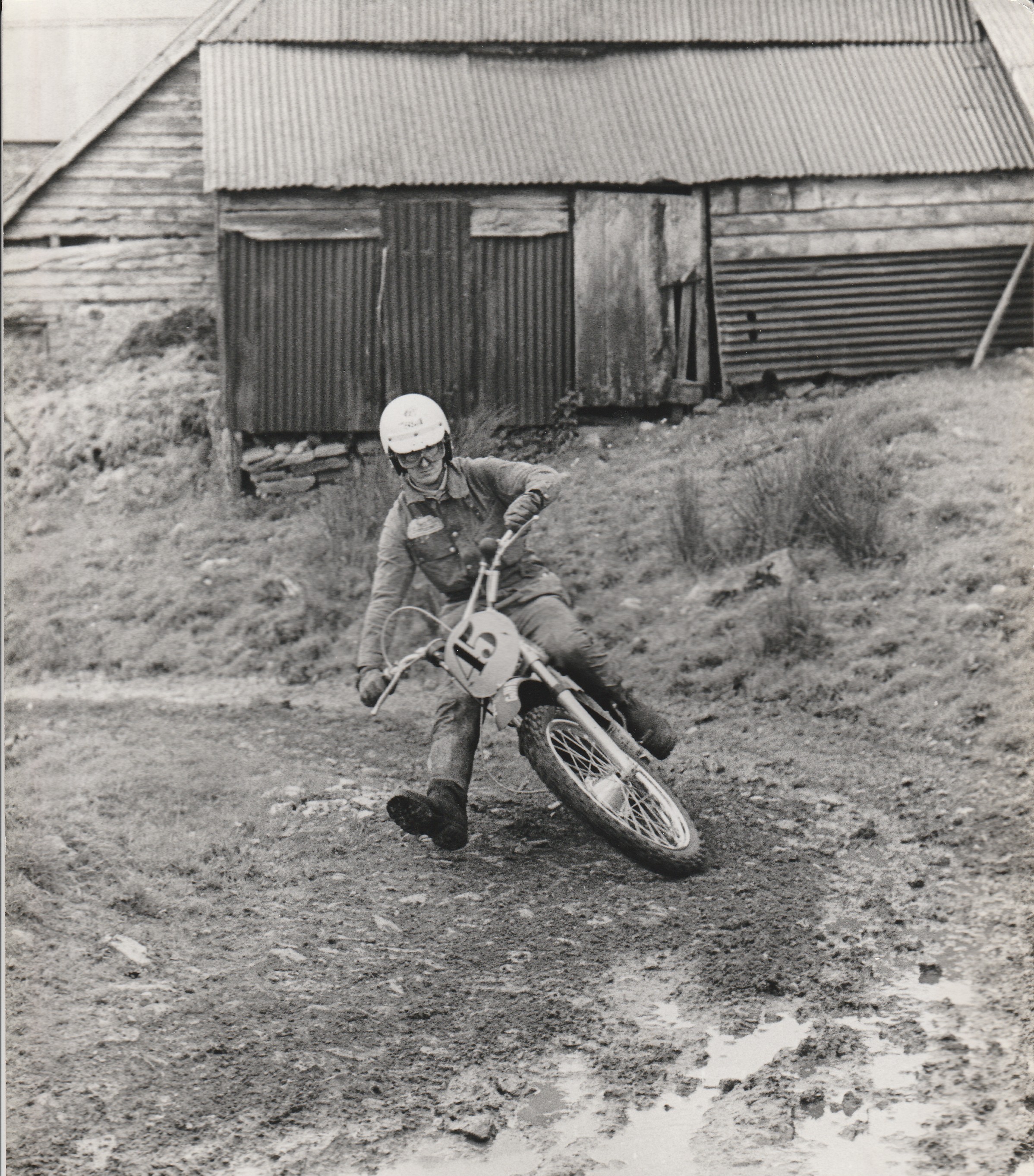
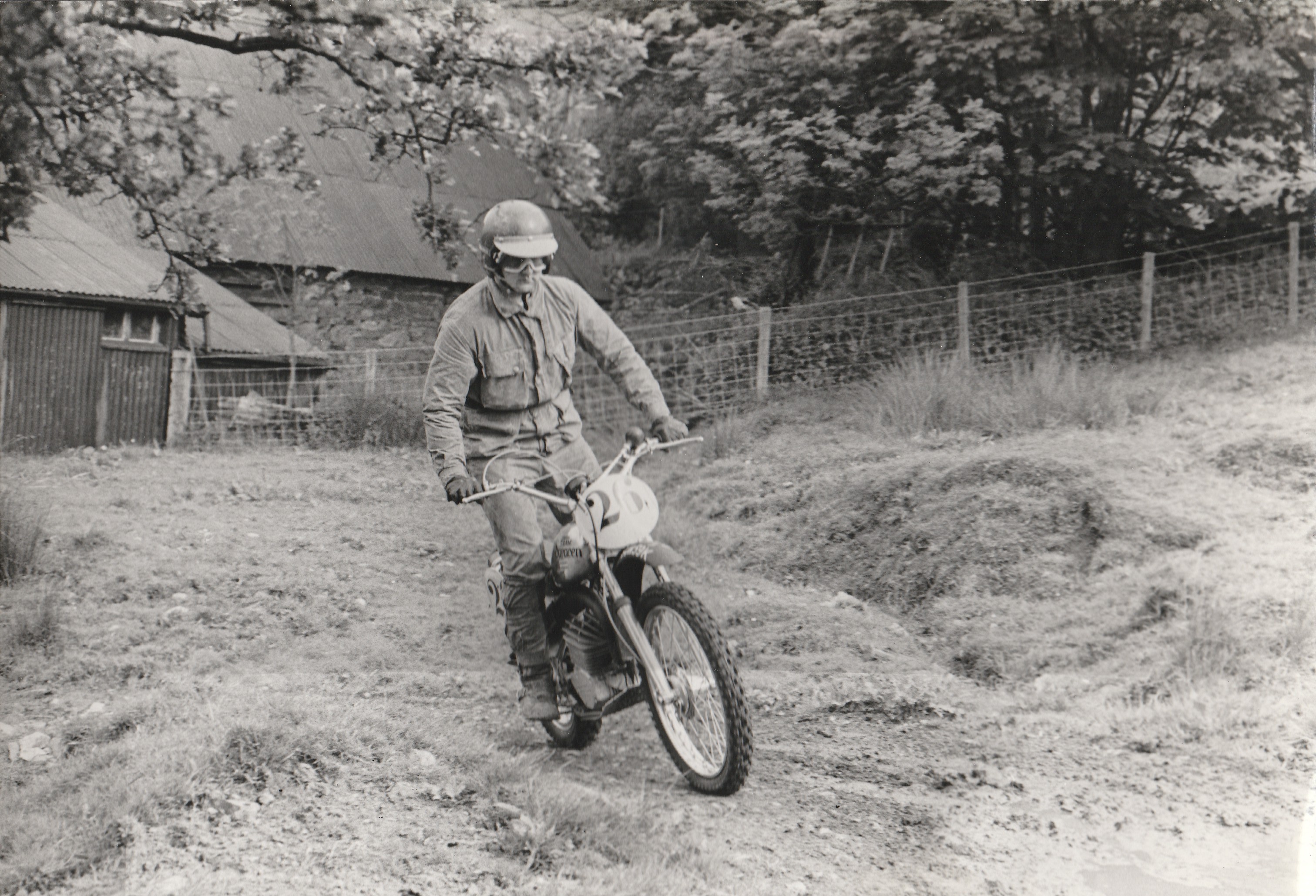
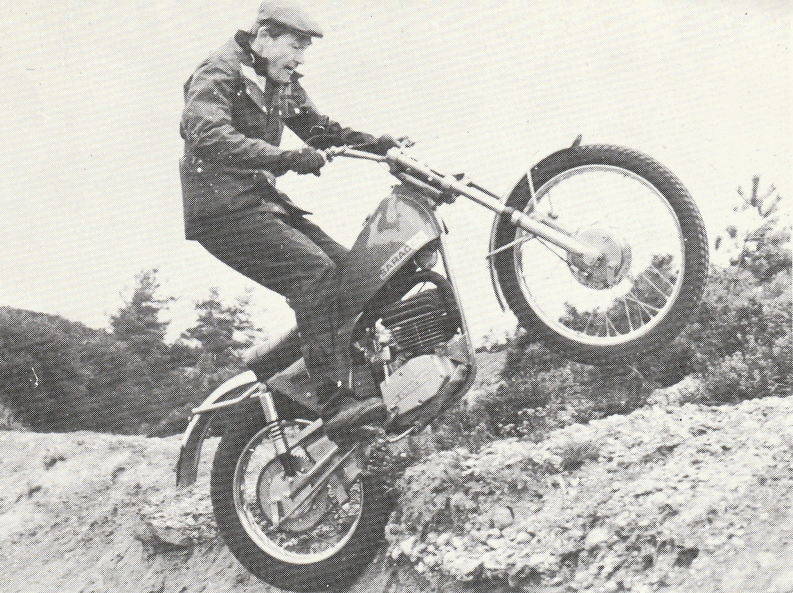

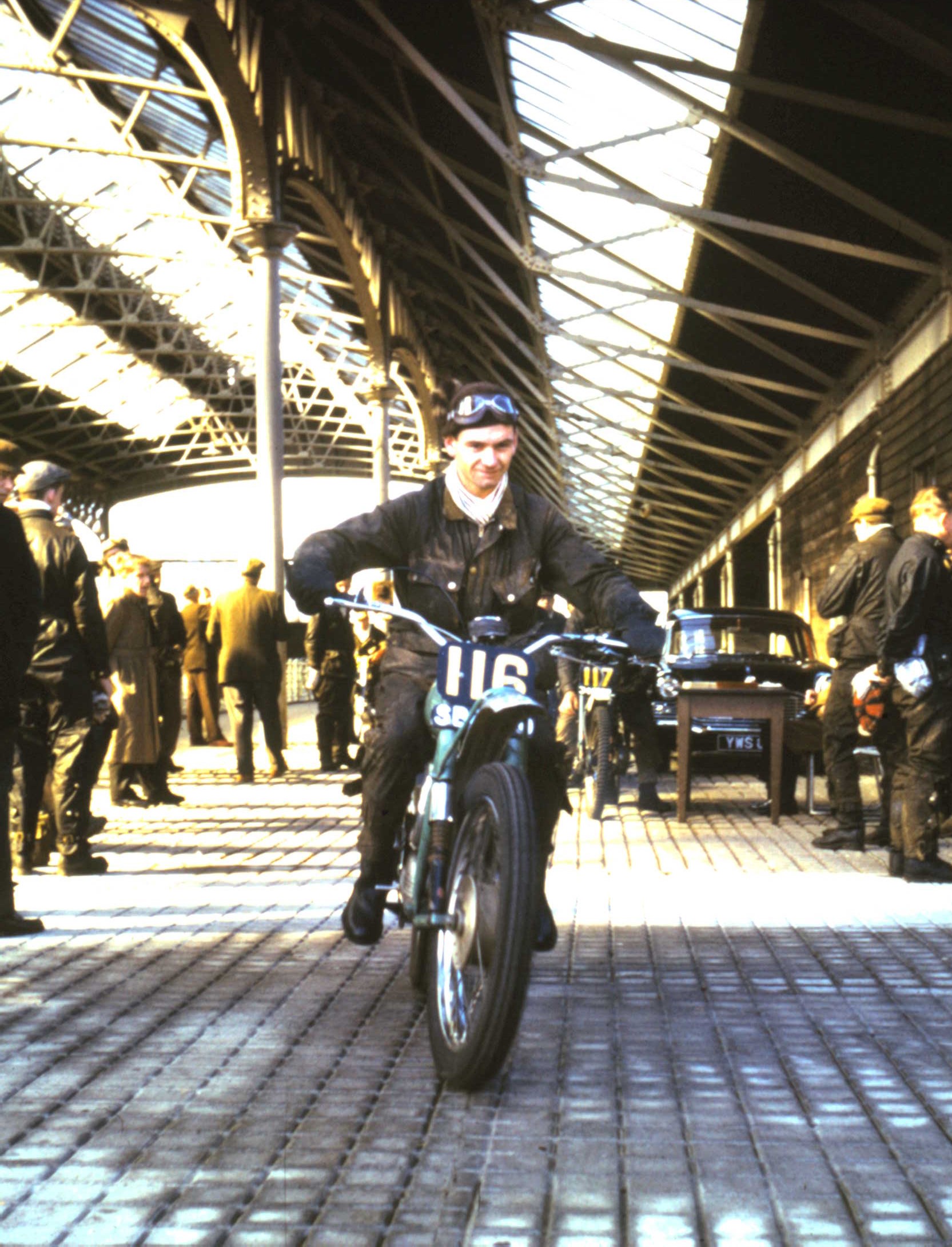
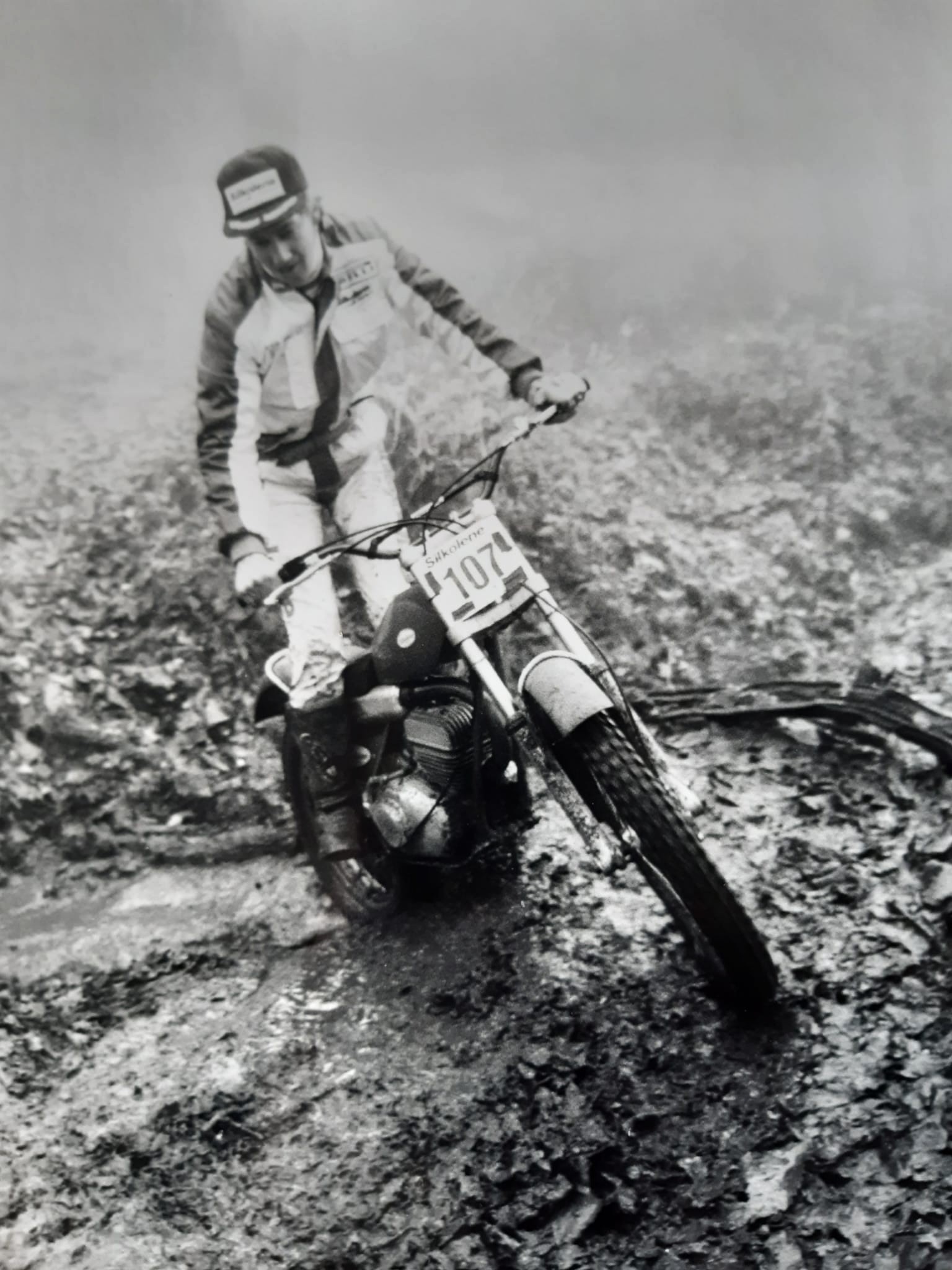
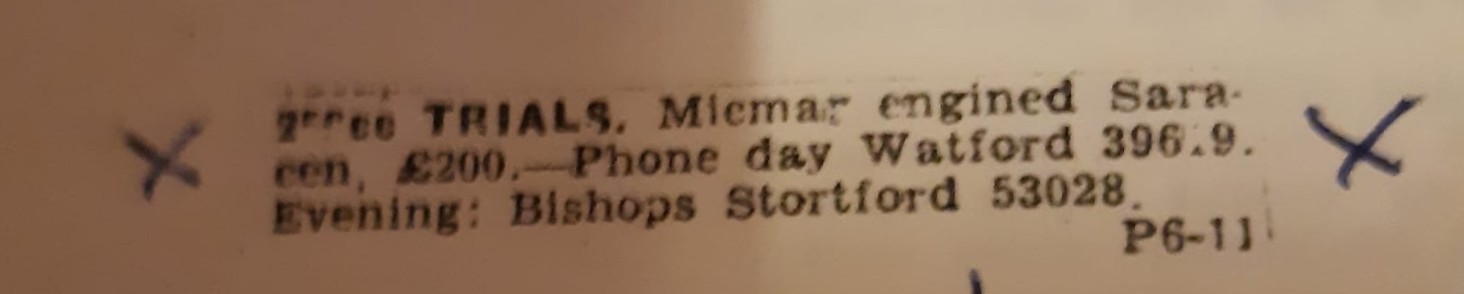
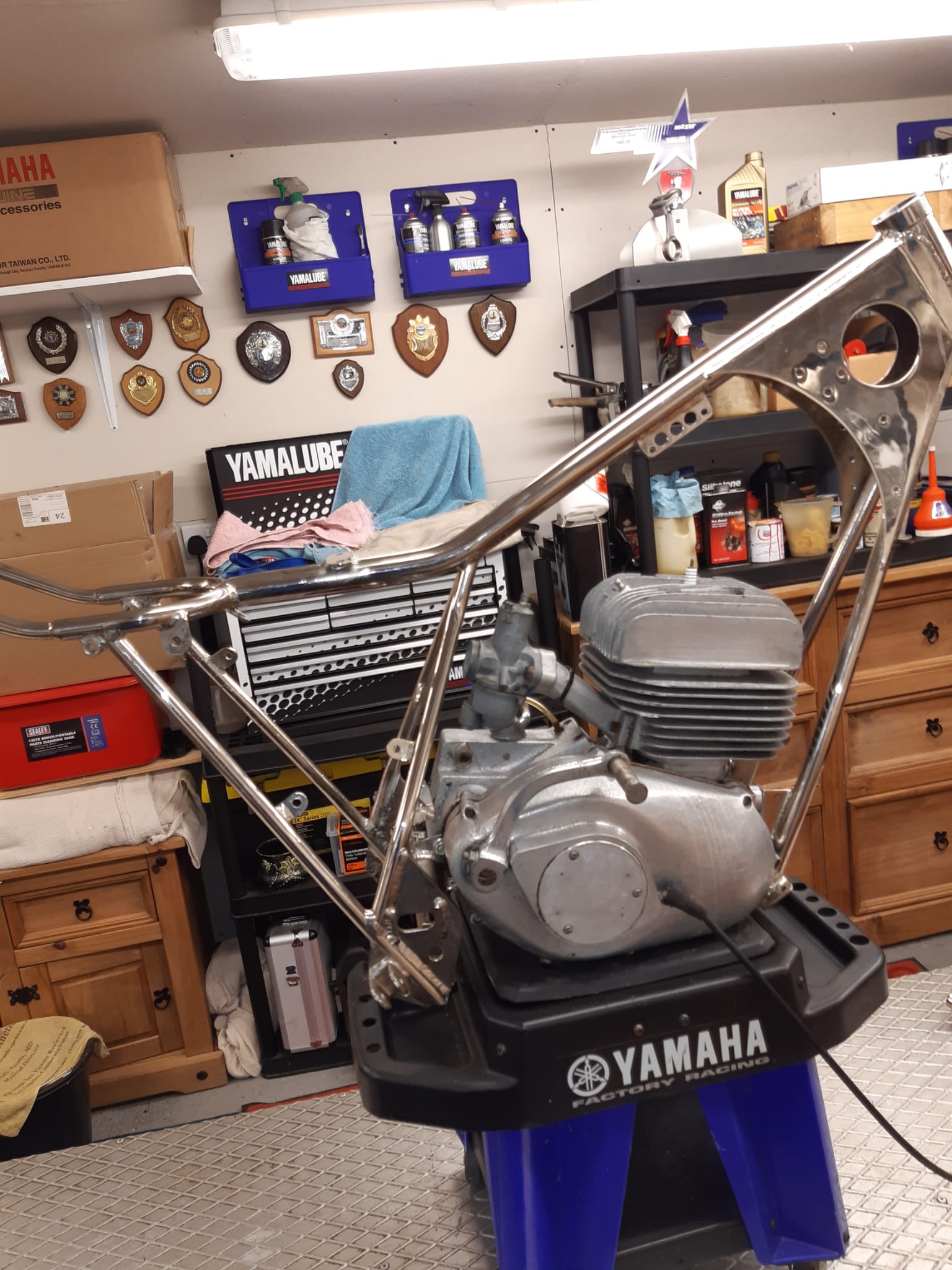
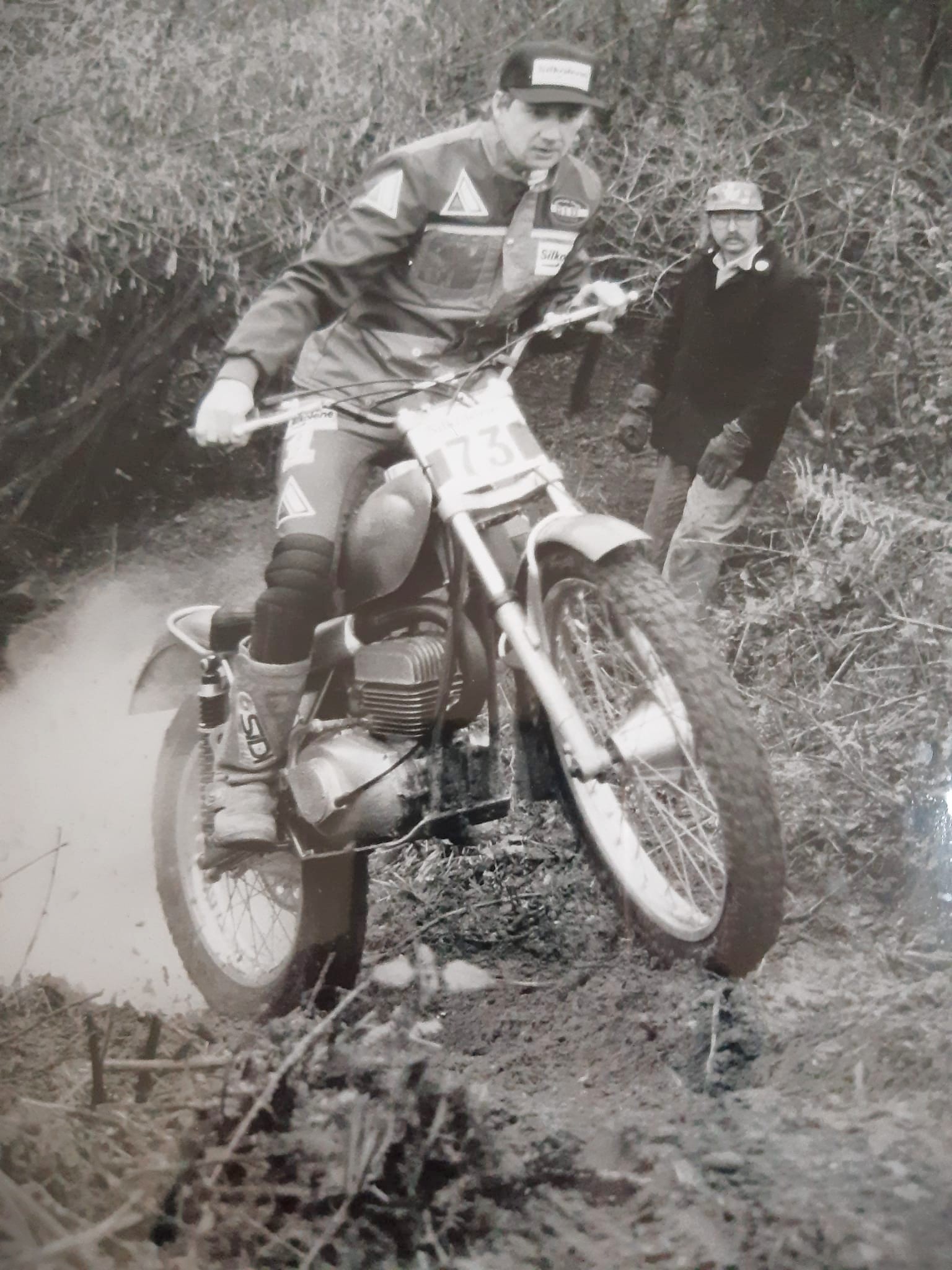
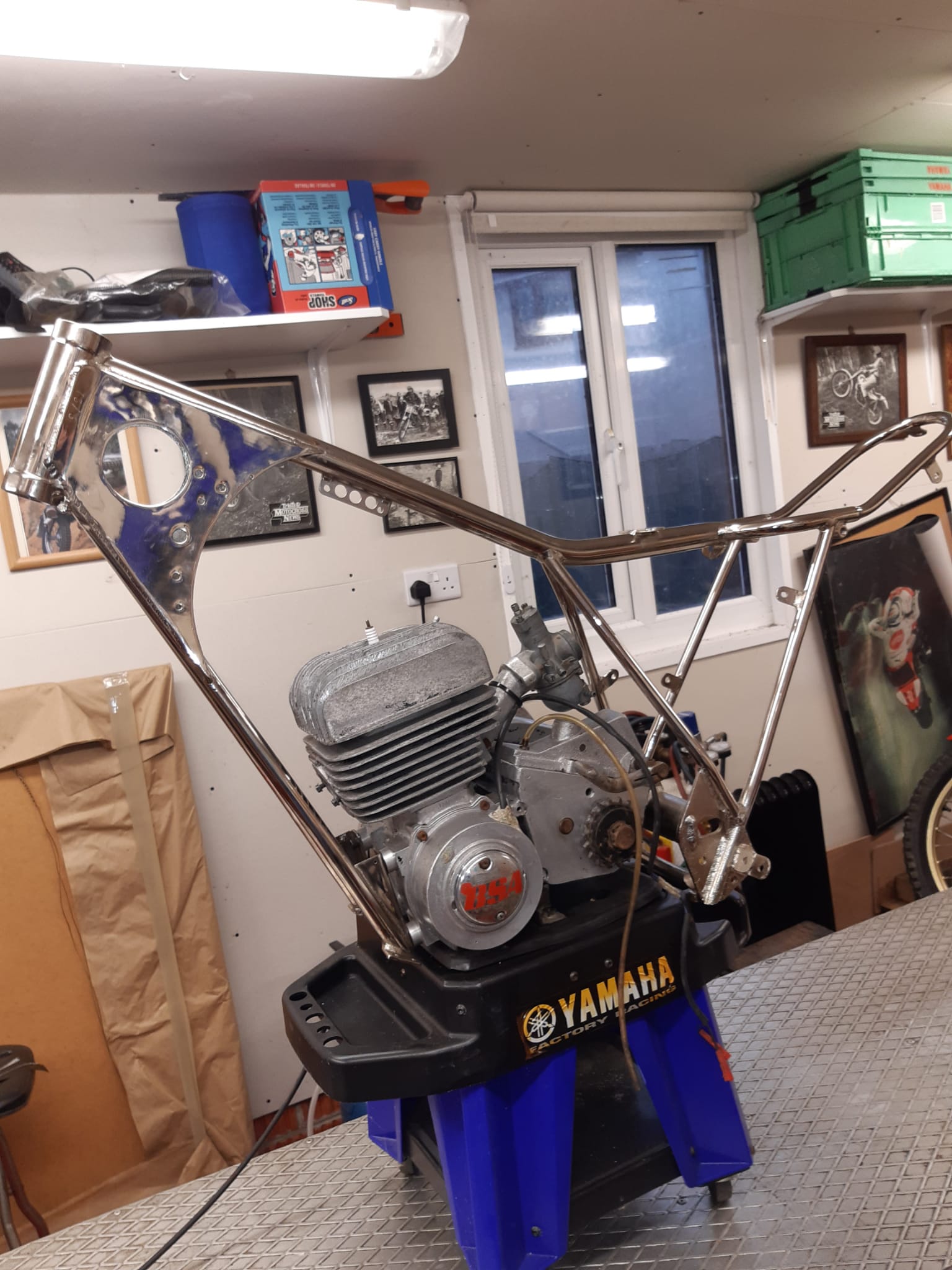

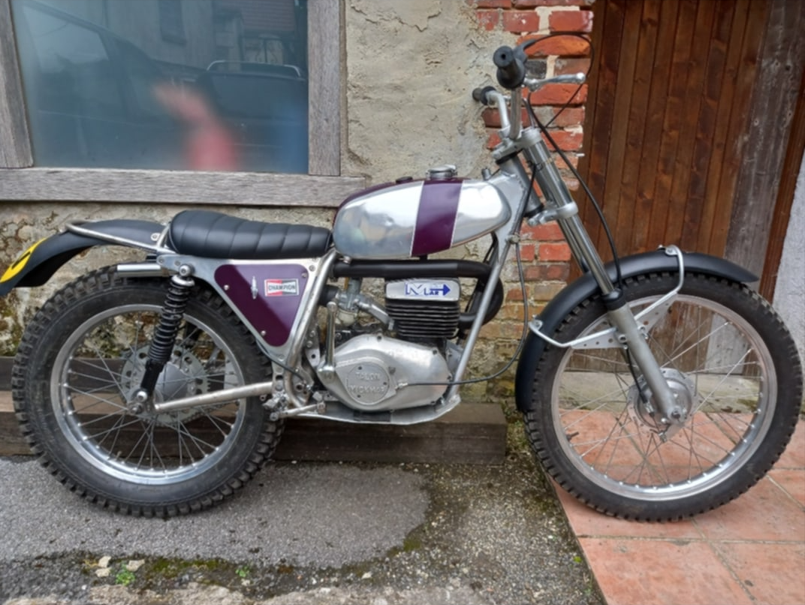
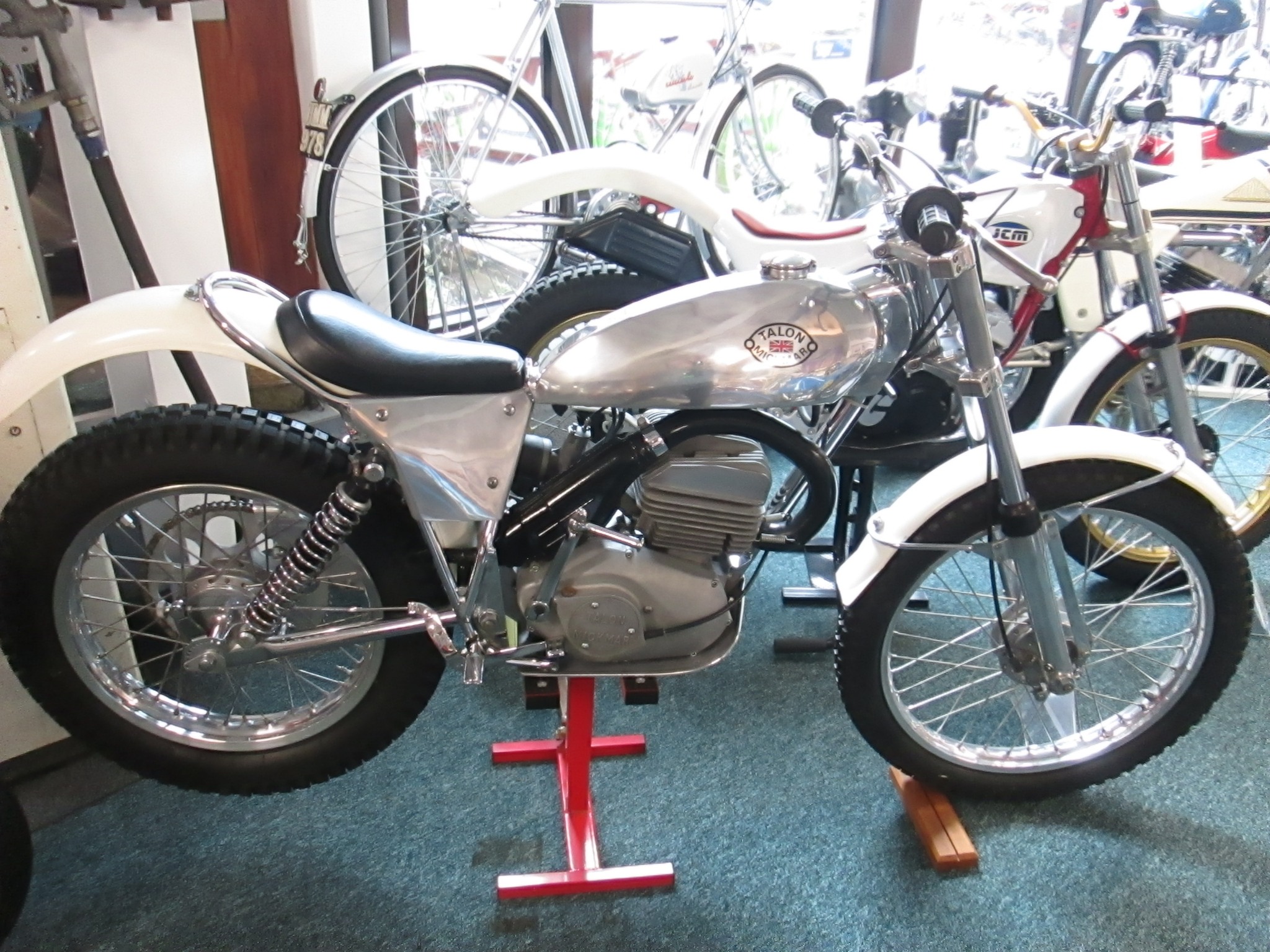

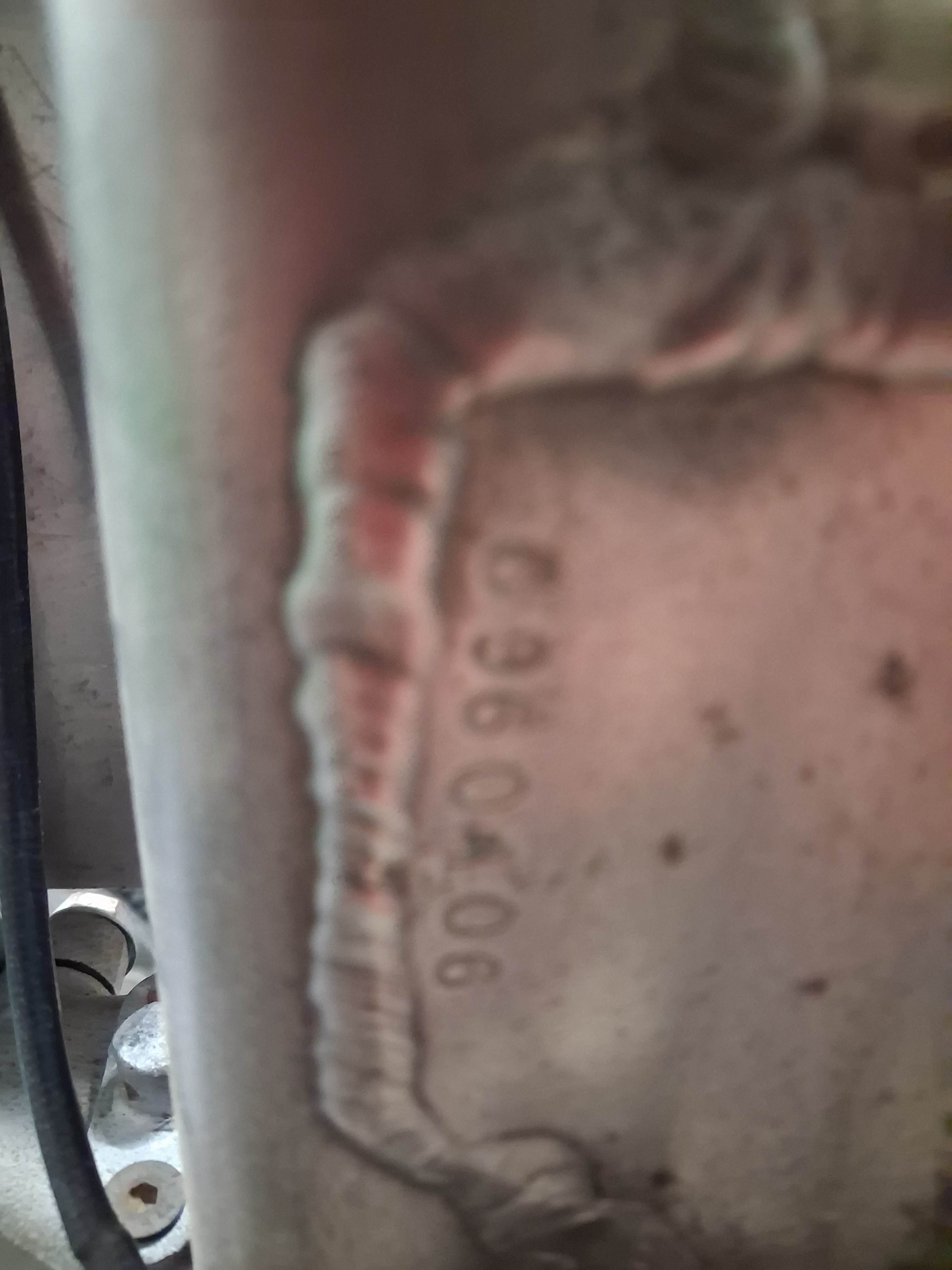
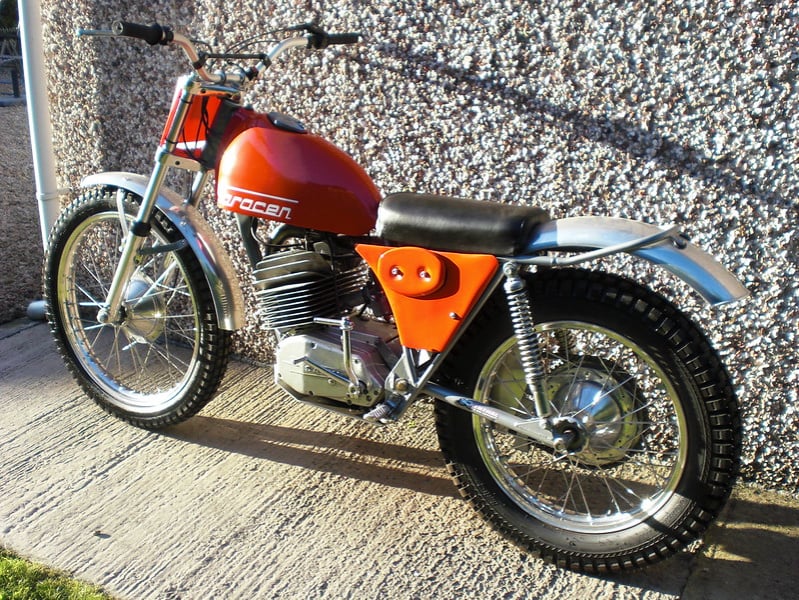
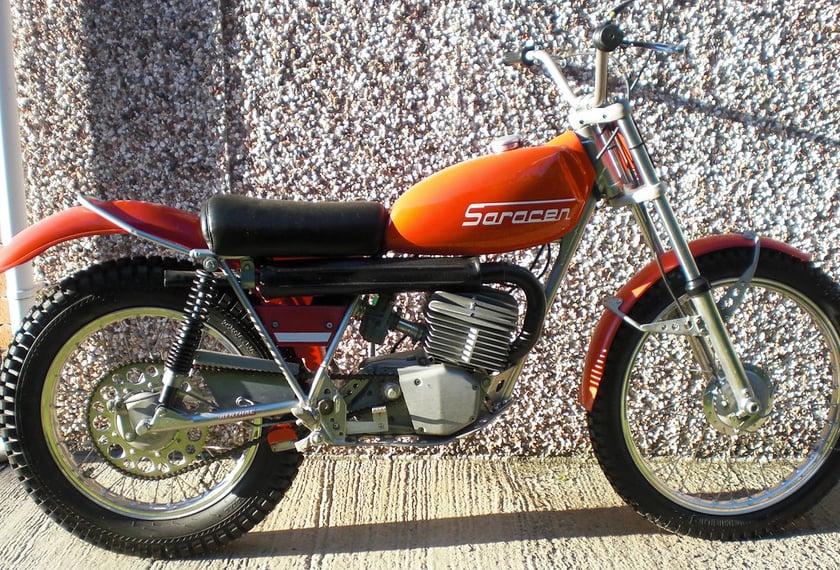
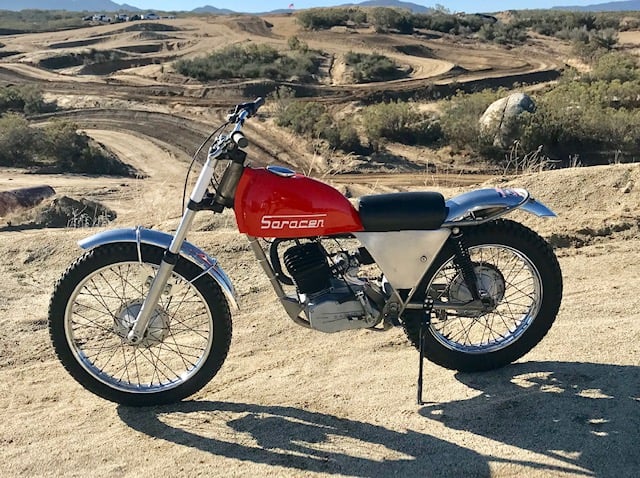
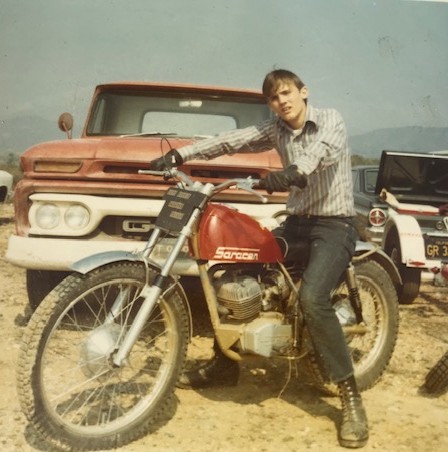

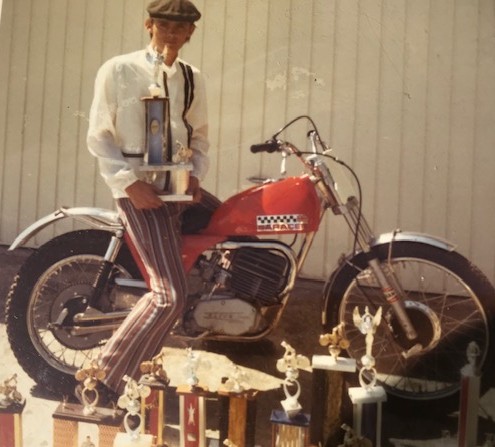
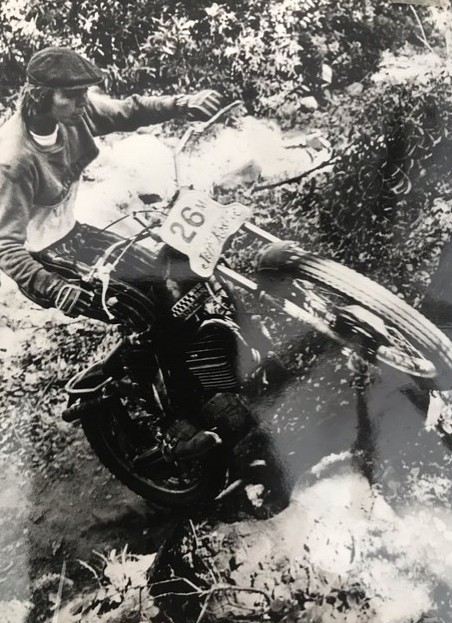
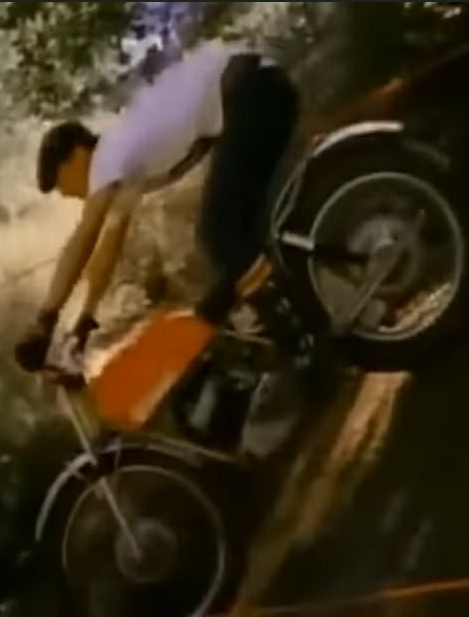
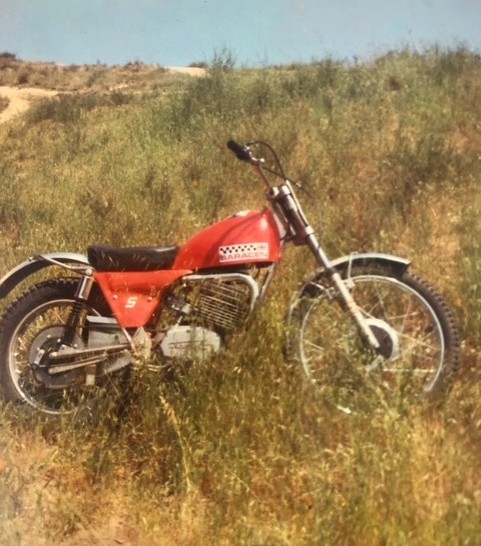
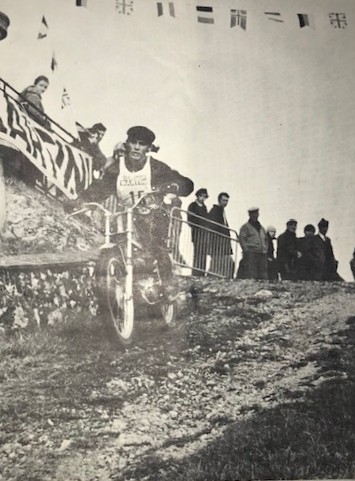
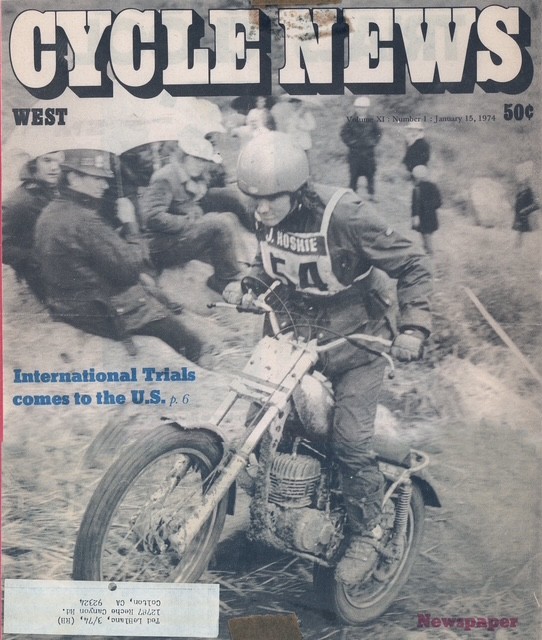
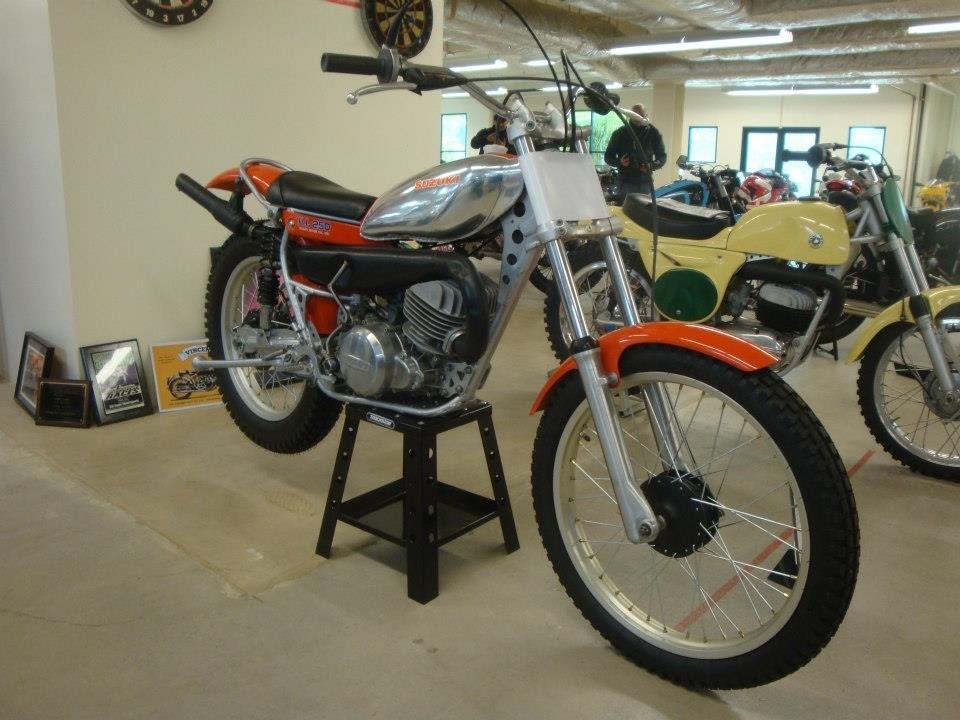
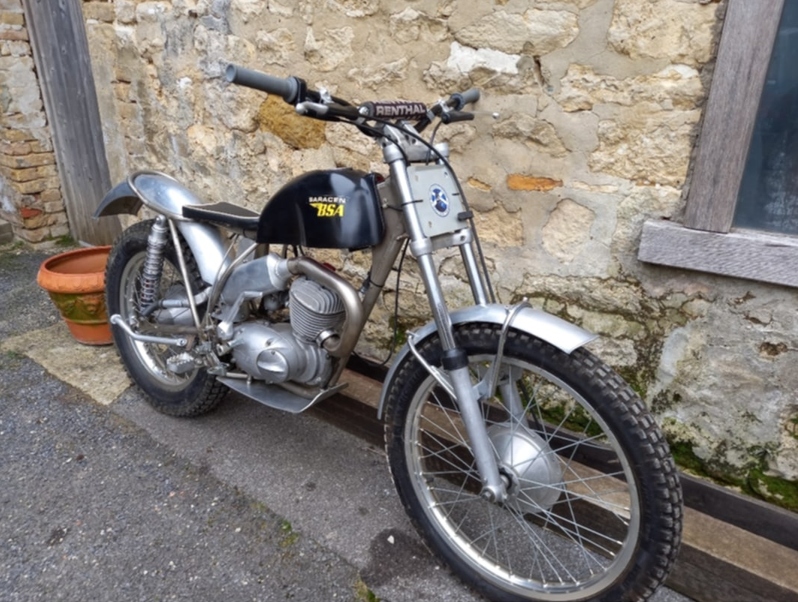
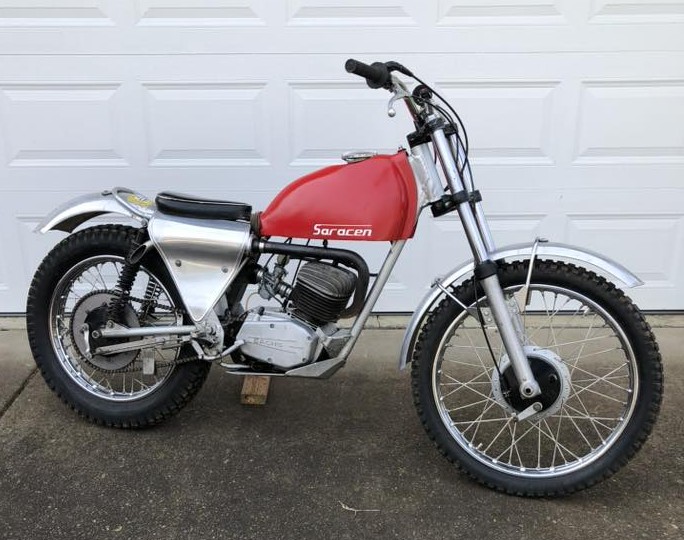
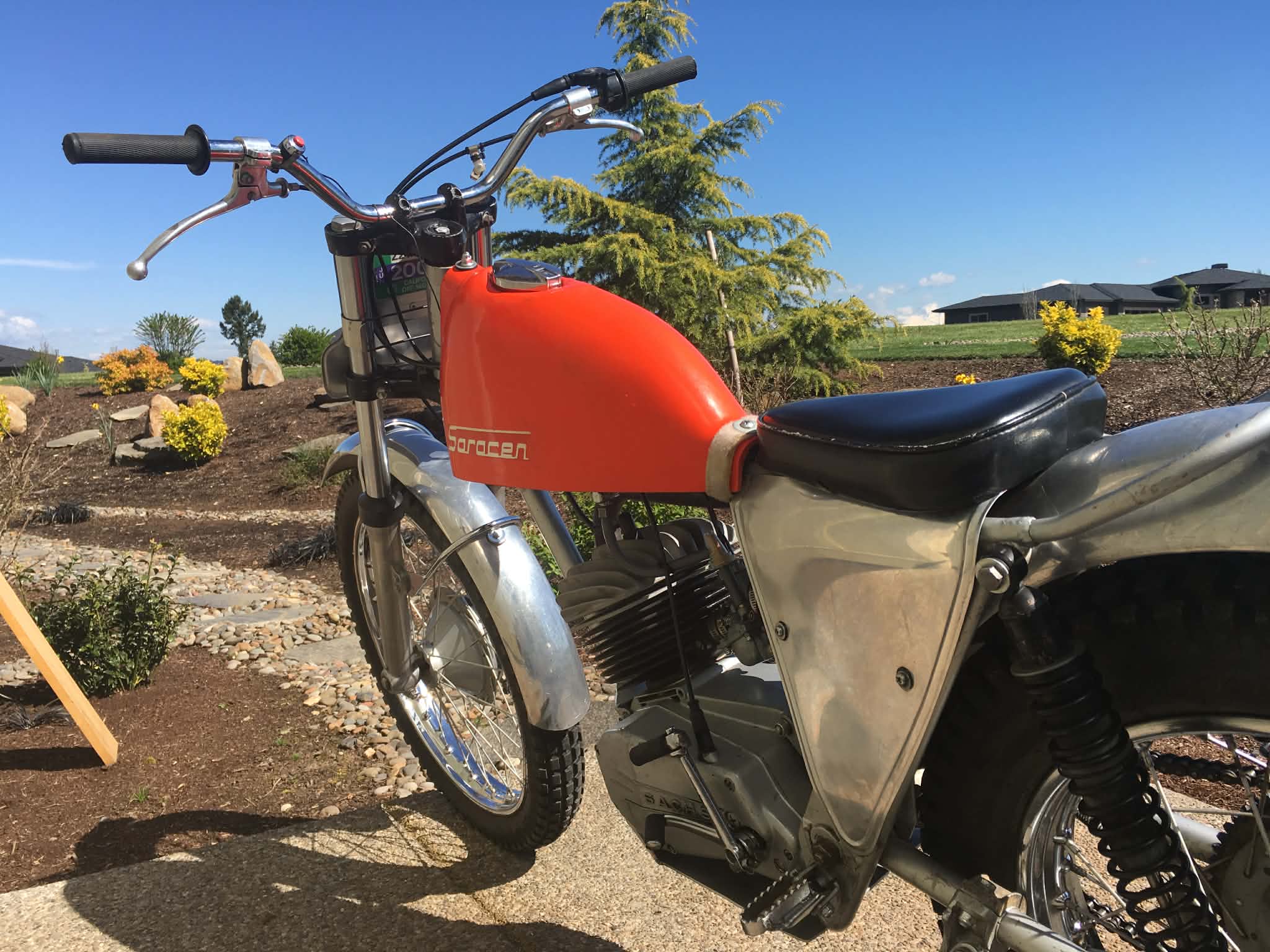
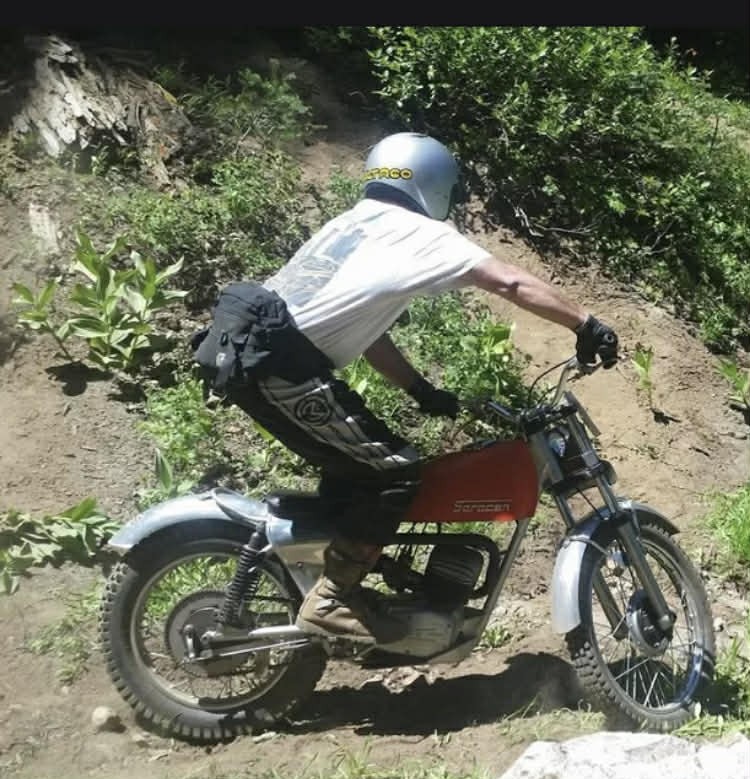
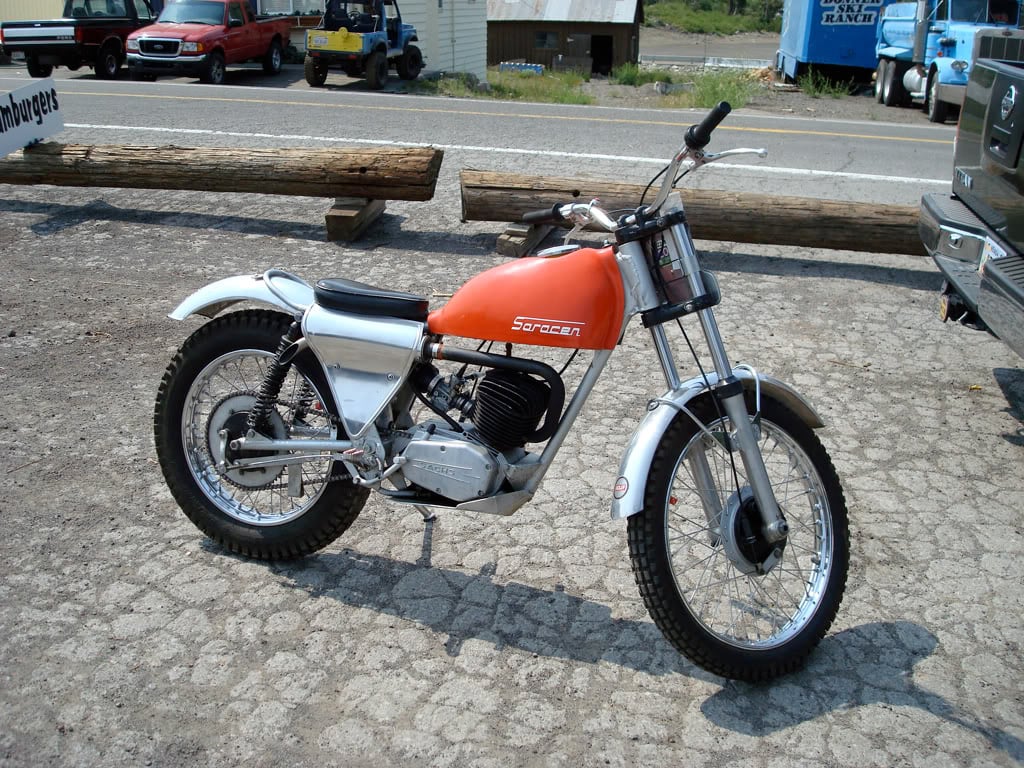
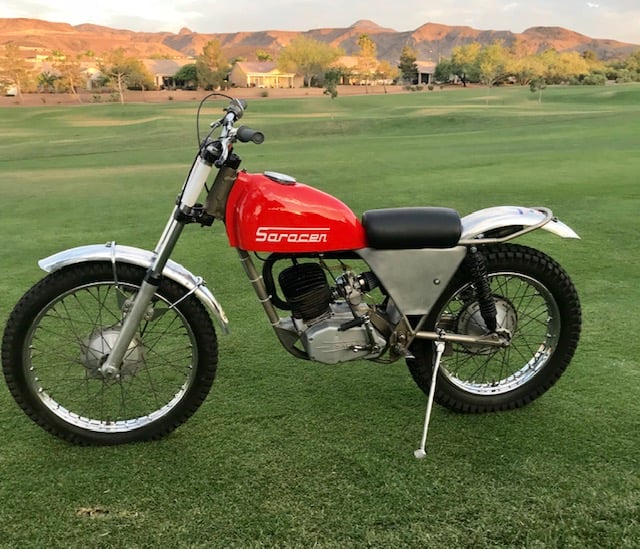
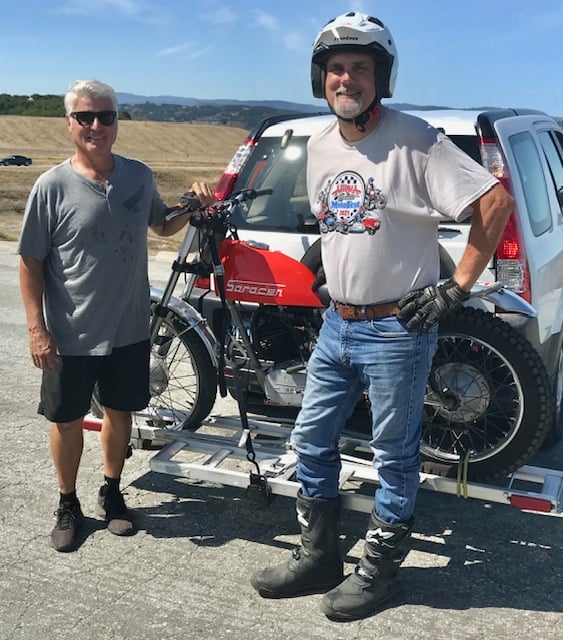
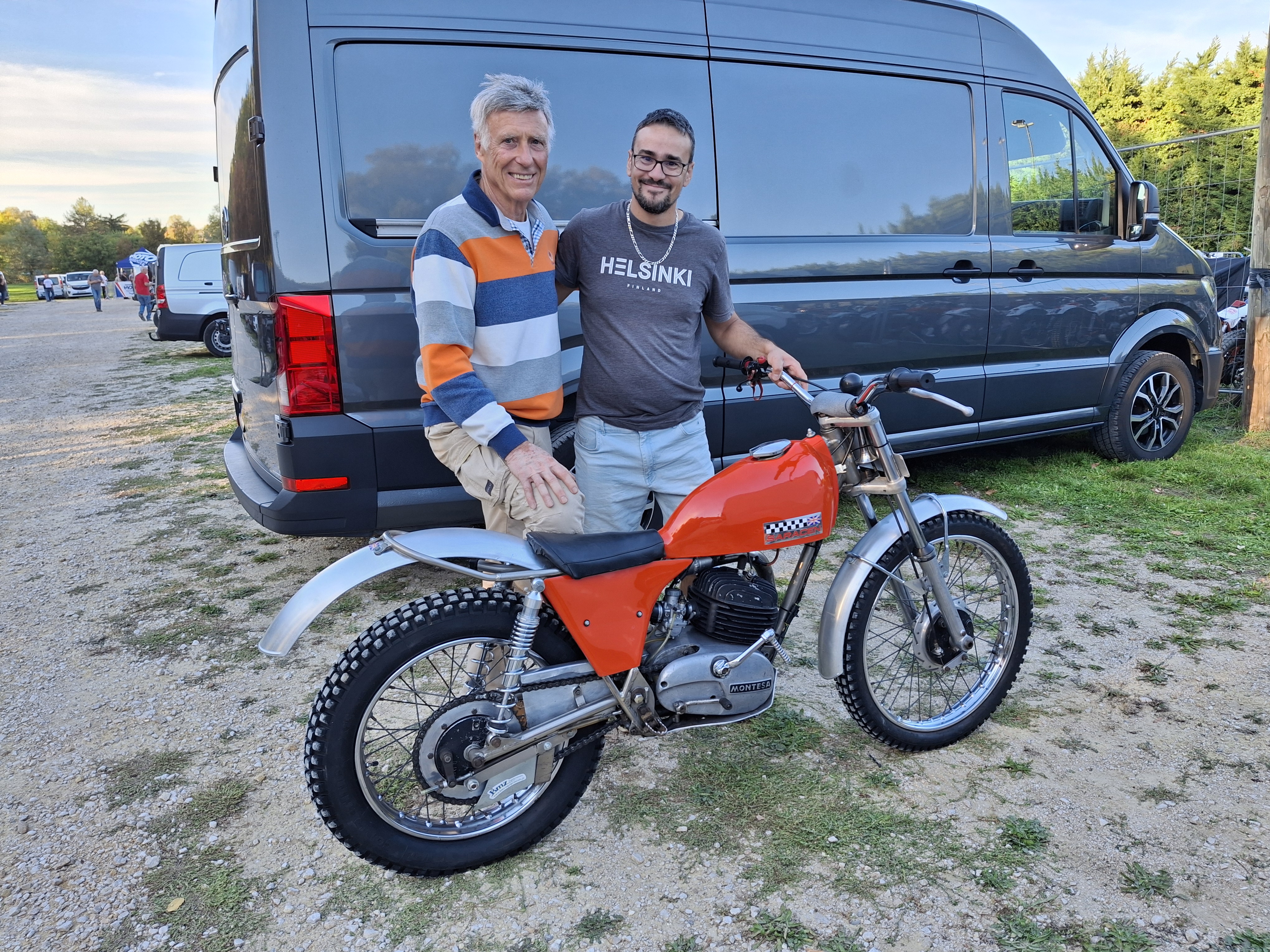
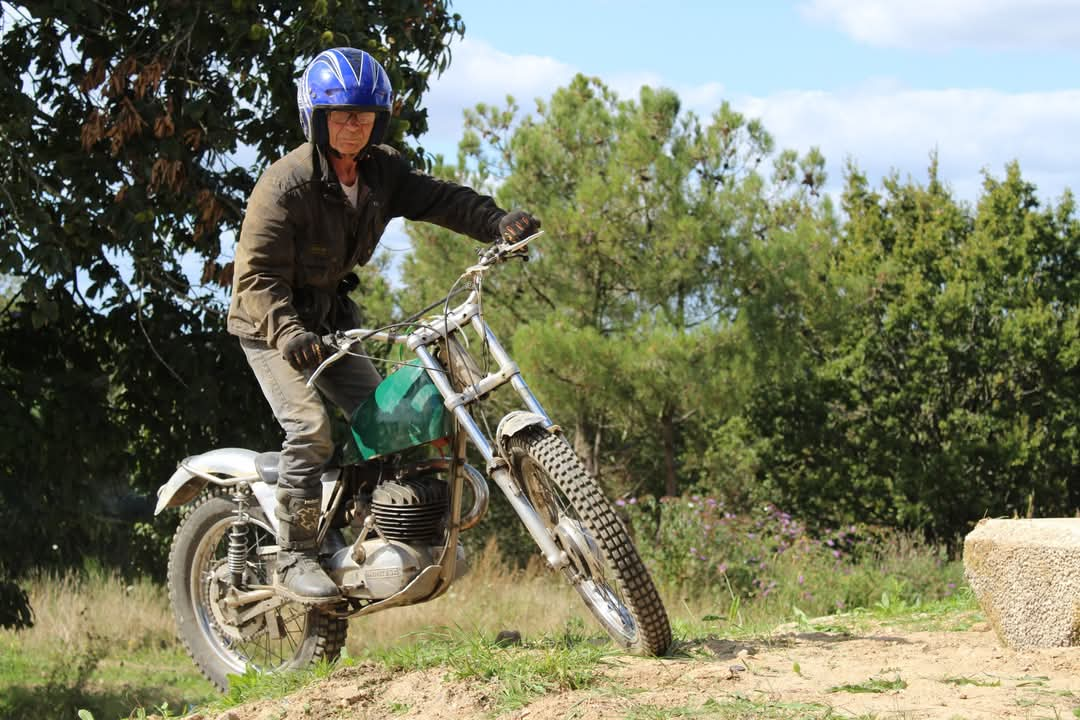
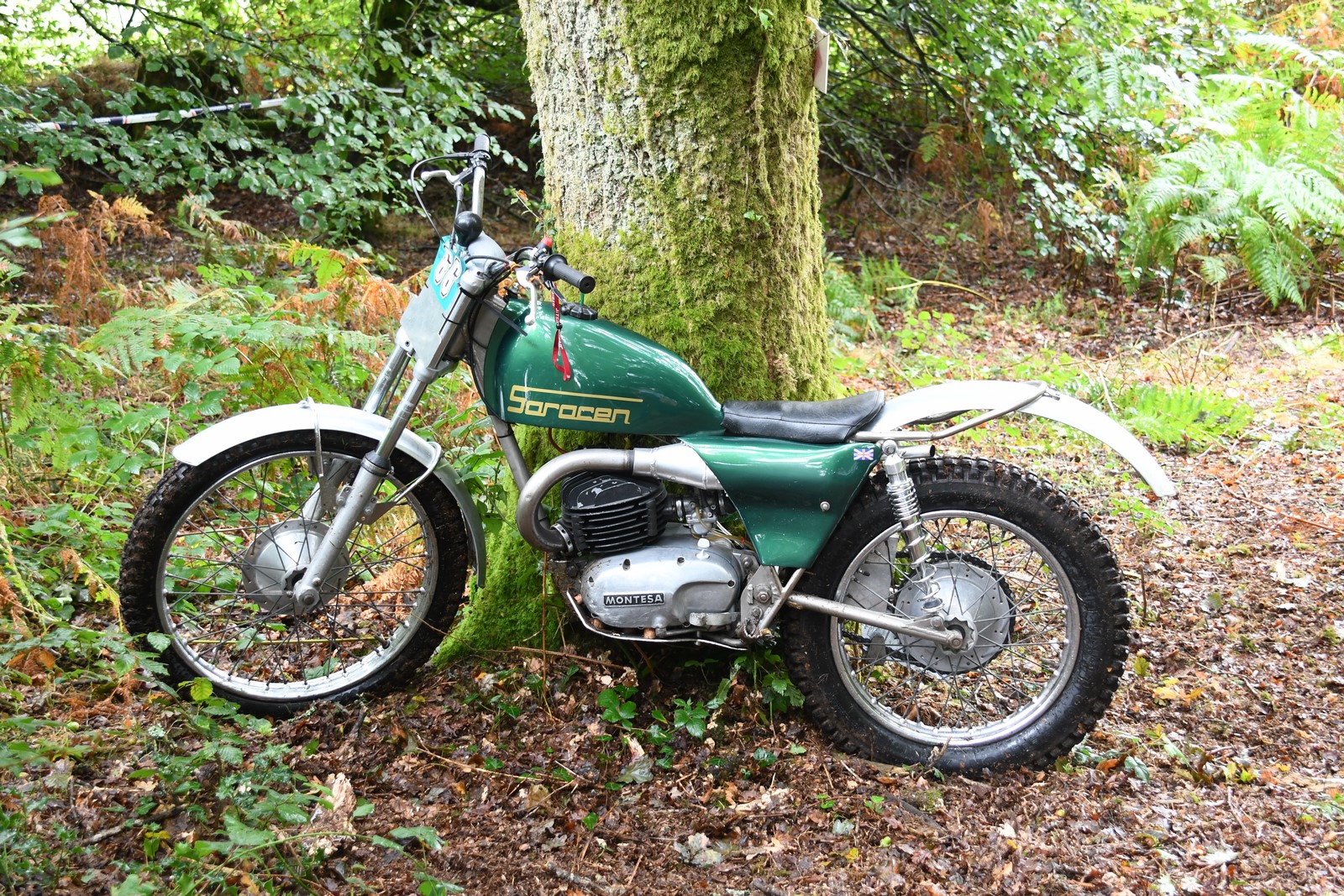
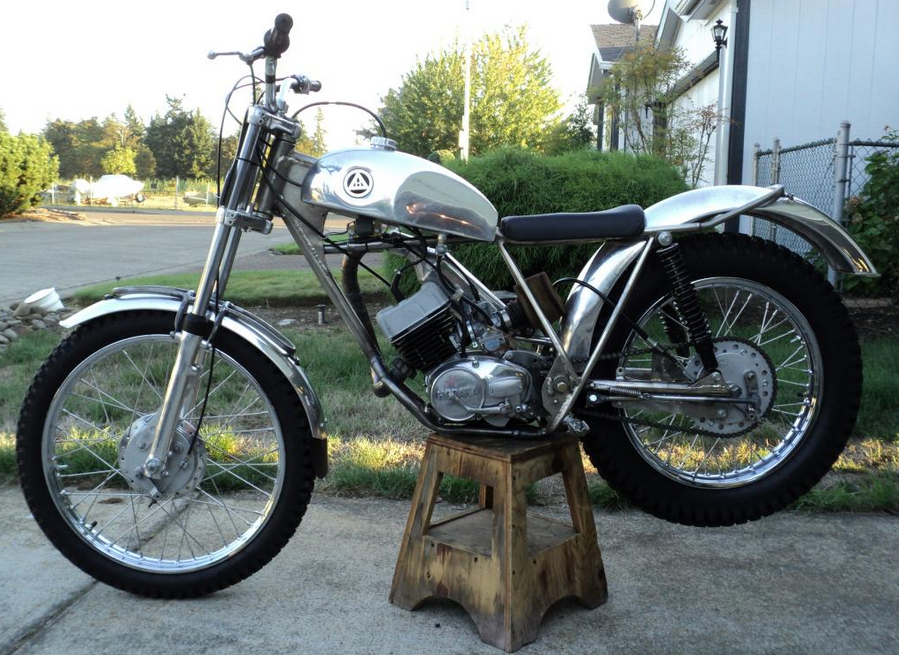
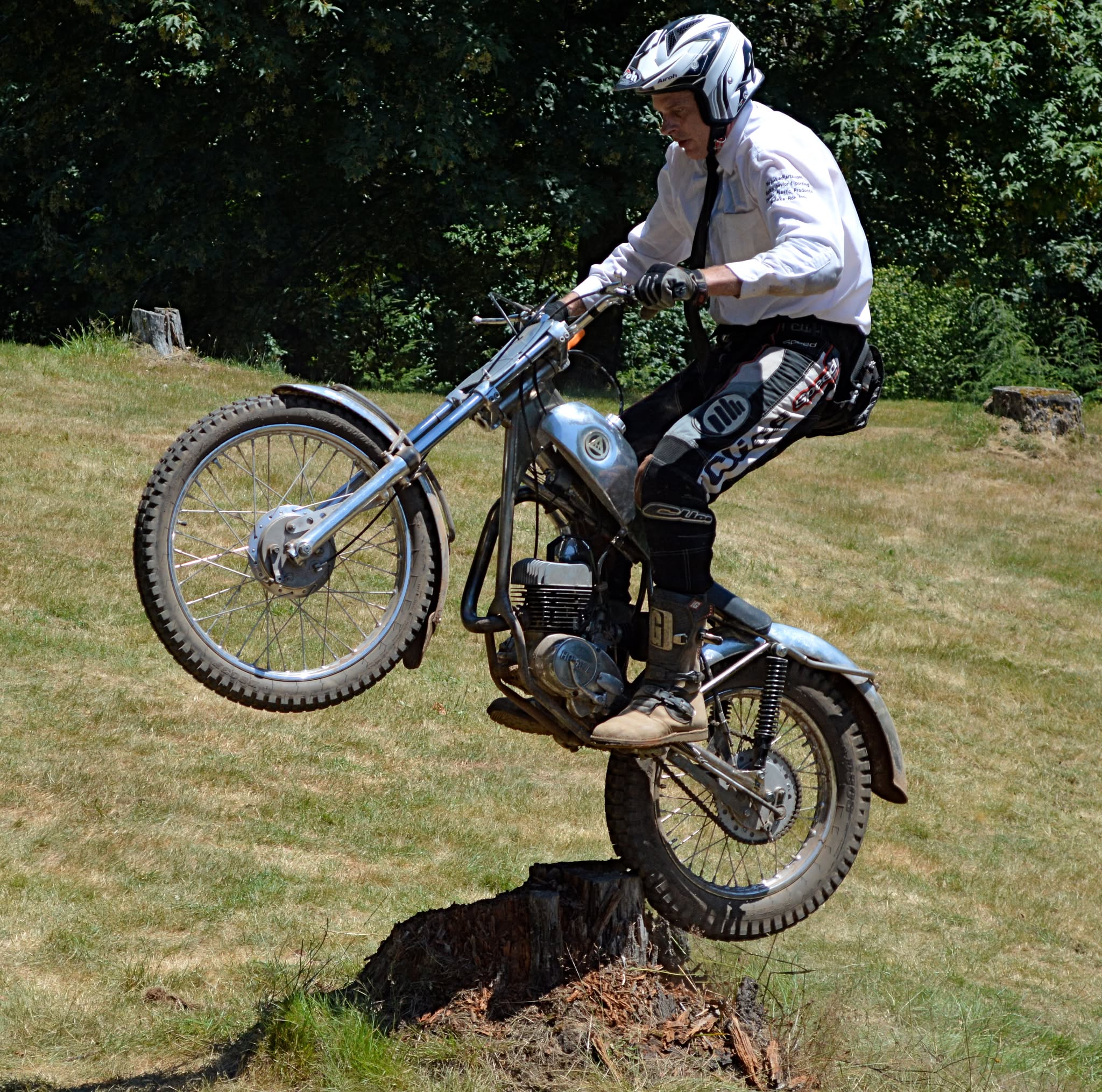
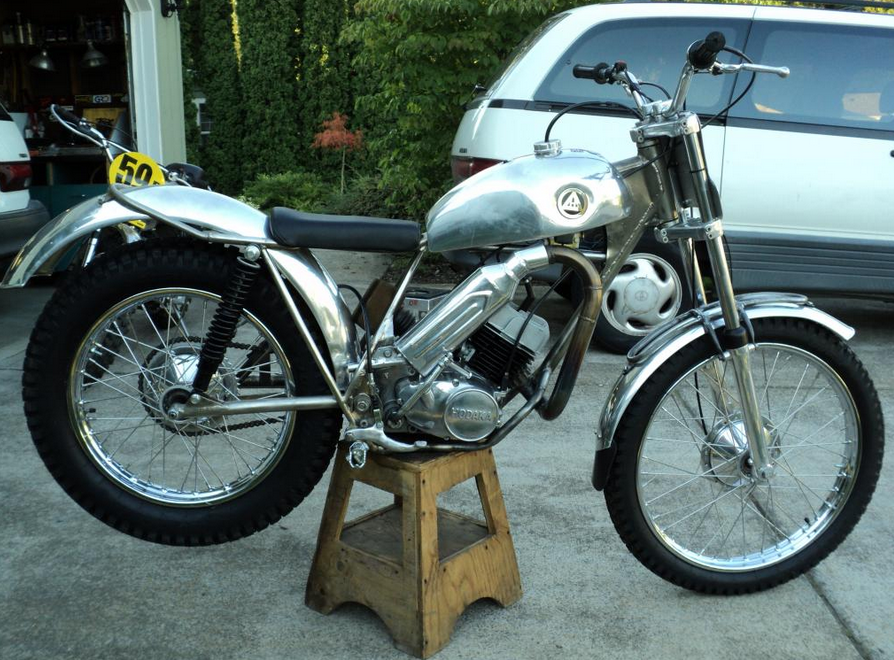
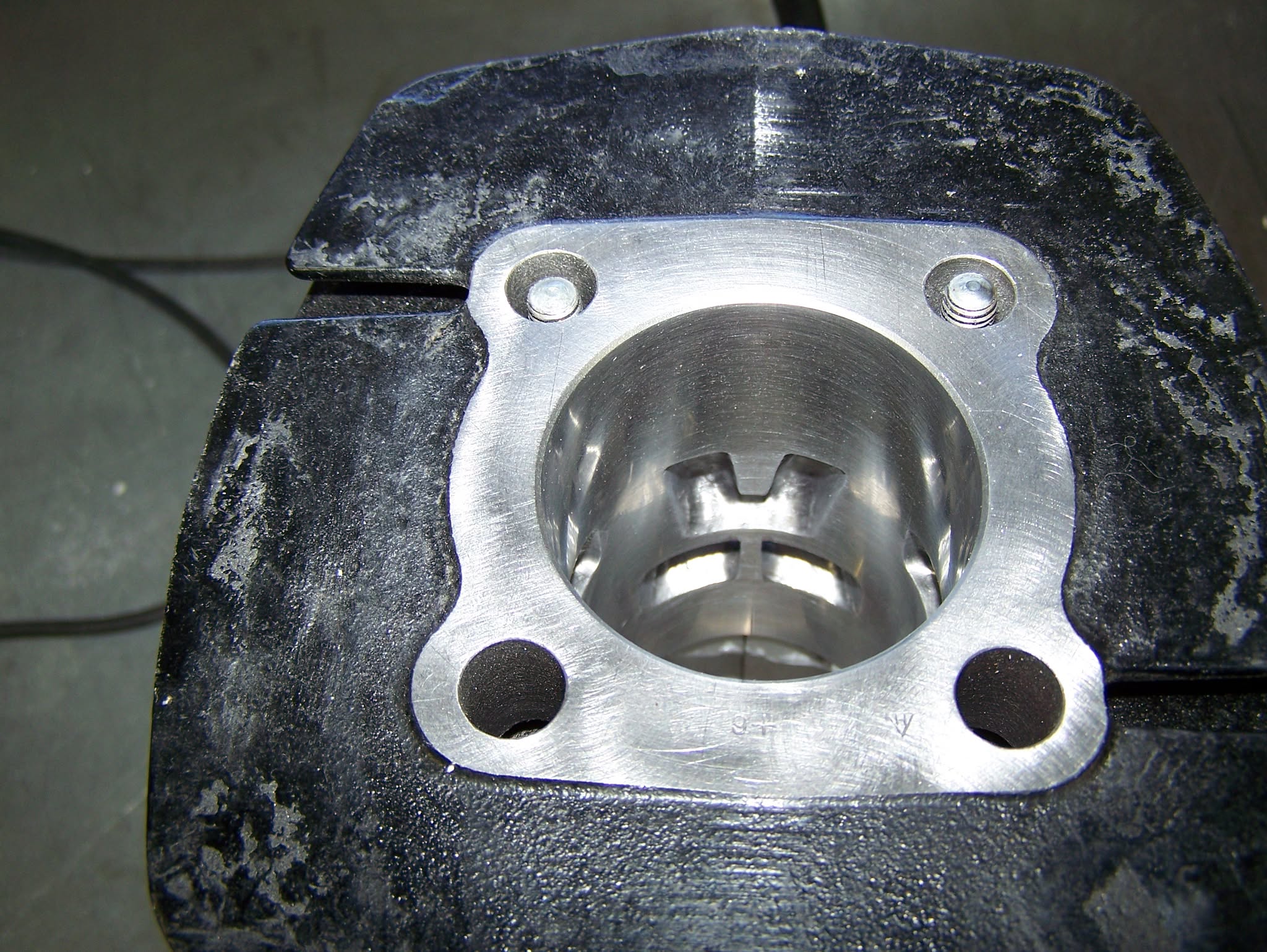
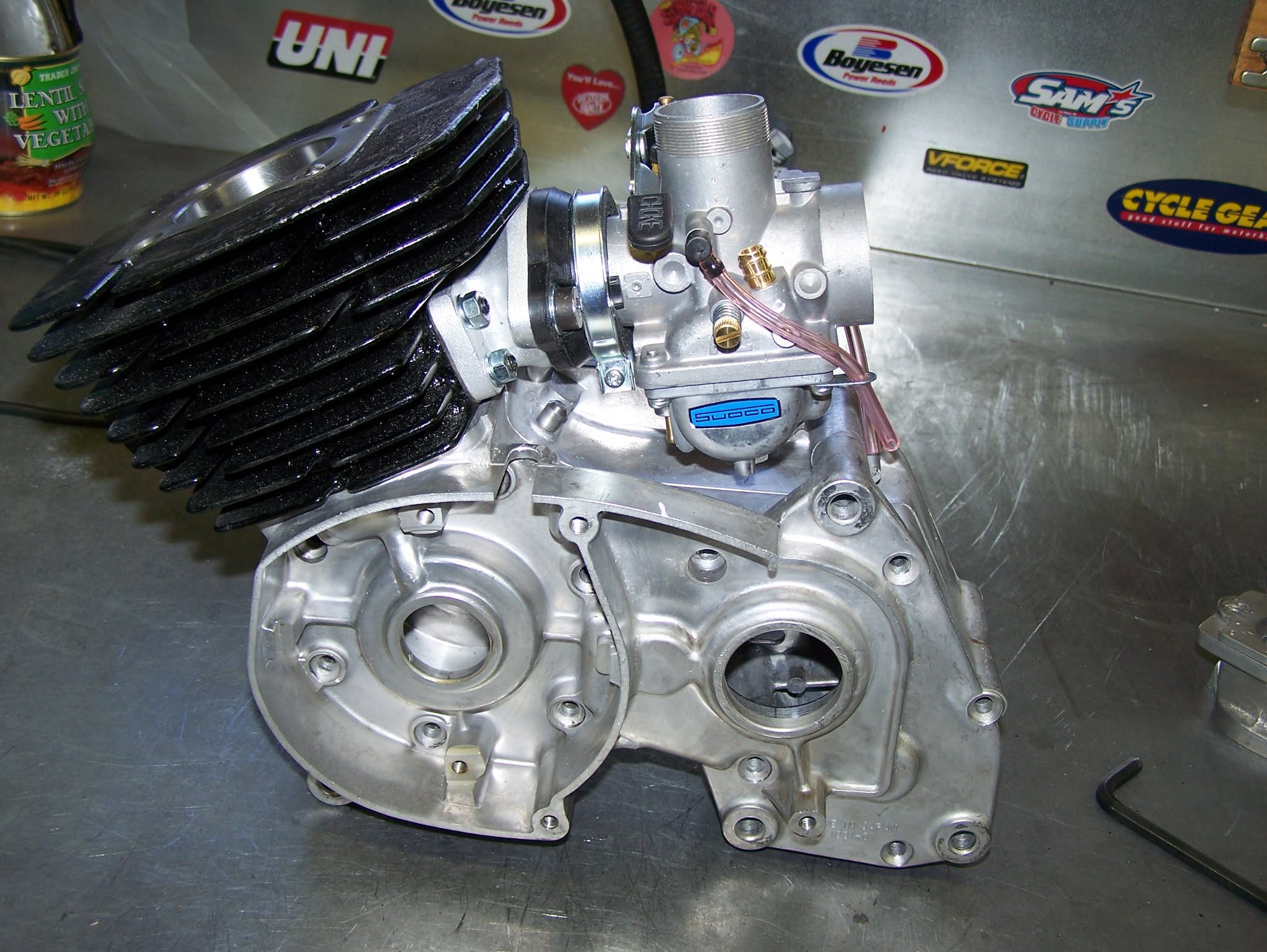
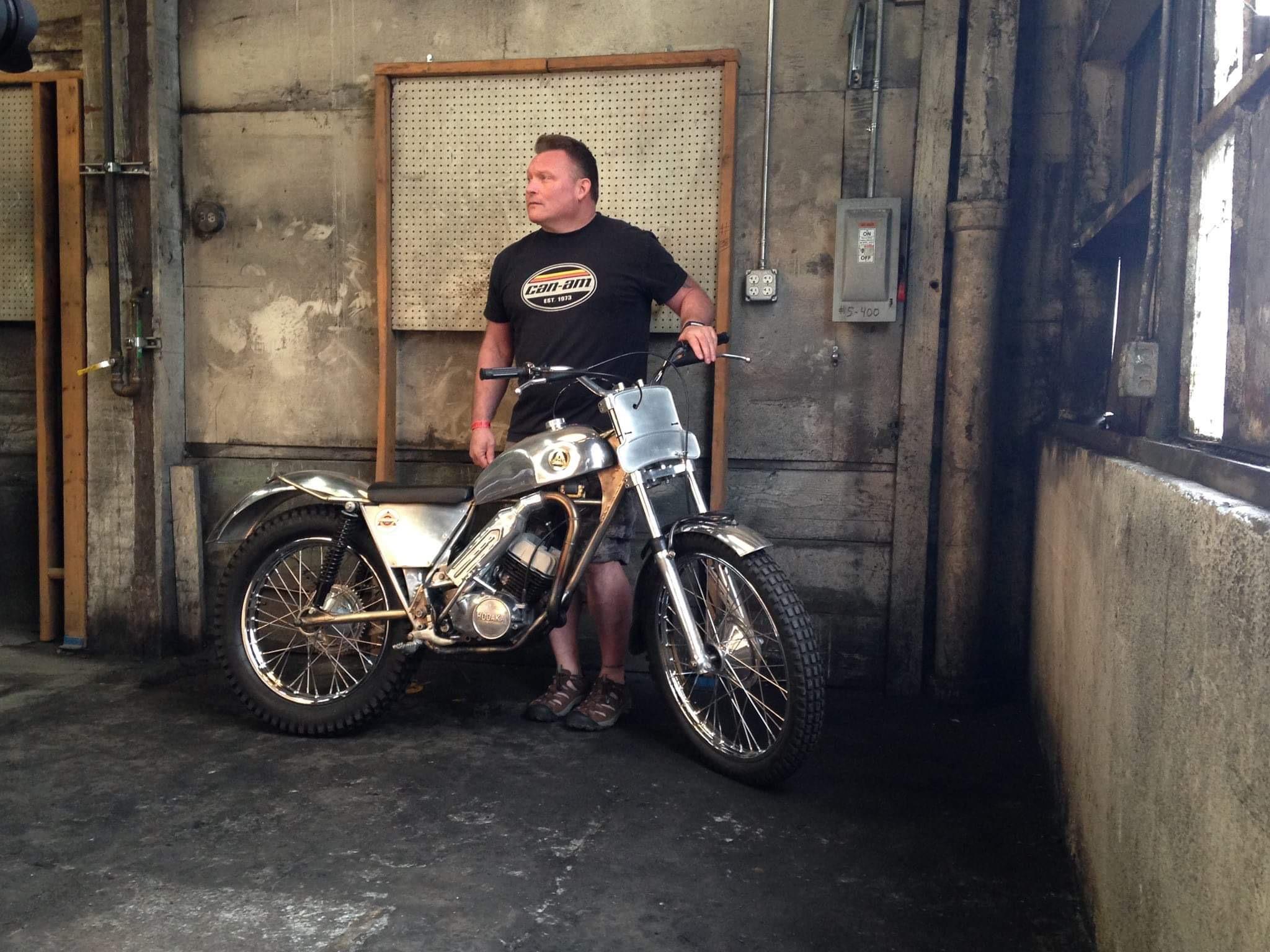
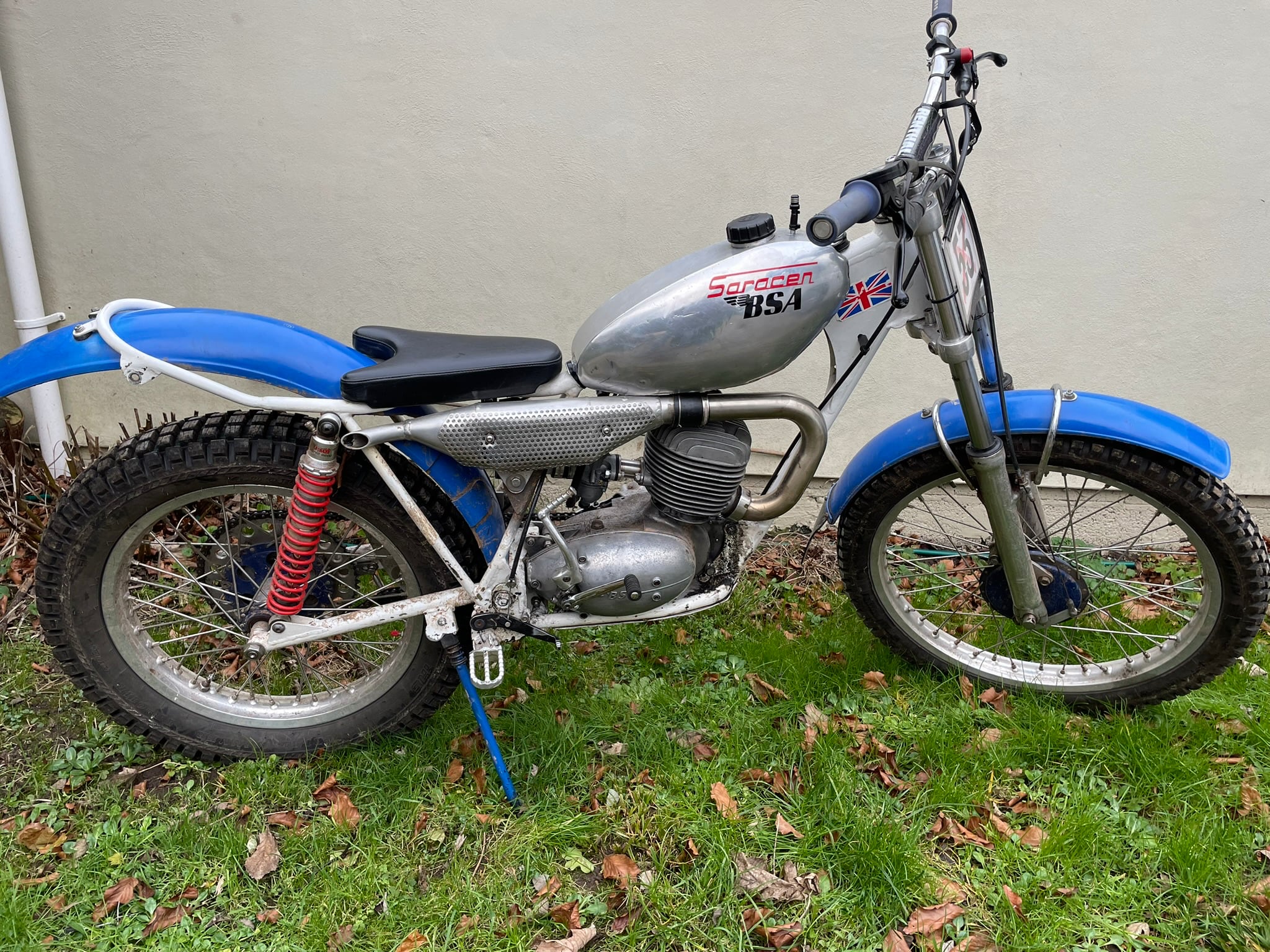
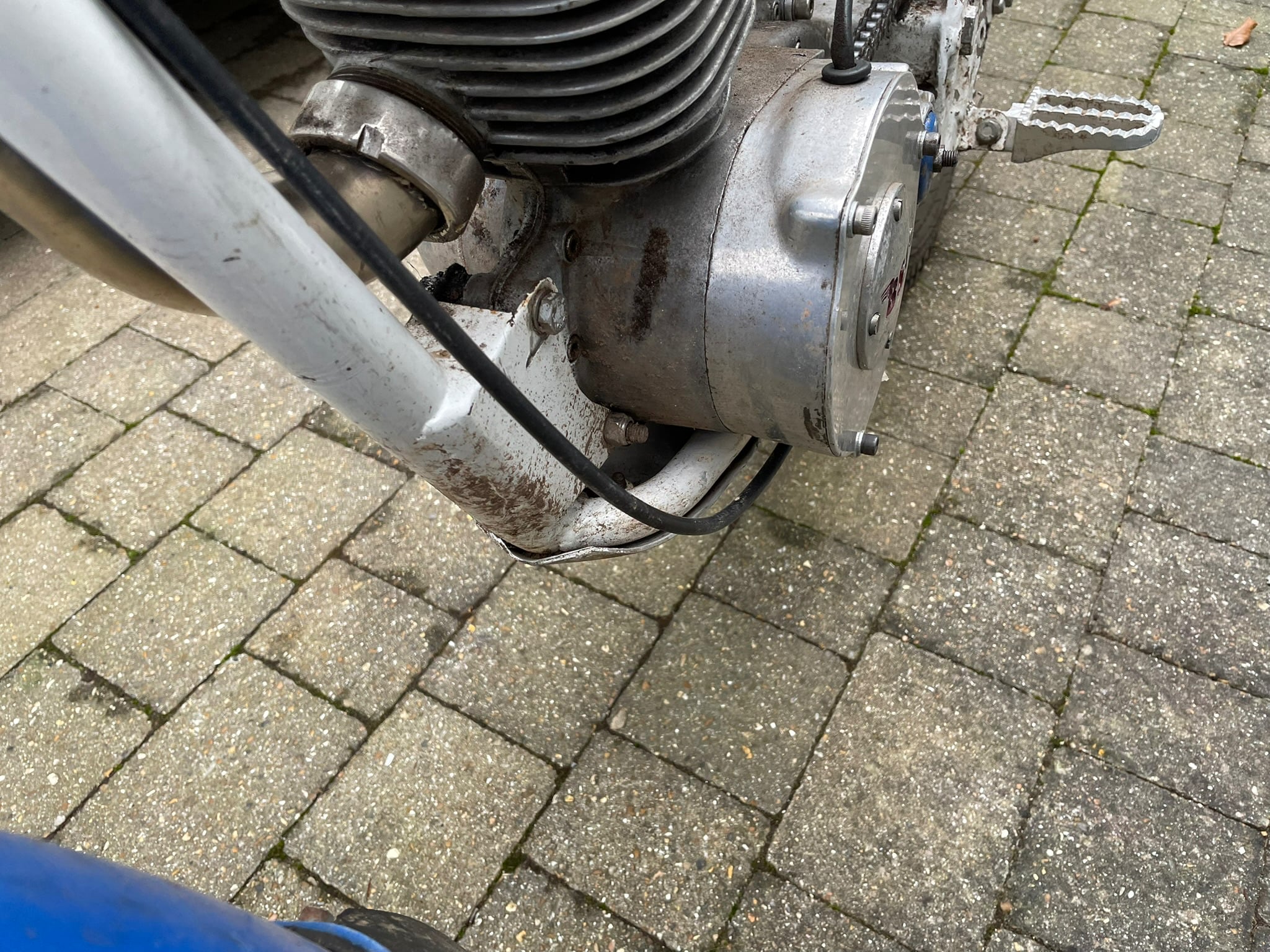
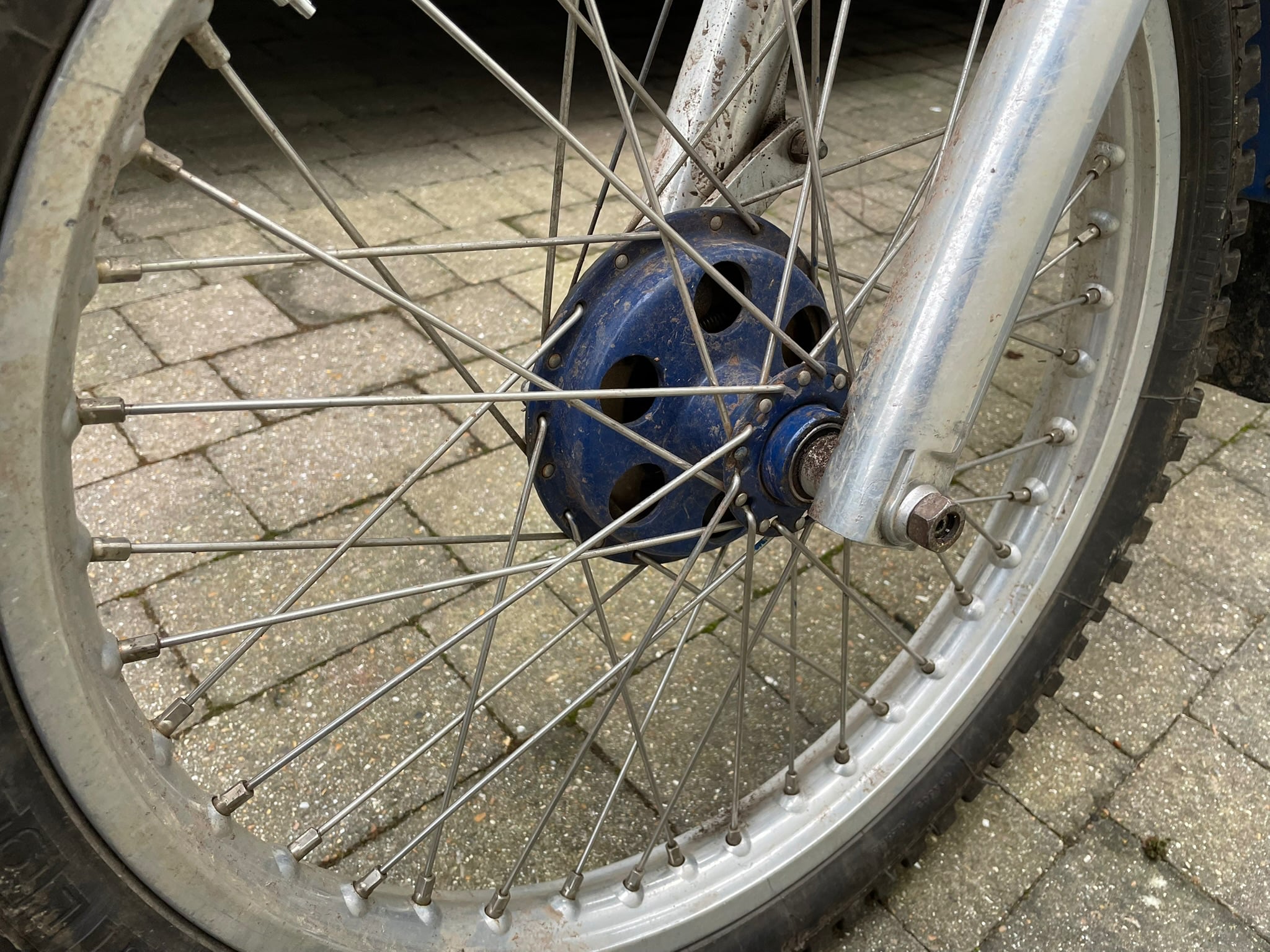
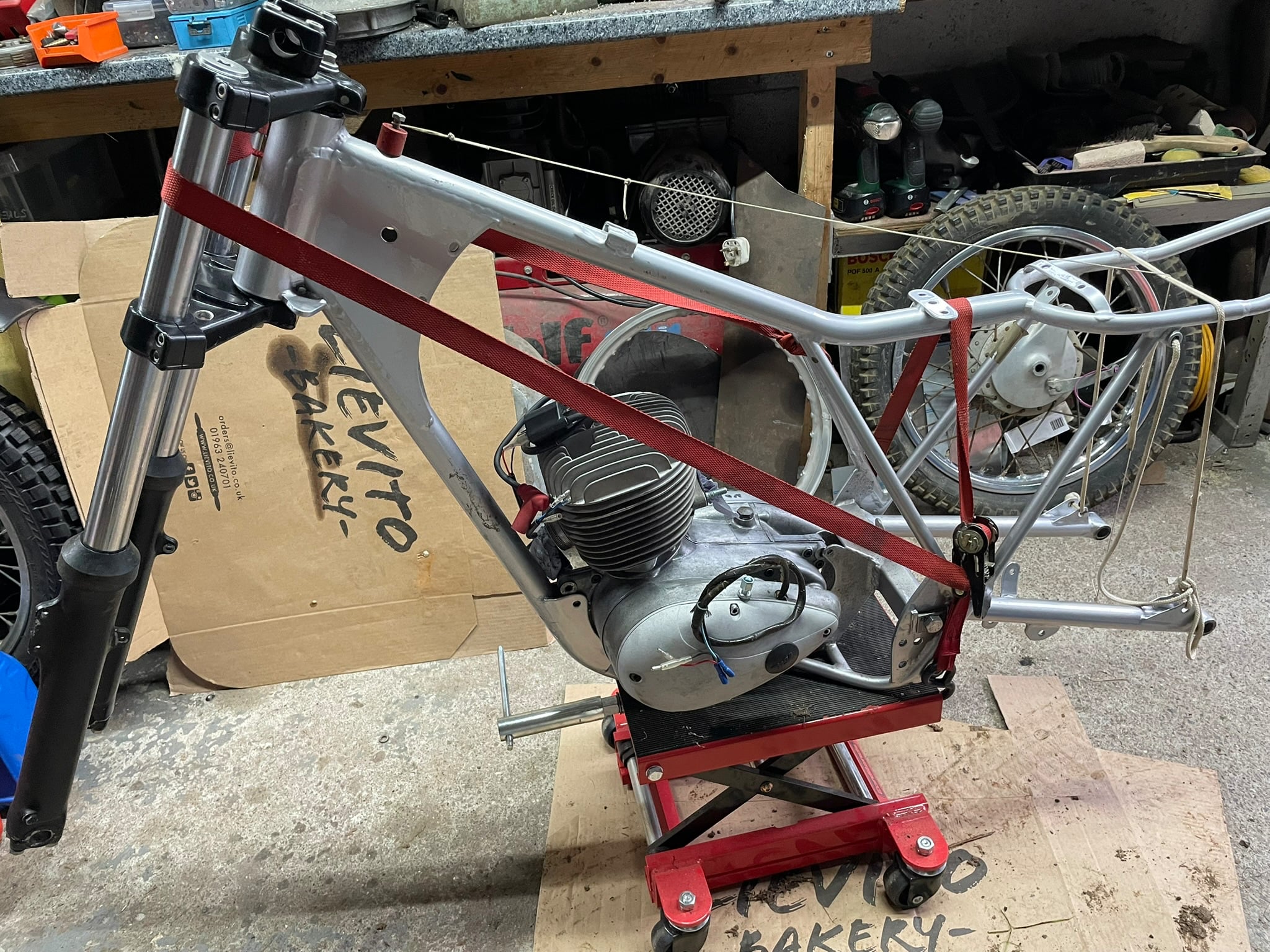
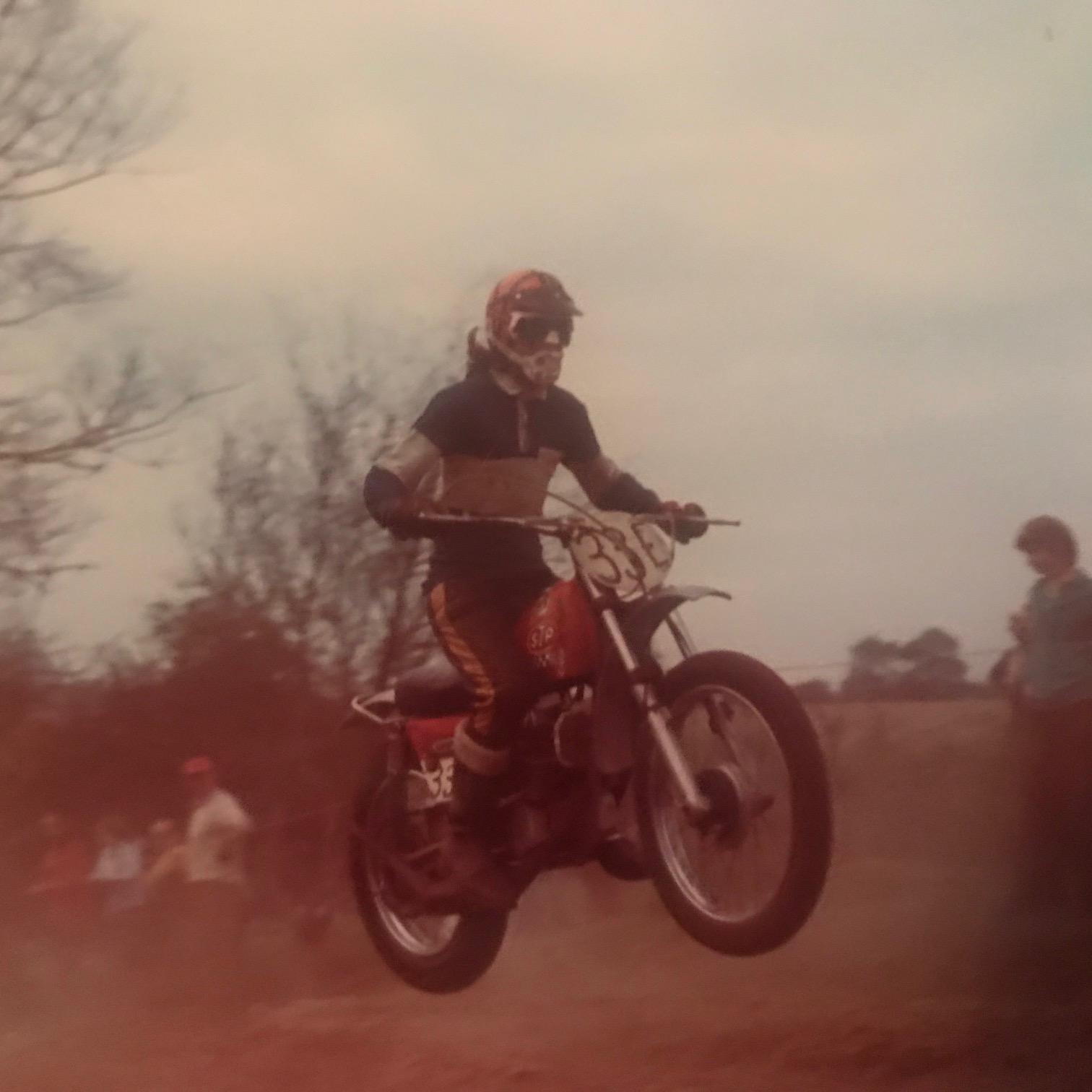
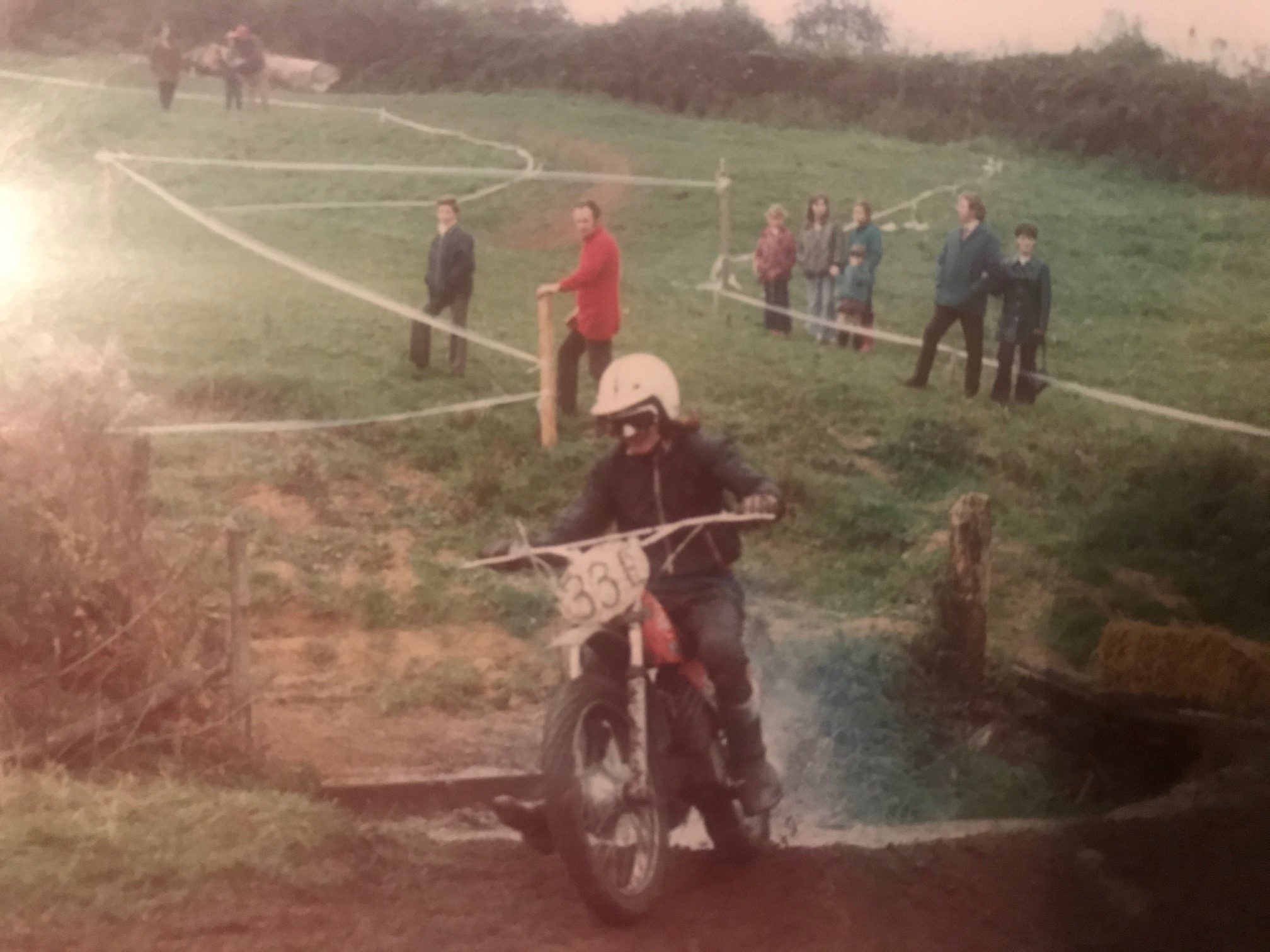
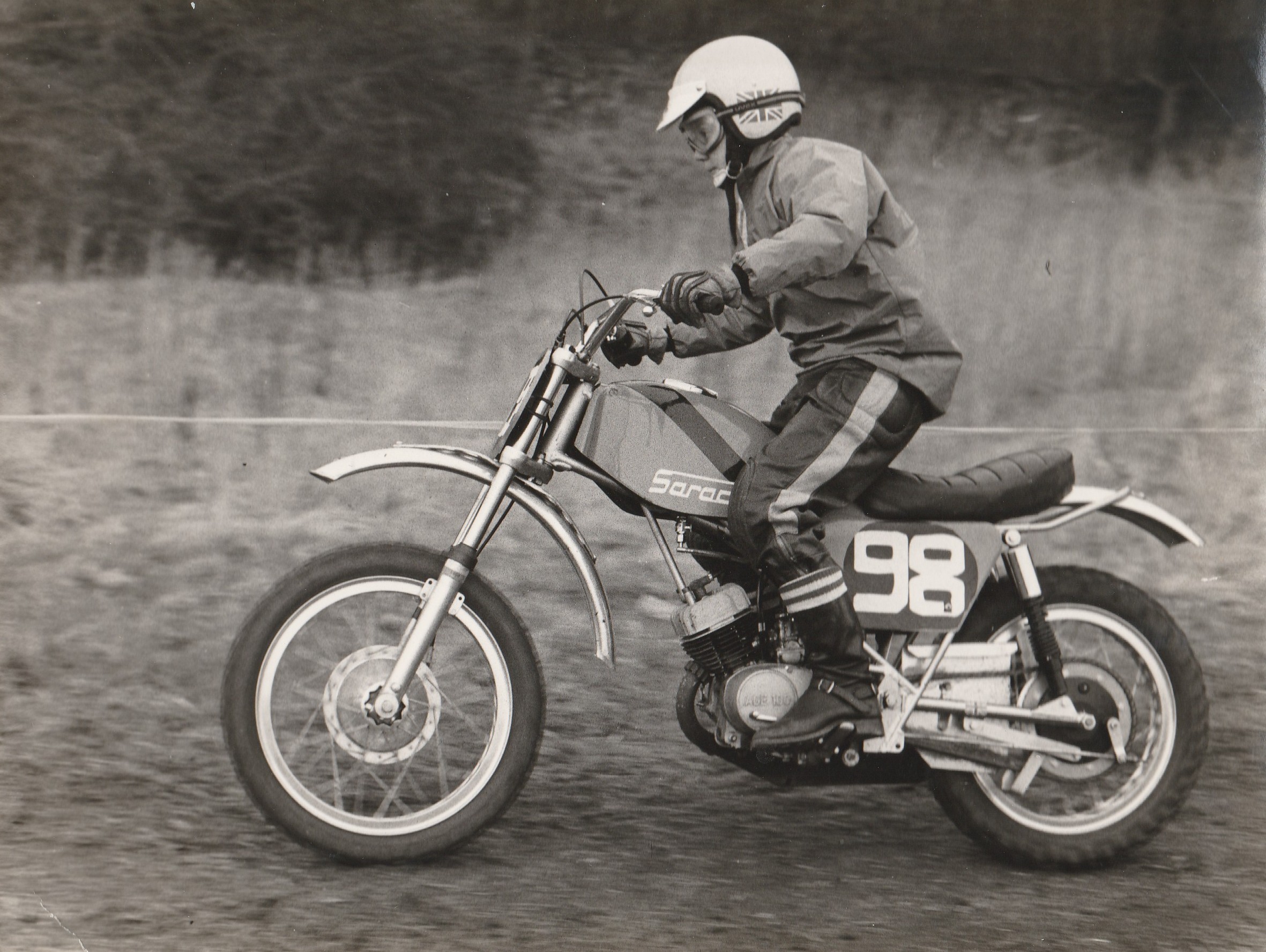

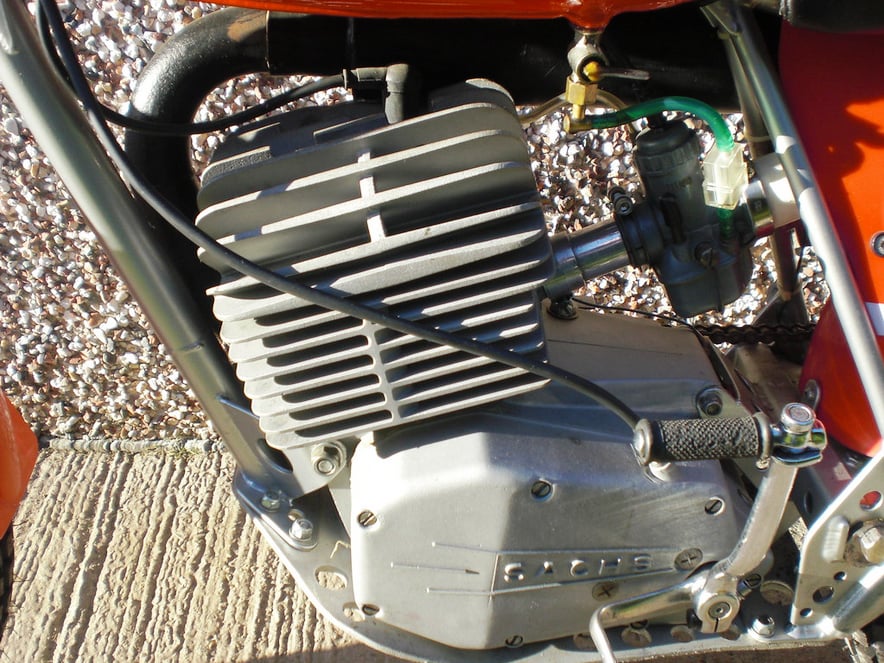


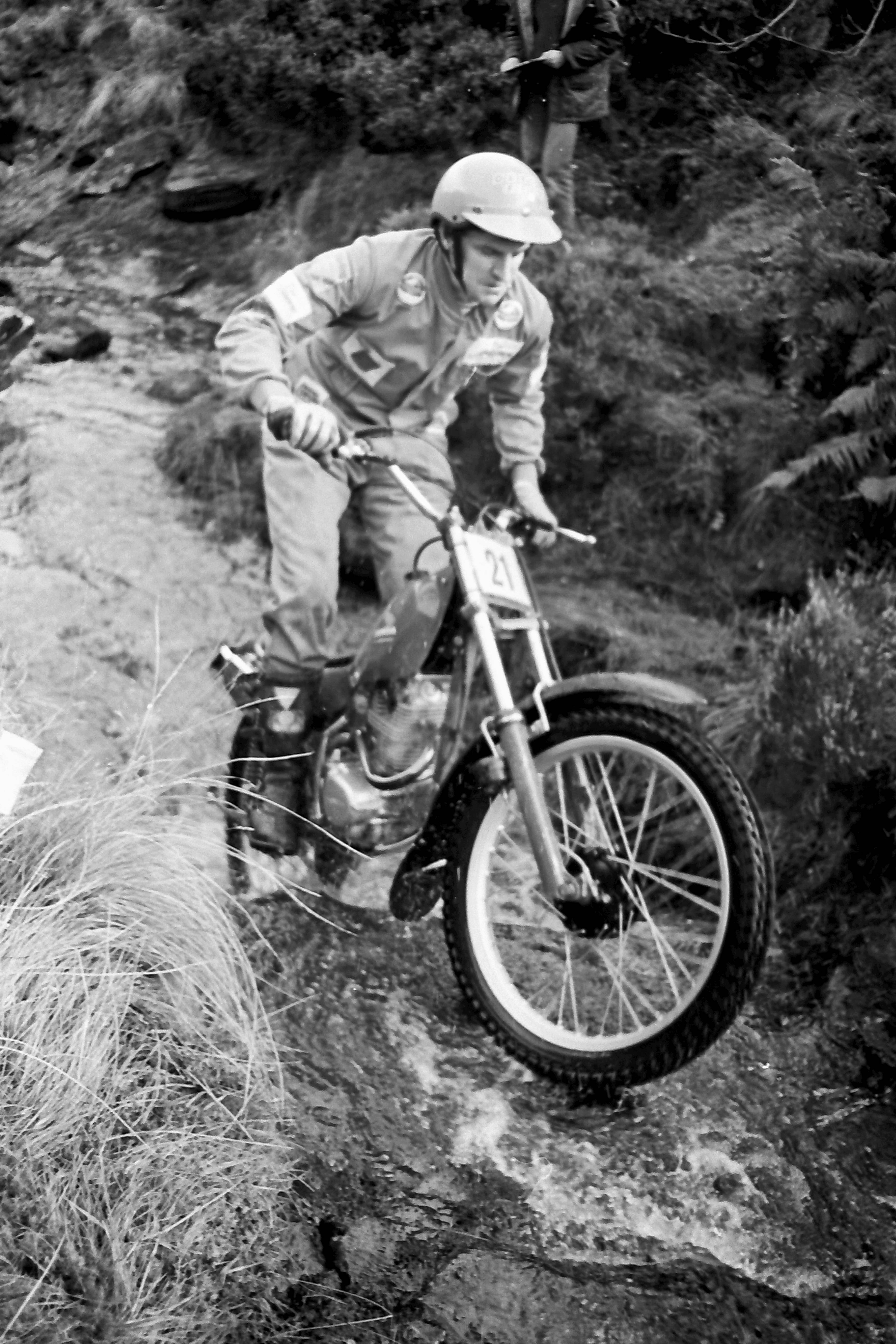


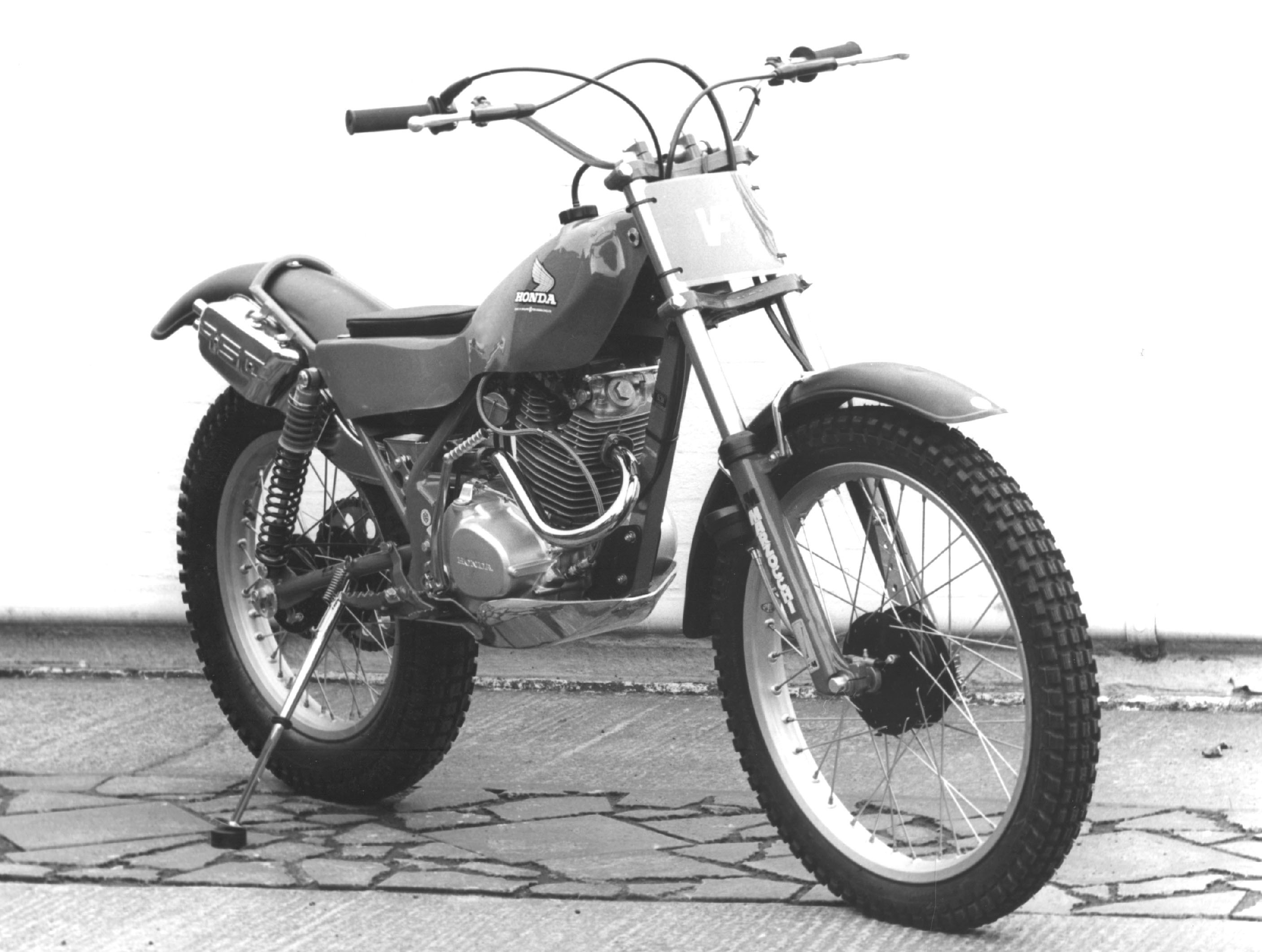

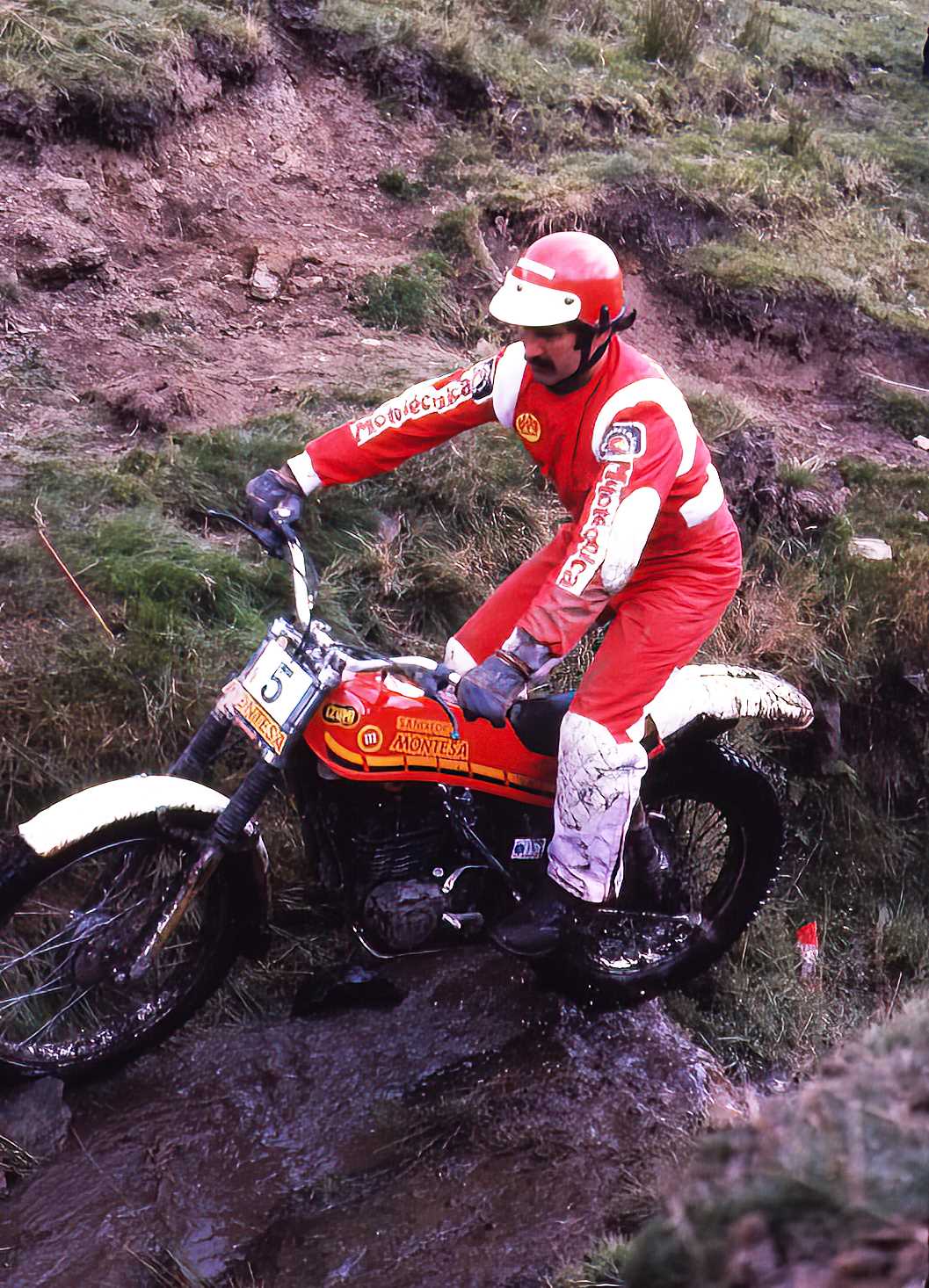
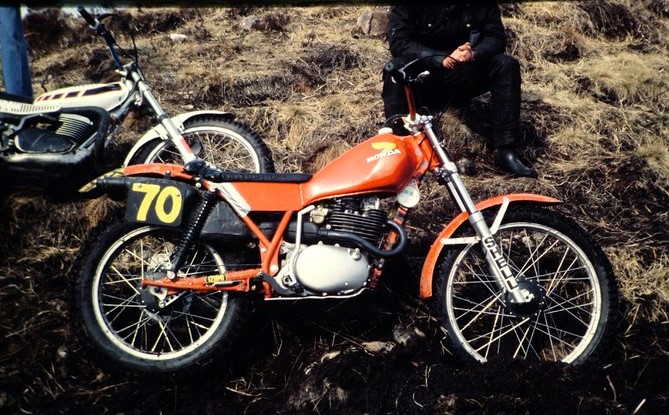
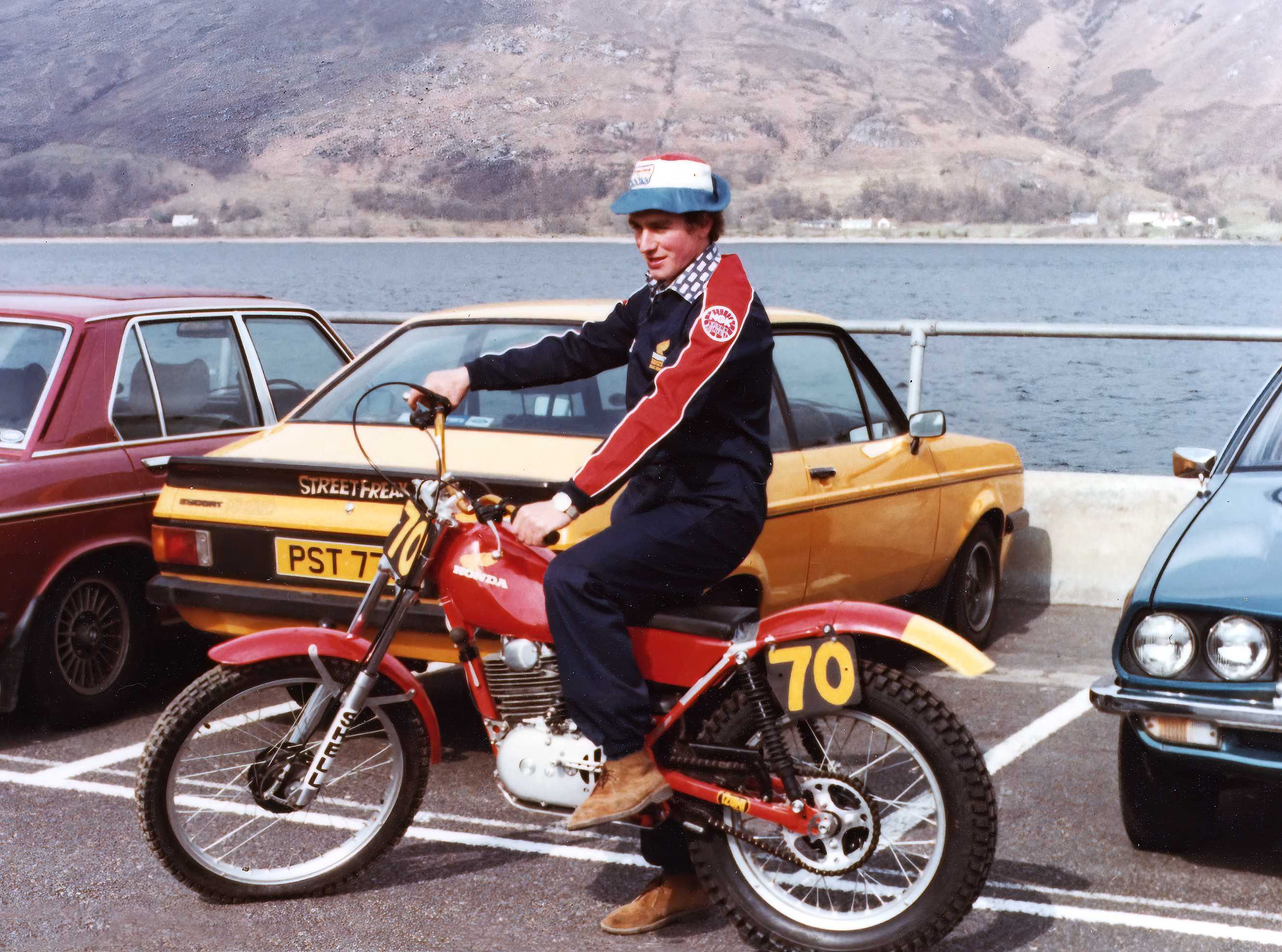

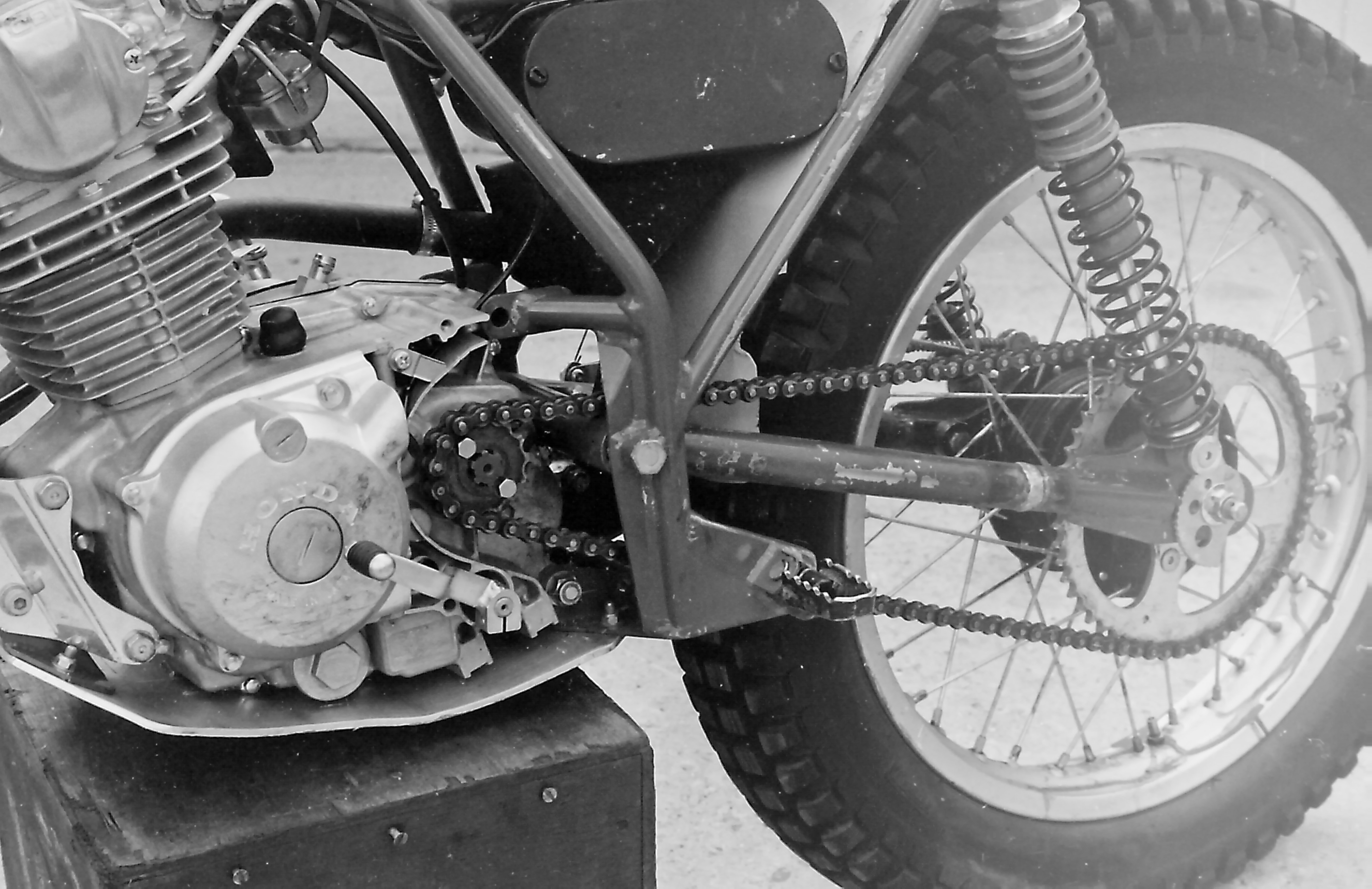
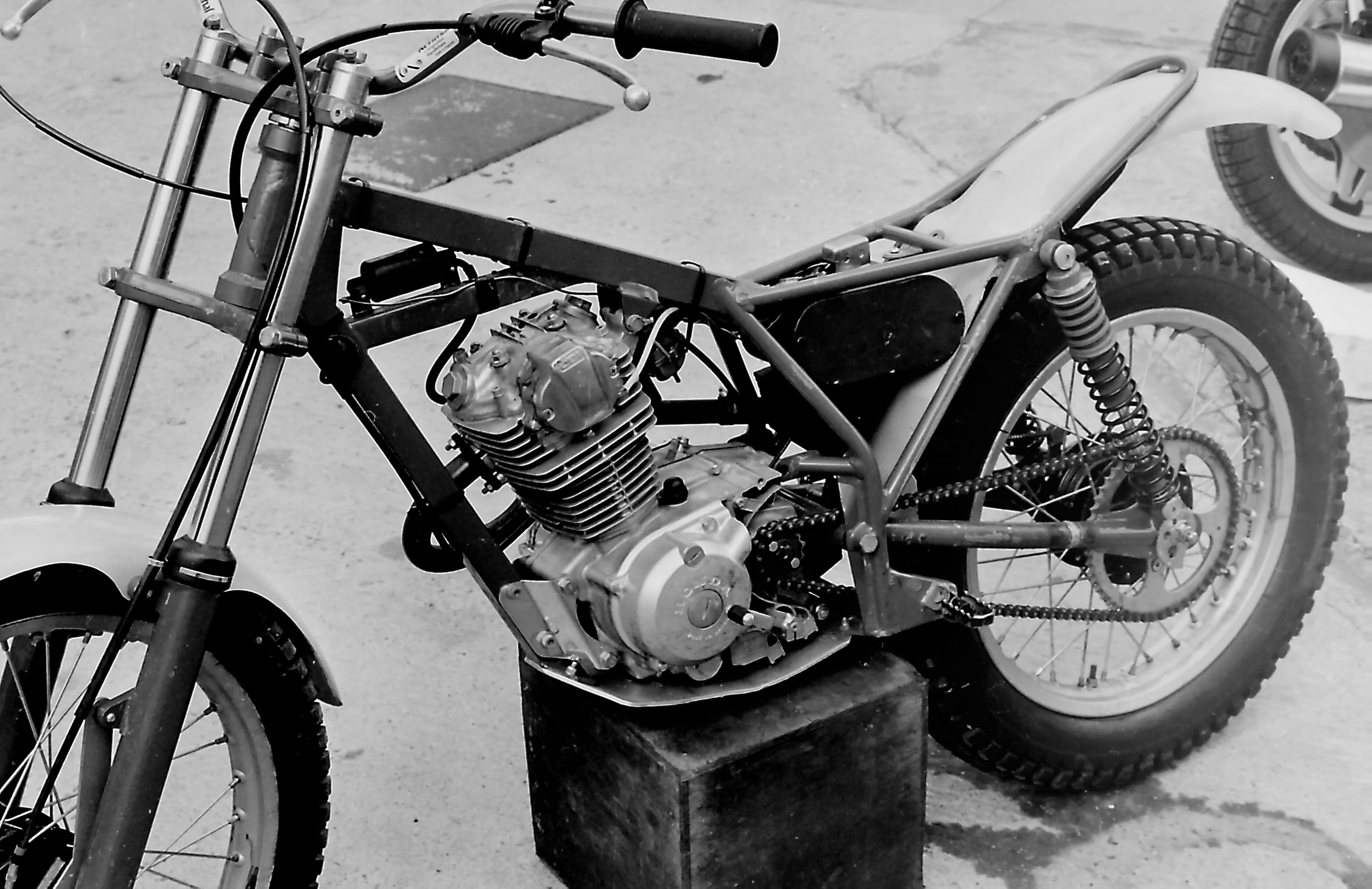

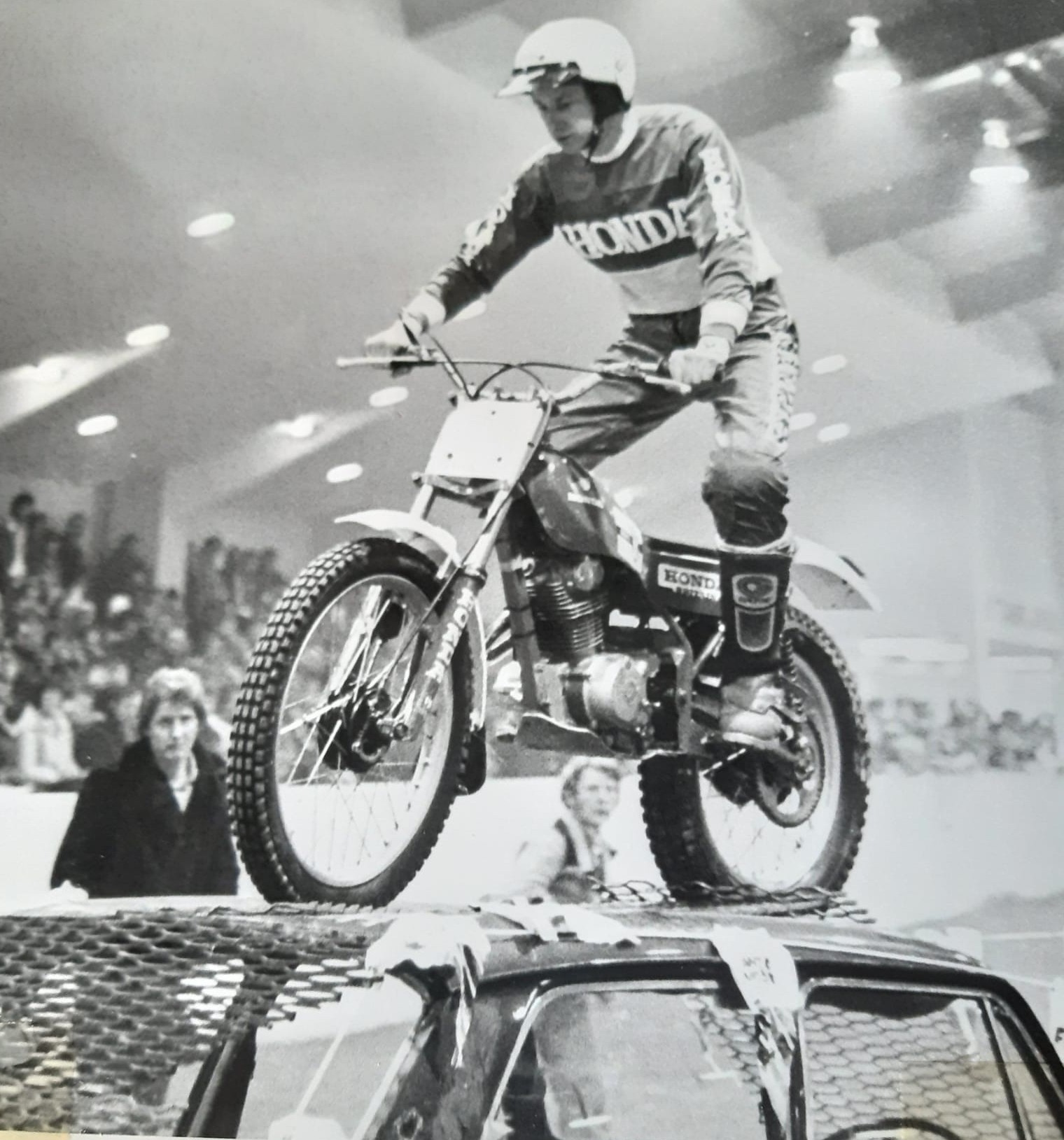

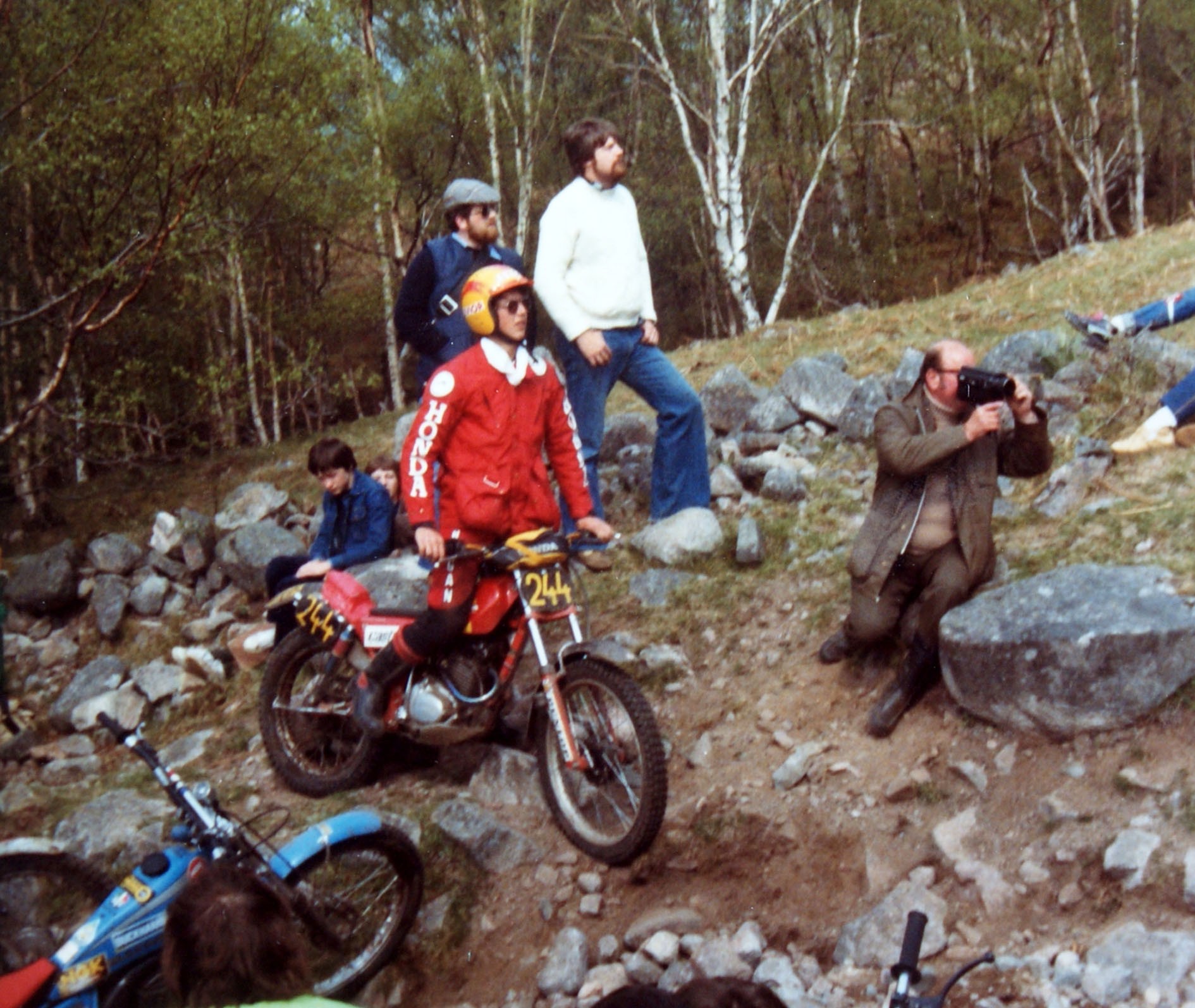
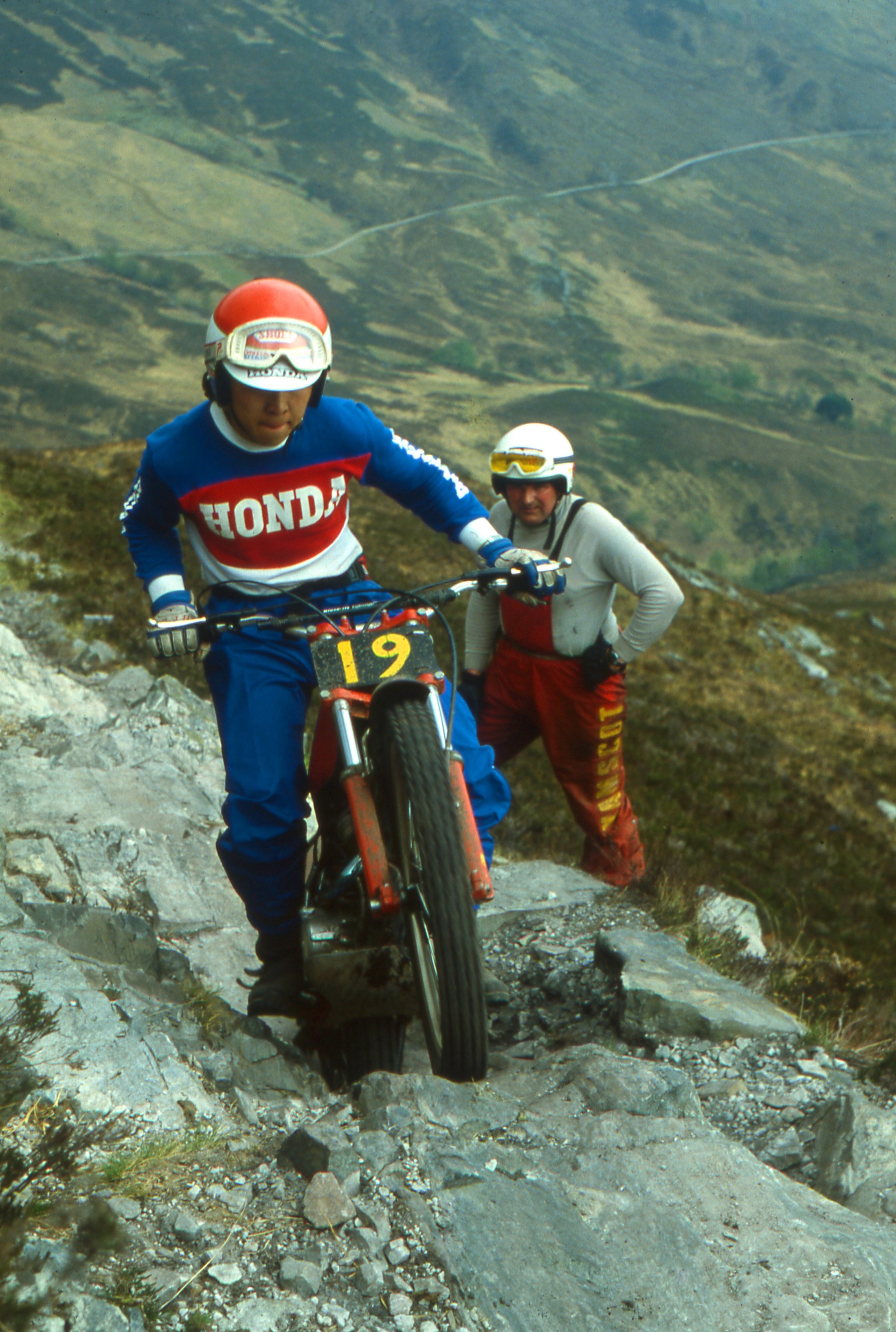
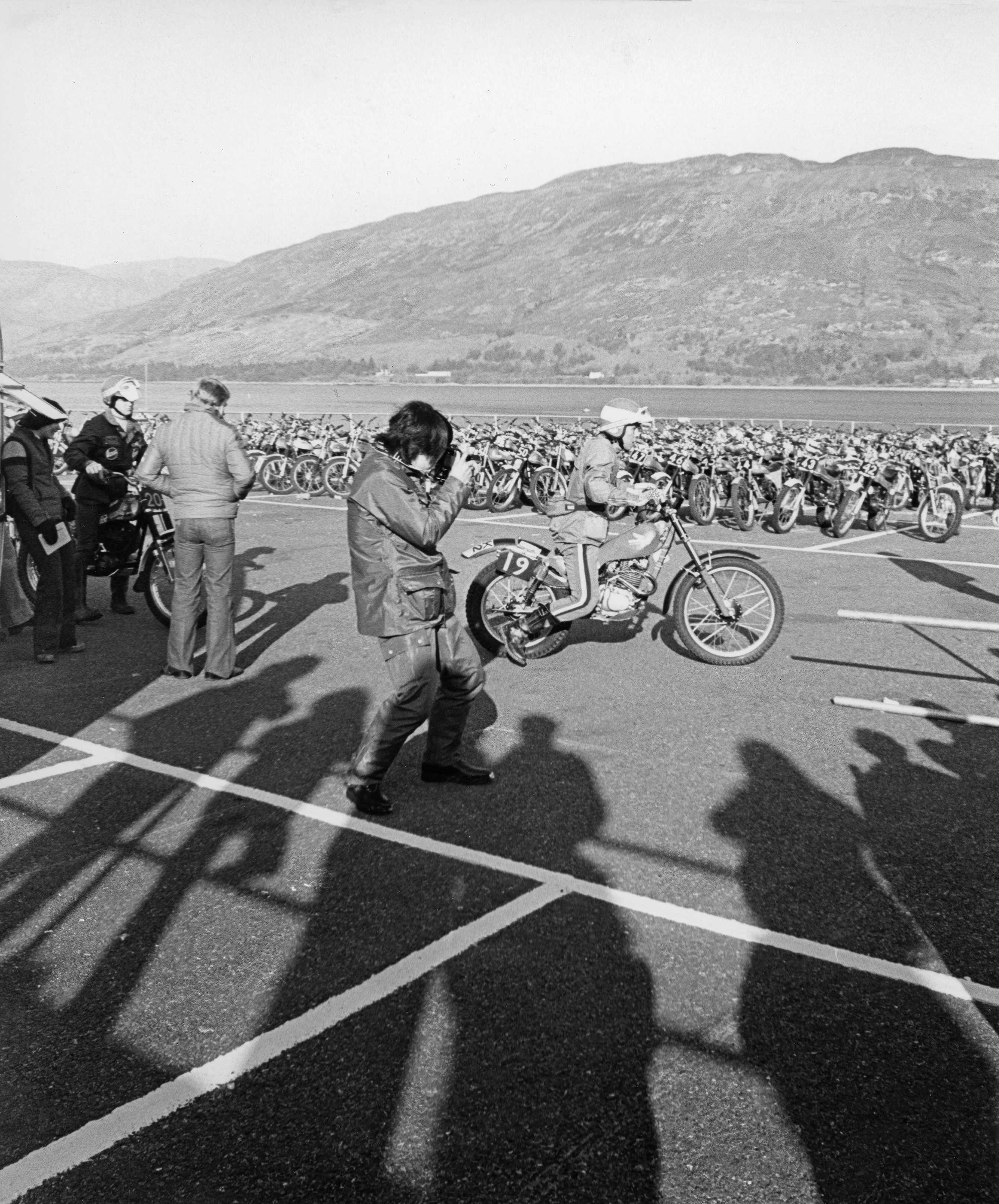
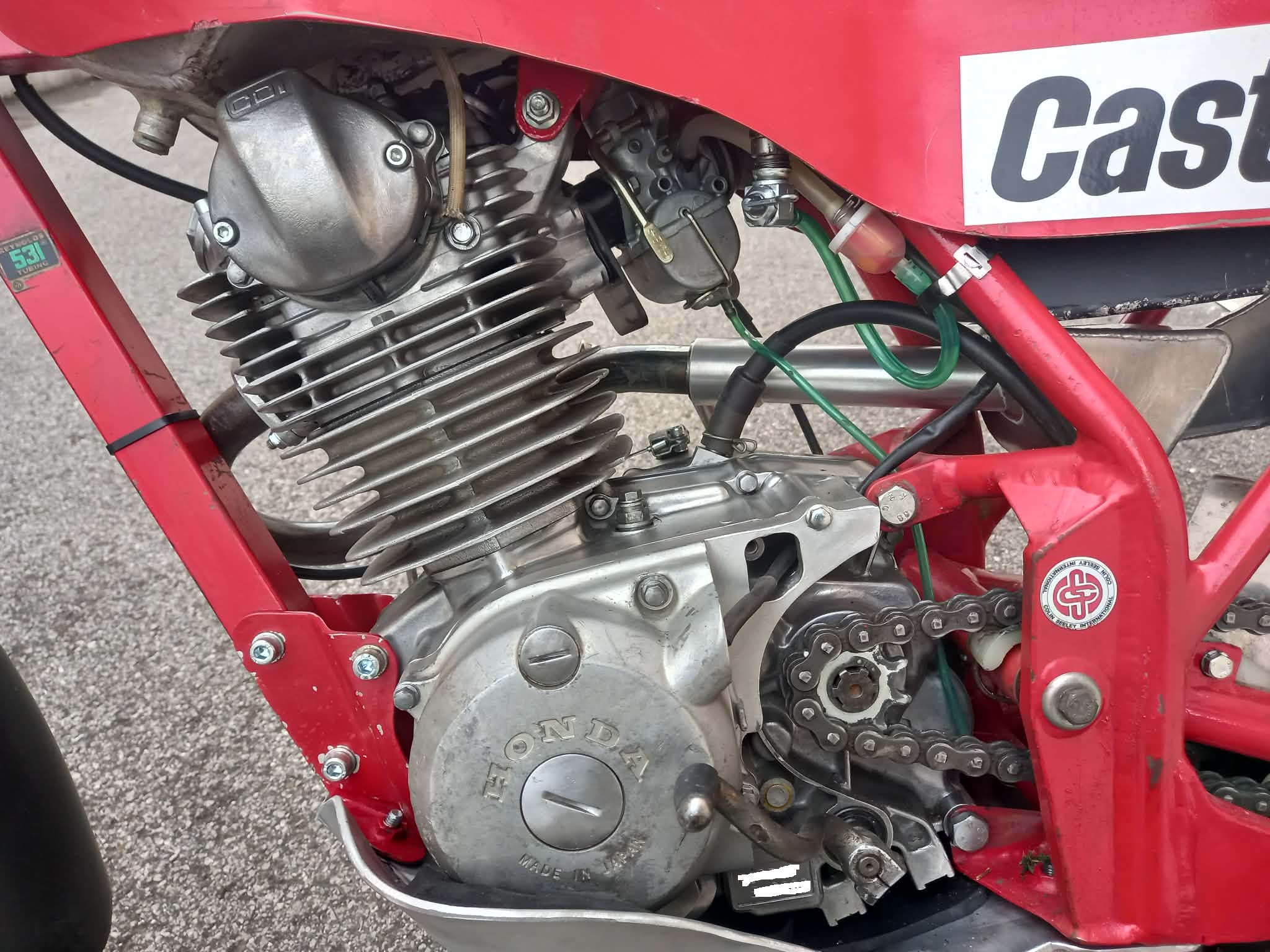
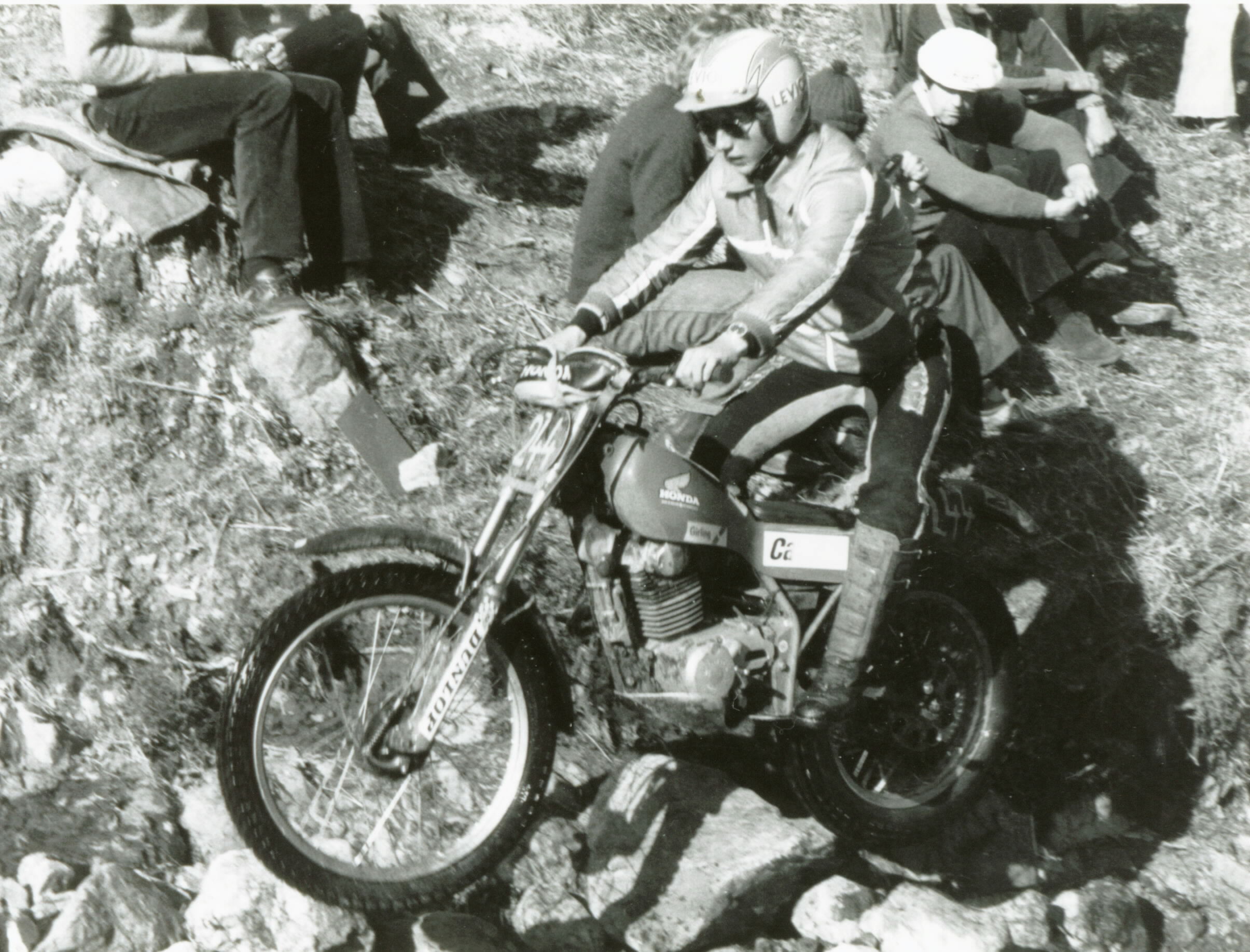
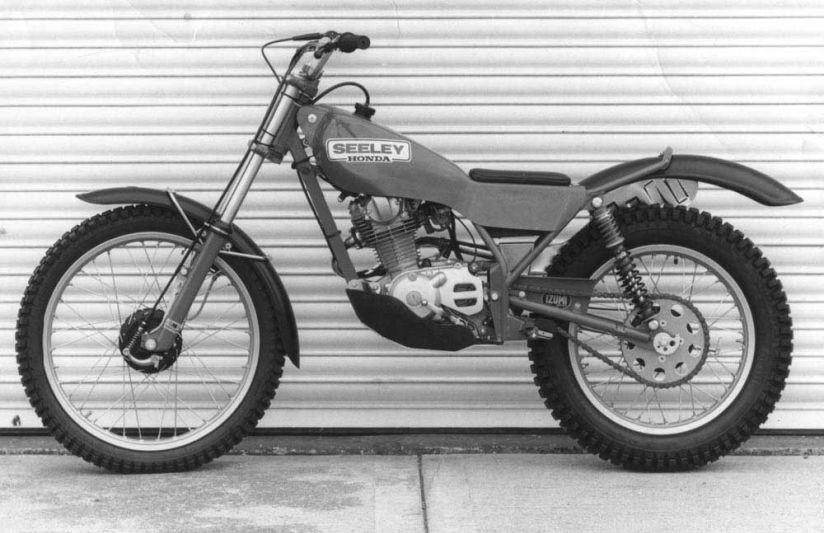
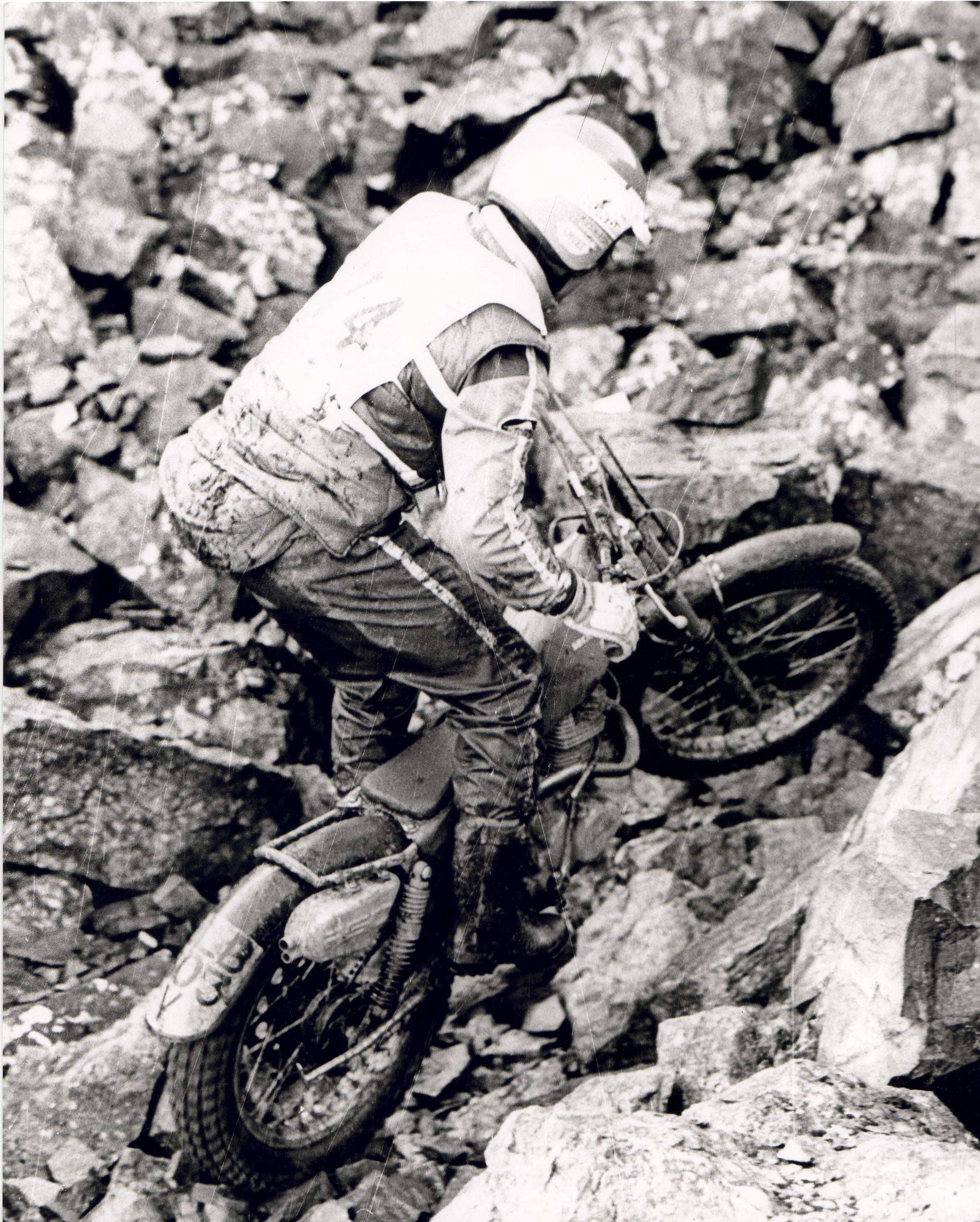
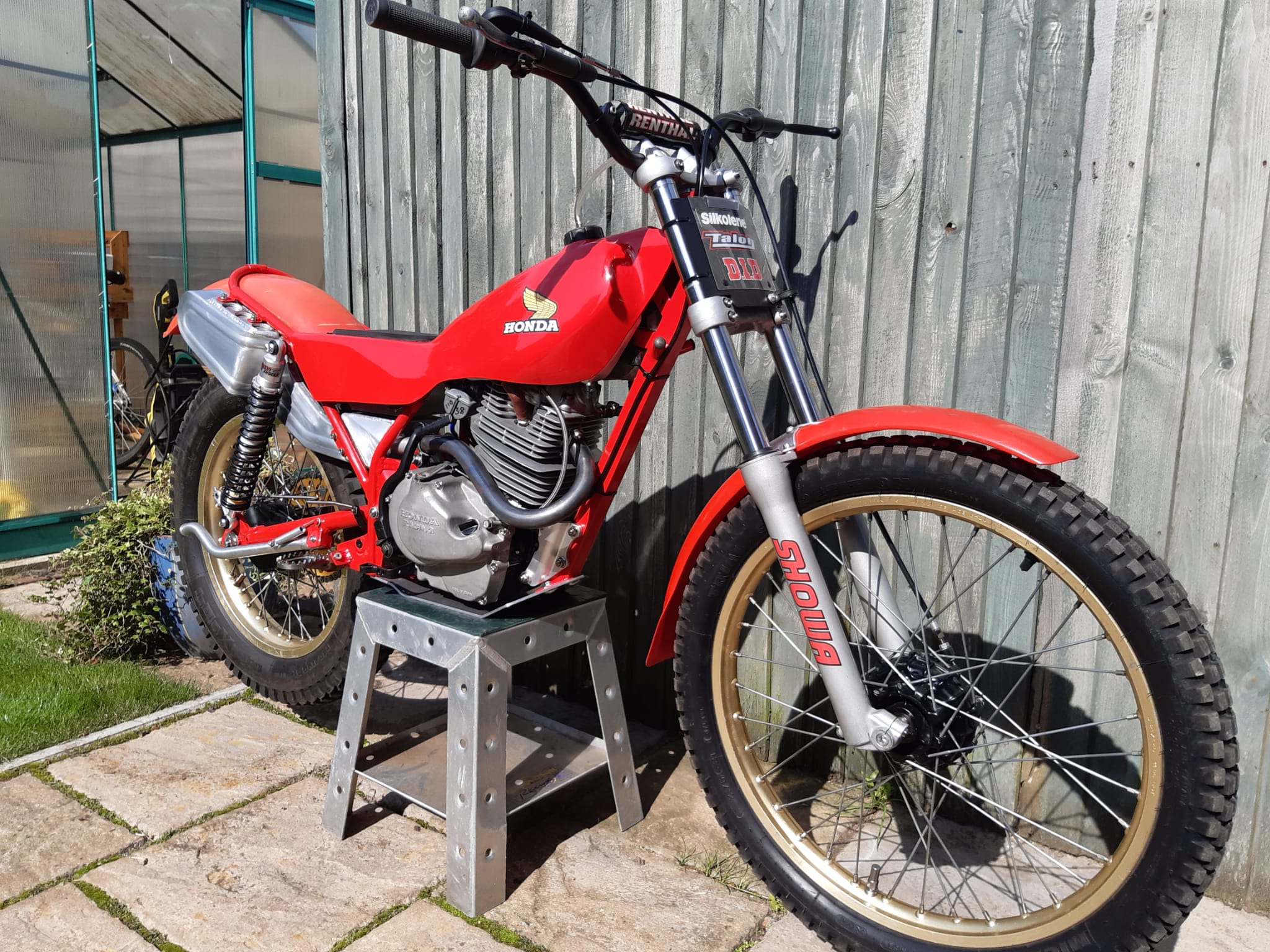
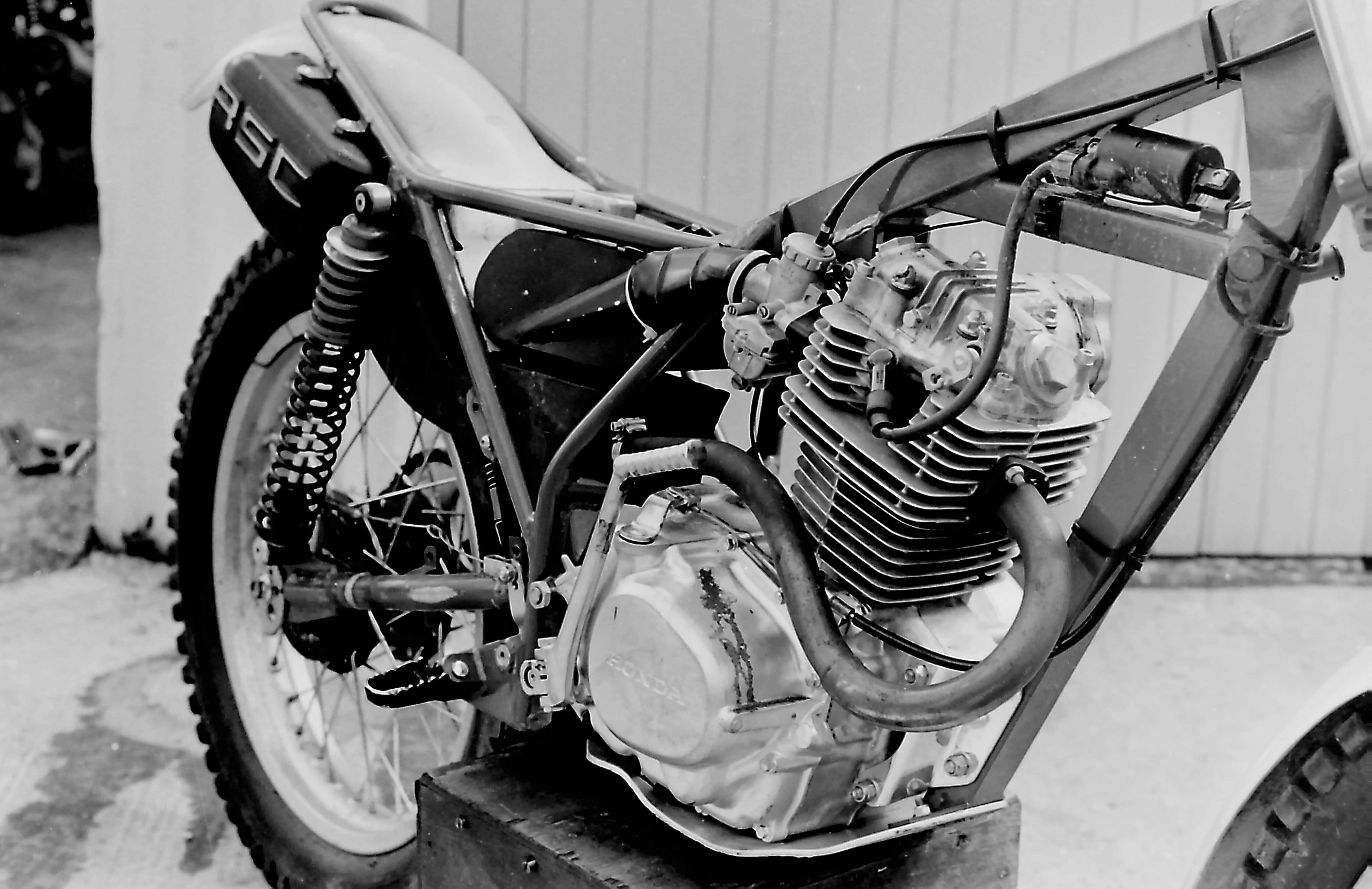
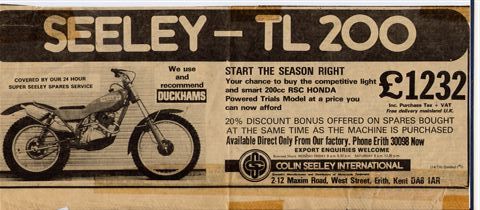
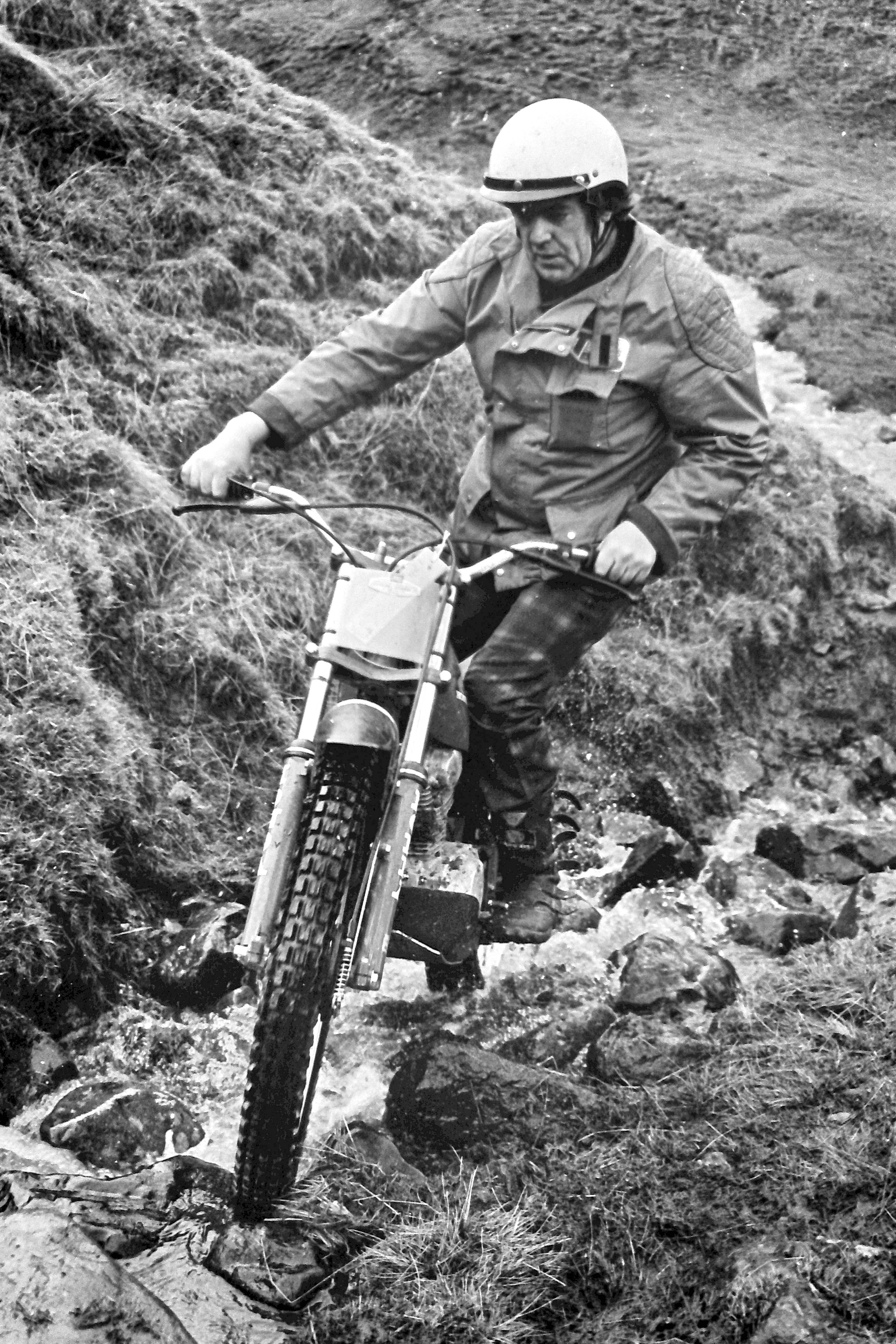
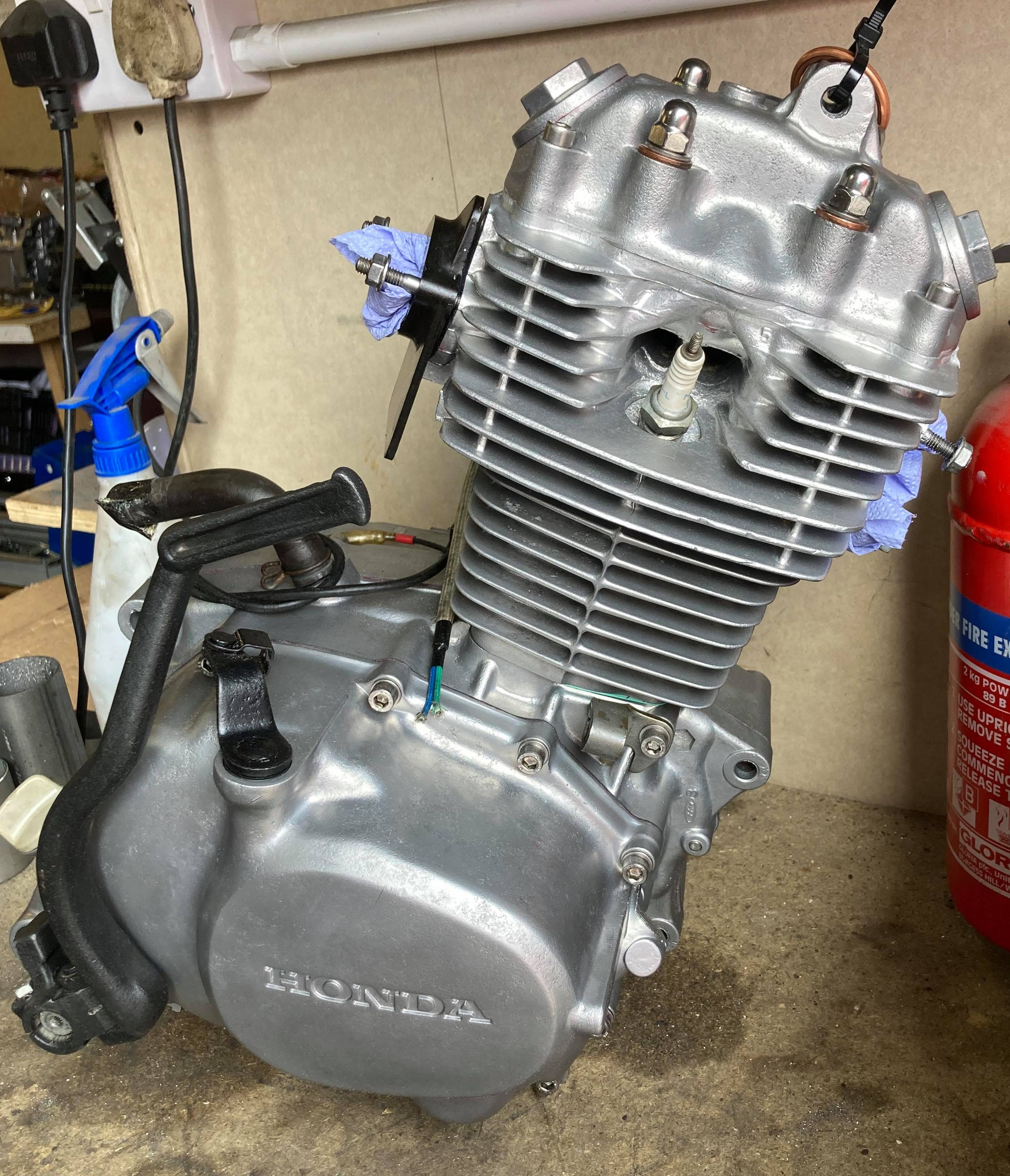
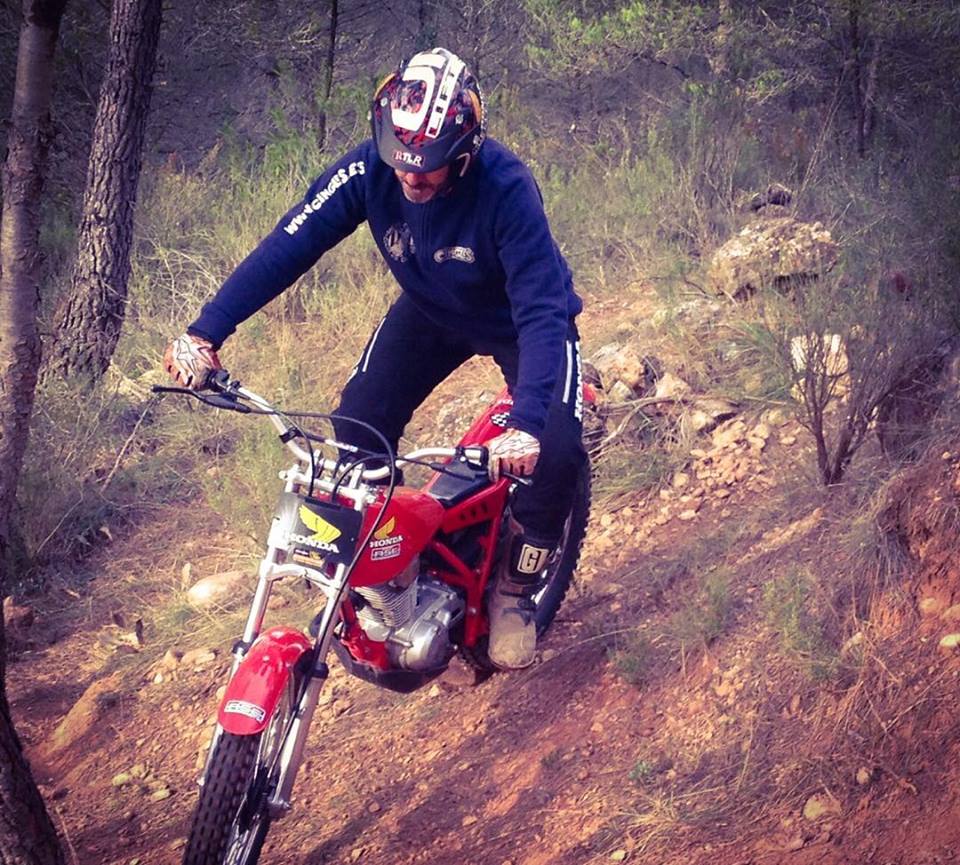
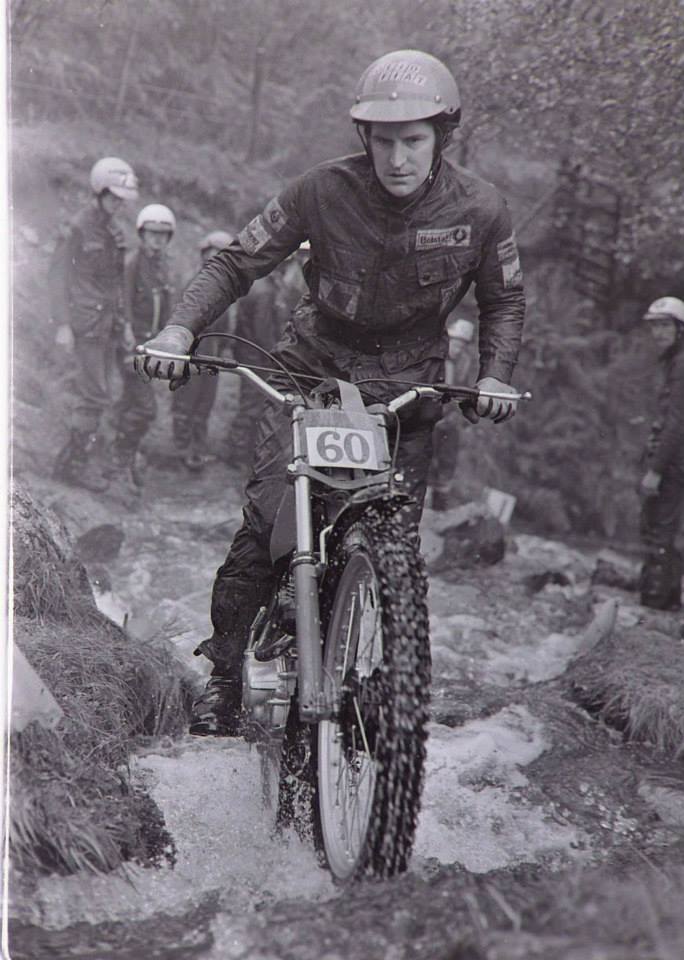
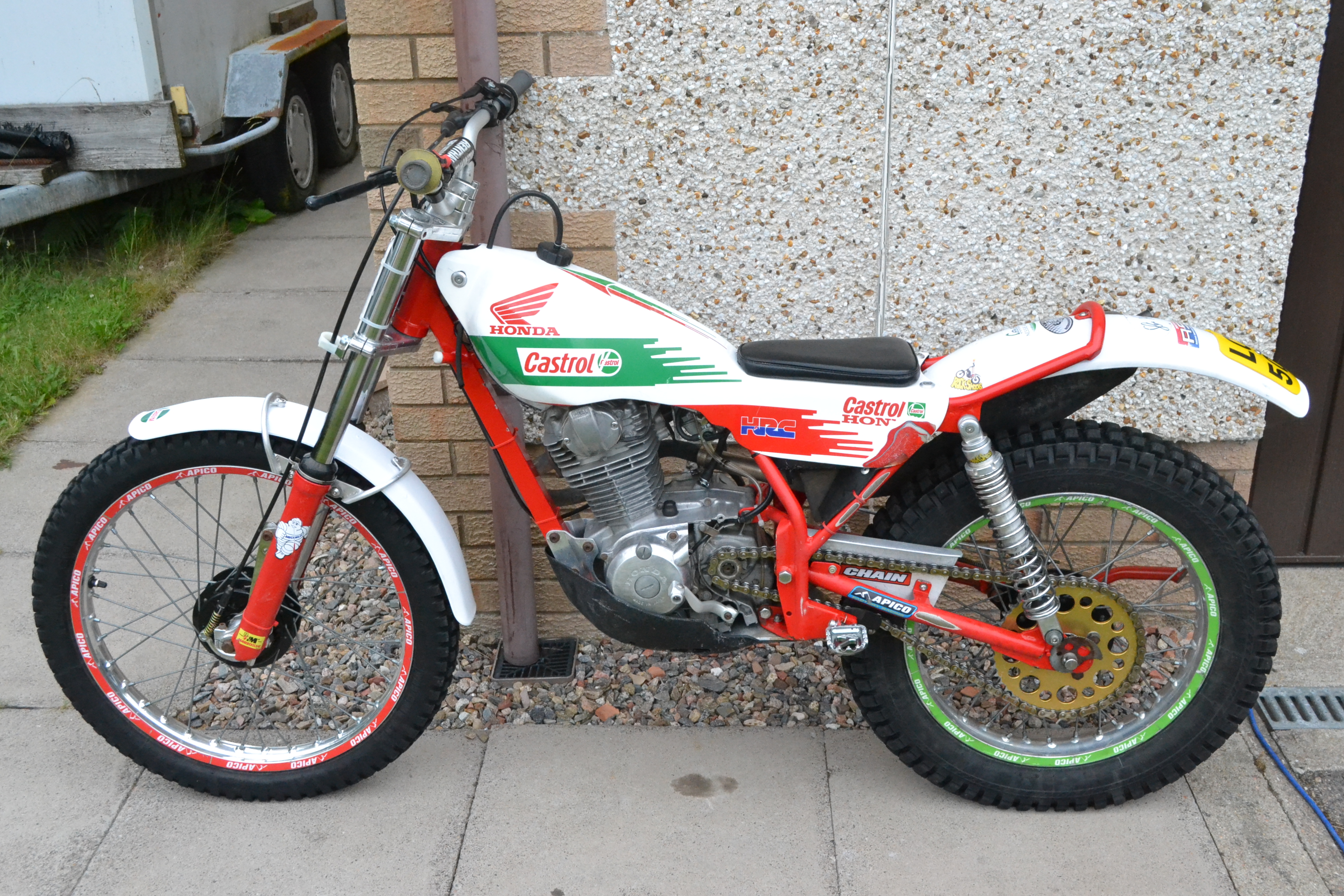
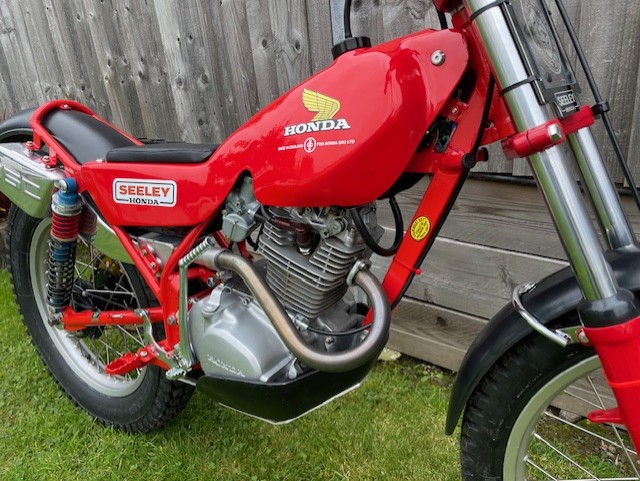
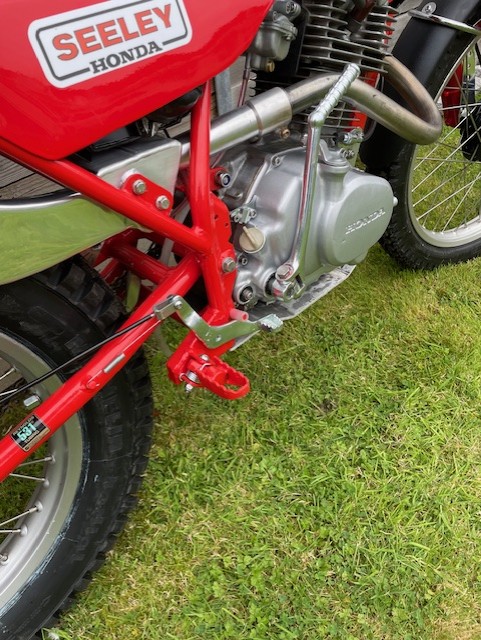
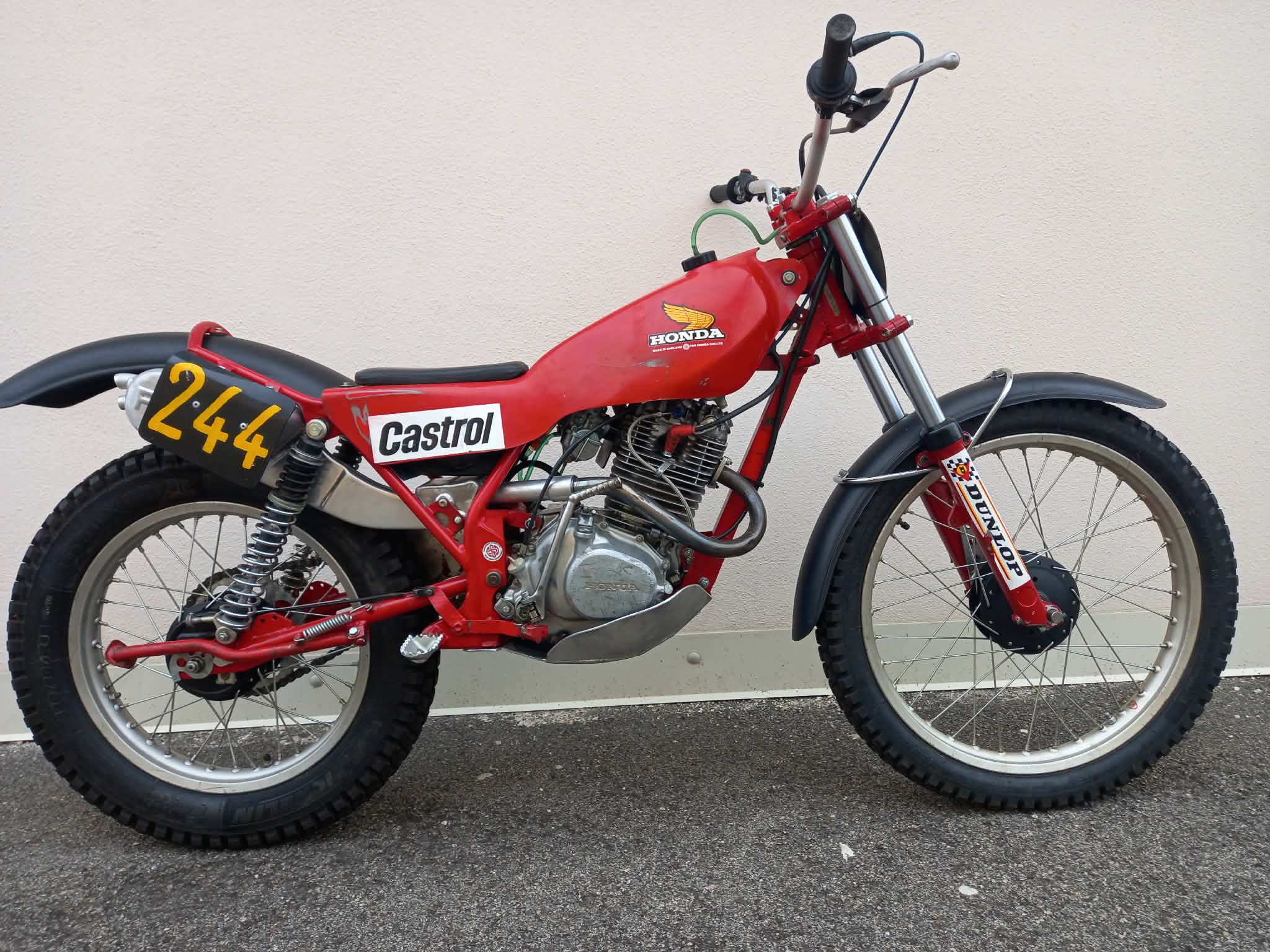

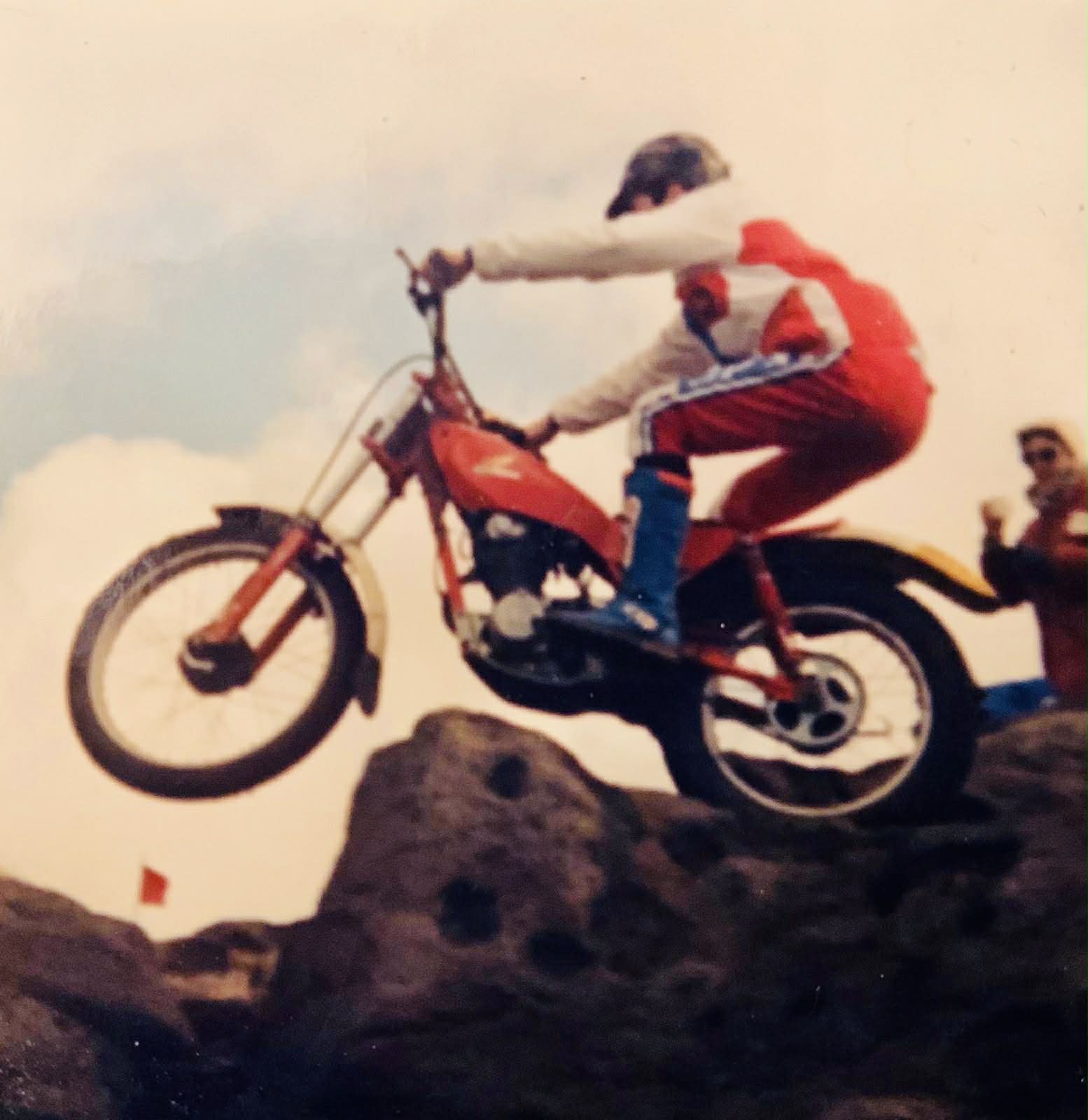
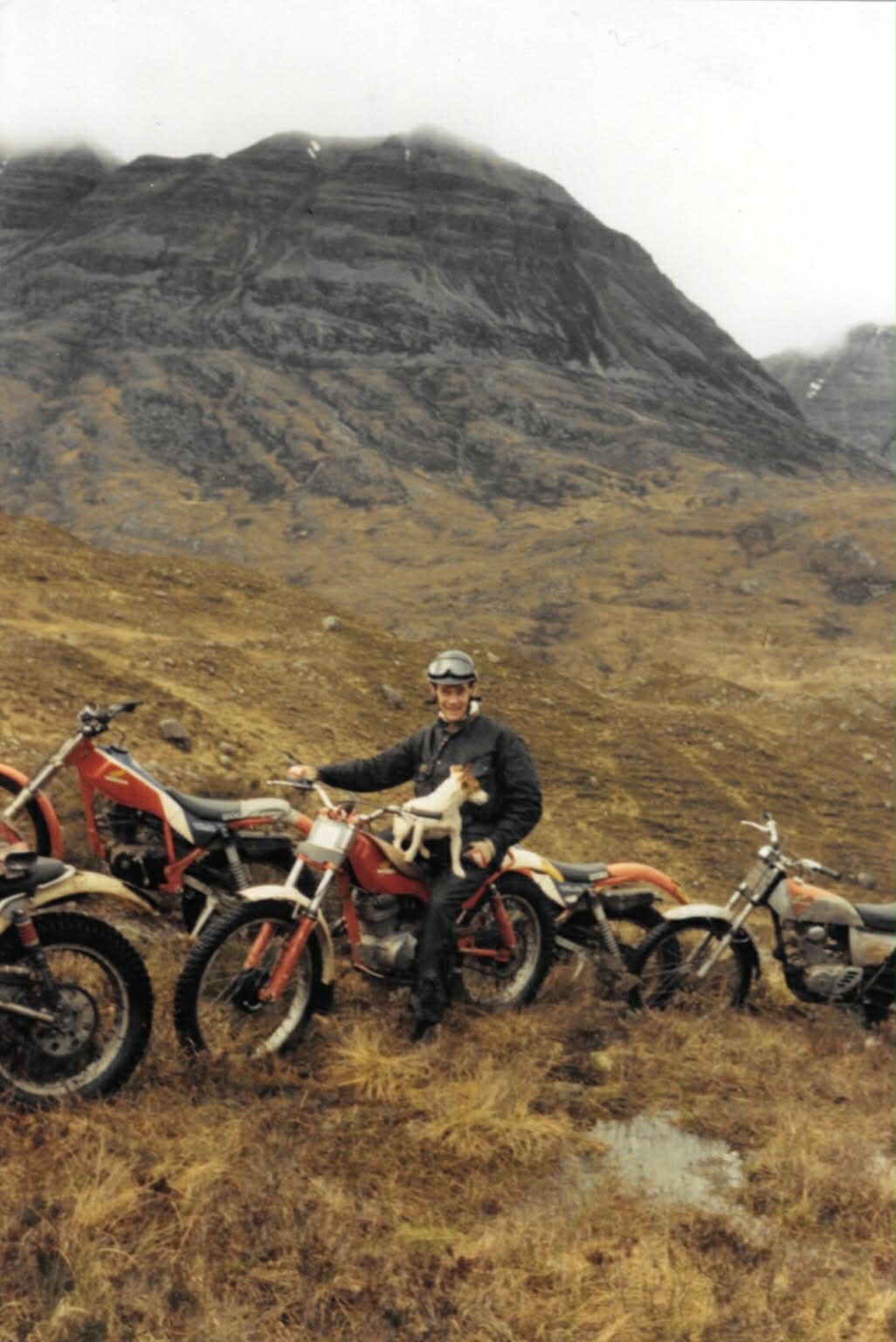
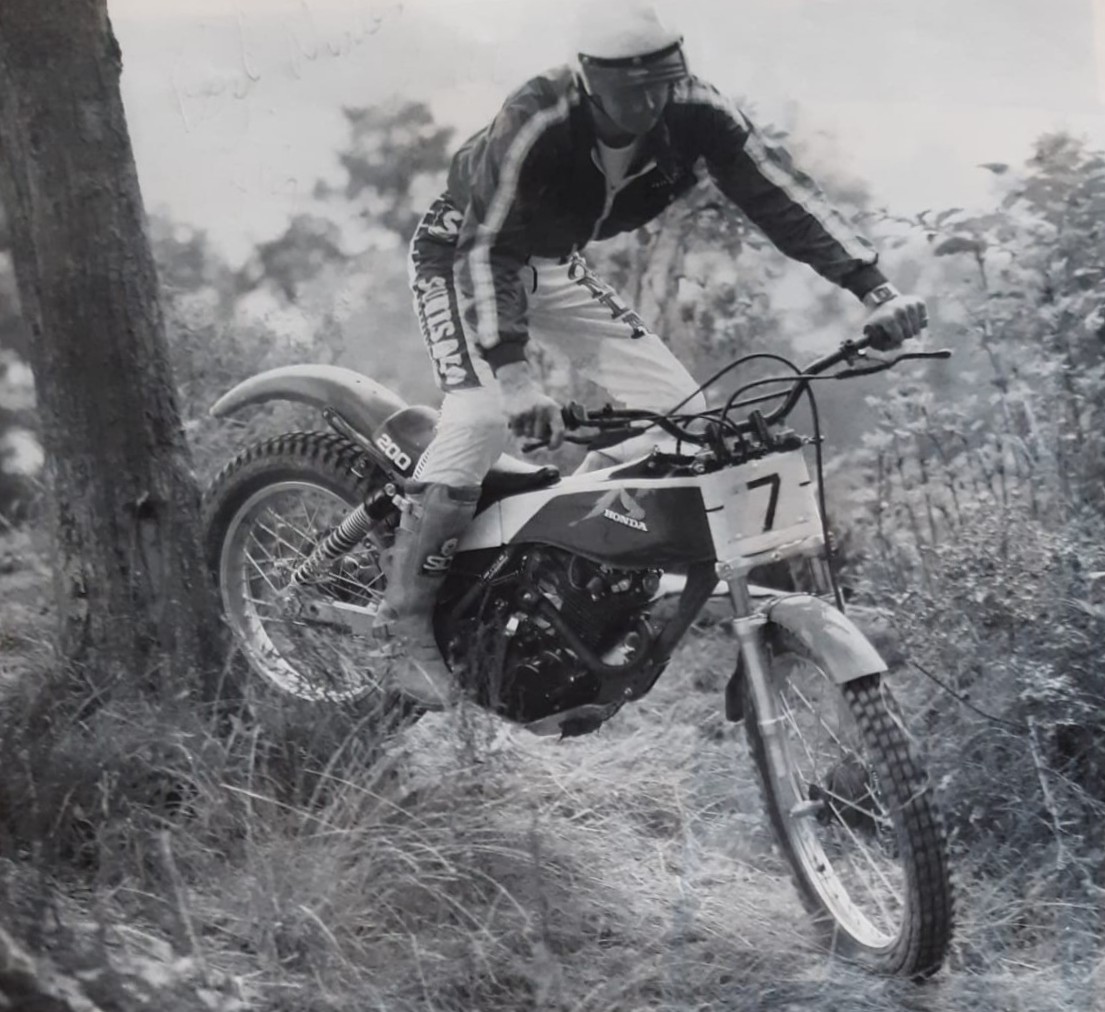

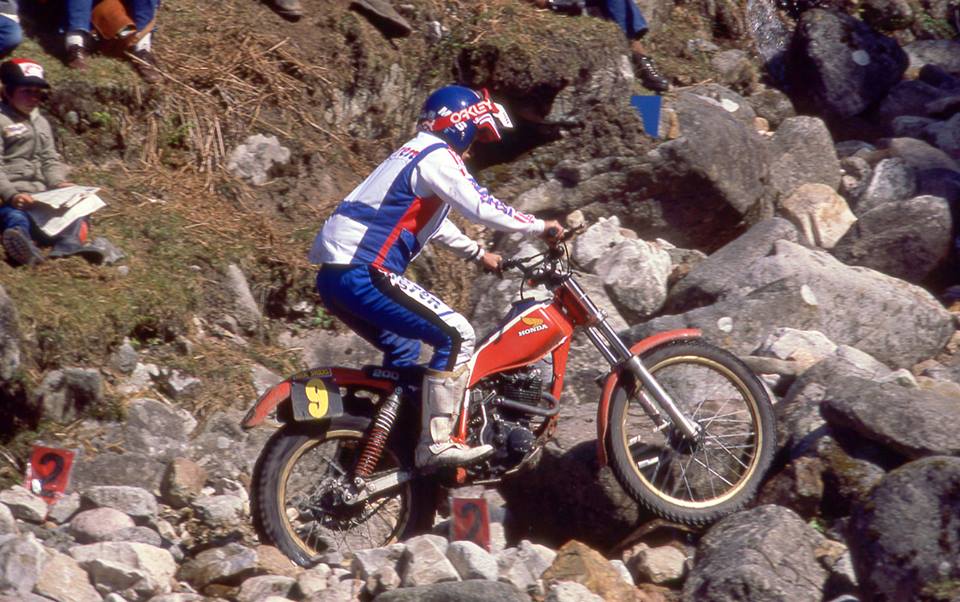
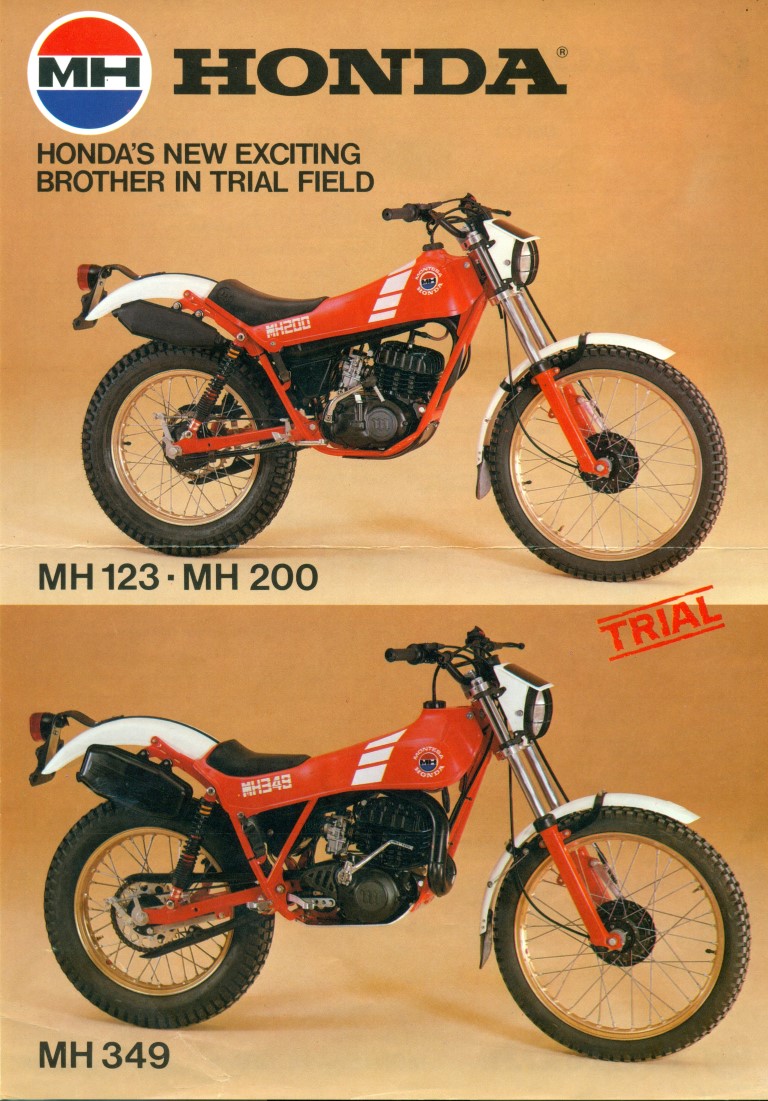
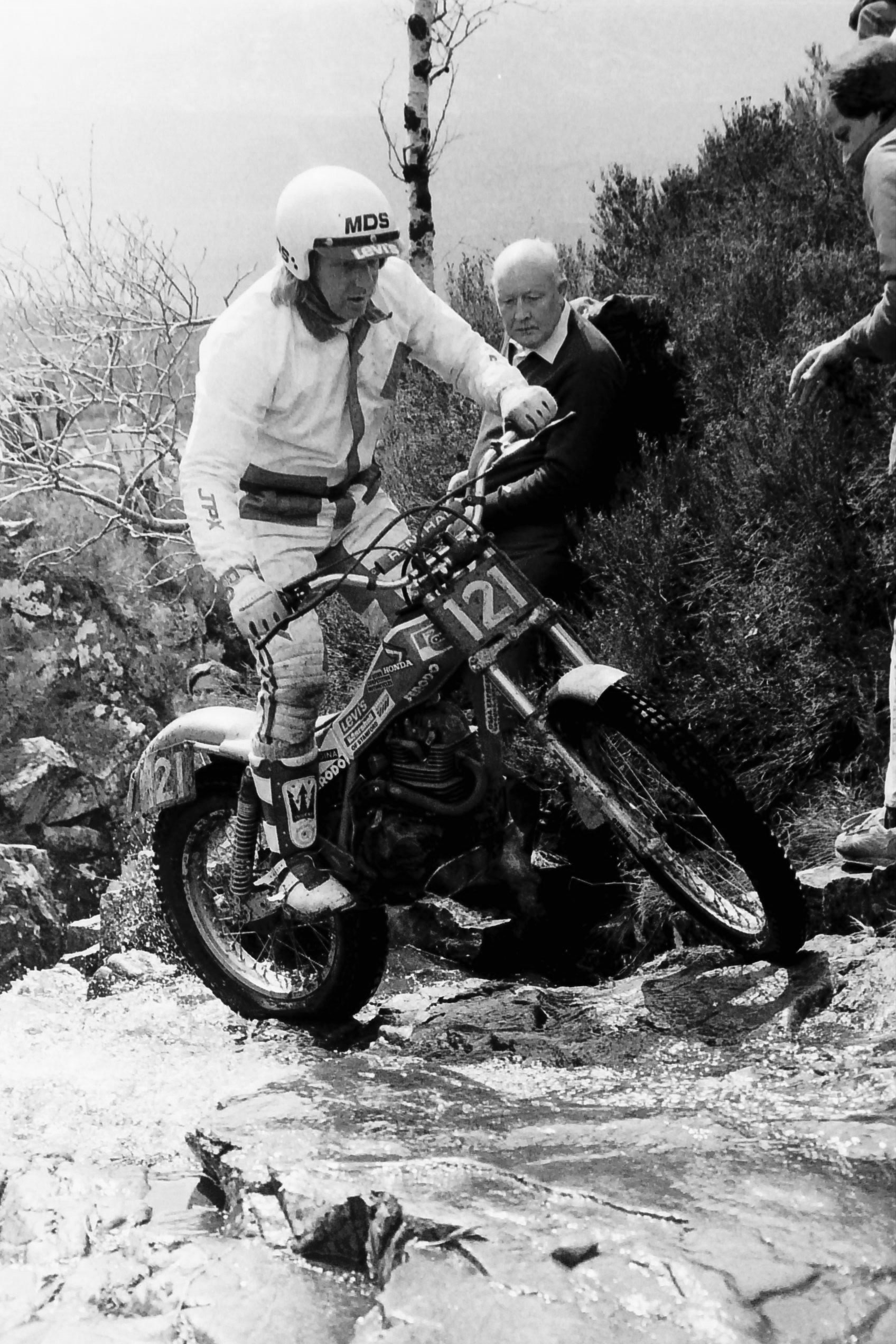
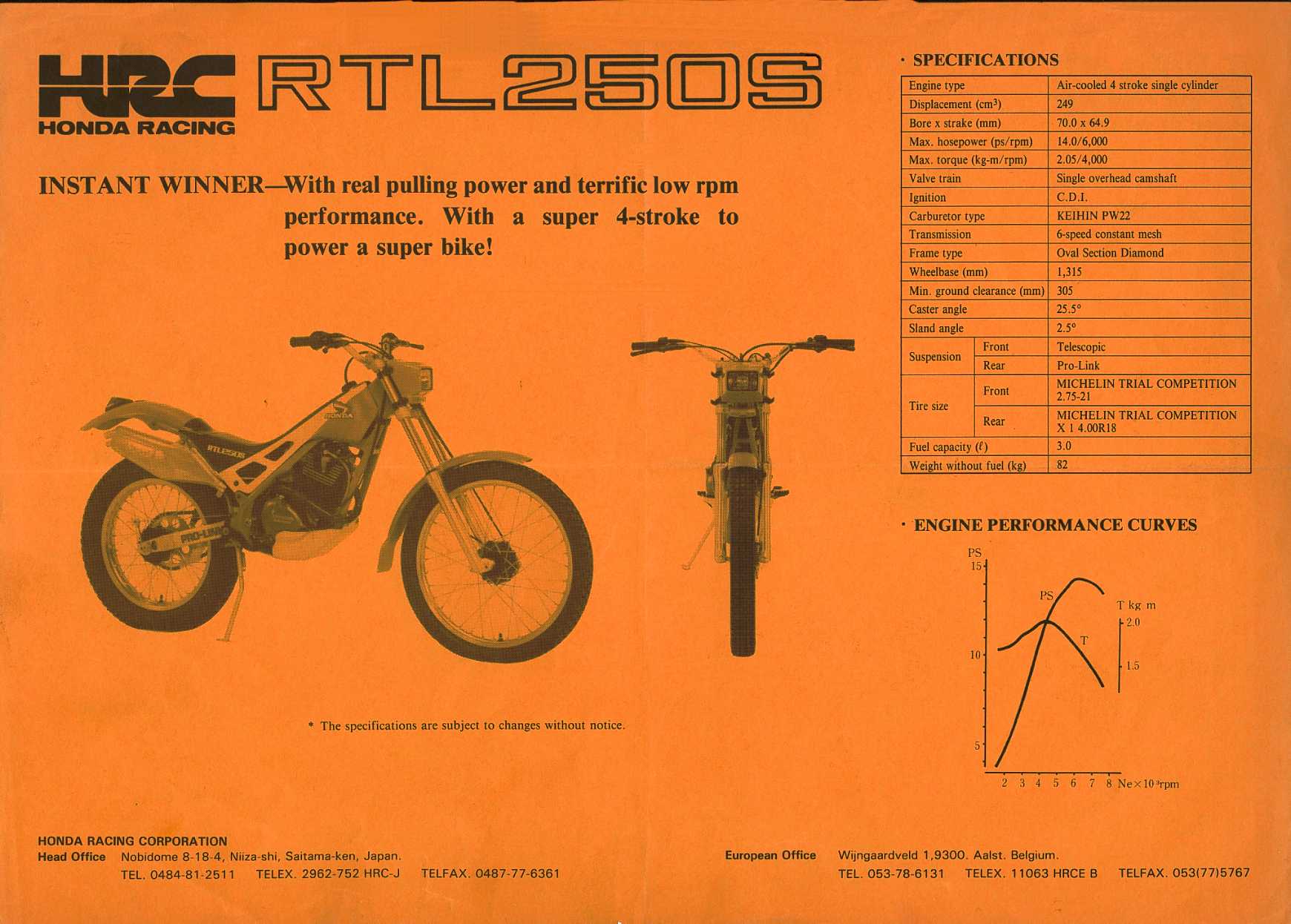


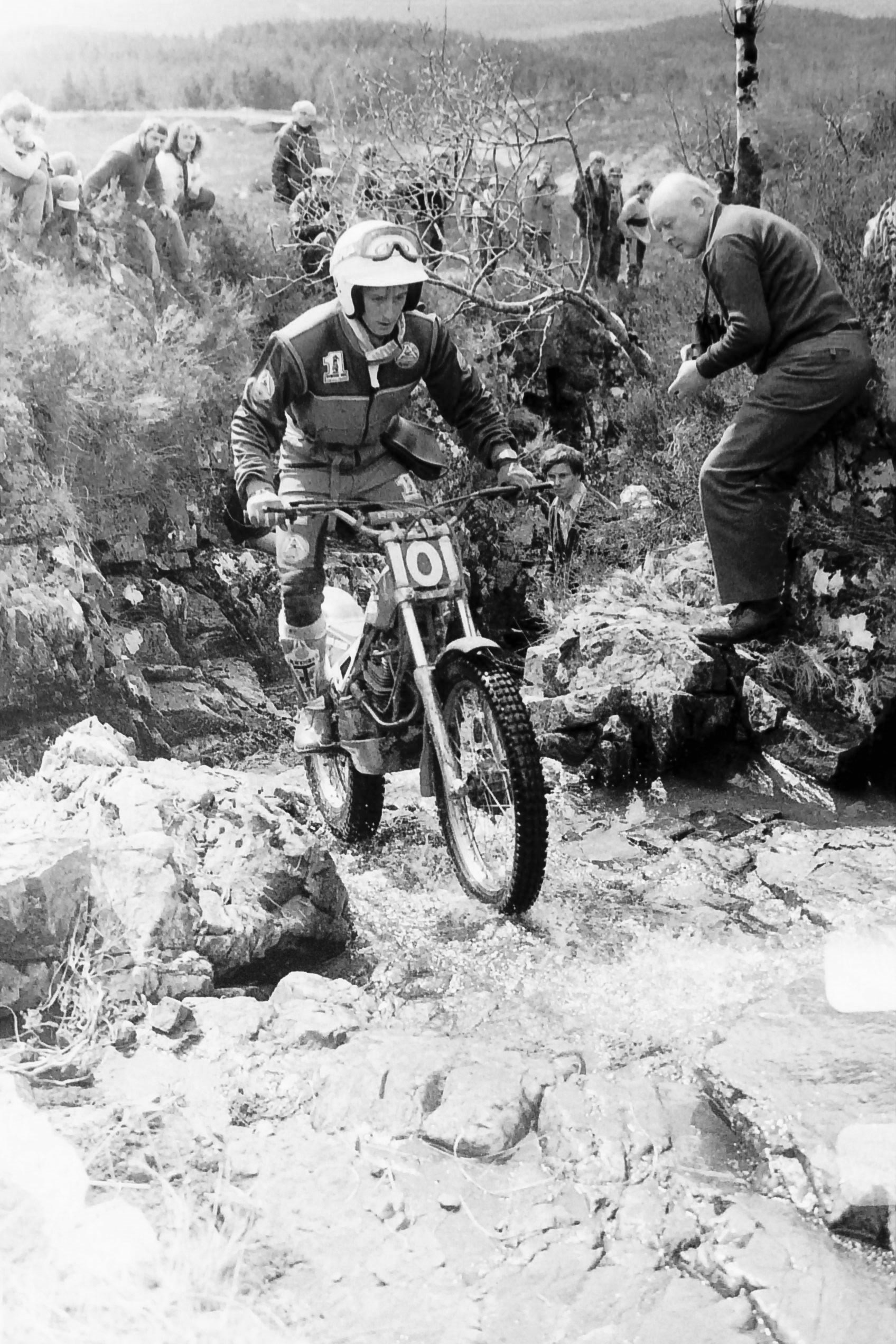
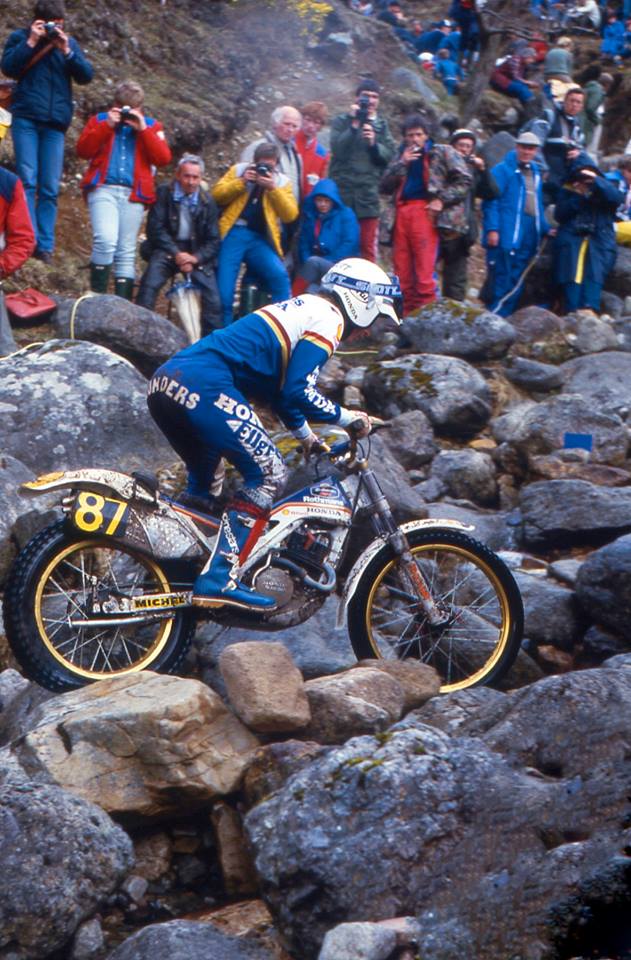

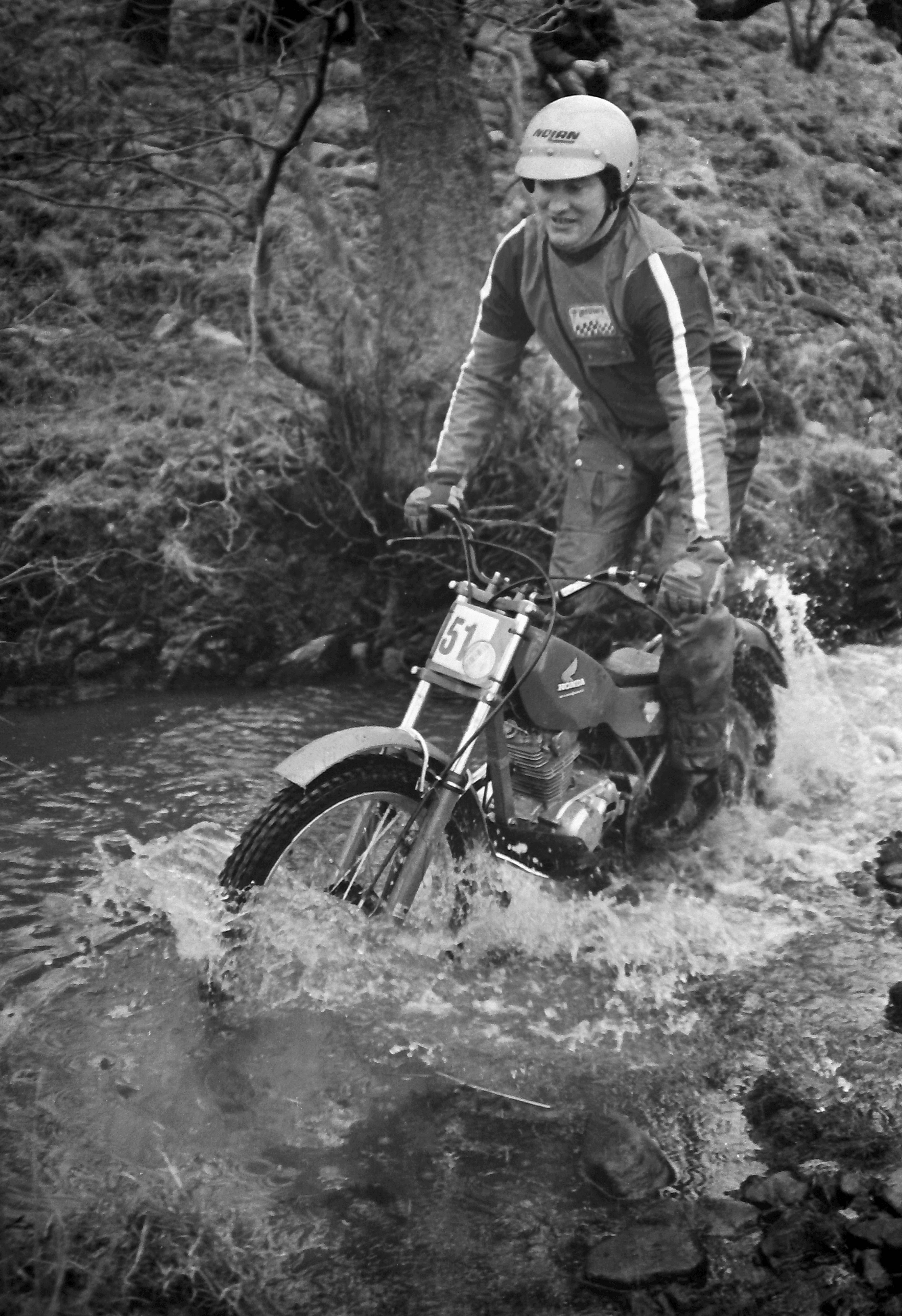


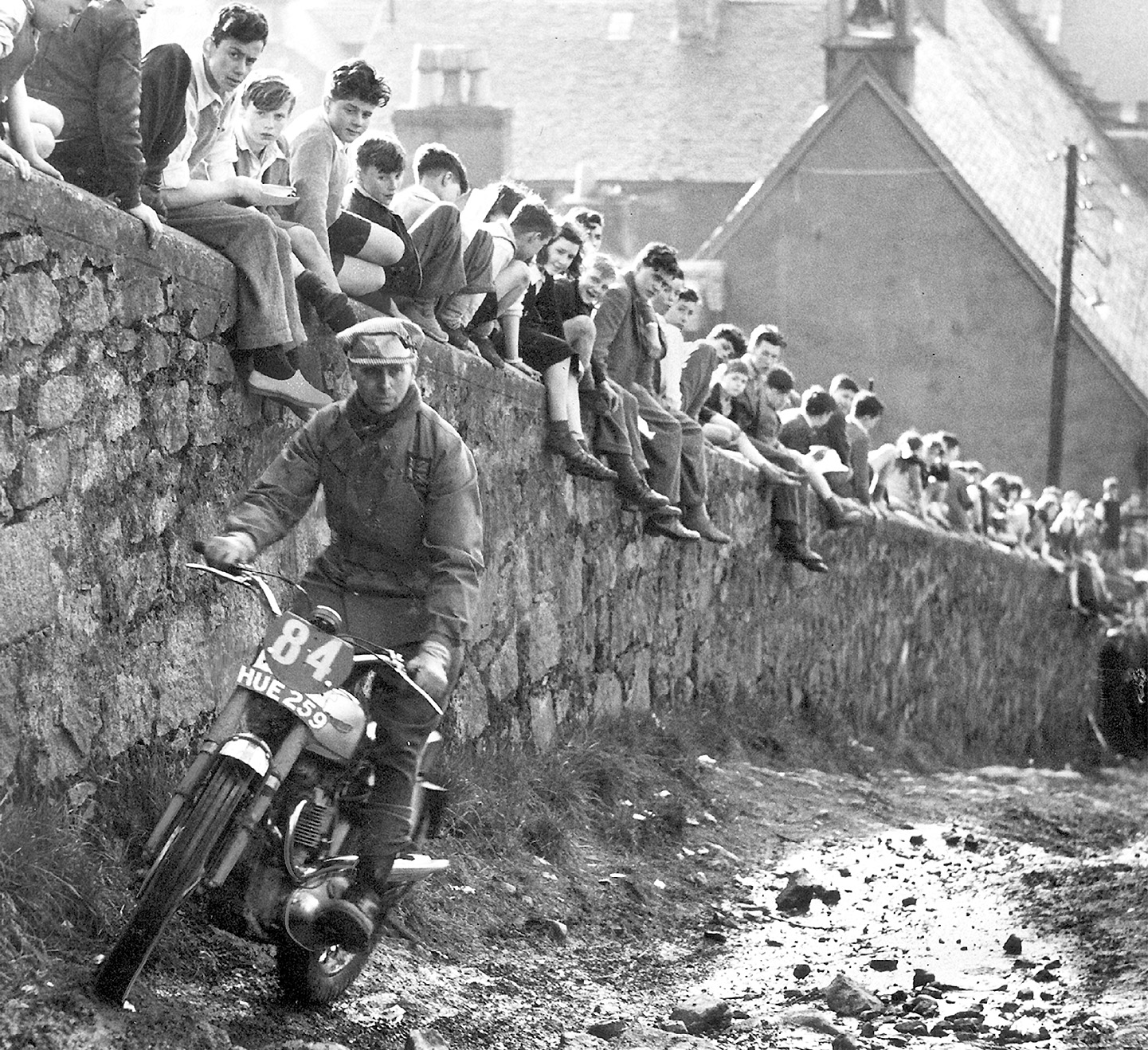
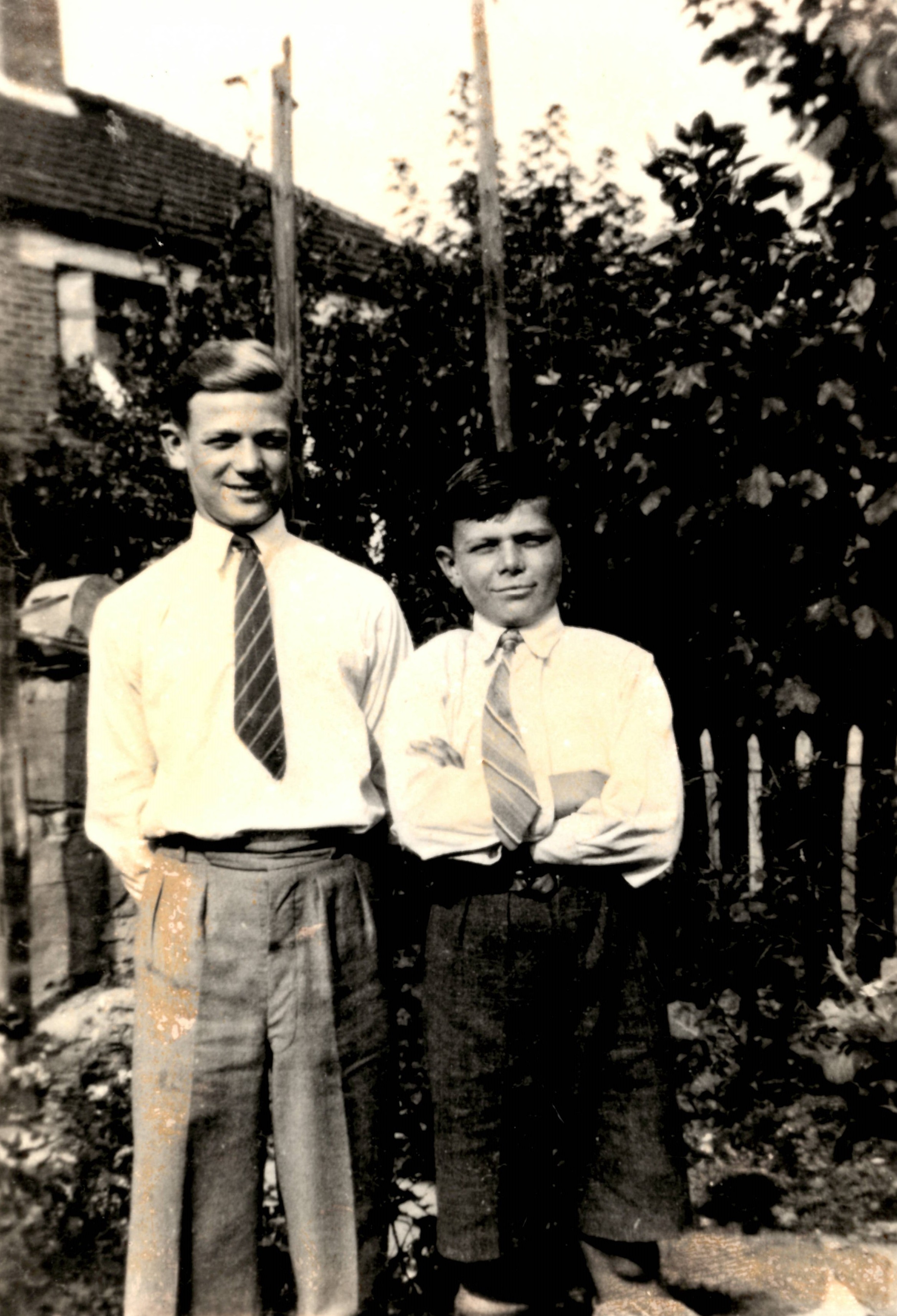
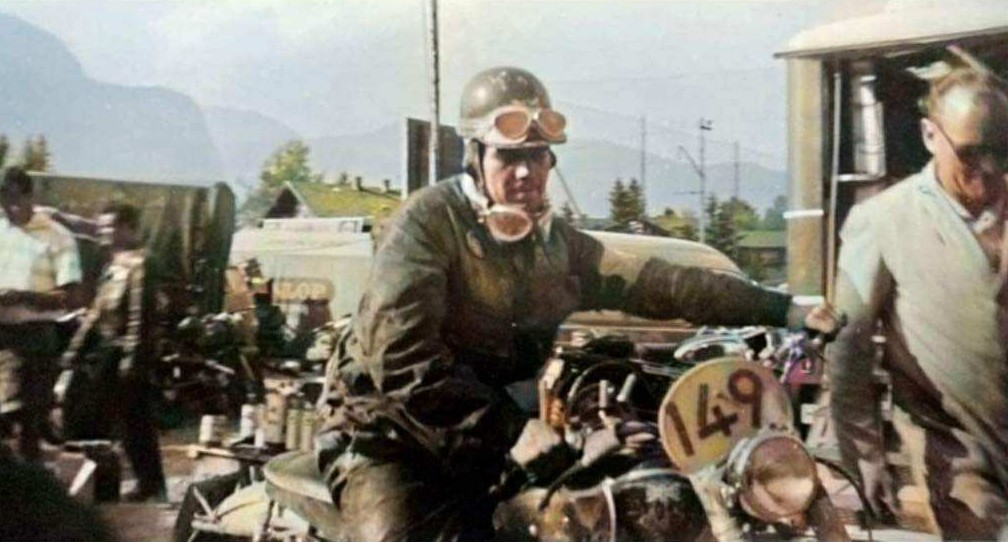
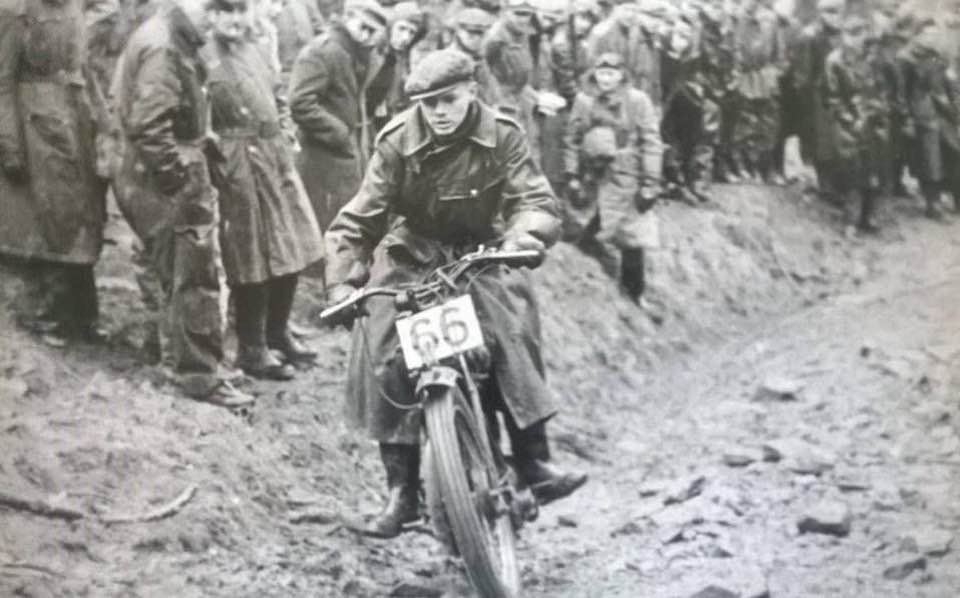
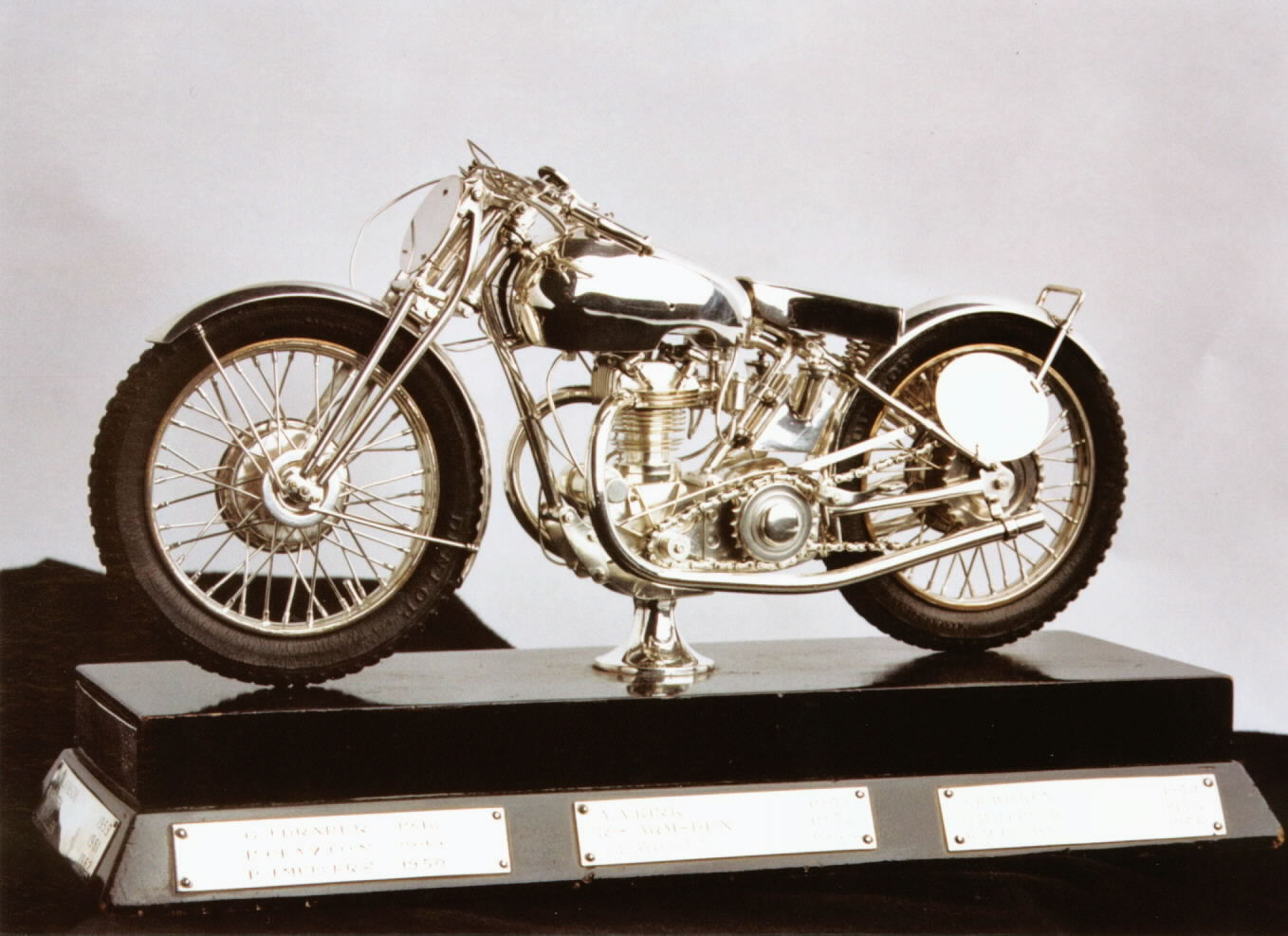
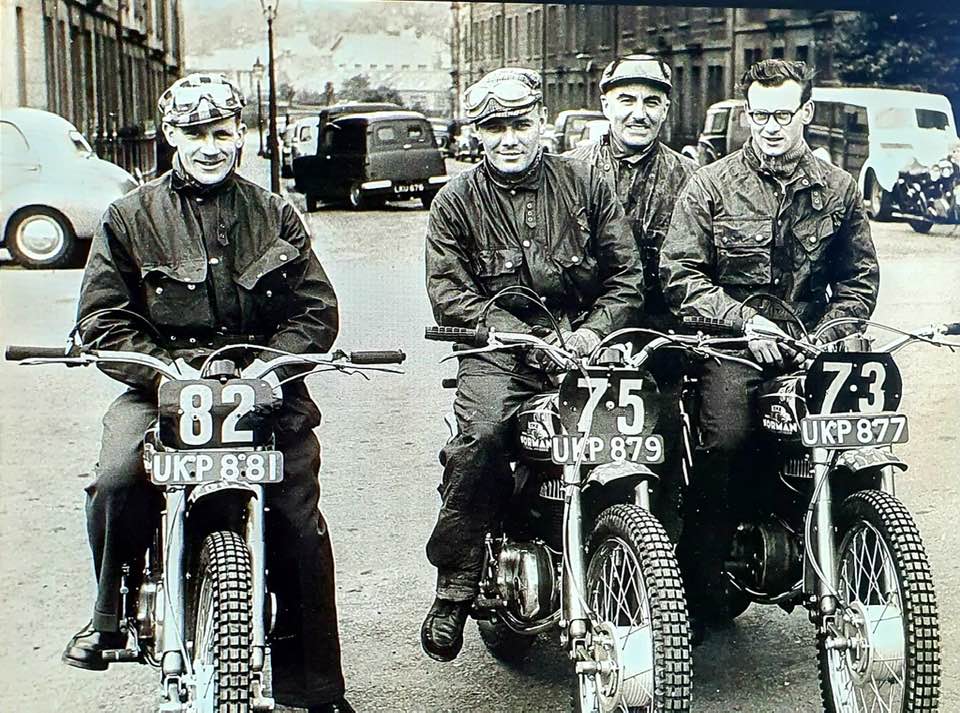


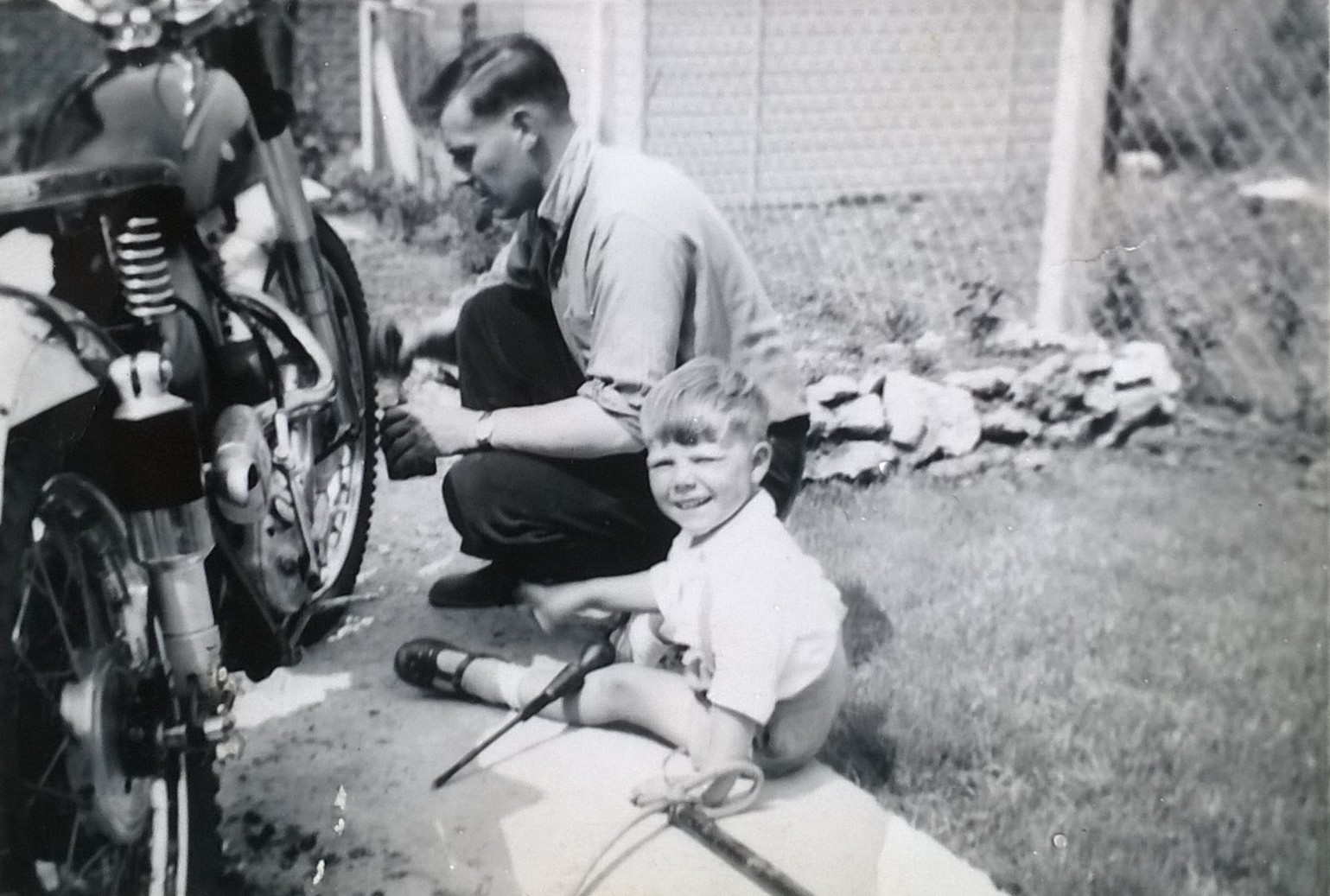
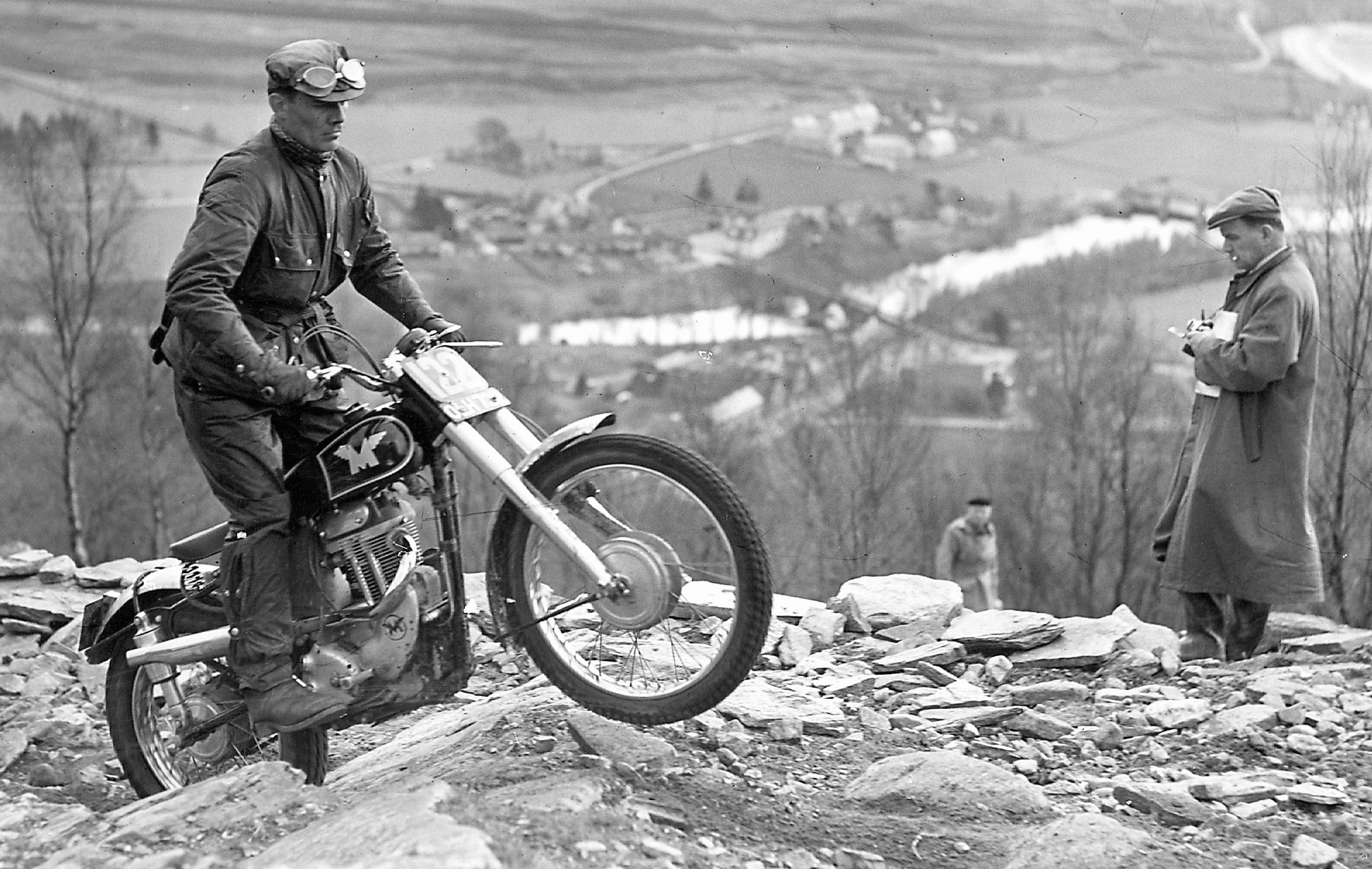
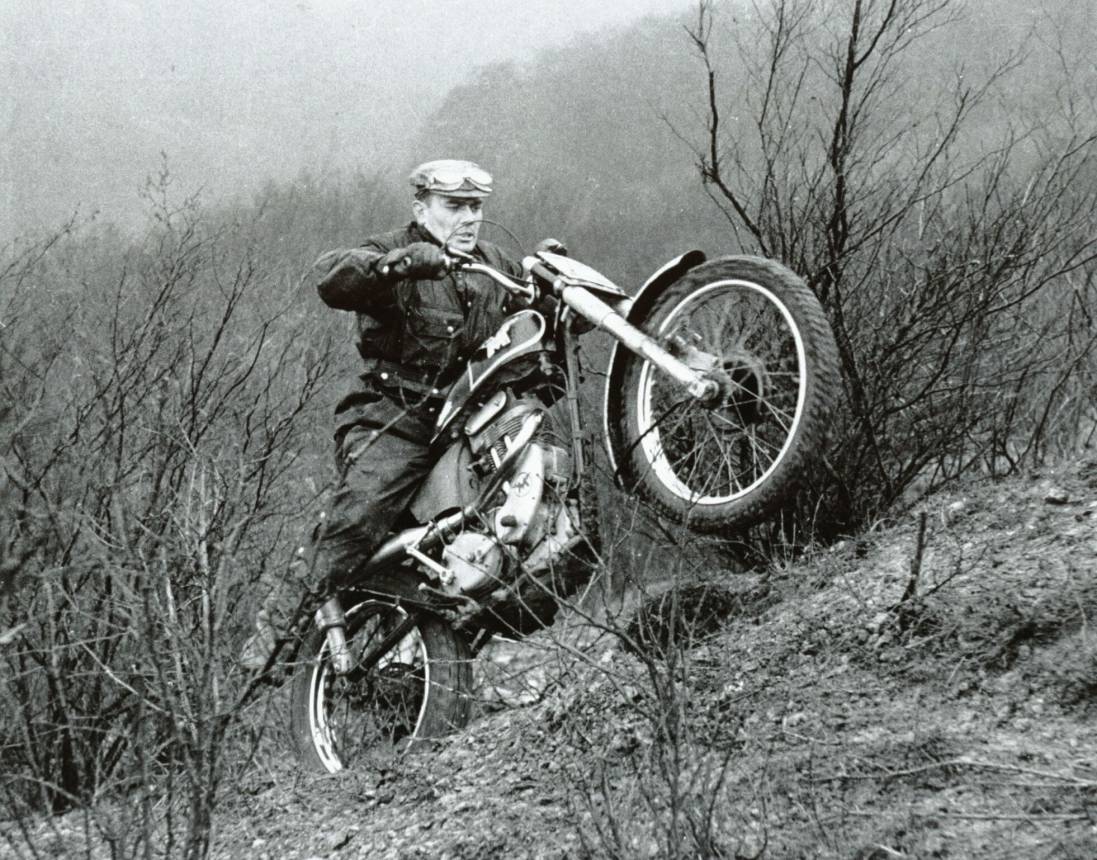
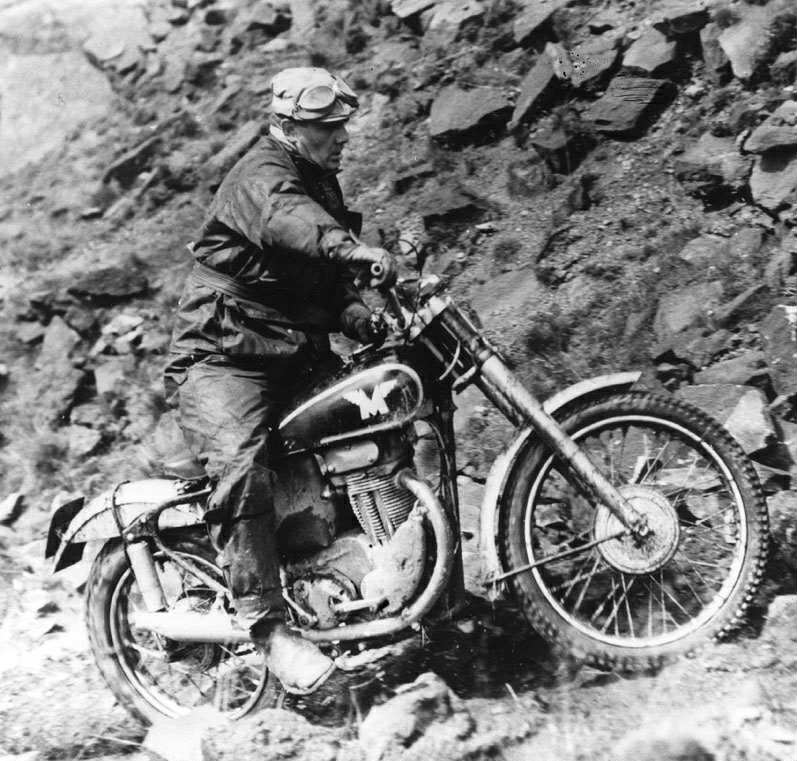
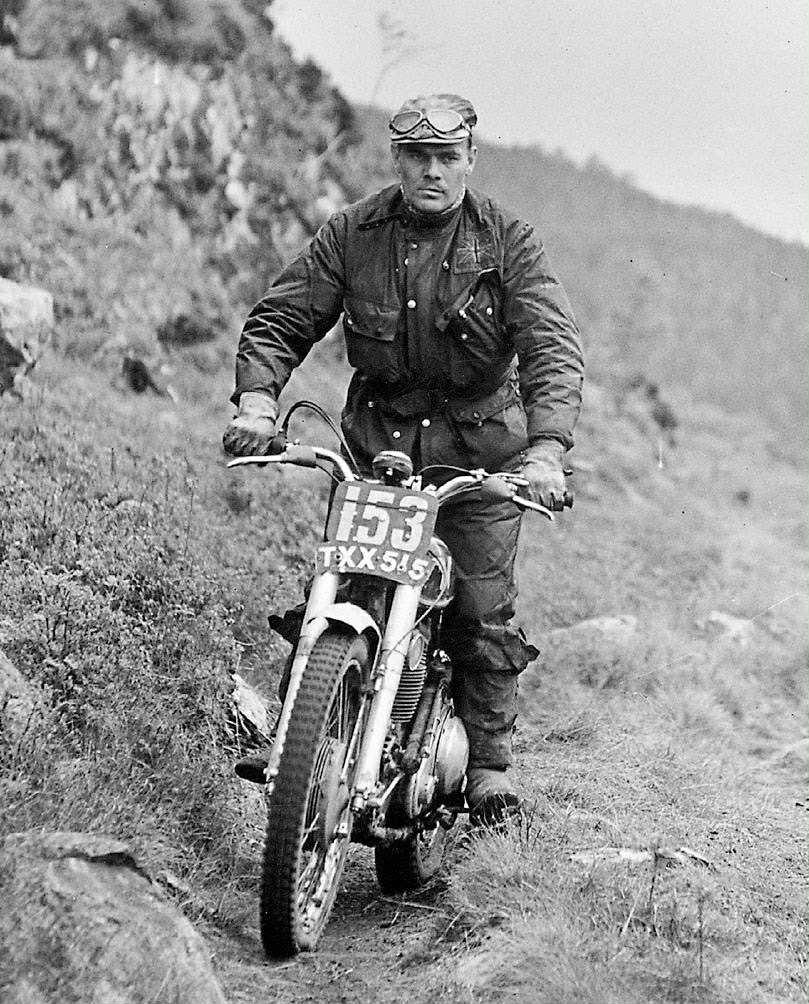
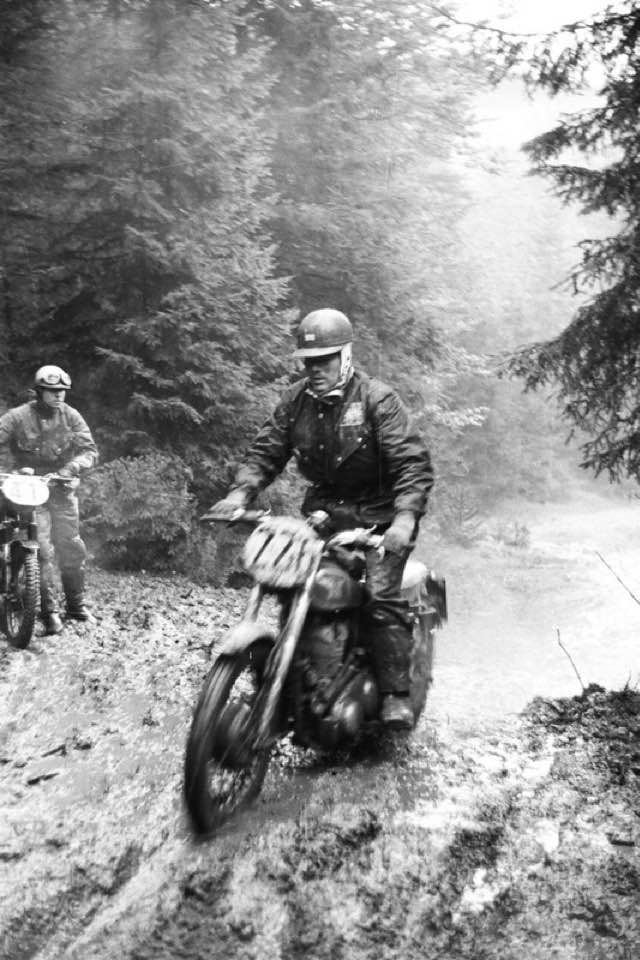
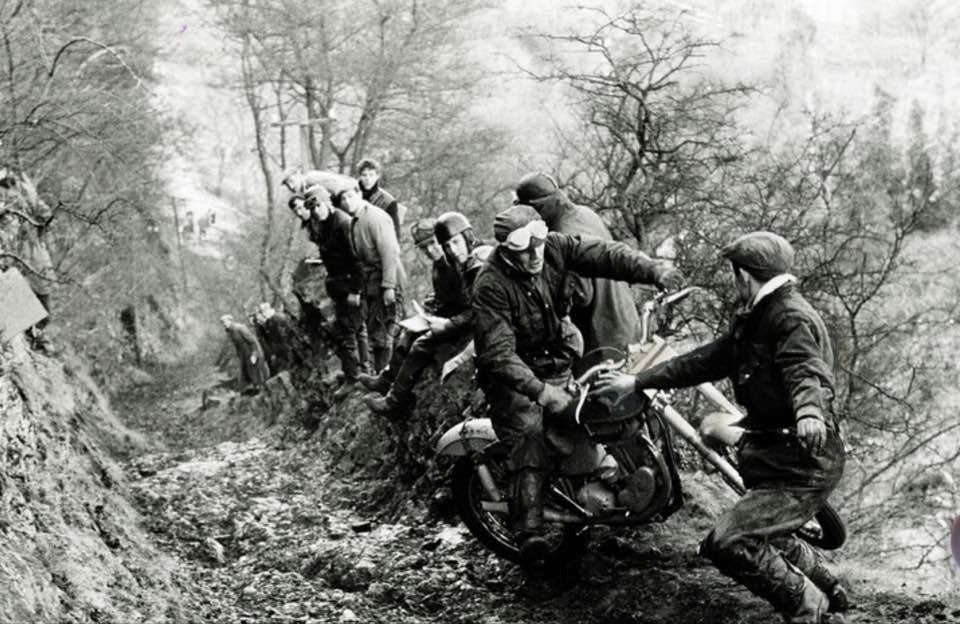
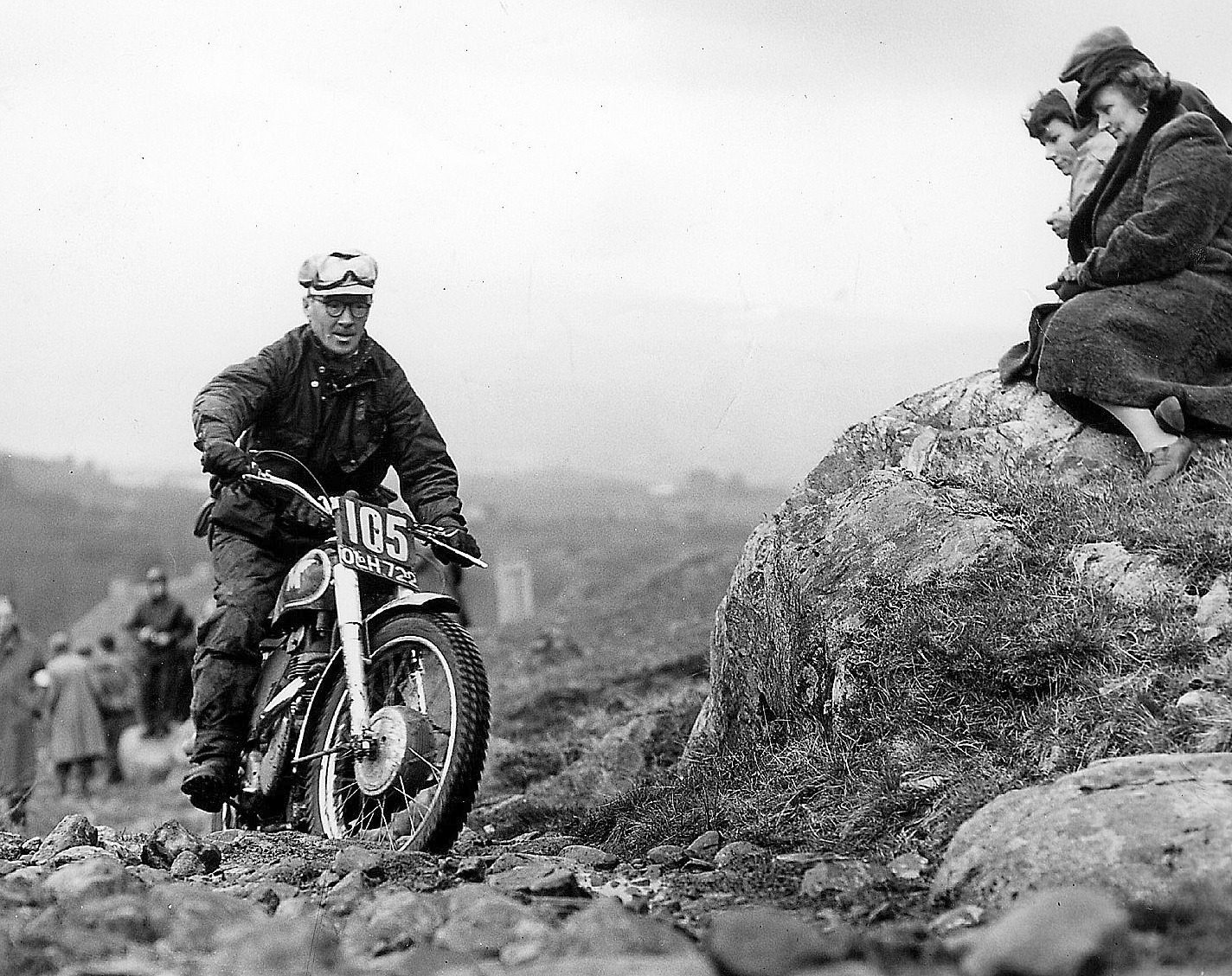
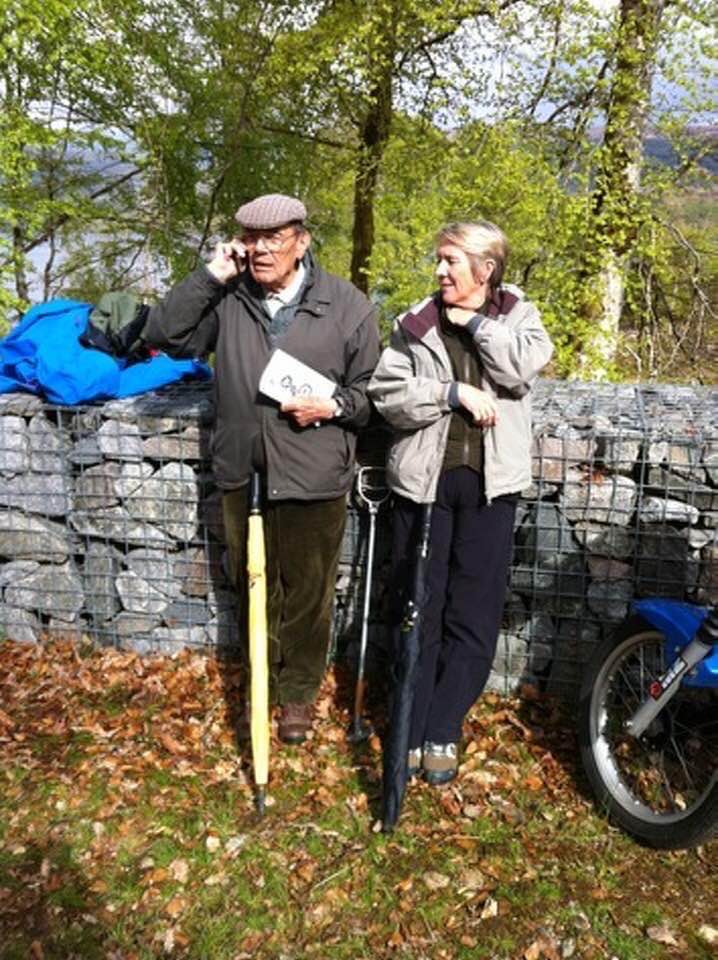
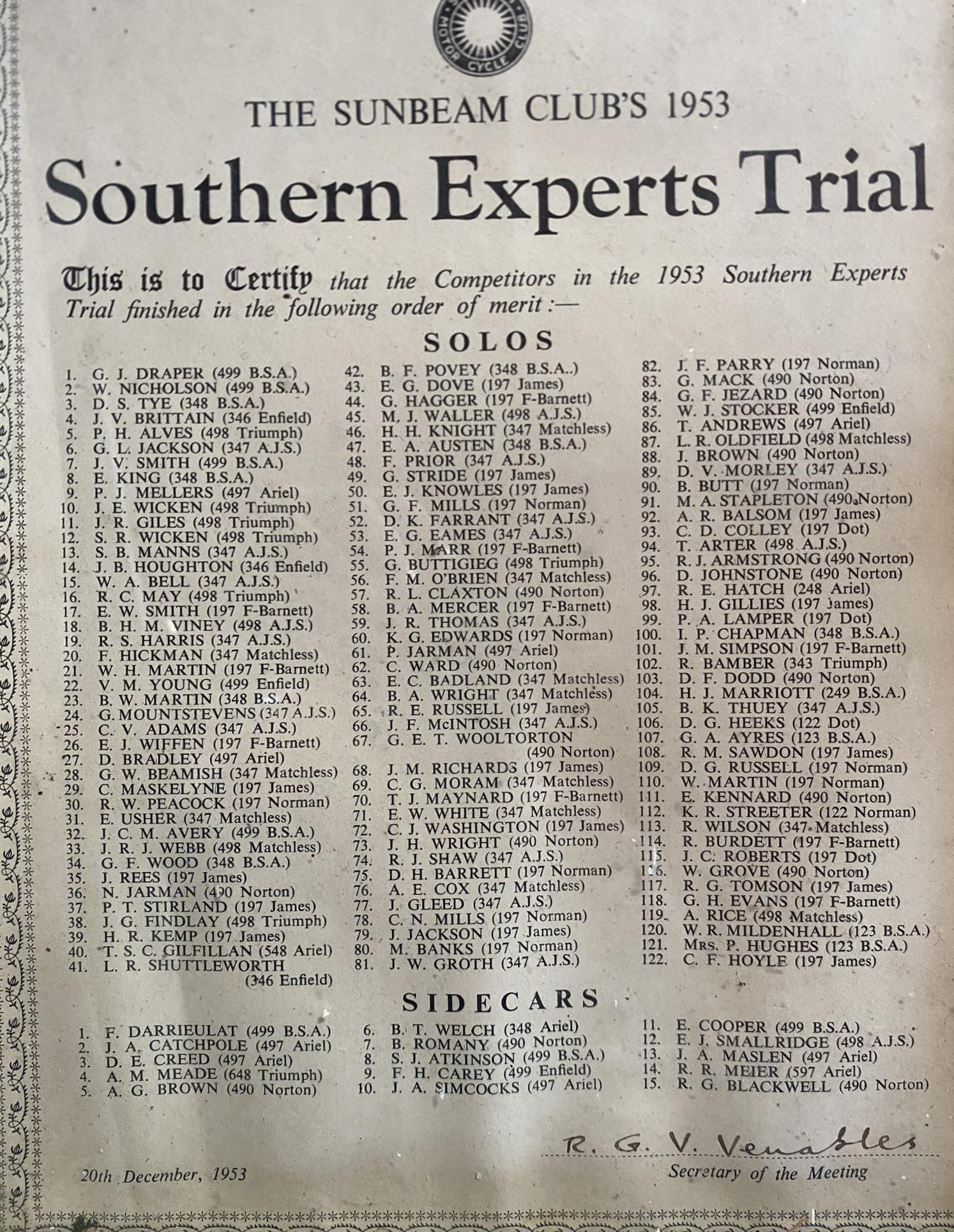
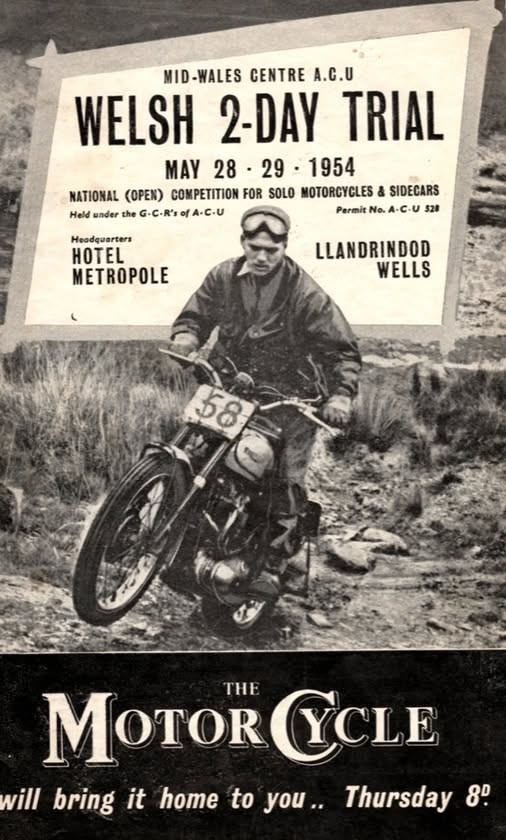
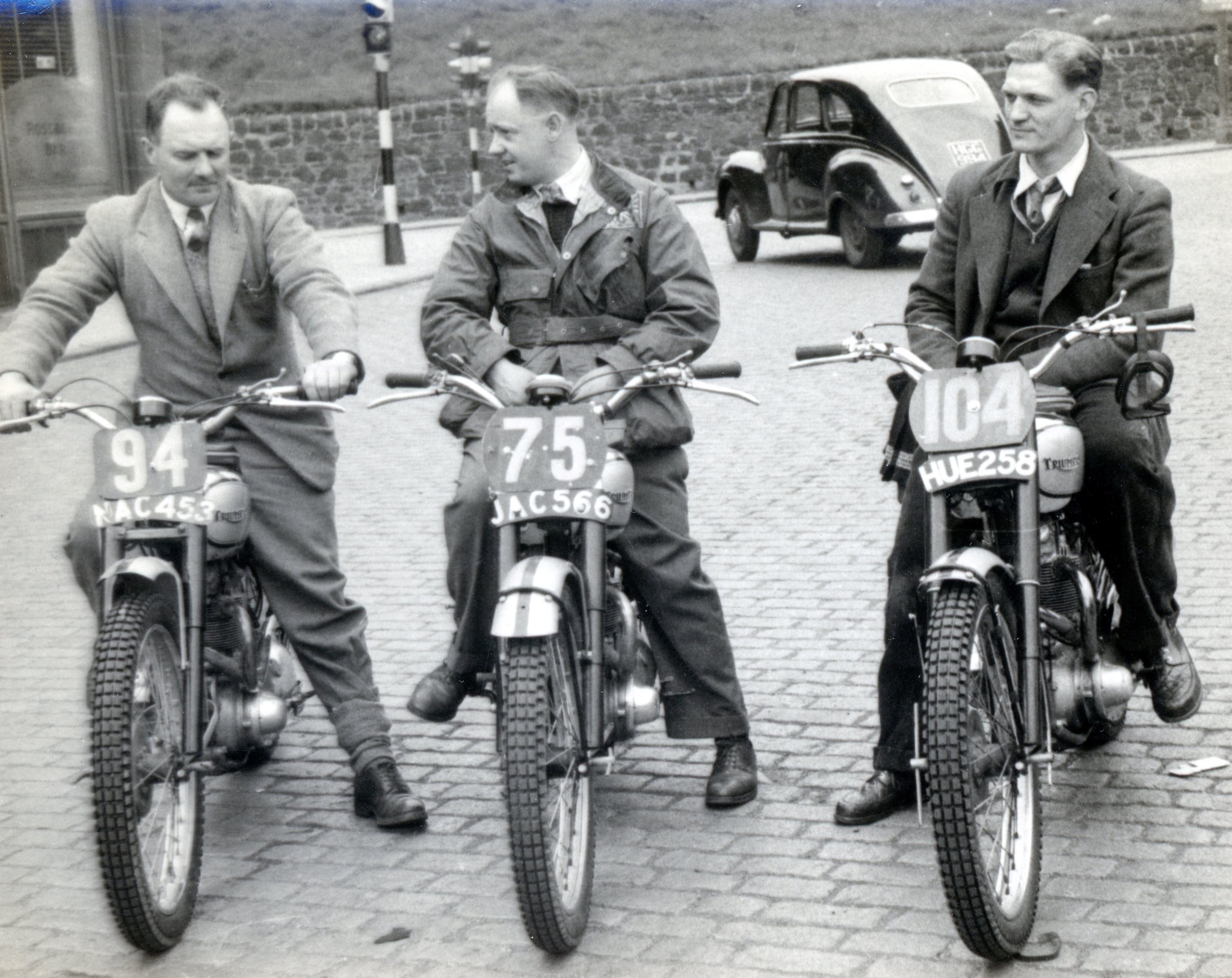
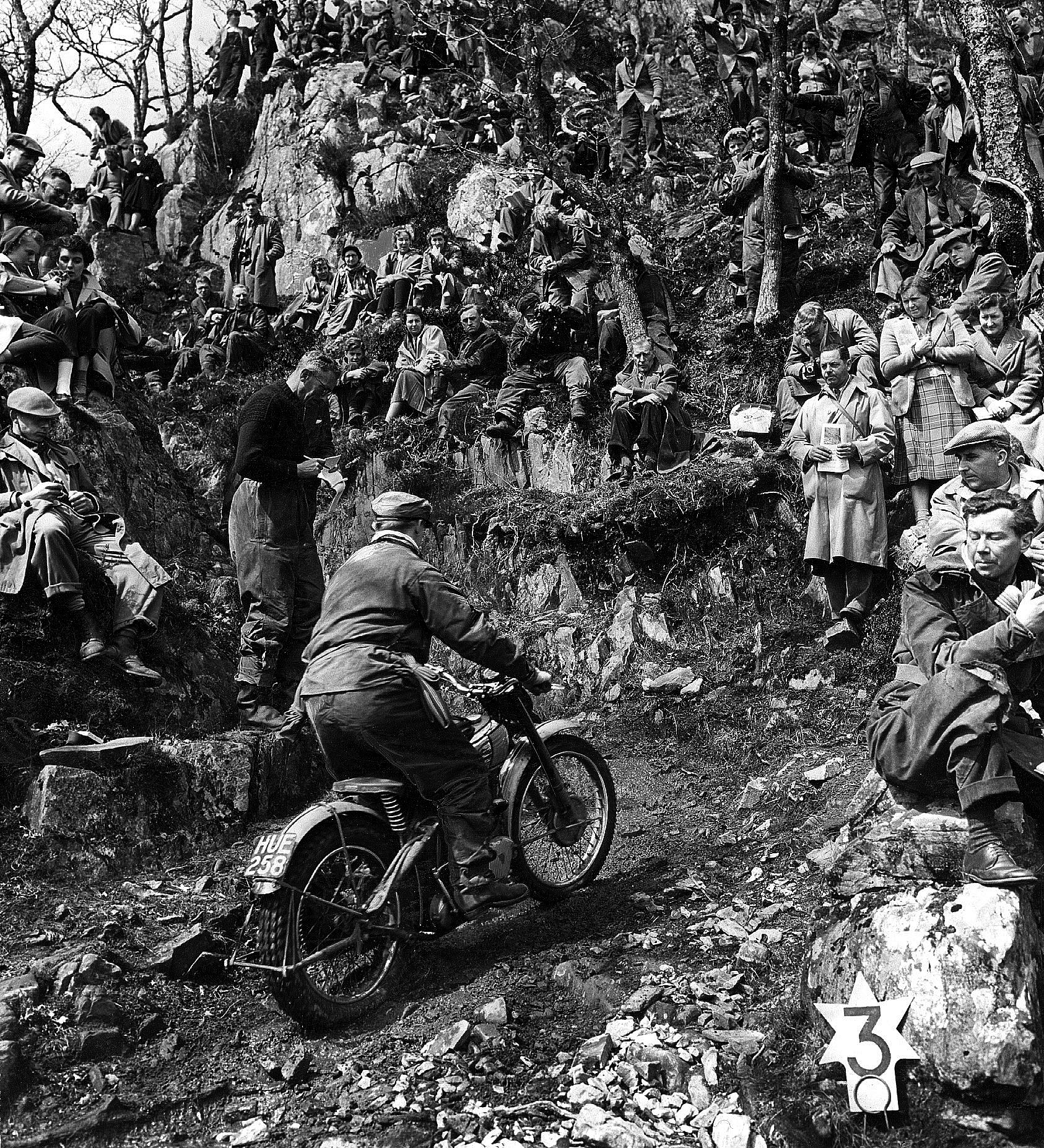
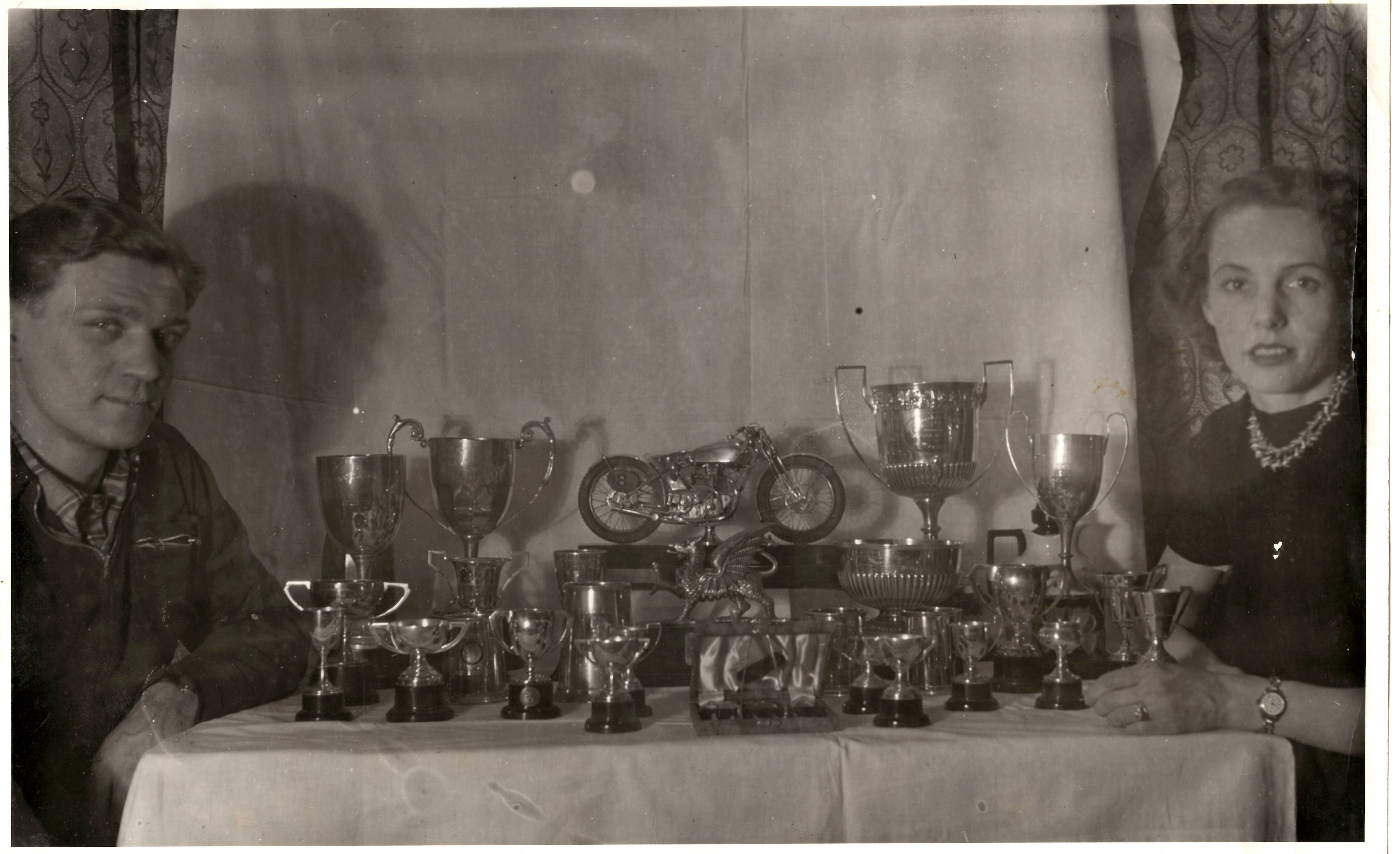
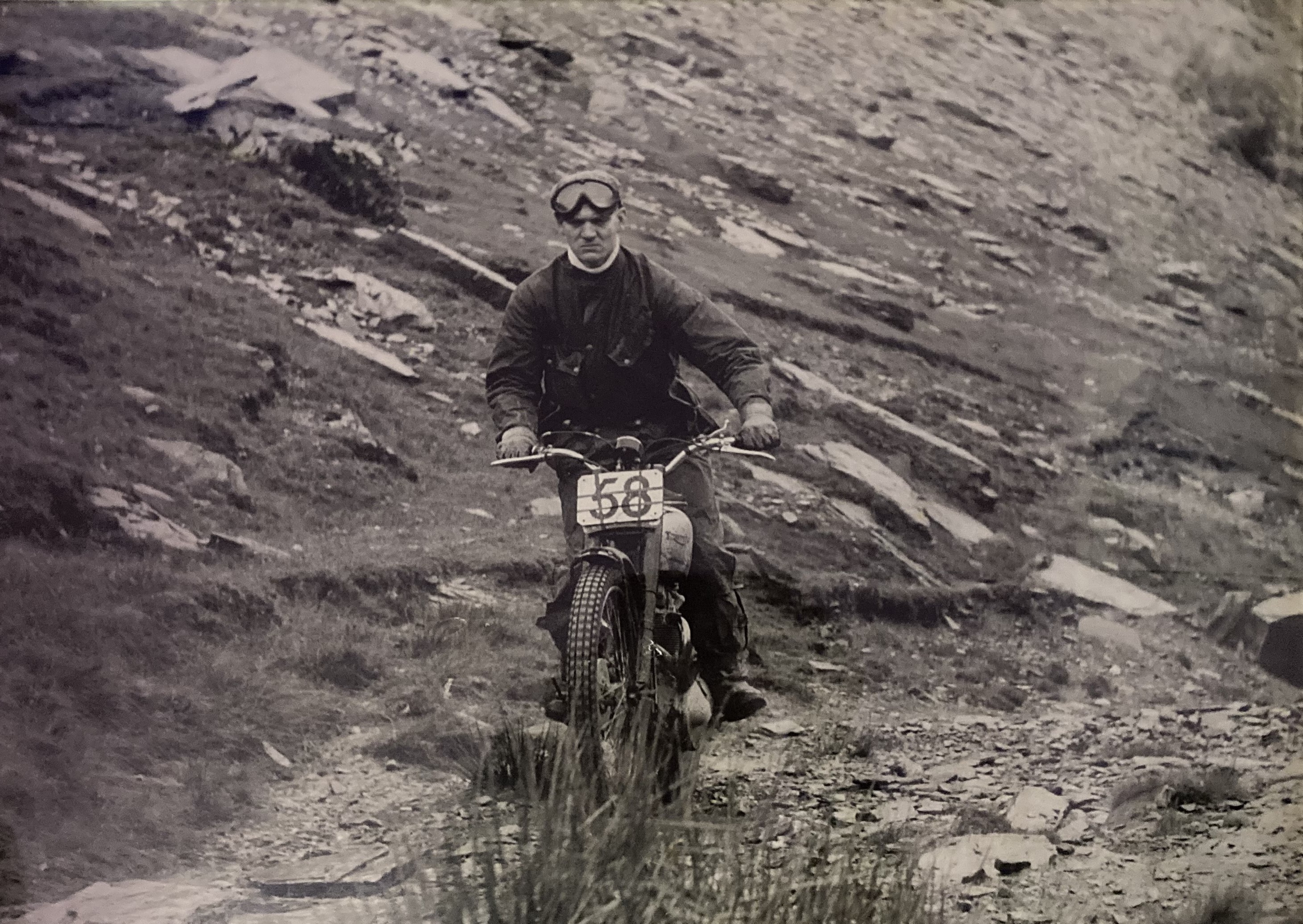
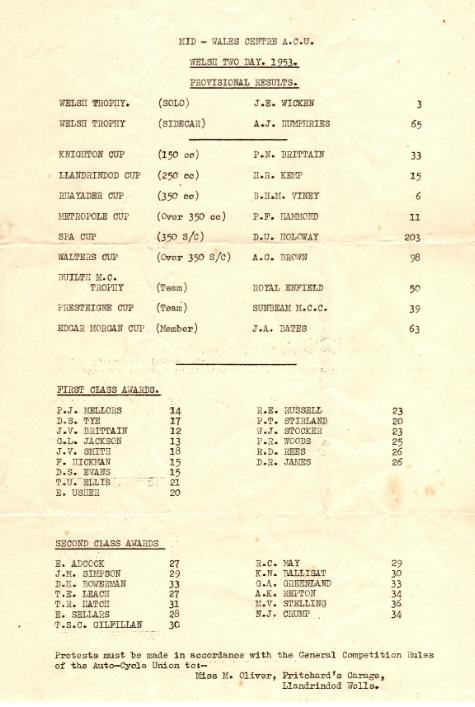
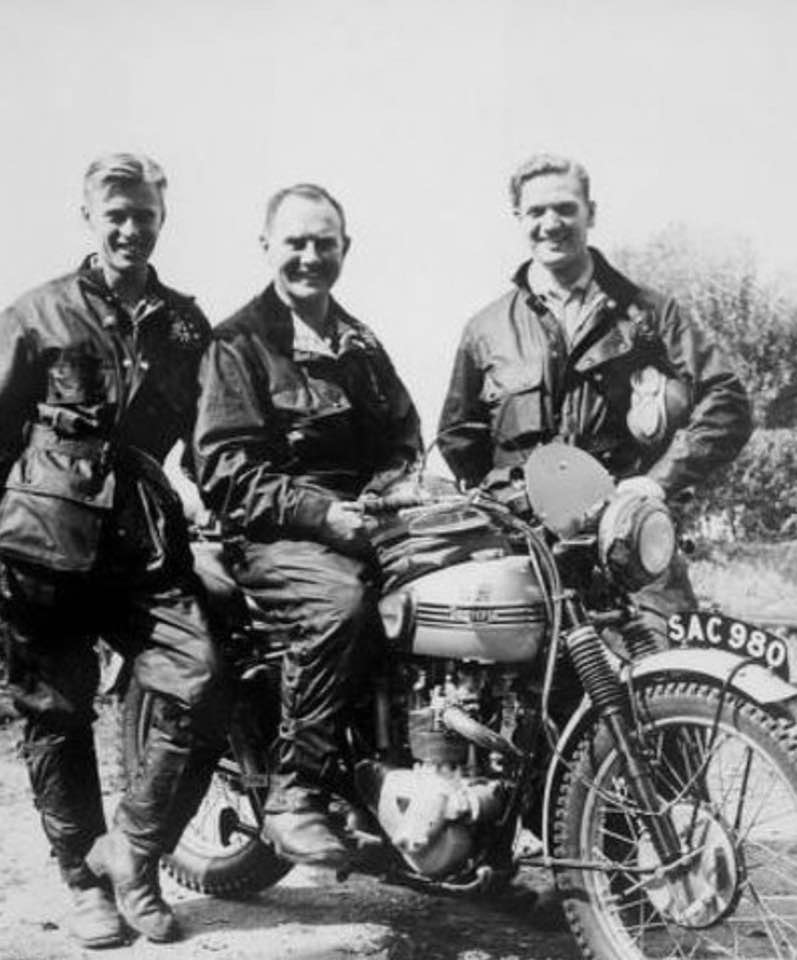
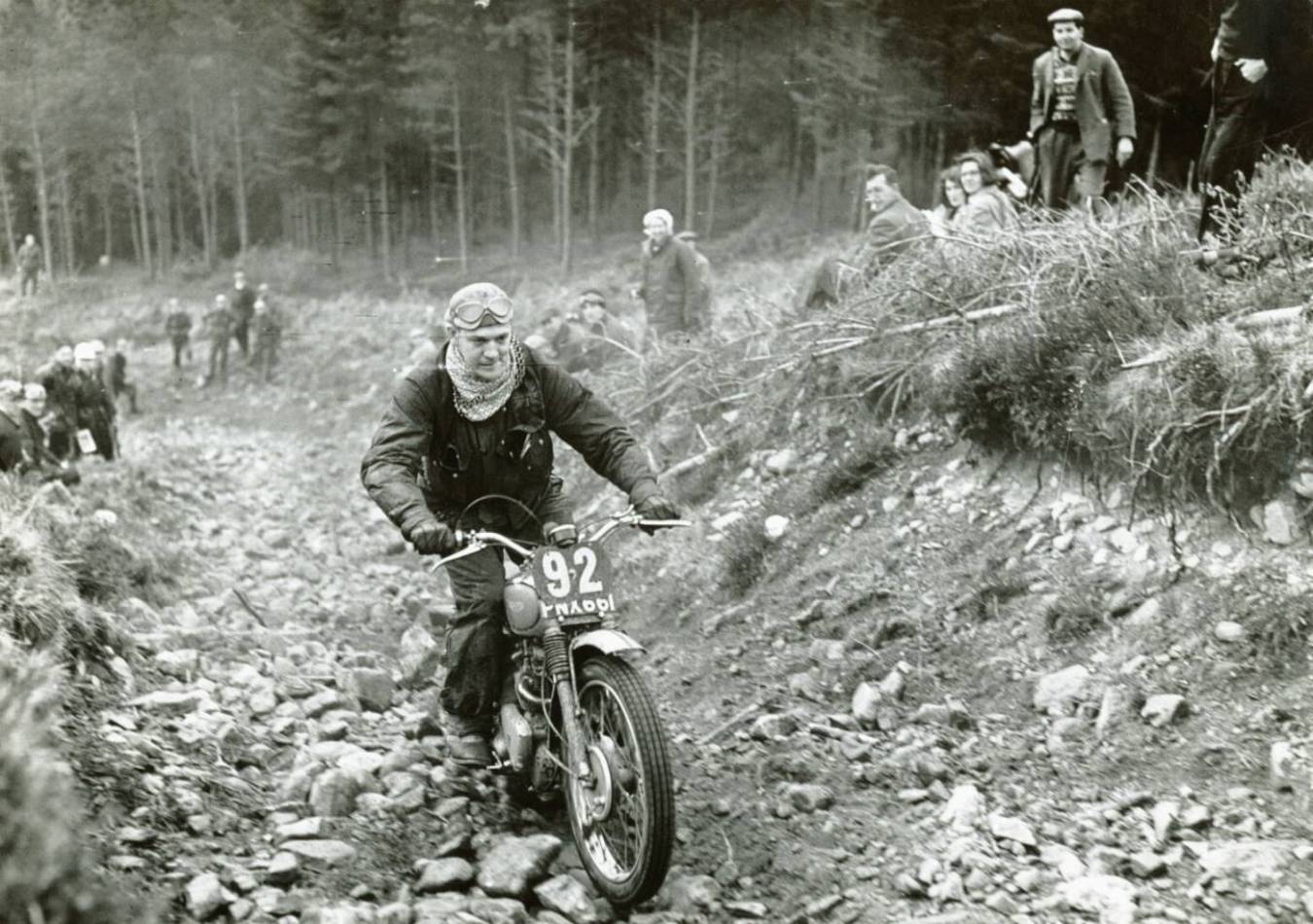
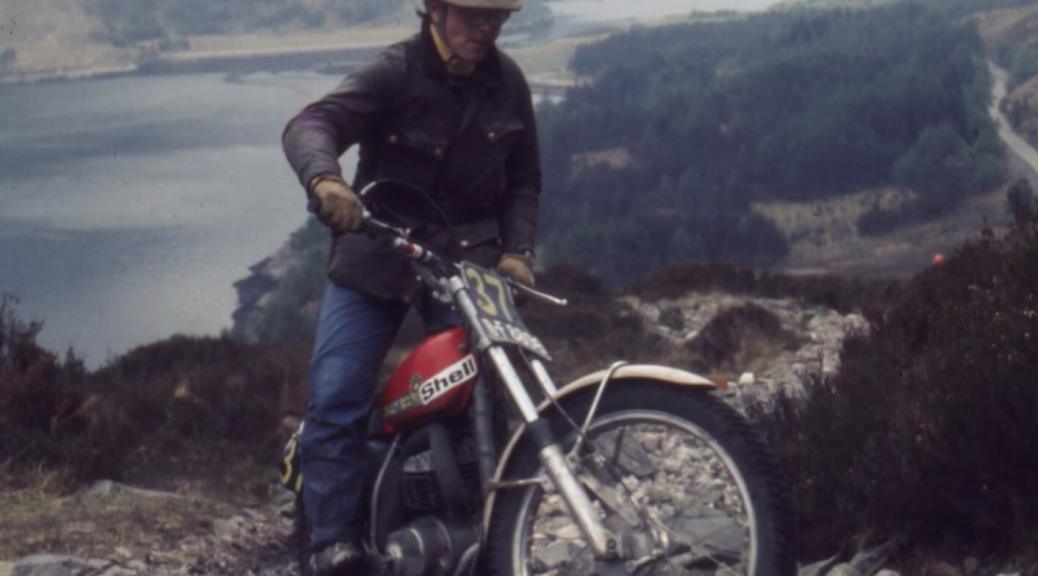


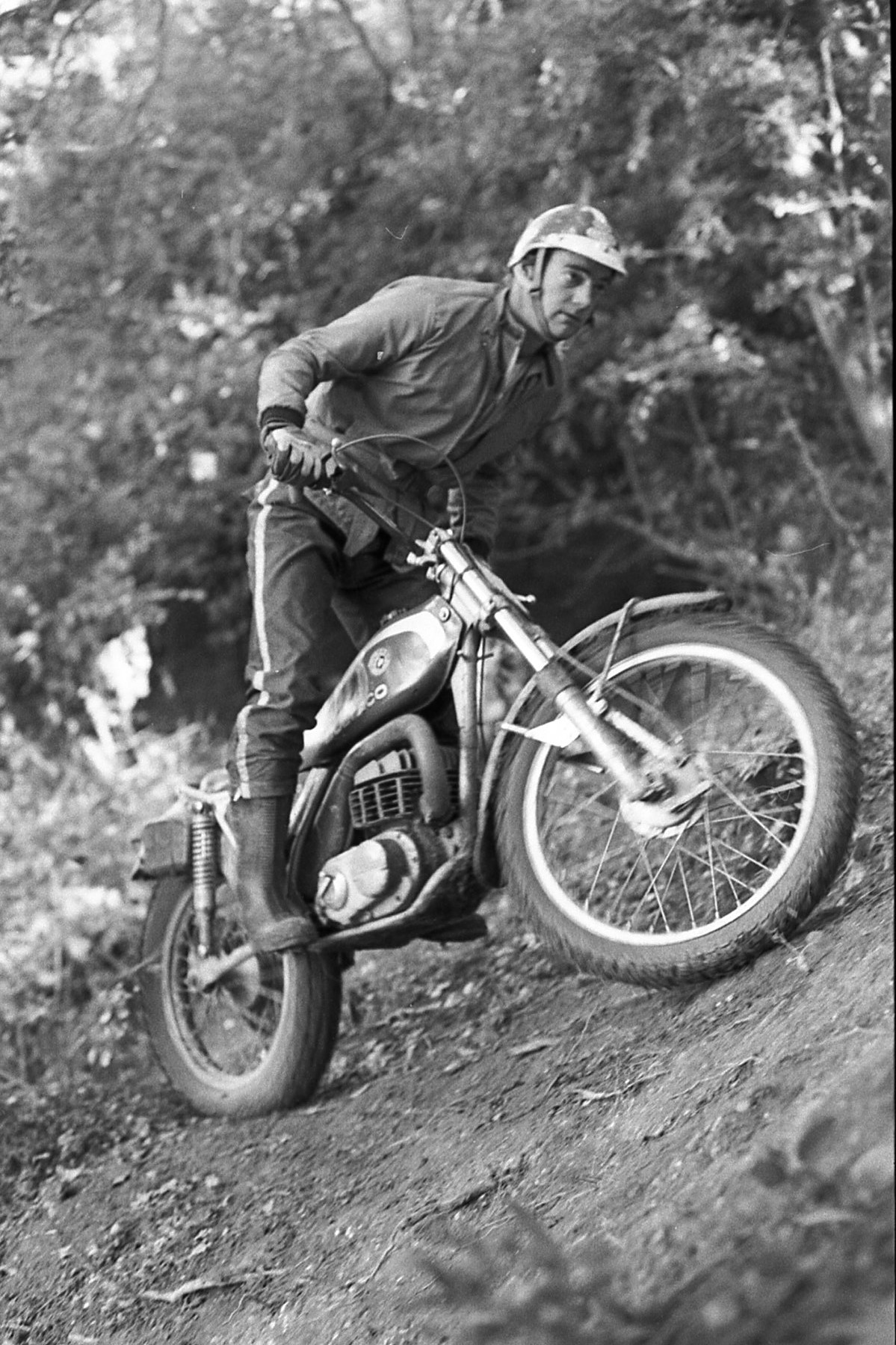
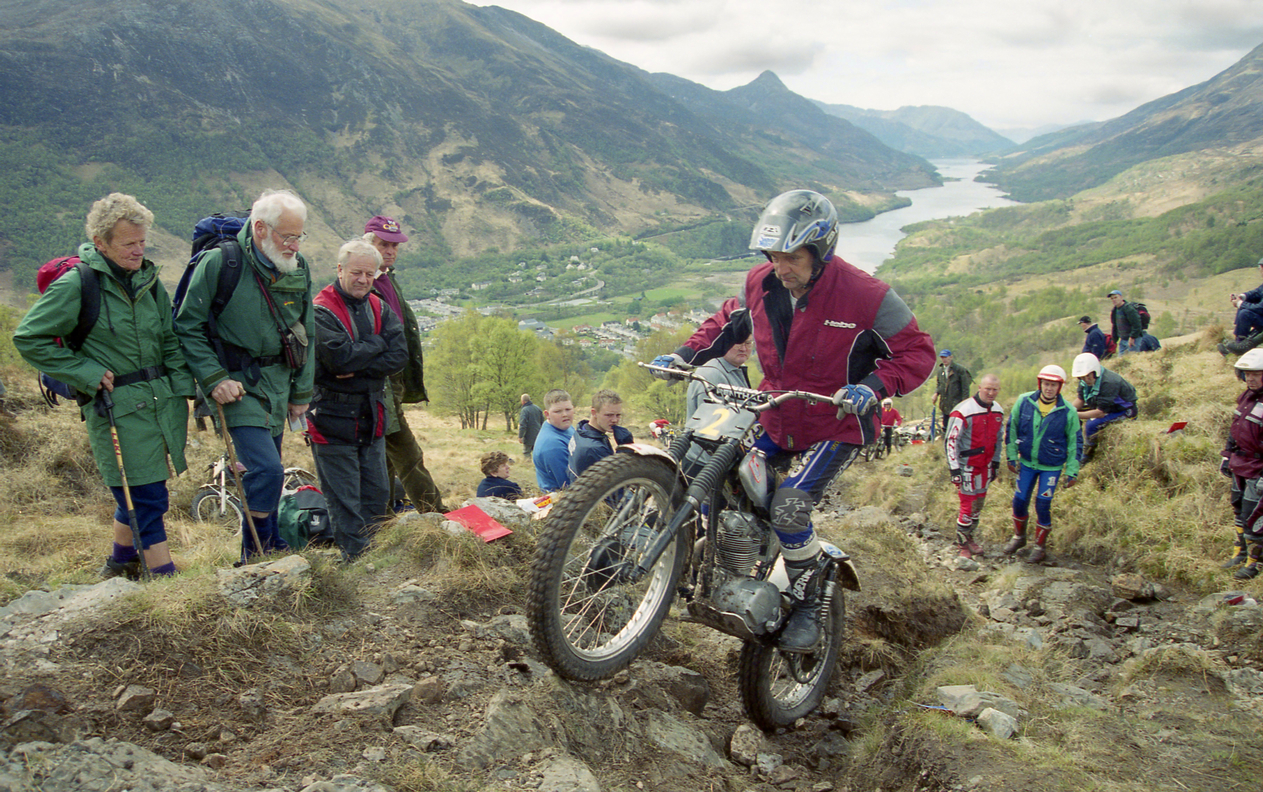
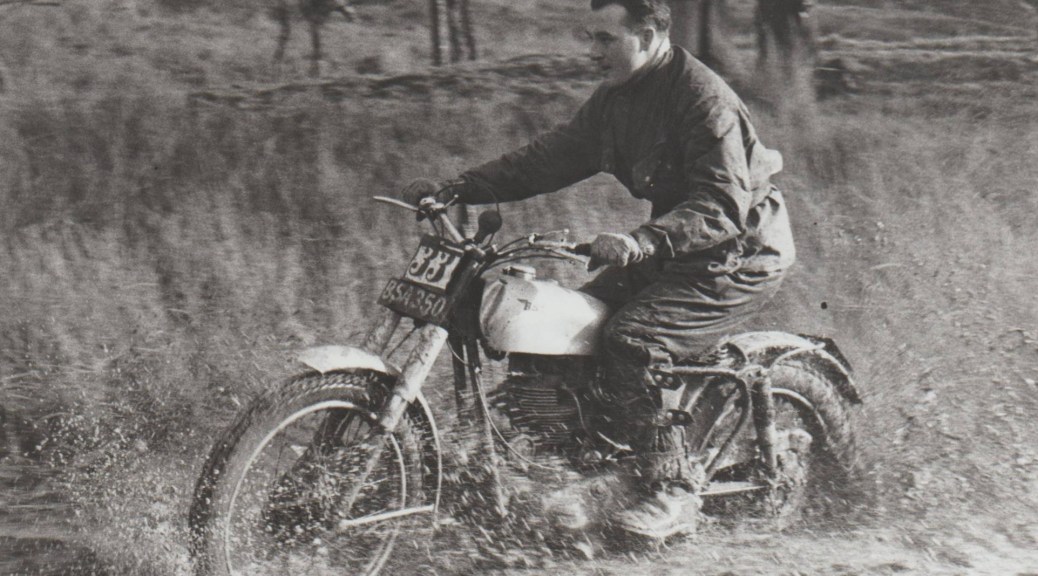

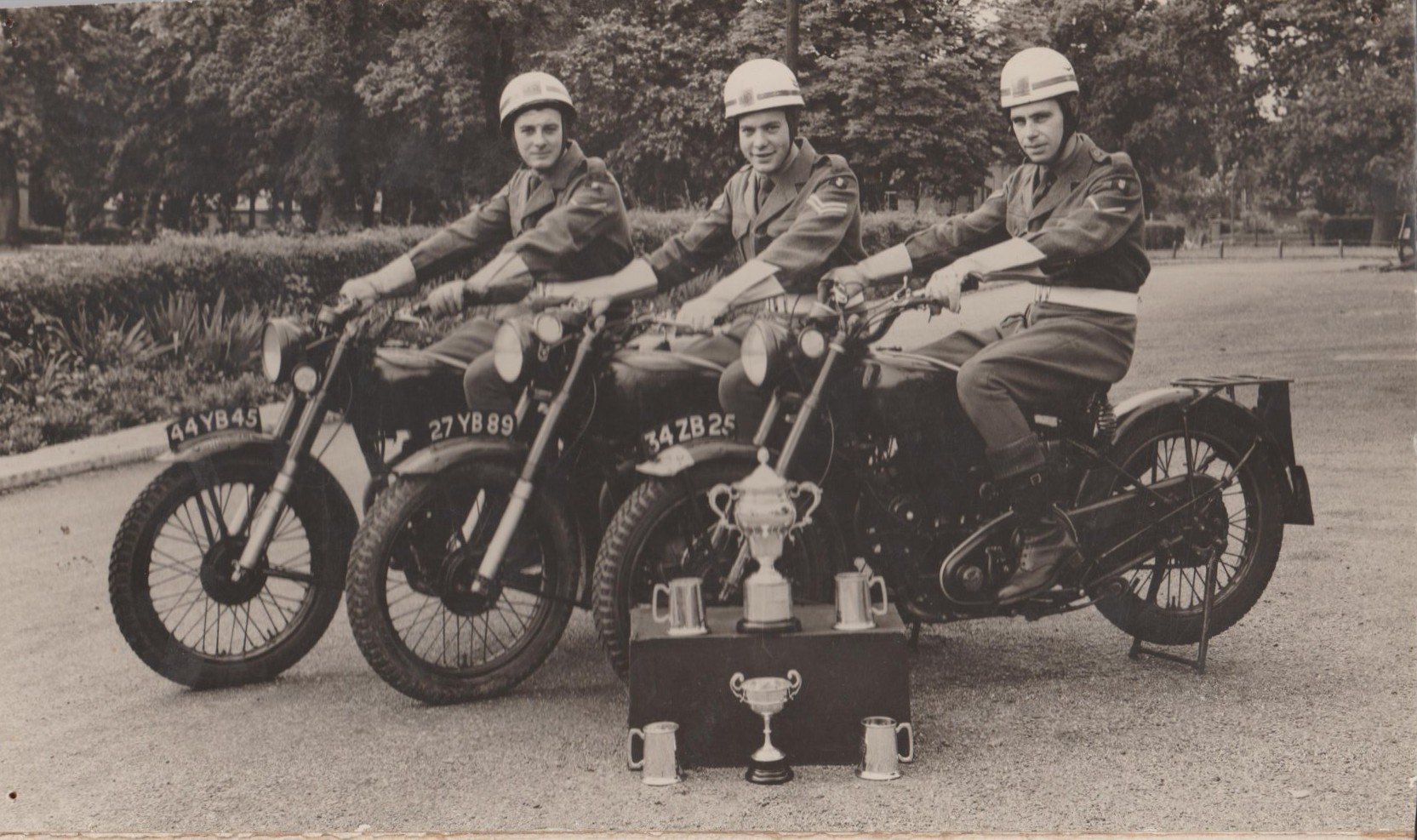
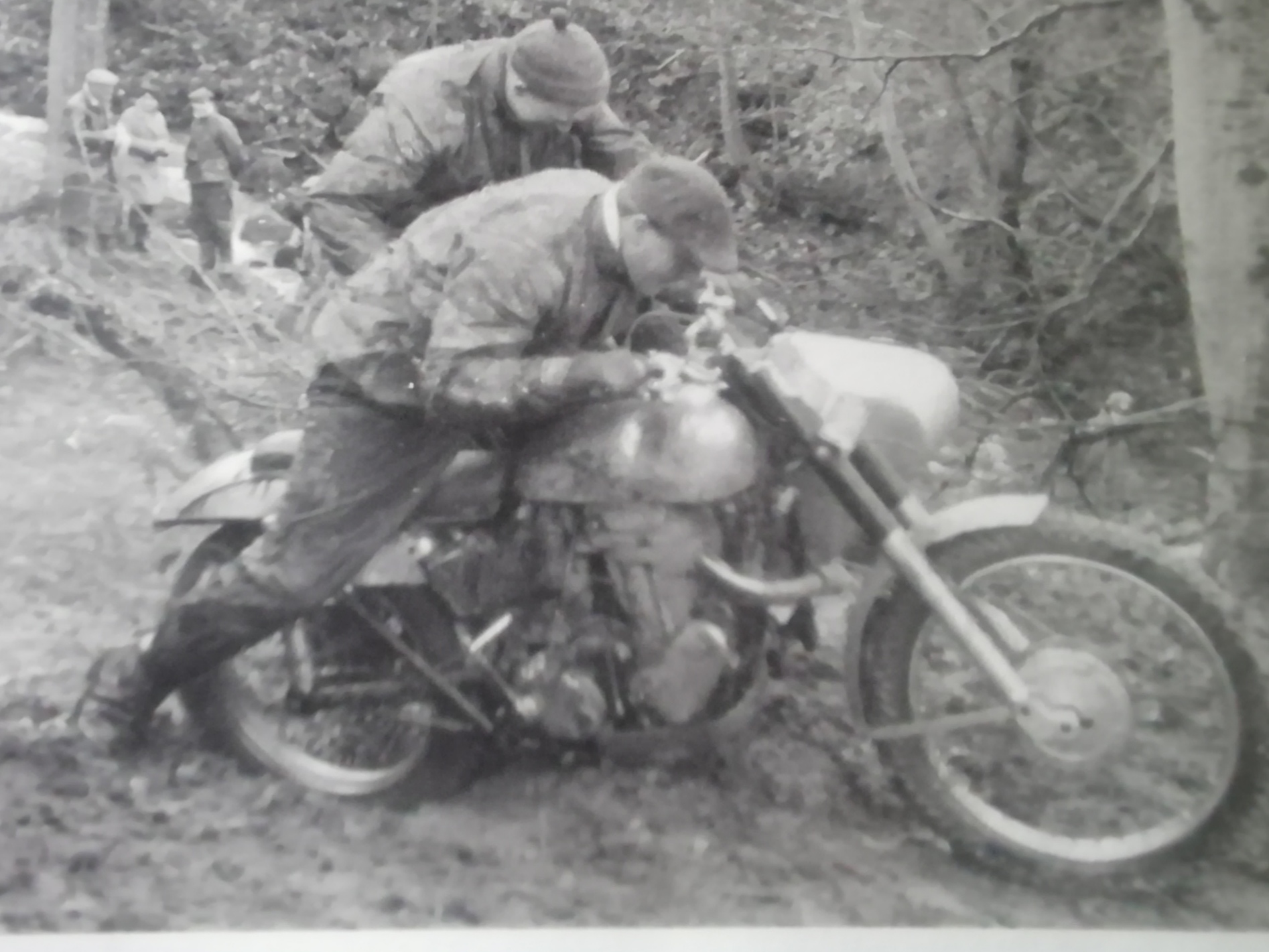
 TRIALS GURU - DEDICATED TO TRIAL