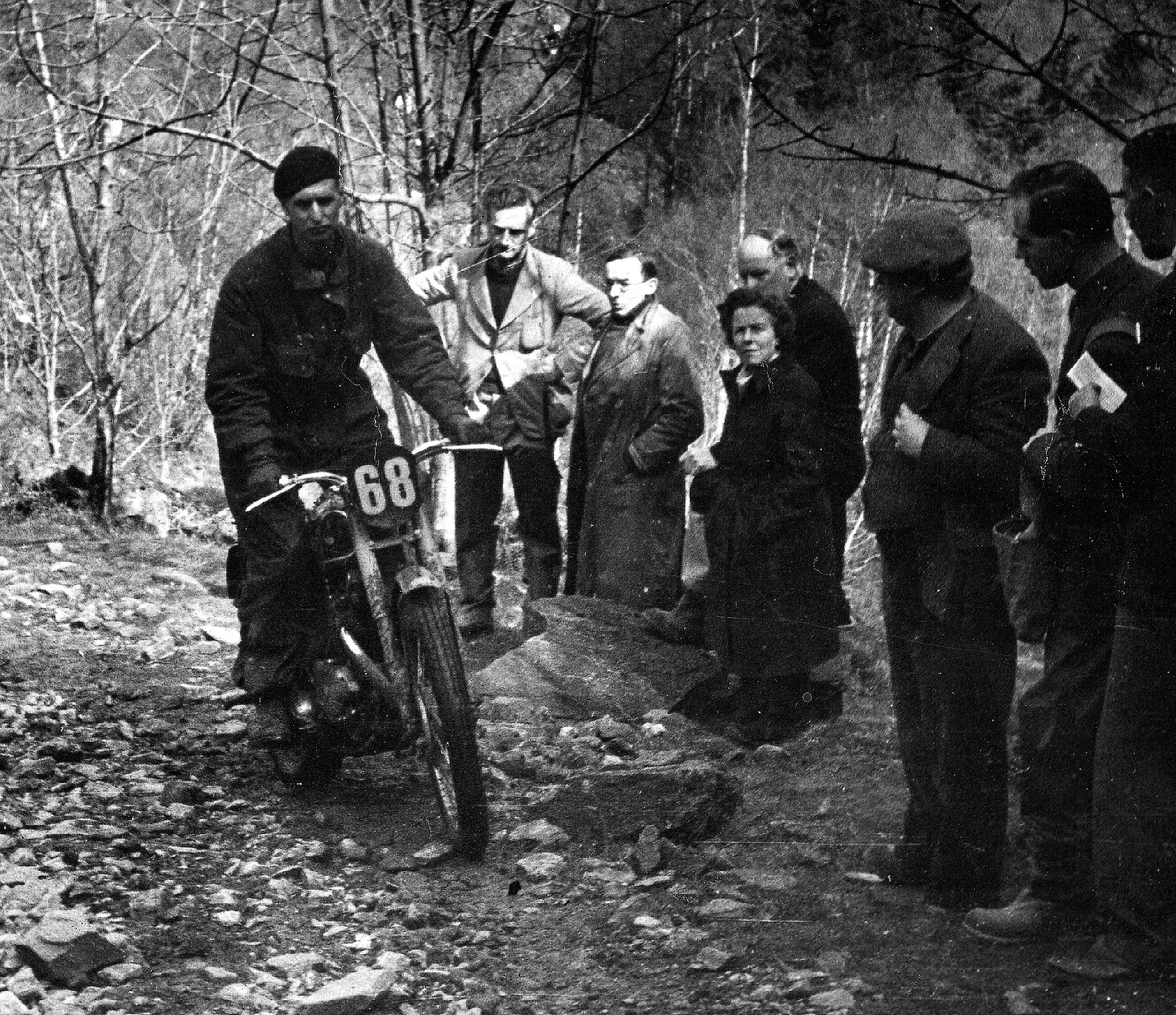
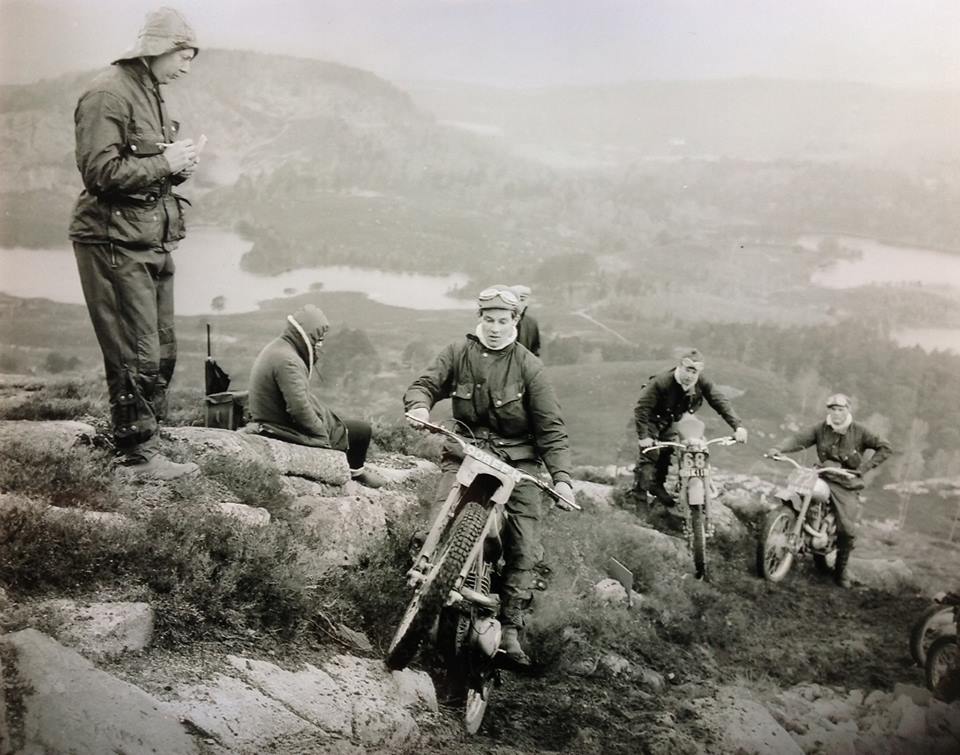
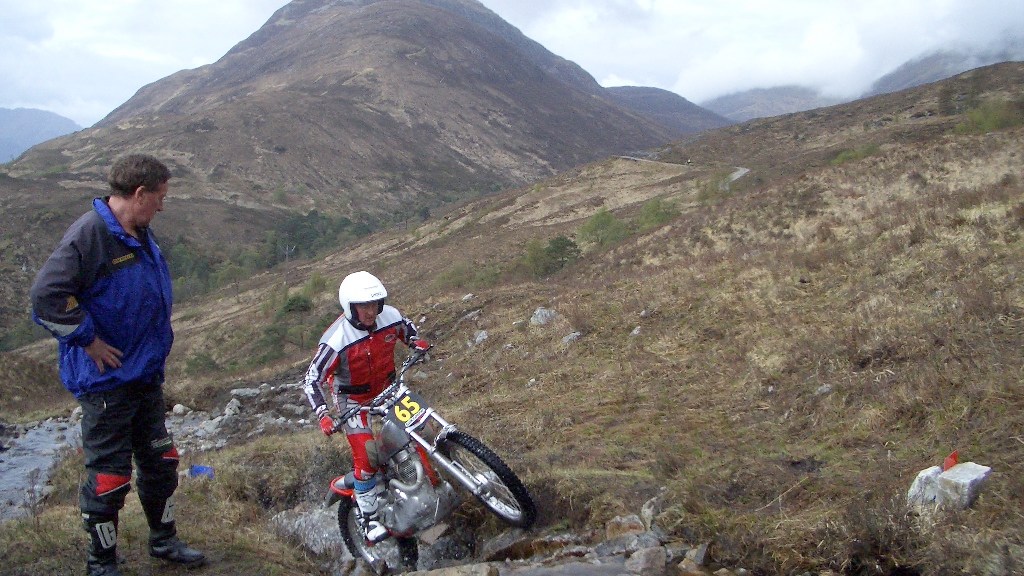
Ed Stott (left) observing B. Checklin (Greeves) at the 1959 SSDT at ‘Loch End’, near Drumnadrochit – Photo: Ed Stott Collection.
Ed Stott was a true motorcycling enthusiast who earned his living as a graphic designer. He became a wealth of knowledge on trials and the Scottish Six Days Trial in particular and was highly respected by the committee of the SSDT.
Ed Stott in the 1947 SSDT on a Triumph twin. (Photo: Ed Stott Collection)
Ed Stott lived at 44 Rodney Gardens, Pinner, Middlesex and was well known in the local motorcycling circles. In the 1970s, his vast collection of photographs were made into slides for his around the country talks on the Scottish Six Days Trial. Ed gave these talks with slide shows to various motorcycle clubs and associations over the years.
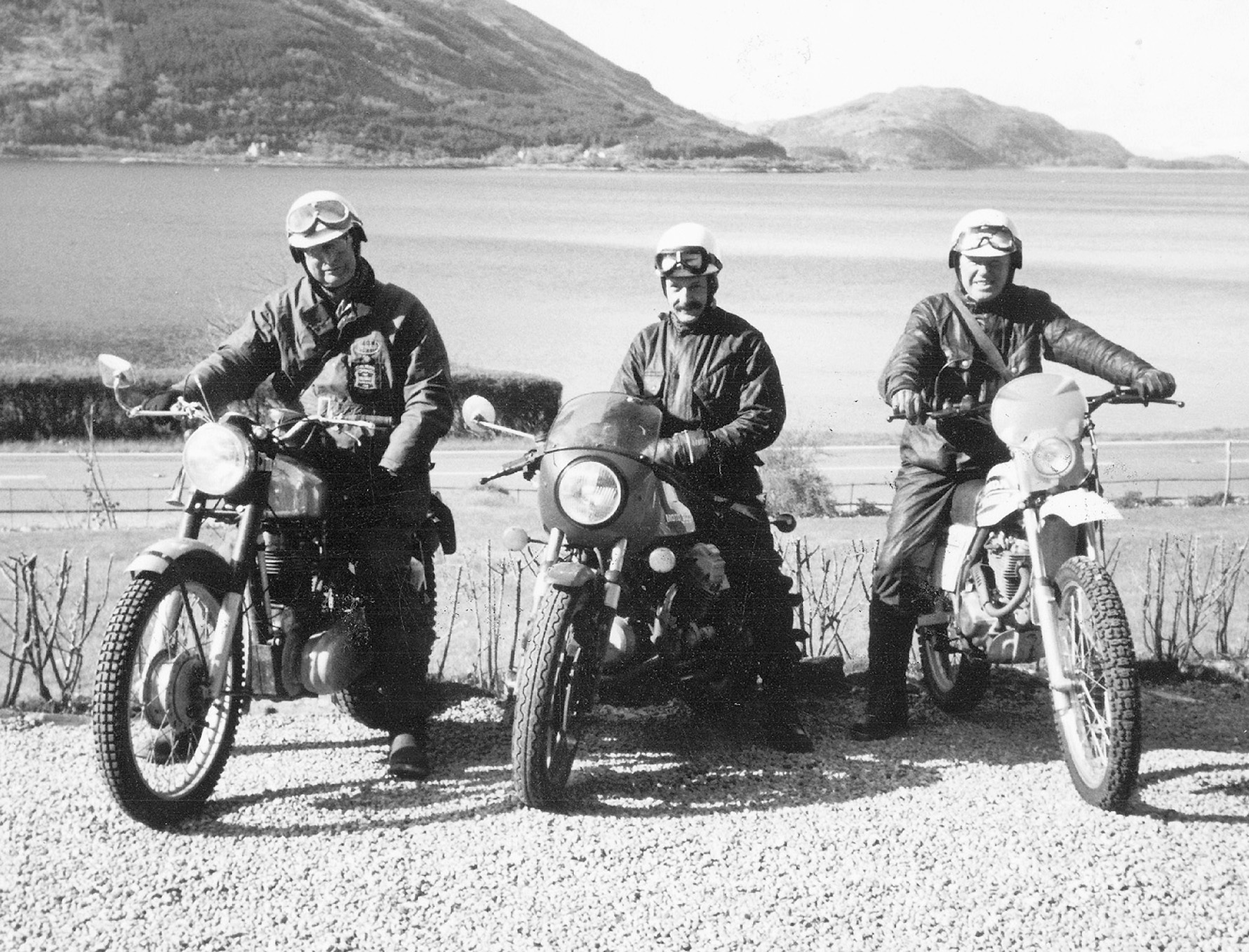
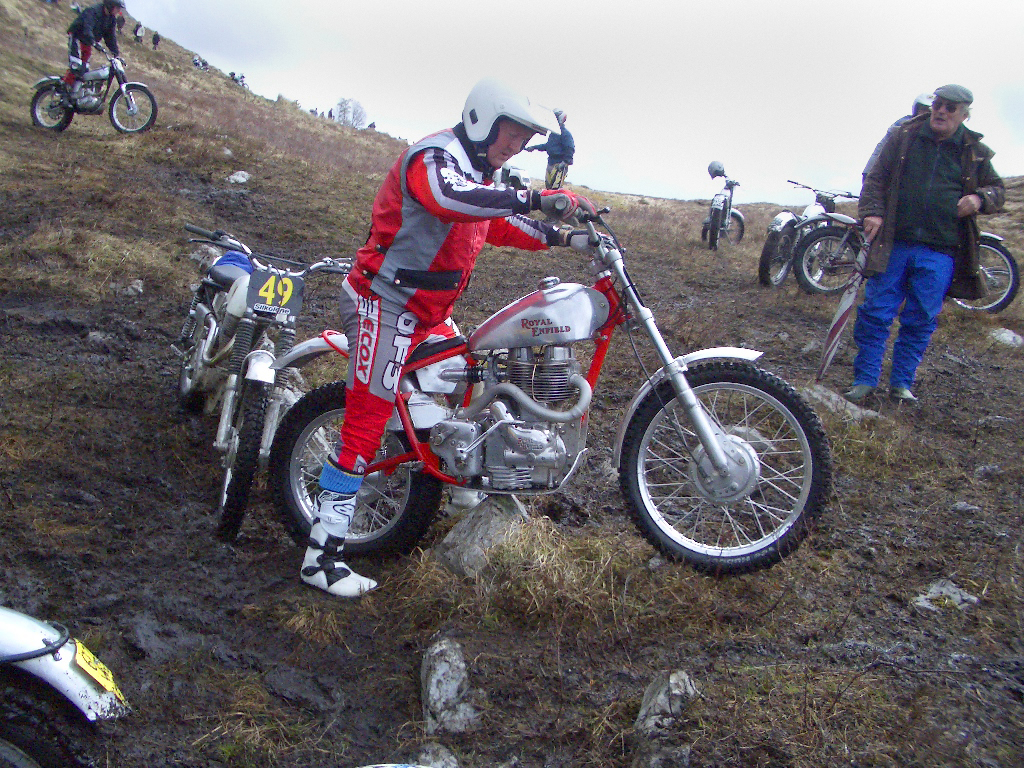
Ed Stott (350cc Royal Enfield) with friends Mike Vangucci (998cc Moto Guzzi) and Tom Mooney (175cc Honda) at the Onich Hotel with Loch Linnhe in the background – Photo: Ed Stott Collection.
Stott was a ‘superenthusiast’ of the SSDT and trials in general, he was a rider, official and spectator at the SSDT. Stott earned the respect of the SSDT committee of the Edinburgh & District Motor Club Ltd and it’s clerk of courses over the years.
Blackie Holden (Cotton) on ‘Creag An Eilein’ in the 1964 SSDT – Photo: Ray Biddle.
Ed wrote a number of articles for the Classic Motor Cycle, one of which he wrote in 1984, detailing the discovery and use of the SSDT section named firstly in 1953 as ‘Inchriach’, then ‘Creag An Eilein’ just south of Aviemore on the Rothiemurchus Estate, owned by the Grant family. The name in Scottish gaelic means ‘Hill of the Island’. Stott had observed this group of sections as ‘Team Leader’ during the SSDT and had a good knowledge of the area surrounding the hill.
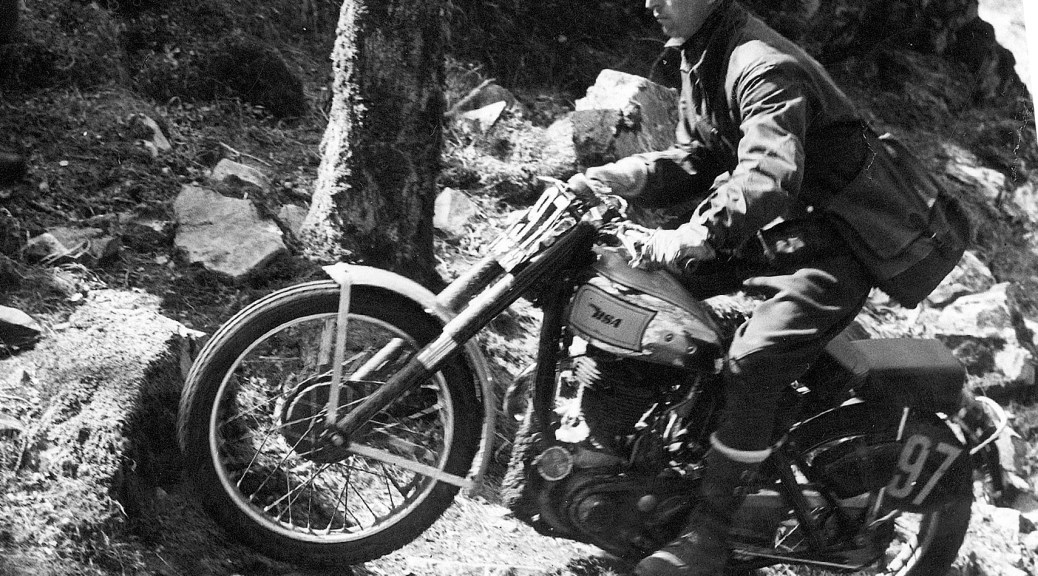
Ed Stott on his 348cc BSA on ‘Bay Hill’ during the 1949 SSDT – Photo: Ed Stott Collection.
Shortly before his death, Ed entrusted his motorcycling archive collection and notes to Deryk Wylde prior to his death. Deryk Wylde then passed this collection on to John Moffat of Trials Guru, gifted on 19th May 2025 and delivered in early October 2025.
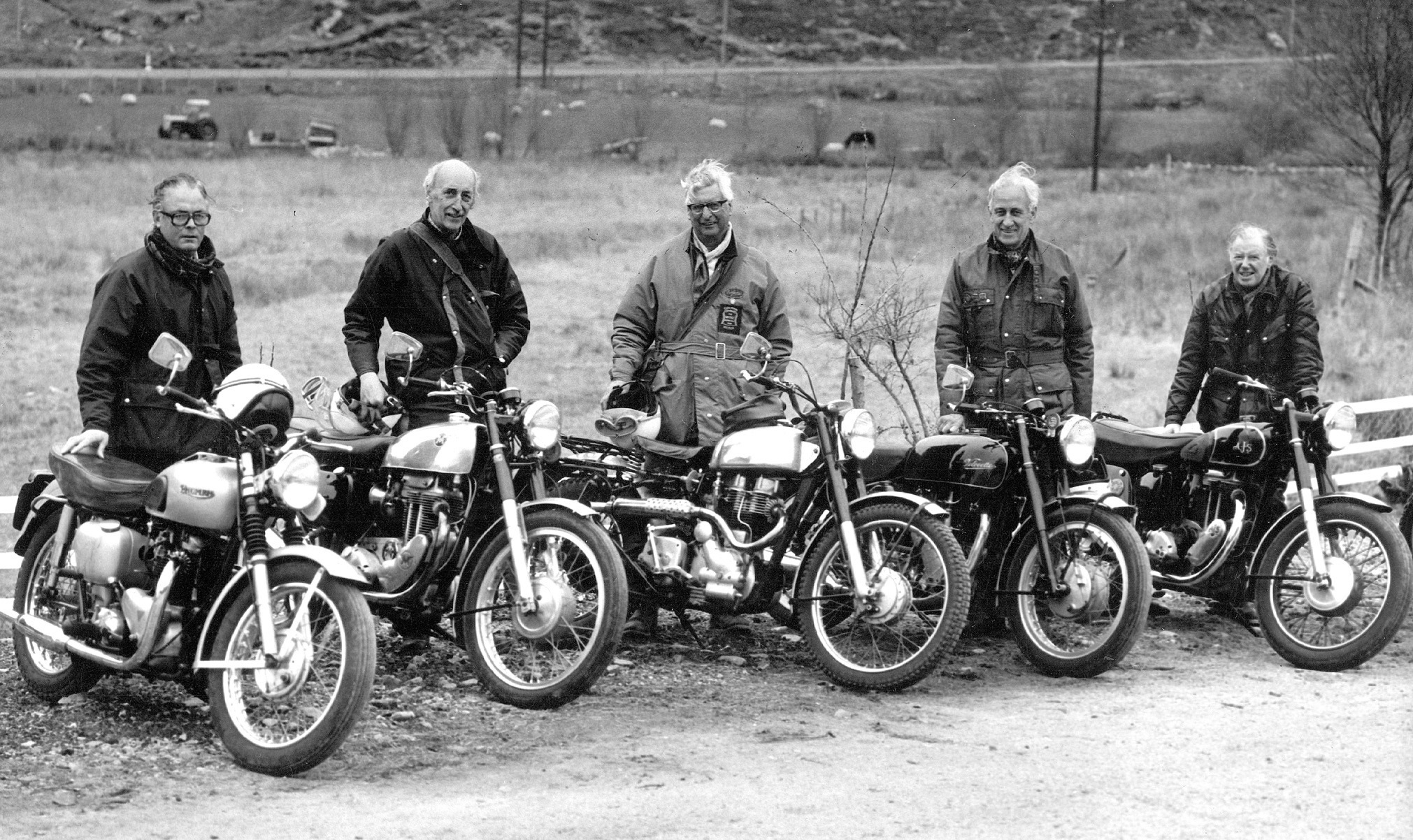
Ed Stott (Centre of photo) was the doyen of SSDT history, seen here with his friends, John Barnes, Derek Murdoch and Geoff Murdoch and Tom Mooney on the right. (Photo: Ed Stott Collection)
Ed Stott had collected a significant amount of information on the SSDT, his first attendance as a rider was in 1947 and he rode until 1953. He attended every SSDT from then until 1995. Ed had been a competitor, an official and a spectator at the annual event.
Ed Stott on his 348cc BSA, tackles ‘Town Hall Brae’ in Fort William during the 1950 Scottish Six Days Trial – Photo : Ray Biddle.
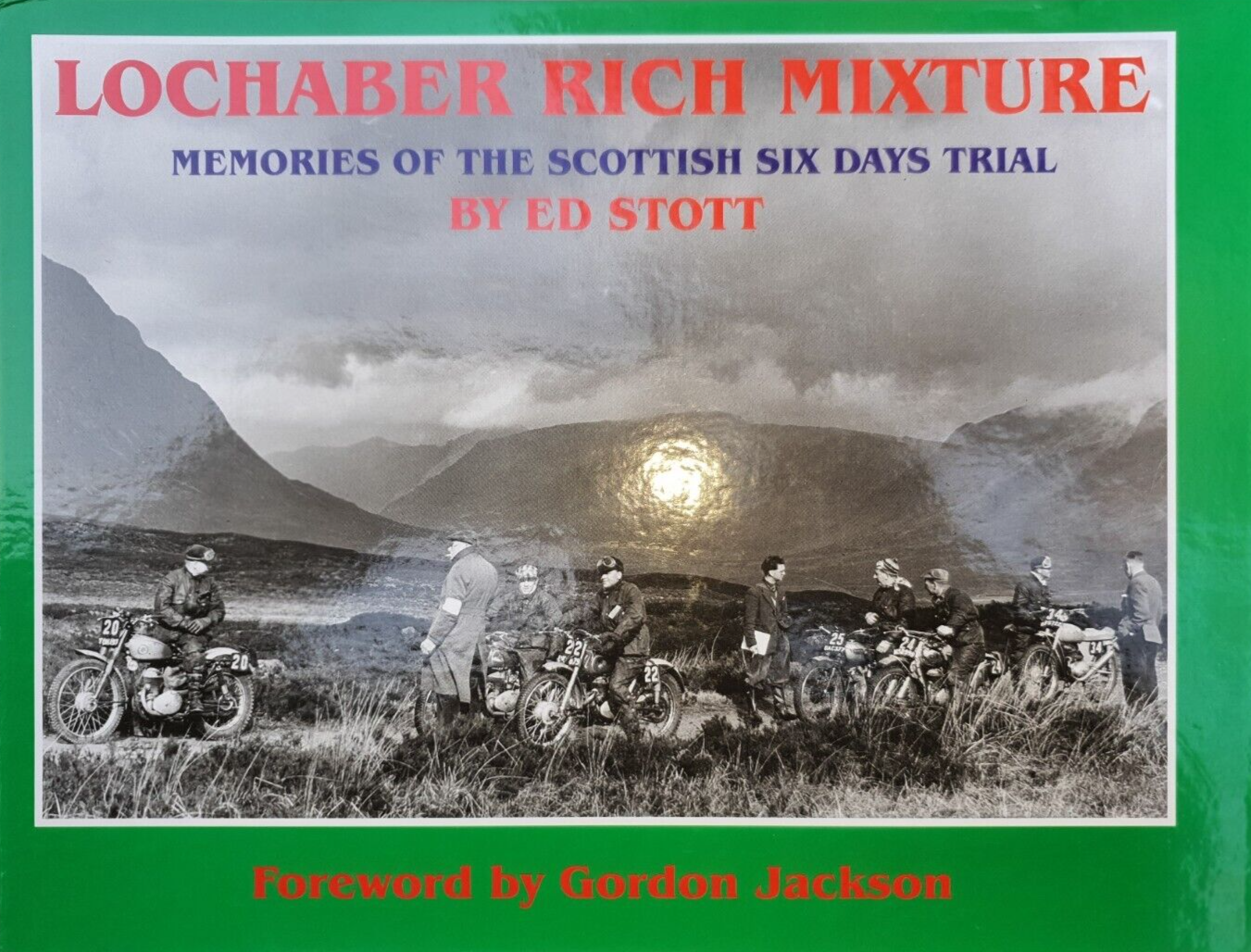
Ed compiled information and photographs for a book detailing his time as a competitor, observer and spectator at the Scottish Six Days Trial. Entitled ‘Lochaber Rich Mixture’ it was published by Ariel Publishing and is a fascinating account of the life and times of the SSDT.
Ed Stott compiled information for this book which was published by Deryk Wylde’s Ariel Publishing.
Ed Stott had struck up a friendship with Charlie Rogers of Royal Enfield and this was to be a very useful relationship over the years. This gave Ed access to information and advice when he owned and rode Royal Enfield motorcycles.
But it was the SSDT records that Ed Stott compiled and maintained that are of great historical value and significance. He kept many of the old reports and results of the SSDT, dating back to the very first Scottish Trial, a five day event in 1909. These were stored in lever arch files and have been hidden away for many years. Now they are in the public domain on this website, Trials Guru available free of charge for all to read and study.
Ed Stott recorded a vast amount of history on the Scottish Six Days Trial, our aim at Trials Guru is to share it with a wider audience.
Here are the links to the Ed Stott SSDT Results Archives:
‘Ed Stott – The SSDT Historian’ is the copyright of Trials Guru.
Photographic Copyright: The photographers named in captions to the images.
Apart from ‘Fair Dealing’ for the purpose of private study, research, criticism or review as permitted under the Copyright, Design and Patents Act, 1988, no part of this article may be copied, reproduced, stored in any form of retrieval system, electronic or otherwise or transmitted in any form or by any means, electronic, electrical, mechanical, optical, chemical, photocopying, recording or otherwise without the prior written permission of the author as stated above. This article is not being published for any monetary reward or monetisation, be that online or in print.
The adventures of Alfred Wagner on an SWM road trip.
At Trials Guru, we are always on the lookout for unusual articles and we think we have found one here. Alfred Wagner is a trial super-enthusiast from Willendorf in Austria who has had many trial adventures. Here is one of them.
Words and photographs: Alfred Wagner.
It should have made me think, all my friends thought the project idea was great! Most of them had already ridden this mountain on their motorcycles. But no one wanted to accompany me over the Stelvio Pass in the way I had imagined. The Stelvio Pass is a road, with a summit elevation of 2,757 metres above sea level, and is the highest paved mountain pass in Italy and, after the Col de l’Iseran, the second-highest pass in the Alps. Both the summit and the impressive panorama of this road, with its demanding hairpin bends, are a magnet for many motorcyclists. “Buy yourself a little 400cc soft enduro—then it’ll be easy!” That was the sort of advice my friends gave me.
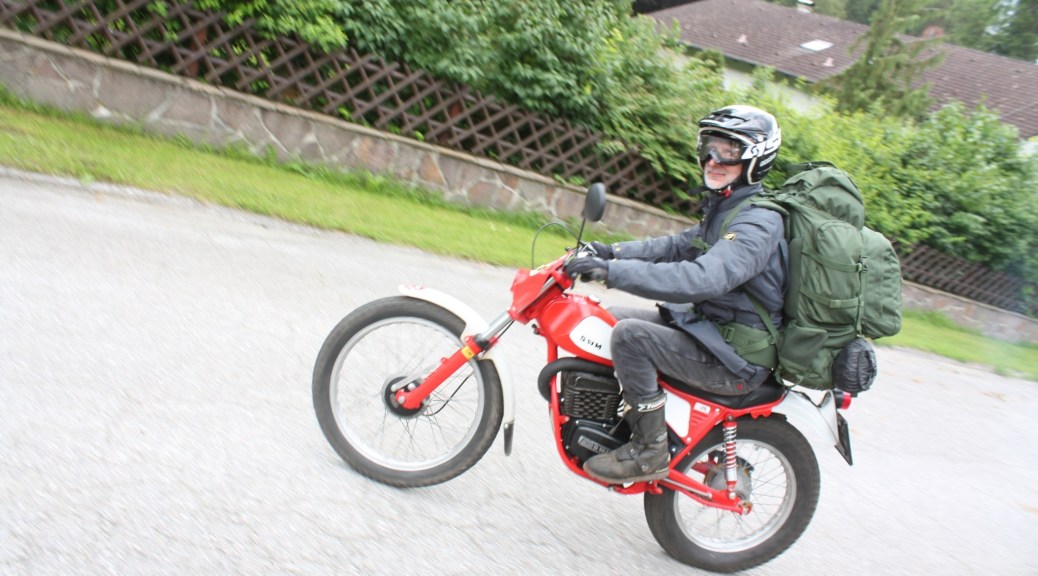
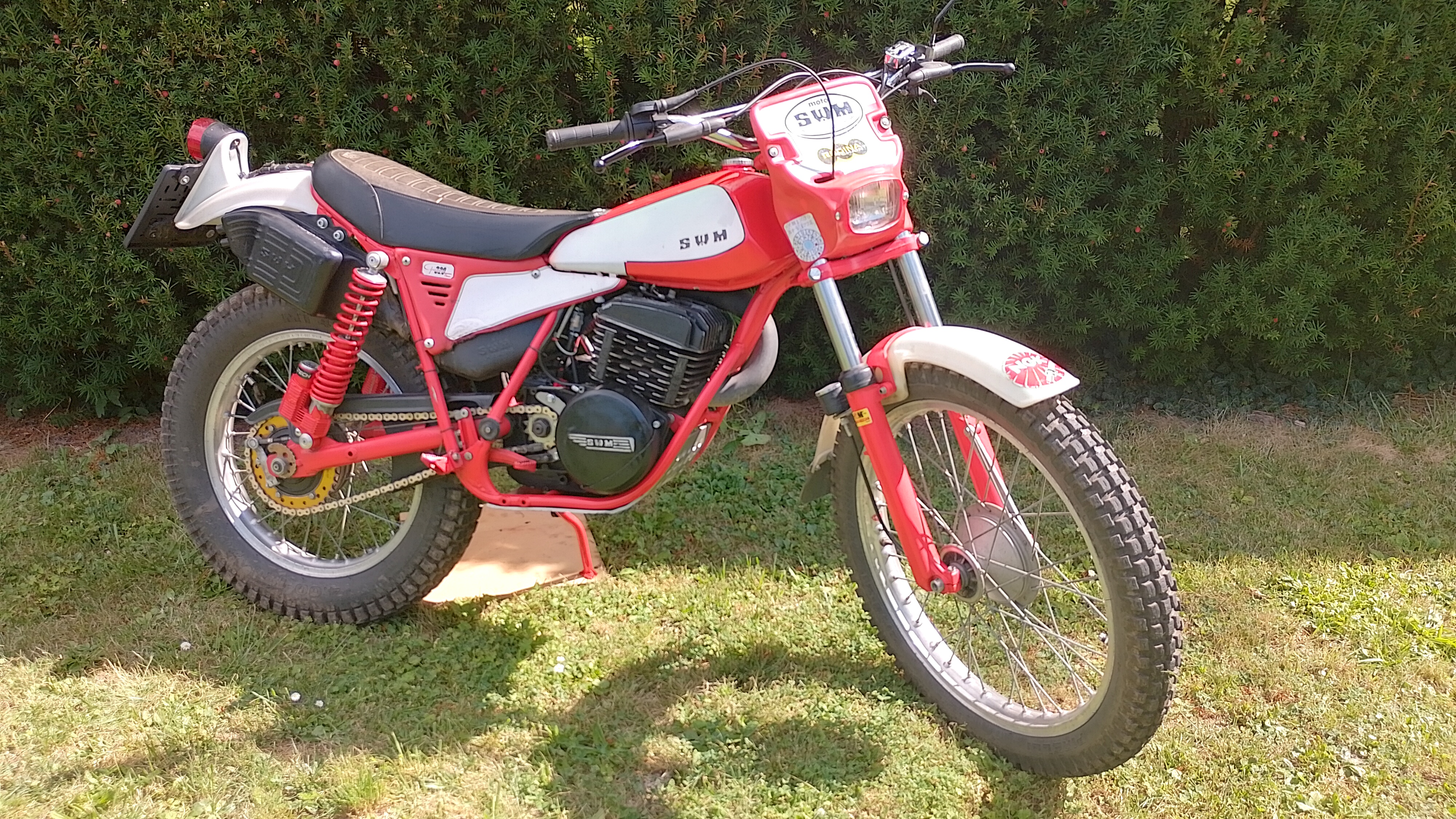
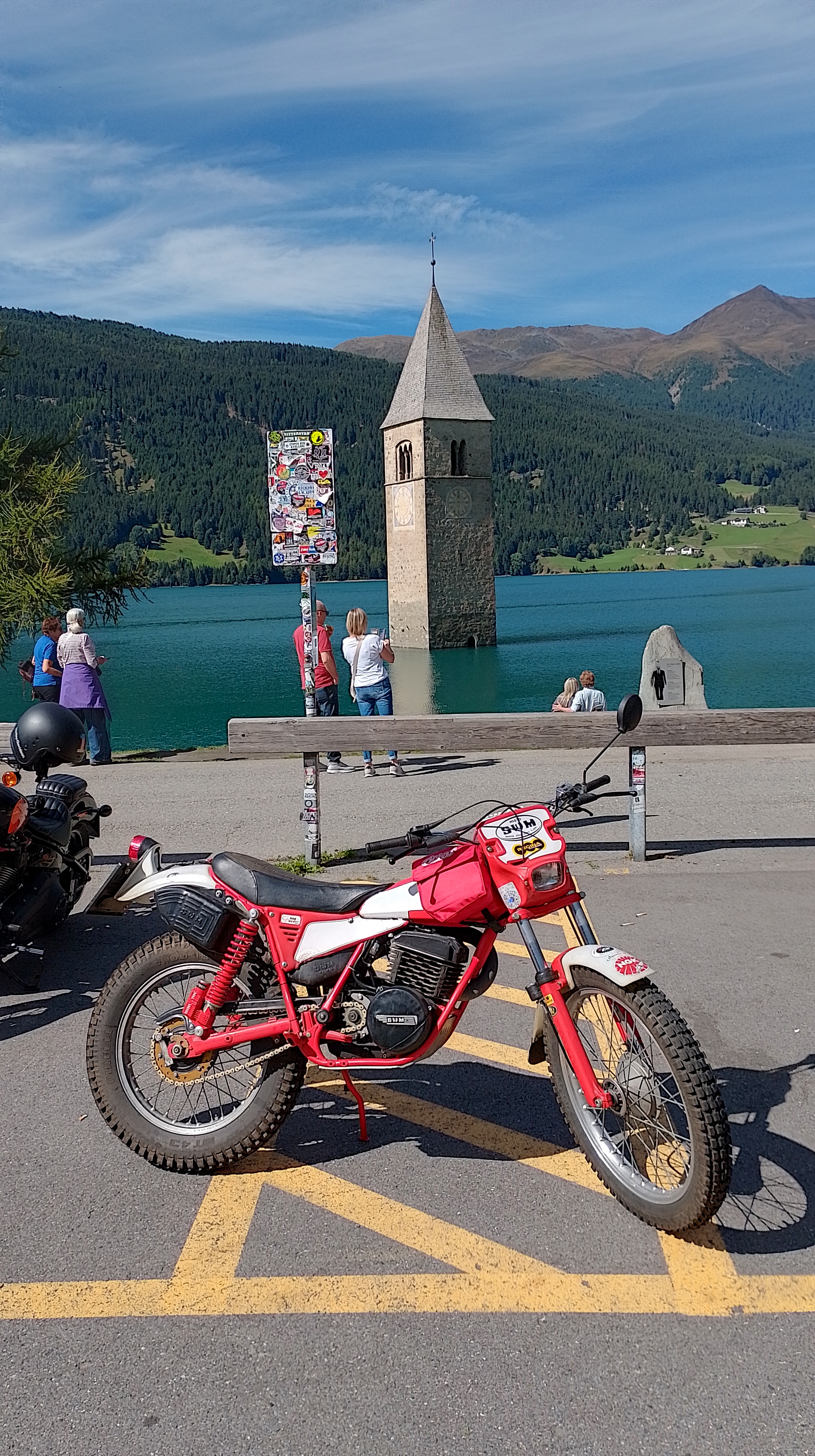
The 1978 SWM Guanaco used in the adventure – Photo: Alfred Wagner
But I wanted to make the trip on a trial motorcycle, an SWM 320 Guanaco, from the year 1978. I love the sport of trial. This is about overcoming difficulties. For me, my enthusiasm for the classic trial is the logical continuation of the trial idea from a sporting point of view.
The previous year, travelling to all the Austrian rounds of the Classic Trial Series A-Cup by SWM.
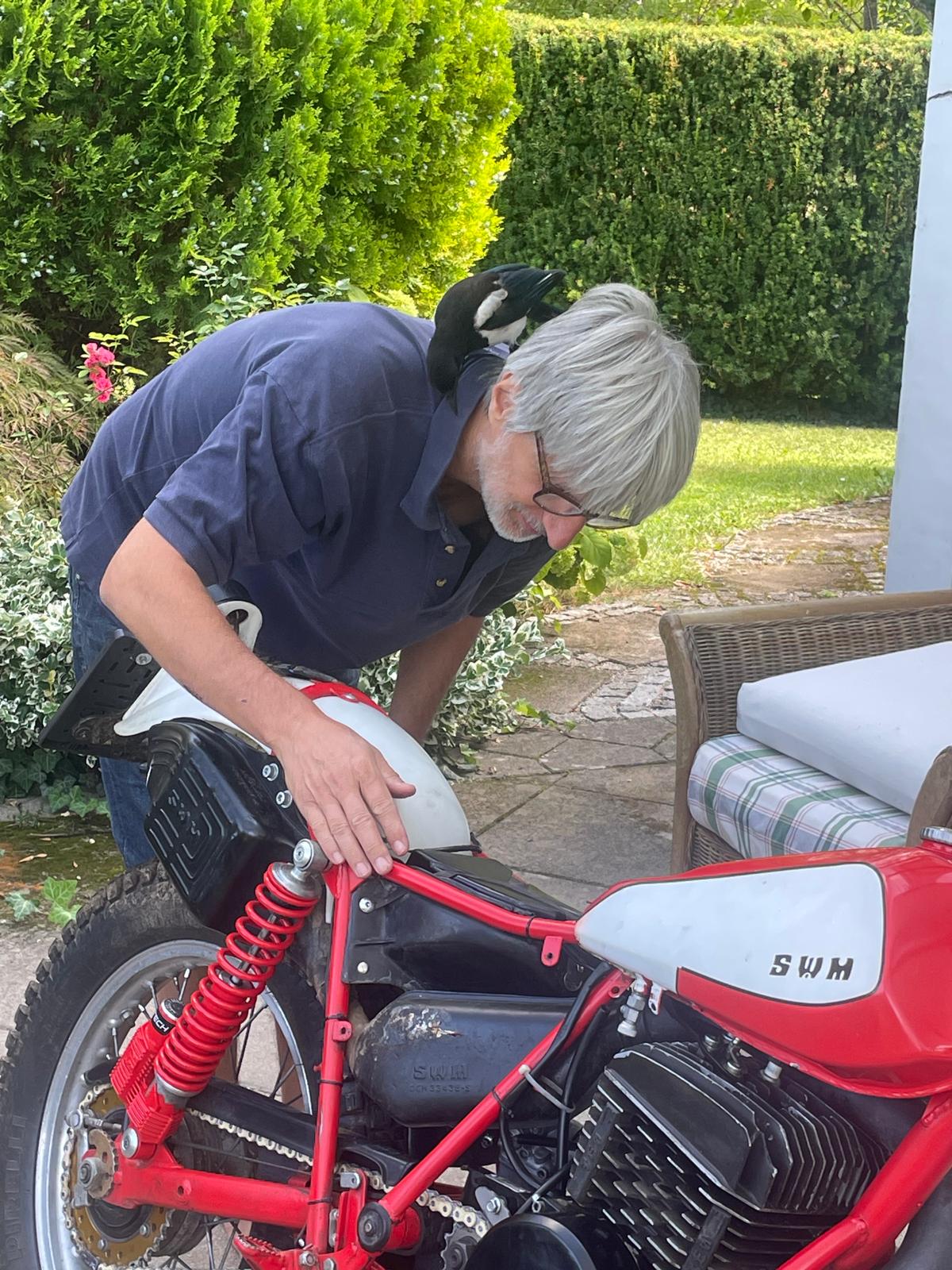
When riding historic motorcycles, the advantages of the technical development of recent decades are dispensed with. Inspired by stories told by the Austrian trial pioneers, I travelled to all six events of the Austrian Classic Trial Series A-Cup on the road of my SWM Guanaco the year before. That means I arrived directly on the competition motorcycle, i.e. on my own wheel. Until this project, I had no experience with motorcycles on the road. I was and am not a mechanic either. The SWM came fresh from the restoration and was untested. With the active support of some trial friends, all technical problems that had arisen could be solved and my self-help skills improved. At the end of the previous year, six completed two-day trial events, 1800 kilometres of road including crossing the Grossklöckner High Alpine Road on the seat of a historic trial motorcycle were recorded.
Preparation! – Photo: Alfred Wagner.
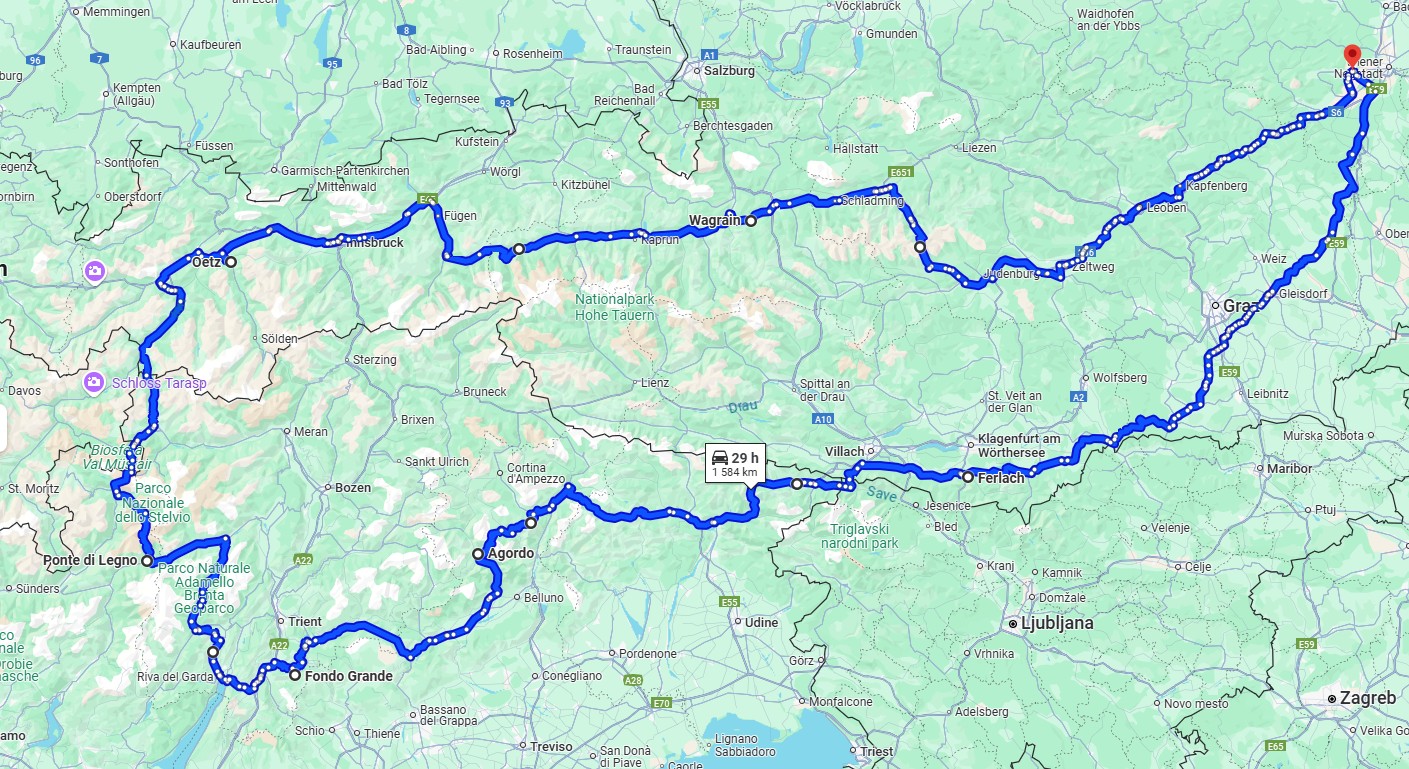
As the reason for the trip I chose the “2 Giorni Trial Folgaria – Alpe Cimbra”. A classic trial event located about 45 minutes by car south of Bolzano in the South Tyrol area. The date, at the beginning of September, was to ensure that all pass roads should be free of snow and passable. I began to think about a route. In eight days I wanted to drive the “old roads through the villages” to Folgaria and back. A route of 1800 kilometers was planned, which included some highlights.
On Tuesday morning, 2.9.2025, it finally started. With a daily distance of 300 kilometers, I wanted to get started right away. Everything was carefully prepared and checked several times. But only a few hundred meters after the start, the engine began to stutter and stopped. A simple movement of the fuel tap was the solution to the problem. It wasn’t worth a big speech, but I understood it as a reminder to stay as attentive as possible every second. The slightest mistake could cause the project to fail.
Already after the first few kilometers I took a small detour, but it was important to me. At the church in St. Lorenzen, I was stopped by technical problems on two rides last year. But when I was able to drive past the church without any problems, I wanted to understand it as a “blessing from above”.
Passing the former Trial World Championship venue, Spital am Semmering, we went to the first planned refuelling stop after 70 kilometers. The tank of the SWM holds 5 liters of gasoline. Using the app kurviger.de, I clarified the question right at the beginning of the planning whether there was a continuous fuel supply for this trip at all. I refuelled with just 3.5 liters of fuel. For me, this was a reassuring initial feedback. The engine ran cleanly. The planned stages between the refuelling stops were a maximum of 80 kilometres long. In addition, I had a canister with a liter of gasoline in the tank bag as an emergency reserve.
At the refueling stop at the town square in idyllic Oberwölz, some nervousness arose. The next stage was only 55 km long, but led over the Sölkpaß up to an altitude of 1788 m above sea level. This is an exposed mountain road that I have great respect for, as high altitudes and rugged slopes cause me problems. I tackled the first meters of the climb athletically within the scope of my possibilities. Unfortunately, I was ashamed to learn that I also needed a sign to show consideration for the residents living here. It would have been stupid of me to load the engine with high revs for a long time, I really wanted to get home safely. Fog, drizzle and masses of gravel on the ascent allowed only low speeds even by my standards. When I reached the top of the pass, the weather improved abruptly and the sun gave me a view of the Enns Valley in front of me on the descent.
Maybe I was paranoid. But during the whole trip I was constantly worried about the engine lubrication during long descents. With the two-stroke engine of the SWM, the engine brake was not allowed to be used for too long. This would interrupt the fuel supply, the oil film could tear and cause engine damage. The so-called lubricating gas would provide oil supplies. Too much of it increases the speed downhill and puts a strain on the brakes. In my case, it’s brakes that are designed for trials. They can also be easily dosed in wet and dirty conditions, but are not designed for high speeds or high loads. I therefore decided to drive down the mountains slowly, very slowly and not to disturb the flow of traffic too much.
Arriving back in the Enns Valley, it was already 3:30 pm. An advertising sign at the nearest gas station invited people to coffee and apricot cake. The perfect offer for the first break for the driver since the start at 9:00 am. At all the stops so far, I was constantly busy with tasks for the trip. Based on my experience of the previous year, I knew that long stages would take up to ten hours. So it was also important to pay attention to my personal energy balance. On the other hand, I wanted to keep moving all the time if possible to have time reserves for any problems that might arise. Due to the weak 6V lighting of the SWM, I wanted to avoid driving at night at all costs.
With the composure of a Buddhist monk, I reeled down the rest of the route through the Enns Valley, partly in the rain and over unsightly milled roads to the stage finish in Wagrein.
The accommodation was already booked for the whole route. That was important to me. After long day drives, I didn’t want to go on a “hostel search” somewhere. There was also an inn in the hotel, but it was closed that day. I was hungry and tired. The keys to the room were ready at self check-in. Kitchen noise showed me the way to the “source”. A woman was busy with preparations. For the next day, grilled chicken was advertised, but today it was closed. So I asked if I could get a ham toast or frankfurter sausages, for example. No, unfortunately! There would be no ham, no sausages either. But if it were okay with me, she could quickly prepare a Wiener schnitzel with French fries. A thousand roses, I felt epicurean in seventh heaven!
Wonderfully rested and well strengthened, we went into the second day with a destination in Oetz in Tyrol with a daily distance of 254 km. This stage included some sections of the route that demanded great respect from me for various reasons. On the other hand, I had also planned some highlights that I was really looking forward to.
Only a few kilometers after the start, the route led through the idyllic Salzach Valley. At the bottom of the narrow valley, the road follows the meanders of the river for a while. After some time, the road leads straight up a mountain slope and then leads back into the valley in long curves. While many participants still had to exercise patience in the winding section, they let their vehicles run free here. For me, however, this meant that I had an unpleasant amount of traffic from behind. Both uphill and downhill, I had a truck behind me that would have liked to drive faster and made this known by driving closely. This situation was so demanding for me that I made a short stop at the end of this passage to be able to lower my stress level again.
With Christian Schneider, four times Austrian National Trials Champion – Photo: Alfred Wagner.
The reward for this stress followed immediately after the next refueling stop. I had arranged a visit to Bramberg am Wildkogel. Petrol conversations from yesterday and today over coffee and cake with Christian Schneider, the former four-time Austrian Trial National Champion, quickly directed my thoughts back to the essentials: the tour, the beautiful landscape and the sunshine!
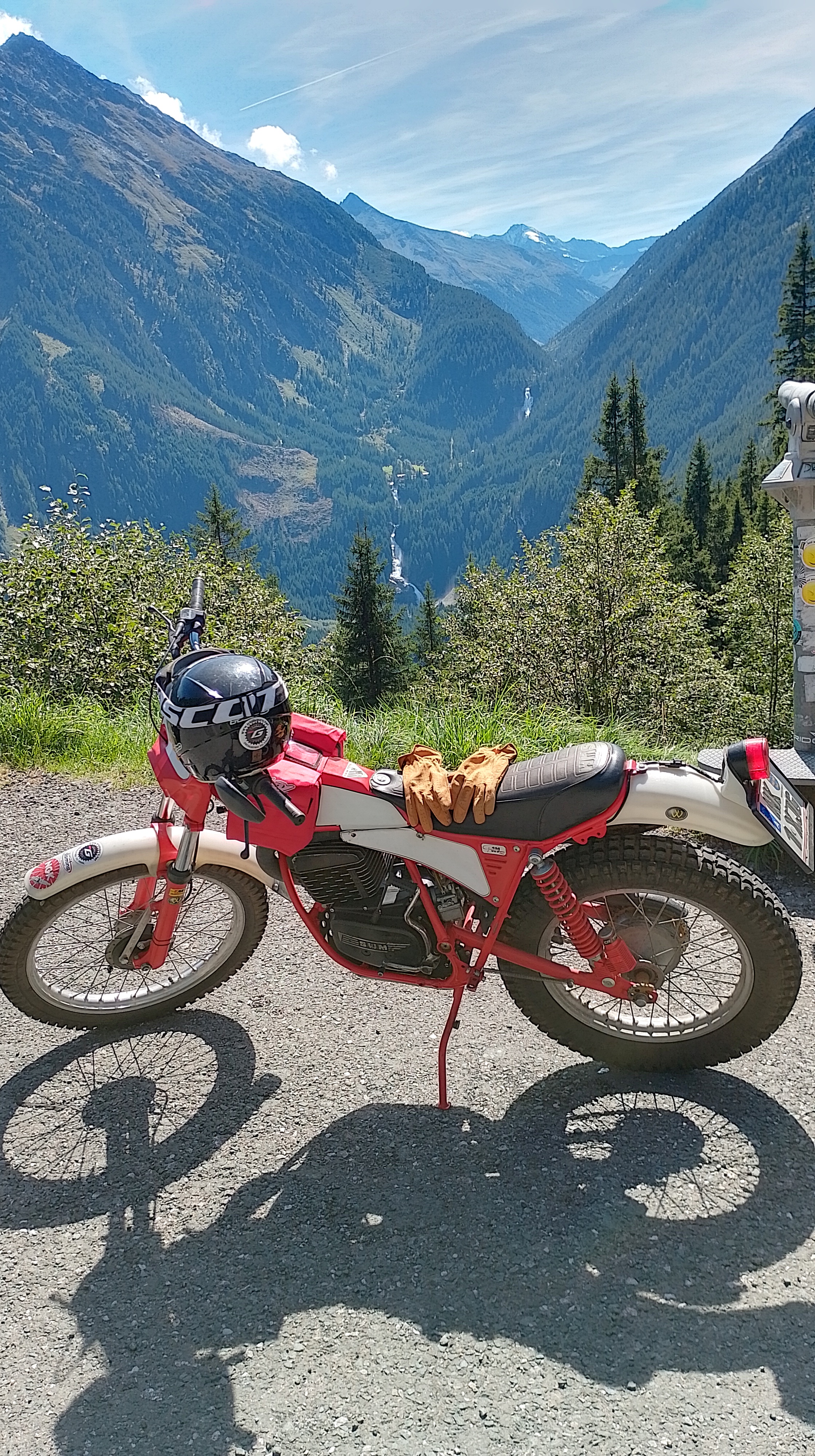
The spectacular Krimmel Valley – Photo: Alfred Wagner.
Passed the Krimml Waterfalls we went over the Gerlos Alpine Road into the Zillertal. In sections, the road through the villages looked like a backdrop from homeland films from the 1950s or 1960s. All that was missing were a few VW Beetles and coaches with panoramic windows.
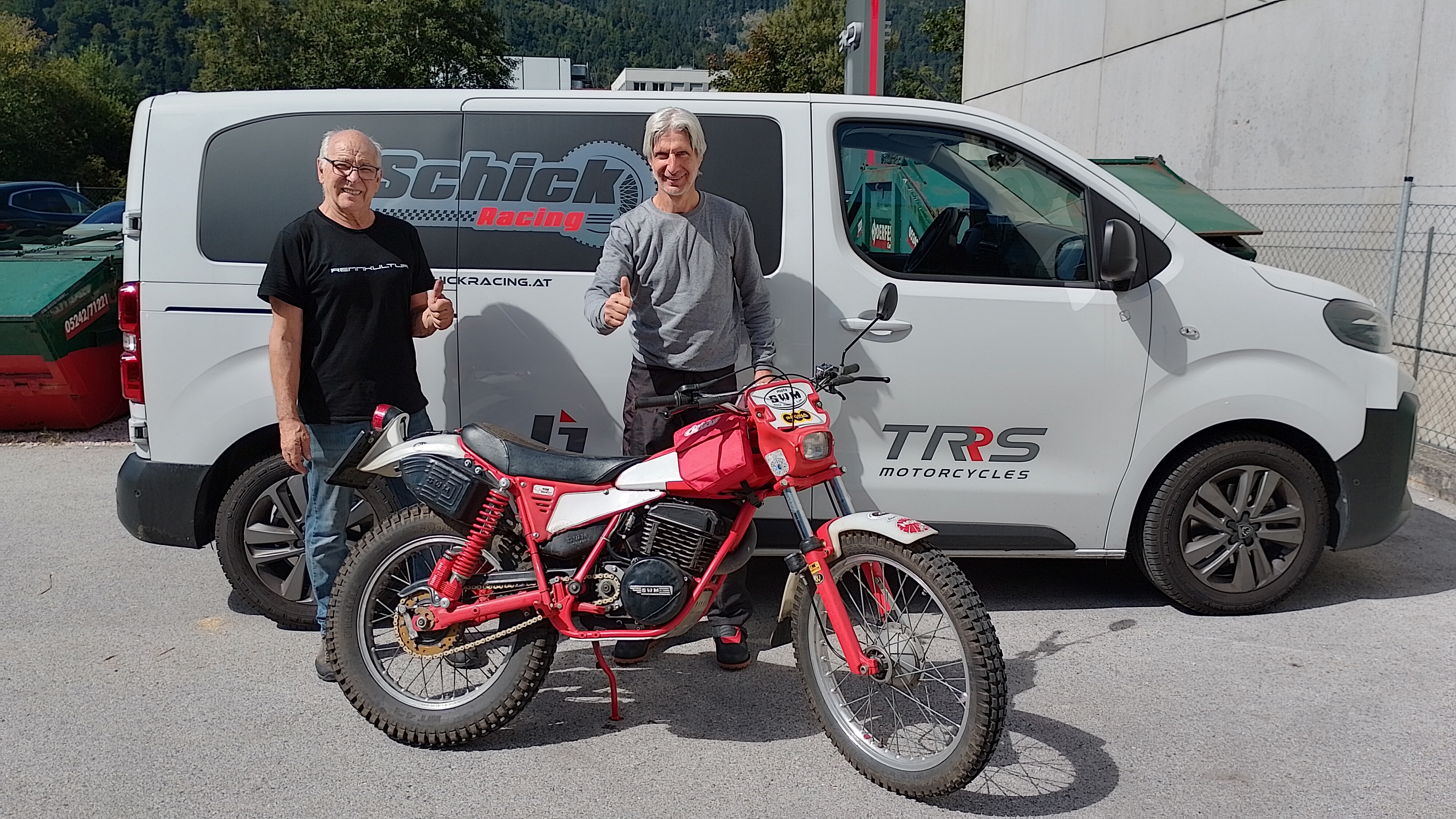
Meeting with Gunther Schick, Austrian SWM importer – Photo: Alfred Wagner.
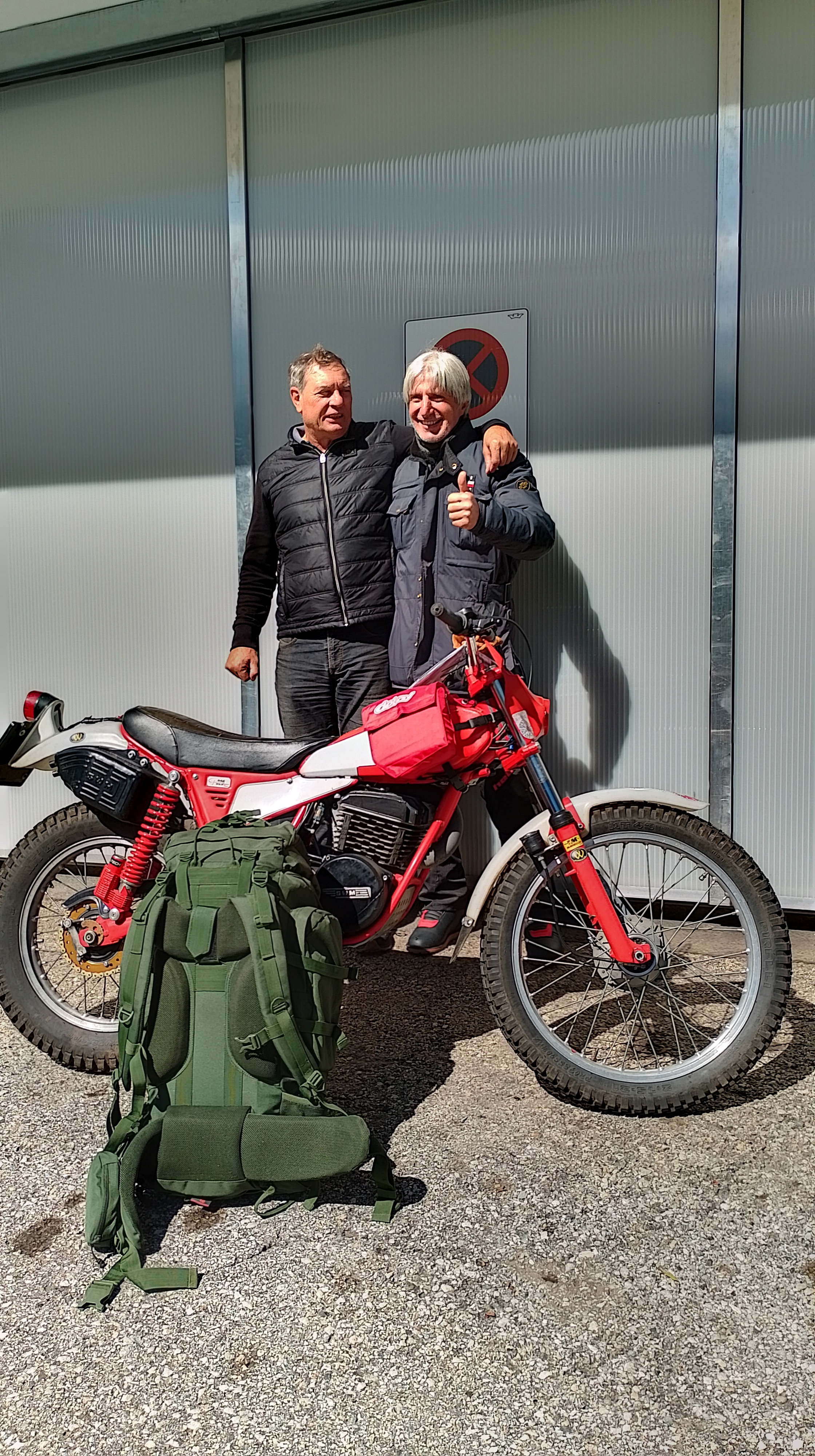
Once in the Inn Valley, it was not far to Schwaz. This is where Austria’s longest-serving active trial motorcycle dealer is based. And besides, it was he, Günter Schick, who had imported my SWM to Austria in 1978. Of course, I also wanted to visit him on this tour. This was followed by talks about yesterday and today over coffee and cake. In the end, I was quite happy that I only arrived on two wheels and that storage space was extremely scarce. Günter had made motorcycles palatable to me until I also said about one model: “yes, that would be an exciting moped!” Günter Schick is a motorcycle friend and dealer, with heart and soul! And luckily I didn’t have a cargo space.
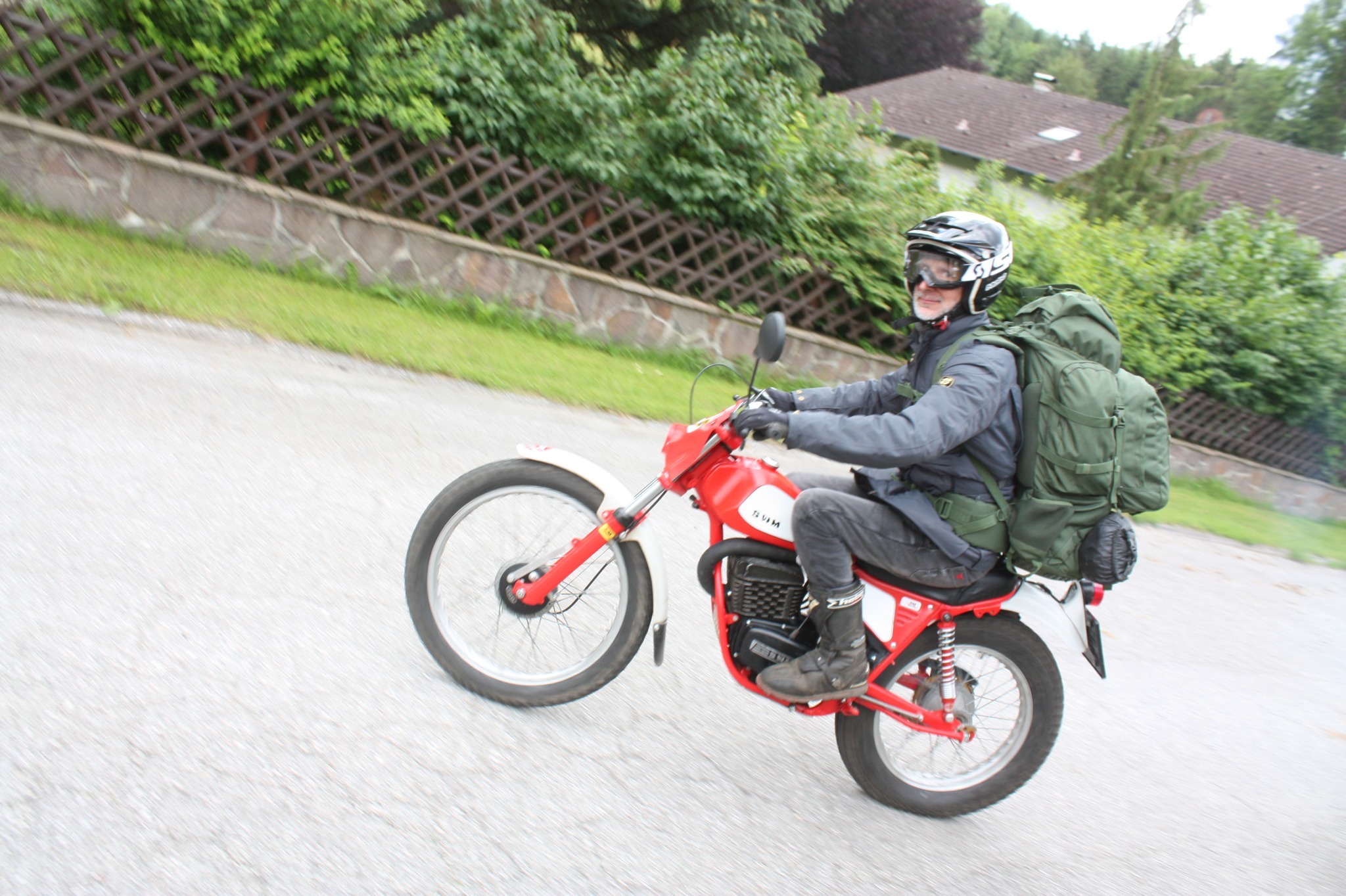
Then it went through the city of Innsbruck. The heavy traffic gave me a headache in advance. There are no turn signals mounted on the SWM. I have to indicate changes of direction by hand. Turning right was therefore difficult, because the throttle immediately went to idle throttle when I wanted to indicate the change of direction. I helped myself by sticking out my right foot. In the crouched seating position on the SWM, however, this signal is quite clear, you can understand that or not. However, driving through the city was not a problem. However, I got off the planned path. Twice I had to ask about the further course of the road. Twice I looked into visibly amused faces. With the unfamiliar sound of the hiss of the decompressor to turn off the engine, attention was immediately focused on me. Dressed in a vintage jacket, trial helmet with motorcycle goggles and scarf in front of my face, as well as the large backpack on my back, I came probably dabbled like a forest rat and finally asked for directions in a dialect that was not typical of the area.
The last fifty kilometers of the day were really tough. The climb to Kühtai, 2000 m above sea level, was pleasant to ride, especially since I had hardly any traffic. I noticed how confidence in the stability of SWM increased. I got used to the required driving style better and better. But I hadn’t gotten used to the pain in my butt. In this context, I continued to practice Buddhist equanimity. “Ohm!”.
If you want to go high, you have to go far down again. From the apex at Kühtai, it was now 600 meters of altitude over a distance of sixteen kilometers constantly downhill. On the one hand, I was in constant worry about the engine due to my “two-stroke lubrication paranoia”. On the other hand, the front brake expressed its thermal load with a clear squeak. Last but not least, the SWM was equipped with a seemingly comfortable double seat. The foam rubber support was at least twice as high as on the trial single seat. But the foam rubber was also almost 50 years old, and the seat tilted diagonally forward. On descents, I tended to slide forward into the narrower foam rubber area. The already uncomfortable seating position became even more uncomfortable. What was shown here would be confirmed at every opportunity: descents from pass roads were extremely unfun and exhausting to drive.
In Oetz I had prepared the overnight stay with my sister. The tour plan generally stipulated that I always refueled before the stage finish. After each arrival, I checked whether everything was right on the SWM. But I didn’t change the cheat sheet with the current day tour until the next day, immediately before departure. If someone damaged or tore off last day’s tour plan overnight, I wouldn’t have cared. However, if the planning for the next day was missing, I would have had a big problem.
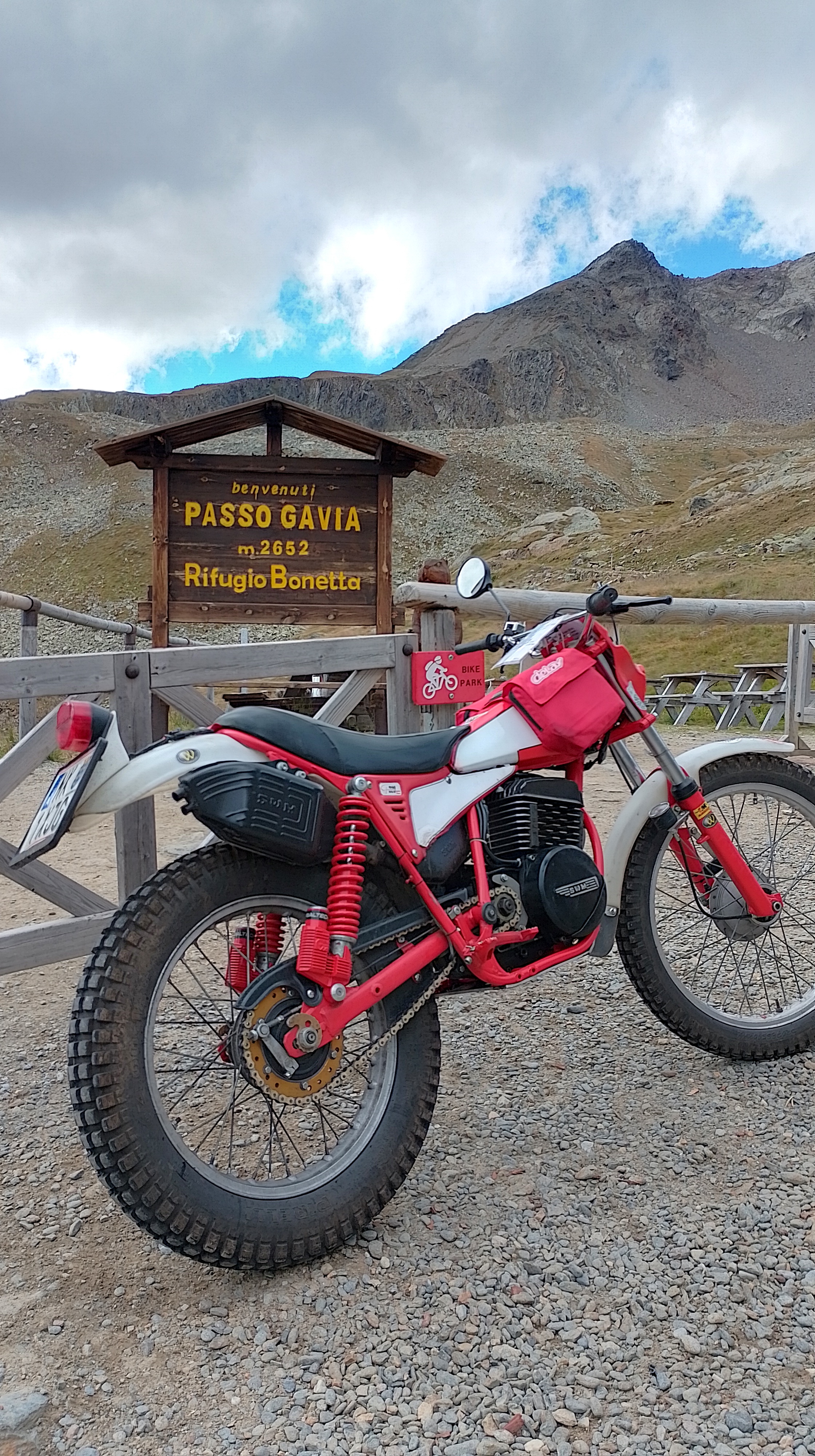
Gavia Pass – Photo: Alfred Wagner
Compared to the previous stages, the third day’s program was short at 205 kilometers. But now it was time to get down to business! The Reschen Pass, the Stelvio Pass and the Gavia Pass were ahead of me. I was excited. So excited that I didn’t open the fuel tap completely at the start and I came to a stop in an unpleasant place in terms of traffic. What had I planned to do: “Stay focused!”
Stop at the Reschensee – Photo: Alfred Wagner
After the moment of shock at the beginning, I quickly found my rhythm again. Crossing the border to Italy, shortly after Nauders, triggered the first feelings of happiness in me. Parking is prohibited at the photo hotspot to the church tower of Altgraun in Lake Reschen. Countless motorcycles were parked all around in the parking lots. I wasn’t interested in a selfie, I wanted a photo with the SWM and the church tower in the background. So I drove straight to the fence in front of the lake, posed the moped, took my photo and was gone again before the tourist on the side could lick his ice cream a second time.
From here it was only thirty kilometers and one turn to Prato allo Stelvio, where I could fill the tank again. There was a lot of traffic up the mountain. The column was slower than I could have driven. So relaxed I rolled up the mountain with the traffic. I had watched countless videos of Kanyar-Foto on Youtube. The photographer often analysed the beginner’s mistakes, which led to many crashes in the demanding hairpin bends. I was also a beginner, but I didn’t want to be one of those who failed at the curves and were filmed. With the lightweight and agile SWM, however, the hairpin bends were easy to ride. With my trial experience, I once even followed a cyclist in first (trial) gear into the narrow radius of a right-hand bend. For me, the experience of how long the road led up the mountain above the tree line was particularly impressive. The last section was extra steep and demanding. A crowd of people, many in motorcycle clothes on and next to the road, indicated that the pass was directly in front of me. On the left side of the road, on a small hill, stood the sign indicating the Passo di Stelvio. Again, I took the opportunity to use the skills of the SWM to drive directly in front of the board and take a souvenir photo with the moped. She had done all the work up the mountain. I only had to sit out the ride and be careful not to fall off the moped. At the parking lot, however, I did not miss the opportunity to celebrate this moment for myself. In 1978, the Italian motorcycle manufacturer SWM presented its first trial model and called it Guanaco. Guanacos are a wild species of camel that can be found in South America up to an altitude of 4000 m. My little Guanaco has now climbed with me to the Stelvio Pass at 2757 m above sea level!
The further route down to Bormio can be briefly summarized for reasons that are now known: 21 kilometers downhill. Unfunny for me to drive. Shortly before Bormio, two cars seemed to have brushed against each other at a bottleneck. Traffic came to a standstill. However, those who were on the road with a slim two-wheeler could easily weave their way past.
In Bormio it was time to fill the tank again. Because immediately after the gas station we turned left, in the direction of Passo Gavia. The driveway felt unspectacular. Maybe my senses clouded me, because I had just come from the Stelvio. Nevertheless, I particularly enjoyed this trip, as I remember very few other vehicles. In contrast to the Stelvio Pass, I was almost alone here. On a high alpine pasture, the road meandered until I reached the sign with the inscription “Passo Gavia m. 2652”.
My dearest Andrea was very worried at home during my tour. She wasn’t used to me riding a motorcycle on the roads. She knew the peculiarities of this trip. During the preparation period, she once asked me: “What are you going to do if you have a problem?” I couldn’t answer this question seriously, because that would depend on the nature of the problem. In the event of technical problems, however, I would always have the option of calling my traffic club and requesting breakdown assistance.
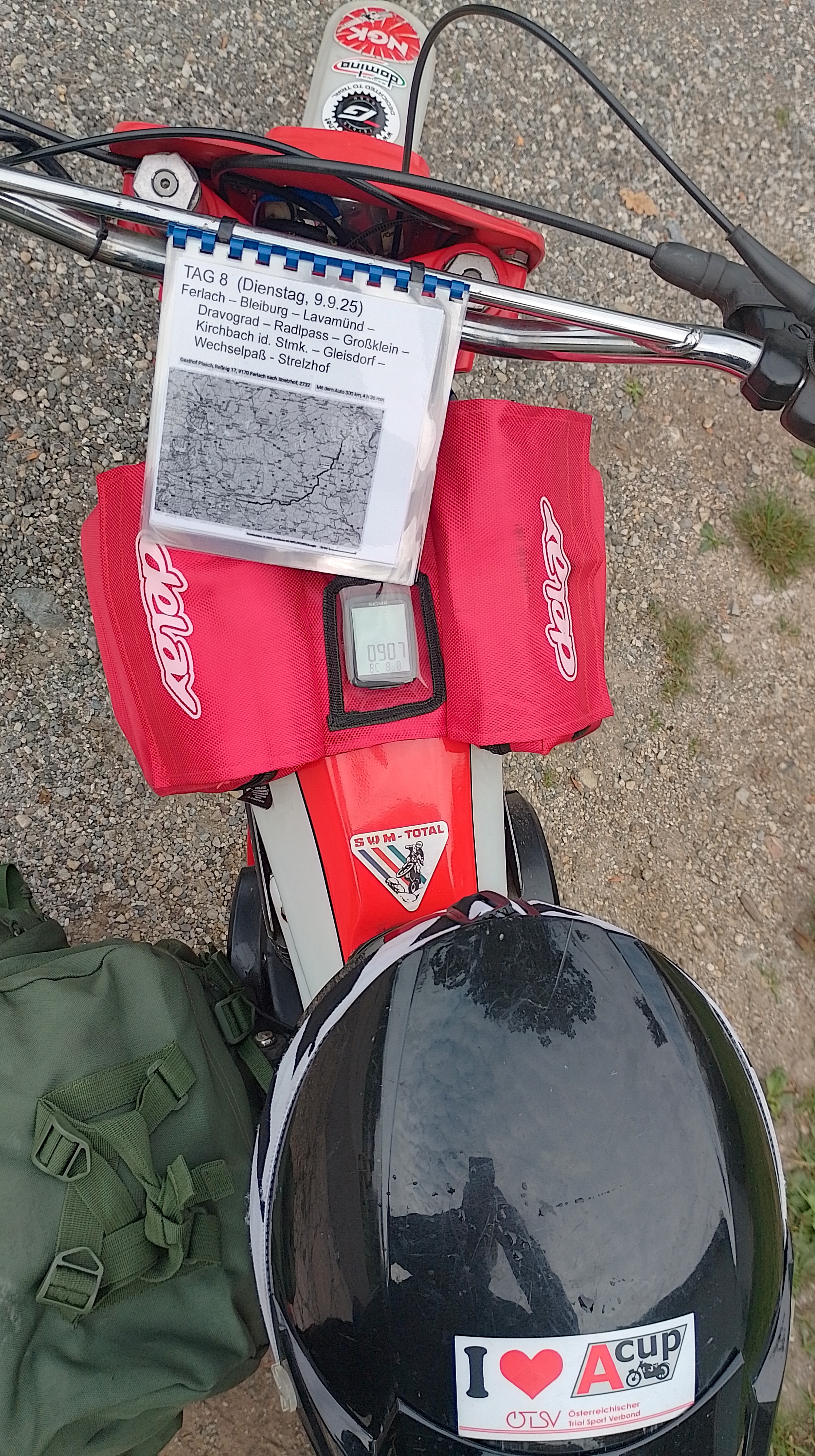
Planning is very important on such a journey – Photo: Alfred Wagner.
Of course, I also took the obligatory souvenir photo with the SWM in front of the sign at the Gavia Pass. However, when I wanted to share it via social media, I realized that I had no reception up here. I went into myself and briefly summarized the facts: No cell phone reception, hardly any road traffic, no equipment for overnight stays in the high mountains. I looked at the motorcycle and thought: “Dear SWM, please at least bring me back down this mountain”.
It was the route to Ponte di Legno, which is why this pass road is considered challenging or even dangerous. We are simply no longer used to driving on single-lane mountain roads without fall protection and with passing bays for oncoming traffic. On the small SWM, oncoming traffic on narrow roads feels less stressful than with a 300kg steamer. But I also rode a section of the route with a “consistent view of the left side of the slope” because the mountain flank on the right led steeply into the valley for what felt like 1000 m with an unobstructed view.
At the stage finish in Ponte di Legno, I had mistakenly booked a 4* hotel. Of course, I also wanted to eat something for dinner. For such “civilian” situations, I had a set of street clothes in my backpack. To save weight, I packed a few replicas of Crocks garden slippers. I had appeared in the restaurant on time for opening time and was assigned a table. There I was, in a T-shirt with a trial motif, in jeans and those green garden slippers, sitting alone in the middle of a restaurant hall. Around me scurried six well-groomed waitresses and waiters, a head waiter and one who was probably responsible for the bar. The feeling of displacement only dissolved when the restaurant filled up with other guests.
The following morning I fixed the fourth roadbook on the handlebars. It was Friday, at the end of that day I wanted to reach the finish in Folgaria after 183 km. After only 15 kilometers, the apex of the Passo Tonale was climbed. The route was extremely idyllic. But it couldn’t evoke much emotion in me. This was probably due to the sensory overload of the previous day. I felt as if I had already looked the tiger in the eye and grabbed the alligator by the tail. One would remain calm if a fox were sighted.
As already described, SWM’s 6V lighting system was better to look at during the day than it worked in the dark. Therefore, it was important to me to plan a time reserve of 2-3 hours for possible problem solutions before it would get dark on the day tours. In the same way, I avoided driving through tunnels as much as possible. Many an unavoidable unlit tunnel made my stress level rise to the limit.
A tunnel around Madonna di Campiglio kept through traffic out of the village. I wanted to save myself the tunnel, especially since a refueling stop was planned in the village. When planning the route, however, I missed the fact that the old thoroughfare through the town centre was now designed as a pedestrian zone. The opposite district was only accessible to motor vehicles via the tunnel. So I decided to push the SWM through the short pedestrian zone. At that moment I was quite happy not to have been on the road with such a fat hummer. But the local planners did not mean well with me. For the onward journey I still had to go a short distance through the tunnel.
Although the following part of the route led over local and unlabeled side roads, my “analogue navigation system” worked perfectly and led me unerringly over some small passes, such as Passo Daone (1308 m above sea level) and Passo Durone (1015 m above sea level). While I was taking the usual photo at the Passo del Balino (763 m above sea level), a cyclist approached me. Based on my license plate, he realized that we lived in the same district. He comforted me that you would get used to the pain in your butt. I agreed with him, you get used to it, but the pain wouldn’t get any less.
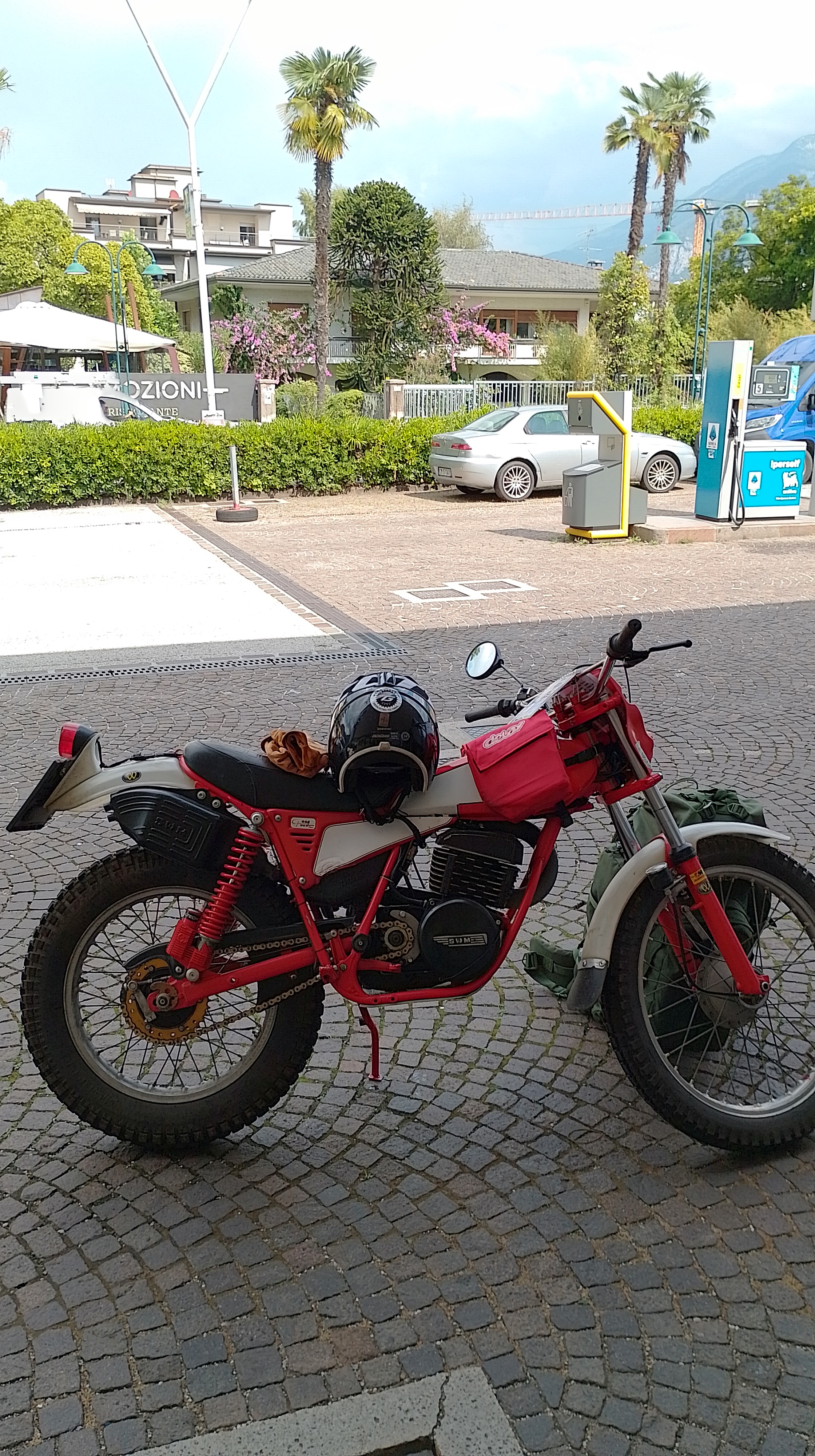
Refuelling at Riva di Garda – Photo: Alfred Wagner.
There would have been a shorter distance for the finish in Folgaria. However, I wanted to treat myself to another highlight: “With the motorcycle to Lake Garda and eat an ice cream here”. Since the Passo Daone, i.e. for about 30 kilometers, I seemed to be constantly riding on the edge of a rain front. I was still on the road in sunshine, but behind me the sky was covered with dark gray clouds. At the refueling stop in Riva di Garda, I decided to continue driving in order to reach my destination in the dry if possible. I was only 60 kilometers away from Folgaria. Eating ice cream alone is not much fun anyway, I could well make up for that another time in pleasant company.
There was a lot of traffic in Riva di Garda. As a defensive travel tourist, I dutifully rode along in the conflagration traffic. But at some point I became aware of the situation that I was riding a two-wheeler in an Italian city. So it was my job to use free traffic areas and not to be deterred by “misleading” road markings or oncoming traffic. So the rush hour was also an easy exercise for the agile SWM.
Shortly after the end of the village, the road led up an ascent. Due to the course of the route, I was able to keep up comfortably with the flow of traffic. However, it seemed strange to me that I was not overtaken for quite a while despite the low speed. The cause was quickly found. Through the city, the engine usually ran at low revs or at idle speed. On the mountain, the exhaust came back up to temperature. The combustion residues that had accumulated during the city passage were now burned out. The exhaust emitted a cloud of smoke like a Trabant from the GDR at a cold start. Nobody wanted to dive into this fog of horror. Even though I knew that this would subside quickly, this situation was extremely unpleasant for me.
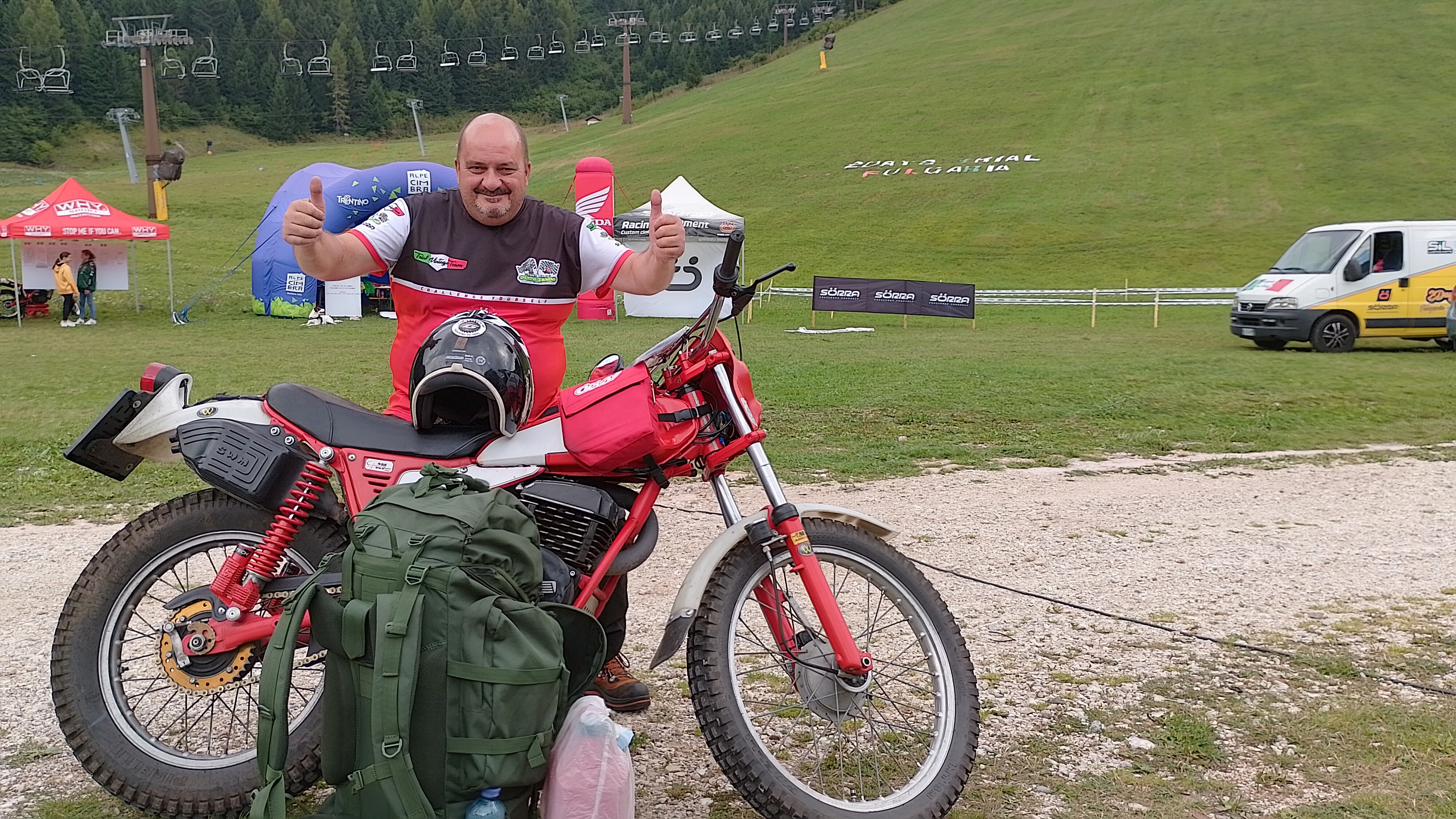
Without any problems, we went over side roads through the mountain villages to Rovereto, and then finally reached Folgaria via Serrada. As usual, my first way led to the gas station. Now, however, the additional 5-liter canister, which I previously had with me in an empty state in the backpack on my back, has also been refilled. It would have been easy to have the fuel for the competition organized by friends. But I wanted to realize the project completely autonomously. In addition, I also had to take care of the tank logistics myself. The backpack now had a total weight of 16 kg. Fortunately, it was only two kilometers to the Fondo Grande, a valley station of the ski area of Folgaria. After four days and completed 950 kilometers, I had reached the finish in Folgaria! The first third of my project – the journey, was done.
Ugo Alberti – Photo: Alfred Wagner.
I already knew the trial event “Due Giorni di Folgaria” from previous visits. I knew it would be just to my liking. This is a hiking trial that leads around 30 kilometres on Saturday and 40 kilometres on Sunday on hiking trails through the mountains. The sections were spacious and wonderfully set into the terrain. Each section was only to be ridden once. I love that! The siblings Barbara and Ugo Alberti give this event a special magic. Both gave each participant the feeling of being a VIP guest. Every problem was read by the two almost from the eyes and solved immediately. An atmosphere of friendship could be felt everywhere in the paddock.
Traditionally, numerous guests also came from Germany and Austria. I immediately had my social connection in an entertaining round. With my Austrian trial buddy Uwe Schwarzkopf, I tackled the circuit together on both days. That felt brilliant to me. We both rode at a comparable level and also found a good rhythm together. Good mood was our predominant state of mind, even with the most unfavorable dissection experiences. This serenity was particularly important to me. I was off-road with my “street motorcycle”. Even though the license plates and lights were removed for the competition, I could not allow myself to damage the motorcycle. The motorcycle had to remain intact in any case. I hadn’t prepared a plan B for the return trip. I only followed plan A.A., like Arriving!
I had promised my dear Andrea that I would be back home the following Tuesday. To do that, I had to make 127 kilometers home on Sunday right after the event. In fact, Uwe and I got through the circuit quickly and were well in time when we reached the finish. After an initial emergency refreshment at the snack stand, I prepared SWM and myself for road operation again. The successful completion of Phase II of my project, the trial event, smoothly transitioned into the start of Phase III, the trip home.
From Folgaria (1530 m above sea level) we went over mountain roads over the Passo del Cost (1290 m above sea level) and Passo Vezzena (1402 m above sea level) to Asiago and further east via Enego to Fonzaso. From here I took the SR50 in a northerly direction to my overnight accommodation in Transaqua. The list of places I passed through reflects my perception of this stage. Primarily, it was important to ignore the tiredness and to continue navigating in a concentrated manner in order to take every single kilometer in equanimity as it comes.
On my last evening in Italy, typical spaghetti with ragiù was supposed to make it easier to say goodbye. I was really tired. A glass of beer seemed as if I had injected the alcohol intravenously. I had forgotten my helmet and gloves at the check-in at the reception, where I didn’t collect them until the next morning.
Well rested and full of energy, I started day 7. In Ferlach (Carinthia), 301 kilometers away, the next accommodation was booked. Via the Passo Cereda (1370 m above sea level) and Forcella Aurine (1299 m above sea level) we went to the refueling stop in Agordo. I was thrilled by the route and landscape, as well as the wonderful weather. Only eight kilometers later, this enthusiasm had evaporated again. At the turn to the planned Passo Duran (1605 m above sea level) a sign stopped the continuation of the journey. A total closure had been in effect for three hours for a period of two days. I got an overview of the situation with the help of the available road maps. The route would already be crisply calculated at 65 kilometers including the Passo Duran. Now this mountain had to be bypassed via Belluno and Ponte nelle Alpi. On the map, the detour seemed much longer than the actual twelve kilometers. In addition, I now had to find my destination for almost two hours without navigation support on a busy state road. But there was no alternative. Fortunately, however, the two places were constantly signposted, and the SS51, which then cut narrowly into the valley in a northerly direction, allowed hardly any navigation errors. However, the tunnel passes on this route felt very unpleasant for me.
It was also not easy to find the connection to my roadbook. Exactly the intersection area where I should have turned was just being rebuilt. Due to my detour, I came from the wrong direction and could not see any suitable signs. Therefore, I continued in the wrong direction for a good distance until I reached a place that I had entered in my roadbook. With this I had found my exact position and my navigation via the roadbooks again.
Anyone who knows this region knows exactly: motorcycling in the middle of this landscape is a dream! I had prepared a fantastic route: Laggio di Cadore, Sella di Razzo (1760 m.a.s.l.), Sella di Rioda (1801 m.a.s.l.), Tolmezzo, the Tagliamento, the Fella, Sella Nevea (1195 m.a.s.l.), Lago Predil, Tarvisio. This enjoyment can only be spoiled by a pronounced “two-stroke lubrication paranoia”. This worry accompanied me all the way home. In this matter I could not find a solution that felt good to me until the end and I always had stress on long descents.
But the time had come to say goodbye to Italy. I crossed the border into Slovenia. My first kilometers on two wheels on Slovenian soil led me via Podkoren to the Wurzen Pass (1073 m above sea level). And with that I had arrived back in Austria! However, I had expected more from the Wurzen Pass. That was just a driveway up a hill. That’s what I thought until I saw those signs warning of a gradient of 10%. It now went 500 meters downhill to Finkenstein. That was not to my taste at all. But I learned from this that the Wurzen Pass should best be approached from the Austrian side. Just in time before the kitchen of the inn closed, I reached my overnight quarters in Ferlach.
On Tuesday morning, i.e. on day eight, I felt little of the enthusiasm of the first few days. It was clear to me that the final day would not be comparable to the previous stages in terms of landscape. The route was mostly familiar to me. Nevertheless, 300 kilometers still had to be completed. It was important to stay focused so as not to make any mistakes. At Lavamünd I decided not to drive over the Soboth, a well-known motorcycle route. Instead, I had planned another short visit to Slovenia. Via Dravograd we went over the tranquil border crossing to Austria at the Radlpaß (661 m above sea level). Not far from here, I had grown up on the Austrian side. For me, however, it was the first time that I crossed the Radlpaß. So it became a bit emotional for me when I made a refueling stop in my former hometown of Großklein. I didn’t have the time to visit friends or relatives and now also the energy. Just like E.T. (the alien), I just wanted to say “Home!” Via Kirchbach id. Stmk, Gleisdorf and the Wechselbundesstraße, it was only a matter of not making any more mistakes. My thoughts revolved exclusively around the topics: My butt hurts and I can’t break the engine. So I reeled off meter by meter of the final stage. The last day was just as important for my travel project as day two or three. However, the personal requirement was quite different. I didn’t really feel much fun anymore. It was probably primarily a question of will. Now it was clear to me why none of my motorcycling experienced friends wanted to go along!
I had arrived home, finally!
It’s quite possible that my “two-stroke lubrication paranoia” or other considerations were exaggerated. But due to a lack of personal experience and better knowledge, I had to find plausible solutions to get home safely. The fact is: I did it!
1800 kilometers total distance in eight days on a SWM Guanaco, a trial motorcycle with 280cc and 16 hp from 1978. On a route that led over the Stelvio Pass, the Gavia Pass and the Kühtai and much more. I was on my own, without a service car or other protection, without a plan B. Plan A worked. A, how to arrive!
Austrian trial enthusiast, Alfred Wagner is a Trials Guru VIP, seen here with his Norton and BSA Bantam Pre65 machines.
‘To Folgaria on the Highland Camel’ is the copyright of Trials Guru and Alfred Wagner. Photographs copyright: Alfred Wagner
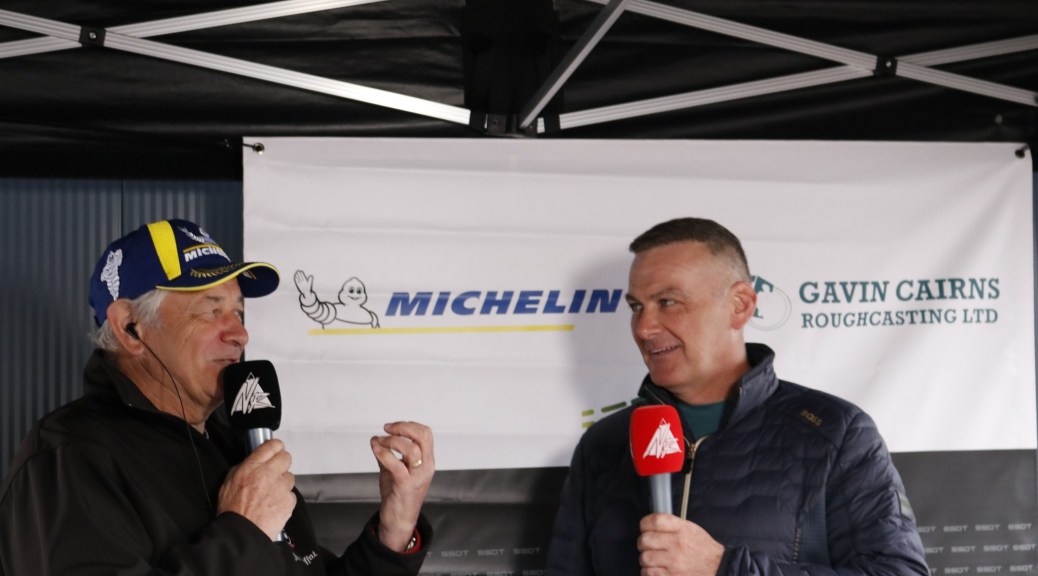
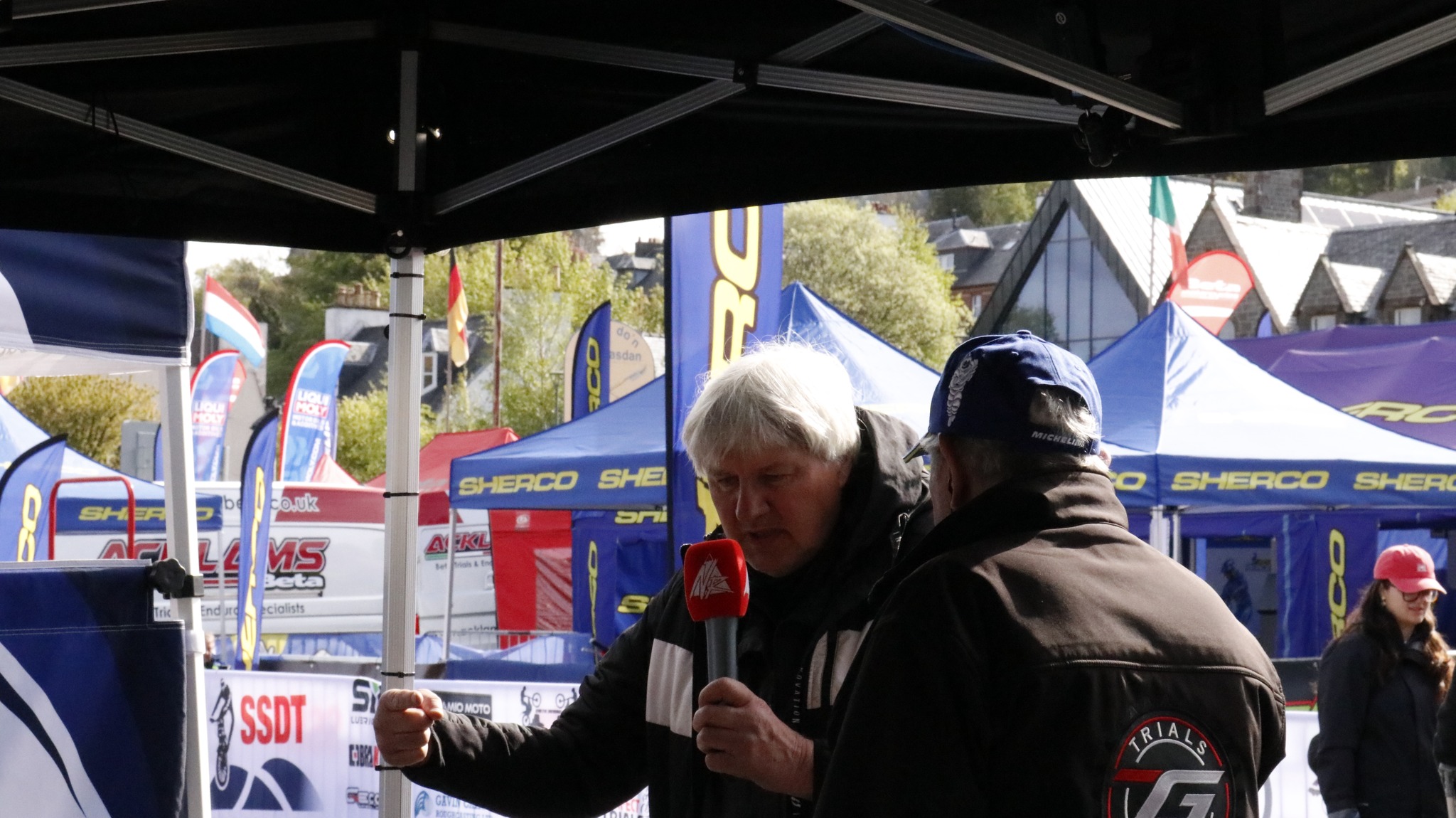
Trials Guru attended the 2026 Scottish Six Days Trial (4-9 May) at Fort William, when website founder, John Moffat donned a press pass and was guest presenter on the local ‘Nevis Radio’ morning show which was exclusively covering the event live from the Parc Ferme.
There were interviews with riders and officials, landowners and we even had Eric Faulkner from the Bay City Rollers on air, all live as it happened.
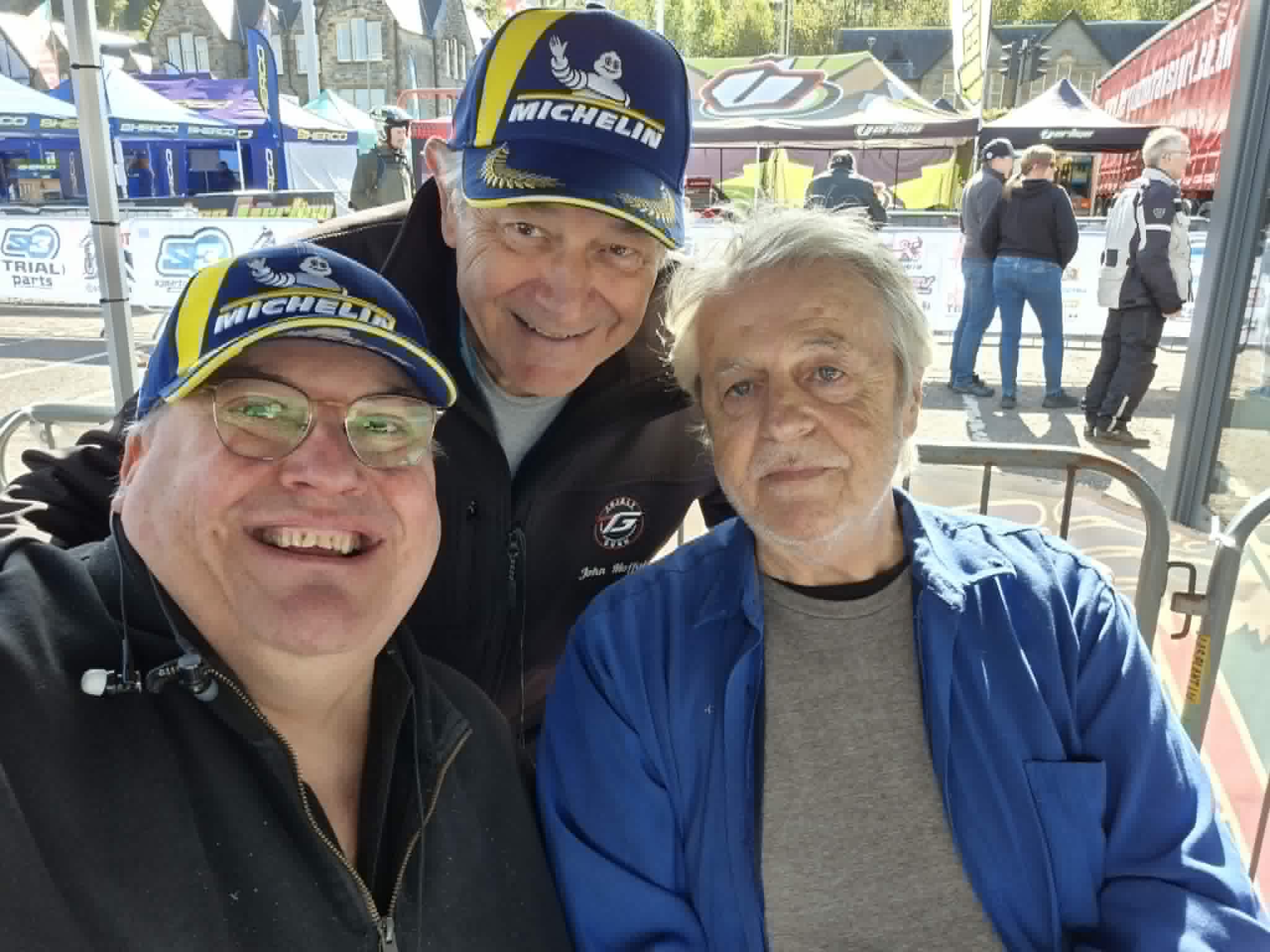
Nevis Radio’s John Weller (left) with Trials Guru’s John Moffat (centre) and former Bay City Roller, Eric Faulkner (right) during live broadcast at the 2026 SSDT (Photo: John Weller)
Here is a link to all the broadcasts which last around 3 hours. The show was sponsored by Michelin and Gavin Cairns Roughcasting Ltd.
Presenters were Nevis Radio’s John Weller and Simon Abberley with John Moffat adding the trials knowledge to the show. Support from Robbie Mackay, Dan MacLeod, Jack Richardson, Jacob and David Green during the broadcasts.
Special thanks to all the 2026 Nevis Radio sponsors: Michelin; Gavin Cairns; Comms West; Thistle Access; Ness Highland Catering; Pit Stop Tyres and Trials Guru for supplying the knowledge!
(Some recordings have some background interference which was resolved during the week, when music was playing on the radio broadcasts, it was necessary to play Michelin and other adverts to avoid copyright breaches)
It is with deep sadness that we confirm that Barrie Rodgers has passed away aged 90 years.
(All photographs, copyright DON MORLEY)
We are indebted to his close and dear friend DON MORLEY for his assistance in penning this obituary.
Born at Mickleover, near Derby, Barrie Rodgers was just seventeen years of age and still a Engineering Apprentice when he commenced his competitive motorcycling career having joined The Pathfinders and Derby MCC and also having acquired a 197cc rigid trials James which he used to good purpose for scrambles and even for road racing, competing at such as the old Osmaston Manor short circuit and Alton Towers.
He was in good company too, with such fellow Pathfinder members and likewise all rounders as Bill (W. A,) Lomas, John ‘Mooneyes’ Cooper, David and Jon Tye and so many other lesser beings including even myself, Don Morley.
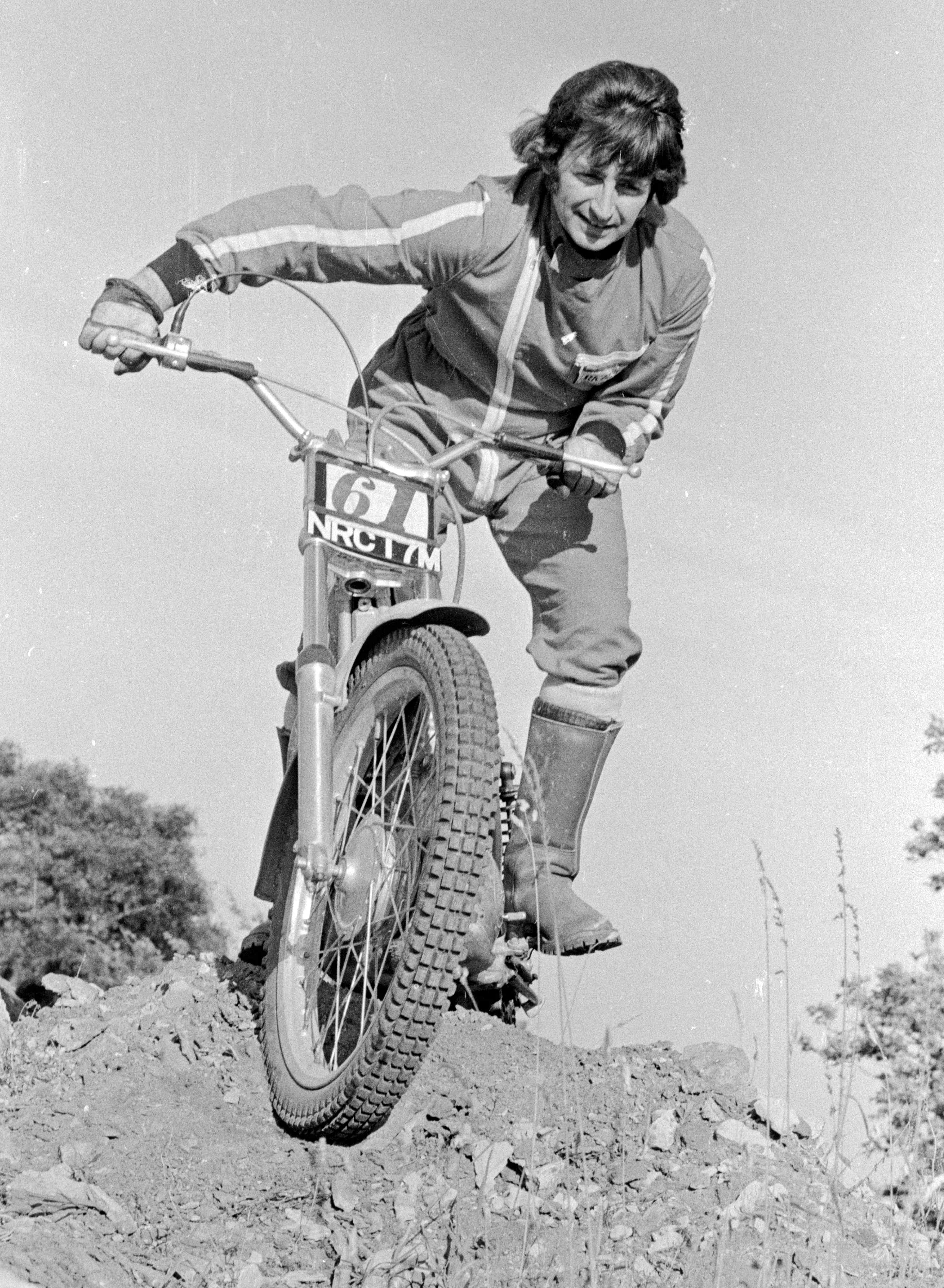
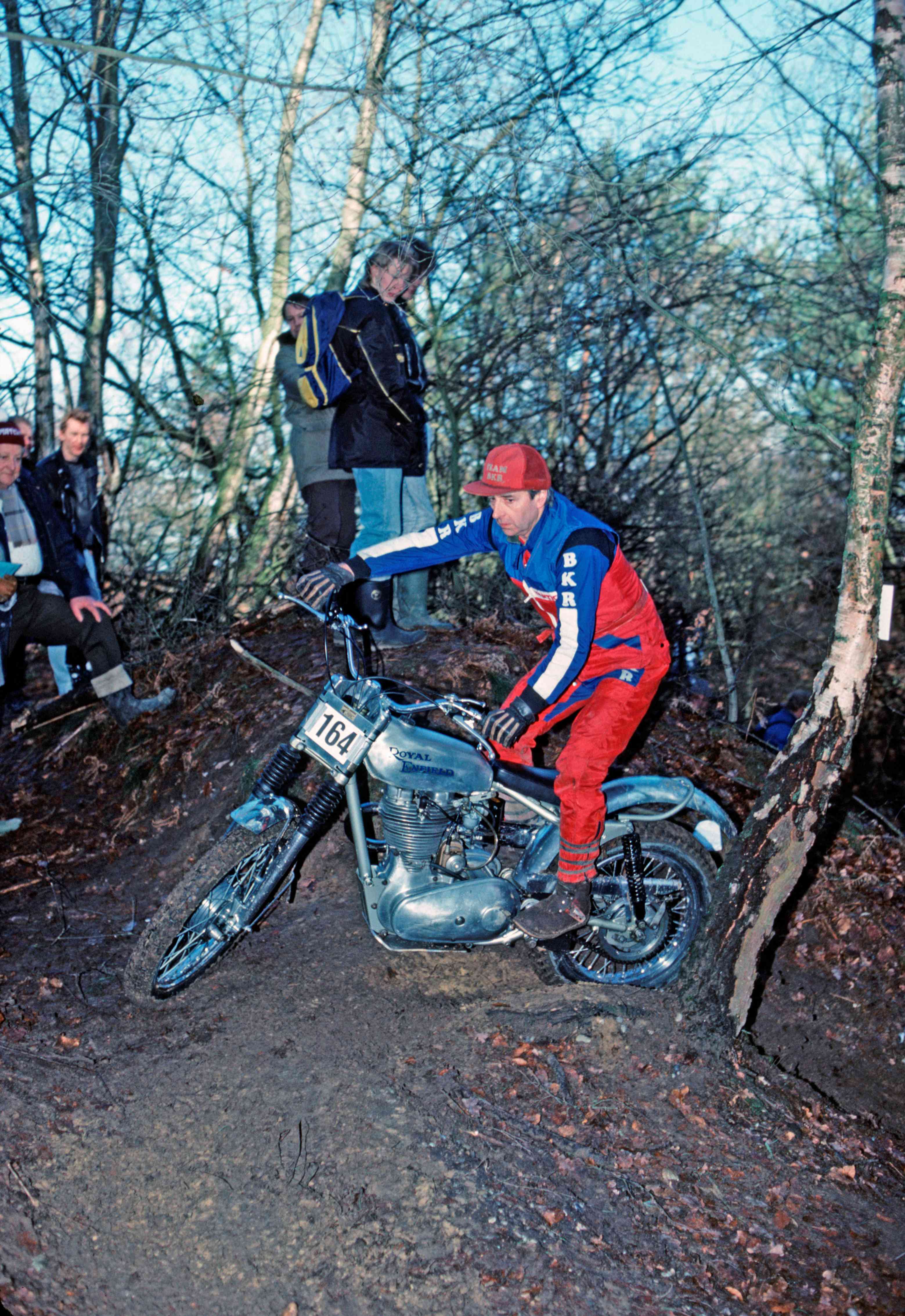
1990 Talmag action with Barrie Rodgers on his 350cc Royal Enfield – Photo: Don Morley.
After doing his National Service in the Army, again alongside John Cooper, Barrie joined his fathers haulage business in 1962 marrying his beloved Pat Flaherty in the same year 1962. I did the wedding photos. By then Barrie had also long dreamed of opening his own motorcycle shop which with wife Pat’s help and partner Trevor Smith, he eventually opened in Derby during 1963.
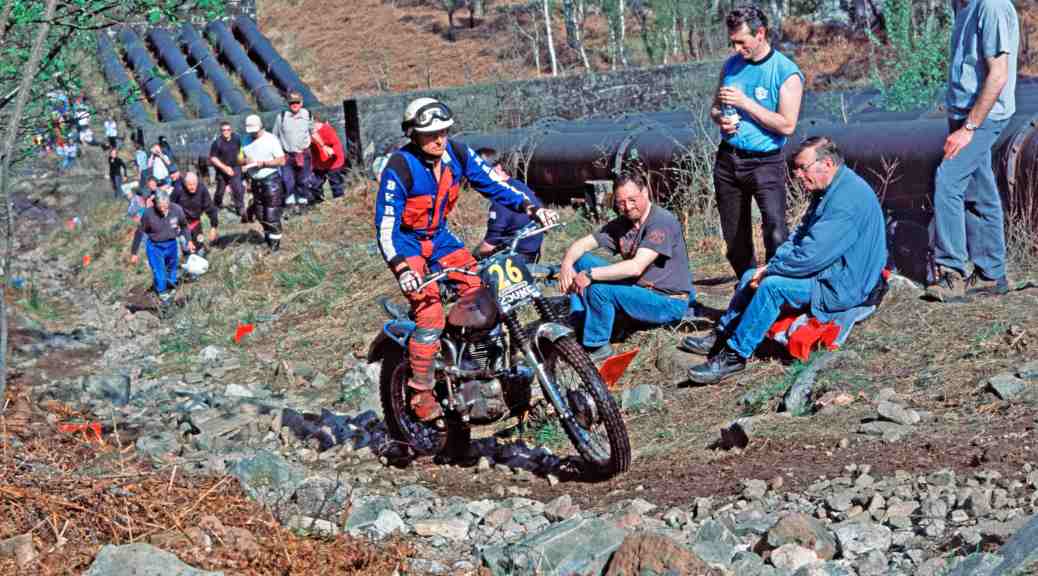
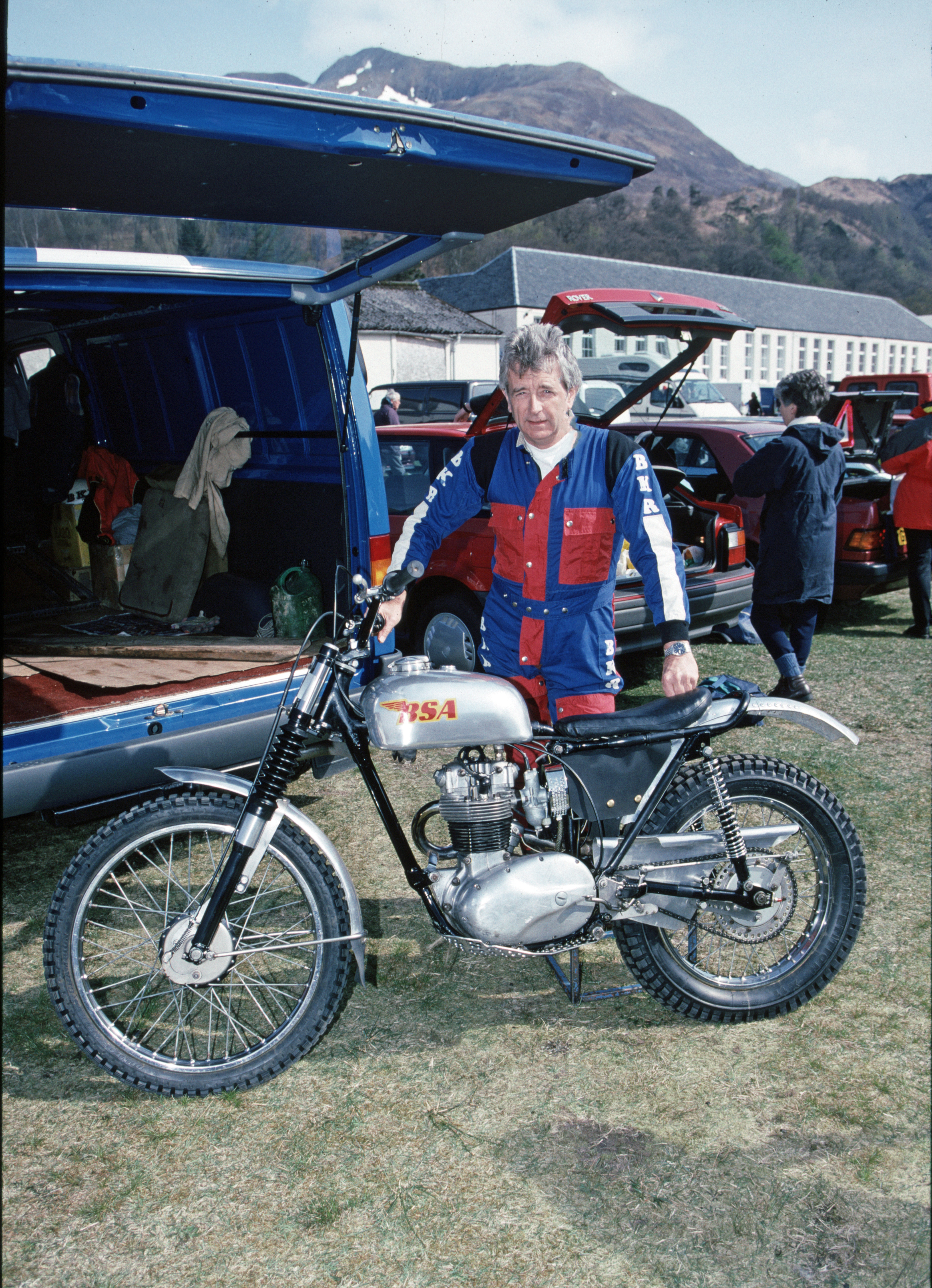
1995 Pre65 Scottish Trial – Photo: Don Morley.
Trevor was also a useful road racer riding and racing Bultacos and although he later pulled out of the business, the duo soon became agents for Bultaco, Montesa in addition to Greeves, Cheetah, MZ and Yamaha, all of which Barrie also competed on at various times, and what had been Rodgers and Smith became massively successful not least due to such well publicised exploits as ‘Barrie Rodgers Motorcycles’ and of course Nationally as ‘BKR’.
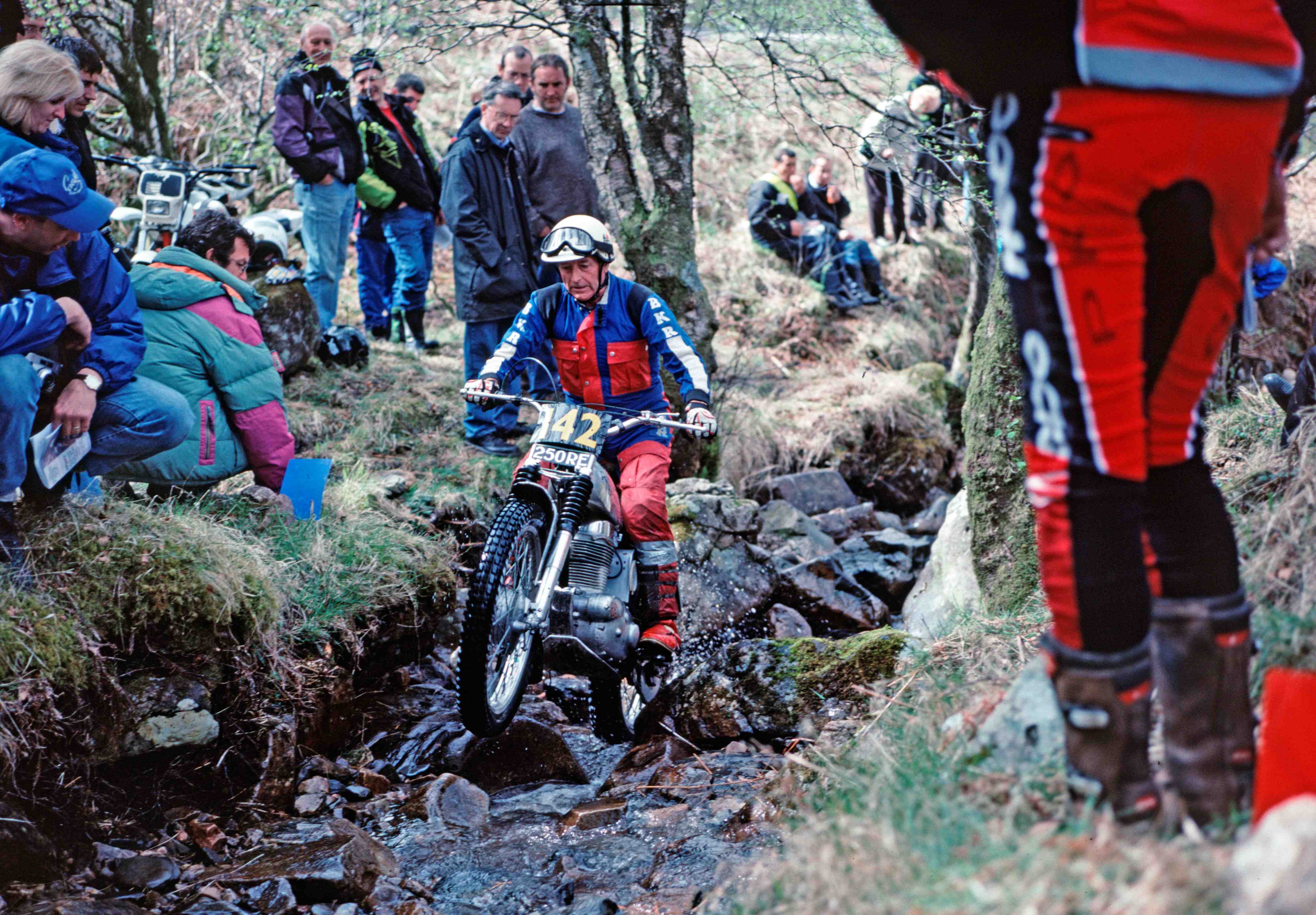
2002 Pre65 Scottish Trial – Photo: Don Morley.
Barrie’s major interests away from motorcycling ranged from his being a massive keep fit fan, swimming, skiing, and a love of vintage Model T Ford cars of which he owned several, but trials riding was always his first love and later on included riding in such as Deryk Wylde’s National Pre65 Championships on either a 350 Royal Enfield, which I built for him, and the ex-works 250 Royal Enfield which was registered ‘250RE’ which I used to own.
As a trials rider, Barrie won 653 trials including such as the National Greensmith Trial and was runner up on 301 other occasions including his winning The East Midlands Trials Championships five times towards his incredible total trials award tally of 1520 gathered over his competitive career covering 66 years.
Barrie will be much missed by his many friends and especially by his dear wife Pat, who sadly has suffered dementia and been in a care home now for many years, and his eldest daughter Mandy, who used to work in the shop, and was one of the foreign language commentators at the Road Racing British GP before emigrating to Australia many years ago.
Rest In Peace my friend, I will miss you – DON MORLEY
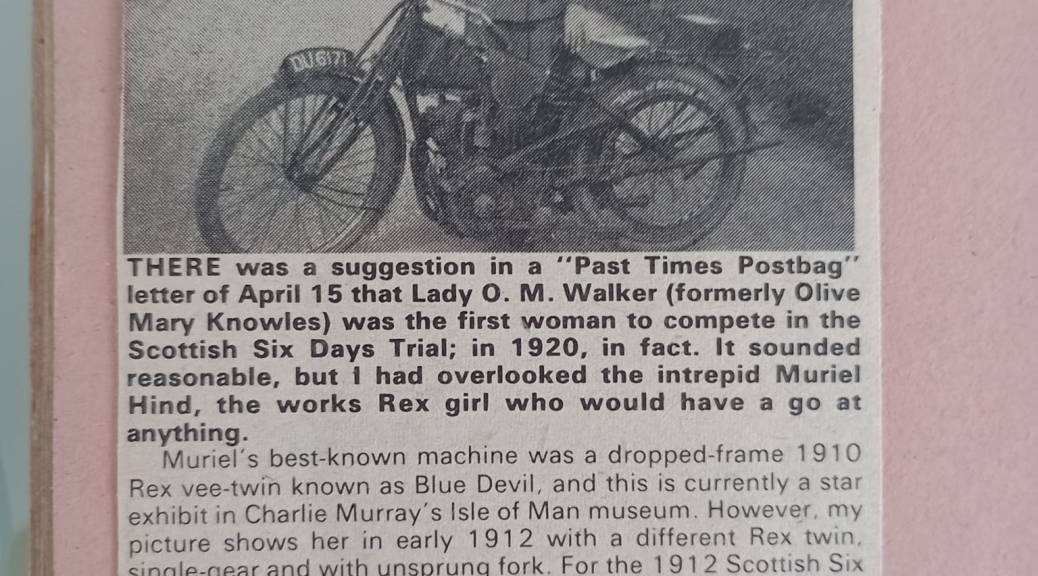
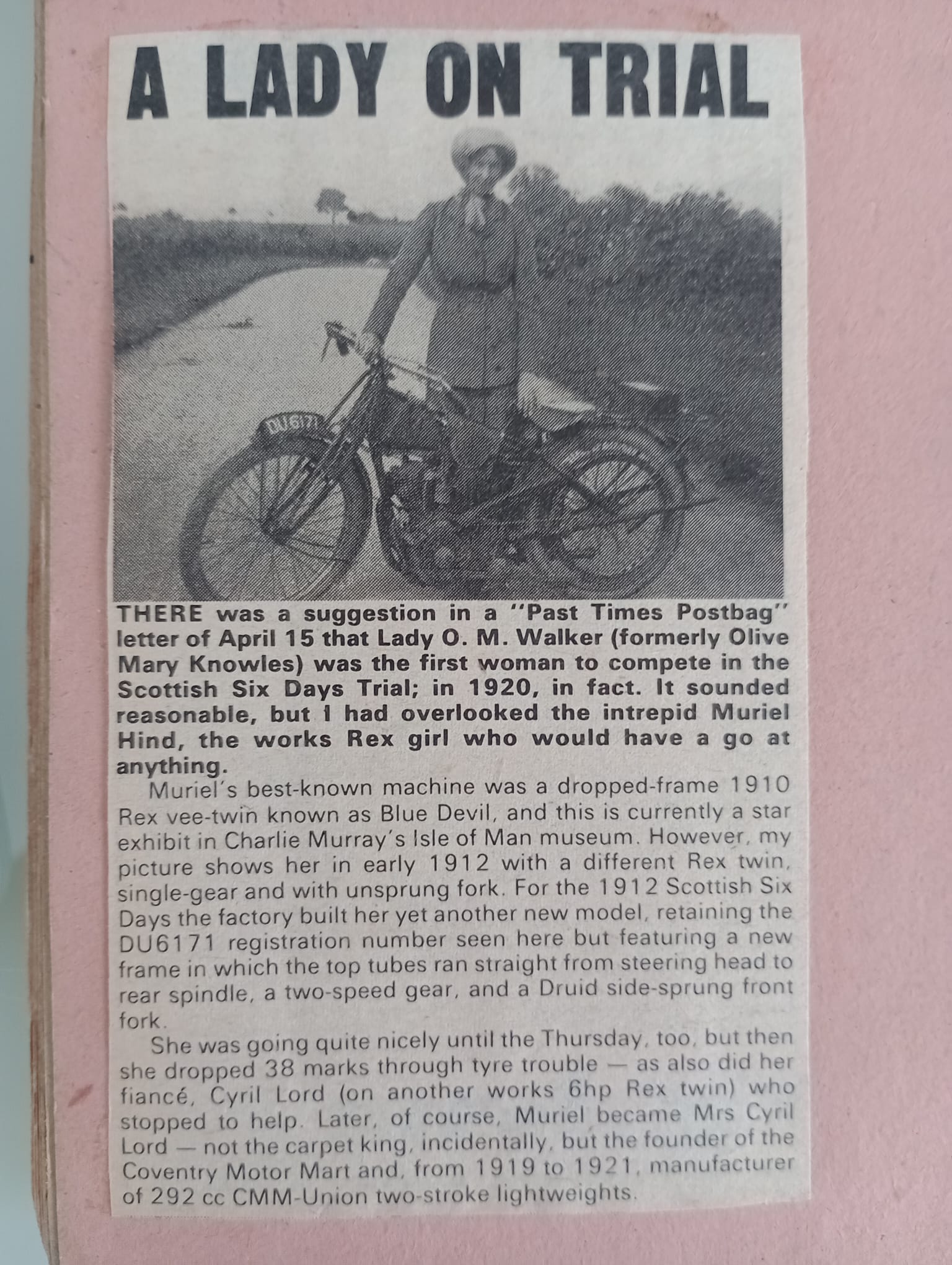
Now we know, many years after information was hidden away, the first lady competitor of the Scottish Six Days Trial was in 1912, 114 years ago, Miss MURIEL HIND, riding a works prepared REX motorcycle!
Information has just come to light with the transferring of Tommy Sandham’s archive of scrap-books, paper reports and photographs of the SSDT and trials in general to Trials Guru.
It had been reported in Motor Cycle News with a suitable photograph, penned by the late Ralph Venables, the doyen of off-road motorcycling journalism, that Muriel Hind had been overlooked in the history books and indeed she had taken part in the 1912 SSDT.
On checking the results from 1912, it transpired that Muriel achieved a silver medal in the event on her 6hp REX machine.
Muriel was born on 27th May 1882 in Dorest and died on 3rd May 1956 at Whitley Hospital in Corley. In 1950 she was given a life membership of the Motor Cycle Club.
More nuggets of information will be forthcoming once Tommy’s archive has been fully assessed.
Tommy Sandham wrote a series of books featuring the SSDT and the Pre65 Scottish Trials and was Production Editor of Trials and Motocross News in the late 1970s and early 1980s, when it was produced at Morecombe.
It’s only April and Trials Guru has already covered much ground since the beginning of the year!
‘Pipeline!’ the first full history of an iconic hill of the annual Scottish Six Days Trial with unique photos when it was first introduced to the SSDT in 1964, never before seen!
The ‘Douglas Bald – Story of a lifetime‘ published in March, a fascinating article on a life in trials of a former Scottish Trials Champion (1968).
We also celebrated a number of nominees to receive their Trials Guru VIP caps, George Sartin; Steve Colley; Colin Moram and Jack Dance, it’s more than a cap, it’s a badge of honour!
We also launched the SSDT Results Archive in memory of both Ed Stott, the doyen of SSDT history and Jim McColm, the SSDT Secretary from 1970-1994, now the early SSDT results are all in one place from 1909 to 1994 and we may yet go further if we have time!
Not only that we created even more surprises of Trials Guru caps to Peter Race and Mike Hann, plus a host of other enthusiasts of the sport, all ‘Dedicated To Trial’.
Historical results of the Scottish Six Days Trial have been sporadic for many years, over 100 to be exact, not any more!
Thanks to the availability of the Ed Stott historical archive of papers, reports and results of this historic event, the results are now more accurate than previously available.
The SSDT Results Archive is free to view and covers 1909 from the first ‘Scottish Trial’, a five day event, right through to 1994.
Now all the riders are mentioned who took part in the SSDT stretching back over a century.
Go straight to the results by using these links, please note that due to the volume of input and accuracy checking, some years are still to be added.
It is with deep sadness that we announce the passing of trials enthusiast, Neil Gaunt, aged 65 years.
Born on 22nd January 1961, the son of Peter Gaunt the renown special trials motorcycle builder and rider, it was natural that Neil would ably follow in his father’s tyre tracks.
A national trials rider, Neil Gaunt was a well known face at the Scottish Six Days Trial in which he rode numerous times and usually finishing high on the results.
He then took up Pre65 riding and his aim was to win the Pre65 Scottish Trial, which he achieved on a 500cc Royal Enfield in 2004, a machine similar to the make his father rode for the Reddich factory. Two years later he had built an Ariel and took victory once again, with runner up spot in 2007 and 2011.
Neil was the main sponsor of the Scott Trial with his business Riverside Quarry Ltd at Knaresborough.
On 30th December 2025, Neil suffered a stroke, but then contracted pneumonia in late January 2026.
On Friday, 10th April 2026, Neil passed peacefully with his wife Carol Gaunt by his side.
Neil always had a friendly attitude but was also a serious competitor, he will be sorely missed in the trials paddocks across the country.
Neil’s funeral will take place on Tuesday, 19th May at 12:20pm, at Stonefall Crematorium, Harrogate HG3 1DE.
Followed by food and drinks at The Pavillions, Harrogate, HG2 8QZ.
Any donations made at the Crematorium will be sent to the Yorkshire Air Ambulance, as this is was what Neil would have wanted, raising funds for a worthy ‘Yorkshire’ charity.
We are celebrating Neil’s life and all that he loved.
Our sincere condolences are conveyed to the entire and extended Gaunt family at this very difficult time.
Newly released exclusively on Trials Guru, ‘The Ed Stott SSDT Results Archive – Volume 1’, covers the early years, 1909 through to 1932 when the results awarded an overall winner for the first time. Only 1925 is omitted as the results are currently missing, we hope to address this in the future if they come to hand.
Ed Stott had accumulated much data on the Scottish Six Days Trial and that information has now been passed on to Trials Guru for safe keeping.
Mrs. Louie McLean on her 348cc Douglas in the 1927 SSDT.
We believed that this information was long gone and that is why the SSDT results records were incomplete. Not anymore, they are freely available to anyone worldwide who is interested to learn ‘who won what’ at the SSDT!
Volume 2 is already being prepared, but will take longer to produce as the results need to be ranked in order of scores.
Jim McColm, SSDT Secretary (on the right) over-sees the start with rider Roy Kerr at the 1981 SSDT.
Volume 3 has just been negotiated with the McColm family, the descendants of the late Jim McColm, who was SSDT Secretary from 1970 to 1994, and latterly a director and Company Secretary of the Edinburgh & District Motor Club Ltd. Trials Guru have been given specific permission to reproduce the routes and results of the SSDT from 1970 to 1994 in Jim’s memory, taken from his book published in May 1995 – ‘Six Days in May’. The book has been out of print since 1995. Trials Guru is indebted to Brenda, Kara and Kyle McColm for their co-operation and permission.
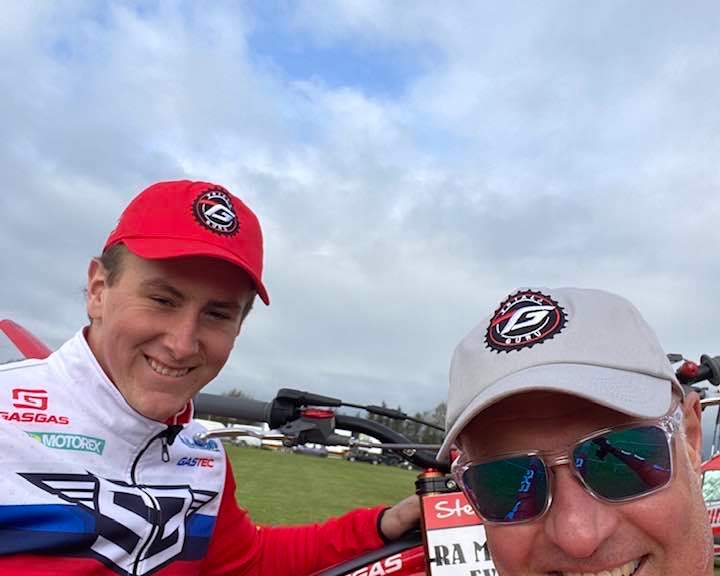
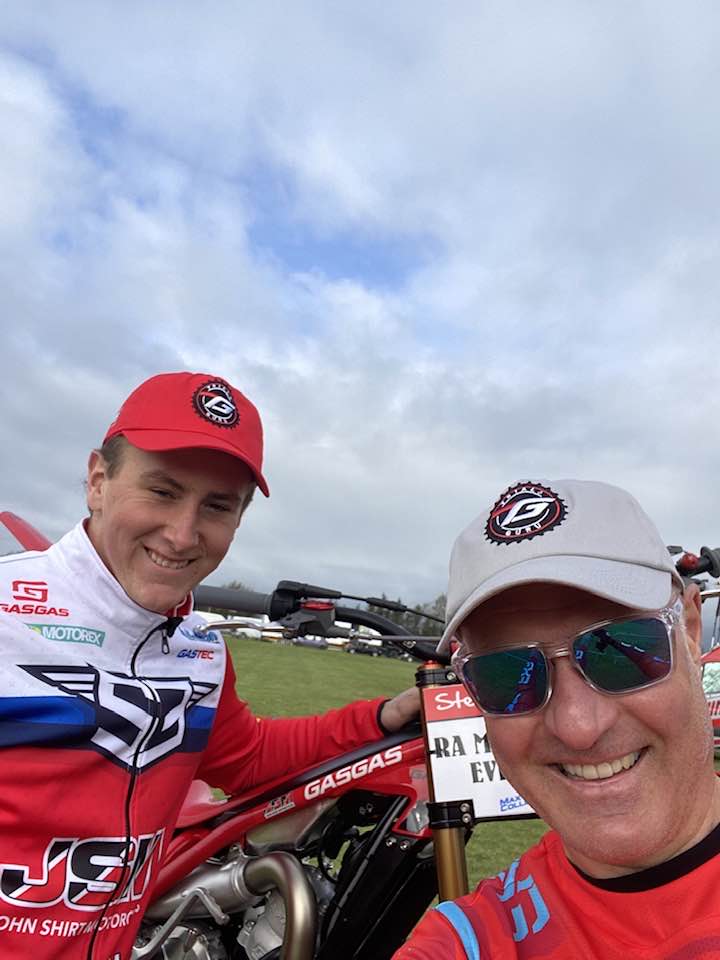
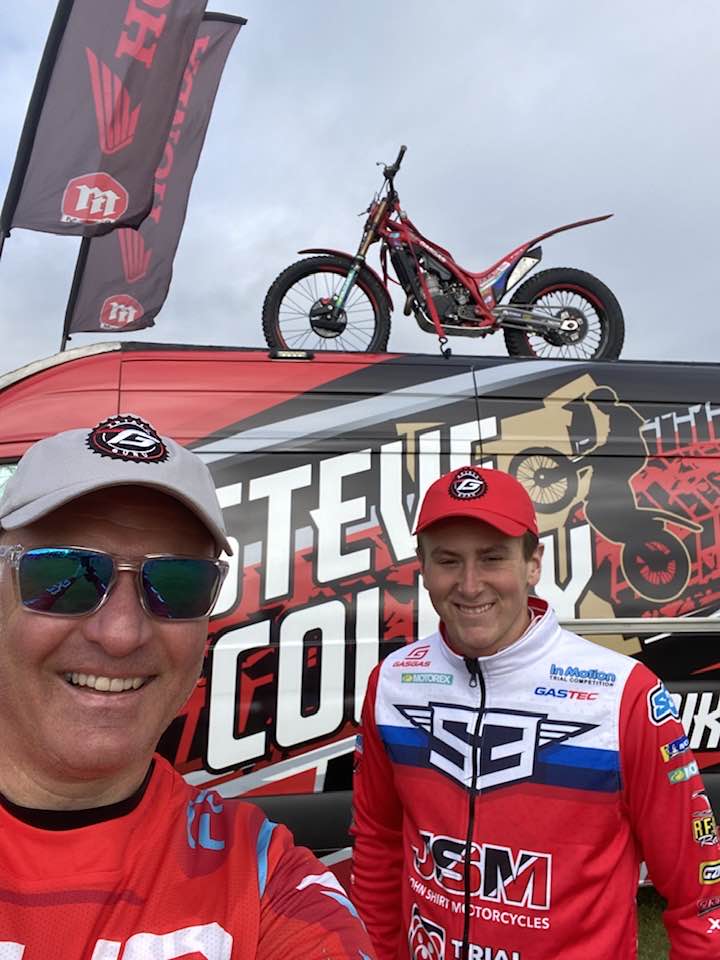
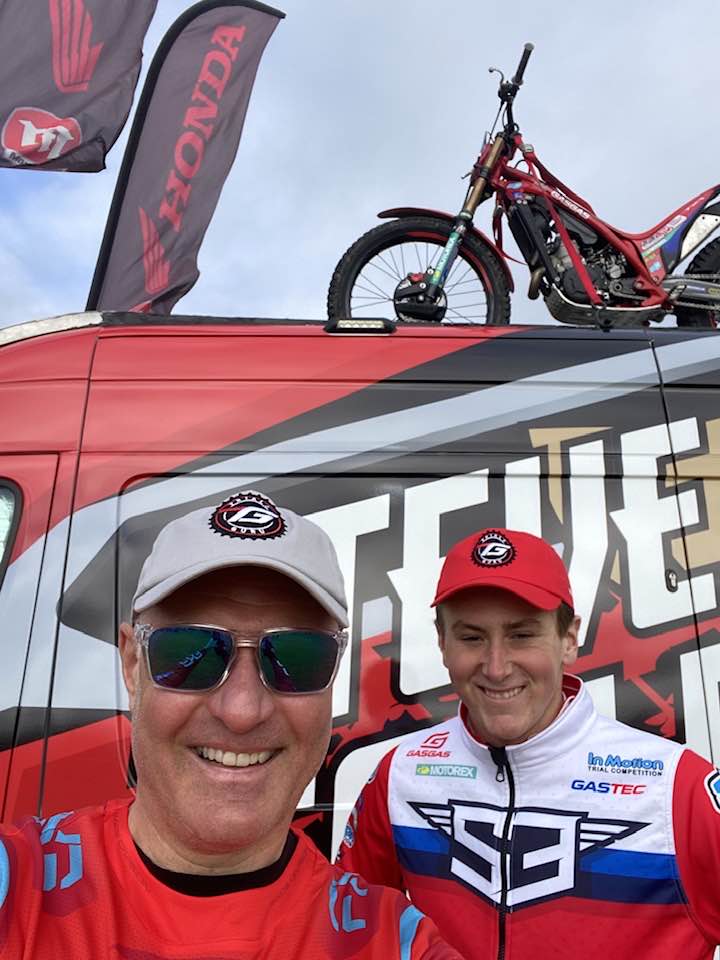
Jack Dance is a Trials Guru VIP and Steve Colley (right) is a Trials Guru ‘Trial Legend’.
At last we have caught up with the ever active Steve ‘Showman’ Colley and GasGas rider, Jack Dance (125 World Champion) who managed to get a few photographs taken during show work at Pickering with RA Monster Events.
Steve Colley should need no introduction as he is a four times winner of the Scottish Six Days Trial and former three times British Trials Champion.
Jack Dance (who also blagged a Trials Guru VIP status cap for his Mum!) is 2021 125cc FIM World Champion and a five times British Trials Champion. Jack started out in trials at three years old on an OSET.
Steve was gifted the limited edition Trials Guru VIP ‘Trial Legends’ light grey cap and Jack the Trials Guru VIP red cap. Jack’s Mum Nicky is his biggest fan and a follower of Trials Guru website, so we think she earned her red cap as well!
All very much – DEDICATED TO TRIAL
The Premier Trial Website – Recording the History of the Sport 'Established 2014'







 TRIALS GURU - DEDICATED TO TRIAL