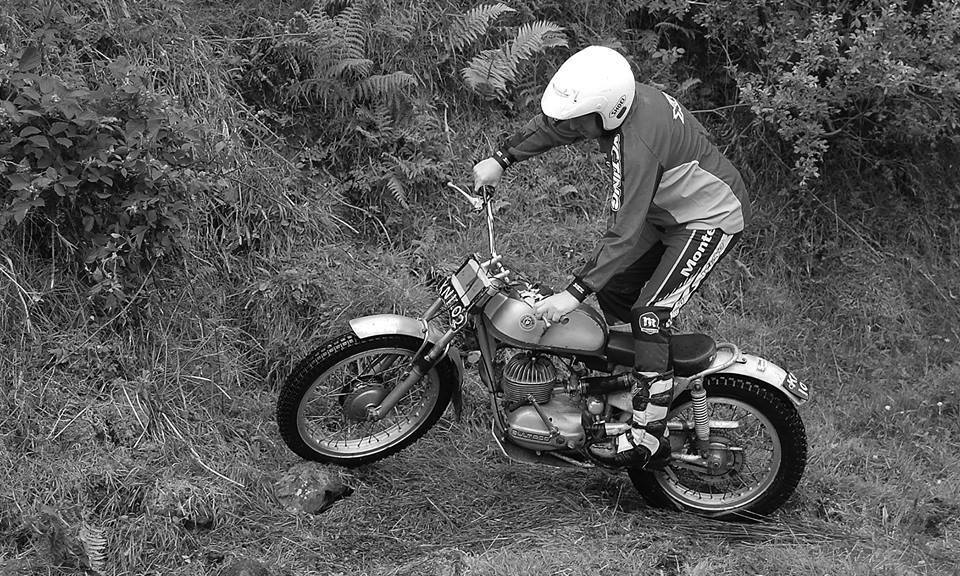
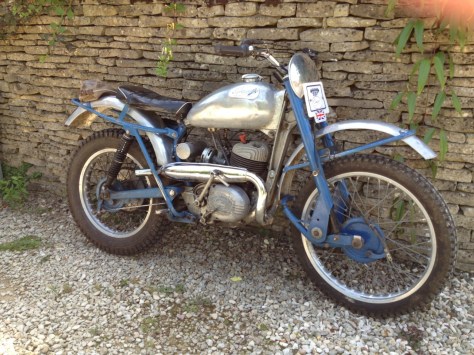
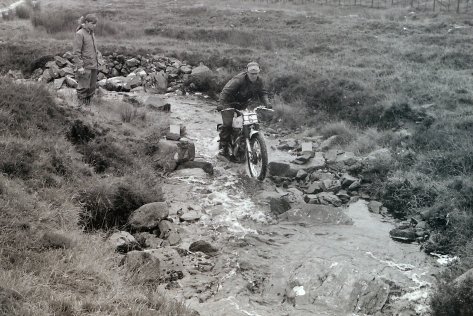
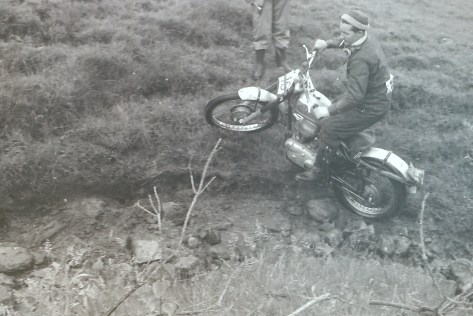
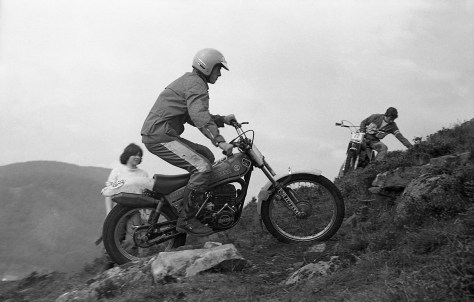
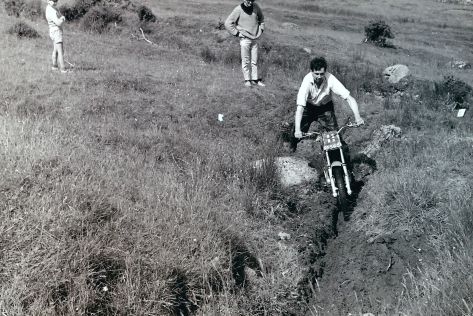
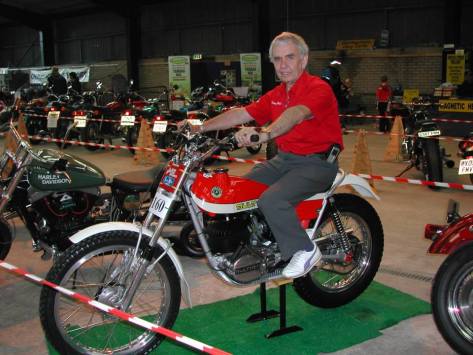
David Coughlan from Waterford on his very original 244cc Bultaco Sherpa T seen here at the Banbridge Classic Trial – Photo: Chris Sharp
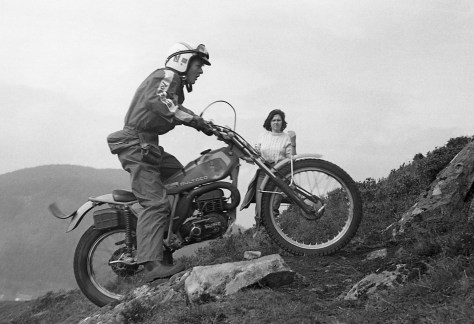
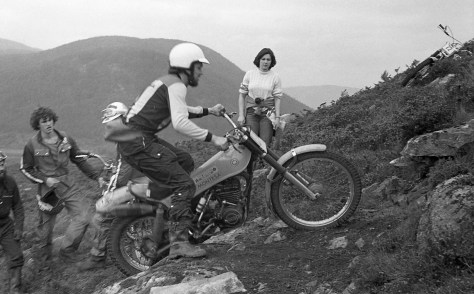
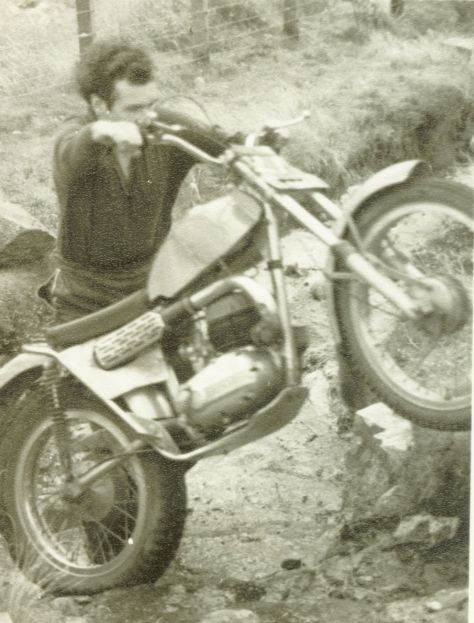
Trials Guru has pleasure in announcing that we will be showcasing some images granted display by County Londonderry’s Chris Sharp, a trials, cycling and motorcycling enthusiast.
Chris has taken photographs for many years at events on the Emerald Isle and beyond and he takes really good images.
We are of course delighted to be able to show his work on the new ‘Irish Trials – Chris Sharp Selection‘ page and of course, as usual, all images remain the copyright of Chris Sharp, so please be respectful of that.
A facebook interest page has spawned a new event in Derbyshire, we catch up with Mark Trueman…
Words: Trials Guru – Mark Trueman
Photos: Nigel Ward
Facebook is of course a world-wide social media website and trials is becoming well catered for in that popular place, it now boasts over 5,000 members.
A general interest entitled “Hard to Find Twinshock Trials and Aircooled Mono” has now a large following, with members trading parts and complete machines. It is quite refreshing as it isn’t just another chat room, riders are helping other riders.
The result was the creation of a ‘Group Trial’ where members of the facebook group were invited to compete in a two day trial at two separate venues in Derbyshire.
Mark Trueman from Sheffield, England is the man behind this special interest group and puts a lot of time and effort into keeping it fresh and sensible. If people post inappropriate content or comment, he politely asks them to remove it, before it is removed. Most if not all, comply!
Here is the report on the third edition of the ‘Two Day Group Trial’ or 2DGT for short:
Hard To Find Twinshock Trials & AC Mono – Two Day Group Trial – 22ND / 23RD July 2017
Day One : Burycliffe Farm, Elton, Derbyshire
Day Two : Dudwood Farm, Elton, Derbyshire
The ever popular Facebook Group 2 Day Trial headed back to the rolling Countryside of Derbyshire over the weekend of the 22nd and 23rd of July, stageing its 3rd edition.
Hosted and organised by the well known pairing of ‘YMSA’ couple of Barry & Sally Burton, with on the weekend assistance from facebook master, Mark Trueman, a weekend fielding over forty riders competed over the ten section, four laps per venue courses.
Classes were offered for Pre’65, Twinshock, along with a smattering of the comparatively modern Aircooled Monos.
Heavy pre-event rain didn’t dampen the enthusiasm of the entrants, and sections were designed and set out by trials master, Mr Mick Andrews leading up to the event.
Camping and entertainment was provided on the Saturday, and riders came from as far and wide as Malta and the Isle Of Man, as well as a strong contingent from the Southern Counties, for what is fast becoming a popular yearly event.
Day one saw Dan Clark ride clean on his 1987 Honda RTL250 in the Expert Aircooled Mono class with an exceptional ride in the sticky conditions, as you would expect from a rider with his natural ability and experience.
Day one also saw Paul ‘Mac’ Houghton only lose 3 marks on his smartly turned out 1989 Gas Gas 250 in the Novice Aircooled Mono class, with Danny Littlehales riding well in the Pre’65 Expert category.
Andrew Bunton taking the spoils on the first day on his 1983 SWM 320 in the Twinshock Novice class.
In the Twinshock Expert class, a great ride also from Matt Spink on a 1980 Suzuki saw him clean all ten on the day.
With Richard Rogers riding a 1984 Fantic 300 and Jim Williams on board a 1983 SWM 350 ‘JUMBO’ cancelling each other out in the 50/50 Twinshock class.
Day two provided a few more entrants on the day, and complimented perfectly the great weekend had by all in drying conditions, providing a little more grip in the Rocky sections.
OVERALL RESULTS AFTER DAY 2
AIRCOOLED MONOSHOCK – EXPERT – DAN CLARK – 0 MARKS LOST
TWINSHOCK – EXPERT – MATT SPINK – 6 MARKS LOST
PRE 65 – EXPERT – DANNY LITTLEHALES – 44 MARKS LOST
TWINSHOCK – 50/50 – RICHARD ROGERS – 39 MARKS LOST
PRE 65 – 50/50 – SIMON SMITTS – 44 MARKS LOST
AIRCOOLED MONOSHOCK – NOVICE – PAUL ‘Mac’ HOUGHTON – 7 MARKS LOST
TWINSHOCK – NOVICE – ANDREW BUNTON – 17 MARKS LOST
Well done to all involved, and the planning now starts for next year’s event to again be staged at Elton, Derbyshire. All details to be found when available on the ‘Hard To Find Twinshock Trials and Aircooled Monos’ facebook Page.
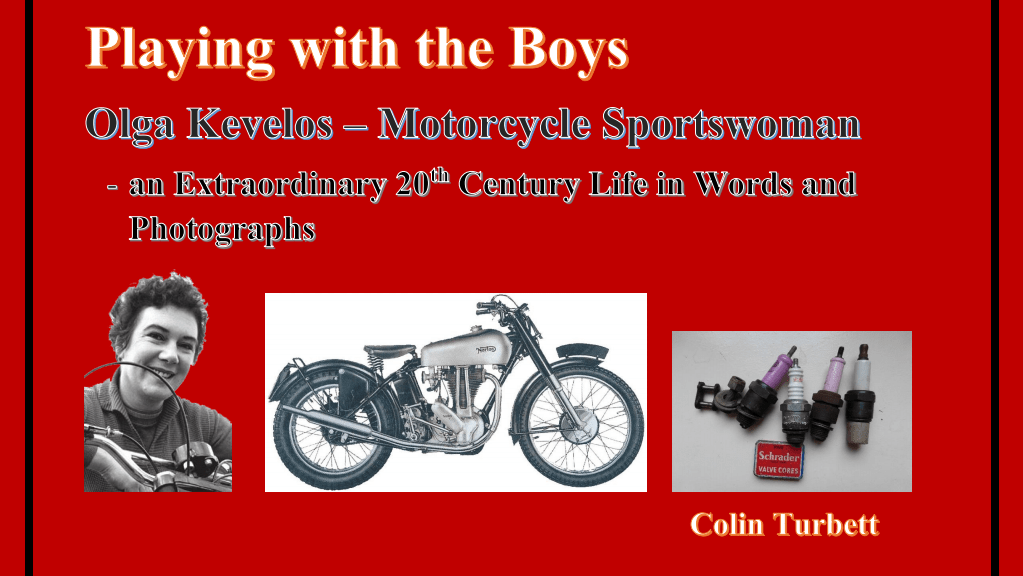
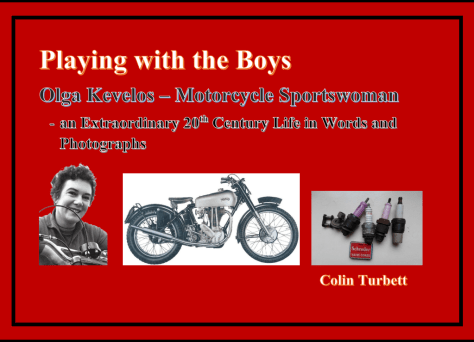
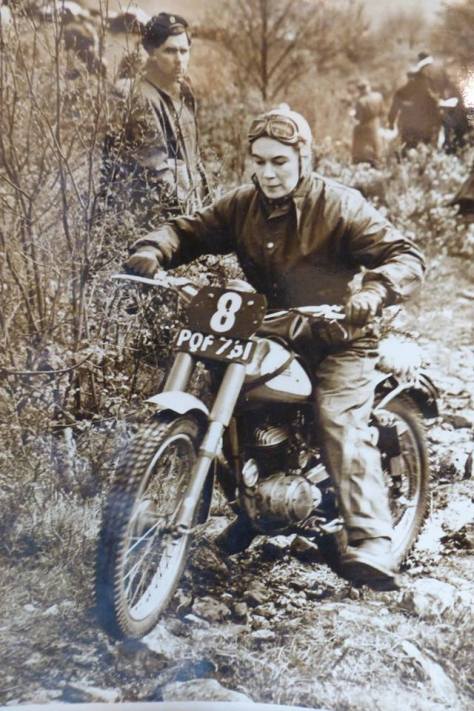
Olga Kevelos (1923-2009) was a star of the UK motorcycle scene from the late 1940s until the 1960s, excelling best in the trials scene, but trying out both road racing and scrambles, both of which were largely denied to women at the time. She was well known in the ‘Scottish’ (SSDT) and ISDT events, competing in both over many years, with some success.
But Olga was more than just a motorcycle sportswoman – she was glamorous, adventurous, fearless and, above all, independent in nature. This book traces her life from its’ beginnings in the family home in Edgbaston, Birmingham, through her unusual wartime service with a small group of women volunteers on the canals, her motorcycle years, and finally, her time as a pub landlady and quiz expert.
Along the way the reader will learn about her vivacious personality and those who most closely shared her life. In order to provide context, a chapter covers the place of women in motorcycle sport in the pre and post war years. An appendix gives brief detail on some of the motorcycles most closely associated with Olga.
This A4 size 160 page book has over 250 illustrations, many of which have never been published before and many in colour. The author has self-published the book and it’s initial availability is limited. Copies cost £20.00 and P&P in the UK is an additional £4.00. Further details can be found on the Facebook page: HERE or from the author : ctur282388@aol.com
Sometimes, Trials Guru is approached by individuals who have found a trials motorcycle and are keen to discover it’s history.
We are not always able to assist due to the complexity of the task, but here is an instance where we were able to help, almost immediately upon receiving the request for assistance!
Tom Milton Junior on his Greeves TE250 in September 1963, winning a Loch Lomond trial
Words: Mark Morris
Assistance and Co-operation: Tom Milton Jnr (USA)
I came into contact with John Moffat at the Trials Guru website, via the Greeves Riders Association after seeking information regarding my newly acquired TE 250. John provided the key information necessary regarding its’ history, allowing me to find out more about the Greeves Scottish in my possession.
The story of my search has its roots in my long ago interest with the Greeves marque.
When I was a teenager back in 1978, my best friend had a Cotton trials machine which I admired from afar. I was keen to find something similar and after trawling the pages of the ‘Exchange and Mart’ found what was described as a ‘Greeves Scottish’ close to where I lived. The bike was great fun to ride and I always regretted selling it.
Mark Morris with his Greeves Hawkstone back in 1978.
Many years passed and different bikes came and went but the Greeves always had a place in my heart and at the back of my mind I knew that I would like once again to own one, but realistically thought it would not be possible.
With no particular thoughts in mind I went along to the Telford Off Road Show back in February 2017.
As I walked down the line of Scramblers on the Greeves Owners Association stand, I stood back in disbelief, when I saw before me my old Greeves. It had stood in a barn for many years before being bought by its current owner. Furthermore I learned that it wasn’t actually a Greeves Scottish but an early ‘Hawkstone’ scrambler (I later was told that the gearing was similar enough in both Scottish and Hawkstones for the Hawkstone to be used as a rudimentary trials bike).
Mark’s old Greeves Hawkstone taken at the Telford Show in February 2017 – Photo: Mark Morris
After returning home I found myself wishing more than ever that I had kept the Greeves when I was younger.
Unfortunately later that month a relative died, but had left me some money in their will and so it was with this incentive that I went out to look for another Greeves to own.
I decided that I wanted a ‘Scottish’ because not only could I fit lights if need be but I would have less trouble getting it through an MOT.
My search started on ‘e-bay’ and I soon found a bike I could afford. This was a 1962 model TE 250. Once delivered I put it through an MOT which it passed first go (despite having been stood unused for many years in a shed) I then joined the Greeves Riders Association and VMCC. The GRA managed to trace my frame and engine number back to the date the bike was originally sold and it brought up an interesting anomaly. The bike had been purchased directly from the Thundersley factory by the ‘Scottish Clubman’ magazine. This was unusual insomuch as it was routine for bikes to go from the factory directly to agents or dealerships.
The original TE250 which was Tom Milton’s first trials machine, 7030SF as it is today – Photo: Mark Morris
I was piqued and intrigued to find more about my bikes slightly unusual history.
My next stage in finding the bikes history was to ask if anyone could help on the GRA forum. It was from there that I was given John Moffat’s details by enthusiast Brian Catt.
Amazingly, John had a recollection of the bike from the registration (I luckily had the original logbook) and in no time at all, he had put me in contact with the original owner Tommy Milton Jnr. who lives in the USA.
Tommy’s father appeared in a recent article on the Trials Guru website entitled: “Great Scots, Tommy Milton – or NOTLIM, if you prefer” and it was this bike that was mentioned in the article as being given to Tommy Jnr as an incentive to excel at school.
Tommy very soon got back in contact with me to happily confirm that it was indeed his first trials machine dating from 1962 and he recounted how his Dad had rashly promised to get him a new bike if he buckled down at school.
Tommy Milton Senior was a director of the Scottish Clubman Ltd., a monthly magazine for car and motorcycle sport enthusiasts run by amateurs, and he had agreed a deal with Greeves for the bike at a favourable price in return for an article in the magazine after a few months use. Tom Junior and Senior travelled down from their home in Edinburgh to Thundersley to pick it up, which they did on a Friday afternoon. (Apparently, there is a picture of delivery being taken with a Greeves sales executive and also Robbie Allan, older brother of Vic, who was working for Greeves at the time).
On the following Saturday, Tom Jnr rode it part of the way north to run it in, and when he got home, he took off the lights and got it ready for the CSMA trial near Gifford, East Lothian the very next day. Although he was only a novice he got the best non-expert and a first class award. Two weeks later he got another first class and was then classified in Scotland as an expert. Tom Jnr also went on to win the Pinhard prize trophy for trials in 1967 – his name appearing on the trophy alongside John Surtees, Mike Hailwood, Grahame Noyce, Dave Thorpe and many other notable motorcyclists.
Tom Milton on his 1967 Pinhard Prize win: “Regarding the Pinhard, I think it is true to say that, while ‘Trials’ is shown against my name on the Sunbeam Club list, it was really a combination of other factors, such as being a long-time committee member of the Melville Motor Club and a co-organiser of their scrambles and trials events, as well as one of the youngest ever members of the Scottish ACU Management Committee, and as a result being a Steward at other club’s scrambles, that contributed to the award”.
In September 1963, Tom won his first trial, at Loch Lomond. The photograph of Tom was taken during that event – the bike has a different tank fitted now although the original is still with the bike and was obviously changed at some point to save weight.
Apparently, an article on the bike was written for the Scottish clubman magazine, and it would have appeared in one of the 1963 issues. When the magazine was wound up, a full set of back issues was lodged with the National Library of Scotland in George IVth Bridge in Edinburgh.
The next stage for me is to try and get the bike re-registered back into its original number, thereon I hope to restore it to as close to its original condition as possible. As the lights were taken off straight away I would be grateful for any suggestions as to what type of lights were fitted. Originally the bike has rock guards fitted also.
If anyone has any photos of the bike at Greeves with Robbie Allan and the Greeves staff or records showing its review in the clubman magazine I would be very grateful to hear from you via John Moffat and this site.
Mark Morris
For more articles like this one or do you have one to share? Then have a look through Trials Guru – Dedicated to the Sport.
Use this contact form to send your message to Trials Guru:
Jon Stoodley is a trials superenthusiast and more, who lives in Muskogee, Muskogee County, Oklahoma, United States of America.
He has been a reader/follower of Trials Guru from the very start and he has kindly written this article for us.
Jon Stoodley enjoys his trials riding, seen here on his Gas Gas
Photos provided by Jon Stoodley/JSE Trials
An observant man once said, to the effect, “You don’t choose your passions, your passions choose you.” Each of us came into the sport of Trials or ‘Mototrials’ as it is called in some areas, from different directions. Some of us were, in a way, born into the sport as a result of their father’s or even grandfather’s influence. Some, like me, were involved in other forms of motorsports and thought we would ‘give Trials a shot’ and took up the sport.
I had been involved in racing cars and motorcycles as a hobby since I was 15 years old and one fateful night, in 1971, while I was sitting on my TT bike, waiting for the flagman to start my race, I looked around and thought to myself, “Darn. These guys are trying to run me over all the time and I’m not having fun anymore!” So, that was it, I sold my bike and equipment and just took some time off to see what I wanted to do next. As I always loved motorcycles, I was pretty sure they would be involved somehow in my future, but to what extent, I didn’t know.
A short time later, I went to a big off-road motorcycle and equipment show in South San Francisco. There were lots of bikes and stuff on display as well as local motorcycle sports clubs being represented. Over in one corner, was a small booth with a group of riders who had some of their bikes on display. The bikes were weird looking little things with little seats and what looked like street tires on them. I had seen a few photos of them in magazines, so I had an idea they were what was called ‘Observed Trials’ bikes and a bunch of guys in the U.K. bounced around on them all over the countryside. They didn’t look loud, mean or terribly fast like other racing bikes but they were very compact and simple.
One of the riders at the booth came over to me and in a friendly way, asked me if I was interested in riding the, new to me, sport of Observed Trials. I told him I didn’t know much about the sport but was curious. He introduced himself, “I’m Whitey Webb and I’d be happy for you to meet some of the other riders here.” Whitey took me over to the group, which was friendly and welcoming and obviously really enjoyed the sport they were involved in. I hung around their booth for some time and Whitey turned out to be a good salesman as I decided to give this weird sport a try at their next event. There is a Zen saying that goes, ‘When the Student is ready, the Teacher will appear.’
I guess I was ready as a great teacher appeared. Whitey Webb is the father of Kip Webb, a top level U.S. National Trials rider as well as the grandfather of Cody Webb, past U.S. National Trials and EnduroCross Champion. I guess I got real lucky!
So, I converted a bike I had laying around the shop and showed up at my first Trials event, secure in the knowledge that an experienced and supremely talented racer such as myself would surely show this bunch of old ladies how to REALLY ride a motorcycle, well, we all know what happened next. I flopped, dabbed, crashed, dragged and moaned myself through the sections and loop and generally made a complete fool of myself. My shins were as bruised and bloody as my over-inflated ego at the end……but, you know what? …. I actually had fun. Looking back, I had lots of fun and everybody was helpful and encouraged me to keep going and, most of the time anyway, didn’t laugh when I made rookie mistakes and I made a LOT of them.
That was it, I was hooked. Something about this, in the U.S. anyway, relatively unknown sport spoke to me. It was challenging and rewarded personal effort, but most of all, it was enjoyable, if even in a sadomasochistic way at times. But there was something else….the people. This sport attracted a certain kind of person and I became aware that these were the kind of people I wanted to be around.
As far as motorsports is concerned, Trials is a weird sport. It’s a lot like golf in that I have friends who are as passionate about golf as I am about Trials. They are always buying the latest, high-tech equipment and a couple of them have even been to Golf’s Mecca, the famous St. Andrew’s Links in Scotland. Trials is also like Golf in that it looks so simple but in reality, is much more complex than a description would indicate. Don’t believe me? Try explaining Golf to a person who has never heard of it: “Well see, you got this little stick and this little ball. There are a bunch of holes in this huge lawn and you try to knock this little ball into the holes with as few whacks as possible. You win if your score is smaller than all the other people. It’s really exciting!”
Then there’s Trials: “Well you see, we got these spindly little motorcycles with no seats. We look for places that nobody would ever ride on (and some places you can’t even walk over) and thrash these little bikes through rushing water, boulders, and other nasty stuff while trying not to fall off.
Oh, yea, and we do it for hours on end in rain, snow, sleet and flood. It’s really exciting!” You can get an idea of what I mean, in that the physical description does not do justice to the reality of the experience.
In Psychology it’s called “having a mental equivalence”, in that the person you are describing the experience to, does not have the retrievable mental images necessary to accurately frame the physical descriptions you are giving them.
325 Bultaco Sherpa mounted, Jon Stoodley in the British-America Cup trial around 1974
What is it about this sport that I enjoy?
Well, you get to ride for hours in some of the most beautiful scenery around. It’s personally challenging and rewards practice and commitment.
The other participants are helpful and supportive, probably because we are all trying to solve the same problem of trying to ride the section successfully. We all have a common purpose.
The bikes, in comparison to other forms of motorcycle sports, are a lot less expensive and you can get a good entry level bike at a very reasonable price. The bikes, in most cases, are well under-stressed in use and seem to last forever. At least here in the U.S., trying to find a Trials bike in a motorcycle salvage yard is next to impossible. They are just passed on from one rider to a new owner.
I’ve rode events alongside first-time beginners and World Champions and in what other sport can you say that? You can ride just for fun or compete on a serious level, the sport allows for both types of riders at the same time.
Trials is a reasonably safe sport and injuries are rare. A Clubman rider can compete on Sunday and he or she can have a more than reasonable expectation that they can report for work on Monday, unscathed. The list of positive attributes of this sport goes on and on.
Riding a creek on the 325 Bultaco Sherpa
Another point is that Trials riders are, as a general rule, easily approachable and love to share. It’s fun for me to wander around the event pits and talk to riders. If I admire one of their bikes, inevitably the next thing I hear is “want to take it for a ride?”
The approachability factor applies not only to Clubman riders but also to World Champions. I’ve chatted with Martin Lampkin when he got to my sections early (even though I knew, in part, he was buttering me up so I’d go easy on Dougie if there was a close call on his scoring. Martin was as good a salesman and had as good a sense of humor as Whitey Webb), I’ve drank beer and talked about motorcycles with Mick Andrews for an afternoon, sat around camp with Tommi Ahvala and talked about everything and sat with Dani Oliveira, 125 World Champion, in the GasGas pits while he was putting on some small parts he had brought from Spain to make an otherwise stock bike work at the World Round level.
This reminds me that Trials is primarily a sport of talent, not machinery. At the World level, of course, the competition is so intense that any advantage, however slight, is important but for most of us mere mortals, the bikes anyone can buy are essentially race-ready and require little preparation. I don’t know of any other motorsport here in the U.S. that one can buy a stock bike, do reasonable maintenance and adjustment and enter it in a National event and have a good chance of doing well, it not winning. Trials is a ‘no excuses’ sport.
On the smooth but very powerful 370 model JTR (Jordi Tarres Replica) Gas Gas of 1997 at the Frank Raines Trial
The sport of Trials has, and continues, to mean a lot to me. I’ve got long time Trials friends all over the world because we share a common experience. The very nature of Trials competition promotes camaraderie and friendship and I would imagine this is because of the fact that we are alone in the section and essentially competing against ourselves. Like I say, Trials is a ‘no excuses’ sport, you can’t blame the other riders for cutting you off in the turn, running into you or jumping the flag at the start.
I love Trial’s rich history, it is one of the oldest and most enduring forms of motorsports there is and one only has to look to the Scottish Six Day Trial to get an idea of the sport’s remarkable lineage. Although I don’t compete anymore I really, really enjoy helping to set up an event, helping new riders and observing a section.
I sometimes think I enjoy checking a section more than I did riding in competition. Even after checking sections at three World Rounds, numerous Nationals and over a hundred plus clubman events, I still love standing in a section encouraging the riders. I always want the riders to do well in my section and I always get there early to make sure it is safe, there are no tree branches hanging down in their way, no unnecessary debris is at the entrance or exits, the boundaries are secure and whatever I need to do to make the section as trouble-free yet challenging as I can.
I enjoy seeing the riders analyze the section, picking unique lines through the obstacles and then using their talents to conquer the problems set before them. I take pride in the fact that Trials riders help each other and you only have to see the upper class riders take time to answer the questions of the lower class riders and watch as the spectators cheer on and encourage both beginners and World Champions.
I like the fact that people of all ages and genders can be involved in this equal opportunity sport and even old geezers like me can participate to whatever level they enjoy. I probably appreciate my time spent with other Trials people now more than I ever have. There are not many activities one can say that about.
When my friend, John Moffat, asked if I would write a piece for The Trials Guru, I first thought of a technical article. Through the years, I have written many technical articles for both Motocross and Trials publications but John suggested: “how about a letter from America?” This got me to thinking, “how about a love letter to Trials?” a passion that chose me and I’ve enjoyed for over 46 years and counting. I’ve tried to give back to Trials what my talents would allow. It’s been a really good investment as Trials has rewarded me tenfold. I love this sport.- Jon Stoodley
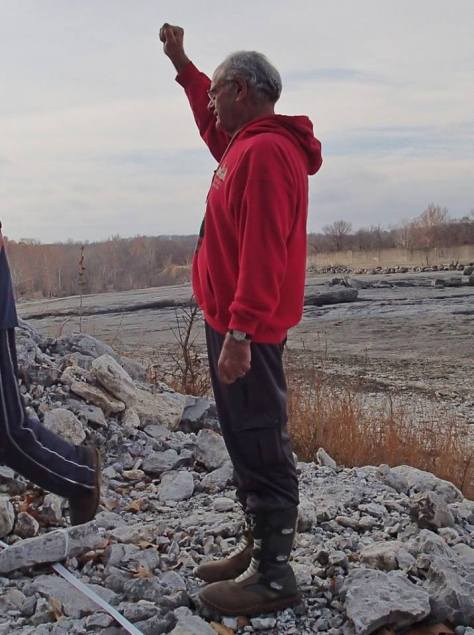
A true enthusiast puts back what he/she takes out, here is Jon observing (checking) riders at a trials event
The Premier Trial Sport Website for photos, articles, news and the history of motorcycle trials
Hawick rider and former Scottish Champion, Graham F. Smith (240 SWM) at the Lanarkshire Valente Trial at Kilsyth in 1979 – Photo: Ian Robertson, Midlothian
We at Trials Guru are always looking for new material and old material for that matter, well we just found some for you!
Scottish trials enthusiast Ian T. Robertson from Midlothian has been friends with Trials Guru’s John Moffat for over 40 years and he has opened up his personal archive for us to see.
Please, as usual, be respective of Ian’s copyright, he is the legal owner of these images, please do not share without permission.
Go straight to see the photos that Ian has ‘unearthed’ on Trials Guru… Here!
The Premier Trial Sport Website for photos, articles, news and the history of motorcycle trials
Midlothian rider and joint Scottish Champion in 1978, John Winthrop (348 Lloyd Montesa) Valente Trial, 1979 – Photo: Ian Robertson, Midlothian
1967 – Start of the White Heather Trial at Rogart. On the far left is rider, George Hunter (Loch Lomond MCC) on the far right are the Grant twins, Bill (third from right and John (far right in blazer)
Words: Trials Guru; KK Cameron; Rob Sutherland; Tommy Sandham; Raymond Leitch; Mairi Grant
Photos: Iain Lawrie, Kinlochleven; Grant Family Archive, Rogart; David Sutherland, Brora.
John Little, originally from Edinburgh, now Elgin on his Bultaco Sherpa (FFS169D) on Sciberscross in the 1967 White Heather Trial – Photo: Grant Family Collection
Back in the mid 1960s and up to the late 1970s, there was a unique event organised in the rural county of Sutherland in northern Scotland. It was called the ‘White Heather Trial’ promoted by the Sutherland Car & Motor Cycle Club and was the most northerly permitted motorcycle trial in the United Kingdom.
Held on a Saturday because of the deeply religious area being predominantly Free Church of Scotland which scorned sporting activities on a Sunday, the organisers respected this and therefore capitulated.
This allowed the Lochaber club, based in the Fort William area, to organise a Sunday event where the Free Church influence was not quite so strong and this made for a unique trialling weekend in the north of Scotland. This created a weekend of events in the Highlands of Scotland, not a two day event as such, but two days with events.
Jock McComisky on his ex-Jack Duncan 500 Ariel HT5 at Sciberscross in the 1966 White Heather Trial – Photo: Grant Family Collection
Centred at the hamlet of Rogart, which means: ‘great enclosed field’ it was a somewhat dispersed crofting community with the nearest village being Golspie, some nine miles distant. However Rogart does have a railway station and this had opened up the area somewhat over the years.
The late Charlie Dobson from Glasgow on his AJS16C in 1966 at Sciberscross – Photo Grant Family Collection, Rogart
The trial started at Rogart and used sections at Davoch; Rhemusaig; Reidchalmie; Pitfire; Sonny’s; Kinnauld; Kerrow and Sciberscross in the Glen of Strath Brora.
1965 Scottish Trials Champion, Kenny Fleming from Dunblane seen here at the 1966 White Heather on his 250 Bultaco Sherpa (model 10), bought from Comerfords, Thames Ditton – Photo: Grant Family Collection
Scibercross Lodge was built in 1876 and was one of the many hunting lodges built for, and by, the Third Duke of Sutherland.
Alex Smith from Bathgate on his ex-Tiger Payne AJS (YNC526) in the 1965 White Heather Trial – Photo: Grant Family Collection
The Grant Brothers – The Prime Movers:
Whilst there were a number of local club members that assisted in the running of the trial, the prime movers of the Sutherland & District Motor Club, White Heather Trial were undoubtedly the Grant brothers, John and Bill.
John was the older and Bill the younger, twin sons of Ian Grant and Jessie Magarry, born on 4th July 1928 at Dalmore, Rogart.
The family home called ‘Rowallan’ was built in 1889. Ian Grant moved along the road to the Bungalow when he married Jessie as his father was still Rowallan. They were only out of Rowallan for a year or two, but it was never bought. This is where the Grants ran their grocery business for many years.
Bill Grant draws on a ‘Benson & Hedges’ cigarette for concentration as he takes a wide line on his 250 Royal Enfield Cruiser in the 1965 White Heather – Photo: Grant Family Collection
They lived in Rogart all their days, the only exception being the time they spent in the Middle East during a stint in the obligatory National Service.
John and Bill left Rogart to train at Catterick Garrison in North Yorkshire, serving as motorcycle dispatch riders as part of the Royal Signals, until 1949. They then returned home to help their parents run the family business.
Bill Grant on his DOT playing in the snow near Rogart around 1960 – Photo: Grant Family Collection, Rogart
John and Bill Grant’s connection with the Scottish Six Days Trial began with Bill becoming an observer in 1967. This was followed by a commitment as Chief Marshall before Bill became the Assistant Secretary to Ally Findlay where his in-depth knowledge of the event was invaluable.
The SSDT ‘influence’ was evidenced with the type of competition numbers allocated to competitors at the White Heather. The riders had a large numeral on black background fixed to the front and nearside of their machines in the late 1960 events. An idea taken from the SSDT at that time.
The late George M.B. ‘Geordie’ Shaw from Perth was also a Loch Lomond memberand SACU Trials committee man, seen here on his 246 Greeves in the 1967 White Heather Trial
Not ‘medically identical’ twins, the Grant brothers were fiendish practical jokers. Some may remember the pranks that John and Bill played when they took their turn at attending the SSDT in alternate years, because the ‘absent one’ stayed at Rogart to run the family business in the village. Many people, including riders and officials didn’t realise there were two Grant brothers, because they were so alike in both appearance and mannerisms!
Bill Grant on his OSSA high up on the hills above Rogart around 1974. Brother John used to ride to work on this machine over the moors – Photo: Grant Family Collection
Daughter of John Grant, Mairi, former SSDT Secretary told Trials Guru: “They generally took their bikes down to the SSDT at Fort William. They would head down the main road to Beauly, then cut over the top to Drumnadrochit before heading on down to Fort William, a delightful run even today“.
The Grants had a preference for Velocette road motorcycles, which led to them to convince the marque owners club to hold their national rally at Rogart, run in the August.
The Grants twins of Rogart sit proudly on their Velocettes, (from left) Ian (Royal Enfield) with sons, Bill & John – Photo courtesy of Mairi Grant, Inverness
John Grant passed away in 1998 aged 70 and ten years later, brother Bill aged 80 years in December 2008.
Trials Guru’s John Moffat: “I got to know Bill and his twin brother John through the friendship they struck up with my late father, many years before I found myself working with Bill in the SSDT office at the Milton Hotel in 2002. When I was 18, I observed at the SSDT in 1976 and Bill was Chief Marshall that year and his nightly ‘Briefing Meetings’ were a mandatory part of the duties and that was where he imparted his direction and knowledge to the officials and observers.
Bill‘s advice was always positive and he was a very knowledgeable chap to have on call as his experience gained through many years helping both Jim McColm and Ali Findlay, indeed steered me through a very adventurous week in Fort William in 2002.
We had great fun in the office, as he always had some story or other to tell in the short lull between the workload. As most of the stories he told me involved previous Scottish Six Days Trials, I must say I was always enthralled by them! He usually began his ‘lesson’ by saying the now immortal words: ‘Now, let me tell you this … ‘
I for one listened intently to what Bill had to say for this was the time to learn. I didn’t interrupt him. He had such a relaxed style that anyone who ignored him probably did so at their peril and no doubt came ‘unstuck’ shortly after!
The motto should read: When an experienced person speaks, it pays dividends to listen.
The Grant brothers have now passed into Scottish Trials folklore, they were true motorcycle enthusiasts“.
Gordon Morell on his 500 AJS in 1965 – Photo courtesy of Mairi Grant, Rogart
…
Glasgow Lion member, Bill Varty in 1966 on his Greeves at Sciberscross – Photo courtesy of Mairi Grant, Rogart
…
John Winthrop conducts a trials school at Rogart in 1977. Riders include: Ray Leitch (goggles on helmet); Gavin Milne; Phil Paterson (fourth from right); Rob Sutherland (third from right); John Moodie (second from right) – Photo supplied by David Sutherland, Brora
…
John Winthrop (left) watches Rob Sutherland (348 Montesa) at a Rogart trials school in 1977 – Photo: David Sutherland, Brora
Competitors memories of the White Heather:
Kenneth ‘KK’ Cameron, from Fort William:
Kenneth ‘KK’ Cameron from Fort William hits a spot of bother on his Montesa Cota 247 at ‘Sonny’s’ section in 1969
“The bike you see in the photo came from Donald Buchan dealership in Perth, most of my bikes were from either Donald or Jimmy Morton at Sorn, Ayrshire. My memories of the White Heather are that it was a great trial and one I rode many times. The one thing that I remember well was riding with Allie ‘Beag’ Cameron and ‘RM’ – Roger Mount, Allie affectionately called us by our initials.
We were looking a difficult section up on a steep hillside, that no-one was cleaning. After looking at it for a while, Allie told us how to ride it. Approach quite fast in second, shut off power till you reach here, then give it a wee squirt here and shut off again, then another and so on. I can’t remember how many ‘wee squirts’ were needed but there were quite a few. Allie then gave us a ‘master class’ on how to do it. Allie was a brilliant rider, needless to say neither ‘RM’ or ‘KC’ followed his example“. – Kenneth Cameron, Fort William
Tommy Sandham, author – Four-Stroke Finale, The Honda Trials Story, originally from Airdrie, now Magor, Monmouthshire:
“I remember the White Heather trial. I think I did it twice and recall it was held on a Saturday, so that meant either a day off or a half-day on Friday to travel up to Sutherland. I was based in Airdrie then so it was quite a trek with a trailer.
I well remember riding round and coming into a village and there was a Policeman standing in the middle of the road waving the trials bikes through! The first and only time I recall this happening. Then we had a lunch stop which again was unusual and the village hall was filled with cakes, sandwiches etc made by the local people. Everyone seemed to be involved!
When the White Heather was finished it used to be a rush back South to Fort William where there was another trial on the Sunday.
The weekend involved two bed & breakfasts and a lot of miles to cover but it was once a year and I remember it very fondly“. – Tommy Sandham, Magor, Wales
Willie Pitblado’s 403cc Pitrite, a combination of an overbored Triumph 3TA twin motor in a Sprite frame registered in Fife as DSP47D. The machine is now owned by the Gillespie family from Dunfermline who were related to Pitblado. We think the rider pictured here on the Pitrite at ‘Sonny’s’ is Sandy Sutherland in 1967.
Rob Sutherland from Brora, now living in New Zealand:
“I’ve spent some time trying to recollect the goings on of the White Heather so here they are”.
1967 – John MacDonald the local postman on his AJS (YNC526), previously owned by Alex Smith and Tiger Payne, seen here on Sciberscross – Photo: Grant Family Collection
“My uncle, John MacDonald, my Mums brother who resides in Rogart to this day, was a clubman rider and former SSDT competitor on an ex- Brian Payne AJS (YNC526), which he bought from Alex Smith. I spent much of my early years with my grandparents in Rogart so the ‘WH’ was an on your tongue word being probably the biggest one day event in the Parish, apart from the annual sheep and cattle sales”.
David Sutherland, brother of Rob on their Uncle John MacDonald’s 350 AJS (YNC526) – Photo: David Sutherland, Brora
“Uncle John had become an organiseralong with Billy and John Grant and with others whom I cannot remember the names of now. By the time I started riding the event in 1976 on my brand new 348 Montesa Cota, I had been an active spectator prior to then and from memory, to me it could have been a world championship having riders of note travelling up from the North East of England which back then was to a young boy another country. They competed along with the prestige of Scottish riders such as Roger Mount, Ally Macgillivray and riders of their era.
Not forgetting that weekend was a double-header as the Lochaber trial was held on the Sunday, which I suppose made the long trip more worthwhile for the far travelled riders.
I had followed the trial on my late 1960s 250 Cota from the age of fourteen as I was very familiar in getting to see the Rogart side of the trial without riding on the public roads so you can imagine how I yearned to be sixteen and get in there with the stars who could clean what a young boy thought impossible“.
Rob Sutherland (Montesa 348) at the 1979 White Heather Trial at Rogart – Photo: Iain Lawrie, Kinlochleven
Sutherland continued: “I bought my 1976 348 with a five hundred pounds loan and topped the massive £799.00 purchase price of with my apprentice wages. The bike came from McGowans Motorcycles in Inverness and the salesman was Billy Lumsden who was, at that time, one of the top local riders and rode a Beamish Suzuki. Billy tragically lost his life in a road bike crash in Inverness. His younger Mike continued the tradition, as he rode trials with Gavin Johnson in the early days.
My first ‘WH’ was the 1976 event as I had just turned seventeen two weeks prior and as I think it may have been the first year schoolboys were allowed to ride, as long as our parents collected us for the public highway part of the trial which ran from Rogart North West to the Kerrow and Scriberscross, then down the Glen into Golspie before heading back to the Mound for the Aberscross and quarry group of sections.
The trial route changed yearly although some of the hardest sections were kept, but it did give the diversity with different sections to ride. It may just be my memory but I seem to remember large numbers of spectators at sections which only added to the competition a young sixteen year old from the Highlands could dream of, having spectated at the SSDT and having some of the big names from the SSDT ride in my own backyard.
I rode three White Heathers I think before getting into motocross, but had so much fun riding and practicing with John Moodie, Ray Leitch and the travelling adventures attending all Scottish championship trials. In fact I think the last ‘WH’ I rode in, a young John Lampkin was there on an SWM along with Glen Scholey and Rob Edwards taking in the double header weekend.
I remember these riders taking part… Steve ‘Butch’ Robson, who would become my best man; Gordon Butterfield; Dave Younghusband; Rob Stamp; Geoff McDonnell; Ray Crinson; John Winthrop; Robin Cownie; Walter Dalton; Keith Johnston; Casper Mylius; Alan Adamson; John White; Billy Matthews; Roy Kerr and Graham Smith from Hawick“. – Rob Sutherland, New Zealand.
Douglas Bald, Scottish Trials Champion in 1968:
“I have very happy memories of the white heather trial , can’t remember much about the actual event itself, but I do remember this occurrence no names but his initials were I. D. B. M; he liked a serious ‘swallie’ (drink) and as always l was the chauffeur.
We decided to go to the local barn dance and as would happen, we got back to our digs late to find the place dark and lock fast. This gave us no alternative but to gain entry, it unfortunately coincided with the local ‘Bobby’ doing his beat.
It took some explaining I.D.B.M was always a little argumentive after a drink and to this day it was the nearest l have ever been to being lifted by the Constabulary!
I can’t remember the date, but the police car was a Morris 1000!“
Iain Lawrie captured the action in 1979…
Watched by ‘Big Phil’ Paterson, Raymond ‘Ray’ Leitch from Culloden on his Bultaco, sponsored by Cawdor Castle in the 1979 White Heather Trial at Rogart – Photo: Iain Lawrie, Kinlochleven
Ray Leitch who lived at Culloden, near Inverness:
“My very first White Heather trial I ever rode was in 1976 and I was number 1, but I lost the kick start on my Montesa Cota 247 half way through the event. Lots of ‘bump starts’ later and I finished about second last! I got betetr after that though.
I was sponsored by ‘Cawdor Castle Tourism’ and my brother Sid hand painted their monogram on the tank. That is the Bultaco you see here supplied originally by Stodarts of Oban, but later fitted with the Steve Wilson frame and swinging arm.
Those are Marzocchi air shocks which were modified from a set off a KTM motocross bike. Also riding round the trial with Rob Edwards was for me the highlight of all the White Heather trials I competed in“. – Ray Leitch
…
1979 ‘White Heather Trial’ with Rob Edwards (310 Montesa) on his way to winning the event – Photo: Iain Lawrie, Kinlochleven
Simon C. Valente from Edinburgh, now in Yorkshire:
“My first ride in the White Heather was I think in 1975, in 1977 I returned, travelling with my elder brother Peter and Graham Smith of Hawick, who was then an up and coming rider working towards his peak of winning the Scottish championship a few years later, in Graham’s Volkswagen camper van.
A few minutes before the start, opposite the Rogart Hotel, a small crowd had gathered to watch Willie Dalling who was on a 348 Montesa at the time, flailing away with a foot pump to square up his rear tyre on the rim. Suddenly an almighty bang, reminiscent of the one o’clock gun going off at Edinburgh Castle, reverberated around the village, as Willie’s inner tube exploded inside the tyre.
Being a strong and sometimes fiery character, you could almost see the steam exuding from Willie’s collar as, without a word, he unbuckled his watch and handed it to his wife Creena before starting the task of replacing the tube.
Meanwhile the audience turned away in respectful silence to leave Willie to work off his temper with the tyre levers!
That year was the first when Rob Edwards came to Rogart to take on and of course beat Scotland’s finest of the time, Alan Poynton, John Winthrop, Robin Cownie et al, and local favourite John Moodie from Rovie Farm. I collected a first class award on my TY175 Yamaha.
The trial was a heck of an adventure, after an early start it must have been past 5 o’clock when we were tackling the final section, before packing up and joining the charge towards Fort William for the Lochaber trial the next day – Great days!” – Simon C. Valente
Photo: Iain Lawrie, Kinlochleven (Rider 72 is Mark Whitham, Suzuki)
…
Photo: Iain Lawrie, Kinlochleven
…
Watched by Keith Johnston and Jock Fraser (in helmet), Peter Valente on his 310 Montesa – Photo: Iain Lawrie, Kinlochleven
Peter Valente from Edinburgh:
“I recall Rob Edwards offering me his spare front brake for the following day’s trial after the linings came off mine on the 348. I should have taken it as riding without a front brake was a bit hairy – not to mention getting down from the top of Sciberscross.
Still the strongest memory of the trial is Willie Dalling using a footpump to square his rear tyre on the rim just before we were due to start. One of the bystanders asked Willie how he would know when he had got the tyre hard enough. Someone (it might have been me) said that when it went bang you would know that it was just too hard, at which point the tube burst. I’m sure you can imagine Willie’s reaction as he set to while the trial departed.
Then there was the rope with a bit wood on the end to go behind the stanchions to haul riders up a waterfall section that many fived. No doubt we’d find that one easy enough nowadays“. – Peter C. Vanente
White Heather Photo Collection of the Grant Family, Rogart:
…
The late Willie Pitblado from Dunfermline on his Pitrite (DSP47D) in the 1966 White Heather Trial. Willie painted the SSDT number plates and owned Motor Cycle Spares at Golfdrum Street in Dunfermline – Photo: Grant Family Collection
…
Tommy Milton Junior from Edinburgh, on his Bultaco Sherpa M.27 at ‘Sonnys’ in 1968 – Photo: Grant Family Collection, Rogart
…
The late Jock Fraser from Carrington, Midlothian (1964, 250 Greeves TFS – BSF432B) in the 1967 White Heather – Photo: Grant Family Collection
…
Tommy Milton Junior from Edinburgh on his 500 Ariel (RFS651) which he later ‘Millerised’ for the 1967 SSDT. Tommy now lives in Northern Virginia, Washington DC, USA having worked for the World Bank. ‘Sonny’s’ section in 1967 – Photo: Grant Family Collection
Tommy Milton Junior, originally from Edinburgh now Northern Virginia, in Washington DC:
“A great dip into nostalgia remembering the trial at Rogart. I believe it became one of the events that counted towards the Scottish Championship.
I know I took part in it at least twice; you have produced the evidence for that, but I cannot remember if I rode a third or even fourth time.
By the autumn of 1968 I was only back in Scotland intermittently, as I had started working for British Road Services based in Oxford.
I really liked this trial. Attractive area, welcoming local people, well organised event, with the Club even fixing accommodation. I stayed with a very nice couple and I remember the lady made a terrific breakfast.
And, finally, the sections were mostly rocky climbs, which suited me and, especially, my Ariel”.
Tommy Milton Jnr on the 500 Ariel (RFS651) powers his way through a mud slot in the 1967 White Heather – Photo: Grant Family Collection, Rogart
“I also remember the trial finished at what I think was the local cattle market. The first time I rode, many people came to join in the general socialising, including a number of pretty teenage girls all dressed in Highland gear. I remarked to one that it was very nice of them to have welcomed us lowlanders by dressing up. Oh no, she smiled, we’ve just got back from a dance competition in Golspie!
I am grateful to see the photographs of me on my Ariel, RFS651, which I still have. I bought this bike from Davy Dryden from Uphall, West Lothian.
I had always wanted an HT5 since, as a kid, I had watched Laurie McLean practising on our pushbike trials area, and when we were all at the E&D clubroom one Sunday night after a trial I overheard Davy complaining that he could not get to grips with it.
So later we agreed a deal. I was very happy and I think I won two or three trials with it in 1967/68 season. I have always wondered if anybody has won a Scottish open event on a Classic 50’s four stroke since then?“.
…
From Carrington, Midlothian, Archie Plenderleith on the 1956, 500 Ariel (NWS405) which was owned by George Hodge; Bob Ashenhurst and Ernie Page and is now back in the ownership of 7 times Scottish Scrambles Champion, George Hodge – 1967 White Heather at Sciberscross – Photo: Grant Family Collection, Rogart
…
Unlucky 13? – Archie Plenderleith comes to grief at Sonnys section on his 500 Ariel (NWS405) in the 1967 White Heather – Photo: Grant Family Collection
…
John Little (Bultaco) takes a breather up the Scibercross hill in 1967 – Photo: Grant Family Collection
…
Aberdonian George Forbes on his Bultaco Sherpa (FSF40D) on Sciberscross in the 1967 White Heather – Photo: Grant Family Collection, Rogart.
…
The AJS (YNC526) of John MacDonald being ridden in 1966 at Scibercross by a younger rider (perhaps someone can identify him?) – Photo: Grant Family Collection, Rogart
…
More images and information on White Heather Trial to follow shortly.
Credits:
Photos:
Iain Lawrie, Kinlochleven
Grant Family Collection, Rogart
Special thanks to all the contributors, photographers and riders who have shared their memories of the White Heather on Trials Guru.
This article and photo-feature is dedicated to the people of Sutherland in north Scotland and in particular the Grant family of Rogart. It now sits in the Trials Guru ‘special section’ entitled ‘Great Scots’.
…
Did you ride at Rogart in the White Heather? Then tell us about it, maybe we can add your memory on this article.
“My first ever competitive trial was the 1976 White Heather. An event that was to kindle a lifelong interest in the sport albeit sometimes interrupted by that nasty thing called work. I learned the rudiments of riding in a local woods and streams in and around Beauly from late 1975 on my fairly decent Ossa Mar, a £300 purchase from A. N. Other! Finding some out some months later that another Beauly lad John ‘Bull’ Davidson who by this time lived in Inverness was right into the sport too and palled around with previously spoken about Billy Lumsden. That led to getting some tips, advice and garnering further interest and being able to get a wee bit more practice in I guess. Anyway, trying to run before I could walk I entered the trial and had so much fun. I have a recollection I was about 38th or so out of about 80 riders. Dropped a barrowload of marks but there were plenty of also rans behind me. I can’t recall but it was probably the following year I became aware of the luminaries such as Rob Edwards being there too although it could have been that very year. Rob, a delightful fellow who I met briefly a number of times including my soon to follow 3 x SSDTs – another case of me trying to run before I could walk, had a great memory for faces and always had a few kind words. Back to the trial, it really was a great mix of sections, people looking on and you really felt part of something especially as a sport newcomer. All these cracking riders coming to participate and little old me being part of it. Just magic! The double-header of being able to shoot off to Fort William the following day , a bonus. Something,I’d forgotten about until I started reading this fine article. I think maybe 3 times or so I participated, Who could forget Robbie Sutherland in the coming seasons who really started to make his trials bike ‘speak’ and made us all envious when he got his 4 stroke CCM. Oh my, the sound! Ray Leitch, a fine rider often in the points. A shoogle here, a shoogle there, but feet firmly on the pegs. We travelled together to a number of trials and believe me, there weren’t many people who could get a Mk 3 Cortina and trailer chapping faster on the way home. Anyway, the White Heather, there couldn’t have been a better intro to the sport could there?” – Dick Mackintosh
Peter Bremner, Chairman Edinburgh & Disrict Motor Club Ltd:
“Well, this article brings back some great memories as Tommy Sandham said, it was a long drive up. Myself and Stan Young did that journey, we left Edinburgh about lunchtime and after a brief stop in Inverness at the West End chippy, non stop to Rogart in time for a couple of pints and it was 10.00 pm closing time in those days.
Seeing the picture of Tommy Milton Jnr, ‘Kerrow’ was one of his favourite sections. I managed it once for a dab, not only did I ride the trial, but was SACU steward a couple of times. On one occasion I came across Jock Fraser on the down side of the ‘Struie’ he had been involved in an accident. All the trials guys that were there duly helped get the bike on another trialer with Jock and his wife in another car.
His car was not driveable so what could be done with his trailer? I had my works van but no tow bar, but a single bike trailer can be wedged into a Ford Escort van with the doors only slightly open. There it stayed all the way back down to Fort William on the Sunday. And yes, the drive down to Fort William was interesting with trials bikes on trailers and pickups at various speeds!
My abiding memory is the way the whole village helped to put on the event“. – Peter Bremner
Ian ‘Midge’ Middleton of Dumbartonshire, an organiser of the Loch Lomond 2 Day Trial:
“I have recollections of the White Heather Trial and rode it from 1975 to the last one in 1983.
I was amazed to see the photograph of Geordie Shaw of Perth and Loch Lomond Clubs riding at the ‘Scriberscross’ sections on his Greeves in 1967″.
George ‘Geordie’ Shaw (246 Greeves) was a true enthusiast and hard working clubman in the Scottish trials scene in the 1960s and 70s. Seen here on ‘Scibercross’ in the 1967 White Heather – Photo: Grant Family Collection, Rogart
“That was quite a bit before my time, but I recognised him straight away, even before I saw the photograph caption. Geordie Shaw was great mentor to me and I couldn’t wait to have a go at the Trial, having heard all the tales from Geordie. Sadly Geordie passed away in 1975 when still quite young, probably aged mid-thirties or so. After a long and arduous drive in 1975 on roads that had not yet been upgraded or improved in any way it was tremendous adventure even just to get to Rogart, the Trial epicentre. There was no Dornoch or Kessock bridges, no improved A82 or A9 roads, and it was very much the long way round, traveling through many small villages and towns.
Once there myself and my two travelling companions ventured into the pub to be greeted by Pete and Simon Valente whose first words to me were..’you look absolutely shattered’. I certainly was bit tired having driven 225 miles on fairly primitive roads in a very slow van. I was even more shattered after the event, but very happy at having completed my very first White Heather Trial.
Even more amazing for me was to encounter the lads from County Durham, Weardale and North Yorkshire who would have had to travel at least twice the distance to get to Rogart. The well known folks from the far South from where I am sitting were ‘Big’ Billy Maxwell, Ray Crinson, Walter Dalton, Rob Edwards, Gordon Butterfield and Colin Ward Senior. After finishing the Trial, the next task was to get everybody packed up and into the van for another arduous drive South on Saturday evening to Fort William, for the Sunday Trial run by Lochaber Club. The White Heather was always a special and fantastic event, because it was a massive one lap trial with probably about 50 sections or so, and you were lucky to be finished at 5.30-6.00pm having set off at 10 in the morning. It seemed to closely resemble a day in the SSDT. I also remember lunch halts at a local school house which must have been opened up specially for the Trial. With the local ladies providing soup, sandwiches and tea. You had to be quick because time was short to get round the long lap.
The Grants also provided a route card with a sketch map of the route and the names of all the sections and section numbers. This was presumably all influenced by the SSDT processes, which having read the previous articles, the Grants were also already heavily involved with. Being a very long one lap fifty section Trial it was very challenging, but immensely enjoyable. For me, it was ‘not a walk in the park’ and that was all part of the challenge in taking part and actually finishing. There is probably nothing like it in today’s world, and it was a shame that it finished in 1983, because the younger lads of today are missing out on something really special. The sections called ‘Quarry’ was always pretty scary for me and they were always the last group at the end of the Trial when you were very tired. The group was just at the side of the main road leading to Rogart. You always had to be very careful to get the best line at the Quarry sections and have a really good blast up the steep rocky and narrow path, because if you were unlucky enough to fail and get a five, there was no way of restarting or going off to the side to get out of the sections.
If you took a five the only way out was to turn around and go back down which would have been a nightmare. That worry was the best incentive to get the right line, open the bike up and make bloody sure you got out the ends cards.I think I got through the Quarry sections without ever getting a five“. – Ian Middleton.
Ian Middleton kindly supplied Trials Guru with the official results for 1975/76/77/78 & 79:
Readers of Trials Guru will know of Rob Edwards and if you don’t then may we suggest that you have a read through Rob’s story by clicking on the link here on Trials Guru
Rob was probably best known as a factory rider and brand ambassador for the Spanish Montesa, but he started off as a local rider who competed on the international stage as his skills were honed.
Rob did however ride a multitude of machines in his early years, one of which was a 1963 350 AJS 16C which he bought from the Surrey dealers, Comerfords.
Words: John Moffat & Rob Edwards
Photos: All from Rob Edwards’ Private Collection – Photographers credit where known on each photograph, all rights reserved.
Rob Edwards cut his teeth on this 350cc G3C Matchless, winning his first award on the machine that was borrowed from his elder brother – Photo: Rob Edwards Private Collection
Edwards was to ride his AJS week in – week out and, having cut his teeth on his elder brothers’ Matchless, he knew how a big four-stroke performed.
…
Rob Edwards on his 350 AJS – 970PL in the 1964 Cleveland trial which he won.
A lucky break came in 1965, when Rob’s name was put forward to the AMC competition chief, Hugh Viney by factory riders, Gordon Blakeway and Gordon Mclaughlan who rode works machines for the Plumstead factory.
Rob was well known to the two Gordons as he lived in Thornaby with local noteable riders Blakeway and Mclaughlan, who had a business in Guisborough, young Edwards was a known quantity.
Rob had ridden the AJS registered as 970PL as a private entrant in the Scottish Six Days Trial in 1964, the following year, factory rider Mick Andrews had moved over to ride the two-stroke James, which was part of the AMC group, this left a spare berth in the AJS team for the 1965 Scottish.
Rob Edwards takes up the story:
At the start of the 1964 SSDT at Edinburgh’s Gorgie Market, Rob Edwards on his 16C AJS that was to be updated to woks specification for the 1965 SSDT – Photo: Rob Edwards Private Collection
“I was allocated number 210 in 1964 on my AJS 350 that I bought from Comerfords, I entered as a ‘privateer’ and rode under the Middlesbrough & District, my home club. The event still started and finished in Edinburgh. On the Thursday, we went over the Corrieyarrick Pass. I think I had been following behind Peter Gaunt and what happened next I wasn’t to find out until sometime later. I found myself sat on a banking at the side of the Pass, which is an old General Wade military road. I had no idea at all how I came to be sitting there.
Alan Morewood from Sheffield, who became a top sidecar driver, came along on his 500 Ariel as he was number 205 that yea. He stopped and asked if I was Okay? ‘Yes, fine’ I said; ‘Bye’ he said and rode off”.
Loch Eild Path in the 1964 Scottish Six Days with Rob Edwards on his AJS 16C – Photo Brian Holder, Teddington (Supplied by Rob Edwards)
“A couple of minutes later and Alan was back. ‘Rob, are you sure you are all right, you look dazed?’ said Alan. ‘No problem’ I said and off he went again. Somehow I managed to get back to Fort William to finish the day’s run.
The first person I spoke to asked what I had been doing to scratch my face? Then someone said, ‘never mind his face, look at the back of his bike!’
The rear end was totally out of line. I then realised that I must have hit a pothole in the road with the front wheel over Corrieyarrick, cartwheeled and that explained my rest on the bank.
We pulled the bike back into line with a length of pipe that we found. Apart from a bit of a headache, it was back to business as usual.
The rest of the week was not as eventful and had a good old needle match with my mate Sid Lampkin who was on a factory Cotton that year”.
1965 SSDT:
Edwards:“A few weeks before the 1965 SSDT, I had an out-of-the-blue phone call from Hugh Viney, the competitions manager at Associated Motorcycles (AMC) who owned the AJS & Matchless brands; wanting to know if I would ride in the ‘works’ team in the forthcoming Scottish.
It seemed that they wanted Mick Andrews to concentrate on scrambling and ride the 250cc James in trials, which AMC’s also owned.
And so it came to pass that I became the third member of the AJS factory team.
However, there was no time for them to prepare me a bike and Mick’s bike 644BLB wasn’t available for some reason, so I would need to ride my own AJS which for me was not a problem.
Both the ‘Gordons’ – McLaughlan and Blakeway, had put my name forward to be in the team to Hugh Viney, so a big ‘thank you’ to them both for that gesture, which I have treasured all my life since.
My week was going well, I was clean on the Tuesday.
Later in the same day, we were looking forward to riding the new section ‘Pipeline’, introduced the previous year.
There were so many stories about ‘Pipeline’ that I wasn’t really sure if it had been cleaned yet or not.
I had teamed up with Alan Chant from Bexley-Heath who was on a 350 Matchless.
In those days all the ‘big bikes’ were grouped at the back of the field.
As we rode up to ‘Pipeline’, the spectators were all heading back into Kinlochleven.
Alan and myself walked the hill and both agreed on bottom gear.
Alan went first and he cleaned it.
I went next and after a bit of a shaky start, by trying to go too fast too soon.
I settled down and at the right speed things were a lot easier and guess what, I cleaned it.
I bet the spectators who left early were a bit peeved!
On the Thursday, I parked my bike close to the first section on ‘Mamore’ and went off to view the sections.
When I returned to my bike, there was a large pool of oil on the floor underneath!
A stone must have flicked up from the front wheel and hit the small alloy casting that the oil feed to the cylinder-head connects to and smashed it.
There was no way of fixing it, so I set off free-wheeling down to the road, expecting to retire from the trial.
I was sitting by the road side at the gate, that is the entrance to the famous Mamore path, when a car and trailer pulled up.
‘Whats up Rob’ the chap shouted over, I explained my plight.
‘No problem mate, give me two minutes and I will take the one off my bike’ he said.
In all the confusion and despair, I hadn’t noticed that the bike on the trailer was a 350 AJS, what a stroke of luck – for me anyway.
The engine had ‘gone bang’ and the fellow had retired from the trial.
You don’t have to be good with luck like that!
He got me going and I forget the lads’ name but I am indebted to his sportsmanship and generosity that day.
On the sixth day, we did Town Hall Brae in the centre of Fort William. We were then faced with the long ride back to Edinburgh.
For me it had been a great week thanks to Gordon Blakeway and Gordon McLaughlan”.
In the 1965 Scottish, Rob Edwards rode number 207 as part of the works AJS team comprising of Edwards, Gordon S. Blakeway (No. 178) and Gordon O. McLaughlan (No. 177).
Rob rode his own machine registered 970PL with many of the works style modifications carried out.
However, history records that it was Triumph that won the 1965 Manufacturers Team Prize, the Blackford Challenge Trophy.
Taken from the Official Results of the 1965 Scottish Six Days Trial:
Award 16 – For the best performance by a competitor on a solo motor cycle from 251-350 c.c. – R. Edwards (A.J.S.).
In the 1965 Scottish, Rob lost sixty-three marks and gained a Special First Class Award, just six marks behind his friend Alan Lampkin who went on to win the following year.
…
Rob on his 350 AJS at Achintee Farm, Ben Nevis, in the 1964 Scottish. The AJS supplied by Comerfords, hence the Surrey registration number 970PL. If you look closely the front wheel spindle nut has the ISDT type tommy-bar, obviating the need for a spanner. It also has the works style prop-stand tied to the front downtube by rubber bands and a small spigot mounted on the lower-most engine bolt and the attachment spigot mounting on the magneto mounting plate. Rob used this bike as a works supported entry in the 1965 event. Photo supplied by Rob Edwards. Photo copyright: Brian Holder.
Rob talks about his AJS 16C:
Edwards: “When the SSDT started and finished in Edinburgh, on the sixth day after the lunch check at Crianlarich there were no more sections until the Royal Observatory on Blackford Hill in the city. This was purely to see if your clutch still worked. You had to stop between two yellow lines and when the official dropped his flag you could move on – simple.
When you passed a third yellow line, that was the end of the observed hill. The path was so flat, nobody actually treat it like a section. However, I did see a rider who when the flag dropped he picked up the front wheel and tried to wheelie to the ends cards unfortunately he tipped his bike over backwards and his score went up by five points”.
Technical issues:
Rob: “After the Blackford Hill stop/restart test at the SSDT, was the final scrutineering test when you wheeled the bike onto a wooden workbench for inspection.
The AJS had one big problem, the swinging-arm bushes, they wore out at an alarming rate”.
Rob Edwards: “If the scrutineer thought that there was excess movement in the bushes, your score could go up by five marks.
I can still see my Dad, Bob at the bottom of Blackford Hill, with a cup of tea in one hand and an industrial grease gun in the other.
After my cup of tea, I pumped the swinging arm full of grease. It only lasted for 100 metres, but it was enough to get through scrutineering”.
In 1965 Rob Edwards had fitted a Royal Enfield primary chaincase to his 16C AJS which prolongued the life of the primary drive chain – Photo: Rob Edwards Private Collection
Our thanks to Rob Edwards for his recollection of his AJS and suitable photographs from his private collection of memorabilia for our special section on AMC trials machines. All photographs are copyright with permission to display granted for this article and the Rob Edwards Story only.
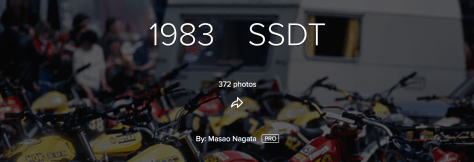
Masao Nagato has kindly given permission for us here at Trials Guru to share his gallery from the 1983 SSDT … A few can be seen below, click to enlarge.
Click the image above (it says ‘1983 SSDT – 372 photos By Masao Nagata’) to be taken to his complete 372 photo gallery from the event on ‘Flickr’.
As always, please respect the copyright on all Masao Nagato’s photos.
Here is but a small sample, to view the full gallery click on the topmost image header.
Tommy Robb was a keen trials rider in his youth and also in later life as a racer to keep fit over the winter months
TOMMY ROBB 14 October 1934 – 12 December 2024
Tommy Robb was a well-known Ulsterman who rode for Honda, Yamaha, Seeley, Bultaco and a whole host of private sponsors, including Terry Hill in a career that started in 1950 and went on until the mid 1970s.
Tommy Robb’s first ever trophy, won on 3rd November 1951 a time trial in Ireland
In 1962, Robb was the first non-Japanese factory rider to be signed by Honda, the year he was runner-up in the 350cc World Championships. He is a five times winner of the North-West 200 and has won the Lightweight 125cc TT in 1973.
Tommy Robb in the Hurst Cup Trial of 1953 on his DOT
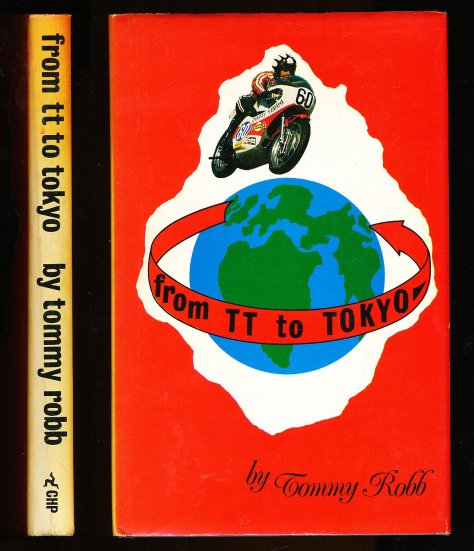
He wrote an autobiography called ‘From TT to Tokyo’ a fascinating recount of a works riders life on the ‘Continental Circus’
From TT to Tokyo – Tommy Robb’s autobiography
Tommy been friends with Trials Guru representative John Moffat for some years now, having been interviewed by Trials Guru at the Scottish Motorcycle Show near Edinburgh.
Part of Tommy Robb’s impressive collection of trophies, yes those are Isle of Man TT replicas! – Photo copyright: Tommy Robb
What is not generally known is that Tommy was also a keen trials competitor both in his youth and in later years to keep fit when not travelling the world racing motorcycles.
Tommy Robb on a Bultaco Pursang in 1967 at an Irish International motocross event – Photo courtesy: Tommy Robb Private Archive
Recently Tommy had a very pleasant surprise and contacted Trials Guru.
Here is what Tommy sent Trials Guru:
“Hi Big John, – A very happy New Year to you, your family and Trials Guru’s everywhere!
I thought the attached Certificate (Factory Rider) would be of interest to you. This arrived on the 2nd January 2016, from the DOT Motorcycle Club, whilst all the major personalities were getting their Knighthoods, MBE’s, and OBE’s I was delighted to receive this award, from 1954 -1958 and inscribed:
‘Special Award made to Tommy Robb, from the DOT Motorcycle Club in recognition of your Achievements as a rider representing the DOT Motorcycle Factory in the Golden age of British Motorcycle Competition’.
This, believe it or not, dates back to the mid-fifties when I rode factory 196cc and 250cc DOTS in grass tracks, scrambles (in those days) and trials in Northern and Southern Ireland. When Burnard Scott Wade was the MD of the Company.
It was a pleasure to receive this recognition some 62 years after the period concerned when I was 18 or 19 years old at the time. To have it in my trophy cabinet at 81 years of age, amongst my TT Replicas is indeed a surprise and an honour”.
The certificate presented to Tommy Robb by the Dot Motorcycle Club in 2016
We are always looking for something different, special or unusual at Trials Guru, so we thought Trials Guru readers would enjoy this.
Trials Guru’s John Moffat (left) with great friend, Tommy Robb at the Scottish Motorcycle Show at Ingliston, Edinburgh – Photo: Trials Guru/Jean Moffat
Apart from ‘Fair Dealing’ for the purpose of private study, research, criticism or review as permitted under the Copyright, Design and Patents Act, 1988, no part of this article may be copied, reproduced, stored in any form of retrieval system, electronic or otherwise or transmitted in any form or by any means, electronic, electrical, mechanical, optical, chemical, photocopying, recording or otherwise without the prior written permission of the author as stated above. This article is not being published for any monetary reward or monetisation, be that online or in print.
The Premier Trial Website – Recording the History of the Sport 'Established 2014'





































 TRIALS GURU - DEDICATED TO TRIAL