This article has been amended and adapted by Dave Cole from one that was originally written for the South Western Centre Gazette in 2007 by Mike Naish, with the assistance of Brenda and John Luckett.
Brenda, John and Mike are thanked for their help and kind permission in allowing us to share this piece of South West trials history on Trials Guru.
John Luckett from Devon is a well known Cotton and Ossa rider and was always a serious contender in the ACU South West Centre for many years. He is of course a Trials Guru VIP.
Words: Mike Naish & David Cole
Photos: Mike Rapley; Ken Haydon; Luckett Family.
John Luckett (Ossa) – Photo: Mike Rapley
John Luckett was born in 1946 at West Bucks, North Devon, to a father who loved bikes and motorcycle sport. His dad took him to watch many motorcycle sporting events but one competition and one rider in particular stuck in his mind. That memorable event was a trial in the late 1950’s when John was so impressed with the performance of John Giles, on a Triumph twin, he never forgot that day.
“Gilo” rode up a steepish gully with a step in it with so much ease, he took the section at real pace, seemed to simply lift the front wheel at the step and carried on to clean the section, a section that no-one else was managing to get up, the sound of the exhaust note and the applause from the crowds of spectators was magnificent.
It wasn’t long before John learned to ride himself, the practice bike was a friends old Excelsior which was ridden up and down a “green lane” beside his house. Dad’s A.J.S. road bike was also ridden around the local fields.
On leaving school John went to work for his father who was an agricultural contractor. Dad bought him a 250cc Ambassador twin. John’s first trial was the 1965 “Lands End Trial”, a long distance competition, one of the true classics run by the Motor Cycling Club. For this event he rode a 500 Triumph twin but was sadly forced to retire with mechanical issues.
His second event was the “Lyn Traders Trial”. Once again he rode the big Triumph twin to the start and wondered why all the other riders were looking at him and his bike with a shake of their heads, John, of course, knows now what they were thinking. When he saw the size of the rocks and the river beds, then tried to ride them he realised it was a ‘bridge too far’, he retired after 40 miles.
At this time John owned a 250 Royal Enfield Crusader Sport road machine but the bug had now bitten and he traded this in for a, Villiers 32A engined, Cotton trials machine with leading link forks.
Signing up as a member of the Torridge and District Motor Club, John next rode an Exmoor Club trial where he finished sixth from last but was happy to just to complete the event.
The next trial for John was a Moretonhampstead Club event which was won by Roger Wooldridge, followed by an Exmoor Club event in October 1965 where he proudly won the “Best Novice” Award.
Soon after this the bike was traded in for another Cotton, this time choosing a machine fitted with a Villiers Starmaker motor. John rode the bike in both local trials and in the 1966 M.C.C. “Exeter” Long Distance Trial. In the local one-day events John was now winning Non-Expert Awards.
John Luckett in an MCC Exeter Trial in 1966.
An ex-Malcolm Evely four-speed Bultaco was the next bike to join the Luckett “stable”, it really transformed John’s riding and he entered the Scottish Six Days Trial. The long journey North (no motorways in those days) was made by four riders from the South West that year, John was joined by Ian Haydon, Mike Sexton and Mervyn Lavercombe. John was forced to retire on the Wednesday, he broke the gear shaft when he hit some rocks then, determined to finish, decided to continue with third gear alone. Scheduled to go over the Corrieyairack Pass, John was a little worried with everyone passing him, he then found the Pass to be closed due to the bad weather and the competitors being diverted the long way around. Eventually the engine seized, obviously over worked and overcooked, due to the lack of gears.
John Luckett (Bultaco) on Grey Mare’s Ridge, SSDT 1968.
In 1969 John purchased a new Bultaco which he rode to a trouble free Scottish gaining a “Special First Class Award” (All-in-all John rode the Scottish Six Days Trial nine times, retiring twice and gaining “Special First Class Awards” in the remaining seven). At Crediton, on this Bultaco John also won his first Premier at an Open-to-Centre trial. He had by now started to enter and ride the Nationals, the Greensmith, Hoad, Perce Simon, St.Davids, Dulis Valley, Victory etc, not forgetting the West of England of course; he was runner-up to Sammy Miller in the Lyn National.
Sammy Miller, centre with Brenda Luckett and Jenny Haydon at the Gorgie Market, Edinburgh at the 1969 Scottish Six Days. Miller finished third this year.
The next move of machine was to the Cotton factory for a 220cc Minarelli powered machine. He had agreed a sponsorship deal which involved a cut priced machine with the supply of free spares plus a second bike free of charge.
John Luckett on the 220cc Cotton in 1970
John was to receive £3 for an Open-to-Centre win, £12 for a Regional Restricted and £25 for a National win. John rode the Cottons for two years and secured some very decent results.
Brenda Luckett enjoys the Scottish sunshine during the 1971 SSDT.
1970 was also a great year for South West trials enthusiasts as our team in the Inter Centre Team Trial broke the domination of the Yorkshire Centre in this event. It was the first time the ‘Yorkies’ team had been beaten for quite a number of years, our team being John Luckett, Ian Haydon, Brian Higgins, Alan Dommett and Ian Blackmore. The Team Manager was Jim Courtney.
1970 ACU Inter-Centre Team Trial Winners – S.W.Centre – Ian Blackmore, Brian Higgins, John Luckett, Jim Courtney (Manager), Alan Dommett, Ian Haydon.
In the 1971 Scottish John was ninth on the leader board and only lost four marks on the Thursday. He even had a crack at the tough Scott Trial and was happy to pick up a finishers award. John was also runner-up to his local rival, Brian Higgins, in the Victory Trial the year that Brian won it, either 1971 or 1972.
John Luckett with his father at Edinburgh’s Gorgie Market for the 1972 Scottish Six Days Trial – Photo: Ken Haydon
In the 1972 Scottish John thought the engine was tightening so was taking it easy, then when he looked down at the rear wheel he realised that the frame was twisted, the rear brake was mangled and the rear hub appeared to be cracking up. By the time John reached ‘Pipeline’ he was fifty-nine minutes behind time, just one minute to spare as sixty minutes behind schedule meant that you were out.
At the end of the day a wheel was borrowed from a Northern dealer, this wheel was used by John all week before swapping back to his re-built original (complete with the correct rim paint) before the finish in Edinburgh – He finished that event with a special First Class Award.
At the end of 1972 John wanted to finish with Cotton as he felt the bike was less competitive, the Managing Director of Cotton, Reg Buttery, tried his hardest to keep him, he even suggested that John take the bike to California to demonstrate it. John thought a lot of Reg Buttery and didn’t want to let him down but after a lot of thought and consideration, taking into account matters like family and family business commitments etc he decided that the time had come to move on and handed his bike back to the Cotton factory. Martin Strang went ‘over the pond’ to California for Cotton in place of John.
John Luckett – even the best don’t always get it right.
Bob Gollner became John’s next sponsor, for Bob, John rode a Mick Whitlock framed Ossa, after which he again changed camps riding this time for Ossa U.K. which was run by Roger Holden. Ossa were very supportive and, from 1974 on, John had a new bike every year. He recorded many successful rides and enjoyed the bikes except for the 350 when it was launched. John was supplied with a 350 but it wasn’t long before he handed it back and returned to a 250.
Brenda and John, who had first met in 1967, were married in 1974, John’s best man being his good friend and rival in sport, Ian Haydon.
South Western Centre Team Trial Team 1975 – Brian Higgins, Ian Haydon, Alan Dommett, John F. Luckett & Martin Strang.
Amongst his many memories, John remembers riding the notorious Scott Trial for a second time, this time he finished within the first ten on observation but lost a lot of marks on time. Also etched in his memory is the climax of the 1974 season when he and Brian Higgins were neck-and-neck going into the last round of the South Western Centre Trials Championship, at the final section of the day John needed a ‘clean’ to pick up the title, sadly he had an unlucky ‘three’ forcing him to accept, once again, the runner-up spot.
John Luckett on his Ossa in 1973.
Next came the ‘mono-shock’ versions, although John found them a bit heavy he continued to ride for Ossa until 1978 before handing the bike back.
John Luckett on the Ossa – Photo: Mike Rapley
By this time John had been married to Brenda for about four years, son Nick had been born the year before and the business was very busy. He decided that it was time to stop riding the “National’s” and next bought a 325cc Bultaco from Alan Dommett. Family life and business commitments led to John giving up riding altogether in 1980, this was also around the time that daughter Charlotte was born.
Brenda and John were also blessed with the birth of a second son, Martyn in 1986. Business commitments forced John’s continued retirement from trials until 1987 when he returned with a Triumph Tiger Cub competing in Pre’65 events. He immediately started producing some magnificent results, his performance in the Exmoor Three Day Trial that year was a good example.
1988 saw him with more great results, which included winning both of the two major West-country classics, the Exmoor Three Day Classic Trial (a two day event these days) and the Dartmoor Two Day Classic Trial.
In the early 90’s John won the Pre’65 Championship with son, Nick, winning the Twin-shock Championship the same year. He also rode twice in the Pre’65 Scottish Trial on the Cub, the second time he finished second to Dave Thorpe and always remembers a really good clean of ‘Pipeline’.
Although only a rare Pre’65 rider these days John does continue to turn out and enjoy long distance road trials where you can be sure his name will be placed well when the results are published. These days John’s time is spent tending his sheep, helping son, Nick, with his business and, with Brenda, running the farm which includes holiday accommodation that includes plenty of trials practice area within their 20 acres of woodland.
John Luckett’s South West Centre Solo Trials Championship History:
John, a quiet and capable man, who was a superb rider, was just, more than a little, unlucky as far as the South Western Centre Solo Trials Championships were concerned, he never did manage to win the Championship but it wasn’t for the lack of trying, he was always a close contender finishing each season as follows:-
These are, without doubt, really impressive placings due to the fact that he competed for the Centre Championships during an era when he had some really brilliant riders as opposition, the likes of Roger Wooldridge, Ian Haydon, Brian Higgins, Mike Sexton, Martin Strang, Ian Blackmore, Mike Rapley, Ivan Pridham, Alan Dommett, Allan Baker, all competing on their top form.
Brenda’s Trials School –
“Brenda’s Trials School”, as it has become known as, was developed from the training weekends first run by Elaine Baker and Rob Doran of the Lyn Club. When problems with land were encountered, the Luckett’s offered to run the event from their Lower Wembsworthy Farm. ACU Centre Official, Malcolm Redstone, suggested to Brenda and John that if they applied for a grant from the South Western Centre, the ACU would probably match it. The successful application was made via the Torridge Club in 1992.
Over the years the training school has gone from strength to strength and been lucky enough to have seen many of the country’s top trials riders attend as instructors, one regular instructor these days is of course Joe Baker, 15 times South West Centre Champion, who was himself one of the very first pupils of “Brenda’s Trials School”.
Originally the proceeds of the training school went to the charity CLIC because Brenda had a friend whose child had Leukaemia. This continued until 2005 when, following the sad loss of their own son, Martyn Luckett, who passed away suddenly in his sleep, Brenda and John decided to split all money raised with the charity CRY, Cardiac Risk in the Young.
As Martyn died very suddenly of Myocarditis, a heart condition undiagnosed at the time, his Memorial Fund now raises money to hold screenings in the North Devon area. Six screening sessions have been held to date, three in Bude, one in Bideford, two in Barnstaple. John and Brenda have raised a lot of money since losing Martyn, their hope is that the hard work and effort that they put into this project will try to stop losses, similar to theirs, happening to other families.
Martyn was a lovely guy, full of fun and a fabulous rider who quickly and easily gained Expert status, had he not passed away at the tender age of 19 he would surely have gone on to make a real name for himself in the world of trials.
The trials school started with 8 or 10 riders (Joe Baker included) and is now so popular that it caters for an entry in excess of 70 with entrants coming from as far away as Yorkshire. The weekend provides top class and valuable instruction to the entrants, plus raises a lot of money for the Martyn Luckett Memorial Fund (probably near to £3,000). John and Brenda are ever thankful to the trainers who attend along with their regular loyal band of helpers who put so much into helping to ensure the success of the weekend.
Due to the immense amount of work involved in organising and running the annual weekend John and Brenda, after a lot of thought and soul searching, have sadly decided that next year will see the final ‘Brenda’s Trial’s School’.
During the time the school has been running so much good has been done with the money raised and so many riders have received some of the best possible training that is available in the country.
We can only sincerely thank the Luckett family and their band of helpers for all they have done, sometimes under very difficult circumstances, and wish them the very best of luck and happiness for the future.
Copyright: John Moffat/Trials Guru 2024
Photographic Copyright: Held by all photographers named in articles or in captions.
Apart from ‘Fair Dealing’ for the purpose of private study, research, criticism or review as permitted under the Copyright, Design and Patents Act, 1988, no part of any article may be copied, reproduced, stored in any form of retrieval system, electronic or otherwise or transmitted in any form or by any means, electronic, electrical, mechanical, optical, chemical, photocopying, recording or otherwise without the prior written permission of the author as stated above. All articles are not published for any monetary reward or monetisation, be that online or in print.
Joe Wallmann in 1969 – Photo: Kamarad, TrialMuseum, Ohlsdorf.
Words: John Moffat
Contribution and information: Hartwig Kamarad; Alfred Wagner.
Photos: Bernard Egger; Rainer Heise; Alfred Wagner; Iain Lawrie; Harry Leitner; Hartwig Kamarad; Photo Collection Giulio Mauri Fontsere; Erich Diestinger.
Photo copyright: Bernard Egger
Born in Berndorf, near Salzburg in 1948, Josef Wallmann, known simply to all as ‘Joe’, would take up motorcycle trials riding at the ripe old age of twenty, which is quite late for this type of sport. This was in 1968 at a trial organised by ARBÖ at Bad Goisern, Gmunden in Upper Austria. In this event he competed with a home-modified Puch moped on which he won the trial. Not bad at all for a beginner, but Joe was hooked and of course wanted to carry on winning.
By the end of the 1968 season, he became the 100cc Austrian champion. Joe continued to use his Puch until the end of 1970 when it was replaced by a 100cc Zundapp, again a bespoke machine, not factory built. Zundapp made enduro type machines as opposed to trial motorcycles. Joe was by profession a bricklayer and this employment kept him physically fit.
Joe Wallmann on a Sachs powered machine in 1970.
Wallmann continued to win his class at trial events and was by now fast catching the acknowledged King of Austrian trials, Walther Luft, who up until then, was virtually unbeatable. For sure, in this time period, Walther was the man to beat in Austrian trials.
On the twenty-fourth of September 1971 at the Alpenpokal Trial at Rosenheim in Bavaria, Joe was able to defeat Walther Luft in competition for the first time.
Walther Luft (left) and Joe Wallman (right) discuss trials – Photo: Alfred Wagner.
Bultaco time:
In the autumn of 1971, Joe purchased his first Bultaco Sherpa 250, four days later Wallmann was able to defeat Walther Luft again at the ‘Graz Trial’. Joe instantly gelled with the Bultaco, a brand he would remain loyal to until the end of his trials riding career in 1982.
Contacts:
In 1968 at the ARBÖ Trial in Bad Goisern, Joe had become friends with riders from Motor Sport Club – Gmunden. It was at that time, one of the few trial clubs in western Austria to also make a name for itself as a promoter of the ‘International Voralpentrial’. In 1970, Joe’s friend, Hartwig Kamarad, was approached by Motor Sport Club Rutzenmoos, the most successful motorsport club in Austria at that time and finance was readily available. The MSC Rutzenmoos tasked Kamarad with forming a trials team, with Castrol Austria providing start-up assistance and also financed the purchase of a Ford FK 1000 transport bus for Joe and Hartwig. The ‘Autoladen Vöcklabruck’ paid for insurance and taxes and took care of tyres and spare parts. Joe had arrived in another world, and the leap into the international trial scene was now possible. In order to finance the expensive trips to international trials in Italy, France, Finland, Sweden, the three remaining seats in the bus were made available to other Austrian competitors and could thus travel cheaply all over Europe.
Former German trials rider Max Braun from Munich said: “It was for me a great time together with Joe Wallmann, he is a gentleman and also his wife Hedwig is a very smart Person. He is a very fair Sportsman and a excellent Rider.“
For many Austrians such as Franz Trummer, Gottfried ‘Friedl’ Engstler, Hubert Erbler, Max Hengl and some others. This was the opportunity to get a taste of international trial events.
1978 – Austrian, F. W. Trummer (325 Bultaco) on Loch Eild Path, SSDT – Photo: Iain Lawrie, Kinlochleven.
Gottfried ‘Freidl’ Engstler from Austria (325 Bultaco) on ‘Pipeline’ in 1978 SSDT – Photo: Iain Lawrie, Kinlochleven.
F.W. Trummer on the 300 Puch Yeti in the 1978 SSDT on ‘Blackwater’ – Photo: Iain Lawrie, Kinlochleven.
International:
In the autumn of 1972, Joe’s international participation in trials really got going, he finished in third position in the Lans en Vercors trial near Grenoble in France. His talent for trial ‘shows’ was already evident, and Joe drove cars for the first time at a racing exhibition of the MSC Rutzenmoos at a folk festival in Vöcklabruck.
From 1973 Joe worked as a salesman and as a ‘celebrity trials trainer to Austrian ski legend, Franz Klammer and many more. This was with the Bultaco importer for Germany and Austria, Horst Leitner, who also provided him with a Bultaco complete with spare parts, free of charge and paid success bonus.
Left to right: Horst Leitner; Niki Lauda; Nina Rindt & Joe Wallmann – Photo: Harry Leitner
Leitner was the first Austrian to compete in the Scottish Six Days in 1961, later he emigrated to the USA to develop a range of off-road motorcycles under the ATK Leitner brand.
The 250cc ATK Leitner made in the USA by Horst Leitner
Leitner’s Austrian headquarters were based at Bruck an der Mur in Styria, Austria and imported the range of Bultaco motorcycles for the country.
Joe Wallmann’s increase in performance was meritorious, he took part in many International Trials and European Championship competitions. This resulted in second places in Pinerolo, Italy; St.Leonard de Bois, France; Trial Beutal, France; International Clubman Trial at Aywaille, Belgium.
Joe and Hartwig had by now changed clubs again and now run under the AMC Attnang banner and were supported by the US oil company, Pennzoil. The trial ‘shows’ became more and more robust with Joe riding his Bultaco across cars and at the town hall square in Attnang-Puchheim also over the roofs of moving cars.
Joe Wallman in 1975 at a World Championship round at Gefrees in Germany. – Photo: Rainer Heise.
Around this time Joe travelled to events in a blue Hanomag van with a rather amusing large decal on the rear doors. It was a sitting bulldog with its paw raised in a ‘thumbs-up’ pose with the text ‘Bultaco-Bull’ underneath.
Joe in VW Beetle action in 1979
As early as 1977, an Austrian motorcycle trade magazine commented on Wallmann’s skills: “soon Wallmann will drive a figure eight on the roof of the car and a hairpin bend in the interior of the car.” At World Championship events, Joe was more and more often in the top ten and thus points and advanced to the best German-speaking trial pilot in the World Championships. He was able to finish other International Trial Classics such as the Trial in St.Martin, Belgium and the Tatra Trial in Poland taking top honours.
Scottish Six Days:
Joe Wallmann on the 325 Bultaco rides ‘Laggan Locks; in the 1975 Scottish Six Days – Photo: Rainer Heise.
At the Scottish Six Days in 1975, Joe entertained spectators during the machine examination at Edinburgh’s Gorgie Market with an impromptu display, by riding his Bultaco up to a brick wall, landing his front wheel on the wall, then static balancing before flicking the bike off the wall, feet securely on the footpegs. His first appearance at the Scottish Six Days, was financed by ORF (Österreichischer Rundfunk), the Austrian national public broadcaster.
In 1976, Joe took part in the prestigeous TT Leathers sponsored ‘Superstars’ trial in England at Pately Bridge, Yorkshire. The event attracted the best trials riders in the world at that time.
1976 TT Leathers ‘Superstars’ Trial at Pately Bridge – Joe Wallmann on the 325 Bultaco – Photographer Unknown.
Reflecting in conversation with A-Trial, Joe Wallman said: “I experienced my personal highlight in 1977, on the Thursday of the Scottish Six Days Trial. It was problems all day. I had to change the wheel bearing and mend a plate and then continue. At stake was with a day victory with 4 marks and the tenth place in the six-day final results. But the fourth place at the World Championship run in Kiefersfelden, almost on my doorstep, in 1980 was also very nice.”
Joe Wallman was best on day on the Wednesday of the 1977 SSDT jointly with Martin Lampkin, Marland Whaley and Rob Shepherd, winning the ‘Comerfords’ trophy. Joe was tenth overall on 93 marks.
Multiple SSDT winner, H. Martin Lampkin (325 Bultaco) on ‘Blackwater’ in the 1978 Scottish Six Days – Photo: Iain Lawrie, Kinlochleven.
In the 1978 Scottish Six Days, Joe was again riding the 325cc Bultaco and was positioned in 19th place on 195 marks, in this year, Martin Lampkin won the trial on 99 marks, the event was now taking more marks from riders than before. At the 1978 SSDT, Wallmann was also part of the Best Foreign team, ‘Team Austria’ which consisted of Joe, Walther Luft, Freidl Engstler and F.W. Trummer, winning the ‘Scotia Trophy’.
Joe Wallmann and his wife, Hedwig ‘Hedi’, have two children, Josef and Anrea.
At the World Championship trial in Kiefersfelden in Germany, Joe achieved a fourth place finish. This would be his best individual result at World Championship level. In the meantime, Horst Leitner had expanded his importership activities with Bultaco and became importer for the German market.
Joe Wallmann riding at the 1979 Trial De Sant LLorenc in Spain – Photo copyright Juan Luis Gaillard Archive.
Joe started riding in the German Trial Championships to help promote the Bultaco brand. However, due to the financial collapse of Bultaco in 1979, Joe then switched to the Italjet, developed by Bultaco mounted 1979 World Champion, American, Bernie Schreiber in 1980.
Bernie Schreiber who developed the Italjet in 1980, seen here in Sweden, round 10 of the World Championships – Photo Collection Giulio Mauri Fontsere.
Werner Linz in later years took over the import company and dealership. Joe became three times German Vice Champion and three times South German Champion.
Wearing a body-belt to help his back, Joe Wallmann on the T350 Italjet tackles a VW bus.
Joe’s first attempt at a record for an entry into the Guinness Book of Records was in 1980, at an event of the Motorclub Laakirchen when he rode across a VW bus, his record thirst for the Guinness Book was not yet quenched, and in 1983 he drove across a larger coach bus of the post office in Laakirchen on the occasion of the market celebrations of the town, it even brought him a dinner with the the then Federal President Dr. Kirchschläger, who was on site for these celebrations.
The poster for the 1983 Guinness Book of World Records attempt at Laarkirchen.
About twenty years ago, Joe became interested in Classic Trials, mostly riding on a Bultaco, he won the A-Cup title, the Classic European Cup taking place in Italy, Switzerland, Germany and Austria with four victories, but his great love belongs to the 2-day Trial des Vestiges in Moudon, Switzerland. Now living with his wife, Hedwig at Obertrum, near Salzburg.
2011, with Joe having fun on the 199A Bultaco at Colico – Photo: Erich Diestinger
The Salzburg daily newspaper, Salzburger Nachrichten reported in 2012: – Health problems in the form of severe back pain and also the time strained by family and profession, forced Wallmann to hang the sport on the nail in the mid-1980s. About ten years ago, the upper centre finally found a chiropractor who redeemed him from his pain. “It was incredible to suddenly be pain-free after more than 30 years,” the now 64-year-old remembers. However, Wallmann did not return to the trial. “The independence of self-employment simply demanded a lot of my time,” he says. It was only two and a half years ago that his long-time friend and trial colleague Hartwig Kamarad put him on a machine again when Wallmann felt the old enthusiasm flare up again. And since then he has won. The most tough competitor is almost 30 years younger. In the 2012 season, Wallmann won the overall ranking in the international classical trial Alpine Cup and also in the Austrian classical music A Cup. His toughest competitor Markus Adamec is almost 30 years younger. “I just enjoy getting around with the old machines,” Wallmann says modestly. In the classic competitions, exactly this is possible, after all, the trial vintage cars with around 90 kilograms weigh more than those of the current professionals. “And with participants between 30 and early 70, the age range is probably a slightly different one,” laughs Joe Wallmann, who will now remain the trial even longer. [1]
Joe Wallmann when riding competitively was very much an ‘old school’ rider, when the motorcycle and rider stops, then that is five marks of a reward. Wallmann did not take to the new way of allowing stopping in a section, which was pioneered in Spain.
Joe Wallmann: “I stopped competing in competitive trials in 1982. In 1980 Ulf Karlson became world champion. It was the last title for a driver from my generation who still drove without using the clutch. There was no problem with standing still. After that, the new driving style prevailed, which came from the young people of the time like Eddy Lejeune. For trial events up to class three (yellow route), the ‘non-stop rule’ is the most sensible rule anyway. The riders jump around in places where ‘driving’ would be much better and more successful. However, they would then have to learn and master basic techniques, such as correct loading and unloading.” [2]
In the Austrian trial website, A-Trial, they asked Joe: Aside from tables and rankings, what other fond memories do you associate with trial sports? Joe replied: “In 1972 we were in Finland for the first time to take part in the World Cup races there and in Sweden. Suddenly none other than Yrjö Vesterinen appeared. Yrjö took us to the most beautiful places, we were able to drive freely and collected cranberries during training. Walther Luft fried the mushrooms he found. It was this community that brought a lot of fun!” [3]
Three times World Trials Champion, Yrjo Vesterinen (325 Bultaco) on ‘Ben Nevis’ 1978 SSDT – Photo: Iain Lawrie
Joe is now 75 years of age and has a knee prosthesis and a new heart valve, but his goal is to start in Moudon at the age of 80!
Joe can still fit inside his 1980 riding clothes, he is a fit man! Photo: Erich Diestinger.
It proves, you just can’t keep a good guy down, but that’s Just Joe!
Photo: Bernard Egger
In August 2025, John Moffat of Trials Guru website travelled to Ohlsdorf in Upper Austria and met with Hartwig Kamarad, the curator of the 1st European Trial Museum to present Joe Wallmann and Walther Luft with their special edition ‘Trial legend’ caps by Trials Guru. Only 25 of these caps worldwide as a special honour for the recipients.
Trial Friends at Ohlsdorf, Austria in August 2025. Hartwig Kamarad; Walther Luft; John Moffat and Joe Wallmann. Photo: Alfred Wagner
Austria Trial Champions:
1969 – OSTG Trial Cup: 100cc – Joe Wallmann; 200cc – Walther Luft; Over 200cc – Walther Wolf.
1970 – OSTG Trial Cup: 100cc – Joe Wallmann; 200cc – Walther Luft; Over 200cc – Walther Wolf.
‘Six Days in May’ – Twenty Five Years of the Scottish Six Days Trial 1970-1994 – Jim McColm (1995).
Article copyright: John Moffat/Trials Guru 2024
Photographic Copyright: Individual photographers as captioned.
Apart from ‘Fair Dealing’ for the purpose of private study, research, criticism or review as permitted under the Copyright, Design and Patents Act, 1988, no part of this article may be copied, reproduced, stored in any form of retrieval system, electronic or otherwise or transmitted in any form or by any means, electronic, electrical, mechanical, optical, chemical, photocopying, recording or otherwise without the prior written permission of the author as stated above. This article is not being published for any monetary reward or monetisation, be that online or in print.
Walther Luft and Mick Andrews with the KTM 325 – Photo: Alfred Wagner
Words: John Moffat for Trials Guru
Contributions:Hartwig Kamarad; Yrjö Vesterinen; Alfred Wagner & Max Hengl.
Photos:Alfred Wagner; Hartwig Kamarad; Hans Meditz; Iain Lawrie; Rainer Heise; Eric Kitchen; Graeme Campbell; Iain C, Clark; Ian Gibson; Jimmy Young; Justyn Norek; Trials.AT; John Moffat.
Walther Luft at the 1975 Scottish Six Days – Photo: Rainer Heise Archive
Acknowledgements:Motorrad Trial Museum Ohlsdorf/Hartwig Kamarad; Max Hengl, Austria; KTM AG, Mattighofen; Steyr-Daimler Puch, Graz; Alfred Wagner, Austria; Trial.AT, Austria.
Walther Luft (325 Puch) at Ricany in the Czech Republic – 1981
John Moffat begins the Walther Luft story:
I first met Walther Luft at my family home in Bathgate, West Lothian in late April 1970. He was entered for his first Scottish Six Days Trial along with his friend from Vienna, Peter Bous who was to ride a Bultaco.
SSDT photo from 1970, Gorgie Cattle Market, Edinburgh. Walther Luft (kneeling) is inspecting the 175cc Walwin BSA of Ross Winwood. The person to the right looking down is Peter Bous. the gent with the trilby hat is SACU Secretary and former rider, T. Arnott Moffat. On the far left is John Graham, SSDT Clerk of the Course that year. Walking away to right is Bob Paterson, former SACU President. Photo: Hans Meditz
Walther was a quiet man, he understood and spoke some English, but it was clear to me that he was very shy and reserved, that was until he had some wine! He was also quite humorous and would laugh at mildly funny things.
Austrian motorcycle manufacturer, Steyr-Daimler Puch were based in Graz, Styria Austria.
My task was to accompany them along with a Herr. Hans Meditz from Steyr-Daimler Puch, Graz. He was their effective manager for the event, Meditz, I later discovered had been an accomplished enduro rider for the Puch factory team and had competed in the International Six Days representing his native Austria. He was an employee of the factory, but I never found out what he did for a living, even although my family would visit him at his home in Graz when on holiday in Austria the next year.
Walther’s first foray into the most famous motorcycle event in the world attracted attention from the UK Puch importers, Steyr-Daimler Puch GB, who were based in Lower Parliament Street in Nottingham who sent up their UK General Manager, Peter Bolton and one of their technical salespeople. The Puch GB people travelled around the highlands in a brand new series 1 Range Rover with the private number plate 1 SDP. At this time, Puch were supplying 124cc engines, wheels and front forks to Dalesman in Otley, Yorkshire and had just started supplying Greeves with the six speed 169cc engine for the new Pathfinder which was being debuted by Bill Wilkinson, Derek Adsett and Scott Ellis in the SSDT.
My father, T. Arnott Moffat had made connections and friends while attending the ISDT at Garmisch-Partenkirchen in September 1969, this included some officials of the OAMTC and the German ADAC. He was always telling people overseas to come to Scotland and compete in the SSDT and this time it worked.
Peter Bous helps get Walther Luft’s 169cc Puch scrutineered at the 1970 Scottish Six Days in Edinburgh’s Gorgie Market. The official on the left is David Miller, holding the machine is Austrian Peter Bous and on the right the official is Ian Baird, son of the SSDT Clerk of the Course, George Baird. (Photo: Trial.AT)
He received correspondence from a connection in the OAMTC asking how to enter a couple of Austrian riders for the ‘Scottish’. Very much delighted to help, my father replied and put them in touch with the new SSDT Secretary for 1970, Jim McColm of the Edinburgh & District Motor Club and two entries were secured for the Austrians. Peter Bous would be allocated number 70 and Walther Luft, number 71.
Walther Luft (326 Puch) on Muirshearlich in the 1981 SSDT – Photo: Iain Lawrie, Kinlochleven
My mother made up the spare bedroom at our home in Torphichen street, Bathgate and I was despatched to my Gran’s cottage to allow my bedroom to be vacated, thus accommodating all our Austrian guests.
The contingent had arrived early for the trial and needed to make some preparations to their machines, so my resourceful father took them to Uphall Station, West Lothian where his friends, the Gillies brothers ran a large haulage business with extensive workshops, under the control, of Jim Gillies, a family friend. The Austrians were allowed access to all the tools and also welding equipment as Walther Luft was a blacksmith to trade.
Walther Luft gets on with a spot of maintenance during the 1970 Scottish Six Days Trial (Photo: Trials.AT)
My father suggested that the duo us a spare can for their fuel and I was told to paint their riding numbers on an old red Esso two gallon fuel can, which I did with Humbrol enamel in white gloss, I still have that can with its original brass cap, still showing the writing, ‘71 and 70 SSDT’.
SSDT 1970:
Peter Bous was very unlucky in his first SSDT, the crankcase seals on his Bultaco failed at the first fuel check near Culross, some twenty-five miles north of the start, however he returned a couple of years later with a Puch and received a finishers award.
Walther Luft was a serious rider; he took his sport and the construction of his special 169cc Puch very seriously. His preparation was total, I had the pleasure of not only watching him, but assisting him where I could.
In 1970 his Puch was in its preliminary stages of development, registered in Vienna (Wein) as W-30823, it sported an alloy fuel tank similar to that being used by the English constructor, Dalesman who were using 125cc Puch motors at that time. Finished with alloy mudguards and braced steel handlebars. Luft I then discovered, had made the frame and swinging arm himself, up until that point I assumed it was a factory bike. He also used Nylon 66 at around 5mm thickness for a sump shield, nobody at the weigh-in for the SSDT had seen such a sump shield made from plastic material before! Later he fitted American ‘Preston Petty’ mudguards to the Puch when they became available, then he used the British made ‘VF’ (Vacuum Formers). For controls he favoured the German ‘Magura’ brake and clutch levers.
SSDT 1970 – Group photo at the ‘weigh-in’ From Left: Walther Luft; Peter Bous, Tommy Ritchie; John Graham; Trevor Hay; Bob Paterson; Jackie Williamson; Unknown; John Moffat; Unknown; T.Arnott Moffat. Walther’s Puch is the number 71 machine – Photo: Hans Meditz, Graz.
The air-box was also made from sheet Nylon 66, and I noticed extensive drilling of many components for lightness. Walther referred to these components as ‘spetzial parts’, he was always experimenting with innovative ideas.
After all the preparations, Monday 4th May loomed, and the Austrians were standing by their machines in the Gorgie Market in Edinburgh for the start of the Scottish Six Days Trial. The weather was sunny and as mentioned Bous retired on the first day so was able to crew for his friend Walther.
Walther was overjoyed at the awards ceremony in the George Hotel in George Street, Edinburgh on Saturday 9th May when he collected the ‘Edinburgh Trophy’ for the best performance by a foreign rider, fourth position in the up to 175cc class and was placed at 45th overall in the trial. This started a love affair between Luft and the SSDT, for he would return many times over the years.
Walther Luft gets his special 169cc Puch refuelled during the 1970 Scottish Six Days Trial. The fuel can still exists! (Photo: Trials.AT)
Early years:
Walther Luft was born at Süßenbach in the county of Raabs an der Thaya, Lower Austria (Niederoesterreich) on 15th November 1944, his father was a chemist, he had a sister.
Walther on his ‘self-made’ Puch special, a machine based on the Graz made moped in 1966
Walther was a trained craftsman, welder and turner. He ran a one-man company that carried out repairs and made bespoke machine tools and also made wrought iron work.
Luft took a liking to trials as it was a technical sport and suited his mentality and professional training, a thinking man’s sport.
In Austria, there were not many motorcycle trials dealerships and riders used home market road machines suitably adapted and modified. A popular conversion was the Puch SGS 250, a split-single two stroke which the factory produced ‘Gelandesport‘ models for speed events like the ISDT. Many riders geared these machines down for observed trials use.
Trials legend Sammy Miller had conducted some trials schools in Austria when riding for Ariel and these encouraged many Austrian trials riders.
The Austrians also ran many events through the winter months called ‘Winter Cup‘ series trials, these were very muddy type events, but proved popular. Walther wasn’t a great fan of these events preferring rocky sections and very steep climbs on which he excelled.
The Puch factory took notice of Walther and he received support from them with parts such as wheels, engine, suspension parts. There were some very clever engineers who worked at the Graz factory, but they were mainly engaged in the production of their GS or enduro models, ranging from 50 to 175cc. Many of the components were hand made by Walther, so his machines were very much ‘one-offs‘.
Austrian involvement:
Walther Luft wasn’t the first Austrian to take part in the SSDT, that honour belonged to Horst Leitner, who later became the Bultaco importer/concessionaire for Austria and Germany. Leitner rode a factory supported 250cc Puch SGS in the 1961 SSDT, but it resembled more of an enduro machine than a proper trials mount. Leitner would also sponsor Austrian champion, Joe Wallman from 1973 to 1979 on Bultaco Sherpas through his Austrian Bultaco dealership. Leitner was a multiple ISDT gold medalist and later produced the ATK Leitner motocross machines in Southern California in the USA and patented the ‘Leitner-Link‘ suspension system.
Development:
Ongoing development of the trials machine was always on Luft’s mind, he was a perfectionist and could not rest until something he was working on was 100% correct.
The Puch he rode was always a work in progress, by 1973, he had increased the capacity of the engine to a 250, actual capacity 244cc and had made a special fuel tank out of plastic, based on the tank element of the Bultaco Sherpa ‘Kit Campeon‘ tank seat unit. Walther had made his own mouldings and therefore had self-made his own tank for his Puch.
Copy-cat:
In fact Walther had fabricated in 1970, two nylon 66 tubes with suitable bracketry and fixings to enclose the rear drive chain of his Puch, this idea was subsequently copied by Montesa for the 1976 Cota 348 ‘Malcolm Rathmell Replica‘.
At this time, with the larger capacity engine, Walther was constantly tinkering with carburation and exhaust systems. At first he used glassfibre wool as silencing and to create sufficient back-pressure for the loop-scavenging two-stroke Puch engine. He then tried wire wool as he found that the glass wool was prone to burn out rapidly and he was losing the back pressure mid event. His engines were all six-speeders.
The fork yokes were alloy items, but extensively drilled and sometimes the holes filled with nylon 66 rod, such was his attention to detail.
In 1971, in his second SSDT, Walther was again the best foreign rider and came home in 31st position, the Puch was by now a 169cc capacity, listed as a 200. The following year, he was logged as 29th position overall and the Puch‘s capacity listed as 187cc. The best foreign rider was rising Ossa star, Thore Evertson.
1973 was a good year for Walther on the 250cc Puch Special, he won the Santigosa Three Day Trial in Spain (Tres Dies de Trial de Santigosa) beating Bultaco rider Charles Coutard and Spaniard Fransec Paya (Ossa) and also took the best 250cc cup. He travelled to events alone in a dark green VW 1600 Variant estate car with the Puch inside, with its wheels removed and his luggage alongside. Walther by now always stayed with the Borthwick family in Blacket Avenue in Edinburgh’s southside prior to the SSDT to be close to the start.
In the Scottish Six Days he was ninth in the 250cc class, and nineteenth overall in the event. The best foreign rider was again Swede, Thore Evertson on the works Ossa in fifth position.
Walther Luft (left) chatting with T. Arnott Moffat at the finish of the 1973 SSDT at Blackford Hill, his factory Puch with it’s event number plates already removed – Photo: John Moffat
At the finish of the SSDT at Blackford Hill, Edinburgh, Walther was approached by Martin Lampkin and Malcolm Rathmell, the eventual trial winner and asked Luft for a quick spin on the Puch. Rathmell was first to try the peppy machine, before handing it to Lampkin. Martin, not realising how powerful Luft had made the motor almost lost it when he opened the throttle, it gripped on the hard pathway leading up to the Blackford Hill Observatory. He had a broad smile on his face when he handed the Puch back, undamaged, but he came close to looping it in front of witnesses.
Walther Luft on the 250 Puch at Gefrees, German World Championship round in 1975 – Photo: Rainer Heise Archive.
Walther 1973 season was dotted with success, apart from his Santigosa win he also achived the following:
Triumph Club, Castrol Trial at Tulln in March, second place overall; – International Trial at Saint Llorenz de Mont in Spain, third place overall; – International Trial at Bergamo, Italy in June, sixth position; - International Trial at Muhldorf in June, first position; – International Trial in Konstanz in July, first position; – European Championship round in Finland, August, nineteenth position; – European Championship round in Sweden, ninth position; – International Trial at Marburg, Germany in September, first position and the European Championship round at Keifersfelden, sixth position. [1]
Walther Luft’s 326cc Puch, captured at the Scottish Six Days Trial in 1981, this photo shows clearly the nylon chain tubes copied by Montesa years after the system was pioneered by Luft – Photo: Jimmy Young, Armadale
In the 1974 SSDT, Walther posted a fine fourteenth position and the Puch was listed as a 250, five marks behind German Champion, Felix Krahnstover on his Montesa.
However, what was overlooked in the 1974 Scottish Six Days was that Walther had made the best performance of the trial on the very last day, the Saturday, which earned him the Ossa UK trophy, surrendering only 1 mark that day.
Felix Krahnstover centering a front wheel on his Montesa in 1974 – Photo: Rainer Heise Archive
1975 was the last year Walther would be on his faithful Puch and he was now accompanied by friend, central heating engineer, Walther Wolf from Ernstbrunn in the district of Korneuburg in Lower Austria, north of Vienna. They travelled to Scotland in Wolf’s Fiat 238 van.
The Austrians even managed a little sponsorship from the Erste Bank der Oesterreichischen Sparkassen AG in Vienna. The bank’s logo was emplazoned on their riding jackets.
1975 SSDT on ‘Laggan Locks’ riding the Puch now a 248cc, he finished in 20th position overall
By now several Austrians were competing in International trials, including Joe Wallman, Gottfried Engstler on Bultacos and Walther Wolf. Walther Luft would shortly debut the prototype KTM 250 ‘Trial‘ along with German Trials Champion, Felix Krahnstover.
Watched by Swede, Thore Evertson, Walther Luft tackles ‘Laggan Locks’ in the 1976 SSDT, the first year that a KTM took part in the event. Photo: Ian C. Clark, Fort William
As said, Walther was always experimenting with components of his machines, reknown German photographer, Rainer Heise attended the Scottish Six Days many times and of course concentrated in the German riders and the Austrians.
Rainer Heise: “I can’t remember exactly which year, Walther showed me the rims of his machine. He had made them himself from carbon material and assembled them with hub, spokes etc. to make a complete wheel. At that time, the use of carbon was almost completely uncommon at trial.“
Walther was innovative, he was a thinker and new materials made him wonder if they could be used to lighten his machines further, this was at a time before even mountain bike technology had taken hold.
Walther Luft on the experimental 250 KTM on ‘Laggan Locks’ in 1976 – Photo: Rainer Heise
KTM Cometh:
KTM – Kronreif und Trunkenpolz, logo from 1975
The rival KTM (Kronreif und Trunkenpolz, Mattighofen) concern, based at Mattighofen in Upper Austria were eyeing up the burgeoning trials market and began developing their own trials machine in 1975, first a 250, followed a year later with a 325cc engine.
Walther Luft on the 250 KTM Trial prototype in the 1976 SSDT on the first day section ‘Edramucky’
The trials project had the blessing of Hans Trunkenpolz. The firm were reknown for their high build quality and their trials machines were no different, but bespoke.
KTM were world class at motocross and enduro, here is Russian world champion Gennady Moiseev on his factory KTM – Photo: Justyn Norek
They shared few components with the ‘MC‘ motocross or ‘GS‘ enduro spec models of that time, much of the prototype trials machines components were custom made.
The factory KTM 325 prototype of Walther Luft in 1977 – Photo copyright: Graeme Campbell
In charge of the engineering for the trials project was Heinrich Weiditz at the KTM factory, everyone at Mattighofen was enthusiastic about the ‘Trial’ project.
Walther Luft on the 325 KTM 6-speeder at a World Championship round in Czechoslovakia. – Photo Hartwig Kamarad
Max Hengl, a friend of Walther Luft takes up part of the story:
“Since I was Walther Luft trained, he was able to put me in touch with KTM, who were looking for a young Höhere Technische Lehranstalt educated engineer to build their trials bike. There I got to know Walther as a recognized expert. He had more or less single-handedly developed and built the KTM trial machine. I remember a phone call from him to the factory in Mattighofen, where he told me that on the way to an important event, a car collided with his trailer and the KTM was badly damaged. He was now coming to the factory and I was supposed to help him get his motorcycle back in working order. A few hours later he showed up at the development department and showed me the damaged KTM. In addition to the handlebars, the tank and the side panels were broken. Since the machines developed in the factory already had a different frame, their tank did not fit on Walther’s machine. We worked through the night trying to somehow get a rideable motorcycle ready. Rarely have I seen Walther so desperate, as he could not do a perfect job in the time available. In the morning, he reluctantly loaded the assembled KTM onto his trailer, which had also been repaired, and drove to the trial. He was pretty angry with me when he lost the tank in a crash. This tarnished his image, but he was able to attend the event and that had been the declared goal of the night session. But Walther doesn’t hold a grudge and so he had to laugh about the situation himself.“
Max Hengl (left) with Peter Bous who entered the 1970 SSDT with Walther Luft – Photo: Alfred Wagner.
With the trials engines based on the bottom half of the 400 enduro model, which had an actual capacity 355cc, Walter rode three SSDTs on the KTM brand, Krahnstover went back to ride a Montesa in 1977, returning in 1978 on the 325 KTM. Walther Luft came home in twenty-sixth position at the SSDT in 1977.
1977 on ‘Kilmonivaig’ in the SSDT the KTM was now in 325cc trim – Photo: Iain C, Clark, Fort William
Walther was in thirty-eighth position in 1978, back on the 250 machine, but the decision was made to scrap the project, siting the high demand for their motocross and enduro ranges and strong orders from the American market where the KTM had been previously re-branded ‘Penton’. The size of the trials market being considerably smaller, being the rationale for the shelving of the ‘Trial’ enterprise.
At the 1978 Scottish Six Days, Walther, riding the 325 KTM was a member of the Best Foreign team, winning the ‘Scotia Trophy’ for Team Austria along with Joe Wallmann, Freidl Engstler and F.W. Trummer.
Walther Luft on the 325cc KTM Trial on ‘Blackwater’ in the 1978 SSDT – Photo: Iain Lawrie, Kinlochleven
KTM TRIAL today:
There were four KTM Trial 325 machines made at the Mattighofen factory by the Trial Project, one of which survives in the Mottorrad – Trial Museum, Weinbergstraße 66, 4694 Ohlsdorf, Austria in the prinicipality of Gmunden, Upper Austria, some 74 Kms east of Salzburg. The curator is Hartwig Kamarad who has a fine collection of trials machines and memorabilia on display. The KTM in Trialmuseum is that of Hans Trunkenpolz and has the frame number 4.
Walther Luft on ‘Garbh Beinn’ section in the 1978 SSDT on the 325cc KTM
Fahren mit Bultaco:
1979 and Walther Luft was on a private Bultaco 325cc Sherpa, seen here at the Trial De Sant Llorenc – Photo copyright: Juan Luis Gaillard Archive.
With the disbanding of the KTM trials project, a disappointed Walther started riding a private 325 Bultaco, but of course a heavily modified machine. Walther really wanted KTM to proceed with series production of a trials machine, but his dreams were shattered. Luft was no stranger to the Spanish Bultaco brand, having built and tested a special frame for World Champion, Yrjo Vesterinen. There was only one problem, Vesty found the machine just too light! Luft had gone to town and lightened the chassis beyond belief, making it difficult to find grip.
Walther Luft’s private Bultaco 340cc 199B with modifications to airbox and crankshaft mounted clutch. Photo: Ian Gibson
Yrjö Vesterinen: “The weight balance was out between the front and the back of the bike. Walter managed to take too much weight off the front end. This made the bike very difficult to ride in sections.
The bike went back to the Bultaco factory, it was effectively cannibalised for its parts, and I remember seeing bits of it on Manuel Soler’s bike after that. It is a pity I could not have saved it for posterity.
Walther Luft prepared Bultaco for Yrjo Vesterinen – Detail of the lower frame area and motor mount, engine bolts and brake pedal, all duly lightened by drilling.
Why did I do this? When the new 159 model came out, I really liked them. However, I also noticed that it had become heavier than the 133 model prototypes that we rode previously. I was convinced that by making it lighter it would make it easier to handle. I managed to convince my team boss, Oriol Puig Bulto, to have a special machine built and lightened by Walther. Walther was of course famous for his ultra-light Puch machine that he had built for himself. He took the job on and started working on my machine in Vienna. The outcome was it weighed about 11 kg less than the standard works machine did at the time. This was a beautiful testament to Walter’s engineering skills. He had lightened pretty much every part and fabricated numerous parts from lighter materials. Initially I thought that this machine was a winner. However, the more I tested it, the more obvious it became that the weight distribution of this otherwise very special machine was not right. I struggled to keep the front wheel on the ground on steeper sections. I had to lean more forward to compensate which meant that I would lose the grip with the rear wheel.”
Walther Luft Bultaco preparation for Yrjo Vesterinen – Detail of the lightened cyllinder and head of the 325cc Bultaco motor
Back to standard, well almost:
Vesty: “With great frustration I had to revert back to the more standard machine. Oriol was not best pleased as this project had cost a small fortune. My results were badly affected by this machine that I could not ride very well. The ultimate outcome was that the standard machine was proven to be a winner and ultimately everybody was smiling again! I did initially take a few nice parts of the Luft Special, for my own bike before the others helped themselves for the rest.
After that I never saw it again. I felt extremely sorry for Walter Luft, a good friend of mine who had done a very big, as well as expensive, job to build this bike and I just could not ride it.It needed more testing, but the time did not allow that as I was right in the middle of the first half of the 1976 World Championship season.”
The Vesterinen Bultaco, modified by Walther, had a frame that was extensively drilled, along with the rear engine mount, cylinder head, cylinder barrel and other components.
Walther Luft catches up with old friend and sparring partner, Joe Wallman – Photo: Alfred Wagner
Full circle:
1980 arrived and that marked ten years of riding in Scotland for Walther Luft as well as five years competing in World championship trials and he was still on the 199A Bultaco with his own modifications. He was now thirty-six years of age, so technically passed his prime, but still capable and keen. Later he used a much modified 199B Bultaco in trials.
Walther back on his Puch in 1981 SSDT on ‘Mamore’ – Photo: Iain Lawrie
According to Charly Dematheu’s Trialonline website, Walther Luft had amassed 94 world championship points and highest place was 18th.
Walther Luft explains his final form Luft/Puch to Mick Andrews – Photo: Alfred Wagner
When Walther came to near the end of his competitive era, he switched back to his beloved Puch, riding it in the 1981 SSDT, until he switched to a Rotax powered Aprilia, again heavily modified in the mid 1990s.
Walther Luft (250 Puch) on ‘Witches’ Burn’ in the 1985 SSDT – Photo: Iain Lawrie
The millenium Scottish Six Days, 30 years after Walther’s first ride in Scotland.
Seen here in the 2000 SSDT on the water-colled Aprilia which was much modified, Luft style.
Walther Luft at the start of the 1998 Scottish Six Days in Fort William with his specially prepared Aprilia – Photo: Eric Kitchen.
A little more information on Puch:
Johann Puch was born in 1862 to Slovenian parents in Ptuj in Lower Styria, Austria. Having been an agent for British Humber bicycles, he started making his own cycles, motorcycles and other automotive products in 1899 at Graz in Austria. He was classed as an industrialist, his company became part of the Steyr-Daimler-Puch conglomarate and made cycles, motorcycles, automobiles and eventually off-road vehicles for military and commercial uses. Up to 1914, Puch had produced 21 different cars, lorries and buses. The company was quite humanitarian in it’s outlook, providing accommodation for its workforce in the city of Graz near to the factory. Mentioned in this article, Hans Meditz was heavily involved in the Puch ‘Haflinger’ which started production in 1958 and the larger ‘Pinzgauer’ introduced in 1970, both off road vehicle projects, both 4×4 vehicles with many uses. Puch was reknown world-wide for its four wheel drive systems. Meditz appears to have started work with the company around 1963 until his retirement. Meditz was not only involved with producing vehicles, but also in the building of Puch workers houses. To make sure the Puch employees were involved with the contruction, lots were drawn to allocate the occupation of the first houses, a novel idea. It is important to remember that in 1975, when Luft went to KTM, Puch secured the World 250cc Motocross Championship with Belgian, Harry Everts.
In August 2025, John Moffat from Trials Guru website visited the 1st European Trial Museum at Ohlsdorf, Upper Austria and met with the curator, Hartwig Kamarad to present Trials Guru ‘Trial Legend’ caps to both Walther Luft and Joe Wallmann. There are only 25 ‘Trial Legend’ caps worldwide.
Trial Friends at Ohlsdorf, Austria in August 2025. Hartwig Kamarad; Walther Luft; John Moffat and Joe Wallmann. Photo: Alfred Wagner
Austria Trial Champions:
1969 – OSTG Trial Cup: 100cc – Joe Wallmann; 200cc – Walther Luft; Over 200cc – Walther Wolf.
1970 – OSTG Trial Cup: 100cc – Joe Wallmann; 200cc – Walther Luft; Over 200cc – Walther Wolf.
Apart from ‘Fair Dealing’ for the purpose of private study, research, criticism or review as permitted under the Copyright, Design and Patents Act, 1988, no part of this article may be copied, reproduced, stored in any form of retrieval system, electronic or otherwise or transmitted in any form or by any means, electronic, electrical, mechanical, optical, chemical, photocopying, recording or otherwise without the prior written permission of the author as stated above. This article is not being published for any monetary reward or monetisation, be that online or in print.
Exclusive to Trials Guru – Trials Academy, we bring you the Don Smith Story. A fascinating account of a man’s life in the world of trials and beyond.
Don or ‘DR’ as he was known was a charismatic character who was at the centre of machine development for Greeves, Montesa, the STAG ‘contract breaker’, Kawasaki and Fantic.
His story, never before told in the motorcycle press, brought to you by the independent website Trials Guru – Trials Academy: Dedicated to the Sport.
Totally committed to motorcycle sport for six decades! – By David Cole
Main photograph: Mike Rapley
Commentating at a North Devon Atlantic Classic Scramble Club meeting at Combe Martin a couple of weeks ago, for the last time, was Colin Dommett, one of the country’s best known, well respected and most knowledgeable men in off-road motorcycling.
Can we really believe he’s retiring? That’s not meant in any unkind or rude way, it’s just that Colin has been there, keeping us entertained and updated, on matters concerning our sport, both nationally and in particular the South Western and Cornwall Centres, for over 60 years – no doubt longer than many of us can remember.
Colin was born in Devon in 1940; he spent his early years near Broadhempston, between Newton Abbot and Totnes, on the land farmed by his father.
The first trial he witnessed was when he was six years old, a section of the annual West of England National Trial, “The Open” as it was known in those days, which was very near to the family home (I assume that this would have been 1946, the first running of this event after the war, Jim Alves of Street in Somerset won the trial on a ‘works’ 348cc Triumph). This event must have had a lasting effect on Colin, although he was upset by the noise of the bikes at the time.
At the age of eight Colin moved, with his parents to Cornwall and during the six weeks summer holiday from school he regularly stayed with an uncle on his farm near Axminster in East Devon. Whilst enjoying these holidays his cousin’s, who both owned motorbikes, took Colin to Exeter Speedway, local Scrambles and Road Race meetings at Blandford Camp and Castle Coombe, these he really enjoyed and made him decide that when he was old enough he would have a bike.
The bug had by now well and truly bitten and as Colin grew he attended as many Cornish trials and scrambles as he could get to. Too young to drive, of course, he either cycled or scrounged lifts to events from his local competitors, Ally Clift being one of the regulars.
When he was about fourteen years of age Motor Cycle News was formed (many years before Trials & MX News appeared) and Colin managed to persuade the Editor to give him the position of “Sports Reporter” for Cornwall. Colin was so keen he was a natural and continued to report for MCN until 1964.
When Colin left school he went to work for W.H.Collins motorcycle shop in Truro, riding his first trial at Colwith Farm, Par, in 1957 riding a Triumph Tiger Cub. It was a week later that Colin won his first award, the event was a ‘Time Trial’ (marked on time and observation) and he picked up a first-class award for his efforts which immediately upgraded his status to ‘Expert’.
The Cub, like all Cub’s of that era, proved pretty unreliable and it wasn’t long before he changed to a 197cc A.C.S. (Ally Clift Special), a Villiers powered bike which proved very reliable and took Colin to his first Open-to-Centre win in the East Cornwall Club’s ‘Kings of Oxford Trophy’ Trial plus many other awards, as well as representing the Centre in Inter-Centre Team Trial in Wales.
It was around this time that Colin took up scrambling, again he proved to be a natural, riding a 250 Sundry (Sun/Villiers with a Vale Onslow conversion) as well as a few outings on Ally Clift’s (Collins sponsored) BSA Gold Star. Now competing in both trials and scrambles his successes continued.
In 1960 Colin bought a new Cotton trials bike and rode it from the factory in Gloucestershire, where it was built, back to his home in Truro. He immediately won five out of his first six trials on this new bike and it was not long before he was offered a ‘Works Team’ contract with the Cotton concern.
Due to a back injury whilst racing in 1963 which, more or less coincided with marriage, Colin decided to call it a day as far as scrambling was concerned and concentrate on trials.
For Pat Onions and the Cotton concern Colin rode all the important National Trials and British Championship Rounds. Covering these events meant an awful lot of travelling from deepest Cornwall so in 1964 Colin secured a job with Westbury Motorcycles in Bristol positioning him a little more centrally and thereby easing the travelling.
Colin Dommett on his BSA samples some Sedbergh sections in the Northwest Westmorland MCC – Nostalgia Trial
After only a couple of weeks with Westbury, during a trip to collect spares form the Cotton factory, Colin was offered a job there, how could he possibly turn it down, they were already supplying him with a bike and spares, geographically he would be perfectly placed and he had two of the best riders of that era, Malcolm and Tony Davis as travelling companions at weekends.
Colin spent the next two and a half years working for Cotton before deciding to move back to Cornwall. Factory wages were low but it was an invaluable and thoroughly enjoyable experience for Colin, he even got involved in things like testing the ‘works’ road race machines with people like Derek Minter.
Back in Cornwall and back to his old job Colin rode W.H. Collins sponsored Spanish bikes until 1970 when he acquired a 175cc Greeves Pathfinder.
He was then offered a 250cc Bultaco and sponsorship from David Paul. Dommett and the Bultaco saw a great many wins during the following season.
In 1968 Colin was selected to ride for the British Vase Squad in the International Six Days Trial (The Olympics of Motorcycling), for the event in Italy he rode a Husqvarna,
in 1969 as a British Trophy Team member in Germany he competed on a 504cc Triumph and again in 1970 at El Escorial near Madrid, Spain on a 504cc Cheney Triumph, all three events ended in misery, with mechanical failures for Colin, and the dream of a Gold Medal gone.
Colin aboard the ill-fated 504 Cheney Triumph in 1970 – Photo: Brian Catt
At the ISDT in 1970, his front fork sliders parted company from the forks, minutes before Colin had been reaching speeds of close to 100 mph, a lucky escape!
Colin Dommett on the 504 Cheney Triumph at the 1970 ISDT held at El Escorial, Madrid. Photo: Brian Catt
1971 saw Colin miss the ISDT selection tests due to a shoulder injury. The determination to succeed remained and the name C.F.Dommett appeared in the programme as a private entry, the Trial that year was held on the Isle of Man where Colin, riding a Bultaco, finally achieved his ambition by winning a coveted and well deserved gold medal.
Solo trials continued for Colin as did the successes, Colin has won the Cornwall Centre (Solo) Trials Championship, ten times.
In 1975, looking for a new challenge Colin teamed up with Eric Chamberlain for a crack at side-car trials. Their first outing on their home-built RL250 Suzuki was in mid May in the Pendennis ‘Open-to-Centre’ side-car trial; they did not figure in the results but felt they had a pretty good ride.
At the end of May the pair decided to play with the “big boys” and entered the Lyn National Trial. Despite competing against a good many of the country’s best side-car crews Colin and Eric finished in the top half of the results. The Lyn Club had also organised a ‘Closed-to-Club’ event the following day for which many of the previous day’s competitors stopped over to partake. This event saw the first of many victories for the Dommett / Chamberlain pairing.
Sharp-eyed Alec Wright had spotted the couple’s progress and offered them a new Kawasaki KT250 outfit, after a test ride the couple agreed without hesitation, which set them up ready to start the season in the winter of 1975.
Within the next six months Colin and Eric had accrued a multitude of wins including the British Experts, the Southern Experts and the Cornish Centre side-car championship.
Colin Dommett and Eric Chamberlain (Suzuki) – Photo: Mike Rapley
The 1976 season saw the Cornish Champions start the season on the Kawasaki before changing to a Mick Whitlock framed, Suzuki RL powered Whitehawk outfit, a very smart bike and a machine that they skilfully piloted to win the British Championship in 1976, ’77 & ‘78 plus, to top it all, “the holy grail” was reached, Colin and Eric were crowned European Side-car Trials Champions in 1977.
Eric decided to call it a day at the end of ’78 which meant that Colin started the 1979 season on a new bike, a Comerfords Bultaco, with full factory backing, and a new passenger, Rob Clift.
British Sidecar Trials Champions, Colin Dommett & Eric Chamberlain on their Beamish Suzuki outfit – Photo copyright: Mike Rapley
Their season went well finishing the British Championship in fourth place. For the 1980 season Eric made a comeback for the important events which saw the pairing once again win the British Championship title that year.
Colin now decided to call it a day as far as Side-car Trials Championships were concerned, although he did continue to ride solo trials and had the odd outing within the Cornish Centre, with an outfit and with Rob Clift in the chair.
1990 saw Colin’s return to scrambling, choosing to ride Pre’65 events on a Triumph engined Metisse on which he had many successful outings, proving he’d lost none of his old magic.
In the year 2000 at the age of 60, Colin decided to once again, retire from scrambling and concentrate on his solo trials career.
Colin lives in the Tiverton area of Devon these days and the last fifteen years have seen him continuing to ride to a very high standard, taking many trials honours whilst campaigning a 250cc Cotton, a 270cc BSA C15 plus more recently, turning to a 185cc BSA Bantam – a lovely machine which is very much in demand in trials circles these days.
Colin’s current riding career is centred mainly around the West Country, although he still makes the odd trip to compete in events like the Isle of Man Two Day Trial.
At the time of writing, (August 2015), Colin sits comfortably in second position in the South Western Centre Pre 65 Trials Championship, trailing the current leader, Neil Hammersley, by just one point.
Two years ago Colin rode the last of his Scottish Pre 65 events, a trial he has always loved and performed well in, this being the most famous and prestigious Pre 65 Trial in the world, an event that Colin is proud to say that has previously been won by his son Scott.
Always an active member of his clubs, repaying a sport that he has for so long enjoyed, mucking in with all that it takes to organise and laying on motorcycle sporting events,
Colin has been made an Honorary Member of the Cornwall Centre, is the Chairman of the South Western Centre, Chairman of the South West Classic Trials Association, a committee member of the Tiverton Motor Club and is in much demand wherever a motorcycle sporting function is held.
Colin’s knowledge of the sport, its history and its participants is second to none; in most cases “he’s been there, done that and got the ‘T’ shirt”.
For their immense help, friendship and enthusiasm Colin and wife Greta were thanked during a presentation made by Chris Dawson, on behalf of the Club, which took place during a break in the second day’s racing. We feel sure that we speak for all when we wish Colin many more years of success and enjoyment within the sport, and, along with his wonderful and ever supportive wife, Greta, good luck and a peaceful life in their new home. – David Cole
Colin Dommett and Eric Chamberlain during their Suzuki days and of course British Sidecar Trials Champions – Photo copyright: Mike Rapley
Trials Guru on Colin Dommett:
I first came across Colin Dommett when I was spectating at the Scottish in 1975 on Ben Nevis sections. My late father and I were standing watching the action when Colin lost control of his 250 Ossa (234CFD) when he lost his footing on a rock. Colin and the Ossa hit the deck, my quick acting father then proceeded to pick the machine up, only problem was – he was at the front of the bike and of course unwittingly opened the throttle – fully when he thought he was shutting it closed! The Ossa simply took off like a rocket and promptly wound my father round the nearest tree!
Colin scrambled to his feet to attempt a rescue of his wayward machine. The look on Colin’s face said it all – he was not impressed in the slightest!
When Colin had composed himself and rode off, my father turned round, looked me straight in the eye and said… “Never pick a bike up facing it” Those within earshot burst out laughing.
Colin and I jointly ‘fronted’ the Pre’65 Scottish awards presentation at Kinlochleven for many years and we had great fun doing our double-act at the highland classic event.
Colin F. Dommett was a dyed in the wool motorcyclist, a champion, a true enthusiast and I am proud to have been his friend. – John Moffat
Sadly, Colin passed away at Manchester Royal Infirmary on Thursday, 9th February 2023.
Colin Dommett’s funeral service will take place at 11:30am on Tuesday 14th March 2023 at Taunton Crematorium.
Photos: Eric Kitchen; Mike Davis; Jock McComisky; Charlie Watson; OffRoad Archive.
The title is a play on words, deliberately so, as Trials & Motocross News under the editorship of Bill Lawless ran a weekly column written by Ralph Venables which was entitled ‘Ralph Remembers’.
Ralph, pronounced ‘Rafe’ and he didn’t let anyone forget it, lived for much of his life in the small village and civil parish of Swallowcliffe, Salisbury in Wiltshire and was often referred to in articles as the ‘Squire of Swallowcliffe’ and the ‘doyen’ of trials journalist and writers. His house known as ‘The Old Forge’.
Ralph Venables’ column header in Motor Cycle News – 1976 (Bauer Media)
Ralph was very much of the old school of journalism, he took up the task after he realised that he would never be a top-flight trials rider, even although he was brought up in the company of the famous Heath brothers, Len and Joe, who were re-known trials and scrambles competitors immediately post war.
Born in the year that the First World War broke out, 1914 in Oxford, it was recorded that his first motorcycling event was not until 1920, in company with his elder brother to spectate at the Southern Scott Scramble near Camberley, Surrey.
His parents moved to ‘The Moors’, Tilford, Farnham in Surrey where he met the brothers Heath and that became a life-long friendship and Len Heath featured many times when Ralph recounted his life in the sport, so significant was his influence.
It was further recorded that Ralph suffered injuries in a road traffic accident whilst competing in a Schoolboy Trial near Croydon, Surrey. Schoolboy trials are not a new phenomenon, some private schools promoted them early last century. The accident was sufficiently serious that Venables spent some time in hospital and resulted in significant compensation being paid to him for his injuries, so it is assumed the car driver wasn’t devoid of fault.
Other interesting facts about Ralph include being an official of the Sunbeam M.C.C. which is of course the club that presents the annual Pinhard Prize through the ACU to recognise meritorious performance or efforts by a competitor or club member under the age of twenty-one years of age.
A smiling Hugh Viney on his works 347cc AJS in the 1955 Scottish, Ralph was close to Viney when he was AMC Competitions Manager – Photo: Jock McComisky, Linlithgow
In 1957, the year of the writer’s birth, Ralph reduced his motorcycle club activities and branched out into article writing for the then Motor Cycle when it was owned by the Illife family and of course now the title is owned by Mortons Media, Hornchurch.
Knowledge:
Venables had a remarkable memory for people, places and events which was second to none. He may not have been a successful competitor in his own right, but he got to know all the top flight trials and scrambles riders of various eras and could spout forth many facts and figures, which earned him the moniker of being a walking, talking encyclopaedia.
John Moffat: “I got to know Ralph many years ago, around 1988. Ralph had conversed with my late father on quite a few occasions and that was my effective ‘calling card’ to be able to speak with him.”
It has to be said though that many Scottish competitors referred to Ralph as the ‘Poison Pen’ as he could be quite unkind with his description of some of our countryfolk in his columns and this did not endear him to competitors north of Hadrian’s Wall.
I wonder who recalls Ralph’s attempts to persuade the ACU to reduce the dimensions of the standard trials tyre reduced from four inch to three and a half-inch section back in the early to mid-1970s? Gordon Farley did a back to back test using his factory Montesa Cota using both sizes with the former British Champion failed to get grip on a variety of sections using the smaller section tyre. Motor Cycle News did a photo shoot at the time and published the results.
Gordon Farley (Montesa Cota 247) at the Inter Centre Team Trial at Ludlow in 1972 – Photo: Eric Kitchen
I was fortunate, by the time I got to know him, Ralph had mellowed slightly, but he could still pack a punch. I had it on good authority that when I started writing some articles on Scottish competitors, Ralph had been heard to say: “I do hope that you are in no way paying John Moffat for his articles by the word, otherwise you will be severely out of pocket”. Ralph had made the incorrect assumption that I was writing for money. Being paid for journalism is one thing, I was only doing it for enjoyment and recording sporting matters for posterity. Ralph it is safe to say, wrote for money and I certainly never had a problem with that.
I did challenge Ralph on the point and he admitted freely that is what he had said, but gave me some advice at the same time. He told me:” Please be economical with words John, why write five when one will do?”. I took his advice on board and discovered that sometimes, less is indeed more!
Talent Scout:
Venables or ‘RGV’ as he was sometimes known in the motorcycle sporting circles was a trusted, unpaid scout for the British motorcycle factories, especially keeping company with their Competitions managers of the magnitude of Brian Martin (BSA); Hugh Viney and latterly Bob Manns of AMC, Jack Stocker of Royal Enfield and many more.
It was Ralph that effectively ‘discovered’ a sixteen year old from Derbyshire called Michael J. Andrews. Venables would have a quiet word in the ever listening ear of Hugh Viney and a factory AJS 16C was soon trundling its way to Matlock strapped to the inside wall of the guard’s van by railway from Plumstead in South East London. Andrews would soon make his name on the factory machine, going on to ride for Rickmans, then Ossa and of course Yamaha. Mick only had a short and abruptly short apprenticeship with the Kenning Motor Group, but, made a living out of riding trials machines, a facet that was in its’ infancy in 1963.
A young Mick Andrews (AJS) on Loch Eild Path in the 1963 SSDT – Photo: Mike Davies
Andrews was not alone in this special attention from Venables, many were tipped by him to these industry insiders and factory mounts were dispatched for these young men to try out the machine and eventually sign ‘works’ contracts.
Venables was the ‘eyes and ears’ of motorcycle trials and indeed scrambles in the 1950s and 1960s. He reported for the Motor Cycle and latterly Motor Cycle News when owned by EMAP (East Midland Allied Press) which had kicked off production the same year as Venables commencing writing for the rival paper Motor Cycle.
Ralph was a master wordsmith; few could beat or even equal him. He had a command of the English language and he used it sparingly but very effectively. It was indeed a matter of the pen is mightier than the sword when it came to his weekly columns. He was also known as a stickler for accuracy in his reporting.
Jazz:
But there was even more to Ralph Venables, he was also an authority on ‘White Jazz’ of the 1920s and 30s, as he took more than a keen interest in jazz music and had a comprehensive collection of recordings. One such musician was Leon Bismark ‘Bix’ Beiderbecke, an American jazz cornetist, pianist and composer. Ralph wrote many articles on the artist and his music, plus discographies of many more artists of the era. Ralph was an active discographer, his vast record collection was gifted to a Mr. J.R.T. Davies after his death in 2003.
Expert Knowledge:
In 1966 Ralph along with others, totalling 19 persons were appointed by the then Labour government under Mrs. Barbara Castle, later Baroness Castle, the then Minister of Transport, to serve on a committee to advise the government on the continuing exercise of her powers for regulating motor events on the public highway. [1]
Was he controversial? Of course he was, all good journalists can stir things up and get people thinking, it is part of their job, it sells papers, it gets people talking and R.G. Venables was in the master class at it.
Venables of course had great respect for Sammy Miller, eleven times British Champion and the most famous of all trials riders. However Ralph was not a fan of Sammy’s riding style. Ralph was quoted as saying that Sam was “far too crouched over the front of his machine for my liking”. Ralph wasn’t afraid to say what he thought or comment on what he liked or disliked. With Venables you either took it or left it, that was his terms.
Sammy Miller (Ariel) on Laggan Locks in the 1963 SSDT – Photo: Mike Davies
When I got to know Ralph a little I told him that if I was being totally honest, the first page I used to turn to in Trials & Motocross News was the one in which his column appeared. Some months later Ralph actually commented how pleased he was when people told him that very fact.
In early 1994, I asked Ralph a few times if he could perhaps feature a few Scottish competitors in his column, to me that may make up for all the negative things he had written perhaps thirty years previously about my fellow countrymen. To my astonishment and delight in the April 29th edition of the paper he did indeed feature “Highland heroes on home ground” as his full-page column, ‘Ralph Remembers’. In fact, his opening short paragraph read “…John Moffat has been nagging me mercilessly in connection with my column. He wants me to devote a whole page to Scots pictured competing in the Scottish Six Days Trial”. Not only did he feature them once he did it a second time when suitable photographs landed on his desk at Swallowcliffe. Ralph first spectated at the SSDT in 1937 an event he attended as spectator, reporter and an official observer. He particularly enjoyed staying at Gordon Blakeways’ hotel at Strontian, Kilcamb Lodge, which he described as the ‘friendliest hotel in the Highlands’ on more than one occasion.
Gordon S. Blakeway (350 AJS – 187BLF) – Colonial Trial 1963 – Photo: Charlie Watson, Hull
Sadly, Ralph passed away in February 2003, having suffered from Motor-Neuron disease, but my connection with him became very memorable indeed, as he died on exactly the same day as my late Mother, Betty Moffat.
Obviously I had my hands full in early February that year, so much so that it was only a fortnight later when I was able to catch up on affairs that I notice when Ralph has passed away and of course to my surprise that it was on the exact same day as my Mother. I wrote to Pam, his widow expressing my sincere condolences to her and mentioned that fact. Pam sent me a very nice letter, by return, thanking me and also offering her condolences to me on the loss of my maternal parent.
Sammy Miller once told me: “John, don’t tell me stories, bring me facts, I like facts”. Venables was similar and here is a fact, not a story.
I spoke to Ralph at an early Pre’65 Scottish, it was before I took up riding that event twenty-three times. He was up the ‘Loch Eild Path’, watching the trial as he had done for some years, it was a hot day and he had stripped off his shirt and was bare chested. I thought he looked very fit for an octogenarian. Later the same day I spotted him, still bare chested coming down at a fair old pace from the Pipeline back into the village of Kinlochleven. I shouted: “Hey Rafe, you must be fit, I saw you up Loch Eild Path not that long ago”. He replied: “Yes John, you certainly did and it’s not just a case of one being physically fit, but also knowing where all the short-cuts are, good day to you”.
As well as loving motorcycle sport in the form of trials and scrambles, that is of course scrambles and not motocross, Ralph had a love of fast, sports cars and he owned an Allard, MG, Aston Martin and Daimler before ending up with a Reliant Scimitar before dropping down to a more modest Ford Fiesta in later life.
Ralph Venables astride his beloved 1964 AJS 16C – registered BFN10B, it was originally owned by Mick Waller. (Photo Credit: OffRoad Archive)
He also liked the short-stroke 350 AJS, and he owned BFN10B, an ex-Mick Waller machine which he offered to me for around £3,500 in the mid-1990s, a motorcycle I regret not buying when I had the chance, I should have bought that one. Venables also obtained a rare Honda TL250 via Dixon Racing, a model that wasn’t officially imported into the UK by Honda as it was destined for the USA market primarily.
After writing three hundred columns of his ‘Competition Commentary’ for Motor Cycle News, nine-hundred and fifty-three columns entitled ‘Sporting Scene’ for MCN and a further five hundred ‘Ralph Remembers’ for Trials & Motocross News, Ralph finally retired at the age of eighty years of age. I think that must be some kind of record that will be hard to break, don’t you?
Bibliography:
Bixbeiderbecke.com – References to R.G.V. Venables & Clifford Jones – Jazz discography.
swallowcliffe.com – Village history website – Local Characters – Ralph Venables “The Sage of Swallowcliffe” – Dave Gittins
Hansard – Motoring Events (Minister’s Powers) – Debated 16/11/1966 – R.G.V. Venables and others, appointed by Mrs Barbara Castle (Minister for Transport) to committee to advise on the continuing exercise of her powers for regulating motor events on the public highway. [1]
The National Jazz Archive: nationaljazzarchive.org.uk
Bauer Media – MCN Ralph Venables Header – 1976.
Article Copyright: John Moffat/Trials Guru 2023
Photographic Copyright: is retained by the photographers named in captions above.
Apart from ‘Fair Dealing’ for the purpose of private study, research, criticism or review as permitted under the Copyright, Design and Patents Act, 1988, no part of this article may be copied, reproduced, stored in any form of retrieval system, electronic or otherwise or transmitted in any form or by any means, electronic, electrical, mechanical, optical, chemical, photocopying, recording or otherwise without the prior written permission of the author as stated above. This article is not being published for any monetary reward or monetisation, be that online or in print.
The doyen of motorcycle trials sport photography, Eric Kitchen from Cumbria, North West England has reached 90 years of age, today 6th January 2023.
Trials Guru website salutes Eric who has over the years brought images to many people of both International and domestic trials events over a 60 year period. He came to the forefront of trials images when Trials & Motocross News appeared in late May 1977 and has been exciting us ever since with his sharp, focussed and innovative photography.
Eric Kitchen at work during a Pre65 Scottish Trial at Mamore – Photo: Jean Caillou
Not a professional photographer, Eric was for many years in the motor trade with Eric Kitchen Motors and latterly EK Brakes and EK Motor Factors Ltd. His son Anthony runs the family business nowadays, himself a former trials rider.
Trials Guru ran a bespoke article on Eric some years ago, here it is:
This article was written by the late Peter C. Valente in March 2020. It first appeared in the newsletter of the Lothians & Borders Classic Motor Cycle Club and is reproduced with the club’s permission and that of Peter’s younger brother, Simon C. Valente, himself also a trials rider from Edinburgh, Scotland. Trials Guru wish to publish Peter’s article to a much wider audience, as a tribute to his life as a trials rider for fifty years.
‘50 Years of Trying Not to Dab’ –
Words: the late Peter C. Valente – March 2020
Photos: Supplied by Simon C. Valente
Main Photo: Graham Smith; John Moffat; Peter Valente & Roy Kerr – Photo: Eric Kitchen.
I’ve been asked to write about my trials career, but where to start? A bit of context – I’ve always had road bikes, the first being, of course, an ex-GPO Bantam, but at age fourteen (don’t ask). This was followed by the Super Cub (Cub engine in Bantam cycle parts), then a CD 175. I was fortunate enough to get my first trials bike alongside the Cub; a four speed Bultaco bought from a classmate. Most of my friends started on some sort of Villiers- engined machine but I decided to skip that as they weren’t the most reliable with the self-extracting flywheel doing so on the way to a trial being typical. We used the bikes on the road as well; having collected the hard to find Motor Cycle News from the paper stall at the Waverley then hearing the Bultaco echo round the station when acceleratting up the ramp being a favourite. I’ll try not to let this be a list of personal achievements, such as they might have been, but instead try to relate to the changes in and history of the sport as I see them. I started competing in early 1971 so, if my arithmetic is correct, I am now in my forty-ninth consecutive season; I keep going in the hope that one day I’ll get the hang of it.
That first trial was the Campbell Trophy Trial run by the Dunfermline MCC in April 1971. A group of us set off from Edinburgh to cross the Forth with the old GTX can full of petroil hanging from the trials jacket belt. I’m not sure how the police would view that nowadays. The Bultaco had a u-bolt clamp arrangement for the handlebars and it didn’t work too well, the Spanish metal being prone to break if overtightened. The bars rotated forward on a sharp drop in to a burn and the concomitant opening of the throtlle shot me in to the opposite banking. It took a while for this novice mechanic and his pals to straighten out the twisted fork yokes and resume action; I rigged up a proper clamping arrangement for the next event.
Looking at the results again I see I don’t appear as a finisher and can only think that the time spent sorting the bike put me over the time limit, though I did do all the sections. Still, I wouldn’t be the only one not to have finished his first event. I count myself lucky that I started riding when I did; I’m sure history will recall the Seveties as being a golden age of trials (many of us see it as such). Not only did we have what we saw as proper trials bikes, as opposed to the preceding British stuff, but we stoll had real trials to ride with good sectoons connected by roadwork, other events with real moor crossings – a full day out on the bike unlike today’s run round a field events. Looking back with the benefit of experience those early Spanish bikes were, in comparison with today’s bikes, lightly modified road machines, but better was to come. As to the events themselves we still had everyone riding the same route (today’s events can have three sets of markers in each section to cater for varying abilities – in those days you just got on with it) and it was possible to ride events of different status. The north east of England was a favourite Centre of mine for riding but I also rode in Yorkshire and Cumbria. Anything in the southern half of England was ridden as part of a summer holiday trip with a couple of pals.
Lucky White Heather!
1979 ‘White Heather Trial’ at Rogart in Sutherland, Scotland with Rob Edwards (Montesa) – Photo: Iain Lawrie, Kinlochleven
The trip up to Rogart for the White Heather run by the Sutherland and District club was a bit of an adventure in the days before the A9 was modernised and we took a day off work to travel on the Friday. That part of the country really did seem like a different world then. The terrain was majestic and we enjoyed what I recall was an eighty mile lap, each section done once but meeting the same observer at two different sections. The trial took place on the Saturday because the Kirk wouldn’t permit a Sunday event, something of a novelty for a big city guy like me. The Lochaber club ran an event the following day so there was always some “spirited driving” to get the trailer down to Fort William before the ten o’clock closing. Anyway, events being as they were, it was possible for someone with my level of abilities to ride in a National in England and I even recall riding a British Championship trial, probably the Allan Trophy or the Travers. Sure, it was a hard day out but we were riding the same sections alongside such names as Rathmell, Lampkin and Edwards. If I was that age now and at the same relative level of ability this just would not be possible. Sections are now so technical that unless you have the technique to be able to clean them then you won’t get very far in to them. Where we rode round rocks nowadays they ride over the points which makes dabbing a bit difficult. That’s not to mention the vertical faces used today. I moved on to one of the early slimline casing five speed Bultaco after a year or so for £200 according to the receipt I still have (I wonder if it’s still about in a shed somewhere, I hand painted it grey in Tekaloid with a white Dulux gloss frame). While I know where the four speeder went I sold the five speeder to my brother and can’t recall who subsequently got it. It was possible to know where bikes went in those days as they were all registered, but as few are these days they tend to disappear without trace. Sadly this also means there are few famous bikes about, unlike the works bikes of yore. Trials bikes had the front number plate across the forks for practical reasons but one day I got hauled over by a Panda car for having no lights. When the cop spotted the front plate as a second offence we came to an arrangement whereby if the reinforcements he called up agreed with me that lights were not required he’d let me off with the number plate offence. They did so I proceeded on my way unpunished. I tended to float about in the “finishers” part of the result sheet, which came below the top ten percent who received first class awards, but that Bultaco must have been the bike that eventually got me the necessary best novice award to rise to non-expert status. I never did reach expert status; that needed a certain number of first class awards or an outright win in a National. Back then most trials in Scotland had National status so there was plenty opportunity for promotion. After a couple of years my first new bike arrived (I think I’ve only ever had two new trials bikes) in the shape of an Ossa MAR MarkII, purchased from Quinn Scooters in Gateshead, at that time Peter Quinn sold a lot of these in Scotland. I debuted that in a Perth event in the September but it didn’t push me up the results any and I see that I was listed among the many retirals in the November at the Colonial Trial which the Edinburgh St George club ran on a time and observation basis. I’ve no idea why I was classed as a retiral but I see there were some prominent, and fast, riders so listed. On reflection that could have been the time I cut my hand when I rode through a barbed wire fence, brakes not really being a feature on the Ossa. Mention of the St George reminds me that we had a good number of trials run in the area by the three local clubs which, in addition to the St George were the Edinburgh Southern and the Melville Motor Club. None of these clubs currently are involved in organising trials as far as I am aware but the Melville is active in other fields. The Edinburgh and District “only” ran the Scottish Six Days. Somewhere along the line I found myself with the post of trials secretary for the Melville, a post I held for about three years from recollection. Laying out the Peebles trial which ran over the hills to the Douglas valley was good fun and I remember a couple of January the firsts spent laying out the following day’s fancy dress trial at Standburn brickworks where were allowed use of one of the emptied kilns as a nice warm office; I can’t see that happening nowadays, nor the free can of beer for each competitor. I always thought the Ossa to be my favourite bike of that early period of my career and I see it took me to a best non-expert award at the 1975 Fancy Dress trial (no fiddling, honest). I even occasionally managed to beat my brother Simon riding the Ossa and in so doing managed a first class award at the 1975 Evening News trial, which was for riders below expert status so the award did not count toward promotion to expert.
Peter Valente on the Ossa at an Edinburgh St. George ‘Hungry Snout’ trial.
Here come the Japanese: Well, things have changed a bit since the first episode: by now I had hoped to be in my fitiieth consecutive season but the last trial I managed to do was in March this year so I’ve fallen short by a month. I can’t see us being allowed to travel and assemble in numbers this year, and quite likely not next year so maybe my trials career has come to a halt. One lives in hope so I will be taking the chance to spruce the Montesa up a bit. Last time I wrote I was riding the Ossa, which I kept a couple of years then, in mid-1976, my brother Simon and I both bought Suzukis from Heron Rossleigh (HR sponsored the UK works trials team) at Bathgate. As a sidenote the salesman there was John Wilson, who I knew from day release classes in a previous existence; he went on to run his own shop in Uphall as you will know. Though both bikes were ostensibly identical, Simon’s was softer than mine with a smoother power delivery. Strangely enough when we both had identical Ossas the same had been the case.
Peter Valente, Beamish Suzuki mounted
The first batch of Suzukis were from Japan direct but ours were equipped with the chromed Beamish frames made by Mick Whitlock, who went on to build the Whitehawk Yamahas (I’ve a tank/seat unit for one of those if anybody happens to be looking). Yamaha were the first Japanese company to produce a competitive trials bike for production I think and Suzuki followed. Honda, as I recall, beat them both to the punch with the TL 125 but, whilst quite popular, I wouldn’t have called it a serious contender though they’ve apparently been commanding big prices in recent years as a bike to be used rather than collected. Somewhere along the way, not sure when, I had a Kawasaki 250 but that was a very brief period of ownership as I could not get on with the lack of flywheel but the suspension was excellent.
On paper the Kawasaki was good but it was not the bike it should have been and did not sell well. Japanese trials bikes came as something of a revelation. Some found the suspension lacking but that was easily sorted with a set of gas Girlings once the originals had been bent anyway; the main novelty was that the brakes pretty much worked, even when wet, and electronic ignition obviated frequent adjustment of the timing, but the real boon was being able to start in gear with no fishing about for neutral. Though the results seem to have mysteriously disappeared from my files, I recall that the Suzuki gave me my best result to that point (and possibly ever) when, from memory, my team (Melville Motor Club) won the first SACU Inter Club Team Trial and I think I finished third.
Something definitely went wrong that day as I even beat the current Scottish Champion. I had my first go at the SSDT with the Suzuki but on the third day a rock dented the fork slider meaning I had no front suspension and, whilst I carried on, I retired later in the day as I couldn’t really go fast enough on the rough let alone ride the sections.
Peter on the Suzuki in the 1977 SSDT at Altnafeadh, before the front forks stuck down.
Just looking at results for that period it can be seen that trials generally in Scotland were much tougher than the average event now, indeed some sections routinely used then seem to be regarded as rather difficult by people at the same riding level now. The major trials use sections of much greater severity and technicality these days, way beyond what we did in the day, but in terms of what the average clubman riding is, I feel justified in saying what I do. It was not unusual for the bulk of finishers to have scores over 100 (even over 200 in some cases) then, whereas nowadays even I can finish in single figures occasionally. We often used to ride in the north east centre of England and most of the entry managed round in mid double figures there. I mention scoring systems as, somewhere about this time, there was a fundamental change which had large effects on the nature of the sport and I’ll probably expand on that next time. Traditionally the requirement was to ride a section without stopping, if you stopped then a five mark penalty was incurred. The change meant that you could come to a halt and, provided you remained feet up, then no penalty was incurred for that, in line with continental practice. Unfortunately for me the old system was too ingrained in my riding style and, as I never really went practicing, never got the hang of the new way; if I got in to trouble my instinct was to somehow keep going rather than pause, collect myself, then carry on. I tend to keep road bikes for ten to twenty years but in my twenties I seemed to change trials bikes fairly frequently. Good as the Suzuki was, things move on and in the autumn of 1977 I traded it in with Jack Gow for his personal 348 Montesa. This, the Malcolm Rathmell Replica, was a massive leap in both design and quality for a Spanish bike as it had folding alloy foot controls and pegs, a well-designed air filter and the chain ran in plastic tubes.
Peter Valente enjoying the Highland Classic on his SWM – Photo: Iain Lawrie
Mine was from the later production run which had the lower third gear and concomitant lower sixth which perhaps reduced the 80 mph capability on the road but at least it had the gusseted headstock so the frame did not part at that point, which fate even befell Rob Shepherd’s works bike in the middle of nowhere in the hills at the Scottish Six Days – I think the Army might have been involved in recovering that one.
Peter’s 348 Montesa with a different colour scheme – ‘Just to be different’
The only tale of note I recollect with the 348 was when the front brake linings came off at Rogart and, for some reason, I refused the offer of the spare “works” set from Rob Edwards for the next day’s Lochaber event – a bad decision as I ended up retiring due to the cross-country work really needing a front brake. I mentioned last time the journey from Sutherland to Fort William could be “interesting” and I’m sure this was the same year that, descending to the sharp right hander at Spean Bridge, we were overtaken by Rogart’s John Moodie in his tweaked Fiat with a speed and sound resembling a low flying aircraft, three bikes flailing behind. Just before the right hander there was a sudden bright red glow of brake lights and the Fiat went left, John having decided the slightly less tight left turning was a safer bet, so we got past him again. But he might have beaten us to the bar nonetheless. The Montesa did, though, get me round the Lakes Two Day in January 1978; that was some trial, with a foot of snow on the moor in places and the rock sections having been salted to remove the ice. I’ll not go in to the tale and laughs of the absolutely freezing overnight farmhouse accommodation where six of us, me, Simon, Jock McComisky, Jimmy Morton, Ralph Bryans and Andy Alexander shared one room and three beds. Suffice to say it was cold enough for me to wear a woolly hat in bed. It was back to Suzuki in early 1978, the black engined model that pulled well but was rather flat. I see my first event on that, at Buckholm, Galashiels cost me 190 marks but I was far from last. Things perked up in April when I finished midfield at Lanarkshire MCC’s Valente Trophy trial, won by John Reynolds on the works Suzuki. Also in April, I bought a TL250 Honda, rather rare and sought after by some, being a fourstroke, but as a trials bike it made a good boat anchor so it was not in the garage for long. Neither was the Suzuki really as I sold it after a year and moved on to a Fantic 200. Now, this was an extremely popular machine with the clubman but was up to World Championship trials as well, being lighter than the bigger Spanish stuff with excellent power characteristics and was probably the first of what might be called the modern twinshocks. Three of us had a holiday at the Bath Two Day in both 1981 and 1982 but I couldn’t get the hang of the different going down there, but did, having seen the locals using the technique in the trial, manage to master the ‘stoppie’ in the carpark of the Clandown Rangers football club, where the trial was based, after a few samples of the local ale in the clubhouse. 1983 saw my second go at the SSDT, as a member of the Hawick team, and the Fantic survived taking me to a finish with no trouble except a gear lever bent against the casing at the final group in Glen Nevis but I managed to get back to the finish with a bit of jiggling. The results were issued in start number order so I don’t know exactly where I finished but it was toward the back of the field as I had lost quite a few marks on time. I’m not sure why I sold the 200, but it went to Richard Thomson whose son is the man responsible for filming the exploits of Danny Macaskill – trials is a small world. Fantic had dropped the 200 and I ended up buying a new 125 in early 1984 as the 240 which replaced the 200 did not appeal (a lot of folk couldn’t get on with it really). It was while I had the 125 that I also had a few seasons of enduro riding on an IT 250 Yamaha – nothing spectacular but I did get a second place in the Clubman class at an event in the north east of England. My first enduro was a multi-lap event in Nottinghamshire and I well recall one part of the lap where there was a jump, complete with photographer. I hadn’t had a chance to practice on the bike beforehand so was not aware of the tendency for the Monocross suspension to pitch the bike on to the front wheel. First time round I had a front wheel landing and decided I obviously had not gone hard enough to get the front up so corrected that on the second lap; this resulted not only in a worse front end landing but my whole body being kicked forward such that my knees were above the crossbar on the handlebars. I managed to recover and keep moving , but it’s funny what you notice at times like that, I don’t think the photographer got the shot as I remember seeing him with his mouth agape. Next time I slowed down for a look and saw there was a lip on the edge of the jump which is what had caused the problem by kicking the back end up. My period with the 125 was fairly uneventful but it was never the bike the 200 was. While the steering and suspension was better it did not have the flywheel weight of the 200. Anyway, I went back to college for a couple of years in the late Eighties so decided to sell the Fantic to avoid being distracted. This did not mean an end to trials as, due to the generosity of friends, I did get the loan of a bike from time to time. By now I had the Guzzi Monza for the road so still enjoyed frequent riding on that. As my return involved the monshock era this is probably a good point to bring this chapter to a close!
Just for the fun of the sport, Peter and Simon rode with these badges.
Peter C. Valente’s Obituary on Trials Guru in 2021 – HERE
Chesterfield is a large market town in Derbyshire, England, and was home to trials and motocross rider Chris Milner, born on 1st January 1952, a quiet, extremely modest man who let his performances on a motorcycle speak for him. Chris passed away after a long battle with cancer on 25th September 2017, but before he succumbed to the disease he made some notes to enable his story in motorcycle sport to be told and recorded for the benefit of his family. This showed the courage of the individual and his desire to record his life as a sporting motorcycle rider for his children and grandchildren. His widow Ann Milner agreed to have his notes released to a wider audience, those who are motorcycle enthusiasts and the friends he made when competing in trials and motocross events over the years.
Words: John Moffat and the late Chris Milner
Photos: Colin Bullock
In the beginning:
“My interest in motorcycles started by my Dad taking me to scrambles almost every weekend since I was ten years old; I really wanted to be a scrambler. When I was 12 years old he bought me a 197 DOT to ride in our local wood. The DOT made way for an almost new Triumph Tiger Cub which we bought for £98. I started riding in trials from the age of 14 and managed to get a Saturday job with the then Ossa importer Eric Housley at his Clay Cross workshop. I sold the Triumph to buy a new Cotton 32A, and started getting results in the local club and centre trials. Mick Andrews worked at Eric Housley’s and started to take me practising, and my results really improved. When the Ossas arrived I was given the use of a demonstrator model and really enjoyed the extra power. In 1969 I started to do a few nationals, and Eric entered me in to the Scottish Six Days Trial and the Hurst Cup Trial in Northern Ireland. Dave Thorpe left Triumph and started riding an Ossa for Housley; he lived locally and offered to take me to Scotland. This was to be a very interesting trip – two motorcycles in the back of Hillman Imp van with the back doors open all the way to Edinburgh!”
1970: On the Otley built 125cc Dalesman Puch on ‘Worsleys Wash’ in the Northern Experts Trial.
Romance:
Chris met his wife Ann by chance the same year, when he was 17 and Ann was 16 years old. Accompanied by a friend, Ann went to the Chesterfield supporting riders’ meetings to socialise. After a few meetings Chris eventually asked Ann out on a date but trials riding was still the main priority.
“In 1969 Dave Thorpe had a much earlier number than I did for the SSDT, so he arranged for me to go to the start at Gorgie Market with John Hemingway. Unfortunately my riding gear was in Stephanie Wood’s van and she had left to follow Dave over the Forth Bridge so I was left at the start with no riding gear or tools. Luckily, other riders came to my rescue with their spare gear although some did not fit me very well. I somehow managed to finish the first day in second place behind Don Smith. The next job was to find my riding gear! I managed to track it down to the Station Hotel where a lot of the Yorkshire lads were staying. They bought me a few pints to celebrate my first day’s result, but I was not used to drinking. I was a bit rough the next day and my results slumped down to around 13th place, I ended up finishing the week in 50th position. I rode the Ossa again the next year in Scotland, finishing in 48th position. Around this time I also got to ride in my first scramble on an Ossa; unfortunately it ended badly, with me waking up in Darley Dale Hospital. When I eventually managed to persuade my dad to let me have another go, we bought a new 250 Greeves while still riding the Ossa in trials. Then Eric Housley lost the Ossa importership to Peter Fletcher and Alan Kimber, who had set up OSSA MOTO UK. I had to sell the Greeves as I had decided to concentrate on trials and so bought a new 250 Bultaco.”
1972: In total control on the 250cc Bultaco on Hollinsclough during the Bemrose Trophy Trial.
“I began to get some good results in the nationals, which was when Comerfords got in touch and gave me a 325 Bultaco with sponsorship through Barrie Rodgers’ Derby motorcycle dealership.”
1974 at the British Experts on the Barry Rodgers supported, Comerfords supplied 325cc Bultaco Sherpa (Model 125)
“In 1975 I was lying in fourth place in the Scottish on the Friday when, going up the very steep ‘Caillich’, I fell and broke a bone in my left hand. Somehow, I managed to get the Bultaco down the hill and onto the Mamore road to ride back to Fort William. Jock Wilson took me to the hospital in Fort William, and they confirmed it was broken and put a pot on it. I took the pot off in the morning and managed to ride the machine back to the finish in Edinburgh but unfortunately dropped down to sixth place.”
Kawasaki Offer:
1976 Kickham Trial, Chris Milner on the standard 250cc KT250 Kawasaki
“The next year I was offered a Kawasaki. I was promised a machine the same as Don Smith but I only received the standard KT250 machine. I soon realised it was a big mistake, so I contacted Comerfords a week before the ‘Scottish’ and they agreed to give me a 250 Sherpa for the SSDT and I came home in 15th place. They followed that up with another 325 Sherpa after Scotland. Comerfords were incredibly good to me and gave me a new machine every six months; I also got a bonus payment for good results, funded by Shell, and I had my entry fee paid along with some expenses.”
Wedding bells:
Chris and Ann married in 1976 after a two-year engagement.
“I started racing again and bought a new 250 Bultaco Pursang from Comerfords, and gained expert status in the East Midlands centre. In those days there was a meeting within a 60-mile radius of home every weekend, and the prize money was rather good too. I decided I need something a bit quicker and so I bought a 400 Maico. I was still riding for Comerfords in trials and they noticed I was winning a few centre meetings and so they sent me an ex-Vaughan Semmens 360 Pursang. It was a quick motorcycle but not as good as the Maico, but it was almost new with free spares thrown in.”
1978 motocrossing on the 360cc Bultaco Pursang
“In 1978 I decided to have a go at the East Midlands Championship in both trials and scrambles – luckily the meetings did not clash – and I won both that year. I managed a 15th position in the Scottish also the same year. I really enjoyed the Scott Trial, finishing 12th one year. I won four Scott spoons and was immensely proud to have finished both the Scottish and Scott Trials every time I entered.”
1979: Winning the Best 250cc award on the Comerfords’ Bultaco Sherpa Model 198A at the SSDT.
Patter of tiny feet
Ann gave birth to their first child, Karen, in 1978, followed by Debbie in 1980 and then Alison in 1987. “By 1978, Comerfords was importing KTM motocross and enduro machines and they arranged a sponsorship deal for me through P&S Motorcycles. I rode the KTMs for about four years, still with a deal through P&S. I rode Bultacos for about seven years for Comerfords then gave up scrambling to concentrate on trials.”
Chris was now receiving support through a local dealer on Fantics in 1982 and he rode the SSDT on the 200 model in 1982, coming home in 35th place, and then the new 240 Fantic.
1981 – Under the umbrella, working on the Fantic 200 at the SSDT
“I then bought a Tiger Cub with the Pre-65 Scottish in mind. The first time I competed was in 1990 and I finished third, with Mick Andrews and Dave Thorpe on zero marks; I lost one dab on Pipeline. I entered most years from 1990 but unfortunately I did not have much luck in the dreaded ballot! I rode my last in 2016 and finished in 50th position, as I was not very fit after being in hospital for a month with Sepsis prior to the trial.”
:2016: Chris Milner rode his last Pre-65 Scottish, finishing in 50th position.
Grandchildren:
Chris and Ann were blessed with seven grandchildren, four girls and three boys. Their grandson, Jack, showed a keen interest in motorcycles from a young age. For Jack’s third birthday Chris bought him an electric OSET, which he loved. As Jack got older he often went cycling and attended the trials events with Chris. None of the girls really took an interest in motorcycles but they did enjoy supporting him whenever he rode. The couple’s last grandson was born in May 2017 and Chris was fortunate enough to have seen him for a few months before he died at the age of 65.
Results Do the Talking:
In a riding career that spanned almost five decades, Chris Milner won five Nationals trials including best performance and tied with Martin Lampkin at the ACU Inter Centre Team Trial. He competed 12 times in the Scottish Six Days Trial; twice on an Ossa, seven times on a Bultaco, twice on a Fantic and lastly on a mono-shock Yamaha TY250R. He came sixth overall in the British round of the World Championship at Congresbury, Bristol, in 1978. Chris is the only rider ever to have won the East Midlands Champion Trials and Scrambles in the same year – 1978.
Adrian Clarke1979 British Trials Sidecar Champion and four-time British Experts sidecar winner 1977–80: “Chris was already a competitor in trials when I started road-based trials in 1969 on an Ossa Pennine. Ralph Venables dubbed him the next Sammy Miller. He had some very strong early results and he was also an incredibly good scrambler, and was the only person to win East Midlands trials and scrambles championships in the same year. Chris was a sheet metal worker and an excellent car body repairer. He was self-employed most of his working life. He used his fabrication and engineering skills to build some extremely competitive motorcycles over the years. He just seemed to be always around, riding locally when he stopped doing the big national events. A true enthusiast, a very nice guy, and it was a pleasure to have known him.”
Dave Thorpeon Chris Milner: “He was an exceptionally talented trials and motocross rider and I had to be on my game to try and beat him. We travelled to events quite a few times together, one particular time we travelled to the Scottish Six Days, when it started in Edinburgh. We stayed in a bed and breakfast where the landlady came across as being very prim and proper, but she took a shine to young Chris. The next morning at breakfast, which was a cooked ‘full English’, Chris had been given a rather runny egg. He said, “I cannot eat this”. I said “well, you’ll have to, or she will be offended!” Chris then opened a drawer and tipped the egg inside it! Another time we travelled to Ireland for the Hurst Cup, leaving our van at Liverpool. On the way to the boat I lost him but got on the boat with all the other riders, assuming Chris must have got on as well. During the journey I was called to the radio room; it was Chris. He had managed to get on the wrong boat and was on his way to Heysham!”
Chris Milner on the Eric Housley supported 250cc Ossa ‘Pennine’ seen here on Hollingsclough section of the Bemrose Trophy Trial in the Peak District in 1968.
Steve Wilsonon Chris Milner: “Everything Chris did, he did well; everyone he met, he treated well; simply one of the nicest people you could ever wish to meet.”
We are left with fond memories of a quiet, unassuming man from Chesterfield that excelled at his chosen sports in off-road motorcycling, his results certainly spoke for him.
1971: Chris Milner riding against the clock at ‘Bridge End’ on the Cotton Minarelli in the Scott Trial.
Copyright: John Moffat/Trials Guru 2021.
Apart from ‘Fair Dealing’ for the purpose of private study, research, criticism or review as permitted under the Copyright, Design and Patents Act, 1988, no part of this article may be copied, reproduced, stored in any form of retrieval system, electronic or otherwise or transmitted in any form or by any means, electronic, electrical, mechanical, optical, chemical, photocopying, recording or otherwise without the prior written permission of the author as stated above. This article is not being published for any monetary reward or monetisation, be that online or in print.
1975 SSDT – Richard Sunter (247 Montesa) on ‘Garbh Beinn’ (Photo: Walker Brothers Archive).
The name Sunter in the world of motorcycle trials covers five decades of competition, which started with Richard and carries on into the present era with his two sons Mark, John and daughter Katy. Residing from what many term the home of trials, North Yorkshire, the farm at Healaugh is situated close to Reeth and is in the heart of Scott Trial country. It was this event back in 1968 that we first witnessed Richard’s name in the awards of this world famous event. Married to the sister of former Scott Trial winner, Philip Alderson and with daughter Katy married to Dan Thorpe, it’s certainly created a Yorkshire trials dynasty.
Words: Trials Guru; Richard J. Sunter
Pictures: Reiner Heise; Barry Robinson’s Estate with permission; Walker Brothers Archive; Kim Ferguson/Kimages.
Born in 1951 into a farming family which had no real interest in the sport, Richard J. Sunter, later to be known to all as either ‘Ritchie’ or ‘Sunt’ was to break the family mould at aged twelve when his Dad bought him a 150cc James three-speeder for four pounds and a replacement tyre which cost eight pounds, double the price of the motorcycle.
Richard was the first of his family to have a trials machine and has lived his whole life in the North Yorkshire Village of Healaugh, moving only a few hundred yards, “from one end to the other”.
Living on the back-door step of the Scott Trial, the event grabbed his attention as a young boy and he had to have a trials machine.
His first real trials motorcycle was in 1968, the Otley built Dalesman with the Austrian Puch 125cc four-speed motor, supplied by The Kart House at Darlington.
Richard Sunter: “I didn’t really like it that much, my Dalesman had those spindly front forks from a Puch moped and to be honest Ray Sayer had a six speeder and it went much better than my model. I eventually bought the 250cc Cotton with the Villiers motor and got on much better with that, riding my first Scott in 1968”.
The Cotton was replaced by the 170cc Minarelli powered model, which was developed for the factory by Rob Edwards.
With Montesa making in-roads into the UK trials market in the late 1960s, it was inevitable that Sunter would sample the 247 Cota and really liked it. Rider/dealer, Norman Crooks at Northallerton supplied such a model and Richard was happy to remain on the marque for two years before obtaining support from Len Thwaites of TT Leathers on an Ossa MAR in 1972.
Richard Sunter on the 250cc Ossa MAR at the 1973 Timperley Trial, supported at this time by Len Thwaites of TT Leathers – Photo: Barry Robinson with permission.
Richard rode the 1972 Scottish on the Ossa and finished in a very creditable fifteenth position and best newcomer, losing 115 marks and took home the Albert Memorial Trophy for his efforts.
Sunter: “That was when the Scottish started and finished in Edinburgh, it was a long haul on the road back then on the first and last days”.
Sunt became friends with Michael Alderson from Woodhall, near Askrigg. “Michael was a handy trials rider and keen to do nationals and we were good friends. I got to know his younger sister Angela, we started courting in 1976 and we got married in 1978. We all knew each other through trials, farming and the Aldersons being agricultural engineers”.
Richard and Angela Sunter have three children, John Richard who was born in 1980; Mark born the year later, and Katy who arrived in 1984. All three followed in their father’s footsteps by becoming trials riders in their own right. Katy of course married Dan Thorpe in 2015. This effectively created a trials dynasty in North Yorkshire with Angela’s younger brother, Philip Alderson part of the extended family of well-known trials riders.
Richard Sunter hasn’t changed much over the years and still sports an all year round tanned face due to his continued working on the farm, out in all weathers. He is a very modest individual who points out that he never won a national trial. However, the reader needs to appreciate that Ritchie rode against the very best riders in the world, at the top of their game and any number of twenty riders were capable of winning a national trial week in, week out.
Sunter: “I was approached by Team Kawasaki Trials manager, the late Don Smith who was also their development rider. The first machine I had off Kawasaki was the 450 model, which was quite honestly a beast of a thing to ride. When I signed for Kawasaki, they had no motorcycles available for me to ride, so I rode my Ossa in the meantime and my expenses were paid by Kawasaki. I was never paid a salary, I was still earning a living from farming and they covered my travel expenses to nationals and European Championship rounds”.
Richard Sunter aboard the works 450 Kawasaki in a typical Yorkshire Centre event – Photo: Barry Robinson with permission.
The lime green coloured Kawasaki KT prototypes arrived three days before the 1973 Scottish Six Days and like most experimental machines, they required careful preparation for what was the toughest trial in the world. The team were still fettling them at the Gorgie Market on the Sunday weigh-in in Edinburgh on the cobbled roadways that intersected the market. His team mates were Mark Kemp and paratrooper, Jack Galloway.
‘Sunt’ posted a twentieth place overall in the 1973 Scottish, losing 137 marks and took home the best over 350cc award for his efforts, wrestling with the big bore machine and was the best performer of the Kawasaki team that year.
1975 SSDT on the 247cc Montesa Cota UKR on the Ben Nevis group of sections. – Photo: Rainer Heise
With production planned of the KT ‘Kawasaki Trials’ model, Richard received his pre-production 250cc machine from the factory in August 1973. Two months later, on October 2nd, he came home in second place in the Scott Trial, this was to be his best Scott result finishing second behind Bultaco’s Malcolm Rathmell.
Richard enjoyed riding the Montesa Ulf Karlson Replica 247 model which appeared in 1975 after the he left the Kawasaki factory team having enjoyed two seasons on the ‘green-meanie’. The Montesa was provided by Jim Sandiford, the Montesa importer and this relationship lasted up until 1977, by then Richard was riding the 348 model for Sandifords. This was the year of the inaugural World Trials Championship and Sunter took part.
Richard Sunter on the 348 Montesa at the 1978 White Rose Trial – Photo: Barry Robinson with permission.
At the early season Hurst Cup, he posted a seventeenth place and in that years’ Scottish a nineteenth place.
Richard Sunter is listed for posterity as winning fifteen Scott Silver spoons and is classified as a top spoon winner with other famous names in the trials world.
1979 Northern Experts on the 349 Montesa – Barry Robinson photo with permission.
With farming being an all-consuming occupation, time came at a premium for the Sunters and trials riding had to take a back seat from 1977 onwards, such were the pressures of being self-employed.
Sunter: “I didn’t give up completely, back in 1971 I did a bit of scrambling on a 1969 side-pipe CZ that I traded for a trials machine for a bit of the fast stuff, which I enjoyed when time allowed. I still have the CZ and Mark has ridden it a few times in classic scrambling. I recall racing it at Pickering and one of the North East events near Doddington, but trials were my true love really, I still like to do my bit as it were”.
Richard has indeed maintained a strong interest in the sport by helping the Richmond Motor Club and in particular their Scott and Reeth Three Days events. His favourite piece of ground for marking out is beyond By-Pass and for many years was in charge of route-marking the Scott onto the moors there.
Sunter: “I usually inherit Katy’s cast off Gas Gas machines which allowed me to get some bike-time in which I still enjoy”.
Richard Sunter was one of those riders who competed with the very best of that era, which included the Lampkins, Rathmell, Hemingway, Edwards, Andrews, Shepherd and just about anyone else who made up the who’s who of trials in the days when British riders were the force to be reckoned with in European and then World class events. His place in the history of trials is assured.
Richard Sunter is a Trials Guru ‘Trial Legend’ pictured here in the heart of Scott Trial country, North Yorkshire, England.
‘Richard Sunter’ is copyright: John Moffat/Trials Guru 2024
Photographic Copyright: is retained by the photographers named in captions above.
You are reading this article for free:
Apart from ‘Fair Dealing’ for the purpose of private study, research, criticism or review as permitted under the Copyright, Design and Patents Act, 1988, no part of this article may be copied, reproduced, stored in any form of retrieval system, electronic or otherwise or transmitted in any form or by any means, electronic, electrical, mechanical, optical, chemical, photocopying, recording or otherwise without the prior written permission of the author as stated above. This article is not being published for any monetary reward or monetisation, be that online or in print.
The Premier Trial Website – Recording the History of the Sport 'Established 2014'
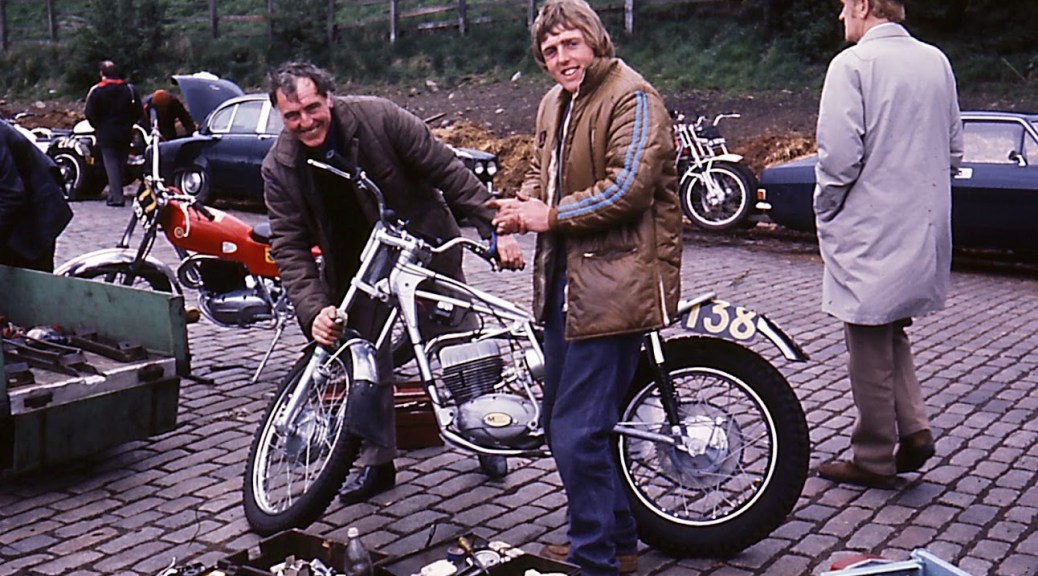

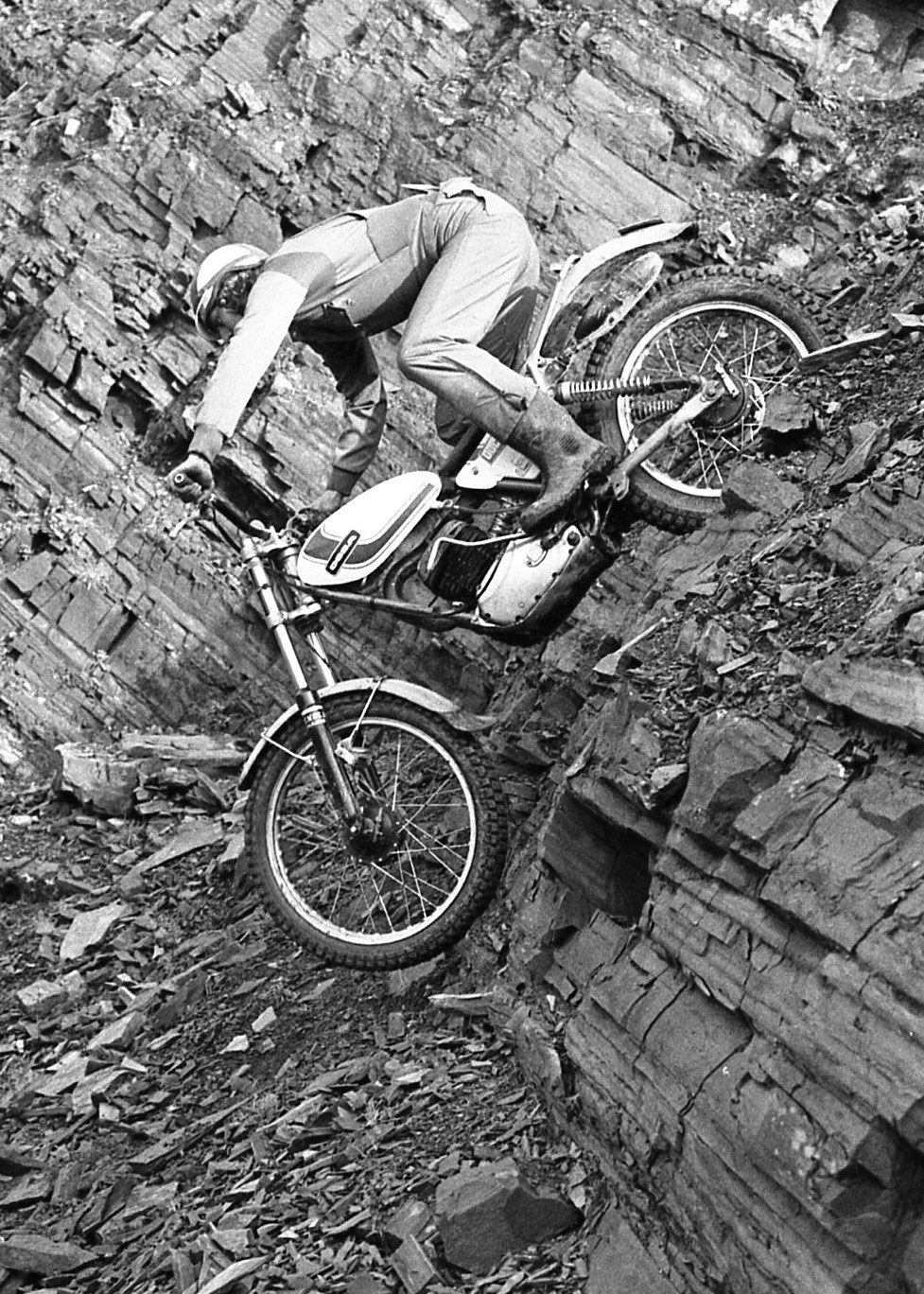
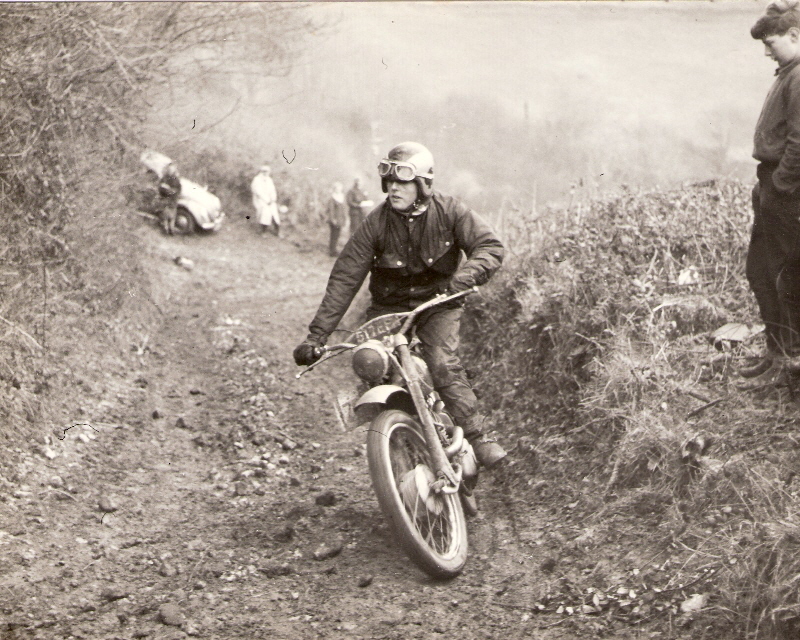

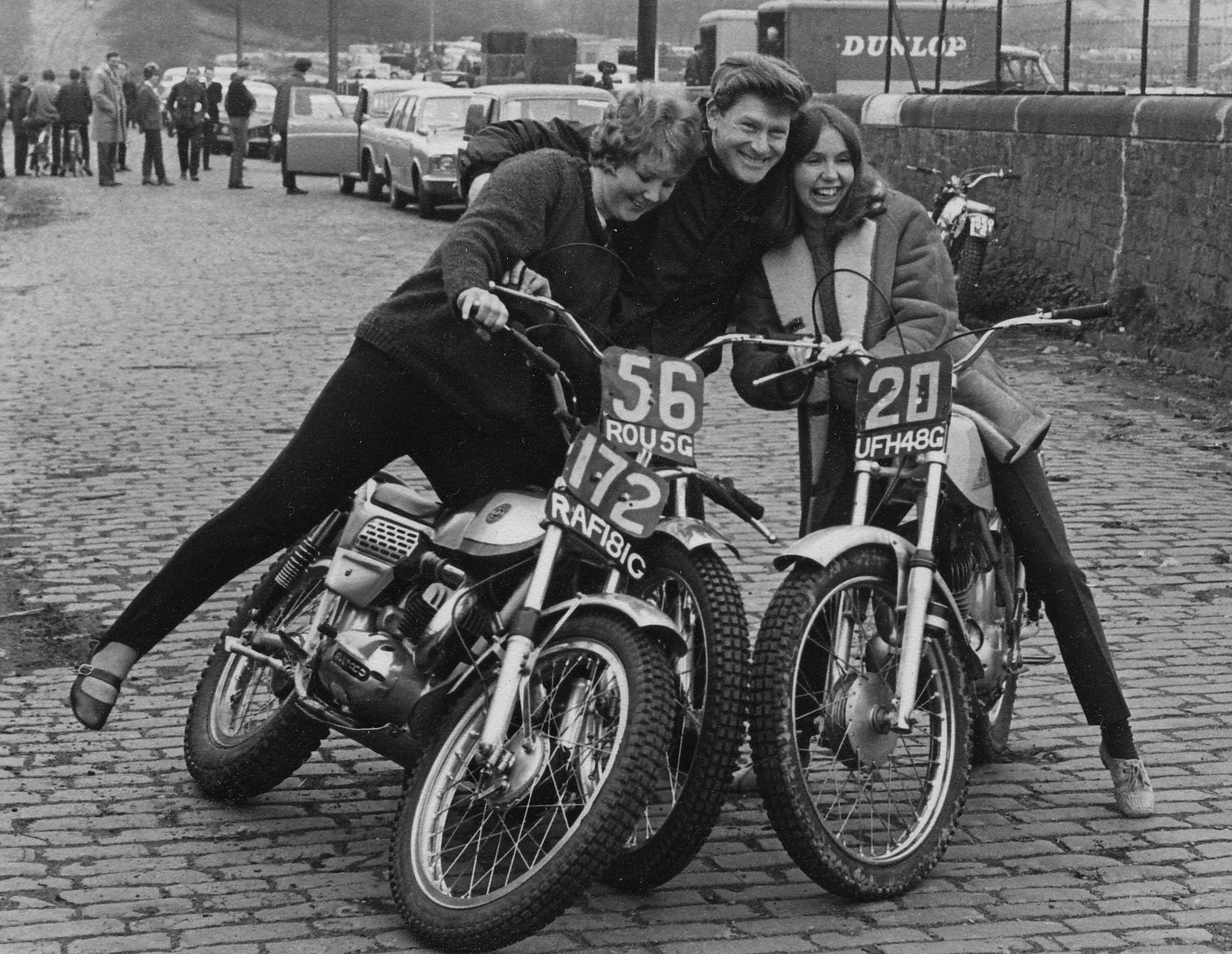
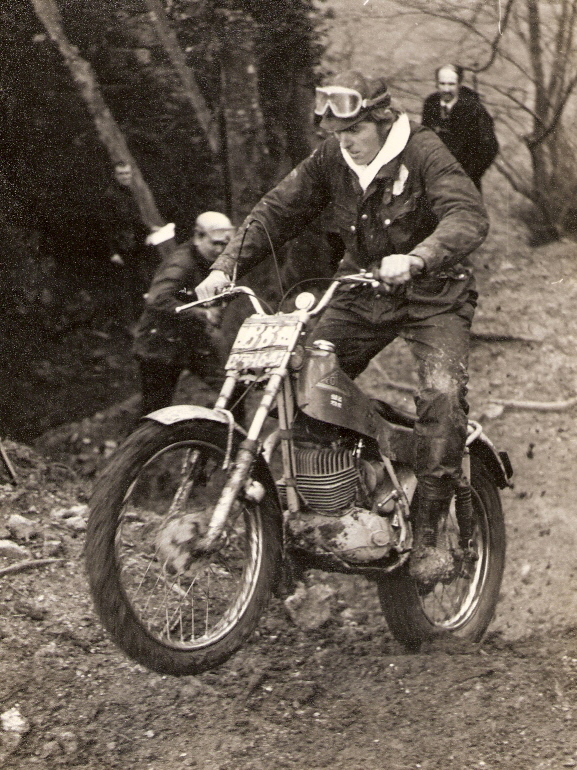


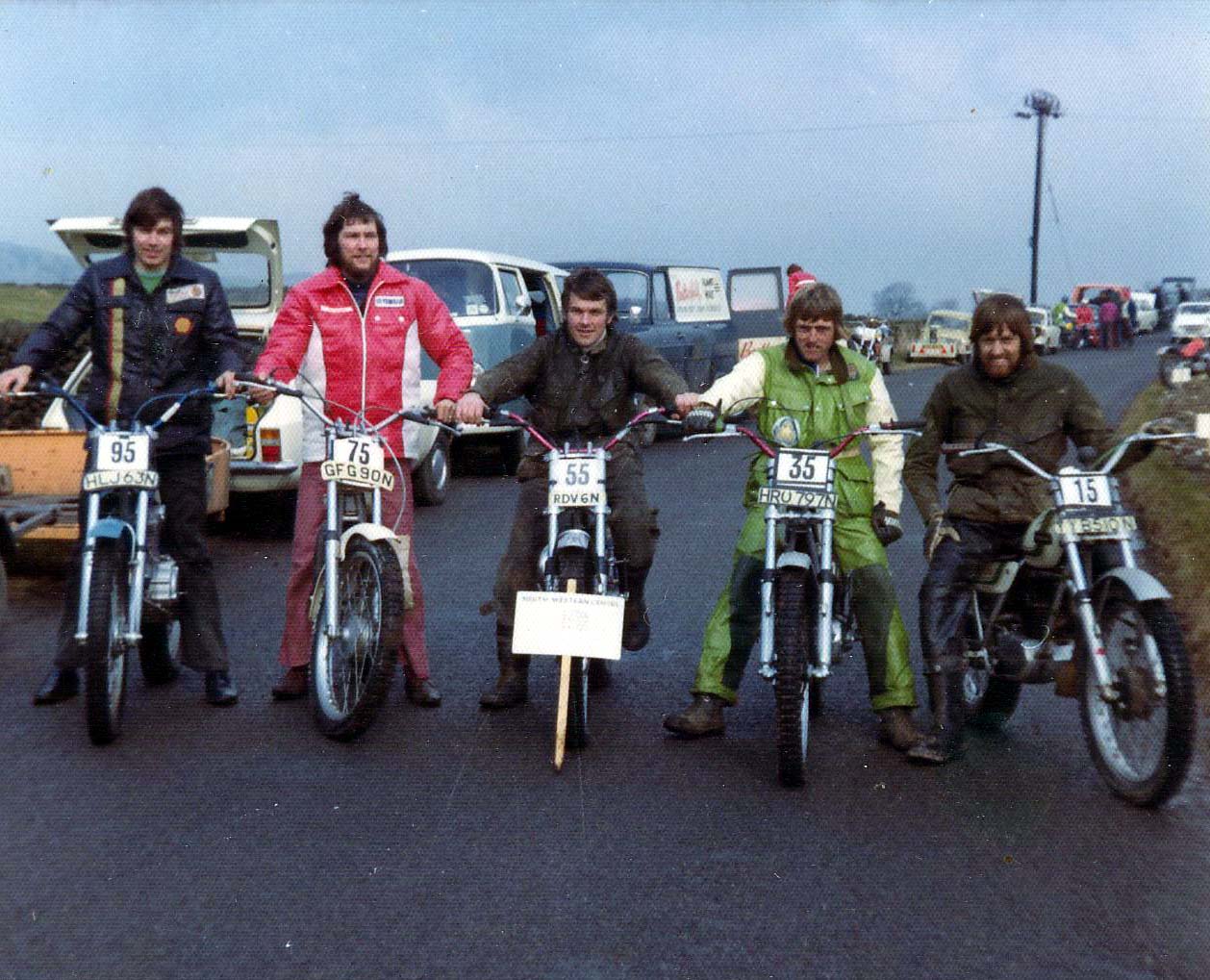
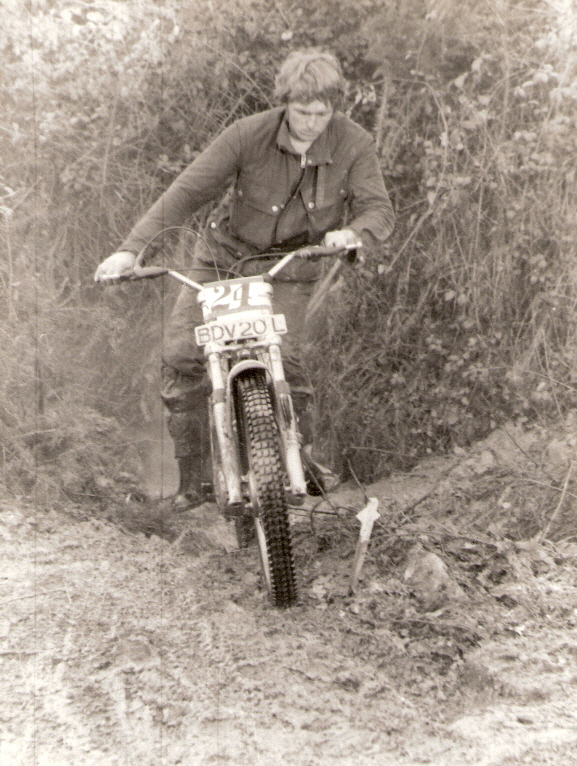




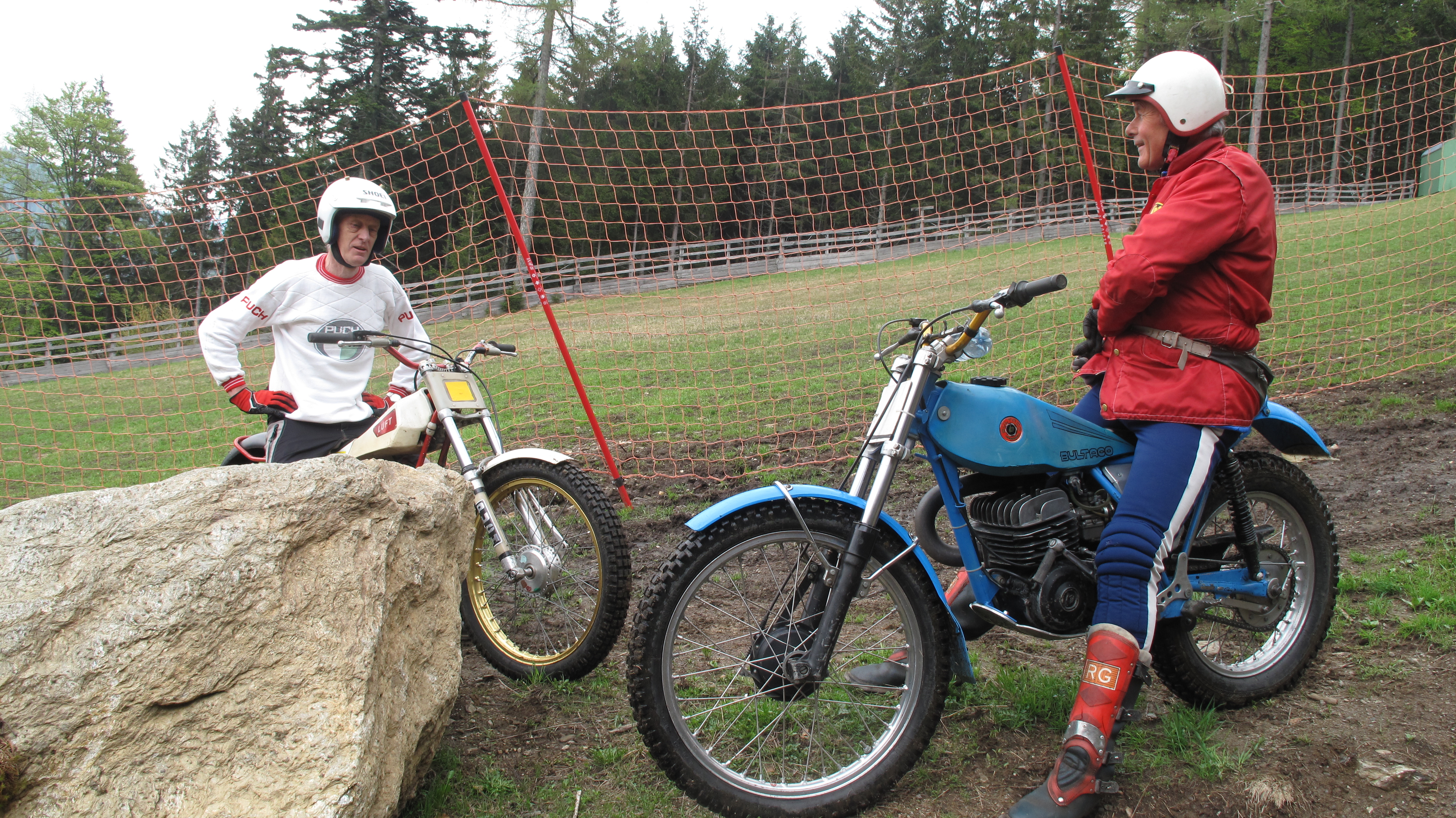


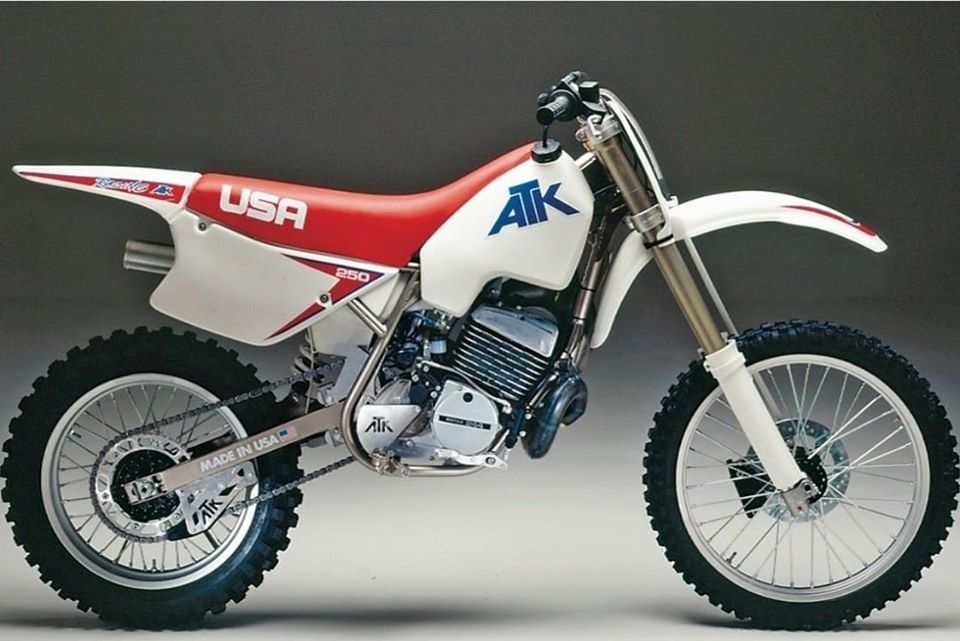
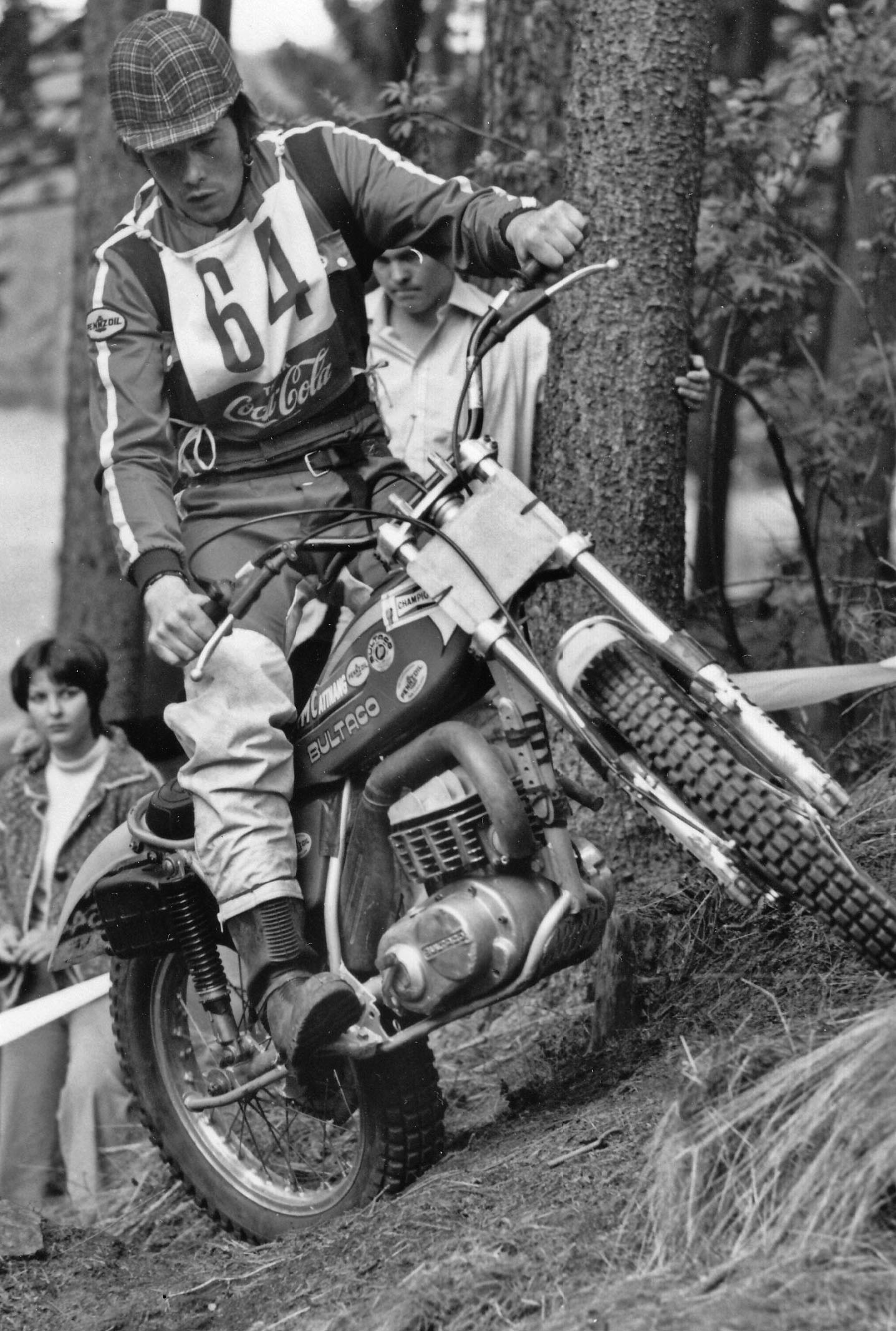
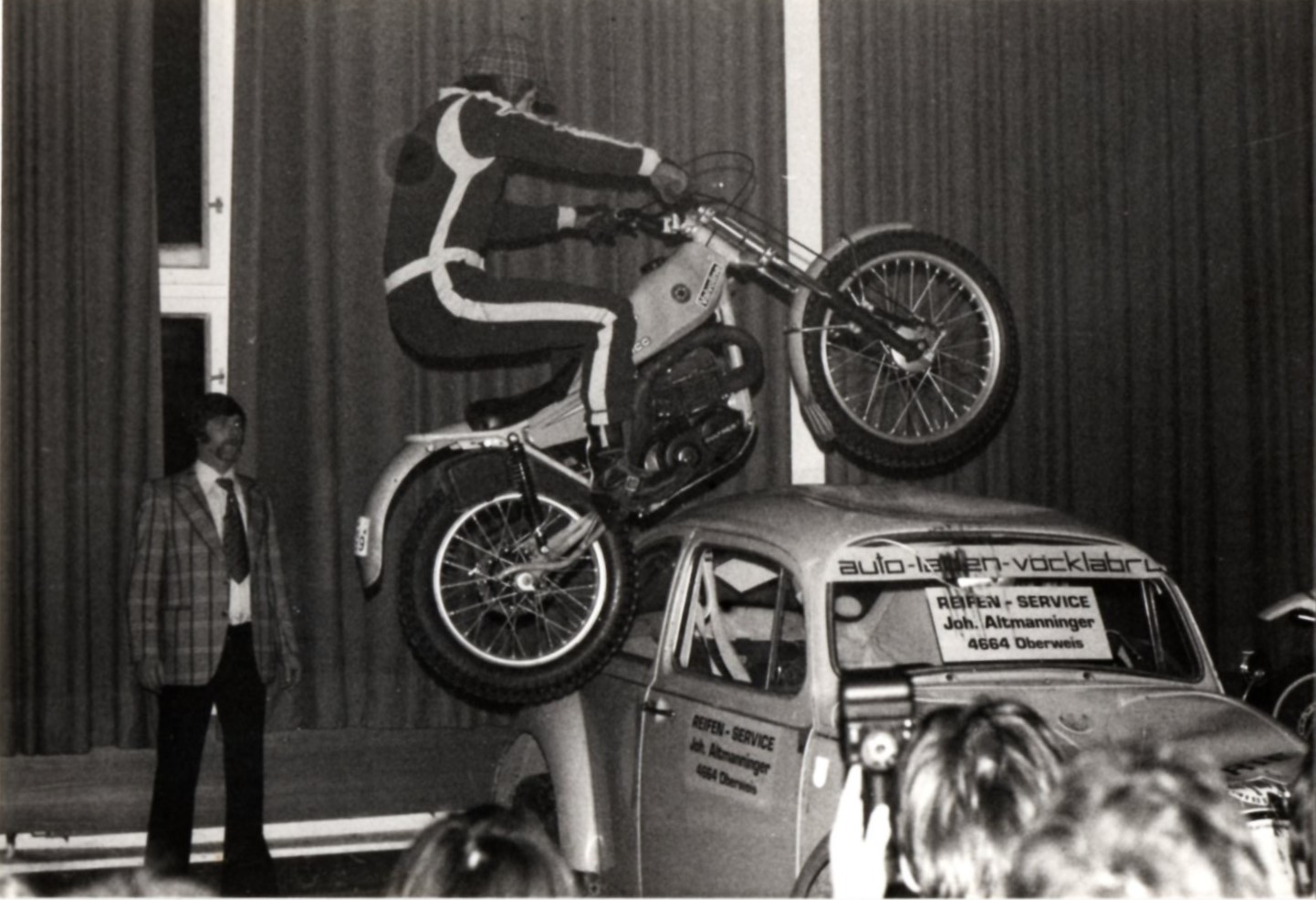


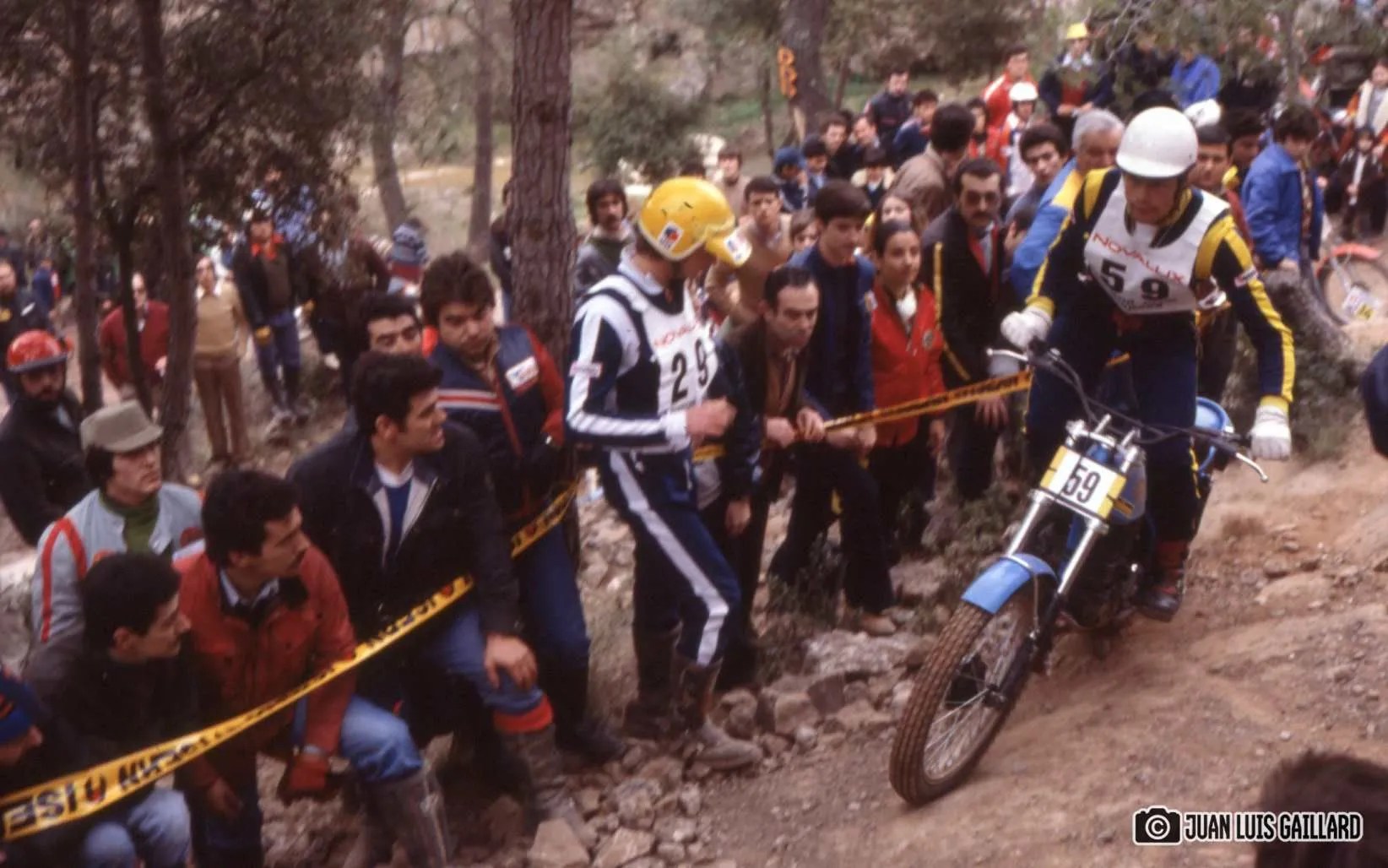


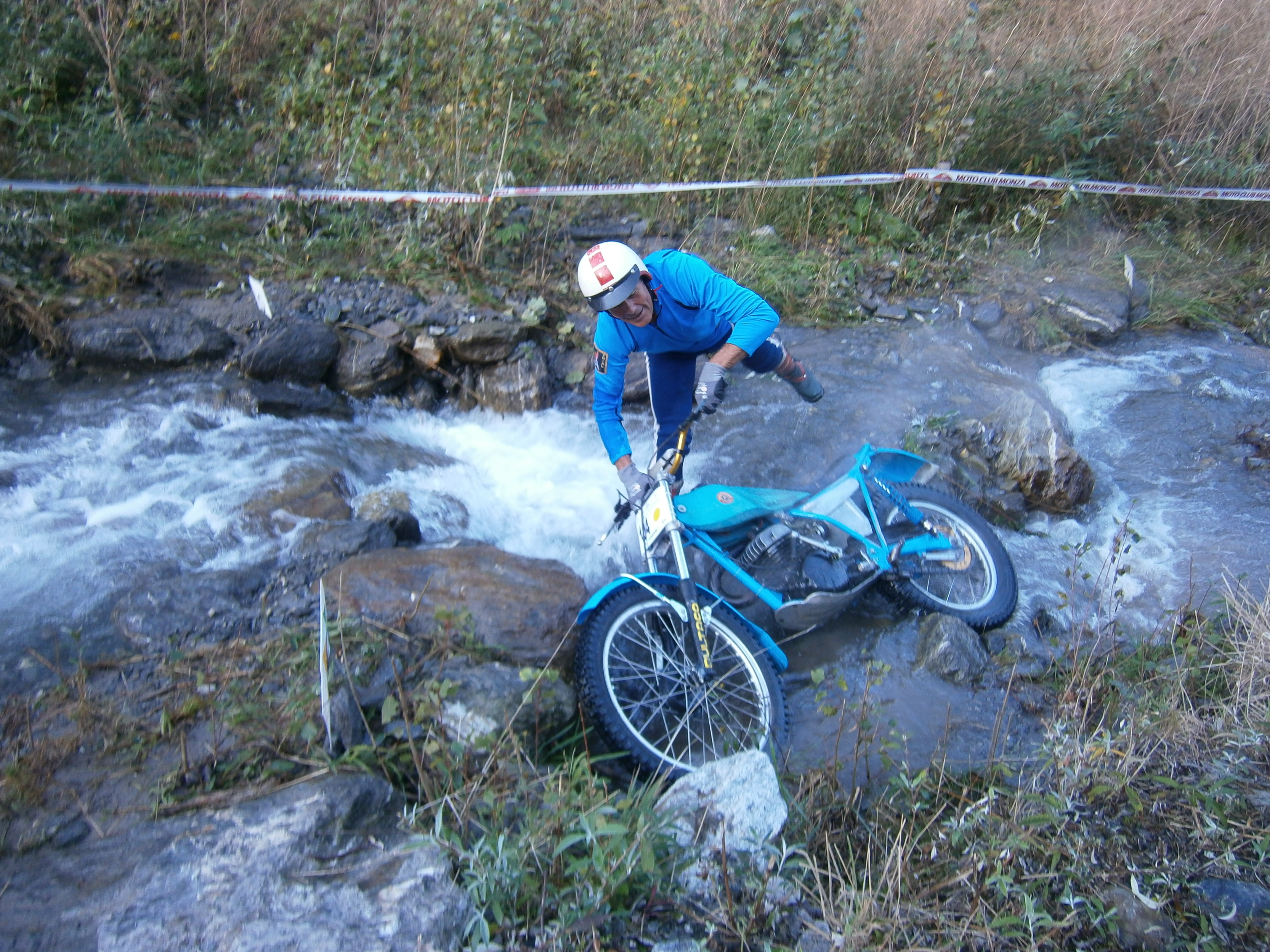


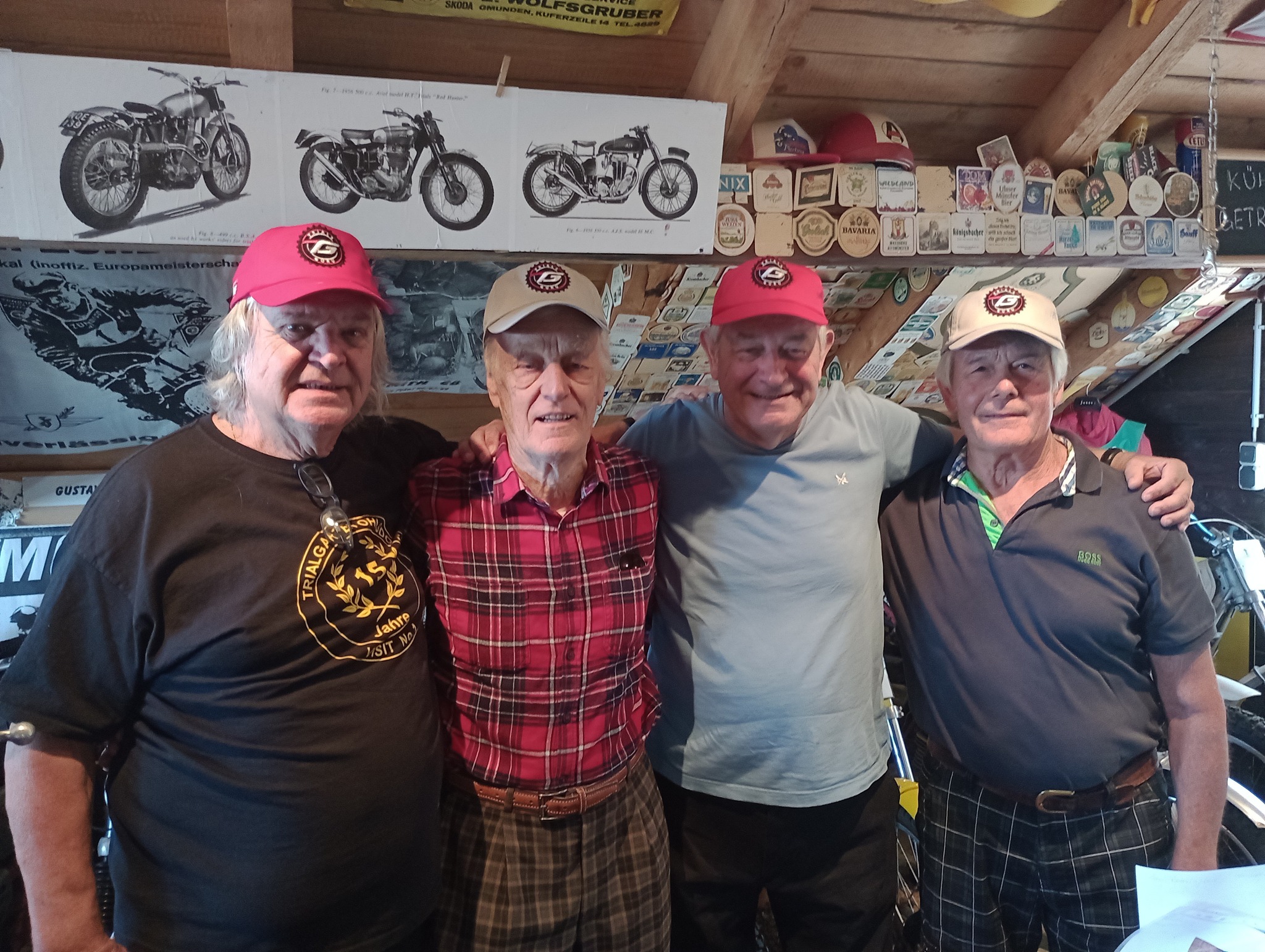


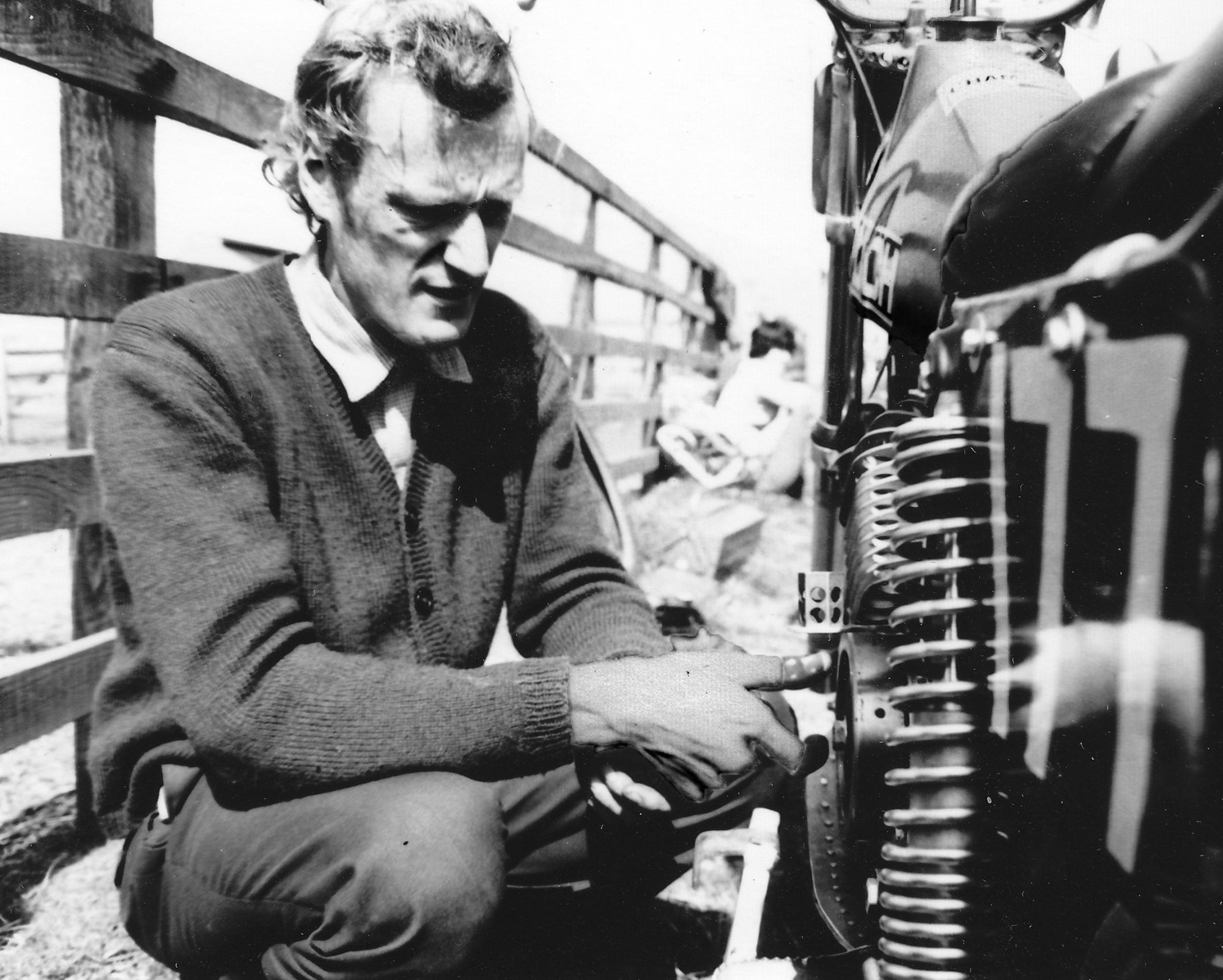





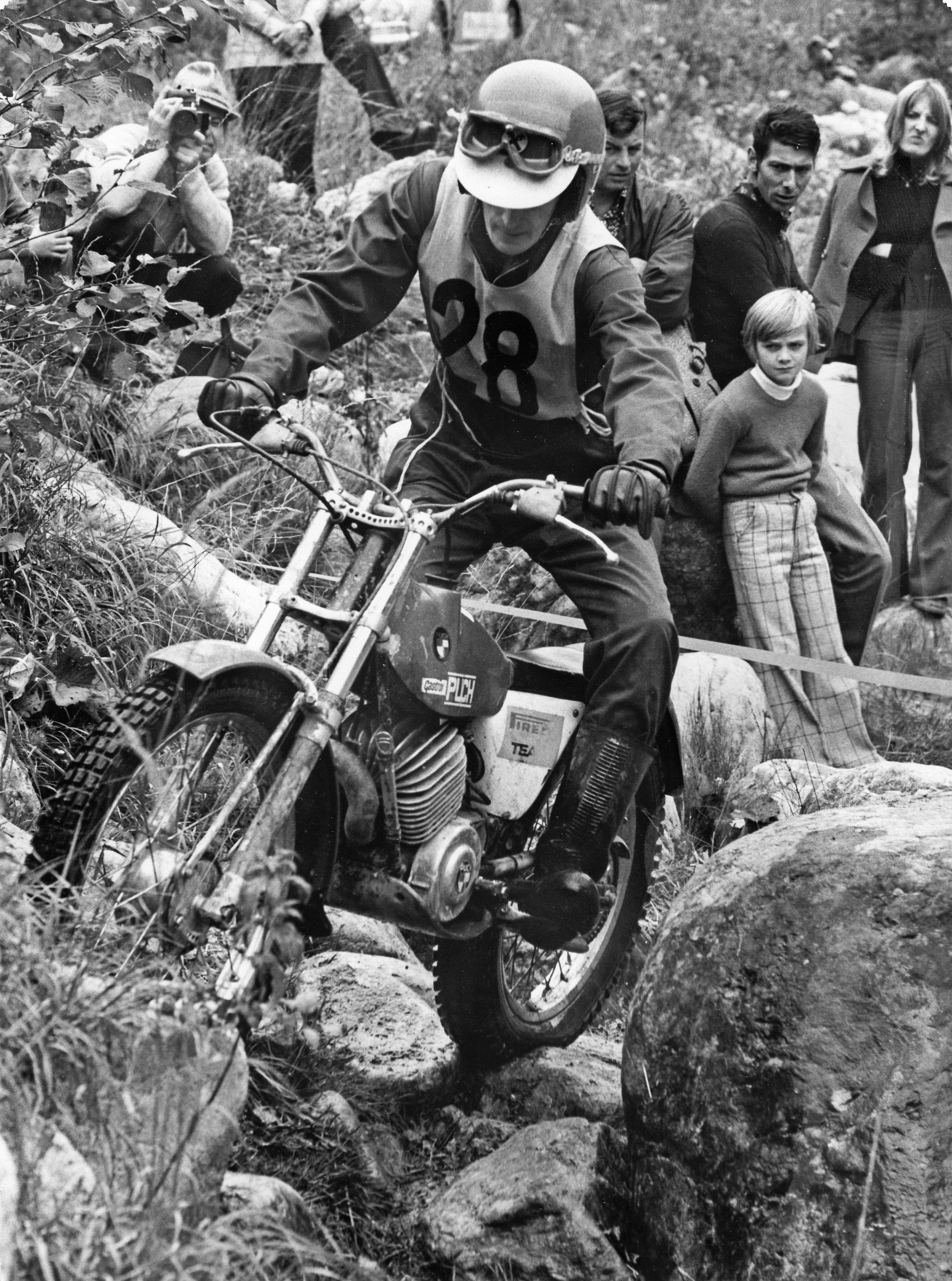


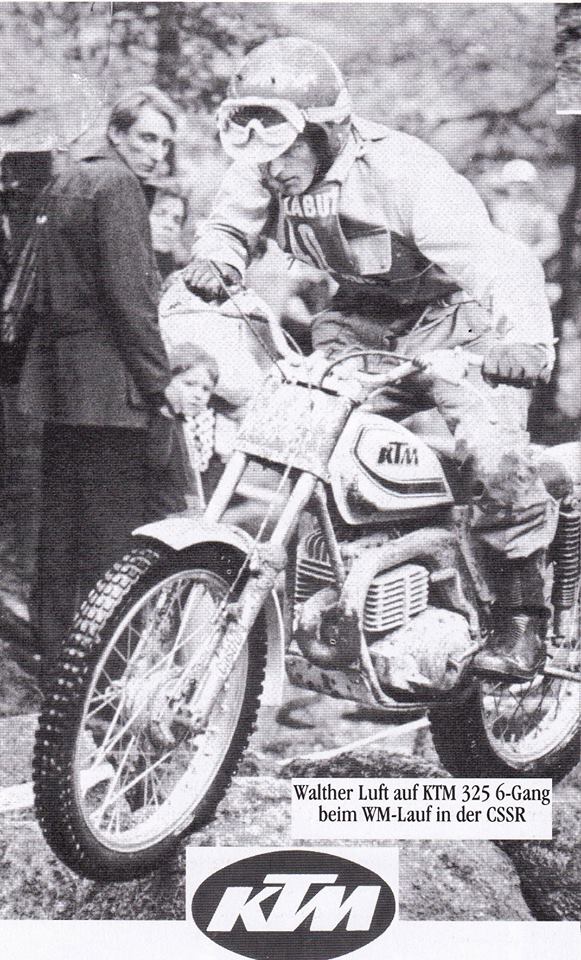
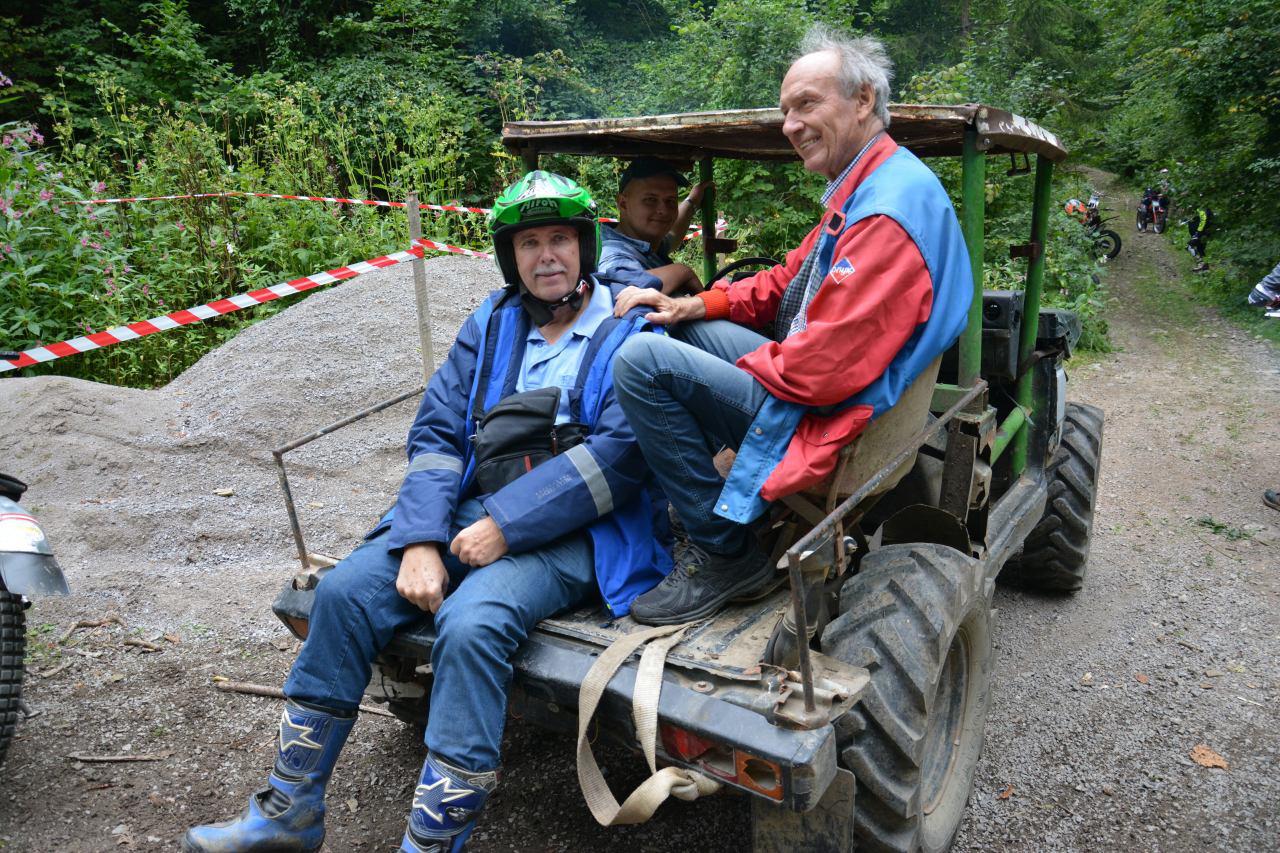


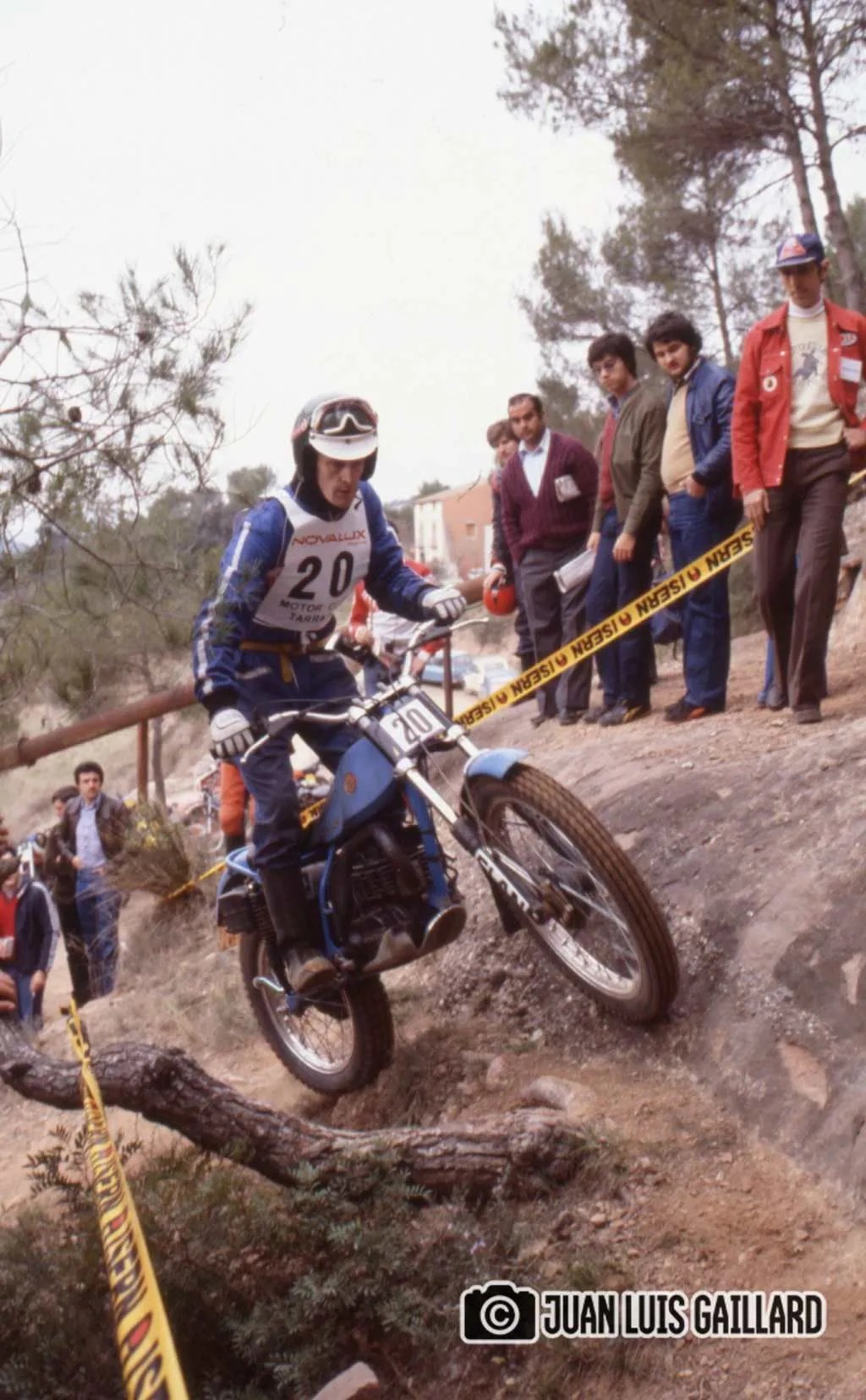
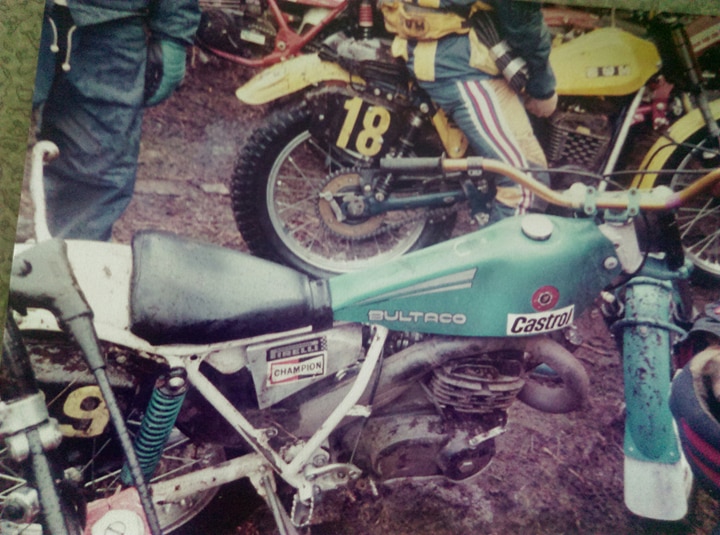
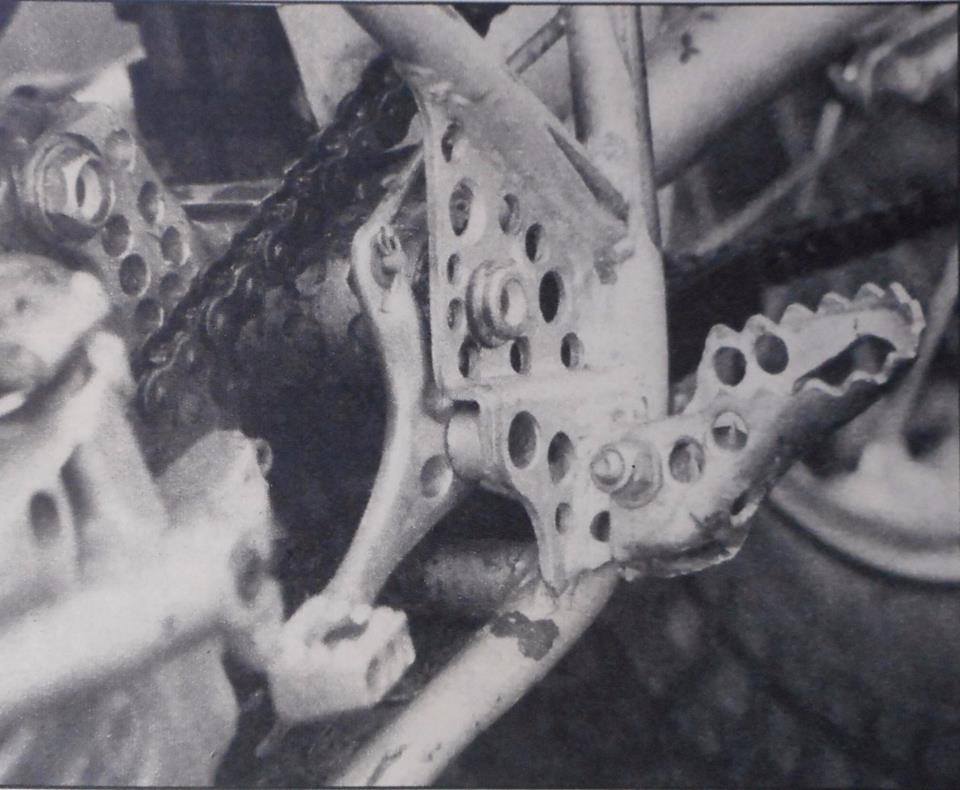


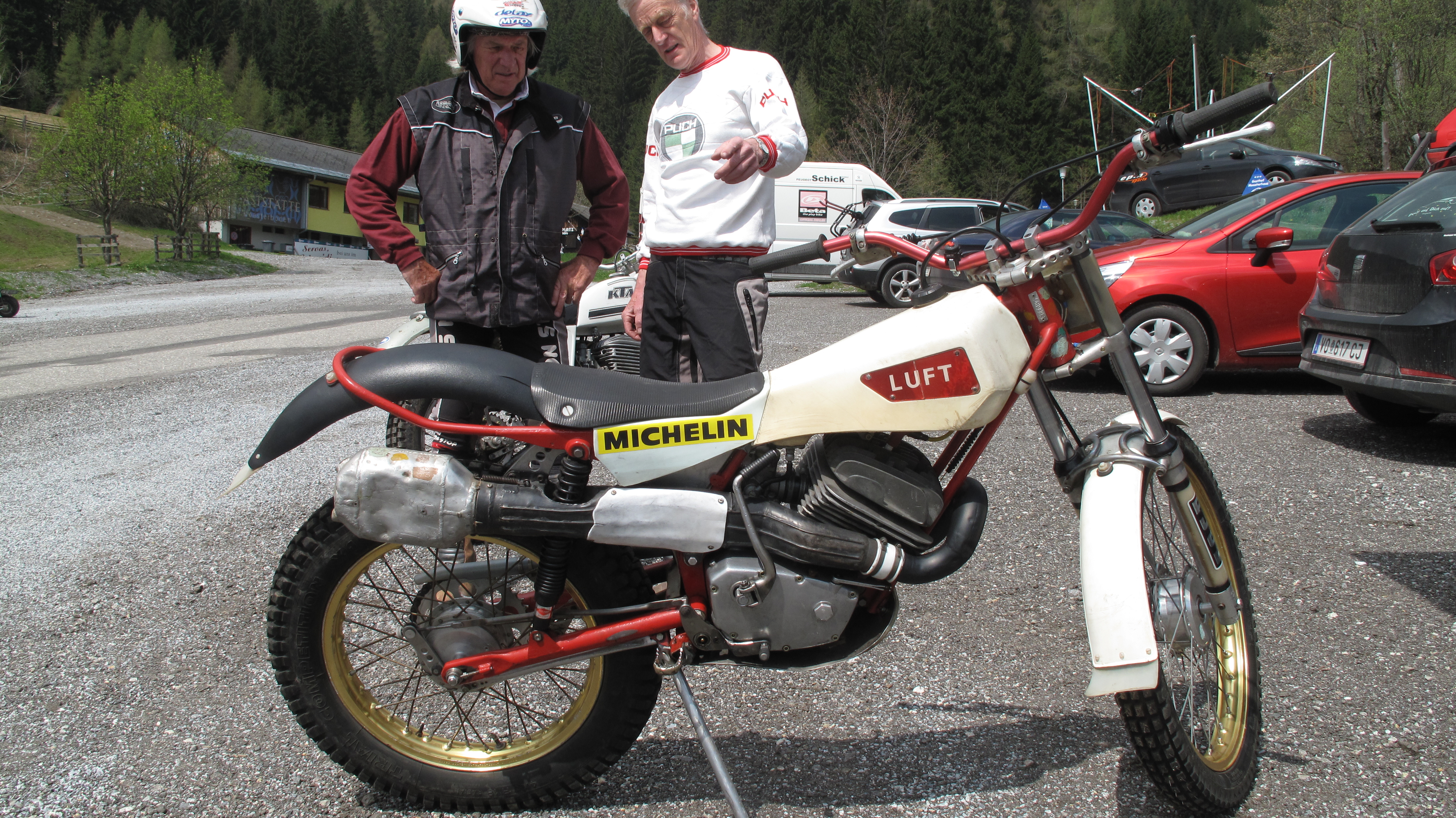

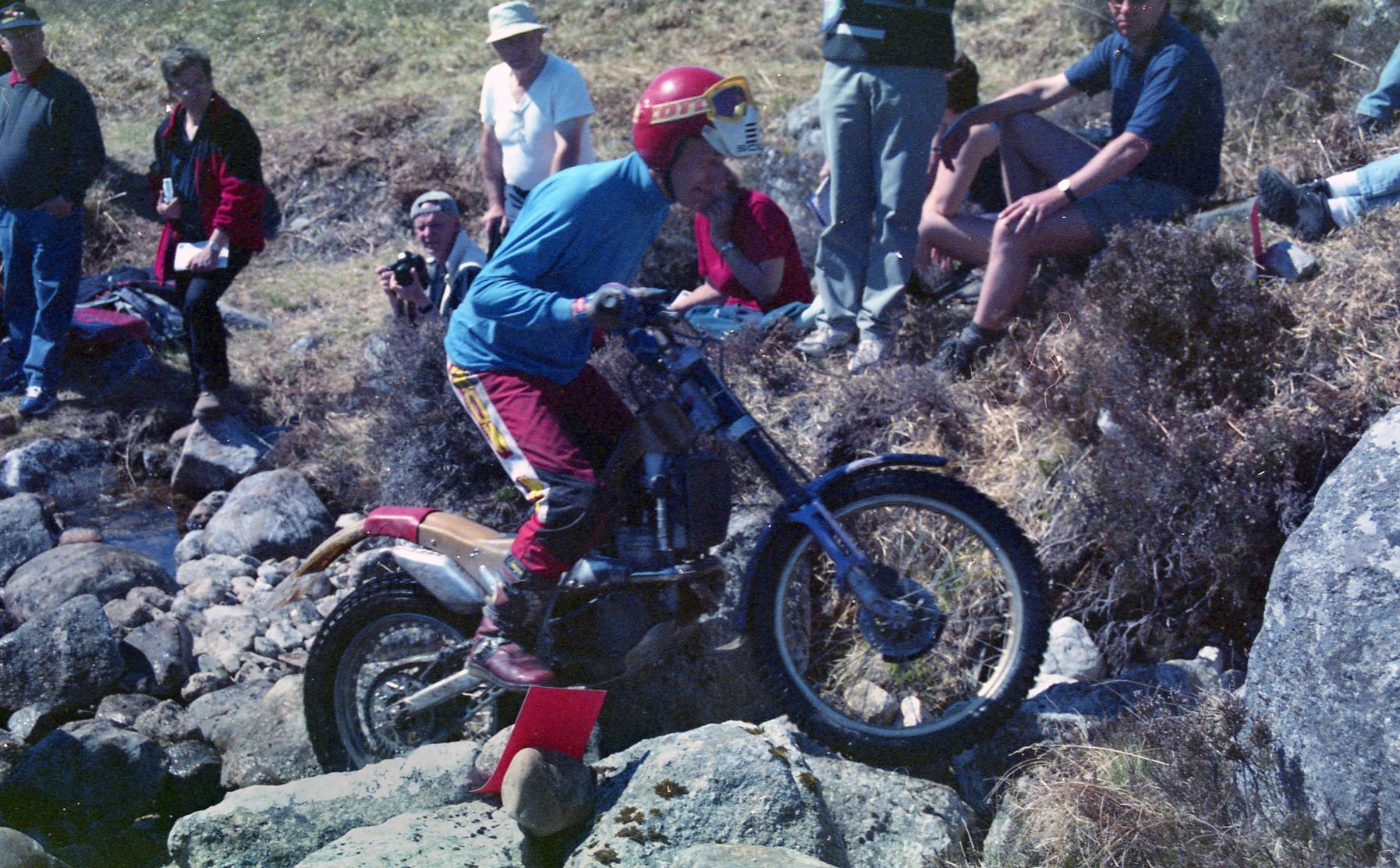



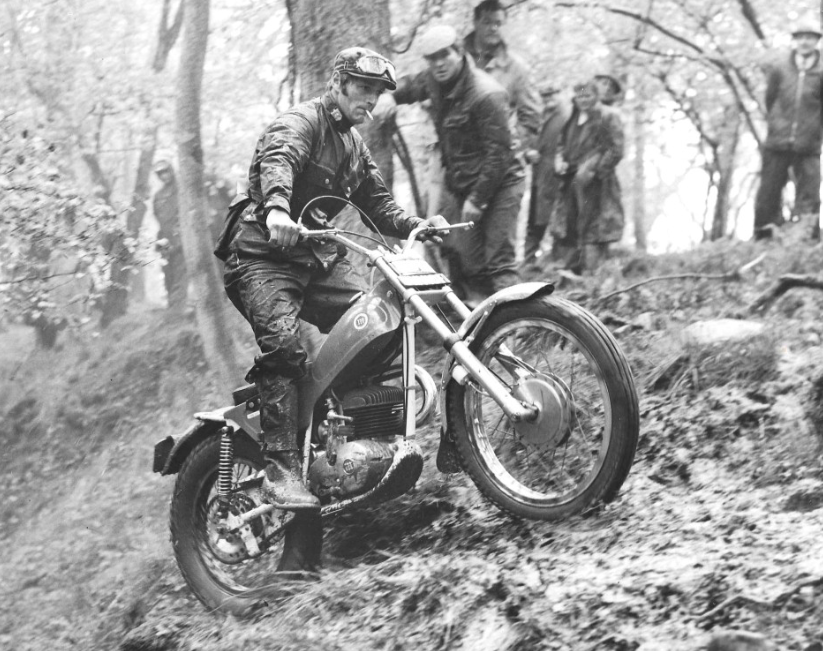

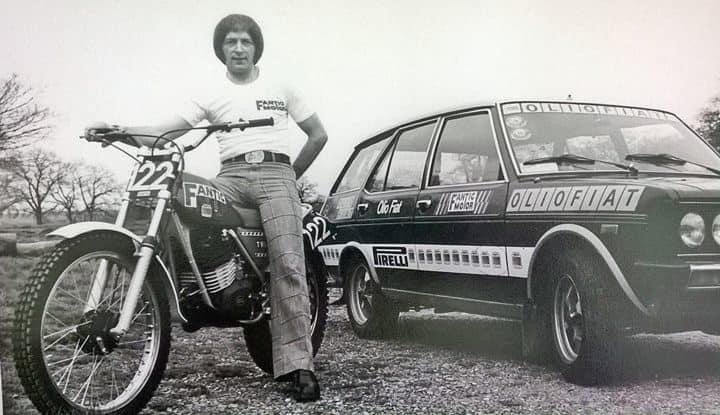
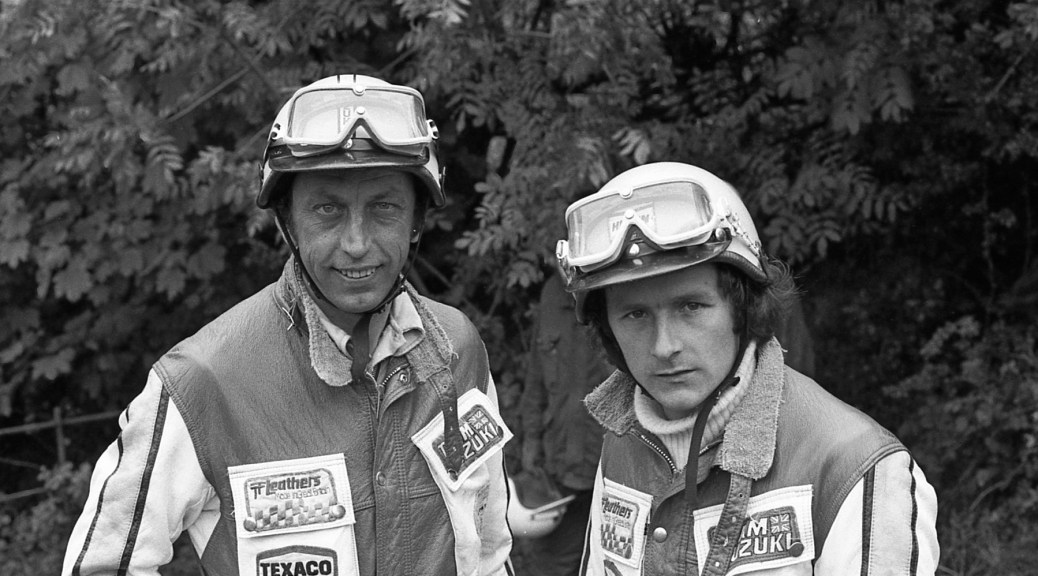

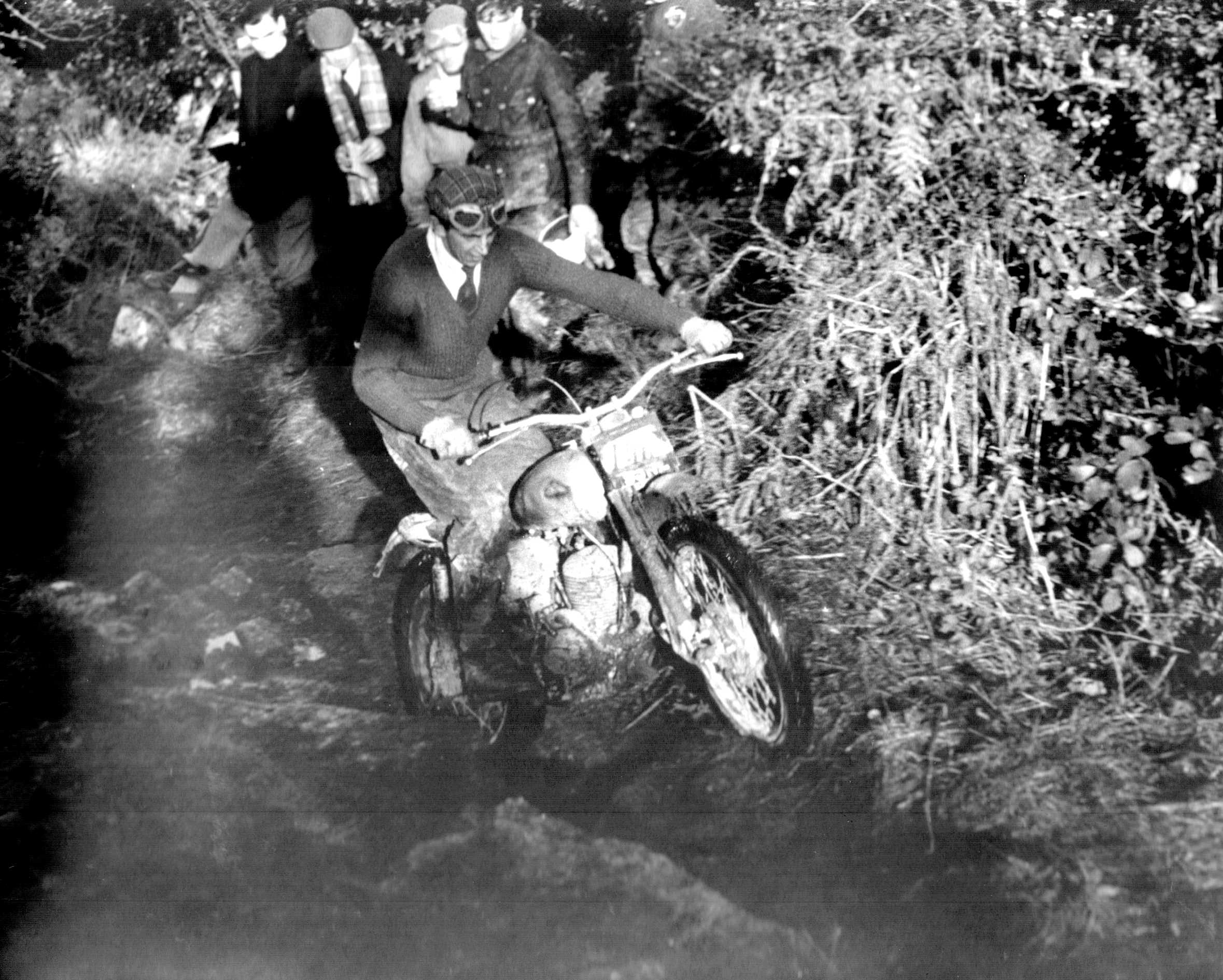
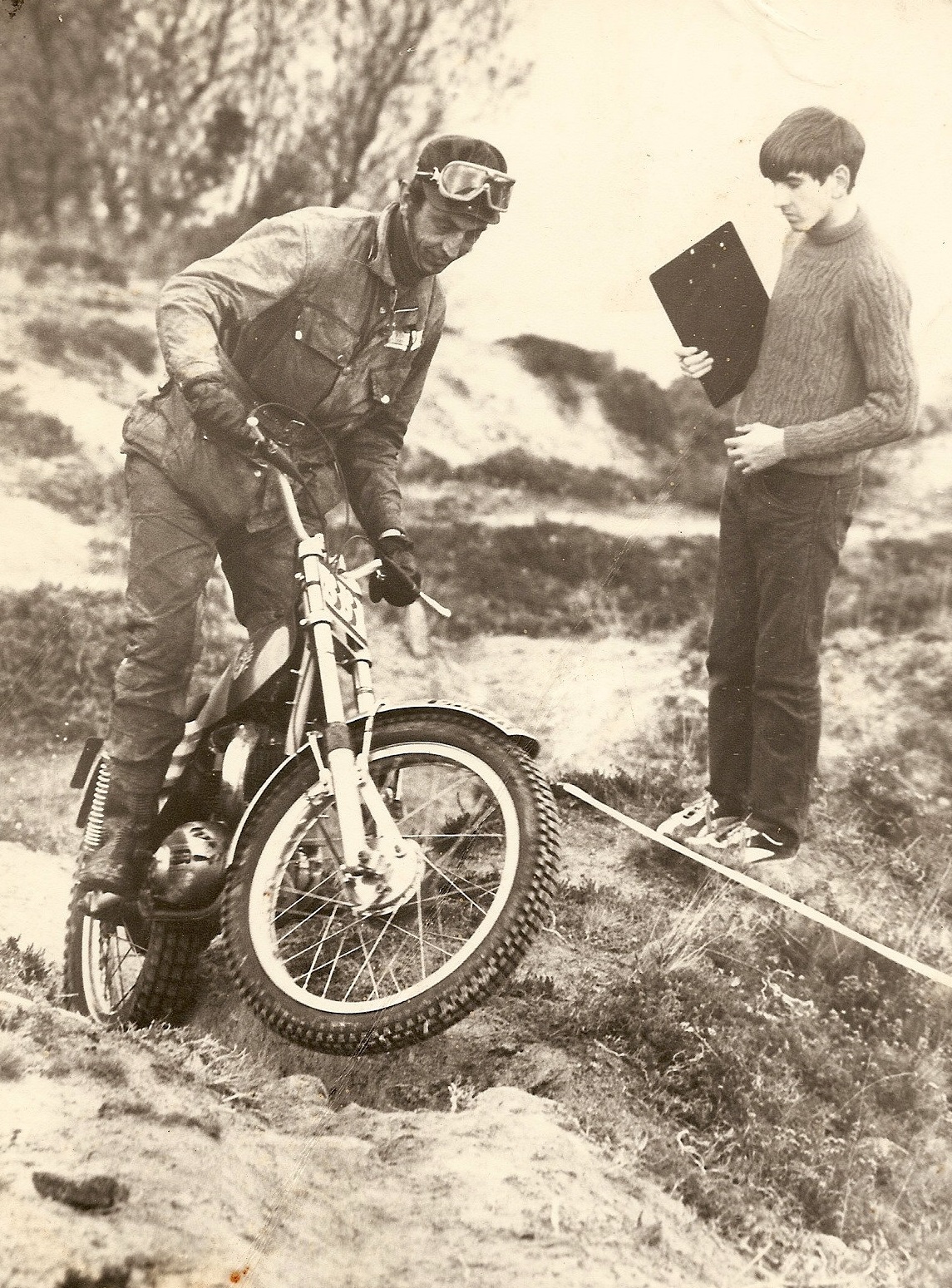


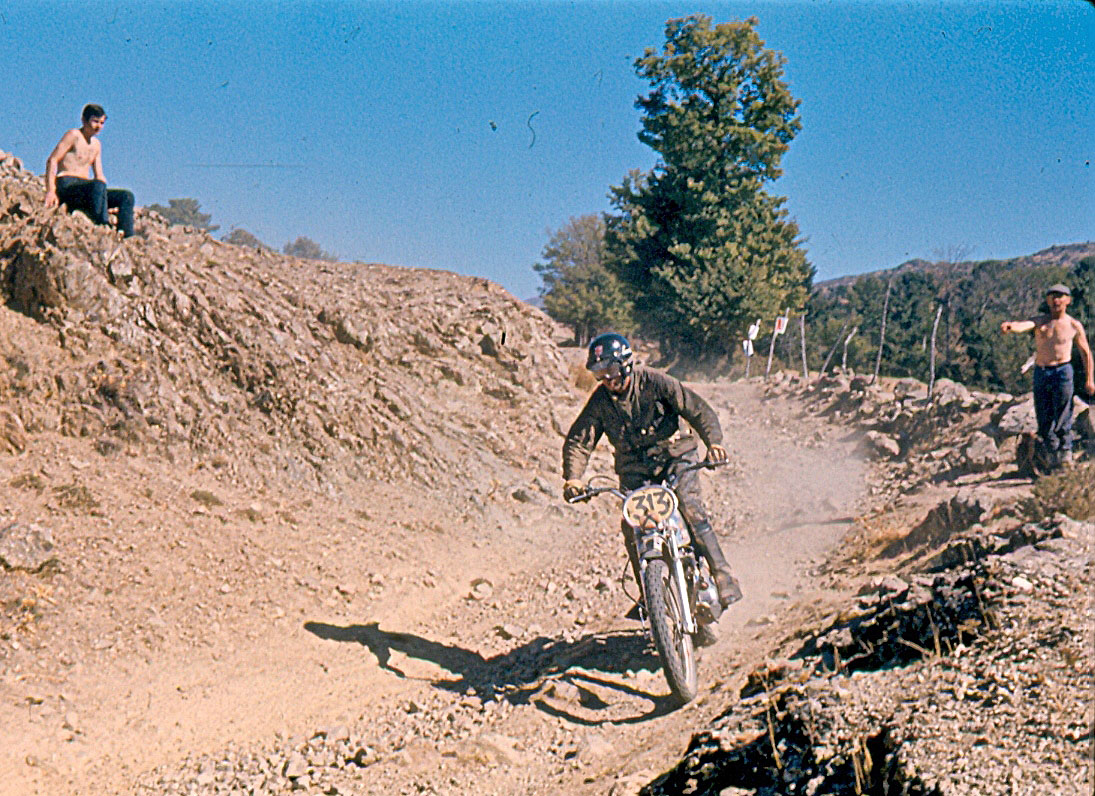


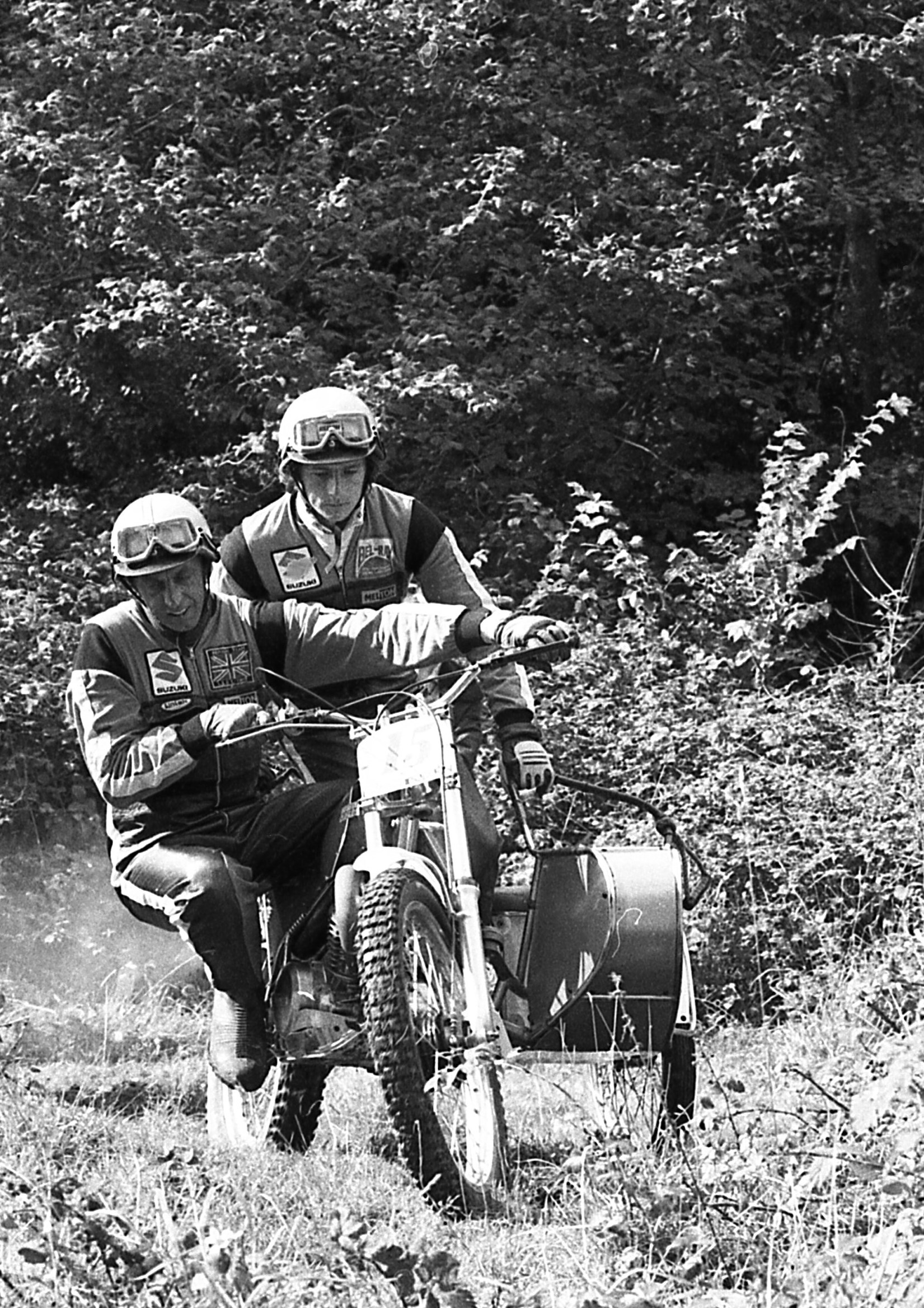
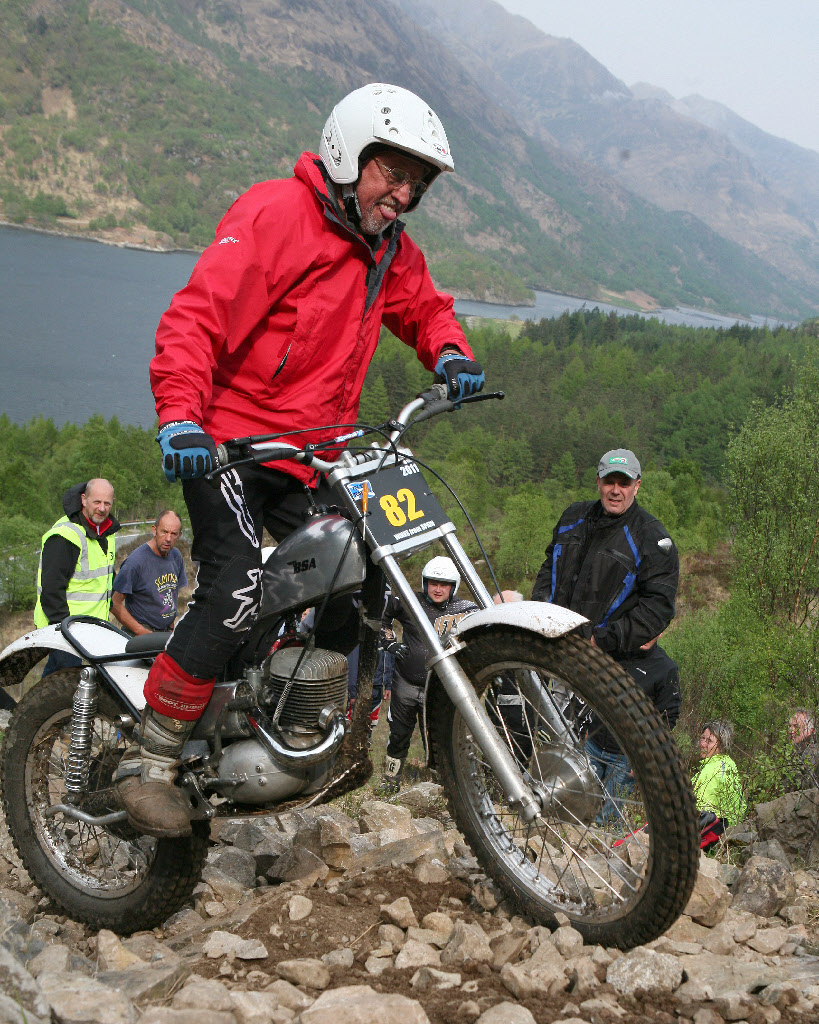


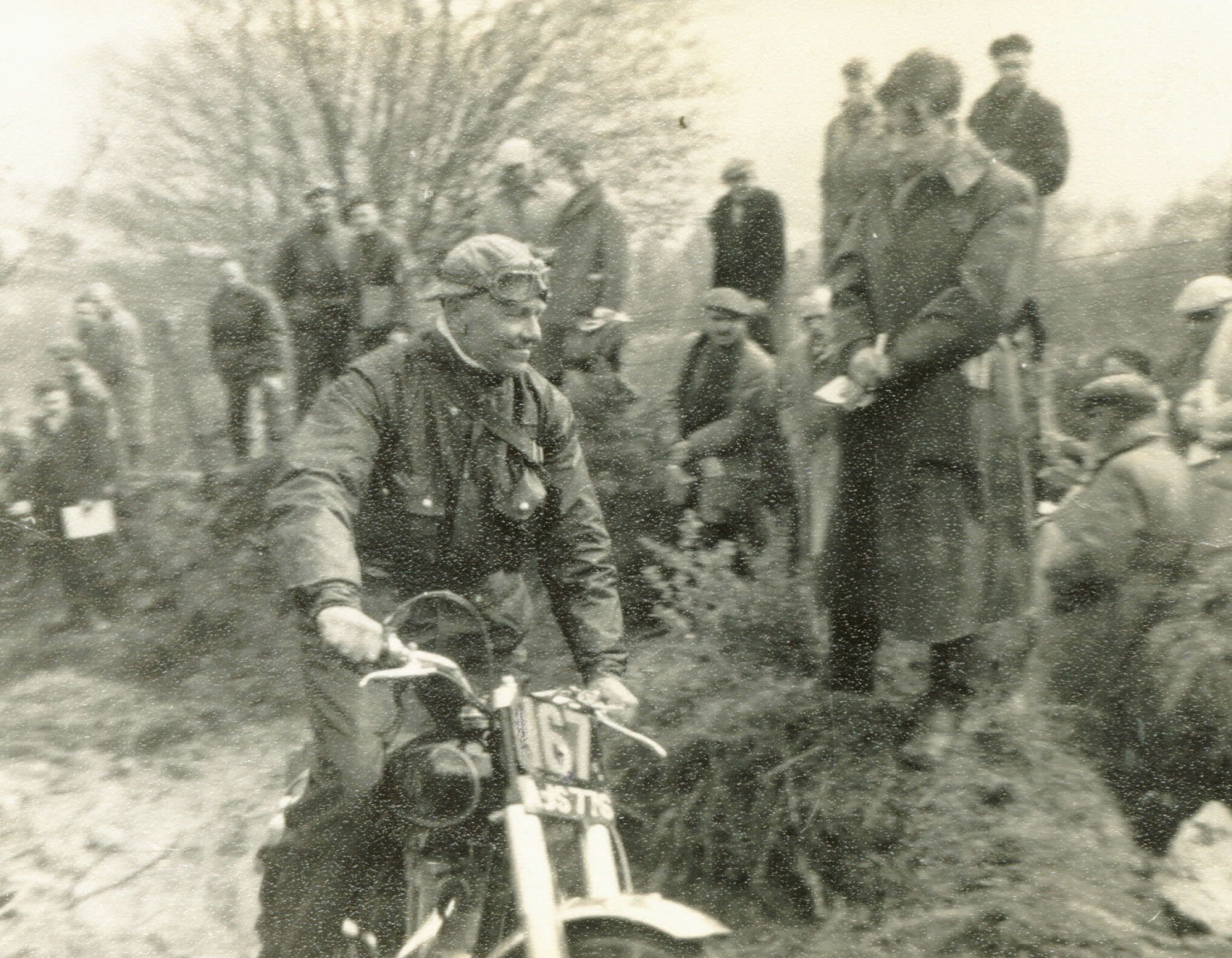


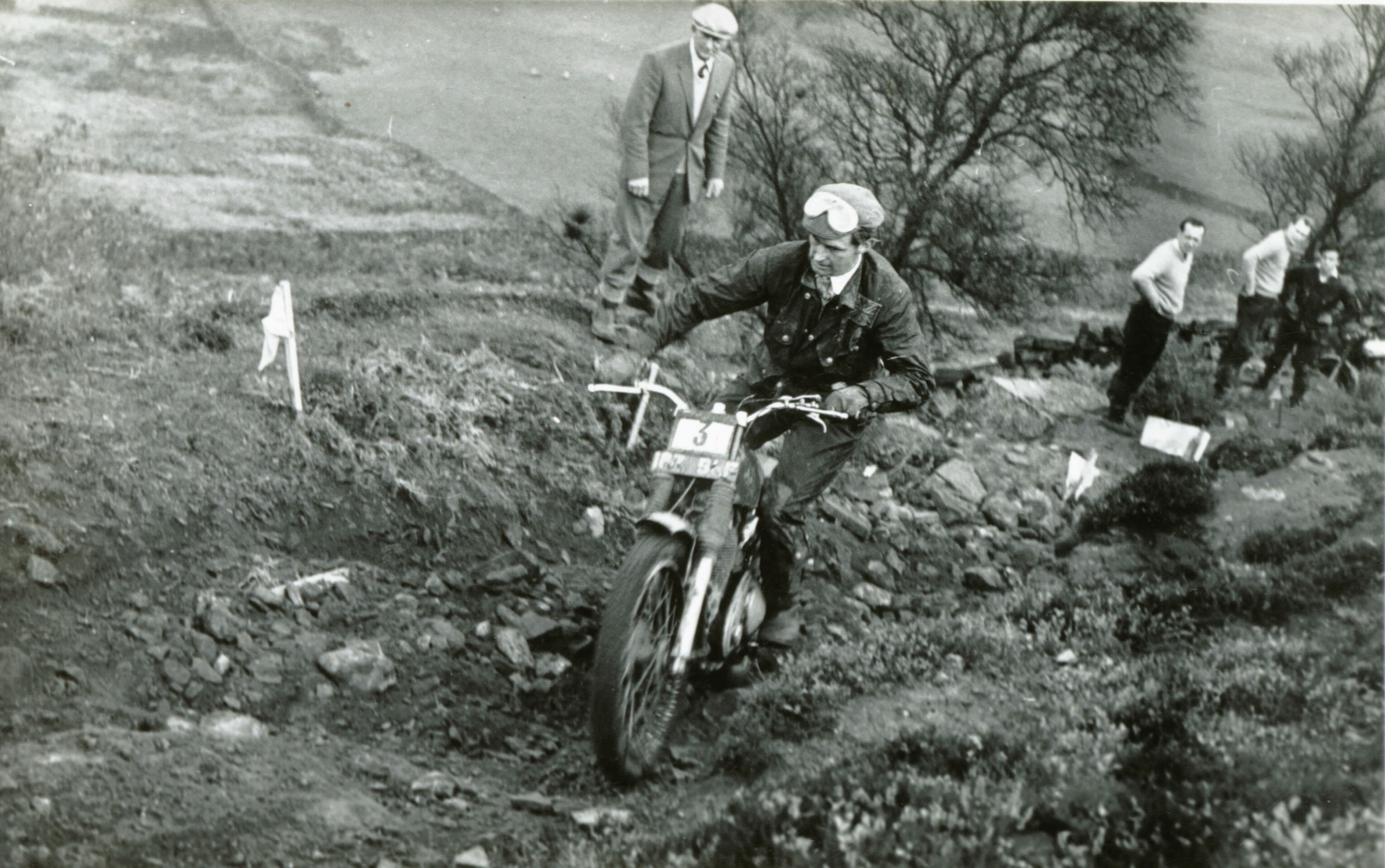



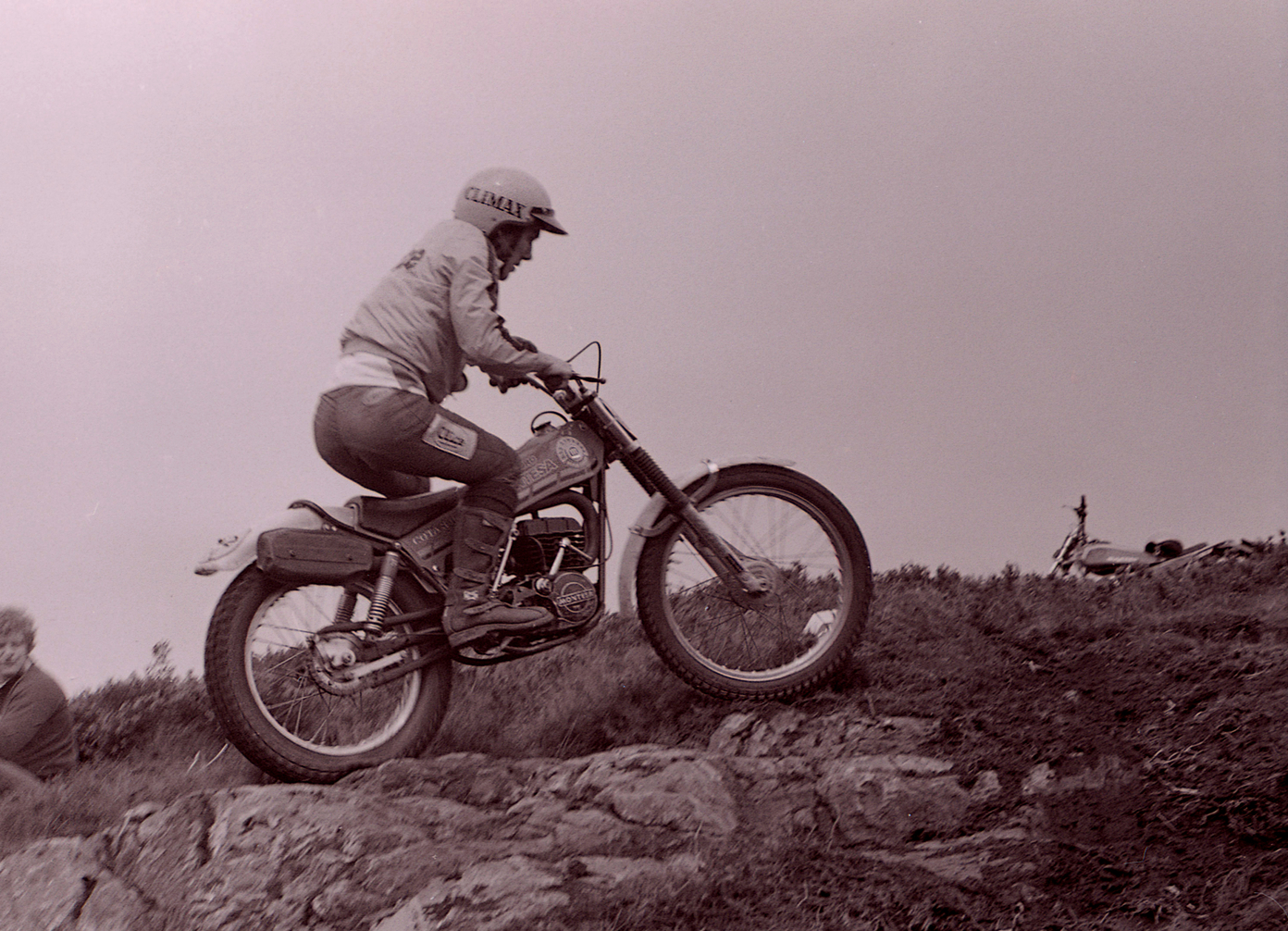
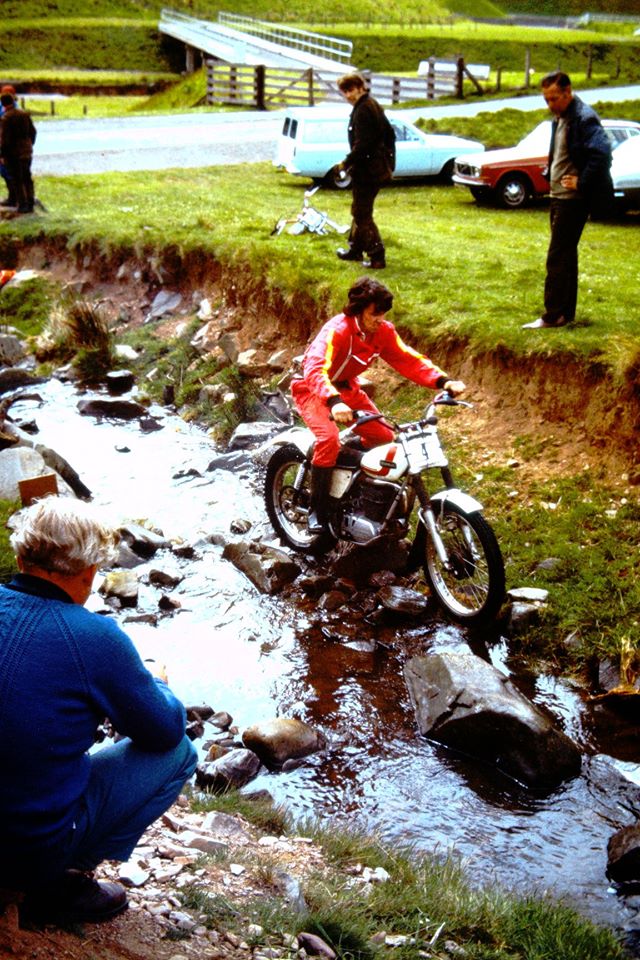


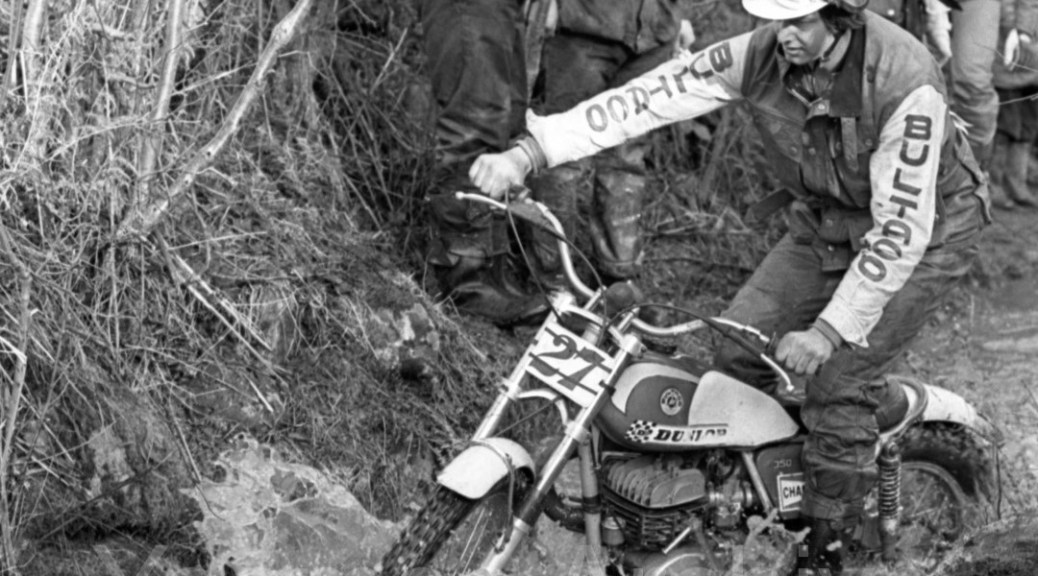
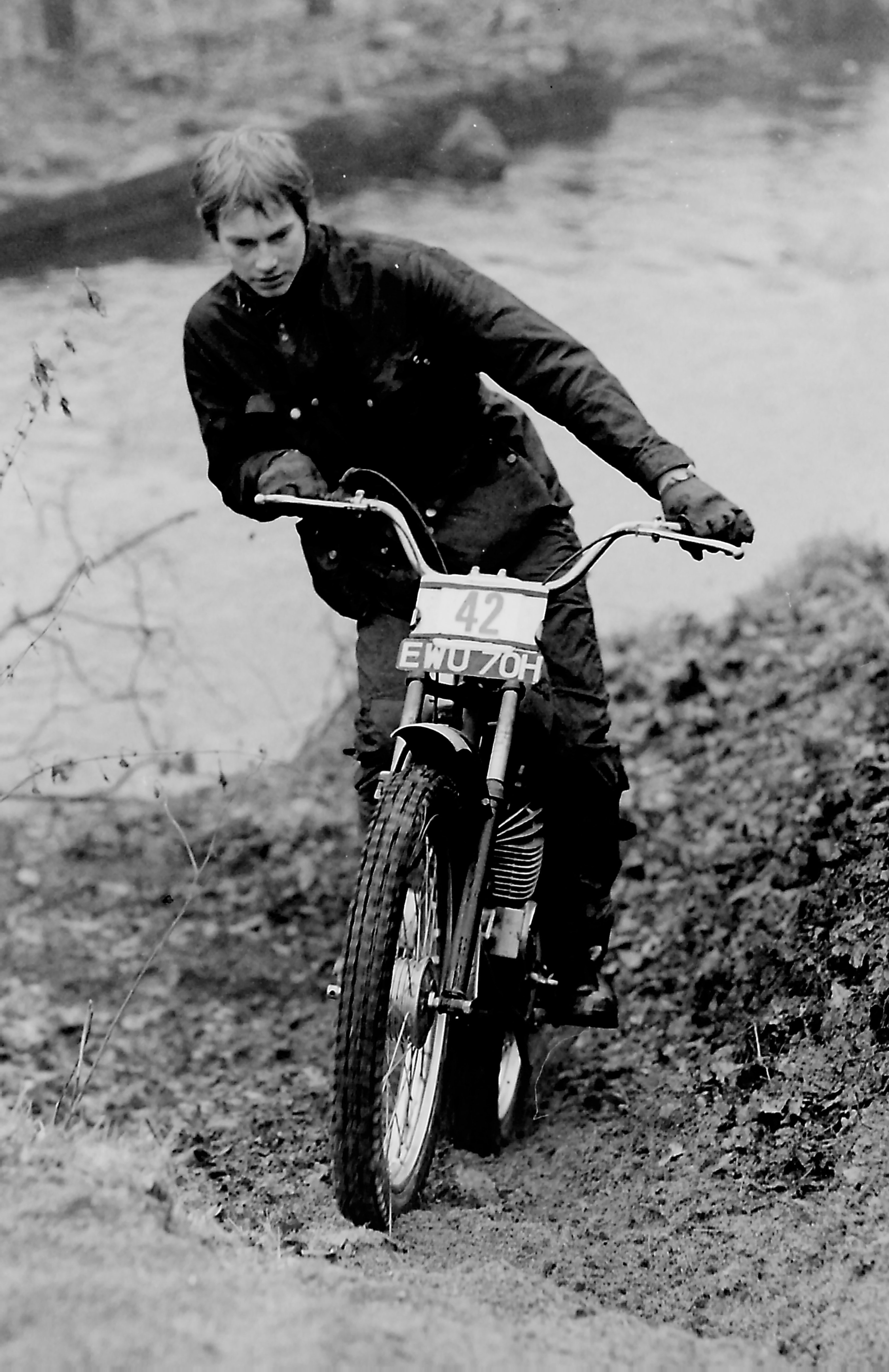
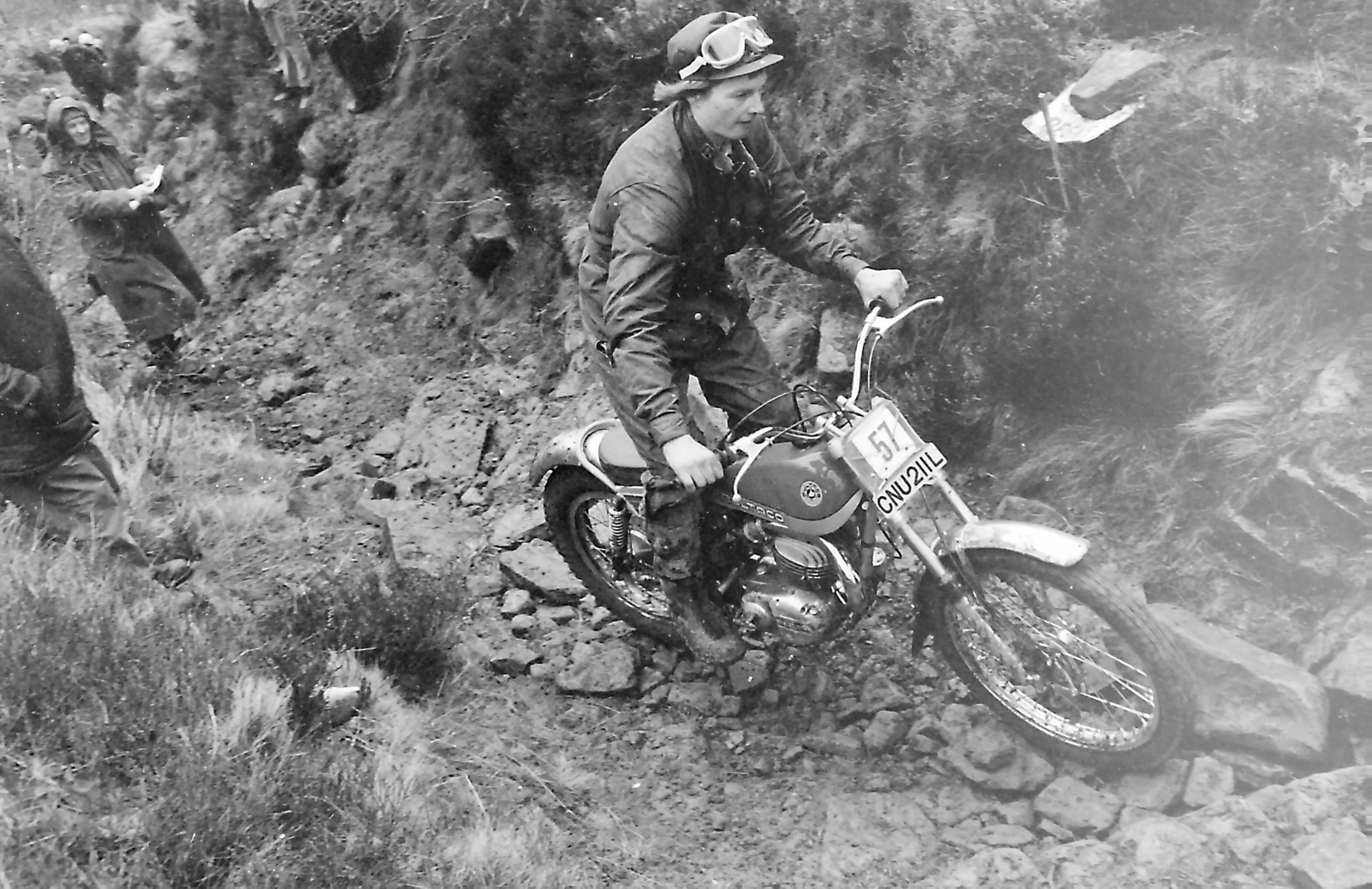
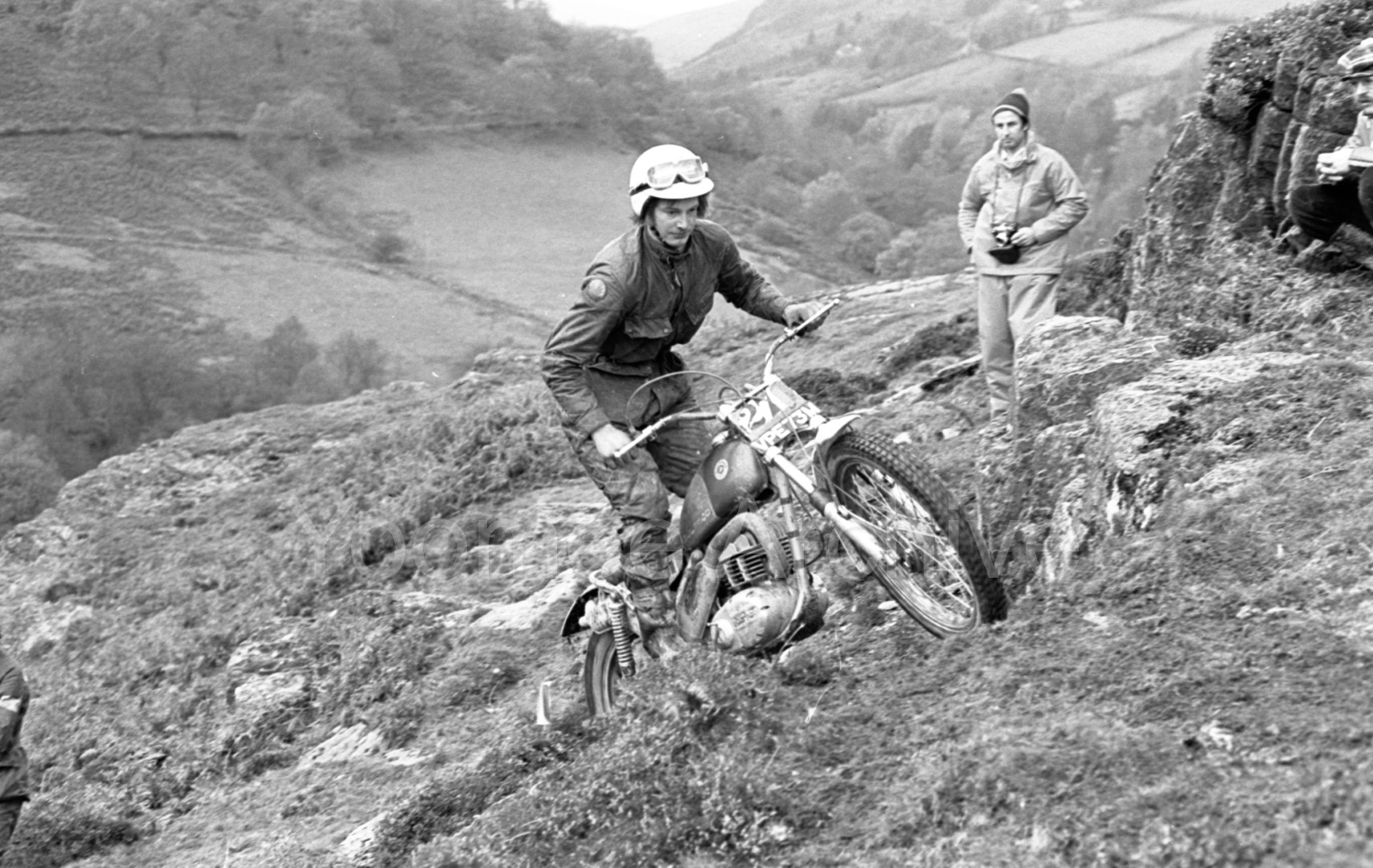

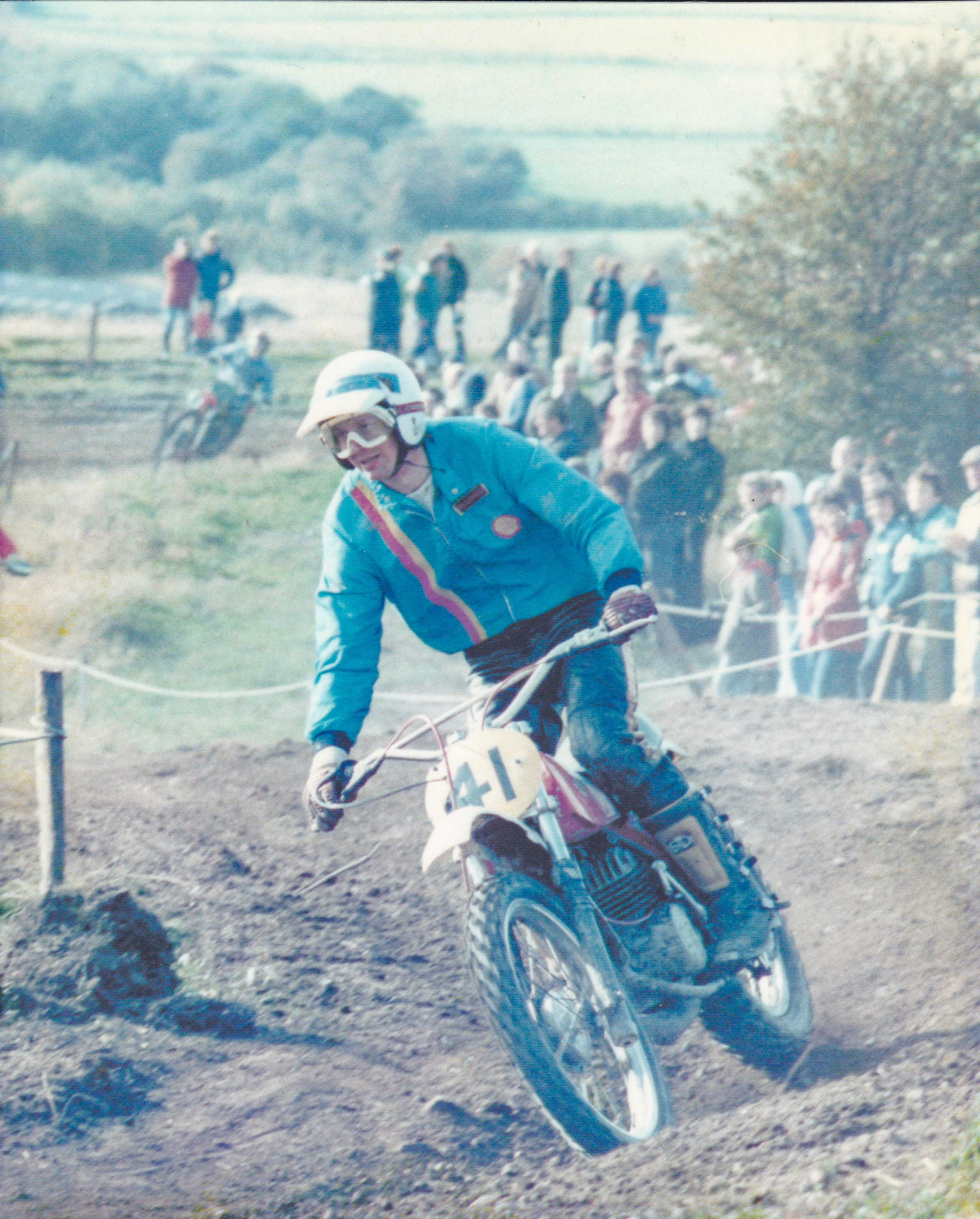


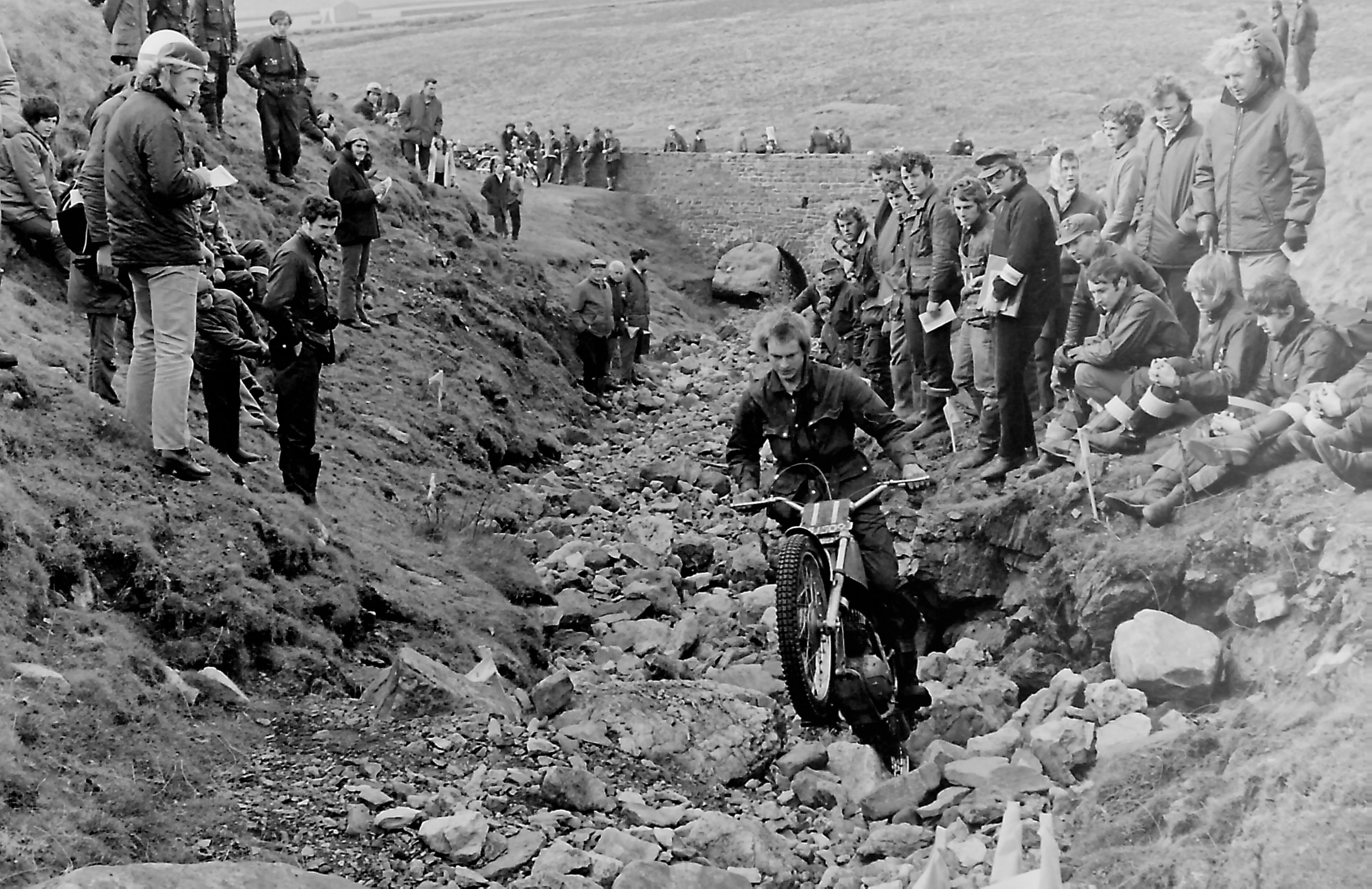
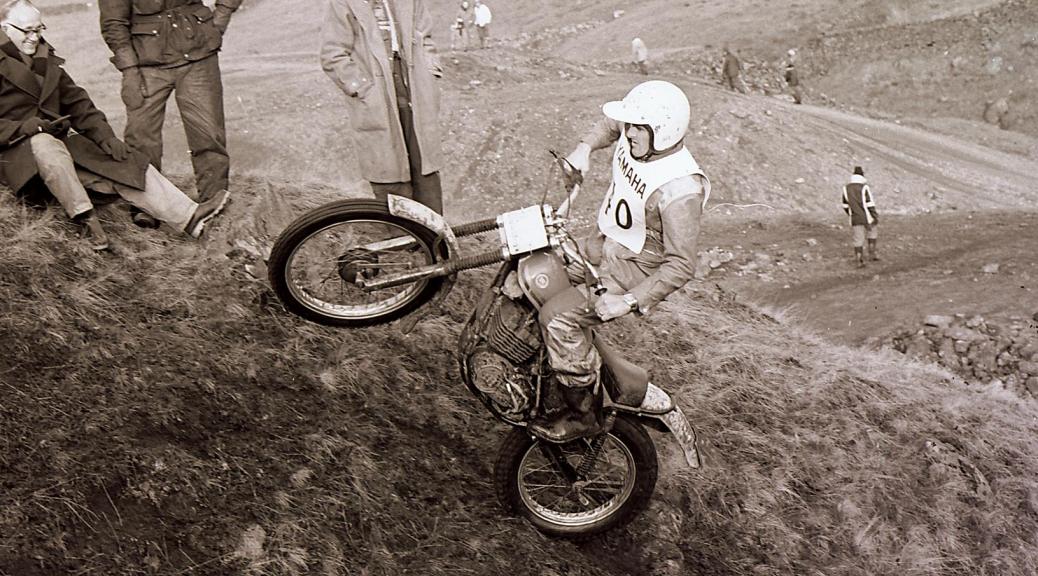
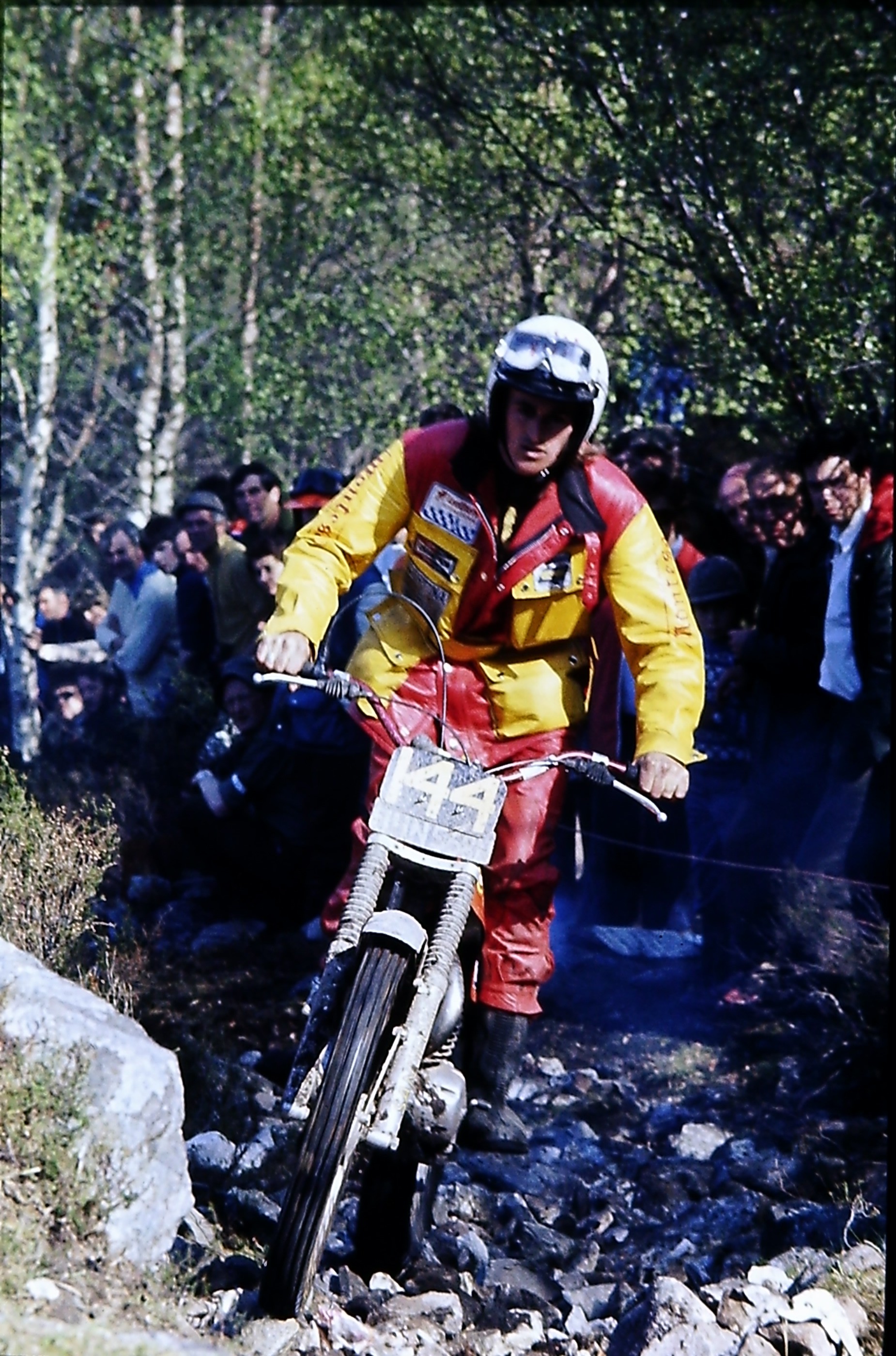
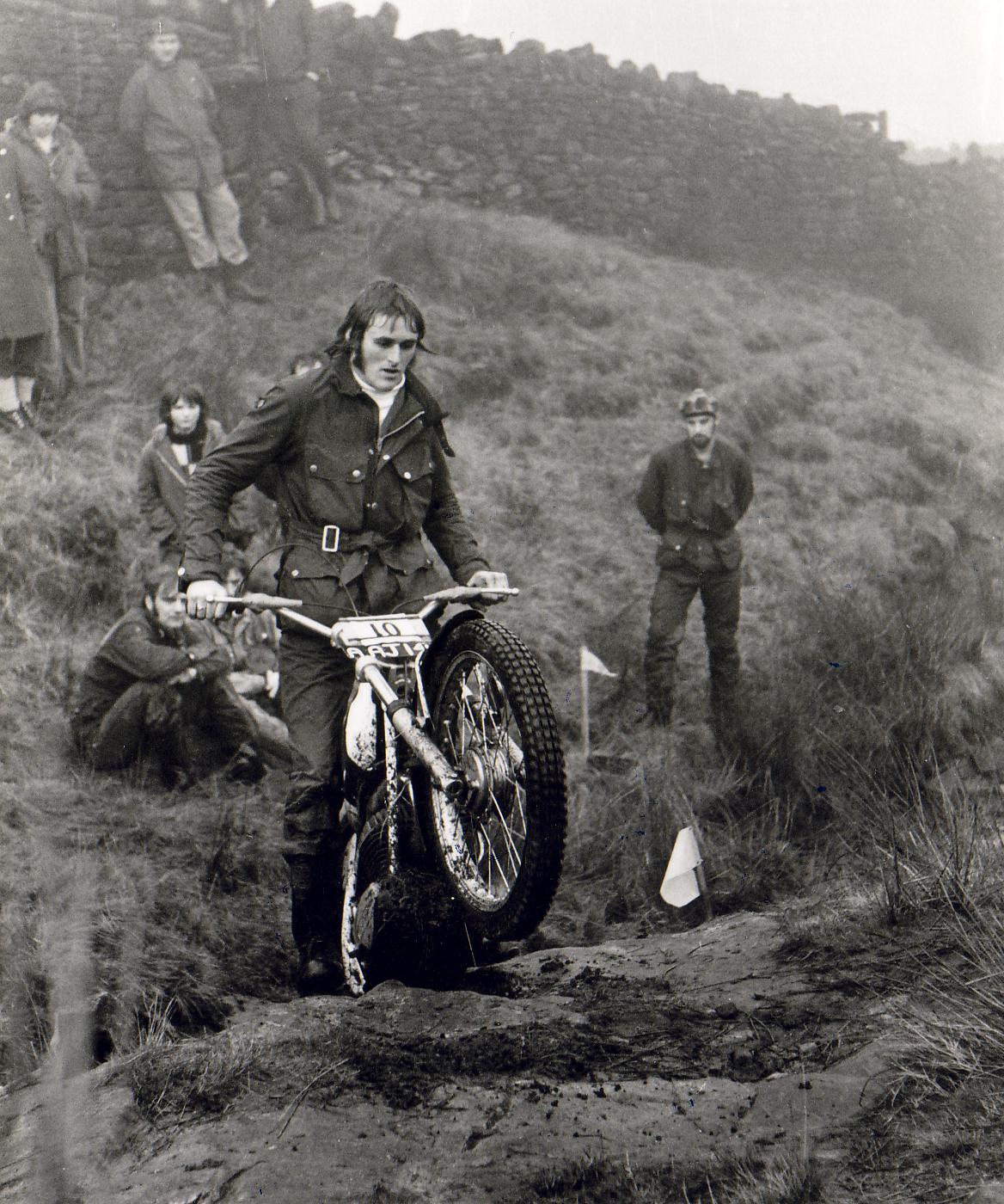


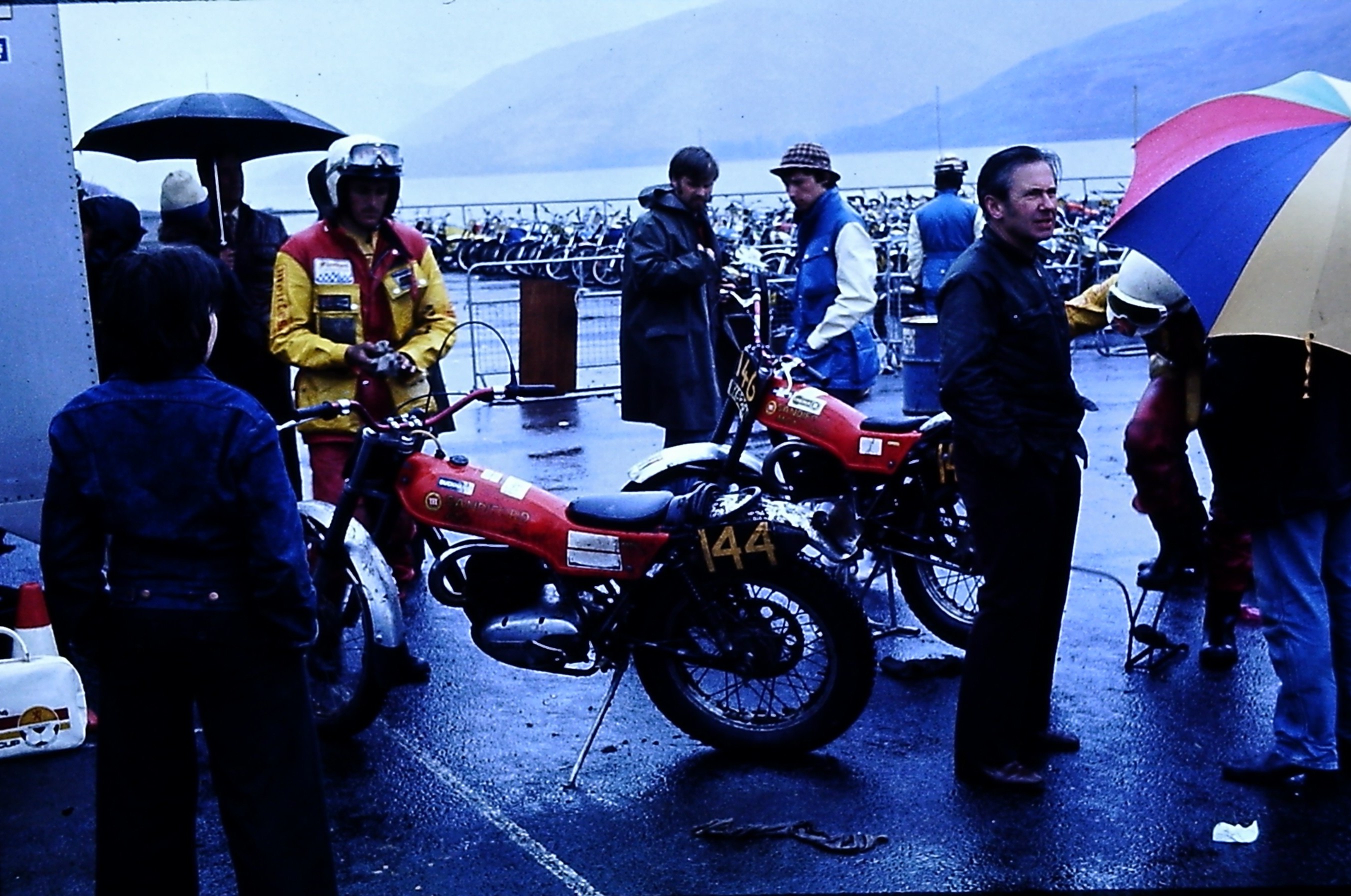
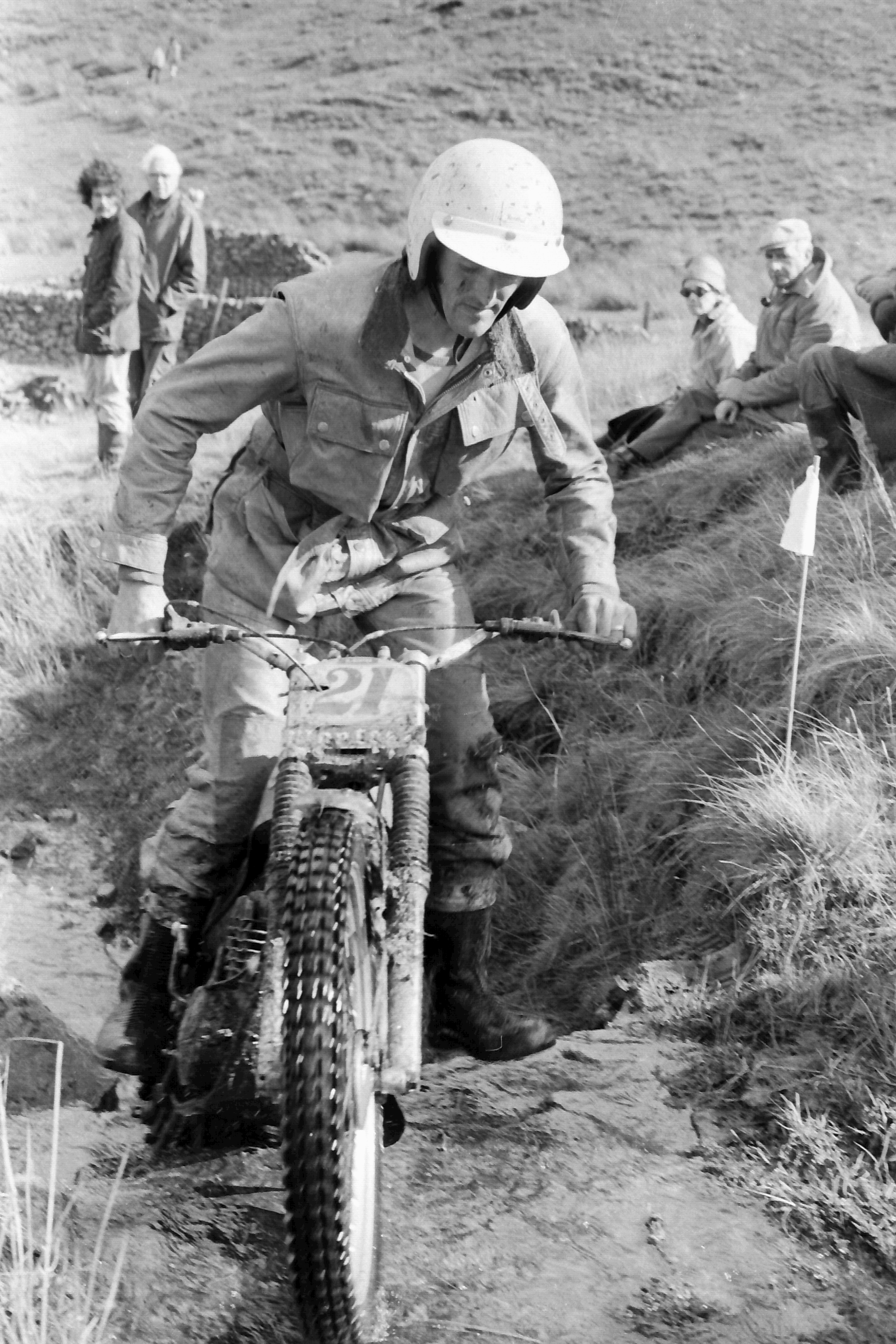


 TRIALS GURU - DEDICATED TO TRIAL