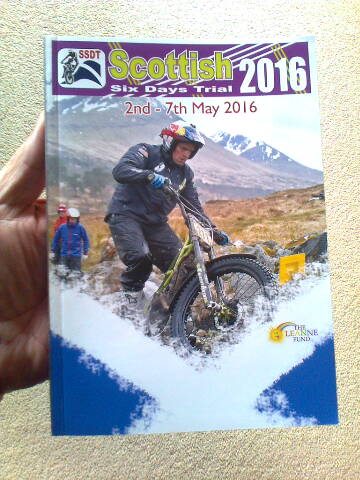
The SSDT routes for 2016 will NOT be published pre-event as previous years on-line. A decision was taken by the organising committee as they wish to sell as many programmes as possible to ensure that as much charitable money is raised.
The official SSDT programme, priced at £3.00 is now available at The BP filling station, Esso filling station and John Steele’s ‘Hyperhut’.
Proceeds go to the Leanne Fund as in previous years. The programme will be on sale at the West End Car Park (Parc Ferme) and at the trial HQ – Ben Nevis Hotel and Leisure Club.
Post script:
Message from SSDT Secretary, Mieke de Vos: “I will send programmes out to people who cannot make it to the trial. They can contact me through the website or on secretary@ssdt.org “
Gas Gas UK has received their first consignment of new machines following the recent purchase by Torrot, the Spanish electric motorcycle manufacturer of the Salt, Gerona made motorcycle brand.
The GGUK crew unpack a shiny 2017 Gas Gas at their Derbyshire HQ – Photo courtesy of Judith Mellor/Gas Gas UK
GGUK’s Kevin ‘Factory Kev’ Hipwell is seen here ‘unloading’ the first batch of crated machines at their Derbyshire headquarters.
GGUK has continued trading successfully as UK distributors of spare parts for the Spanish marque which has a very strong brand loyalty.
The return to market is welcome news for the UK trials buying public.
Torrot became the main and eventual successful bidder for the stricken Gas Gas concern after several bids collapsed early in 2016.
Gas Gas UK will be supporting the 2016 SSDT
The arrival of machines also co-incides with the announcement that Gas Gas UK will again be represented at the annual Scottish Six Days Trial (Monday 2nd – Saturday 7th May 2016) at Fort William where the usual support will be available to private Gas Gas owners as in previous years.
Kevin Hipwell unloads new crated GasGas machines at their UK headquarters
Sherco UK Importers will once again be in attendance at this year’s Scottish Six Days along with the factory Sherco truck which will be parked in its usual place in the Parc Ferme. They will be providing their personal service and back up to all Sherco riders.
MRS personnel Malcolm Rathmell and Phil Hammond will be joined by David Sarras (Cabestany’s mechanic) and they will all be on hand to assist riders in any way needed to try to help them complete the week. They will also be providing their usual catering service solely to Sherco listed riders so when you arrive back in the Parc Ferme after a cold day on the roads and moors you can be sure of some good hot soup, along with sandwiches, snacks, fruit and the usual famous doughnuts!
It is essential that to receive this service you have to register with MRS before 27th April with address, telephone number and card details. Anyone not providing these details will not be able to enjoy the service Sherco give during the week.
The annual Scottish Six Days Trial is only a few weeks away now and preparations are building up in the usual ‘SSDT Fever’.
Arrangements have been made to once again have national radio coverage provided by the local station, NEVIS RADIO based in down-town Fort William which hosts the event.
Follow the Trials Guru on Nevis Radio – May 2nd – 7th
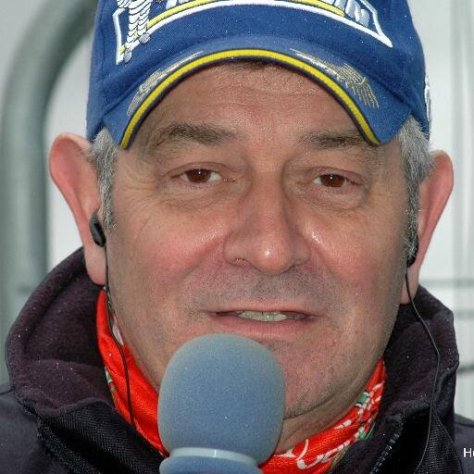
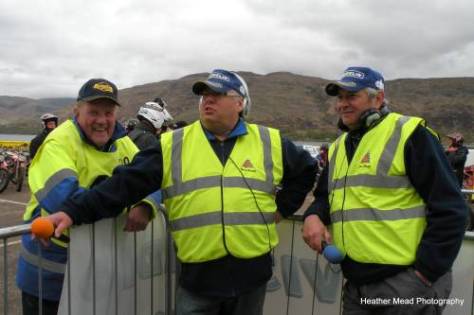
Each morning between 07:00 and 11:00 hrs GMT the Outside Broadcast Team comprising of David Ogg, John Weller and John Moffat will keep listeners up-dated with rider interviews, daily results and information about the trial. The station ‘anchor-man’ is Si Abberley who usually hosts the Nevis Radio ‘Drive-Time’ show in the afternoons.
You can listen to the action from the Parc Ferme on your radio if you are attending the trial or if you aren’t then ‘Listen Online’ by logging into the Nevis Radio website – nevisradio.co.uk
NEVIS RADIO Outside Broadcast SSDT 2016 is sponsored by MICHELIN and TRIAL MAGAZINE UK
Alan Lampkin aboard his historic factory BSA C15, on which he won the 1966 SSDT and Scott Trials – Photo: Fiona Watson
If you haven’t had a look at our special ‘ section’ on the Lampkins, have a look!
Recently updated, there is an article on Alan ‘Sid’ Lampkin and some information provided by one of the Lampkin sisters.
Motorcycles were always a part of Lampkin family life. This is Arthur Lampkin’s factory trials BSA Gold Star, but who are the three riders? See Lampkin of Silsden for the answer! – Photo courtesy and copyright – Janet Pawson
Of course we are not finished yet, there is still more to come.
Coming soon only on Trials Guru, the story of the most successful Scottish Trials rider of all time, Gary Macdonald.
Read about the Kinlochleven lad who practiced hard and took on the best rider’s in Britain and the world – only on Trials Guru.
Gary Macdonald from Kinlochleven is without question, the most successful Scottish trials rider of all time, having won more Scottish trials championships than everyone else and a British title!
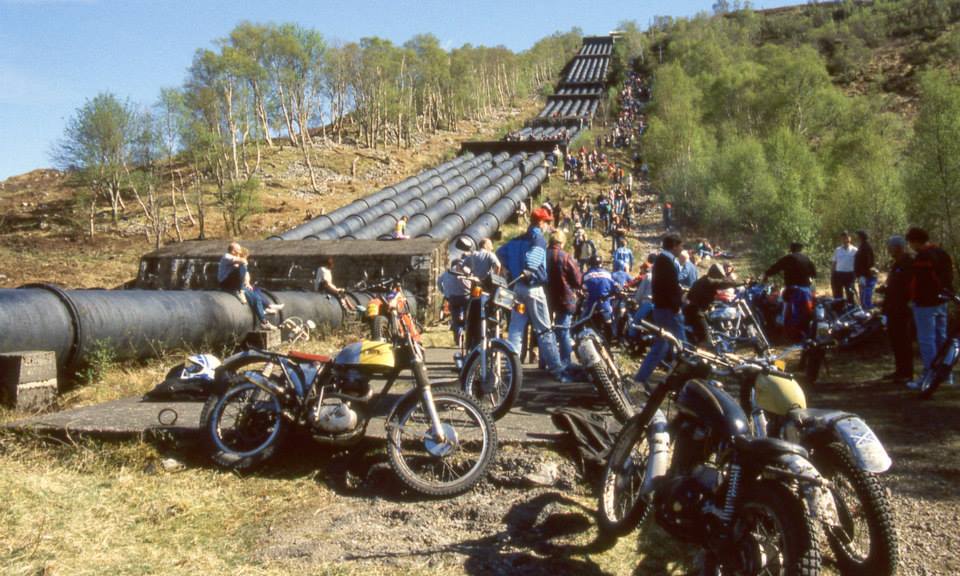
Famous Scottish Six and Pre’65 Scottish section, Pipeline – Photo: Iain Lawrie, Kinlochleven
The entries are open for the 2016 Pre’65 Scottish Trial which takes place on Friday 29th and Saturday 30th April, 2016.
If you would prefer to a set of forms posted out to you, please send a large, stamped, self-addressed envelope to Mrs. Anne Gordon, Secretary Pre’65 Scottish Trial, Fairshiels, Blackshiels, Pathhead, Midlothian, EH37 5SX. Please note: that e-mail entries or late entries will NOT be accepted under any circumstances.
A new machine eligibility guidance booklet has been produced this year by Willie Stewart, the event’s machine examiner, which gives clearer guidelines on what is eligible for the annual highland classic. Anyone who is unsure of any component is welcome to contact him for clarification using the email address provided in the booklet. Please take the time to read these guidelines and the accompanying notes to ensure that you are aware of the regulations and remember to send two clear A4 (297mm x 210mm) colour pictures with your entry form. If your pictures are not clear then your entry will not make the ballot process so please be aware.
Trials Guru is always looking for something new or old, unseen or forgotten….
‘Kimages’ photographs are copyright: Kimages/Kim Ferguson, Fort William.
We have just added two new ‘selections’ on the front page which link into photo collections of ‘Kimages – Trials Photos‘ and ‘Heather Mead – SSDT Photos‘.
Both are female photographers who have built up a sizeable archive of trials photographs over the last couple of years, particularly at the Scottish Six Days as these are Scottish based photographers.
Kim has lived in the Fort William area most of her life and has a love for motorcycle sport and trials in particular having grown up with the SSDT passing her door-step. Her brother rode in trials too, so there are family connections.
Heather became involved taking photos at the Parc Ferme in Fort William, a place that is usually inaccessible to spectators, so we can see SSDT competitors preparing for their daily battle with the terrain and elements.
SSDT 2013 An official goes over the route card with rider 20, Ian Thompson – Photo Copyright: Heather Mead Photography, Dingwall.
Heather Mead and Kimages (Kim Ferguson) have recently given Trials Guru permission to display their handy-work. Please remember photographs are copywritten and are the property of the photographer, so please be respectful of that. There is no implied permission to post these images anywhere else unless by express permission of the copy-holder. This also applies to our other photographers, Jimmy Young, Armadale; Jeremy Whittet; Neil Sturgeon; John Hulme; Iain Lawrie, Kinlochleven or any other images on this website.
Trials Guru have used some individual photos, which are the property of Mortons Media, Hornchurch this was done with their prior and express permission, for legal reasons, these are not for onward publication.
Kinlochleven, Argyll a beautiful place and one protected along it’s Leven Valley by a SSSI – Photo: Susan Black, Prudoe
Many words have been spoken, but little written about, responsible land use in motorcycle magazines and periodicals. One could ask the question – Is this a taboo subject?
Not taboo as such, but it is complicated and a very thorny subject that has provoked spirited debate.
The primary intention of this article is not to create further debate, but to be educational and informative for the benefit of the sport of trials, to create a better understanding of not only responsible land use but to recognise what controls it.
Motorcycle sport’s governing bodies such as the Auto Cycle Union, have endeavoured to address and promote responsible land use for well over thirty years, evidenced by its membership of LARA (Land Access & Recreation Association) in 1986. It works with its affiliated clubs through its own Land Access Advisory Service.
Part of the problem appears to be lack of proper understanding of the subject matter and that is probably caused by either people not being able to find relevant factual information, or don’t fully understand it when it is discovered. Perhaps some of the terminology is alien to some of us?
It’s possible to view website forums and dialogue which covers the subject in threads such as “where to practice riding skills” and similar subject matter.
However many of these forums are locked, only viewable by members with passwords or by subscription and for good reason. It is an attempt to stop people abusing the privilege of using land, made available by landowners under certain conditions.
This locking or restriction to access however does give the impression that perhaps something subversive is going on, whereas that is not the case.
Providing details of where to ride legally off-road is outside the scope of this article, so please, don’t get over-excited.
There are however many areas in the UK, specifically set out for legal trials practice for competition training and for leisure trials riding. With full landowner permissions in place, membership fee requirements, codes of practice, restrictions of use and insurance, perhaps even owner/operated, this is without doubt a responsible and sensible approach.
It is important to understand that there is no such thing as ‘waste ground’.
All land in the United Kingdom, including common land, is owned by someone, be it an individual, group of people, company or other legal entity. However, its ownership may not be clear or be a simple task to establish who the owner is.
Let us attempt to clarify matters by examining factual information, in an understandable way, in an attempt to remove any mystique which surrounds such a complex subject.
Hopefully this article will be sufficiently informative, without going into the fine detail of legislation, insurance and such matters.
To explain in simple but factual terminology and restrict it to parts of the United Kingdom and confined to motorcycles, but equally this can apply to other areas in the UK and four wheeled vehicles also.
Also it is important, perhaps crucial, to understand that trials riders do not have any legal right to ride their motorcycles off-road.
Why is this so, what does the law say?
The Road Traffic Act 1988 (Section 34) clarifies it as follows:
Section 34 – Prohibition of driving mechanically propelled vehicles elsewhere than on roads.
(1) Subject to the provisions of this section, if without lawful authority a person drives a mechanically propelled vehicle—
(a) on, to or upon, any common land, moorland or land of any other description, not being land forming part of a road, or
(b) On any road being a footpath, bridleway or restricted byway, he is guilty of an offence.
So, there we have it, any motorcycle activity performed away from, or off the public highway without lawful authority (permission) is recognised as ‘illegal riding’.
We won’t probe, evaluate or discuss matters concerning the legal penalties or remedies, as that would be down to a court of law to decide as appropriate.
For clarity, let us examine a specific example of a sizeable piece of land to assist in the demonstration of how this works and what restricts or even forbids the casual use of land by off-road motorcyclists.
The area is fairly well-known to the trials sport community let us look at one specific area. After all, this is a trials based website and the rationale could be easily be applied and compared to other similar areas in the country.
1954 – Billy Tiffen from Carlisle on his Velocette, crests ‘Martuim’ in the Scottish Six Days Trial, now part of the West Highland Way and part of the Leven Valley SSSI. Photo: Ray Biddle, Birmingham
The area is in Northern Scotland, known as the ‘Leven Valley’ this name may not be instantly recognisable to the reader, but with further examination its mappings reveal: Pipeline; Blackwater; Corrie Odhair on the south of the River Leven and Loch Eild; German Camp or even Leiter Bo Fionn on the north side, then it will appear familiar. This land whilst appearing to be wild, rugged and fairly remote is actually very closely managed.
German Camp / Leiter Bo Fionn entrance in 2015. The old SSDT section is on the Leven Valley SSSI. Photo copyright Trials Guru – 2015
The name known to trials enthusiasts as the ‘Blackwater Path’ is actually the ‘Ciaran Path’ which is very popular with recreational walkers, hikers and mountain-bike riders, who incidentally do not require express permission to traverse it.
SSDT 1981 – Former Spanish Champion, Manuel Soler on his 325 Bultaco tackles Pipeline, part of the Leven Valley SSSI – Photo Copyright: Jimmy Young, Armadale, Scotland.
Access to the countryside was increased by statute with the creation of the Countryside and Rights of Way Act 2000 for England and Wales and the Land Reform (Scotland) Act 2003, in Scotland, these rights exist only if they are exercised responsibly, as specified in the Scottish Outdoor Access code. Some will know, or have heard of the Ciaran Paths’ famous catch net, constructed by members of the Scottish Six Days Trial committee in the late 1960’s with the prime intention of prevent riders competing in the event and their machines from falling into the deep gorge as they climbed the path towards Blackwater and beyond.
The Blackwater (or Cairan Path) catch net, constructed by members of the Scottish Six Days Trial committee in the late 1960s. – Photo Jock McComisky
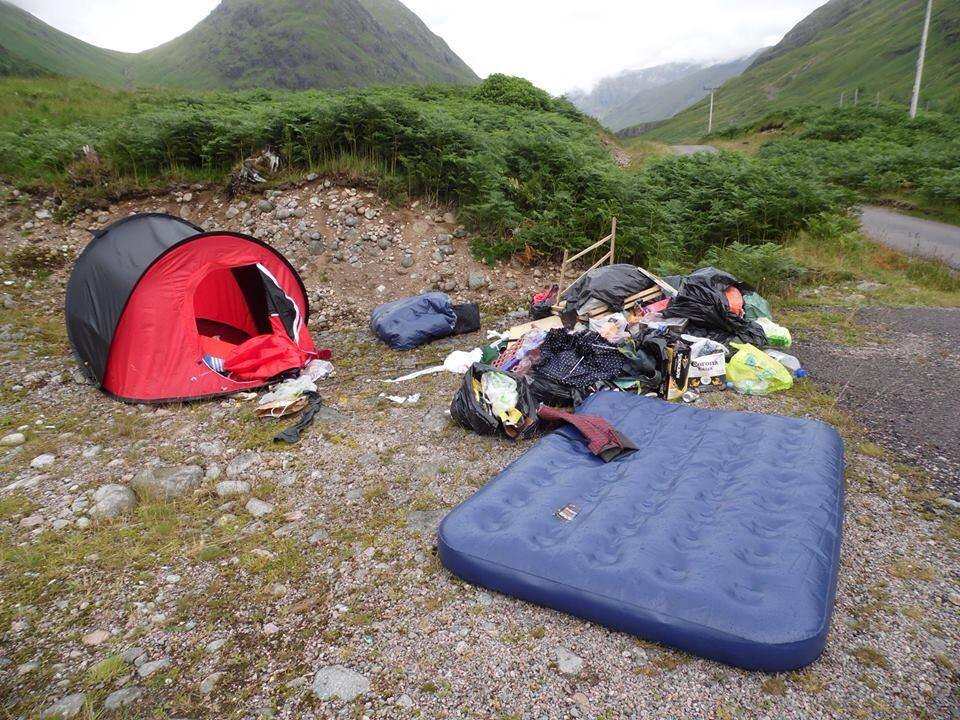
Access to the countryside requires responsibility, sometimes this is absent.
“… Access to the countryside requires responsibility, sometimes this is absent.” Photo Copyright: Mark Shona, (Glen Etive the dirty truth)
The construction was simple, perhaps even crude, but very effective, being fashioned from scaffolding pipes cemented directly into the bed-rock on the edge of the gorge.
No doubt there have been many wayward hikers and bikers caught by its netting since its construction. Whilst this has most probably gone unreported it was a useful safety addition to the Ciaran Path for many of its users since its construction some forty years ago.
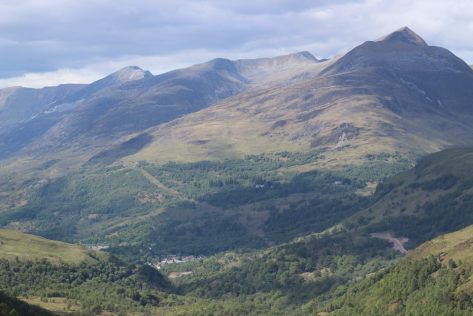
The Leven Valley is covered by an SSSI – Photo: Neil Mackenzie, Inverness
This is an area with an industrial heritage and history. These paths and the German Prisoner of War encampments were constructed to provide the manpower to build the various dams, culverts, penstocks and conduits in the area together with the associated infrastructure for the development of the aluminium smelter.
Bernard Cordonnier from Belgium with Kinlochleven and the Leven Valley visible in the background – Photo: Iain Lawrie, Kinlochleven.
These paths do erode over time, due to the severe winter weather in the area and by the constant use by walkers and cyclists. Parts of the Ciaran Path are already eroded, undercut in places and in need of repairs.
Leven Valley is an area dotted with traces of industialisation, here is the ‘Conduit’ carrying water to Kinlochleven from Blackwater Dam. – Photo: Neil Mackenzie, Inverness
Prisoners of War were used during their interment during the First World War, to construct many of these paths and there is a display within the Post Office in Kinlochleven which gives more information on this. These paths have been established for more than a century. Here ends the history lesson.
All these places described above are on a Site of Special Scientific Interest (SSSI, usually referred to as Triple- SI). In Northern Ireland the designation is ‘Areas of Special Scientific Interest’ or ASSI.
Pipeline is one of the world’s most iconic of trials sections. It is however on an SSSI named ‘Leven Valley’ which requires various express permissions and careful management for legitimate use – Photo Copyright: Iain Lawrie, Kinlochleven.
The reader would be astonished to learn how much of the SSDT route makes legal use of SSSI’s. Many will have watched, observed or even ridden in this particular area.
Many hours are spent each year in meaningful discussion and negotiation between trial organisers and both the local land agents and SNH personnel.
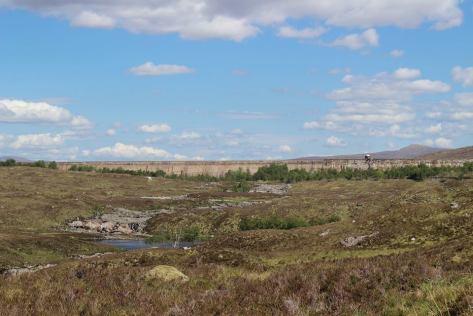
Blackwater Dam, high above Kinlochleven. The Leven Valley SSSI stretches right up to the dam face – Photo: Neil Mackenzie, Inverness
What statutory instrument created SSSI’s and when?
Originally notified under the National Parks and Access to the Countryside Act 1949, SSSIs were re-notified under the Wildlife and Countryside Act 1981. Improved provisions for the protection and management of SSSIs were introduced by the Countryside and Rights of Way Act 2000 (in England and Wales) and (in Scotland) by the Nature Conservation (Scotland) Act 2004 and the Wildlife and Natural Environment (Scotland) Act 2010. (Source: DEFRA).
How many sites and how much land is controlled by SSSIs?
Scotland has over 1,400 sites designated as SSSIs, representing approximately 12.6% of the total land area of Scotland. Approximately half of these sites are located in the lowlands and uplands area. There are over 4,000 sites in England, covering around 8% of the country. (Source: Scottish and UK Government).
Let us look more closely at this area of land and in particular its SSSI status, with the help of resources freely available in the public domain.
In the Site Management Statement issued by Scottish Natural Heritage (SNH), the Leven Valley (Site Reference 927) is denoted as being a SSSI.
Here are some details:
The Leven Valley SSSI forms part of a larger 3000 hectare woodland grant scheme and the interest lies in both trees and rock formations, so described as: Upland Birch Woodland and Dalradian rock, but the scope is of course much wider, covering the flora found in that area.
To give an indication of the extent of the SSSI it is approximately 10 kilometres in length and 6 kilometres wide, so it is very large indeed.
There are no less than eleven specific activities that require not only the landowners’ permission, but permission from SNH, which is funded by the Scottish Government, its purpose being to care for Scotland’s nature and provide support to those who manage it.
However, this consent is not required if the organisers have been given prior ‘planning permission’ from the local authority, under Part III of the Town and Country Planning (Scotland) Act 1997.
For motorcycle events such as the SSDT, the Pre’65, promoted by Edinburgh & District Motor Club Limited plus any other localised events organised by Lochaber & District MCC who promote the annual Ian Pollock Memorial Trial in the Leven Valley area.
The Leven Valley area is one of beauty and home to many plants, wildlife and industrial history. Its use is controlled. Here a rider competing in the annual Pre’65 Scottish in 1998, rides one of the many paths in the area. Photo copyright: Iain Lawrie, Kinlochleven.
The specific requirement to apply for consent from SNH is under reference number 26: ‘Use of motorised vehicles likely to damage vegetation’.
Why do we need to legally protect these areas described as SSSIs, why is this particular area deemed sensitive, why is it important and why is it necessary to have such controls?
Private research reveals that the Leven Valley SSSI is home to many different mosses and liverworts, collectively known as bryophytes. Some are very rare, dating back to pre-historic times.
Bryophytes play a part in protecting us, as these soft plants form a huge sponge on the valley floor, slowing down the flow of rain water from the surrounding hills which runs into the burns and eventually the River Leven.
This water slowing effect protects the Kinlochleven area from potential flash floods, given the high annual rainfall locally.
Thinking about it logically, conversely this explains why there are so many flash floods in residential areas nowadays. The ground has been waterproofed by buildings, structures, roads and footpaths so that rain water now planes off faster, causing localised flooding and worse. Flooding can affect us all.
The beds of mosses, blanket bogs and wetlands found in the Leven Valley SSSI area also absorb and effectively lock up, many tonnes of harmful carbon dioxide from the atmosphere, potentially for thousands of years, into the peat below. That is providing that they are not disturbed, depleted or destroyed, hence the protection provided by SSSI status.
Depletion can occur through invasion by non-native plants such as the Rhododendron, which can spread rapidly, is difficult to control and covers large areas of ground. Similarly, animals such as deer, sheep or cattle roaming free or even inappropriate use by vehicles, can cause damage if not properly controlled or managed.
Now we can see the rationale for protection of this and other areas like it, we can begin to fully understand and appreciate why these areas are deemed sensitive and significant.
Protection does not automatically mean total exclusion of all activities, hence the continued use of the area by major trials events, but this is only achievable by proper application for permissions, negotiation and mutual agreement.
The SSDT has been running since 1911, the Pre’65 since 1984 and the Ian Pollock under its former title ‘Spring Trial’ since the late 1950’s. These events make legitimate use of the Leven Valley.
This does not however give their promoters any legal rights to continue using this ground, purely because of the length of time the events have been in existence.
Most of the ground described above and used in these motorcycle trial events is under the current ownership of Rio Tinto Alcan, a multi-national company whose principal office is in Montreal, Canada.Rio Tinto Alcan is the result of many company mergers and take-overs over the years, tracing its roots back to the British Aluminium Company in 1894 the entity that originally purchased the ground in what is fundamentally the Mamore hill range for the water rights, thus ensuring sufficient water to create power generation for the Aluminium smelter based down in the town of Kinlochleven itself.
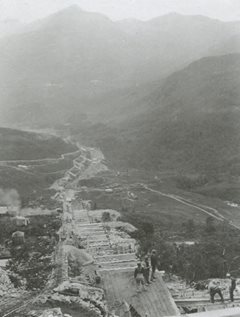
The pipeline under construction. The Leven Valley has an industrial history. Photo copyright Glasgow University Archive (Rio Tinto Alcan)
The SNH Site Management Report in 2008 stated:
“During monitoring in 2002, the SSSI was found to be subject to a number of detrimental influences, the most important being: the spread of rhododendron; grazing/browsing pressure (due to deer and, probably to a lesser extent, stray sheep); annual burning; and motorcycle scrambling”.
In the above statement, let us simply replace the words ‘motorcycle scrambling’ with ‘off-road motorcycle activity’ for additional clarity, for that is what the report eludes to.
By giving cognisance to the above information, we can now begin to appreciate and understand what legislation event organisers have to consider and address fully when promoting a motorcycle trial in this area.
This is why such organisers stipulate that no unofficial following of the event by motorcycle is permitted or condoned, as only insured riders and officials may take machines onto the ground as allowed by the owners and ultimately SNH.
Similarly this is why all event officials must ‘sign in’ with the event control so that they are accounted for, have contact details and are insured under the governing body’s insurers for the permitted event.
Are things now falling into place?
During the research for this article, we spoke with Cathy Mayne, the locally based Operations Officer with Scottish Natural Heritage and the person charged with the task of negotiating with the motorcycle clubs.
Cathy explained: “In terms of use, there is no assumed permission for this, or any other off-road area for motor vehicles. Prior permission from the landowner and where relevant, consent from SNH, would be required for any trials rider accessing any area off the public highway.
There are some issues with casual use on the SSSI, as we have for other areas of land that is so designated and a focus of trials or other off-road vehicular use.
Hence the sensitivity of these areas. Permission for events such as the SSDT, the Pre’65 and Pollock trials are given only after careful consideration, planning and negotiation, with quite a few restrictions and stipulations put in place”.
We have used a land example from Northern Scotland, but of course there will be thousands of similar examples dotted throughout the country.
The Scott Trial, another event over 100 years old, held in the North Yorkshire National Park is another where planning permission is required and for a finite period at that.
Scott Trial action with Alan Lampkin (Bultaco) in 1974. The Scott is run in the North Yorks National Park and requires very careful management and permission – Photo Alan Lampkin Archive.
So, we as riders of trials motorcycles do not have any rights to roam, unlike walkers and cyclists, but express permission is required from landowners and even governmental bodies to enable us to ride off-road.
Consider these matters, as illegal riding does directly harm our sport.
There are many other organisations committed to individual and group off-road motorcycle activity other than organised events, for example the Trial Riders Fellowship of England and Wales who make use of BOATS (Byways Open to All Traffic) and UCRs (Unclassified Country Roads), so their members don’t actually ride off-road, they encompass forty-two regional clubs. But in the example we have examined, permission is granted for organised events because of the level of controls afforded by an event and the frequency of such events.
We hope that the reader will now have a more detailed knowledge of this issue and a better understanding as a result.
Do you now understand more about land use restriction and the rationale than before you read this article? If so, then this article has been worthwhile.




















 TRIALS GURU - DEDICATED TO TRIAL