Recently opened, the new ‘section’ on Trials Guru – dedicated to the Honda trials effort over the years.
With direct co-operation to Trials Guru from ‘The Honda Trials History’ website, Honda author Tommy Sandham and many more!
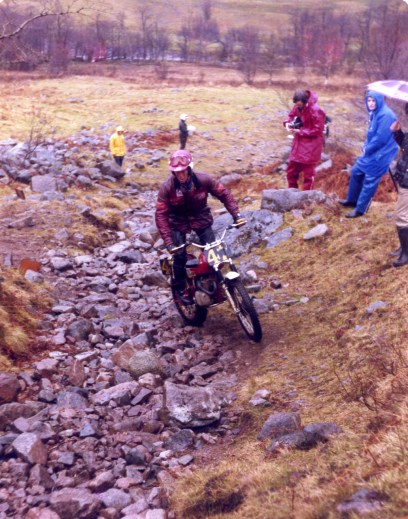
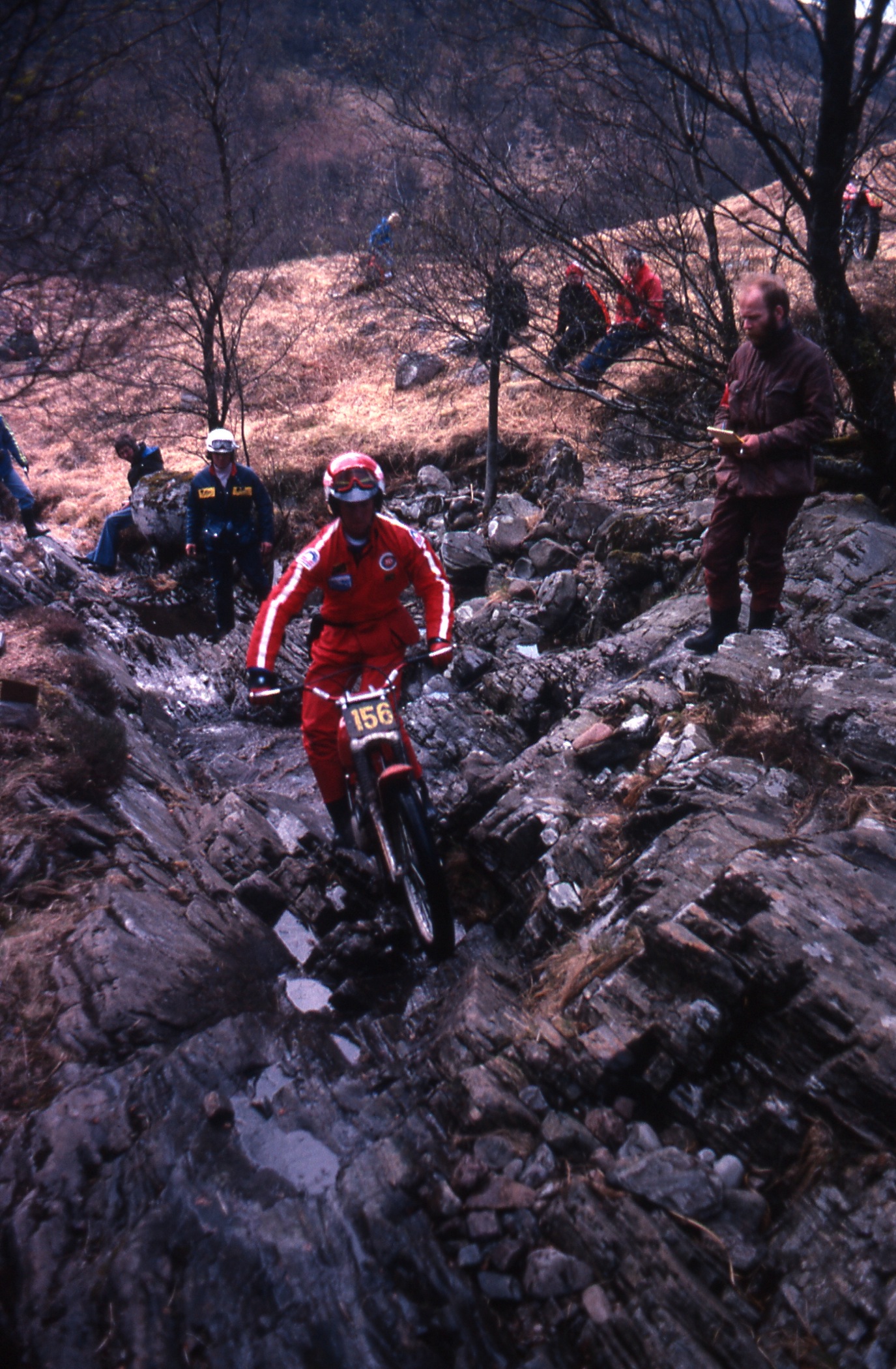
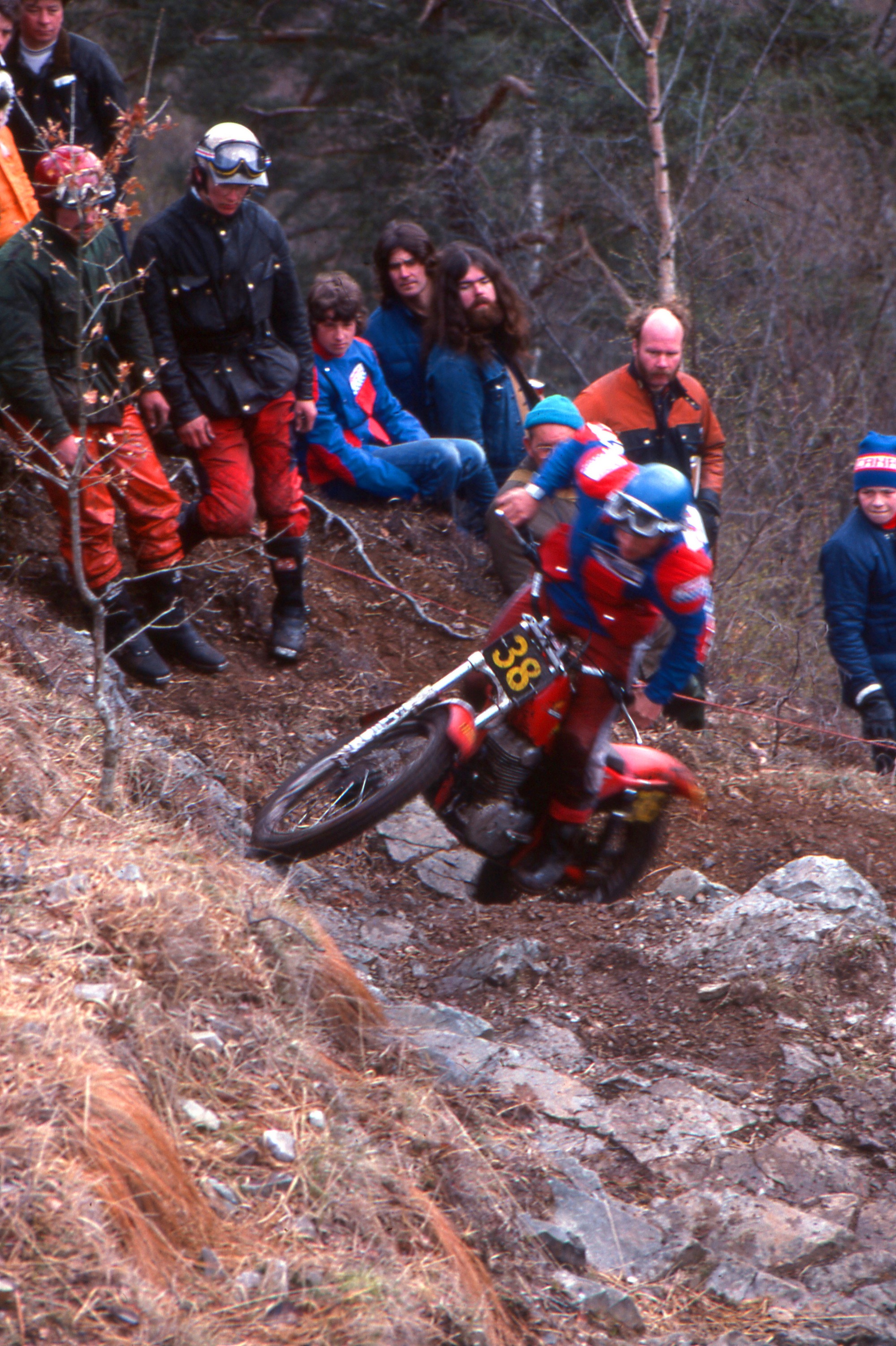
Rob Shepherd in 1977 at the Scottish Six Days Trial with his factory Honda TL300 (PEL2R) the number 69 machine is that of team-mate Nick Jefferies (PEL1R) – Photo copyright: John Hulme
Exclusive to Trials Guru – Dedicated to the sport.
Go straight to the new ‘section’ for you to ‘observe’!
Back in 1977, having previously acquired the tooling and stock of the BSA competition shop at Small Heath, Alan Clews decided to create a trials machine. It is believed that Sammy Miller had already approached Clews to supply him with BSA motors to power a trials machine of Millers own design. Clews’ CCM (Clews Competition Machines) brand was by then already well established, having risen from the original ‘Clew-Stroka’ motocross concept from 1971, by using BSA B50 motors as the power-plant, but with the capacity increased from 498cc to 600cc.
CCM had built their motocross brand from the 1971 concept of ‘Clew-Stroka’ which at heart was an uprated 498cc BSA B50 motor – Photo: Justyn Norek, Turin
Clews had built a reputation of making high quality motocross machinery which performed as well as they looked. In the hands of Lancastrian, Bob Wright; Cumbrian Mick Barnes and later Vic Eastwood and Scot, Vic Allan, the CCM was a serious racing motorcycle.
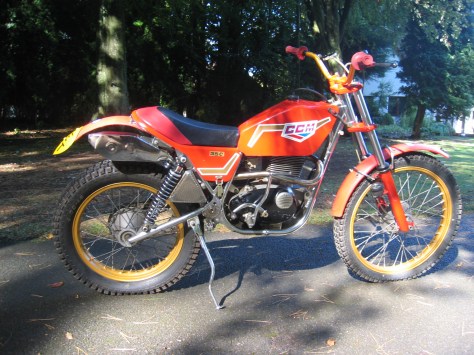
1978 CCM 350T MKII – Photo: Justyn Norek, Turin
Based in Bolton, Lancashire, England the company had grown considerably from modest beginnings. Mike Eatough made the frames, before setting up his own venture called EMC.
There seemed to be a market for a four-stroke trials machine and Clews was eager to fill the void and to produce one, Made in Britain! Honda had already launched their TL125 and for the US market, the TL250 trials models, developed with the help of Sammy Miller and the company’s ‘Bials for Trials’ programme.
Drive side shot of a 1978 MKII CCM 350T
The eventual CCM production run of their 350T machine was very modest, with just over 100 machines ever produced by the factory. It utilised a variant of the BSA B40 – 343cc unit single, which CCM claimed the capacity as 345cc by using a bore of 79.25 mm and stroke of 70 mm, with compression ratio as 6.2:1.
Original sales leaflet for the MK1 CCM 350T specification from 1978
Quality components were sourced from European manufacturers, From Italy, Marzocchi supplied both front forks and remote reservoir rear shocks, German ‘Magura’ controls, the Italian, ‘Grimeca’ hubs and brakes and gold anodised Spanish ‘Akront’ wheel rims. With American-made Preston Petty motocross red plastic mudguards also fitted front and rear. This particular combination, with the chromed chassis made for a ‘good looking’ machine, this in itself did not make a 100% competitive trials machine however.
Nick Jefferies on his factory CCM 350T in the 1978 SSDT at Altnafeadh on the first day of the event – Photo: Jimmy Young Archive on Trials Guru
The B40 motor was treated to an Amal MK2 concentric carburettor and a revised primary drive alloy casing, finished in black with the CCM motif in relief, with a novel little oil breather/catch bottle fitted to the nearside crankcase. But at heart it was still a BSA B40 which had been developed from the 1959 C15 design.
Given the more modern riding position, the gear pedal was fitted in such a way that it was accessible by the rider standing up on the foot-pegs. The gear pedal passed behind the kick-start lever.
Backed by Castrol Oils UK, riders of the caliber of Dave Thorpe, (who left Bultaco to ride the CCM prototype) and Nick Jefferies were employed to develop the CCM 350T for the factory.
Jefferies entered the 1978 Scottish Six Days Trial riding number 220 on the 400cc CCM prototype, backed by Castrol, but failed to finish the event.
Thorpe entered the 1979 SSDT on the 360cc CCM factory machine with riding number 250, with Thorpe shadowed most of the week by motocross rider, Dick Clayton whose riding gear had been rumoured to be literally stuffed with spare parts.
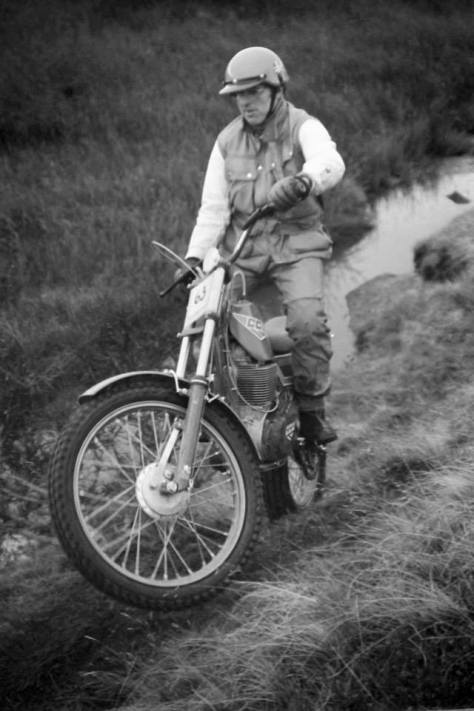
Private owner, Mel Ross from Monifieth, Dundee on his CCM 350T at a Dunfermline Trial in Scotland in 1978 – Photo: Jimmy Young Archive on Trials Guru
Dave Thorpe did finished the 1979 SSDT in 95th position on 397 marks lost, which was not a good day at the office for him, having been 11th position the year before on a Bultaco!
V. R. Moyce from Wickham rode a production CCM 350 in the 1979 SSDT and finished in 190th position on 597 marks lost.
The late Willie Dalling, former clerk of Course for the SSDT riding a borrowed CCM 350T in 1978 at the Aberfeldy Two-Day Trial in Scotland – Photo: Jimmy Young Archive on Trials Guru
Many of the Bolton built CCMs were bought by private riders who wanted something different.
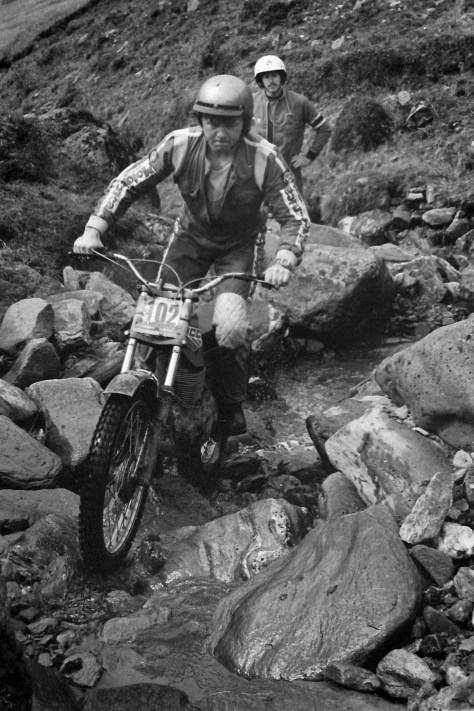
Lancashire’s Eddie Smith on a Sandiford CCM 350T in 1978 at the Aberfeldy Two Day Trial – Photo: Jimmy Young Archive on Trials Guru
In 1979 Honda launched their own British built four-stroke trials machine, the TL200E (the ‘E’ stood for ‘England’) made by Colin Seeley in England, but ‘adopted’ by Honda UK as their own model and marketed through their comprehensive motorcycle dealership network.
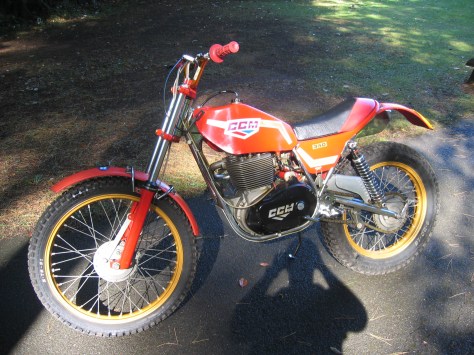
The production MKII CCM 350T of 1978
The frame was made from Reynolds ‘531’ tubing, argon brazed and finished with chrome plating to both frame and swinging arm.
The wheelbase at 51.5 inches followed almost the same dimensions as the Bultaco Sherpa it was designed to beat in competition.
A fairly original October 1978 registered CCM 350T MKII, all except for the two-tone coloured seat and red handlebar grips
Whist the CCM 350T was never destined to become a trials ‘world beater’, the machines did sell reasonably quickly. They were not produced in significantly high numbers, hence now they command extremely high prices for their rarity value alone.
CCM later became part of the ‘Armstrong-CCM’ brand, but that is another story!
During the ninteen-seventies, Honda Motor Company decided to create a purely ‘Racing’ division, separate from their normal motorcycle production activities and core businesses. This saw the advent of Racing Service Center Corporation or ‘RSC‘ for short. Later, in September 1982, they developed from RSC, Honda Racing Corporation or HRC for short, which exists to this day and controls the racing activites of Honda. HRC produce and sell racing/competition motorcycles and spare parts. The parts, although well made and of high specification, are by their nature, not warranted for street use as they are for ‘racing applications only’. HRC European headquarters are based in Aalst in Belgium. The world HQ is at Asaka, Saitama, Japan. Below we can see some of RSC & HRC’s creations over the years.
The RTL250SW was for factory Honda riders only, not available for general sale and had the single down tube frame with offset exhaust port.
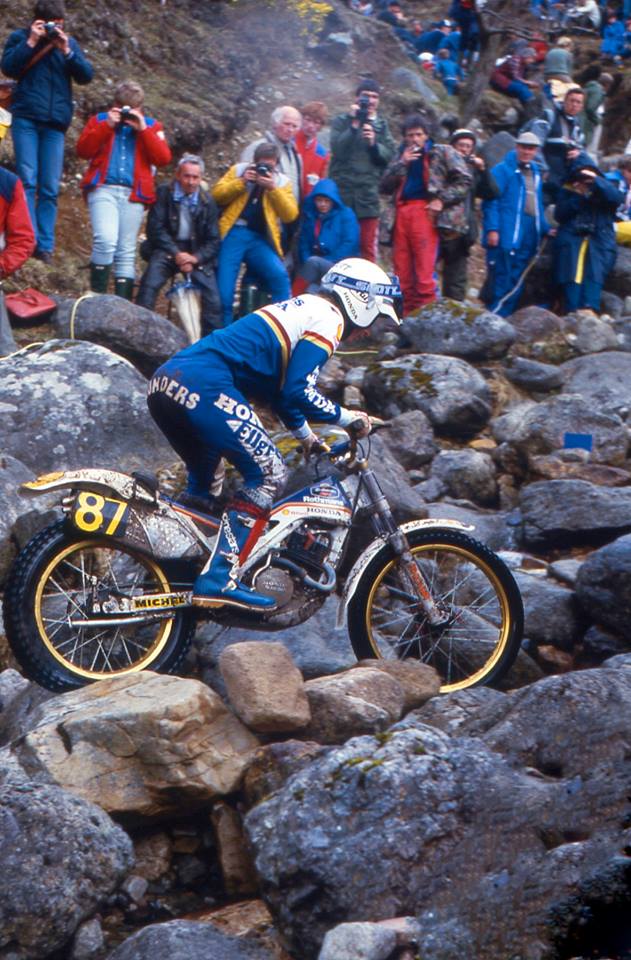
1986 – SSDT Steve Saunders (Rothmans Honda RTL270SW) on Ben Nevis – Photo Copyright: Iain Lawrie, Kinlochleven
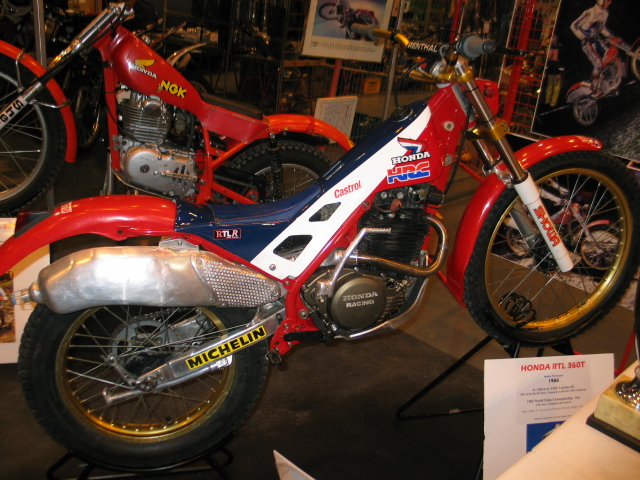
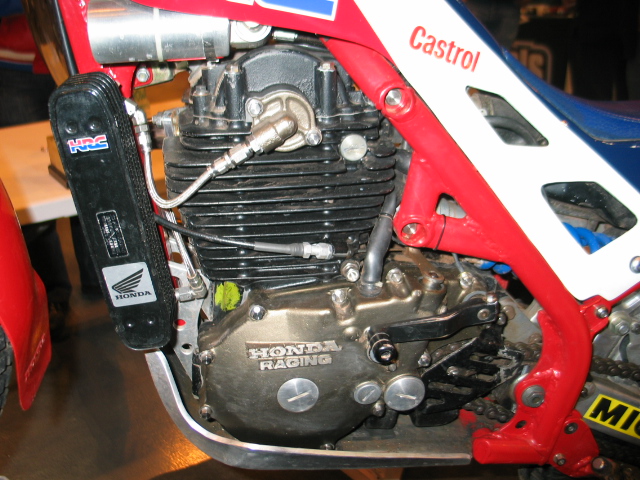
1986 – RTL270SW (270cc) Honda Racing Corporation/Rothmans Racing – with single down-tube frame and oil cooler. Strictly factory only.
Tommy Sandham’s Book – ‘Four Stroke Finale?-The Honda Trials Story’ Click… Honda/Four Stroke Finale?
John Moffat (Trials Guru) was fortunate to be permitted to take the ex-Eddy Lejeune 1982 RTL360 for a brief excursion at the Highland Classic 2 Day Trial at Alvie Estate in June 2015. This machine is now in the ownership of Jean Caillou.
The 1982 Honda/HRC RTL360 shown above was once the factory machine of World Champion, Belgian, Eddy Lejeune.
Jean Caillou, a French trials enthusiast who has a passion for the Honda brand was fortunate enough to meet with Lejeune at his home in Belgium. It was during this meeting that Eddy revealed that he still had the 1982 ex-factory machine in his possession. The RTL360 was disassembled, but all the parts were there at Eddy’s house.
Jean Caillou: “I met with Eddy Lejuene at his home and he explained that he had just bought his daughter a horse. So he presented me with the invoice for the horse and said that if I paid him the same figure that he had just recently paid for the horse, then I could have the Honda. I did not hesitate further and the deal was agreed. I had effectively paid for Eddy’s daughter’s horse, but I now owned the Eddy Lejeune 360!”
EDDY LEJEUNE:
Eddy Lejeune from Verviers, Belgium was three times FIM World Trials Champion (1982-1984) and seven times Belgian National Champion (1980-1986). He rode Honda for the majority of his trials career, switching to the Spanish Merlin in 1988 and then to the Honda owned Montesa for 1989/90 when he retired from top flight trials.
Team HRC Trial – Repsol Honda Team continues to reinforce its roster of world-class riders with the incorporation of young gun Jaime Busto into the team for the 2015 season.
Repsol Honda Team Trial gets a boost in 2015 with the arrival of Jaime Busto. The Spanish rider will line up alongside Toni Bou and Takahisa Fujinami in all events on the 2015 FIM World Championship calendar in Trial Outdoor, as well as taking part in the 2015 Spanish Trial Championship. Busto will compete in all top-level competitions on the Montesa Cota 4RT.
Jaime Busto is one of the brightest lights in the Trial discipline. In 2014 he scored an impressive win in the FIM World Cup (the former World Junior Championship), winning seven of the thirteen races disputed. In 2012 he had become Youth 125 category champion, a competition in which he had previously debuted in 2011 at thirteen years of age. At a Spanish national level, the Basque rider has clinched just about every possible title in the lower categories, this year even finishing eighth in spite of carrying an injury throughout the latter part of the season.
Jaime: “I’m really pleased to be able to form a part of the HRC Team, the best team in the world. For me, it really is an honour to be in a team with such great champions as Toni Bou and Takahisa Fujinami. I hope to be able to learn a lot from them. The Montesa Cota 4RT has surprised me. I will have to get used to the four-stroke, but I think that I’ll adapt to it quickly.”
Miquel Cirera Lamarca, Team Manager said: “At Repsol Honda Team we have the best riders in the world, and we want to continue that way for many years, to keep on winning races and titles. We had the chance to sign up Jaime Busto, one of the most promising young talents currently around. He will serve as a fine complement to our champions Toni Bou and Takahisa Fujinami.”
Rob Shepherd (centre) with his newly acquired Montesa 4RT Repsol 260. With Richard Thorpe (PJ1) and Craig Holmes of Craigs Motorcycles. – Photo Copyright: Barry Robinson.
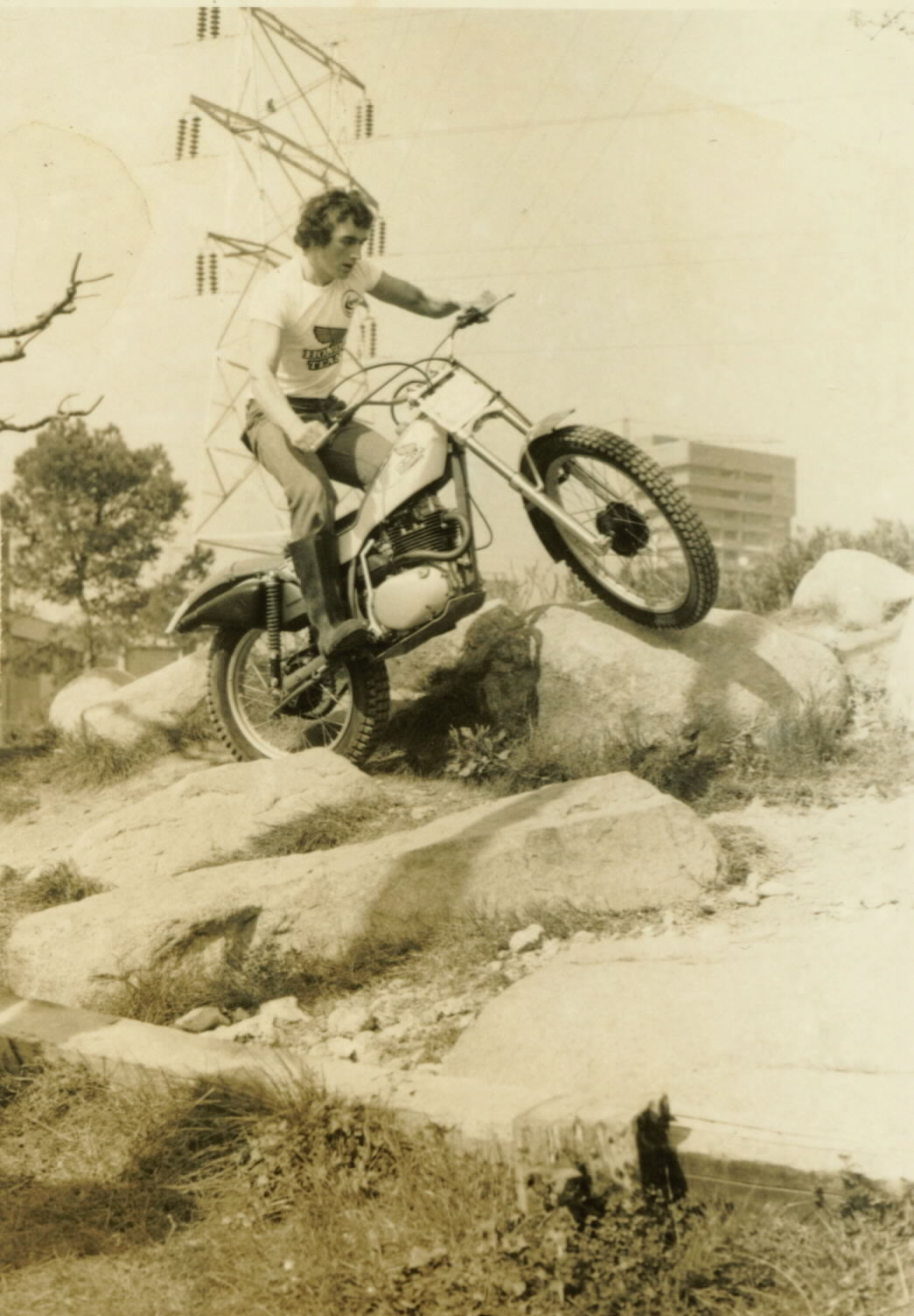
Former British Trials Champion (1977) and factory Honda rider, Rob Shepherd is making a comeback to trials with a machine that he was associated back in the seventies. Honda powered four-stroke power. ‘Shep’ a Yorkshire farmer has been practising constantly with a Drayton BSA Bantam which he hopes to ride in Pre’65 events next season. He was particularly taken with the Montesa 4RT. Shepherd rode for Montesa back in the early seventies with Rob Edwards, before switching to Honda UK Trials Team with Brian Higgins and Nick Jefferies, managed by Sammy Miller.
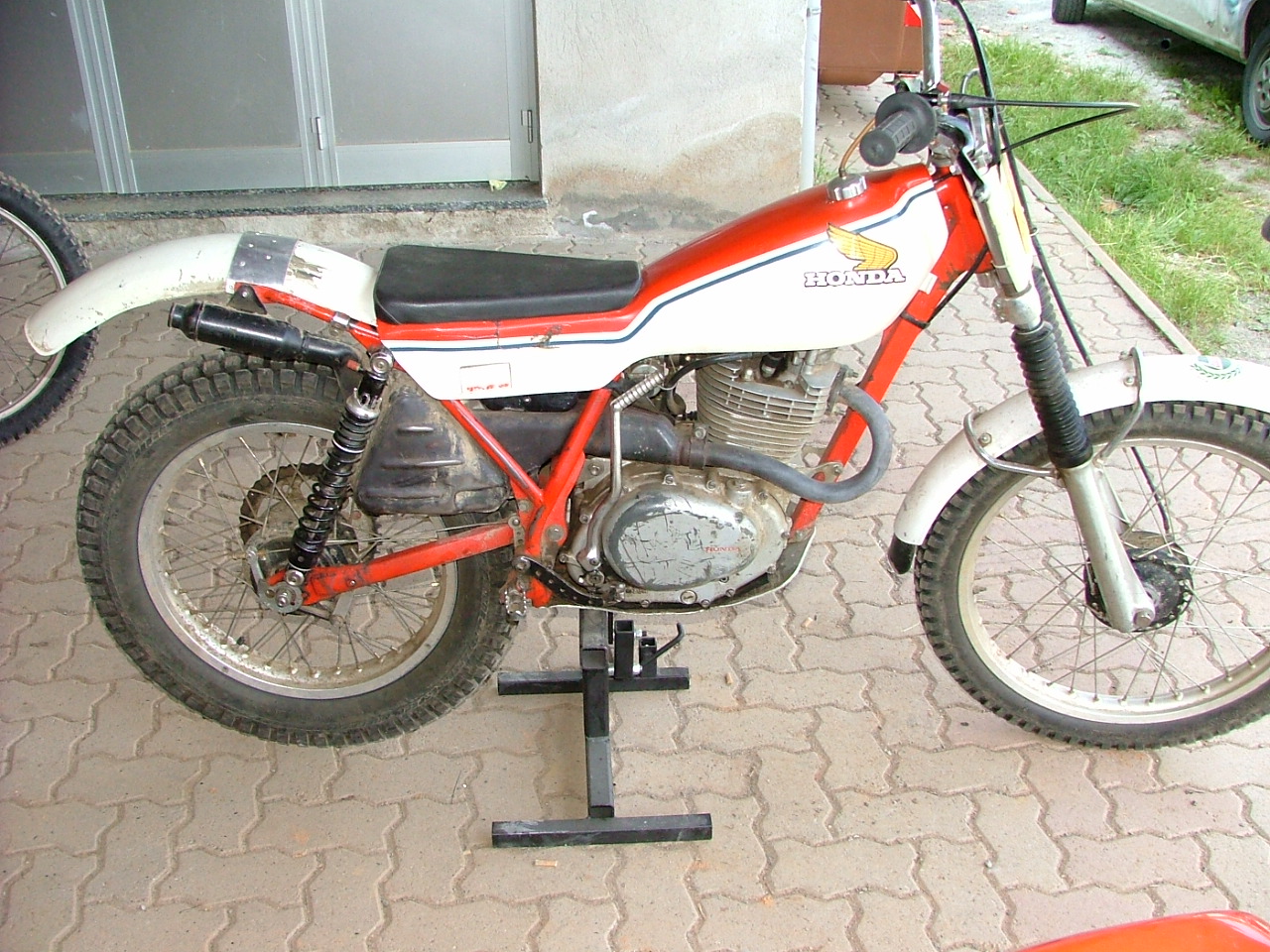
The Honda RTL300 (short-Stroke) similar to the model ridden by Rob Shepherd. This is Nick Jefferies machine, now owned by a French Trial enthusiast. Photo Copyright: Heath Brindley, Bristol.
According to Rob’s younger brother Norman, also a very competent rider on a Bultaco, Rob has worn the rear tyre of the Bantam to ‘slick’ proportions. He told Trials Guru at the recent Scott Re-Union: “He’s never off the thing, he’s worn the knobbles off the rear tyre”.
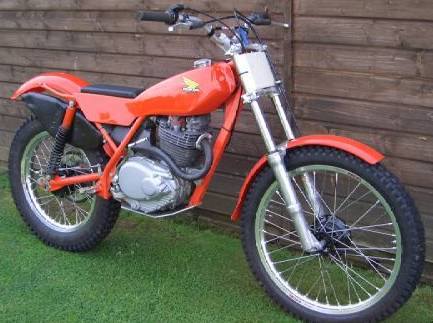
In the 1990’s enthusiasts began building ‘Shepherd Replica’ Hondas. Here is a Honda trials TL250 motor bored to 305cc installed in a Jim Susans (Bikecraft) frame. Photo: MoffatRacing Archive.
Rob Shepherd has been out of the sport since 1983 when he last rode it was an Appleyard 340 Bultaco in 1982/83 and a Majesty Yamaha in 1981.
Rob Shepherd in 1981 on a Majesty Yamaha 320 at the Red Rose Trial. Photo: Barry Robinson
Rob Shepherd 1982, Appleyard Bultaco 340 mounted for the Wetherby Bottle Trial. Photo: Barry Robinson.
The 1987 Honda (HRC) RTL250S (actual capacity 270cc) of Eddy Lejeune (Belgium) seen in the paddock at the 1987 Scottish Six Days Trial in Fort William. The machine was maintained by mechanic and enduro competitor, Derrick Edmondston. The machine differed in many respects from the production version having a much more voluminous exhaust and single spar downtube frame and was also fitted with an oil-cooler. Lejeune came home in 3rd position on this machine losing 82 marks. The machine was registered in the UK by Honda Britain. Photo copyright: Donald Young, Stonehaven, Scotland UK.
















 TRIALS GURU - DEDICATED TO TRIAL