Words: Ross Winwood
Photos: Ross Winwood Collection; Terry Maynard; Eric Kitchen; Hans Maiditz; Walker Brothers Archive; Ian T. Robertson; Olivier Barjon.
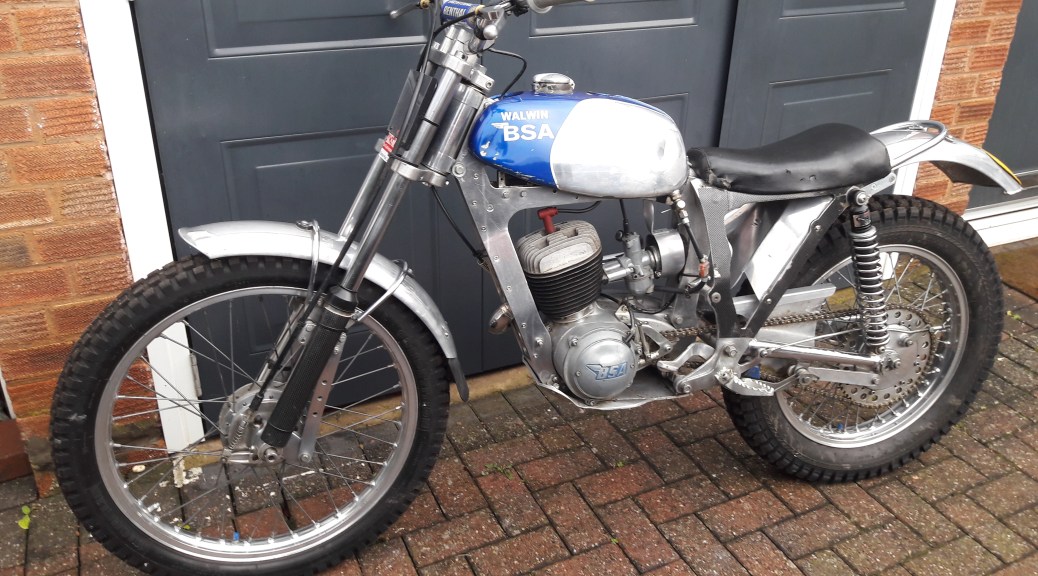
Many motorcycling enthusiasts will no doubt remember two incredibly special machines being scrutineered for the Scottish Six Days Trial when it started and finished in Edinburgh in the late 1960s and early 1970s. Two brothers had entered on machines described in the official programmes as ‘Walwin BSA’. These were no ordinary BSAs either, they attracted quite a bit of attention, and comment, as their frames were not made from the usual steel tubing, but flat Dural plates. But there was much more to the Winwoods’ creations than trials machines.
Who is Ross Winwood?

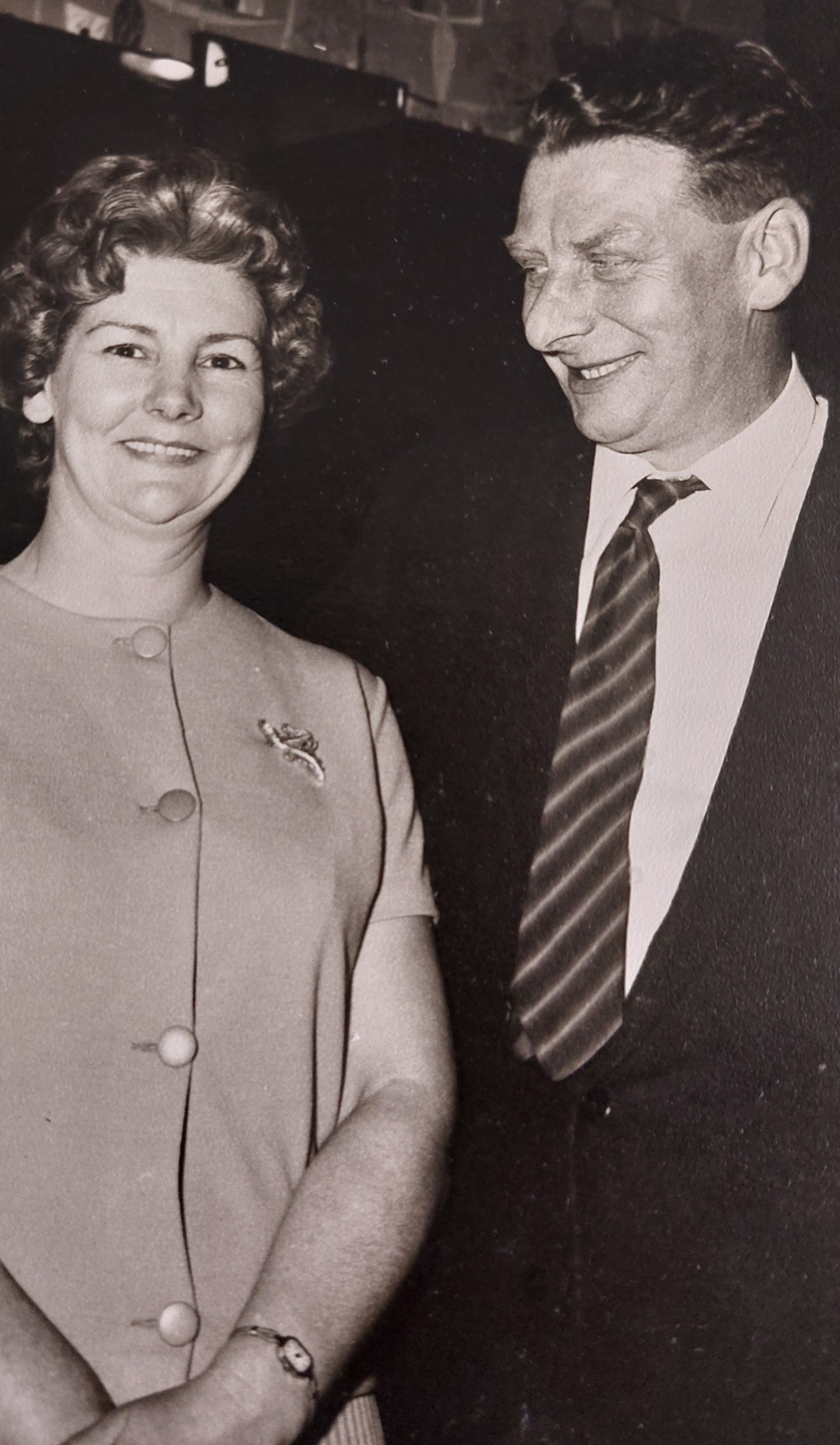
Born on 15th July 1945 when the Second World War was about to cease, Ross and his older brother Michael, born 1941, were the sons of Ray and Gwen Winwood from the village of Wythall, Worcestershire, near Birmingham.
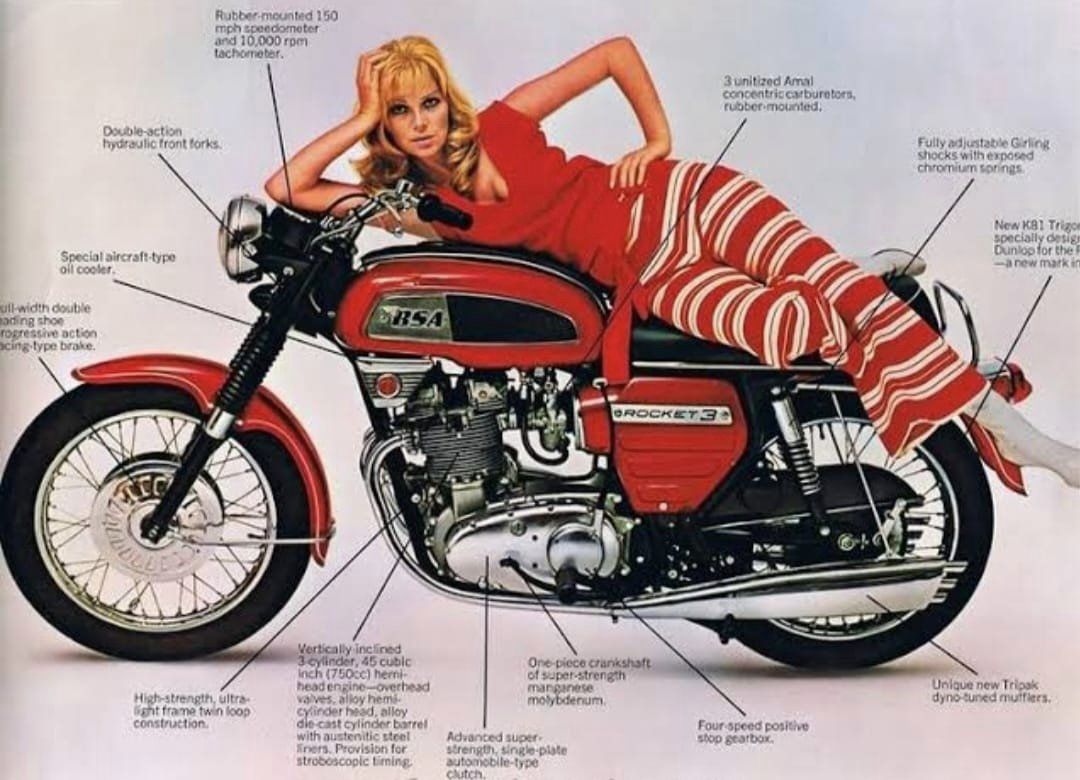
Ross became a Technical Illustrator at the mighty BSA factory in Birmingham, the author responsible for illustrating and writing the BSA Rocket 3 manuals and anything between 1966 through to the firm’s closure in 1972.
After BSA’s demise, Ross Winwood worked as the Publications Manager at W.E. Wassell and did some development work with Pete Edmondson on their trials and scrambles machines. After leaving Wassell’s, he worked as a test driver for Lucas petrol injection, before going back to print and design until 1996 when he bought a Post Office and convenience store until his retirement in 2010. His wife Paula was the Post Mistress; they married in June 1976.
How it all began:
Ross Winwood: “After the first world war, money was scarce. My father, Ray Winwood and most sporting motorcyclists could not afford to buy complete motorcycles, so they cobbled together parts from a variety of manufacturers. In my father’s case, this became the norm.
Moving on to the 1950s, my Dad was running my late Grandfather’s business called Walwin Engineering Ltd, Grandfather’s first name was Walter, hence the name WalWin.”
“My older brother Mike and I became interested in motorcycles when a friend of our Dad, asked if he could try out his scrambler in the field next to our house, which he did and then he let us have a go on it. From then on, the building of motorcycles became an obsessive hobby.”
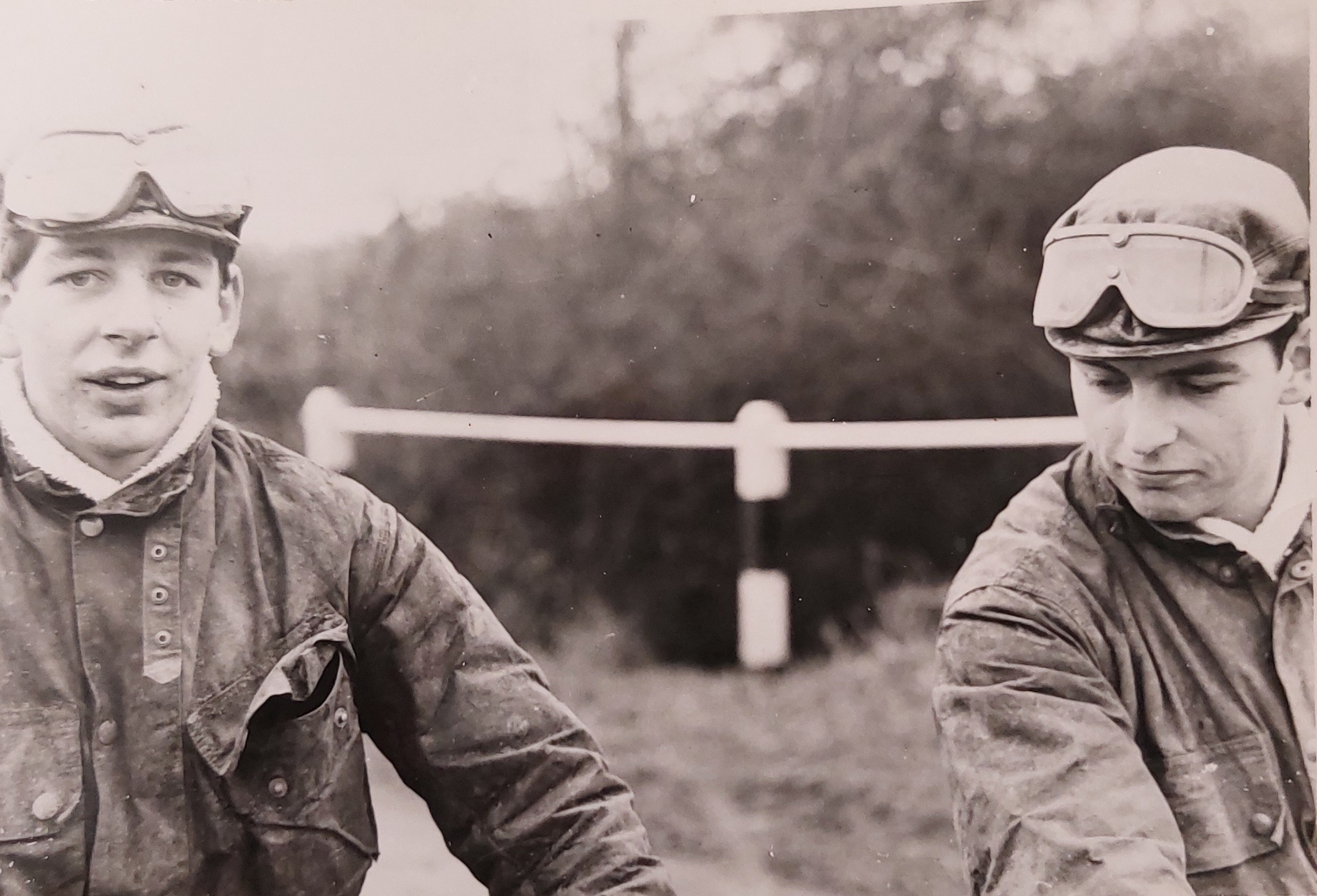
“My Mum was very active in organising events and observing in any weather. My father Ray apart from bike building, was clerk of the course for many big trials, scrambles, and grass track events. My brother and I were born in Castle Bromwich. When I was five, we had moved to Wythall and then to Hollywood a few miles away.”
“One of the events Dad organised was the King’s Norton boxing day trial, which meant marking out on Christmas Day. Our long-suffering mother would wait patiently for us to come home in the dark for our Christmas dinner.”
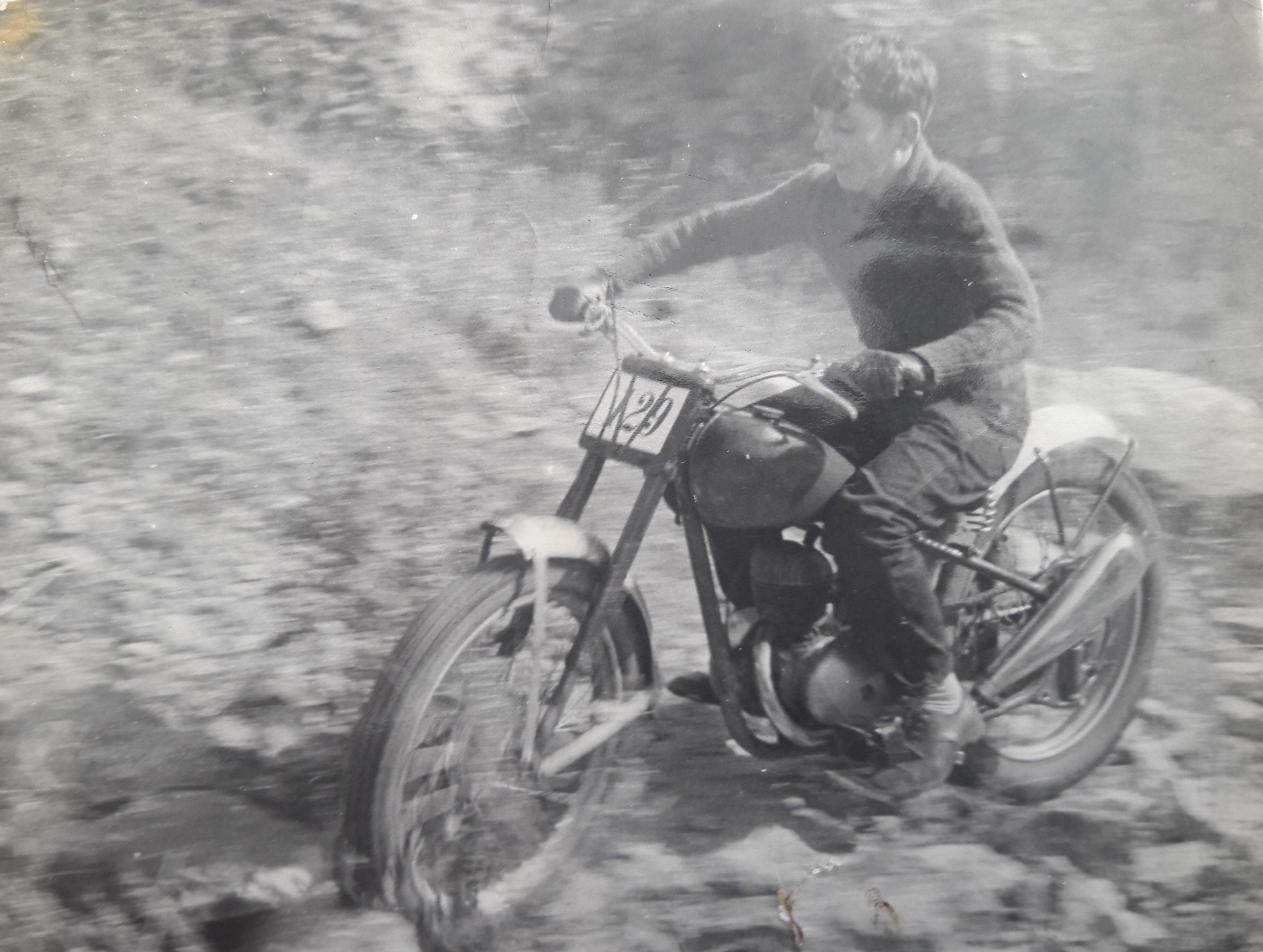
“In 1957, Dad built a bike for Mike, a ‘Bitsa’ using a New Imperial frame, an Ariel engine and rear wheel, BSA front end, plus other parts obtained from Vale-Onslow’s in Birmingham. Then my Dad built a bike for myself, which was a BSA Bantam fitted with a 150cc Villiers engine as I was only twelve at the time. My first trials bike was a BSA C15T when I was sixteen years of age.”
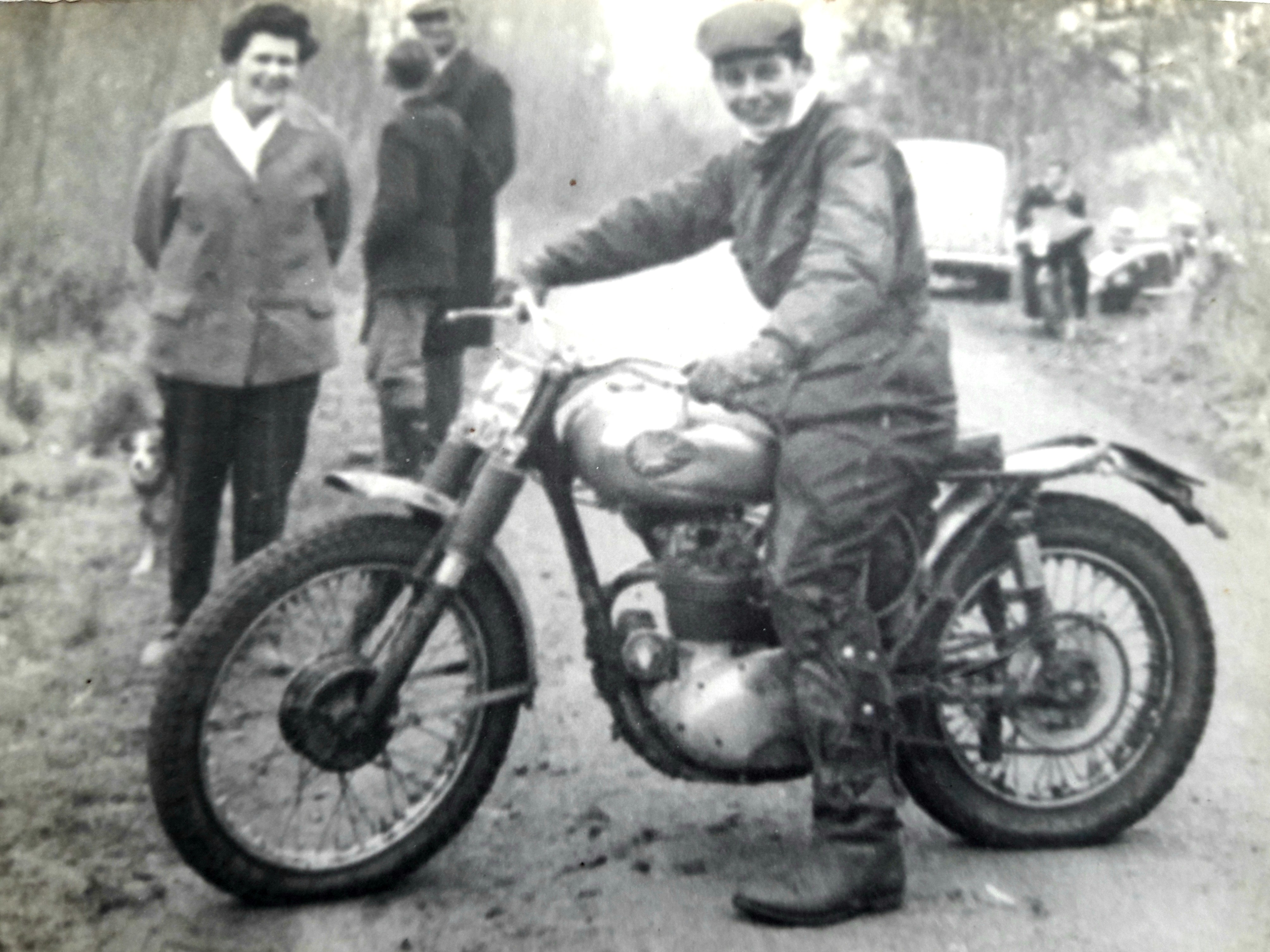
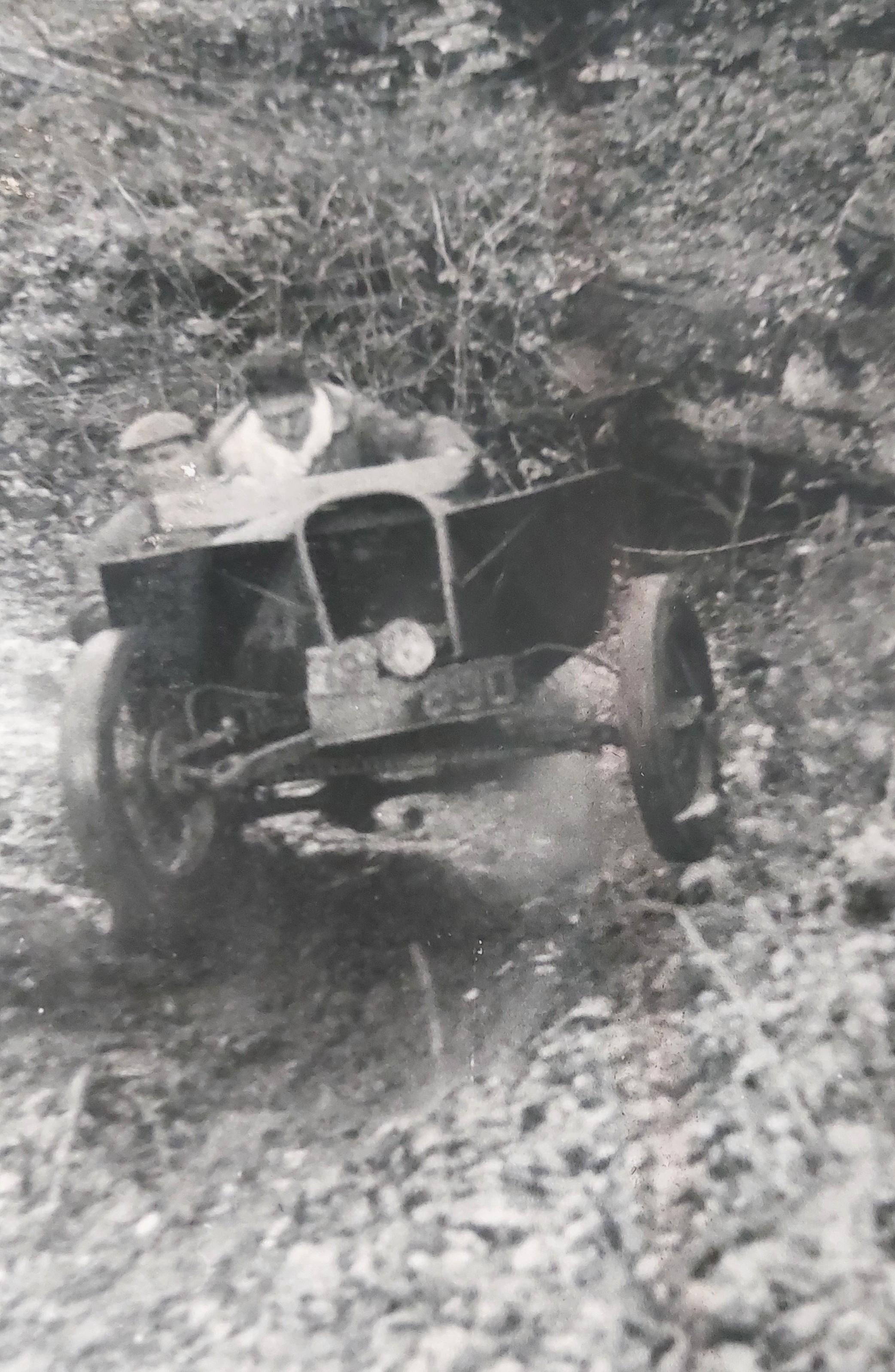
“My Dad got involved in designing a tubular trials chassis for car trials for his good friend, Ron Kemp, from which they had remarkable success. This was a sport in which Gordon Jackson also became successful when he retired from motorcycle trials.”
“From the late 1950s and early 1960s, apart from the Ariel frame, we used frames, engines, and ancillaries from other makes to make ‘Bitsas’. My brother Mike’s first scrambler was a 500cc Ariel engine in a BSA Gold Star chassis. I had an underpowered 250cc Velocette engine in a Gold Star chassis for my first foray into scrambling, bringing us up to the end of 1962.”
The first true Walwin scramblers:
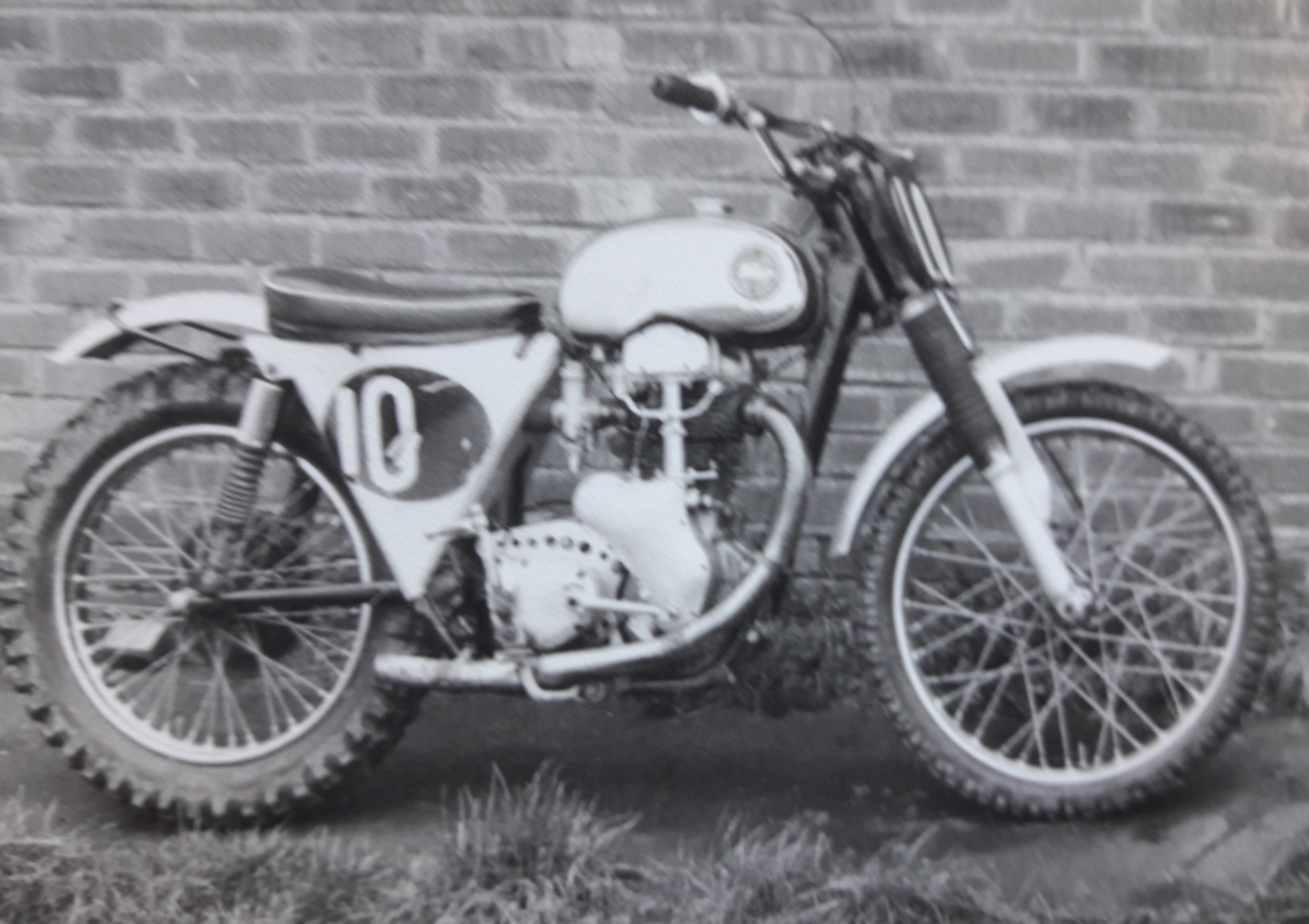
“In 1963 using experience of building frames using 531 tubing for trials, we designed a duplex frame to house a 500cc Velocette engine for Mike to ride. This frame housed the oil tank, which became the norm for all four-stroke Walwins thereafter. There needed to be fancy engineering with the Velocette to achieve the correct chain line, without offsetting the engine. A Norton gearbox was married up by using an outrigger bearing on the engine crankshaft and a Royal Enfield chaincase.“
“During 1964 and taking note of the handling characteristics and some other improvements, we built a second Velocette engined Walwin for me. As a decent front fork was not readily available at this time, so we used the standard BSA legs, but fitted a Girling damper between the fork legs. This gave much better damping and control.“
“After a couple of successful seasons and the emerging success of the BSA Victor 440cc engine, combined with the problems of the crankpin breakages on the Velocette engines, we decided to retire the machines and my best friend Ian Turner continued to race one until Velocette parts were no longer readily available.”
The BSA Walwin scramblers:
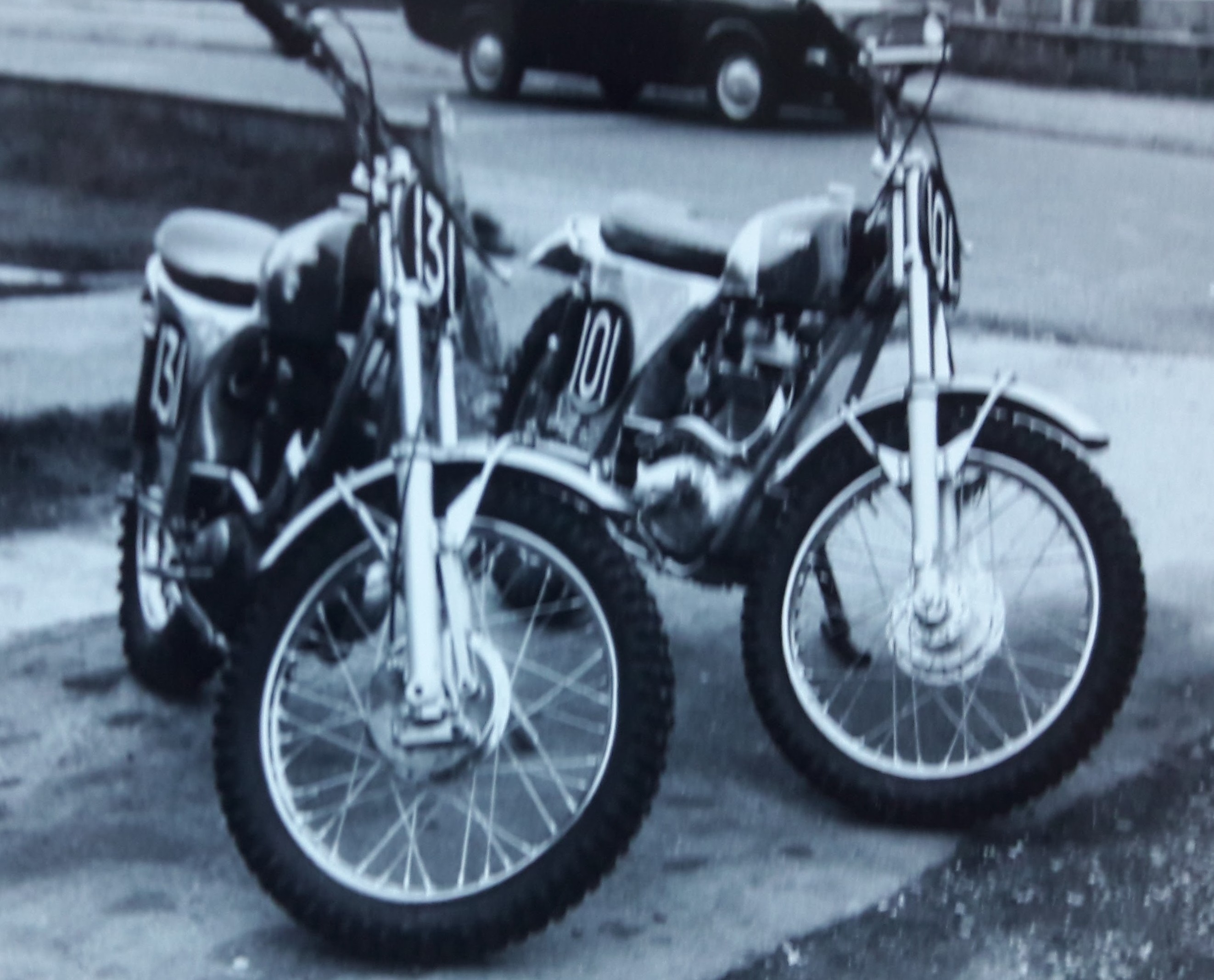
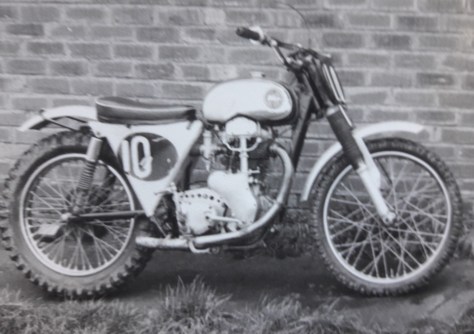
“In 1966 we designed and built a frame kit for the BSA 440cc engine for me as Mike was racing a standard BSA Victor at this time, but he was unhappy with the handling. We did make six frame kits to order but due to some manufacturing problems, we decided to shelve the project. These bikes were ridden to some success before we packed in scrambling in the early 1970s.”
The first true Walwin trials bikes:
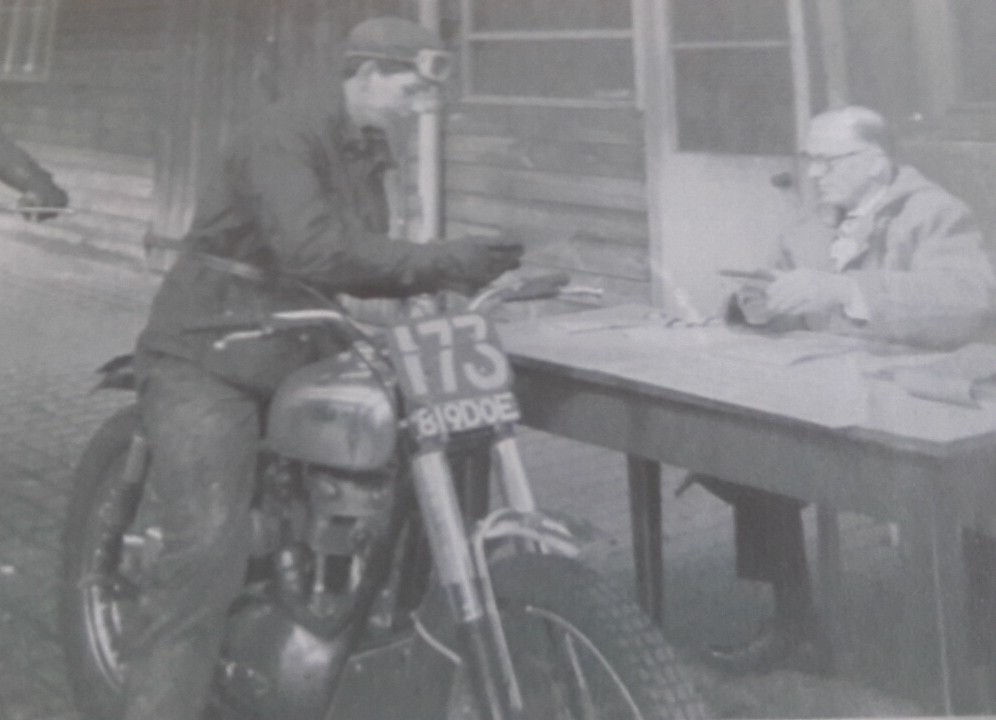
“In 1962 we designed completely new duplex frames to house the BSA C15 engines. These were a vast improvement on the standard C15 frame, being much lighter and so more suitable for trials. We both had satisfactory results from them. We developed these frames over the next few years, building new bikes for the SSDT every year we rode.”
The Alloy Walwins:
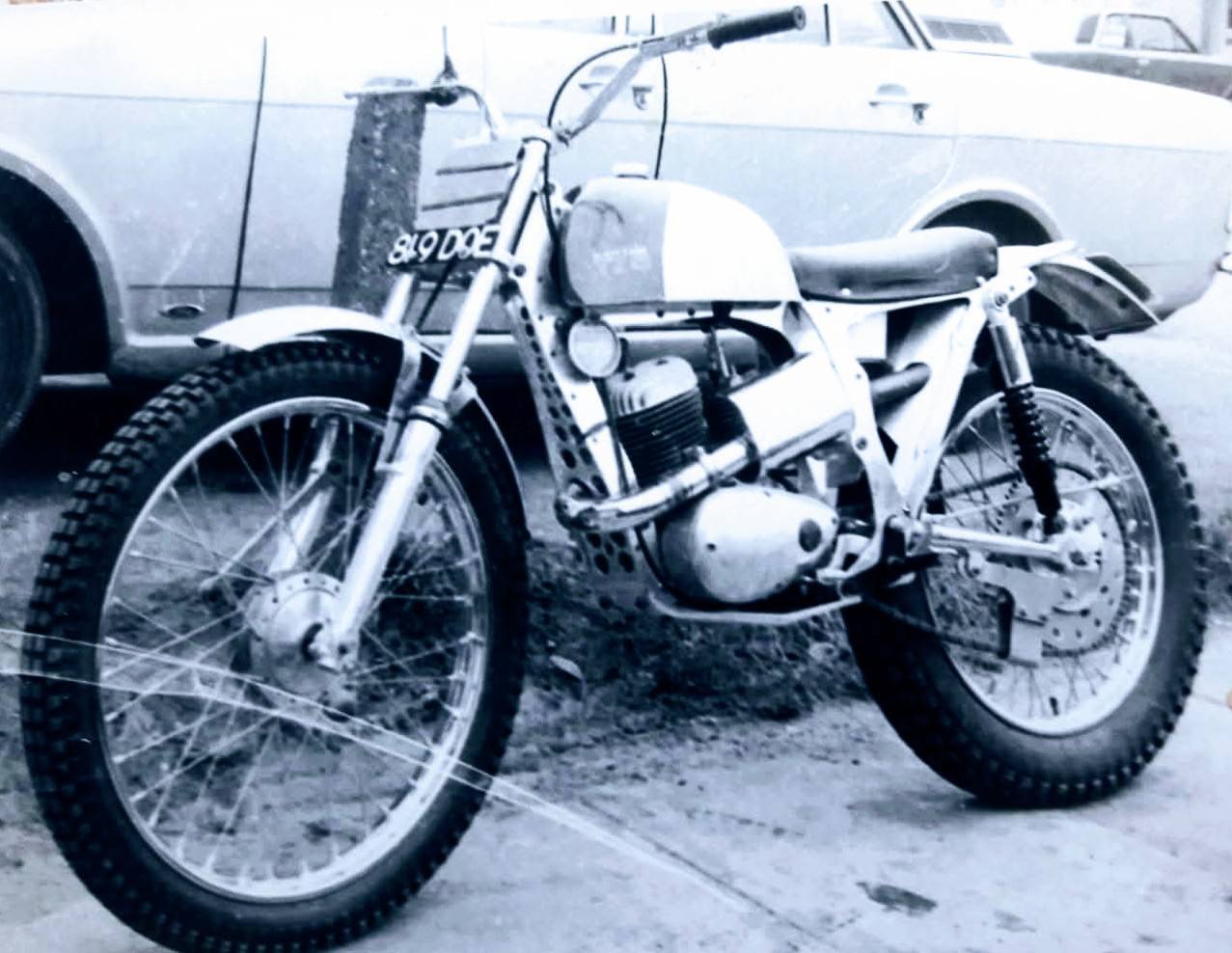
“In late 1968, I along with my father Ray, developed an idea we had for a completely new trials frame to house a 175cc BSA Bantam engine, and in 1969 the alloy plate frame was born.
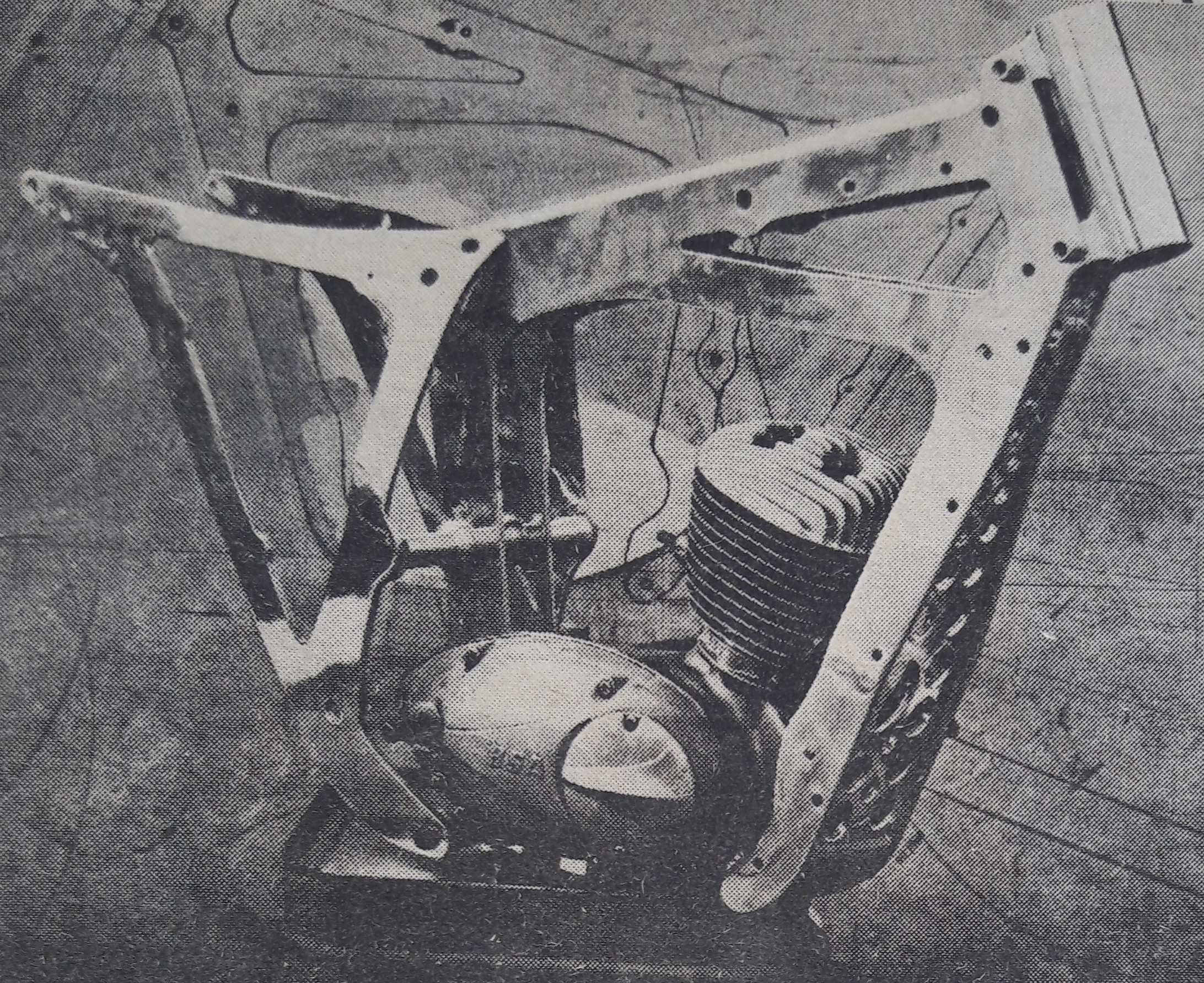
This radical design, which was cut out by hand, from aircraft quality Dural, was extremely light and very stiff. The bolt on steering head was turned from a solid billet and was bolted to the frame plates, thus enabling different head angles to be achieved, without manufacturing a completely new frame.”
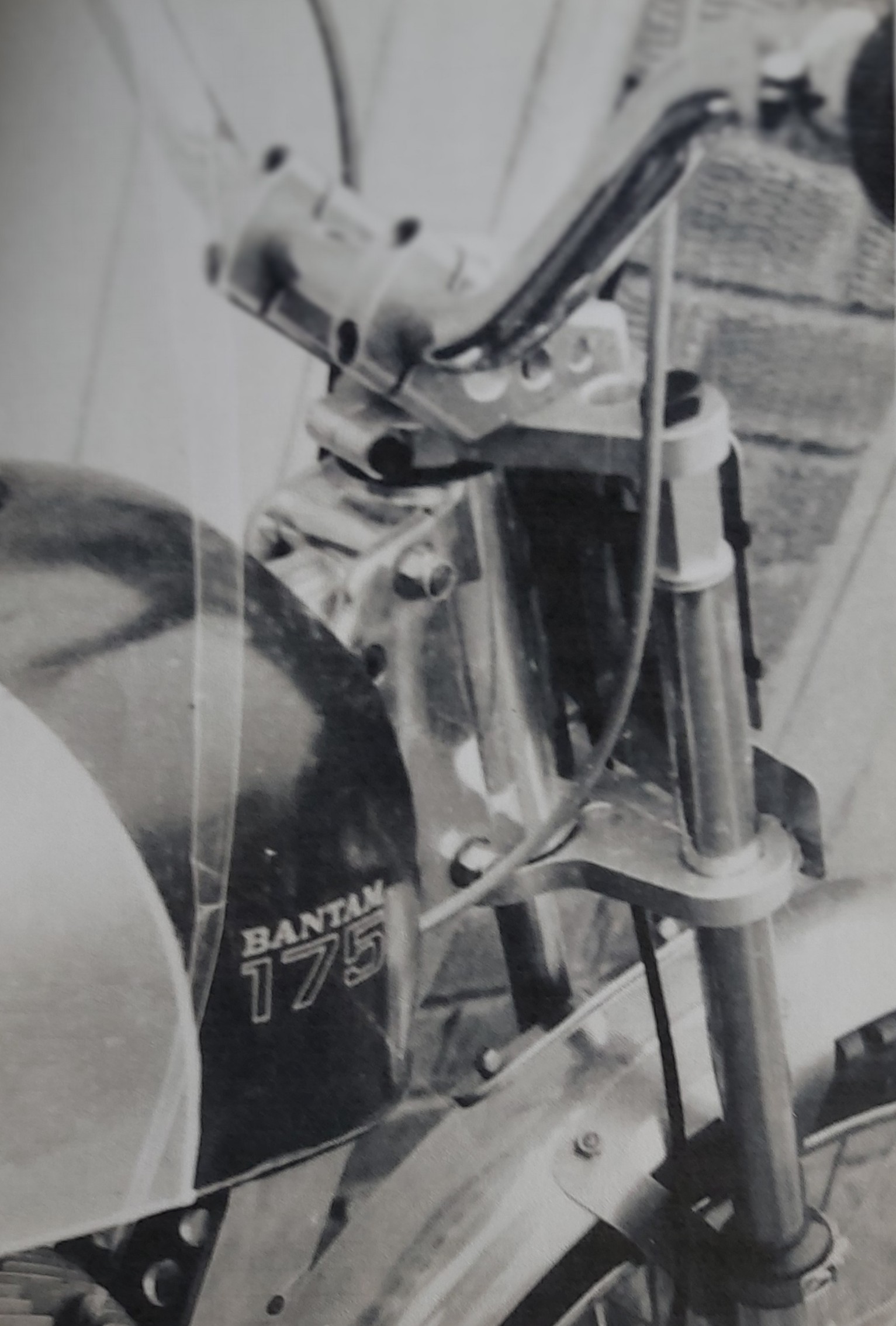
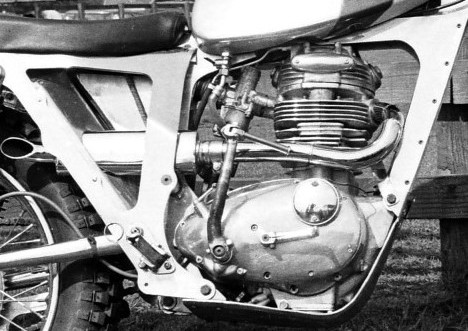
“The engine was a fairly standard 175, built with some support from the BSA factory in the way of parts, including a trials gear cluster used in the factory trials bikes. The whole bike with a gallon of fuel weighed in at 160 pounds (73 kgs). This bike was by far the most successful Walwin trials machine. I had many great rides on it.”
The Motor Cycle of 26th February 1969 reported on Ross’s machine:
“Most unusual machine at Sunday’s Victory Trial is likely to be Hollywood, Worcs engineer Ross Winwood’s 175 BSA special. The machine’s engine is near standard Bantam but its frame is made up from ¼ inch thick duralumin plate and has a steering head turned from solid dural. Except on the steel-tubing rear fork there is no welding anywhere, the plot being held together by countersunk socket headed bolts and nuts. It was designed and built by Ross’ father, Ray, who admits that it could not be a commercial proposition. “In material cost there is not a lot of difference between duralumin and conventional tubing, but the handwork is much more. Building this frame has taken up somewhere about 100 hours,” he said. “We have certainly saved weight over a tubular frame – our unit weighs 14 lb excluding the rear fork. It is structurally quite stiff, comparable with a tubular frame of equal weight,” he added. The finished machine will have a Ceriani front fork and a Honda fifty front hub. A sheet-duralumin undertray will form part of the frame by completing the stressed assembly and relieving the power unit of any frame loading.” [1]
At the Inter-Centre Team trial in April 1969, the Suzuki works rider Dennis Jones borrowed Ross Winwood’s 175 Walwin and came home a creditable third best individual performance on 16 marks on the machine. Jones’s Suzuki was on display at the Brighton motorcycle show. Jones reported that the Walwin handled exceptionally well in comparison to tubular framed machines that he had ridden.

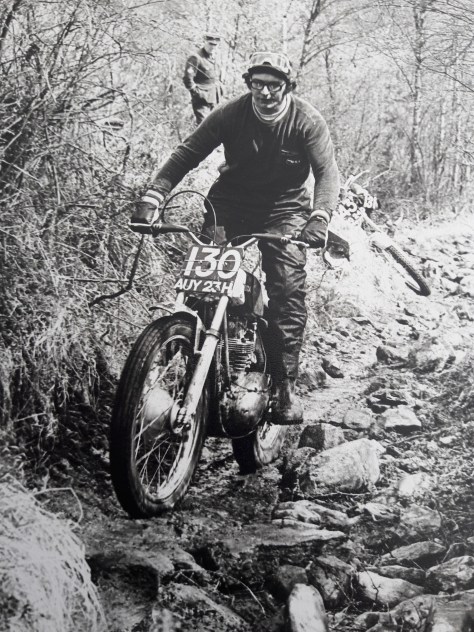
Winwood: “In late 1970, we designed a frame to take the BSA B25 ‘Starfire’ engine unit, this would be my 1971 Walwin 250cc four-stroke bike for the Scottish was again a special machine.“
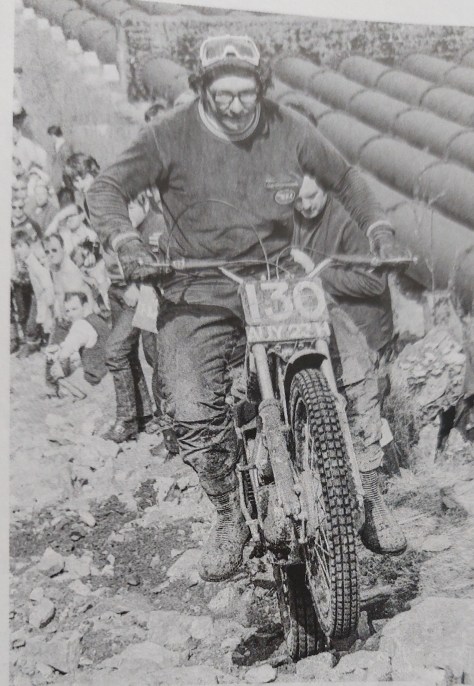
“Registered as a Walwin carrying the number AUY23H, it had a BSA four-stud front end, BSA conical hubs, the B25 engine was fitted with B40 flywheels and C15 gear cluster. Some of the cylinder fins had been removed like the BSA scramblers of the period. It was fitted with a 24mm carburettor and a B50 motocross fuel tank. It weighed in at 200 pounds (91 kgs). It was robust enough for the SSDT, my only claim to fame was cleaning ‘Pipeline’ on the last day. It was a particularly good bike in a straight line.”

The Walwin-Mickmar:
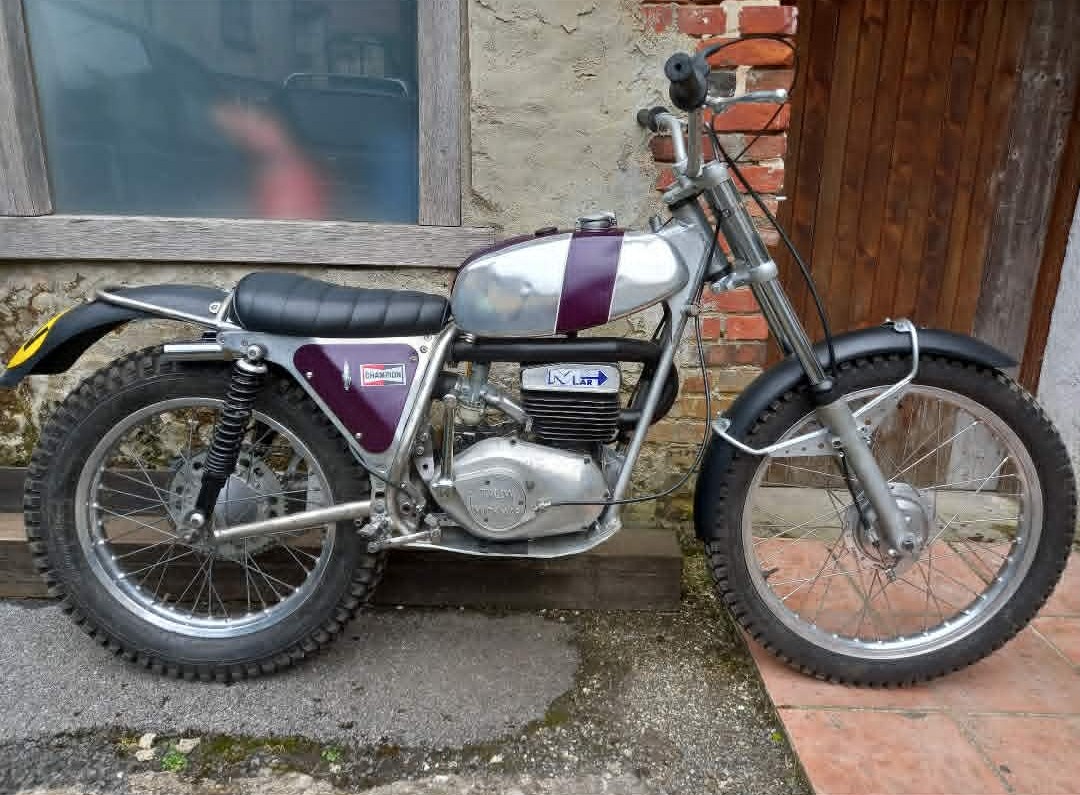
“In 1972 we became involved with designing a frame to house the prototype MickMar engine designed by Michael Martin. We built a complete machine with some advanced features. This included a detachable rear subframe assembly which housed the air-cleaner, silencer, and seat in one monocoque unit. We were by this time recognised by the DVLA as a manufacturer and we decided to enter a Walwin team in the 1972 SSDT. My bike was to house the new Mickmar, Mike was to ride a 250cc Bultaco engined version and Ian Turner was to compete on the alloy 250cc BSA engined bike.
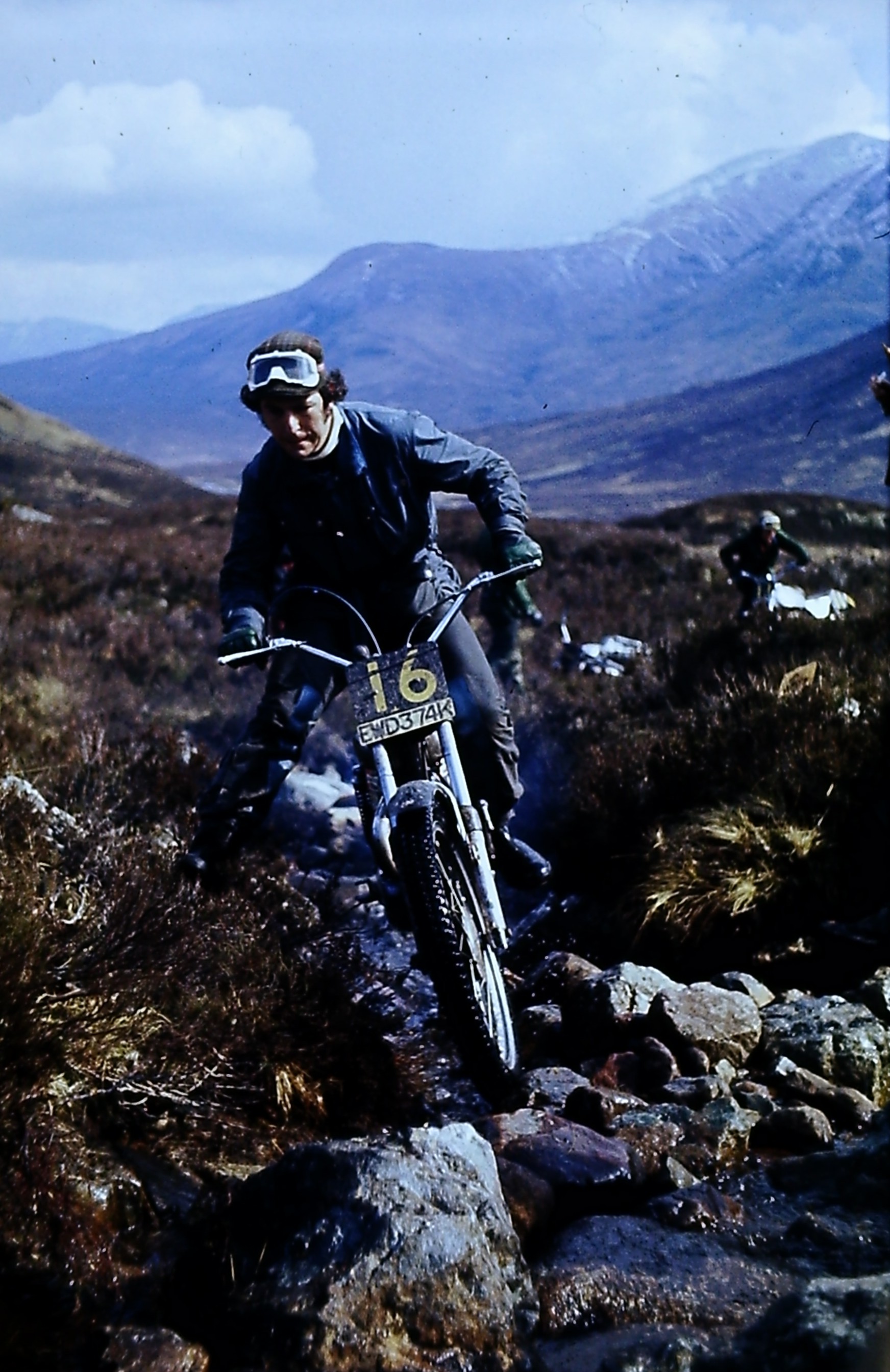
“Unfortunately, the Mickmar needed much more development for it to become a viable trials engine and with very little time available before the Scottish, we were then faced with the problem of what engine to use with a similar exhaust outlet and engine dimensions.“
“The only unit available was the very good 250cc Ossa. I purchased an ex-works Ossa and we installed the engine along with some of the running gear. This bike turned out to be quite successful and probably influenced another manufacturer with their subsequent designs.“
“We did consider producing this bike as a production trials machine, but the lack of an available proprietary engine at the time scuppered this plan. We rode these Walwins until we retired from solo trials riding in the late 1970s. The whole bike with the Ossa engine weighed in at 165 pounds (kgs).“
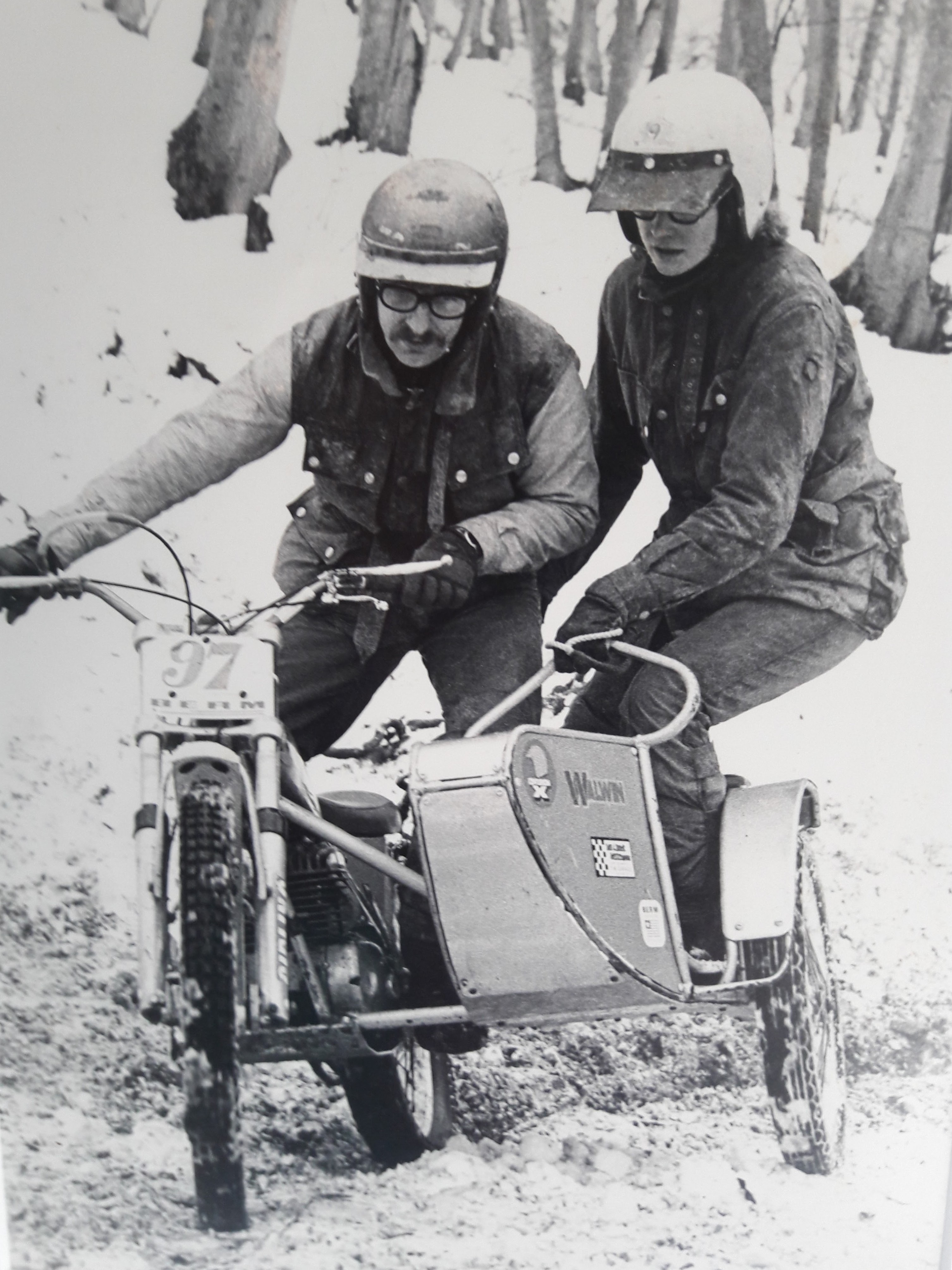
“I had ridden the Walwin Ossa and retired on the second day with mechanical problems, it was the last time I rode in the Scottish Six Days in 1973. I did buy a 325cc Bultaco in 1974 but hated it and wished that I had never sold the Bantam. I packed up riding in1976 and then bought the Ossa Walwin back and put a sidecar on it and did a couple of seasons with Paula as passenger, until on a ridiculously steep section in the Colmore, I turned the plot over landing on Paula’s back, she ended up in intensive care with four broken ribs and a punctured lung, and that put paid to our sidecar partnership.”
The Walwin Grass machines:
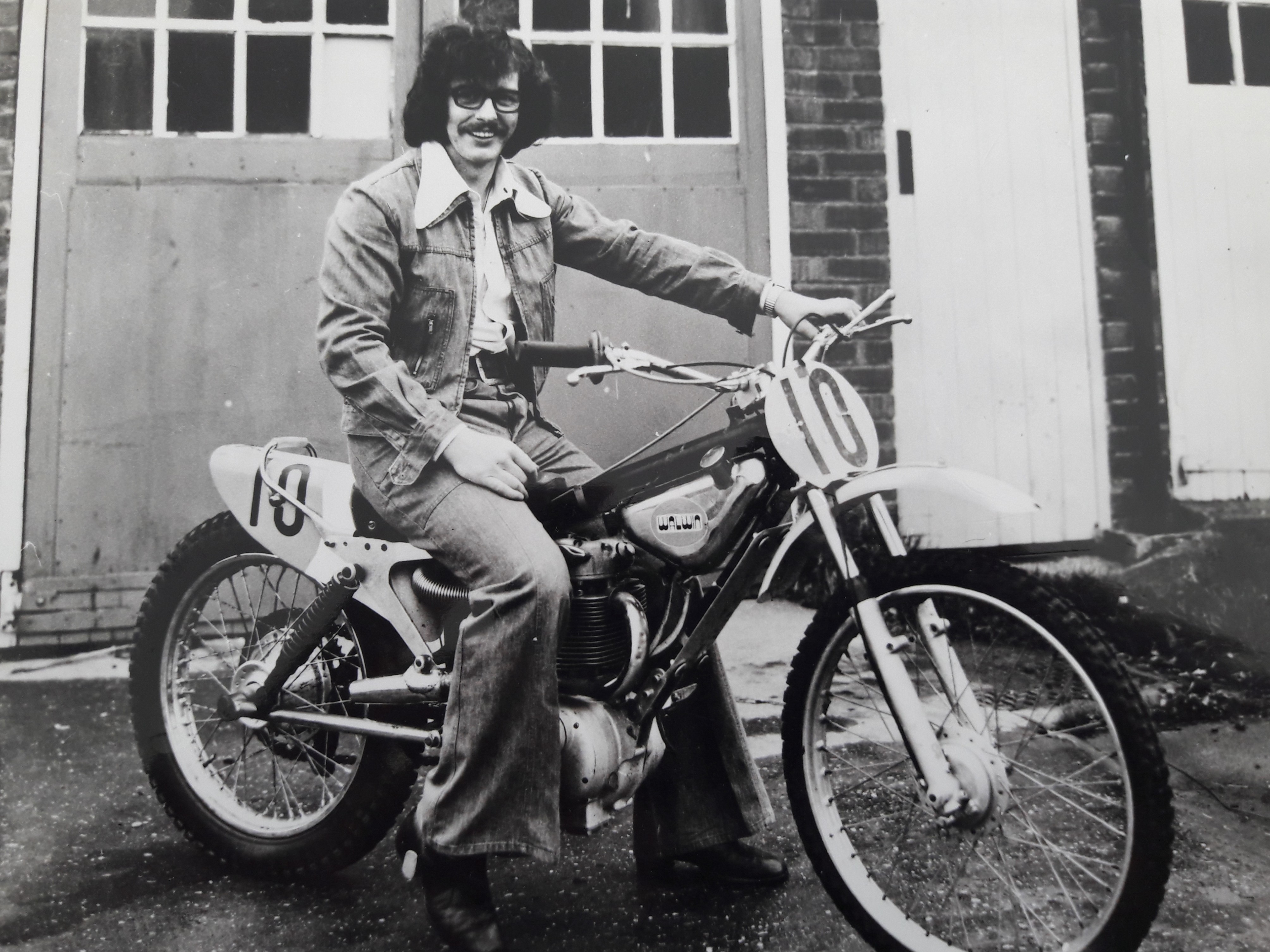
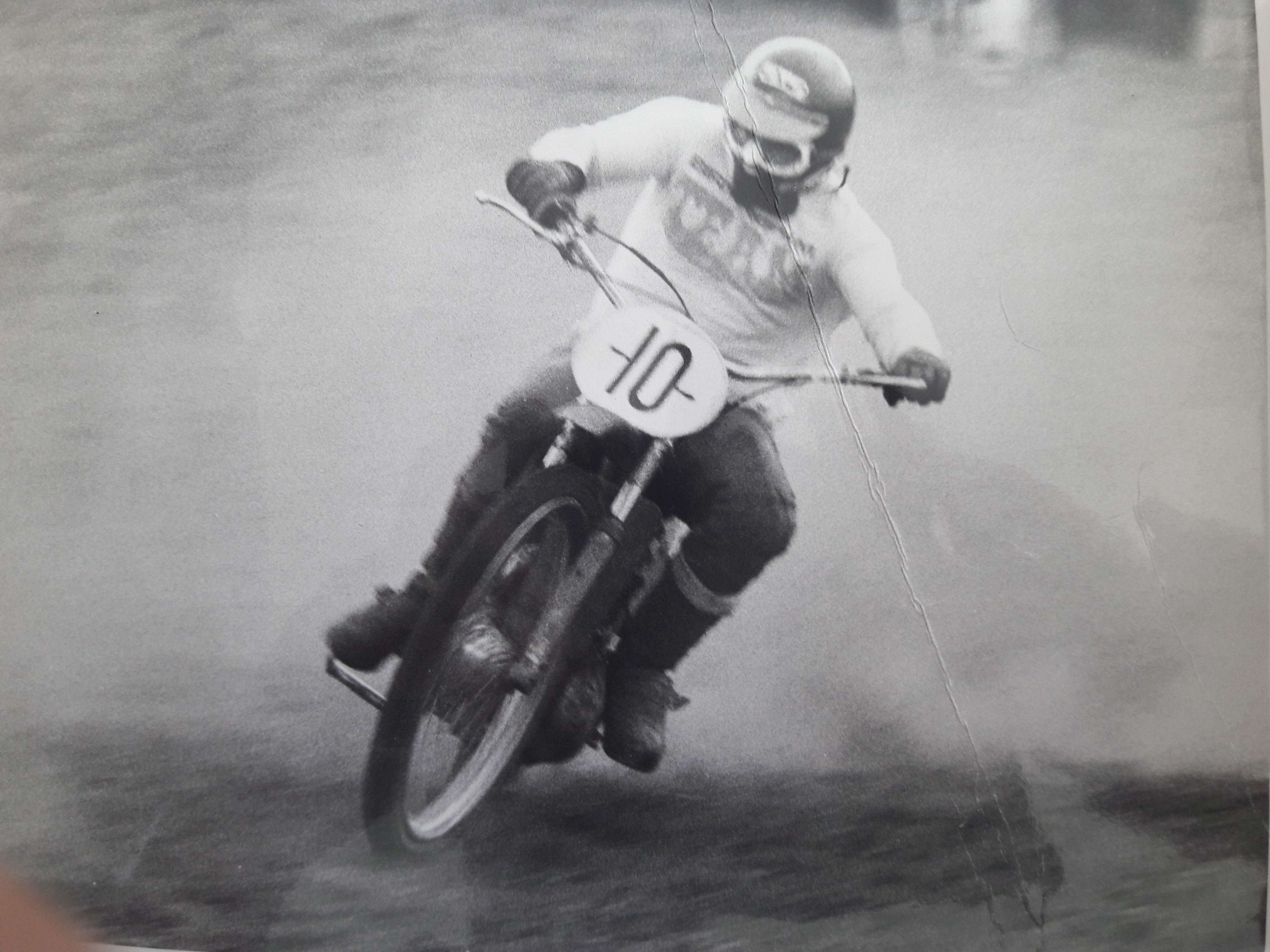
“In 1973, I fancied a go at grass track racing, so I started out on an ElStar fitted with a BSA B50 engine. The first thing I realised was that the standard rubber-band type forks were not for me. Later that season I designed and built a new frame with MP front forks and an alloy plate subframe, with oil carried in the top tube.”
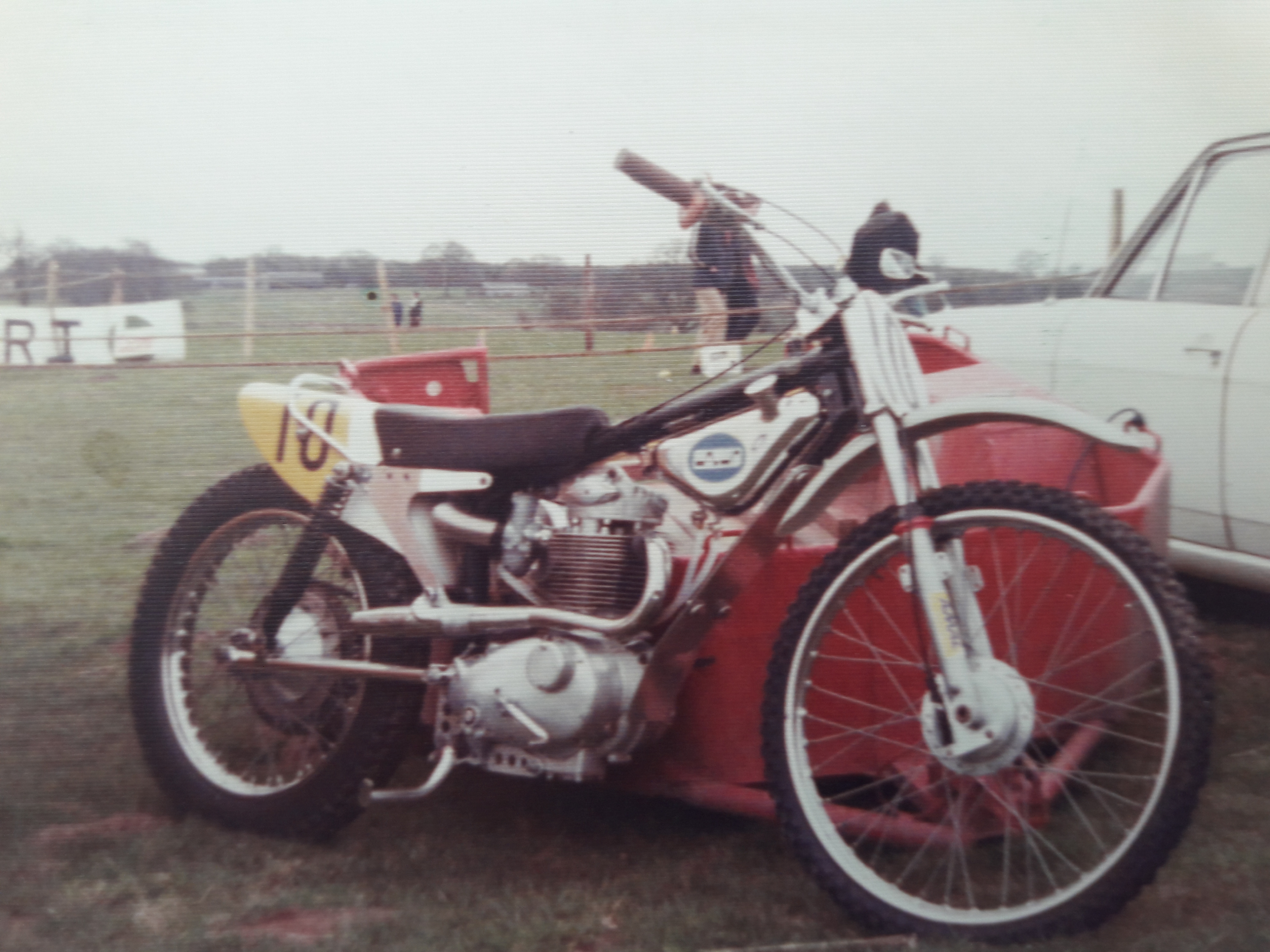
“The standard B50 engine tweaked by my Dad who was a wizard on cylinder head shaping, so along with an unbelievable 19:1 compression ratio and a squish head design, we achieved probably the fastest BSA in the country, and I was proud to win the Midland Centre 500cc championship in 1975, I also met my wife.”
The Walwin machines today:
It is quite interesting to note that some, but not all, Walwin machines have survived. This is not in any way surprising as they were well designed and built. However, there is even a ‘replica’ Walwin BSA C15, created by Steven Pritchett out there in trials world.
Ross Winwood was lucky enough to be offered one of his machines from trials enthusiast Paul Ray from Bagshot in Surrey in 2024. Paul at first didn’t know what the machine was, as he only wanted the engine, a four-stroke BSA C15 for a build project of his own. Happily, Paul found out in time and Ross quickly snapped up the rolling chassis with the intention of giving it to his son for posterity.
Paul Ray: “I can’t tell you much I’m afraid, I bought the bike off Mark ‘Watty’ Watmore as a donor for the Drayton C15 project I was building. I sold the rolling chassis back to Ross Winwood but kept the engine and the registration number, I thought I had a bad deal as I actually wanted a B40, but it turned out that the engine is a competition department experimental engine, and after a top end rebuild it pulls like a train, so happy days.”
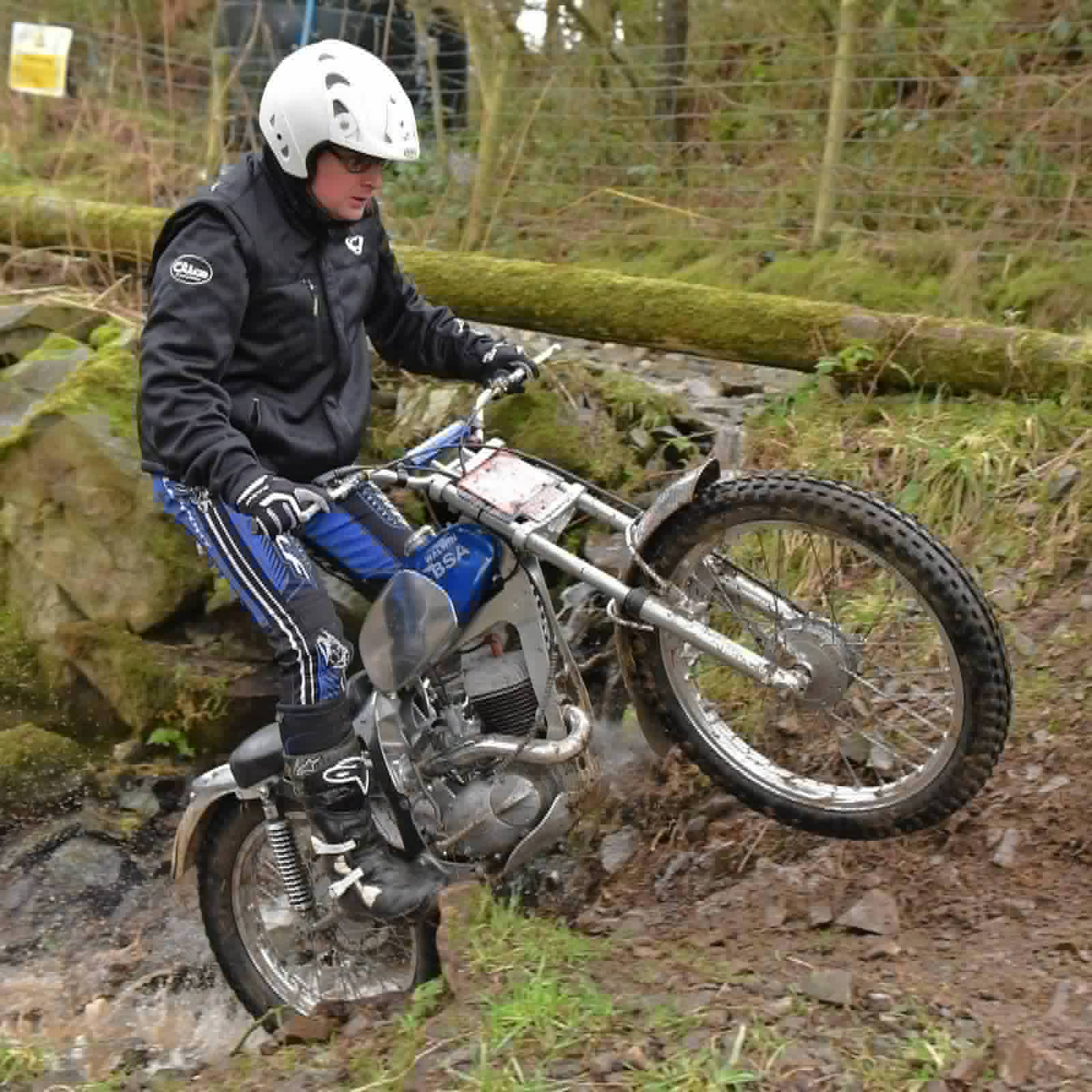
Keith Quinn and Terry Maynard have both owned Walwin machines, Quinn owned Ross’s Bantam powered version and the 250 four-stroke version from 1971. It was on the 250 that Keith Quinn from Carnforth won the Sammy Miller championship in the ‘Specials’ class. Terry’s is a BSA Bantam engined Walwin (BAB6H) the one used by Mike Winwood in the SSDT of 1970.
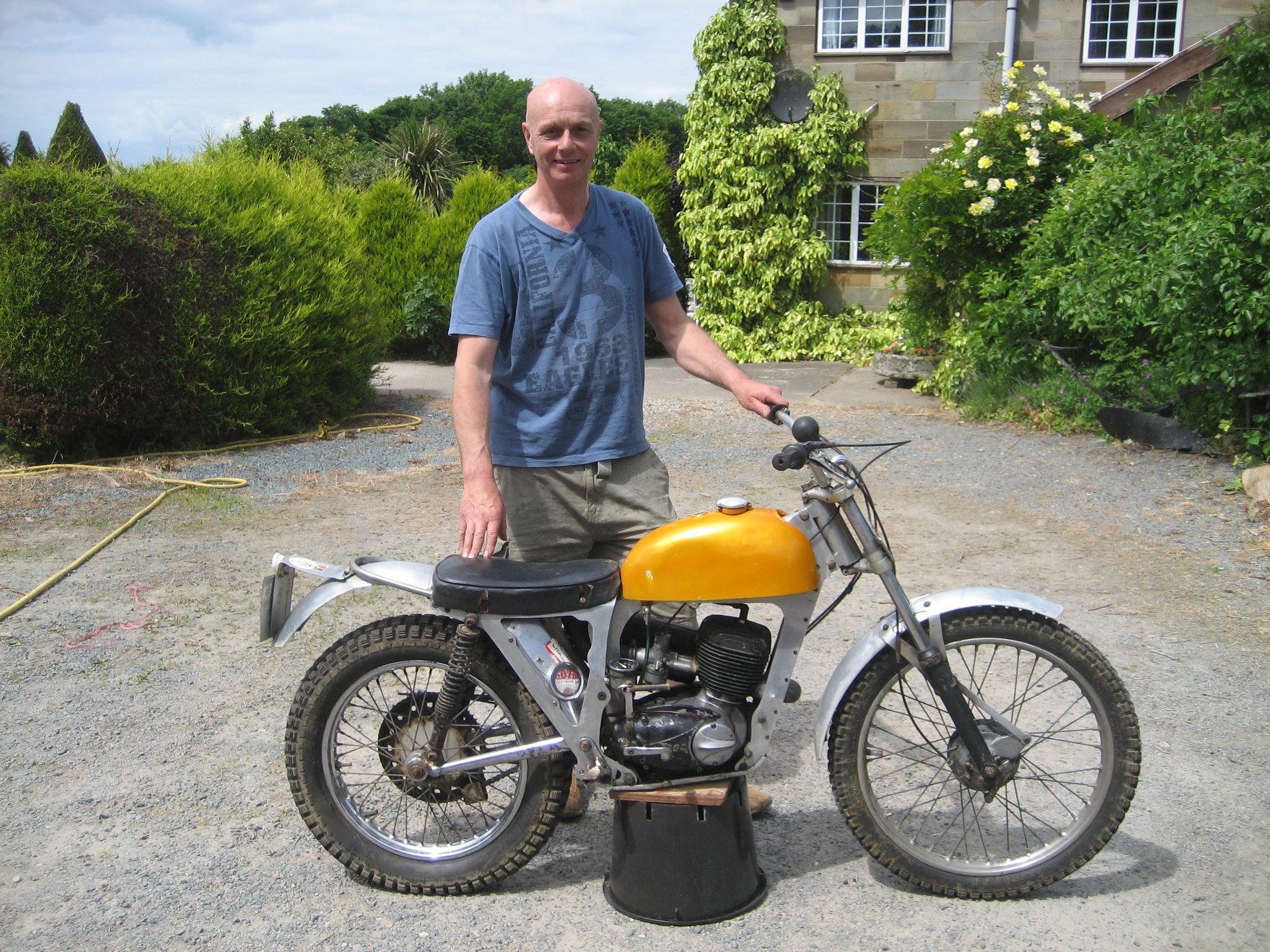
Ross Winwood: “Paula and my son Adam very kindly bought my Walwin Bantam from Keith Quinn, so we have both my Alloy Walwins back in the family. Of the other Walwins, the Walwin Ossa is now owned by Olivier Barjon in France who has installed a later much more developed Mickmar engine, bringing it back to its original design. Mike’s 250 Walwin was last seen in Derbyshire.”
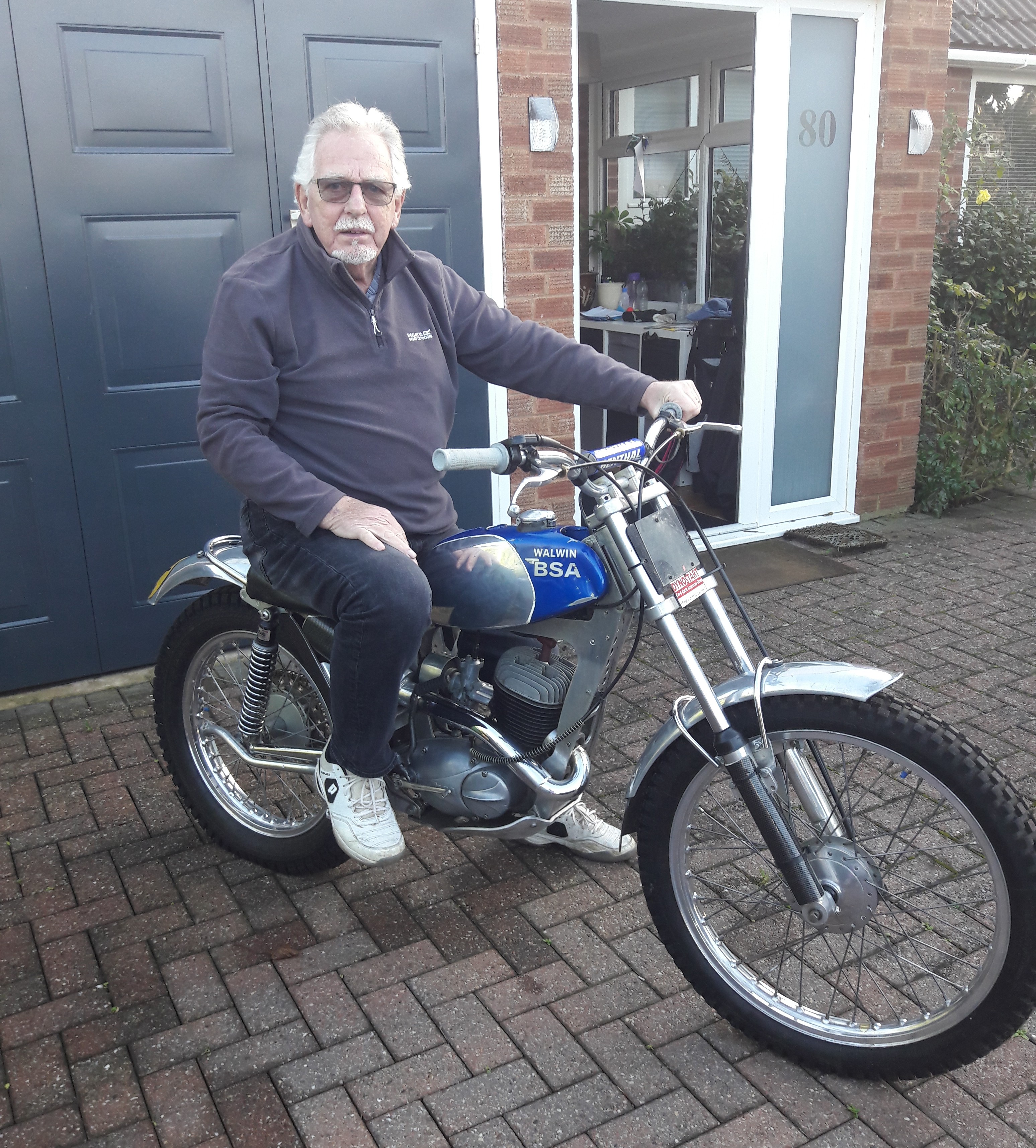
With special thanks to Ross Winwood for his co-operation and assistance in preparing this article.
Bibliography:
The Motor Cycle – 26th February 1969 [1]
‘Walwin – the alloy wonders’ is the copyright of Trials Guru and Ross Winwood.
Photographic Copyright: The photographers named in captions to the images.
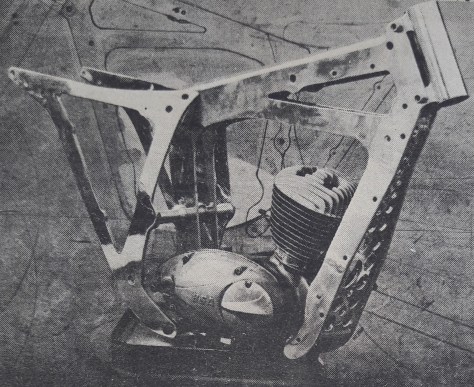
The Bantam engined Dural framed Walwin in 1969. Photo: Ross Winwood Collection. 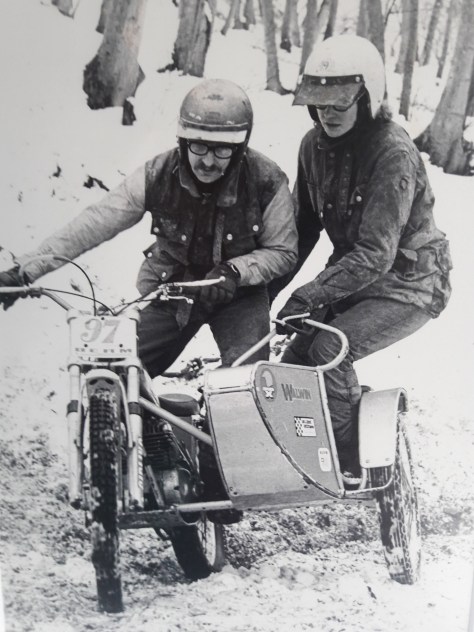
Ross and Paula Winwood competing on the Walwin Ossa – Photo: Ross Winwood Collection. 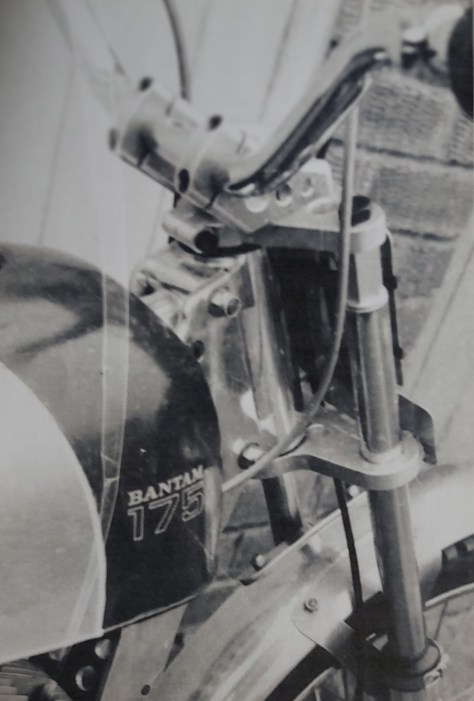
Detail of the steering head on the Dural Walwin – Photo: Ross Winwood Collection. 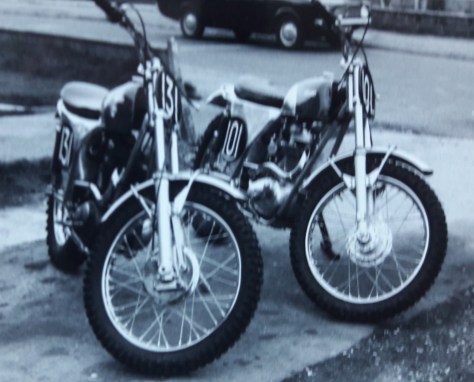
The Walwin BSA scrambles machines – Photo: Ross Winwood Collection. 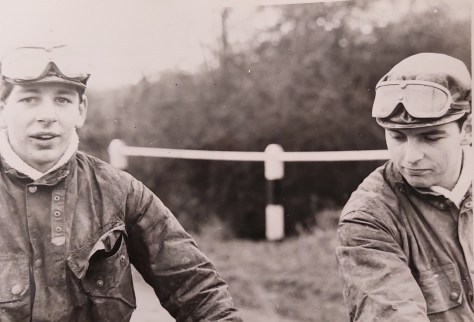
Ross and Mike Winwood – Photo: Ross Winwood Collection. 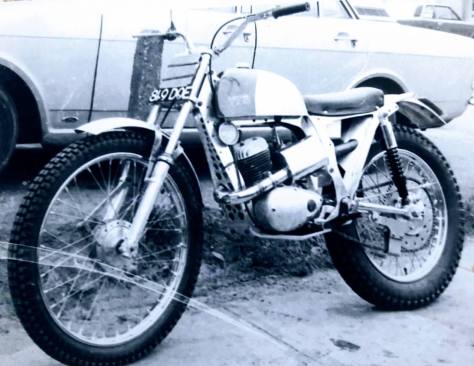
The Walwin Velocette scrambler used by Mike Winwood. 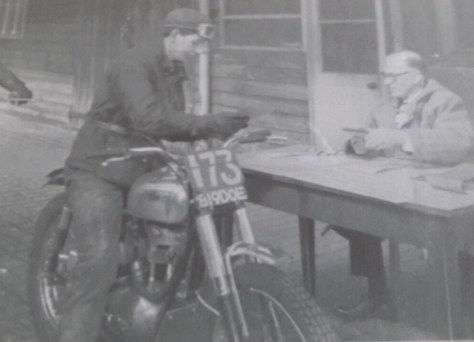
Ross Winwood at the start of the 1966 SSDT at Gorgie Market in Edinburgh. 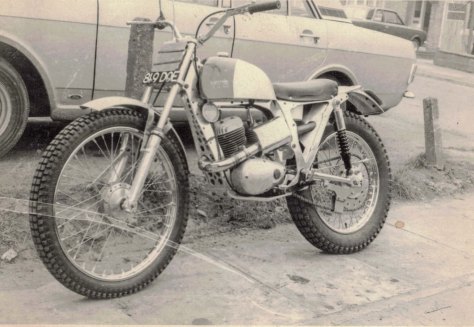
The Walwin BSA with Bantam engine, using the C15T registration number. (Photo: Ross Winwood Collection) 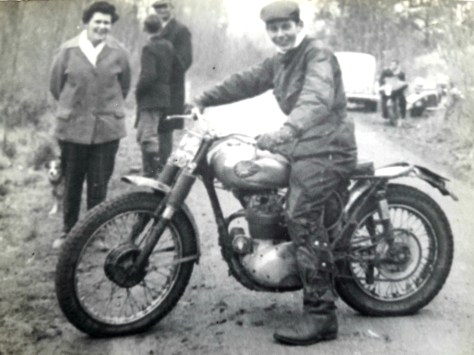
Ross Winwood on his first ‘proper’ trials machine, the 249cc BSA C15T. 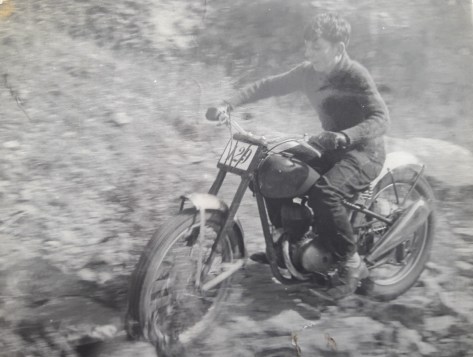
Ross Winwood on the 150cc Villiers Bantam – Photo: Ross Winwwod Collection. 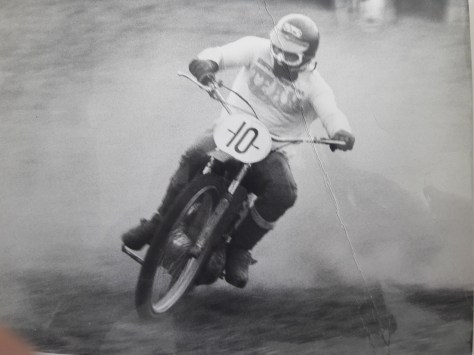
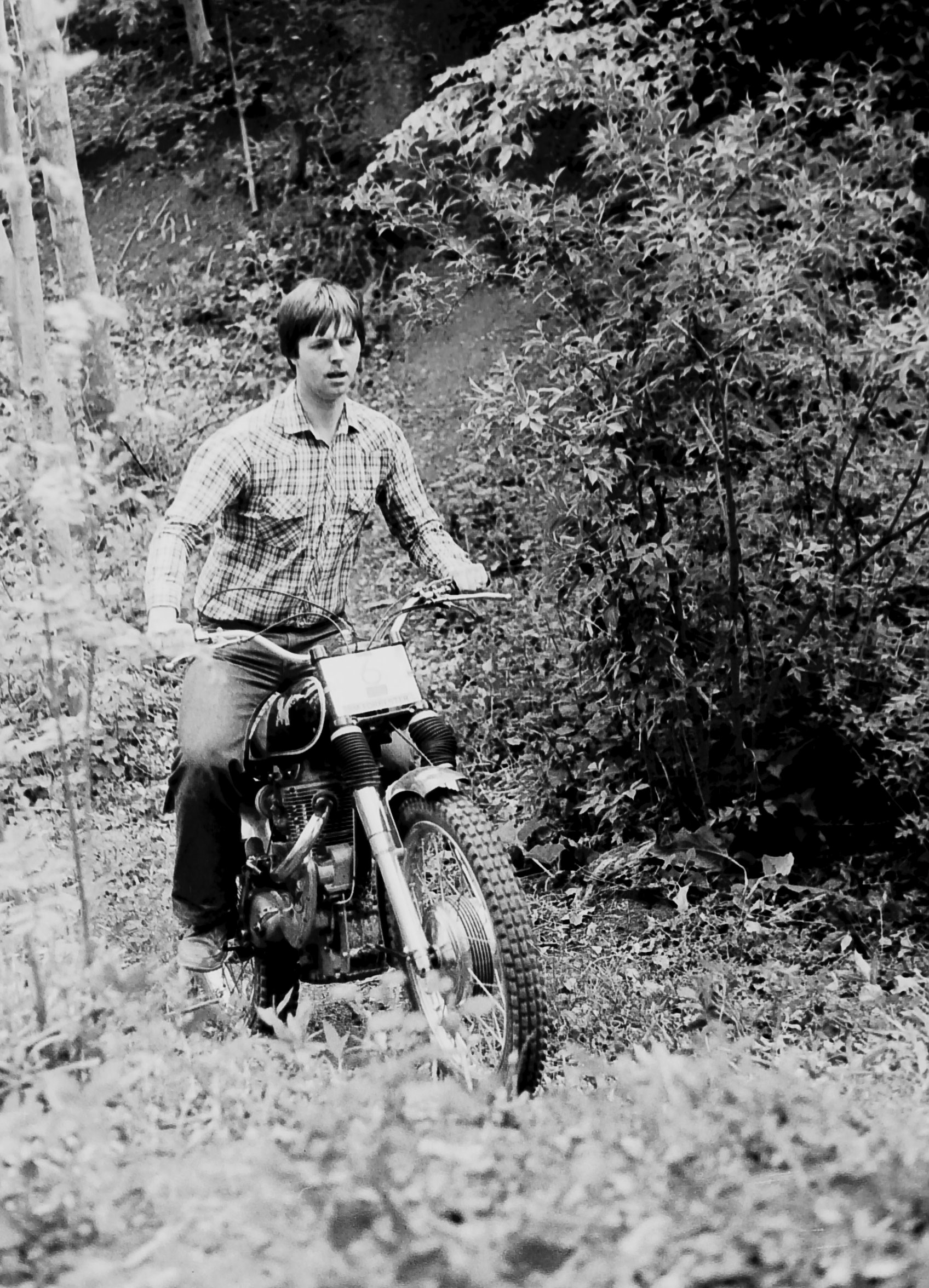
Ross Winwood in action on the Walwin BSA. 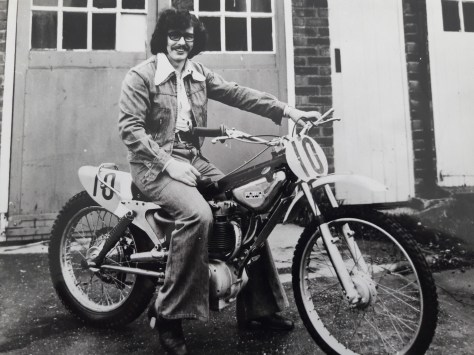
Midland 500cc grass track champion, Ross Winwood and the Walwin BSA grass track machine – Photo: Ross Winwood Collection. 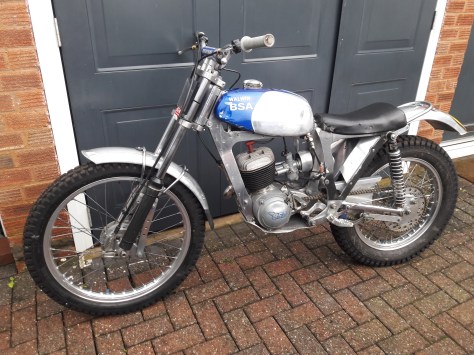
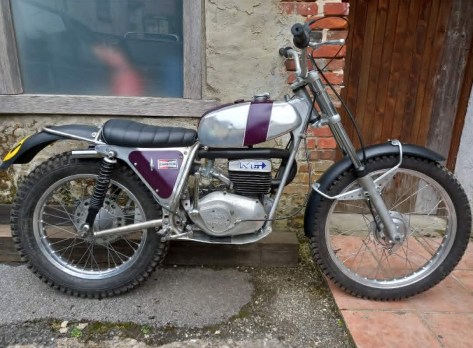
The 1973 Walwin Mickmar – Photo: Olivier Barjon 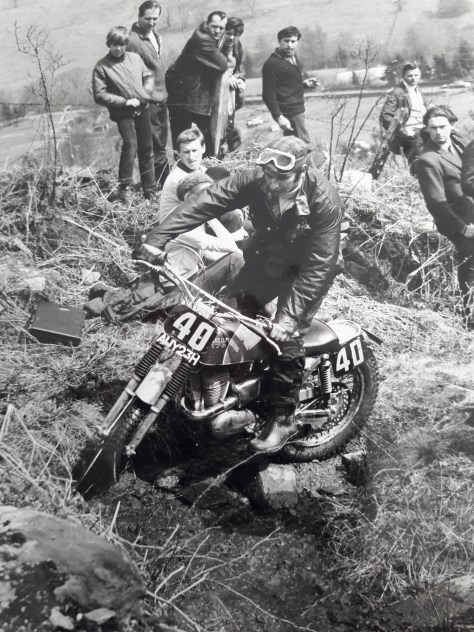
Apart from ‘Fair Dealing’ for the purpose of private study, research, criticism or review as permitted under the Copyright, Design and Patents Act, 1988, no part of this article may be copied, reproduced, stored in any form of retrieval system, electronic or otherwise or transmitted in any form or by any means, electronic, electrical, mechanical, optical, chemical, photocopying, recording or otherwise without the prior written permission of the author as stated above. This article is not being published for any monetary reward or monetisation, be that online or in print.


 TRIALS GURU - DEDICATED TO TRIAL