Tag Archives: Montesa

Max King – Trials Riding

Words: Trials Guru; Tony Davis; John Dickinson; Deryk Wylde; Mike Naish and Tommy Sandham.

Photographs: OffRoad Archive; Gordon Francis; Eric Kitchen; Mike Naish; Barry Robinson; Sammy Miller Museum; Gordon Bain Photography.

It is now, in 2025, seventy years since the publication, ‘Trials Riding’ first appeared on book stalls in 1955. It was a significant publication for the sport of motorcycle trials at the time. Copies of that first edition and subsequent editions, are still being traded on online auction platforms. But the question that some may be asking is… Who was Max King?

The past is a foreign country, they do things differently there“. Not so many years ago, books were regarded as important reference works on most if not all subjects. Since the advent of the world wide web, this has changed with the information superhighway leaving printed matter way behind. Now books are a novelty, they are not bought in their thousands anymore, with many ending up in discount book stalls. We also live in less formal times, we live in ‘instant’ times with information at the touch of a keyboard or mobile device and more recently Artificial Intelligence or ‘AI’ for short. Back in the 1950s it was a different world, people were emerging from a second world conflict and the sport of trials had made a comeback. Weekly motorcycle newspapers flourished and had recommenced presenting reports of national and international events, it was all done by the written word on paper. Books were very definately reference material of significant importance. It was a different time with different methods, no mobile phones, no internet, no videos, no social media, television was in its infancy and radio still ruled the roost. This was the world and the time of Max King.

But who was Max King?

The younger reader of Trials Guru might well ask, ‘Who was Max King?’ and that would be a fair question!

Max King in 1959 on the standard form BSA 250cc Star (C15T), taken near his Dorchester home – Photo: Gordon Francis supplied by: OffRoad Archive.

The Trials Rider’s ‘Bible’:

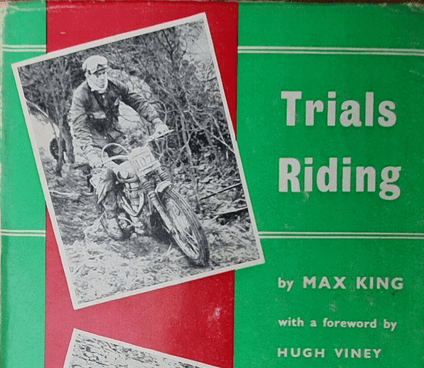
Frederick Maxwell Wright King was born in Devon, England in 1916 and he went on to write one of the first books exclusively published on the sport of motorcycle trials. The book, entitled simply ‘Trials Riding’, was published by Temple Press Ltd., Bowling Green Lane, London E.C.1 in 1955, this was the first edition, priced at seven shillings and sixpence, there would be updates over the next twenty-one years as the sport evolved.

This book was regarded by many as the trials rider’s ‘bible’. The early editions were in association with the motorcycling press, namely Motor Cycling or the ‘green un’ as it was known, this enabled King access to many images taken by the staff photographers and therefore keep on the correct side of copyright which was owned by the publishers and guarded feverishly.

Here was a book that prior to 1955 did not exist. Max King as a young trials rider had searched for such a publication, but to no avail. So, he decided to write one himself. As we will discover later in this article, without a doubt ‘Trials Riding’ inspired novice riders, introduced young people to the sport of trials and was read by all the established aces!

‘Trials Riding’ by Max King, first edition from 1955, published by Temple Press Ltd. The top image is of George Fisher on a factory Francis Barnett MWK499 in the 1954 SSDT, the lower is lady trials rider, Olga Kevelos in the same event on her 197cc James.

Second Edition: 1960

The second edition was released in 1960, priced at eight shillings and sixpence, five years after the original copy, the second edition was billed as being: ‘revised and updated’. Temple Press was primarily a publishing company who were prolific in automotive publications, transport themed books and magazines, they operated from 1900 until around 1964.

Max King – Trials Riding – Second Edition, the dust cover features John Brittain on his works Royal Enfield HNP331 and the author, Max King on his works supplied BSA C15T, YOE388.

Max had developed a liking for motorcycles as early as 1924 when he was just eight years of age. Like most young men of his era, the Second World War raged from 1939 until 1945, so all trials activity ceased completely, recommencing in 1946, and even then it was very low key due to ongoing fuel rationing right up until King wrote the first edition of his book. King was a member of the local Otter Vale MCC and effectively took up the sport at 30 years of age.

In 1950, Max was so impressed with the performance of Triumph’s Trophy model in the hands of Jim Alves from Somerset, he purchased one the following year. The machine didn’t however live up to his expectations and he found it difficult to ride in muddy conditions, but it was just the tool for long distance trials, such as the MCC Land’s End and Exeter trials. In these events he excelled, always picking up first class awards on the 499cc Triumph.

The first Foreword:

Max King managed to persuade B.H.M. ‘Hugh’ Viney who at that time was at the peak of his trials career, being an ACU ‘Gold Star’ holder, winner of many national trials and four times winner of the Scottish Six Days Trial, to write the Foreword to the book. Viney was at this time the competitions manager of Associated Motor Cycles Ltd in Plumstead, who owned AJS, Matchless, Sunbeam and James, at the time Britain’s largest producers of motorcycles. Viney was known to be a rather reserved, possibly aloof character, so persuading him to write the Foreword must have been a challenge in itself.

By reading Viney’s foreword it becomes evident why the great man agreed to write it. Viney and King apart from trials had something else in common, Hugh Viney had been a local government officer, now referred to as ‘civil servant’ and so of course was Max King. That was probably the ice breaker and of course, Viney wouldn’t put his name to the book until he had read the manuscript!

Viney’s foreword, which no doubt excited Max King no end, was typically very formal with Viney referring to Max as “Mr. King” throughout. This served to reinforce the belief that Viney was a very formal gentleman. Having the Foreword written by Hugh Viney was a smart move, it would help sell more books!

We can do no better than to quote from the last paragraph of Viney’s Foreword: “To sum up, I am full of admiration for the painstaking way in which Mr. King has covered ever facet of the trials game. Whilst catering primarily for the man who is thinking about taking up the sport or who has not long been in it, I feel sure that this book may well become the standard work on his chosen subject.” BHM VINEY [1]
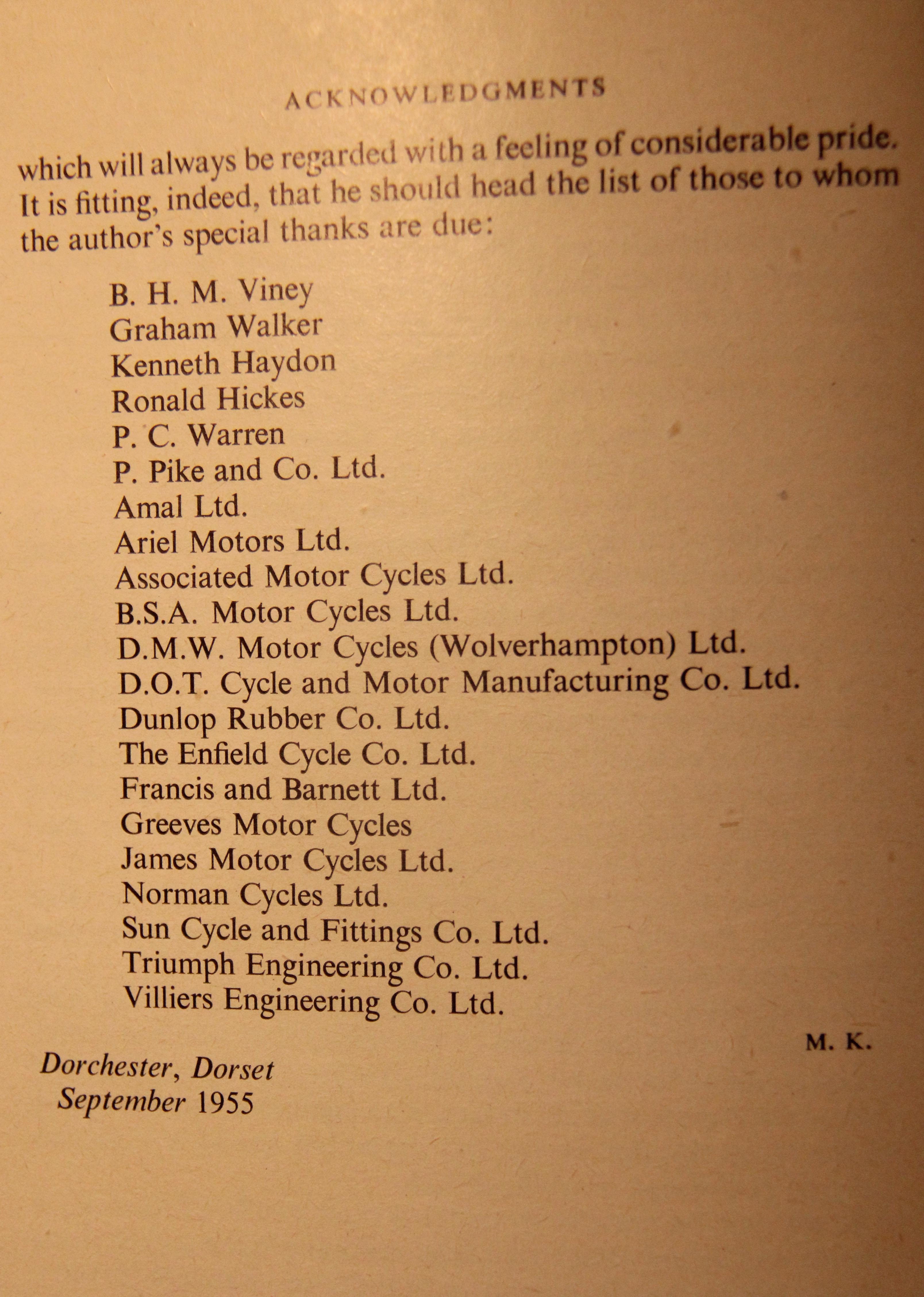
The acknowledgments list from ‘Trials Riding’ in 1955. Quite a listing. (Photo: Mike Naish) [6]

But being a book author or writer wasn’t his profession, albeit he was a trials competitor, writing wasn’t his day job. Max also wrote articles and carried out a variety of machine tests for British and American motorcycling magazines. King was very much ‘old school’ as far as his writing was concerned. It was a case of imperical research, strictly all his own work, he didn’t copy, that was not his way. All his work was original material. Max King whether he knew it or not, was a true pioneer!

The mentor, Ken Haydon:
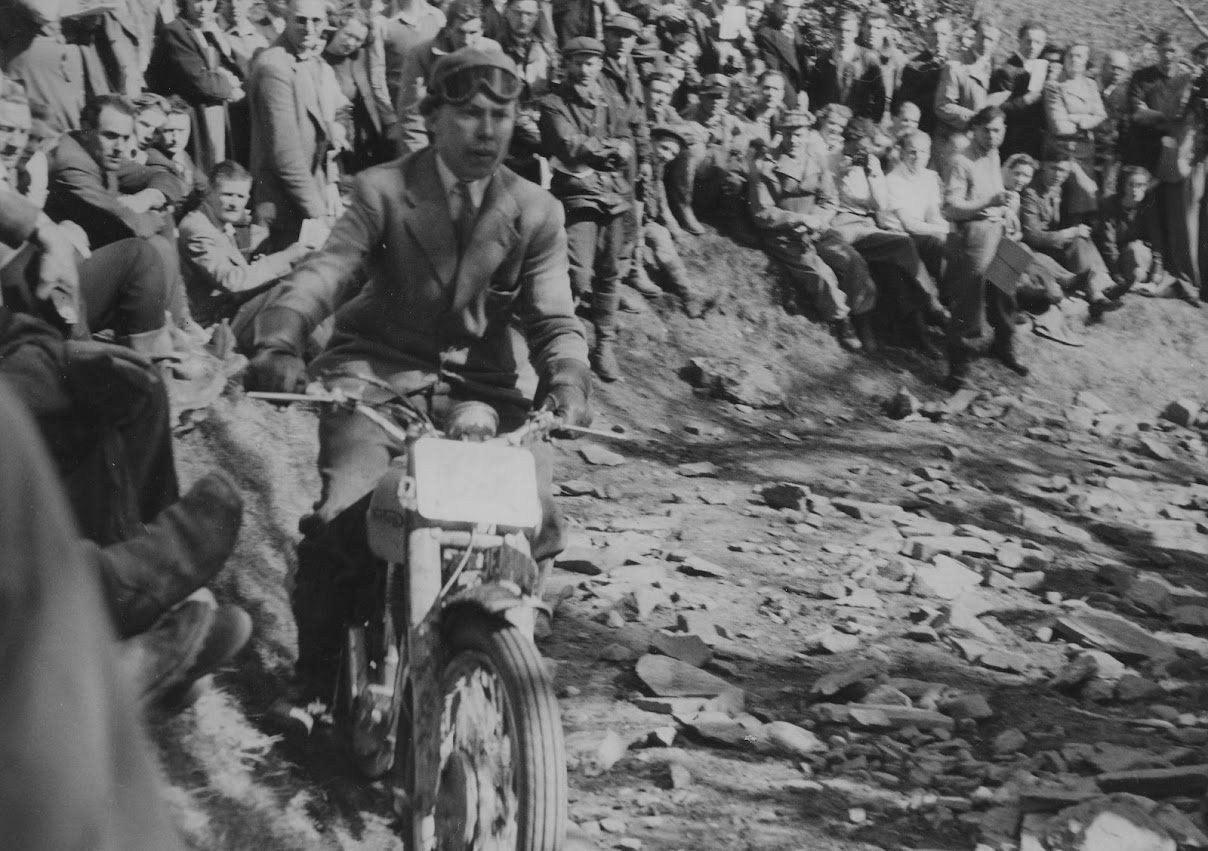
Ken Haydon on his 500T Norton competing in the Beggar’s Roost Trial – Photo: Ken Haydon Collection

During research for this article, it was evident that Max King refers to his ‘mentor’ in trials as Kenneth Haydon. We were indeed fortunate to secure the permission to use some of Ken’s photographic archive a few years ago.

Max King’s mentor, Ken Haydon (right) with son Ian, who became a multiple South Western ACU trials champion, about to unload a T20 Triumph Tiger Cub in 1964. (Photo: Ken Haydon Collection)

The reader would also be excused if he/she assumed that King’s occupation was within the media, as he regularly broadcast on radio over a twenty year period for the BBC, both regional and national covering motorsport. This was usually undertaken at the BBC’s unmanned radio station in Exeter. This connection with the BBC was set in motion when the publisher of ‘Trials Riding’, Temple Press had sent out sample copies to the media to court book reviews. A copy was received by the local BBC in Bristol and eventually approached Max to cover motorsport on the regional radio, BBC Radio 4 – South and West.

So what did Mr. King do for a living?

Max King was an ‘Environmental Engineer’, nowadays referred to as a ‘Civil Engineer’, working for Barnstaple Rural District Council, Devon County Council and finally the Dorset County Council, which he took up in 1949 and remained there for twenty-four years. King was an acknowledged expert in water and sewage systems. It is believed that Max enjoyed a good salary from his employment and therefore would have had a good standard of living. In 1954 his personal transport was an MG Magnette saloon locally registered in Dorset as GTK60. New, this model of car would have cost £915 in 1953.

In 1973, he was appointed main drainage manager of the Avon and Dorset Division of Wessex Water and, later in 1975, he was made divisional director, responsible for water supply, main drainage, waste water treatment, fisheries and rivers management. He then became President of the Institution of Public Health Engineers in 1973 until 1974.

In 1978, having served forty-two years in local government and the water industry, Max left Wessex Water to set up his own consultancy practice in north Devon, before his retirement in 2003 at the age of 87.

King was a married man, his wife was called Peggy who died in 1989 and they had an only son, Robert who rode trials for some years, but had to give up due to a serious knee injury caused by playing rugby. Sadly, he predeceased Max, passing away after an illness in 2003. The ‘Trials Riding’ books were all dedicated to his wife, Peggy.
Max King (left) watches Peter Stirland (250cc Greeves) on ‘Achintee’ at the Scottish Six Days Trial – Photo: OffRoad Archive.

Max King owned or was loaned an array of interesting trials machines over the years. In 1959 he obtained a new BSA C15T, the 249cc single that was seen to be the replacement for the BSA Gold Star in trials. King’s machine was registered YOE388 by BSA, but was a fairly standard model with the heavy steel hubs and chrome plated steel fuel tank.

Putting theory into practice, Max King shows quiet confidence as he tackles a muddy stream exit. Max’s factory supported 250 BSA is the one used by West of England stalwart Vic Ashford later on. (Photo: OffRoad Archive)

The machine eventually found it’s way to Vic Ashford, the South Western star, as a stop gap machine while the factory prepared a bike for him to ride as a semi-works rider.
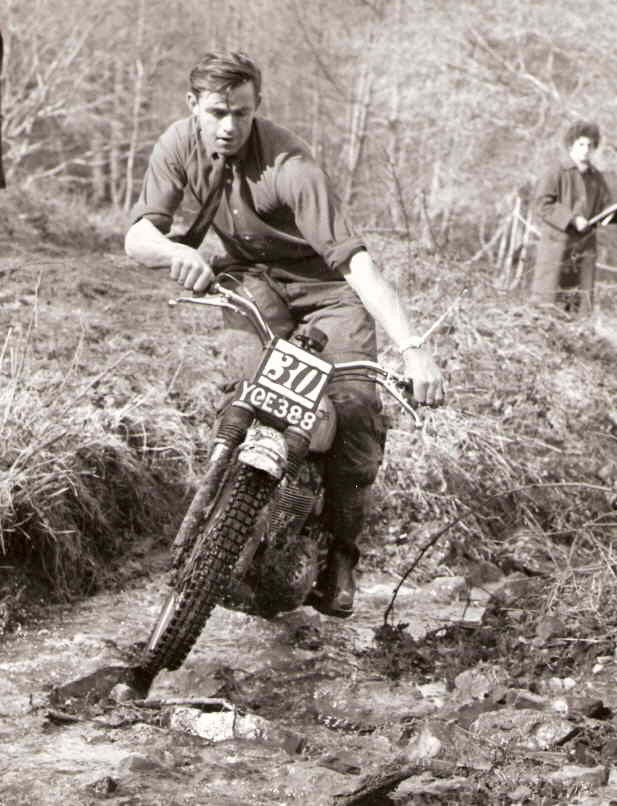
Vic Ashford body leans Max King’s 250cc C15 BSA, YOE388 which was a works supplied machine.

Later, King upgraded the C15T, he had fitted an alloy fuel tank and the wheels replaced with those fitted with Triumph Tiger Cub hubs, which were appreciably lighter. Previous to this machine he campaigned a 1953 Francis Barnett ‘Falcon 62’, locally registered with Devon Council as ODV200. Later, King obtained the ex-factory Francis Barnetts, registered PKV331 and TDU497.

The 776BOP connection:

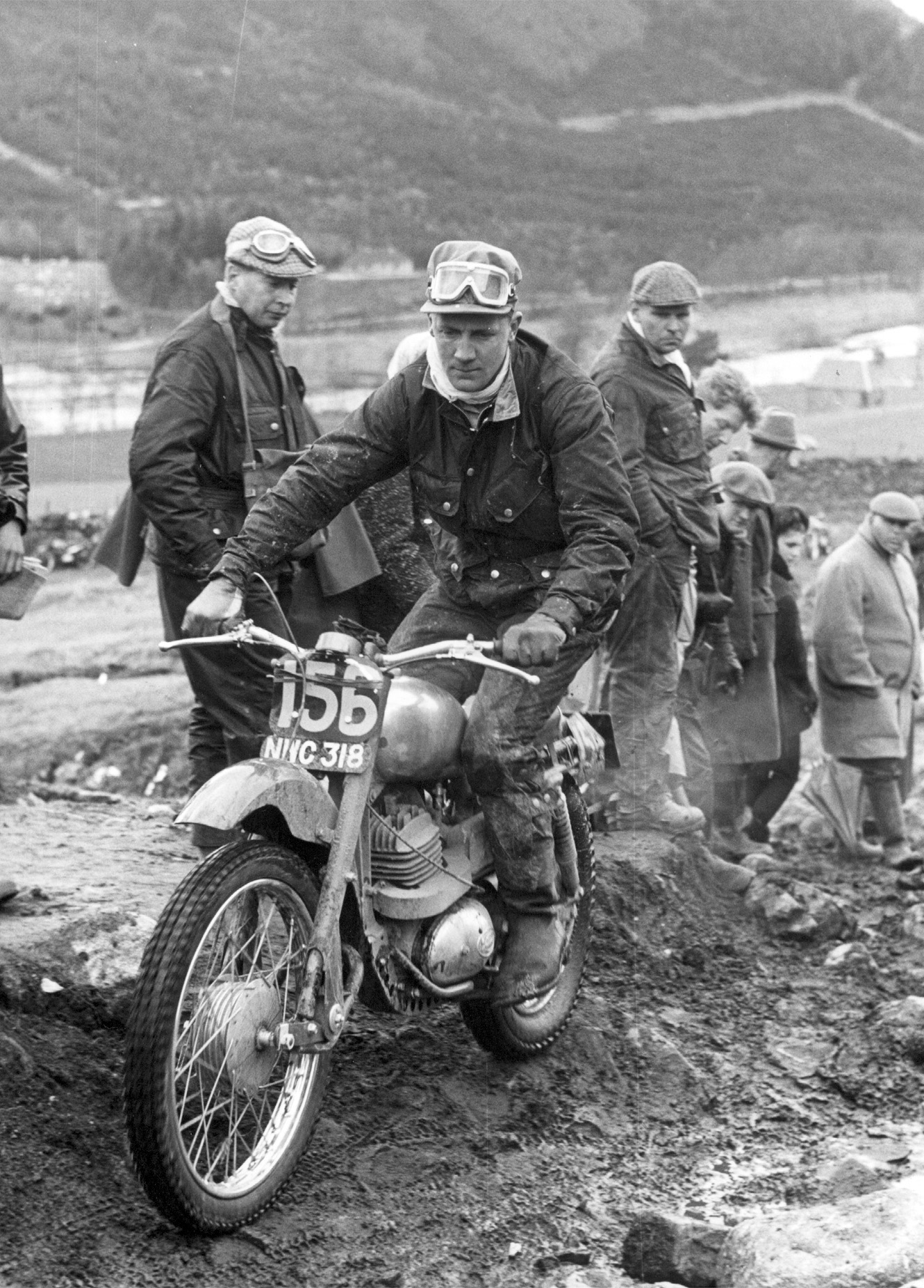
Max King testing the factory BSA that he would eventually own, the B40 registered 776BOP – Photo: Gordon Francis (This photo appeared in Max King’s book, Trials Riding).

Later in 1969, King ended up with the 1960 factory BSA B40, registered 776BOP which had been issued to Jeff Smith (1960-62), Tony Davis (1962-64) and Jim Sandiford (1964-1966) in that order.

Jeff Smith aboard 776BOP – Photo: OffRoad Archive.

Jeff Smith rode the machine until just before the 1962 SSDT in May, when the bike was passed over to Tony Davis, Smith having been injured in a motocross event a few weeks before.
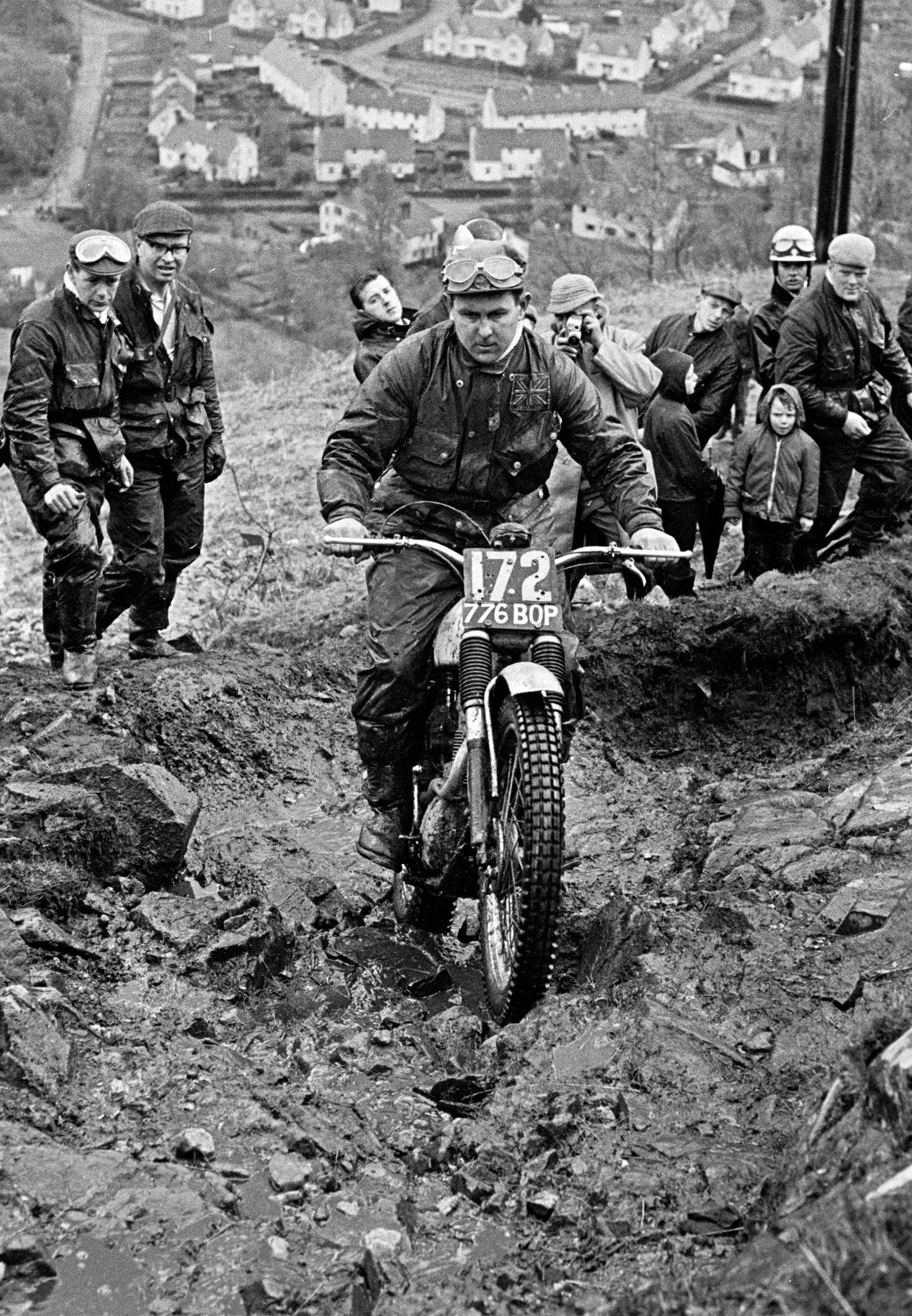
Jim Sandiford on 776BOP on Grey Mare’s Ridge in the 1964 Scottish Six Days Trial – Photo: OffRoad Archive.

Sandiford rode the BSA for two years, following Tony Davis who defected in 1964, with brother Malcolm, to ride for Greeves. King acquired 776BOP from BSAs and had ownership of the machine from 1966 until 1970, when he traded it in to Ken Heanes at Fleet, Hampshire, in exchange for a 1966 ex-ISDT Triumph 500cc twin which Heanes had himself used. Registered as HUE252D, Max competed in his favourite event, the MCC ‘Edinburgh’ long distance trial. When Max acquired 776BOP it had been fitted with the Victor type frame, similar to the 1963 BSA works bikes of Arthur and Alan Lampkin, and a 250cc cylinder barrel fitted to the B40 bottom end.

With ‘The Squire’ Ralph Venables watching (far right), Tony Davis (776BOP 343 BSA) in the 1962 John Douglas Trial. Photo: OffRoad Archive.

This machine eventually ended up in the custody of Tommy Sandham around 1975, at that time a Post Office telephone engineer in Airdrie, Lanarkshire, Scotland, who later worked for several years at Trials & Motocross News and wrote several books on the Scottish Six Days Trial and Honda Trials machines. It was this machine that brought Sandham to the sport of trials. 776 BOP eventually returned to the private collection of Jim Sandiford, but was sold on, following his death to dairy farmer Bryan Payne from Yorkshire, the current owner.

When he was a new boy to trials, Tommy Sandham seen here on 776BOP with the ‘Triumph’ decal on the fuel tank, during the period when he owned the BSA – Photo courtesy T.D. Sandham.

Tommy Sandham: “I bought 776BOP from Ken Heanes’ shop. It was all mucked about with and its fair to say I never got on with it. It had ‘Triumph’ stickers on the tank and the tappet inspection plate also being a Triumph component. Needless to say I soon sold it, buying a 250 Bultaco Sherpa from Airdie car dealer Dougie Watson. I had put a classified advert in Motor Cycle News and on the Thursday the phone rang at 7am and Mick Bradbrook, a collector of BSAs sent up a van from Purley, Surrey with money. I can’t remember how much I sold it for.

Tony Davis trying hard on the factory BSA B40 – 776BOP – Photo: OffRoad Archive.

The BSA B40 ‘776BOP’ was to become quite a machine and connected many people from the sport of trials over the years and still does!

Tony Davis with the 343cc BSA, 776BOP; Alan Lampkin with BSA C15, 748MOE and Mike Bowers with his special BSA Bantam at the 2024 Highland Classic Two-Day Trial at Aviemore – Photo: Gordon Bain Photography, Inverness.
776BOP BSA B40 photographed in 2024 at the Highland Classic Two-Day Trial at Aviemore – Gordon Bain Photography

By 1967, King was writing prolifically for Cycle World magazine in the USA, supplying machine tests for the new Cotton and the new Saracen trials machines. He also wrote general articles on the sport, helping to popularise trials across the Big Pond.

1966 photograph of Max King with a brand new Greeves Anglian, being tested for an American magazine. The machine carries a factory registration mark. Photo: Gordon Francis courtesy of OffRoad Archive.

Fourth Edition: 1972

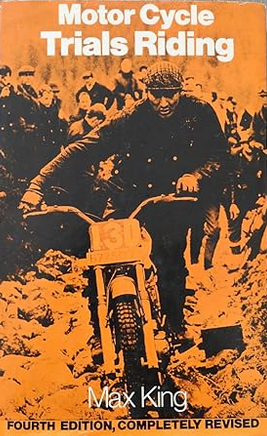
The fourth edition from 1972 shows Mick Andrews riding ‘Laggan Locks’ on the factory OSSA winning the 1970 Scottish Six Days Trial. The original photograph was taken by Brian Holder. [3]

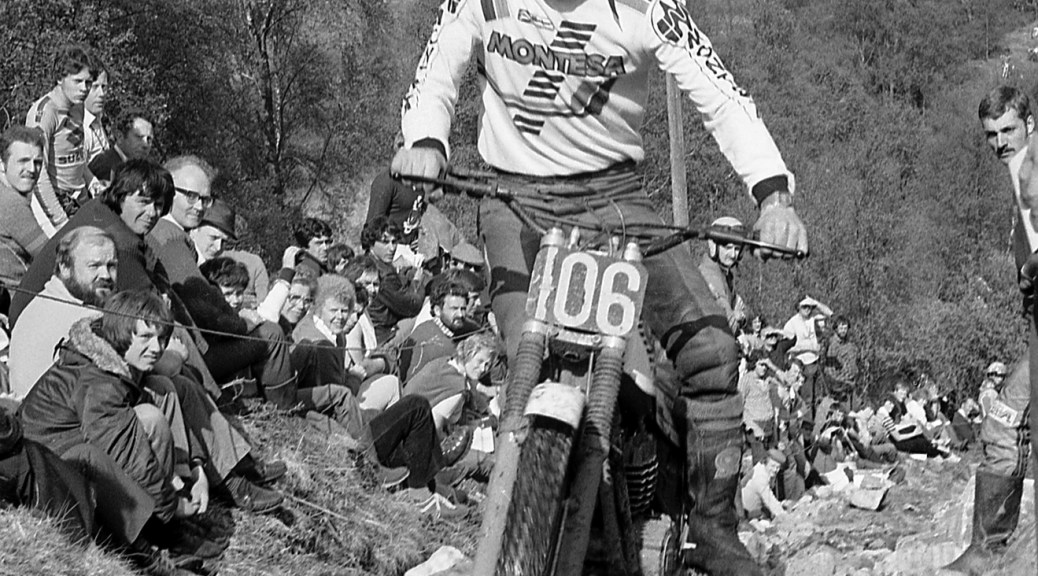
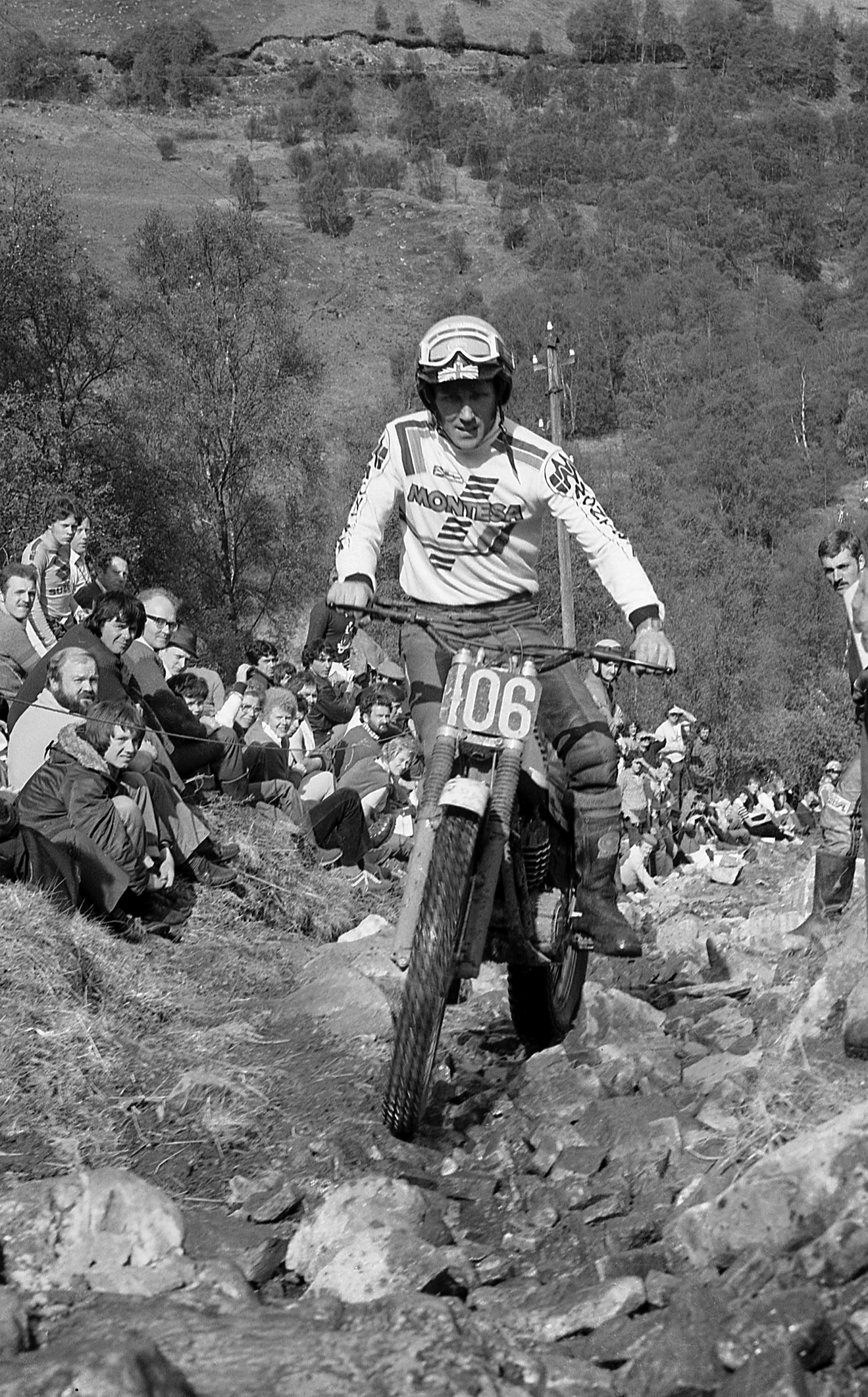
The fourth edition, released on 26th October 1972, now fully titled as ‘Motor Cycle Trials Riding’ was proclaimed as being ‘completely revised’ and now published by Pelham Books Ltd., Bedford Square, London with the dust cover featuring Mick Andrews on the factory Ossa during his winning 1970 Scottish Six Days ride. Andrews actually contributed to the publication, but the Foreword was now written by Gordon Farley, the 1971 and 1972 British Trials Champion on Montesa. The recommended retail price of the fourth edition was £2.50 net. The photographs brought the publication bang up to date with many of the action photographs depicting the popular trials machines of that era, namely Bultaco, Montesa, Greeves Pathfinder, Suzuki and a photo of Dave Thorpe on his Ossa, which was the ‘Pennine’ model as this was just prior to the ‘Mick Andrews Replica’ model which was released later that year. Not only photographs of machines uodated the book, so did photographs of current riders, such as Malcolm Rathmell, John Hemingway, Mark Kemp, Alan Lampkin and of course Gordon Farley and Mick Andrews. Local men, close to King, Colin Legg and John Poate from the west country assisted Max with machine tests by this time.

Gordon Farley (Montesa Cota 247) at the Inter Centre Team Trial at Ludlow in 1972 – Photo copyright: Eric Kitchen.

So what did British Trials Champion, Gordon Farley, the man who dethroned the great Sammy Miller, bring to the book?

Max King had approached Farley to write the Foreword for his revised edition, when he was trying to win his second British Championship in 1971. Again we can do no better but to quote from the Foreword from the fourth edition of ‘Trials Riding’.

Farley: “I knew, at first hand, how indispensible Max’s book had been because the first edition came out when I was a boy at school. Even then, I was keen on motor-bikes and interested in trials. But it was Max King’s enthusiasm – which his book reflected so clearly – that made me determined to have a go myself as soon as I was old enough and could get a bike.” “A thing that had always impressed me was that although Trials Riding was written, primarily, with the novice in mind, I knew for a fact that most of the top men in the trials world had read, enjoyed and benefitted from Max King’s book.” [5]

Gordon Farley’s Foreword was much less formal than Hugh Viney’s version. Mick Andrews special contribution was to bring information to the reader on the European and American trials scene. Remember that the World Trials Championship was still two years away with a ‘Pan-European’ series in 1974.

Having enlisted the assistance of a British Trials Champion, Gordon Farley and a European Champion, Mick Andrews, this gives some idea of Max King’s stature in the sport of trials over a long period of time.

After he retired from trials riding, Max King took up car trials and eventually long distance events by car, driving for Team Hartwell in specially prepared 998cc bored out Hillman Imps by George Hartwell Ltd in Bournemouth.

Max King formed a relationship with Bournemouth tuning company, Hartwell.

Fifth Edition: 1976

The fifth and final edition is a copy that doesn’t seem to come up often in auctions, this edition was also published by Pelham Books on 26th January 1976. The front dust cover featured Malcolm Rathmell on the 1975 prototype Montesa Cota 348.

The fifth and final edition of ‘Trials Riding’ the front dust cover featured Malcolm Rathmell on the factory Montesa Cota 310cc prototype, registered as GEN600N in the 1975 Vic Brittain Trial on’Hawkswood’. Rathmell won on the machine on its first outing. Photo credit: B.R. Nicholls. [4]

We managed to locate a copy of the elusive Fifth Edition of ‘Motor Cycle Trials Riding’ in Sweden! The retail price in 1976 was £3.95. The Foreword was written by Malcolm Rathmell who featured on the dust cover. Again, Malcolm’s Foreword was much less formal than the original written by Hugh Viney, thus reflecting the change over time in society from 1955 to 1975.

Malcolm Rathmell in the 1975 Jack Leslie Ellis Trial on the factory prototype 310 Montesa – Photo copyright: The Estate of the late Barry Robinson.

Rathmell said in his 1976 Foreword: “In my opinion, Motor Cycle Trials Riding is in a class of its own. I can only endorse what Hugh Viney predicted and Gordon Farley said in his Foreword to the fourth edition that Max King’s book sets the standard against which all others must be judged.” [7]

Inside the fifth edition is a small ‘Addendum’ pasted inside the first inner leaf page it reads: “ADDENDUM At the time of going to Press, the results of the 1975 FIM World Trials Championship and of the 1975 British Trials Championship were not known. Martin Lampkin, riding a 325 Bultaco, became the first official holder of the World trials title. It was a well-deserved victory and I congratulate him warmly. Malcolm Rathmell (Montesa) won the British Trials Championship for the third time in four years and came very near to success in the World contest. Congratulations to Malcolm, also!” [8]

The Fifth Edition of ‘Trials Riding’ attempted to bring the publication bang up to date for 1976, with reference to the new wave of Japanese built trials bikes, pioneered by Christian Rayer in France and Mick Andrews in the UK with the Yamaha TY series; Sammy Miller MBE with the Honda TL effort and Don Smith with the Kawasaki KT series. Gordon Farley had by this time defected from Montesa to Suzuki, thus making up the main four Japanese challengers to the Spanish stronghold over the sport.

In the Fifth Edition, Max was able to use close up photos of Sammy Miller’s development Honda TL to illustrate the publication. Registered as ‘SAM1N’, King even tested the machine a week after Sammy had competed on the Honda in the 1974 Southern Experts Trial.
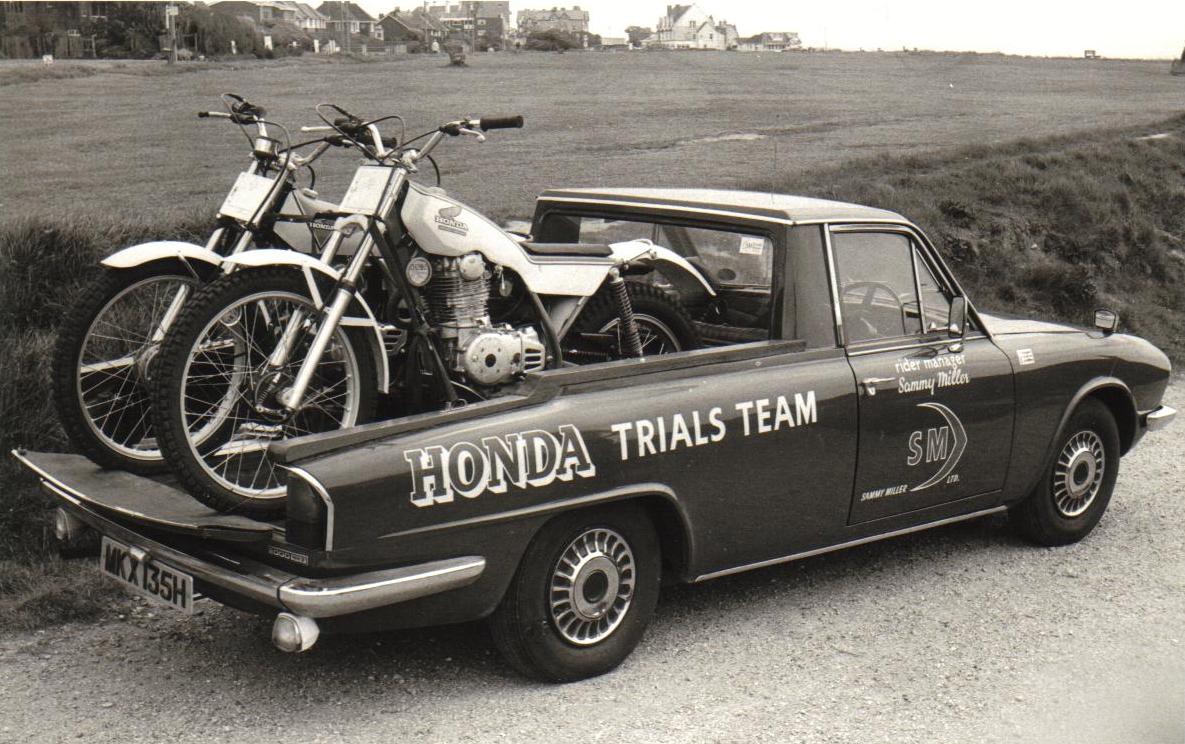
Sammy Miller’s specially converted Triumph 2.5Pi converted to a pick-up with the 300 long-stroke Honda and a production TL125 on board – Photo credit: Sammy Miller, New Milton

1975 also saw the release of another book on trials, ‘Ride It: The complete book of motorcycle trials’ by Don Smith, albeit partly ghost written by author and journalist Graham Forsdyke. Cheeky Londoner, Smith of course had a reputation for ‘pulling people’s legs’ and he intimated to Max King some years previously that he “kept his well thumbed copy of Trials Riding strapped to the tank of his bike at all times”.

There is no doubt though that Don Smith had read Max King’s books and was more than likely spurred on to write his own books on the sport, as a result.

The publishers of King’s ‘Trials Riding’ in 1972 and 1975, Pelham Books was incorporated in 1959 and are still listed on Companies House, but as a ‘dormant company’ currently.

The photographic content in the Fifth Edition was credited as follows: Brian Holder; Cecil Bailey; Gordon Francis; Alberto Mallofre (Montesa); Central Photographic Unit, Dunlop; K.W. Haydon; Peter Fraser; Pacific Northwest Trials Association Inc.; Peter Howdle; B.R. ‘Nick’ Nicholls.

Trials Riding, the book:

So we have now established who Max King was, where he was brought up, what machines he rode and that his original book was revised five times. What about the book itself?

The ‘Contents’ page from the 1955 edition gives a good insight as to what was covered: [2]

Chapter 1: The Trials Motorcycle – its Characteristics and Points Governing its Selection.

Chapter 2: The Trials Motorcycle – its Specification

Chapter 3: What to Wear

Chapter 4: The Make-up of a Trial and Some Notes on Trials Organisation

Chapter 5: Hints on Machine Control and Tyre Pressures; Typical Trials Sections and Suggestions on how to Ride Them

Chapter 6: The Special Test

Chapter 7: The Beginning!

Chapter 8: The First Trial

Chapter 9: In the Thick of it!

‘Trials Riding’ was effectively the trials rider’s bible, it covered most subjects encountered by a prospective competitor, as Viney stated in his Foreword: “… catering primarily for the man who is thinking about taking up the sport or who has not long been in it, I feel sure that this book may well become the standard work on his chosen subject.”

The book was written in the formal style of the period, immediately post-war, well punctuated with perfect grammar and spelling. The book is well illustrated with black and white photographs of the period, again these are period specific and King used photographs taken near his home to demonstrate a variety of the subjects. Many of these photographs were taken by Gordon Francis, a friend of Max King’s. Factory publicity photographs were used to display the various machines used in trials at that point in time, both four and two-stroke machines aplenty!

The revised editions updated the publication, mirroring the changes in the sport over a period of twenty-one years. The first edition in 1955 through to the final fifth edition in 1976.

Frederick Maxwell Wright King passed away in Tyspane Nursing Home in Braunton, Devon on September 22nd, 2014 aged 98 years, he led a full life and a satisfied one. His funeral was conducted, as set out in his will, to exact requirements in music and readings, with acknowledgements. This was not unusual for Max who had always been most particular and precise in all his business and was his manner, according to family members. We asked some characters of the sport if they had met him back in the day and here are the results.
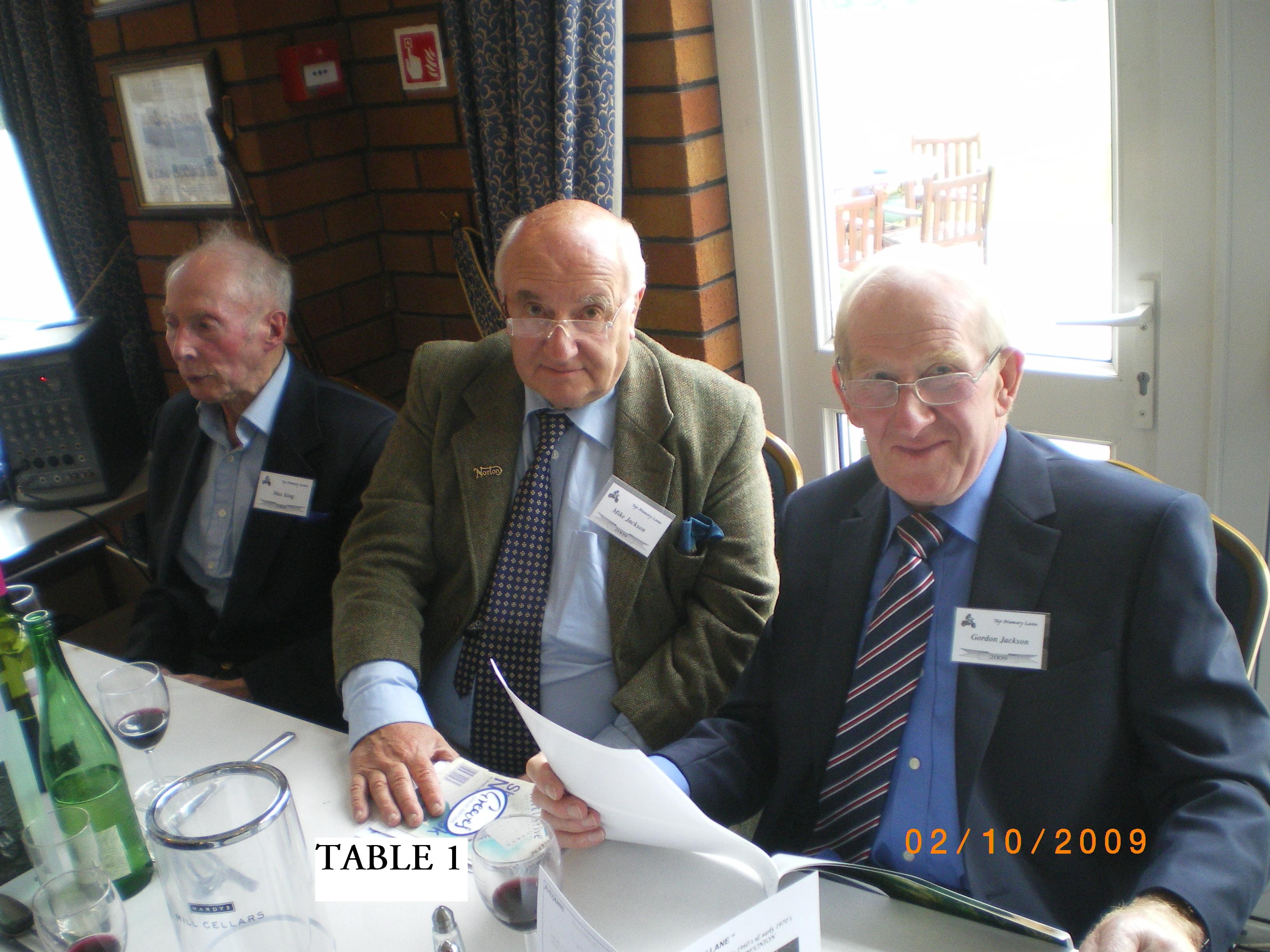
Max King, Mike Jackson and Gordon Jackson in October 2009 at the ‘Up Memory Lane’ gathering – Photo: Mike Naish

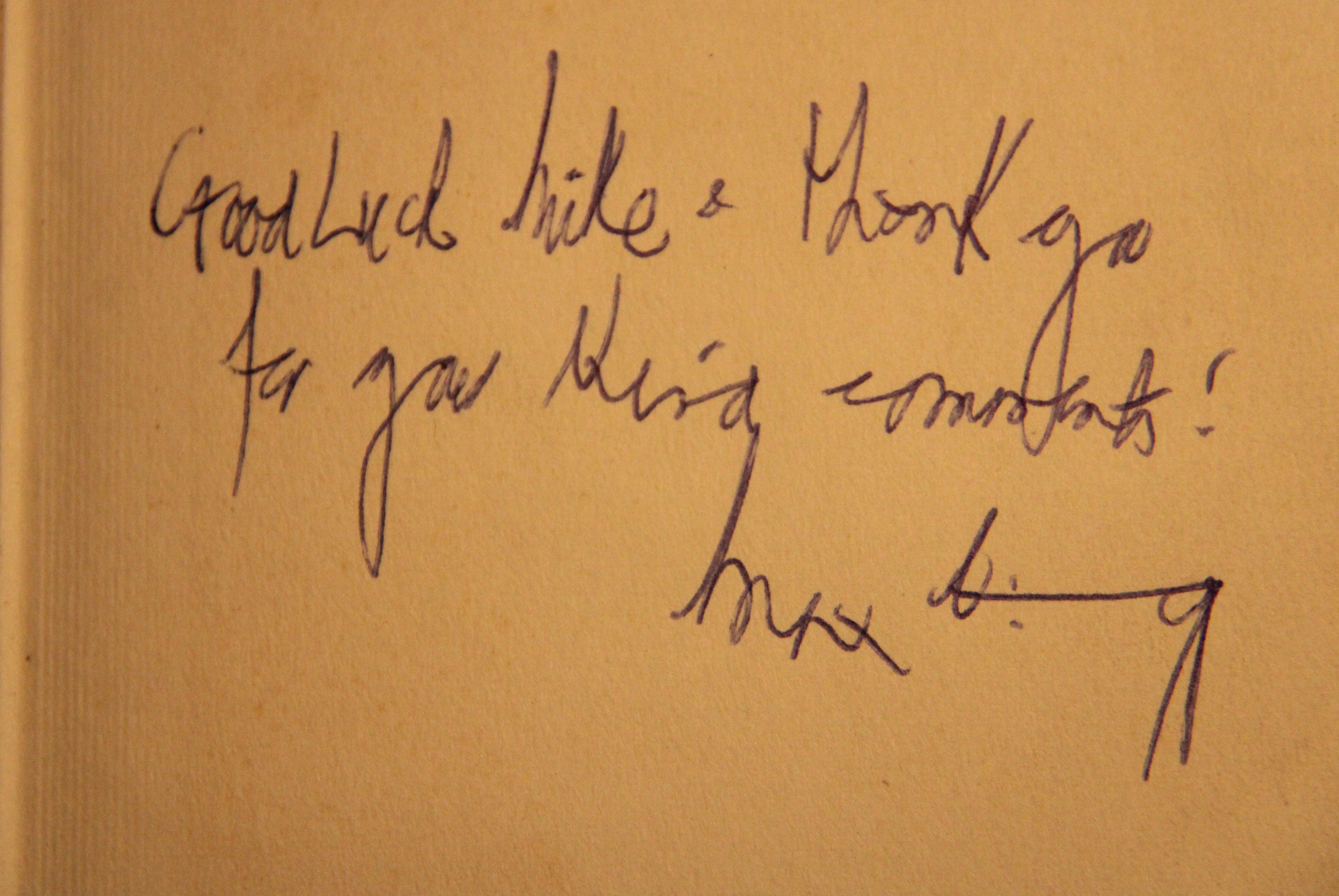
Mike Naish of the West Of England Club:I met Max King in 2009 when the South West Classic Trials Association ran their ‘Up Memory Lane’ gathering and dinner at the Golf Club in Tedburn St. Mary, Devon just outside Exeter and just over the hill behind my house. I was on the committee and my part was to take all the photos and produce a booklet for those who wanted one. Also as treasurer to pay all the bills. That year our guests included Max King and Gordon Jackson who had recently moved to Devon and was farming. As Max in his early days was working at weekends on local radio reporting on the local trials and interviewing trials personnel, we thought it would be good for Max to interview Gordon Jackson as a feature of two of the guests. This was going to be interesting for all of us such was the charisma of the two gentlemen. All went quiet, there was no preamble and Max went straight in with ‘Why did you have that dab?’ Everybody in the room of one hundred and twenty people all roared with laughter! They all knew what ‘that dab’ was, with the possible exception being my wife. ‘Well, I needed it’ said Gordon. And so the interview went on and was so interesting for us all. Later, I went to talk to Max and obtain his signature on my copy of his book, which happened to be a first edition. Max said he personally did not have one, he only had a second edition.

Max King’s signature and message in Mike Naish’s first edition of ‘Trials Riding’ – Photo: Mike Naish.

Tony Davis, former BSA, Greeves, Montesa, AJS, Bultaco and Suzuki works rider:Max was very good to both Malcolm and myself in the early years, probably because we were all west country boys (tractor boys). I had some good times with Max over the years and especially at the SSDT.

John Dickinson, former Editor Trials & Motocross News: Max King! I only met him once, in the early 1980s when he was staying in what was then The Grand Hotel in Fort William at SSDT time, in the company of Jim Courtney. I thought it odd that such a refined chap, his speech was very ‘posh’ indeed, was involved in trials. If Ralph Venables was ‘the Squire’ then Max King was ‘the Lord’.”

Deryk Wylde, author of several books on motorcycling and trials and editor of Off Road Review magazine:I knew Max King very well indeed and in his later years I visited him at his home, he was by then very frail. Max’s book, ‘Trials Riding’ was my introduction to our world of trials, whilst I was still at school. Many of the photographs were taken by Gordon Francis another of my good friends.”

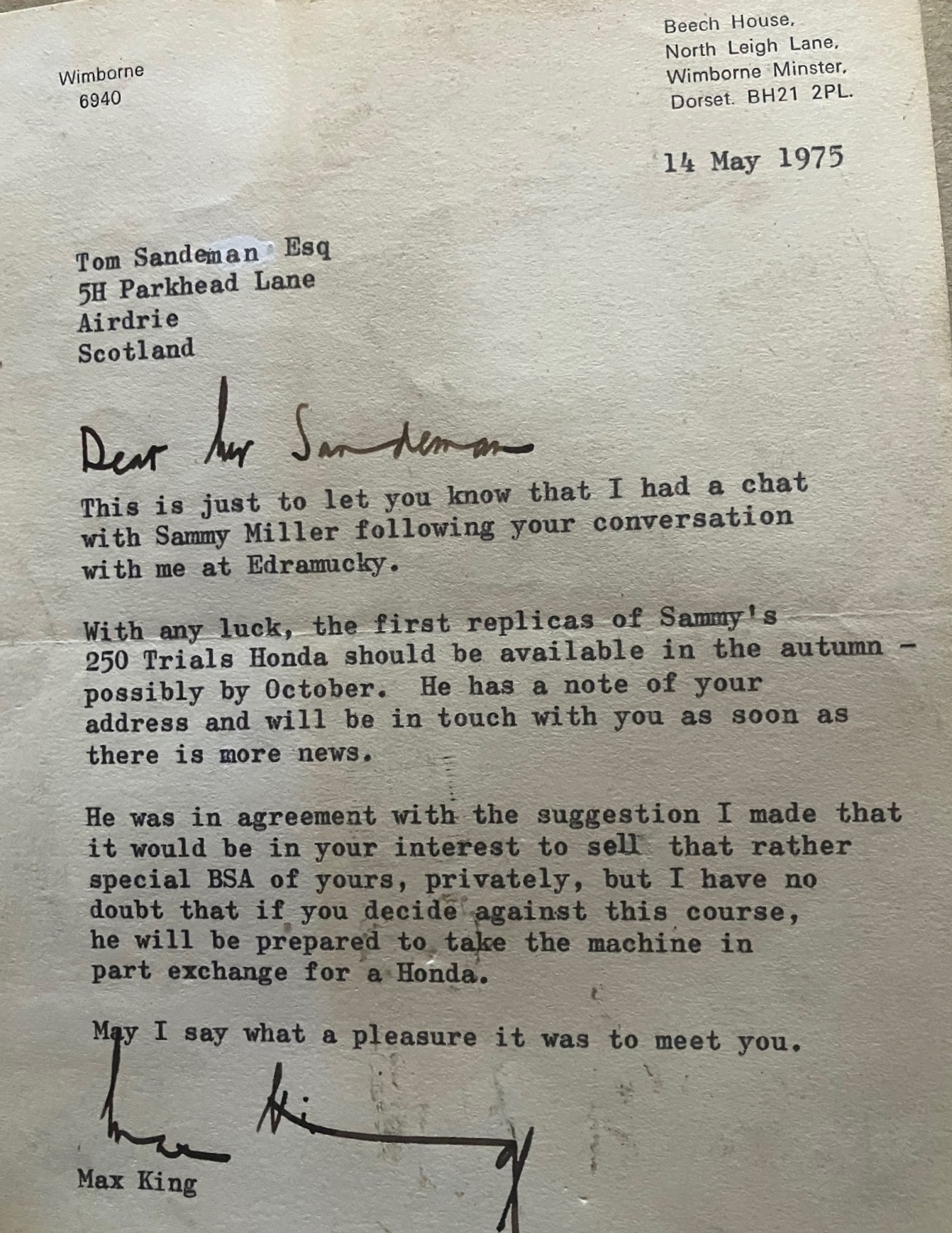
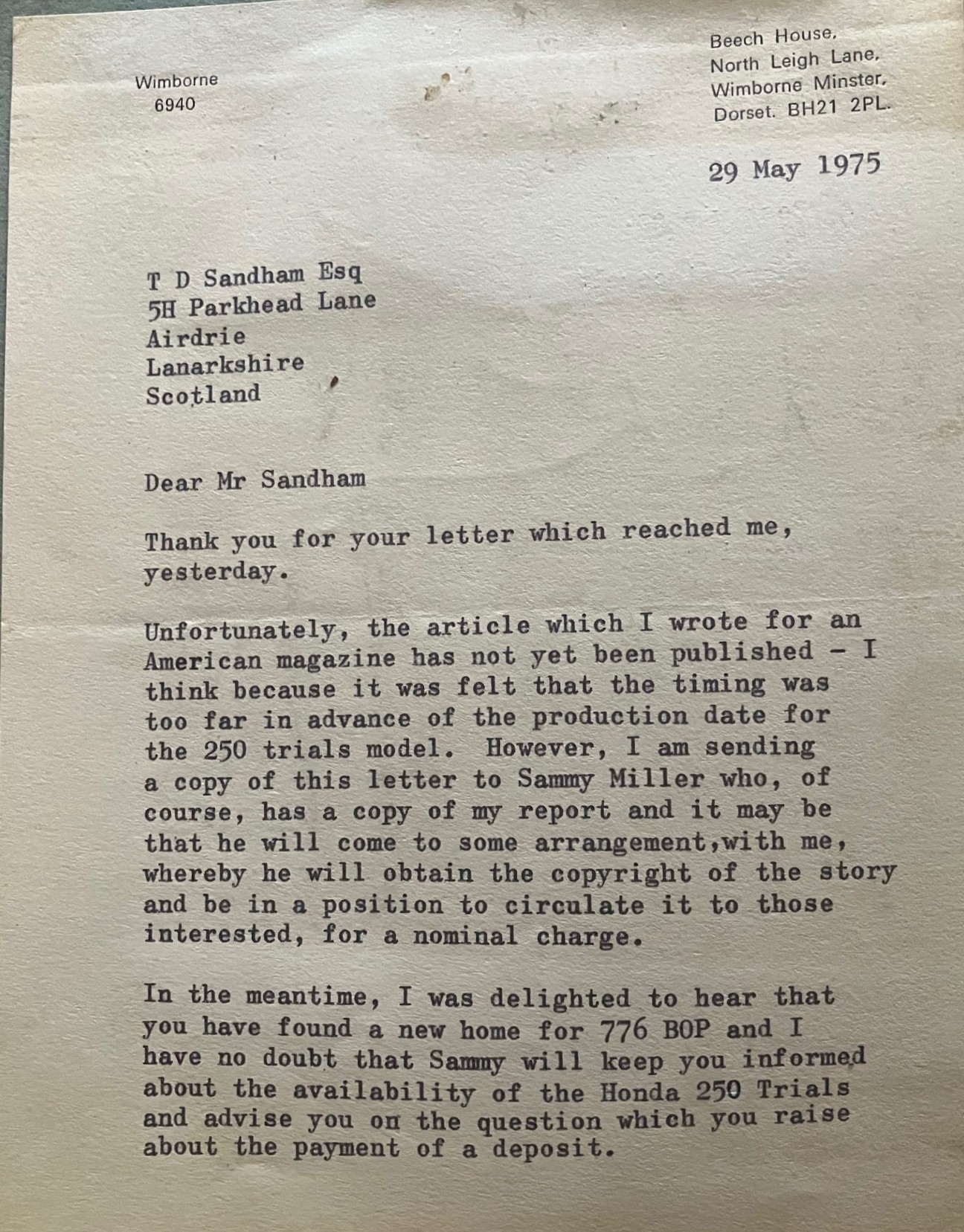
Tommy Sandham, former Production Editor at Trials & Motocross News: “I wrote to Max King back in 1975, having spoken with him at Edramucky, watching the Scottish Six Days Trial there on the Monday. Here are the two replies I received from him. Like many I had a copy of his book, ‘Trials Riding’ which, for a beginner, was a fantastic publication. I later went on to write books which covered the SSDT and the Honda Trials effort, along with other publications on panelcraft.

Max King’s reply to Tommy Sandham in 1975.

John Moffat, owner of Trials Guru website:When the fourth edition of Max King’s book was released, I was in third year at secondary school in Scotland, my Dad had bought a copy. Two years later I would ride my first trial. I still have his copy complete with a ‘Dymo’ label in red with his full name affixed to the inside front page. I admit that I had read it from cover to cover, over and over again. I have met a lot of people in the sport over the years, but I regret not ever meeting Max King, if only to thank him for bringing so much knowledge and enjoyment to me as a new rider back in 1974.

Whilst we said at the beginning of this article that books were not popular now, it is interesting to note that people are still buying copies of ‘Trials Riding’ some seventy years after it was first published, albeit when book collections are broken up and sold off or sadly the owner shuffles off this mortal coil and their books are moved on to new custodians.

Copies are frequently offered for sale online across the globe at between ten and twenty times the original sale price of the copy. Higher prices are achieved if the book has retained the coloured dust jacket and in good condition.

We wonder if you, the reader now, reading this article was inspired by Max King’s work?
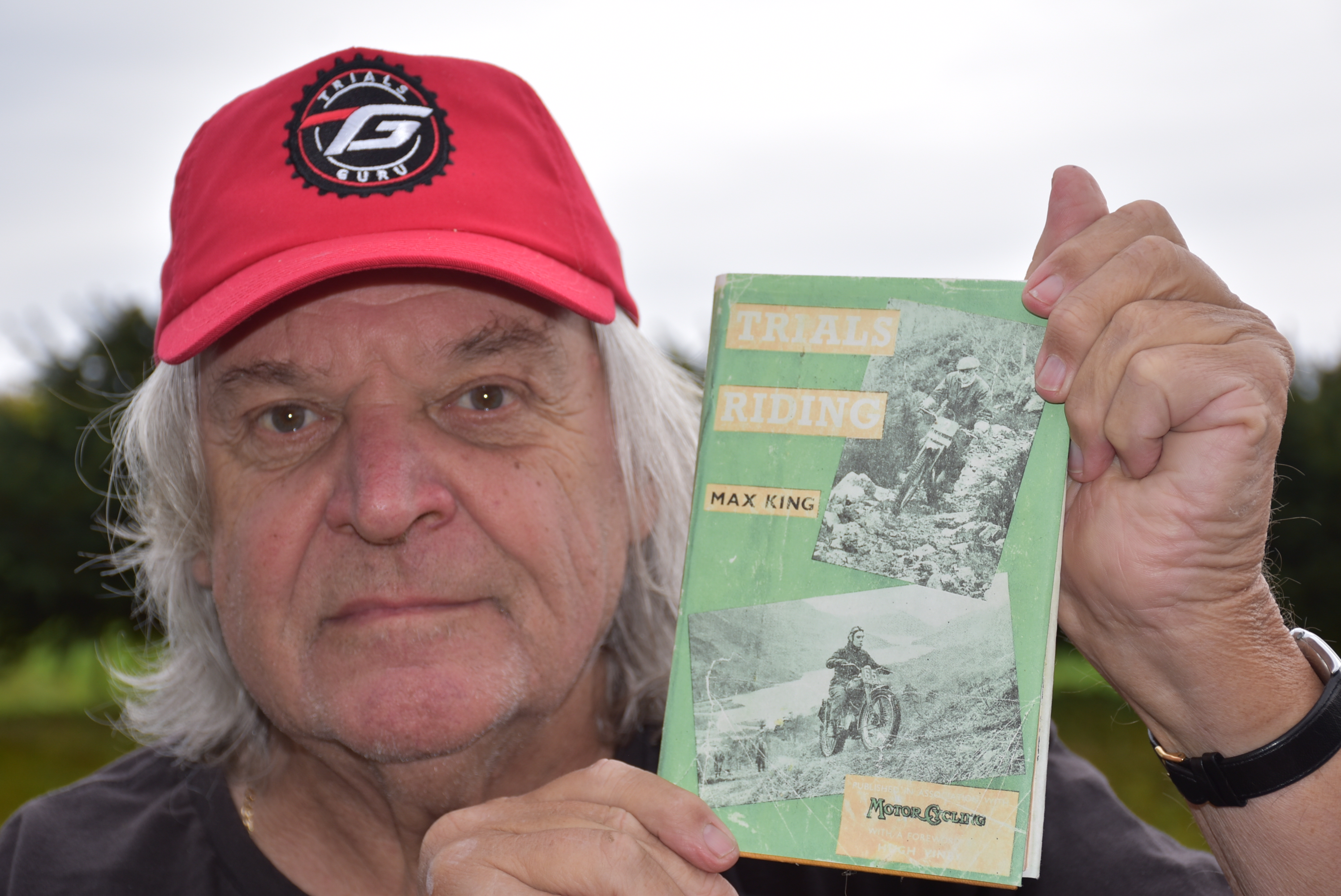
Hartwig Kamarad who is the curator of the 1st European Trial Museum in Austria, has a first edition copy of Max King’s ‘Trials Riding’ in the museum collection.

Max King left a legacy which has survived the test of time, his unique work still exists amongst enthusiasts, he certainly left his presence in the sport of trials.

This article is dedicated to the late Frederick Maxwell Wright King, no breach of his copyright is intended and only minimal excerpts have been taken from his work, ‘Trials Riding’ and referenced in the bibliography below.

Bibliography:

[1], [2], [6] Trials Riding by Max King, 1955 (Temple Press Ltd) – [1] Page X & [2]VII [6] Acknowledgements Page.

Daily Echo Bournemouth – Obituary of Max King, October 2014

[3], [5] Pelham Books – Motor Cycle Trials Riding (Fourth Edition) – ISBN-10 ‏ : ‎ 0720706009 ISBN-13 ‏ : ‎ 978-0720706000

[4] [7] [8] Pelham Books – Motor Cycle Trials Riding (Fifth Edition) – ISBN-10 ‏ : ‎ 0720708753 ISBN-13 ‏ : ‎ 978-0720708752

With special thanks to: John Dickinson; Tony Davis; Tommy Sandham; Mike Naish and Deryk Wylde for their assistance in the making of this article.

Article copyright: Trials Guru 2025 – DEDICATED TO TRIAL

Apart from ‘Fair Dealing’ for the purpose of private study, research, criticism or review as permitted under the Copyright, Design and Patents Act, 1988, no part of this article may be copied, reproduced, stored in any form of retrieval system, electronic or otherwise or transmitted in any form or by any means, electronic, electrical, mechanical, optical, chemical, photocopying, recording or otherwise without the prior written permission of the author as stated above. This article is not being published for any monetary reward or monetisation, be that online or in print.
The Mysterious STAG

Researched and written by Trials Guru’s John Moffat in 2021, we discover the story of Don Smith’s contract breaking STAG MK1.

Words: John Moffat/Trials Guru

Photos: Mike Watts; Bob May; OffRoad Archive; Don Smith Family Collection

Additional Information on Don Smith: Amanda Lazenby

Don Smith with his creation The STAG MK1 at Edinburgh’s Gorgie Market on 3rd May 1970 – Photo courtesy of Don Smith Family Collection.

As an enthusiastic schoolboy, John Moffat attended the Scottish Six Days Trial 1970 for the first time. There was always a buzz of excitement at the opening ‘weigh-in’ at Edinburgh’s Gorgie Market, with the flurry of activity with riders and mechanics making last minute changes and adjustments to their machines. There was one such machine that was unveiled to the trial’s community on 3rd May, it captivated many people that day.

The Monarch of the Glen is an oil-on-canvas painting of a red deer stag completed in 1851 by the English painter, Sir Edwin Landseer.

The stag in the painting is classed as a ‘royal stag’ due to having twelve points or ‘tines’ to its antlers, to be a ‘monarch stag’ it would have had to sport sixteen points, so, in reality, is flawed.

That did not stop copies being sold and advertising budgets spent on the copyright to use the image on shortbread tins, the world over.

The stag we are going to describe is somewhat different to the famous piece of art revered since the 1800s, one which was never copied nor produced in numbers for sale. In fact, only one such example ever existed, the STAG MK1 – and it still does!

Greeves, Great Britain:

Don Smith (252 Greeves) negotiates ‘Glen Ogle’ on the first day of the Scottish Six Days Trial – Photo: OffRoad Archive.

Donald Roland Smith, or ‘D.R.’ to his many friends, was a development rider who came to the notice of Thundersley based Greeves motorcycles in 1960 and who switched camps in late 1967 to join the Spanish Montesa trials effort to front the development of their new Cota trials mount.

Don Smith had an uneasy relationship with Bert Greeves, and it is safe to say he did not agree with the Greeves strategy to remain faithful to the alloy beam frame design that made the Thundersley products unique.

With Greeves, Smith won the European Trials Championship in 1964 and 1967. Smith won ten consecutive internationals and British national trials, which included the Hoad Trophies, Perce Simon, Cotswold Cup, John Douglas, Mitchell, and Beggar’s Roost.

Don had however tried his best to convince the directors at Greeves to create a new and up-to-date machine; he even offered to do it himself.

To his delight they eventually gave him the go ahead, but they pulled their permissions at the very last minute.

Feeling rejected, that was the last straw for Smith, so he handed in his resignation. After leaving Greeves he bought a production 250cc Bultaco in September 1967, registered as SGH4F and rode it privately in ten events.

He gained seven firsts, one second and a hard-fought third.

Permanyer S.A. :

Don Smith at the final machine examination of the SSDT at Blackford Hill, Edinburgh in 1969 – Photo: Bob May, Edinburgh

The motorcycling press had a ‘field day’ reporting on Smith’s solid results on the model 27 Bultaco Sherpa and when they commented that he was not linked to any factory, this probably spurred on the Montesa management to invite him to join them to assist in the design and development of their new Cota model.

Don decided that he would contact the then British Montesa importer, John Brise at Montala Motors Ltd, based at Crayford in Kent, but he was not just going to give the benefit of his fifteen years of challenging work and experience for free, he wanted a proper contract.

It was a case of no fee, no opinion, no advice.

He had a test ride on the machine and Brise asked for Don’s feedback, but before Smith had even finished his first sentence, Brise had his pen and paper ready for notetaking.

Smith told him that he must be kidding and until they had discussed a contract, he was not speaking another word, so a contract was drawn up and signed by both parties.

The Montesa Cota, designed to challenge the well-established Bultaco Sherpa, was to be a more traditional frame design than the Greeves models that Smith had campaigned for years, but had many modern innovative features such as the one-piece tank/seat unit in glass reinforced plastic, a single downtube tubular cradle frame and novel features such as a chain lubricator built into the swinging arm. The Cota engine had a softer power delivery than its main rival, the Sherpa.

Defection beckons:

Don Smith was to campaign the Montesa Cota for three seasons, starting with his UK registered Cota MK1 ‘UMV10F’ from 1968, securing a third place at the Scottish Six Days and winning the European Trials Championship for them in 1969, but he was concerned that he would eventually become frustrated if his ideas were ignored by the Esplugues, Barcelona factory.

Don Smith was known the world over, evidenced by this North American Montesa advert from 1969. The advert refers to World Champion, whereas the title was actually European Champion.

He had also recognised that the mighty Japanese factories were taking a keen interest in trials as a new sales market. Understanding the politics of the sport and the manufacturers, this caused Smith to think carefully about his future in the game, given that a new dawn in trials was emerging.

Smith’s decision to wriggle free of his Montesa factory contract was ensured by Don building his own machine, the STAG MK1 in late 1969. This would enable him to keep riding and develop his own ideas on his own machine without any factory involvement, he was a free agent. Unfortunately, his retail business Don Smith Motorcycles Ltd in Winchester Road, Highams Park, Chingford, North East London which he founded in 1960, was faltering and his fortunes were understandably at a low ebb.

The STAG MK1 is born:

Photo: Mike Watts

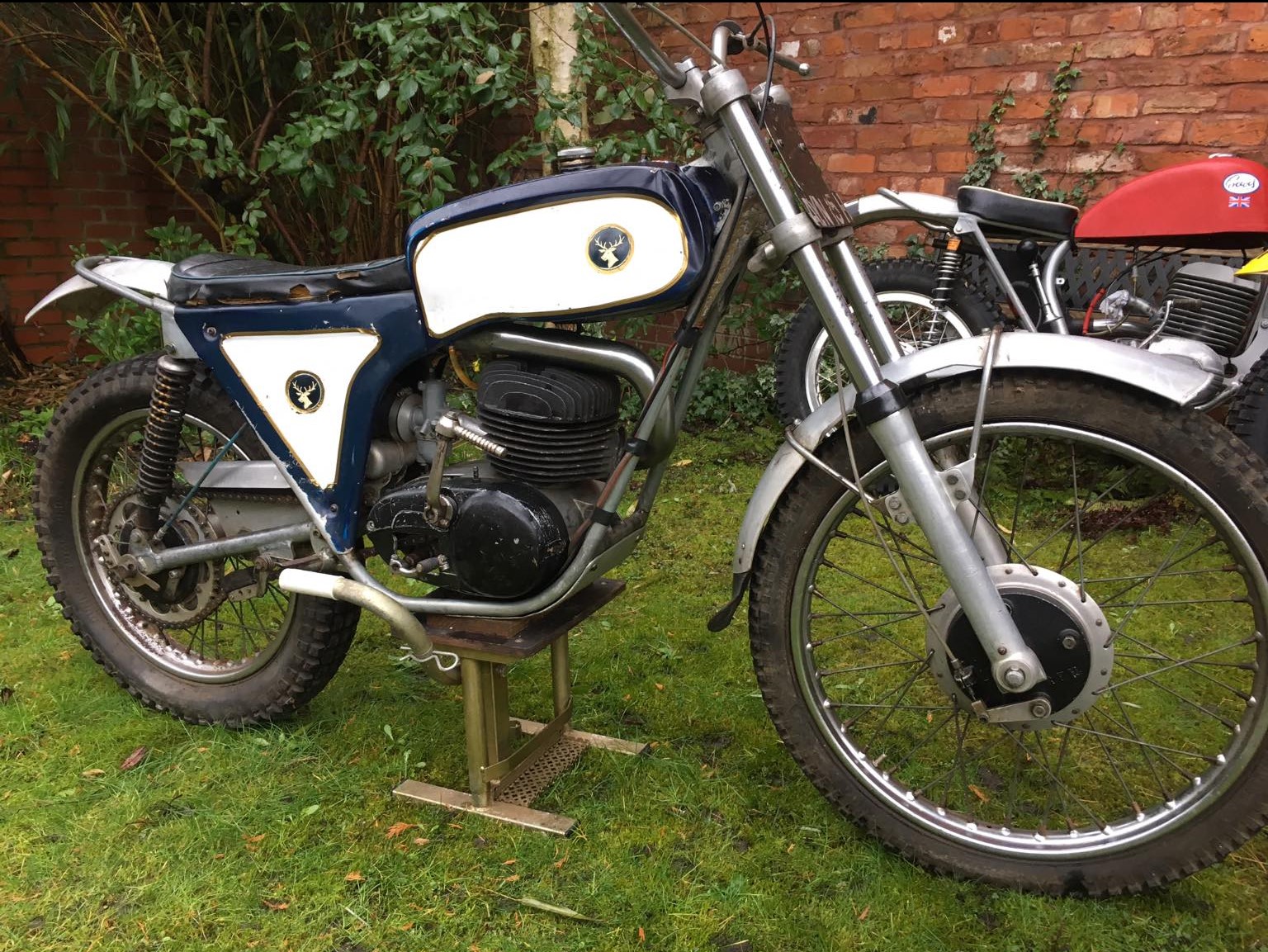
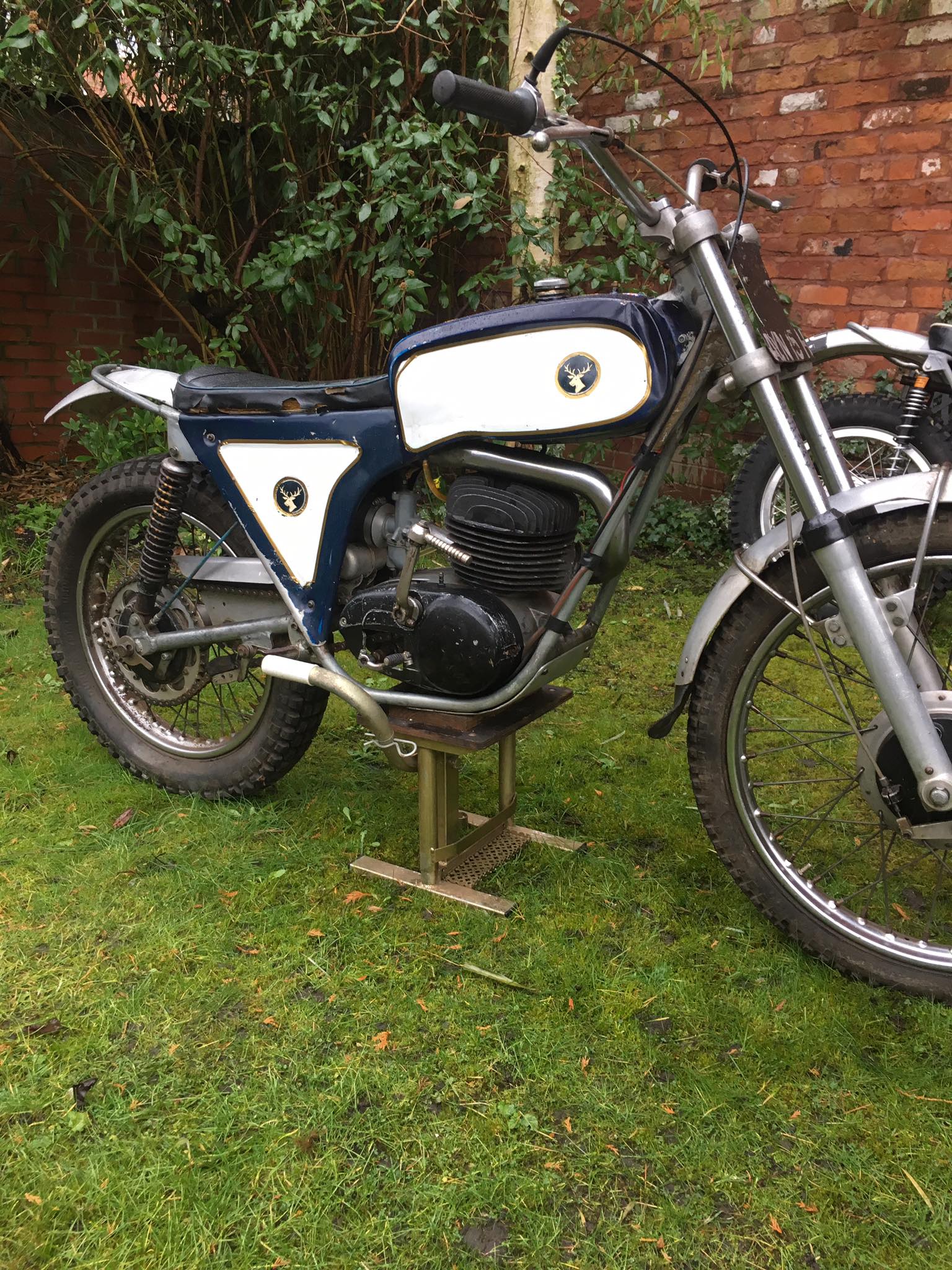
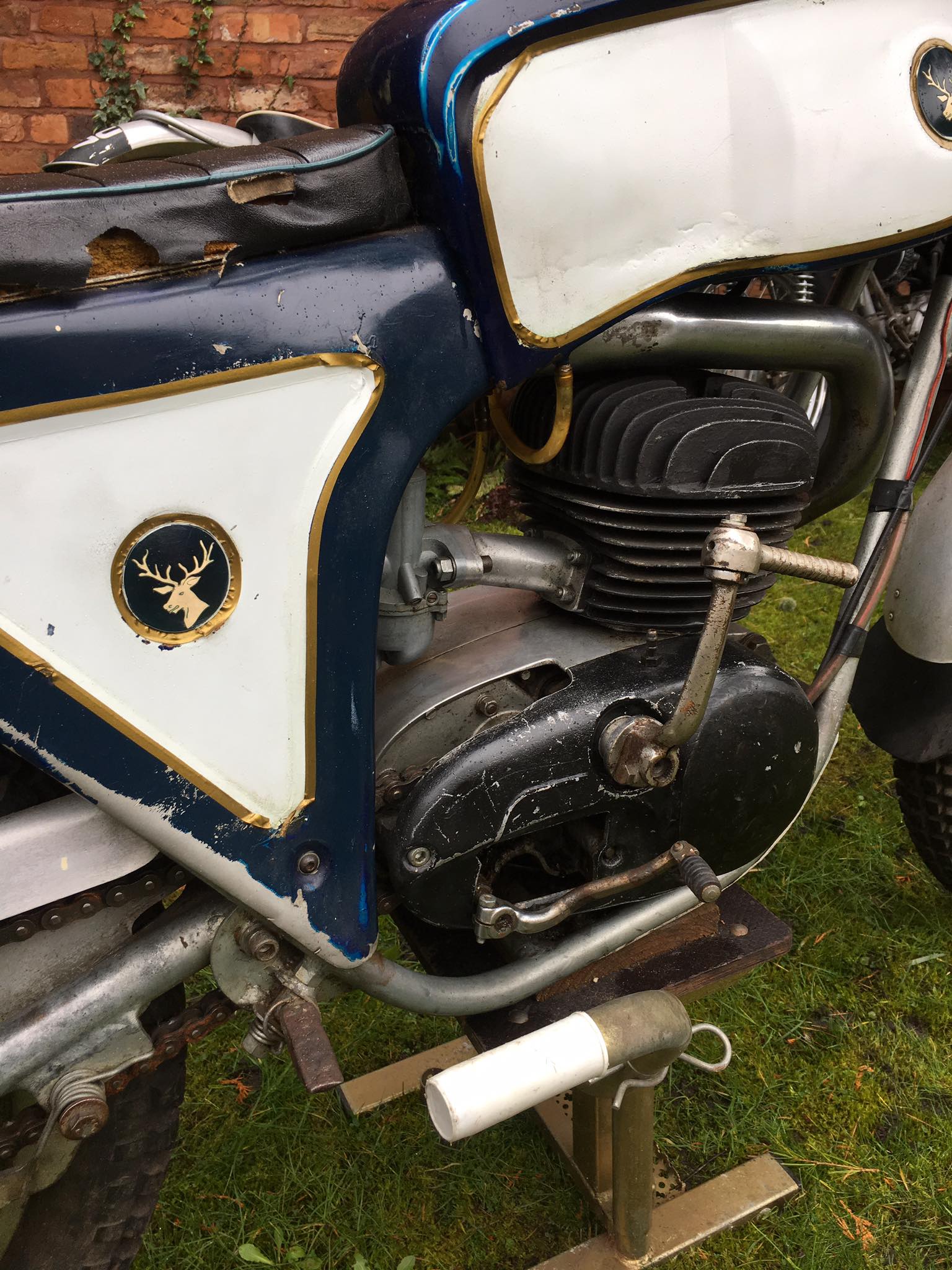
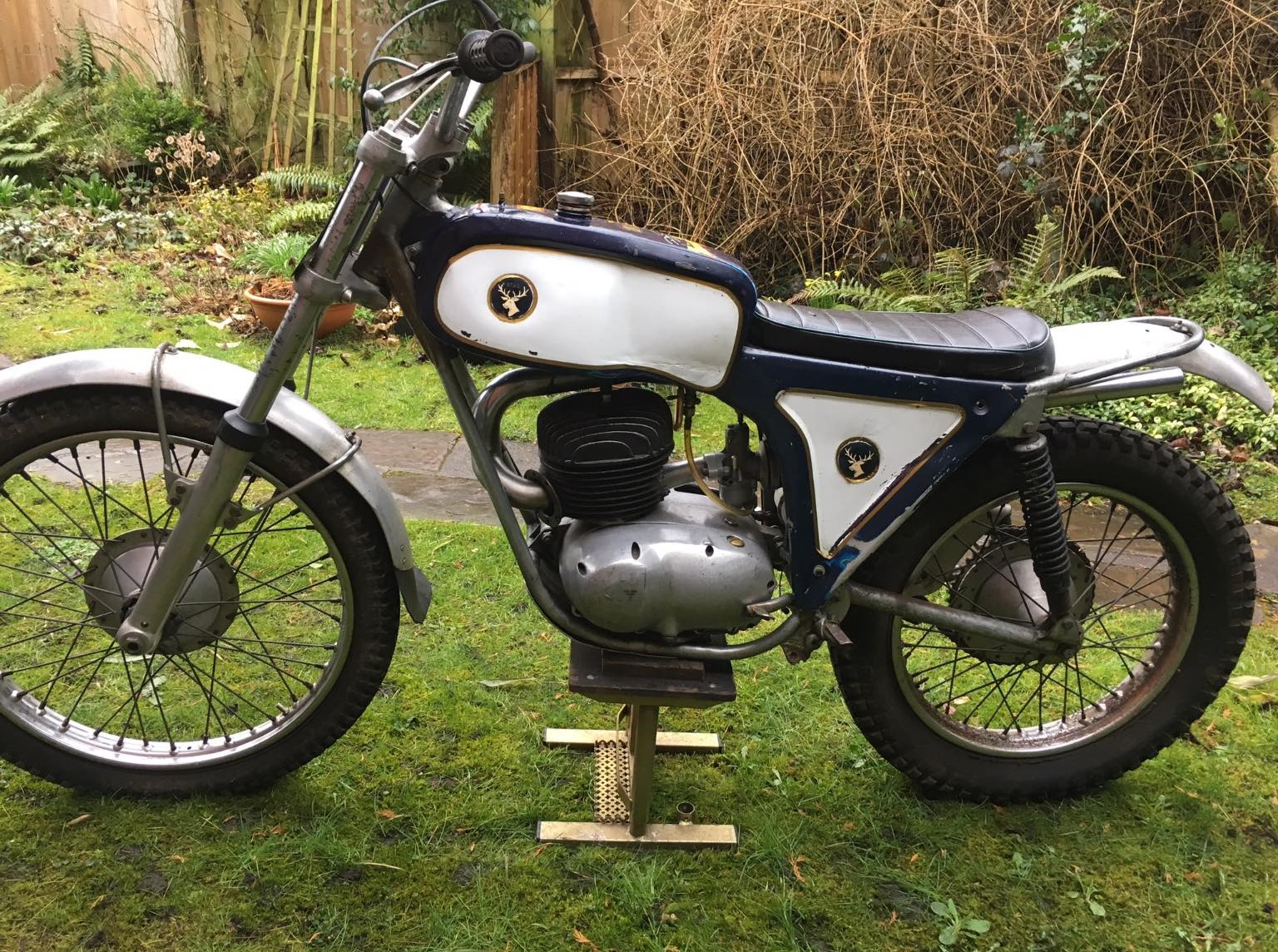
Built as a development machine to evaluate and promote Smith’s ideas on machine design, the STAG MK1 was registered AYN15H, taxed in January 1970 at Greater London licencing office as a ‘STAG’, colour blue, and engine size of 247cc.

The STAG’s wide spaced twin downtube cradle frame, necessary to accommodate the Montesa motor, which had an offset exhaust port, was plated in matt finish nickel for a durable finish and looked resplendent when Smith weighed the machine in for the 1970 Scottish Six Days Trial, which was its first public appearance on the 3rd of May.

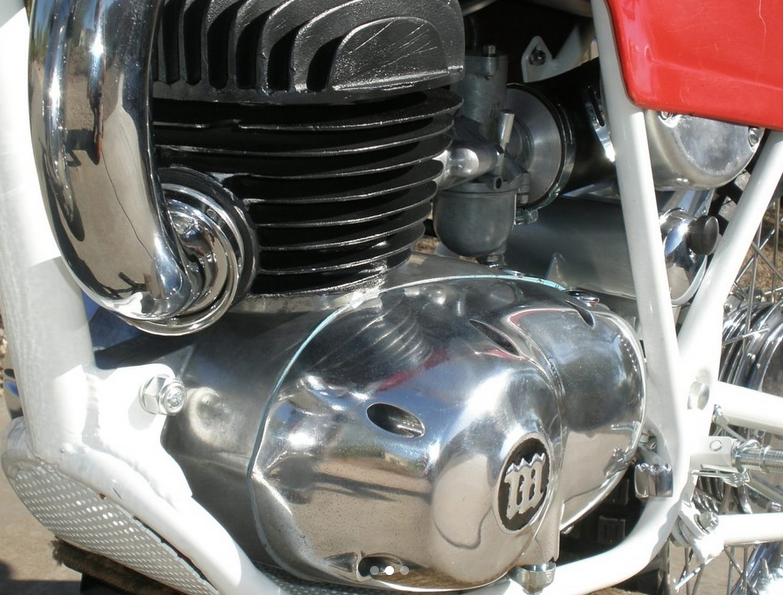
The knowledgeable enthusiasts who surrounded Smith’s machine at Edinburgh’s Gorgie Market noted that the engine was in fact a standard Montesa Cota 247cc unit with the large ‘M’ symbol having been machined off the outer clutch and ignition casings.

The Montesa Cota 247 engine of the type used to power Don Smith’s STAG MK1.

The talk of Gorgie Market that day was: “Looks like Don Smith has fallen out with Montesa.”

Full Specification:

But it was not a Montesa they were looking at, far from it. The ever extrovert Smith was keen to show off his handiwork.

Front suspension was taken care of by a set of Robin Humphries manufactured REH forks, yokes, and front hub, with a matching rear hub of conical design. The Ron Goodfellow built ‘Saracen’ of the period also used this same set up, as did the motocross version of Pete Edmondson’s ‘Dalesman’ which used the same front-end arrangement but used a Puch rear hub assembly.

Photo: Mike Watts

Wheel rims were ‘Dunlop’ chrome plated steel components front and rear, shod with Dunlop Trials Universal tyres, 4.00×18 rear and 2.75×21 front, the standard fitment of that time.

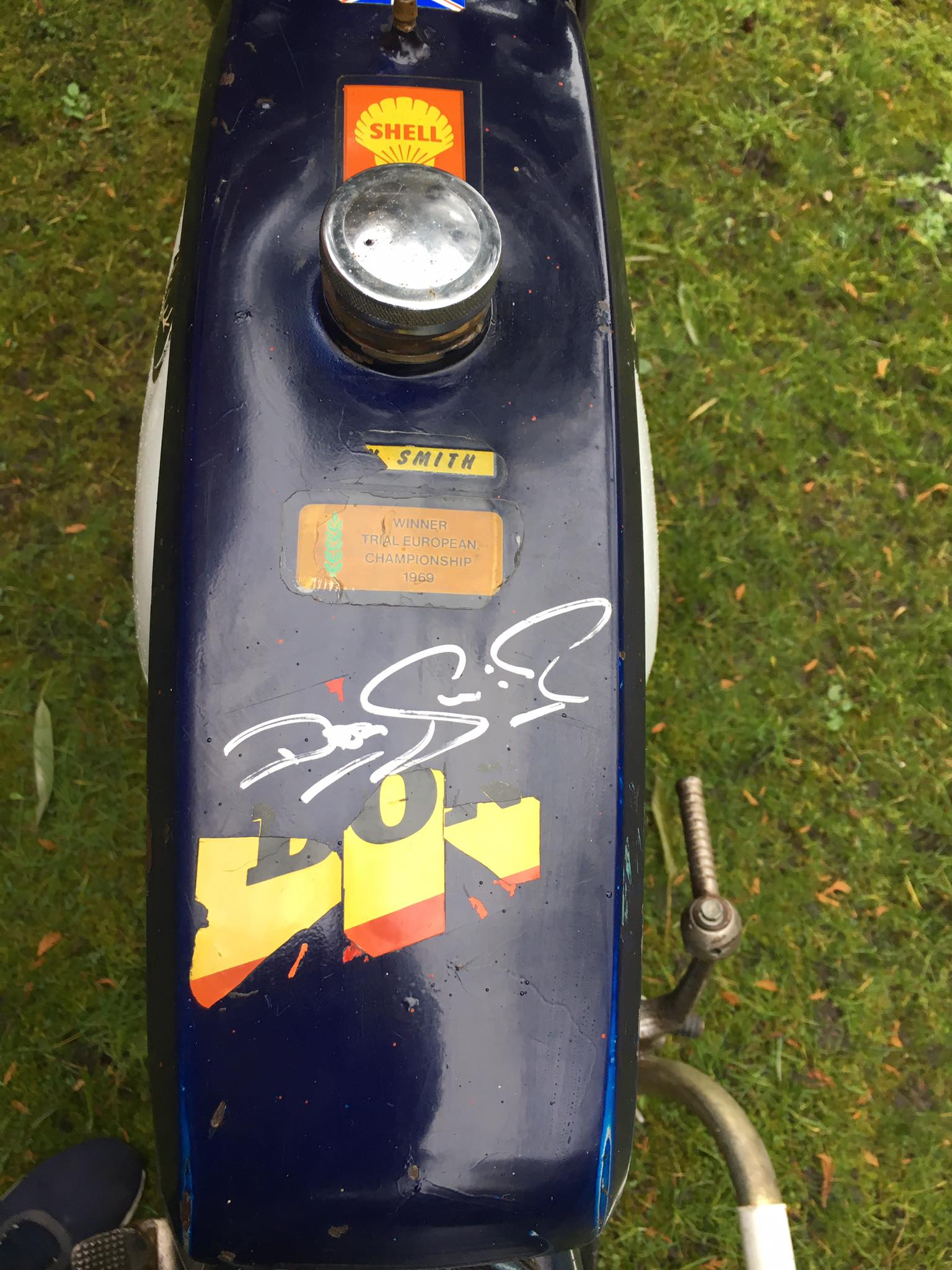
Don Smith’s signature on the tank of the STAG MK1 – Photo: Mike Watts

It is believed that the fuel tank was a heavily modified and disguised steel Japanese component, possibly from a Honda, which was re-shaped at the rear with fibreglass to allow it to match up with the pressed alloy side panels, thus creating a one-piece unit ‘look’ but retaining three separate components, this was complimented by a W.E. Wassell style single padded seat up top and light alloy mudguards finished the machine off.

The tank and side panels were finished in a dark blue with white infill panels and a gold lining using vinyl lining tape, between the blue and the white, it had four tank badges with a gold stag’s head against a dark blue background fixed each side of the tank and both the side panels.

Photo: Mike Watts

On closer inspection, the stag’s head is sporting ten ‘tines’, which is biologically incorrect, as they should have either twelve or sixteen tines as mentioned earlier! This would not have bothered D.R., after all, it was a name and logo used to disassociate him from the Montesa brand.

Drive chain adjustment was taken care of by simple snail cams on the end of the rear spindle and the Girling four-point adjustable shock absorbers were attached to the swinging arm close to the rear wheel spindle.

Photo: Mike Watts

Smith had fitted a ‘Sammy Miller’ alloy chain oiler, hidden behind the nearside panel and a trailing slipper chain tensioner took care of chain tension.

The rear brake was cable operated as the Montesa had a right-hand gear change with offside drive. The Montesa Cota 247 of the era had a full width hub which allowed for a rod-operated nearside brake.

A quickly detachable light alloy sump shield was fitted to protect the crankcases, the crafty Smith made use of the cavity between the engine and shield to store a spare drive chain in a sealed polythene bag for the 1970 Scottish. This innovation ensured that the heavy spare chain was carried on the bike in a low position, a sensible idea. A spring-loaded prop stand was fixed onto the nearside of the lower frame, being a requirement of the SSDT regulations. Sadly, the side stand has been lost over the years, but the bracketry remains. The footrests were of the folding type and spring-loaded, a feature Smith claimed was his innovation on the Montesa Cota having ridden for West Ham and Hackney speedway teams where folding footrests had already been in use before they became standard trials equipment. It is believed that Smith was the first to deploy a folding type footrest in speedway racing for safety, and by fitting a spring for trials use ensured that it returned to its original position after flicking up.

The unbraced handlebars had the brake and clutch perches welded to the bars, reminiscent of what Sammy Miller had on his own Bultacos. This saved weight and ensured that the set-up never altered in a fall. Docherty steel ball-ended control levers were fitted.

The whole package was neat and functional.

John Moffat: “I remember standing on the cobbled alleyways of Edinburgh’s Gorgie Market in early May 1970, my eyes were feasting on the machines of my then heroes, men who in my later years would become personal friends and aquantances, although I didn’t know that back then. I walked along to see this white and blue bike standing proud on it’s side stand with it’s rider to be, Don Smith. He moved away towards the Renolds chain van, staffed by Vic Doyle and I stood in wonderment of the bike that people were calling ‘The Stag’. I was captivated with the machine. Then suddenly a man appeared at the other side of the bike, towering over the machine, it was Don Smith in person, he smiled at me, but didn’t speak, and being a twelve-year-old I stood back to let him carry on preparing his machine. I never spoke to him, which I regret now, as I now know he was quite approachable. But the STAG was etched in my mind. I asked my father, T. Arnott Moffat, at that time General Secretary and Treasurer of the Scottish ACU about the bike. He simply informed me that Don Smith wanted to get out of riding for Montesa and he reckoned this was Smith’s method. I never forgot the Don Smith STAG.”

Power source:

The engine was standard 247cc Montesa Cota issue, retaining the exceptionally long inlet manifold and breathed through a type 626 Spanish AMAL carburettor. Having ridden for the factory, Smith would have had access to spare motors during his time with the company, so it made sense to use an already proven power unit for the STAG venture. The engine in the STAG Mk1 has been number stamped when the bike was constructed. It could have been a spare un-numbered engine as factories tended to do that with crankcases that were supplied new to replaced damaged components, certainly the motor does not have the usual Montesa numbering protocol. The original registration book and the current DVLA documents confirm this.

Hugh McDonald of Fort William in the 1959 SSDT on his Royal Enfield.

As mentioned, Don Smith used his STAG MK1 to signal the end of his three-year contract with Montesa, however it is believed that he may have been financially supported with the STAG venture in the 1970 Scottish by Fort William businessman, Hugh McDonald who owned a gents outfitter shop, trading as ‘Alister McDonald’ at 64-66 High Street.

It has been confirmed that Smith stayed at McDonald’s house, ‘Failte’, Achintore Road on many occasions and during the 1970 event in particular, he was also transported to the trial start in Hugh’s car that year. The SSDT started and finished in Edinburgh and was centred in Fort William during the bulk of the week.

To go a stage further, it may be this Scottish highland connection that could have spawned the naming of the STAG itself, but no-one knows for sure, not even the McDonald family who still live in Fort William.

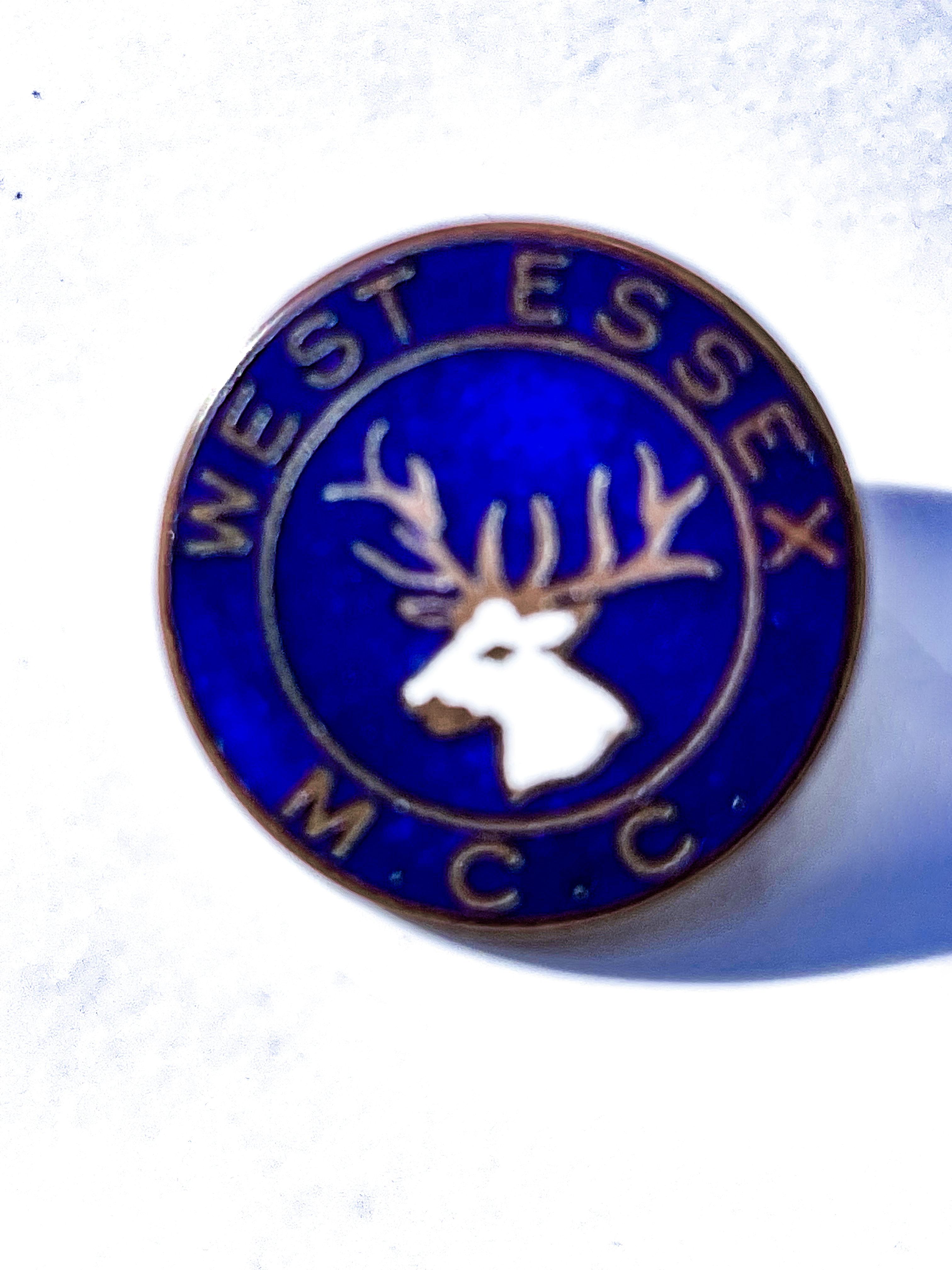
Current owner Mike Watts dispelled that myth: “When I spoke with Don Smith shortly after buying the STAG, he told me that the STAG idea came from the badge of the West Essex MCC of which he was a member.”

West Essex MCC badge – Photo: Don Smith Family Collection

The 1970 Scottish:

Having been entered by Montesa Motor Cycles on a 247 Cota, Don Smith was allocated riding number 101 for the 1970 Scottish Six Days, which was the trial secretary Jim McColm’s first event in charge. Smith was his usual flamboyant self at both the weigh-in and the start on the Monday morning, 4th May at Gorgie Market. He was no stranger to the Scottish, having ridden in the annual event since 1960. The appearance of the 247 STAG MK1 instead of a Montesa, generated a lot of interest and excitement, but the proof of the pudding would be in the eating, the SSDT being the ultimate test of rider and machine.

Having caused a veritable ‘stir’ at the weigh-in of the event on the Sunday, the tongues were wagging, and trials fans were keen to see how the STAG performed.

Smith was an extrovert and very much a fun-loving rider, he rode to win, but enjoyed winding other riders up. Mid-week, he decided to have a bit of a dice on the road with a fellow competitor and during this high-speed encounter, the STAG’s gearbox cried enough! The Montesa Cota was known for having gearbox issues and the motor used in the STAG MK1 was no different, the gearbox was fragile and that ended Smith’s 1970 Scottish.

Repairs were made post event and Smith campaigned the STAG in national trials for the remainder of the season.

The STAG today:

Happily, the 1970 STAG MK1 has survived intact with very few components being changed over the years.

Middlewich gift shop owner and motorcycle enthusiast, Mike Watts brings the story up to date:

“I spotted a classified advert in Trials & Motocross News in 2004 which offered a 250 Montesa Cota Special for sale, I was intrigued, so went to a village near Norwich to have a look at the bike. The seller rode speedway and his race bike had suffered a major engine failure and he was funding the repairs by selling the old trials bike that had been languishing in a corner.

When I saw it, I knew exactly what it was, and I was keen to have it. The owner clearly did not know that he was selling a unique piece of British trials history, so I did the deal, paid the price, and took the STAG home.

Many of my friends have since told me to do a comprehensive restoration to put the bike back to as new condition, but to be honest I do not want to touch it. The STAG is now fifty-one years old, it is in one piece and apart from a replacement ignition casing, it is pretty much as Don Smith rode it, so I plan to leave it exactly as it is. It maybe did not survive the 1970 Scottish Six Days, but it has survived the test of time. I also have the original registration documents, which is another component of the bike’s history.”

Watts met Essex born Smith, who was guest of honour that same year at the British Bike Bonanza and he was reunited with his STAG. This turned out to be a once only reunion as Don died in the October, having suffered a stroke at home and a fatal one in Addenbrookes Hospital, Cambridge. He died on 6th October 2004 aged 66 years.

Watts: “Don was delighted to see his old STAG and we talked for well over an hour, at which time he pointed out all the features he had designed, including the tank and side panel badges which he made himself.

Don could not remember which tank he modified to fit the STAG, nor why he used a steel tank and not an alloy component.

I was delighted when Don signed the fuel tank as a memento of the reunion.

He told me the most challenging components were the side panels which took ages to fabricate. My only regret is that I wasn’t able to record our conversation that day, he was so forthcoming with information and happy to talk about his creation.”

What it was and what it is:

The STAG MK1 was primarily a prototype machine for Smith, a test bed to evaluate innovative ideas in trials bike design. It was also a statement that Smith was available for hire in the trials job market. The STAG was like a mobile CV, and it was also a stop-gap machine until something else came along. This happened when Don Smith signed with Kawasaki to develop their ‘KT’ machines in 1972, but that is another story.

Whilst it did not win any major events or set the trials world alight, the STAG fulfilled its purpose and fortunately for trials enthusiasts, it has survived in an unmolested form for over half a century.

The bike is in good condition considering that it has been left unused in storage for many years, the REH forks are now badly pitted and would require hard chrome plating before they could be functional, and the whole machine would need to be carefully recommissioned before being used in anger.

Some would say that it is a shame that it is not ridden anymore, but for the current owner of the STAG, Mike Betts, it is an interesting part of British trials history that has been preserved, a machine he is proud to be the custodian of.

The STAG MK1 is a survivor, it is a part of trial history, let us be thankful of that at least.

Resource for private study: Ride It! The Complete Book of Motorcycle Trials – Don Smith 1975; 1976; 1977 & 1978 – Haynes Publishing. ISBN 0854291652 (Out of Print)

With thanks to: Mike Watts, the current owner of Don Smith’s STAG; Amanda Lazenby, Don’s youngest daughter, for information received for the writing of this article.

Article Copyright: John Moffat/Trials Guru 2023

You are reading this for free!

Apart from ‘Fair Dealing’ for the purpose of private study, research, criticism or review as permitted under the Copyright, Design and Patents Act, 1988, no part of this article may be copied, reproduced, stored in any form of retrieval system, electronic or otherwise or transmitted in any form or by any means, electronic, electrical, mechanical, optical, chemical, photocopying, recording or otherwise without the prior written permission of the author as stated above. This article is not being published for any monetary reward or monetisation, be that online or in print.

Rodger Mount

FORT WILLIAM’S FINEST

John Moffat: – For a few years now I have been pestering a resident of Fort William to tell me about his trials riding days. Initially this fell on deaf ears – all the excuses were dragged out, such as “I have a terrible memory” and “nobody will remember me riding now”.

I was undeterred, however; this man had been the Best Scottish Rider in the Scottish Six Days Trial in 1971, 1972 and 1974, I had to get his story.

Finally, during a vacation at the luxury accommodation at his Fort William establishment, I wore him down over a perfect breakfast one morning.

The proviso was that if he gave an interview, I had to be finished by eight o’clock at night as he is an early riser.

Lochaber in North West Scotland has produced many fine trials riders over the years, and also several Scottish Trials Champions. This is possibly due to the Scottish Six Days Trial being run on their doorstep, where the terrain ensures a steady supply of ground to hone trials riding skills.

One such man is Rodger Charles Mount.

Words: John Moffat & Rodger Mount

Photos: John Moffat/Trials Guru; Alistair MacMillan Studio, Fort William (permission of Anthony MacMillan); John MacDonald, Fort William; The Mount Family, Fort William; Eric Kitchen; Iain Lawrie, Kinlochleven.

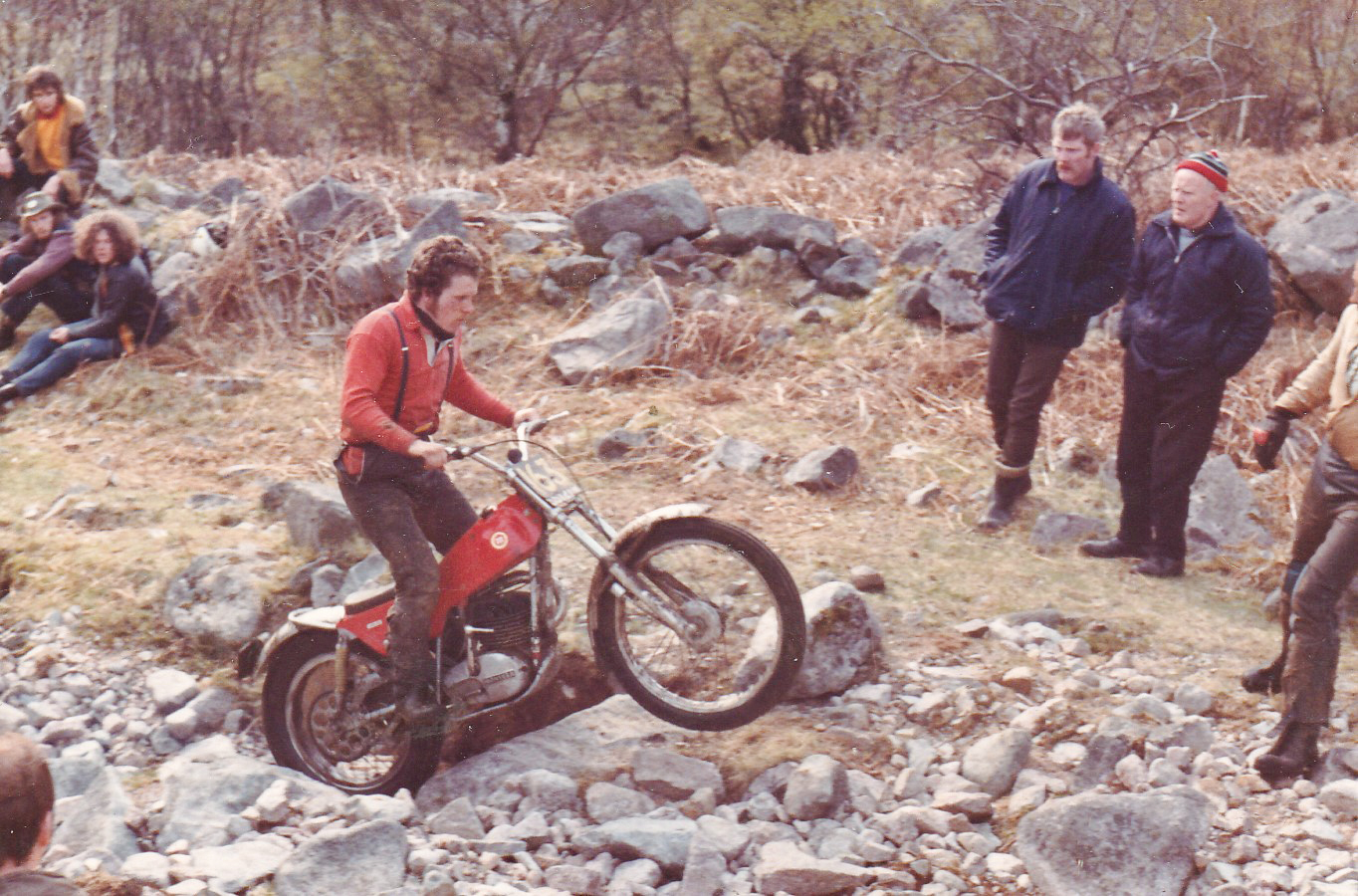
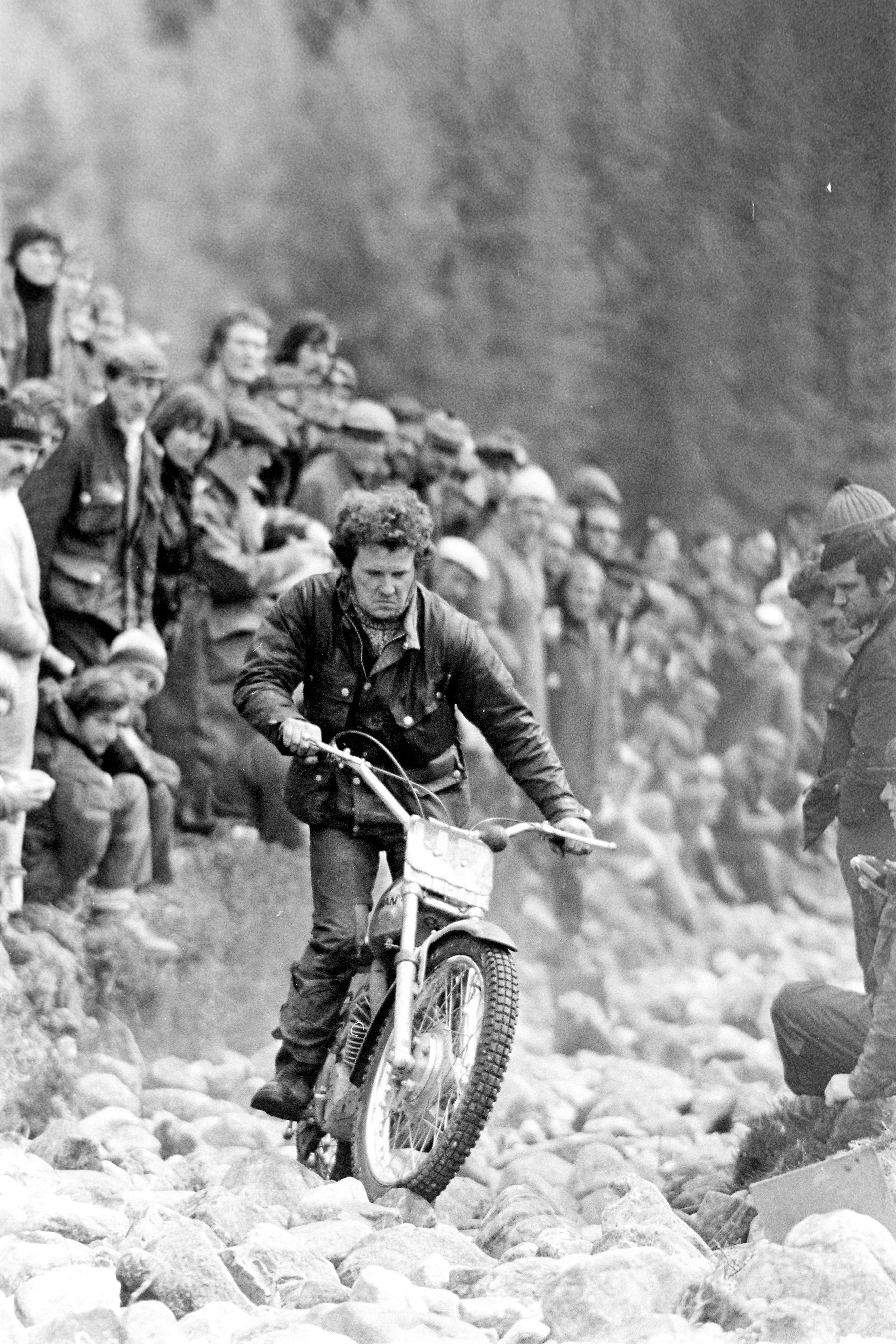
Rodger Mount (247cc Montesa) on Loch Eilde Path in the 1972 Scottish Six Days.

Born in the March of 1951 in Inverness and raised in Fort William, Rodger was the oldest son of Charles and Elizabeth Mount. Rodger’s mother and Farquhar ‘Fachie’ MacGillivray were siblings, which makes Rodger Mount and Alastair MacGillivray, who was Scottish Trials Champion in 1974 and 1979, first cousins. Rodger was the oldest of three brothers, followed by Kenneth and the late Colin Mount.

Royal Marines:

The Commando Memorial at Spean Bridge, “In memory of the officers and men of the commandos who died in the Second World War 1939–1945. This country was their training ground.”

Rodger’s father, Charlie Mount, and business partner to be Mike Beacham, arrived in Fort William as Royal Marines in 1939 at the outbreak of the Second World War. Charlie was brought up in Birchington, near Margate, Kent and was a time-served bricklayer, as was Mike Beacham. Originally deployed on the Orkney Islands, when the commanding officer realised both men had a trade they were directed to the engineering deployment and began laying the foundations for the Army Nissan huts and buildings at Achnacarry Castle, the home of the famous ‘Commandos’ from 1942, based in Lochaber, which was to be their training ground. Most of the big houses in Lochaber were commandeered by the British Army for Commando training, including the ‘secret’ base at Inverailort Castle, close to ‘Piper’s Burn’ and the home of Mrs Cameron-Head, a supporter and landowner of the Scottish Six Days in later years.

Charlie Mount struck up a friendship with Mrs Cameron-Head, doing building and renovation work on her property after the war years in exchange for shooting rights on her property. When the war had ended, both Beacham and Mount had met their intended spouses in Fort William so they returned to make their home and livelihoods in the Lochaber town. They formed their builder’s partnership, ‘B&M’ – Beacham & Mount, which lasted for several years until Charlie Mount decided to go on his own and formed ‘Modern Builders Limited’ who had their base in Fort William’s North Road.

Schooling:

Young Rodger was to be educated at Fort William Primary and Lochaber High schools.

Mount:I couldn’t really be bothered with school, I wanted to leave as soon as I could; so at fifteen, I packed in school and began a bricklayer’s apprenticeship with my father’s firm, Beacham and Mount in Fort William.” Rodger worked hard at his apprenticeship and by the time he was ‘time-served’ he could lay up to one-thousand bricks or three-hundred blocks per day, and made a good living out of it.

Modern Builders Ltd yard in North Road, Fort William – Photo: John MacDonald, Fort William Collection.

First Taste of Off Road:

When he was fourteen and still at school, Rodger and his good friend Alister ‘Queerie’ Weir were allowed to take turns riding around on Ali McDonald’s BSA C15T at the back of McDonald’s shop in Alma Road. McDonald was, along with his brother Hugh, an accomplished trials rider and had ridden the Scottish Six Days many times with their friend Ron Thompson. Rodger was quite taken with the little BSA and reckoned he could get good at this trials lark, so at the age of sixteen he bought a 250cc Greeves from local rider K.K. ‘Kimmy’ Cameron in 1967. He can’t remember exactly which Edinburgh-organised trial that he first entered, but he did pick up the ‘Best Novice’ award at his first attempt. At the next event he took the ‘Best Non-Expert’ award and soon rose to the ranks of a ‘Scottish Expert’. He learned his craft on the Greeves but soon needed something a bit more up to date.

Rodger Mount on his first trials machine, a 250cc Greeves bought from friend, K.K. ‘Kimmy’ Cameron. – Photo: Mount Family Collection.

Rodger was becoming a more forceful rider; being a bricklayer kept him physically fit and he was as strong as an ox. He was stockily built and was a rider who took charge of his machine. He favoured the state-of-the-art ‘knees bent outwards’ style of riding similar to Malcolm Rathmell. Mount was known to throw himself around on top of his machine to maintain both balance and forward motion, and refused to take a dab unless absolutely necessary!

Practice Makes Perfect:

Rodger had joined the local Lochaber and District MCC, and his eye was firmly set on riding the big local trial, which of course was the Scottish Six Days. He entered the 1969 event, aged 18, on a new 247cc MK1 Montesa Cota and was issued with riding number 112. The Montesa was bought for Rodger by his father, who had taken a keen interest in his eldest son’s sport. The machine was supplied by Donald Buchan of Perth and registered LES711G.

Rodger Mount on the first of his 247cc Montesa Cota machines in the 1969 Scottish Six Days Trial – Photo Alistair MacMillan Studio, Fort William

Mount:I had a new machine every year without fail; that way you had less effort to keep it running spot-on and I had a good wage packet from working for my father. I practised a lot back then, in fact I was never off the motorcycle, they were well used. Starting in 1968, for three years we had sixty council houses to renovate for Highland Council in Kinlochleven.”

Rodger Mount on the first of his Montesa Cotas at a Scottish national trial in 1969.

I would ride the trials machine from Fort William over the hills and Mamore Road to Kinloch, timing myself for the journey. Then at lunch time I would go practising on some sections near the village, then ride home again at dinner time, then go out for another hour on some sections near the house after dinner.

Rodger found the handling and power characteristics of the Montesa Cota much to his liking and far superior to his second-hand Greeves. His first SSDT was uneventful but disappointing, as he failed to finish.

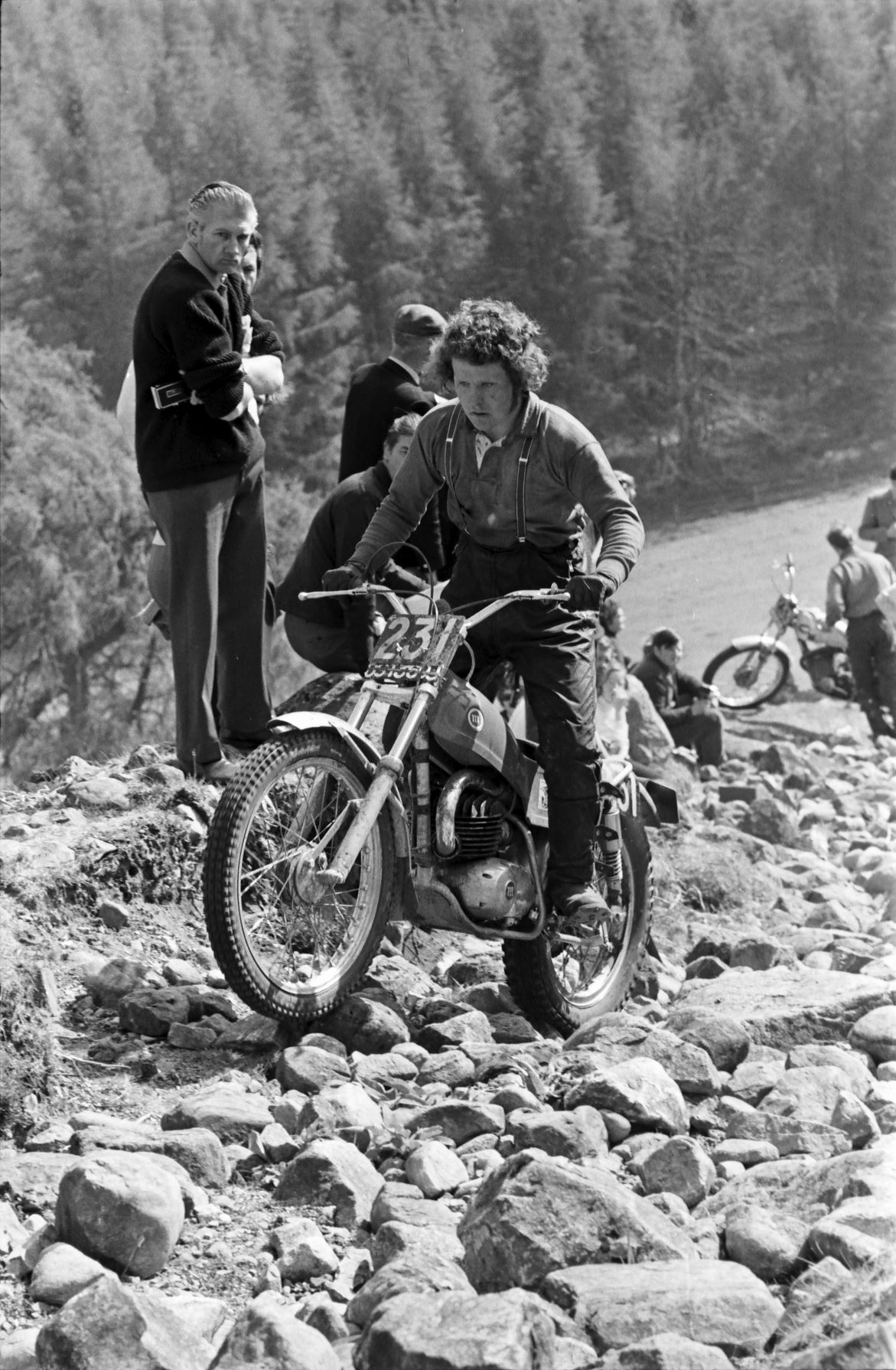
1970 SSDT on the 247cc Montesa, Rodger Mount tackles ‘Pipeline’ – Photo: Alistair MacMillan Studio, Fort William.

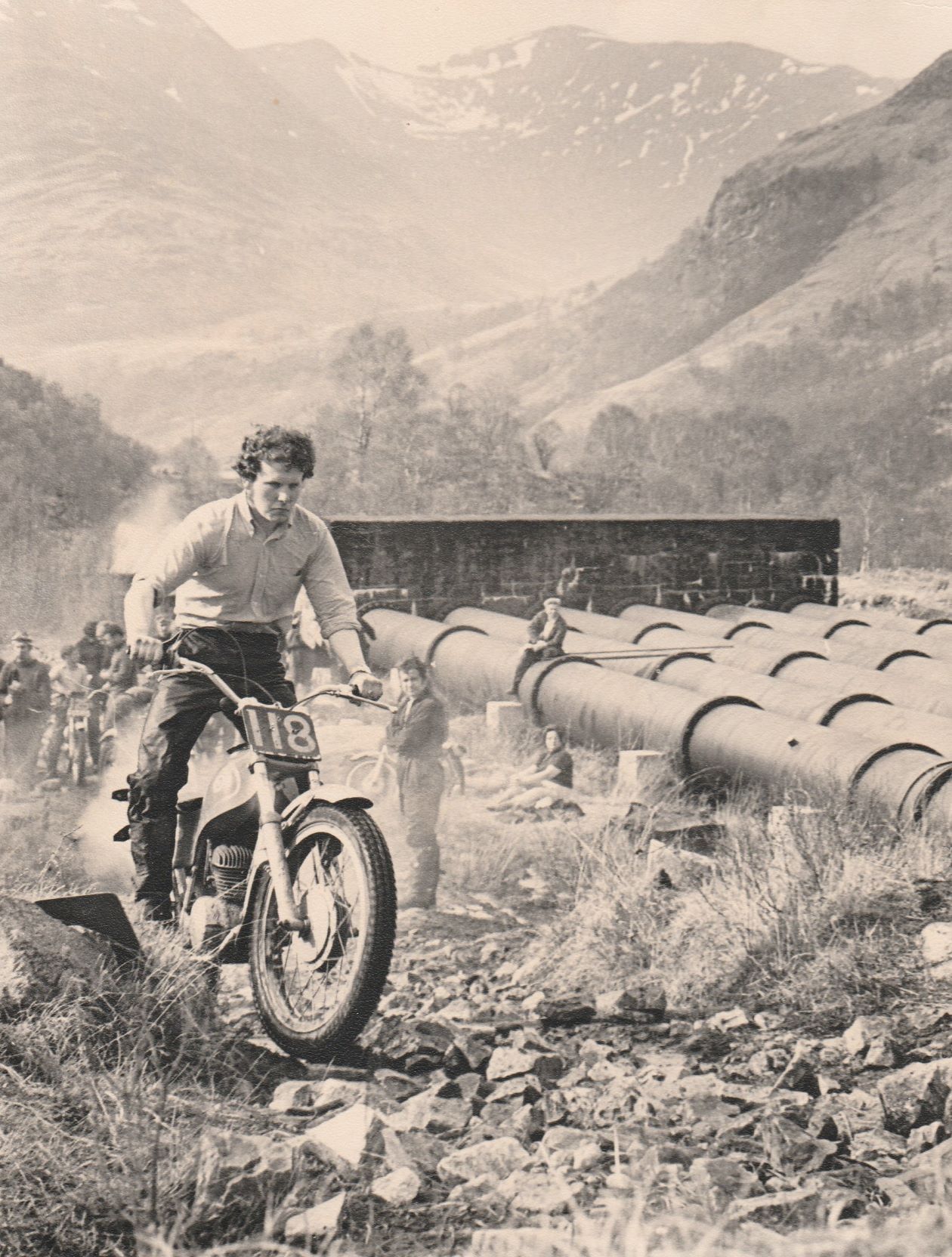
At this time he was riding in all the Scottish national events along with Lochaber stalwarts Allie ‘Beag’ Cameron, Archie MacDonald, James McManus and his cousin Alastair MacGillivray, known locally as ‘Ali MacGill’. The following year, 1970, Rodger entered the SSDT on a MK2 Montesa Cota and was allocated number 118. He came home a very creditable 37th place, beaten only by fellow clubman Archie MacDonald who had his best ever placement in 32nd place. Best Scot that year was Allie Cameron, also on a Montesa, with Mount fifth-best Scotsman. This made Rodger even more determined to better his score and final position.

Front Cover:

In 1971 Rodger’s photo appeared on the front cover of the SSDT official programme, but not feet up; he was captured in a position where the front wheel had connected with a large boulder and was set to go over the handlebars on the famous ‘Grey Mare’s Ridge’.

Watched by Billy McMaster Jnr, Sammy Miller and SSDT Secretary, Jim McColm (on the far right), Rodger Mount comes to grief on the Grey Mare’s Ridge, this photo adorned the cover of the 1971 Scottish Six Days official programme.

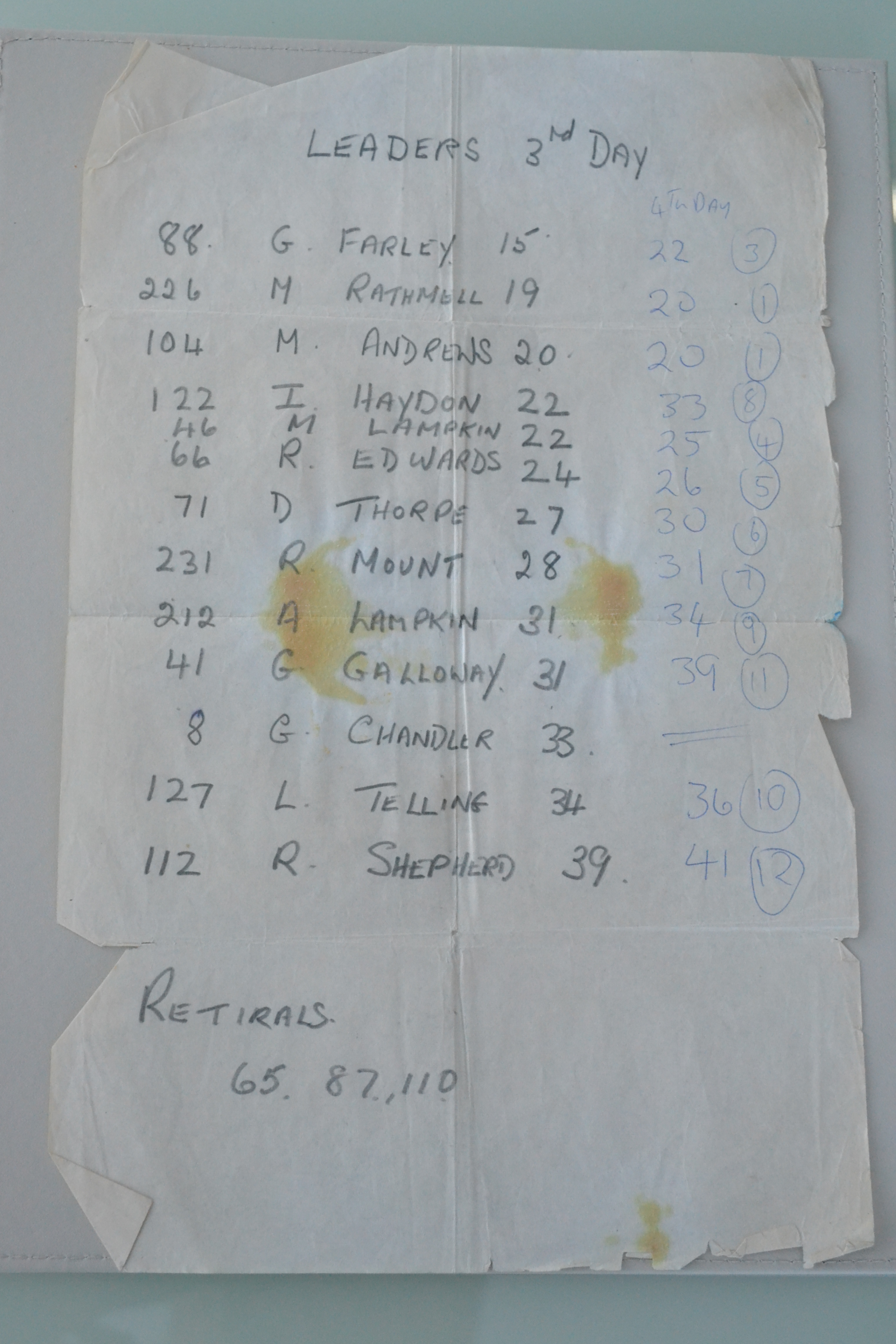
However, 1971 was to be Rodger’s year, on yet another Montesa Cota, but the model with the much smaller and lighter alloy hubs. He was to win the Allan Hay Memorial Trophy for the Best Scottish Rider, in 12th position, and that made RC Mount the highest ever Scottish-born finisher since 1935 when Bob MacGregor won the second of his SSDTs. This record he held until Les Winthrop finished in ninth position some 19 years later. The headquarters for the ‘Scottish’ at that time was the Highland Hotel in Alma Road, Fort William. The daily results were posted up manually each evening and Rodger was astonished to find he was lying in 12th position. A local man who frequented the hotel bar ‘acquired’ the leaderboard sheet that night, and it is one of Rodger’s prized possessions from 1971 to this day.

One of Rodger Mount’s prized possessions, the hand-written Day 3 results taken from the master scoreboard which was at the SSDT headquarters at the Highland Hotel in 1971, (Photo copyright: John Moffat/Trials Guru)

Rodger also claimed the Scottish ACU Trials Trophy, wrestling the crown from his rival, Kenny Fleming. This was Rodger’s first title, just five years after taking up the sport, and he went on to dominate the series, being Scottish Trials Champion in three successive years 1971 to 1973. He relinquished his crown to his ever-improving cousin and travelling companion, Ali MacGillivray.

Mount:I literally handed the 1974 Scottish Championship title to my cousin Ali MacGill. I had met my wife Dora in 1973 and spent some time with her when she was a teacher at Gracemount Primary School down in Edinburgh and I couldn’t be bothered competing in the final two championship rounds, and that gave the title to Ali!”

Alastair MacGillivray seen here in the 1980 SSDT on Cnoc A Linnhe, was handed the 1974 Scottish Championship by cousin Rodger Mount – Photo: Iain Lawrie, Kinlochleven

Bitter-Sweet:

1973 was to be a bitter-sweet season for Rodger. He had bought a new Montesa for the SSDT, but he failed to secure an entry in the dreaded ‘ballot’. This greatly frustrated the reigning Scottish Champion as he had a good chance for not only the Best ‘Scot’ award but perhaps an even higher finishing position, having finished in 20th place in 1972 as a member of a Montesa team, but still no ride! Rodger approached the Yorkshire-based Dalesman concern through Competitions Manager Bill Brooker, who agreed to let Mount ride in the official works Dalesman team. This was the first time a reigning Scottish Champion had not secured an entry in the Scottish Six Days, the Scottish trials community was rather surprised at the time and the tongues were wagging.

Rodger Mount on the works Dalesman-Sachs in the 1973 Scottish Six Days – Photo copyright: Eric Kitchen

Mount:I thought Jim Sandiford might have entered me in the official Montesa team as I had remained loyal to the brand, but his teams were by then full – Jim was a gentleman and couldn’t put someone out when he had already agreed a place. Bill Brooker came to my rescue and gave me a 125 Sachs-powered Dalesman that had been ridden by Peter Gaunt. It was quite a good machine really, but we couldn’t get it to respond correctly when we got it home to Fort William. I contacted my friend Ron Thompson who was a good engineer and mechanic, he played about with the carburetion until he got it running crisper.”

Grim determination written all over his face, Rodger Mount makes a concerted effort on ‘Laggan Locks’ on the factory Dalesman in 1973. Photo copyright: Eric Kitchen

Rodger weighed the little Dalesman into the Gorgie Market sheep pens in Edinburgh on the Sunday and noticed that the rear wheel had only one security bolt. He spoke to Bill Brooker, who said it would be fine as it was only a 125 and wouldn’t be a problem. He started off the week with some good rides and was in front of his two team members. On the Friday, however, the security bolt sheared, and it is not an item that riders usually carry or an item that support crews carry in vans either! Rodger had three punctures as the wheel kept pulling the valve into the rim, and he became two hours over the allotted time and was excluded.

Mount:When Bill Brooker heard what had happened, he was not only horrified but very apologetic, it had never happened before!

Montesa:

With the bitterness behind him, Rodger switched back to his Montesa after the Scottish and bought another new Montesa Cota towards the end of the 1973 season, which was to become sweeter. The final round of the Scottish Championship was to end in a nail-biting finish at the Edinburgh St George Club’s Colonial Trial at the ‘Hungry Snout’ near Gifford in East Lothian, a four-hour drive from Fort William. Two riders had gathered enough points to win and were level-pegging going into the final round. They were Mount and rival Ernie Page, who had by then established himself as a British Trophy International Six Days Team rider. Page was the Ossa distributor for Scotland, Mount was on the Montesa. The Scottish ACU Championship was an 11-round series in those days and Rodger was keen to take his third Scottish title.

Mount:It was a tension-filled day, I can tell you! Ernie wanted to be Scottish Champion as he had won a Scottish Scrambles Championship a few years before and this would have made him the only Scotsman to win both Scrambles and Trials titles, but I was riding well and wasn’t going to give in.” The final scores were tallied, RC Mount was proclaimed the trial winner on 33 marks lost, and the title went to the Fort William man once again. Ernie was runner-up on 46 marks. Rodger finished on the championship on 77 points, runner-up was Ernie page on 76, Alastair MacGillivray was third on 61 and Allan Poynton fourth on 53. MacGillivray was title winner the following year and Poynton became Scottish Champion in 1976. Rodger married his sweetheart Dora Black in 1976 after a short engagement and they had three children: daughter Laurie was born in the April of 1977; Roger, who became Scottish Youth Trials Champion and latterly Scottish Premier Trials Champion in 2004, was born in January 1982 and Steven, also an exceptionally good trials rider, was born in April 1983. Son Roger served an electrical apprenticeship with Archie MacDonald, another trials connection.

So why did Rodger Mount stop riding trials at the ripe old age of 25?

Mount:The family came along and that took up a lot of time, I was still working for my father’s firm and, in 1978, he had bought the Cruachan Hotel in Achintore Road which is the main A82 trunk road. I had won the Scottish Championship three times, so I reckoned I had proved myself. It was a busy hotel, and I built the main extension, which doubled its size. I was also the breakfast chef, so I’ve been cooking full Scottish breakfasts for nearly 40 years! My Dad said I missed my vocation, I should have been a chef. I ran the Cruachan with my brothers for two years then I wanted out, so they bought my share in the hotel and I bought Myrtlebank to run it with Dora as a guest house. Then a few years later we bought the property next door, which had been hotel owner Ian Milton’s house and doubled the accommodation of the business. I was just too busy to ride trials. I had another go when I treated myself to a new 349 Montesa in 1979, but I had lost my edge and I don’t like coming anywhere other than first! I did the Scottish on it that year, but the gearbox broke and I was out due mechanical failure.”

Rodger made a return to trials in 1979 with this 349 Montesa Cota, watched here by his mother, Elizabeth and infant daughter Laurie Mount – Photo: Mount Family Collection.

Business Life:

Rodger and Dora have built up a successful guest house business which is regarded as one of the best in Lochaber, all done through sheer hard work and maintaining high standards.

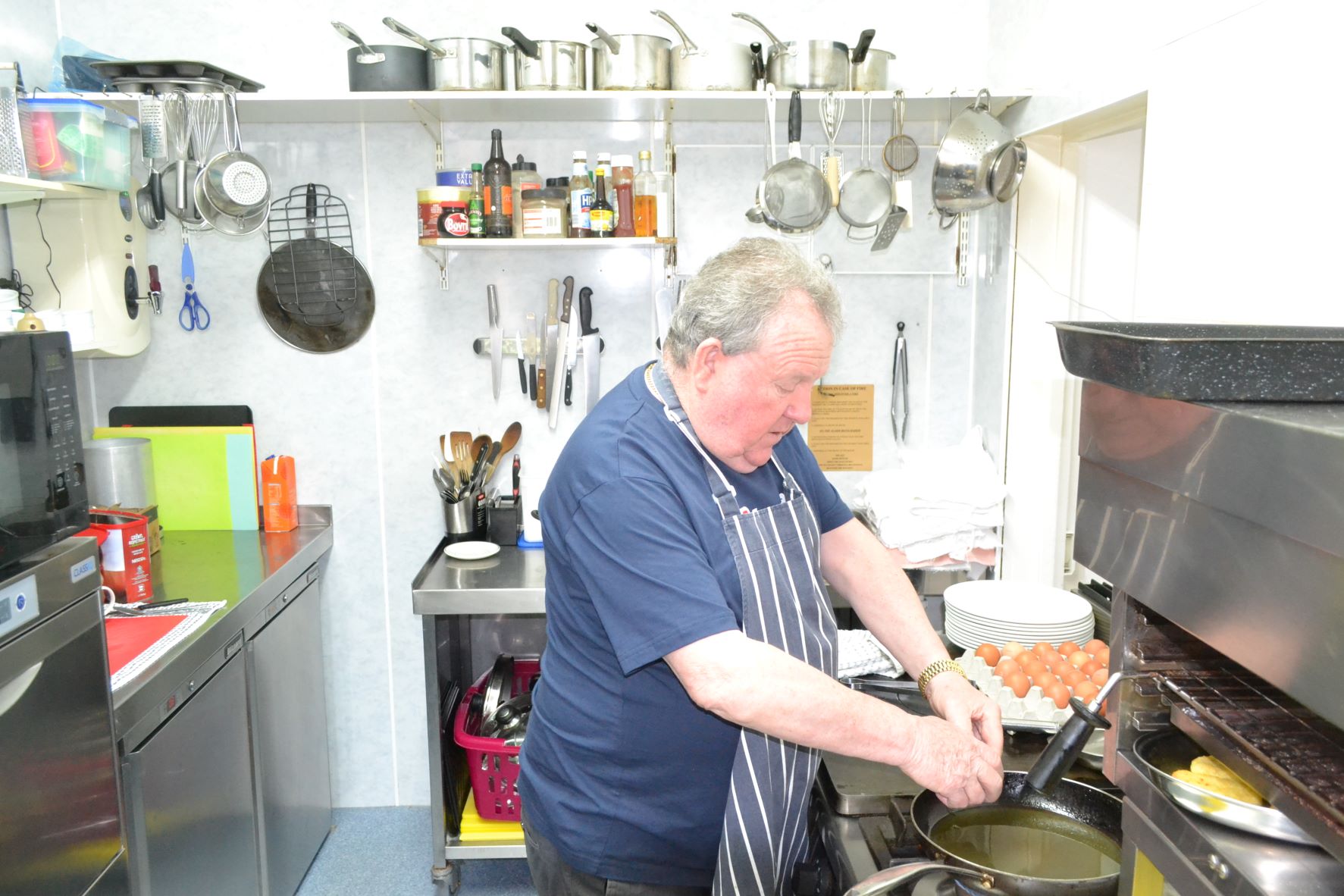
Rodger Mount hard at work as ever in the kitchen of the Myrtlebank Guest House, Fort William – Photo copyright: John Moffat/Trials Guru

Mount:Quite a few of the people I rode in the Scottish with stay here at Six Days’ time; they have stayed here for years and so have their children, who now compete. We are usually fully booked for SSDT week and I start the breakfasts at 06.00am, so that the early riders have a good breakfast in them for the daily run – that is important! My oldest son Roger is a keen fisherman like myself and he also took a liking to the trials, so I bought him a machine and he was a natural at it. He became Scottish Youth Champion and then won the Scottish Trials Championship in 2004. He should have ridden for longer as he was particularly good, but then work and children came along.”

SSDT 2000 – Roger Mount – Gas Gas – Cameron Hill – Photo: Iain Lawrie, Kinlochleven

Steven was also an exceptionally good rider, he also had a natural talent for trials, and he too should have ridden longer. They both fancy riding the SSDT together next year – if they get through the ballot, of course.”

1971, left to right: Allie ‘Beag’ Cameron, Kenny Fleming, Rodger Mount and Alastair MacGillivray

On asking Rodger if he had ever been paid for riding or winning trials he smiled and replied: “Only once, Hugh McDonald told me that if I beat Kenny Fleming in the Scottish Championship to win it, he would give me 100 pounds. This was at the time when new Montesas were around 400 pounds to buy new. Well, guess what, I did beat Kenny and Hughie paid me the 100 pounds in cash.”

The time had flown by and it was now close to nine o’clock in the evening. True to form, Rodger took a yawn and said: “Right, it’s past my bedtime; see you in the morning!

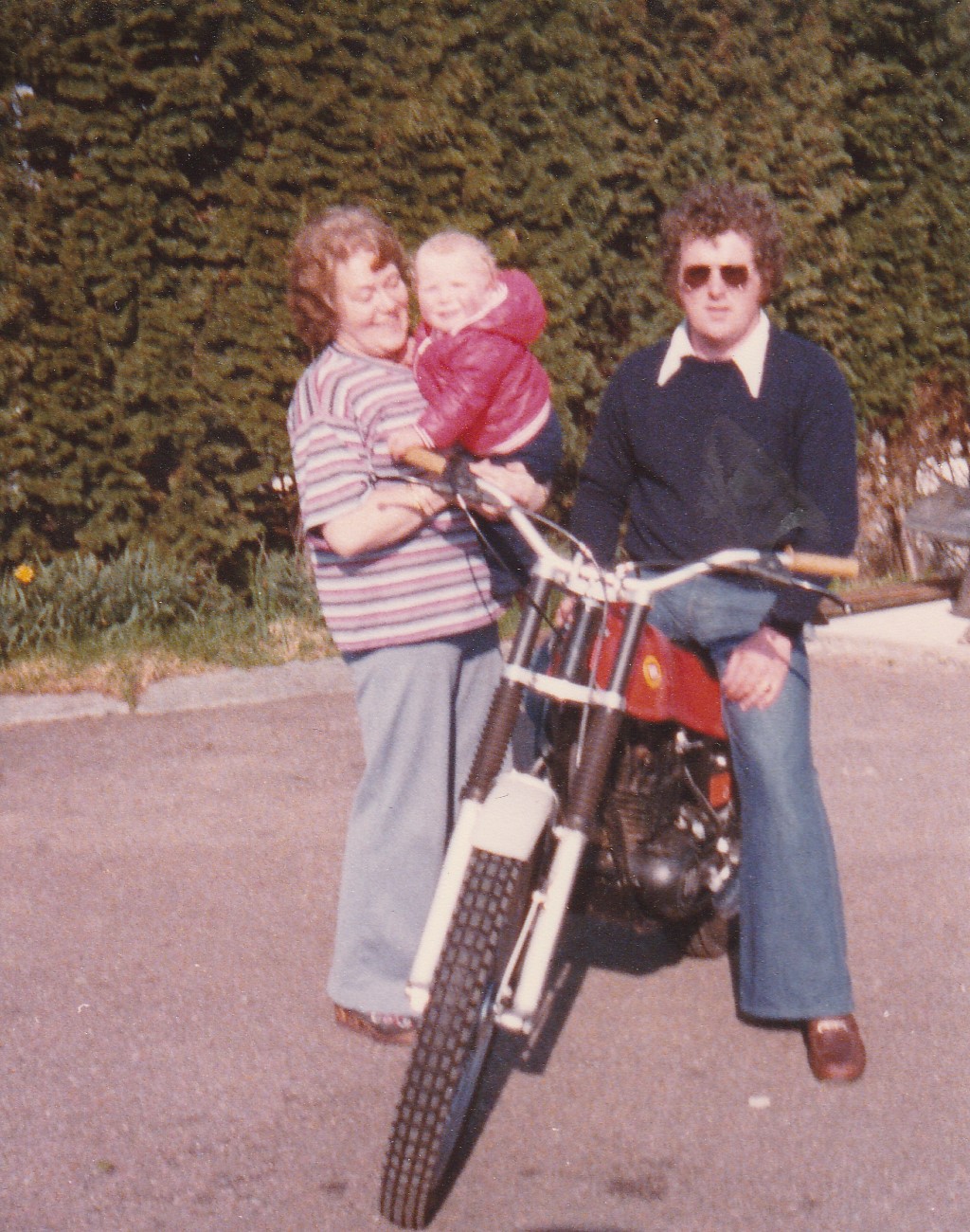
1971 SSDT with Rodger Mount at home on the 247cc Montesa on ‘Laggan Locks’

 Alistair MacMillan & West Highland News Agency:

Whenever the 1970s SSDT photos are looked at when pulling together an article, photos emerge with the copyright of Alistair MacMillan or West Highland News Agency stamped on the back. Alistair, affectionately known in Lochaber as ‘Scoop’, was a journalist and photographer. He initially reported for the Highland News, covering news and pictures in the Lochaber area to the extent that the local newspaper: ‘The Lochaber News’ was born. He also covered articles for the Press & Journal, playing a significant role in increasing circulation locally from six copies to around three thousand, as well as national papers and radio stations. 

Mr. Alistair MacMillan of West Highland News Agency was a great supporter of the Scottish Six Days Trial and made every effort to contact the daily newspapers with photographs and reports from Fort William and Lochaber during SSDT week each May.

The Express called him ‘Our man on the mountains’ due to the number of mountain rescue reports he covered! Alistair reported extensively on the Lochaber & District Motor Club and the Scottish Six Days Trial from the early 1960s, for both the Lochaber News and the Press & Journal. He also took footage of the events for Grampian TV, BBC and STV news as well as performing radio interviews for BBC Radio Scotland. A lot of skill and bulky equipment was required to do this back in the day! A trials magazine used his dark room to process their photographs and would take their prints, still wet, to the nearby telephone exchange for a wire-man to transmit them to make it for that week’s edition. Again, a far cry from everything being done from one device at the touch of a button and being instantly accessible. However, it was his forward thinking that meant he was the first to photograph all competitors of the Scottish Six Day Trials at a specific section, which gave riders the opportunity to purchase a copy at his office at 101 High Street, Fort William and later at the Milton Hotel, the Trial Headquarters. Alistair MacMillan’s images are now copyright of his son, Anthony MacMillan, who has given permission for Mr. MacMillan’s work to be exhibited on Trials Guru website.

Watched by local man, Archie MacDonald, Rodger Mount (247cc Montesa) in the 1972 SSDT – Photo: Alistair MacMillan Studio, Fort William.

Copyright: John Moffat/Trials Guru 2021

For more articles on Scottish trials riders, go to Great Scots on Trials Guru: HERE

Photographic Copyright: is retained by the photographers named in captions above.

Apart from ‘Fair Dealing’ for the purpose of private study, research, criticism or review as permitted under the Copyright, Design and Patents Act, 1988, no part of this article may be copied, reproduced, stored in any form of retrieval system, electronic or otherwise or transmitted in any form or by any means, electronic, electrical, mechanical, optical, chemical, photocopying, recording or otherwise without the prior written permission of the author as stated above. This article is not being published for any monetary reward or monetisation, be that online or in print.

Ettore Baldini 1956-2017


ettore-baldini-photo-claudio-pictures
Ettore Baldini – 26 April 1956 – 10 January 2017 – Photo by Claudio Pictures

It is with deep regret that we have to report the passing of another trials friend, Italian Ettore Baldini, who has died as a result of a heart attack.

Ettore was a competitive rider who started his trials career on a Montesa Cota 247, taking second place in the Italian Trials Championship at the tender age of 19. In 1977 he won his first national title for Bultaco, repeating this again in 1979 again on the Spanish machine. Baldini left Bultaco in 1979 to join American, Bernie Schreiber at Italjet.

Ettore signed for Montesa, which he rode until the end of his career in 1985. He was many times in the top 15 in the world trials championship.

Realising his development skills, Ettore was employed by Aprilia to develop their model ‘TX 311’ and then the ‘Climber’ model which would become the world championship winning machine in 1992 in the hands of Tommy Ahvala.

Latterly Ettore worked for Ducati.

Trials Guru extends our sincere condolonces to the Baldini family.

Photo courtesy and copyright of Claudio Pictures/Jean-Claude Commeat

Rob Edwards in CDB Issue 41

rob-edwards81-pipeline
Rob Edwards (Montesa) seen here on Pipeline in the 1981 Scottish Six Days Trial – Photo: Iain Lawrie, Kinlochlven

In the latest edition of Classic Dirt Bike – CDB (Winter 2016, Issue 41) is an article penned by Trials Guru’s John Moffat entitled: An Hour with… Rob Edwards.

Moffat met up with Rob at the Centenary Scott Trial and over a cup of tea in the refreshment pavilion, Rob recounted highlights of his sporting career as a professional trials rider and brand ambassador for Montesa Motorcycles.

The article features fantastic action photographs taken from the Nick Nicholls Collection at Mortons Archive in Hornchurch, the owners of the CDB title.

CDB is available on subscription: HERE

LOOK! Trials Legends – Volume 2

Latest release from Trials Guru is Trials Legends – Volume 2, which will be extended over the next few weeks.

Rob Shepherd - Honda - 1977 SSDT
Rob Shepherd – Honda – 1977 SSDT – Photo: Rhosalyn Price, Abergavenny

We kick-start Volume 2 with the Legend known as ROB SHEPHERD.

In collaboration with Trial Magazine UK

Trials Legends – Volume 2 is HERE

SSDT – Where are they now?

Where are they now?

1966 - SSDT - Sammy Miller Bultaco EAA60D - 2
1966 Weigh-In at Gorgie Market, Edinburgh – Sammy Miller’s Bultaco Sherpa 252cc (EAA60D) – Photo courtesy: Kenny McNamee, Motherwell

The Scottish Six Days Trial is one of those events that every trials rider not only wants to take part in at least once in their lifetime, but to win it, well that is something really special.

Motorcycle manufacturers have entered works machines to the event with the sole aim of achieving victory, pure and simple.

Tommy Sandham, who has written four books on the subject, has asked me to undertake a tricky task – to find out how many SSDT winning machines still exist!

2011 - 187BLF- GOV132 - IL
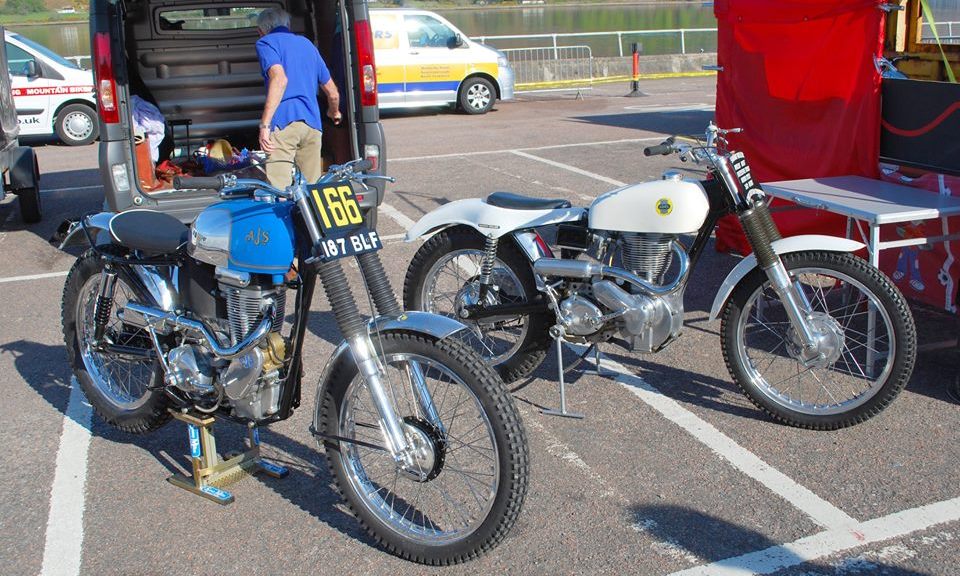
SSDT Centenary 2011 – Two of the most famous trials machines, of all time – 187BLF (350 AJS) which won the 1961 SSDT ridden by Gordon Jackson losing only one mark. GOV132 (500 Ariel) Sammy Miller’s famous machine that won the SSDT (1962 & 1964) – Photo: Iain Lawrie, Kinlochleven

We know of a few that are still around, these are as follows:

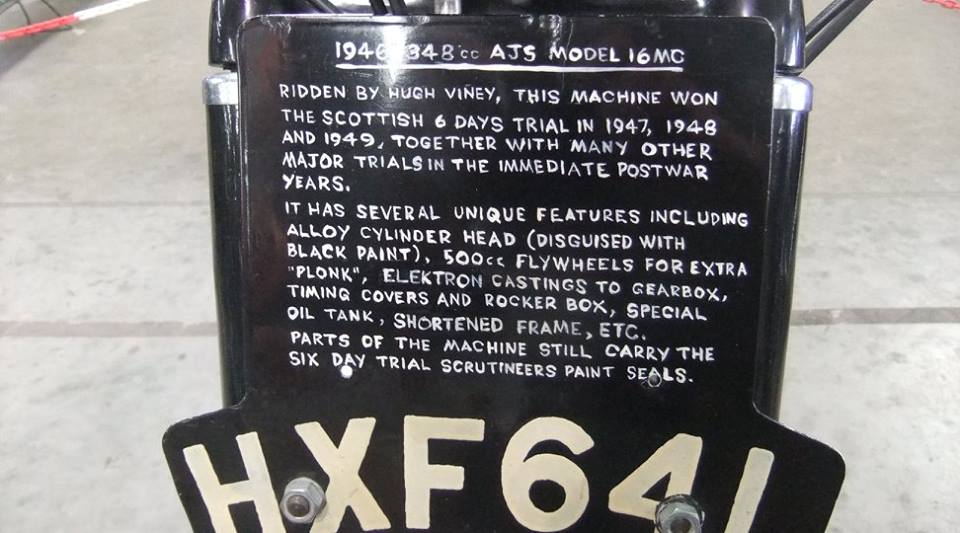
1946/47/48 – HughViney’s 350 AJS (HXF641)

HXF641 - 2 - David Lewis photo
Hugh Viney’s AJS with some details painted on the front plate of HXF641 as it is to this day – Photo: David Lewis, London

HXF641 - 1 - David Lewis photo
Hugh Viney’s factory AJS HXF641 on which he won three successive SSDTs post-war – Photo: David Lewis, London

1957 – Johnny Brittain’s 500 Royal Enfield Bullet (HNP331) – National Motorcycle Museum.

1962/64 – Sammy Miller’s 500 Ariel (GOV132) – Sammy Miller Trust.

1961 – Gordon Jackson’s 350 AJS (187BLF) – Sammy Miller Trust.

1963 – Arthur J. Lampkin’s 249 BSA C15 (XON688) – Owned by A.J. Lampkin.

1965 – Sammy Miller’s Bultaco Sherpa (669 NHO) – Owned by Sammy Miller Trust.

1966 – Alan R.C. Lampkin’s 249 BSA C15 (748MOE) – Owned by A.R.C. Lampkin.

1967/1968 – Sammy Miller’s Bultaco Sherpa (EAA60D) – Owned by Yrjo Vesterinen.

1969 – Bill Wilkinson’s 250 Greeves – (WWC 169F) – Owned by Bill Wilkinson.

1981 – Yrjo Vesterinen’s 349 Montesa Cota – Owned by Yrjo Vesterinen.

2005 – Sam Conner’s 290 Sherco – Owned by Paul Rays

So where are the rest?

Some SSDT winning machines – but where are they?

1954: Artie Ratcliffe’s 350 Matchless (OLH721)

1959: Roy Peplow’s Triumph Cub (RUE923)

1970-1971 : Mick Andrews’ Ossa (B775073 – Barcelona registration)

1972 : Mick Andrews’ Ossa (B-1681-C – Barcelona registration)

1973: Malcolm Rathmell’s 250 Bultaco (XWW34L)

1974: Mick Andrews’ 250 Yamaha (CRA33L)

1975: Mick Andrews’ Yamaha (JGF729N)


Use the Trials Guru CONTACT page to let us known – HERE

Fifteen Minutes with Carlos Casas


13 - 1
Carlos Casas in a familiar place, the parc ferme of the Scottish Six Days Trial – Photo: Trials Media/John Hulme

An addiction in life usually needs a fix, something to make your life feel good. Motorcycle trials becomes an addiction for many people, be it young or old. They may need a new machine, maybe some new riding kit, who knows? In many cases the older you become the more the addiction takes hold as more time becomes available in your life. Many years ago a Spanish motorcycle trials rider by the name of Carlos Casas came to ride in the Scottish Six Days Trial. A foreign adventure to the ‘Highland’ trial. The pleasure and enjoyment of riding in this location became so strong that over thirty years on, this enthusiastic man returns every year to the ‘Scottish’ for his fix to feed his addiction for motorcycle trials. 

John Moffat of Trials Guru was the SSDT secretary in 2002 and that year at the Highland Council reception in Fort William, Moffat introduced  Carlos Casas to guests and councillors as “the Ambassador for Spain for the Scottish Six Days.

Words: John Hulme with Carlos Casas

Photos: Carlos Casas Collection – Trials Media – Eric Kitchen – Kim Ferguson/Kimages

4
Carlos Casas has had a long association with the Montesa brand, seen here in 1978 on a Cota 348 – Photo: Carlos Casas Collection

Why the Scottish Six Days Trial? 

Carlos: “For many reasons, it’s the biggest trial in the world, I love Scotland, the scenery, I love trials, good sections, friendly people as riders, observers, public, organisers and friends  from all around the world…and all of this I can meet in the SSDT. This is my favourite event by far and my best holiday every year”.

Carlos
Trials Guru’s John Moffat interviews the SSDT Ambassador to Spain for Nevis Radio during SSDT week – Photo John Hulme/Trials Media

How well do you remember your first trip to the ‘Scottish’?

Carlos: “My first trip to ride the SSDT was in 1979. I was the winner of a challenge/competition for the best private rider at the Santigosa Three Days and Cingles Three Days trial in Spain. We travelled with the Montesa factory riders who were Jaume Subira, Miquel Cirera, Pere Olle and Josep Jo. I remember that we travelled by car and van and it was a long trip from Spain”.

5
Watched by observer, the late Bill Reid, Carlos Casas in the 1979 SSDT on the Montesa 348 Cota.

Was the week’s competition a tough one?

Carlos: “I rode a Montesa Cota 348 and the weather was horrible as each day the route was very long and it was extremely cold with rain and snow. At the end of the week I was happy about the experience and finished in the top fifty with a Special First Class award”.

6
Carlos climbs Pipeline in the 1979 SSDT, the first of many to come

When you returned home did many people ask you about the event?

Carlos: “Yes, all the trials riders and many people asked me about the SSDT – I was a minor celebrity – Carlos laughs at this! This event is very popular in Spain and for many trials riders it is like a dream. It’s incredibly expensive to travel and compete from Spain but at every event we are always talking about the ‘Scottish’. It’s an event that you’ll love or hate. I always say that every trials rider must ride this event at least once. The problem could be that if you then enjoy it, you’ll repeat the experience every year and that’s when the addiction begins or as I always say, an incredible experience”.

1 opening picture please use across two pages -2
Camaraderie at the SSDT – Paul Nicholson, Gary Pears and Carlos Casas carrying a fellow competitors mount through a swollen river – Photo: John Hulme/Trials Media

Did Montesa support you in the early days?

Carlos: “I have always had good support from Montesa. I have never been a good enough rider to make a wage from the sport but I won the Spanish Veterans class over twenty eight years ago, a championship I have won fourteen times. I have also had some other good results and based on this and my loyalty to the brand, they are always happy to loan me a machine. I think of Montesa as family”.

How good did it feel to win the Best Foreign rider award?

Carlos: “I can remember it like it was yesterday, the first time I won the Best Foreign rider award. I have won this award four times and my highlights from the event are two thirteenth place finishes. The last time I achieved this result I had tears of joy in my eyes on the last sections on Ben Nevis I was so happy”.

9
The Spanish are keen supporters of the SSDT and Casas has encouraged even more to come, hence his nickname, “The SSDT Ambassador”

You continued to support the event even when it went back to full ‘No-Stop’ in the nineties.

Carlos: “Yes, I like the ‘No Stop’ rules at this event and I believe it was the correct decision”.

Carlos: “The last years of the event when they were using the ‘Stop’ rules the sections became tighter, difficult, dangerous and boring because of delays at the sections. Each year less competitors entered and I think the SSDT committee made a good job and the decision to go back to ‘No Stop’ was correct for the future of the event. Since then the SSDT is oversubscribed every year and it needs a ballot. One year I suggested to the committee that there should be two SSDT trials, one in May and one in October – Carlos laughs again as he explains he just loves the event!”
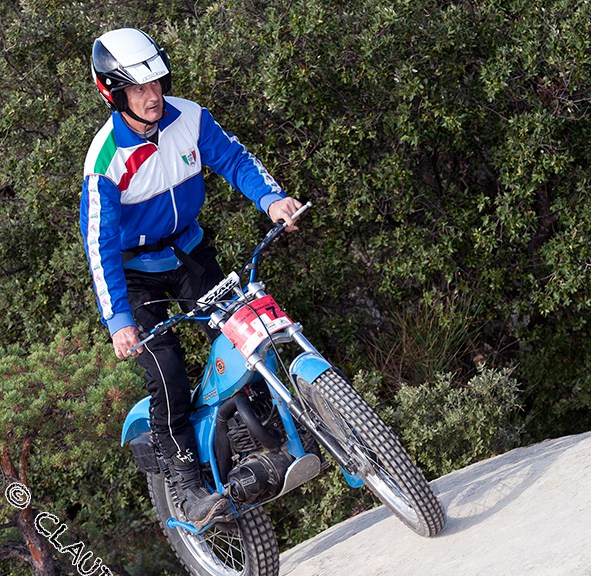
How important in Spain and to Montesa was the win of Amos Bilbao in 2002?

Carlos: “It was very important for Montesa/Honda to win the SSDT as it’s a very prestigious event, classed by many as nearly as important as the World Trials Championship. Montesa won the SSDT in 1979 (Rathmell), 1980 (Vesterinen), 1983 (Toni Gorgot) but for both Amos and Montesa/Honda the victory in 2002 was more important because it was a Montesa Honda machine and Dougie was contesting the World Trials Championship”.

7
1995 SSDT Carlos Casas on the Honda powered Montesa Cota 315

Have you ridden all your Scottish Six Days on Montesa/Honda machines?

Carlos: “I have ridden the Montesa Cota 348, Cota 314, Cota 315 and Cota 4RT, twenty four times in total. I rode a Gas Gas one year because there was no support from Montesa. My good friend Manel Jane loaned me his Gas Gas. It’s very important for foreign competitors to know that the manufacturers, through the importers, have full facilities available”.

When did you first ride the Pre-65 Scottish?

Carlos: “My first year was 2004 and since then every year after”.

3
Carlos loves the Pre-65 Scottish as much as he does the SSDT

What machines have you ridden in the Pre-65 Scottish?

Carlos: “I have always ridden a Triumph Tiger Cub usually loaned from my good friend Walter Dalton, but one year I used a ‘Cub’ loaned from Peter Remington. I love all the machines and one year I’d like to ride in the event on a rigid”.

Many people think you can win the Pre-65 Scottish – Is this your dream?

Carlos: “Around twenty riders could win the Pre-65 Scottish. It’s one of my dreams to win it but the most important thing for me is to be there and enjoy every section and every minute of this fabulous event – you would not believe the smile on his face when we talk about the Pre-65 Scottish”.

We know you are very good friends with the Vertigo brand owner Manel Jane. How do the Spanish trials riders feel about Vertigo?

Carlos: “People in Spain waiting patiently for the Vertigo to arrive because they understand that it would be well made, good quality, lighter and perform well. They were not disappointed. Manel is a real trials enthusiast and his dream was to build his own machine and build a good strong team”.

11
Manel Jane and Carlos Casas have been friends for many years

Why the loyalty to Montesa?

Carlos: “Because the motorcycles produced are always superb quality, very reliable and nice to ride. The people from the Montesa factory are always very good, friendly and professional”.

How much longer will you come to Scotland and compete in the Six Days and Pre-65 events?

Carlos: “As long as my body allows me to! I love both events and every year the memories are with me forever. I am getting old but the addiction just gets stronger”.

8
Carlos Casas negotiates Ba House in the 2000 SSDT on his Montesa 315 – Photo – worldwide copyright: Eric Kitchen

Before we finish; the question that gets asked so many times – Stop or No-Stop?

Carlos: “For me as a rider, No-Stop, it is without doubt correct. But sections whatever the rules must be well thought out to make them challenging and interesting, you must try to always make the rider think about the challenge”.

Caros 2015 - Kimages
Carlos Casas, the “Spanish Ambassador to the SSDT” – Photo: Kim Ferguson/Kimages

This article was generated for Trial Magazine issue 50 in April/May 2015 and we at Trials Guru thank John Hulme for the use of his article on this website.

Why not subscribe to Trial Magazine or Classic Trial Magazine, contact: www.trialmaguk.com

TG Logo 2


Rob Edwards Story – have a read!

If you haven’t done so, why not take a look at Trials Guru’s Rob Edwards Story. It truly is the story of a lifetime in trials.

Rob Classic Bikers Club
Rob Edwards in the 1975 Scottish Six Days Trial on the prototype Montesa Cota 348, captured by Brian Nichols on Bradileig – Photo world-wide copyright: Mortons Media, Hornchurch – all rights reserved.

Written by Rob himself it gives a fascinating insight to how a young lad from Teeside went on to become a professional rider, eventually contracted to ride for Montesa Motorcycles in the sport world-wide.

Trials Guru is grateful for the co-operation by Mortons Media and also Classic Trial Magazine and many more photographers and personalities in the sport for their assistance in creating this story of one of Britain’s favourite riders in the sport of trials.

Link to: ROB EDWARDS STORY

TG-Logo - TG
Trials Guru – Dedicated To The Sport

Rob’s tribute to Barry Overy

Montesa’s former world-wide ambassador, Rob Edwards recently sent Trials Guru a tranche of his personal photographs, taken over a number of years for his section on this website.

Among them was a photo taken high up on a hill of his friend, Barry Overy who died recently at the age of seventy.

Barry Overy
Barry Overy, taken by Rob Edwards in the Highlands – Rob: “That was some karate chop Barry!”

Rob: “Barry Overy, from Stockton was a stalwart of our local club, the Middlesbrough and he was also a supporter of the East Yorks Centre, ACU of which he became President in November 2015, a position in which he took great pride. Barry was a good friend and a tireless worker in our sport of trials. I have known Baz a long time and will miss him.”

1970 SSDT - Edramaucky
Rob Edwards gains five marks at Edramucky, near Killin on day one of the 1970 Scottish Six Days. Watched by observer, Willie Dewar and photographers, Stephanie Wood and Nick Nicholls. Photo: Rob Edwards personal collection.

Rob: “I have also enclosed another photo from my personal collection, it shows me in real trouble on day one of the 1970 Scottish when I lose five marks as I am clearly past the dabbing stage! The reason for sending you this photo is that it shows the late Stephanie Wood in the background, that is her standing on the left of photographer, Brian ‘Nick’ Nicholls. I am reliably informed that the observer writing ‘five’ in the book is Dunfermline man, Willie Dewar who worked at Angus Campbell’s motorcycle shop”.

For Rob Edwards story of trials on Trials Guru, follow this link HERE