Rob testing the Cotton Minarelli 170cc trials machine in 1968. Italian Minarelli motors replaced the 37A Villiers powerplant.
Hi Reader and thanks for your support.
I am enjoying it and I hope you are too?
Having ridden a 250 Bultaco in the 1966 Scottish, I moved on to ride Cottons and rode a 250 Villiers powered bike in the 1967 & 1968 events.
1968 SSDT on Foyers with the 37A Villiers powered Cotton. Rob was fourth in the event.
In the late sixties Cotton changed from the 250cc Villiers 37A motor to the Italian made 170cc Minarelli engine. I was given a large gearbox sprocket to carry in my pocket.
The idea was to fit it when we were due to do long stretches of road work.
The problem was, I was always so late on time I didn’t have the time to swap it!
On the final days’ lunch check, the thought of doing 30 miles an hour back to Edinburgh was very daunting indeed. It wasn’t helped by seeing the works Greeves fitted with minute rear sprockets.
Their cruising speed was around 70mph. Bill Brooker was the Greeves competition manager and he really had his finger on the pulse.
On more than one occasion he went out of his way to help me. My idea of a true sportsman and excellent competition manager.
It was short on ‘flywheel effect’ inertia and dreadfully low geared. Thanks to my pals at Head Wrightsons, a brass band was machined to fit onto the flywheel.
This made a big improvement to the engine characteristics, wheel grip and so on.
Entered by Norman Crooks Motorcycles, I rode with this modification in the 1969 Scottish and won the best up to 200cc class.
Rob Edwards in 1969 on the Cotton at Coalasnacoan in the SSDT on his way to win the 200cc Cup.
To solve the low top speed problem, I had sent Cotton a drawing of my flywheel modification but had heard nothing back. I wasn’t surprised when one week after the SSDT there was a half page advert in the Motor Cycle News, telling riders how good the modification was and how much they would sell you one for. I was gobsmacked!
However, I didn’t receive any thanks for the 200cc cup win or flywheel modification!
After winning the Alan Jefferies Trial, I decided to treat the Minarelli to a set of piston rings. I rang the Cotton factory up and in due course they posted them to me.
Unfortunately you’ve guessed it – I broke one when fitting them.
I rang Cottons for another set. Two weeks later they still hadn’t arrived.
When I phoned them, the top man answered the phone. ‘Mr. D’ said that he wasn’t going to send me anymore rings until I explained exactly what I had done with the others.
It was then I decided it was time to move on.
When Pat Onions was in charge of the competition shop there was never a problem.
Things were changing and it was time to abandon ship. But where to? – Rob
1968 – Rob Edwards (centre) discusses the Cotton Minarelli with Cotton’s competition manager, Pat Onions (left) and frame builder Eric Lee. The photo was a factory publicity shot.
Rob testing the Cotton Minarelli 170 a bike which he made some modifications to make it more competitive.
To Be continued …
Trials Guru: The factory Cotton Minarelli that Rob Edwards rode was to become the production Cotton ‘Cavalier’which was produced at around five machines per week. Supplied to customers in ‘kit’ form to avoid purchase tax. The 1969 Scottish– Rob Edwards came home in a creditable tenth position and another Special First Class award on 59 marks on his 170cc Cotton. The eventual winner was Yorkshireman, Bill Wilkinson who was to be the last British rider to win on a British built machine, a 250cc Greeves (WWC169F).
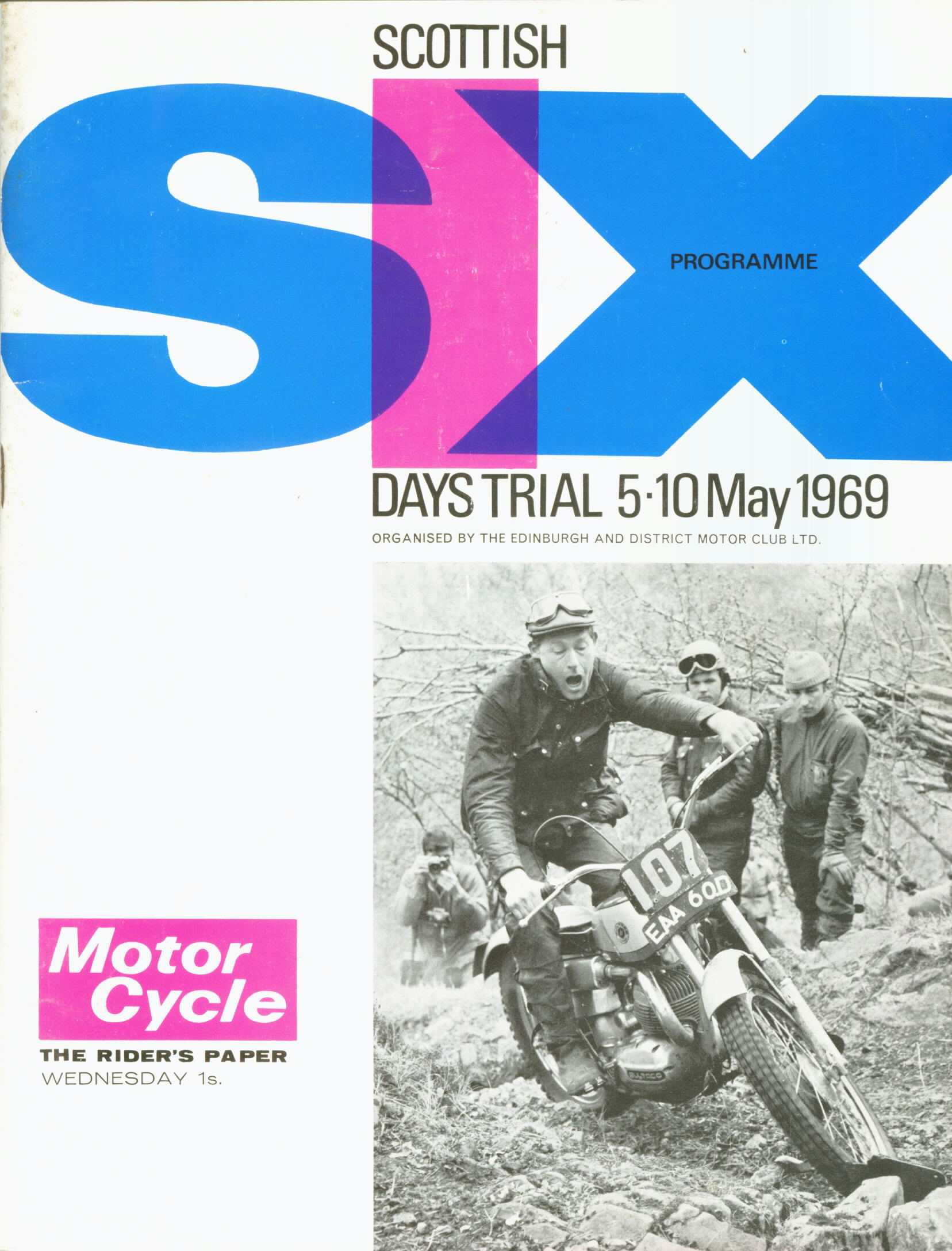
1969 SSDT Programme with a 1968 photo of Rob Edwards on the 250cc Cotton on Glenogle section on the first day.
Rob remembers! : Isn’t it always the way? You start writing about one thing and another one pops into your head! Anyway, here is something I remembered about my Cotton days.
I traveled a lot with Brian Hutchinson. The problem was that Brian worked on the family farm. I would be at the farm at 4.30pm but it would be 6.30 pm before we started our journey.
One time in particular we set off for South Wales with light snow falling.When we reached the M1 motorway, the traffic was almost at a standstill. This didn’t bother ‘Hutch’ – he went straight across into the fast lane that nobody was using because the snow was too deep.
No problem! he had the Austin A55 pick-up to 80mph in no time and we had the fast lane to ourselves all the way to Sheffield!
We finally arrived at Merthyr Tydfil at 1.30am. No bed and breakfast or anywhere was open. It was freezing cold – you know its cold when your breath freezes on the windscreen. Close to death, we drove to the railway station and as luck would have it there was a gas heater on the wall.
You had to reset it every minute but this was the Ritz compared with the pickup. We took turns pressing the start button.
Unfortunately one time it didn’t ignite. I was woken up by the smell of gas and a hissing sound. The next second, there was a tremendous bang and the heater left the wall it was on and splattered against the opposite one.
We were last seen running flat out along the platform with the station master in hot pursuit shouting: “I’ve rung the police boyo you’ll not get away”. It was back to the “pickup hotel” after that! – Great memories – Rob
The 1969 SSDT Official programme front cover, the year Rob Edwards came home 10th and won the up to 200cc cup on the Cotton Minarelli.
Copyright:
Words: Rob Edwards/Trials Guru, John Moffat 2014.
To read all of Rob Edward’s story of his life in trials, click… here
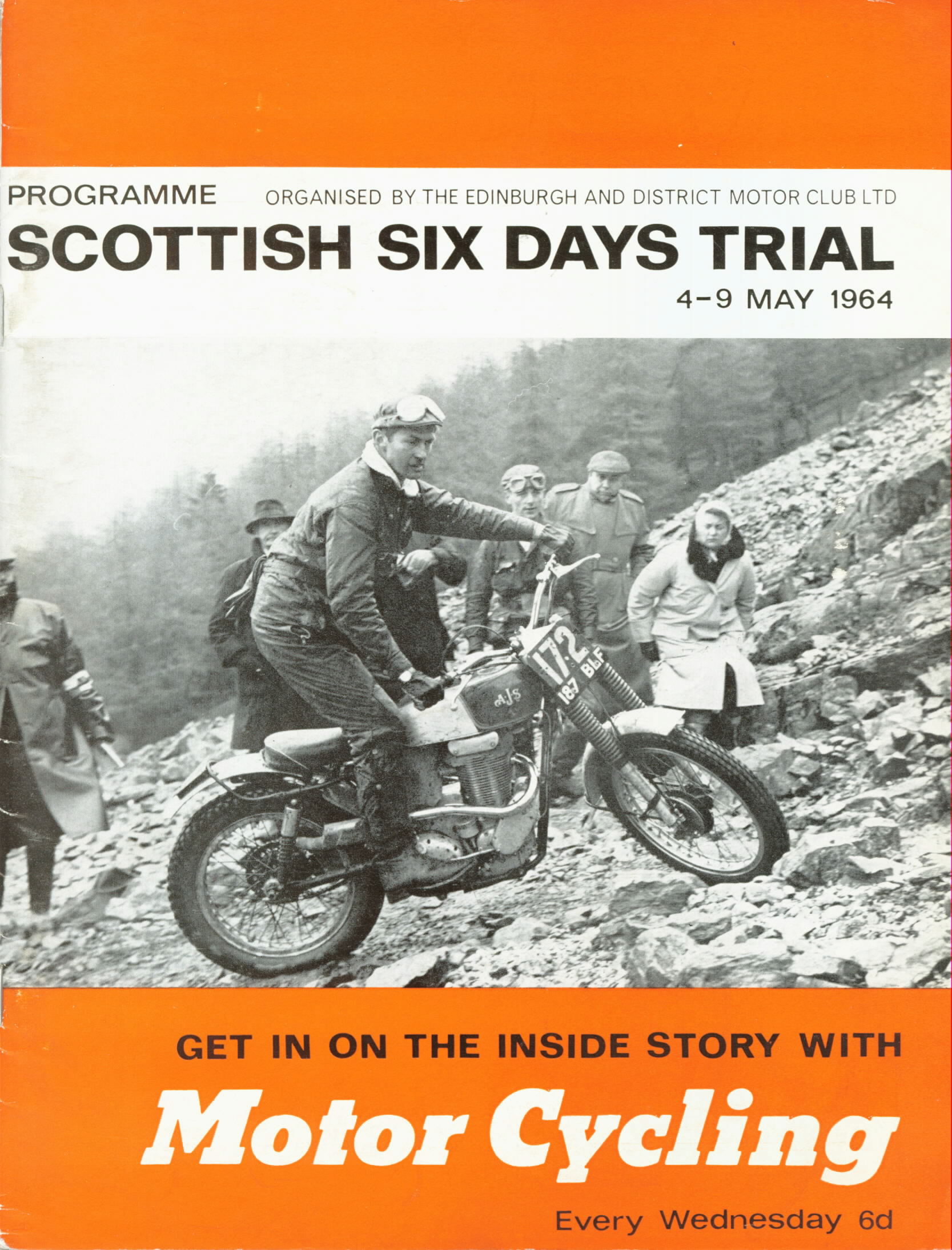
Front cover of the 1964 SSDT official programme, with Rob’s great friend Gordon Blakeway on the ex-Gordon Jackson AJS (187BLF) in 1963. The bike carried Jackson to victory losing one mark in 1961.
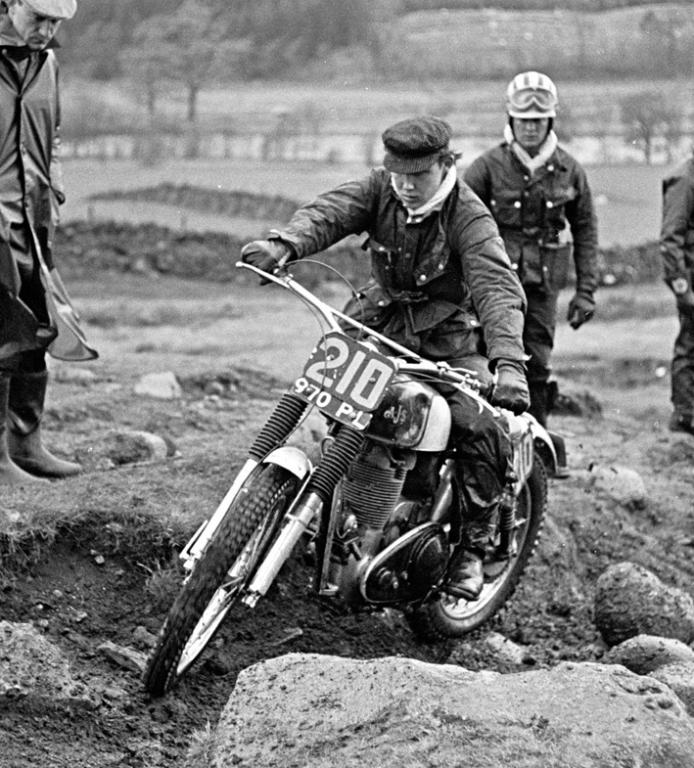
By the time the 1964 Scottish came around, I had got over my previous year’s disaster, this time I was allocated number 210 on an AJS 350 bought from Comerfords, this time entered as a ‘privateer’ and riding for the Middlesbrough & District, my home club.
The event still started and finished in Edinburgh. On the Thursday, we went over the Corrieyarrick Pass.
I think I had been following behind Peter Gaunt and what happened next I wasn’t to find out until sometime later.
I found myself sat on a banking at the side of the Pass, which is an old General Wade military road.
I had no idea at all how I came to be sitting there.
Alan Morewood from Sheffield who became a top sidecar driver, came along on his 500 Ariel as he was number 205 that year, he stopped and asked if I was Okay? ‘Yes, fine’ I said, ‘Bye’ he said and rode off.
A couple of minutes later and Alan was back. ‘Rob, are you sure you are al-right, you look dazed?’ said Alan. ‘No problem’ I said and off he went again. Somehow I managed to get back to Fort William to finish the day’s run.
The first person I spoke to asked what I had been doing to scratch my face? Then someone said, ‘never mind his face, look at the back of his bike!’
The rear end was totally out of line. I then realised that I must have hit a pothole in the road with the front wheel over Corrieyarrick, cartwheeled and that explained my rest on the bank.
We pulled the bike back into line with a length of pipe that we found. Apart from a bit of a headache, it was back to business as usual.
Rest of the week was not as eventful and had a good old needle match with my mate Sid Lampkin who was on a factory Cotton that year.For the next year, I had bought another AJS from Comerfords, Thames Ditton built by Jock Wilson. I’ll tell you about that ride next. Bye for now! – Rob
Rob on his 350 AJS at Achintee Farm, Ben Nevis, in the 1964 Scottish. The AJS supplied by Comerfords, hence the Surrey registration number 970PL. If you look closely the front wheel spindle nut has the ISDT type tommy-bar, obviating the need for a spanner. It also has the works style prop-stand tied to the front downtube by rubber bands and a small spigot mounted on the lower-most engine bolt and the attachment spigot mounting on the magneto mounting plate. Photo supplied by Rob Edwards. Photo copyright: Brian Holder.
Post Script by Rob Edwards:I’ve just been looking again at this fine Brian Holder photograph of me on the AJS on ‘Ben Nevis’ in 1964. The chap directly behind me is Mick Ward from Scarborough.
He built a bike especially for this event. He had the novel idea of taking the exhaust through the back frame loop to save a bit of weight.
However, when he got stuck, the ever helpful spectators would rush to his aid, not realising the exhaust was the rear frame loop and severely burn their hands in their quest to assist! I’m sure the A&E at Fort William were extra busy that week with burns!
I bet Mick never thought that one day Valentino Rossi would copy his helmet design! – Bye for now! – Rob
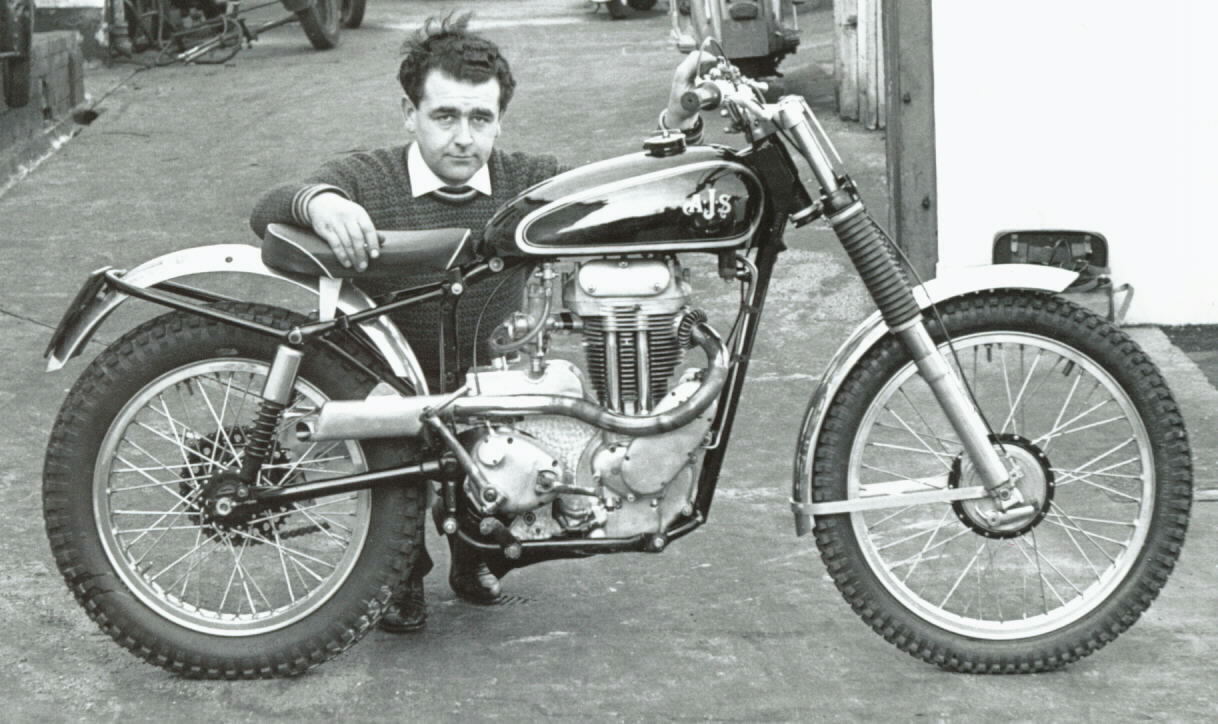
Comerford’s employee, Peter ‘Jock’ Wilson with one of his creations, an ultra short-stroke AJS 16C, photo taken at the back of Comerfords workshop at Portsmouth Road, Thames Ditton. Jock was brought up a mile from the old SSDT sections at ‘Meall Glas’ in Glen Lyon, Perthshire. Photo Copyright: Don Morley, Reigate, Surrey
TRIALS GURU: – 1964 Scottish Six Days, this edition was won by Sammy Miller riding the much modified and much weight reduced, Ariel HT5. This would be the last time he would do so on the British four-stroke, Miller had already been secret testing the 200cc Bultaco Sherpa which he was later to develop to an increased 244cc and thus created a world beating machine with the San Adrien De Besos factory.
From the 1964 Scottish Six Days Trial Results:
No. 210. R. Edwards, Middlesbrough & Dist. M.C., A.J.S. 350 c.c. …. 124 marks S F C (Special First Class Award)
1964 SSDT another Achintee photo taken the same day as that of Rob Edwards. Here we see the late Ron Thomson a great character originally from St. Andrews who made his home in Inverlochy, Fort William. Seen here on his 500cc BSA Gold Star. Ron called this bike the ‘Stone Crusher’ and was later owned by Billy Maxwell of Newcastle. Thomson and Ali McDonald were great friends. Photo courtesy: Mrs Ron Thomson, Inverlochy, Fort William.
Rob’s eventful Scottish ‘Thursday’ was May 7th 1964. The route was as follows, let’s follow where Rob went that day: Start, Fort William; Inverlochy; 2 sections at Annat; Banavie; Gairlochy; 8 sections at Laggan Locks; Corrieyarrick Pass (where Rob has his big off!); Melgarve; Laggan Inn; Roy Bridge; Inverlochy – Lunch control; Glen Nevis; 4 sections at Ben Nevis; Fort William – Down Ashburn Lane; Onich; Kinlochleven; 1 section on Pollock Way; 8 sections at Leitir Bo Fionn; Down Loch Eild Path; 8 sections at Mamore; Check at top of hill; Mamore Road; 2 sections on the Town Hall Brae and Finish of day. Total Mileage 132 miles. 33 sections.
1964 SSDT shot of the late Ali McDonald, a Fort William man, on his Ariel HT5 on Town Hall Brae in Fort William. Photo courtesy: Mrs. Ron Thomson, Inverlochy, Fort William.
SSDT Point of interest: The number plates you see in the SSDT photos were issued to riders by the organising club. The rider paid a fee of ten shillings and forfeited the deposit if they didn’t hand the plates back at the end of the event. In 1964 the number plate official was Bob Adamson who later was to become SSDT Assistant Secretary and Secretary of the Pre’65 Scottish Trial.
1964 Scottish at the same section group, Achintee, Ben Nevis that we saw Rob on his AJS, here we have the late Blackie Holden from Bradford on his works Cotton. Blackie Holden junior supplied this photo and said: “My Dad rode with Rob Edwards many times and considered him a true gentleman of the sport”.
Copyright: Rob Edwards/Trials Guru, Moffat Racing (c) 2014
Acknowledgements:
Don Morley, Reigate, Surrey for permission to use the photograph of Peter ‘Jock’ Wilson for this article.
Edinburgh & District Motor Club Ltd for the use of 1964 programme cover.
Rob Edwards for the use of the Brian Holder photo.
Blackie Holden Junior for the photo of Blackie Holden Snr in 1964.
Mrs Ron Thomson, Inverlochy, Fort William for the photos of Ali McDonald & Ron Thomson.
To read all of Rob Edwards’ story of his life in trials, click … here
Photos: Jean Caillou; Eduardo Gomez de Salazar; Yamaha Motor Co.
Christian Rayer is a name not universally known in the UK, but is very well-known in his native France. Born in 1945, riding Greeves and Motobecane machinery in his early years as a rider, he was instrumental in the development of the first Montesa Cota 247 series trials machine which emerged in 1967, based and developed from the Spanish factory’s Impala engine design.
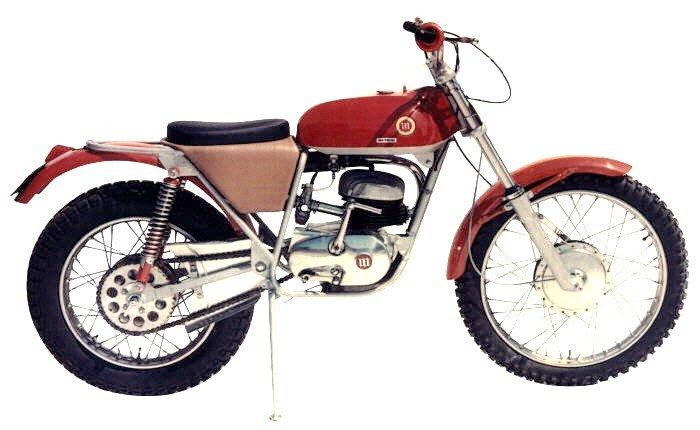
Prior to the Cota, this was the Montesa Trial 247 (11M), this model was launched at the Barcelona motor show and had a production run of only 44 units. Developed by Rayer/Pi in 1967. (Information provided by: Luis Munoz-Aycuens Ribas).
This was done in association with both Pedro Pi and England’s Don (D.R.) Smith feeding information back to the Barcelona factory, owned by the Catalan Permanyer family, based then at Esplugas de Llobregat.
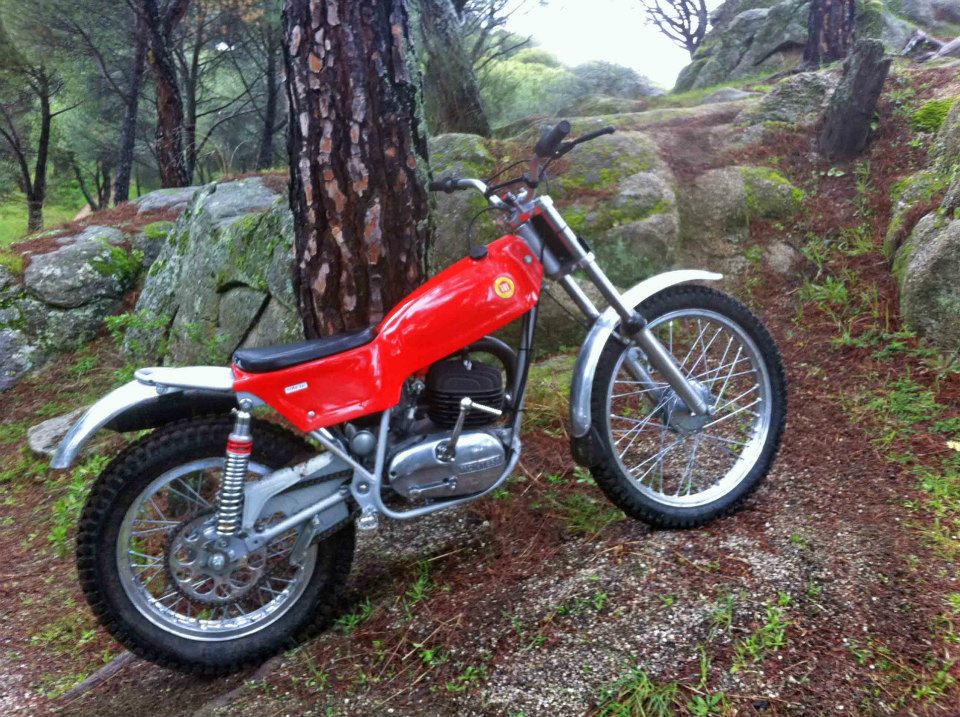
Pere Pi was one of the Montesa factory development riders with Christian Rayer in 1967, seen here with another Cota Prototype.One of the few remaining early model Montesa Trial 11M limited series production machines (B-577564). Developed from the prototypes from the Rayer/Pi/Smith era now in a private museum near Madrid, Spain (Photo: Eduardo Gomez de Salazar).Christian Rayer on B-576140 the first prototype of the Montesa Cota in 1967The 1971 production Montesa Cota which was a direct descendant from Rayer’s prototype machinery.
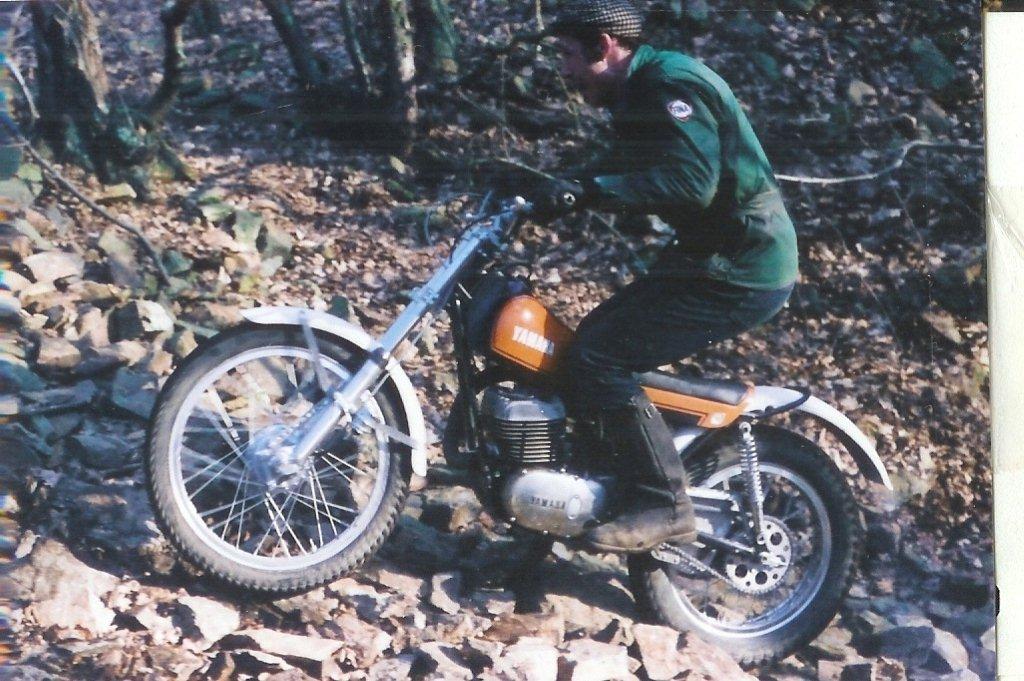
Rayer was six times French trials champion and rode the Scottish Six Days Trial three times on the Spanish marque. His main rivals of that era on the European trials scene were Sammy Miller, Gordon Farley and Don Smith (England) and Gustav Franke (Germany) who were all professional riders. Thereafter, in 1971 he was contracted by Yamaha to develop a trials machine. This he did with a 360cc prototype, using a mix of mainly Yamaha but also Saracen, Montesa and Ossa components.
Rayer with the prototype Yamaha TY (1971) in a company publicity brochure.
The trials model eventually became known as the ‘TY’ which stood for ‘Trial Yamaha’, Rayer again feeding back useful information to the Japanese engineers at the Yamaha factory.
Christian Rayer’s 1971 prototype built for Sonauto-Yamaha. Front hub is Yamaha 125, rear is Ossa, as is the swinging arm, front forks are modified Montesa. The first frame used was actually built by Saracen. This version used an Ossa frame. Originally had a 360 RT1 stock engine, then in 1972 received this works magnesium engine, also 360. – Photo: Jean Caillou
Rayer’s efforts paved the way for a full-on attack by the Dutch based competition arm of Yamaha Motor Co in trials, but now with Mick Andrews as their main factory rider in 1973. Andrews had been with Spanish rivals, Ossa from 1967, switching to Yamaha in a blaze of publicity.
Progression in 1972 with changes to the TY Yamaha already visible.
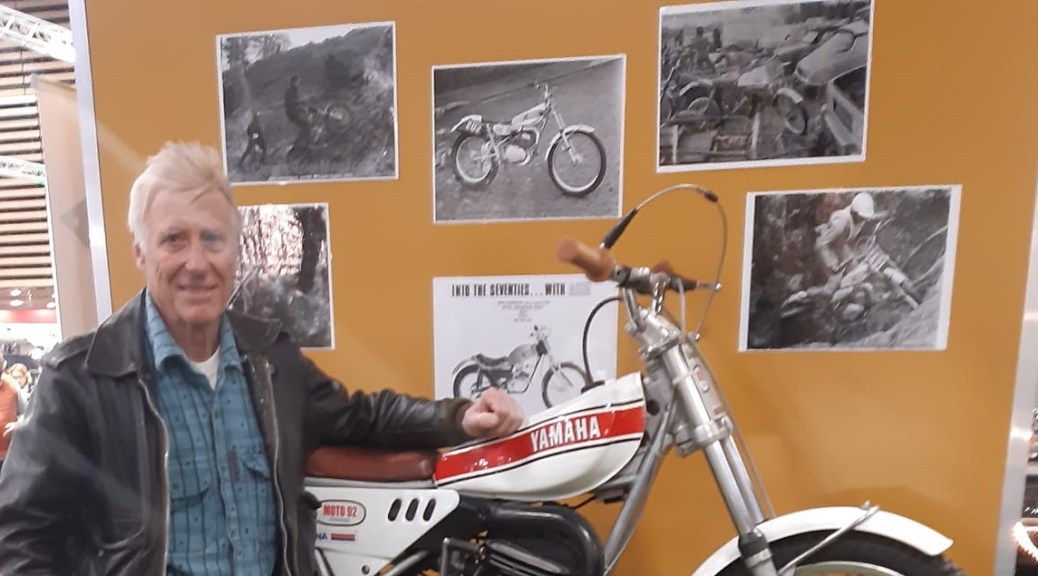
Rayer’s business acumen resulted in the creation of his dealership called ‘Moto 92’ at Chaville, a suburb of Paris, where he went on to develop up-rated motors for the Yamaha TY250; XT600 and other trail models. He was also the founder of the first riding school for off road riders near Paris and competed in the first edition of the famous Paris-Dakar Rally on the Japanese marque as an official team member, winning many of the individual stages in the process. Rayer also rode in the Enduro de Touquet, also as part of Team Yamaha and finished second overall from a start field of 1000 riders.
In later life, Christian took up para-gliding, diving, hunting and microlight aircraft piloting.
Nowadays Christian runs a business in Valbonne Cedex called ‘IP Moteurs‘ supplying after-market upgrade kits for Yamaha, Suzuki and Honda.
The Trials Guru salutes – Christian Rayer.
Christian Rayer of France is a Trials Guru – ‘Trial Legend’
Apart from ‘Fair Dealing’ for the purpose of private study, research, criticism or review as permitted under the Copyright, Design and Patents Act, 1988, no part of this article may be copied, reproduced, stored in any form of retrieval system, electronic or otherwise or transmitted in any form or by any means, electronic, electrical, mechanical, optical, chemical, photocopying, recording or otherwise without the prior written permission of the author as stated above. This article is not being published for any monetary reward or monetisation, be that online or in print.
Alexander John Cameron, known to the townsfolk of his native Fort William as ‘Allie Beag’ or just ‘The Beag’, this Gaelic nickname means ‘Wee Allie’.
At the Parade Garage in Fort William, where he served his apprenticeship as a mechanic, there were two ‘Allies’ so there had to be a distinction and it stuck with him for the rest of his life. Allie was originally inspired by watching the Scottish Six Days and ventured into trials at eighteen years of age, when he could afford a James Commando in 1958. This beginner bike soon made way for a brand new 20TA Greeves, purchased from Duncan’s of Brechin a year later.
Allie progressed to a 250 DOT in 1961, which, he rode for only one year.
Allie Cameron on the 150cc Triumph Cub in the 1962 SSDT on Tyndrum – Photo: Ian T. Robertson
Next season, Allie bought the ex- Jimmy Hutchings Triumph Tiger Cub and had it reduced in capacity by the factory at Meriden, near Coventry with the intention of winning the 150cc cup at the Scottish, which he did. Henry Vale, the competitions manager at Triumphs had a Terrier 150cc barrel fitted to reduce the capacity accordingly. That particular Cub had a twenty-one inch front wheel and a widened swinging arm to accommodate a full four-inch section trials tyre at the rear.
A smiling Allie gets ready for an event at Todholes Farm, Fintry in 1963 – Photo: Jack Williamson, Rosewell.
His Scottish 150cc capacity win on the Triumph soon attracted the attention of the Greeves factory at Thundersley, Essex and Allie received factory support in the shape of a 149cc bike (XWC 264) for the 1963 Scottish.
Cameron lifted the cup a second time for the loss of 120 marks with his closest rival being Gordon Farley, on a Triumph supported by Jock Hitchcock, who dropped 174 marks. Greeves were happy with the result and used it to best effect in their adverts in the motorcycle press for many months later.
On his special Greeves 149 (XWC264) winning the 150cc cup at the Scottish for his employers, Greeves Motorcycles of Thundersley, Essex; seen here on Achintee in the 1963 Scottish Six Days Trial. Photo: Mrs Florence Cameron, Fort William.
The same year Allie was runner up in the Scottish Trials championship, two points behind Jackie Williamson. By 1967, ‘Beag’ had two special firsts, four first class and four capacity class wins to his credit in six rides in the Scottish Six Days Trial.
Allie was offered a job as mechanic in the competitions department at Thundersley, preparing the factory trials and scrambles machinery for the works riders. He also prepared many of the special ISDT machines including those supplied to Thames Ditton dealers Comerfords. Allie worked in company with John Pease on the ISDT bikes.
An accomplished mechanic, Allie fettles his 150cc Greeves factory machine at Gorgie Market in May 1965 (NEV5C). He won the 150cc cup on 169 marks. Photo: Mrs Florence Cameron, Fort William.
Pease who as well as working at the factory was selected on many occasions as a British Trophy team member. The duo fabricated the special engine cradles to carry centre stands, rock guards and the various brackets to carry headlamps, number plates and compressed air bottles for tyre inflation.
Allie became friends with Don ‘D.R.’ Smith who came up to the factory once a week for testing and development discussions. ‘Beag’ would go practising at Kelvedon Hatch near Brentwood with Smith who was one of Britain’s top trials riders, by then, European Champion.
Allie Cameron on Loch Eild Path in the 1968 Scottish on his factory Greeves (XHK14F). Allie won the Henderson Challenge Trophy for the best performance by a member of the promoting club. – Photo: Alistair MacMillan / West Highland News Agency, Fort William (with permission of current copyright holder: Anthony MacMillan, Fort William – All rights reserved)
‘Beag’ knew all the ‘works boys’ and was highly regarded as not only an excellent spanner-man but as a handy rider in the Wessex Centre ACU. He spannered for Bryan Goss and many of the other factory motocross riders.
In 1971, Allie decided to return home to Fort William and took up a position with the area’s largest employer, The British Aluminium Company (‘BA’ for short). He wasn’t home long when he received a call from Jim Sandiford offering him a job at Sandiford’s Montesa import business. Allie thought long and hard but decided to stay at the BA.
1971 SSDT – Allie ‘Beag’ Cameron (247 Montesa Cota) on Loch Eild Path. Allie took home the ‘Henderson Challenge Trophy’ for the second best performance by a member of the promoting club, and was 24th position in the trial with a special first class award on 126 marks. – Photo: Ian Robertson, Midlothian
Having been diagnosed as having Hodgkin’s disease, the Beag had to restrict his trials riding but never lost his enthusiasm for motorcycling. He rode up until the late 1970’s and was a willing observer at both the annual Ian Pollock Memorial Trial and Pre-65 Scottish.
Sadly, Allie died in the November of 1998. His funeral at the Duncansburgh Church, Fort William was filled to overflowing, such was the popularity of the little man known affectionately as ‘The Beag’ to the towns-folk. Many modern day competitors and “old hands” converged on the Fort to pay their last respects.
Allie Beag at home in Fort William in 1996 with the trophies he won during an accomplished career in trials. Photo: John Moffat
Article: Copyright – John Moffat -2005
Photos:
Jimmy Young, Armadale
Alistair MacMillan / West Highland News Agency, Fort William (with permission of current copyright holder: Anthony MacMillan, Fort William – All rights reserved)















 TRIALS GURU - DEDICATED TO TRIAL