Trials Guru is indebted to the work and kind permission to use images on this website. Without photographs our articles and stories of Motorcycle Trial Sport would be shallow.
A good photograph tells a thousand words, that is why we are grateful to those men and women who have given us express permission to use their ‘Intellectual Property’ since 2014.
Please be aware that every photograph on Trials Guru is the copyright of the photographer, except where stated, the photographs are not the intellectual property of Trials Guru. We do not maintain an archive of photographs, each photographer has the right to have any image that they own removed without reason being given, that is our policy.
Please be respectful of this and do not share any of the photos on Trials Guru on any other website or social media without prior express permission being granted in this regard by the photographer.
Written at the time of the event, now forty years ago, here is a New Zealander’s recount of the 1979 Scottish Six Days Trial.
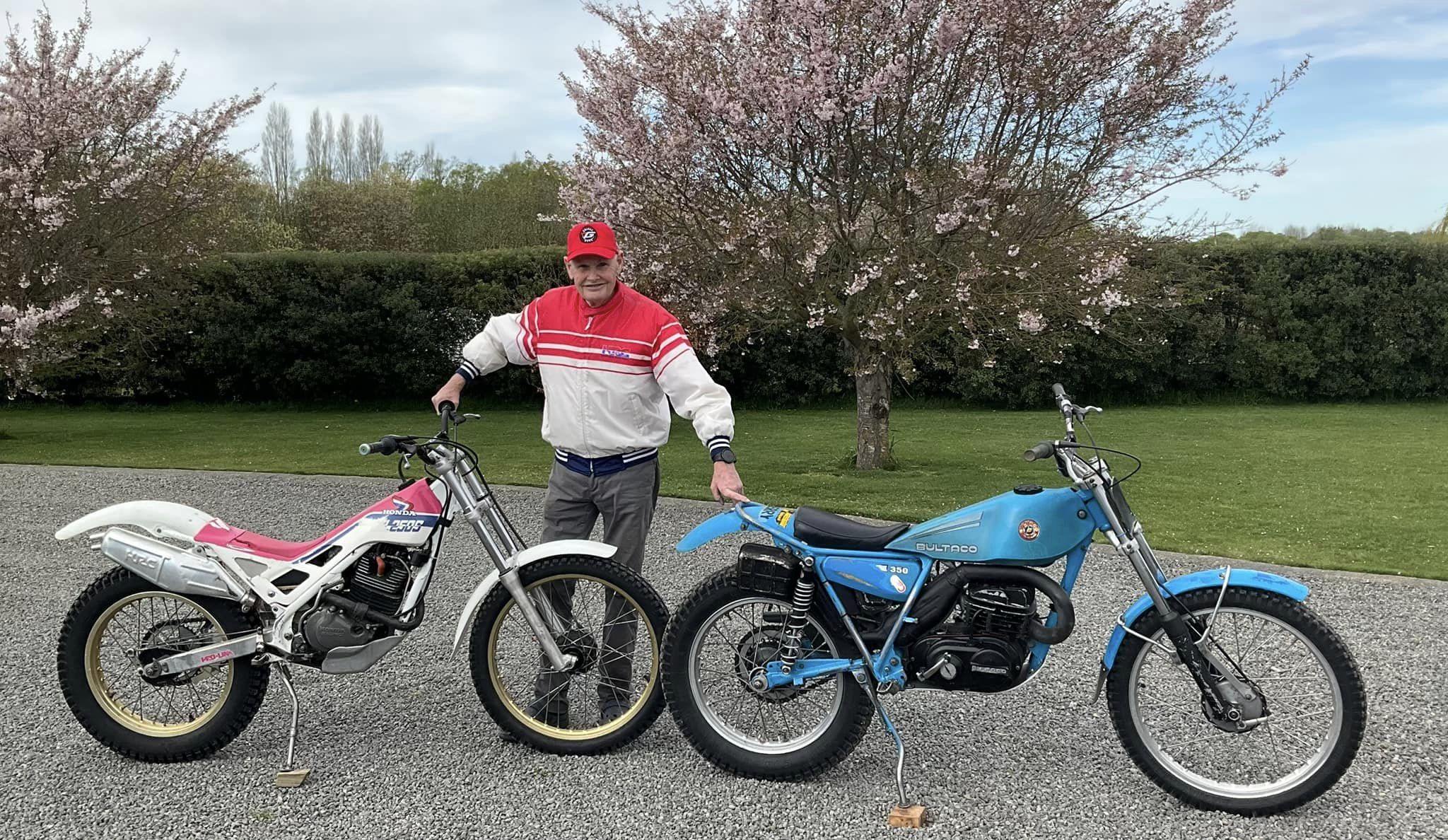
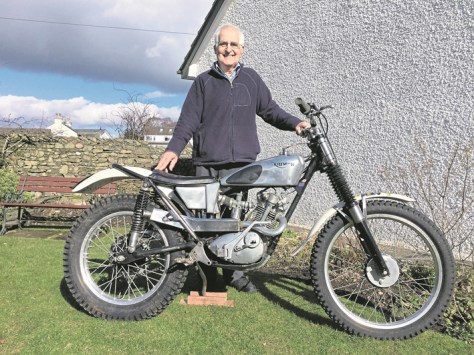
New Zealander, Kerry Miles is a Trials Guru VIP, seen here with the Bultaco Sherpa he rode in the 1979 SSDT and his Honda/HRC RTL250S.
Words: Kerry Miles, Rangiora, New Zealand
Photos: Mrs. Joan Miles – Lynette Barnett
The 1979 Scottish – Kerry Miles
Friday 27th April. Final preparation:
What a hectic day, my biggest worry being whether to use my Mikuni carb or stick with the leaky Bing.
After the morning’s tuning session I decided on the Mikuni as I had a range of jets and wanted the bike on the rich side. It took ages to sort what tools and spares to carry, also where to put them all was another problem. I had purchased a Preston Petty tool box number plate which held most things except a rear tube which I strapped behind my seat. I carried a plug spanner in my jacket pocket along with a plug and plenty of glucose sweets and chocolate.
The time came to pack the car, god what a hell of a job … the poor old Fiat had its tail on the ground and I still had the bike to go on.
Saturday 28th April:
With the bike loaded we set off about 8.30 am up to M6, then on to Glasgow where we arrived in time for lunch. We were advised not to visit the centre of Glasgow and didn’t. From Glasgow we made our way to Stirling where we turned off the motorway for Fort William. A few miles along the road we spotted a safari park (Blair Drummond) so we went to investigate. On trying to obtain entry we were informed the bike would have to come off, so off it came giving the car a new lease of life, albeit short. Well it was good but surprisingly not as good as Orana Park, the bloody monkeys just wouldn’t get off the car and I expected scratches, but luckily there were none. We then headed on towards Fort William passing through some of the best looking trials country I have ever seen, which later turned out to be covered in ‘Scottish’ sections. Travelling through Scotland is very similar to NZ, especially the south of the South Island. We arrived in Fort William about 4 pm, the first thing to greet us was the parc fermé, even at this early stage it was a mass of colour.
The trade vans were there in force selling clothing, spares, accessories and NEW bikes, incredible. Driving through the main street one is greeted by a welcoming sign. We also noticed Mick Andrews walking along the street. There were blokes everywhere with Montesa, Bultaco, Honda, Yamaha and Suzuki jackets on. We drove around and after asking finally found our hotel. It was easily recognised as there were many dealers vans and utes. Motorcycle and Motorcycle News had banners up on the pub and all over the grounds. We had a good view from our window, looking up at Ben Nevis. We could also watch everybody arriving. The weather had been beautiful but everybody said it wouldn’t last, boy were they right. That night we had dinner early and a couple of drinks and retired early.
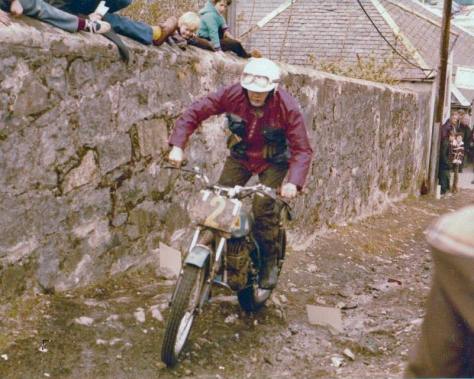
Kerry Miles on ‘Town Hall Brae’ in the 1979 SSDT
Sunday 29th April:
We awoke to the sound of rain and hail beating against the window. What a contrast to Saturday. Ben Nevis was covered in snow, what little we could see in the murk. After a leisurely breakfast (2 hours) which we enjoyed with two friends from the Bradford Club we sorted out our gear. About 10.30 we drove down to the parc fermé. Joan sat in the car as it was still hosing down while I wandered around looking at the machinery. I stopped and had a good look at Rob Shepherd’s RTL and a good natter with Rob and his mechanic Mike, really nice guys. Just behind the Honda van I spotted two odd looking machines being unloaded so I went off to investigate. They turned out to be Moto Guzzi 230cc four strokes mounted in modified 348 Montesa frames and painted the worst colour green I have ever seen.
One of the Moto Guzzi 230 bikes that Kerry saw at the 1979 SSDT, seen here being tested in 2016 by Justyn Norek Jnr – Photo: Justyn Norek
Then I spotted this Commer van with a NZ sticker so I went and made myself known. There were 3 guys from the Tauranga area over for the Scottish and the Isle of Man. While talking to them I spotted this blue LHP Bedford diesel arrive, turned out it was Vesterinen. His bike was immaculate as was his mechanic (his brother) and his dress. While wandering around in a dream trying to remember where the car was I heard a voice say in a broad Yorkshire accent “are ya alright?” It turned out to be Martin Lampkin. After discussing our strategy I wished him well as it was time for scrutineering. Being one of the early numbers I was one of the first through. It didn’t take long at all, they painted my wheels, frame and motor. I pushed my bike off the ramp and parked it, leaving it looking lonely amongst several Montesas.
Well by this time the cold weather was taking its toll and nature was calling in a big way so a mad dash was in order to the nearest pub. Whilst standing you know where, a bloke comes in with the same problem and says “there’s a guy out there from NZ who knows you”. I asked if it was Jock Cain as I had heard he was coming over but he said no. Strange I thought who could it be? Well standing in the bar was Nods (Neil Harris). We shared drinks and he told me he was riding a 175 Fantic. It was really great to meet someone like Neil. As it was time for him to get his bike scrutineered we left. Joan and I then drove back to the hotel.
After a long hot bath and some dry clothes we thawed out then it was down to the bar for a couple of whiskeys and on to the dining room where we met up with a work mate from Yorkshire who was riding no. 7 (I was no. 2). After dinner we had a few quiet drinks and called it quits about 10.30.
Monday 30th April – Day one, 85 miles:
Well what an early start, I was away at 7.31 am. From Fort William it was up the Mamore Road to Callart Falls group of 8 sections. Being the first riders there the rocks were slimy and very tricky. The sections were rock outcrops with water flowing down them and they were pegged tight. I did not do very well here but nor did the riders around my number. From Callart we climbed up the side of a mountain into the snow where the only way to find grip was to sit down and paddle. I fell off once and it took a couple of minutes rest in the snow to get my breath back after heaving the bike about 30 yards uphill. We then went down the other side to the road and on to Garbh Bhein. Here there were two sections just off the road up a rocky loose creek bed and fairly steep. I attacked it in second with full noise and had a couple of prods. This section got a lot harder later and took points off many of the top men. From Garbh Beinn it was 16 miles of road to Altnfeadh (four sections). I had a 0,0,5,5. God they were slippery. Joan was watching here and said the later riders cleared the top two easily but had problems on the first two. I was chuffed and annoyed. It was then 8 miles over the tops through more snow to the lunch stop at Kinlochleven. After lunch we went onto Blackwater. I had fives on the first two then a one on a section with a net on one side to stop riders, machines or both going over a 70 foot drop into a stream. One rider that night said he had tred on the net and the rope was rotten, a shuddering thought. There were two more sections here in a rocky creek bed, the sections were open but really limited to one line. I had a clean and a five. From the sections at Blackwater we had a long ride across Blackwater moor. It was
about 23 miles across and took about 2 hours during which time it snowed, hailed, rained and the sun shone. Going across we encountered bogs, rocks, streams and really narrow tracks. It paid to skirt the bogs because if stuck it can take up to 3 men to extract your machine. You can always find a way around them, takes time though! Bradileig was the next group. By the time I arrived there I was knackered. I had some silly feet here (I am certain in a normal trial I would have cleaned them easily). After this it was a ride of about 10 miles to the road and on another 12 miles to Fort William and Town Hall Brae right in the middle of town. I rode both clean. From here it was back to parc fermé where I checked in two minutes late (2 points). What a day, I ached all over from that 33 miles of moor.
Tuesday 1st May – Day 2, 104 miles:
Having a late number today I wasn’t off until about 11.00. They work on a system where on Monday its no. 1 to 280, Tuesday: 45-280, 1 to 44; Wednesday: 95-280, 1 to 94 etc. during the week.
First off we set off on a 23 mile road ride to Laggan Locks through snow and hail. I was really thankful for my faceguard I had bought along with my damart undergloves. Laggan Locks are four sections on a hillside with loose rolling rocks. When I arrived, there were about 20 riders in front of me. In the Scottish they operate a system called delay where you hand in your card if there is a queue. They then time it and when you are about to ride the section they hand you the card back with the time delay noted. This is then added to your time at the next check. I used this system at Laggan Locks and when my turn came to ride there were more riders and I had to start about a foot from the start cards. I ended up with a 0,1,2,0 and I was thrilled. On to Switchback for four sections in a creek bed with lots of water and several big rock steps. I did these for 2,0,0,1. We had several miles of moor work to cross before Achlain. Here things started to go wrong. It was a rocky creek bed and with really big rocks and huge rock steps I had threes and fives here. On the road to Allt a Chaoruinn I had to put the bike onto reserve and I was panicking a bit by the time I got to the sections, five in total. I had a really mixed bag: a five, cleans, one and a three. Fortunately down the road was the Comerfords van with petrol. Comerfords will, if you are lucky, look after all petrol supplies for a sum of £27. It may seem a lot but it is well worth it as they are always there with petrol about every 20 miles. They also carry spares, give your chain a lube and the rider half an orange or a drink, very welcome. This was the only time during the week that I had to use reserve. Down the road about five miles was a check. We had to wait there about one and a half hours while they rerouted us. The reason was that through Clunes Forest, our intended route there was 6 foot of snow. Everybody got cold at this check even though the sun was shining. Whilst we were coming down the road toward the check my mate’s bike (no. 7) seized at about 65 mph and he left a great black strip down the highway before getting to the clutch. He was a bit white when he got to the check. After our delay at this check it was back to Laggan Locks again. When I got there, there was a queue of about 100 riders so it was definitely a case of using the delay system. Normally with delay your card goes to the bottom and when you come up to ride
yours should be the top card, but here there were different riders queued and it was first in first served.
After two hours I started to get a bit worried about getting back in time for dinner as it was about 6.30 pm. I had eyed some Spaniards backing into the front of the queue speaking in pigeon English to the observer and being allowed to ride so I thought it was worth a go, and it was. I rode straight away, so quickly in fact that I forgot to turn the petrol on causing a five in the top section. The NZ sticker on the tank paid off!
While I was watching there someone knocked my bike over bending one shock and putting a huge dent in the tank. I managed to straighten the shock a bit by brute strength and rage, more of the latter.
When I pulled the bike down after the trial I found the shock was bent so bad you could not push it down by hand. I feel that must have upset the handling later in the week.
After Laggan Locks came a short ride to Muirshearlich. Four sections up a narrow solid rock stream with some huge rock faces, vertical (well nearly) and about 10-12 feet high. I would have hated to step off on these. I had a fairly good ride with about 4 points in total. Back to Fort William for Town Hall Brae (two more cleans). During the week they change the sections there by juggling the cards around. I think most NZ novices could clean these sections but they are the only easy ones all week. I finished at about 8pm and fortunately in time for dinner with a bath first. Today had been a bit easier, but not much.
Wednesday 2nd May Day 3, 96 miles:
I was a bit earlier off today. While I was waiting the sun shone beautifully, but the minute I set off it snowed like nothing I have ever seen before. It was really cold and hard to see. I arrived at Callart group (different to Callart Fall on Monday) frozen stiff and white from head to toe. Just after I had parked my bike the sun came out and filled the whole valley. What a contrast.
There were 4 sections in a rocky creek bed with rocks and several solid rock steps. Whilst riding one of these a certain part of my anatomy crunched into the tank and it took me several minutes to come right before continuing. Old Military Road was next, two sections, both fairly short twisting rocky climbs in an old creek bed (two threes for me). More road work before riding up the side of the river to Achallader for 10 sections. The sections here were very similar to New Zealand sections especially in the Wellington
area, I enjoyed them all. I had a five, several threes, ones and cleans. We were then faced with a bit more moor and road to Inveroran Hotel for lunch. After lunch, normally about 3/4 of an hour, it was on to Ba House for four very hard sections up these massive boulders about 6 ft. high. One section here you had to drop your bike into a hole, swing the back around by hand before starting only 6 inches from the start flags. Chair lift was next. After travelling across this narrow road I got carried away here and took
off my jacket and let down my tyres and had a real go at them. I had a clean up the first and a three on the second. The latter took fives from Andrews, Rathmell and Lampkin. I was really pleased because Jock and Beryl Cain were here, so was my boss Colin Appleyard. The eight sections of Loch Eilde path were fairly easy taking several prods off me. At Sleubaich it was up a huge waterfall with loose rocks on it and at the bottom. I got my wheel over the top but the bike stopped then all of a sudden fired up backwards. Fortunately a marshal managed to stop it going right back over. Believe it or not I did the
same thing on the section later in the week, this time it nearly took the marshals with it. They were not impressed. I had a three in the top section before riding down Mamore road to Fort William and check in. There was no Town hall Brae this day.
Thursday 3rd May Day 4, 112.5 miles:
Each morning, 15 minutes before you ride off you are allowed this time to fettle your bike. The aces all put on new tyres and chains this day but I didn’t bother as I
reckoned at this stage I was not going to win anyway.
This was the biggest day for mileage, heading out on a peninsula, but first we rode up to Ben Nevis for three sections in a flat rocky creek bed with a bit of water.
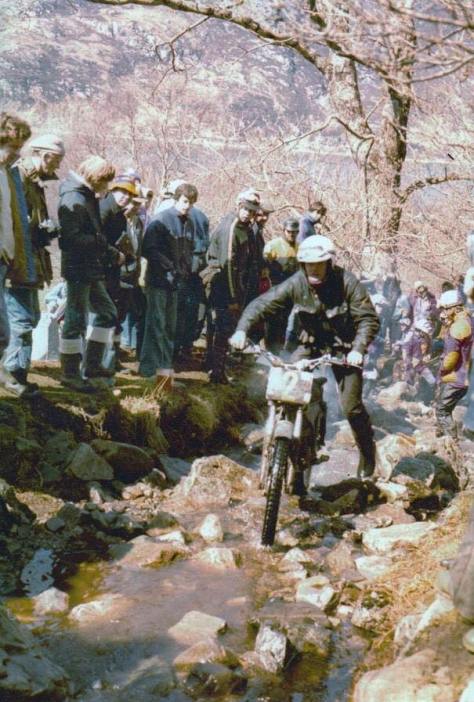
Then there were five more up the hill further. These were diabolical, large boulders on a fairly steep hill. It was like trying to go straight up the hill at Prices Valley to the fence line and beyond. We then faced a long cold ride in snow and hail to Camp group. Joan was here with camera and got a good shot of yours truly in his customary stance (with his foot down). This was another rocky creek bed with a step over a root about 3 ft. high
then up over some rocks and a tight turn out the end. On the first section over the root a rider before had moved out a rock from under the root and this made it very hard
to get up it. I lost a five on it as did many other riders. On the other three I lost 3,2,1. Next group was Glenuig – four sections, then two at Bay Hill and onto Salen for lunch. After lunch we headed onto Liddsdales two sections: a little flowing creek with a few twists. I
dropped a couple here. On the road to Beinn Nam my google strap broke and I wasn’t looking forward to fixing it as time was tight. I didn’t fancy riding without them but at the sections a R.A.F. support man fixed them for me while I rode the sections … sorry did I say ride? Tried to ride would be more appropriate 3,5,5. They were on shingle or rock with loose rocks in a bed, really hard. The Montesas looked really good in this section.
We did three at Camasnacroise before heading to the infamous Rubharuadh. The first two here were reasonably simple but the last two were very hard being a rocky bed (hard) at odd angles and very narrow with high banks and several tight turns with holes. I cleaned the first two and had a five and a really hard earned three. It was only then a short ride to the Corran ferry crossing about a mile across on a barge, 20p was the charge. Bikes got preference here over the cars (mainly spectators). From the ferry
it was an eight mile ride to Fort William. It was on this road I was motoring along quickly about 70 mph when one of Neil’s mates on a Fantic 175 flew past, god they fly on the road. So the race was on, a Fantic, 350 Ossa, me and another Bulto who soon got left behind. Well I won, sort of, going into the roundabout the mad Swede on the 350 Ossa left his braking late and nearly hit a granada on the roundabout.
Kerry Miles still owns the Bultaco he rode in the 1979 SSDT to this day – Photo: Lynette Barnett
Friday 4th May Day 5, 76 miles:
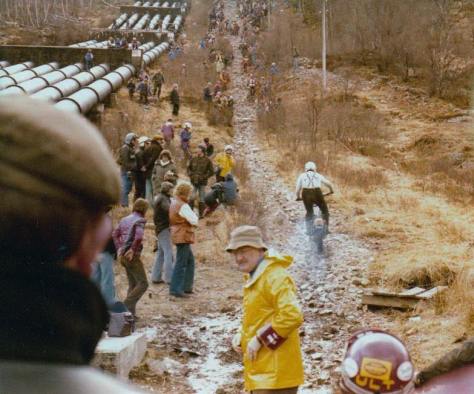
The first section was Cnoc a Linnhe, 24 miles from Fort William. I had two fives, a two and a one. Pipeline was next after 20 more miles of road and tracks. What a fabulous section. It starts off on loose rocks and gets steeper as you go up, also the large rocks get bigger ending with a big rock face at the end which is breaking up and a bit loose. I rode it in third ending up with a 0, 2, 5 (about 2 ft. from the end flags). It is a harder section than it looks in photos as you have to zig zag up even though the section is marked straight. Joan was there and took a couple of photos.
Next was Leiter Bo From (also called German Camp). The sections here were all on a hillside with a narrow path winding up with rocks and a bit of mud. I had a mixed bag here. It was then onto Mamore for four sections on a rocky track with several tight turns and a couple of steep rocky outcrops with a mixture of loose rocks. I lost a 5,2,0,1 after attacking it in too low a gear, a mistake I made a lot. During the week everybody had been saying wait until you get to Callaich, well here I was at Callaich. From the bottom all you could see was a mountain side. It turned out to be a twisting zig zagging track with about ten turns, some were sections (eight in total). On the way up I had a five, a couple of cleans and lots of prods and threes. Once at the top the riders at the bottom looked like pinheads, god we were high up. I had thought that going up was hard but going down was worse I reckon. About 1/4 mile at least straight down the mountain side trying to miss fallen riders, big rocks, bogs and holes. Most of the way down all wheels were locked in first gear. A guy in front went over the bars into a hole and just managed to wave me away in time. From here it was a short ride down Mamore road to Sleubaich for three sections. This time the top two were the same but they added one below in the creek bed. I had a silly prod about six inches from the end card, then another five and a three in the top two. From here it was a short ride back to Fort William. I was fortunate to be able to get a hot bath every night as we shared bathrooms and it was first in first served. The meals in the hotel were good but the service was slack as many temporary staff had been employed for the Scottish riders and supporters.
Saturday 5th May and final day 63 miles:
First sections today were Callart Falls again. This time not so slippery but pegged fairly tightly. I had a mixed bag here again. One problem here was getting to the sections, with snow on the ground and mud holes around, it was very hard to get lined up as many riders had parked their machines in the road. At one section my front wheel was right in before I even got started. Grey Mares Ridge was fairly simple, another winding track with a couple of detours up rock outcrops and over the heather. I only lost a couple here. We then shot across more moor to Bradileig again for eight sections. This time it was covered in snow and iced over in places, but I rode up the stream and had several cleans, a five and a few feet. It was then back on the road onto Fort William and up to the Ben Nevis group again. This time pegged harder (in fact the hardest sections I have ever seen, ridiculous for most people) and two more added up top. I lost 48 points on 10 sections only getting through one. The reason the organisers said they made them harder was to get a winner which as it turned out the sections did do. Rob Shepherd who was still well in contention for a win lost 27, Lampkin 10 and Rathmell was fantastic losing only about 4 or 5. These guys are unbelievable.
After Ben Nevis it was a short ride to Fort William for Town Hall Brae for two more cleans. My mate from Yorkshire (no. 7) lost two fives here by missing the two centre cards and going straight up. As it turned out I beat him by 9 points, he was not very happy that night.
It was a fantastic sensation to ride in and push your bike up on the ramp to have its sealing paint checked before you sign off. Well that was the Scottish over.
That night the hotel was packed as they were making all the presentations there. They cleared the dining room early and we all tried to get in to hear the results but it turned out to be an impossible task. It wasn’t until the next morning I found out that I lost 517 points and had won a second class award. First class went down to about 480 points. During the week Neil and I had been close on points but in the end he triumphed losing 16 less than me. Neil also won a second class. I was 150th and Neil 142nd out of 280 riders. Although the winner lost less this year than last, the clubmen lost more.
During the week I saw very little of the top men and I never saw Rathmell or Mart at all. I rode a lot with Jamie Subira, Dave Thorpe and John Reynolds. While waiting at Laggan Locks I saw Vesty and Andrews ride.
The sections were all called hills and they were as hard and more often harder than any in New Zealand. Although it was a shocking week for weather I did not really feel the cold. I think it was because I had just been through one of the worst Yorkshire winters ever. At times the hail become a bit
uncomfortable, but my face mask was a blessing. During the week I used two riding suits: a Belstaff and a TT Leathers new nylon suit, but the best combination was my Belstaff trousers (more durable) and my TT Leathers jacket (a bit lighter). Both trousers have rips in the leg but otherwise are still good suits.
My biggest fear was getting a puncture so I rode most of the week with 8 and 7 pounds in my tyres which I filled with a puncture preventative beforehand. I lost lots of marks because of the pressure but on the other hand Neil suffered a puncture and lost a lot on time. Ideally one should let them down for the section and pump them up in between but with 30 sections a day it becomes a bit impossible as time is very tight some days.
I was fairly fit beforehand but I suffered mainly in the shoulders during the week. Next year I think I’ll use Renthals instead of the original steel ones. At times I was doing well over 70 mph on the road to keep to time and to make time a bit easier when crossing the moors etc. I used to get cold on the roads and really sweat on the moors. The bike behaved itself all week but it has a dented tank, bent shock and the shock retaining screw broke off causing the shock to fall off on Friday, but wire and duct tape held it on for Saturday. I think I’ll treat it to a new set of rings and a primary chain. But I may trade it on a 200 Jerred Honda or a TL200 as they look very impressive. Peter Jerred has several versions using TL125, TL185, TL125s and CG125 engines. Colin Seeley is at present making frames for Honda’s machine but no one knows what form it will take. Marland Whaley told me Montesa are about to release a full 350 with a plastic tank and many other changes. I believe it will be based on Rathmell’s winning machine.
At present we are considering going to America as England is a poor country now. The cost of living is unbelievable and petrol is up to about £1.30 a gallon at some stations and is very hard to get. If we go to America I will sell my Bulto and probably buy a Montesa as I suit them better than Bultacos. But heaven knows, it’s nice to dream eh?
The Scottish is a fantastic event and the atmosphere is mighty, well worth doing but get fit first and ride in Yorkshire during the winter season.
Results: 1979 SSDT
1st – Malcolm Rathmell – 69 marks
2nd – Martin Lampkin – 71 marks
3rd – Yrjo Vesterinen – 87 marks
4th – Rob Shepherd – 87 marks
5th – Charles Coutard – 100 marks
6th – Manuel Soler – 106 marks
7th – Jamie Subira – 108 marks
8th – John Metcalfe – 124 marks
9th – Mick Andrews – 135 marks
10th – John Reynolds – 136 marks
Kerry Miles is a Trials Guru VIP.
Many thanks to Kerry Miles for sharing his recollections of riding the most famous trial in the world and to his wife, Joan for taking the photographs.
If you haven’t had a good rummage through this website, it’s maybe time you did!
Martin Lampkin (SWM) on Pipeline in the 1981 SSDT – Photo: Iain Lawrie, Kinlochleven
Did you know there are special sections dedicated to Bultaco; Honda; Trials Legends; Lampkin family; Sammy Miller and much much more.
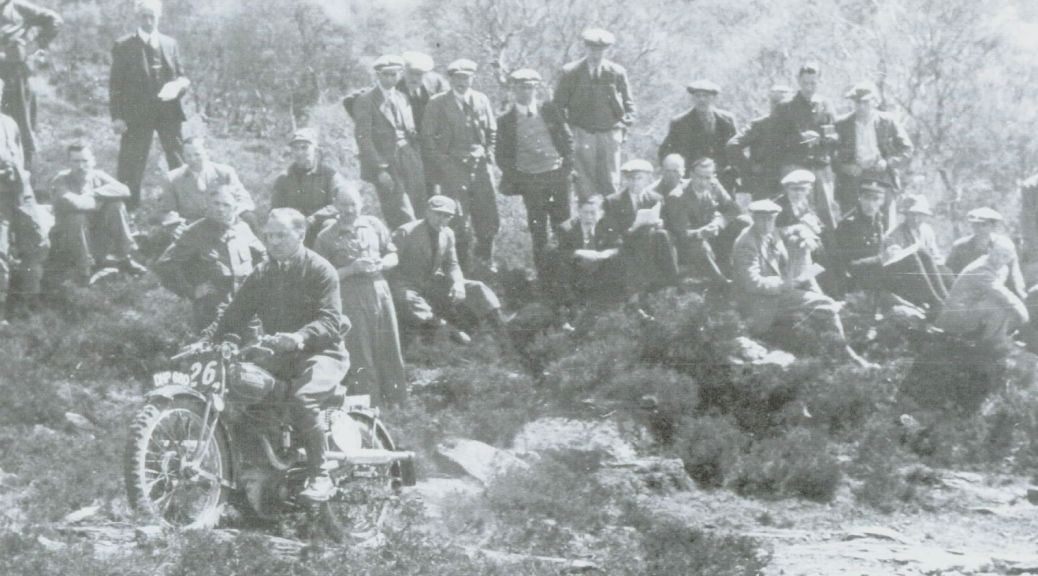
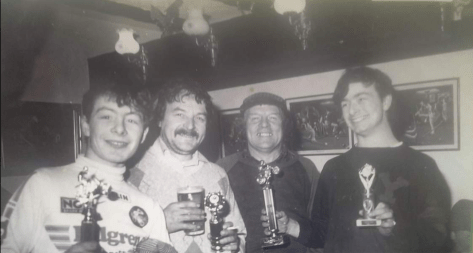
Arthur J. Lampkin (Centre) at the Scottish Six Days with friends, Peter Fletcher (Left) and Tom U. Ellis from Ripon – Photo: David Wood Archive, Bradford
Have a look through the Index page to see what you have missed!
Scott Trial 2017 Winner Doug Lampkin with Trials Guru’s John Moffat and the coveted Alfred Angas Scott Memorial trophy – Photo: John Hulme/Trial Magazine UK
Photos: Bernard Schreiber – Diane Vesterinen – Joan Font Creixems
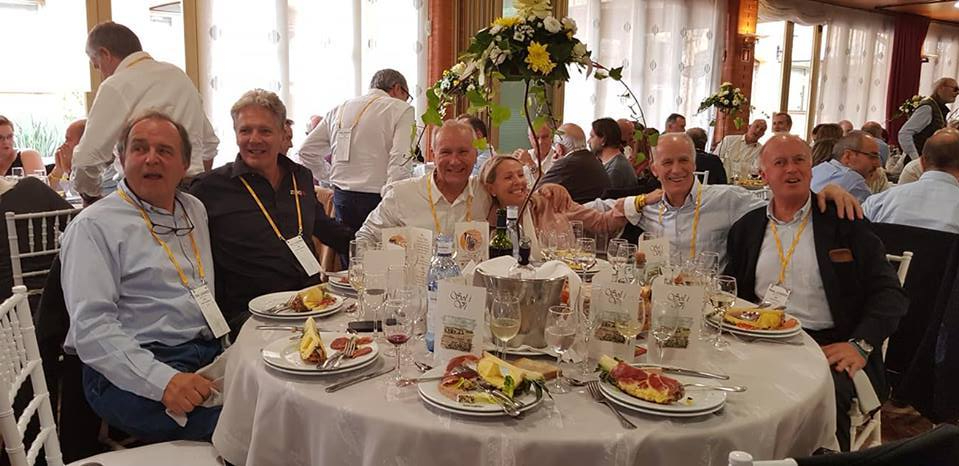
A very special weekend in Barcelona and on Friday, November 16 2018, the city witnessed many of the former World Champions and National trial champions congregate to celebrate the sport.
Pere Pi; Yrjo Vesterinen and event organiser, Oriol Puig Bultó – all very respected men from the sport of trial – Photo: Joan Font Creixems
Organised very ably by Oriol Puig Bultó, former competitions manager of Bultaco and also an FIM official of many years, along with a small but very efficient team, Oriol and friends pulled in favours and a few strings to get this amazing gathering underway. This involved many phone calls and e-mails across the globe.
What a gathering they pulled together, a veritable ‘who’s who’ of the top trials riders the world has ever seen. Sadly not all could attend of course, with Martin Lampkin and Ulf Karlson missing.
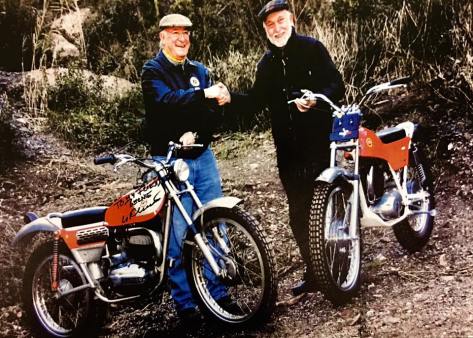
Old rivals and life-long friends in the sport – Oriol Puig Bultó (Bultaco) and Pere Pi (Montesa)
1979 World Champion, at this time, the only American to have won the title made a heartfelt speech:
“Good Afternoon Everyone, It’s such an honor to be here with all of you today. All my Trials memories remain deep in my heart and especially my time spent here in Barcelona.
Many questioned that young kid from California, but some truly believed. For me the American dream began with Senor Bultó, my dear friend Manuel Soler, his family and my team manager Oriol Puig Bultó who supported me from the very start to my world championship victory.
So many unforgettable moments with the Bultó family, importers, race teams and riders. All my respect and thanks to every Spanish and International Trials riders who educated me about their countries cultures, language and riding styles.
Many thanks to those world championship motor-clubs for all their hard work organizing world class events at legendary venues. My memories span across the world, but my heart remains in Sant LIorenc.
Today we stand near the birthplace of the greatest Indoor Trials dating back to 1978…the Solo Moto Indoor. This was the beginning of a new and revolutionary era that eventually changed the sport of Trials forever.
A special thanks to all the media who reported our sport extensively over the years, supported the industry brands and made us riders iconic along the way.
Many of you here today are part of our Trials history and without your passion over the years for our sport, the next generation has no heritage or legacy to look back upon.
Some legends are no longer with us as they rest in peace, but we remember them, we hear them, we love them and we still see them riding sections or working championship events to make it an unforgettable experience for everyone.
I truly appreciate your friendships, loyalty, recognition and the opportunity to participate in this Trial Legends event.
Thank you so much for all your support and precious memories.” – Bernie Schreiber, 1979 FIM World Trials Champion
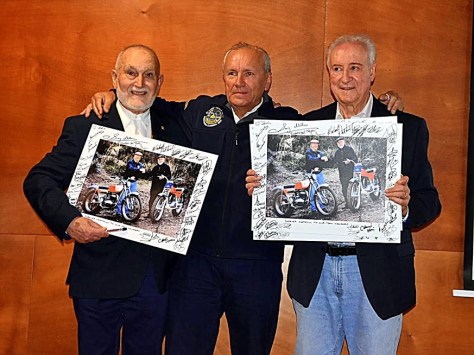
Signing the souviner photograph, Yrjo Vesterinen with Oriol Puig Bultó and Pere Pi at the Trial Legends celebration – Photo: Diane Vesterinen
Yrjo Vesterinen the gave his passionate and informative speech:
“Good afternoon Ladies and Gentlemen,
It is a great privilege and honour to be here today.
Let me ask a question, why am I here? To answer that, we need to go back in time.
In August 1971 Finland was hosting a European Championship Trial in Solvalla. Oriol Puig Bultó and his cousin, Ignacio had travelled all the way from Barcelona to participate there. After the trial Oriol came to speak with me. I had been noticed! What followed was a dream come true. I was later offered a contract to join the famous Team Bultaco.
What also followed was that as my career as a trials rider progressed I was becoming more self-centred and started to think that the team was there to help me to achieve my own goals. I am sure that happened to many of us, whom some call legends. We forget that we were there to do a job for the factories and that we were extremely lucky to have been spotted by the team managers in the first place. We were offered jobs that most people only dreamt of.
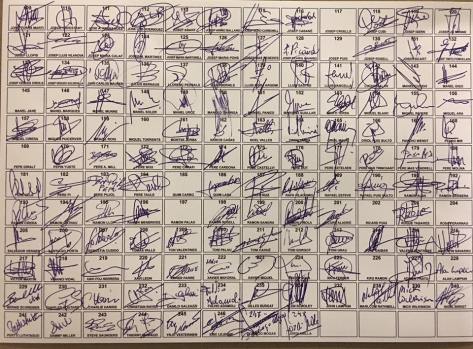
Some of you here today may have noticed that I was collecting signatures, signatures of World Champions, European Champions, National Champions, Winners of the Six Days and many other important events in the world of trials, on these picture boards that I have here with me. What unites these people is that they were, once upon time, given a chance and an opportunity to prove themselves. For many of us it was through two remarkable gentlemen, who are here today with us. They are Oriol Puig Bultó from Bultaco and Pere Pi from Montesa. What makes these gentlemen truly remarkable is that they were pioneers of all aspects of off road competition, being great trials riders, motocross racers and enduro riders. They were development engineers, test riders and great ambassadors of our sport.
As riders we probably remember them as wise and patient team mangers that we didn’t thank enough at the time.
What could we as riders give to these remarkable men that they do not already have? Perhaps these printed boards with the signatures of their grateful riders will go a small way to deliver this message that some of us forgot to convey decades ago.
May I ask Oriol Puig Bultó and Pere Pi to come forward. May I also propose that both of these gentlemen sign these pictures in front of us all. In doing so I would like to think of this occasion as the long overdue signing of a peace treaty between Bultaco and Montesa. The war, albeit always a friendly one, between Bultaco, Montesa and their respective teams is now over!
Finally, one signed copy of this print will be auctioned off at the Telford Classic Dirt Bike show, February 2019, in memory of Martin Lampkin for the family’s chosen cancer charity.
Thank you very much.” – Yrjo Vesterinen, 1976-78 FIM World Trials Champion
Background…
Oriol Bultó told Trials Guru the background to the celebration and gathering of champions past and present:
“The idea of organizing the “Trial Legends” celebration held last Friday emerged following a discussion I had with Pere Pi (former Montesa) and Estanislao Soler (former Bultaco and owner of the Museu de la Moto) after a similar event we organized for the Spanish “Motocross Legends” in May 2015, together with Pere Mas, President of Motor Club Micorella, very active in organizing Classic Trial events. The Motocross meeting was a success, and we thought that it would good to do a similar event for Trial, open also to foreign riders.
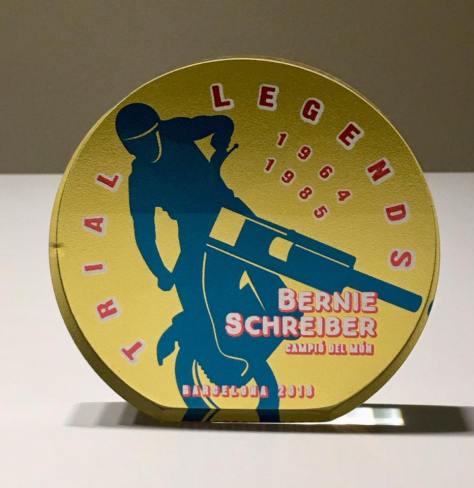
The aim was to meet with the older riders who started riding Trials before 1986, pay tribute to the Champions who left us (Juan Soler Bultó, Fernando Muñoz, Don Smith, Martin Lampkin and Ulf Karlsson), recognize the participants in the first official Trial held in Spain (Trial del Tibidabo, Barcelona 2 November 1964), pioneers Motorcycle Clubs (organizing the SSDT, the early Spanish rounds of the Trial World Championship, the ‘3 Days Cingles del Bertí Trial’ and the ‘3 Days Santigosa Trial’. Also to the inventors of the Indoor Trial (Barcelona 1978), recognize the Women Trial Legends and celebrate the Catalan, Spanish, European and World Champions of those times.
In addition to Pere Pi, Estanislao Soler, Pere Mas and myself we incorporated to the organizing group Joan Font and Xavi Foj, also ‘Trial Legends’. We have been working in this project during 14 months and we are very happy by the number of ‘Legends’ attending (about 248), and the positive response of Catalan, Spanish, European and World Champions.
Too young to be ‘Legends’ we invited Dougie Lampkin, Tony Bou and Laia Sanz, who together with Jordi Tarrés formed the podium with most World Champion titles, totaling 56!
Of the big names of those times Trial only Eddy Lejeune (too difficult to get him travelling) and Mick Andrews (injured) did not attend.
It was a great day, and looking to the happy faces of the people attending we feel rewarded for the effort made. In total, about 400 people attended the event last Friday.”
History…
Oriol Bultó compiled the following shortened history of the sport:
THE BEGINNINGS OF TRIAL
Like in all the beginnings there are some doubts about the origin of Trial, the exact place where it started and by whom. On one hand, it is known that there was an event in Scotland, on the other hand there was the Scott Trial on an unspecified date, and in 1914 a similar competition of skills named “Litton Slack”, with the participation of 132 riders, that feat was important as the motorcycles did not have a clutch, they had a single gear, pedals and belt transmission, and climbing a normal hill was already an accomplishment.
In 1909, in Scotland, after having the idea of organizing a tough competition through the mountains of the Highlands, a group of young people created the Moto Club Edinburg to organize the first Five Days of Trial. The course was about 1000 miles long (1.600 Km) with the participation also of cars and motorcycles with sidecar. In 1911, it already turned into the well known Six Days SSDT up to the present times, although with a halt from 1914 to 1918 during the First World War. In similar dates, Mr. Scott, who had a company under his name, organized the “Scott Trial” only for his employees, with start and arrival at the factory’s own door. In the first edition, 14 riders participated and 9 finished.
During the first few years there was only British participation in the SSDT, because travelling to a foreign country was too expensive and the prices were a medal and a piece of Scottish fabric hand embroidered. From 1940 to 1945 there was another halt due to the Second World War.
It wasn’t until 1955 that the British brands took a real interest in Trials. The BSA factory prepared its Moto Cross rider Jeff Smith to run the SSDT and he won. In 1956, Gordon Jackson set the unbeaten record of losing only one mark in all 6 days. It would have been nice to have Gordon Jackson here with us today. The companies that showed interest were: BSA, Rudge, Ariel, Norton, Velocette, Triumph, AJS, Matchless and Royal Enfield. Almost all of those won the SSDT until the arrival of the light Bultaco motorcycles in 1965 at the hands of Sammy Miller.
At the end of the Second World War, Trial started in Belgium and from there expanded to the rest of Europe. It was November 1962 when Joan Soler Bultó and Oriol Puig Bultó decided to go to Saint Cucufa (France) to participate in a new modality called “Trial” with Bultaco motorcycles that had been modified according to what they had seen in British, French and Spanish motorcycling magazines. When they returned they decided to introduce this new modality into Spain, organizing an experimental competition in the estate of Sant Antonio owned by Don Paco Bultó. It was beginning of 1963, and that would be the first initiation Trial in Spain (Catalonia). There is also information about “Trial” competitions in 1961, one in Viladrau (Barcelona) won by Oriol Puig Bultó, and another in Sant Vicenç de Castellet, both with regulations that rewarded the speed and the ability to negotiate the sections.
The most famous of all trials riders, Sammy Miller MBE – Photo: Joan Font Creixems
In 1964 the FIM created the first international Trial championship, the “Challenge Henry Groutards, won by Don Smith on a Greeves. In 1968 there was the first “European Championship” won by Sammy Miller on a Bultaco, and in 1975 the first “World Championship” won by Martin Lampkin on a Bultaco.
In order to promote Trials in the European southern countries, the FIM favored a Trial short course in Laffrey (Grenoble) directed by the French rider Claude Peugeot on 10-11 October 1964 for riders from France, Spain, Switzerland and Italy.
A few weeks later, on 2nd of November 1964 the Real Moto Club de Cataluña organized the ‘Trial del Tibidabo’ near Barcelona, being the first official Trial in Spain. It was won by Joan Soler Bultó on a Bultaco. In 1965 there was the first “Catalonia Championship” won by Joan Soler Bultó on a Bultaco, and in 1968 the first “Spanish Championship” won by Pere Pi on a Montesa.
Activities…
The proceedings for the event were as follows:
TRIAL LEGENDS, PROGRAM OF ACTIVITIES
– Identification of the Legendary riders and accompanying persons
– Signature of the Legendary Sheet
– Exhibition of a selection of Legendary Trial Motorcycles
– Photo-call
– Drone photo of the world’s widest gathering of the Legends
– Entrance to the restaurant. Collection of the magazine MotoCiclismo Clásico and the program of activities.
– Lunch
– Presentation of the party by the Legendary Xavier Foj
– Book of Honor: Where all Legends had the opportunity to make a dedication
– Reading of the “History of the Trial” in Spanish and English
– Presentation of the riders of the modern history of the Trial
– Toni Bou thanked the Legends of the Trial
– The building of the podium with the most titles of “World Champions in all sports” (43 / 56).
– Tribute to the “Champions who have left us”
Pere Pi; Sammy Miller; Jordi Tarres; Isobel Lampkin & Dougie lampkin, tribute to the late H. Martin Lampkin – Photo: Joan Font Creixems
– Presentation of the trophy “Trial Legends” to the relatives of the Champions who have left us.
– Recognition of the riders present, participants in the first official Trial in Spain (Catalonia)
– MotoCiclismo Clásico opens an account to rebuild the monument to Ramón Torras
– Awards to Motor Club Terrassa, Moto Club Cingles de Bertí and Moto Club Santigosa
– Recognition of the representatives of the Legendary Motorcycle Brands
– Recognition of the first Trial Indoor Solo-Moto
– Recognition of the Legendary Women of Trial
– Surprise: “You are the Trial Champions”
– Recognition of the first Catalan Trial Champions
– The hostesses will hand the bracelet “Trial Legends” of concord
– The hostesses will deliver the text “History of the Trial”.
– Recognition of the Spanish Trial Champions
– Recognition of the European Trial Champions
– Recognition of the first Trial World Champions
– Delivery of the sheets to all Legendaries
– Delivery of the photo of the world’s widest hug
– Finale (with music for the occasion)
Sammy Miller with Bernie Schreiber at the Trial Legend celebrations
Trials Guru is indebted to Oriol Puig Bultó for allowing us to share the details of this fantastic event with us, and to Bernie Schreiber and Yrjo Vesterinen for allowing reproduction of their speeches from this magnificent event.
Trials Guru commented: Oriol Puig Bultó is a very modest gentleman with an incredible knowledge not only of the Bultaco brand, but also the sports of trial, motocross and enduro. However he insists that the Trial Legends Fiesta was the result of a team:
Oriol Bultó : “The Trial Legends was organised by a small group, originally formed by Pere Pi, Estanislao Soler, Pere Mas and myself. Soon after, we were joined by Joan Font and Xavi Foj. From the very beginning we have worked together as a team“.
Oriol continued: “The speeches by Bernie Schreiber and Yrjo Vesterinen were very toching, they are both great persons and champions“.
Powerpoint of Trial Legends Presentation – click on this link:
David H. Rhodes, the well known Canadian trials dealer will be inducted into the Canadian Motorcycle Hall of Fame on Saturday, 17th November 2018, during their annual banquet held in the Delta Hotels Burnaby Conference Centre. at Burnaby, British Columbia.
Dave is originally from Oswestry in Wales and is known throughout the trials world as ‘Outlaw Dave’ after he emigrated to Canada. His trials business is known as Outlaw Trialsport in Alberta, Canada, established for over 30 years.
From left: Al Perrett, Steve Crevier; Dave Rhodes; former world racing champion, Steve Baker and Bob Work – Photo: Miss Helen Rhodes
We at Trials Guru congratulate Dave on this accolade, which is very much deserved, being a life-long trials enthusiast, as a dealer and rider. He has many friends in the sport across the globe.
Popular motorcycle importer and rider, Harry Lindsay passed away on the morning of 11th November 2018 at the age of 92 years.
He was the third generation of the Lindsay family involved in the motorcycle trade.
His grandfather, Robert Lindsay, was already a motorcycle manufacturer in 1898 producing the famous ‘Celtic’.
Robert Lindsay was also fundamental in developing the pneumatic tyre along with his close friend John Boyd Dunlop, eventually convincing him to set-up the first tyre factory in the world on Golden lane, a mere 50 feet from Lindsay’s own business premises.
The first pneumatic tyre prototypes were actually tested on Robert Lindsay’s racing bicycles, winning many all the races they entered.
Born in 1926, Harry’s grandfather Robert and later his father James, traded from premises in Ship Street, Dublin. Lindsay’s was one of the oldest motorcycle businesses in the British Isles, founded in 1897, although prior to that date they were already assembling bicycles and producing steel cart wheel rim casings.
Harry’s passion for motorcycling took priority over everything else and was still riding well into his 80’s. He was a generous sponsor with many riders coming under his support over the years. His sons Alan and Ralph were both accomplished trials riders.
Lindsay was the official Bultaco importer for Ireland and had very strong connections with the Bulto family in Barcelona. He also imported the ‘Super Ser’ brand of gas heaters made by the San Adria de Besos company.
His ongoing relationship with the Bultaco brand led him to enter a Bultaco team in the 1967 Production 250cc TT, with riders Bill Smith and Irishman, Tommy Robb placing 1st and 2nd.
Harry had also been Ireland’s agent for Vincent motorcycles and as such laid claim to being one of only a handful of people fortunate enough to ride Reg Dearden’s supercharged Vincent Black Lightning.
Arrangements:
Harry Lindsay’s funeral will take place at St. Mary’s Church in Blessington, Co. Wicklow on Friday, 23rd November at 2 pm.
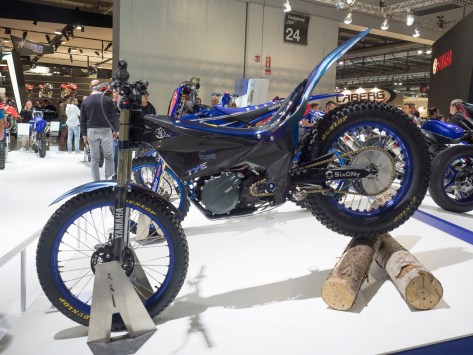
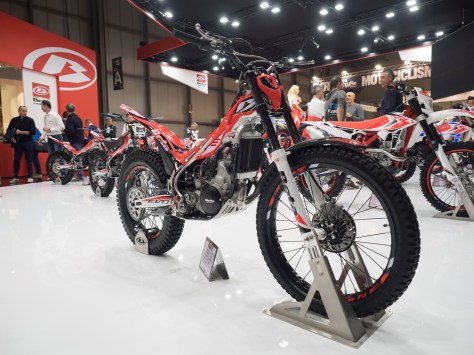
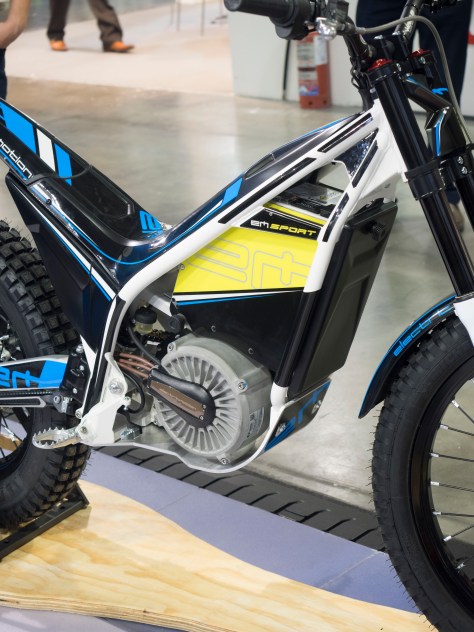
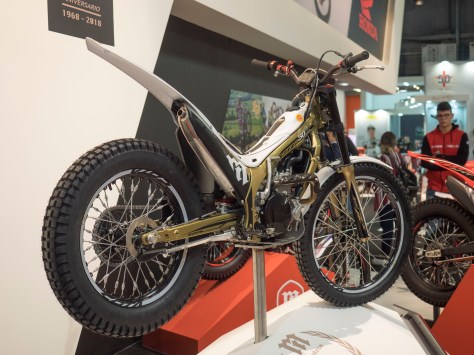
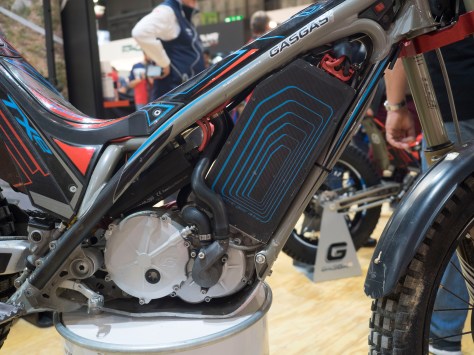
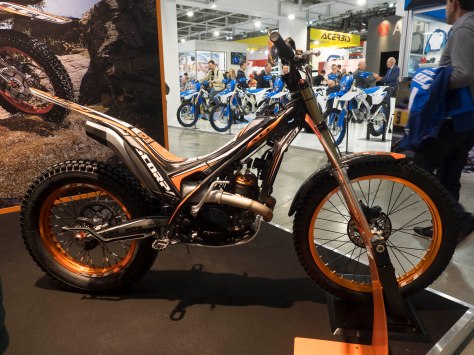
The annual EICMA show took place at Milan, Italy – Justyn Norek has kindly supplied Trials Guru with some images.
EICMA (Esposizione internazionale del ciclo, motociclo, accessori) is the world showcase for new models from the motorcycle industry worldwide and is the launchpad for new trials models.
The Westmorland Motor Cycle Club Ltd are planning a tribute edition of their annual Bob MacGregor road run in Perthshire. This will be a tribute to John Holmes.
The late John Holmes looks rightly pleased with one of his beautifully built Triumph Tiger Cub trials bikes – Photo: John McCrink
Details are given below:
Held under SACU regulations and social permit, it takes place on Tuesday 30th April 2019
at the start of the Scottish Six Days Trial period.
The run will be for Motorcycles (Pre 75 – preferred) or something special.
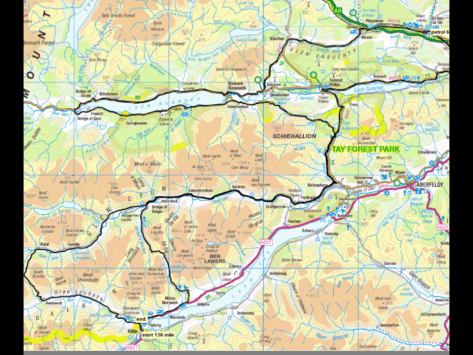
The start & finish of the run will be at the McLaren Hall, Main Street, Killin, Perthshire, FK21 8UH, Scotland.
Entry details:
37 miles North of Stirling
Circular Route, Killin-Blair Atholl -Loch Rannoch Area
Route follows A & B Class Roads Alternative Off Road Sections for those interested
The first motorcycles will leave at 10.00am & the remainder to follow in groups of 5 – 10 approx. at one minute intervals
There will be a lunch break on route
Attached entry form to be completed & returned with £15 entry fee to:- (includes £2 donation to Bob MacGregor Trials Club)
Peter Remington, Kenbrig, Levens, Kendal, Cumbria, LA8 8DT
Tel No. mobile: 07891076320 Email: premington2@gmail.com
Please enclose a stamped addressed envelope for acceptance of your entry.
Entries to be received by Monday 11th April 2017
Entries will be limited, so please enter early to avoid disappointment.
The organisers reserve the right to amend the event or to refuse entry without giving a
reason for such refusal.
Westmorland Motor Cycle Club Limited
Held under SACU social permit
Bob MacGregor Motorcycle Run
Tuesday 30th April Official Entry Form
Name……………………………………… e mail address………………………………………. Address…………………………………… Tel No………………………………………………… …………………………………………….. Mobile No……………………………………………. ……………………………………………..
…………………………………………….
Machine……………cc ……………………… Year……… Registration No…………………………
I declare & undertake,
i) That the above vehicle is well maintained & in a fit condition to be entered in the
above run.
ii) Vehicle Insurance
The vehicle has current vehicle road tax & is cover by an operative policy of insurance for road use & third party risks & said policy will be available for inspection by the organiser upon request.
In default of the above undertakings or any one of them I agree to save harmless and keep indemnified the Organisers of the above run, and it’s officials, servants and representatives, from and against all actions, claims, expenses and demands in respect of death or injury or loss of or damage to property, however caused arising out of or in connection with my entry or my taking part in this run.
Riders Signature……………………………………………………….. Date…………………….
£15 Cheque / P.O. Payable to Westmorland MCC
Send to Peter Remington, Kenbrig, Levens, Kendal, Cumbria, LA8 8DT with S.A.E
Kenny McKee was born into a motorbike mad family on 16th December 1948, the youngest child of eight.
Known as ‘King Kenny’ to many, his love of bikes was destined to be, given that his father and his big brother Bobby “RJ” were full on petrol heads.
Growing up around bikes he had a passion for all aspects of the sport, but trials was his true love. Bobby was riding trials from the early 1950s and Kenny followed him all over the country watching and eventually competing. He rode trials through the 1970s and into the early 1980s and made long lasting and enduring friendships. Many nights were spent in the company of good friends reminiscing about all the old boys and the “good old days”.
Bikes were second only to family and Kenny had two sons who took his love for all things bike into trials as well. Once Warren and Terence started riding in the early 1980s, Kenny put all his enthusiasm and effort into supporting them, taking them all over the country.
His absolute dream event, as with thousands of other was the Scottish Six Days Trial, travelling over for years to watch and also competing in the Pre’65 event a few times too.
A joiner by trade from his teenage years, he was so driven by trials that many a job was put back while the bikes to centre stage.
Latterly Kenny and his wife of almost fifty years, Blossom travelled all over Ireland and GB with Terence, competing in local events, Nationals and the SSDT as well as the Lakes, Loch Lomond and the Isle of Man events.
Sadly Kenny passed away peacefully in his sleep at home this morning, a few weeks short of his 70th birthday. His loss will be felt by a great many people, not just family, but also the bike family.
The sport has lost a good friend today, and an encyclopaedic knowledge of all things trials
Kenny is survived by his wife Blossom, sons Warren and Terence, daughter Sharon. Daughters in law Karen and Natalie as well as grandchildren Jordan, Erin and Oliver, and especially by great granddaughter Katie, who has also been bitten by the bike bug and will no doubt follow those well-trodden footsteps of granda Kenny.
Funeral arrangements:
The service is Friday the 9th November at Clarkes Funeral Home, 12 Court Square, Newtownards, NI, BT23 7NY at 12 mid-day. After the service interment will be at Movilla Cemetery off the Movilla Road for 1pm.
Refreshments will be available afterwards in The Ivy Bar which is across the road from Clarkes and friends are most welcome to call in.
Trials Guru sends sincere condolences to the McKee family at this difficult time. Kenny McKee was an enthusiastic supporter of ‘Trials Guru’ who demanded a supply of Trials Guru decals when he met John Moffat at the SSDT this year.
David ‘Rick’ Richardson on his 200cc Seeley Honda TL200E at Forfar. Photo: Jimmy Young
Thanks to Graham Riddell of Graham Riddell Photography based in the Scottish Borders, we have been granted permission to reproduce an article written on Scottish trials enthusiast, David ‘Rick’ Richardson. What is not generally known is that Rick actually encouraged a young Willie Dalling to take up the sport of trials. Dalling of course went on to be an expert Scottish rider and Clerk of the Course of the Scottish Six Days Trial.
Words: Graham Riddell
Photos: Jimmy Young Archive & David Richardson
Dave ‘Ricky’ Richardson has been riding motor bikes for over sixty years and only stopped competition at the turn of the Millennium. At 83 years of age, he cuts a slim physique and is still in full control of all his faculties.
I first met Ricky whilst out and about on my own personal photo-walk searching for inspiration and was making my way back from a local pine wood when I stopped to take a picture of a house that interested me with fallen leaves and intriguing shrubbery around its gated entrance.
An elderly man walking his little white dog (Jenny – a cross between a poodle and a Bichon Frise as I later learned), came strolling up and stood directly in front of my view and exchanged pleasantries about the weather and then our conversation somehow led to the subject of motor bikes. I don’t remember how exactly, but he started to tell me about him riding old classic bikes and how he had several friends, some local, who also partook of this social and exciting activity.
Intrigued by his tales, I enquired his name and if he wouldn’t mind telling me how old he was, thinking that the bikes he drives today will be somewhat pedestrian. It took me by complete surprise when he told me he was eighty three years and had been riding bikes for most of his life.
An idea was formulating in my head indicating that I had to explore this more deeply and so I ventured to ask if he would allow me to include him in a project I have been running for several years now entitled, ‘People of the Valley’. This random collection of persona is from everyday folks I meet and who live in the Tweed Valley here in the Scottish Borders. I have been greatly impressed by the diversity of skills and talent I have thus far encountered and so was keen to include Ricky in my personal Hall of Fame!
We agreed that I should call him and arrange to meet, and if his friend was available he could join us too. And so it was that a few days later I came to photograph and interview Ricky and his friend, seventy year veteran Dennis Bellville, who also brought along his vintage bike – a shaft-driven, 1951, Sunbeam 500 incline twin, in classic war-time green.
Dennis had kindly come over before having to head back to his part-time job later in the afternoon and I was grateful for the opportunity to photography both these wonderful characters with their bikes and thereby archive another small piece of local history.
As Dennis disappeared off into the distance to return to work, I took a few more shots of Ricky with his wonderful 1962, silver Triumph 21, four-stoke twin, which he had bought in 2016 ‘unseen’ and to his dismay arrived as just a box of parts. He set about rebuilding it, even hand-crafting a new oil tank. The result is a spectacular, light-weight machine that beams with as much pride as Ricky’s satisfied smile.
His collection didn’t end there though. Next he showed me another classic he had personally rebuilt, a stunning, blue 1962 Triumph T100 – a 500cc four-stroke twin which came to his possession in 2008. A friend had contacted him about an old machine in need of some TLC. When he told him the registration, Ricky quickly realised that this was was a bike he had previously owned and sold, back in 1963, and so acquired it back and set about rebuilding it and has brought it back to life and its former glory.
Whist his silver Triumph 21 is a favourite, he never rides it far from home as the petrol tank capacity is limited and he once ran out of fuel when out on a ride. Fortunately he was close-by to a friend and walked a mile or so to his house where he was able to get assistance.
The T100 however has been on long touring rides to the western Isles including Mull and Skye and also down to the Lake district.
Ricky’s skills are not confined to only riding motor bikes. At the age of fifteen on leaving school he served his apprenticeship as a coach-builder at the famous K&I Coach-works in Dalkeith, Midlothian, Edinburgh, where he grew up and learned vital skills that were to serve him well through his career. He suffered a serious injury while working there shattering his leg, and the physiotherapist recommended he take up road cycling. He did and fell in love with the two wheels mode of transport getting into motorbikes in his early twenties.
Dutchman, Mart Buuron’s 348 Montesa goes up in a fireball after the fibreglass ruptured on Callert in the 1977 event. Rick was one of a group of people who helped extinguish the blaze – Photo: David ‘Rick’ Richardson
At the age of twenty, he began his two year National Service with the Royal Navy serving on aircraft carriers (HMS Bulwark (R08) and HMS Centaur) as an aircraft mechanic, when on occasion he famously repaired the catching mechanism for the incoming Sea Hawks and single prop Gannets, after one had become snagged by one plane’s propeller whilst attempting the hazardous landing, thus ensuring the fleet and ship remained operational.
Motor cycles caught his imagination and he began learning new riding skills in Reliability Trials, firstly as a Novice, then progressing through to upgrade to a Non-Expert and finally an Expert with several class wins along the way. Modest about his past successes and achievements in these classes, he did remind me of his final win back in the late 1990’s at the ‘Grey Beards Trial’ – a one-day event near at Whiteadder near Gifford.
Through the 1970’s up until 2005, Ricky remained an active rider competing in Motorcycle Reliability or endurance trials with two Edinburgh teams, Edinburgh Southern and Edinburgh St. George.
On one famous outing with his trials pals with Edinburgh Southern Motor Cycle Club, they scrambled up to the top of Ben Nevis, then took a trophy photo of themselves with one of their bikes, a Spanish built OSSA 250cc two-stroke machine, perched on top of the trig-point with one rider on top and the others around each side. With a humorous glint in his eye and dragging on another JPS Blue cigarette, he passed the photo to me saying that it might just pass the Guinness Book of World Records for the Highest Motorcycle in Britain!
Ricky moved down from Dalkeith to Peebles here in the Scottish Borders with his wife and continued to commute to work, then on retirement they moved to Ellibank Gatehouse before finally settling in Innerleithen in 2000 where is was able to help care for his wife who has sadly now passed away.
Approximately 26 years previously he and a group of close friends, started the Lothian & Borders Classic and Vintage Motorcycle Club which met at the Leadburn Inn until it was destroyed by fire in 2005 by a tragic motor accident. They continued meeting after the Inn was rebuilt until the owner, himself a bike enthusiast, acquired new premises in Eddleston earlier this year. However the Inn didn’t have the required parking facilities for a mass bikers’ gathering and so today the club meet at the Black Barony Hotel also in Eddleston, on the second Thursday of the month. They also have an active Facebook page.
But Ricky had yet one more surprise in store for me.
Far from being an elderly gentleman pottering about on his old classic machines, he just bought himself a new BMW G310, a single cylinder, 313cc roadster with rear exhaust outlet which he plans to go touring on next summer, especially if the weather is as good as this year. And true to form, he had modified it by adding a new rear mudguard.
For my part, I want to thank Ricky for sharing part of his story with me and I wish him many more years of happy, safe motoring.
Trials Guru Comment on David ‘Rick’ Richardson: “I have known Rick even before I started competing in 1974. Rick was a regular competitor at events when I used to observe, before I had a competition licence. He is one of Scotland’s great enthusiasts. I remember the late Willie Dalling telling me, when I visited him at his home at Shawfair Farm cottages near Dalkeith, that it was watching Rick practising on his trials bike that inspired Dalling to take up the sport. Not a lot of people, except Willie’s immediate family, know that fact.”
About Graham Riddell Photography:
Professional freelance photographer since 2007, supplying photography stills for a wide range of clientele from publishing in lifestyle magazine editorials, calendars, press and PR launches, corporate and public events, businesses marketing and corporate communications in charitable and public organisations.
Families commission me for portraits of their children, anniversaries and special occasions including weddings (particularly the smaller wedding party looking for an affordable package for their big day), often at local venues here in the Borders.
My Art stock photography includes my wall art collection ‘Lightscapes’ which has been exhibited widely over the years both here in the Scottish Borders and further afield, from Peebles, Galashiels, West Lothian, Edinburgh, London, and even Times Square New York.
Check out the web site for more information or to see Graham Riddell’s work online.





















 TRIALS GURU - DEDICATED TO TRIAL