The Highland Classic 2 Day Trial, Scotland’s premier event of its type will pay homage to Honda Trials with their HONDA EDITION, when the event is once again promoted by the very active and go-ahead Inverness & District MCC on June 10/11 at Alvie Estate, near Aviemore.
The Guest of Honour will be ROB SHEPHERD, British Trials Champion on Honda in 1977.
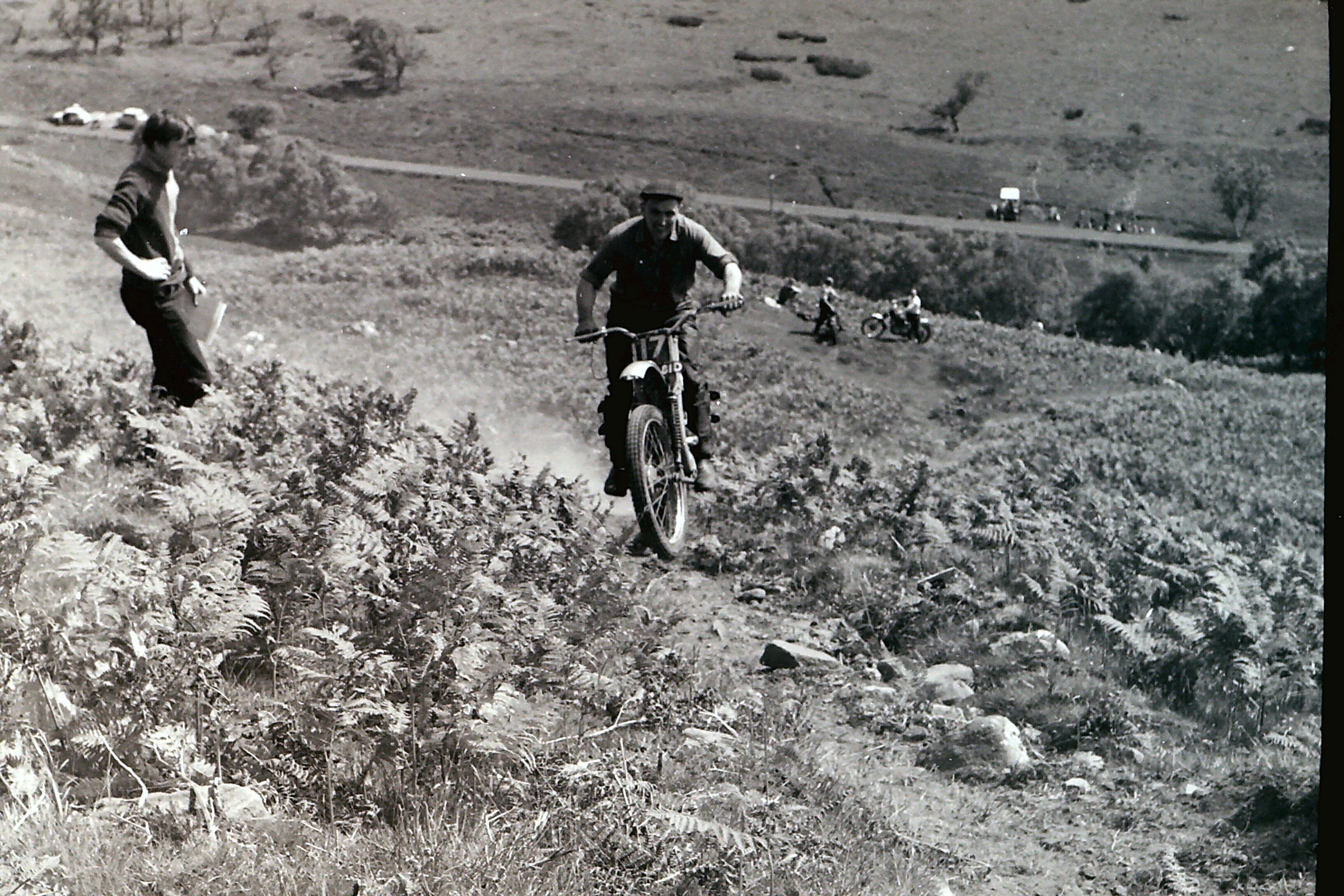
Rob Shepherd (Honda) seen here on ‘Muirshearlich’ in the 1981 SSDT will be Guest of Honour at the 2017 Highland Classic Two-Day in June – Photo: Iain Lawrie, Kinlochleven
The decision was taken by the organising committee to continue to feature motorcycle trials brands as their headline theme and have announced the guest of honour, Rob Shepherd who is from the era when Honda was active in British and World trials with their twin-shock TL and RTL300/360 machines which were hand-built by their subsidiary company ‘Honda Racing Corporation’. Since 2013, there has been Bultaco; Greeves and Yamaha with The Thorpe Edition which paid homage to Dave Thorpe in 2014, a regular competitor at the Highland Classic.
Alvie’s Laird, Jamie Williamson (second right) welcomes the riders to his estate in 2016 – Photo: Lorna Brackenridge
The event now enters its twelfth year as a two day trial and permission has been granted by Alvie Estates CEO, Laird Jamie Williamson who is an enthusiastic supporter of the event which now attracts an entry of 150 competitors from a variety of regions of the UK and Europe.
Mick Andrews was guest at the Highland Classic in 2016 at the ‘Yamscot Edition’ – Photo: Lorna Brackenridge
The Highland Classic, sometimes referred to as ‘The Alvie’ or even ‘HC2DT’, has remained firm in that it accommodates Pre’65 and twin-shocks only. There are no classes for mono-shock machines and any motorcycles which have been heavily modified are put to the ‘specials’ category, although there have been very few times that the organisers have had to relegate entries to this class.
The entries will open on Wednesday 1st February and will only be available online as a pdf document from the club website, (www.idmcc.co.uk) and their facebook and event pages on social media. Previous entrants will not receive a hard copy by post. Return of the entry forms are to be made by post to the entry secretary on an ‘earliest receipt’ basis. It is expected that entries will fill rapidly as in 2016 they were full within 5 days! Entries will close when full, or Saturday, 15th April whichever is the sooner.
The first 150 entries received by the secretary will be informed of their receipt of entry and there will be a 15 strong ‘waiting list’ of reserve riders, which represent a 10% fall-back facility. E-mailed entries will not be accepted and all entry forms must be complete and accompanied by the appropriate entry fee, which will be £45.00 (50 Euros) for two days of fantastic trialling in the Scottish Highlands.
For 2017, there will be a ‘Best Female Rider’ award and ‘Best Honda’ cup.
The ‘trial partners’ for 2017 are Classic Trial Magazine; Putoline Oils and Apico Factory Racing.
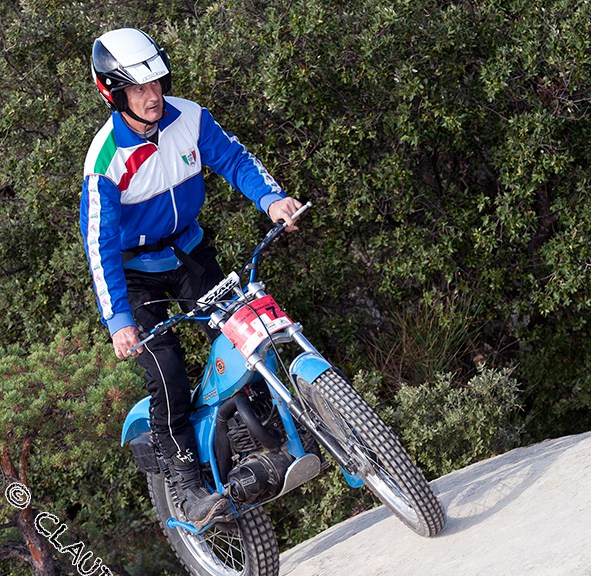
Ettore Baldini – 26 April 1956 – 10 January 2017 – Photo by Claudio Pictures
It is with deep regret that we have to report the passing of another trials friend, Italian Ettore Baldini, who has died as a result of a heart attack.
Ettore was a competitive rider who started his trials career on a Montesa Cota 247, taking second place in the Italian Trials Championship at the tender age of 19. In 1977 he won his first national title for Bultaco, repeating this again in 1979 again on the Spanish machine. Baldini left Bultaco in 1979 to join American, Bernie Schreiber at Italjet.
Ettore signed for Montesa, which he rode until the end of his career in 1985. He was many times in the top 15 in the world trials championship.
Realising his development skills, Ettore was employed by Aprilia to develop their model ‘TX 311’ and then the ‘Climber’ model which would become the world championship winning machine in 1992 in the hands of Tommy Ahvala.
Latterly Ettore worked for Ducati.
Trials Guru extends our sincere condolonces to the Baldini family.
Photo courtesy and copyright of Claudio Pictures/Jean-Claude Commeat
Jon Stoodley is a trials superenthusiast and more, who lives in Muskogee, Muskogee County, Oklahoma, United States of America.
He has been a reader/follower of Trials Guru from the very start and he has kindly written this article for us.
Jon Stoodley enjoys his trials riding, seen here on his Gas Gas
Photos provided by Jon Stoodley/JSE Trials
An observant man once said, to the effect, “You don’t choose your passions, your passions choose you.” Each of us came into the sport of Trials or ‘Mototrials’ as it is called in some areas, from different directions. Some of us were, in a way, born into the sport as a result of their father’s or even grandfather’s influence. Some, like me, were involved in other forms of motorsports and thought we would ‘give Trials a shot’ and took up the sport.
I had been involved in racing cars and motorcycles as a hobby since I was 15 years old and one fateful night, in 1971, while I was sitting on my TT bike, waiting for the flagman to start my race, I looked around and thought to myself, “Darn. These guys are trying to run me over all the time and I’m not having fun anymore!” So, that was it, I sold my bike and equipment and just took some time off to see what I wanted to do next. As I always loved motorcycles, I was pretty sure they would be involved somehow in my future, but to what extent, I didn’t know.
A short time later, I went to a big off-road motorcycle and equipment show in South San Francisco. There were lots of bikes and stuff on display as well as local motorcycle sports clubs being represented. Over in one corner, was a small booth with a group of riders who had some of their bikes on display. The bikes were weird looking little things with little seats and what looked like street tires on them. I had seen a few photos of them in magazines, so I had an idea they were what was called ‘Observed Trials’ bikes and a bunch of guys in the U.K. bounced around on them all over the countryside. They didn’t look loud, mean or terribly fast like other racing bikes but they were very compact and simple.
One of the riders at the booth came over to me and in a friendly way, asked me if I was interested in riding the, new to me, sport of Observed Trials. I told him I didn’t know much about the sport but was curious. He introduced himself, “I’m Whitey Webb and I’d be happy for you to meet some of the other riders here.” Whitey took me over to the group, which was friendly and welcoming and obviously really enjoyed the sport they were involved in. I hung around their booth for some time and Whitey turned out to be a good salesman as I decided to give this weird sport a try at their next event. There is a Zen saying that goes, ‘When the Student is ready, the Teacher will appear.’
I guess I was ready as a great teacher appeared. Whitey Webb is the father of Kip Webb, a top level U.S. National Trials rider as well as the grandfather of Cody Webb, past U.S. National Trials and EnduroCross Champion. I guess I got real lucky!
So, I converted a bike I had laying around the shop and showed up at my first Trials event, secure in the knowledge that an experienced and supremely talented racer such as myself would surely show this bunch of old ladies how to REALLY ride a motorcycle, well, we all know what happened next. I flopped, dabbed, crashed, dragged and moaned myself through the sections and loop and generally made a complete fool of myself. My shins were as bruised and bloody as my over-inflated ego at the end……but, you know what? …. I actually had fun. Looking back, I had lots of fun and everybody was helpful and encouraged me to keep going and, most of the time anyway, didn’t laugh when I made rookie mistakes and I made a LOT of them.
That was it, I was hooked. Something about this, in the U.S. anyway, relatively unknown sport spoke to me. It was challenging and rewarded personal effort, but most of all, it was enjoyable, if even in a sadomasochistic way at times. But there was something else….the people. This sport attracted a certain kind of person and I became aware that these were the kind of people I wanted to be around.
As far as motorsports is concerned, Trials is a weird sport. It’s a lot like golf in that I have friends who are as passionate about golf as I am about Trials. They are always buying the latest, high-tech equipment and a couple of them have even been to Golf’s Mecca, the famous St. Andrew’s Links in Scotland. Trials is also like Golf in that it looks so simple but in reality, is much more complex than a description would indicate. Don’t believe me? Try explaining Golf to a person who has never heard of it: “Well see, you got this little stick and this little ball. There are a bunch of holes in this huge lawn and you try to knock this little ball into the holes with as few whacks as possible. You win if your score is smaller than all the other people. It’s really exciting!”
Then there’s Trials: “Well you see, we got these spindly little motorcycles with no seats. We look for places that nobody would ever ride on (and some places you can’t even walk over) and thrash these little bikes through rushing water, boulders, and other nasty stuff while trying not to fall off.
Oh, yea, and we do it for hours on end in rain, snow, sleet and flood. It’s really exciting!” You can get an idea of what I mean, in that the physical description does not do justice to the reality of the experience.
In Psychology it’s called “having a mental equivalence”, in that the person you are describing the experience to, does not have the retrievable mental images necessary to accurately frame the physical descriptions you are giving them.
325 Bultaco Sherpa mounted, Jon Stoodley in the British-America Cup trial around 1974
What is it about this sport that I enjoy?
Well, you get to ride for hours in some of the most beautiful scenery around. It’s personally challenging and rewards practice and commitment.
The other participants are helpful and supportive, probably because we are all trying to solve the same problem of trying to ride the section successfully. We all have a common purpose.
The bikes, in comparison to other forms of motorcycle sports, are a lot less expensive and you can get a good entry level bike at a very reasonable price. The bikes, in most cases, are well under-stressed in use and seem to last forever. At least here in the U.S., trying to find a Trials bike in a motorcycle salvage yard is next to impossible. They are just passed on from one rider to a new owner.
I’ve rode events alongside first-time beginners and World Champions and in what other sport can you say that? You can ride just for fun or compete on a serious level, the sport allows for both types of riders at the same time.
Trials is a reasonably safe sport and injuries are rare. A Clubman rider can compete on Sunday and he or she can have a more than reasonable expectation that they can report for work on Monday, unscathed. The list of positive attributes of this sport goes on and on.
Riding a creek on the 325 Bultaco Sherpa
Another point is that Trials riders are, as a general rule, easily approachable and love to share. It’s fun for me to wander around the event pits and talk to riders. If I admire one of their bikes, inevitably the next thing I hear is “want to take it for a ride?”
The approachability factor applies not only to Clubman riders but also to World Champions. I’ve chatted with Martin Lampkin when he got to my sections early (even though I knew, in part, he was buttering me up so I’d go easy on Dougie if there was a close call on his scoring. Martin was as good a salesman and had as good a sense of humor as Whitey Webb), I’ve drank beer and talked about motorcycles with Mick Andrews for an afternoon, sat around camp with Tommi Ahvala and talked about everything and sat with Dani Oliveira, 125 World Champion, in the GasGas pits while he was putting on some small parts he had brought from Spain to make an otherwise stock bike work at the World Round level.
This reminds me that Trials is primarily a sport of talent, not machinery. At the World level, of course, the competition is so intense that any advantage, however slight, is important but for most of us mere mortals, the bikes anyone can buy are essentially race-ready and require little preparation. I don’t know of any other motorsport here in the U.S. that one can buy a stock bike, do reasonable maintenance and adjustment and enter it in a National event and have a good chance of doing well, it not winning. Trials is a ‘no excuses’ sport.
On the smooth but very powerful 370 model JTR (Jordi Tarres Replica) Gas Gas of 1997 at the Frank Raines Trial
The sport of Trials has, and continues, to mean a lot to me. I’ve got long time Trials friends all over the world because we share a common experience. The very nature of Trials competition promotes camaraderie and friendship and I would imagine this is because of the fact that we are alone in the section and essentially competing against ourselves. Like I say, Trials is a ‘no excuses’ sport, you can’t blame the other riders for cutting you off in the turn, running into you or jumping the flag at the start.
I love Trial’s rich history, it is one of the oldest and most enduring forms of motorsports there is and one only has to look to the Scottish Six Day Trial to get an idea of the sport’s remarkable lineage. Although I don’t compete anymore I really, really enjoy helping to set up an event, helping new riders and observing a section.
I sometimes think I enjoy checking a section more than I did riding in competition. Even after checking sections at three World Rounds, numerous Nationals and over a hundred plus clubman events, I still love standing in a section encouraging the riders. I always want the riders to do well in my section and I always get there early to make sure it is safe, there are no tree branches hanging down in their way, no unnecessary debris is at the entrance or exits, the boundaries are secure and whatever I need to do to make the section as trouble-free yet challenging as I can.
I enjoy seeing the riders analyze the section, picking unique lines through the obstacles and then using their talents to conquer the problems set before them. I take pride in the fact that Trials riders help each other and you only have to see the upper class riders take time to answer the questions of the lower class riders and watch as the spectators cheer on and encourage both beginners and World Champions.
I like the fact that people of all ages and genders can be involved in this equal opportunity sport and even old geezers like me can participate to whatever level they enjoy. I probably appreciate my time spent with other Trials people now more than I ever have. There are not many activities one can say that about.
When my friend, John Moffat, asked if I would write a piece for The Trials Guru, I first thought of a technical article. Through the years, I have written many technical articles for both Motocross and Trials publications but John suggested: “how about a letter from America?” This got me to thinking, “how about a love letter to Trials?” a passion that chose me and I’ve enjoyed for over 46 years and counting. I’ve tried to give back to Trials what my talents would allow. It’s been a really good investment as Trials has rewarded me tenfold. I love this sport.- Jon Stoodley
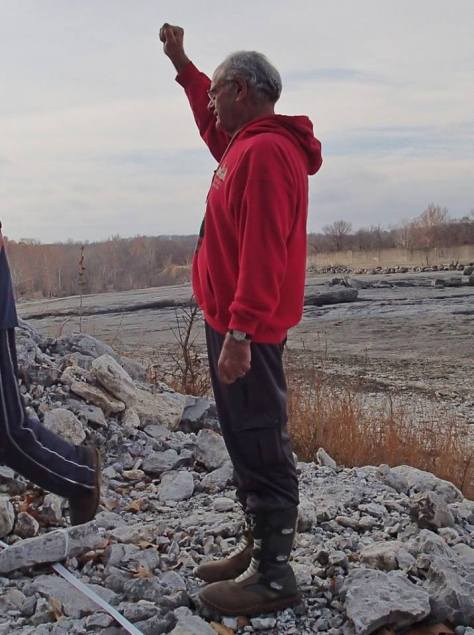
A true enthusiast puts back what he/she takes out, here is Jon observing (checking) riders at a trials event
The Premier Trial Sport Website for photos, articles, news and the history of motorcycle trials
Hawick rider and former Scottish Champion, Graham F. Smith (240 SWM) at the Lanarkshire Valente Trial at Kilsyth in 1979 – Photo: Ian Robertson, Midlothian
We at Trials Guru are always looking for new material and old material for that matter, well we just found some for you!
Scottish trials enthusiast Ian T. Robertson from Midlothian has been friends with Trials Guru’s John Moffat for over 40 years and he has opened up his personal archive for us to see.
Please, as usual, be respective of Ian’s copyright, he is the legal owner of these images, please do not share without permission.
Go straight to see the photos that Ian has ‘unearthed’ on Trials Guru… Here!
The Premier Trial Sport Website for photos, articles, news and the history of motorcycle trials
Midlothian rider and joint Scottish Champion in 1978, John Winthrop (348 Lloyd Montesa) Valente Trial, 1979 – Photo: Ian Robertson, Midlothian
Our contributor, Oliver Barjon from Champagne in France has informed us that the seven times Belgian Trials Champion, Claude Vanstenagen passed away on November 19th 2016.
He was Belgian National Trials Champion 1963, 64, 1966-1970.
Riding both Greeves and Bultaco machinery, Claude also competed in the European Championships (The Challenge Henry Groutards), the fore-runner to the current world series in which his best position was 7th in 1969.
On Tuesday 27th December 2016, Red Bull TV released their documentary film on ‘Dougie Lampkin – Wheelie Man’ – exclusively on their web network.
Produced by Scots born film-maker, Stu Thomson, a trials rider and Downhill MTB competitor, this gives a fantastic insight to the preparations undertaken for the wheelie attempt around the world famous Isle of Man TT circuit.
Red Bull’s press statement read:
“This is an enthralling and must watch documentary like no other. This unique production provides an exclusive behind the scenes insight and much previously unseen personal footage, including some moving scenes as Dougie deals with a close and personal tragedy.
In late 2016, Red Bull athlete and twelve-time FIM Trial World Champion Dougie Lampkin attempted to make history by becoming the first rider to successfully wheelie the entire 37.7 miles of the iconic Isle of Man TT mountain course, live on TV.
Red Bull TV follows the Trial legend’s preparation as he rides the highs and lows of his most ambitious project yet.
Blending archive footage with never-seen-before interviews, the documentary delves into the dynasty of the Lampkin family. This includes Dougie speaking for the first time about the death of his father, Martin Lampkin, earlier this year. A man who would have normally been at his side throughout the challenge.
As the attempt draws ever closer, the pressure of stepping into the unknown with a World-first challenge begins to sink in and take its toll, as cracks in Dougie’s usually unfaltering confidence begin to show.
When the big day finally arrives, gale force winds batter the island resulting in an unwanted and unscheduled twenty-four-hour postponement of the attempt.
Soon it will be time for Dougie to take centre stage and write his own chapter in motorcycling history with the biggest physical and mental test of his career.
Watch the drama unfold as Dougie Lampkin – Wheelie Man takes you on what can only be described as the ultimate emotional rollercoaster ride.“
Dougie Lampkin on his specially adapted Vertigo 300 which he used for his one-wheeled lap of the Isle of Man ‘Mountain Circuit’ on 25th September 2016 – Photo courtesy: Red Bull TV (copyright)
Words: Justyn Norek Junior; Carlo Ramella; Tommy Sandham.
Photos: Justyn Norek; Alistair MacMillan; Honda Motor Co.
Sammy Miller with a TL250, a publicity shot for Honda Motor Company in 1975
A Honda definitive photo of the production TL250 Honda
Justyn Norek Jnr was given the opportunity to test ride a 1975 Honda TL250 that had taken part in the 1977 Scottish Six Days Trial ridden by Derek Edgar. Now owned by collector Carlo Ramella in Italy, the machine has survived in remarkably good condition. Registered in Edinburgh, Scotland where Derek’s father and uncles ran a motorcycle dealershiop called Edgar Bros, it was an import from the USA, where Derek worked for Puch and latterly Montesa.
Left to right: Giuseppe ‘Pippo’ Bartorilla, the creator of the Moto Guzzi Trial Special; Justyn Norek Jnr (Tester) and Carlo Ramella – Photo: Justyn Norek Snr
Carlo Ramella takes up the story as to how he came to be in the position to add this machine to his collection.
A Fascination:
Carlo: “I have always had a fascination for all Honda trials motorcycles, and several variants of the TL models occupy my collection. I have a special place in my heart for the four-stroke machines, and their association with my trials hero Sammy Miller whose prototype caused such a sensation in the sport. When Miller moved to the two-stroke Bultaco from Ariel in 1965 it killed the big British machines forever. Miller can also be held responsible for the significant year, 1965, that would return in more recent times with the new class for Pre-65 machines. Word has it that Miller designed the world-beating Sherpa T trials model in one week, and its modern lighter weight and easy to ride two-stroke attributes changed the course of the trials motorcycle forever“.
Publicity photo of the Honda TL250 when launched in 1975 – Photo: Honda Motor Company
Carlo: “The purchase of the Honda TL 250 came about when I spotted a web advertisement in 2009. My excitement came when I found out it had a competition history with it and the fact that it had been ridden in the Scottish Six Days Trial. I quickly contacted the seller Alan Jones who confirmed that this was the machine belonging to Derek Edgar, who had competed on it in the 1977 SSDT. The details of the email were: ‘Carlo, this machine competed in and finished the 1977 ‘Scottish’ and was ridden by Derek Edgar. The attached photo shows Derek on the machine registration number LFS 5P. Regards, Alan’. I could not believe it, such was my elation at finding a machine with such a sporting heritage!“
Derek Edgar finished 128th on LFS5P in the 1977 Scottish Six Days Trial seen here on ‘Kilmonivaig’ section – Photo: Alistair MacMillan/West Highland News Agency, Fort William/copyright holder: Anthony MacMillan.
Carlo: “However, Alan didn’t want to sell the machine outside the UK and he wanted to avoid all the hassle with paperwork, customs, packaging etc. I am well accustomed with international goods transportation due to my job and know many truck drivers and haulage companies, so I told him that I would take care of transportation, asking him to provide some protection of delicate parts such as the cylinder head, aluminium fuel tank, carburettor, etc. Eventually I managed to convince him to sell me the machine; we agreed a price and I arranged the shipping. When the Honda arrived I had another ‘dream’ in my garage, and it was exactly as I imagined: still with the ‘Scottish’ markings, all original, including the riding numbers for the event. I started the engine and it was so sweet, despite its age. So it was another dream fulfilled, and I rode it in many classic events before this test with my good friend Justyn Norek Jnr.”
Fitted with an aftermarket KW front mudguard, Justyn Norek testing the 1975 Honda TL250 – Photo: Justyn Norek Snr
Justyn Norek Jnr:
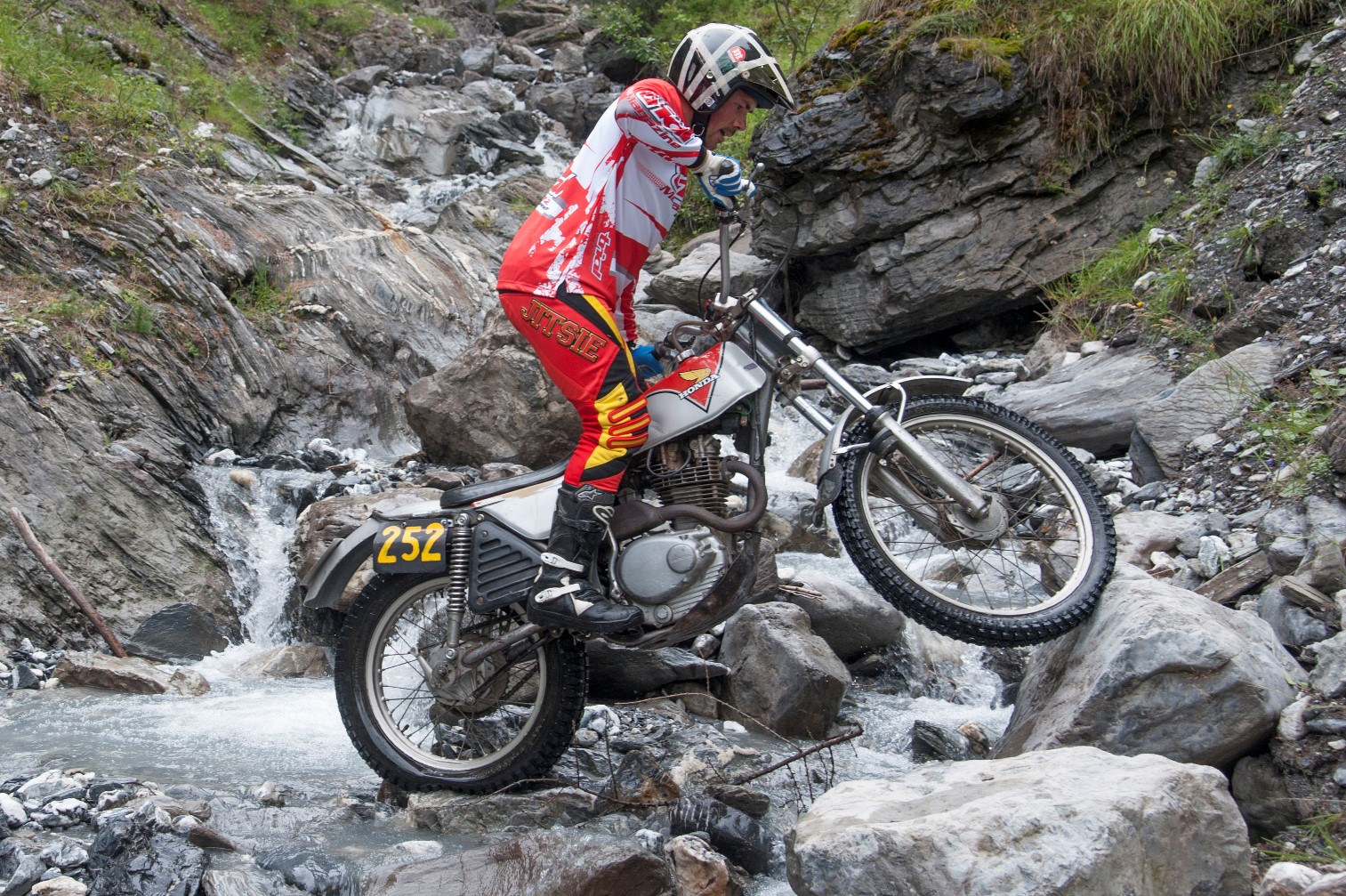
Justyn: “Like Carlo, I am a keen Honda trials enthusiast and especially four-strokes. When Carlo asked if I wanted to test the Honda it was a very easy ‘yes’. Having ridden many Honda trials models it would be interesting to test this one as it was the model which started the adventure. The venue would be one I am very familiar with, at Puy village in the Italian Alps. Carlo has some accommodation here and I also knew his love of red wine would make for good after-dinner conversation! As with most Hondas it started with a soft use of the kick-start lever. I was surprised that it started first time due to its age but the ‘clockwork’ engine was as sweet as a nut, with a very nice ambient exhaust note. I had a quick warm up and it once again confirmed my love of the four-stroke engine“.
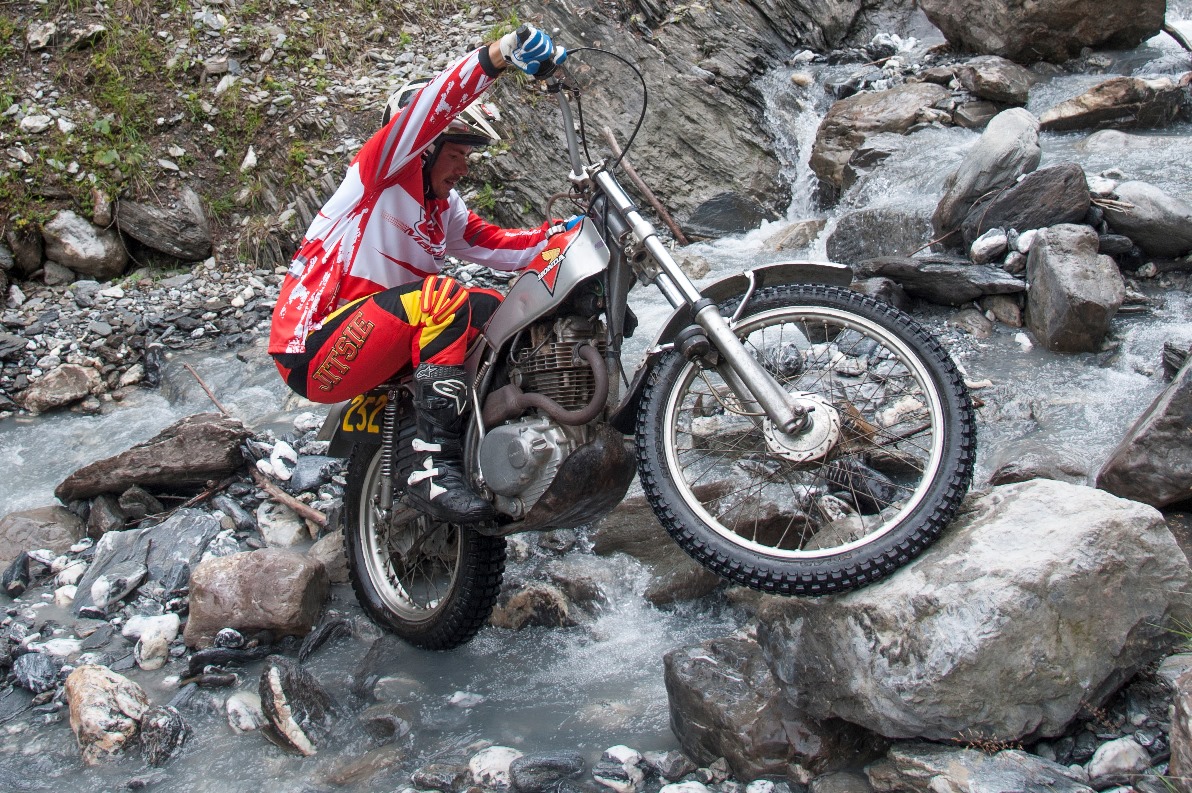
JN: “The hazards we tested on I have ridden before, such as the river and rocks. I entered the fast flowing river and once again the superb suspension found on most Honda trials models was evident. This machine is over thirty years old and yet the suspension’s action is still very good. Despite its obvious heavy weight it handles pretty well, but you do have to be precise with your movements. Straight-line riding is okay but you have to pre-plan any sharp corners, such is the weight factor that you have to always take into account. The super-soft power delivery makes up for the handling and, as always, the feel good factor is immense“.
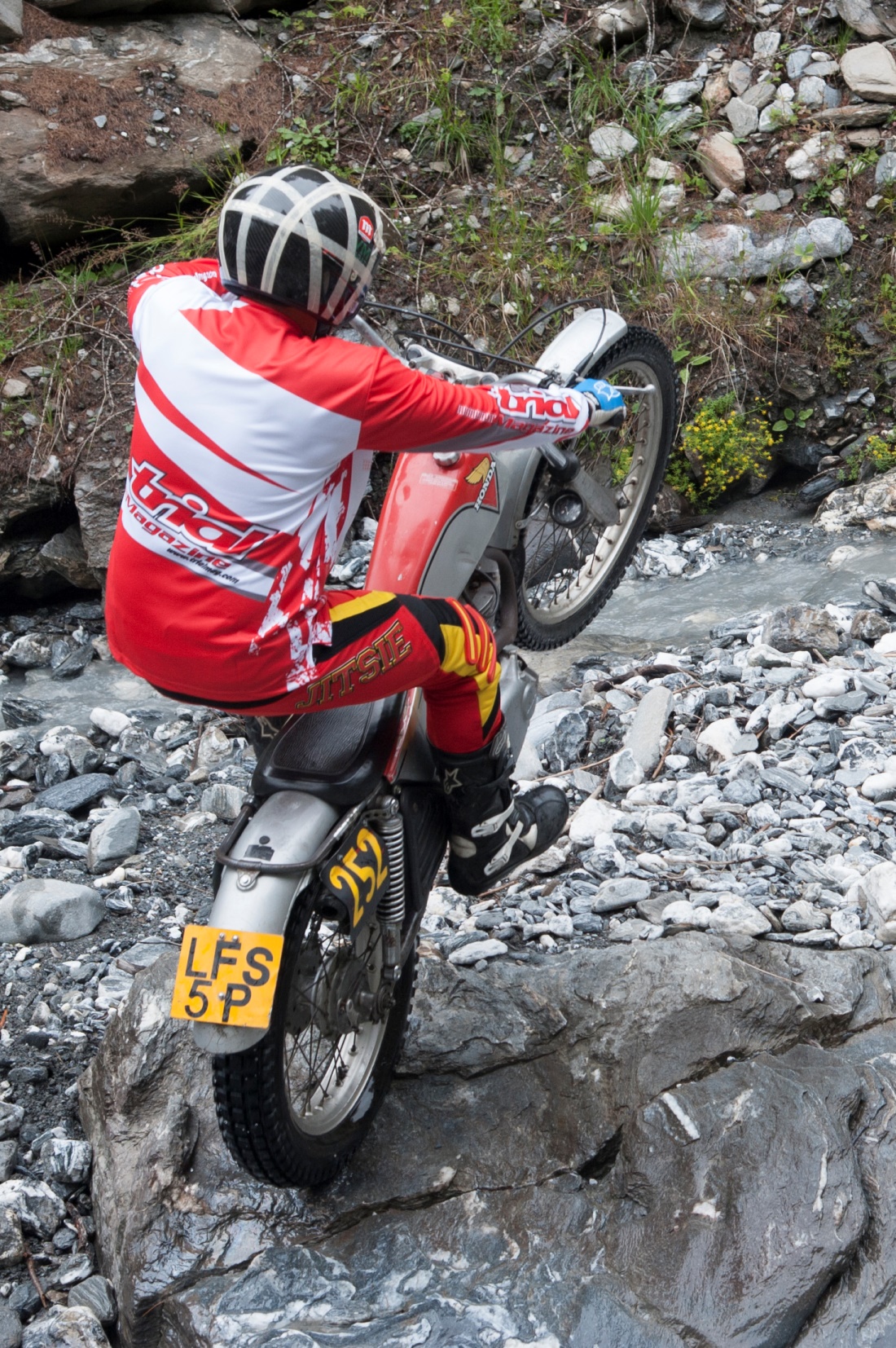
LFS5P has had very little changed to it since its 1977 SSDT adventure – Photo: Justyn Norek Snr
JN: “Out of the river and riding the nearby by river banks is where it’s the happiest as it feels very confident on this type of terrain. The relationship between the fuel tank and seat is very comfortable. Performance wise it could do with around another 100cc as, on very steep climbs, it simply runs out of power. The brakes were once again very good, considering the machine’s age, and as with the majority of Japanese motorcycles the gear selection was very ‘slick’ and positive. As with other machines from this era the clutch is not really for use in the hazards“.
The Honda TL250 is still in fairly standard condition except from a little scalloping of the side panels and the non-standard front mudguard – Photo: Justyn Norek Snr.
JN: “In conclusion this model is one which needs to lose so much weight to be competitive but that’s maybe why we see so many Honda ‘Special’ trials machines. It’s a pleasure to ride and the quality standard is very high. Sammy Miller worked his magic on the Honda TL 250, producing the Miller Honda which took Rob Shepherd to the British title in 1977. As the rain came down we retired for a lunch of grilled meat and a glass of red wine, and the topic of conversation took us back to the winning years of Sammy and Rob Shepherd“.
Justyn Norek Jnr. puts the 40 year old Honda through its paces in Italy – Photo: Justyn Norek Snr.
Carlo Ramella told Trials Guru that Honda TL250 UK registration LFS5P has now been passed to his good friend and Honda collector, Andrea Merlone and remains in Italy.
Who is Derek J. Edgar?: He is the younger brother of three times Scottish Trials Champion and former Clerk of Course of the Scottish Six Days Trial, Norman F.W. Edgar. Both sons of Norman Edgar senior who had a motorcycle business in Edinburgh (Edgar Brothers) and were DMW, Bultaco, AJS and Honda agents. Derek Edgar worked for Puch Motorcycles and then Montesa Motorcycles in the USA, before returning to live in Scotland to set up his company ‘Derek Edgar Developments’.
He wanted another crack at the SSDT when he was still in the USA and as his father Norman Edgar Snr had imported from the USA under Derek’s direction and assistance, a brace of two TL250s in 1976, a machine was sitting waiting for him to use, registered in Edinburgh as LFS5P.
The other machine from the personal imported batch was LFS4P, purchased at one time by author, Tommy Sandham who had a liking for Honda trials machines.
Sandham described the TL250 as: “… heavy, had low ground clearance but was the most fun you could have with your trousers still on“.
Sandham loaned LFS4P to his friend Kenny MacNamee who rode one of the first motorcycle enduros to be held in Scotland, at Rhins on the Galloway coast in 1978. The TL250 was a fine general purpose off road machine, perhaps heavy and low for trials, but for the early enduros, a handy bike to have!
Derek Edgar retired to Linlithgow with his wife Theresa. Their daughter Kim Edgar is a well known musician. Sadly Derek passed away in 2018. We hope to bring you the full story of the Edgar Brothers on Trials Guru.
LFS5P is still a useable trials machine in the right hands – Photo: Justyn Norek Snr.
Our thanks to Carlo Ramella, Justyn Norek Snr & Jnr., Tommy Sandham.
Apart from ‘Fair Dealing’ for the purpose of private study, research, criticism or review as permitted under the Copyright, Design and Patents Act, 1988, no part of this article may be copied, reproduced, stored in any form of retrieval system, electronic or otherwise or transmitted in any form or by any means, electronic, electrical, mechanical, optical, chemical, photocopying, recording or otherwise without the prior written permission of the author as stated above. This article is not being published for any monetary reward or monetisation, be that online or in print.
Want to read more on Honda Trials machines? Then don’t move, click:HERE
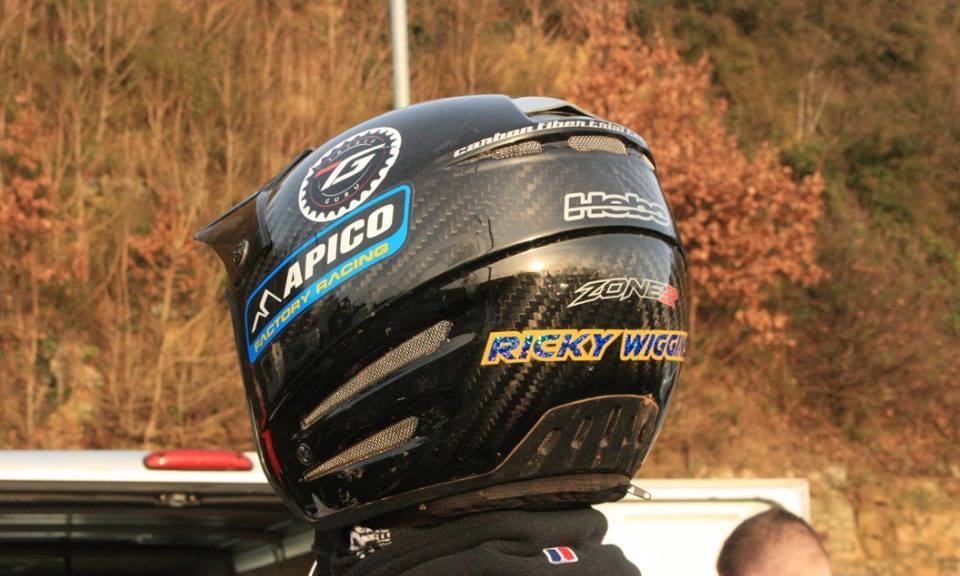
Our new decals are proving popular, here we have top southern rider Ricky Wiggins from Yeovil who now rides Beta, has the decal fixed onto his helmet. Thanks Ricky!
1967 – Start of the White Heather Trial at Rogart. On the far left is rider, George Hunter (Loch Lomond MCC) on the far right are the Grant twins, Bill (third from right and John (far right in blazer)
Words: Trials Guru; KK Cameron; Rob Sutherland; Tommy Sandham; Raymond Leitch; Mairi Grant
Photos: Iain Lawrie, Kinlochleven; Grant Family Archive, Rogart; David Sutherland, Brora.
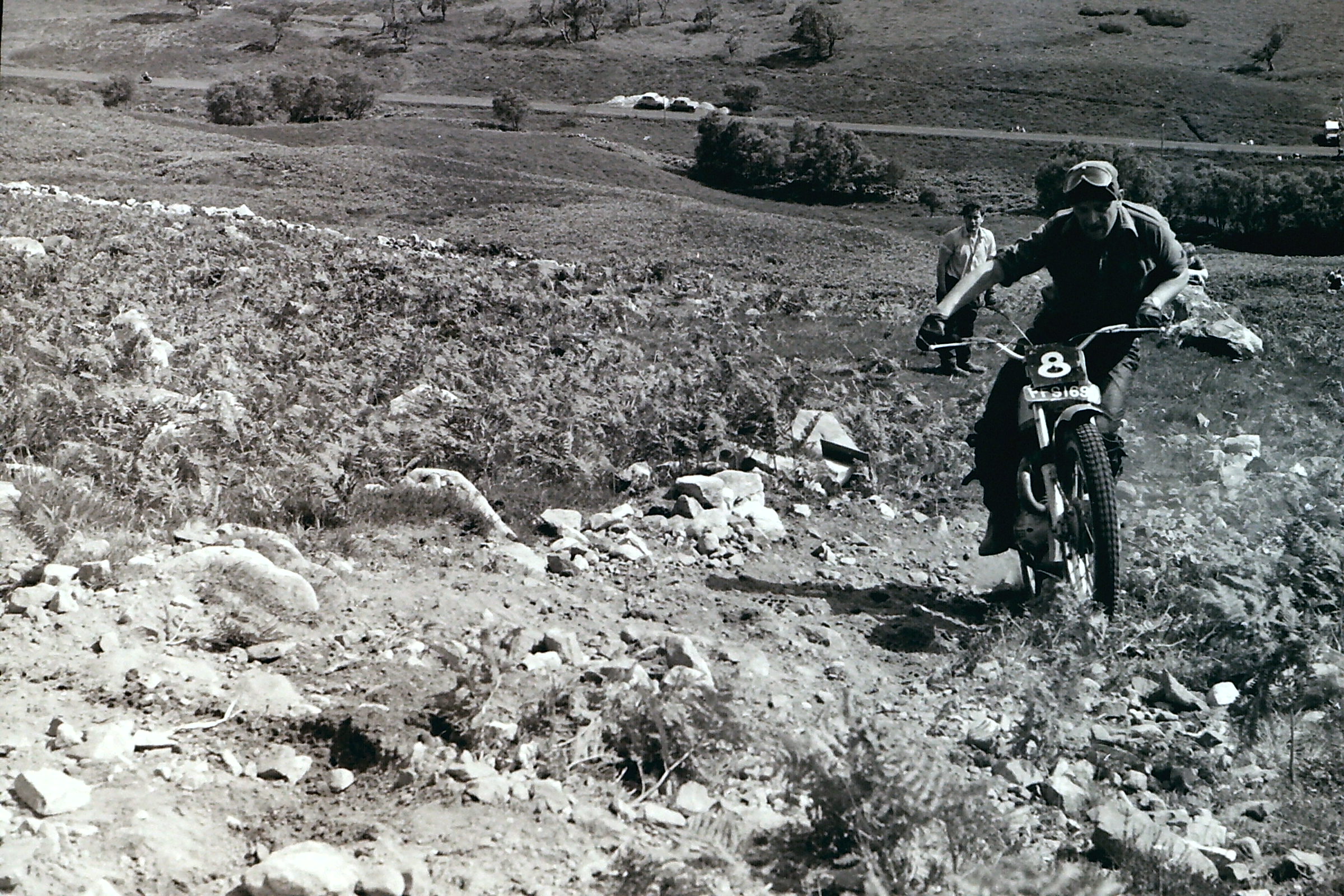
John Little, originally from Edinburgh, now Elgin on his Bultaco Sherpa (FFS169D) on Sciberscross in the 1967 White Heather Trial – Photo: Grant Family Collection
Back in the mid 1960s and up to the late 1970s, there was a unique event organised in the rural county of Sutherland in northern Scotland. It was called the ‘White Heather Trial’ promoted by the Sutherland Car & Motor Cycle Club and was the most northerly permitted motorcycle trial in the United Kingdom.
Held on a Saturday because of the deeply religious area being predominantly Free Church of Scotland which scorned sporting activities on a Sunday, the organisers respected this and therefore capitulated.
This allowed the Lochaber club, based in the Fort William area, to organise a Sunday event where the Free Church influence was not quite so strong and this made for a unique trialling weekend in the north of Scotland. This created a weekend of events in the Highlands of Scotland, not a two day event as such, but two days with events.
Jock McComisky on his ex-Jack Duncan 500 Ariel HT5 at Sciberscross in the 1966 White Heather Trial – Photo: Grant Family Collection
Centred at the hamlet of Rogart, which means: ‘great enclosed field’ it was a somewhat dispersed crofting community with the nearest village being Golspie, some nine miles distant. However Rogart does have a railway station and this had opened up the area somewhat over the years.
The late Charlie Dobson from Glasgow on his AJS16C in 1966 at Sciberscross – Photo Grant Family Collection, Rogart
The trial started at Rogart and used sections at Davoch; Rhemusaig; Reidchalmie; Pitfire; Sonny’s; Kinnauld; Kerrow and Sciberscross in the Glen of Strath Brora.
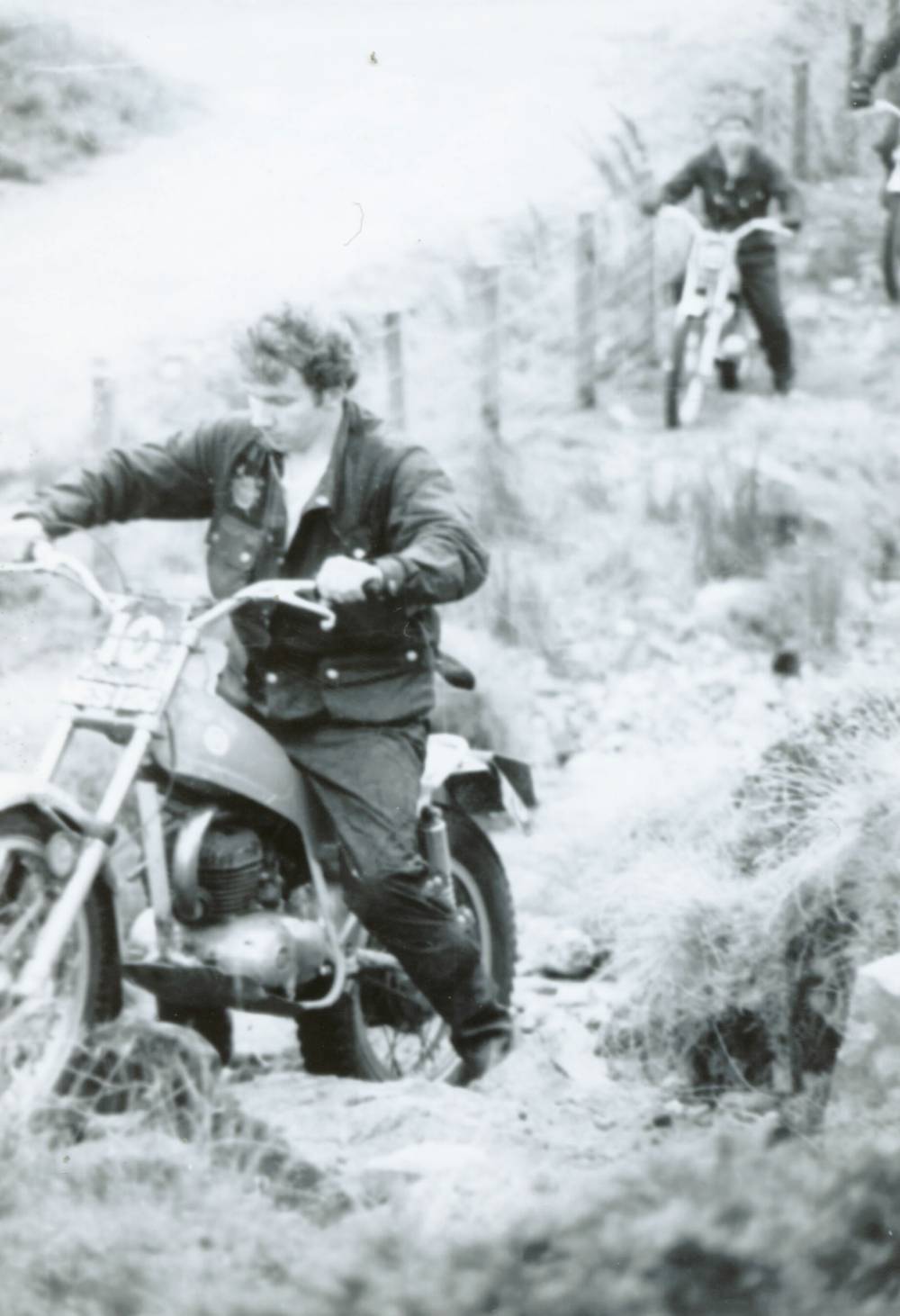
1965 Scottish Trials Champion, Kenny Fleming from Dunblane seen here at the 1966 White Heather on his 250 Bultaco Sherpa (model 10), bought from Comerfords, Thames Ditton – Photo: Grant Family Collection
Scibercross Lodge was built in 1876 and was one of the many hunting lodges built for, and by, the Third Duke of Sutherland.
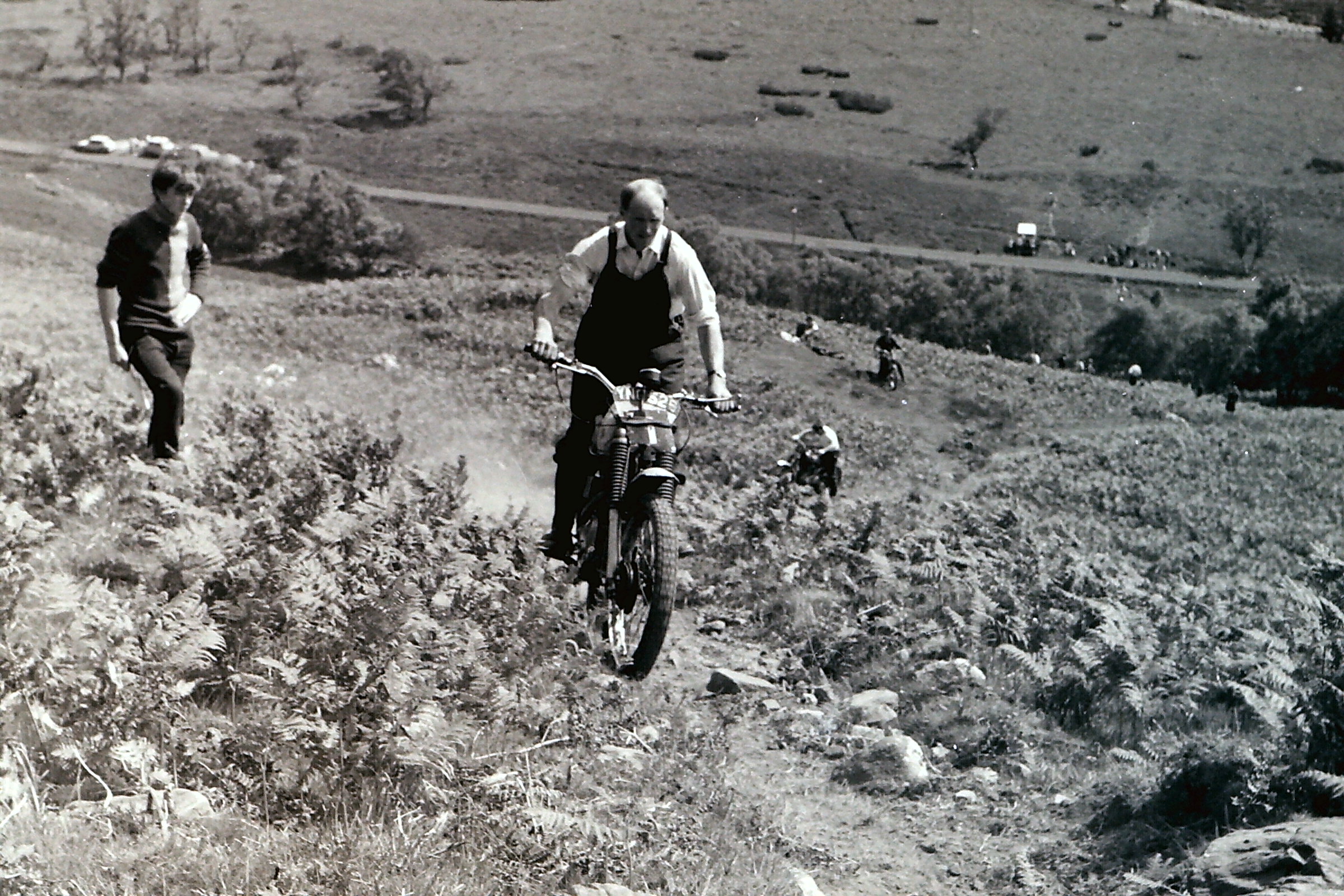
Alex Smith from Bathgate on his ex-Tiger Payne AJS (YNC526) in the 1965 White Heather Trial – Photo: Grant Family Collection
The Grant Brothers – The Prime Movers:
Whilst there were a number of local club members that assisted in the running of the trial, the prime movers of the Sutherland & District Motor Club, White Heather Trial were undoubtedly the Grant brothers, John and Bill.
John was the older and Bill the younger, twin sons of Ian Grant and Jessie Magarry, born on 4th July 1928 at Dalmore, Rogart.
The family home called ‘Rowallan’ was built in 1889. Ian Grant moved along the road to the Bungalow when he married Jessie as his father was still Rowallan. They were only out of Rowallan for a year or two, but it was never bought. This is where the Grants ran their grocery business for many years.
Bill Grant draws on a ‘Benson & Hedges’ cigarette for concentration as he takes a wide line on his 250 Royal Enfield Cruiser in the 1965 White Heather – Photo: Grant Family Collection
They lived in Rogart all their days, the only exception being the time they spent in the Middle East during a stint in the obligatory National Service.
John and Bill left Rogart to train at Catterick Garrison in North Yorkshire, serving as motorcycle dispatch riders as part of the Royal Signals, until 1949. They then returned home to help their parents run the family business.
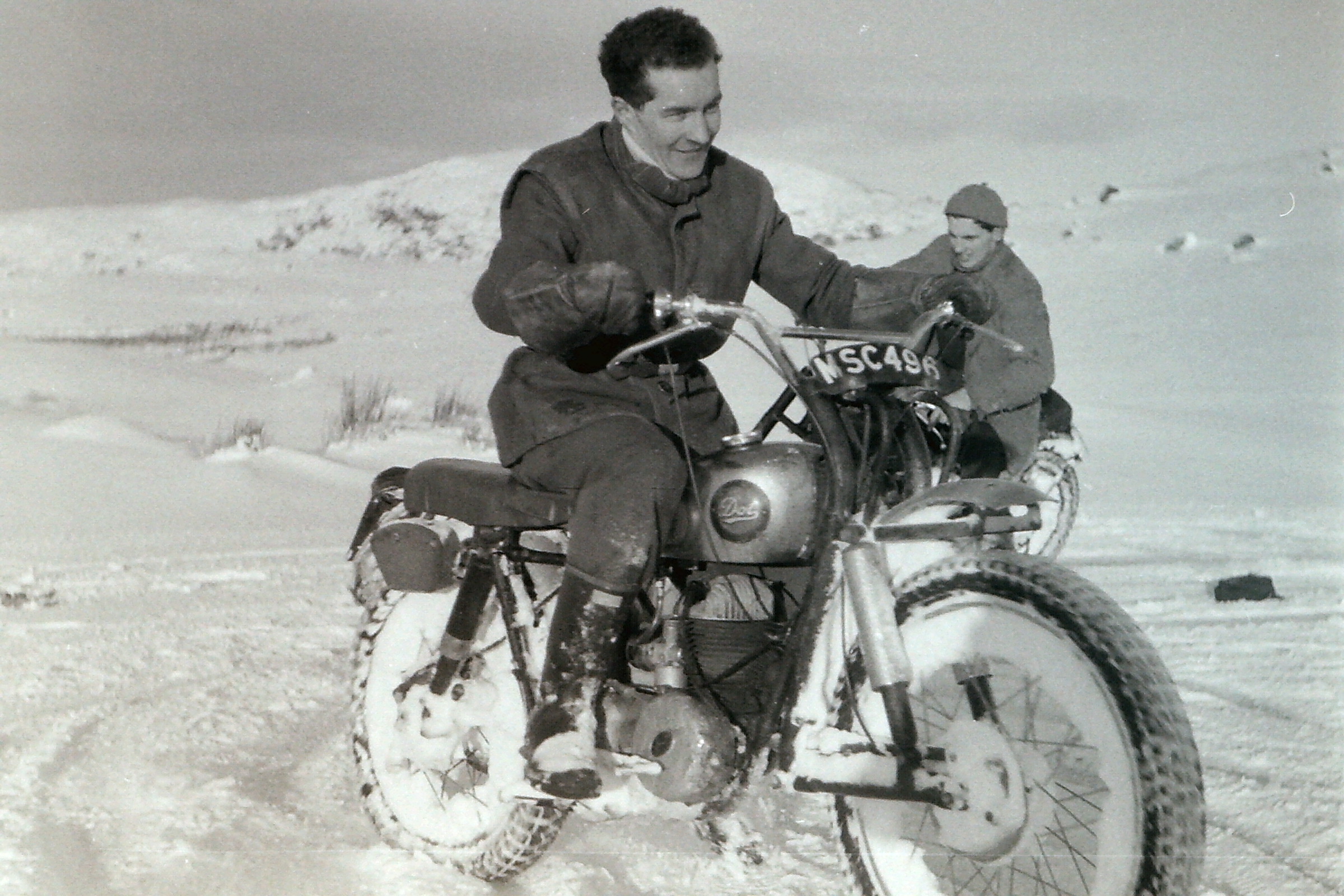
Bill Grant on his DOT playing in the snow near Rogart around 1960 – Photo: Grant Family Collection, Rogart
John and Bill Grant’s connection with the Scottish Six Days Trial began with Bill becoming an observer in 1967. This was followed by a commitment as Chief Marshall before Bill became the Assistant Secretary to Ally Findlay where his in-depth knowledge of the event was invaluable.
The SSDT ‘influence’ was evidenced with the type of competition numbers allocated to competitors at the White Heather. The riders had a large numeral on black background fixed to the front and nearside of their machines in the late 1960 events. An idea taken from the SSDT at that time.
The late George M.B. ‘Geordie’ Shaw from Perth was also a Loch Lomond memberand SACU Trials committee man, seen here on his 246 Greeves in the 1967 White Heather Trial
Not ‘medically identical’ twins, the Grant brothers were fiendish practical jokers. Some may remember the pranks that John and Bill played when they took their turn at attending the SSDT in alternate years, because the ‘absent one’ stayed at Rogart to run the family business in the village. Many people, including riders and officials didn’t realise there were two Grant brothers, because they were so alike in both appearance and mannerisms!
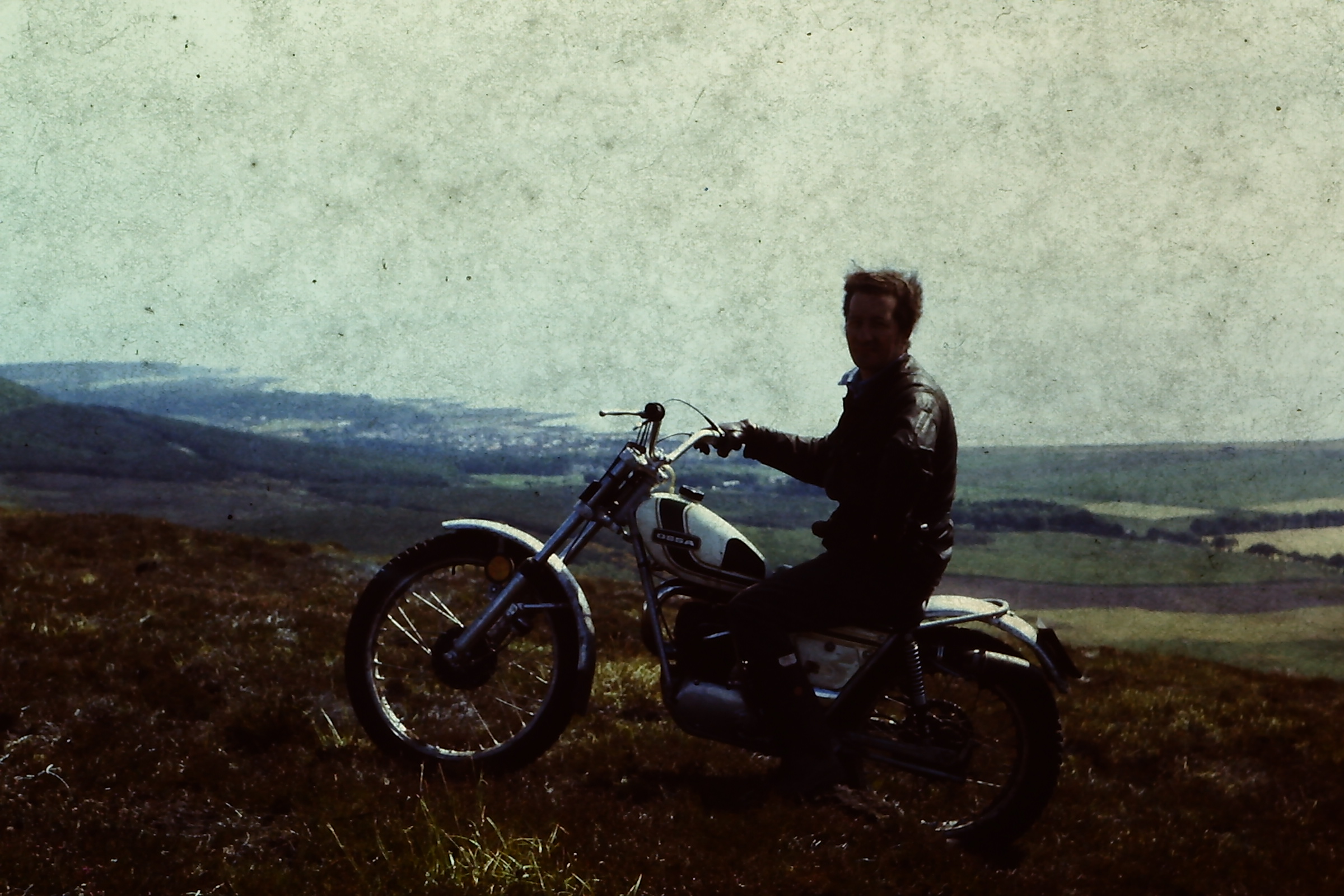
Bill Grant on his OSSA high up on the hills above Rogart around 1974. Brother John used to ride to work on this machine over the moors – Photo: Grant Family Collection
Daughter of John Grant, Mairi, former SSDT Secretary told Trials Guru: “They generally took their bikes down to the SSDT at Fort William. They would head down the main road to Beauly, then cut over the top to Drumnadrochit before heading on down to Fort William, a delightful run even today“.
The Grants had a preference for Velocette road motorcycles, which led to them to convince the marque owners club to hold their national rally at Rogart, run in the August.
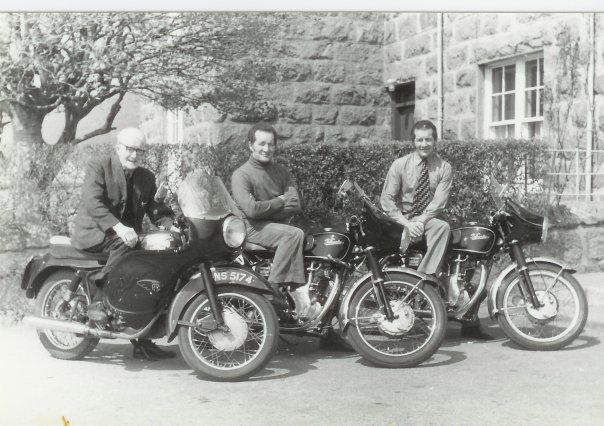
The Grants twins of Rogart sit proudly on their Velocettes, (from left) Ian (Royal Enfield) with sons, Bill & John – Photo courtesy of Mairi Grant, Inverness
John Grant passed away in 1998 aged 70 and ten years later, brother Bill aged 80 years in December 2008.
Trials Guru’s John Moffat: “I got to know Bill and his twin brother John through the friendship they struck up with my late father, many years before I found myself working with Bill in the SSDT office at the Milton Hotel in 2002. When I was 18, I observed at the SSDT in 1976 and Bill was Chief Marshall that year and his nightly ‘Briefing Meetings’ were a mandatory part of the duties and that was where he imparted his direction and knowledge to the officials and observers.
Bill‘s advice was always positive and he was a very knowledgeable chap to have on call as his experience gained through many years helping both Jim McColm and Ali Findlay, indeed steered me through a very adventurous week in Fort William in 2002.
We had great fun in the office, as he always had some story or other to tell in the short lull between the workload. As most of the stories he told me involved previous Scottish Six Days Trials, I must say I was always enthralled by them! He usually began his ‘lesson’ by saying the now immortal words: ‘Now, let me tell you this … ‘
I for one listened intently to what Bill had to say for this was the time to learn. I didn’t interrupt him. He had such a relaxed style that anyone who ignored him probably did so at their peril and no doubt came ‘unstuck’ shortly after!
The motto should read: When an experienced person speaks, it pays dividends to listen.
The Grant brothers have now passed into Scottish Trials folklore, they were true motorcycle enthusiasts“.
Gordon Morell on his 500 AJS in 1965 – Photo courtesy of Mairi Grant, Rogart
…
Glasgow Lion member, Bill Varty in 1966 on his Greeves at Sciberscross – Photo courtesy of Mairi Grant, Rogart
…
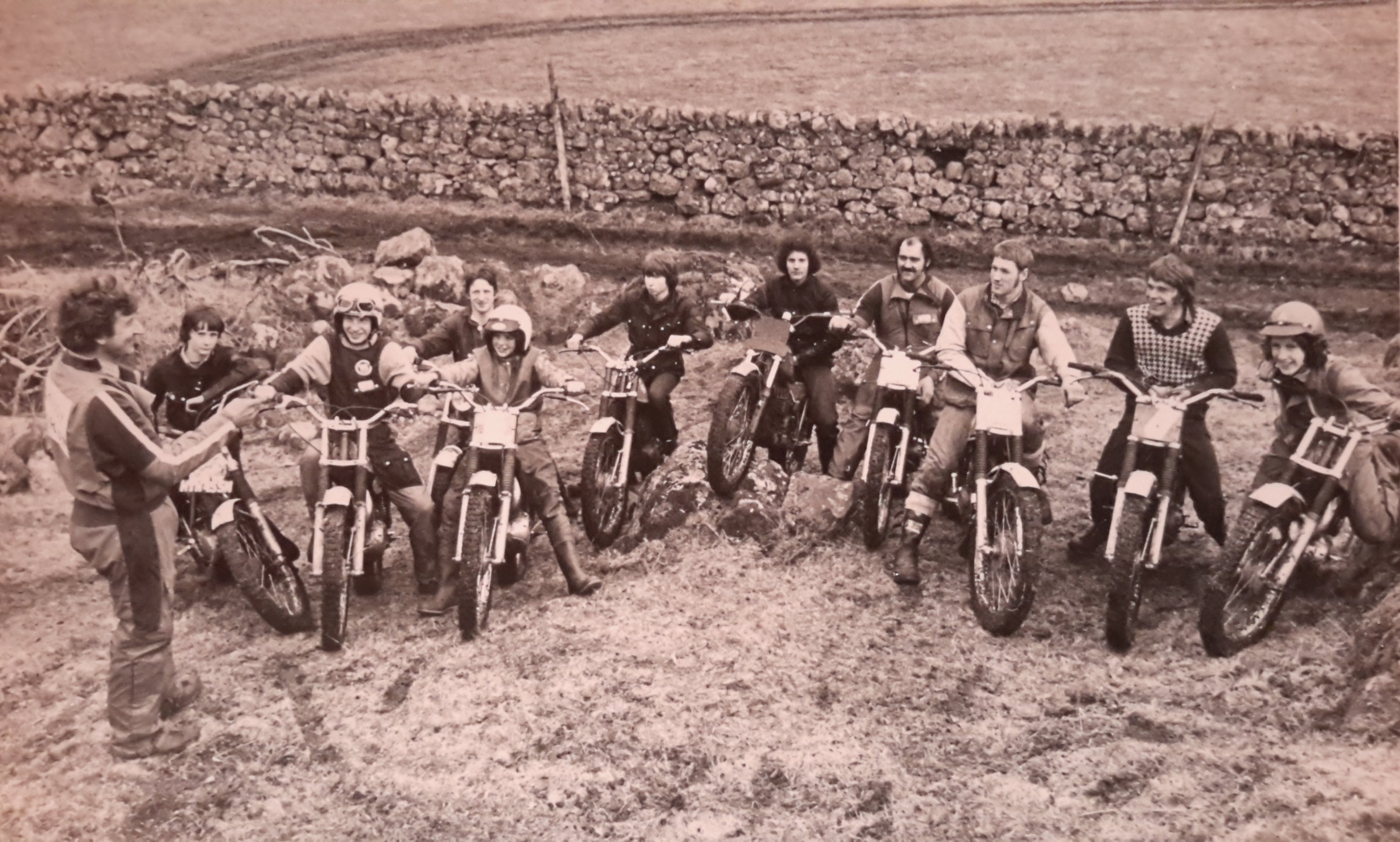
John Winthrop conducts a trials school at Rogart in 1977. Riders include: Ray Leitch (goggles on helmet); Gavin Milne; Phil Paterson (fourth from right); Rob Sutherland (third from right); John Moodie (second from right) – Photo supplied by David Sutherland, Brora
…
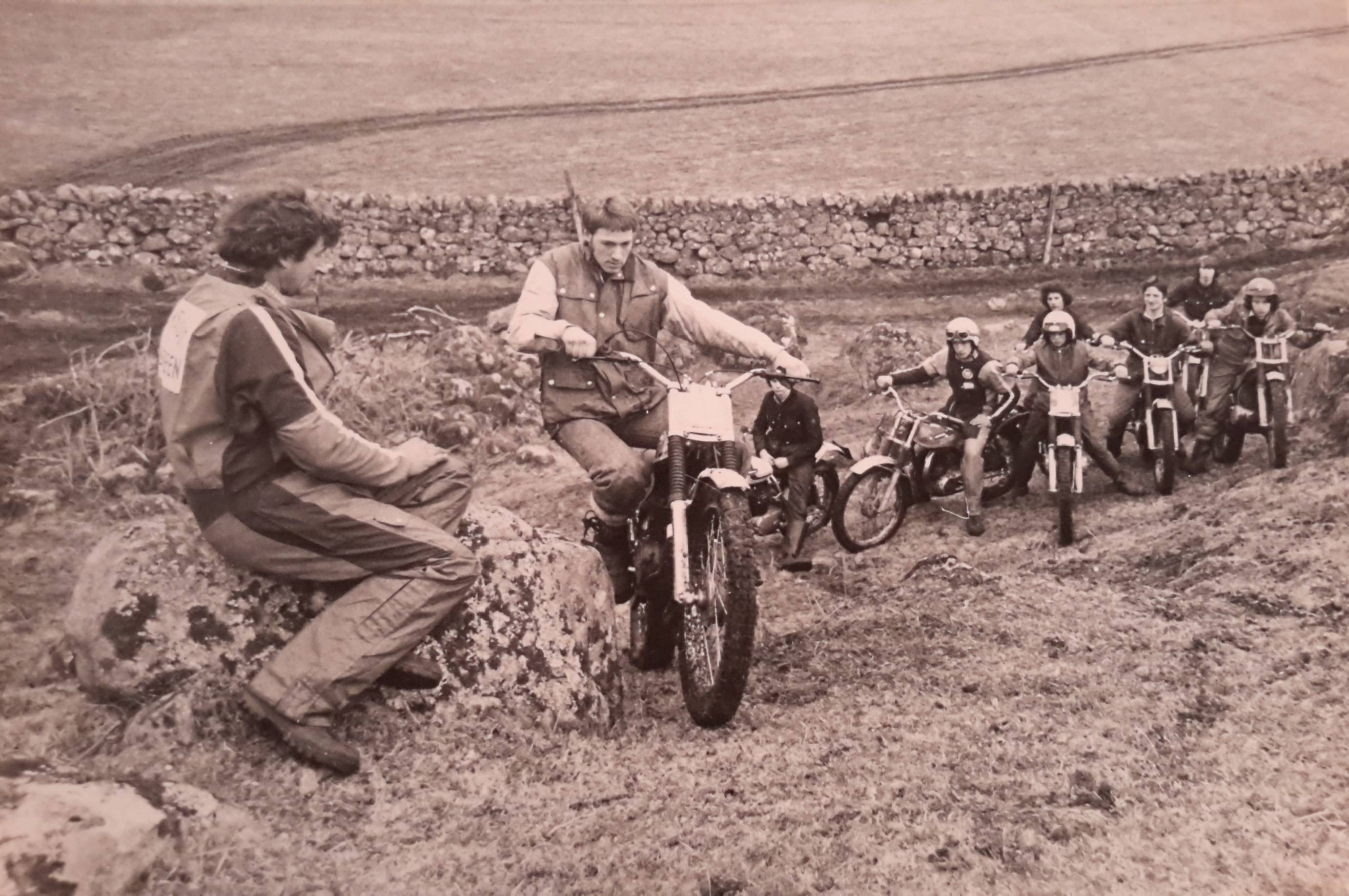
John Winthrop (left) watches Rob Sutherland (348 Montesa) at a Rogart trials school in 1977 – Photo: David Sutherland, Brora
Competitors memories of the White Heather:
Kenneth ‘KK’ Cameron, from Fort William:
Kenneth ‘KK’ Cameron from Fort William hits a spot of bother on his Montesa Cota 247 at ‘Sonny’s’ section in 1969
“The bike you see in the photo came from Donald Buchan dealership in Perth, most of my bikes were from either Donald or Jimmy Morton at Sorn, Ayrshire. My memories of the White Heather are that it was a great trial and one I rode many times. The one thing that I remember well was riding with Allie ‘Beag’ Cameron and ‘RM’ – Roger Mount, Allie affectionately called us by our initials.
We were looking a difficult section up on a steep hillside, that no-one was cleaning. After looking at it for a while, Allie told us how to ride it. Approach quite fast in second, shut off power till you reach here, then give it a wee squirt here and shut off again, then another and so on. I can’t remember how many ‘wee squirts’ were needed but there were quite a few. Allie then gave us a ‘master class’ on how to do it. Allie was a brilliant rider, needless to say neither ‘RM’ or ‘KC’ followed his example“. – Kenneth Cameron, Fort William
Tommy Sandham, author – Four-Stroke Finale, The Honda Trials Story, originally from Airdrie, now Magor, Monmouthshire:
“I remember the White Heather trial. I think I did it twice and recall it was held on a Saturday, so that meant either a day off or a half-day on Friday to travel up to Sutherland. I was based in Airdrie then so it was quite a trek with a trailer.
I well remember riding round and coming into a village and there was a Policeman standing in the middle of the road waving the trials bikes through! The first and only time I recall this happening. Then we had a lunch stop which again was unusual and the village hall was filled with cakes, sandwiches etc made by the local people. Everyone seemed to be involved!
When the White Heather was finished it used to be a rush back South to Fort William where there was another trial on the Sunday.
The weekend involved two bed & breakfasts and a lot of miles to cover but it was once a year and I remember it very fondly“. – Tommy Sandham, Magor, Wales
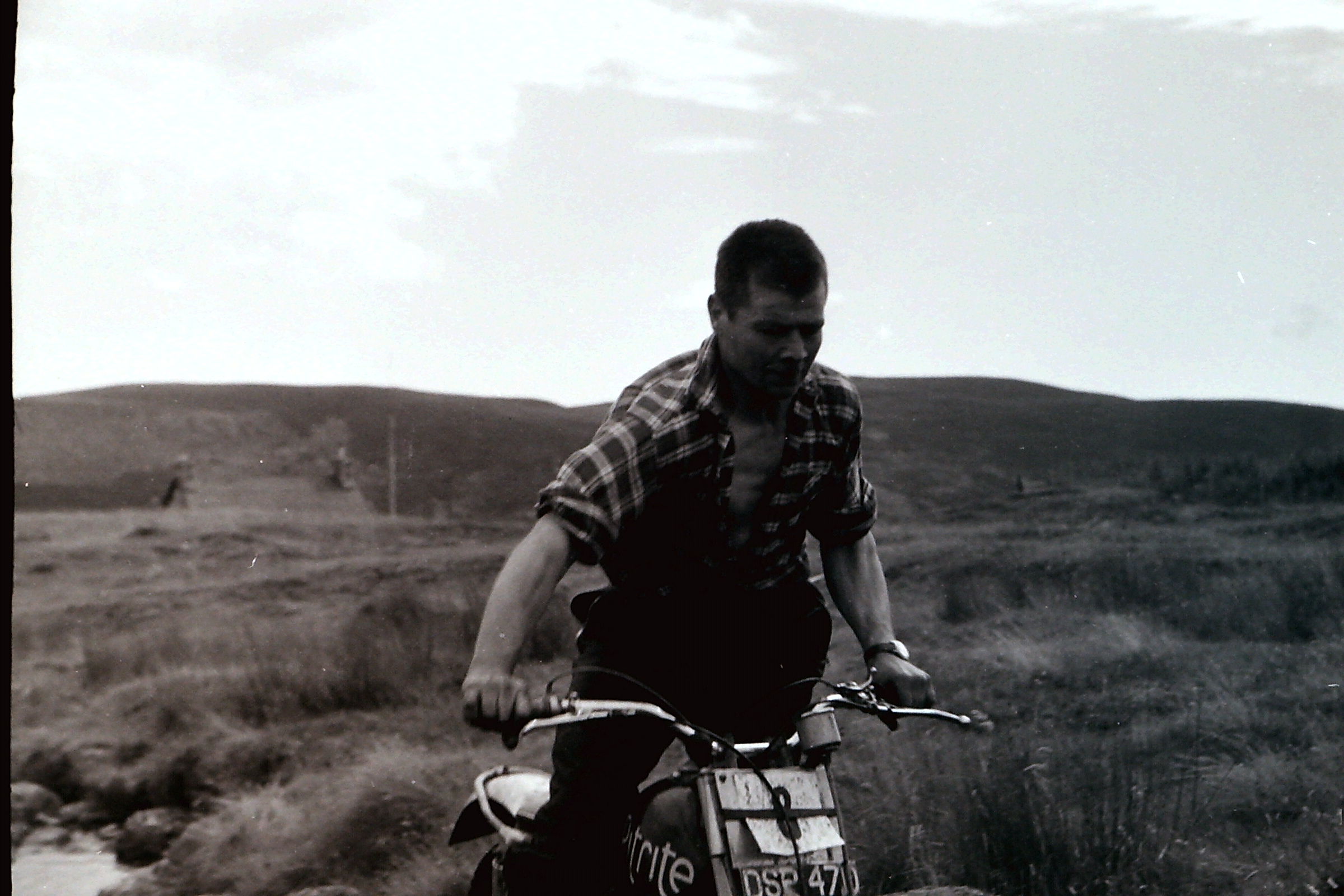
Willie Pitblado’s 403cc Pitrite, a combination of an overbored Triumph 3TA twin motor in a Sprite frame registered in Fife as DSP47D. The machine is now owned by the Gillespie family from Dunfermline who were related to Pitblado. We think the rider pictured here on the Pitrite at ‘Sonny’s’ is Sandy Sutherland in 1967.
Rob Sutherland from Brora, now living in New Zealand:
“I’ve spent some time trying to recollect the goings on of the White Heather so here they are”.
1967 – John MacDonald the local postman on his AJS (YNC526), previously owned by Alex Smith and Tiger Payne, seen here on Sciberscross – Photo: Grant Family Collection
“My uncle, John MacDonald, my Mums brother who resides in Rogart to this day, was a clubman rider and former SSDT competitor on an ex- Brian Payne AJS (YNC526), which he bought from Alex Smith. I spent much of my early years with my grandparents in Rogart so the ‘WH’ was an on your tongue word being probably the biggest one day event in the Parish, apart from the annual sheep and cattle sales”.
David Sutherland, brother of Rob on their Uncle John MacDonald’s 350 AJS (YNC526) – Photo: David Sutherland, Brora
“Uncle John had become an organiseralong with Billy and John Grant and with others whom I cannot remember the names of now. By the time I started riding the event in 1976 on my brand new 348 Montesa Cota, I had been an active spectator prior to then and from memory, to me it could have been a world championship having riders of note travelling up from the North East of England which back then was to a young boy another country. They competed along with the prestige of Scottish riders such as Roger Mount, Ally Macgillivray and riders of their era.
Not forgetting that weekend was a double-header as the Lochaber trial was held on the Sunday, which I suppose made the long trip more worthwhile for the far travelled riders.
I had followed the trial on my late 1960s 250 Cota from the age of fourteen as I was very familiar in getting to see the Rogart side of the trial without riding on the public roads so you can imagine how I yearned to be sixteen and get in there with the stars who could clean what a young boy thought impossible“.
Rob Sutherland (Montesa 348) at the 1979 White Heather Trial at Rogart – Photo: Iain Lawrie, Kinlochleven
Sutherland continued: “I bought my 1976 348 with a five hundred pounds loan and topped the massive £799.00 purchase price of with my apprentice wages. The bike came from McGowans Motorcycles in Inverness and the salesman was Billy Lumsden who was, at that time, one of the top local riders and rode a Beamish Suzuki. Billy tragically lost his life in a road bike crash in Inverness. His younger Mike continued the tradition, as he rode trials with Gavin Johnson in the early days.
My first ‘WH’ was the 1976 event as I had just turned seventeen two weeks prior and as I think it may have been the first year schoolboys were allowed to ride, as long as our parents collected us for the public highway part of the trial which ran from Rogart North West to the Kerrow and Scriberscross, then down the Glen into Golspie before heading back to the Mound for the Aberscross and quarry group of sections.
The trial route changed yearly although some of the hardest sections were kept, but it did give the diversity with different sections to ride. It may just be my memory but I seem to remember large numbers of spectators at sections which only added to the competition a young sixteen year old from the Highlands could dream of, having spectated at the SSDT and having some of the big names from the SSDT ride in my own backyard.
I rode three White Heathers I think before getting into motocross, but had so much fun riding and practicing with John Moodie, Ray Leitch and the travelling adventures attending all Scottish championship trials. In fact I think the last ‘WH’ I rode in, a young John Lampkin was there on an SWM along with Glen Scholey and Rob Edwards taking in the double header weekend.
I remember these riders taking part… Steve ‘Butch’ Robson, who would become my best man; Gordon Butterfield; Dave Younghusband; Rob Stamp; Geoff McDonnell; Ray Crinson; John Winthrop; Robin Cownie; Walter Dalton; Keith Johnston; Casper Mylius; Alan Adamson; John White; Billy Matthews; Roy Kerr and Graham Smith from Hawick“. – Rob Sutherland, New Zealand.
Douglas Bald, Scottish Trials Champion in 1968:
“I have very happy memories of the white heather trial , can’t remember much about the actual event itself, but I do remember this occurrence no names but his initials were I. D. B. M; he liked a serious ‘swallie’ (drink) and as always l was the chauffeur.
We decided to go to the local barn dance and as would happen, we got back to our digs late to find the place dark and lock fast. This gave us no alternative but to gain entry, it unfortunately coincided with the local ‘Bobby’ doing his beat.
It took some explaining I.D.B.M was always a little argumentive after a drink and to this day it was the nearest l have ever been to being lifted by the Constabulary!
I can’t remember the date, but the police car was a Morris 1000!“
Iain Lawrie captured the action in 1979…
Watched by ‘Big Phil’ Paterson, Raymond ‘Ray’ Leitch from Culloden on his Bultaco, sponsored by Cawdor Castle in the 1979 White Heather Trial at Rogart – Photo: Iain Lawrie, Kinlochleven
Ray Leitch who lived at Culloden, near Inverness:
“My very first White Heather trial I ever rode was in 1976 and I was number 1, but I lost the kick start on my Montesa Cota 247 half way through the event. Lots of ‘bump starts’ later and I finished about second last! I got betetr after that though.
I was sponsored by ‘Cawdor Castle Tourism’ and my brother Sid hand painted their monogram on the tank. That is the Bultaco you see here supplied originally by Stodarts of Oban, but later fitted with the Steve Wilson frame and swinging arm.
Those are Marzocchi air shocks which were modified from a set off a KTM motocross bike. Also riding round the trial with Rob Edwards was for me the highlight of all the White Heather trials I competed in“. – Ray Leitch
…
1979 ‘White Heather Trial’ with Rob Edwards (310 Montesa) on his way to winning the event – Photo: Iain Lawrie, Kinlochleven
Simon C. Valente from Edinburgh, now in Yorkshire:
“My first ride in the White Heather was I think in 1975, in 1977 I returned, travelling with my elder brother Peter and Graham Smith of Hawick, who was then an up and coming rider working towards his peak of winning the Scottish championship a few years later, in Graham’s Volkswagen camper van.
A few minutes before the start, opposite the Rogart Hotel, a small crowd had gathered to watch Willie Dalling who was on a 348 Montesa at the time, flailing away with a foot pump to square up his rear tyre on the rim. Suddenly an almighty bang, reminiscent of the one o’clock gun going off at Edinburgh Castle, reverberated around the village, as Willie’s inner tube exploded inside the tyre.
Being a strong and sometimes fiery character, you could almost see the steam exuding from Willie’s collar as, without a word, he unbuckled his watch and handed it to his wife Creena before starting the task of replacing the tube.
Meanwhile the audience turned away in respectful silence to leave Willie to work off his temper with the tyre levers!
That year was the first when Rob Edwards came to Rogart to take on and of course beat Scotland’s finest of the time, Alan Poynton, John Winthrop, Robin Cownie et al, and local favourite John Moodie from Rovie Farm. I collected a first class award on my TY175 Yamaha.
The trial was a heck of an adventure, after an early start it must have been past 5 o’clock when we were tackling the final section, before packing up and joining the charge towards Fort William for the Lochaber trial the next day – Great days!” – Simon C. Valente
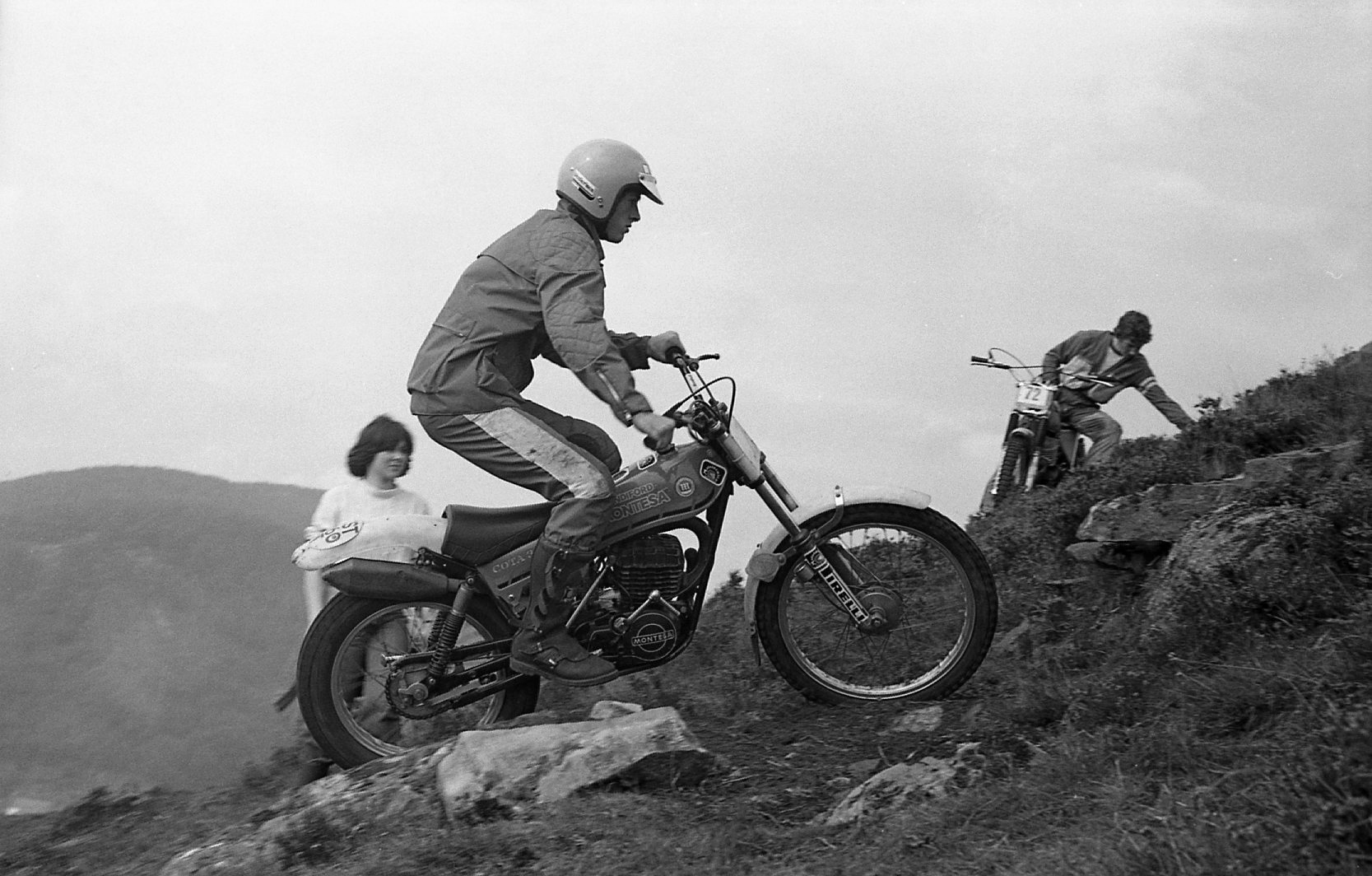
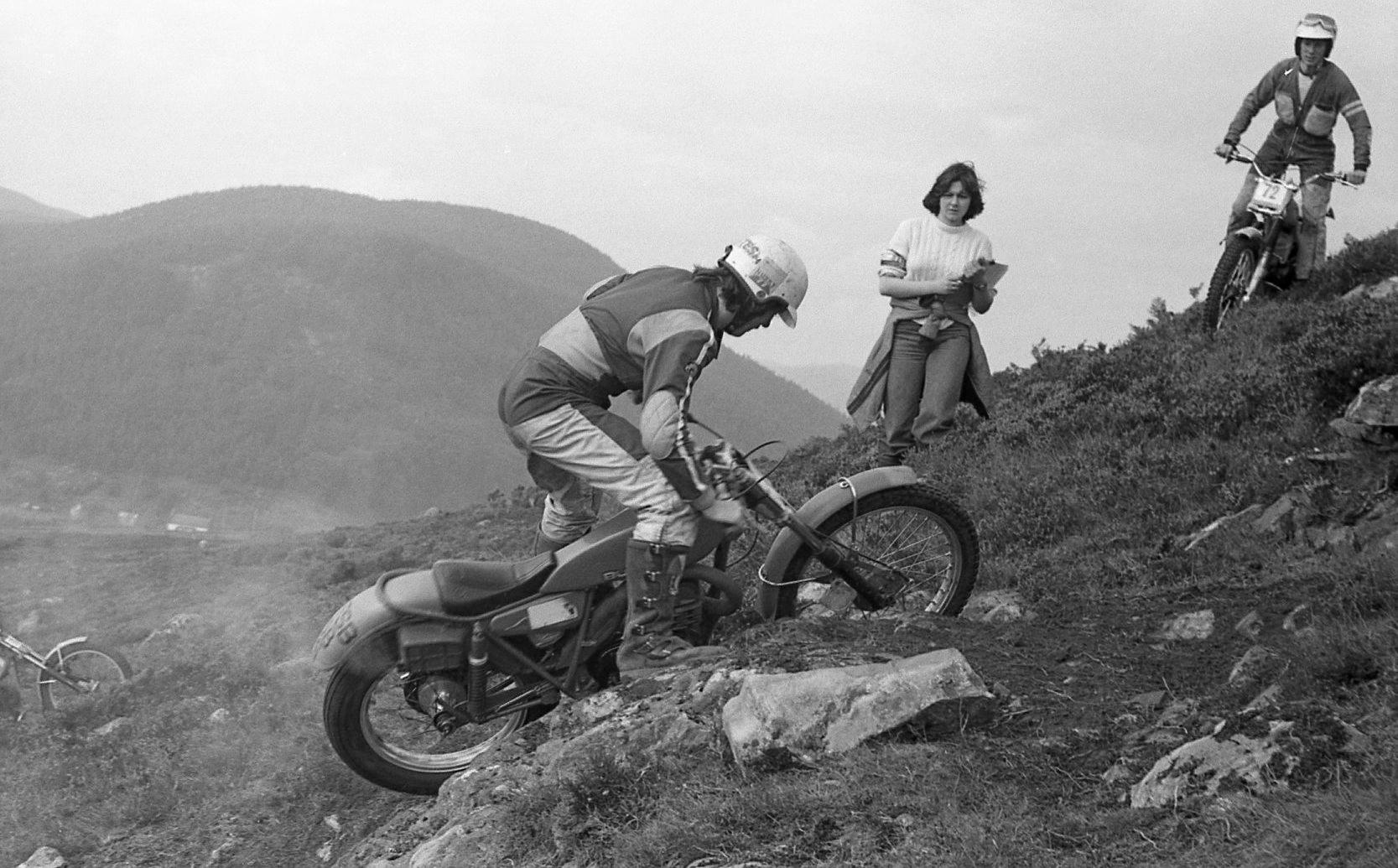
Photo: Iain Lawrie, Kinlochleven (Rider 72 is Mark Whitham, Suzuki)
…
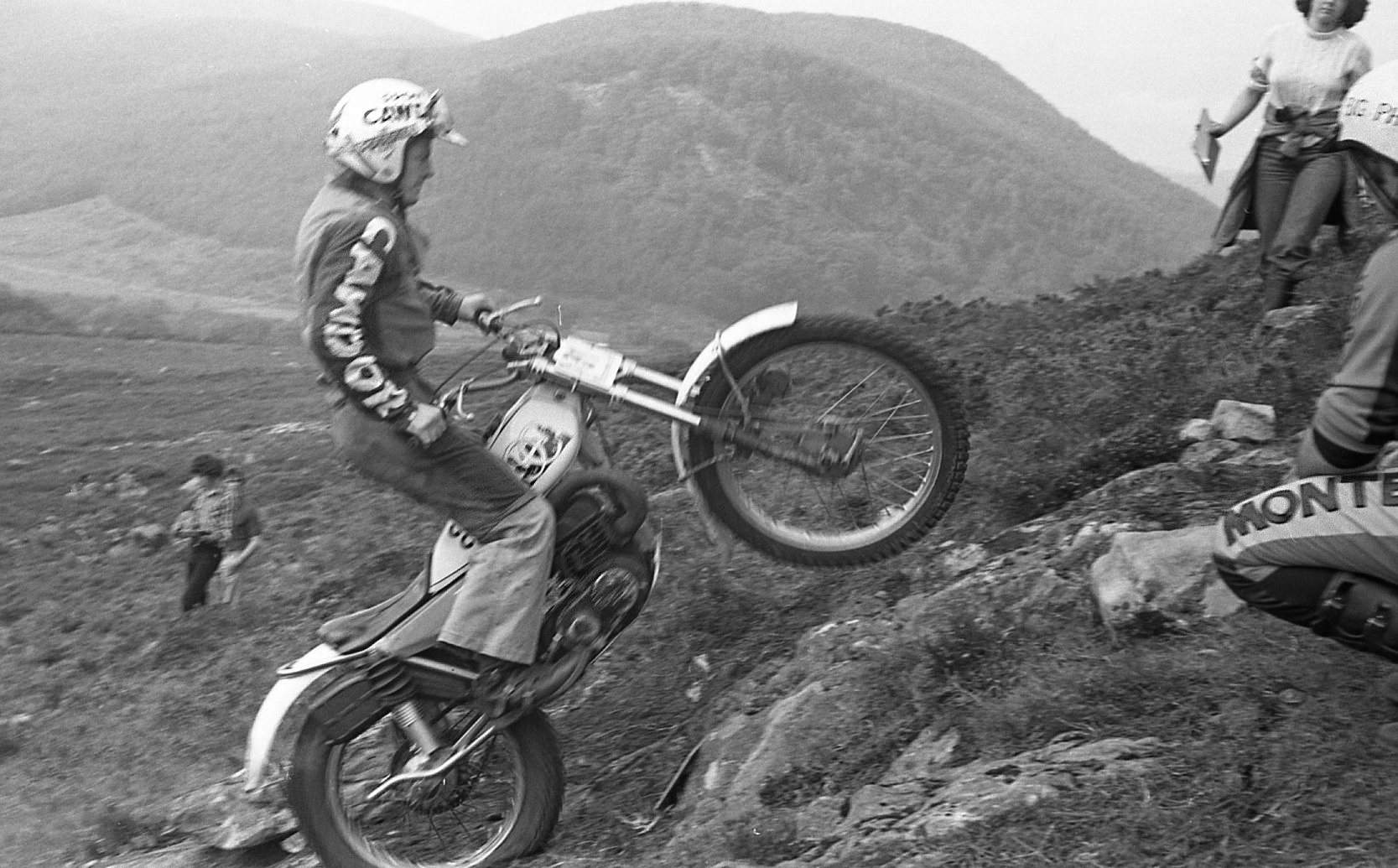
Photo: Iain Lawrie, Kinlochleven
…
Watched by Keith Johnston and Jock Fraser (in helmet), Peter Valente on his 310 Montesa – Photo: Iain Lawrie, Kinlochleven
Peter Valente from Edinburgh:
“I recall Rob Edwards offering me his spare front brake for the following day’s trial after the linings came off mine on the 348. I should have taken it as riding without a front brake was a bit hairy – not to mention getting down from the top of Sciberscross.
Still the strongest memory of the trial is Willie Dalling using a footpump to square his rear tyre on the rim just before we were due to start. One of the bystanders asked Willie how he would know when he had got the tyre hard enough. Someone (it might have been me) said that when it went bang you would know that it was just too hard, at which point the tube burst. I’m sure you can imagine Willie’s reaction as he set to while the trial departed.
Then there was the rope with a bit wood on the end to go behind the stanchions to haul riders up a waterfall section that many fived. No doubt we’d find that one easy enough nowadays“. – Peter C. Vanente
White Heather Photo Collection of the Grant Family, Rogart:
…
The late Willie Pitblado from Dunfermline on his Pitrite (DSP47D) in the 1966 White Heather Trial. Willie painted the SSDT number plates and owned Motor Cycle Spares at Golfdrum Street in Dunfermline – Photo: Grant Family Collection
…
Tommy Milton Junior from Edinburgh, on his Bultaco Sherpa M.27 at ‘Sonnys’ in 1968 – Photo: Grant Family Collection, Rogart
…
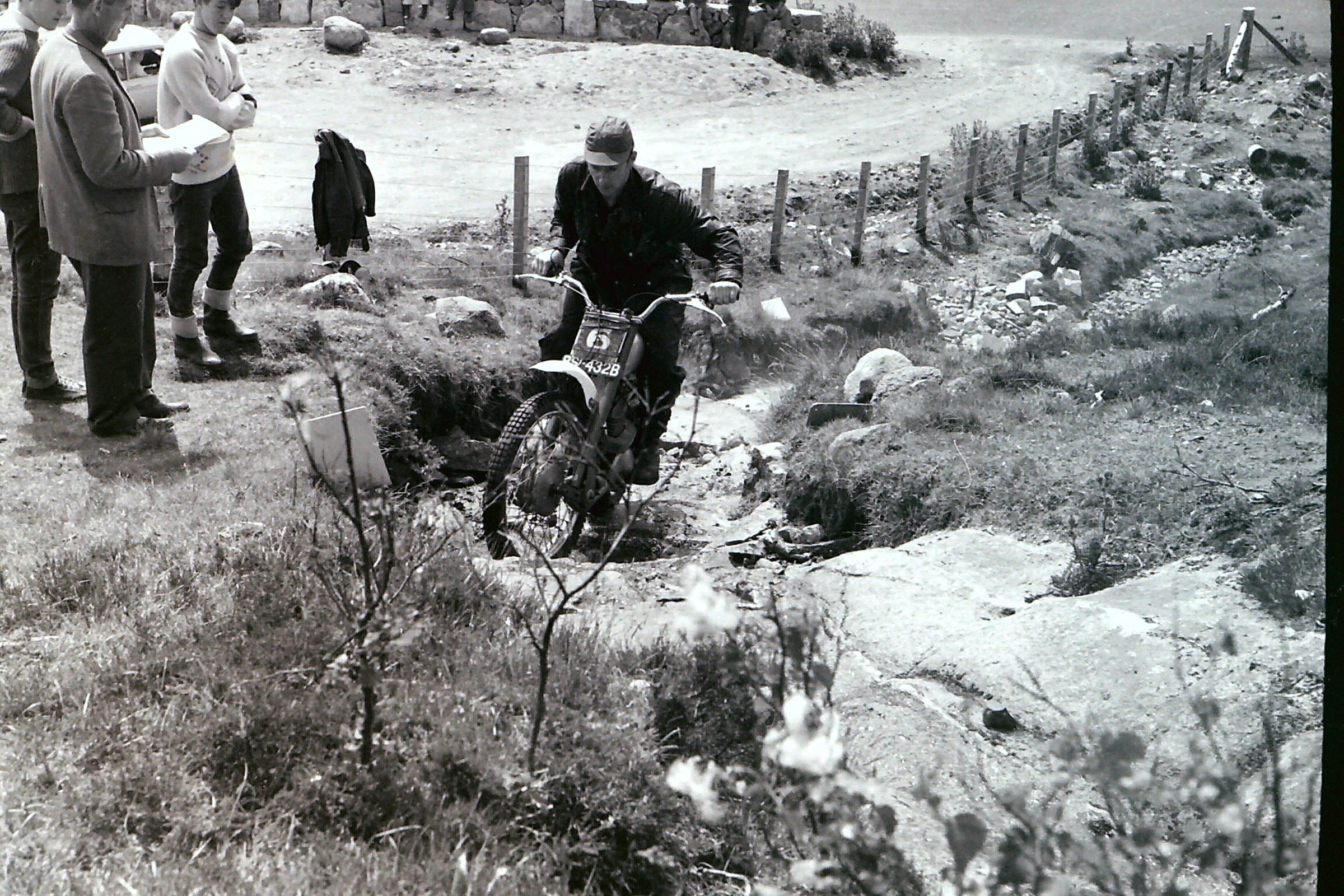
The late Jock Fraser from Carrington, Midlothian (1964, 250 Greeves TFS – BSF432B) in the 1967 White Heather – Photo: Grant Family Collection
…
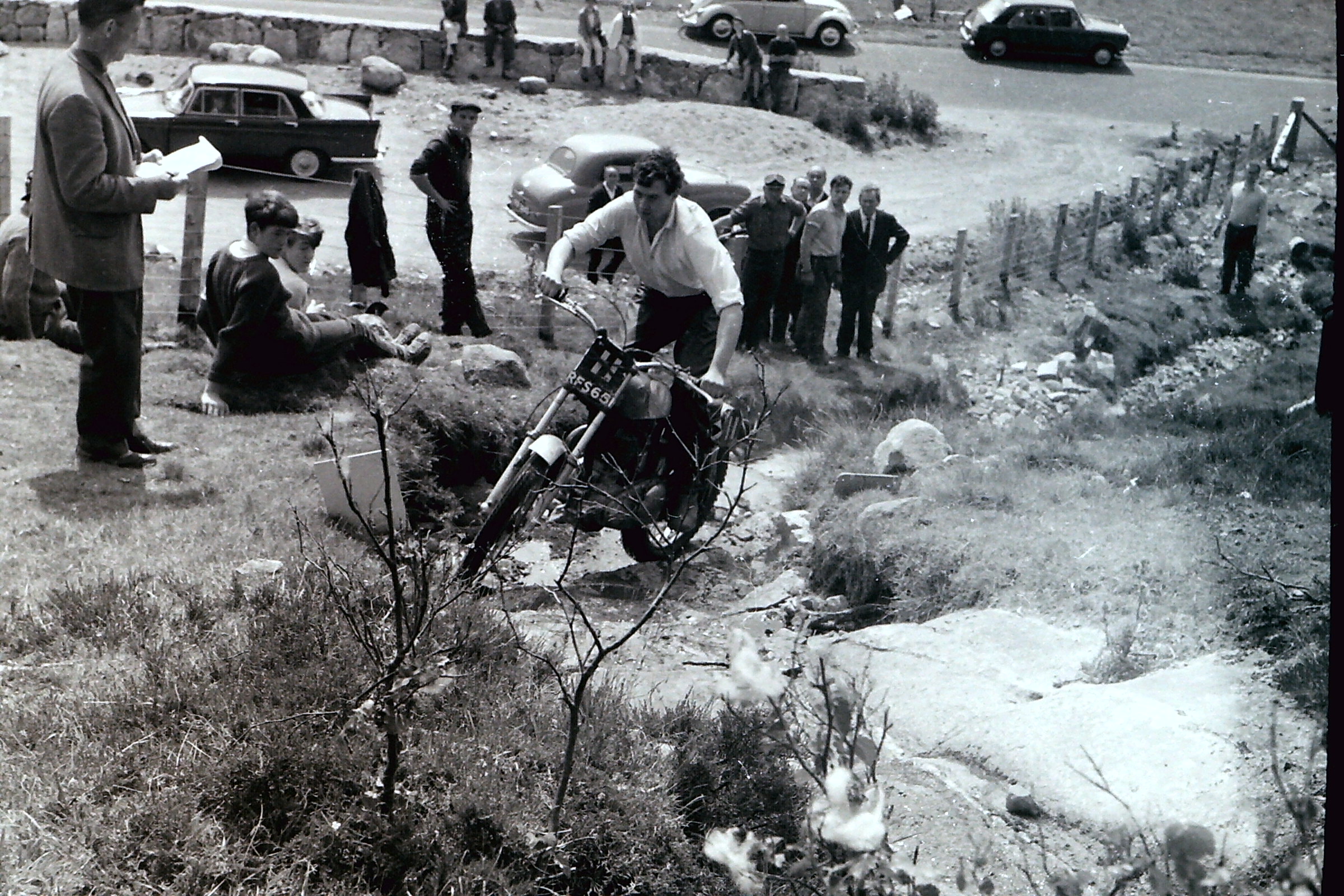
Tommy Milton Junior from Edinburgh on his 500 Ariel (RFS651) which he later ‘Millerised’ for the 1967 SSDT. Tommy now lives in Northern Virginia, Washington DC, USA having worked for the World Bank. ‘Sonny’s’ section in 1967 – Photo: Grant Family Collection
Tommy Milton Junior, originally from Edinburgh now Northern Virginia, in Washington DC:
“A great dip into nostalgia remembering the trial at Rogart. I believe it became one of the events that counted towards the Scottish Championship.
I know I took part in it at least twice; you have produced the evidence for that, but I cannot remember if I rode a third or even fourth time.
By the autumn of 1968 I was only back in Scotland intermittently, as I had started working for British Road Services based in Oxford.
I really liked this trial. Attractive area, welcoming local people, well organised event, with the Club even fixing accommodation. I stayed with a very nice couple and I remember the lady made a terrific breakfast.
And, finally, the sections were mostly rocky climbs, which suited me and, especially, my Ariel”.
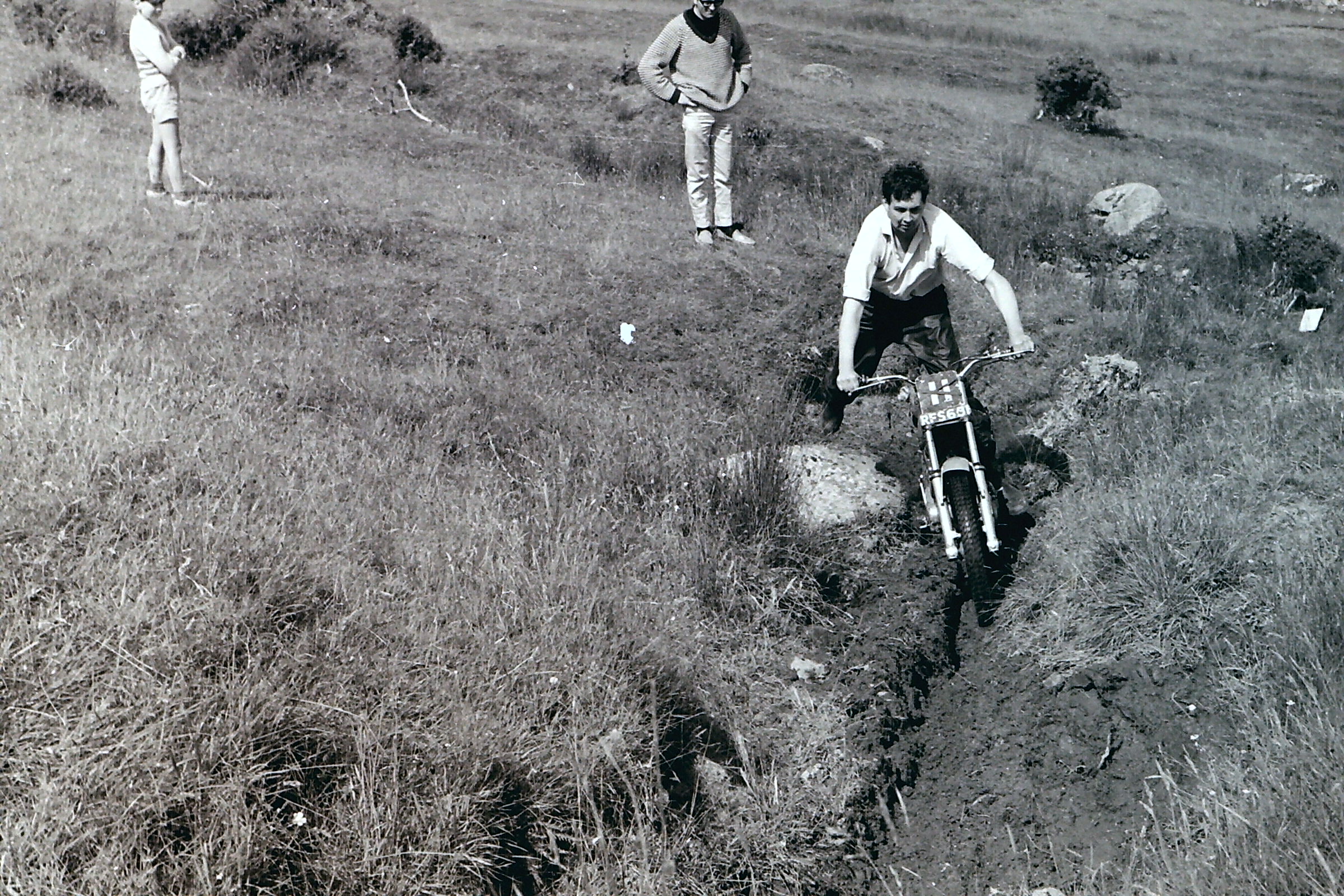
Tommy Milton Jnr on the 500 Ariel (RFS651) powers his way through a mud slot in the 1967 White Heather – Photo: Grant Family Collection, Rogart
“I also remember the trial finished at what I think was the local cattle market. The first time I rode, many people came to join in the general socialising, including a number of pretty teenage girls all dressed in Highland gear. I remarked to one that it was very nice of them to have welcomed us lowlanders by dressing up. Oh no, she smiled, we’ve just got back from a dance competition in Golspie!
I am grateful to see the photographs of me on my Ariel, RFS651, which I still have. I bought this bike from Davy Dryden from Uphall, West Lothian.
I had always wanted an HT5 since, as a kid, I had watched Laurie McLean practising on our pushbike trials area, and when we were all at the E&D clubroom one Sunday night after a trial I overheard Davy complaining that he could not get to grips with it.
So later we agreed a deal. I was very happy and I think I won two or three trials with it in 1967/68 season. I have always wondered if anybody has won a Scottish open event on a Classic 50’s four stroke since then?“.
…
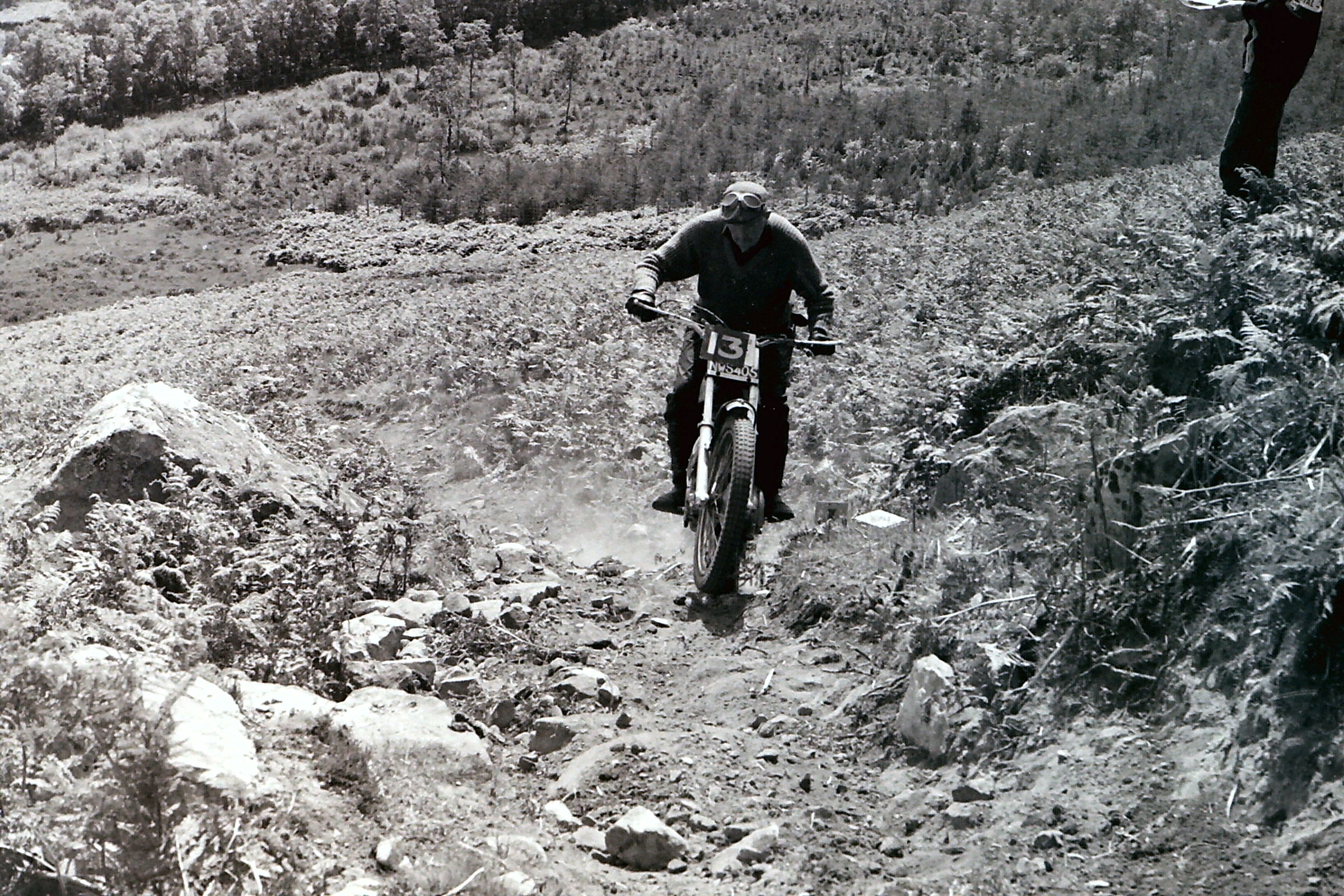
From Carrington, Midlothian, Archie Plenderleith on the 1956, 500 Ariel (NWS405) which was owned by George Hodge; Bob Ashenhurst and Ernie Page and is now back in the ownership of 7 times Scottish Scrambles Champion, George Hodge – 1967 White Heather at Sciberscross – Photo: Grant Family Collection, Rogart
…
Unlucky 13? – Archie Plenderleith comes to grief at Sonnys section on his 500 Ariel (NWS405) in the 1967 White Heather – Photo: Grant Family Collection
…
John Little (Bultaco) takes a breather up the Scibercross hill in 1967 – Photo: Grant Family Collection
…
Aberdonian George Forbes on his Bultaco Sherpa (FSF40D) on Sciberscross in the 1967 White Heather – Photo: Grant Family Collection, Rogart.
…
The AJS (YNC526) of John MacDonald being ridden in 1966 at Scibercross by a younger rider (perhaps someone can identify him?) – Photo: Grant Family Collection, Rogart
…
More images and information on White Heather Trial to follow shortly.
Credits:
Photos:
Iain Lawrie, Kinlochleven
Grant Family Collection, Rogart
Special thanks to all the contributors, photographers and riders who have shared their memories of the White Heather on Trials Guru.
This article and photo-feature is dedicated to the people of Sutherland in north Scotland and in particular the Grant family of Rogart. It now sits in the Trials Guru ‘special section’ entitled ‘Great Scots’.
…
Did you ride at Rogart in the White Heather? Then tell us about it, maybe we can add your memory on this article.
“My first ever competitive trial was the 1976 White Heather. An event that was to kindle a lifelong interest in the sport albeit sometimes interrupted by that nasty thing called work. I learned the rudiments of riding in a local woods and streams in and around Beauly from late 1975 on my fairly decent Ossa Mar, a £300 purchase from A. N. Other! Finding some out some months later that another Beauly lad John ‘Bull’ Davidson who by this time lived in Inverness was right into the sport too and palled around with previously spoken about Billy Lumsden. That led to getting some tips, advice and garnering further interest and being able to get a wee bit more practice in I guess. Anyway, trying to run before I could walk I entered the trial and had so much fun. I have a recollection I was about 38th or so out of about 80 riders. Dropped a barrowload of marks but there were plenty of also rans behind me. I can’t recall but it was probably the following year I became aware of the luminaries such as Rob Edwards being there too although it could have been that very year. Rob, a delightful fellow who I met briefly a number of times including my soon to follow 3 x SSDTs – another case of me trying to run before I could walk, had a great memory for faces and always had a few kind words. Back to the trial, it really was a great mix of sections, people looking on and you really felt part of something especially as a sport newcomer. All these cracking riders coming to participate and little old me being part of it. Just magic! The double-header of being able to shoot off to Fort William the following day , a bonus. Something,I’d forgotten about until I started reading this fine article. I think maybe 3 times or so I participated, Who could forget Robbie Sutherland in the coming seasons who really started to make his trials bike ‘speak’ and made us all envious when he got his 4 stroke CCM. Oh my, the sound! Ray Leitch, a fine rider often in the points. A shoogle here, a shoogle there, but feet firmly on the pegs. We travelled together to a number of trials and believe me, there weren’t many people who could get a Mk 3 Cortina and trailer chapping faster on the way home. Anyway, the White Heather, there couldn’t have been a better intro to the sport could there?” – Dick Mackintosh
Peter Bremner, Chairman Edinburgh & Disrict Motor Club Ltd:
“Well, this article brings back some great memories as Tommy Sandham said, it was a long drive up. Myself and Stan Young did that journey, we left Edinburgh about lunchtime and after a brief stop in Inverness at the West End chippy, non stop to Rogart in time for a couple of pints and it was 10.00 pm closing time in those days.
Seeing the picture of Tommy Milton Jnr, ‘Kerrow’ was one of his favourite sections. I managed it once for a dab, not only did I ride the trial, but was SACU steward a couple of times. On one occasion I came across Jock Fraser on the down side of the ‘Struie’ he had been involved in an accident. All the trials guys that were there duly helped get the bike on another trialer with Jock and his wife in another car.
His car was not driveable so what could be done with his trailer? I had my works van but no tow bar, but a single bike trailer can be wedged into a Ford Escort van with the doors only slightly open. There it stayed all the way back down to Fort William on the Sunday. And yes, the drive down to Fort William was interesting with trials bikes on trailers and pickups at various speeds!
My abiding memory is the way the whole village helped to put on the event“. – Peter Bremner
Ian ‘Midge’ Middleton of Dumbartonshire, an organiser of the Loch Lomond 2 Day Trial:
“I have recollections of the White Heather Trial and rode it from 1975 to the last one in 1983.
I was amazed to see the photograph of Geordie Shaw of Perth and Loch Lomond Clubs riding at the ‘Scriberscross’ sections on his Greeves in 1967″.
George ‘Geordie’ Shaw (246 Greeves) was a true enthusiast and hard working clubman in the Scottish trials scene in the 1960s and 70s. Seen here on ‘Scibercross’ in the 1967 White Heather – Photo: Grant Family Collection, Rogart
“That was quite a bit before my time, but I recognised him straight away, even before I saw the photograph caption. Geordie Shaw was great mentor to me and I couldn’t wait to have a go at the Trial, having heard all the tales from Geordie. Sadly Geordie passed away in 1975 when still quite young, probably aged mid-thirties or so. After a long and arduous drive in 1975 on roads that had not yet been upgraded or improved in any way it was tremendous adventure even just to get to Rogart, the Trial epicentre. There was no Dornoch or Kessock bridges, no improved A82 or A9 roads, and it was very much the long way round, traveling through many small villages and towns.
Once there myself and my two travelling companions ventured into the pub to be greeted by Pete and Simon Valente whose first words to me were..’you look absolutely shattered’. I certainly was bit tired having driven 225 miles on fairly primitive roads in a very slow van. I was even more shattered after the event, but very happy at having completed my very first White Heather Trial.
Even more amazing for me was to encounter the lads from County Durham, Weardale and North Yorkshire who would have had to travel at least twice the distance to get to Rogart. The well known folks from the far South from where I am sitting were ‘Big’ Billy Maxwell, Ray Crinson, Walter Dalton, Rob Edwards, Gordon Butterfield and Colin Ward Senior. After finishing the Trial, the next task was to get everybody packed up and into the van for another arduous drive South on Saturday evening to Fort William, for the Sunday Trial run by Lochaber Club. The White Heather was always a special and fantastic event, because it was a massive one lap trial with probably about 50 sections or so, and you were lucky to be finished at 5.30-6.00pm having set off at 10 in the morning. It seemed to closely resemble a day in the SSDT. I also remember lunch halts at a local school house which must have been opened up specially for the Trial. With the local ladies providing soup, sandwiches and tea. You had to be quick because time was short to get round the long lap.
The Grants also provided a route card with a sketch map of the route and the names of all the sections and section numbers. This was presumably all influenced by the SSDT processes, which having read the previous articles, the Grants were also already heavily involved with. Being a very long one lap fifty section Trial it was very challenging, but immensely enjoyable. For me, it was ‘not a walk in the park’ and that was all part of the challenge in taking part and actually finishing. There is probably nothing like it in today’s world, and it was a shame that it finished in 1983, because the younger lads of today are missing out on something really special. The sections called ‘Quarry’ was always pretty scary for me and they were always the last group at the end of the Trial when you were very tired. The group was just at the side of the main road leading to Rogart. You always had to be very careful to get the best line at the Quarry sections and have a really good blast up the steep rocky and narrow path, because if you were unlucky enough to fail and get a five, there was no way of restarting or going off to the side to get out of the sections.
If you took a five the only way out was to turn around and go back down which would have been a nightmare. That worry was the best incentive to get the right line, open the bike up and make bloody sure you got out the ends cards.I think I got through the Quarry sections without ever getting a five“. – Ian Middleton.
Ian Middleton kindly supplied Trials Guru with the official results for 1975/76/77/78 & 79:

















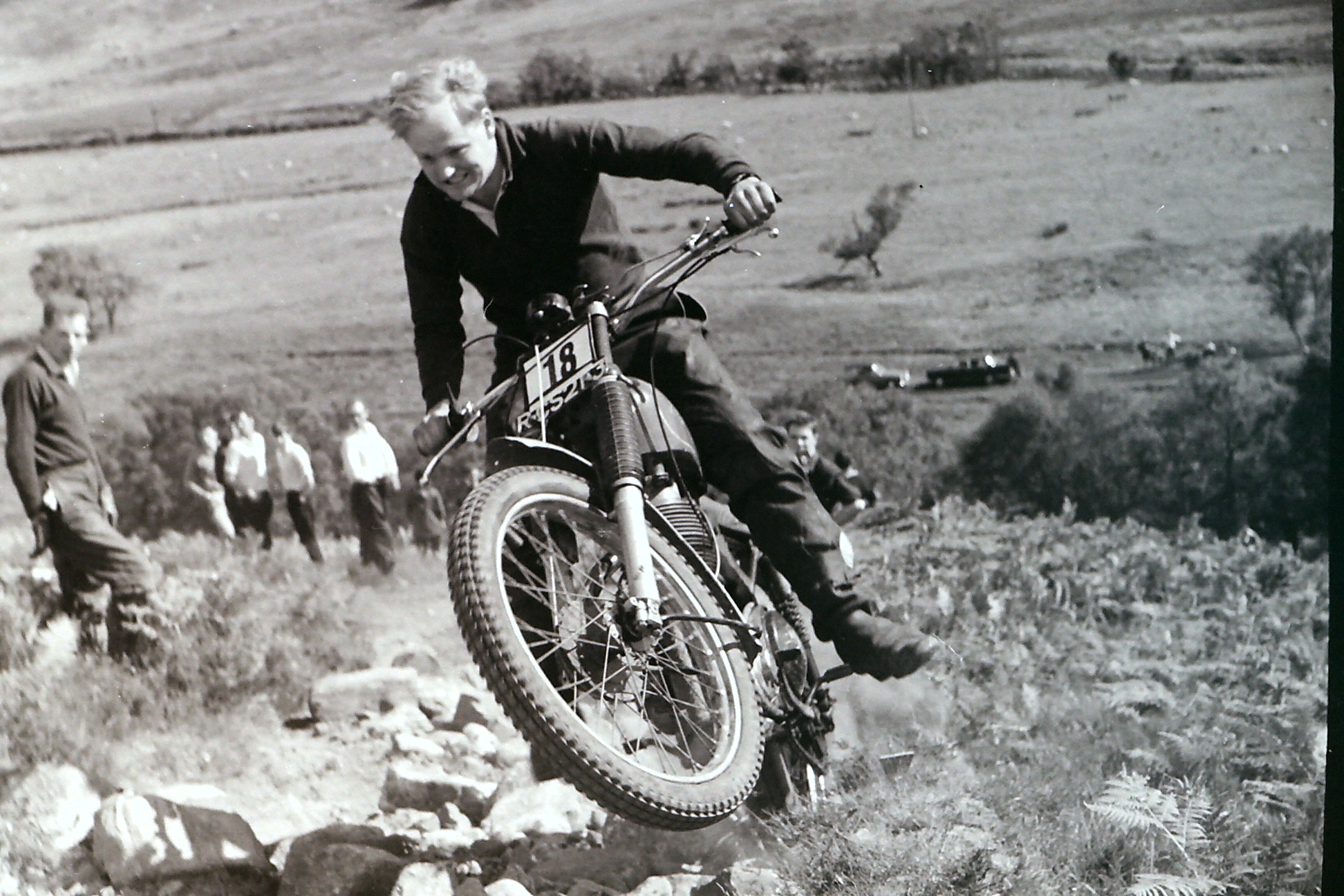
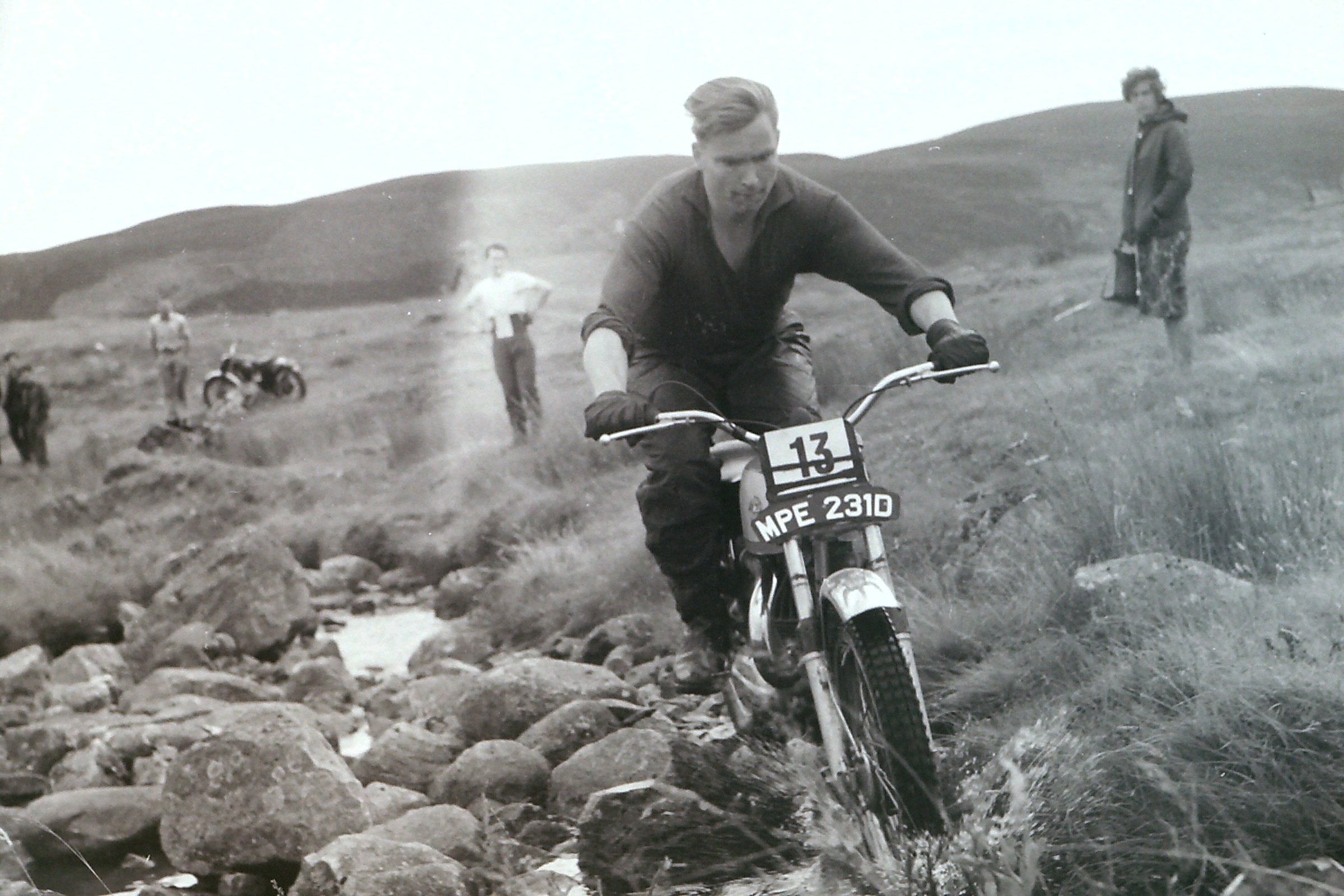
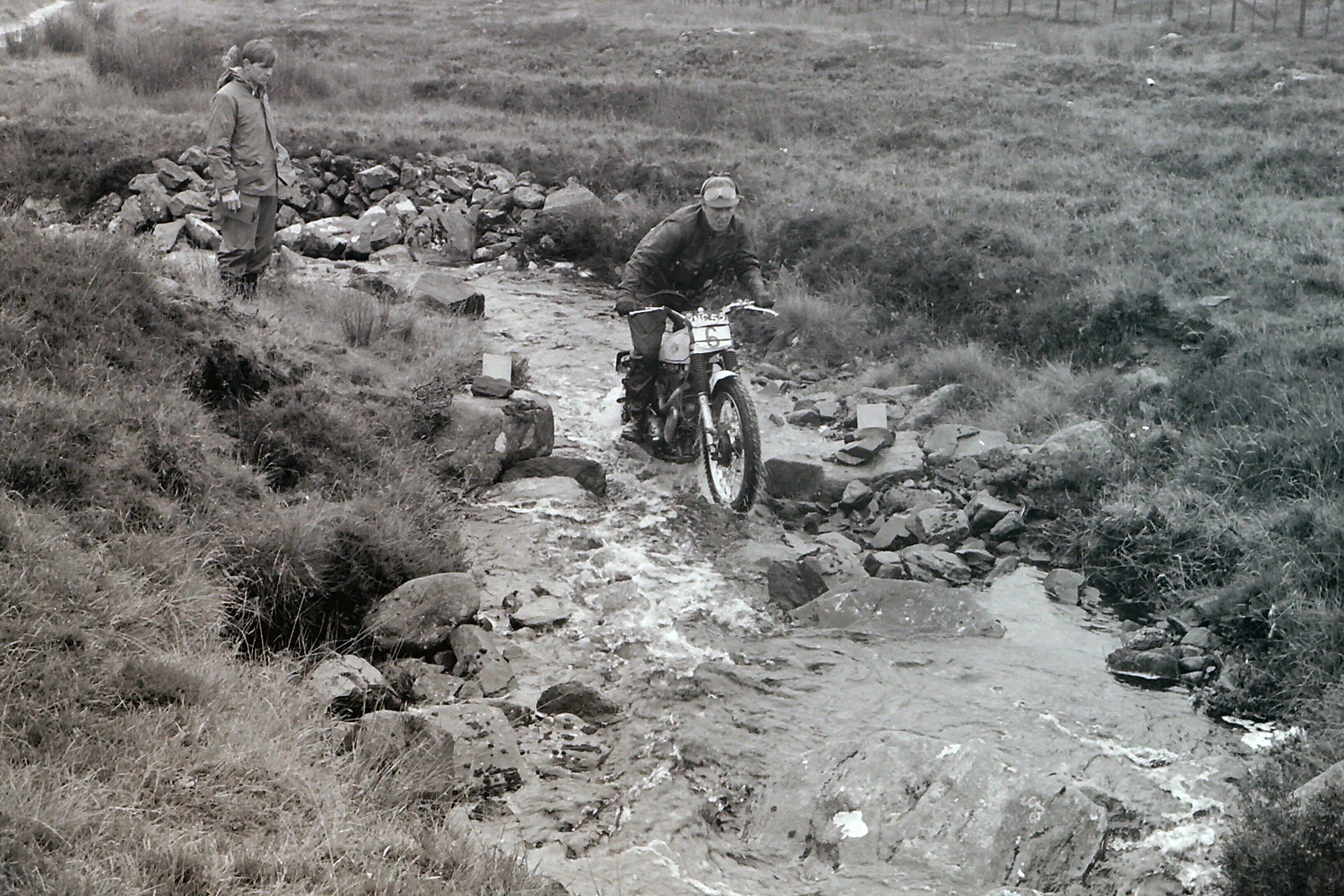
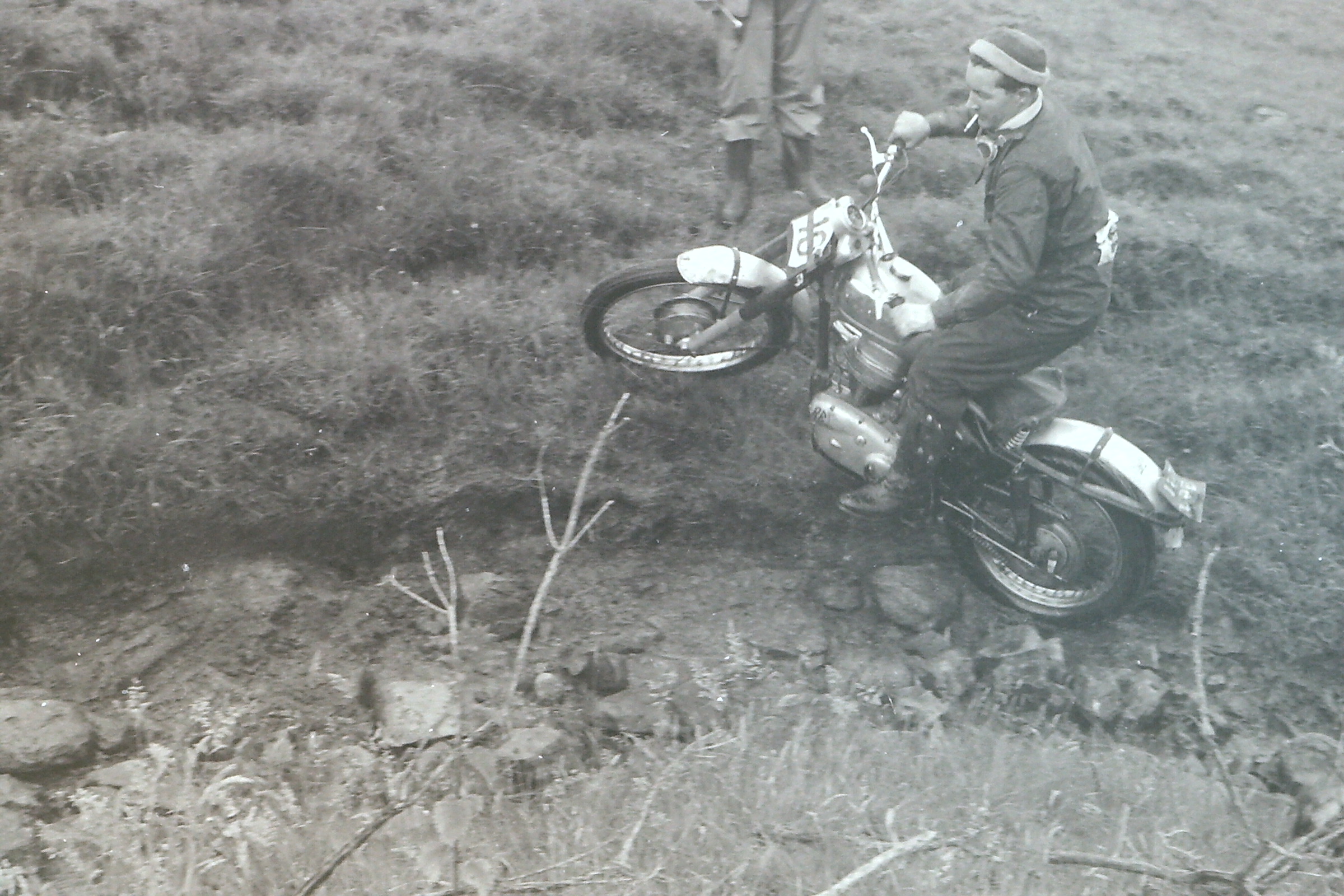


 TRIALS GURU - DEDICATED TO TRIAL