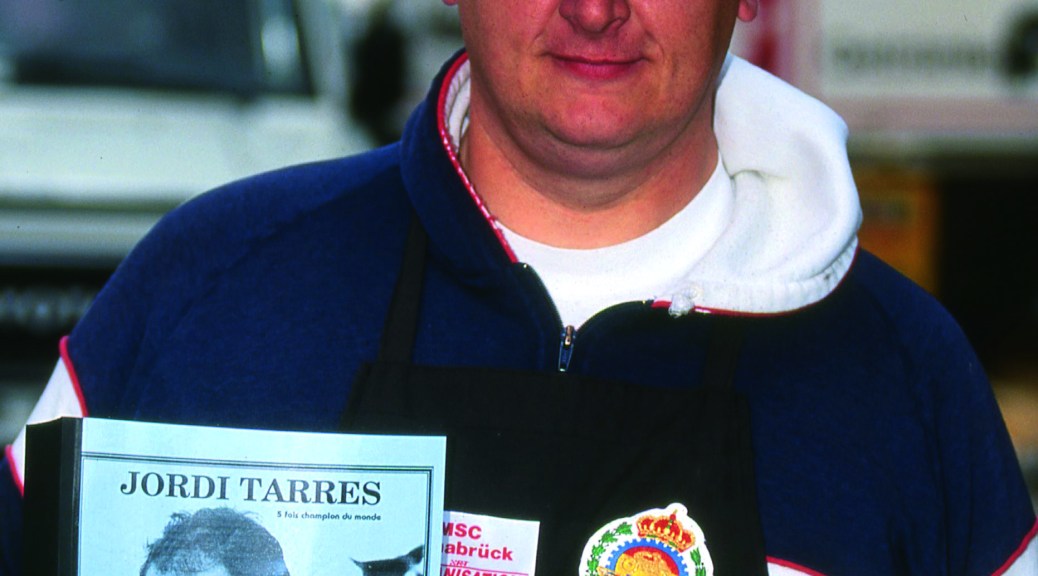
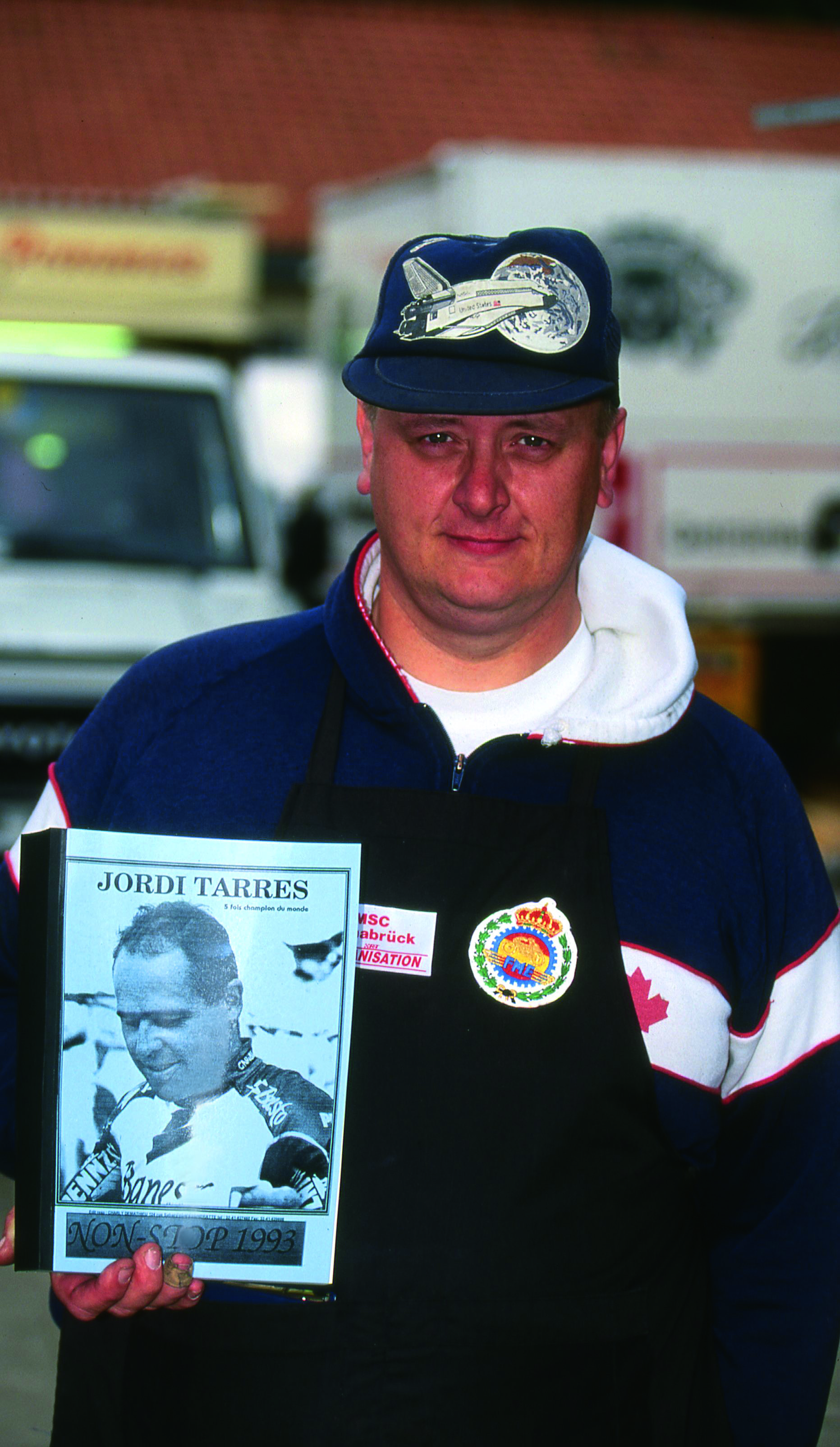
World famous, the manual magnetic scoreboard of Charly Demathieu, wearing his Ecole de Trial Happy shirt provided by TRAP – Transfers Racing Adrien Prato
The Guardian of Trial Memories – Charly Demathieu
Thirty years in the world of trials, if one man has made his mark it’s the Belgian, Charly Demathieu. The absolute reference point for the scorecards at both the Belgian and Spanish Championships as well as all the World rounds, he is the true living memory of our sport. The guardian of trials history he has put his treasured archive on his fabulous website www.trialonline.org This is the story of an encounter with a genuinely passionate individual that does not only live by numbers.
“I was the first minder in the history of trials with Jean-Marie Lejeune.” – Charly Demathieu
“Trialonline has 4000 pages and almost all the results of all the big events since the birth of our discipline.” – Charly Demathieu
Words: Philippe Pilat; Charly Demathieu
Pictures: Eric Kitchen; Colin Bullock and private collections.
Who is Charly Demathieu?
Charly: “I was born on 12th June 1952 at Cheratte (North of Liege – Belgium), in fact I still live there. I followed my humanities course until the sixth year, which is the equivalent of ‘A’ levels in the UK. Then I got my driving licence and I became a truck driver for the Public Welfare Centre of Liege for whom I worked for twenty years. The centre later closed and I found myself as an archivist in a psychiatric hospital, completely different but really not an obvious career change at first but it was a very rewarding experience to live in contact with patients with severe drug and alcohol problems. I learned a lot through these people that we really do not need to be afraid of them, yet they frighten almost everyone … Another twenty years passed very quickly and for the last two years I have been a pensioner, but not quite retired!“
Before the computer revolution, the world trials series was covered by a 400 page book
Which is the source of your passion for trials?
Charly: “Oh, I feel a bit like Obelix, I fell into a tiny cauldron filled with a potion (passion!) for the magic of trials. Still in my pram, my mother often took me to see my godfather, Rene Georges, and my cousin Roger ride. Later there was one man who gave me a really genuine passion for the sport, Jean-Marie Lejeune (Eddy Lejeune’s elder brother). In 1975 I was a spectator at the Grand Prix held in Sommieres and Jean-Marie was looking for a driver to take him to the next round in Sweden. It started well and I was soon driving the Lejeune family truck to all the Grand Prix’s and once there I tried to occupy myself so I started making small rankings of the results.“
You rode trials in the seventies … why did you stop?
Charly: “I just rode as a Novice and then Intermediate but without any impressive results. In fact at the time I was especially fond of my road cycle. My claim to fame is that I was the first minder in the history of trials with Jean-Marie but my job was so very different from their current duties. I followed my rider between sections with my backpack filled with essentials as this was the time when motorcycles were much less reliable than today. I helped with repairs for Rathmell, Lampkin and Karlson. Solidarity amongst riders was much stronger than today. I was almost never seen in sections, I stood at the ends cards, ready to intervene if necessary. I watched the lines and rides of his competitors but I never set foot inside the section. I remember one time when Jean-Marie made me stand in the middle of a river with water up to my waist to mark the deep hole where he should not ride. We were very close to each other and then we lost contact for nearly fifteen years since I was often on results duty in Spain and rarely in Belgium. We met again by chance in 2011 during the GP of France at Isola 2000.“
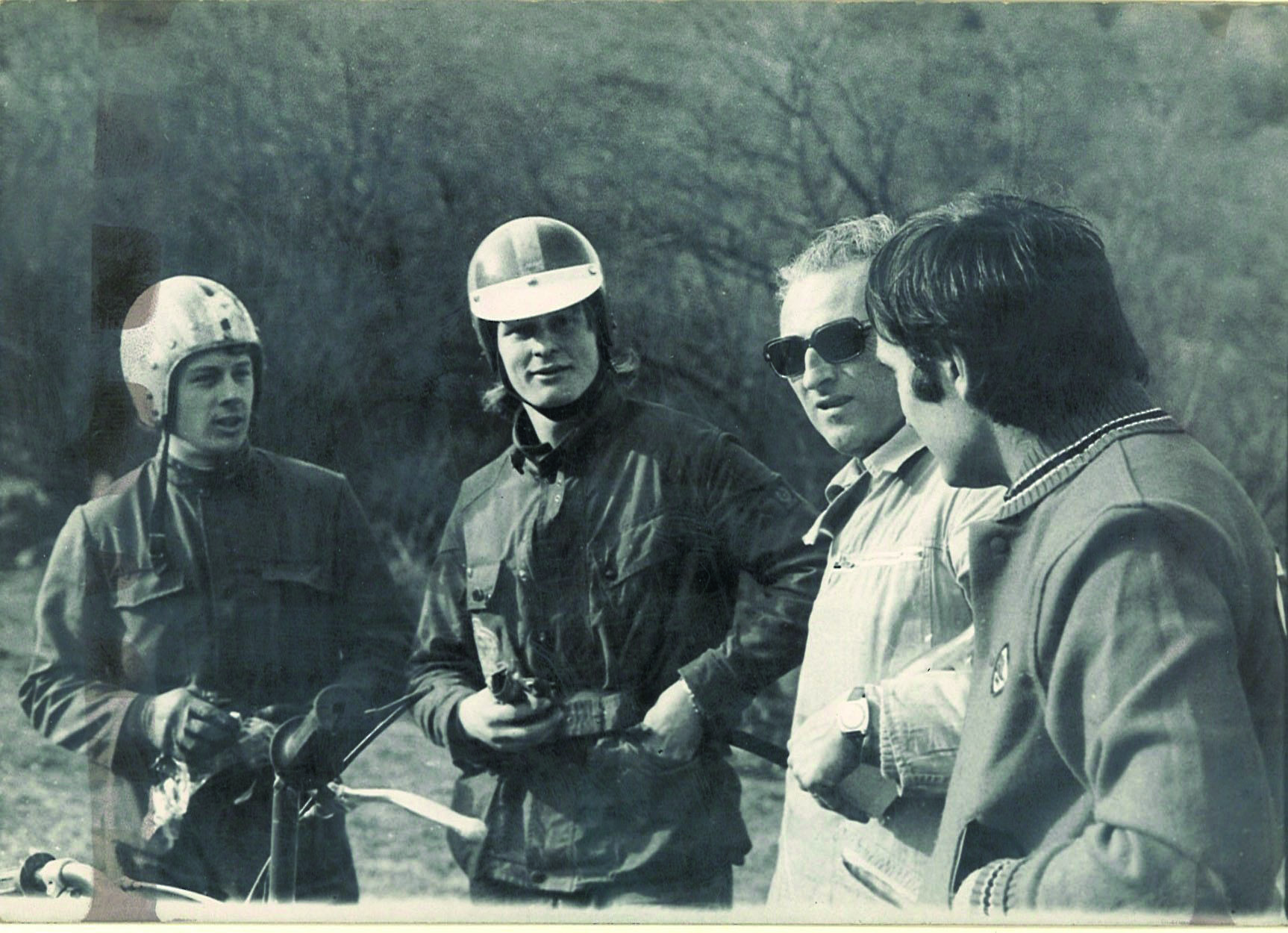
1970s shot of (from left) Jean-Marie Lejeune, Charly Demathieu and Jean Lejeune
How do you convert from competitor to official – organiser?
Charly: “I rode events for a few years. I drove the Lejeune family to all events using holidays that I could earn by working on other weekends of the year. For a long time I looked after the Belgian Championship but I finally stopped because it took me too much time. I was race director, timekeeper, starter and closer of the event too, you know the one who leaves after the last rider to remove and collect the section markers. I also worked with the setting out of sections; at the time we marked the inter-section route with methylene blue mixed with plaster. You finished the day blue all over; the colour did not want to wash off! I also managed entries for the GP’s, allocation of riding numbers; I standardised the various documents for the Championship so we could use the same media everywhere.“
You became the “Grand Vizier” of the scoreboard with your famous magnetic board?
Charly: “It was with Jean-Marie Lejeune that we came up with the idea of a magnetic board to display the scores but I did not actually put into practice until 1982. On one side there were the rankings of the day, on the other those of the Championship and I got to the final result by sliding my magnets up or down. I managed to calculate the score very quickly so when riders brought me their score card I put the results on the famous board and everyone could see where they had finished compared to their competitors in almost real time. I was doing all this alone at many events. At Bilstain for the Belgian GP I arrived with a large format magnetic board that I installed on the podium. The Italians asked me to do the same at their home round: I said yes, then it was the turn of the Finns … and I was away, I did it all over the world. It lasted nearly twenty years and then one day the truck of the Spanish Federation was stolen in Poland along with the famous scoreboard that was in it. I then finally moved onto the computer but suddenly I could not see the riders as I did before and I was no longer on the podium with the public: I was tapping on my keyboard in a corner.“
What is your current status? Are you an employee of the FIM, do you still work for the Spanish Federation? Charly: “I work for the FIM at the World rounds. I am in a team of three with Jordi Pascuet and Jake Miller: it’s a package imposed by the International Federation (FIM), it is not I who makes the decision to go or not to a particular GP. It may not suit the organisers who prefer to use the services of ‘locals’ who are more often than not very competent, but they do not calculate the overall rankings throughout the season. In addition we represent for them a significant cost. A few years ago I took my car and I went to the other end of Europe but with age I can no longer do things in the same way. So the organisers of the GP must support our airfare, accommodation etc… This represents a budget they would like to distribute down to the volunteers already in place. I did the same job for the Spanish Championship for eighteen years; I stopped only four years ago. I was away twenty seven weekends a year. Since I am a pensioner I have more time but there were still two years that I spent all my holidays to travel. I was always away but I loved it. I loved certain events such as the trial of Montmartre in Paris in the nineties. I found it wonderful to be able to bring trials machines here! They should have done the same thing in Barcelona. The urban trial at Cahor’s in France is superb it seems but I never went there. We must find a way to introduce trials to the public who know nothing of our discipline.“
What were the various stages or changes in your work?
Charly: “There came a time when I was forced to stop organising events in Belgium due to a lack of time, I was spending so many weekends at the Spanish Championship whilst working at the hospital in Liege during the week. I was often with Jordi Prat; it is we two who have defined the current format of the Trial des Nations. Before we took only the top three total scores of the four members of the team, later we decided to only take into account the three best results of the four teammates in each section. Our principle was tested and finally accepted by Ignacio Verneda then President of the FIM, it was he who insisted on my presence at each Grand Prix. That gave me more time to spend on the road.“
Charly explains the scores to Gas Gas UK boss, John Shirt Jnr at a world round
Any anecdotes, vivid memories?
Charly: “Many, inevitably, there are often amazing things that happen at a trial! For example at the GP of San Marino in 2008 when the local club wanted to refuse the technical controls being undertaken by the Italian Federation as it obviously did not please them, they had a real zealous approach, so they thoroughly checked all the dates of various documents (insurance, motorcycle registrations etc) of all foreign riders, it was a massive panic, as some of the riders feared they would be excluded from starting! Eight days later in Foppolo for the Italian Grand Prix, it was again the same controllers; they finished at lightning speed without any real checks. Still at the same event, we went back home on Sunday evening without being able to send out any results. Italian TV had saturated all internet connections; it took ten minutes to send an email of three words.“
1982 Scottish Six Days, Charly with Eddy Lejeune (Honda)
You created ‘Trialonline’ and have written dozens of books: you’re a pretty verbose boy!
Charly: “It is only for personal pleasure that I did all that. I’ve always loved creating stories from the passion that I witnessed. I have written fifteen books on Belgian, Spanish and World events, but I have even more to give. I have created a CD Rom containing all the results from around the world, which works in the same way as my website that I created at the request of the FIM in 2004. Since then I keep feeding Trialonline the results of trials in the most diverse countries such as Israel, New Zealand and even some South American countries. I update the results of the latest events even those held last weekend. You click on the flag of a country and you get the corresponding results, you click on the photo of a rider, you know his record. Trialonline has 4,000 pages through which we find almost all the results of all events since the birth of our discipline: it is only missing 21 ranking events! Sometimes it is very difficult to obtain results; I often prefer to speak to organising clubs rather than National Federations who are not really making big communication efforts in this area. You can find the results of the year, but not those from previous seasons! In France, it is Oliver de la Garoulaye who took the trouble to dig through the archives of the FFM to find the results since the first World round. Here I absolutely have all the results, but only thanks to fans like him, not because of the Federation.“
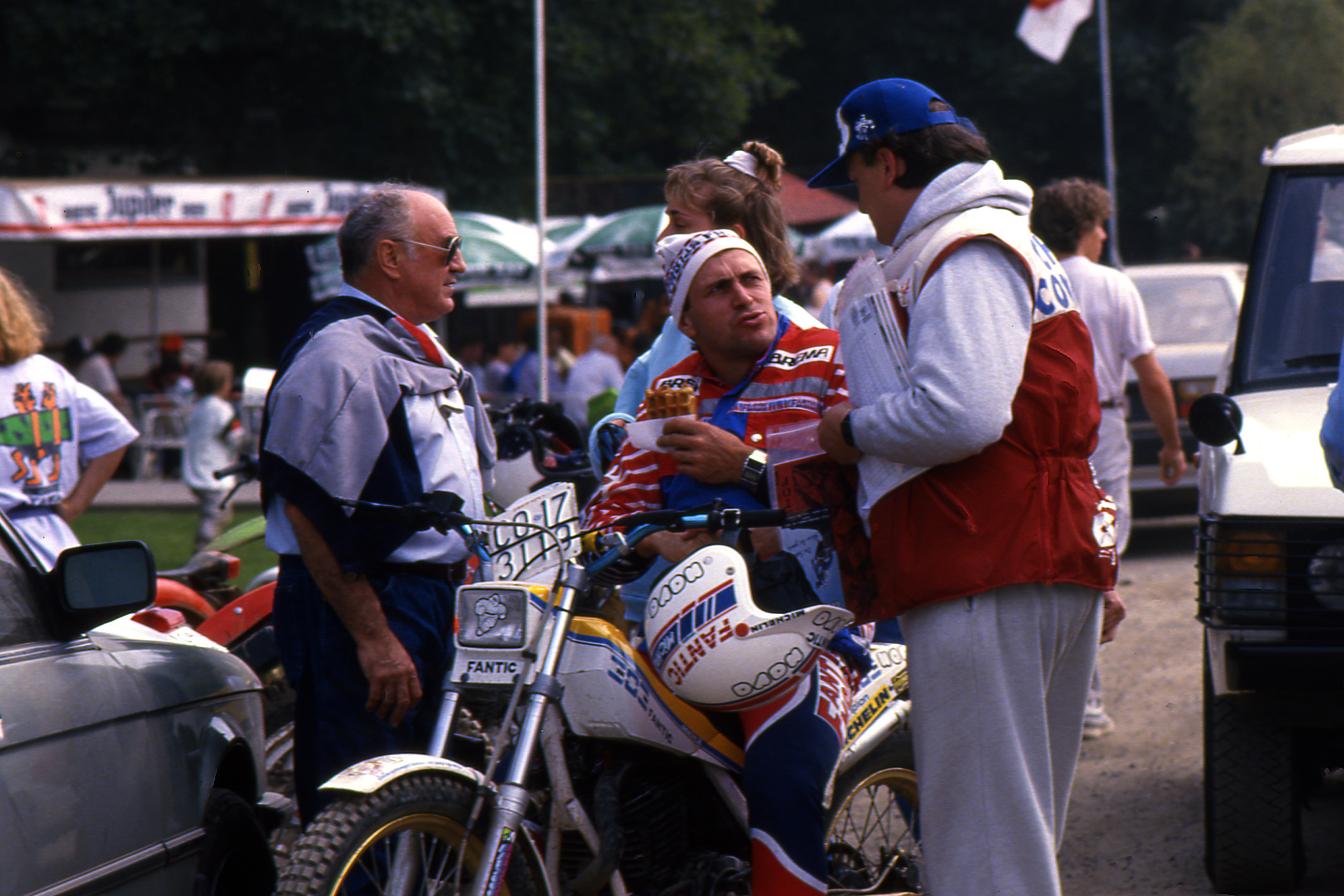
Charly chats to Thierry Michaud at the Belgian world round in 1988
What are your plans for the future?
Charly: “To finalise my archives, finding the 21 results I am still missing. I am also concerned about what will happen if I stop Trialonline work with the FIM. I renew the partnership each year, but I may not want to one day, it worries me to leave because there would be nobody to take it on after me. I’m also a big fan of Asterix: I have 600 volumes published in 42 different languages, I am very proud of my collection and I have some very rare specimens. I need to update my rankings for Trialonline; right now I’m working on a trial in New Zealand. I also plan a new grading program offering a choice between two or three rounds, a variable number of sections, all this is a lot of work.“
Takahisa Fujinami pops into the FIM Press office to say ‘Hi’ to his old friend Charly Demathieu
What is the state of health of Belgian trials?
Charly: “As elsewhere, is too often a single person who takes care of everything in his club and when this guy stops, the club dies. We also have the organisation related to ecological constraints that are huge in Belgium, much worse than your problems. For example, in the province of Liege, in the eighties, there were more than ten events per year, now we have only one quarter and in the rest of the country, it is the same problem. There is still a trial in Mons, Aywaille, and Bilstain and in Wavre and that is almost everything. You really have to go to private land such as Bilstain for young people to ride legally. This is the only way forward. Obviously the financial crisis is even worse for young people who have much difficulty in finding the budget to ride. It is certain that Belgian trials have seen better days.“
How do you feel about the disappearance of the GP in Belgium?
Charly: “This is something that really saddens me the as last GP was already six years ago and I look forward to the next one in Comblain-au-Pont close to Aywaille on the 13th July this year. At the last Bilstain round there was a strong divergence between the organisers and the FIM in particular with regard to the departure time. Since then the FIM does not want to go back. There was later a GP at Spa – Francorchamps in 2006 but that also ended badly. In the late afternoon there was an anti-doping control which lasted a long time and the prize ceremony could not take place until the test results were known. Inevitably the public became impatient and left without waiting for the podium presentation, the party was spoiled! It struck me as a tough decision as the results had been ready for a long time…. So I’d like to set the record straight, contrary to what has been said by many, it is not the fault of Charly Demathieu that there were no more Belgian GP’s! In 2007 the request by the organisation for a date was too late and the GP has not occurred since. This is obviously very unfortunate, if only because of the central location of our country, it is not such an expensive event for the vast majority of participants.“
If you could see the realisation of your three wishes, what would they be?
Charly: “To make the most popular trial by creating attractive and free to spectator trials, so not really like our current indoor circus … Reaching out to people I do not know and of course find the 21 results I miss between 1964 and today.“
Charly Demathieu “I love Yrjo Vesterinen, the first truly professional rider”. Vesty seen here at the 1981 Scottish Six Days in the paddock – Photo: Colin Bullock/CJB Photographic
What else would you want to say?
Charly: “I wanted to tell you about my favourite riders. Obviously there is Jean-Marie Lejeune but Mick Andrews for his ability to adapt quickly to different machines whilst remaining competitive. I love Yrjo Vesterinen, the first truly professional rider. I also appreciate Fujinami as he is someone who respects everyone and always passes by to say hello. Thank you and hello, they cost nothing, but it is important to all the hard working enthusiasts who create our sport. I would also like to take my hat off to people who have the courage to write about trials.”
Charly Demathieu, happy in his work
This article was first published in Trial Magazine, France and we thank them for the cooperation and use of this article.
For Charly Demathieu’s Trialsonline website – HERE
Apart from ‘Fair Dealing’ for the purpose of private study, research, criticism or review as permitted under the Copyright, Design and Patents Act, 1988, no part of this article may be copied, reproduced, stored in any form of retrieval system, electronic or otherwise or transmitted in any form or by any means, electronic, electrical, mechanical, optical, chemical, photocopying, recording or otherwise without the prior written permission of the author as stated above. This article is not being published for any monetary reward or monetisation, be that online or in print.
Carlos Casas in a familiar place, the parc ferme of the Scottish Six Days Trial – Photo: Trials Media/John Hulme
An addiction in life usually needs a fix, something to make your life feel good. Motorcycle trials becomes an addiction for many people, be it young or old. They may need a new machine, maybe some new riding kit, who knows? In many cases the older you become the more the addiction takes hold as more time becomes available in your life. Many years ago a Spanish motorcycle trials rider by the name of Carlos Casas came to ride in the Scottish Six Days Trial. A foreign adventure to the ‘Highland’ trial. The pleasure and enjoyment of riding in this location became so strong that over thirty years on, this enthusiastic man returns every year to the ‘Scottish’ for his fix to feed his addiction for motorcycle trials.
John Moffat of Trials Guru was the SSDT secretary in 2002 and that year at the Highland Council reception in Fort William, Moffat introduced Carlos Casas to guests and councillors as “the Ambassador for Spain for the Scottish Six Days.
Words: John Hulme with Carlos Casas
Photos: Carlos Casas Collection – Trials Media – Eric Kitchen – Kim Ferguson/Kimages
Carlos Casas has had a long association with the Montesa brand, seen here in 1978 on a Cota 348 – Photo: Carlos Casas Collection
Why the Scottish Six Days Trial?
Carlos: “For many reasons, it’s the biggest trial in the world, I love Scotland, the scenery, I love trials, good sections, friendly people as riders, observers, public, organisers and friends from all around the world…and all of this I can meet in the SSDT. This is my favourite event by far and my best holiday every year”.
Trials Guru’s John Moffat interviews the SSDT Ambassador to Spain for Nevis Radio during SSDT week – Photo John Hulme/Trials Media
How well do you remember your first trip to the ‘Scottish’?
Carlos: “My first trip to ride the SSDT was in 1979. I was the winner of a challenge/competition for the best private rider at the Santigosa Three Days and Cingles Three Days trial in Spain. We travelled with the Montesa factory riders who were Jaume Subira, Miquel Cirera, Pere Olle and Josep Jo. I remember that we travelled by car and van and it was a long trip from Spain”.
Watched by observer, the late Bill Reid, Carlos Casas in the 1979 SSDT on the Montesa 348 Cota.
Was the week’s competition a tough one?
Carlos: “I rode a Montesa Cota 348 and the weather was horrible as each day the route was very long and it was extremely cold with rain and snow. At the end of the week I was happy about the experience and finished in the top fifty with a Special First Class award”.
Carlos climbs Pipeline in the 1979 SSDT, the first of many to come
When you returned home did many people ask you about the event?
Carlos: “Yes, all the trials riders and many people asked me about the SSDT – I was a minor celebrity – Carlos laughs at this! This event is very popular in Spain and for many trials riders it is like a dream. It’s incredibly expensive to travel and compete from Spain but at every event we are always talking about the ‘Scottish’. It’s an event that you’ll love or hate. I always say that every trials rider must ride this event at least once. The problem could be that if you then enjoy it, you’ll repeat the experience every year and that’s when the addiction begins or as I always say, an incredible experience”.
Camaraderie at the SSDT – Paul Nicholson, Gary Pears and Carlos Casas carrying a fellow competitors mount through a swollen river – Photo: John Hulme/Trials Media
Did Montesa support you in the early days?
Carlos: “I have always had good support from Montesa. I have never been a good enough rider to make a wage from the sport but I won the Spanish Veterans class over twenty eight years ago, a championship I have won fourteen times. I have also had some other good results and based on this and my loyalty to the brand, they are always happy to loan me a machine. I think of Montesa as family”.
How good did it feel to win the Best Foreign rider award?
Carlos: “I can remember it like it was yesterday, the first time I won the Best Foreign rider award. I have won this award four times and my highlights from the event are two thirteenth place finishes. The last time I achieved this result I had tears of joy in my eyes on the last sections on Ben Nevis I was so happy”.
The Spanish are keen supporters of the SSDT and Casas has encouraged even more to come, hence his nickname, “The SSDT Ambassador”
You continued to support the event even when it went back to full ‘No-Stop’ in the nineties.
Carlos: “Yes, I like the ‘No Stop’ rules at this event and I believe it was the correct decision”.
Carlos: “The last years of the event when they were using the ‘Stop’ rules the sections became tighter, difficult, dangerous and boring because of delays at the sections. Each year less competitors entered and I think the SSDT committee made a good job and the decision to go back to ‘No Stop’ was correct for the future of the event. Since then the SSDT is oversubscribed every year and it needs a ballot. One year I suggested to the committee that there should be two SSDT trials, one in May and one in October – Carlos laughs again as he explains he just loves the event!”
How important in Spain and to Montesa was the win of Amos Bilbao in 2002?
Carlos: “It was very important for Montesa/Honda to win the SSDT as it’s a very prestigious event, classed by many as nearly as important as the World Trials Championship. Montesa won the SSDT in 1979 (Rathmell), 1980 (Vesterinen), 1983 (Toni Gorgot) but for both Amos and Montesa/Honda the victory in 2002 was more important because it was a Montesa Honda machine and Dougie was contesting the World Trials Championship”.
1995 SSDT Carlos Casas on the Honda powered Montesa Cota 315
Have you ridden all your Scottish Six Days on Montesa/Honda machines?
Carlos: “I have ridden the Montesa Cota 348, Cota 314, Cota 315 and Cota 4RT, twenty four times in total. I rode a Gas Gas one year because there was no support from Montesa. My good friend Manel Jane loaned me his Gas Gas. It’s very important for foreign competitors to know that the manufacturers, through the importers, have full facilities available”.
When did you first ride the Pre-65 Scottish?
Carlos: “My first year was 2004 and since then every year after”.
Carlos loves the Pre-65 Scottish as much as he does the SSDT
What machines have you ridden in the Pre-65 Scottish?
Carlos: “I have always ridden a Triumph Tiger Cub usually loaned from my good friend Walter Dalton, but one year I used a ‘Cub’ loaned from Peter Remington. I love all the machines and one year I’d like to ride in the event on a rigid”.
Many people think you can win the Pre-65 Scottish – Is this your dream?
Carlos: “Around twenty riders could win the Pre-65 Scottish. It’s one of my dreams to win it but the most important thing for me is to be there and enjoy every section and every minute of this fabulous event – you would not believe the smile on his face when we talk about the Pre-65 Scottish”.
We know you are very good friends with the Vertigo brand owner Manel Jane. How do the Spanish trials riders feel about Vertigo?
Carlos: “People in Spain waiting patiently for the Vertigo to arrive because they understand that it would be well made, good quality, lighter and perform well. They were not disappointed. Manel is a real trials enthusiast and his dream was to build his own machine and build a good strong team”.
Manel Jane and Carlos Casas have been friends for many years
Why the loyalty to Montesa?
Carlos: “Because the motorcycles produced are always superb quality, very reliable and nice to ride. The people from the Montesa factory are always very good, friendly and professional”.
How much longer will you come to Scotland and compete in the Six Days and Pre-65 events?
Carlos: “As long as my body allows me to! I love both events and every year the memories are with me forever. I am getting old but the addiction just gets stronger”.
Carlos Casas negotiates Ba House in the 2000 SSDT on his Montesa 315 – Photo – worldwide copyright: Eric Kitchen
Before we finish; the question that gets asked so many times – Stop or No-Stop?
Carlos: “For me as a rider, No-Stop, it is without doubt correct. But sections whatever the rules must be well thought out to make them challenging and interesting, you must try to always make the rider think about the challenge”.
Carlos Casas, the “Spanish Ambassador to the SSDT” – Photo: Kim Ferguson/Kimages
This article was generated for Trial Magazine issue 50 in April/May 2015 and we at Trials Guru thank John Hulme for the use of his article on this website.
Why not subscribe to Trial Magazine or Classic Trial Magazine, contact: www.trialmaguk.com
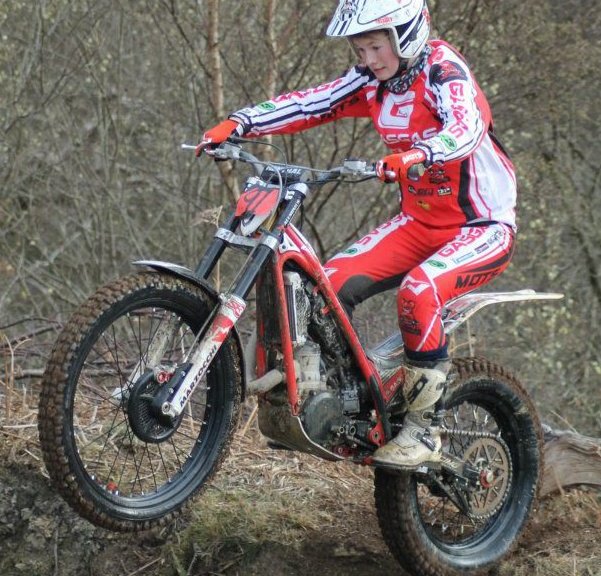
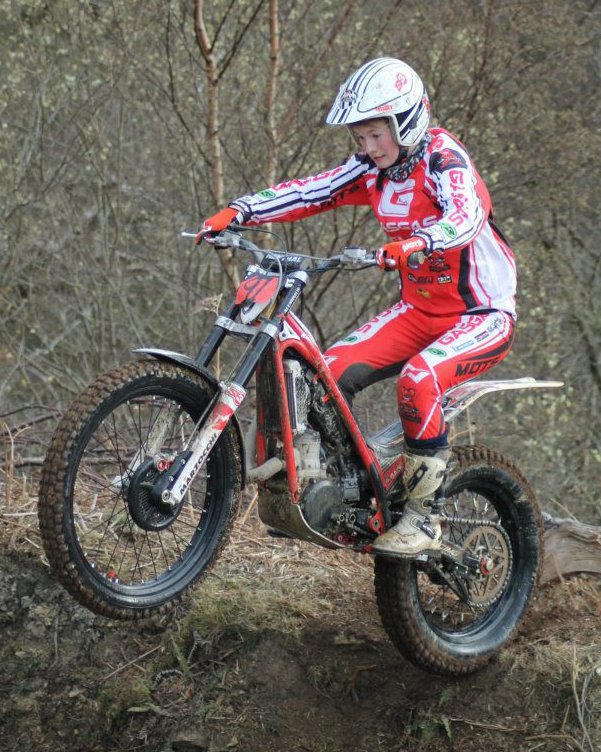
Nikita Smith is 19 year of age and comes from a family with trials connections.
“My Dad and his brothers rode a few trials back in their day.” says Nikita.
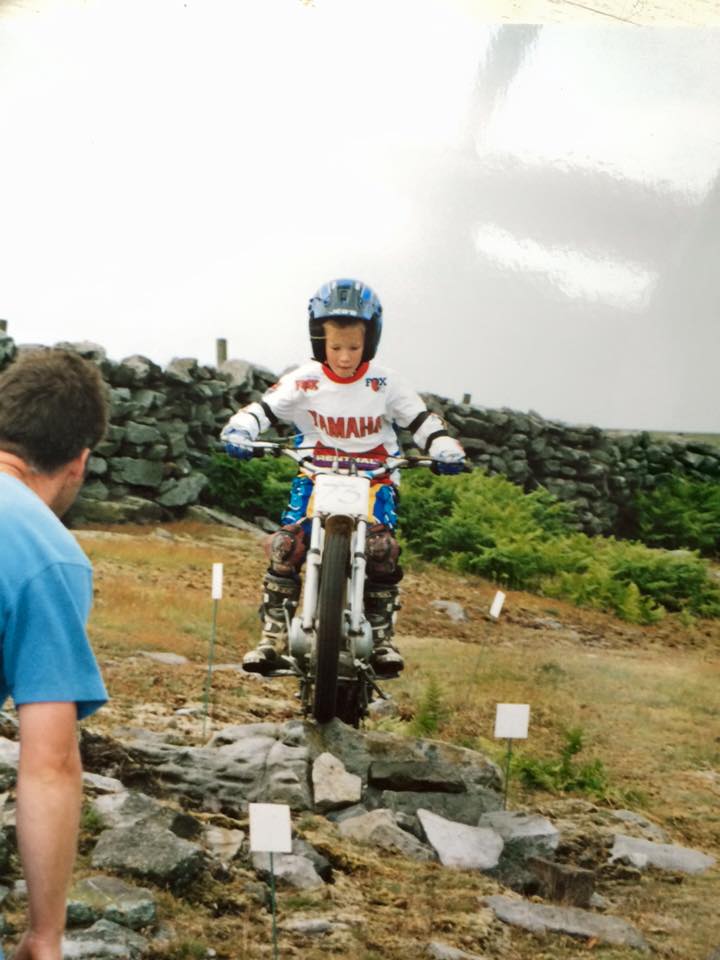
“The Middlesbrough & District MCC national Cleveland Trial runs just above our farm. When I was around two years of age, I heard the sound of trials bikes and was pointing, so my Mum and Dad took me up to have a look. It all really started from that moment, I just wouldn’t shut up about bikes. My Nan and Grandad bought me a battery bike that I could ride around the farm, but I wanted to go faster so at four, my parents bought my a Honda QR 50. I then progressed on to a Yamaha TY 80 and started to ride trials at the age of six”.
Nikita on the Yamaha TY80
“I just moved through the classes, my parents were always supporting me and I can’t thank them enough! When I was ready to move to B class, I joined ‘Ace Trials Team’ run and financed by the Kilhams family. For me this was a dream come true at such a young age. They gave me brilliant support and they introduced me to the European and World trials scene. They showed me how everything worked, as it’s a bit different than entering a club trial! Unfortunately the Ace Trials Team didn’t continue, so I joined up with John Shirt at Gas Gas UK which was fantastic help as I progressed in my riding career.
Nikita’s FIM Women’s Trial GP of Andorra riding bib from 2013 – Photo: Sallyann Smith
“My cousins also rode a few trials we all live quite close so we would go practising together”.
Nikita shows her all action style on the Gas Gas – Photo: Kacey Smith
“Unfortunately, I suffered a road traffic accident which involved head, chest and leg injuries. This has been a big set-back to me, but my goals still remain the same to ride at the top level. I am currently undergoing physio with my leg and working hard to get where I want to be, on a trials motorcycle”.
Nikita Smith doing what she likes best, riding trials
…
Mark Kilhams, Owner of the Ace Trial Team commented: “I approached the Smith family at the final ladies round in the Isle Of Wight as I saw great potential that was not being fully accessed. I knew that Joanne Coles would be the best mentor for Nikita and would make a great team mate. Thankfully the family agreed to compete abroad if supported in the world and European paddocks by Ace Trials Team. This was a very successful arrangement for all involved and Nikita’s achievements and potential brought in a lot of new interest and sponsorship to the team. We have kept in constant contact with the Smith family since Nikita’s terrible accident and I know that the strong-will and single mindedness that bought her so many top podium finishes, will get her back to the top of ladies trials again”.
Nikita getting back in the groove on her Gas Gas in July 2016 – Photo: Sallyann Smith
2017 Update:
Now fully recovered from her horrific road accident, and at the ripe old age of twenty years, Nikita Smith makes a comeback on the world stage with her first appearance since 2013 when she was fifteen.
Nikita will take part on a Gas Gas machine and compete in the newly launched ‘Trial2 Women’ class in the World trial series in Kingman, USA in August 2017.
…
Article Text Copyright: Trials Guru / Moffat Racing – John Moffat 2017
2015 winner Ian Austermuhle (Beta) at the start of last year’s event – Photo: Jaxx Lawson @Joats Imagery
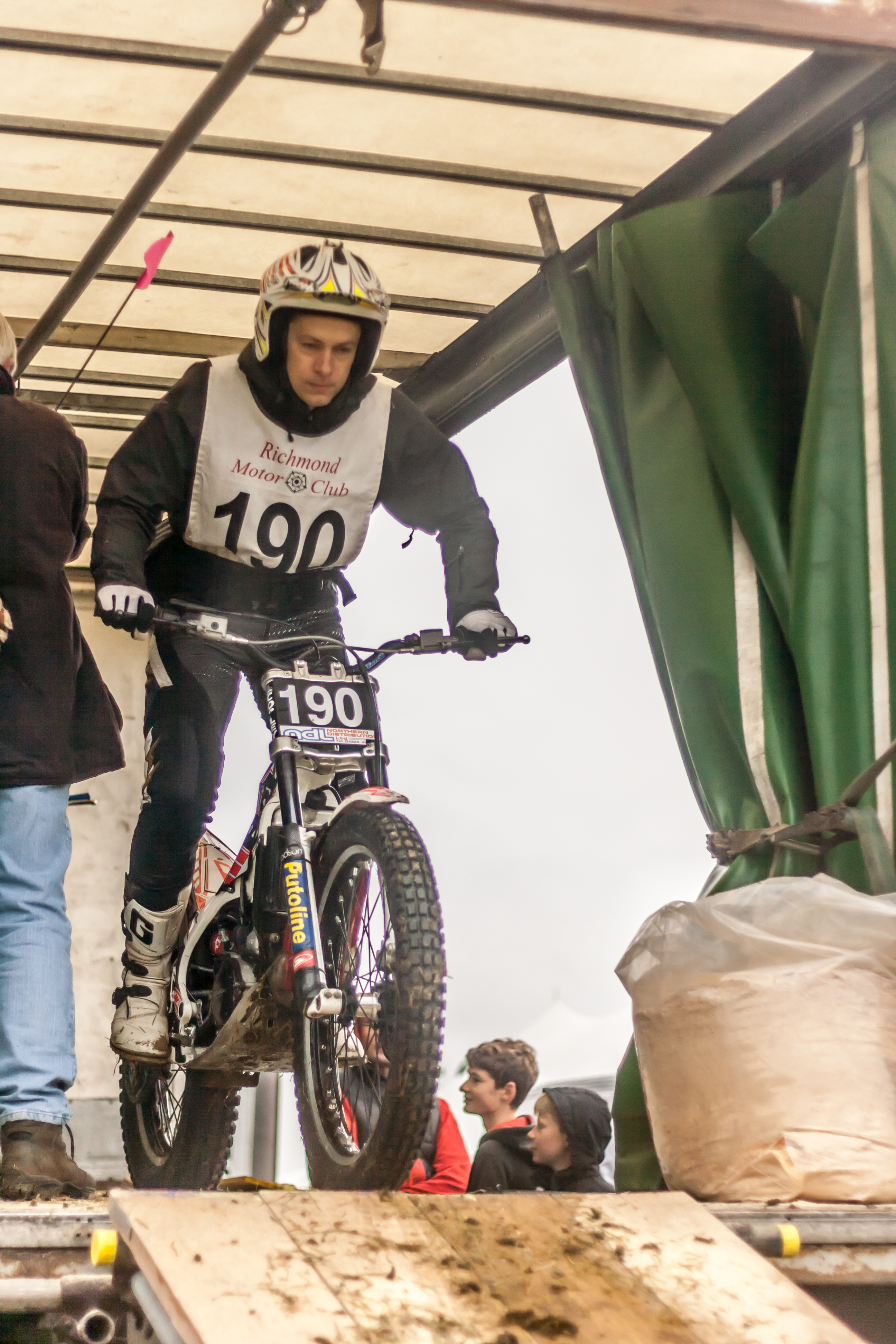
The Scott Trial 2016 gets into gear with the release of the regulations and entry forms for the annual classic. Promoted by the Richmond Motor Club (Yorkshire) Ltd this is a great event which donates proceeds from it’s programme and charity auction to the ‘Scott Charities’.
Ben Hemingway is a regular Scott competitor, seen here at Orgate in 2015 – Photo: Neil Sturgeon
The start will be in the usual place: Opposite Park Top Farm, Feldom Moor, Richmond – Sat.Nav Post code: DL11 7LS
Entries fee is £35.00 and close on 9th September, limited to 200 competitors.
TRIAL GP OF GREAT BRITAIN, TONG. 16th AND 17th JULY 2016
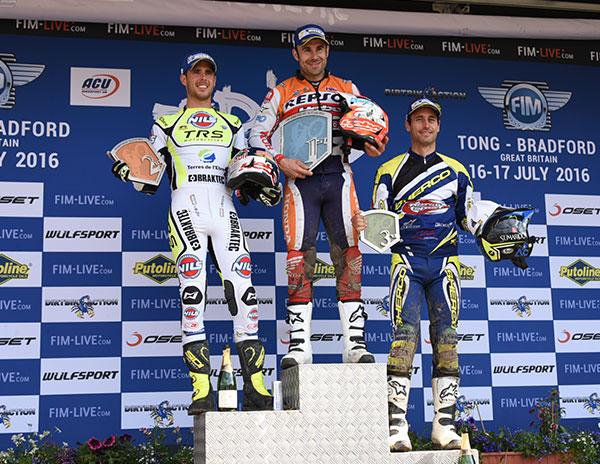
The seventh round of the FIM Trial World Championship took place in Tong, Great Britain. It was a complicated two day race, with much forest and low grip sections. Adam Raga was uncomfortable throughout the weekend but he was able to overcome and mark a third and second place respectively. With this result the TRS rider has mathematically achieved second place in the World Championship as he is now forty-nine points ahead of his closest opponent, Takahisa Fujinami. In fact, although it is complicated, Raga still has options to win the title in the last event to be held in Italy on the 3rd and 4th of September.
Rebekah Cook had an outstanding race with two epic second places in the Women Class, just behind Emma Bristow. The TRS British rider has marked another epic podium, this time at home.
Meanwhile, Luca Petrella in TRIAL2 continues his learning achieving a sixth and fifth places in Tong. A good weekend of training for the Italian National Championship where he is fighting for the title.
Adam Raga:“This weekend has been complicated and I didn’t find the good feeling with the track. The important thing for us is that we have already secured second place in the championship. Now I need to rest one month, and return with all the energy for fighting for the victory in Italy”.
Jordi Tarrés: “We are maintaining a high level in each race and this is the most important thing. Now we have the second place in the championship, an awesome result for our brand in the first year of racing. I want to emphasize the great performance of our rider Becky Cook who gave as a new podium for TRS, this time in the Women Class”.
RESULTS TRIAL GP GREAT BRITAIN, TONG, 7TH ROUND
DAY 1
1. Toni Bou Honda/Montesa) – 4 pts.
2. James Dabill (Vertigo) – 35 pts 3. Adam Raga (TRS) – 42 pts
DAY 2
1. Toni Bou (Honda/Montesa) – 20 pts 2. Adam Raga (TRS) – 40 pts
3. Albert Cabestany (Sherco) – 54 pts
STANDINGS TRIAL WORLD CHAMPIONSHIP
1. Toni Bou (Honda/Montesa) – 249 pts 2. Adam Raga (TRS) – 218 pts
3. Takahisa Fujinami (Honda/Montesa) -169 pts
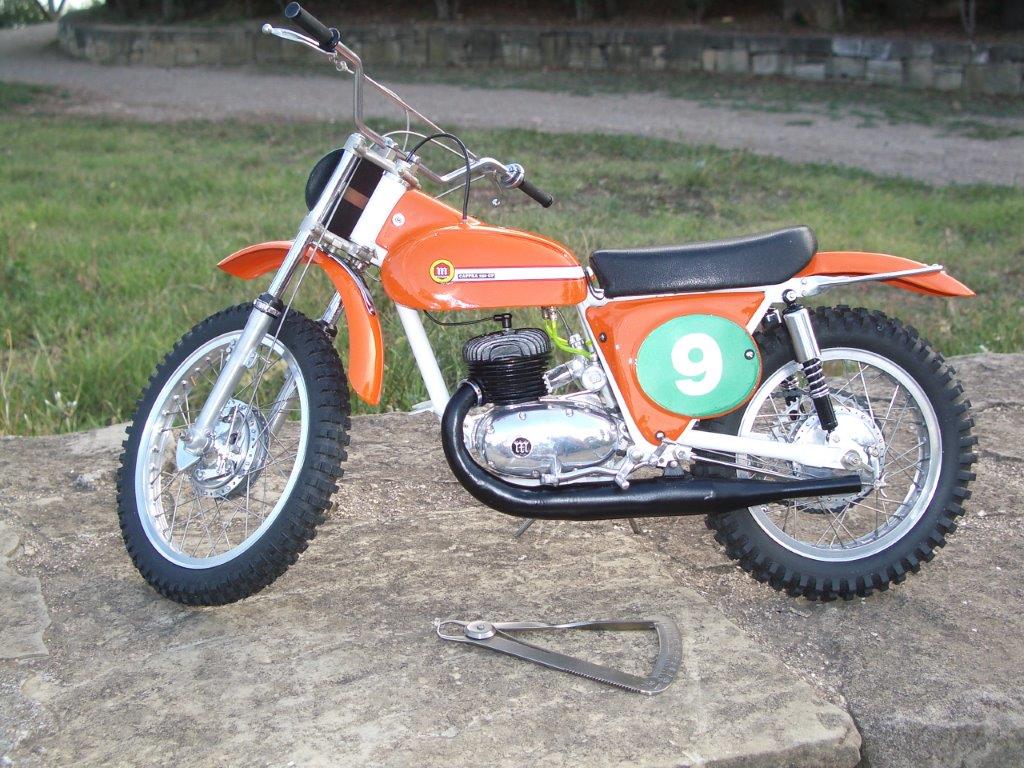
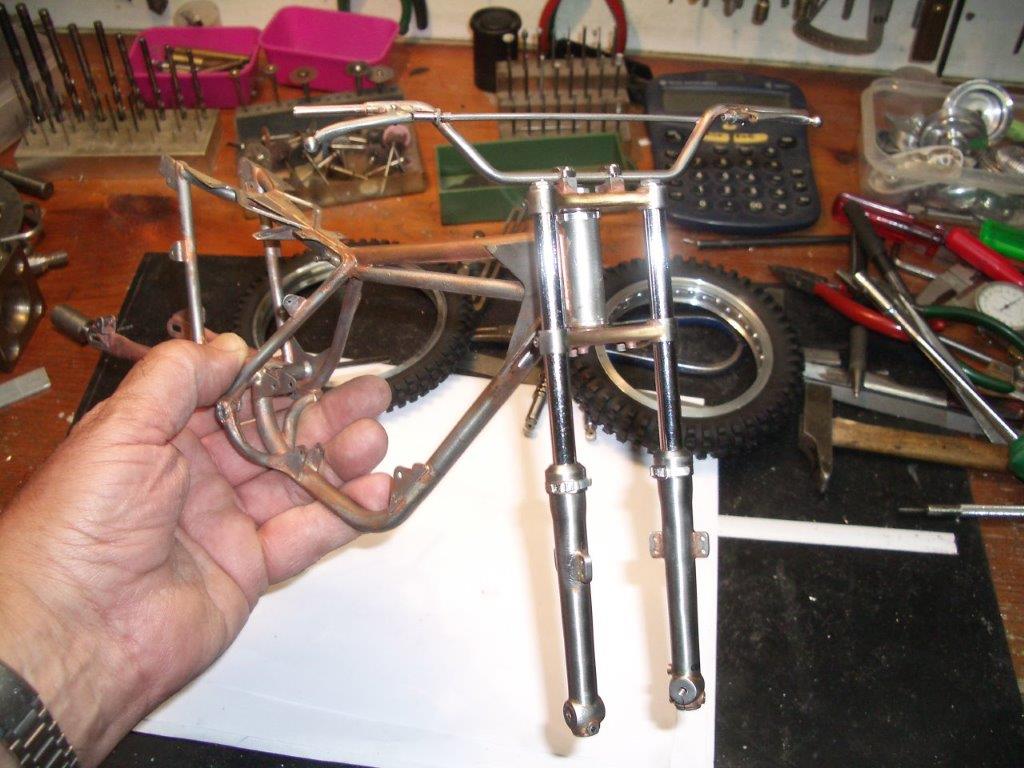
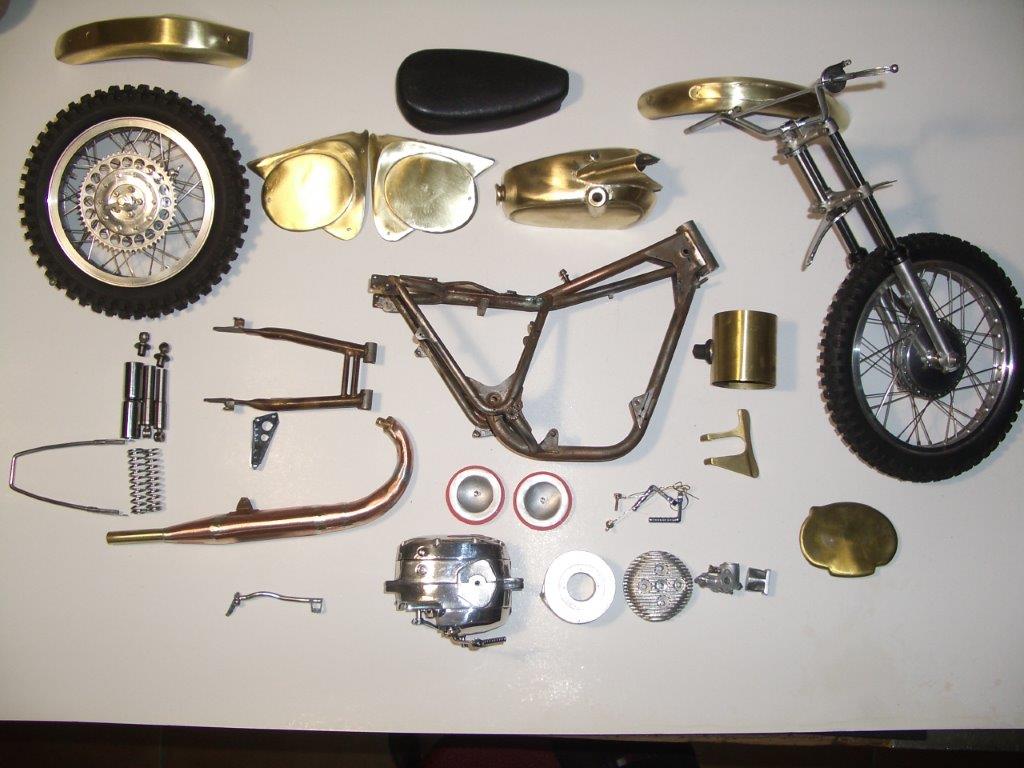
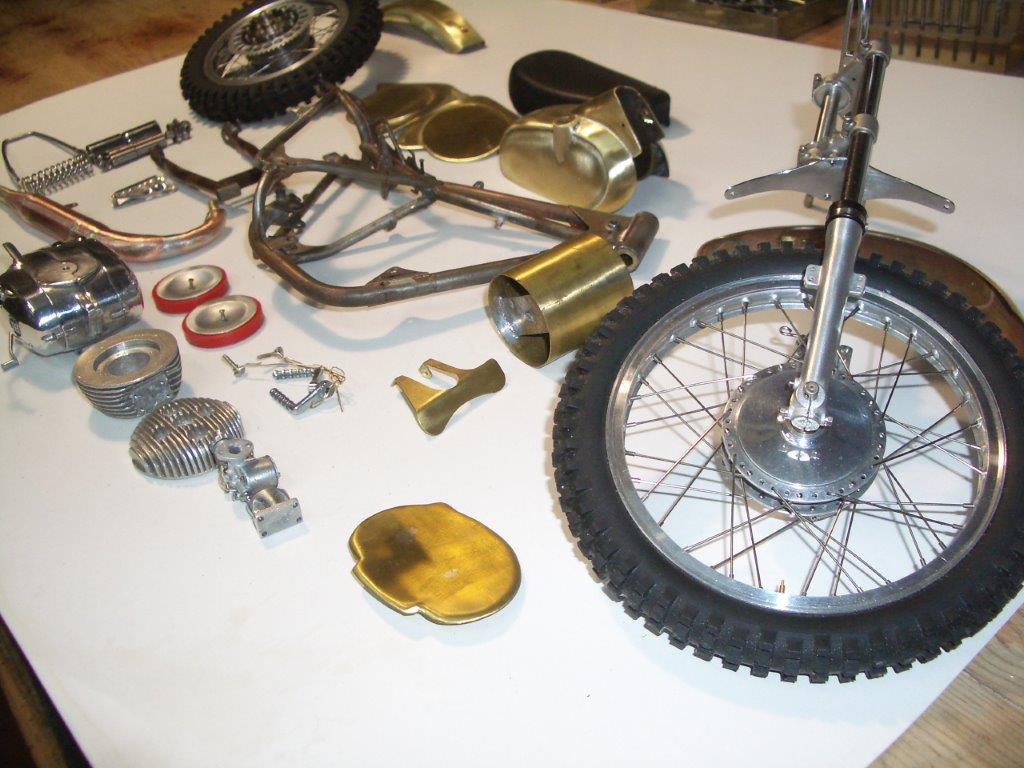
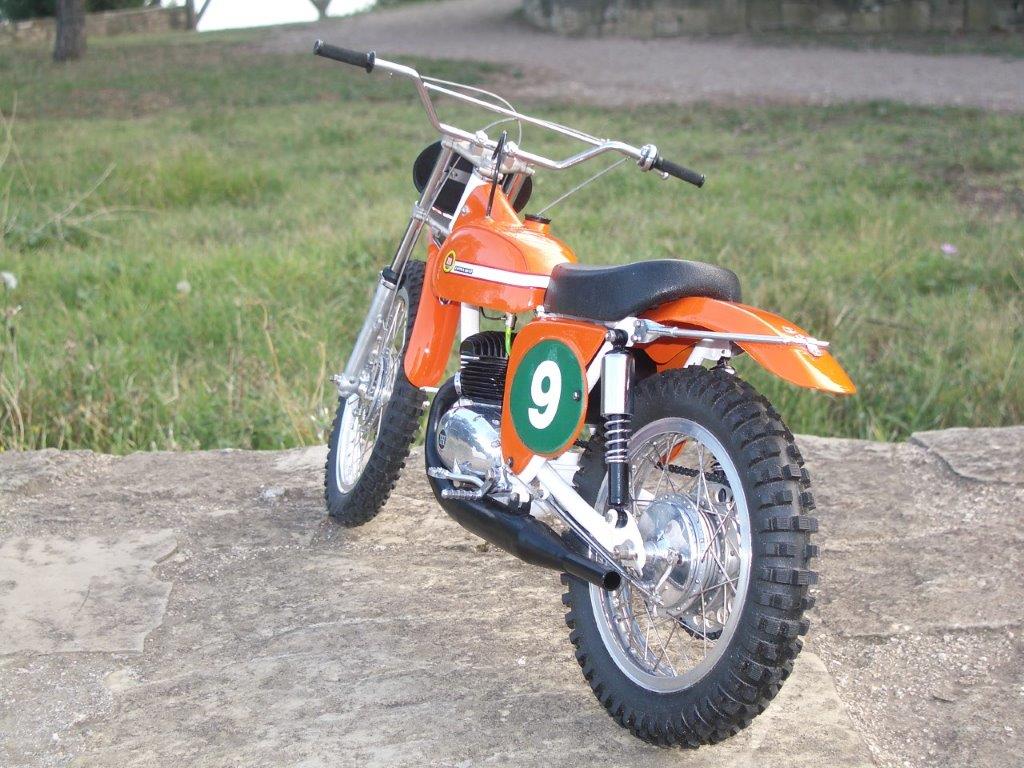
We are always looking for something different on Trials Guru, usually trials, recently we featured a scale model Montesa Cappra motocross machine from the late 1960s.
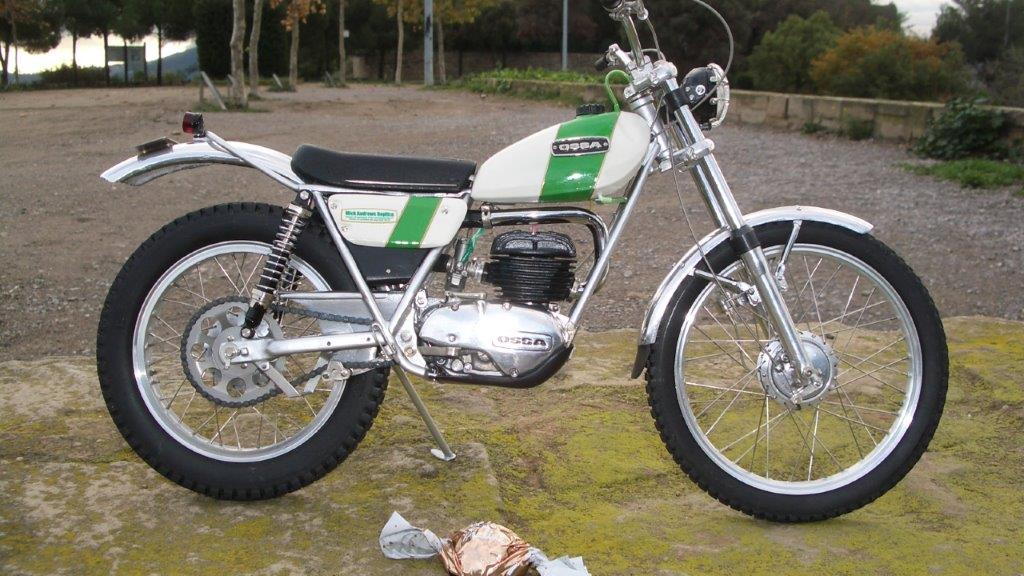
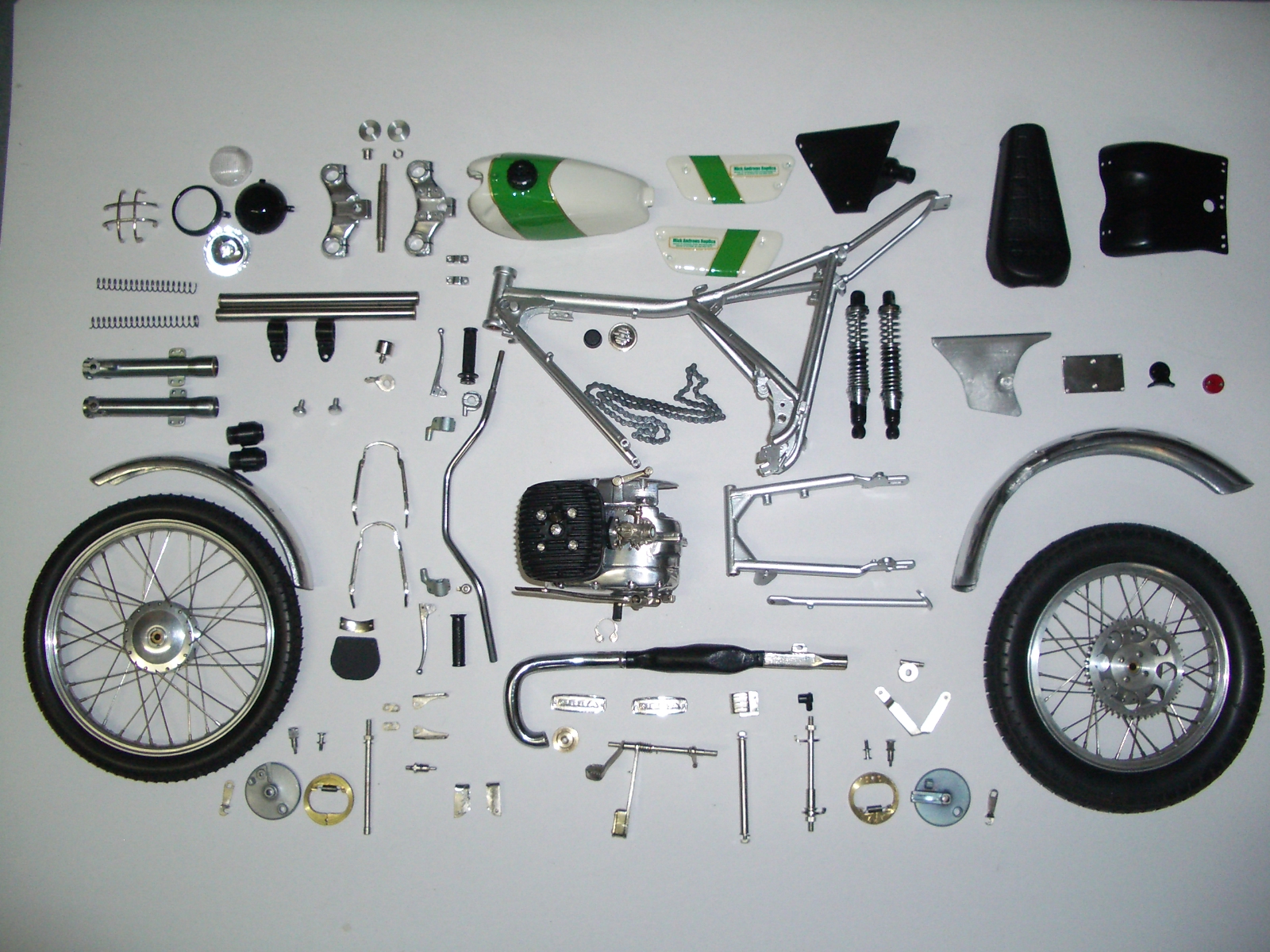
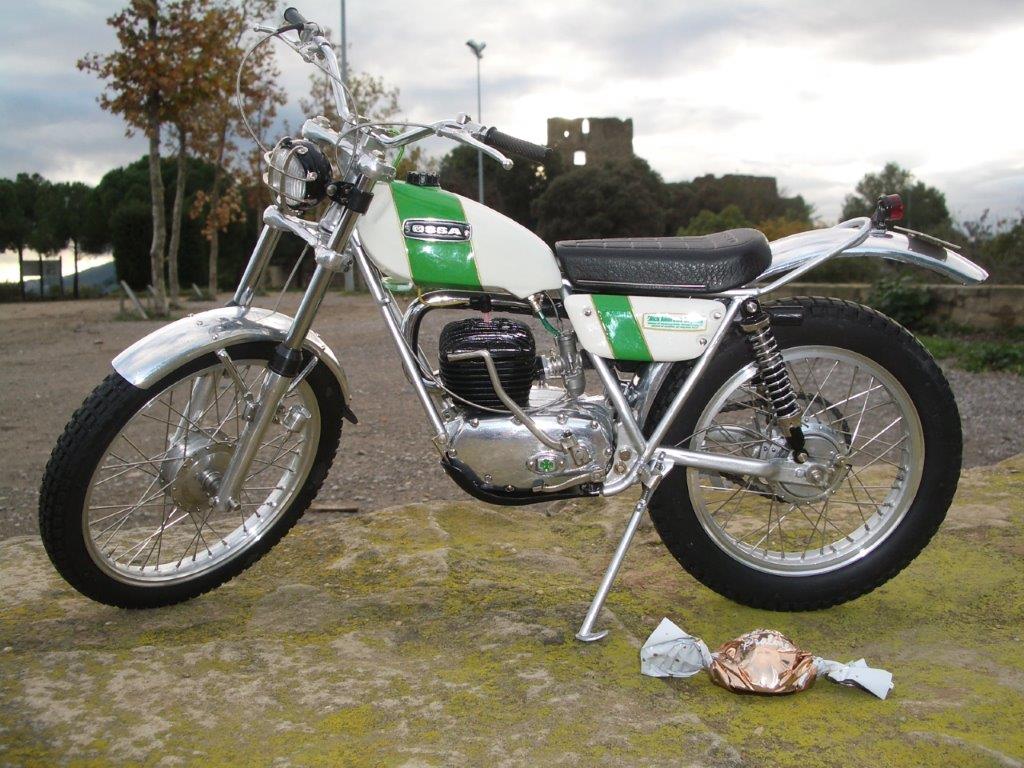
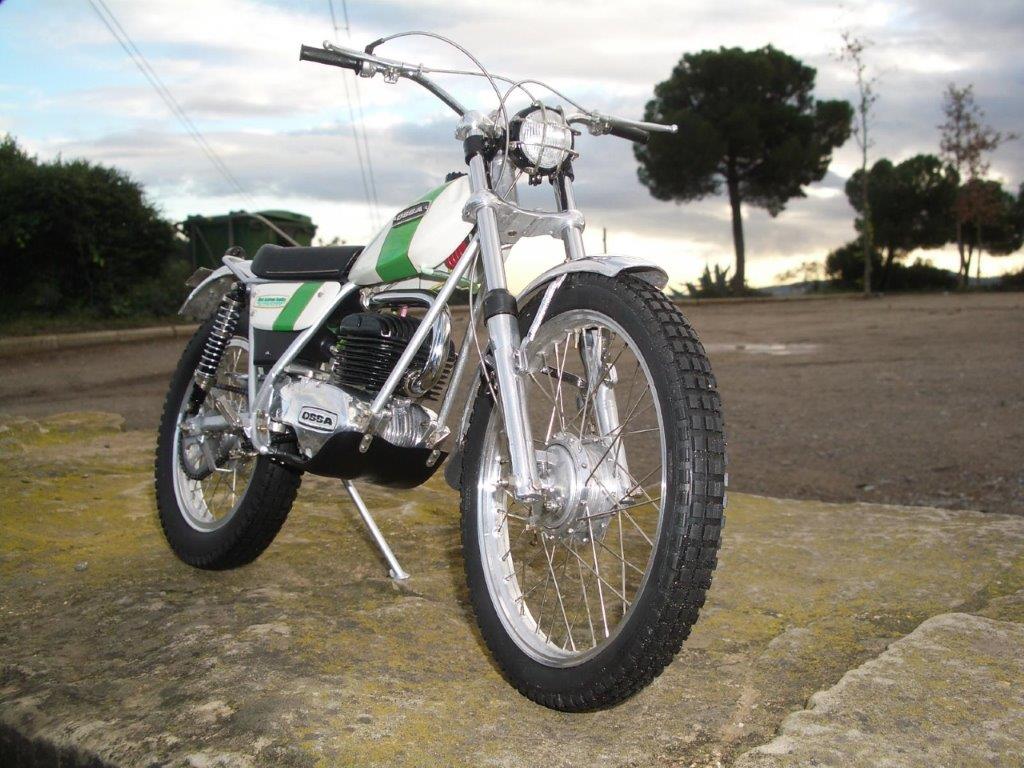
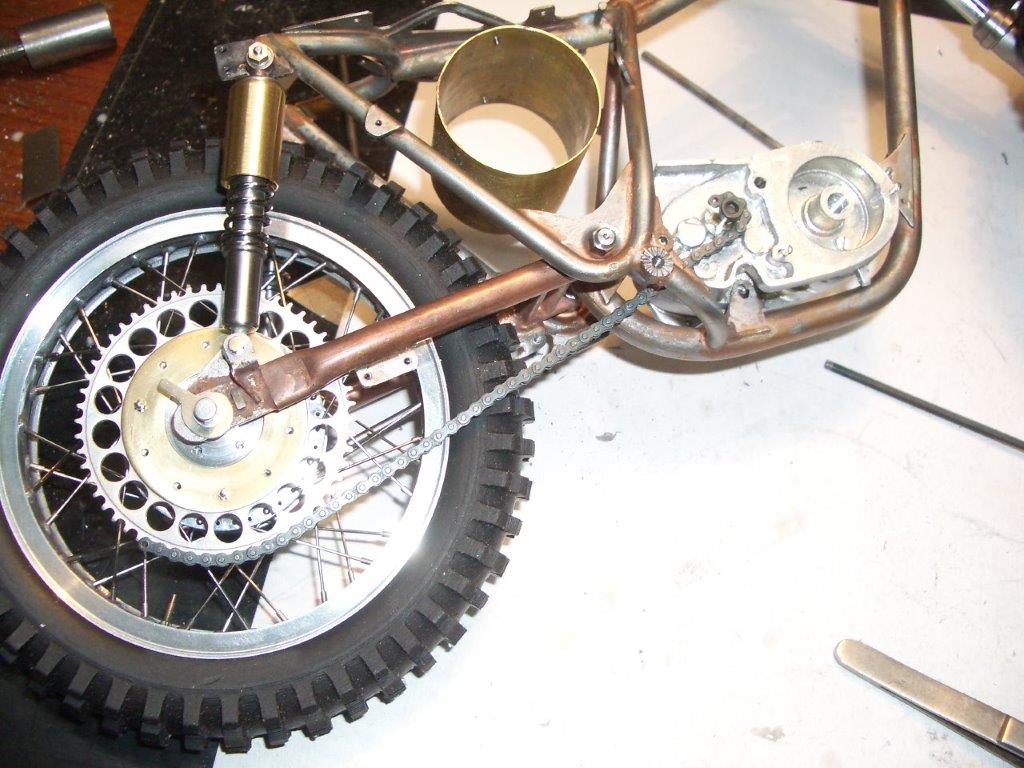
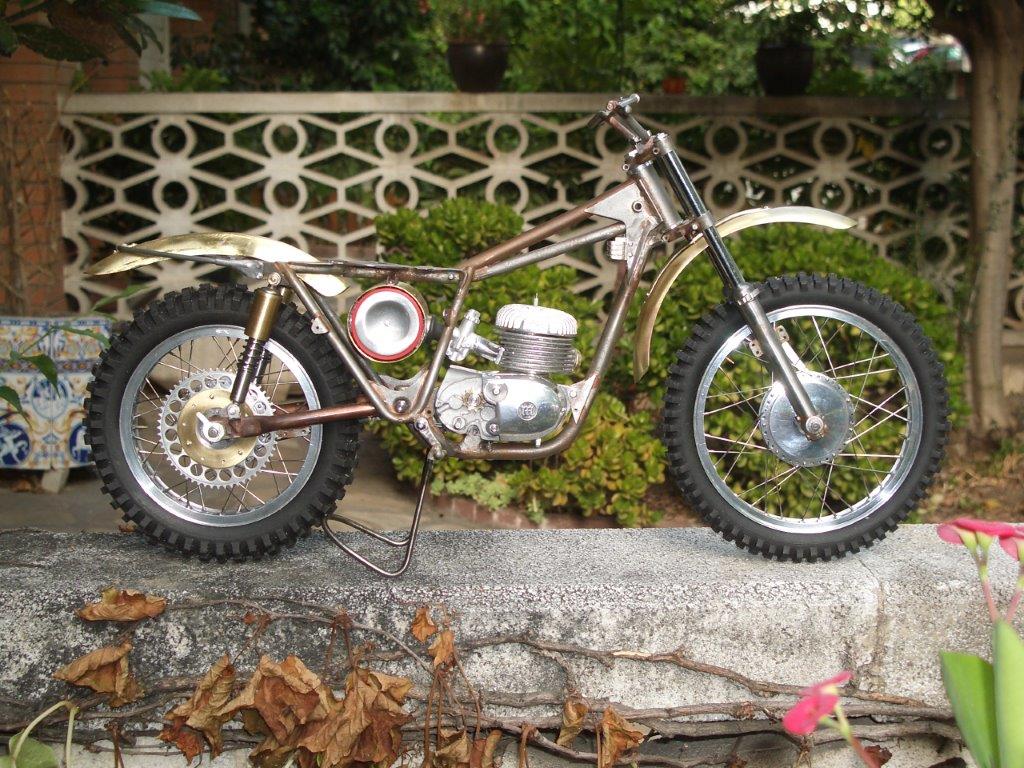
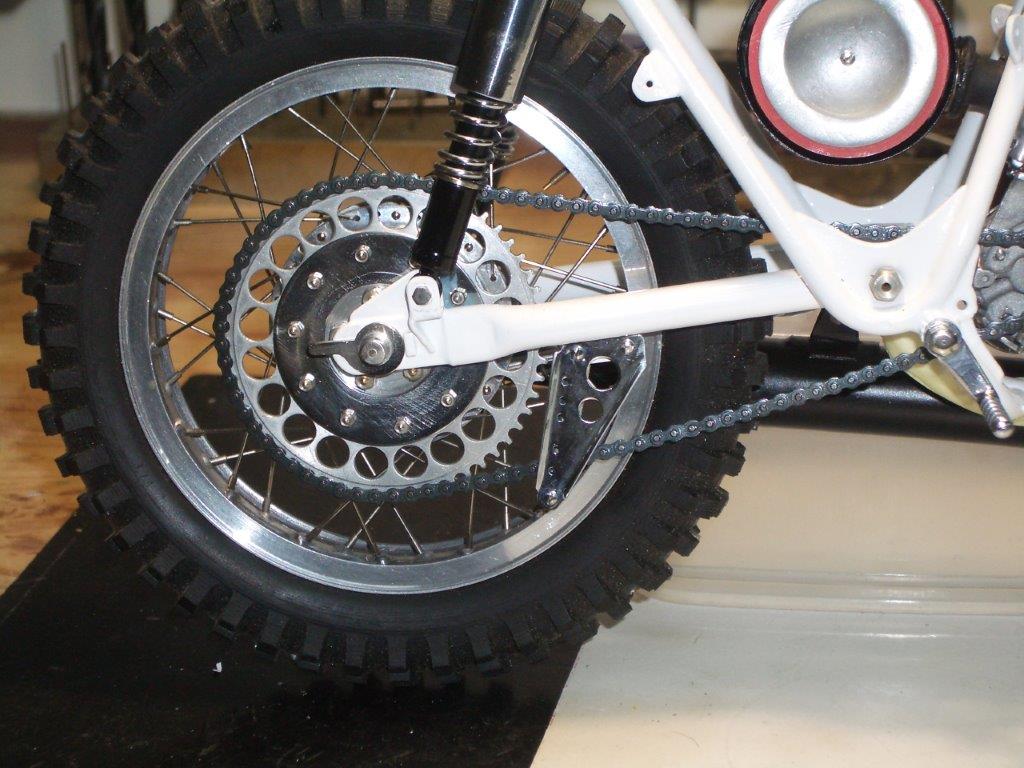
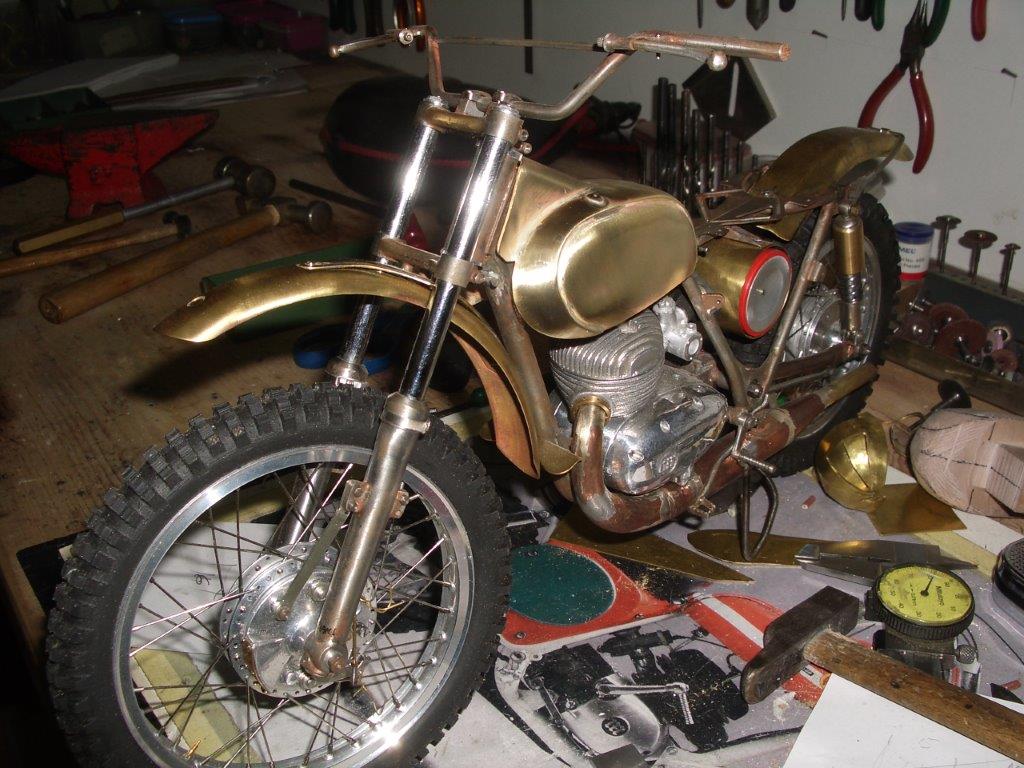
Once again, Justyn Norek from Turin was on hand to take photos of another wonderful model. This time it’s a trials machine, the Ossa 250 Mick Andrews Replica (MAR).
It’s hard to believe it’s not photos of a real Ossa MAR motorcycle, just look at the detail!
The handiwork of Pere Tarragó of Barcelona, Spain …
Pere Tarrago at work on the 1:5 scale Ossa MAR
…
Components painted and plated, ready for final assembly
…
…
The finished article, a toffee sweet is placed to give an indication of scale and that this is a model, not a real Ossa!
…
…
…
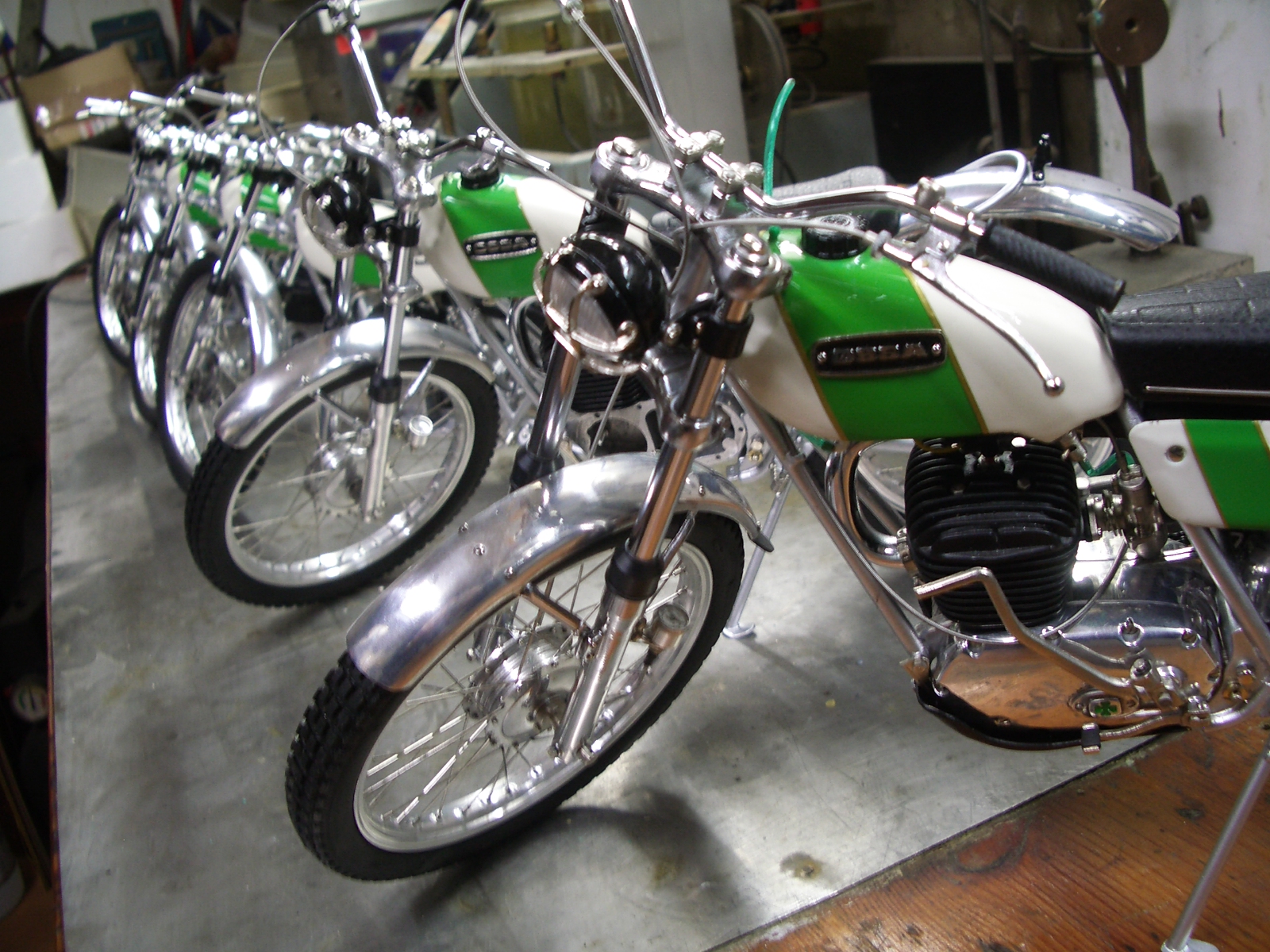
Can you tell if these are models or the real thing? These are 1:5 scale models lined up!
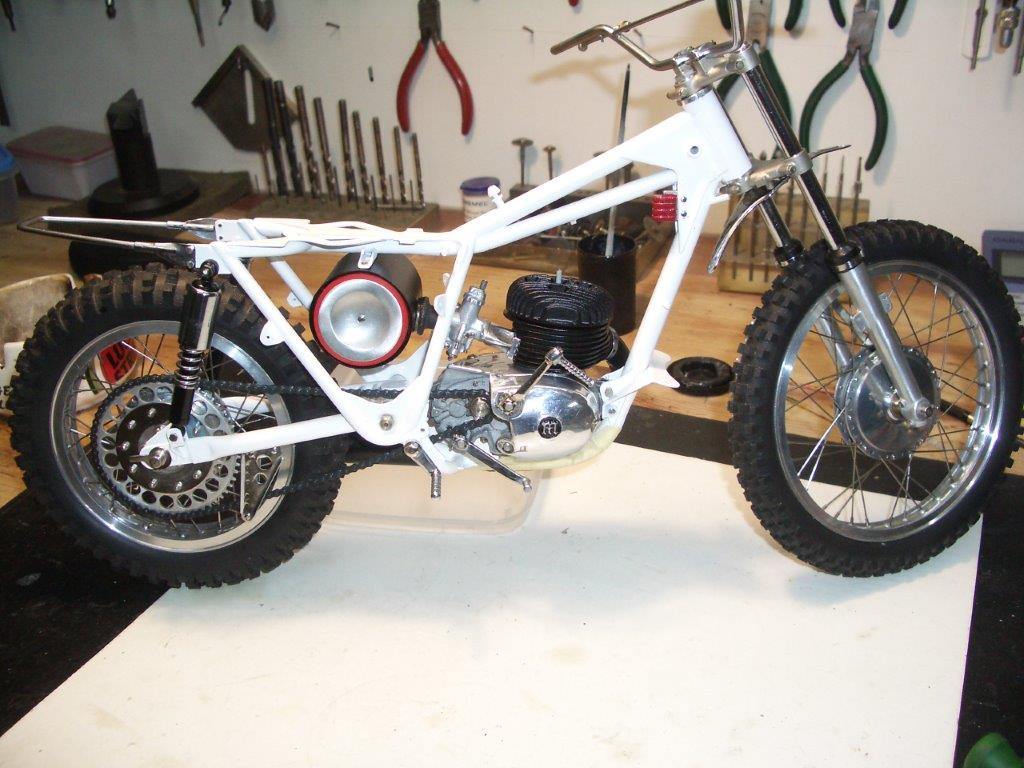
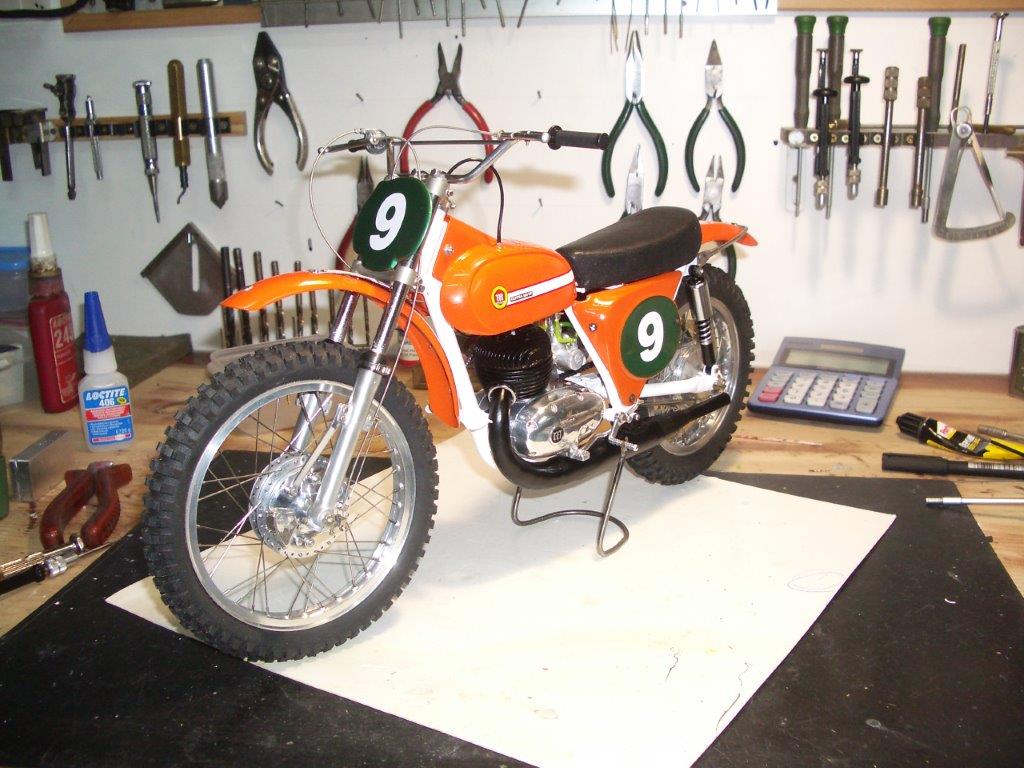
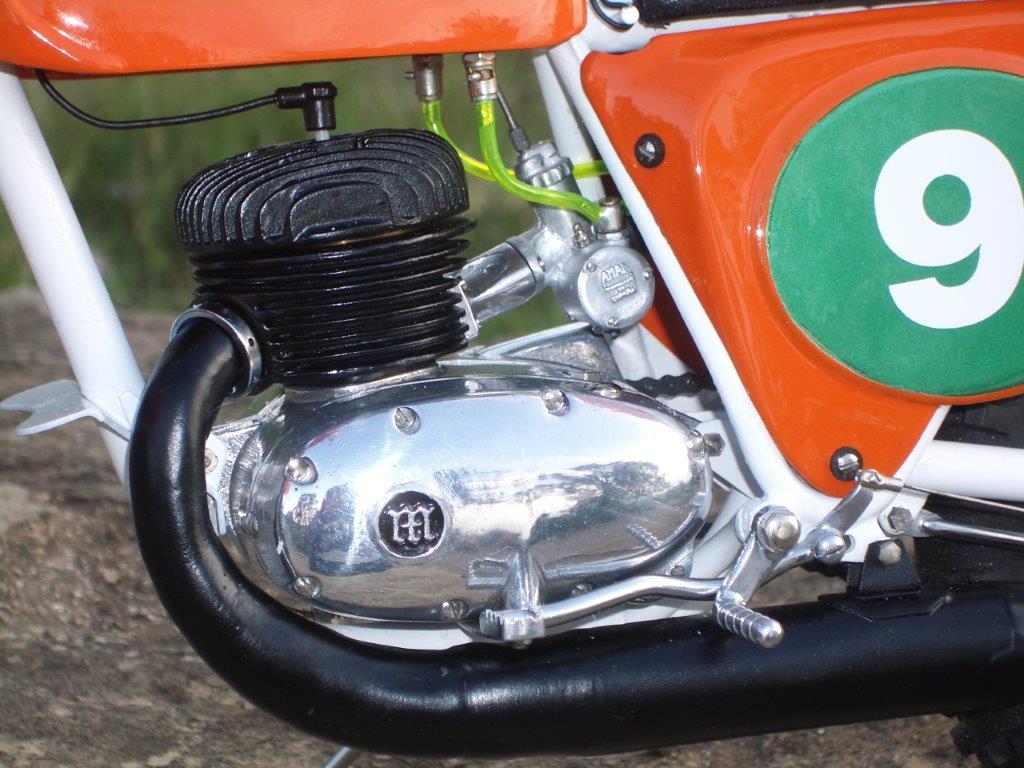
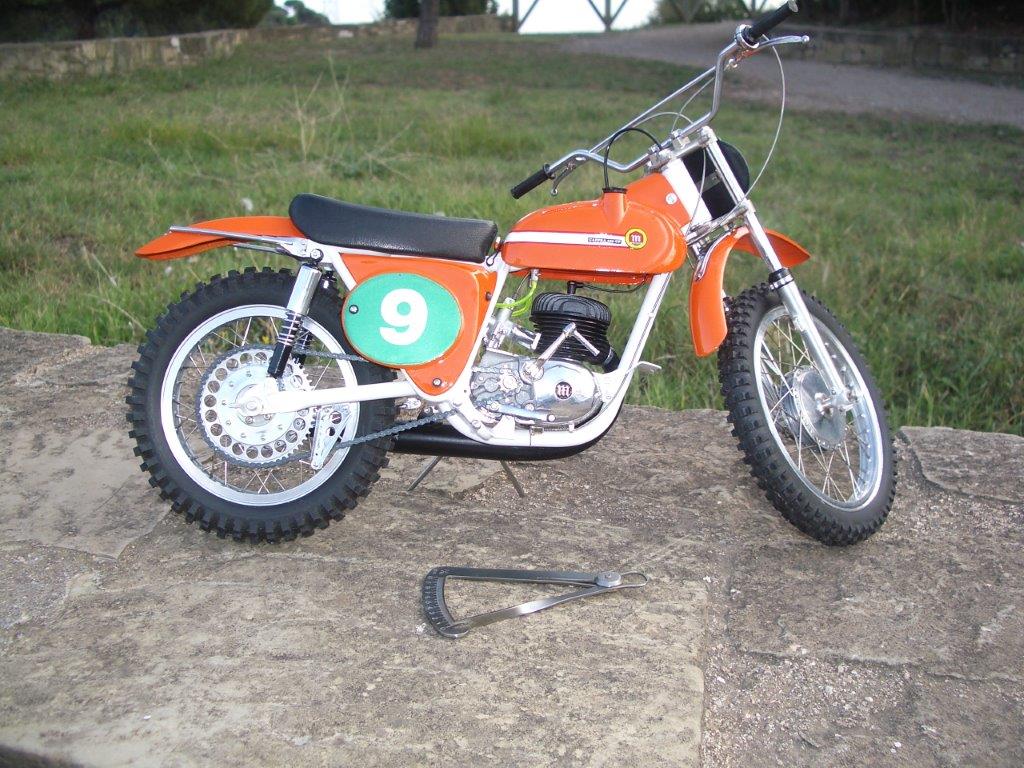
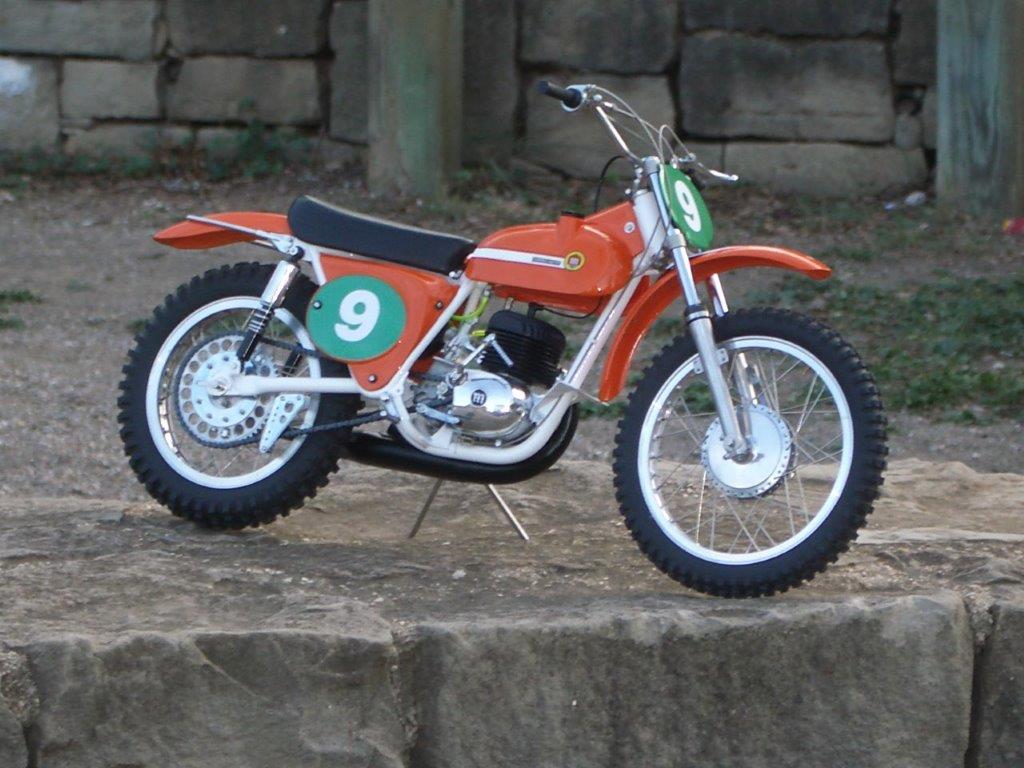
We are always looking for something different on Trials Guru, usually trials, but here is something we just had to share, the making of a scale model Montesa Cappra motocross machine from the late 1960s.
Justyn Norek from Turin was on hand to take photos of a wonderful model.
It’s hard to believe it’s not a real motorcycle, just look at the detail!
Jean ‘Pepe’ Lejeune riding one of his special Honda machines around 1966 – Photo courtesy of Lejeune family Dison, Belgium.
JEAN ‘Pepe’ LEJEUNE – 20 October 1926 – 6 July 2016 – “Thank You for Everything”
Jean ‘Pepe’ Lejeune, known by the moniker ‘Papa’ by UK trials enthusiasts, but he was also known to all in Belgium as ‘Pepe’ the father of the three famous Belgian trials riders, Jean-Marie, Eddy and Eric Lejeune and daughter Chantelle, has passed away at the age of 89 years. He was the undisputed head of the Lejeune family.
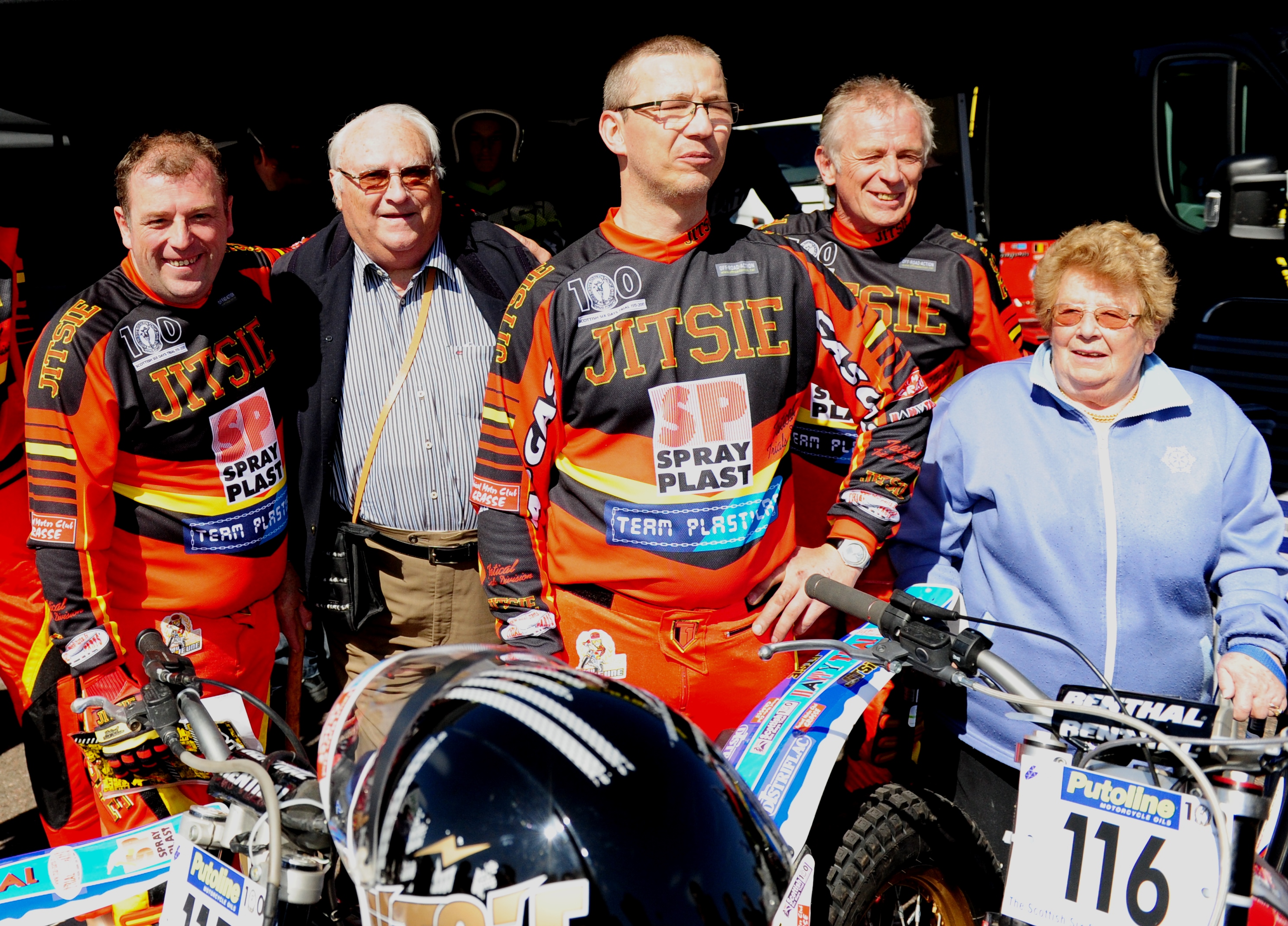
Eric; Jean ‘Papa’; Eddy; Jean-Marie and Mrs. Lejeune at the 2011 Scottish Six Days Trial – Photo courtesy: John Hulme/Trial Magazine UK
Lejeune was an enthusiastic competitor on home built Honda machines and was a passionate supporter of the sport of trials in his own country and world-wide effectively creating a trials dynasty. He ran the successful family plastics business in Dison, near Verviers which was called Plastiflac-Lejeune B.E, this helped to finance his middle son, Eddy to contest the world trials series. Eddy became world champion three times in 1982-1984 during a career riding for the mighty Honda Racing Corporation with whom he signed in 1979 at the age of sixteen. Eddy was also Belgian national champion seven times and eldest son, Jean-Marie was Belgian national champion three times and was brother Eddy’s mentor.
1986 Scottish Six Days – ‘Pepe’ inspects the RTL250 of youngest son Eric Lejeune – Photo courtesy of Mark Lamplough
The ingenious Lejeune made Eddy his first trials machine based on an SS50 Honda. In fact he built many special Honda trials machines for himself and his sons over the years.
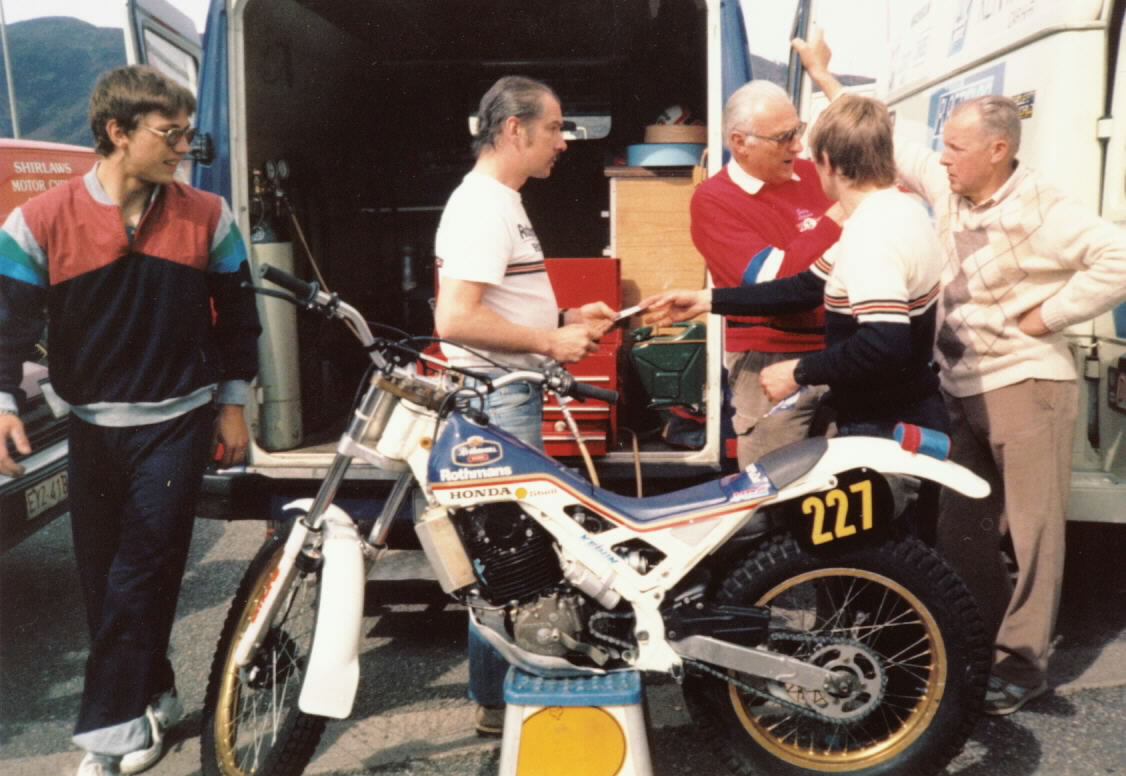
1986 Scottish Six Days, ‘Pepe’ Lejeune (Red sweater) in the middle of things with son Eddy’s factory RTL270S. Eddy Lejeune on the left, mechanic Derrick Edmondson in the Rothmans top facing away from camera – Photo courtesy, Mark Lamplough
The three Lejeune brothers: From left, Jean-Marie; Eddy and Eric at the 2011 Scottish Six Days Trial – Photo courtesy: John Hulme/Trial Magazine UK
Former World Trials Champion, Yrjo Vesterinen paid tribute and said: “The first time I had the pleasure of meeting ‘Pepe’ Lejeune was in 1970 in a bar in Dison, where the organising committee was based for the European Championship. It didn’t matter to him that I was a seventeen year old unknown youngster, who was struggling to understand where our Hotel was situated. Pepe straight away offered to take us there. It was the first time in my life I had sat in the back seat of a big Mercedes car. What a nice start for a memorable week-end in Belgium. ‘Pepe’ Lejeune was a larger than life character, a great ambassador for Belgium and the world of trials”.
Trials Guru will surely not be alone in sending sincere condolences to the Lejeune family at their loss.
13/07/2016 – Sadly, only seven days after the death of her husband, Mrs Lejeune slipped away.
Mr. & Mrs. Lejeune – Photo courtesy of Eric Lejeune, Dison
Photos: John Hulme/Trial Magazine UK
: Mark Lamplough, Scarborough
: Lejeune Family, Dison, Belgium
The Premier Trial Website – Recording the History of the Sport 'Established 2014'





















![187063_4cbf-11e6-948a-0050569a455d_adam_DSC_0232[1]](https://trialsguru.net/wp-content/uploads/2016/07/187063_4cbf-11e6-948a-0050569a455d_adam_dsc_02321.jpg)









 TRIALS GURU - DEDICATED TO TRIAL